
BIM software operation and BIM model production possess fundamental differences that affect their roles in construction projects.
Mr. He Guanpei once categorized the BIM application capabilities of engineering and management professionals in the construction industry as shown in Figure 1. The main meanings of each capability are explained below:
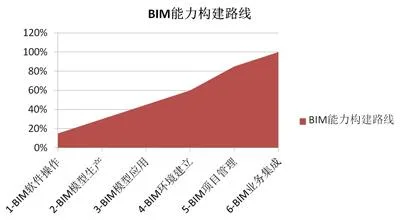
Figure 1: BIM Application Capability Division
BIM software operation capability: This refers to the ability of engineering or management personnel to master the use of one or more BIM software tools.
BIM model production capacity: This is the ability to use BIM modeling software to create models for various disciplines and purposes within engineering projects, such as architectural models, structural models, site models, MEP models, performance analysis models, safety warning models, and more.
BIM model application capability: It involves the skill to analyze, simulate, and optimize tasks at different stages of engineering projects using BIM models. Examples include scheme demonstration, performance analysis, design review, and construction process simulation.
BIM environment establishment capability: This refers to the ability to create the technical environment necessary for effective BIM application within a project. It includes delivery standards, workflows, model element libraries, software, hardware, and network infrastructure.
BIM project management capability: The ability to manage and coordinate the project team to achieve BIM application goals, including defining project-specific BIM applications and training the BIM application capabilities of the team.
BIM business integration capability: The skill to integrate BIM applications with enterprise business objectives, evaluate the business value of BIM, calculate investment returns, and establish innovative business models.
BIM model production serves as the foundation for all BIM applications, and is therefore essential for individuals to realize their BIM capabilities during construction and operation. However, in practice, many companies and individuals mistakenly equate BIM software operation ability with BIM model production ability, believing that mastering BIM software operations is sufficient for model production. This is a misconception.
Drawing from our experience, the essential difference is as follows: BIM software operation capability can be likened to a “pharmacist”—knowing which medicines are available and what they are used for. BIM model production capacity is akin to a “doctor”—understanding which medication is suitable for a specific illness. The selection of medication requires professional judgment, and clearly, prescribing every available drug is not a good solution.
In terms of BIM model production, the ability lies in selecting appropriate BIM software and its functions based on the actual needs of the project, effectively establishing the project’s BIM models. This distinction highlights the difference between merely knowing software functionalities and understanding how to apply them purposefully.
Typical Issues After BIM Software Training
We often encounter the following situations:
① Most BIM training focuses solely on software operation, even when materials claim to include project application training.
② After completing “BIM training” that only covers software operations, participants are unable to proceed with model production for specific projects when faced with challenges.
③ Lacking practical experience in large-scale BIM projects, trainers often limit their teaching to basic software functions, without integrating these into an organic, systematic approach.
Collecting and summarizing these issues further illustrates the gap between BIM software operation capability and BIM model production capacity (see Figure 2).
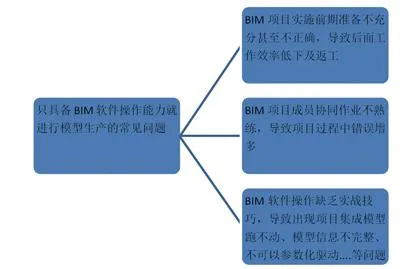
Figure 2: Common Problems in Model Production with Only BIM Software Operation Capability
(1) Common Problems During BIM Project Preparation
Unlike small models used in training, actual projects are larger, with more participants and numerous model files. Early-stage planning and preparation are crucial for successful implementation. Simple training often fails to address key issues such as:
1) How to create and use the correct project template? How to set up view templates? How to select a model element library template when establishing a library?
2) How to reasonably allocate modeling tasks within a project?
3) How to properly name model files and elements?
4) How to decide between creating a structure or building elevation based on project needs?
5) How to create filters and set system categories for classification?
(2) Common Problems in Collaborative Work Among BIM Project Members
Effective project implementation requires collaboration across multiple disciplines, with team members working together to solve issues such as:
1) How to export and integrate BIM models from different disciplines with correct file formats?
2) How to integrate BIM models produced by various software tools?
3) How to execute collaborative workflows and manage project coordination?
4) How to address professional requirements for construction drawings?
5) What should be considered when integrating architectural and structural models?
(3) Common Problems in Practical Application of Software Tools
BIM software tools each have their strengths and weaknesses, so it is important to maximize their advantages and avoid shortcomings. Common operational issues include:
1) How to create models efficiently using appropriate tools, ensuring comprehensive information and parameter control?
2) How to flexibly create associations during construction simulation? How are viewpoint animations linked? What should be noted when adding cameras to animations?
3) How to connect air conditioning ducts to equipment in computer rooms? How to set default duct connectors? How to select and replace air duct connectors?
4) How to connect sloped pipes? How to label pipelines intelligently? How to resolve mismatches between pipe fittings and valves?
5) What should be considered when modeling steel structure nodes?
Effective Method for Building BIM Application Capabilities
To address these challenges, we have explored a method that enables practitioners to systematically build BIM application capabilities (see Figure 3). By establishing criteria for selecting instructors, customizing course systems, and combining training with project practice, project teams can quickly develop BIM model production abilities.
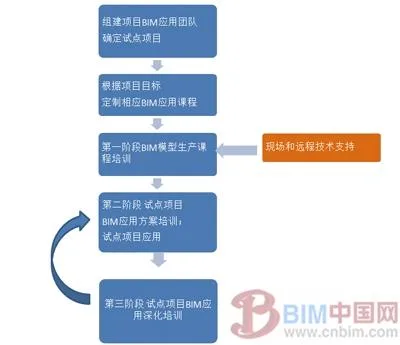
Figure 3: Construction Method for BIM Application Capability by Ubiquitous Consulting
Figure 3 demonstrates that previously mentioned issues—preparation for BIM project implementation, collaborative work among BIM members, and practical application of software tools—are effectively resolved. If unresolved, these issues can prevent projects from achieving their goals and directly impact training effectiveness, which is critical for successfully building BIM application capabilities.
BIM Team Structure and Application Capabilities
Establishing BIM productivity within enterprises requires more than just a few training sessions; it demands a rigorous system encompassing BIM team structure and application capabilities.
Based on our experience, the BIM team within an enterprise should be structured at three levels: professional, project, and enterprise. The responsibilities for each level and position are illustrated in Figure 4.
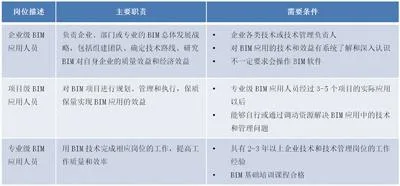
Figure 4: BIM Team Levels and Job Responsibilities
Furthermore, to gradually and effectively enhance BIM team capabilities, and based on the previous division of BIM application abilities among engineering and management practitioners, we have developed a series of BIM capability improvement courses (see Figure 5).
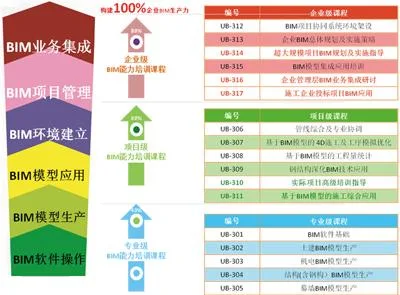
Figure 5: Ubiquitous BIM Application Ability Course System
Practice and Effectiveness Analysis of BIM Application Capability Building
Over the past three years, we have provided BIM capability building services to more than 50 property owners, design, construction, and supervision enterprises, including Country Garden Group, Huafa Real Estate, Guangdong Urban and Rural Planning and Design Institute, Shenzhen Architectural Design Institute, China Construction Third Engineering Bureau, and China Construction Fourth Engineering Bureau. This has preliminarily proven the effectiveness of our methods. For example, in the case of China Construction Haixia, a subsidiary of China Construction Seventh Engineering Bureau, we witnessed the practice of BIM application capability building.
China Construction Strait undertook the Fuzhou Strait Olympic Sports Center project, the largest sports center in Fujian Province. The complex structure, numerous pipelines, and intricate nodes led the company to adopt BIM Technology to enhance construction management. Due to tight timelines and a shortage of BIM professionals, we customized a training and service plan for China Construction Haixia, applying effective methods to build BIM application capabilities as shown in Figure 6.
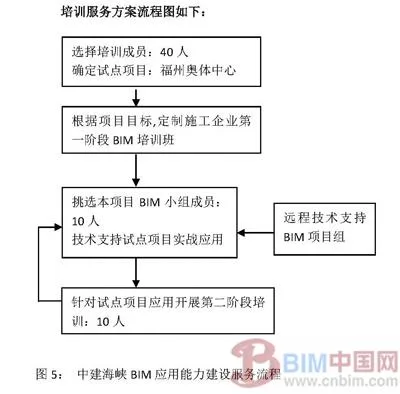
Figure 6: Service Process for Building BIM Application Capability in China Construction Strait
Before training began, we helped China Construction Haixia assemble a qualified team for project implementation. Following the principle of flexible entry and strict exit, 40 engineers were selected, with over 98% lacking prior BIM experience. According to project BIM goals, a two-week initial course was created. Centralized training quickly equipped a group of engineers with preliminary BIM model production skills, followed by immediate assessment to verify and consolidate learning outcomes. After the first phase, based on project progress, 10 trained engineers formed the core BIM team for the project. Throughout implementation, we provided onsite and remote technical support, tracking and resolving issues as they arose.
Over a three-month practical project, we identified specific technical challenges and provided a second-stage training to the team, ultimately enabling the BIM team to independently complete the pilot project (see Figure 7).
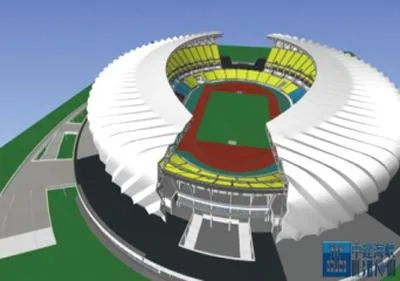
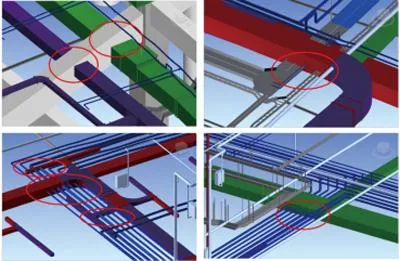
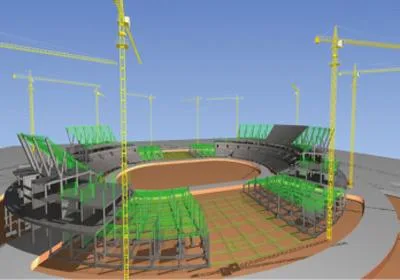
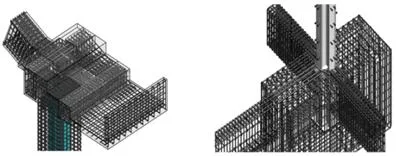
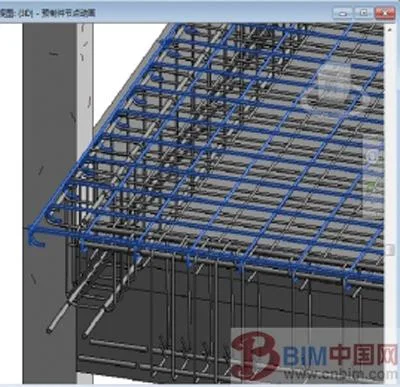
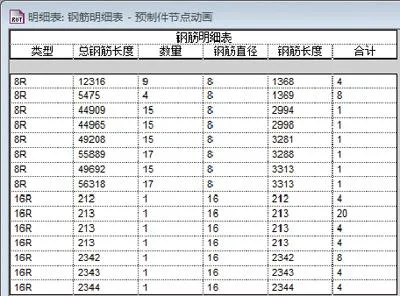
Figure 7: Partial Achievements of BIM Training Students in China Construction Strait
Through this tailored training service, the BIM project team at China Construction Strait successfully completed BIM modeling and application for the Fuzhou Olympic Sports Center ahead of schedule, rapidly achieving economic benefits. Additionally, the project fostered a capable BIM Technology team, accumulating valuable experience and establishing a solid foundation for BIM promotion within China Construction Strait and the broader China Construction Seventh Engineering Bureau. The team has now become a BIM demonstration group, playing a key role in advancing BIM technology within the bureau.
Guangzhou Youbi Architectural Consulting Co., Ltd.
Zhang Jiali
Cheng Lixia














Must log in before commenting!
Sign Up