
1. Process of Scheme Design Management
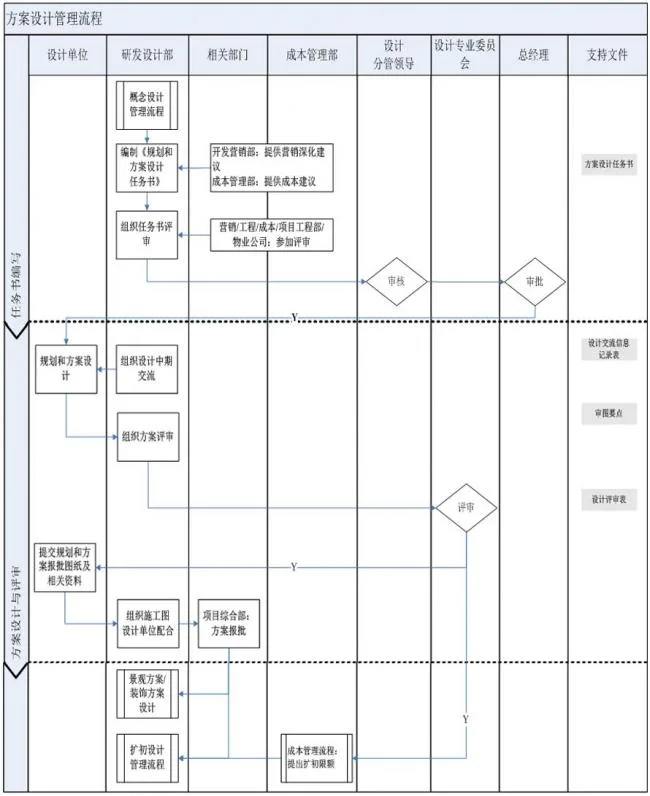
1.1 Flowchart
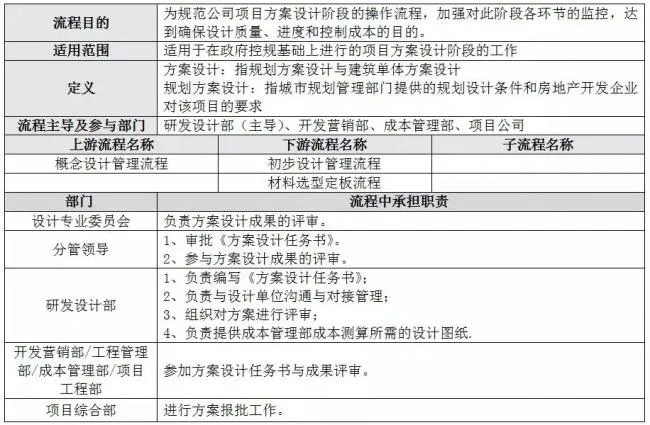
1.2 Process Overview
1.3 Work Procedures
1.3.1 Planning and Design Stage
1.3.1.1 Before planning and design, the R&D and Design Department shall collect the following relevant information:
- The Development and Marketing Department provides detailed marketing suggestions.
- The Cost Management Department offers cost recommendations for planning and design.
- The Property Management Company determines the property management model based on the conceptual plan, defines the nature, area, and location of the property management premises, and completes the “Property Management Proposal”.
1.3.1.2 The R&D and Design Department is responsible for preparing the “Planning and Design Task Book” based on the collected information. This task book is reviewed by the Development and Marketing Department, Engineering Management Department, Cost Management Department, Project Engineering Department, and Property Management Company. After approval by the design department leader and the general manager, it is submitted to the prefabricated residential design unit for execution.
1.3.1.3 Planning and Design Process
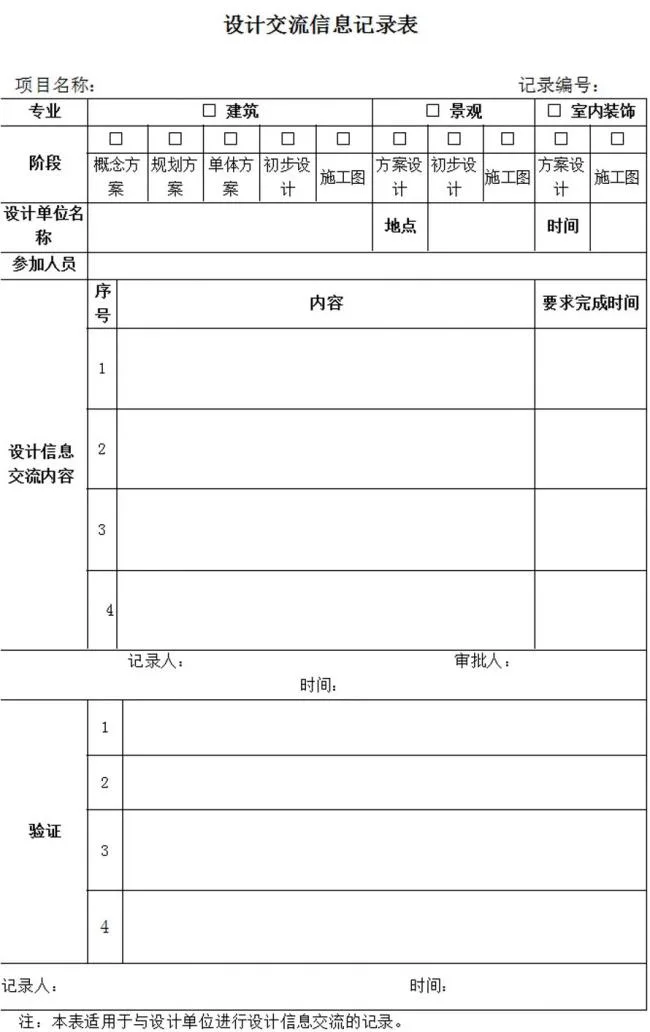
- The R&D and Design Department communicates with the design unit throughout the mid-term design phase, documenting discussions in the “Design Communication Information Record Form” to promptly resolve design issues.
- The design unit submits design results within the timeline specified in the task book. After preliminary review by the R&D Design Department, the Project Comprehensive Department consults relevant government departments regarding the planning scheme draft.
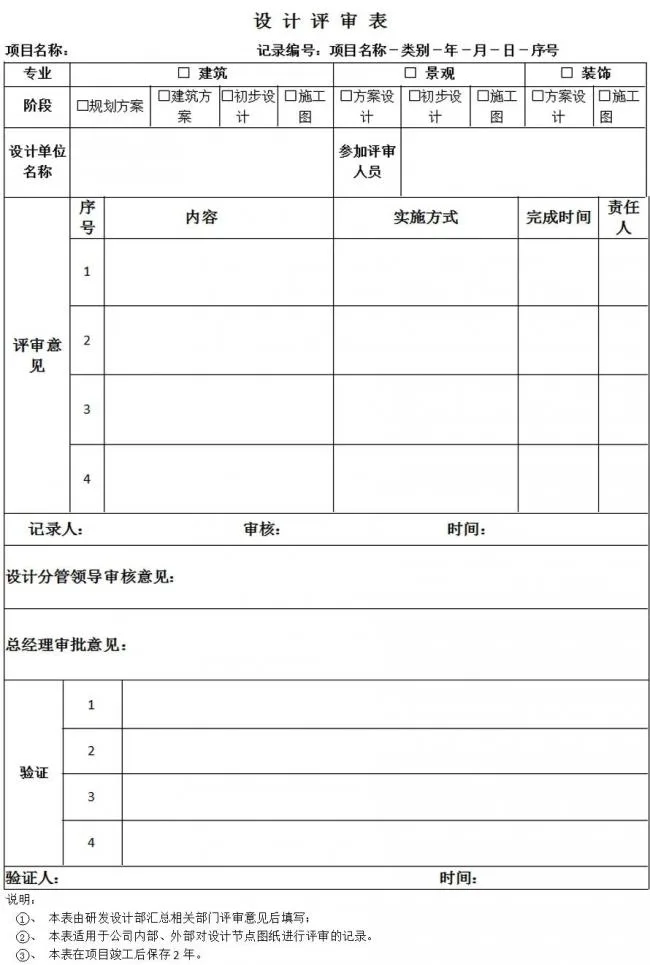
- The R&D Design Department organizes the Design Professional Committee and the Construction Drawing Design Unit to review the planning scheme. The design unit presents the design results. The Cost Management Department offers cost feedback, and the Project Comprehensive Department provides government consultation opinions. Within two days after the presentation, the R&D and Design Department collects review comments from relevant departments and experts, documents them in the “Design Review Form,” and submits for leadership review.
- Based on review comments, the R&D and Design Department completes the “Design Communication Information Form” and forwards it to the design unit for modifications. The design supervisor decides if another review is necessary. Modified designs undergo a second review before final approval by the general manager.
1.3.1.4 Planning and Design Approval
- The R&D and Design Department submits approved planning and design materials to the Project Comprehensive Department.
- The Project Comprehensive Department completes planning scheme approval as scheduled, keeps the R&D Design Department informed of progress, and archives approval documents.
- The R&D Design Department develops individual building designs based on approved documents and initiates landscape scheme design.
- The R&D Design Department facilitates discussions between the Development Marketing Department and project company regarding sales demonstration zone divisions.
1.3.2 Single Building Scheme Design
1.3.2.1 Collection of Design Data for Individual Buildings
- Planning scheme documents.
- Government regulatory department’s comments on the planning scheme.
- Unit layout and public building support suggestions from the Development and Marketing Department’s Project Positioning Report.
- Construction standards, including site, scale, land area, building standards, main equipment, and supporting facilities.
- Project content and requirements covering planning, architecture, structure, water, electricity, HVAC, environmental protection, etc.
- Cost estimation tables from the Cost Management Department for cost control guidance.
1.3.2.2 Preparation and Review of Design Task Book
- The R&D and Design Department prepares the “Design Task Book” based on the design data and organizes reviews involving relevant departments before submitting for leadership approval.
- For standard residential projects, if individual building scheme content is included in the “Planning and Design Task Book,” separate “Architectural Scheme Design Task Books” are not required.
1.3.2.3 Single Building Scheme Design Process
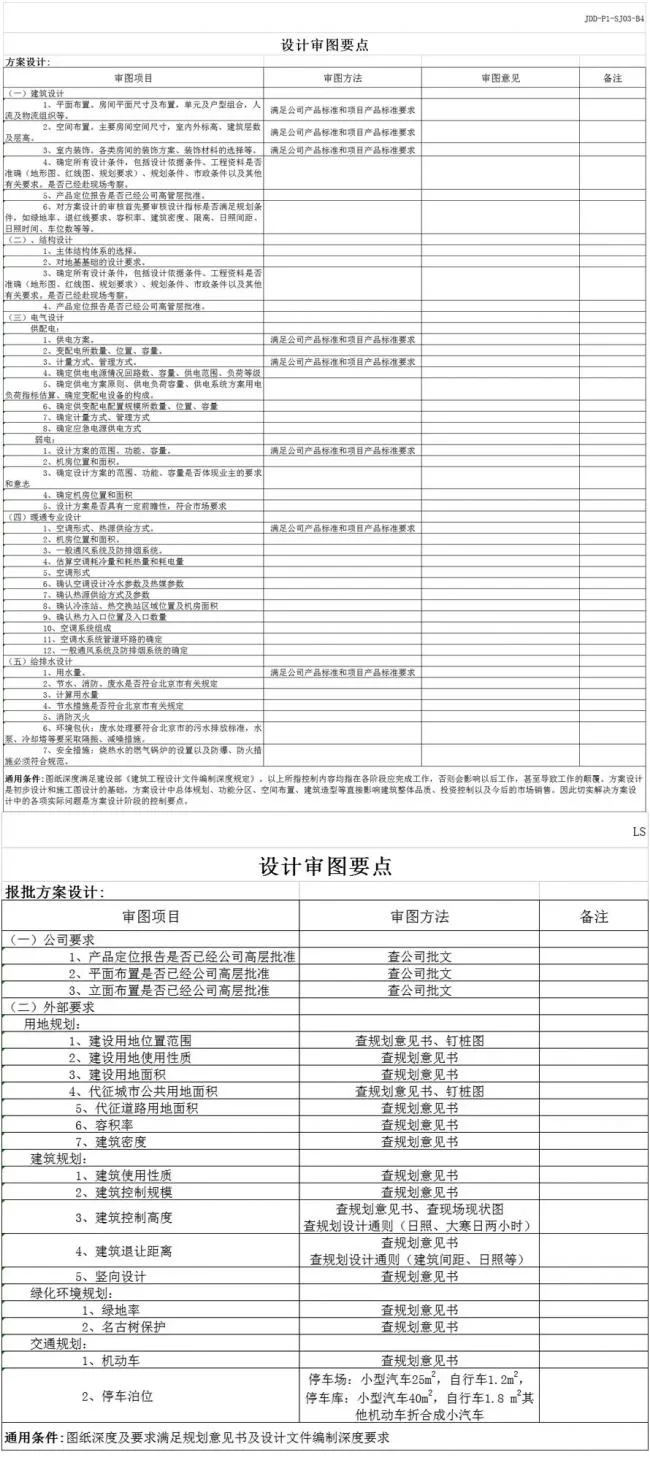
- The design unit completes architectural scheme design per the “Design Task Book” requirements. The R&D Design Department conducts a preliminary review based on “Design Review Points”.
- The R&D Design Department organizes the Design Professional Committee to review the scheme and documents feedback in the “Design Review Form”.
- Review comments are compiled into the “Design Exchange Information Form” and sent to the prefabricated building design unit for revisions.
- Following revisions, the design supervisor determines the need for further reviews. The R&D Design Department performs a preliminary review of the updated design. Upon leadership review and general manager approval, the process concludes.
Once the architectural scheme is finalized, the Project Comprehensive Department submits the architectural drawings to government authorities for approval and obtains official confirmation. Concurrently, the R&D Design Department initiates the decoration scheme design.
2. Relevant Records
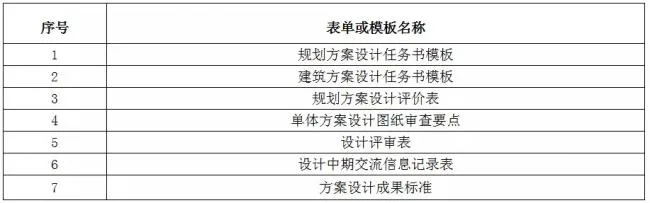
2.1 Planning and Design Task Book Template
1. Basic Project Information
Project Overview:
- Project location
- Land area
- Surrounding conditions
- Other relevant details
2. Analysis of Project Strengths and Weaknesses
Advantages:
- Terrain benefits
- Theme concept strengths
- Ecological and landscape advantages
- Public transportation and facility accessibility
- Other
Disadvantages:
- Terrain challenges
- Environmental impact issues
- Surrounding landscape limitations
- Public transportation and facility inadequacies
- Other
3. Project Positioning and Development Philosophy
- Customer positioning
- Theme positioning
- Property type
- Development philosophy
4. Technical and Economic Indicators
Floor area details including residential, commercial, clubhouse, parking, and other facilities; building plot ratio; coverage rate; building type; parking spaces; number of households; greening rate.
5. Layout Configuration (provided by the Marketing Department)
6. Supporting Facilities
7. Principles of Overall Planning and Design
- Prospectiveness: Adopt innovative concepts to surpass conventional residential design, aiming to create a first-class, tasteful, and creative community. Planning layout, floor plans, facades, environment, color, and equipment should reflect unique styles.
- Uniformity: Ensure consistency across overall planning, architecture, and environment. Balance landscape resources and minimize noise pollution through planning rather than costly technology.
- Humanization: Design spaces and services that provide comfort, pleasant scale, clean environments, convenient transport, and vibrant community life.
- Economy: Consider economic feasibility throughout development stages, optimize resource use, balance earthwork, and incorporate cost-effective structural and layout solutions.
- Compliance: Ensure adherence to regulations on lighting, fire protection, civil defense, and other urban residential planning standards.
8. Transportation and Traffic Planning
- Recommended entrance and exit locations.
- Traffic flow and streamline planning suggestions.
- Design requirements.
9. Group Spatial Form Planning
- Architectural grouping and spatial organization.
- Spatial order in residential planning.
- Facade integrity and continuity.
- Recognizability within the residential area.
- Other considerations.
10. Landscape Planning
- Landscape theme and concept.
- Landscape system continuity.
- Hierarchy and richness of design.
- Landscape design for clubhouses and sales environments.
- Effects for main entrances and public areas like commercial streets and plazas.
- Other elements.
11. Public Supporting Planning
- Clubhouse: Controlled building area; internal functions integrated with important landscapes, designed for visual impact and uniqueness as community focal point.
- Commercial Support: Building area tailored to community needs; includes functional and leisure commercial types with unified facade design.
- Other Facilities: Primary schools, kindergartens, garbage stations, property offices, etc., designed per relevant specifications.
12. Phased Construction
Focus on the first phase of development, ensuring a complete and appealing living environment at each stage with distinctive highlights.
13. Investment Limits (Provided by Cost Management Department)
14. Planning and Design Deliverables
- Complete planning scheme brochure (A3 size), including:
- Eight copies of the company proposal brochure.
- Eight copies of the application plan drawing booklet.
- Content includes design concepts, functional and technical analyses, technical and economic indicators, structure and equipment descriptions, investment estimates, maps, layout plans, renderings, and a construction model.
- Two data CDs containing all planning content.
15. Schedule Arrangement
Intermediate design results are submitted during the planning and design phase.
3. Architectural Scheme Design Task Book Template
Project Overview
- Project Name
- Project Location
- Land Use Composition
- Total Land Area
Regional Overview
- Customer Positioning
- Theme Positioning
- Property Type
Design Points and Overall Principles
- Progressiveness
- Uniqueness
- Practicality
- Economy
Project Technical Indicators and Requirements
- Land area
- Land use
- Building plot ratio
- Building coverage rate
- Green space ratio
- Setback lines
- Total building area
- Building height
- Parking standards and spaces
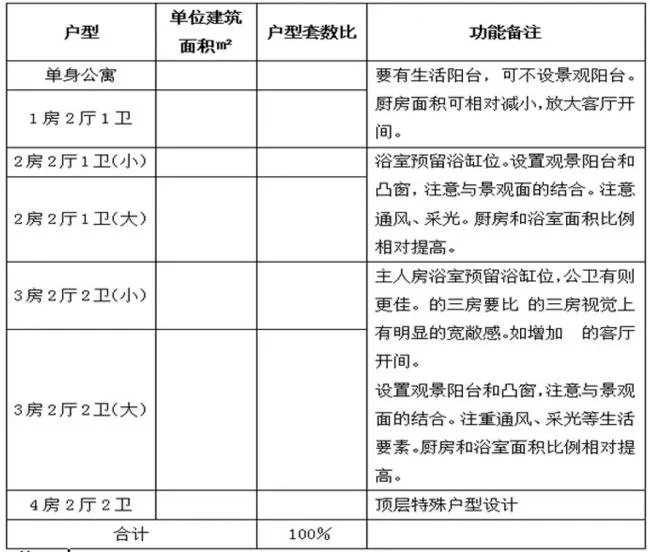
- Unit configurations
Commercial Supporting Facilities
- Overall commercial area size
- Types and sizes of shops along the street and other commercial zones
- Business project settings integrating entertainment, leisure, shopping, and dining
- Commercial area allocation with flexible shop divisions and appropriate heights
- Business form and customer flow introduction to maximize commercial value
Other Supporting Facilities
- Kindergarten
- Rehabilitation center
- Community activity spaces including neighborhood committee, party member activity room, police station, management office, elderly home, library
- Postal outlets
- Sanitation facilities designed to minimize impact during garbage transport
Design Basis
- Land red line map
- Compliance with national and Shenzhen regulations on fire protection, hygiene, transportation, environment, civil defense, etc.
- Requirements stated in this design task book
Planning Principles
- Coordination with urban and regional design, considering surrounding land parcels
- Balance between residential privacy and commercial openness
- Compliance with sunlight, spacing, ventilation, and shading regulations
- Emphasis on entrance space to highlight project themes and selling points
- Enhancing commercial atmosphere to improve neighborhood environment and resident quality of life
- Consideration of floodlighting and its visual impact
Traffic Organization Principles
- Strategic placement of main entrances and exits considering pedestrian flows
- Compliance with fire lane slope and access requirements
- Barrier-free design for accessibility
- Convenient connections between residences and garages
- Efficient parking and evacuation plans minimizing residential impact
Individual Design Principles
- Functional, practical, and cost-effective building designs
- Regular, compact layouts minimizing traffic and auxiliary areas
- Integration with structural and equipment specialties avoiding interior obstructions
- Natural ventilation in public spaces to reduce mechanical system needs
- Structural considerations for commercial spaces, avoiding transfer floors
- Basement placement for equipment rooms and garages
- Architectural facade style based on a consistent style
- Use of color and material texture for decorative effects
- Attention to detailed design supporting product quality, including windows, balconies, and air conditioning units
Business Design Principles
- Focus on target customer psychology
- Commercial facade design principles
- Centralized commercial restroom planning and location indication
- Escalator design considerations
- Reasonable placement of outdoor air conditioning units minimizing facade impact
Equipment Professional Requirements (Refer to Product Standards)
- Concealed and well-organized pipeline layouts; open installation for gas pipelines and meters
- Avoid external facade piping; centralized pipe wells with regular arrangements
- No drainage risers passing through floor slabs inside units
- Standardized interfaces for TV, telephone, and networks in specified rooms
- Outdoor water, electricity, and gas meter locations designed for equipment layout and safety
- Reasonable locations for water pump rooms, storage tanks, boiler rooms, and pipeline wells
- Designated rooms for telecommunications equipment
- Transformer and distribution rooms near load centers with easy access
- Air conditioning rooms sized according to equipment needs
- Generator rooms designed for environmental protection and facade impact; exhaust pipes directly vented to roof
- Separate strong and weak current shafts with adequate clearance and organized layout
- Household intercom systems and protective tubes for anti-theft alarms
- Capacity reserved for floodlighting and outdoor lighting on rooftops
- Consideration of buried air conditioning condensate pipes based on building plans
Structural Professional Requirements
- Preliminary structural schemes and potential foundation types
- Technical measures ensuring structural uniformity
- Assessment of seismic fortification needs for high-rise projects
- Detailed survey task book
Requirements for Submitting Design Results
Design submissions must comply with national and local standards, regulations, and client/government requirements, using metric units and simplified Chinese annotations. Files are submitted in *.dwg format. Deliverables include:
Design Specifications
- Design basis and overview
- Project location, layout, zoning, traffic, sunlight, fire safety compliance
- Building numbers, floors, heights, setback lines, main economic and technical indicators
- Architectural design concepts, fire safety measures, technical and economic indicators per building
- Material selection, structural, water supply and drainage, electrical, weak current, HVAC, and fire protection designs
General Layout Design
- Land red line location and site elevation
- Building positions, dimensions, floors, setbacks
- Urban road layouts, vehicle entrances, parking spaces
- Fire lane layouts and dimensions
- Sunlight analysis charts
Single Building Floor Plans (1:100 scale)
- Overall dimensions, walls, columns
- Doors, windows, stairs, elevators, balconies
- Room labeling and special areas
- Floor elevations
- Basement parking layout and specifications
- Cutting line locations
- Typical unit floor plans with functional areas
- Fire compartment divisions
- Supporting facility layouts and area indicators
Elevation Drawings (1:100 scale)
- Four-sided elevations with names
- Facade outlines including doors, windows, balconies, roofs, equipment
- Floor elevations and exterior materials/colors
- Commercial building front views
Sectional Drawings (1:100 scale)
- Sections through stairs, varied floor levels, complex spaces
- Walls, doors, floors, roofs, and equipment details
- Height dimensions and design elevations
- Basement and adjacent building sections
Additional Deliverables
- Three-color perspective views (bird’s-eye and human perspectives)
- Building model (1:250 scale)
- Ten sets of A3 design documents and two electronic file CDs
Design Schedule Arrangement
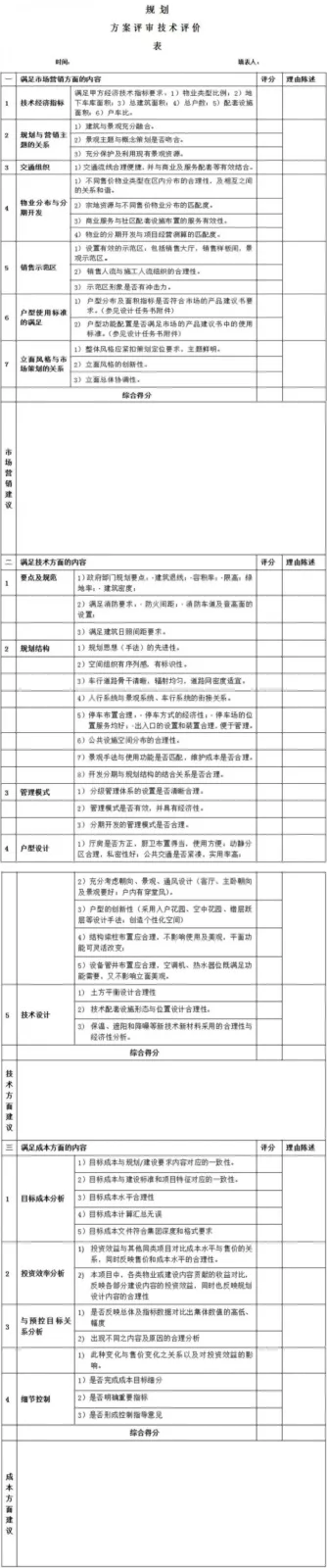
Evaluation notes: Evaluation is divided into marketing, technology, and cost categories, assessed by relevant departments and leaders. External experts may evaluate relevant sections. Each item is scored from 1 (very poor) to 5 (very good), with averages calculated for comprehensive scores.
Instructions:
- Rating is optional
- Focus on review and improvement suggestions
4. Planning Scheme Design Evaluation Form
5. Key Points for Reviewing Individual Design Drawings
6. Design Review Form
7. Mid-term Design Communication Information Record Form
Article source: Self-study platform for real estate developers














Must log in before commenting!
Sign Up