
The project site has achieved 100% hard coverage, with all materials consisting of finished products, prefabricated components, and mechanical lifting. This approach significantly reduces the pouring and curing time typically required for on-site concrete work. Additionally, all construction activities are scheduled at night, ensuring that daytime operations remain uninterrupted. (Source: Jiangxi Construction Network)
Steel Plate Coverage: The construction site is fully covered with brand new, 20mm thick steel plates, maintaining a clean and orderly environment.
Prefabricated Pavement Slabs: The area outside the construction gate features 2m by 3m prefabricated pavement slabs that are hoisted and installed on-site. Prefabricated track boards with fixed frames, made from the company’s recycled large templates, help reduce costs.
Car Wash Pool: A completed car wash pool is positioned at the entrance, equipped with an internal filter screen for quick and efficient installation.
Prefabricated Indoor Stairs: All indoor stairs are prefabricated and lifted floor by floor using finished lifting equipment in coordination with tower cranes. This method replaces traditional on-site support and pouring techniques. The prefabricated stairs offer excellent molding quality, eliminating the need for secondary decoration and shortening the construction timeline.
Prefabricated Guide Walls for Kitchens and Bathrooms: Indoor kitchen and bathroom areas require prefabricated guide walls. After floor reinforcement is tied, the guide walls are positioned onto the slab reinforcement, with reserved reinforcement tied together to ensure integrity during concrete pouring and meet impermeability standards.
Prefabricated Hanging Plates: Hanging plates installed beneath indoor door openings are prefabricated as well. These are positioned before the floor slab is poured, with reserved steel bars anchored inside the slab. This reduces common issues like misalignment caused by poor cast-in-place formwork, lowers maintenance requirements, shortens construction time, and saves costs.
Reserved Beam Head
For external wall overhangs or beam locations, large formwork panels less than 600mm wide are used with beam-sized openings. Steel bars receive swinging reinforcement treatment, reducing secondary chiseling, improving efficiency, and lowering costs.
Reserved Beam Nest
Beam positions on interior walls include inflatable bags embedded in beam sockets to minimize excavation work, enhance efficiency, and reduce pollution.
Innovative Materials and Tools
Galvanized Foot Pedal Mesh: To protect the second layer of floor reinforcement from damage by worker foot traffic, galvanized foot pedal mesh is placed over the negative bending moment steel bars. This lightweight mesh is easier to handle than traditional heavy scaffolding boards, reduces labor, and prevents damage to the reinforcement, demonstrating conscientious project management.
Flatbed Trucks and Galvanized Cages: Small materials are centrally stored in galvanized cages and transported on flatbed trucks, providing workers with convenient access to materials.
Galvanized Scaffold Boards: These boards feature smaller holes than traditional iron boards, offering improved protection. The external scaffolding is fully covered with galvanized scaffold boards, which are practical, lightweight, and visually appealing.
▲ Traditional iron scaffold board with 30mm diameter circular holes
▲ Galvanized scaffold board with small 15 × 10mm holes
Pump Truck Rear Bucket Material Receiving Truck: A wheeled material receiving truck is placed at the rear bucket of the pump truck to prevent site contamination during concrete pumping. This setup facilitates cleaning, environmental protection, and reduces labor costs.
Sling and Lifting Equipment: Centralized lifting racks are installed for easy selection and use of lifting equipment.
Buckle Protective Covers: Protective covers are installed inside buckles to prevent scratches during walking and operations.
Polishing Shoes: Workers wear specialized polishing shoes during floor slab concrete pouring to ensure a high-quality finish and to avoid leaving footprints during the polishing process.
Electric Wrenches: Electric wrenches are provided to reduce labor intensity and increase efficiency.
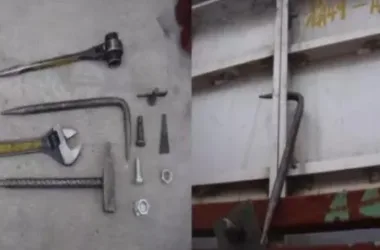
Toolkits: To simplify workers’ operations, improve construction efficiency, and ensure unified management, the project department provides standardized professional toolkits for each team.
▲ Electrician toolkit
▲ Woodworking toolkit
Safety Helmets: The project equips 150 lightweight Japanese-style safety helmets, each labeled with the worker’s name on both the front and back for easy identification. The helmets also display workers’ safety education levels on the side.
Safety Belts: Professional Japanese-style safety belts are provided for high-altitude workers to enhance construction safety.
Safety Toe Shoes: Anti-smash shoes are uniformly provided for workers to ensure personal protection and comfort during operations.
Safe and Civilized Facilities
Decibel Meter: A decibel tester monitors construction noise levels to ensure compliance with environmental protection standards, taking into account the well-being of surrounding residents.
External Staircase: Since internal stair construction on floors 1-4 is temporarily unavailable, an outdoor staircase access is set up to facilitate workers’ movement.
Coat Rack: Using scaffolding and buckles, a storage rack for safety helmets, belts, and shoes is installed for workers’ convenience and centralized management, eliminating the need to carry protective gear to and from work.
Shoe Blowing Machine: This device helps workers clean dust off clothing and shoes, maintaining cleanliness.
Rest Area: Following Vanke’s worker culture initiatives, rest areas are equipped with water heaters and vending machines for added comfort.
Fire Cabinets and Hydrants: On-site fire cabinets meeting national standards are installed, including fire extinguishers, hoses, sand buckets, and specialized shovels.
Three-Level Distribution Box: The third-level electrical box features waterproof plug-and-play connectors to avoid secondary wiring, enhancing safety and convenience.
Accessible Pedals: To ease material transportation between the elevator entrance and the frame, specialized accessible pedals are developed to reduce manual labor.
Frame Closure: For safety and cleanliness, a full horizontal net closure is implemented on external scaffolding at the 4th and 9th floors. This prevents falling debris and collects construction waste, improving efficiency.
Dust Reduction and Environmental Protection: Each construction team cleans their site daily post-work using sweepers and vacuum cleaners, with dedicated supervisors on each floor.
▲ Sweeper
▲ Vacuum Cleaner
Washing Machines and Electric Irons: Coin-operated washing machines and electric irons on-site allow workers to clean and press their clothes, ensuring neatness.
Meeting Room: The dust-free office space features carpeting, slippers, and air conditioning to provide a comfortable working environment.
Washbasins: Installed in office areas, lounges, and toilets to facilitate handwashing and maintain hygiene.
Management Personnel Dormitory: Newly customized dormitories feature fire-resistant rock wool insulation, exterior painting, and electric heating in winter, enhancing living comfort.
Employee quarters are kept clean and tidy.
Solar Energy and Shower Rooms: Dormitory areas are equipped with solar energy systems and shower rooms, addressing workers’ needs after hard work.
Toilets: Bathrooms feature independent water supply and drainage systems. Dedicated personnel maintain daily cleaning to ensure hygiene and odor control.
▲ Drainage system
▲ Water supply system
Water Tanks: Water tanks inside and outside the site provide construction and domestic water. These tanks are repurposed from waste large templates to save costs.
Classified Garbage Bins: Waste is sorted and cleaned regularly to maintain environmental friendliness and tidiness.
Centralized Steel Bar Processing: Using software modeling, a 3D model of Langrun Garden was created to visualize steel bar details and automatically generate cutting orders, improving centralized processing efficiency.
After software and manual review, steel bars are processed in the workshop using CNC cutting and bending machines, ensuring precise quality and improved efficiency.
▲ Steel bar cutting machine
▲ Steel bar bending machine
Centralized Template Processing: Templates are laid out using CAD to generate precise cutting lists. After review and confirmation, templates are processed centrally with labels for each cutting list.
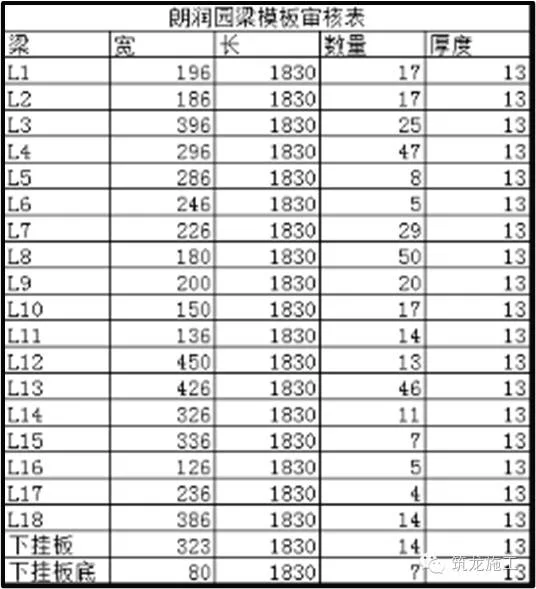
Floor slabs use 17mm thick plywood to ensure component quality and appearance after molding. Wooden beams measuring 50 × 80mm are polished on all four sides and chamfered on twelve edges on-site.
Template cutting boards are processed with CNC saws, maintaining errors within 0.15mm to ensure quality while boosting efficiency and saving costs.
Technology Application
Revit software generates floor plans aligned with the site layout, allowing construction guidance before work begins and providing clear visualization.
Three-dimensional scaffolding models are created at a 1:1 scale for intuitive on-site reference.
▲ Interactive walkthrough of the on-site layout plan
Construction Schedule Planning
Traditional Planning: Typically, construction schedules use horizontal day-based charts showing start and end times for tasks within a week or month. This method is easy to understand and compile but lacks visibility into task dependencies, critical paths, and flexibility. It also struggles to adapt quickly when deviations occur and cannot optimize multiple plan options.
Japanese-Style Planning: Inspired by Japanese methods, this project abandons day-based scheduling in favor of hourly units. This refined schedule aligns closely with real on-site operations, providing clear timing for each process and facilitating precise control over construction phases.
Interleaving and Efficiency Improvement
How is “six days per floor” achieved? Traditional high-rise formwork schedules allow seven days per floor. Since work began on July 18th, with main construction starting August 18th, the project has reached the 12th floor, fully meeting the six-day per floor target.
Working hours span from 6:00 am to 10:00 pm. The schedule is designed for interleaved operations, where subsequent tasks begin at overlapping stages of previous tasks. This approach fills gaps in the workflow, significantly shortening the construction period and ensuring the six-day floor completion rate. This exemplifies the Japanese management principle of “interweaving and improving efficiency.”
Transportation Machinery Configuration
- A QTZ110t tower crane is installed on-site with two operators for shift handovers. Truck cranes are deployed for horizontal transportation of prefabricated residential components across multiple work areas.
- An SC200/200 elevator is installed with two operators to meet vertical transportation needs.
- All on-site transportation uses Foton one-ton dump trucks and forklifts.
Additional Controls
- Management strictly schedules tower crane lifts and wall support installations during crane downtime.
- Due to the building’s four-unit design, large templates are segmented and reused: after dismantling in the eastern section, they are transported directly to the western section, minimizing landing, space occupation, and secondary lifting time.
- Weather-based provisions include raincoats and boots for workers during low rainfall, ensuring construction continuity.
- When main concrete reaches 28 days, thorough inspection and acceptance occur before decoration and renovation. Based on regulations allowing preliminary use at 15 days, early coordination with testing centers and supervision stations enables renovation teams to begin earlier, advancing the schedule and ensuring seamless transitions.












Must log in before commenting!
Sign Up