
Source: Tongji Design Fourth Institute
Project Information
Structural Type: High-rise frame shear wall structure, shear wall structure
Location: Pudong New Area, Shanghai
Building Area: 53,800 square meters
Project Team: Residential Elderly Care Division – Structural Team
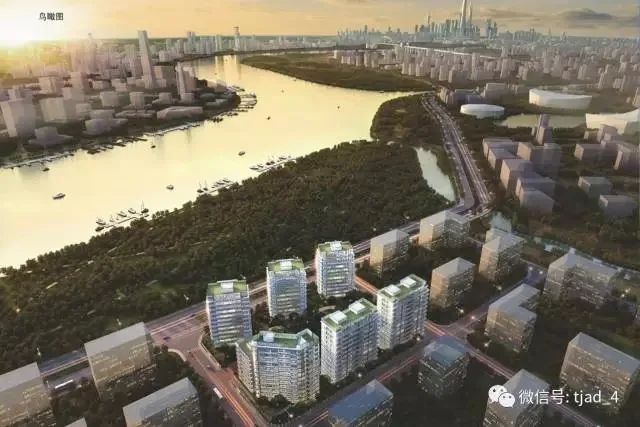
Back in 2010, if anyone had known about the hidden gem called the ‘back beach’ in Pudong, Shanghai, today the ‘front beach’ has become a hot topic. This area, poised to become Shanghai’s new world-class central business district, showcases some of the highest quality designs from Tongji Design.
Project Overview
Owner: Sanxiang Real Estate
Building Type: Residential
Location: East of Tongwan Road, South of Qiantan Avenue, West of Yuqiu Road, North of Xiaohui Road, Pudong New Area, Shanghai
Floors: 2 underground floors, 12 above ground floors
Structural Height: 41.4 meters
Seismic Fortification Intensity: 7 degrees (0.1g)
Venue Category: Shanghai IV category
This project aligns with Shanghai’s 13th Five-Year Plan for prefabricated buildings, adhering to the “Shanghai Prefabricated Building Development Plan 2016-2020”. Residential buildings on Qiantan Plot 36 utilize assembled integral concrete structures, achieving a minimum prefabrication rate of 25% per unit and facade coverage of at least 50%. Exterior walls feature prefabricated sandwich insulation panels, which are excluded from the plot ratio calculations, with the non-included area capped at 3% of the total building area.
Introduction to Prefabricated Structures in Buildings 1-3
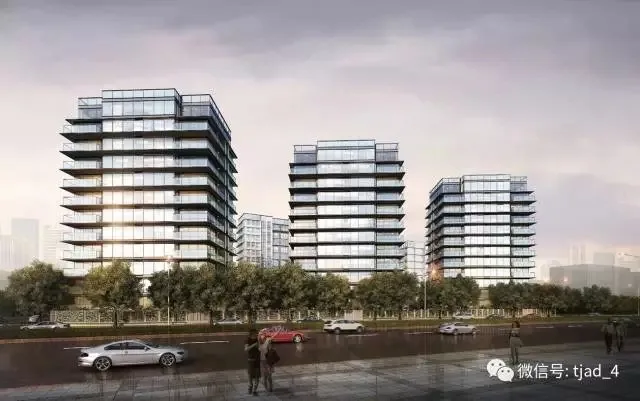
Structural System: Assembled integral frame shear wall structure.
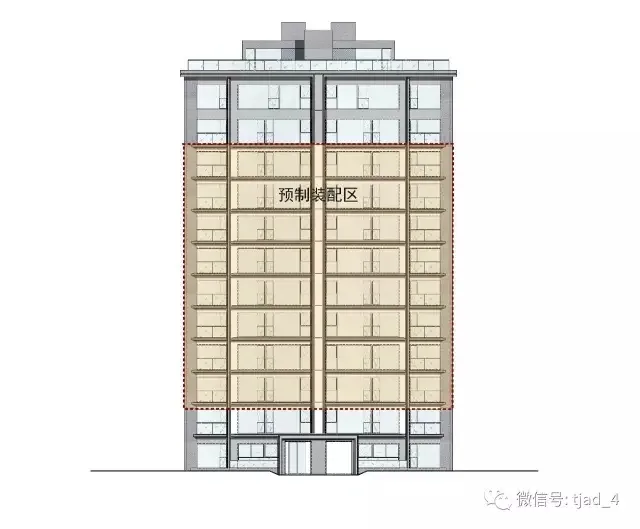
The vertical distribution of prefabricated components is illustrated below. The bottom reinforcement area and the top setback layer use cast-in-place structures, while the middle eight standard floors employ prefabricated components. The vertical coverage rate is 66.7%, exceeding the 50% requirement.
The plan layout of prefabricated components is shown below, achieving a single prefabricated assembly rate of 27.5%, surpassing the 25% benchmark.
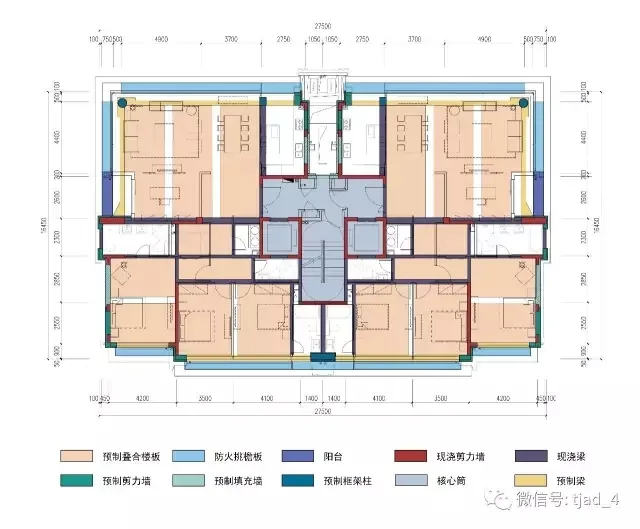
Compared to conventional prefabricated shear wall structures in residential buildings, Buildings 1-3 introduce several structural innovations.
1. Adaptation to architectural functional innovation
1.1. Employing a frame shear wall structure combined with a beam-slab layout featuring large slab spans.
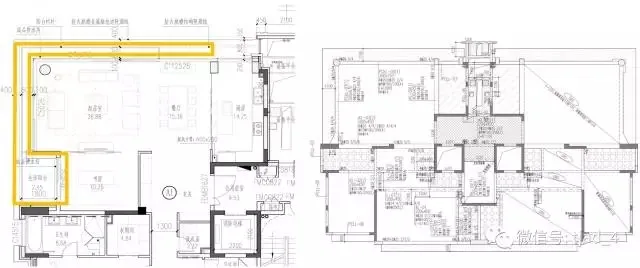
Vertical indoor components are minimized to create expansive living spaces free of beams and columns. The living room spans 9.6 meters in width, encompassing an 80-square-meter area that includes the living room, dining room, study, and foyer—all column and beam-free. This flexible space design enhances adaptability and allows for varied interior layouts. The large slab system with minimal beams maximizes floor slab load capacity, improves structural flexibility, and facilitates functional zoning within the building.
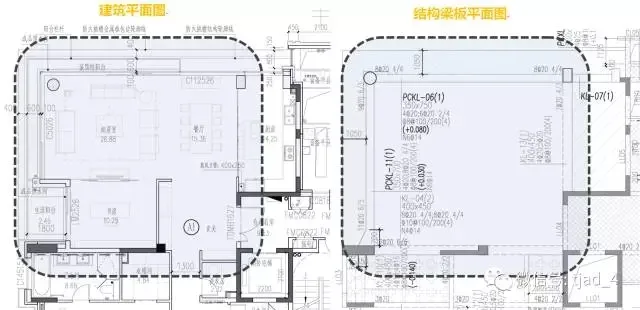
The living and dining areas feature only one corner pillar, offering almost unobstructed views of the Huangpu River to the north.
Application of BIM Technology
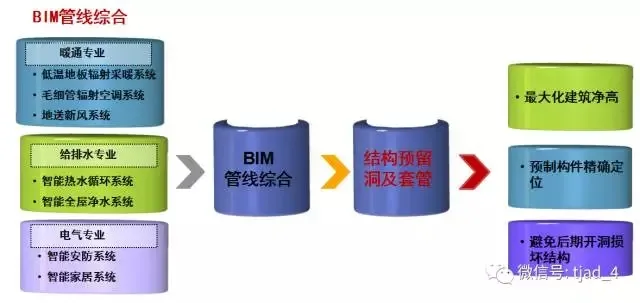
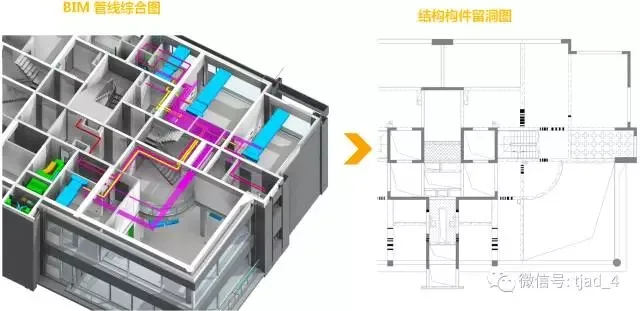
BIM collision detection is used to coordinate and resolve errors, omissions, clashes, and deficiencies across multiple specialties. This process significantly reduces construction costs by minimizing rework on site.
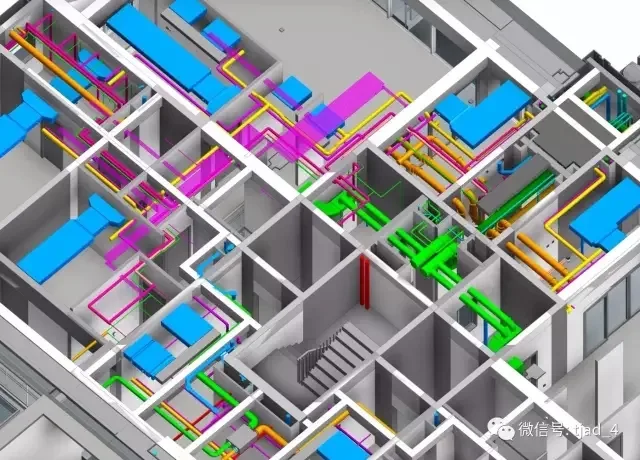
By integrating various professional pipelines through BIM, a detailed structural component reserved hole diagram is produced. This guides on-site work in positioning reserved holes and casings, preventing structural damage caused by later adjustments.
Introduction to Prefabricated Buildings 4 and 5
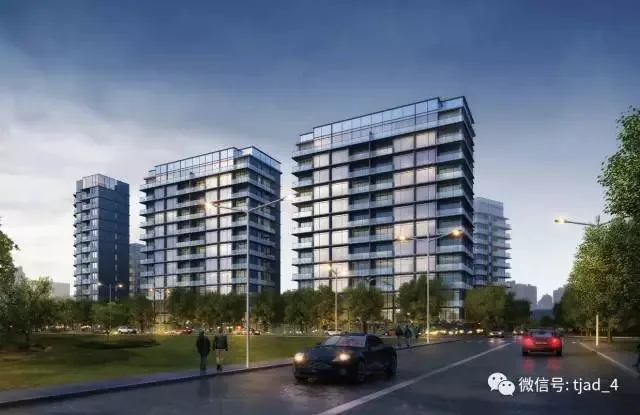
Structural System: Assembled integral shear wall structure.
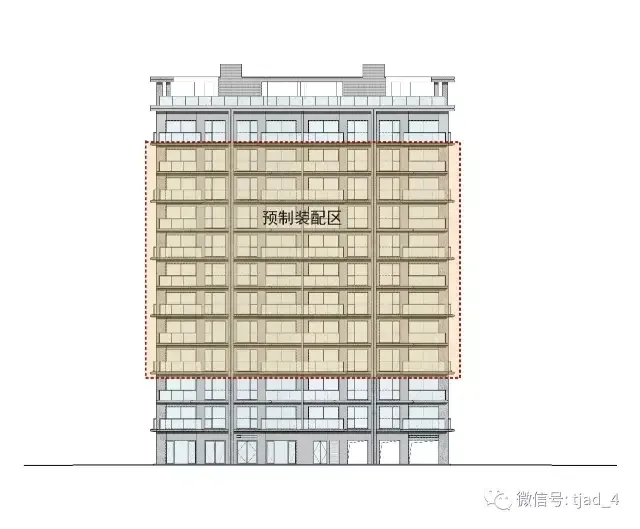
The vertical distribution of prefabricated components is displayed below. The bottom three floors and the top setback floor are cast-in-place structures, while the middle eight standard floors use prefabricated elements. The vertical coverage rate is 66.7%, exceeding the 50% minimum.
Buildings 4 and 5 consist entirely of duplex units, featuring large openings on odd-numbered floors. Except for peripheral composite beams, floor slabs and internal beams are cast-in-place. Some areas on even-numbered floors utilize stacked floor slabs. The plan layout of prefabricated components is shown below, with a single prefabricated assembly rate of 25.8%, exceeding the 25% threshold.
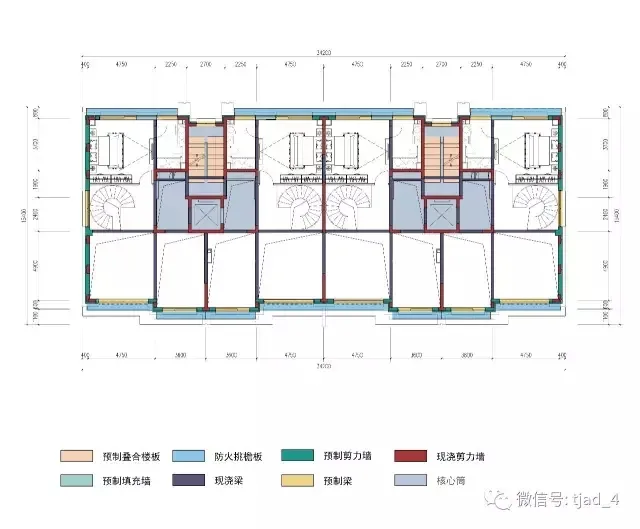
Distribution diagram of prefabricated components on odd-numbered floors
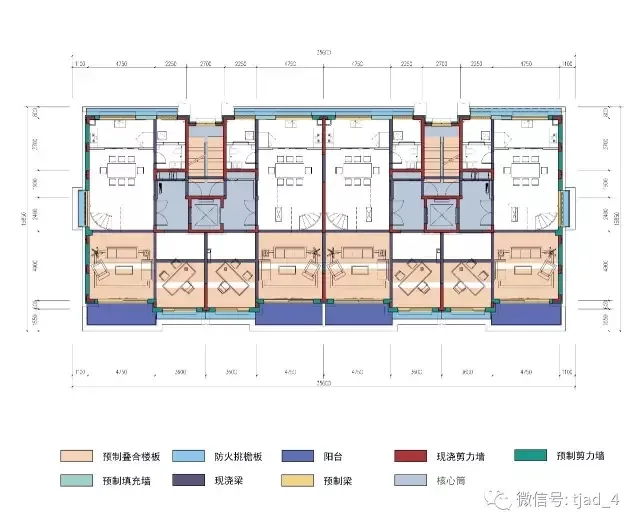
Distribution diagram of prefabricated components on even-numbered floors
Introduction to Prefabricated Component Connections
1. Vertical reinforcement connections for prefabricated shear walls utilize grouting sleeve plum blossom connections:
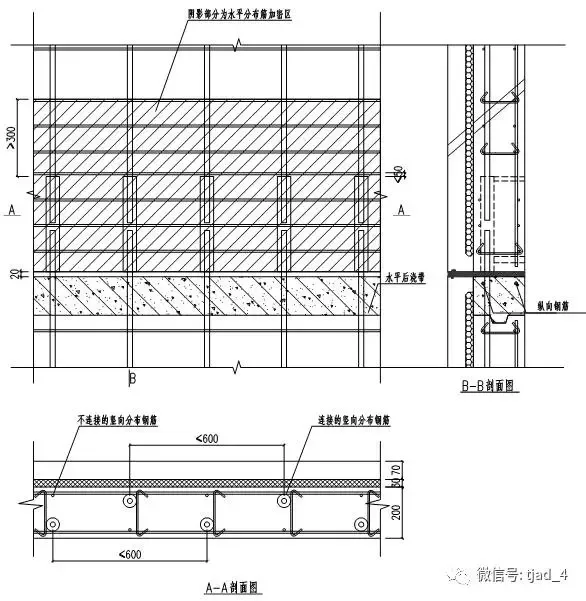
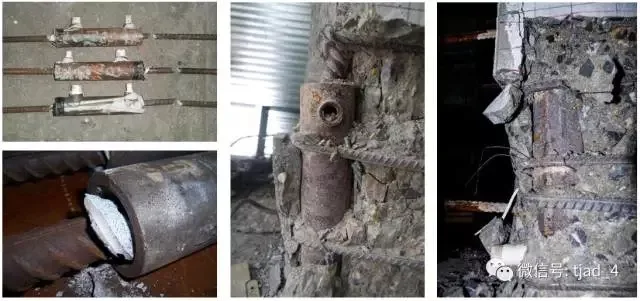
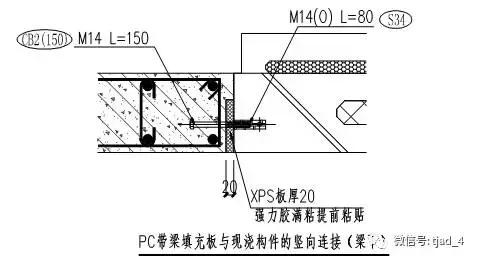
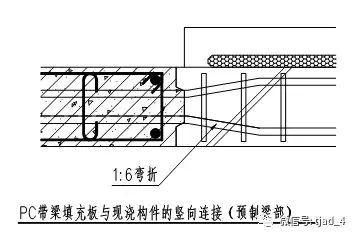
2. Connection between prefabricated exterior wall infill panels and cast-in-place shear walls:
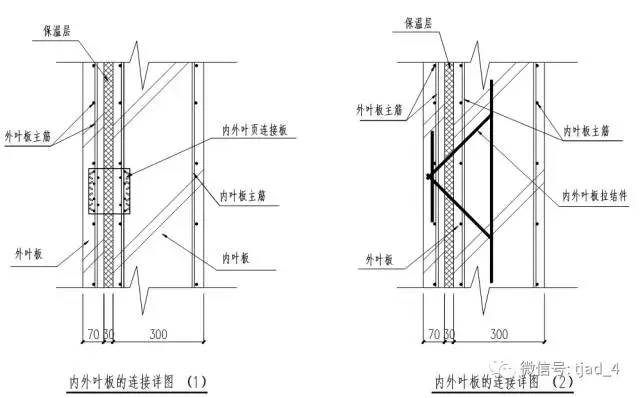
3. Connections between the inner and outer panels of sandwich insulated prefabricated shear walls:
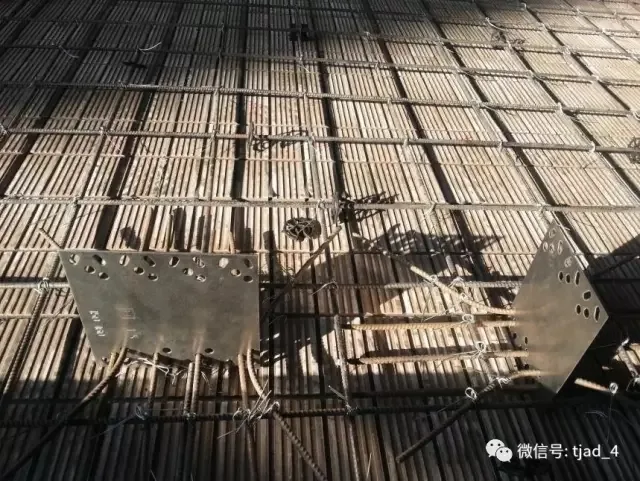
Supporting connectors
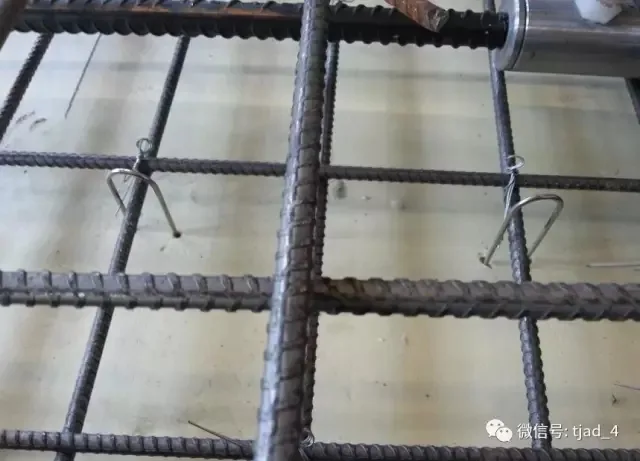
Limit pins
4. Connection between transitional prefabricated building sections and intermediate sections of shear wall edge components:
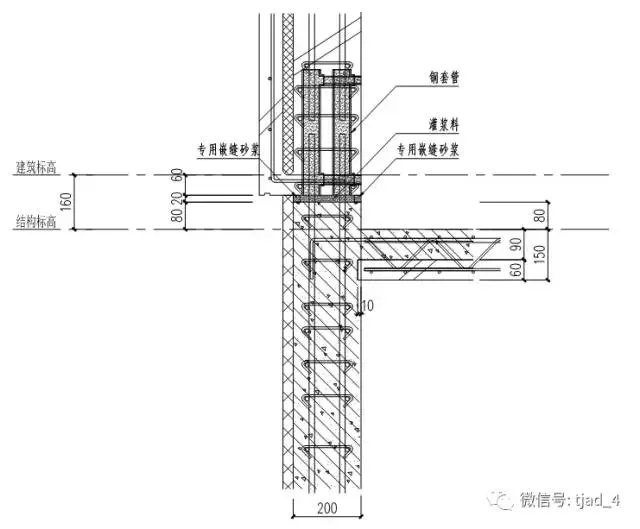
Transition section connection
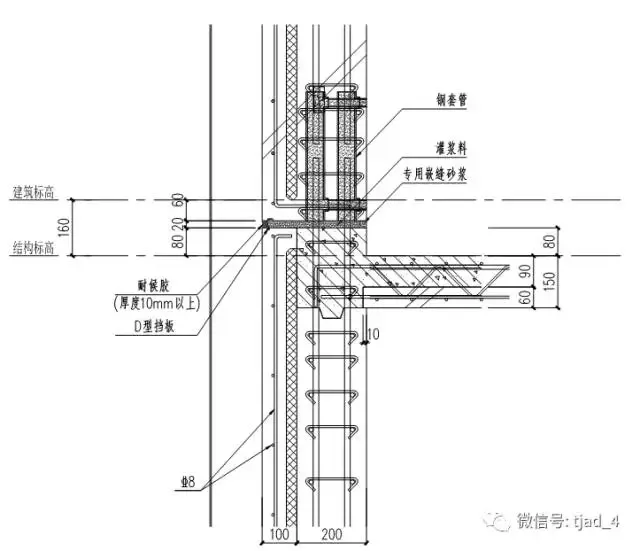
Middle section connection
Conclusion
Shanghai is a vibrant city of innovation, where green and environmentally friendly prefabricated housing is gradually transforming our lives.
We will continue to explore and improve our designs, integrating advanced technologies to make prefabricated housing truly people-oriented.
……













Must log in before commenting!
Sign Up