
Chapter 2: Transportation and On-Site Inspection of Prefabricated Concrete Components (Part 1)
Content Summary
Prefabricated concrete components vary widely in type, depending on their location of use, size, shape, and weight. Each type has specific requirements for transportation, inspection, and stacking. This chapter covers the characteristics of transporting prefabricated components, the inspection criteria and quality standards on site, stacking requirements, and important precautions.
2.1 Transportation Characteristics of Precast Concrete Components
Prefabricated concrete components are usually manufactured in factories located far from the construction site and then transported to the installation location. One of the key challenges is ensuring the quality and safety of these components during transportation by selecting appropriate transportation methods and tools.
1. Selection of Transportation Routes
(1) Designate entry and exit routes for transportation vehicles.
(2) Vehicles must park only in designated areas and follow the assigned routes.
(3) Transportation routes should be planned according to the cargo and must be approved by relevant authorities in advance.
2. Compliance with Traffic Regulations During Transportation
(1) Inspect the vehicle and its enclosure before departure.
(2) Drivers must carry a valid driver’s license, delivery notes, and wear safety helmets.
(3) Follow the transportation plan strictly, including speed limits.
(4) Park vehicles only in designated areas around the construction site.
(5) Turn off vehicles at construction sites and designated spots; safety helmets must be worn.
(6) Observe all traffic rules and regulations within factory premises.
3. Requirements for Transporting Precast Concrete Components
(1) Choose transport vehicles based on component size and weight, ensuring vehicle balance during loading, unloading, and transit.
(2) Secure components firmly to prevent movement or overturning during transport.
(3) For vertical thin-walled components, use dedicated transport racks and flexible padding to protect corners and contact points.
(4) Prefabricated columns, beams, composite floor slabs, balcony slabs, stairs, and air conditioning panels should be transported flat.
(5) Prefabricated wall panels must be transported vertically, with exterior-finished panels loaded with the finished side facing outward and secured with tightening ropes.
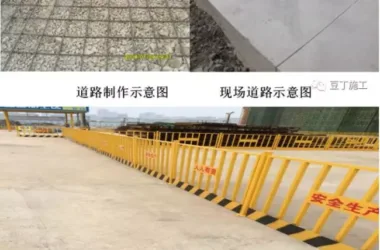
(6) On-site transportation roads should be flat and capable of supporting the load.
4. Selection of Lifting Methods
Components vary in size, so lifting methods must be adapted accordingly. Large, wide, or heavy components require multi-point lifting. Horizontal lifting beams can help distribute the crane’s load between two points. The lifting device’s point should align with the component’s center of gravity to ensure vertical stress on the hook and stabilize the load. Equipment selection must be based on calculations considering the maximum component weight under unfavorable conditions, ensuring the safety of embedded parts and lifting gear. Common embedded lifting points include hooks, suspension rings, detachable embedded types, and steel sections, chosen based on specific component conditions.
5. Protection of Components During Transportation
Due to the large size, heavy weight, and fragility of prefabricated components, the following protective measures are recommended during transportation:
1) Selection of Transport Vehicles
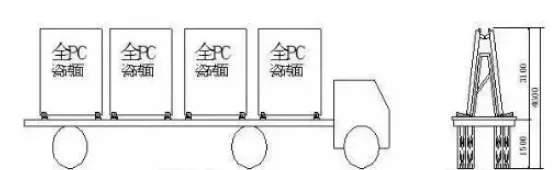
To prevent cracking, damage, or deformation, select appropriate transport vehicles and platforms. Heavy and medium-sized trucks or semi-trailers must not exceed 4 meters in height from the ground; container carriers must not exceed 4.2 meters. Use low flatbed trucks for vertical transport to keep components within height limits.
2) Loading Methods
(1) Beams and columns are generally transported flat and must be secured to prevent shifting. Platform timber placement should align with component reinforcement to prevent cracking (see Figure 2-3).
(2) Wall panels should be transported vertically or on their sides, using dedicated transport frames. Two panels are placed back-to-back on the same frame, connected at the top with flower basket bolts and secured on both sides with diagonal steel wire ropes (see Figure 2-4).
(3) Composite panels should be transported flat, supported by four wooden blocks per panel. These blocks should be uniform in size. For panels longer than 4 meters, six blocks are recommended to prevent mid-span deflection. Stacking should be horizontal, with no more than six panels per stack, secured by safety belts.
(4) Other components, such as stairs, balconies, and semi-prefabricated elements, require customized loading methods based on shape and reinforcement. Safety during transport is paramount. Different cross-sections and reinforcement schemes require tailored measures to prevent cracking and maintain constructability on site. Balcony slabs and stairs should be transported flat, supported by channel steel and fastened with safety belts, transported individually rather than stacked.
3) Protective Measures During Transport
Exercise care when loading and unloading. Place cushioning materials between the transport platform and the truck bed. For long-distance or sea transport, frame the components to protect edges and corners (see Figures 2-5 and 2-6). Secure components fully with steel wires or fixtures to prevent movement during transit. Always follow the designated transportation routes and drive cautiously to avoid speeding or sudden braking.














Must log in before commenting!
Sign Up