
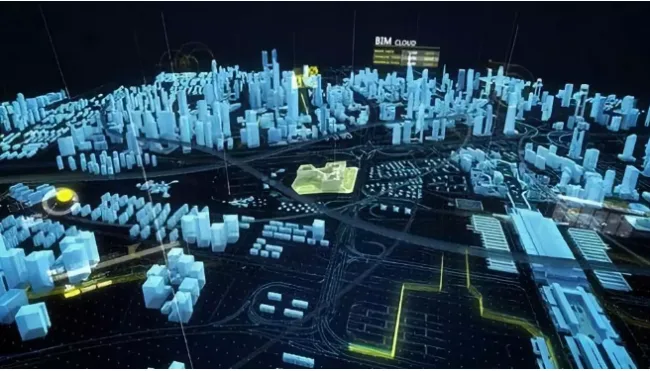
The concept of BIM technology collaboration and integration is deeply aligned with the integrated construction approach for prefabricated buildings, particularly within the EPC engineering general contracting model. The advantages and role of BIM-based prefabricated building information applications are becoming increasingly significant.
This article explores the application of BIM technology throughout the entire process of integrated prefabricated building construction under the EPC general contracting mode. Considering the current development and benefits of BIM technology, alongside the systematic nature of prefabricated buildings, it examines how BIM and BIM-ERP management systems can enhance the value of prefabricated construction and promote high-quality integrated development.
Benefits of BIM-Based Informatization in Prefabricated Building Construction
BIM technology effectively connects disciplines such as architecture, structural engineering, mechanical and electrical systems, and interior decoration, enabling integrated BIM design. This integration strengthens collaboration across disciplines, reduces design errors, omissions, clashes, and inaccuracies, and enhances design quality and efficiency while reducing costs. In the EPC general contracting model, BIM also improves the project team’s collaborative management capabilities and supports intelligent construction.
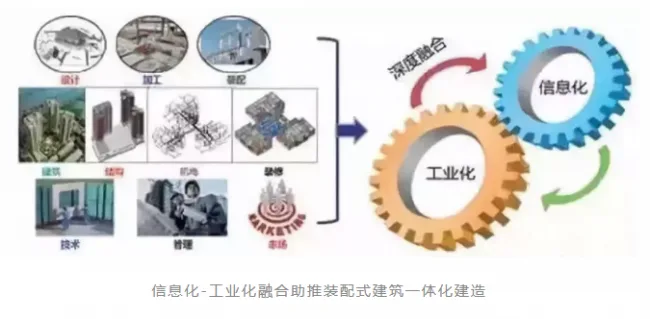
Application of BIM Information Technology
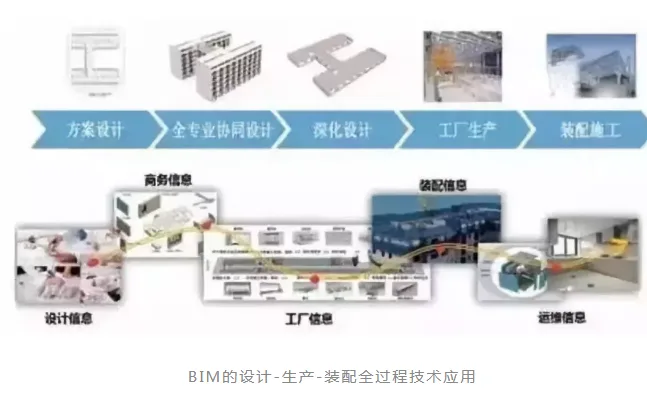
Integrated design, production, and assembly in prefabricated buildings rely heavily on BIM information technology throughout all stages. Utilizing BIM integrated design, factory production, and on-site assembly technologies, digital information is continuously generated during project execution, facilitating seamless collaboration.
Use of BIM Technology in Design
During BIM integrated design, disciplines such as architecture, structure, mechanical and electrical, and decoration collaborate using platform-based design software. Models are built based on unified reference points including base points, grids, coordinate systems, units, naming conventions, levels of detail, and timelines. Designers select standardized components from libraries containing modularized, serialized building parts, which improves modeling consistency and efficiency. Through continuous collaboration, each discipline enriches the BIM model with detailed information, resulting in a comprehensive design model that integrates all professional inputs.
Use of BIM Technology in Factory Production
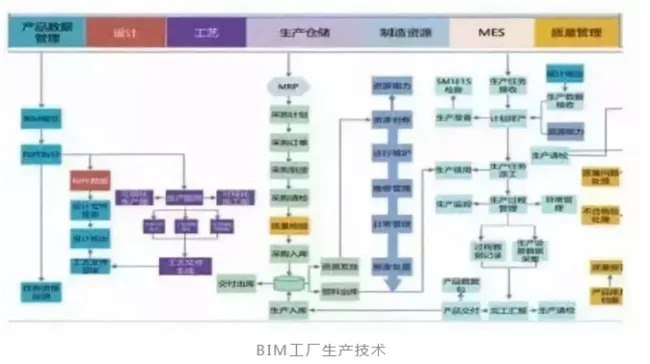
The factory production stage is unique to prefabricated building construction, where components transition from digital designs into physical elements. Automated production is achieved by integrating BIM design data directly into the factory’s central control system using CAM and MES technologies. This system converts model information into production instructions readable by machinery, enabling precise and efficient automated fabrication. Additionally, factory information management incorporates IoT technologies like RFID and QR codes, alongside mobile devices, to oversee production scheduling, material procurement, mold processing, quality control, inventory, and logistics.
Use of BIM Technology in On-Site Assembly
The on-site assembly phase is the physical realization of the prefabricated building throughout its lifecycle. Within the EPC general contracting model, BIM serves as the central platform for shared and collaborative project management. Using the construction schedule as the backbone and BIM models as carriers, on-site assembly information integrates design and factory production data. This approach enables digital, detailed, and visual management of progress, planning, quality, safety, and other critical aspects.
BIM-ERP Information Management Applications
BIM-based information management for prefabricated buildings uses the building information model as the core data source. By integrating enterprise-level ERP resource planning with cloud computing, IoT technologies like RFID, and mobile technologies for data collection and application, it supports comprehensive management throughout the EPC general contracting process.
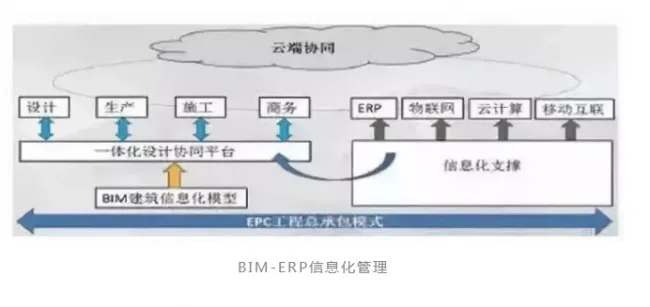
Establishing an Integrated Information Management Platform Based on BIM
The BIM-based information management platform is supported by a centralized data center that processes BIM design, production, and assembly data for engineering projects. This platform creates an enterprise resource database, enabling collaborative workflows and office integration.
Information Management in EPC Engineering Construction
Within the EPC general contracting framework, BIM information management facilitates the application of IT across relevant disciplines, processes, and business areas. Complete BIM model data combined with related business information serve as the foundation for effective management.
By leveraging an integrated BIM-based information platform, EPC project management can oversee procurement, cost, scheduling, contracts, materials, quality, and safety throughout the entire lifecycle of prefabricated building design, production, and assembly. This ultimately ensures efficient allocation and utilization of project resources.

Conclusion: The integration and collaboration enabled by BIM technology are closely aligned with the integrated construction of prefabricated buildings, especially within the EPC general contracting model. The advantages of applying BIM to prefabricated building information management are increasingly evident. By breaking down information barriers between various stages, disciplines, and participants, BIM promotes the implementation and advancement of integrated prefabricated construction, driving the deep integration of building industrialization and digitalization in China.














Must log in before commenting!
Sign Up