

Zhang Jiulang, Director of the Second Institute at Tsinghua University Beijing Qingshang Architectural Design and Research Institute
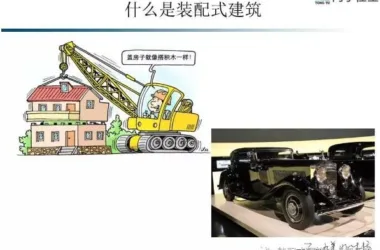
In recent years, the concept of prefabricated buildings has expanded beyond the construction industry’s jargon and become increasingly familiar to the general public. The idea of assembling a house like building blocks and completing a villa within days or weeks, once unimaginable, is now a growing reality. This shift reflects the public’s gradual understanding and acceptance of this innovative approach to construction.
Despite seeming novel, prefabricated buildings are not entirely new. The concept was introduced in China’s construction sector as early as the 1960s, with various trials and promotions occurring in Beijing and other regions during the 1970s and 1980s. However, due to multiple factors, the industrialization of prefabricated buildings in China progressed slowly or even stagnated. Looking ahead, the industrialization of residential buildings is poised to be the future trend, aligning closely with the central government’s goals of energy conservation, emission reduction, and building a resource-efficient, environmentally friendly society. Therefore, the prospects for prefabricated buildings are undoubtedly promising.
What types of projects suit prefabricated buildings? Do they offer cost advantages over traditional construction? How can design and planning be optimized for prefabricated buildings? To explore these questions, a reporter from Changyan Network interviewed Zhang Jiulang, Director of the Second Institute, and Cai Zhi, Executive Director at Tsinghua University Beijing Qingshang Architectural Design and Research Institute, discussing the trending topic of prefabricated buildings.
Cost Efficiency Through Computerized Economies of Scale
Although the government actively promotes prefabricated buildings, many developers remain cautious, primarily due to cost concerns. Currently, prefabricated buildings incur an additional expense of 500 to 600 yuan per square meter compared to traditional cast-in-place construction, which developers find challenging to accept. Zhang Jiulang offers a different perspective on this issue. He explains, “The core value and potential growth of prefabricated housing do not lie solely in cost control. While the per-square-meter cost is higher compared to traditional methods, when considering capital operation and financial cost savings, the conclusion reverses. We often overlook the significant savings in financial costs.”
To illustrate, Zhang Jiulang analyzed a hypothetical project of 100,000 square meters, with land costing approximately 1.5 billion yuan. Assuming a four-year completion timeline and an average annual financial cost of 10%, the total financial cost over four years would be 600 million yuan. Prefabricated construction might add 50-60 million yuan to the project cost, but if 50% of the construction is prefabricated, the schedule could be shortened by about one year. This acceleration would save 150 million yuan in financial costs. Additionally, completing the project earlier means generating commercial and property income sooner, which is a significant financial benefit.
Prefabricated buildings also reduce cost losses. Currently, China’s construction industry still relies heavily on extensive production methods. On-site secondary modifications and adjustments account for about 3% to 5% of total project costs, while losses during interior decoration can reach 5%. Prefabrication’s modular approach offers greater precision, significantly cutting on-site cost overruns.
During his visit to Japan, Zhang Jiulang observed that most Japanese row houses—independent residential units—use prefabricated construction, while small to high-rise buildings combine cast-in-place main structures with prefabricated elements such as doors, windows, and exterior walls. He notes that China’s prefabricated housing is still in its early stages and less refined compared to Japan’s. Currently, it mainly involves combining materials, exterior cladding, and some interior decoration. In the future, integrating smart building systems—including electrical, mechanical, and passive house technologies—will lead to more intelligent, economical prefabricated housing.
Collaborative Industry Development and Division of Labor
Zhang Jiulang emphasizes that prefabricated construction development depends on two key factors: growth and promotion of the entire industry, and intelligent platform support like BIM (Building Information Modeling) technology. Currently, only 10-20% of BIM’s capabilities are utilized. The core function is to transfer design data precisely to steel structure manufacturers, module producers, and intelligent product manufacturers. This digital transmission ensures extremely high precision—down to one millimeter—critical for prefabricated buildings, which require exact component sizes for smooth on-site assembly.
The key to advancing prefabricated buildings lies in industrial division of labor. No single company can master all aspects, much like Apple’s global subcontracting model for phone components. Building components, including intelligent systems, number in the hundreds of categories, and each company can specialize within a larger framework to drive overall industry development.
Zhang Jiulang predicts that with strong government support and encouragement of prefabricated enterprises, the industry will experience rapid growth. Capital investment is optimistic about this market, aiming to integrate prefabricated housing projects with investment chains. As market demand expands and industry infrastructure and practitioner skills improve, costs will decrease, accelerating development. Within approximately three years, prefabricated buildings are expected to enter a booming phase.
Prefabricated residential buildings often come with precision decoration, enabling simultaneous construction and finishing. Zhang Jiulang, an advocate of integrated architectural and interior design, stresses that prefabricated design should follow integrated logic: interior decoration modules should be finalized before construction, ensuring modular components match perfectly. This approach doubles efficiency and enhances final results. For example, factory-made wooden hanging panels can be produced precisely according to building spaces, making them synchronized prefabricated components during assembly. Currently, about 30% of core indoor materials can be assembled on-site, with potential for further increase. Prefabricated buildings can also achieve 100% pre-embedded piping.
He observes that historically, Chinese construction companies, particularly in decoration, have relied on manual skills and traditional management methods. In the future, prefabricated building demands will shift labor from ordinary workers to technically skilled assembly technicians, a critical factor for industry progress. Zhang Jiulang highlights ongoing collaborations with prefabricated product manufacturers preparing for public offerings, focusing on research and development that combines theory with practical application to advance the field.

Cai Zhi, Executive Director of the Second Institute at Tsinghua University Beijing Qingshang Architectural Design and Research Institute
Green, Sustainable Prefabricated Design for Cultural Tourism and Rural Projects
When asked about projects suitable for prefabricated buildings beyond residential housing, Cai Zhi expressed optimism about their application in cultural tourism and rural construction. Since 2013, Cai has closely followed prefabricated building developments. In 2014, he visited the Qingdao Integrated Housing Exhibition, noting that at the time, prefabricated building models were limited and market demand was small. Yet, from 2014 to 2017, the sector rapidly advanced in China, with new technologies, materials, and processes emerging and many projects underway.
Compared to traditional cast-in-place construction, prefabricated buildings offer notable advantages, including energy efficiency, environmental friendliness, and faster construction. Key benefits include:
- Guaranteed product quality: Prefabricated components like exterior and interior wall panels, laminated panels, stairs, and balconies are manufactured in controlled factory settings, ensuring standardization and superior quality control.
- Convenient construction: Prefabricated construction is less affected by weather, seasonal changes, or site conditions, unlike traditional methods which rely heavily on cement casting that can be limited by external factors.
- Environmental friendliness: Preprocessing components in factories and simple on-site assembly significantly reduce construction waste, aligning with green building standards.
- Energy-saving and efficiency: Integrated design of construction and decoration allows simultaneous finishing, boosting efficiency and reducing material consumption. Fewer workers are needed on-site, but they must have higher technical skills.
- Greater integration: Factory prefabrication enables integration of modern building technologies, including electrical systems and smart building elements like passive houses and solar energy, delivering more cohesive solutions than traditional construction.
Cai Zhi believes these strengths make prefabricated buildings especially suitable for cultural tourism and rural construction projects. Such projects often exist outside urban centers—near mountains, forests, or lakes—where transporting materials and on-site concrete work can be challenging and damaging to the environment. Prefabricated construction minimizes on-site concrete pouring, reducing waste and ecological impact during construction.
Additionally, due to their standardized production, prefabricated buildings can improve rural construction quality and aesthetics. Current rural buildings in China often lack planning and design compared to counterparts in Europe, America, and Japan. Prefabricated buildings, designed by professional institutes and produced uniformly in factories, can elevate the design quality and durability of rural housing. Thus, promoting prefabrication in rural construction carries significant importance.
Cost remains a critical consideration in rural projects. Cai explains, “Farmers typically choose structures based solely on cost. Traditional Chinese craftsmanship has gradually faded, leaving mostly cultural relic preservation. Meanwhile, building materials have evolved dramatically. Using traditional methods now would impose high costs on farmers. Although prefabricated buildings currently cost more than traditional cast-in-place construction, industrialization will significantly reduce these costs, making prefabrication truly affordable for rural communities.”
Multi-Party Collaboration Paves the Way for a Bright Future
Besides policy support, increasing public acceptance and ongoing technological improvements contribute to optimistic prospects for prefabricated buildings. People tend to resist unfamiliar concepts, but as prefabricated projects become more common and awareness grows, acceptance rises. Cai Zhi shared a case study from Yaoshan Temple in Hunan Province—the “Zhulin Zen Temple.” The project initially aimed for full prefabrication, but due to local construction teams’ skill levels, it was not fully achieved. Nevertheless, the structural system followed prefabricated principles, resulting in a positive outcome. The temple’s abbot and monks were receptive to the prefabricated concept.
Previously, China lagged significantly behind Europe, America, and Japan in assembly technology, but these gaps are rapidly closing. Cai believes China currently holds the world’s most complete industrial categories and leads in construction volume. Within five years, China is expected to surpass other countries in prefabricated building technology and reach the global forefront. For example, where prefabricated buildings were once limited to three stories, new systems now allow four to five stories. Companies like Vanke and Yuanda Residential Engineering have pioneered these advancements.
Statistics show that in 2015, prefabricated buildings accounted for less than 10% of new construction in China, whereas in Europe and America, the share exceeded 50%. This indicates significant potential for growth in China. Currently, aside from government-funded affordable housing and some public projects, prefabricated construction remains limited. Factors such as higher construction and installation costs and incomplete industry standards make developers cautious. However, with the gradual rollout of specific support policies from the Ministry of Housing and Urban-Rural Development and regional governments, the future of prefabricated buildings in China looks very promising.















Must log in before commenting!
Sign Up