
Yao Hao
(China Communications Construction Corporation Overseas Business Unit, Beijing 100088)
Abstract:
This article introduces and compares four typical general contracting management models: EPC, DB, EPCM, and PMC. It also explores the transitions between these models and other contracting approaches such as TKM, F+EPC, BT, and BOT under specific conditions. The goal is to broaden perspectives and provide useful references for project investors when selecting the most suitable general contracting management model for large, complex, and integrated engineering projects.
Keywords: general contracting management mode; contracting mode; project management
Classification number: TU721 Document identification code: A Article number: 1006-7973 (2012) 10-0106-04
In both international and domestic large-scale comprehensive construction projects, owners often prioritize general contracting management models to minimize risk, simplify management structures, enhance project management professionalism, optimize resource integration, improve project execution efficiency, balance investment, and ultimately increase the cost-effectiveness and economic benefits of the finished product.
In practice, “general contracting” is not a one-size-fits-all concept; it manifests in various forms depending on the owner’s management needs, project characteristics, and implementation specifics. This article focuses on four typical general contracting models—EPC, DB, EPCM, and PMC—and discusses their transformations and adaptations to other models (such as TKM, F+EPC, BT, BOT) under special circumstances. This information aims to assist project investors and owners in selecting the most appropriate general contracting management model for large-scale, comprehensive, and integrated engineering projects.
1. Origins and Fundamental Concepts of General Contracting
Traditional engineering contracting typically involves the owner establishing an expert review panel for bidding after project initiation and funding approval. A project management office is set up, signing separate contracts for design, supervision, and construction with respective parties. Contractors execute construction based on design drawings under supervision, while the project office coordinates among design, construction, and supervision teams. Most domestic projects follow this model, illustrated in Figure 1.
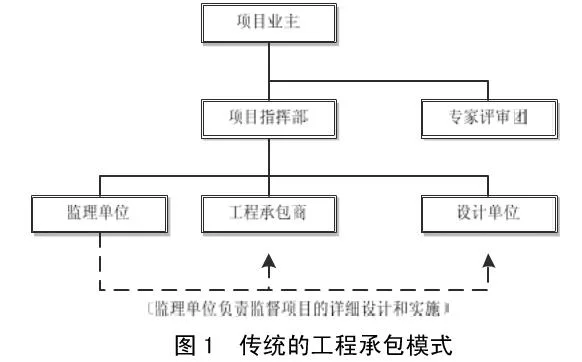
Figure 1: Traditional Engineering Contracting Model
This model places significant management demands on the owner’s project command center, requiring a substantial number of technical professionals and considerable effort to coordinate among contracting parties. The parties operate independently, often resulting in weak technical negotiation mechanisms and responsibility avoidance, which can hinder project progress. Consequently, this model is generally suited for smaller, simpler projects where owners have sufficient personnel and technical expertise.
Contracts are usually unit price-based, with lower risk for contractors but higher management burden and risk for owners. However, as market economies evolve, owners increasingly act as investors focusing on returns and commercial operation, while construction enterprises have grown stronger and more capable through mergers and acquisitions, gaining qualifications across consulting, design, construction, equipment supply, and project operation. The market now demands multifunctional, integrated building products and services.
Hence, project investors are more inclined to delegate functions and risks, streamline management, and hire capable firms to manage and implement the entire project, offering integrated building product services. This shift has led to general contracting models founded on commercial contract principles and trust responsibility concepts.
The author classifies general contracting projects into two categories based on resource integration:
- Implementation-type general contracting: The contractor integrates various execution entities into a seamless performance unit, leading project implementation and bearing full responsibility for deliverables. Examples include EPC and DB models. Pricing is typically fixed lump sum, beneficial for investors to control maximum investment limits (GMP). EPC Turnkey (or TKM) represents the most comprehensive form of this type.
- Project management-type general contracting: The contractor forms a management team to provide comprehensive consulting and management services to the owner, assuming management responsibilities but not contracting directly with implementation parties. The relationship is supervisory. This differs from engineering supervision by involving pre-project consultation and exercising management authority. Pricing is usually a fixed management fee with performance incentives. PMC (or IMPT) exemplifies this model.
2. Definitions and Comparative Overview of EPC, DB, EPCM, and PMC Models
There are over ten submodels of general contracting based on owners’ needs and management capabilities. This article focuses on four fundamental models and their variations, such as TKM, F+EPC, BT, and BOT.
1. EPC Model
The EPC (Engineering, Procurement, and Construction) model involves a single contractor responsible for design, procurement, and construction, as depicted in Figure 2. FIDIC’s “Conditions of Contract for Design, Procurement and Construction (EPC)/Turnkey Project” (Silver Book) provides a prime example of this model. The project investor signs an EPC contract with a contractor who manages the project comprehensively under a fixed lump sum price. The investor typically does not participate in project management, focusing instead on final acceptance and handover. The EPC contractor assumes most construction risks.
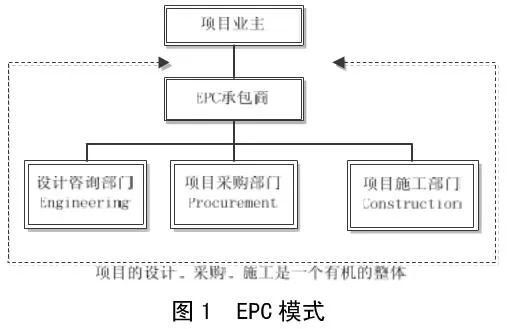
Figure 2: EPC Model
FIDIC also recognizes an advanced EPC version called Turnkey (TKM), which places broader responsibilities, stricter timelines, and higher risk on the contractor, generally resulting in a higher contract price. If the contractor can finance the project, the “Financing + EPC Turnkey” (FEPC) model applies. When the contractor self-funds and becomes an investor, it transitions into a BT (Build and Transfer) model. Further delegation of operational rights to the contractor leads to the BOT (Build, Operate, Transfer) model. Various BOT variants exist but are beyond this article’s scope.
2. DB Model
The Design and Build (DB) model, illustrated in Figure 3, involves the owner contracting a single general contractor responsible for both design and construction. FIDIC’s “Conditions of Contract for Plant and Design-Build” (Yellow Book) typifies this model.
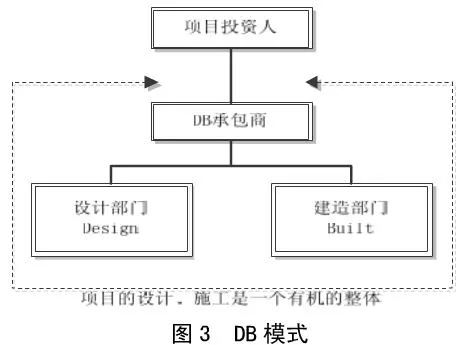
Figure 3: DB Model
Unlike EPC, the DB model excludes procurement. Both models share the core principle of integrated design and construction, fixed total price, and delivery of finished products. However, there are key differences:
- The DB design focuses on structural, aesthetic, and functional design within a single discipline, while EPC encompasses overall project planning, management at all stages, interdisciplinary coordination, and process design.
- Owners usually have detailed design requirements before signing DB contracts, requiring contractors to refine existing plans. In EPC, owners provide conceptual and functional requirements, expecting contractors to propose and optimize design solutions.
- DB is often used for medium-sized, single-discipline projects, while EPC suits large, multi-disciplinary projects like ports, bridges, and airports.
3. EPCM Model
EPCM (Engineering, Procurement, and Construction Management) involves the owner signing a management contract with an EPCM contractor while separately contracting design, procurement, or construction services with other parties. In this dual role, the EPCM contractor acts as both the owner’s representative and engineering consultant, managing cost, quality, safety, and schedule, and assumes overall project management risks, as shown in Figure 4.
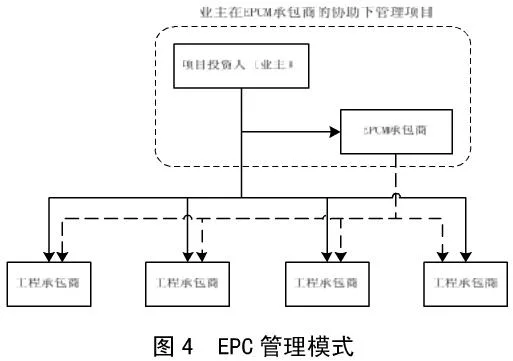
Figure 4: EPC Management Mode
Unlike implementation-type contracts, EPCM contractors have no contractual ties to the actual construction parties. EPC, DB, EPCM, and PMC all fall under management-type general contracting, characterized by fixed management fees. EPCM serves as a middle ground between traditional contracting and EPC, especially suitable for large, complex projects. It allows owners to maintain process control with professional support while sharing management risks. EPCM contractors proactively identify and address issues on behalf of owners, acting as risk-sharing guarantors.
4. PMC Model
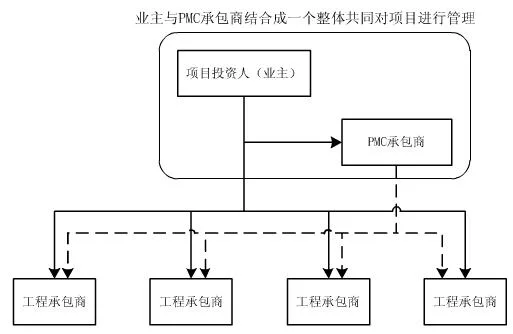
Figure 5: PMC Model
Project Management Contract (PMC), sometimes called Integrated Project Management Team (IMPT), involves the owner hiring a professional project management firm to provide comprehensive management services throughout the project lifecycle or selected stages. PMC is considered a high-end form of management contracting, with roles similar to EPCM but with higher contractual status, closer integration with the owner, and greater management responsibilities.
PMC contractors are expected to have exceptional engineering consulting and management expertise, along with strong reputations. Their integrated approach includes:
- Collaborating with the owner on organizational structure, procedures, management objectives, and values to form a unified project management organization. Unlike traditional in-house project offices, PMC operates on commercial contracts, fulfilling trust responsibilities with flexible deployment. Owners gain access to experienced professionals quickly, avoiding the challenges of assembling qualified in-house teams.
- Coordinating multi-disciplinary teams and multiple contractors, suppliers, and purchasers to ensure close integration and efficient resource allocation, reducing dispatch expenses and improving project cohesion.
- Leading or participating in all project phases—from feasibility studies, environmental assessments, and approvals, to design, bidding, construction supervision, and even project operation—ensuring seamless service integration according to owner needs and contractual agreements.
3. Task and Function Comparison Across Project Lifecycle Stages
Traditionally, owners engaged different professional companies at various project stages, signing multiple contracts and increasing management complexity and costs. Integrated service concepts now encourage investors to assign tasks across stages to as few contractors as possible, minimizing management targets and expenses.
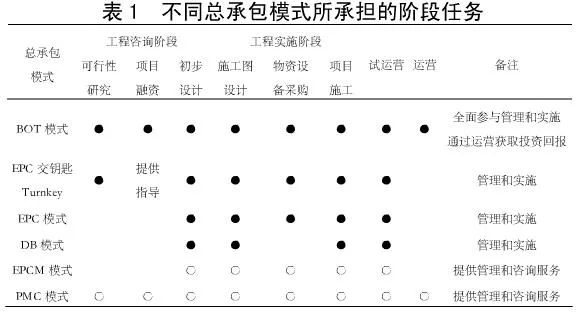
Table 1: Tasks Undertaken by Different General Contracting Models Throughout Project Stages
From the project lifecycle perspective, Table 1 compares the scope of tasks handled by various general contracting models.
5. Organization and Preparation of Construction Machinery for Water Conservancy and Hydropower Projects
Effective management of construction machinery in water conservancy and hydropower projects involves:
- Establishing operational teams based on machinery types and construction site needs, defining roles and personnel composition;
- Forming teams based on operator skill levels, including dispatchers, technicians, administrators, and material handlers;
- Assigning maintenance personnel according to machinery operating hours, types, and quantities;
- Developing suitable work shift systems aligned with project schedules and actual conditions.
2. Research on Organization and Scheduling of Construction Machinery
Key aspects include:
- Reasonable organization: Coordinating machinery usage in time and space, such as synchronizing operations in assembly lines to enhance efficiency;
- Scientific management: Implementing pre-construction planning, ongoing monitoring, and post-construction evaluation to improve progress; involving operation teams in planning to coordinate maintenance and operations effectively; ensuring onsite personnel can balance machinery use with construction progress;
- Information collection: Establishing rapid feedback systems for fire prevention, flood control, and quality issues to enable effective machinery scheduling;
- Progress monitoring: Tracking machinery progress, identifying delays, adjusting plans, and organizing construction systematically.
3. Coordination of Mechanical Construction Plans
Mechanical construction plans typically cover material supply, scheduling, inter-process operations, and maintenance. Effective onsite construction machinery management requires:
- Allowing flexibility in plans to accommodate unpredictable factors like weather or accidents;
- Accounting for maintenance and upkeep to ensure machinery reliability;
- Coordinating supply and operation plans, integrating raw materials and spare parts provision to support machinery usage.
4. Conclusion
With technological advances and industry growth, China’s water conservancy and hydropower sector is entering a golden development era. Onsite construction machinery management remains a critical focus. Strengthening research and applying scientific, practical management methods represent vital challenges and responsibilities for industry professionals.













The IPMT joint management team is widely used in China today, where the owner directly leads the team (the management team is established for the project at once) for project management. Sub projects (devices) may adopt EPC or E+P+C models, and the depth of owner management varies. However, PMC is very rare in China, with the most famous being the PMC management of the Nanhai Petrochemical (a joint venture between CNOOC and Shell) project. The direct intervention of the owner in the general contracting and project implementation is not obvious. PMC, as an independent management party responsible for project implementation, charges relatively high fees, which is also one of the reasons why it is less commonly used in China. It seems that there is no distinction between the two management modes in the article.
The analysis is very professional, thank you for the reminder.