
BIM technology plays a crucial role in construction quality management, particularly in defining quality acceptance plans, conducting quality inspections, managing quality issues, and analyzing quality problems.
By leveraging BIM in quality management, models can be developed based on detailed design or prefabricated processing models. These models help establish quality acceptance plans aligned with relevant regulations and construction data standards. Quality inspections, issue handling, and problem analysis can then be performed either in batches or for specific cases, as illustrated below.
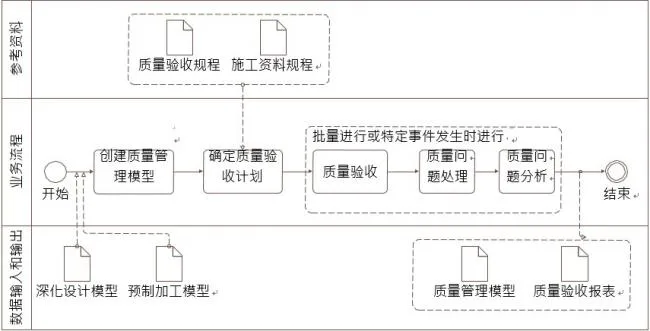
When creating a quality management model, it is important to adjust the imported detailed design or prefabricated processing models as needed to satisfy quality acceptance requirements.
For determining the quality acceptance plan, using a comprehensive model for the entire project is recommended. Acceptance checkpoints should be linked or associated with the corresponding component model elements or combinations of elements.
During quality acceptance, all relevant information must be attached to or associated with the respective component model elements or element groups.
Similarly, when addressing quality issues, the handling details should be connected to the relevant component model elements or their combinations.
Finally, for quality problem analysis, models should be used to aggregate and visualize quality data and issues by location, time, and other factors. This approach provides valuable insights and supports the continuous improvement of quality management processes.













Must log in before commenting!
Sign Up