
This 14,830-square-foot building, opened in 2017, has earned multiple architectural honors, including the ENR California Small Project Excellence Award and the San Diego Architectural Foundation Orchid Award. While designers and architects receive much of the recognition, construction workers understand that such a reputation can only be achieved through the collective effort of the entire team—engineers, suppliers, contractors, and more—working together to bring the design to life.
Behind the scenes of this project are two key contributors: Lance Richardson, whose company Richardson Steel provided structural personnel to support the creation of the undulating roofs, and Bart Rohal from Steel Detailing Online, who collaborated with Richardson as the steel structure detail designer.
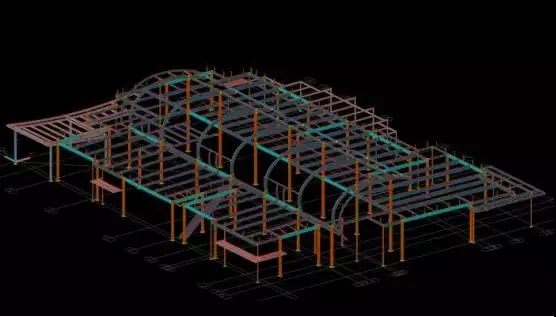
Thanks to clear communication throughout the project, the complex metal roof of the Imperial Beach Library was successfully completed. Image courtesy of Steel Detailers Online.
Richardson noted, “This is a complex project with multiple changing radii—from one radius to a second, then a third. Without modeling, locating everything would have been difficult. Fortunately, the project went smoothly, and everyone’s work was integrated seamlessly and in parallel. Thanks to the use of advanced communication and sharing tools, we avoided problems and everything proceeded as planned.”
The software used in this project includes Revit, Navisworks, BIM 360, and Advance Steel. BIM technology streamlines projects like the Imperial Beach Library, helping to bridge the gaps between design, engineering, and construction phases.
Often, malfunctions take several hours to fix, and in the worst cases, they cause significant waste of time and materials.
To minimize failures and avoid such waste, two steel structure experts shared four essential tips to improve processes commonly seen in construction, engineering, and manufacturing industries.
↓
1. Embrace Universal Technology
Many solutions for steel structure manufacturing challenges rely on universal software technologies. Richardson and Rohal believe BIM adoption is accelerating and hope this trend will lead to a future where all stakeholders achieve consensus as a unified 3D team. They have worked on numerous custom steel structure projects that demand extra attention to detail.
Rohal explained, “Lance works with another detail engineer who handles all 2D details. He provides me with those drawings, and I process them in 3D. It takes only one to two days to complete special pipeline cuts and deliver them as IGS files, saving hundreds of hours.”
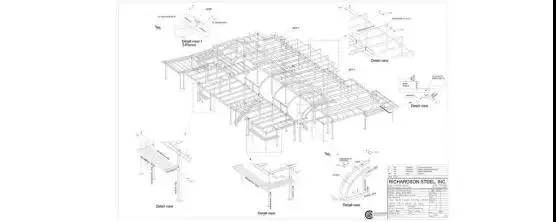
When all stakeholders adopt common software platforms, errors are minimized, saving both time and money. Image courtesy of Steel Detailers Online.
Richardson added, “Our pipeline suppliers and machinery factories can import 3D IGS files from Advance Steel directly into their five-axis laser and CNC machines for cutting—processes that would take hundreds of hours if laid out manually.”
2. Start Collaborating Early
Both Richardson and Rohal emphasize the benefits of involving steel structure professionals early in the construction and engineering phases.
Richardson remarked, “Very few architects and engineers ask me to get involved at the early design stages. Usually, I’m not contracted to provide steel until much later, and I can’t guarantee availability at that point. I don’t want to overstate the benefits of early involvement, but encouraging engineers and architects to maintain communication with all construction members early on fosters better collaboration.”
Rohal believes even more strongly in early collaboration and has proposed a new role he hopes to see integrated into architecture and engineering teams. He said, “I believe project owners, who are increasingly cautious, will subcontract to qualified Quality Control Steel Detailers (QCSD). These professionals inspect steel structure projects during design and construction, acting as steel consultants before bidding. This approach can save owners significant costs and shorten delivery times. Additionally, construction and engineering teams can incorporate valuable steel structure feedback into future projects.”
3. Model According to American Institute of Steel Construction (AISC) Standards
The American Institute of Steel Construction requires steel structure drawings to be detailed within a tolerance of 1/16 inch. For detail engineers like Rohal, the challenge is that not all design plans and models meet this standard. He often has to submit design requests (RFIs) based on the basic steel layout.
He explained, “At the early stages, both 2D designs and 3D BIM models must comply with AISC standards. If the model doesn’t meet these, the steel detail engineer would rather start from scratch than double-check everything.”
Non-compliance can lead to drastically different costs and timelines, Rohal added.
4. Consolidate and Review Lessons Learned
With the fast pace of construction, many professionals quickly move on to the next project after completing one. Rohal suggests that design requests should be reviewed and consolidated post-project as a valuable learning tool.
He advised, “Construction and engineering firms should gather special project design requests in one place for final review. This helps integrate ideas for future projects and refine standards to ensure more economical and structurally sound procedures.”














Must log in before commenting!
Sign Up