
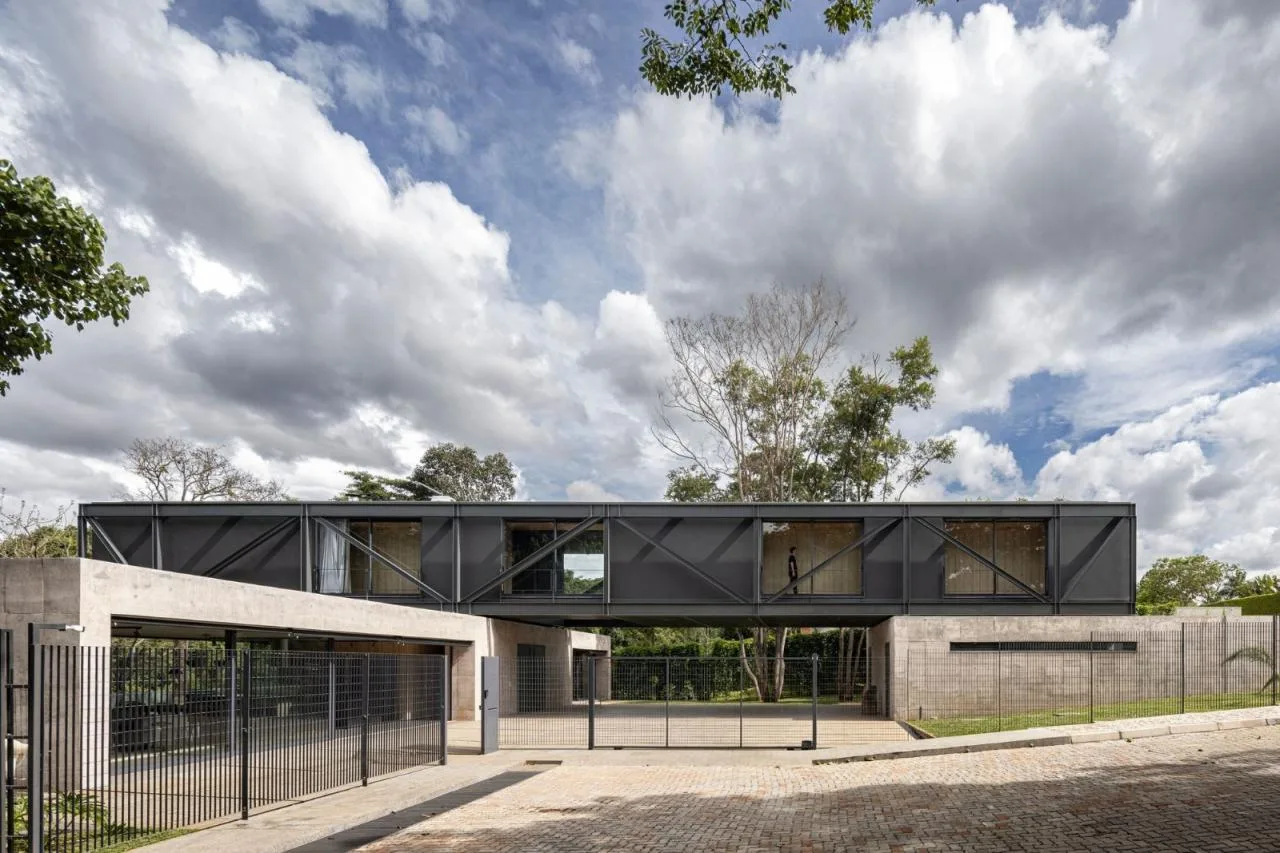
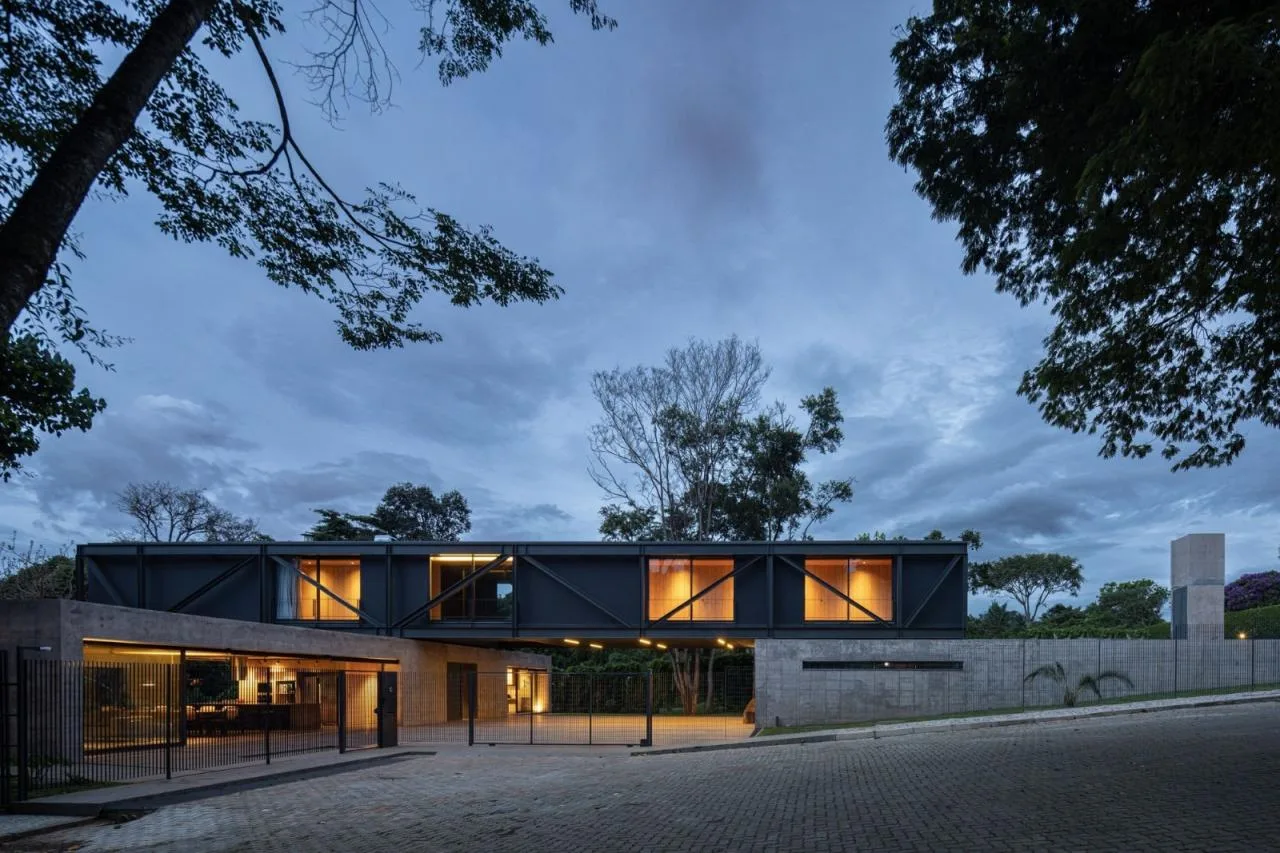
The design of Habka House embraces simplicity as its core expression. To achieve this, the project is guided by three key considerations that respond to the site’s characteristics and context:
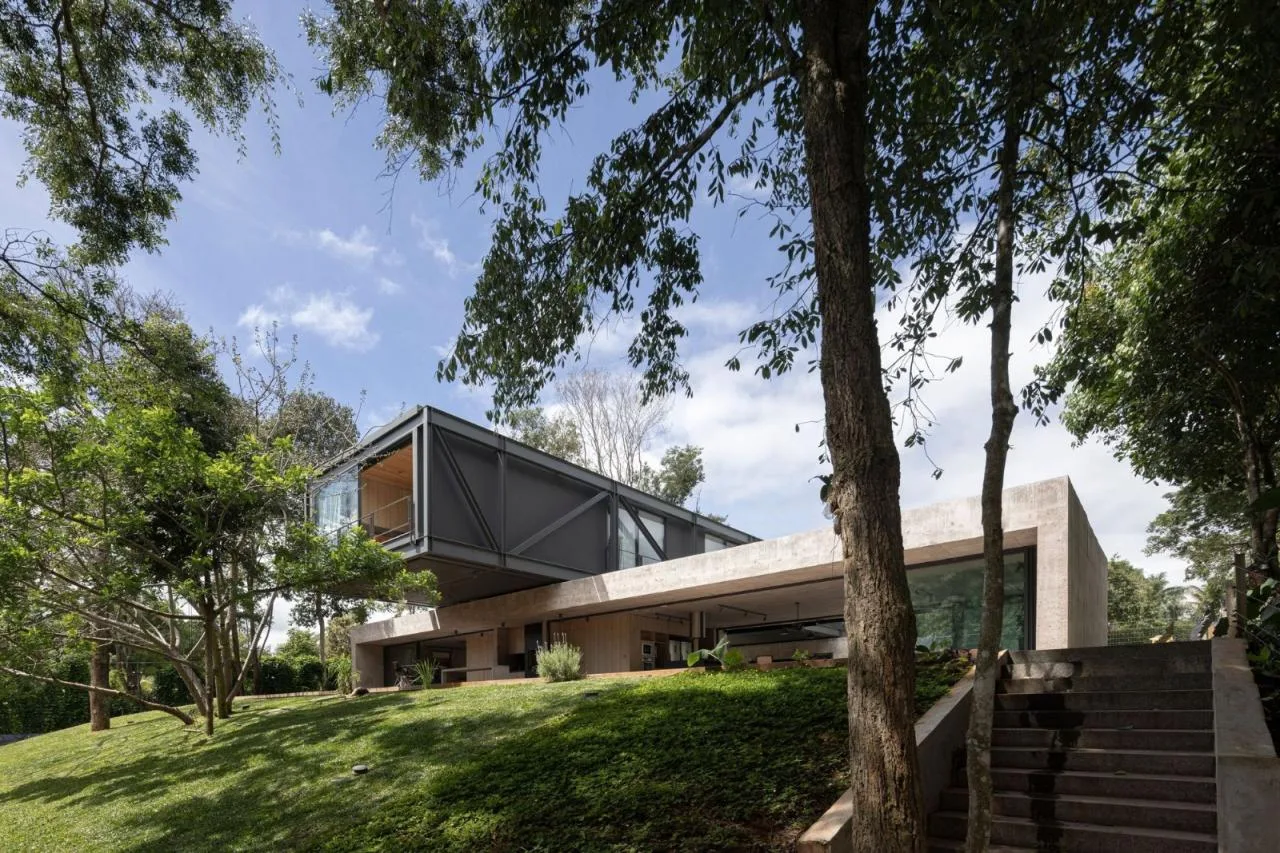
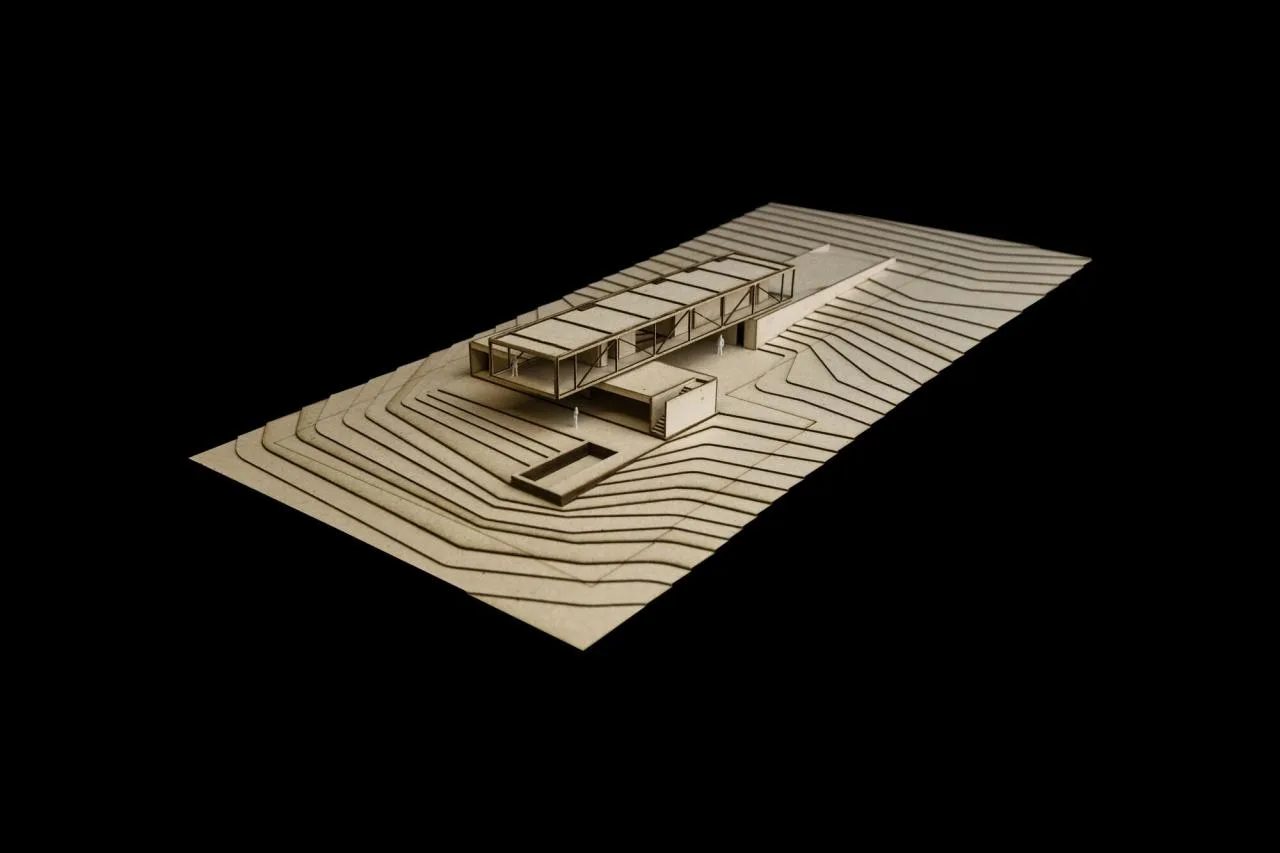
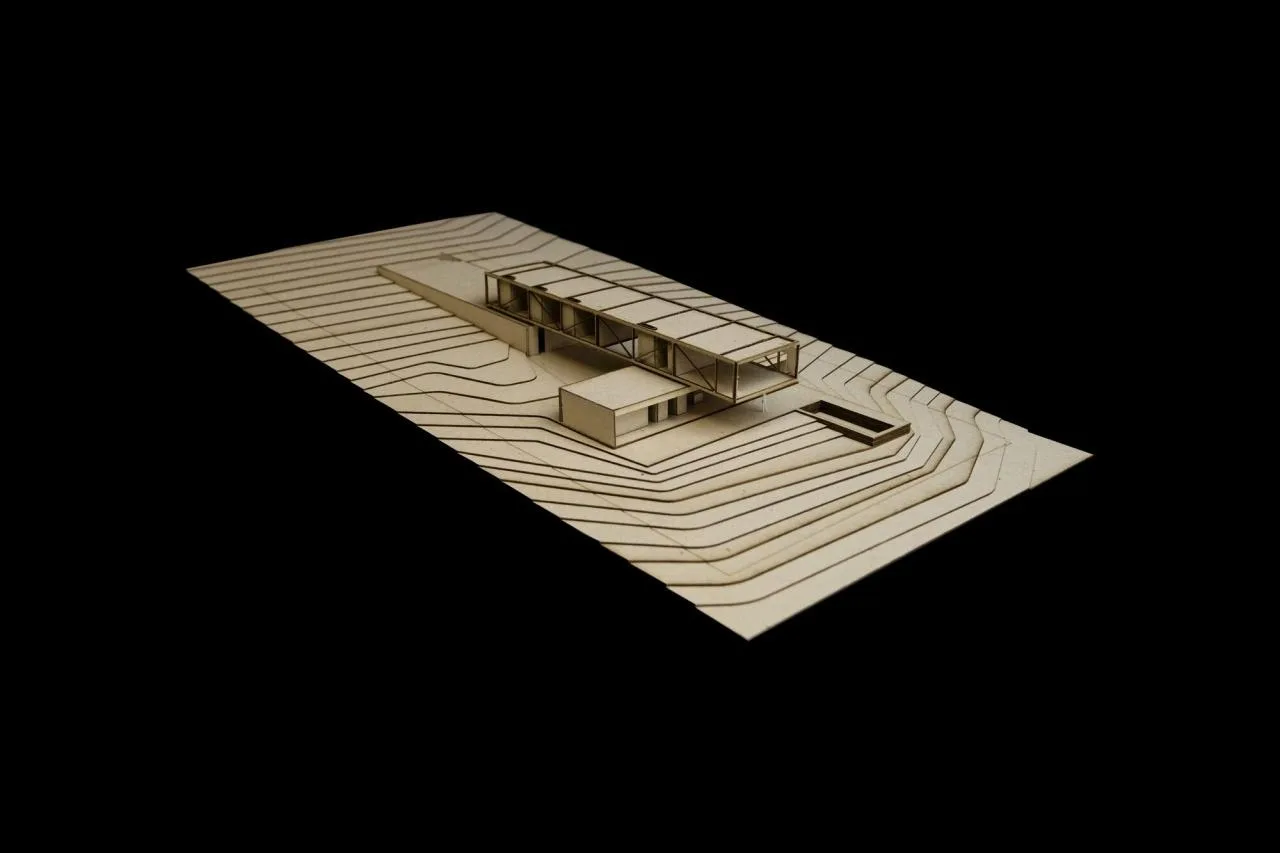
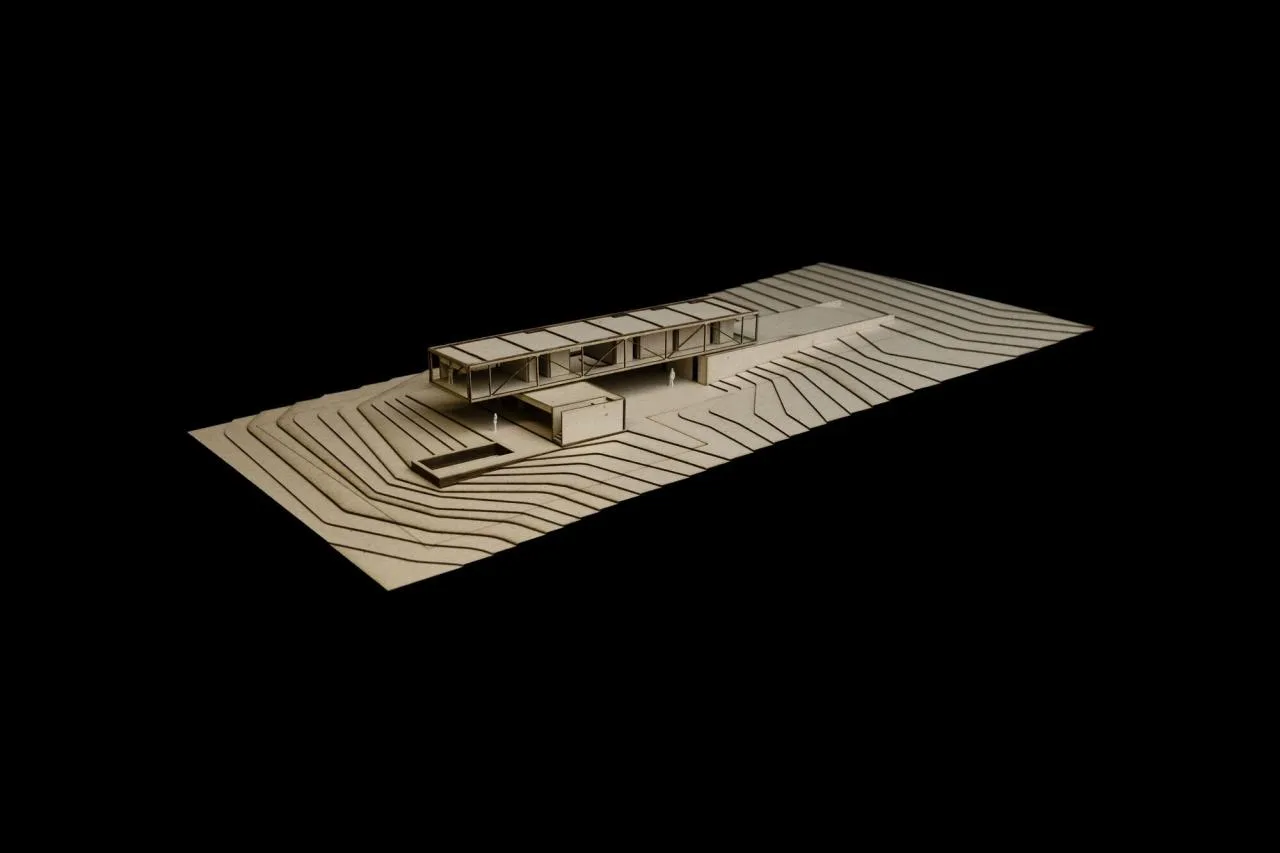
1. The terrain’s six-meter slope descending towards the rear of the site;
2. Establishing a connection from the central pathway of the plot to the house;
3. Integrating into the surrounding environmental protection zone.
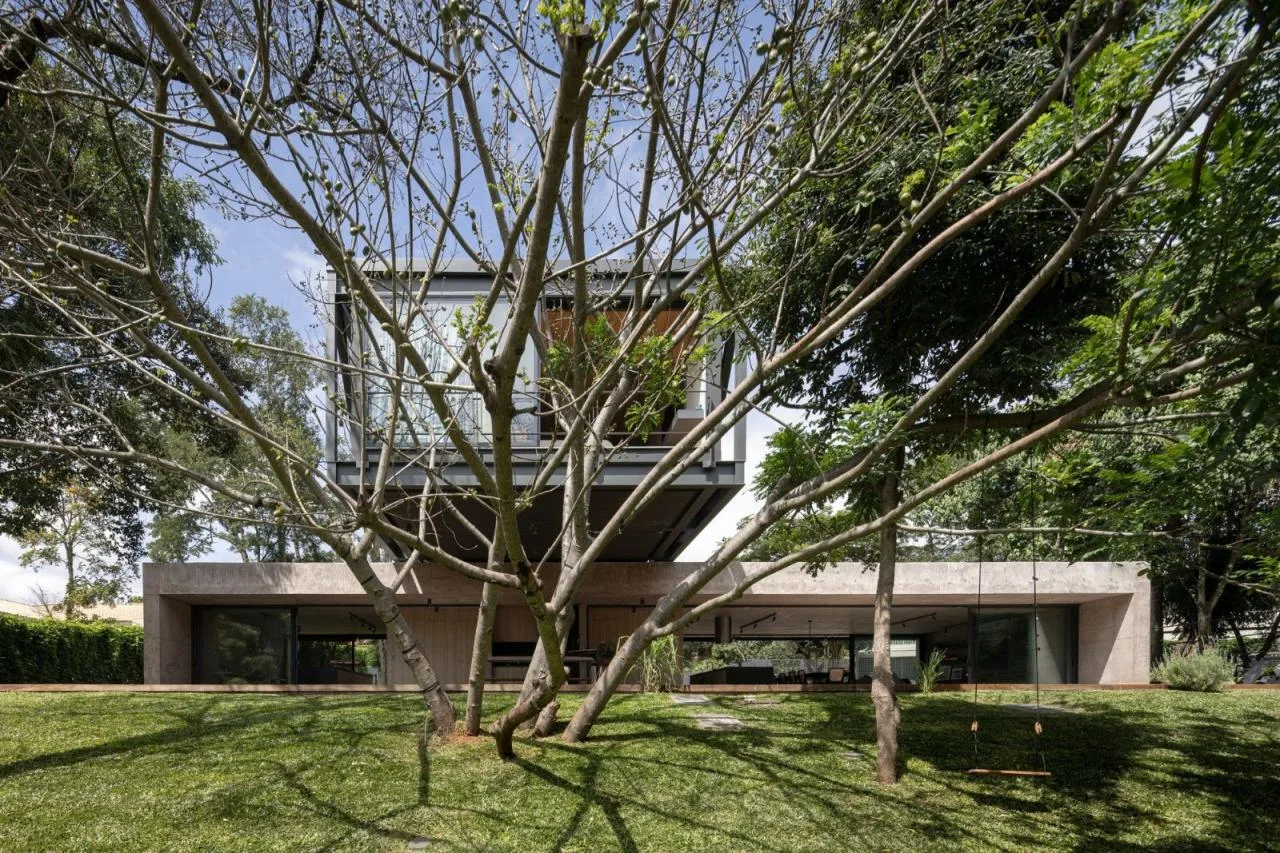
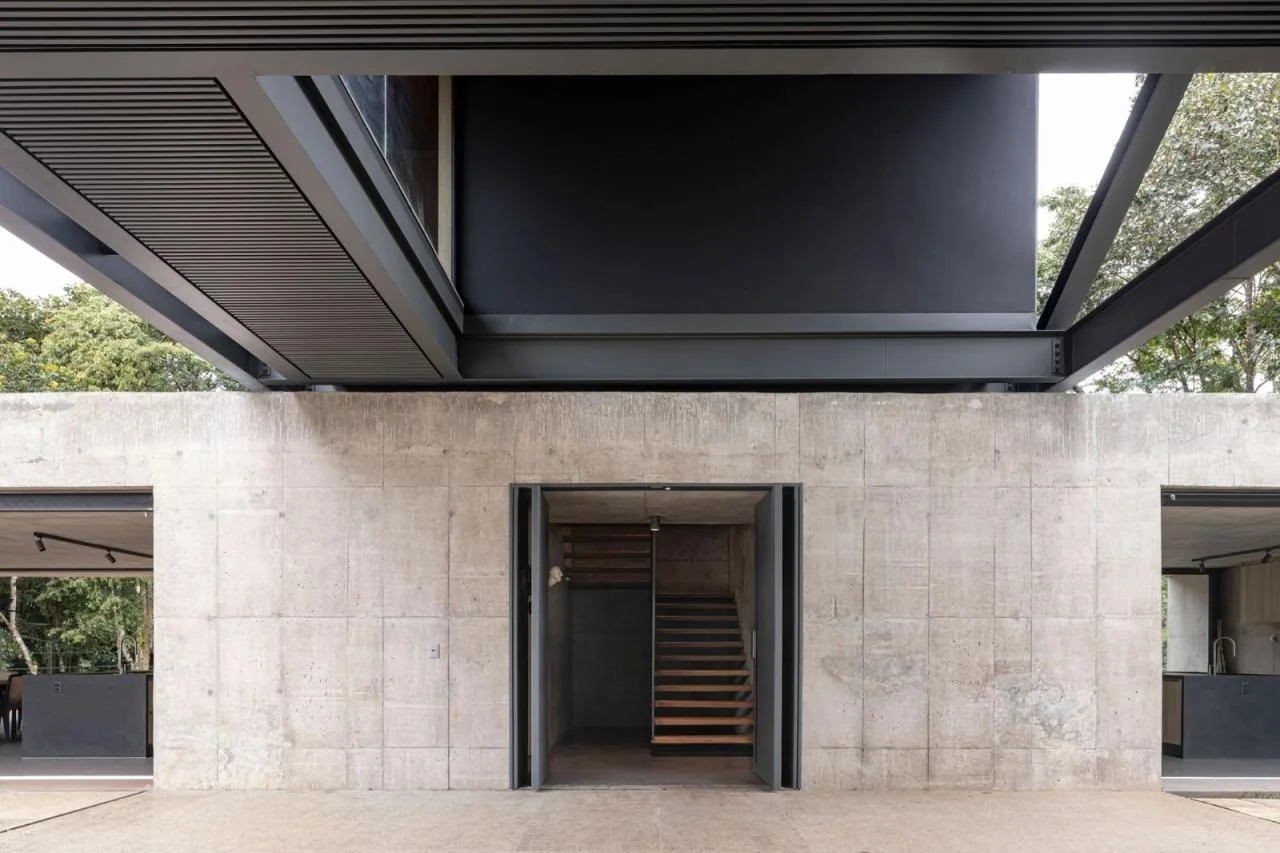
The foundation of the design centers on the entrance, a pivotal breakthrough that marks the building’s occupation of the site. This entrance progressively shapes and supports the project’s strategy through deliberate axial connections.
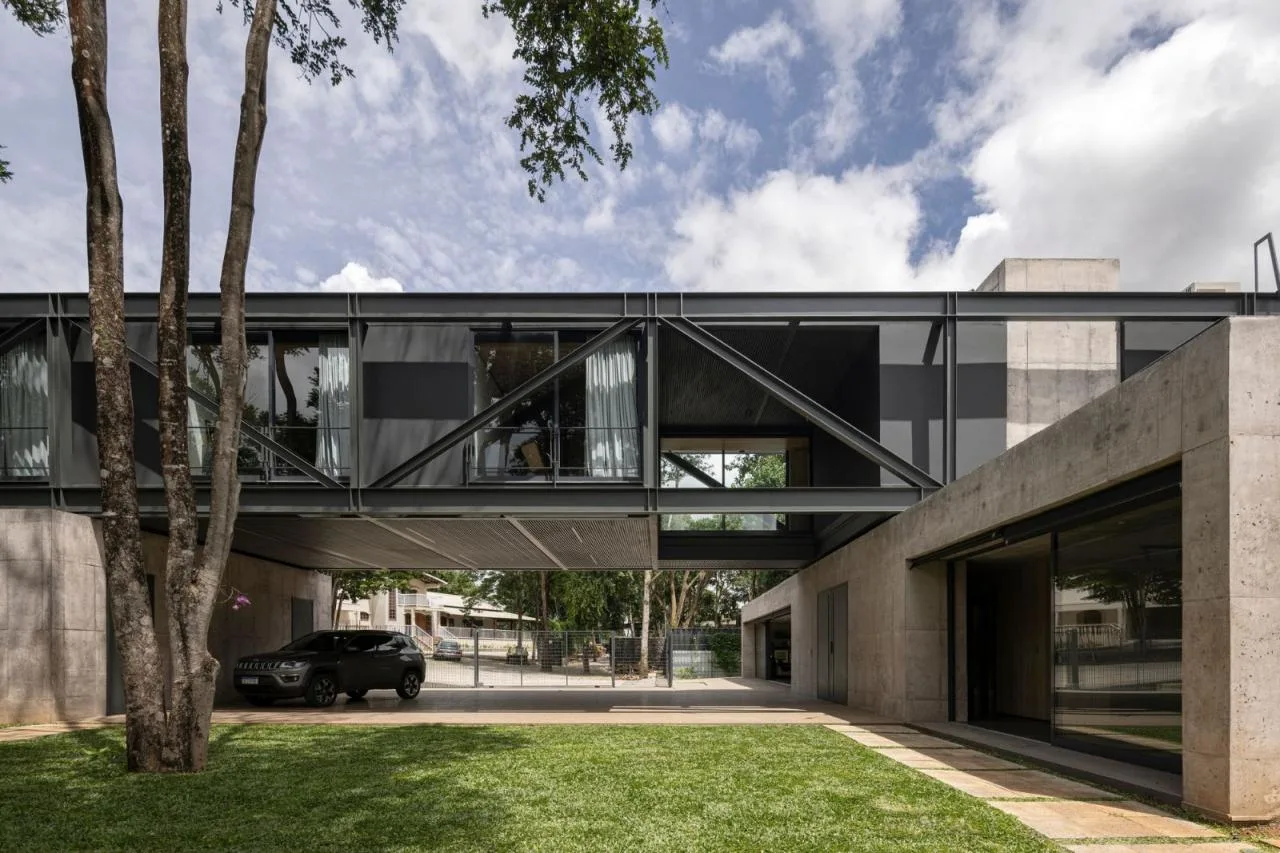
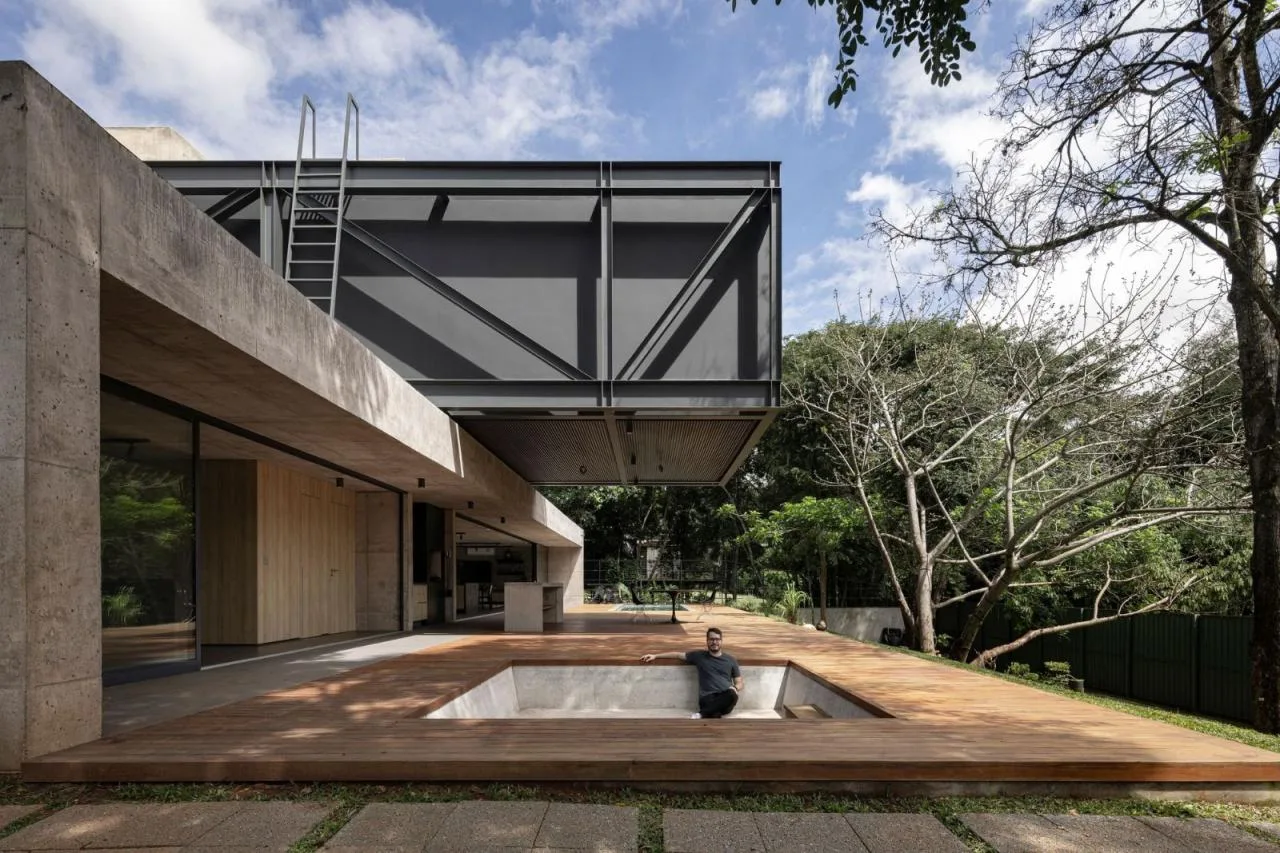
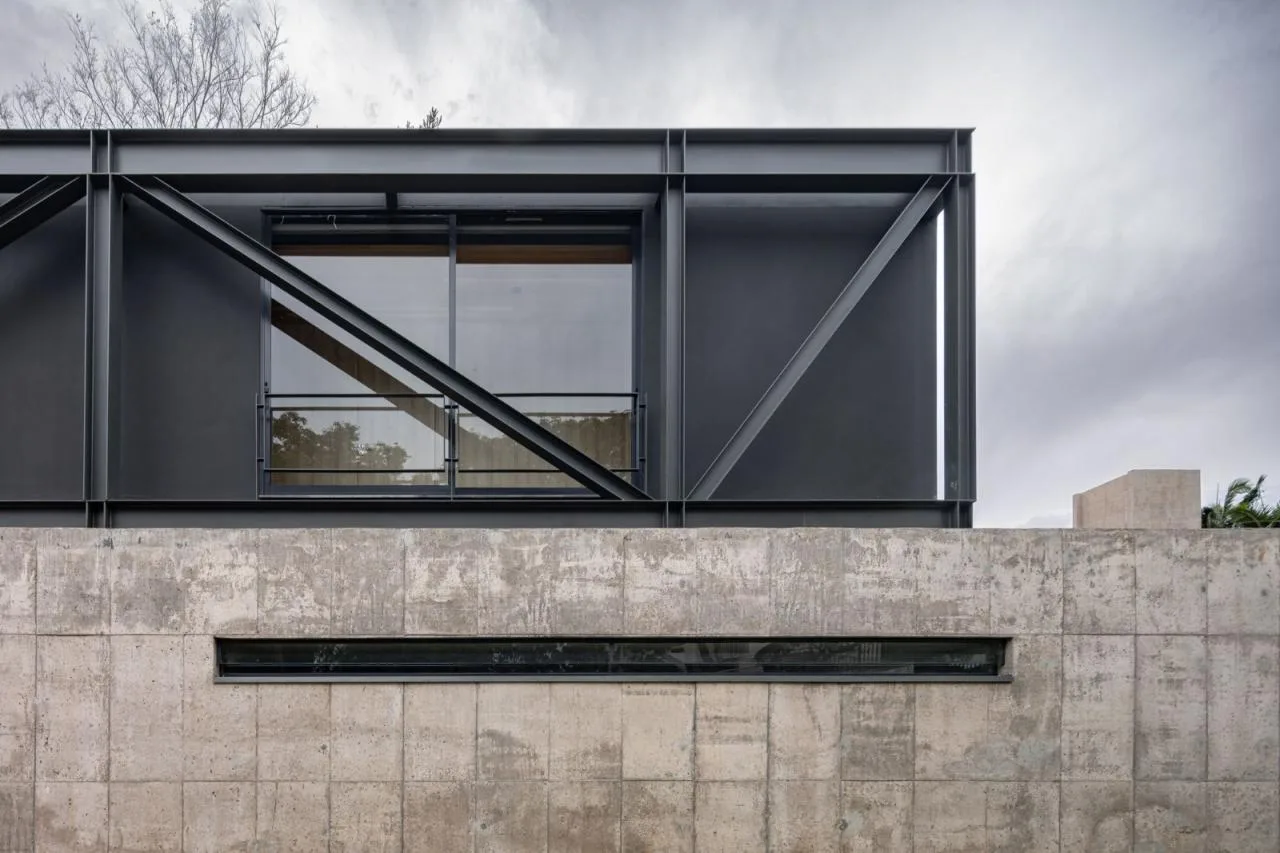
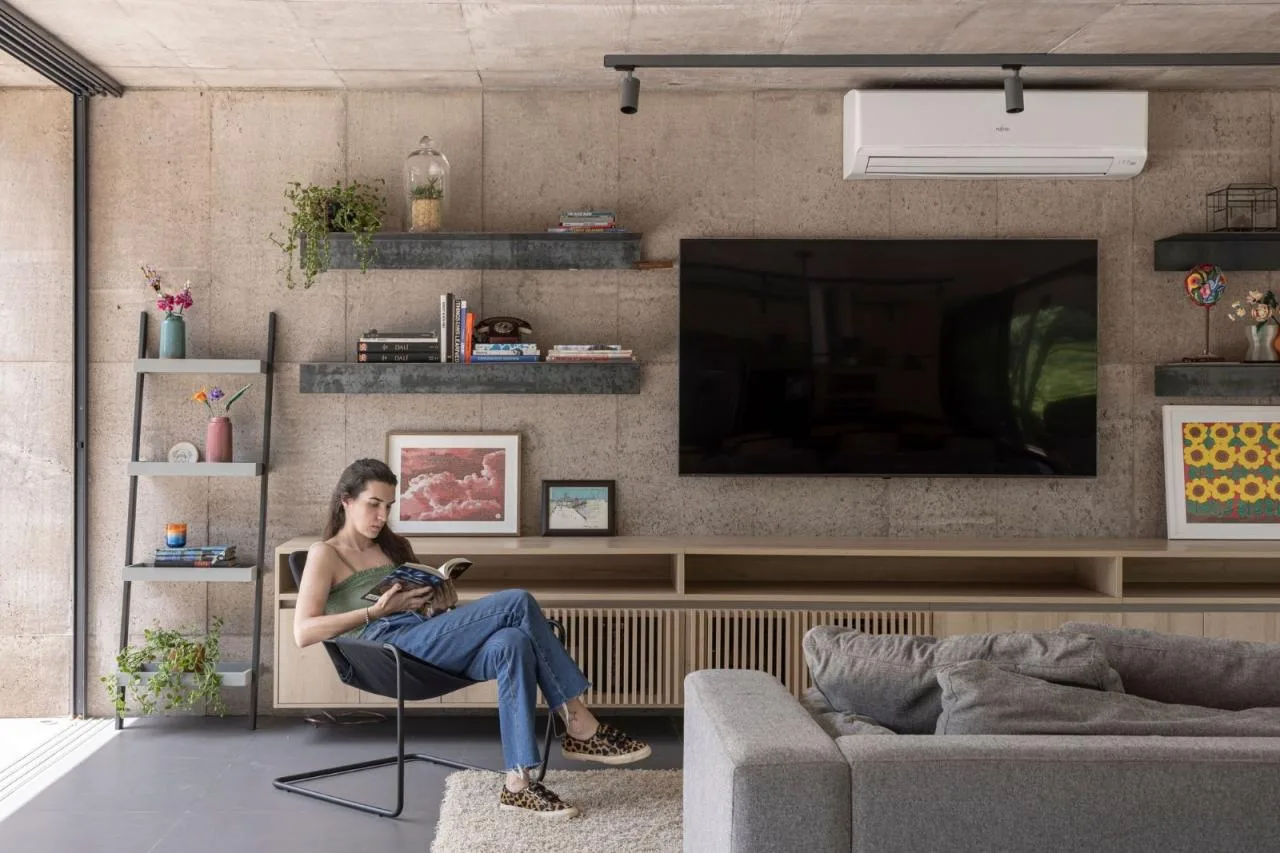
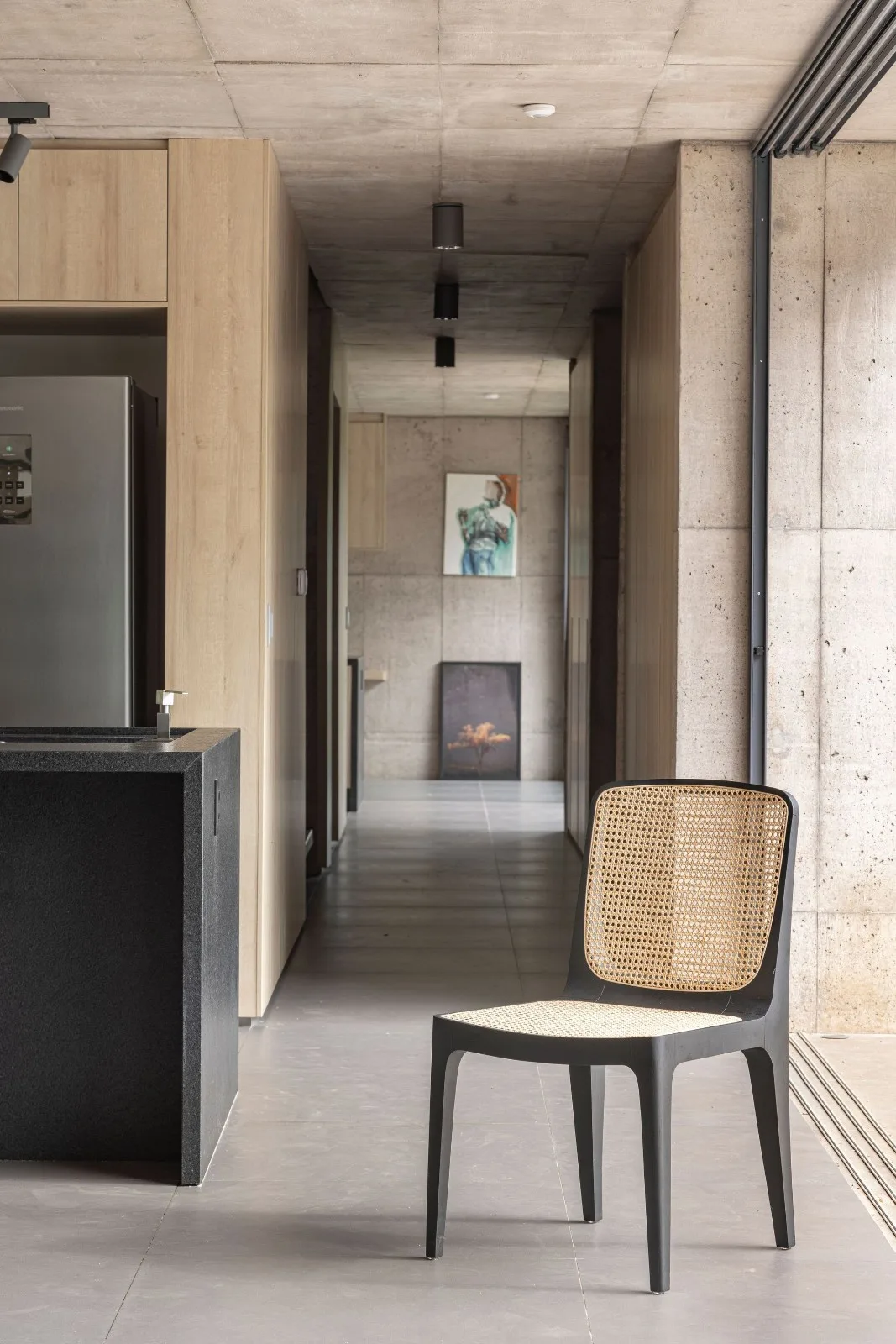
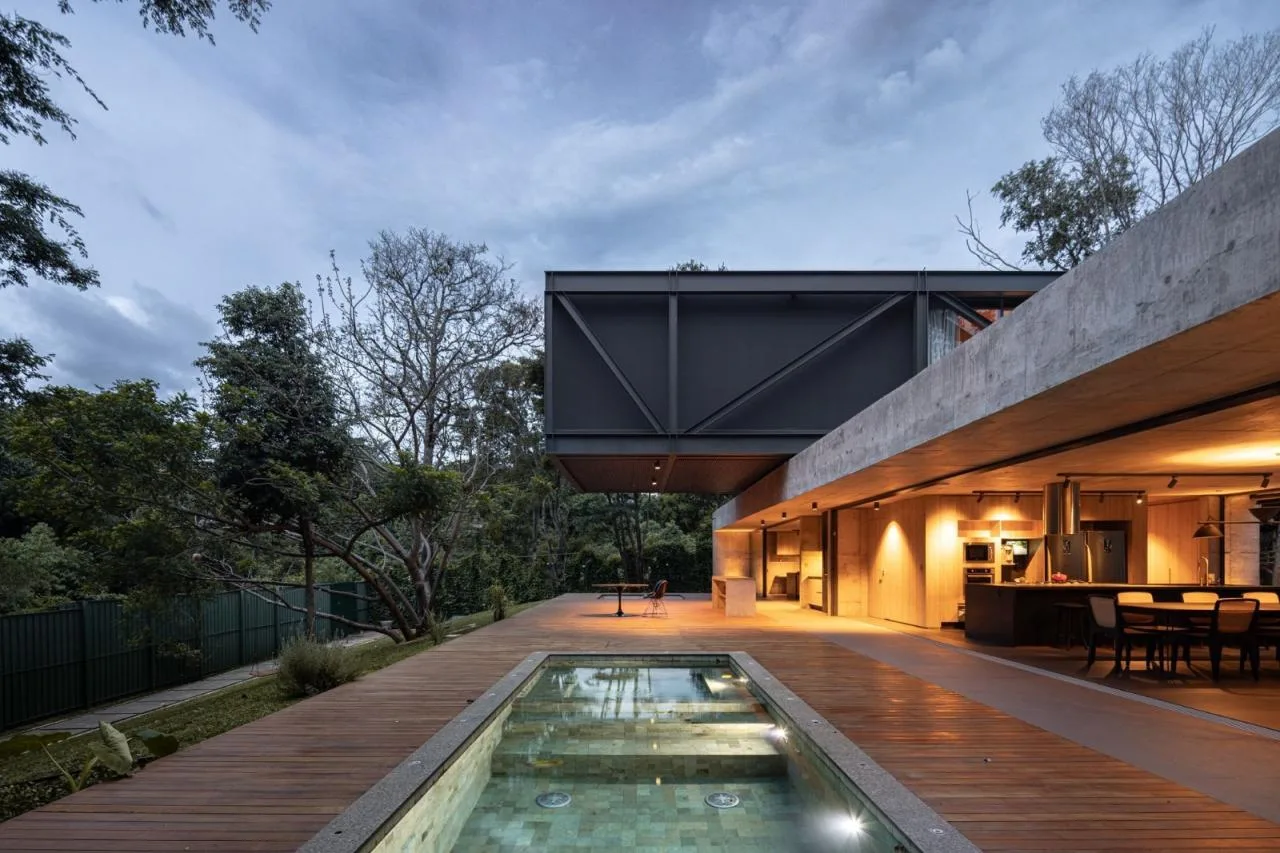
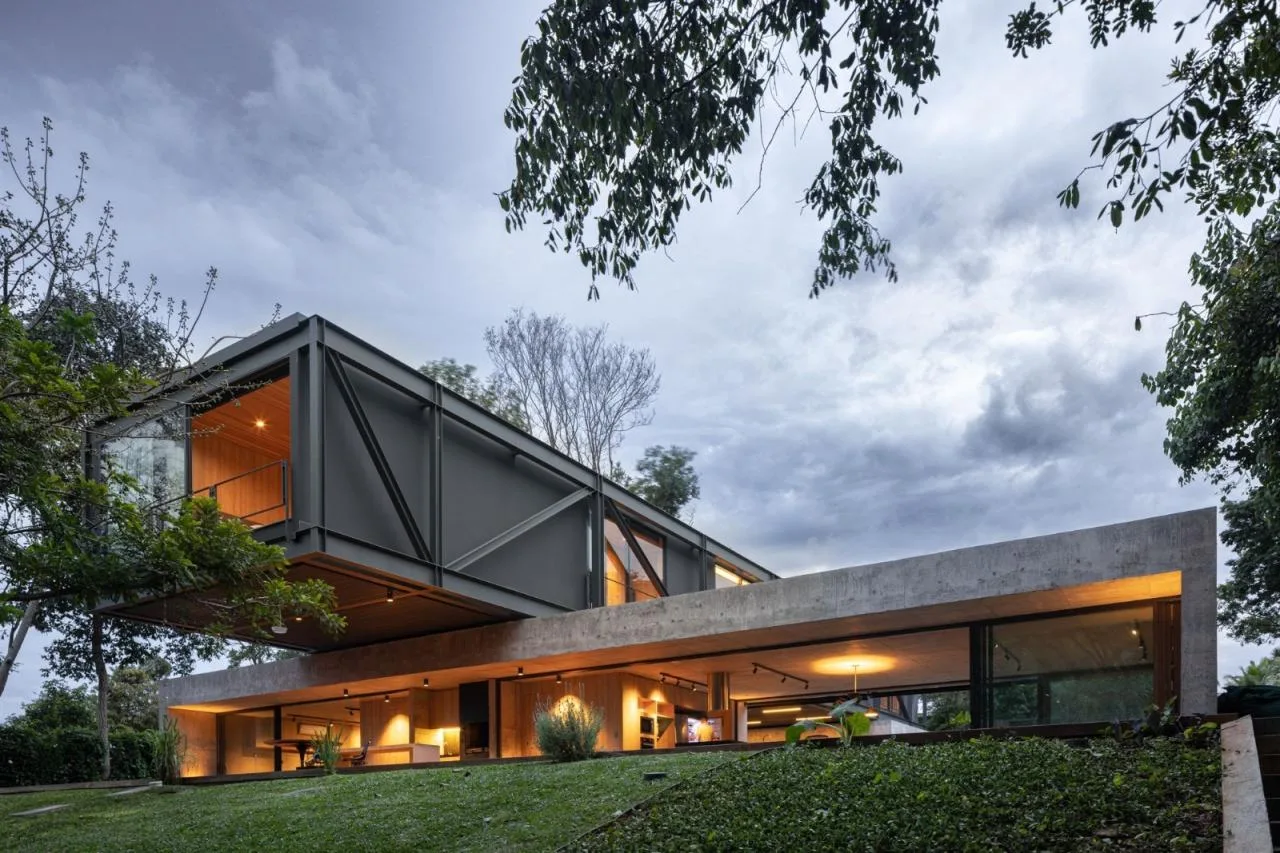
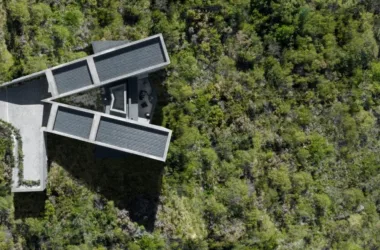
The main entrance is embedded within a robust three-dimensional concrete base, featuring a deliberately positioned gap at the heart of the home. This dual-level foundation harmonizes with the existing terrain, facilitating a subtle dialogue with the surrounding landscape while underscoring the material’s strength and presence.
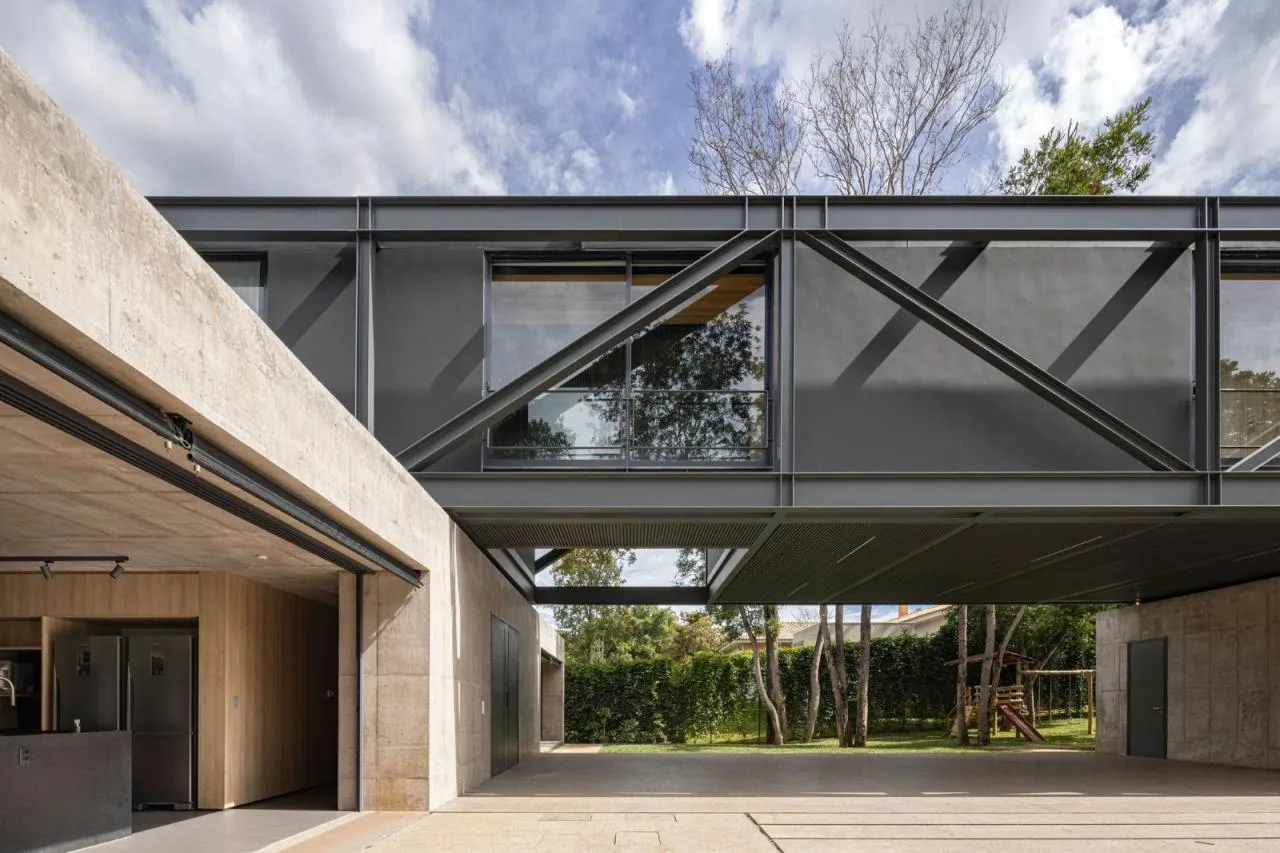
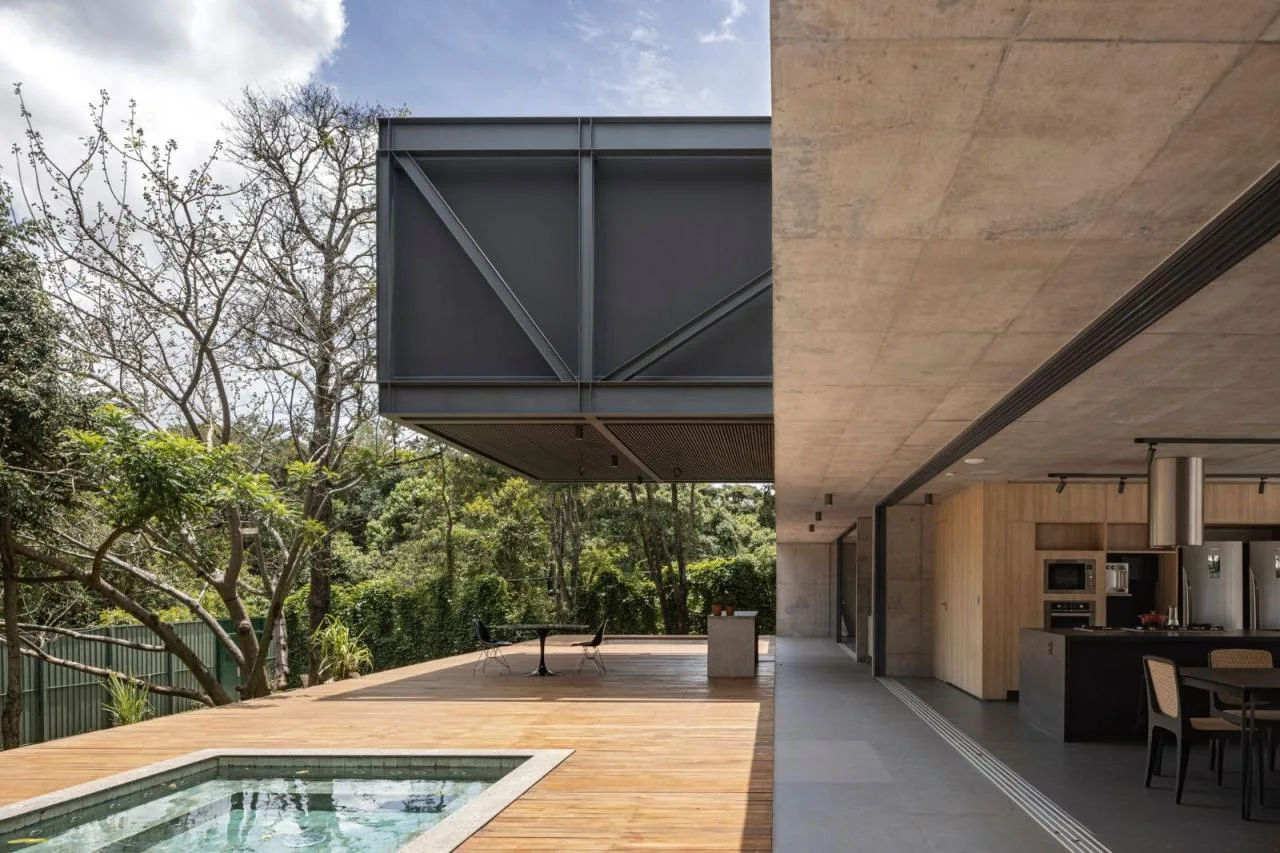
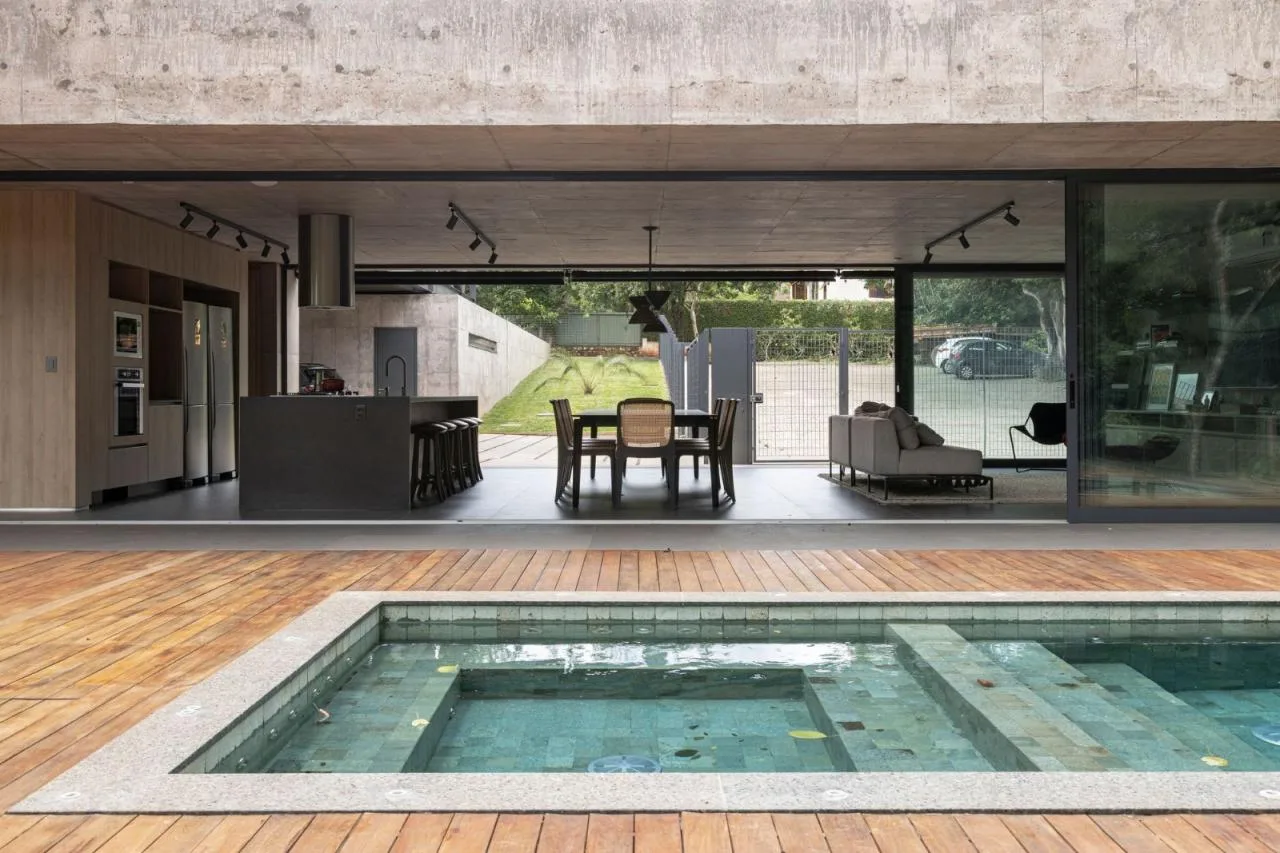
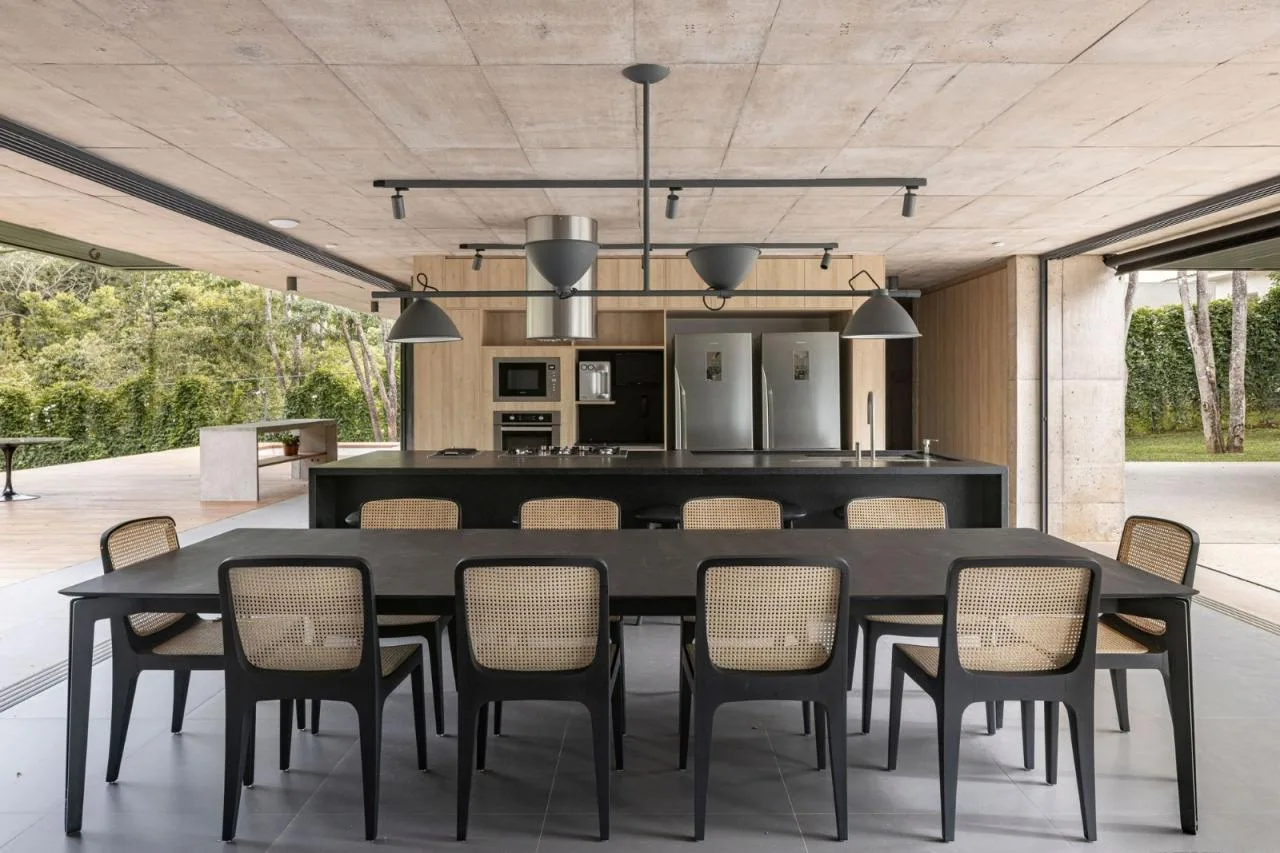
The foundation platform consists of two independent vertical concrete volumes. The first block rises from the sloping terrain, beginning at the highest ground level and gradually ascending toward the garage, housing service spaces internally. In contrast, the second volume directly adjoins the public residential area, opening onto the environmental protection zone, supporting leisure and social functions within the home.
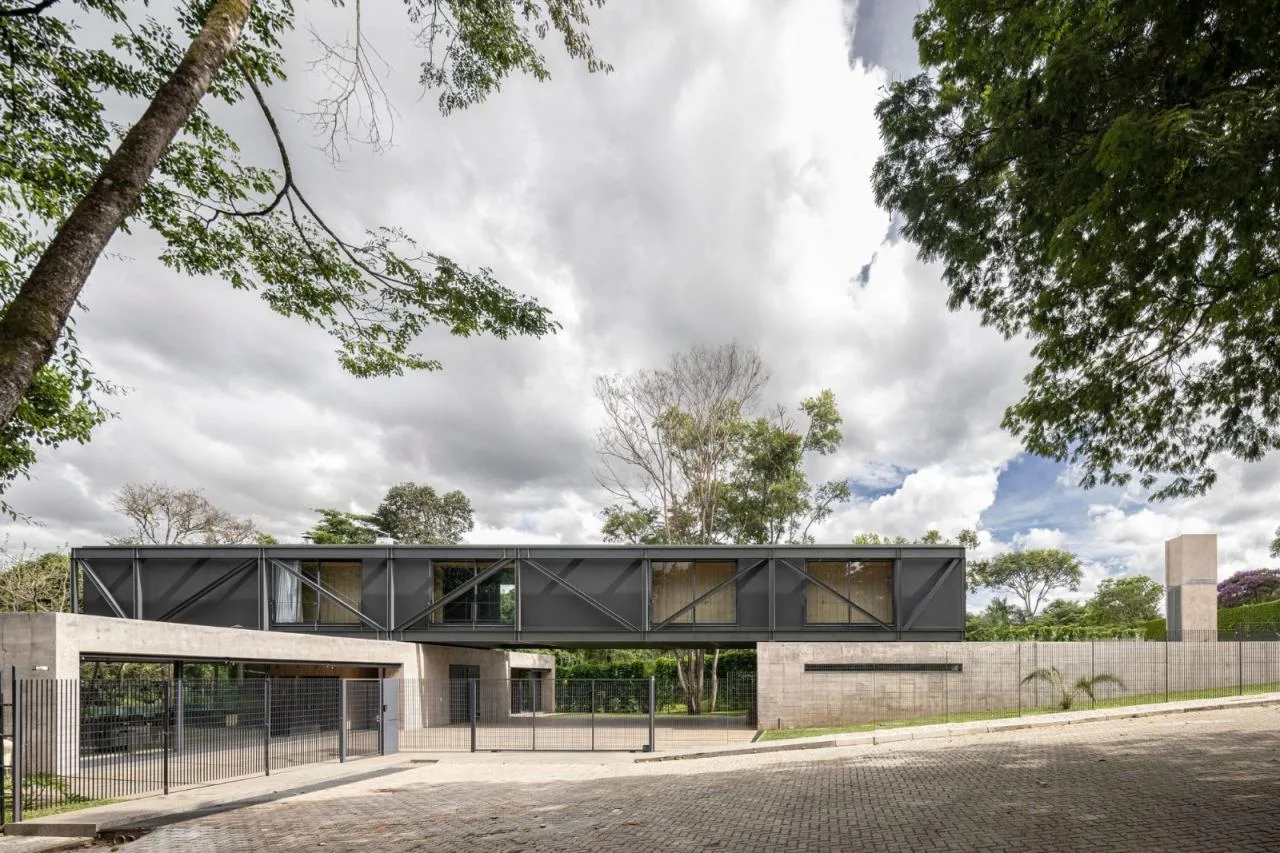
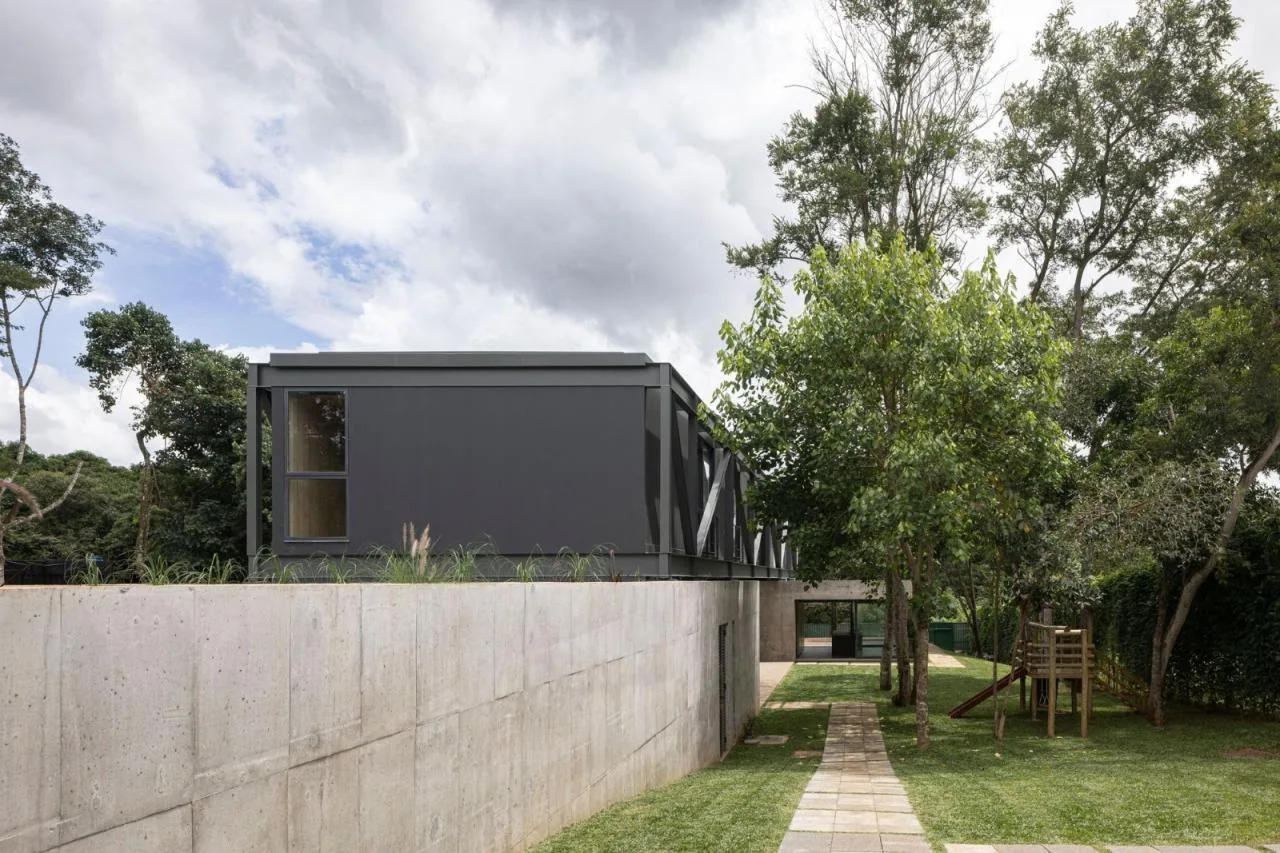
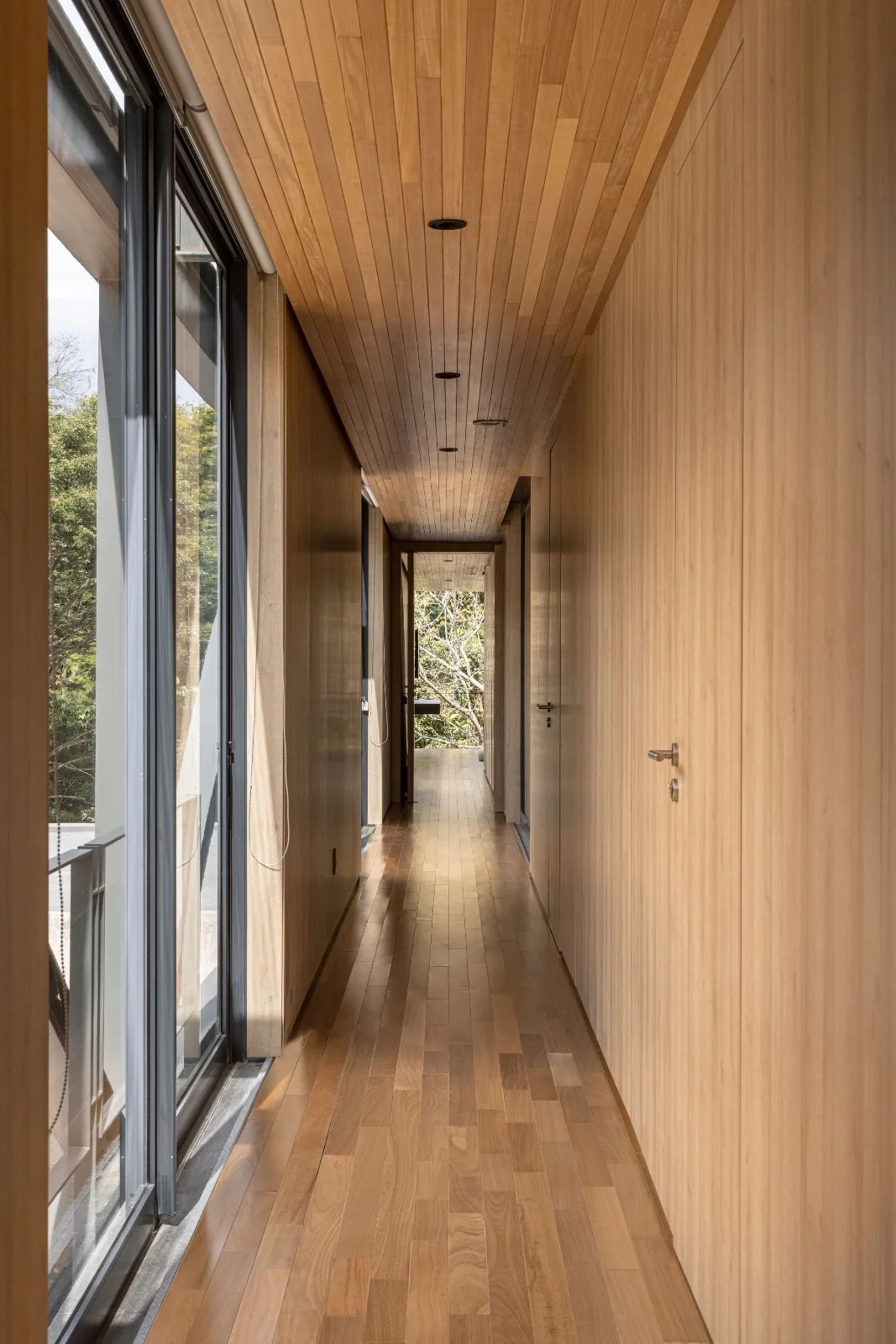
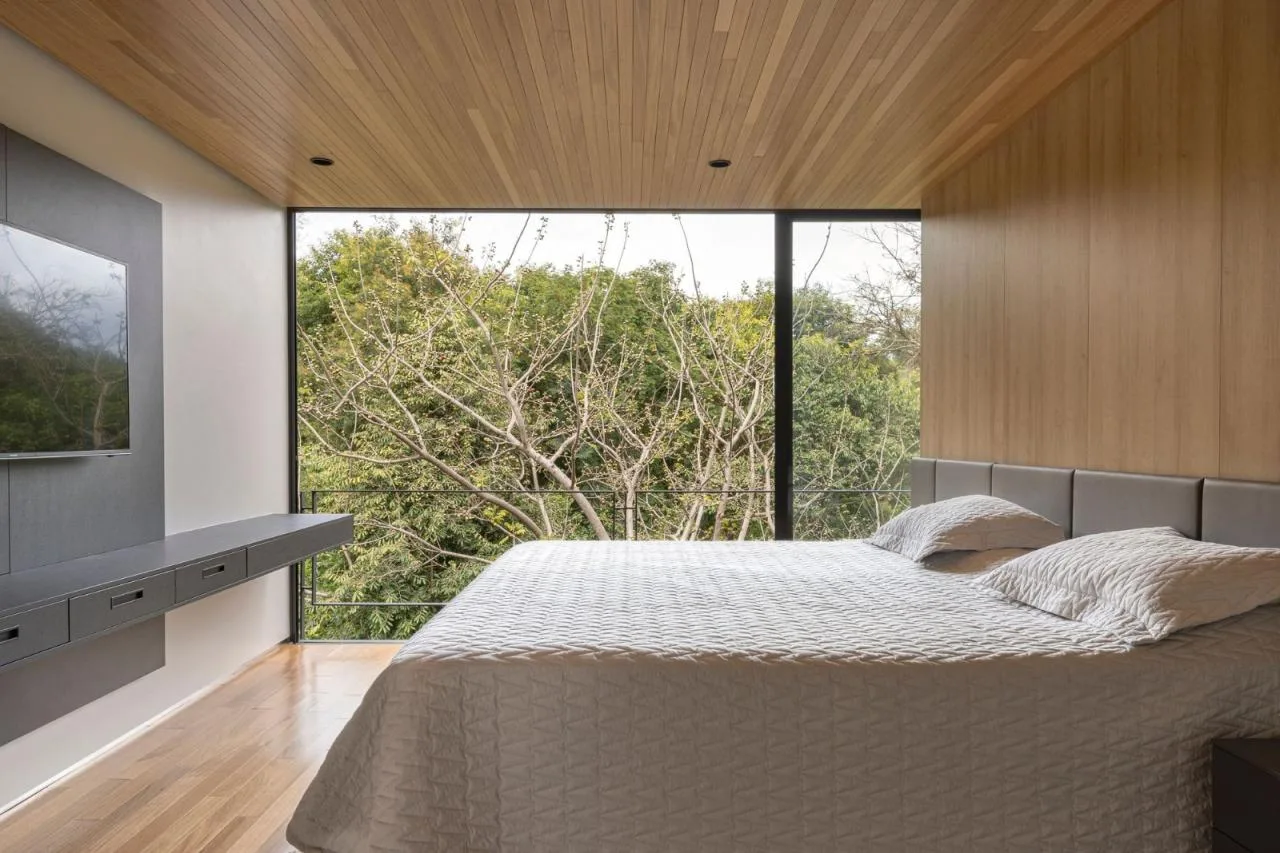
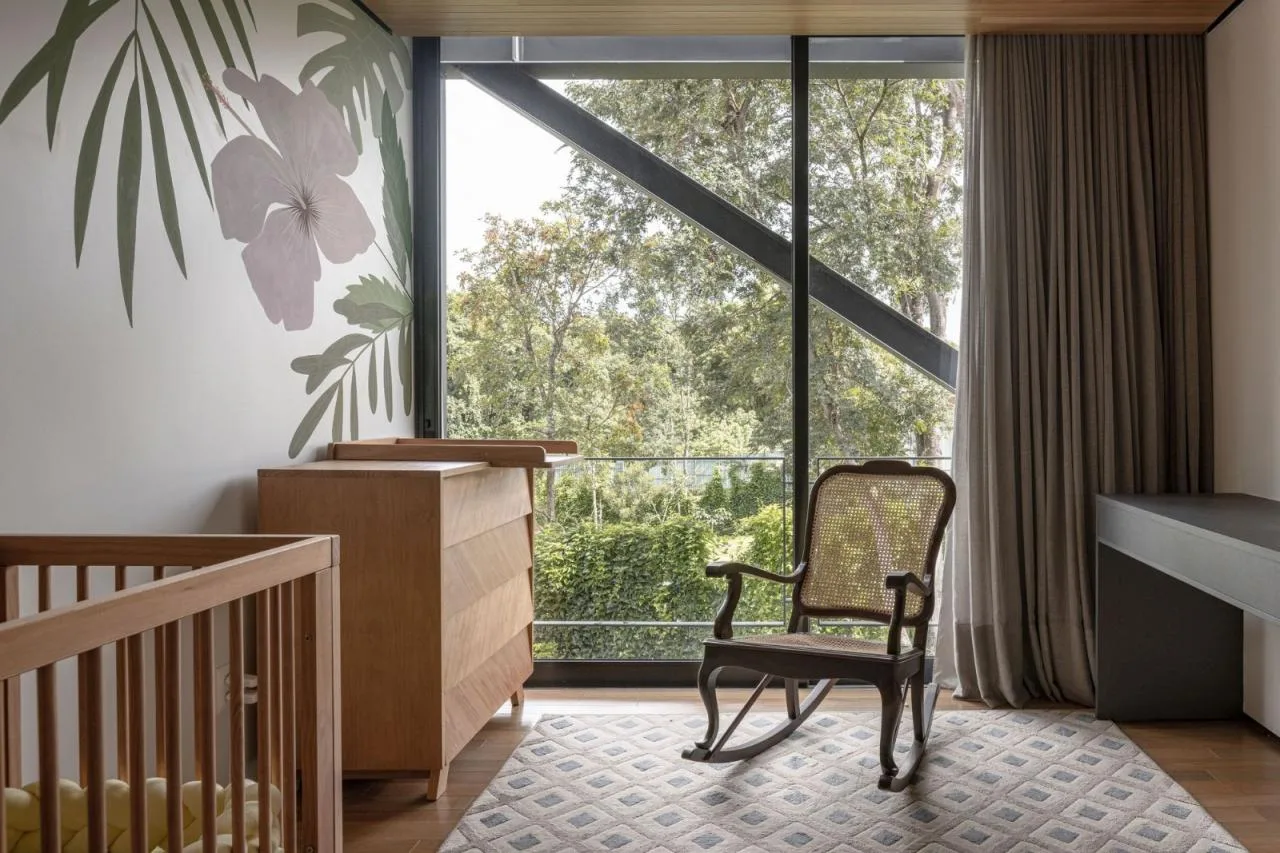
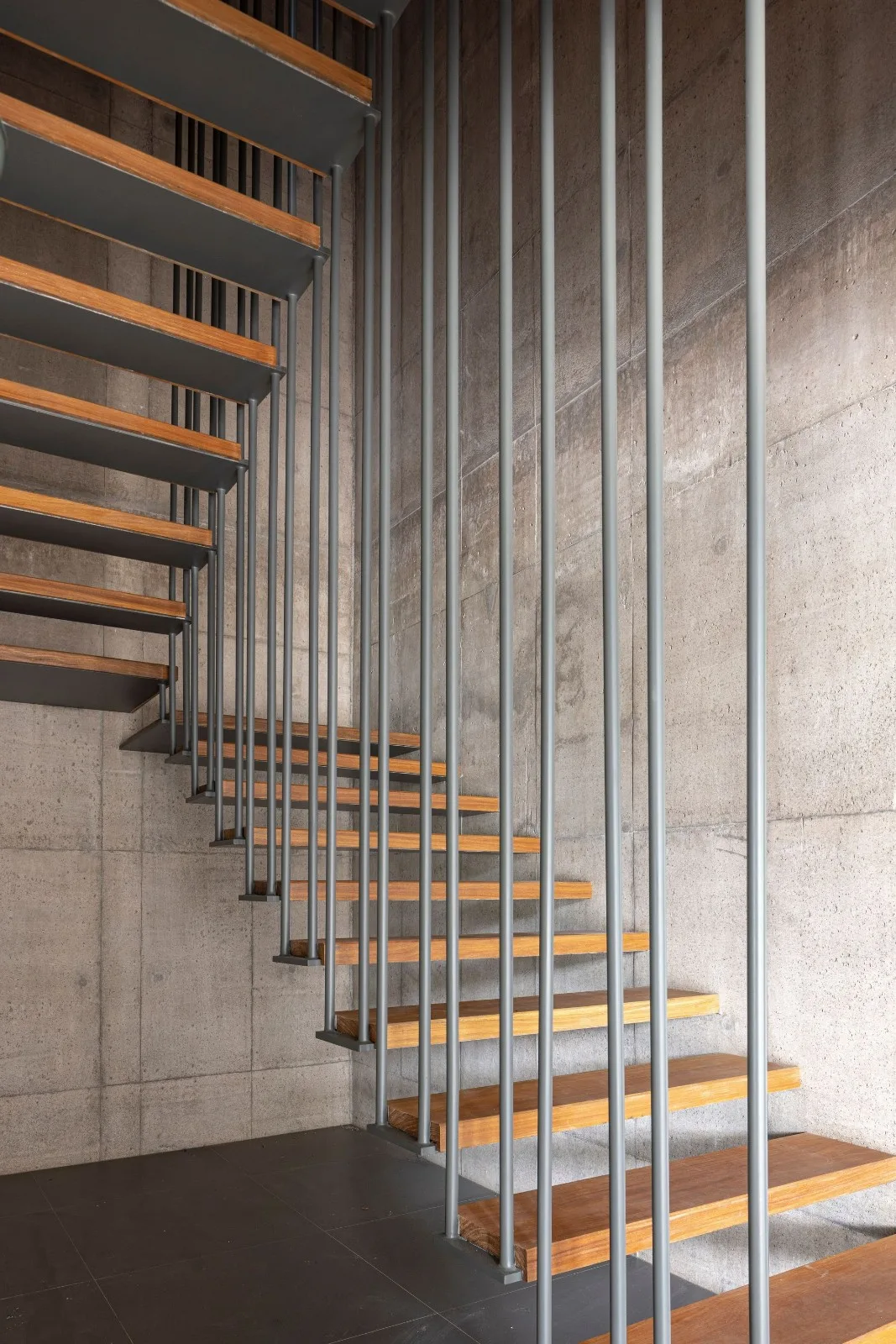
Above this solid concrete platform, a steel-framed aerial pavilion elegantly projects outward. This cantilevered structure faces the lush natural landscape and houses the private areas of the residence, including all bedrooms.
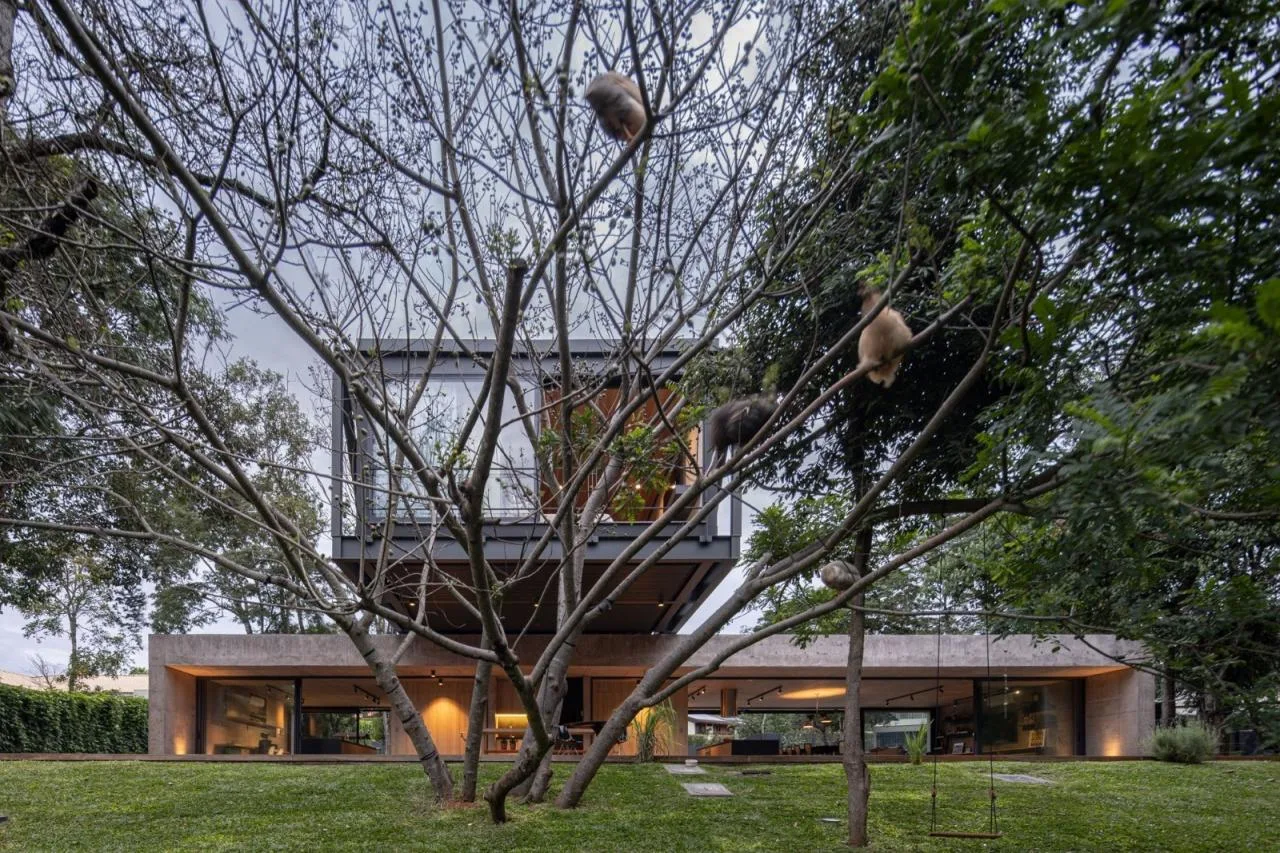
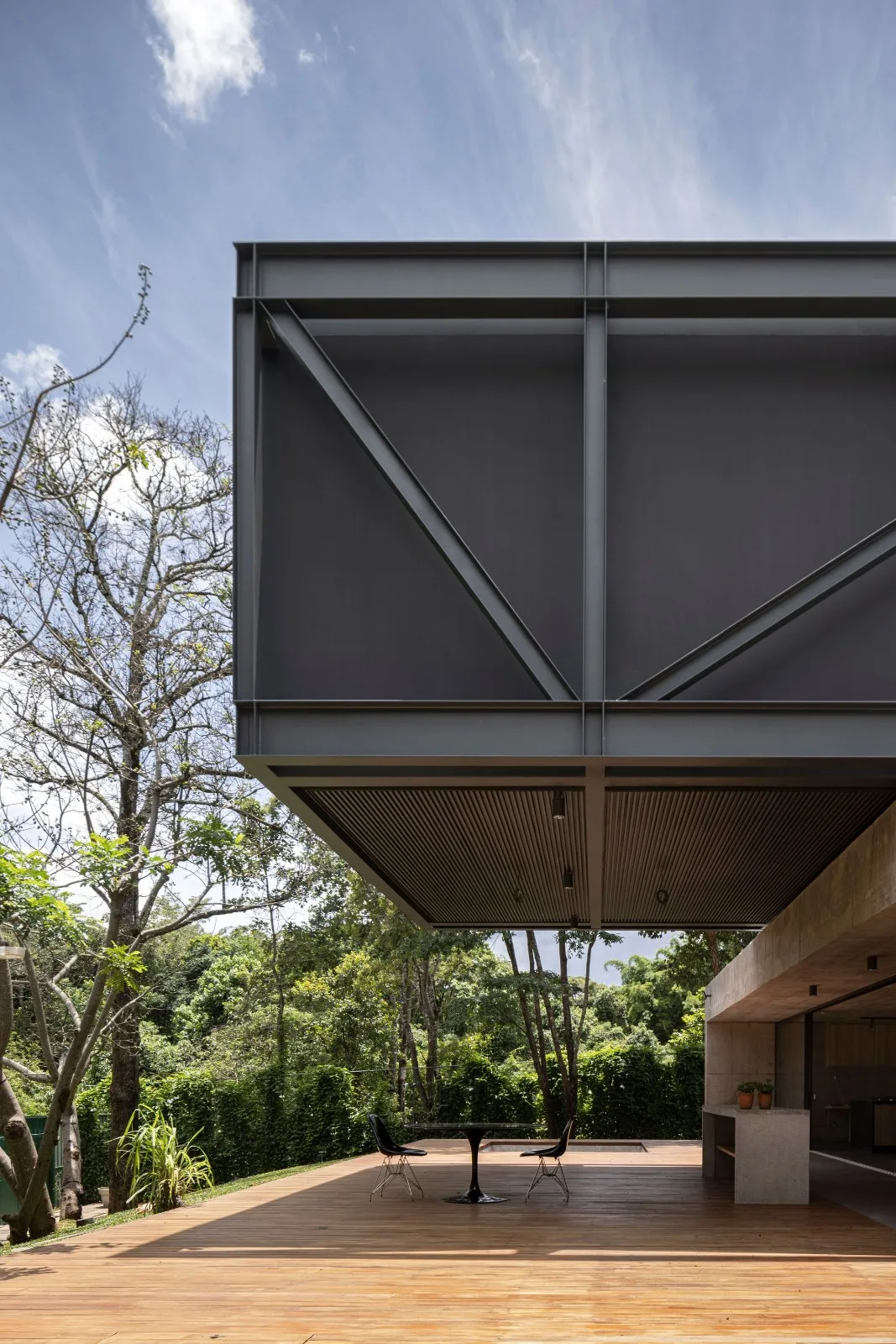
From a conceptual standpoint, this pavilion acts as a bridge, linking human habitation with the surrounding natural environment.
Project Drawings
△ Model Diagram
△ Model Diagram
△ Model Diagram
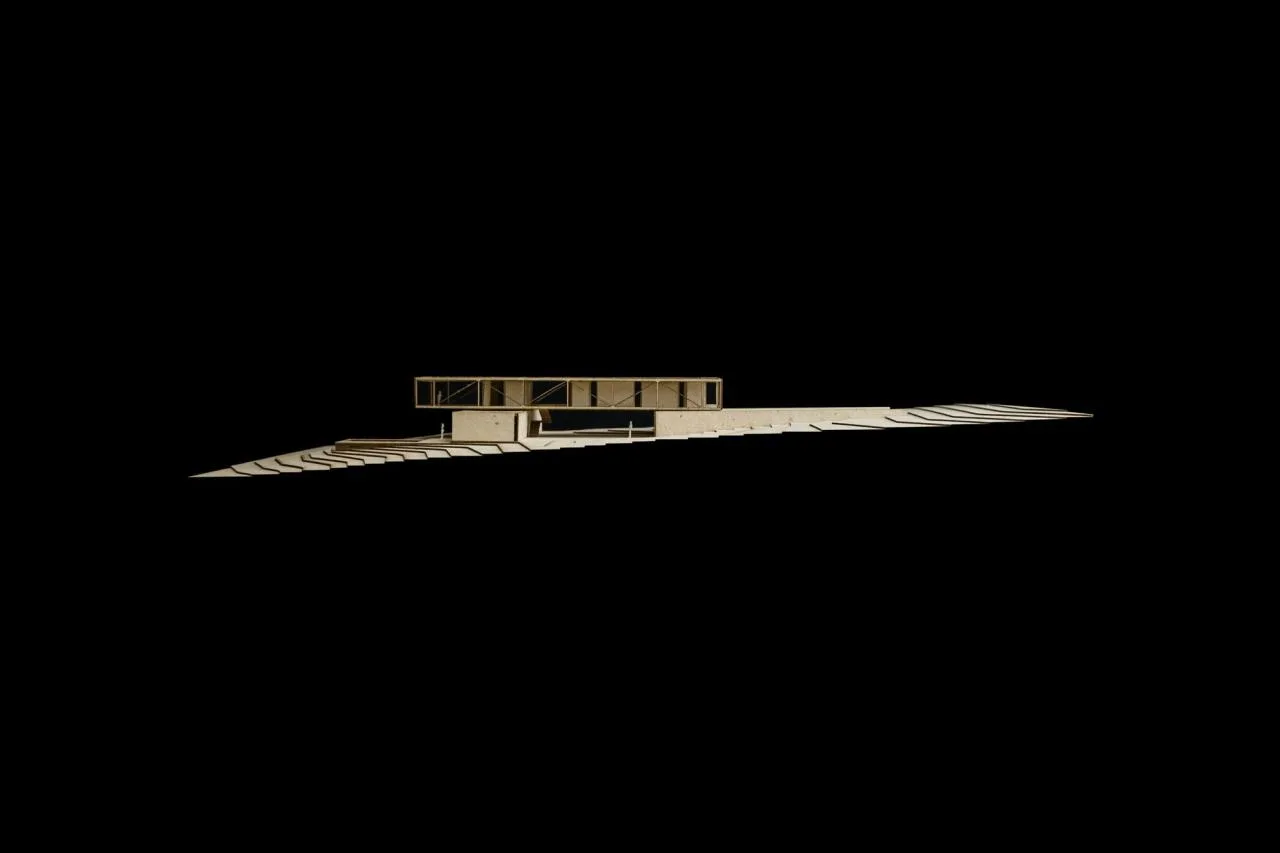
△ Model Diagram
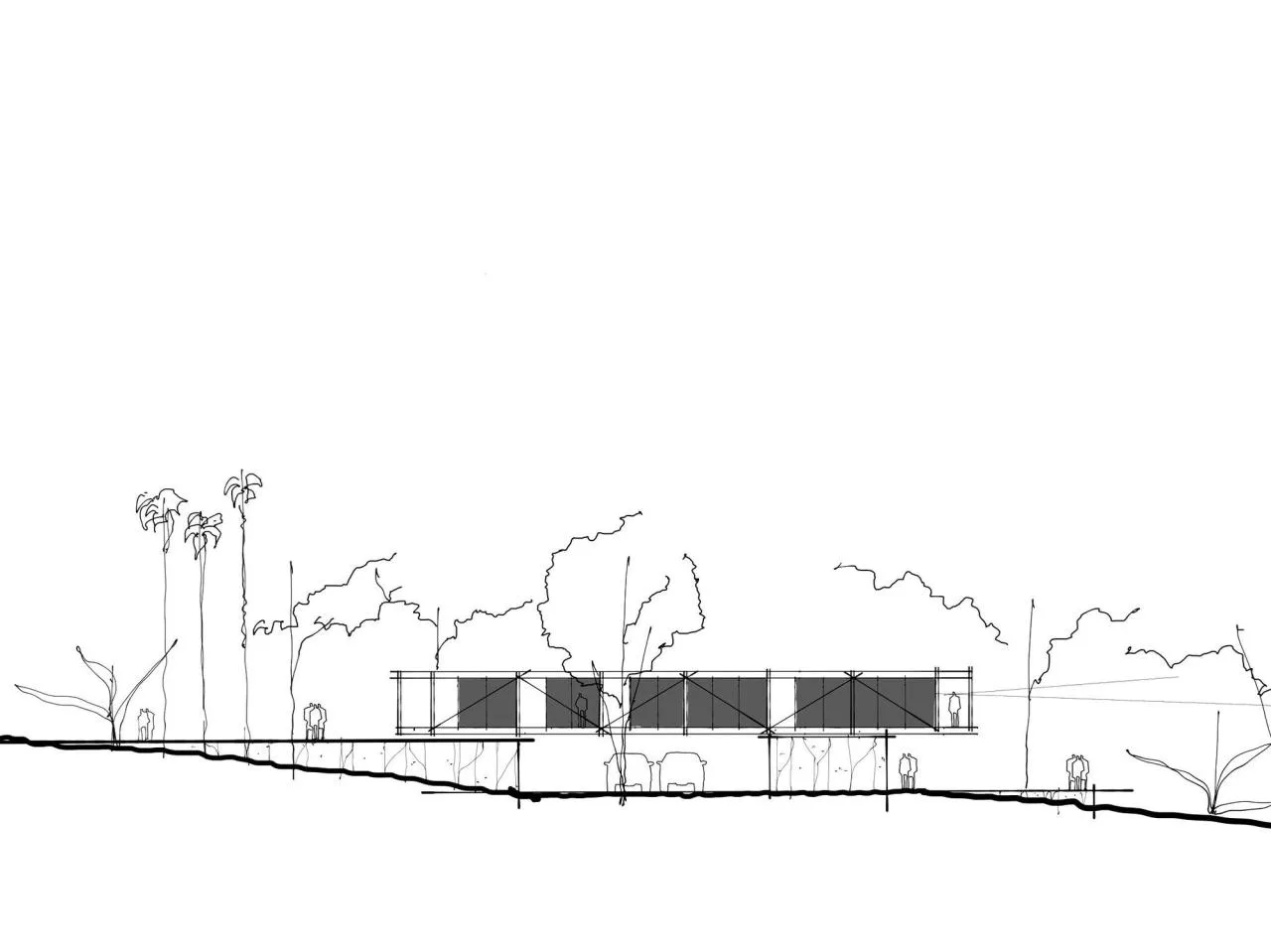
△ Hand-drawn Drawing
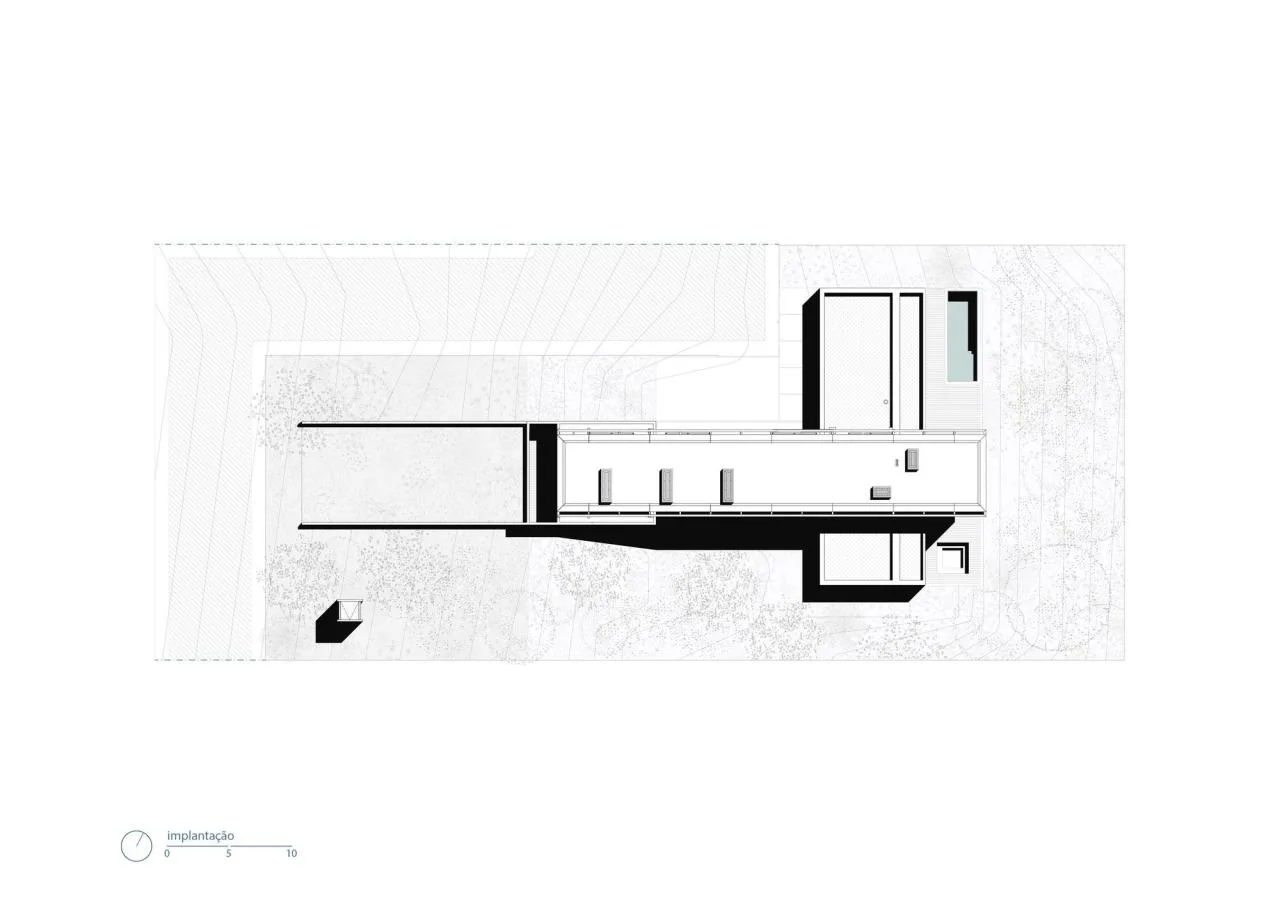
△ General Layout Plan
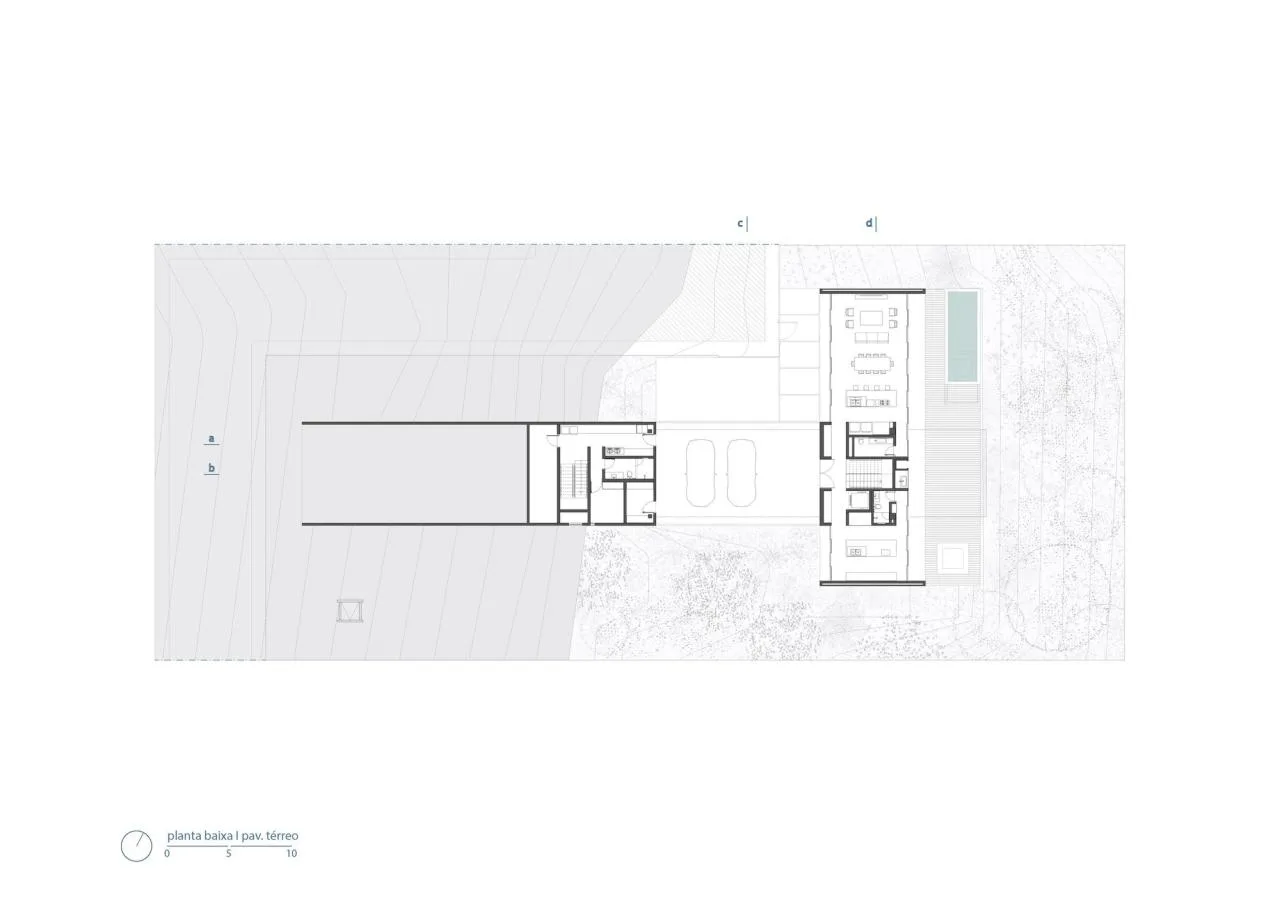
△ First Floor Plan
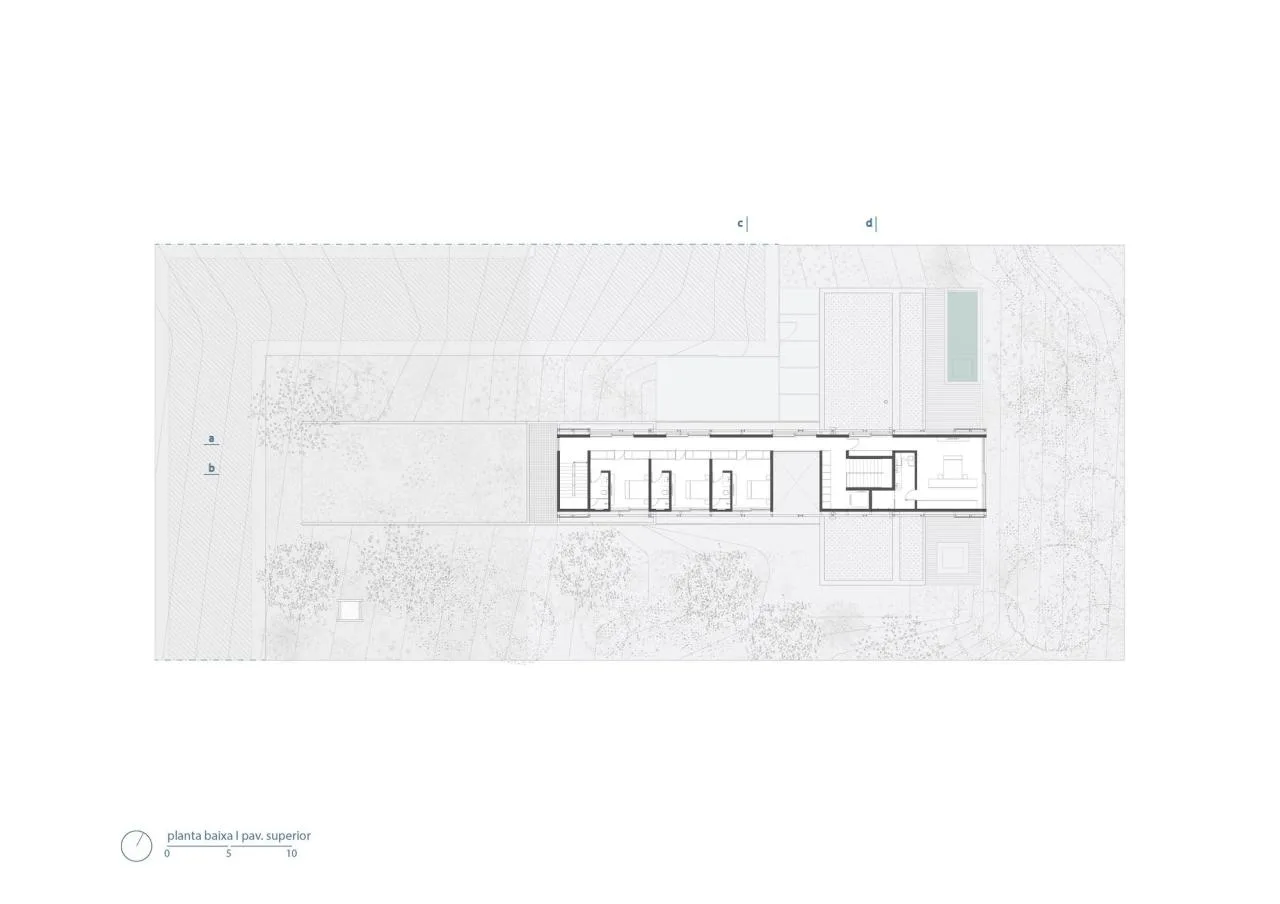
△ Second Floor Plan
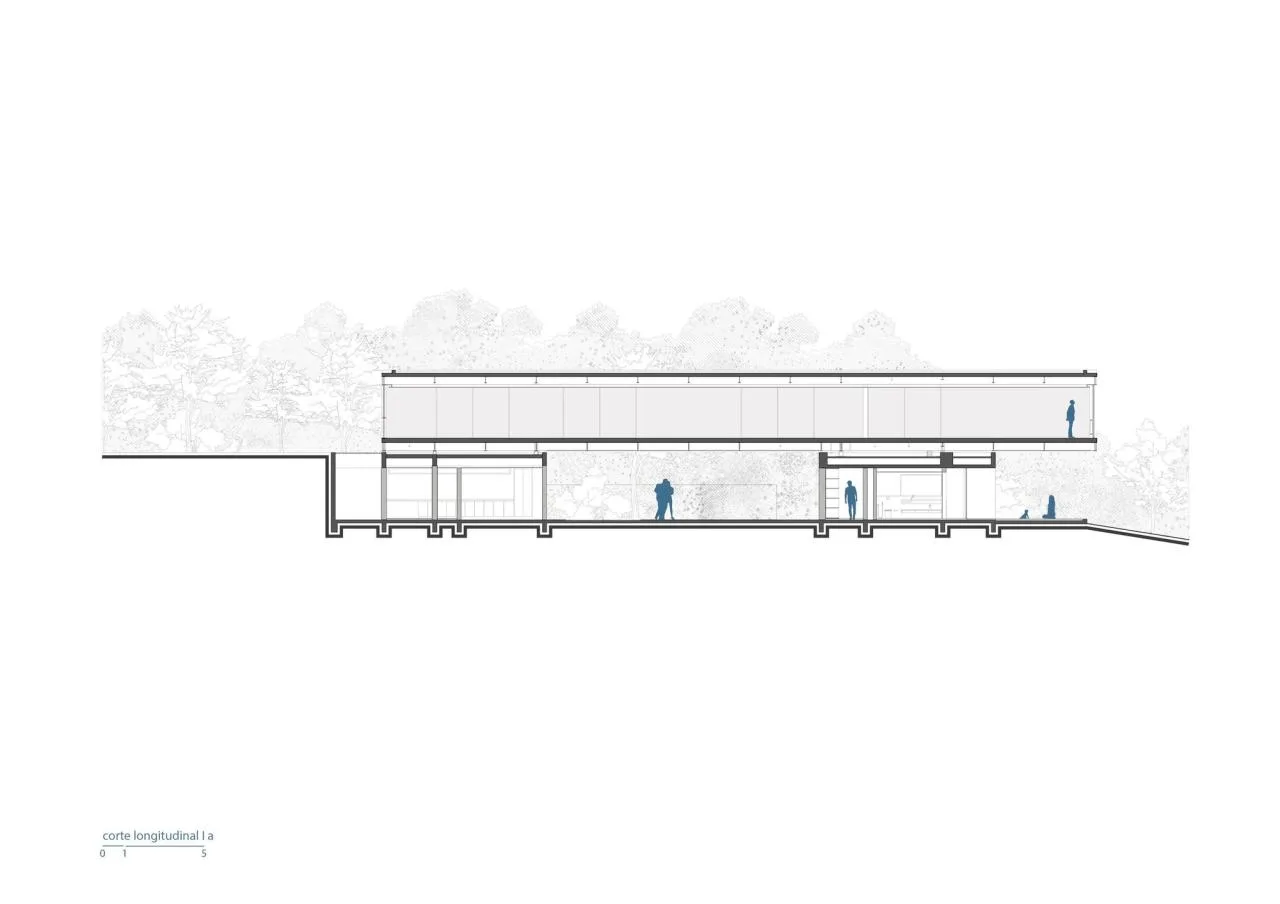
△ Section Diagram
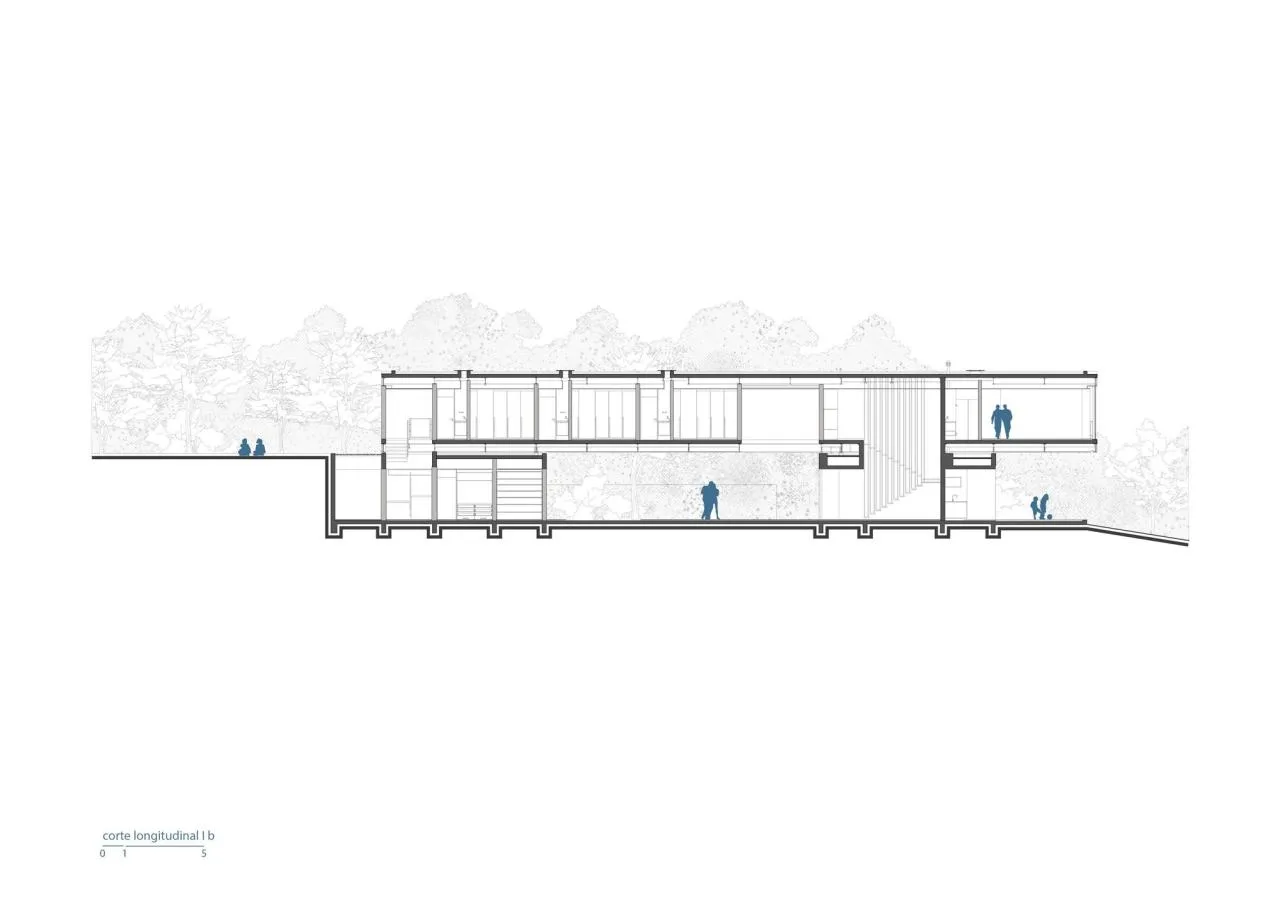
△ Section Diagram
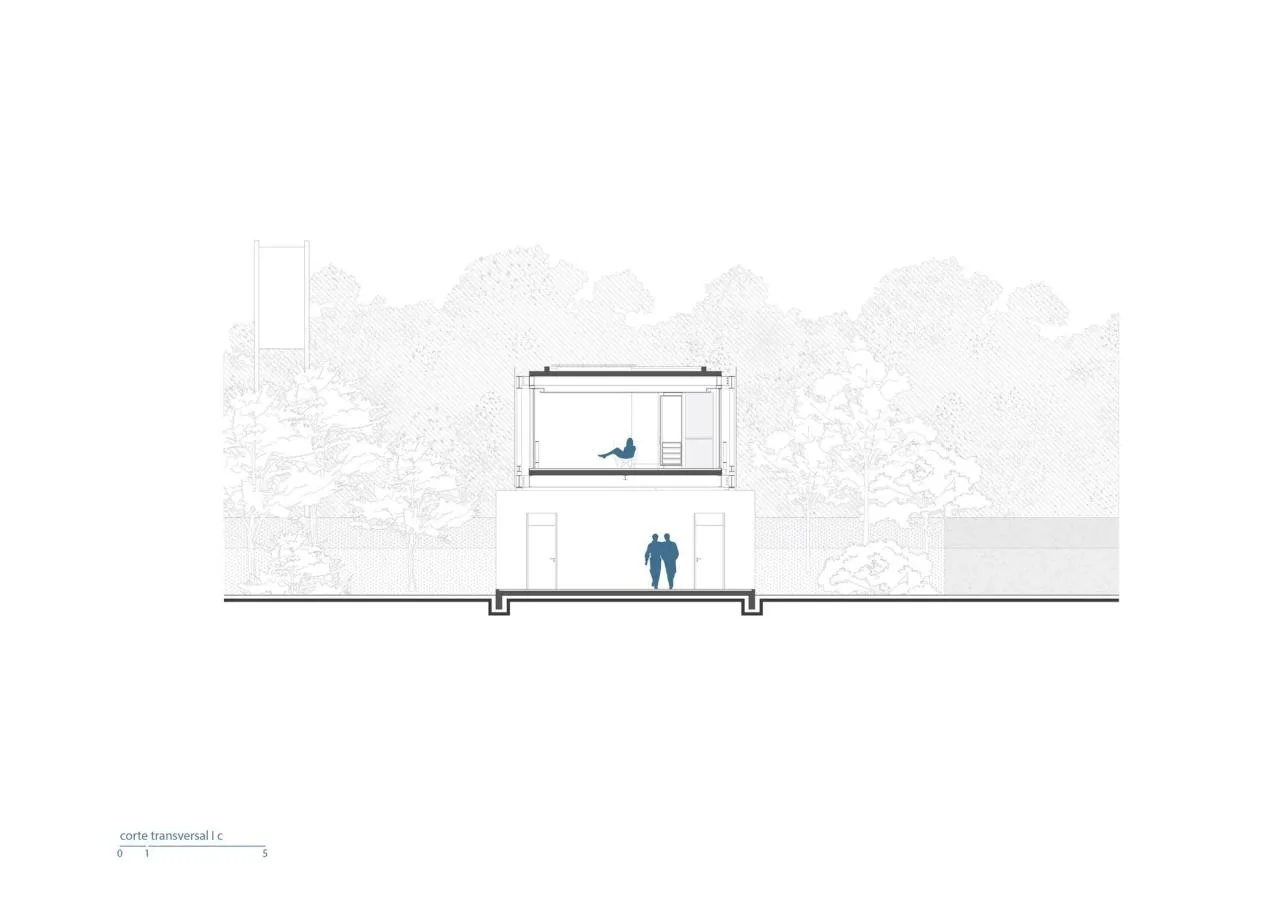
△ Section Diagram
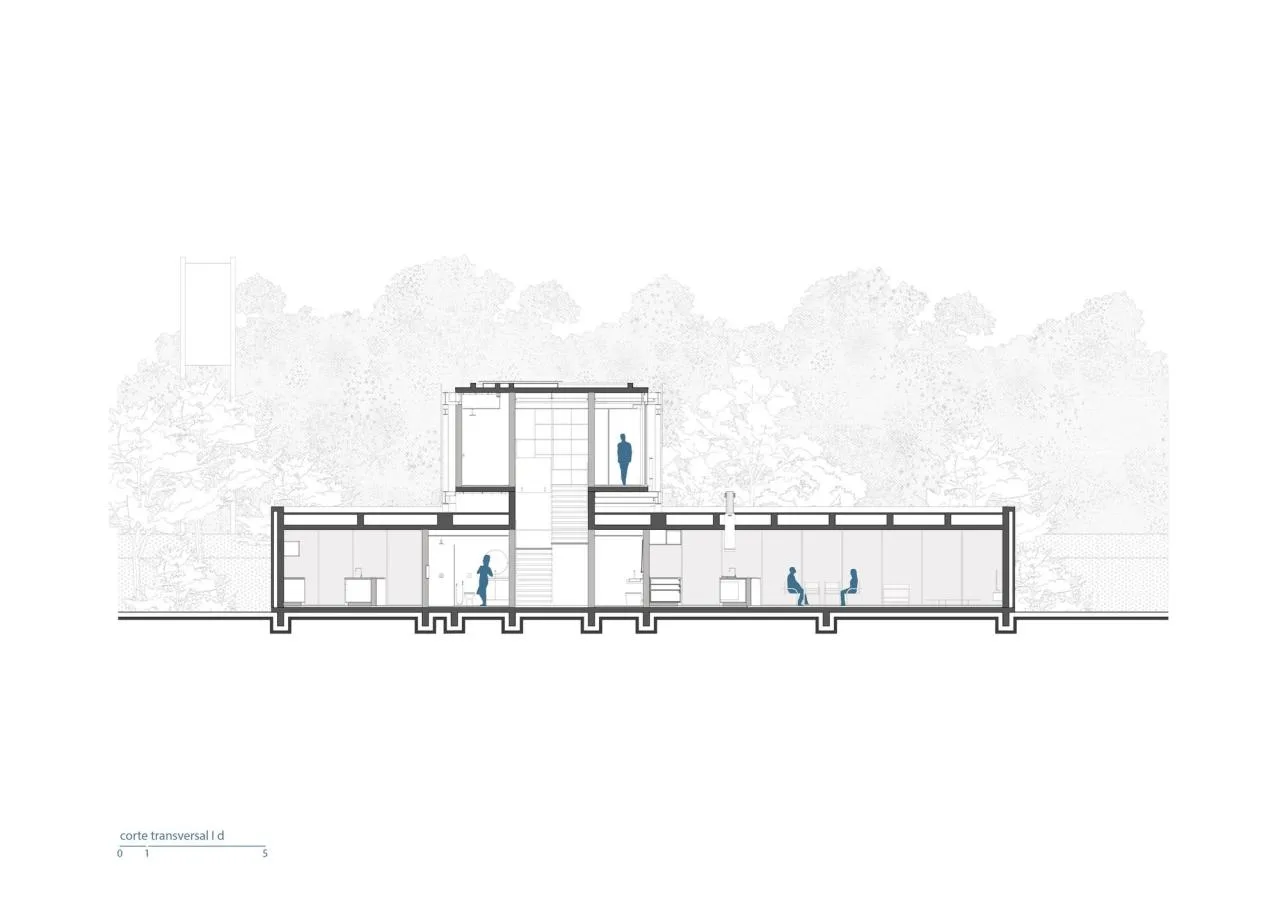
△ Section Diagram
Project Information
Architectural Design: Estúdio MRGB
Area: 700 m²
Project Year: 2021
Photographer: Joana França
Suppliers: Alutec, AutoDesk, Deca, Eliane, Florense, Jader Almeida, Lumini, MB Engineering, Alvorada Marble, Matte Paper, Sonotto, Trimble
Lead Architects: Igor Campos and Hermes Romão
Partners: Rodolfo Marques and Larissa Pontes
Project Team: Ana Carolina Moreth, Filipe Bresciani, Ian Alves, and Lucas Felipe Campos
Engineer: ProEst
Installation Project: Adriana Carvalho
Technical Lighting: Sulene Nascimento
Construction: Uniman Engenharia
Location: Brasília












Must log in before commenting!
Sign Up