
Project Overview
1.1 Project Introduction
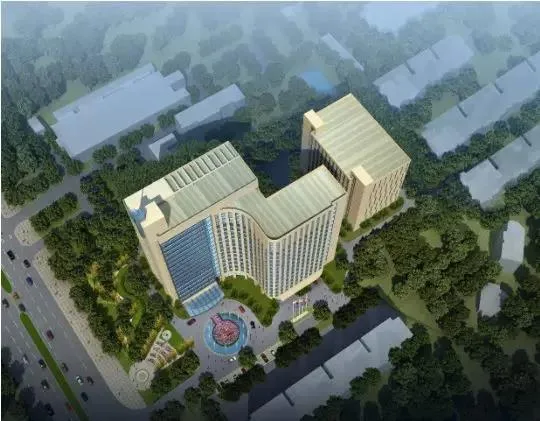
The China Pacific Southern Base construction project is situated in Xingsha, Changsha County. It is bordered by the Songya Lake Management Bureau to the north, Changsha County Public Security Bureau to the south, Dongsheng Road to the west, and the Changsha County Judicial Bureau and People’s Court to the east.
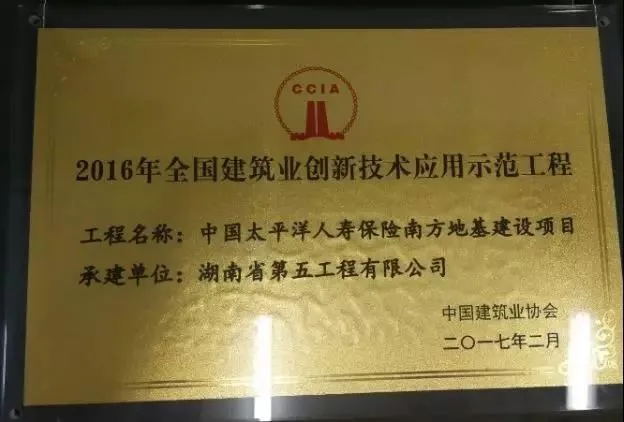
This project comprises two high-rise buildings featuring frame shear (frame) structures, covering a total construction area of approximately 58,015 square meters. The construction general contractor is the Hunan Construction Group Fifth Company.
The architectural layout is illustrated below:
1.2 BIM Implementation Environment
Provincial policy includes the “13th Five Year Plan for the Development of BIM Technology Application in Urban and Rural Construction in Hunan Province.”
At the group level, as a provincial state-owned enterprise, there is a strong commitment to “enterprise transformation and technological innovation.” All five companies within the group actively respond to this call by accelerating BIM technology promotion and application.
At the company level, BIM has rapidly influenced the construction industry, challenging traditional methods and concepts. The leadership recognizes the importance of staying ahead and is proactively building a BIM team, equipping necessary software and hardware, and guiding BIM planning at the center.
2. BIM Workstation Status
2.1 Organizational Structure
The group follows a unique “fixed station + mobile station” model. The team’s mission is to support projects by delivering high-quality results, developing a strong team, and establishing effective BIM application guidelines.
During implementation, the importance of this model became clear. At the project’s outset, technical capabilities were limited, requiring BIM technicians from the center to provide guidance such as training management staff and assisting with planning. The project manager handled overall coordination, while tasks were assigned by the technical director and supported by full-time BIM engineers. Close cooperation with project management teams ensured steady BIM technology adoption.
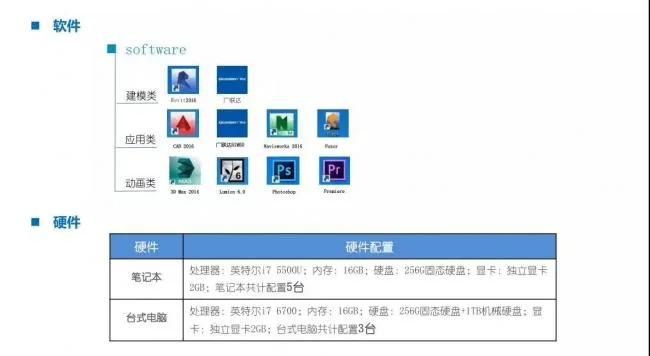
2.2 Software and Hardware Configuration
2.3 BIM Implementation Plan
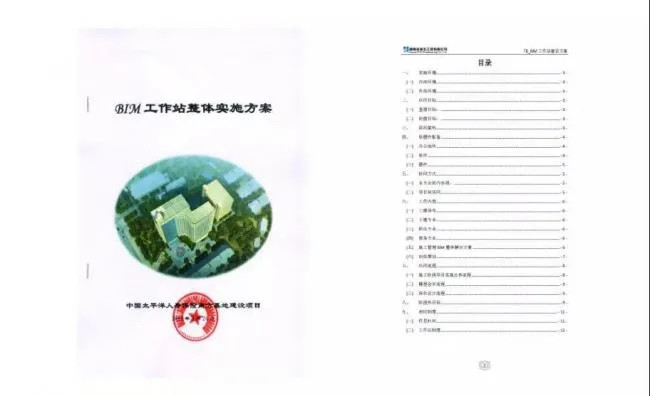

Based on the company’s business sectors and project realities, we aim to explore BIM implementation for routine and small-scale projects. This approach establishes project standardization, creating BIM application models that lay the groundwork for the company’s transition into the era of big data and large platforms.
3. BIM Conventional Applications
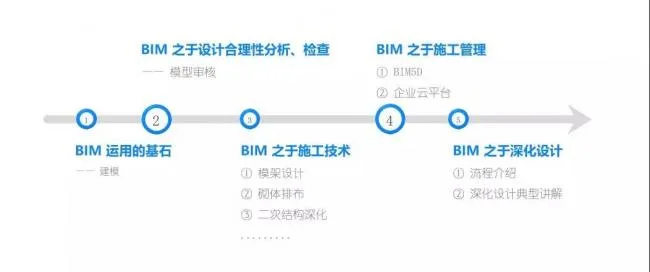
3.1 BIM Conventional Application Process
3.2 Summary of BIM Conventional Applications
Conventional BIM applications focus on foundational tasks such as data generation, extraction, transmission, and application. We have extensively experimented in these areas, accumulating valuable data experience and establishing a solid foundation for promoting BIM workstations in future projects.
The key benefits BIM technology brings during construction include:
◆ Cost reduction
◆ Increased production efficiency
◆ Enhanced work quality
◆ Reduced communication time
4. Innovative BIM Applications
4.1 BIM for Standardized Project Management Construction
During this project’s construction management, we actively embraced the company’s call to comprehensively promote standardized project management construction.
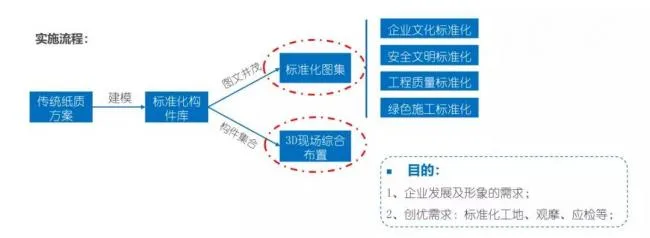
The company created Hunan Province’s first “Parameterized Standard Component Library and Its Usage Instructions.” This standardized library plays a crucial role as the foundation for subsequent atlas output and 3D on-site comprehensive layouts. The China Pacific Southern Base project further enriched this library during BIM implementation.
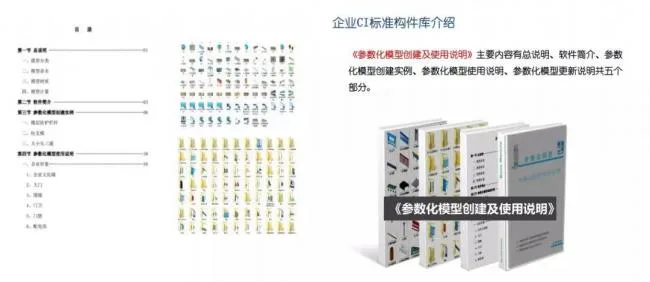
Standardized component library
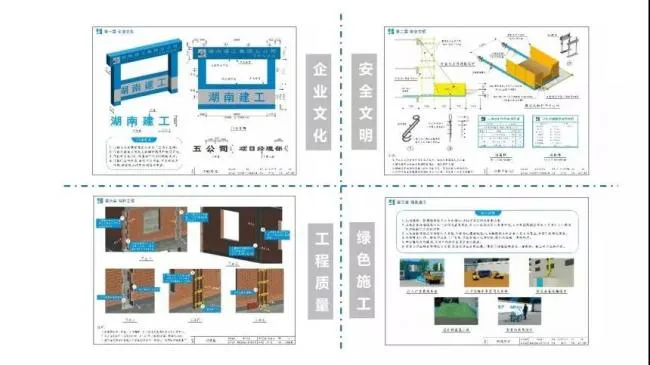
We carefully planned around four key areas: corporate culture, safety and civility, engineering quality, and green construction. This framework standardizes project management behaviors, mitigates risks, guides construction, and ensures that project management objectives are met.
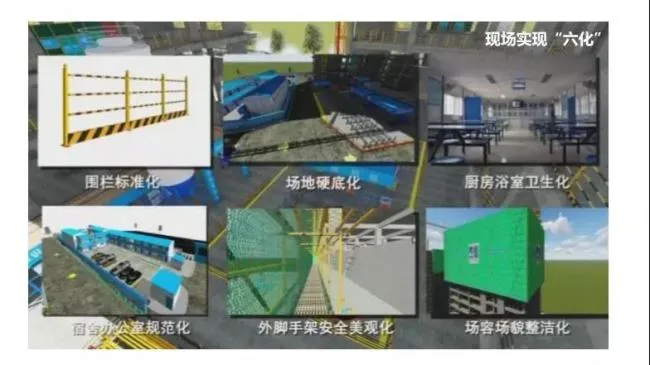
3D on-site comprehensive layout
Ultimately, the China Pacific Southern Base project achieved six modernization goals on site:
– Fence standardization
– Site hardening
– Cleanliness of kitchens and bathrooms
– Standardized dormitories and offices
– Safe and aesthetic external scaffolding
– Clean site appearance
4.2 BIM for Mechanical and Electrical Deepening Design
The basement levels and beam heights vary widely throughout the project, and the pipeline network is complex. The project team prioritized mechanical and electrical systems in the basement, organizing personnel to implement a “BIM-first before construction” approach.
The team actively coordinated to address clashes: 1,974 conflicts were found in basement mechanical and electrical systems, with 439 deemed critical. Forty-eight design changes were submitted to the design institute, and 391 collisions were resolved through self-optimization.
Key deepening application points:
① Reserved Openings for Pipelines
– Pre-optimization: Basement main structure was completed with openings, but mechanical and electrical pipeline deepening began before secondary structures with openings were started.

– Optimization goal: Maximize pipeline optimization at perforated main structure sections to ensure correct passage and avoid re-excavation that could compromise structural integrity; accurately reserve openings for unperforated secondary structure parts.
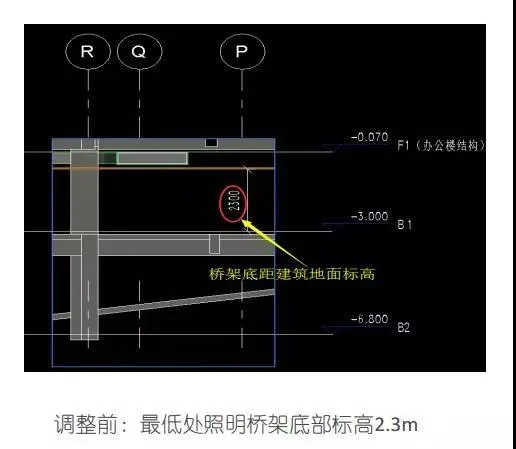
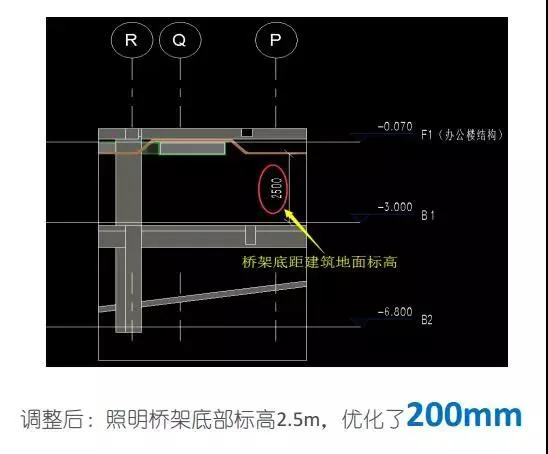
② Clearance Optimization
– Applying the principle of “comprehensive consideration, local optimization,” focusing on areas with high pedestrian and traffic flow, such as corridors and lanes.
③ Integrated Pipeline Layout
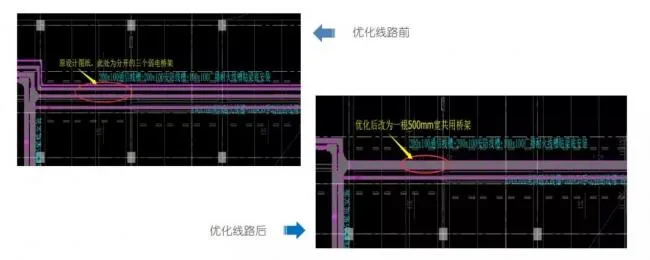
– Transitioning from scattered pipelines to a clear system of “main pipe forming a ring, with branch pipes staggered from the main pipe.”
④ Comprehensive Support and Hanger
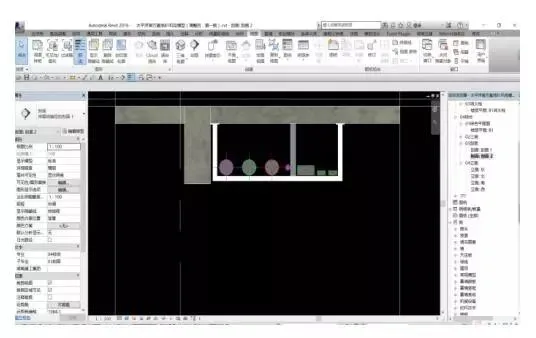
– Final plan uses comprehensive supports and hangers in basement and pipeline concentration areas, with standard supports elsewhere.
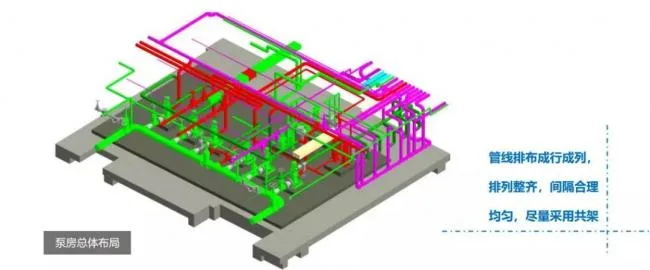
⑤ Comprehensive Deepening of Equipment Rooms
– Pipeline layouts are arranged neatly in rows and columns with uniform spacing, prioritizing shared racks where possible.
4.3 BIM for Engineering Excellence
BIM serves as an auxiliary tool in achieving engineering excellence. This project’s BIM workstation developed a detailed “Engineering Excellence Planning and Implementation Plan,” strictly followed from the project’s start.
Leveraging BIM’s capabilities, combined with traditional excellence methodologies, we deepen and innovate to better achieve engineering quality.
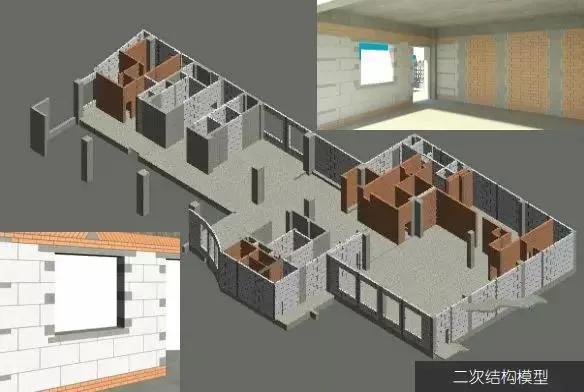
Secondary structure deepening addresses issues with waste, quality decline, and lack of control common in traditional construction. Using BIM technology allows the general contractor to improve management efficiency, provide better conditions for subsequent mechanical, electrical, and finishing work, and ultimately deliver high-quality projects.
5. Current Status of BIM Application in Projects
At the China Pacific Southern Base construction project, our team has established a BIM-based project management informatization system. This strengthens control over the entire building construction life cycle.
As the general contractor, we oversee subcontractors across quality, safety, scheduling, and innovation dimensions. This approach improves production efficiency, enhances building quality, shortens construction timelines, and reduces costs.
Building Information Modeling drives comprehensive innovation in general contracting and construction industry management. With BIM, our general contracting process becomes more refined, visual, steady, and confident—from initial drawing reviews and schedule management to quality, safety, interdisciplinary collaboration, and project cost-effectiveness management.













Must log in before commenting!
Sign Up