
How can you precisely control the size of BIM software REVIT renderings? Start by opening the 3D walkthrough view and dragging the view size to adjust it. However, this method does not allow for precise control. If the sizes of two videos differ during video synthesis, it can cause issues with the final video quality.
First, let’s review some basic video concepts: The standard video frame rate refers to the number of images displayed per second, where each static image is called a frame. For example, a frame rate of 24 means 24 frames are shown every second—the standard frame rate is 24 fps. If the frame rate drops below this, the video may appear choppy. Higher frame rates result in smoother videos but also larger file sizes. Since computer displays typically refresh at 60 Hz, the Revit rendering frame rate should be a divisor of 60, with 30 fps as the minimum recommended frame rate.
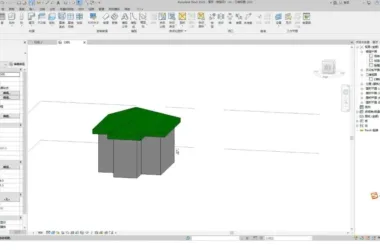
Common video resolutions with a 16:9 aspect ratio include 1280×720 and 1920×1080 (Full HD). For a 4:3 ratio, typical sizes are 640×480, 800×600, 1024×768, and 1400×1050. When creating walkthrough videos in Revit, it is best to set the export resolution according to these standards. Open the walkthrough, select the view boundary, and the upper toolbar will display the “Size Cutting” command. Use this to adjust the view crop size, setting it to 16:9 mode, for example, 160×90 pixels.
In the Export Video dialog box, use the “Annotate Dimensions” option to control the pixel size of the exported video. This should also be set in 16:9 mode, for instance at 1920×1080 resolution, with the frame rate set to 30 fps.
Additionally, switch to thin line display mode during rendering. This setting produces high-quality exported videos, which can then be further processed using video editing software for post-production enhancements.














Must log in before commenting!
Sign Up