
BIM Software Tip: How to Accurately Position Roof Heights in Revit
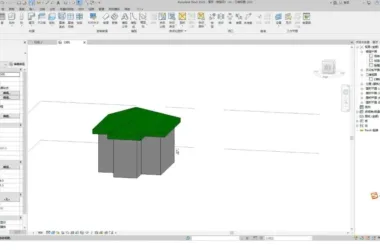
When designing roofs in Revit, the process is quite convenient—especially for creating sloped roofs on villas. The software automatically generates roof outlines efficiently and with high precision. However, while this automation improves both speed and accuracy in drafting, it often results in roof heights being divided into small segments, such as the top height or the slab bottom height, as illustrated in the image below:
For design teams, these segmented roof height lines can appear cluttered and less visually appealing. Therefore, beyond relying solely on automatic generation based on specific slopes or angles, some manual adjustments are advisable.
To address this, you can start by drawing reference planes at whole-number heights in the elevation view, as shown below:
Next, use the Align tool to snap the upper edge of the roof to these reference planes, ensuring the roof height is set at convenient integer values, as demonstrated in the following image:
In summary, Revit allows you to align the height of sloped roofs on the facade effectively. Note: This alignment applies only to the roof panel’s top height.
If you need to control the height at the bottom of the roof slab, it is recommended to use a slope arrow instead.













Must log in before commenting!
Sign Up