
BIM Software Tip: Precautions for Drawing Bottom-Aligned Pipelines in Revit
In Revit, pipes, ducts, cable trays, and conduits are centered by default. When you change their vertical alignment to Base before drawing, the Offset parameter automatically defaults to the center elevation.
The image below shows air ducts, pipes, and cable trays drawn using the bottom-to-center method, with a base offset of 2000.
When drawing objects aligned to the bottom, if your work is interrupted and you need to continue later, be sure to follow these steps carefully:
Use the duct, pipe, or cable tray tool from the Modify tab, then click on the endpoint of the existing object to continue drawing. Before proceeding, verify that the vertical alignment is set to Bottom and the Offset remains at 2000.
If instead you select an existing duct, pipe, or cable tray, right-click its endpoint, and choose Draw from the context menu, Revit will extract the center elevation of the existing element and apply it as the bottom elevation for the new segment. This causes a height mismatch between the connected sections.
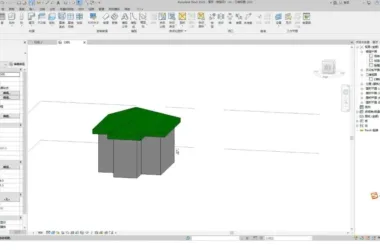
The example below with air ducts illustrates this issue in detail.













Must log in before commenting!
Sign Up