
BIM Software Tip: How to Quickly and Easily Draw Sloping Walls in Revit
Drawing sloping walls in Revit has always been a challenging and tedious task. Simply trying to draw a sloping wall directly doesn’t work, and adjusting the family angle can be complicated. So, what’s the fastest way to create sloping walls? Does this require the “Pick Face” command? Since picking a face requires an existing surface, here’s my method explained step-by-step:
First, place four points on a plane, because a wall face consists of four points. Then, select these points and make them adaptive.
Next, connect the four points with a reference frame and create a shape. Instead of choosing a solid form, select a surface form.
Once this adaptive family is set up, you can go to your project and start working on the sloping wall.
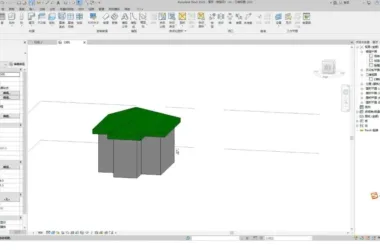
Step 2: Since it’s a sloping wall, the top and bottom vertices won’t be on the same level. Use a floor slab to roughly position these four points, as shown in the illustration.
Then, use your adaptive family to pick up these four points in sequence.
Step 3: Select a wall type and use the “Pick Face” option to select this adaptive surface. Your sloping wall will be created. Finally, you can delete the adaptive surface used for reference.













Must log in before commenting!
Sign Up