
BIM Software Tip: Sharing Tips for Using the Revit Displacement View Function
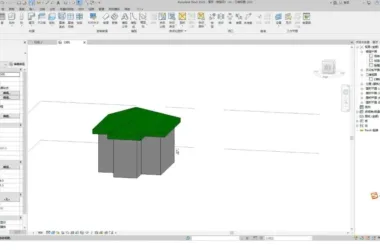
Displacement views are a powerful way to demonstrate the relationship between specific model elements and the overall model. In any 3D view, including perspective views, you can use the Displacement Element tool to move elements. This tool lets you create a displacement set, shifting elements along the X, Y, and Z axes to positions offset from their original locations.
Once moved, you can draw paths that visually connect these displaced elements back to their original positions in the model. Please note that two-dimensional elements such as markers, annotations, or dimensions cannot be displaced.
Here are the detailed steps to use the displacement view:
1: Create a new 3D view to serve as your displacement view.
2: Select the graphic element you want to move and choose Modify in the dialog box; then select the Replace Graphic Elements command.
3: Move the selected graphic element along the X, Y, and Z axes as needed.
4: Draw the movement path for the displaced elements to make their new positions clear and understandable.
5: Use the displacement view primarily to analyze and visualize complex nodes within your model.













Must log in before commenting!
Sign Up