
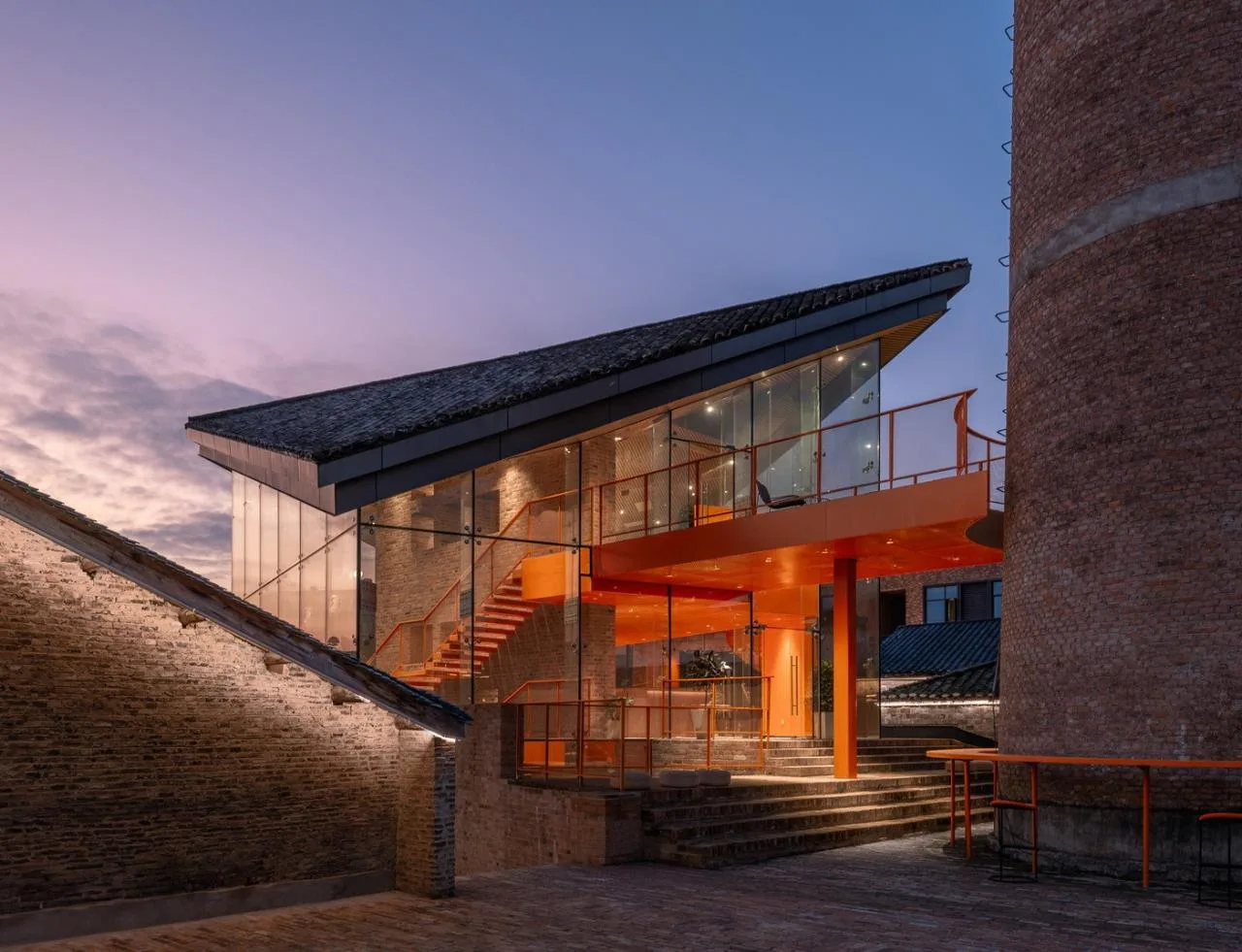
Jingdezhen, known as the “Porcelain Capital” of China, boasts a porcelain-making history spanning over 1,000 years. This project involved the renovation of the Yanghua Lane courtyard within the Jingdezhen Yuyao Factory area, guided by an “insert construction/piece” approach.
Respecting the historical character of the original site, new buildings were carefully “inserted” while old interiors received “plug-in” design updates. This strategy revitalizes the site by blending new functions with the existing environment.
Located at the heart of the Yuyao Factory area, the Yanghua Lane courtyard neighbors the Yuyao Museum and factory ruins to the west, and the Xujia Kiln to the north. At the southeast corner lies the chimney square, a key open space connecting various alleys. Although the narrow Yanghua Lane to the south remains compact, it retains its authentic historic appearance.
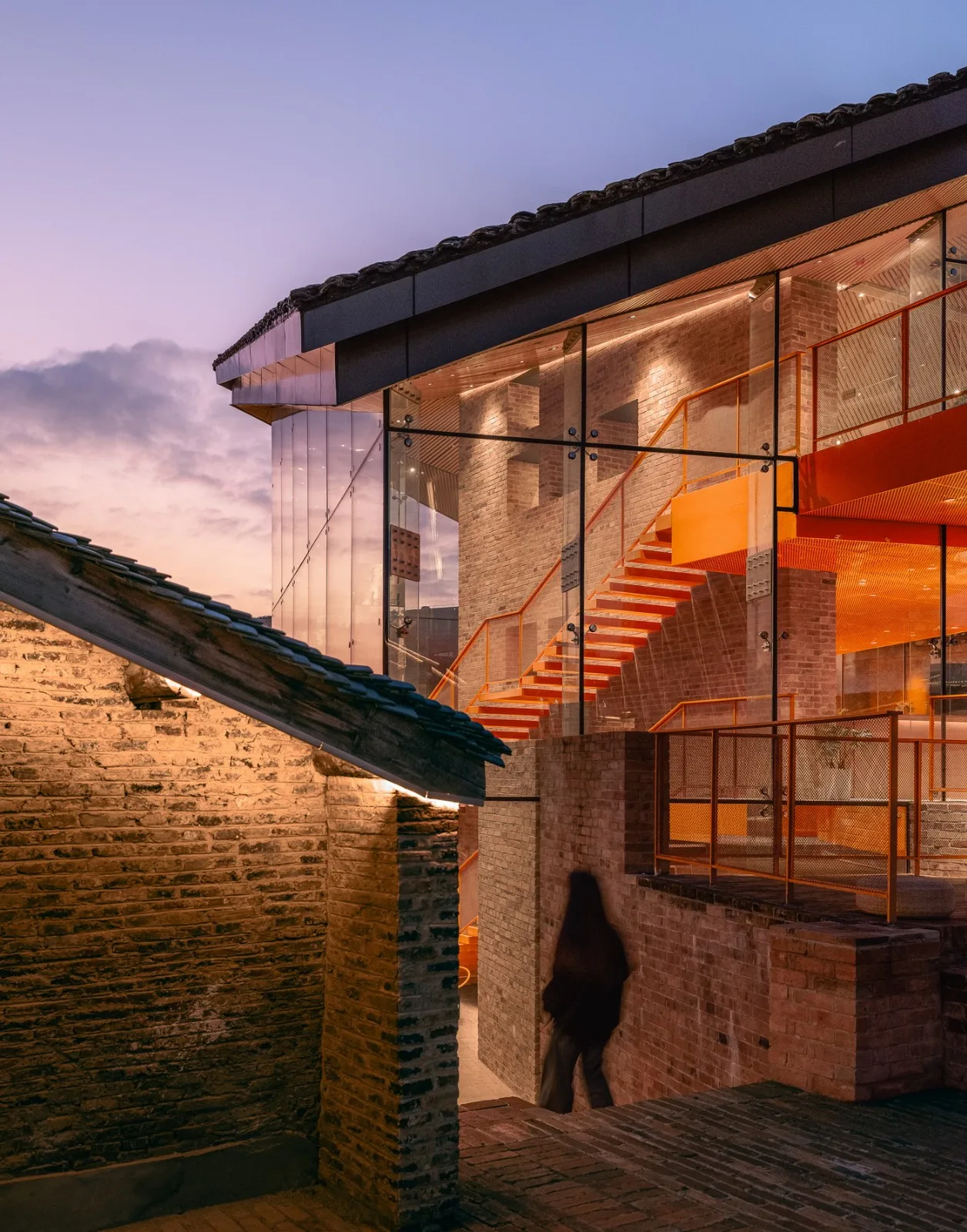
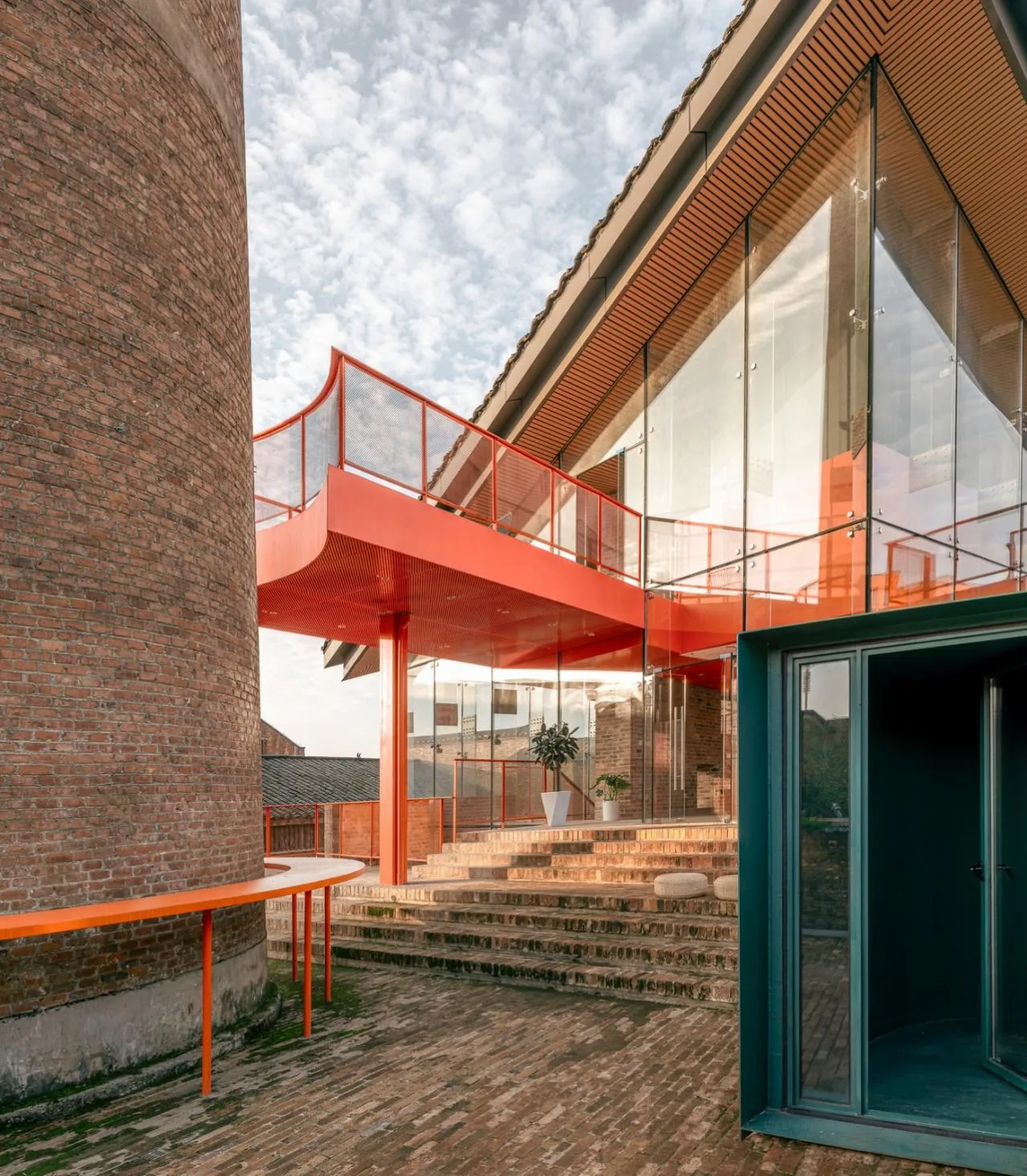
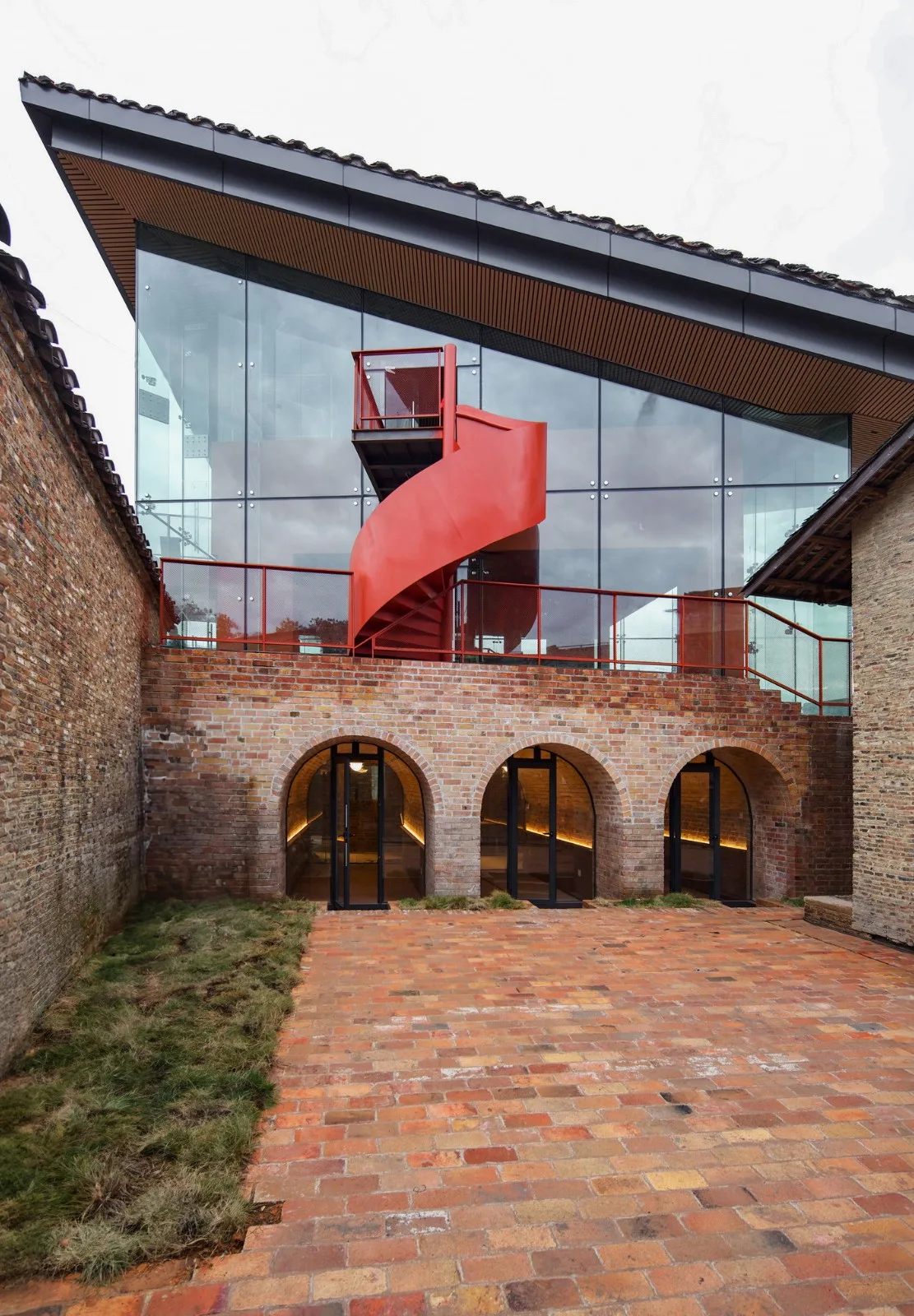
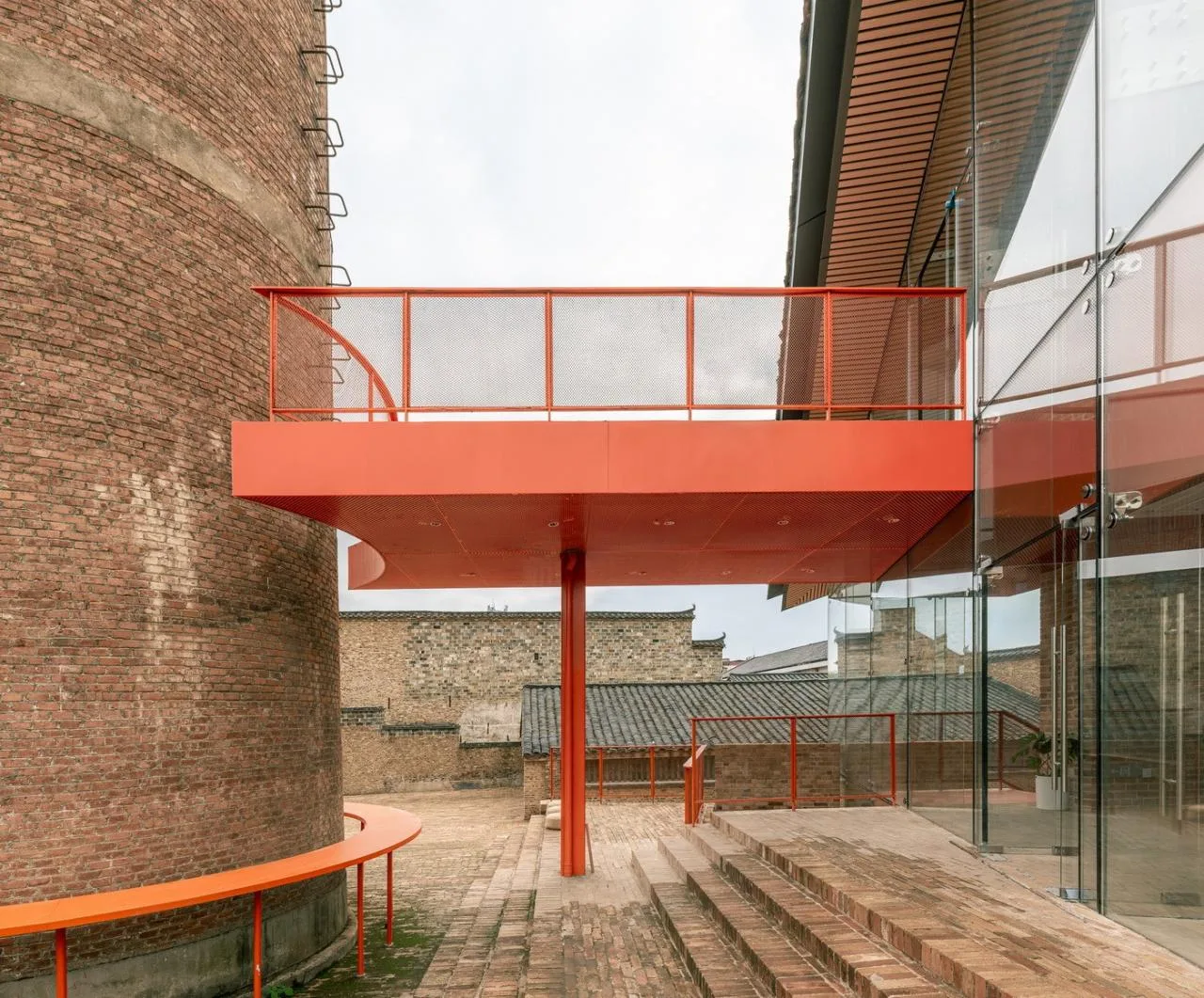
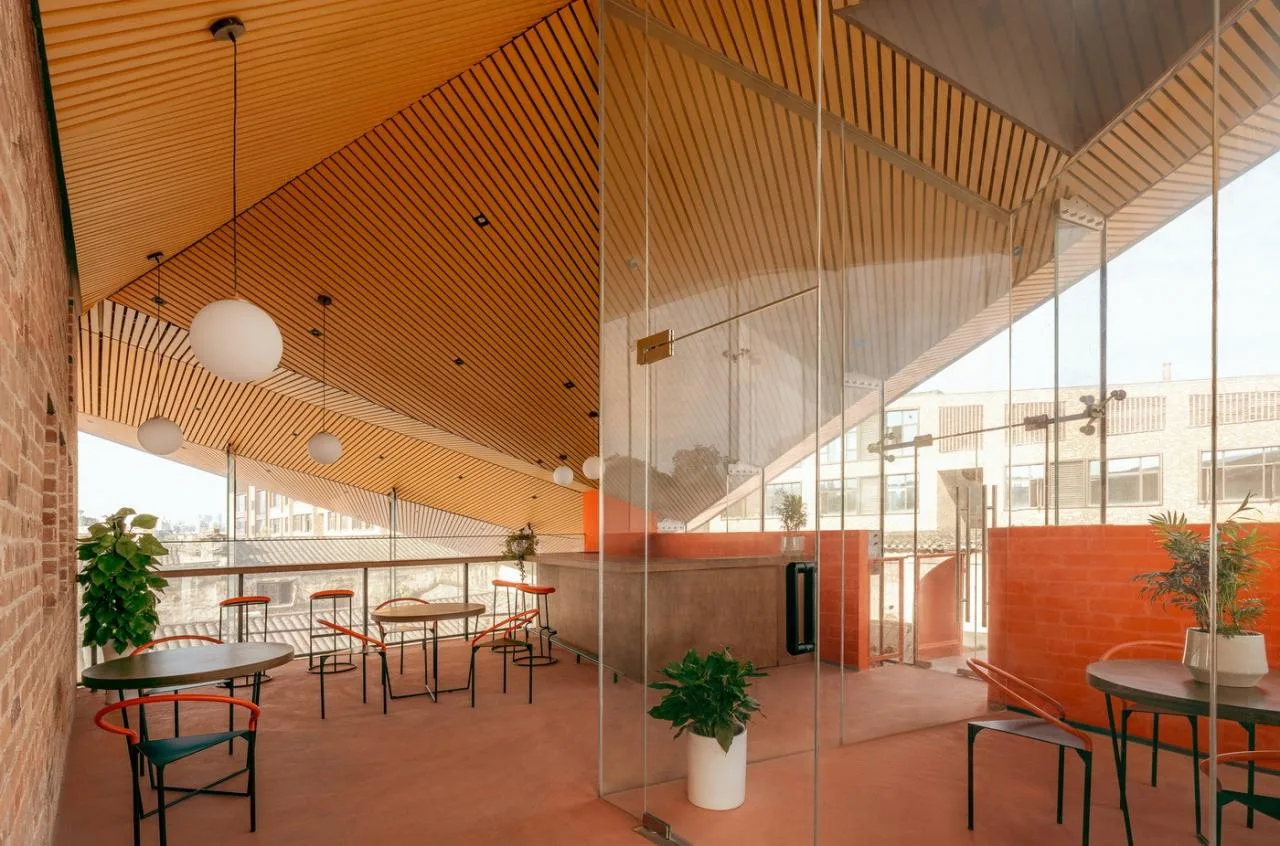
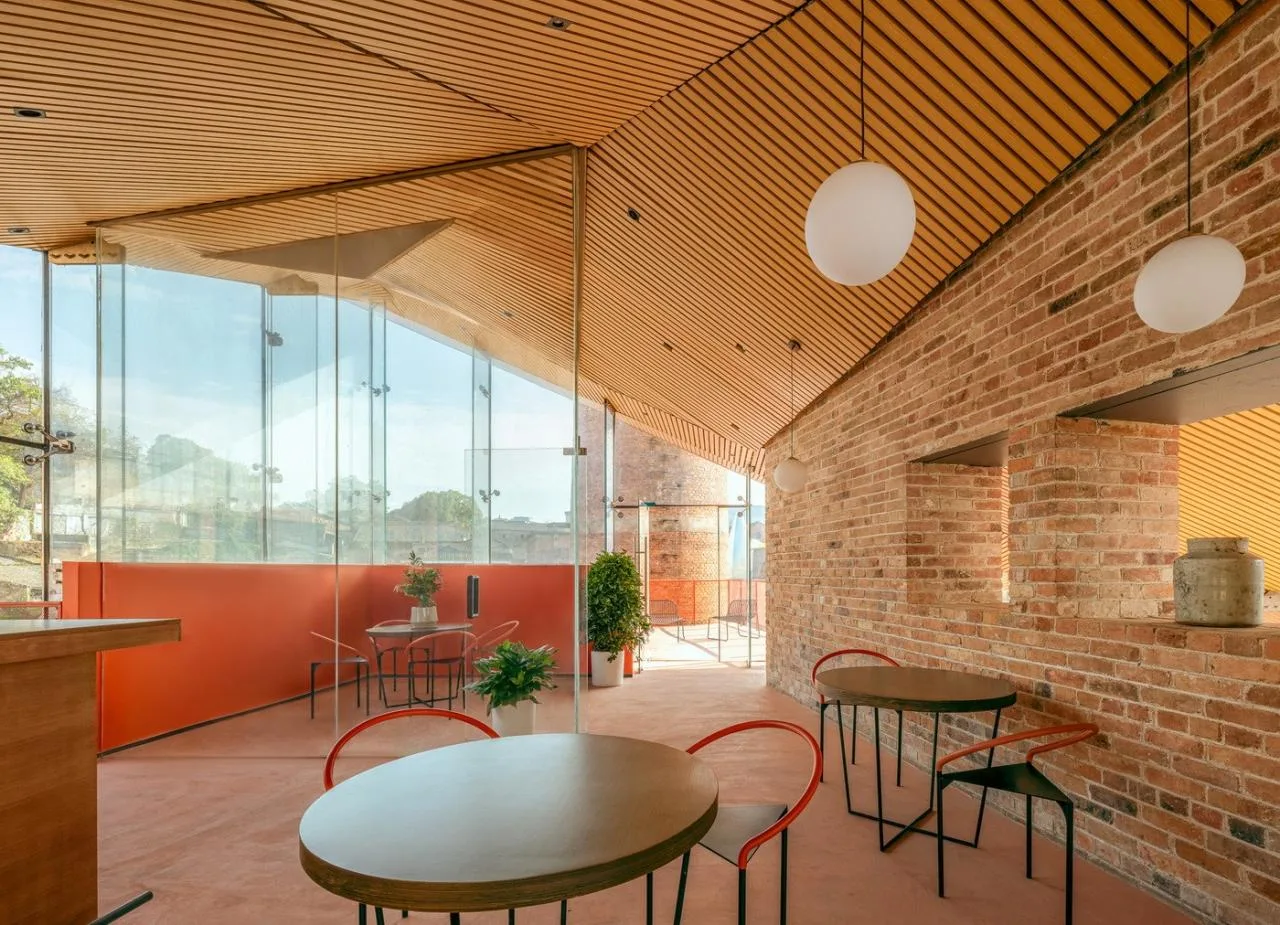
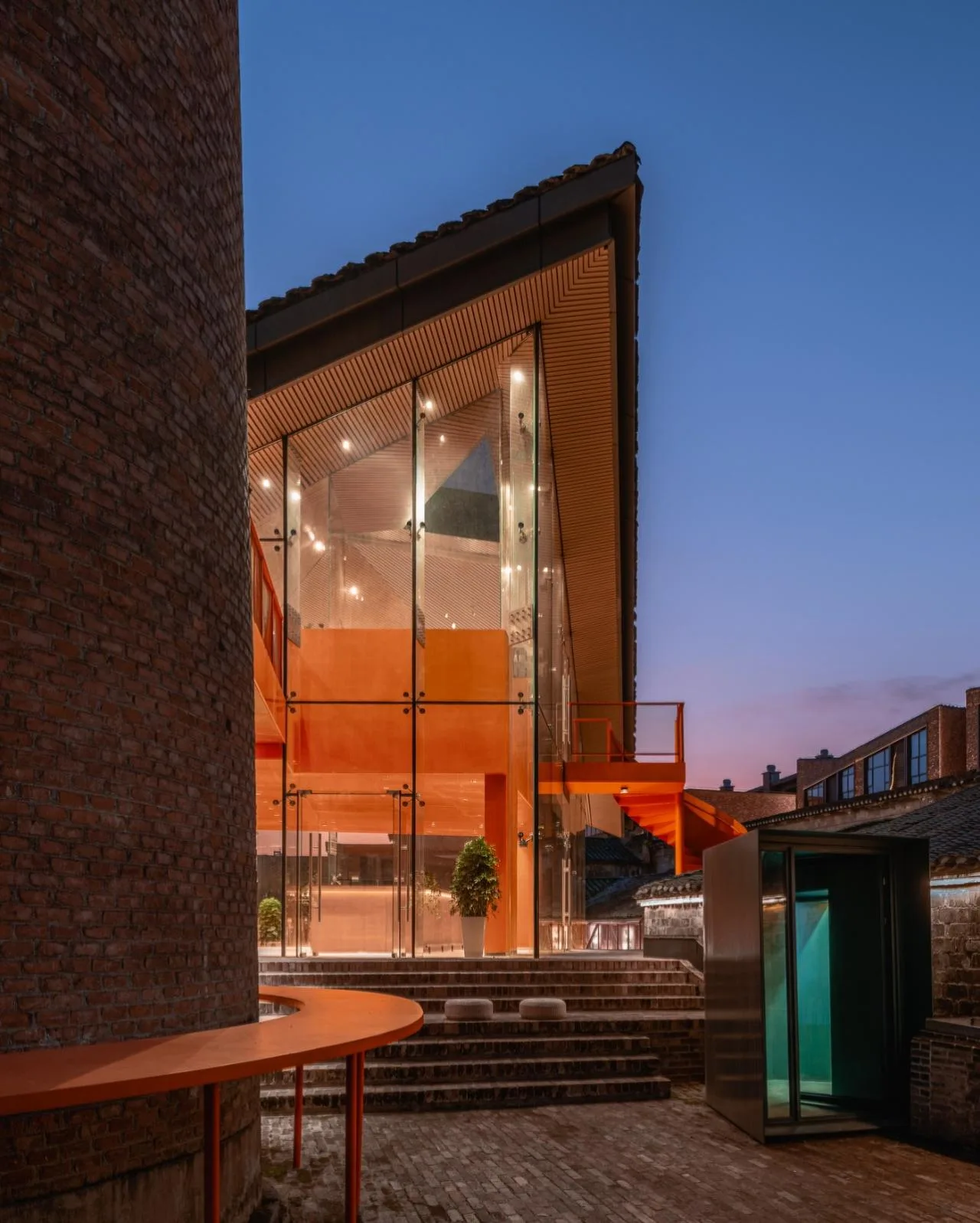
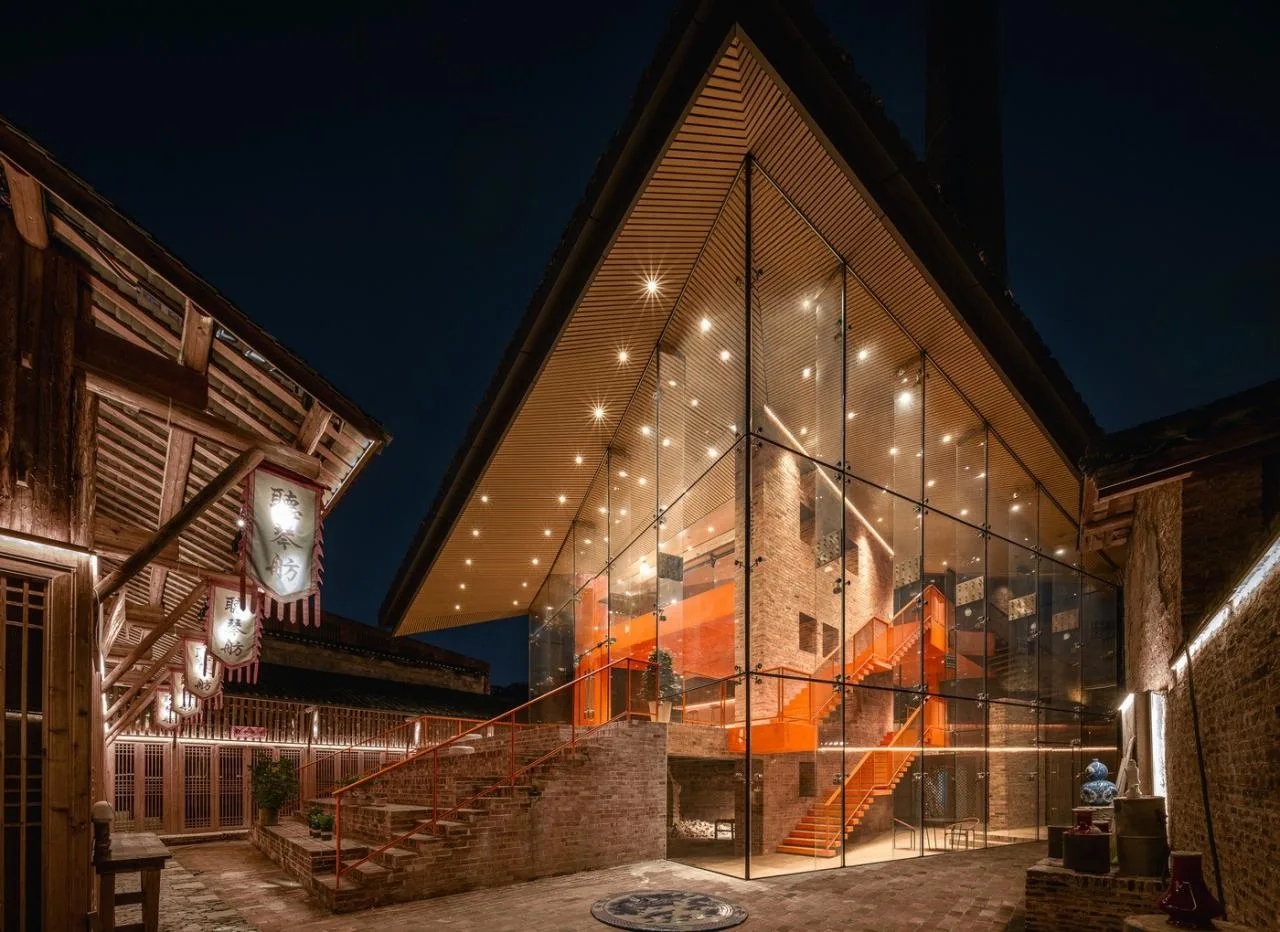
The centerpiece of the courtyard renovation is the chimney coffee shop. This three-story, double-sloped glass structure houses exhibition and café spaces, blending seamlessly with the historic surroundings while establishing a striking landmark and an anchor for public space.
The transparent glass facade emphasizes openness and contrasts sharply with the surrounding robust traditional brick buildings. The diagonally sloped roof, clad with traditional blue tiles, resembles a floating umbrella. The clear space beneath the roof connects indoor and outdoor areas, extending the public realm of the chimney square.
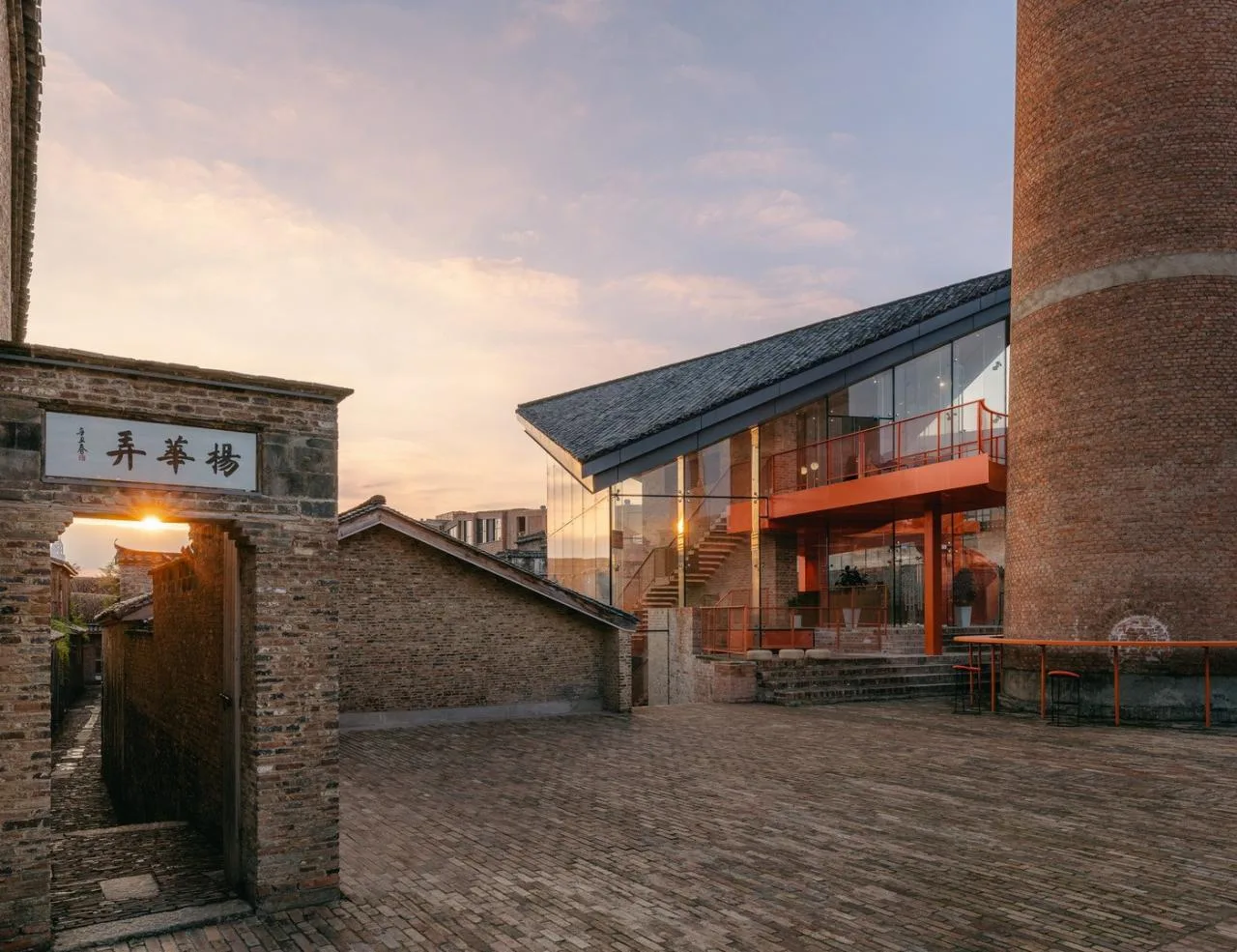
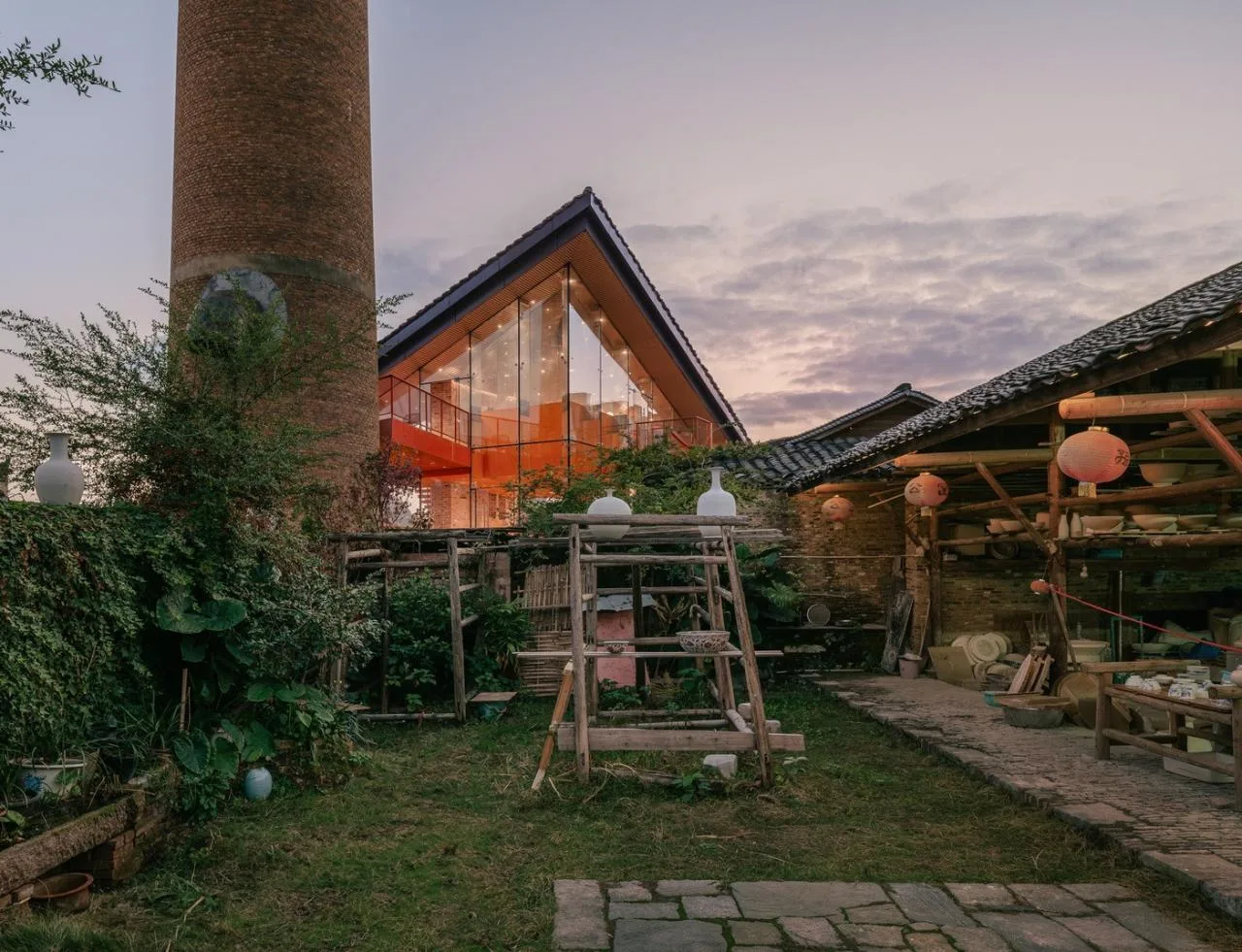
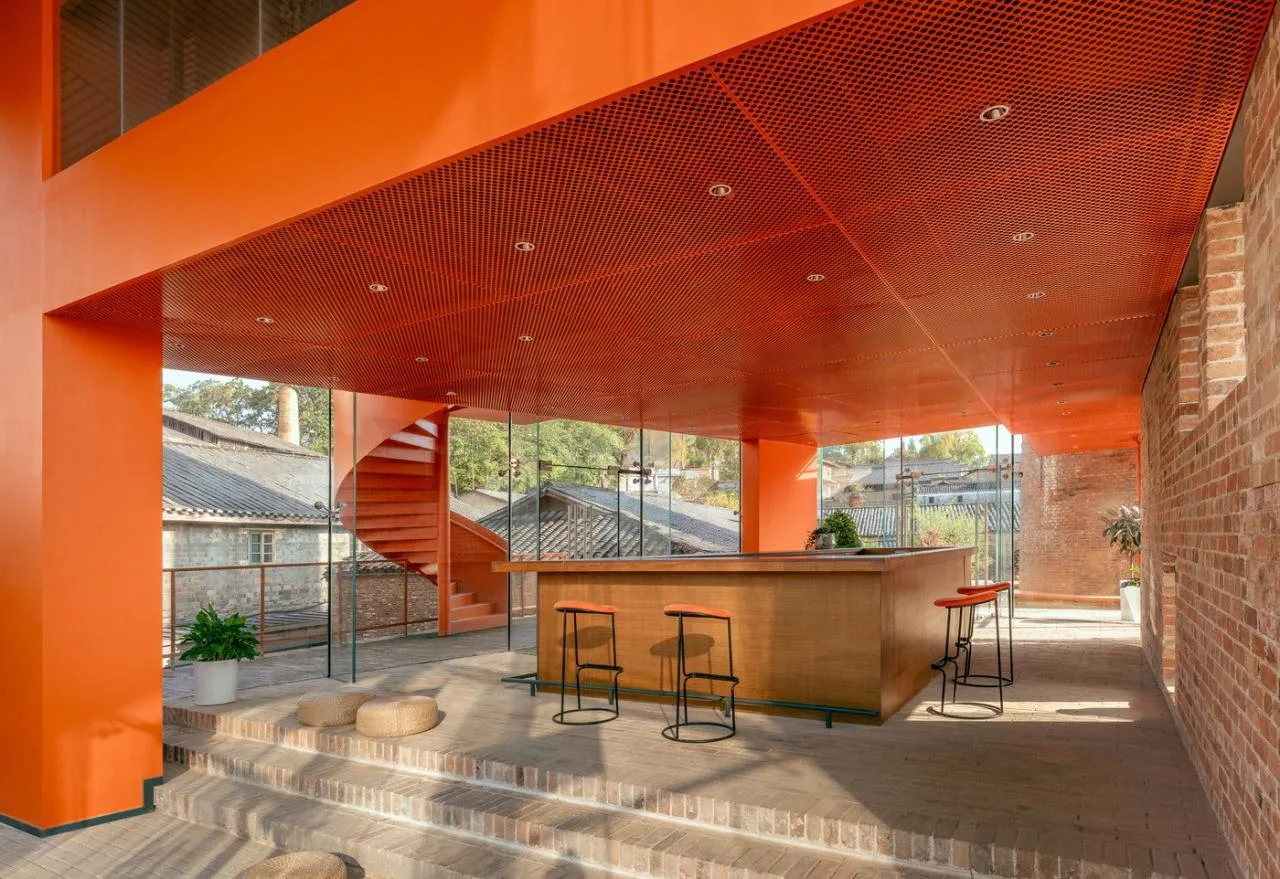
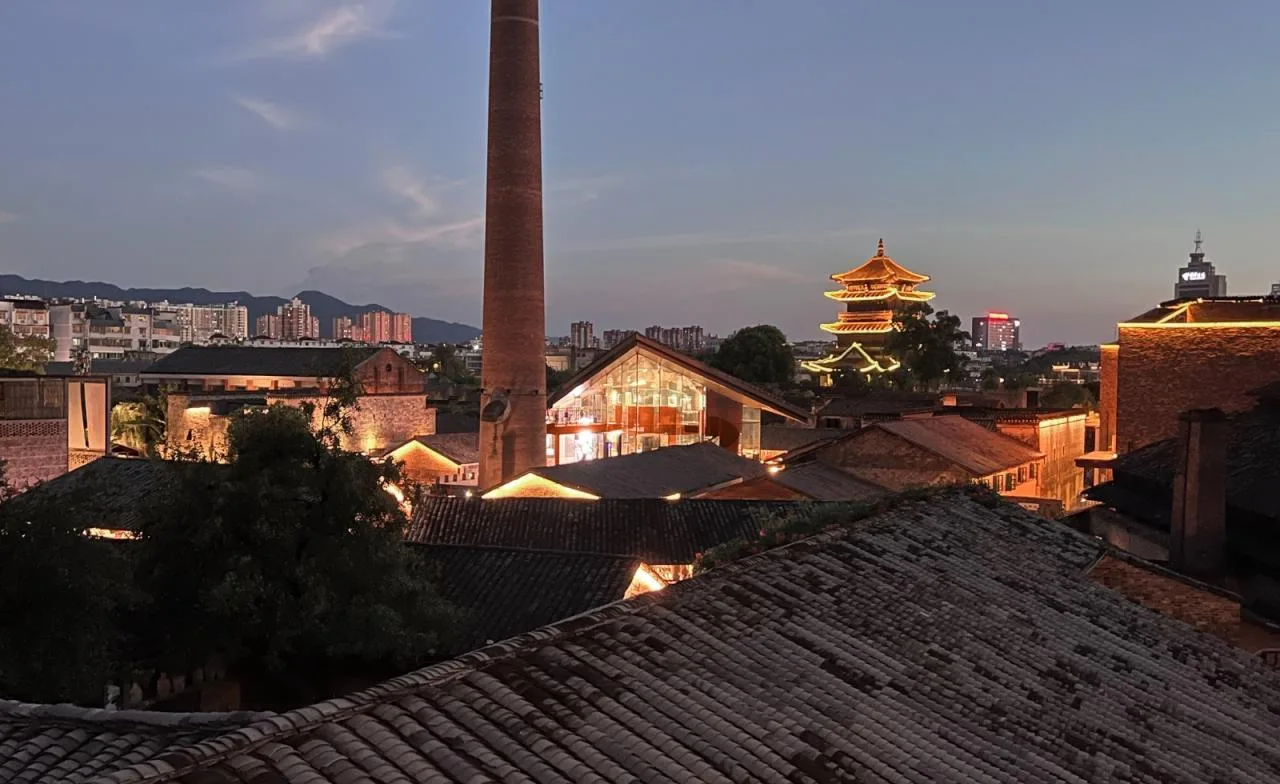
Viewed from afar, the chimney café roof stands out against the layered rooftops, engaging in a formal dialogue with the traditional architecture around it. The brick flooring of the public square extends inside the café, transforming into a broad staircase that leads to the inner courtyard, enhancing the indoor-outdoor connection.
The brick-paved stairs serve as seating areas and effectively manage the height difference between the square and courtyard, creating a rich and inviting landscape.
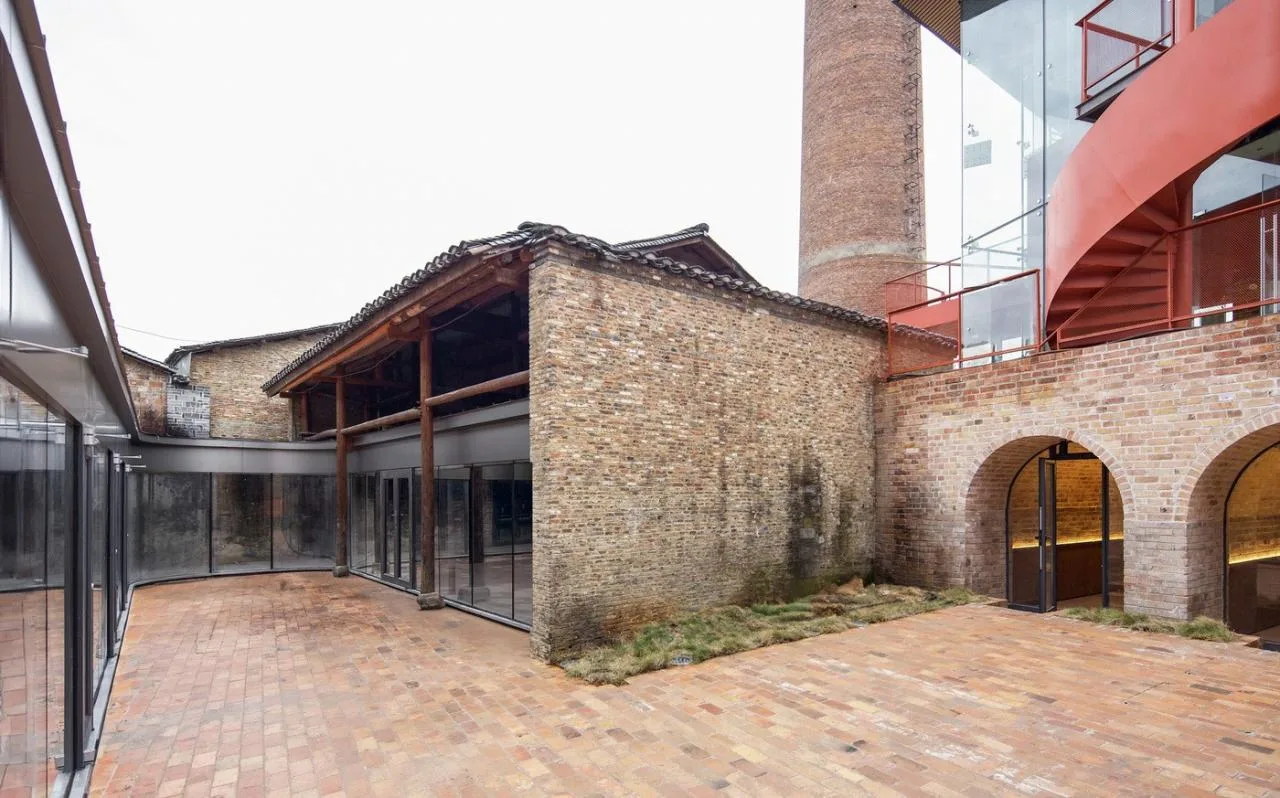
The coffee shop’s underground level is constructed on a brick foundation resting atop the original building base, preserving the site’s spatial texture. This base features a brick arch facade and large steps that extend the chimney square into the inner courtyard.
Meanwhile, an orange-colored second-floor interlayer extends towards the chimney, forming an outdoor platform that anchors the new building firmly within the existing site. This design thoughtfully merges old and new elements, creating a modern spatial landmark while honoring the historic environment.
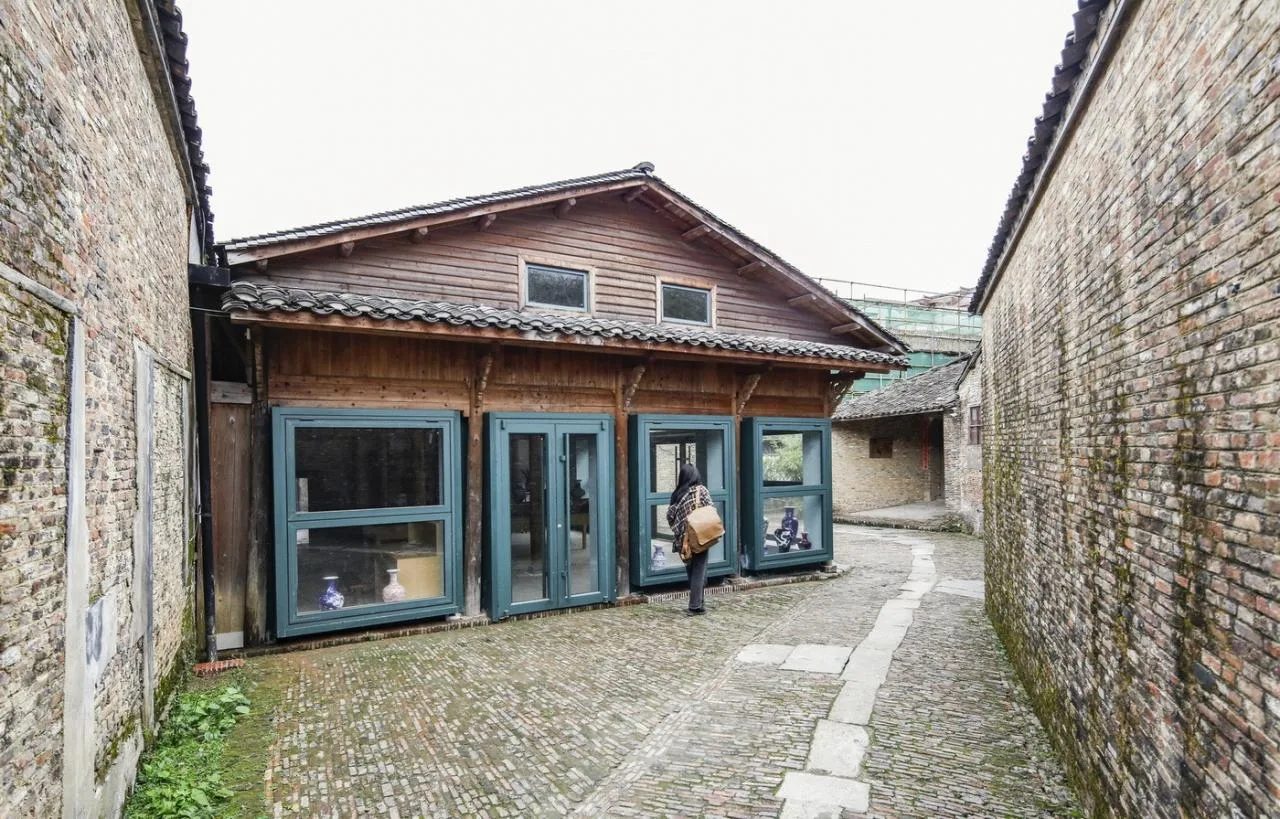
Encircling the coffee shop’s transparent facade is the original brick building, now transformed into a ceramic artist’s workshop through a plug-in design strategy. The original brick walls and wooden structures are preserved, while prefabricated functional modules are inserted between wood beams to accommodate the artist’s needs.
These new additions include modules for bedroom, studio, kitchen, and bathroom functions. Integrated stairs and walkways maximize spatial efficiency and connectivity. Although the new insertions contrast with the original architectural style, they harmoniously blend form and function.
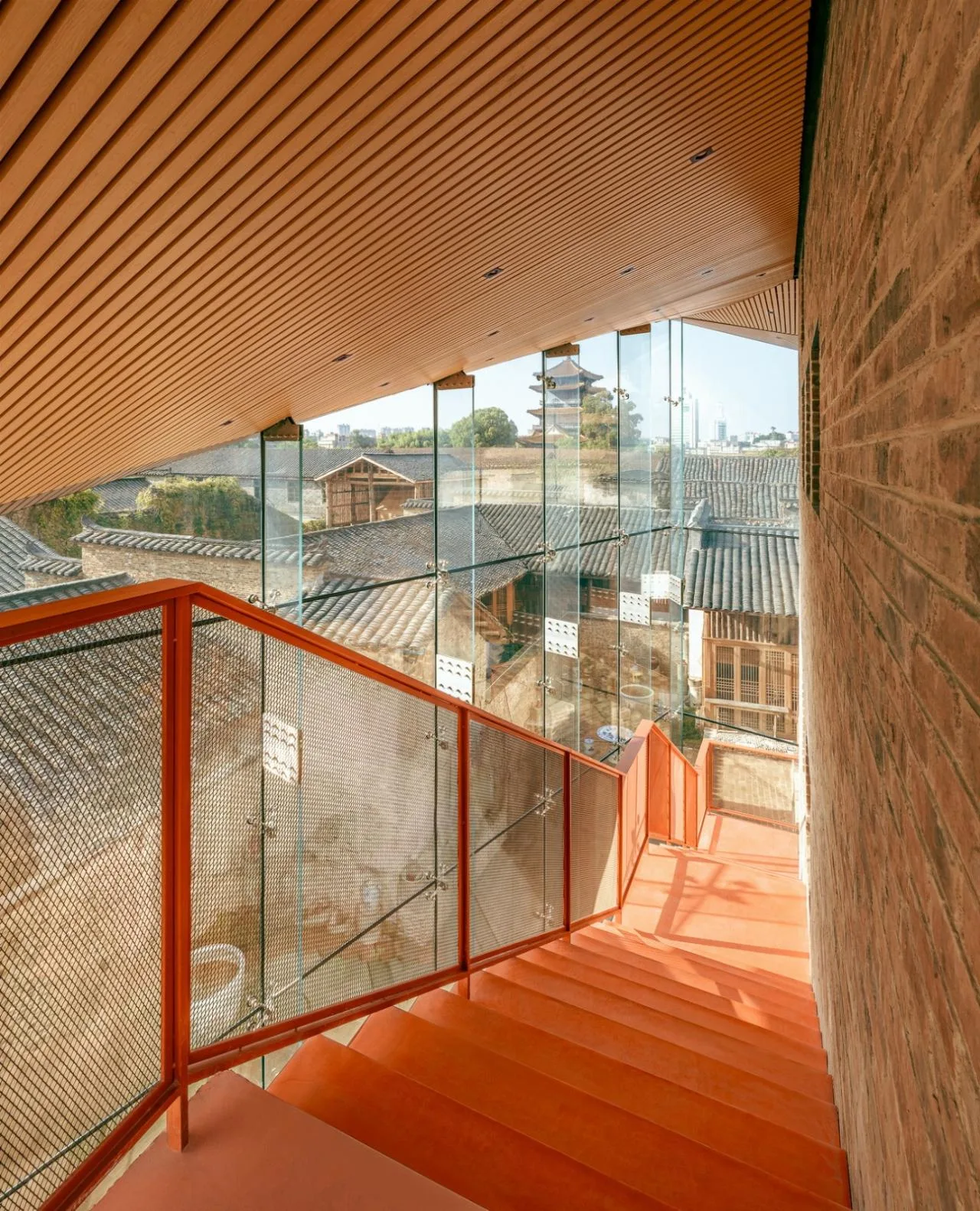
The original site featured two relatively enclosed courtyards. To enhance connectivity, one building was rotated to link these spaces, creating an integrated courtyard accessible from the café’s transparent space and multiple public passages.
This newly connected courtyard functions as an open, public space fostering community engagement.
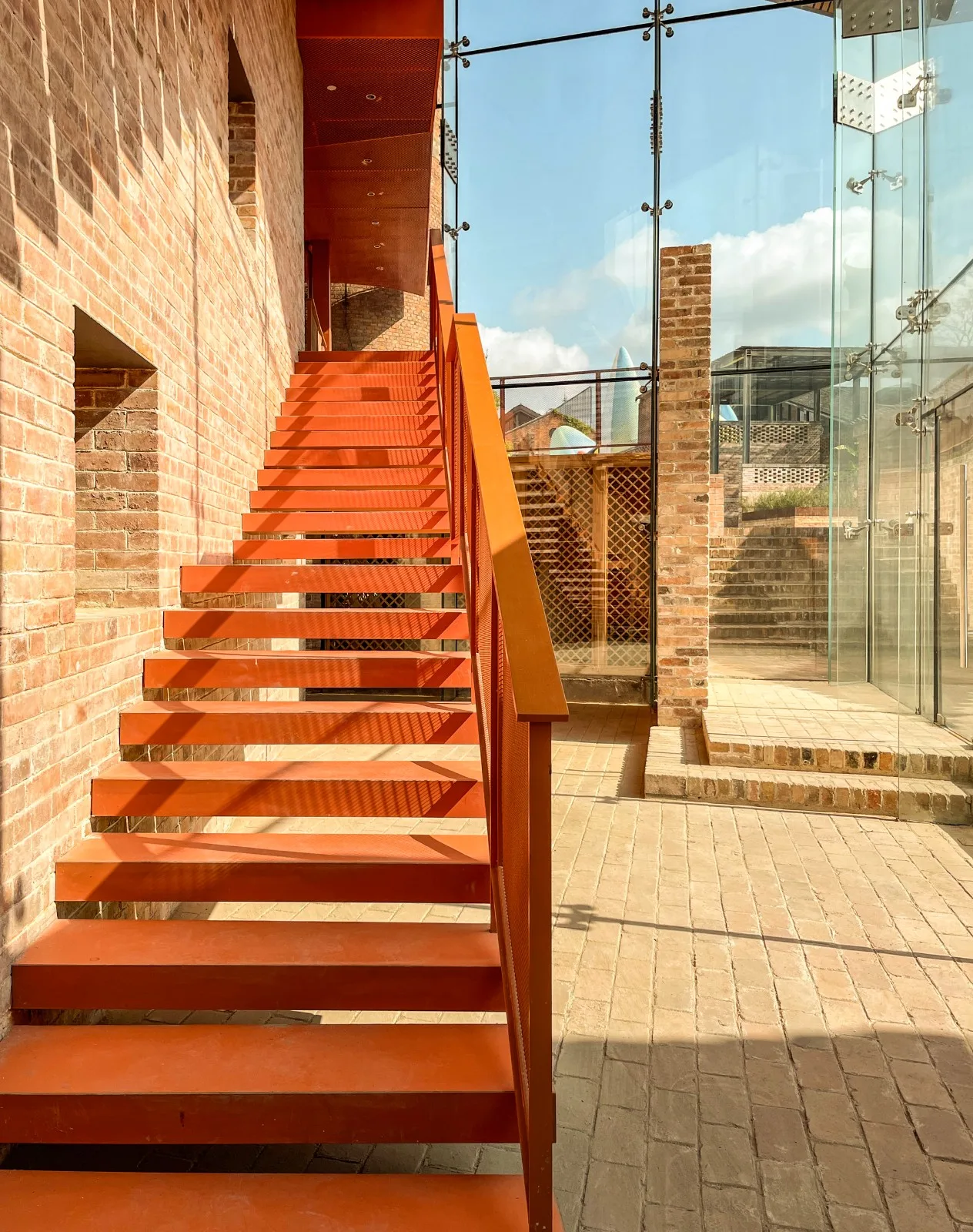
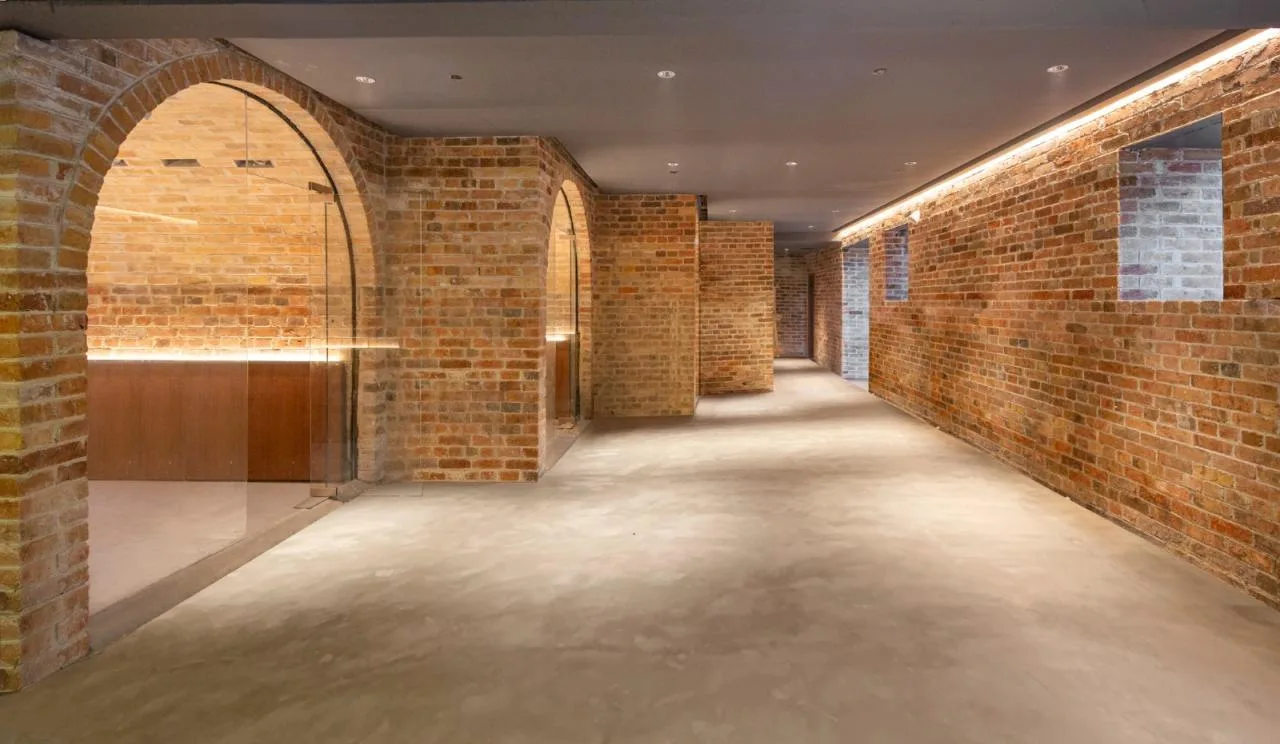
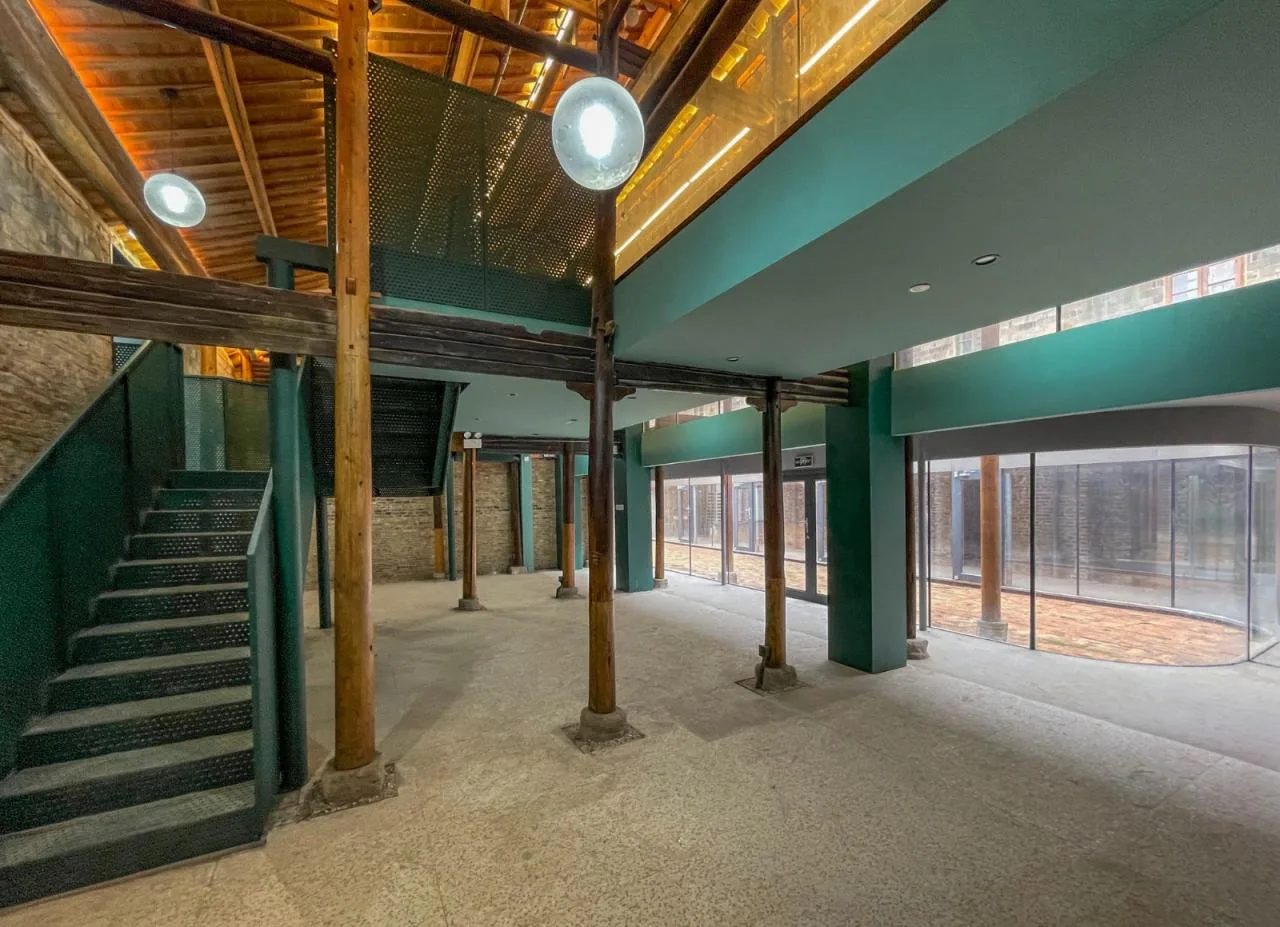
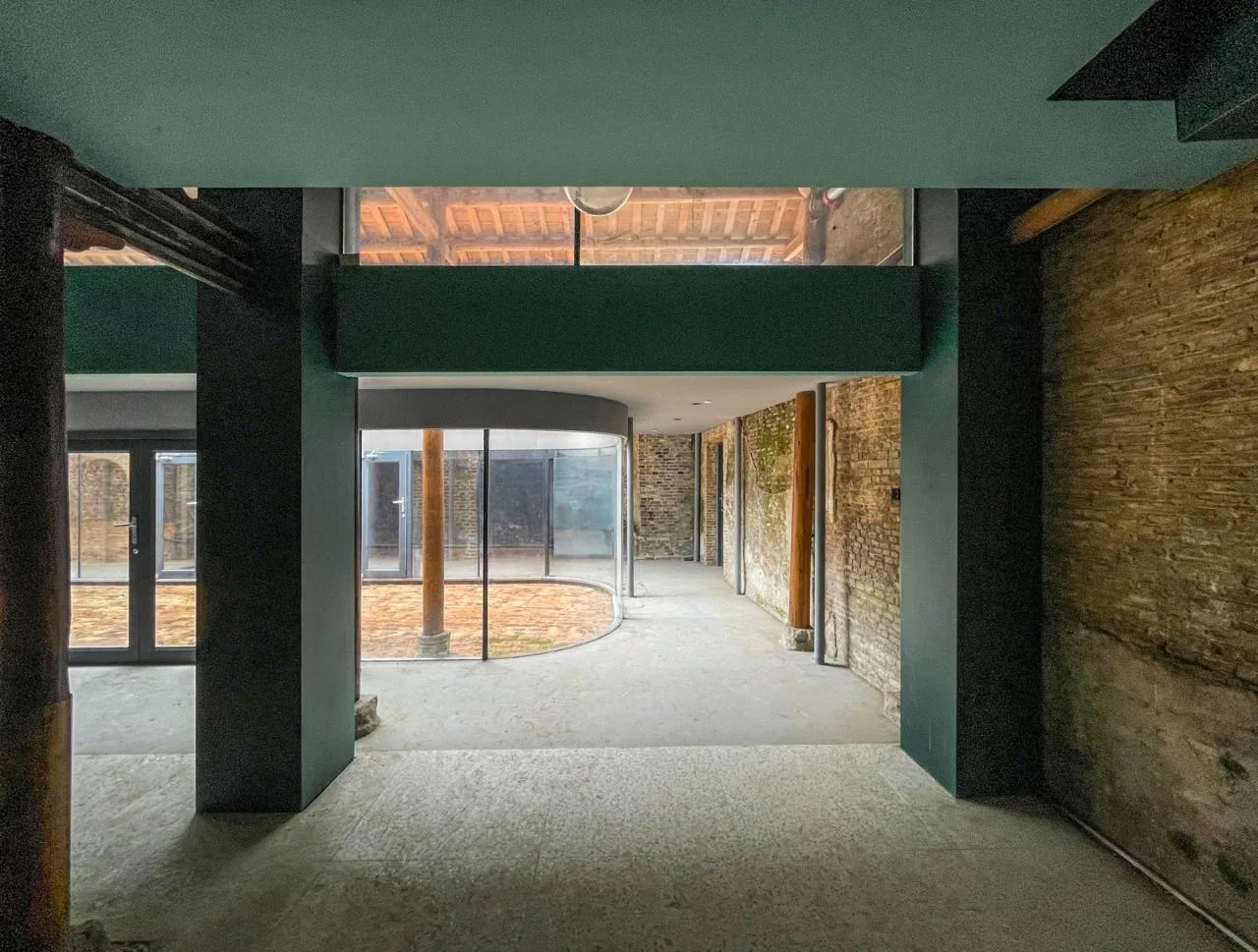
The courtyard originally contained a variety of building types, including traditional wooden brick houses, brick-concrete structures, and mixed concrete and wood buildings. During renovation, only a few later-added buildings were demolished. New structures were built on some of these foundations.
The reconfigured courtyard layout maintains the original spatial relationships, preserves architectural diversity, and increases openness. The new coffee shop, restaurant, and ceramic artist studio are both zoned and mixed-use, fostering a fresh, vibrant public community.
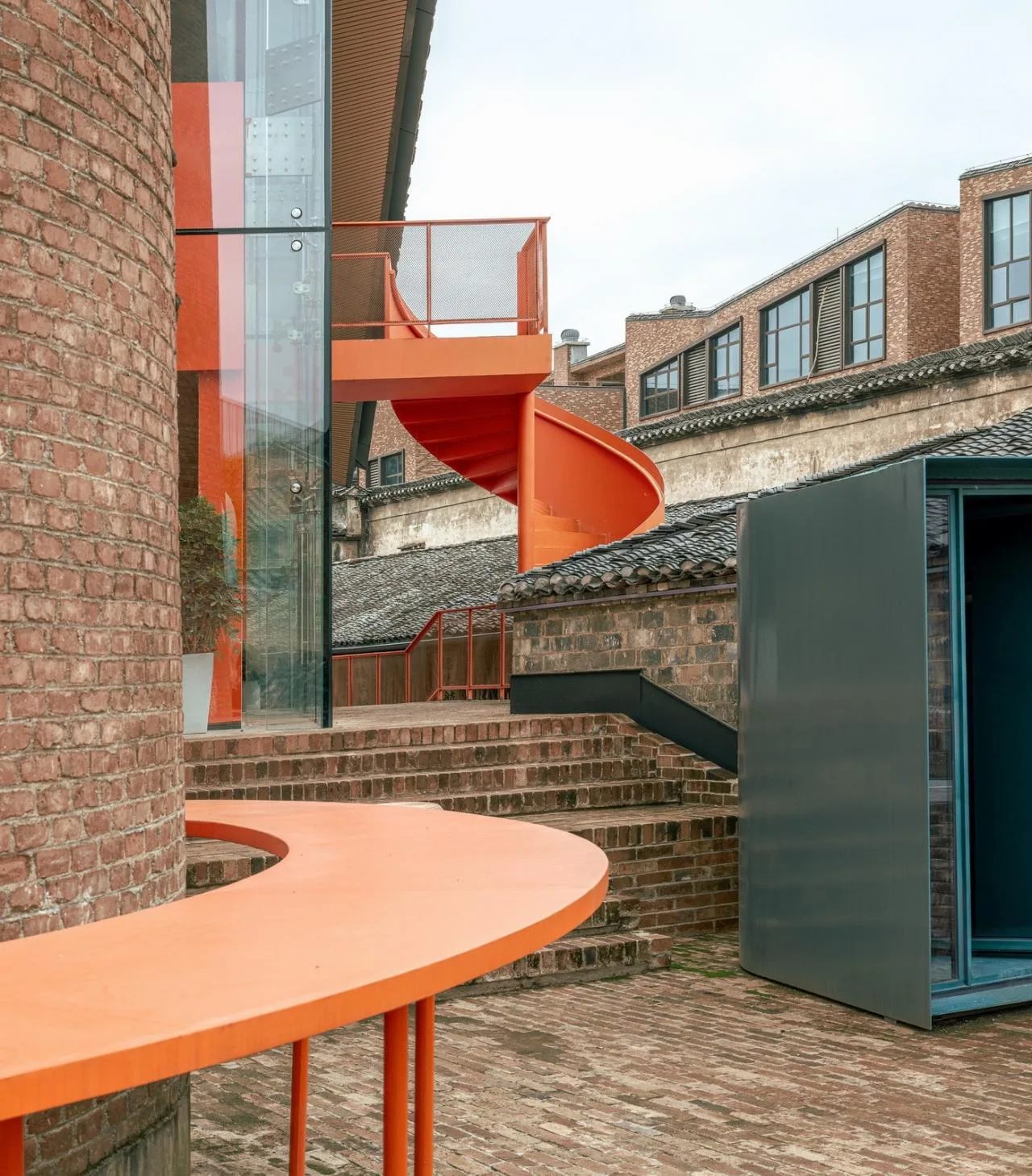
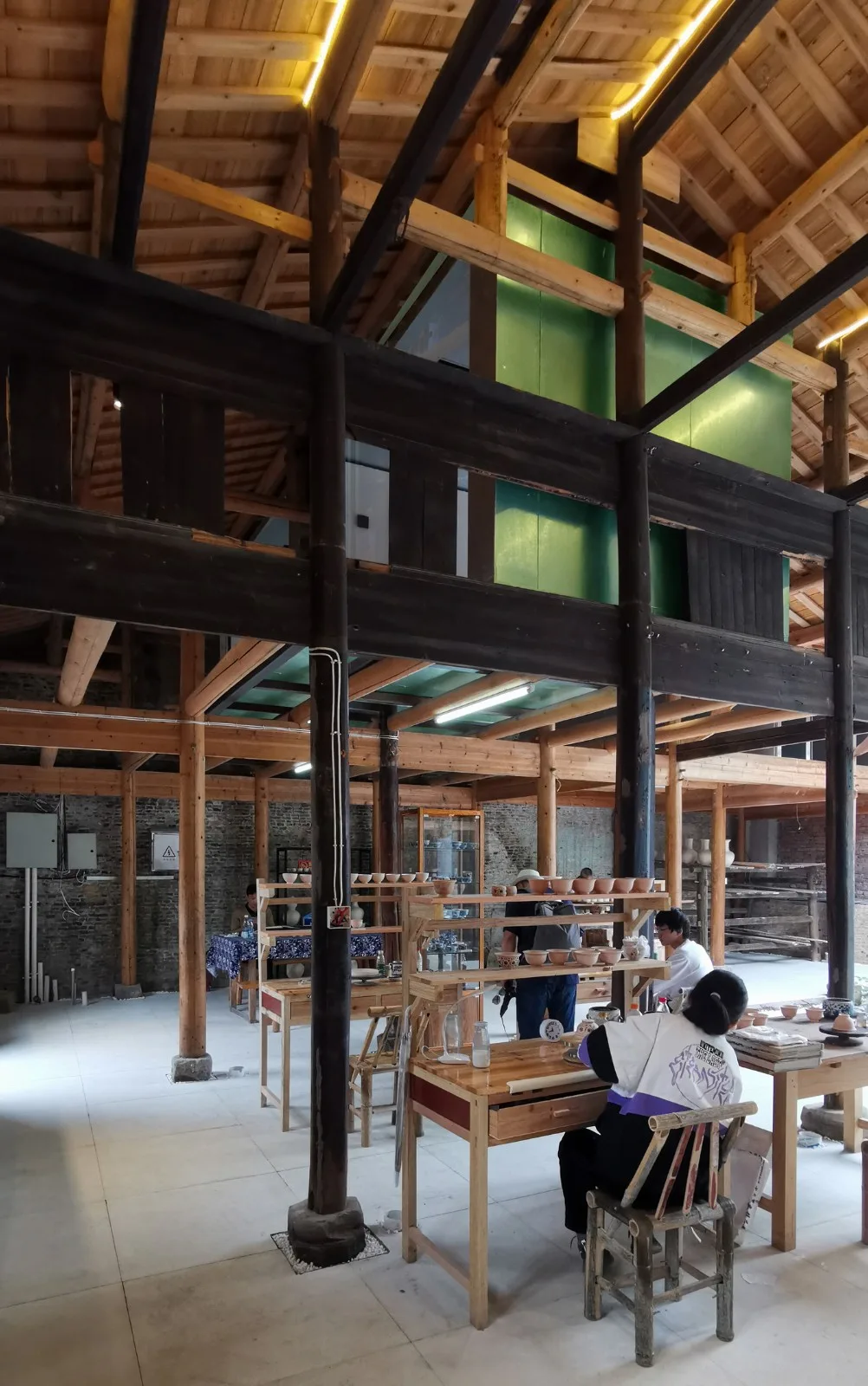
This “insertion/piece” renovation style not only fills spatial gaps but also maximizes preservation of traditional architectural features, harmoniously blending old and new structures.
Project Drawings
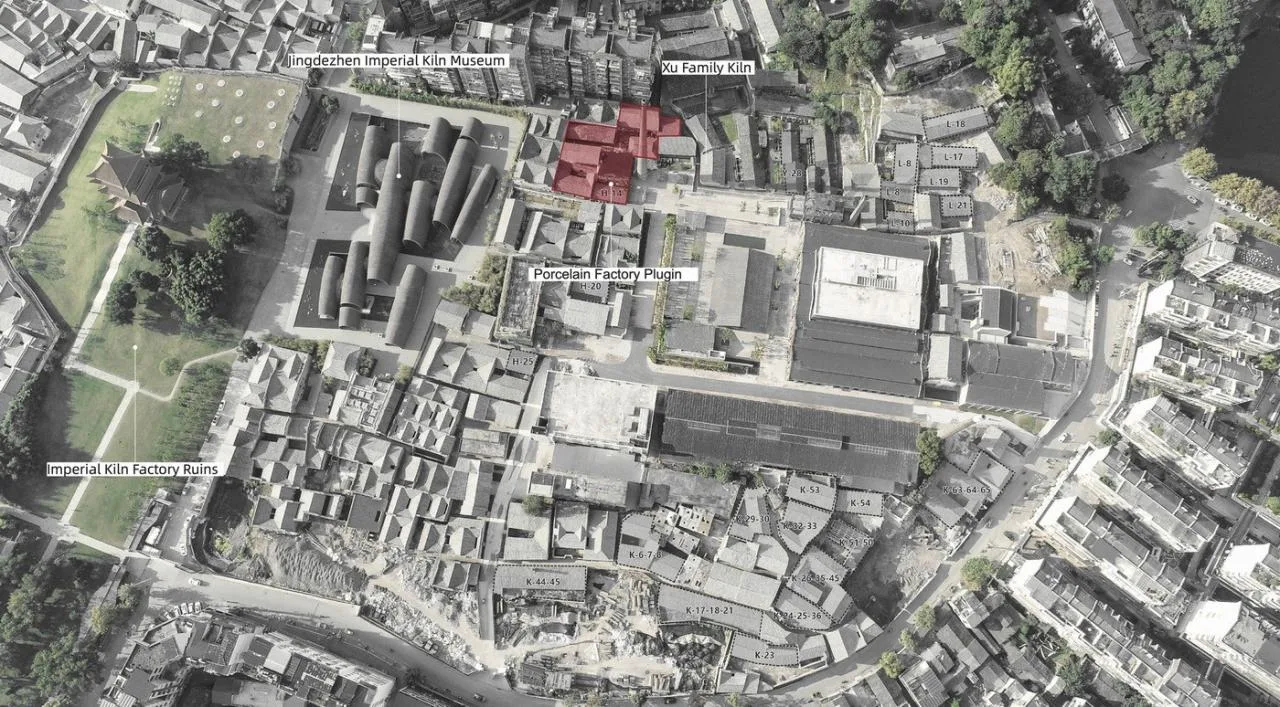
▲ Base schematic diagram
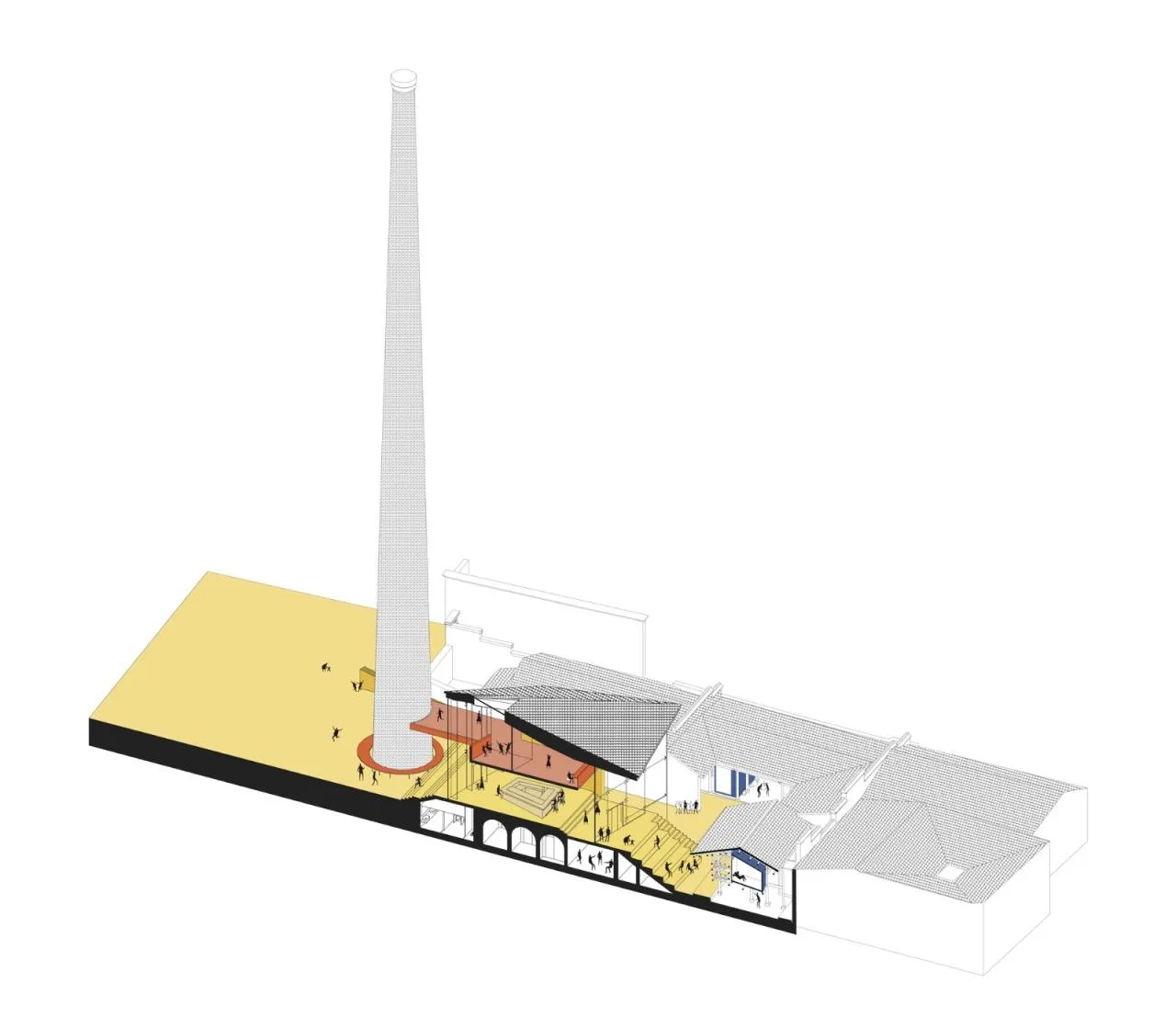
▲ Axonometric diagram
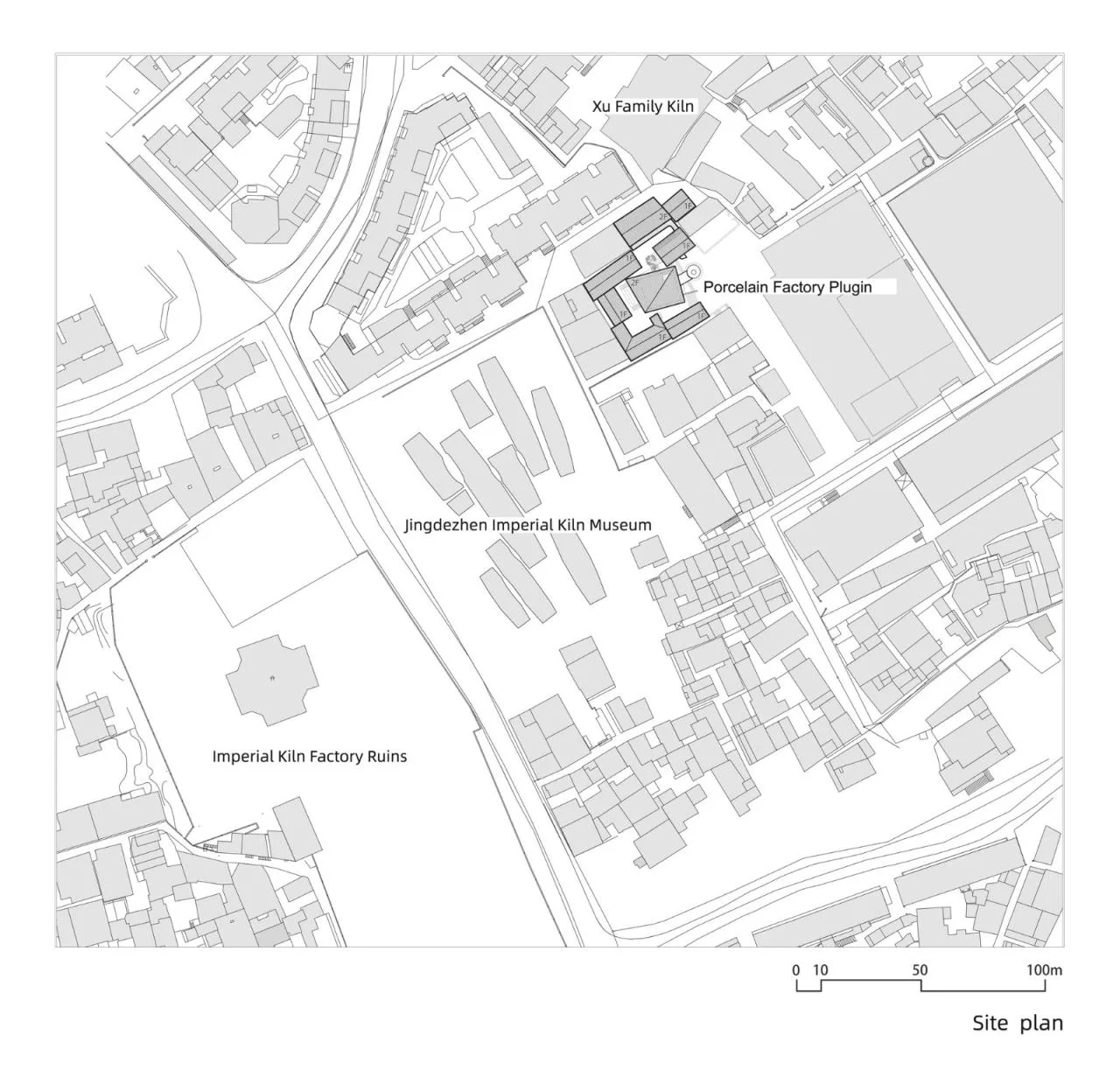
▲ General layout plan
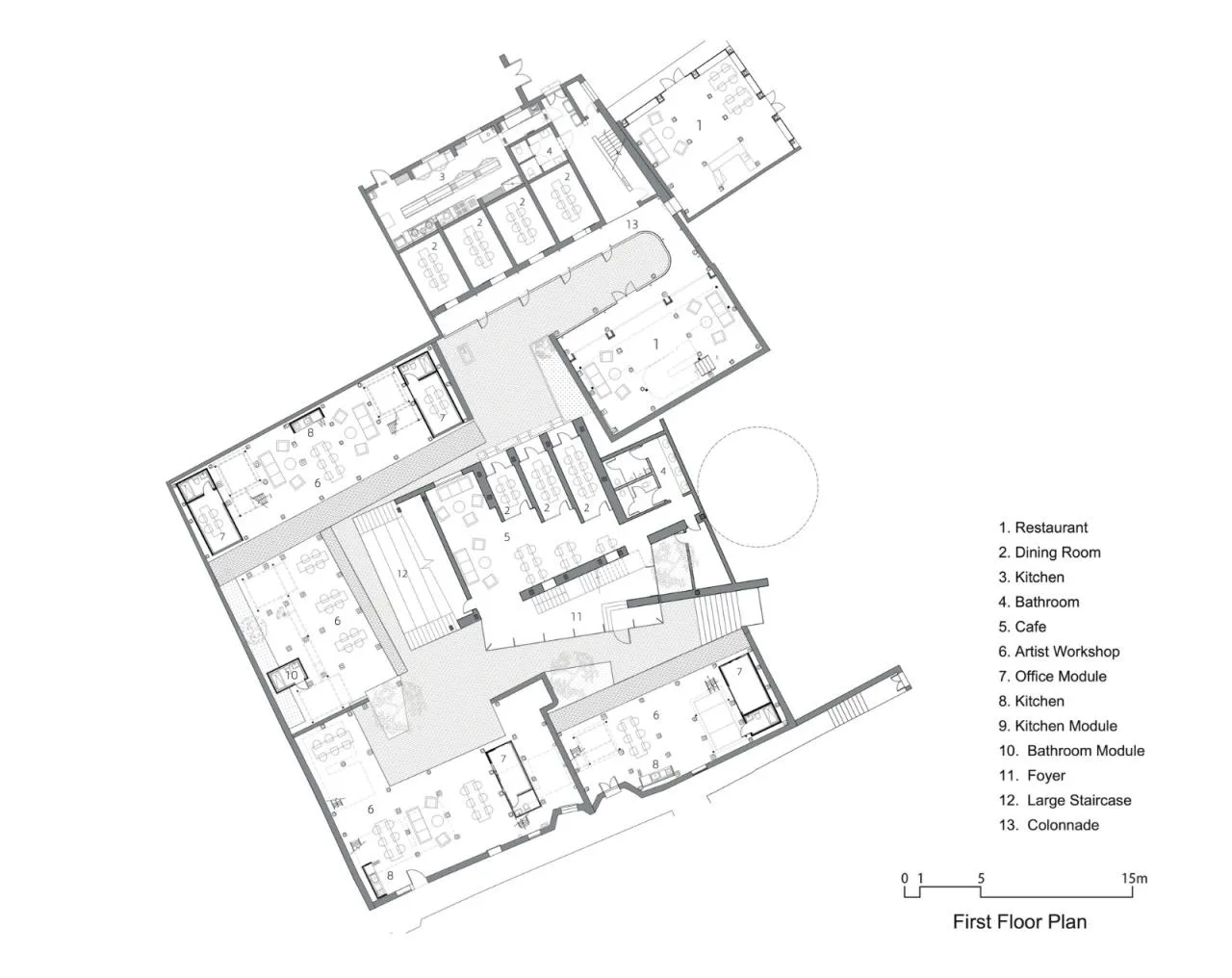
▲ First floor plan
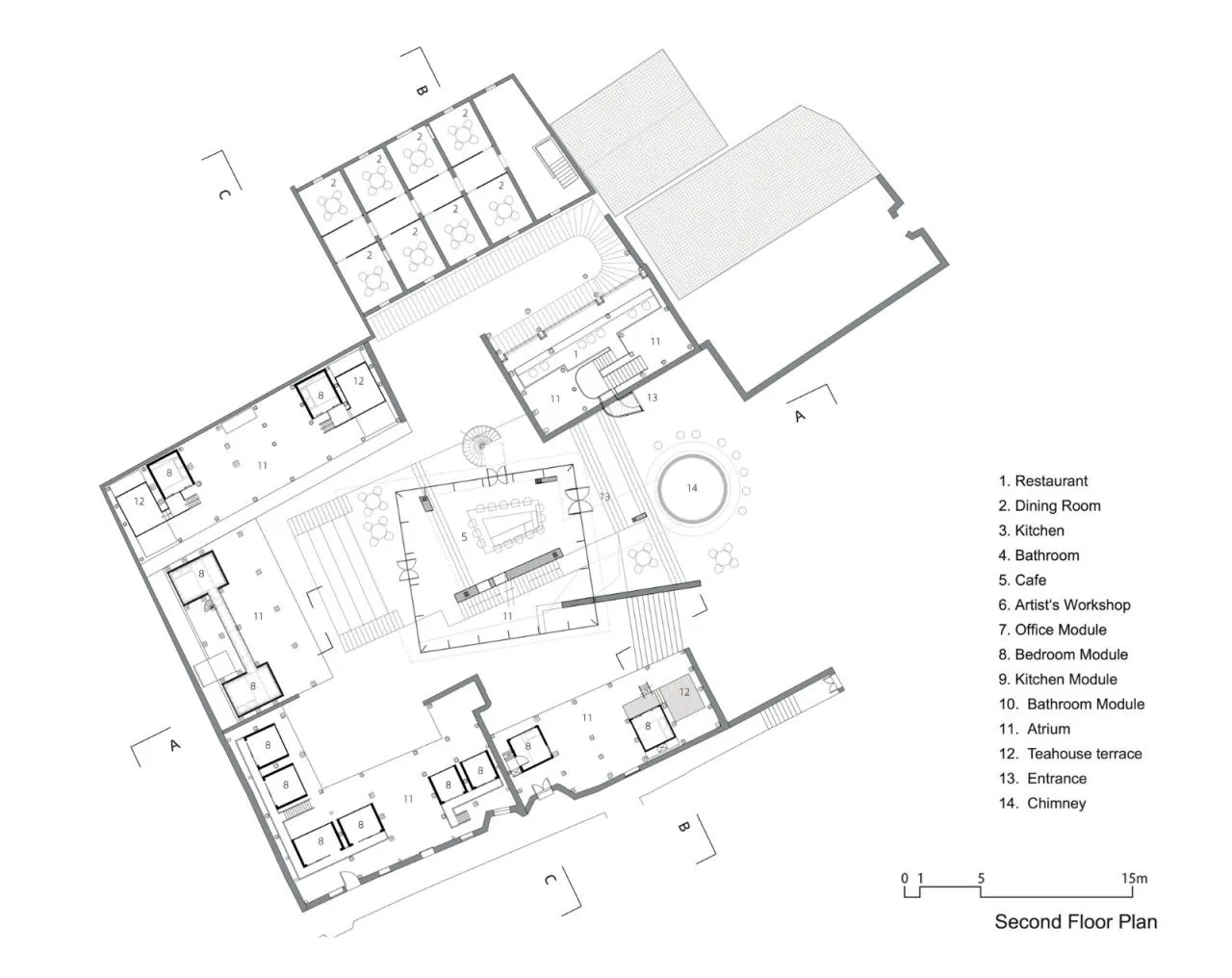
▲ Second floor plan
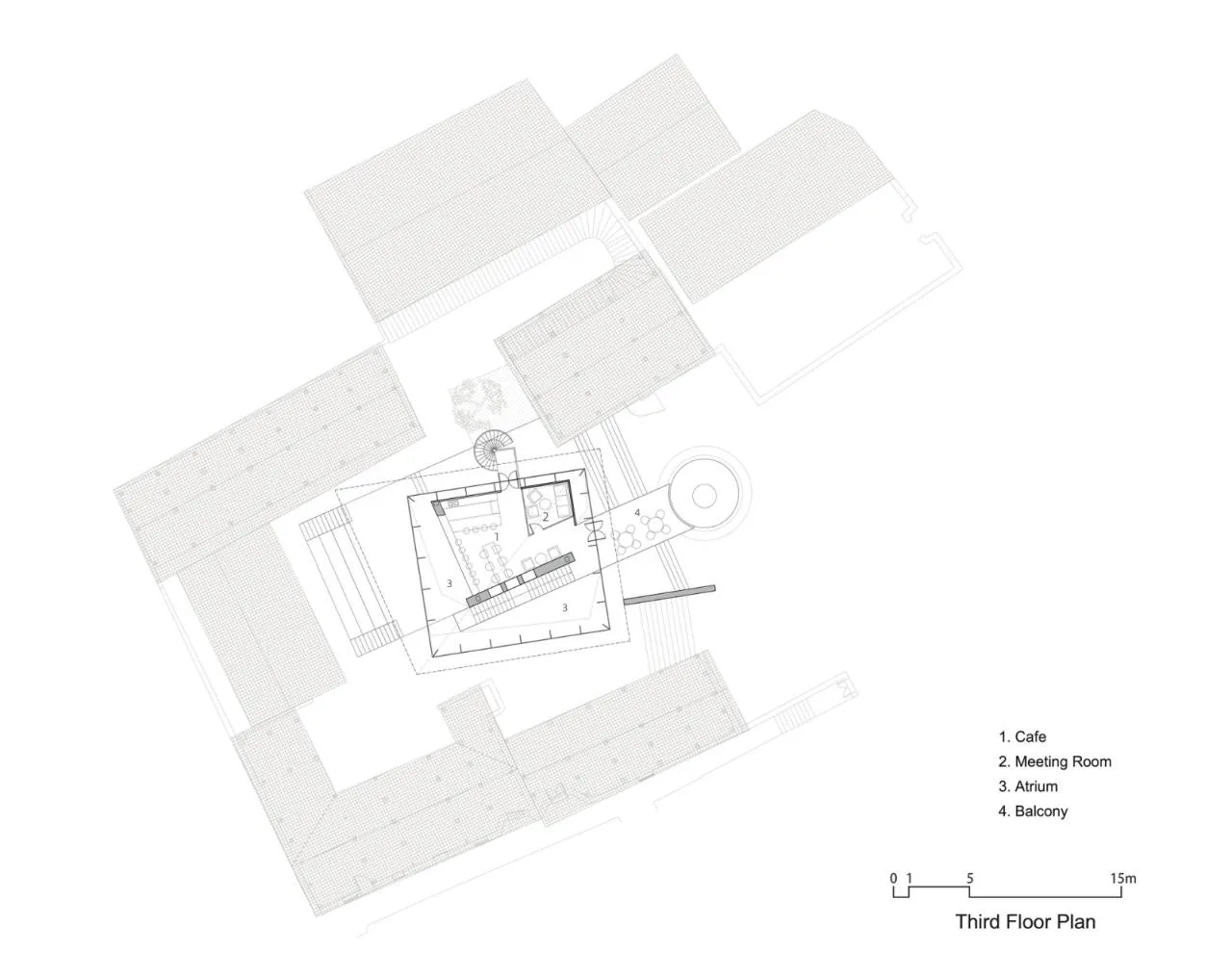
▲ Third floor plan
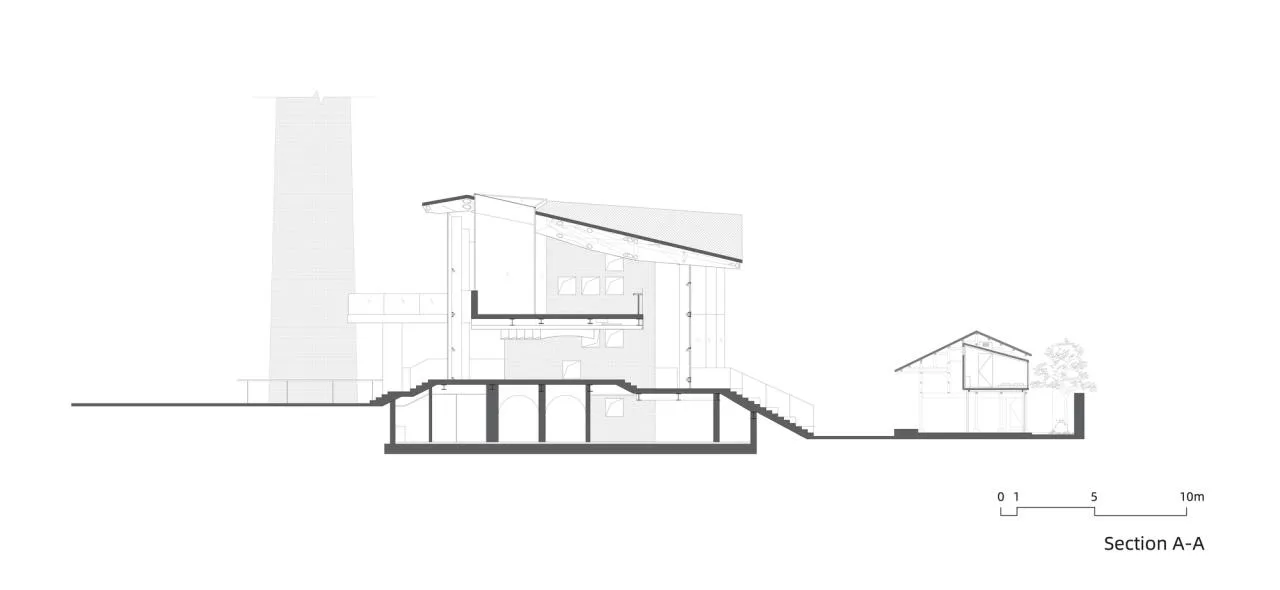
▲ Sectional view
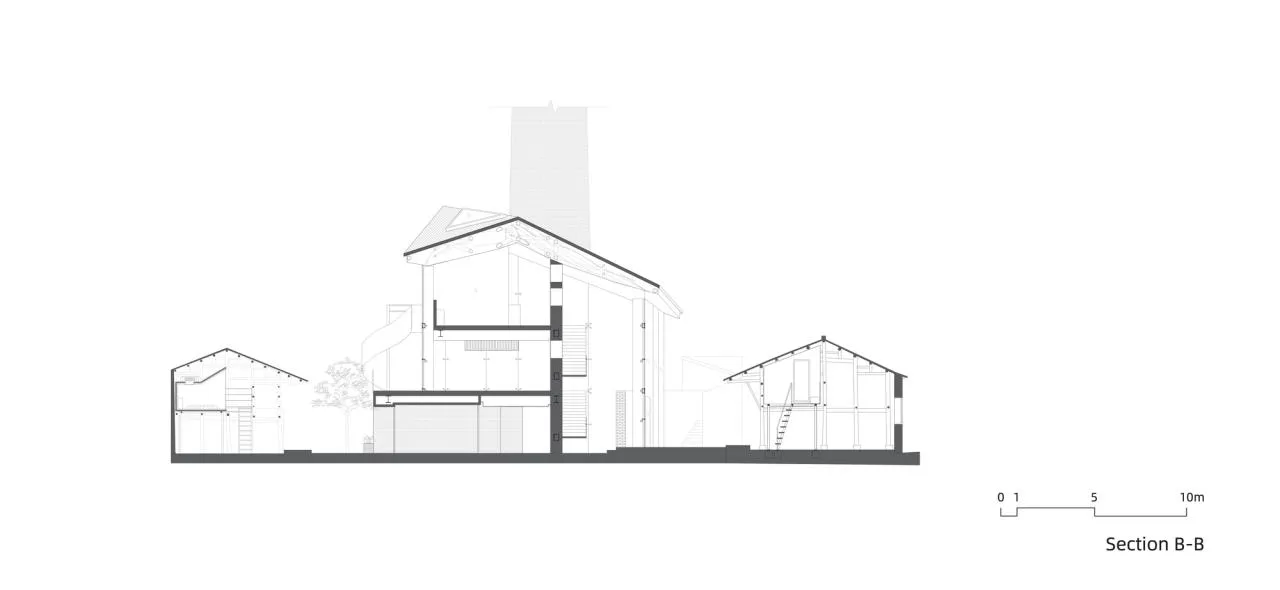
▲ Sectional view
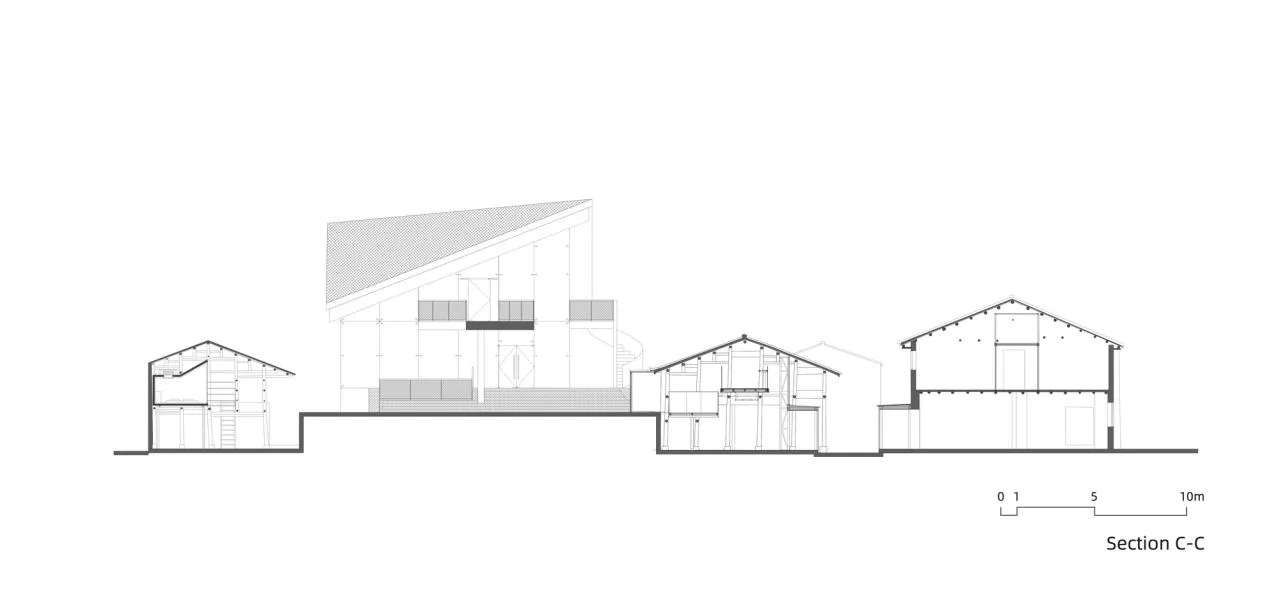
▲ Sectional view
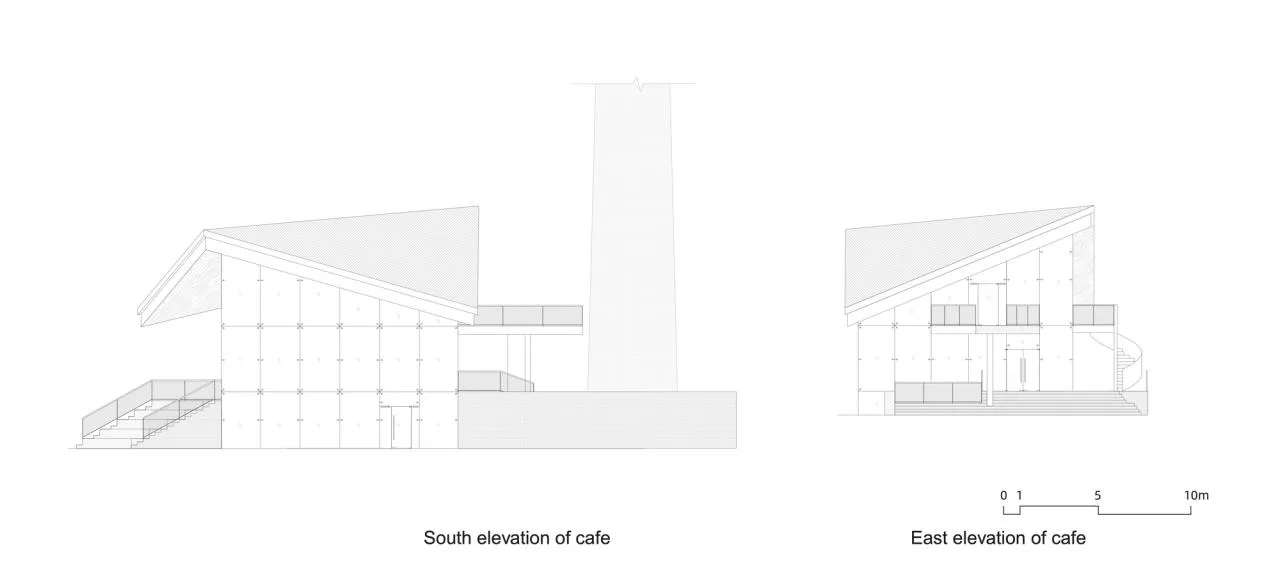
▲ Elevation view
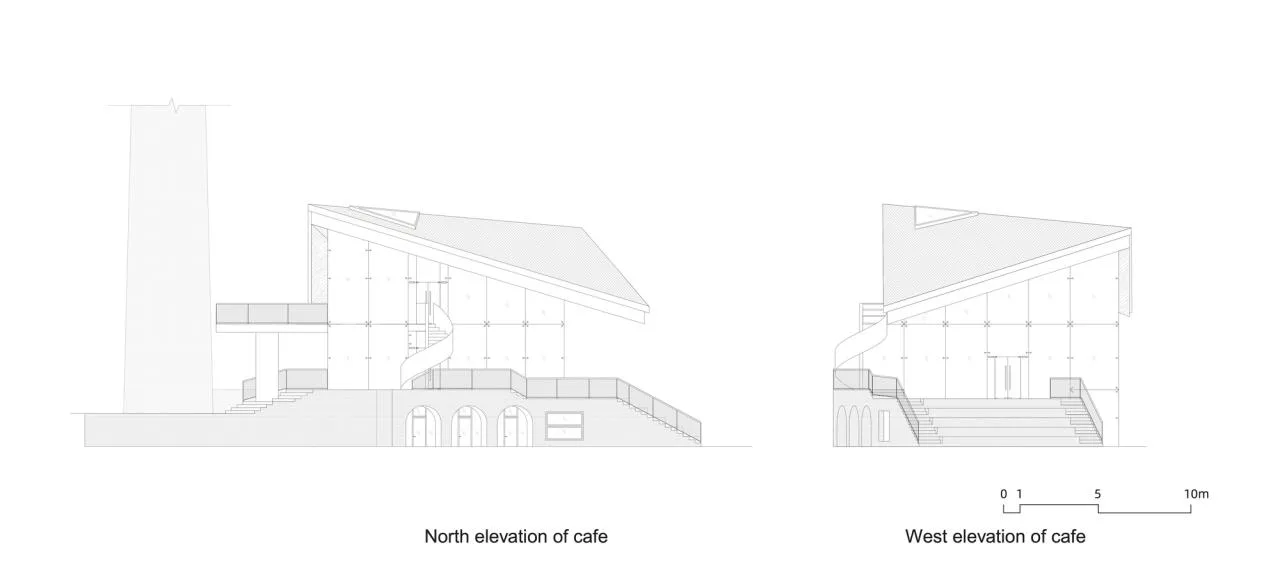
▲ Elevation view
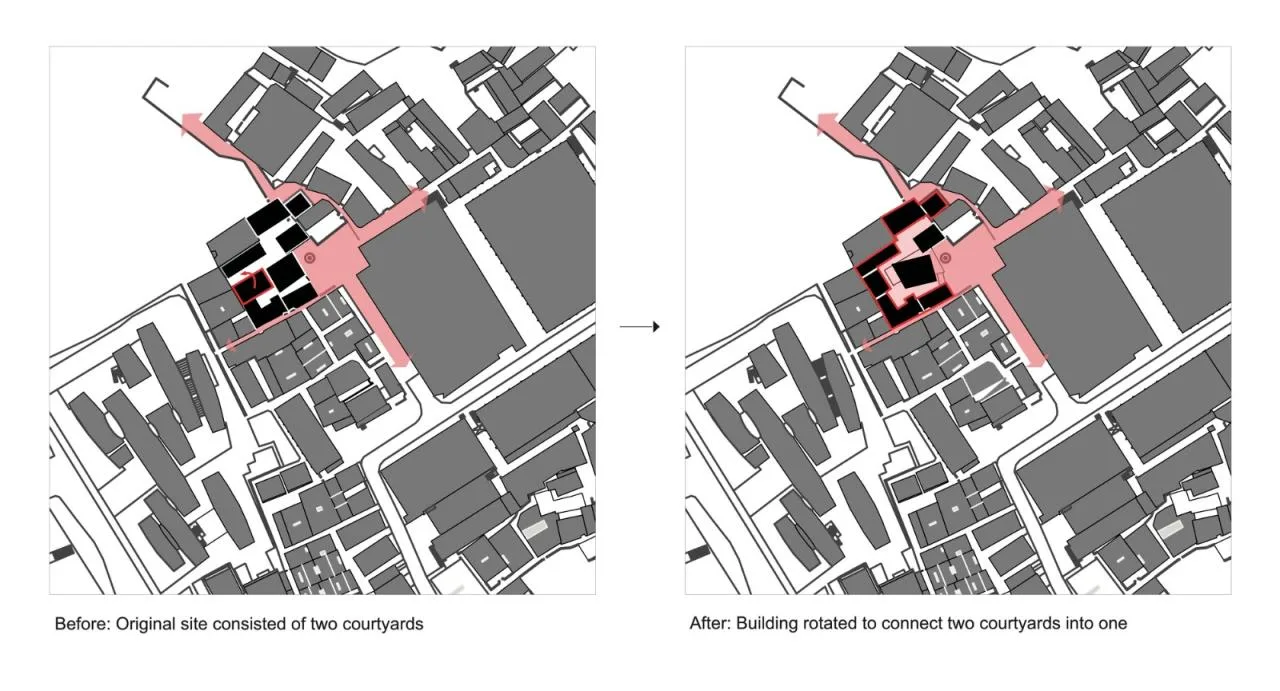
▲ Analysis chart
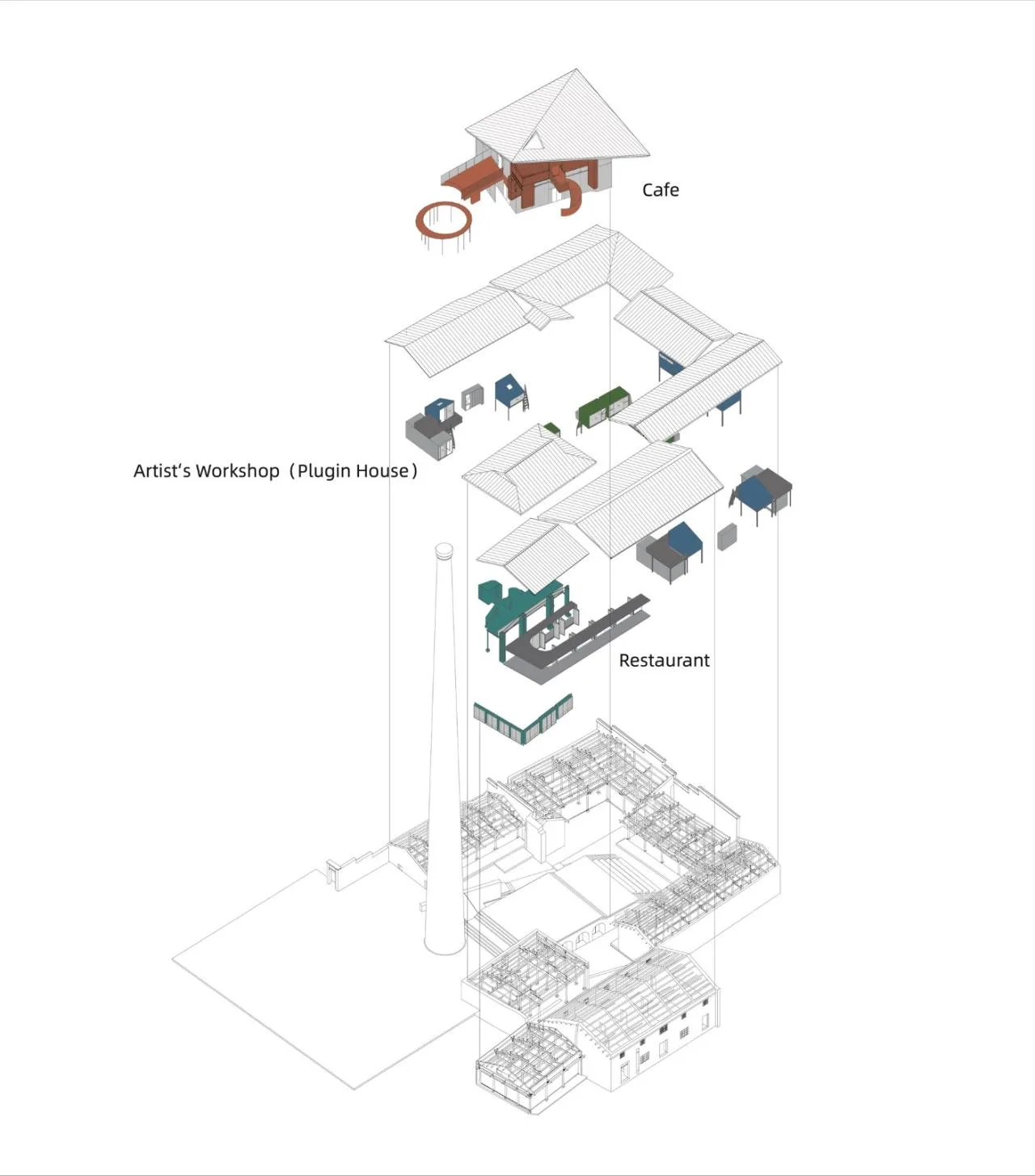
▲ Exploded diagram
Project Information
Architects: Liu Kecheng Design Studio, Zhongjian Architecture
Project Year: 2022
Photographers: Zhu Yumeng, PAO
Design Directors (Liu Kecheng Design Studio): Liu Kecheng, Xiao Li
Design Directors (Architecture): He Zhe, James Shen, Zang Feng
Project Leaders: Yuan Yingzi, Zhang Meng
Project Team: Yang Quanyue, Yang Qian, Huang Liying, Zhang Mengyuan, Zhou Shimin, Han Xiao, Liu Yixin, Wang He, Wen Hao
Structural Design: Liu Su / Beijing Shouang Architectural Structure Studio
Client: Jingdezhen Ceramic Culture Tourism Collection
Drawings: Zhang Meng, Yuan Zishu
Location: Jingdezhen












Must log in before commenting!
Sign Up