
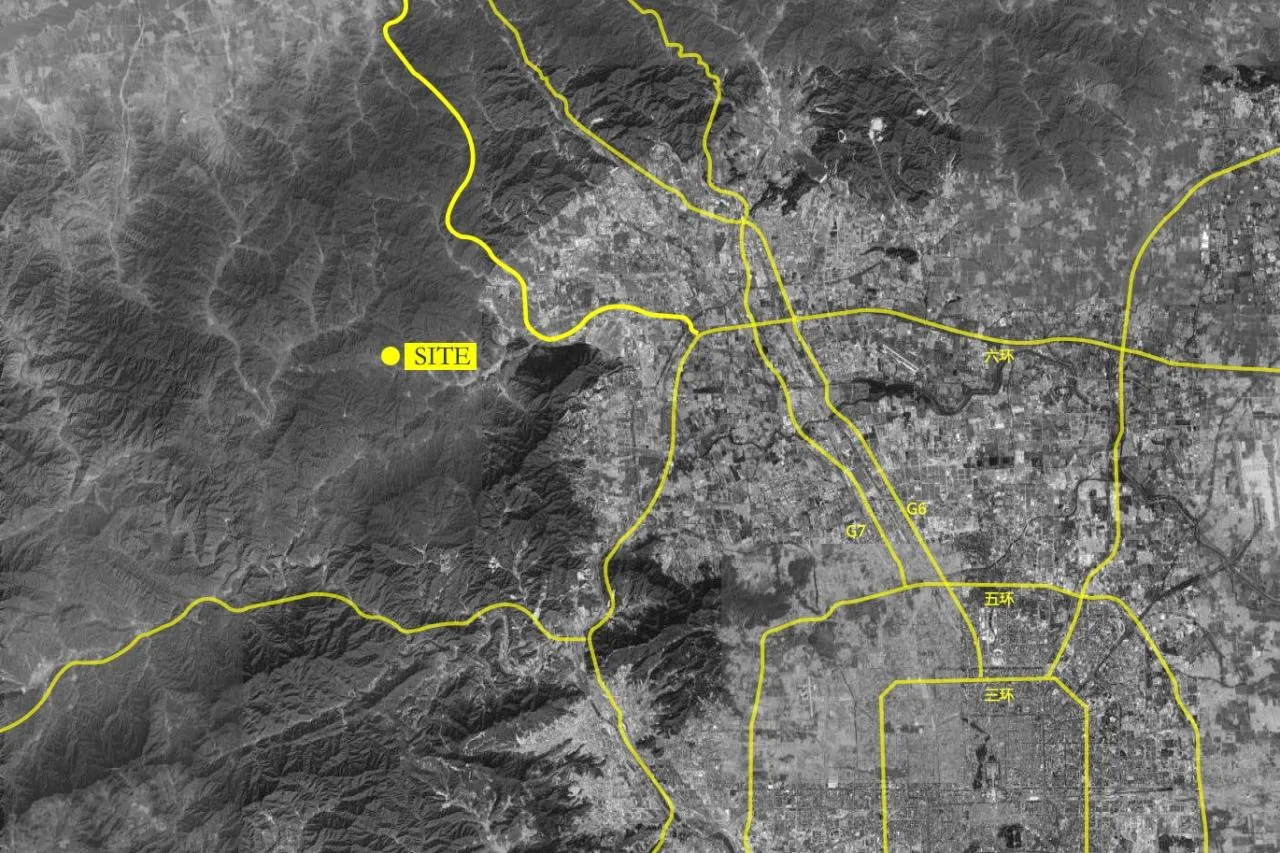
The backyard of Liushi Port is situated in Liushi Port Village, Liucun Town, Changping District, northwest Beijing. This village is embraced by mountains on all sides, earning it the nickname “the pillow of the capital.”
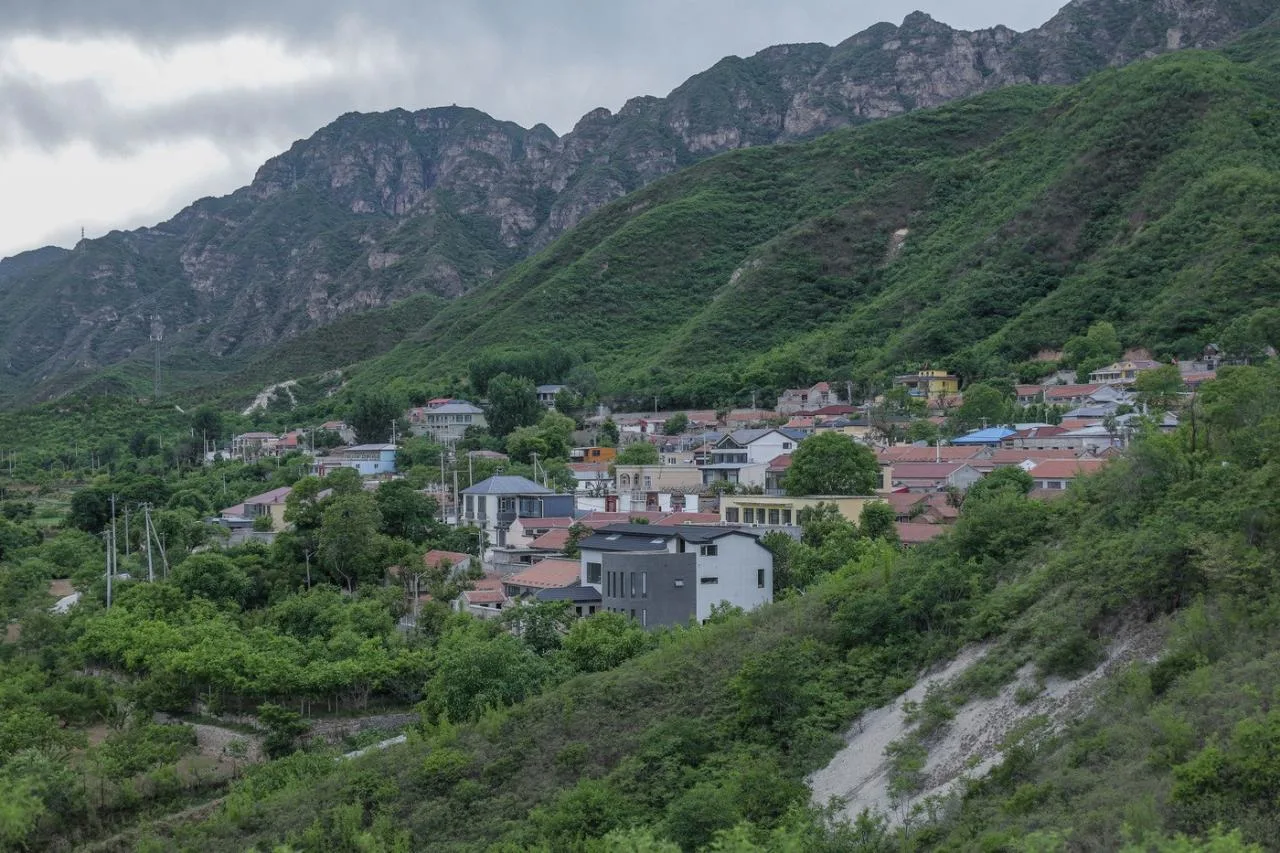
▲ Panoramic view of Liushigang Village, completely surrounded by mountains
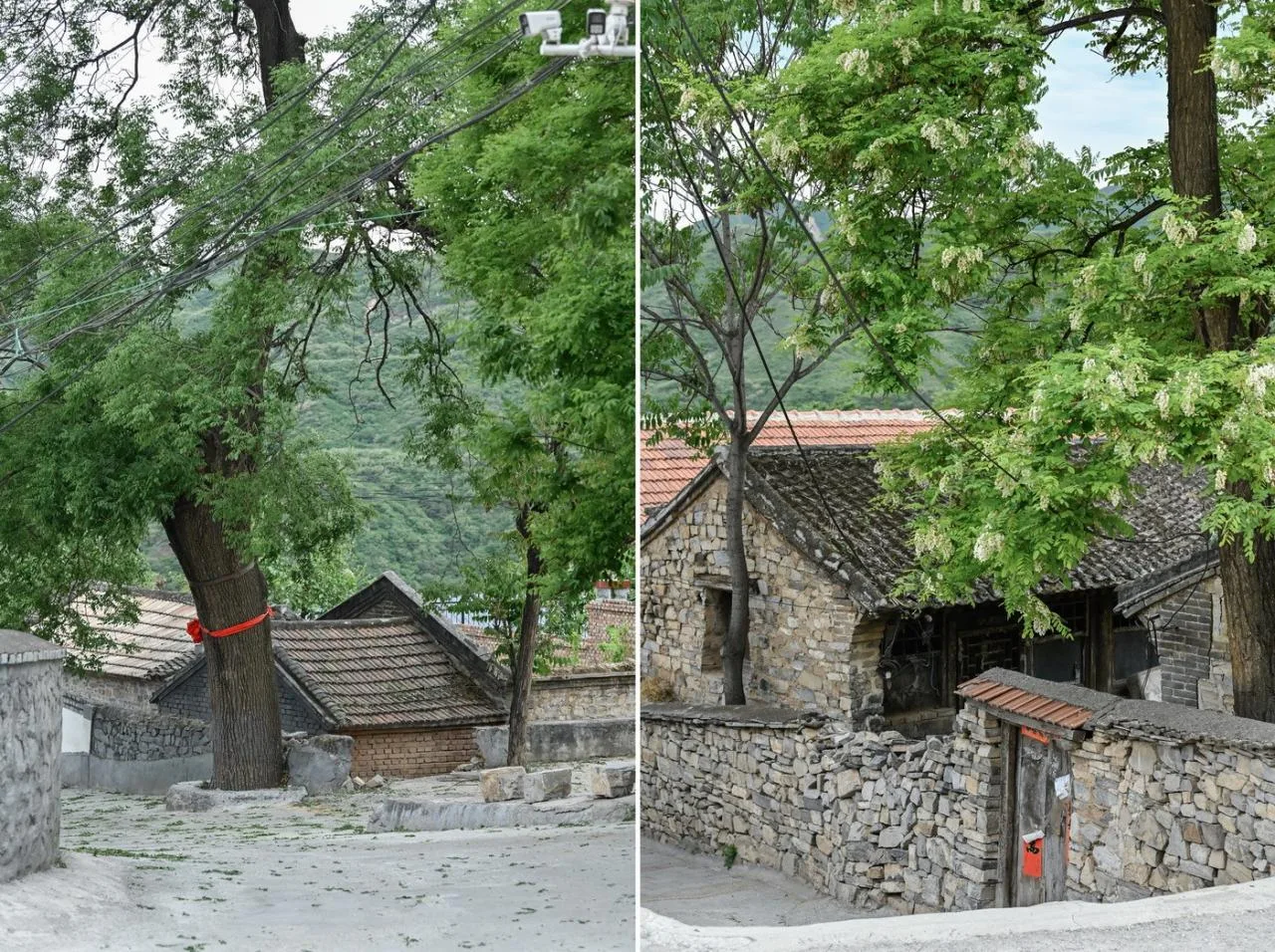
▲ The unique texture of Liushi Port Village
The site is located at the easternmost edge of the village, bordered by residential houses to the east, west, and north. To the south, the landscape extends into a continuous line of rolling mountain ranges, offering a rare and magnificent view in Beijing’s suburbs. The entire plot consists of two adjacent homesteads, measuring 33 meters wide by 28 meters long, with irregular boundaries.
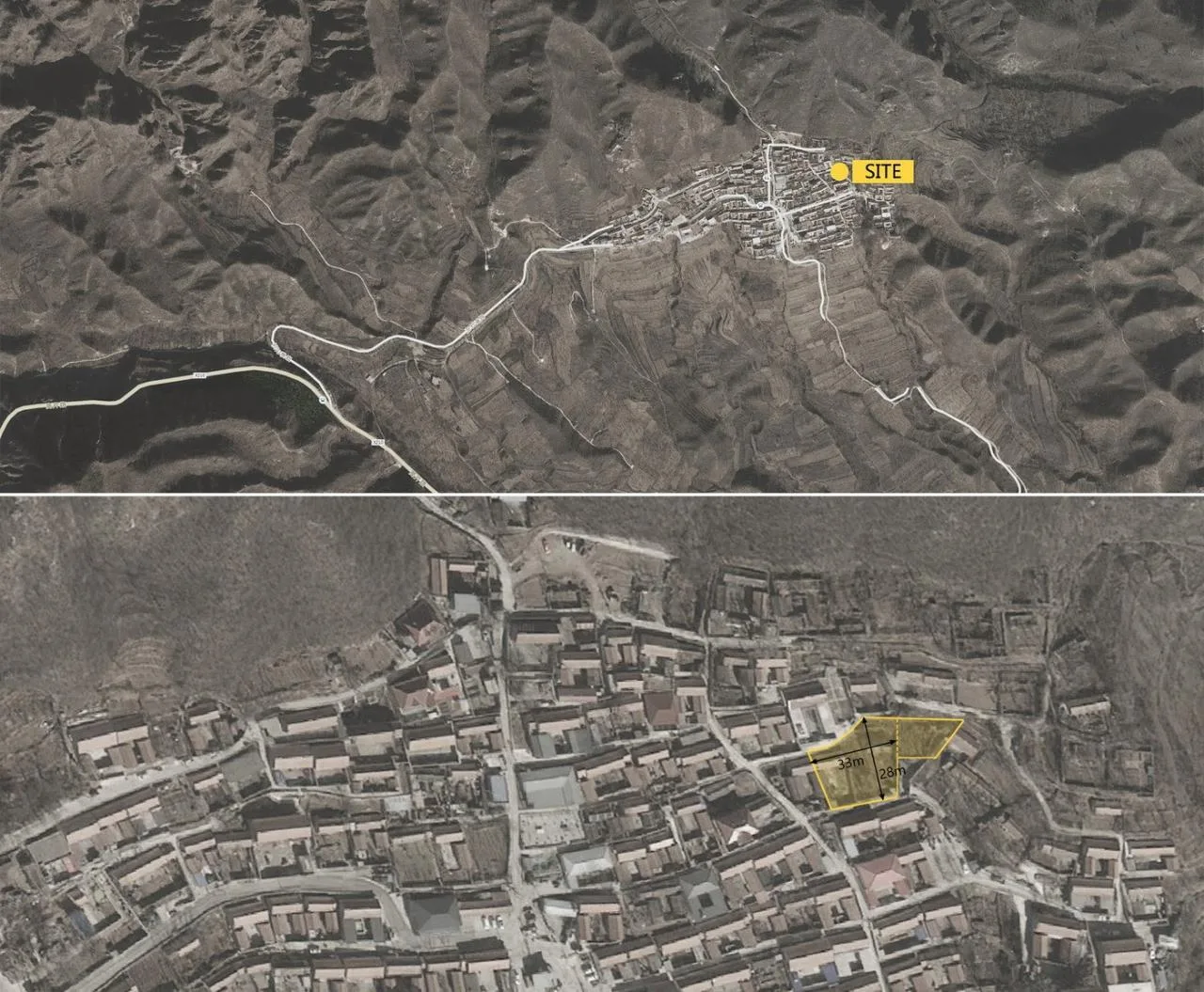
▲ Village layout and site location
Architecture Formation: Following the Landform
The site originally featured a traditional Beijing courtyard style from the 1960s and 1970s, with a 1.5-meter height difference between the two foundations. To maintain plot continuity, the previous approach of renovating the old house foundation was abandoned in favor of a completely new foundation.
Key challenges included maximizing the landscape, addressing the height difference, fulfilling Beijing’s homestead building requirements, and dividing property rights between the two homesteads.
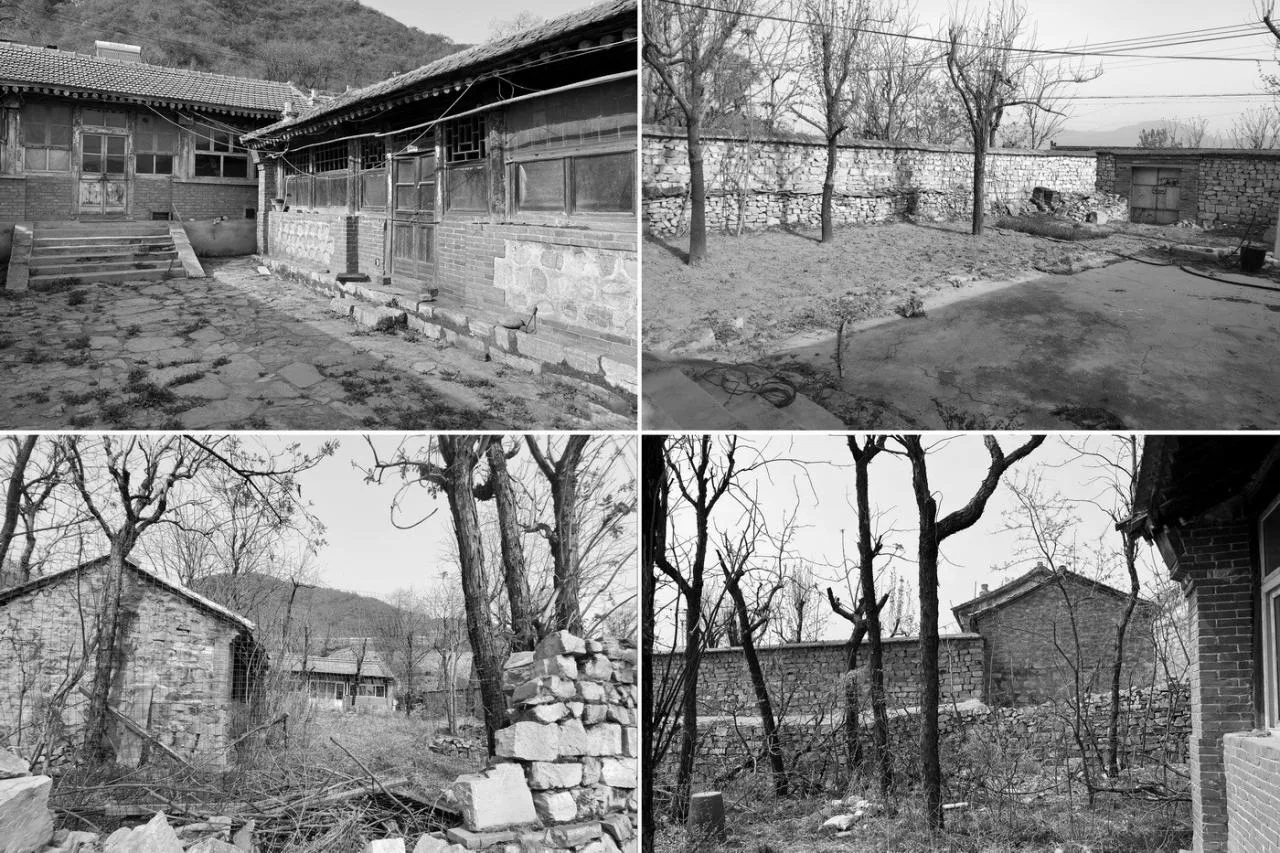
▲ Original site appearance
The two plots were named Courtyard 6 (west) and Courtyard 7 (east). The entire ground of Courtyard 7 was filled to match the floor height of Courtyard 6, enabling the creation of a unified enclosed courtyard.
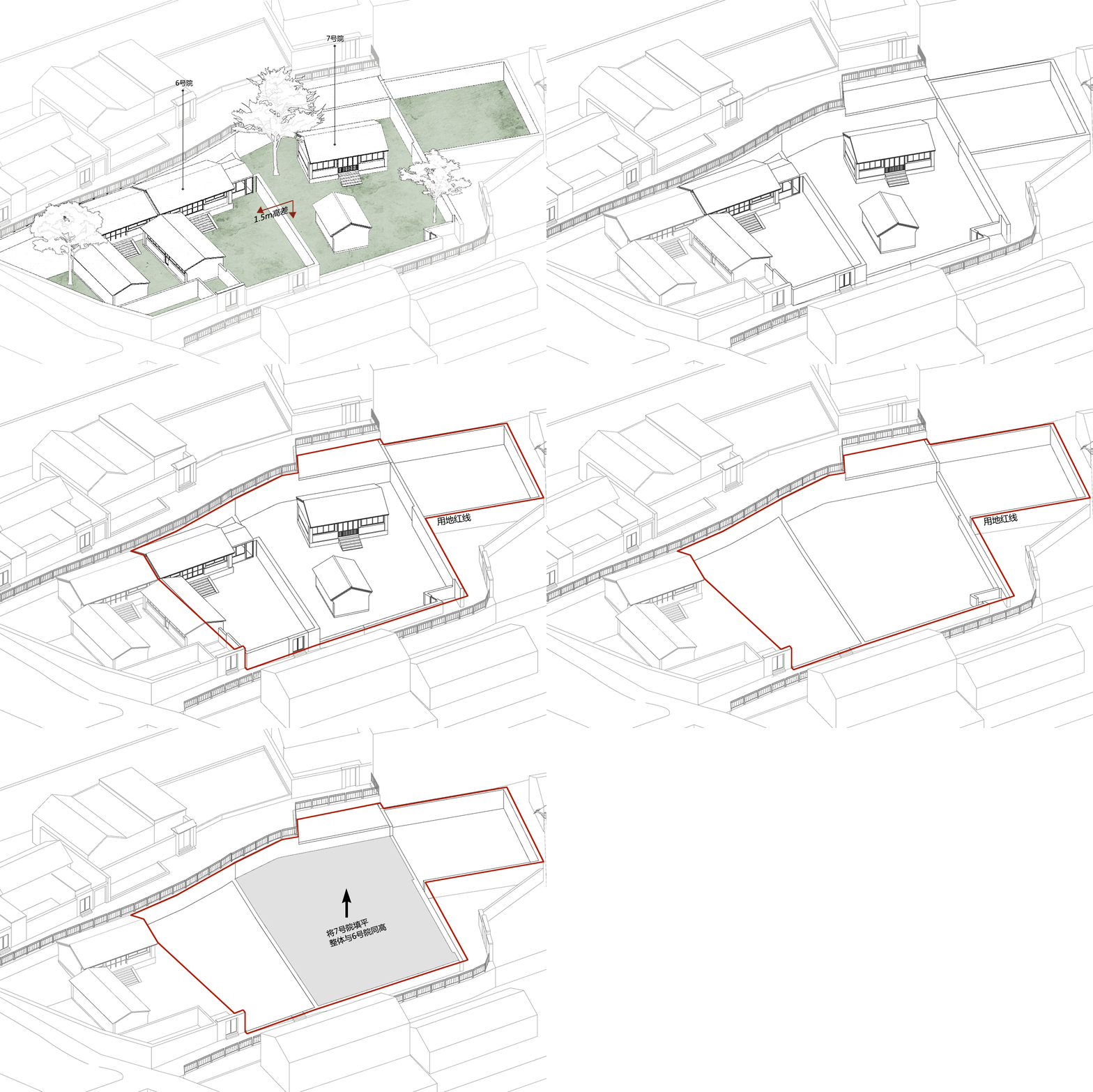
▲ Current site condition showing the floor fill in Courtyard 7
Since all landscape views focus on the south side, while the east, west, and north require visual screening, each guest room was designed to have a unique landscape perspective. The architecture maximizes southern mountain views and includes an internal central courtyard. This resulted in a concave enclosed building form with a south-facing opening.
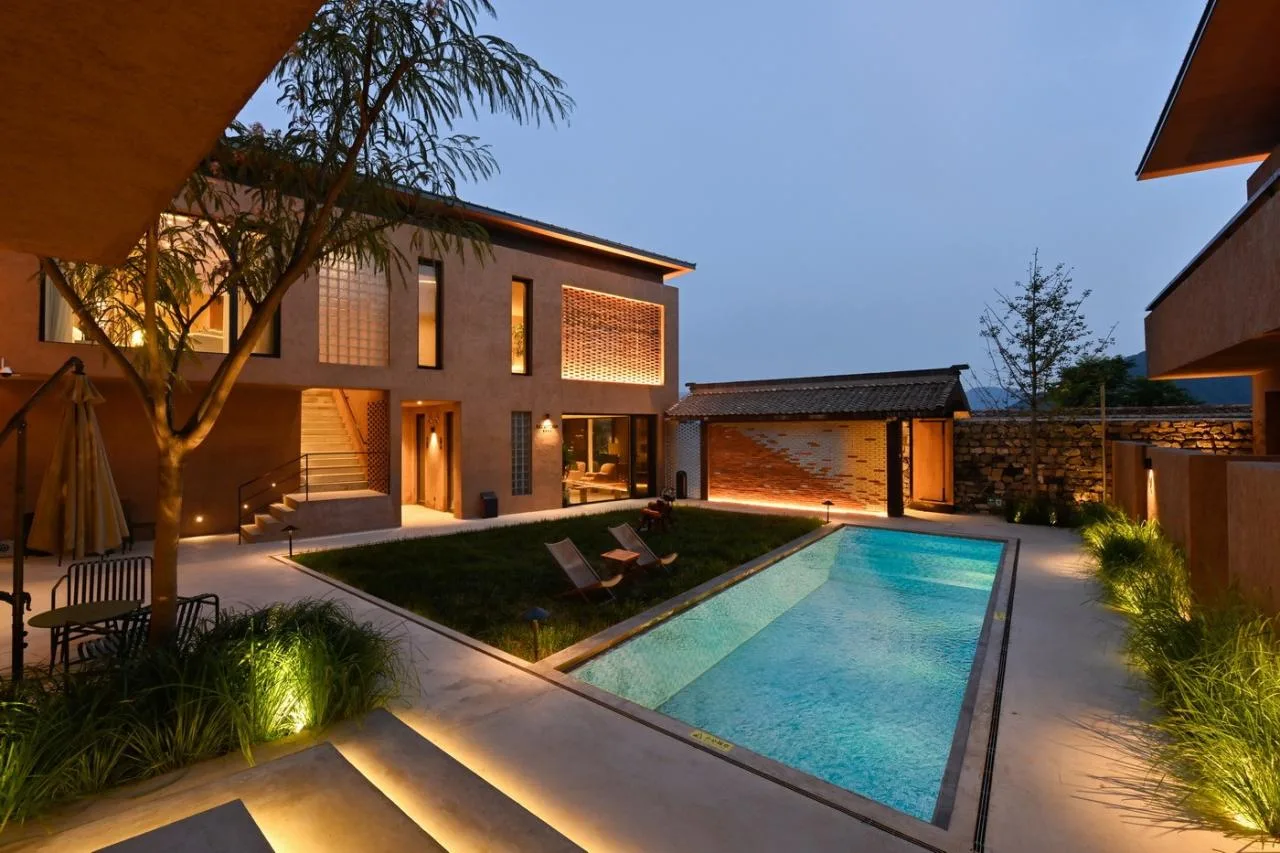
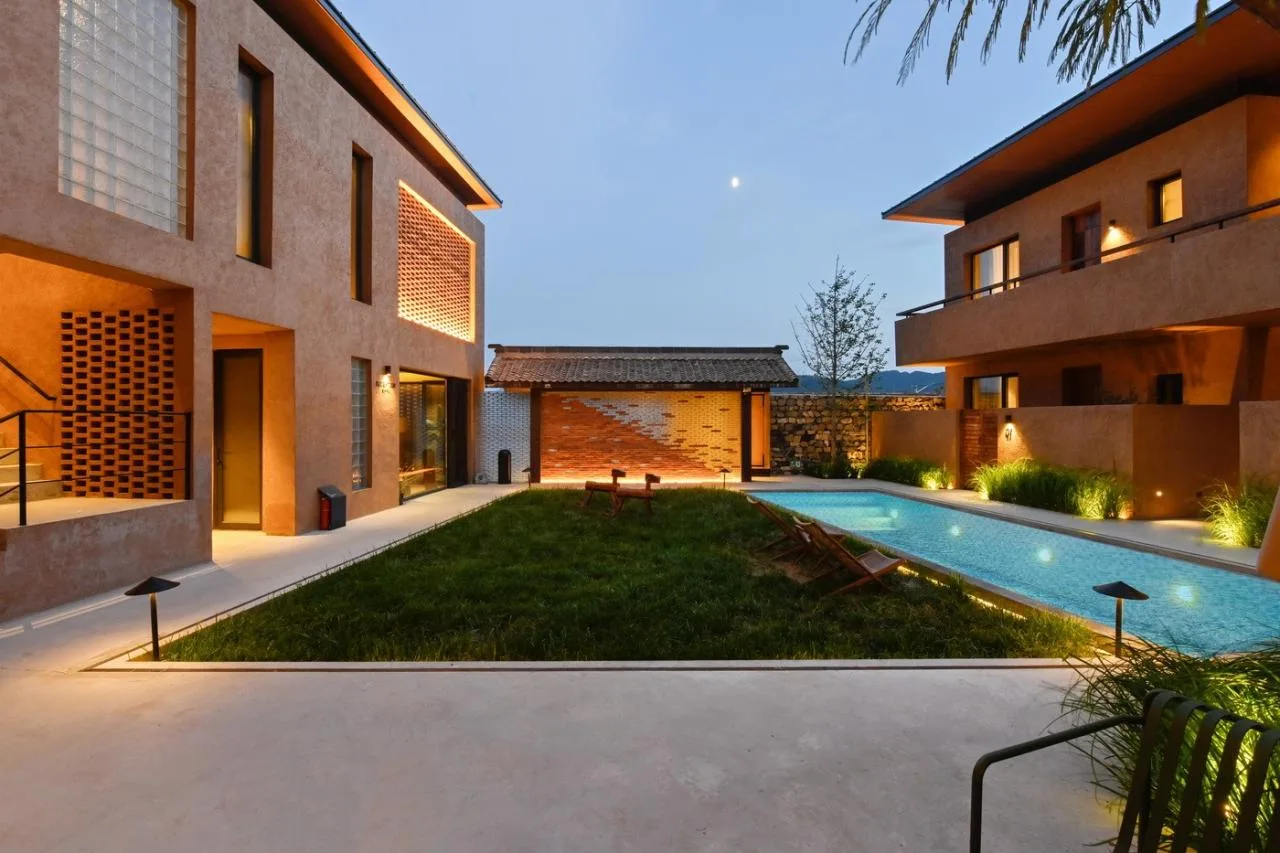
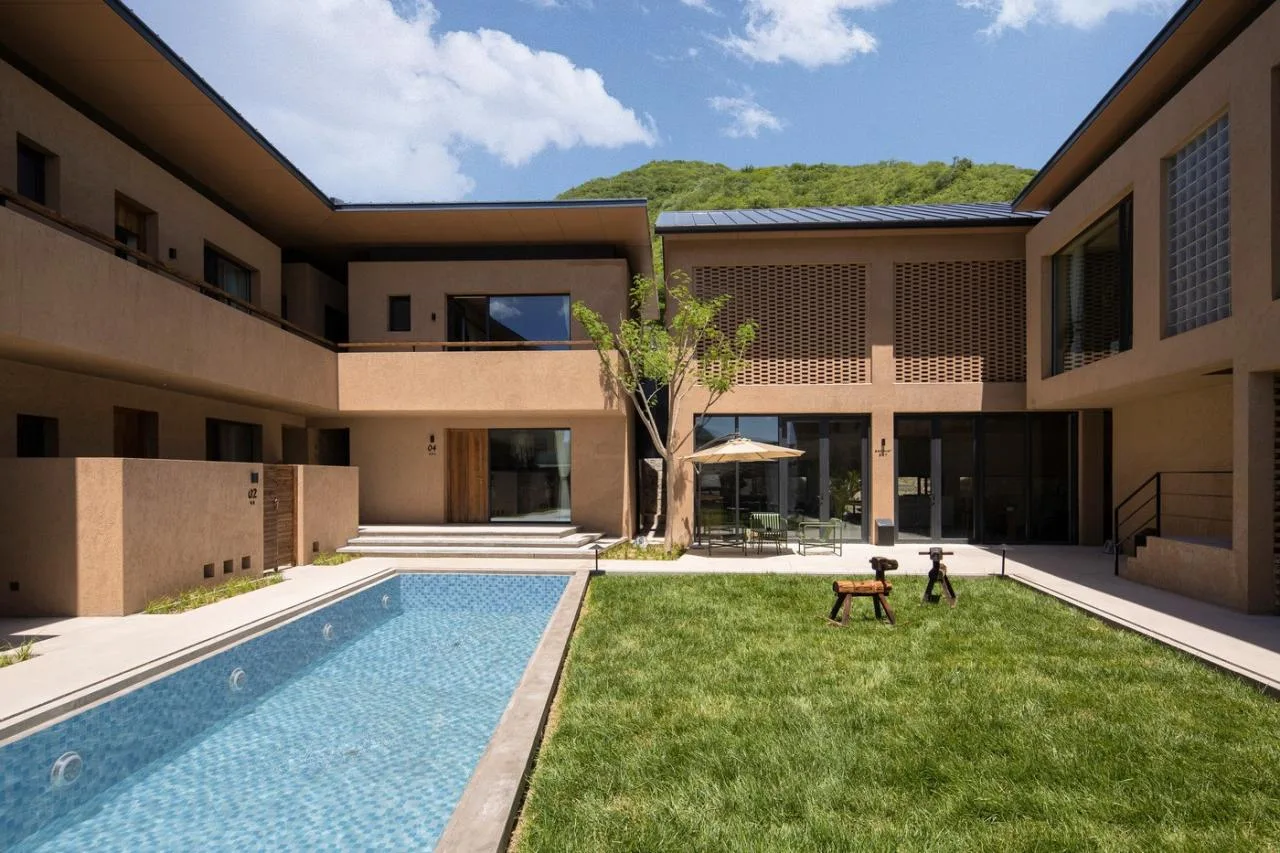
▲ The building faces southwards toward the mountains
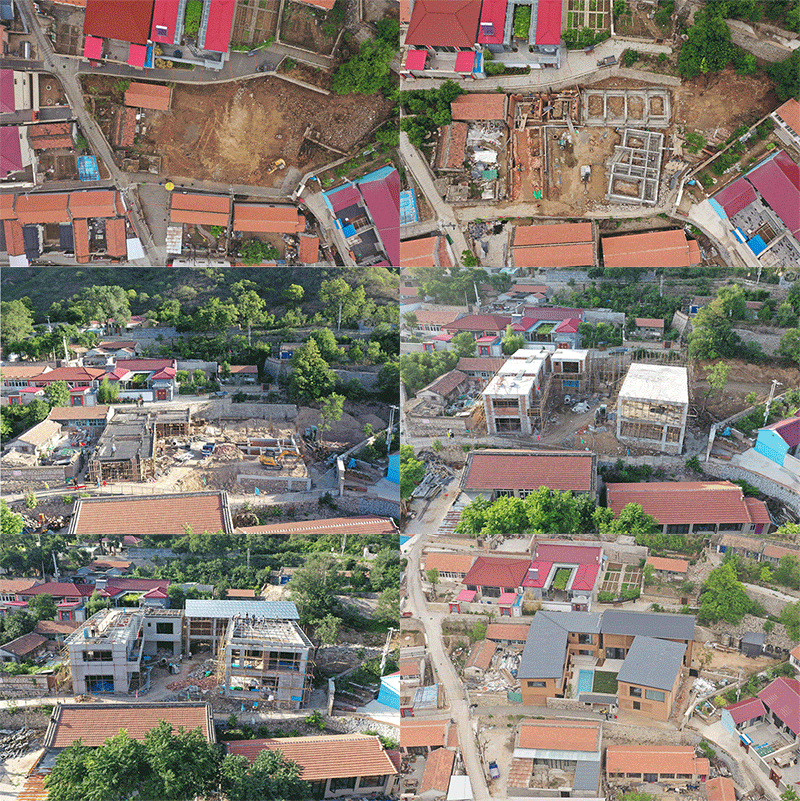
▲ Construction process of Liushi Port
Due to land division requirements, the building is divided into two main blocks. The northeast corner of Courtyard 7 is used as a service yard housing septic tanks, storage tanks, and equipment rooms.
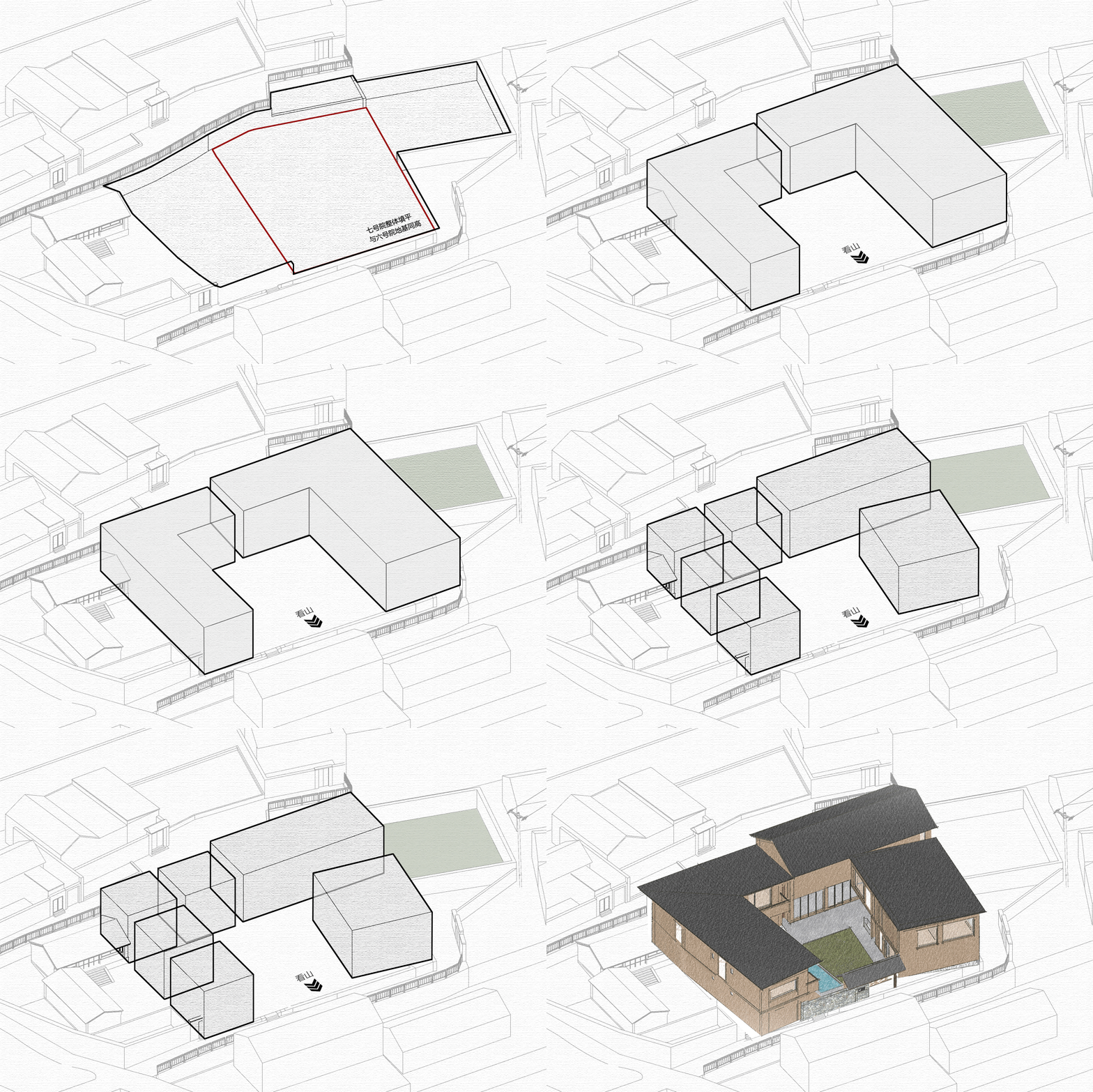
▲ Architectural evolution process
With the logistics area defined, the L-shaped Courtyard 7 is segmented to create a service corridor leading to the back yard. The south building’s first floor hosts check-in reception, storage, and kitchen facilities, while the second floor, with prime mountain views, contains guest rooms.
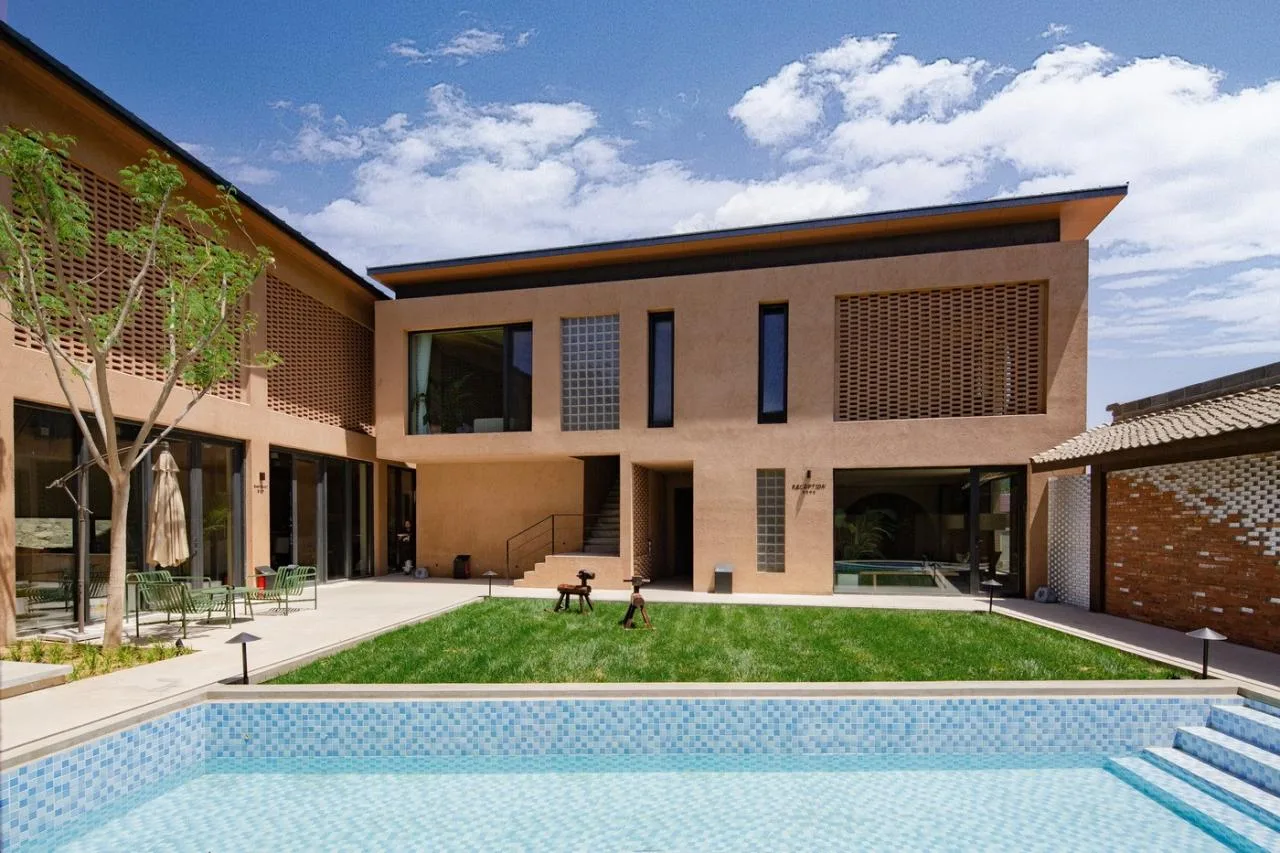
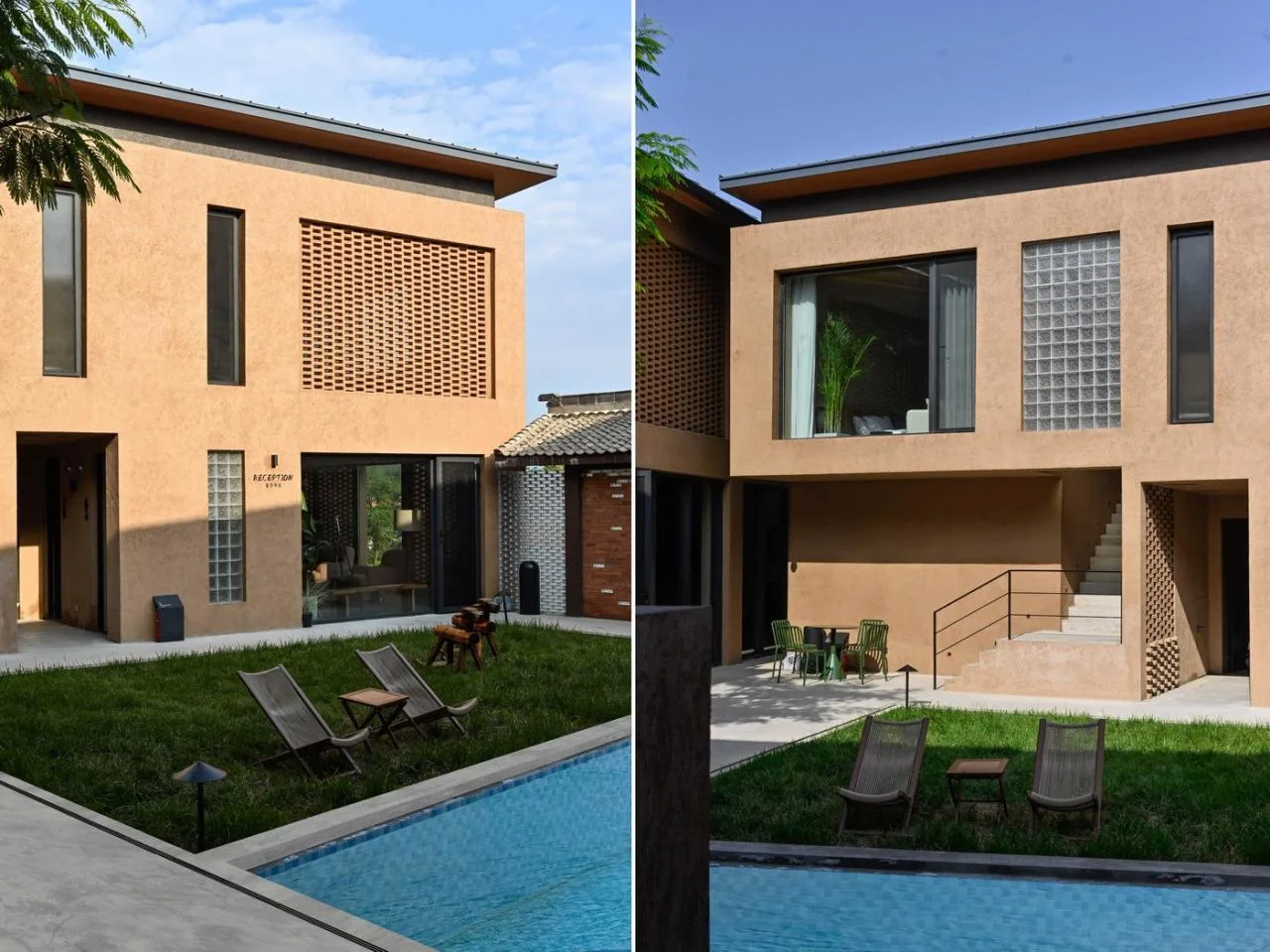
▲ Courtyard 7, East Building
Building restrictions prevented a second floor on the northern block. This area was designed as a multifunctional space with high ceilings, accommodating activities such as breakfast service, a coffee bar, banquets, and meetings. The impressive height enhances the space’s ceremonial atmosphere.
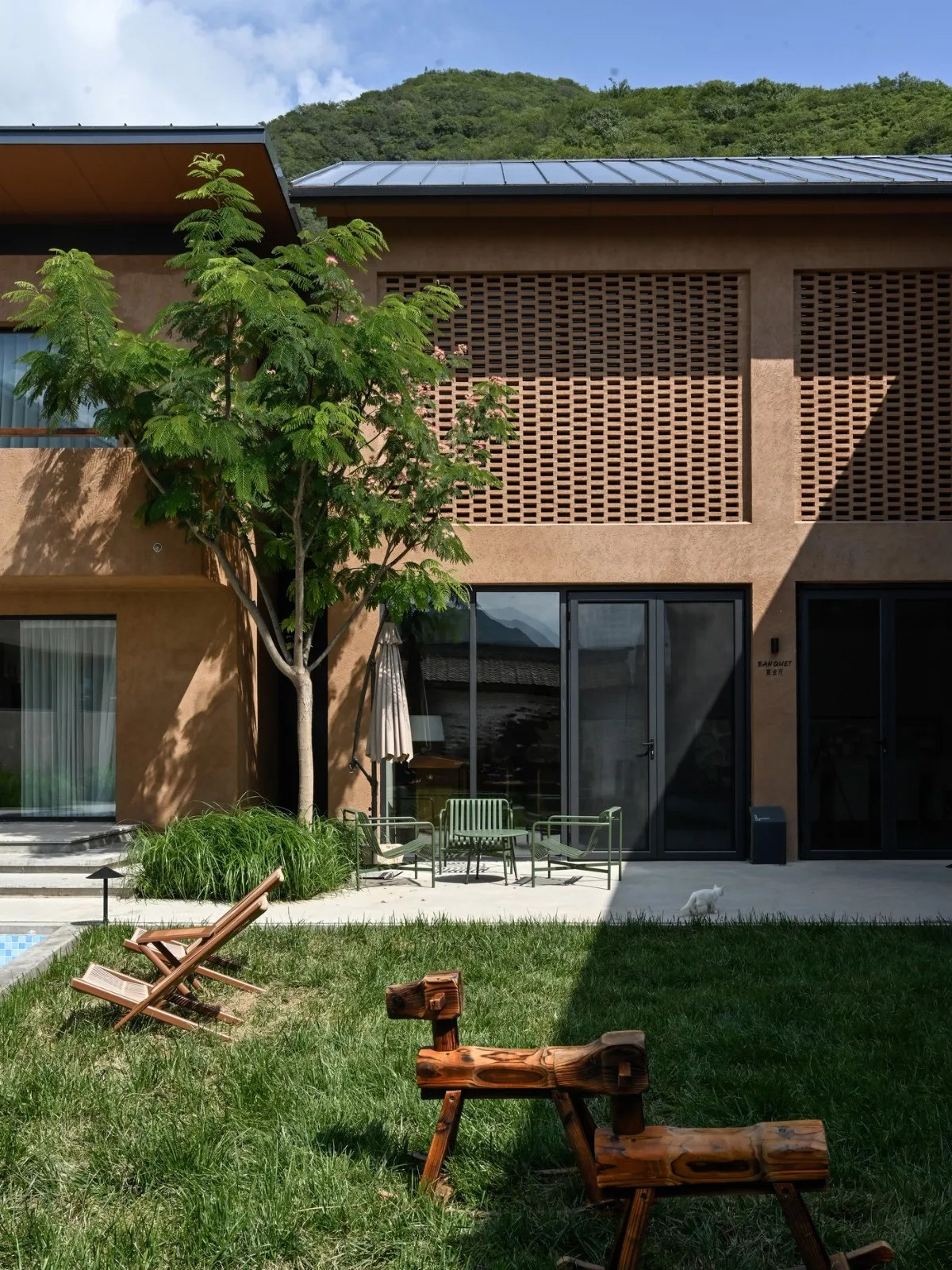
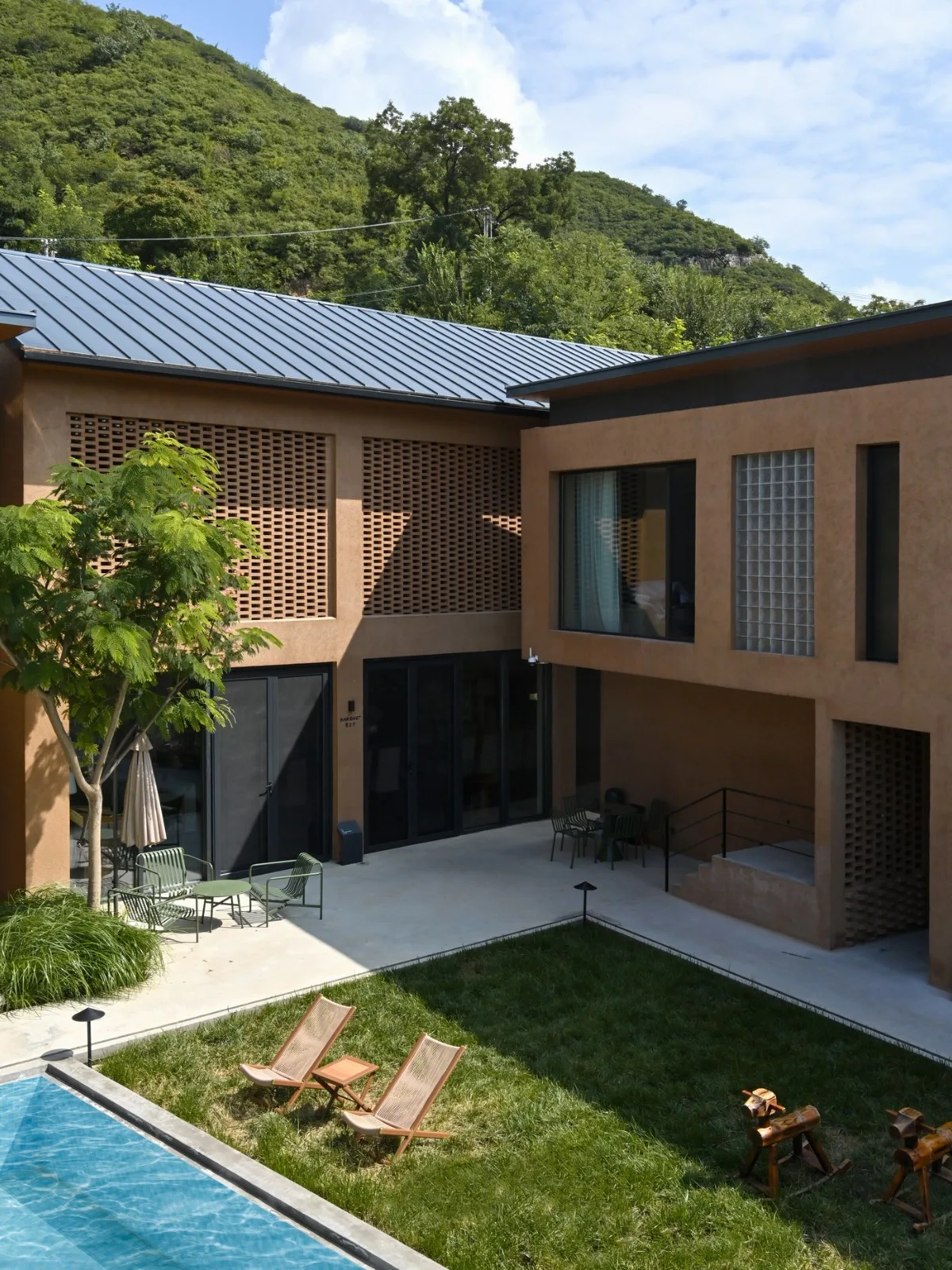
▲ Courtyard 7, North Banquet Hall
Courtyard 6 is entirely residential, divided into four independent units connected by corridors and unified by metal roofing. This arrangement creates a visually cohesive yet spatially distinct complex.
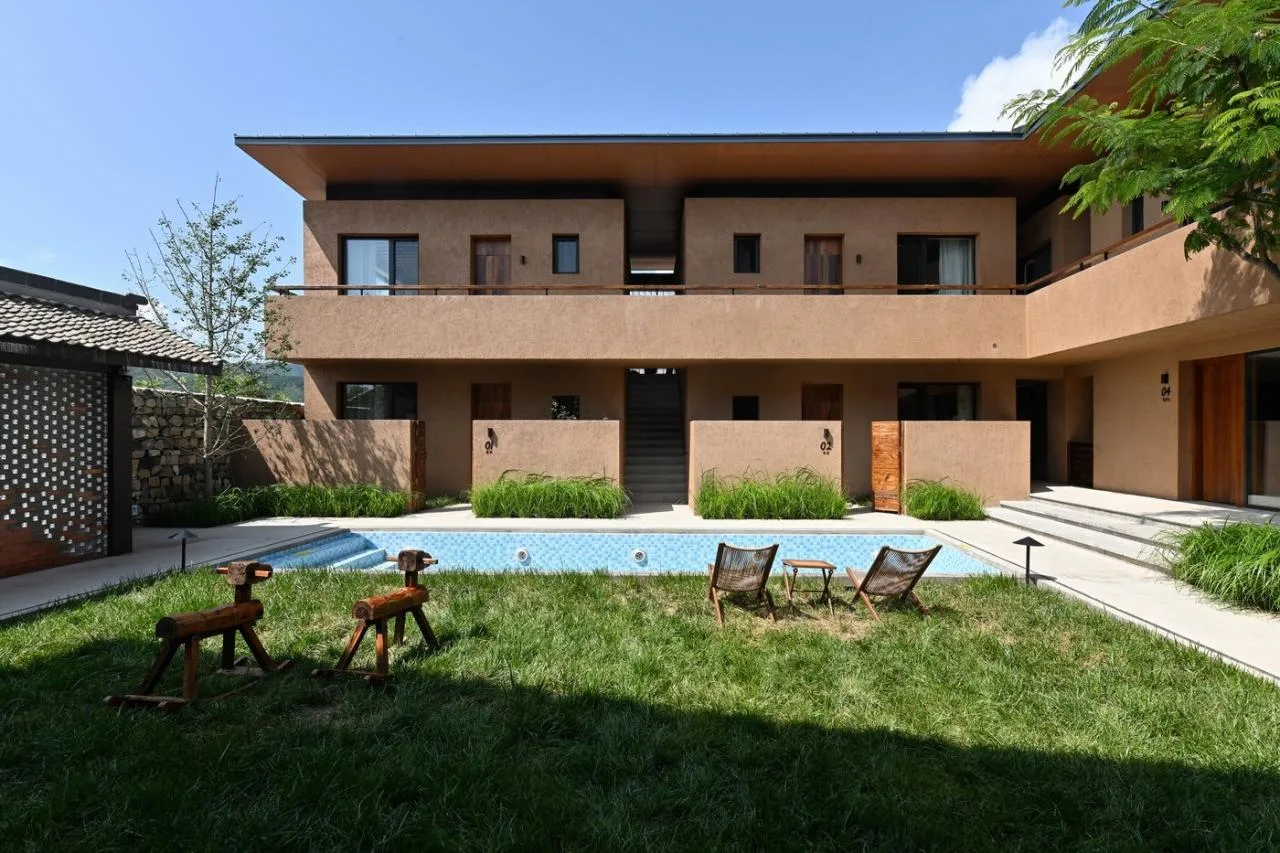
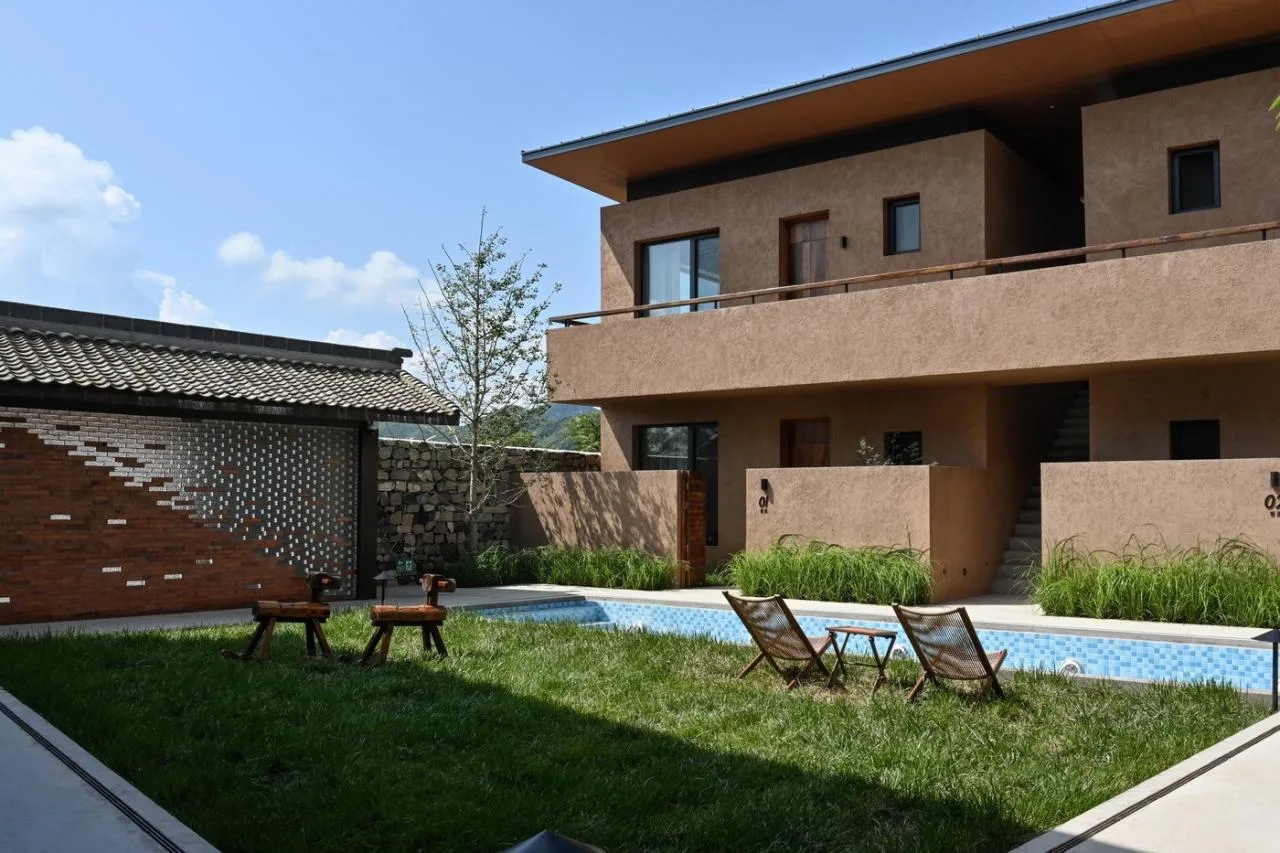
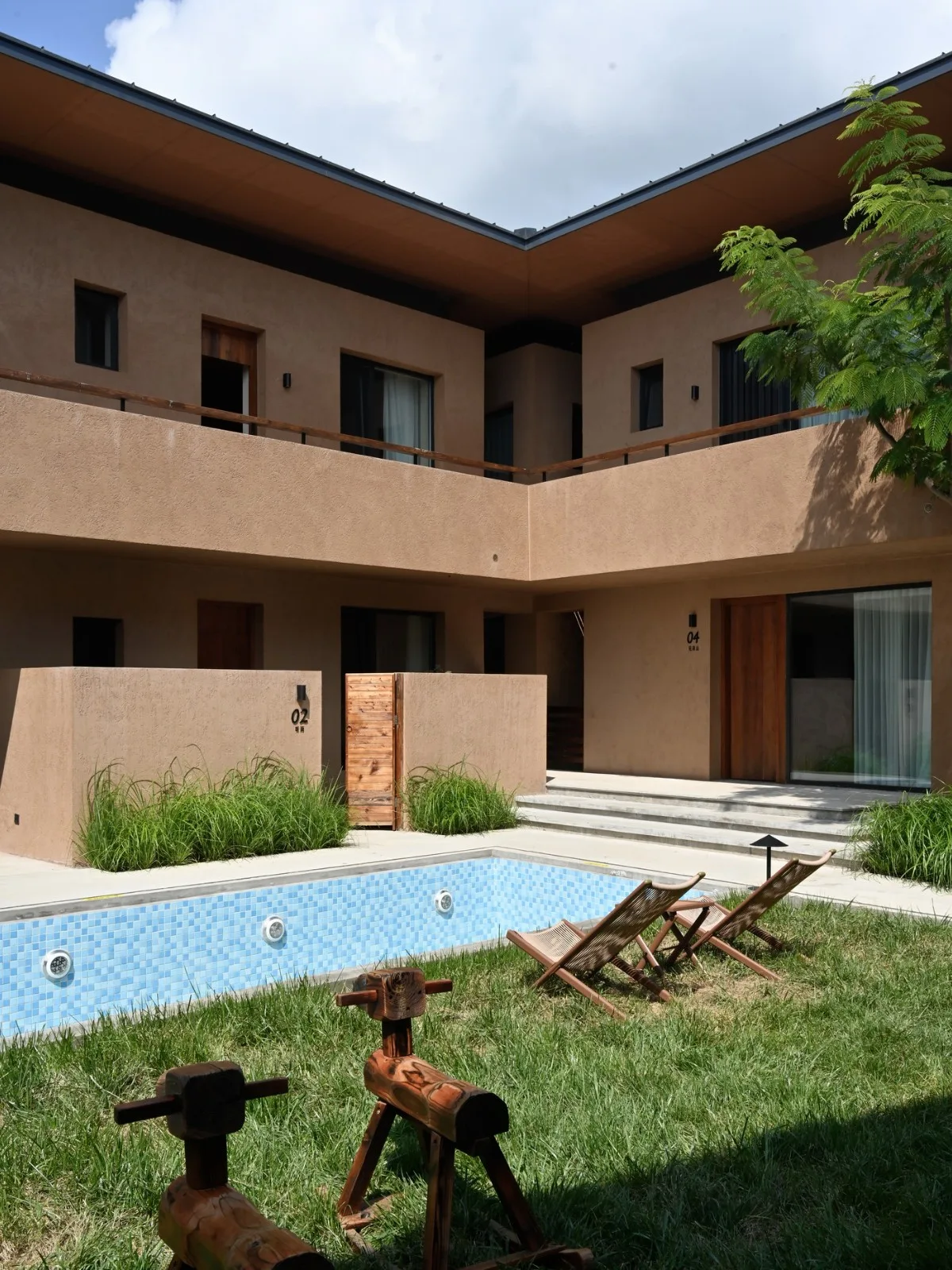
▲ Courtyard 6, West Building
To diversify room types and compensate for limited landscape views in some rooms, the first-floor rooms include an entrance courtyard and a soaking pool to support winter use. The second floor features a connecting corridor offering spatial continuity and optimal terrace mountain views. Due to lighting constraints, the northwest side of Building 6 is designed as a loft-style children’s room, providing versatile living options.
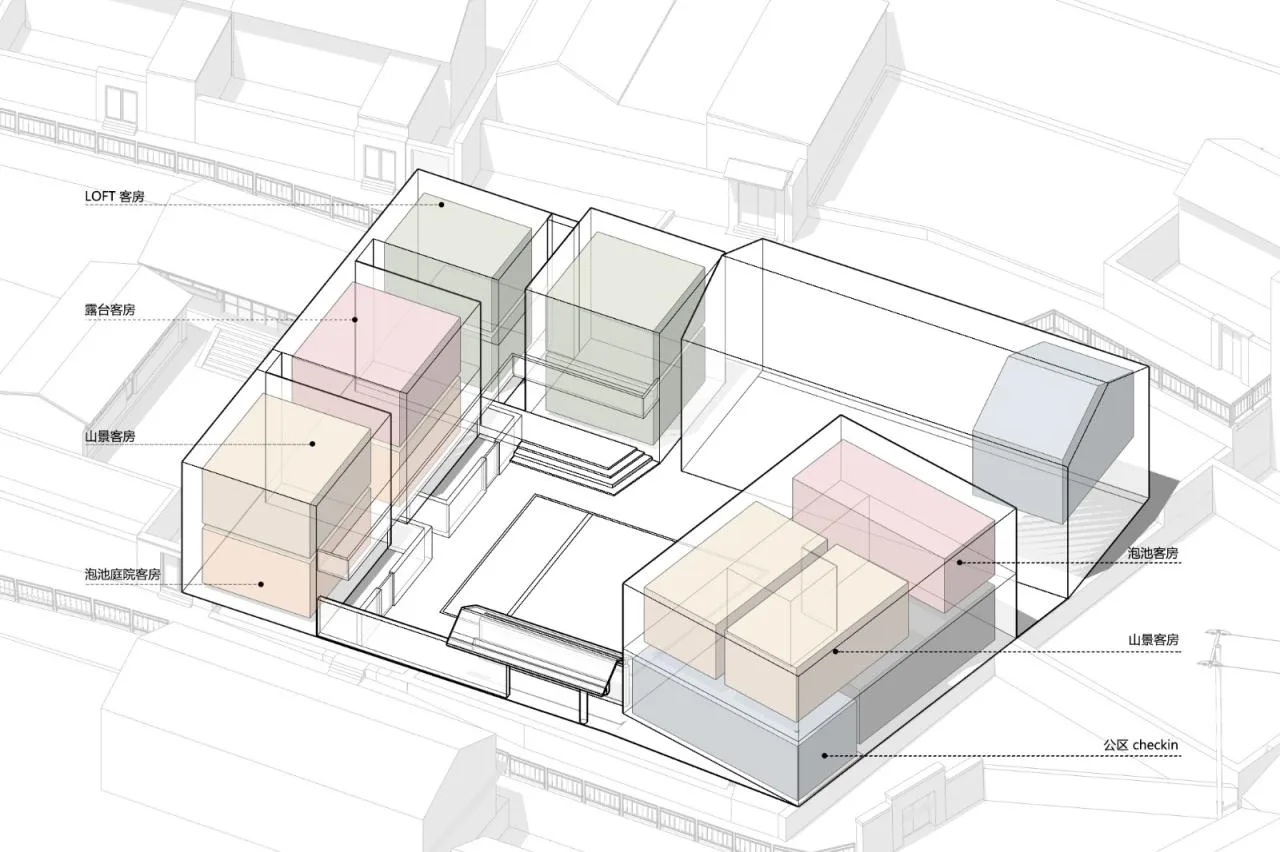
▲ Room layout classification
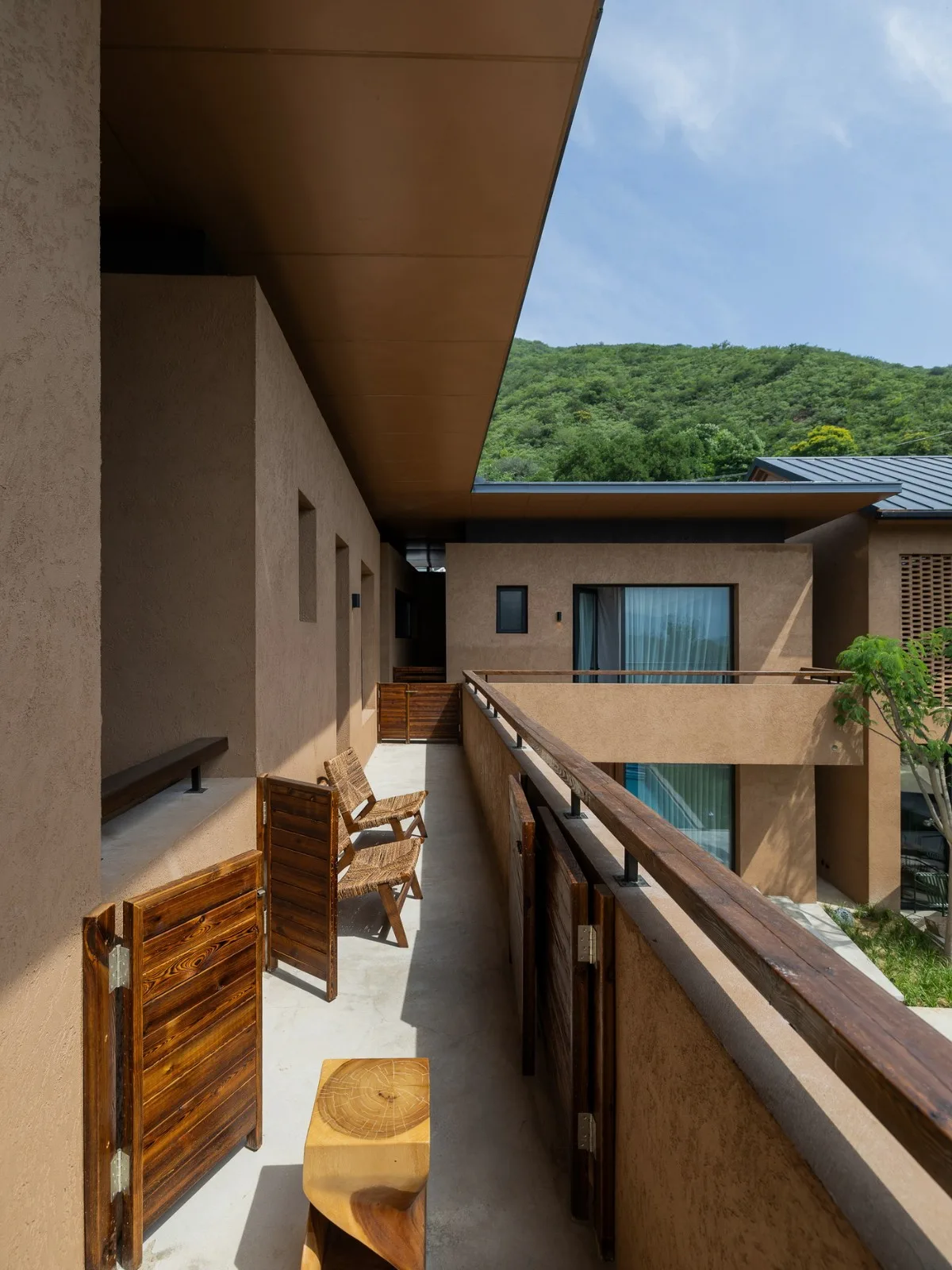
▲ Second-floor corridor connection
The central enclosed courtyard is divided into two zones: a swimming pool and a lawn. This layout supports outdoor activities and children’s summer water play, naturally fostering community interaction. A retractable cover over the pool can close to create a unified platform with the lawn, suitable for public events such as weddings and workshops.
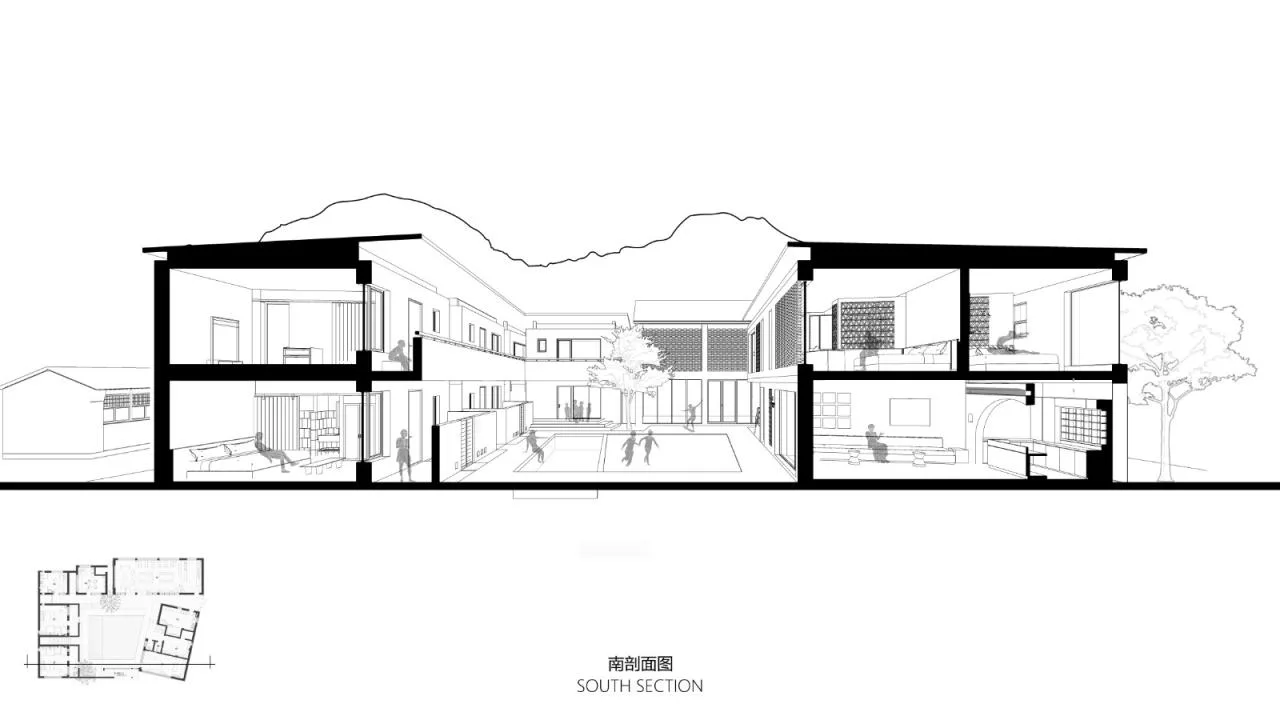
▲ Architectural section diagram
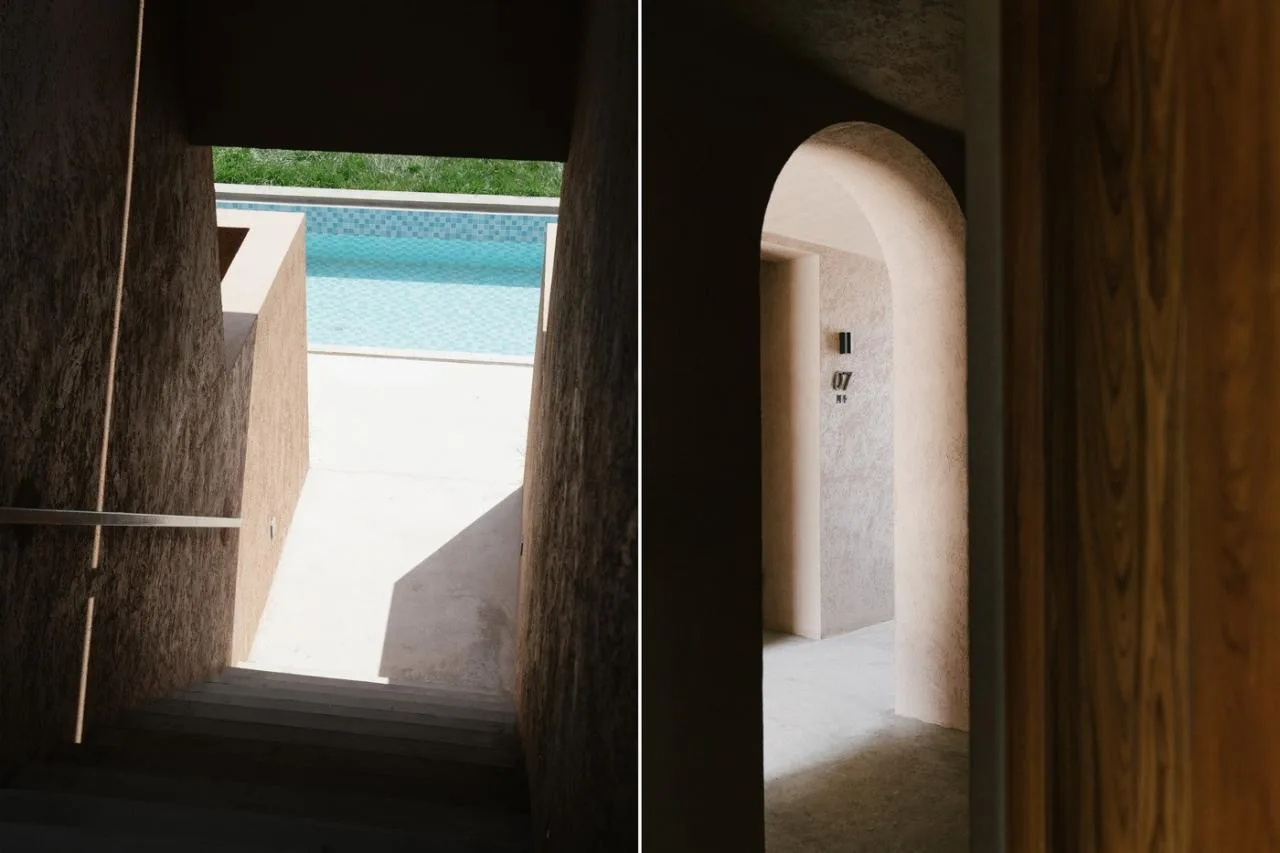
▲ Architectural details
Given the superb mountain views to the south and the need to screen views on the east, west, and north, each room faces south and the inner courtyard. Windows are framed to capture the distant rolling mountains and white clouds, creating a dynamic living picture.
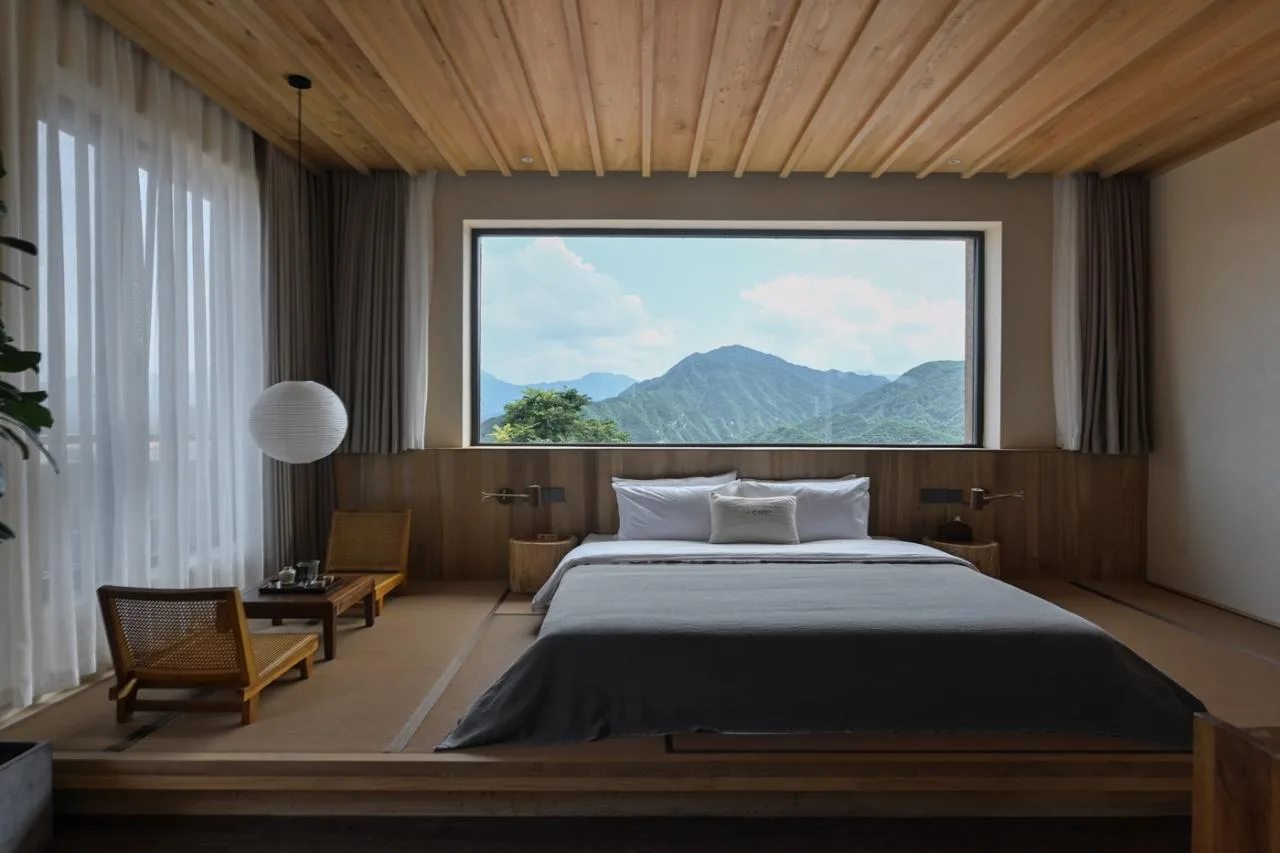
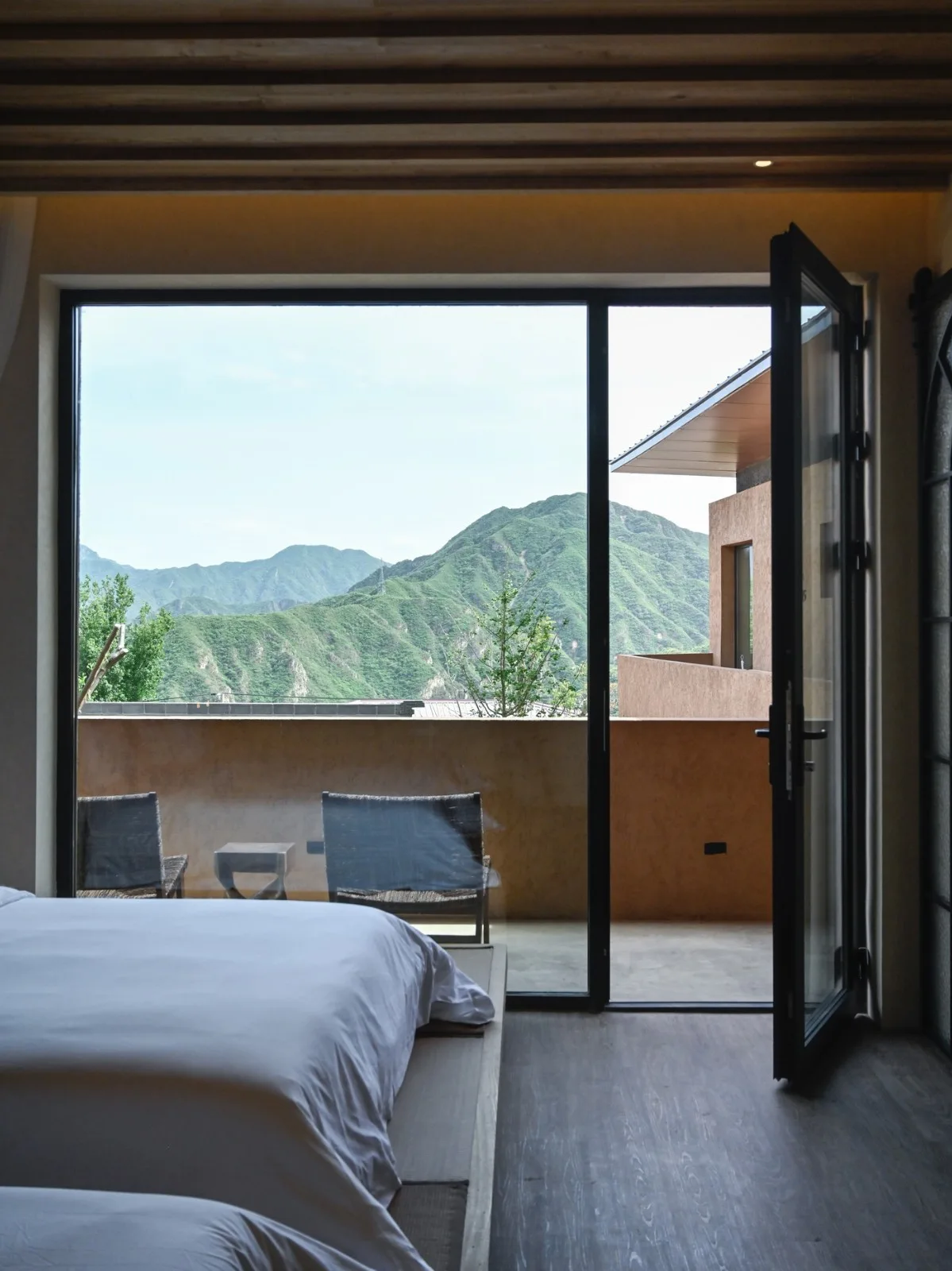
Using windows as frames, complemented by the distant mountain scenery, forms an animated flowing tableau.
Some decorative brick windows serve dual purposes: blocking daytime sightlines and strong sunlight, while adding architectural depth.
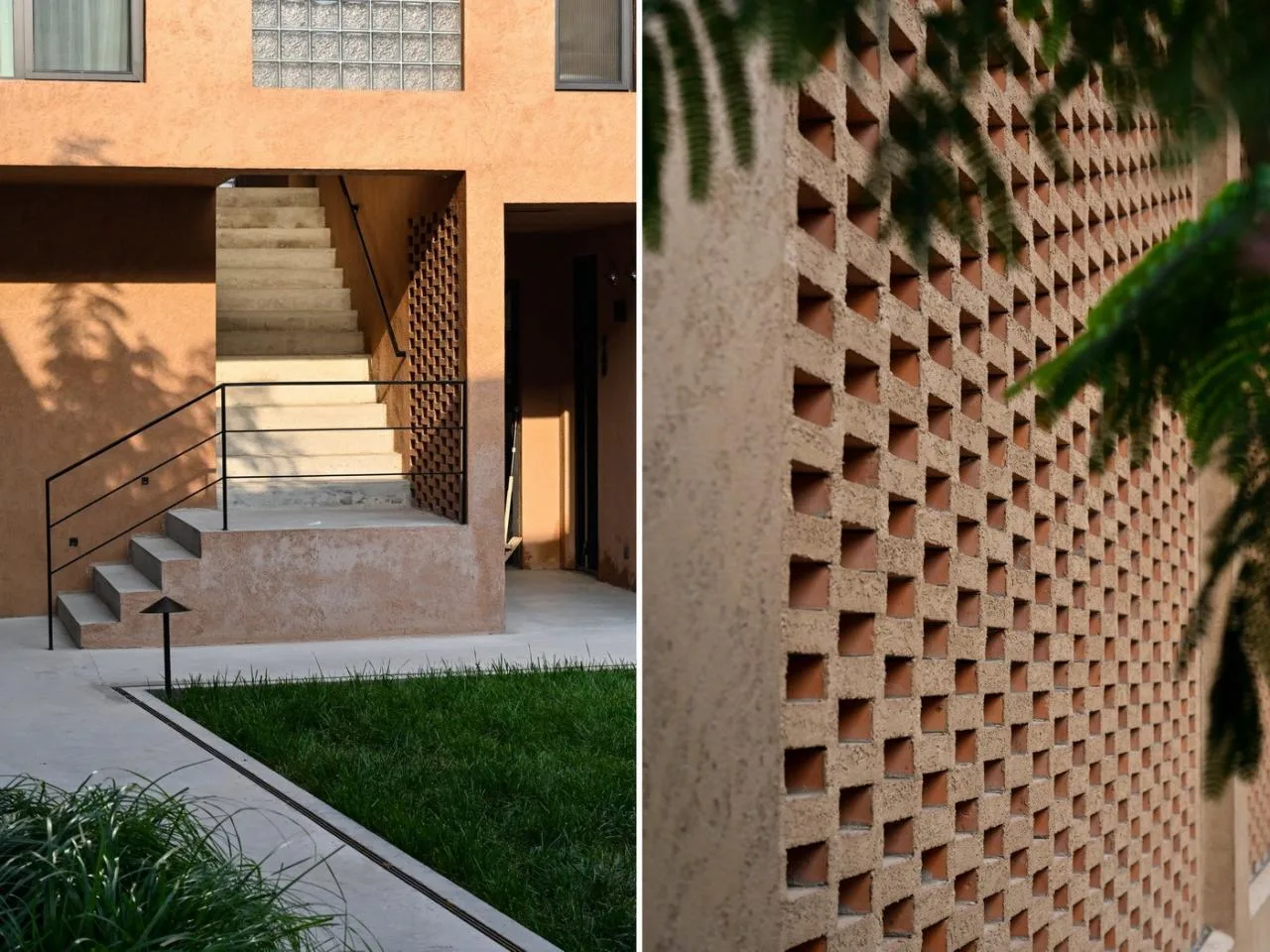
▲ Partial use of decorative brickwork as an architectural element
The entrance has been transformed into a small corridor to enhance privacy and create a better arrival experience, given its proximity to the village road. Reclaimed old tiles from the village pave the roof in the traditional Beijing style, while walls combine glass and red bricks. At night, the pixelated pattern of glass bricks creates a soft, glowing ambiance.
The blend of traditional tile roofing, stone walls, modern metal roofs, and glass bricks creates a contrast between old and new, preserving the memory of the original building through this entrance.
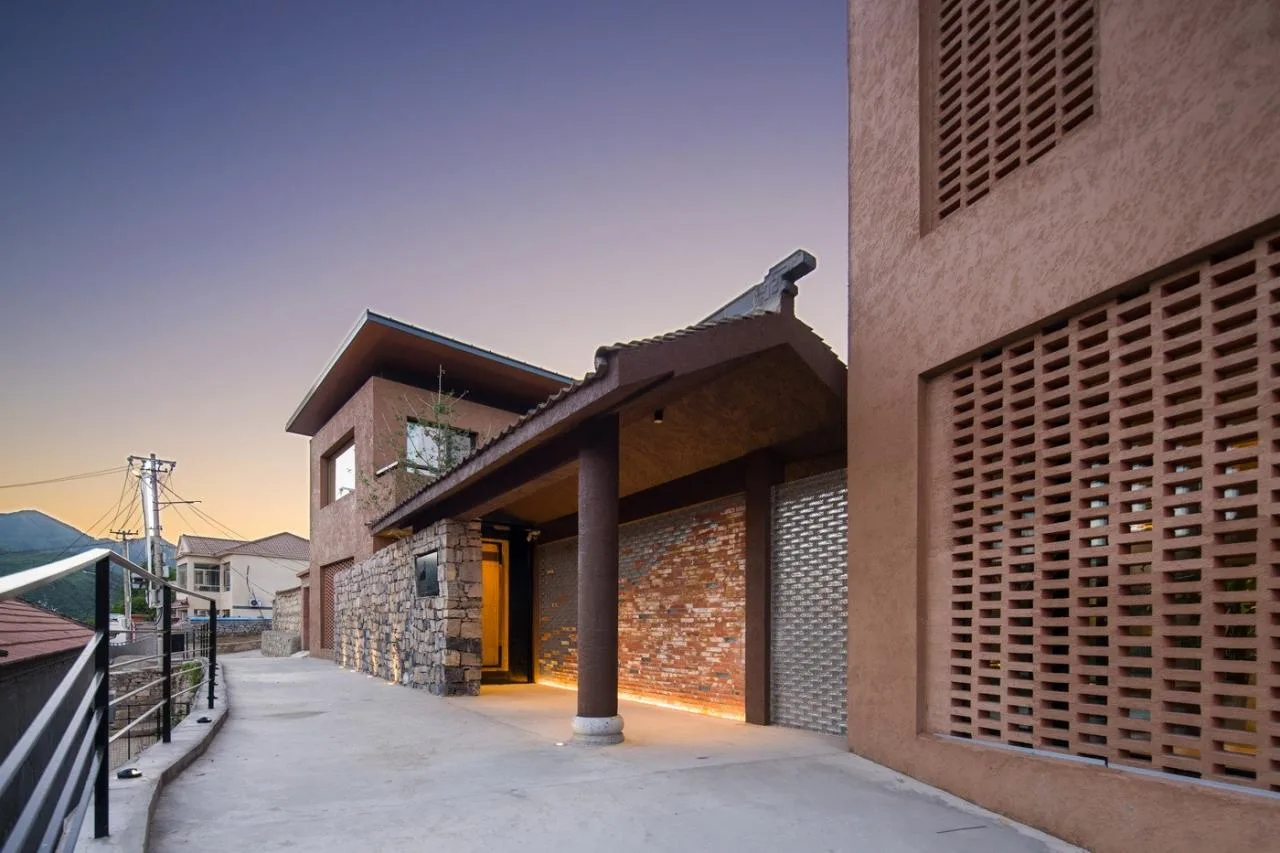
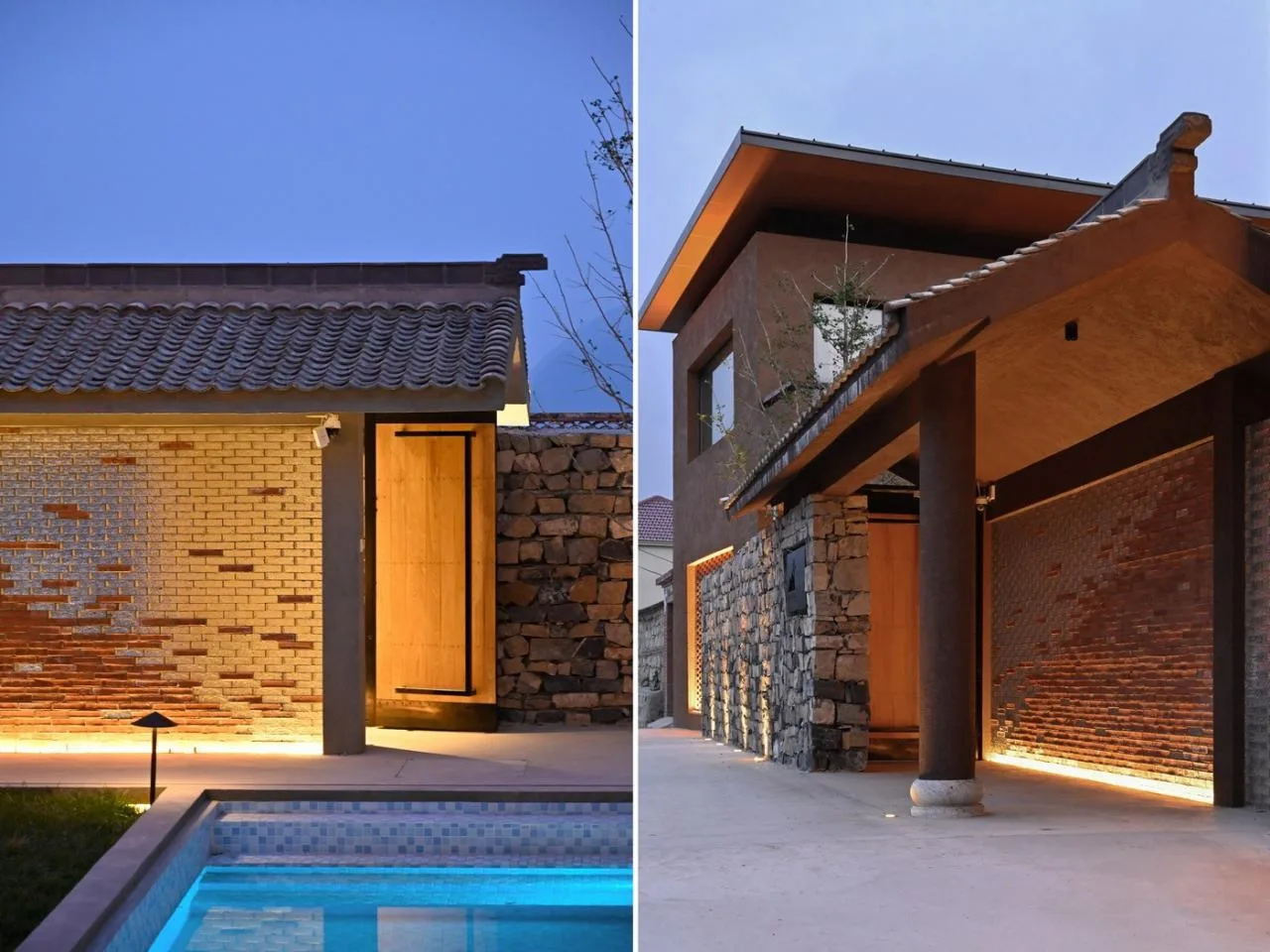
▲ Entrance roof and glass brick partition walls, blending traditional and modern elements
Interior: An Extension of Architecture
The first floor houses public spaces including check-in, bar, and coffee areas. The north-side banquet hall features a super-high ceiling due to residential land regulations. To balance the space visually and enhance its ceremonial feel, overlapping triangular steel frames are installed, reducing the scale mismatch caused by the height. This multifunctional space, reminiscent of a church, supports diverse activities.
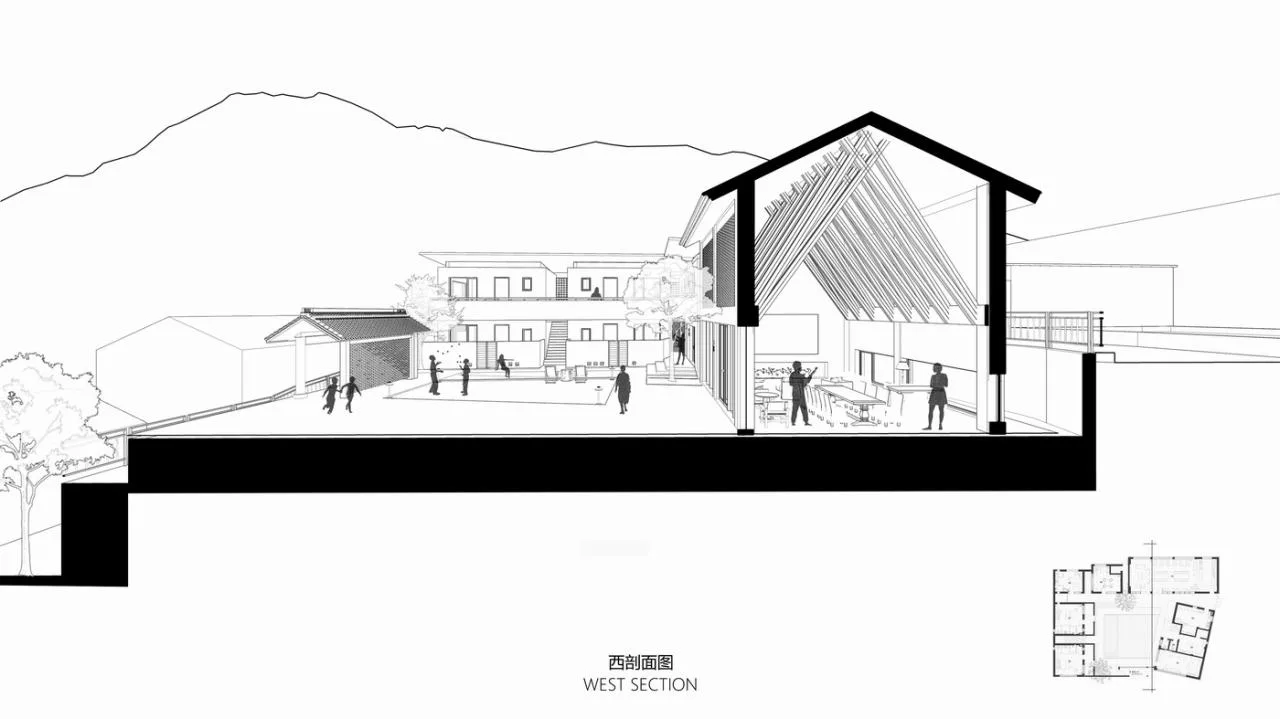
▲ North-south section showing banquet hall steel beams schematic
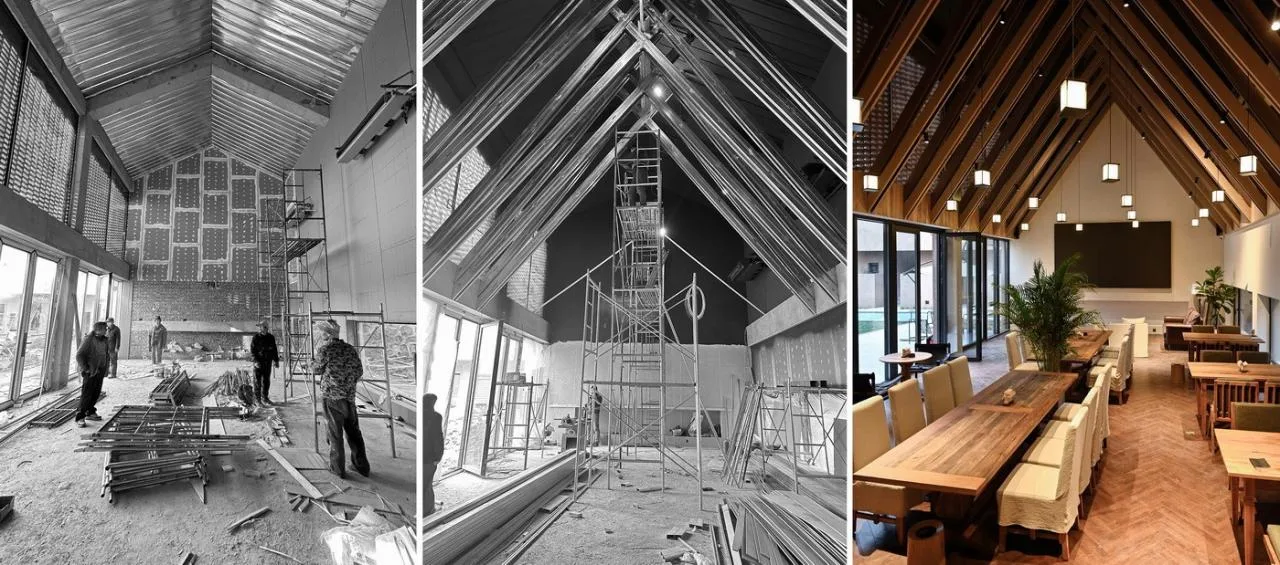
▲ Triangular steel beams reduce spatial visual impact and elevate ceremonial atmosphere
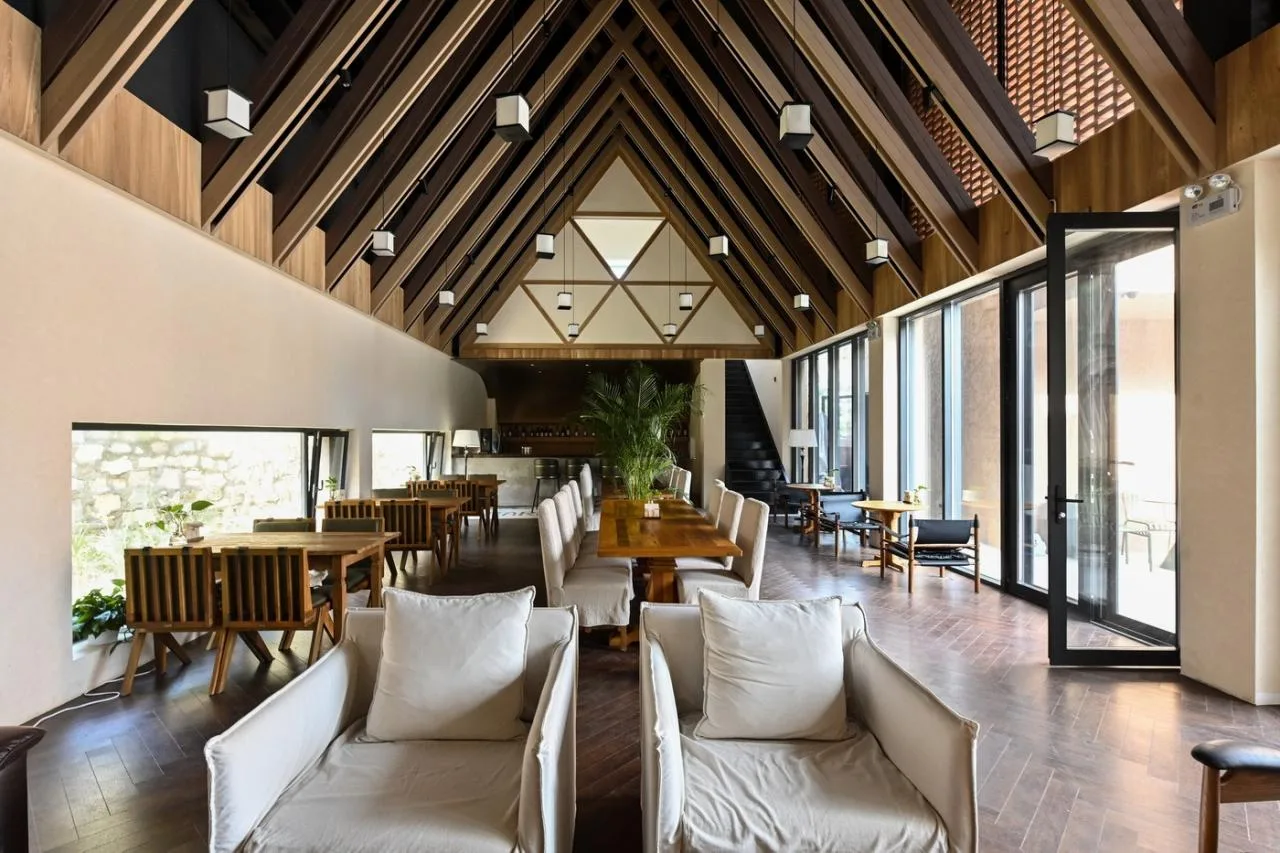
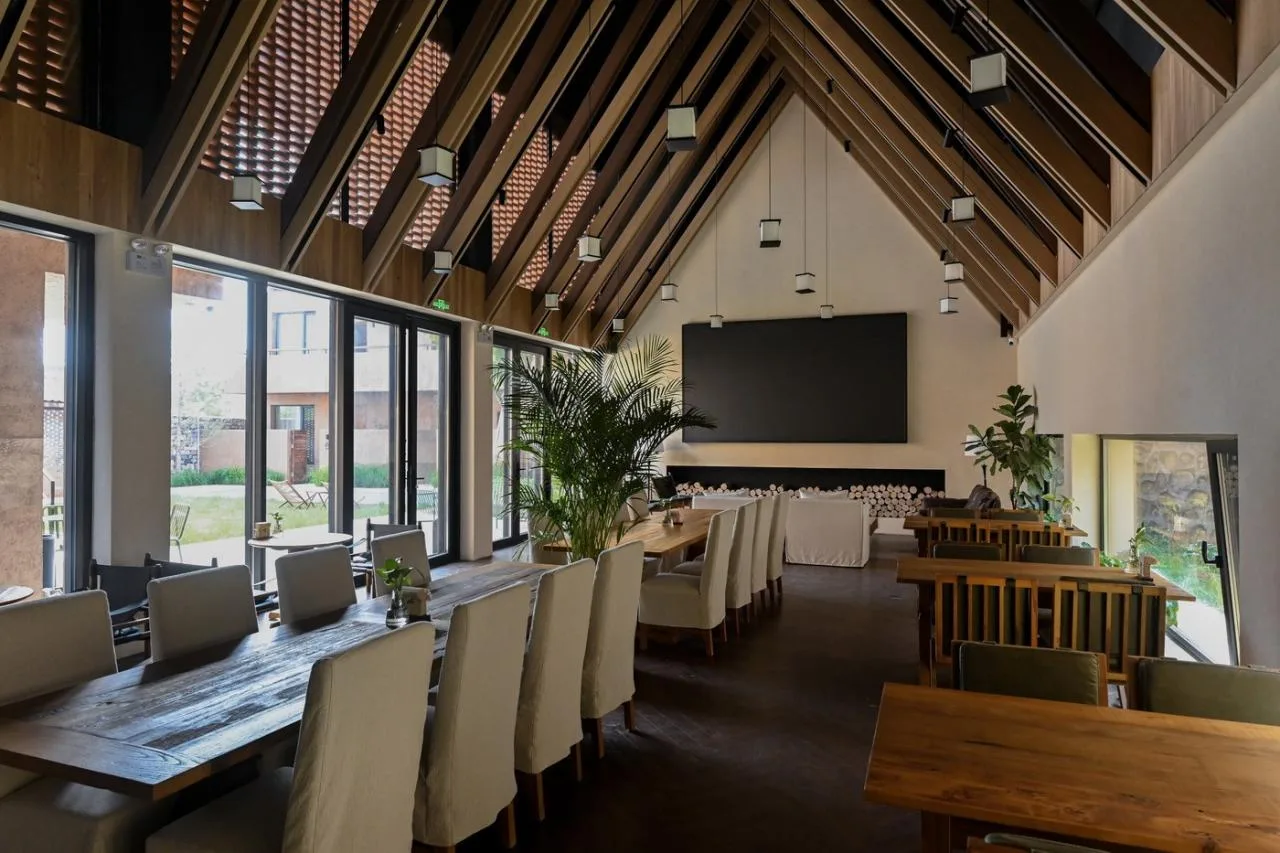
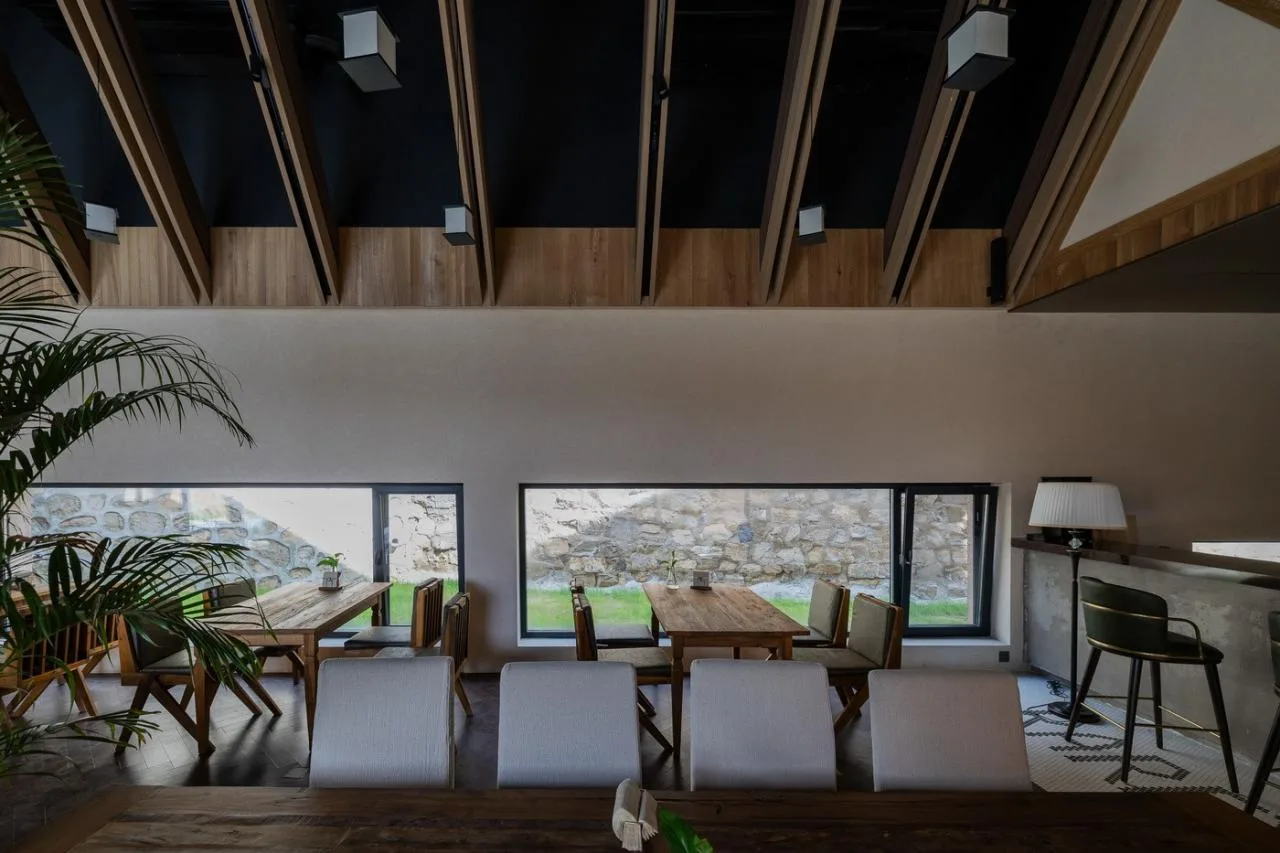
▲ Banquet hall and multifunctional event space
Continuing the building’s exterior style, guest rooms are designed with simple spatial language to maintain a connection with the mountain views outside while offering comfortable, livable spaces. Rather than uniformity, room types and furnishings vary to provide diverse options, balancing consistency with individuality to meet market demands.
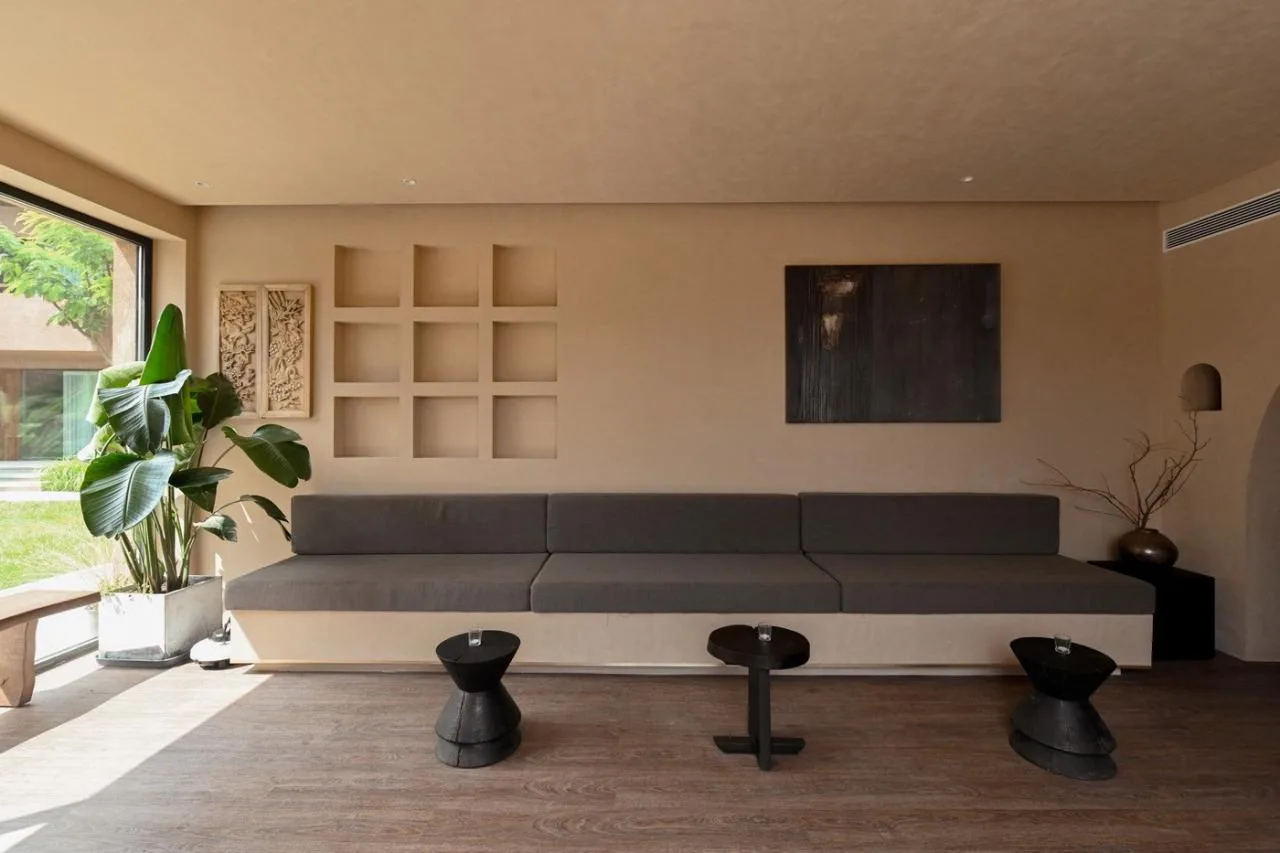
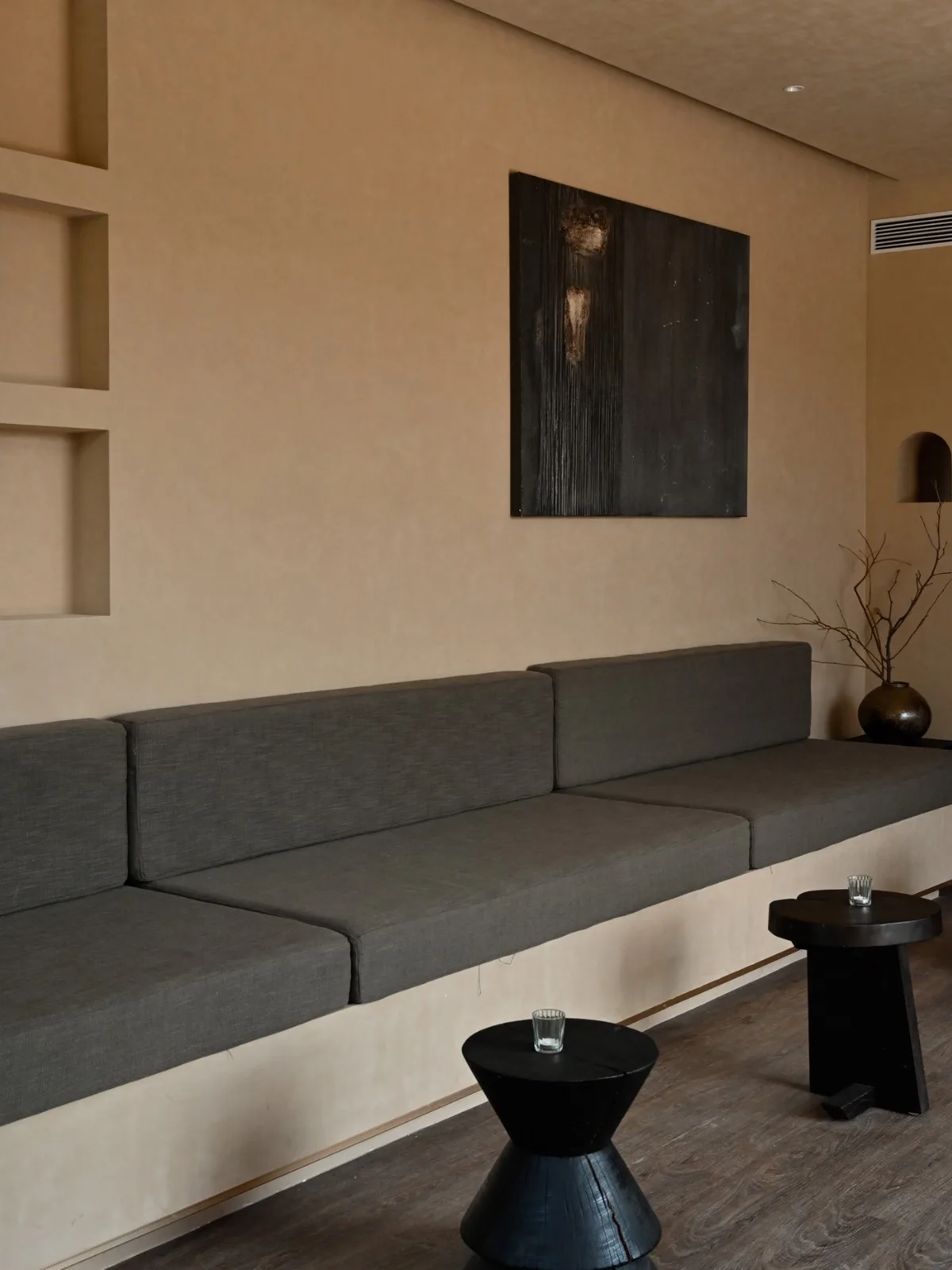
▲ Check-in reception area
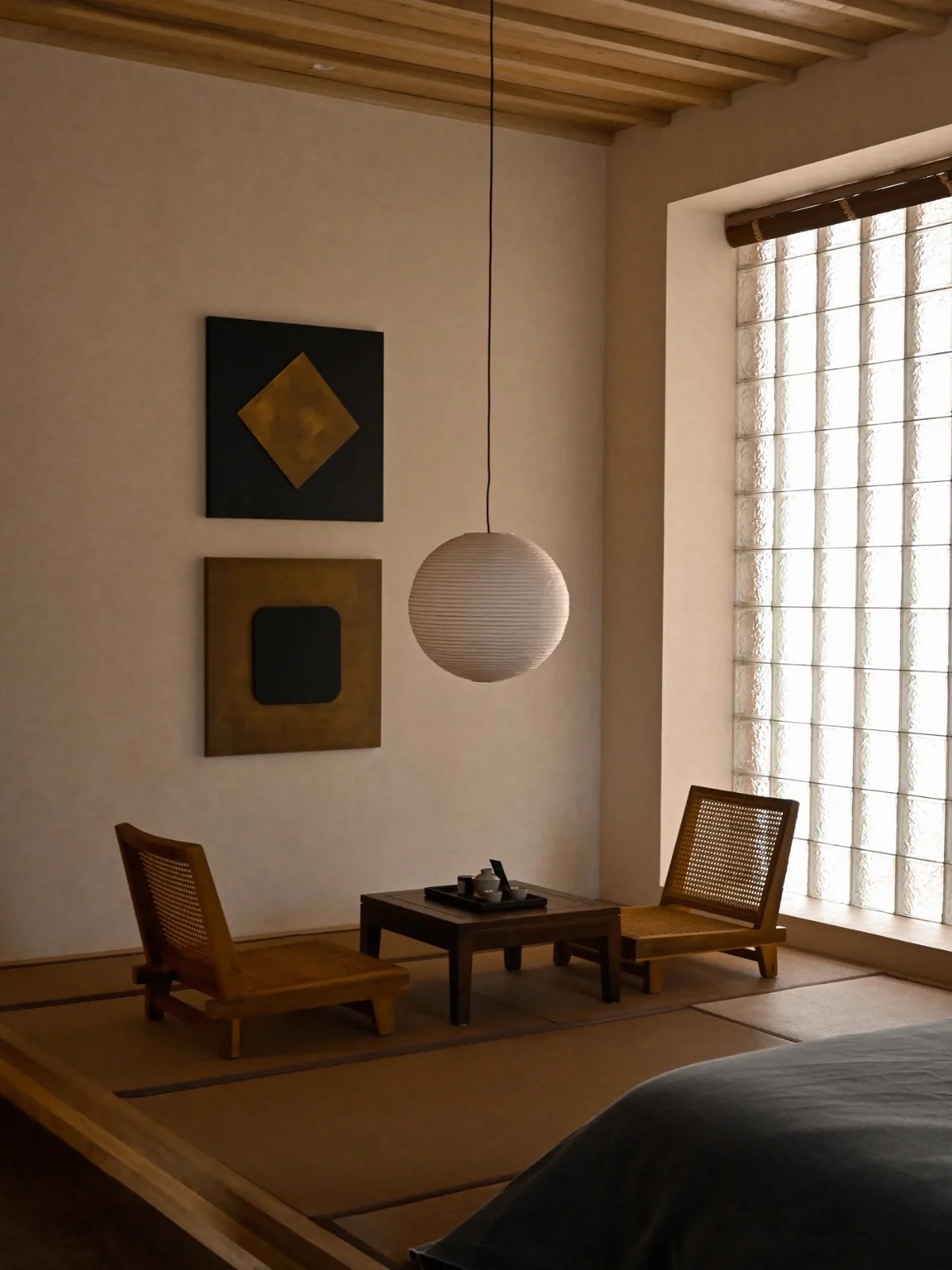
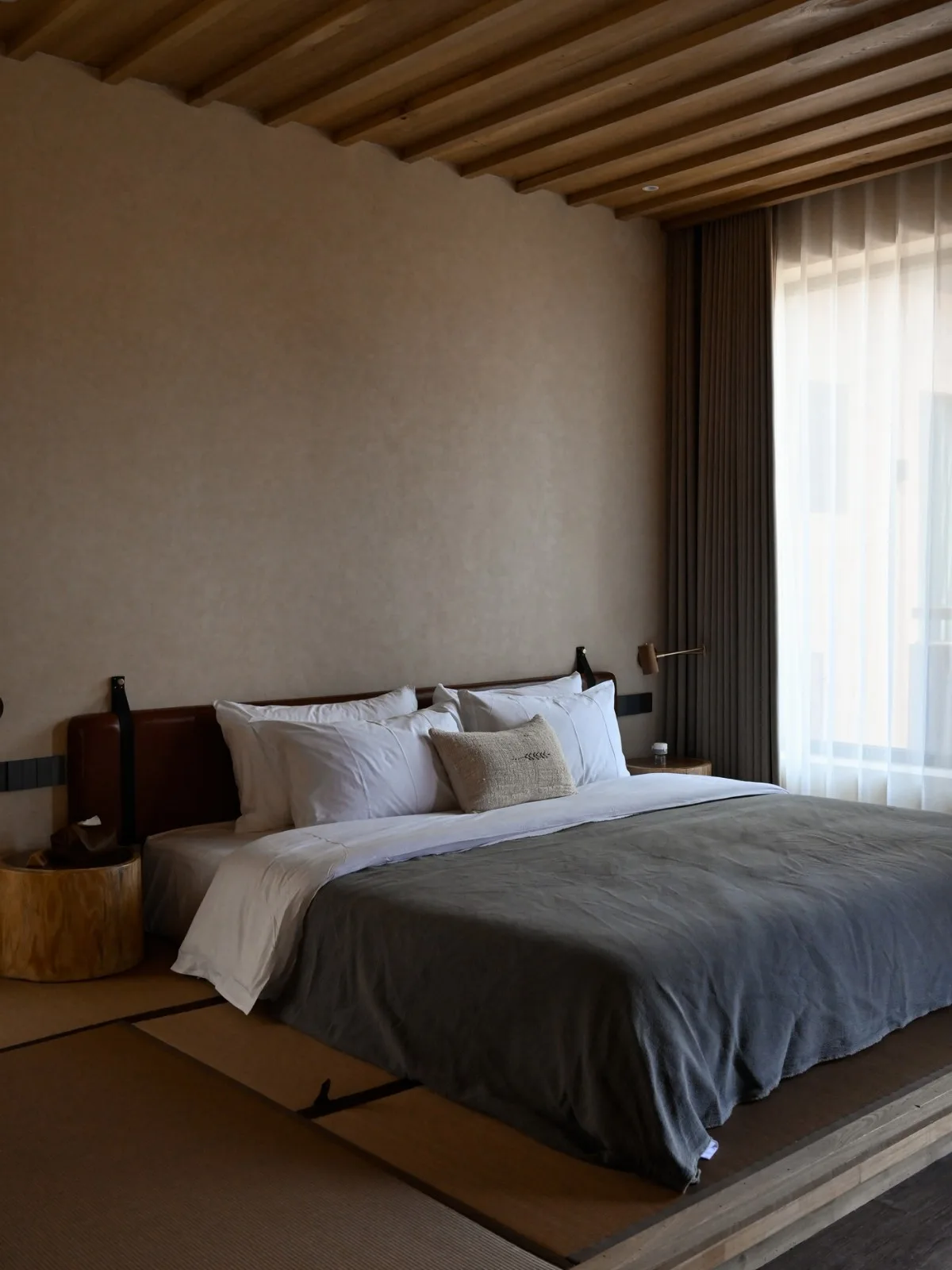
▲ Tea Room
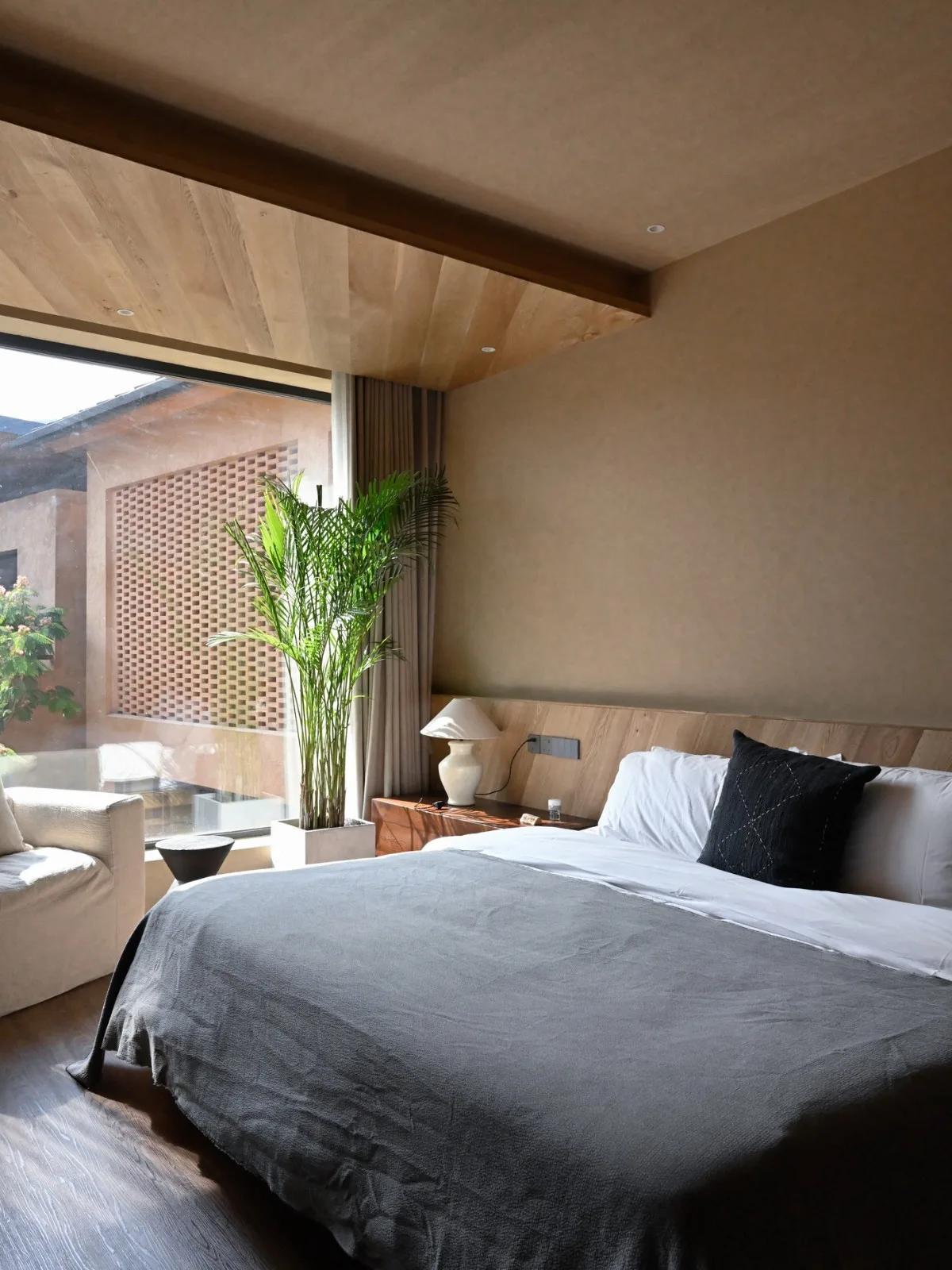
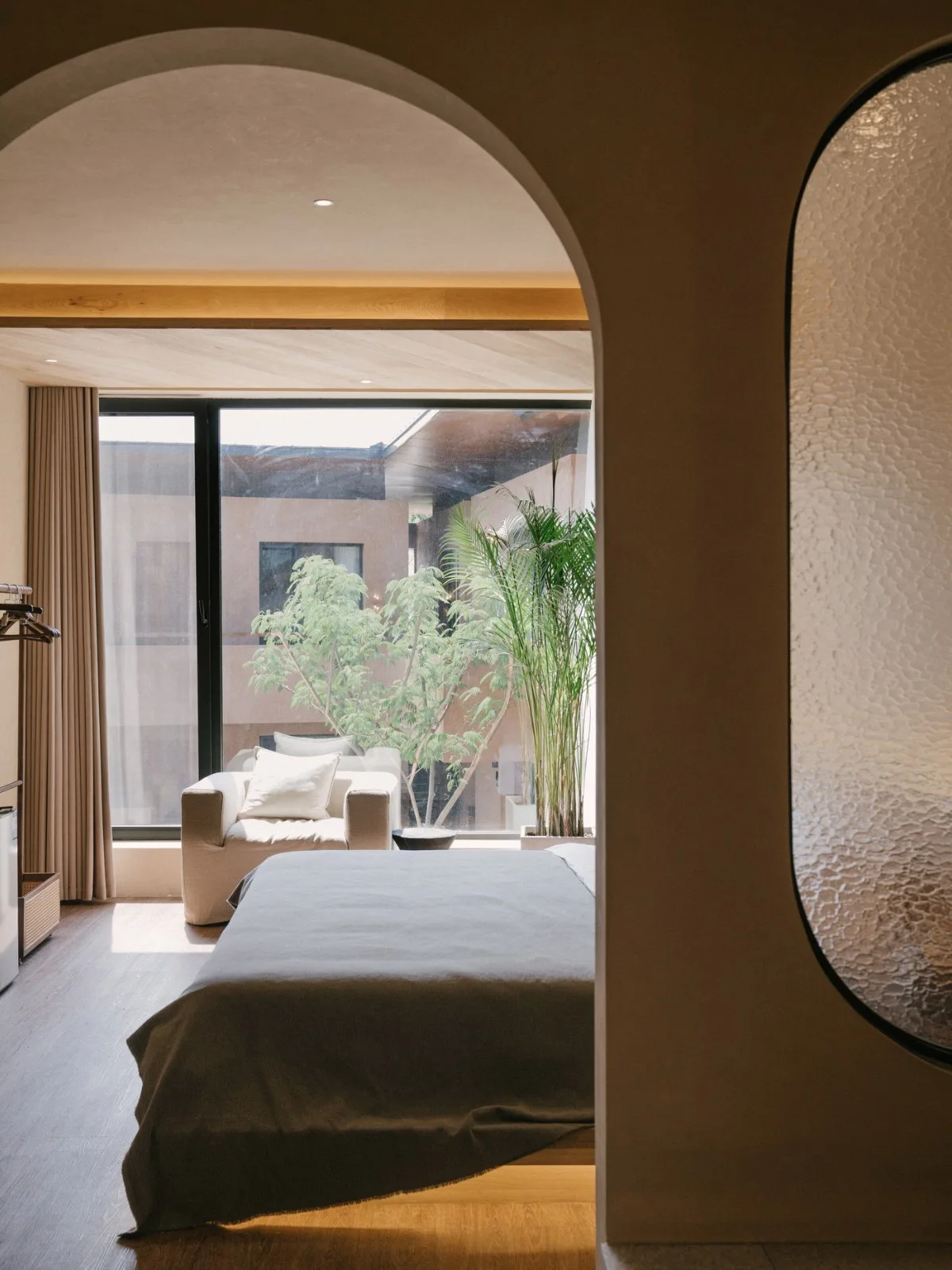
▲ Four Seasons Room
The design favors platforms for sitting and lying instead of traditional beds and sofas, and uses sinks instead of bathtubs. This approach evokes rural nostalgia while enabling faster, more practical space operation.
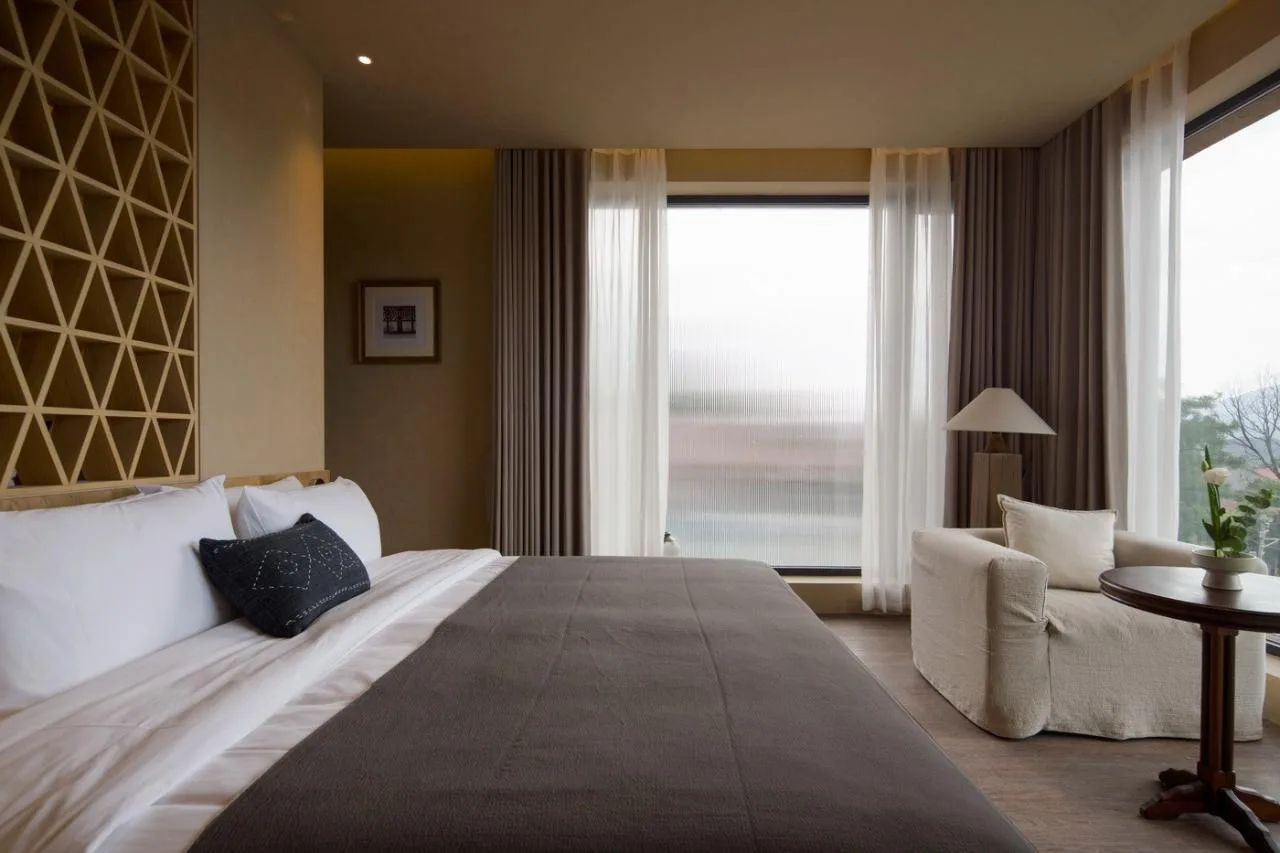
▲ Mountain View Room
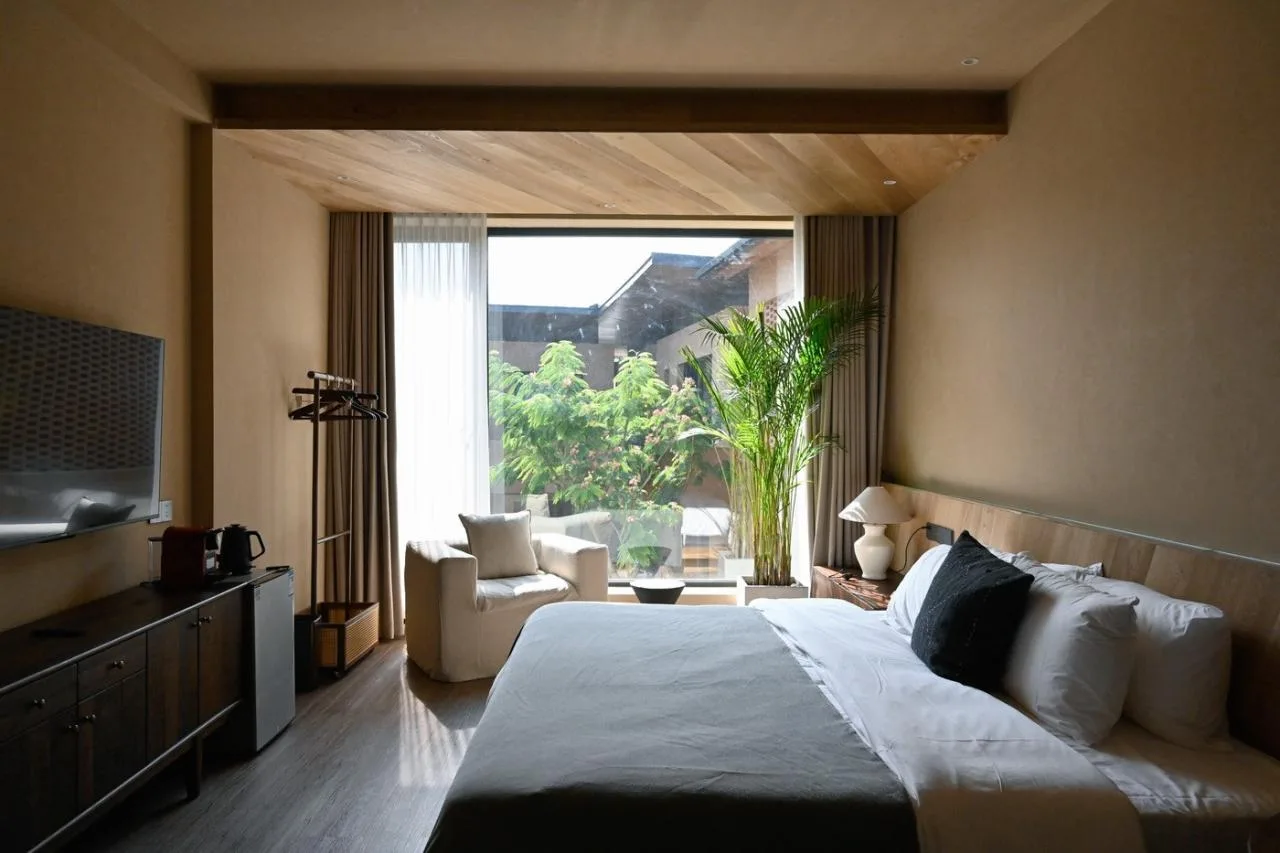
▲ Four Seasons Room
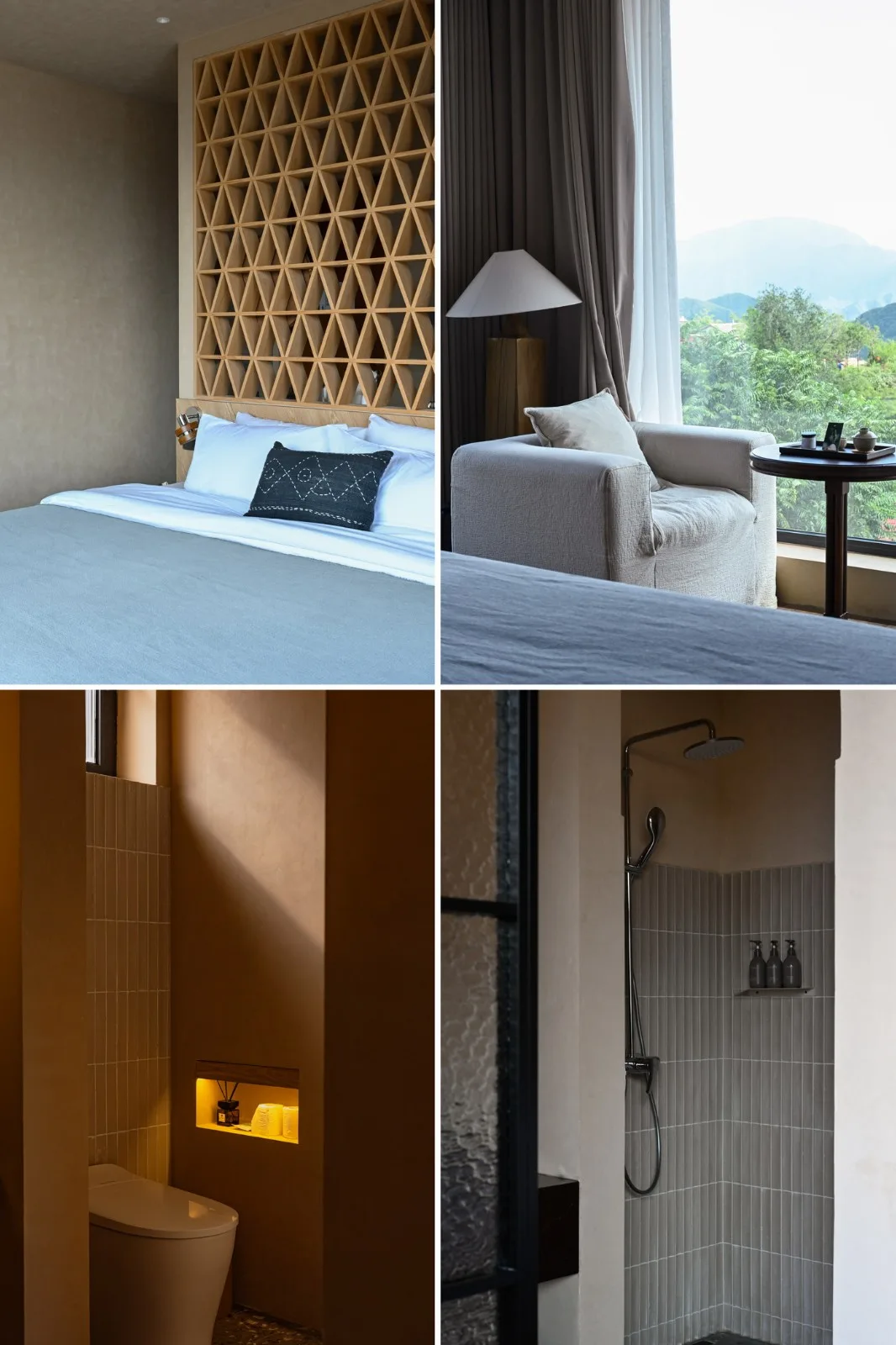
▲ Room details
Reflecting on the Impact of Different Roles on Design
In this project, multiple roles—investor, operator, builder, and designer—were involved, bringing diverse perspectives. Beyond delivering a successful project, balancing cost, operation, timeline, and design was essential. While these roles often present conflicting demands, their integration allowed anticipatory problem-solving, resulting in a more rational spatial arrangement and smoother operation.
Moreover, the development of the Backyard Liushi Port Homestay has spurred improvements such as the construction of a terraced road, forest camping, and government office buildings at the village entrance. We hope this project will serve not just as a rural residence but as a pioneer in rural revitalization, collaborating with more people to foster a better rural life.
Project Drawings
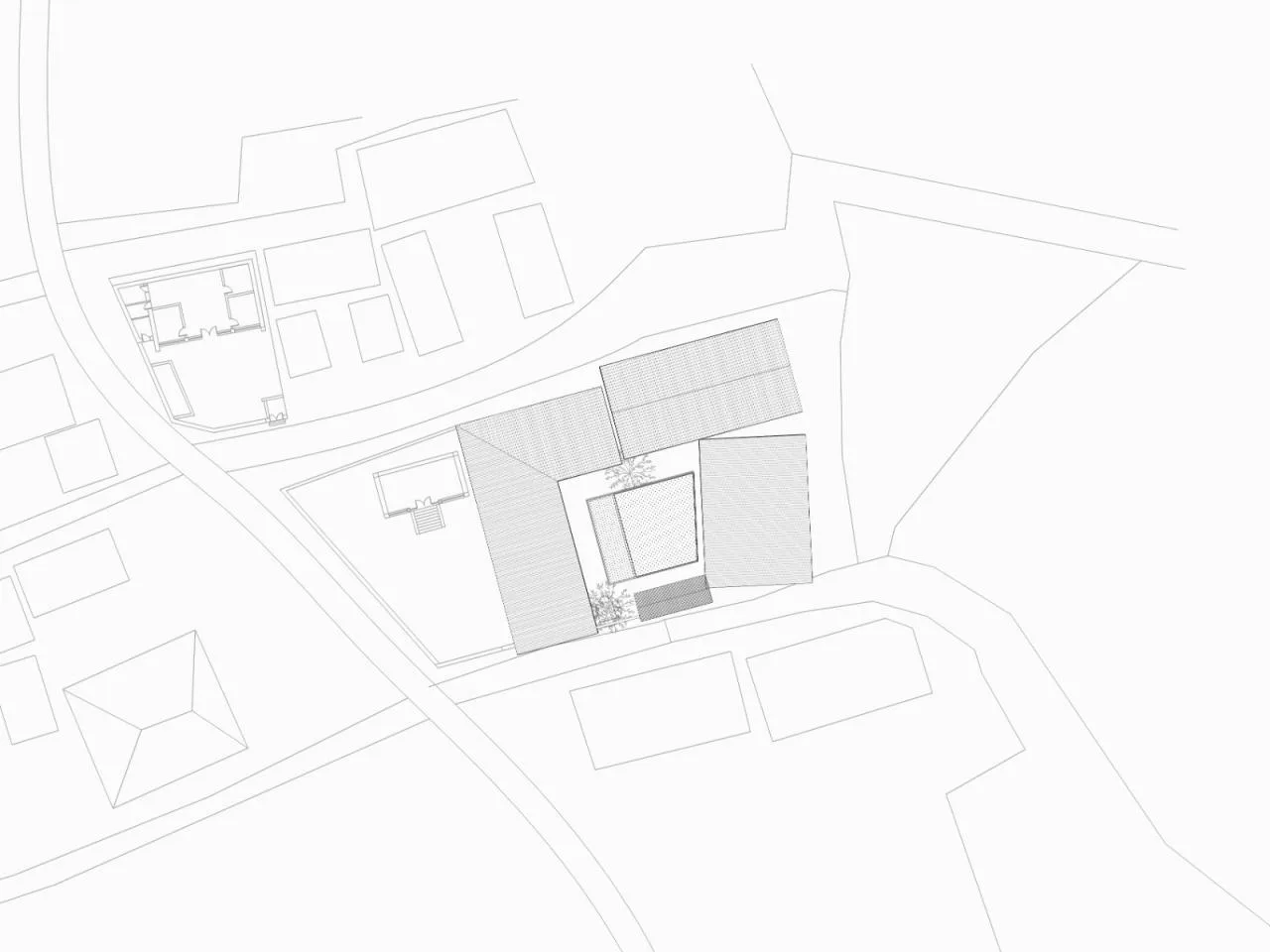
▲ Overall project layout
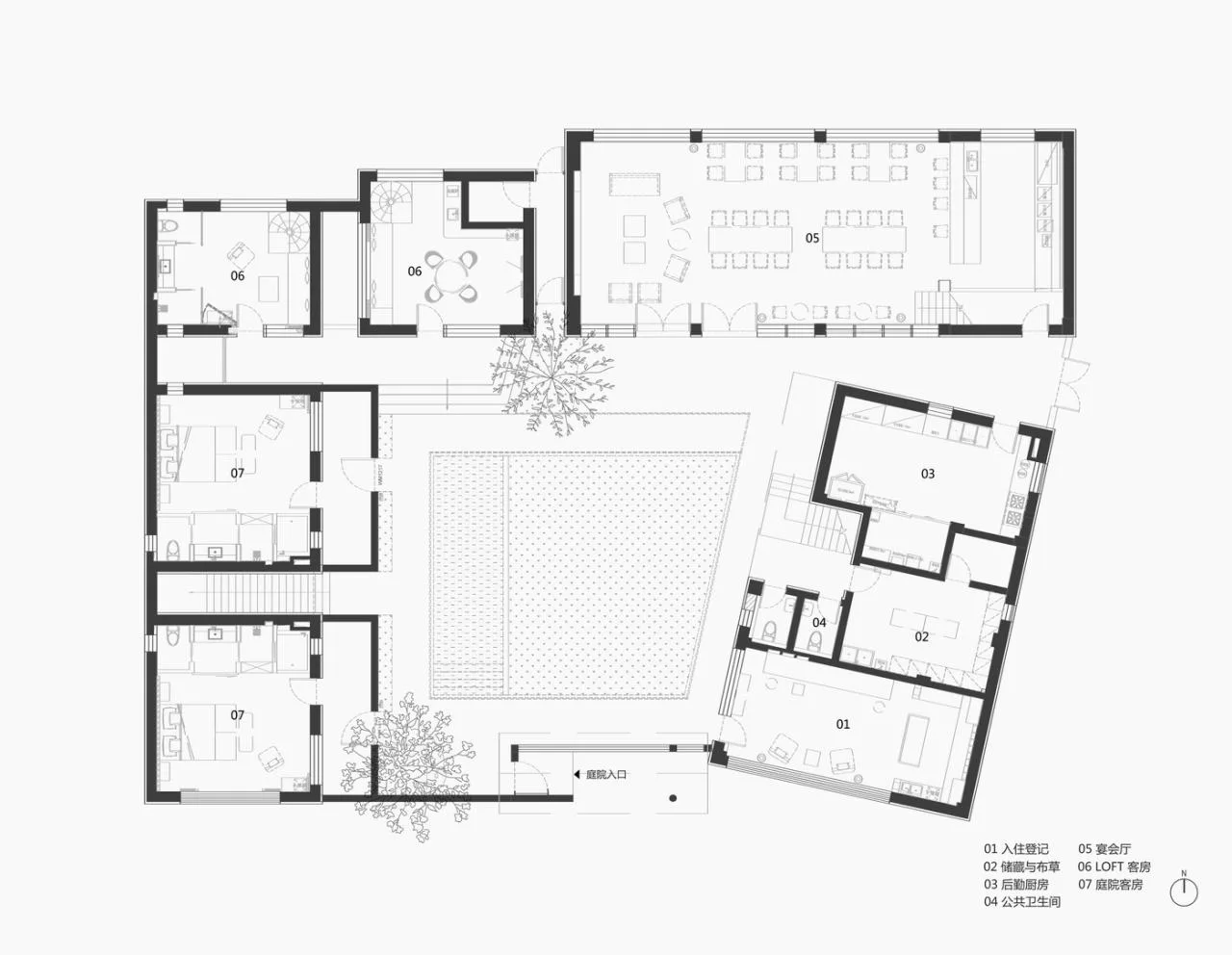
▲ First floor plan
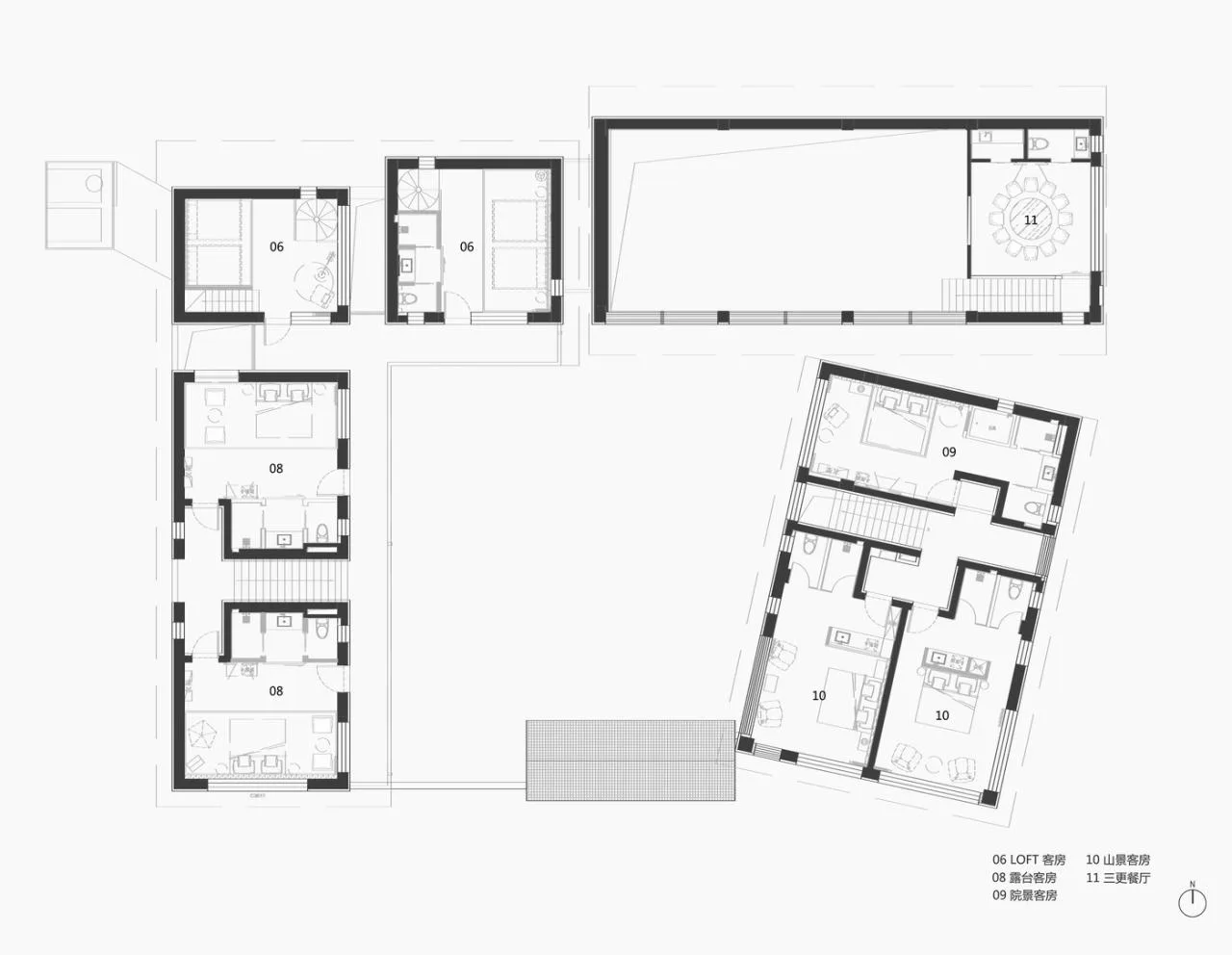
▲ Second floor plan
Project Information
Project Name: Backyard · Liushi Port Homestay First Development Zone
Location: Liushigang Village, Liucun Town, Changping District, Beijing
Building Area: 900 square meters
Design Firm: GW Space Design
Design and Completion: December 2022 – June 2024
Hotel Management: Rareyard Boutique Homestay in the Backyard
Photography: Zeng Huifan, Lu Fei, Ren Enbin
Contact: gwdesign@yeah.net














Must log in before commenting!
Sign Up