
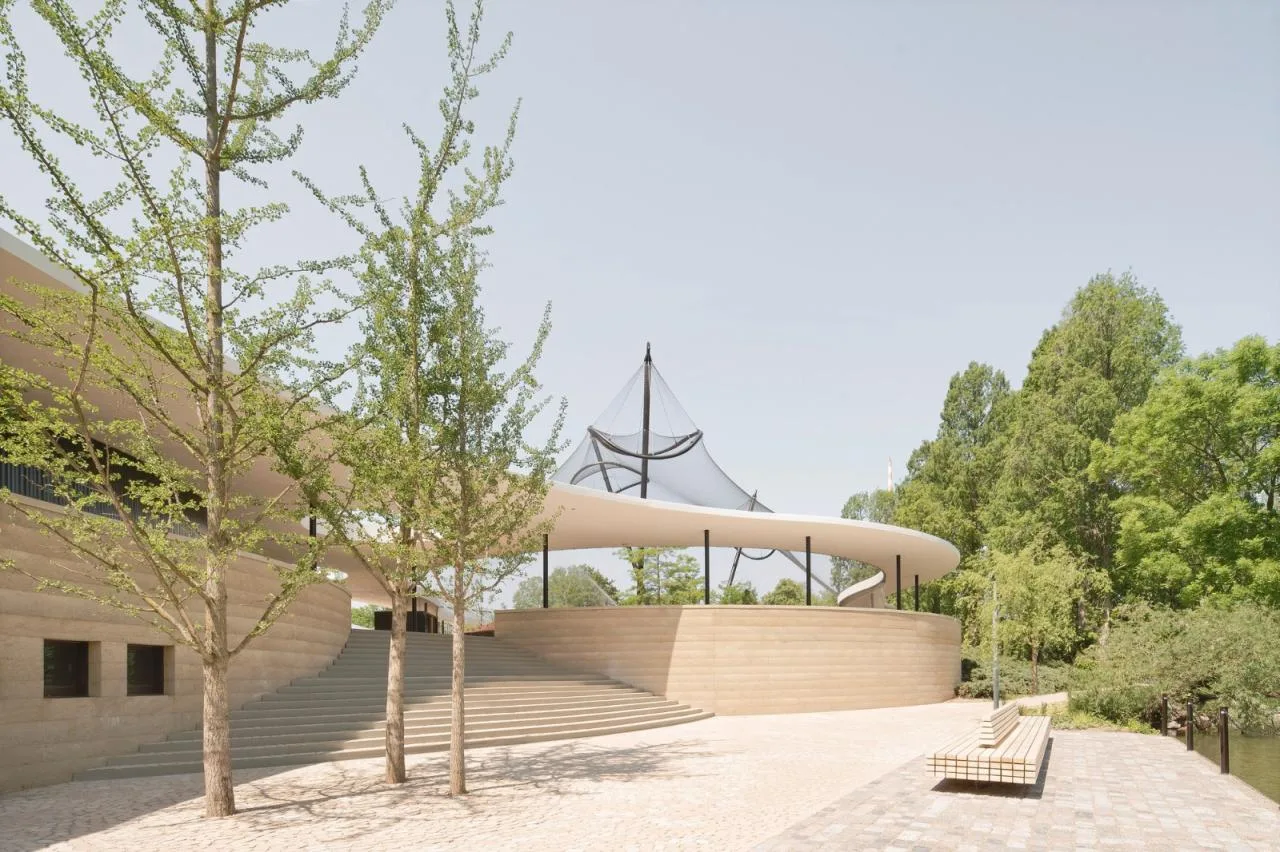
Luisen Park stands out for its landscape elements that allow architecture to blend into the background. Rather than a traditional building, the new structure takes the form of an organically shaped, single-story pavilion that harmonizes seamlessly with the park’s natural surroundings.
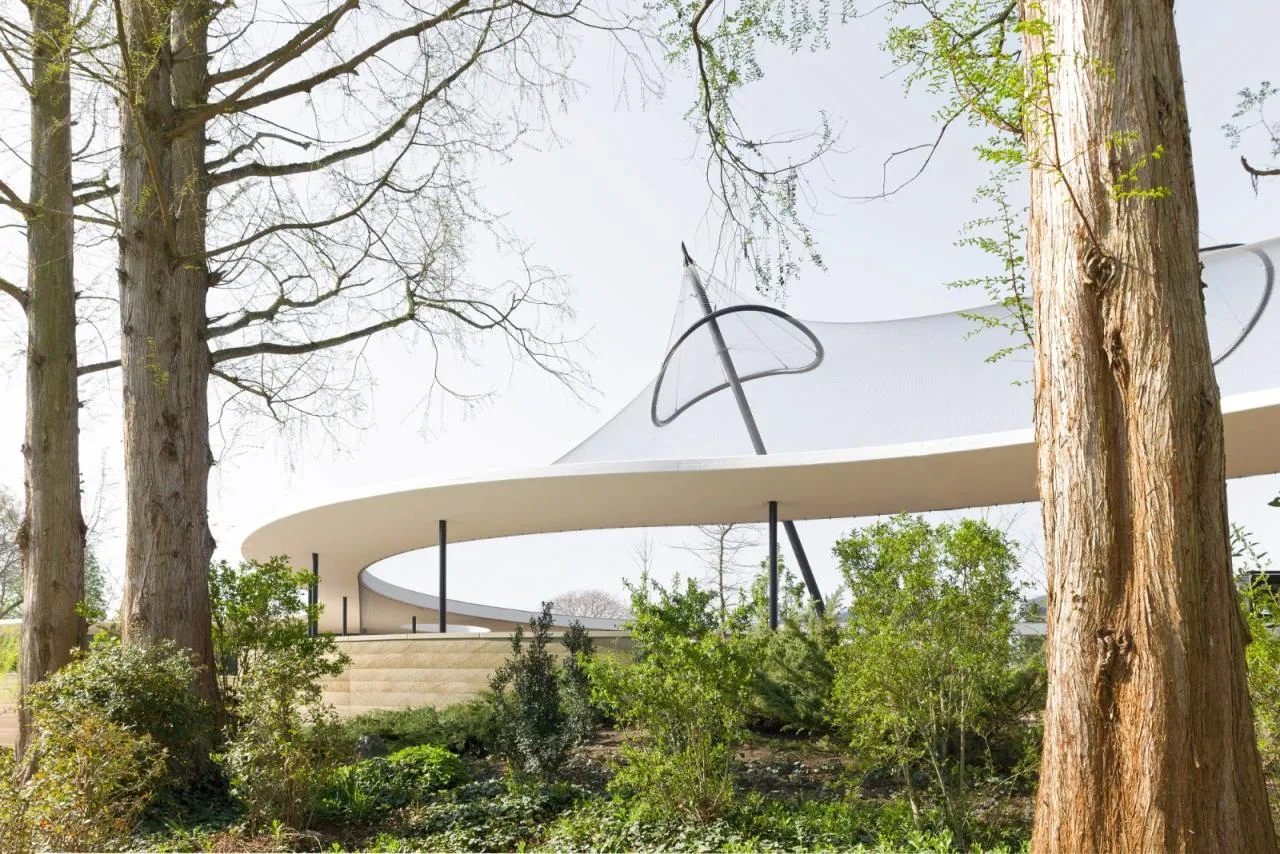
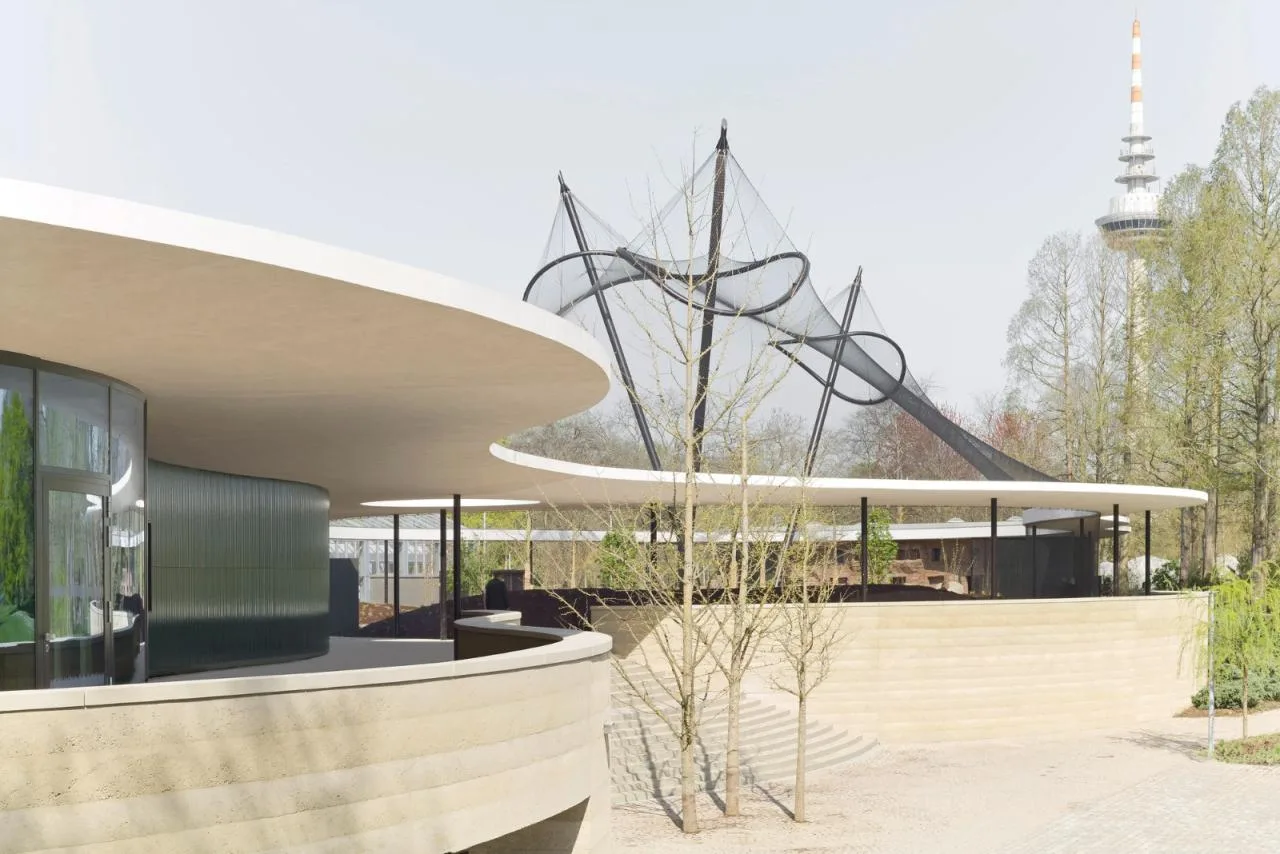
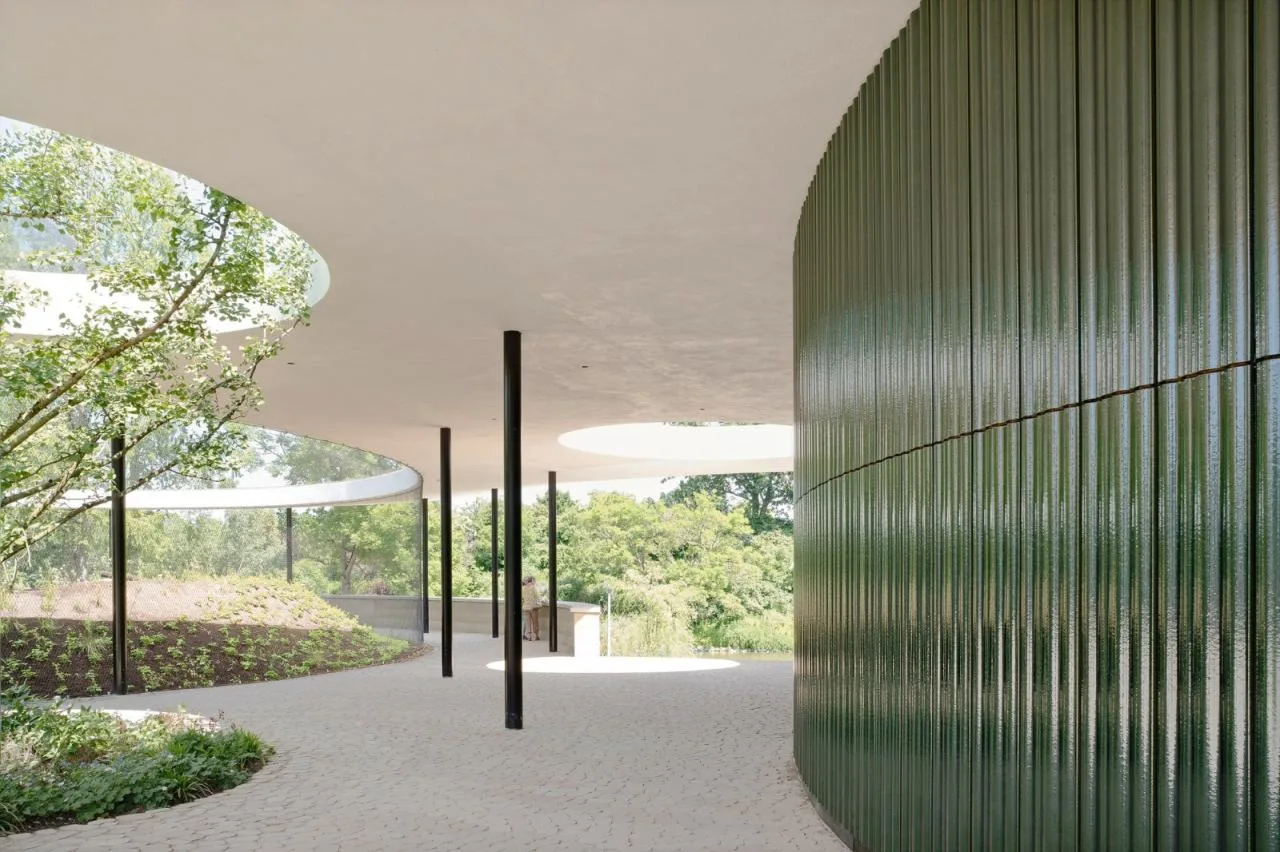
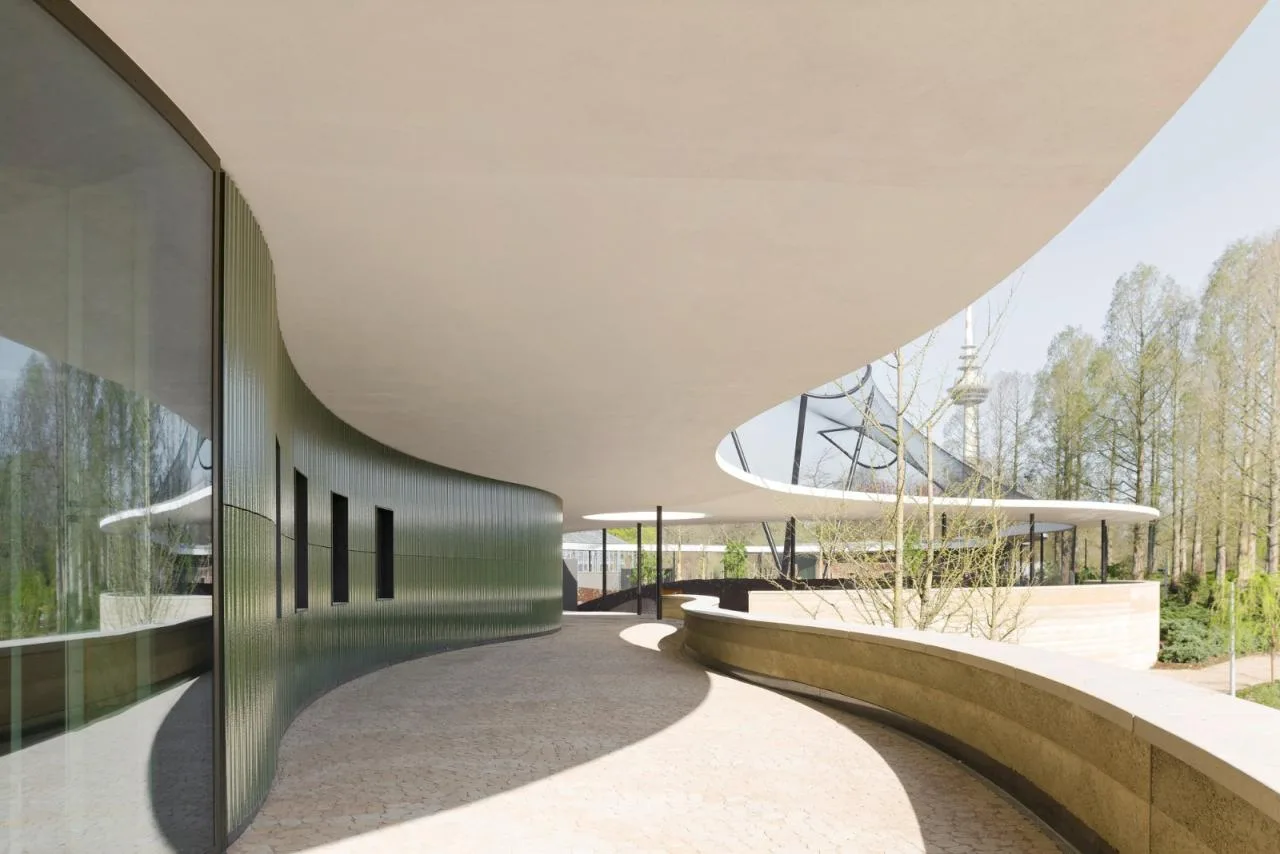
An elegant, curved roof rests on slender supports, sheltering the interior space, which features floor-to-ceiling glass walls. This design creates a seamless flow between indoors and outdoors. Surrounding the adjacent rooms are glossy dark green glazed ceramic elements that add refinement. The slender eaves extend flatly beneath the tree branches, while sunshades around the park protect visitors from sun and rain.
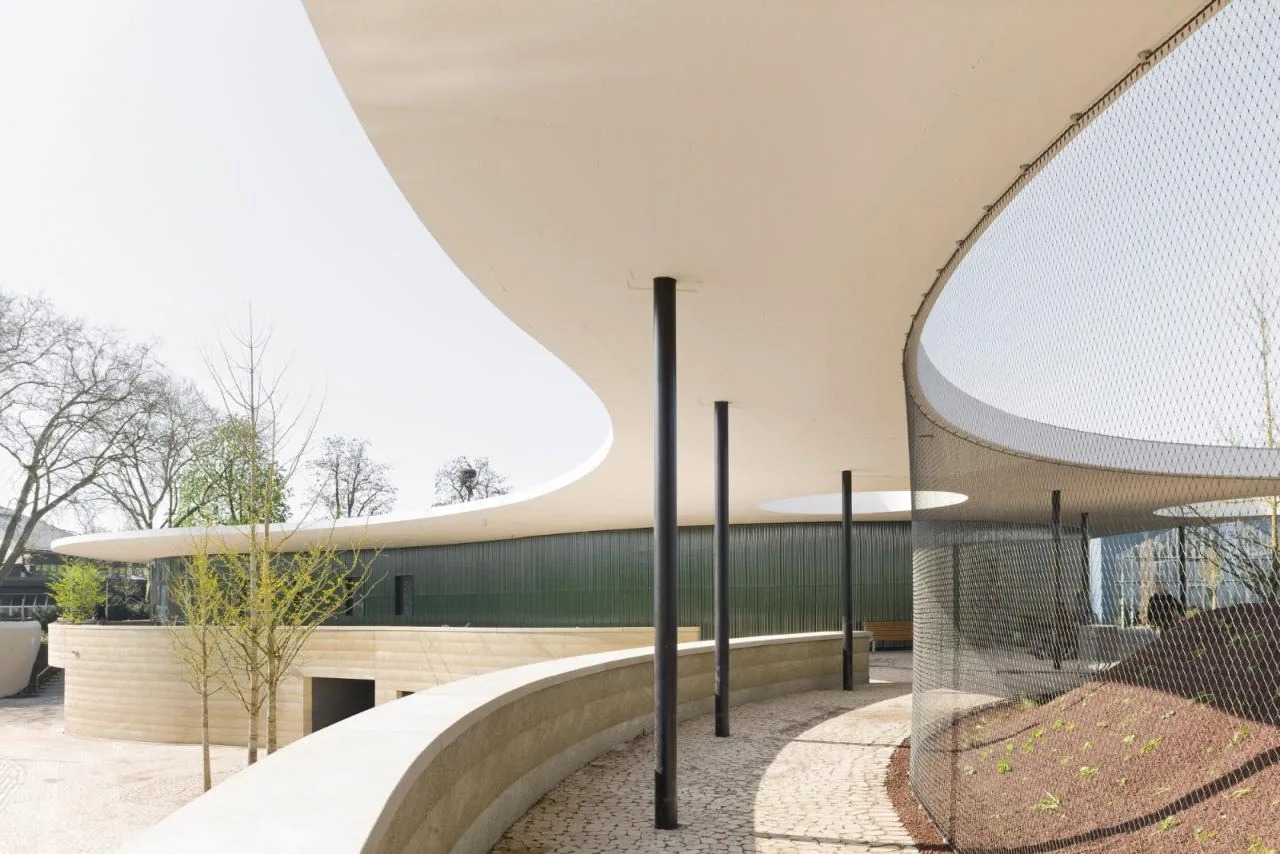
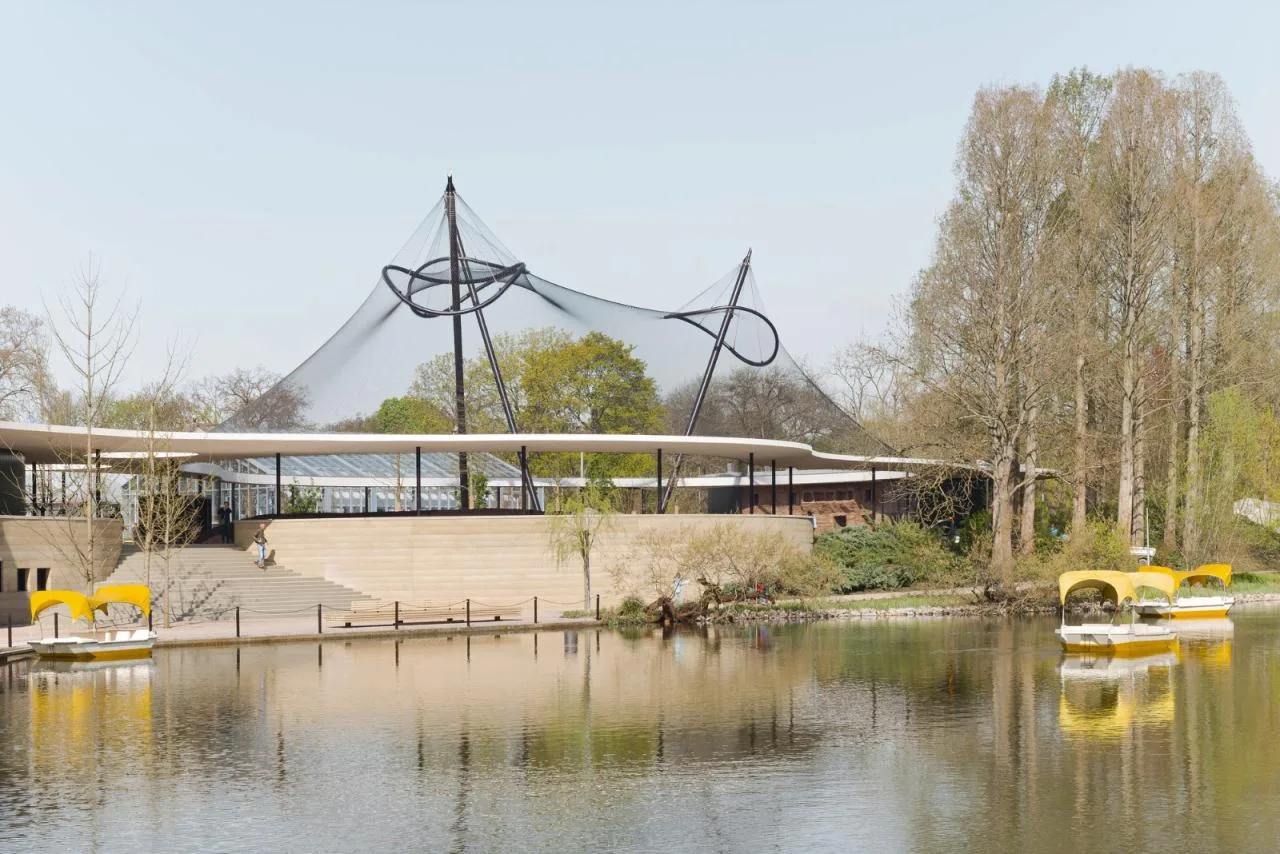
The roof, approximately 120 meters long and 30 meters wide, connects several functional zones within the building. At the southern end, a new park restaurant warmly welcomes guests. The dining area is enclosed by curved glass curtain walls overlooking Kutzerweiher Pond. During summer, large sliding doors open to extend the restaurant space beneath the overhanging sunshade.
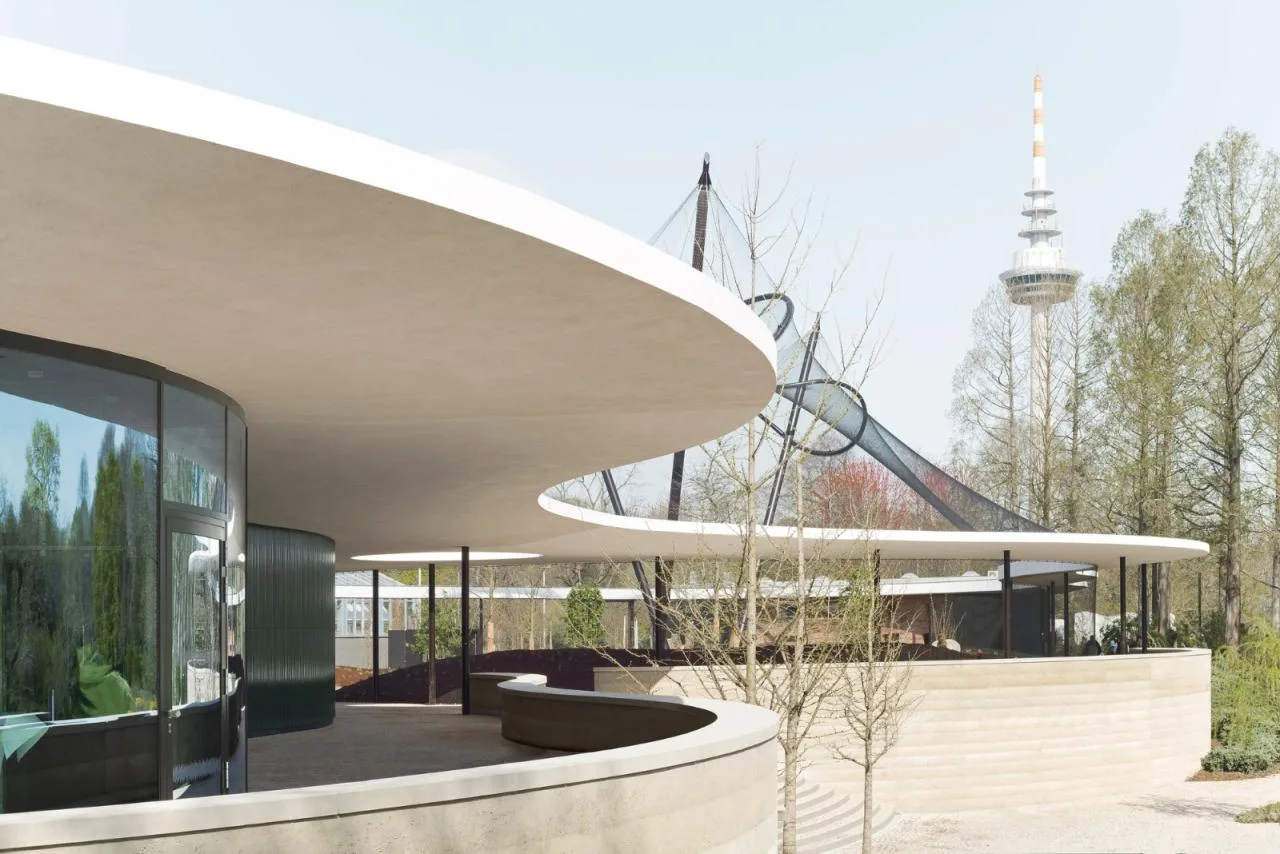
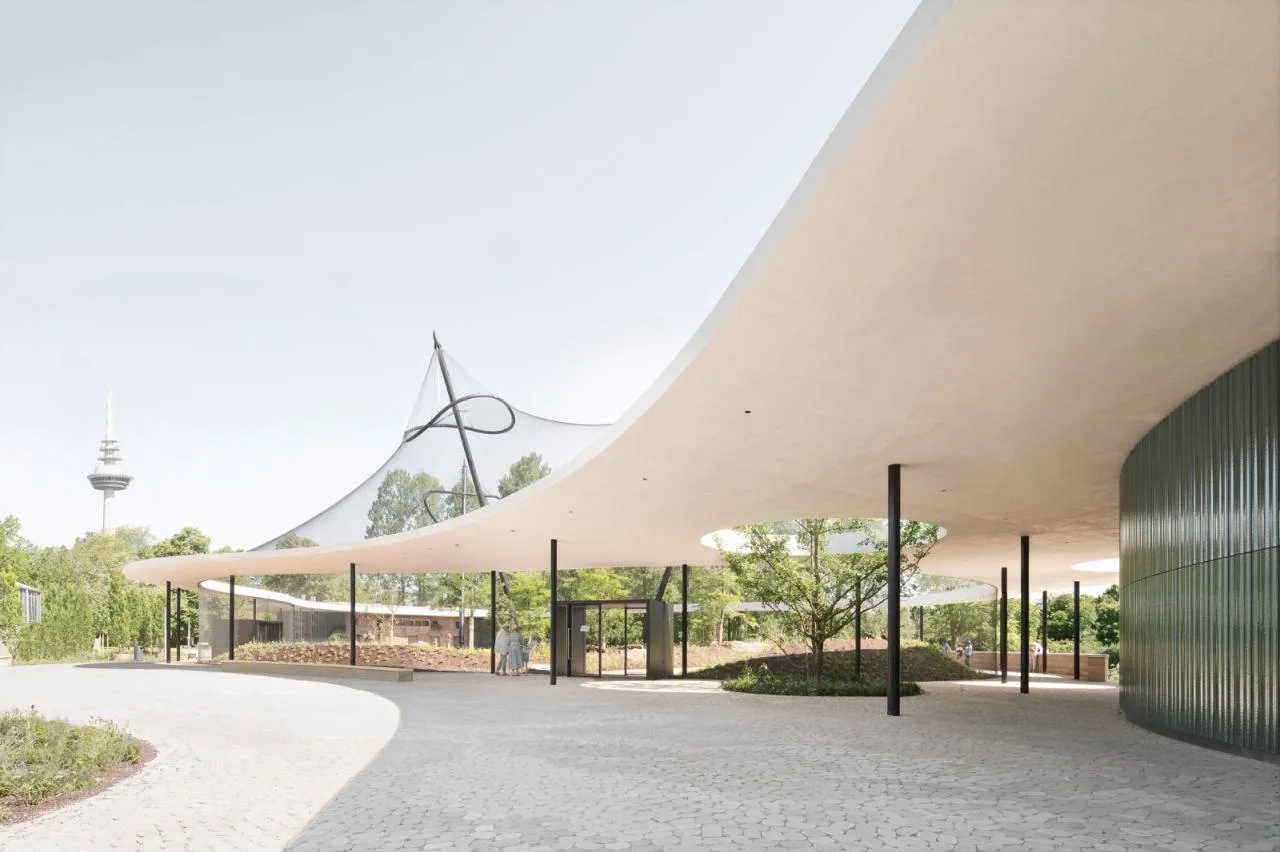
To the north of the restaurant lies a walkable, free-flying birdhouse. A 1,300 square meter opening in the roof slab accommodates this feature, which is covered by an 18-meter-high steel cable net supported by three pillars. Visitors passing through experience an artificial landscape complete with waterways and two ponds. At the northern roof end is a building dedicated to animal breeding and care.
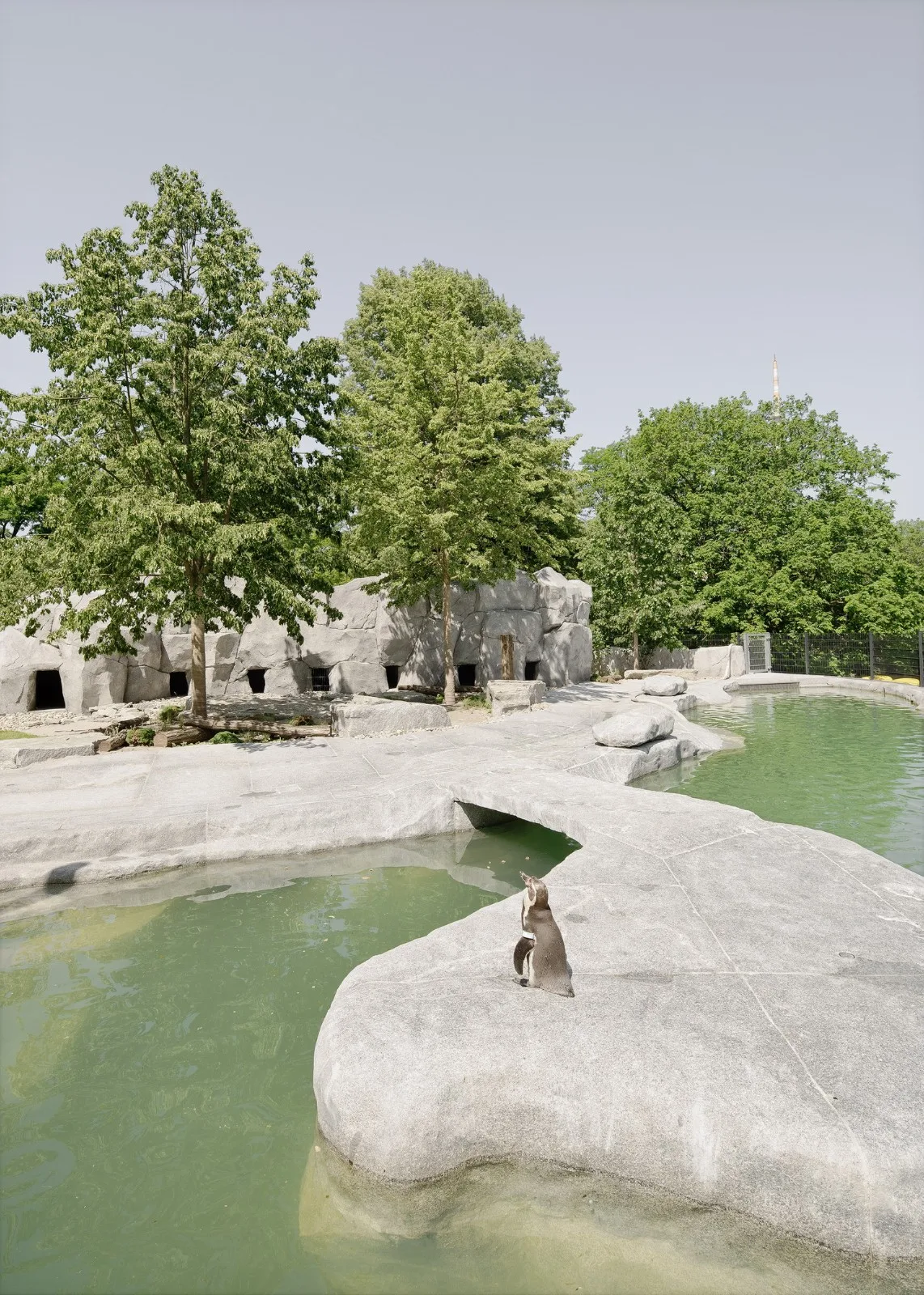
An offshoot of the main roof hosts a 580 square meter penguin exhibition area, shaped with dynamic curves that echo the overall design language. The landscape combines natural granite and artificial rocks. A 250 cubic meter pool allows visitors to observe penguins both above and below the water’s surface.
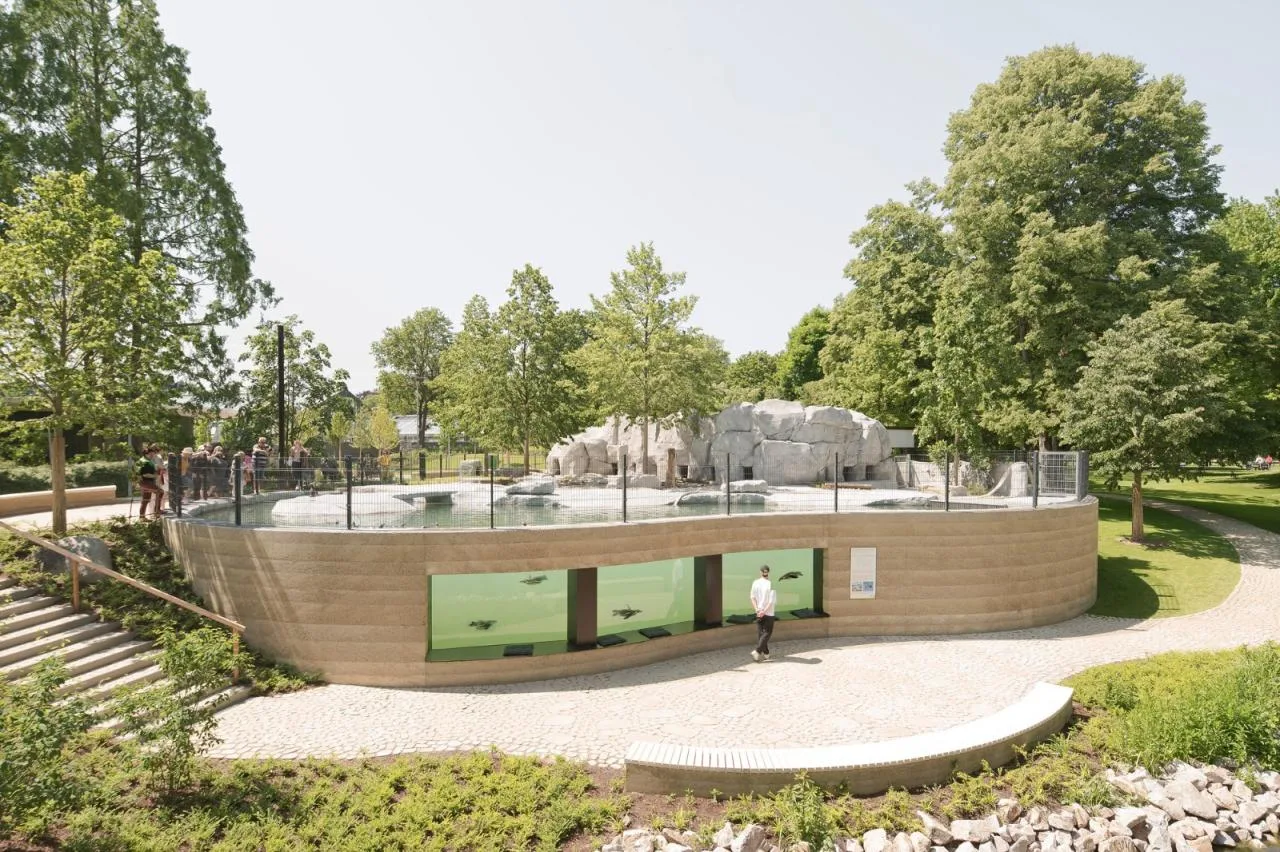
The terrain slopes down four meters toward Kutzerweiher Pond, intercepted by a rammed earth wall that gently curves along the shore. Its porous, layered texture mimics sedimentary layers found in quarries, transforming the wall from a simple structural element into a natural landscape feature.
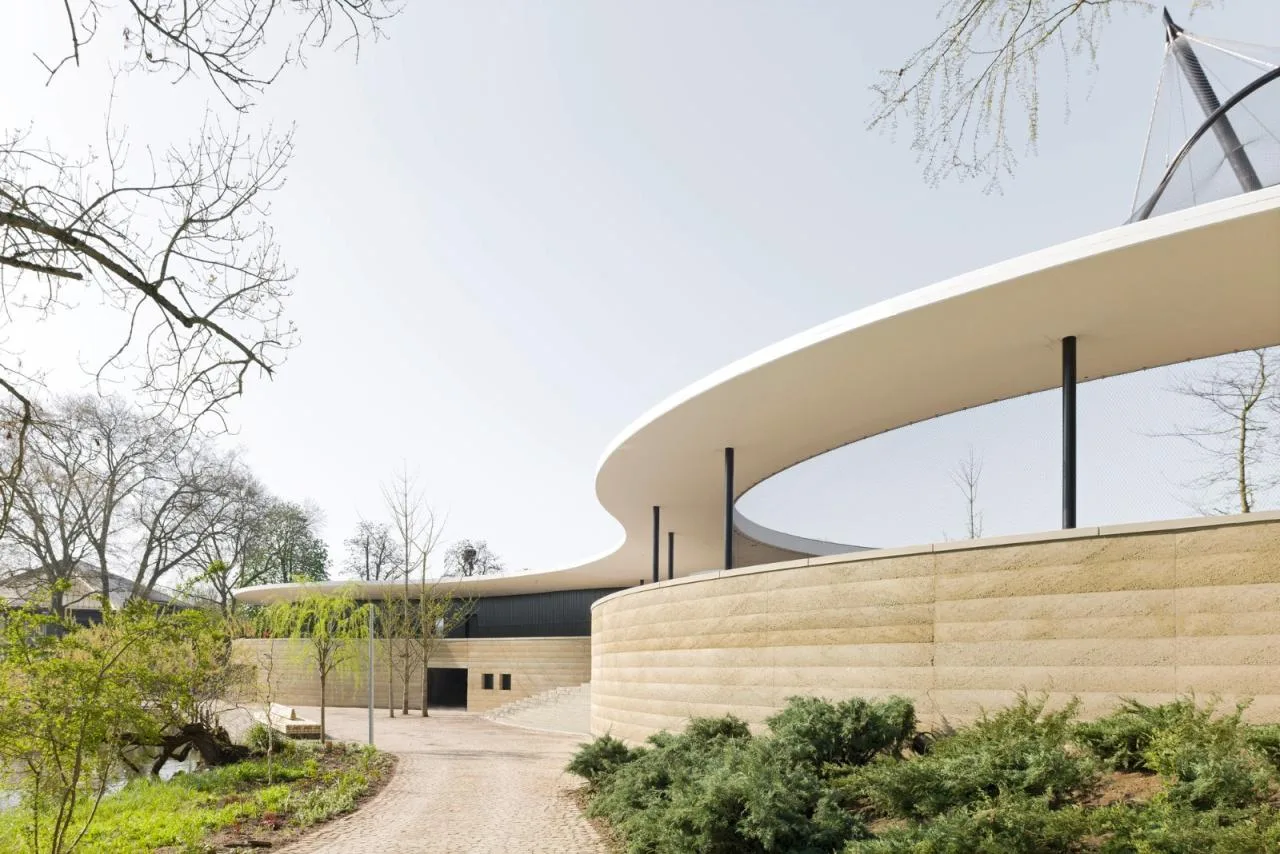
Visitors enter the polygonal underwater world through a deep cut in this rammed earth wall, right from the pond shore. Inside, the sandy floor is polished, walls are coated with a subtly glossy sandblasted finish, and the ceiling is painted dark blue. This creates a mineral-inspired contemplative atmosphere housing 21 aquariums showcasing fish from every continent.
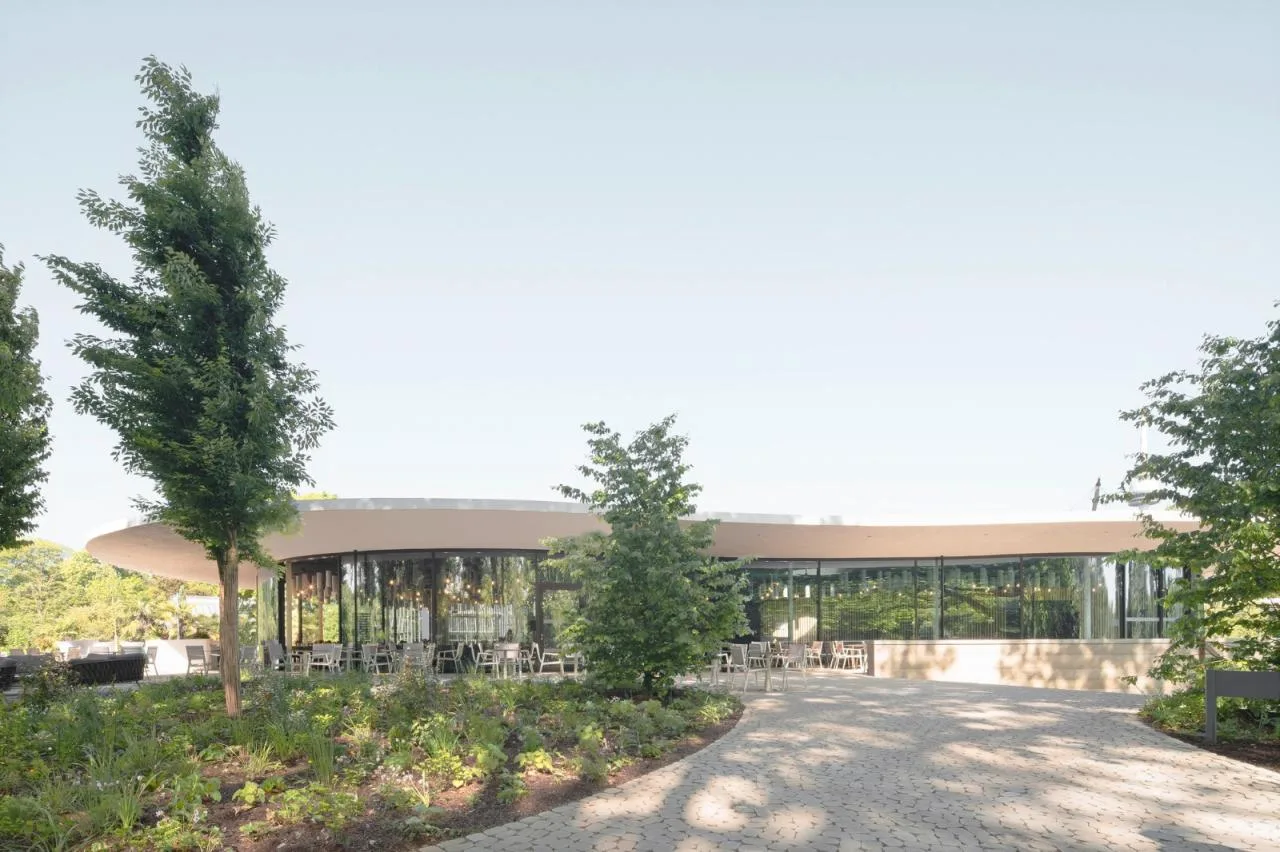
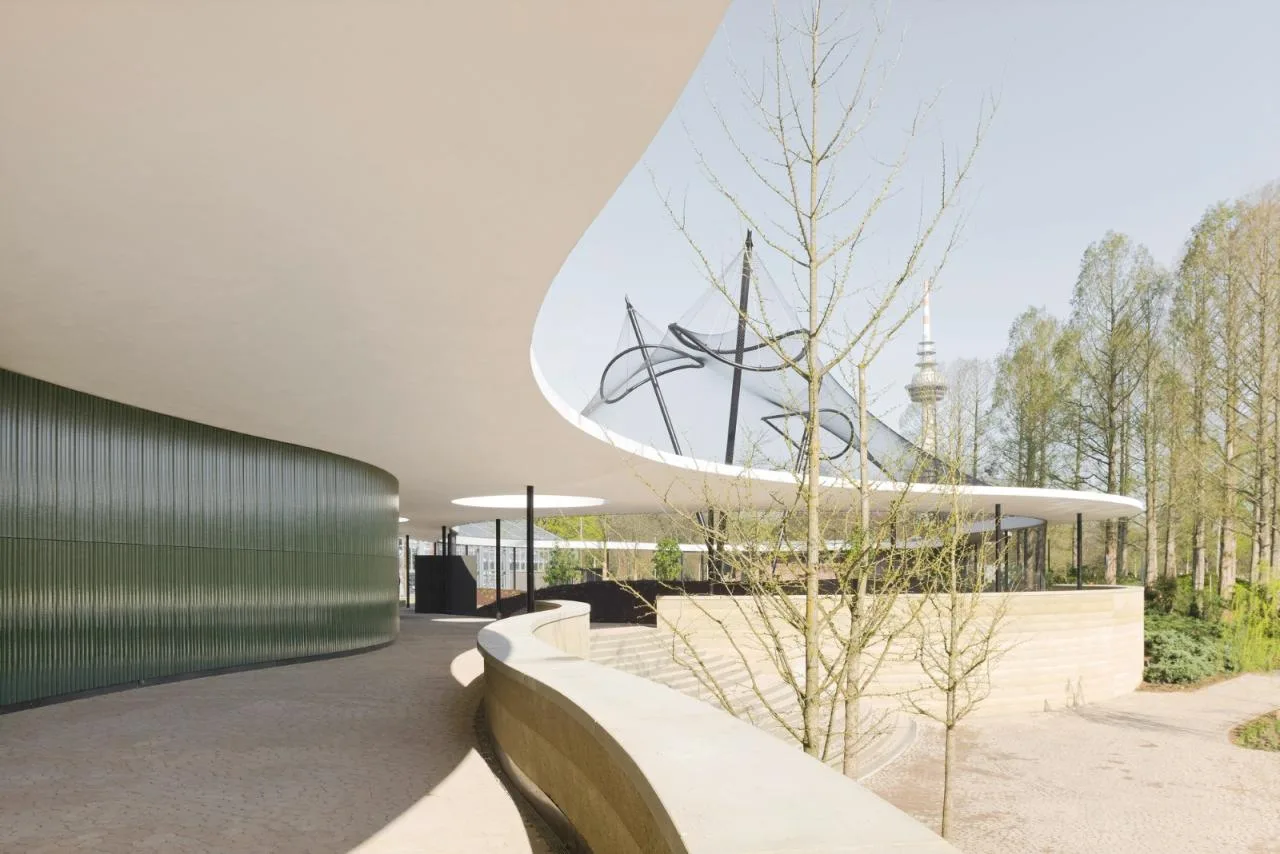
This architectural complex has introduced a fresh and distinctive identity to Luisen Park, creating an iconic landmark for the 2023 Federal Horticultural Exhibition (BUGA 2023). In the next phase, the Green School and Leisure Home will further expand this building ensemble.
Project Drawings
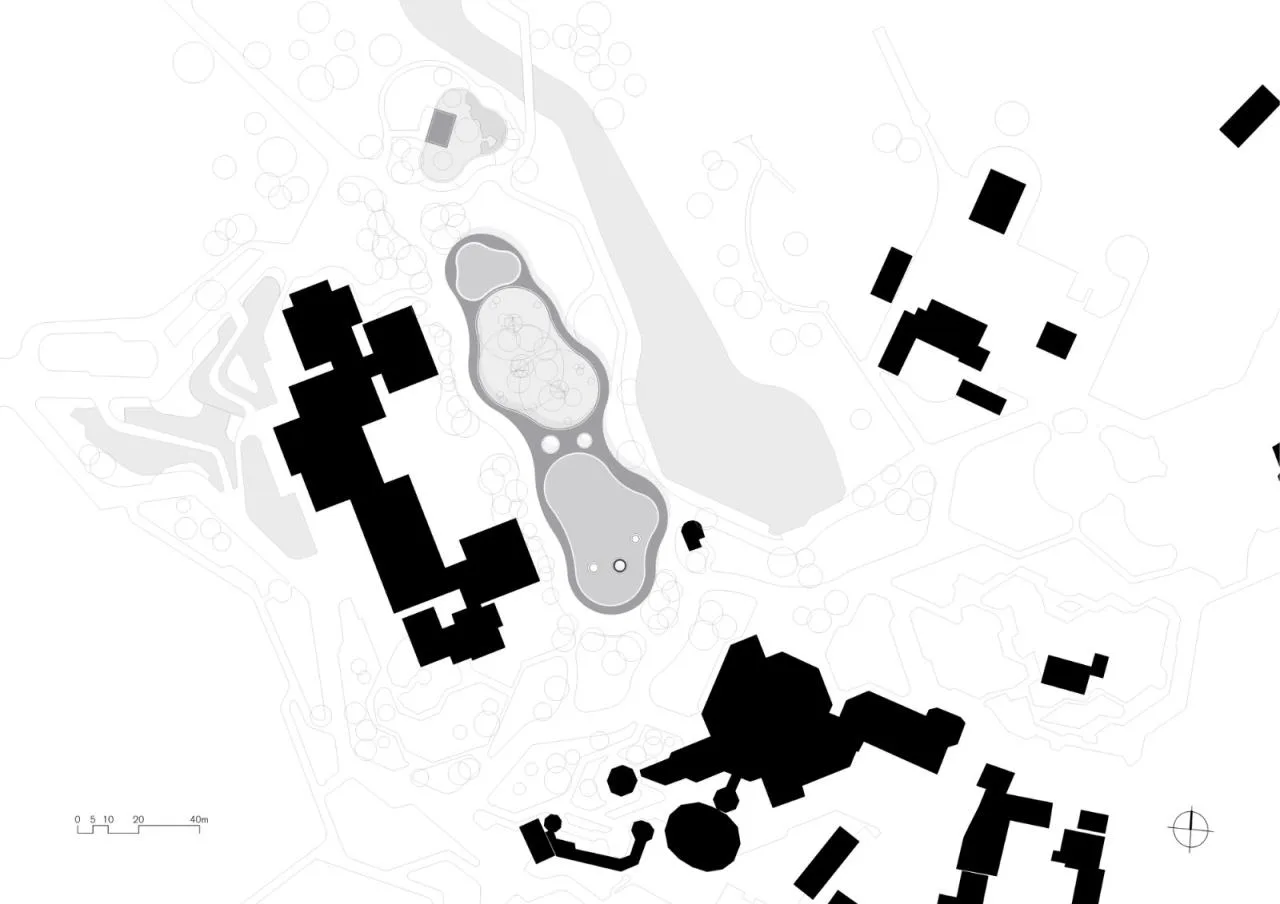
△ Base schematic diagram
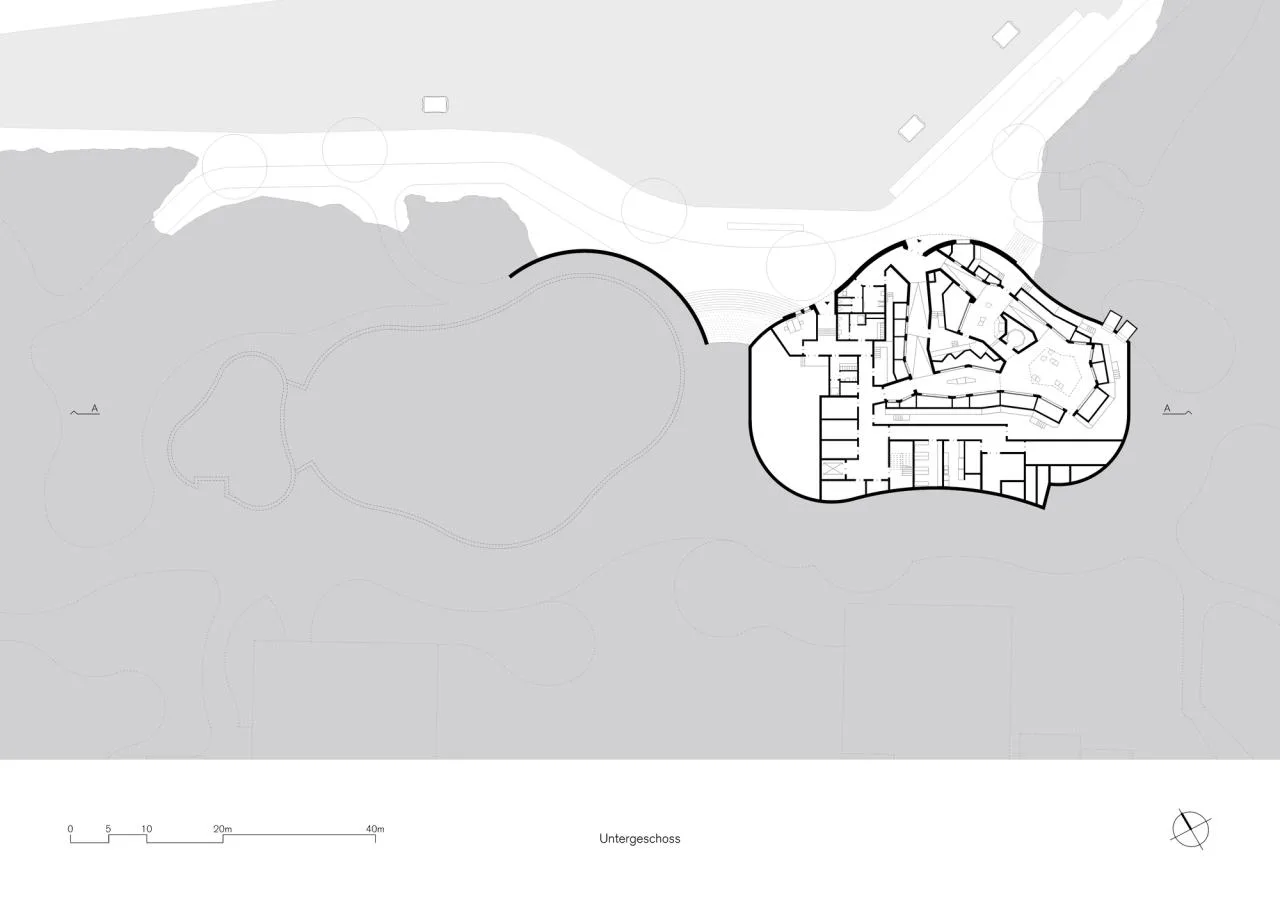
△ Underground Floor Plan
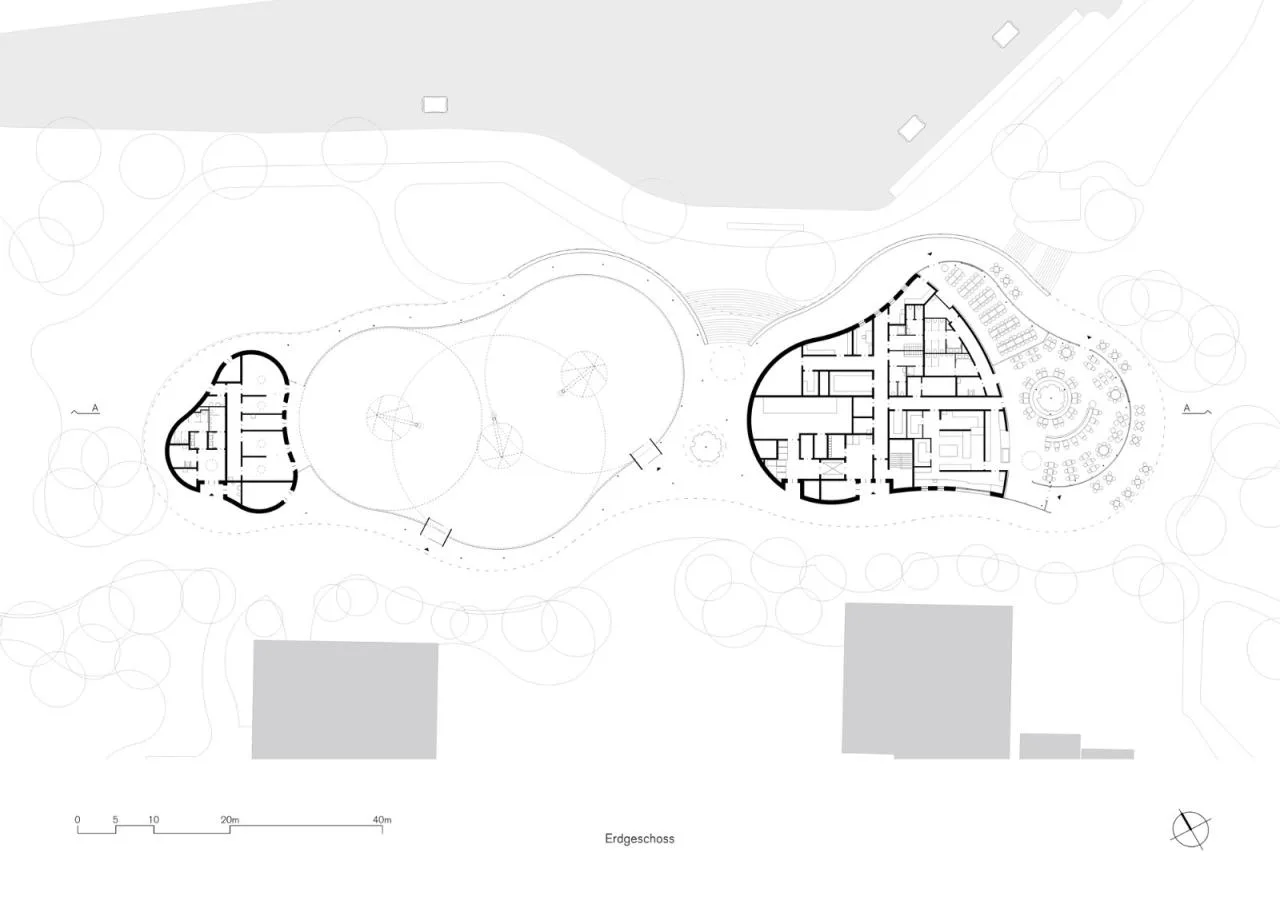
△ First Floor Plan
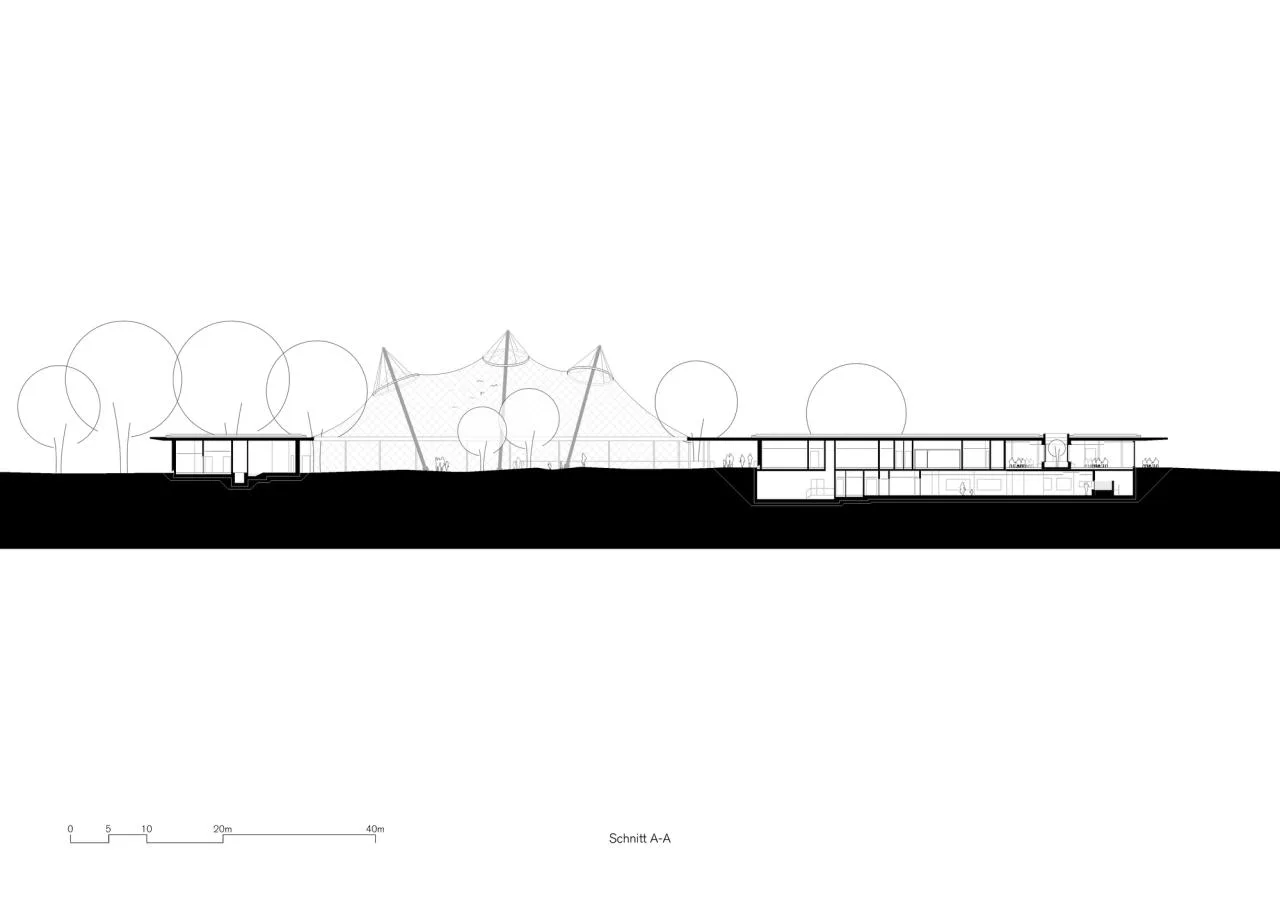
△ Section Diagram
Project Information
Architect: Bez+Kock Architekten
Area: 4,125 m²
Project Year: 2023
Photographer: Brigida González
Manufacturers: AGROB BUCHTAL, Domoferm, Franz Nüsing, Geze GmbH, Hörmann, Jakob, Knauf, Köhnlein, NBK North America, Paul Bauder, Remmers, Schäfer
Chief Architects: Martin Bez, Thorsten Kock
Competition Team: Anna Piontek, Iris Schulenberg
Project Team: Erik Bossog, Anna-Katharina Piontek, Thorsten Hannig, Jana Lang, Almut Reuter, Katharina Rindtorff
Engineering Management: Planungsgruppe Wörmann GmbH
Structural Engineering: wh-p GmbH Beratende Ingenieure
HVAC: Henne & Walter GbR
Electrical Planning: Raible+Partner GmbH
Building Physics: Müller BBM GmbH
Lighting Consultant: Bartenbach GmbH
Landscape Design: Koeber Landschaftsarchitektur
Location: Mannheim, Germany












Must log in before commenting!
Sign Up