
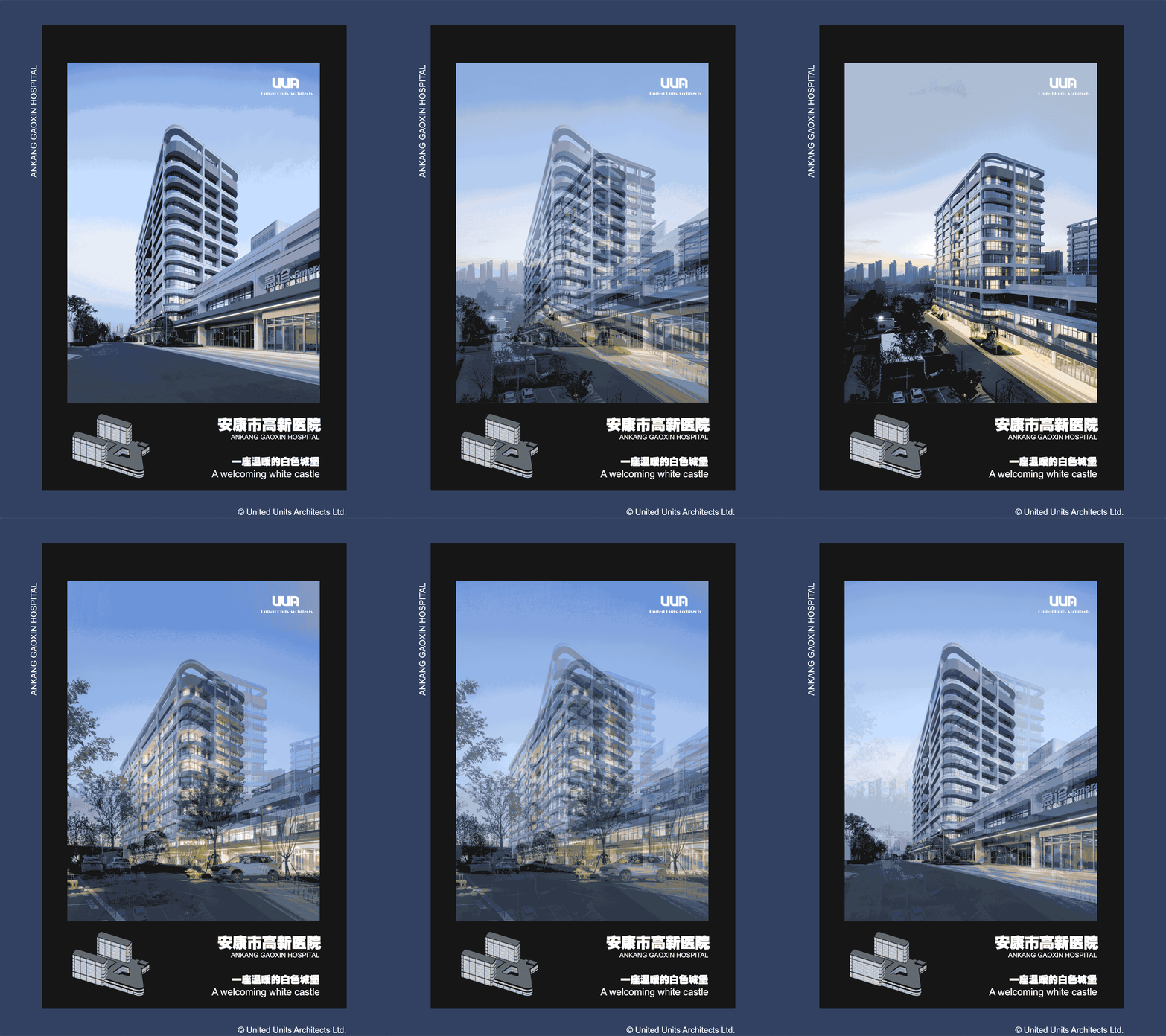
Overview of Ankang High Tech Hospital in real life
Benevolent doctors unite, white doves soar high; beneath the shadowless lamp, you are the only light.
Ankang High Tech Hospital served as the filming location for the TV drama White Castle.
01. Project Background: A Warm “White Castle” in the City
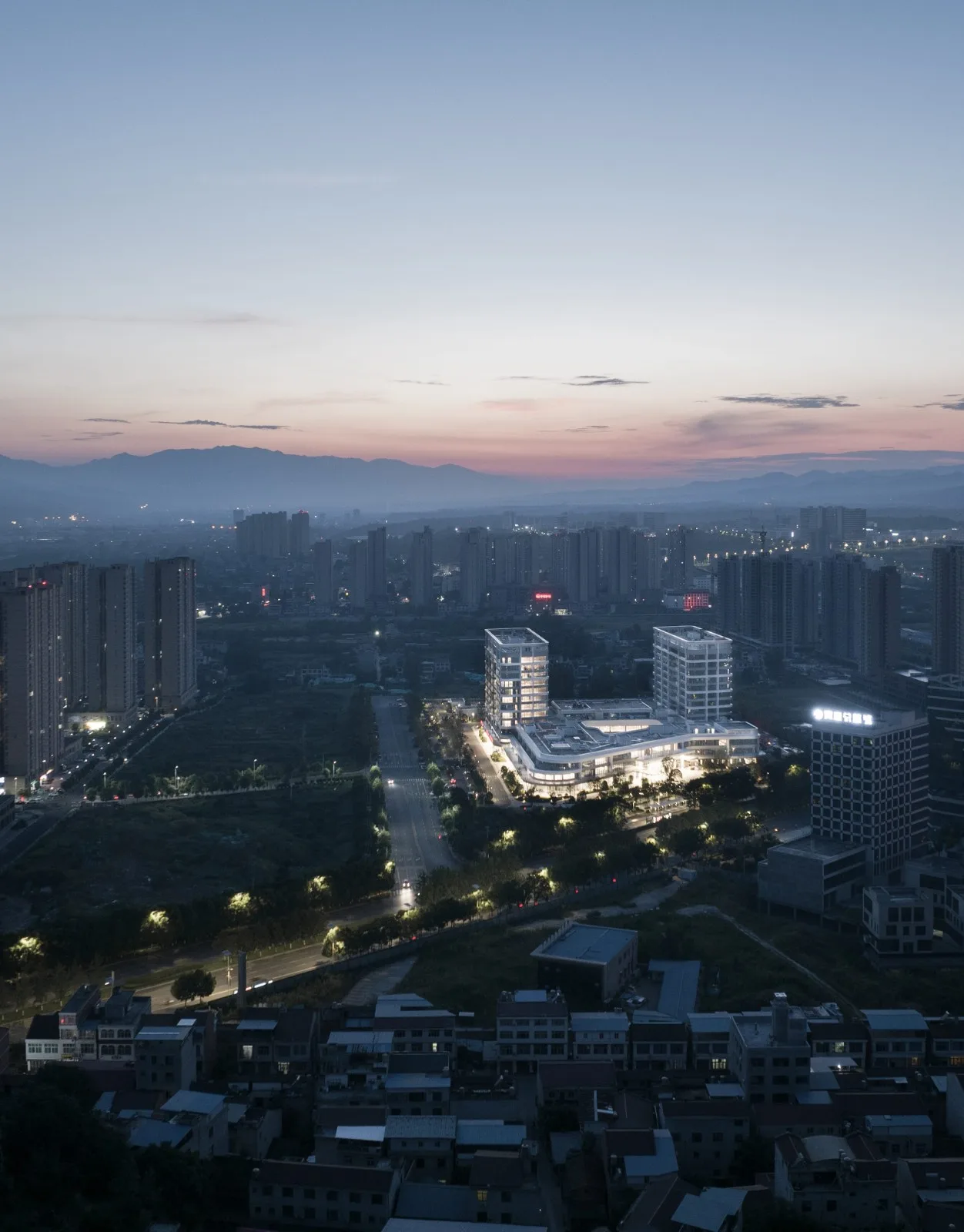
Ankang High Tech Hospital, a premier comprehensive public hospital located within a national high-tech zone, is dedicated to delivering top-quality medical services to both local residents and those from surrounding regions. The hospital emphasizes the integration of medical care with elder care, establishing an internationally standardized complex that meets diverse health needs across different demographics.
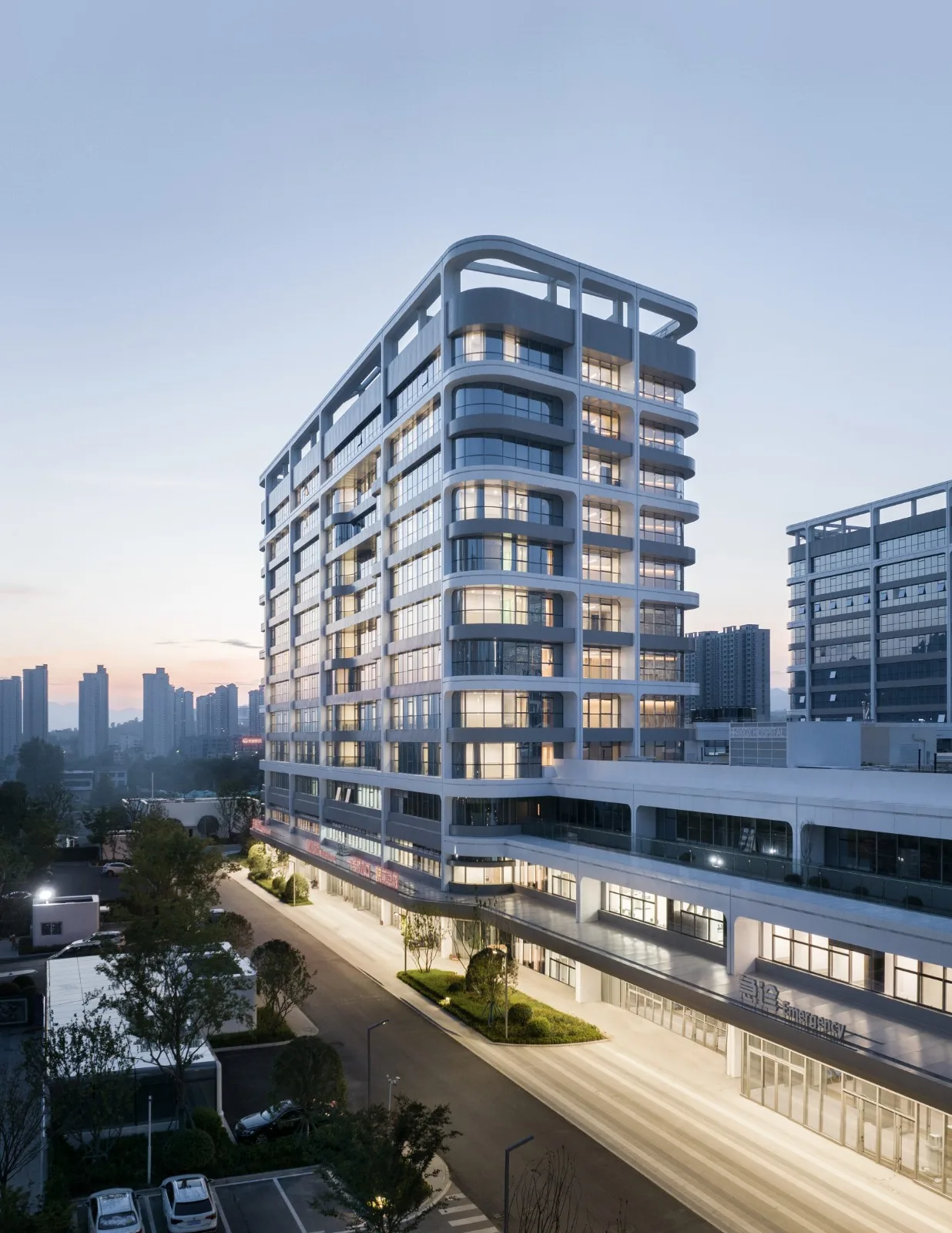
Traditional hospital designs often lack humanistic care, resulting in cold, impersonal architectural spaces that feel unwelcoming. At Ankang High Tech Hospital, the design team believes that hospital environments should radiate warmth and empathy. Beyond fulfilling functional requirements, the architecture aims to achieve “de-hospitalization,” creating a reassuring, calm, and friendly atmosphere.
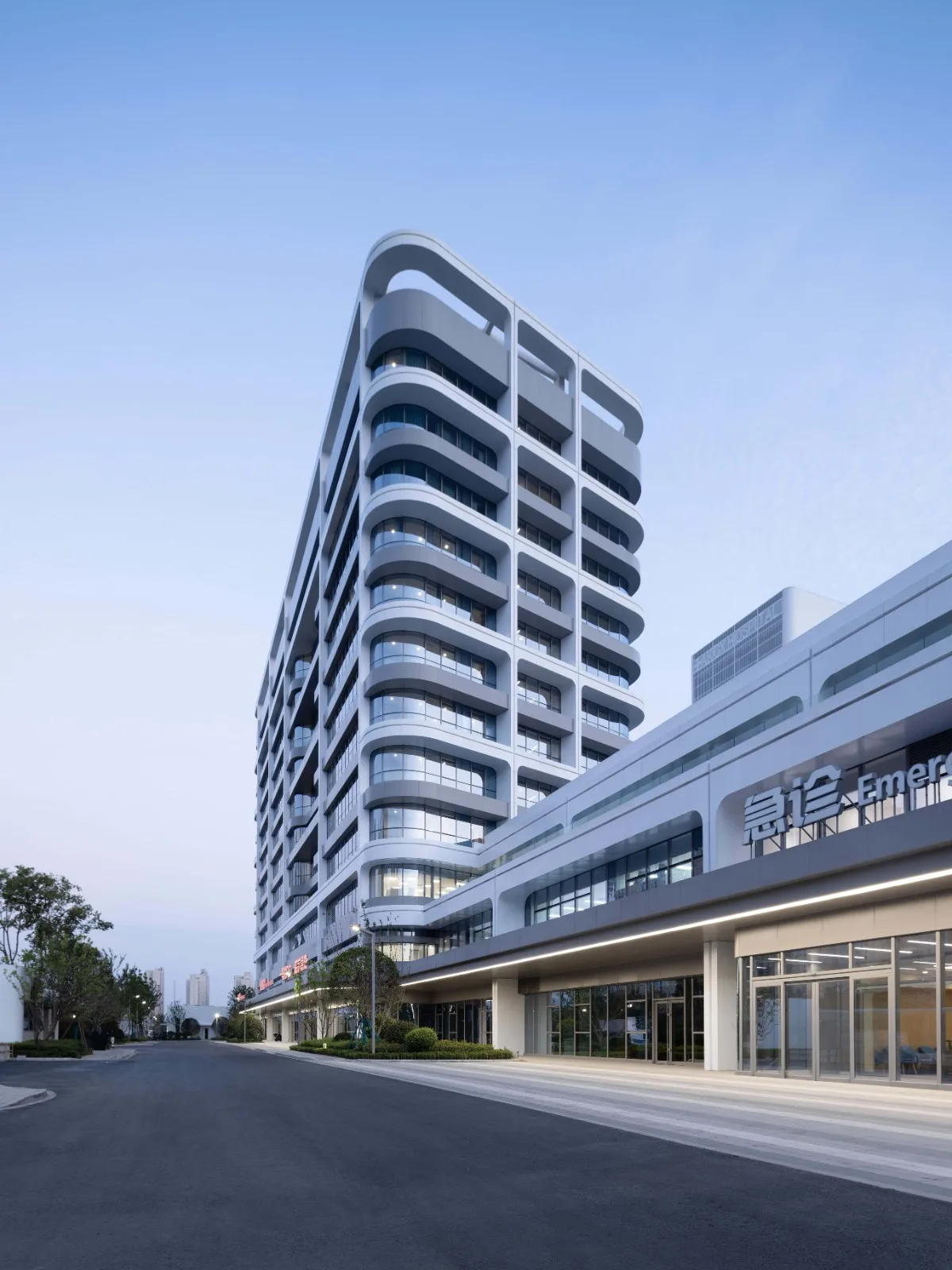
This “White Castle” features a softly muted architectural palette. UUA Architects led the overall building image and ancillary structure designs. Leveraging extensive curtain wall experience and technical expertise, the hospital’s appearance projects stability and trustworthiness while embracing a modern aesthetic infused with warmth and friendliness toward the community. It doubled as a filming location for the TV drama White Castle.
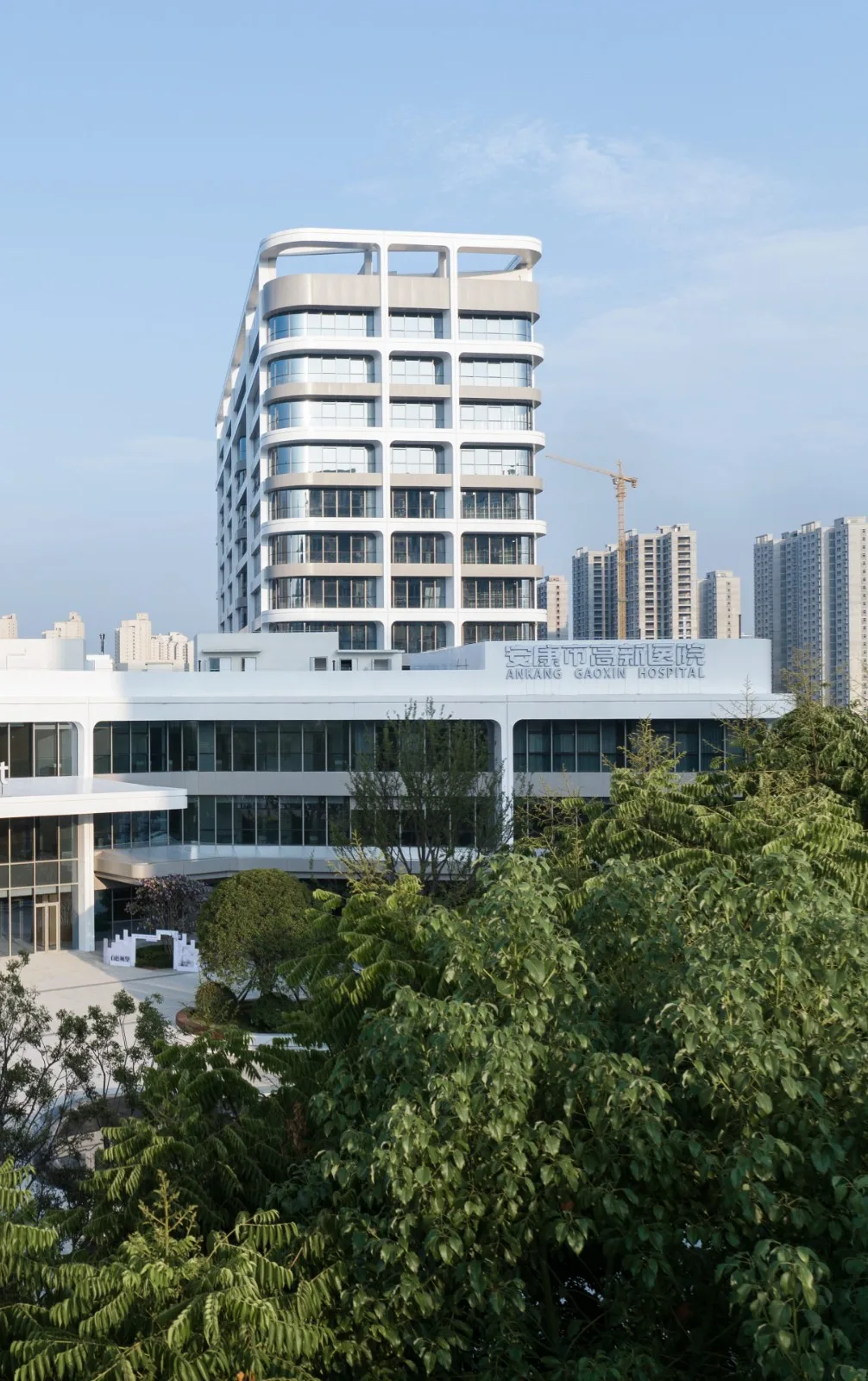
The “White Castle” nestled amid greenery
02. “De-Hospitalization”: Creating a Welcoming Image
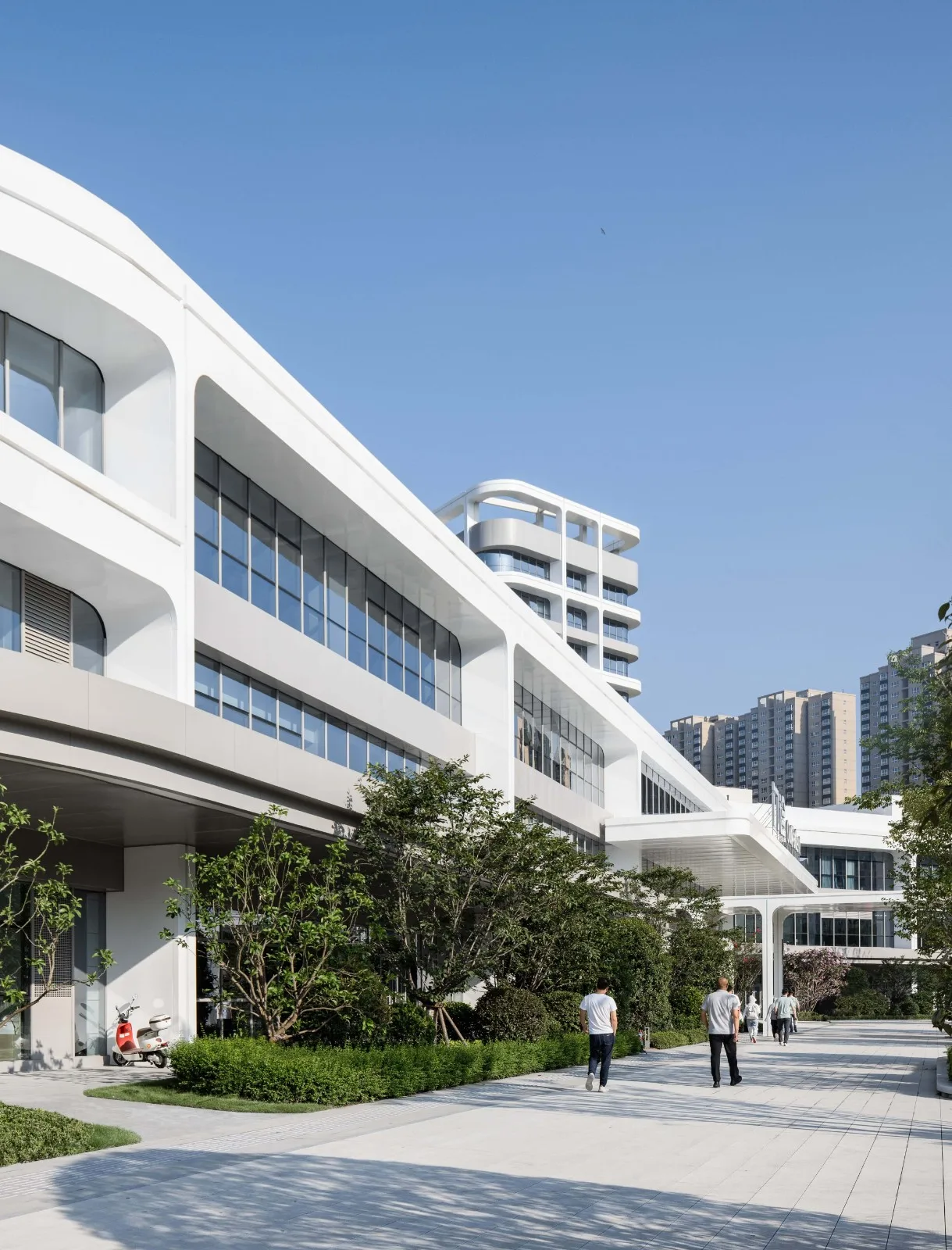
△ Skirt and entrance design
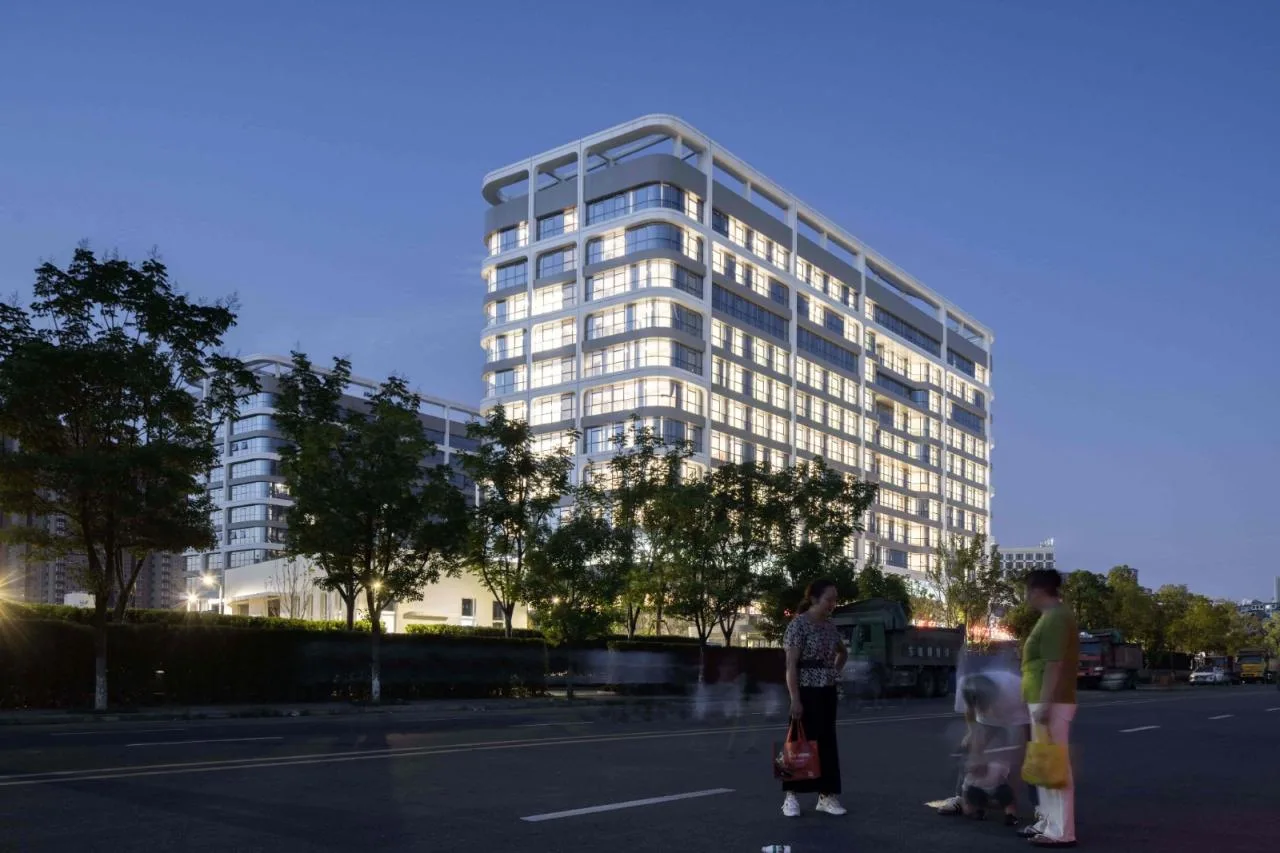
△ Night view of inpatient department
Medical building design extends beyond functionality to address users’ psychological comfort. UUA embraced the “de-hospitalization” concept throughout the design of Ankang High Tech Hospital. Through thoughtful architectural strategies, the design minimizes the harshness and impersonality often associated with hospitals, enhancing warmth, comfort, and human-centered care.
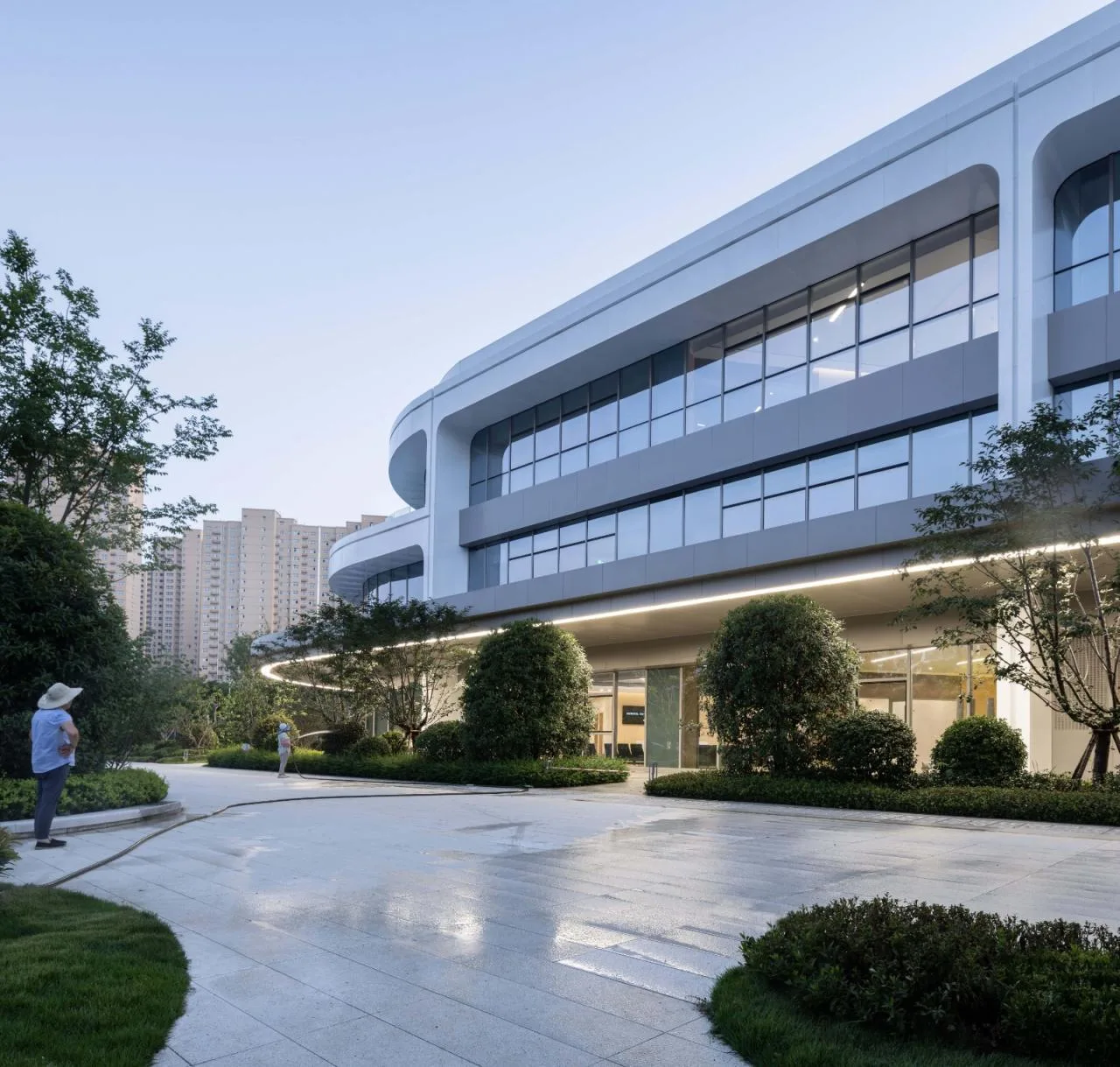
△ Continuous skirt structure
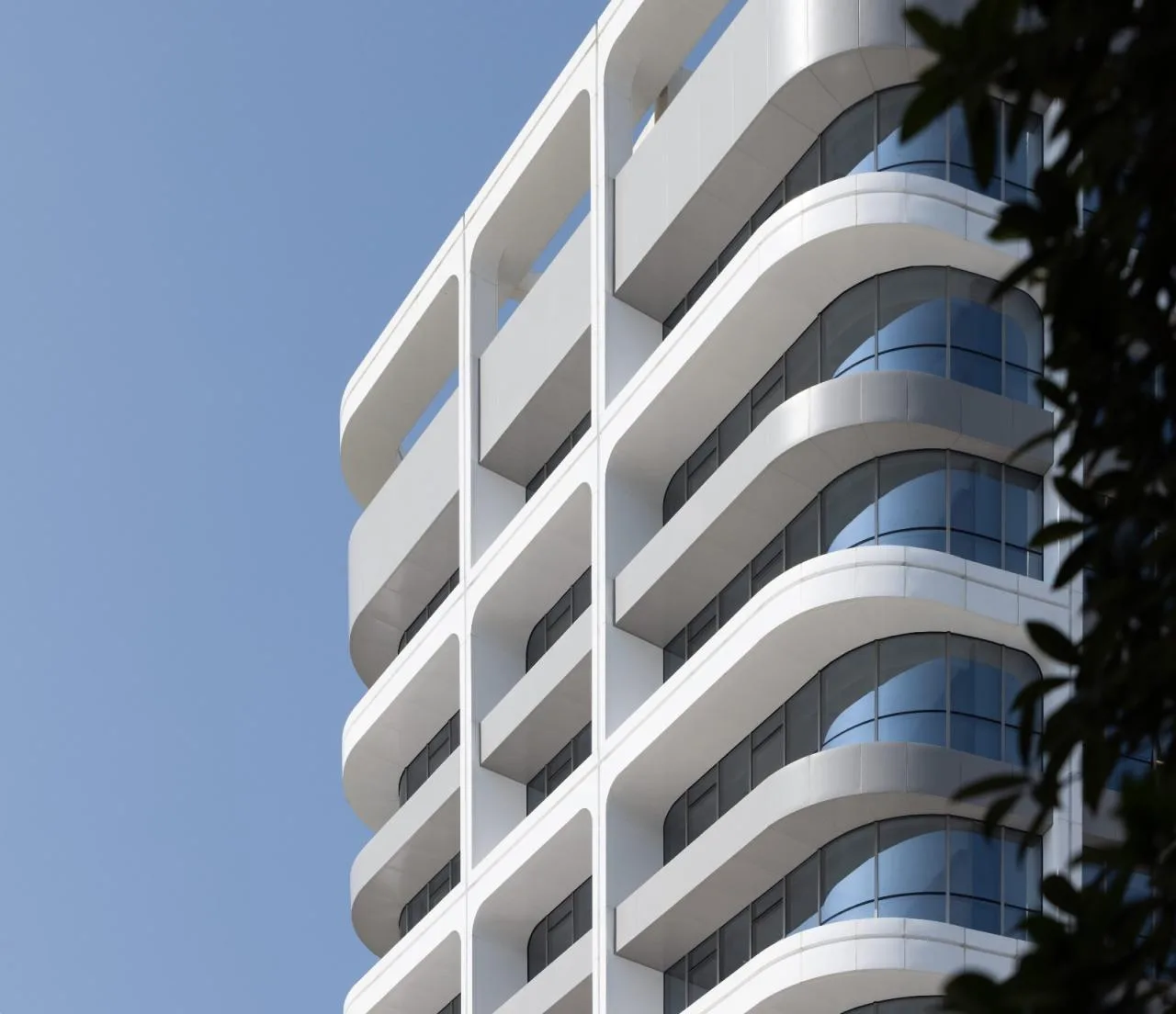
△ White-toned architectural lines
The color palette centers around white, emphasizing the interplay of light and shadow, complemented by warm gray accents that add depth and create a cozy atmosphere.
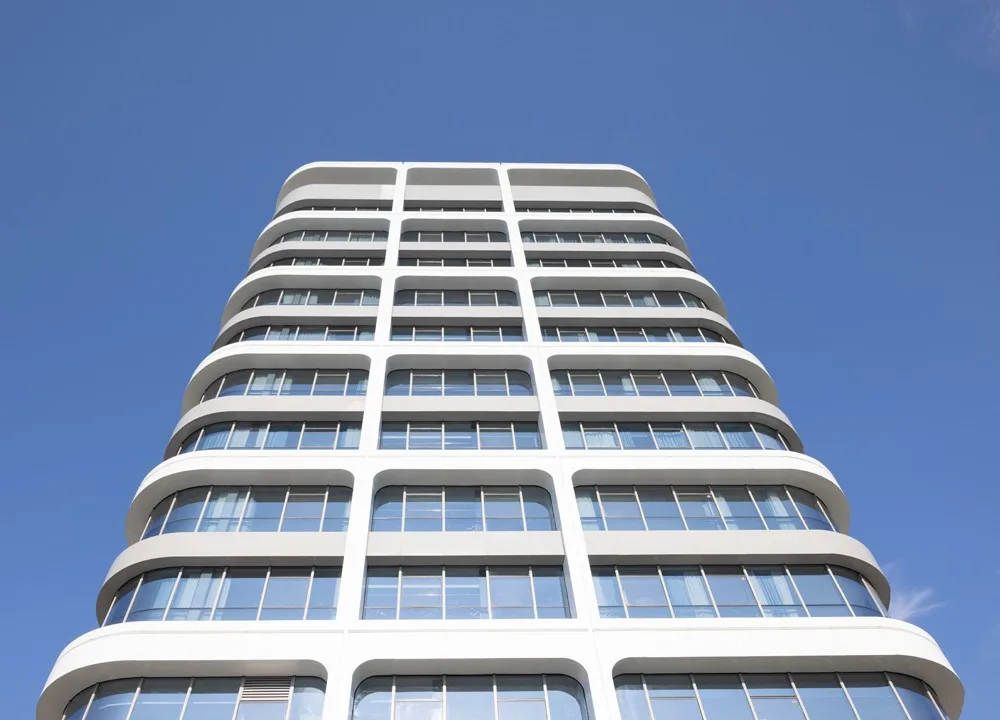
△ White-toned exterior lines
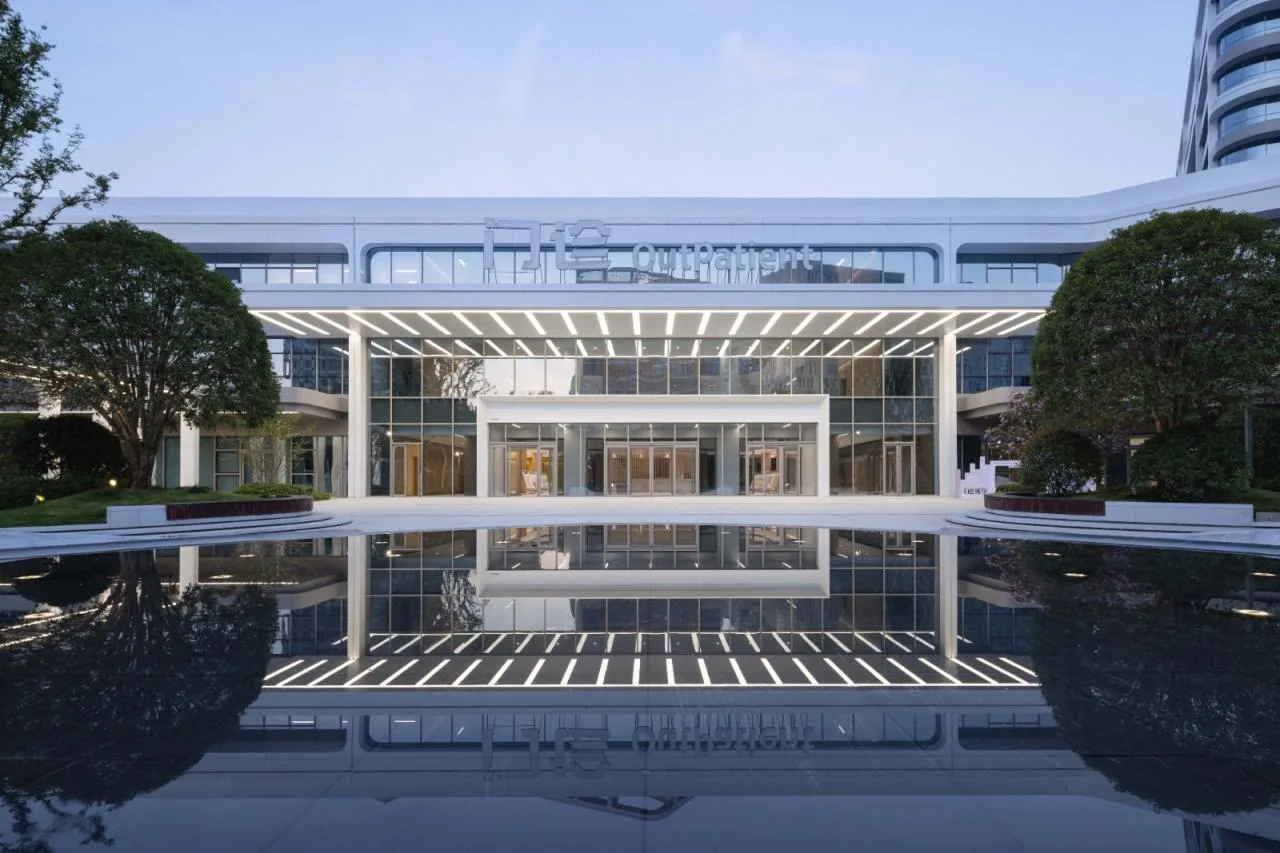
△ Outpatient department entrance
Lighting and signage are carefully integrated with the architecture, ensuring visual consistency and providing clear wayfinding to enhance the patient experience.
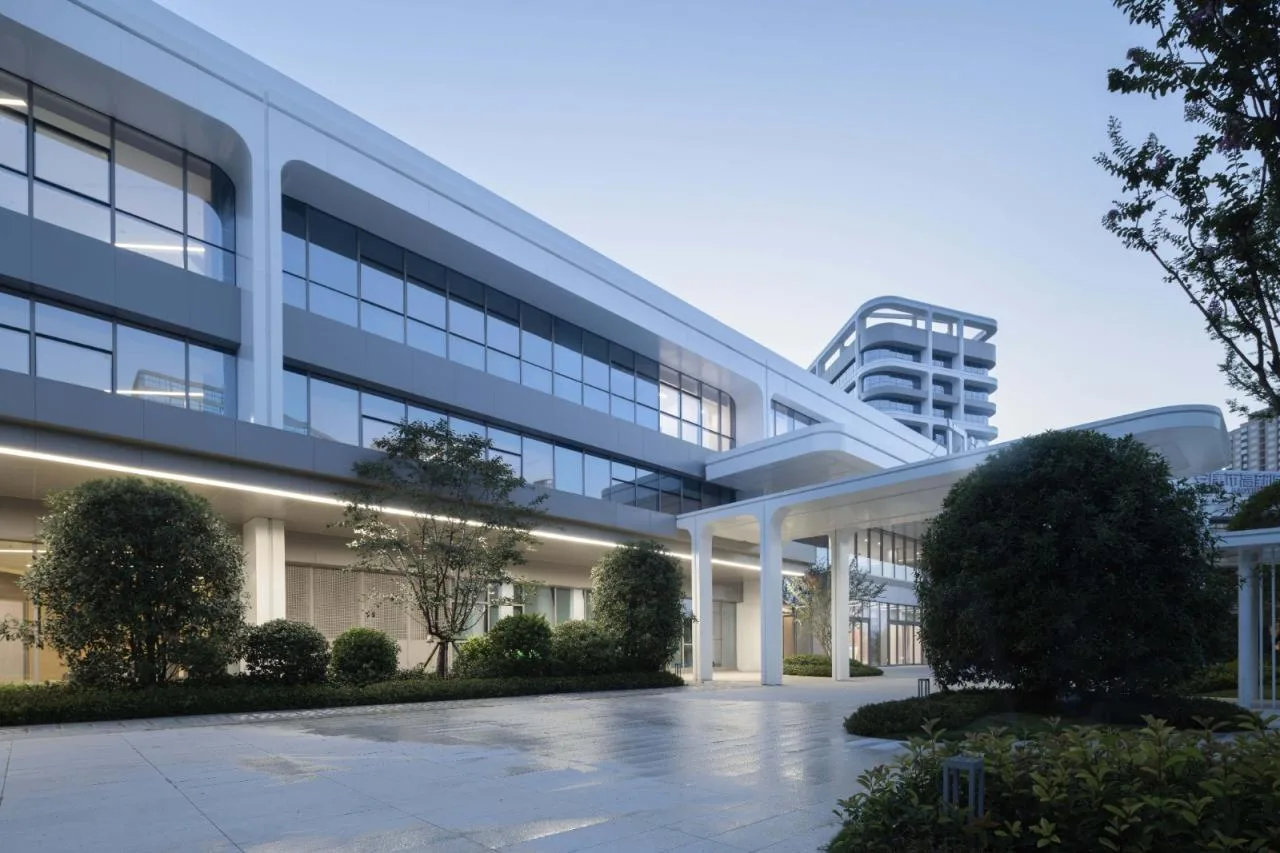
△ Covered walkway providing shelter from wind and rain
Architectural design prioritizes seamless integration with the landscape. The entrances align smoothly with surrounding greenery and pedestrian flow, featuring covered walkways that protect visitors from sun and rain from the city road to the hospital entrance.
03. “Green and Pleasant” Courtyard Spaces
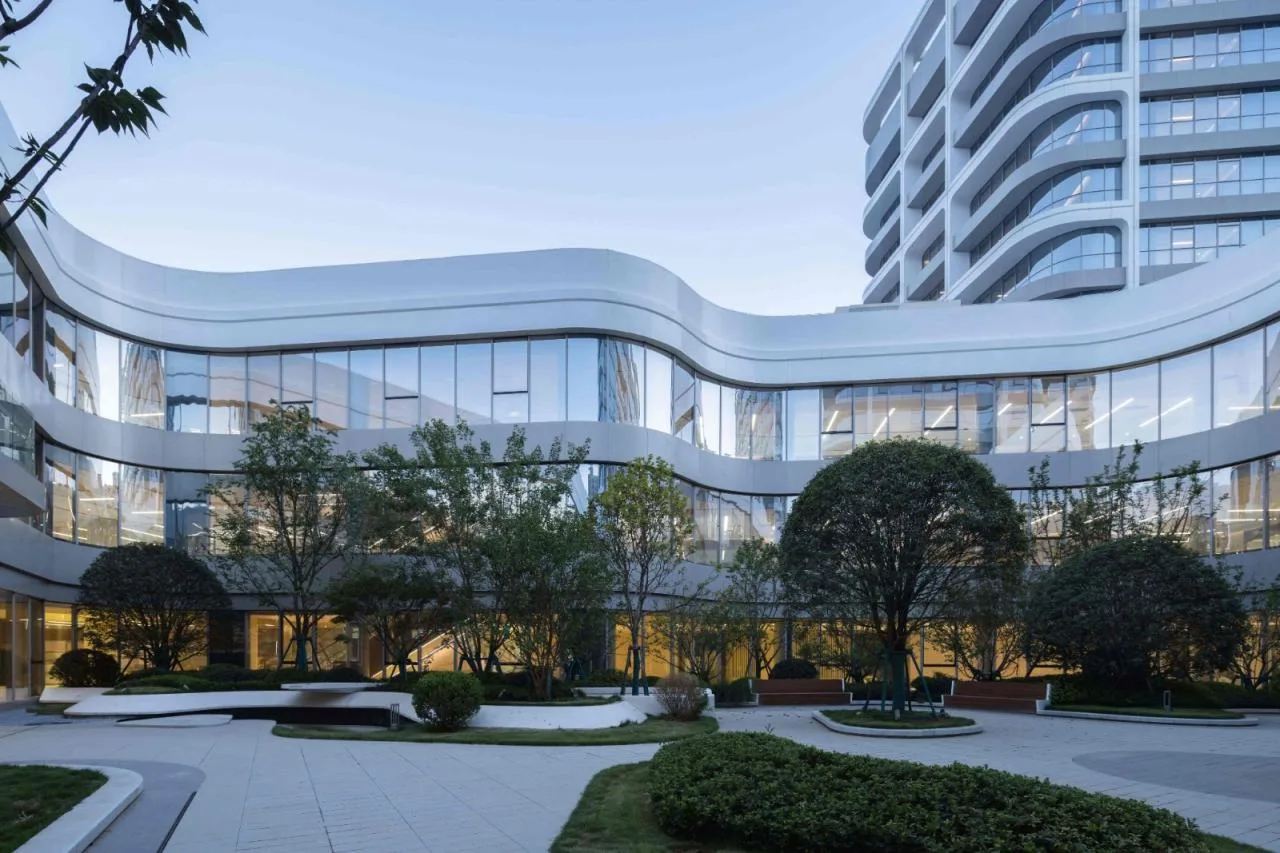
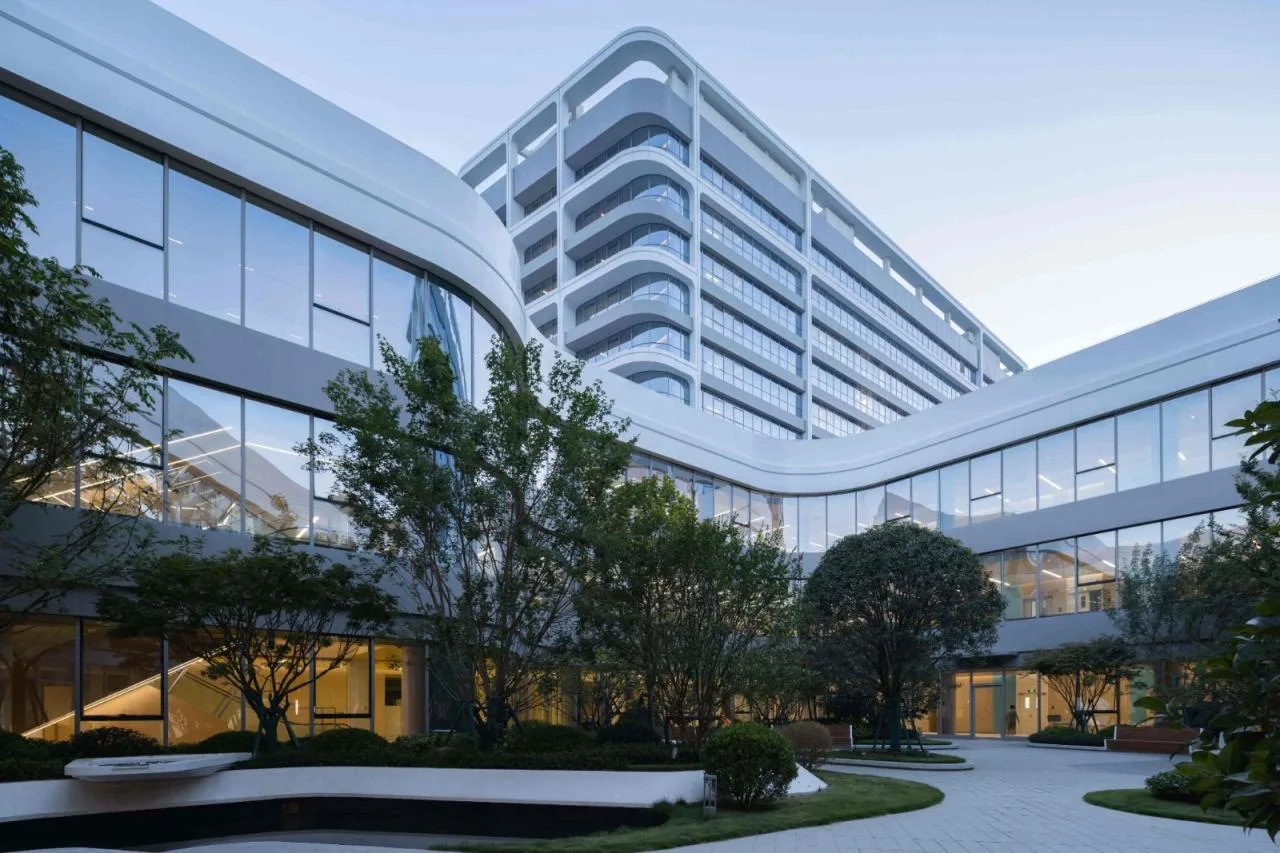
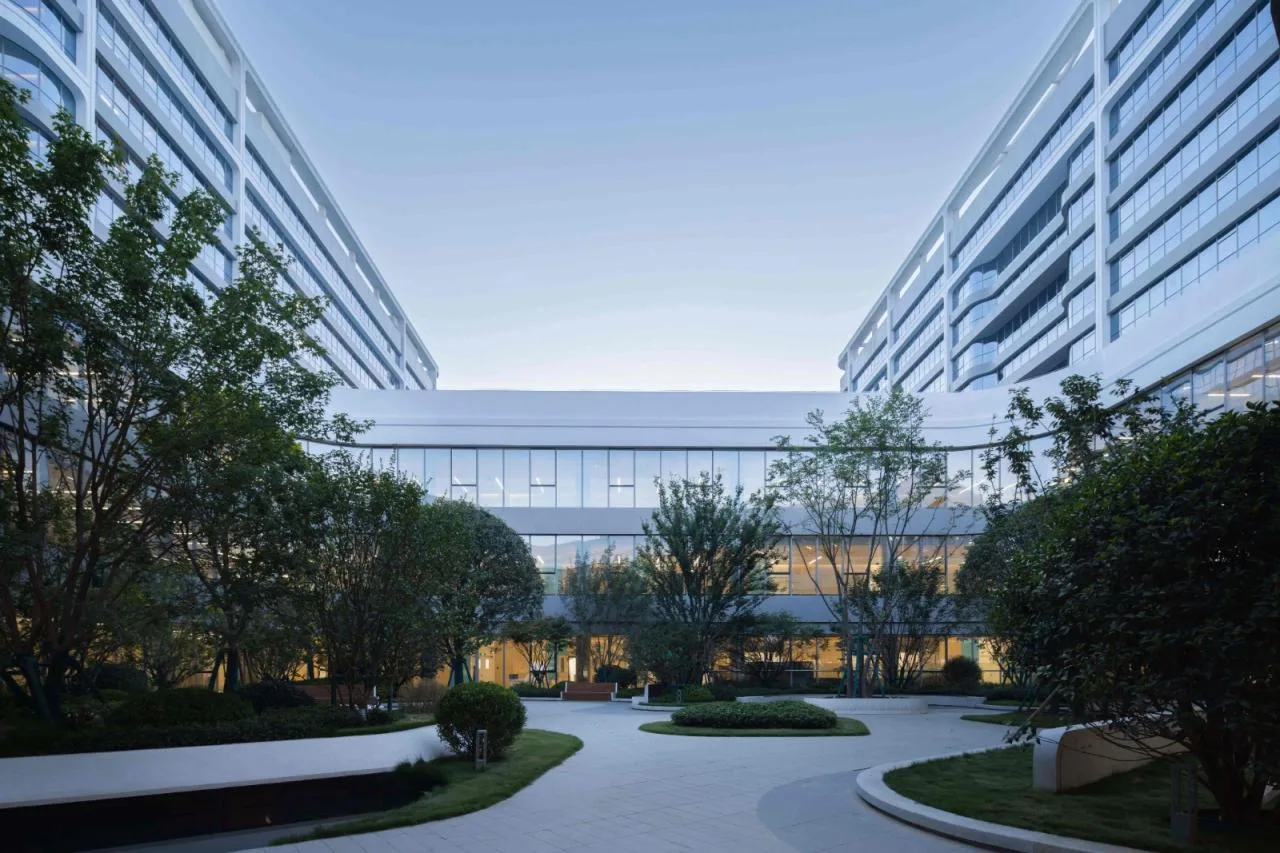
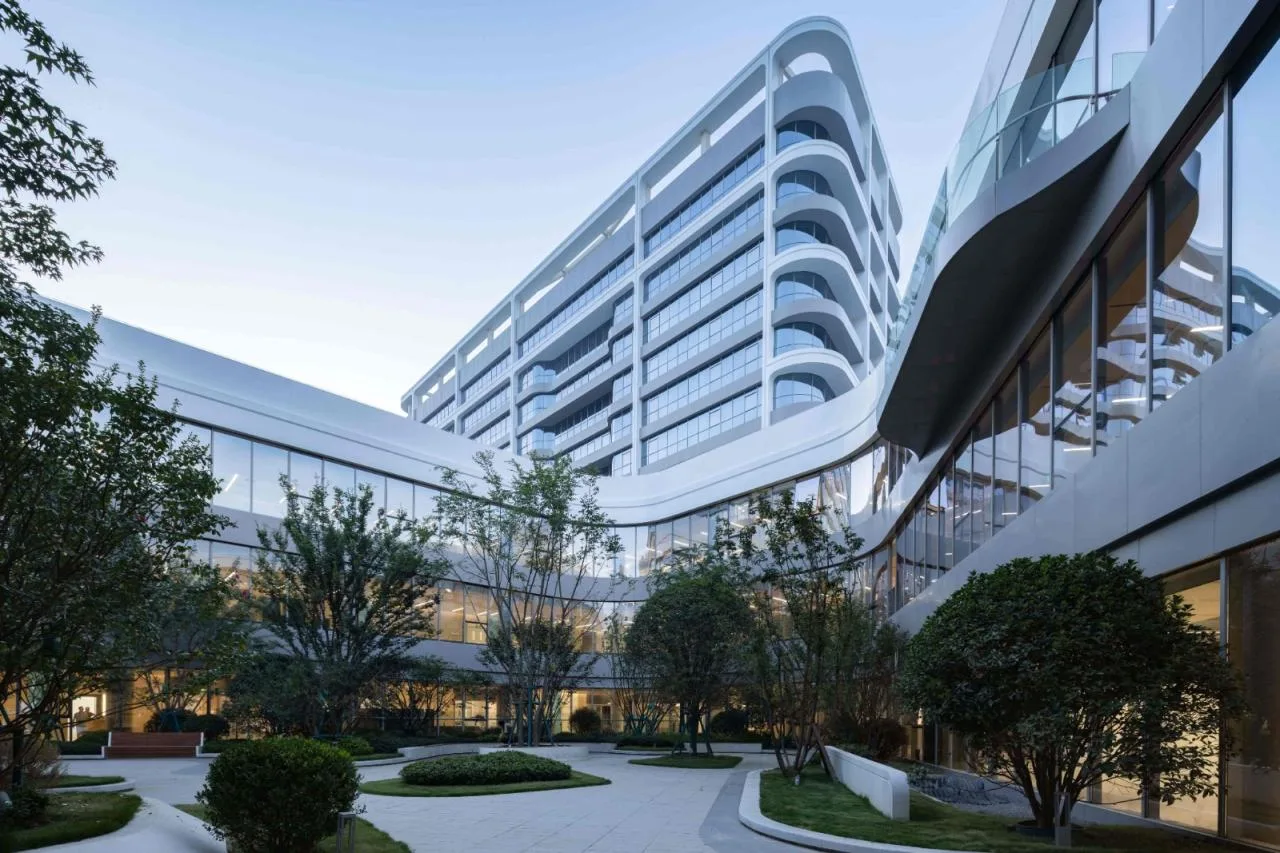
△ Interior courtyard landscaping
The design prioritizes the integration of landscape and indoor spaces, especially in the courtyard. Floor-to-ceiling glass on the first floor allows the courtyard’s greenery to visually extend into the interior, creating a soft transition that makes the courtyard the visual heart of the building.
04. Cohesive Design: Signage and Ancillary Structures
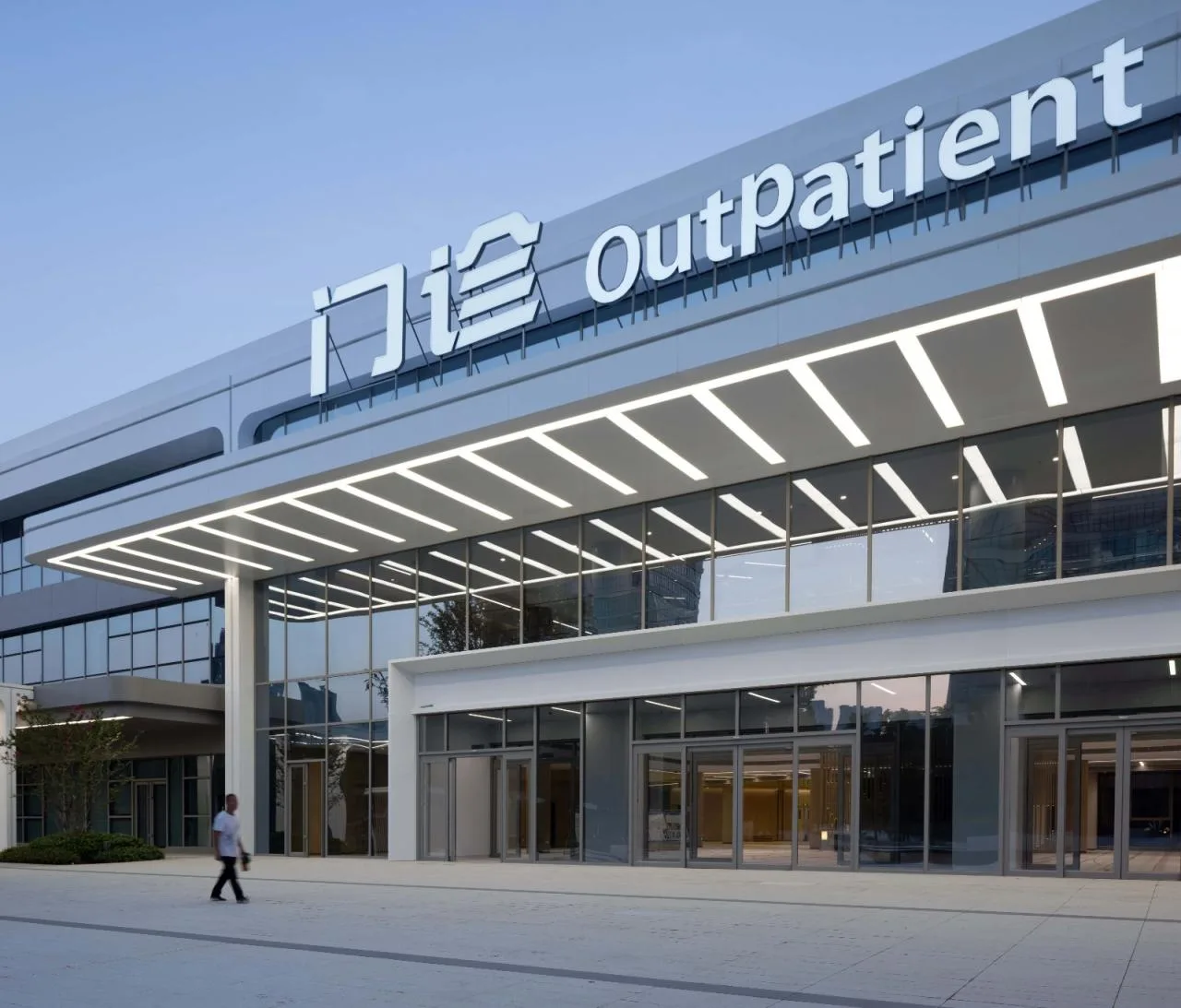
Relationship between outpatient signage and canopy
Signage system design is unified with the architectural style to provide clear, consistent guidance. UUA carefully considered font, size, placement, materials, craftsmanship, and lighting to balance visibility, functionality, and harmony within the urban context.
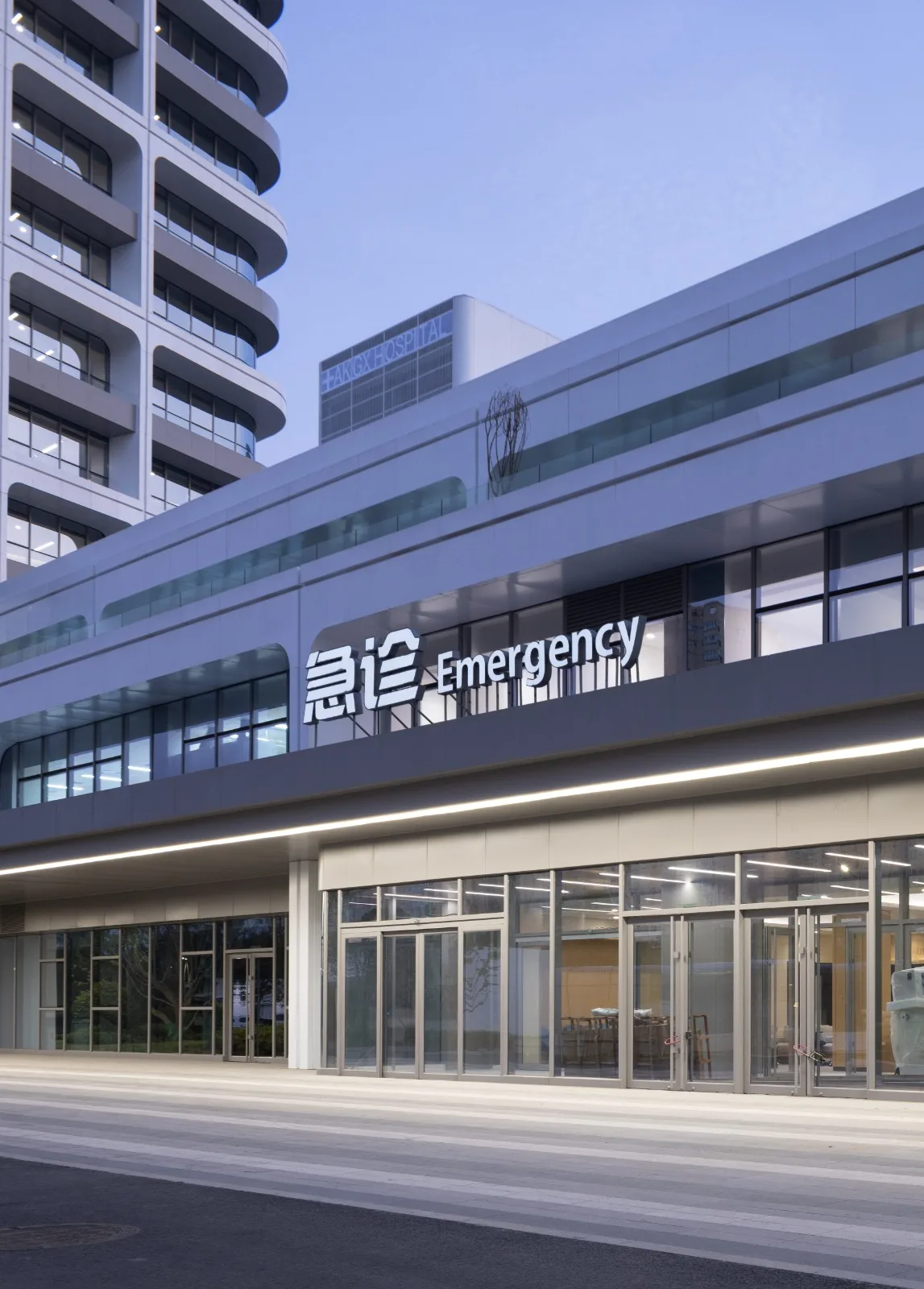
Relationship between emergency signage and canopies
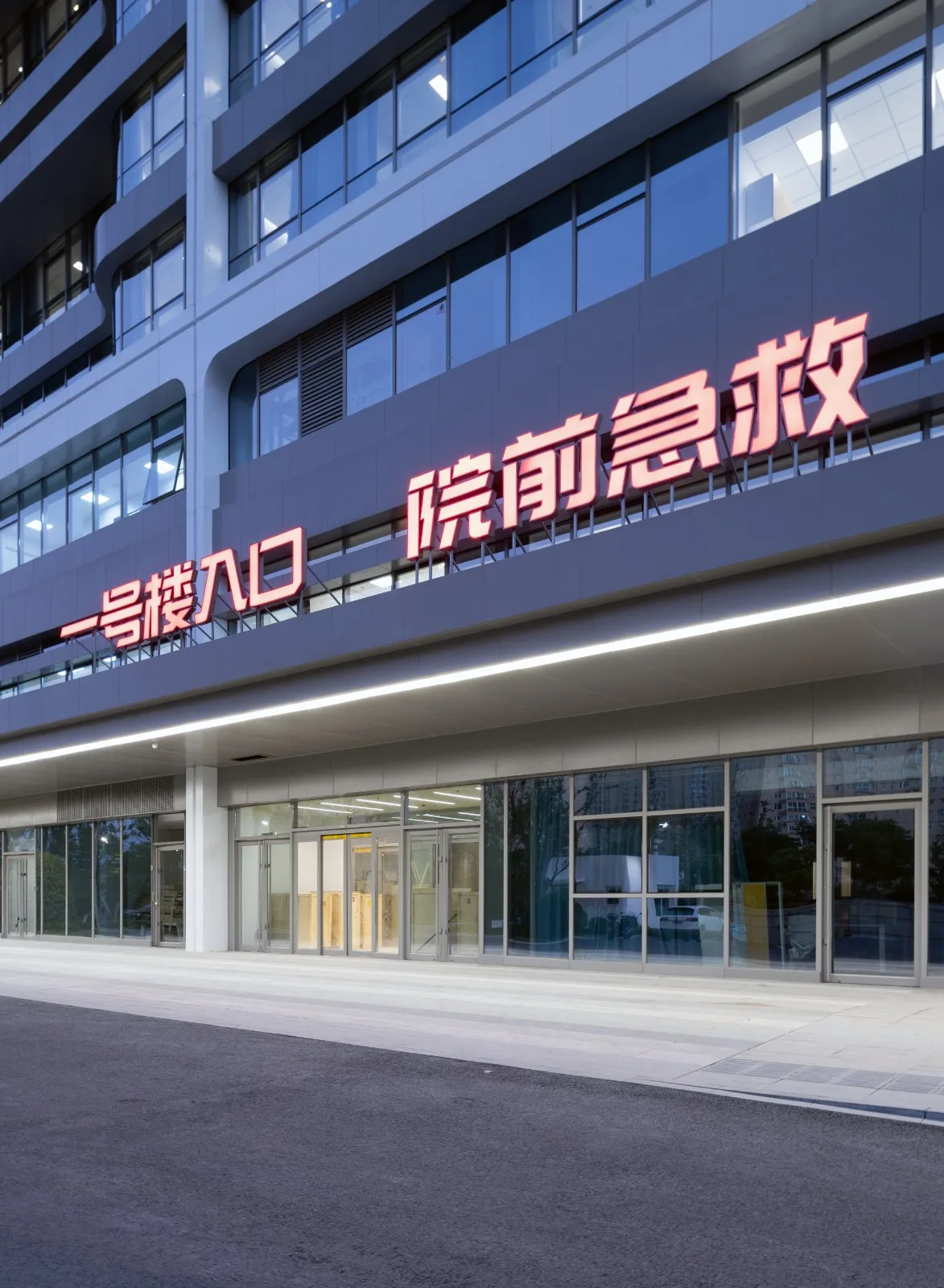
△ Nighttime signage glows red
To accommodate night-time wayfinding, the signage system incorporates dual lighting: white for daytime and red for nighttime, ensuring clear guidance around the clock.
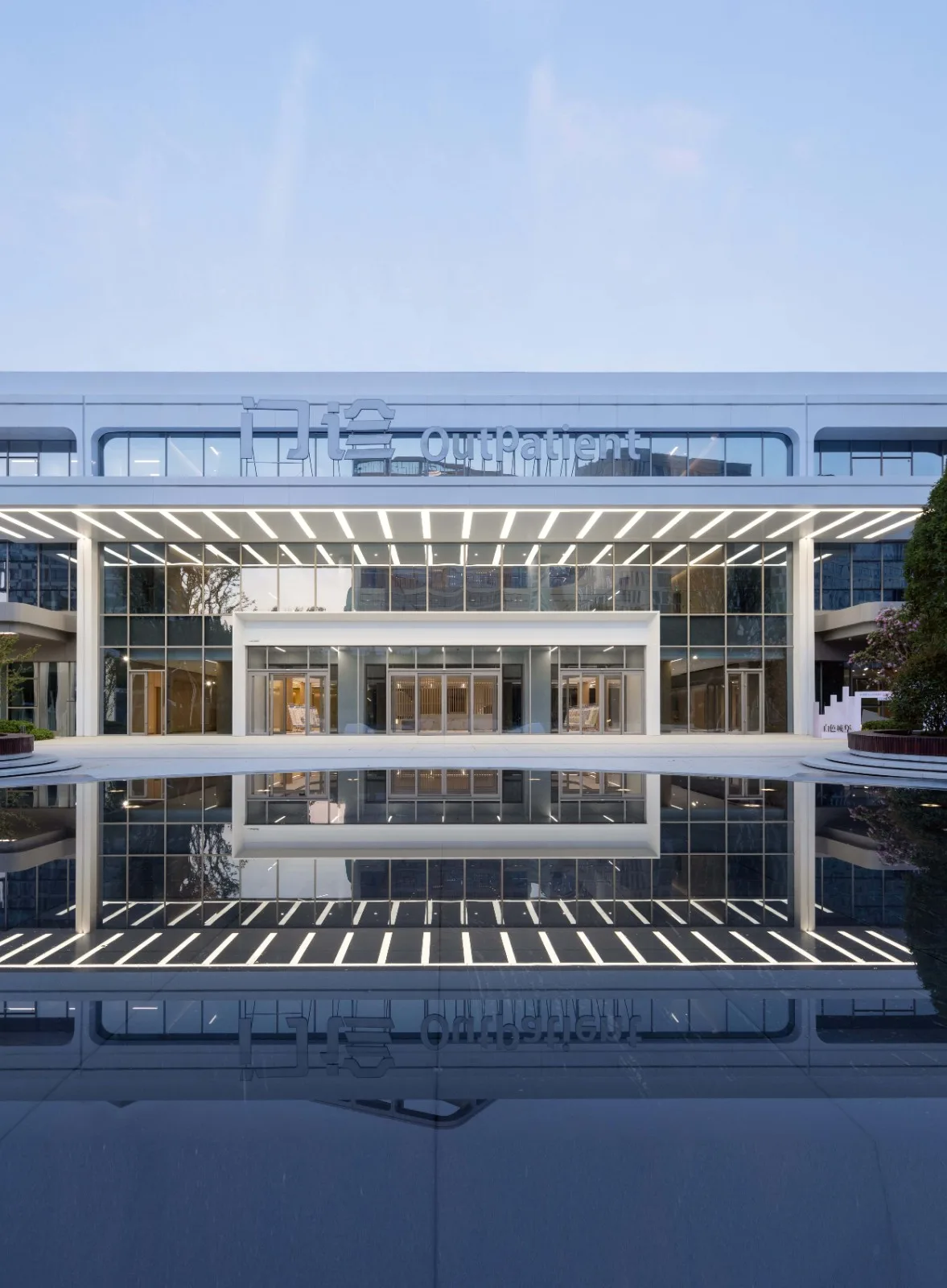
Lighting design at the outpatient main entrance
The lighting at the outpatient entrance is crucial for shaping the building’s image. UUA created a linear guiding light strip through integrated floodlight design on the curtain wall. Combined with reflections from surrounding water features, this guides visitors clearly into the outpatient hall.
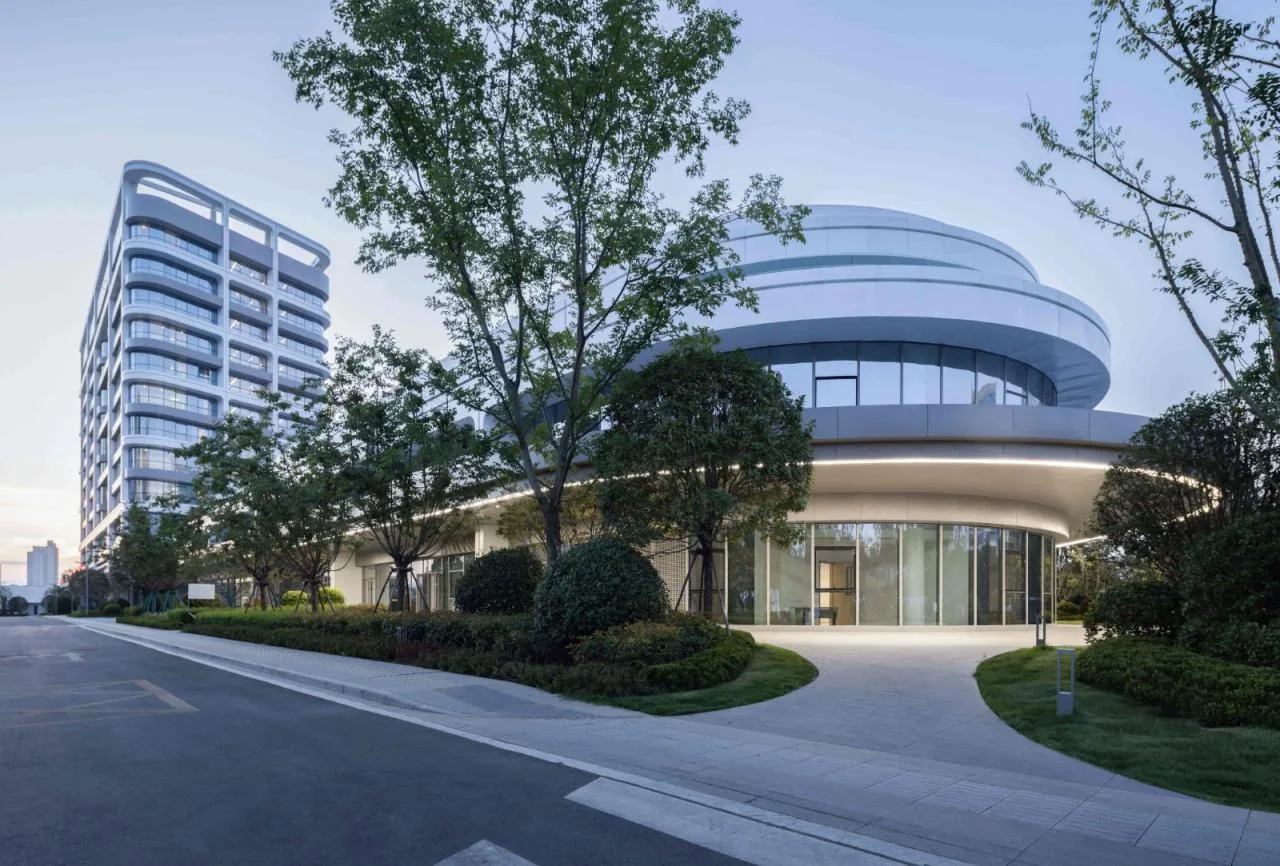
△ Skirt lighting design
The first-floor skirt features continuous eaves with a warm light strip along the outer edge, providing human-scale illumination. This creates a balanced contrast between the cooler upper building and the warm-lit base, harmonizing naturally with the landscape without excess.
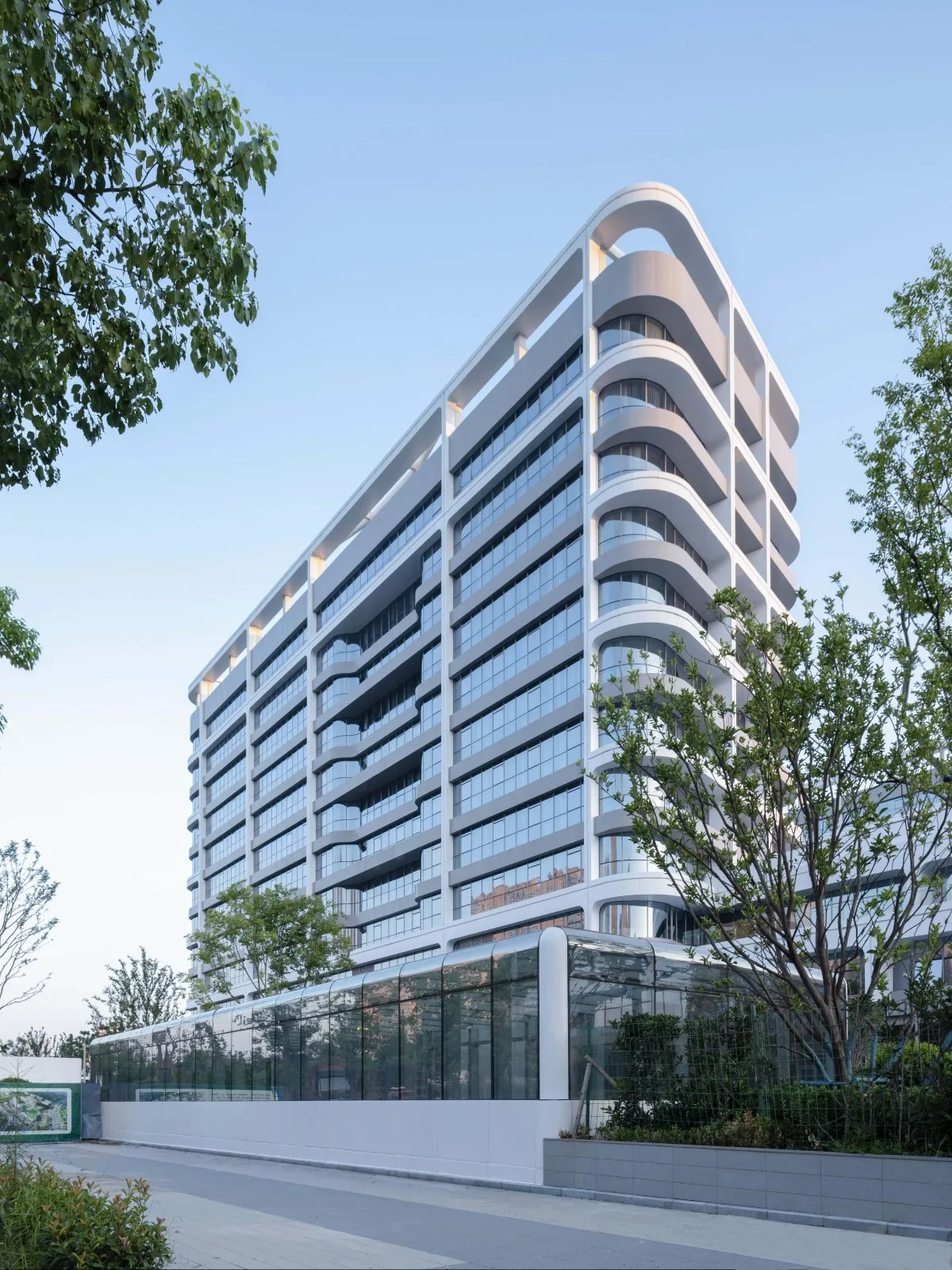
Garage entrance design (ancillary facilities)
Ancillary structures such as carports, basement entrances, power distribution rooms, and gates are integral to the overall cohesiveness of the site. UUA applied a unified design approach to maintain consistent aesthetics and user experience throughout the hospital campus.
05. Curtain Wall Design: Modularization and On-Site Performance
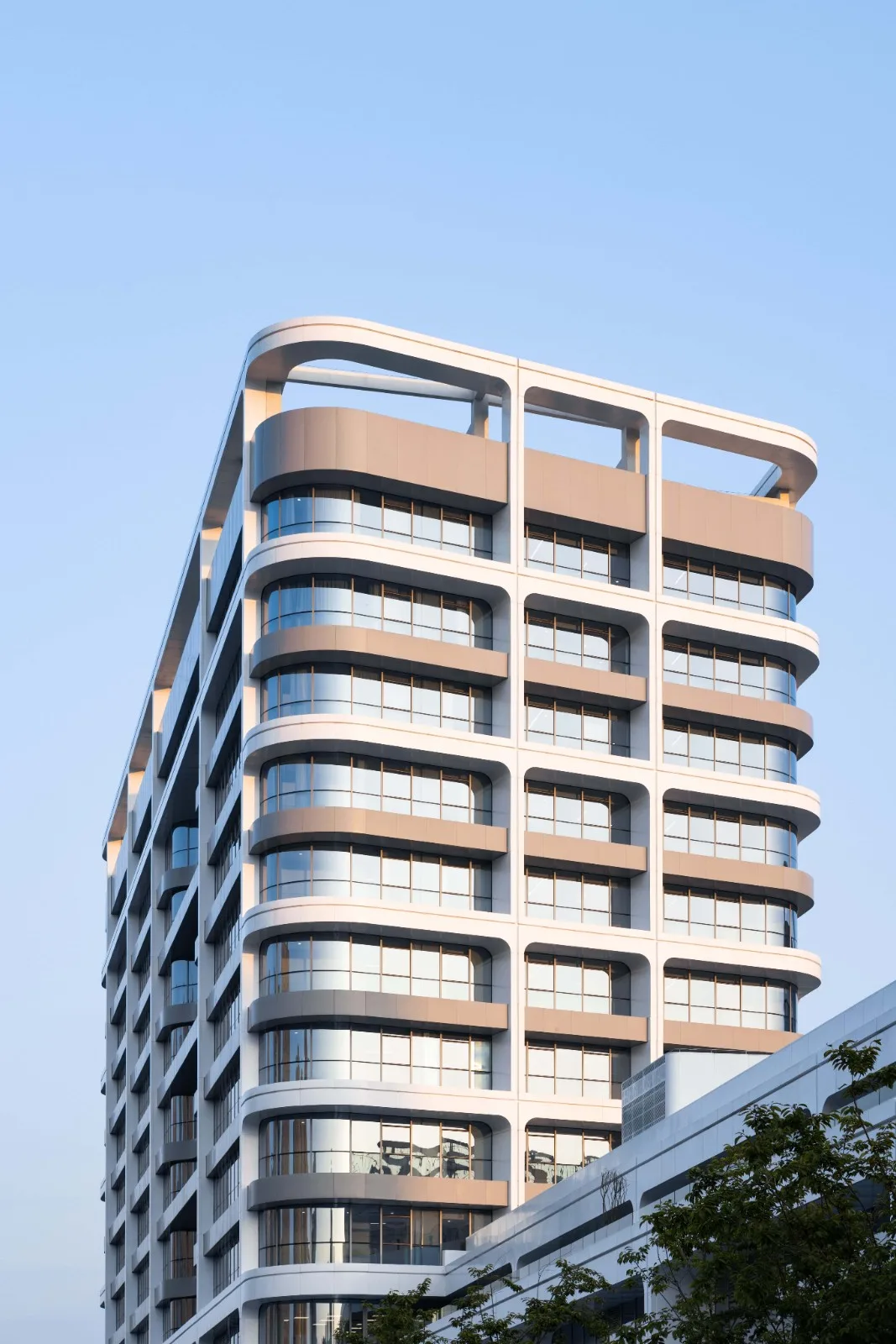
△ Realistic facade view of the inpatient department
As a key element of the hospital’s exterior, the curtain wall directly impacts both aesthetics and functionality. UUA adopted a modular design approach, enhancing design standardization and improving construction efficiency, cost-effectiveness, and quality control.
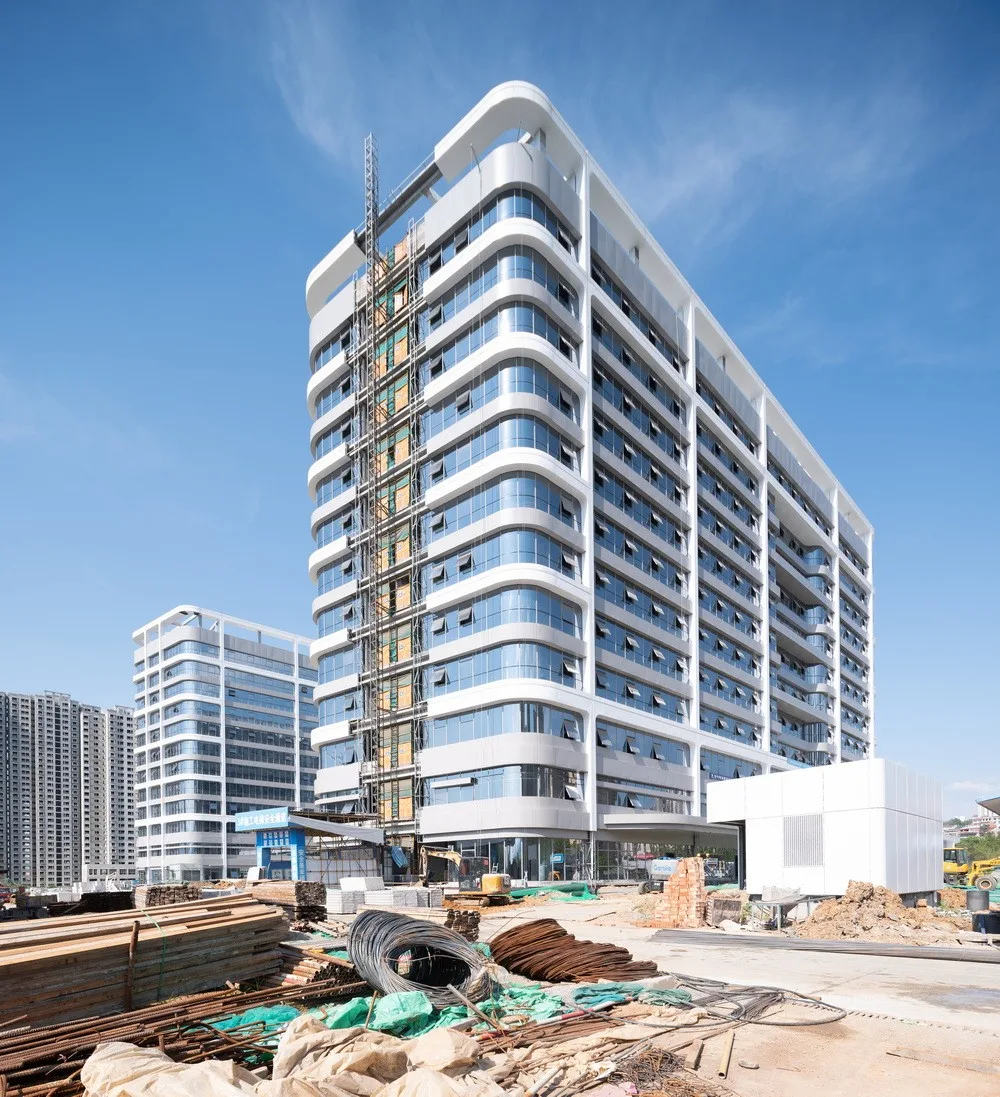
△ Construction photos of hospital exterior walls © UUA
Detail-oriented design ensures building completion success. Throughout the design phase, UUA worked closely with curtain wall manufacturers and construction teams to identify and resolve potential issues early. By meticulously managing curtain wall connection points, design, fabrication, and installation integrate smoothly, enabling high-quality execution on site.
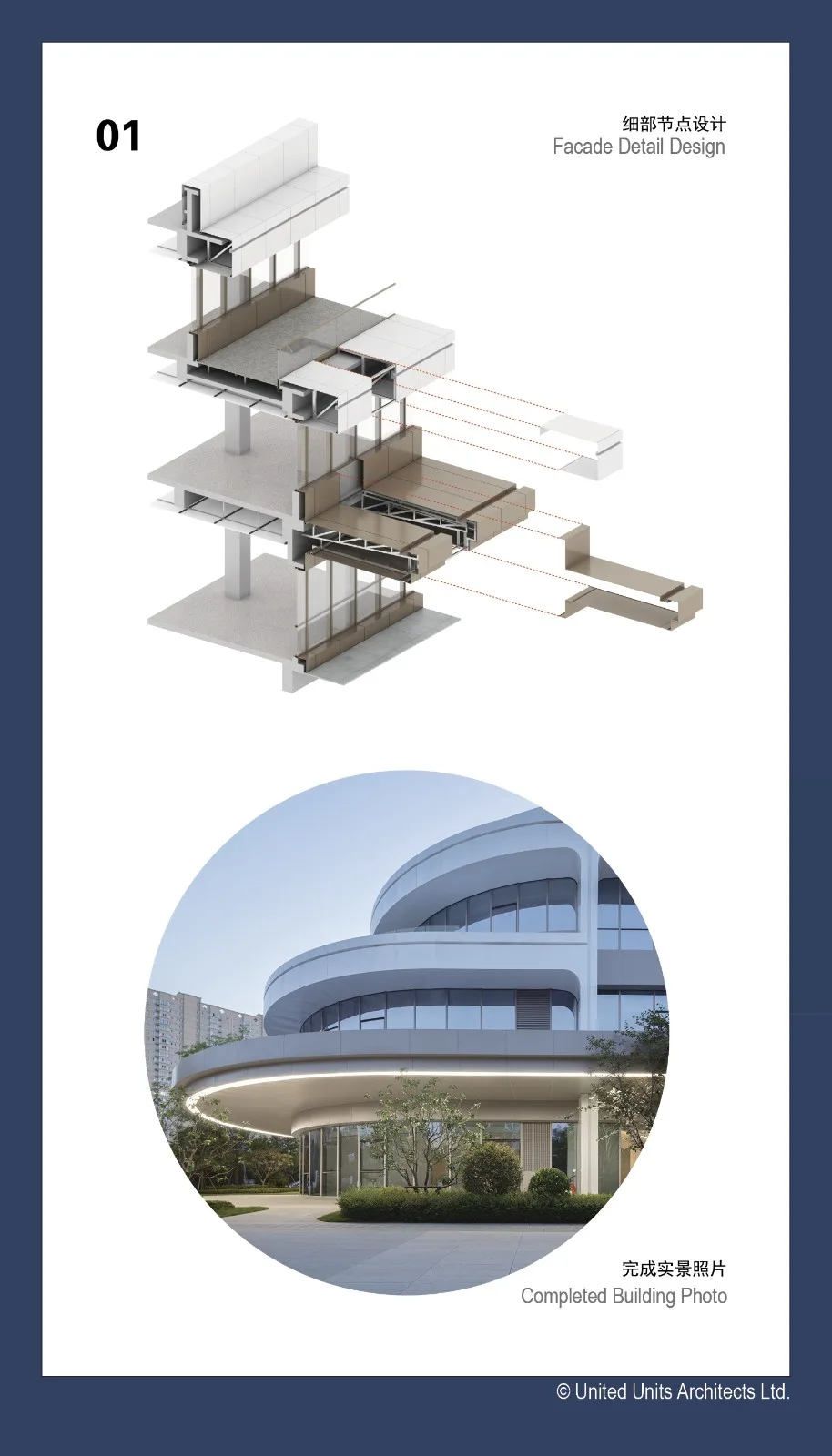
△ Architectural Detail 01 – Skirt nodes and implementation © UUA
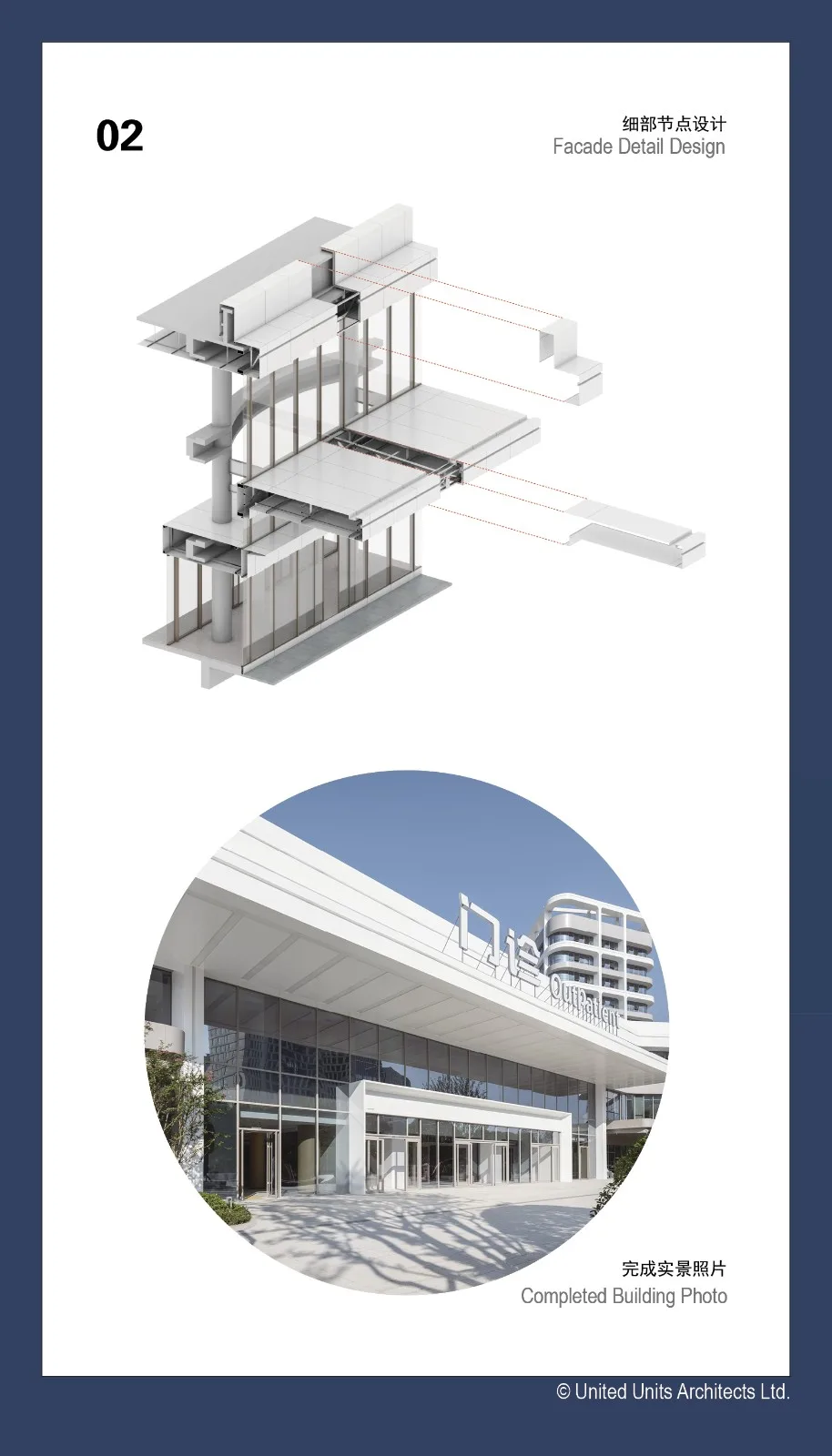
△ Architectural Detail 02 – Outpatient nodes and implementation © UUA
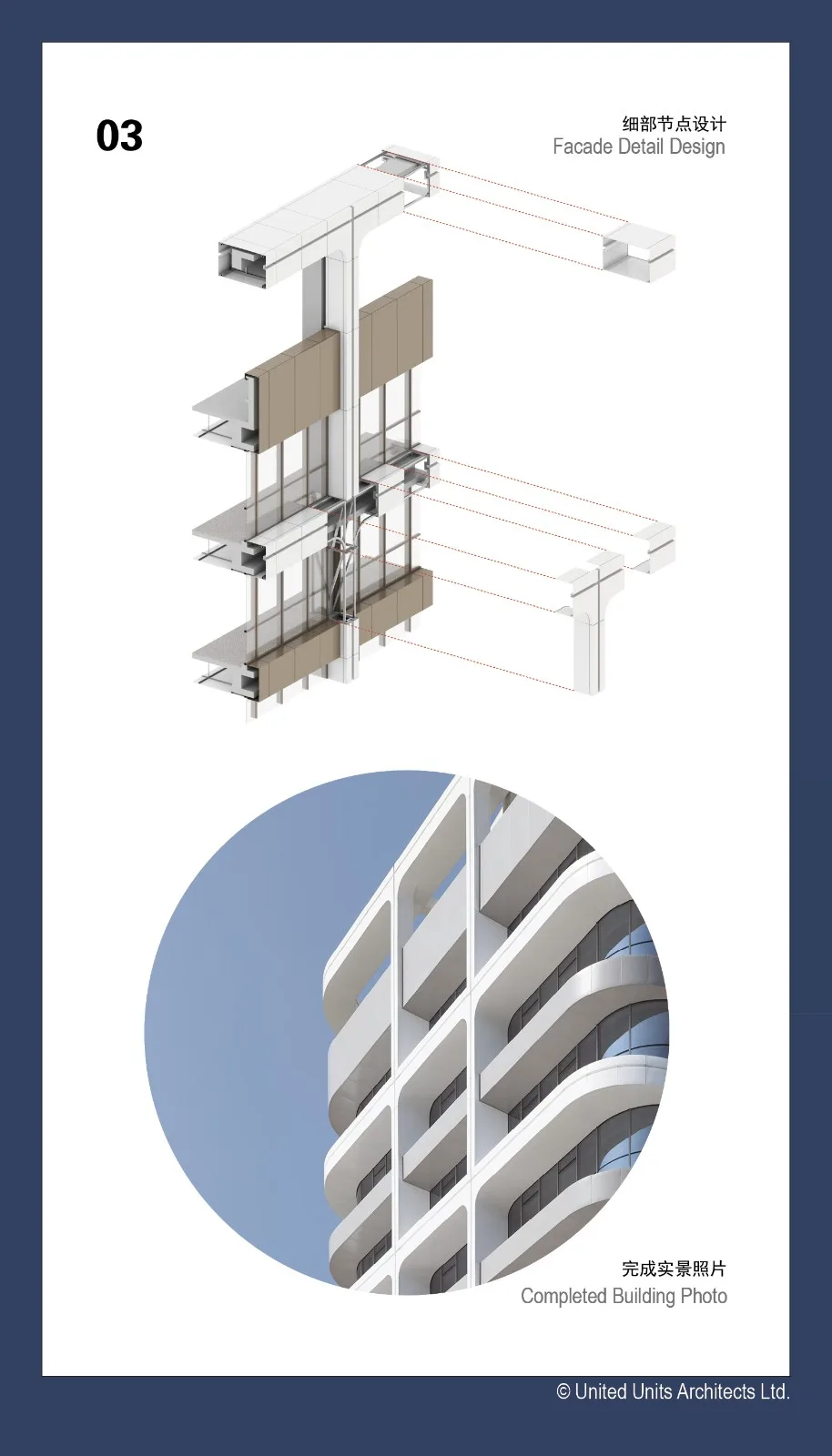
△ Architectural Detail 03 – Tower nodes and implementation © UUA
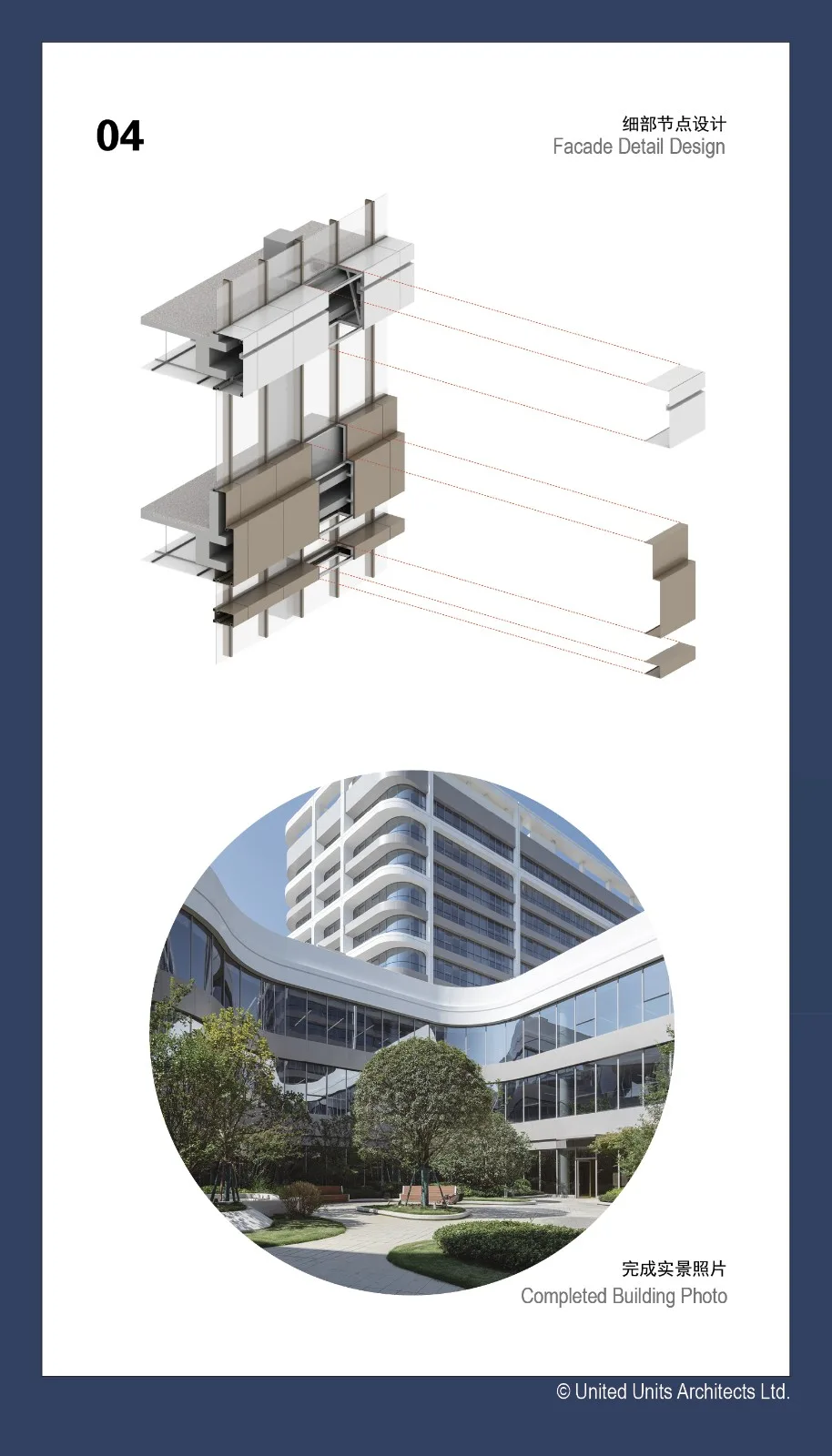
△ Architectural Detail 04 – Inner courtyard nodes and implementation © UUA
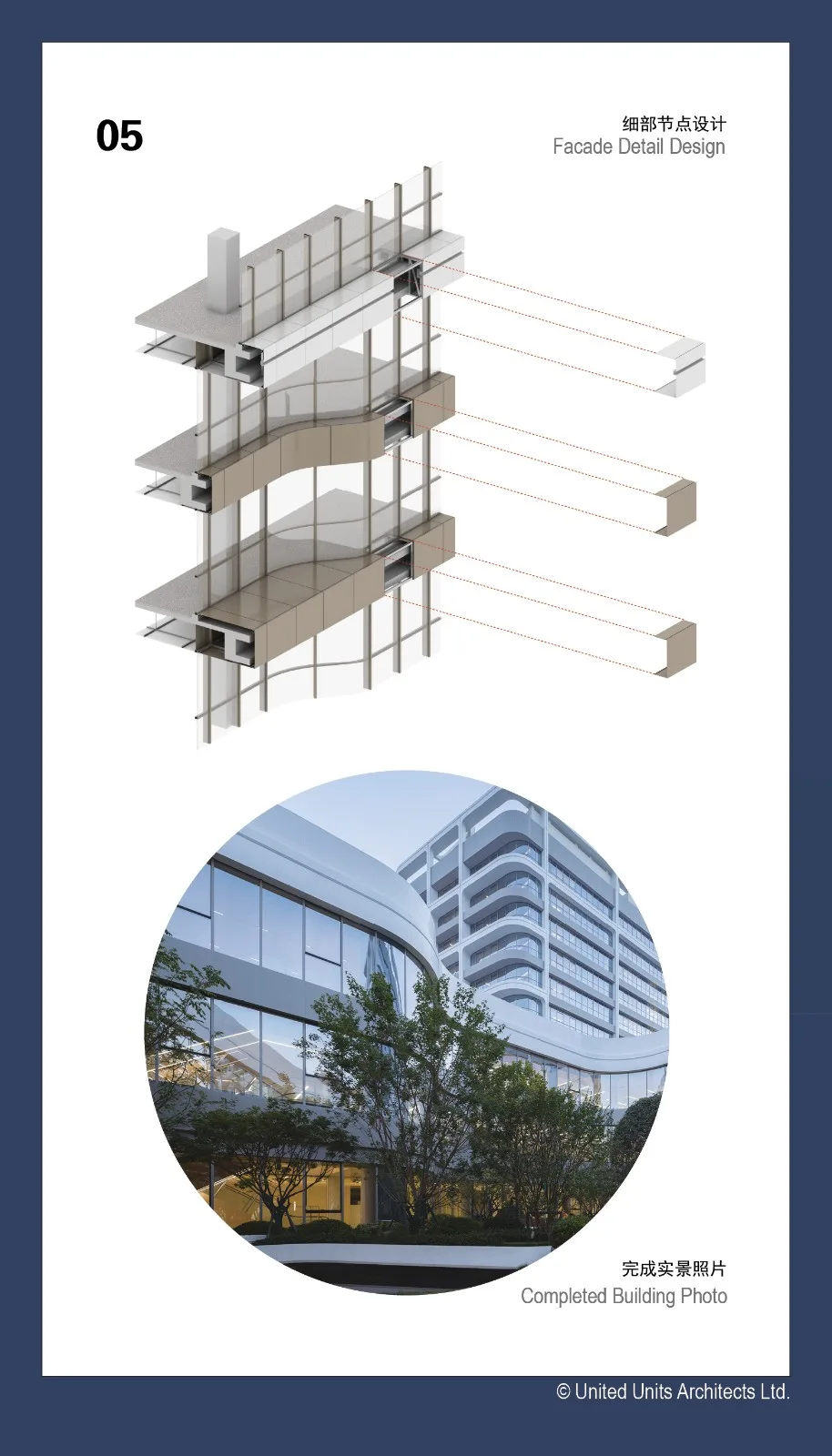
△ Architectural Detail 05 – Inner courtyard nodes and implementation © UUA
Throughout construction, UUA maintained close communication with the building team to ensure every design detail was properly understood and executed. Regular site inspections allowed early detection and correction of issues, ensuring design quality. This rigorous attention to detail has made Ankang High Tech Hospital a landmark that seamlessly blends humanistic care with advanced technology, delivering high practicality.
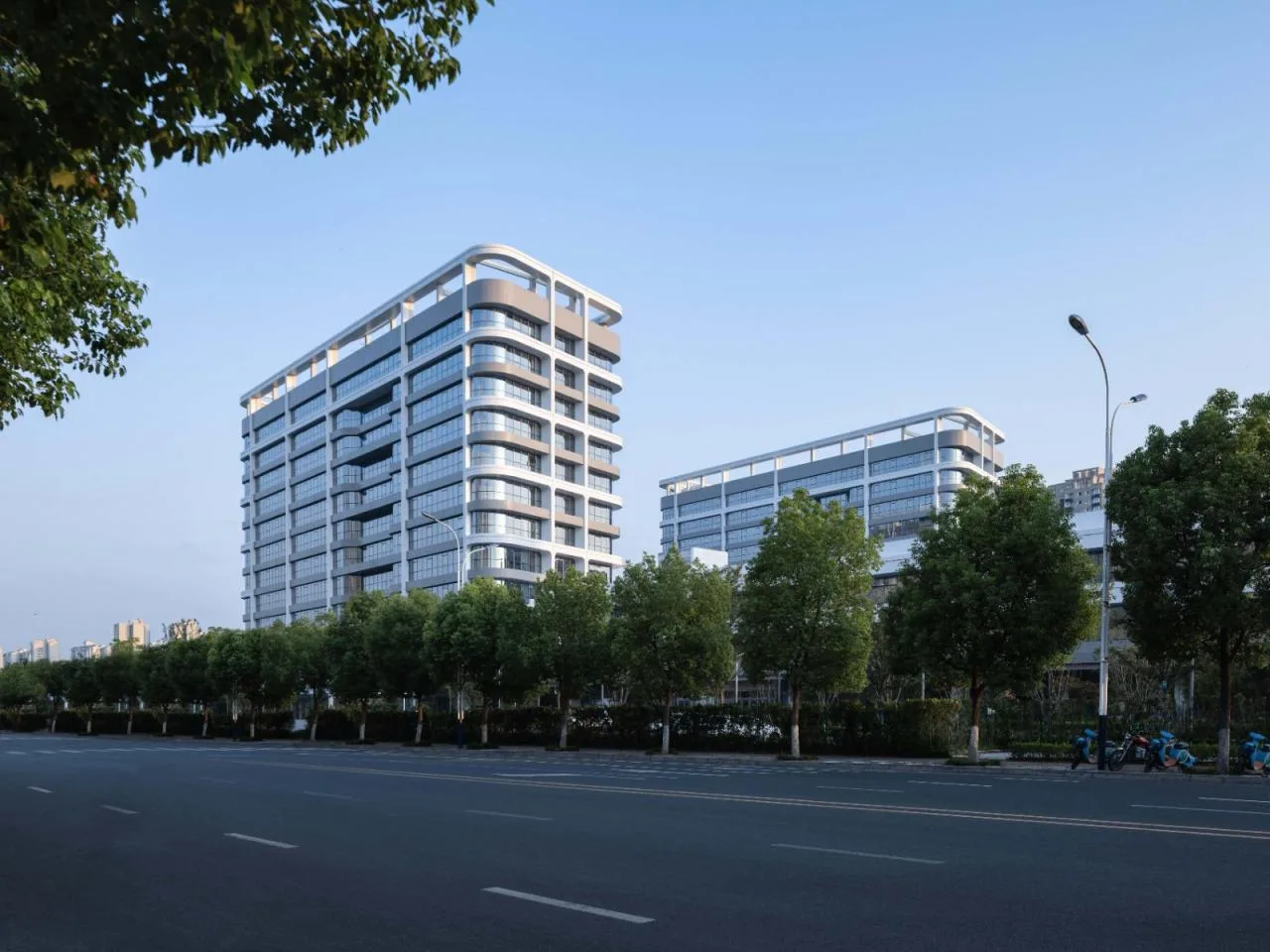
△ Street view
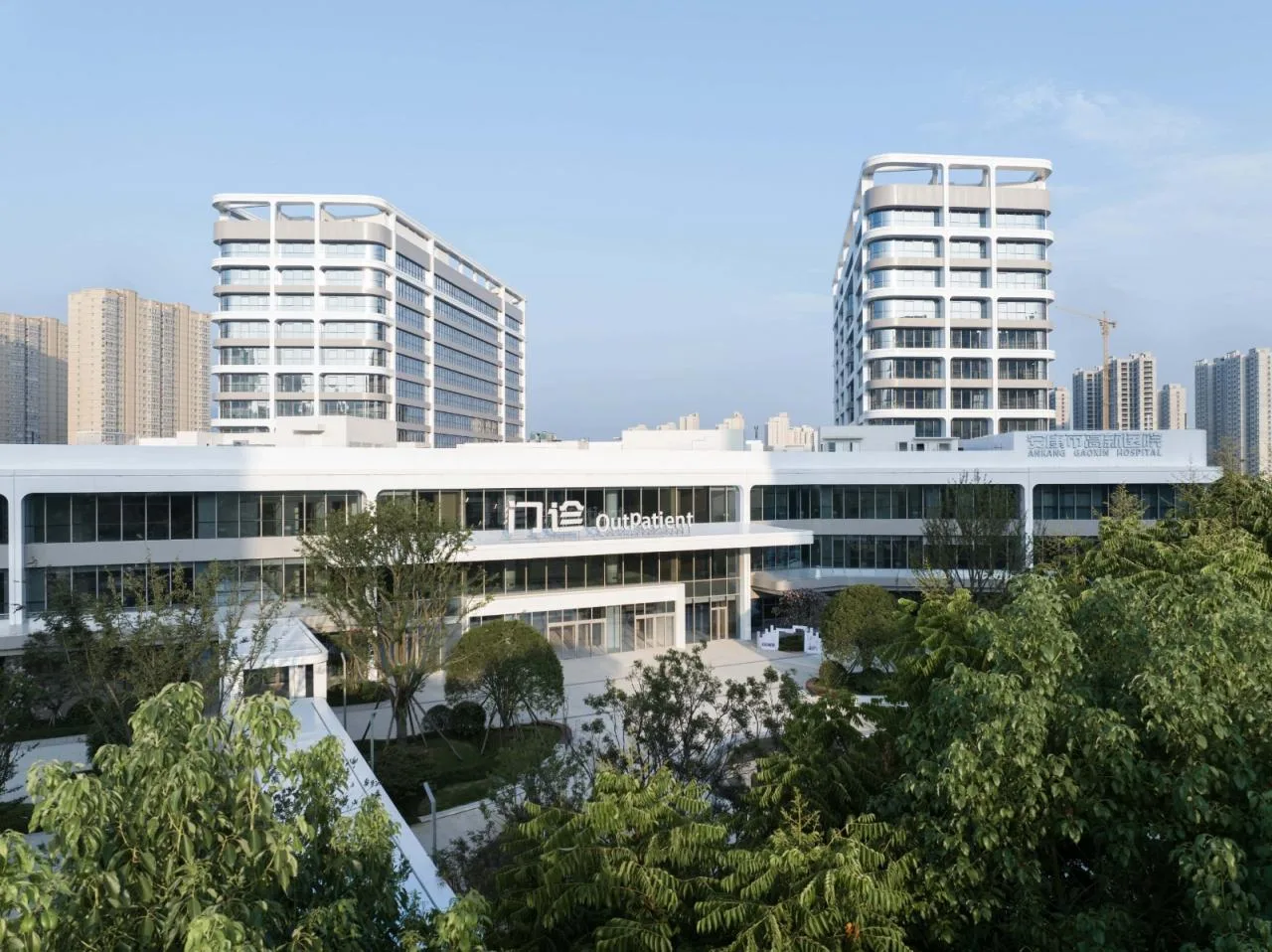
△ Bird’s-eye view
06. Summary
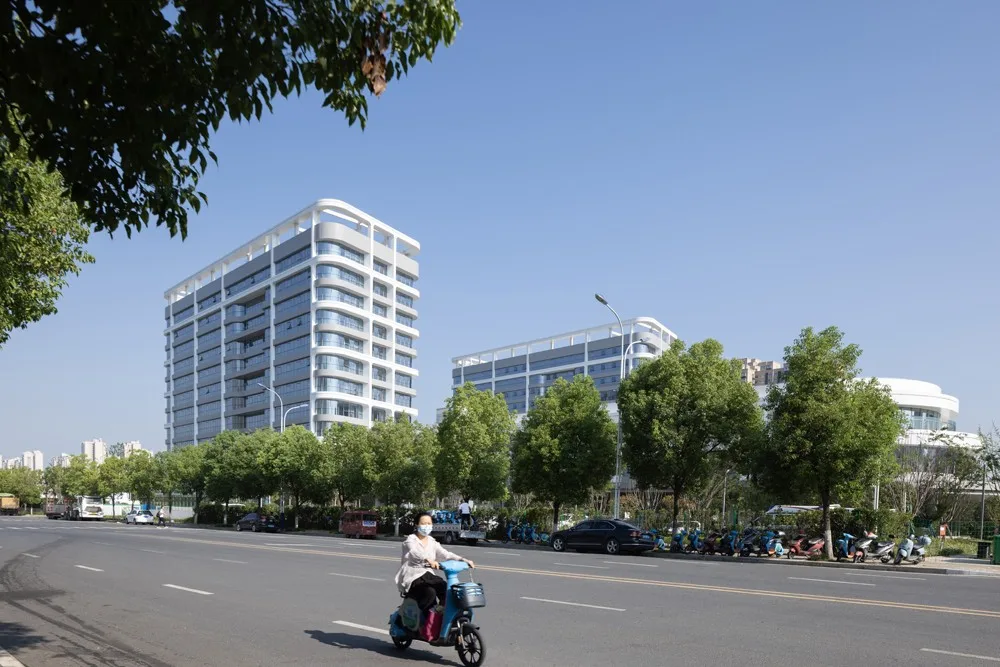
△ Overall street view
Completed and operational in 2024, Ankang High Tech Hospital boasts state-of-the-art medical facilities, a professional healthcare team, and a patient-friendly environment that attracts visitors and learners from all sectors. UUA and the project team successfully realized the “de-hospitalization” design concept, providing a valuable reference for future healthcare building designs. The team remains committed to continued innovation in medical architecture, balancing disease diagnosis with mental well-being.
07. Project Video
Project Information
Project Name: Ankang High Tech Hospital Phase I
Project Owner: Shaanxi Ankang High Tech Health Industry Development Co., Ltd
Location: Ankang, Shaanxi
Area: 115,000 square meters
Duration: June 2019 to March 11, 2023
Exterior Design: UUA Architects
Signage and Ancillary Structure Design: UUA Architects
Lead Partners: Li Yongzheng, Li Qizhi
Design Team: Deng Liang, Zhang Yihao, Lv Yanfeng, He Wenbo, Ma Xinghua, Yang Bo, Wang Falu
Project Management Team: Yang Liping, Yu Shangcheng, Du Kunfu, Yao Jinkui, Ding Hui
Main Design Institute: Zhongyuan International Engineering Co., Ltd
Interior Design: J& Jane Design
Architectural Photography: Literal Translation of Architectural Photography















Must log in before commenting!
Sign Up