
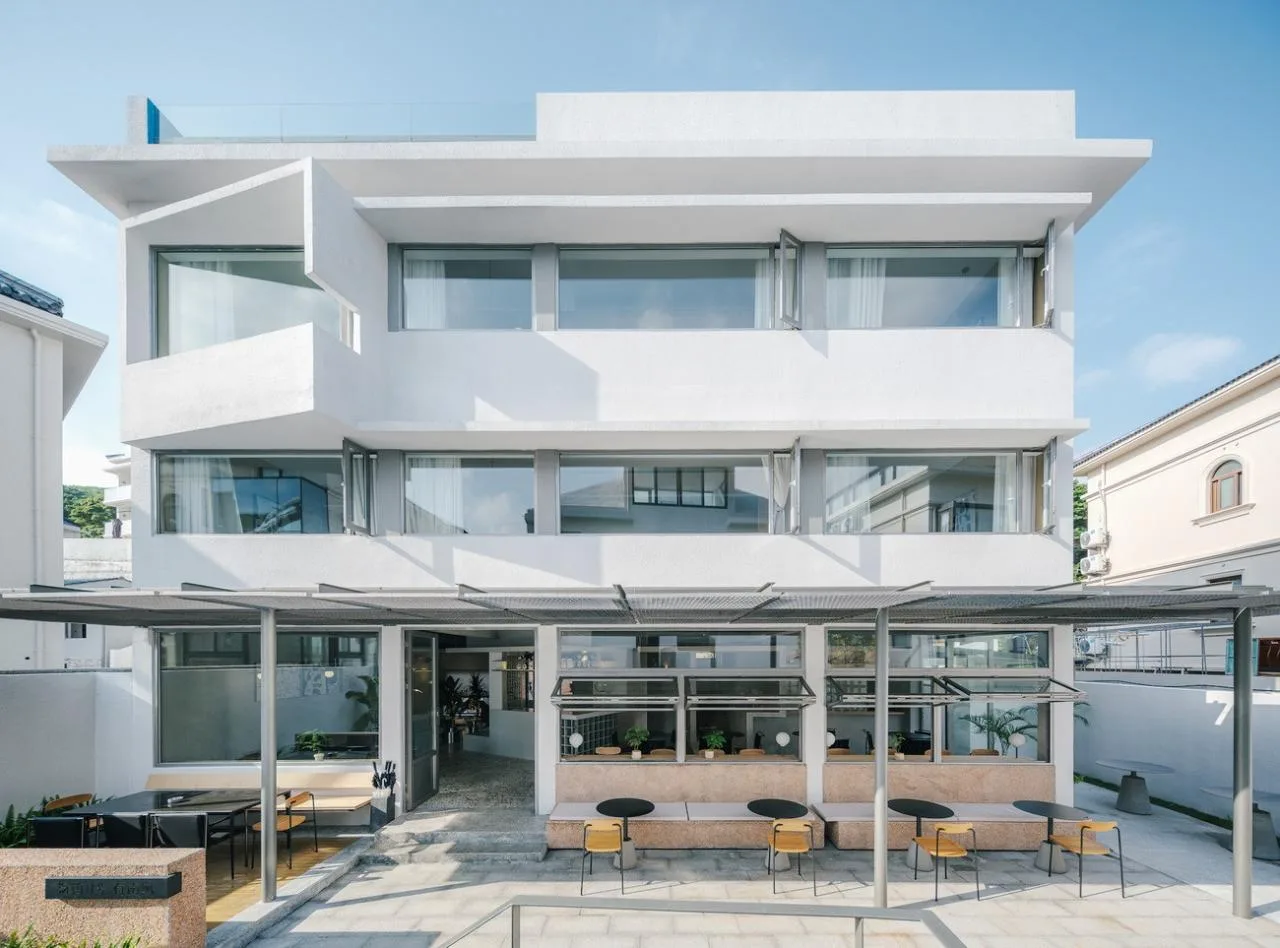
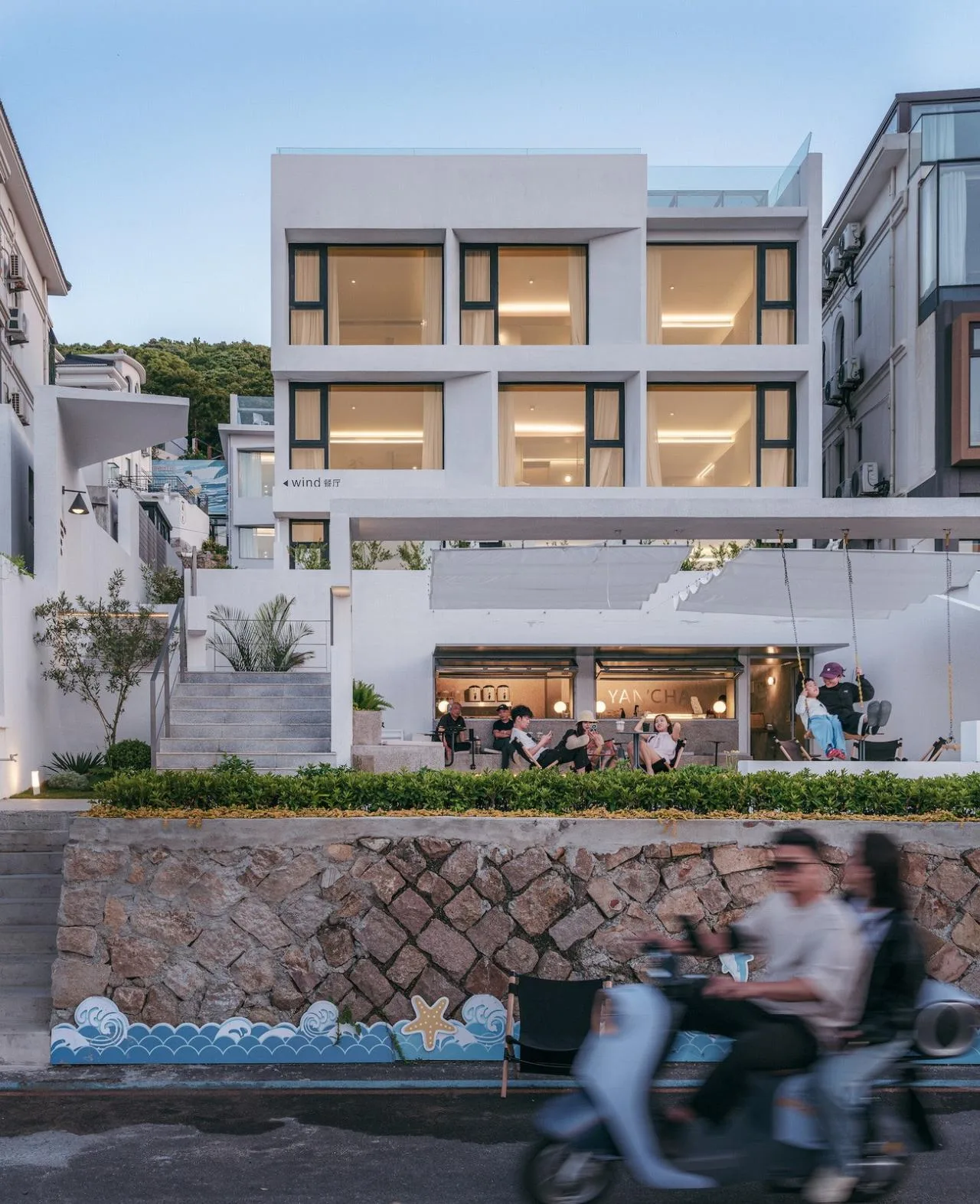
This project began with the completion of the homestay at No. 11 Haijie five years ago. At that time, the design strategy involved adding balconies and updating the exterior facade, which transformed the originally square-shaped residential houses. This change brought fresh internal and external experiences to the area. As No. 11 Hai Street gained popularity, this design approach gradually became the defining facade style of the neighborhood. Nearly all the newly built houses in the village adopted the three-bay white wall with square windows style. The goal of discouraging villagers from constructing “European-style villas” through simple facade modifications was quickly realized.
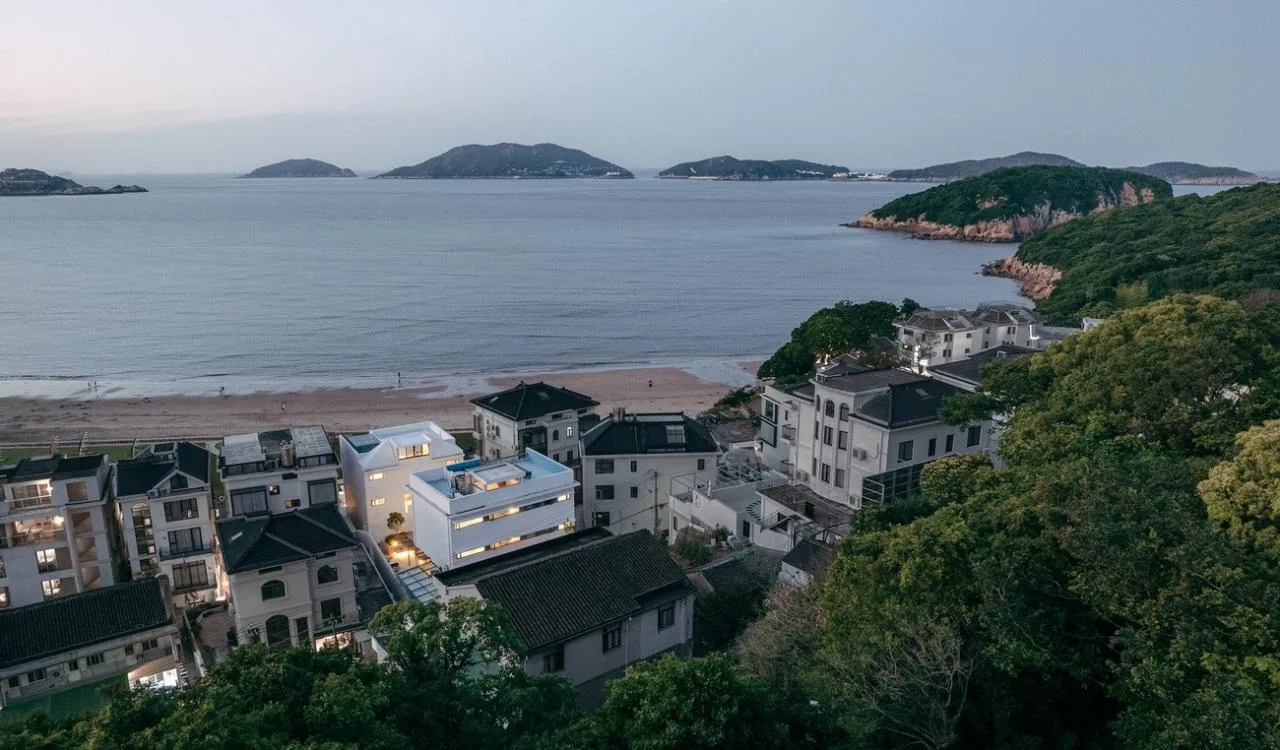
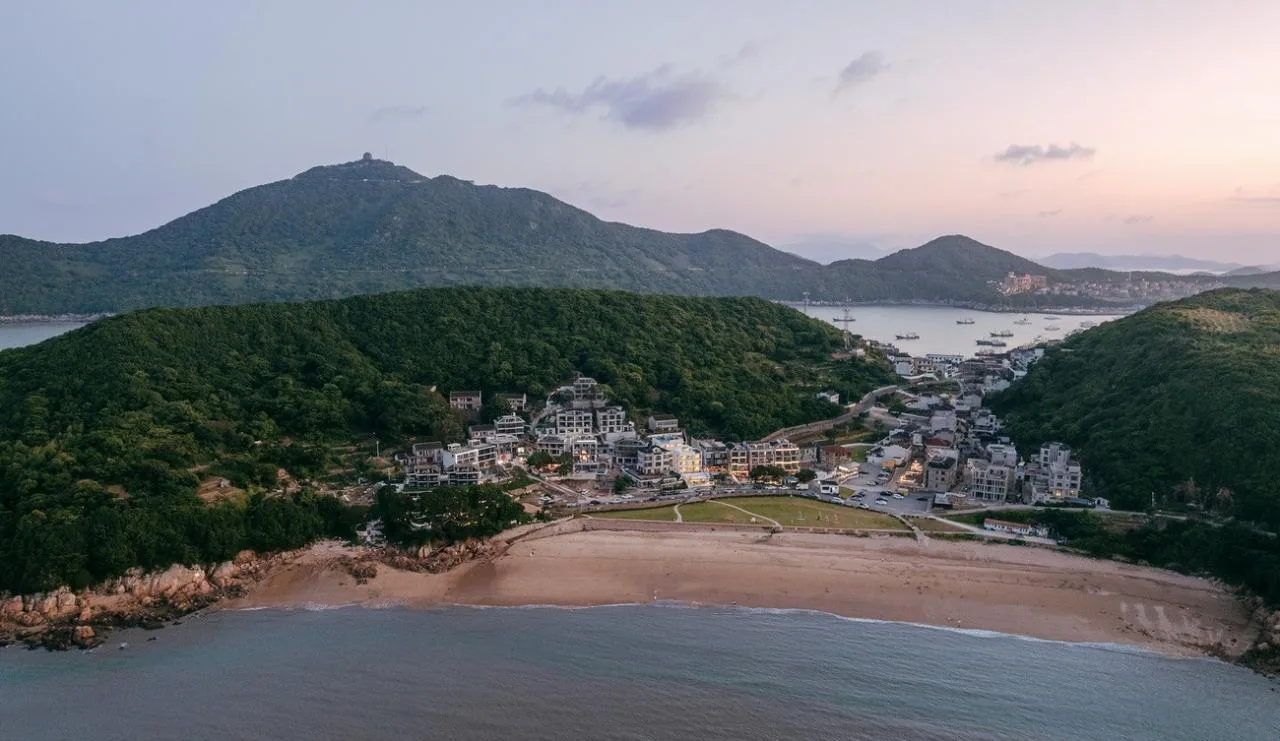
However, the project’s success also led to unexpected challenges. The village saw a surge in house construction as each household aimed to capitalize on the growing tourism market. Within a few years, the number of homestays in this small bay tripled. The influx of hastily built homes began to disrupt the fishing village’s charm, creating disorder. This unchecked development brought contradictions: more houses were built, but quality vacation homes were scarce. The increasingly noisy environment diminished the appeal of the natural beach resources, risking unsustainable development as visitors moved on to other destinations.
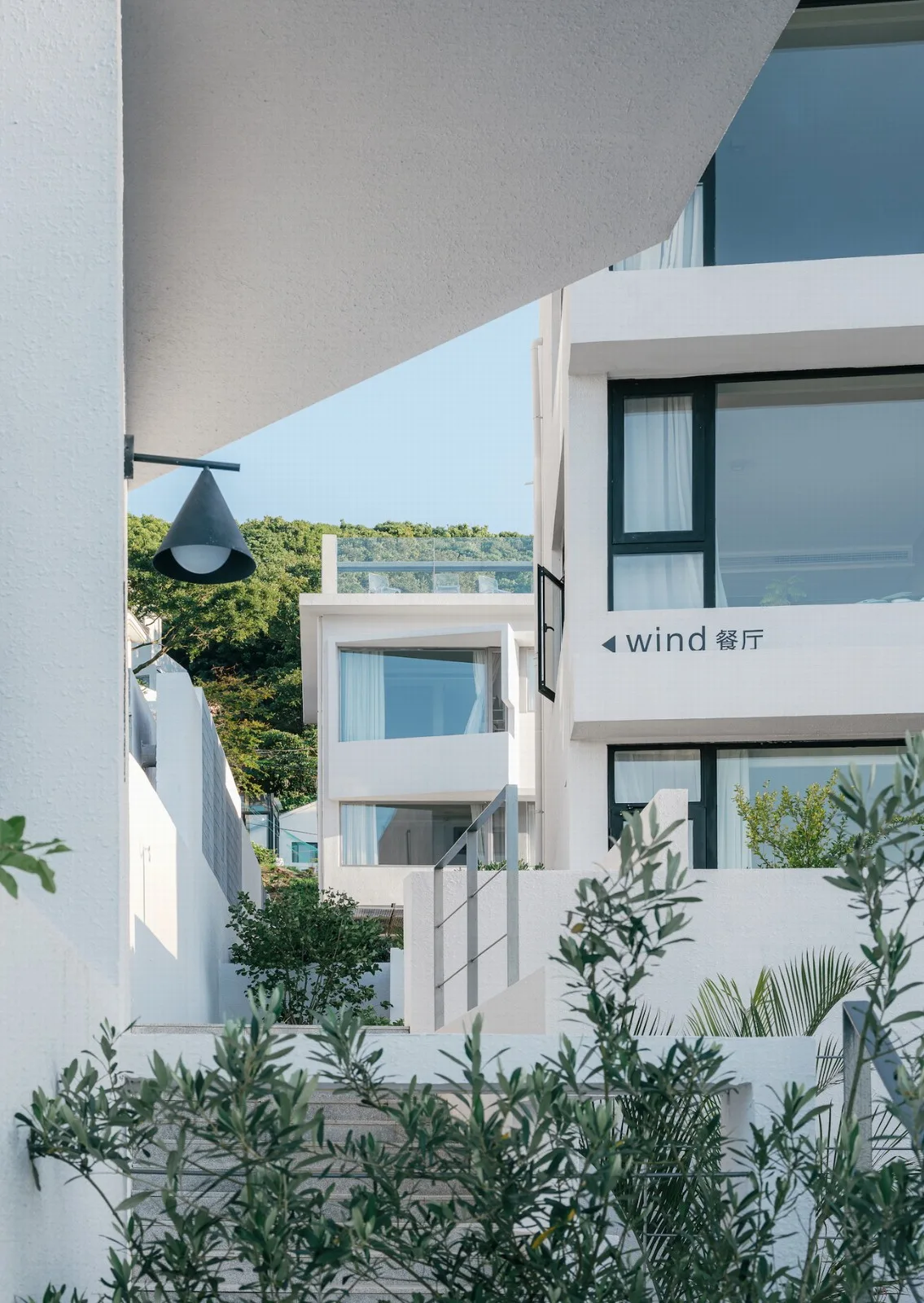
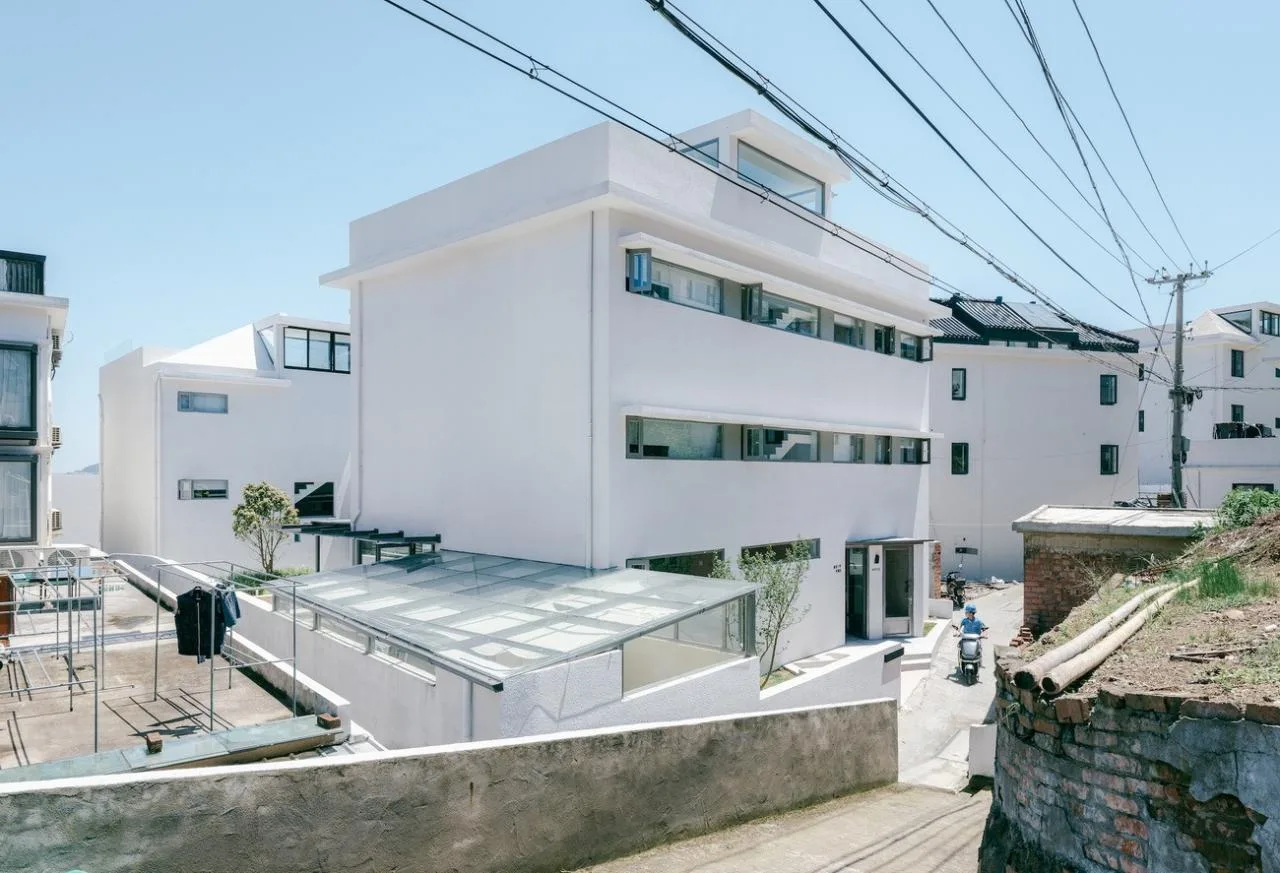
The homestay at No. 11 Haijie expanded to include two adjacent three-story square residential buildings, located near more than a dozen newly built beachfront houses. The mountain-facing building’s main structure was freshly constructed, while the sea-facing building’s exterior facade was completed. The terrace on the mountain side stands 1.5 meters higher than the seaside building. The renovation was constrained by the requirement to preserve the original sizes and shapes of the residential buildings without expansion.
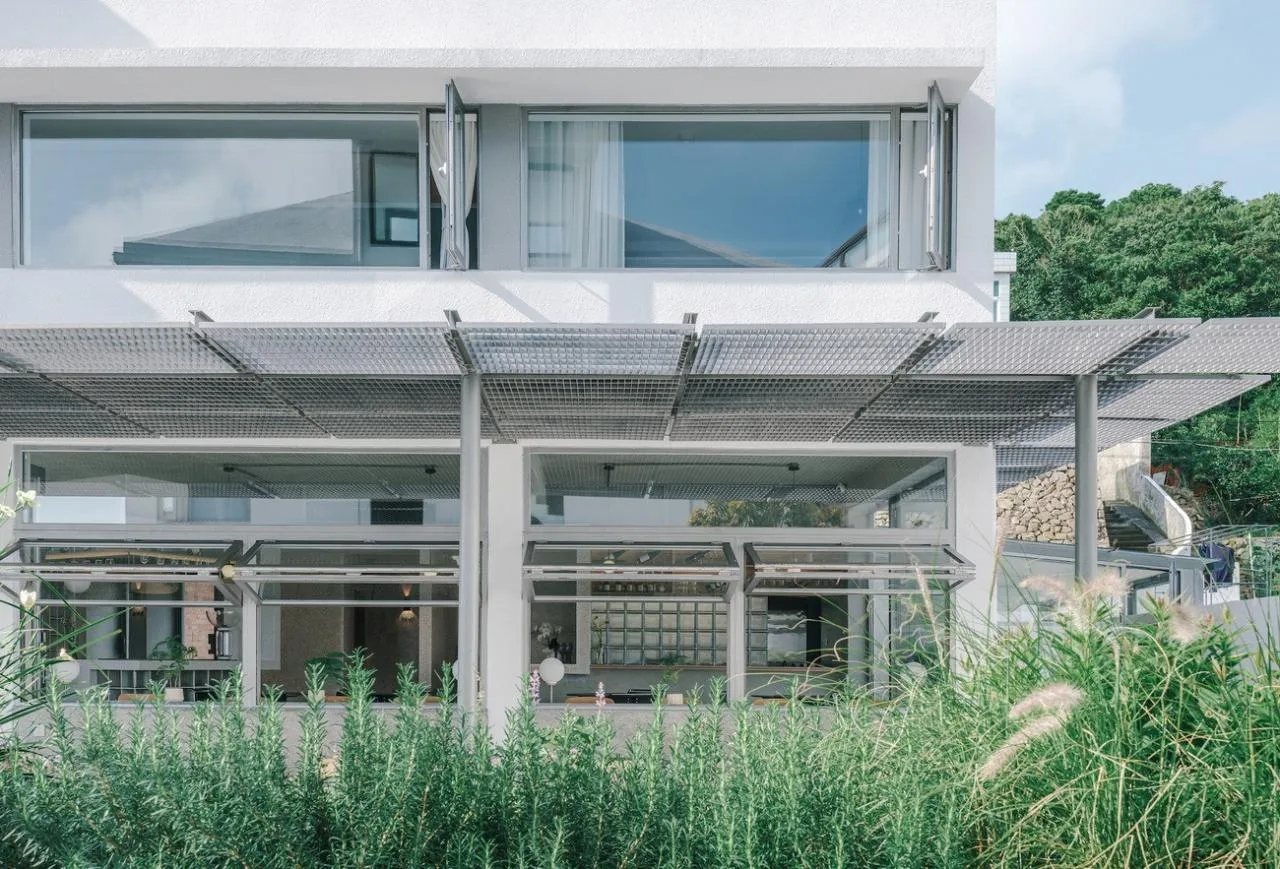
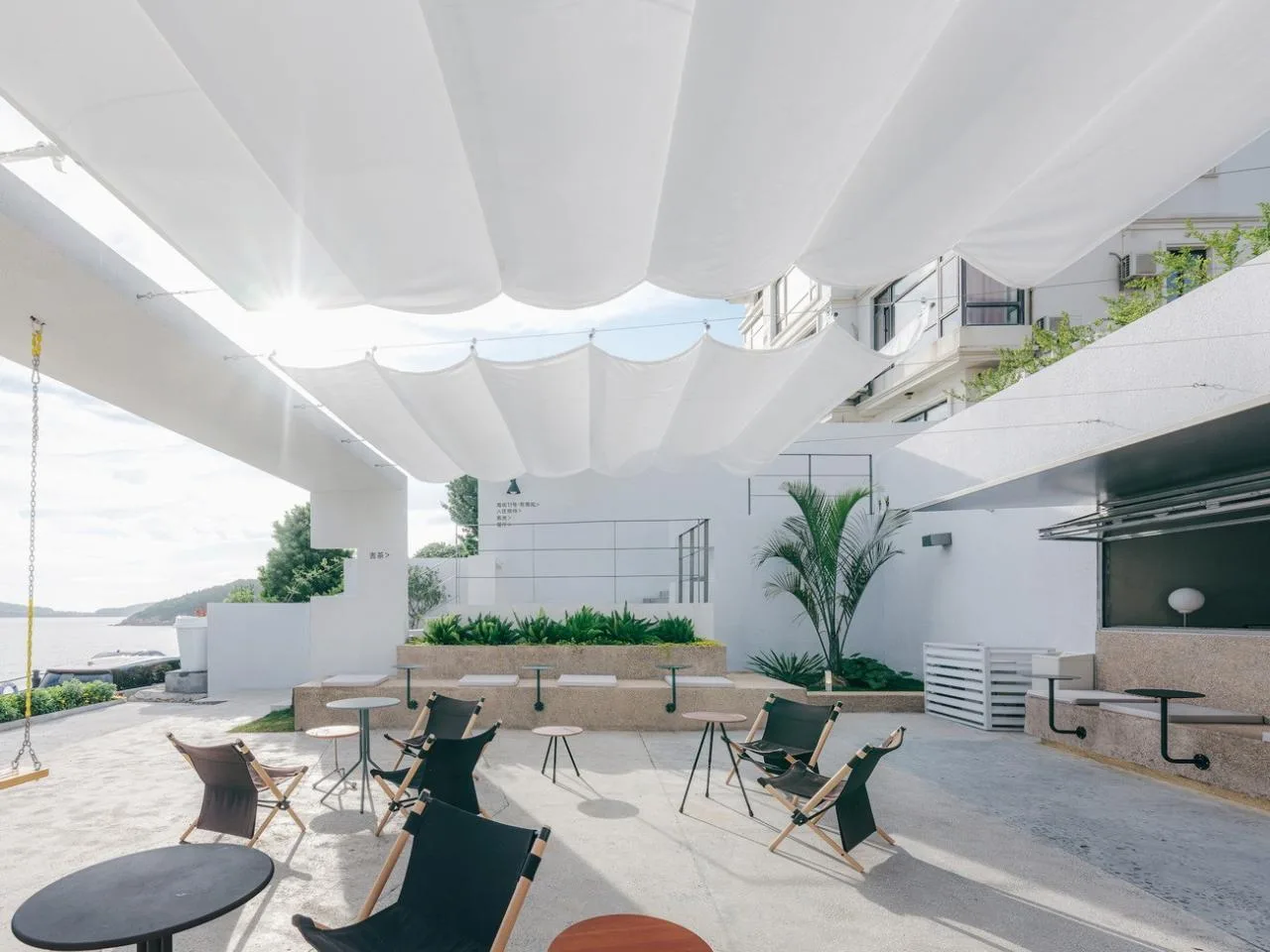
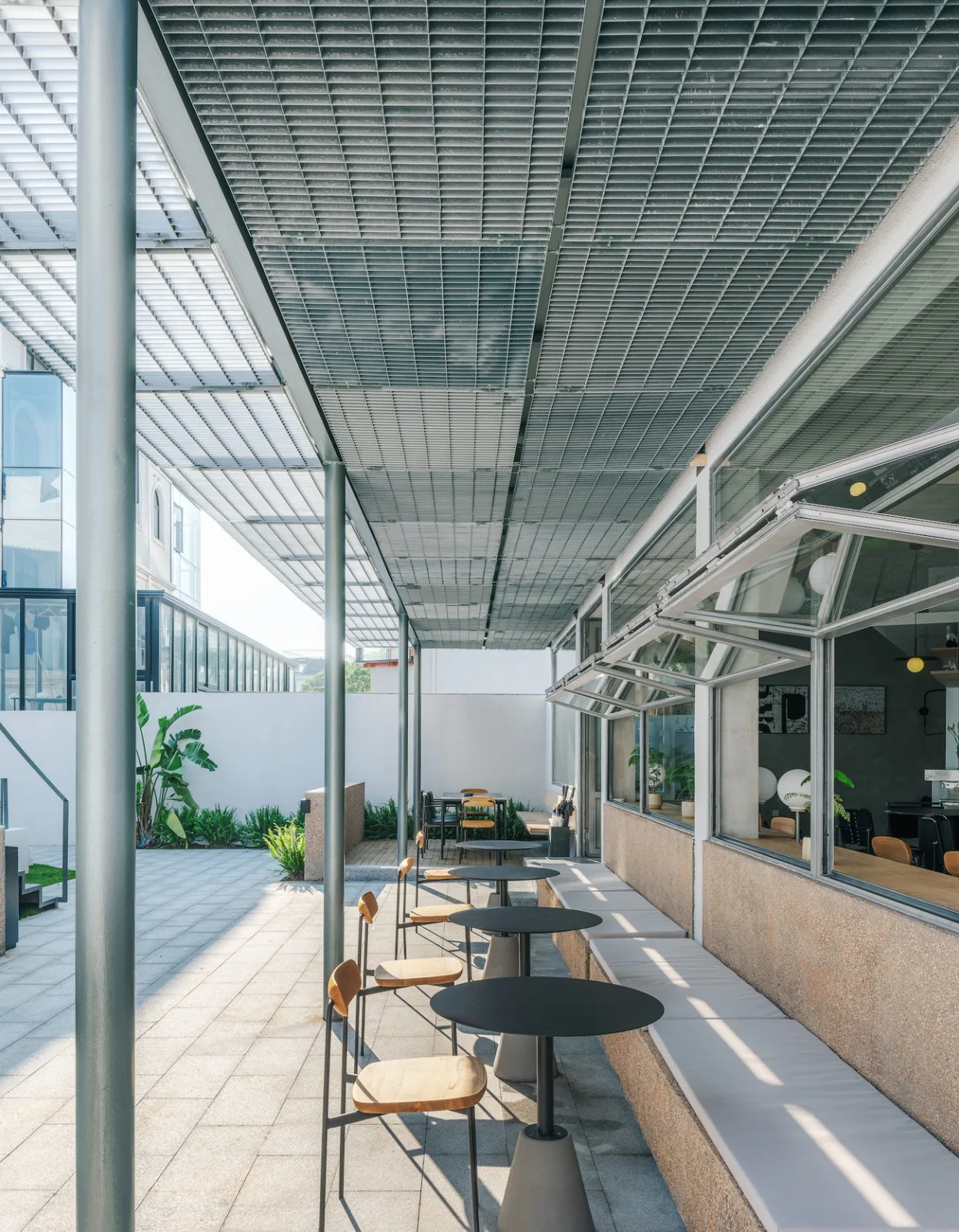
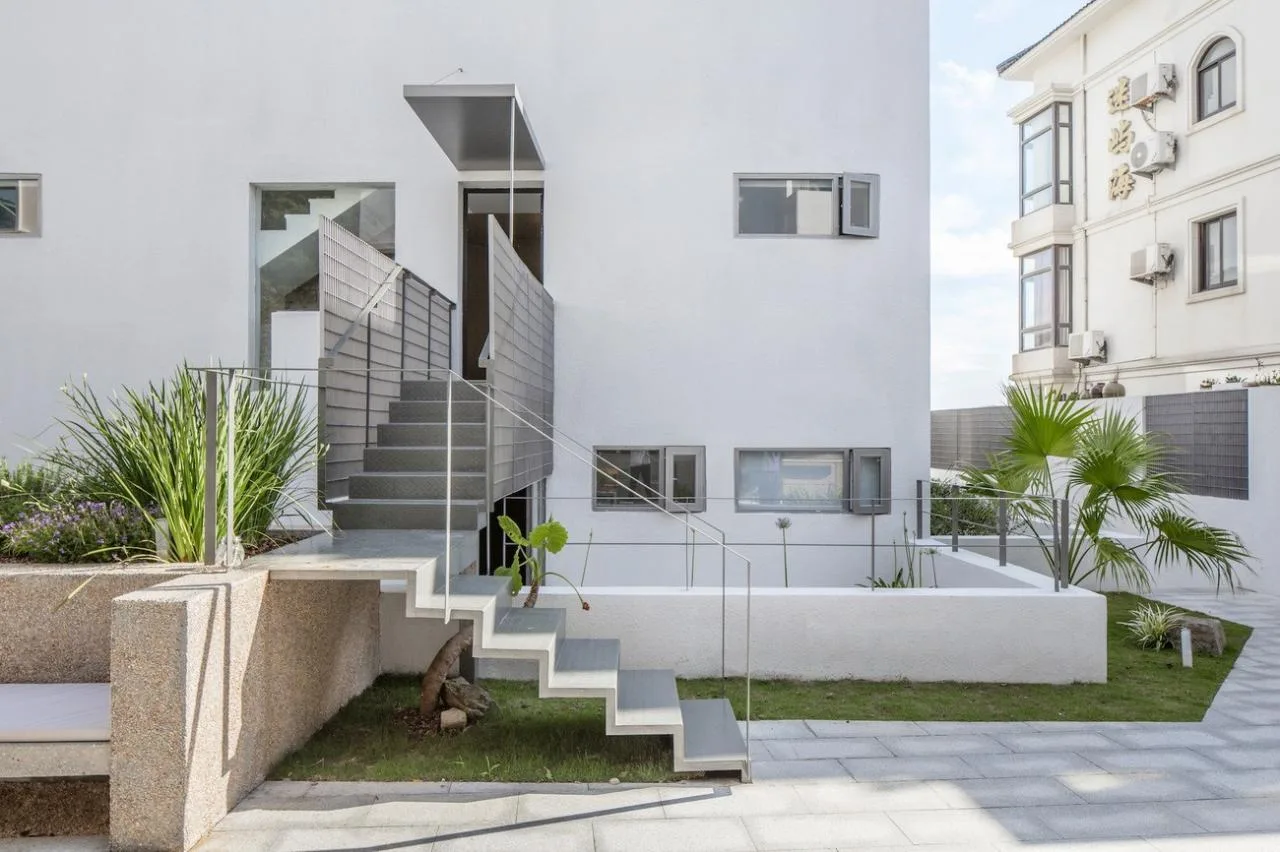
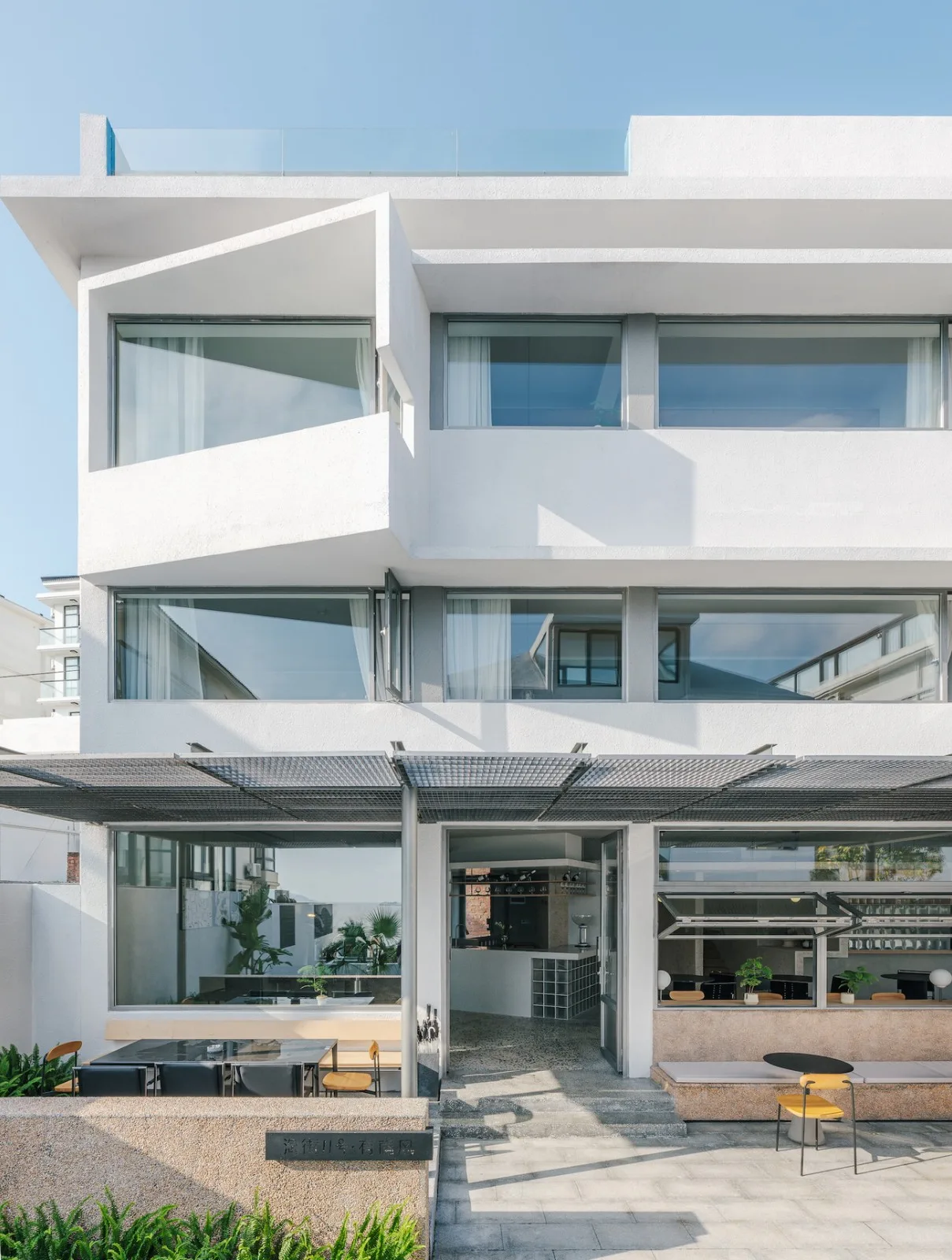
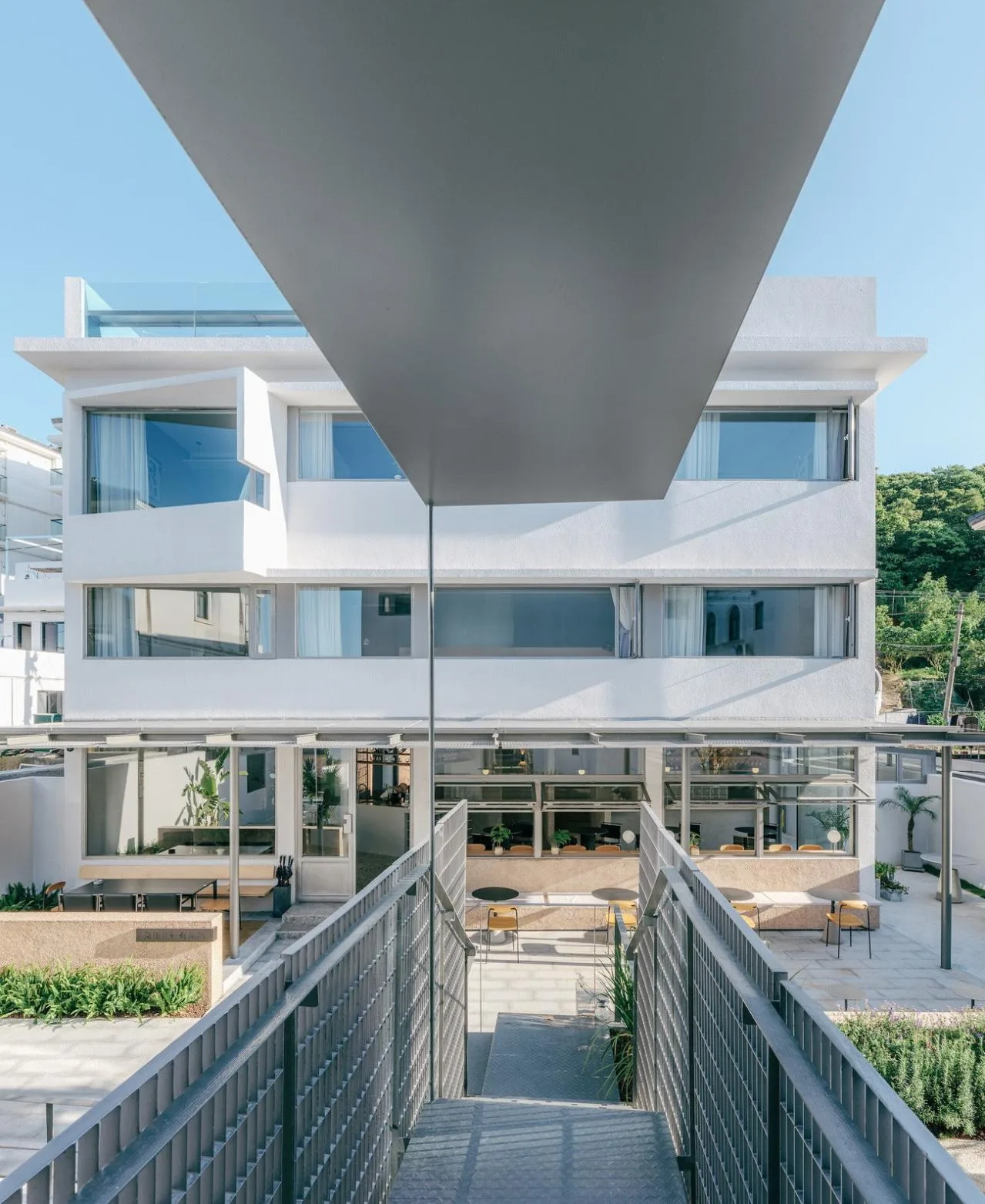
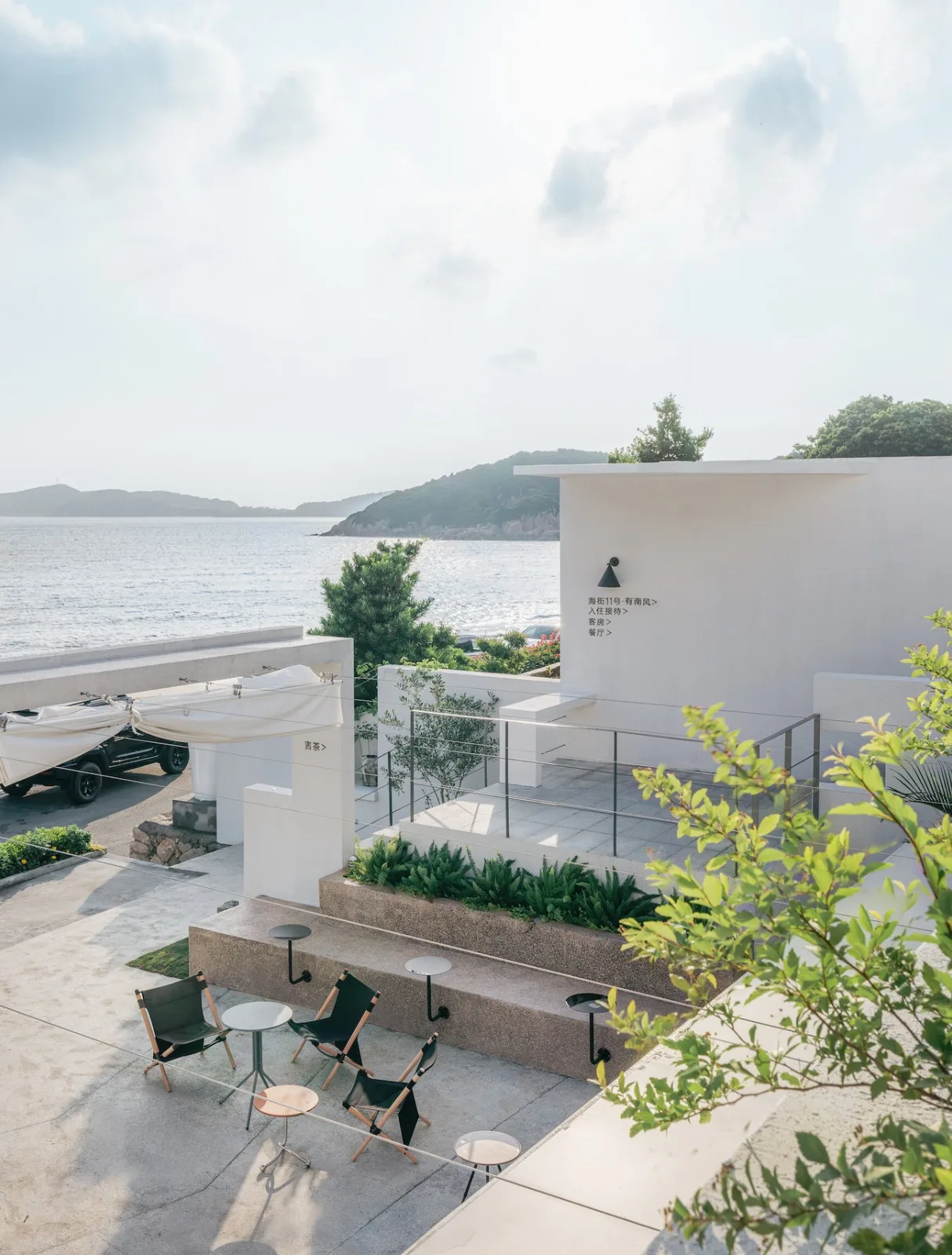
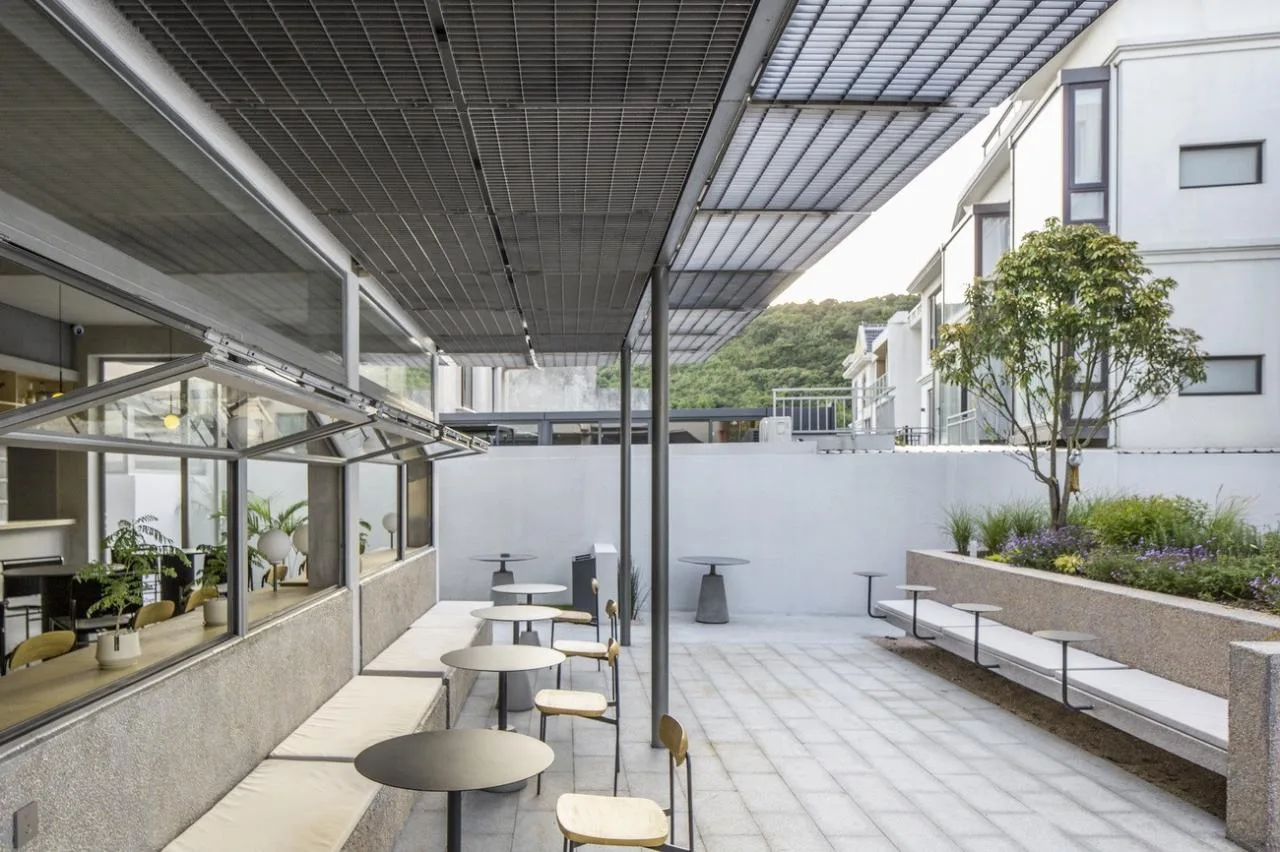
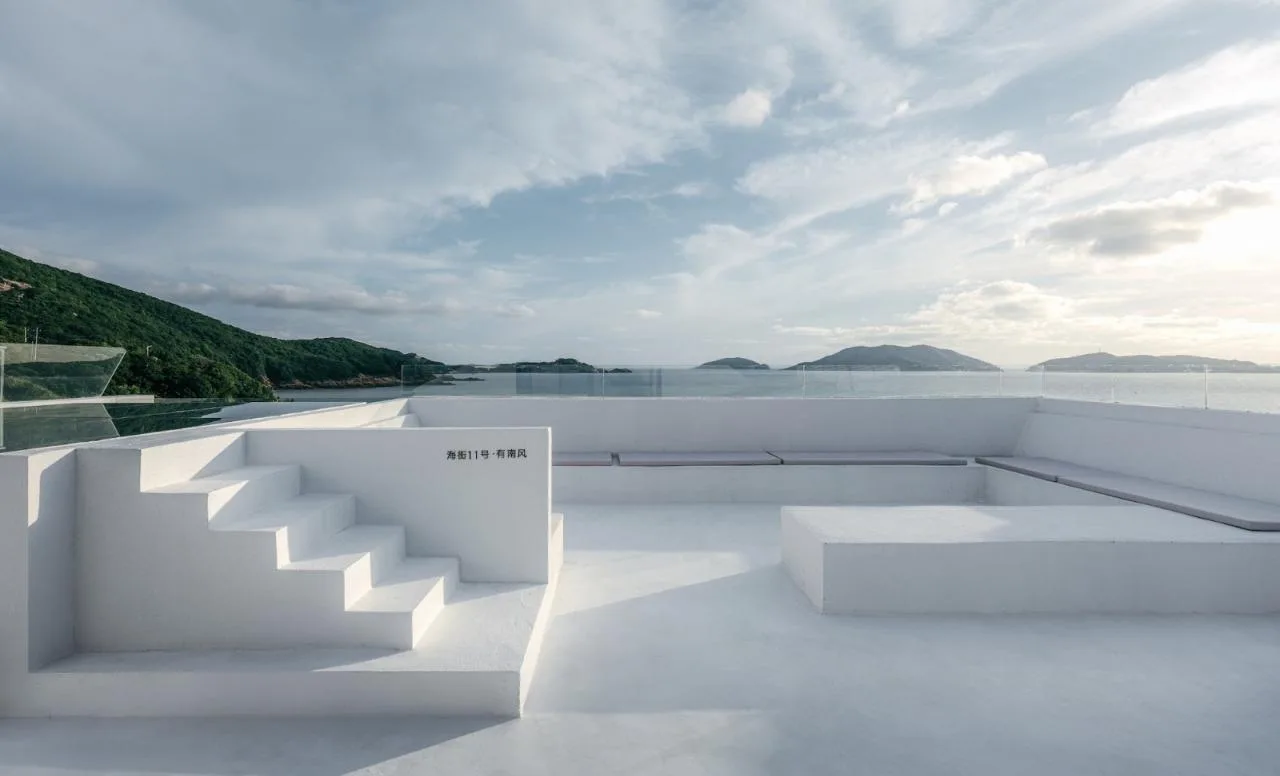
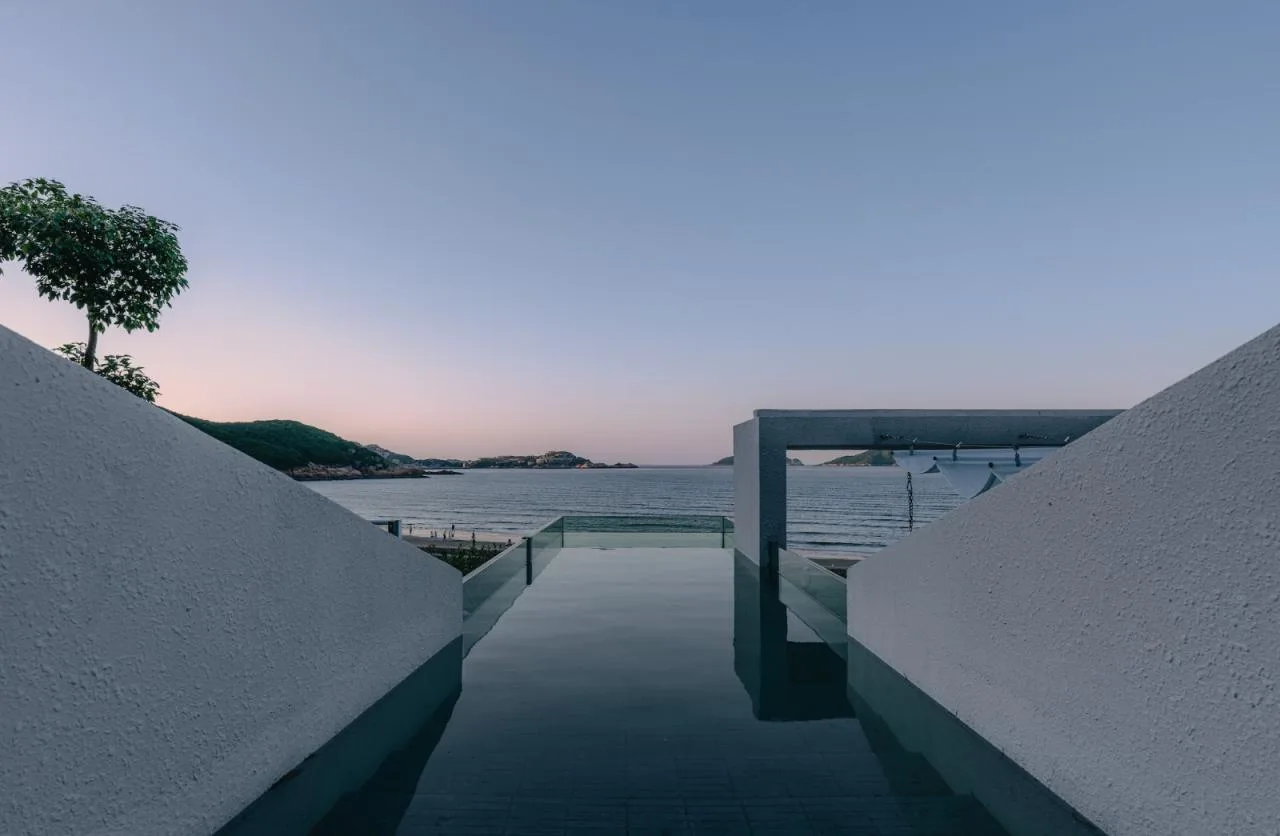
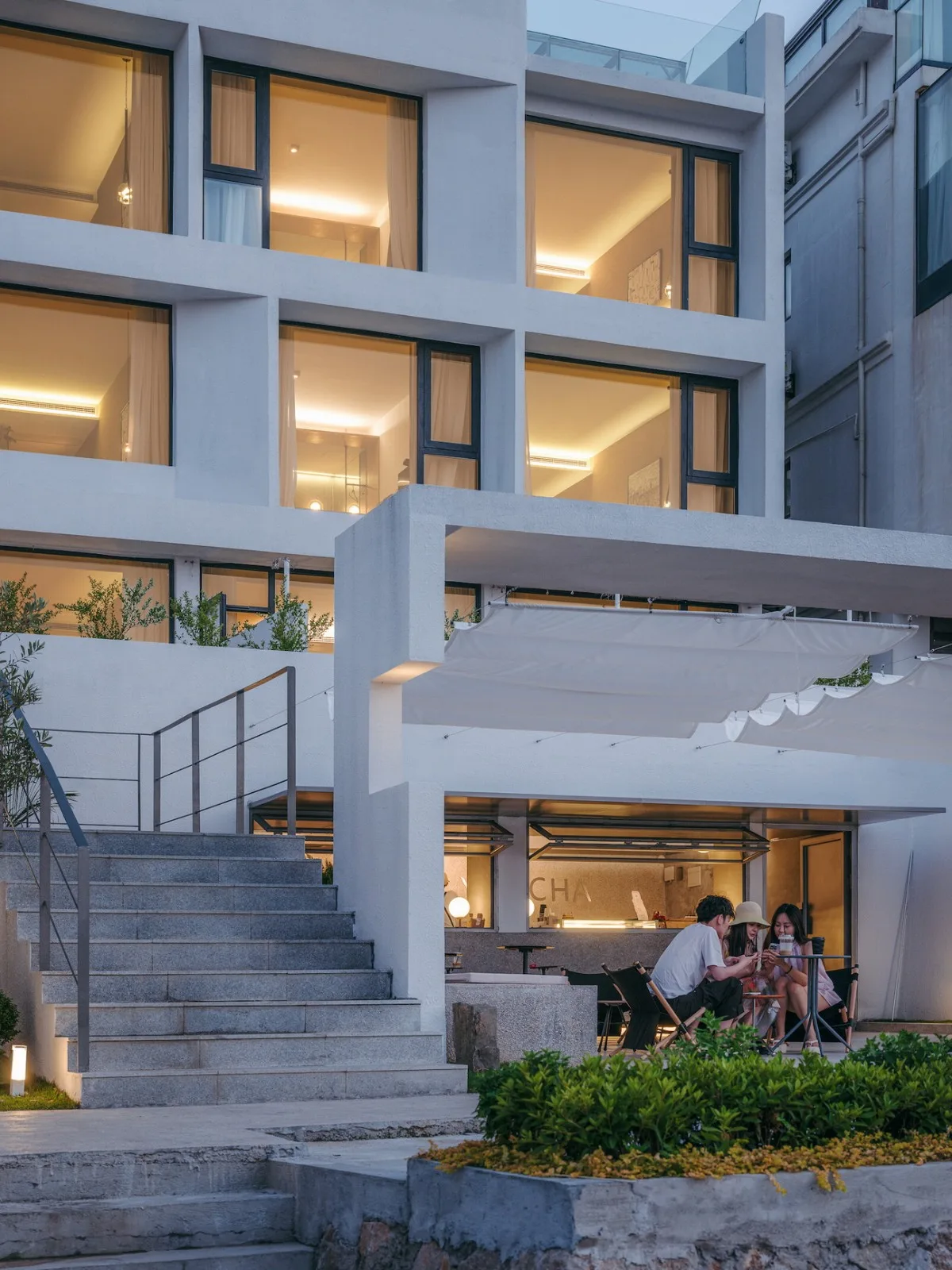
We designed separate courtyards for the seaside building and the mountain-side tower. The seaside courtyard opens fully to the beach, creating a relaxed space for tea and leisure. The mountain-side tower’s courtyard functions as the homestay’s inner courtyard, connected to the ground-floor hall. A landscaped stepped passage links the seaside area to the middle courtyard, utilizing elevation changes to access the public hall. Additionally, a floating bridge connects the second floor of the seaside building directly to the middle courtyard. The original seaside stairs were replaced by a long swimming pool facing the ocean.
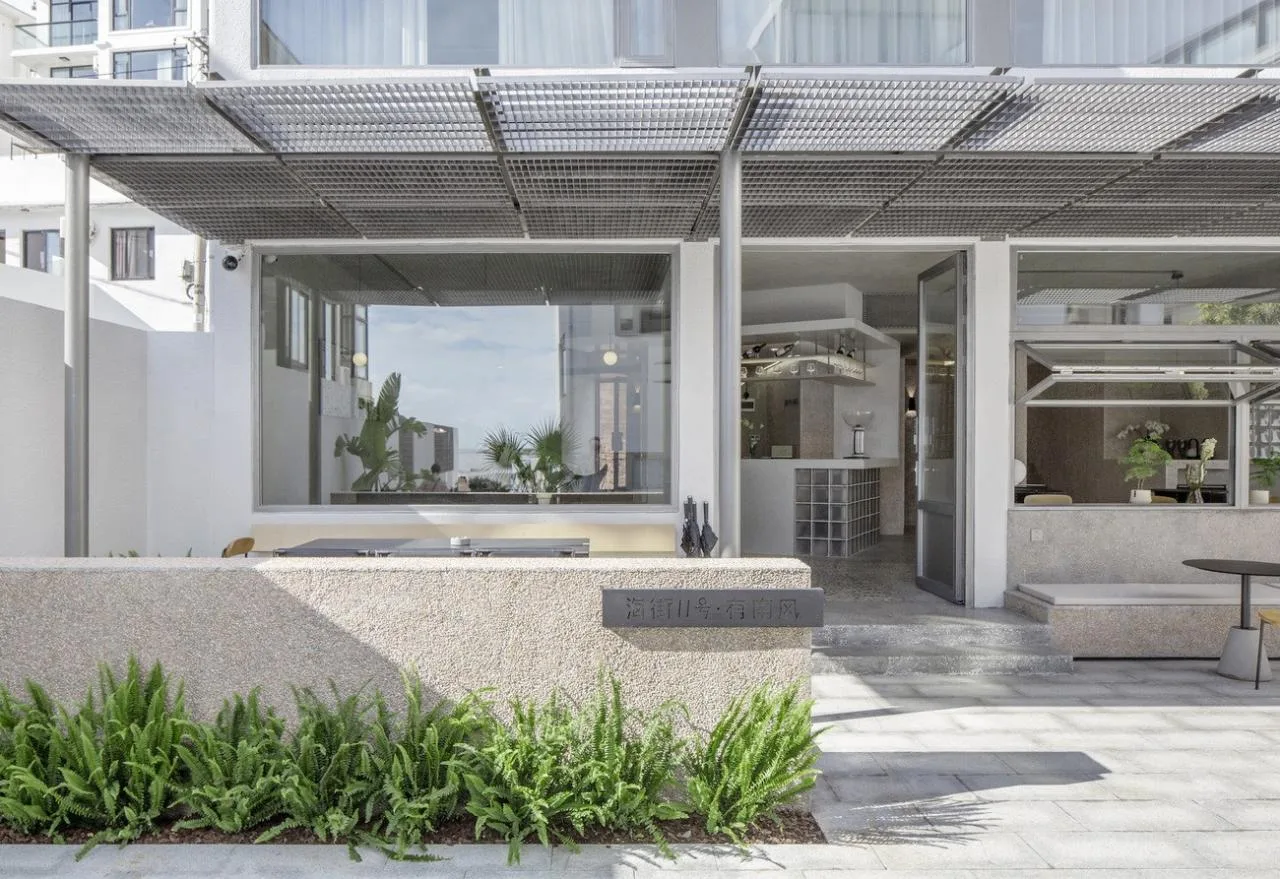
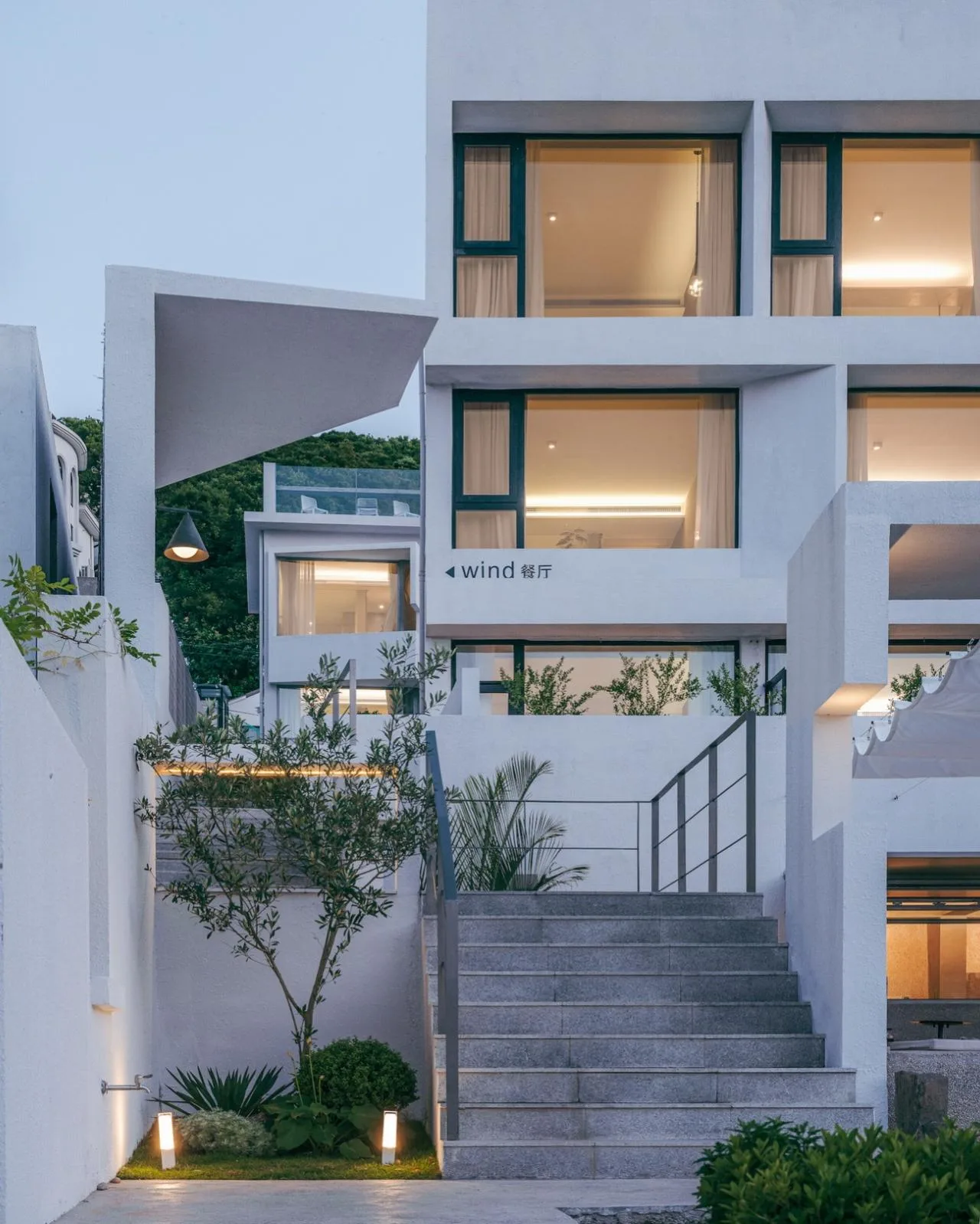
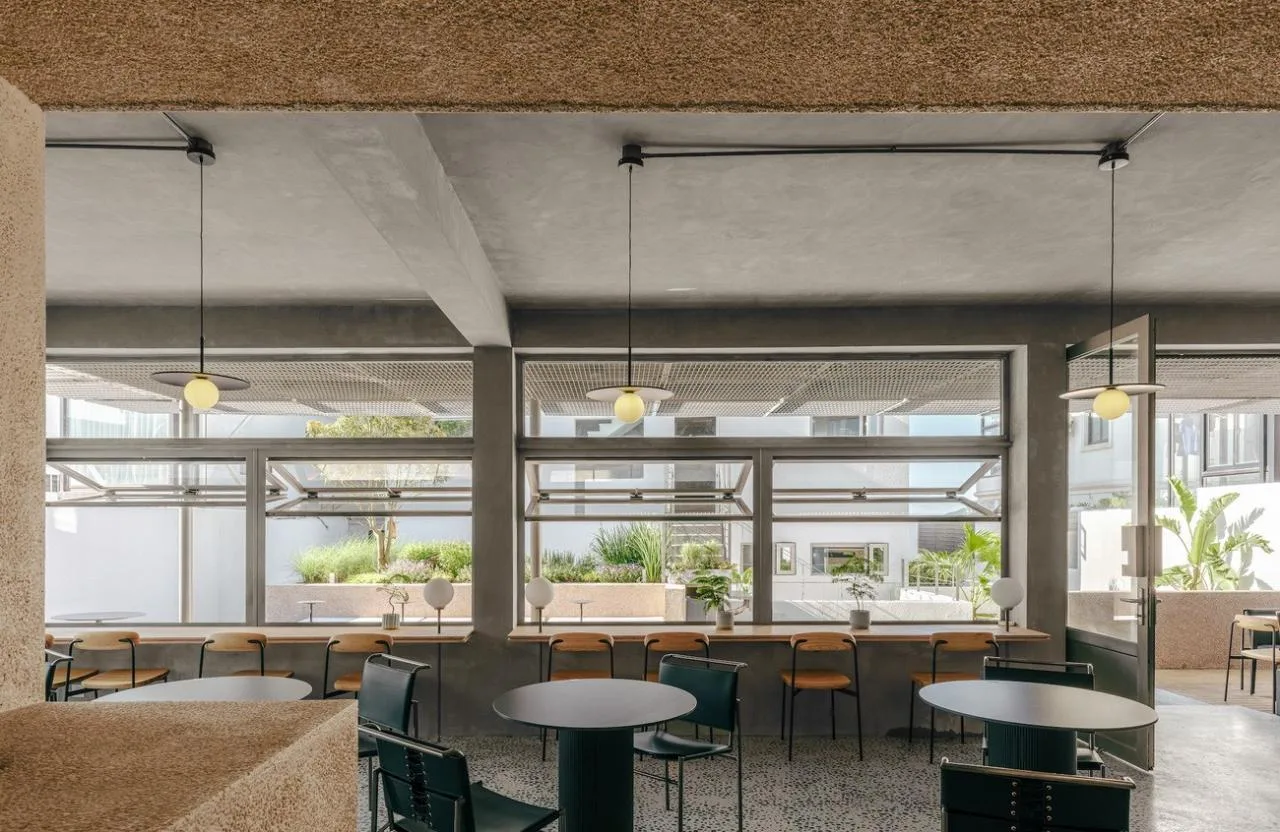
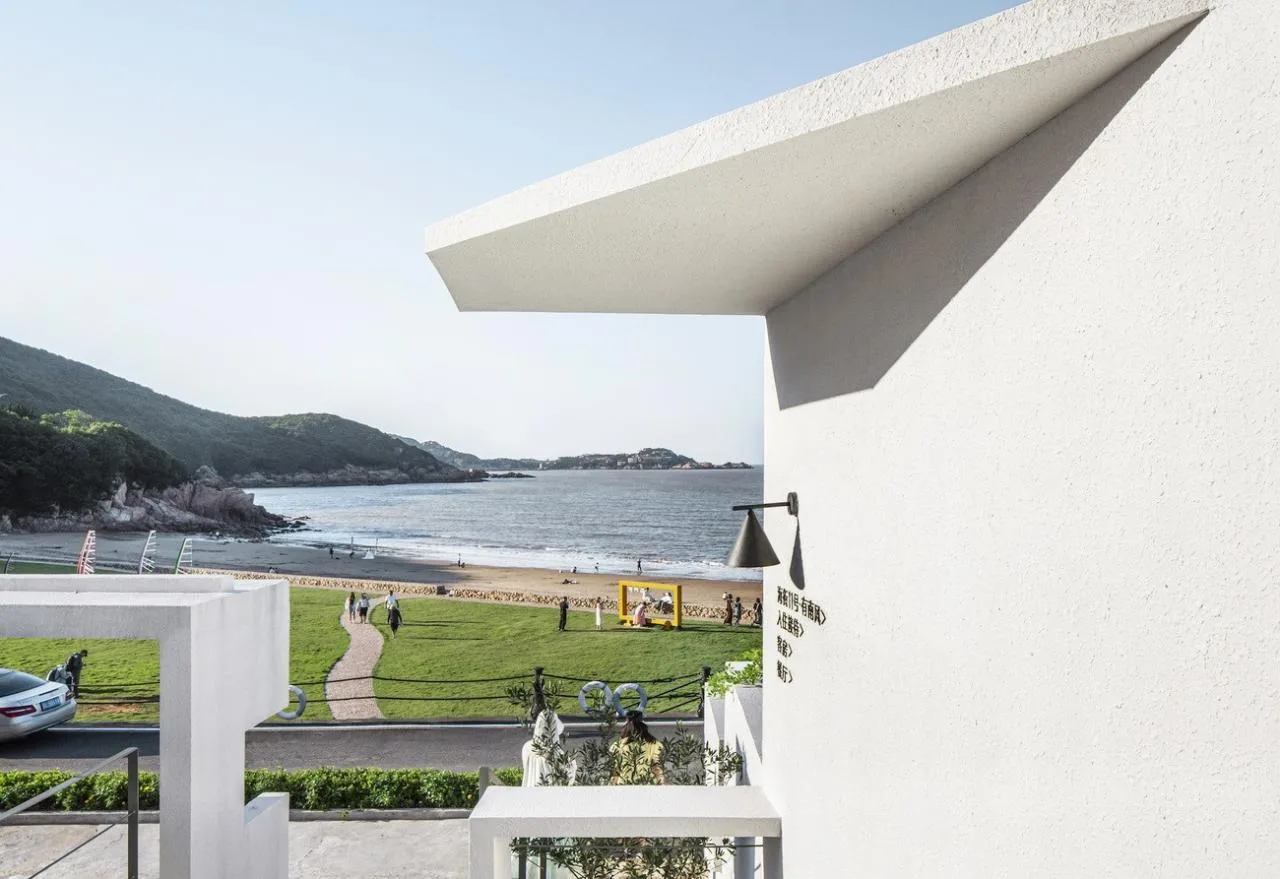
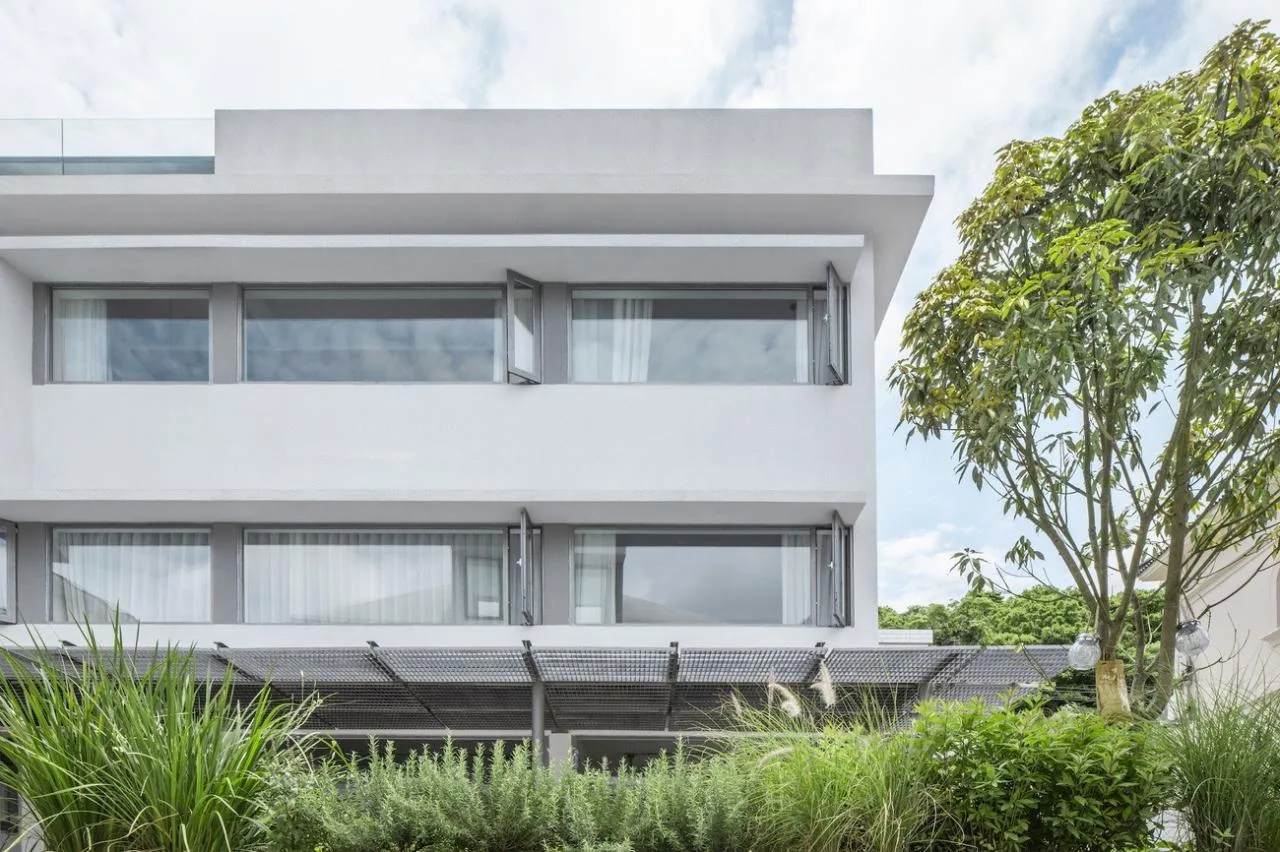
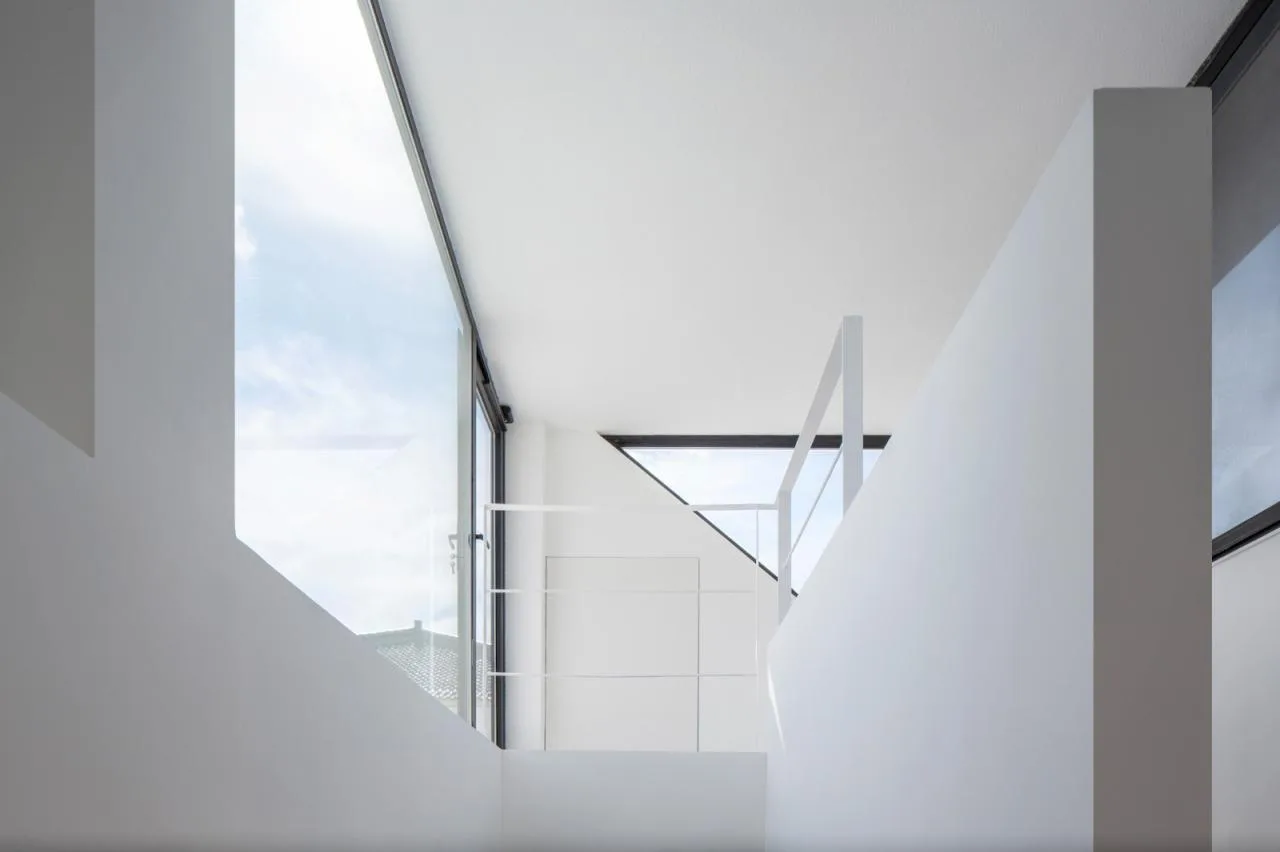
Balancing sea views and budget constraints, the seaside building retains its original square windows with minor elevation adjustments. The mountain-side tower features horizontal long windows inspired by the Stein House, complemented by full-length sun visors above. These strong horizontal lines distinguish the building from the surrounding uniform houses and help counteract the disorder caused by unchecked development.
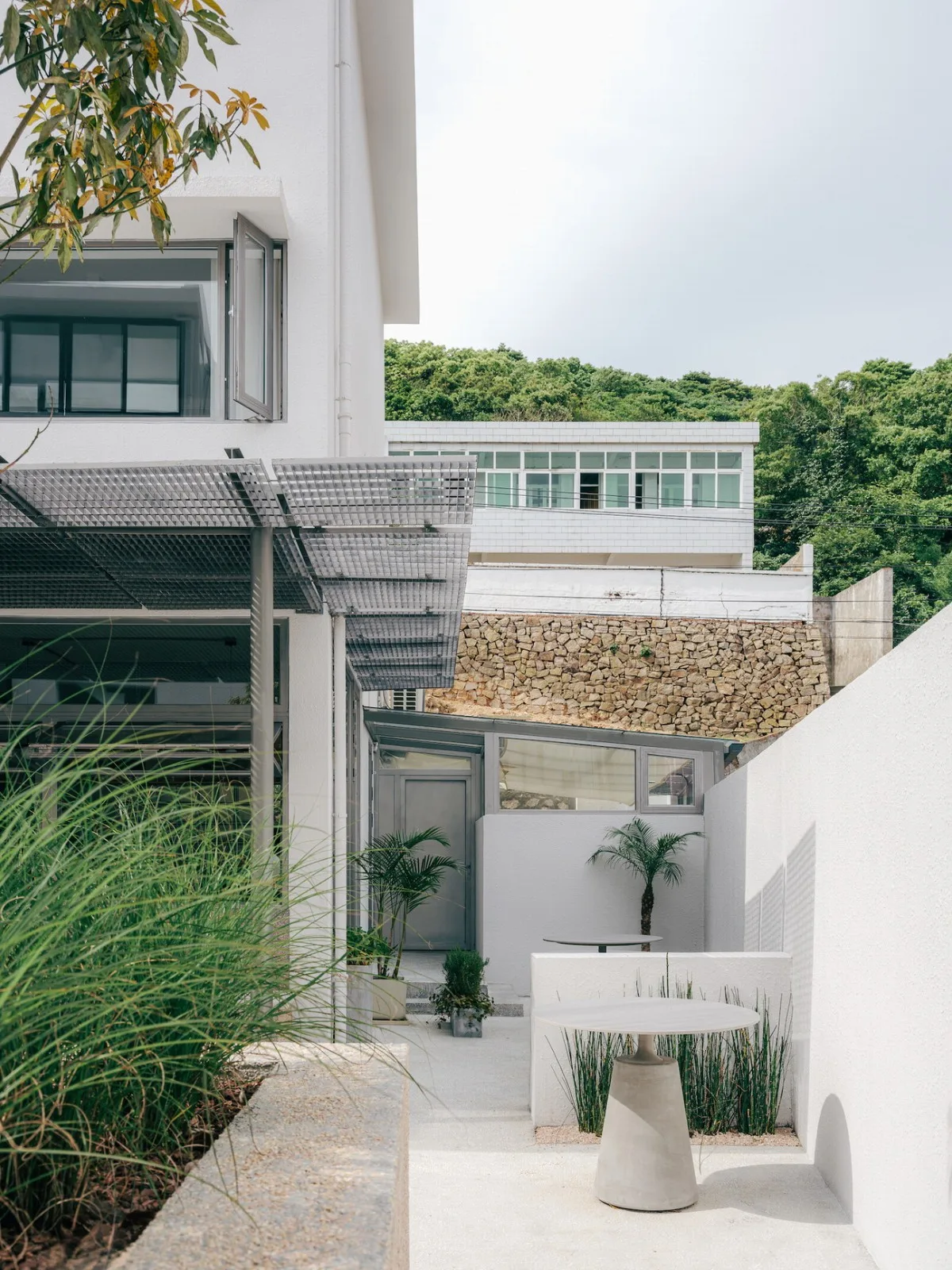
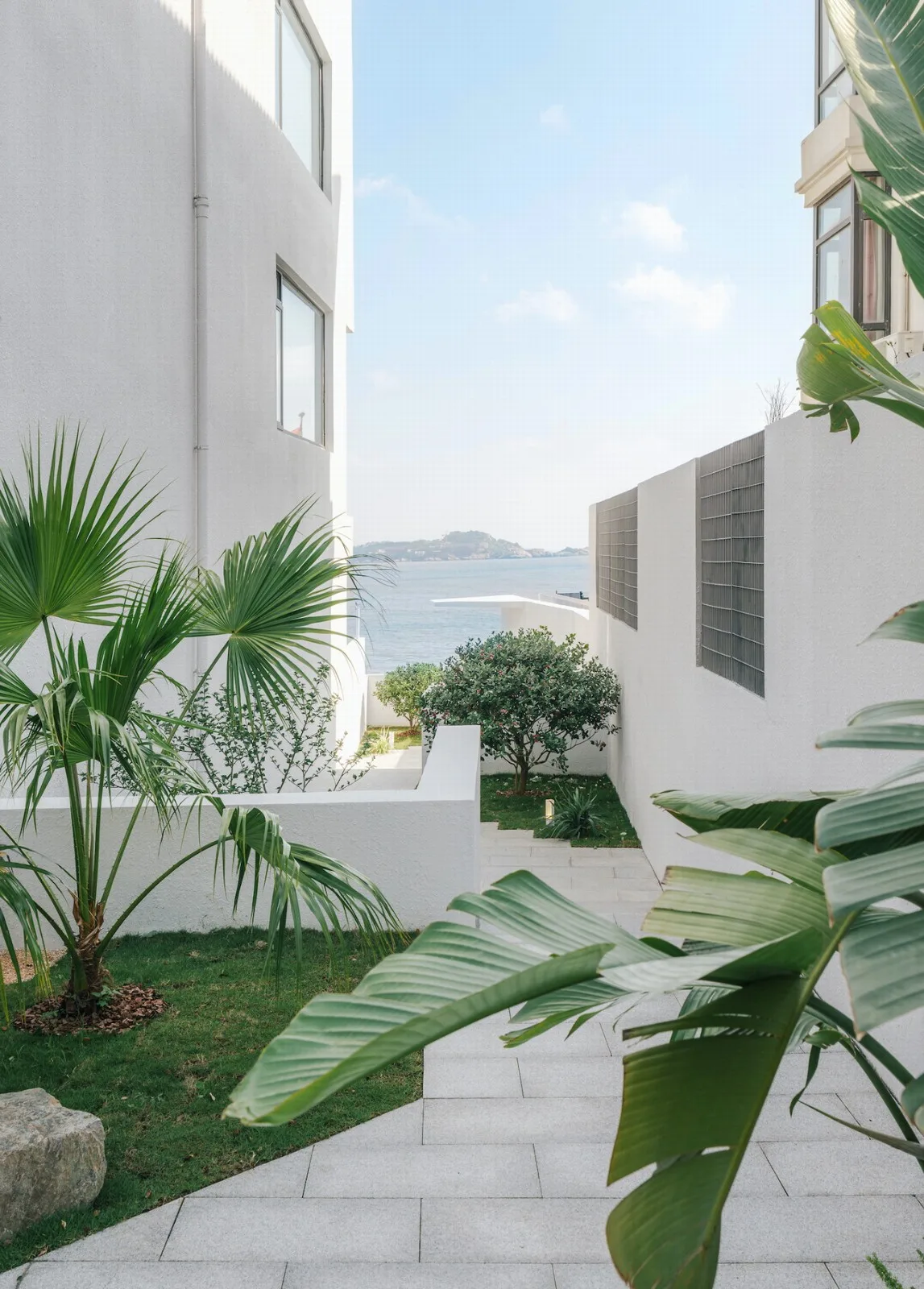
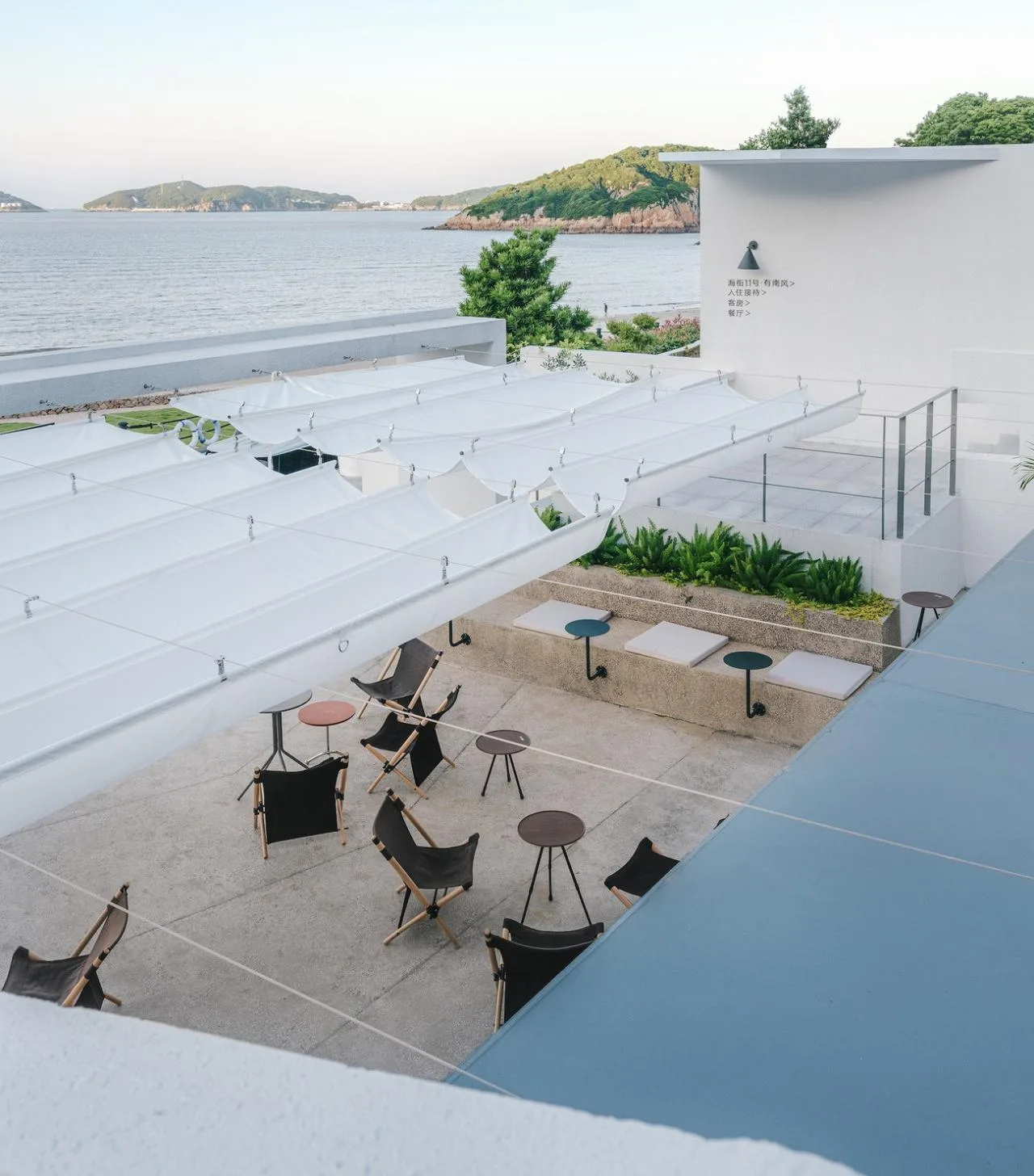
The project’s material palette reflects a restrained and human-centered approach. Cement-textured walls and floors, common in Jiangsu and Zhejiang regions, form the base, enhanced by subtle variations in aggregate shapes and colors. This traditional material is combined with lightweight multilayer panels and metal plates, giving a modern expression to the fishing village’s charm.
1. Terrazzo and Washed Stone
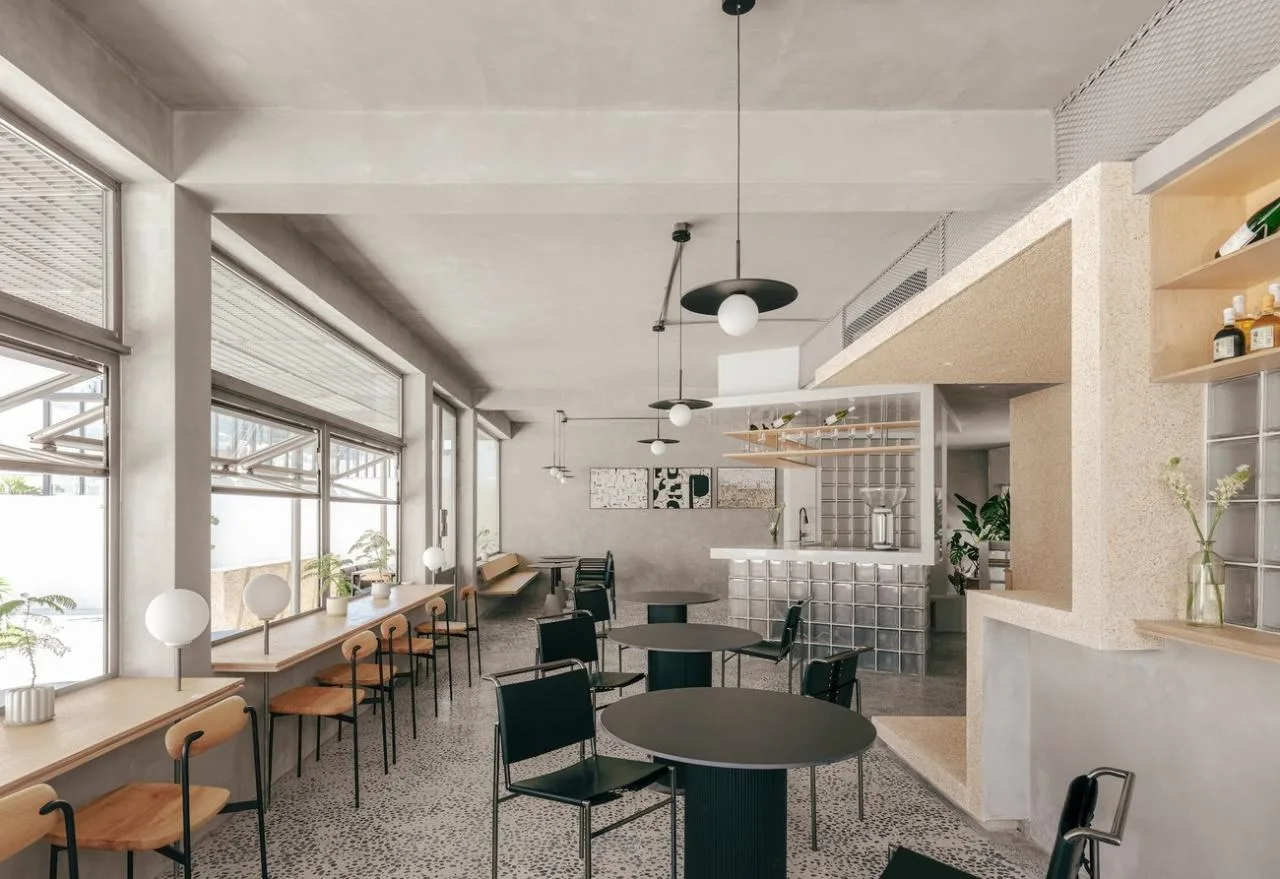
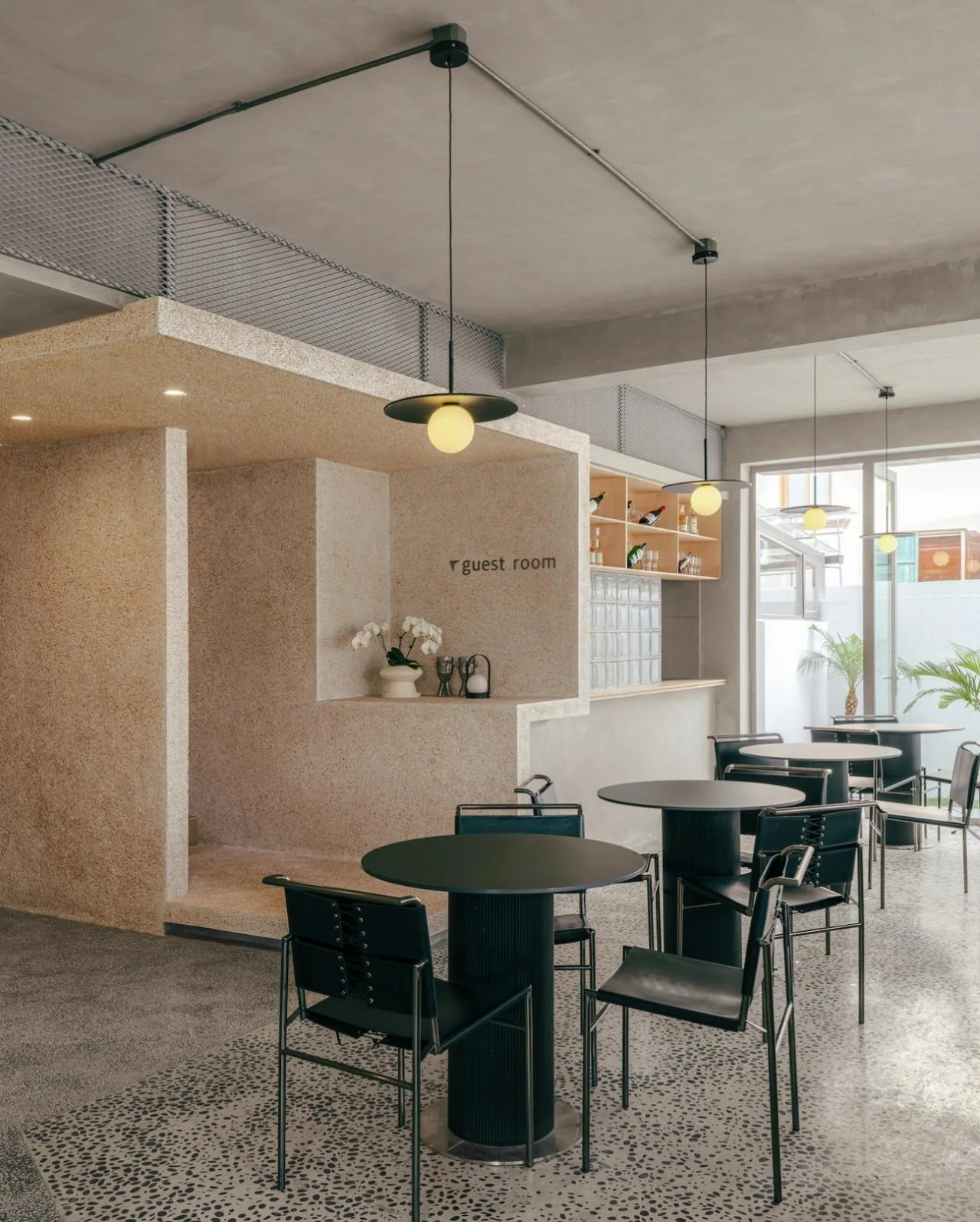
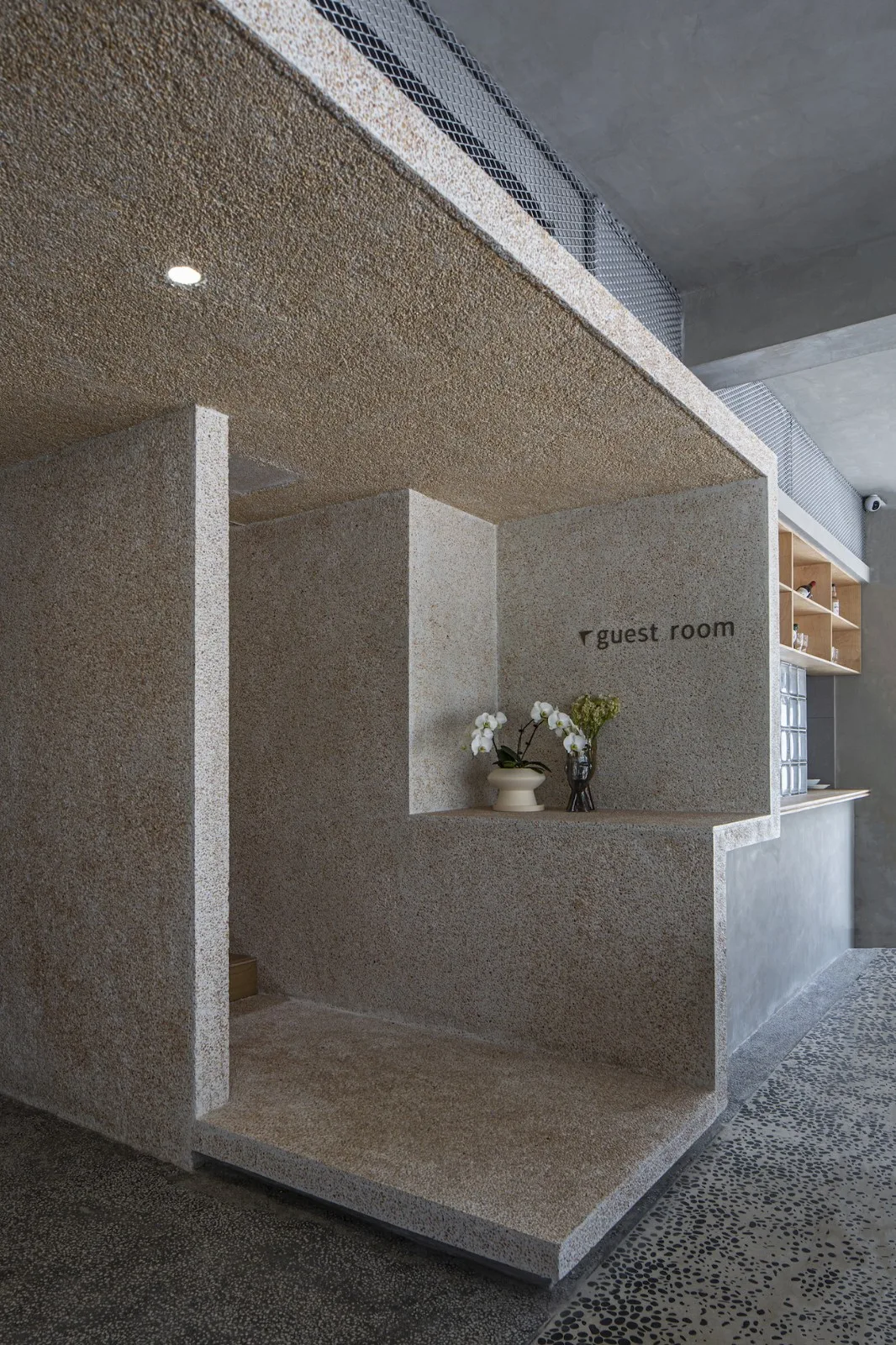
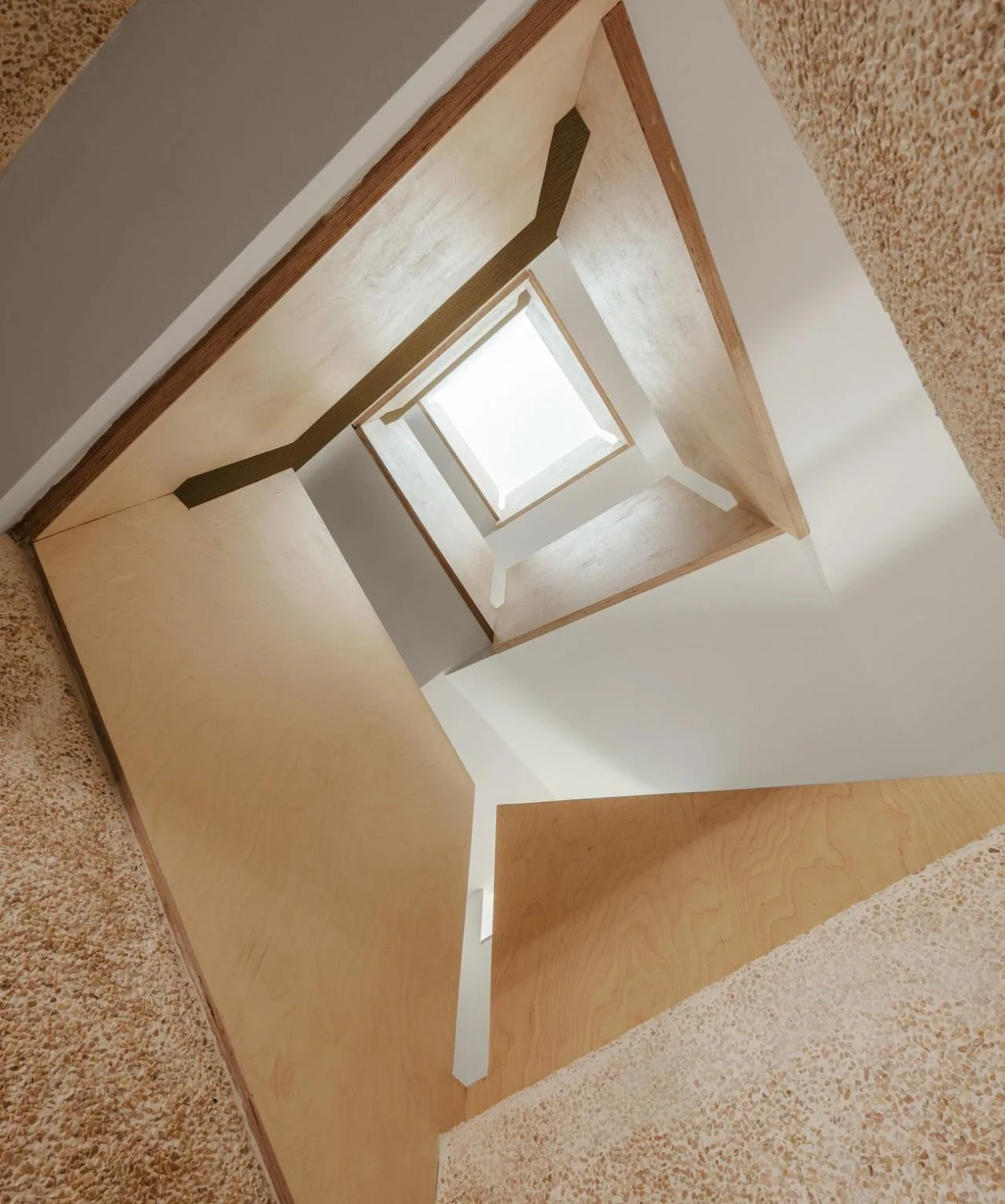
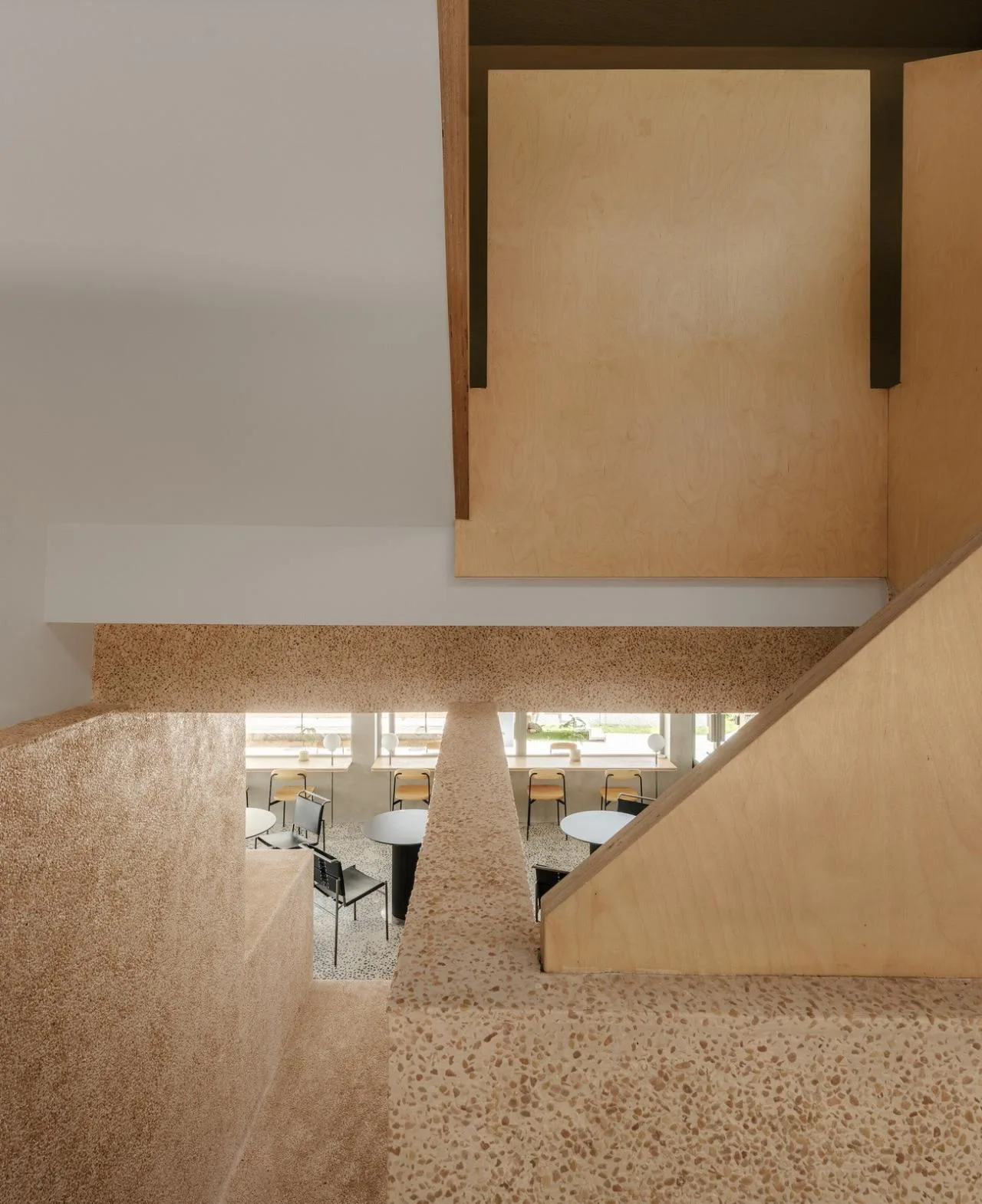
These materials were commonly used for floors and walls in southern regions during the 1980s and 1990s. We utilized two types of washed stones and four varieties of terrazzo across public areas, corridors, and guest rooms. The restaurant and tea shop feature black sedimentary rocks formed by erosion as aggregates, paired with white and grey cement.
2. Plaster and Cement Walls
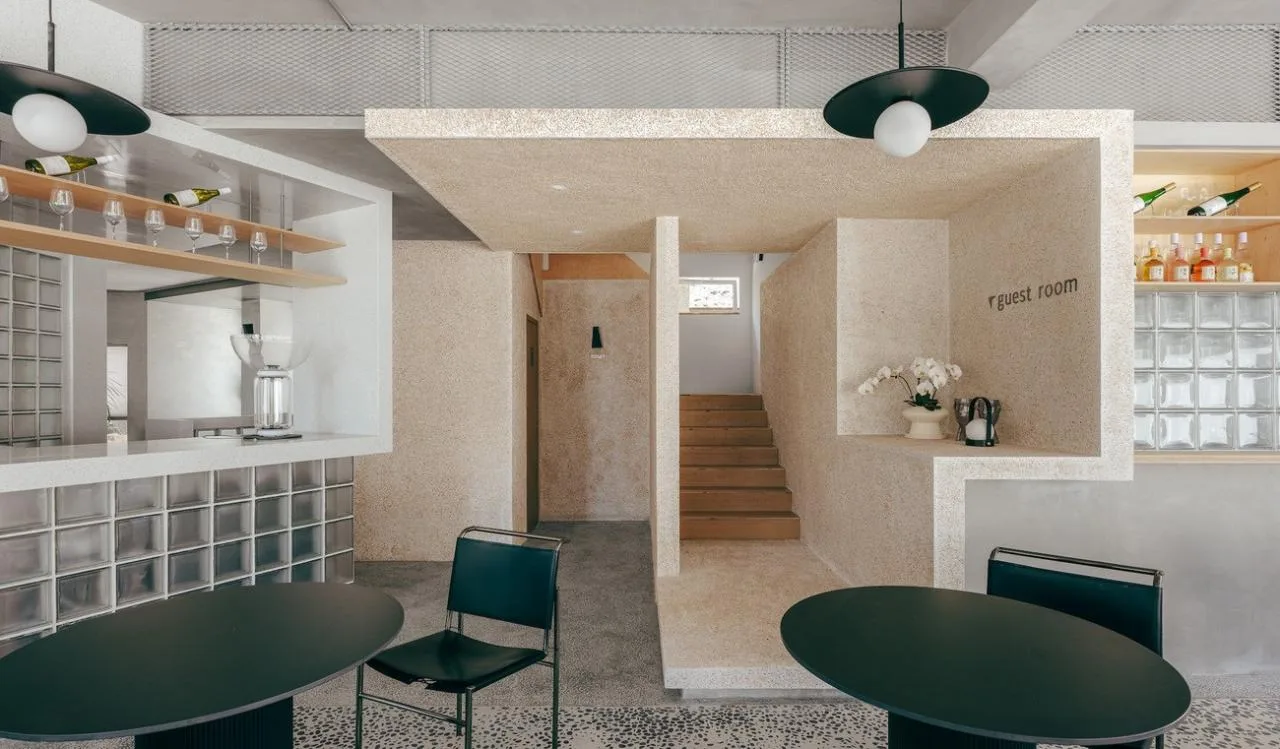
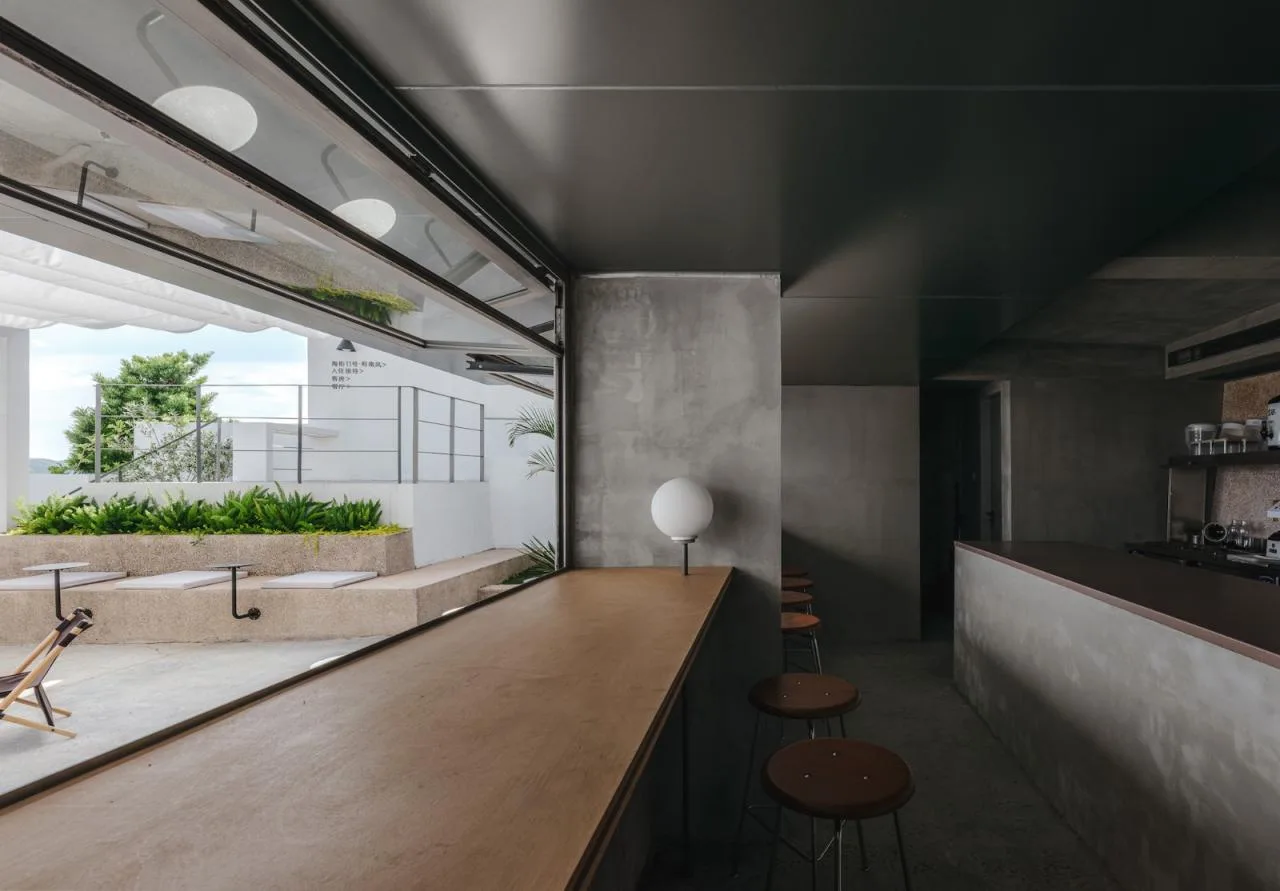
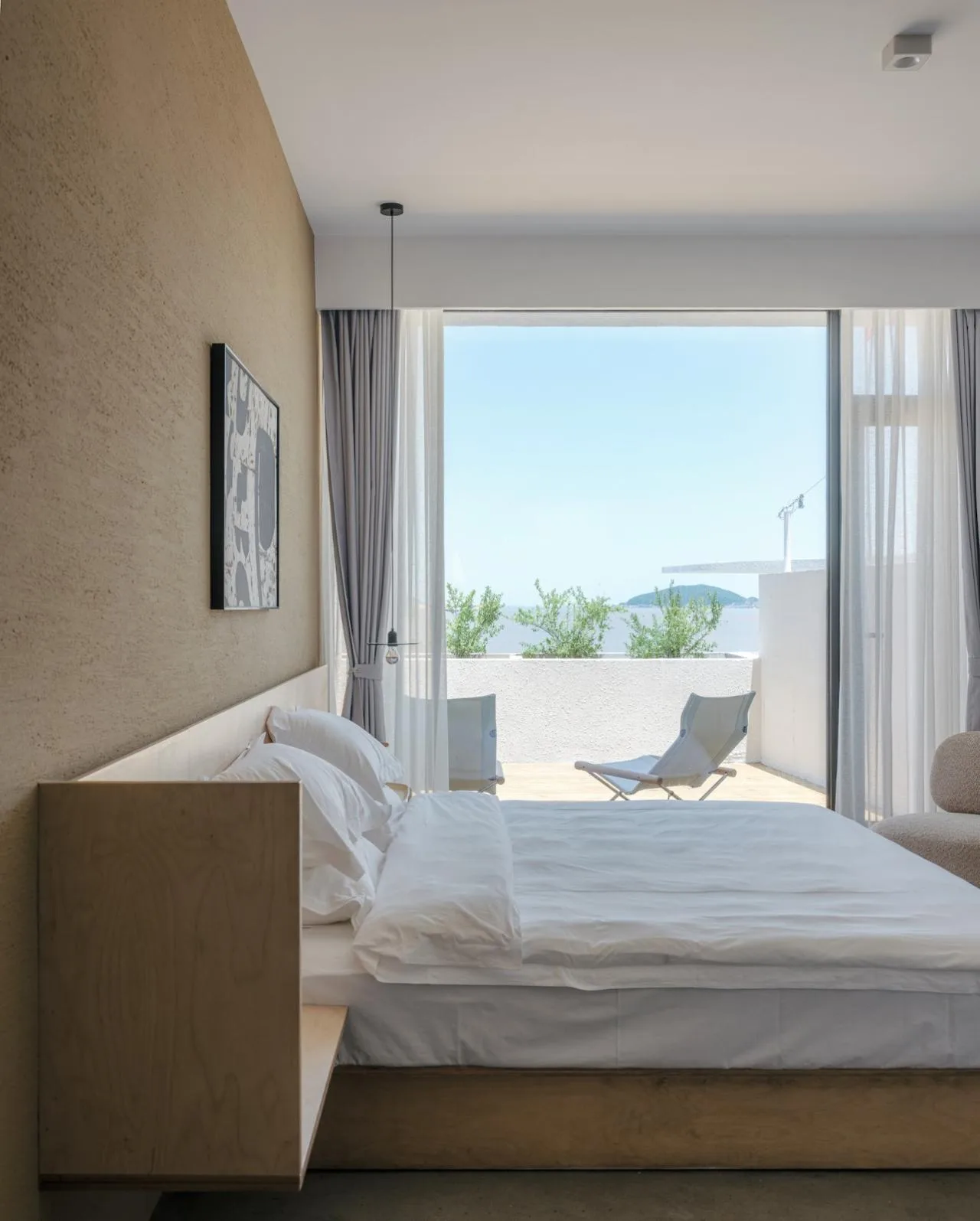
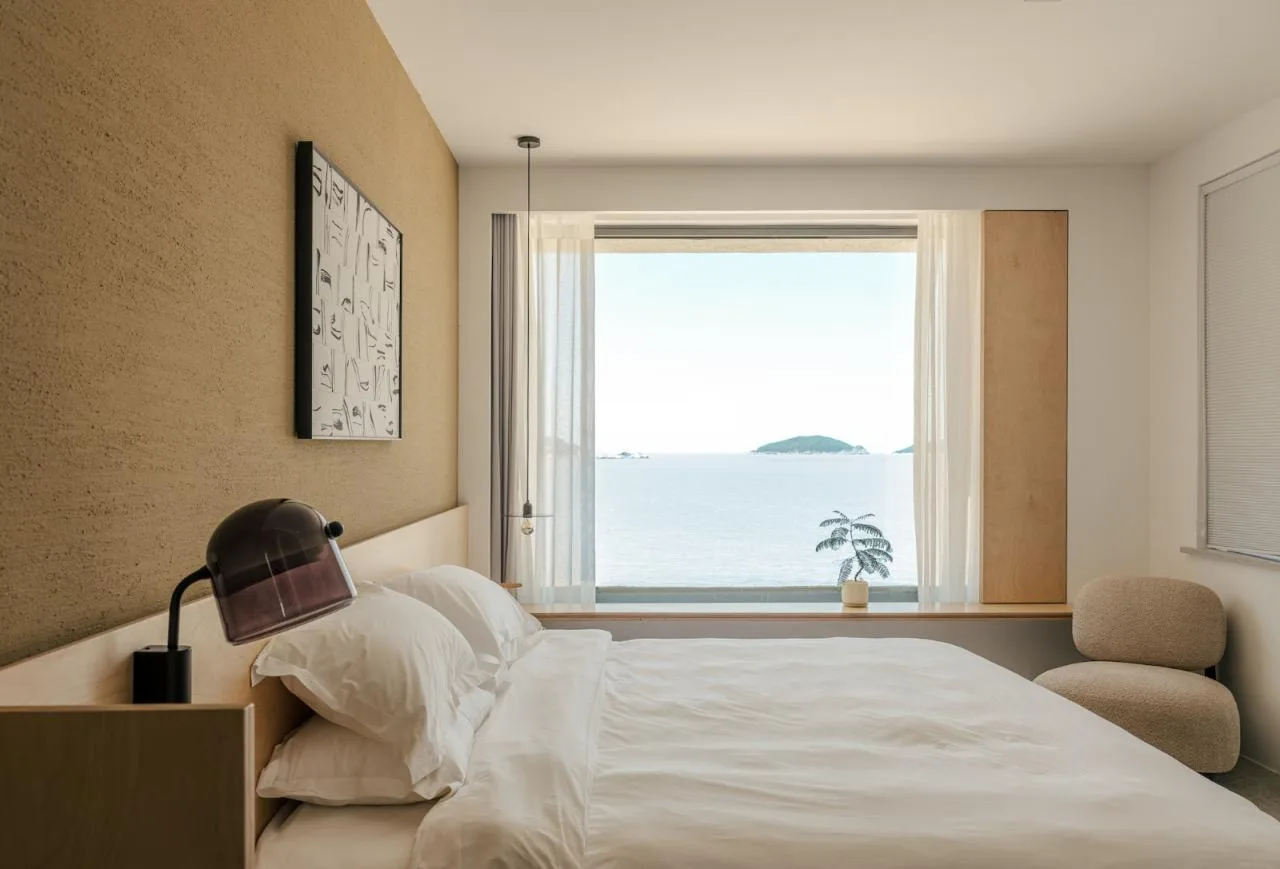
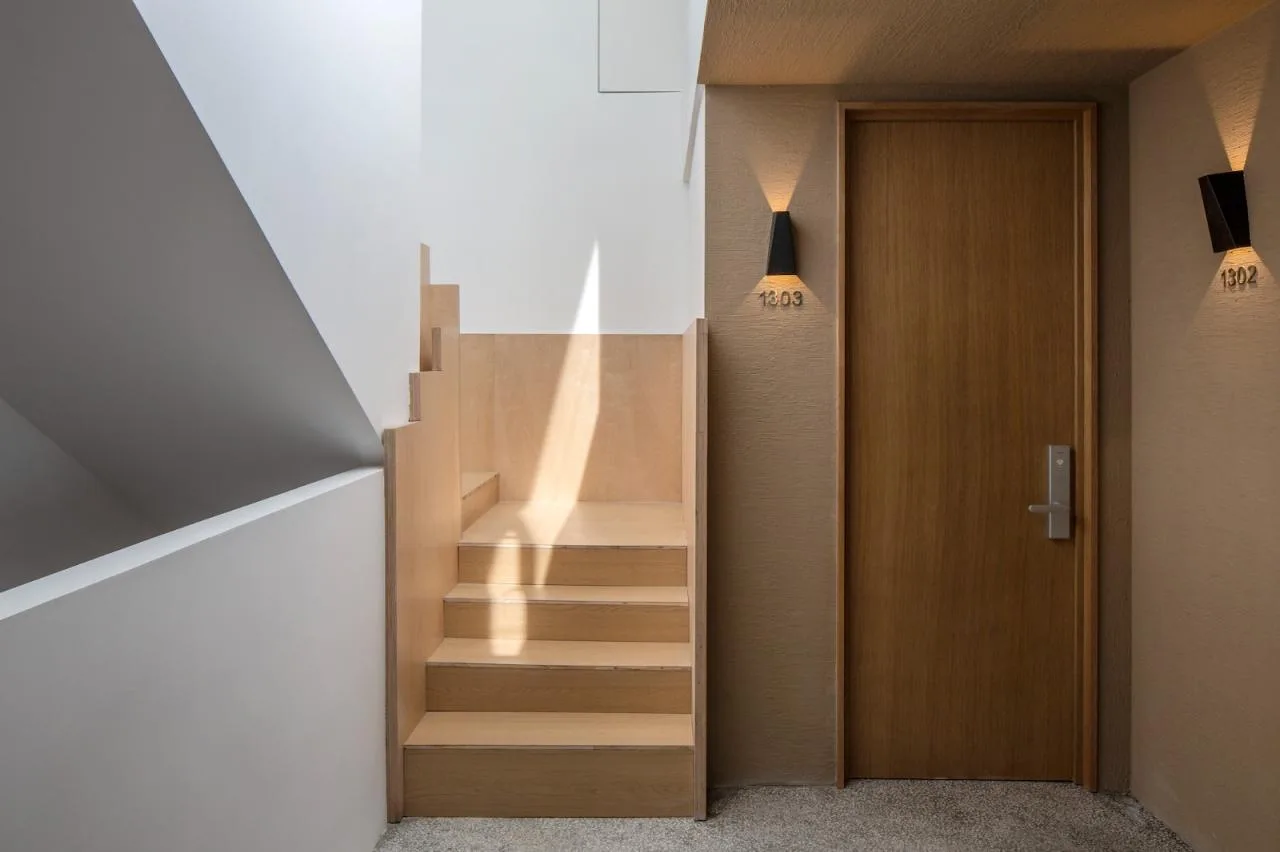
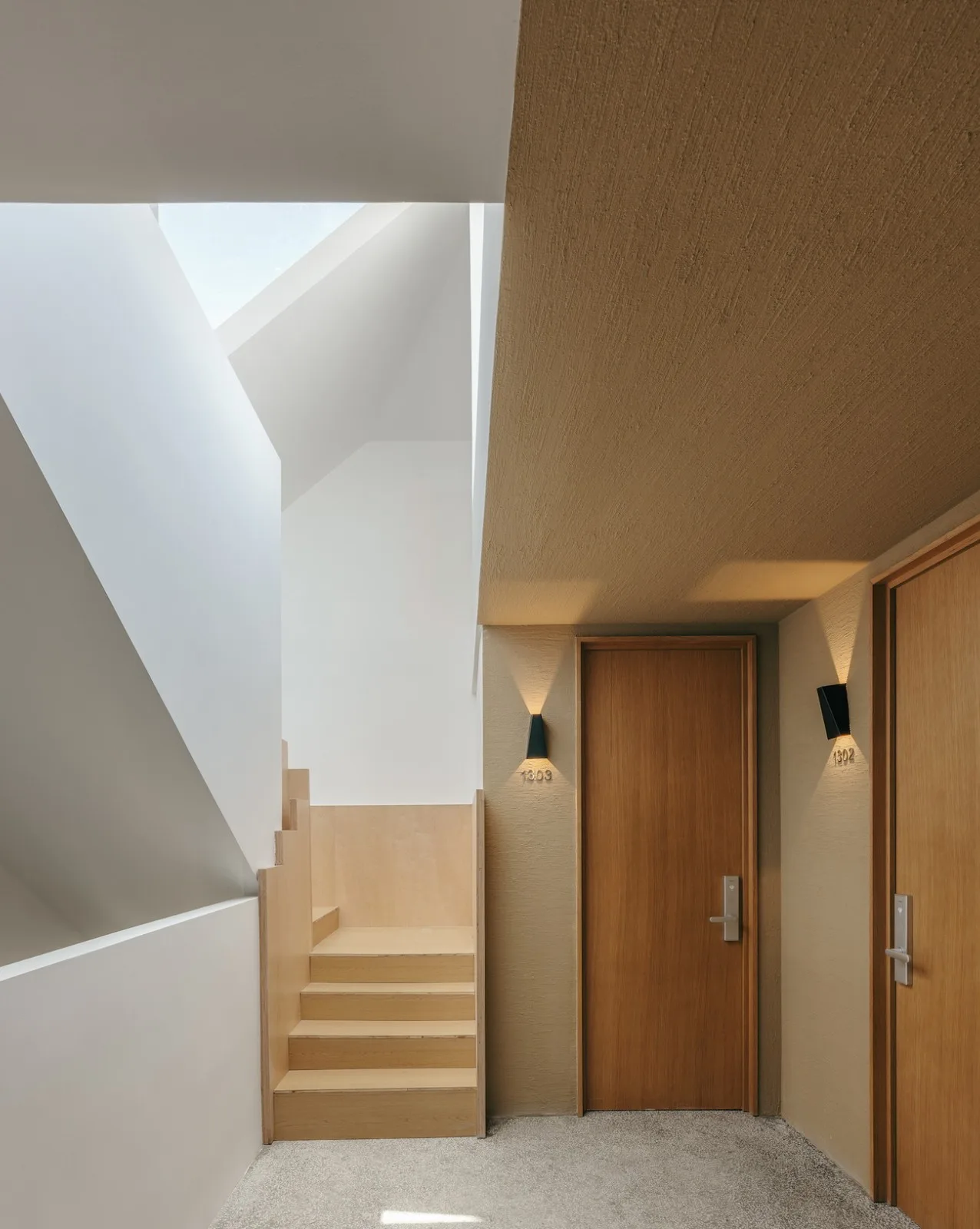
Once a simple and common decorative method in rural areas, cement-scraped walls and ceilings are applied in public reception spaces such as restaurants and tea shops. Brown plaster is used in corridors and guest room interiors, reflecting the colors of nearby rocks and beaches.
3. Warm-Colored Multilayer Composite Panels
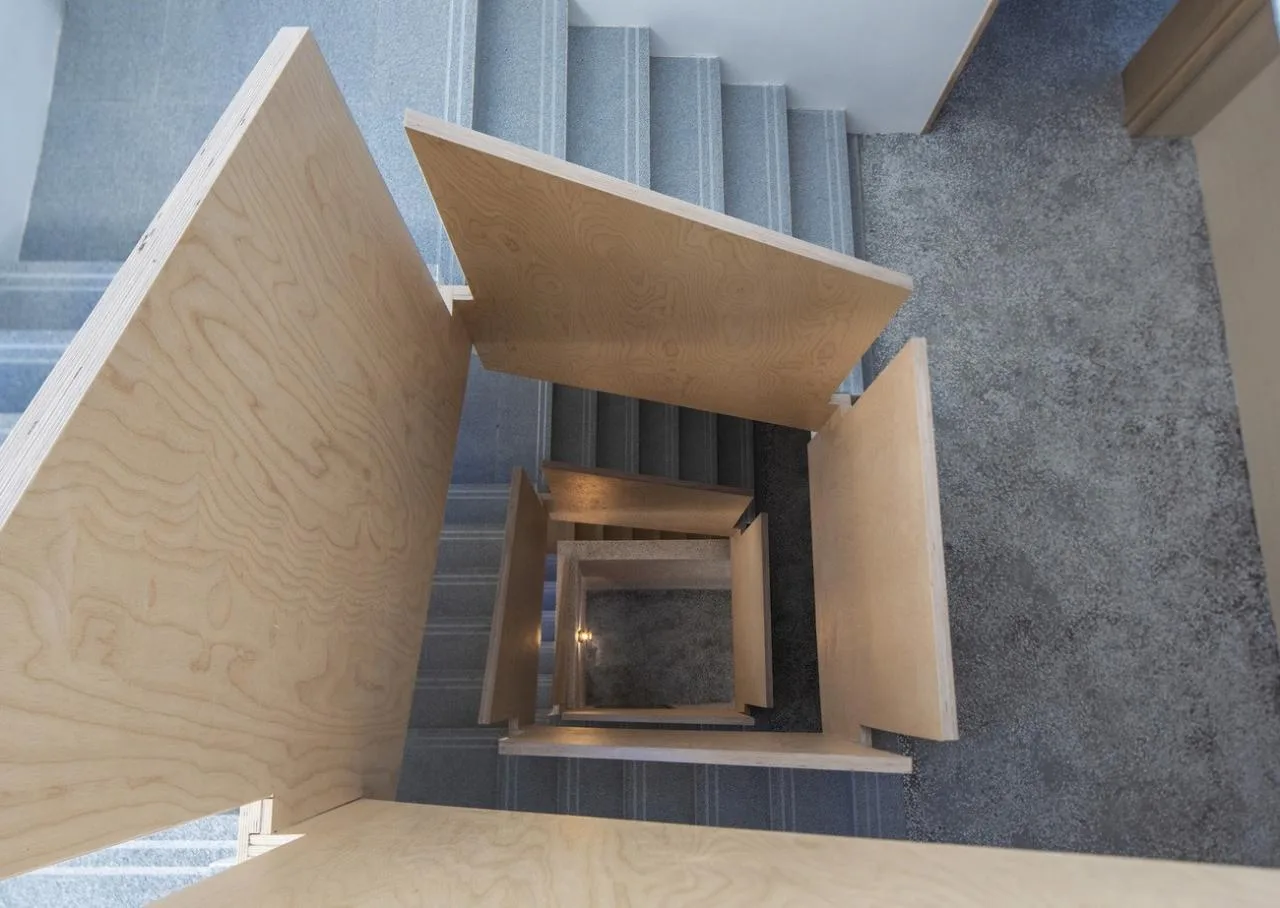
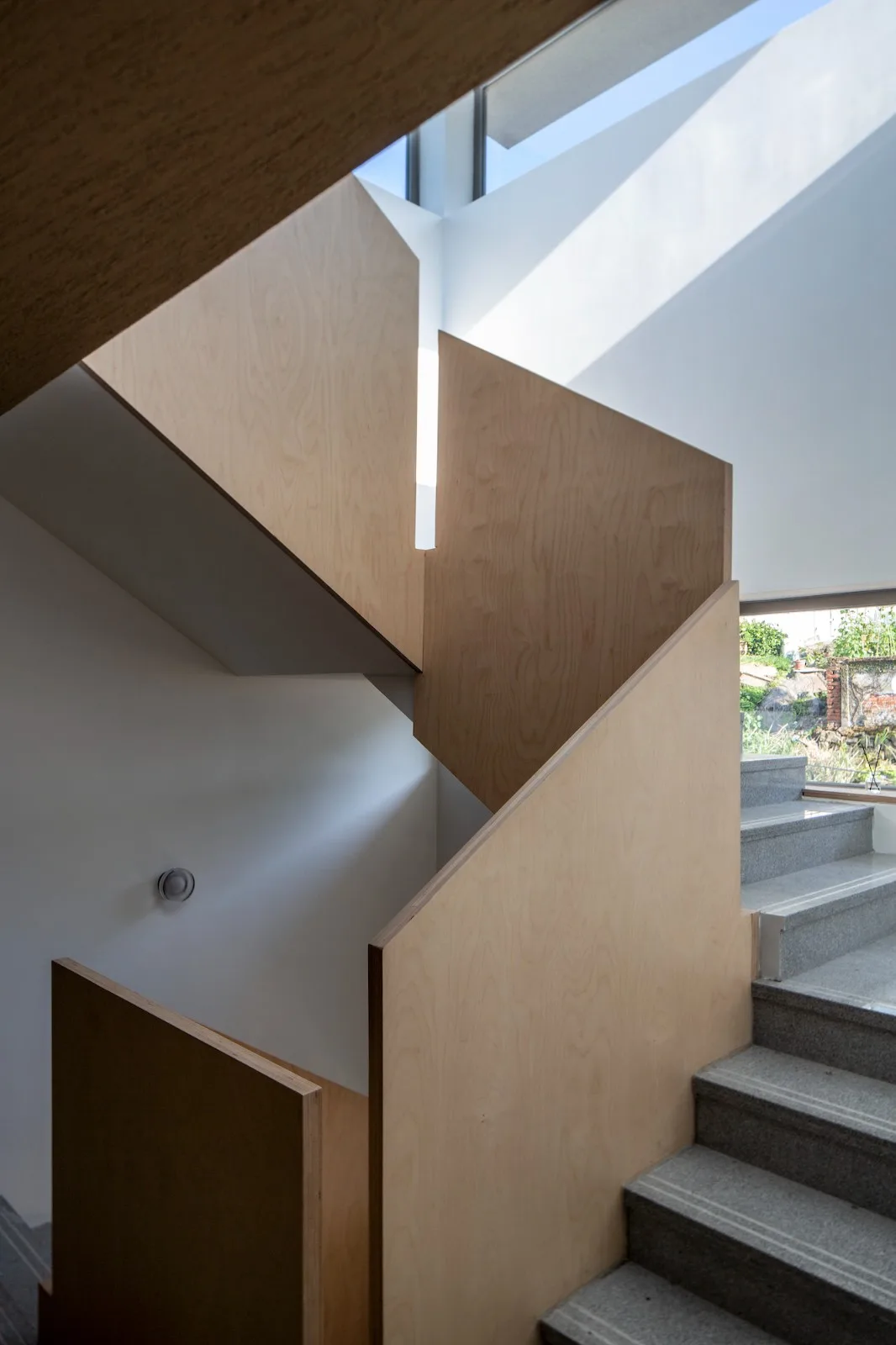
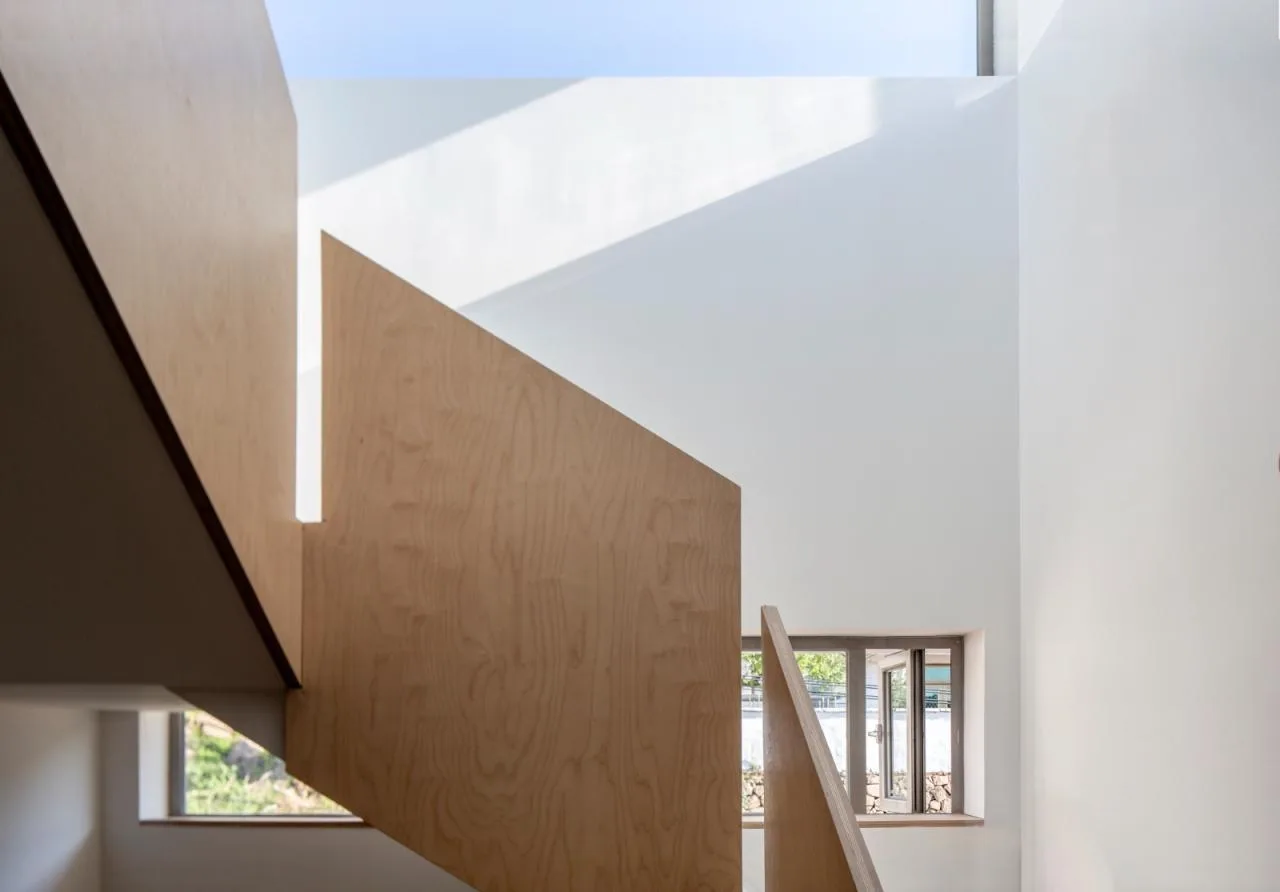
These are extensively used indoors for stair railings, bench seating, public areas, and guest rooms, forming an integrated fixed furniture system. The wood texture of the panels contrasts with the cement surfaces, creating a warmer and more inviting human-scale environment.
4. Metal Elements – Steel Grilles and Aluminum Panels
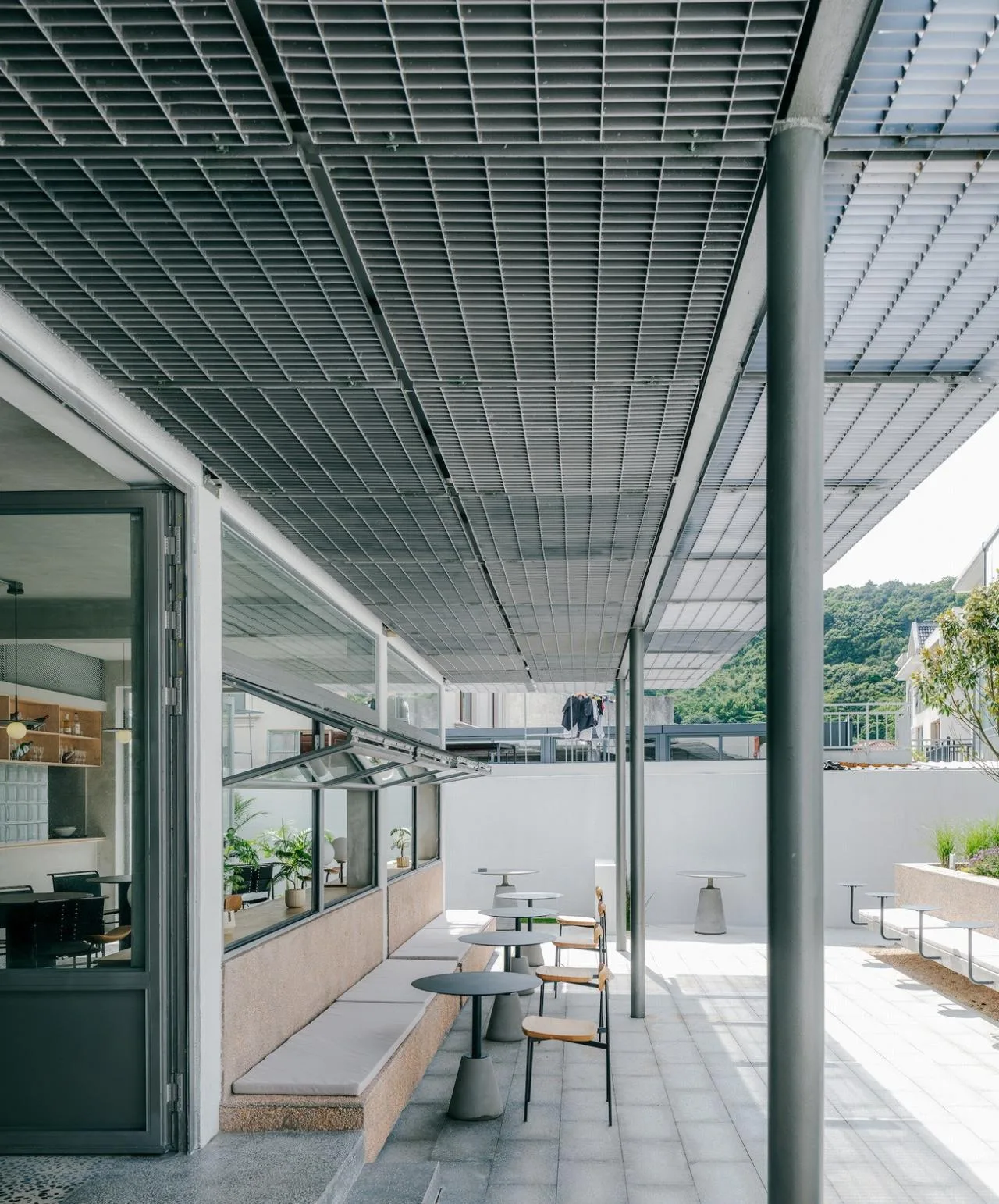
Inspired by the steel sunshade structures common throughout the village, these materials were adapted for the steel grille canopy in the central courtyard and the overpass linking the courtyard to the second floor of the seaside building. The silver-gray metal adds a youthful energy and contemporary feel to the white building facades.
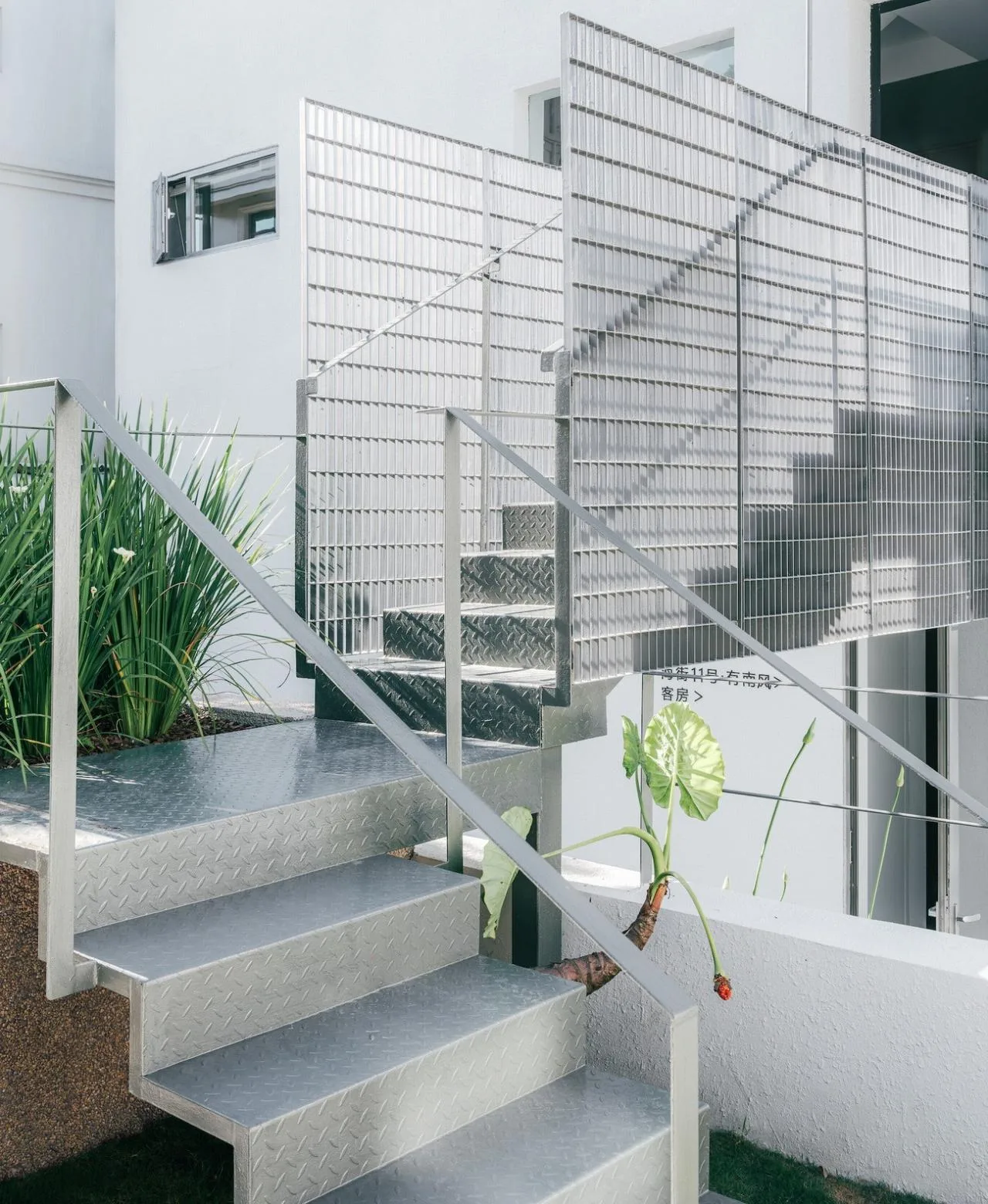
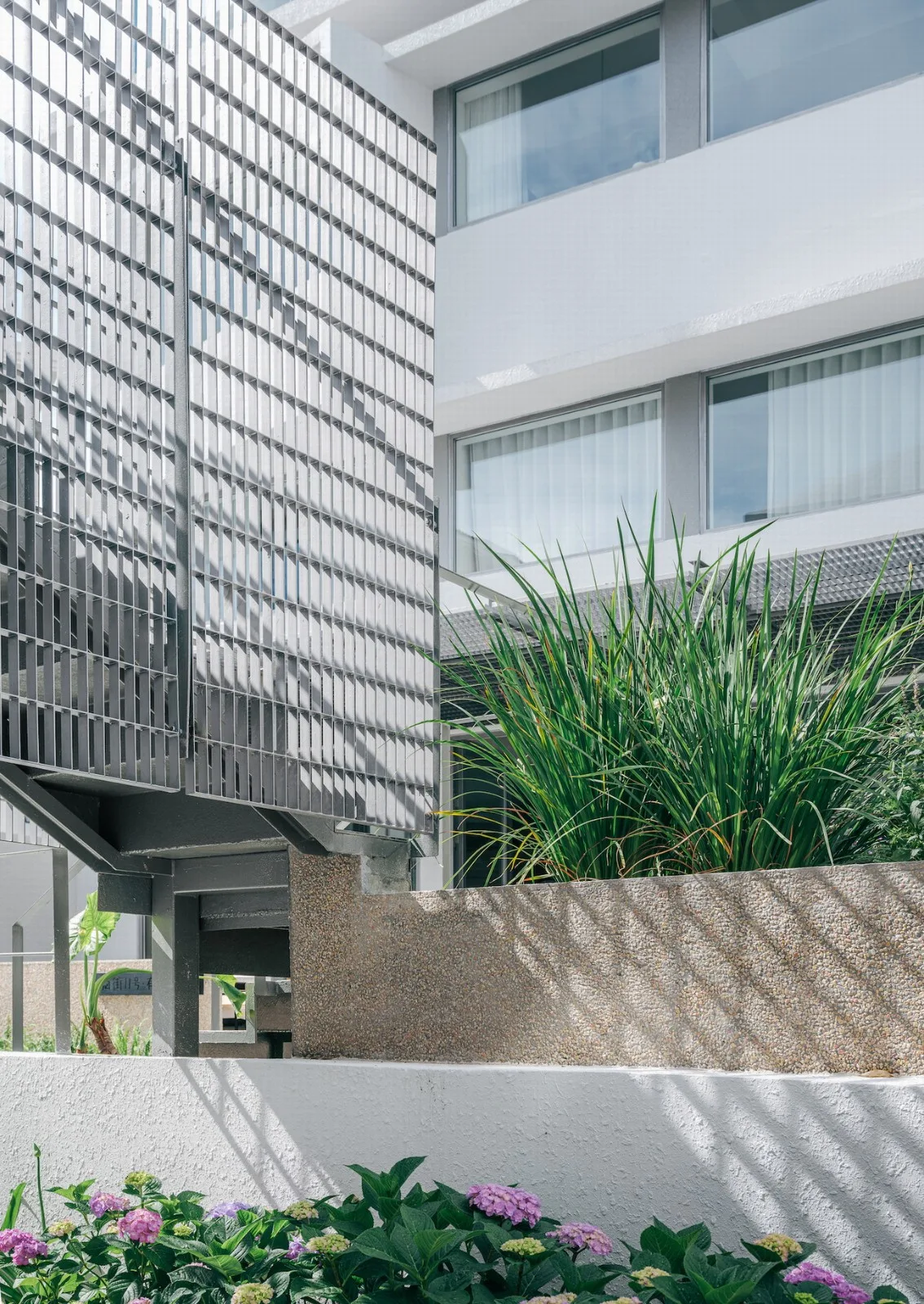
Rural projects with natural scenery face a significant challenge: balancing the expectations of tourists and locals regarding natural resource development and cultural preservation. Visitors seek an authentic fishing village experience, while locals desire the familiarity and convenience of urban life.
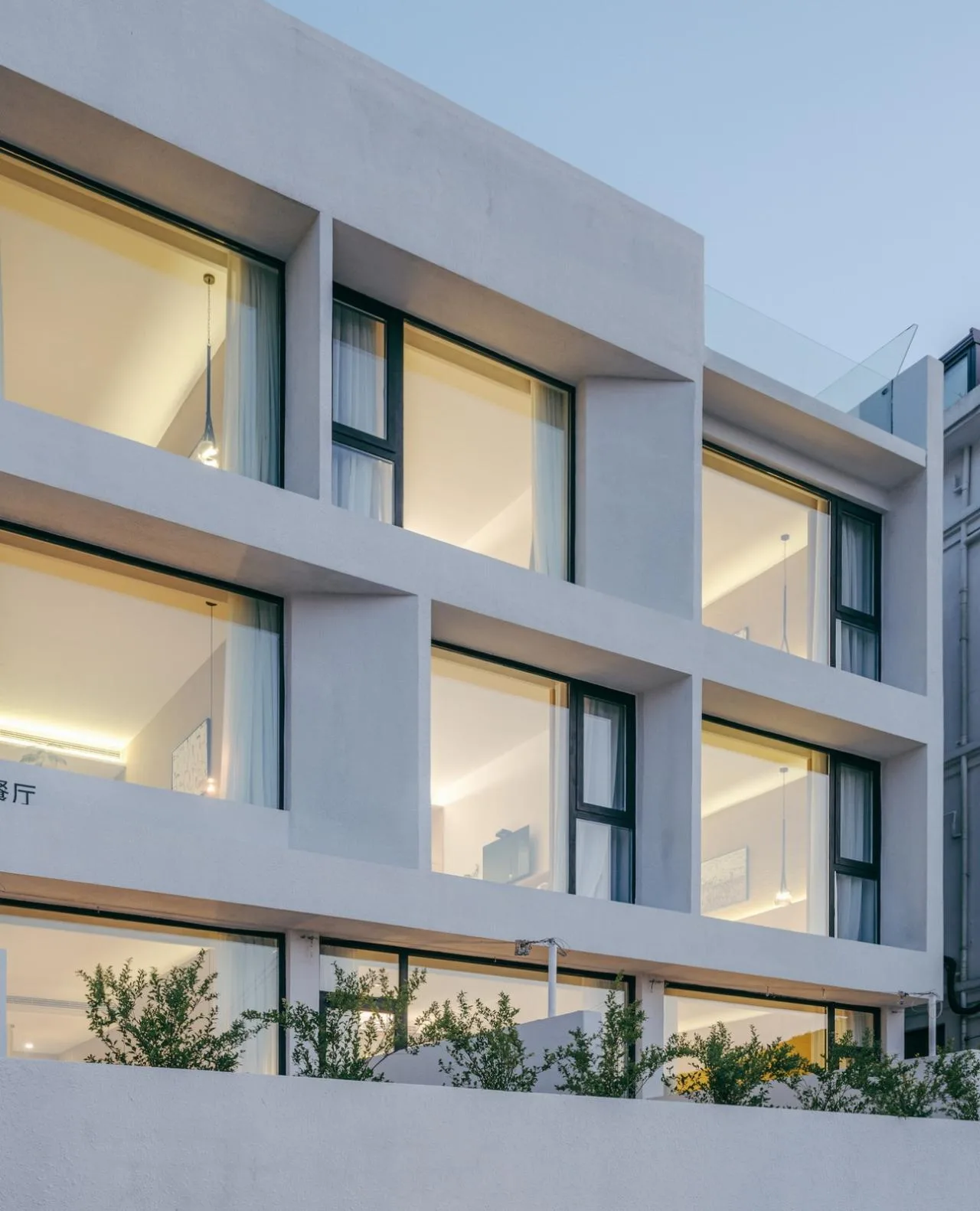
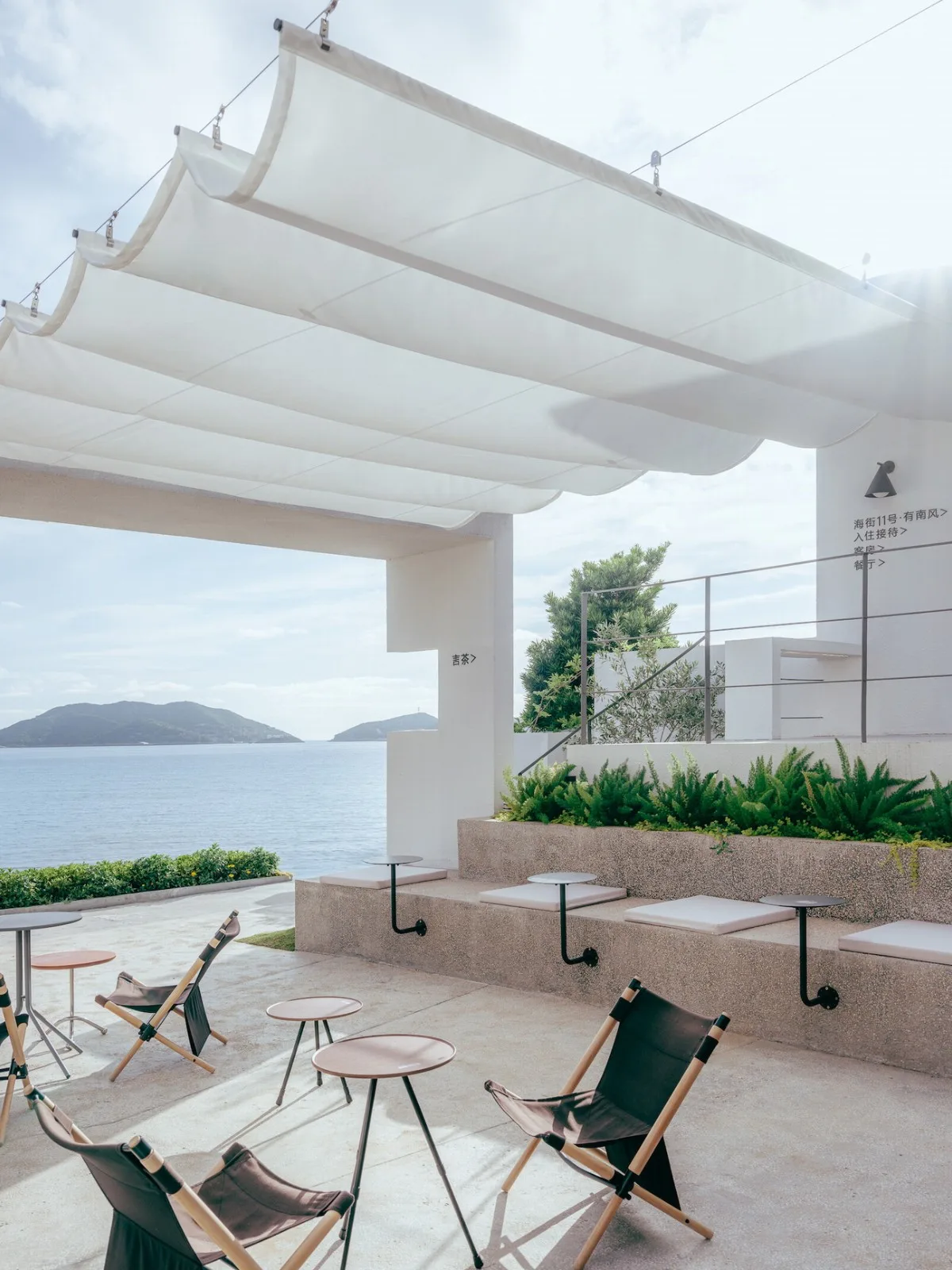
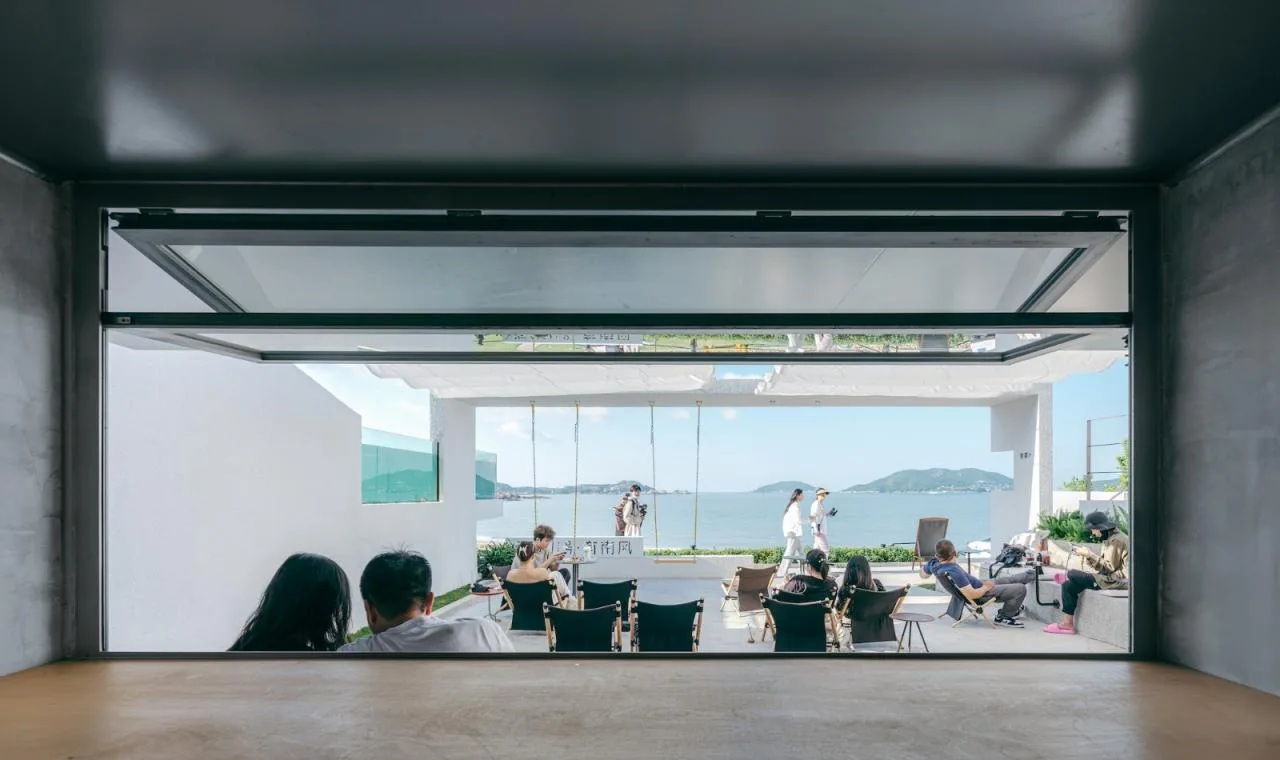
After the fishing village style was largely replaced by three-bay white houses, our goal was to offer a more refined homestay experience. Through thoughtful spatial organization and material selection, we aim to fulfill people’s imagination of contemporary island life. This project also explores a slow, relaxed leisure lifestyle, aligned with the long-term development vision for Zhangzhou Village and the surrounding bay.
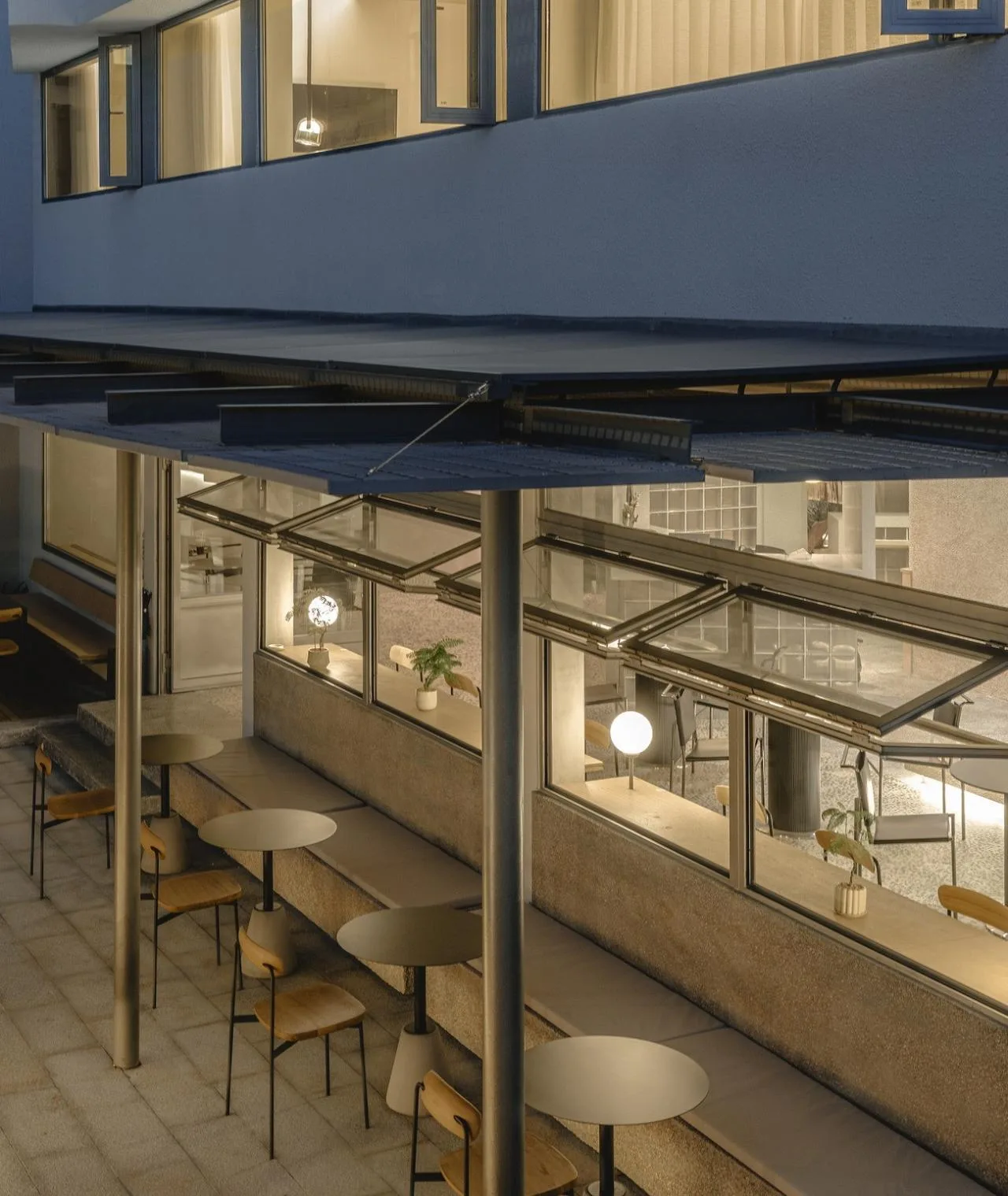
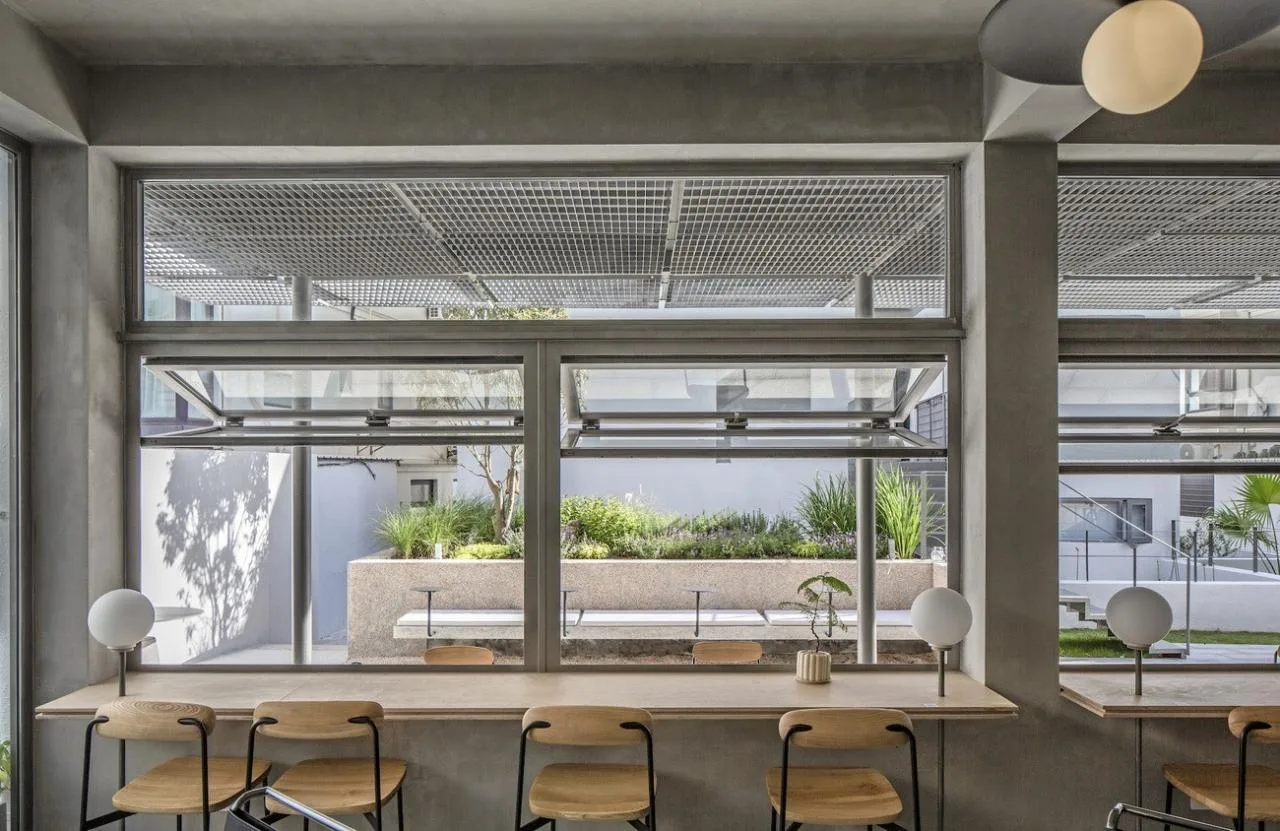
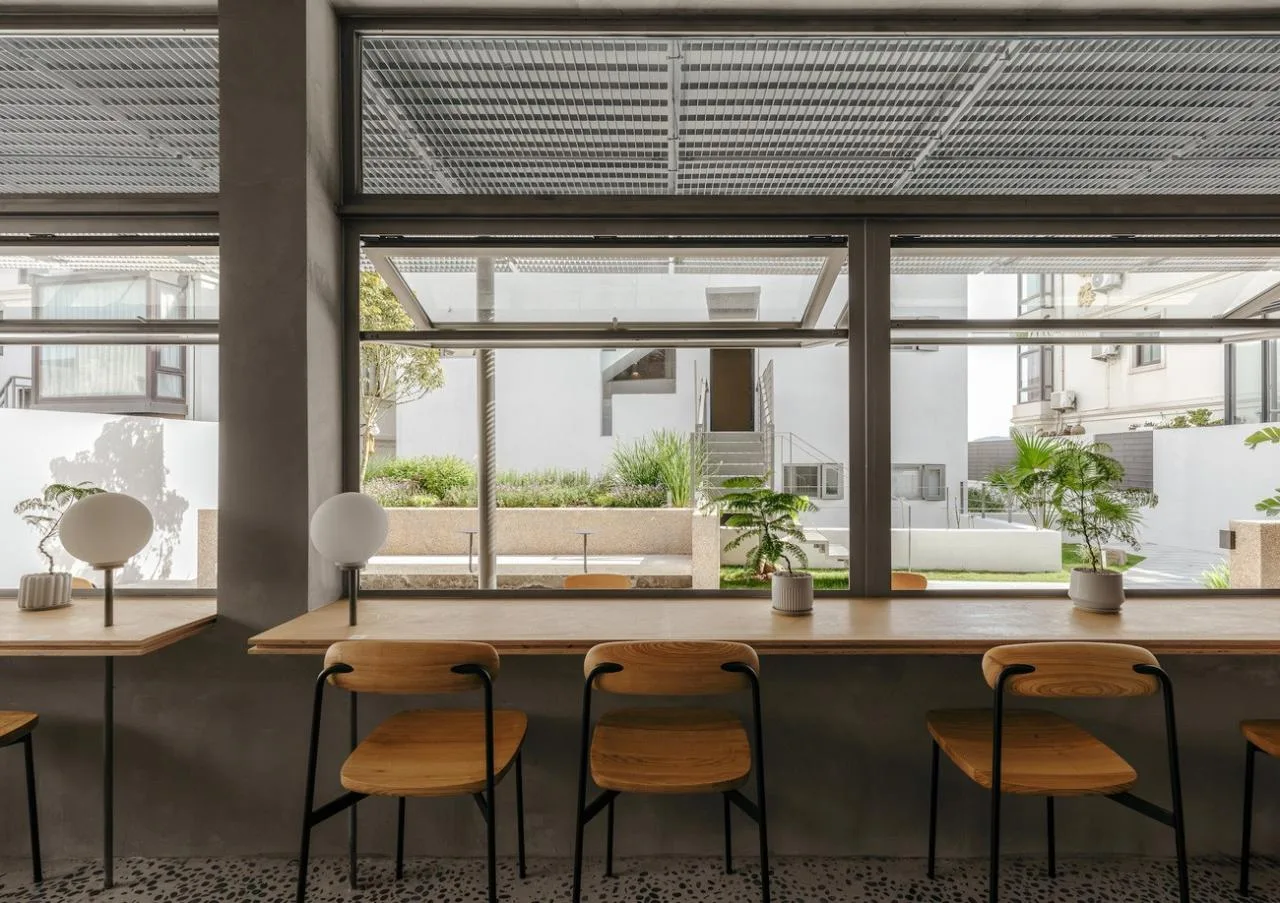
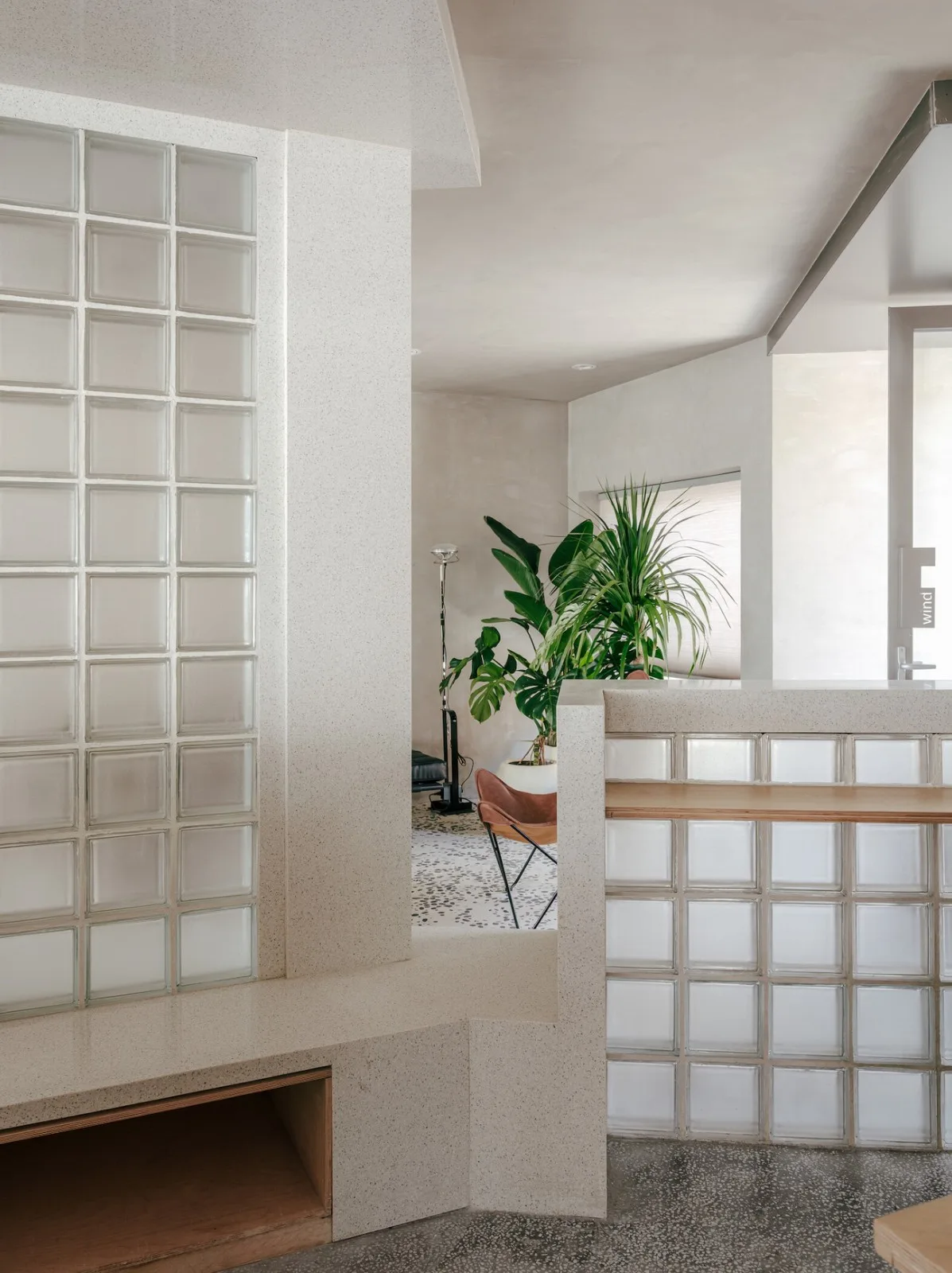
If the first phase at No. 11 Hai Street created a lifestyle-oriented homestay atmosphere, the second phase, “With South Wind,” adds a relaxed and enjoyable vacation experience. Ascend the steps along the trail and feel the cool summer breeze of the southern wind. Observe the movement of people in the courtyard; friends of all ages swinging in front of the tea shop; as night falls, young men and women linger on the sea streets and beaches. It feels like a scene from a Hirokazu Eda film—a fragment of peaceful life. This warmth, delicacy, and storytelling provide a persistent force that moves us forward.
Project Drawings
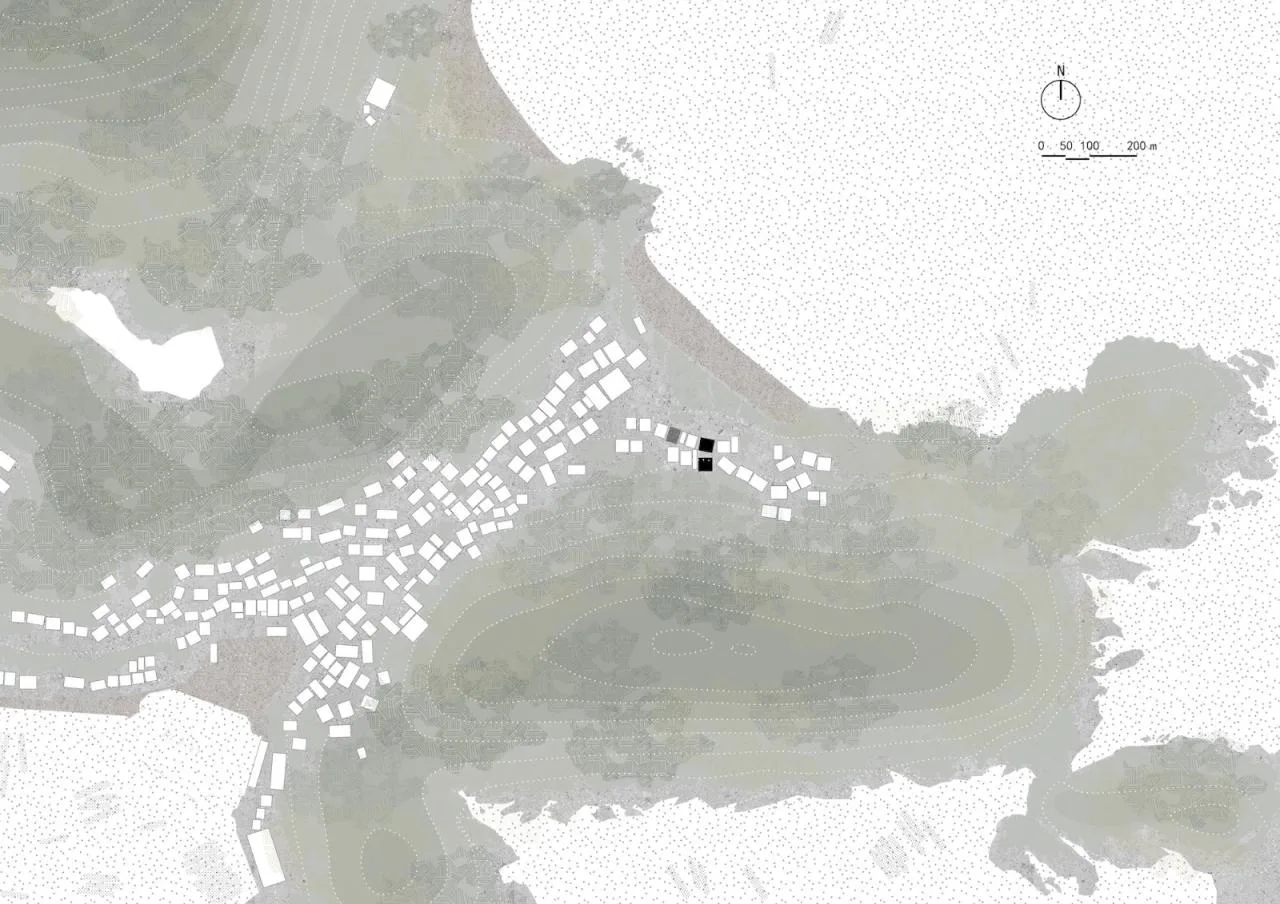
△ Base schematic diagram
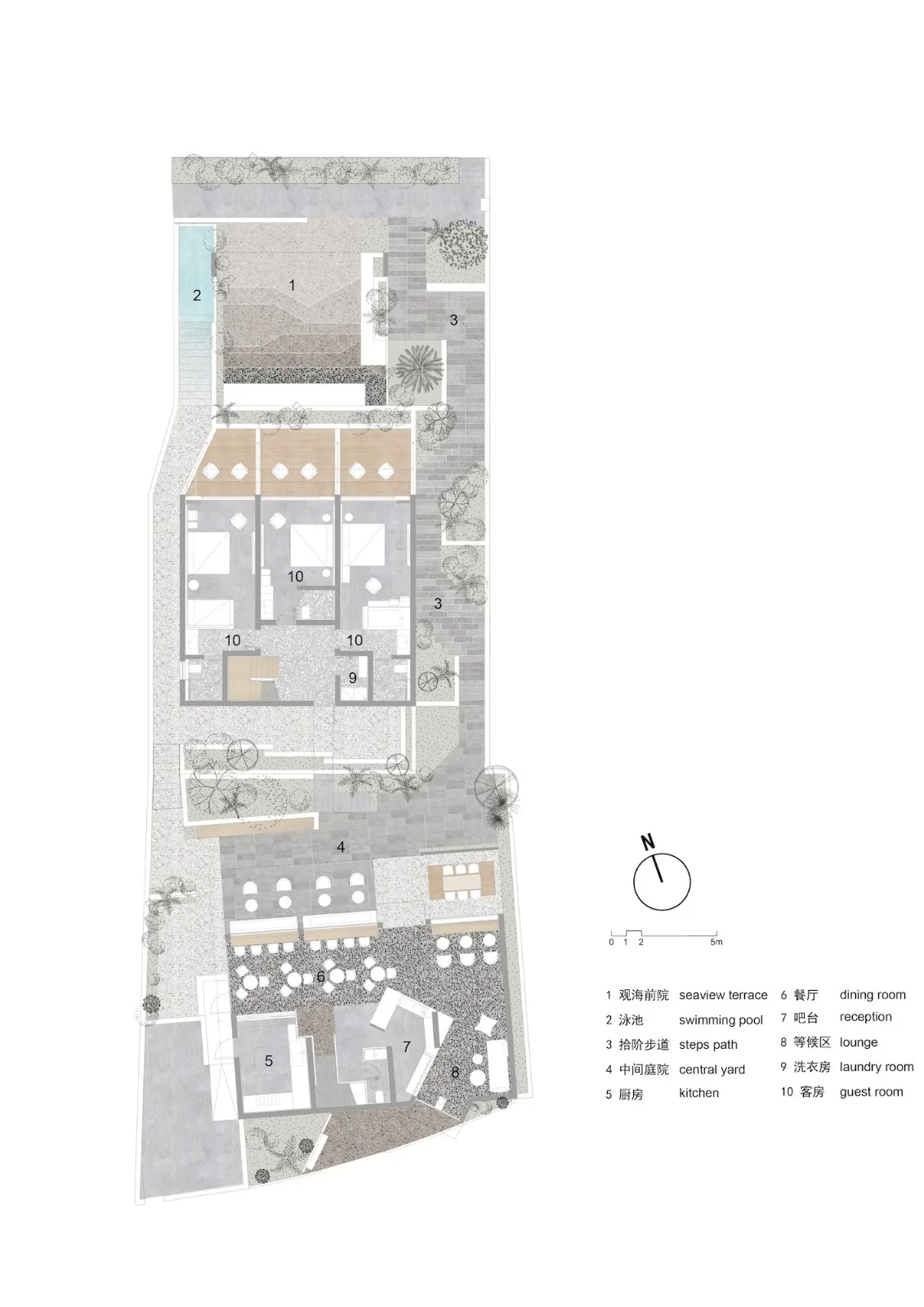
△ First floor plan
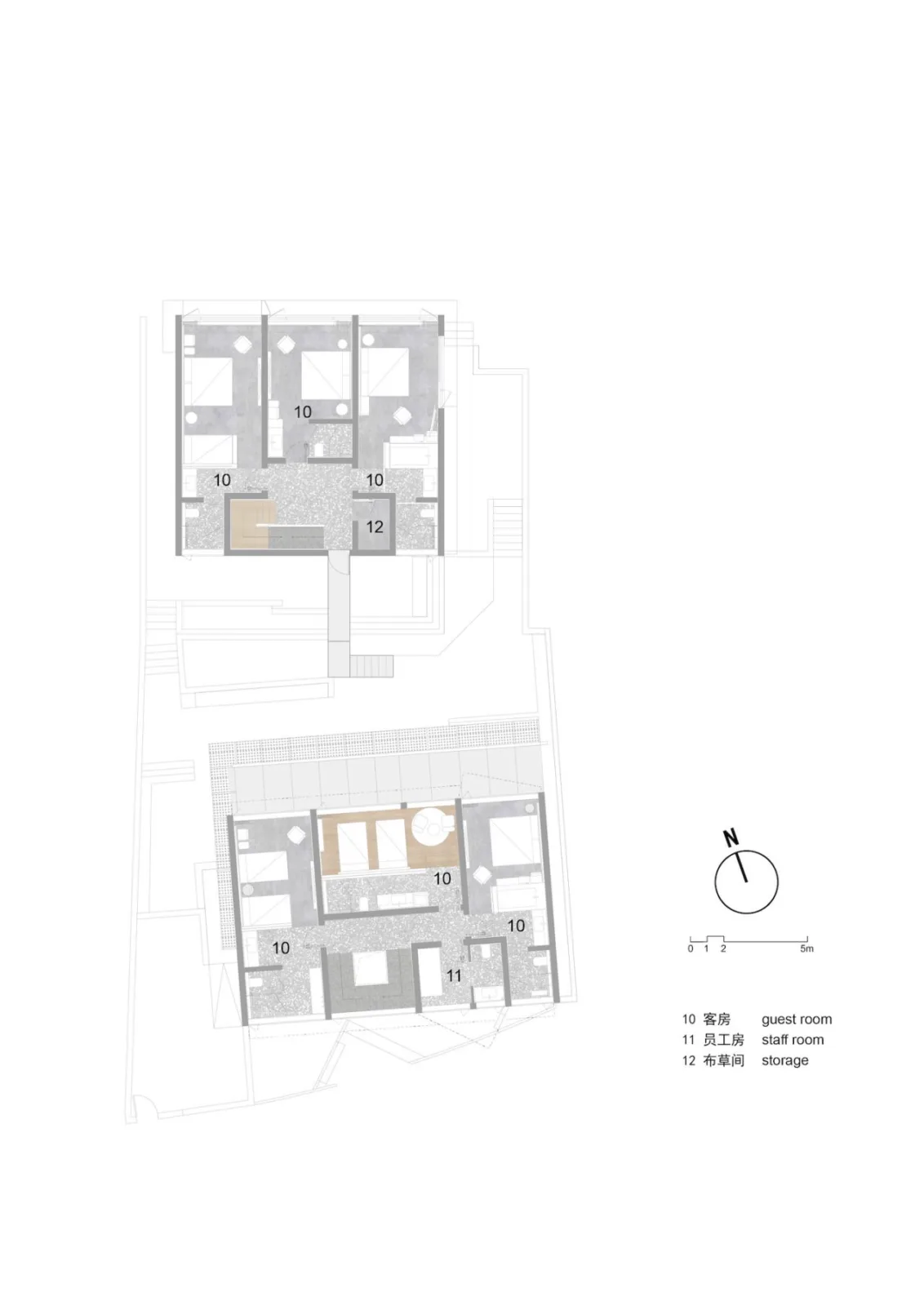
△ Second floor plan
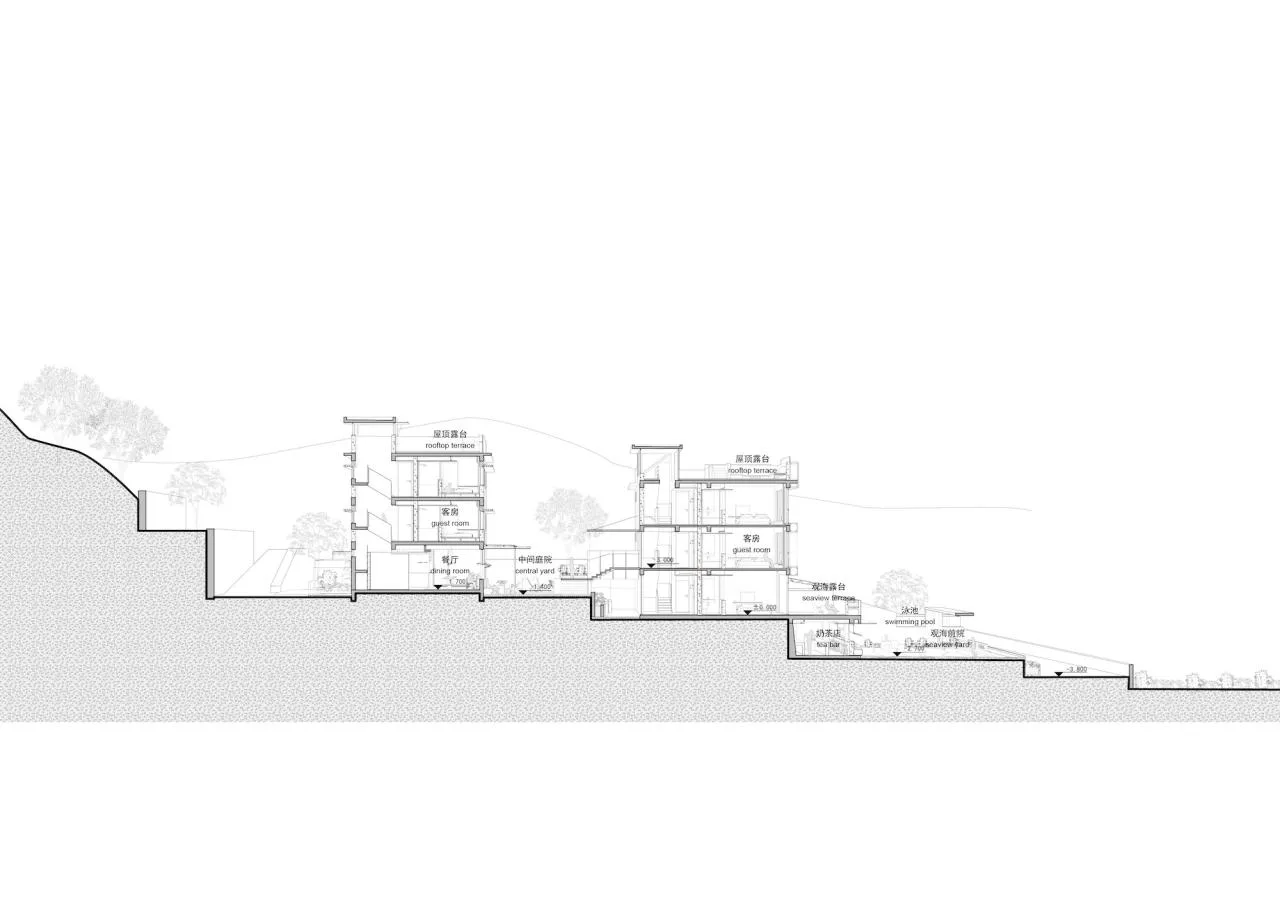
△ Section diagram
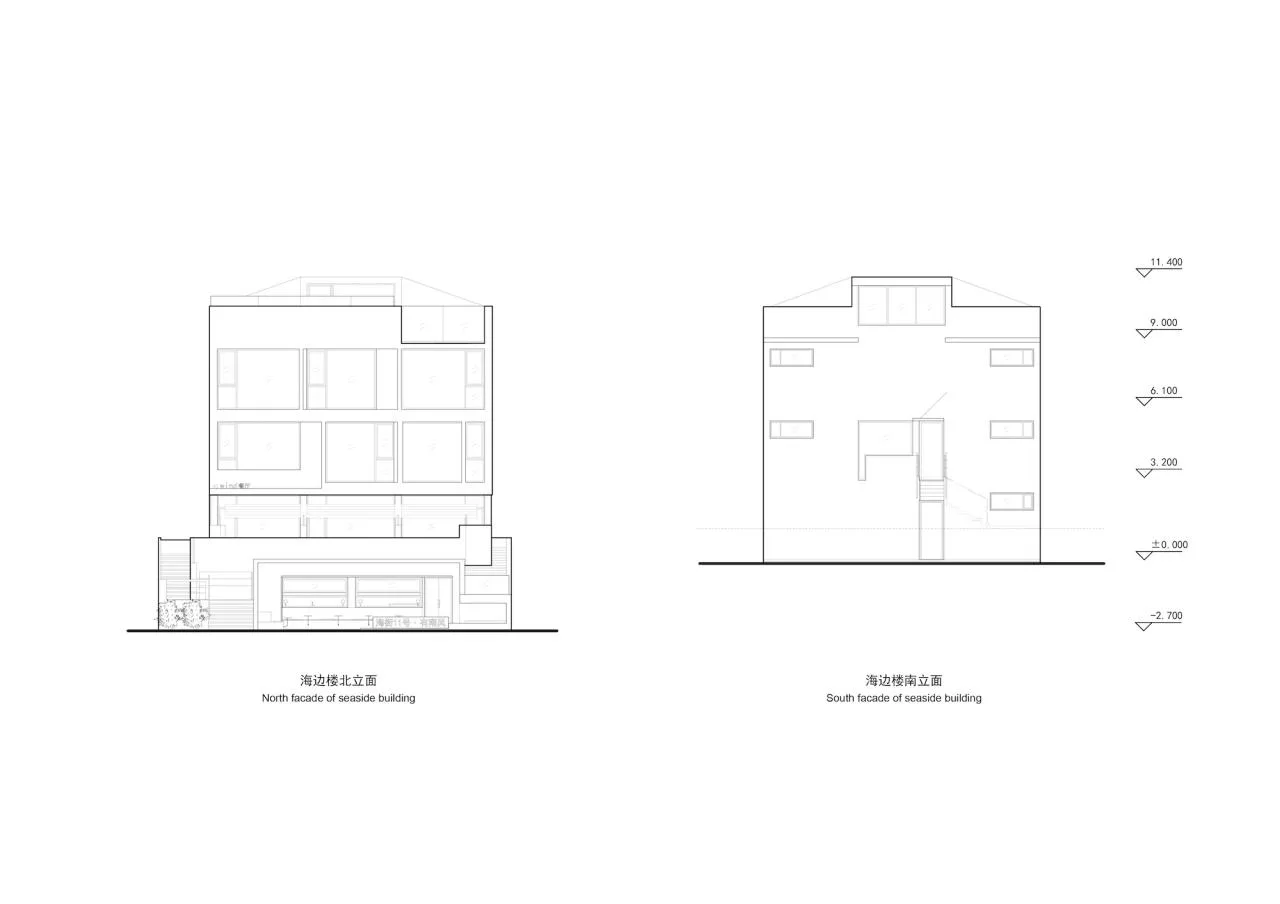
△ Elevation drawing
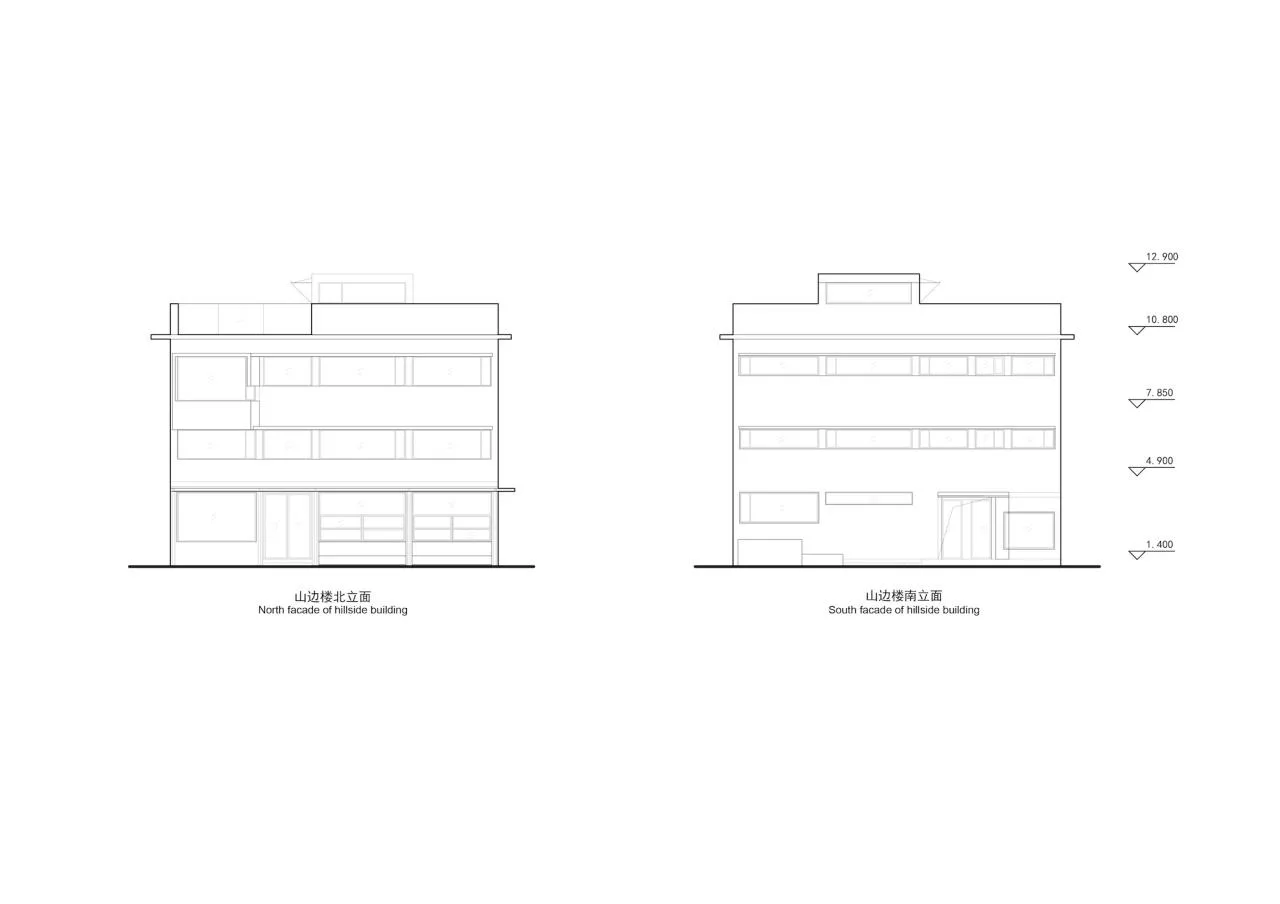
△ Elevation drawing
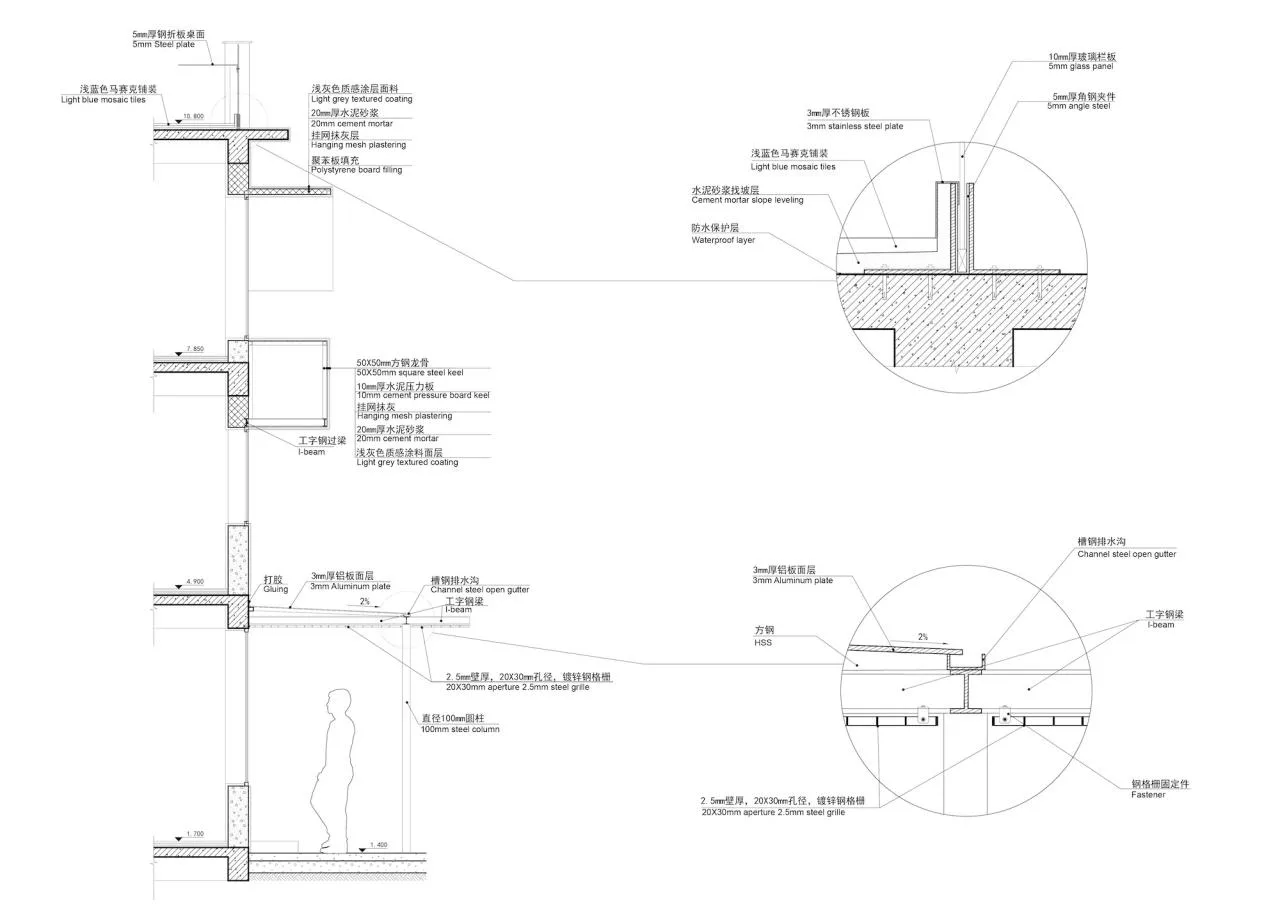
△ Detailed structural drawing
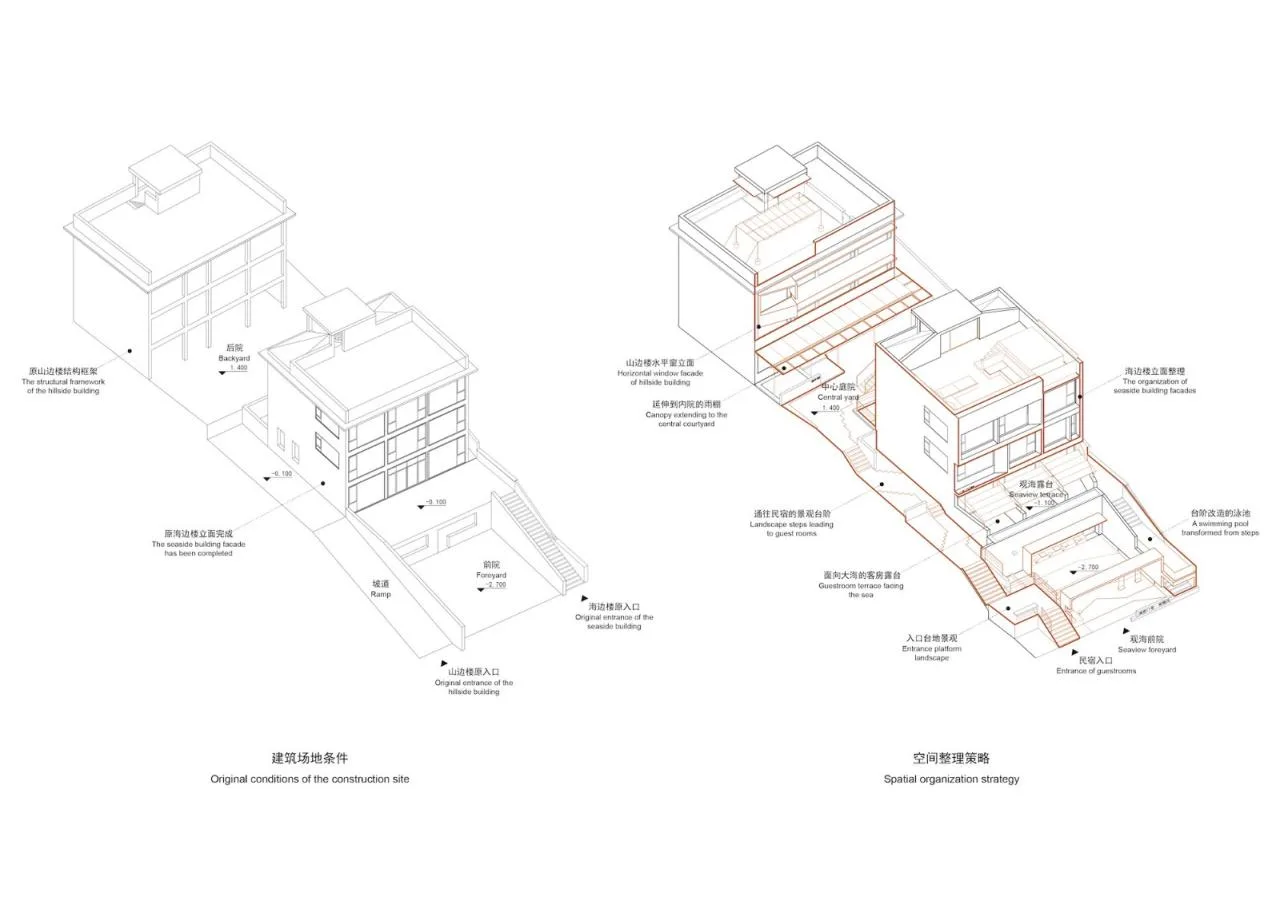
△ Transformation strategy
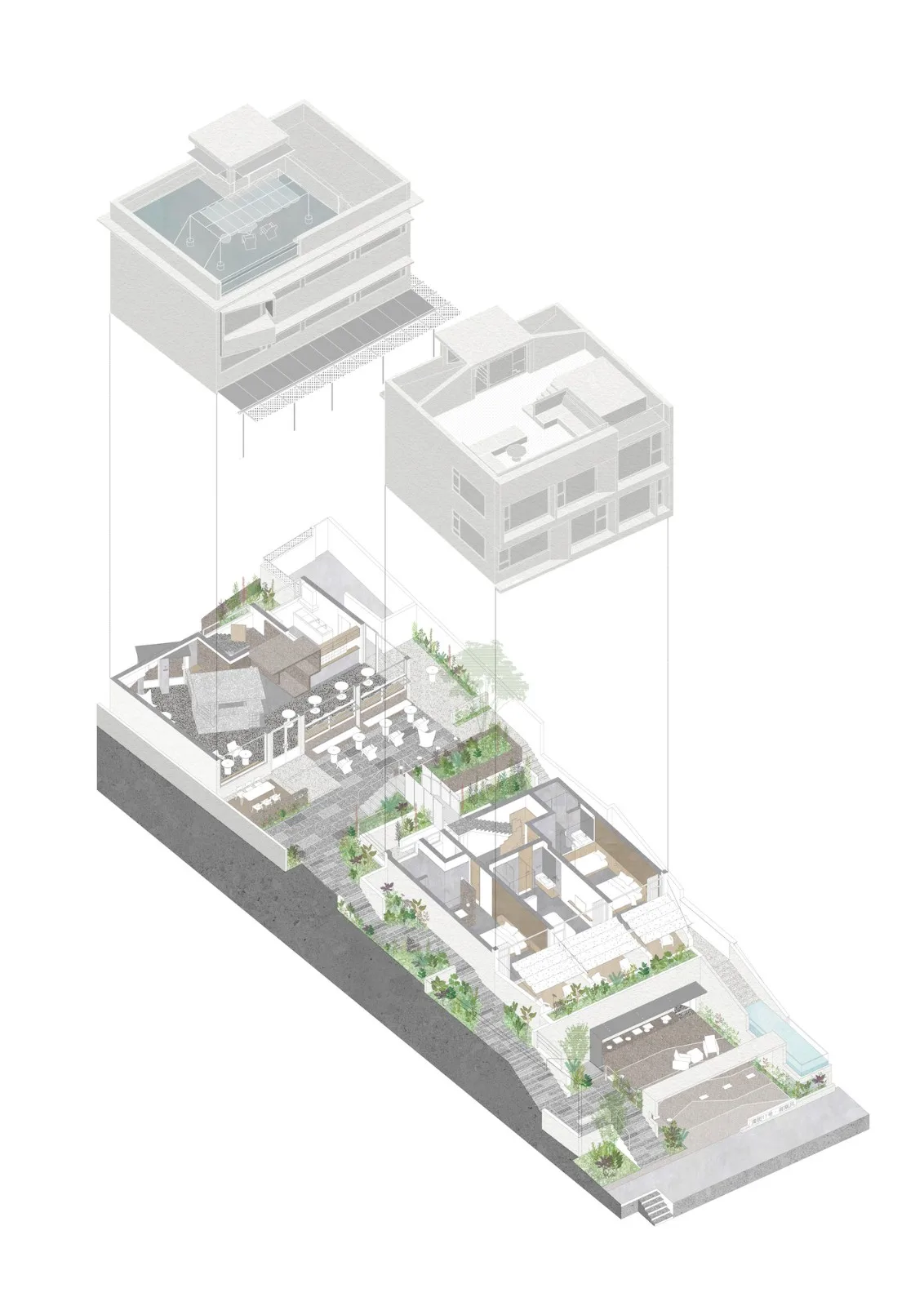
△ Axis measurement analysis diagram
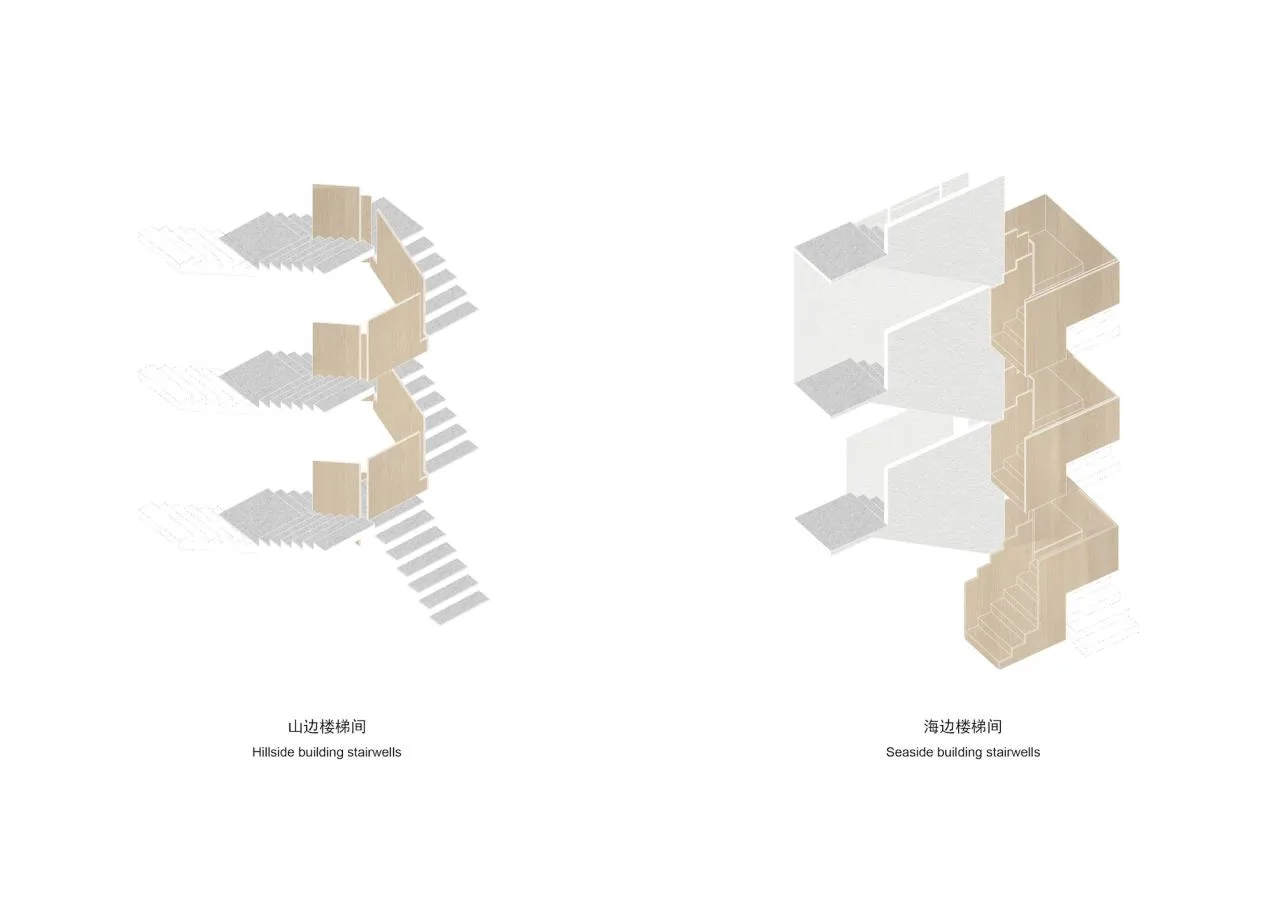
△ Analysis chart
Project Information
Architect: MAT Super Architecture Firm
Area: 720 m²
Project Year: 2024
Photographers: Zhu Yumeng, Tang Kangshuo
Design Team: Tang Kangshuo, Zhang Miao, He Ningyan, Li Yao
Building Area: 740 m² courtyard, 720 m² building
Design Period: May 2023 – October 2023
Construction Period: October 2023 – April 2024
Location: Zhoushan City














Must log in before commenting!
Sign Up