
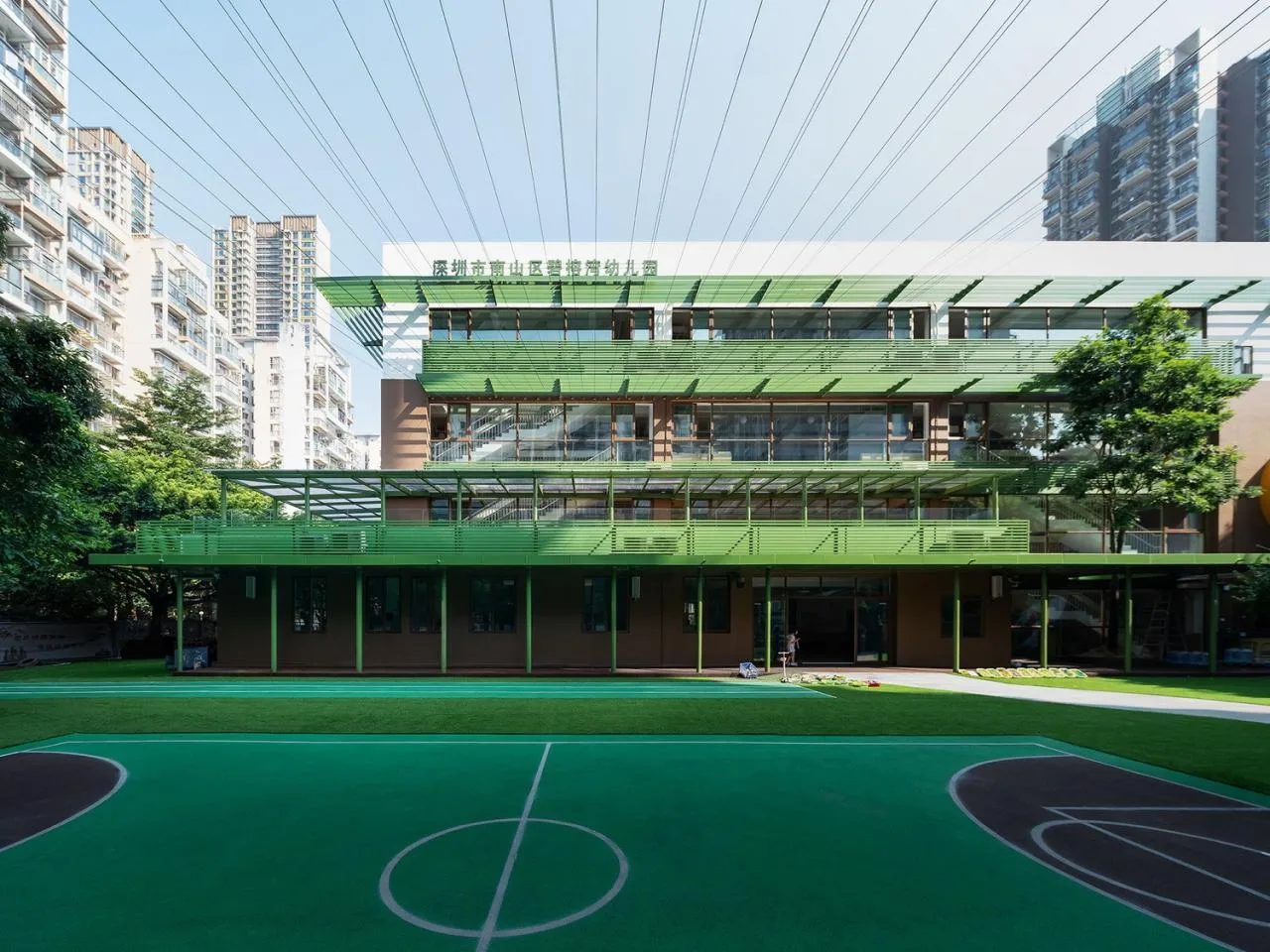
In early 2022, as one of the youngest design teams, we took part in the renovation and redesign of Birong Bay Kindergarten, part of the “Hundred Schools Revitalization” initiative led by Nanshan District, Shenzhen. Within just 40 days of summer vacation, the kindergarten completed construction and underwent a remarkable transformation of its spatial character.
Flexible Strategy: Strategic Planning from the Start
The “Revitalizing Hundred Schools” project presented unique challenges, combining campus design and renovation constraints. With a limited construction window during summer break, strict building regulations, and the existing structural realities of the original building, the project required careful planning. The pandemic prevented site visits throughout the design process, so we had to rely on incomplete and inconsistent original drawings, photos, and videos to understand the site conditions.
From the outset, we recognized the importance of anticipating various constraints and construction challenges at the design strategy level. This approach allowed us to pinpoint key design elements for focused attention and maintain enough flexibility to address on-site discrepancies and unforeseen issues during implementation. Employing a “four or two to pull a thousand pounds” design logic, we aimed to manage the uncertainties inherent in remote renovation projects effectively.
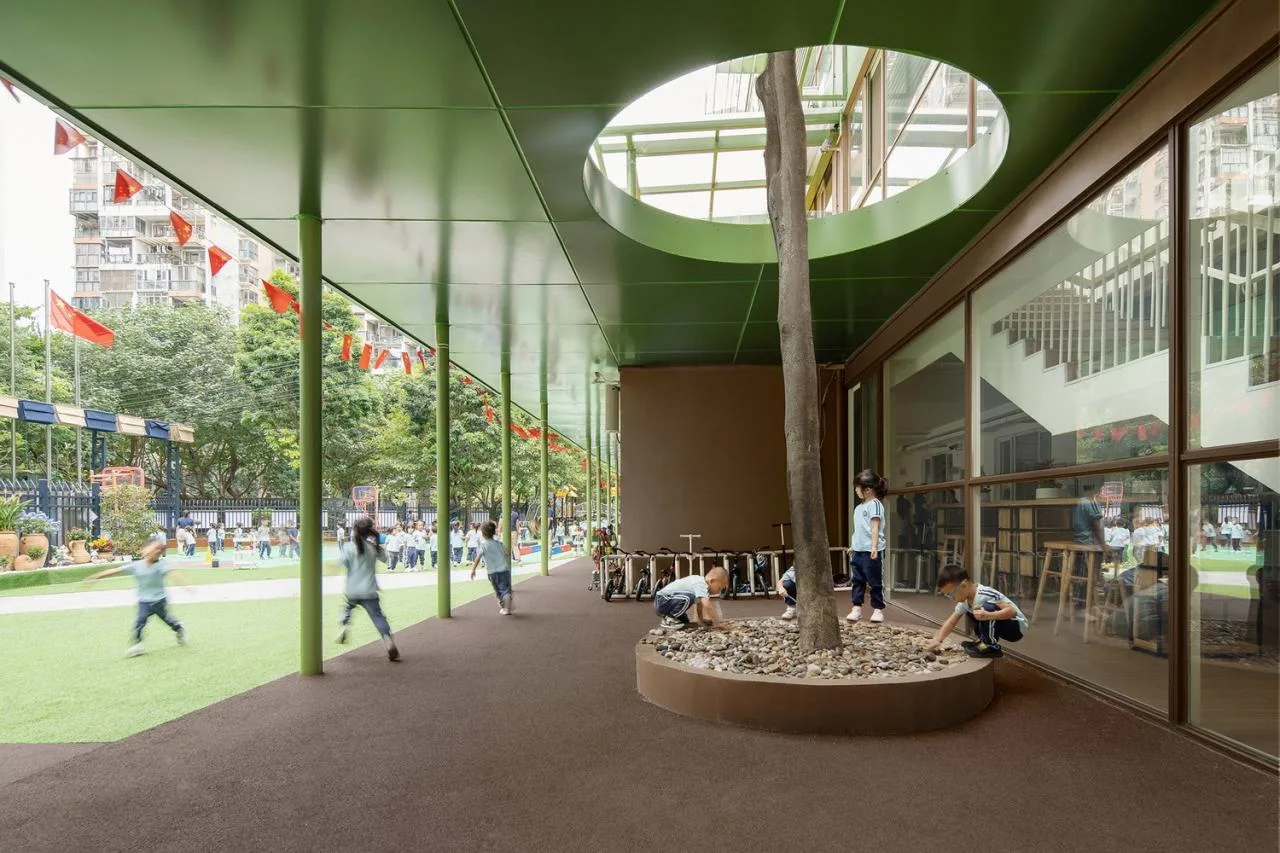
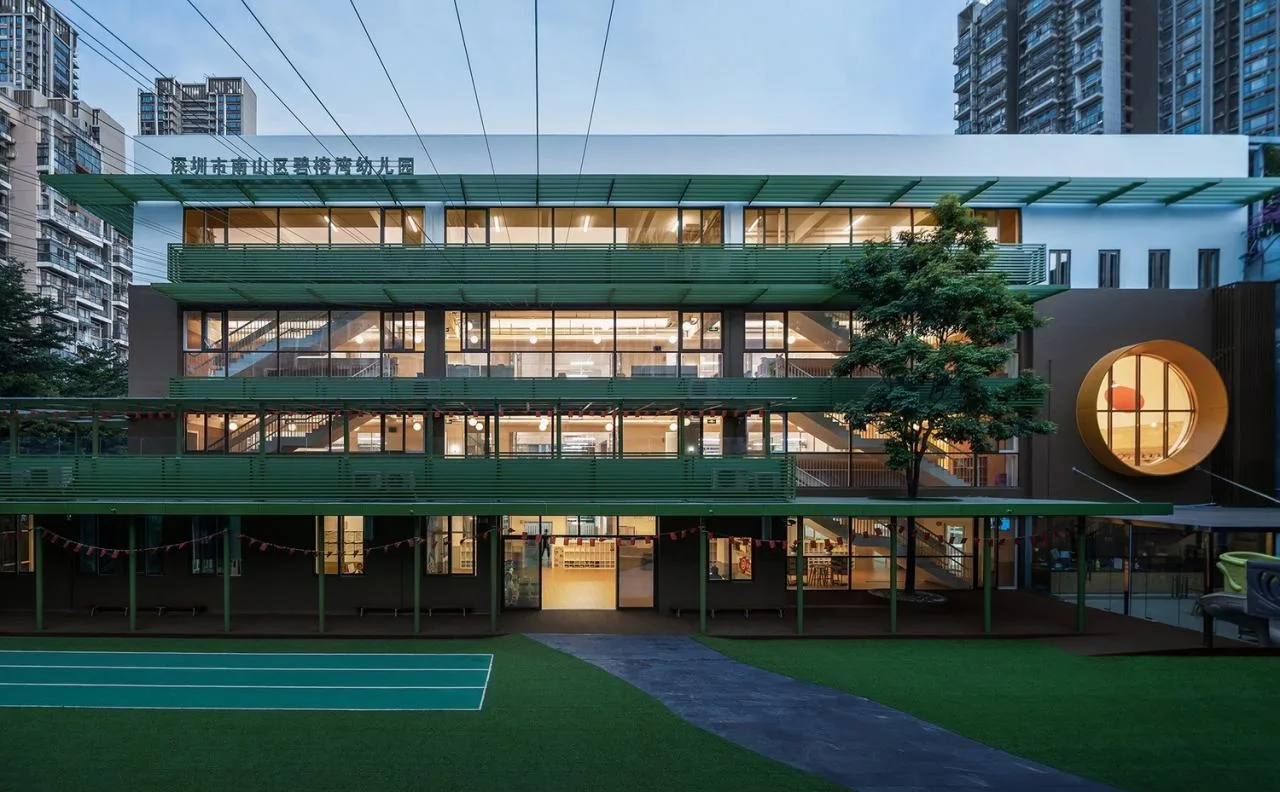
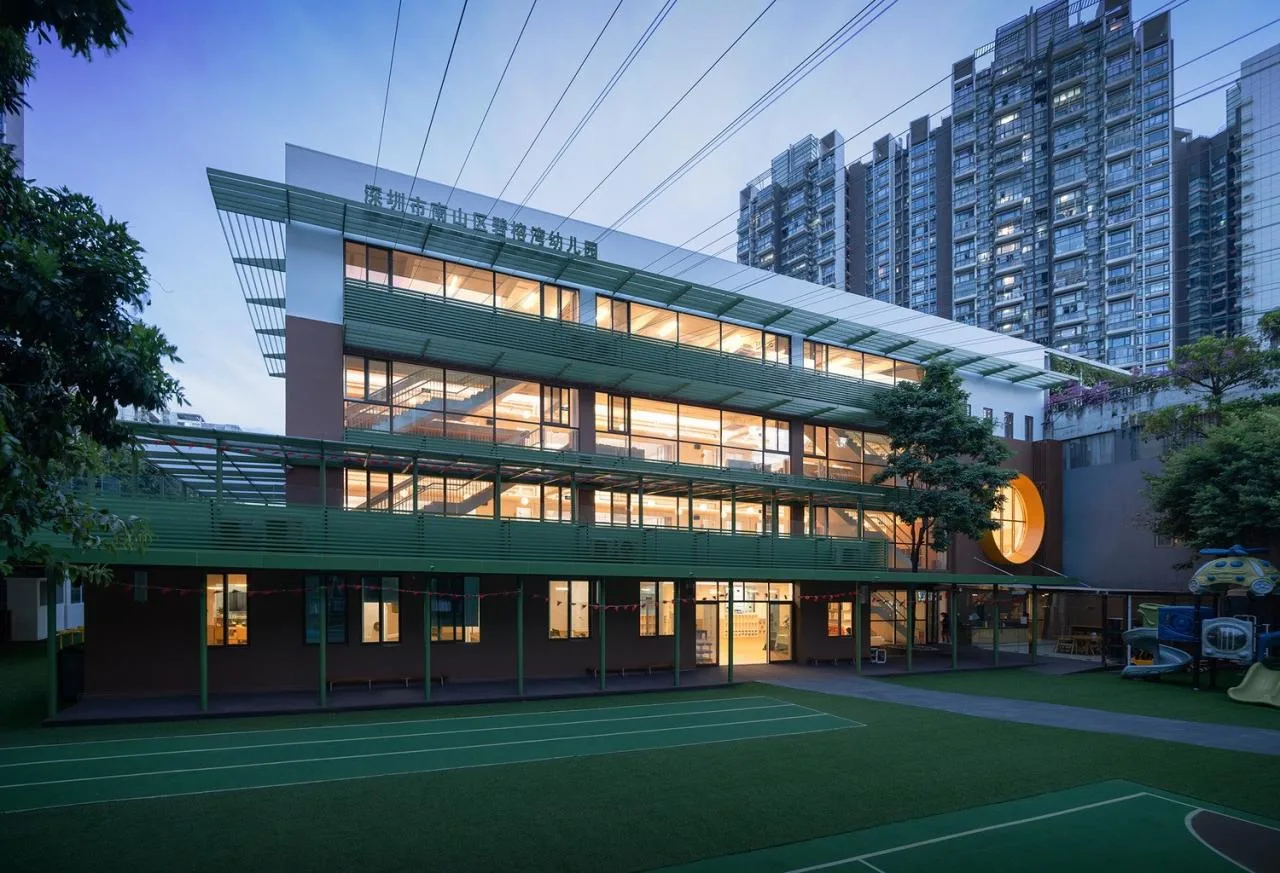
Birong Wan Kindergarten features a single main building that, after years of use and prior renovations, had become visually disproportionate and cluttered, with a worn color palette. Internally, numerous issues were evident, including safety hazards related to water, electricity, and fire protection systems. Several localized spatial problems existed: a fragile, non-fall-proof glass canopy added to the outdoor platform; an unsafe and overcrowded music and sports room due to an illegally constructed mezzanine; underutilized corridor spaces caused by partition walls between corridors and classrooms; and reduced natural lighting in classrooms.
Faced with a tight design schedule, we avoided tackling these problems individually in a piecemeal manner. Because the interior spaces to be renovated were directly connected to the exterior facade, we adopted the exterior facade renovation as a central design narrative. This approach integrated the various local spatial challenges into a cohesive design, greatly reducing early-stage communication costs and enabling the kindergarten to grasp the architect’s vision from a holistic perspective, accelerating project progress.
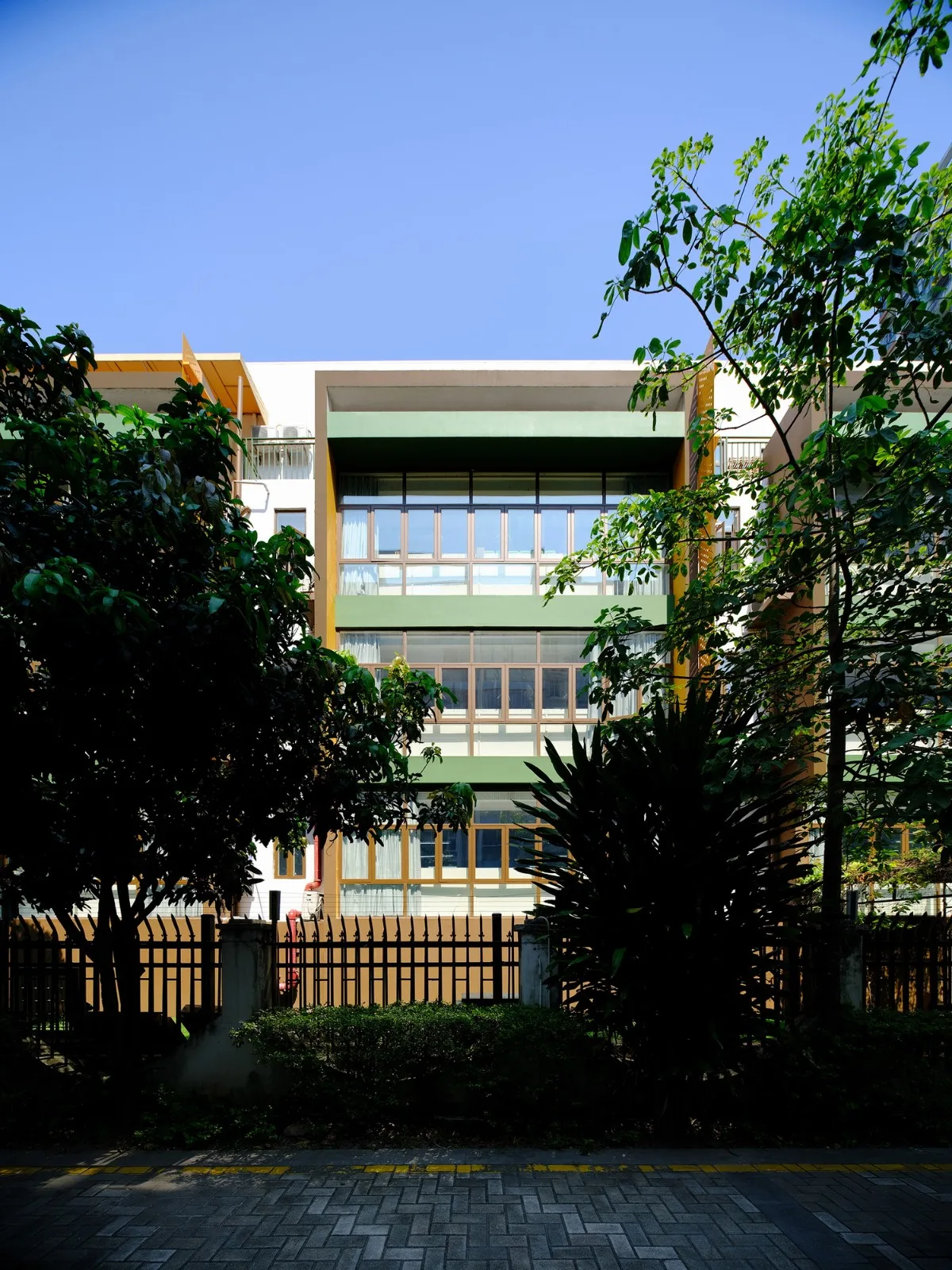
Facade Redesign: “Warm Day in the Banyan Forest”
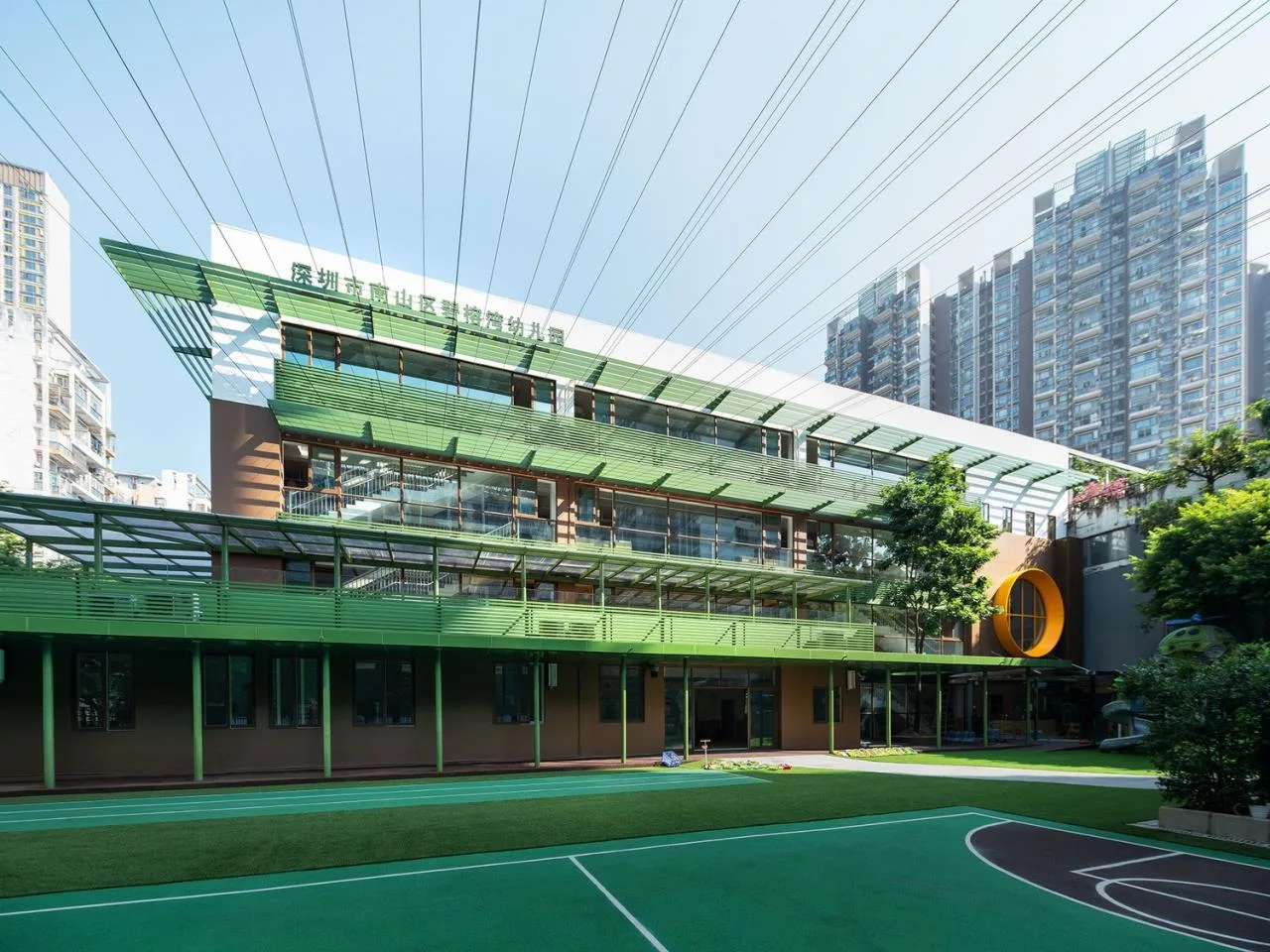
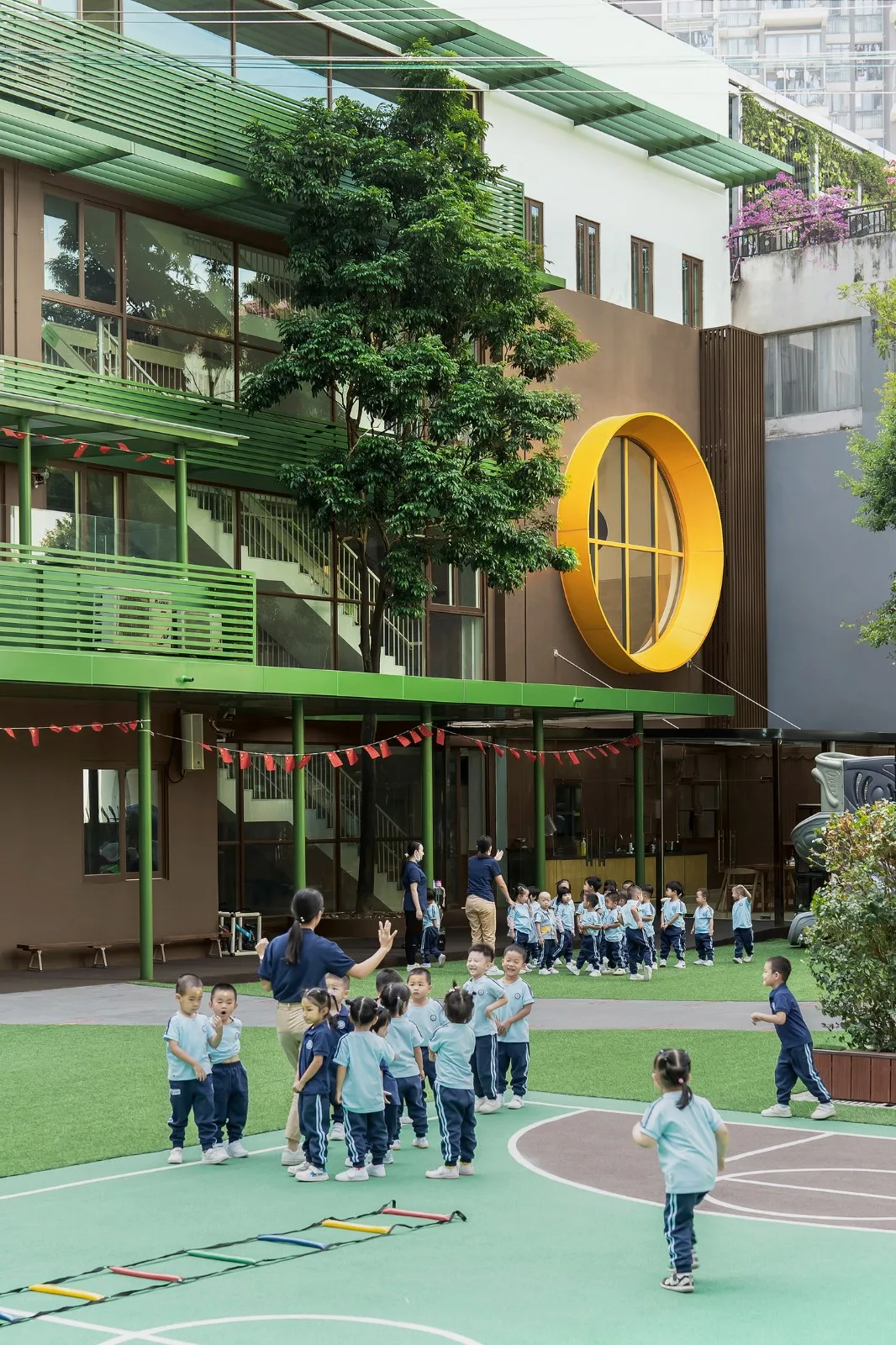
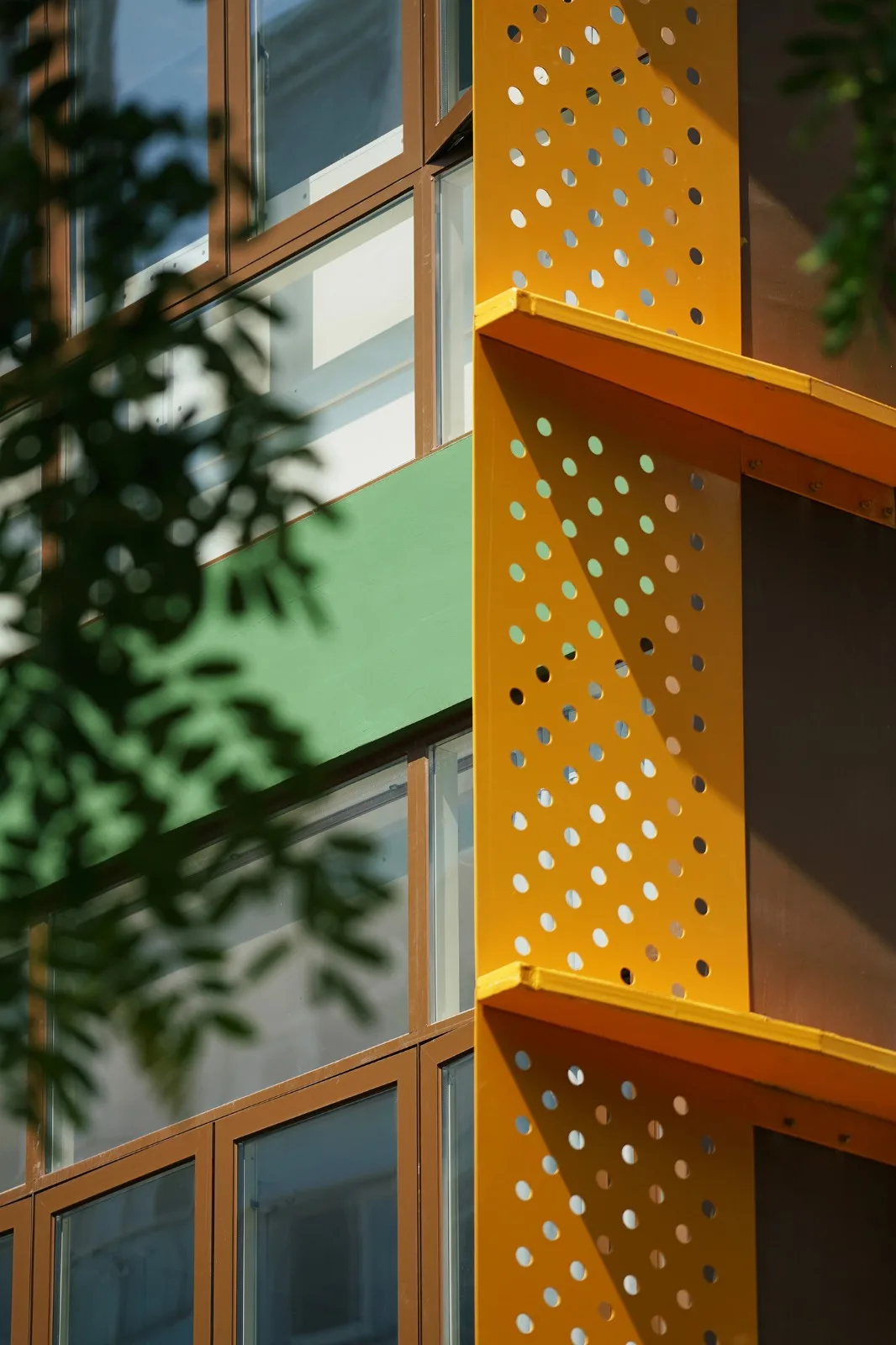
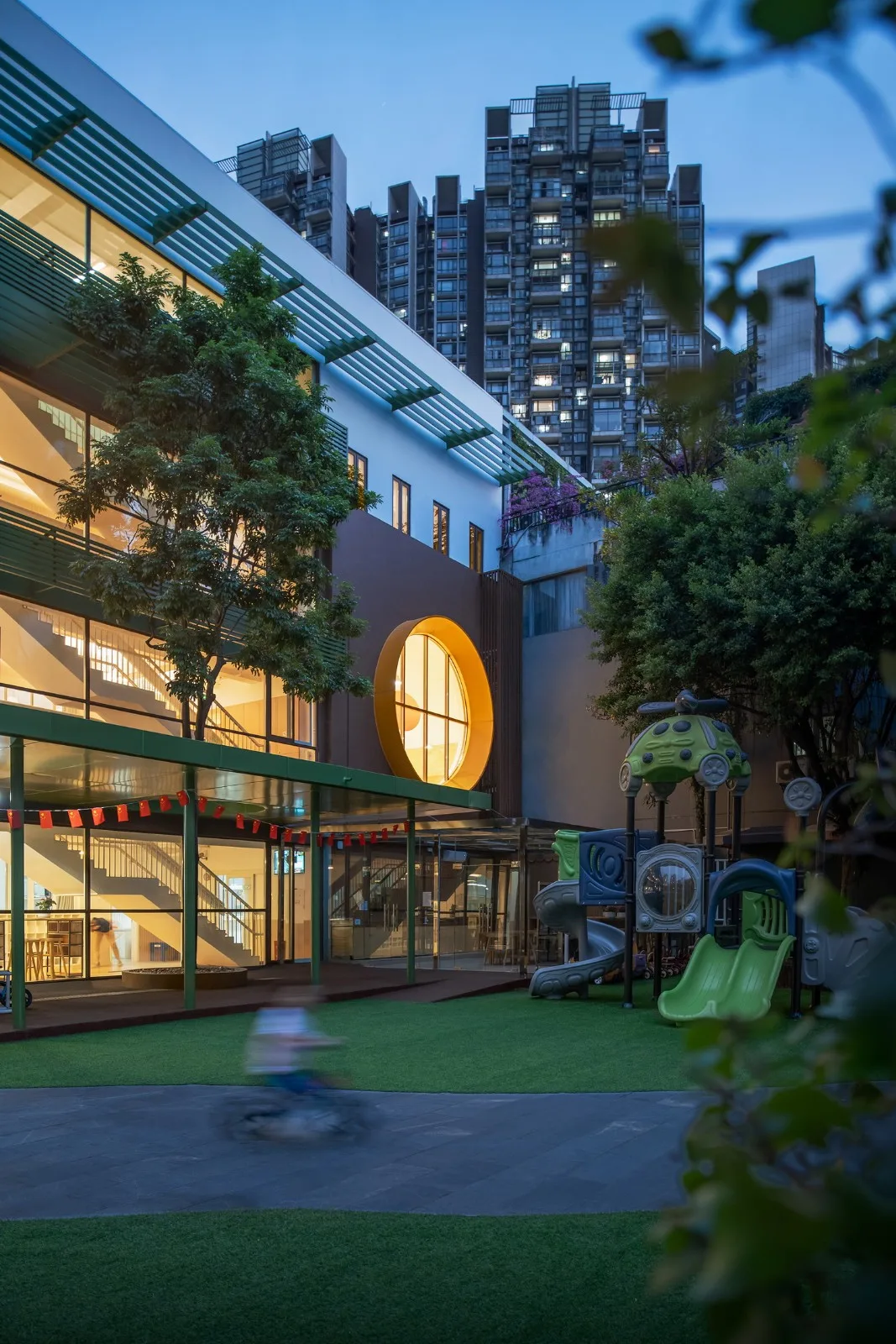
Before renovation, the facade featured irregular window placements and scattered additions, including air conditioning units. The original exterior, primarily blue and white with orange accents, carried a meaningful theme of “blue fields and warm sun,” inspired by the kindergarten’s name and the teachers and students’ nickname, “Big and Small Banyan Children.” Building on this, we introduced the concept “Warm Banyan Forest Day.” The facade’s primary colors were changed to deep brown and dark green to evoke the banyan tree, while retaining the orange details symbolizing sunrise.
To enhance indoor lighting, narrow windows on the music and sports room facade were replaced with large round and arched windows. Reflective panels were installed outside the southeast-facing classroom windows. On the northwest facade, corridor windows were maximized and fitted with sunshade louvers, air conditioning hoods, and eaves on the first and second floors of the platform. These elements form multiple green horizontal lines across the facade, reminiscent of layered tree canopies, fully utilizing the building’s horizontal expansion and unifying the previously chaotic exterior. The round windows act as the rising sun filtering through the trees, completing the main facade’s transformation.
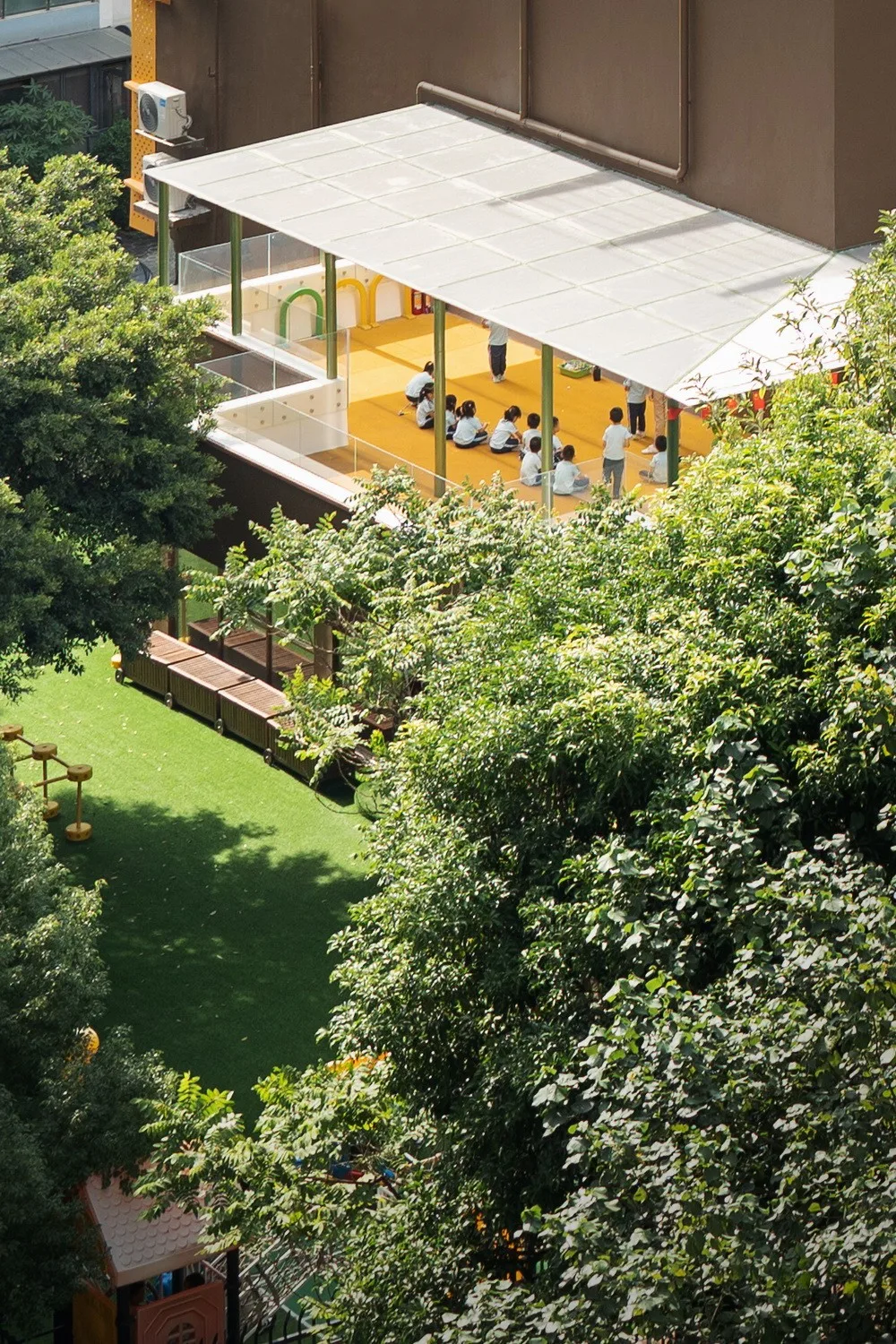
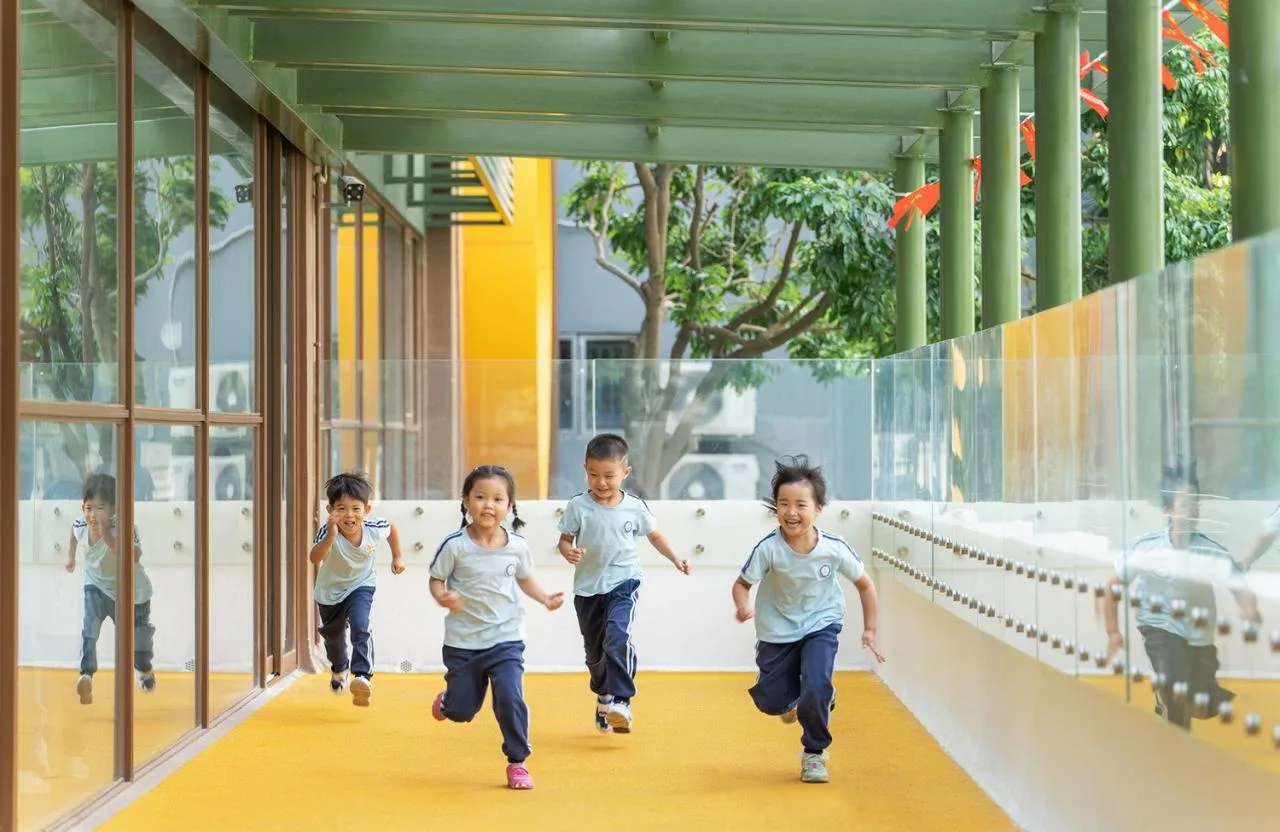
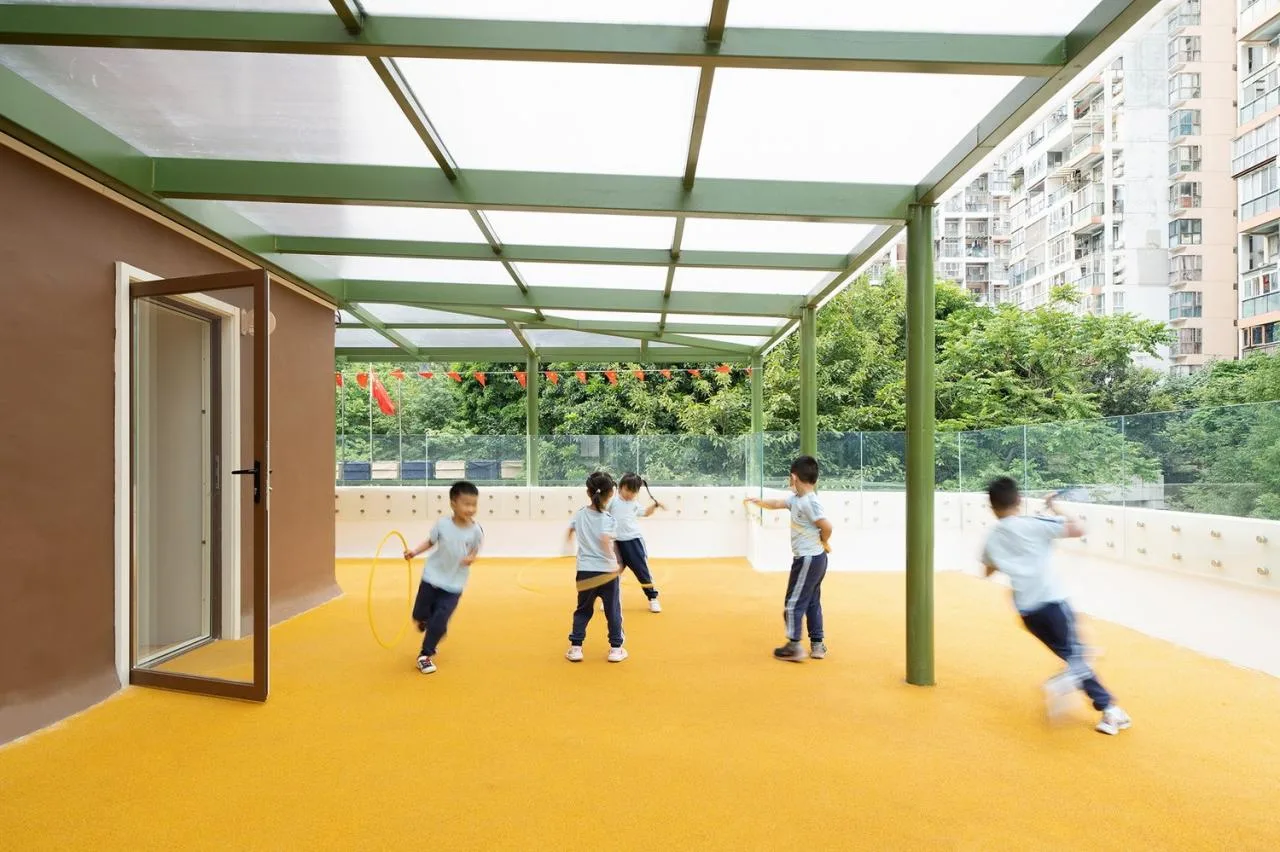
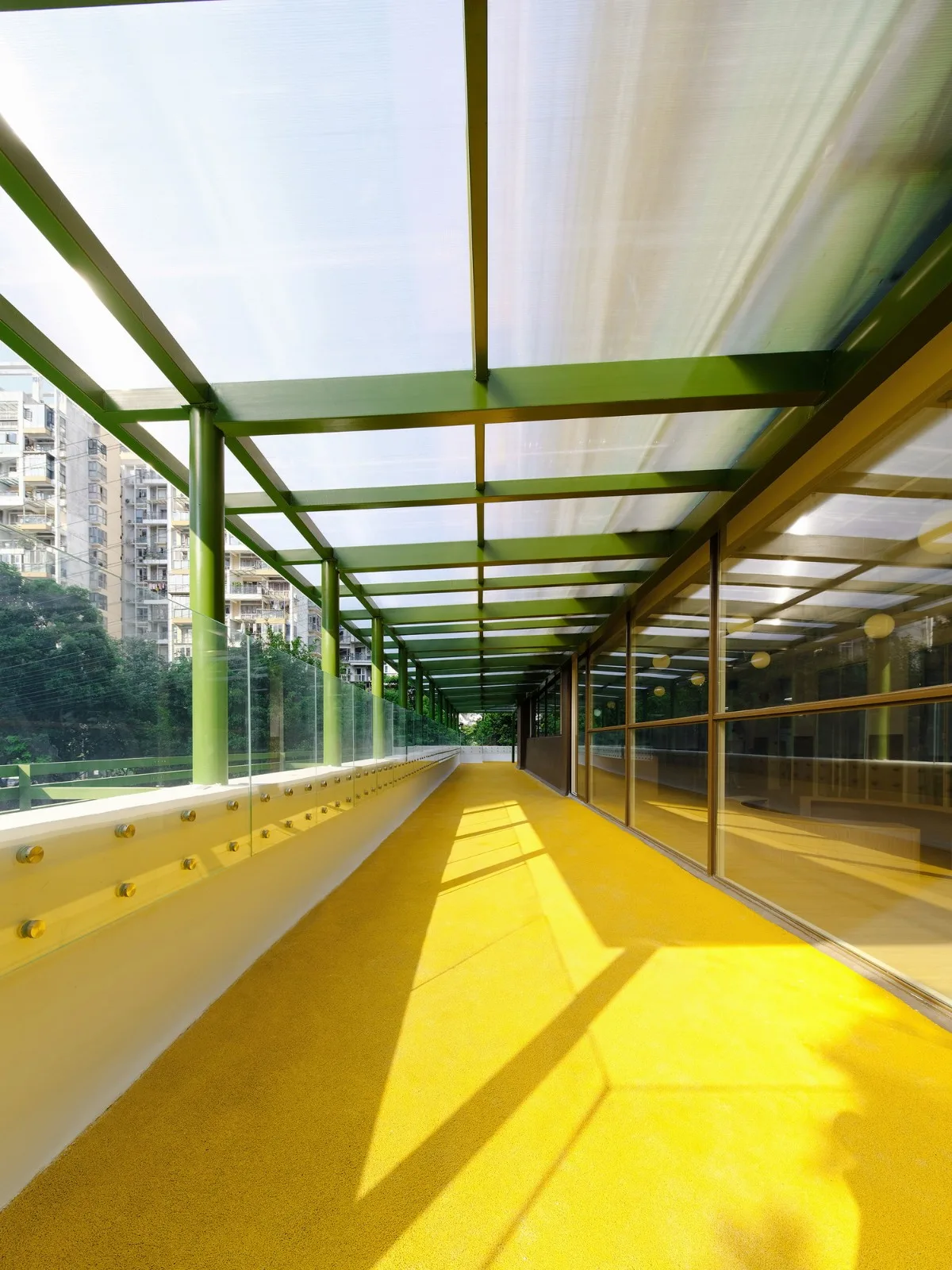
The original glass canopy on the second-floor platform was replaced with a new steel eave gallery. Its lightweight polycarbonate roof filters direct sunlight and minimizes the risk of falling debris thanks to its elasticity. The soft yellow EPDM flooring not only ensures safety for children’s activities but also enhances corridor brightness by diffusing light. The exterior walls between platform and corridor were replaced with transparent floor-to-ceiling doors and windows, bringing outdoor views and sunlight inside while seamlessly connecting indoor and outdoor spaces to encourage spontaneous exploration on the outdoor platform.
“Warm Sun Hall”: Under the Dome
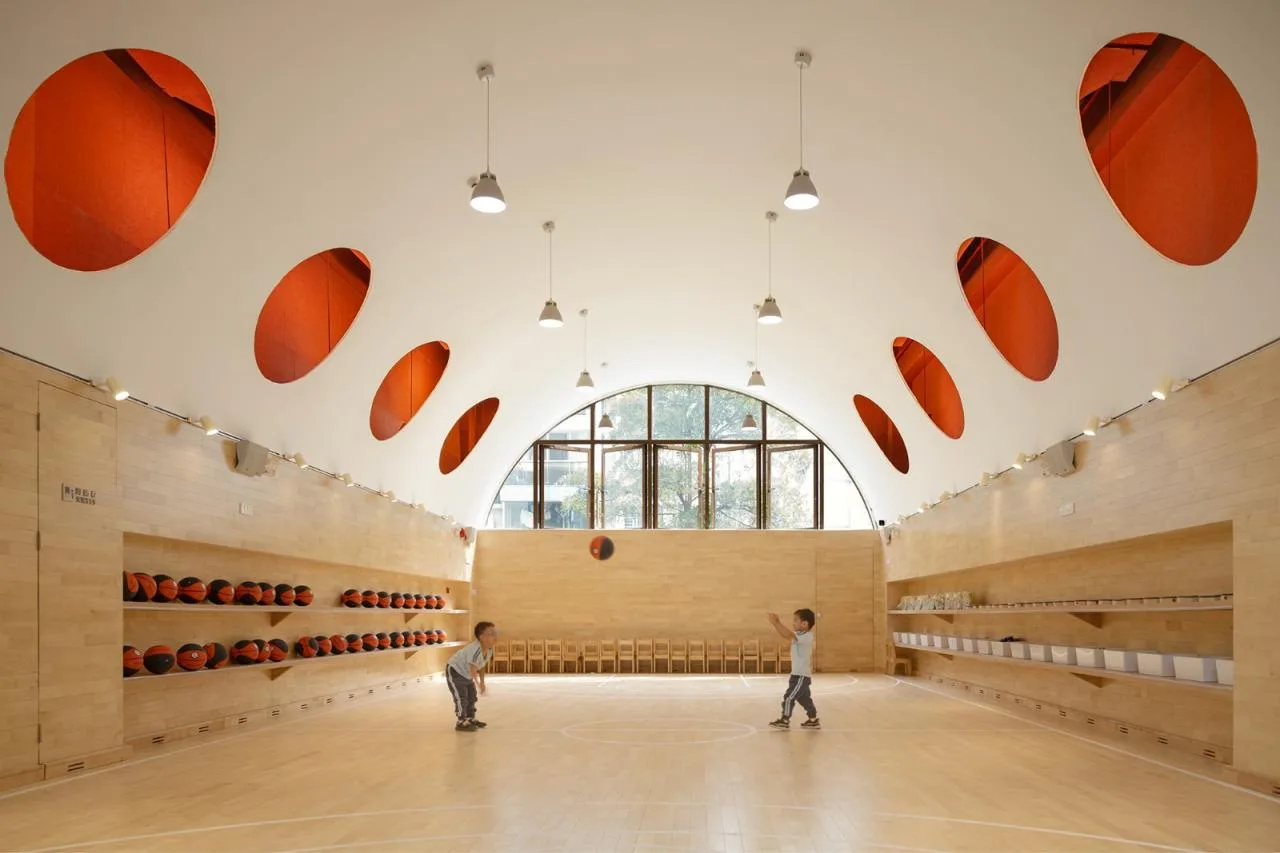
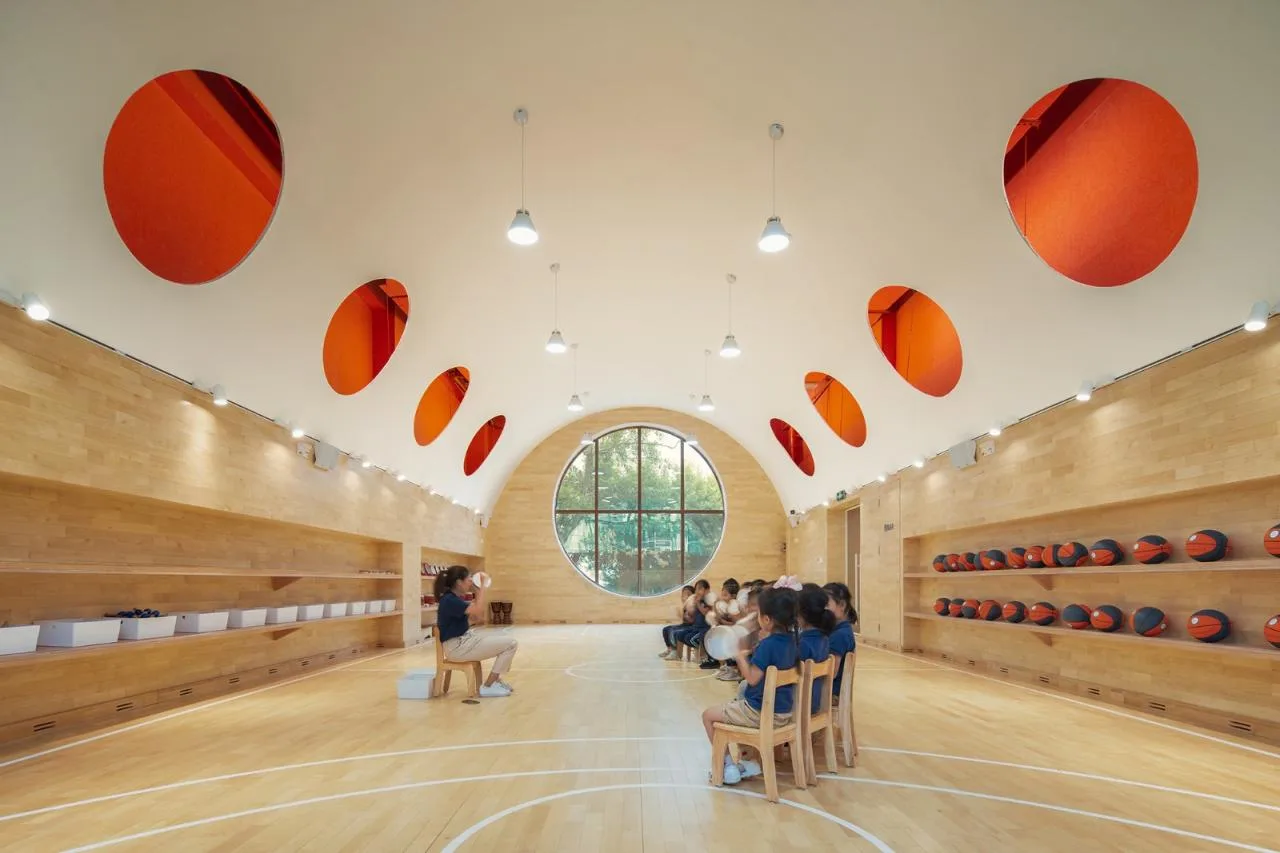
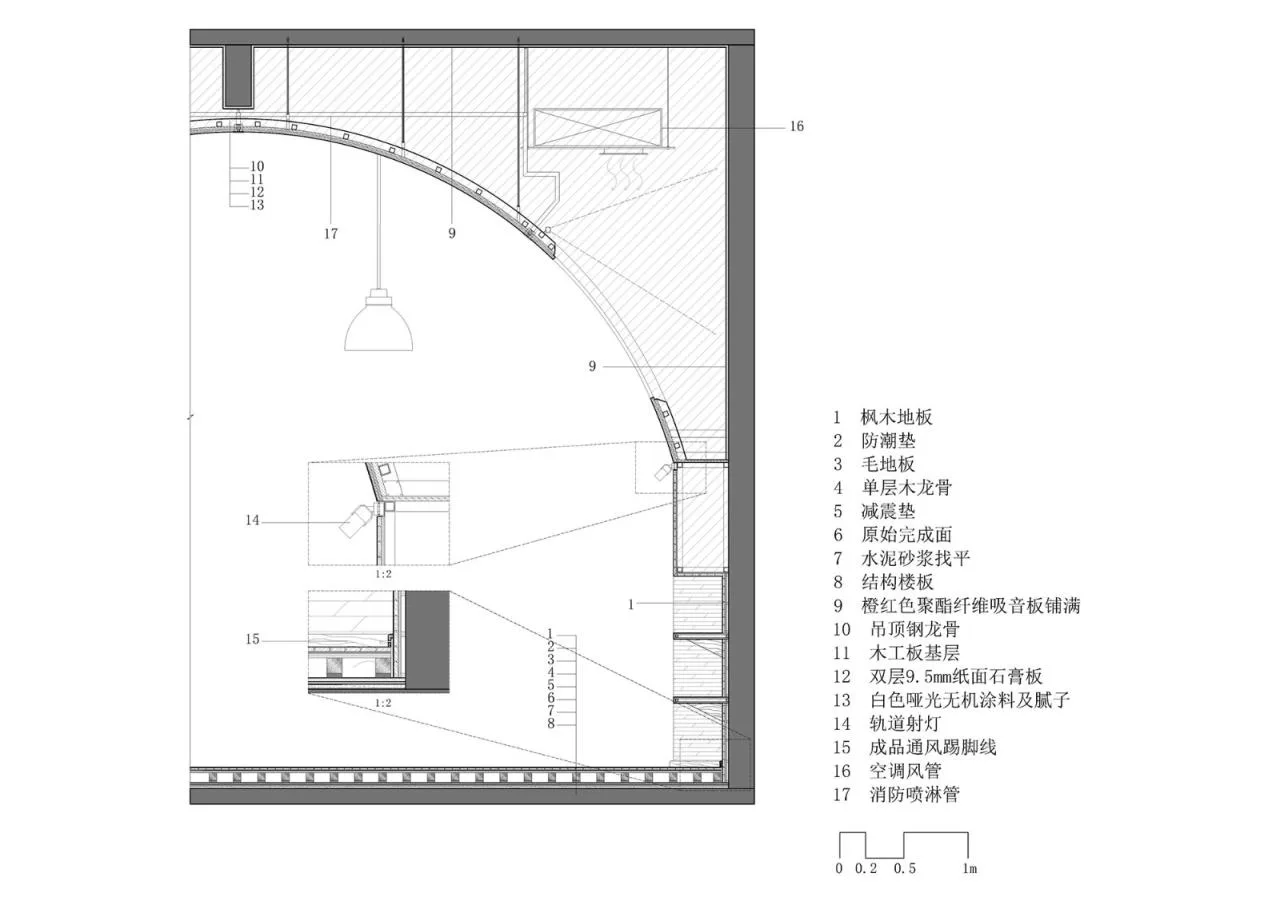
The music and sports room, the kindergarten’s largest indoor gathering space, reached a height of 5 meters after removing an illegal mezzanine. While this height accommodates indoor basketball, the vast openness can feel overwhelming and unsafe for children. To address this, we designed a large dome ceiling, maintaining clear height above the basketball hoop while creating a cocooning atmosphere with hanging wing elements. The dome’s shoulders cleverly conceal unsightly HVAC pipes.
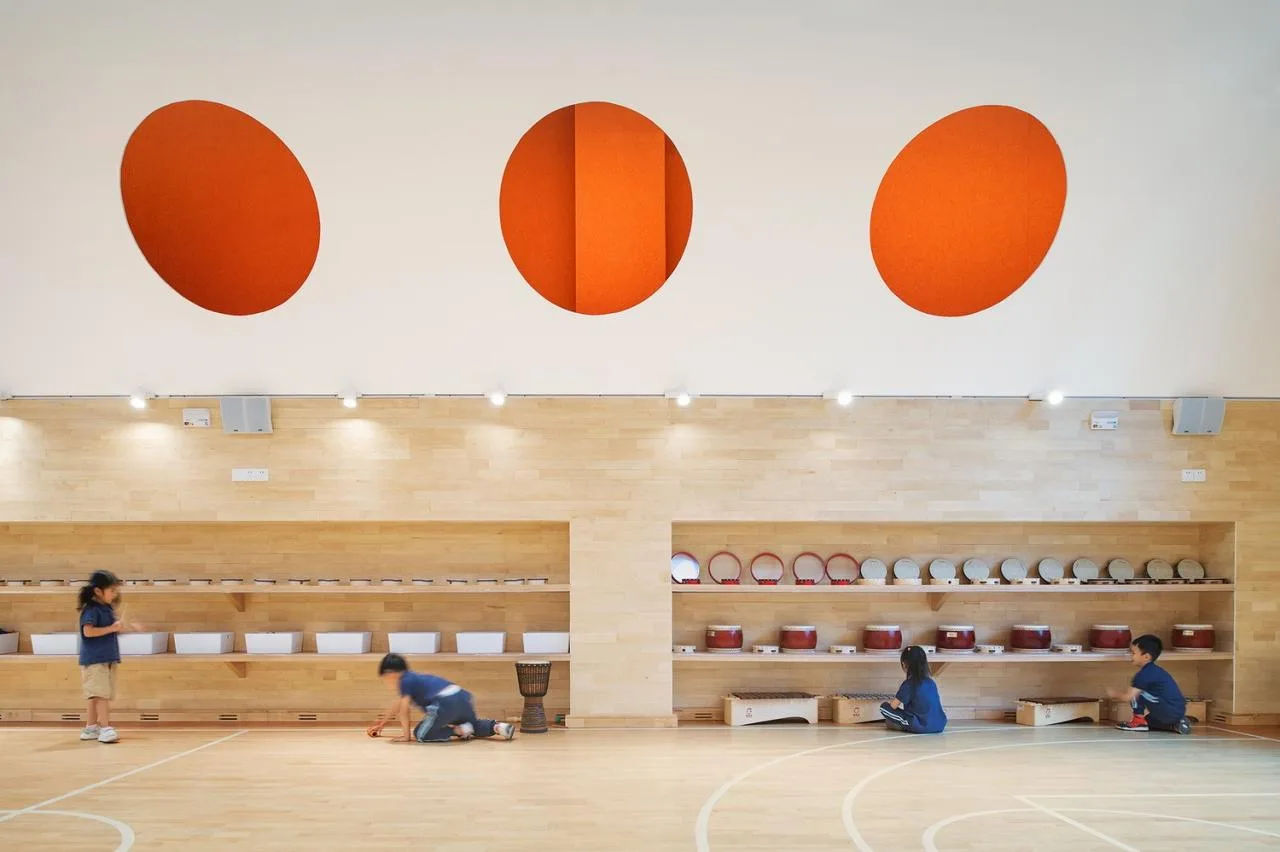
Circular openings on both sides of the arch allow sound waves to pass through to orange acoustic panels on the walls and ceiling, reducing echo caused by the arch shape. They also function as air conditioning vents and visually evoke basketballs, the sun, and other symbolic elements. This suspended ceiling design elegantly addresses multiple aspects: spatial comfort, psychological warmth, acoustics, equipment concealment, and aesthetics.
Complementing the dome, the wooden flooring extends upward to form child-scale wall skirting and niches, enhancing the enveloping feeling. Large arched and round windows at both ends flood the room with natural light, turning the music and sports room into a “tree hole” within the design narrative. Named “Warm Sun Hall” by the kindergarten, it features layered lighting—pendant, flood, and track spotlights—to support diverse activities such as music, dance, performances, and meetings.
Open Corridor Concept: Shared Time and Space
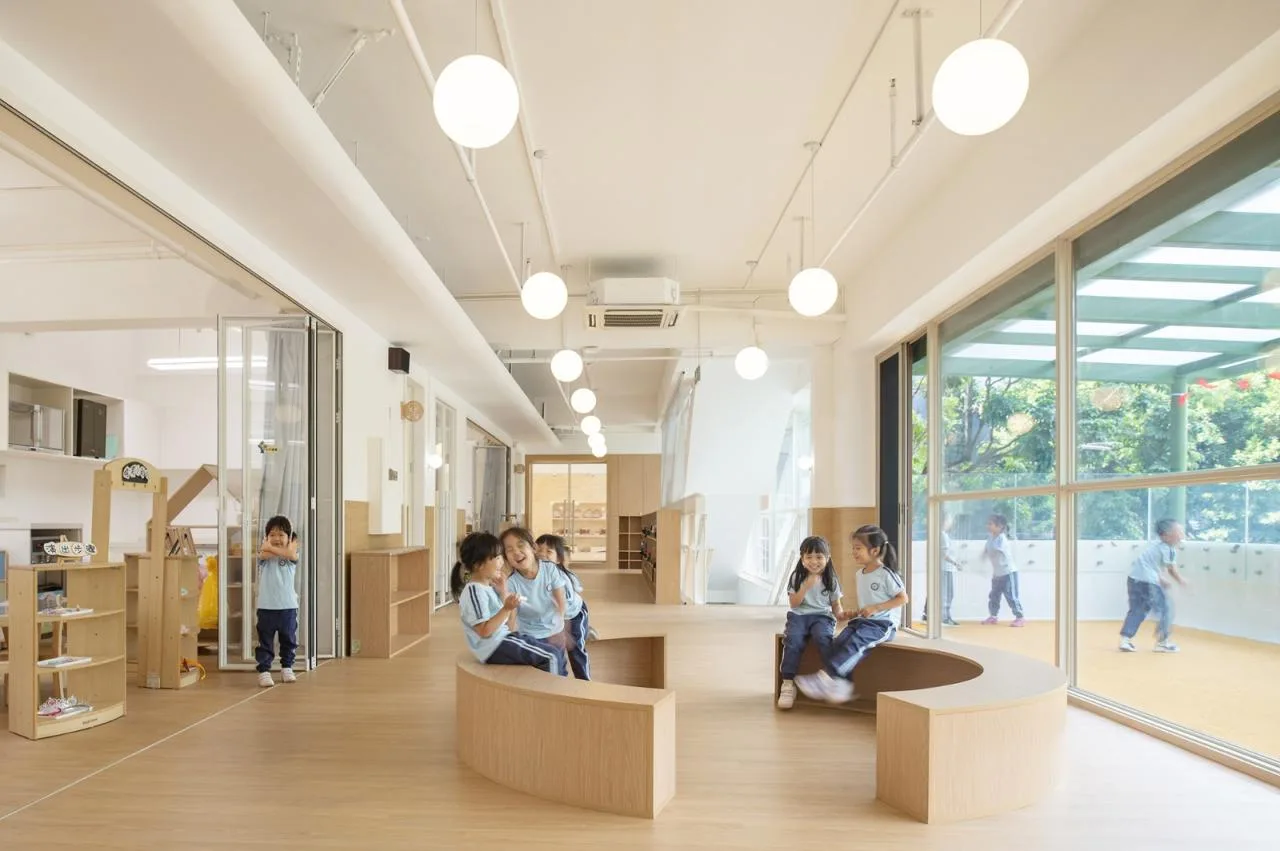
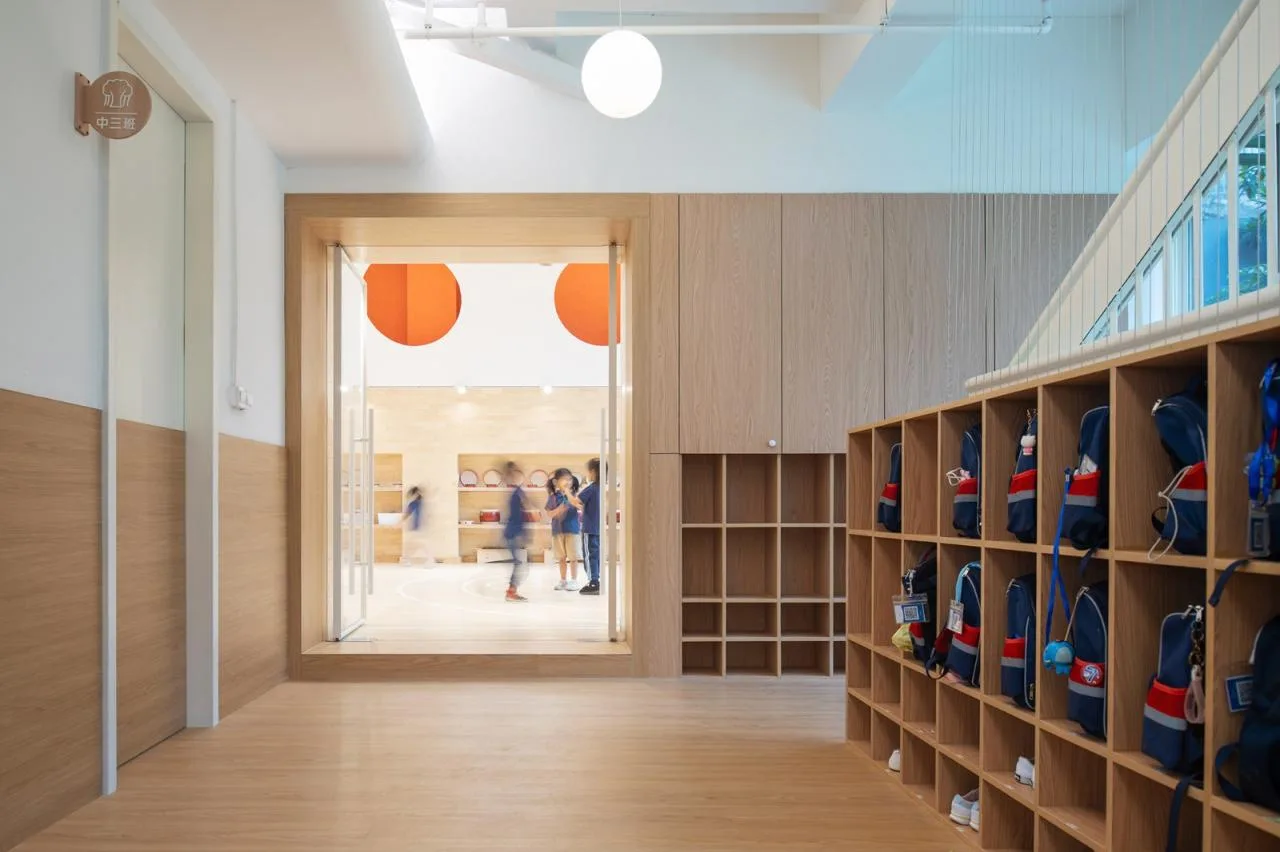
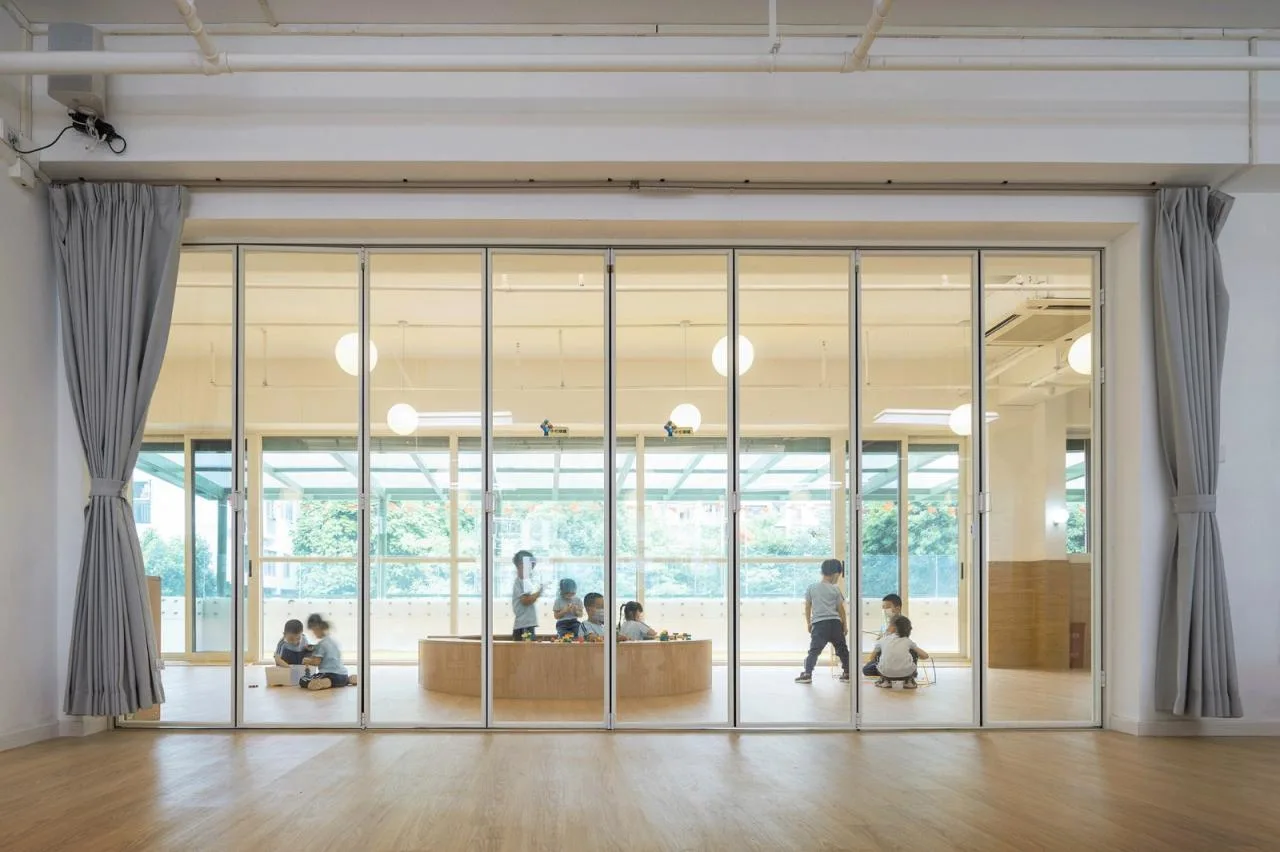
Kindergarten teaching does not require fully enclosed classrooms like those in primary and secondary schools. Removing partition walls between classrooms and corridors improves natural lighting and expands free activity areas for children on each floor. This aligns with architect Jure Kotnik’s “time shared space” theory, which suggests that integrating learning, play, and living spaces into an open plan enhances children’s self-awareness, learning, social skills, and physical development.
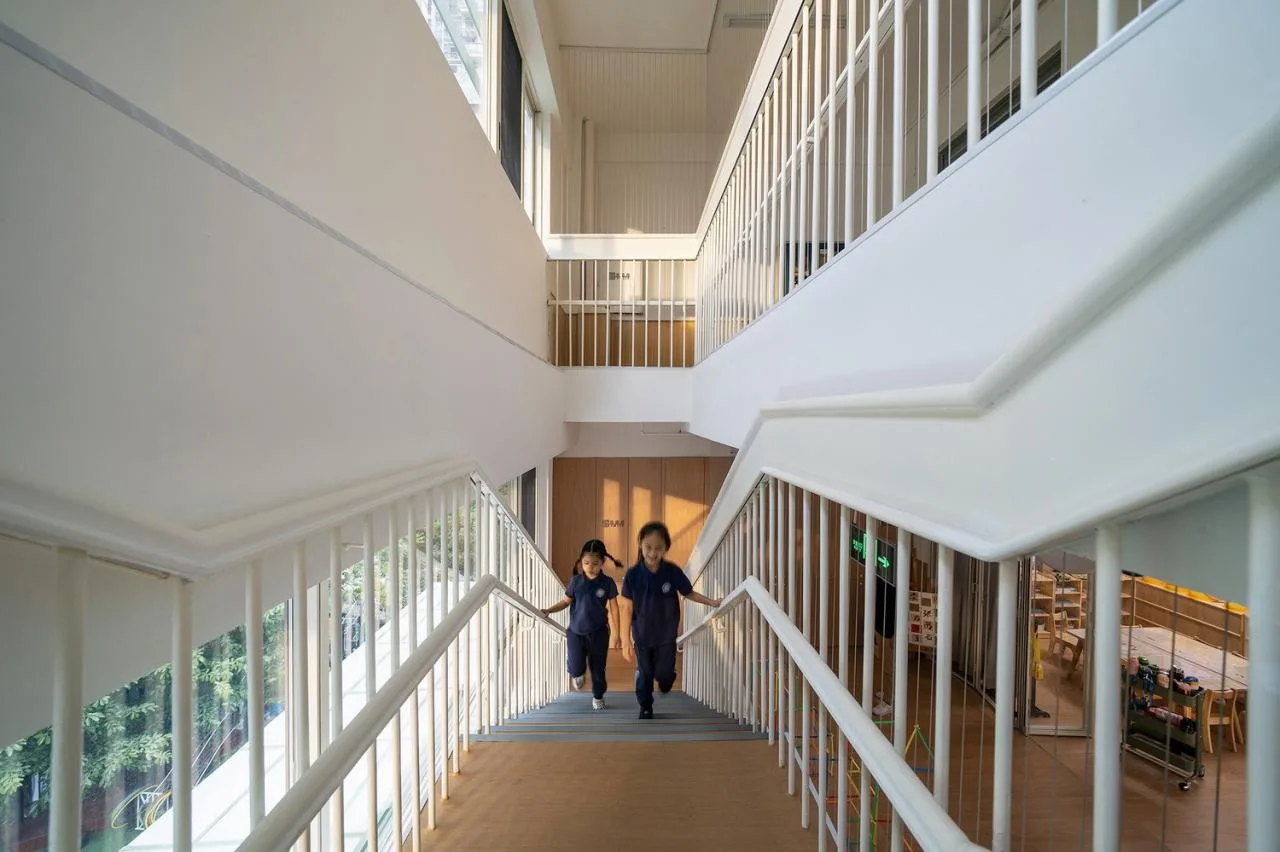
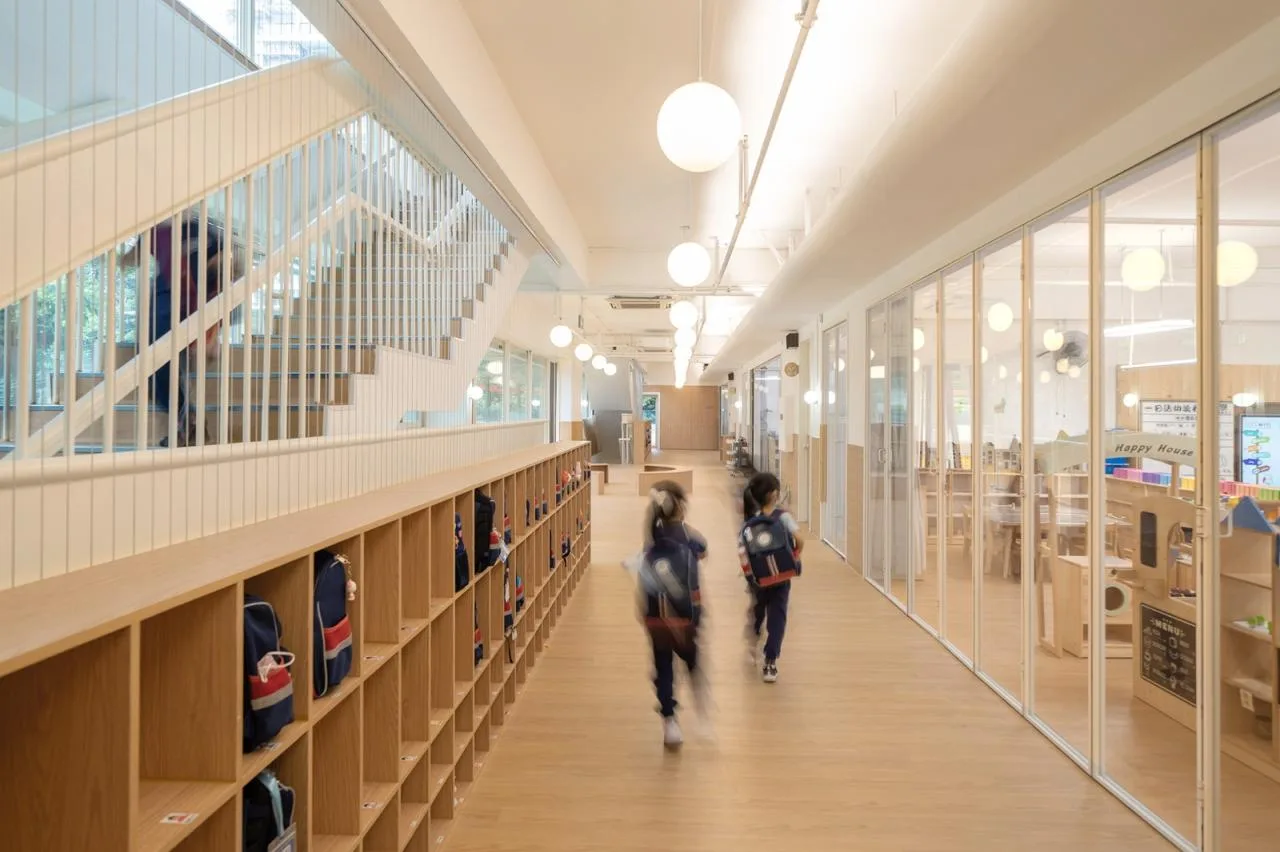
Following this concept, we replaced original partition walls with glass folding doors up to 5 meters wide in each classroom, seamlessly connecting classrooms to previously underused corridors. This created expansive, continuous spaces on each floor where children can freely move and socialize. Natural light now floods classrooms directly through the expanded corridor windows. To continue the “tree hole” theme from the music and sports room, corridor walls, floors, and furniture below 1.2 meters are finished with natural wood, creating a warm, child-friendly atmosphere.
Given the tight schedule, we incorporated several “low-tech” solutions in the corridor design. Exposed pipes were used to route new lighting fixtures, avoiding the need for ceiling chases. Only partial cantilevered light slots were installed to cover the original bridge structure without constructing a full ceiling. Additionally, staircase handrails were raised to meet safety standards without dismantling and rebuilding the entire structure.
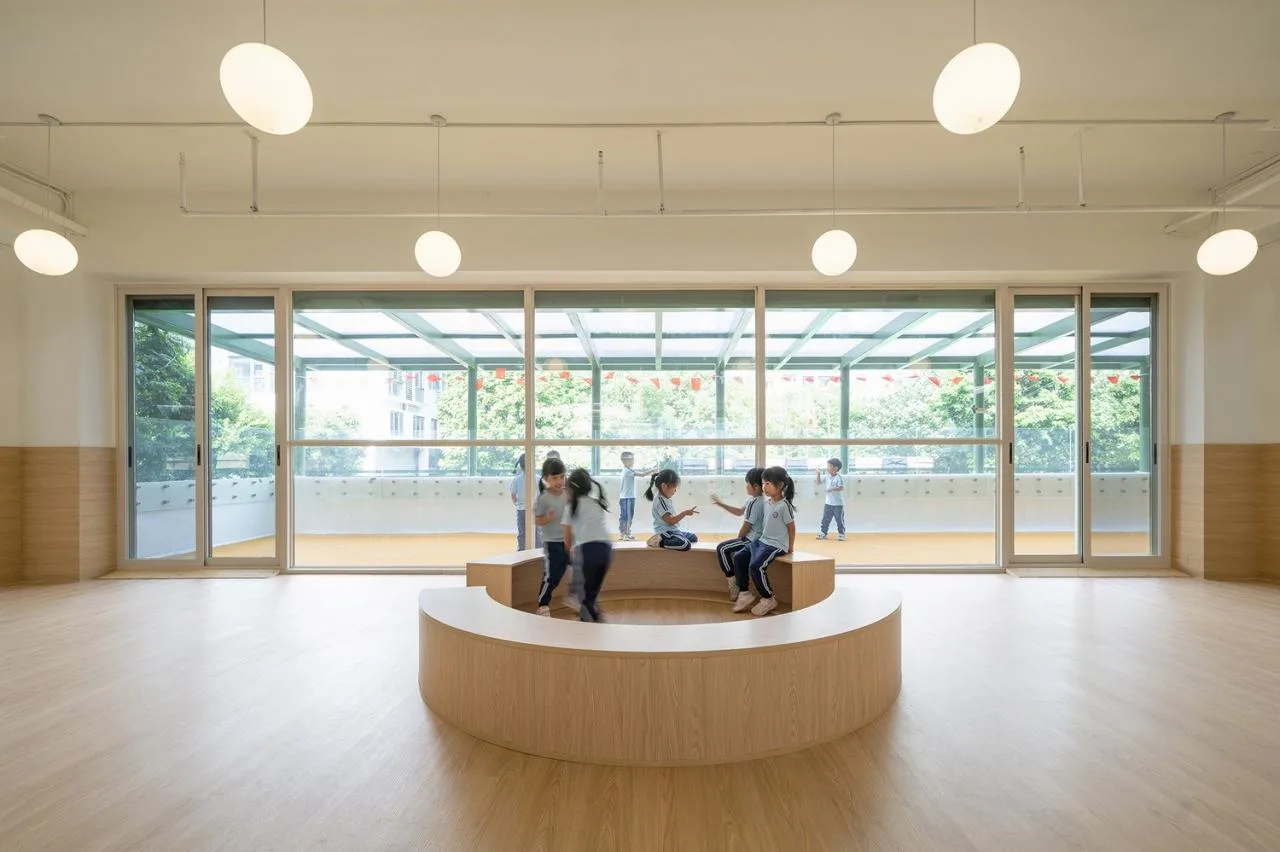
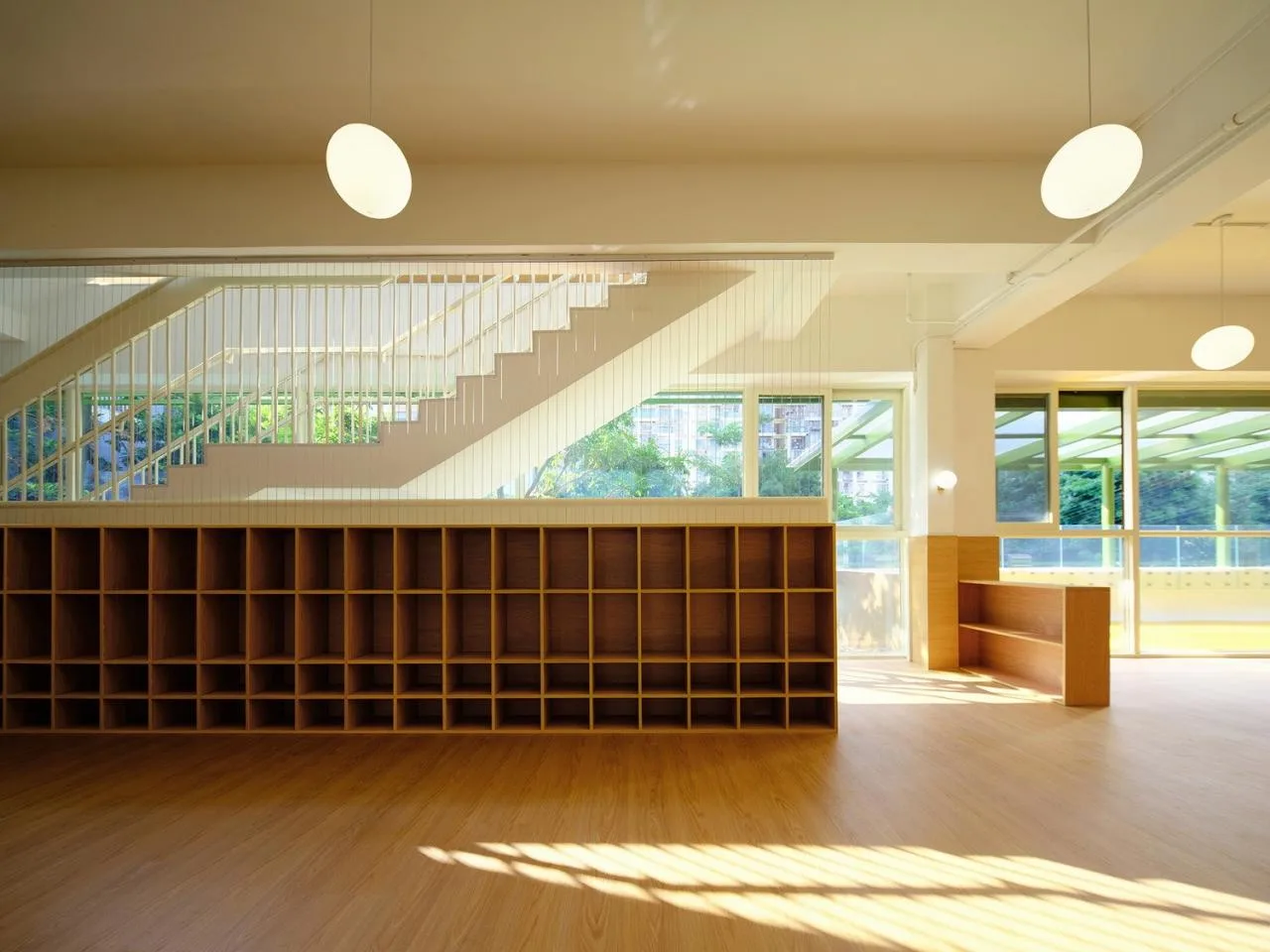
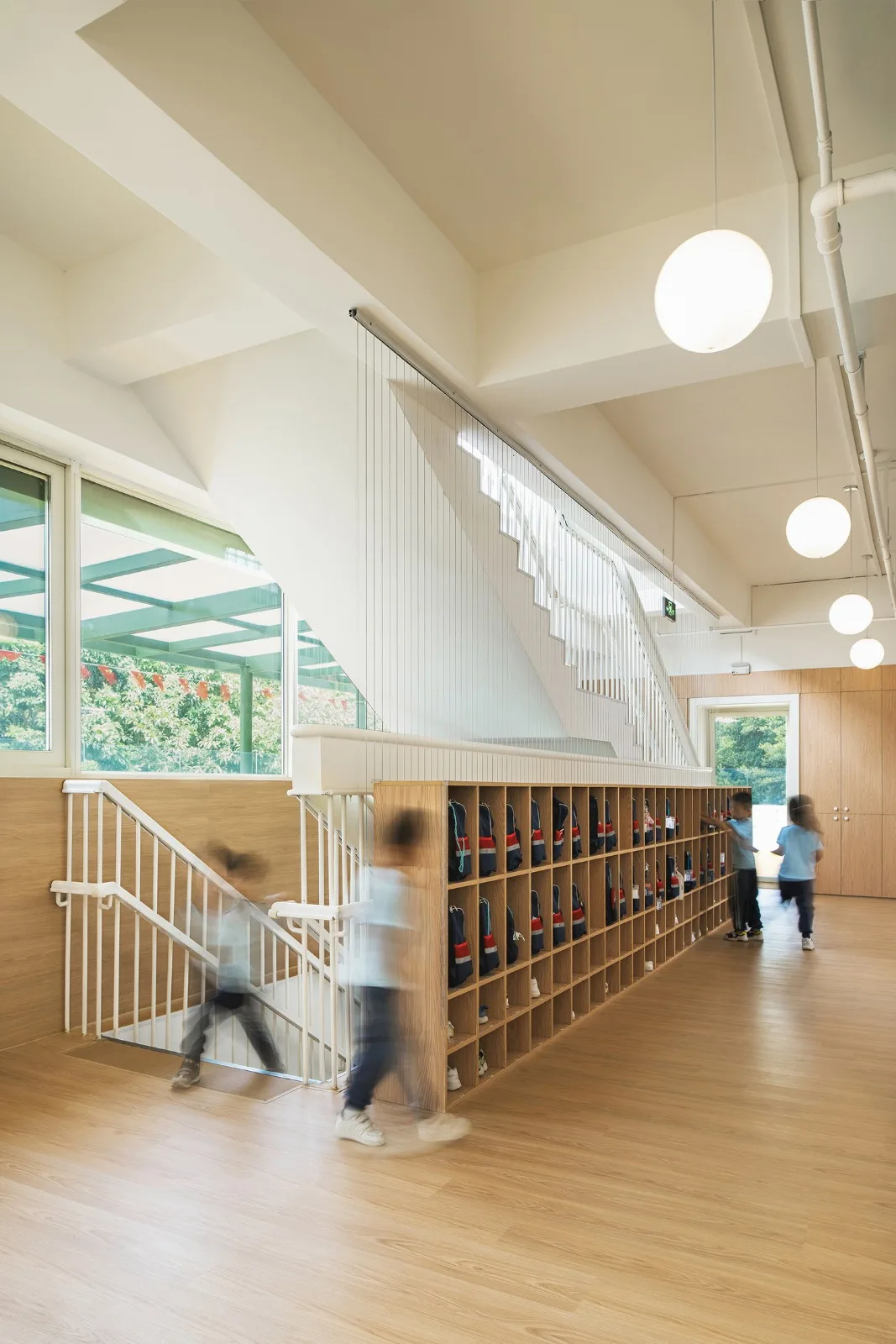
After over a month of renovation, Birong Wan Kindergarten has been revitalized. It has won the affection of many children and gained unanimous praise from parents, staff, and the wider community. As architects, we believe the physical environment plays a crucial role in children’s learning and development. A thoughtfully designed educational space positively influences children’s character and mental growth. We hope that in the future, more schools will move away from standardized spatial models and embrace environments that nurture and inspire, adding warmth and color to children’s school experiences.
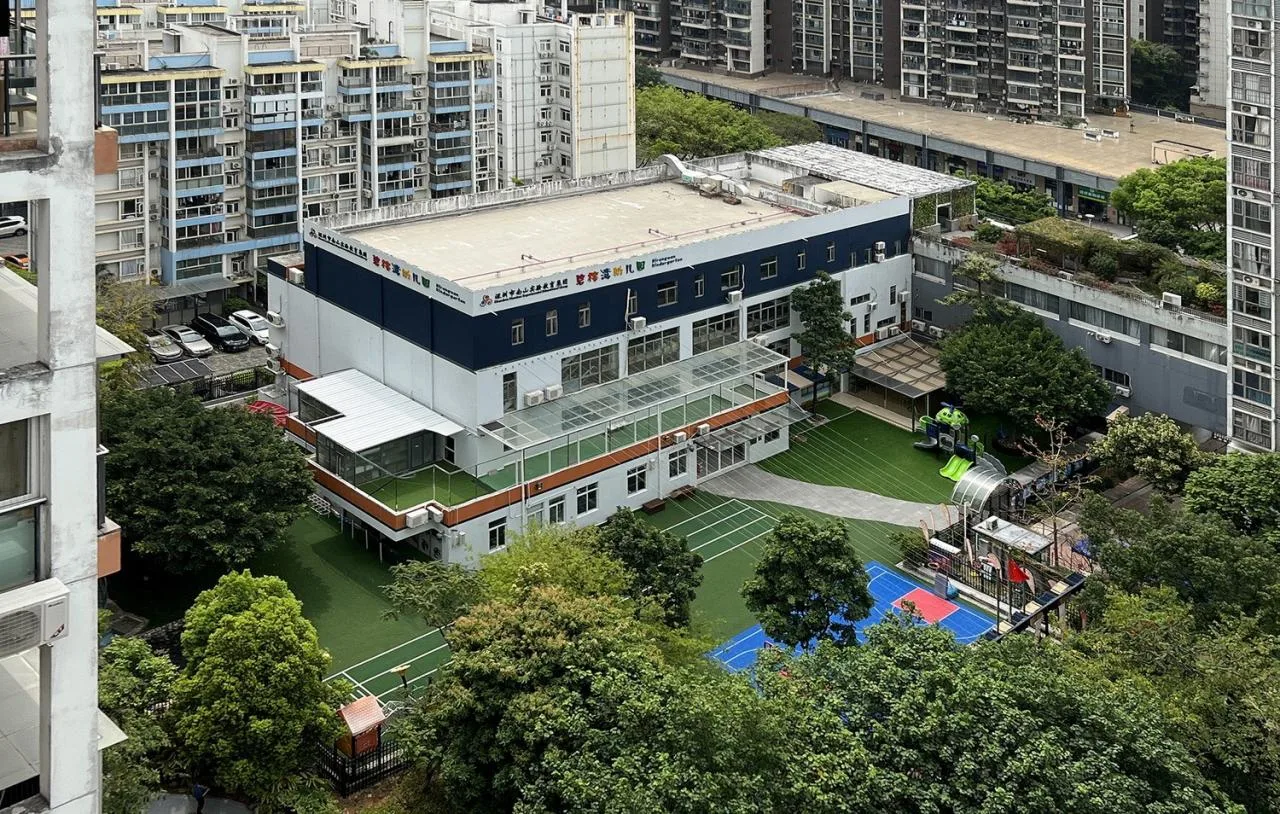
△ Original architecture
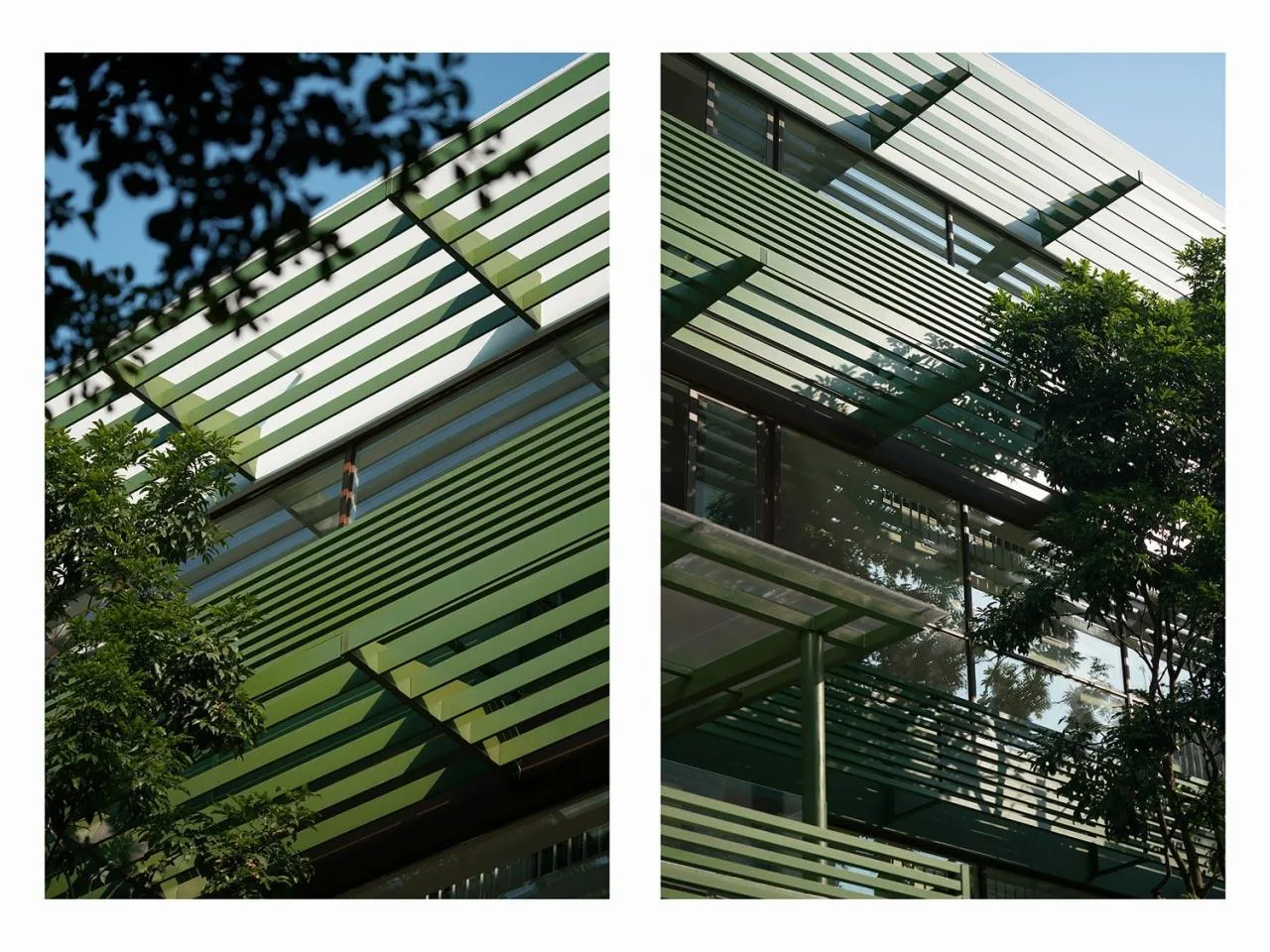
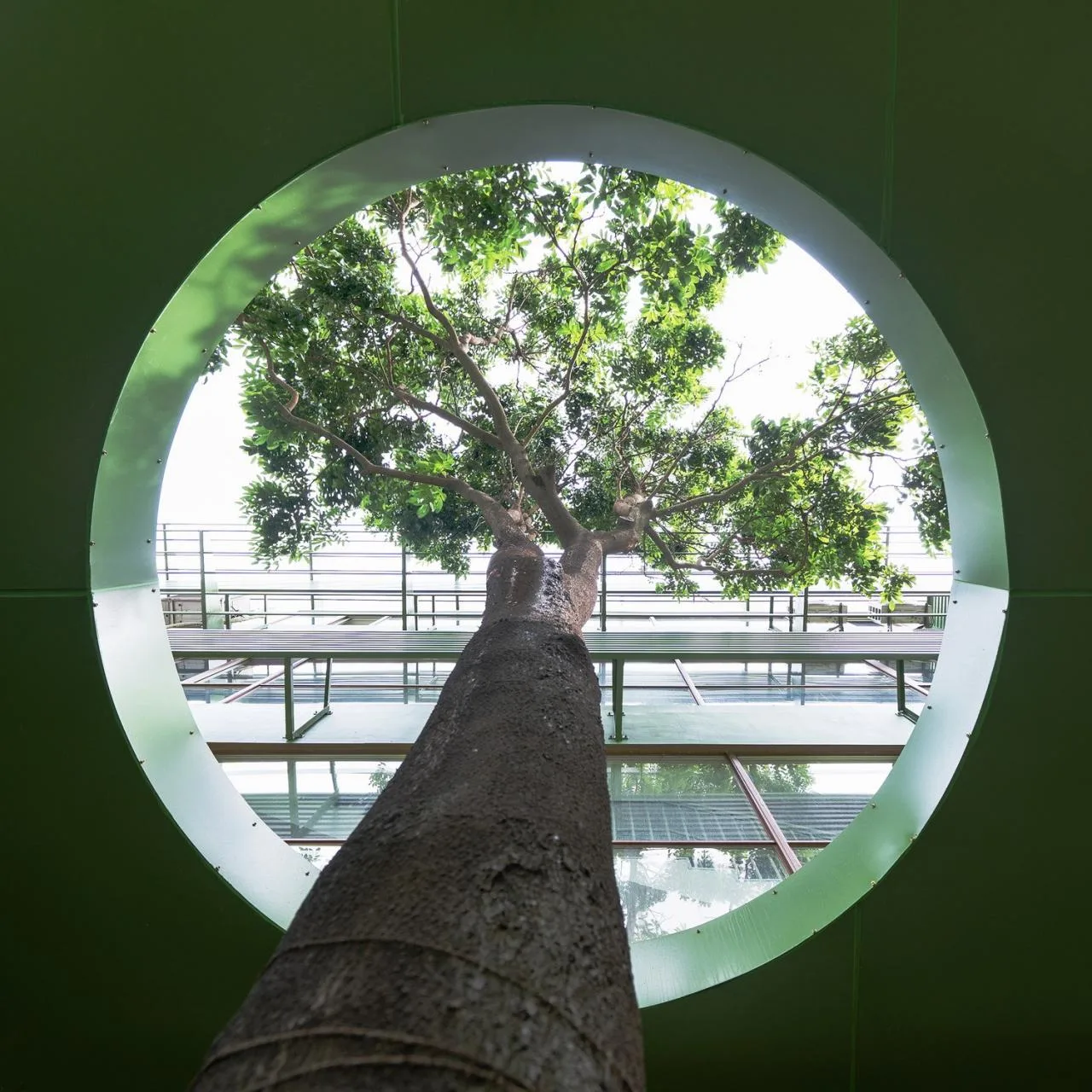
Project Drawings
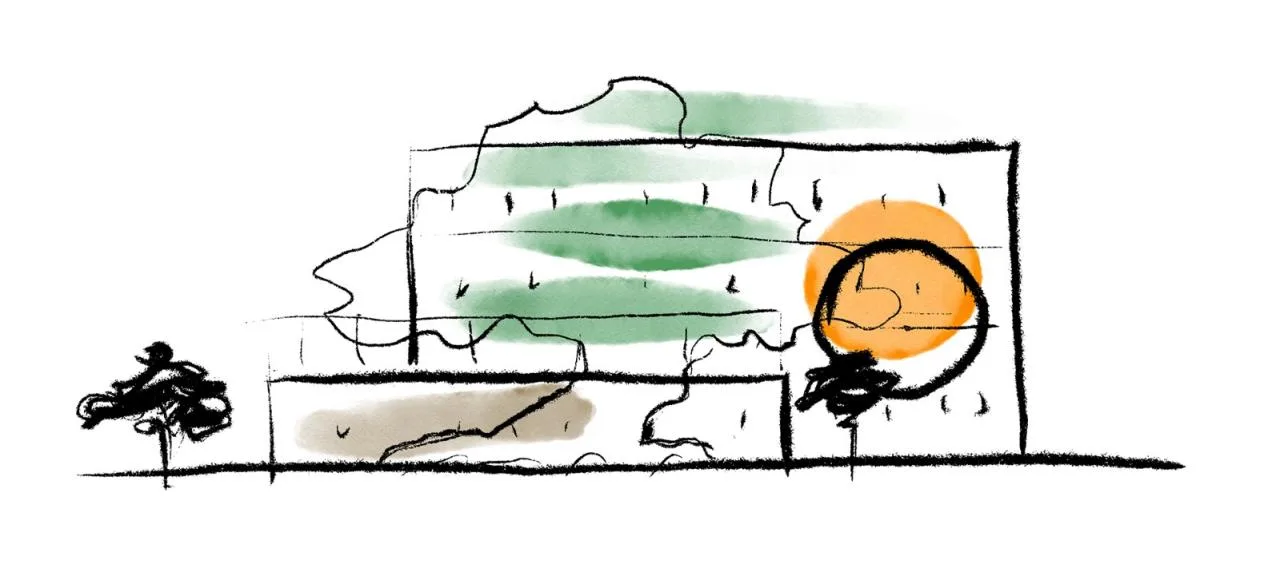
△ Hand-drawn sketch
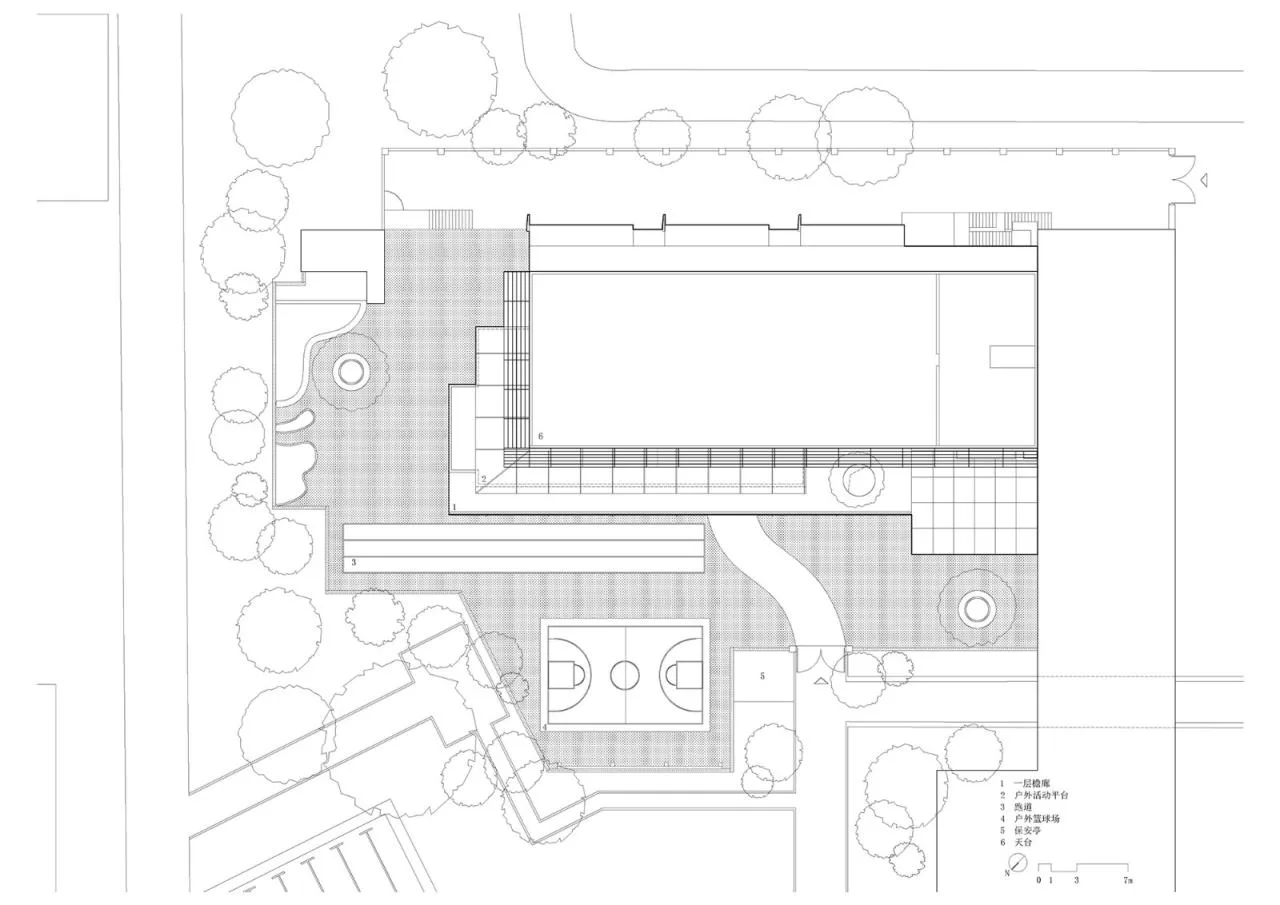
△ General layout plan
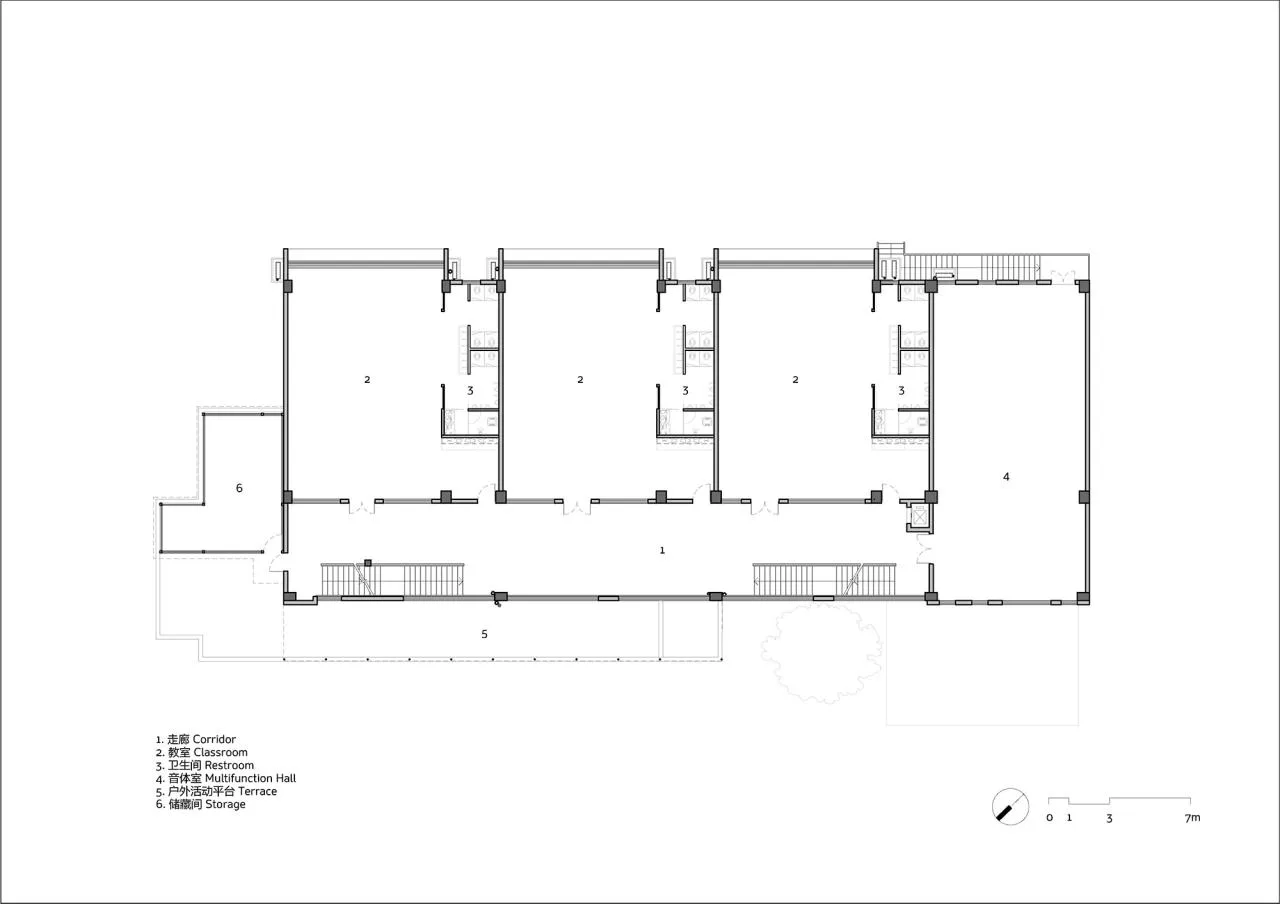
△ Floor plan
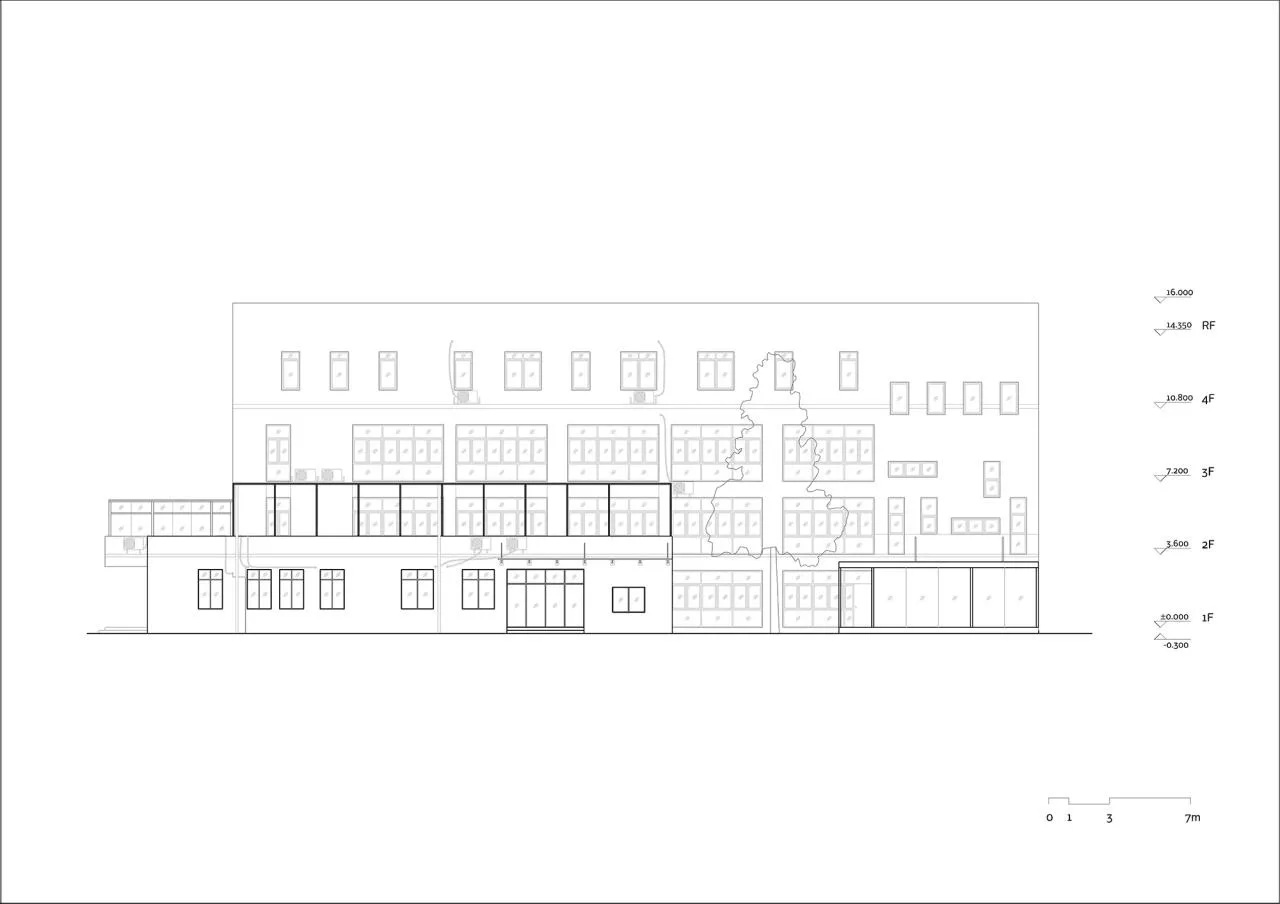
△ Elevation drawing
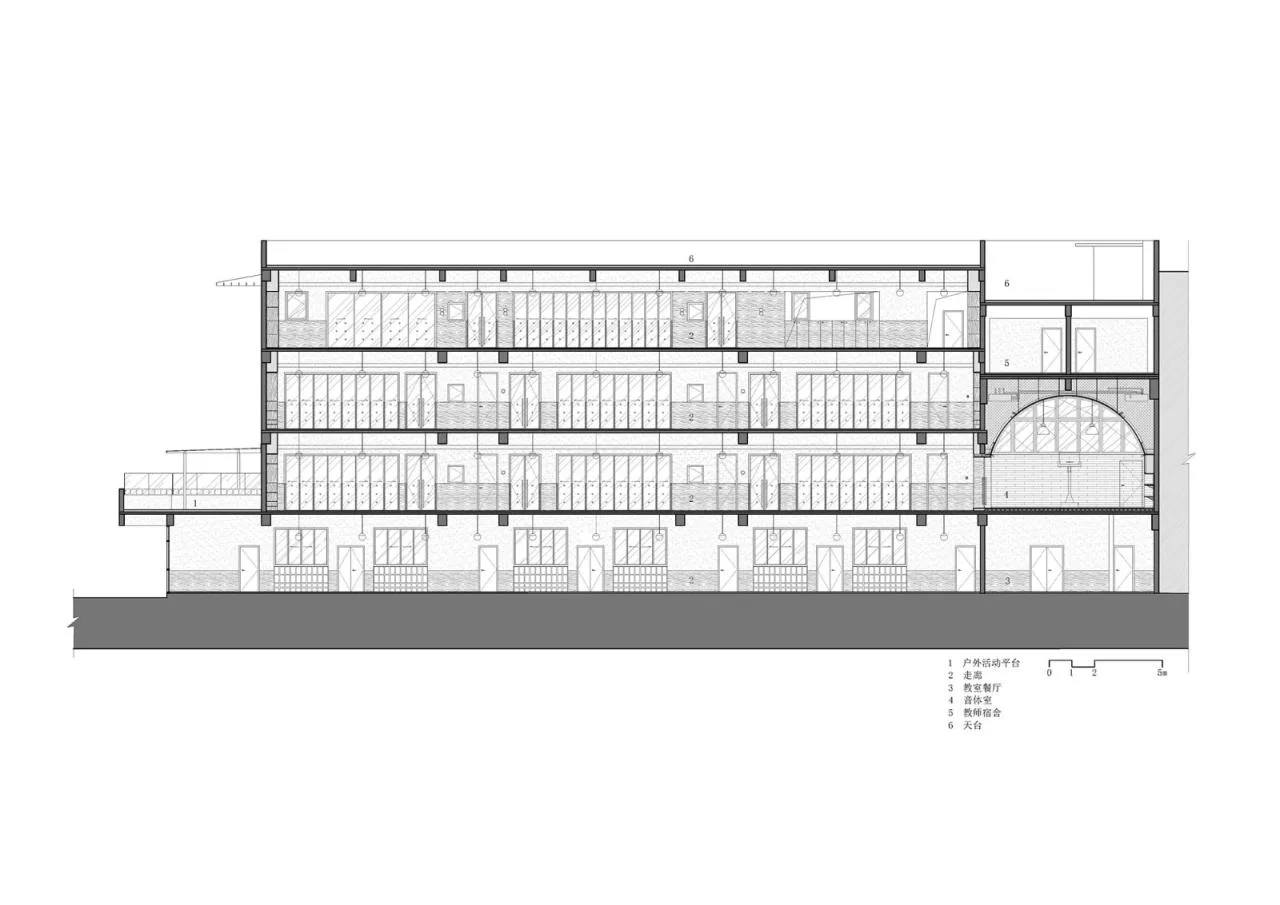
△ Section diagram
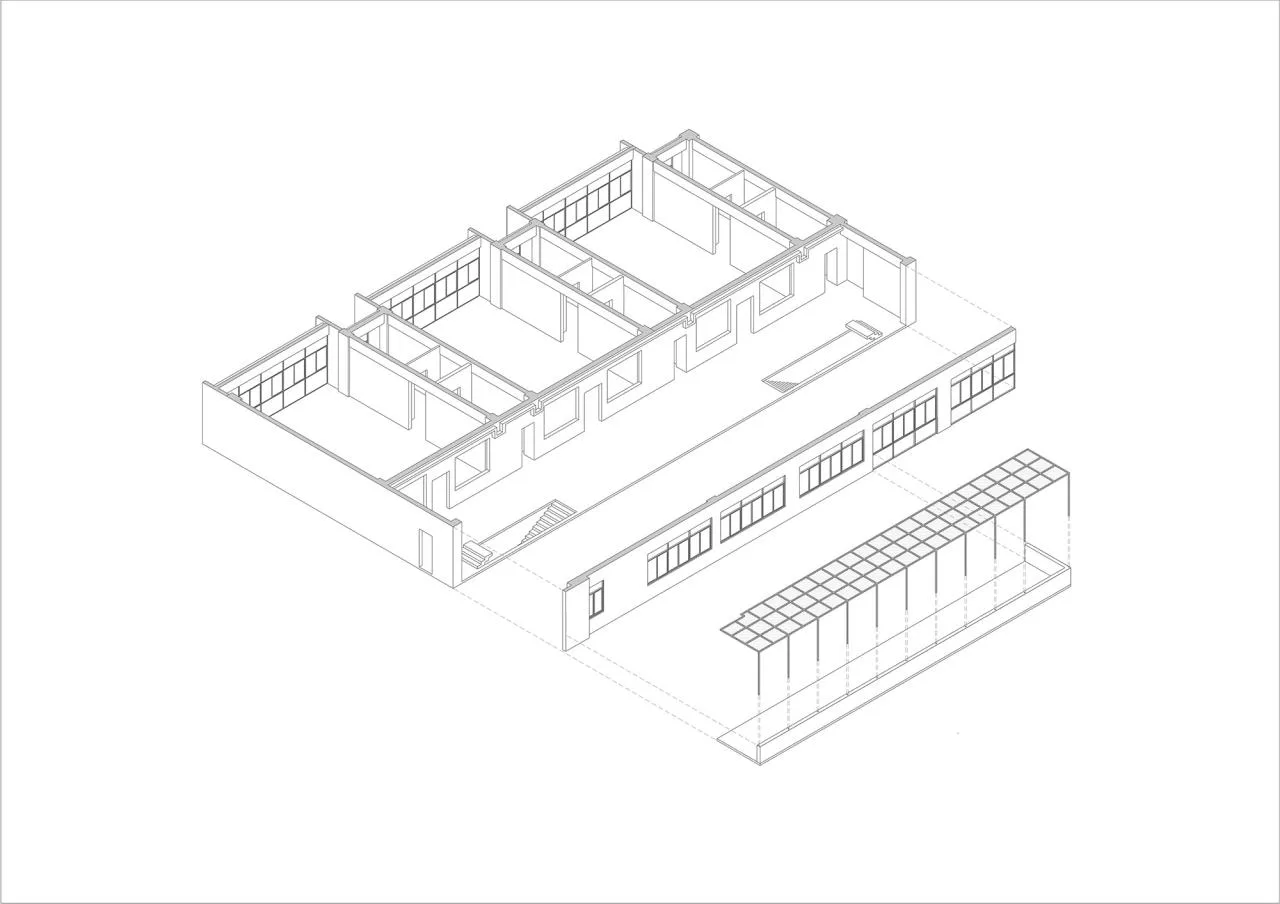
△ Axis measurement analysis diagram
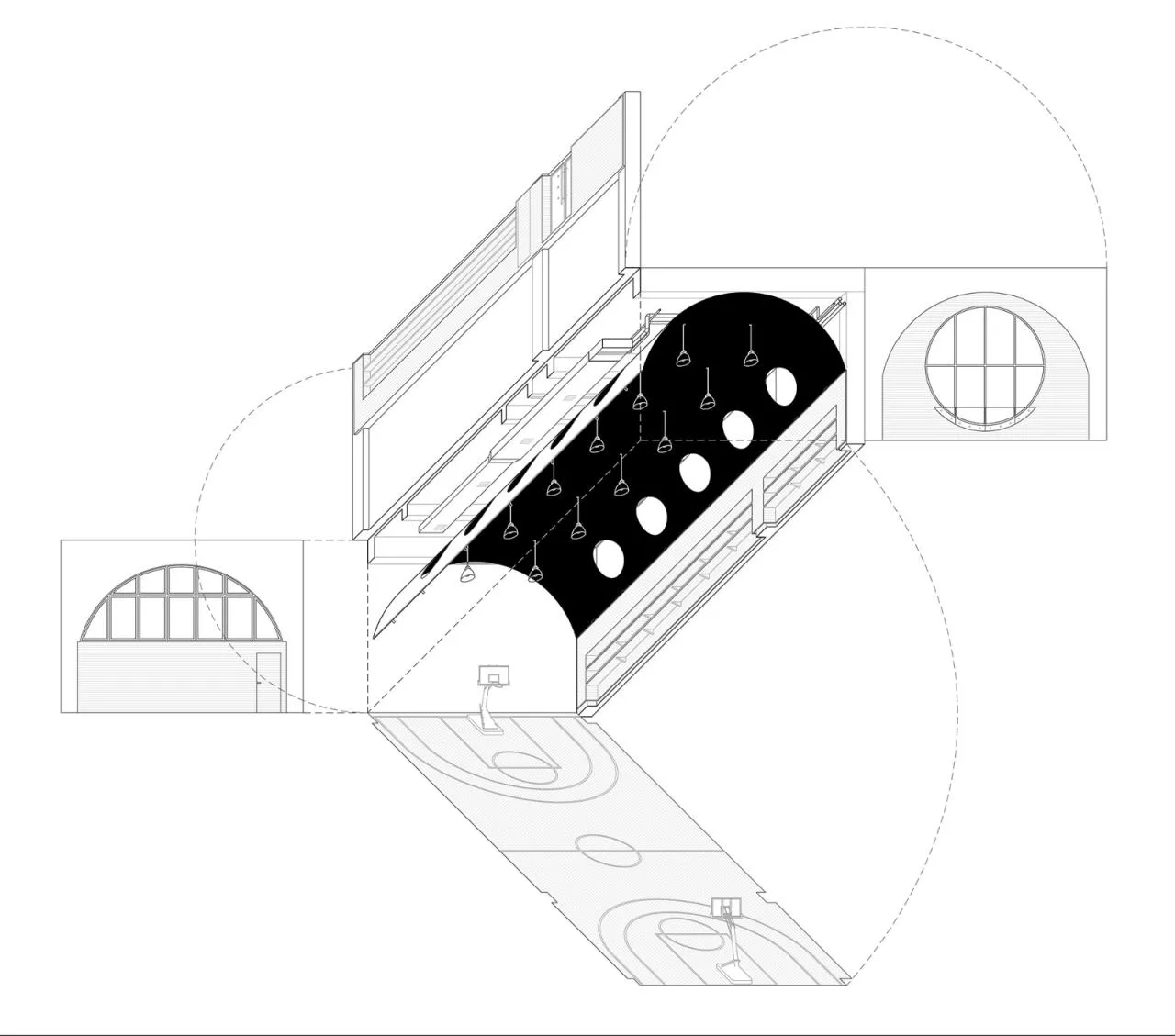
△ Analysis chart
Project Information
Architect: Design Studio
Area: 3,000 m²
Project Year: 2022
Photographer: ACF Domain Map
Manufacturers: Gerflor, JBS, Euclid Flooring
Lead Architects: Jiang Boyuan, Wang Jingwen, Yang Shuo
Design Team: Jiang Boyuan, Wang Jingwen, Yang Shuo, He Zijie, Qiu Rongqian
Consultants: Shenzhen Planning and Natural Resources Bureau, School of Architecture, The Chinese University of Hong Kong
Construction Agency: Shenzhen Zhenye (Group) Co., Ltd
Construction Units: Shenzhen Jianjiang Engineering Co., Ltd., Shenzhen China Railway Second Bureau Engineering Co., Ltd
Lighting: Shanghai Gerui Lighting Design Co., Ltd
Location: Shenzhen















Must log in before commenting!
Sign Up