
The “Power Workshop” is situated in the EKA • Tianwu Art District within the Jinqiao District of Pudong New Area, Shanghai. Originally, this site housed the Equipment Power Workshop of Building 462 at the China Shipbuilding Navigation Instrument Factory during the 1950s and 1960s. Commissioned by the property owner, the project involved comprehensive planning, renovation, and design of the area. As the park’s centerpiece, the renewal process emphasizes respecting historical heritage and preserving the site’s original cultural memory. At the same time, it accommodates modern commercial, lifestyle, and multifunctional uses, breathing new life into the old structure and fostering a dialogue that transcends time and space.
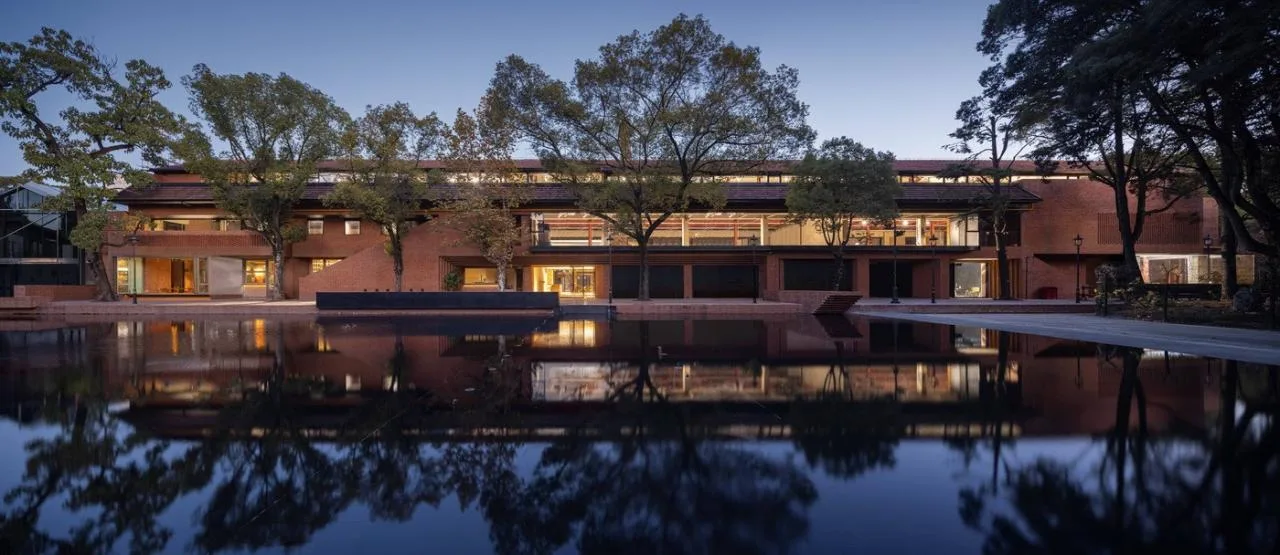
The overall aesthetic of the ‘Power Workshop’ is simple and natural, infused with industrial style elements, creating an impression as if it is poised above the water in winter. © Su Shengliang
The building retains its original double-beam structure and sloped red tile roof. Its exterior features expansive plain red brick walls, complemented by eaves and window sills made from black weather-resistant steel plates. These details maintain the building’s welcoming character while reviving its original industrial atmosphere. The structure is designed with interweaving, stacking, arrangement, and hollowing techniques, offering a dynamic visual experience full of depth and movement.
Facing the water on the south side, the extension of the red brick ground creates an outdoor display area that appears to float, blurring the boundary between architecture and nature. This design reflects Ben Zhe’s architectural philosophy, focusing on the relationship between buildings, humans, and the natural environment.
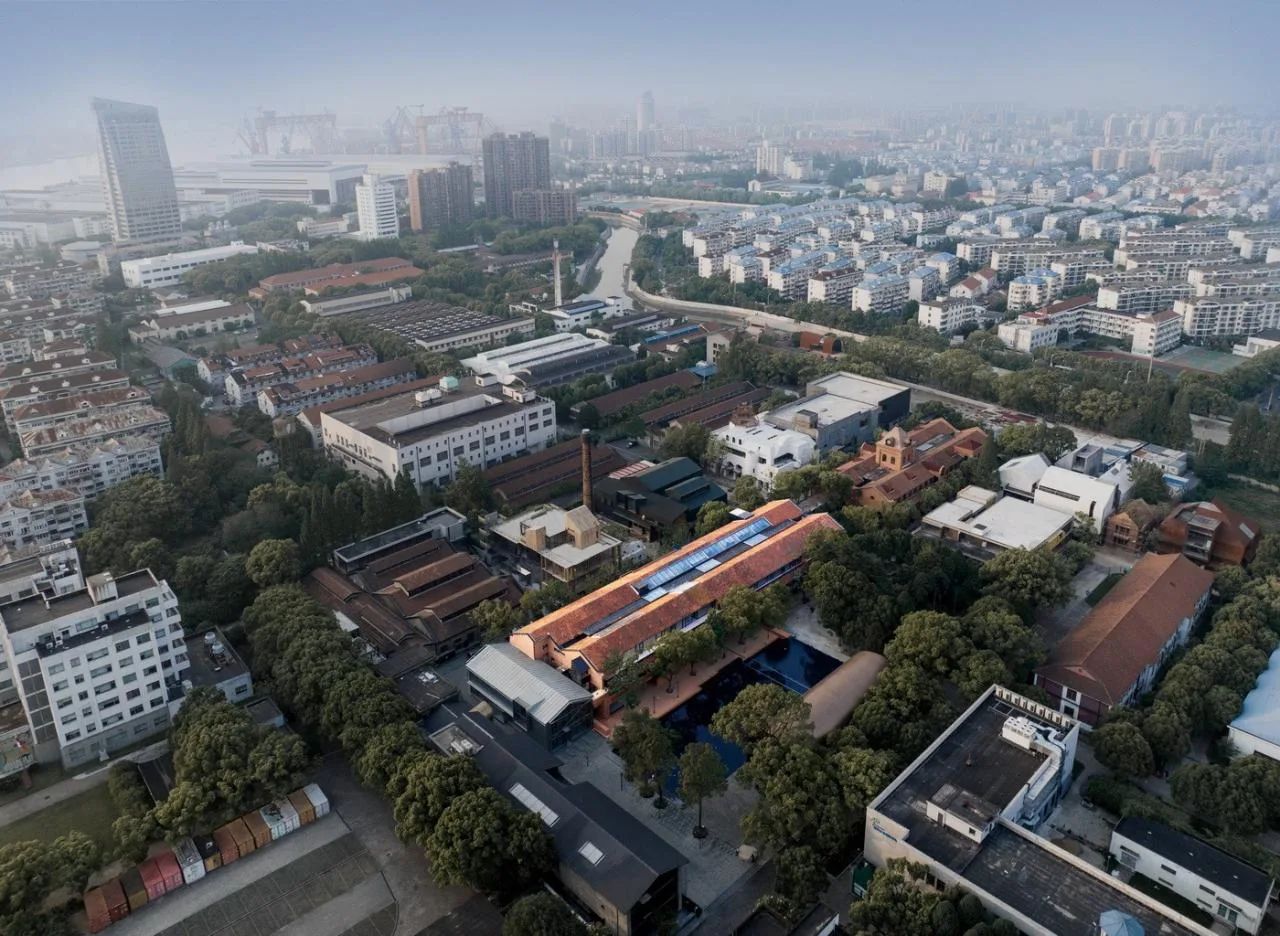
Aerial view of the ‘Power Workshop’ during summer. © Wang Ce
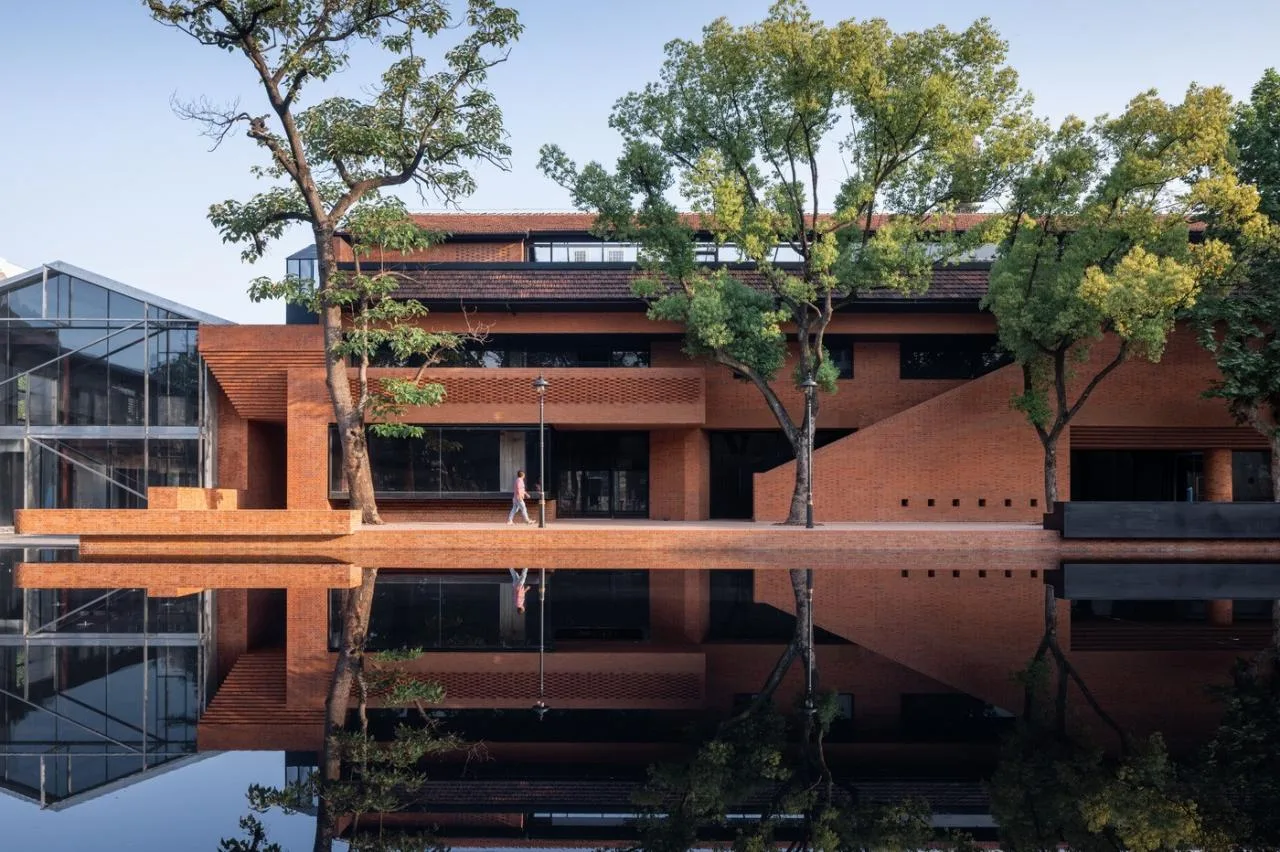
South facade of the ‘Power Workshop’ before tenant occupancy (summer). © Wang Ce
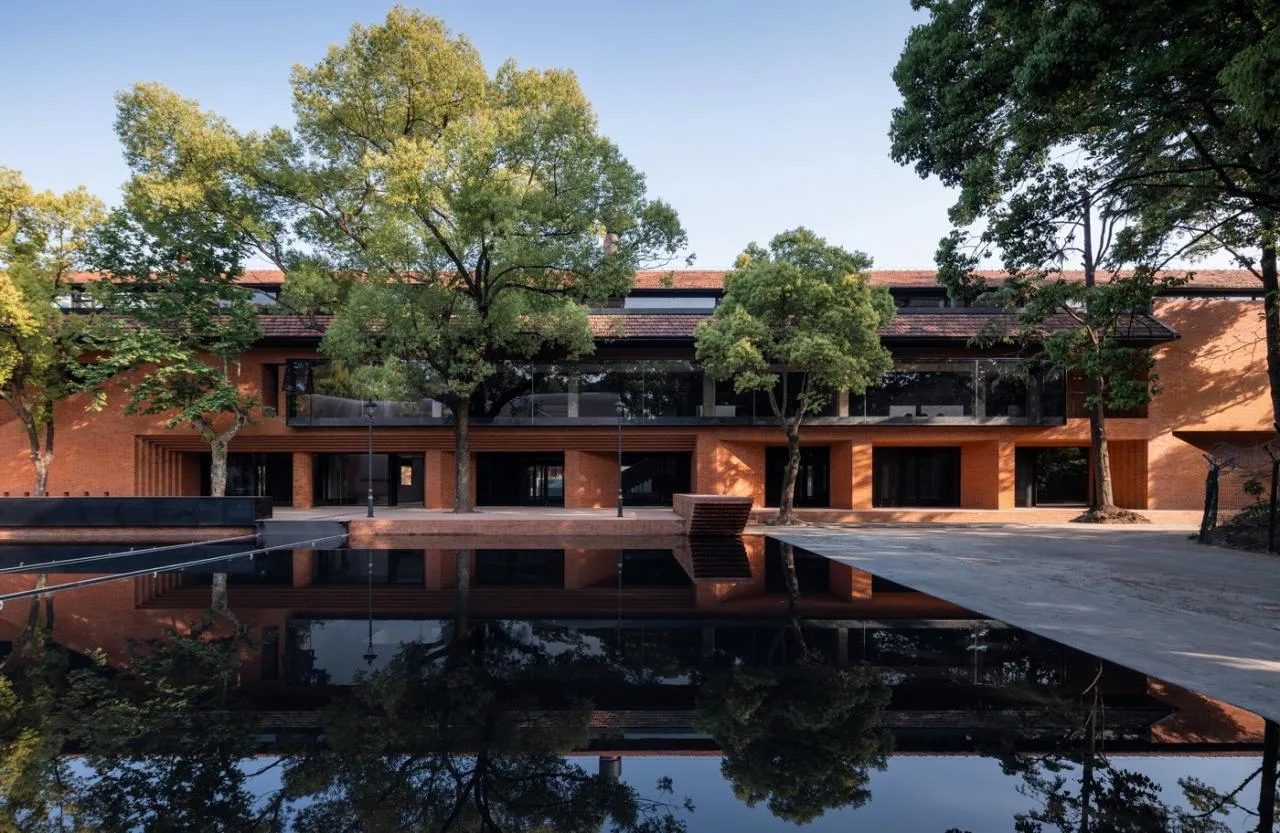
The south side offers a rich multi-level visual experience, detailed and engaging. (Summer) © Wang Ce
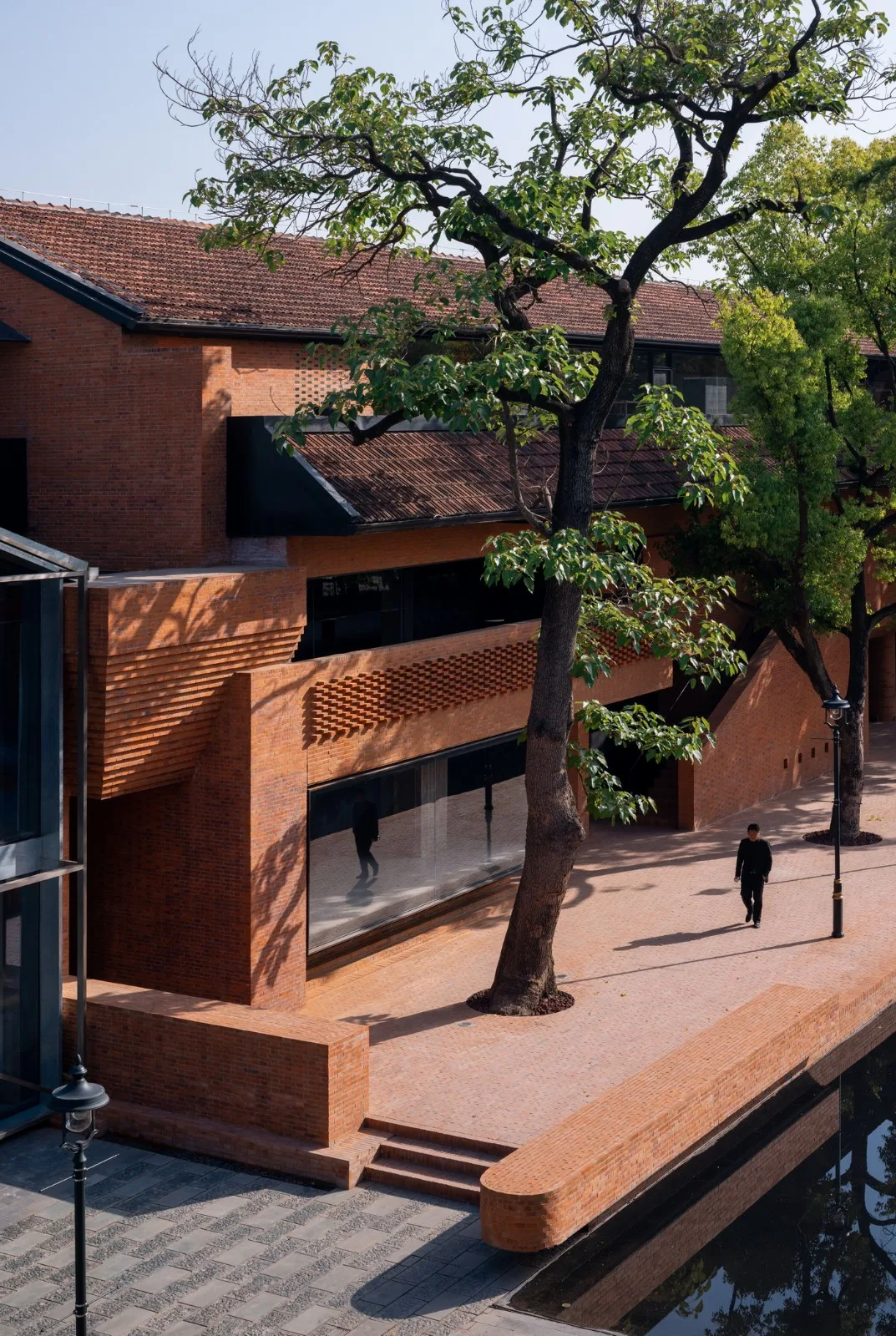
Architectural details and exterior layout area (summer). © Wang Ce
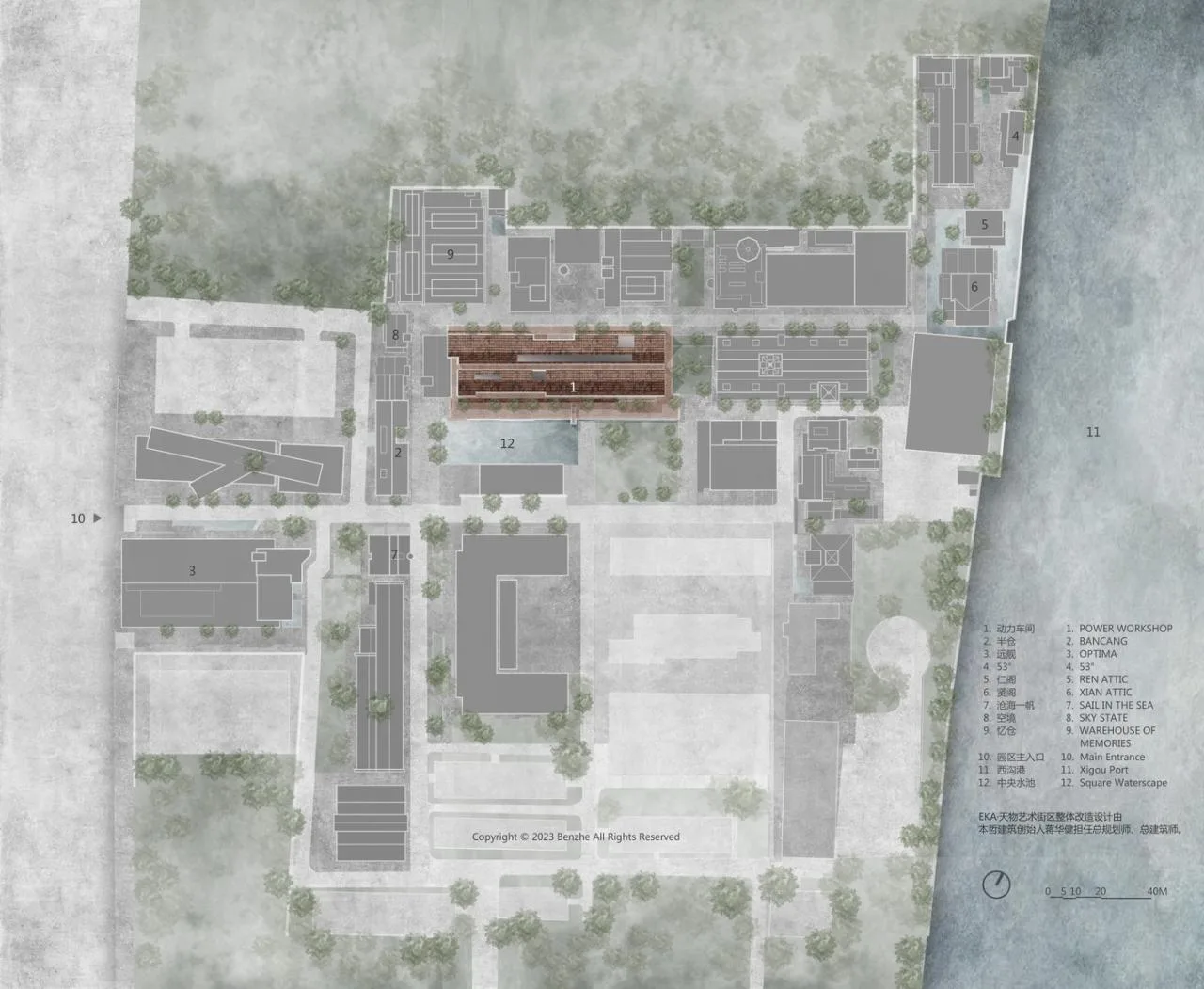
EKA · Tianwu Art District © Ben Zhe Architecture
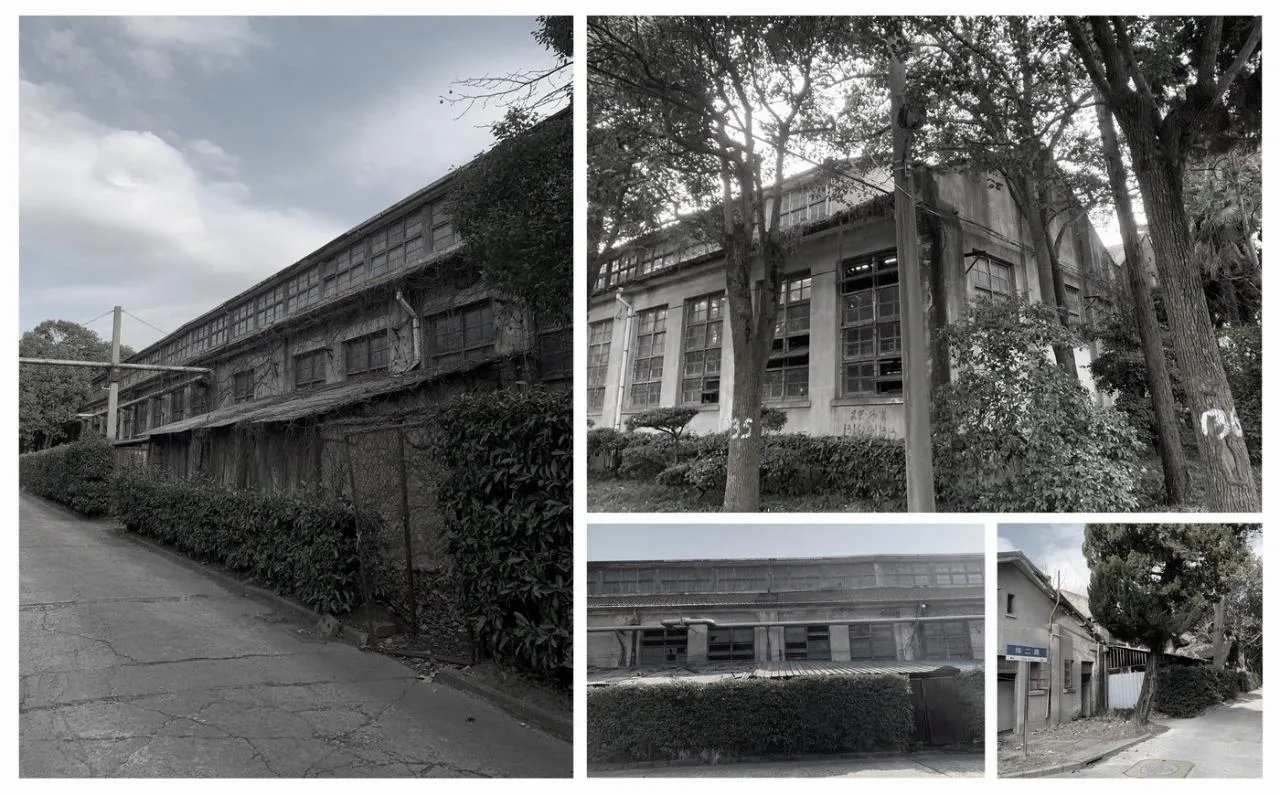
Original appearance of the building. © Ben Zhe Architecture
The ground floor features an open design to minimize damage from secondary renovations and promote sustainable use. On both southern sides, external slanted plug-in staircases facilitate easy access to the upper-level merchant spaces while enhancing the facade’s visual appeal. The second floor’s center includes an extended black weather-resistant steel-framed glass window, offering unobstructed views of the elevated interior space. This transparent, industrial-style window contrasts with the first floor’s refined linear design, which adds elegance and order.
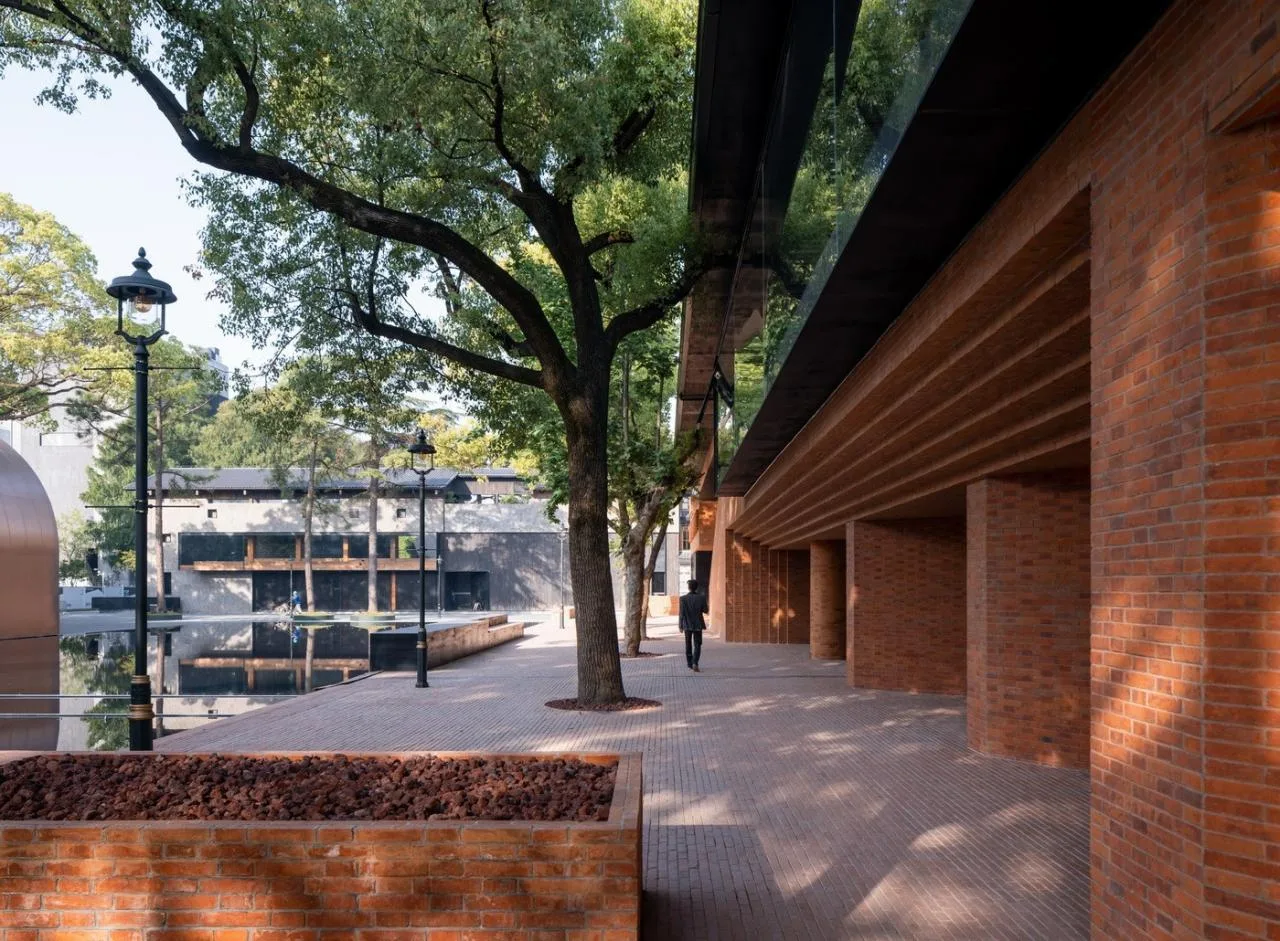
The relationship between the “Half Warehouse” and the “Power Workshop” in EKA · Tianwu Art District (summer). © Wang Ce
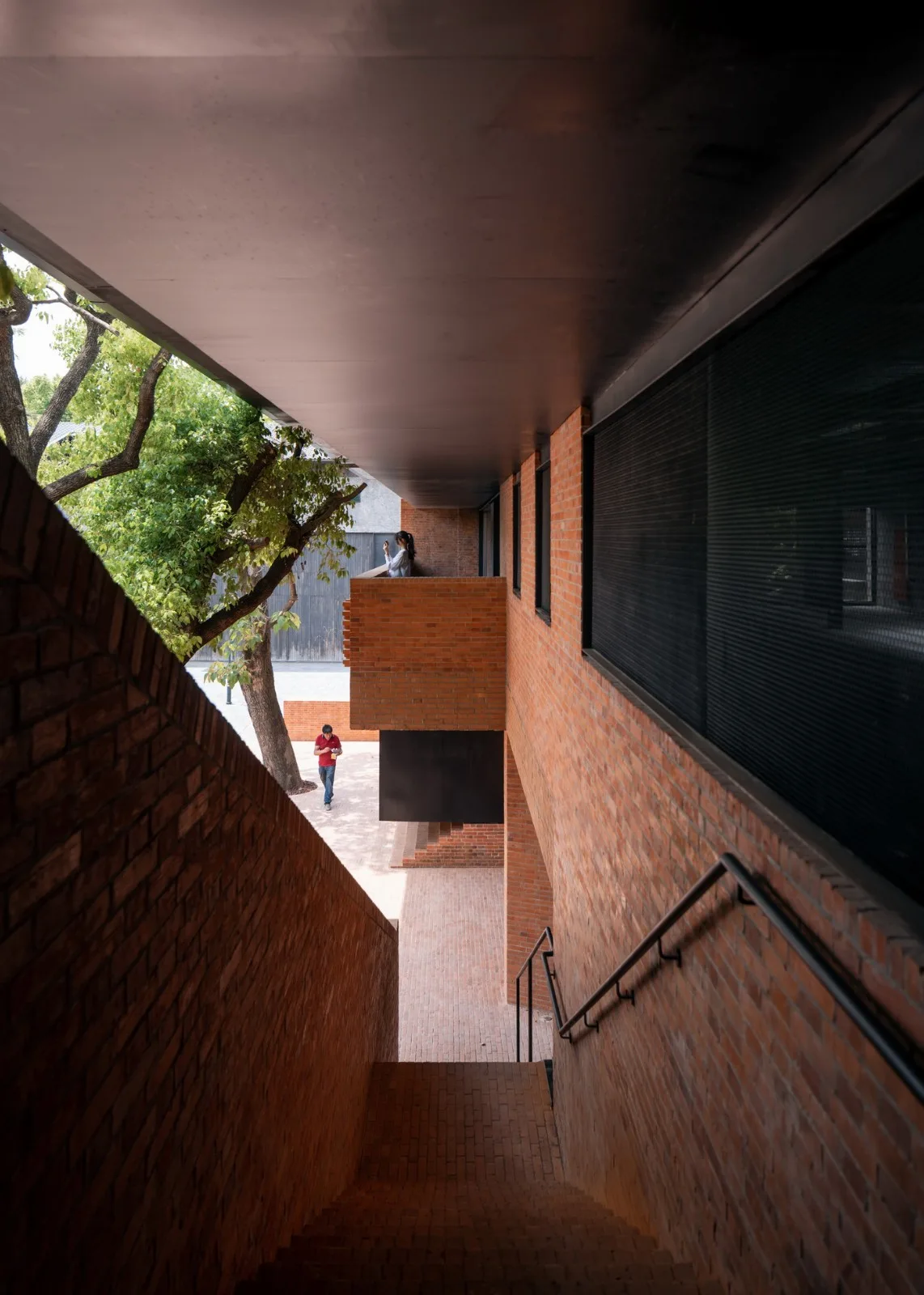
The staircase on the left side of the south facade connects across the air to the second-floor balcony, enhancing spatial interaction and playfulness (summer). © Wang Ce
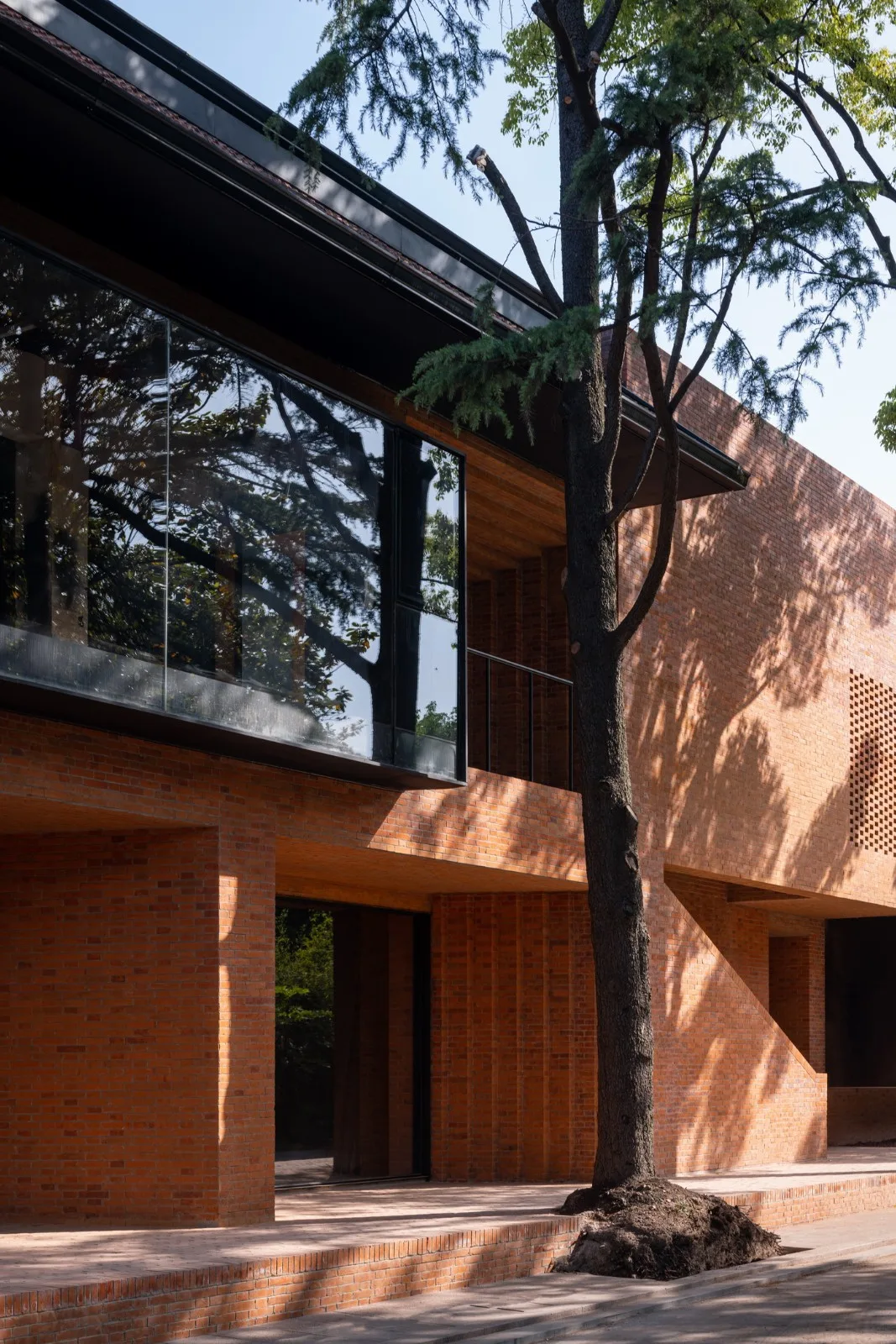
On the south and right sides, another external inclined plug-in staircase leads to a small second-floor balcony, designed with a stacked inward, concave-convex form (summer). © Wang Ce
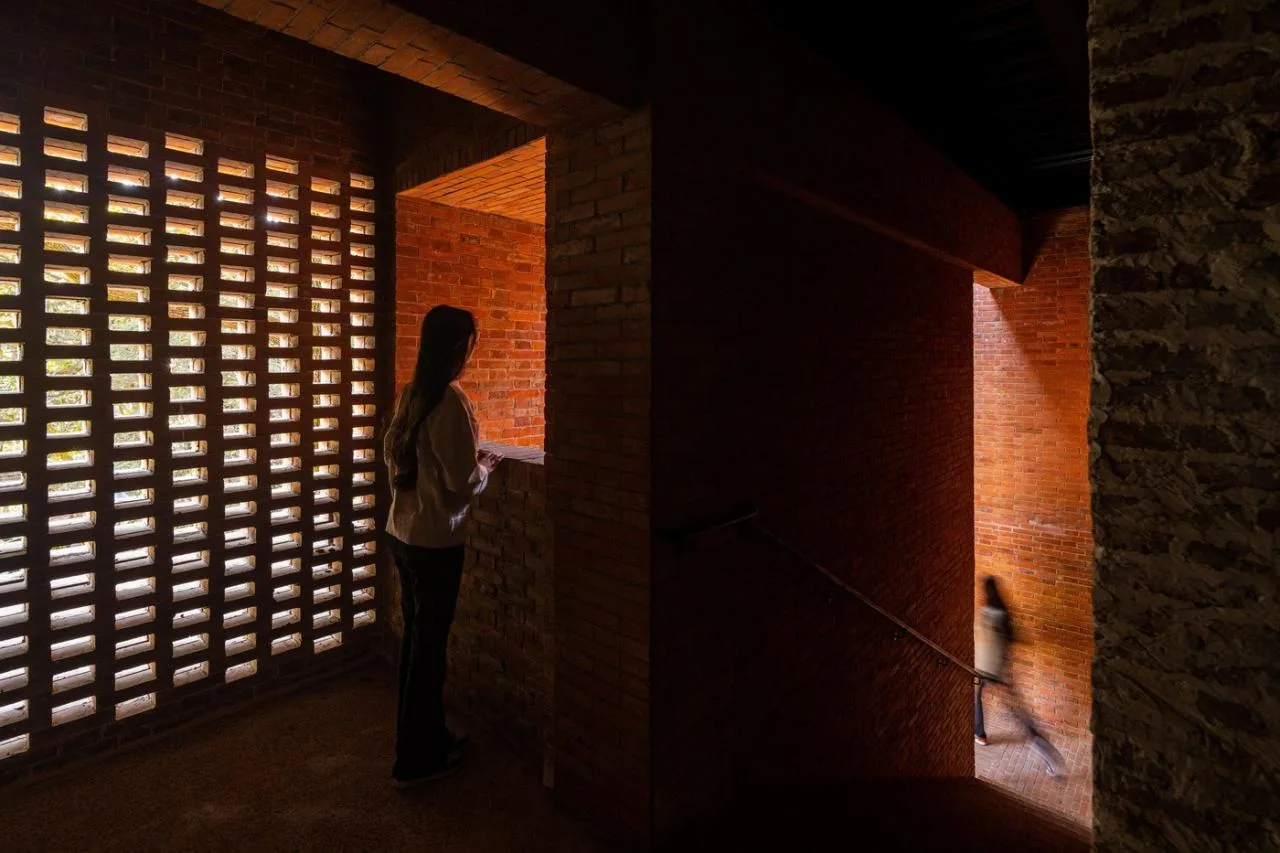
The second floor’s right side exterior features a hollow design, blending reality and virtuality to allow spatial communication (winter). © Su Shengliang
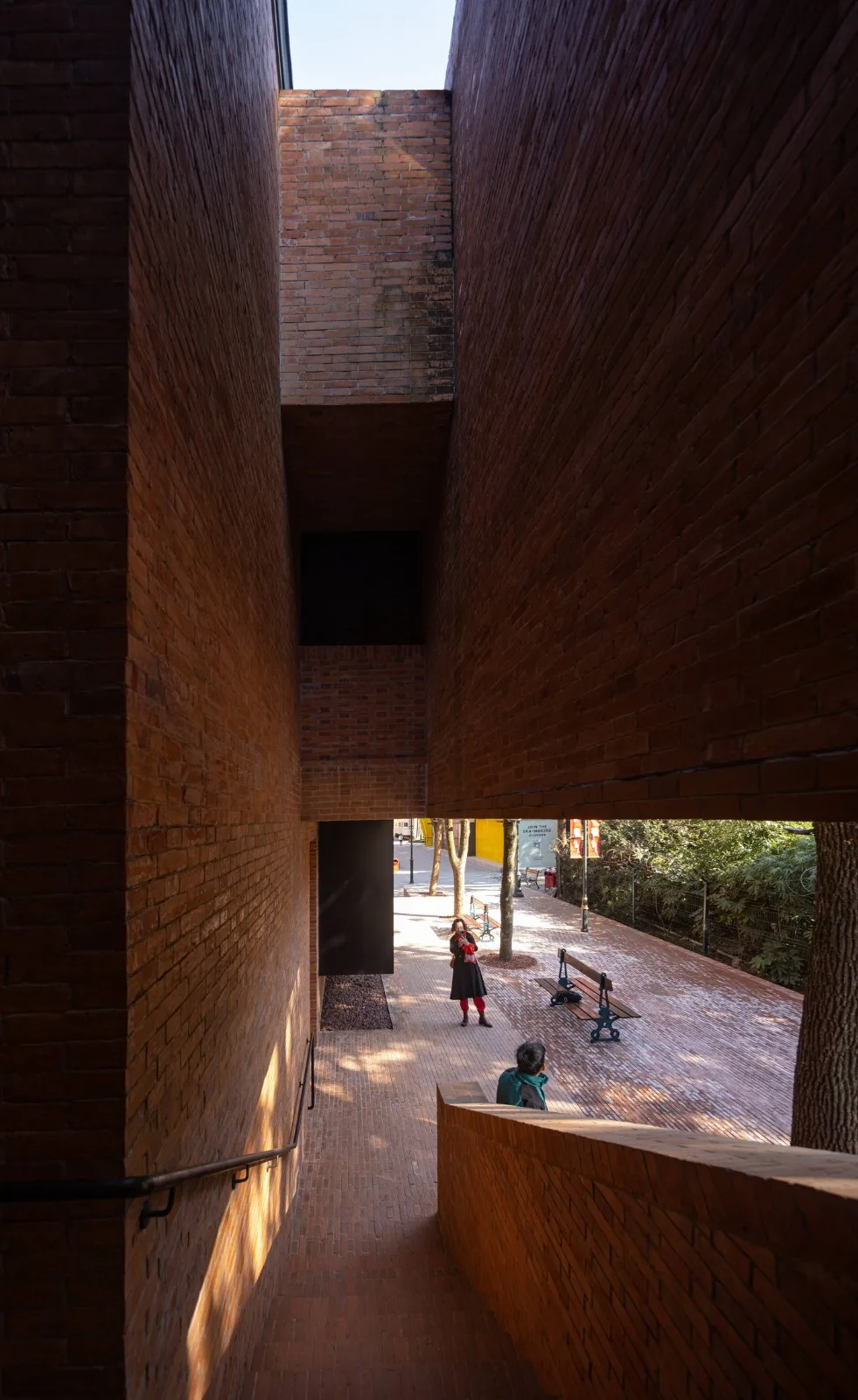
The southeast external staircase integrates with the building space (winter). © Su Shengliang
A steel-framed glass box is inserted at the southeast corner to introduce natural light. Additionally, a cut is made through the southern mountain wall to create a suspended balcony, establishing a contrast between tangible and intangible elements. The mountain wall’s lower section is inwardly stacked, making the glass box appear to float, injecting a contemporary pulse into the historic building.
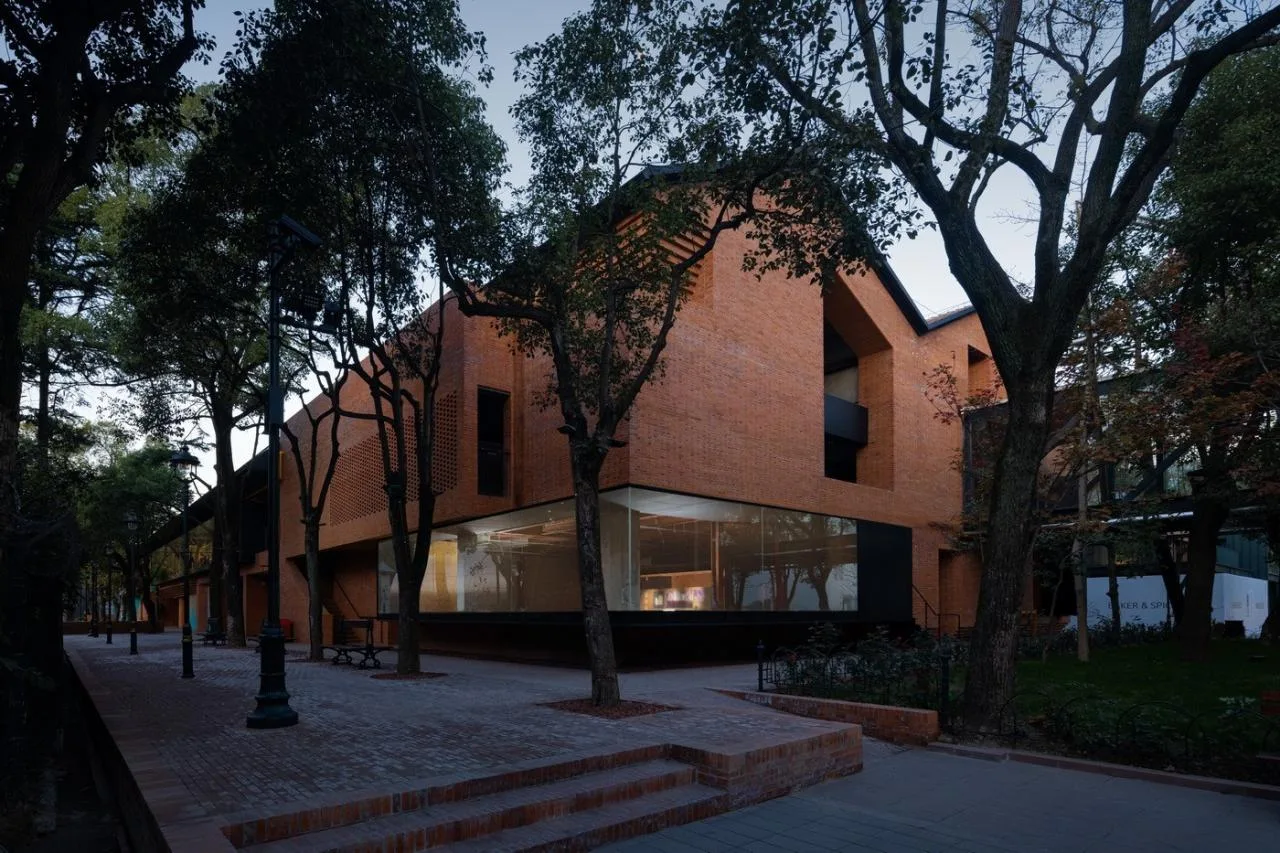
Southeast corner of the ‘Power Workshop’ (winter). © Su Shengliang
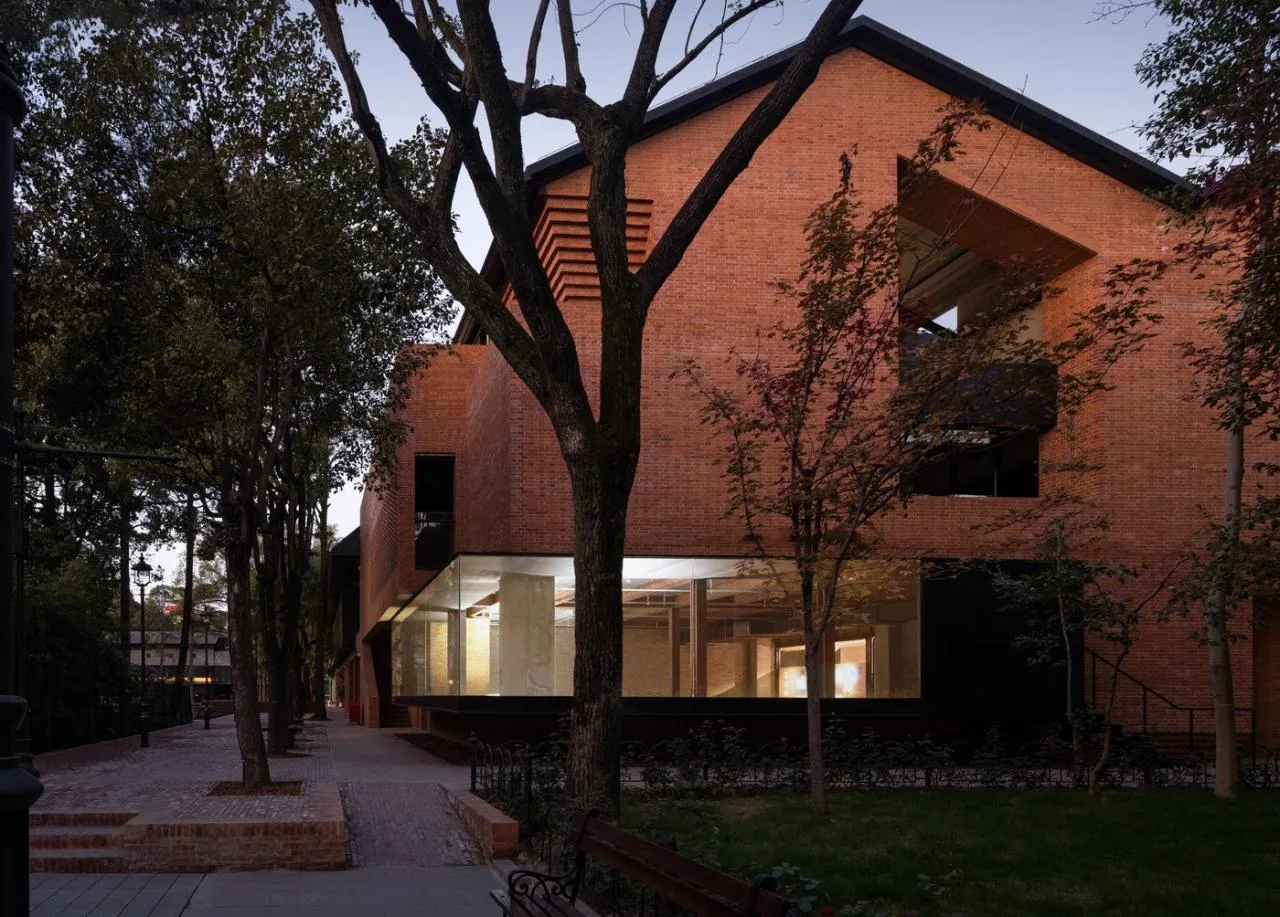
Suspended glass box at the southeast corner (winter). © Su Shengliang
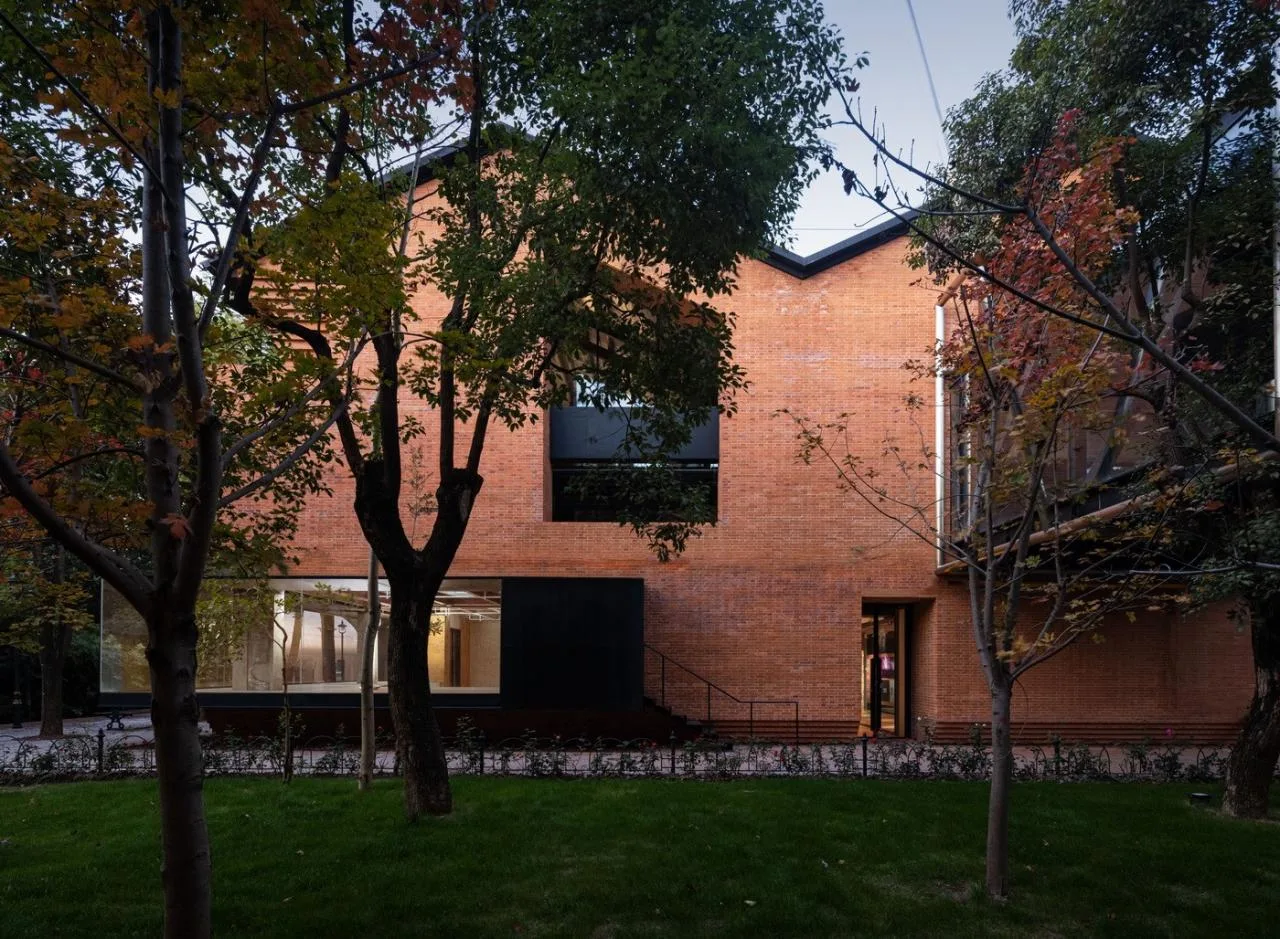
The ‘Power Workshop’ nestled in the woods during winter. © Su Shengliang
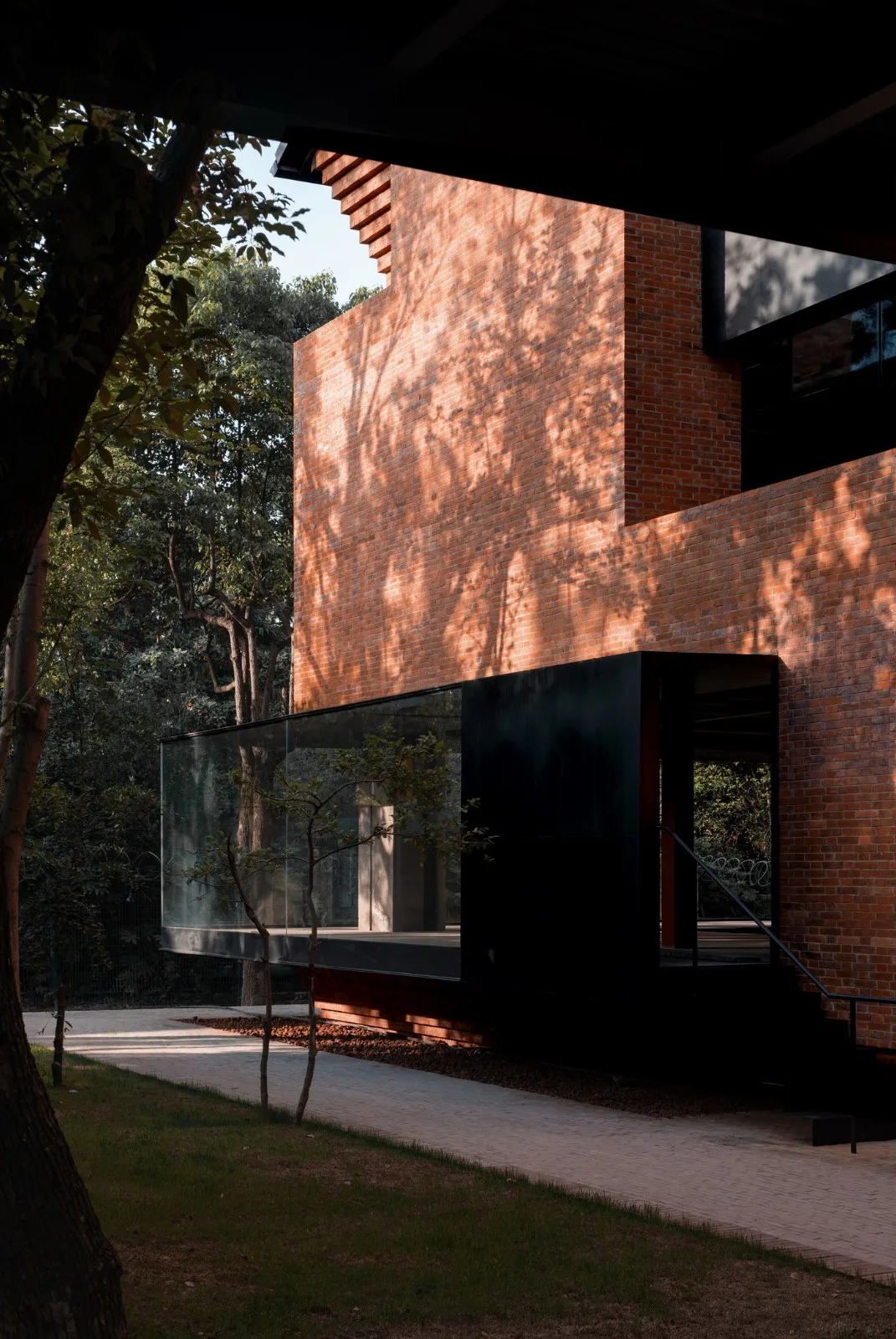
Detail of the southeast corner glass box (summer). © Wang Ce
The building’s north facade faces the main street and adopts a modern minimalist design. Large flat glass windows and black weather-resistant steel balconies create a sleek visual flow. The facade features a layered design with a cross arrangement of glass bricks and red bricks, along with a steel mesh balcony that adds depth and unique form.
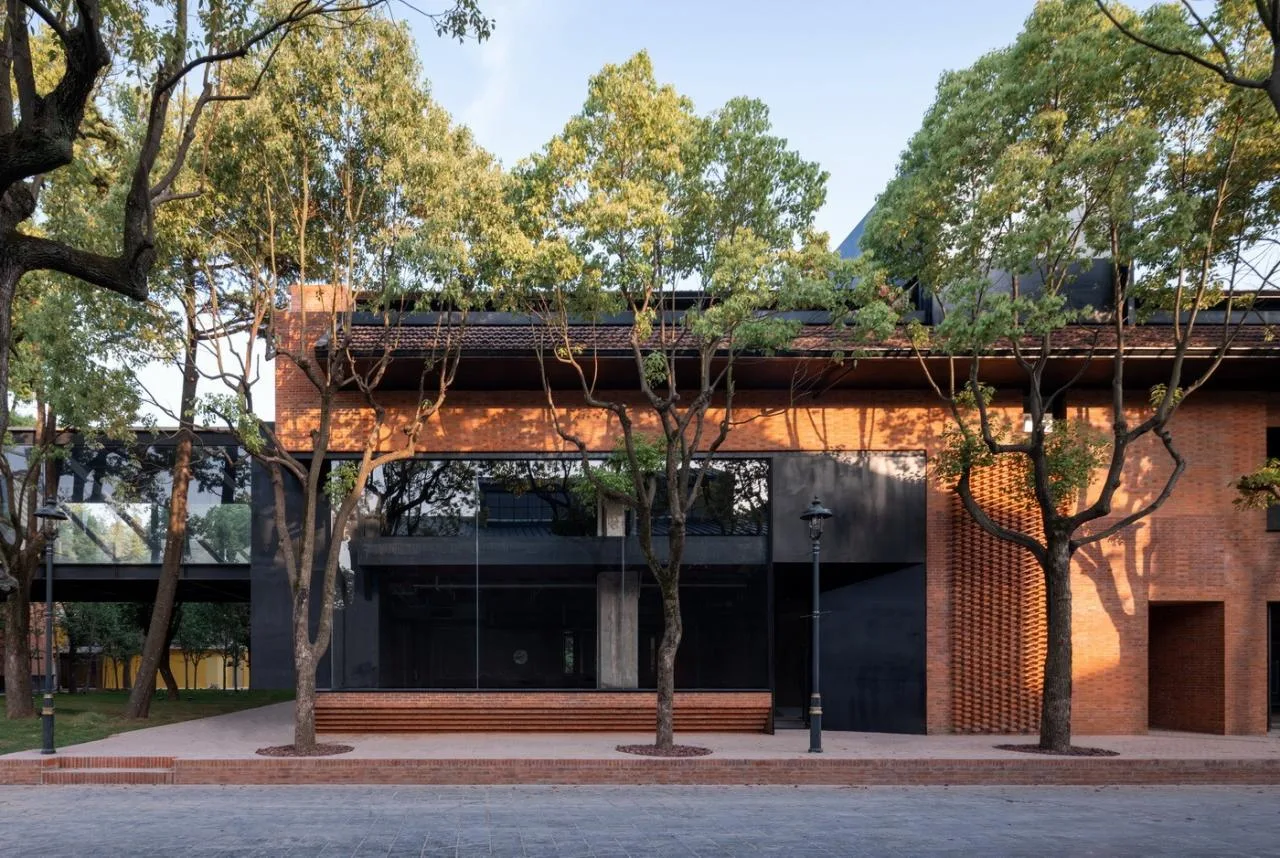
‘Power Workshop’ connected to the east glass corridor (summer). © Wang Ce
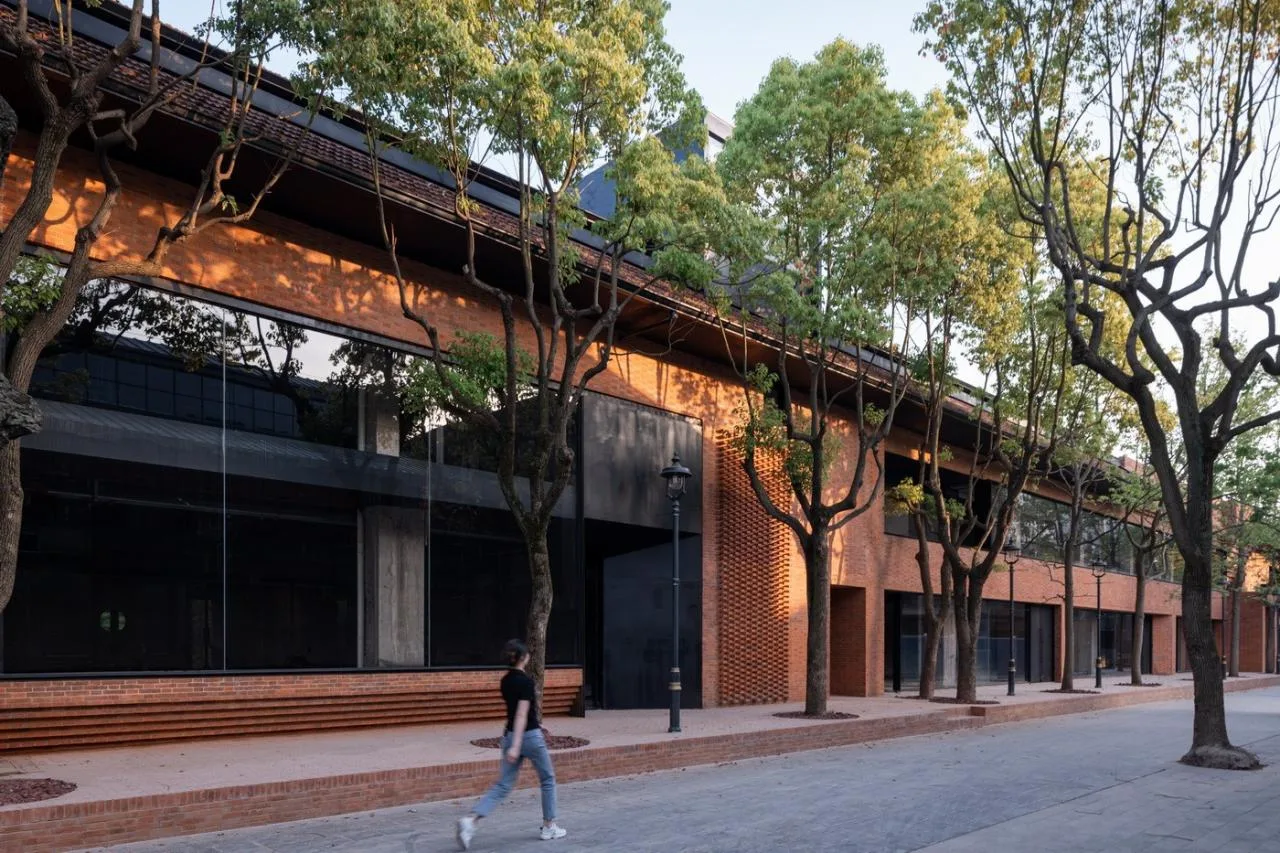
Open underlying design (summer). © Wang Ce
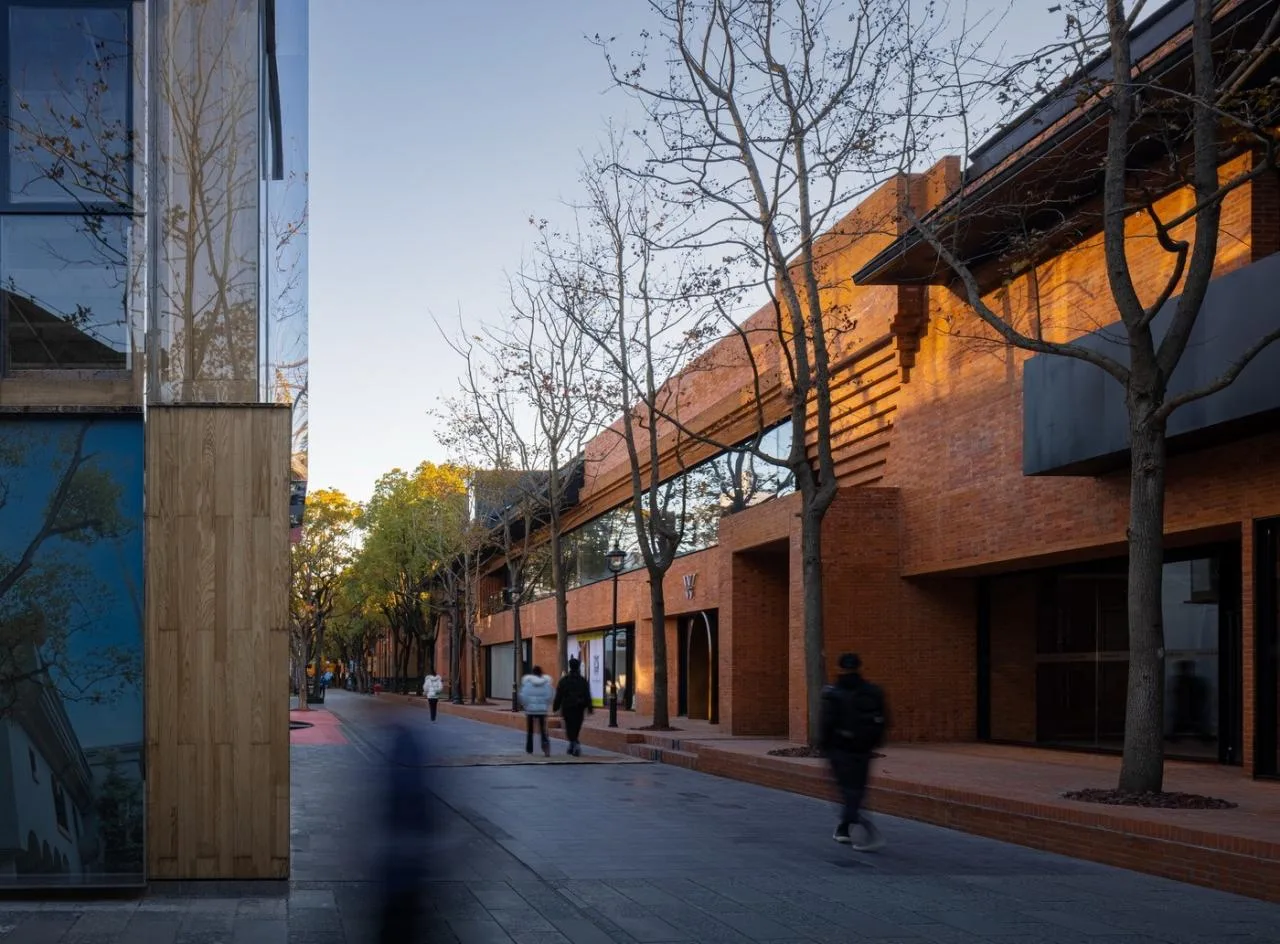
EKA · Power Workshop in Tianwu Art District (winter). © Su Shengliang
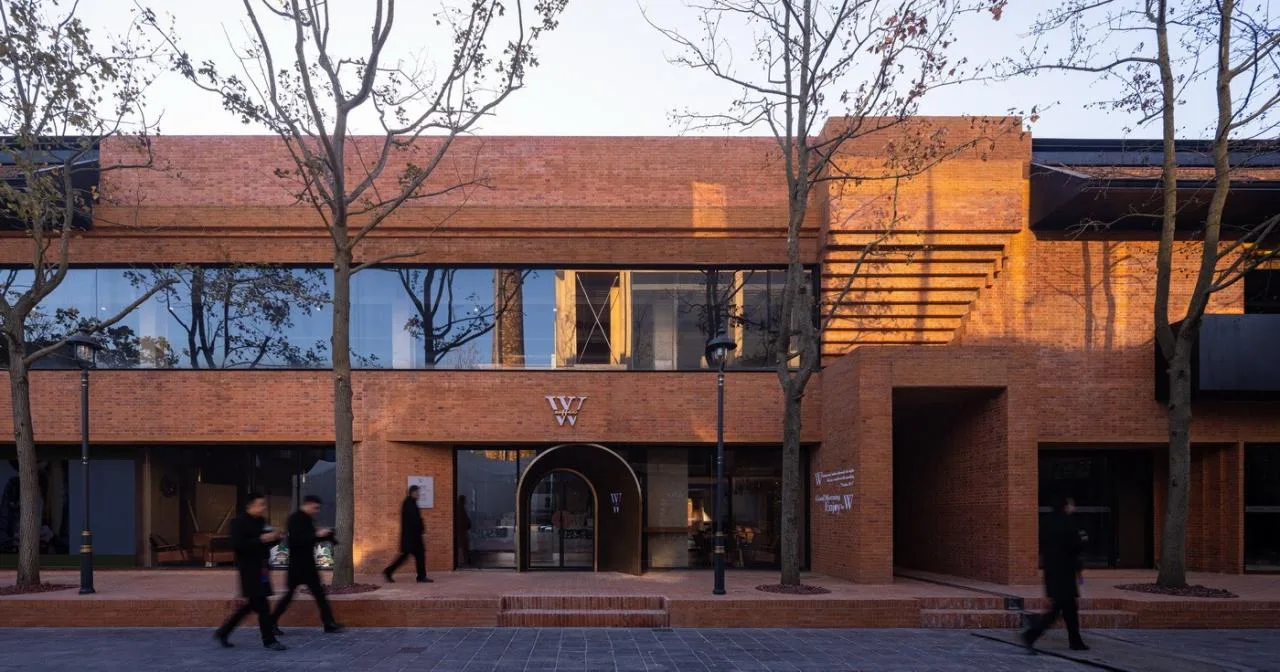
The unique charm of light and shadow in the early morning (winter). © Su Shengliang
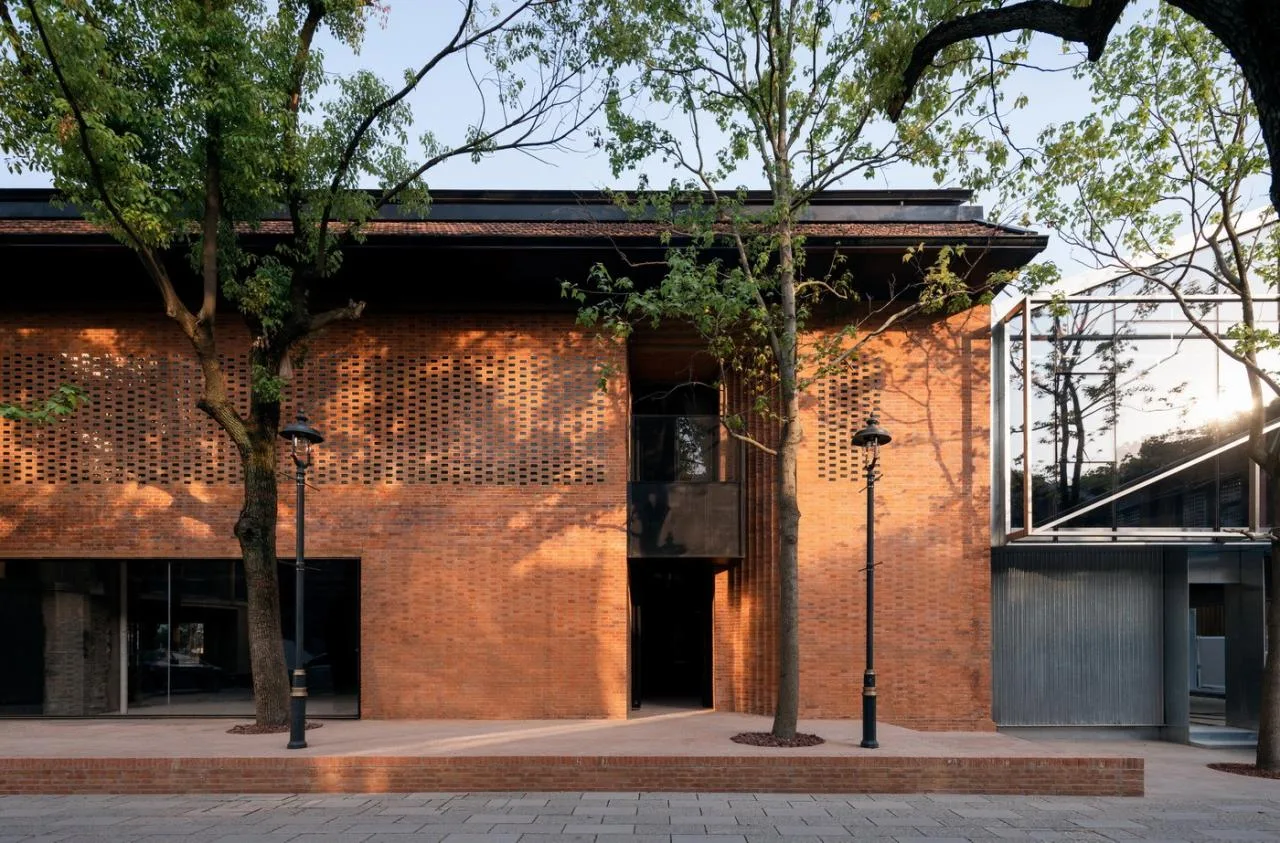
Partial north facade (summer). © Wang Ce
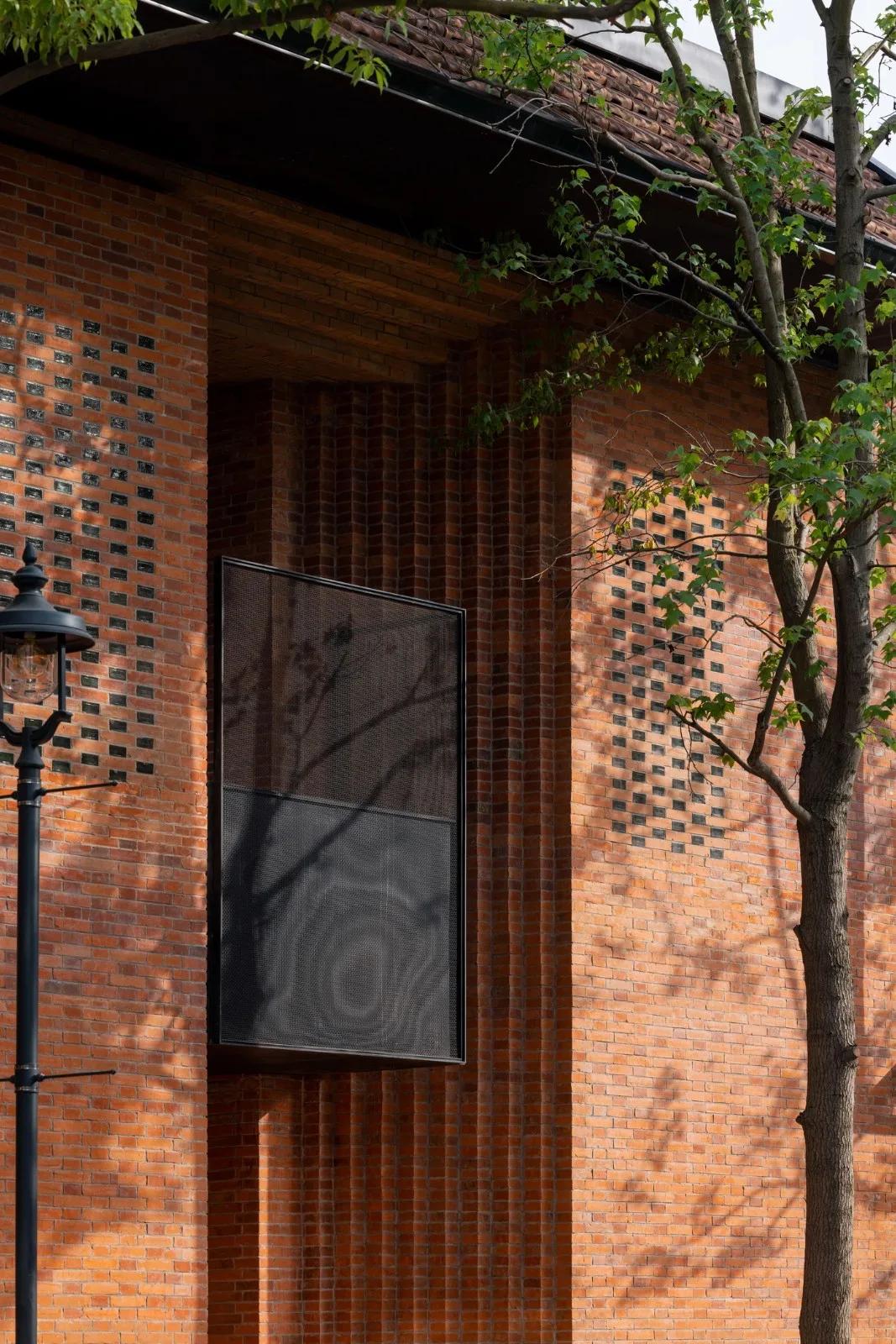
Details of the north facade of the Power Workshop (summer). © Wang Ce
To enhance interaction between the building and the art district, aerial corridors were added on the east and west sides of the “Power Workshop.” These corridors provide direct access to adjacent buildings. The western corridor, located in the courtyard on the building’s west end, is constructed from black weather-resistant steel plates with square windows on both sides, resembling an aerial balcony. This creates a visual contrast between the cold modern elements and the warm traditional red brick facade. The eastern corridor, nestled under tree shade, is made from steel and transparent glass, blending the building seamlessly with its natural surroundings.
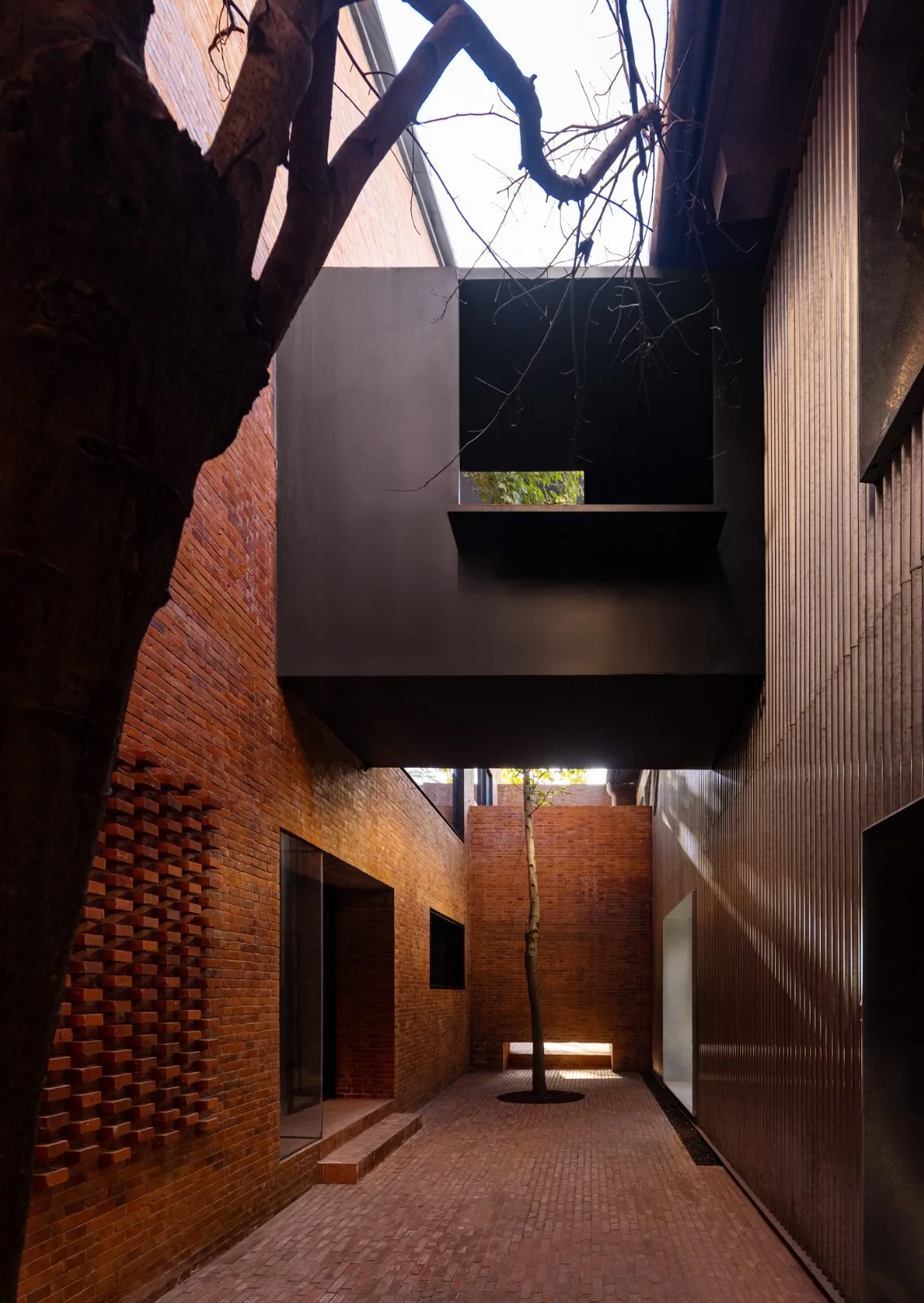
The courtyard corridor (winter). © Su Shengliang
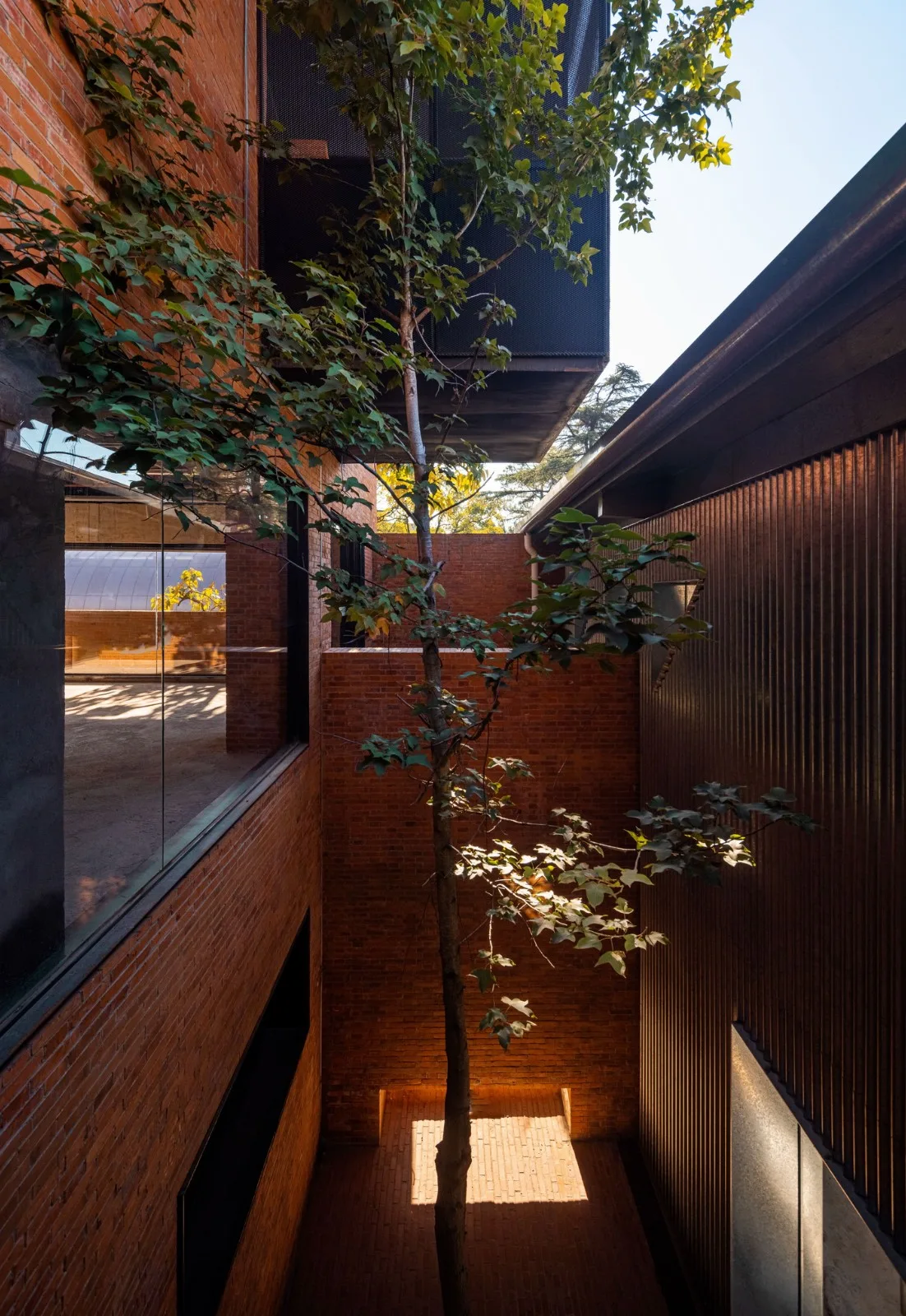
A tree in the courtyard during winter. © Su Shengliang
Inside, the building features a soaring atrium with exposed aged wooden beams and staggered high and low balconies. Narrow skylights allow sunlight to brighten the interior, where the past and present converge. The old wall includes continuous circular windows reminiscent of ship cabin portholes, inviting exploration. The weathered red brick walls and lime textures reveal the building’s historical layers through the interplay of light and shadow.
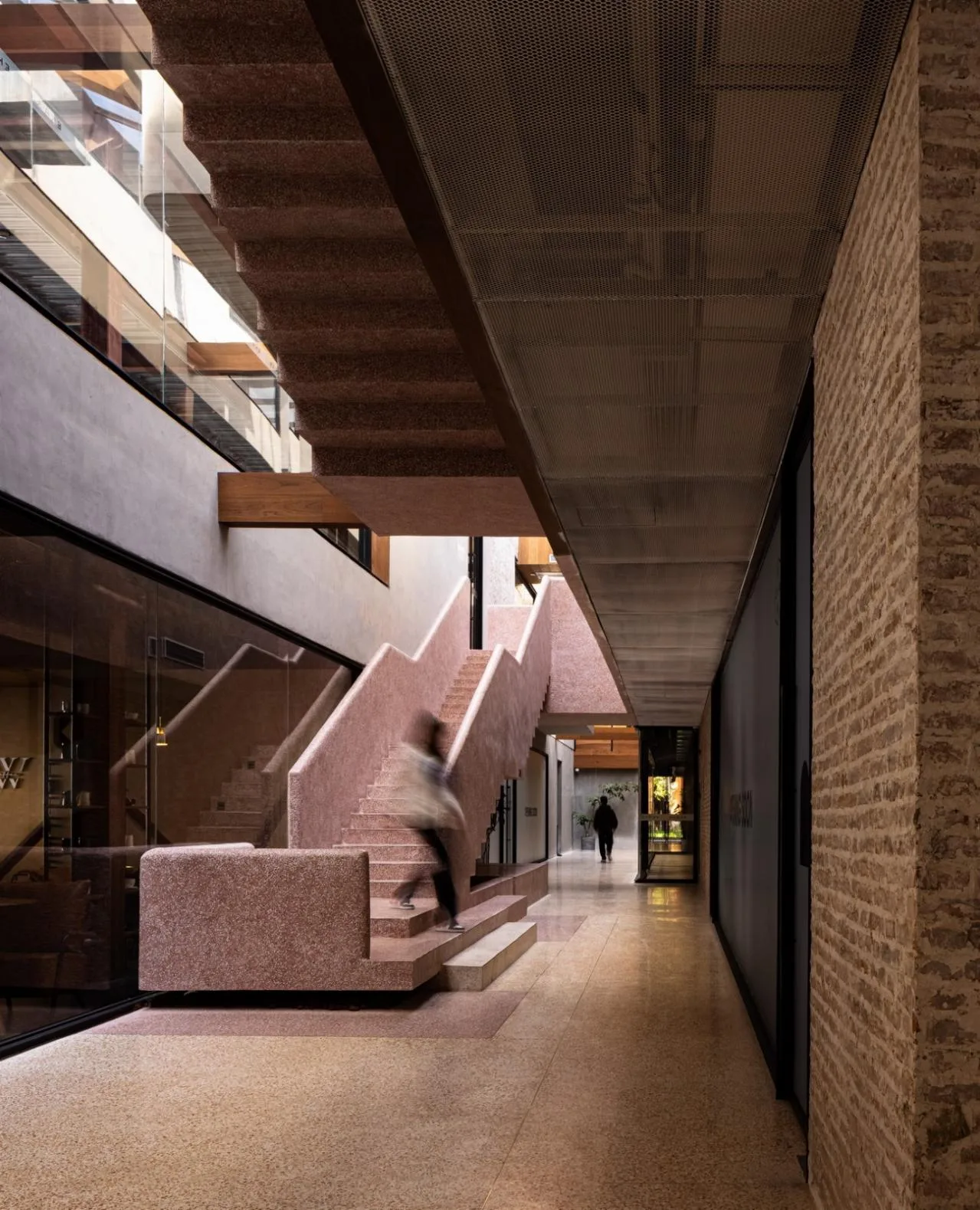
Sunlight streams through the skylight, creating a bright and warm atmosphere. © Su Shengliang
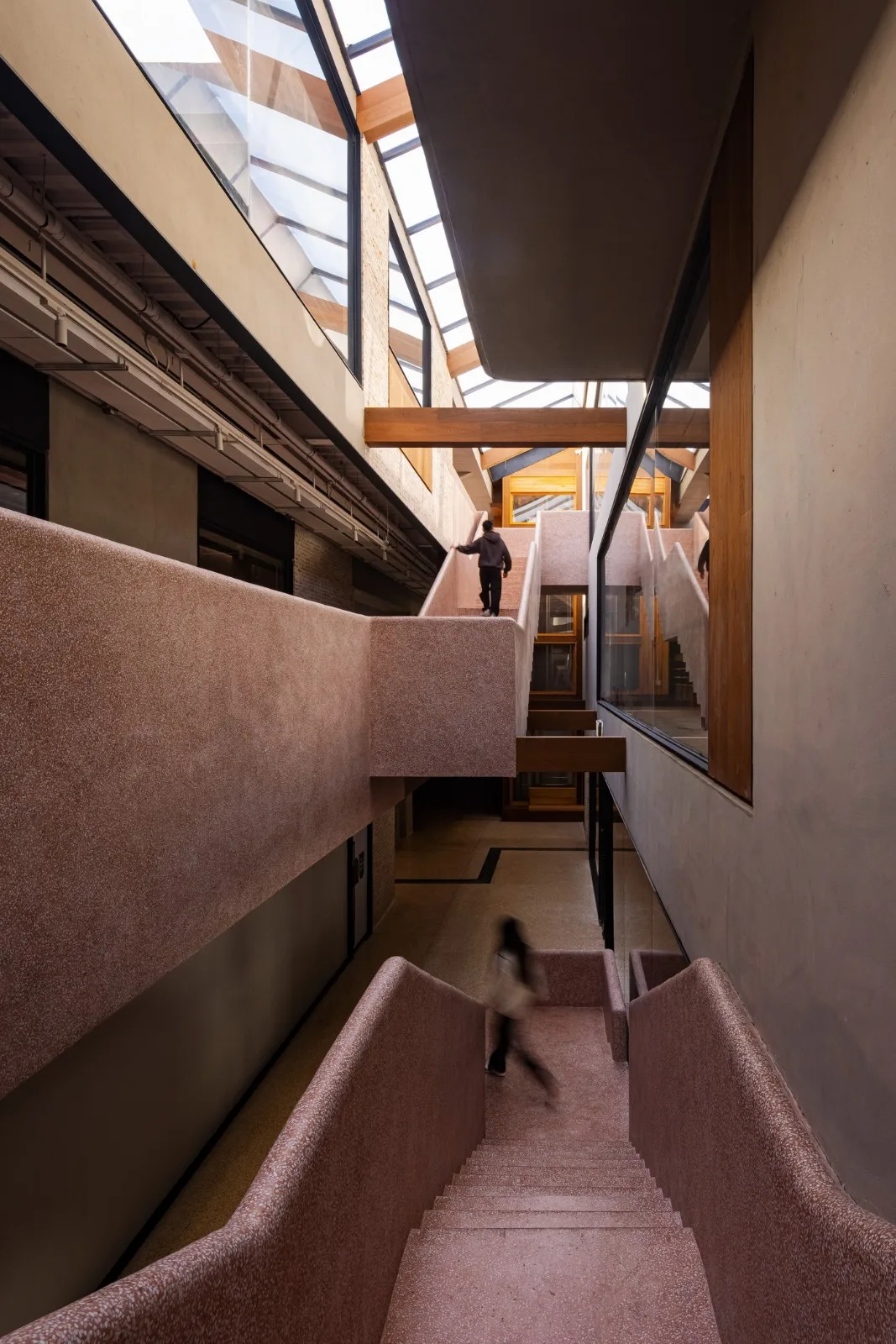
The terrazzo staircase extends through the entire atrium. © Su Shengliang
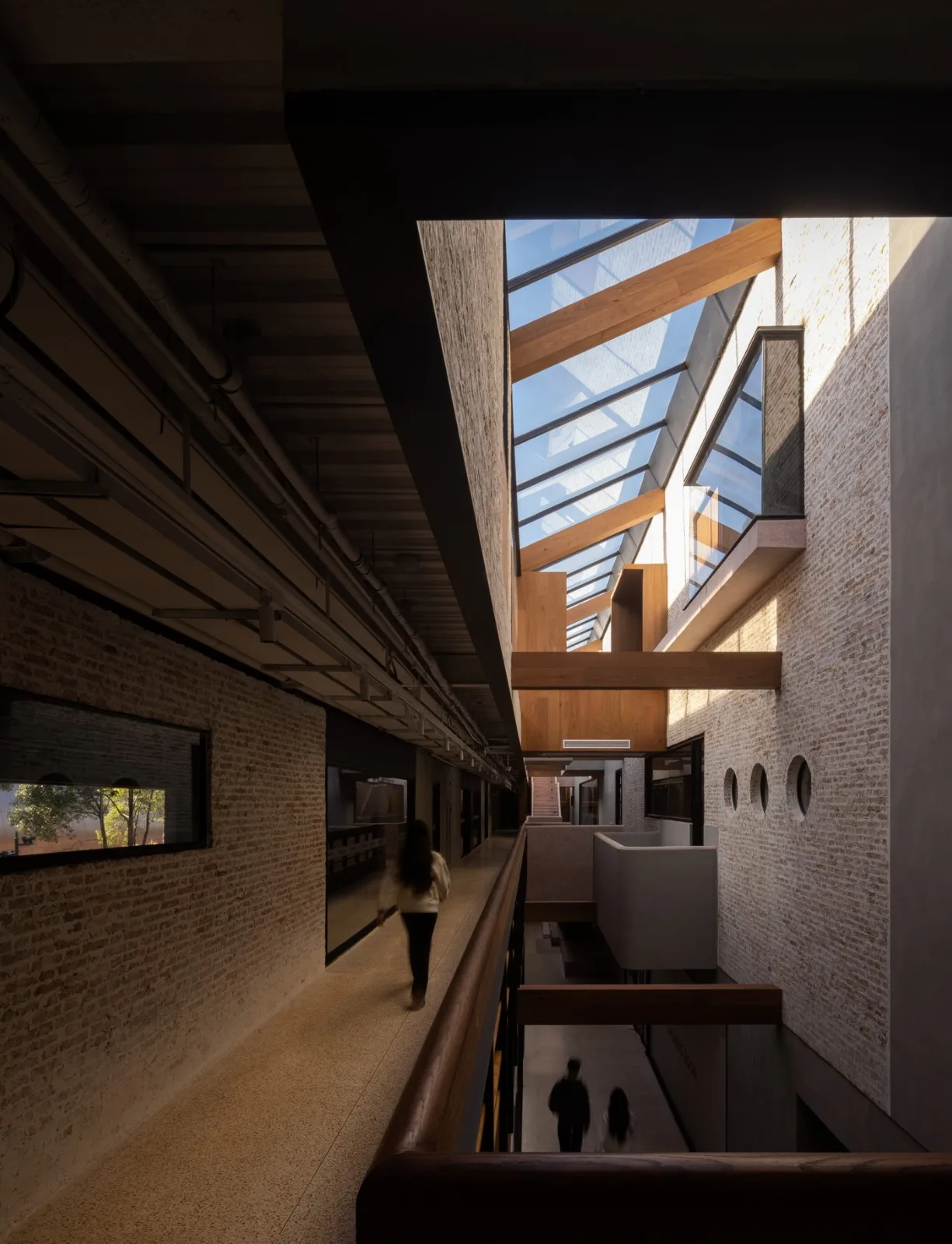
Walking through the atrium corridor. © Su Shengliang
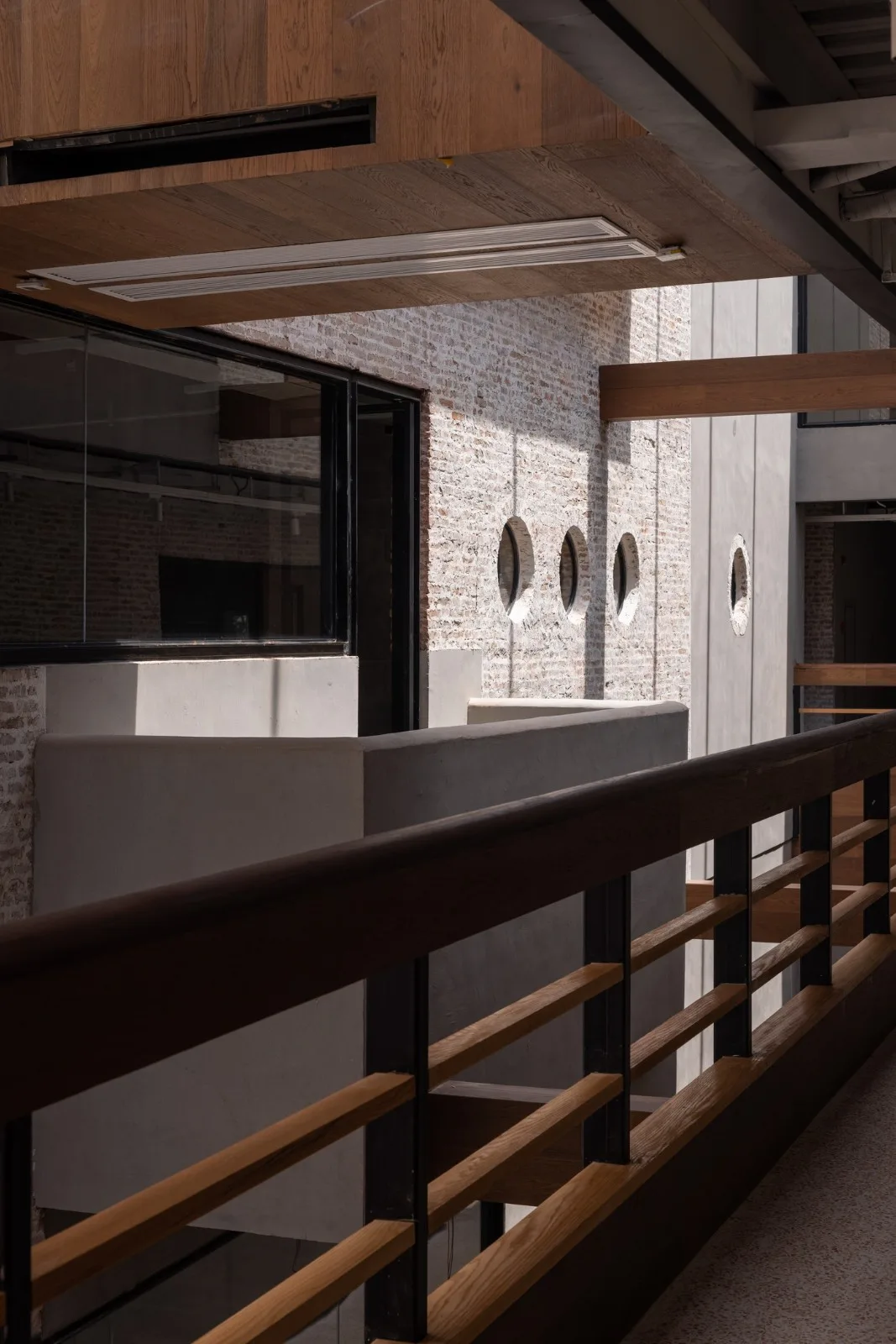
Interior architectural details. © Su Shengliang
The interior palette features terrazzo, color-blocked wood, and red bricks, harmonizing with the exterior. The warm terrazzo staircase winds gracefully throughout the space. Wooden elements lead seamlessly to the elevator, corridors, and connecting walkways, creating a cozy, natural rhythm indoors.
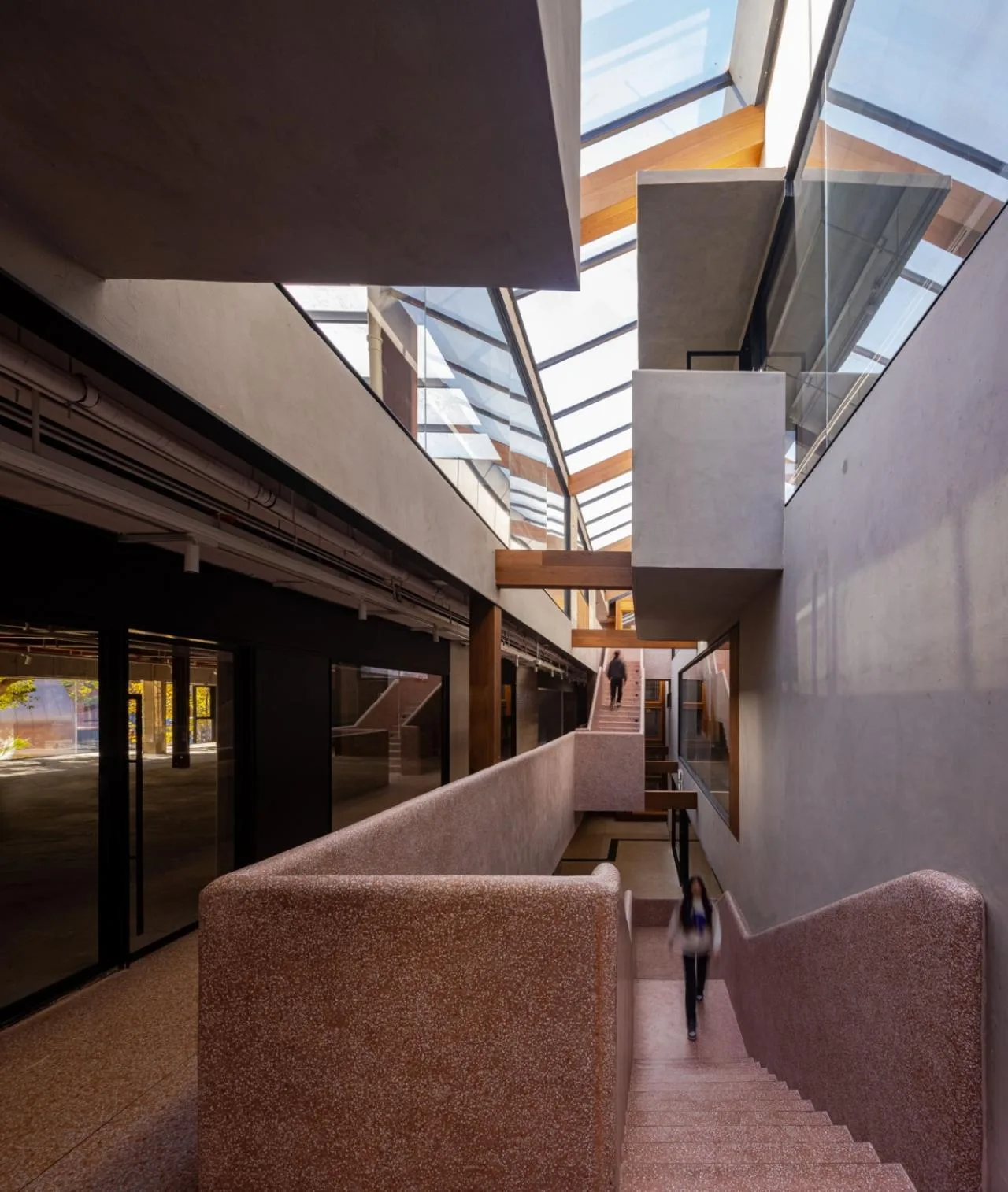
The warm terrazzo staircase weaving through the interior. © Su Shengliang
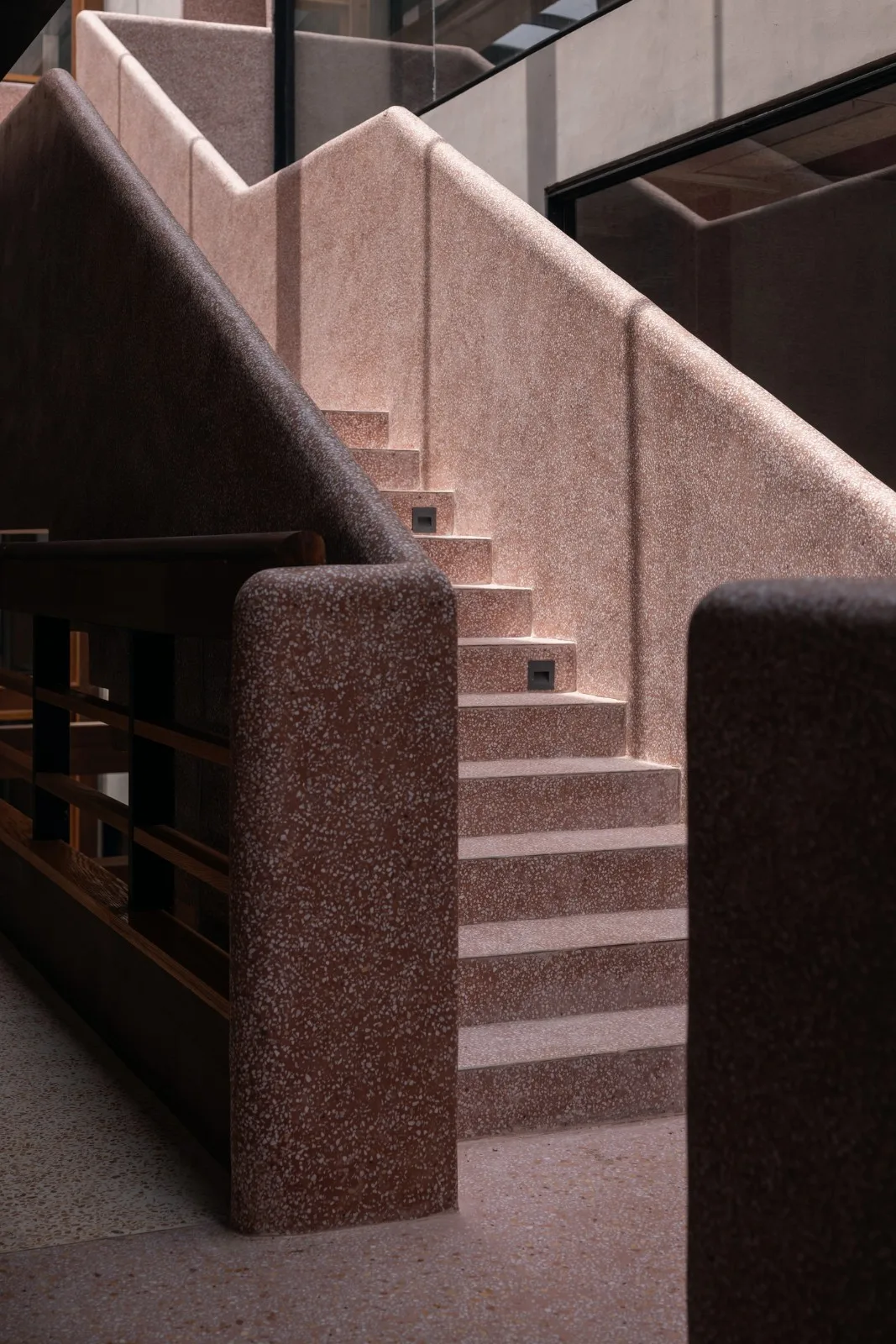
Details of the terrazzo staircase. © Wang Ce
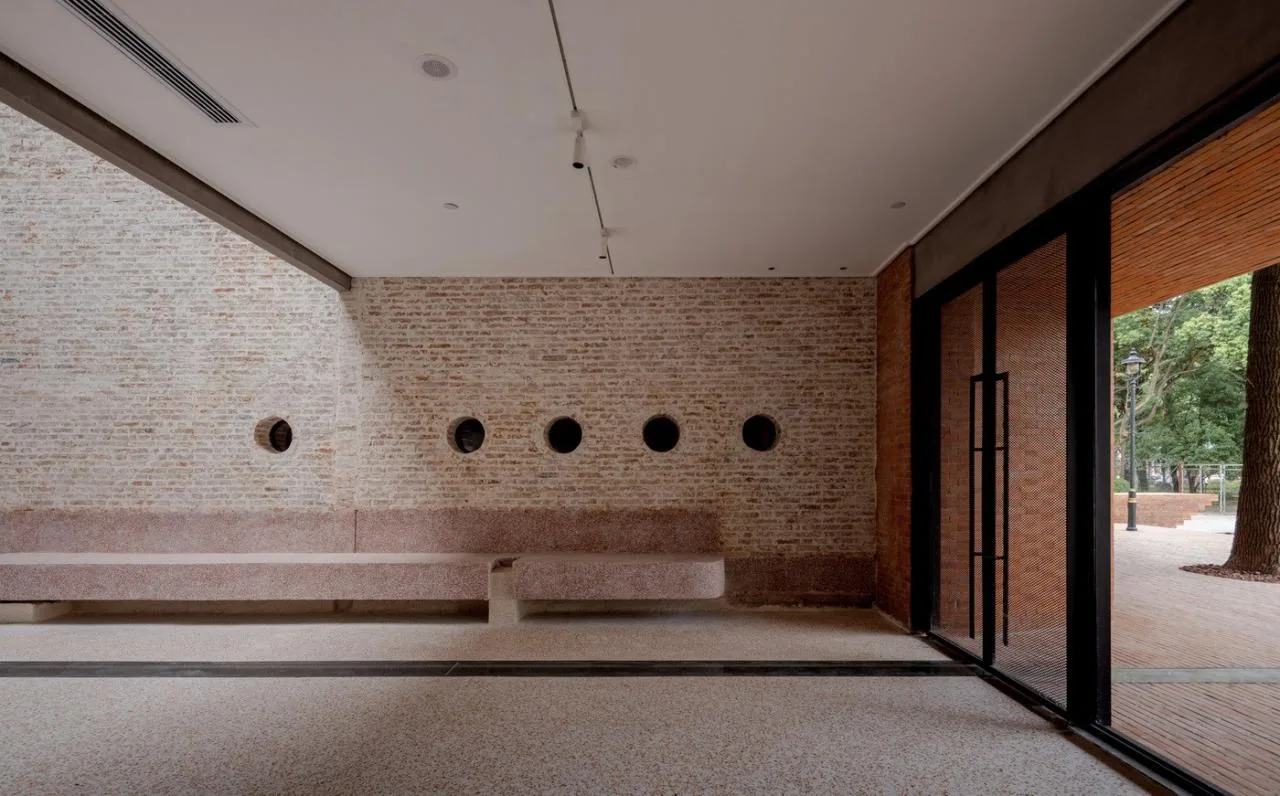
Exploring through the porthole windows. © Wang Ce
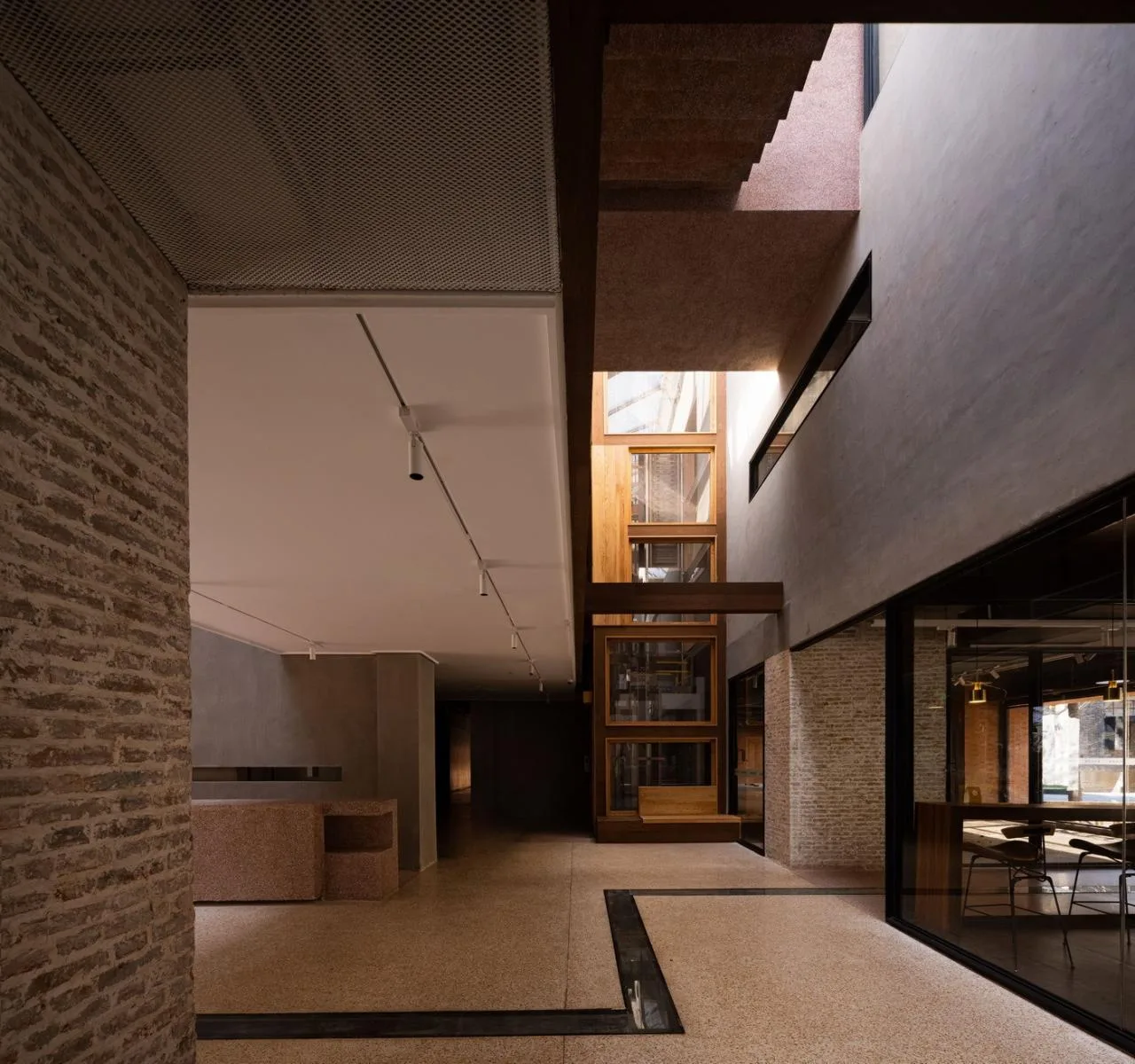
Color-blocked wooden facade leading directly to the elevator. © Su Shengliang
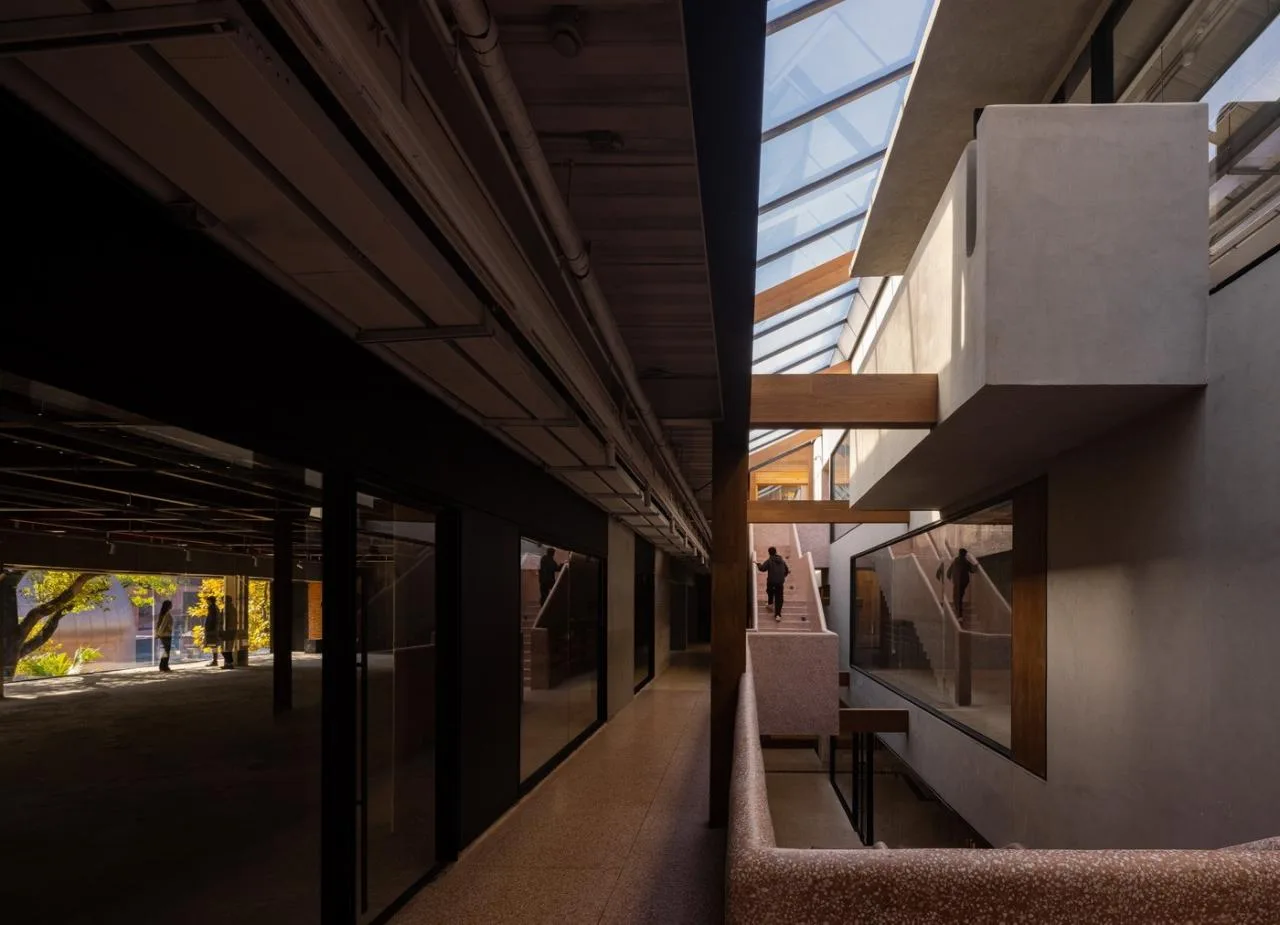
Dialogue between architecture, humans, and nature. © Su Shengliang
The entire space invites both movement and stillness, warmth and strength—hence the name ‘Power Workshop’.
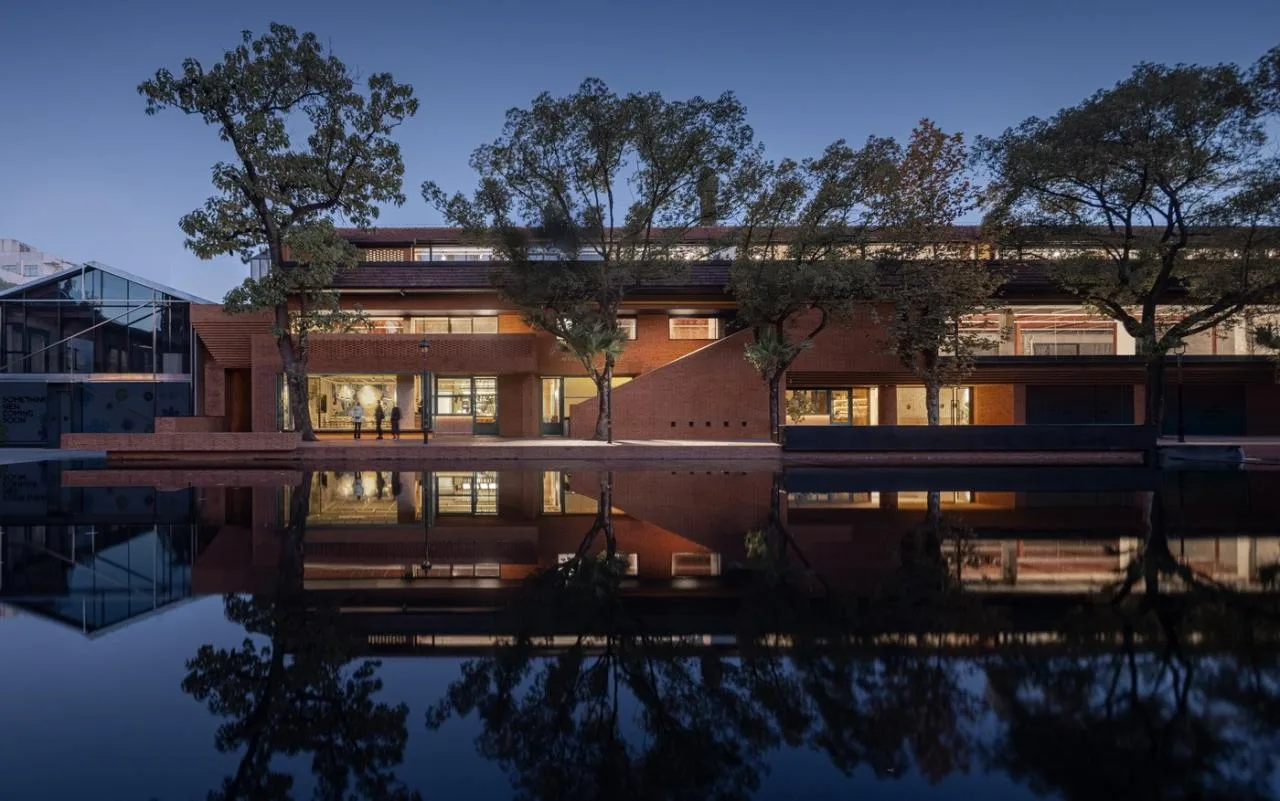
The south main facade of the ‘Power Workshop’ during winter. © Su Shengliang
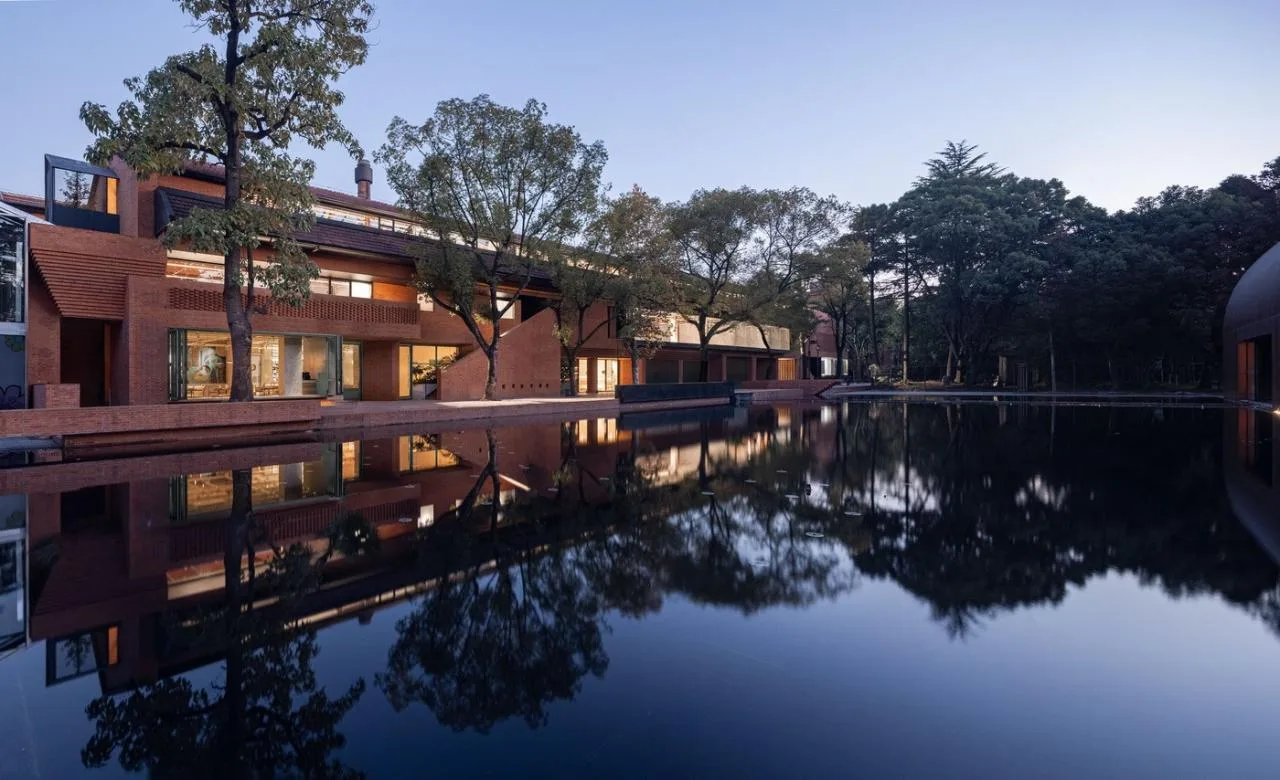
At dawn, the ‘Power Workshop’ and Central Water Pool (winter). © Su Shengliang
Project Drawings
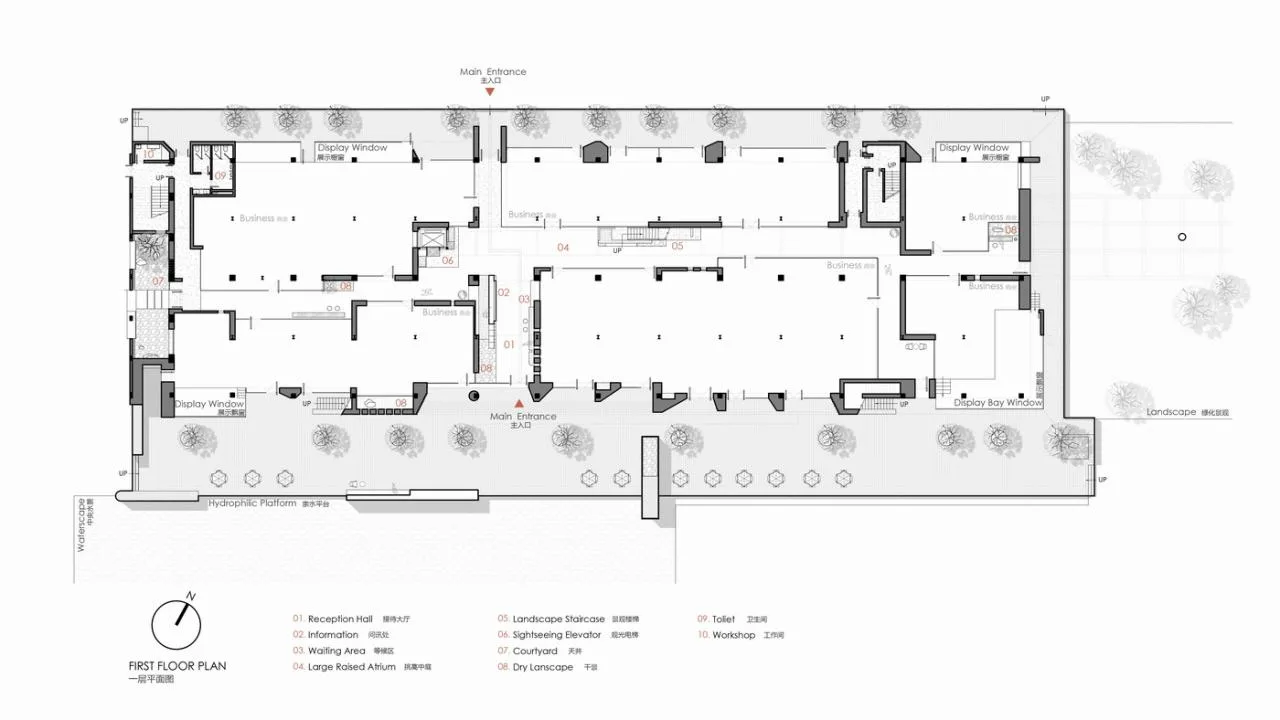
First floor plan. © Ben Zhe Architecture
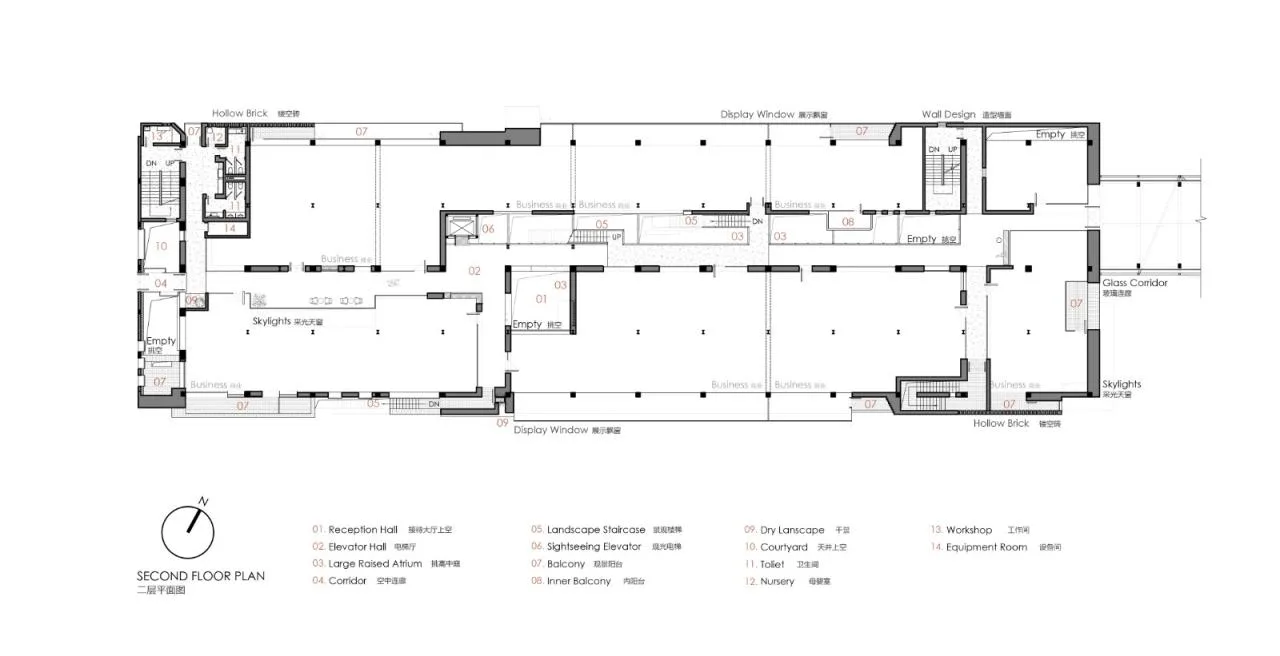
Second floor plan. © Ben Zhe Architecture
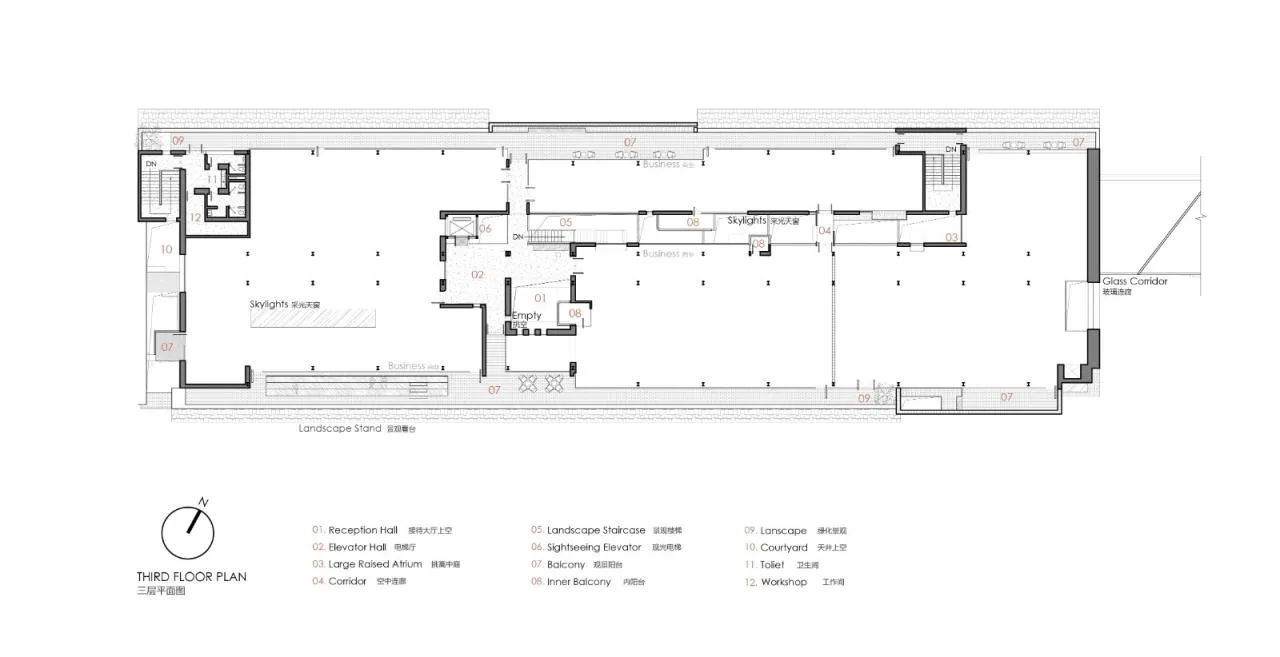
Third floor plan. © Ben Zhe Architecture
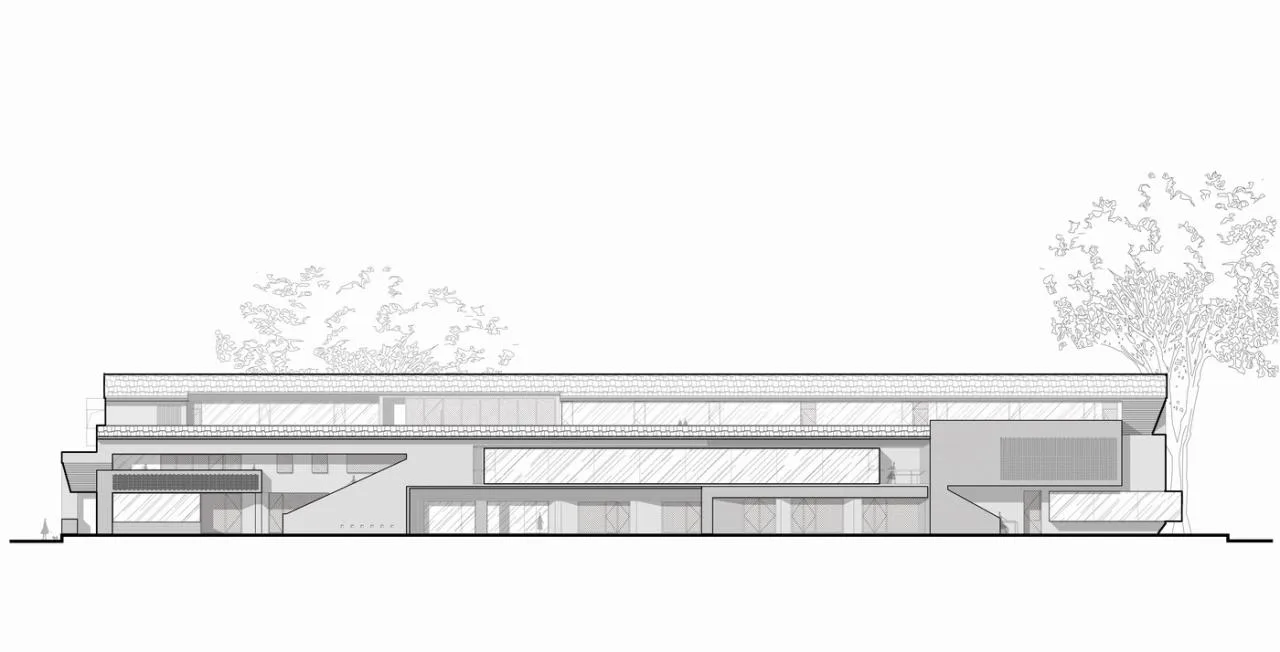
North elevation view. © Ben Zhe Architecture
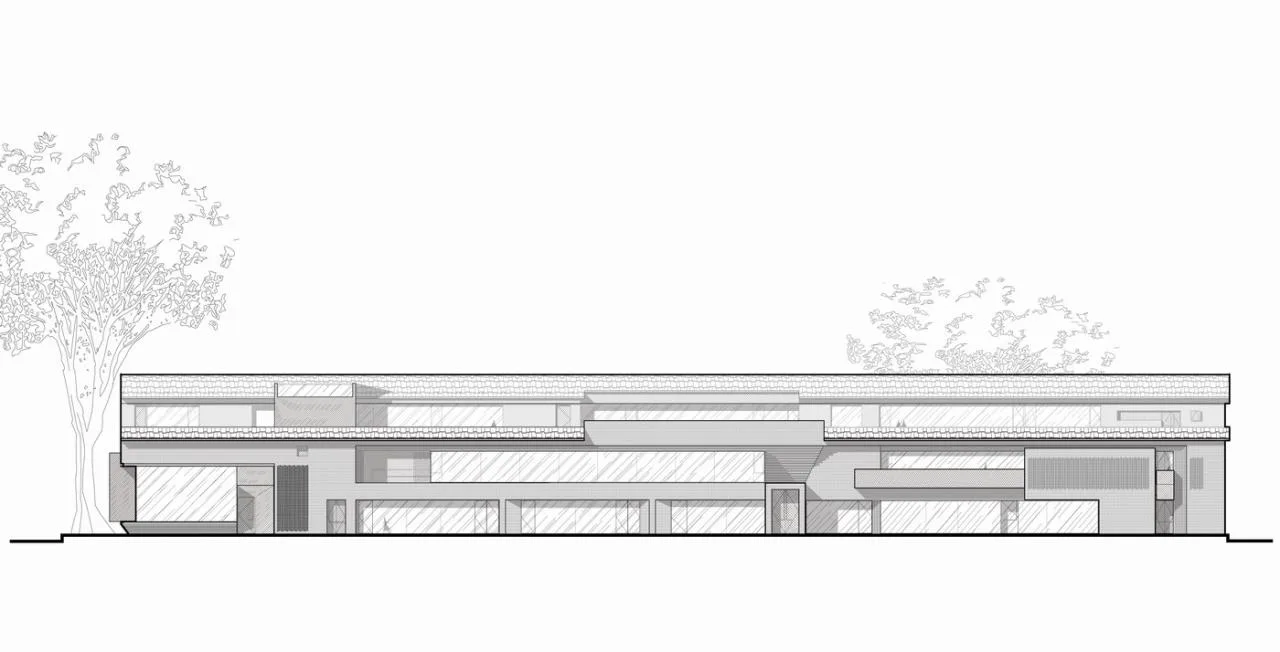
South elevation view. © Ben Zhe Architecture
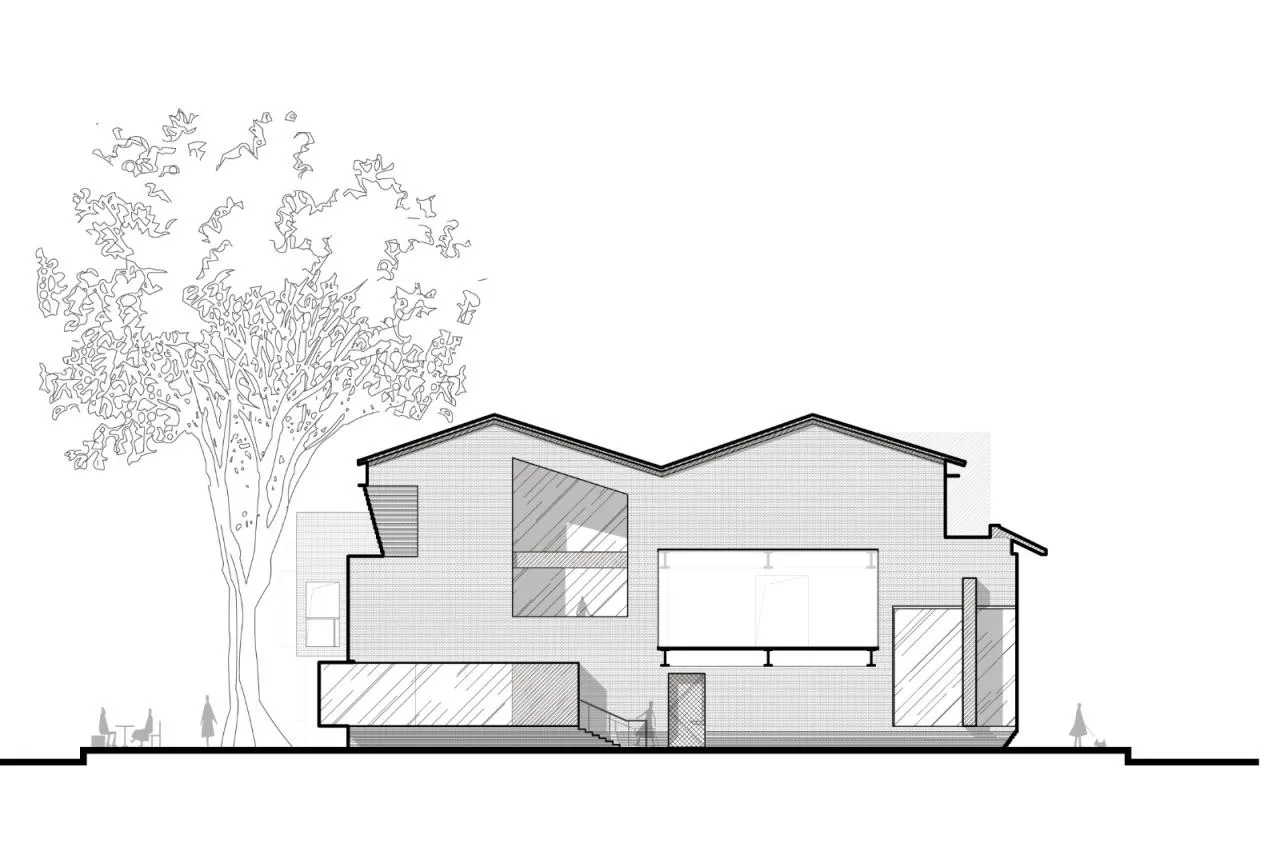
East elevation view. © Ben Zhe Architecture
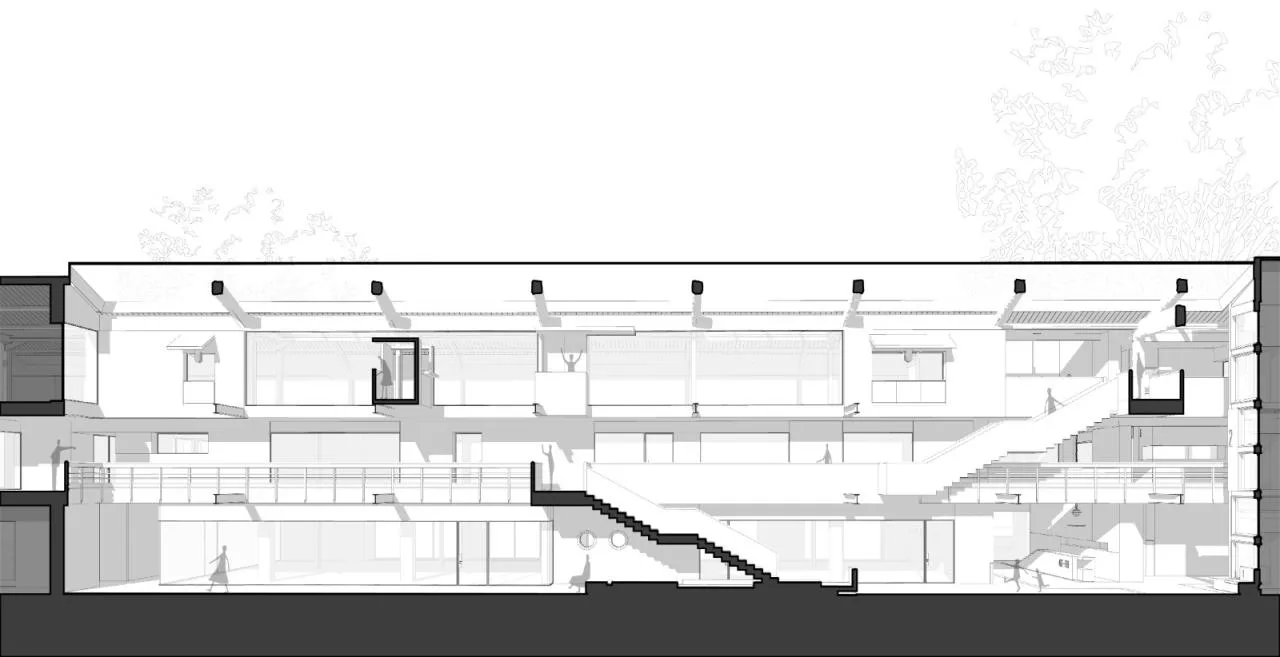
Section diagram. © Ben Zhe Architecture
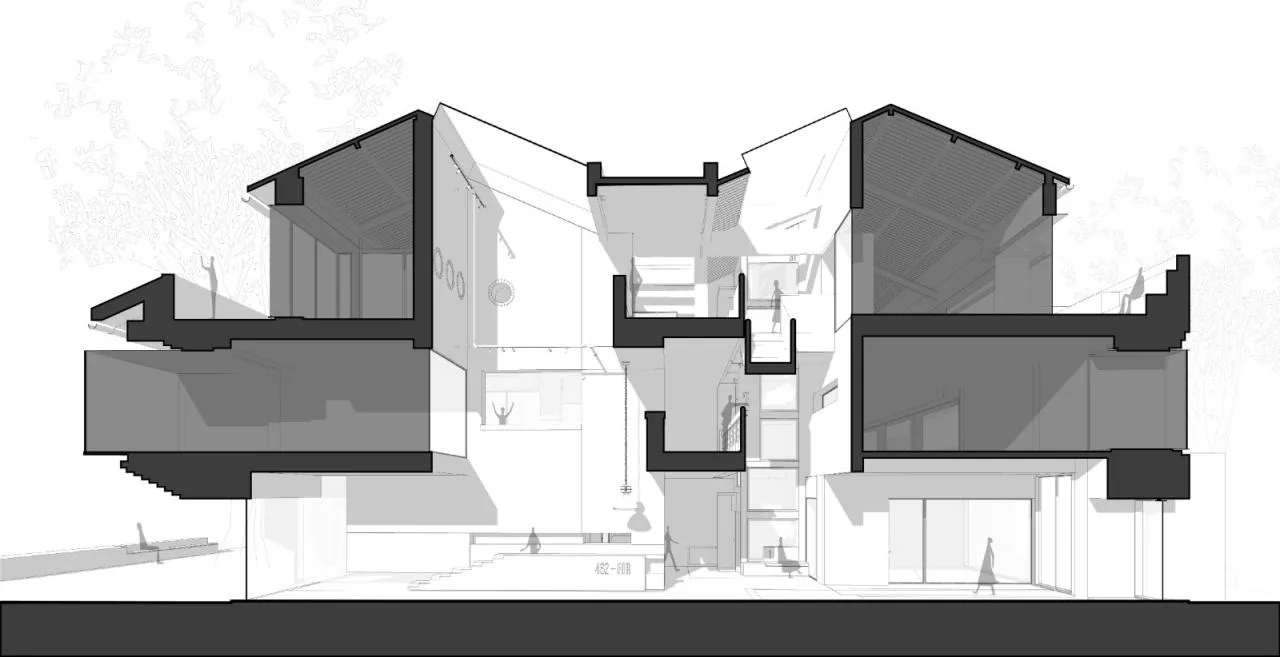
Section diagram. © Ben Zhe Architecture
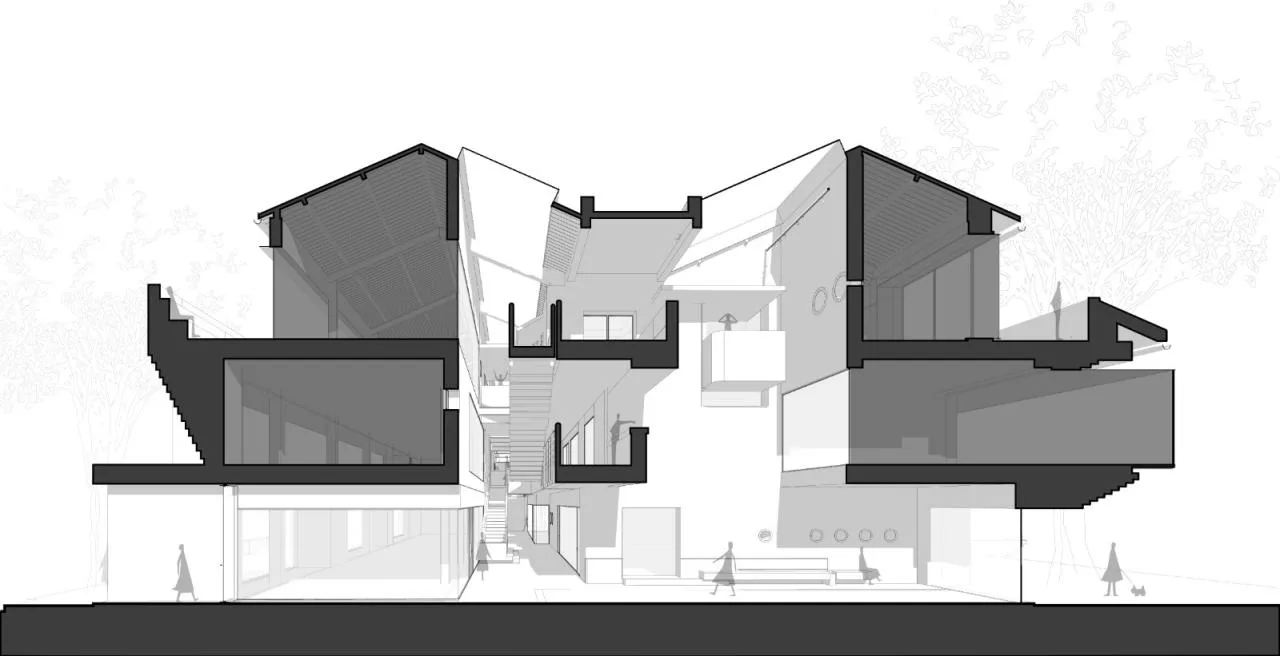
Section diagram. © Ben Zhe Architecture
Project Information
Project Name: Power Workshop
Location: No. 535 Jinqiao Road, Pudong New Area, Shanghai, China (EKA · Tianwu)
Architecture/Interior/Landscape Design: Benzhe Architecture
Lead Architect: Jiang Huajian
Design Team: Yao Ruigen, Lin Tong
Building Area: 5,280 square meters
Floor Area: 1,920 square meters
Design Period: February 2022 – September 2022
Completion Date: August 2023
Owner: Shanghai Jiayun Investment Management Development Co., Ltd
Structural Design: Shanghai Tongyan Civil Engineering Consulting Co., Ltd
Photography: Su Shengliang and Wang Ce















Must log in before commenting!
Sign Up