
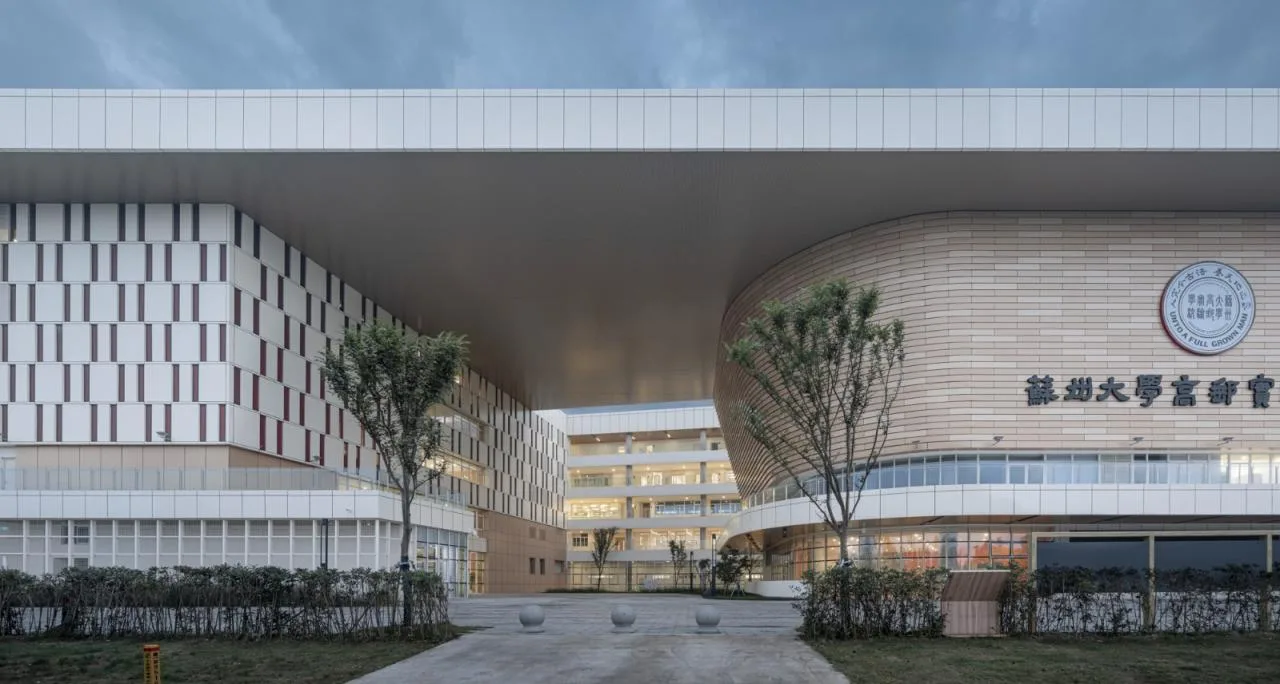
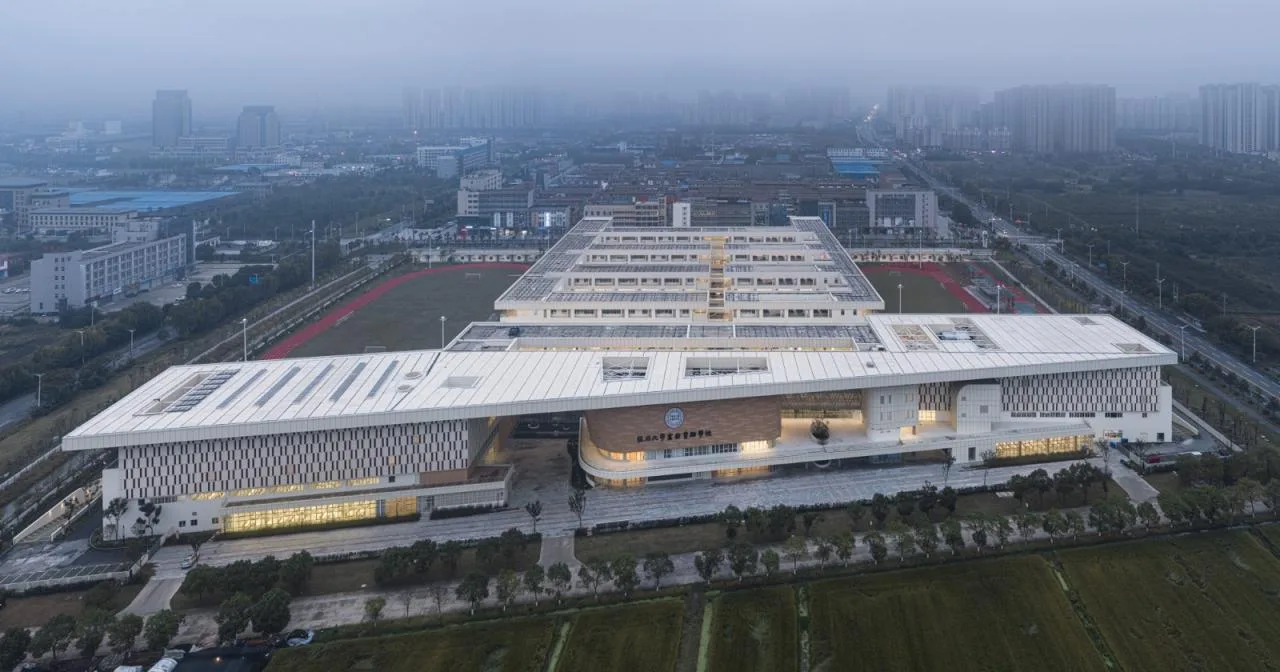
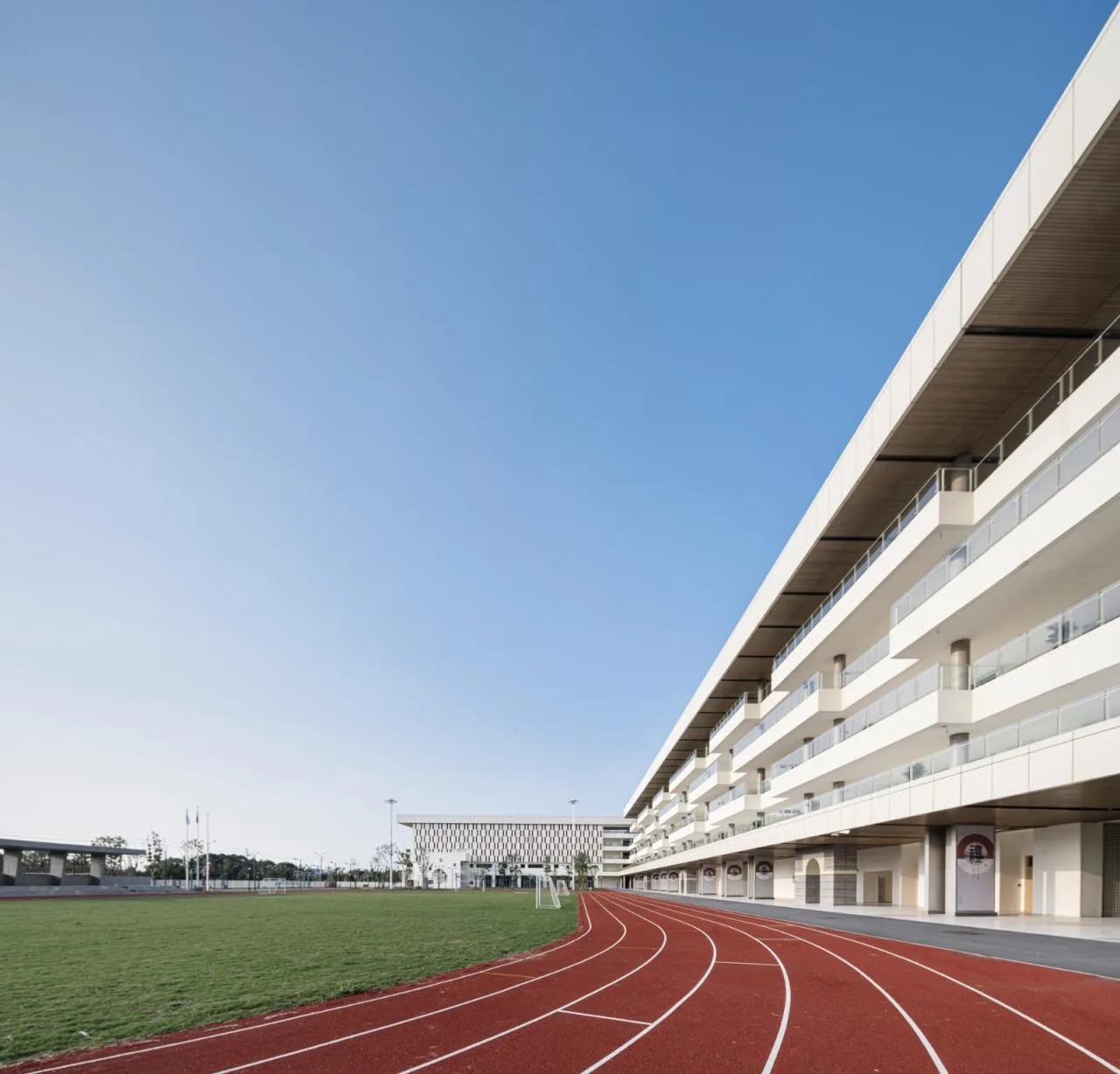
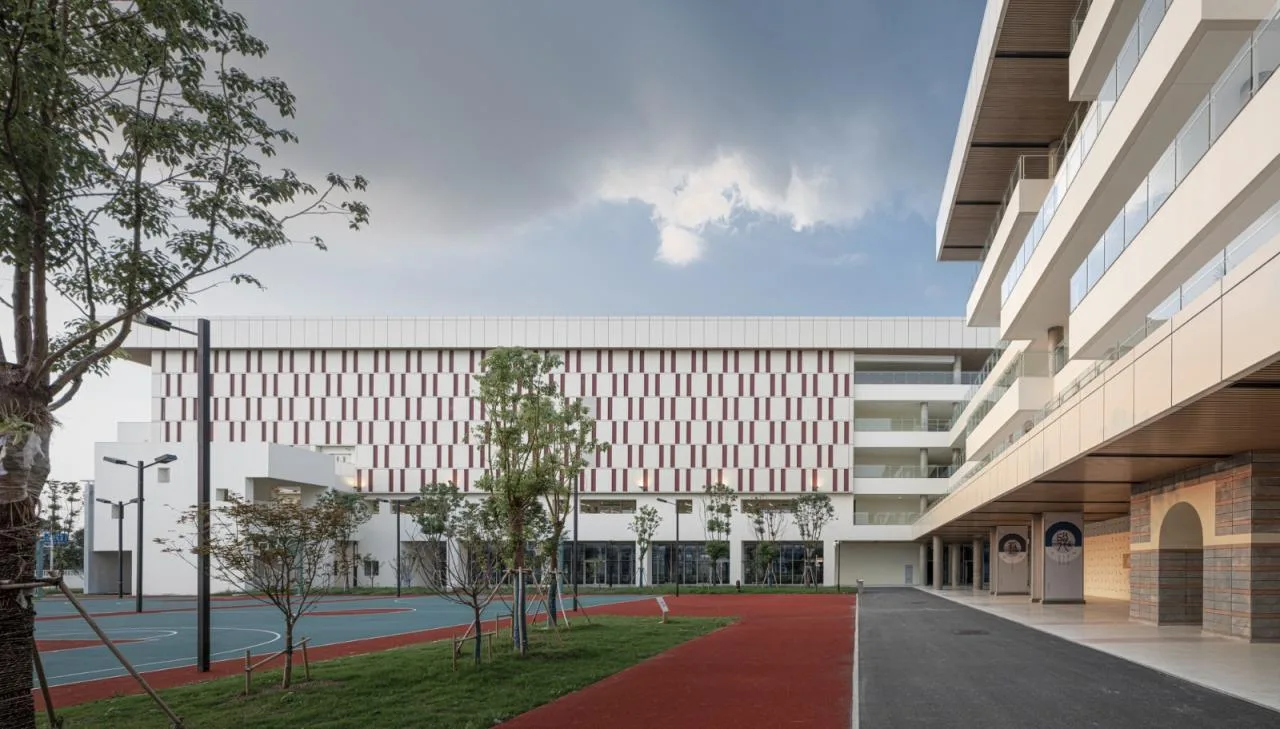
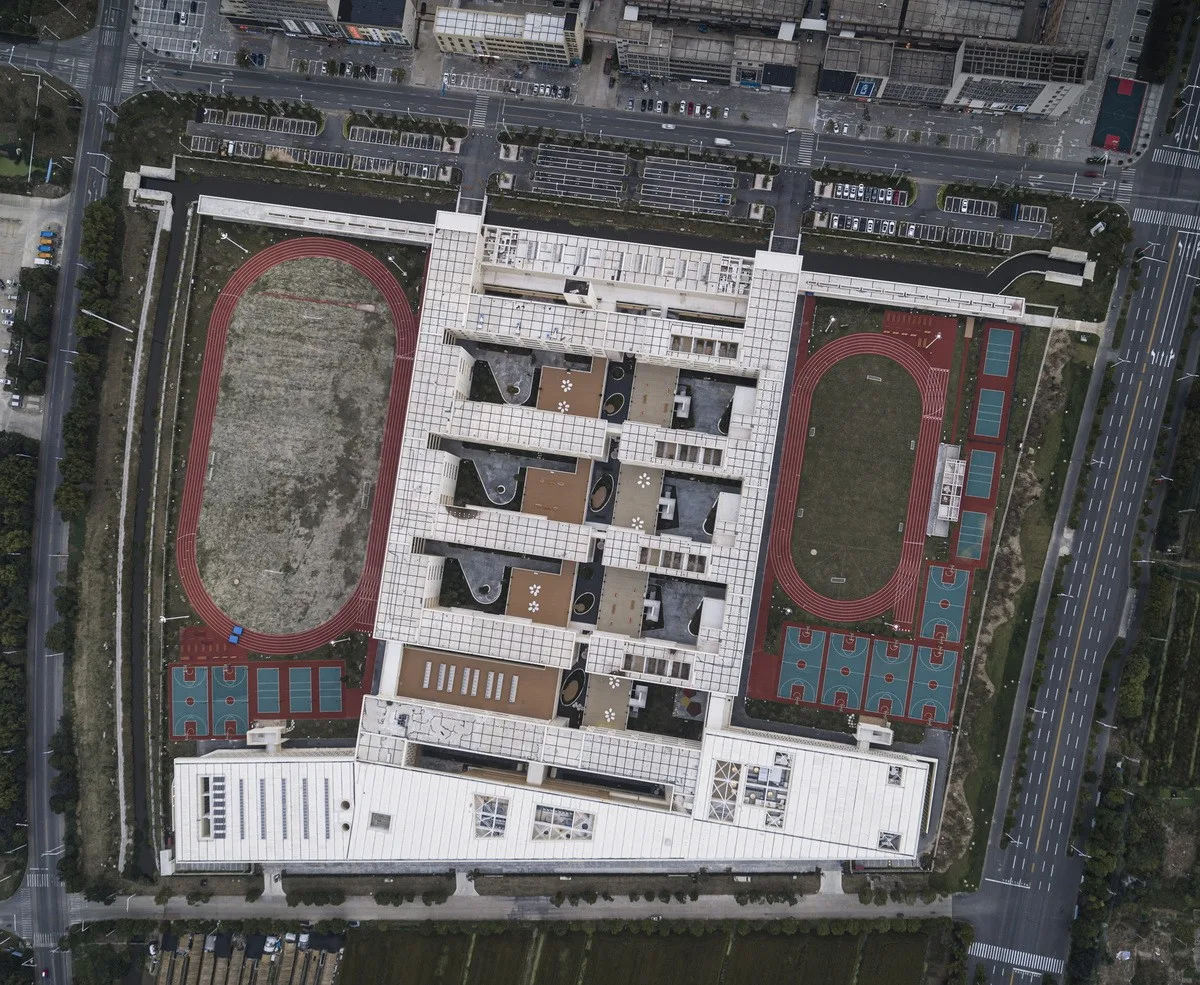
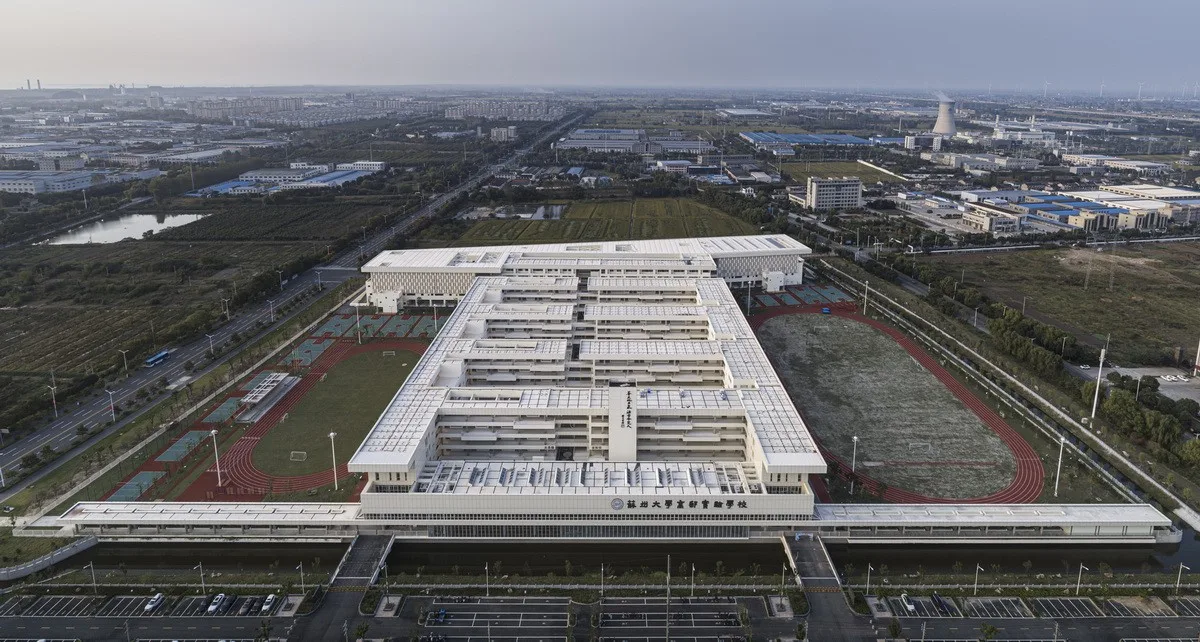
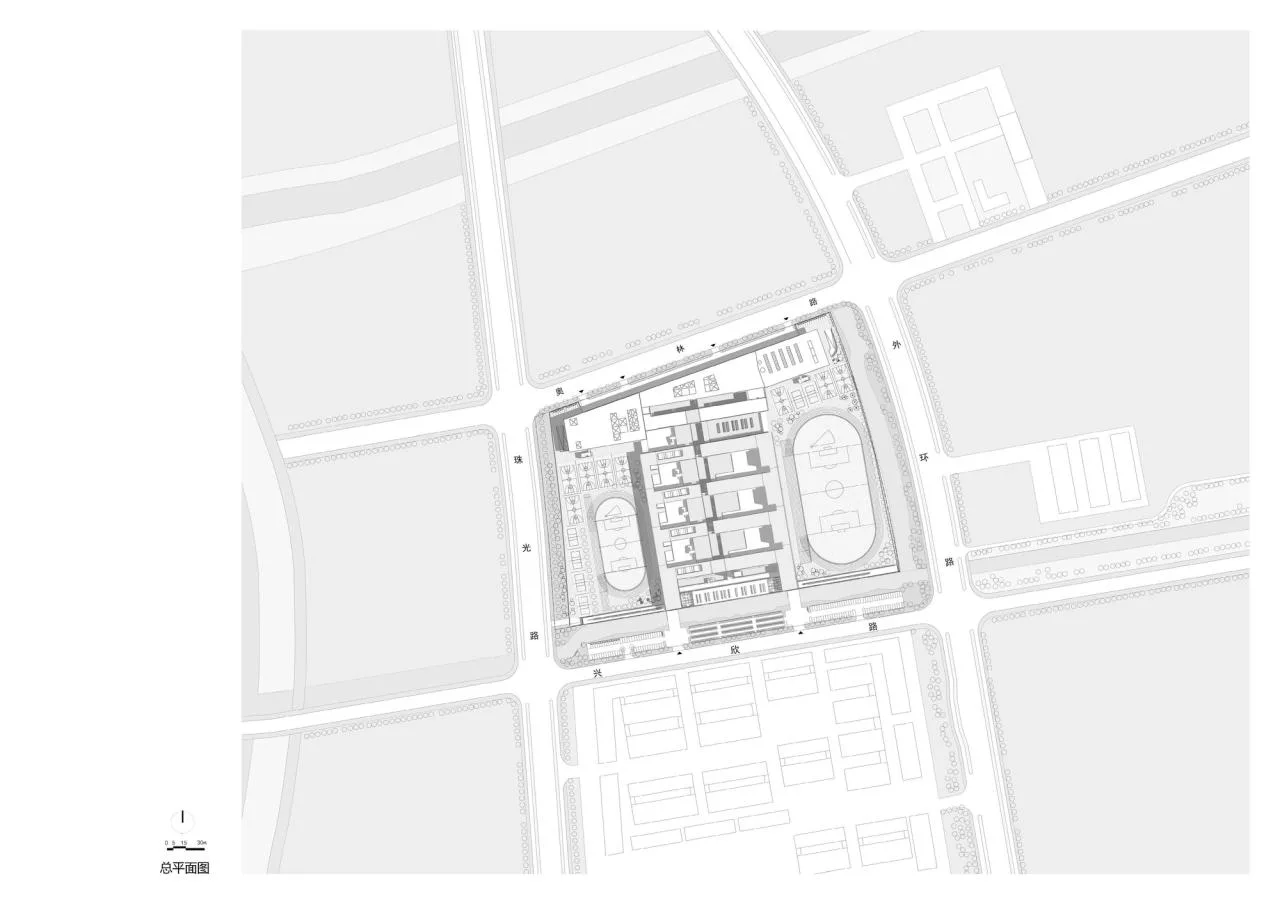
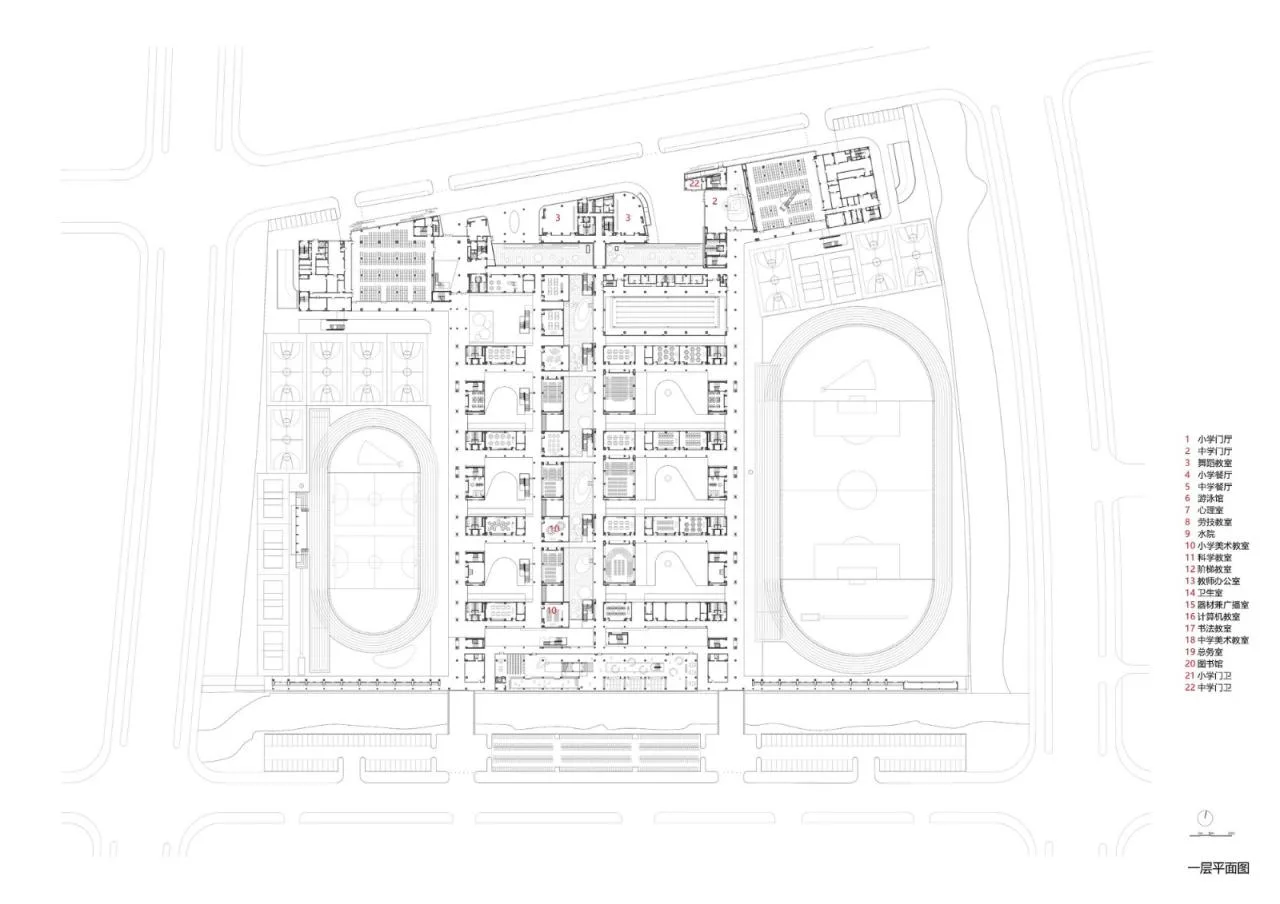
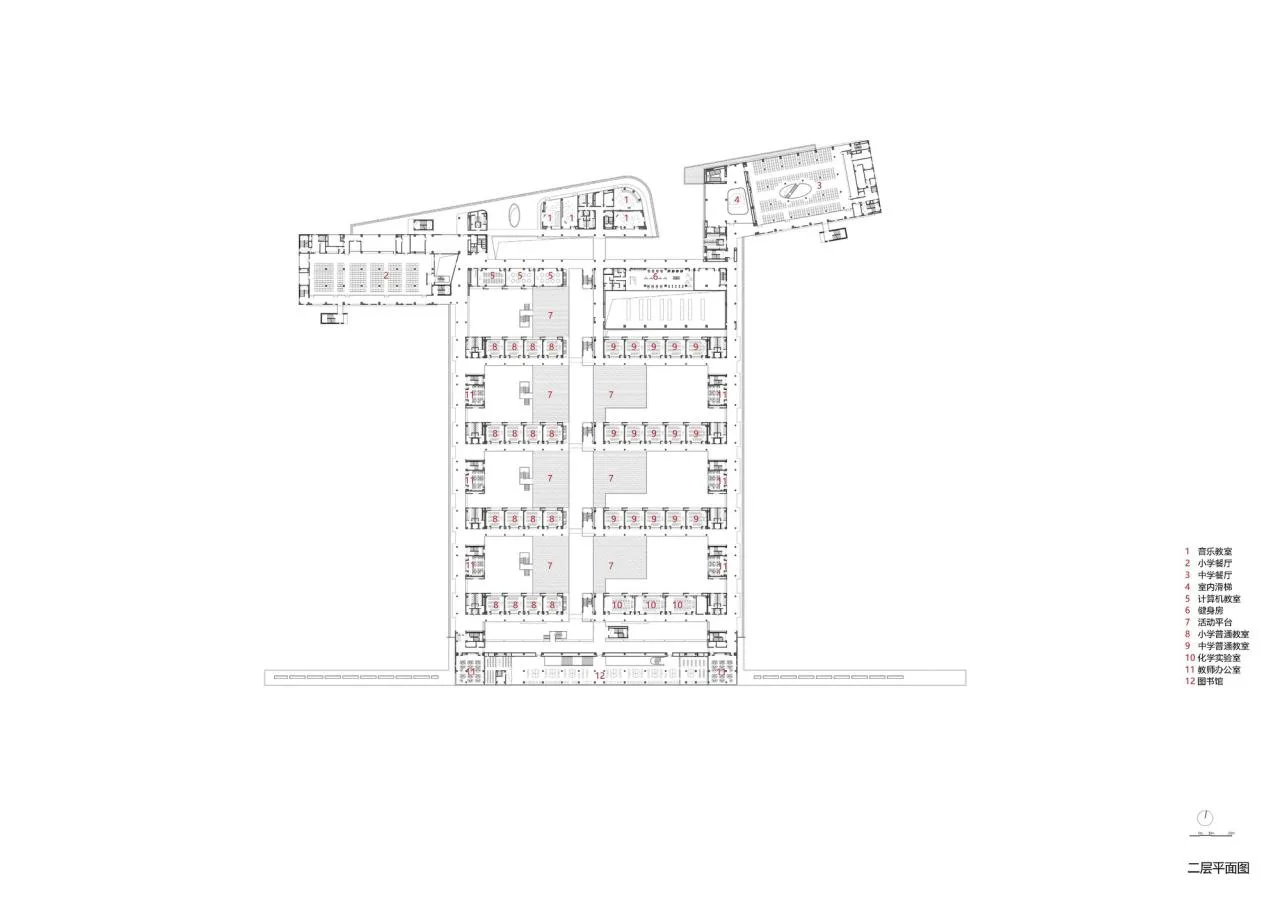
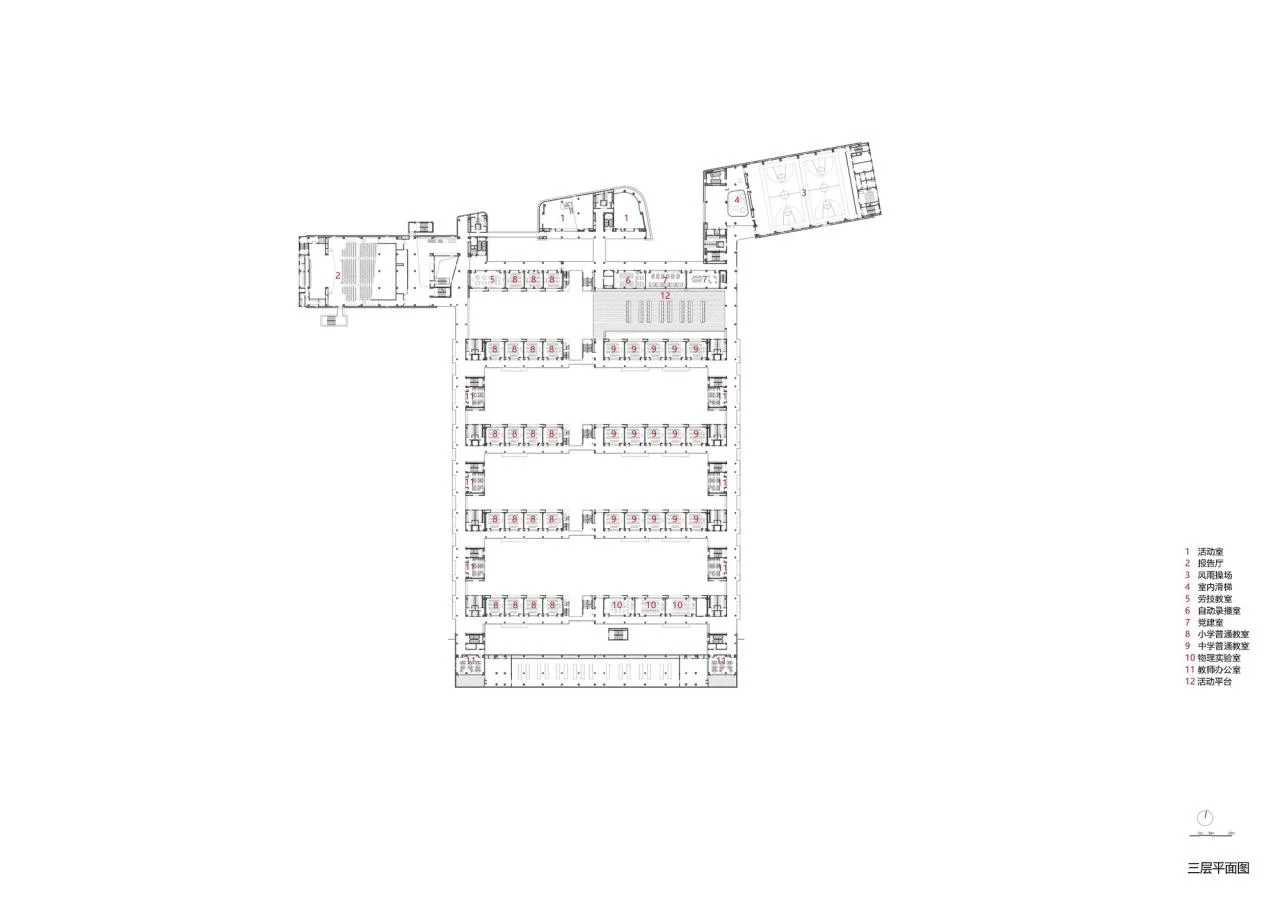
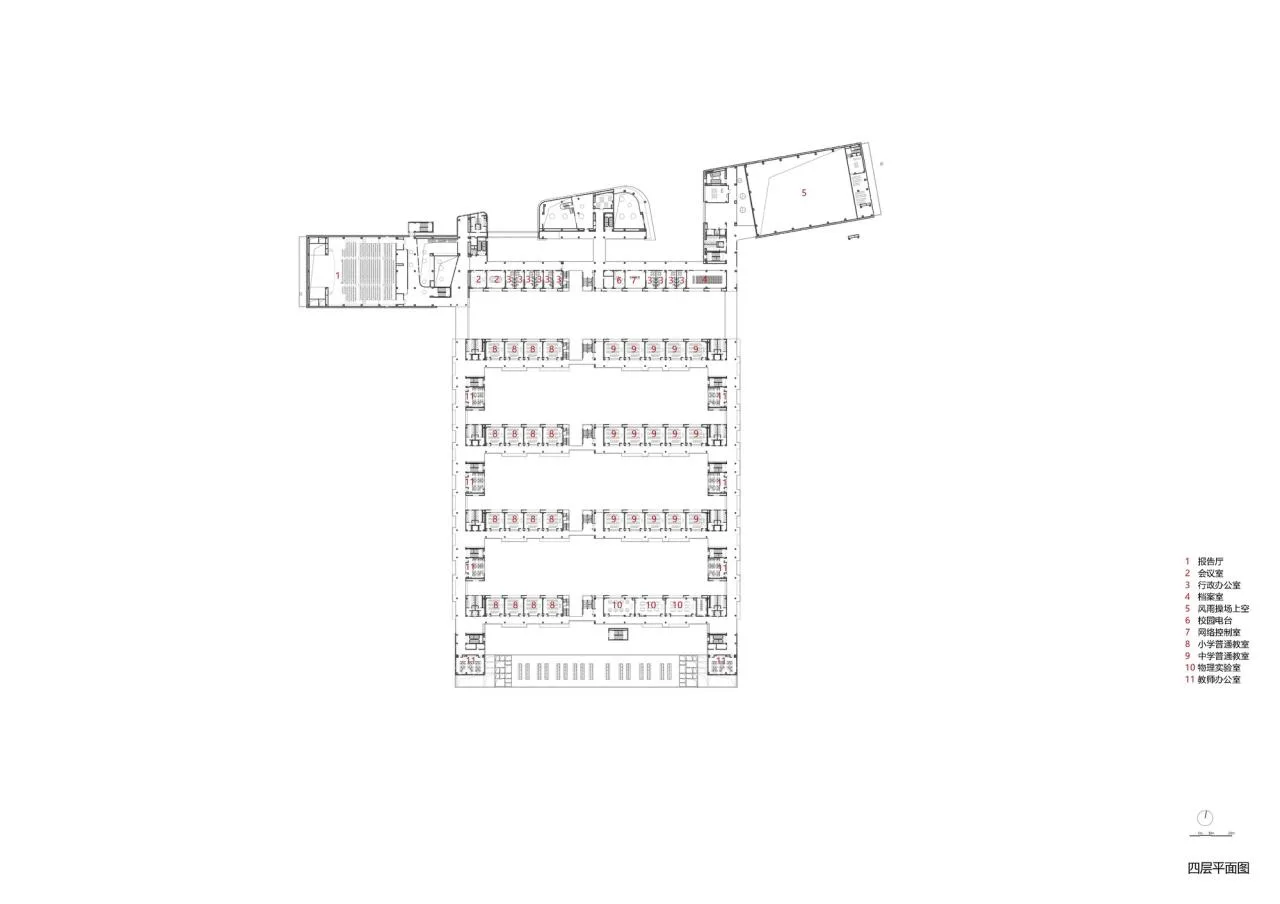
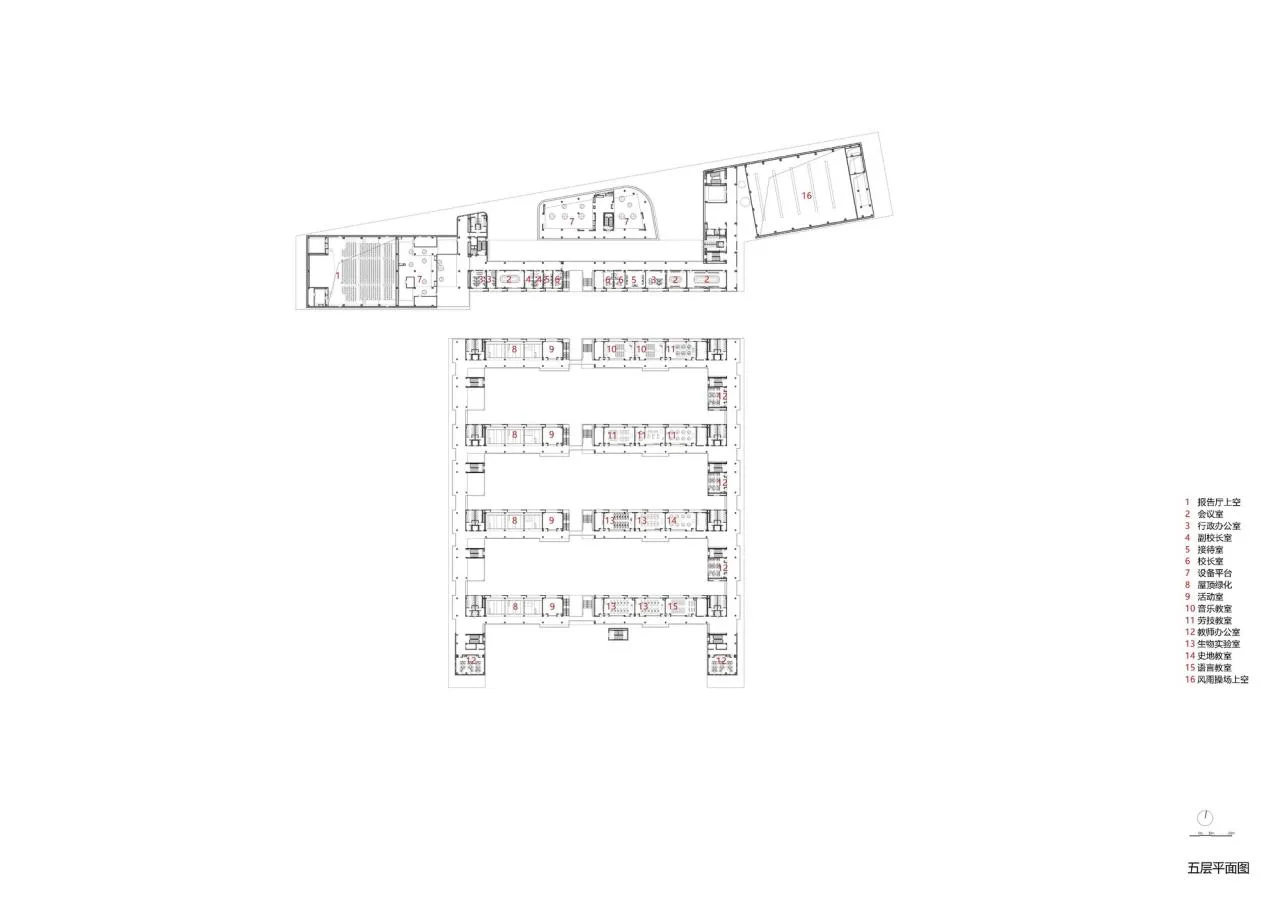
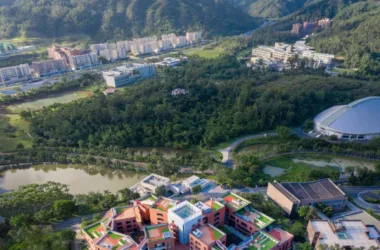
Suzhou University Gaoyou Experimental School is a nine-year compulsory education institution, comprising 48 primary school classes on track 8 and 45 junior high school classes on track 15. The campus is organized into three distinct zones from south to north: a public library connected through reading corridors, teaching buildings for primary and secondary schools, and an open public teaching area.
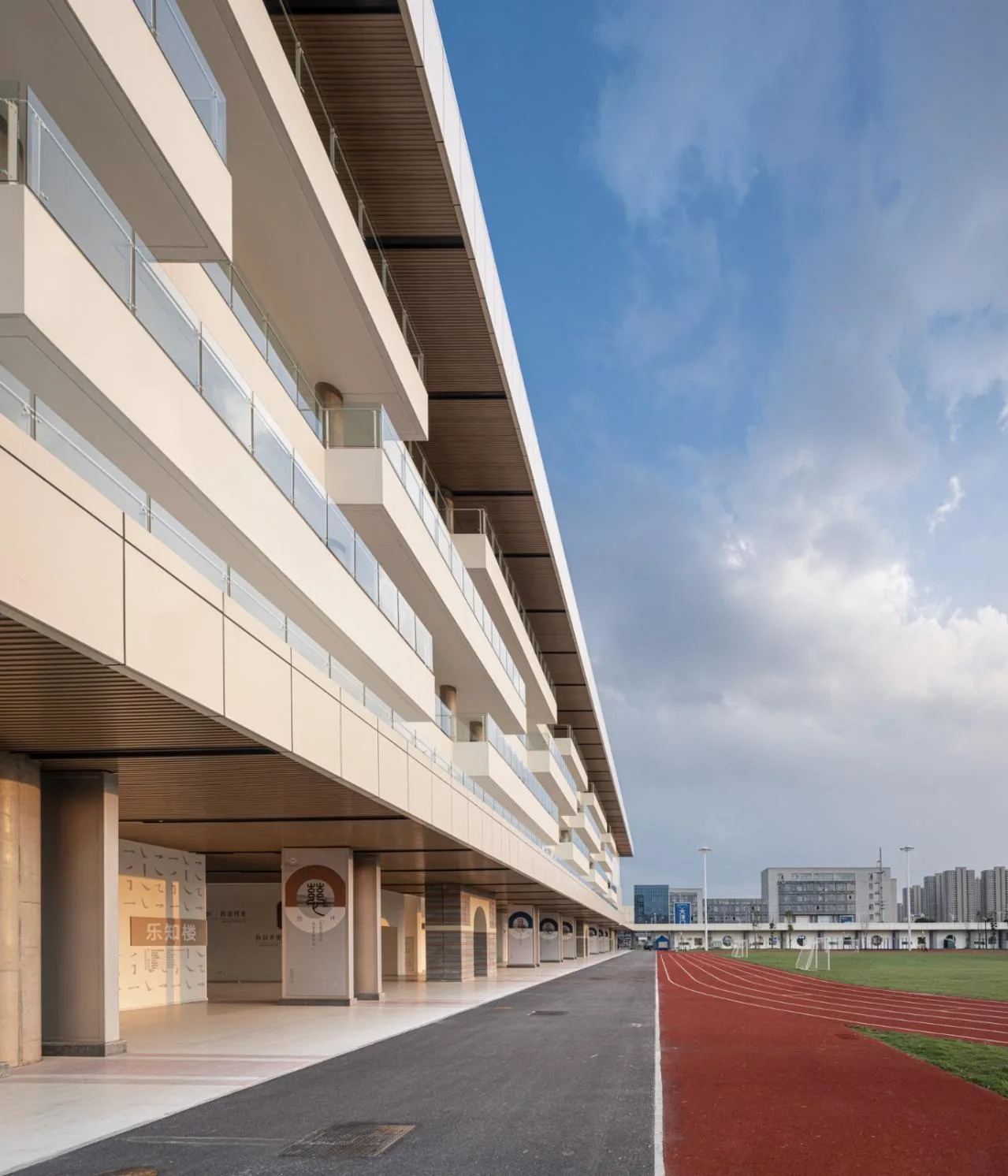
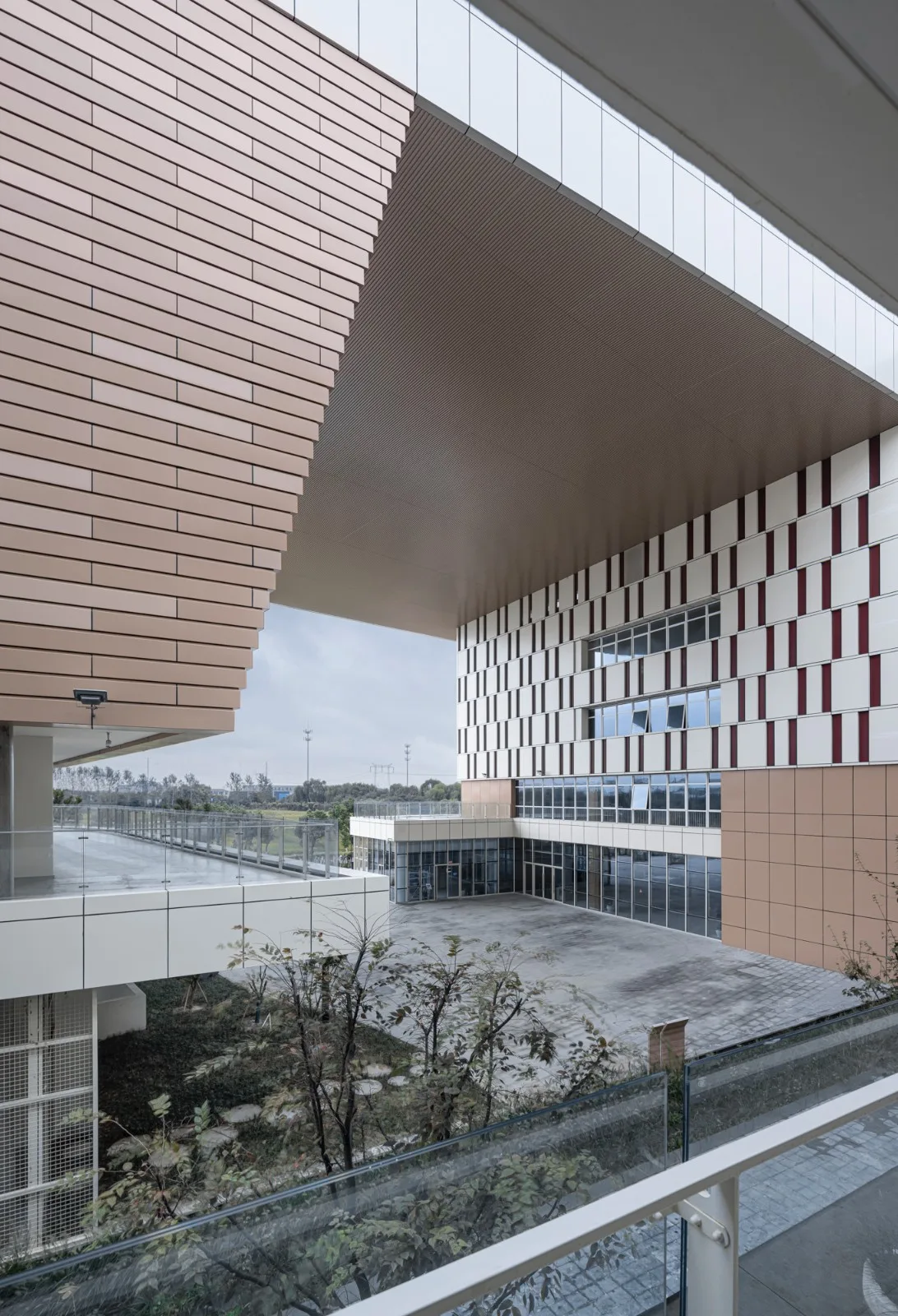
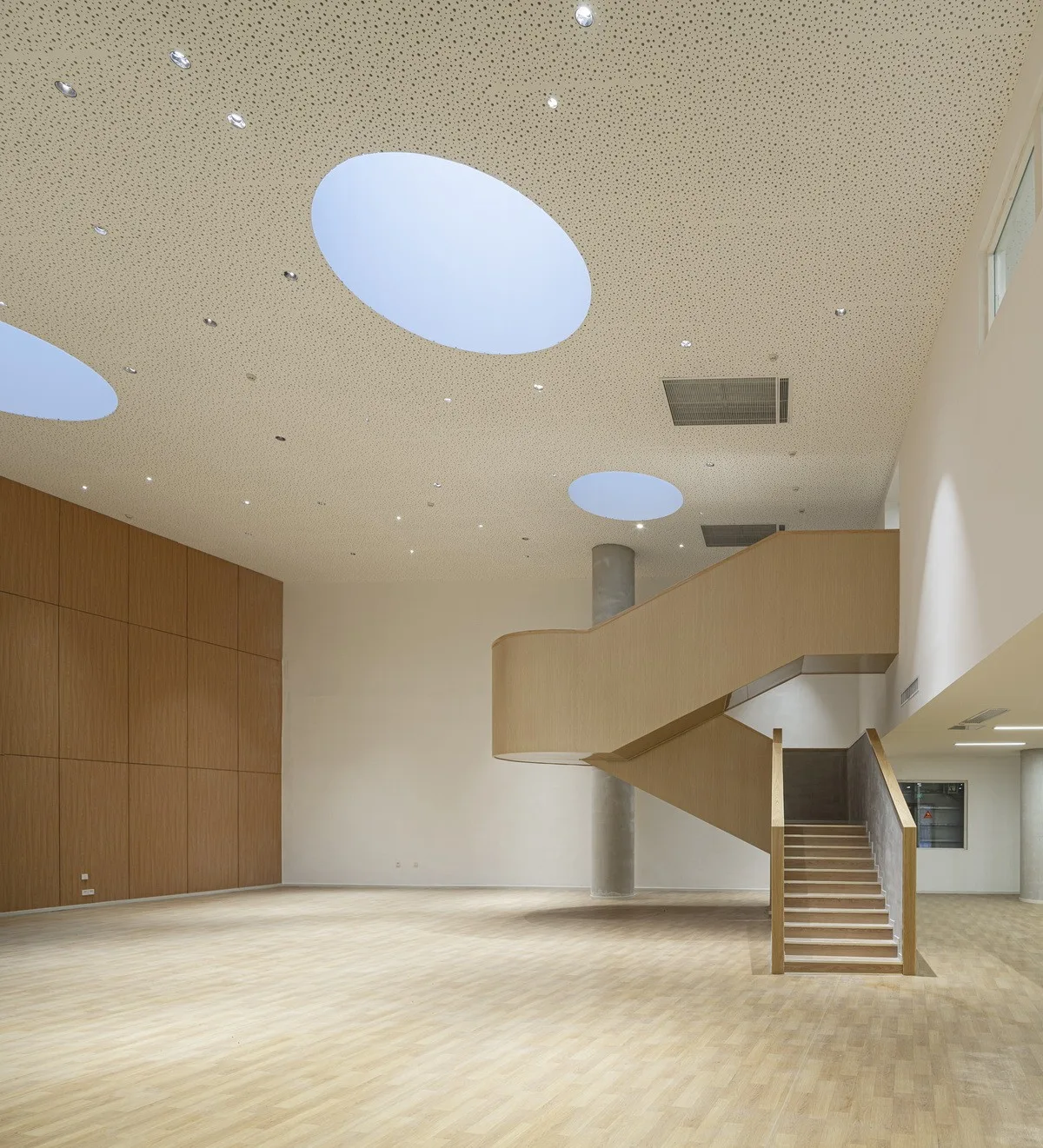
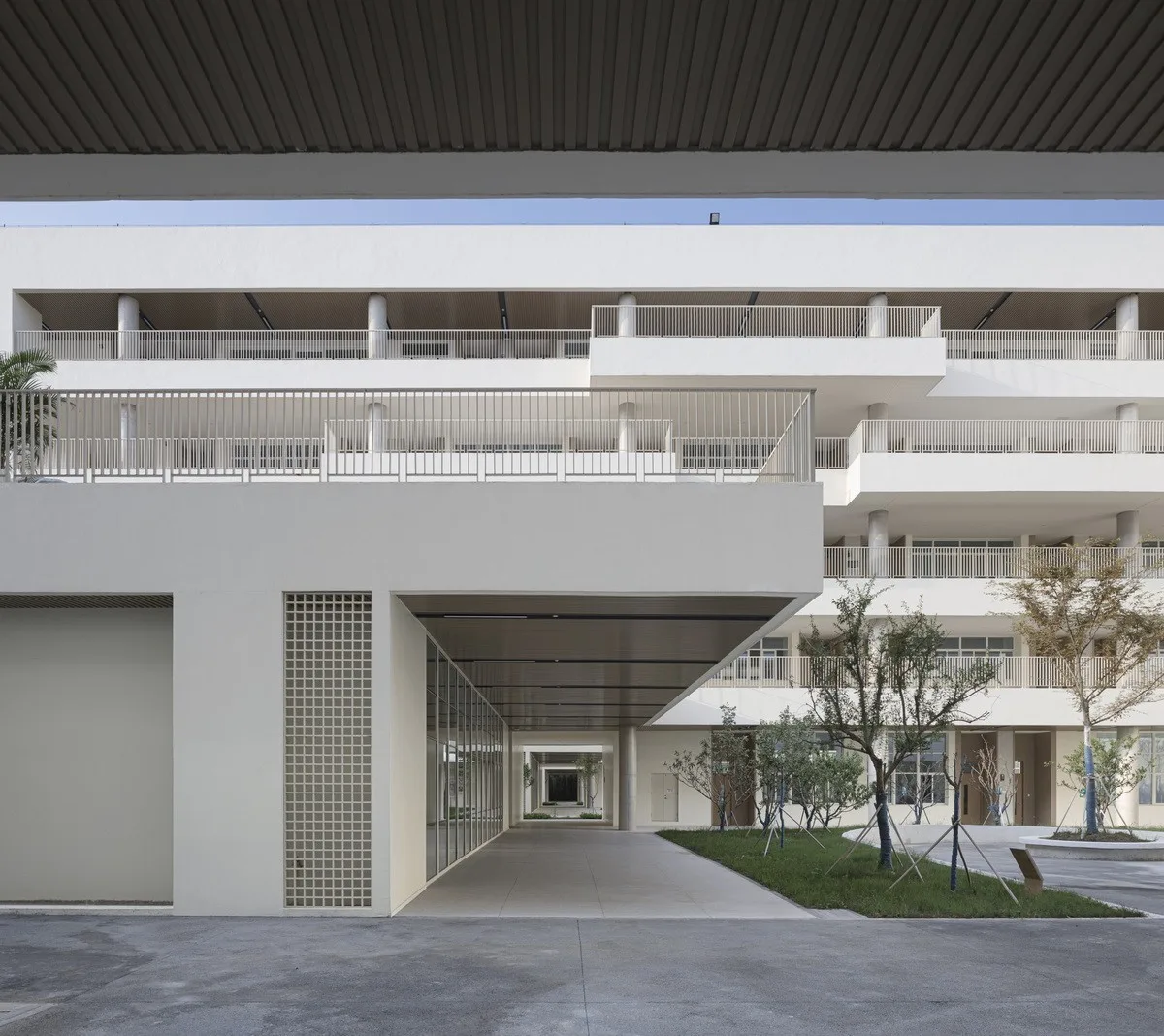
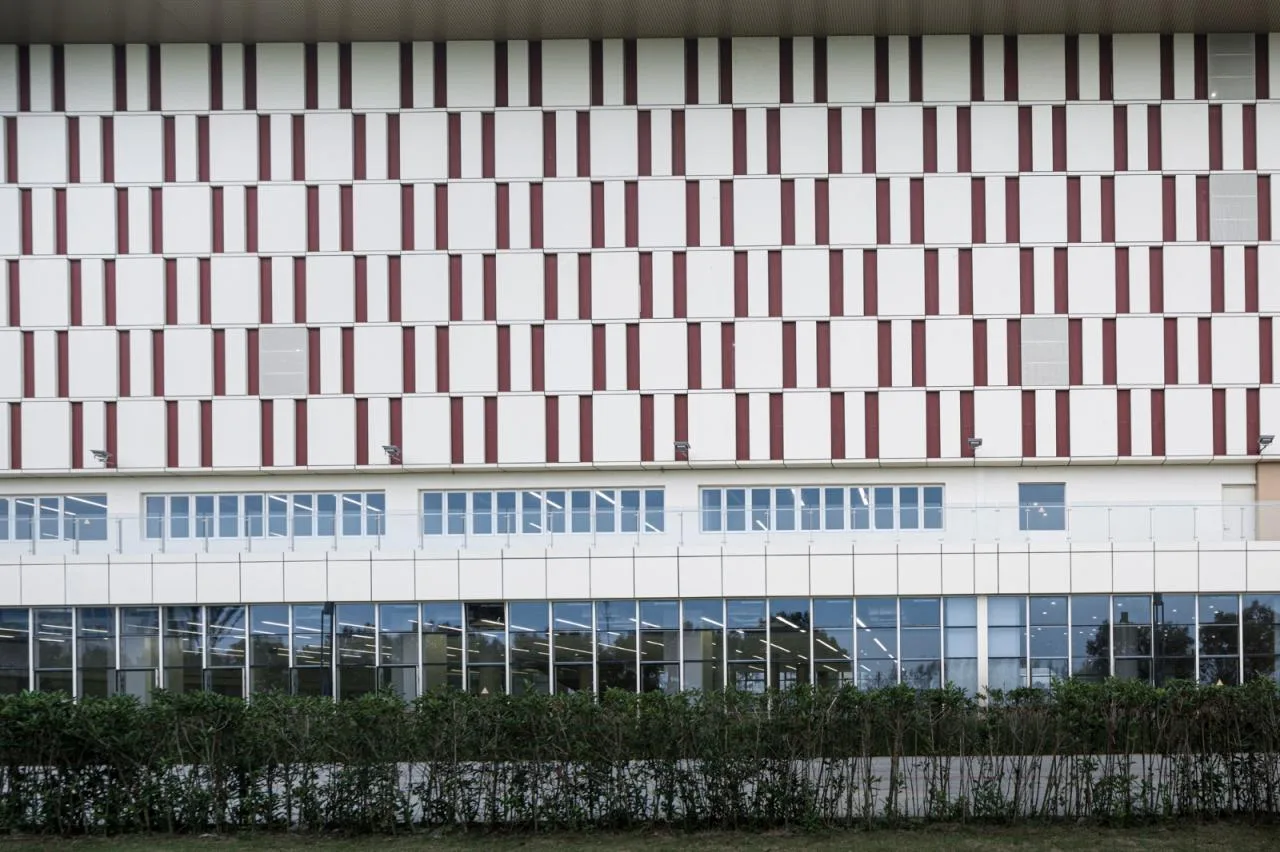
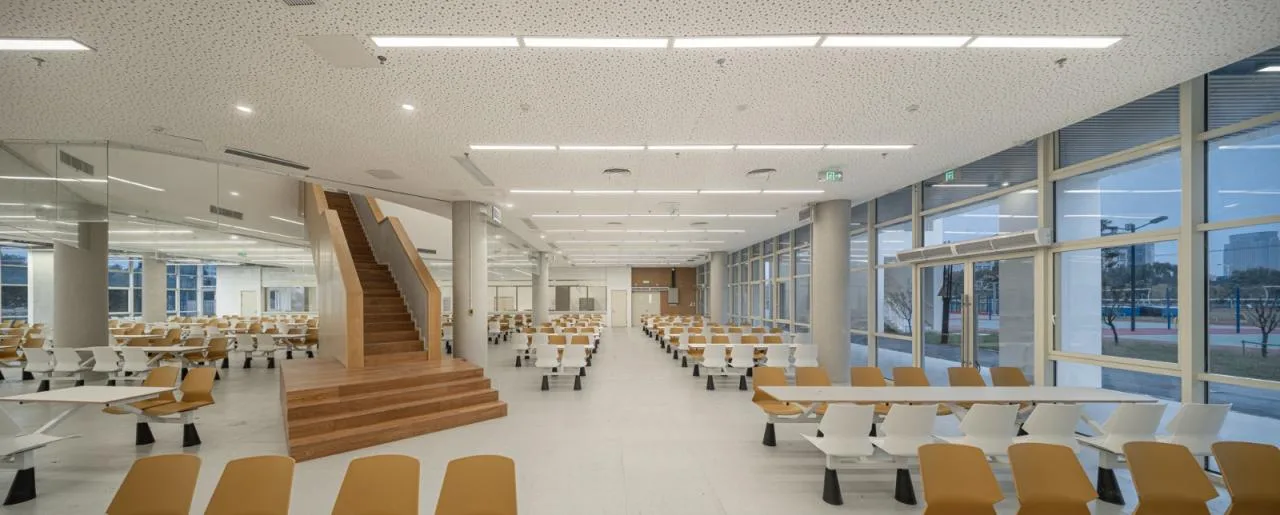
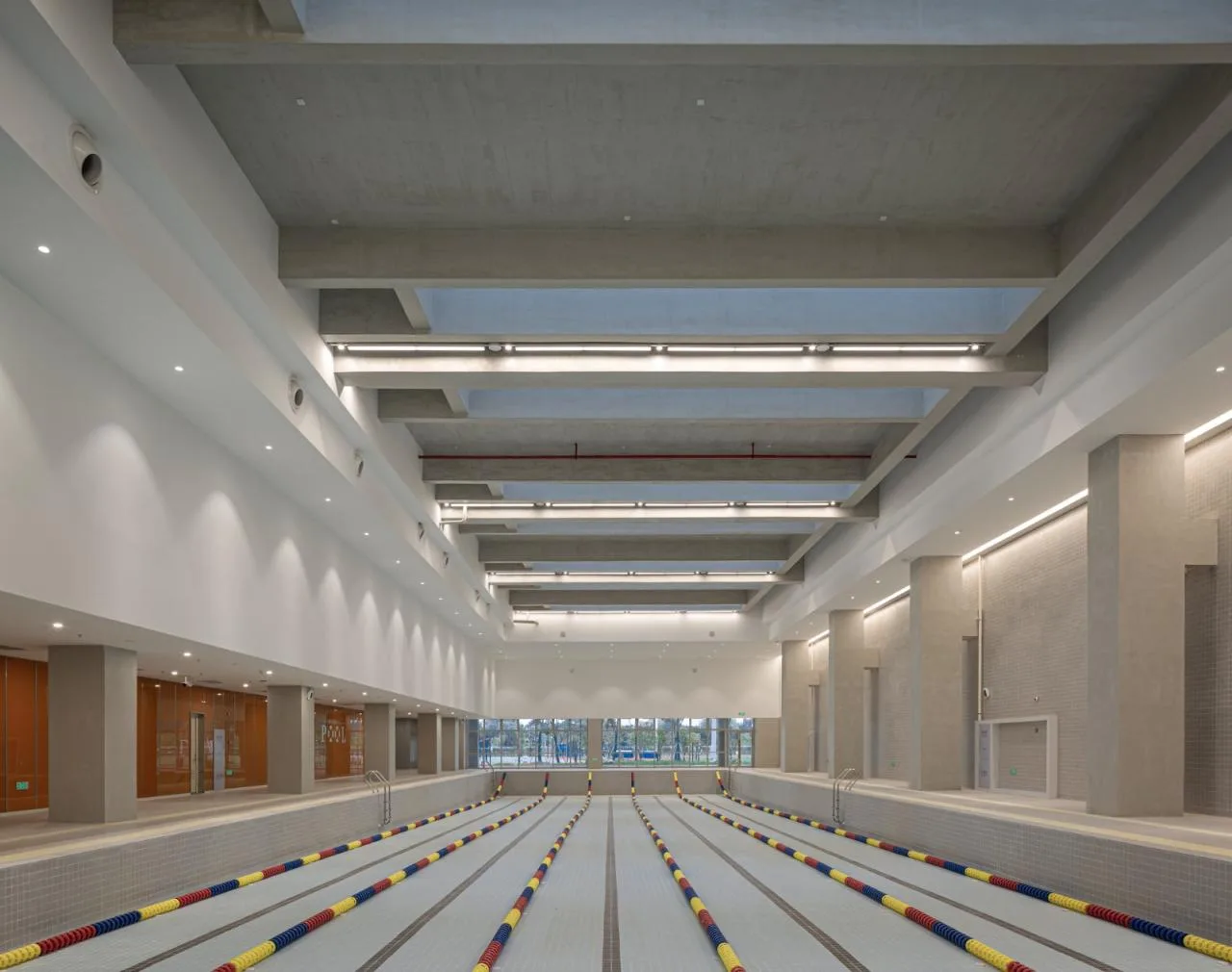
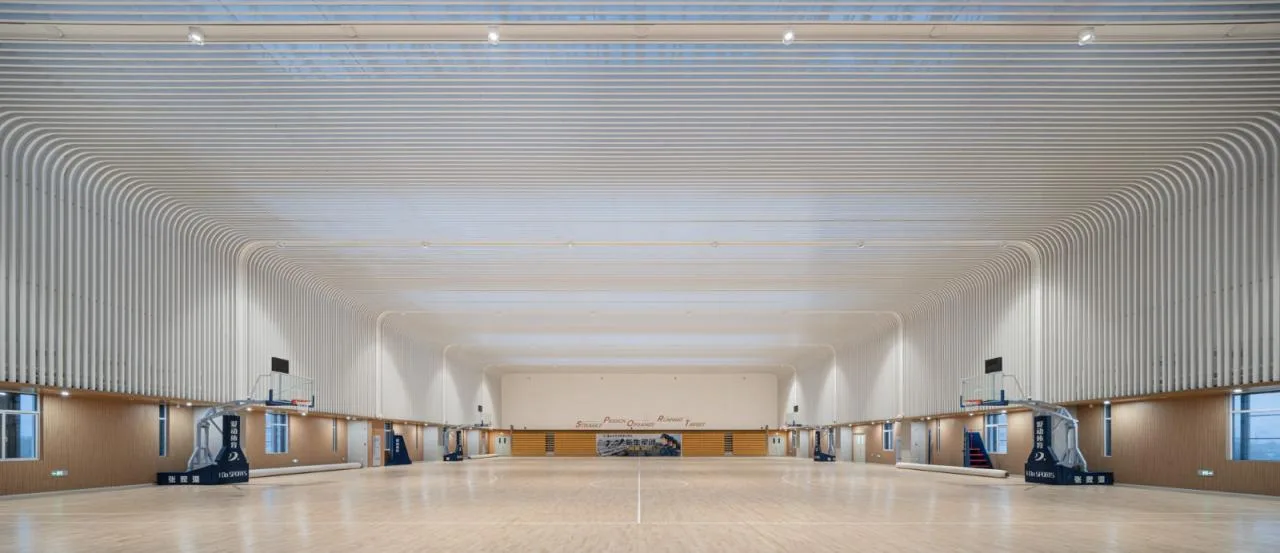
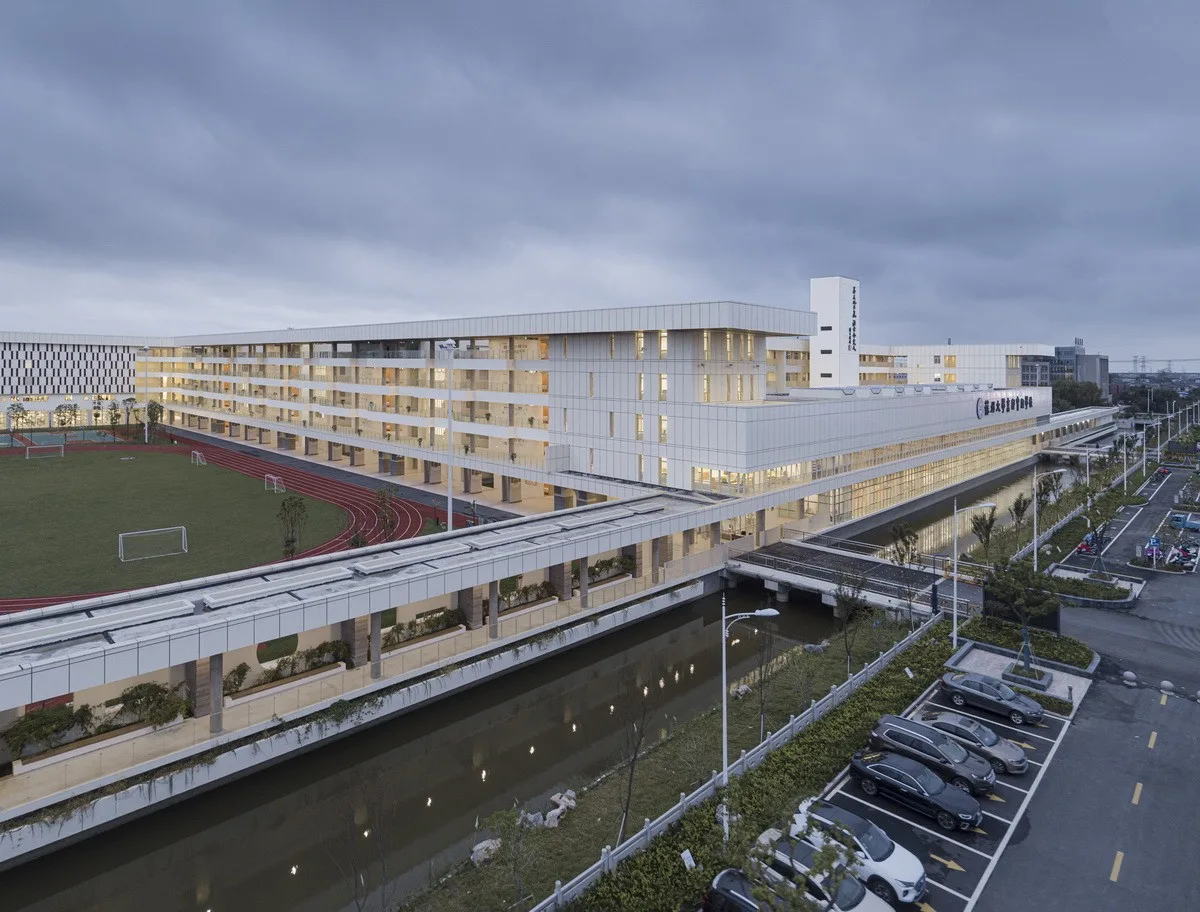
As the campus’s northern interface with the city, the public teaching area combines various cultural and sports facilities—including a multi-functional restaurant, theater, covered playground, and swimming pool—under one continuous expansive roof. This unified architectural form establishes a clear and inviting urban presence. Additionally, the design incorporates a flexible boundary space that encourages open interaction between the school and the surrounding community.
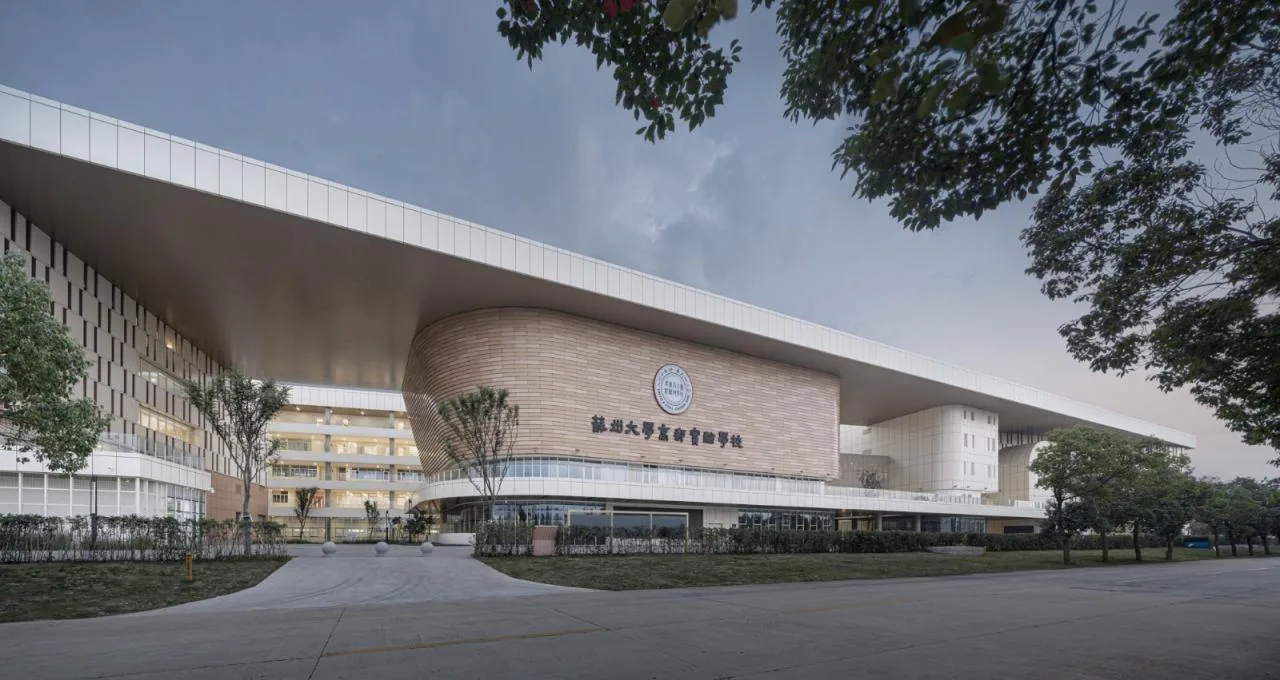
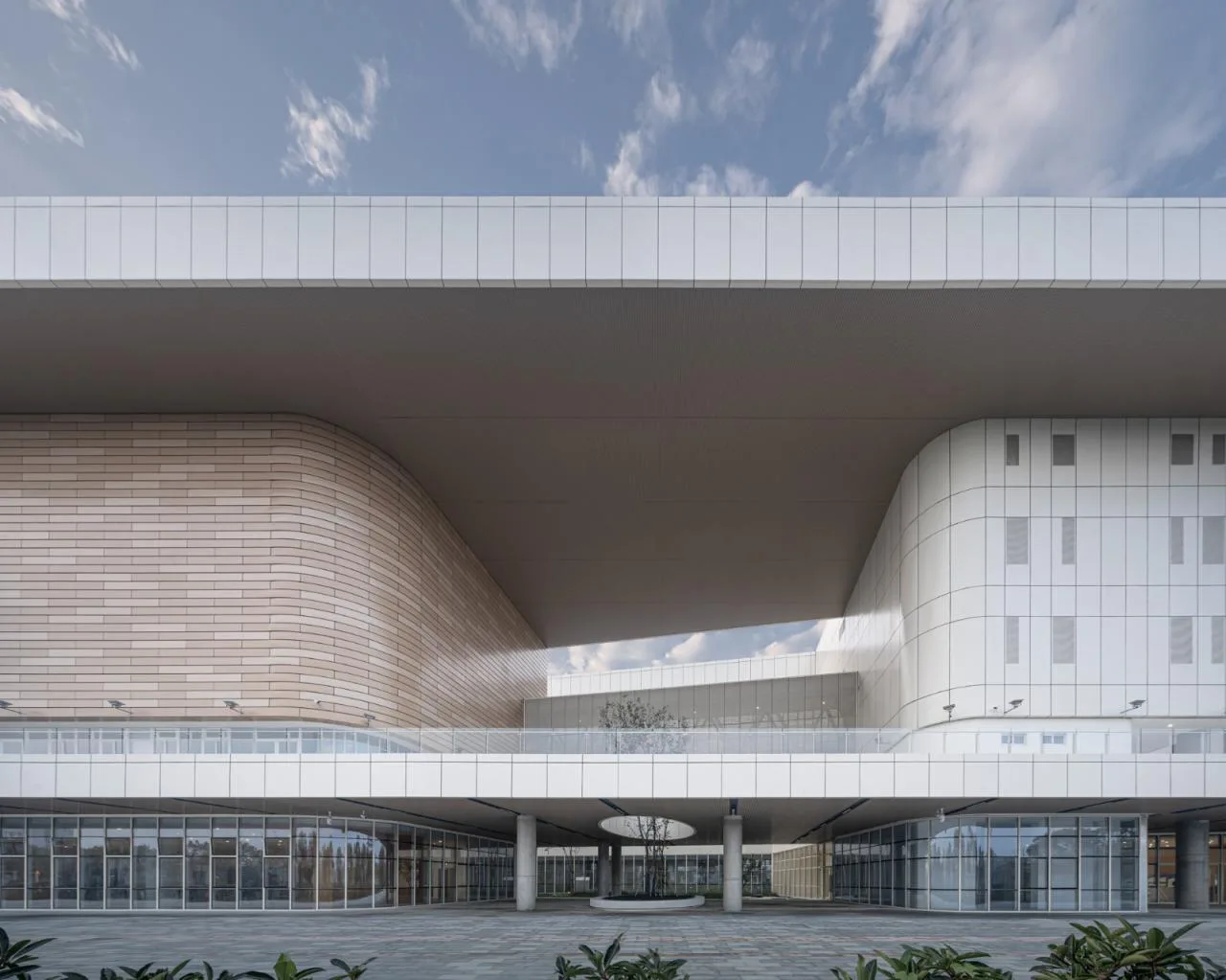
The elevated first-floor exterior of the North District features floor-to-ceiling safety explosion-proof glass, serving as a protective barrier, with operable windows positioned only above the safety height. Inside this glass enclosure, the entrance hall, dining area, and dance studio function as temporary waiting and buffer zones for students during pick-up and drop-off times. Outside the glass, an elevated platform provides a waiting area for parents.
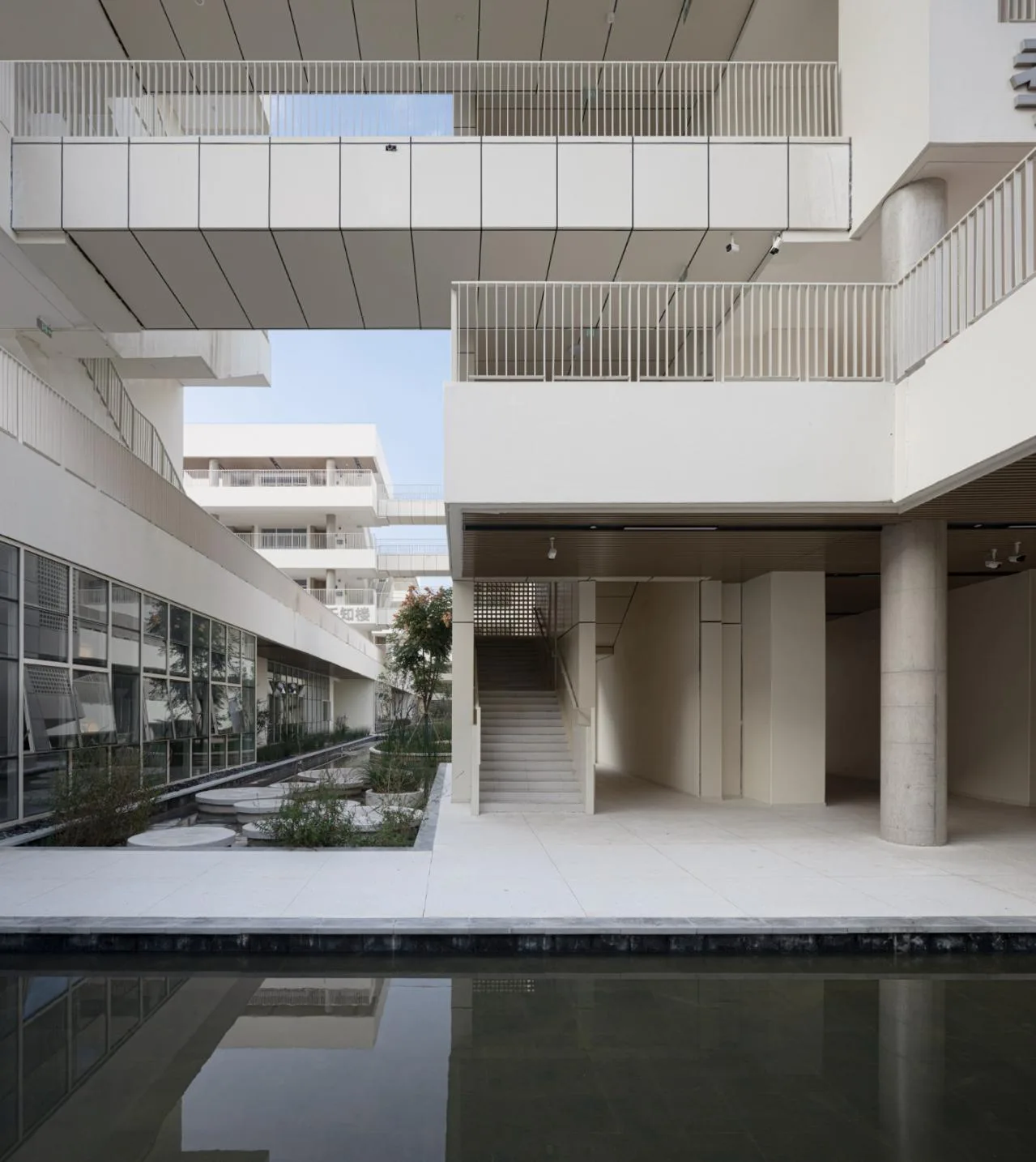
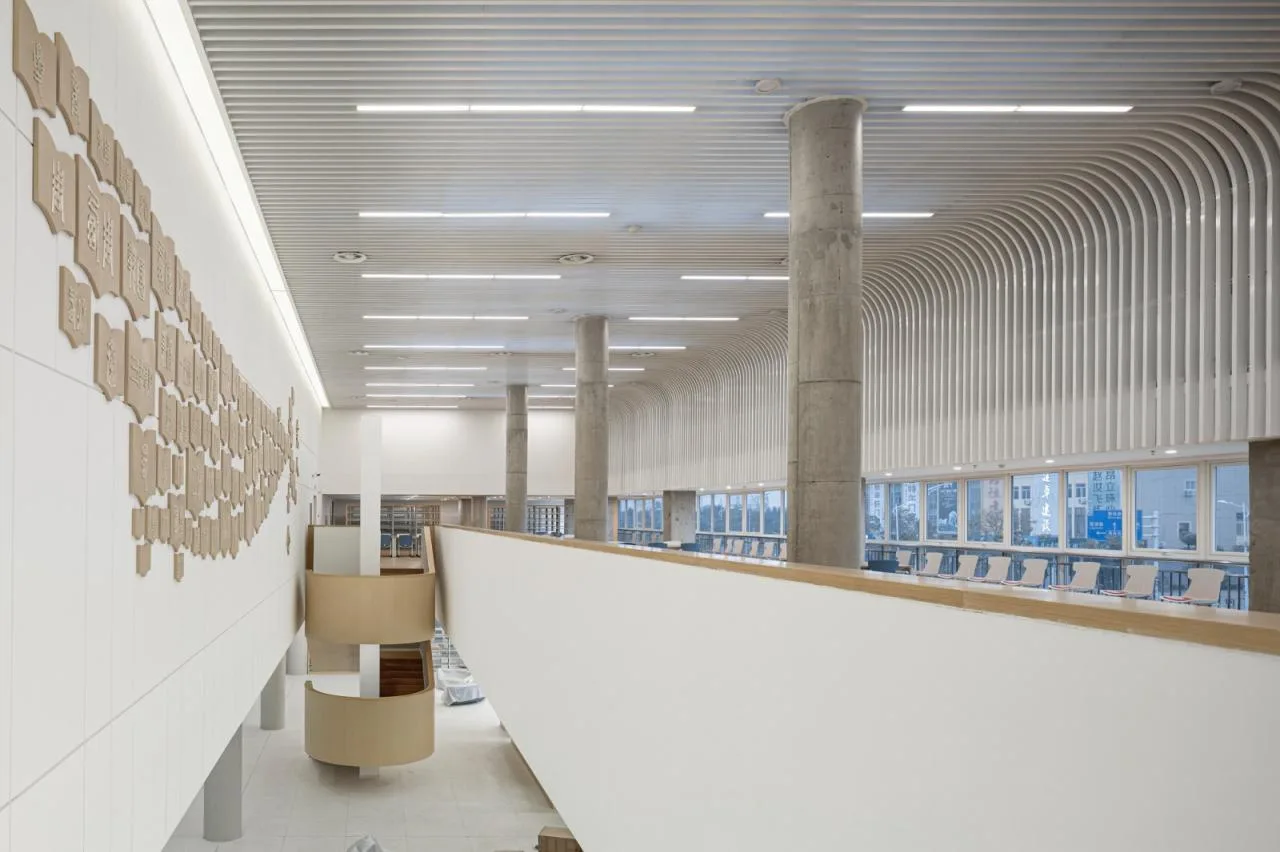
On the campus’s south side, a clear river separates the school from its surroundings, facing a sunlit reading corridor and library. Extending beyond the library, the reading corridor serves as a relaxing space for students’ extracurricular activities and a comfortable waiting area after school.
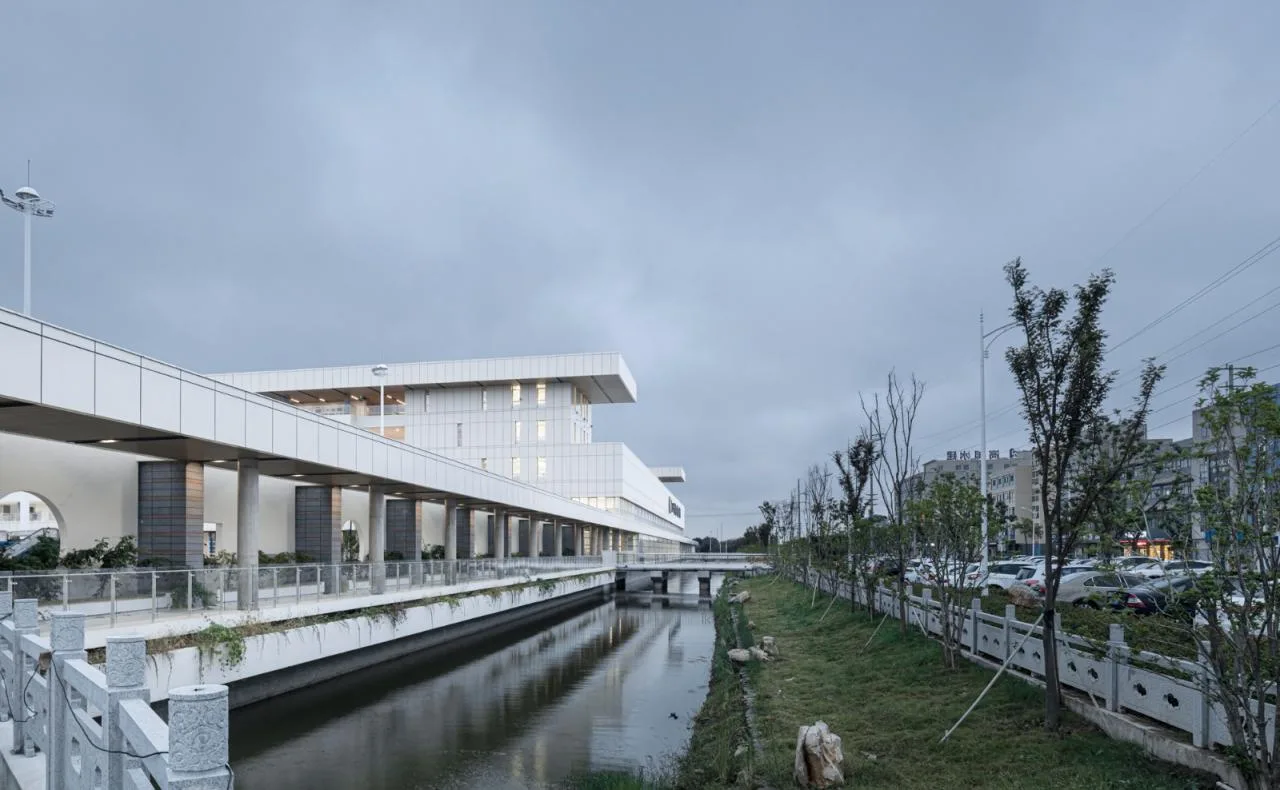
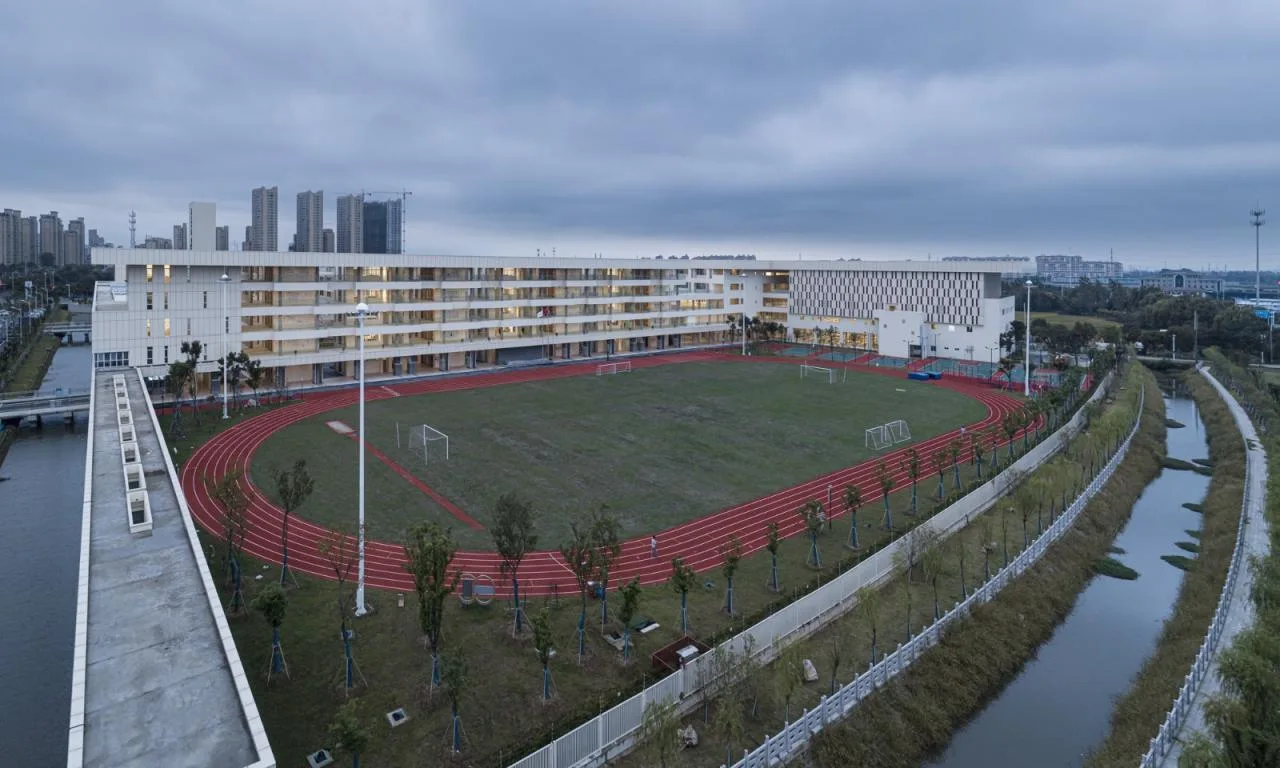
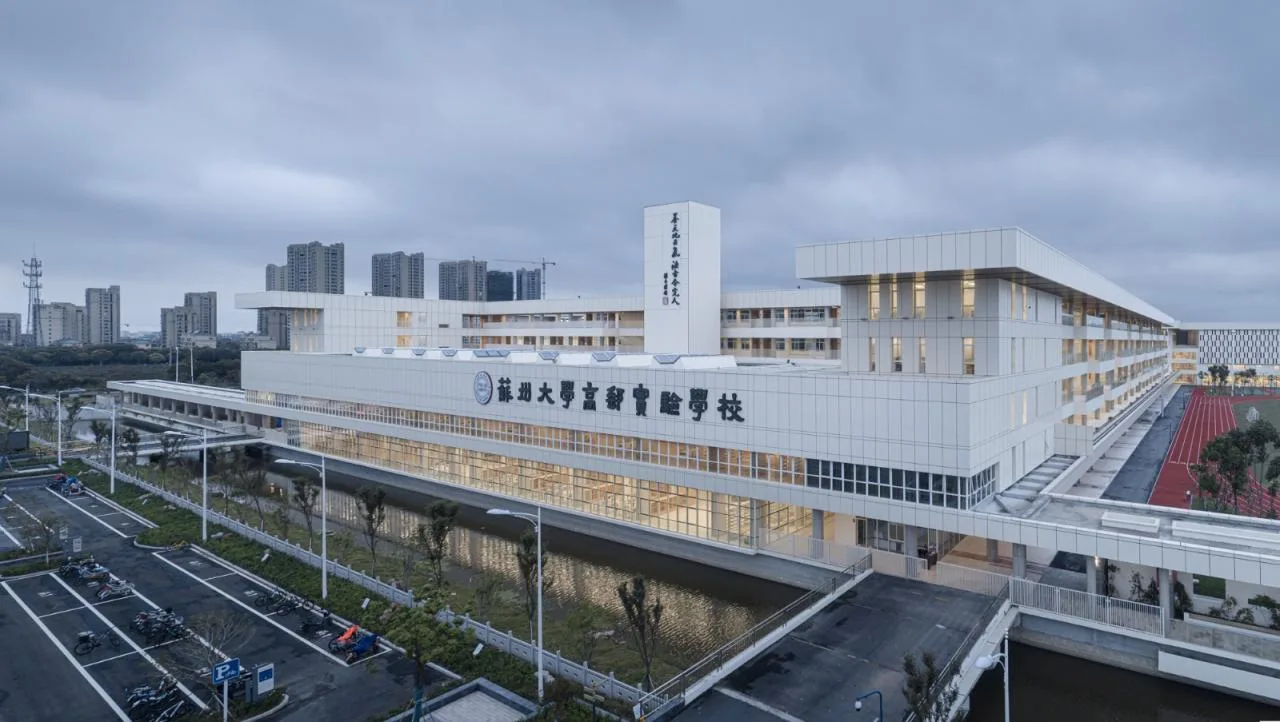
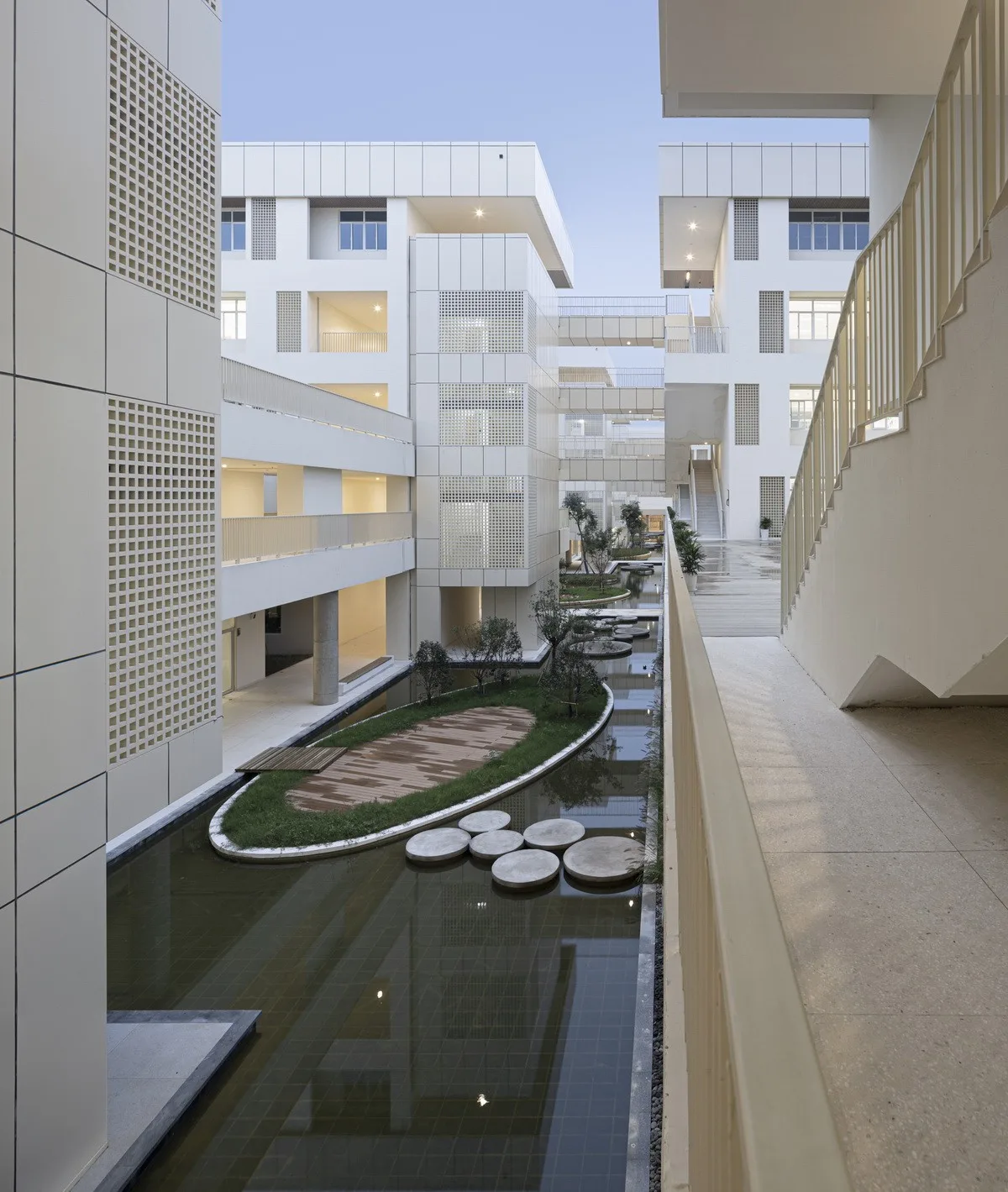
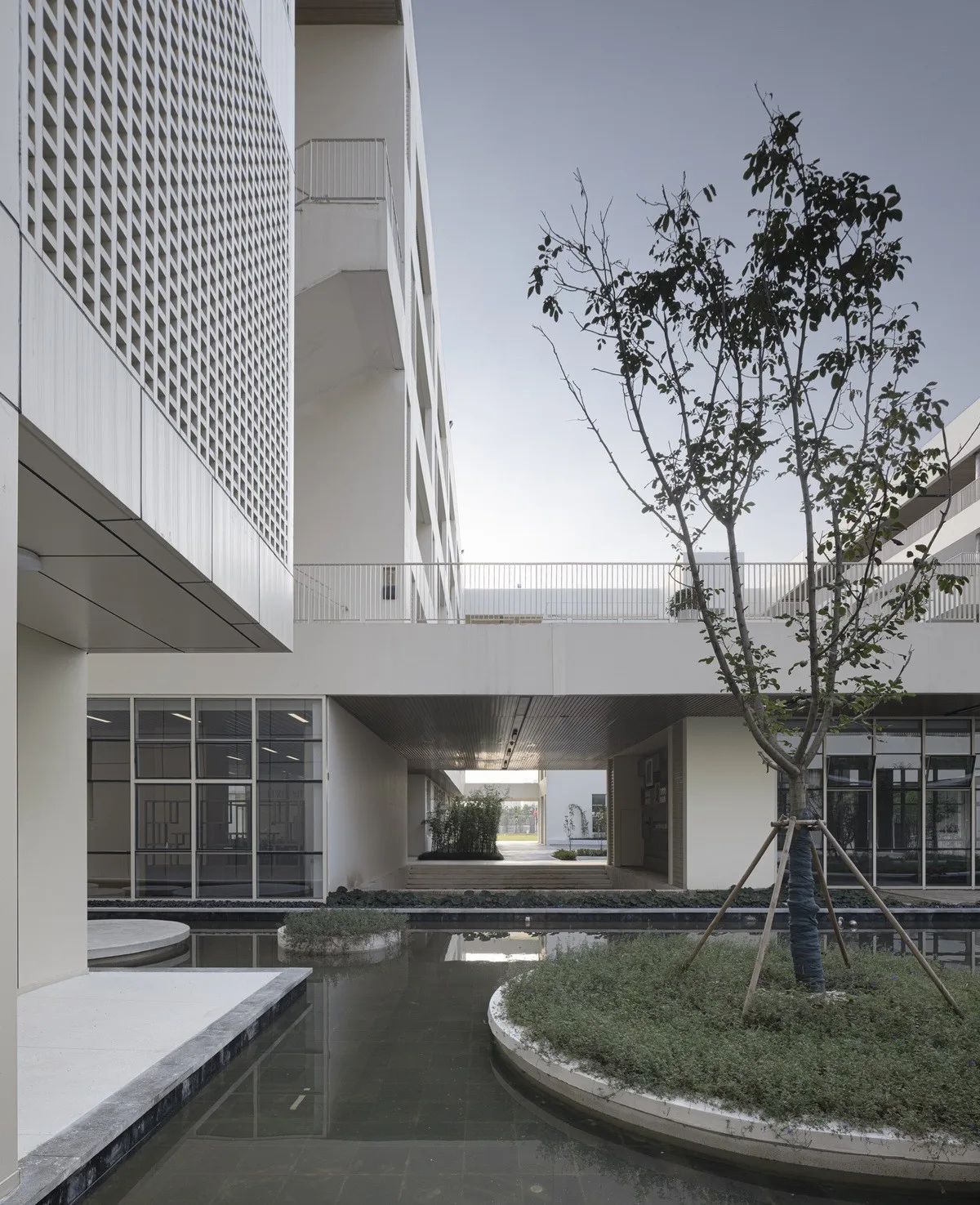
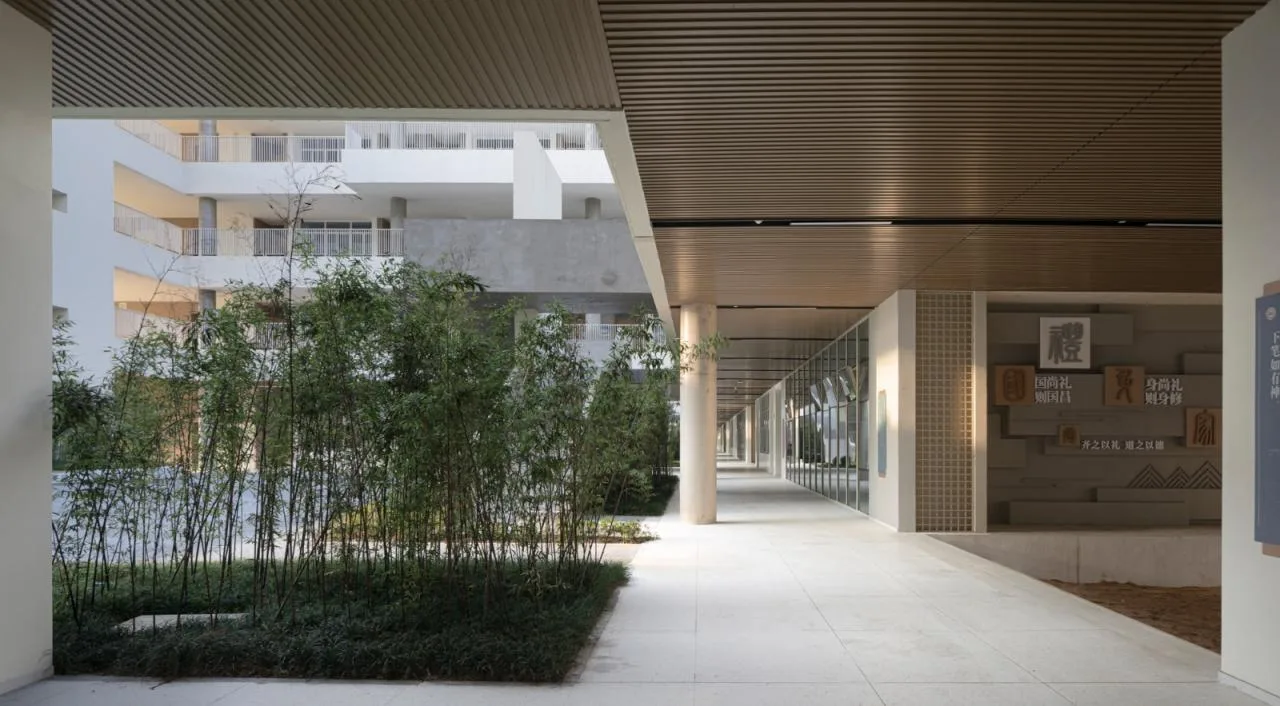
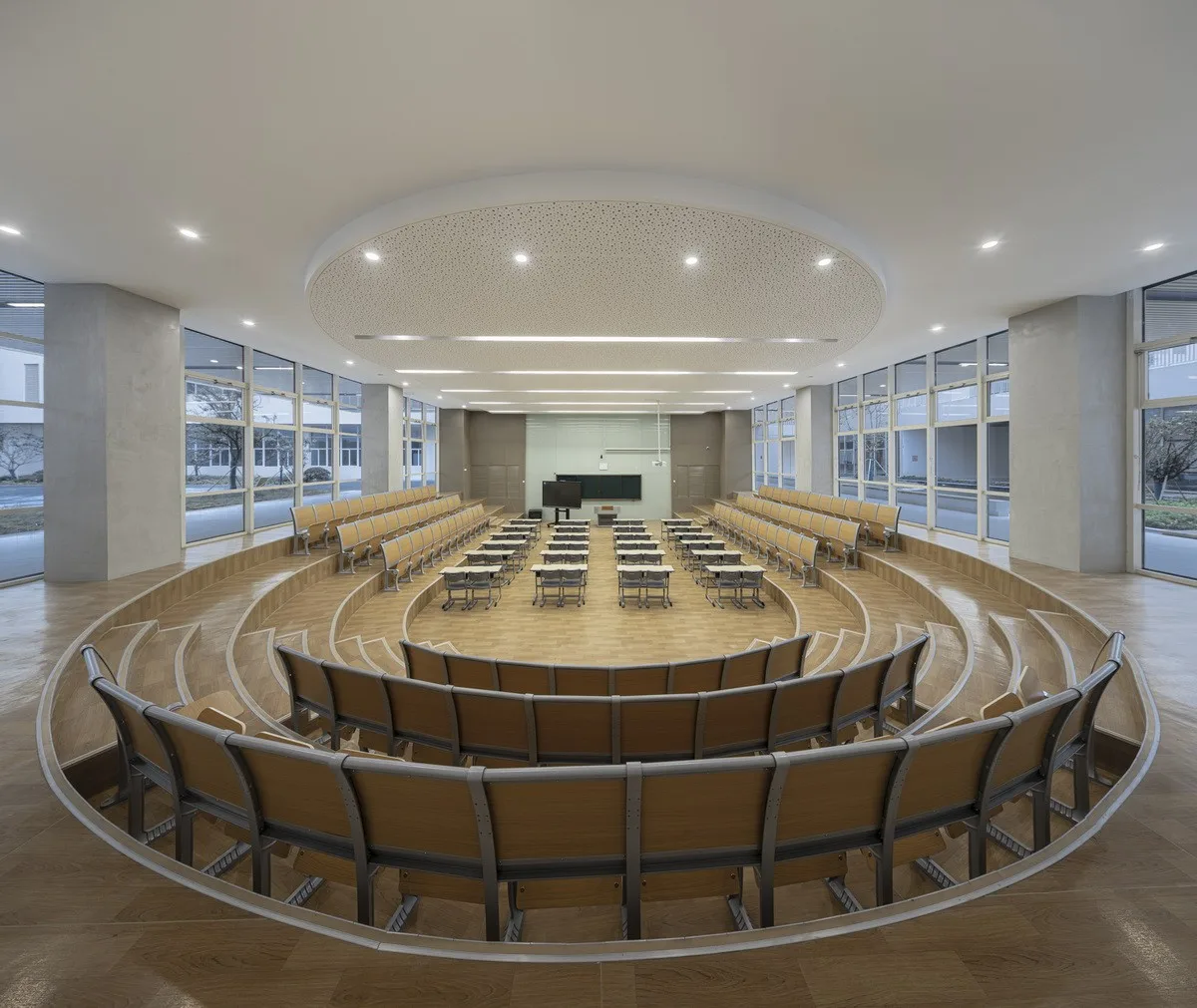
The region’s distinctive water network, characteristic of Suzhou and Gaoyou, is embodied by the Central Cultural Water Street that runs north to south. This natural water feature neatly divides the primary and junior high school sections without obstructing views. Specialized classrooms and public teaching buildings line both sides of the water street, allowing students from different sections to see and interact with each other within a spatial environment rich in Jiangnan water town architectural elements, reducing the isolation typically caused by physical separation.
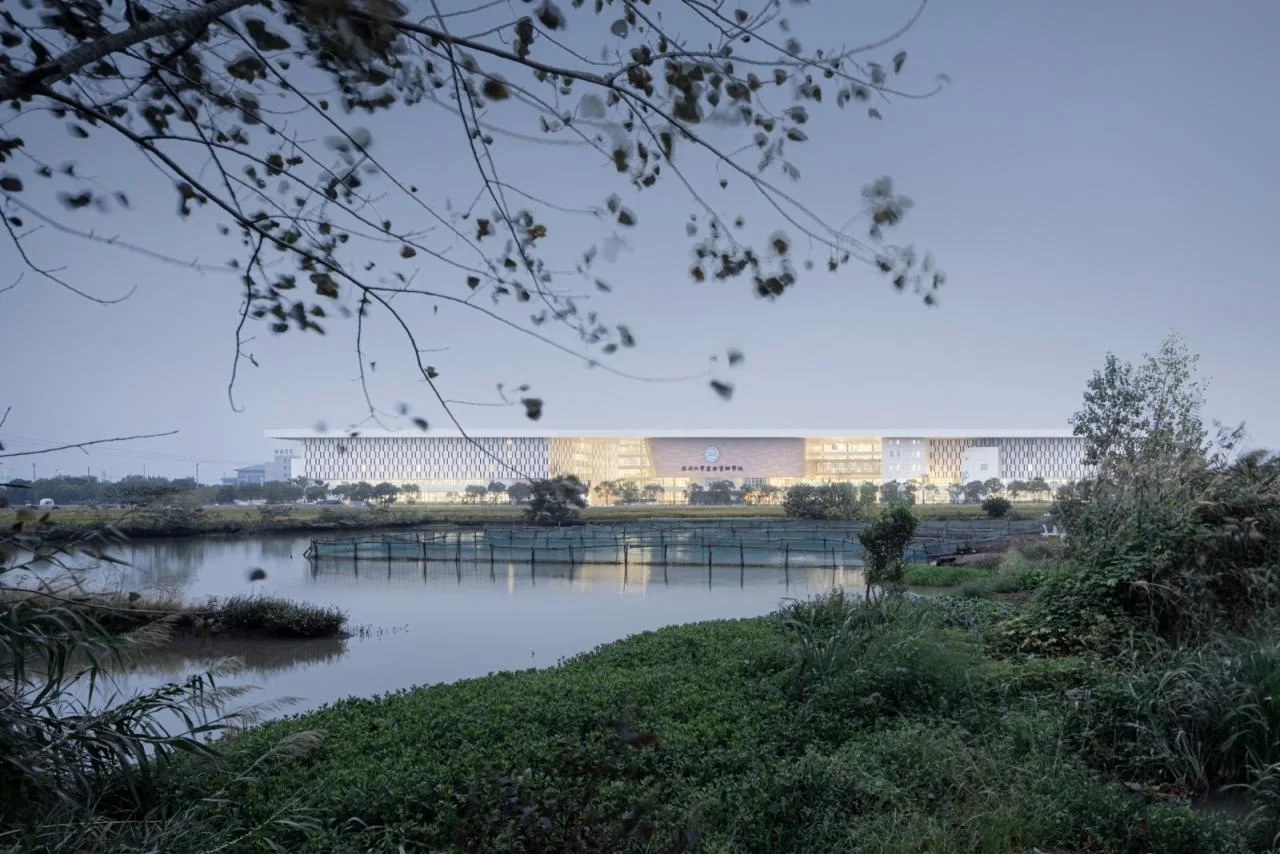
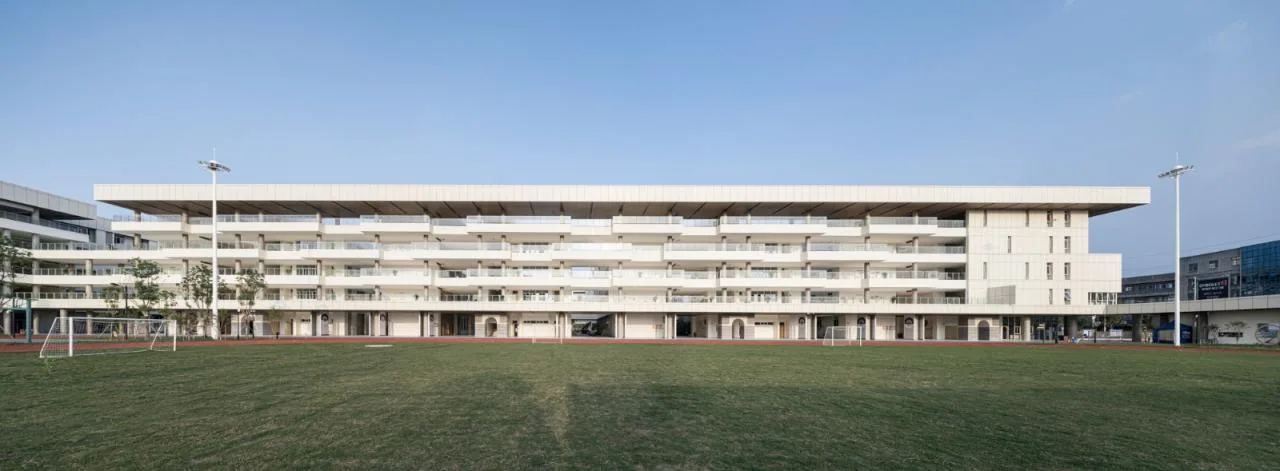
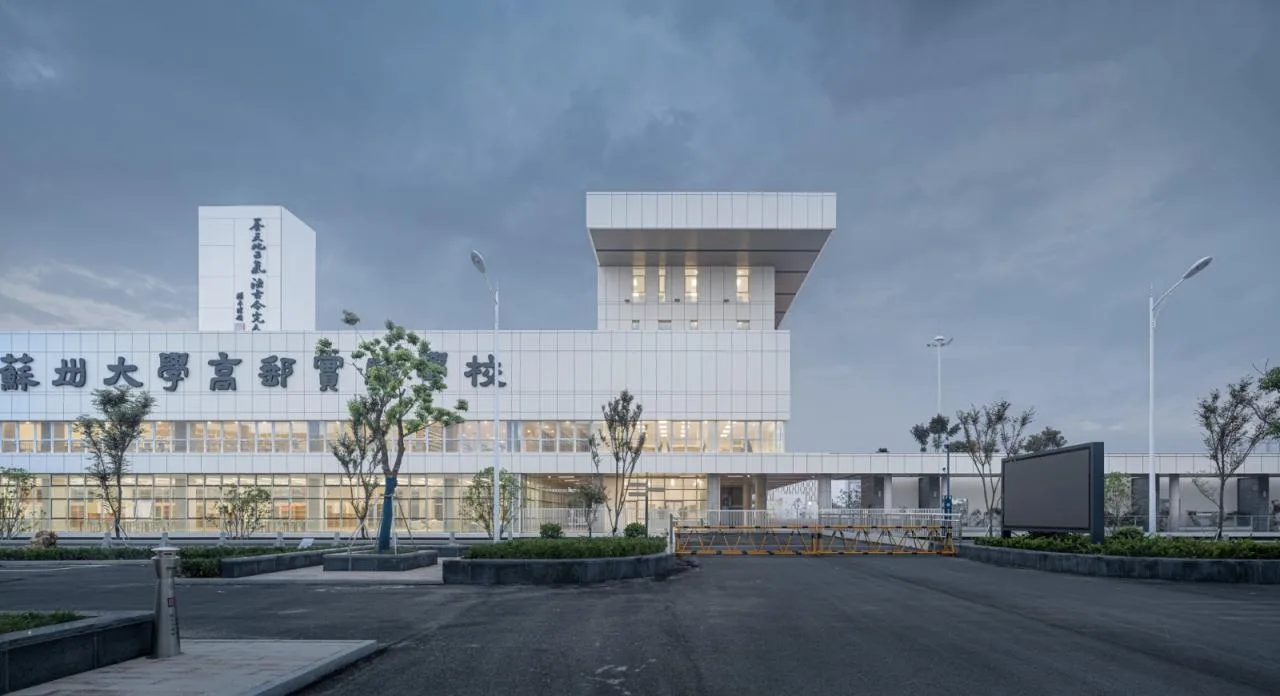
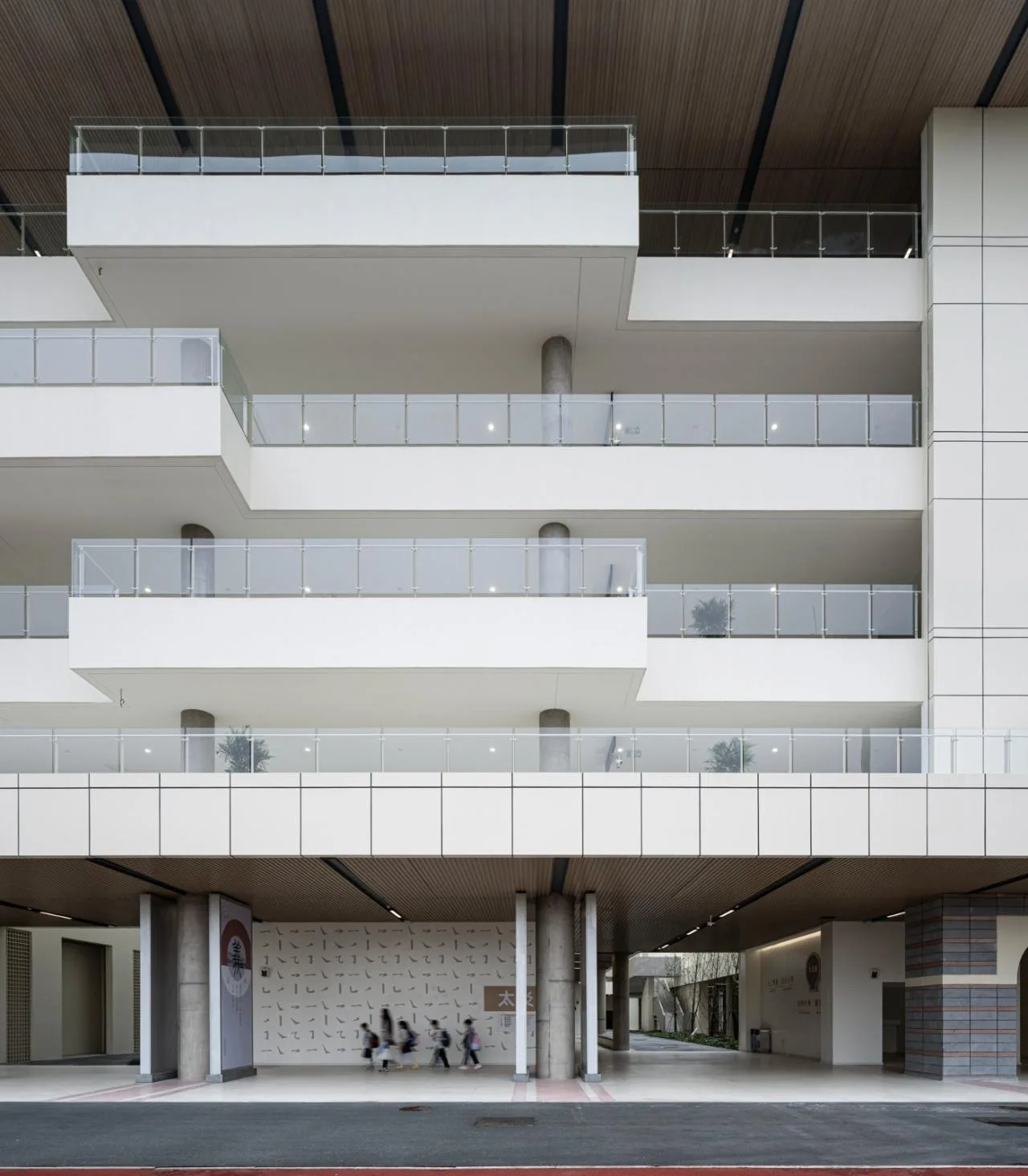
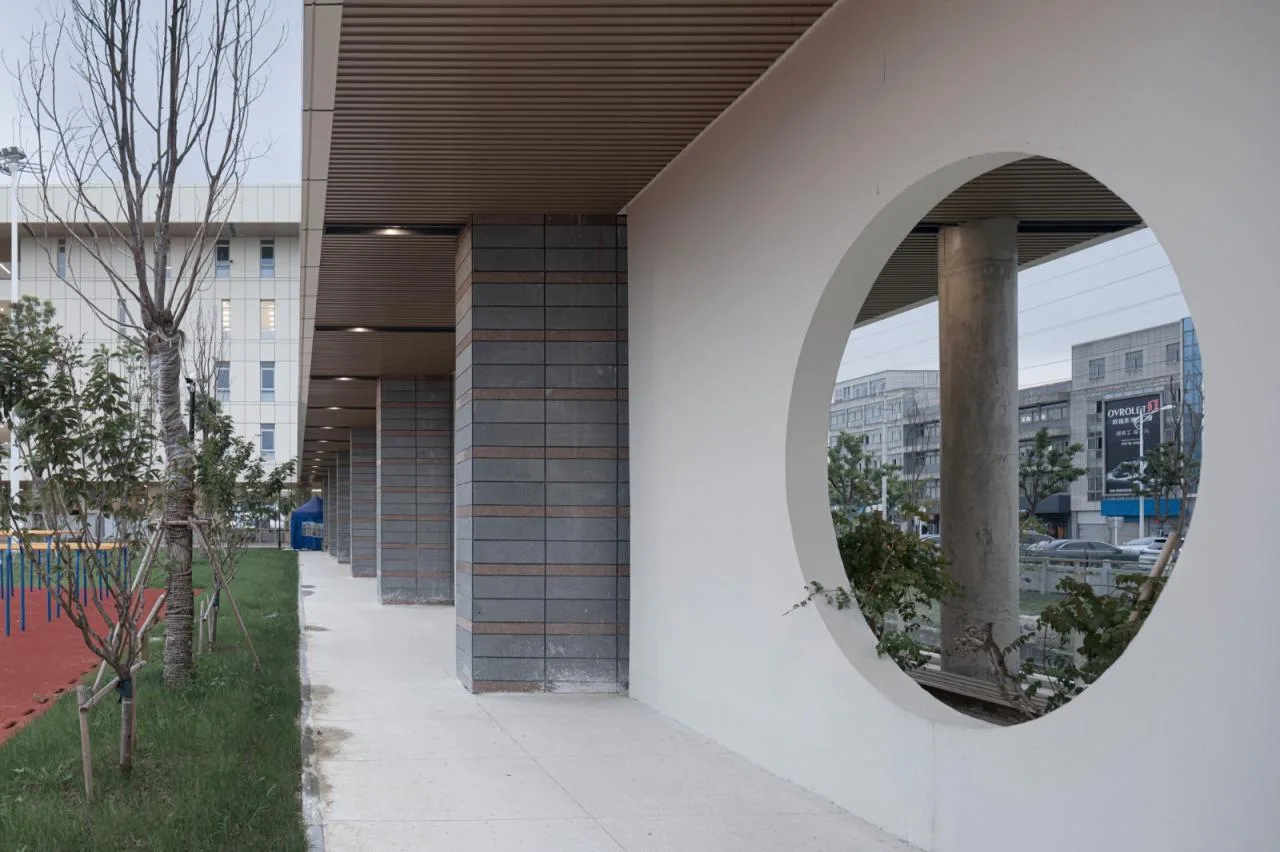
The corridors serve not only as daily passageways but also as spaces for free movement and observation, playing a vital role in fostering interaction and communication between students and teachers.
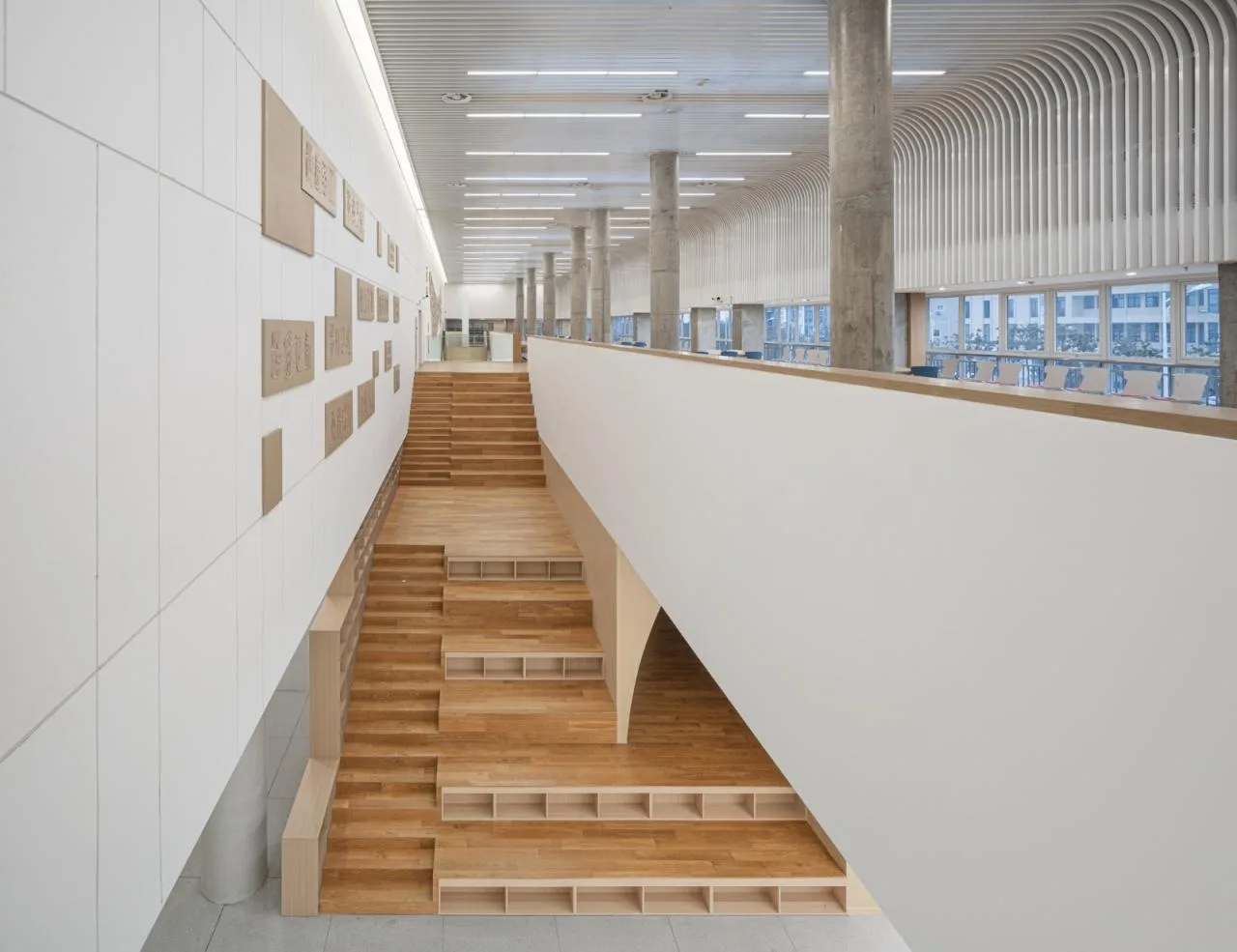
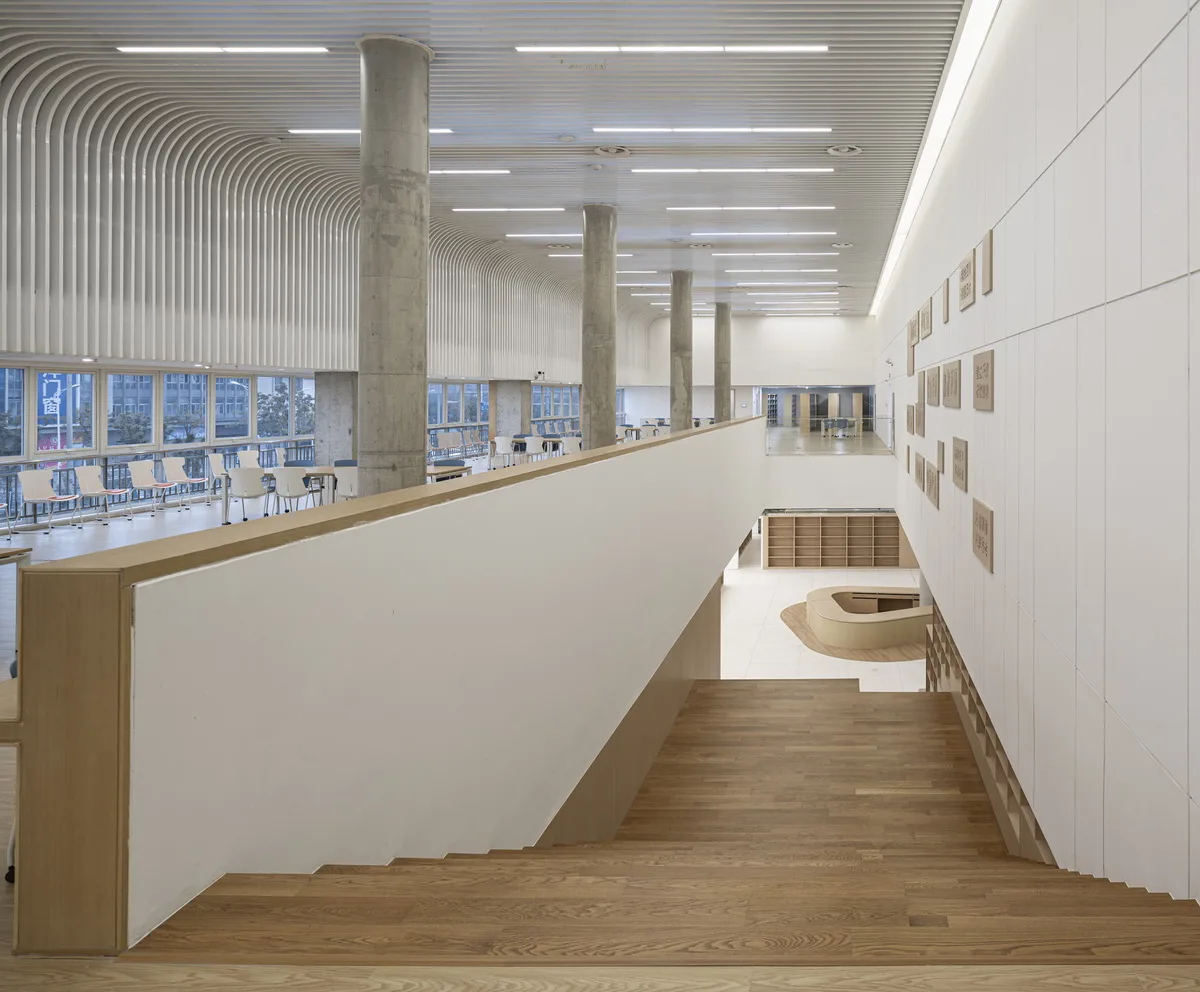
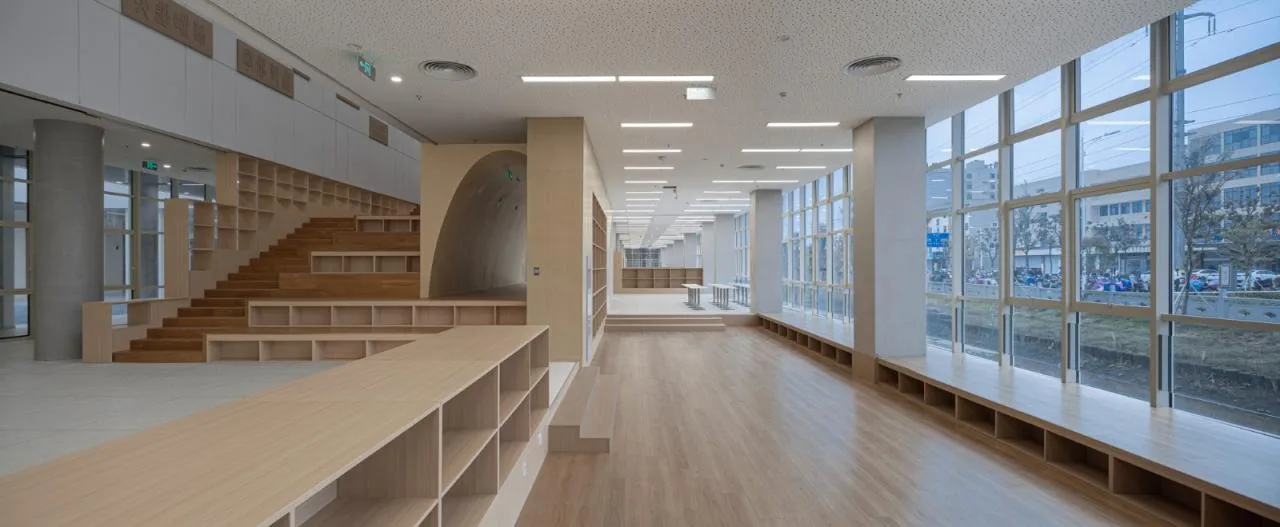
On the library’s south-facing first-floor windows, several enclosed sunken spaces serve as creative classrooms for group teaching or quiet reading areas for students. Inside, large wooden steps connect different levels, with bookshelves integrated along the sides, offering a flexible and inviting reading environment. To add an element of playfulness, a “cave-like” nook is designed at the edge of the staircase, creating an intimate, enveloping space that enhances the reading experience.
Project Drawings
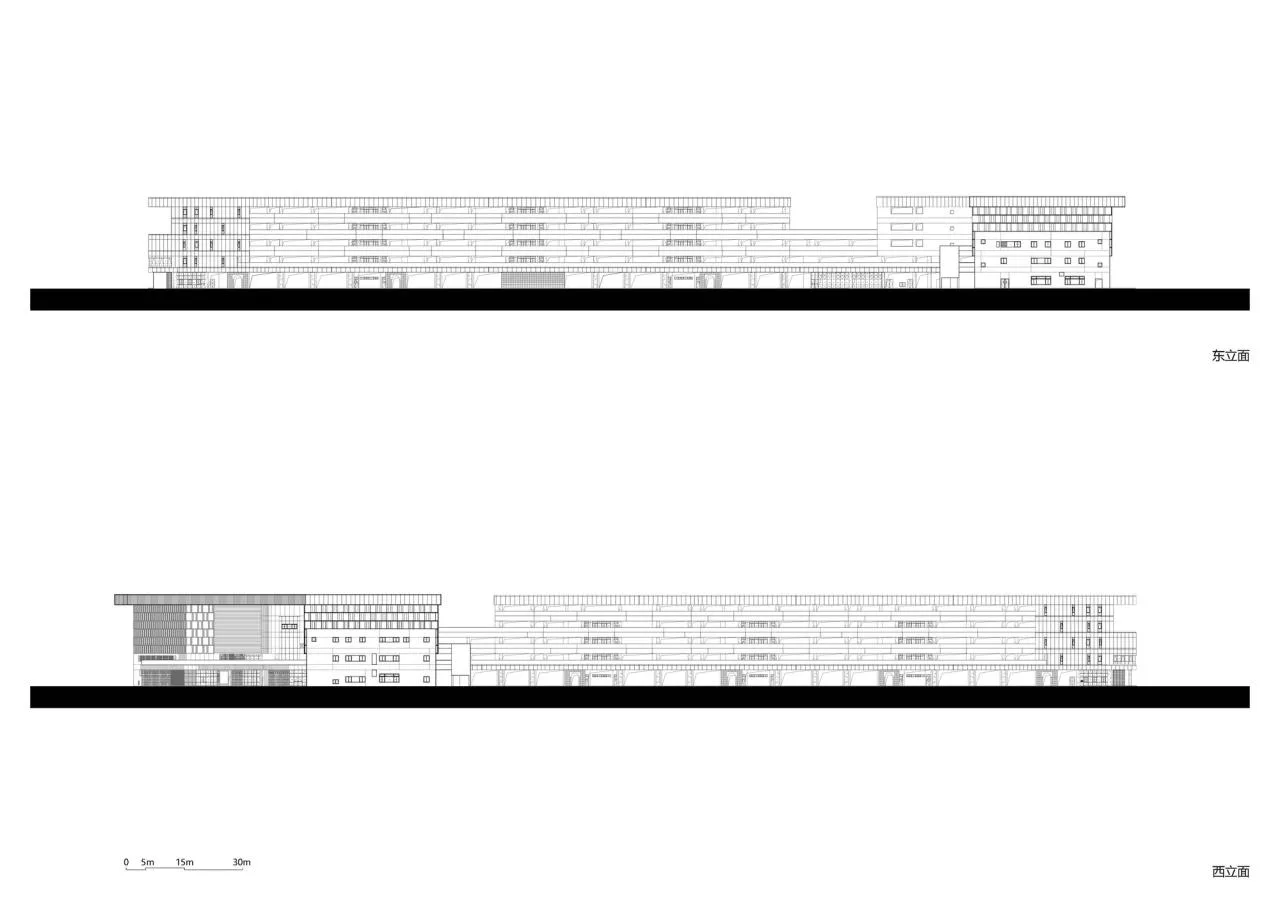
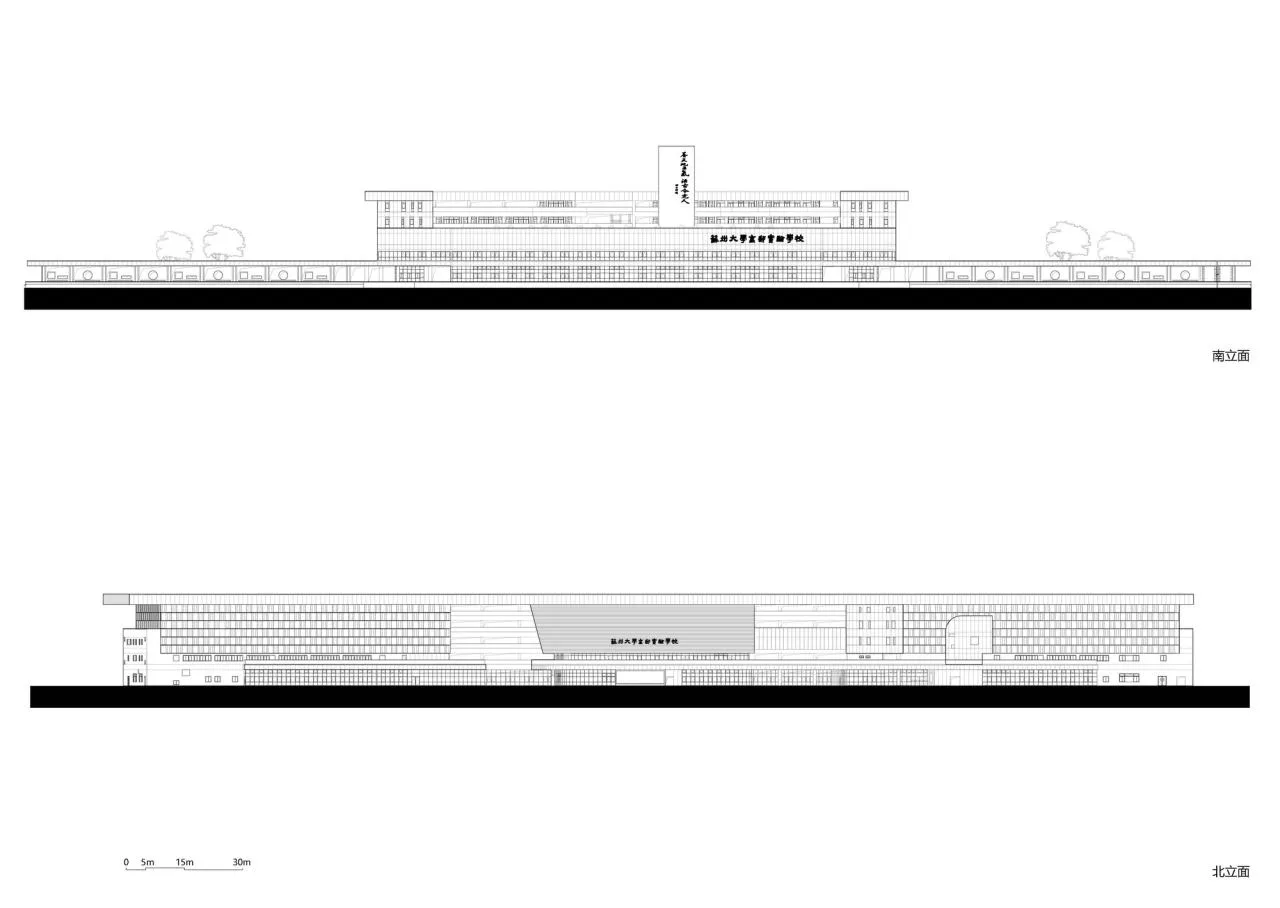
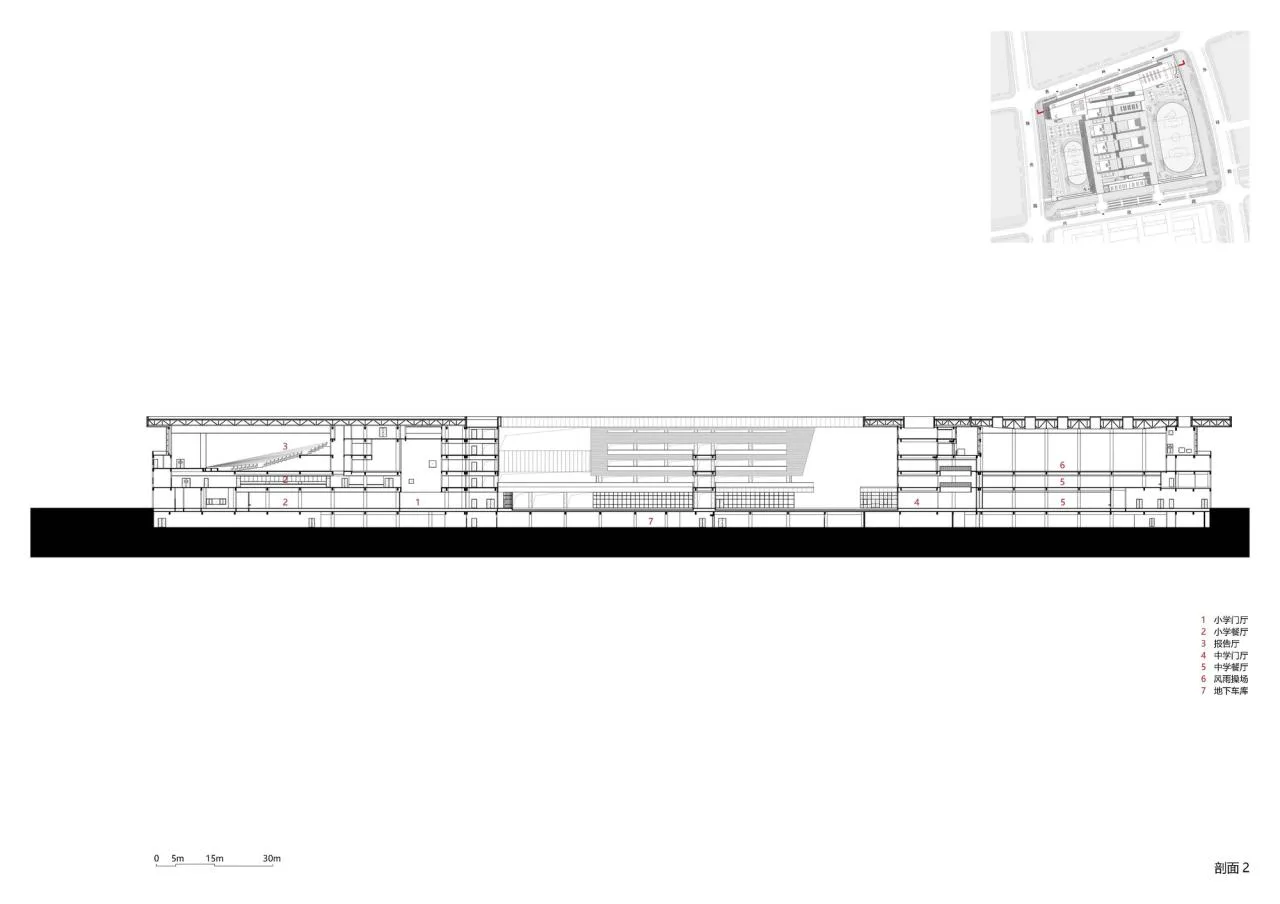
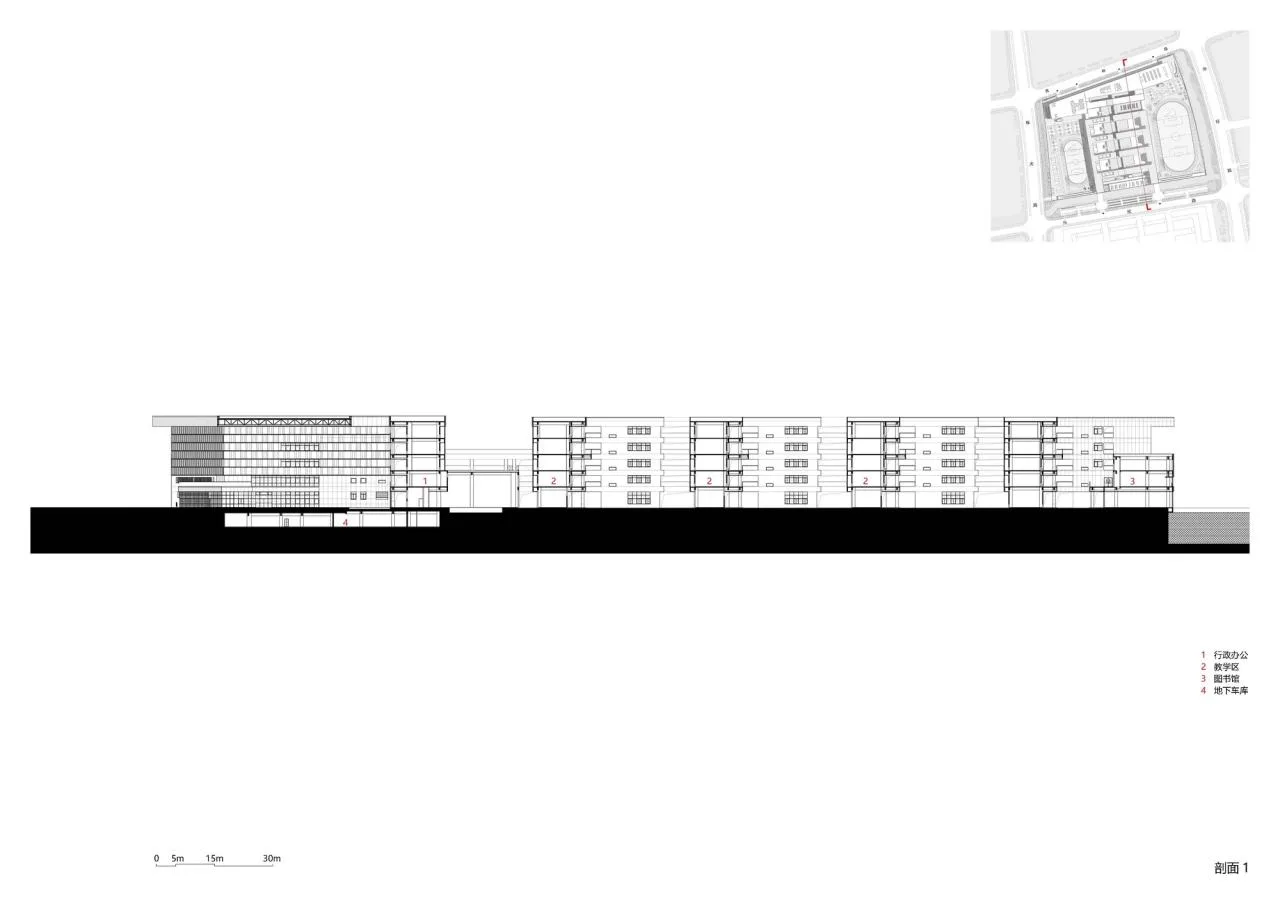
Project Information
Architect: Urban Architecture of Nine Cities
Area: 99,812 m²
Project Year: 2021
Photographer: Architectural translator Yao Li
Lead Designer: Zhang Yingpeng
Design Team: Huang Zhiqiang, Qian Zhou, Gao Teng, Liu Fengqin, Shen Chunhua, Qian Yuchuan, Xia Rungang, Song Ruyi, Jiang Hao, Li Hongxing, Chen Xuneng, Wang Yongjie, Wang Jun, Zhang Guide, Sun Jiafeng, Jiang Jinfeng, Hu Xin, Li Qibo, Liang Yumeng
Construction Party: Jiangsu Huajian Construction Co., Ltd
Principal: Gaoyou Economic Development Group Co., Ltd
Structural Design: Jiucheng Urban Architectural Design Co., Ltd
Location: Yangzhou















Must log in before commenting!
Sign Up