
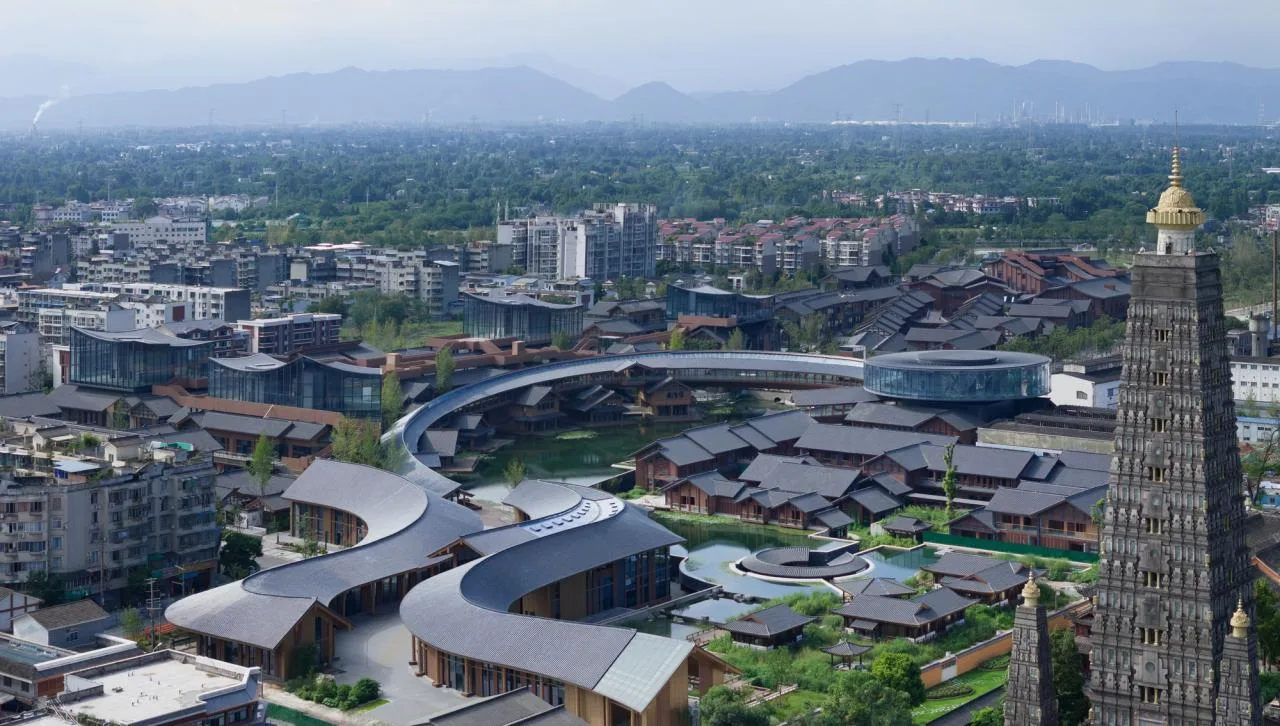
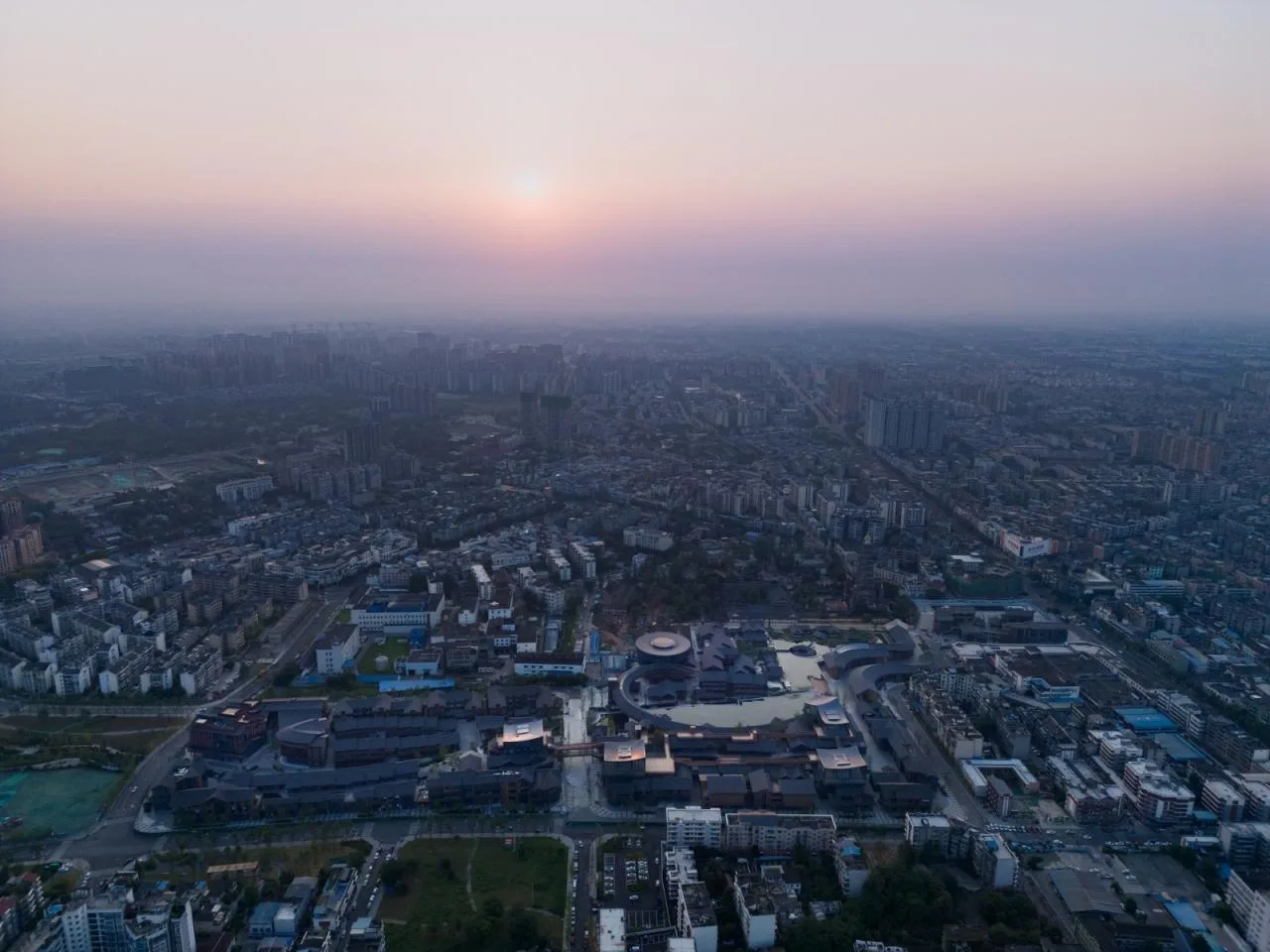
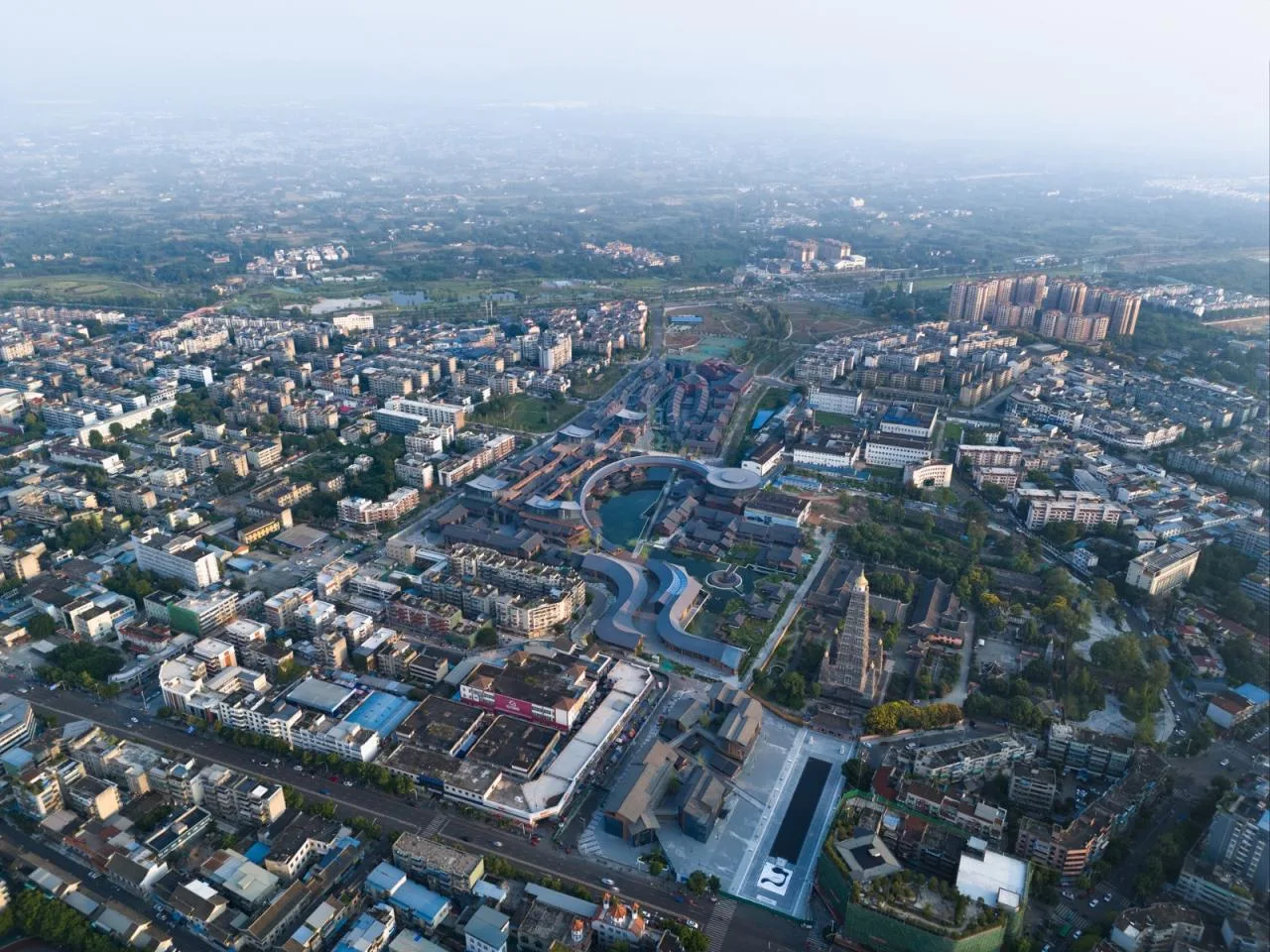
This project is situated in the heart of the historic district of Pengzhou, home to the ancient Longxing Temple, which has stood for over a thousand years, alongside several historic streets. The area is known for its vibrant assortment of restaurants and tea houses, making it one of the most distinctive local neighborhoods.
Prior to renovation, the district was in poor condition, dominated by low-rise residential buildings from the 1970s and 1980s, and a large number of defunct industrial plants to the north. In 2019, the government initiated a comprehensive renewal project to revitalize the area, focusing on commercial, cultural, hospitality, and residential functions.
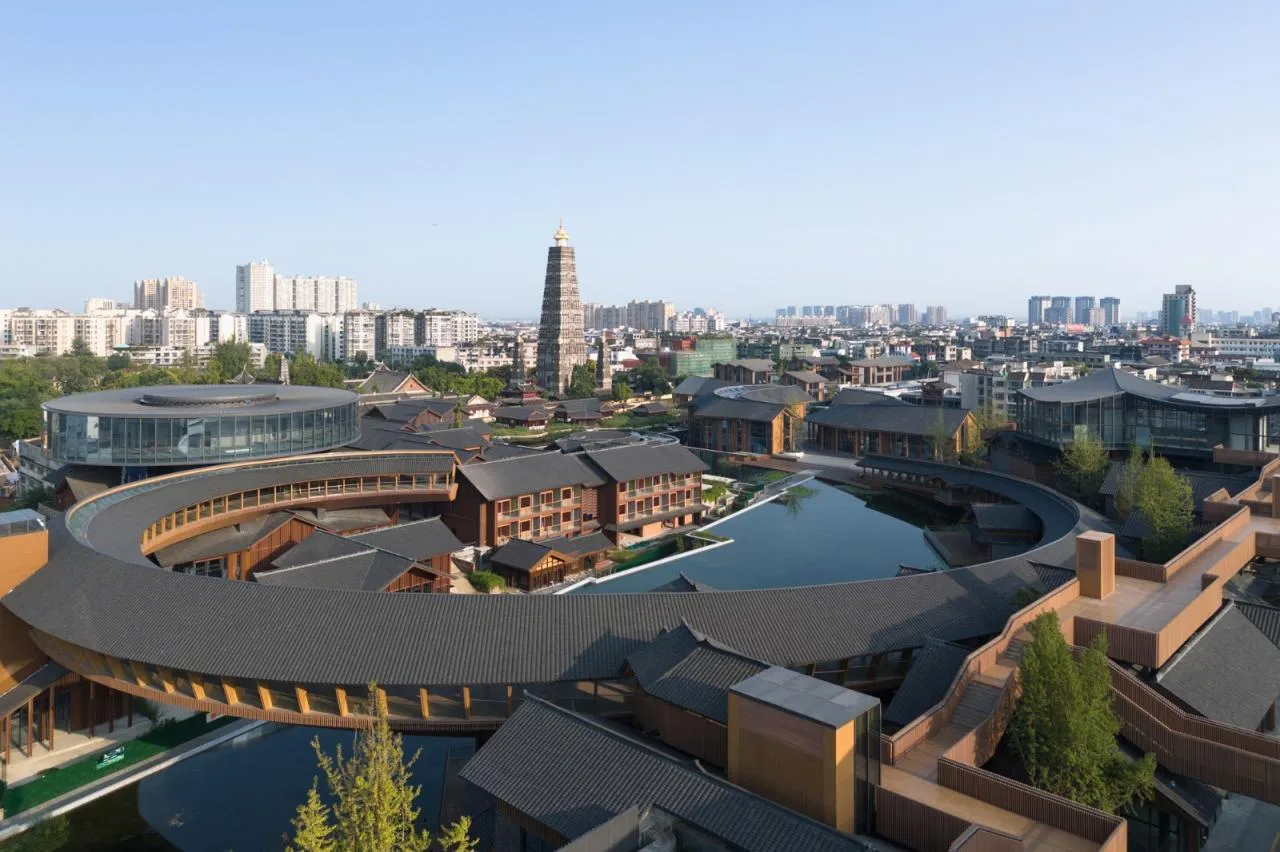
The redevelopment plan aims to rebuild Pengzhou City’s new center by balancing development costs and operational funding. We determined the overall scale and allocation of the core area’s main functions and designed the comprehensive layout accordingly.
The concept of “separation and integration” guides the division of commercial and cultural functions, achieved through strategic functional segmentation paired with seamless flow integration.
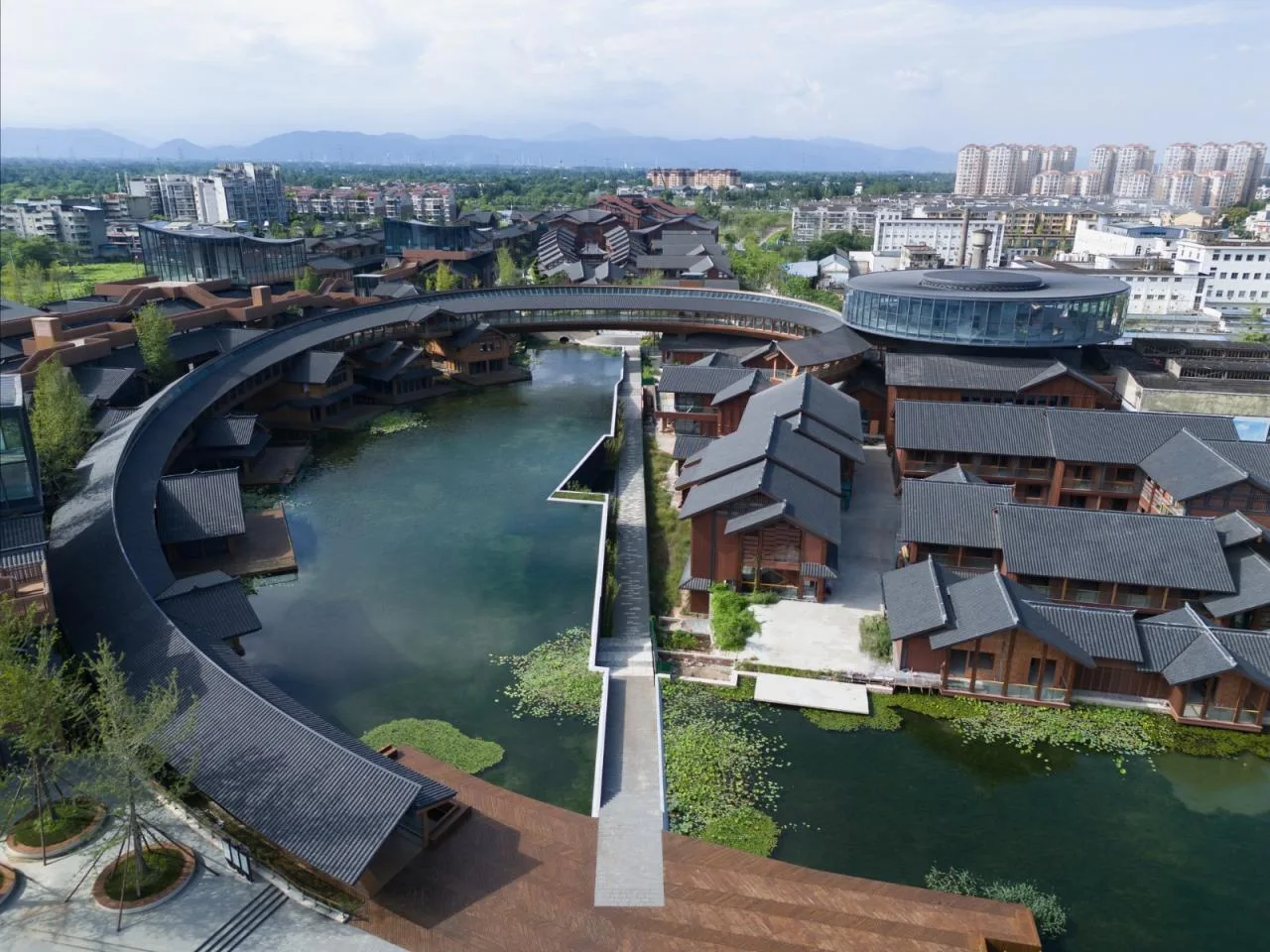
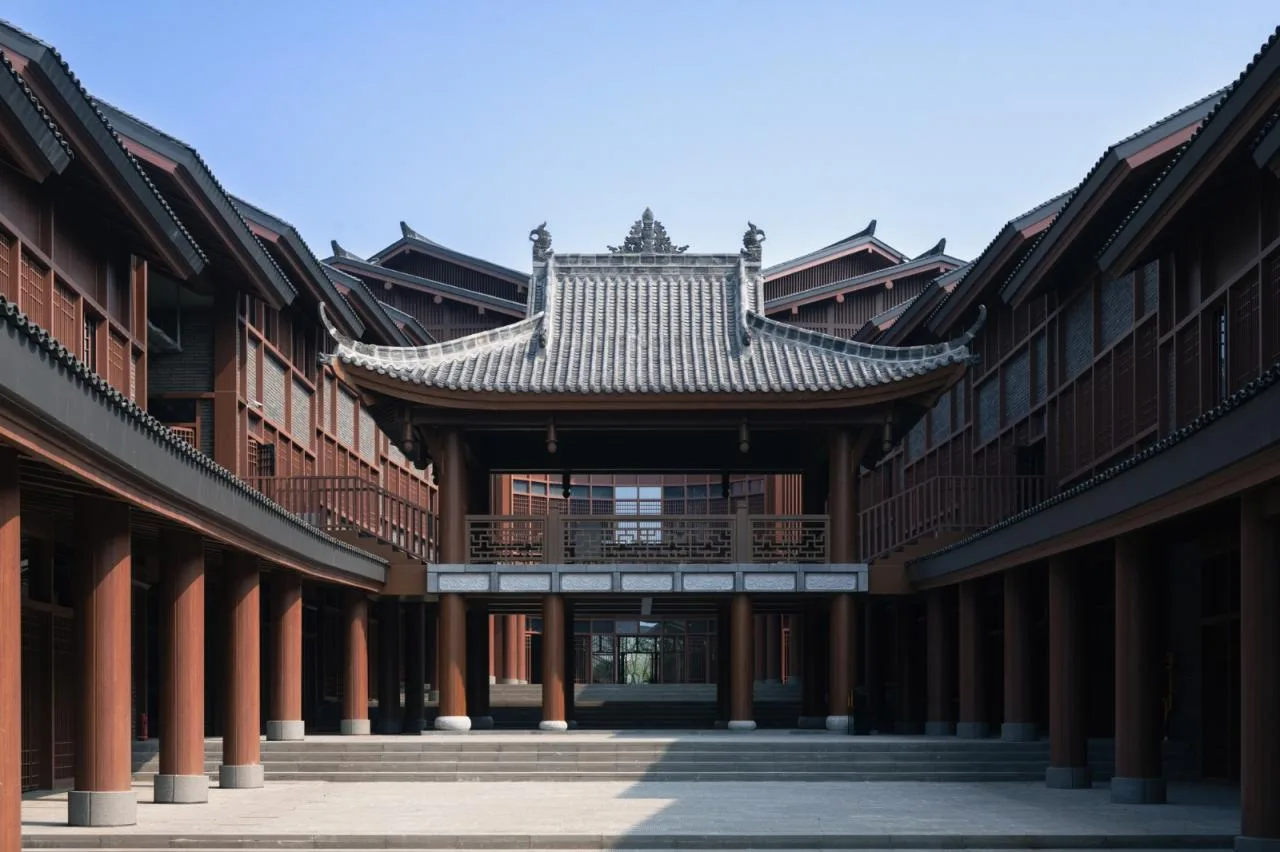
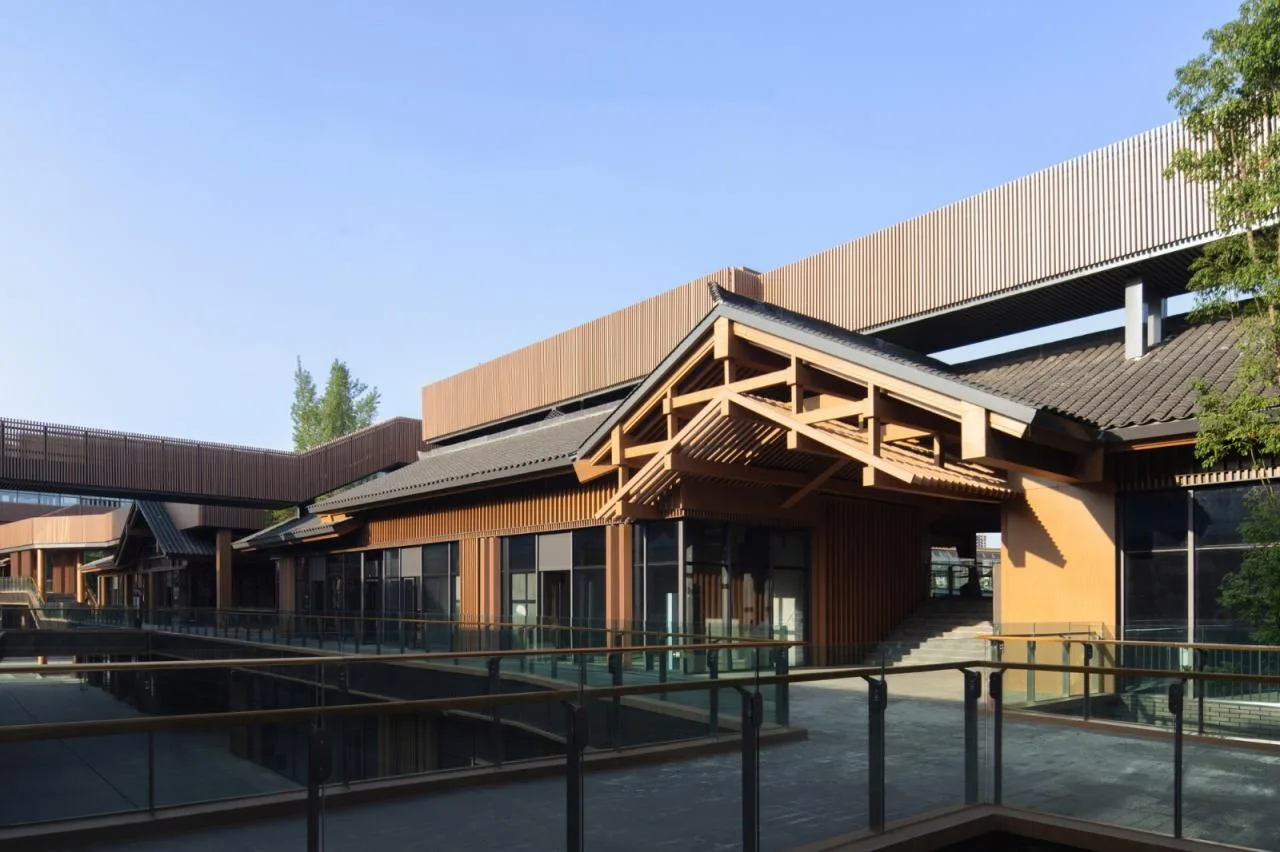
The design embraces a modern interpretation of traditional spaces, reflecting the region’s historical and cultural essence through an urban architectural approach.
Our vision is to restore the city’s character by capturing the spatial imagery of Pengzhou, drawing inspiration from three traditional Chinese urban elements: the “Ten Direction Jungle,” the “Sloping Roof,” and the “Skyline.”
The “Ten Direction Jungle” concept refers to the natural surroundings—mountains to the north, flat lands to the south, forests to the east, and water to the west. Centered around Longxing Temple, the plan includes a museum north of the temple, taller than the temple buildings, the restoration of the southern road leading to the front square, the conversion of an abandoned factory site into a green space to the east, and the creation of a water system that diverts water from the north to the west, flowing through the entire area.
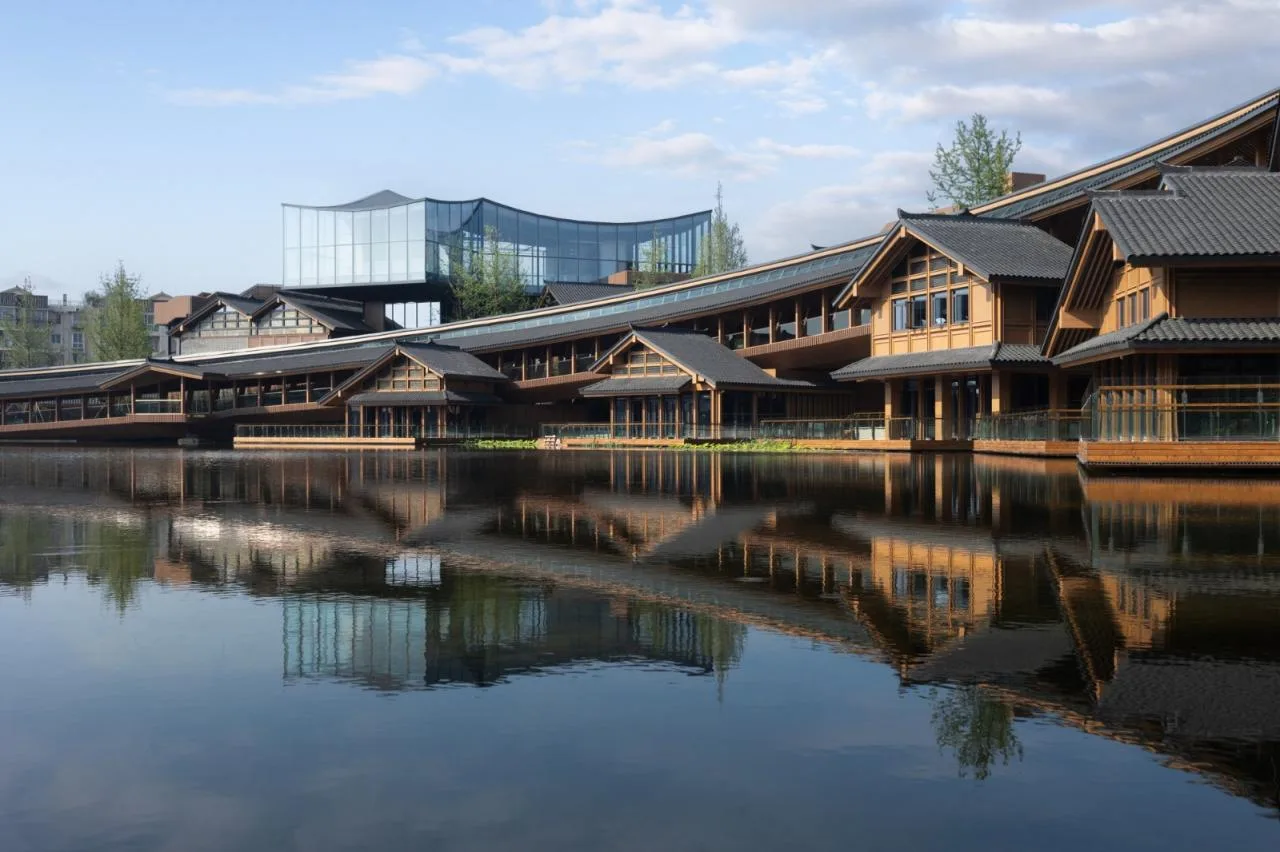
The “Sloping Roof” is a nod to the area’s urban landscape prior to the 1990s, where sloped roofs were prevalent. To highlight this feature, we designed stacked roofs that form a continuous independent space weaving through the core area via walkways and platforms, providing visitors with a unique visual experience evocative of traditional cities.
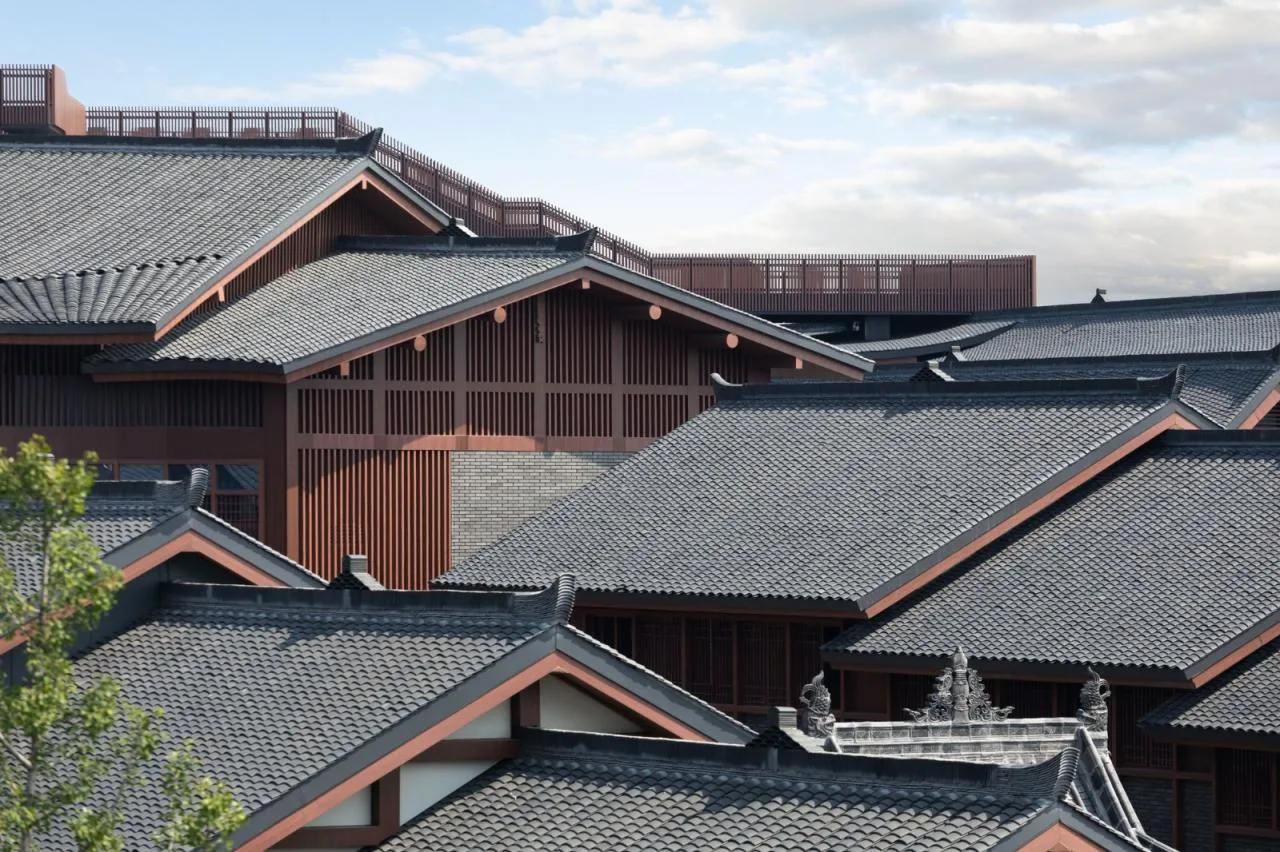
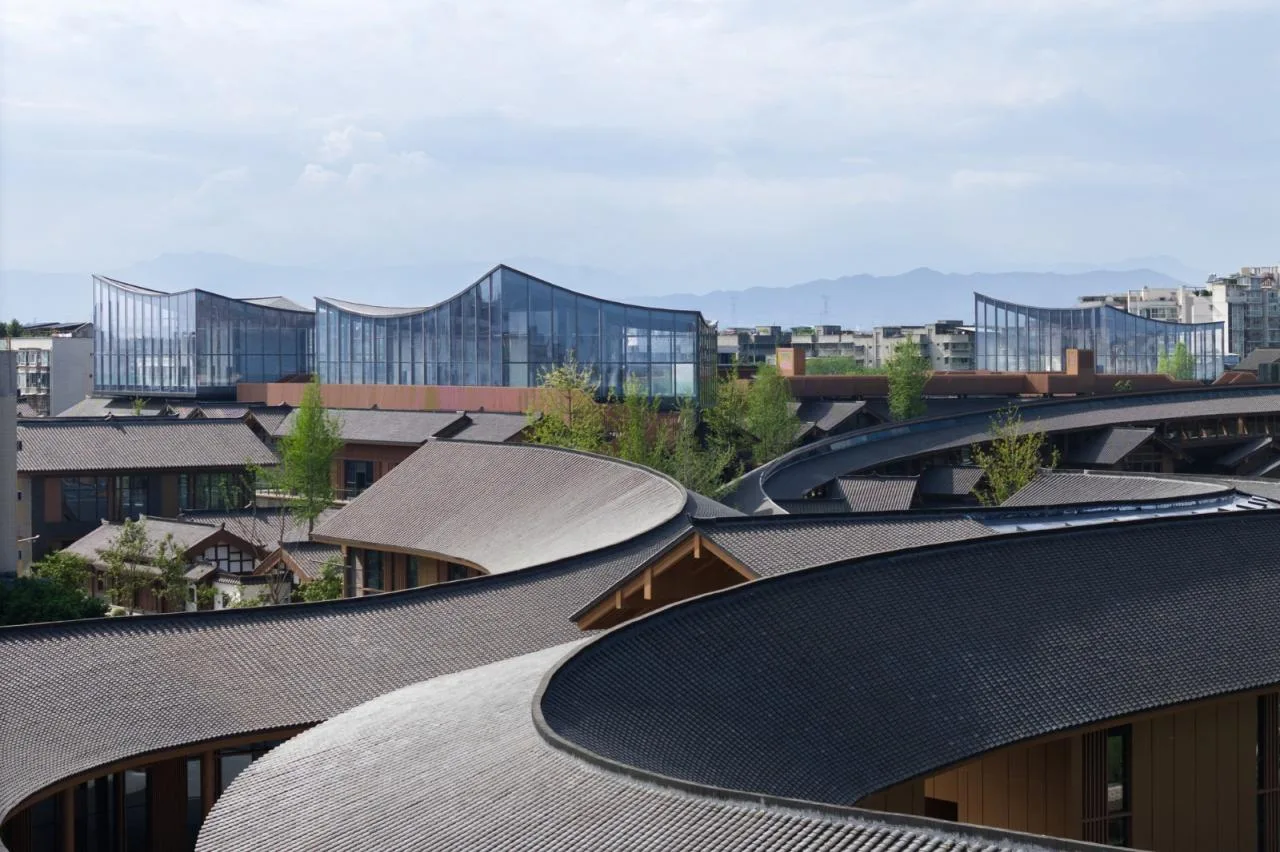
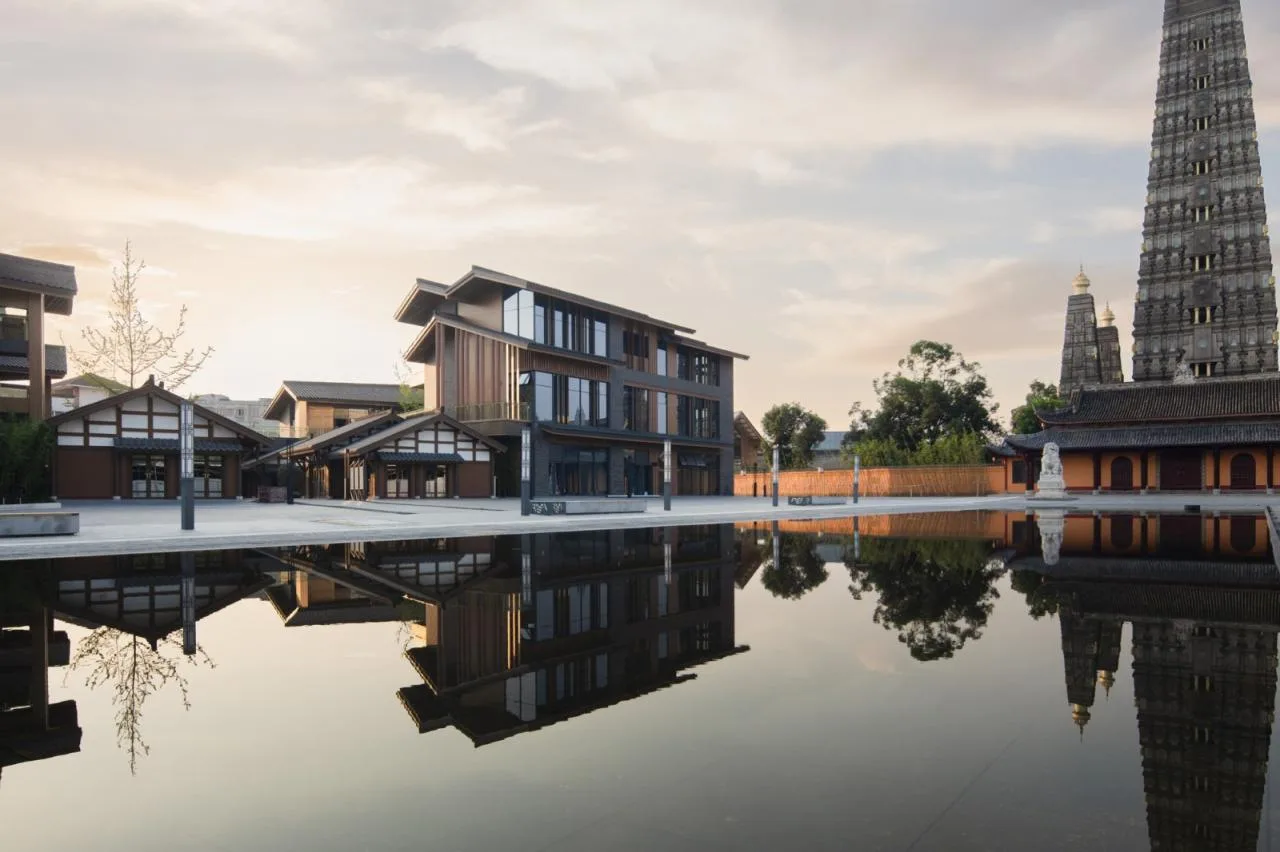
The “Skyline” element recognizes the unique silhouette created by the traditional low-rise residential buildings, temples, bell towers, and drum towers. In our design, commercial buildings in the core area are limited to three stories, aligning with the height of traditional residences. On the upper floors, larger independent cultural buildings feature curved facades on both sides, with glass that reveals the internal overhanging roof structures, evoking the iconic upturned eaves of temples and bell and drum towers found in traditional cities.
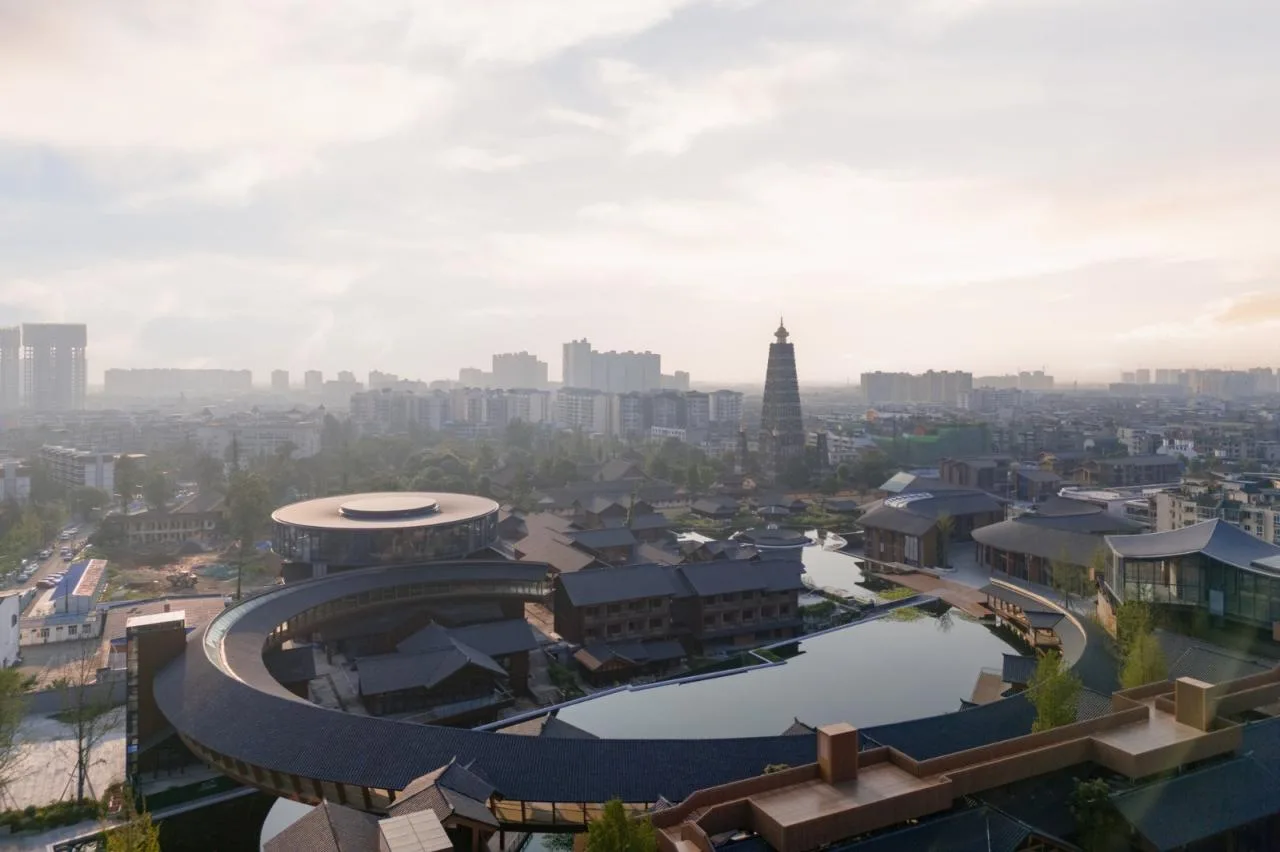
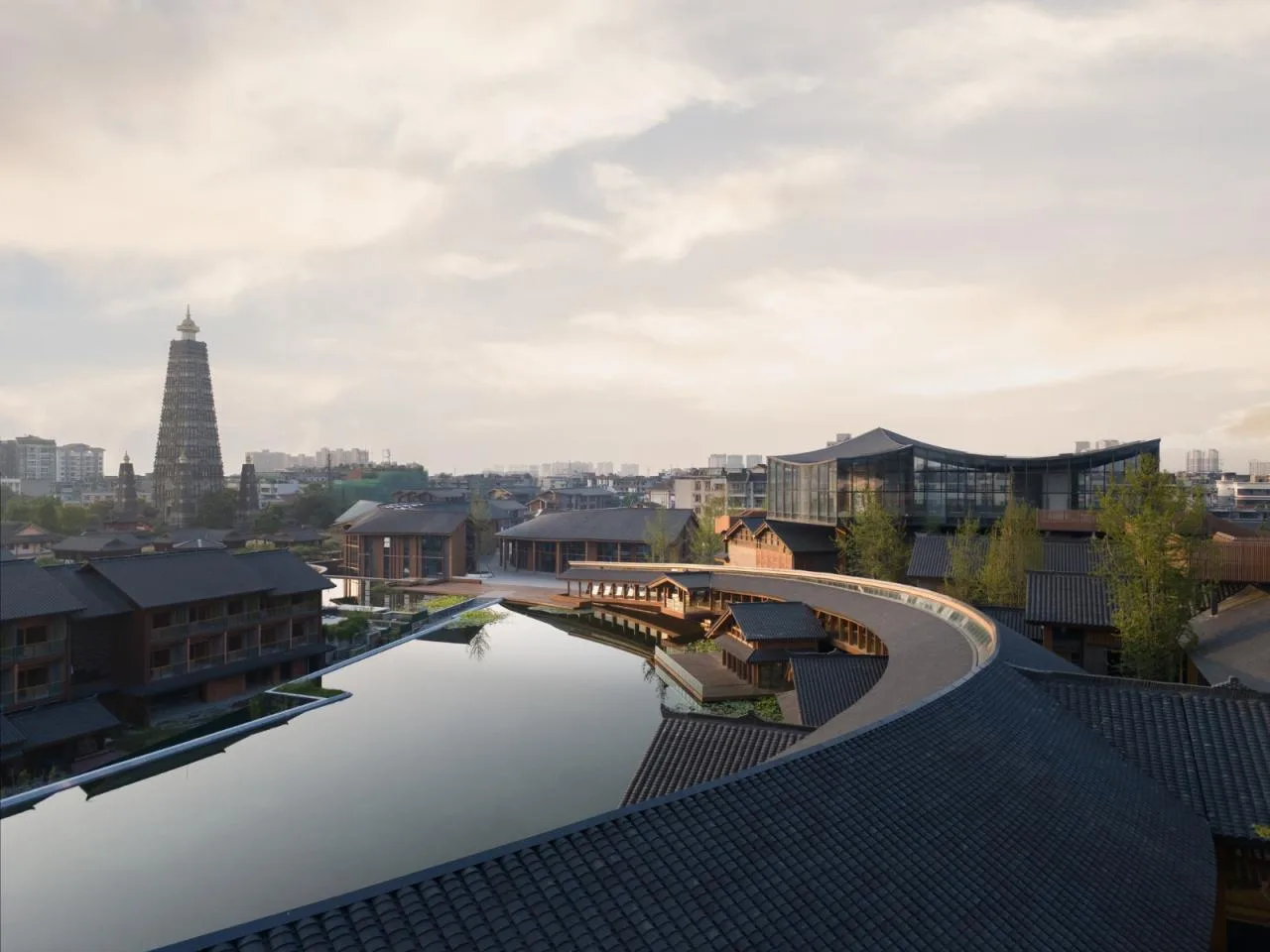
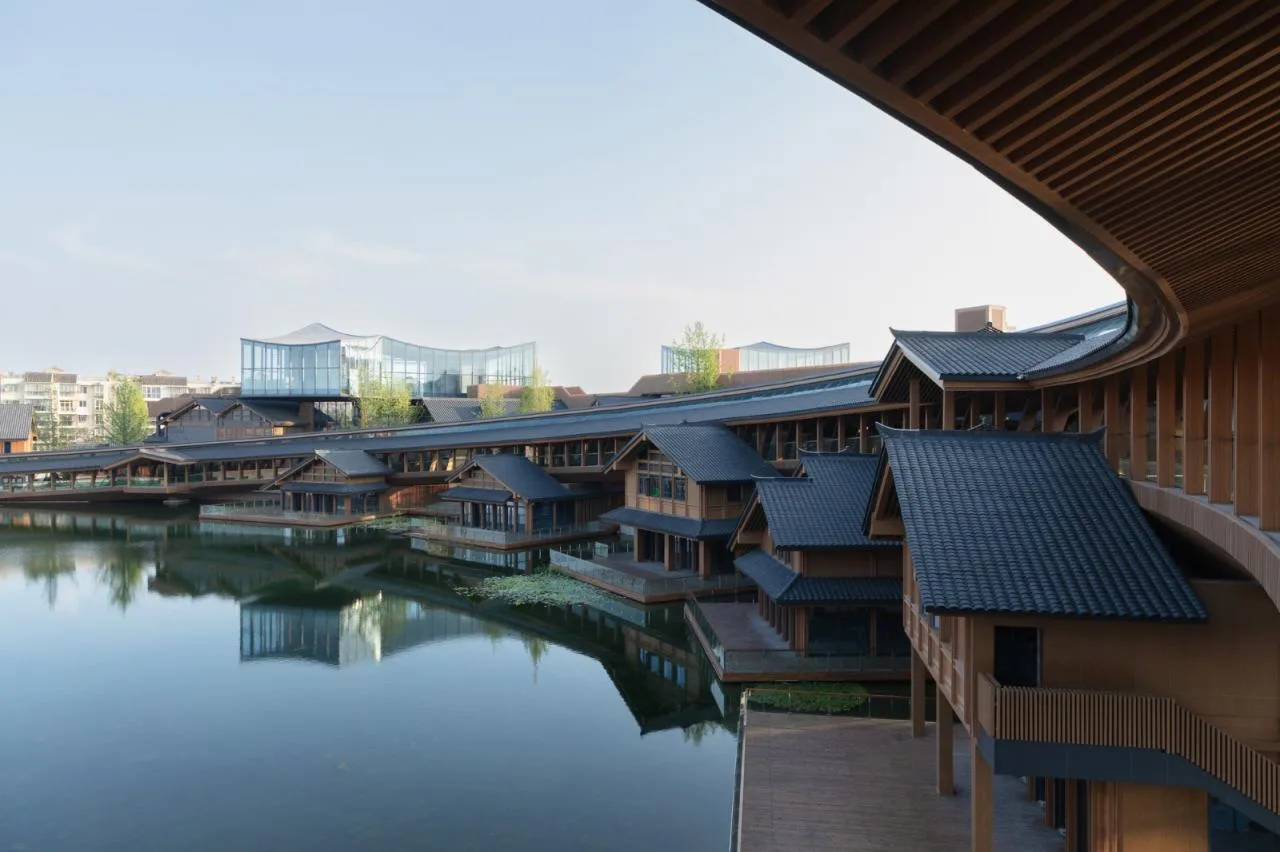
Creating a multi-dimensional public landscape space that respects traditional aesthetics while meeting modern functional needs takes up nearly 80% of the project area, making it challenging to conceal such spaces through conventional methods.
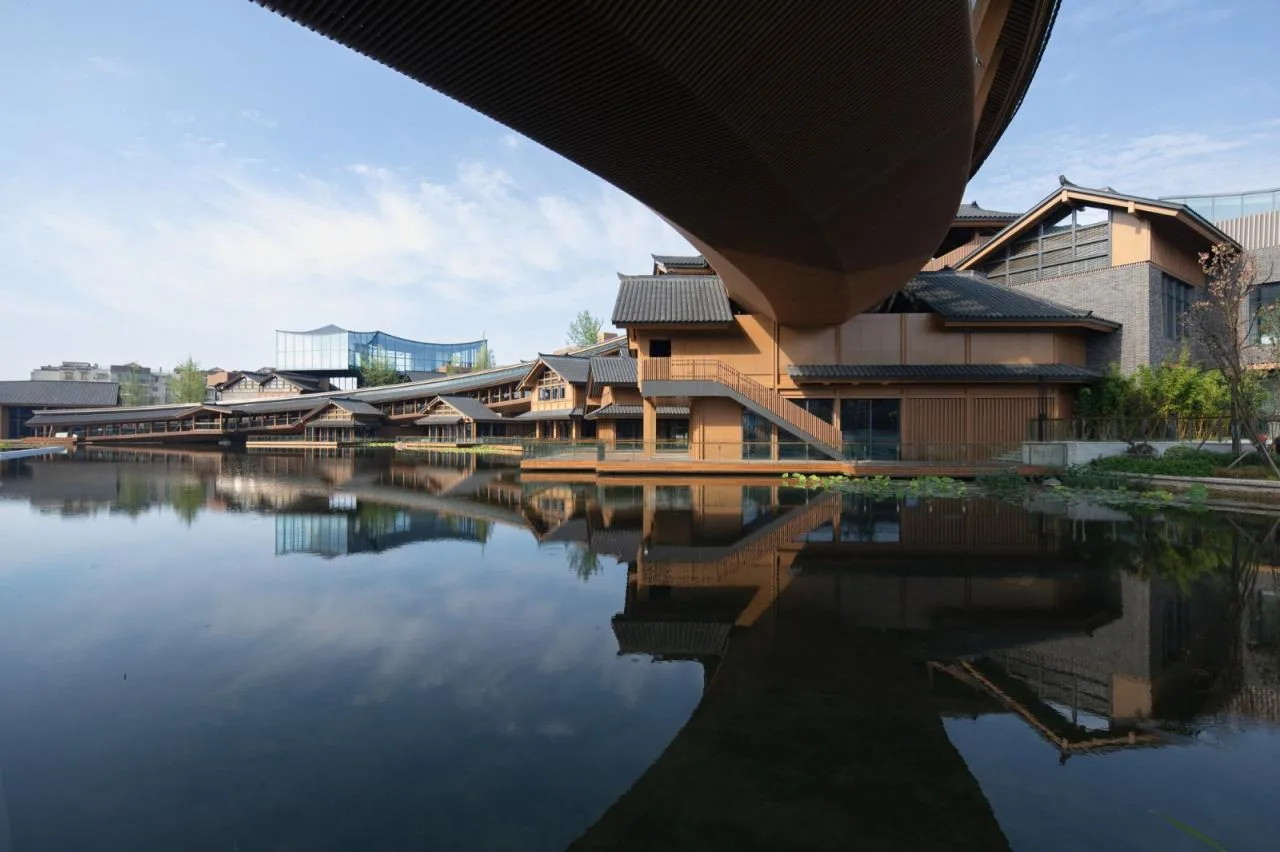
To address this, we integrated key pedestrian public spaces with landscape design to create layered spatial experiences that reflect traditional visual values. A curved corridor runs north to south, enclosing an open water feature. By controlling building heights near this water surface, we reduce perceived scale, enhancing visual comfort.
Courtyards adjacent to the water open outward to maximize surrounding views. The historic “Longxing Street,” dating back to the Qing Dynasty, runs south to north through the site. To preserve its character and spatial scale, we maintained the original path, lowered the road level by three meters, and repaved it with local aged stone slabs.
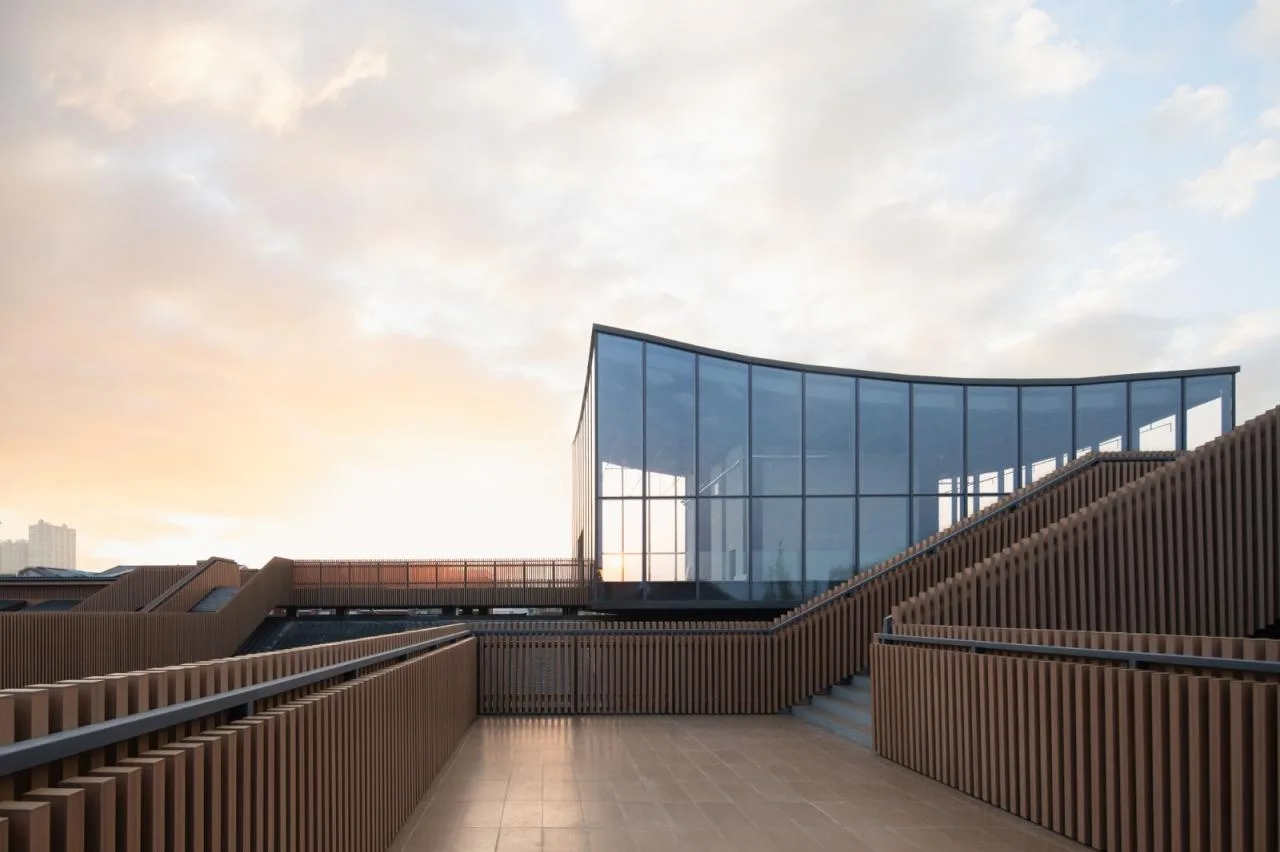
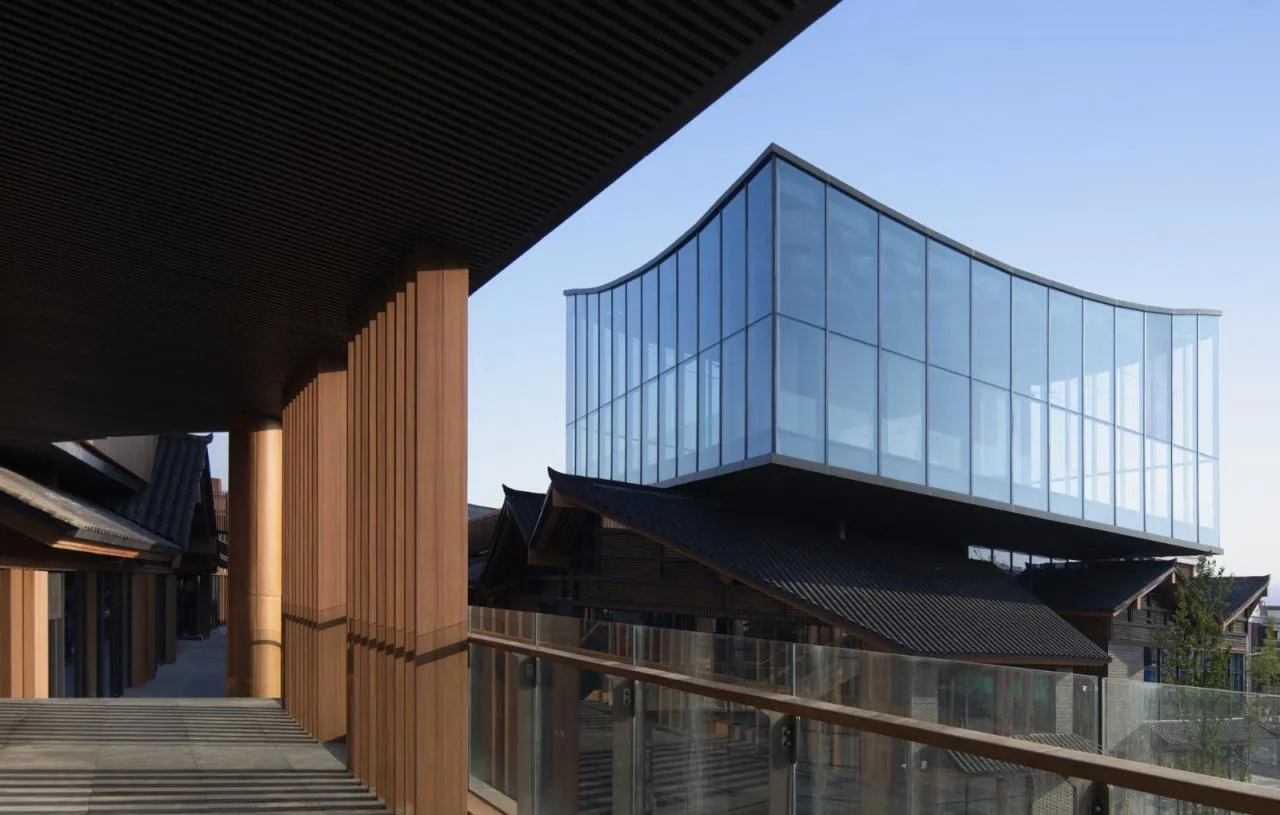
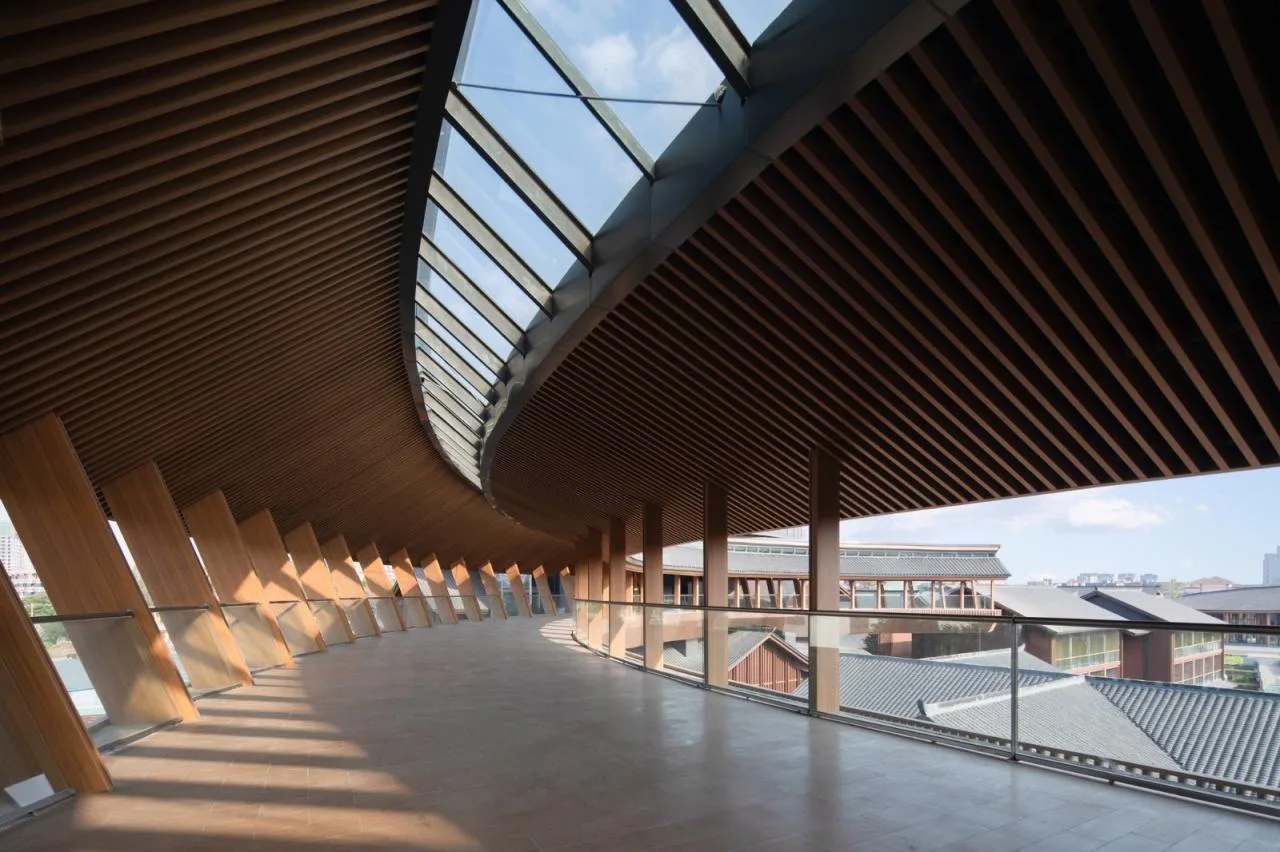
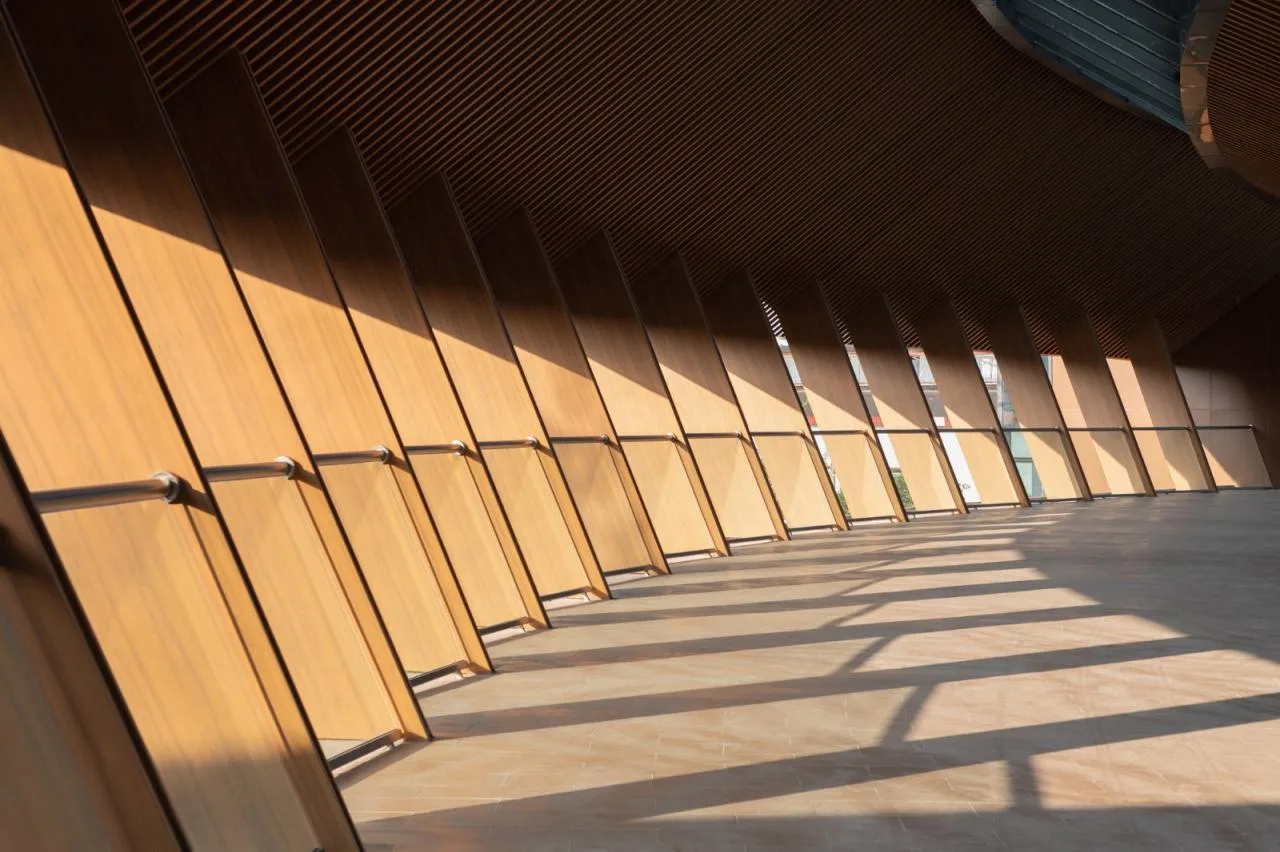
We aim to revive the area’s vibrant everyday life by creating a city space filled with a lively “fireworks atmosphere.” Pengzhou experiences mild winters and hot summers, and the elderly especially enjoy outdoor activities.
To accommodate this, we designed a curved water corridor along the water system for relaxation and rest, featuring warm, non-slip wooden handrails on the bridge ramps.
On the southeast side of Longxing Temple lies “Guihua Street,” an old street lined with small local restaurants and food shops. To maintain the street’s lively ambiance, we recommend managing it as a local food street.
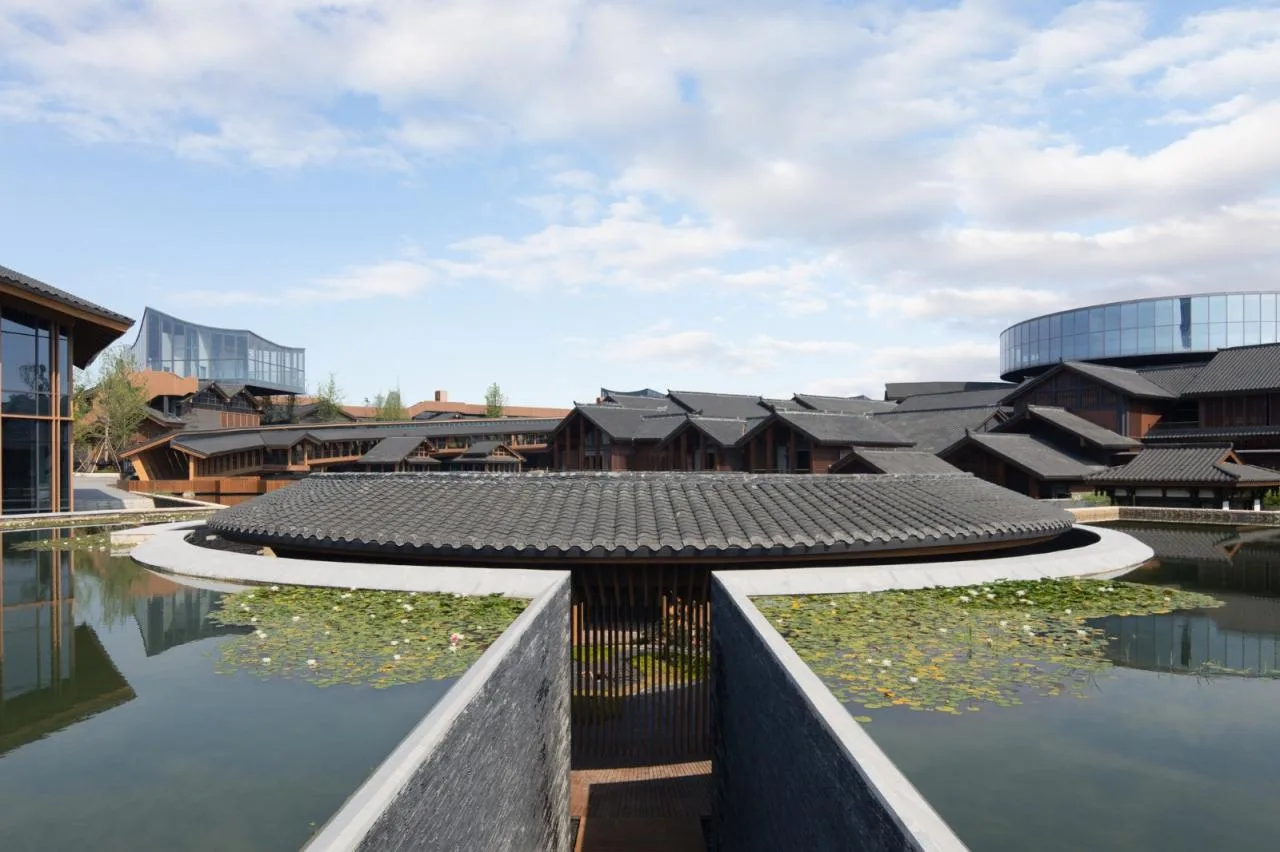
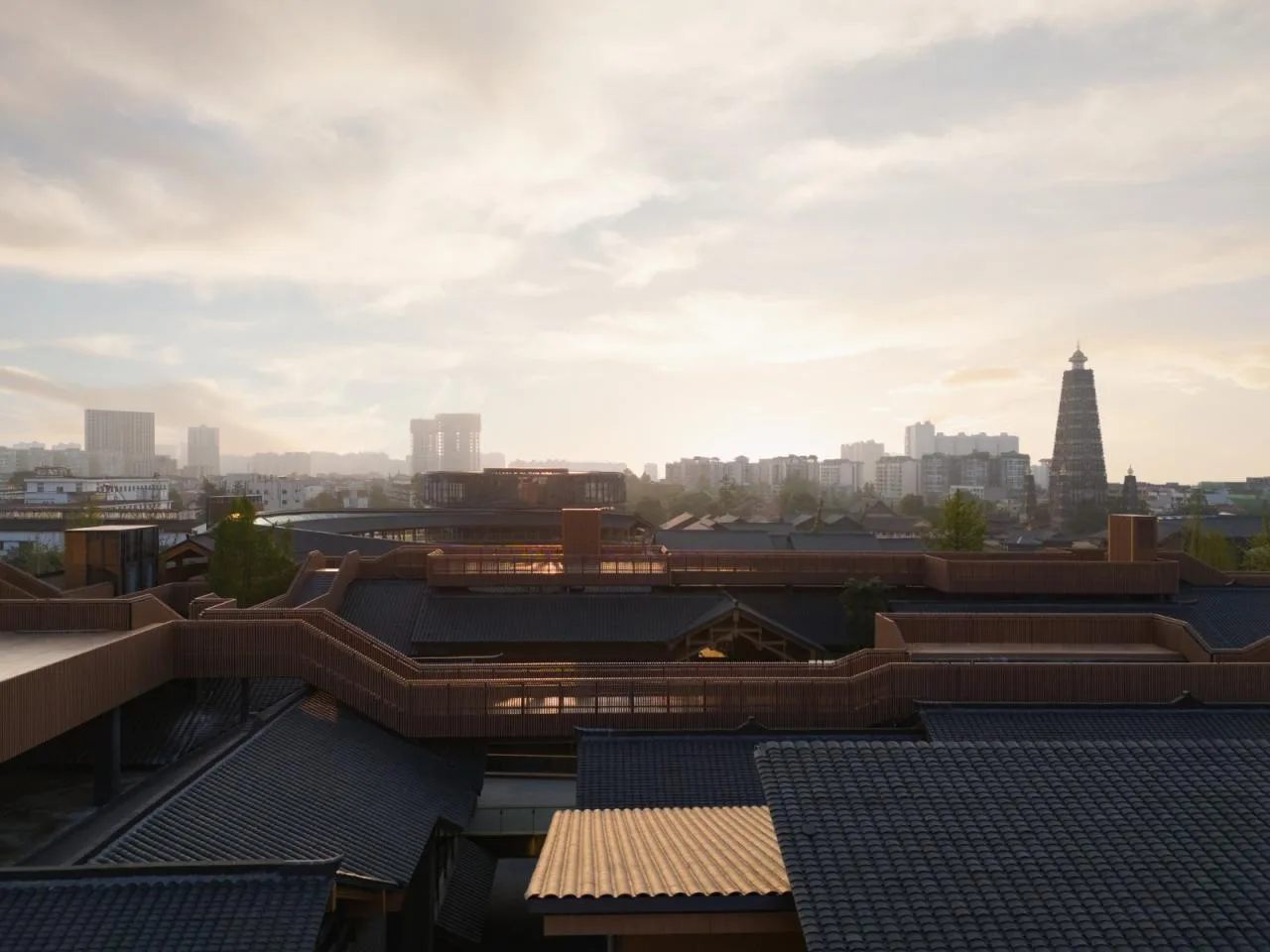
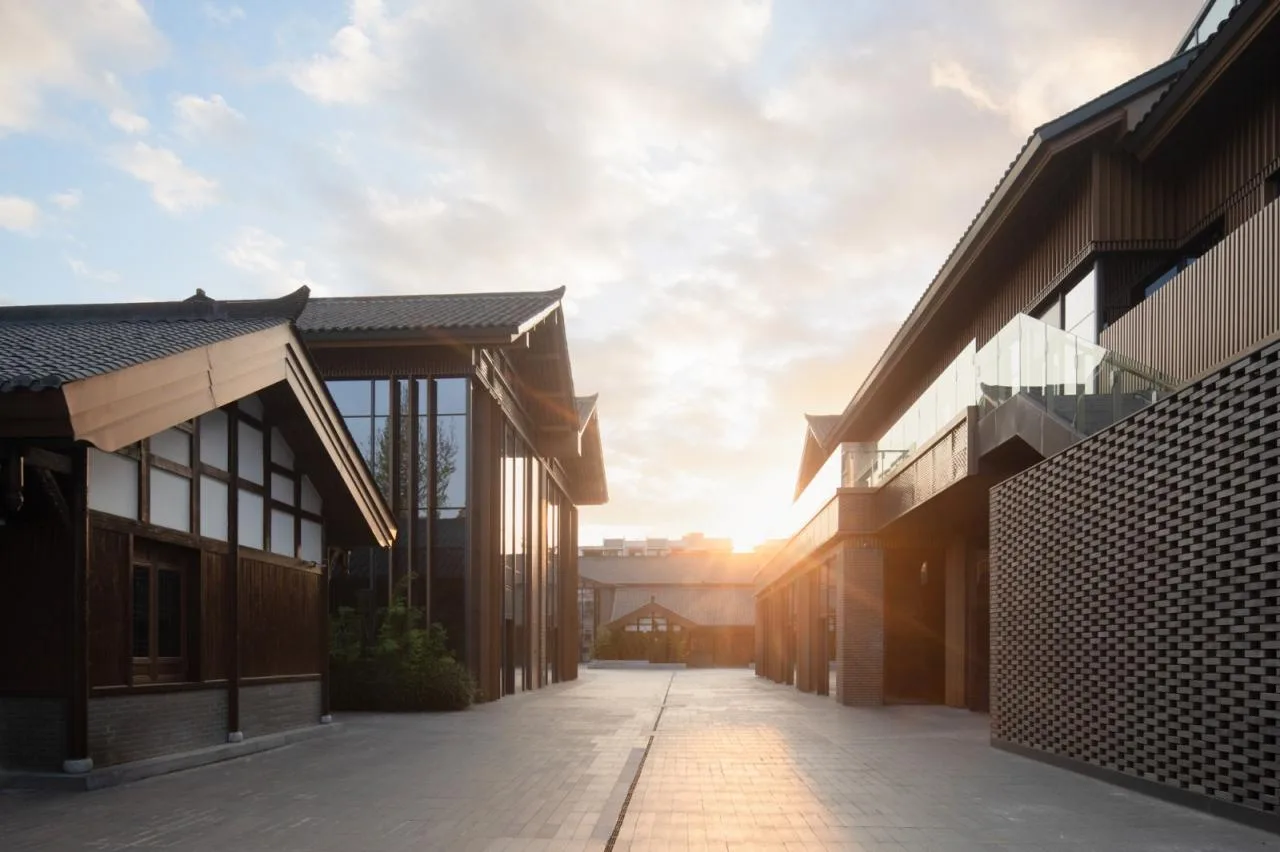
Our design respects local conditions, reflecting the region’s memory and culture. According to the abbot of Longxing Temple, ginkgo tree areas surrounding the temple now fall within its grounds.
Centering on Longxing Pagoda, we extend the imagery of roofs and ginkgo trees outward, using the ginkgo trees as a symbol of Zen. We created a compact space to build a Buddhist Zen temple for preaching and teaching and designed a sunken pavilion for the traditional flowing cups ceremony on its east side.
Given the numerous old buildings on site, preserving all would not meet parking demands, while demolishing them would harm Pengzhou’s urban memory. After consulting cultural heritage experts, we adopted a balanced approach: categorizing buildings by historical value and applying differentiated preservation strategies.
Typical buildings incorporate the common through-bucket structure and gable textures of western Sichuan. Due to fire safety concerns, bamboo materials were replaced with aluminum of matching color. Considering the large quantity of tiles used, we opted for locally sourced materials with smoother textures and lighter colors.
Although the final mountain walls, blue tiles, and facade colors are slightly lighter than originally designed, they harmonize well with the local flora, creating a cohesive atmosphere.
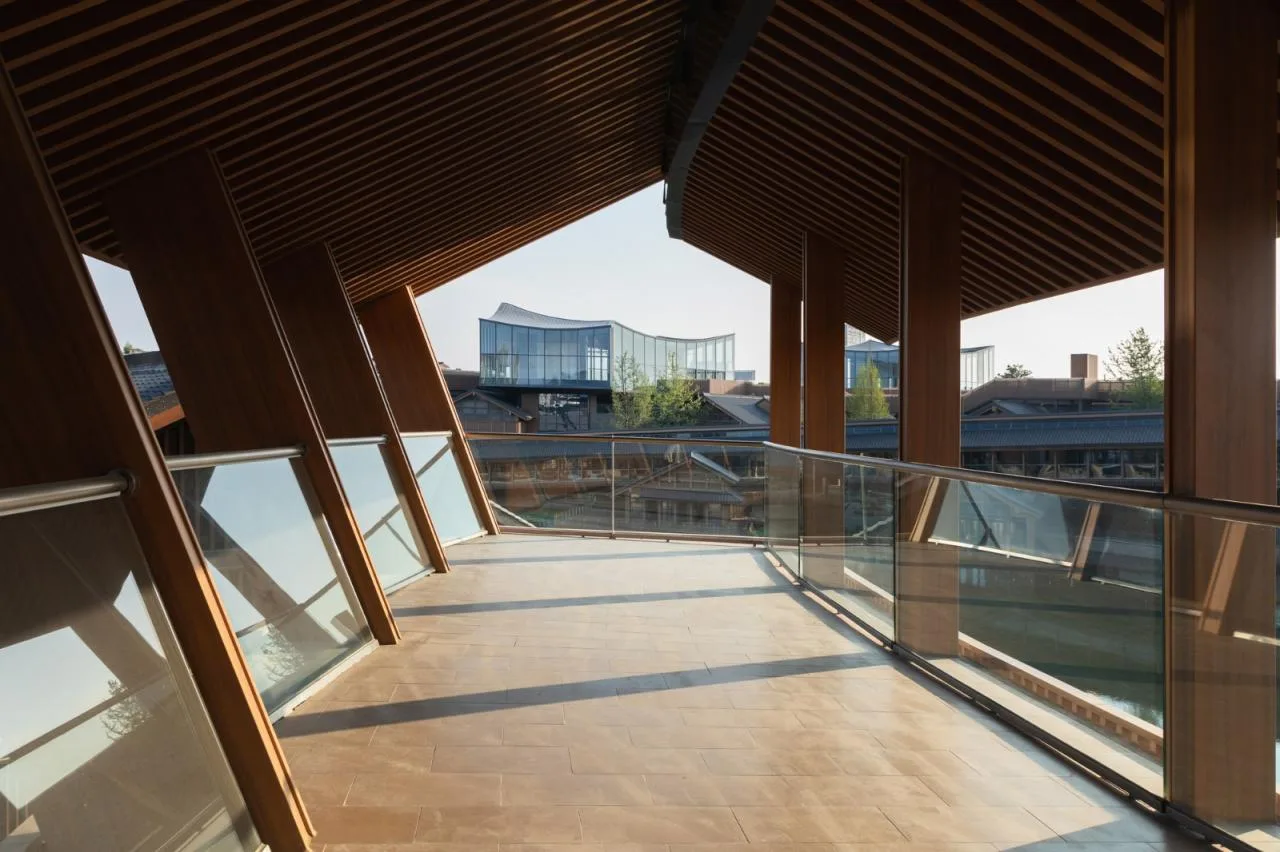
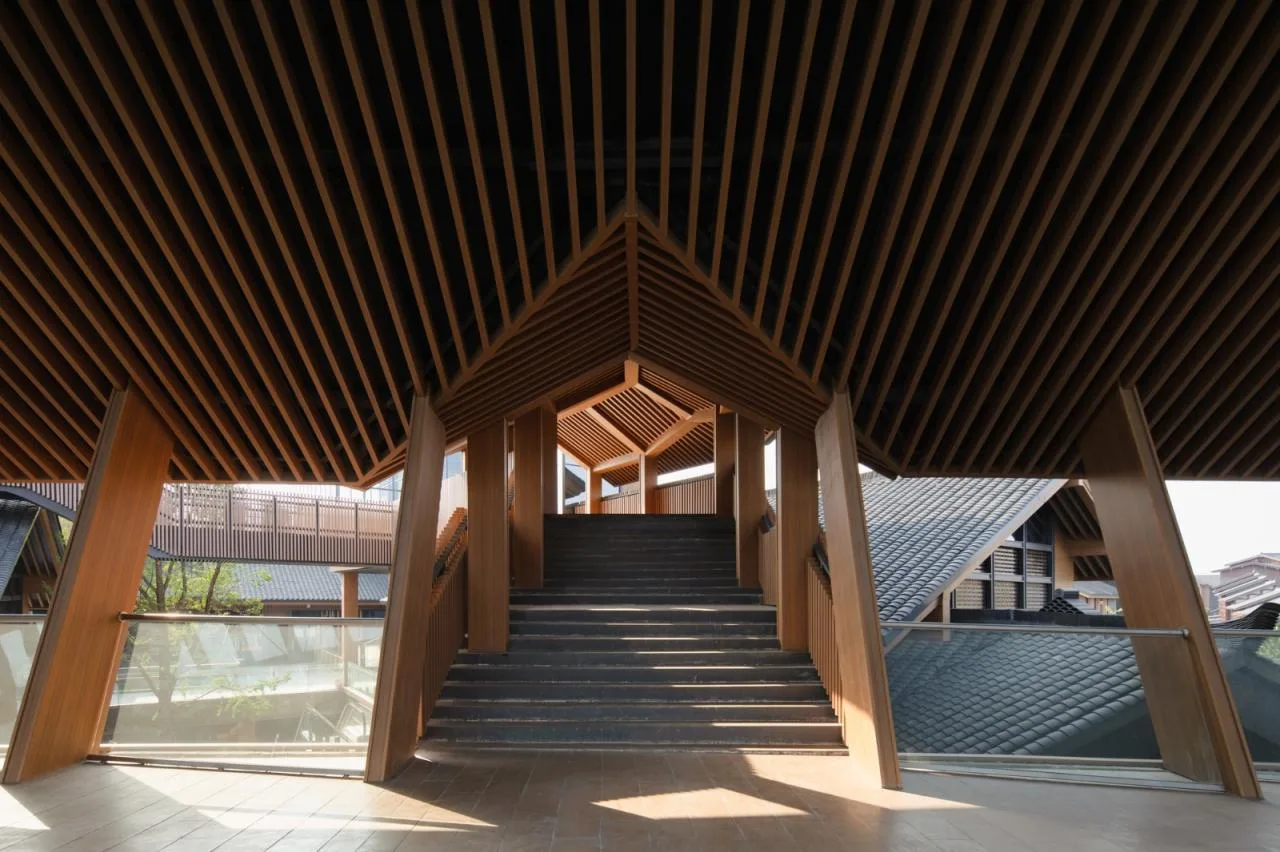
Throughout the design process, we focused on two main challenges: first, shaping the area into a “small space” that combines traditional imagery with an inviting scale while accommodating modern architectural functions; second, balancing the commercial and cultural aspects to create a vibrant new district with a lively atmosphere.
We hope this revitalization injects renewed vitality and energy into this historic city.
Project Drawings
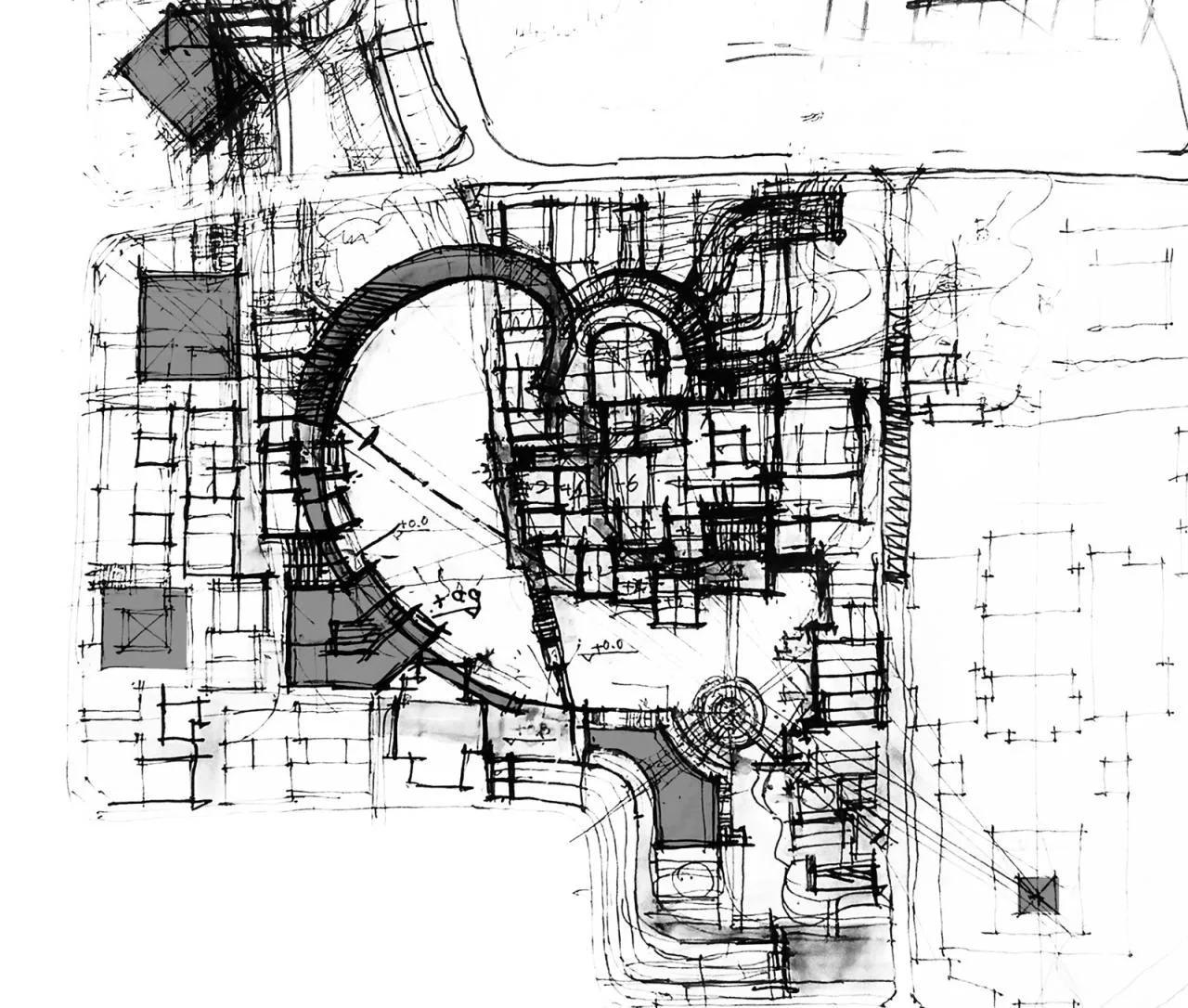
△ Hand-drawn sketch
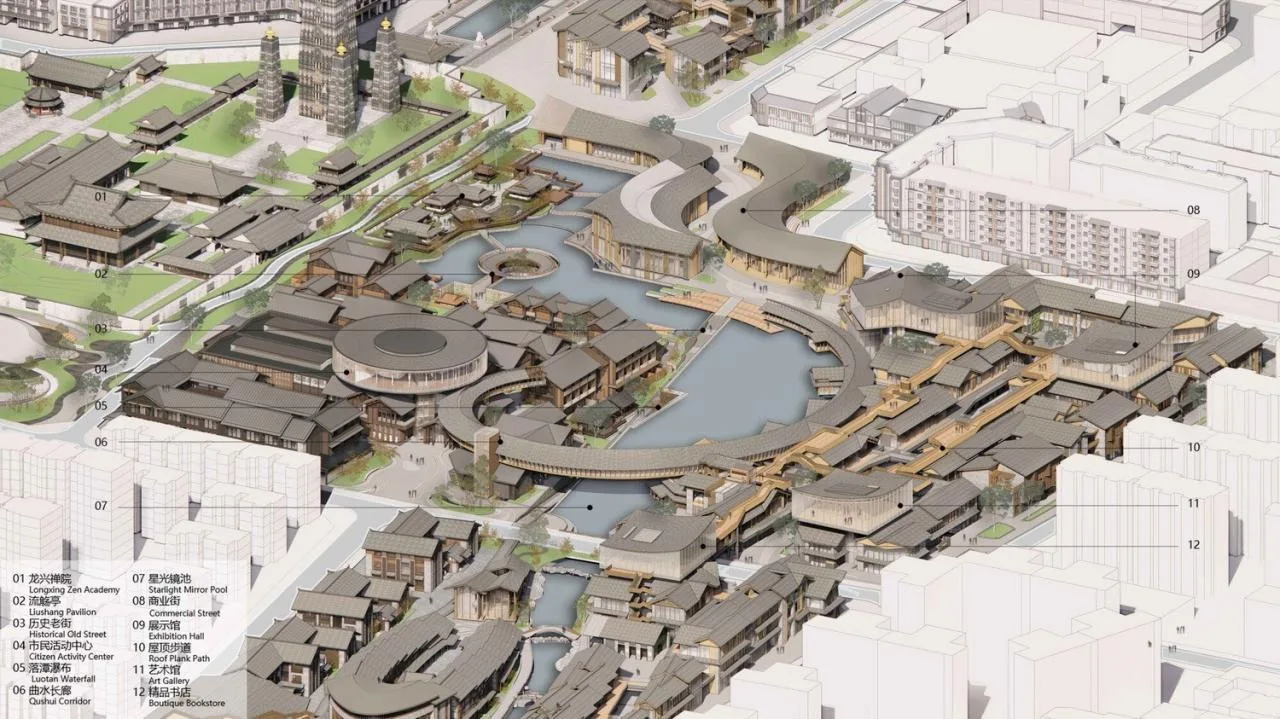
△ Functional diagram
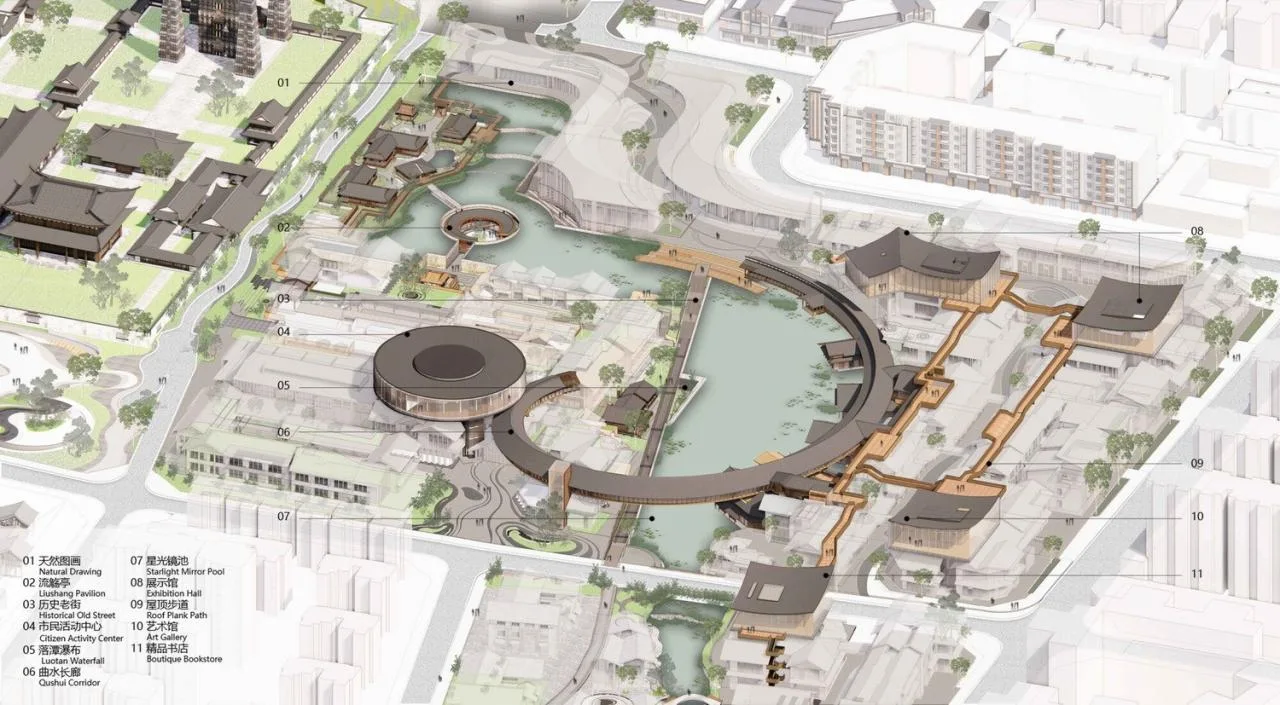
△ Functional diagram
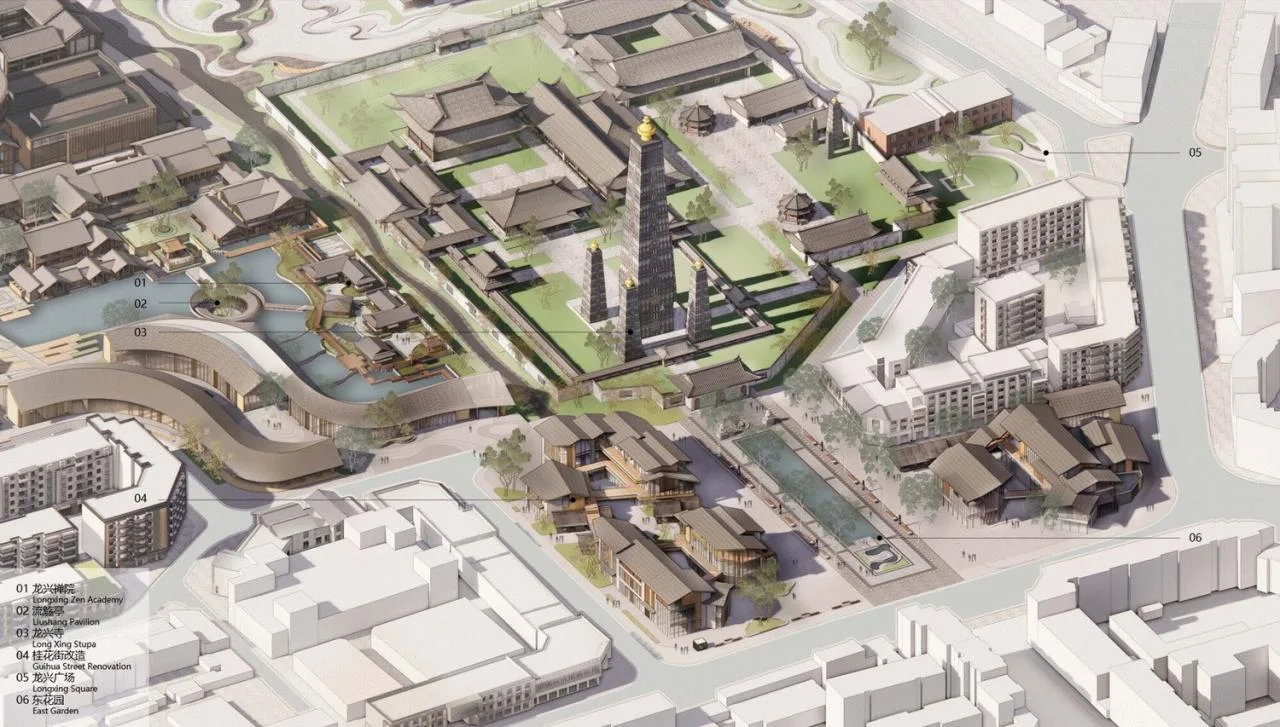
△ Functional diagram
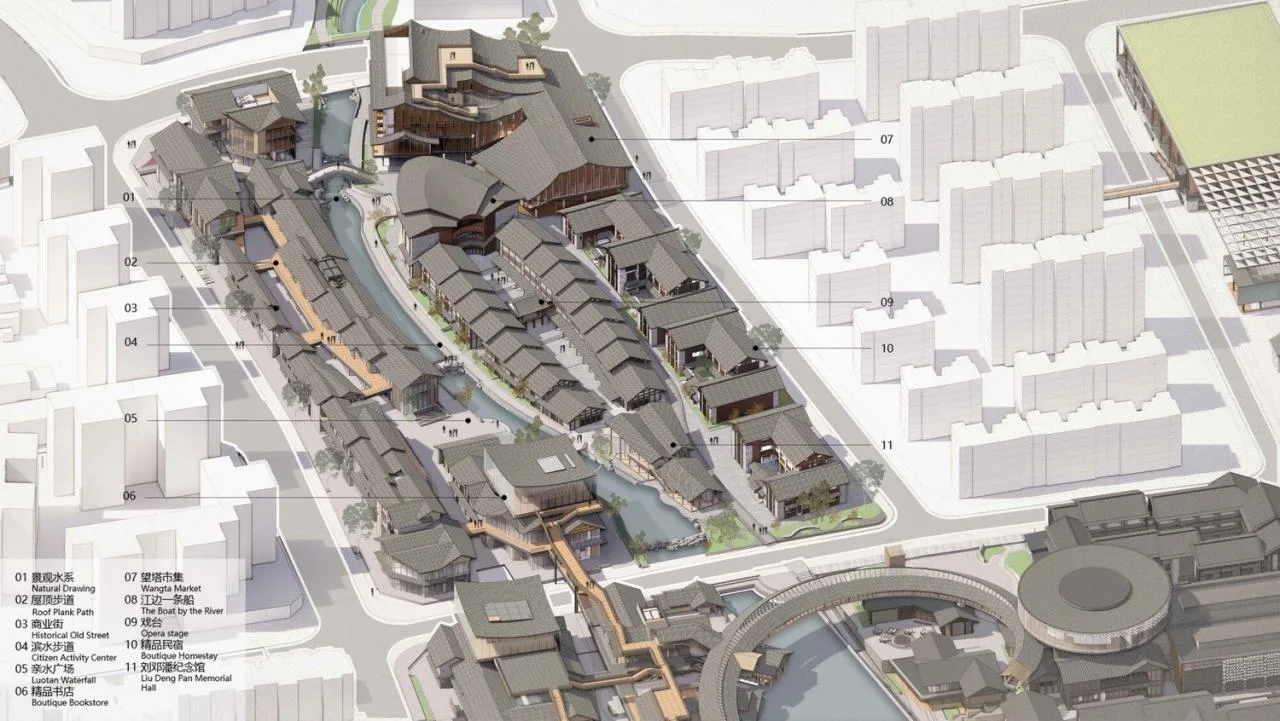
△ Functional diagram
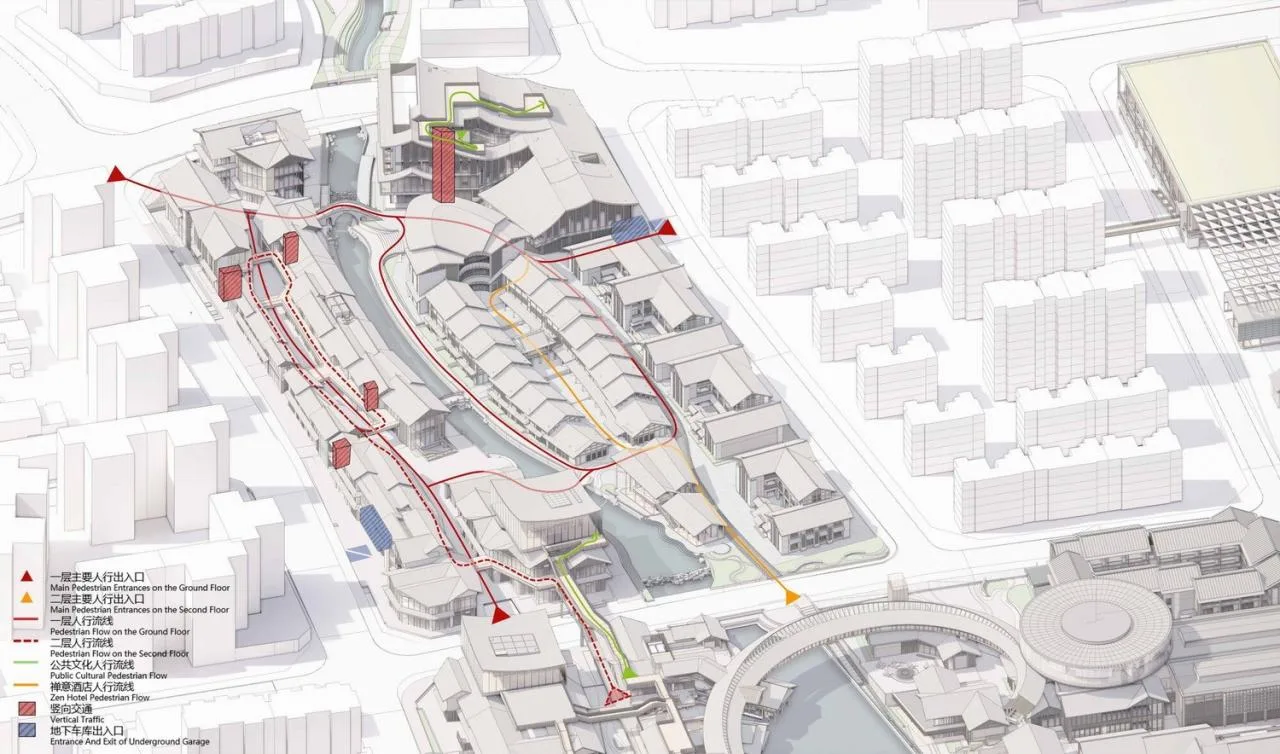
△ Route analysis diagram
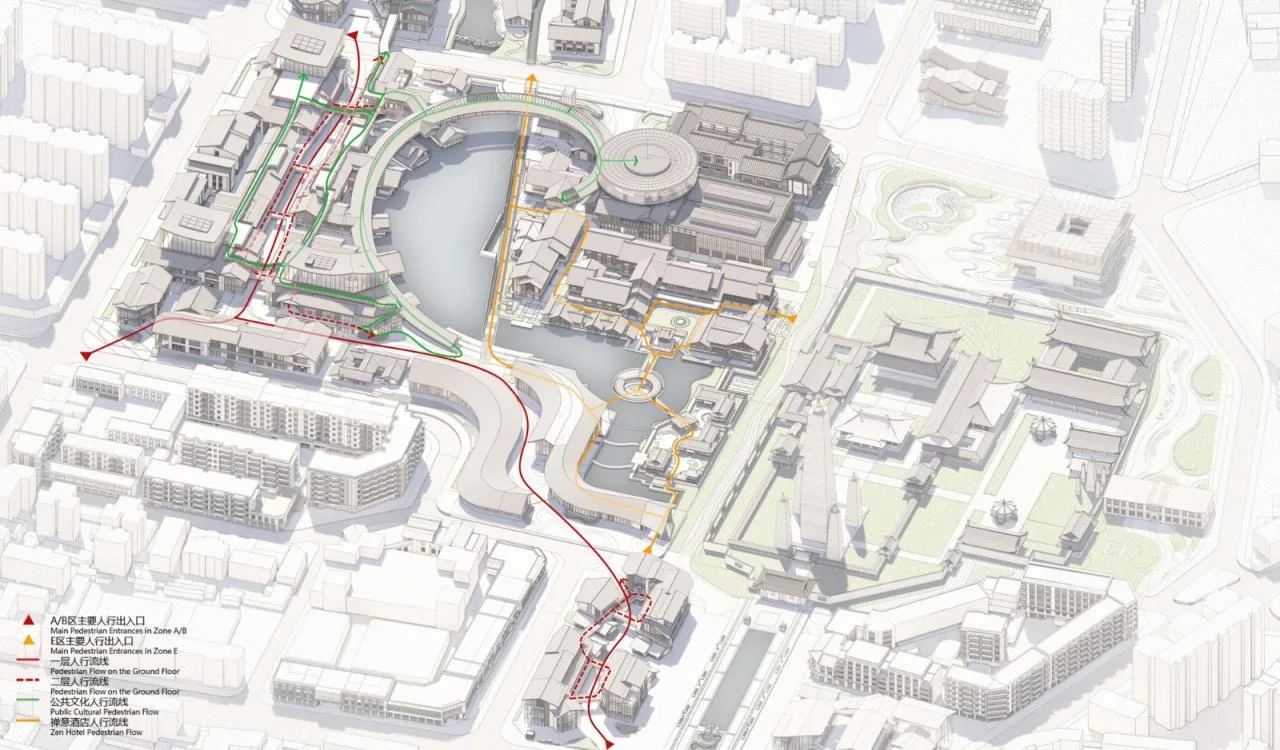
△ Route analysis diagram
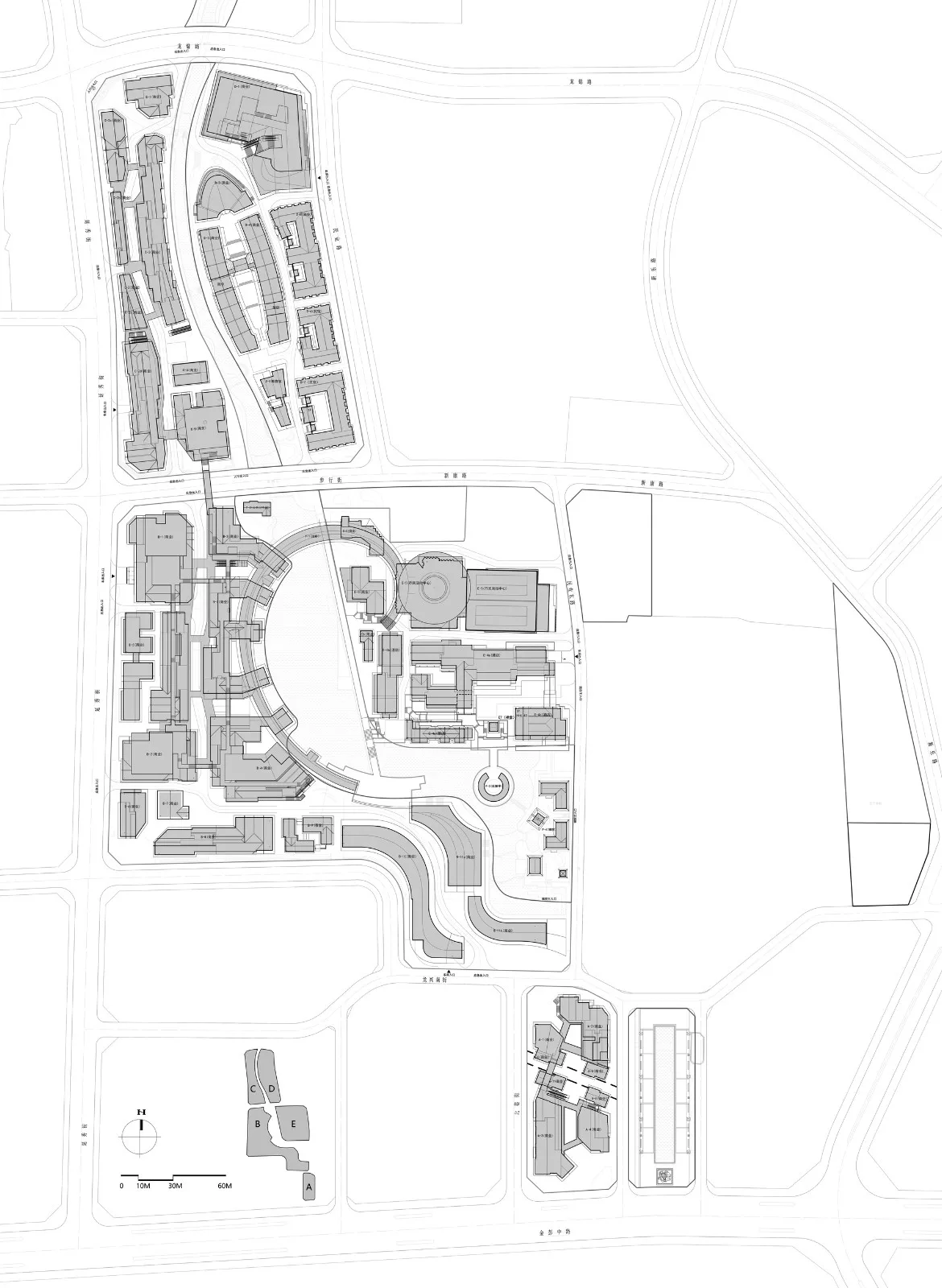
△ General layout plan
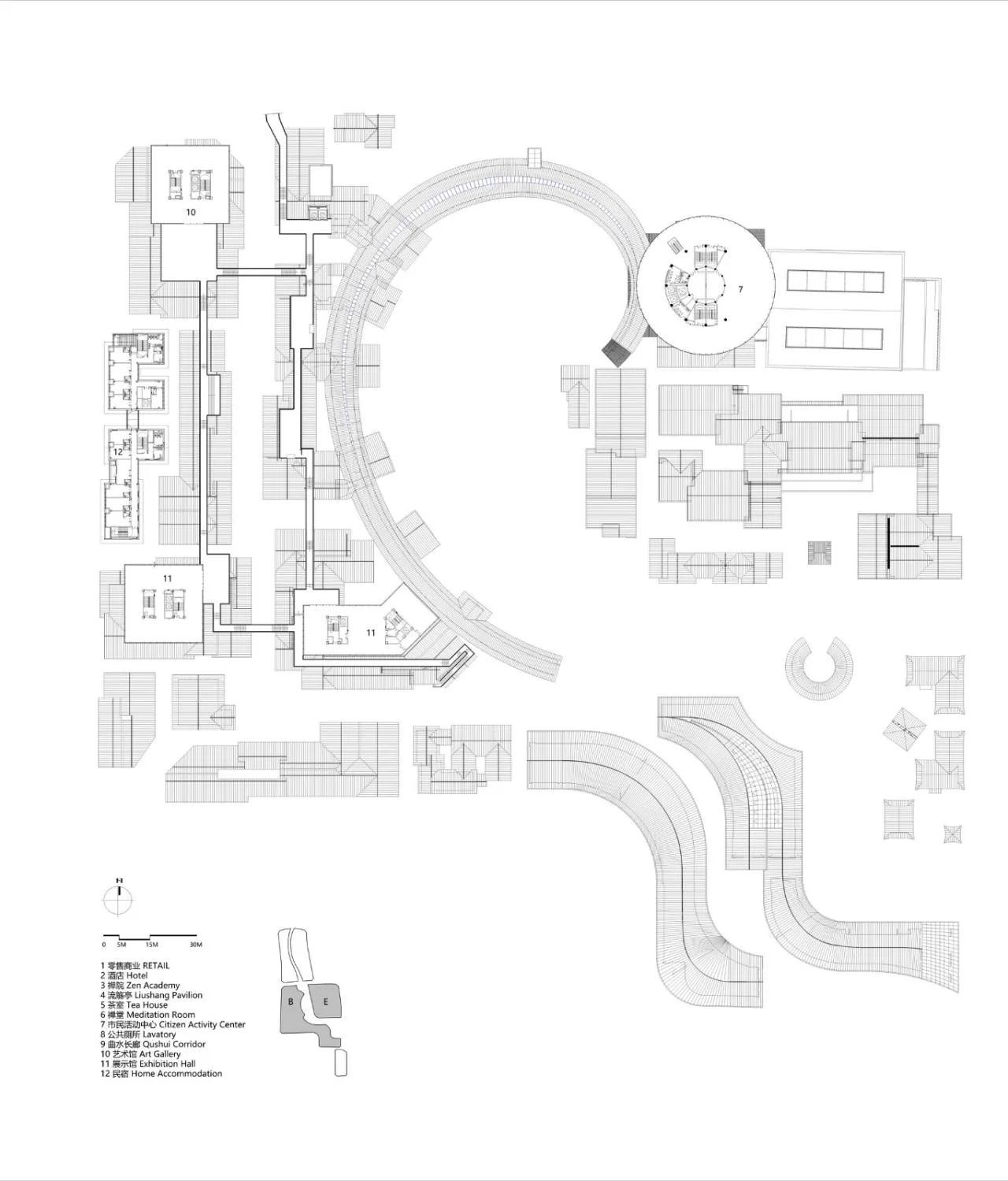
△ Plan view
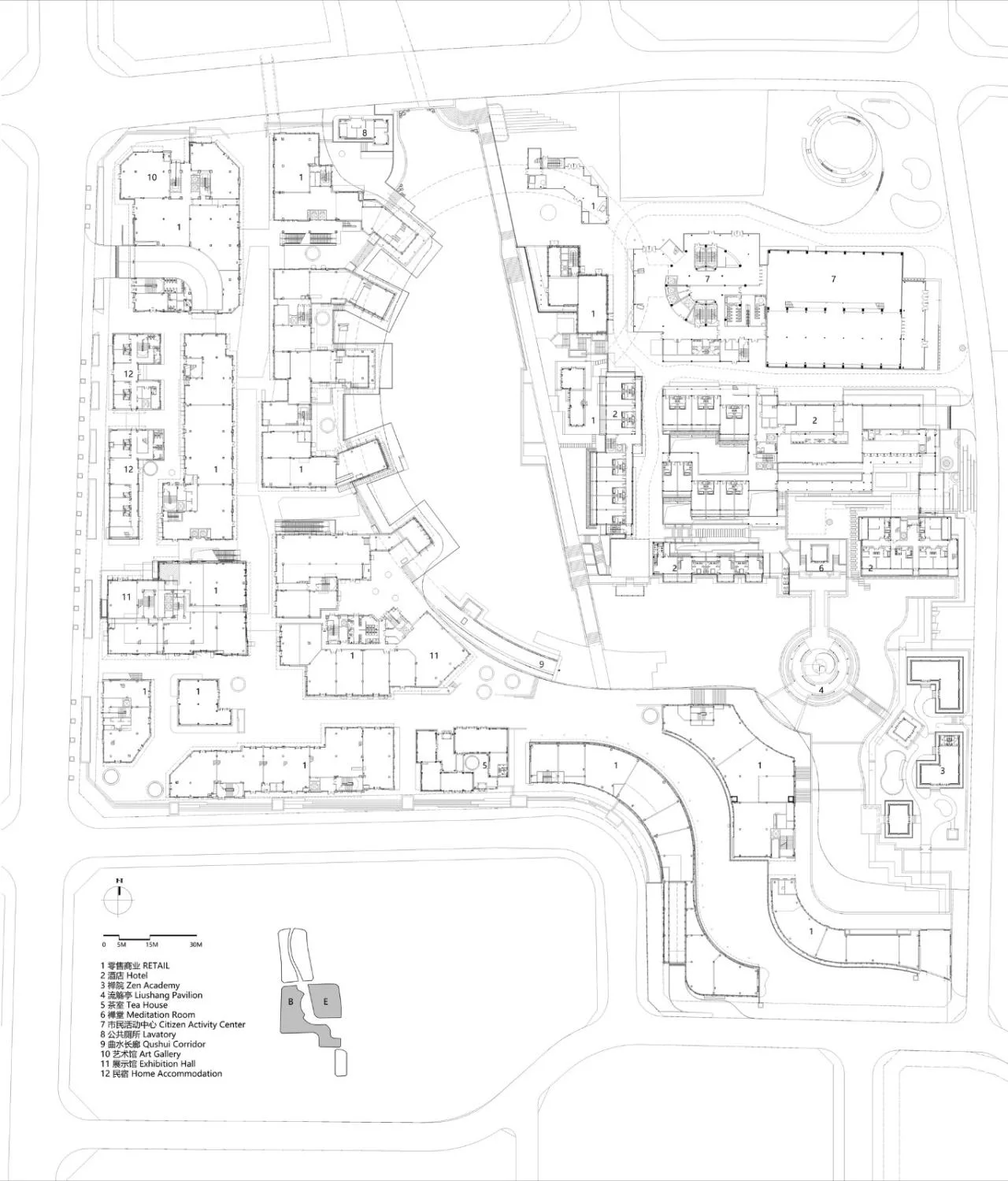
△ Plan view
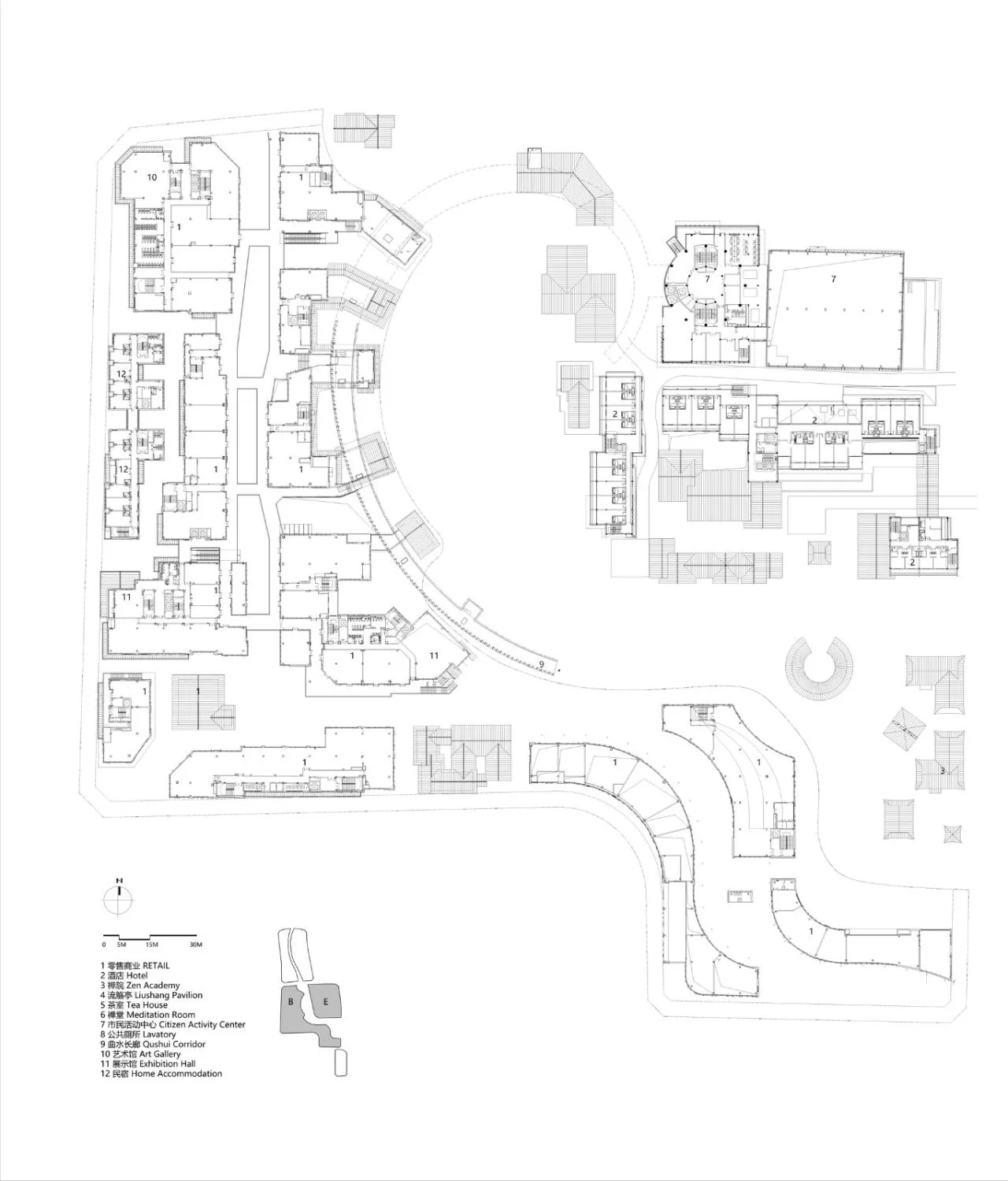
△ Plan view
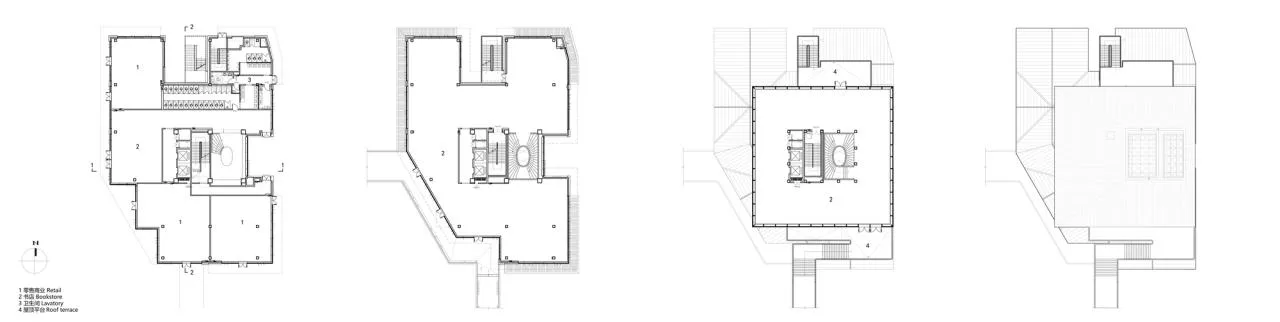
△ Plan view
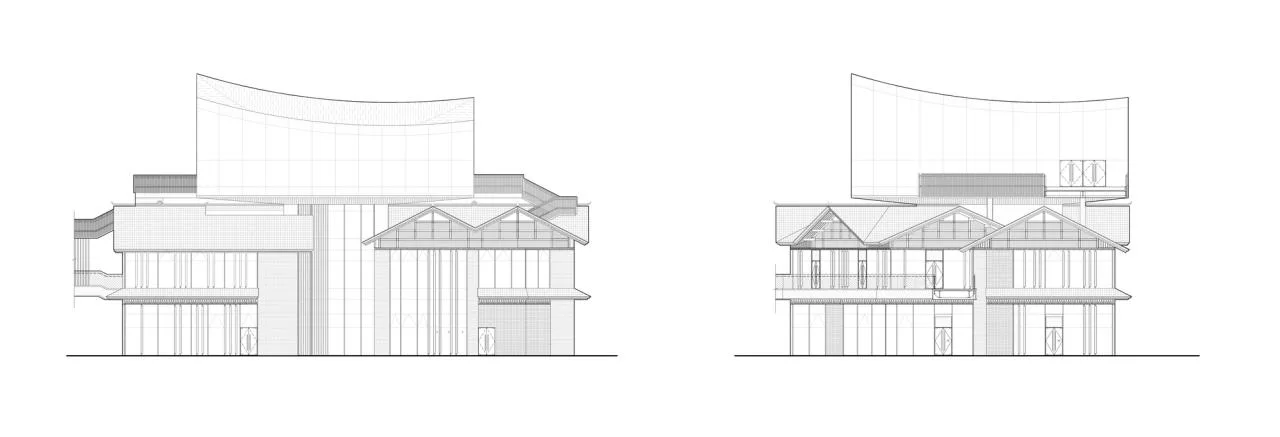
△ Elevation drawing
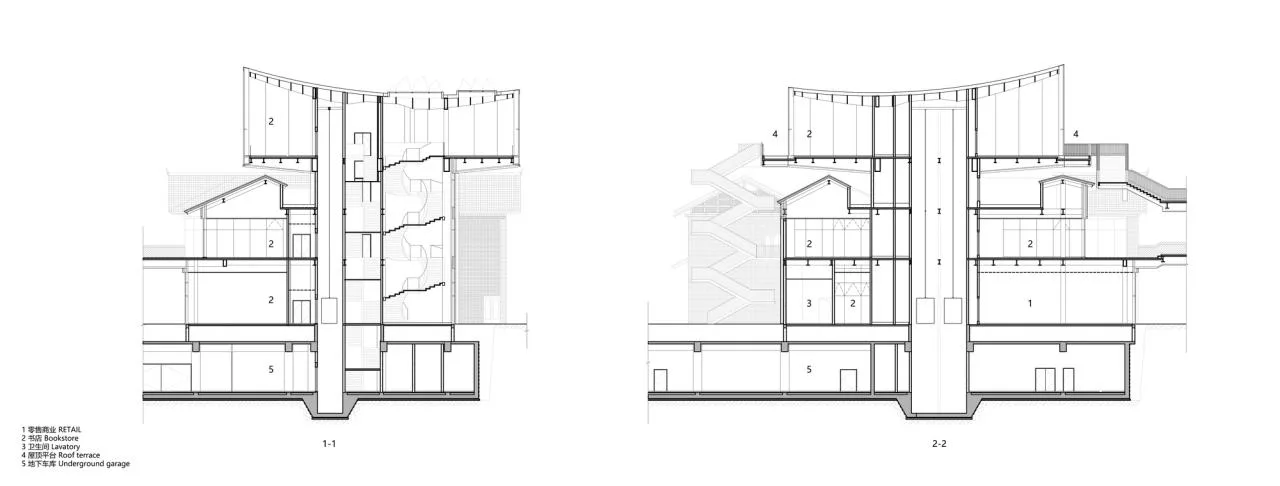
△ Section diagram
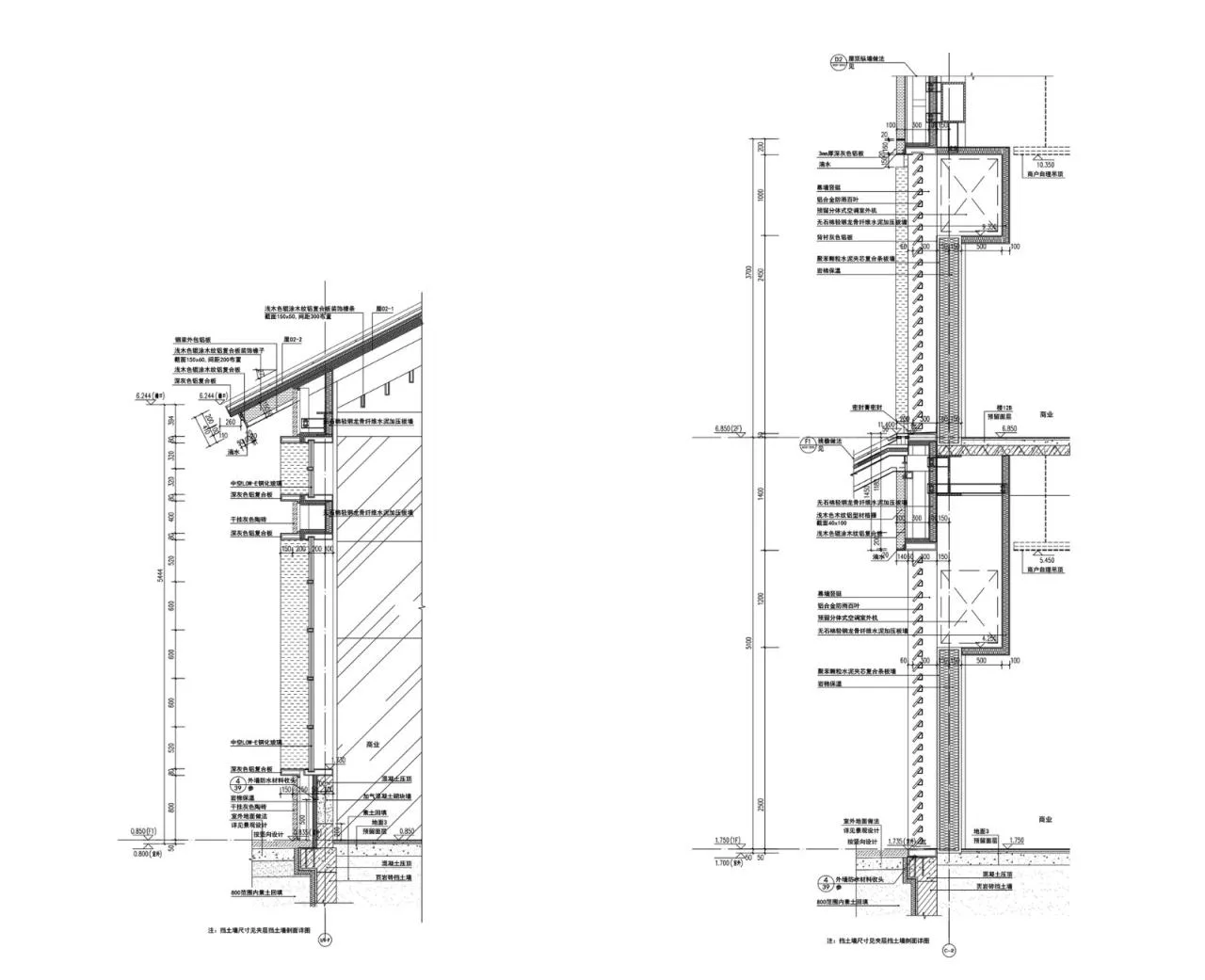
△ Detailed structural drawing
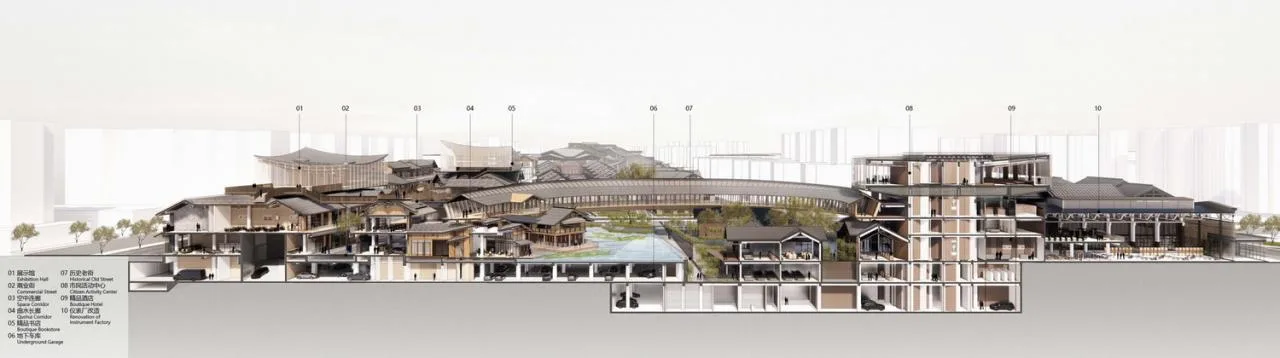
△ Sectional perspective view
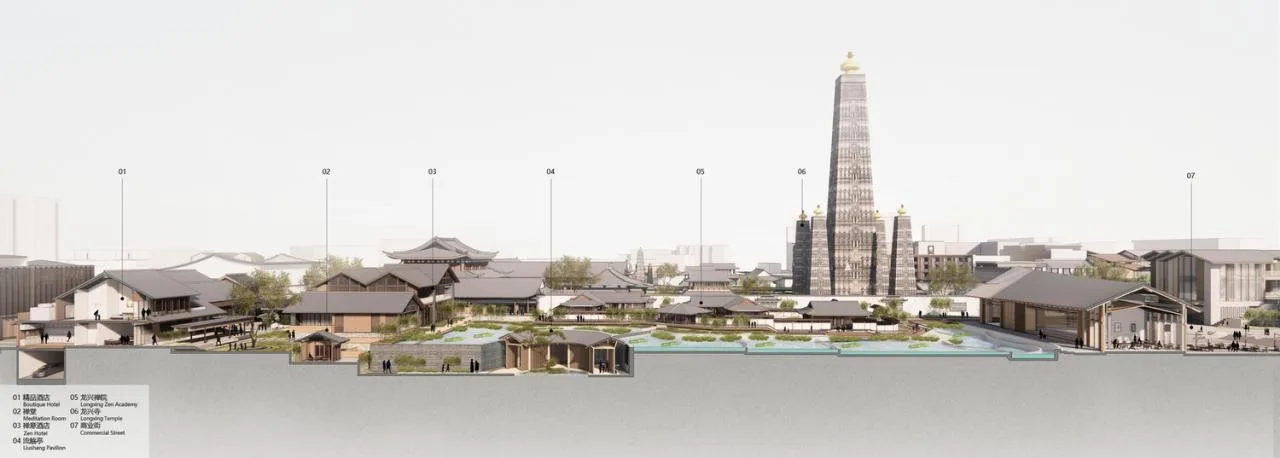
△ Sectional perspective view
Project Information
Architect: BIAD-ASA Studio
Area: 157,768 m²
Project Year: 2023
Photographer: Existence of Architecture – Architectural Photography
Manufacturers: Pengzhou Wazi Craft Ceramics Co., Ltd., Chongqing Zhongnan Julong Industrial Group Co., Ltd.
Lead Designer: Yin Laoyi
Planning/Urban Design Team: Guo Shennan, Zhang Xiaofeng, Li Wei, Tang Xinda, Luo Shuang, Shang Xiyun
Architectural Design Team: Xu Feng, Kong Xiangyuan, Chen Fangfei, Kang Ning, Cheng Li, Ni Ning, Li Jianwei, Wang Haonan
Landscape Design Team: Ding Ling, Su Di, Zhai Xue, Yang Jie, Chen Yixin
Business Design Team: He Xin, Lin Jianxian, Luo Shuwen, Wang Ping
Interior Design Team: Li Jianjun, Kong Xiangyuan
Construction Drawing Design:
ABE Plot Buildings: Li Xianrong, Li Wei, Gao Wei, Zhang Bo, Song Jianhao
CD Plot Buildings: Zhou Hong, Zhou Run, Kong Wei, Zhao Na, Pei Yan, Wang Yuexing, Li Sijia, Yang Peng, Wang Xiangyu
Structure: Duan Shichang, Bu Longgui, Gao Zhijun, Tang Yiqiao, Xing Juehui, Wang Litao, Bai Zixuan
Mechanical and Electrical: Sun Liang, Liang Peng, Zheng Jiashan, Zhang Mo, Zhao Meng, Yan Boxuan
Business Planning Team: Cushman & Wakefield, Zhongying Renhe
Interior Design Consultants: Shen Ruofan ARCHIEE (Paris), Shan Yin Yue Jie Space Design Co., Ltd.
Landscape Design Consulting: Beijing Yuanshu Landscape Planning and Design Firm
Logo Design Team: Beijing Feiruikentuo Advertising Co., Ltd.
Lighting Design Team: TS Ruosi Lighting
Green Building Design Consulting: THAD
Cultural Protection Consulting Team: Rehabilitation History Protection Office
Construction Party: China Construction Third Engineering Bureau First Company
Principal: Chengdu Mengjiang Investment Group Co., Ltd.
Location: Chengdu















Must log in before commenting!
Sign Up