
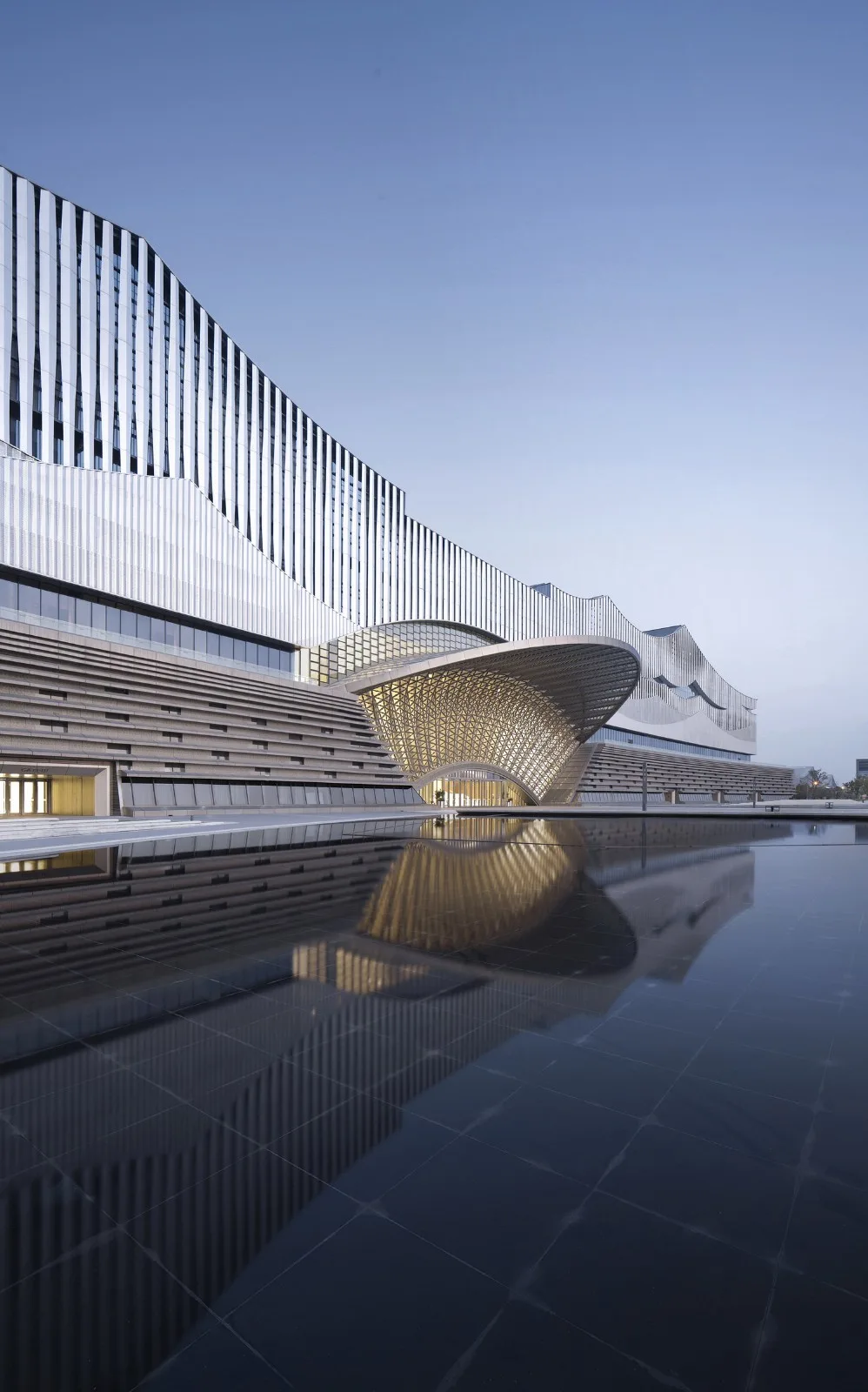
△ Main entrance plaza © Architectural translator Yao Li
01 Project Overview
The Changsha International Convention Center is situated in the Changsha High-Speed Railway New Area, directly facing the Changsha South Railway Station across the river, with the Changsha Convention and Exhibition Center located to the south. The total planned land area spans approximately 212,700 square meters, with a total construction area of about 170,000 square meters. This includes 136,000 square meters above ground and 44,000 square meters underground.
The building measures roughly 300 meters in length from north to south, 150 meters in width from east to west, and stands 46.8 meters tall. It consists of three floors above ground and one basement level.
The convention center houses 60 conference rooms capable of accommodating up to 10,500 attendees. Key facilities include a 7,800 square meter pillar-free main hall, an 1,800 square meter roundtable conference hall, a 3,400 square meter banquet hall, and a 6,000 square meter rooftop garden. It is currently the largest conference center in Central China.
△ Project video © South China University of Technology Architectural Design and Research Institute Co., Ltd
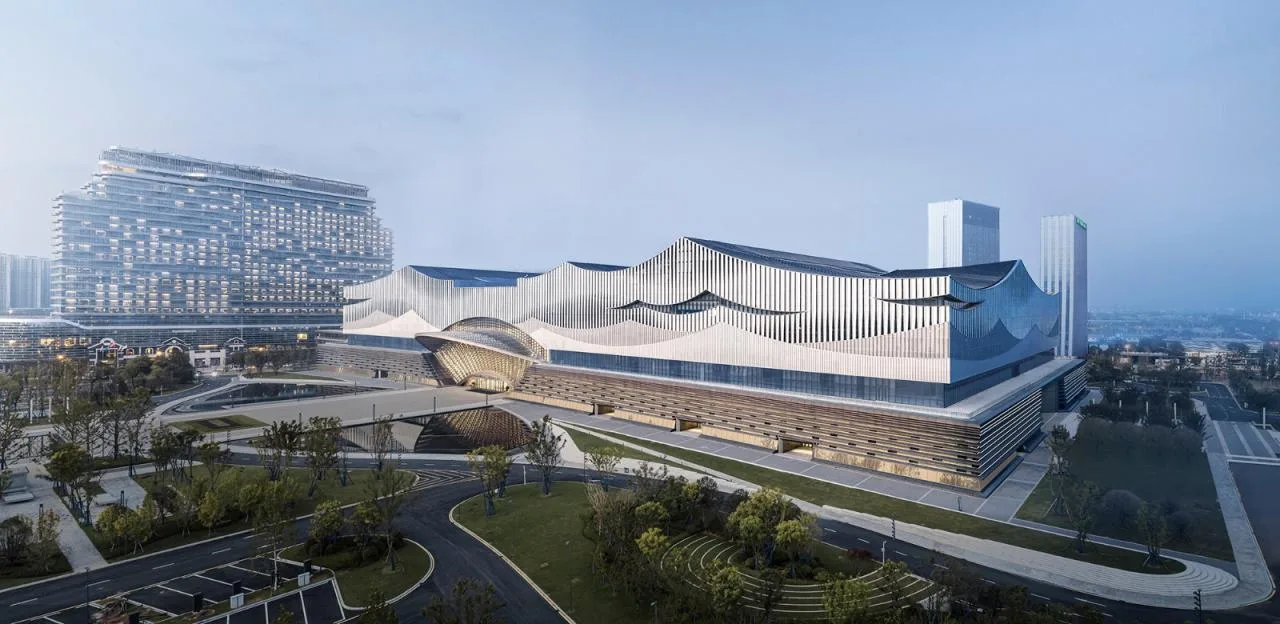
Half bird’s-eye view of Southwest Corner Square © Architectural translator Yao Li
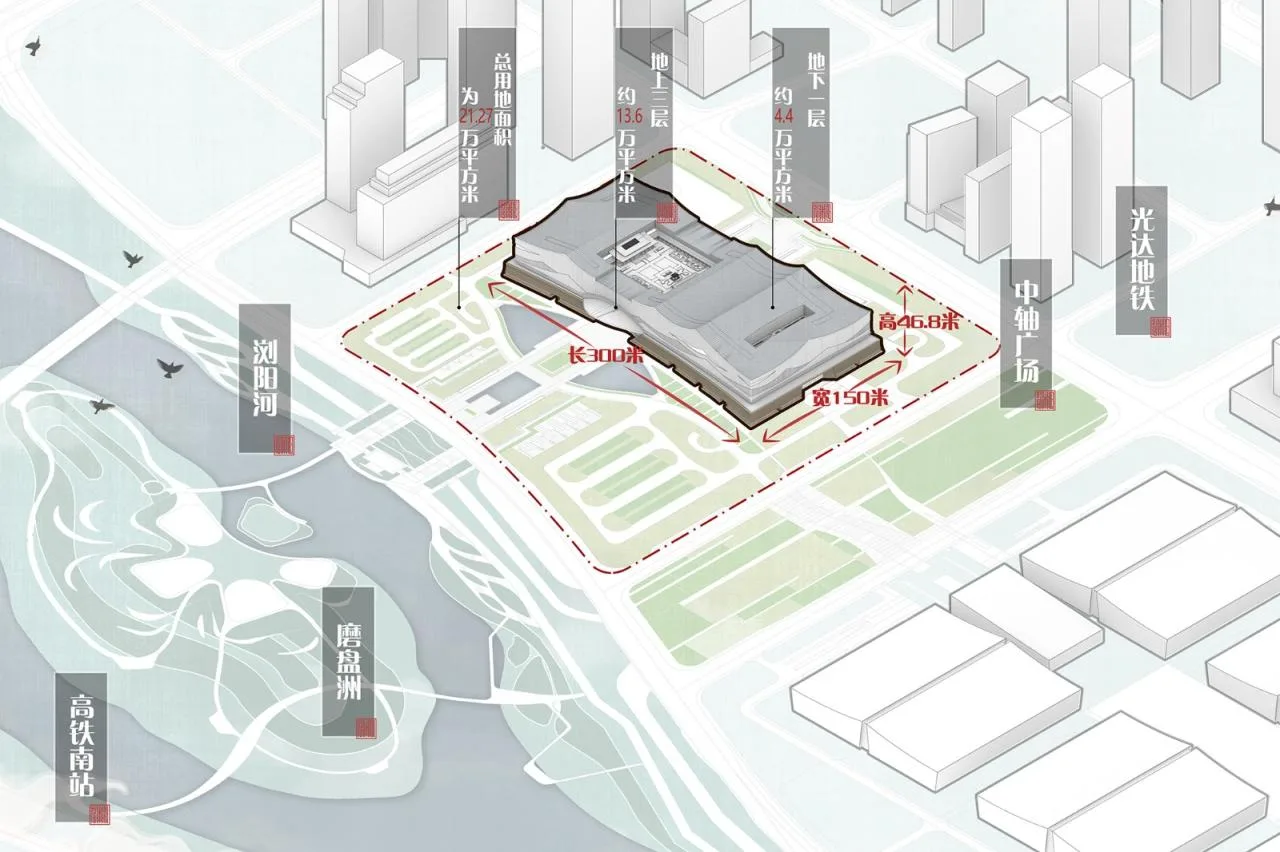
Project Overview Diagram © South China University of Technology Architectural Design and Research Institute Co., Ltd
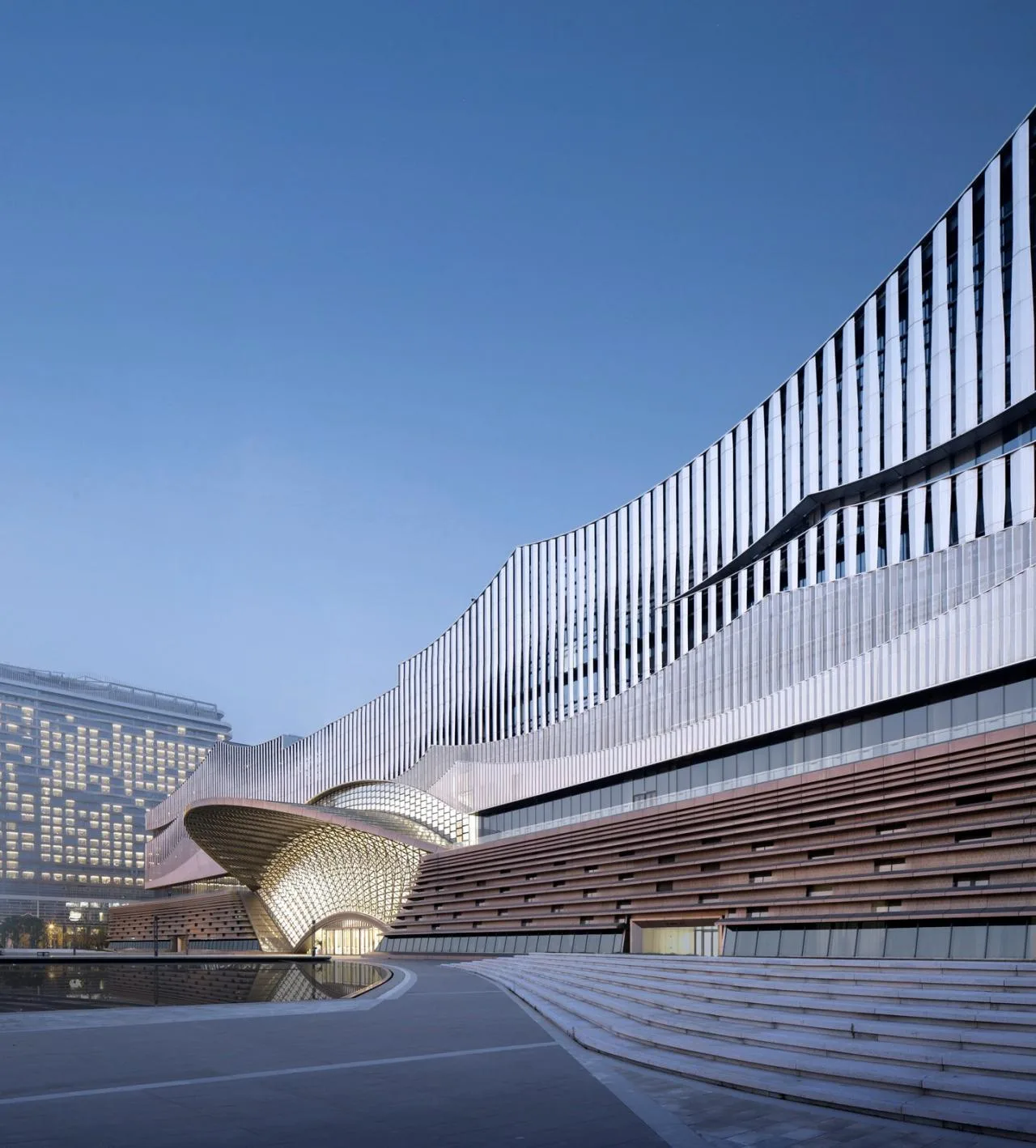
△ Main entrance plaza © Architectural translator Yao Li
02 Design Concept
Form
Hanmo Zhonghua reflects the exquisite and profound essence of traditional Chinese cultural style.
The design abstractly incorporates cultural symbols drawn from traditional Chinese aesthetics. It reimagines elements such as the silhouette of Mingchuan Mountain representing the natural world, the traditional sloping roof architecture symbolizing social attributes, and the unfolding form of Chinese folding fans representing humanistic qualities, all integrated into a cohesive whole. This reflects the Chinese philosophical concept of harmonious coexistence between human civilization and the natural environment, emphasizing the unity of man and nature. It seeks to inherit and promote core values of Chinese traditional culture and reinforce national cultural confidence.
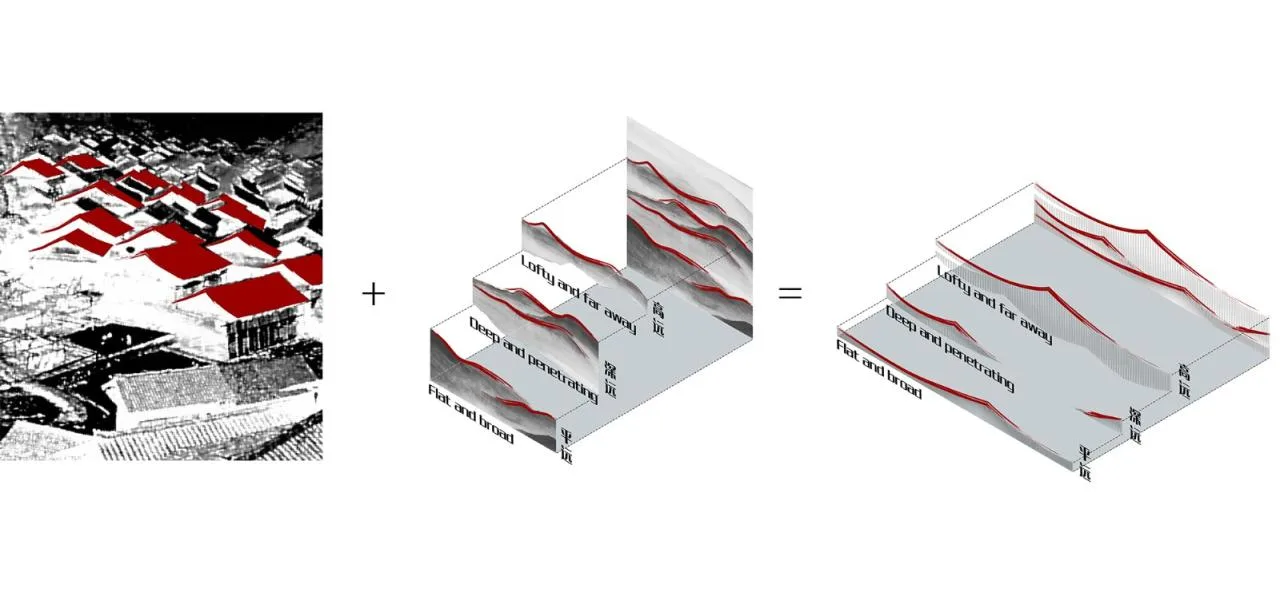
△ Landscape facade concept © South China University of Technology Architectural Design and Research Institute Co., Ltd

△ Water Cloud Xiaoxiang Concept Map © South China University of Technology Architectural Design and Research Institute Co., Ltd
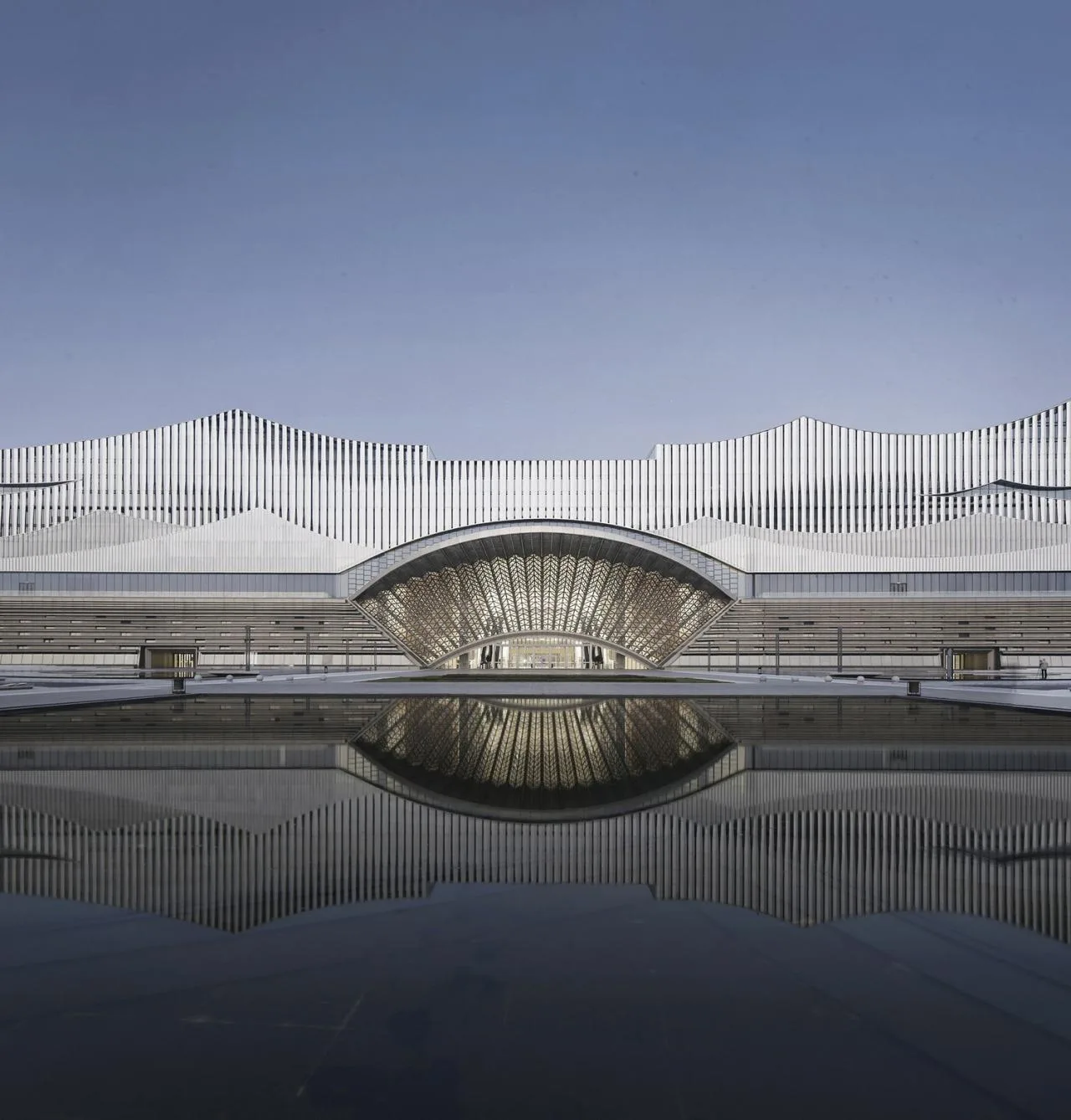
△ West entrance © Architectural translator Yao Li
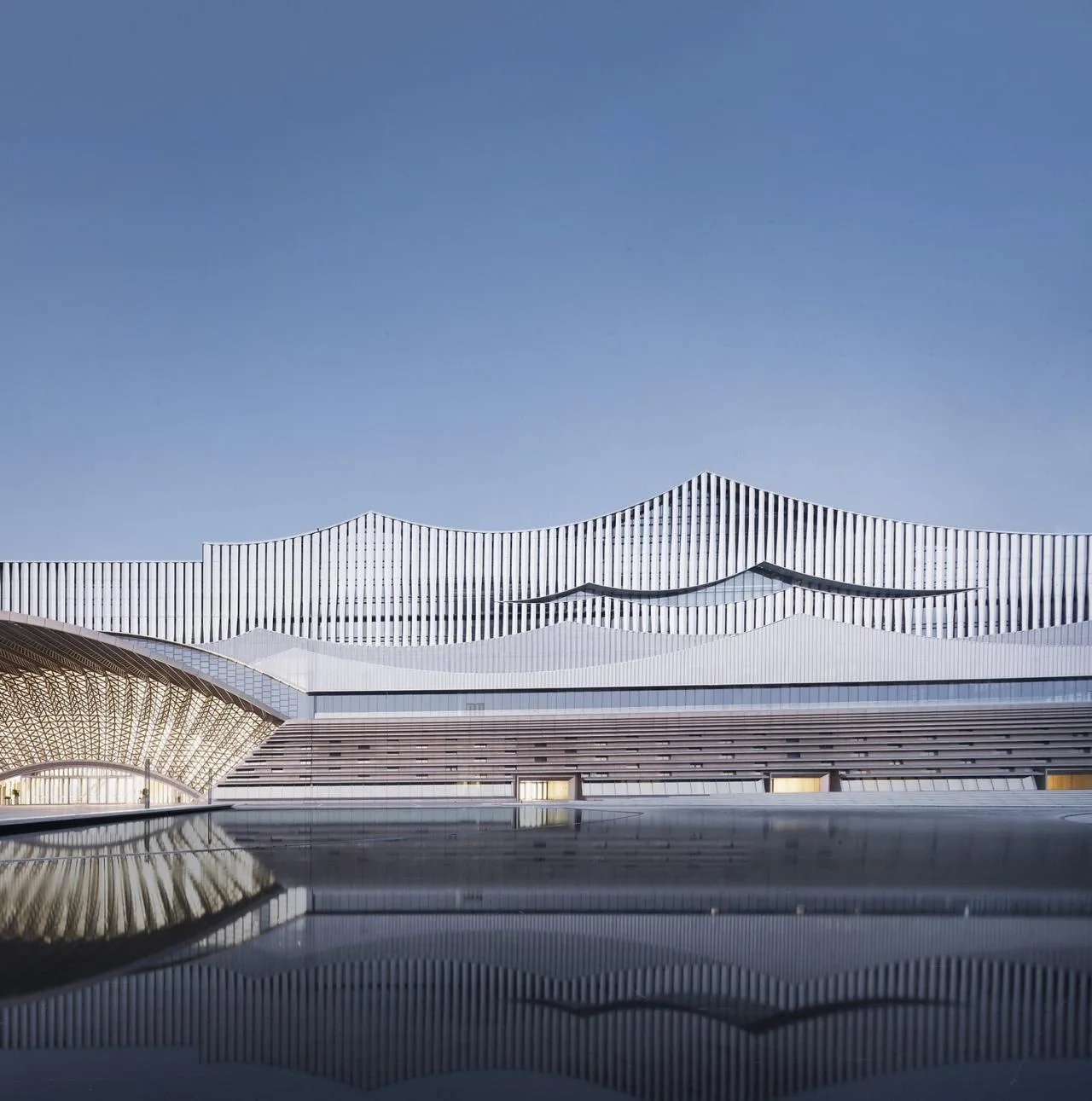
△ West facade waterfront © Architectural translator Yao Li
Chinese culture and art emphasize the concepts of “form, spirit, and qi,” with “qi” being the core. The axial sequence in ancient Chinese architecture embodies the spirit of “li” at the heart of Chinese culture, using spatial order to express qi. The main entrance plaza on the west side features a spatial sequence: “front square – mirror water reflecting the moon – welcome avenue – etiquette square.” This orderly arrangement combines physical and symbolic spaces, where forms enclose space and space creates an atmosphere of solemnity. The grand, layered order highlights a majestic national style.
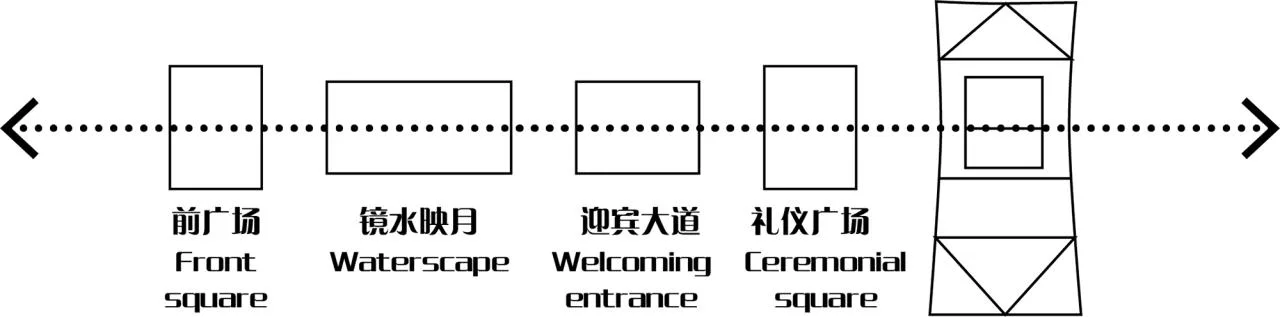
Concept diagram of △ spatial sequence © South China University of Technology Architectural Design and Research Institute Co., Ltd
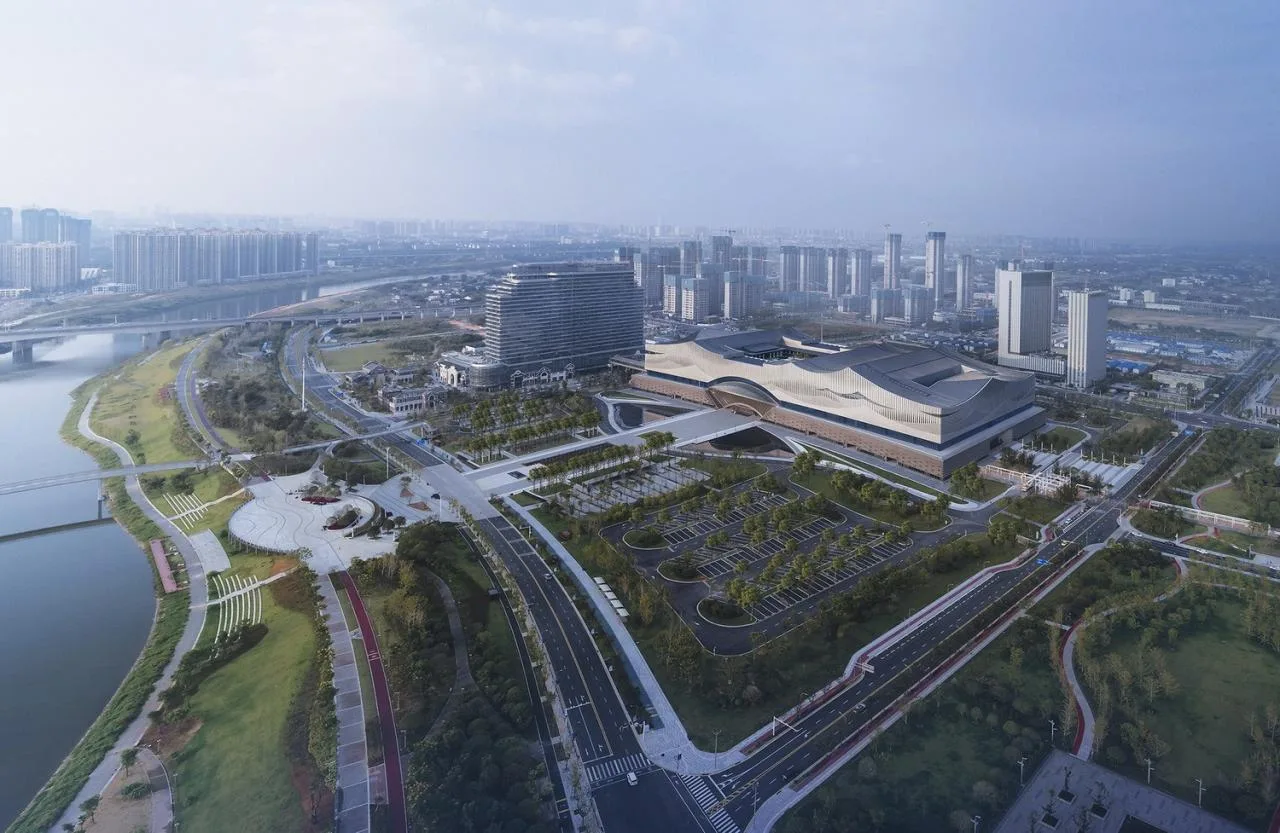
△ Southwest corner aerial view © Architectural translator Yao Li
Meaning
The “Water Clouds of Xiaoxiang” evoke the lively and elegant Hunan culture characterized by the Three Xiang and Four Waters regions.
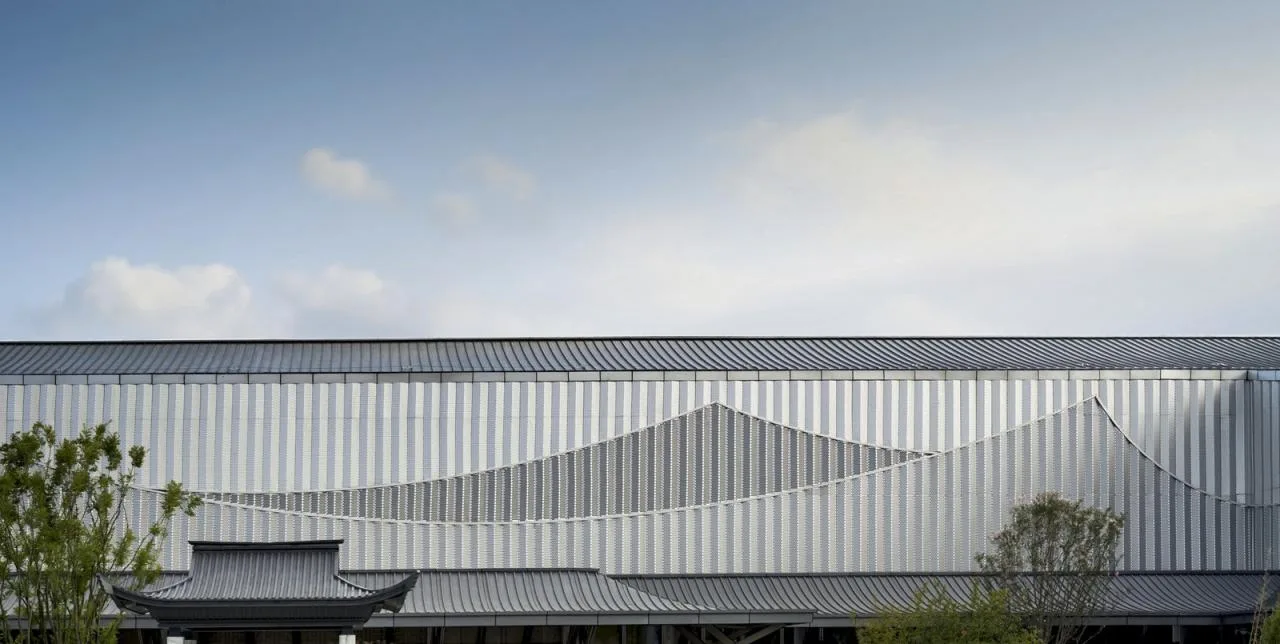
Drawing on traditional Chinese landscape painting techniques such as “combining distance and proximity” and “interplay of reality and illusion,” and inspired by the dynamic and graceful atmosphere evoked in the Changsha Guqin piece “Water Clouds of Xiaoxiang,” the facade design utilizes “bamboo slips” as a motif. Vertical metal folding panels create the facade, with 7,500 metal perforated panels of varying lengths, widths, and densities assembled through parametric design to form a 900-meter-long landscape painting.
Set against the winding Liuyang River, Changsha is envisioned as a “water cloud of Xiaoxiang and landscape city.” The vertical angled metal perforated panels serve as shading devices, enhancing panel rigidity, maintaining facade cleanliness and durability, and resisting dust accumulation common in horizontal elements. The folding of panels also creates light and shadow contrasts on cloudy days, expressing the texture reminiscent of traditional ink paintings, well-suited to Changsha’s cloudy and rainy climate.

Concept map of the evolution of landscape paintings © South China University of Technology Architectural Design and Research Institute Co., Ltd
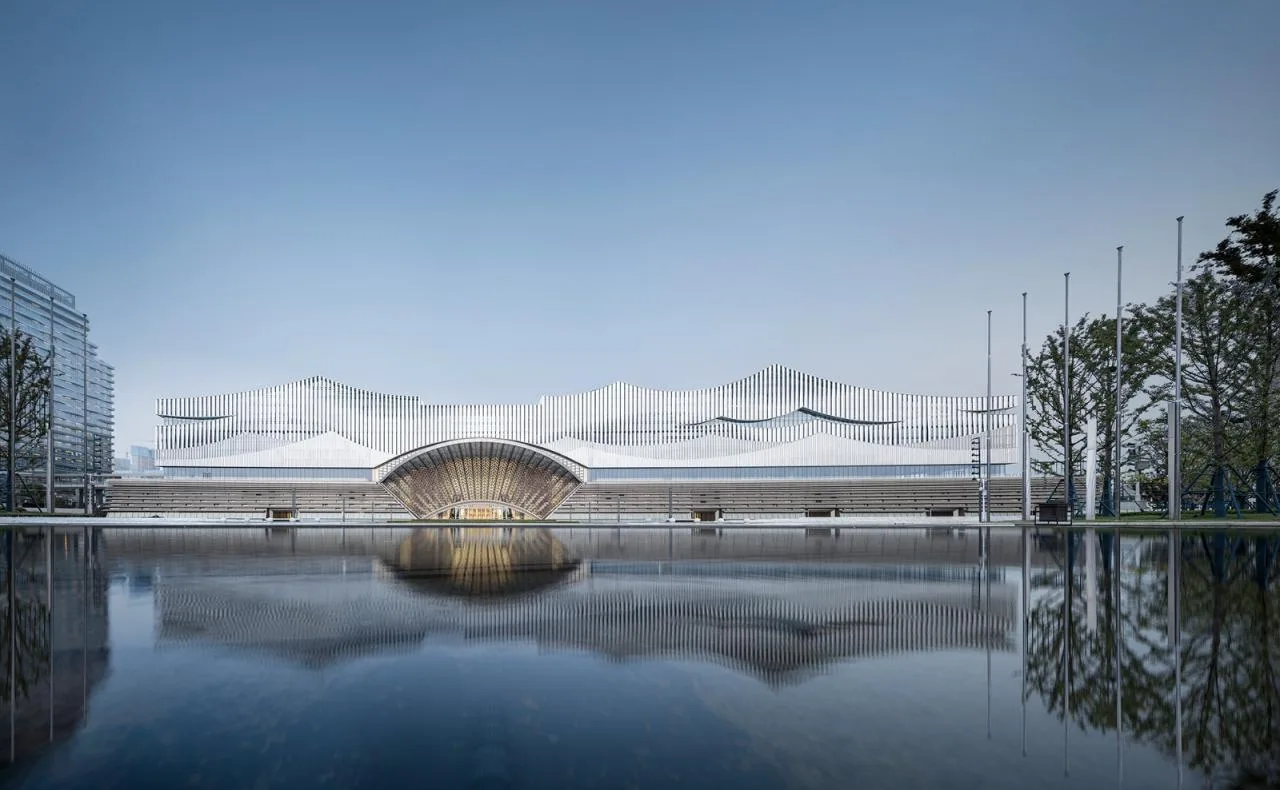
△ West facade waterfront © Architectural translator Yao Li
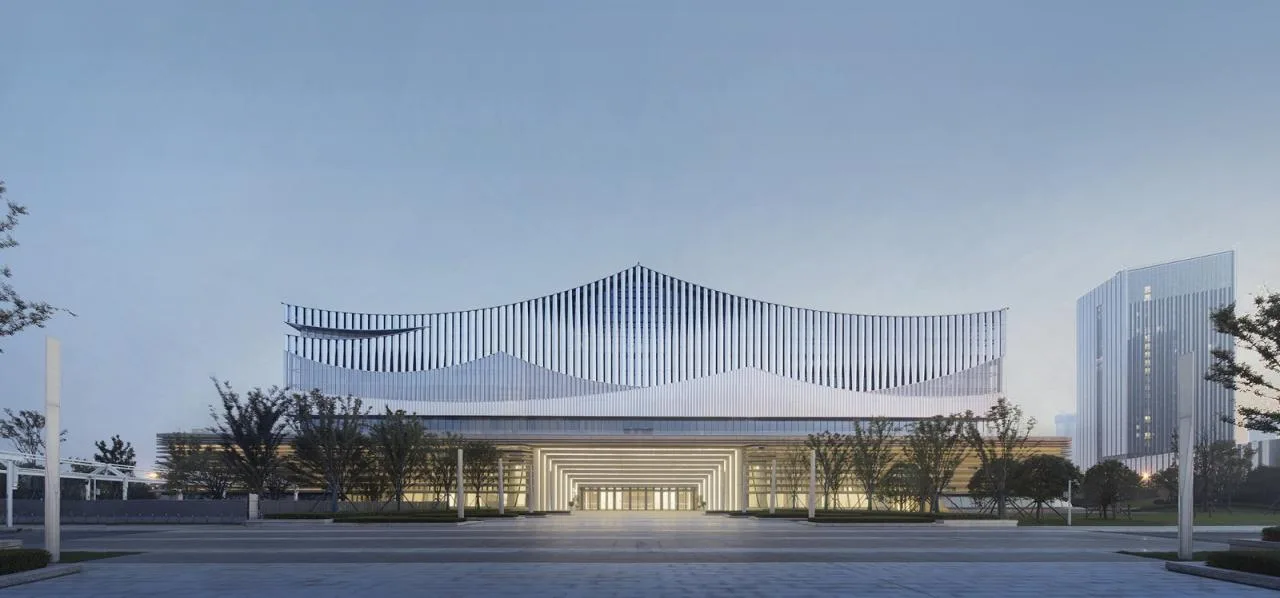
△ South facade © Architectural translator Yao Li
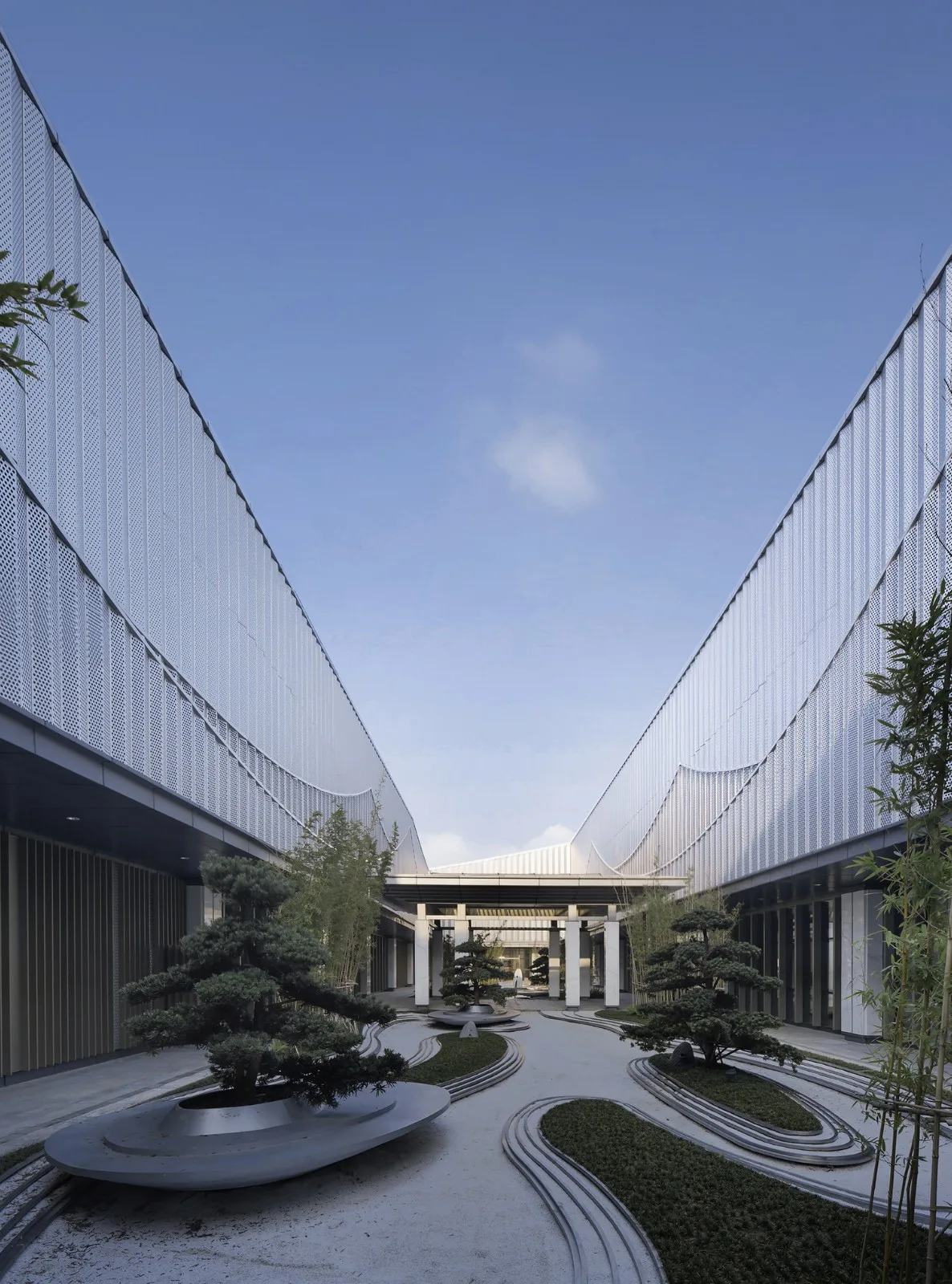
Yuelu Academy, a vital carrier of Chinese culture and an emblem of Hunan heritage, inspired the rooftop garden design. It encloses a square courtyard surrounded by a thousand-step corridor. At the courtyard’s center is a rest pavilion inspired by “Hexi Terrace,” combined with undulating mountain-shaped walls to create a “cloud academy” that gazes at the stars and features unique caves. This design embraces the Yuelu spirit: “Only Chu has talent, and prosperity lies in this place.”
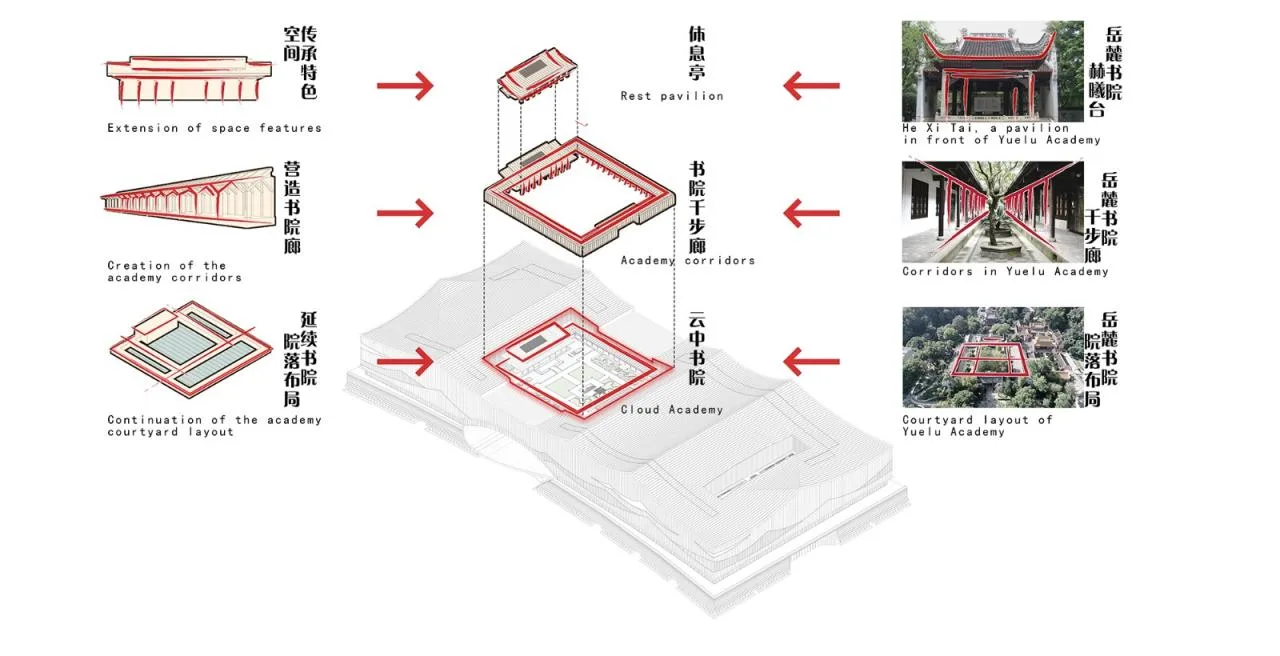
Concept Map of Yunzhong Academy © South China University of Technology Architectural Design and Research Institute Co., Ltd
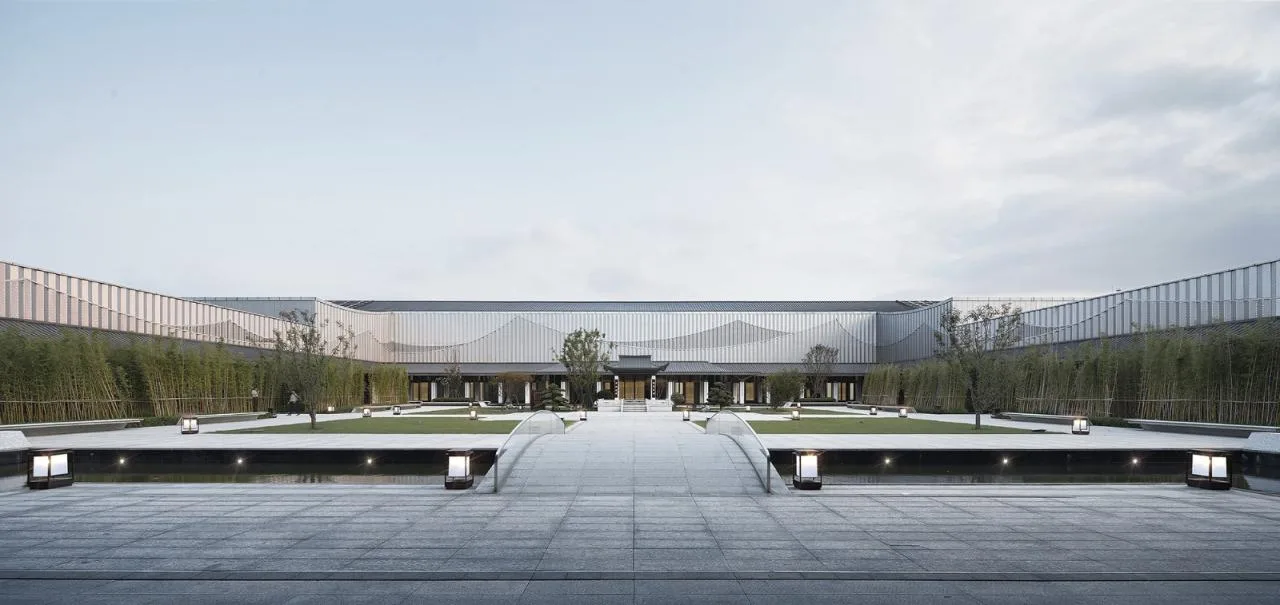
△ South side of Yunzhong Academy © Architectural translator Yao Li
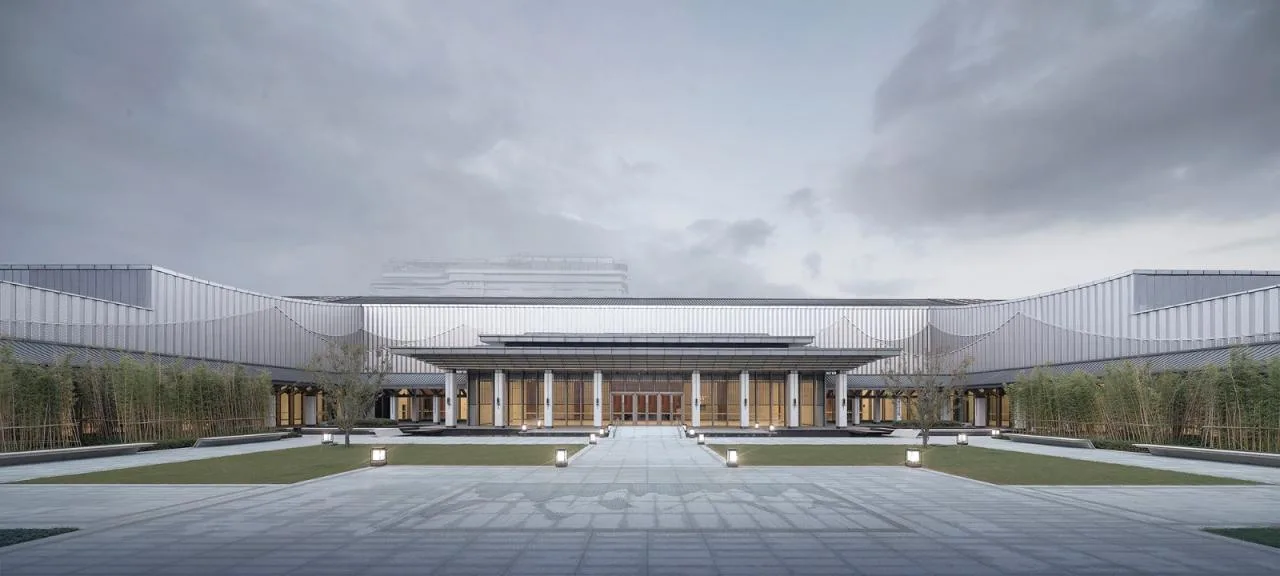
△ North side of Yunzhong Academy © Architectural translator Yao Li
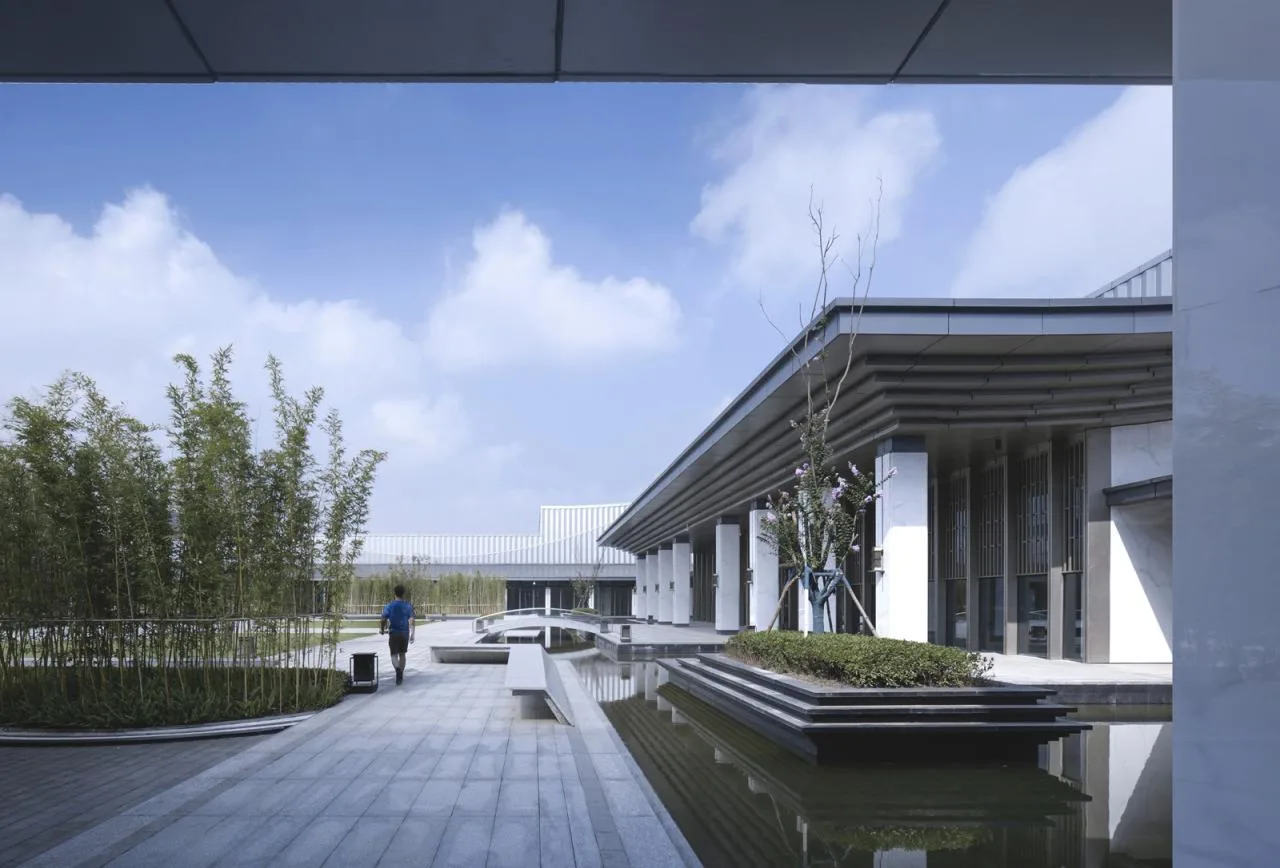
△ North entrance of Yunzhong Academy © Architectural translator Yao Li
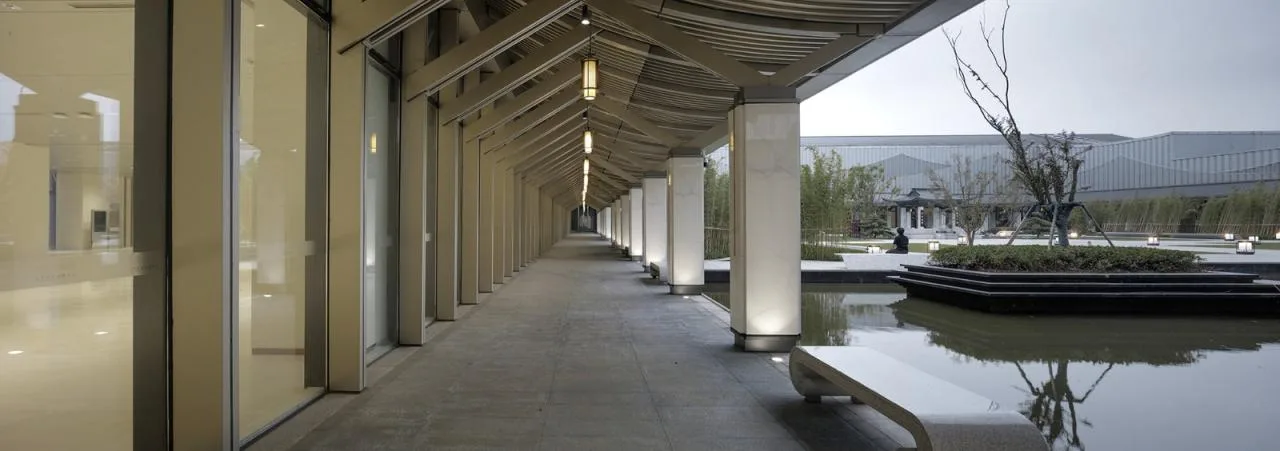
The Thousand Step Corridor of Yunzhong Academy © Architectural translator Yao Li
Details of Yunzhong Academy Architecture © Architectural translator Yao Li
△ Roof Garden © Architectural translator Yao Li
Letter
Crowning Central China: Building a Functional Composite Urban Living Room with a Global Outlook
The architectural layout of the Changsha International Convention Center distinguishes itself from typical hall-style venues by adopting a “meeting with exhibition, detachable and combinable” design. Prioritizing business conference reception while accommodating government summit functions, this flexible layout enables the space to adapt to various event types, enhancing utilization and economic return.
Since its opening, the center has hosted numerous international events, positioning Changsha as a welcoming gateway to the world.
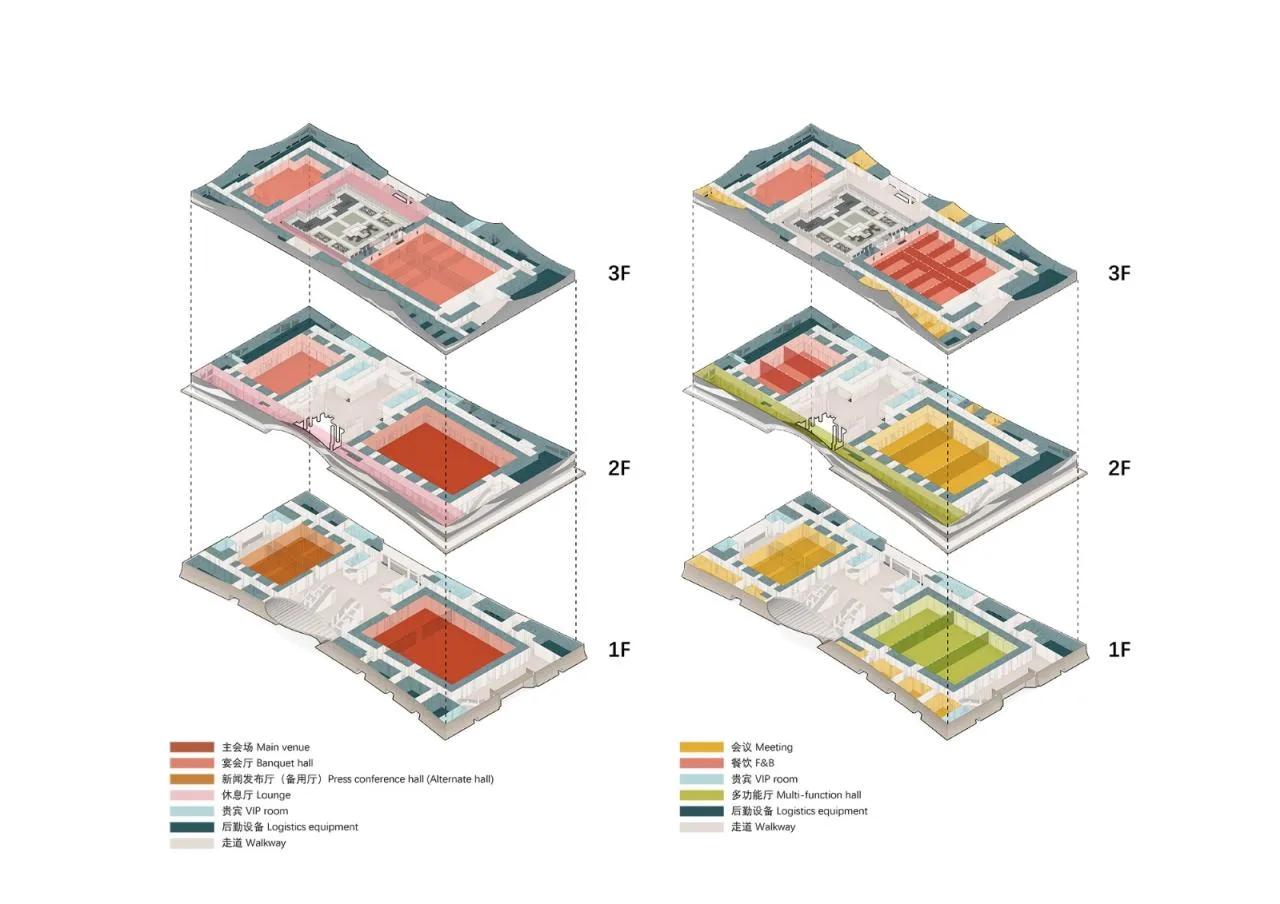
Schematic diagrams of functional layout during government summit and business meetings © South China University of Technology Architectural Design and Research Institute Co., Ltd
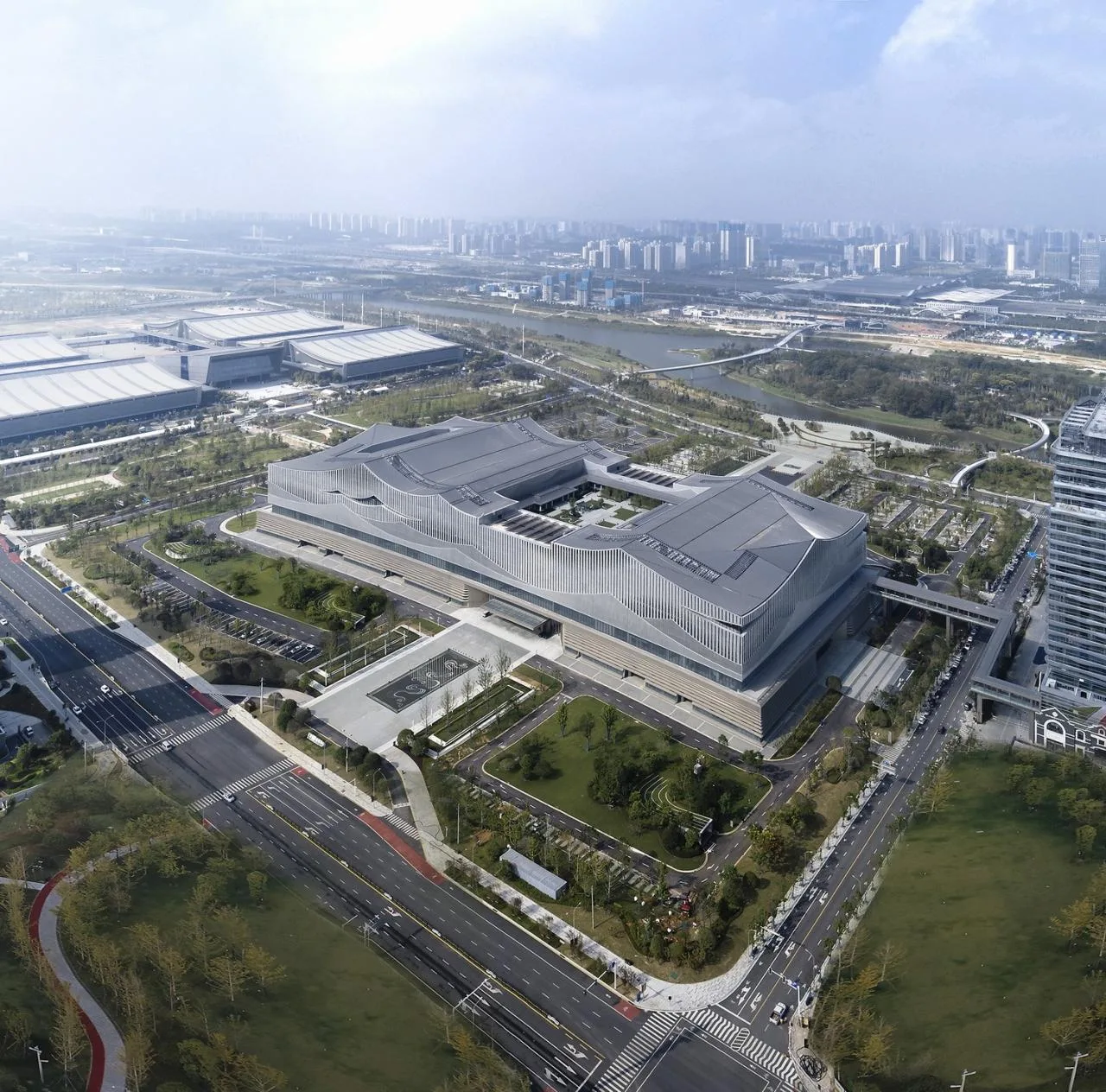
Bird’s-eye view of the northeast corner © Architectural translator Yao Li
An expansive outdoor parking area surrounds the convention center, designed as a green parking lot that fulfills the requirements of a sponge city. It supports outdoor parking and exhibition needs during events and functions as a public park on non-event days, integrating with the daily life of Changsha residents and invigorating the high-speed rail new city community.
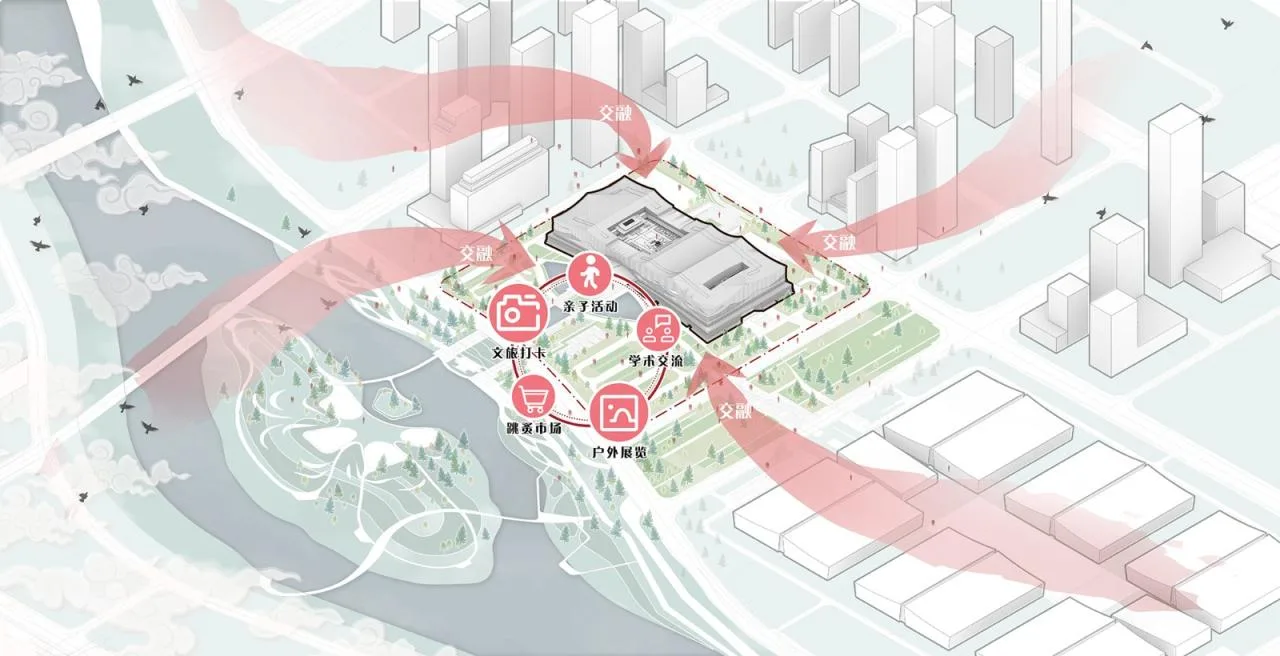
Concept diagram of urban living room © South China University of Technology Architectural Design and Research Institute Co., Ltd
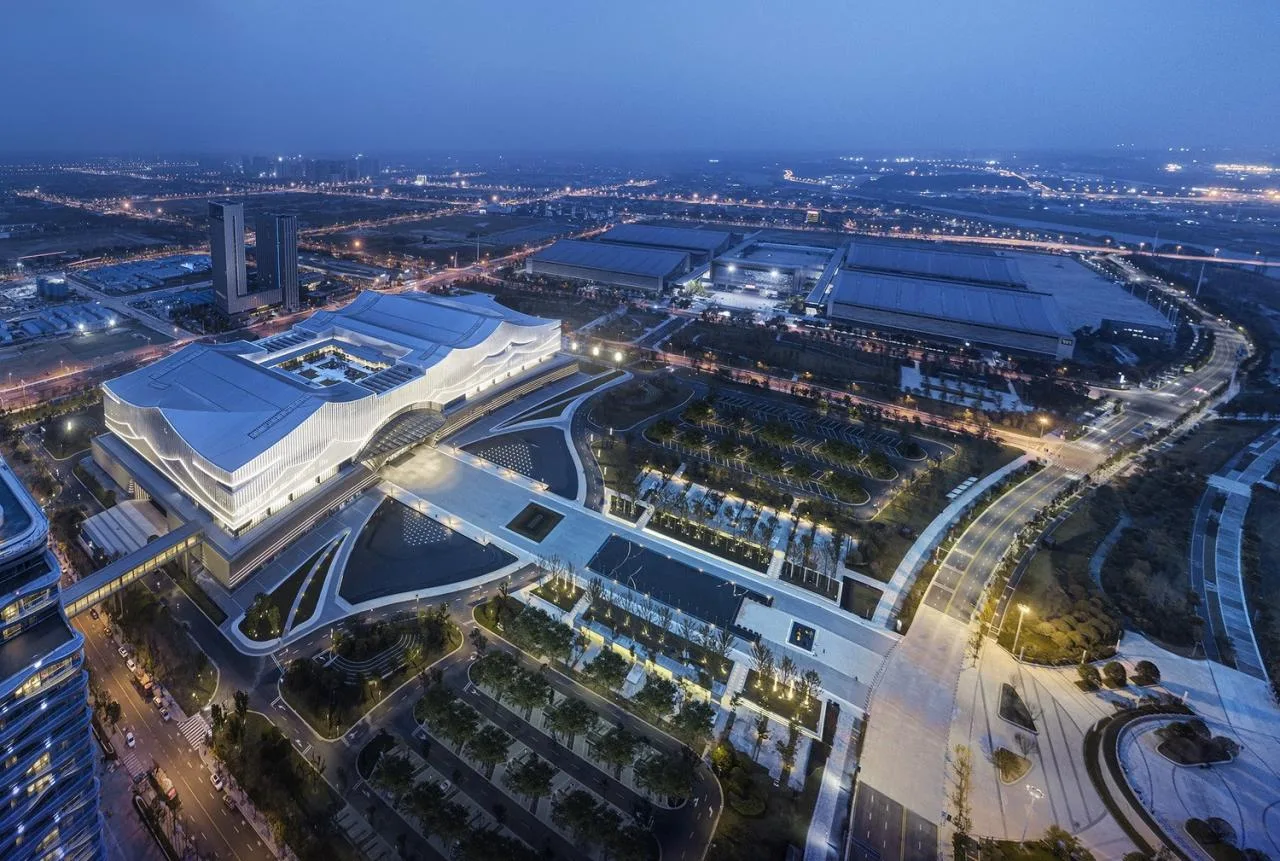
△ Northwest corner night aerial view © Architectural translator Yao Li
Technology
Focusing on low carbon and energy efficiency, the project pioneers green building practices suited for the Shanshui Star City, adapting to local conditions.
The design integrates passive energy-saving strategies alongside active systems, implementing measures across emission reduction, carbon sink enhancement, and substitution. The goal is to achieve zero-carbon building design, reduce operating costs, and meet two-star green building standards.
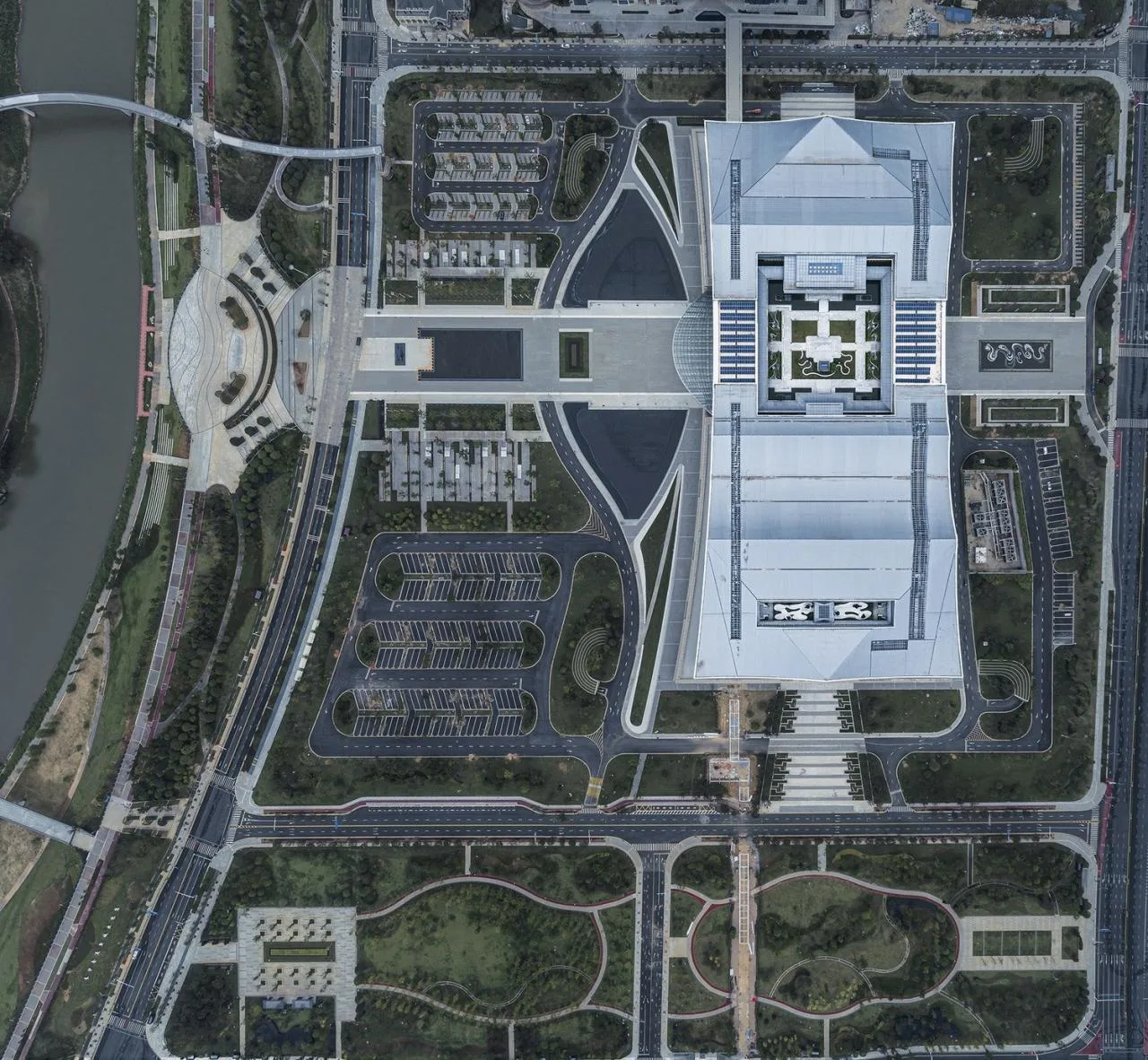
Top view © Architectural translator Yao Li
Master Plan
The project embraces a compact layout to conserve land and maximize outdoor activity spaces. With 40% green coverage and a three-dimensional green roof garden, it effectively absorbs carbon emissions from site activities and alleviates urban heat island effects. Extensive tall tree plantings provide shade and enhance carbon sequestration through the project’s forest and grass areas.
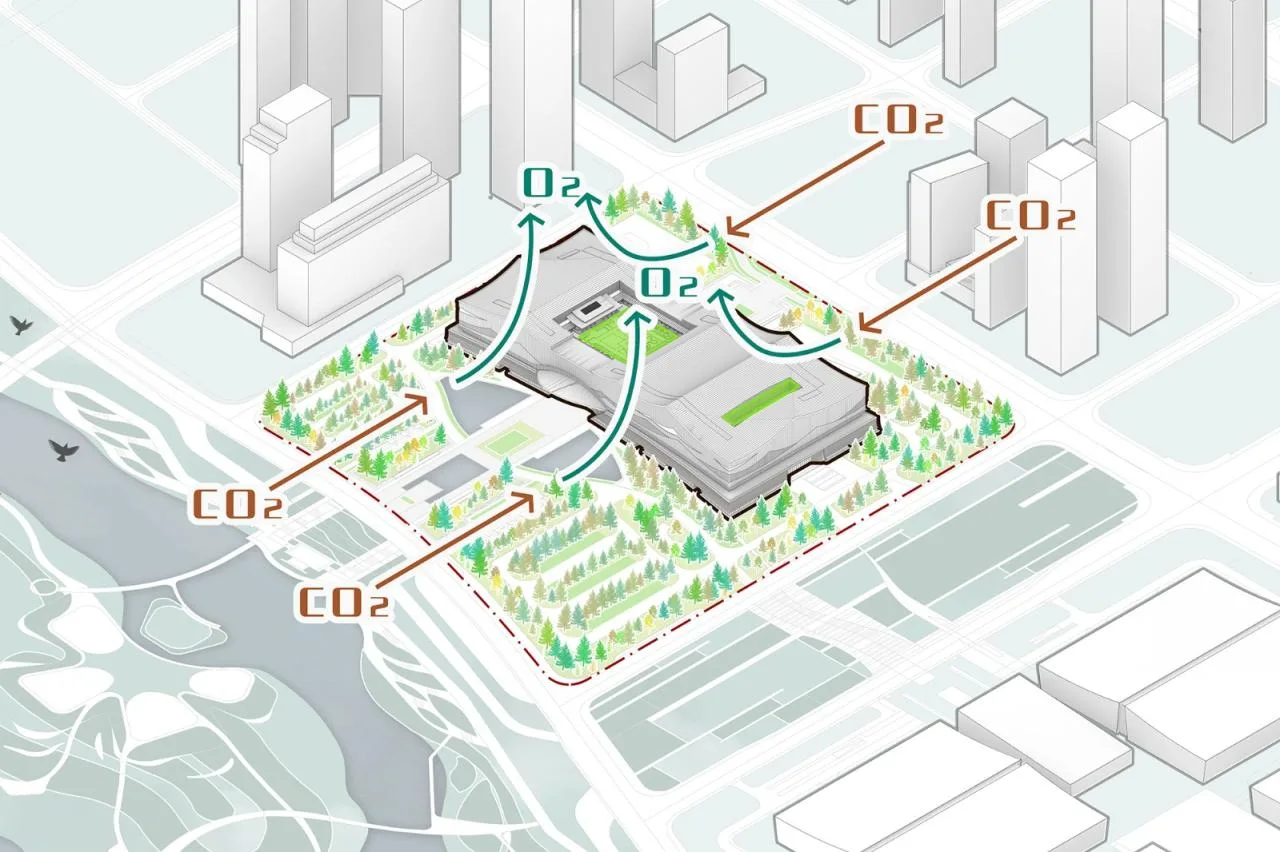
△ Green building in the overall planning © South China University of Technology Architectural Design and Research Institute Co., Ltd
Graphic Design
The floor plan employs a “layered partition” strategy to minimize operational energy consumption. The convention center can be subdivided into multiple independent venue spaces, allowing for selective operation of air conditioning and lighting systems to avoid energy waste from large, interconnected spaces.
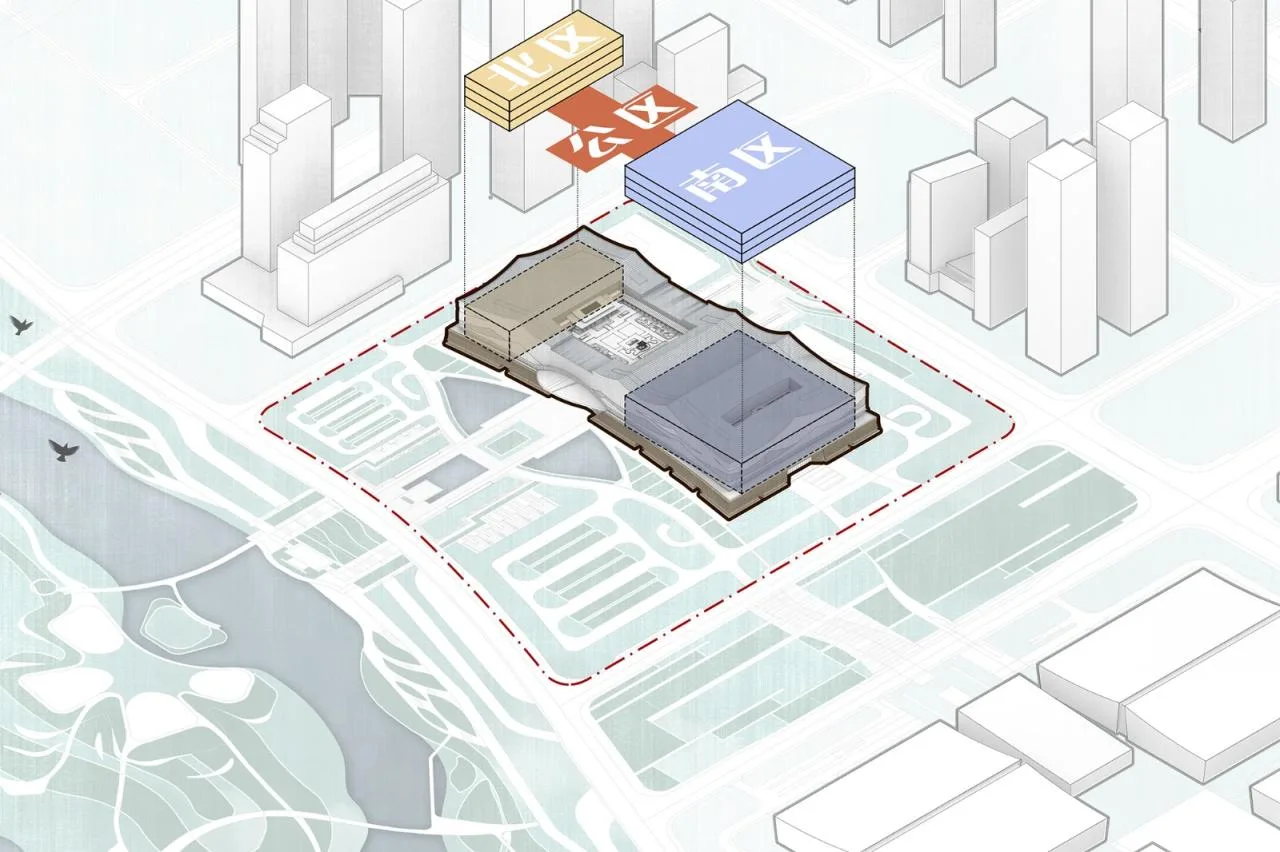
△ Hierarchical partitioning © South China University of Technology Architectural Design and Research Institute Co., Ltd
Electromechanical System
The project boasts over 75% green roof coverage and features rainwater collection and recycling for outdoor irrigation. Solar photovoltaic panels are installed on the roof. Air conditioning and fresh air units incorporate G4-level primary filters and ion electrostatic dust removal purification devices. A micro-sprinkler water-saving irrigation system is implemented, along with CO₂ concentration monitoring systems in critical indoor and underground areas.
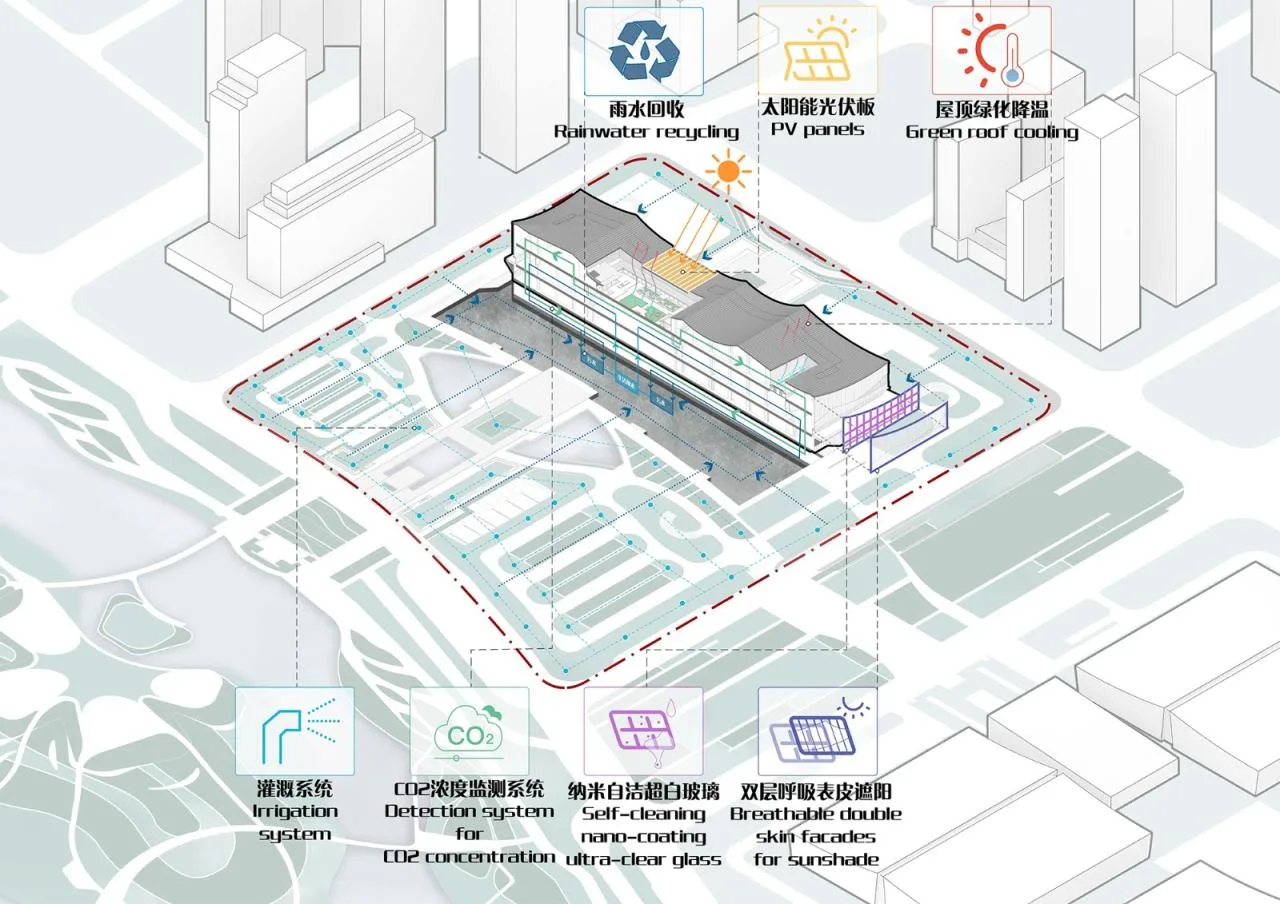
△ Green building in the overall planning © South China University of Technology Architectural Design and Research Institute Co., Ltd
Facade Design
The main facade faces east-west and features high-performance shading through metal perforated sun visors combined with glass curtain walls, forming a double-layer breathable skin. The external shading coverage exceeds 70%. The glass panels are made from ultra-white tempered ion film laminated glass that is explosion-proof, energy-saving, and sound-insulating. Nano self-cleaning technology is also applied.
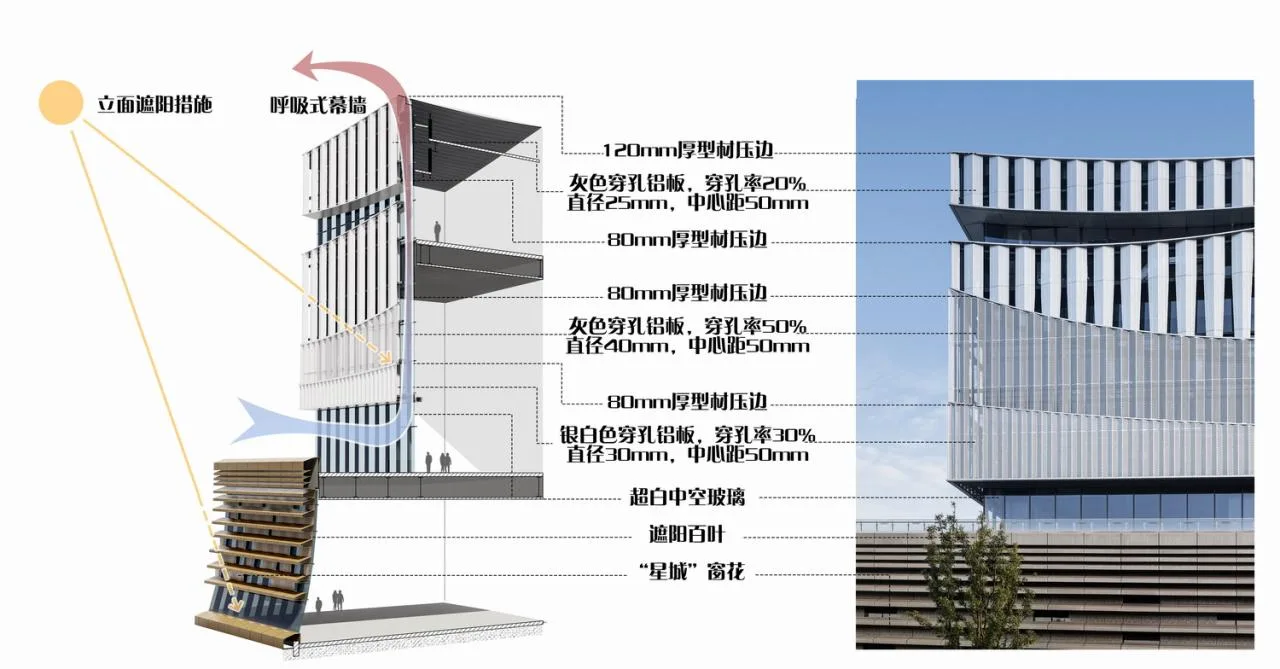
△ Facade skin © South China University of Technology Architectural Design and Research Institute Co., Ltd
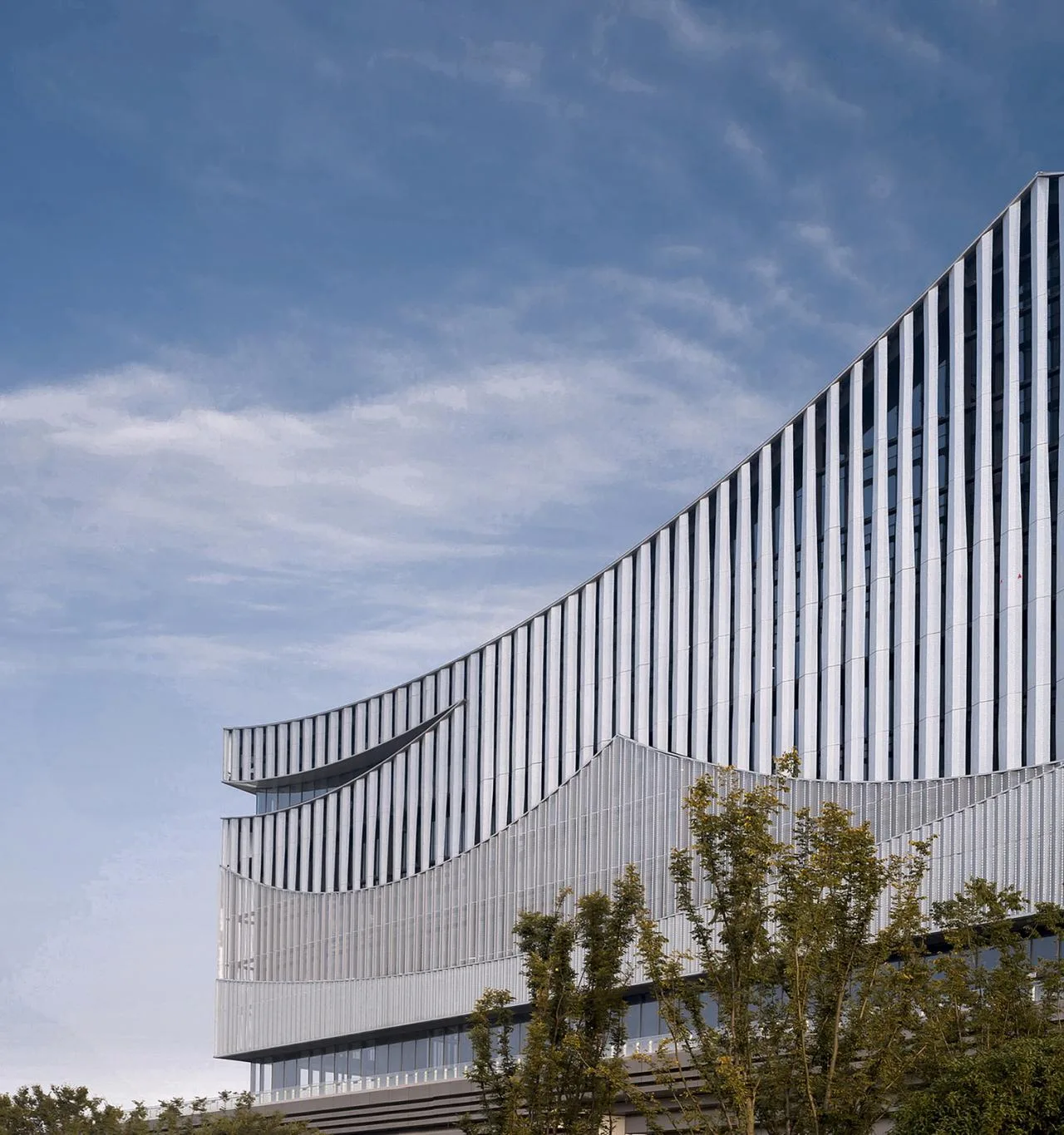
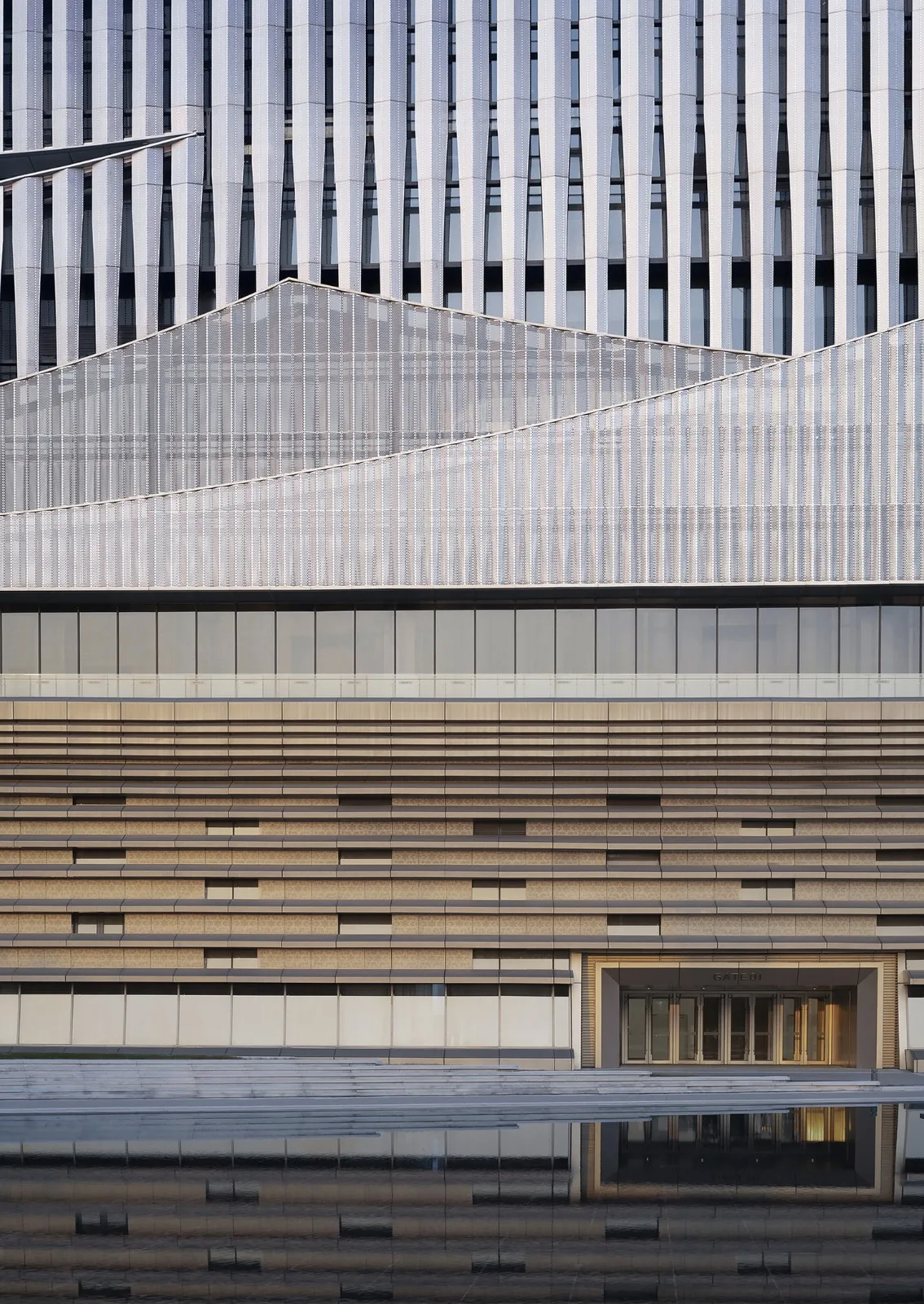
△ Architectural details © Architectural translator Yao Li
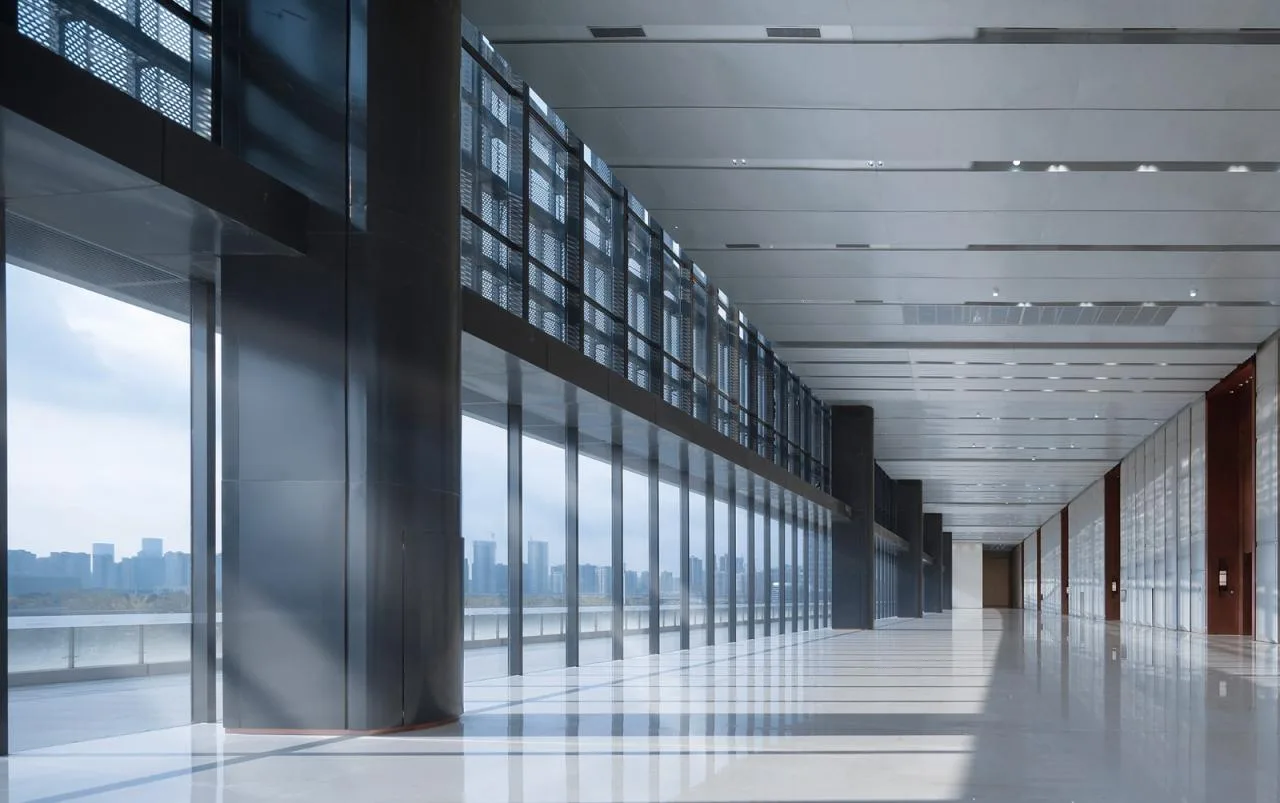
△ West side viewing corridor on the second floor © Architectural translator Yao Li
03 Comprehensive Benefits
This project is a key construction initiative in Hunan Province, garnering wide attention and significant social impact. Officially opened on October 30, 2020, the Changsha International Convention Center meets the international two-star green building standard. Upon completion, it became the largest conference center in Central China.
As the permanent main venue of the China-Africa Economic and Trade Expo, it serves as a new platform to advance the Hunan Free Trade Zone and build a pilot area for deep economic and trade cooperation between China and Africa.
Looking ahead, the center actively supports the goal of establishing Changsha as a hub for conferences and exhibitions in central China, fully leveraging the leading role of the high-speed rail conference and exhibition new city district.
Since opening, the venue has maintained strong operational performance and hosted multiple international high-profile forums, including the “First Boao Forum for Asia Global Economic Development and Security Forum,” the “Second China Africa Economic and Trade Expo,” and the “World Computer Conference.” As a modern architectural landmark, it has become a new symbol for both Changsha and Hunan Province, significantly enhancing the city’s image and appeal.
The project promotes commodity circulation, technology exchange, information sharing, and economic cooperation, playing a vital role in driving urban development and the local economy.
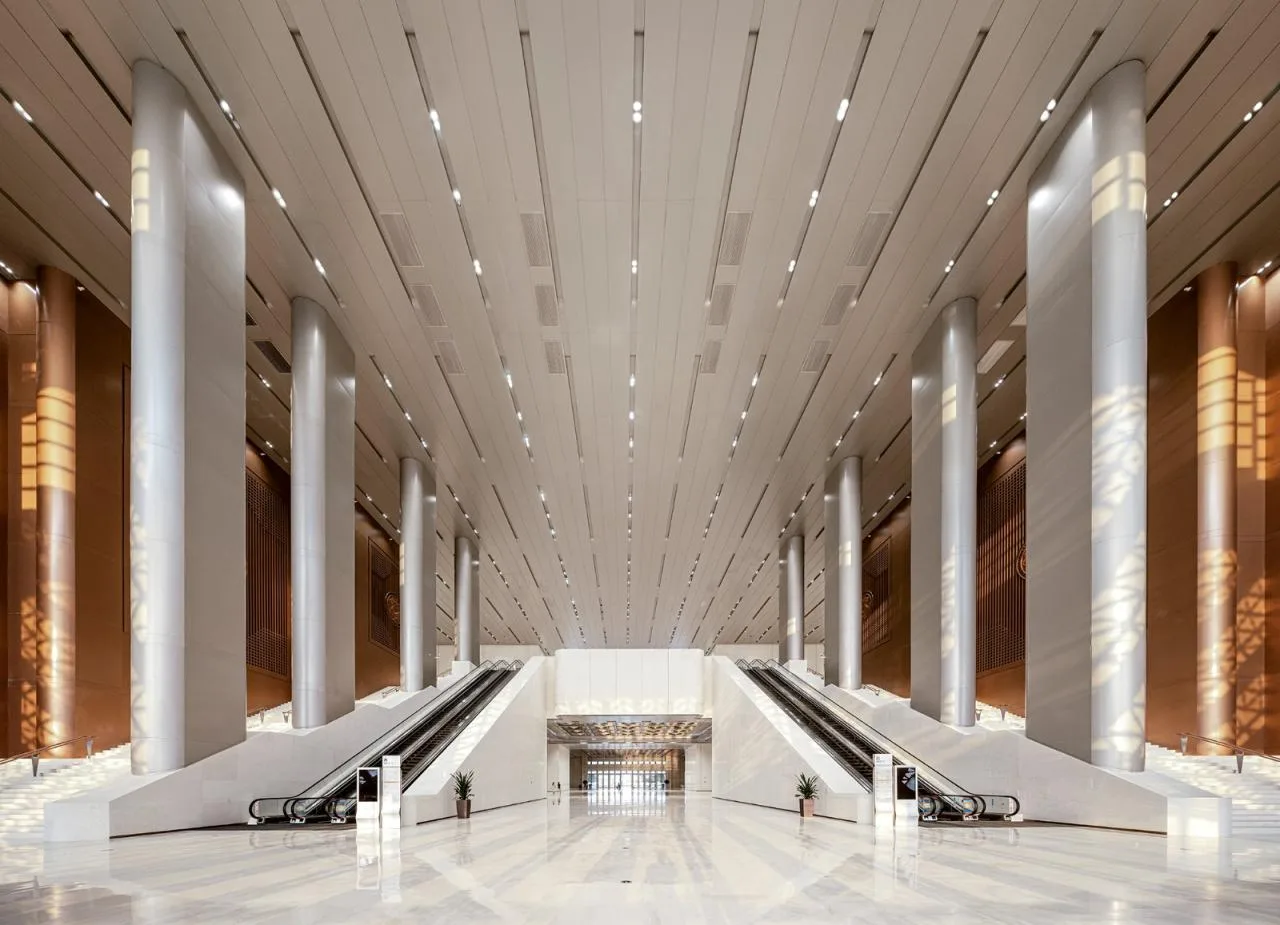
The main entrance hall of Jinmen Yutang © Architectural translator Yao Li
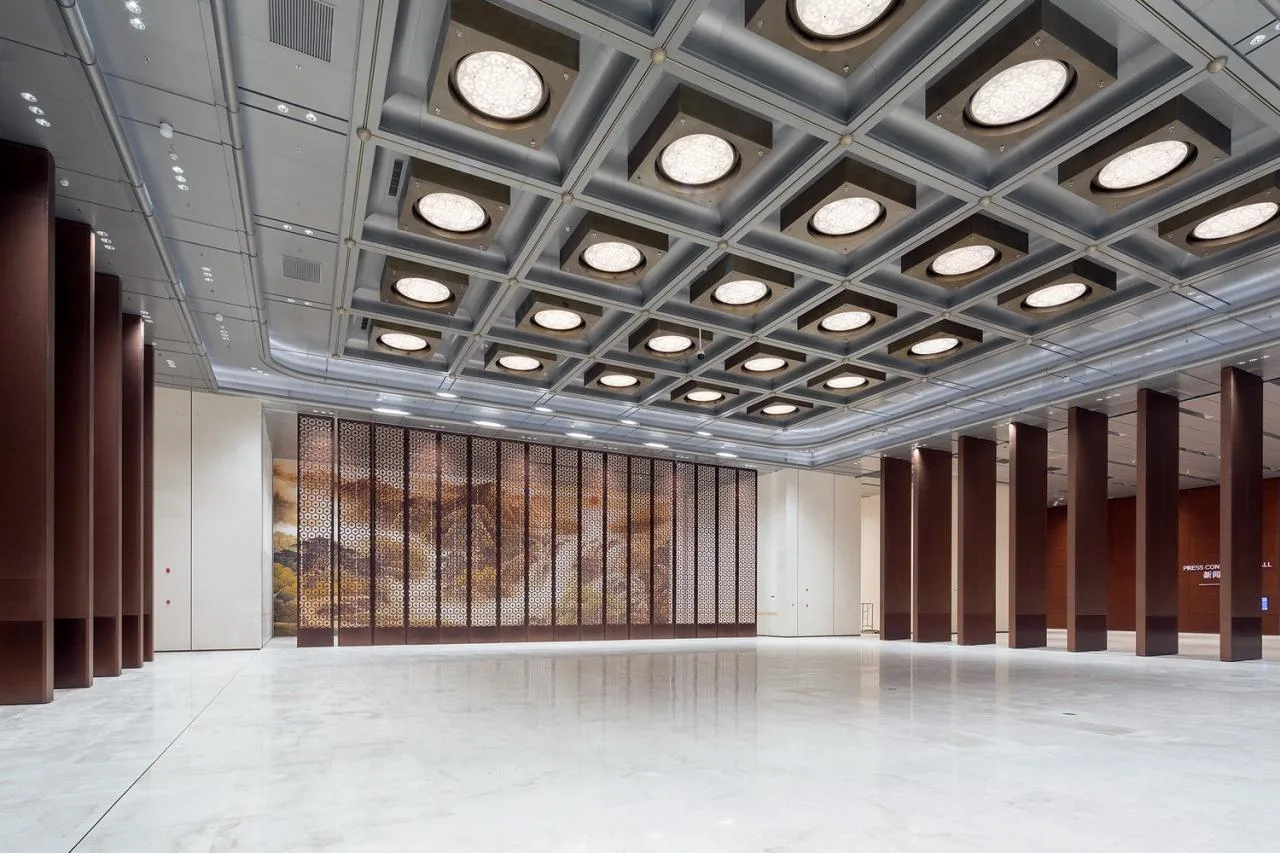
△ Reception Hall on the First Floor © Golden Mantis
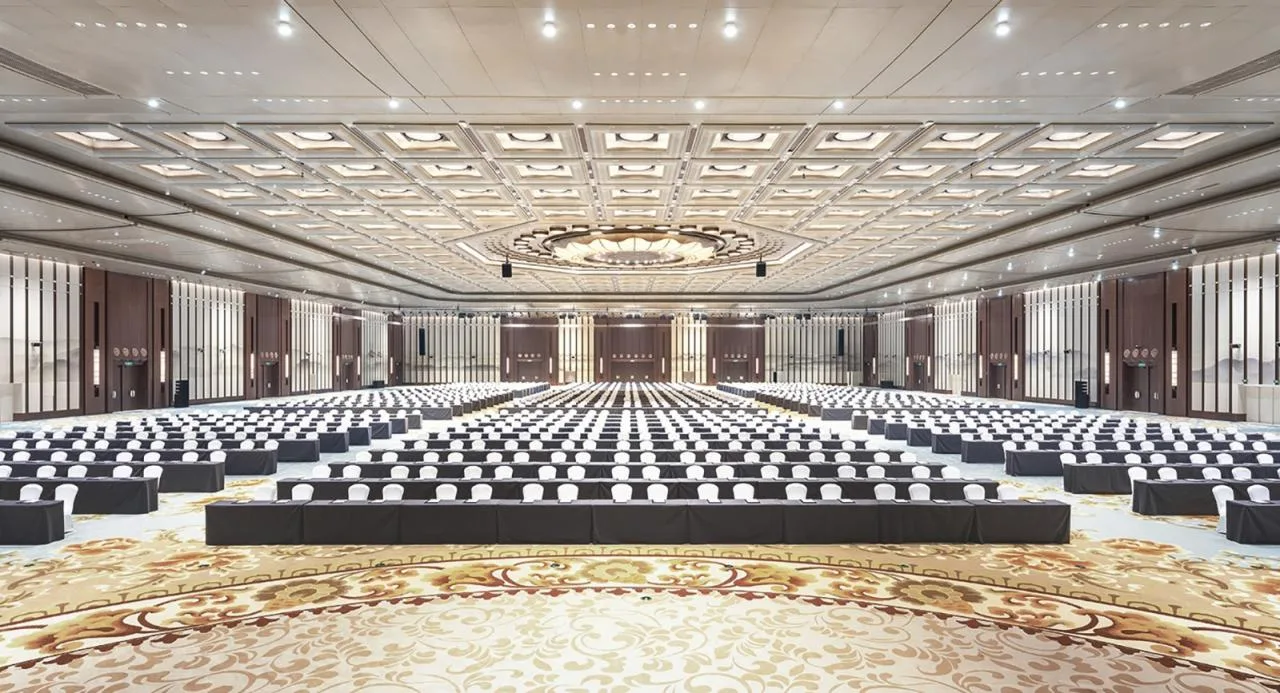
The main venue, Furong Hall, accommodates 5,000 people © Golden Mantis
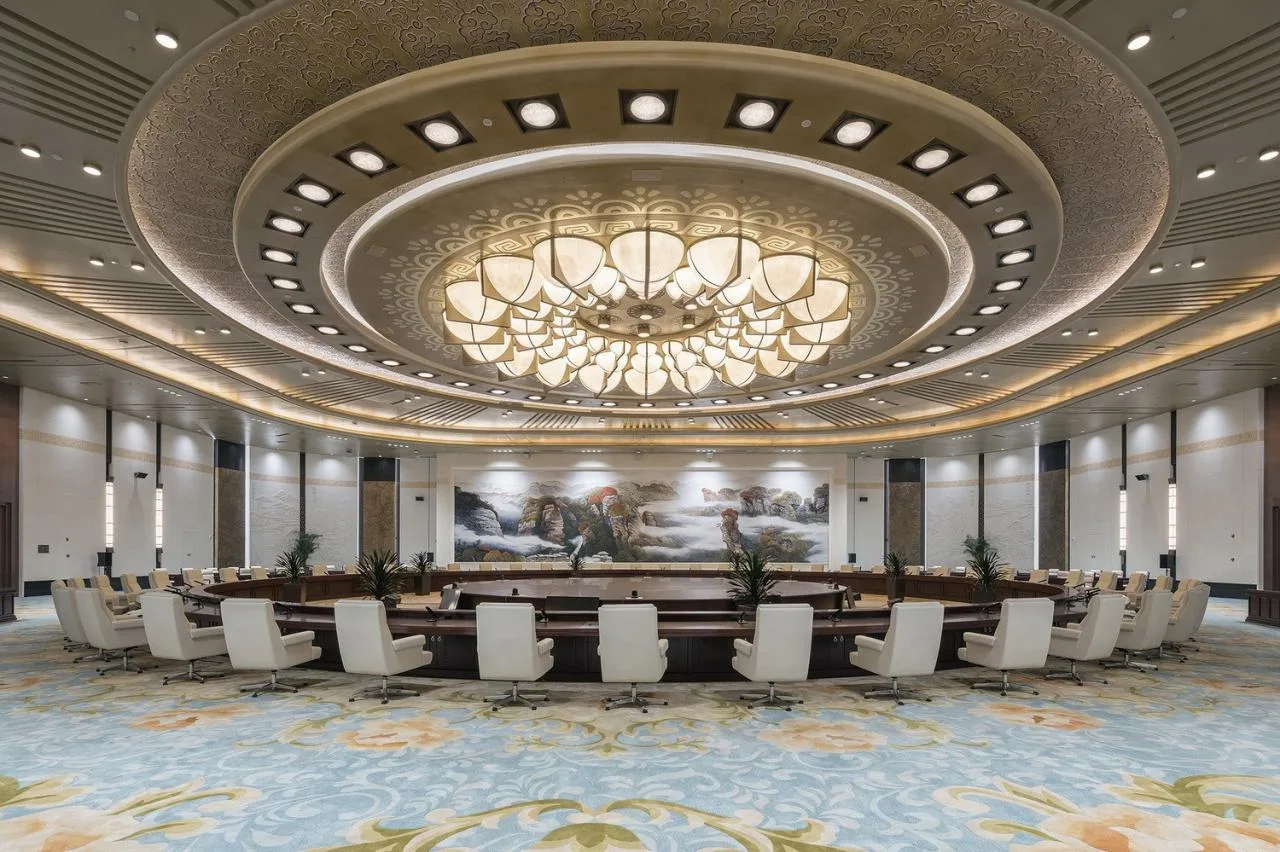
△ Roundtable Conference Hall © Golden Mantis
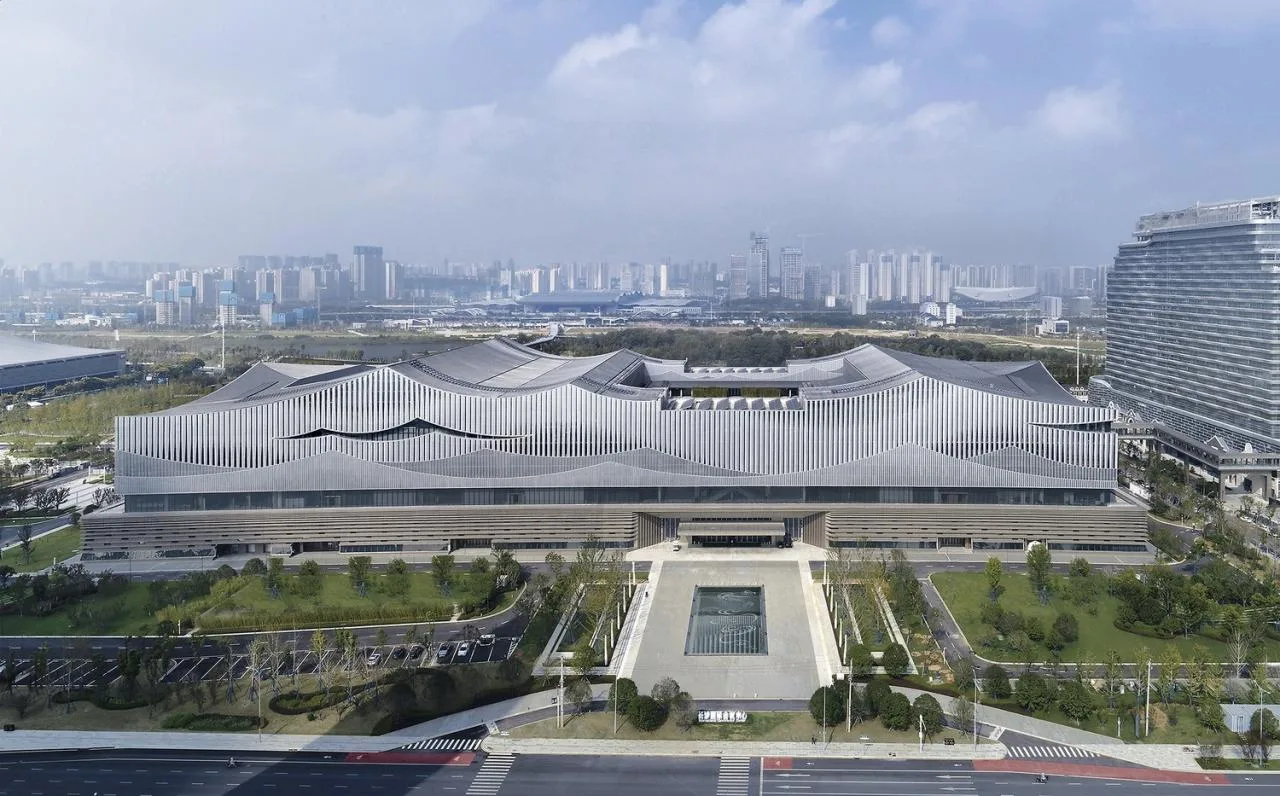
△ East facade aerial daytime view © Architectural translator Yao Li
04 Design Drawings
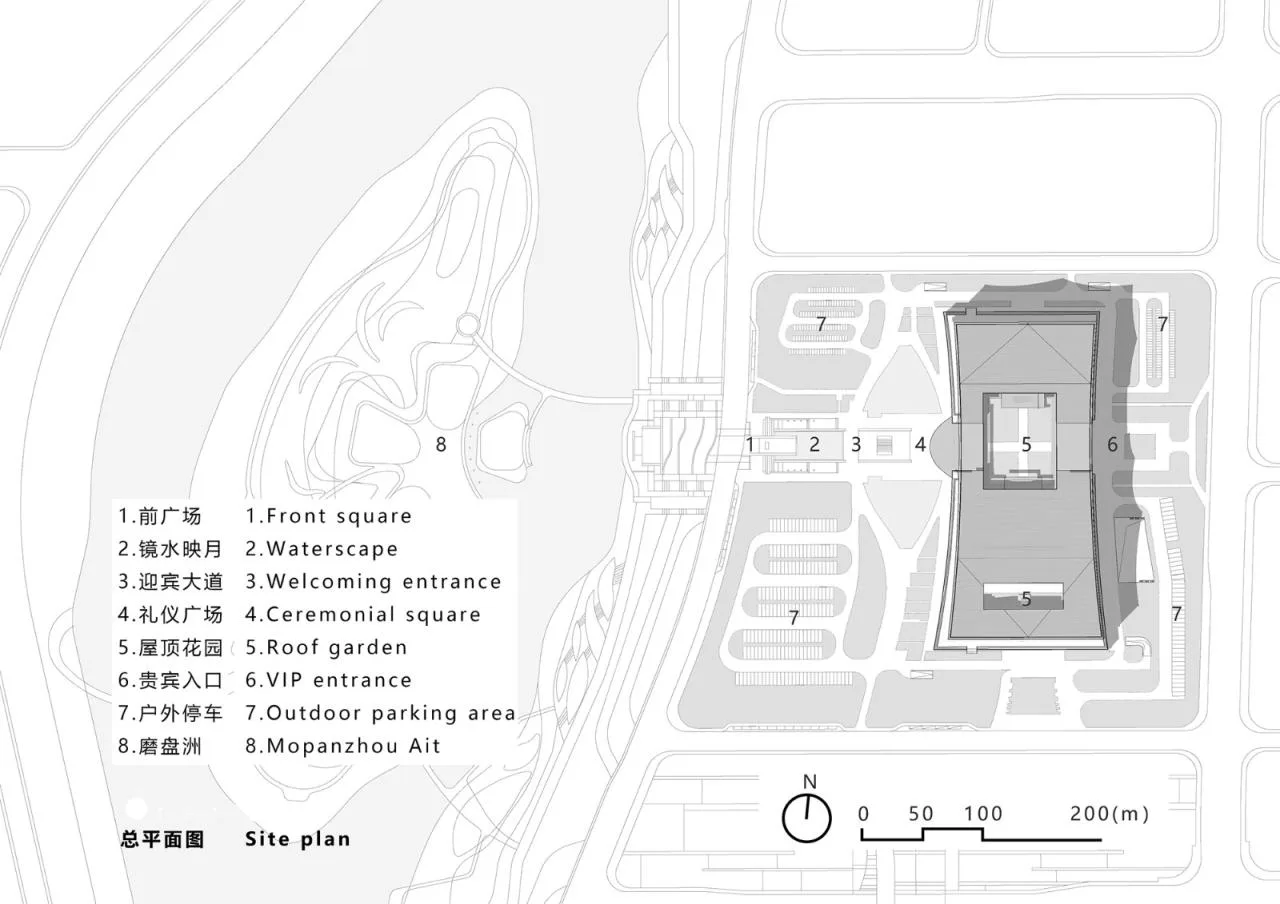
△ General layout plan © South China University of Technology Architectural Design and Research Institute Co., Ltd
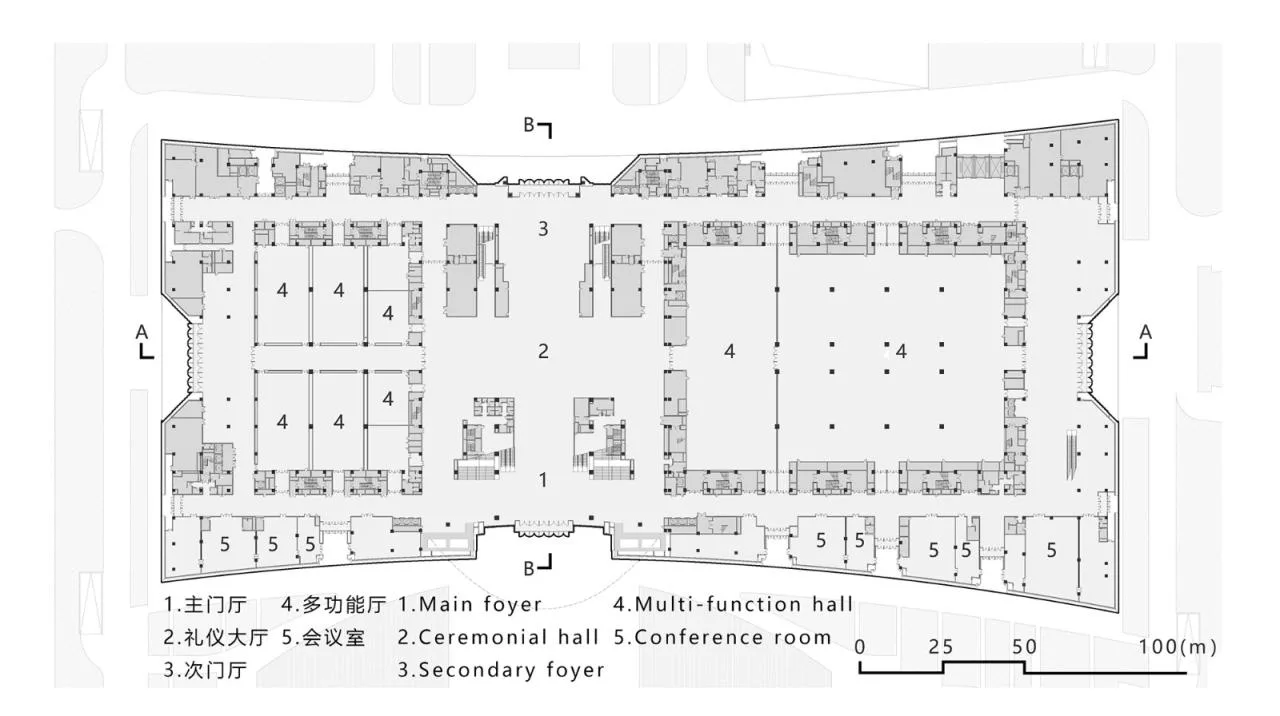
△ First floor plan © South China University of Technology Architectural Design and Research Institute Co., Ltd
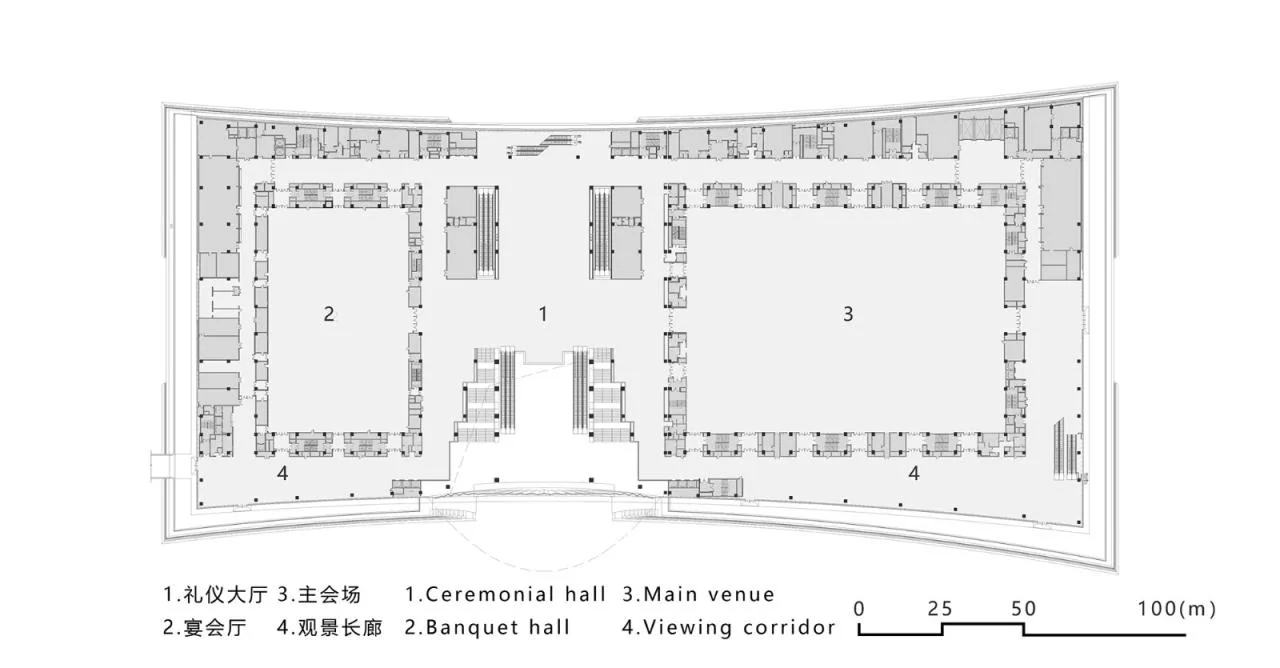
△ Second floor plan © South China University of Technology Architectural Design and Research Institute Co., Ltd
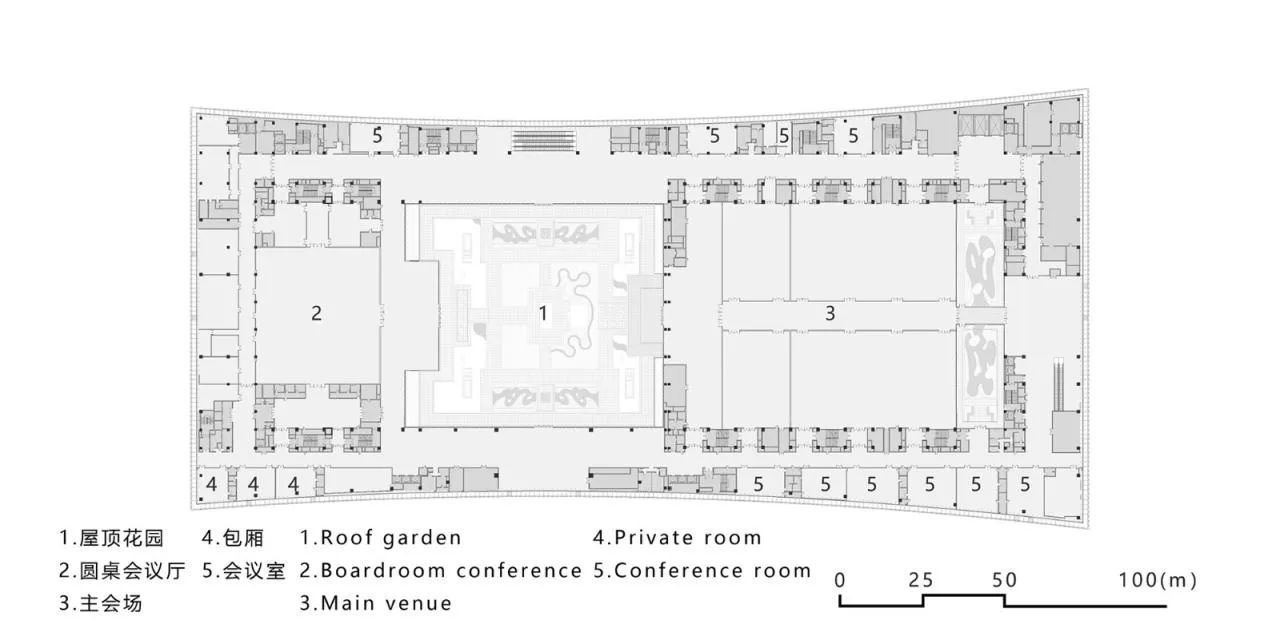
△ Third floor plan © South China University of Technology Architectural Design and Research Institute Co., Ltd
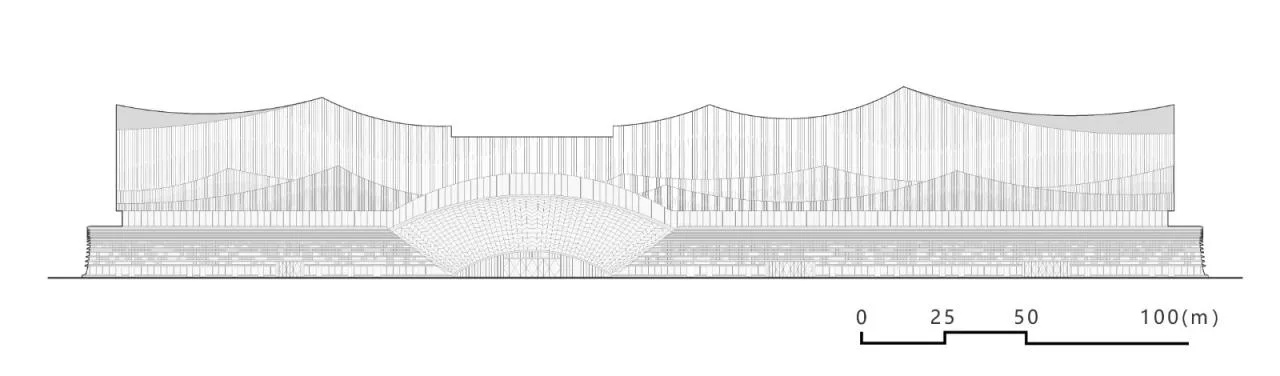
△ West elevation view © South China University of Technology Architectural Design and Research Institute Co., Ltd
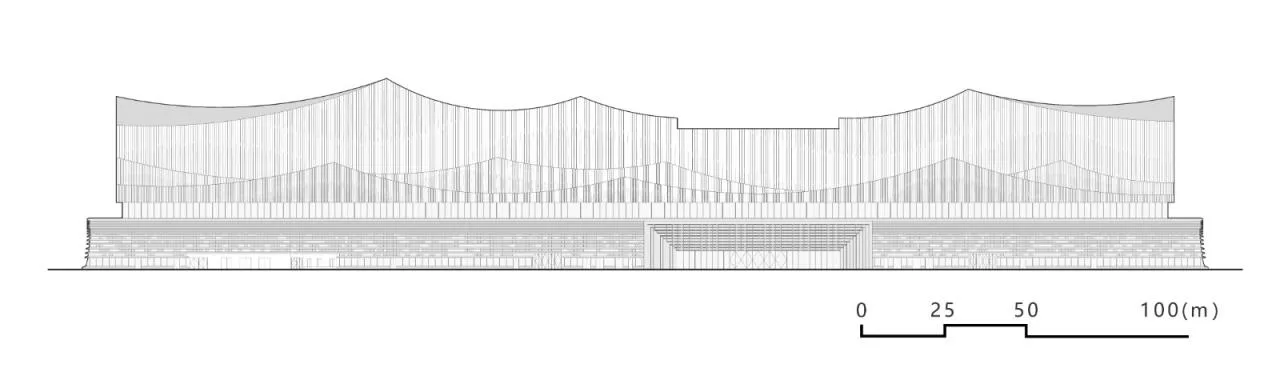
△ East elevation view © South China University of Technology Architectural Design and Research Institute Co., Ltd
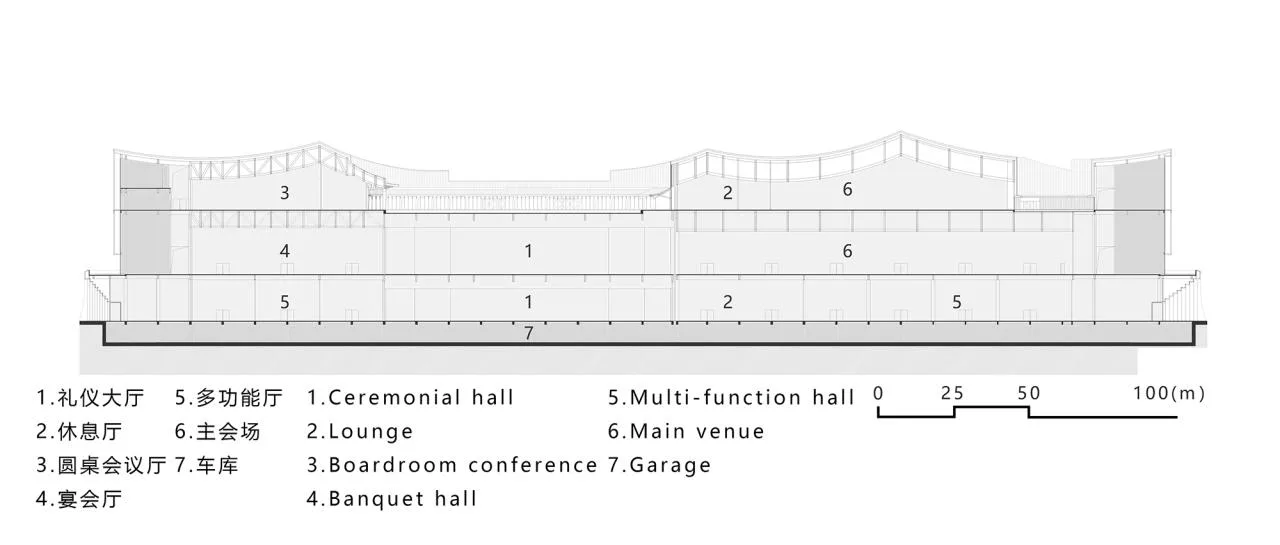
△ A-A sectional view © South China University of Technology Architectural Design and Research Institute Co., Ltd
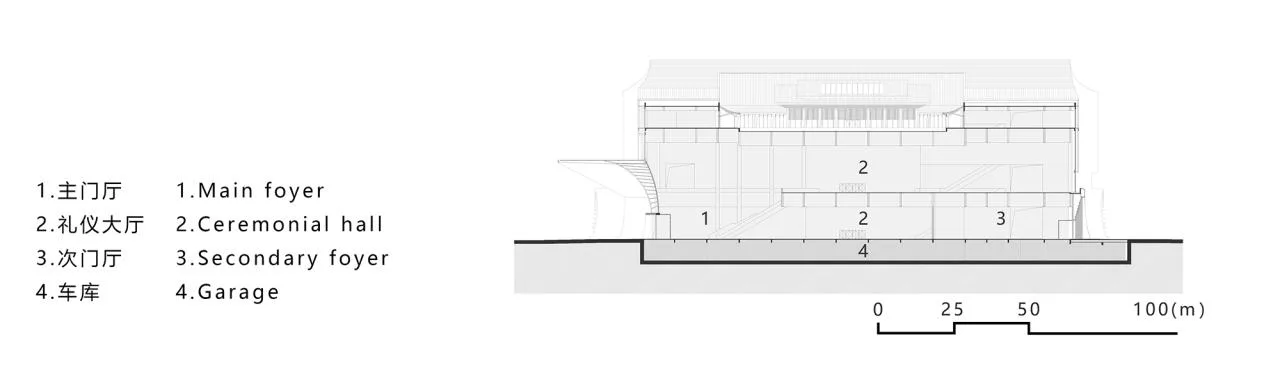
△ A-B section diagram © South China University of Technology Architectural Design and Research Institute Co., Ltd
Project Overview
Project Name: Changsha International Convention Center
Project Type: Key Construction Project in Hunan Province
Location: High-Speed Railway New City District, Changsha City, Hunan Province
Land Area: 212,685.97 square meters
Building Area: 169,464.25 square meters
Project Photography: Architectural Translator Yao Li, Golden Mantis
Design Team
Owners: Changsha Chengtou International Convention and Exhibition Center Investment and Development Co., Ltd., Changsha Guangda Convention and Exhibition Development and Operation Co., Ltd
Architectural Master Designer, Preliminary Designer, and Overall Process Designer: South China University of Technology Architectural Design and Research Institute Co., Ltd
Architectural Design Team Leaders: He Jingtang, Qiu Jianfa, Wu Yongzhen
Architectural Design Team Members: Li Qixia, Chen Zhidong, Pei Zejun, Xie Junlin, Luo Menghao, Mai Heng, Chen Haonan, Chen Zhibiao, Lin Lin, Zou Hongsheng, Liang Zhiliang, Huang Zhishan, Luo Changyong, Wu Daijie, Deng Xinxi, Liu Xiao, Wang Renyu, Su Hao, Zeng Xiance, Cao Yunye, Yang Liu, Jiang Yi, Liu Guangshuang, Yang Wanyi, Wen Cen Hong, Jin Guan Baoling, Yu Yang Guoshi Jia, Huang Pujie, He Yaobing, He Shigang, Hu Wenbin, Wu Chenchen, Geng Wangyang, Fan Ximei, Huang Guangwei, Zhou Huazhong
Collaborative Design Unit for Architectural Construction Drawings: Shenzhen Botao Lansen International Architectural Design Co., Ltd
Facade and Curtain Wall Construction Drawing Design Unit: South China University of Technology Architectural Design and Research Institute Co., Ltd., Shenzhen Sanxin Curtain Wall Engineering Co., Ltd., Beijing Jianghe Curtain Wall System Engineering Co., Ltd
Landscape Design Unit: South China University of Technology Architectural Design and Research Institute Co., Ltd. (Plan), AECOM (Guangzhou) Co., Ltd. (Plan), Shenzhen Sairui Landscape Engineering Design Co., Ltd
Interior Design Unit: Beijing Gangyuan Architectural Decoration Design and Research Institute Co., Ltd
Lighting Design Unit: Shenzhen Daguan United Lighting Design Co., Ltd
Logo Design Unit: Shenzhen Xinggexing Image Design Co., Ltd
Project Awards:
- First Prize of Public Building Design in the 2023 Guangdong Province Excellent Engineering Survey and Design Award
- First Prize (Scheme Category) of the 9th Guangdong Provincial Architectural Design Award, First Place
- 14th Guangdong Steel Structure Gold Award “Guangdong Steel Award” (Design Category)














Must log in before commenting!
Sign Up