
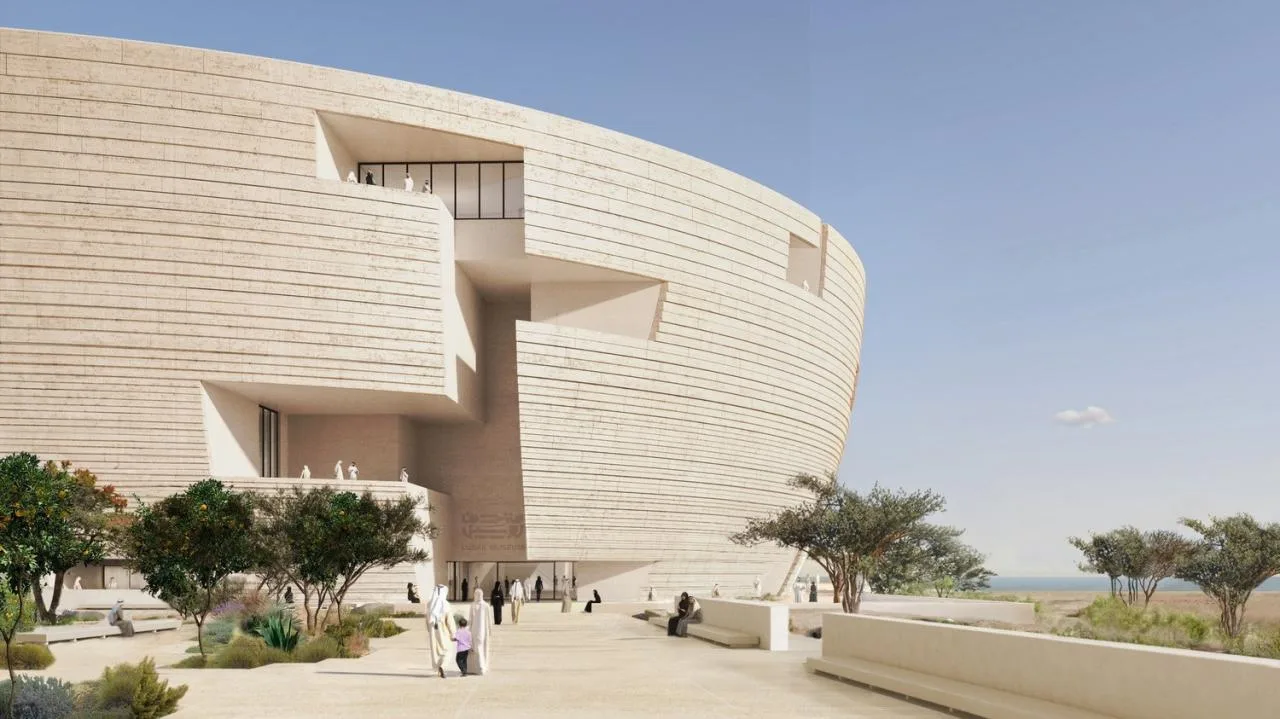
The Qatar Museum has unveiled renderings of the upcoming Lusail Museum, designed by the renowned Swiss architectural firm Herzog & de Meuron. This museum is set to house one of the largest collections of Eastern art, exploring the movement of people and ideas across the globe over centuries. Beyond its role as a museum, it aims to provide advanced research opportunities for scholars, academics, policymakers, and curators.
Conceptually, the building is envisioned as a vertically layered open-air market—a micro city within a structure—designed to foster dialogue, debate, and contemplation on global issues.
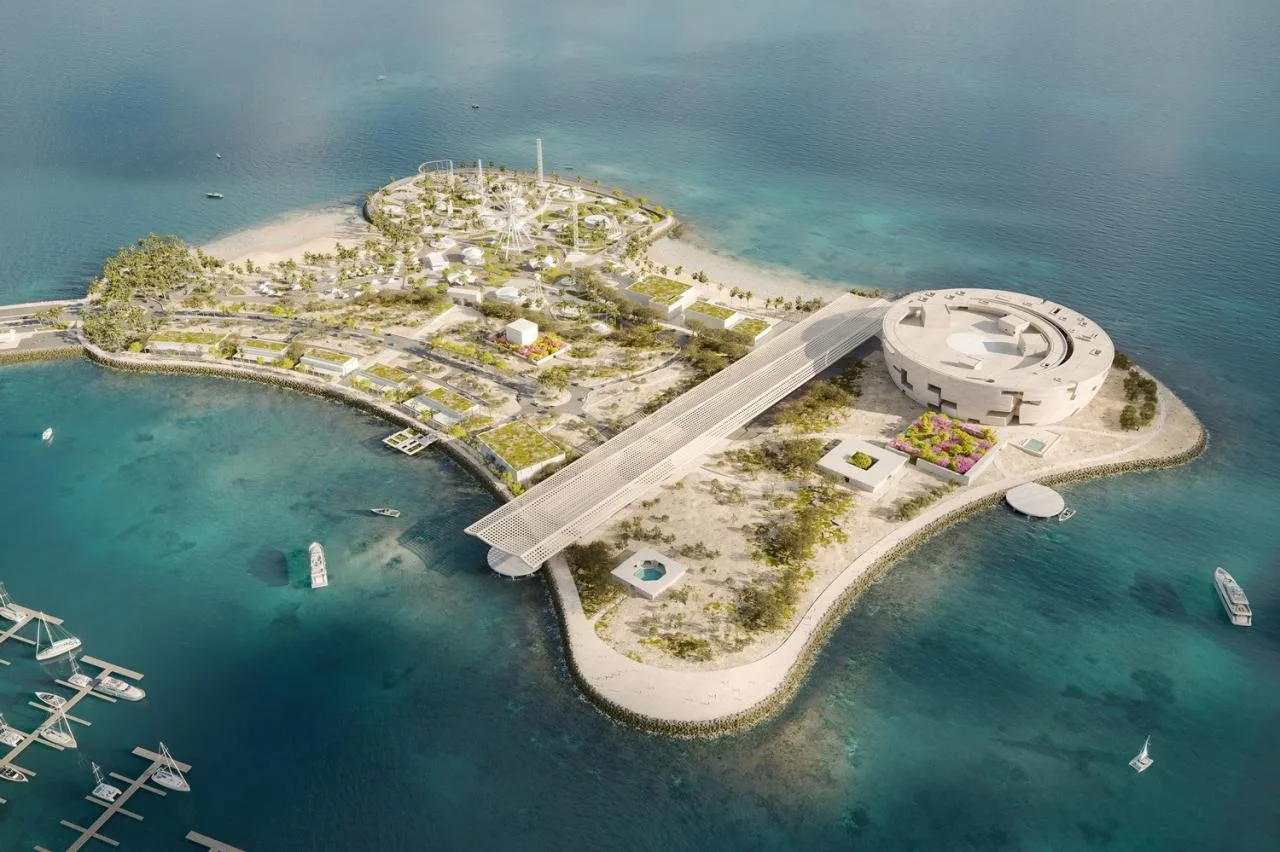
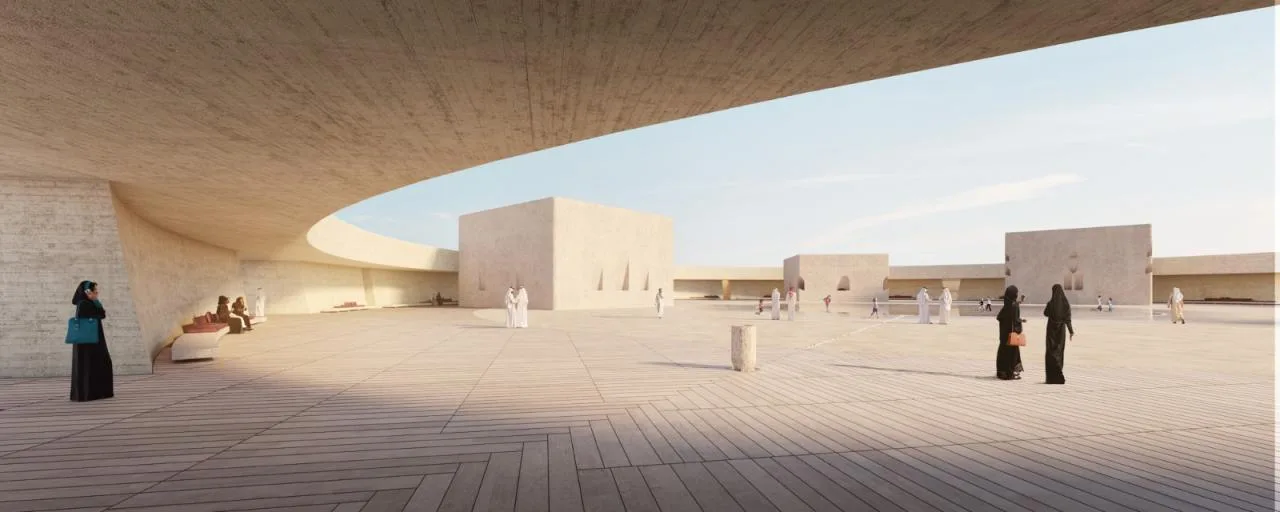
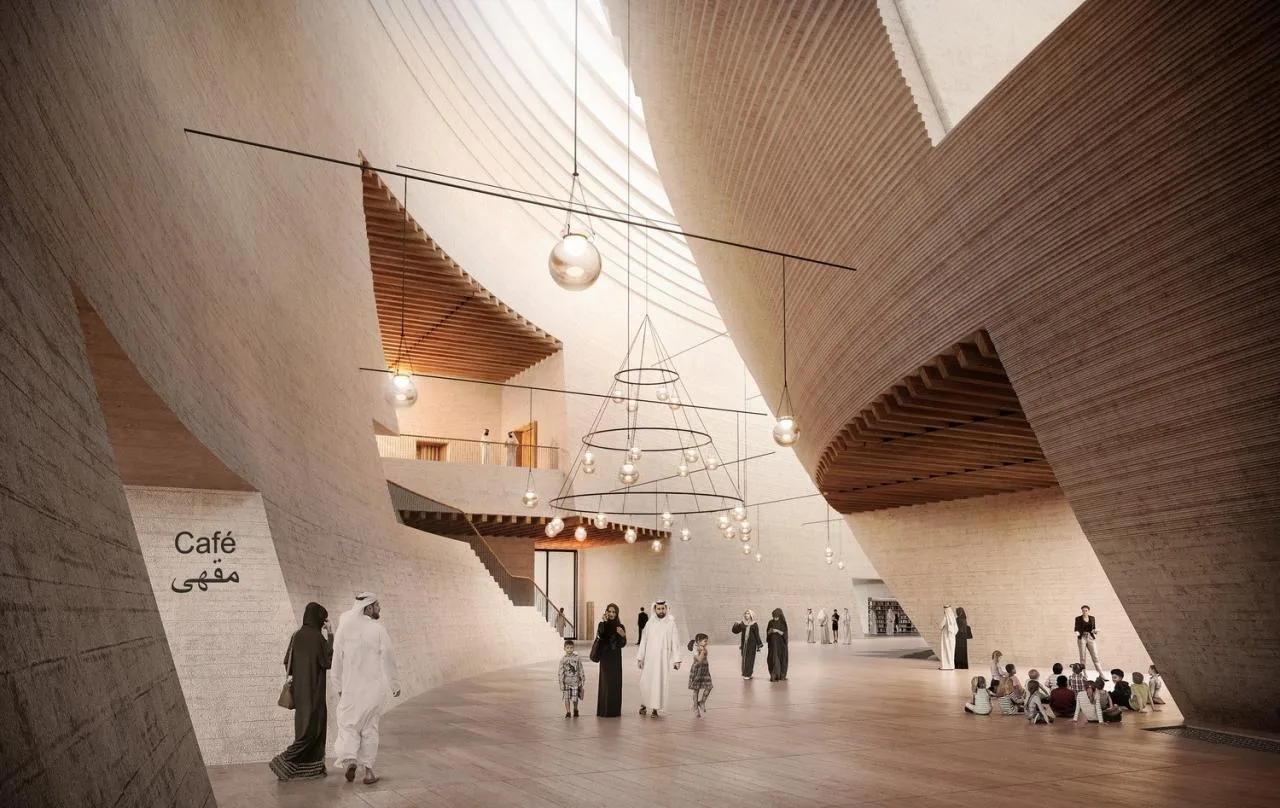
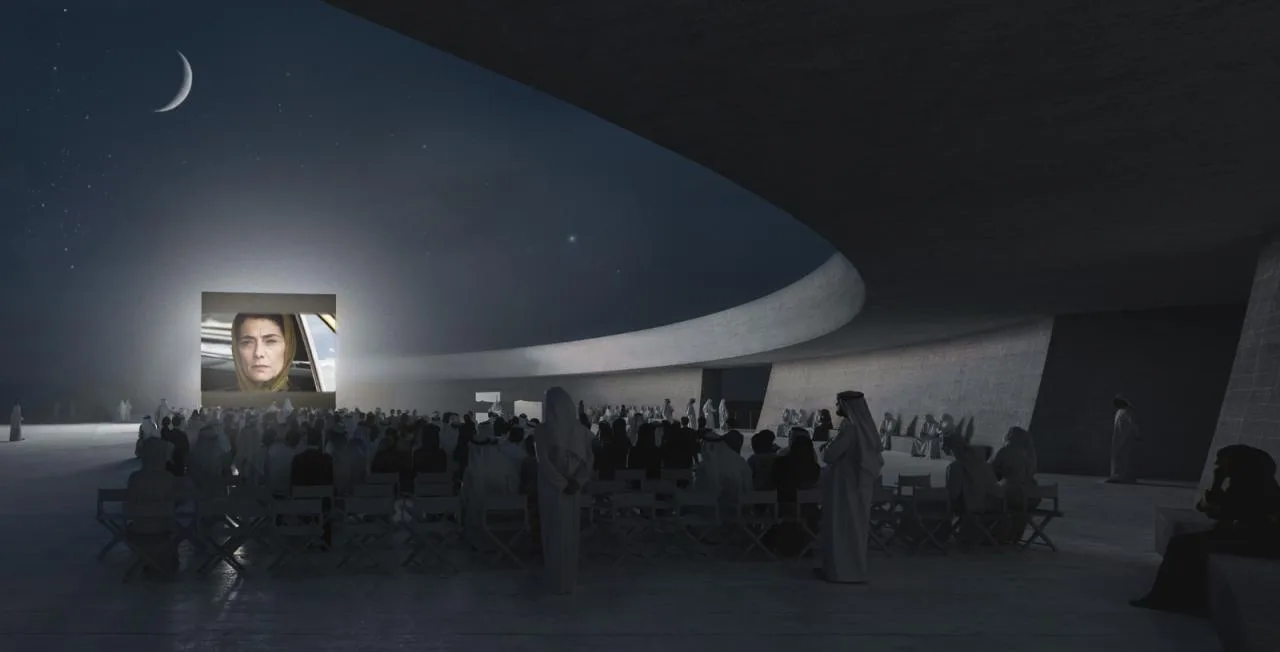
Located at the southern tip of the island, Herzog & de Meuron’s circular design draws inspiration from local architectural traditions. The building’s form is sculpted to create crescent-shaped spaces that receive natural light from above, accommodating public functions such as libraries, auditoriums, shops, cafes, and prayer rooms.
Its proximity to the late 19th-century residence of Sheikh Jassim bin Mohammed Al Thani, the founder of modern Qatar, adds significant historical importance to the site.
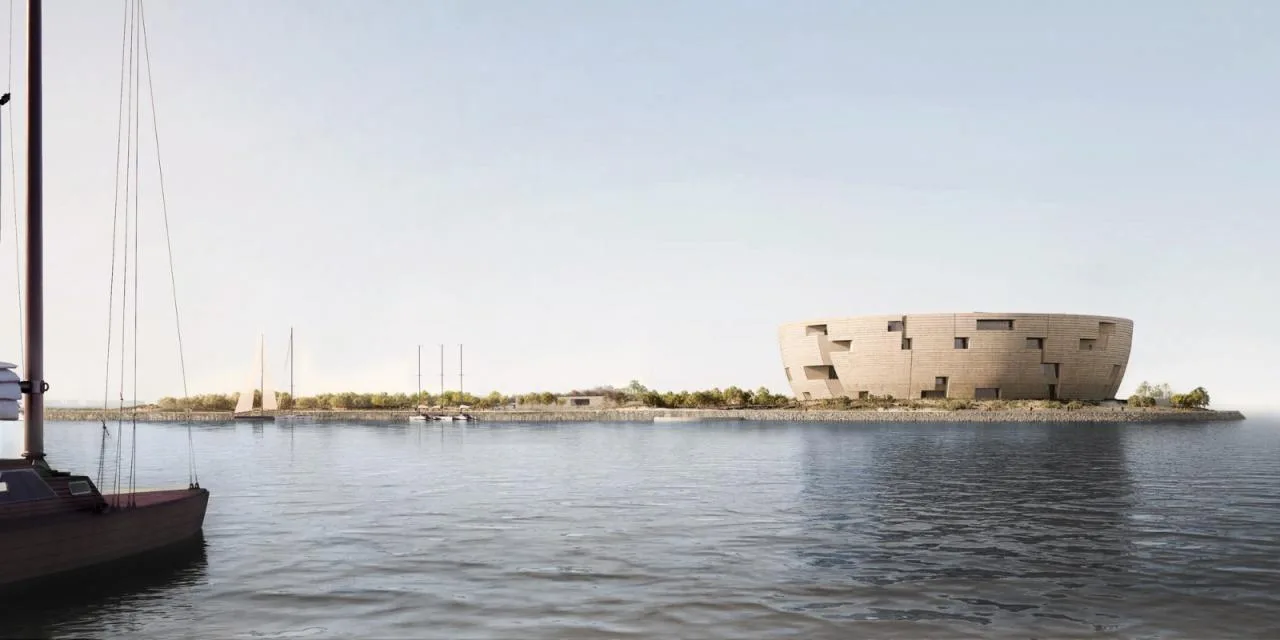
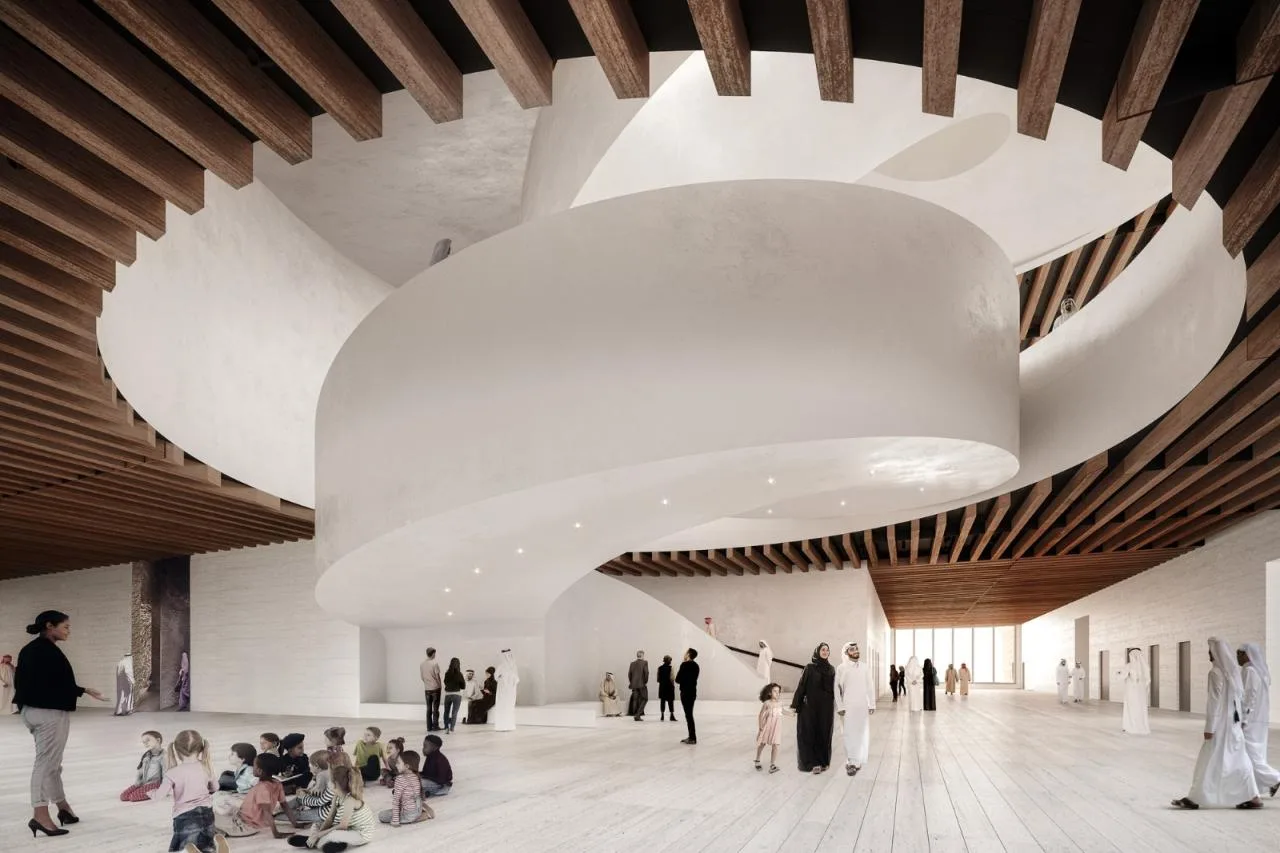
The museum’s exterior features rough, sandy materials that reflect the surrounding coastal environment. To deepen its connection to local customs and traditions, the architects collaborated closely with local craftsmen and artisans, aiming to preserve and showcase long-standing cultural practices and industries.
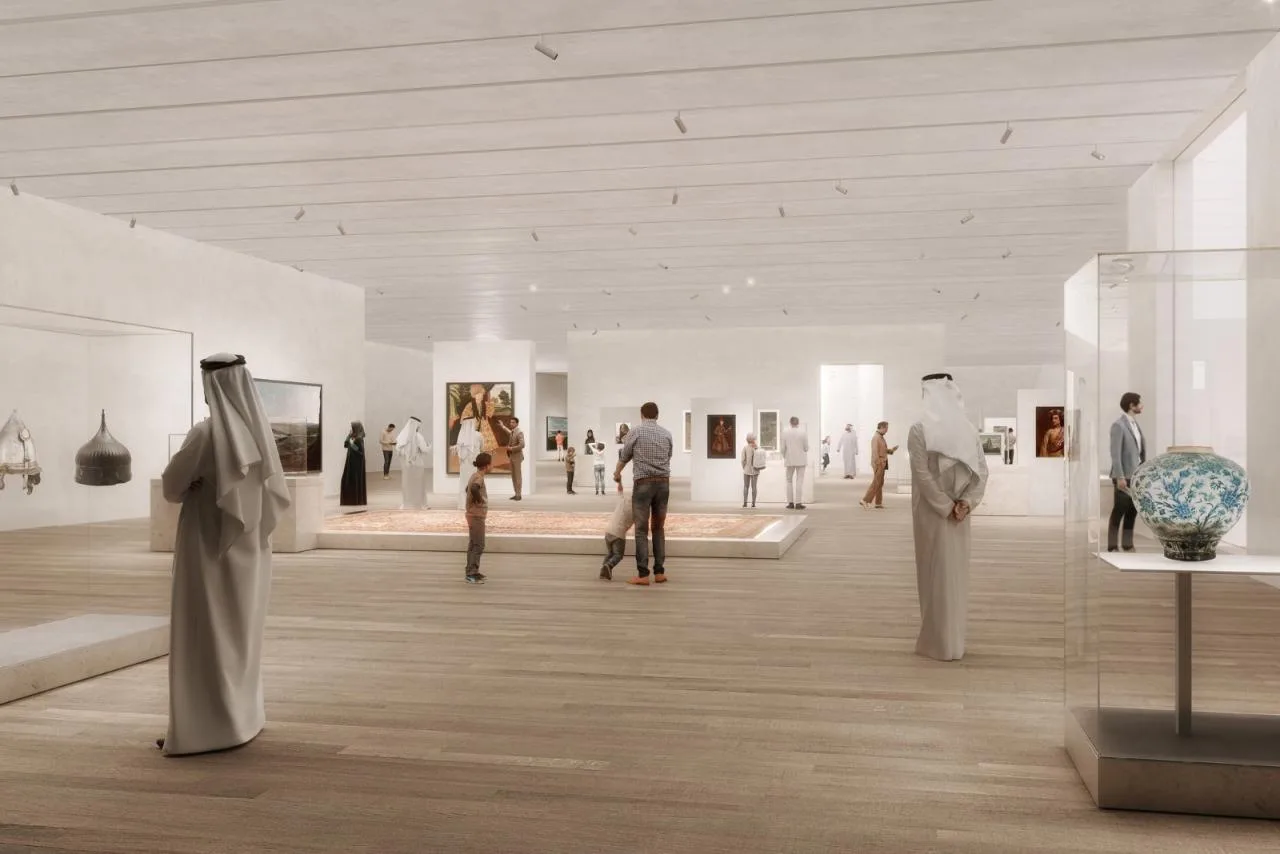
Variations in scale and material quality enhance the sensory experience for visitors. The interior spaces include a polished gypsum staircase, a reflective metal prayer area, a wooden library, a softly designed auditorium, and several cushioned niches—all crafted from a blend of materials such as wood, textiles, metal, and tiles.
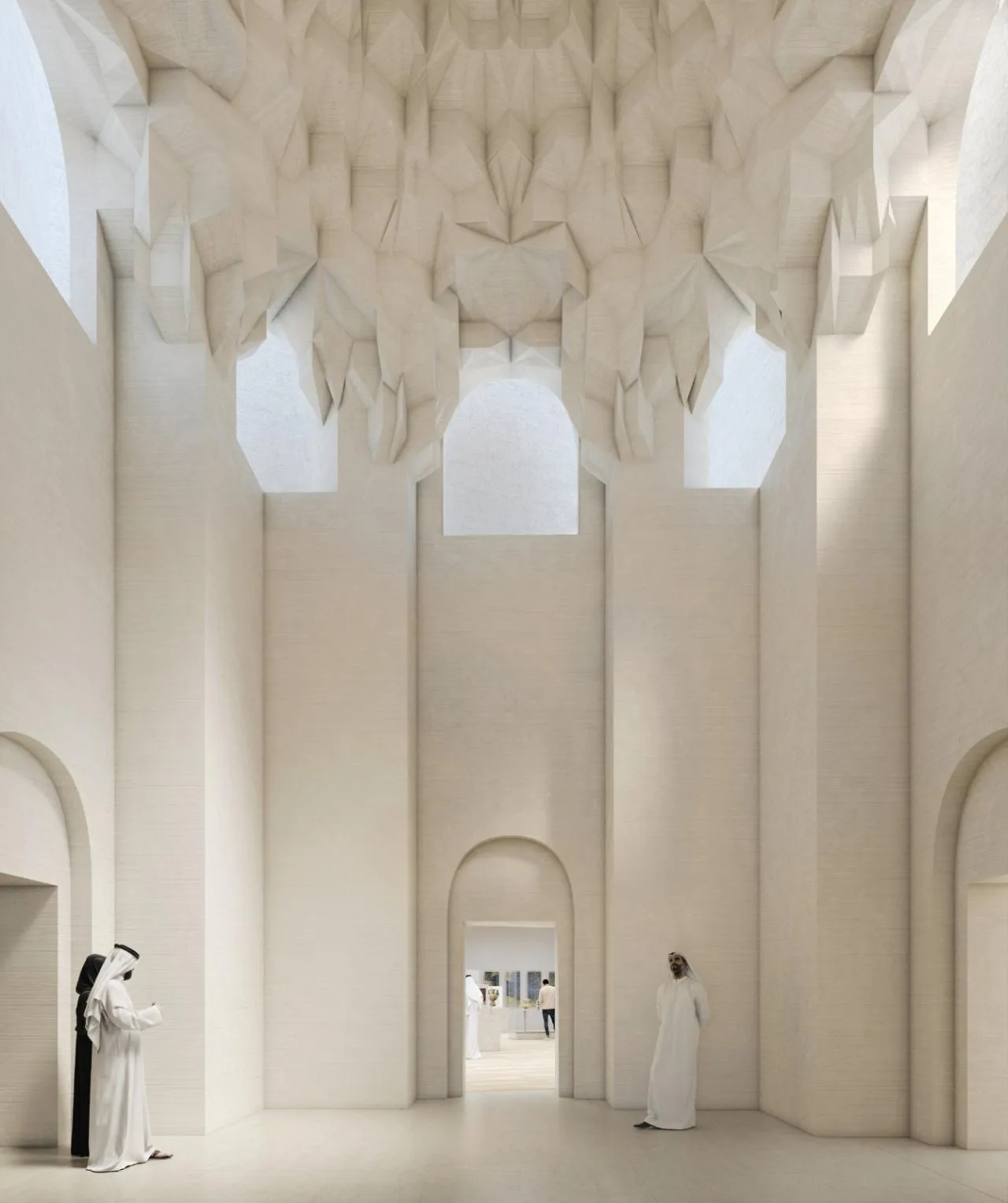
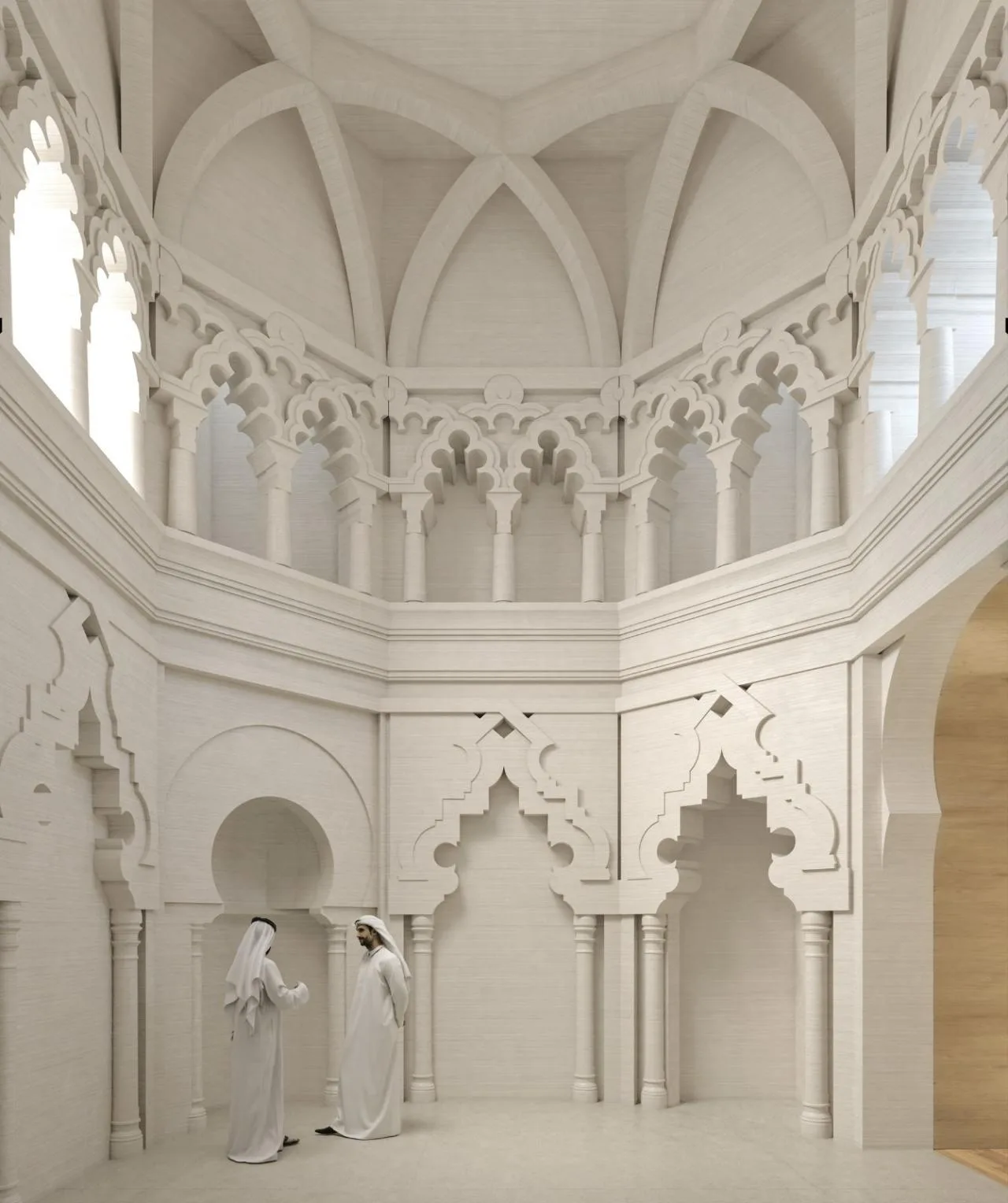
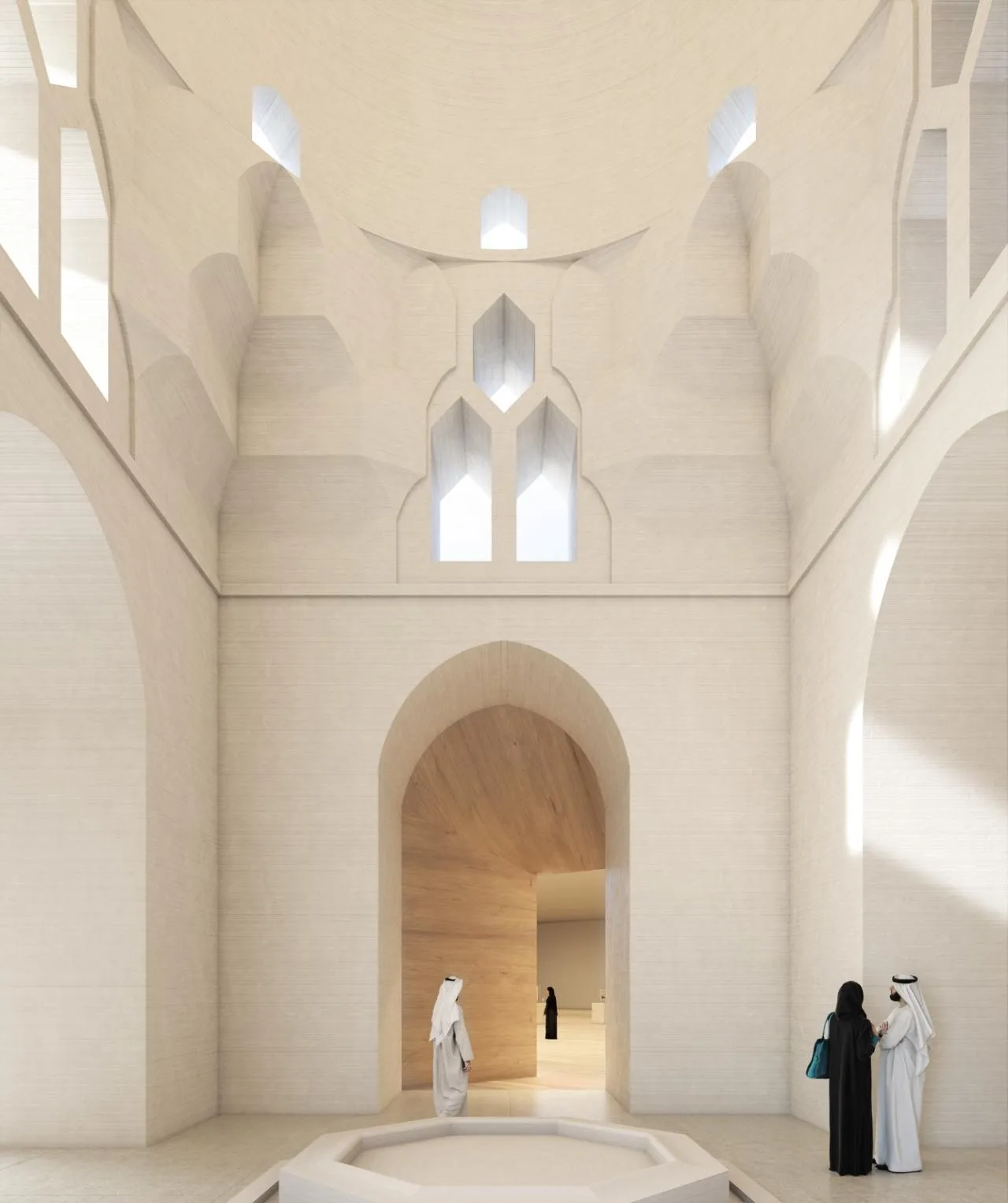
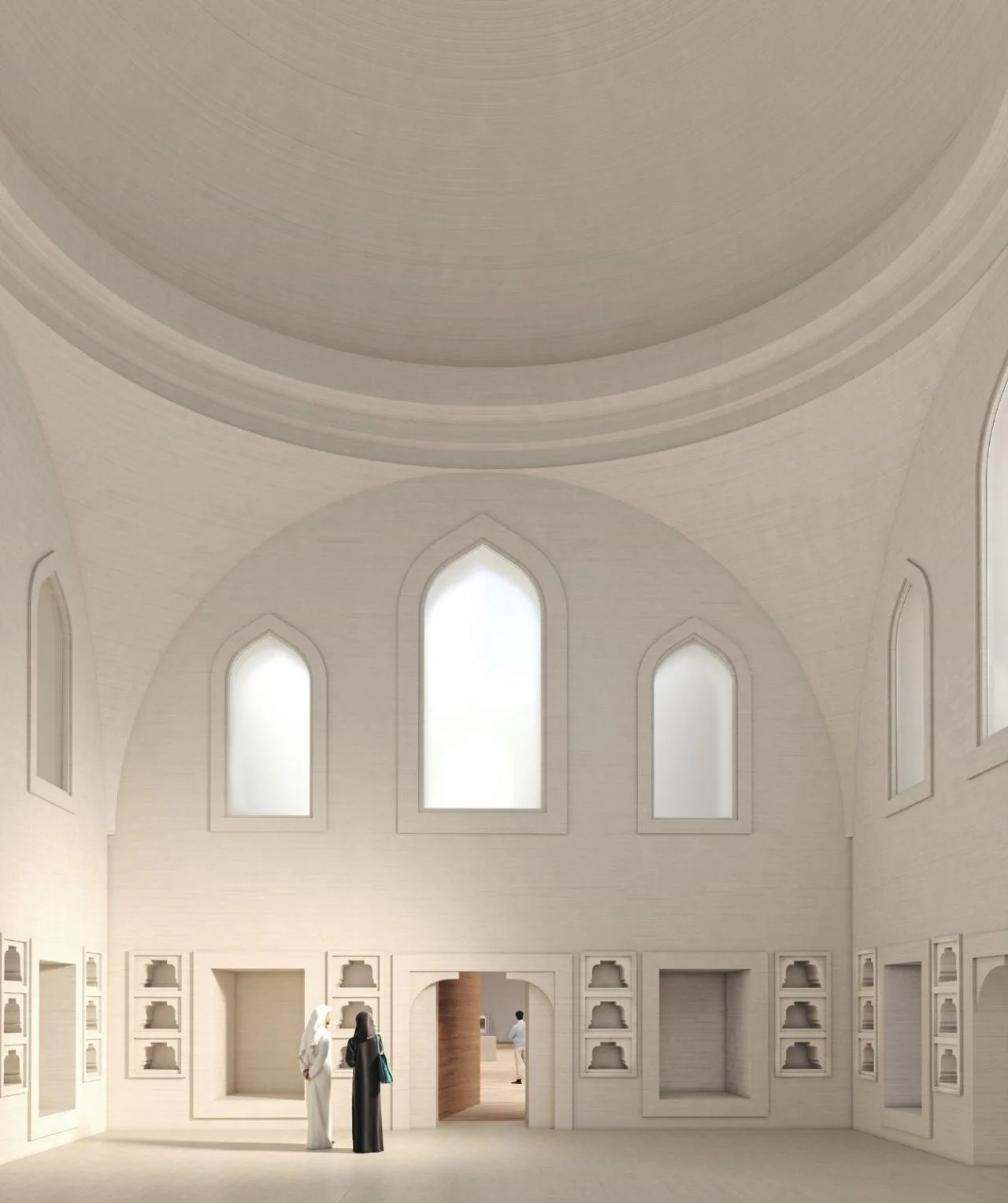
The gallery’s floors vary in shape and proportion, accommodating a diverse range of exhibitions. The top floor features four abstract replicas of notable historical domes, each serving as a main exhibition space:
- The Miura III bedroom dome from the Topkapi Palace in Istanbul (1579)
- The dome of Jammeh Mosque in Natanz (1320)
- The bathing fountain in the courtyard of Ibn Tulun Mosque in Cairo (1296)
- The Aljafaria dome in Zaragoza (1050)
Unlike traditional art museums, these spaces offer unique curatorial and educational opportunities, enhancing the visitor experience.
In a recent podcast, Her Excellency Sheikh Al Mayassa bin Hamad bin Khalifa Al Thani, President of the Qatar Museum, joined Jacques Herzog in a conversation about Qatar’s evolving cultural landscape. They discussed the inspiration behind the Lusail Museum’s design and the importance of its location.
Similarly, Herzog & de Meuron recently revealed their design proposal for the Seoul Open Art Warehouse, a collaborative archive space serving three museums in Seoul, South Korea. This facility aims to make collections more accessible to the public.
In early 2023, Herzog & de Meuron were honored with the 36th Louis I. Kahn Award, an annual accolade established in 1983 to recognize architectural excellence in memory of Philadelphia architect Louis Kahn.












Must log in before commenting!
Sign Up