
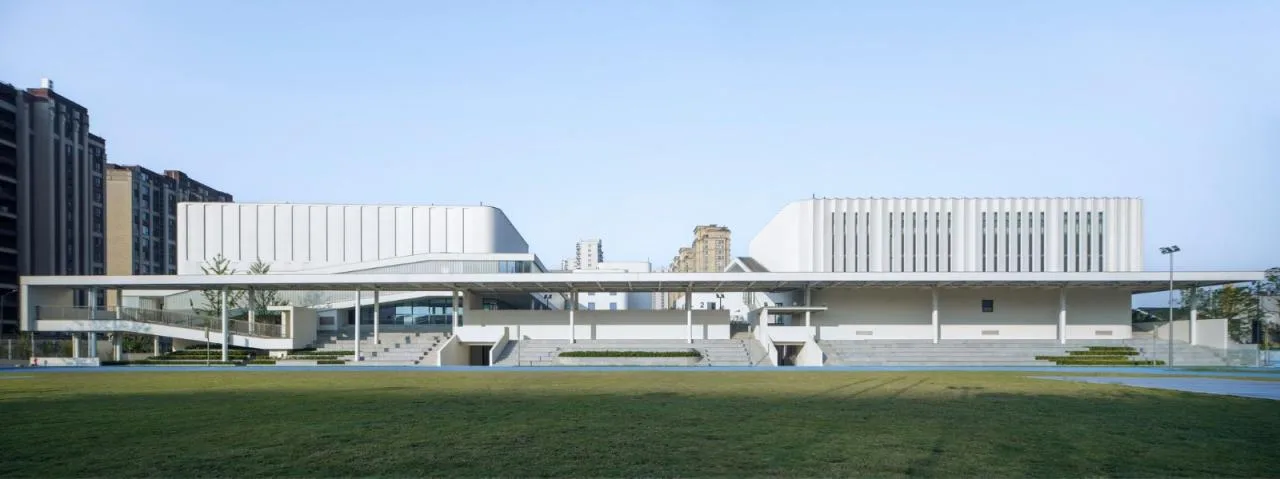
△ East facade © Liu Guowei
In campus architecture design, it is essential to move beyond simply constructing functional spaces. Instead, space should be treated as a vessel for behavior, nurturing an environment that encourages children’s independent exploration. — Zhang Xungoa, Chief Architect of Elephant Design
The Xiangfu Campus of Hangzhou Daguan Primary School is situated in Gongshu District, Hangzhou City, Zhejiang Province. As a key part of the Xiangfu Bridge traditional style block, it officially opened in September 2023. Goa Elephant Design has been deeply involved throughout the project, from design to implementation, acting as the EPC general contractor.
Texture Continuity and Scale Transition
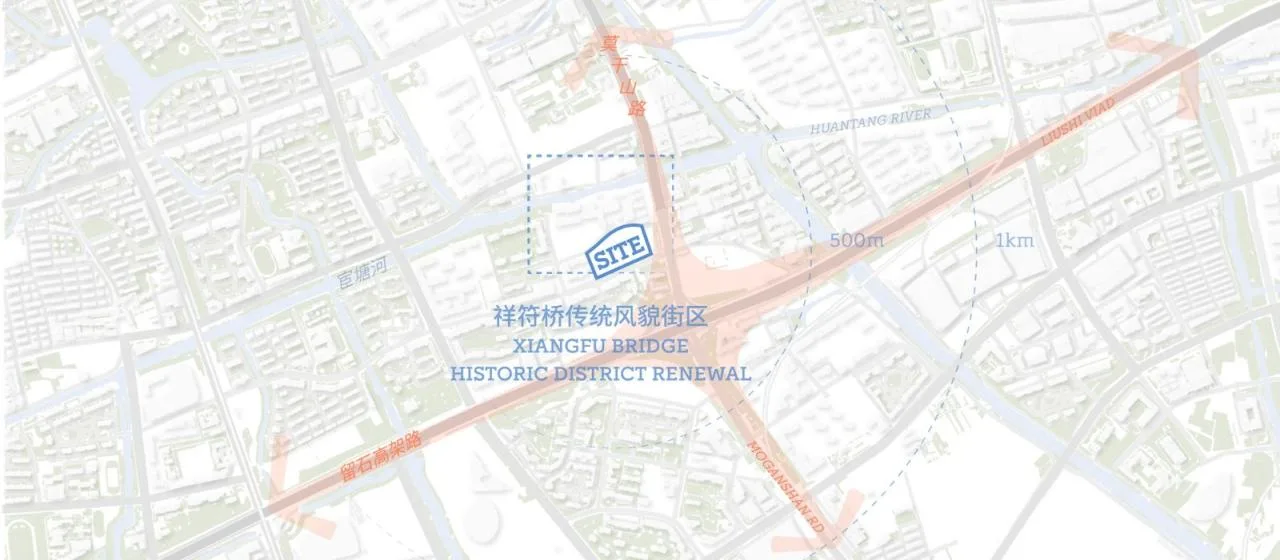
△ Project location © Goa Elephant Design
As part of a regional urban renewal plan, the Xiangfu Campus borders a historic district, presenting unique site conditions. Respecting the site’s historical context was the foundation for the project’s design.
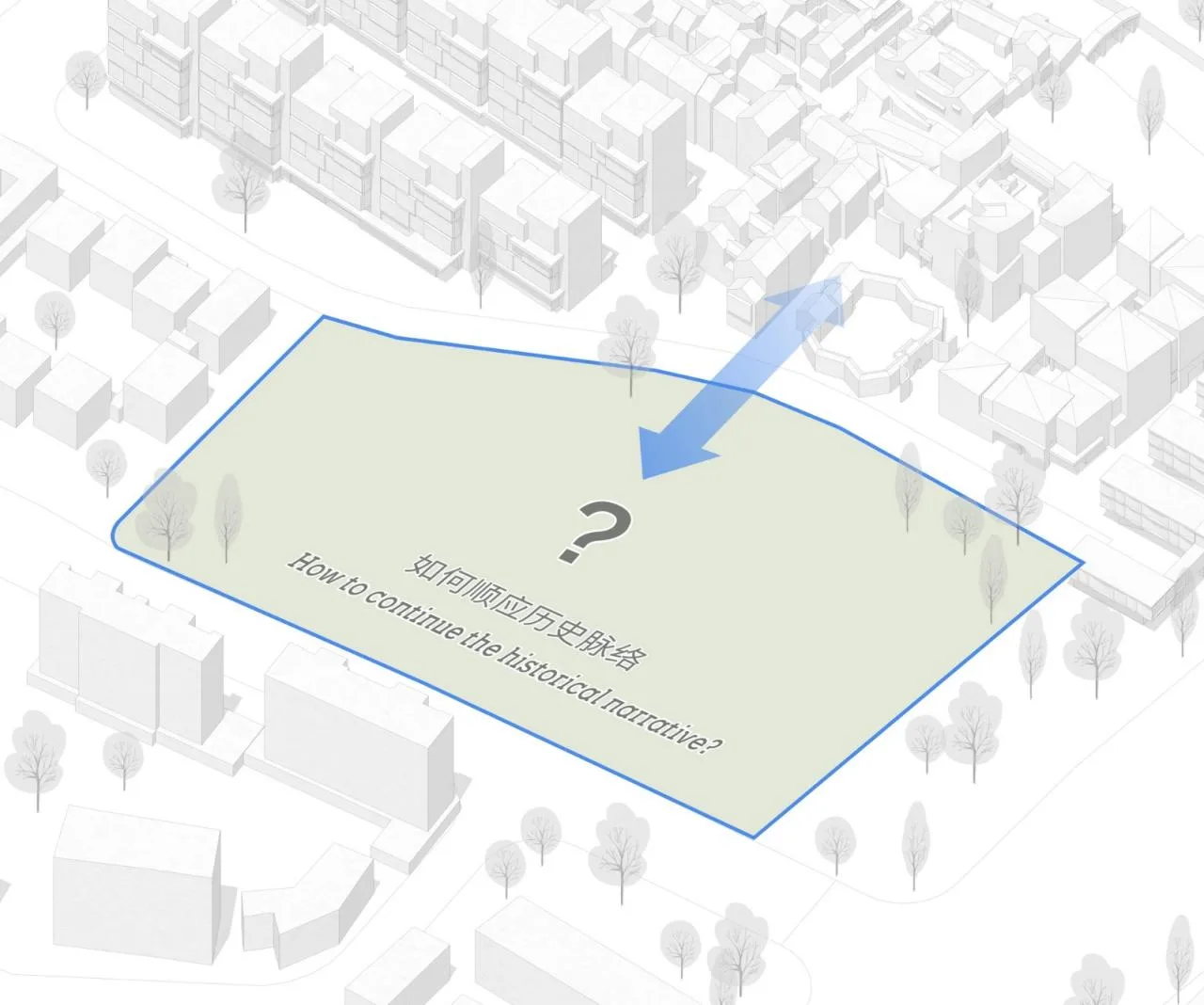
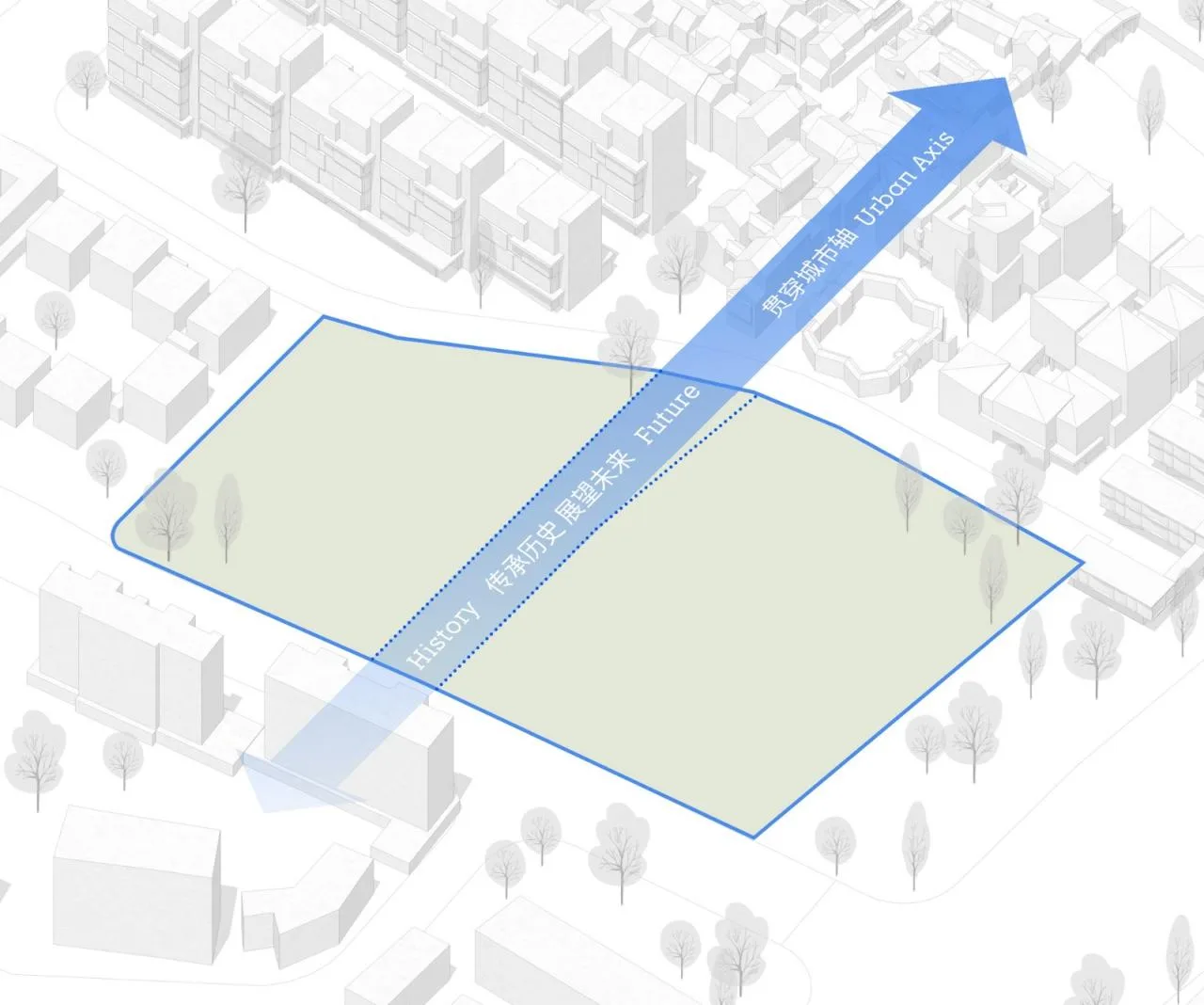
△ Planning Strategy © Goa Elephant Design
Through ongoing evolution, the city’s memory is embedded in its spatial textures and scale. Historic streets and alleys serve as carriers of collective memory, resonating deeply. Honoring this, the design restores the main street, originally interrupted by a red line in the old market town—Xiangfuzhi Street—turning it into the campus’s central axis. This axis links the north and south entrances, dividing the park into two main sections: east and west.
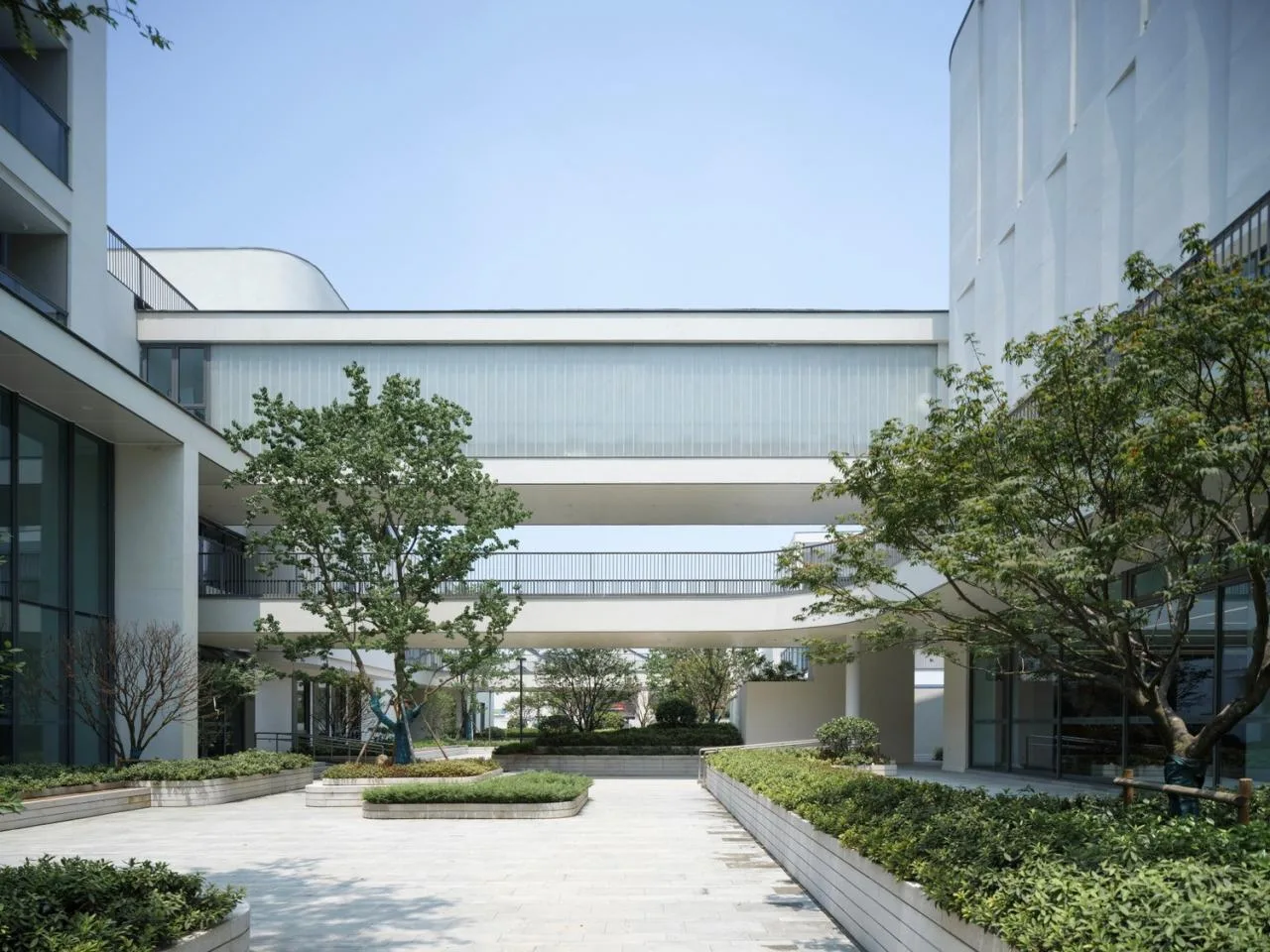
△ Axis Landscape © Liu Guowei
The school occupies the edge of the renewed plot, at the intersection of varying urban scales: to the south and east lie large-scale high-rise residential areas and elevated urban roads, while to the north is a smaller-scale traditional district. Responding to this, the building masses are arranged in a staggered formation, creating an appropriate mesoscale texture that bridges the surrounding urban scale differences.
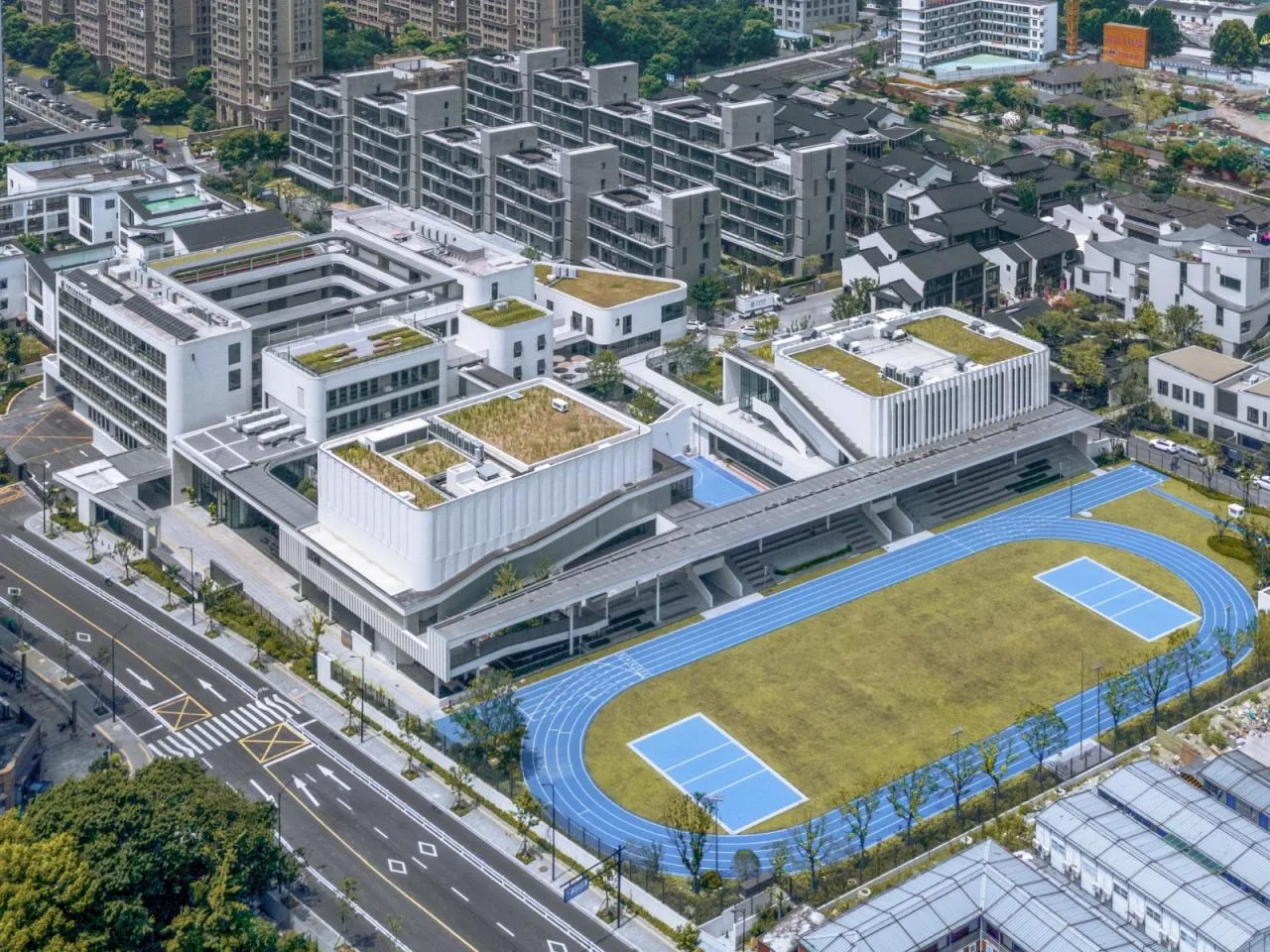
Overall bird’s-eye view © Liu Guowei
The understated off-white walls help the buildings blend harmoniously with the historic district’s atmosphere. The facades employ techniques such as virtual-real contrast and textured inlays, creating a dynamic and lively visual rhythm—akin to music—through the interplay of points, lines, and planes.
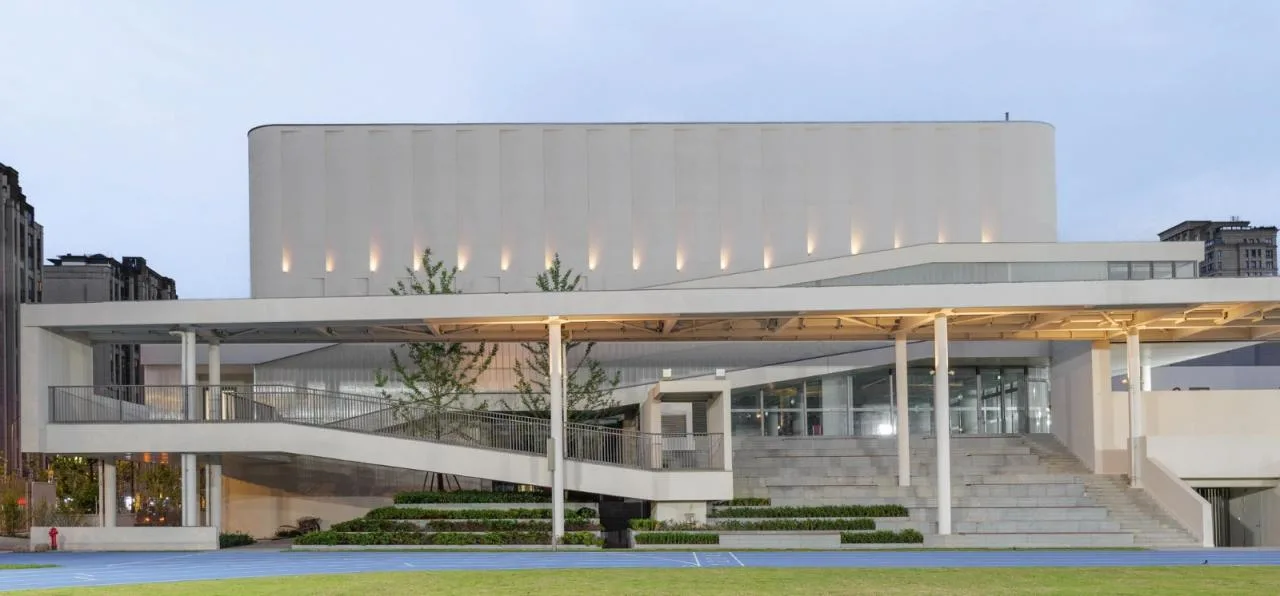
△ Library & Night view of the east facade of the auditorium © Liu Guowei
Dynamic Campus Spaces
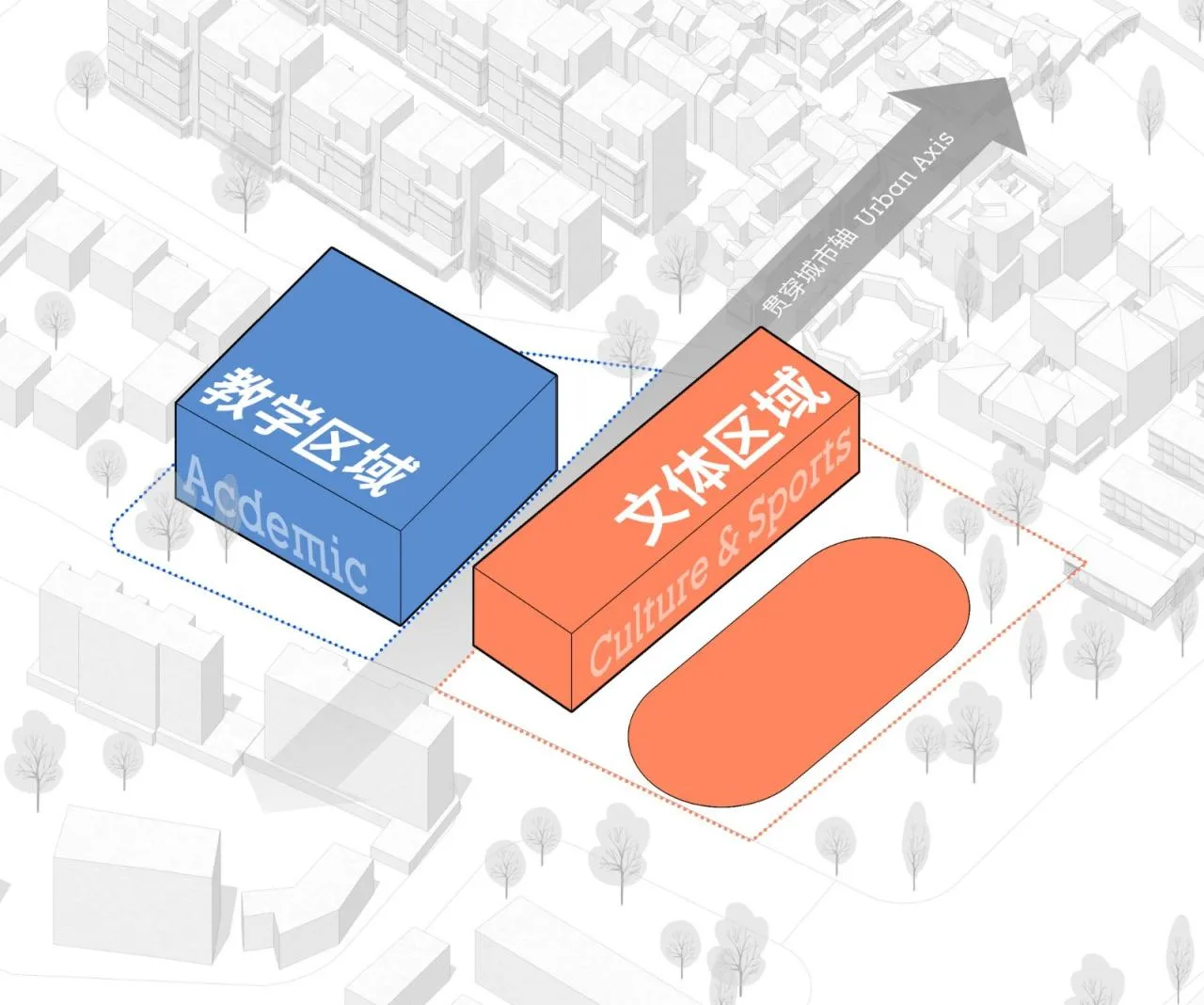
Extending the texture of Xiangfu Straight Street, the central axis functions as the campus’s main public corridor. To its west lies the daily teaching area, with classrooms and offices arranged around a spacious inner courtyard. On the east side, the cultural and sports zone houses the library, auditorium, cafeteria, gymnasium, and playground.
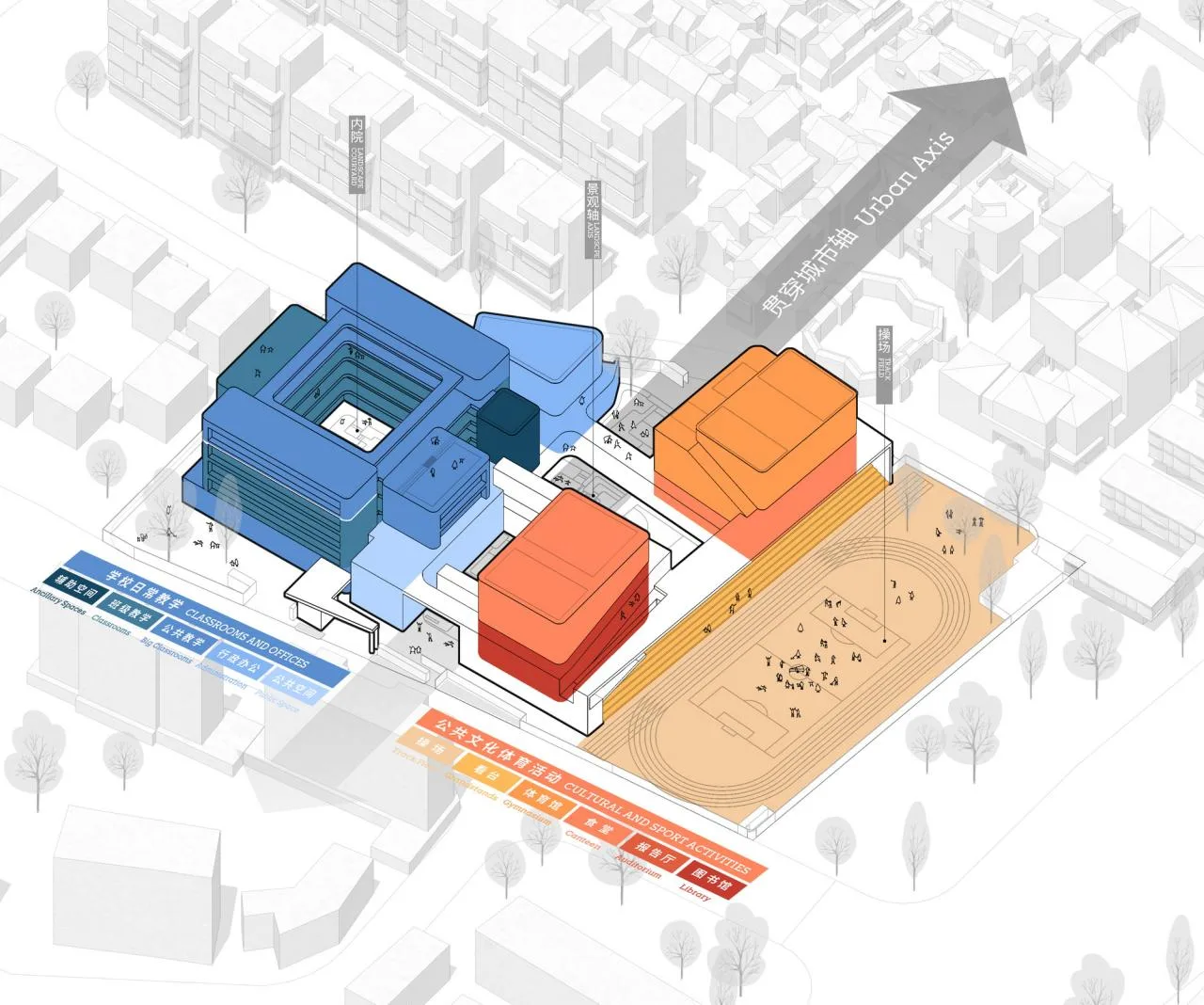
△ Functional organization © Goa Elephant Design
The campus is not merely a place for academic instruction; it is designed to stimulate children’s autonomy. By integrating natural elements and offering lively, diverse spatial experiences beyond formal classrooms, the environment encourages spontaneous and incidental learning.
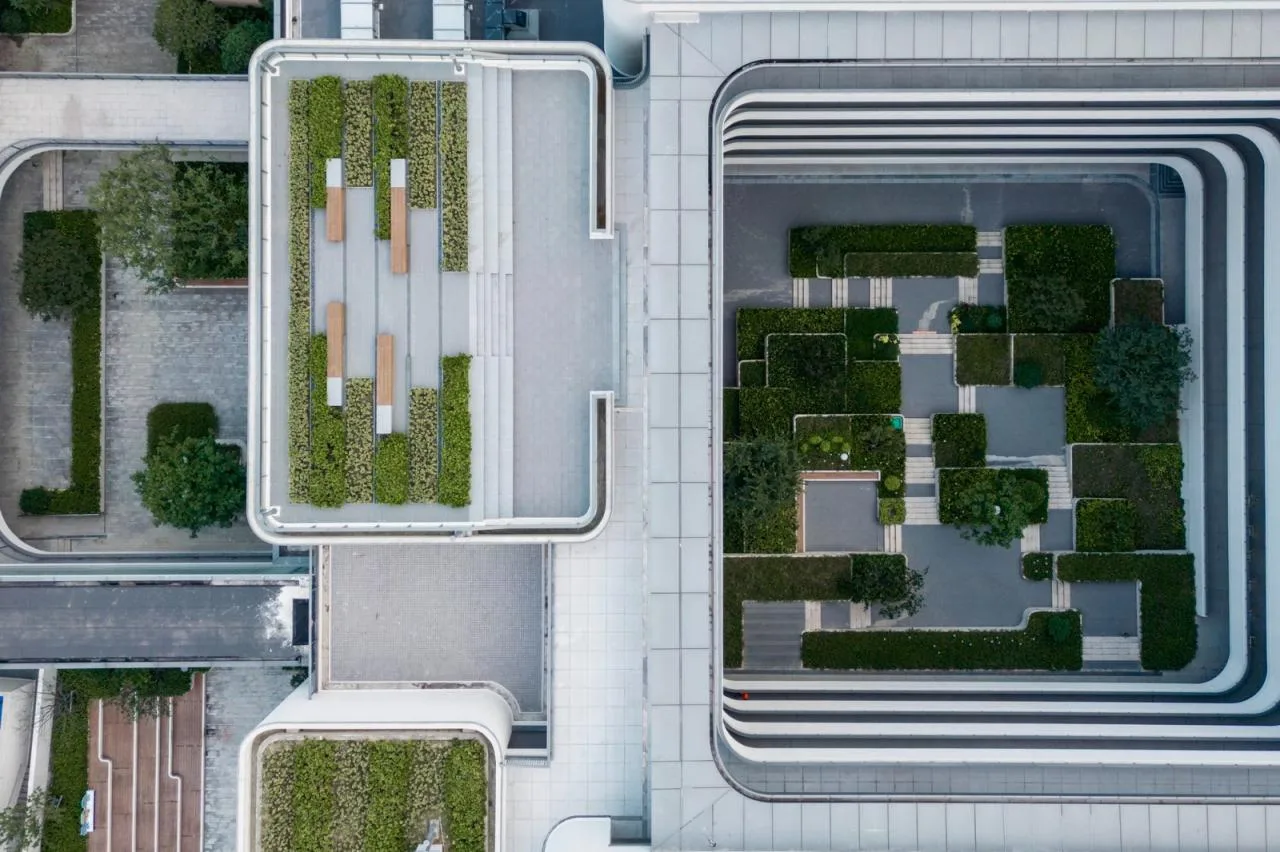
△ Landscape courtyard overlooking © Liu Guowei
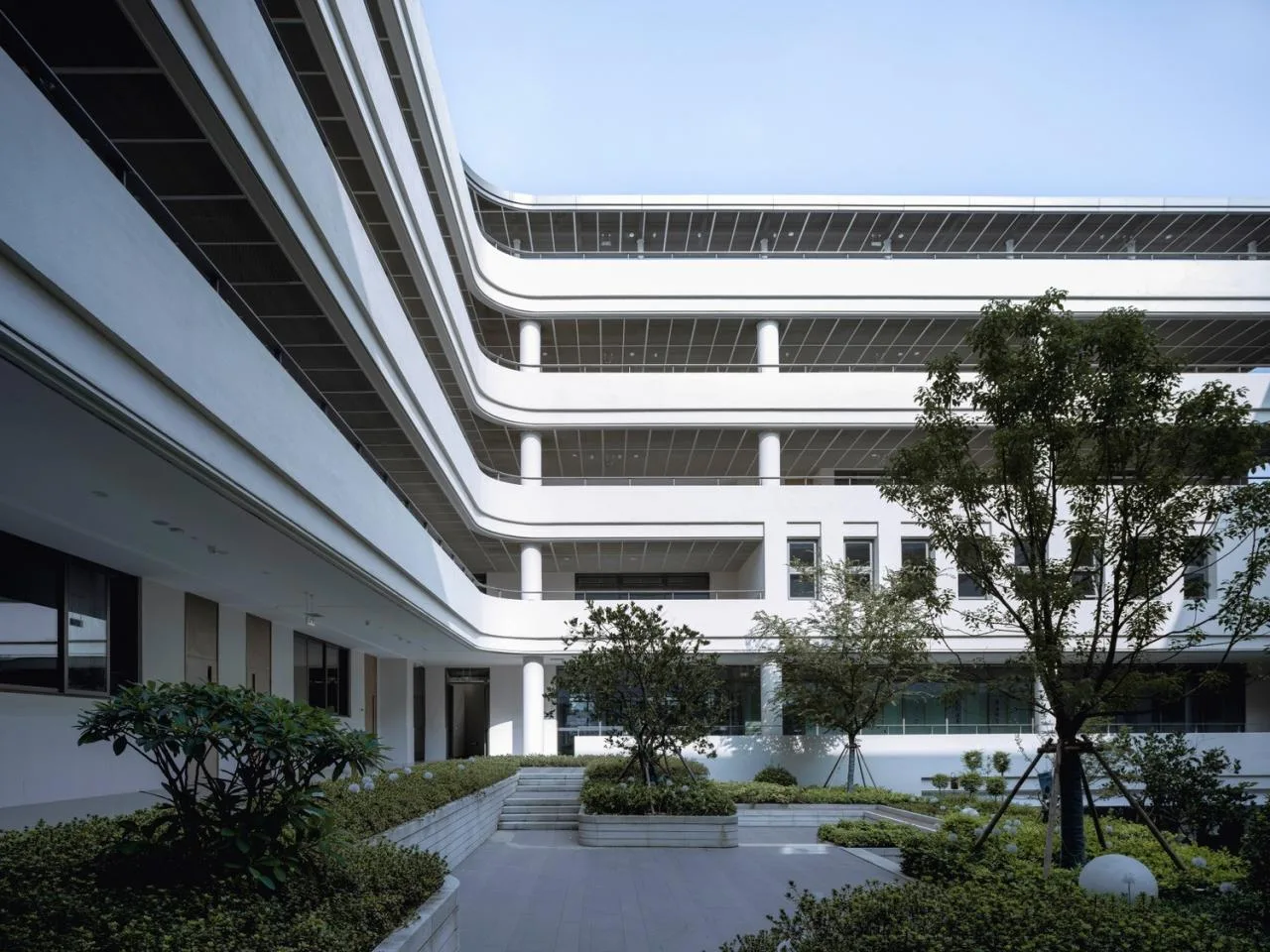
△ Teaching Building Courtyard Scene © Liu Guowei
The western teaching area is centered around an inward-facing courtyard, offering children a sense of security and comfort. Here, the pace of children’s movement naturally slows. The architect introduced pixelated small-scale divisions and varying elevations within the courtyard. Undulating terraces planted with greenery invite students to physically engage with their surroundings, fostering subtle awareness of the four seasons and nature.
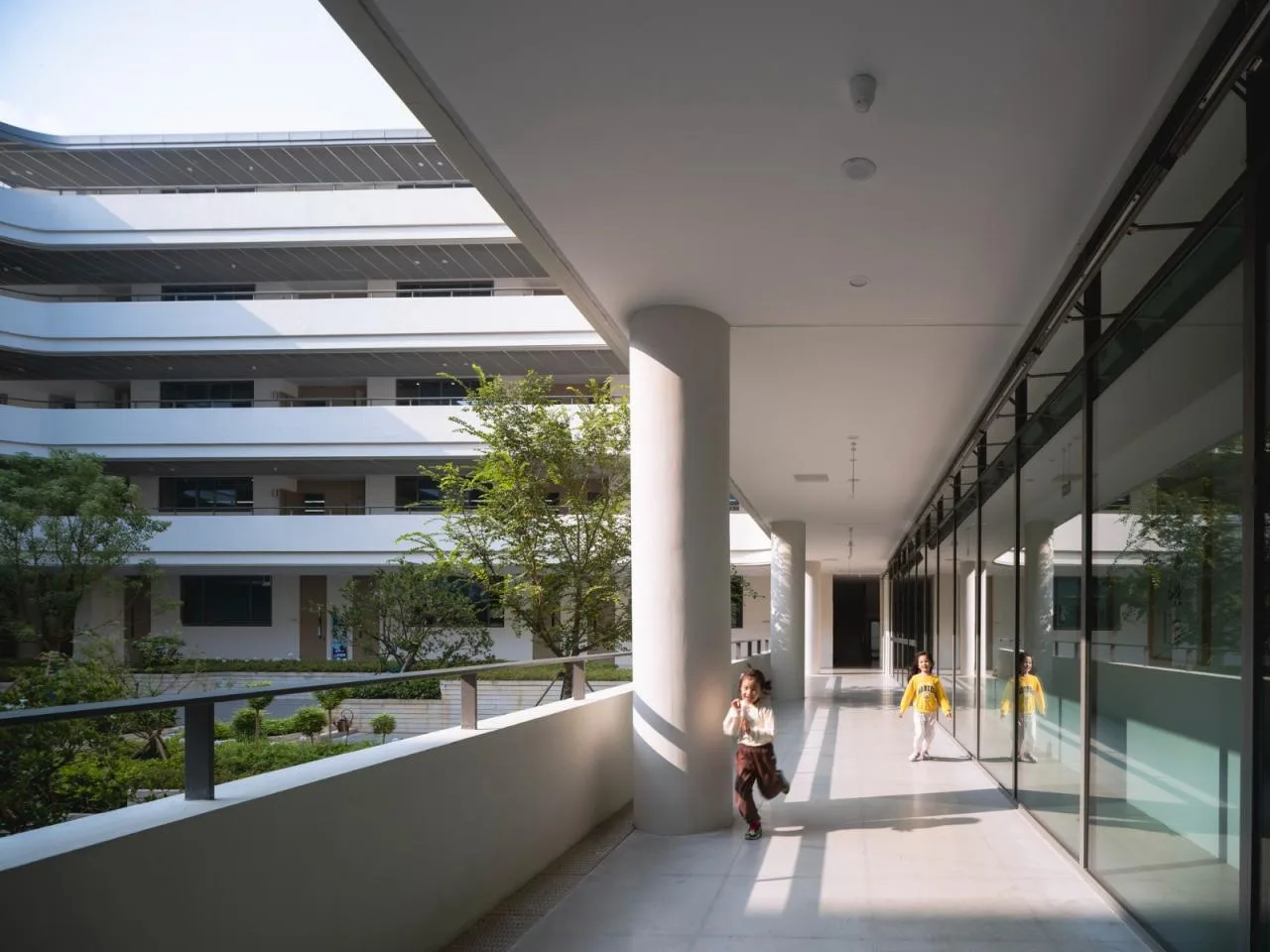
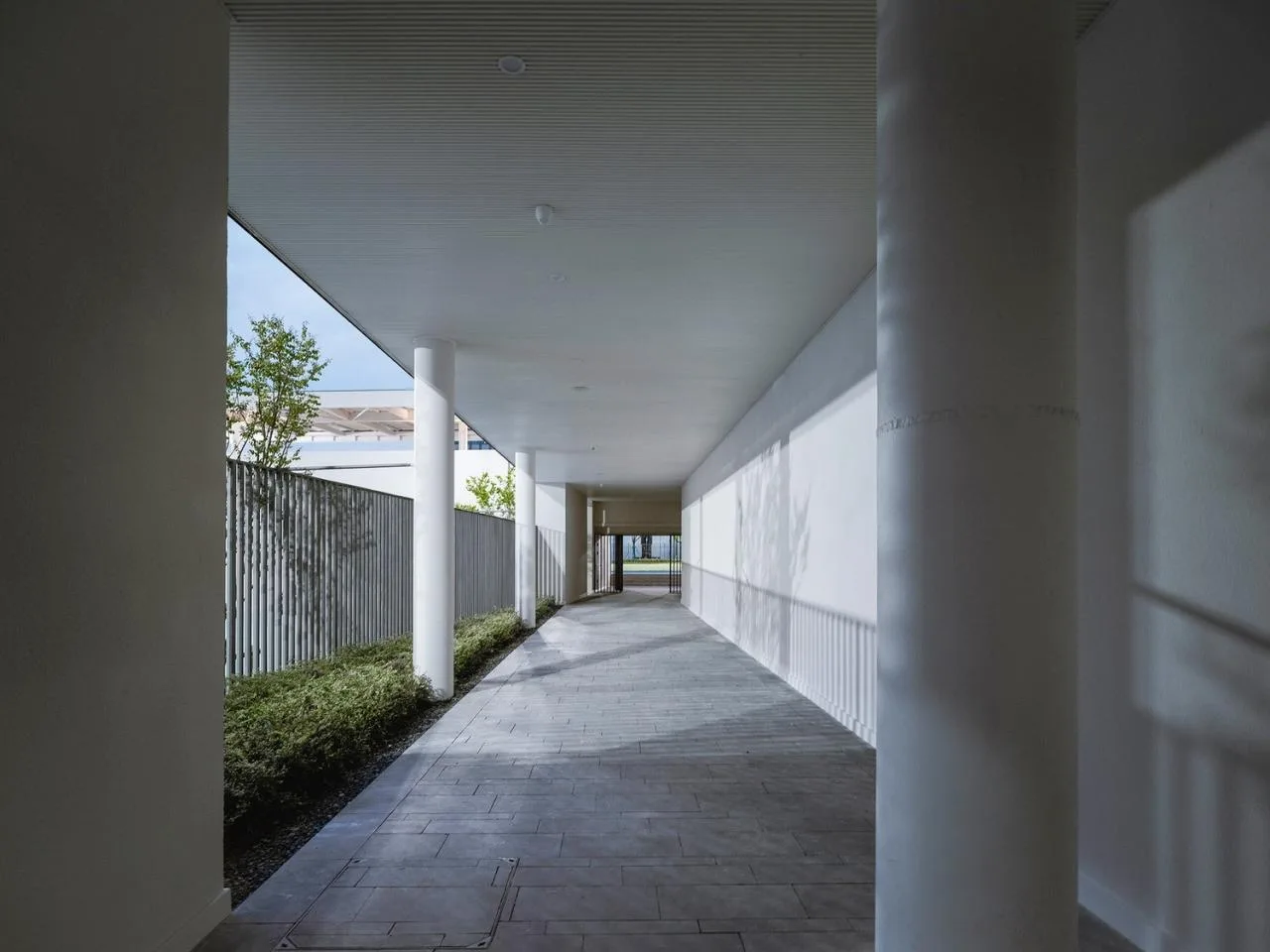
△ Teaching Building Scene © Liu Guowei
This inner courtyard also acts as a buffer against urban noise, ensuring the calm environment a campus requires. The teaching building’s entrance hall, combined with the art classroom layout, creates a convenient and inviting space for daily exhibitions and parent-child activities.
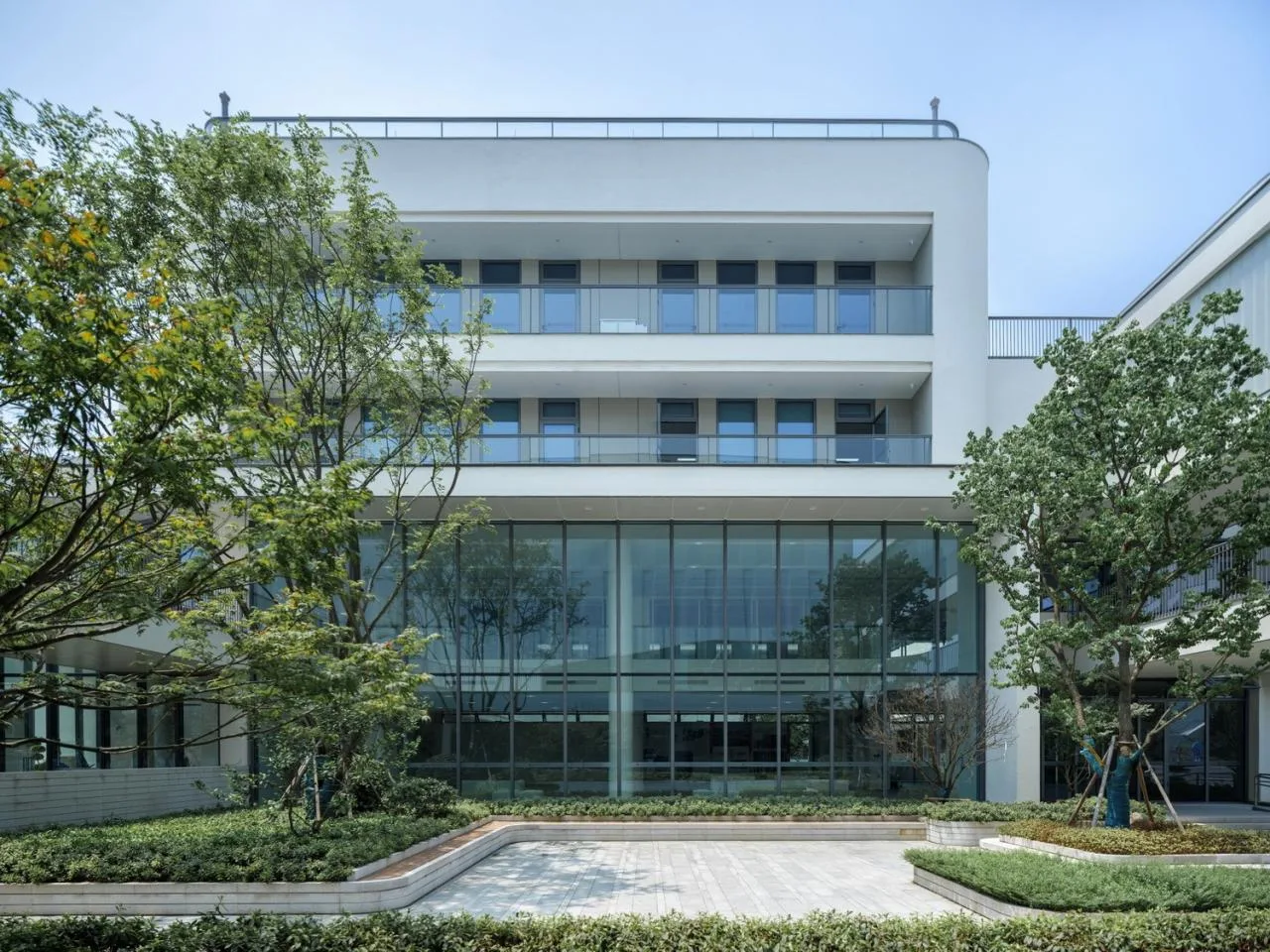
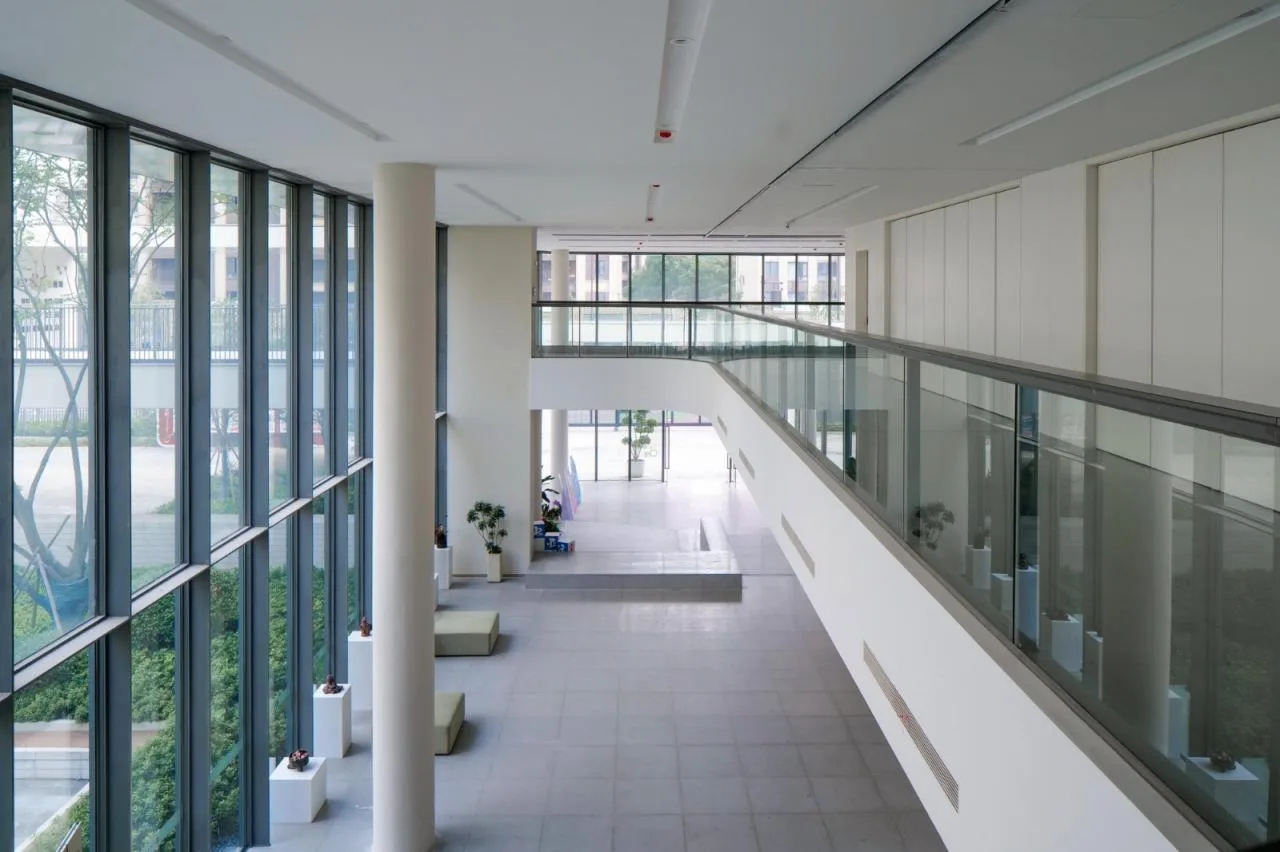
△ Teaching Building Entrance Hall © Liu Guowei
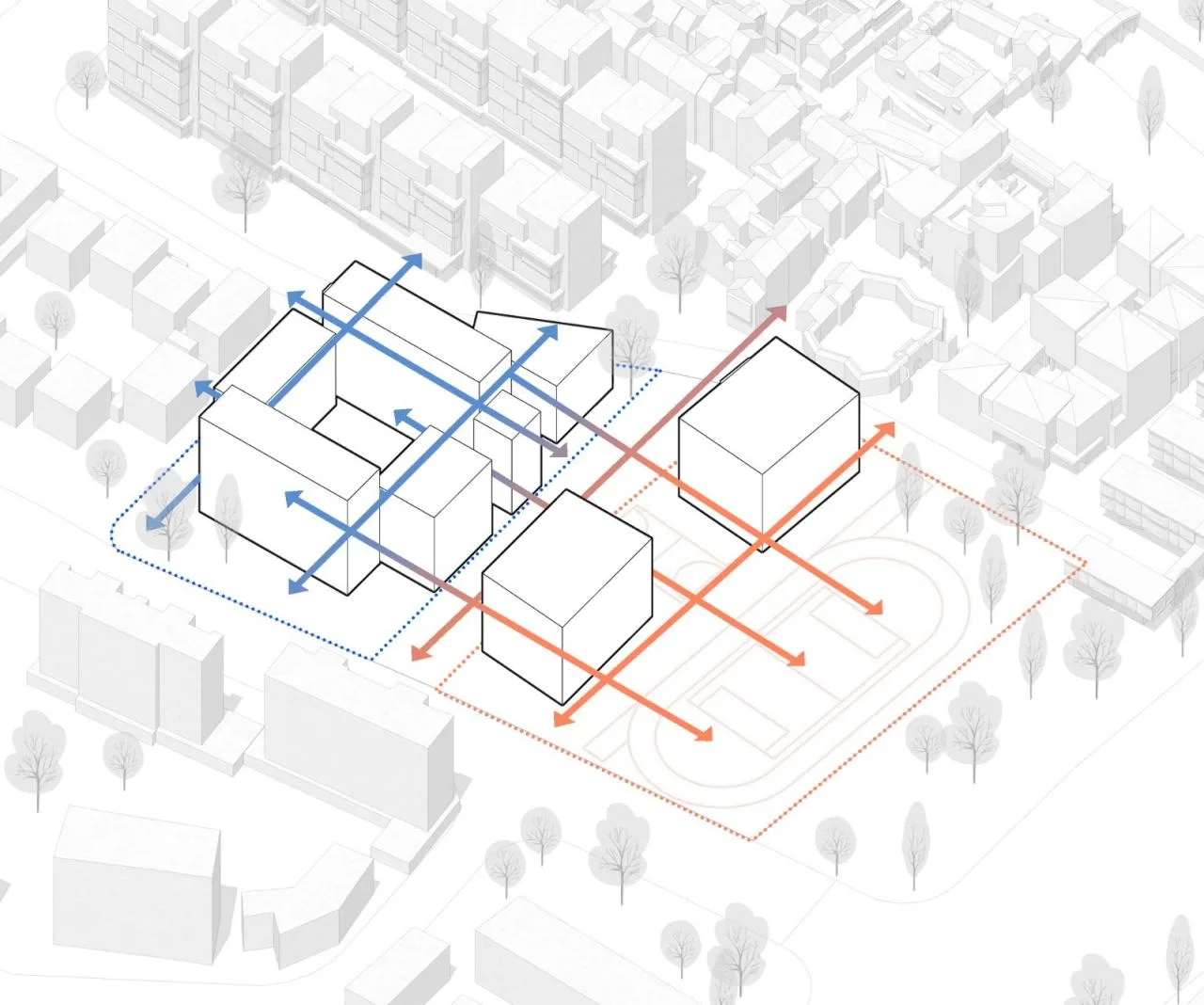
The eastern cultural and sports zone includes the library, auditorium, cafeteria, gymnasium, and playground. These diverse facilities are interconnected through multi-level, circular circulation paths, creating an organic spatial network.
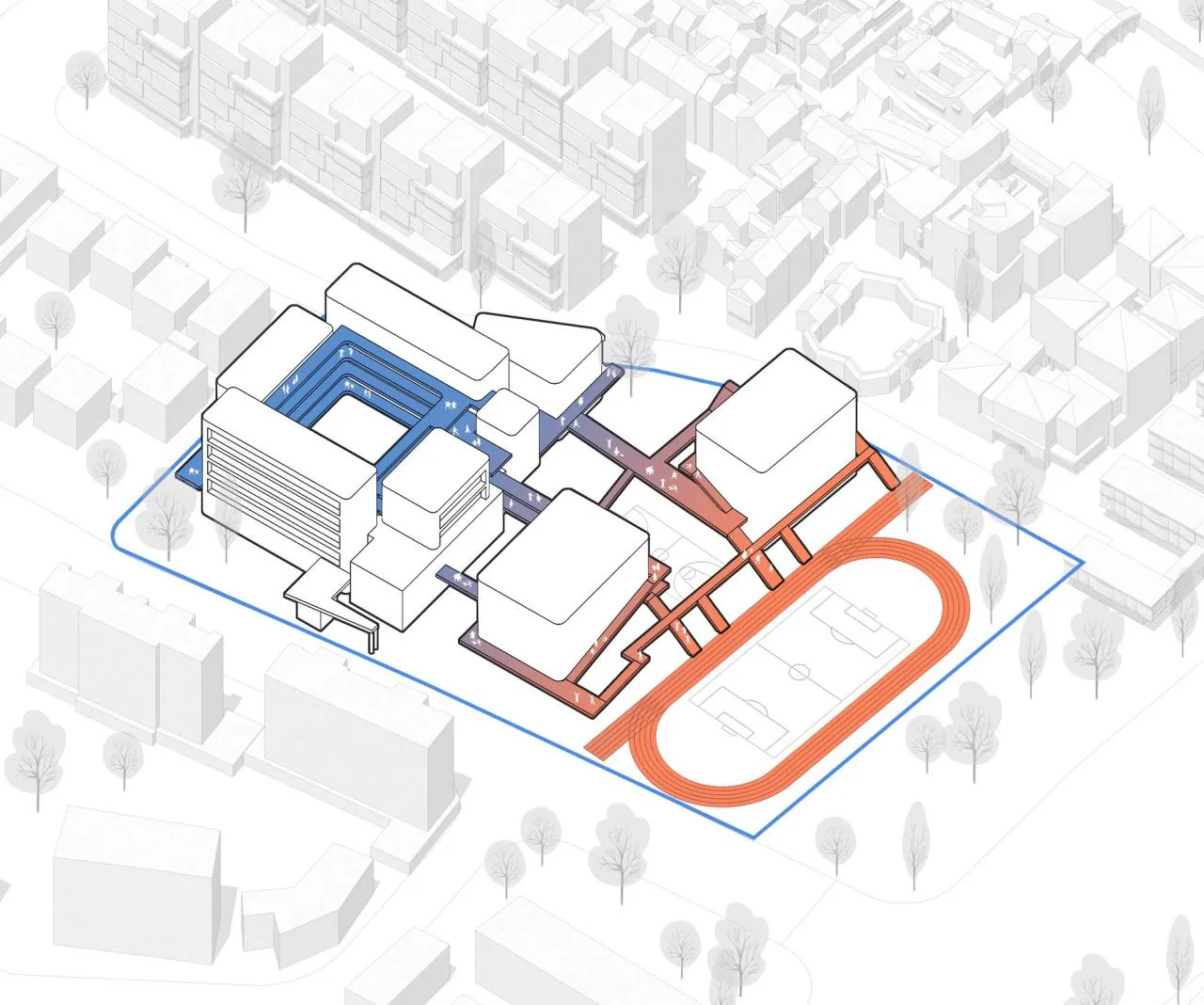
△ Traffic flow line © Goa Elephant Design
The volumes are stacked vertically, with two to three-level corridors crossing the central axis, blurring floor boundaries and creating diverse activity spaces at varying heights. This inclusive design strategy offers more creative freedom for campus users and provides flexible venues for both daily use and special events.
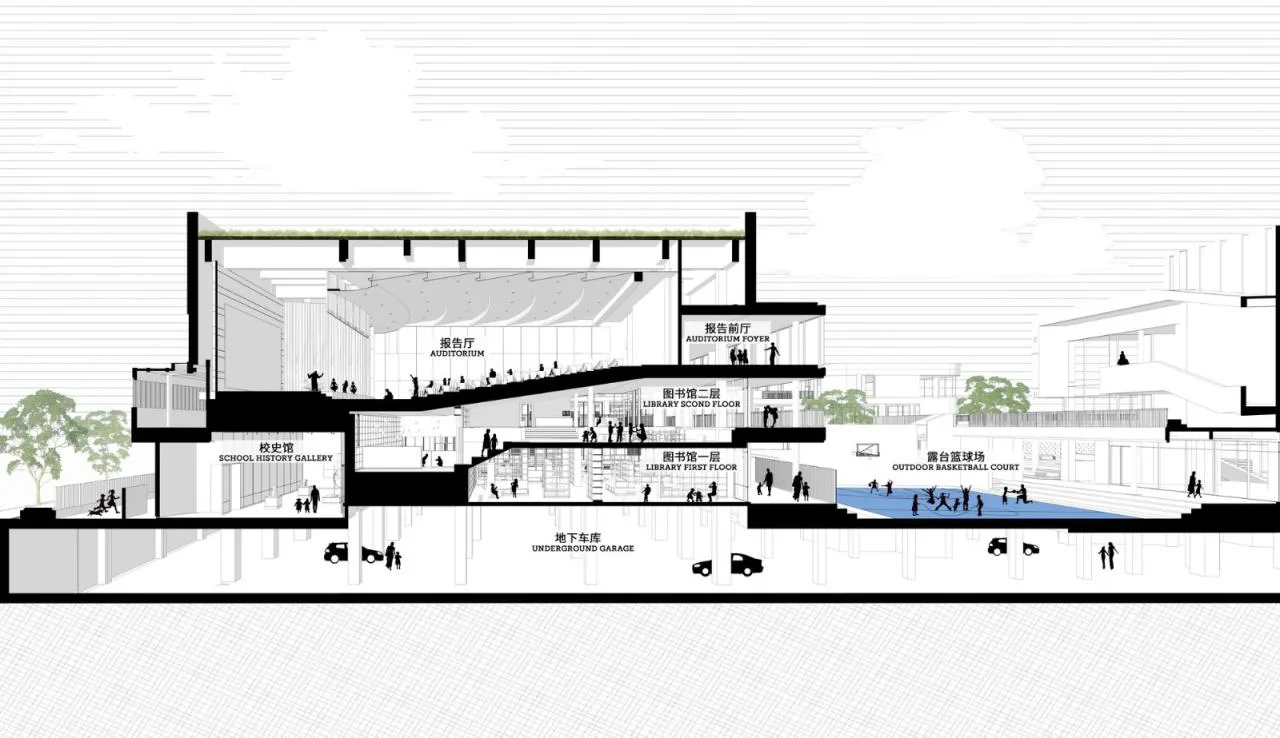
△ Perspective on the Cultural and Sports Activity Area © Goa Elephant Design
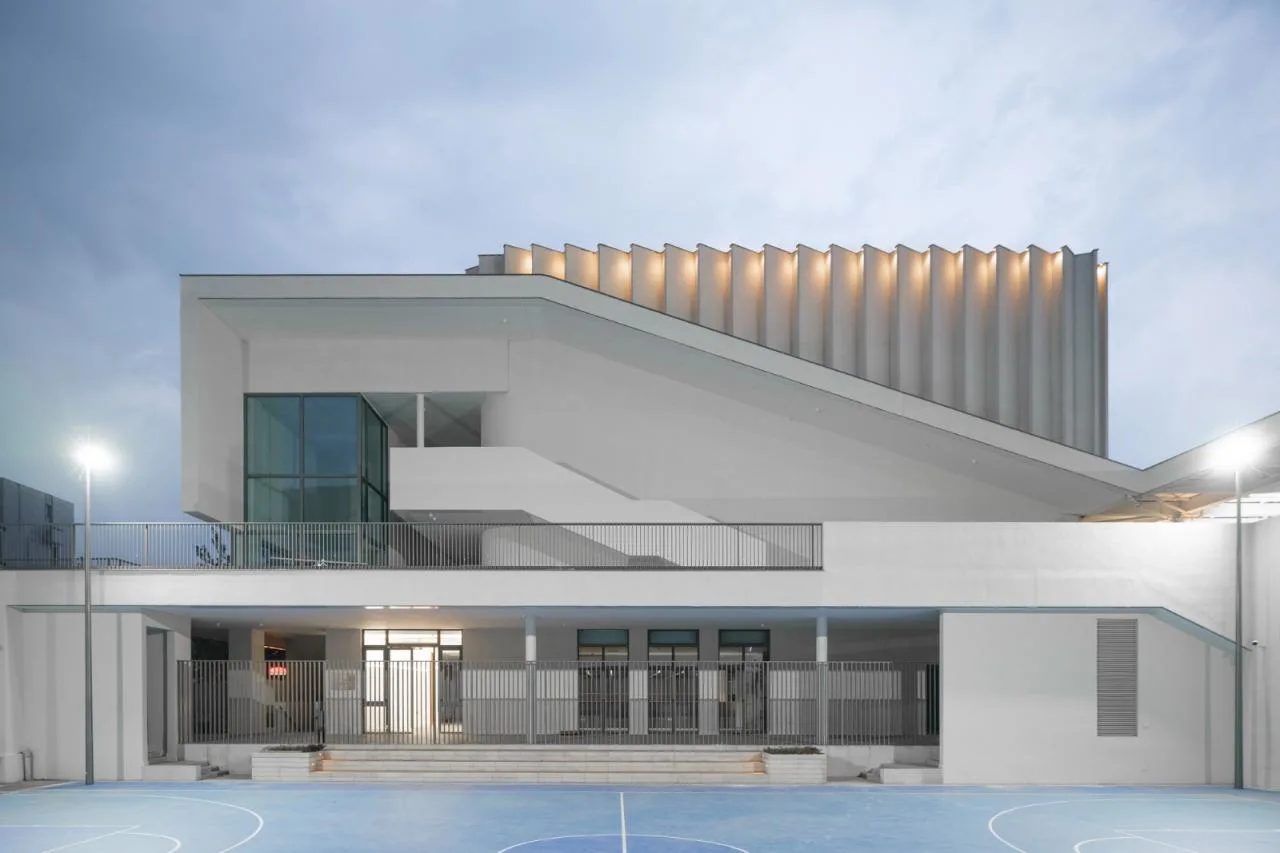
△ Outdoor activity space © Liu Guowei
Unlike the more orderly teaching area to the west, the eastern cultural and sports zone features winding pathways, creating a multi-level, three-dimensional campus walkway system. This encourages discovery of new routes and fosters social interaction.
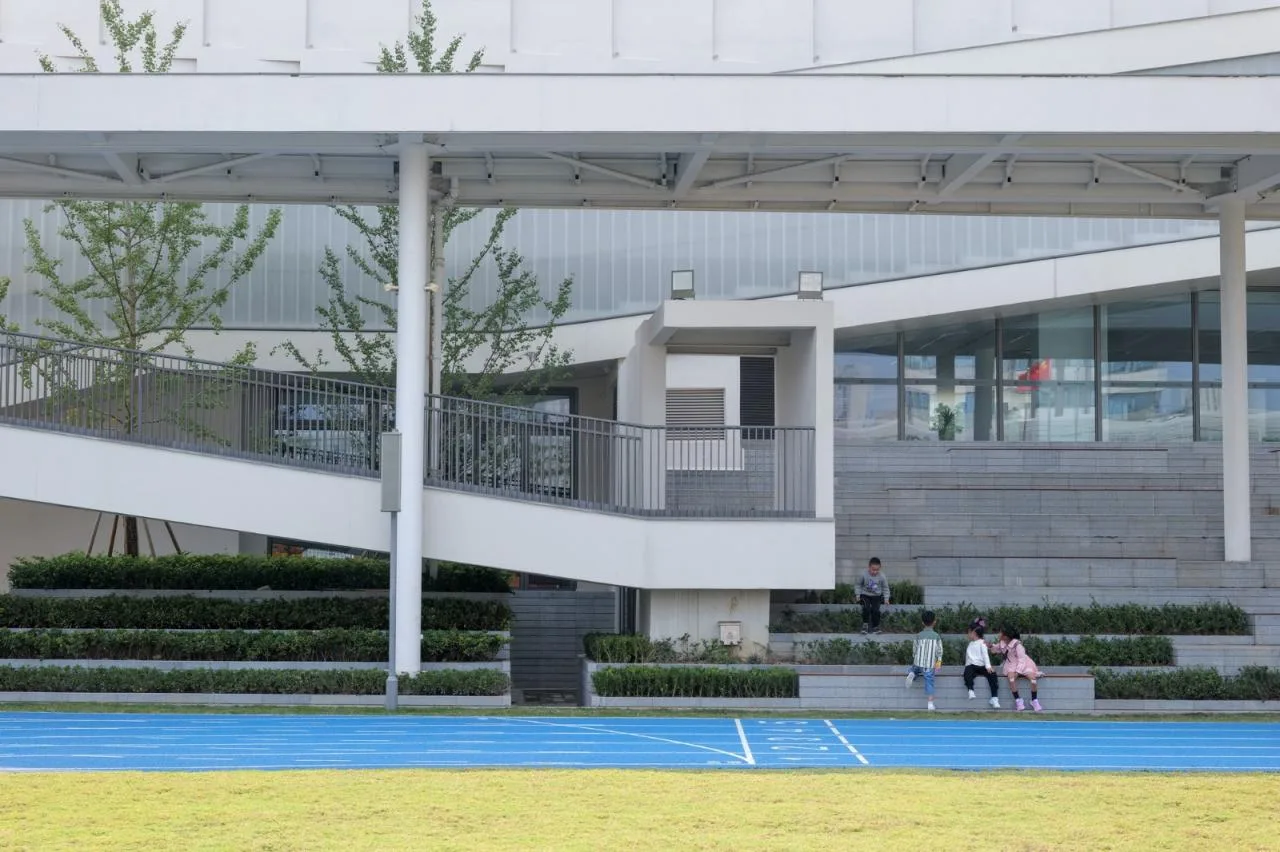
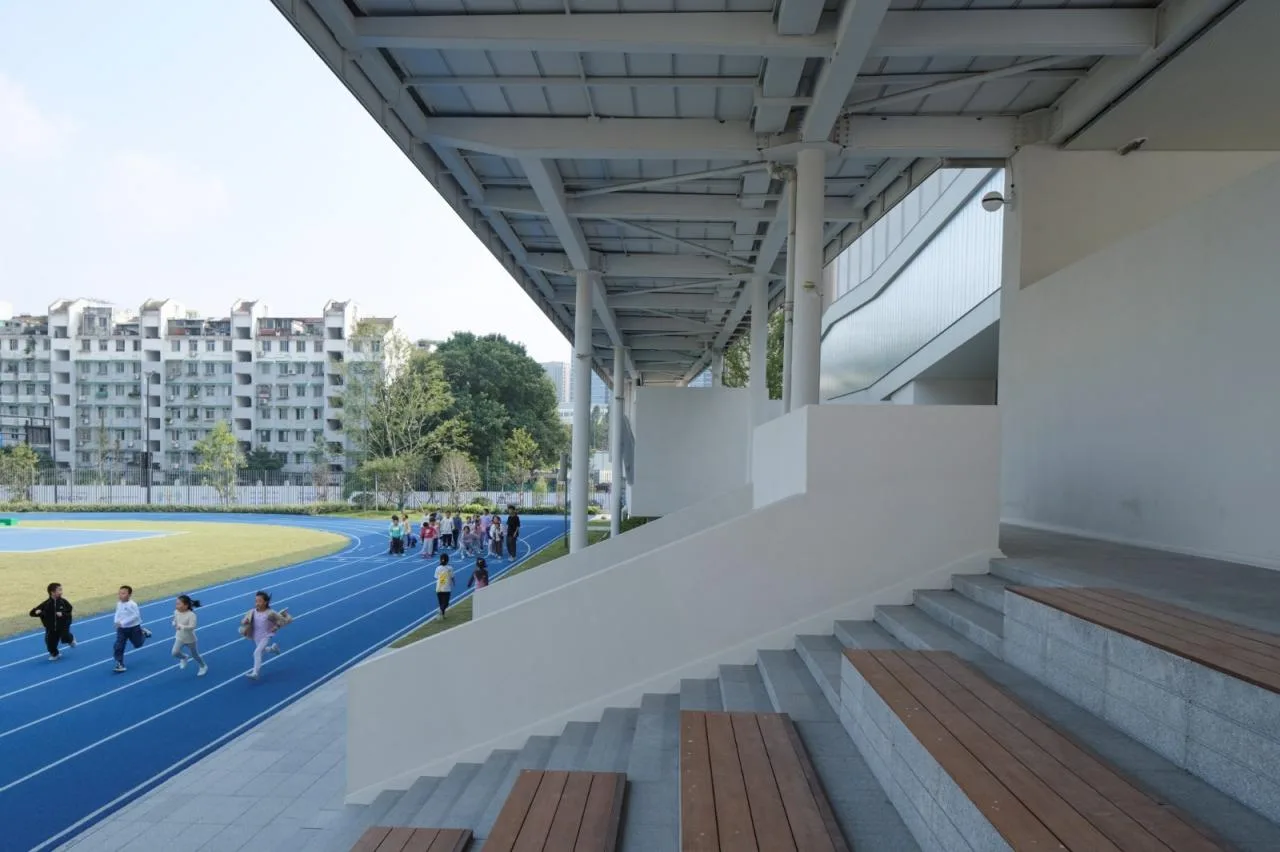
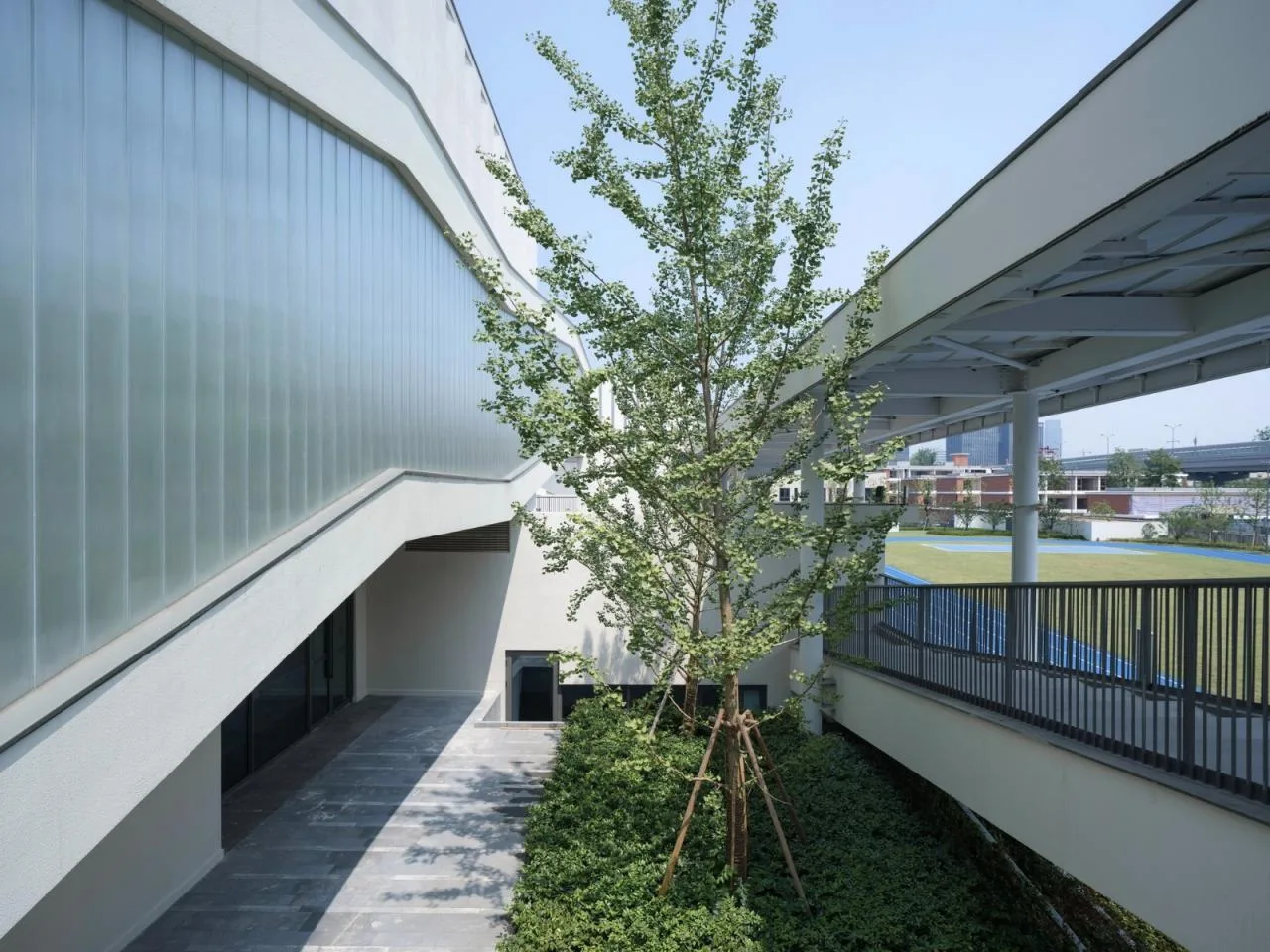
Partial Stand of Track and Field Field © Liu Guowei
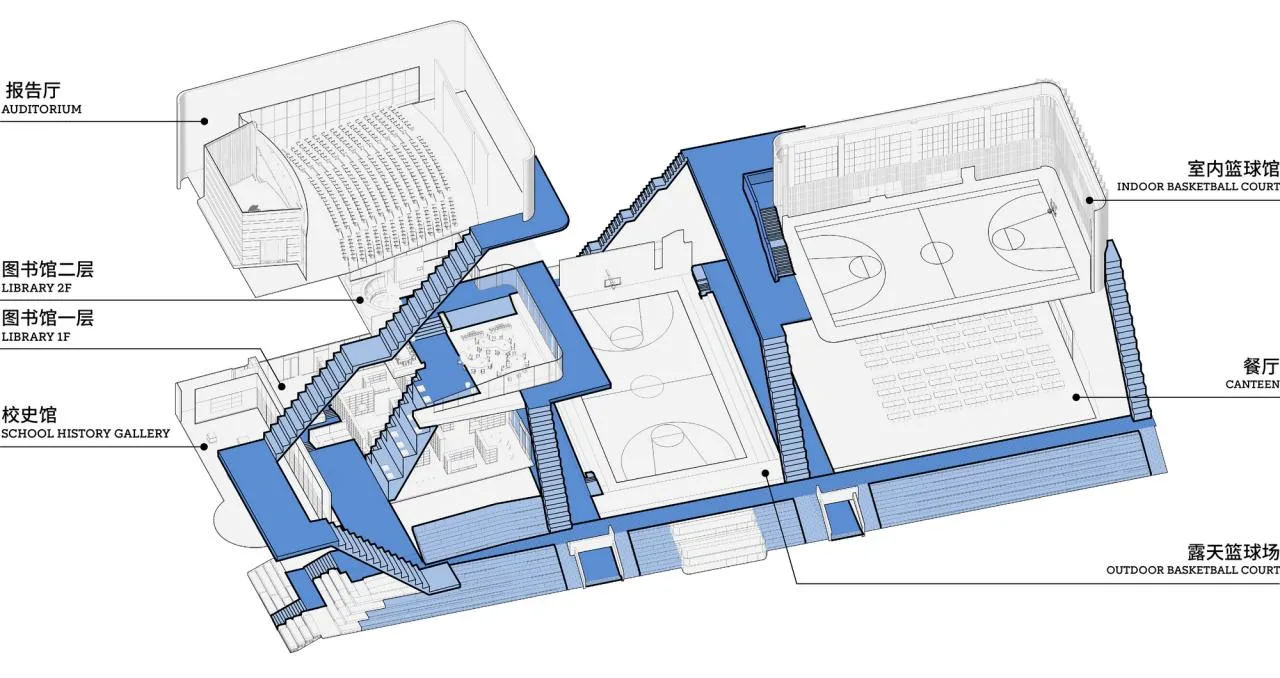
△ Path and platform of cultural and sports activity area © Goa Elephant Design
In urban settings where land is scarce, density and congestion are common. The campus’s rich, ever-changing three-dimensional pathways not only inspire children’s spatial awareness but also offer a tranquil garden-like retreat within the city.
Cultural Outreach
The design aims not only to enhance educational value but also to emphasize the school’s potential social role. Northern Hangzhou lacks cultural facilities, so the architects envision the school opening its cultural spaces to the public at designated times, fostering community engagement and supplementing local cultural activities.
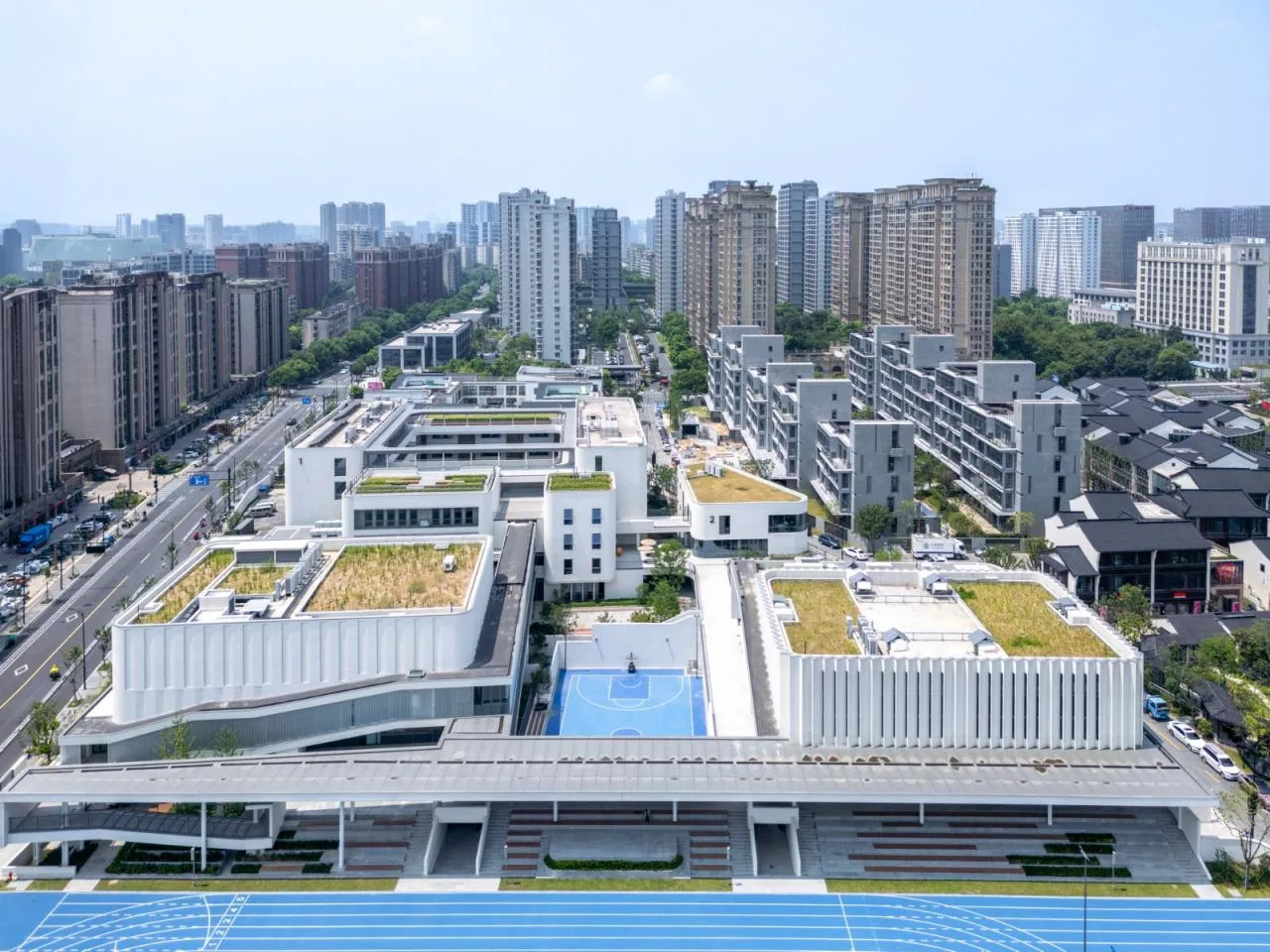
△ Campus aerial view © Liu Guowei
The design creates spatial opportunities that support this vision. The teaching spaces, enclosed by square corridors, provide secure, independent management, ensuring privacy for daily school operations. Meanwhile, the cultural and sports facilities on the east side can function as a separate unit, accessible to the public during weekends and other times under proper management.
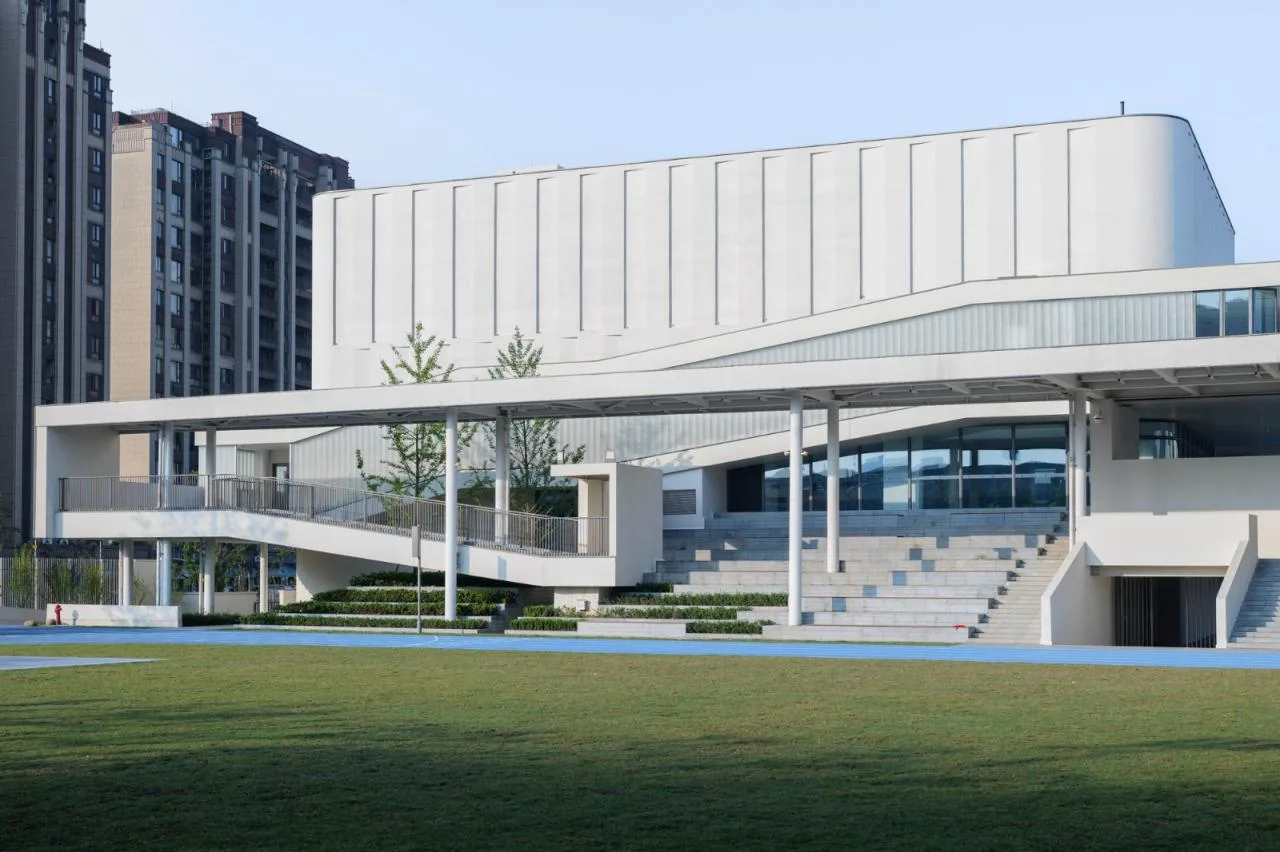
△ Track and field stands © Liu Guowei
According to the architect’s plan, the school’s sports field, library, cafeteria, and other facilities will connect with commercial and waterfront areas via Xiangfu Street, forming a comprehensive public space network.
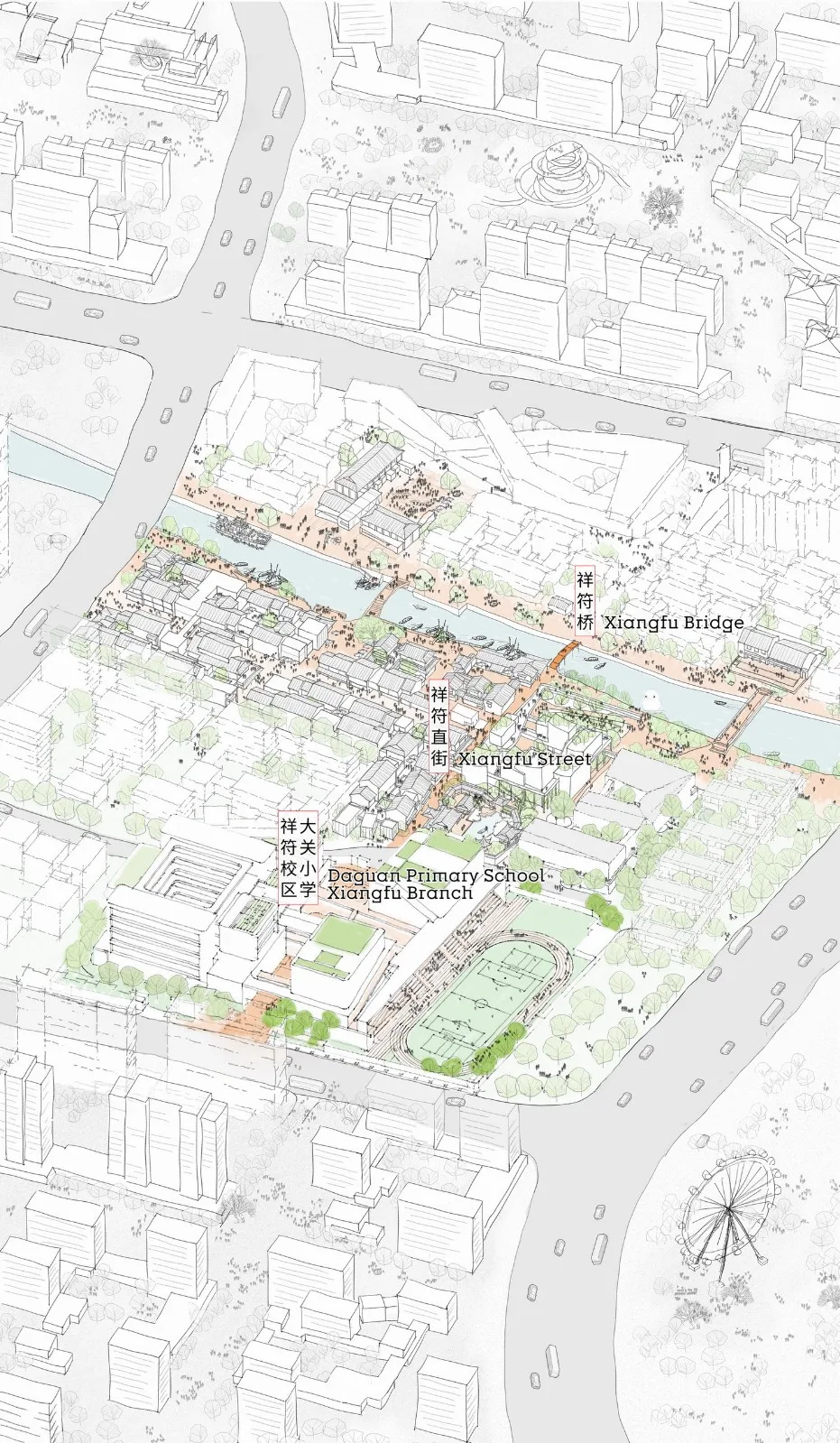
Panoramic view of Xiangfuqiao traditional style block © Goa Elephant Design
From a broader perspective, education aims to inherit and develop culture. Schools serve not only as knowledge transmitters but also as potential promoters of community culture. The design of the Xiangfu Campus of Daguan Elementary School respects historical textures while responding to the surrounding urban fabric, adding a diverse public building to northern Hangzhou.
Project Drawings
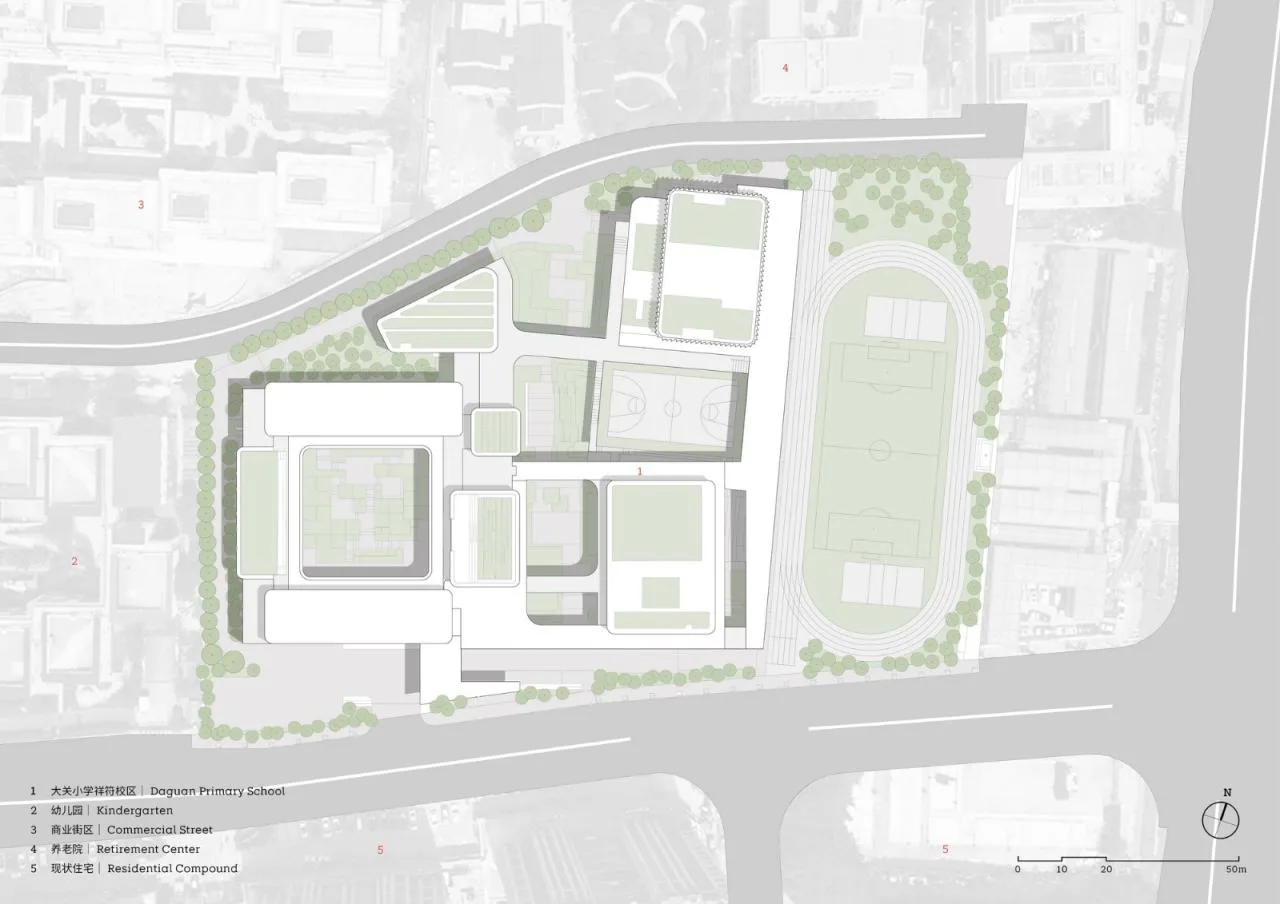
△ Color-filled overall layout plan © Goa Elephant Design
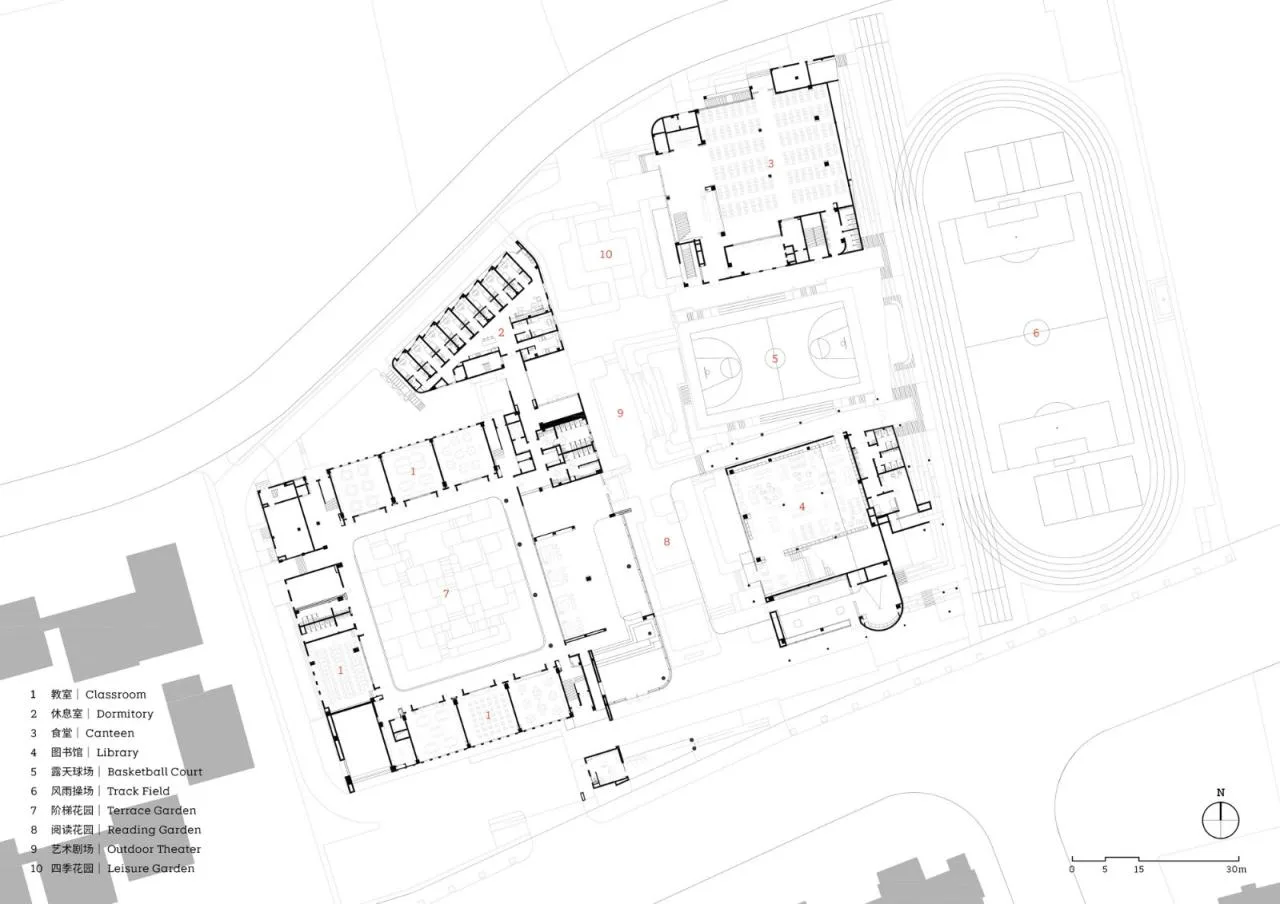
△ First floor plan © Goa Elephant Design
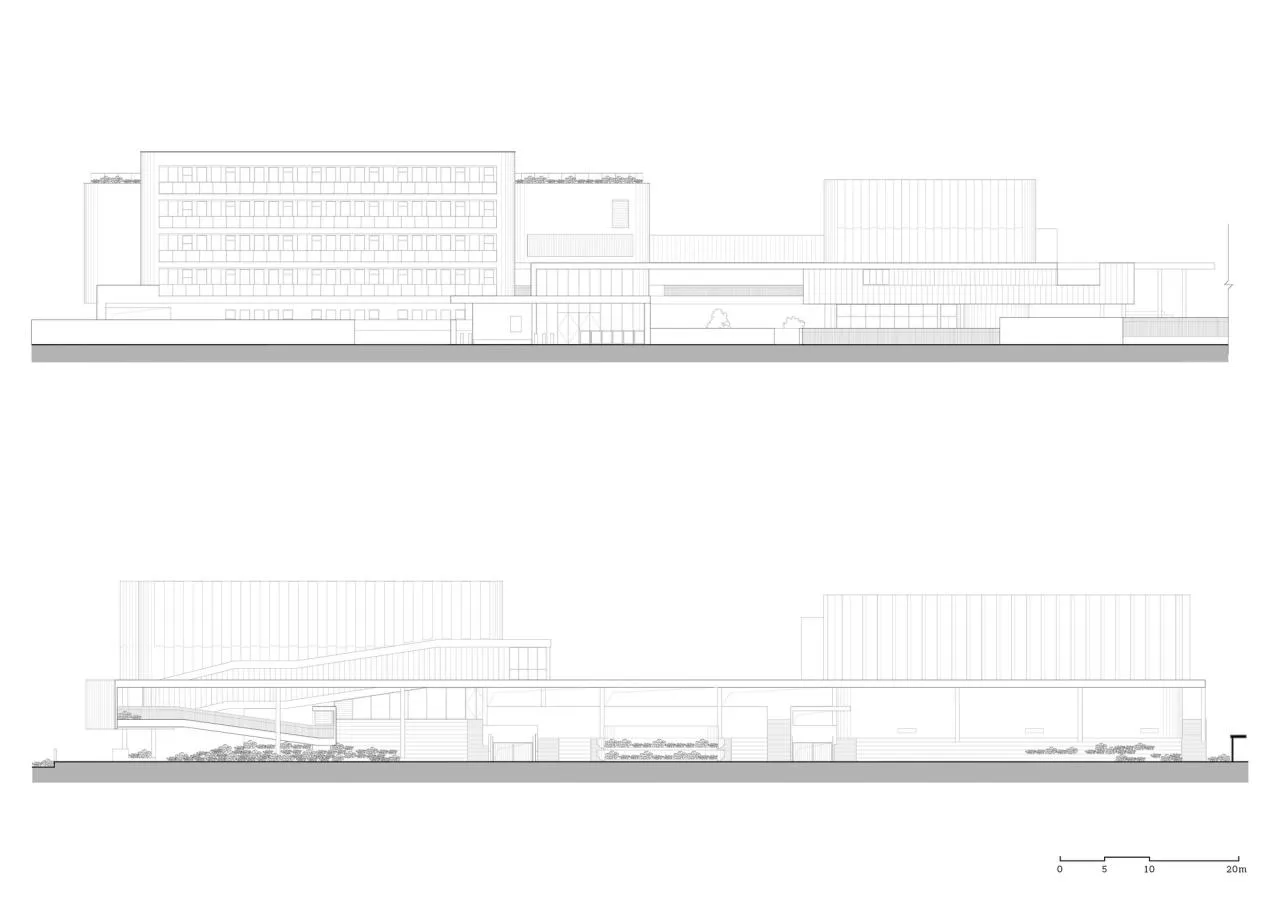
△ Elevation drawing © Goa Elephant Design
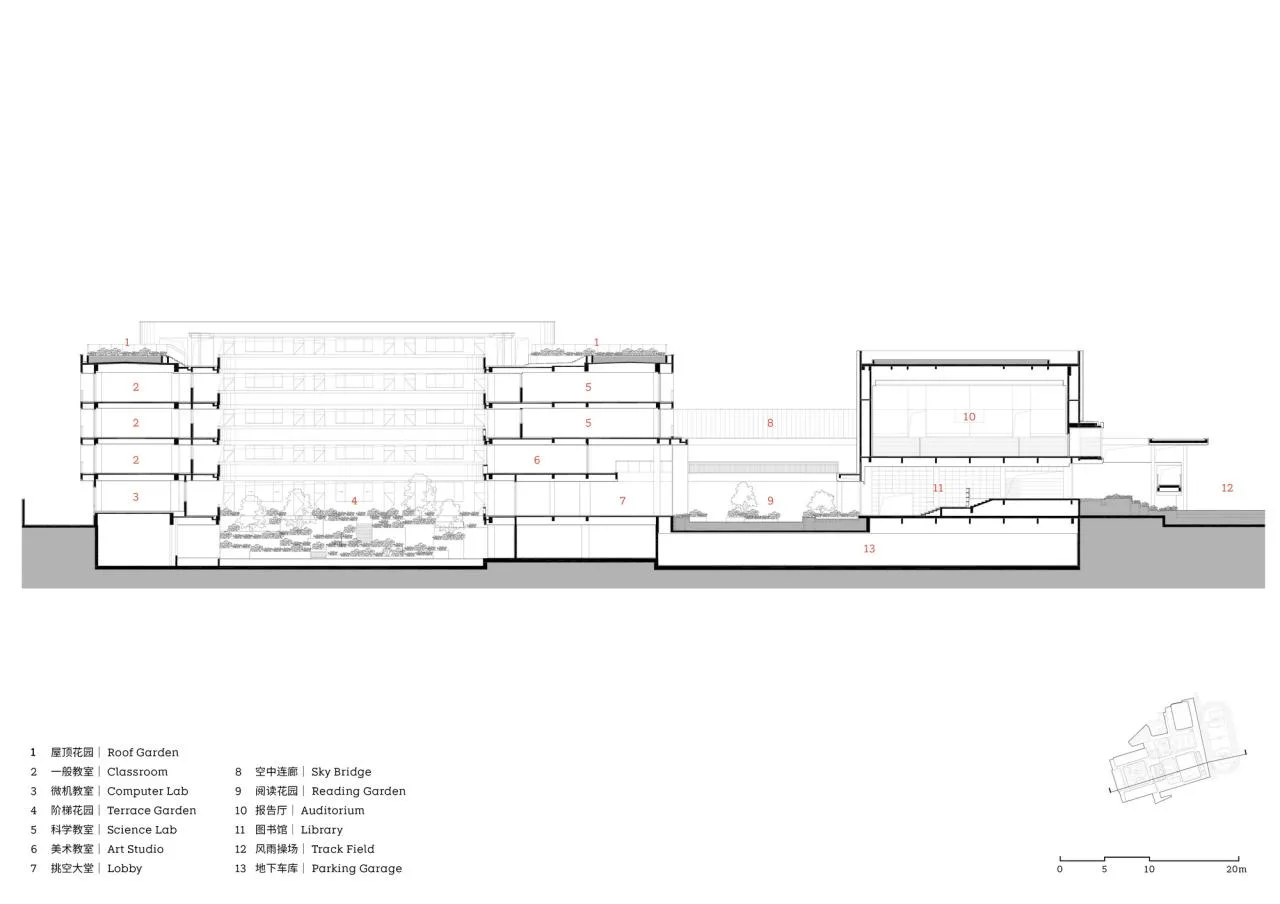
△ Section 1-1 © Goa Elephant Design
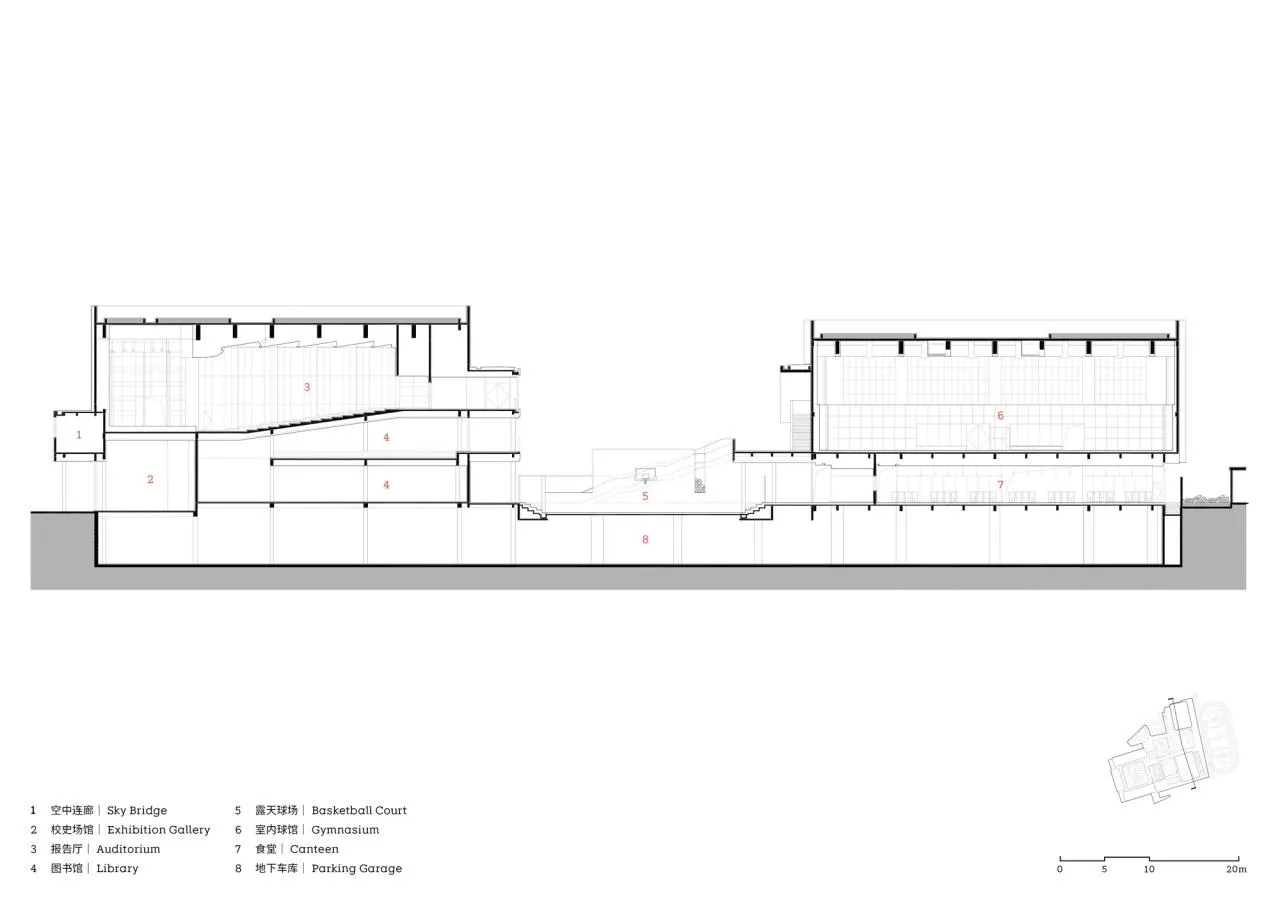
△ Section 2-2 © Goa Elephant Design
Project Information
Project Name: Xiangfu Campus of Hangzhou Daguan Primary School
Location: Hangzhou, Zhejiang Province
Owner: Gongshu District Urban Construction and Development Center, Hangzhou City
Architecture/Interior/Landscape/EPC: Goa Elephant Design
Design/Completion: 2019 / 2023
Building Area: 33,300 square meters
Photography: Daily Architecture Photography – Liu Guowei















Must log in before commenting!
Sign Up