
Industrial upgrading is not only an efficient method of land utilization but also aligns with the modernization demands of industrial structure advancement and urban renewal. Given China’s unique national conditions and historical context, we aim to achieve spatial model iteration for industrial upgrading through factory typification and park productization. This approach will provide practical examples supporting the sustainable development of China’s industrial parks.” – Meng Fanhao
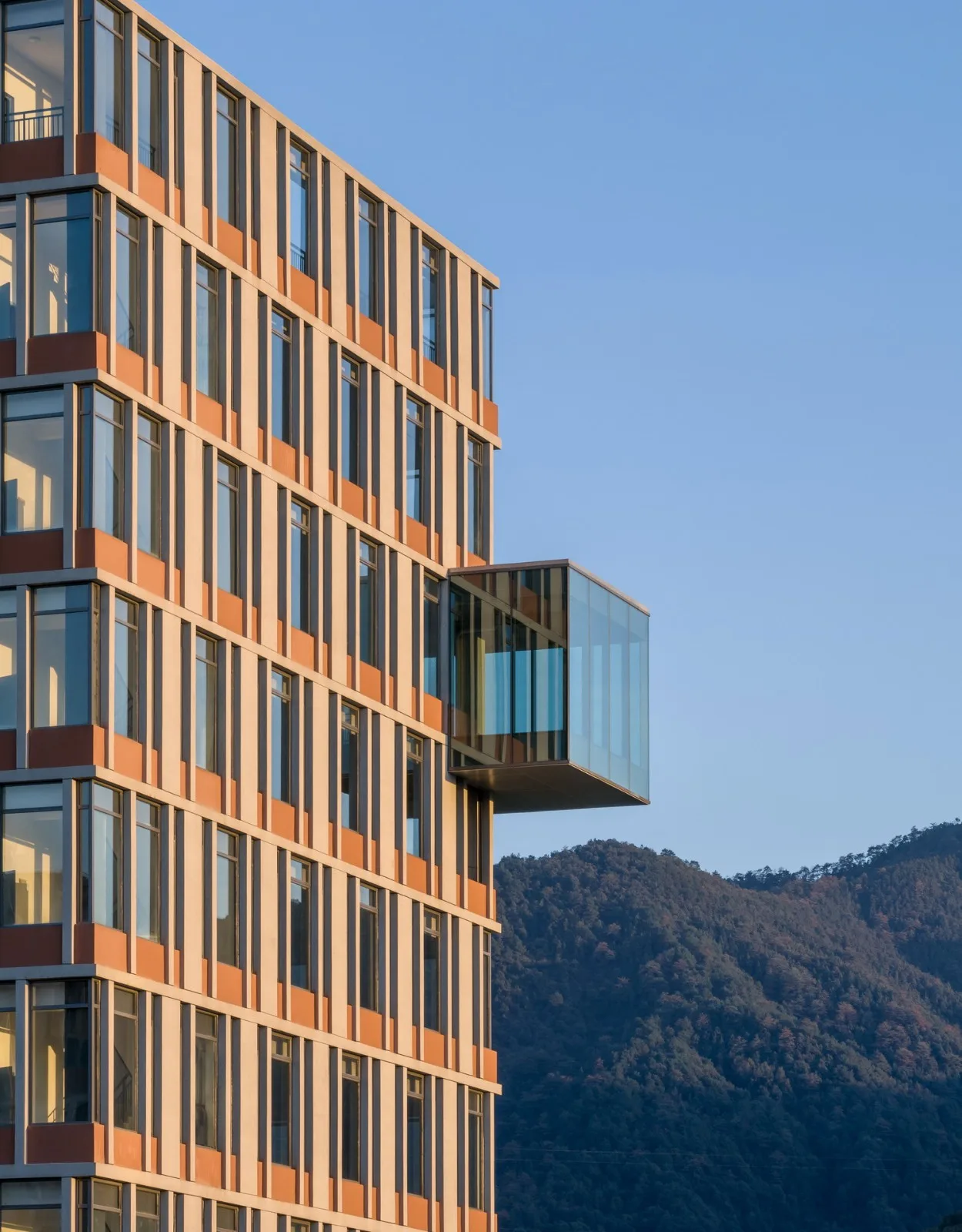
Drawing from a series of practical projects by Line+ in industrial parks, headquarters office parks, and other sectors, China Energy Conservation Group has once again engaged Line+ co-founder and lead architect Meng Fanhao to design an environmental protection industrial park located in the core area of Fuchun Bay New City, Hangzhou. As a leading enterprise in China’s energy conservation and environmental protection sector, China Energy Conservation Group has developed over 50 green parks nationwide. The Fuyang Industrial Park will become a benchmark for their third-generation standardized parks, with the owners seeking to transform the existing flat “industrial upstairs” factory buildings into a premier green, low-carbon industrial park integrating production, research, incubation, and supporting facilities.
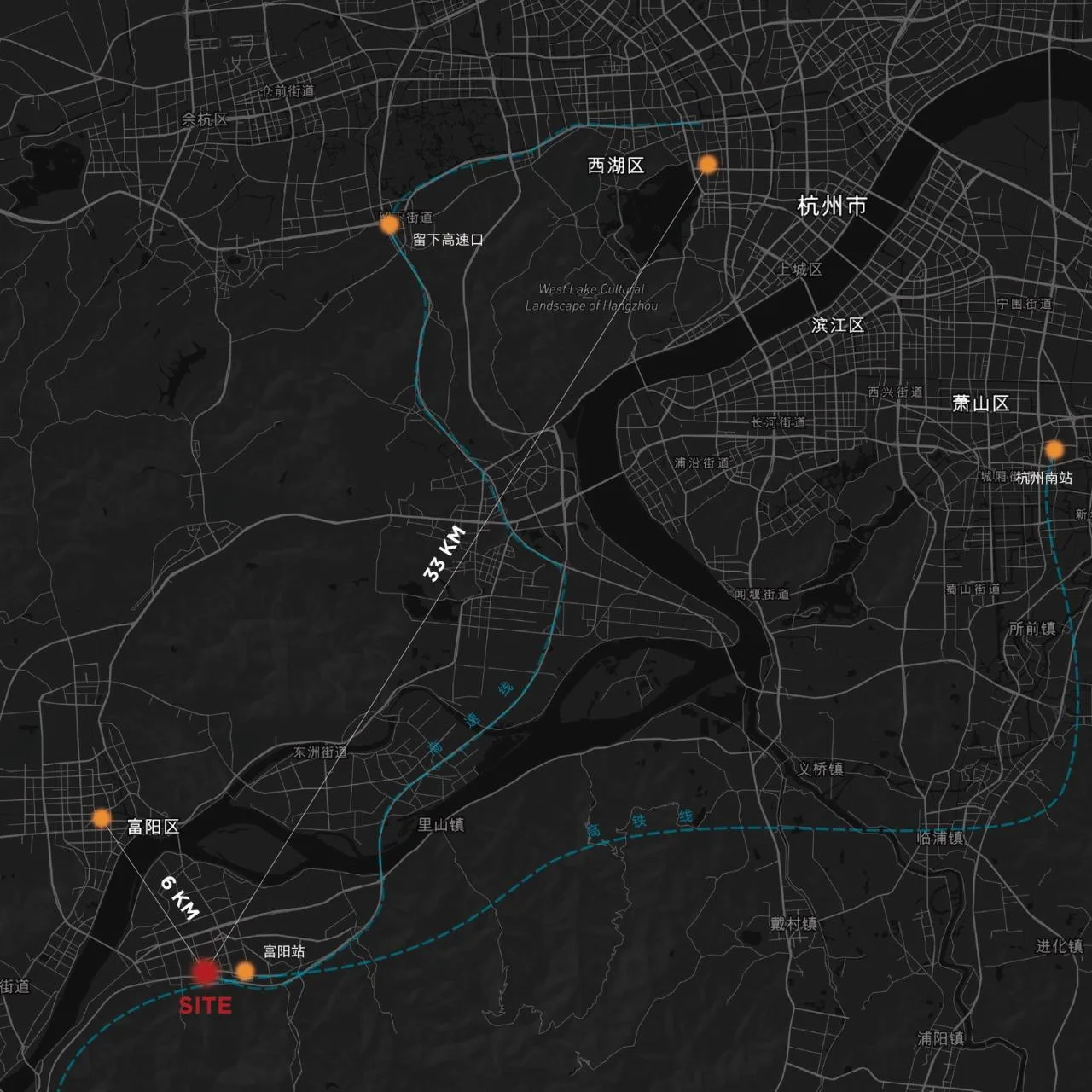
△ Location Map
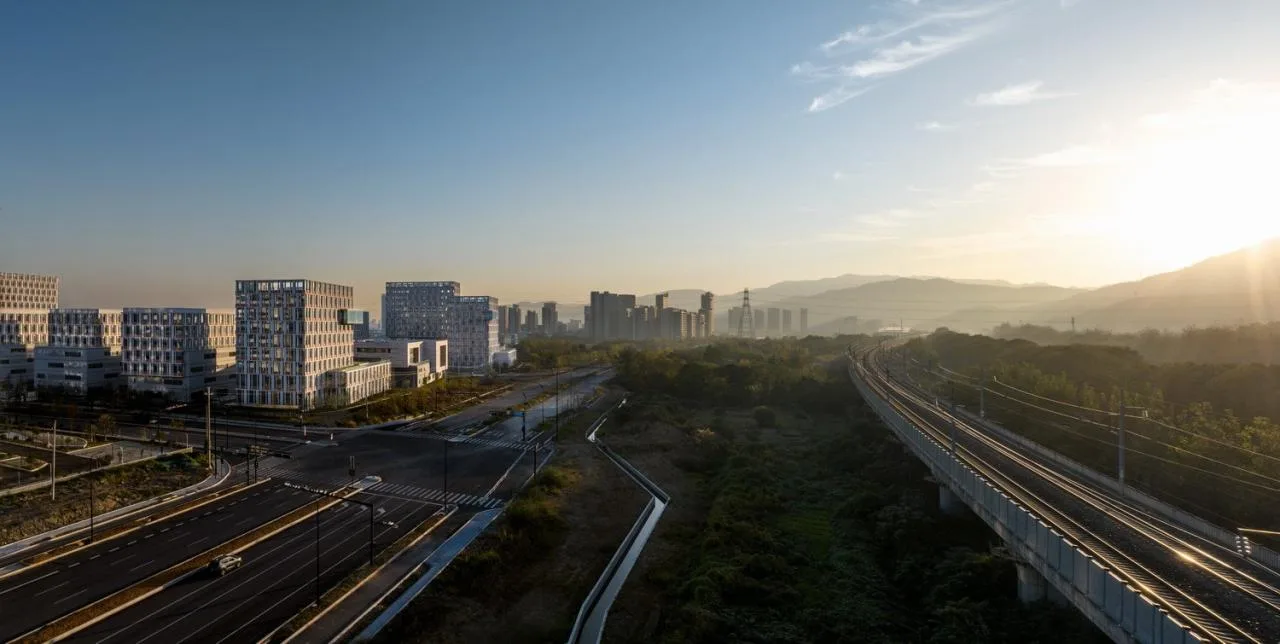
What exactly is “industrial upstairs”? Unlike traditional single-story factory buildings, industrial high-rise buildings utilize multi-story structures to vertically organize and distribute production, office, and other enterprise functions. This approach addresses urban land scarcity and supports new industrial structure demands. In 2021, the National Development and Reform Commission introduced explicit policies promoting “industrial upgrading” to foster high-quality development in manufacturing and the real economy.
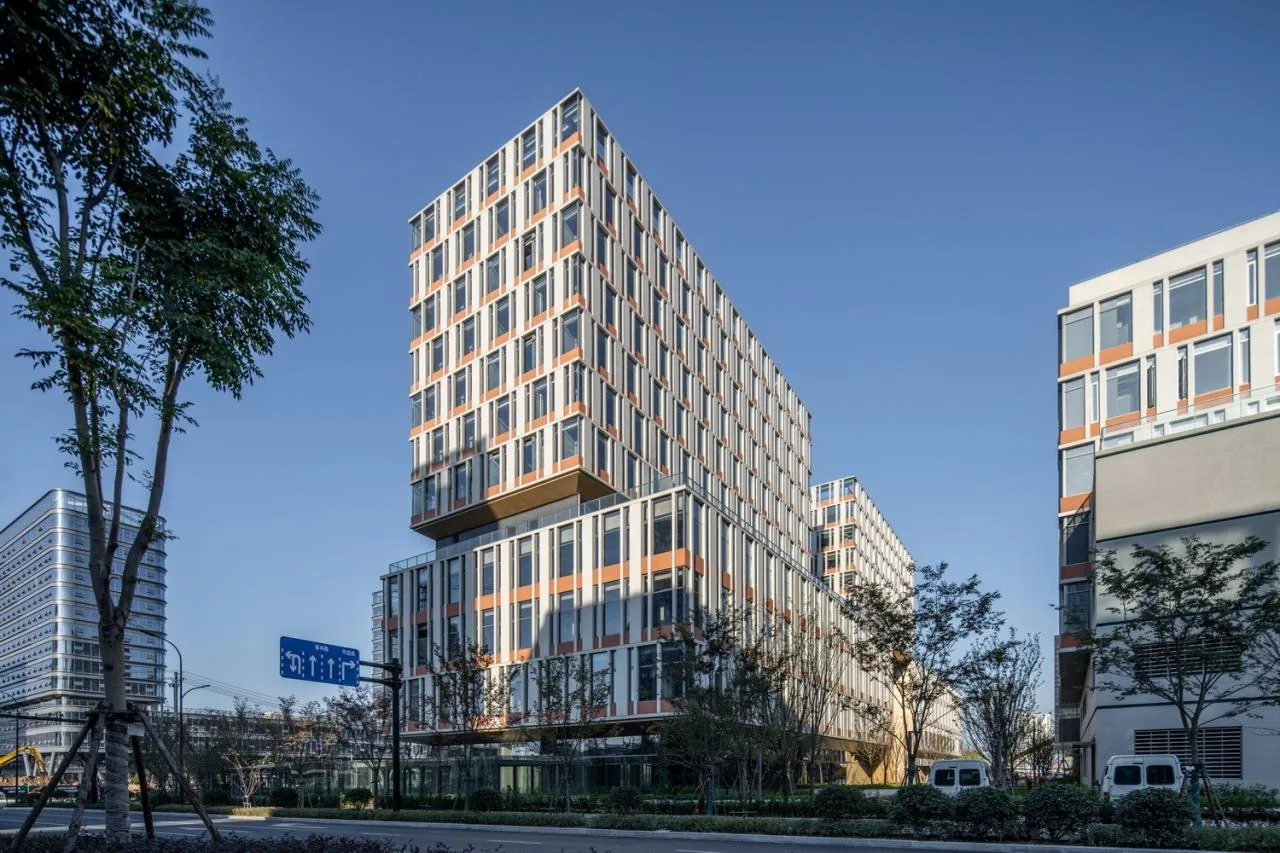
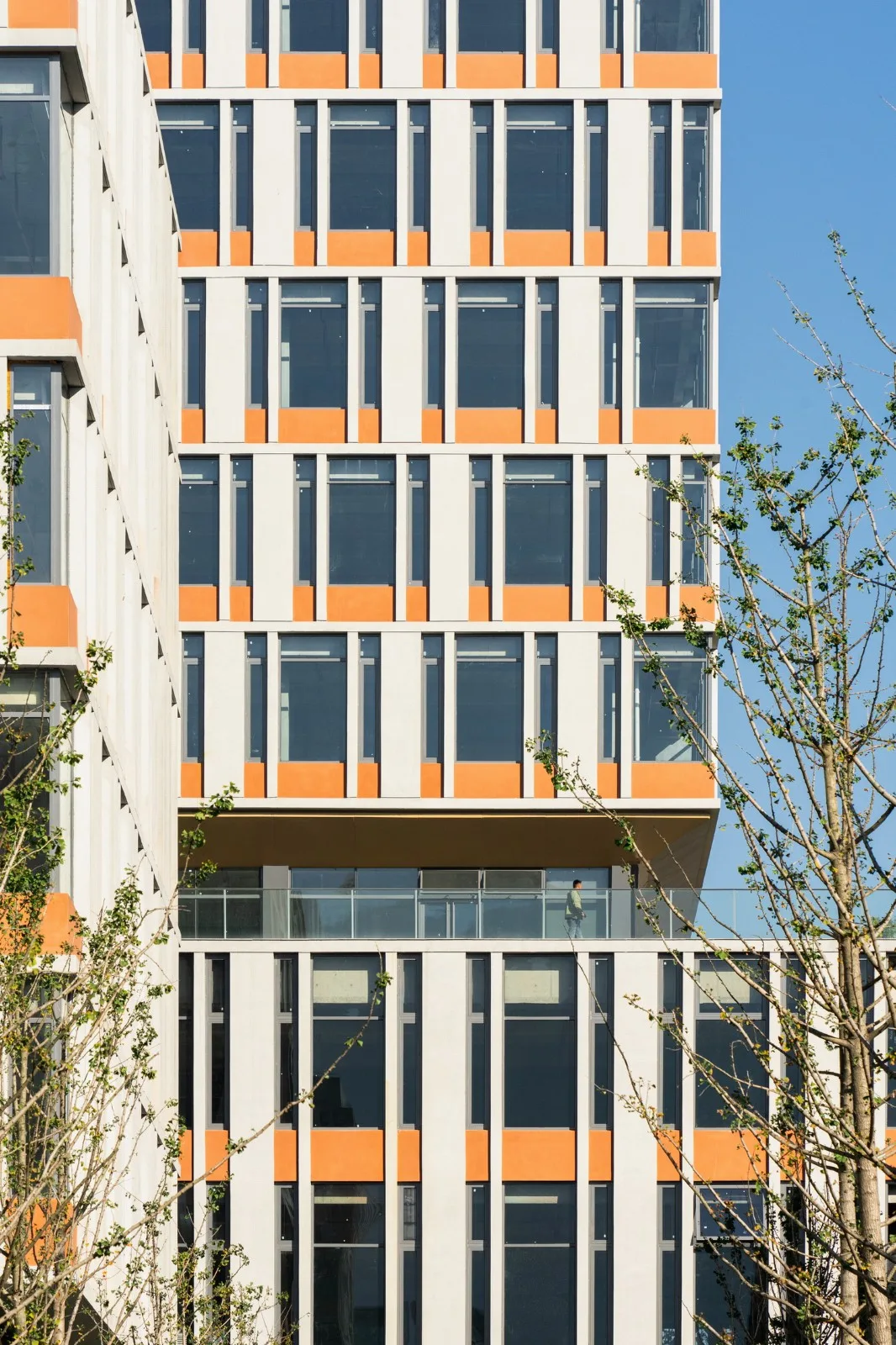
In designing the Fuyang Industrial Park, Line+ innovates and advances the “Industrial Upstairs” model by exploring both planning and product typologies. Leveraging the owners’ extensive market experience, we collaboratively developed product types better suited to market demands. This provides diverse spatial options within limited areas, enhancing land use efficiency, industrial capacity, and the quality of industrial building products. Simultaneously, we innovated the spatial organization of the park to ensure efficient production flows and seamless city connectivity, creating a green, sustainable, and community-oriented environment that energizes and revitalizes the industrial park.
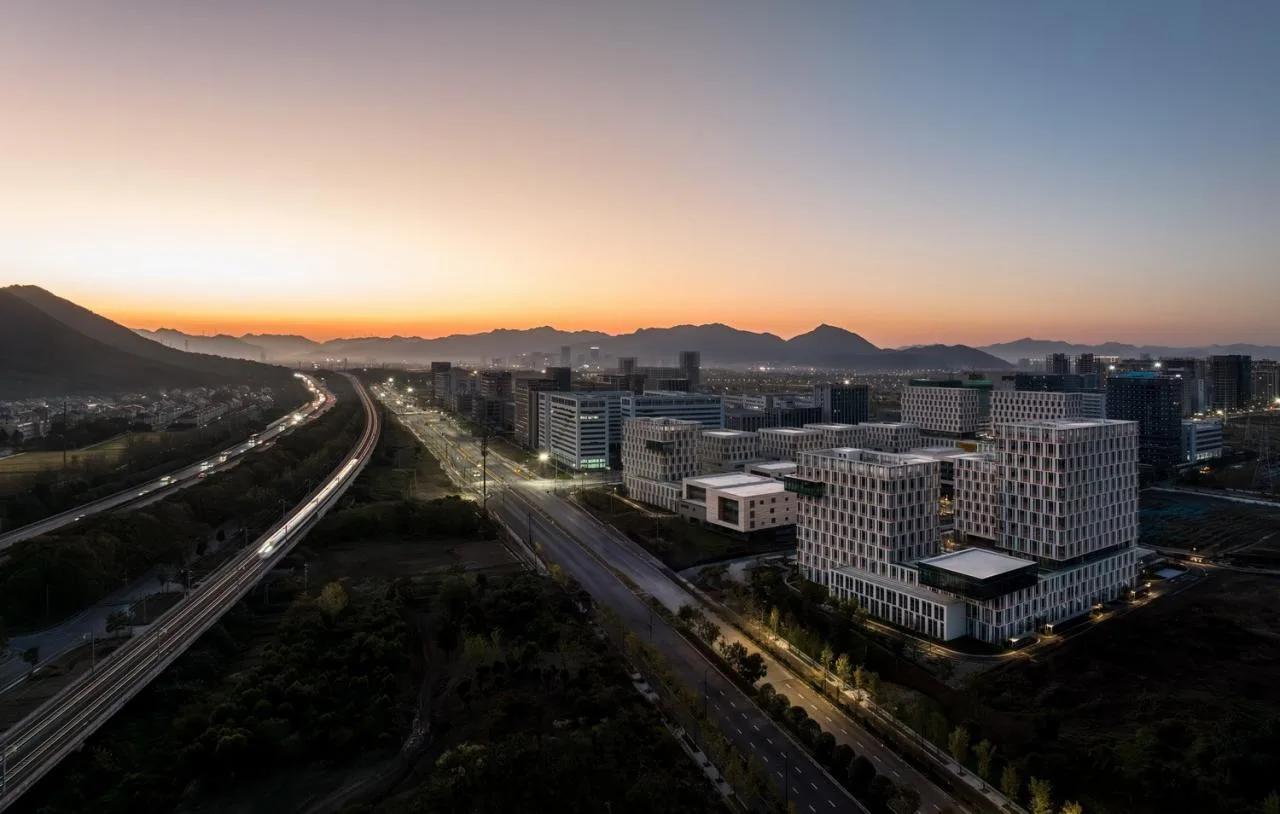
01. Balancing Land Use Efficiency and Variety of Products with Rapid Market Turnover and Value Maximization
Product development under high plot ratio constraints
Planning regulations require that single-story flat areas be no less than 800 square meters, sales units no smaller than 2,000 square meters, and the plot ratio between 2.0 and 2.5. However, market feedback from owners indicates the strongest demand is for single-story factories around 3,000 square meters, which sell fastest and command the highest premiums. This presents a challenge: how to overcome the value limitations of conventional flat industrial buildings under high plot ratio constraints? This was a key challenge at the outset of design.
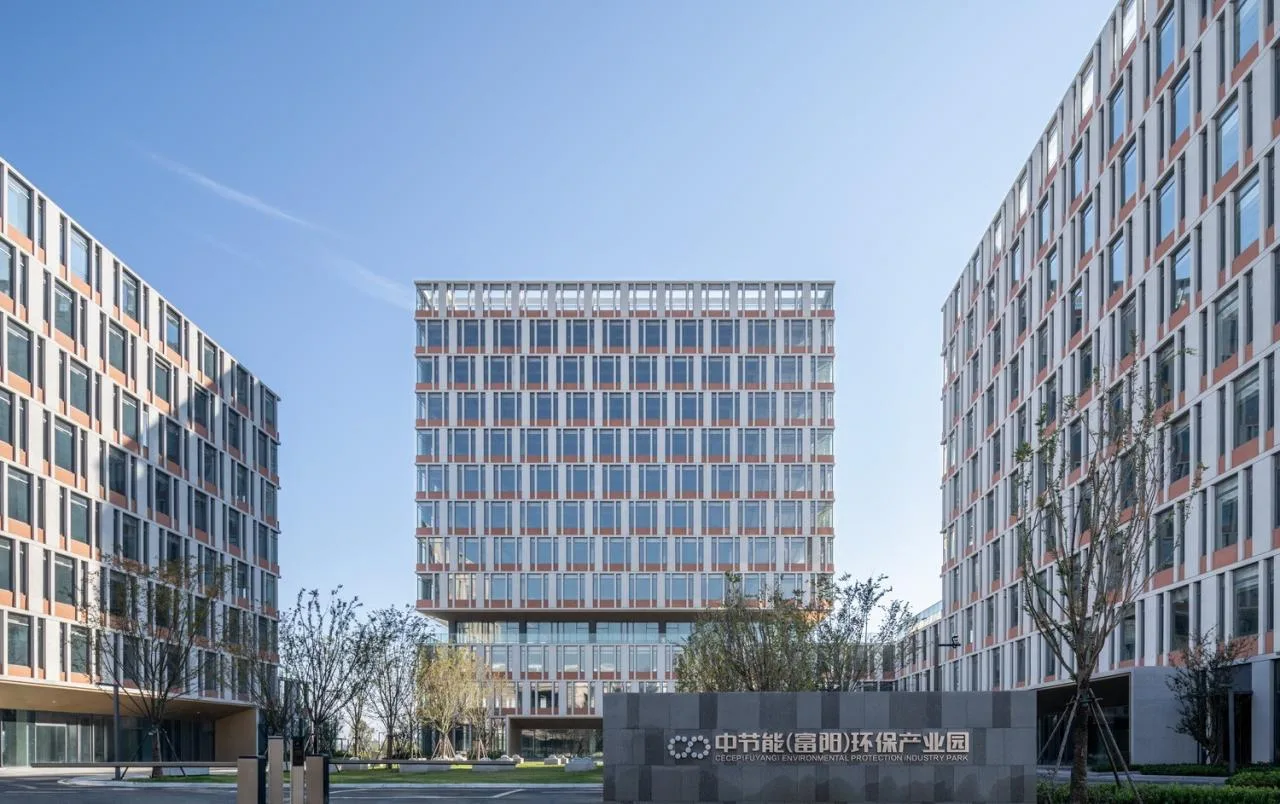
Early in the product research phase, we introduced the concept of stacked villa-style products from residential design into industrial plant projects, coining “quasi detached” factories. We defined a combination model of multi-story detached plants, “industrial upstairs” flat plants, and “quasi detached” plants. These four distinct product types precisely target different customer groups in the local market, addressing varied enterprise needs to maximize project value while complying with high plot ratio limits and accelerating turnover.
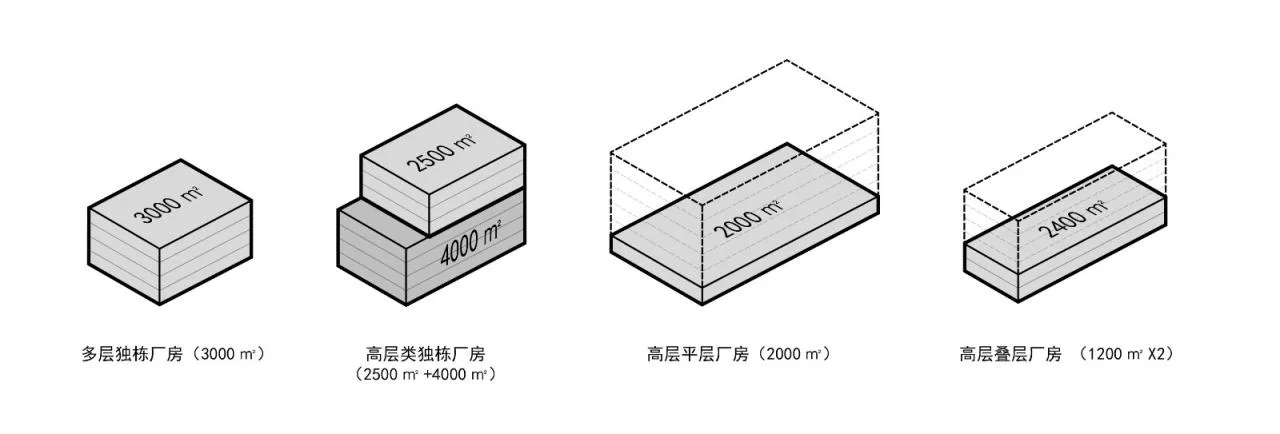
Analysis of the four product types:
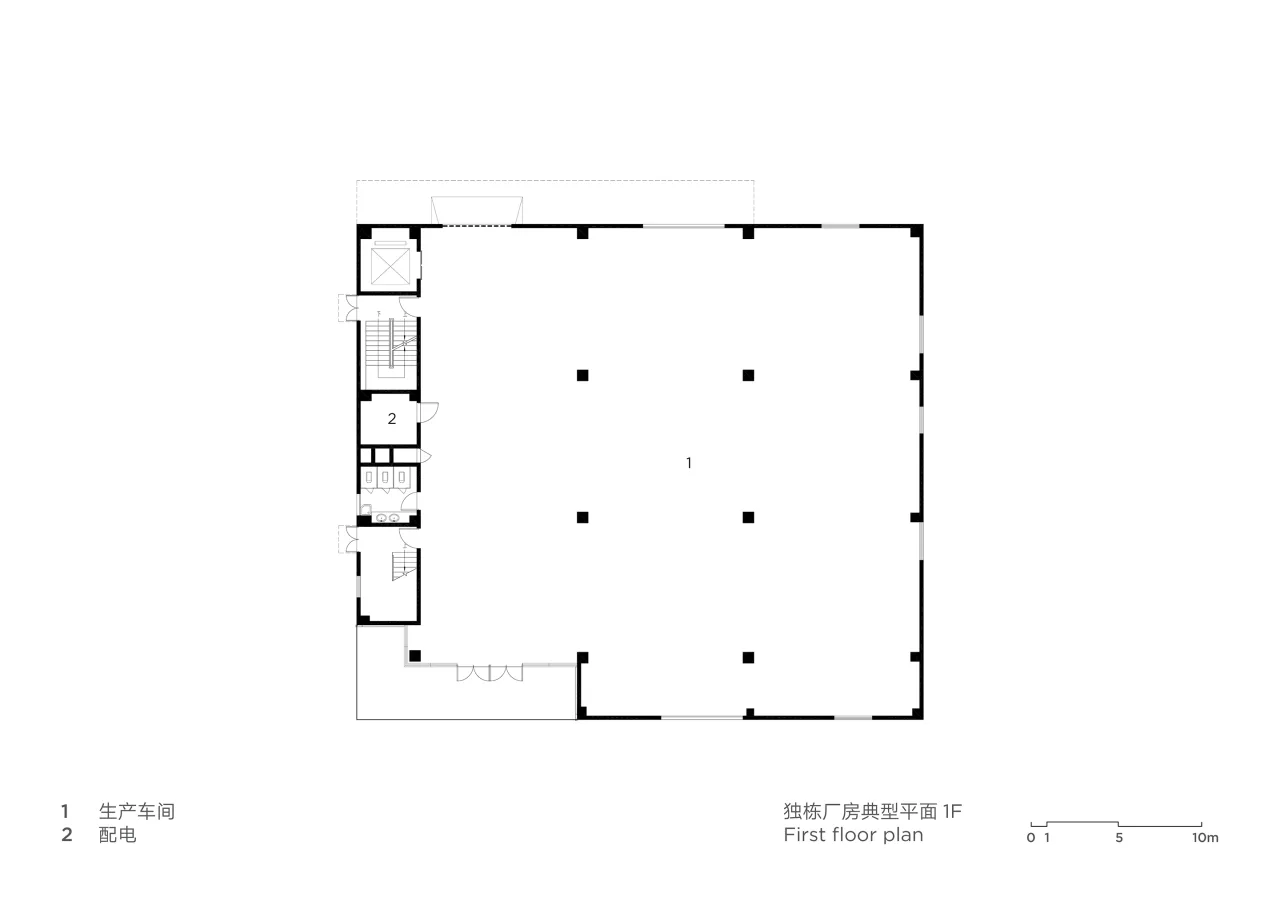
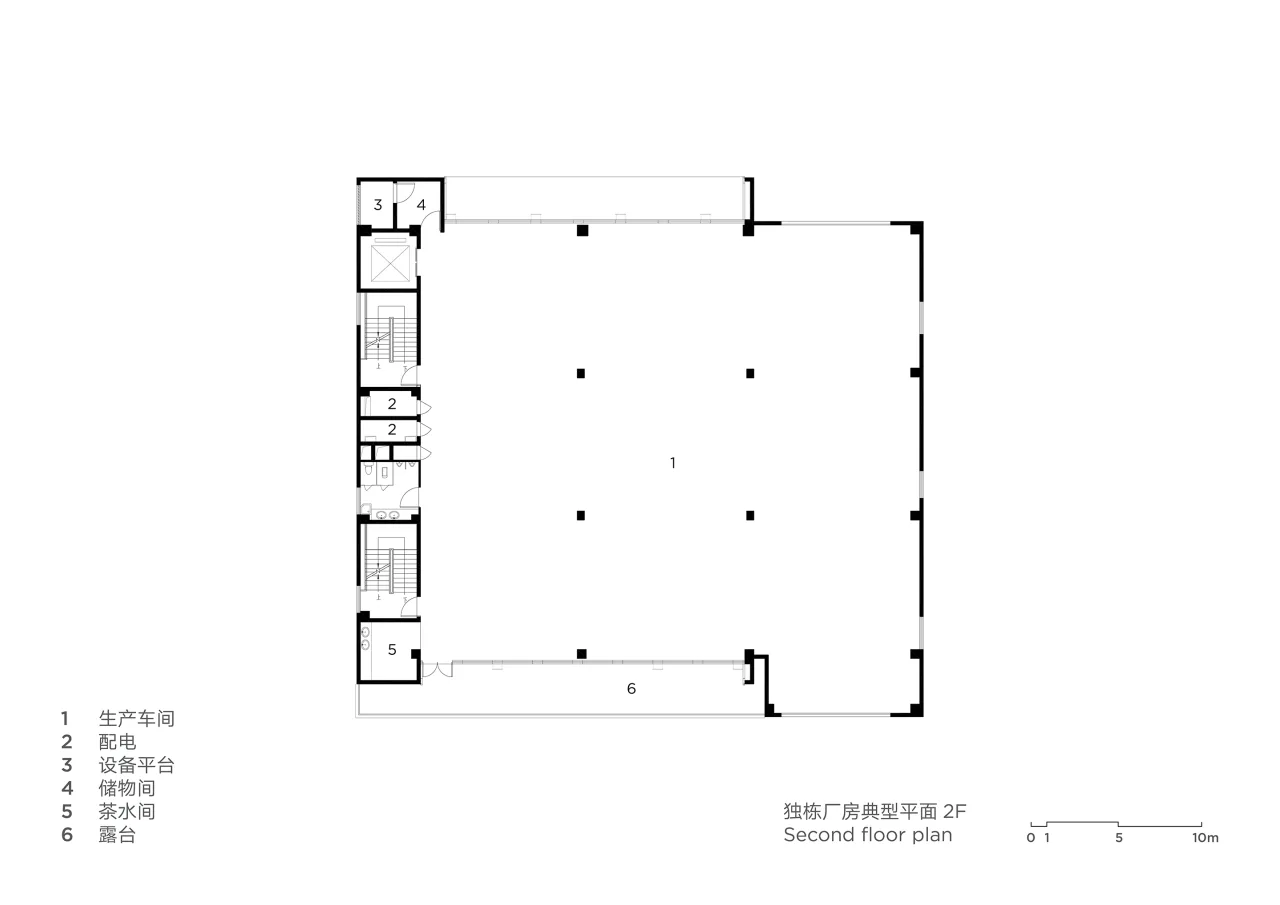
The multi-story standalone factory buildings are sold per building, typically consisting of four floors, with some reaching five or as low as three floors, totaling around 3,000 square meters. They feature passenger and freight separation, accommodating production needs for heavy machinery on upper floors. Auxiliary spaces linearly arranged along edges optimize space efficiency, and production areas remain open and complete. Additionally, three sets of duplex units are designed to meet different market demands, allowing flexible division or combination between units.
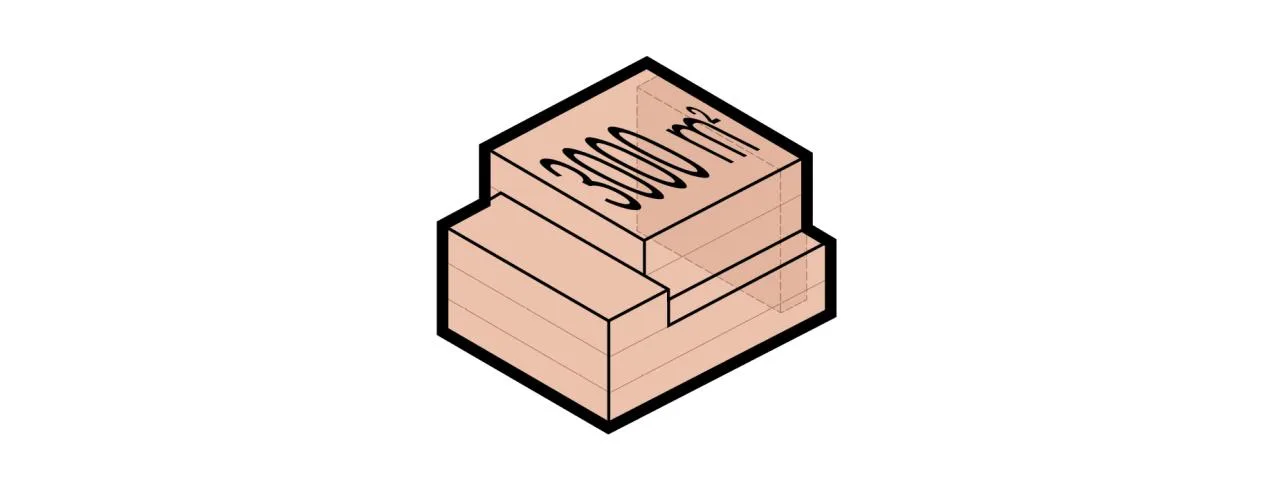
Individual factory building block analysis:
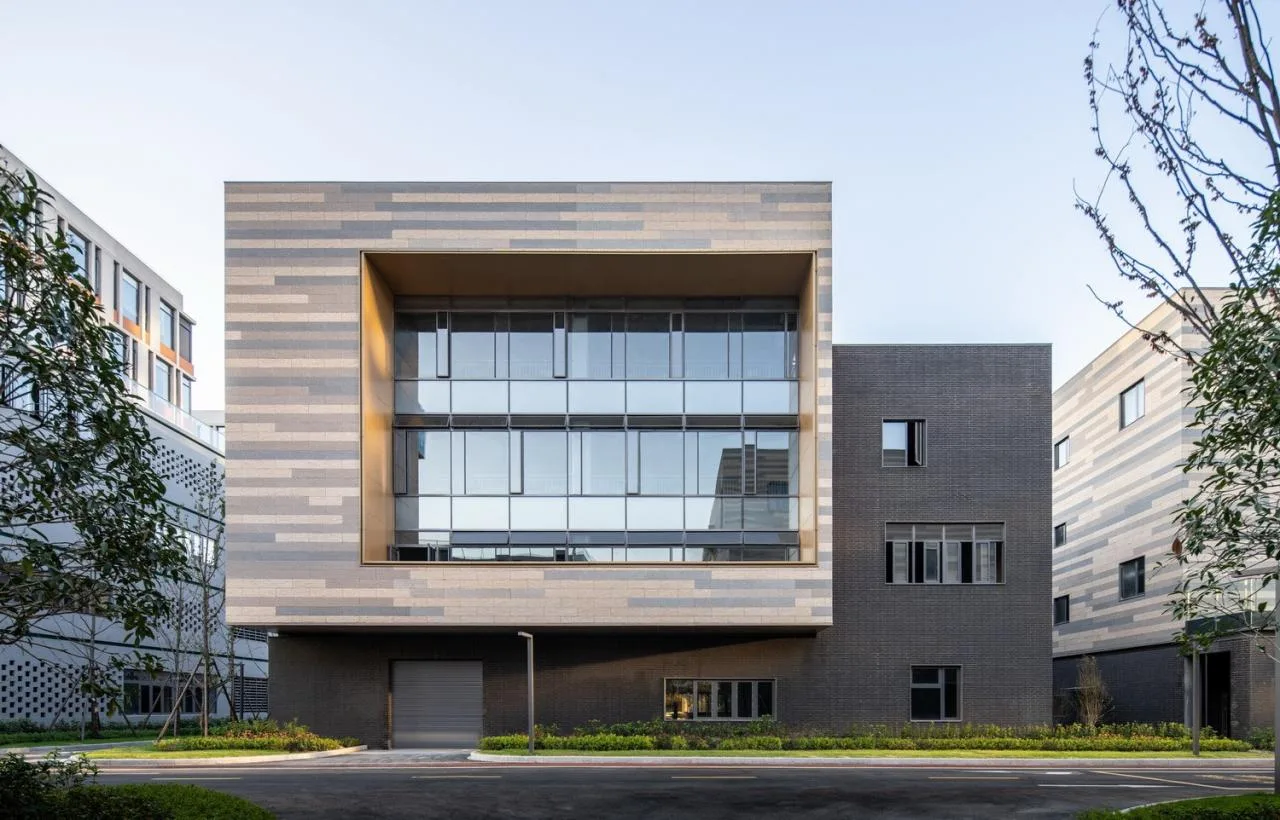
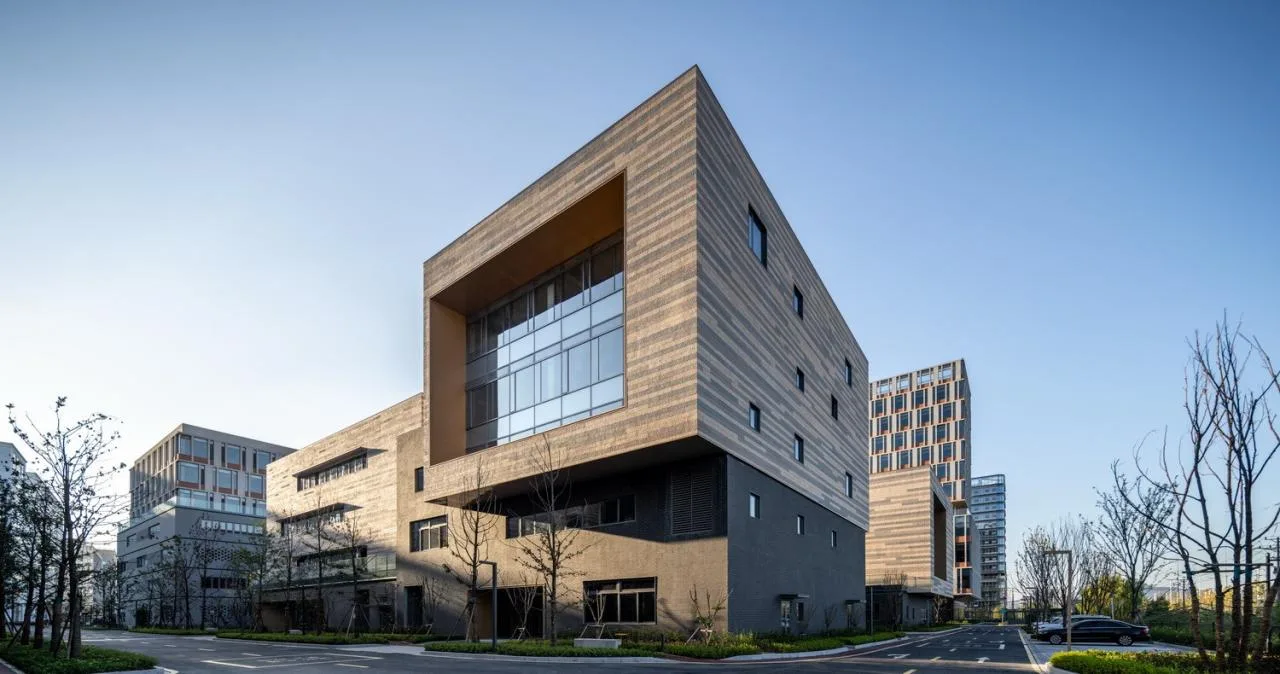
The high-rise “single story” factory buildings cleverly divide building volume into three upper floors and four lower floors, each functioning as separate units with independent vertical transport, entrance halls, and courtyards. This breaks through the value constraints of conventional single-story industrial buildings. For example, a four-story factory covers approximately 1,000 square meters per floor, totaling 4,000 square meters per sales unit. Similarly, stacked three-floor factory buildings cover about 850 square meters per floor, with 2,500 square meters per sales unit.
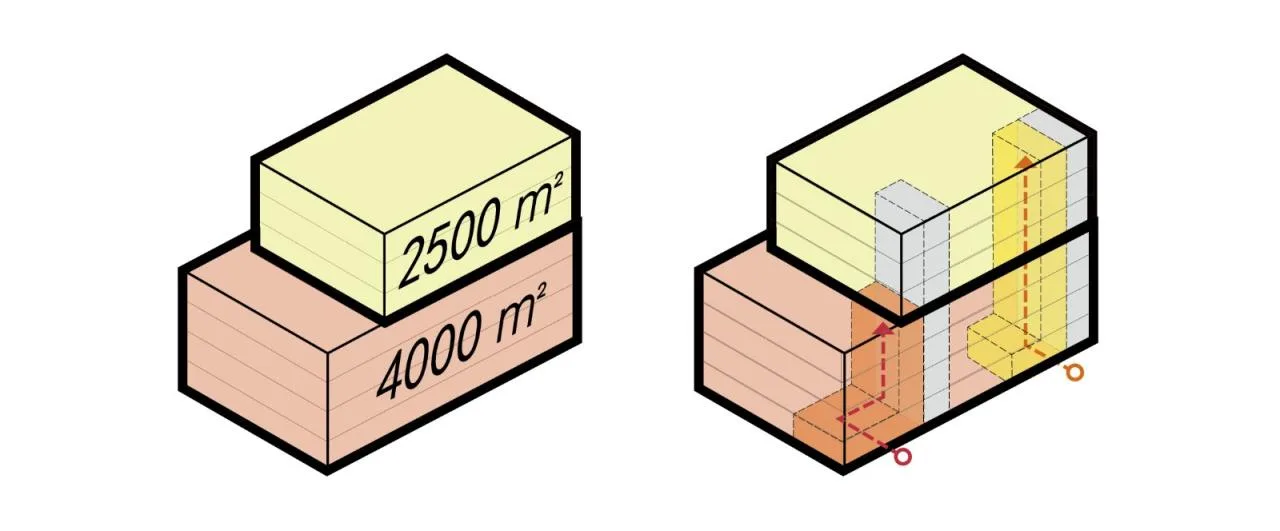
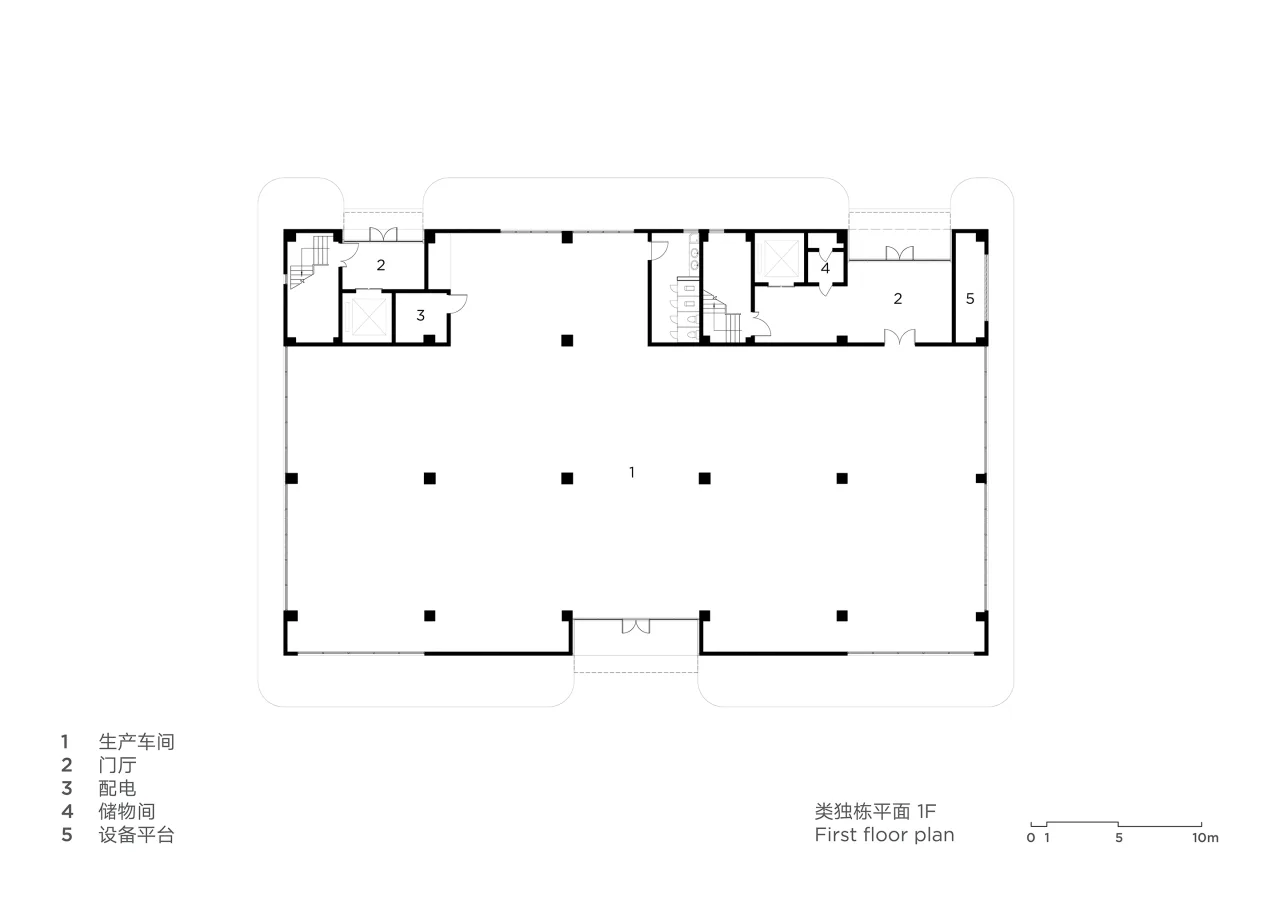
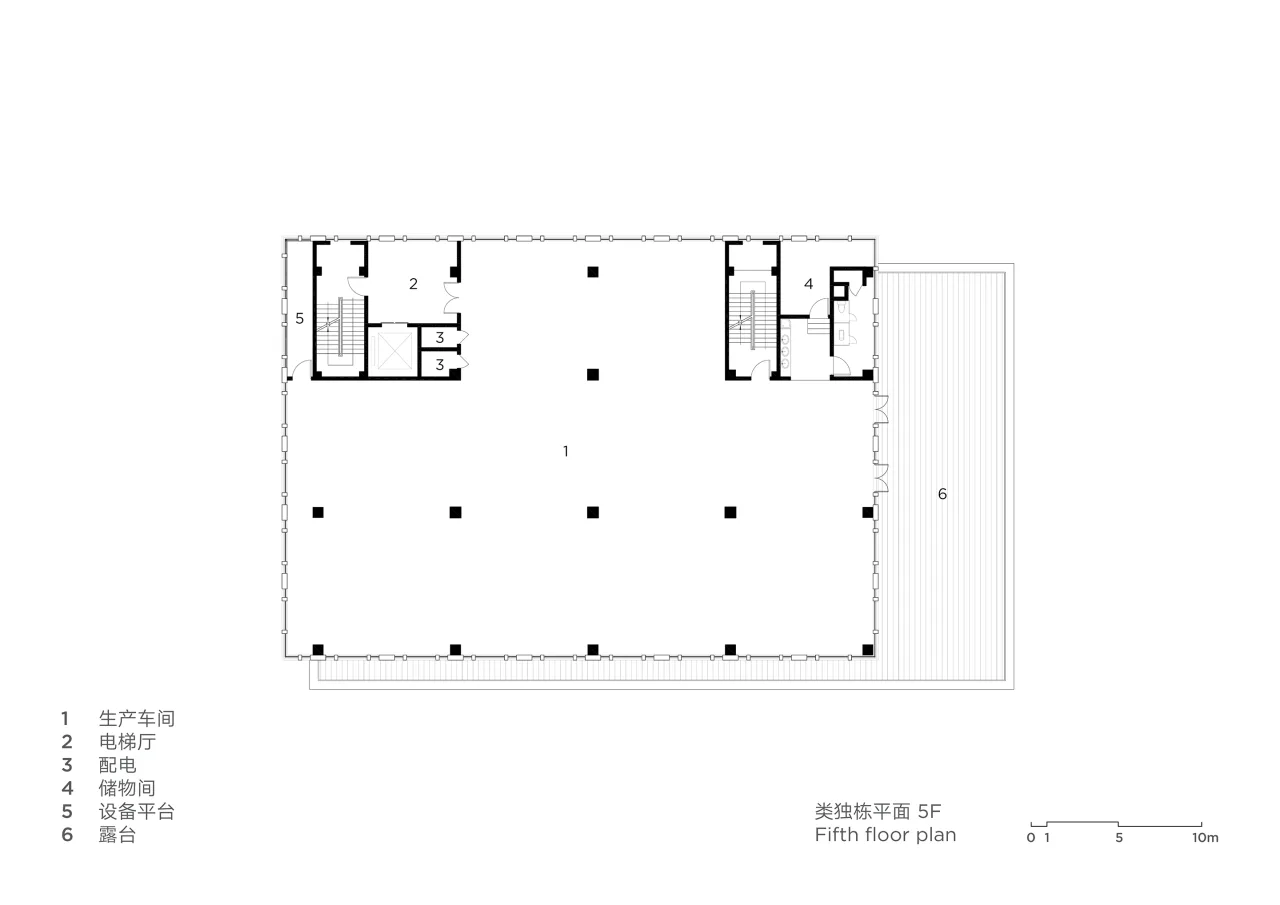
Analysis of the Class Single Family Factory Building block:
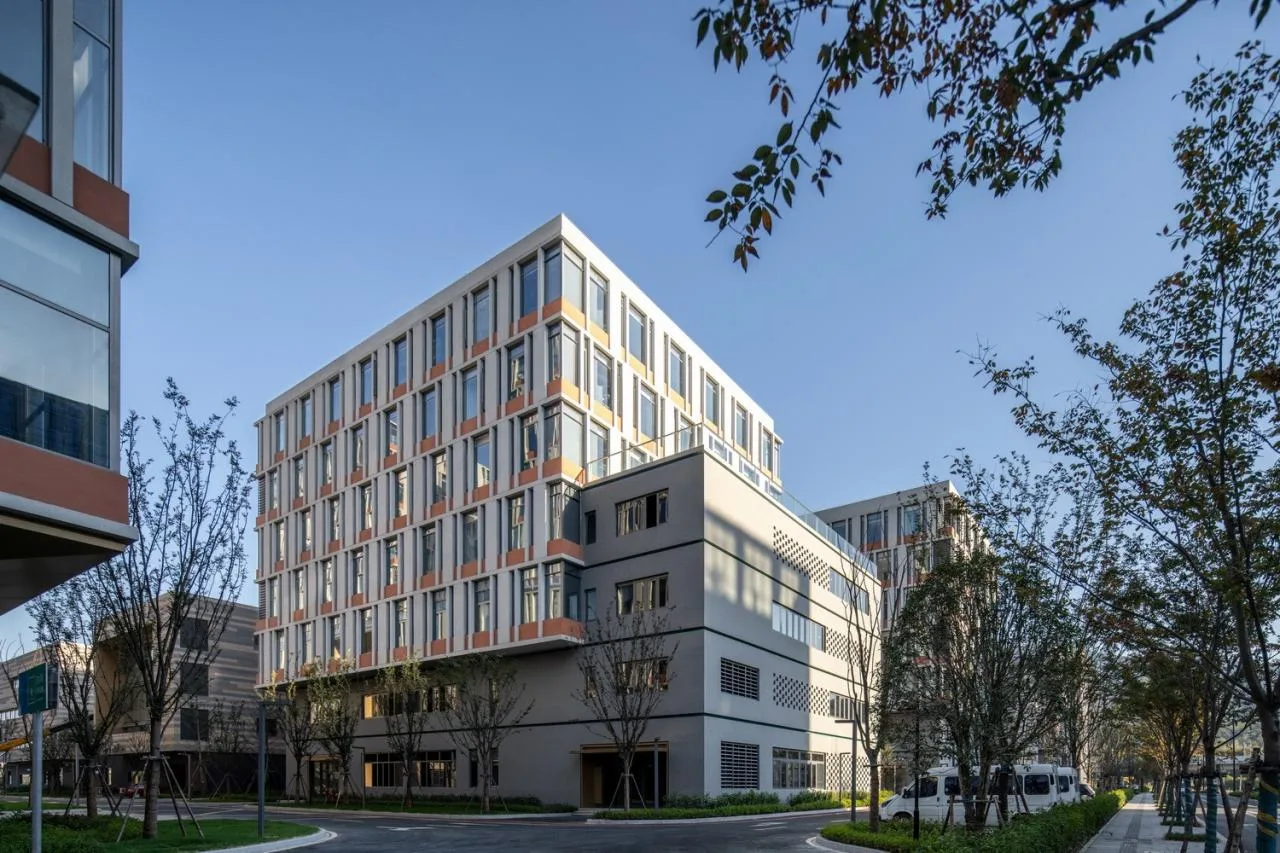
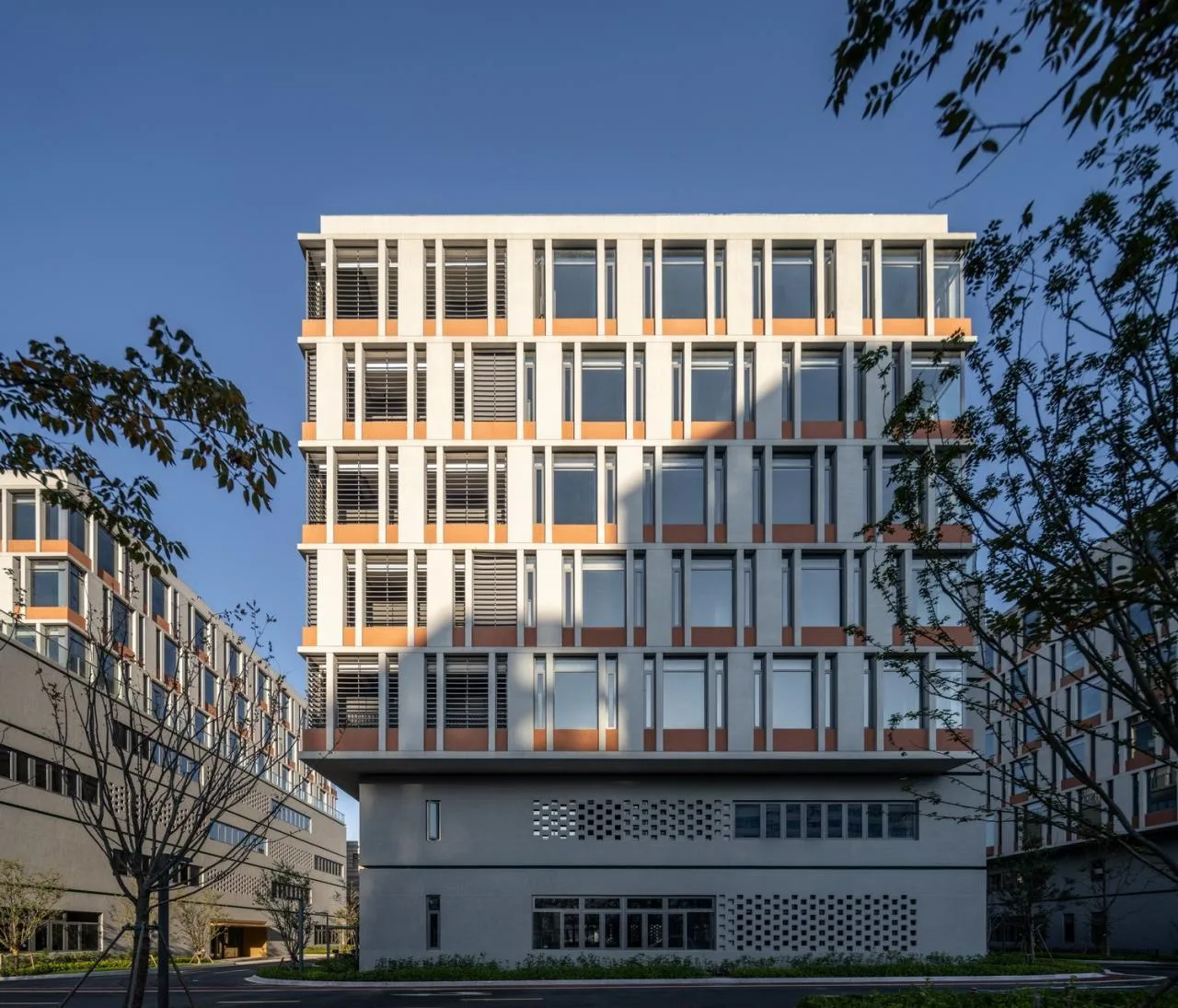
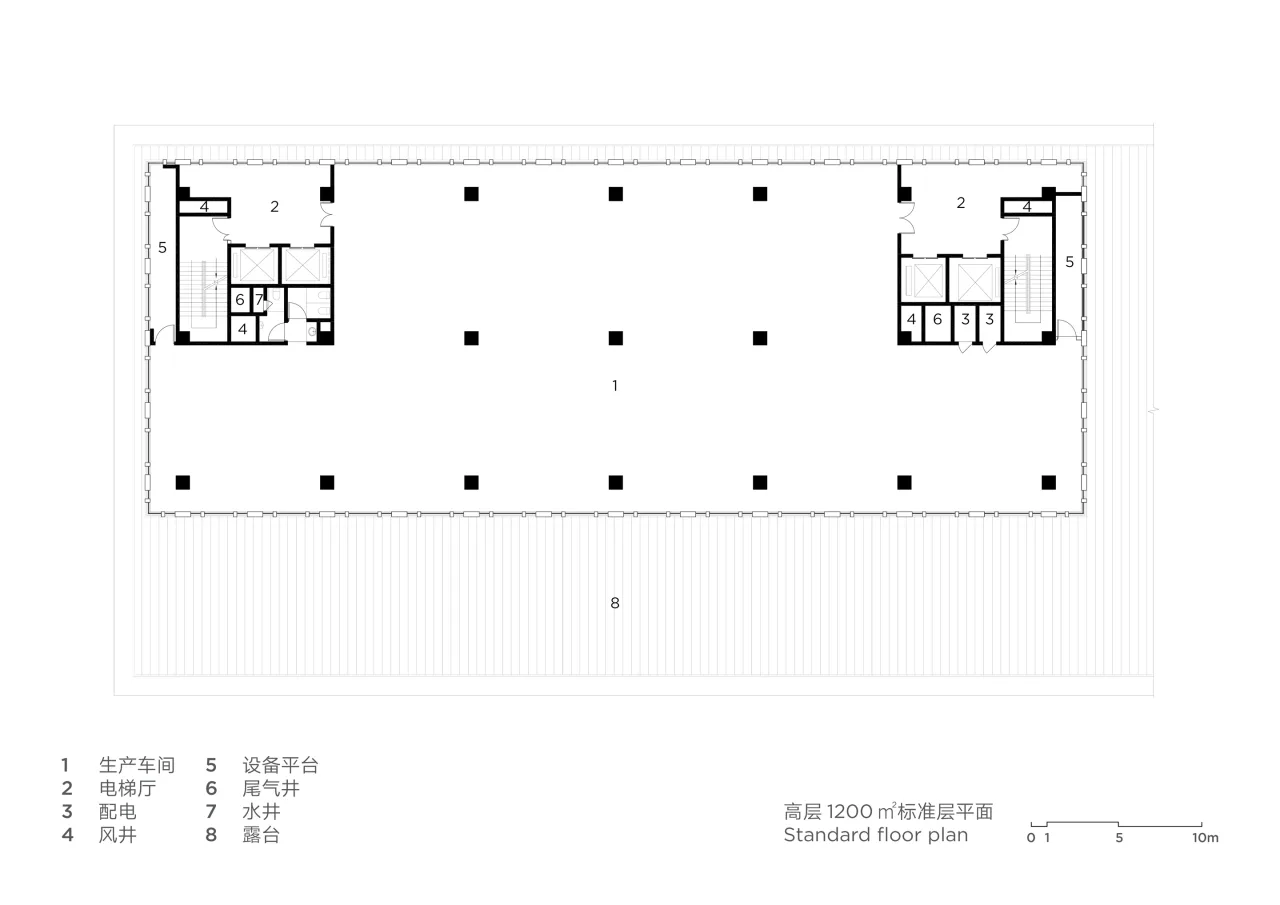
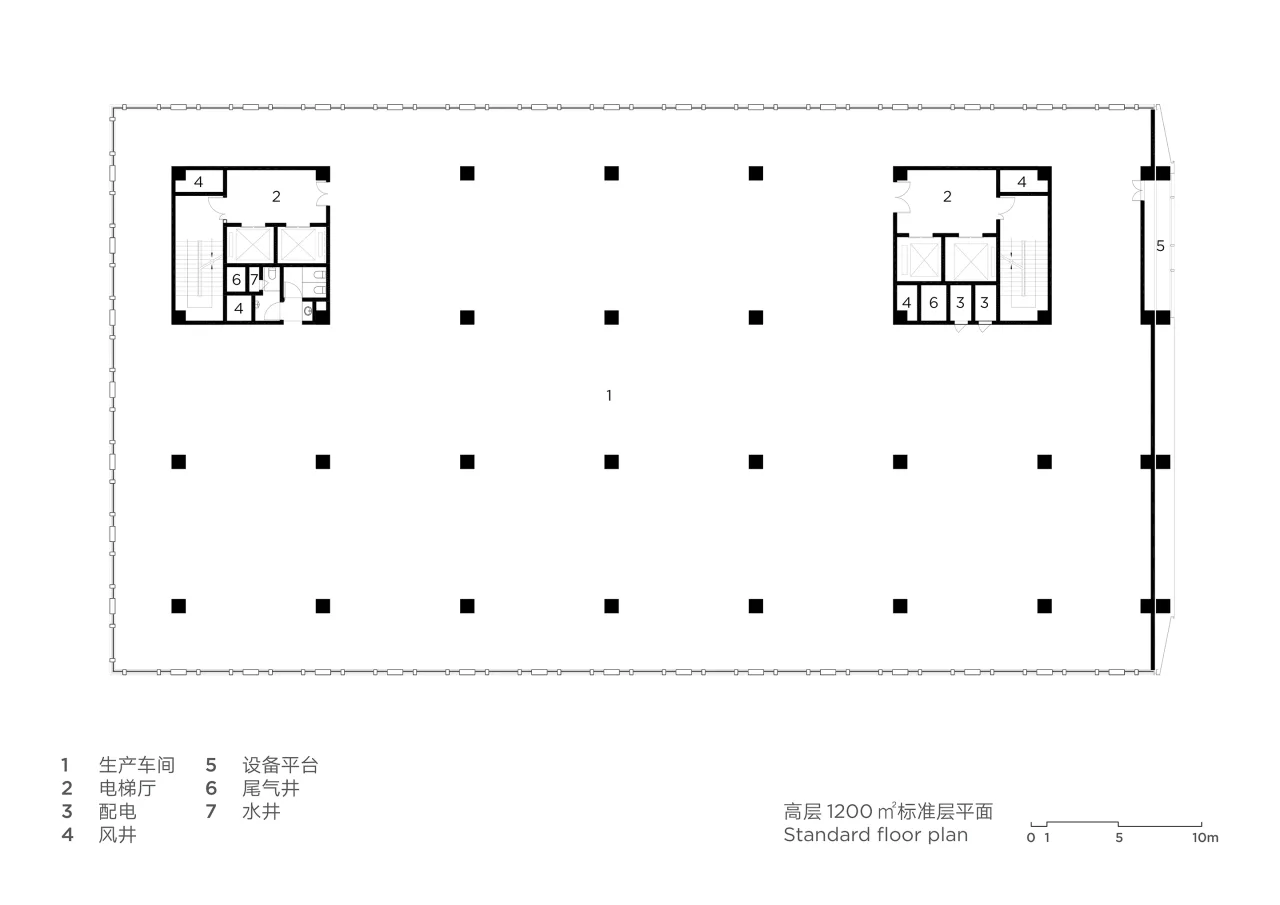
Ownership of high-rise factory buildings is divided by floors, ideal for small-scale enterprises with horizontal production lines. Each enterprise shares entrance halls and vertical transportation, with a flat 2,000-square-meter factory at the base and stacked 1,200-square-meter factory units above, consisting of two floors per sales unit.
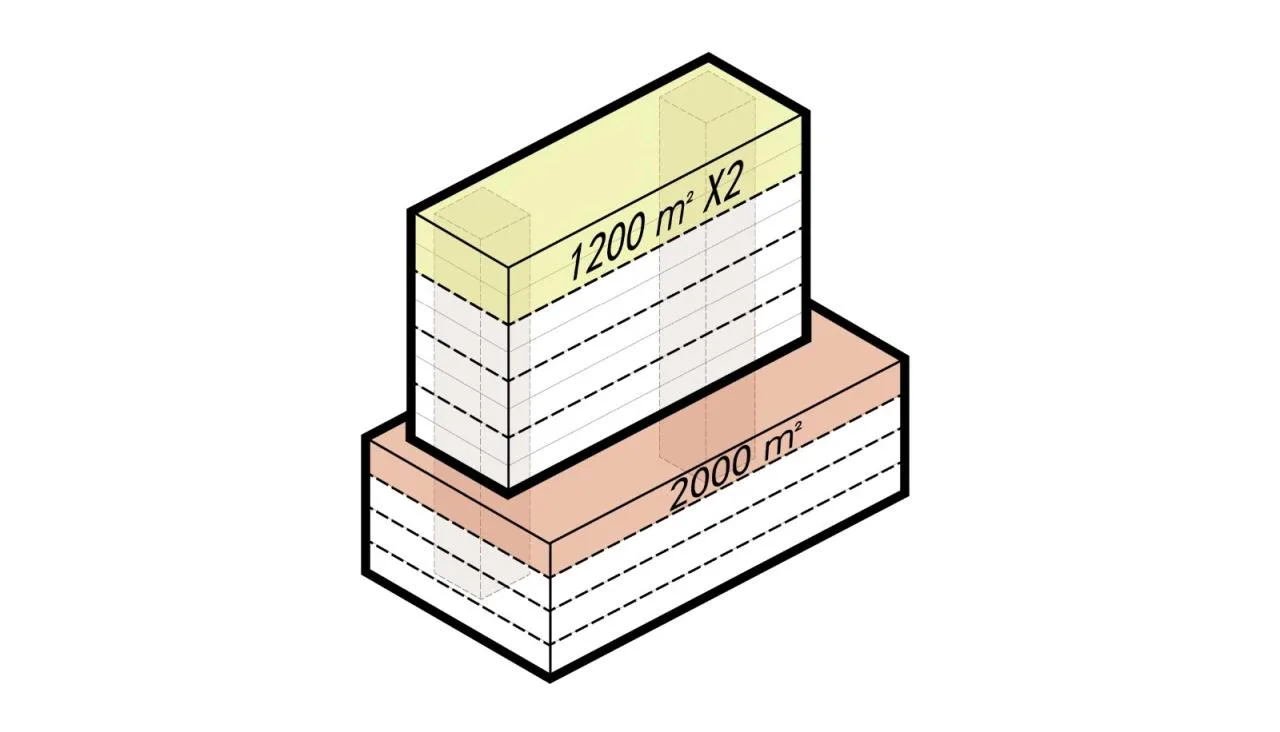
Analysis of high-rise factory building blocks:
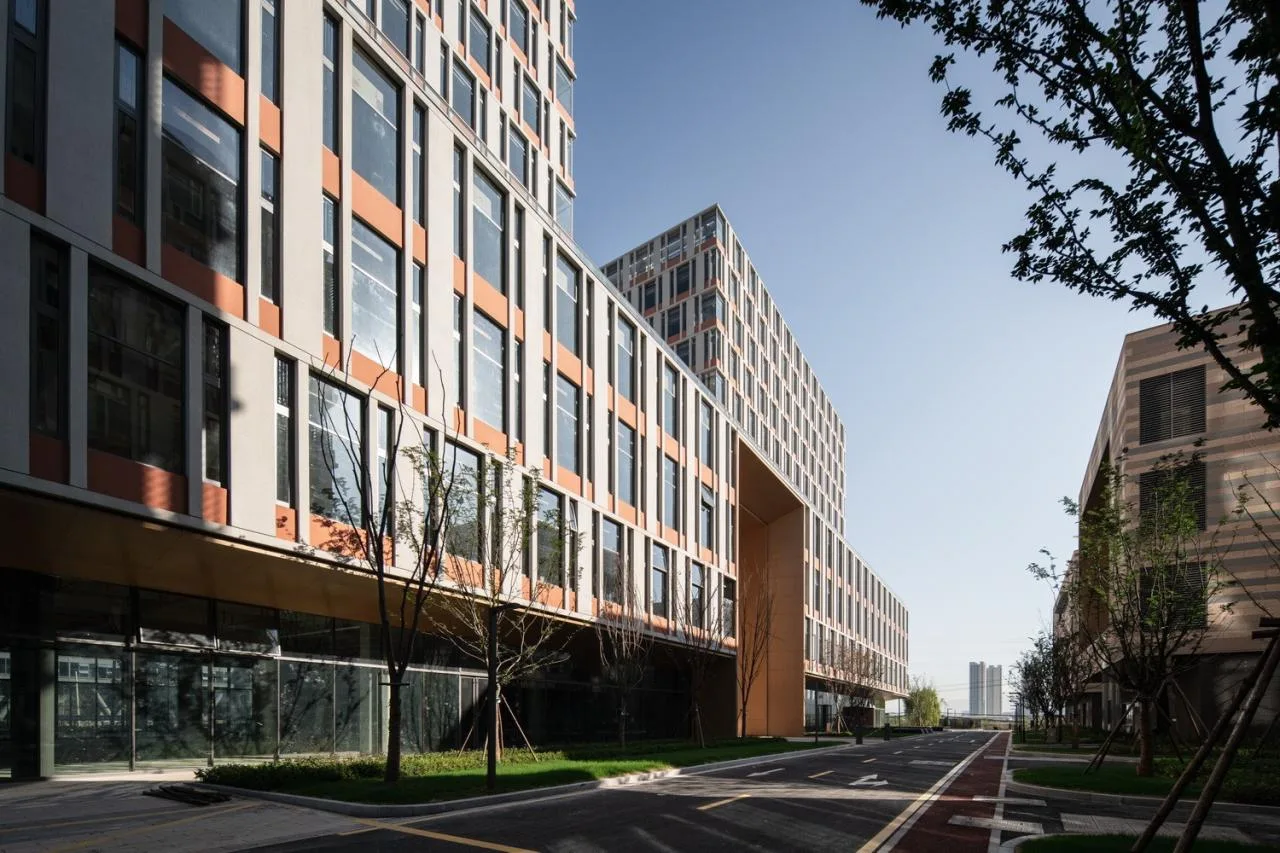
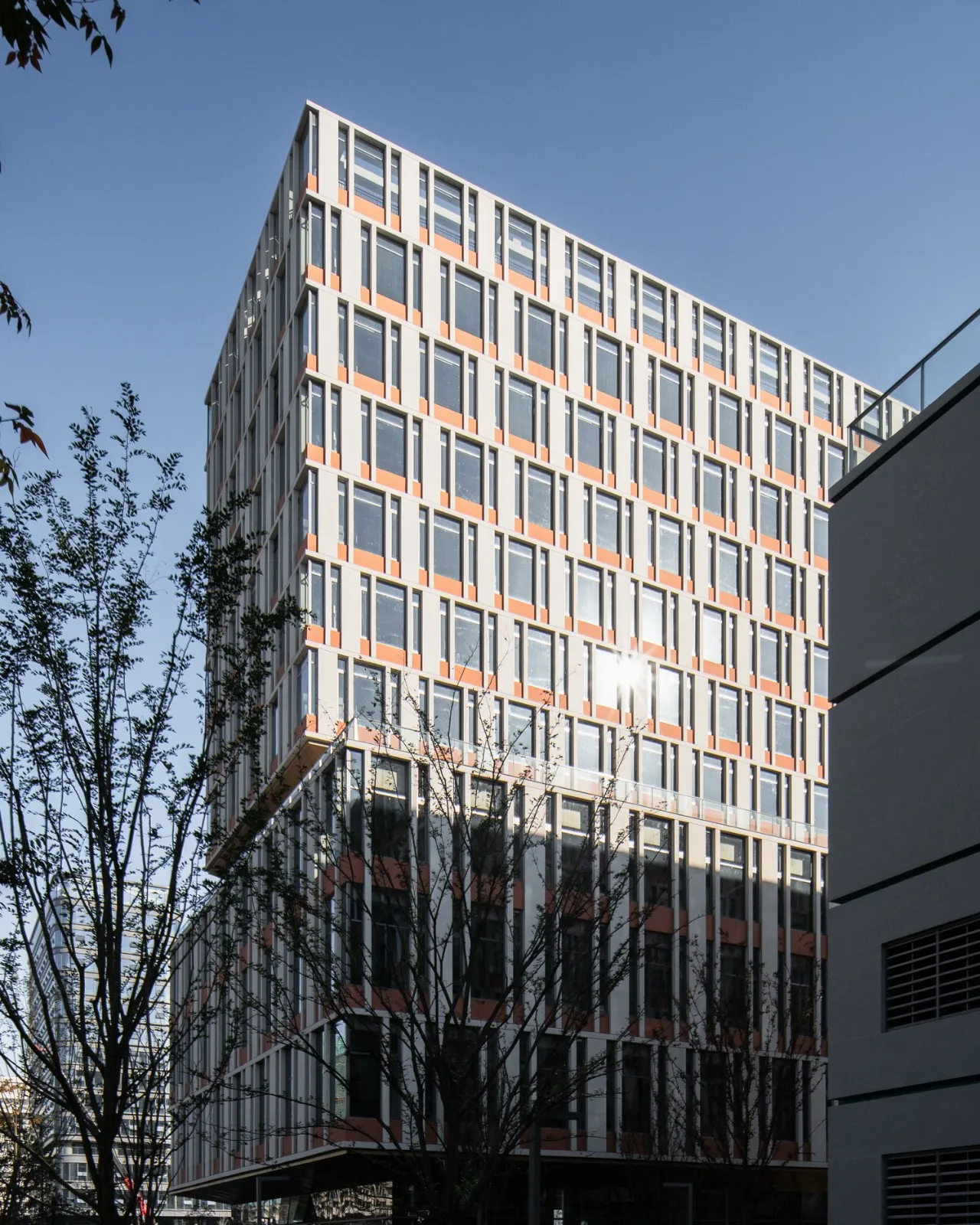
Graphic design prioritizes fundamental industrial production needs, with transportation and auxiliary functions placed in corners to preserve the integrity of main spaces. Column spans are regular and uniform, facilitating production line layouts. The floor plan proportions also consider future adaptability for research, development, and office uses, avoiding excessive depth.
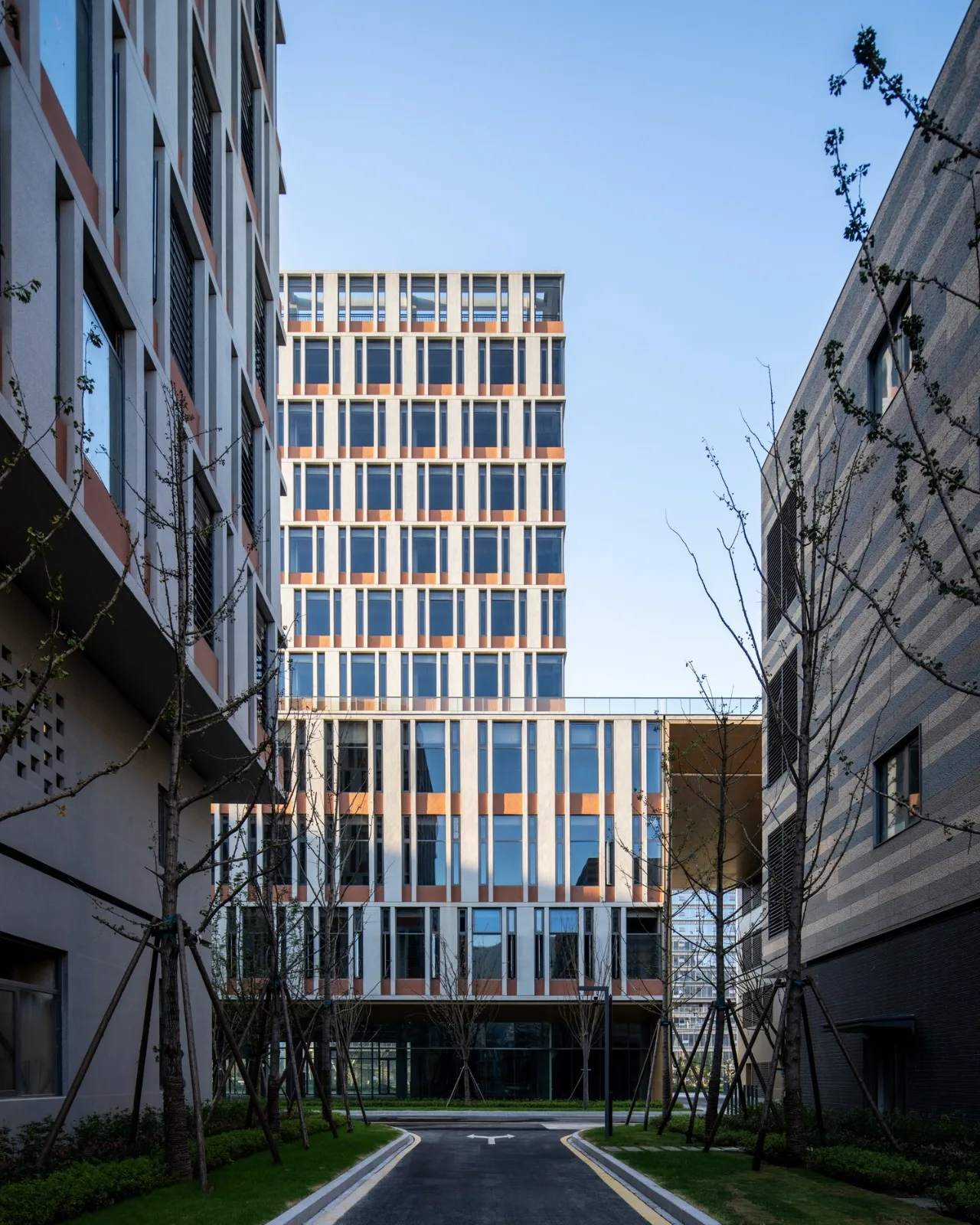
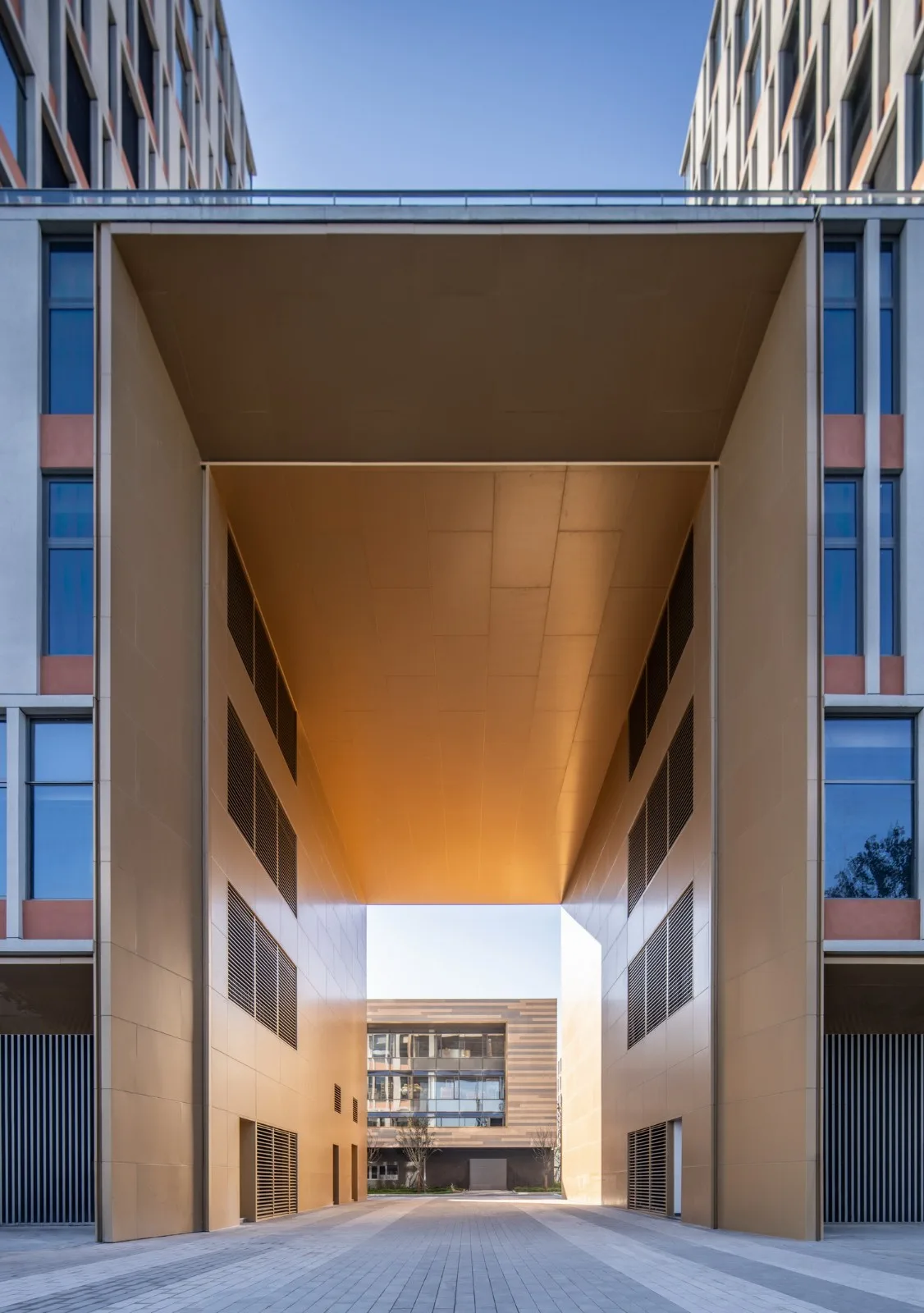
At this stage, the three factory building types have become clearly defined, each tailored to meet different enterprise and industry needs. Their flexible property rights divisions and well-organized floor plans generate diverse values under high plot ratio constraints.
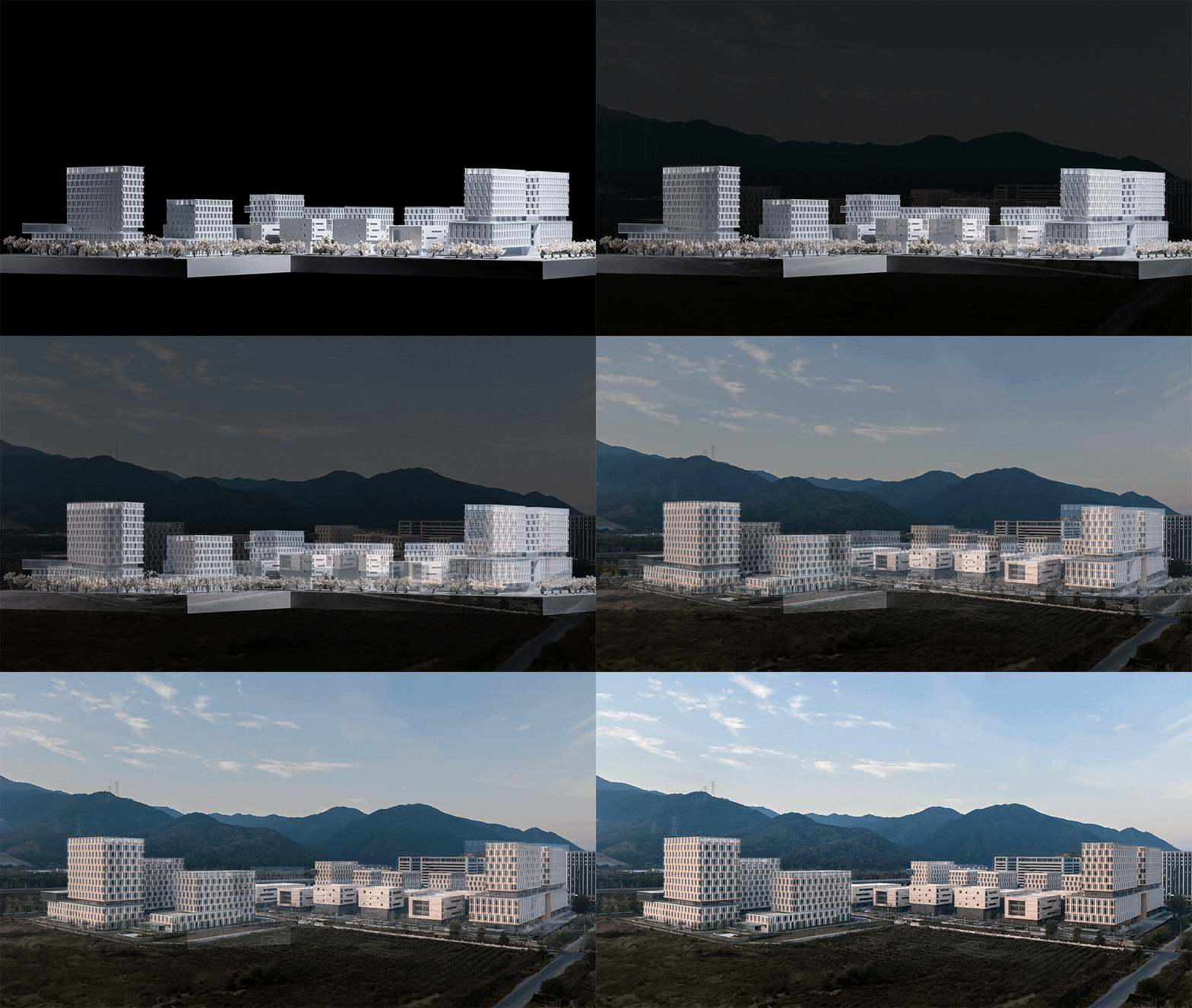
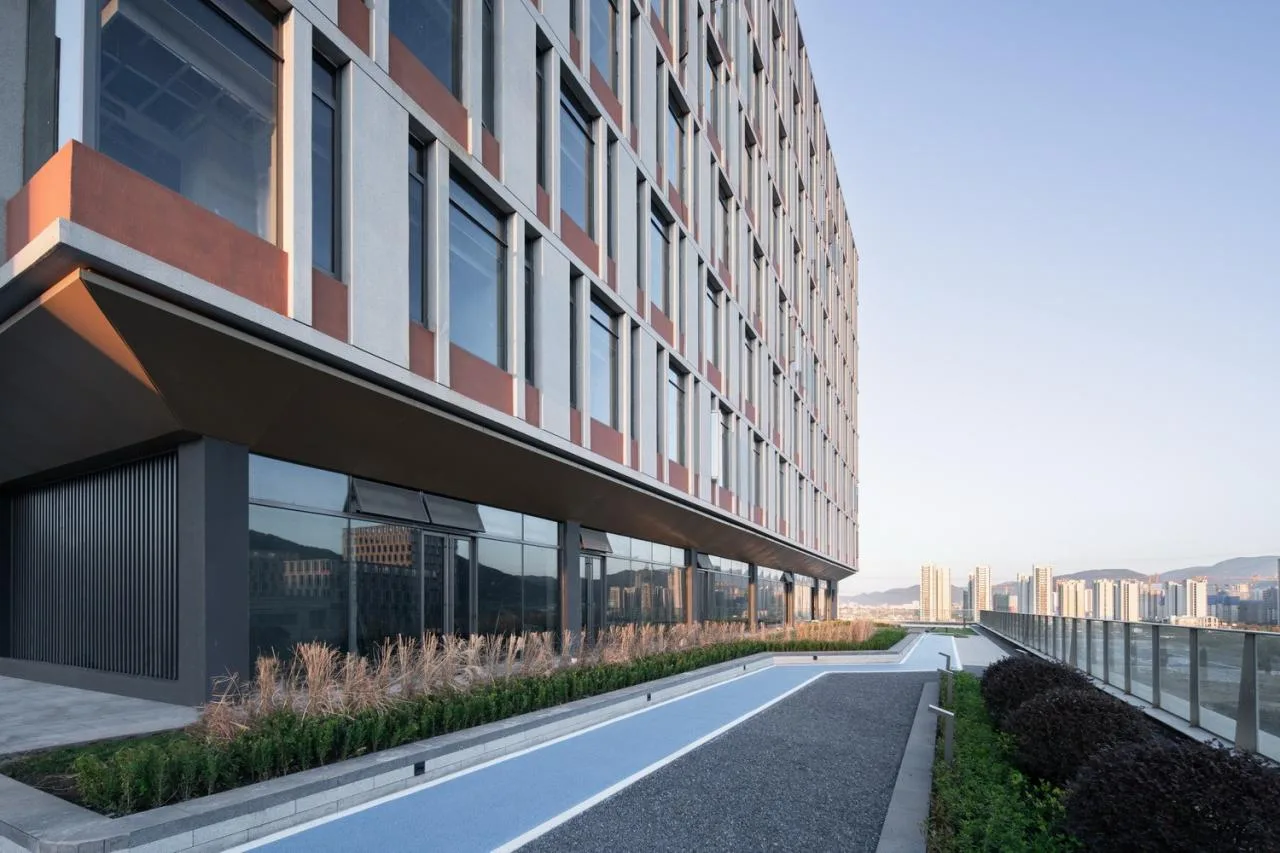
From conceptual models to real-world construction:
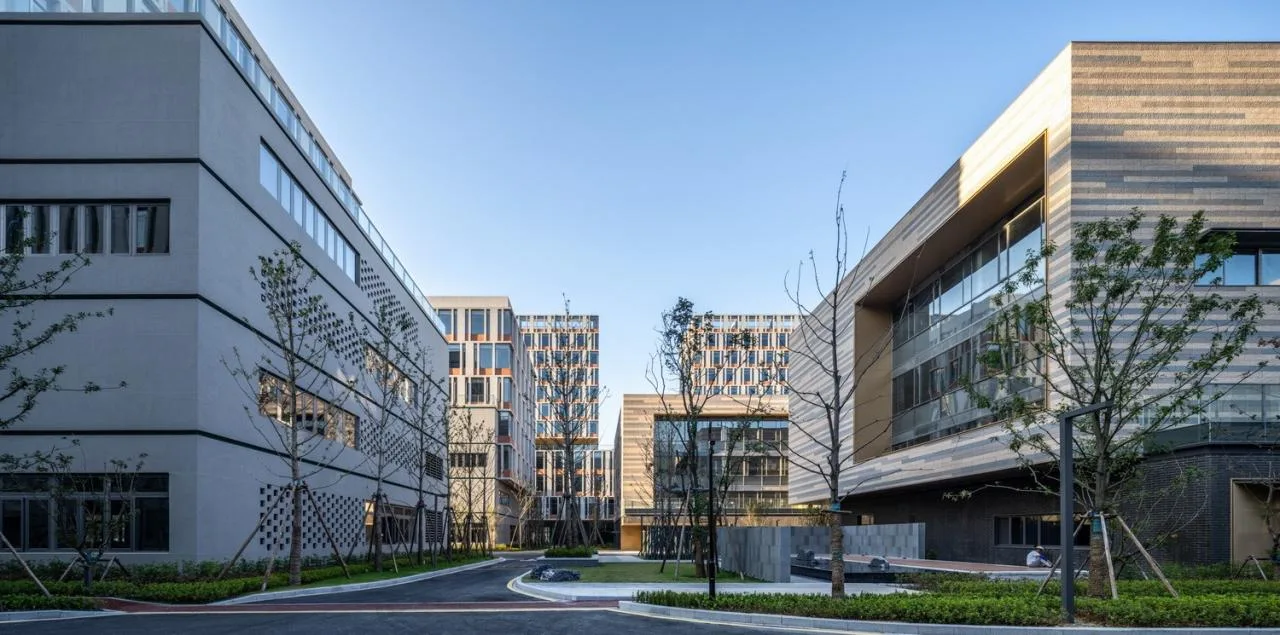
02. Efficient Production Flow Lines Balanced with a Relaxed Park Environment
Reshaping production-oriented industrial parks guided by streamlined design
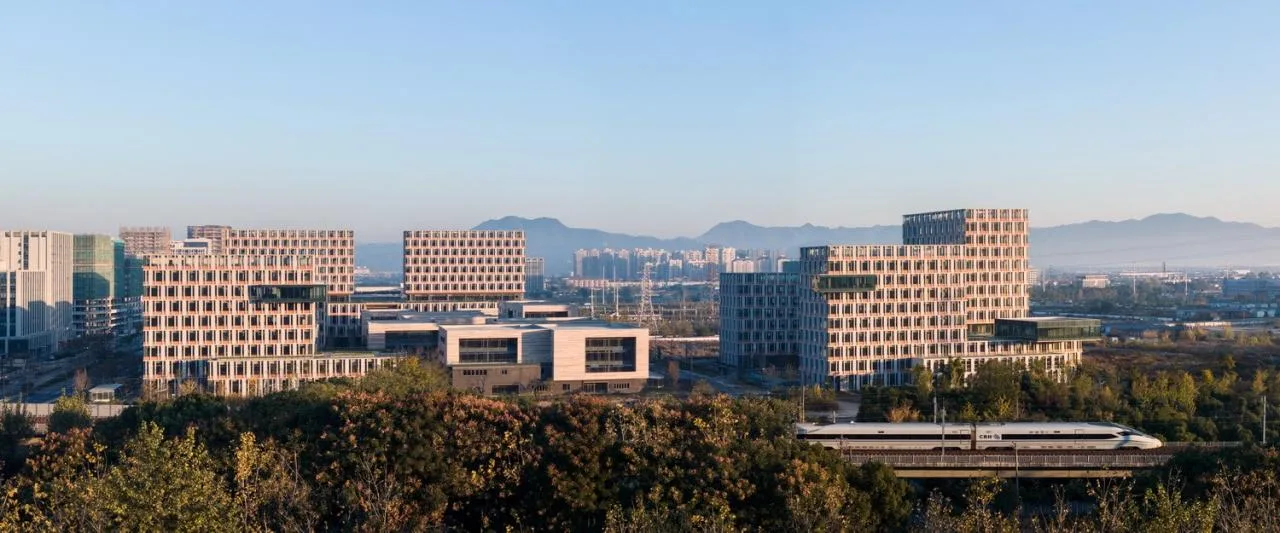
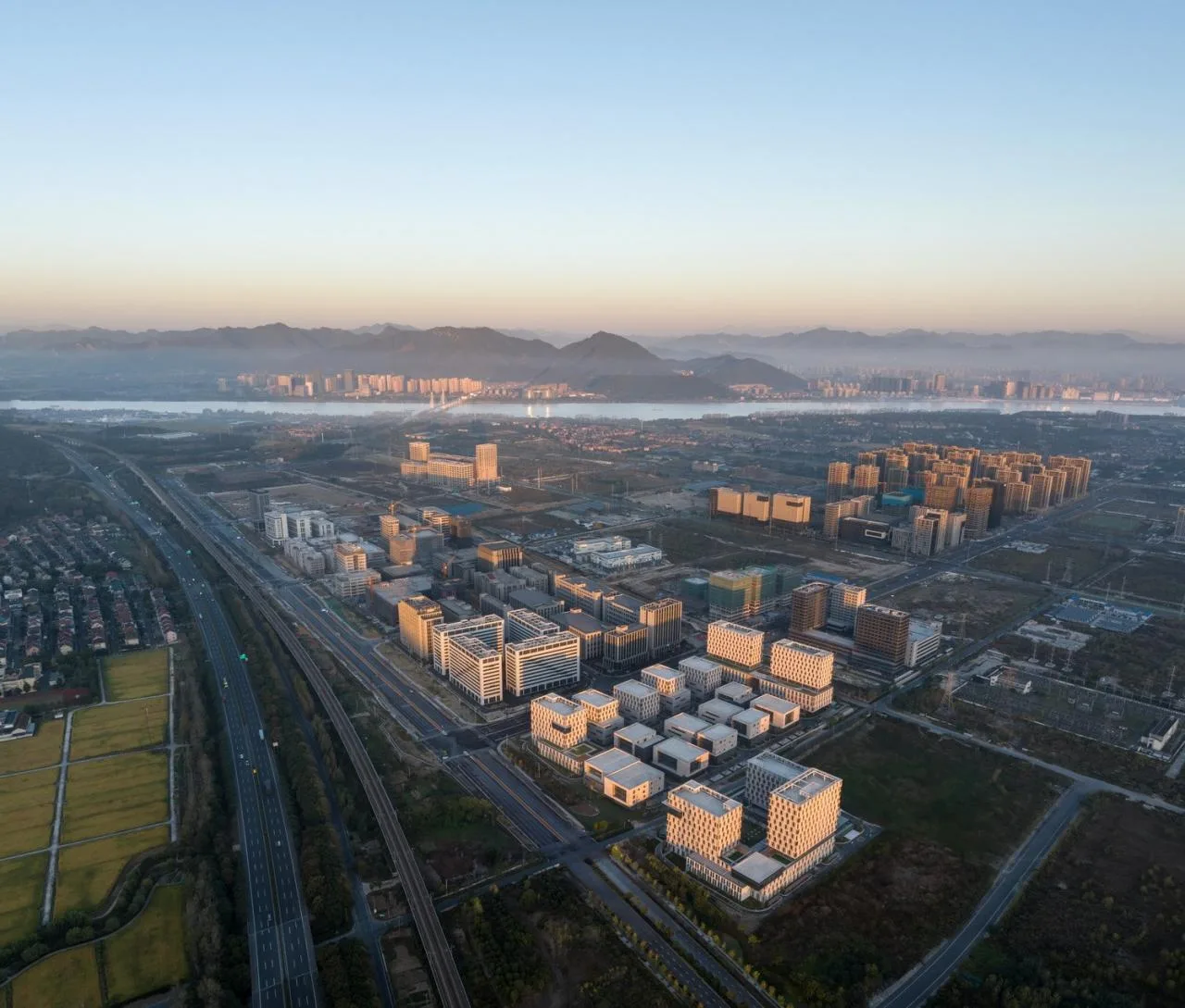
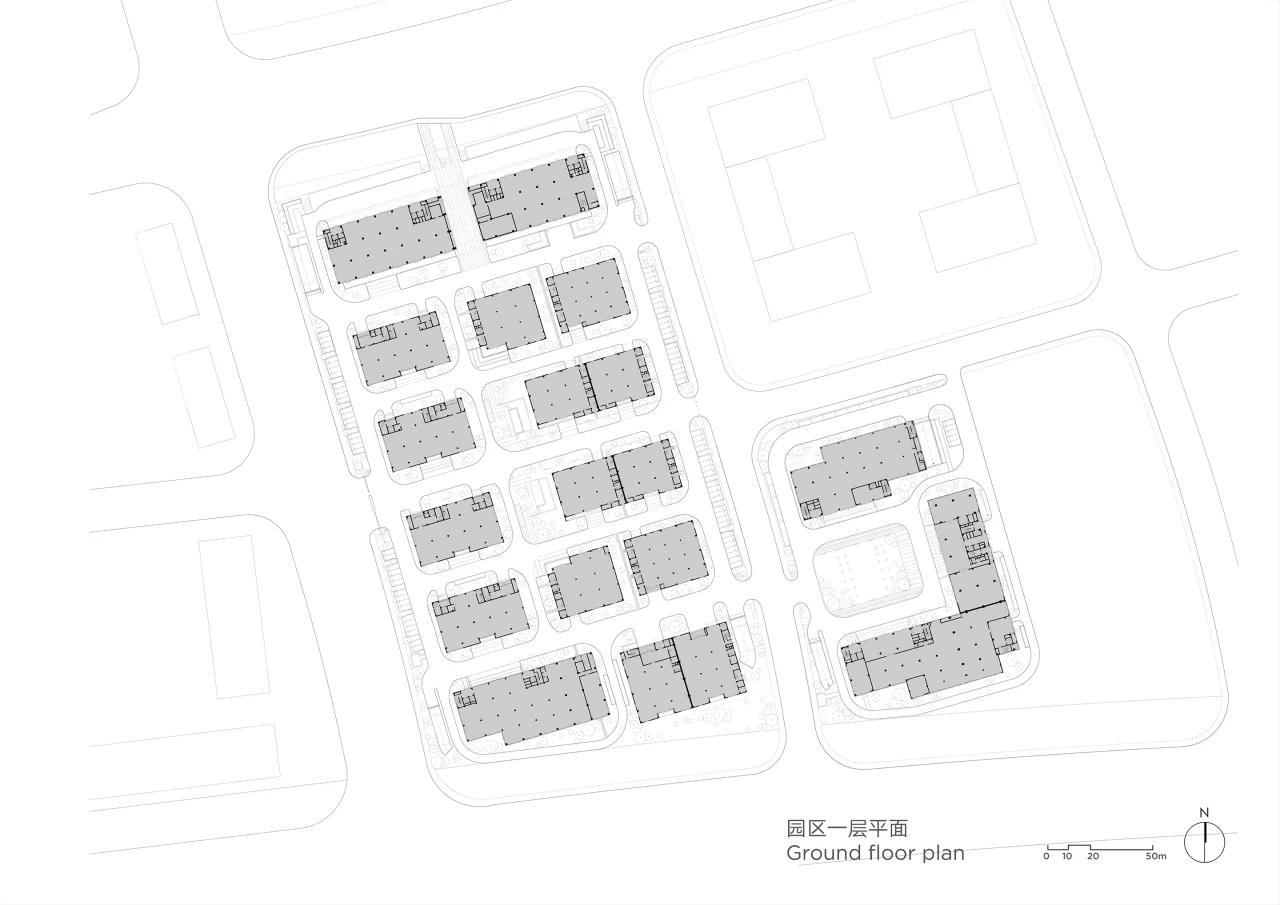
The existing site is split by an urban branch road. The eastern plot is planned for government repurchase and development into a high-rise R&D electronics factory. The western plot focuses on cluster sales-type industrial factories, requiring flexible spaces that accommodate both industrial production and scientific research offices.
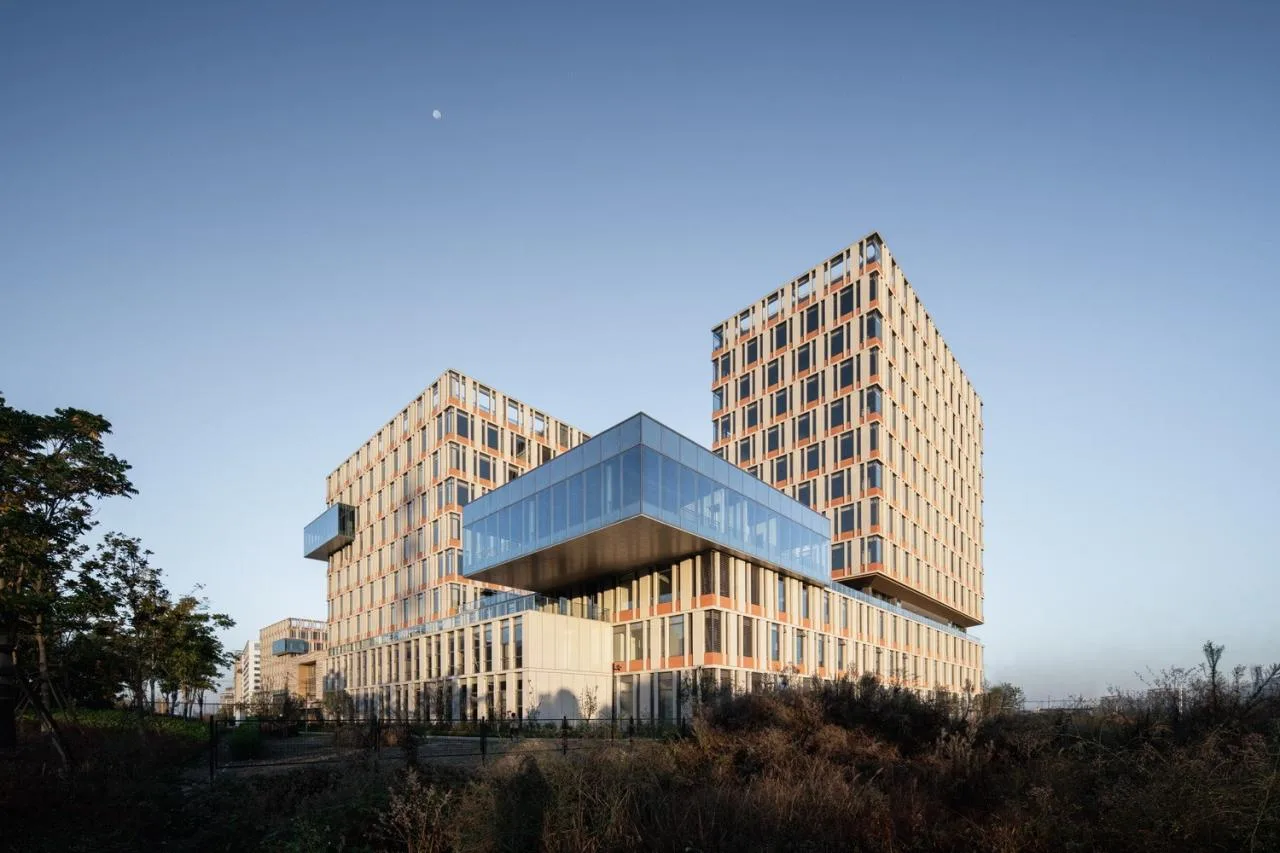
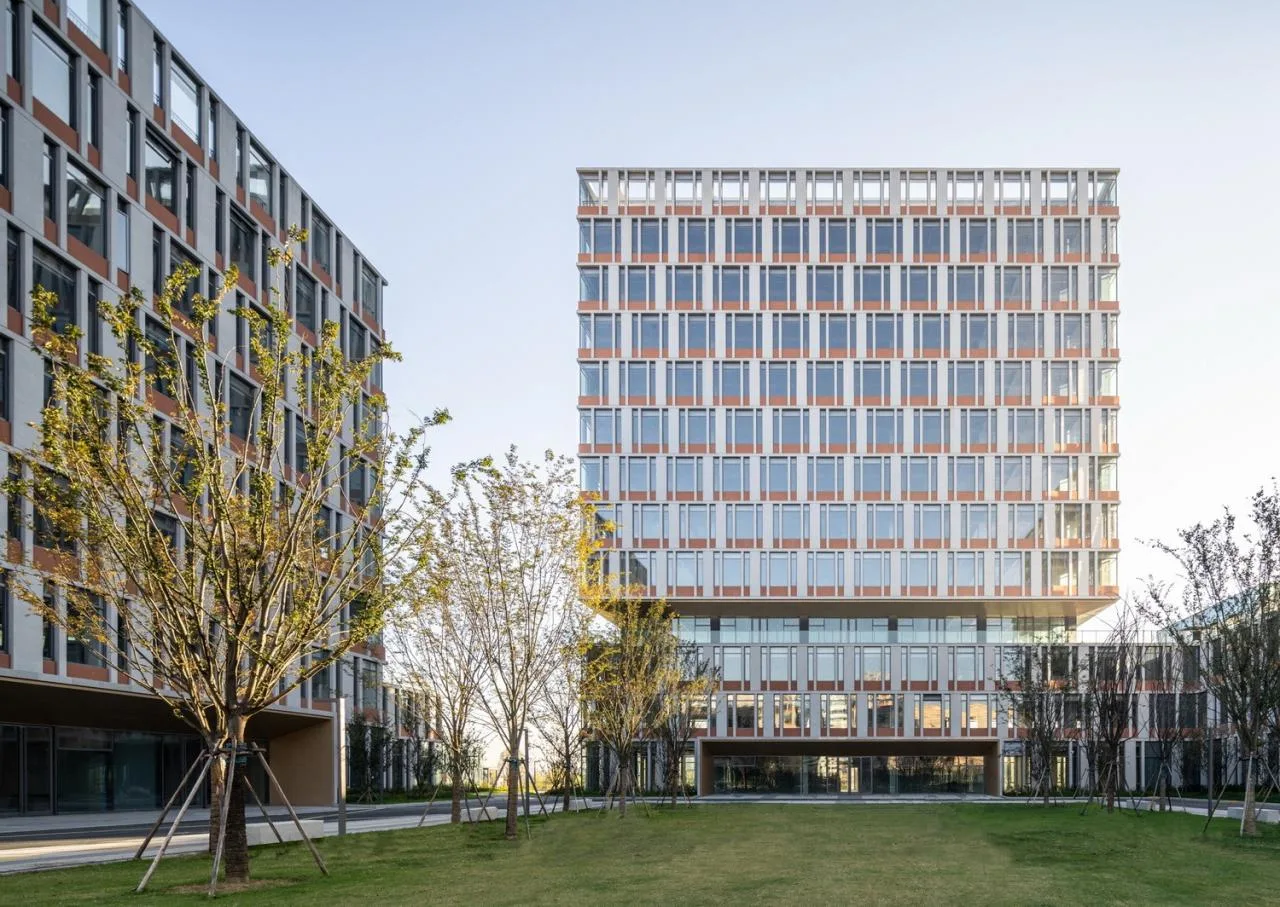
In the overall design, we prioritize efficient and logical production flow lines with streamlined traffic organization, creating a concise and orderly road network. Simultaneously, sufficient density allows for a central garden formed by the movement of individual buildings, complemented by first-floor courtyard landscapes and passenger-freight separation. This results in a high-quality, cohesive park environment.
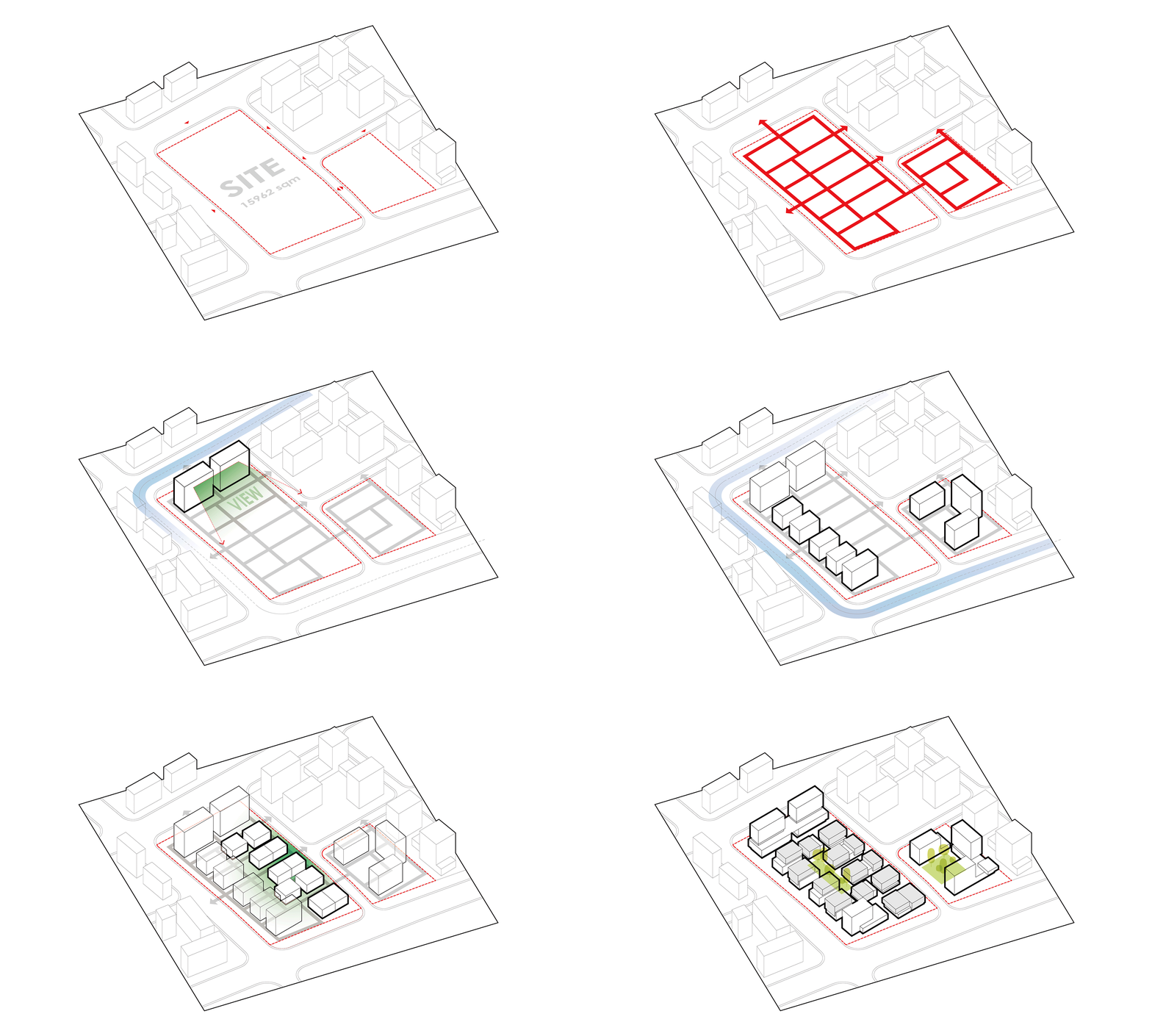
△ Generation Diagram
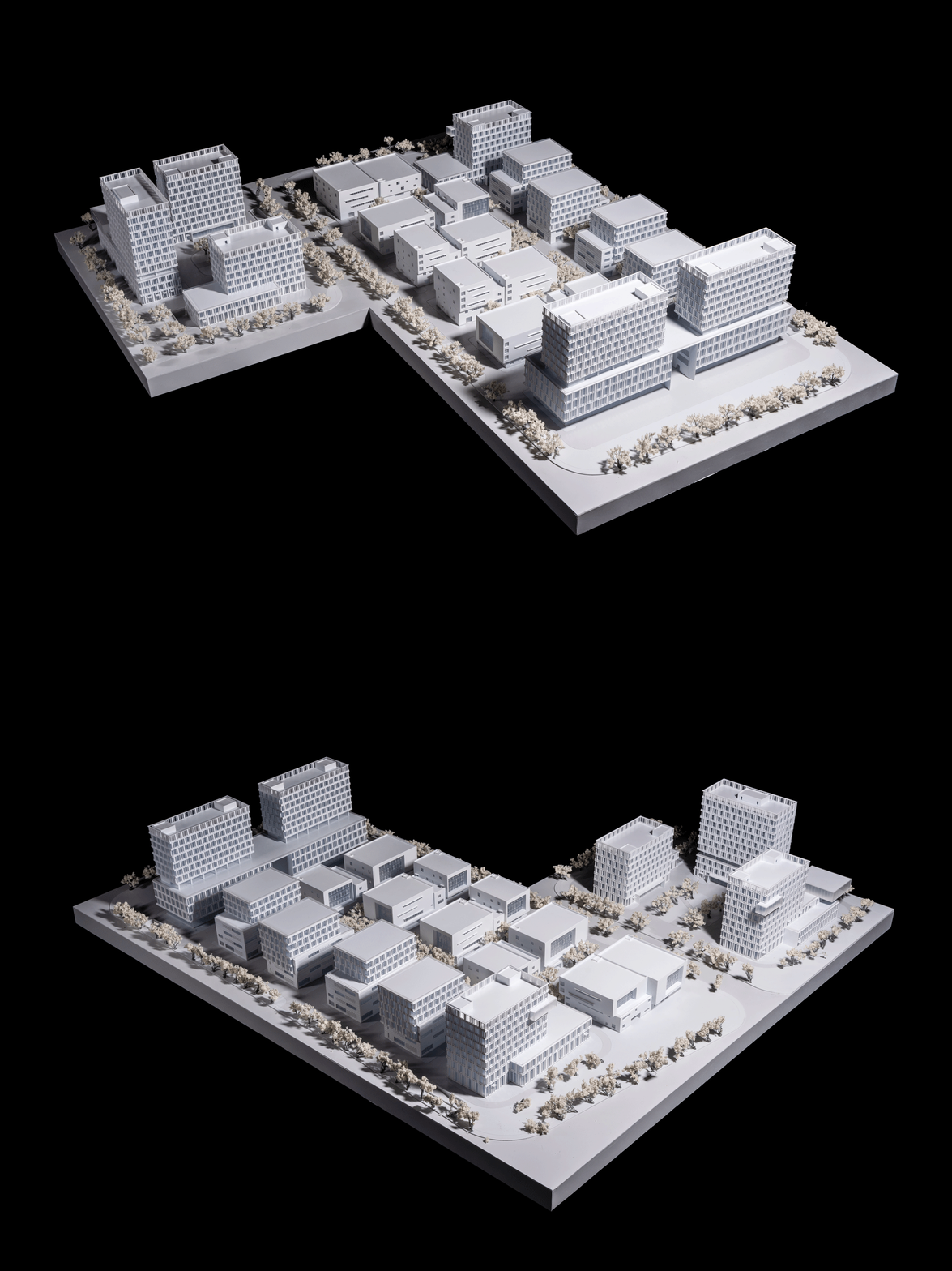
△ Model Photo
To balance the city skyline, the two tallest 60-meter towers are positioned on the northern edge of the western plot, facing the main city road and respecting the solar orientation with taller buildings north and lower to the south. The southern edge faces the high-speed railway urban display area, where buildings are raised and shaped distinctively, creating an interlocking pattern of high and low structures with clear architectural hierarchy.
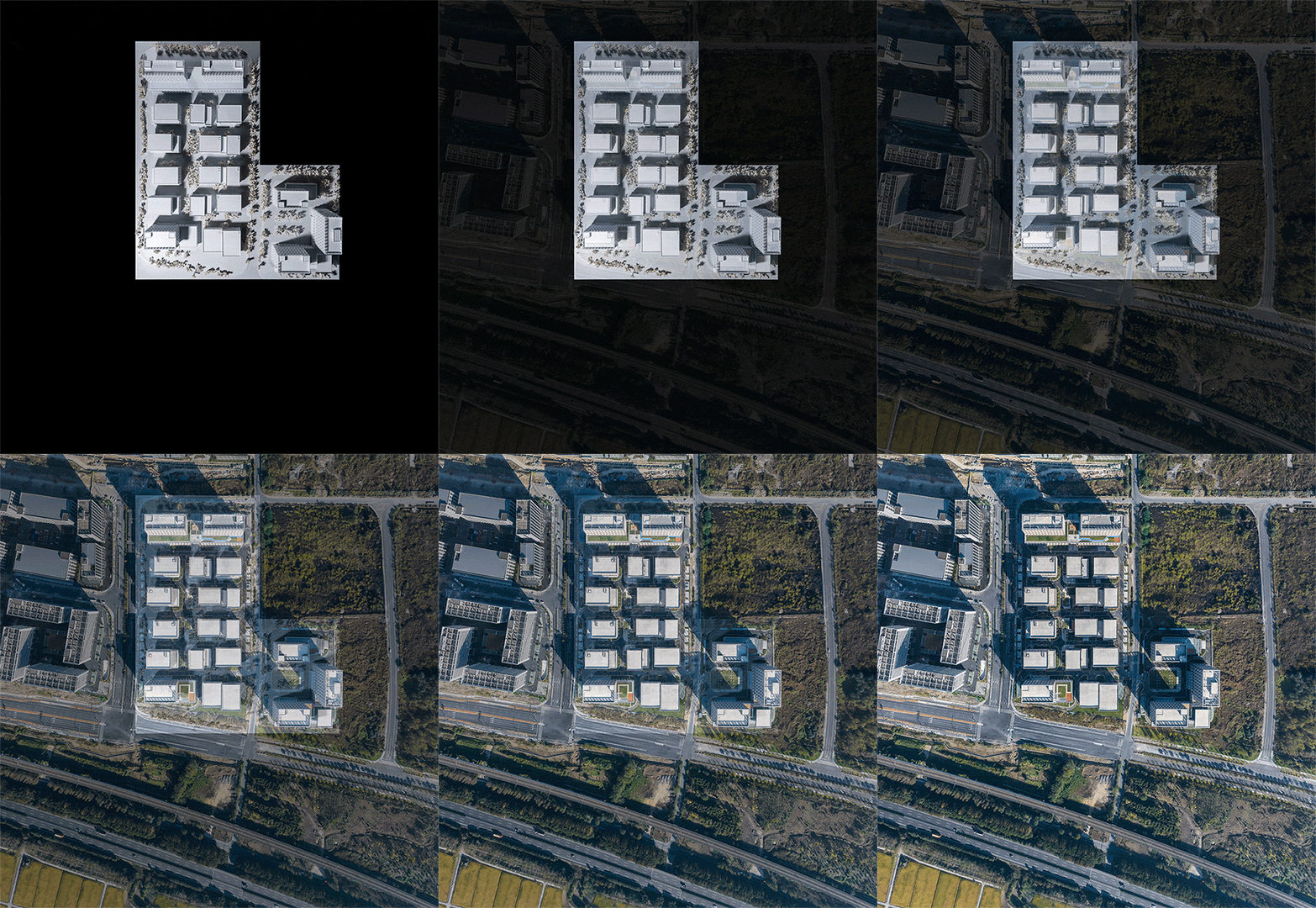
From conceptual model to construction realization:
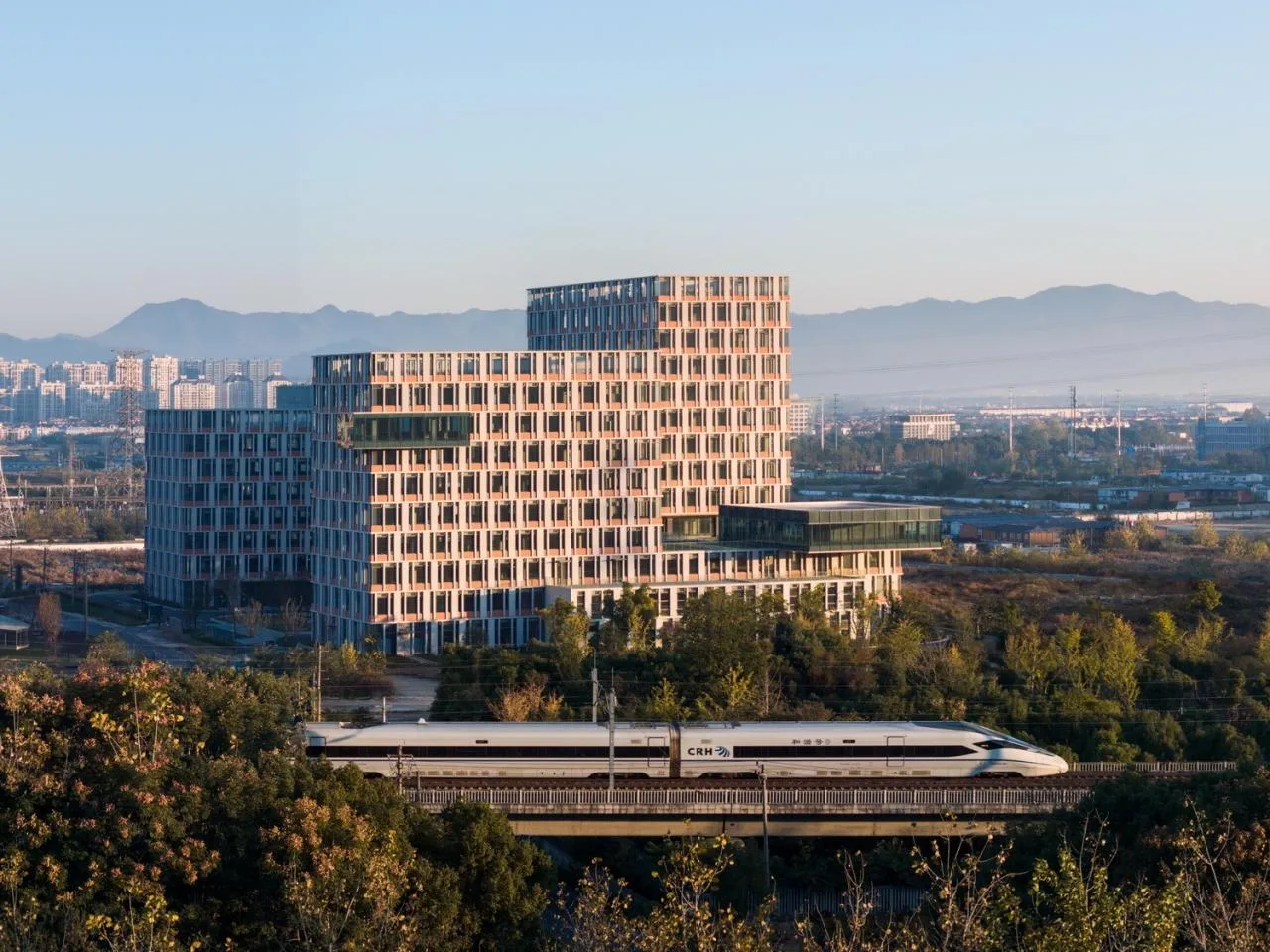
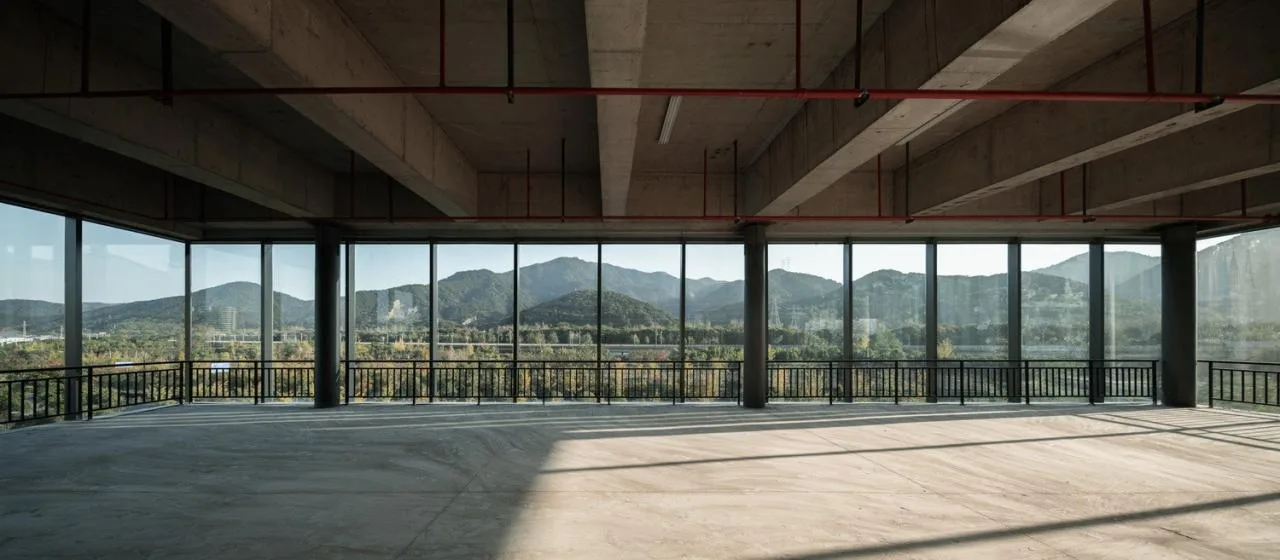
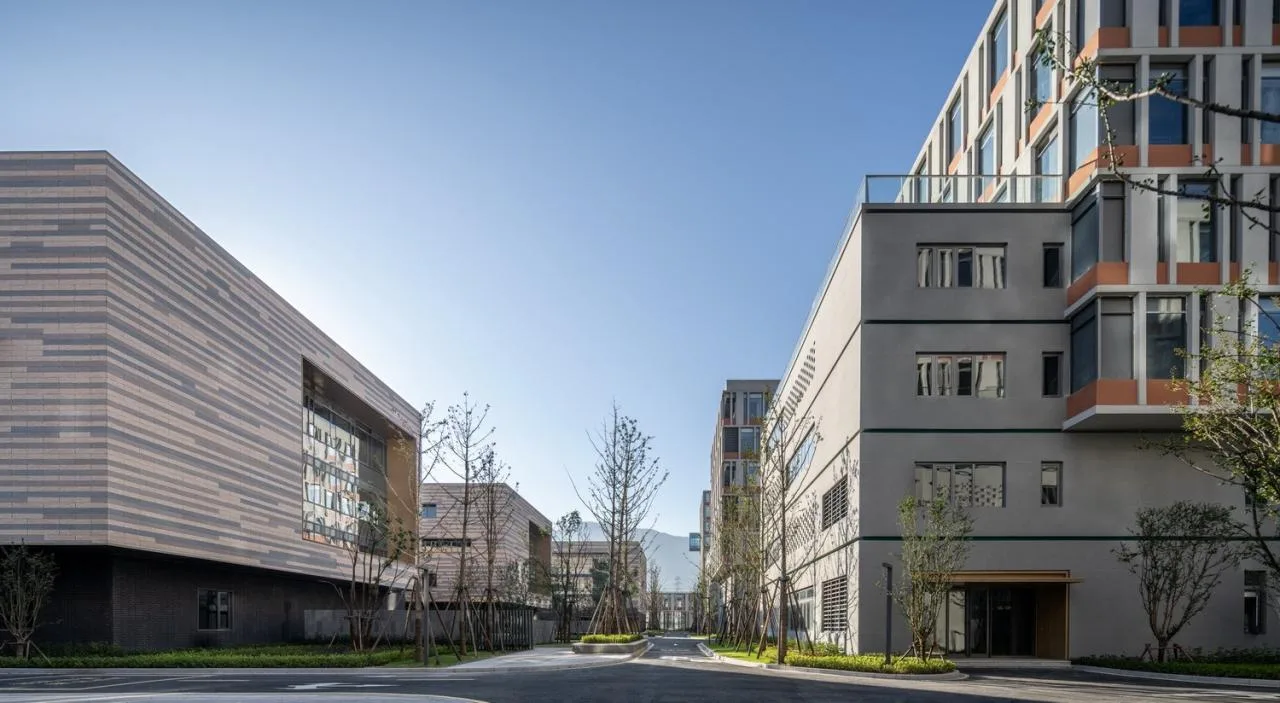
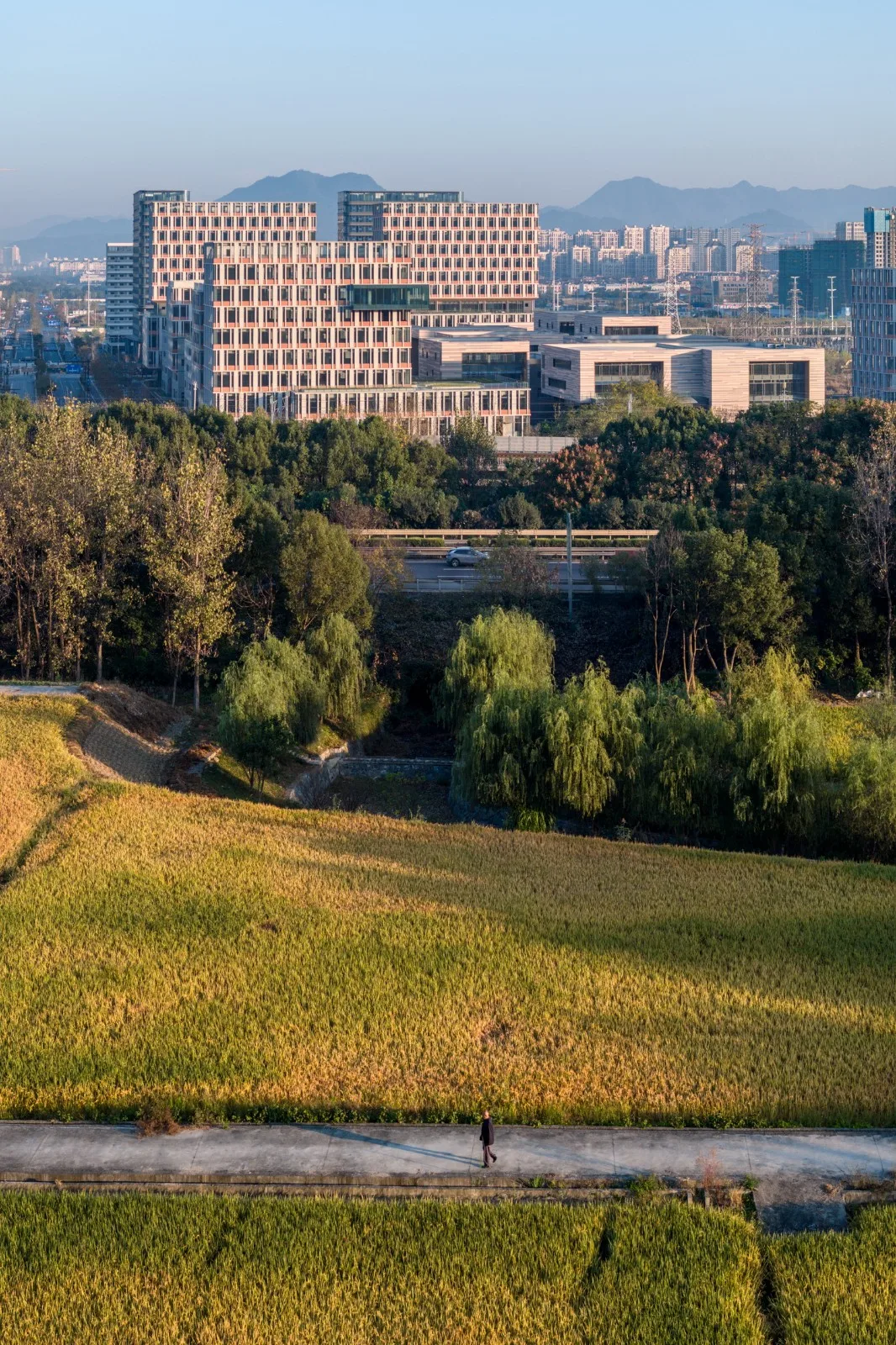
To meet the 2.0 plot ratio, four seven-story, 31-meter-tall single-story factory buildings are aligned sequentially along the west secondary road, forming a continuous external facade and a high-quality park space internally. Additionally, ten multi-story single-story factory buildings are incorporated.
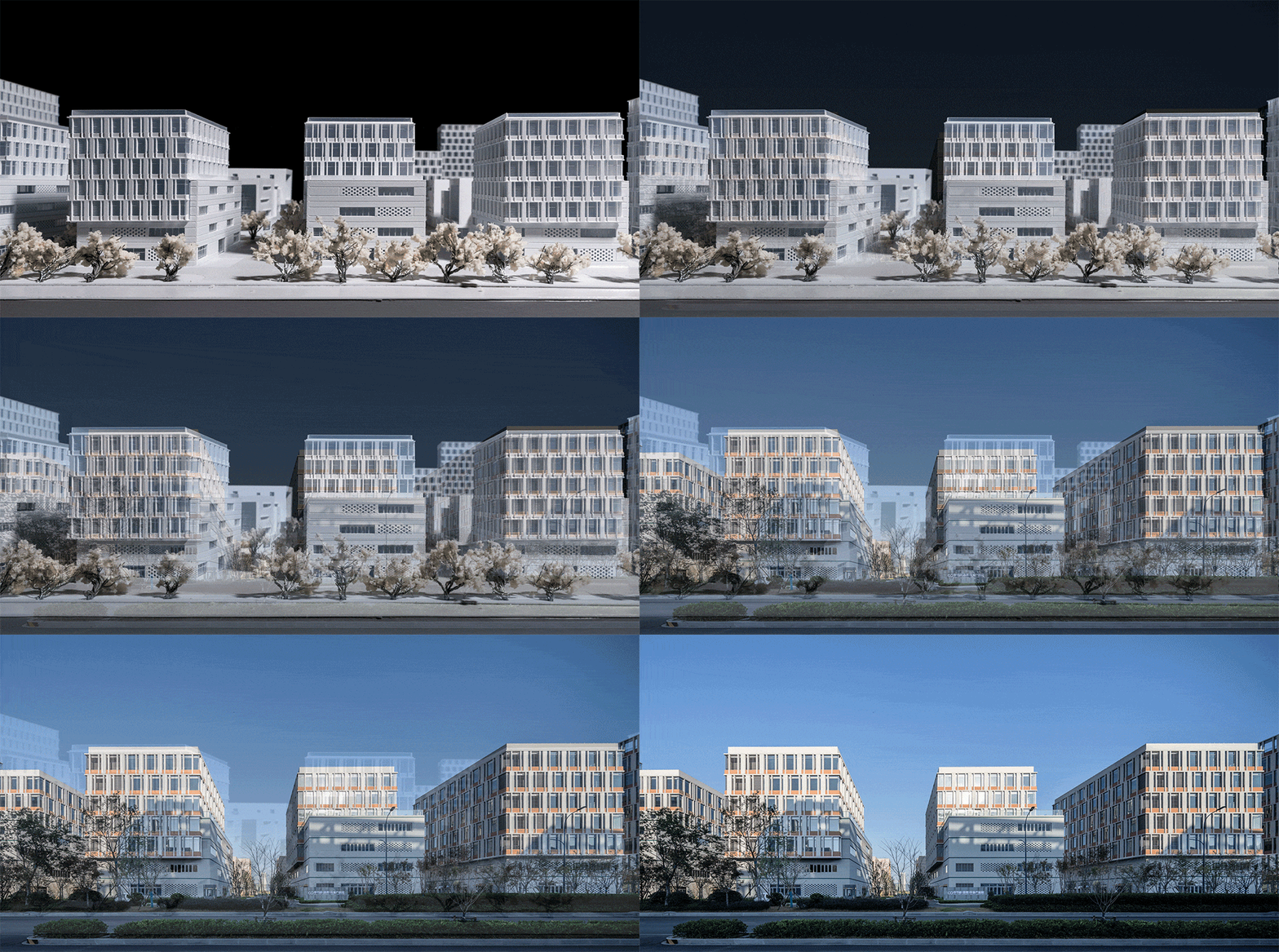
From concept to construction progress:
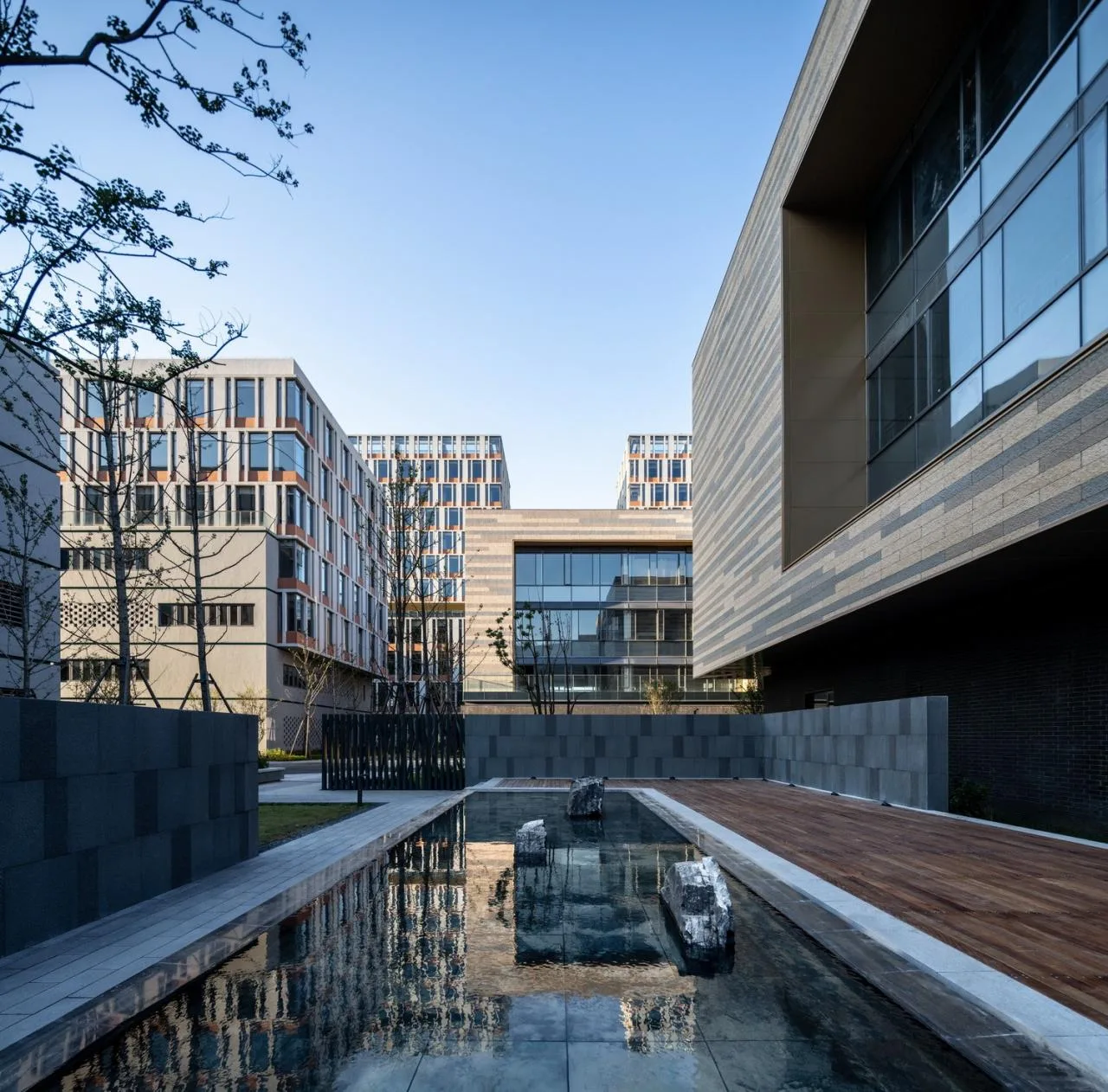
03. Standardized Construction Meets Personalized Expression
Achieving ultimate quality control within conventional cost limits
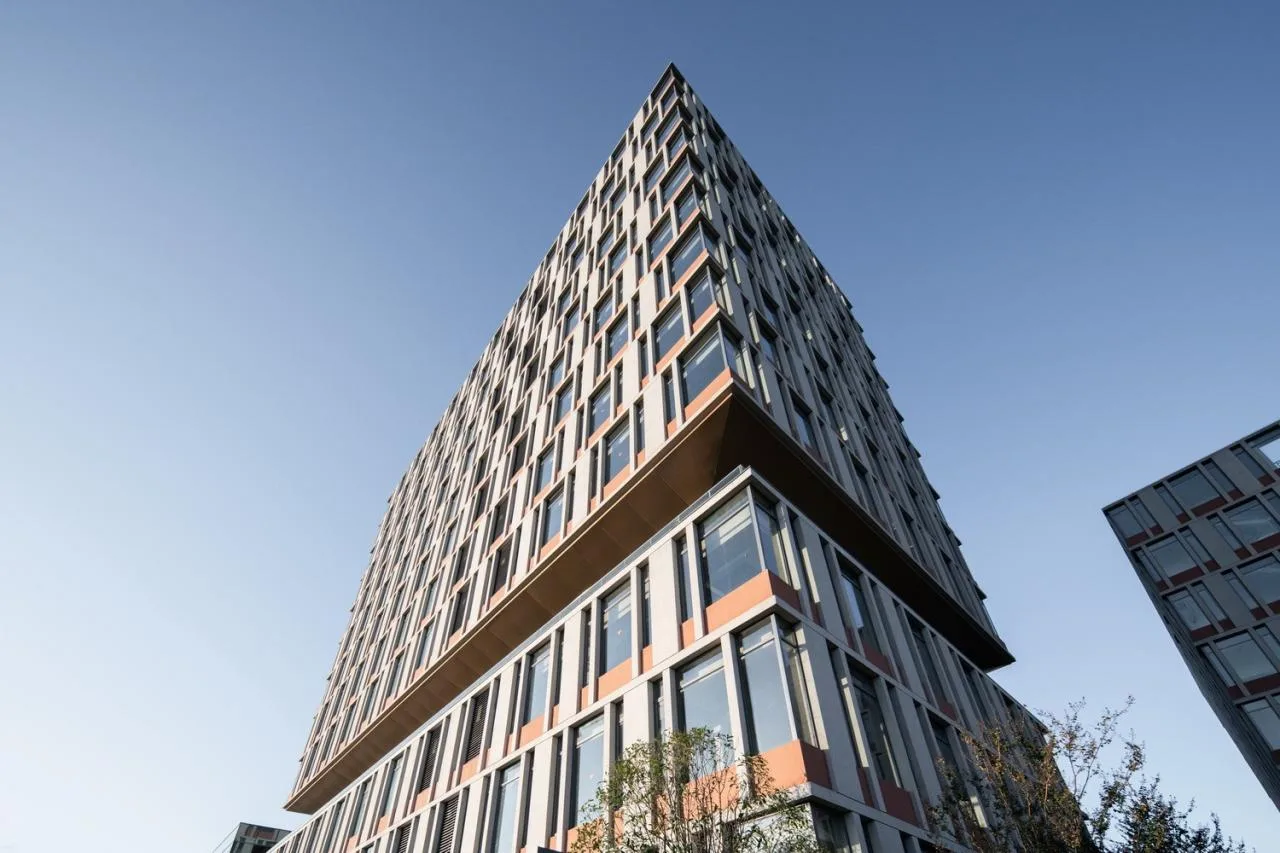
Production-oriented industrial parks are rapidly evolving with younger practitioners and diversified functions. Differentiated and personalized building environments are becoming key competitive advantages for clustered parks.
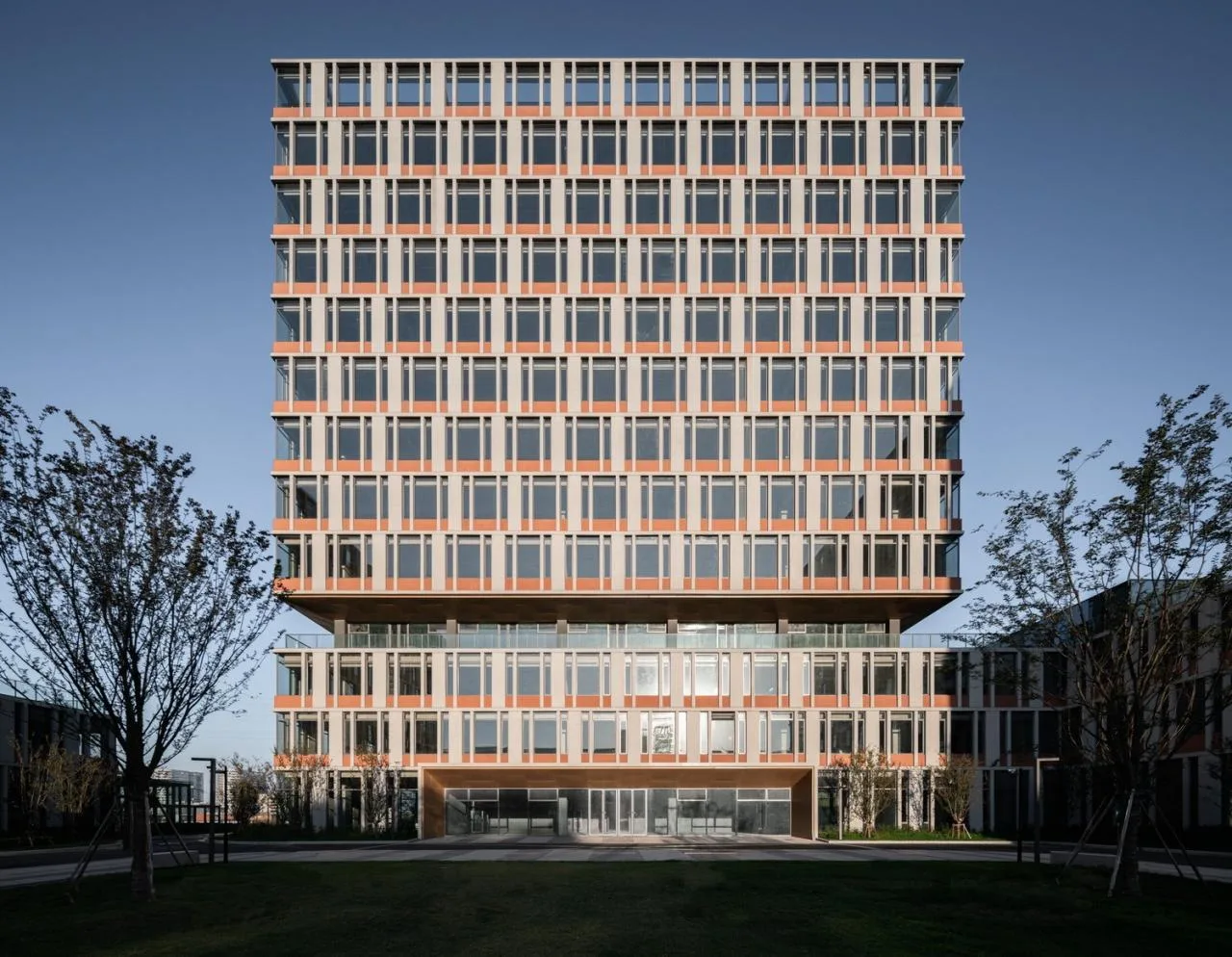
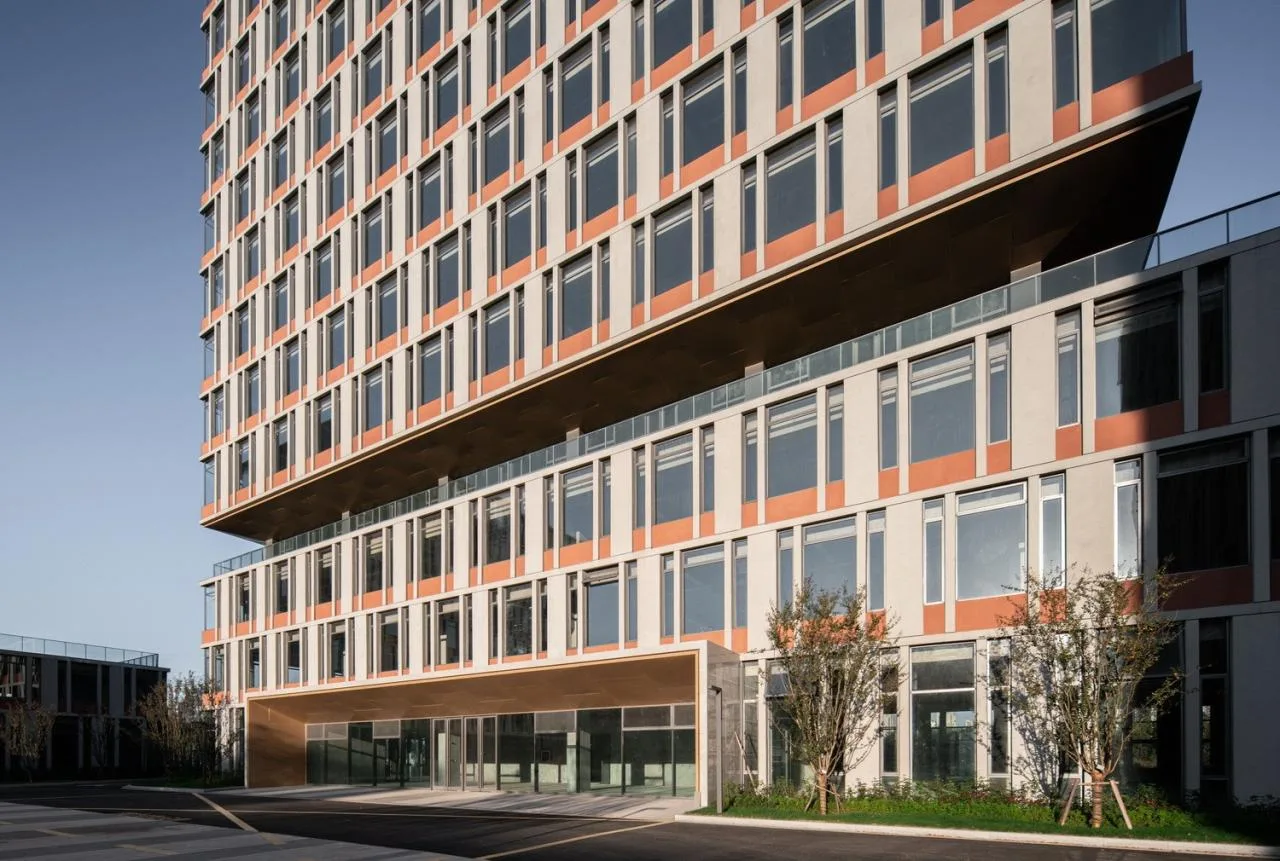
Within cost constraints, we selected materials like soft ceramics, coatings, aluminum panels, and glass. Through innovative applications of conventional materials, we balanced cost-efficiency with spatial quality. By refining and differentiating facade color and texture, industrial buildings gain unique, personalized expressions.
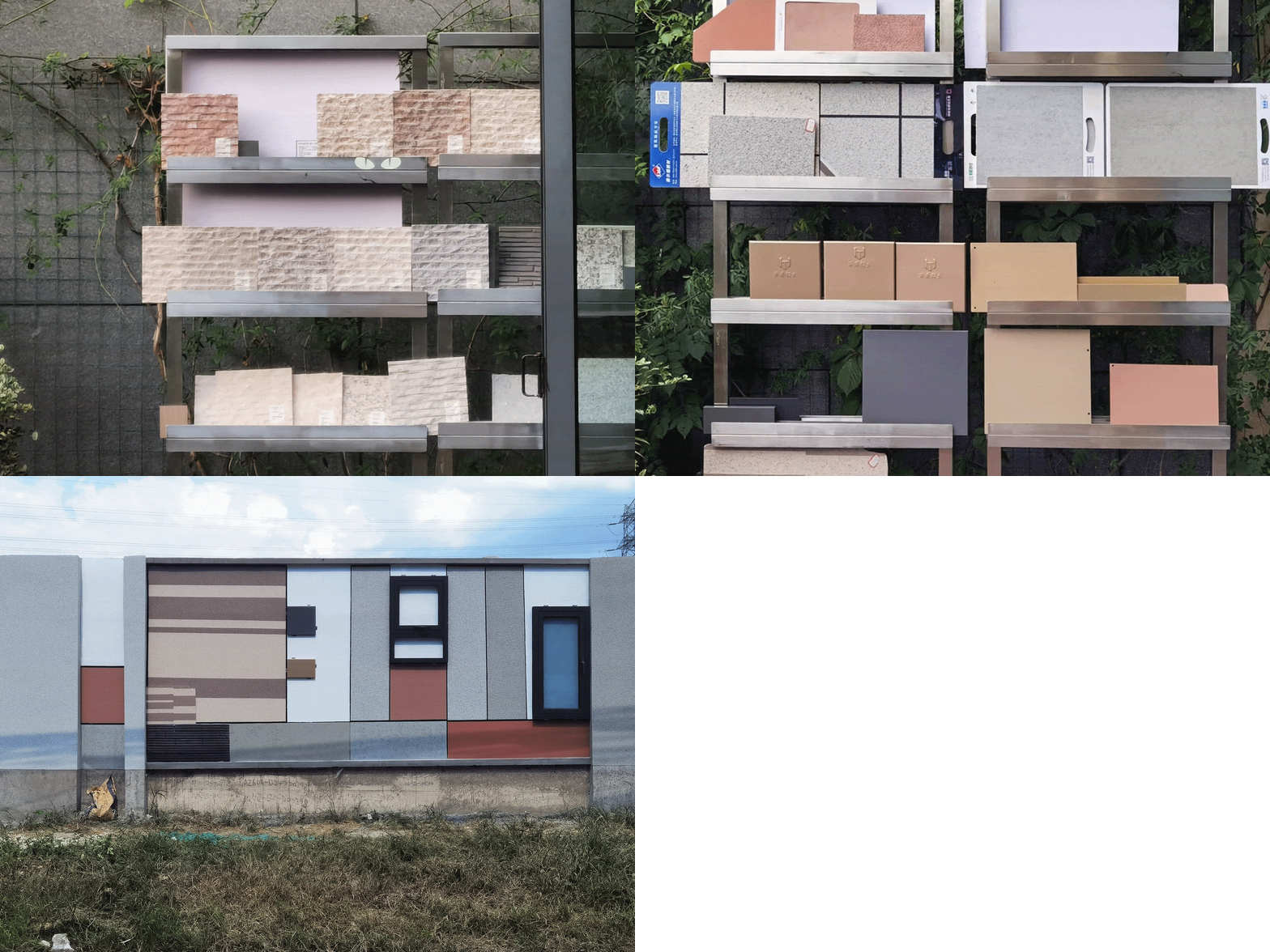
△ Facade material selection
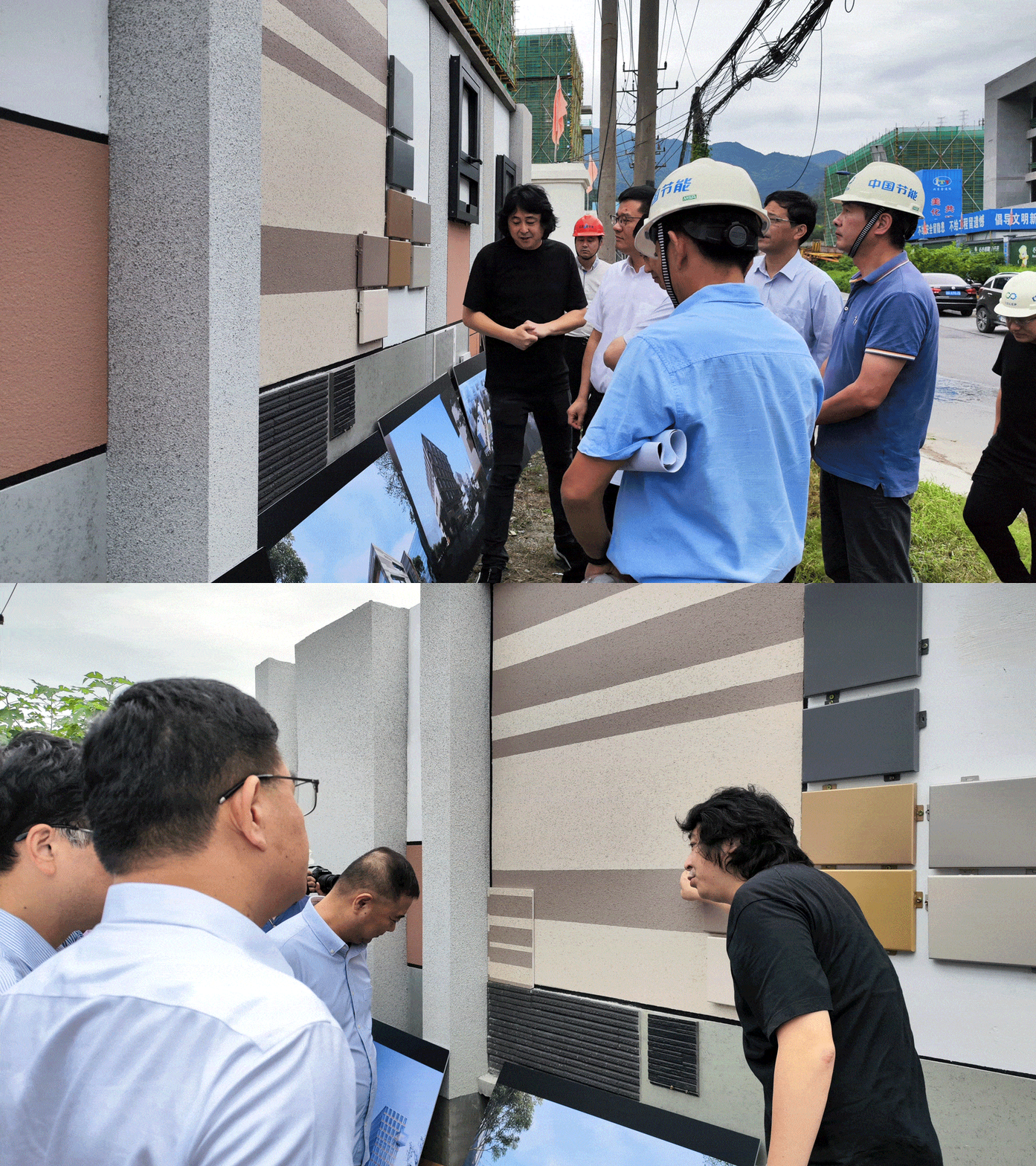
△ Material control at construction site
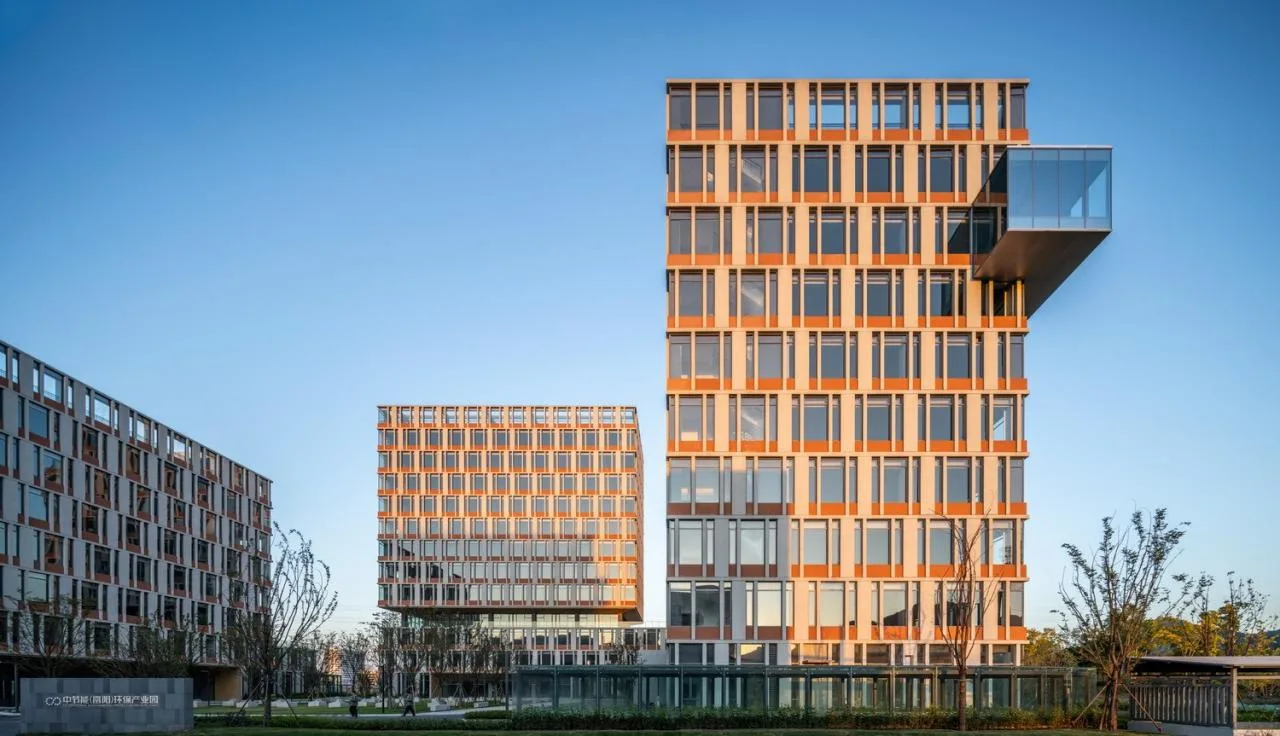
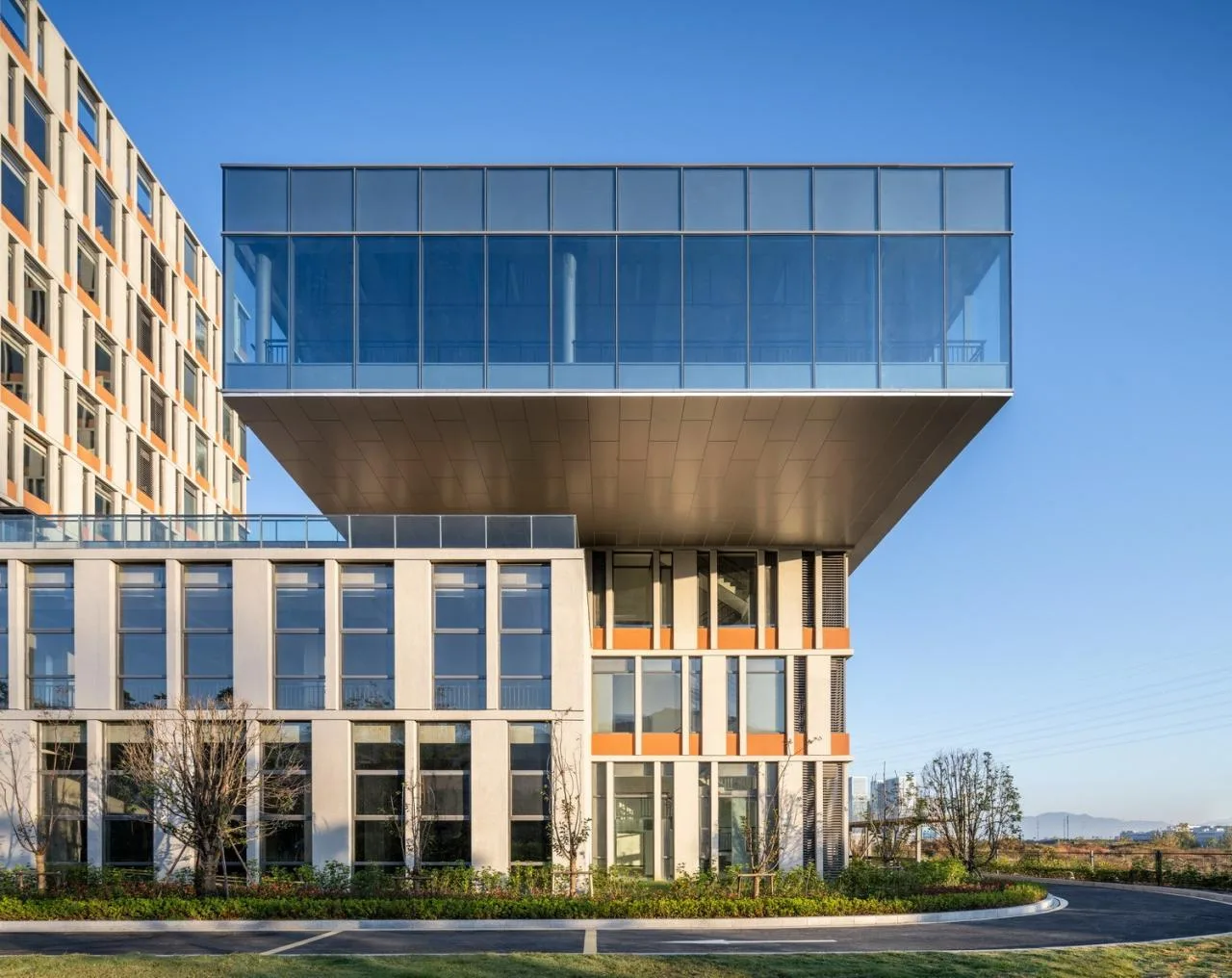
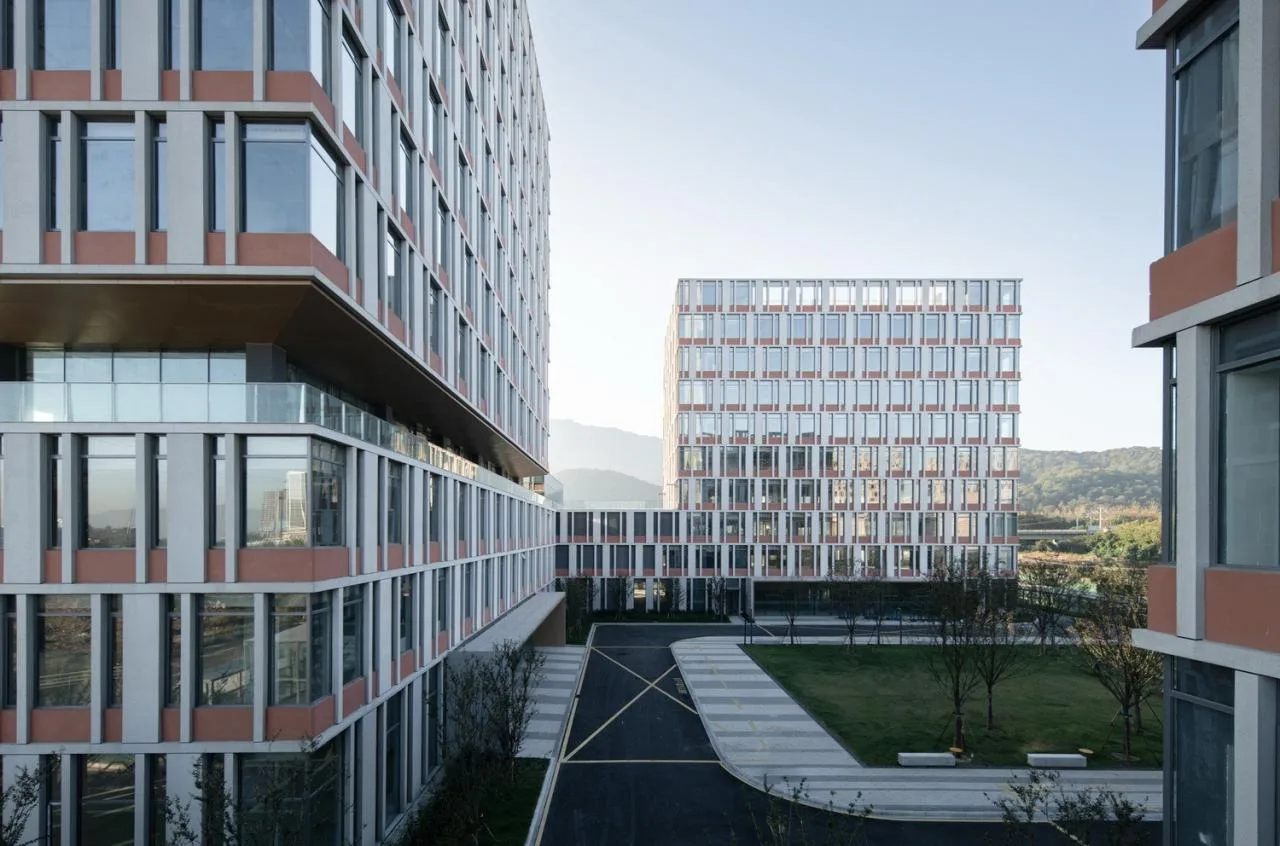
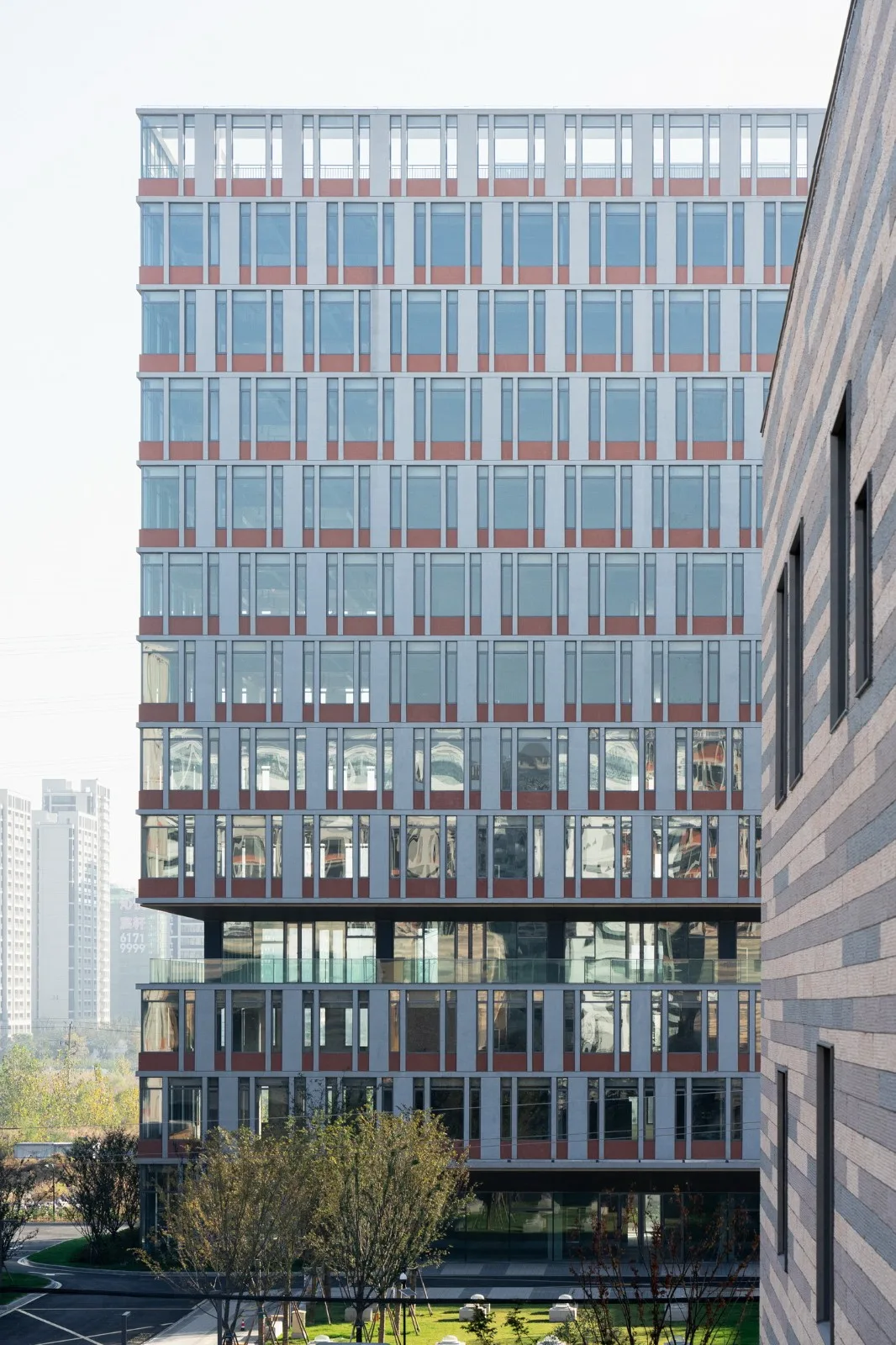
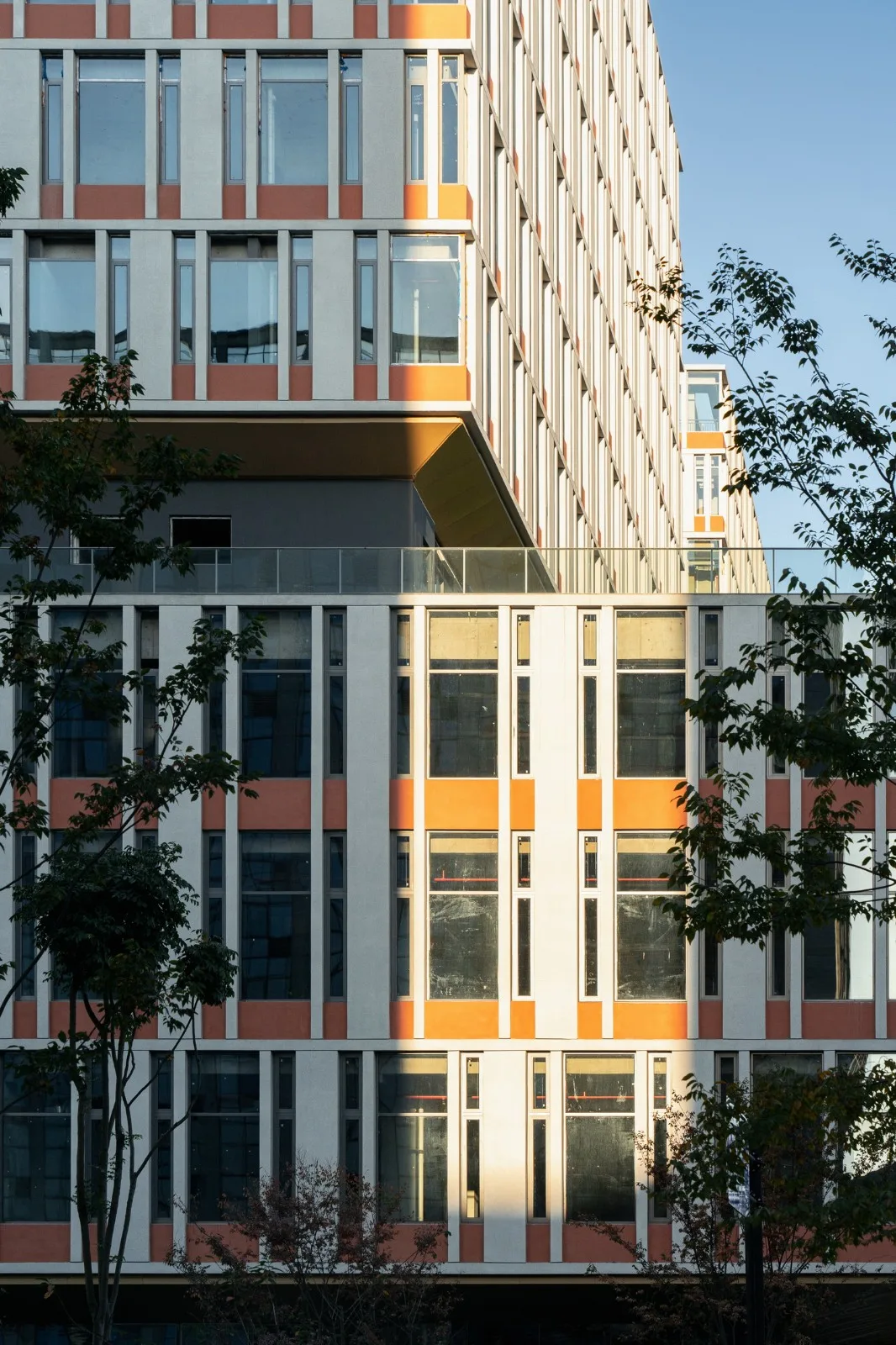
The high-rise and multi-story buildings along the site’s perimeter feature a uniform pane facade language, creating a distinct and cohesive overall image. Homogeneous window panels ensure even indoor lighting, fulfilling basic industrial space requirements.
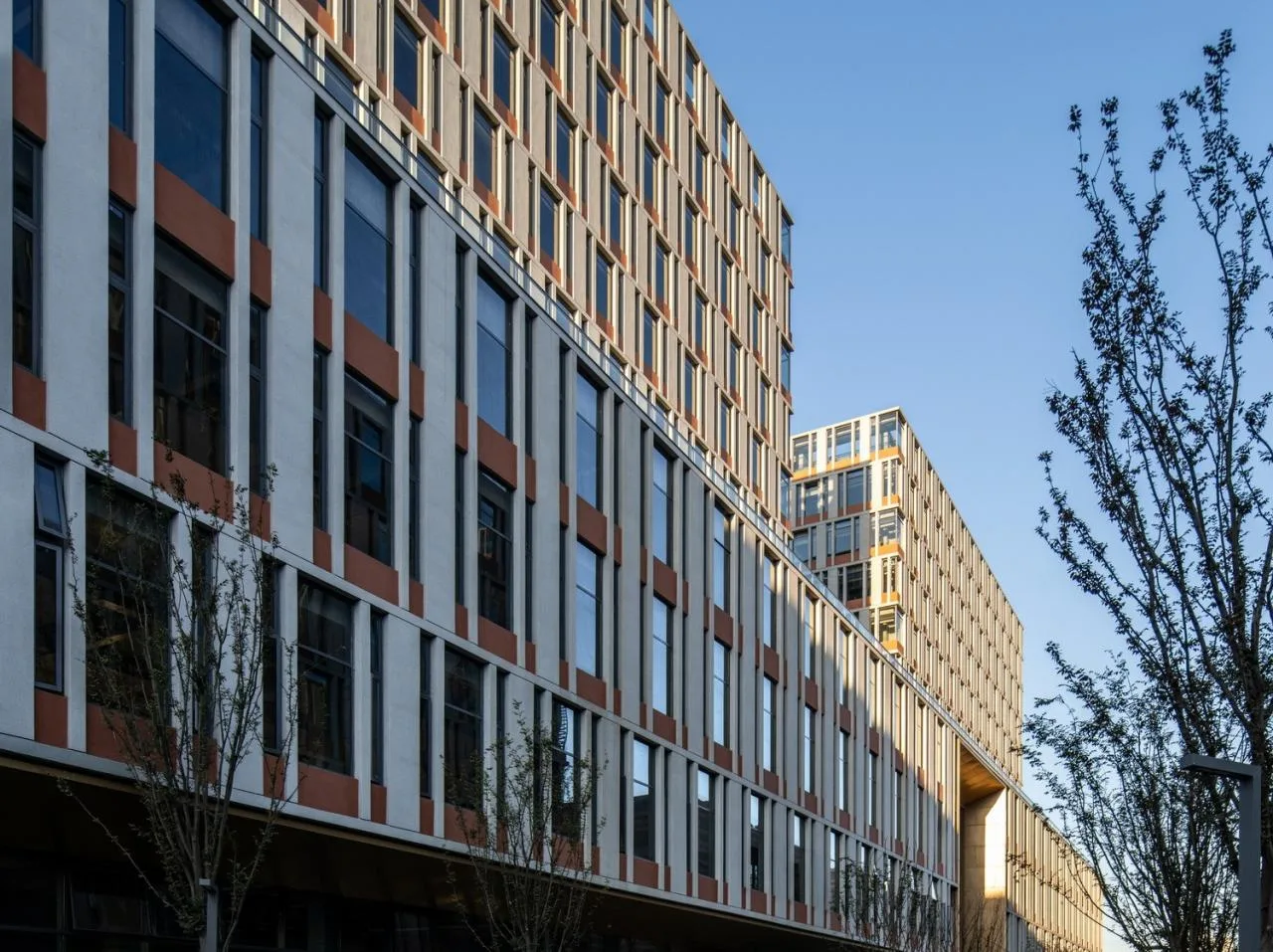
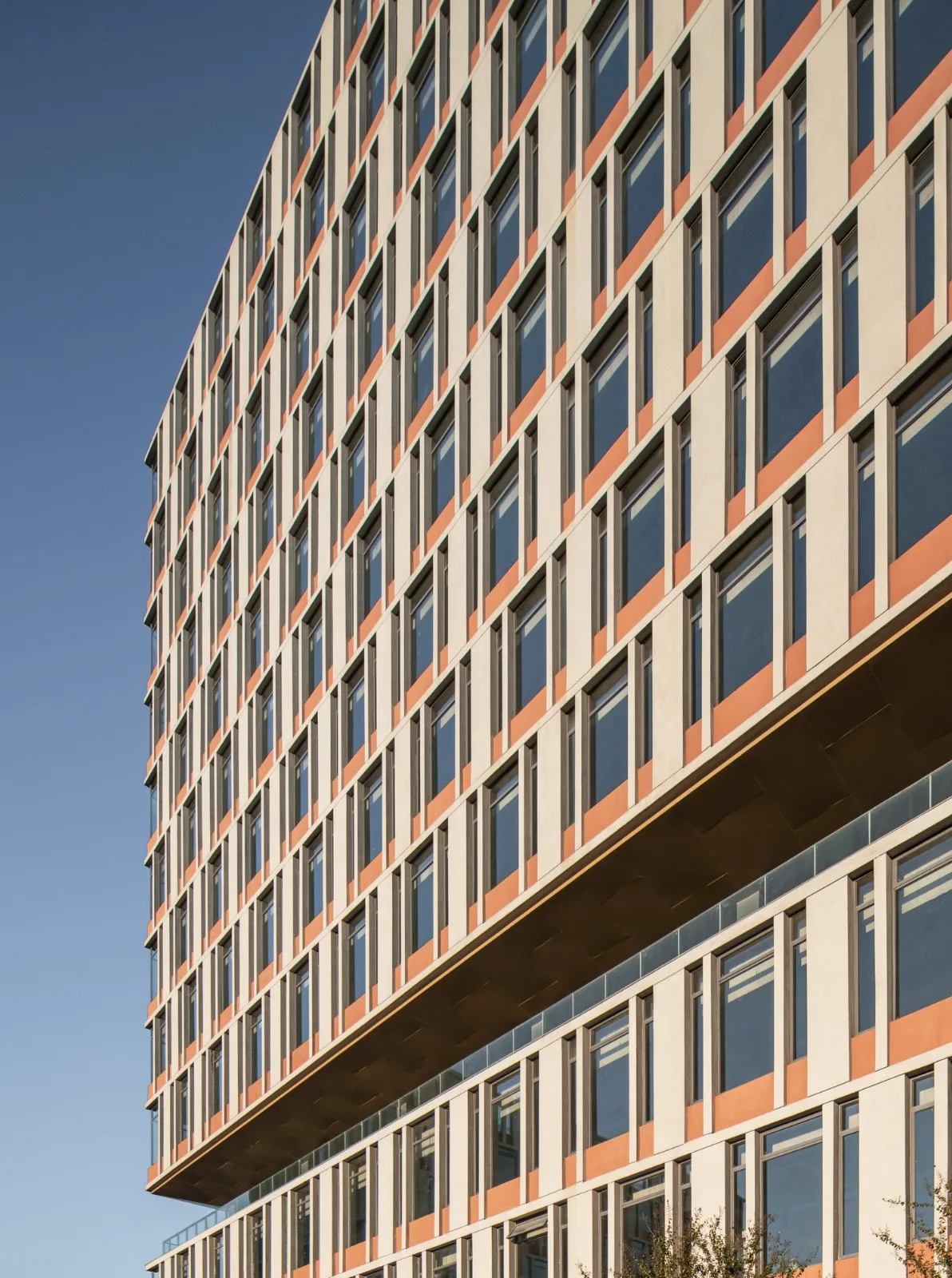
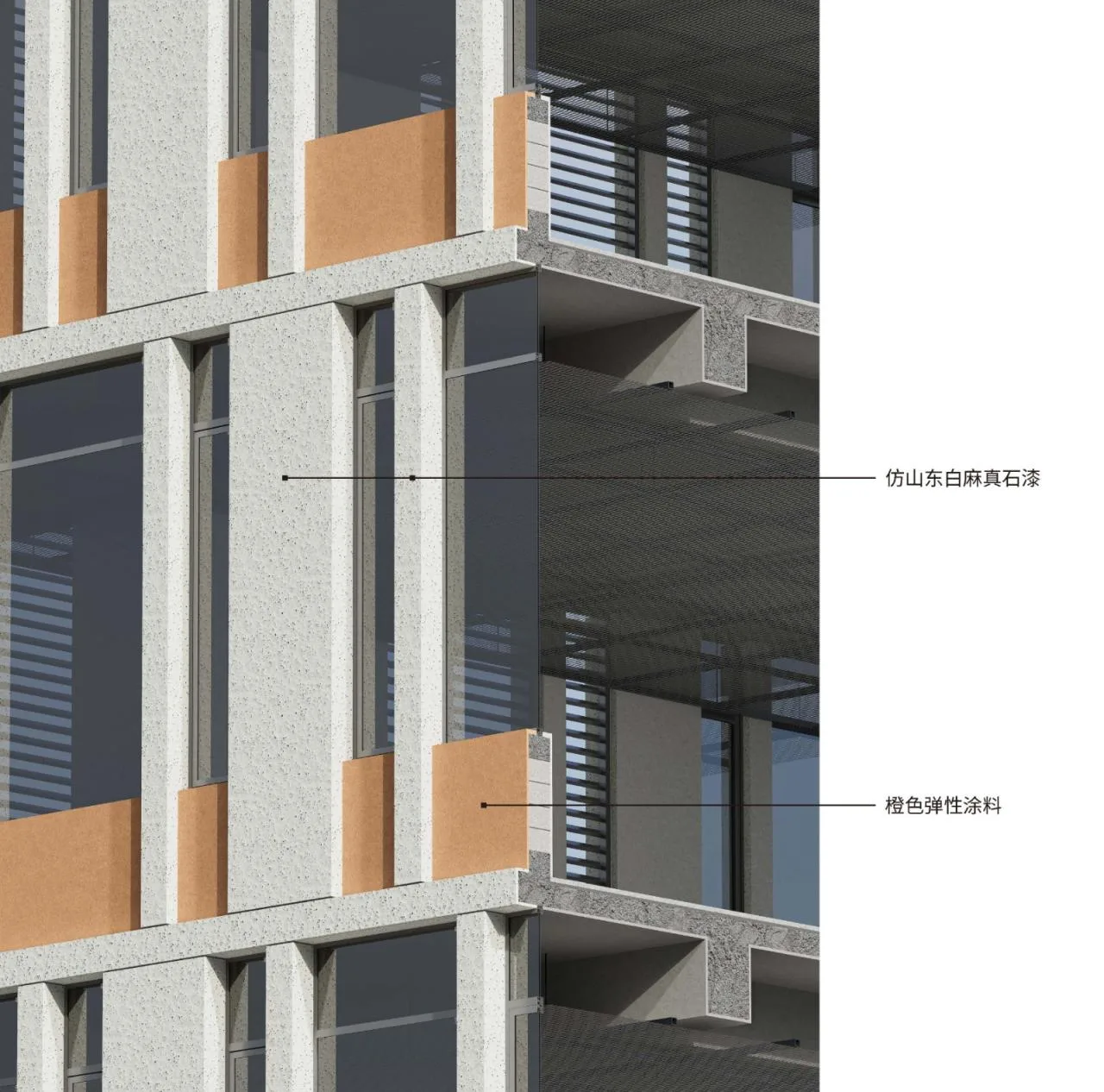
To prevent collisions with handling equipment and materials during production, we moved away from the previous generation’s floor-to-ceiling glass design in this industrial park. Instead, we installed windowsills at 900mm height beneath windows, reducing costs and better meeting production needs. The recessed windowsill, finished with orange real stone paint, adds depth and layering to the facade.
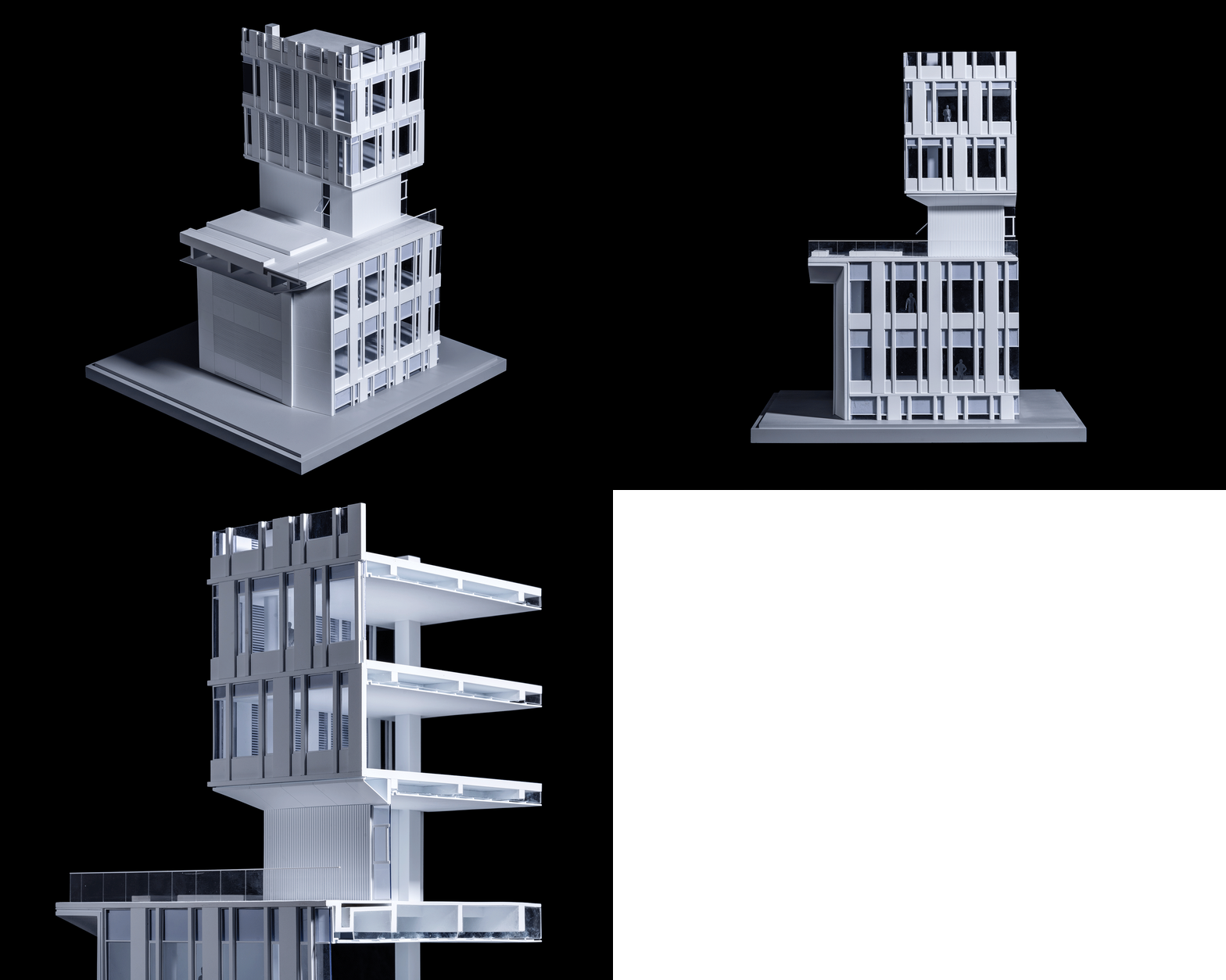
Typical wall model of high-rise factory building:
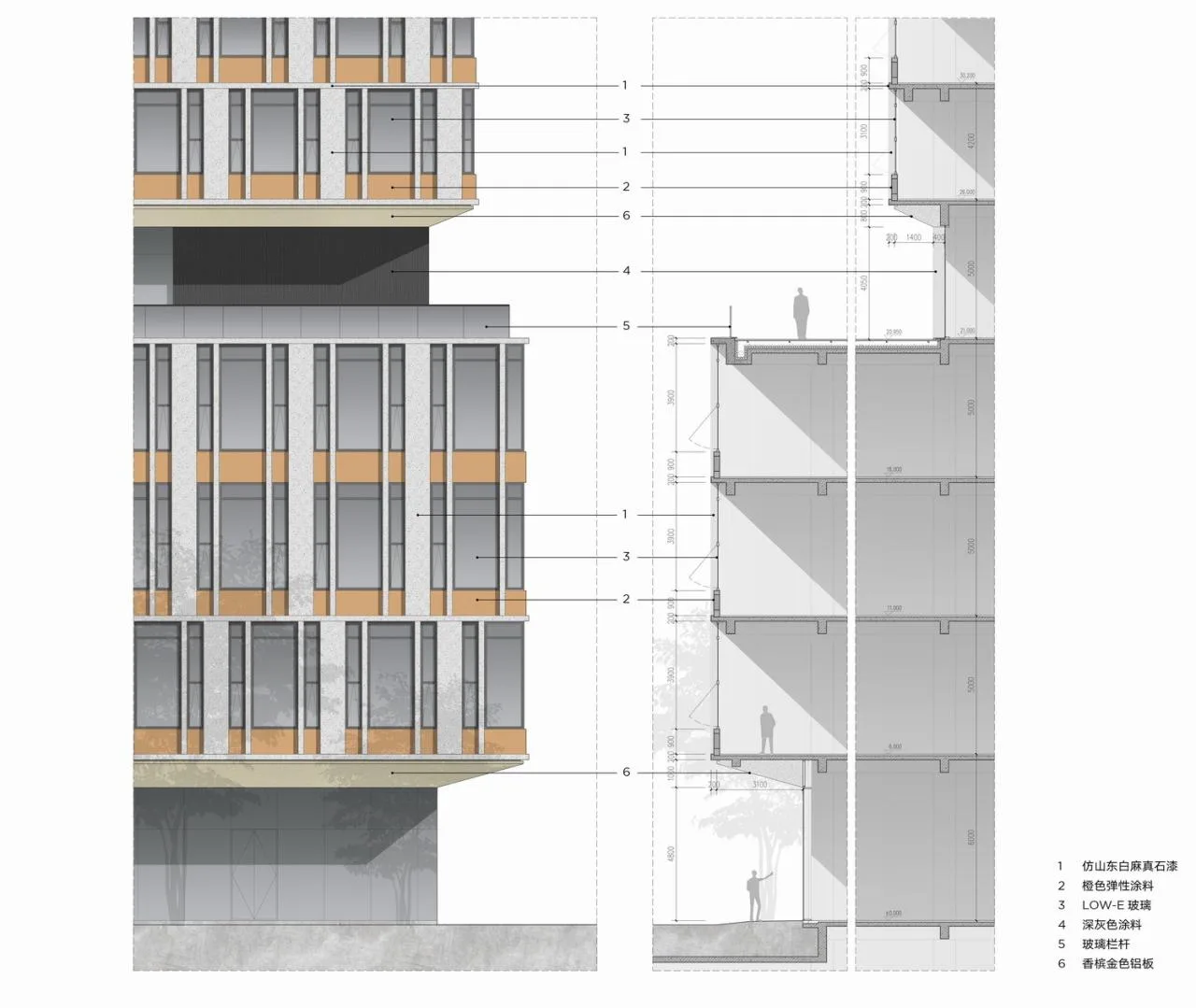
Typical wall structure of high-rise factory building:
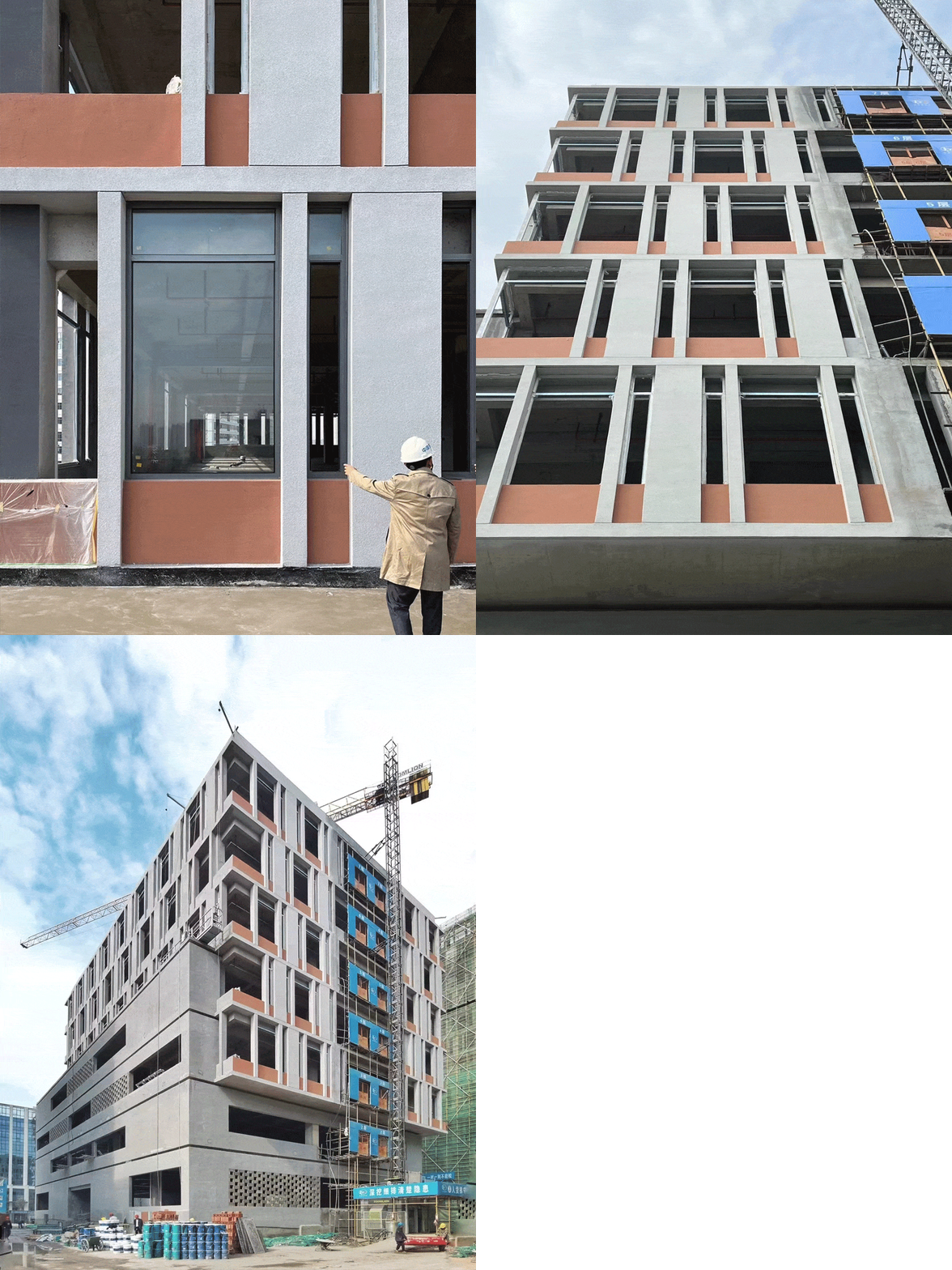
△ Construction process
△ High-rise factory building wall sample
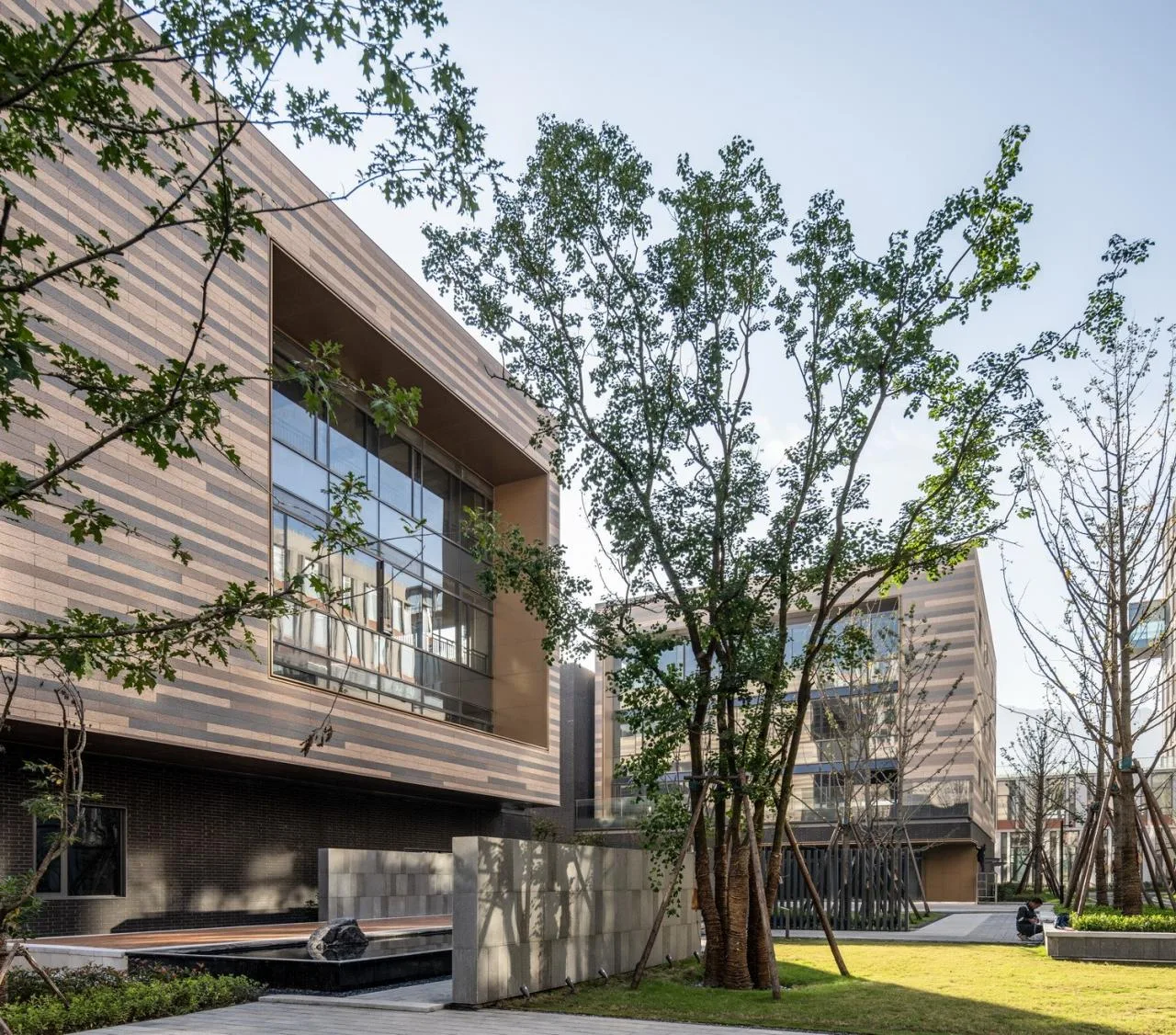
Multi-story standalone factories typically serve as three-in-one spaces combining small business headquarters, R&D offices, and production operations. By creating terraces through volume displacement and adapting auxiliary functions like equipment platforms, storage rooms, and break areas, the design achieves efficient stacking of functional spaces.
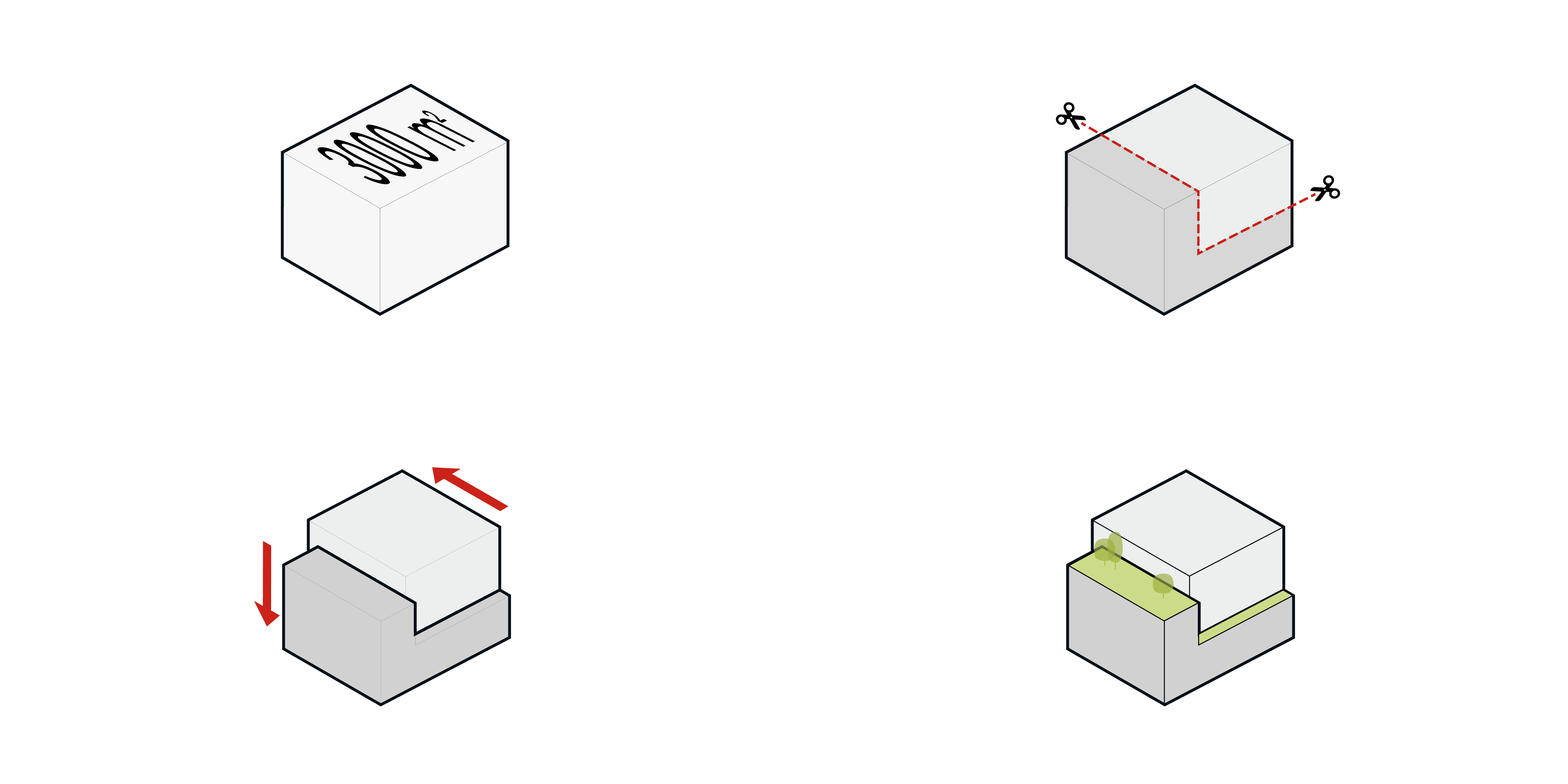
△ Single-family factory building form generation diagram
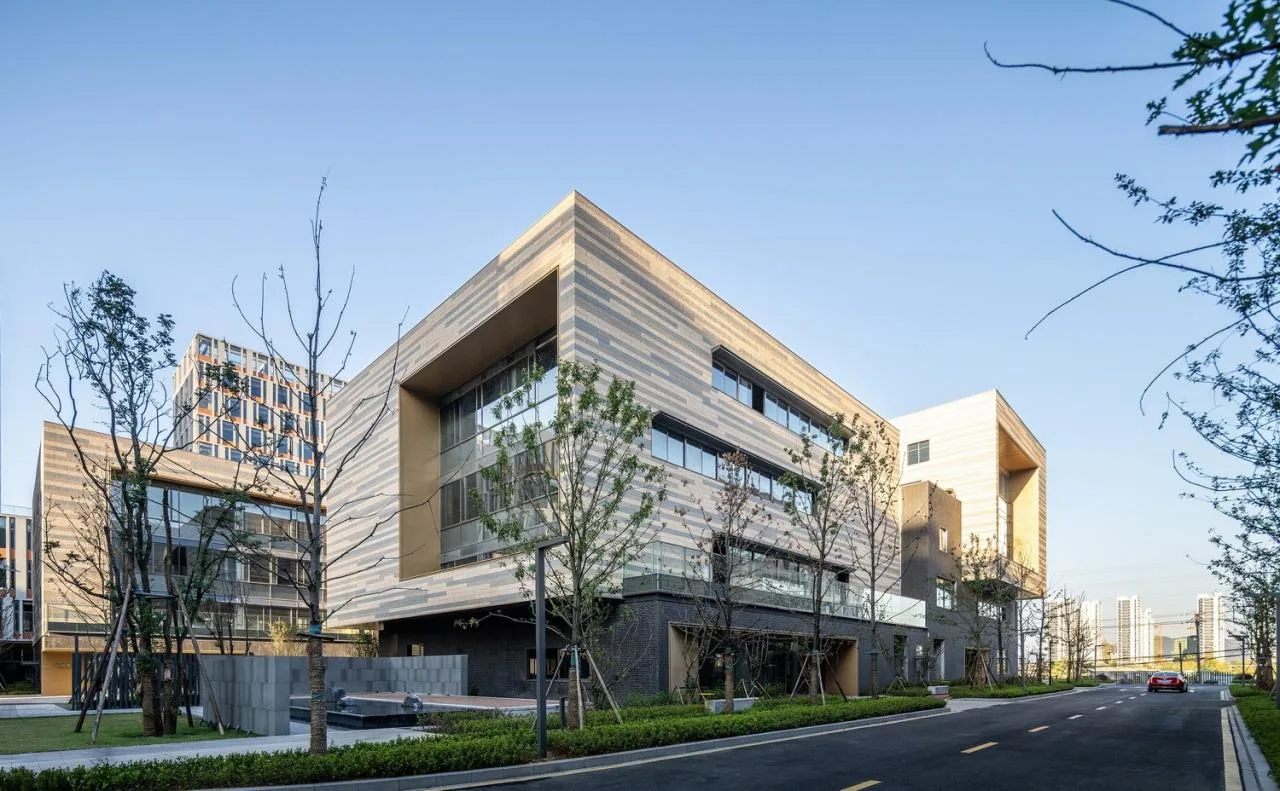
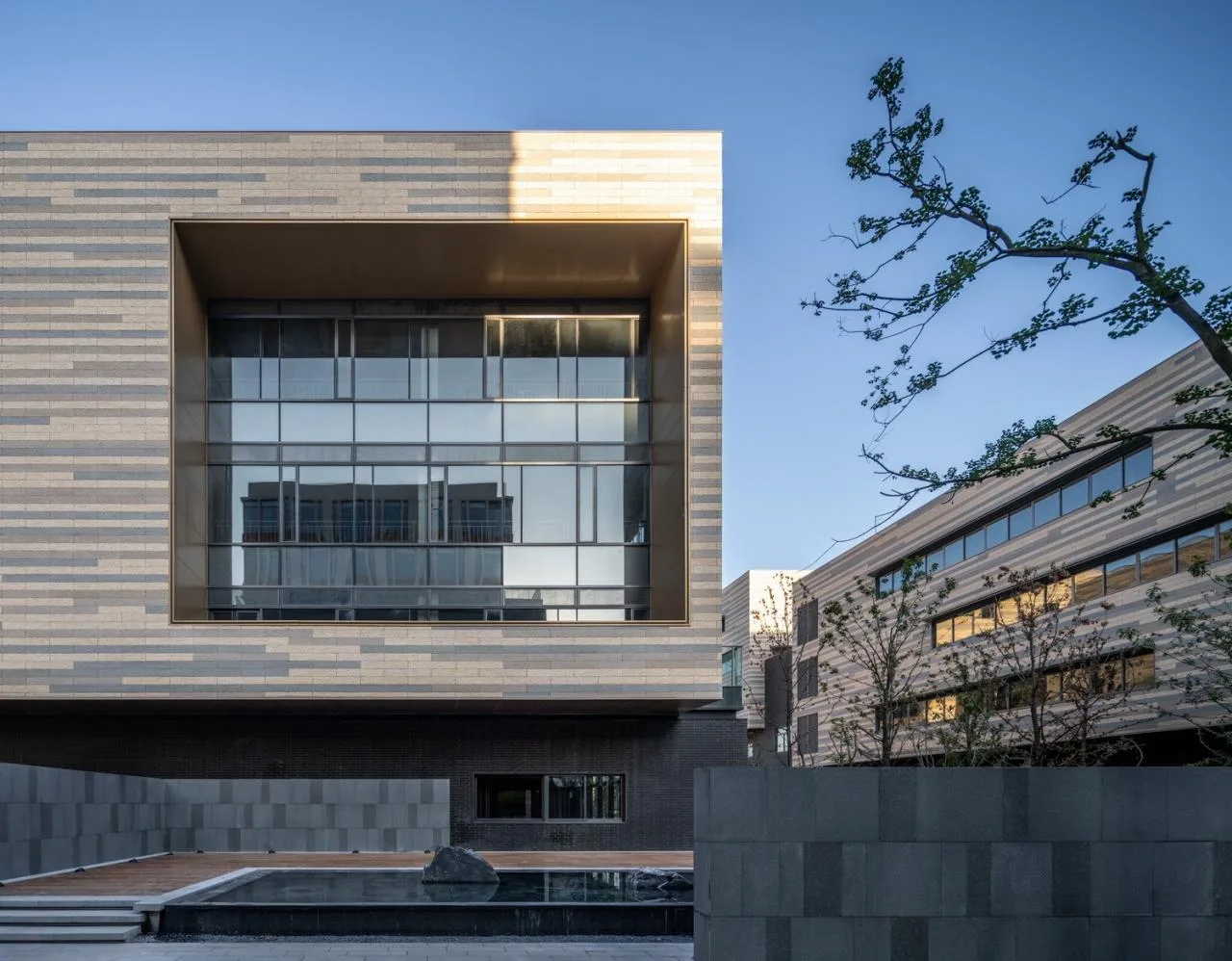
For the facade, the lower volume is clad with dark gray horizontally staggered bamboo bricks. The upper volume uses soft porcelain made primarily of modified clay (MCM), an innovative energy-saving, low-carbon building material with excellent flexibility and texture. The porcelain is cut into 200 × 1200 mm strips in three colors, combined to create a differentiated architectural expression.
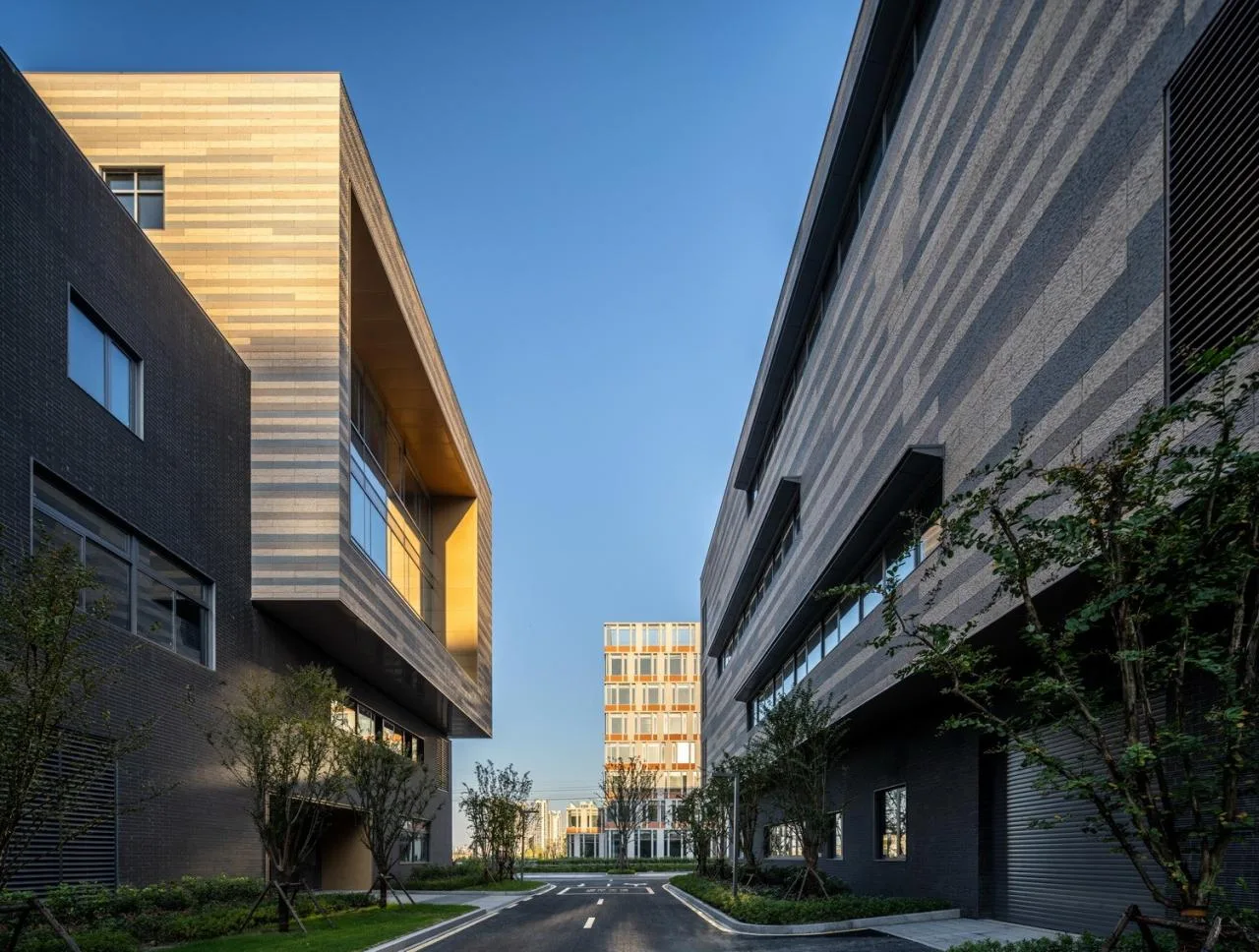
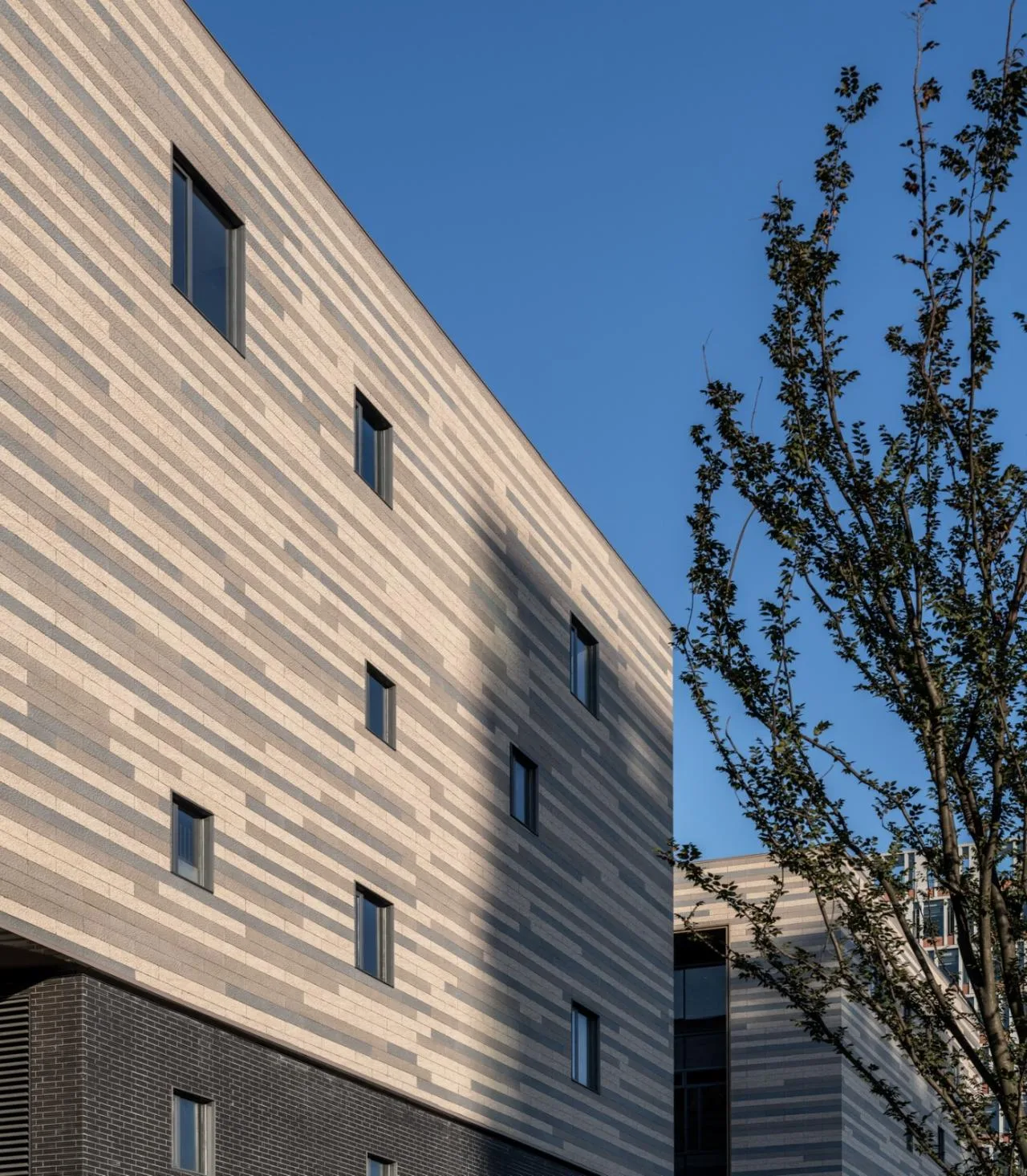
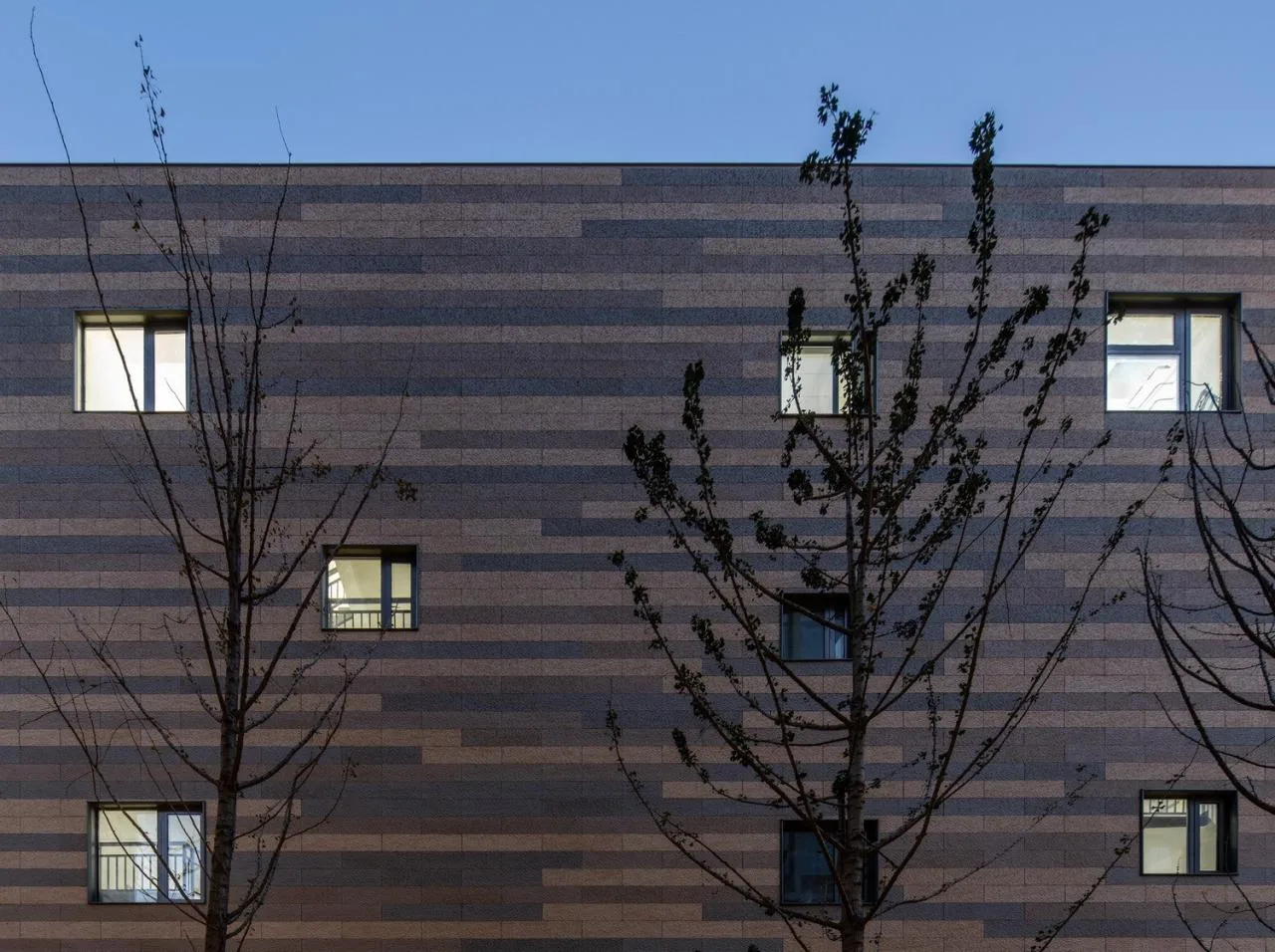
The wall structure carefully integrates form and materials. By following the vertical displacement and material boundaries, a 200 × 200 mm groove was created through construction techniques. This groove separates the dark gray bamboo ceramic tiles below from the colored soft porcelain above, preventing direct material transition. Metal plates close the groove’s upper and lower openings with matching materials, emphasizing the building’s layered forms and enabling structural-level material transitions.
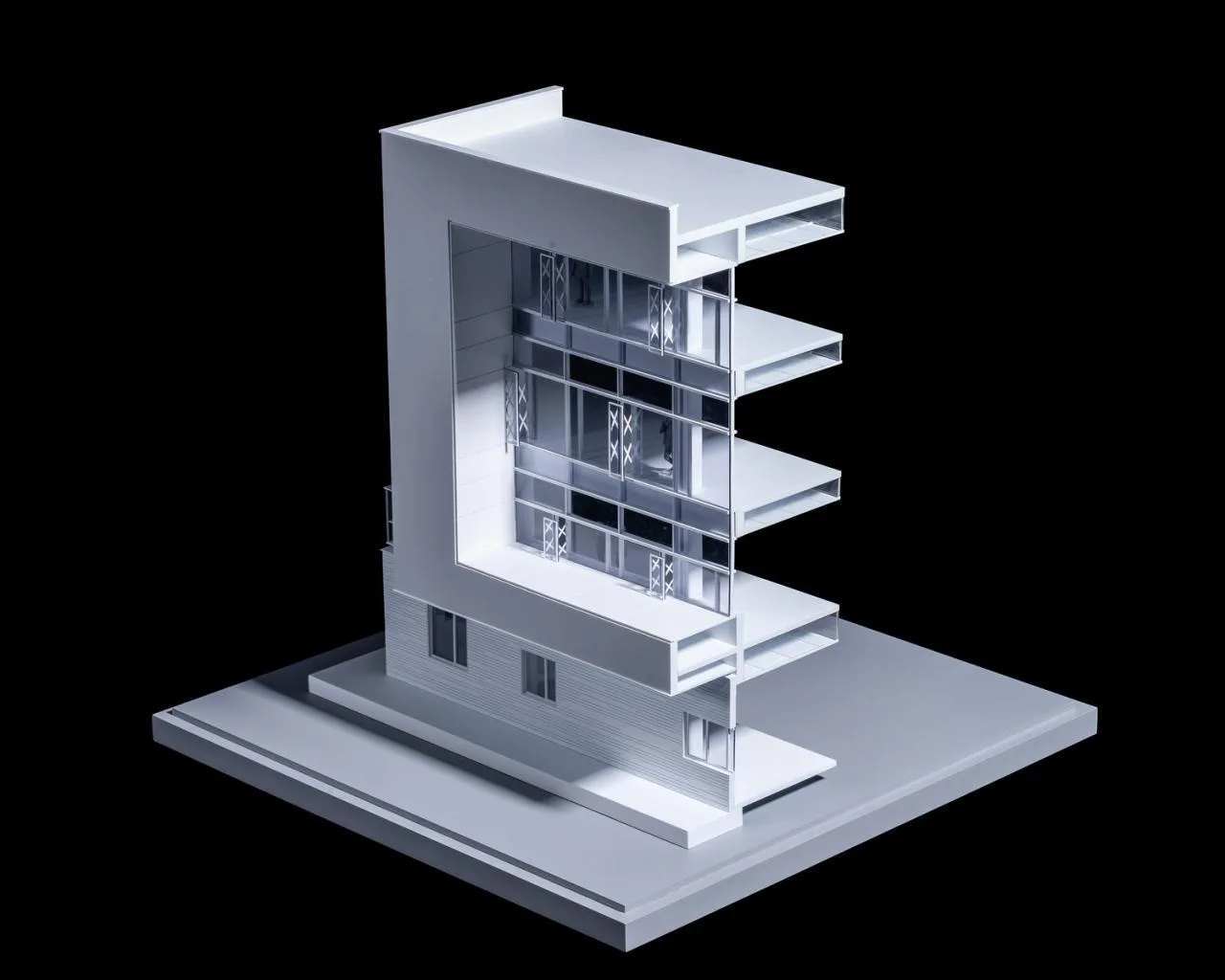
△ Single-family wall model
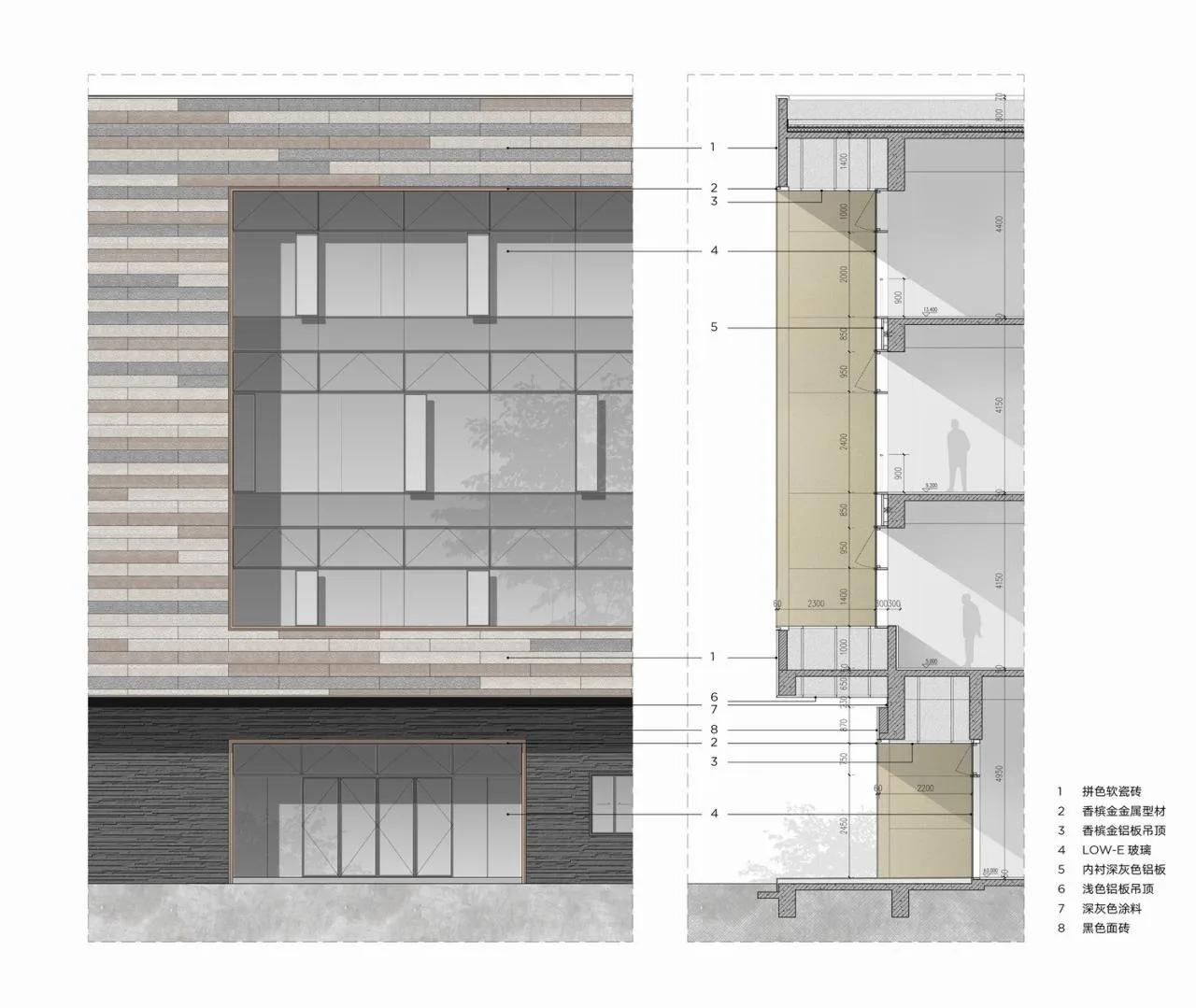
△ Standalone wall facade
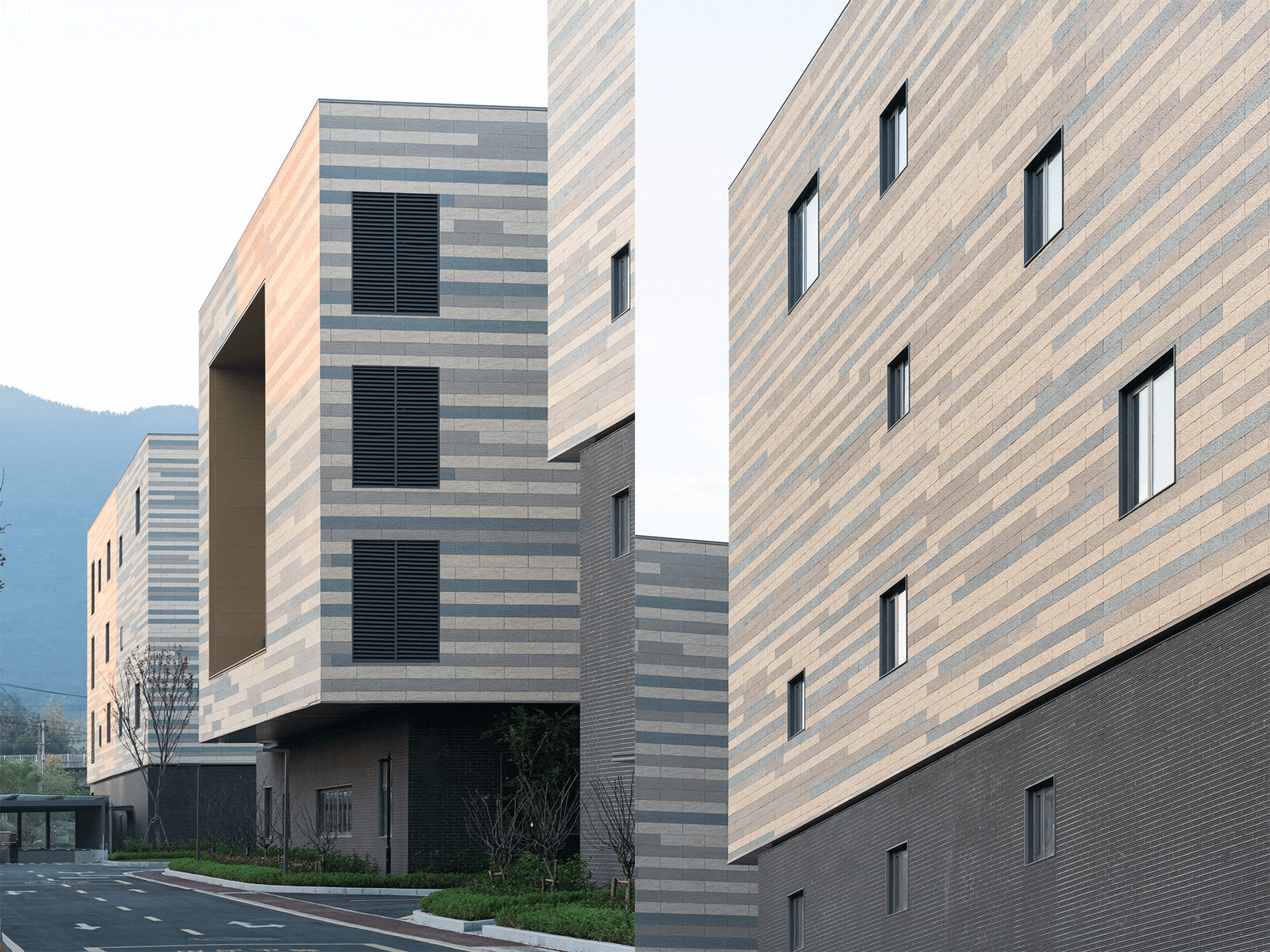
As a new typology between multi-story standalone and high-rise flat factories, the “class standalone” factory design begins with property rights division. To accommodate different upper and lower ownership, two volumes are stacked vertically, uniting form and ownership logic.
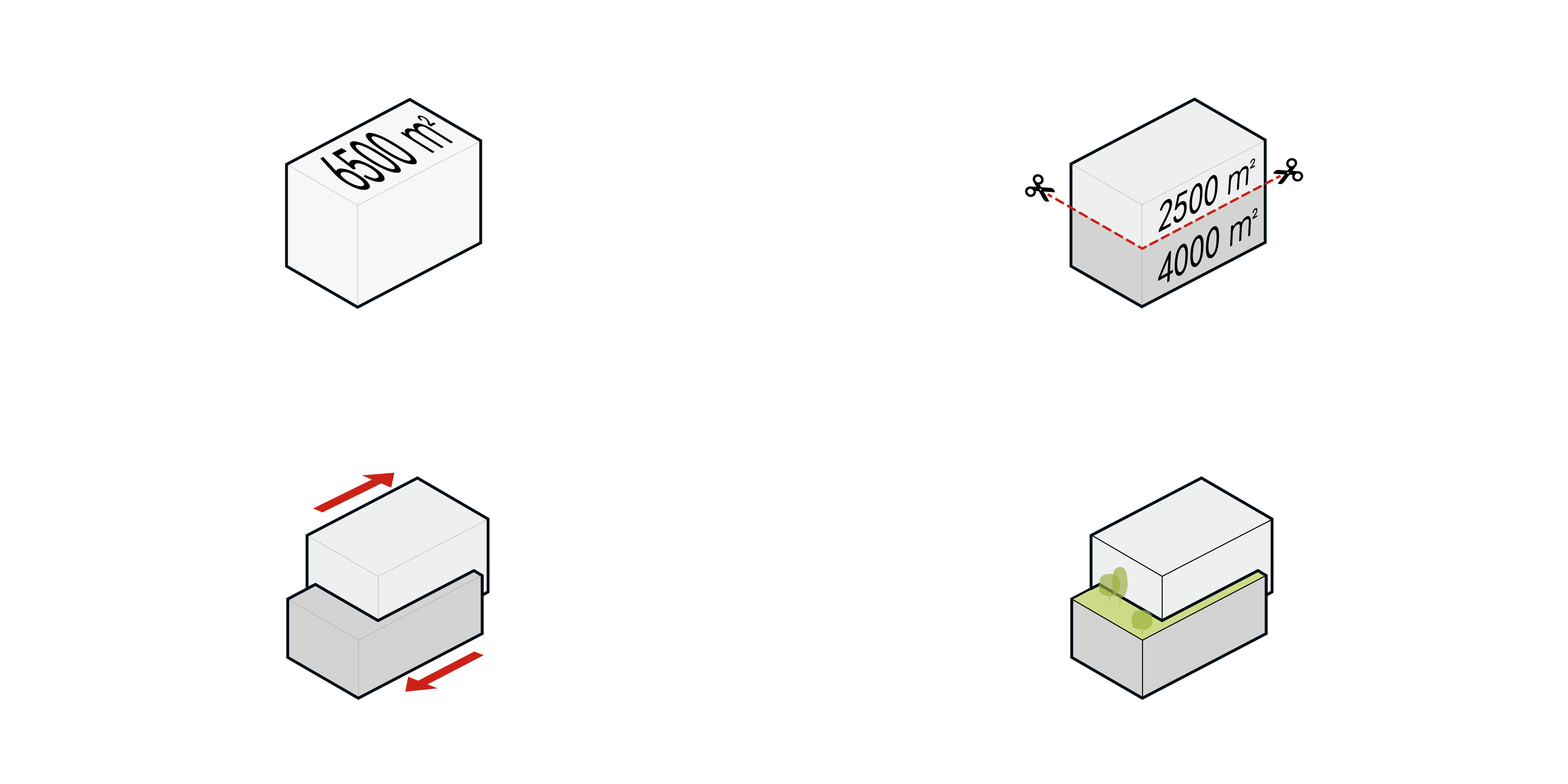
△ Class standalone factory building form generation diagram
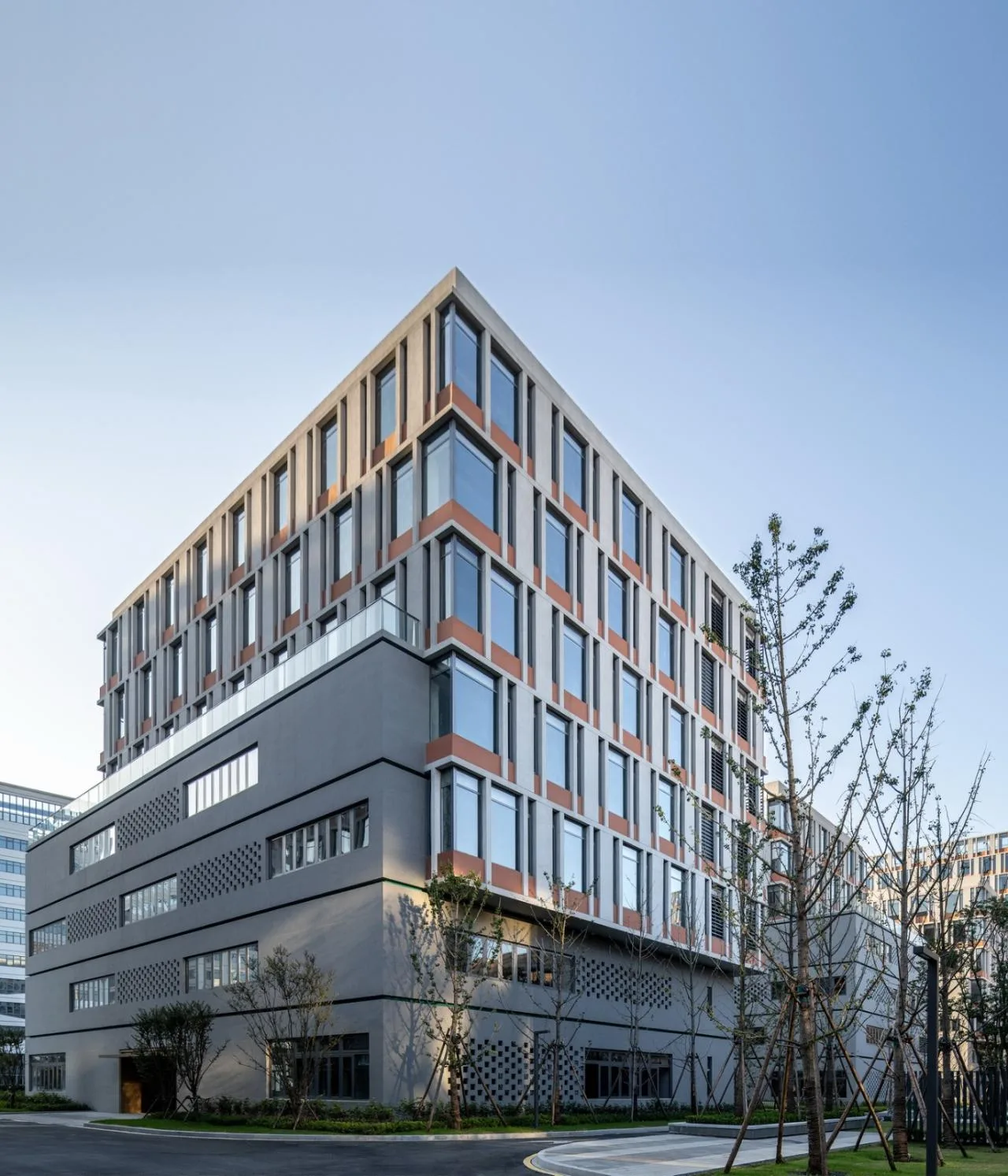
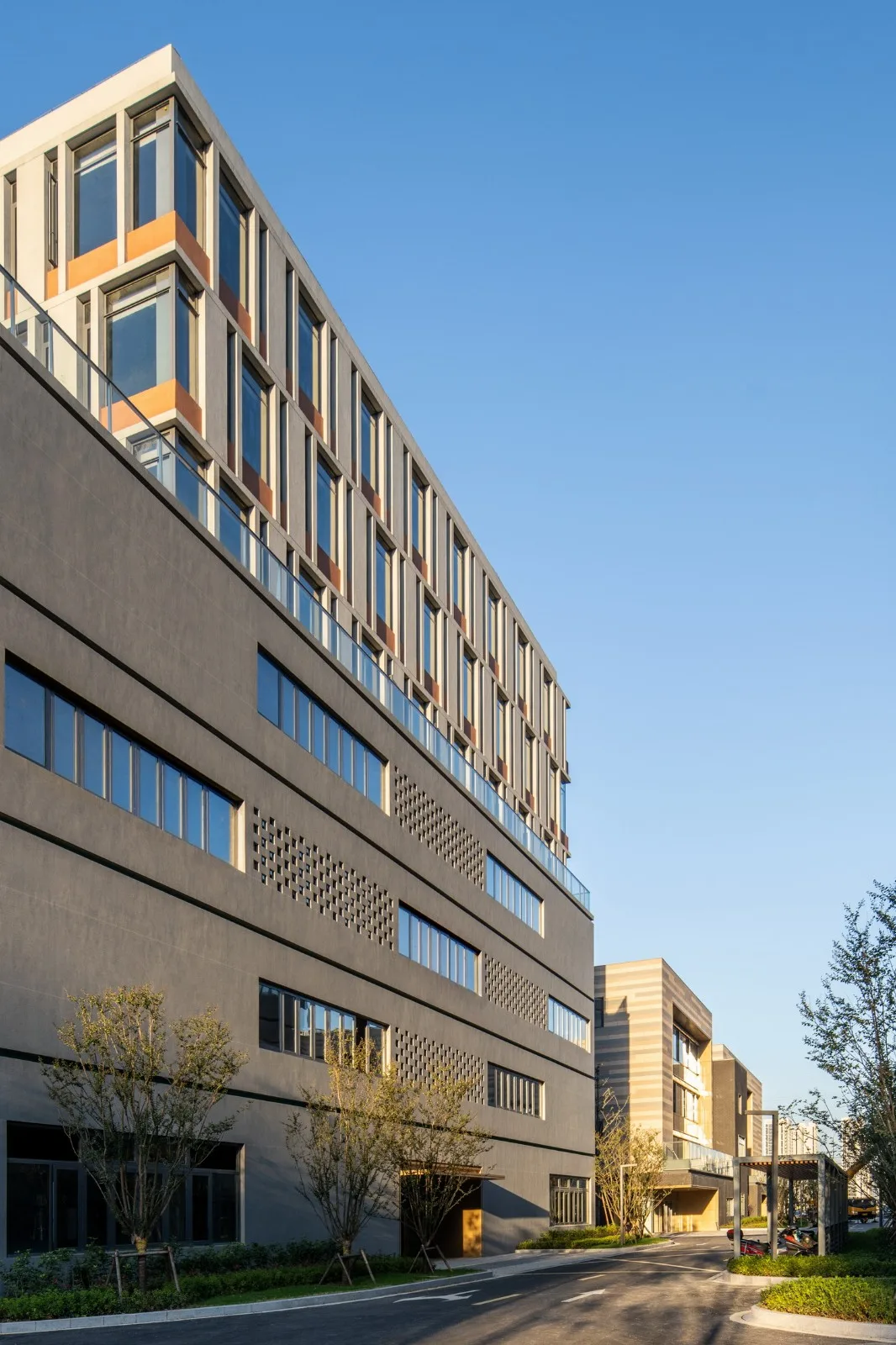
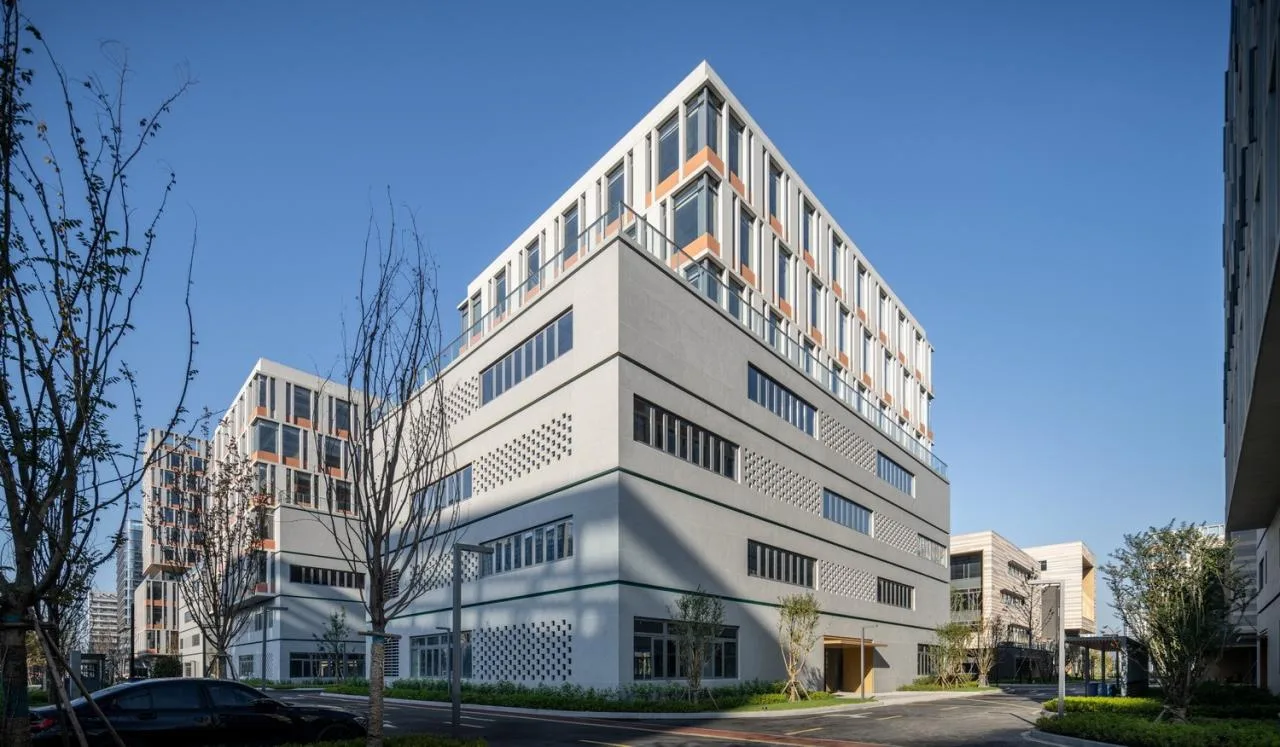
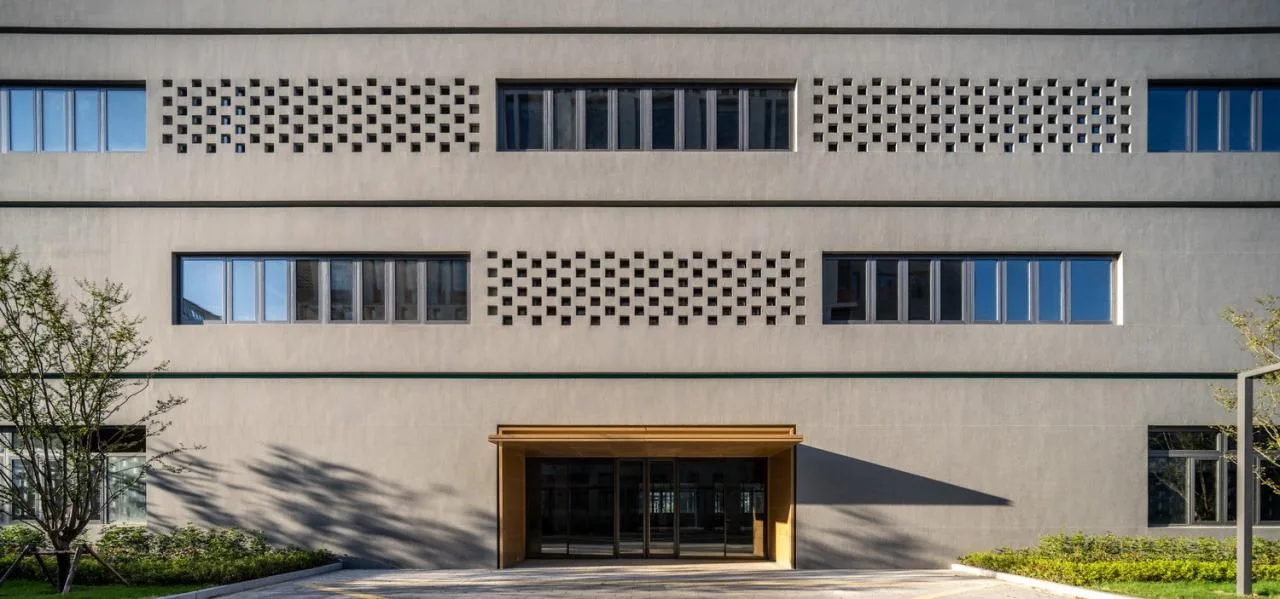
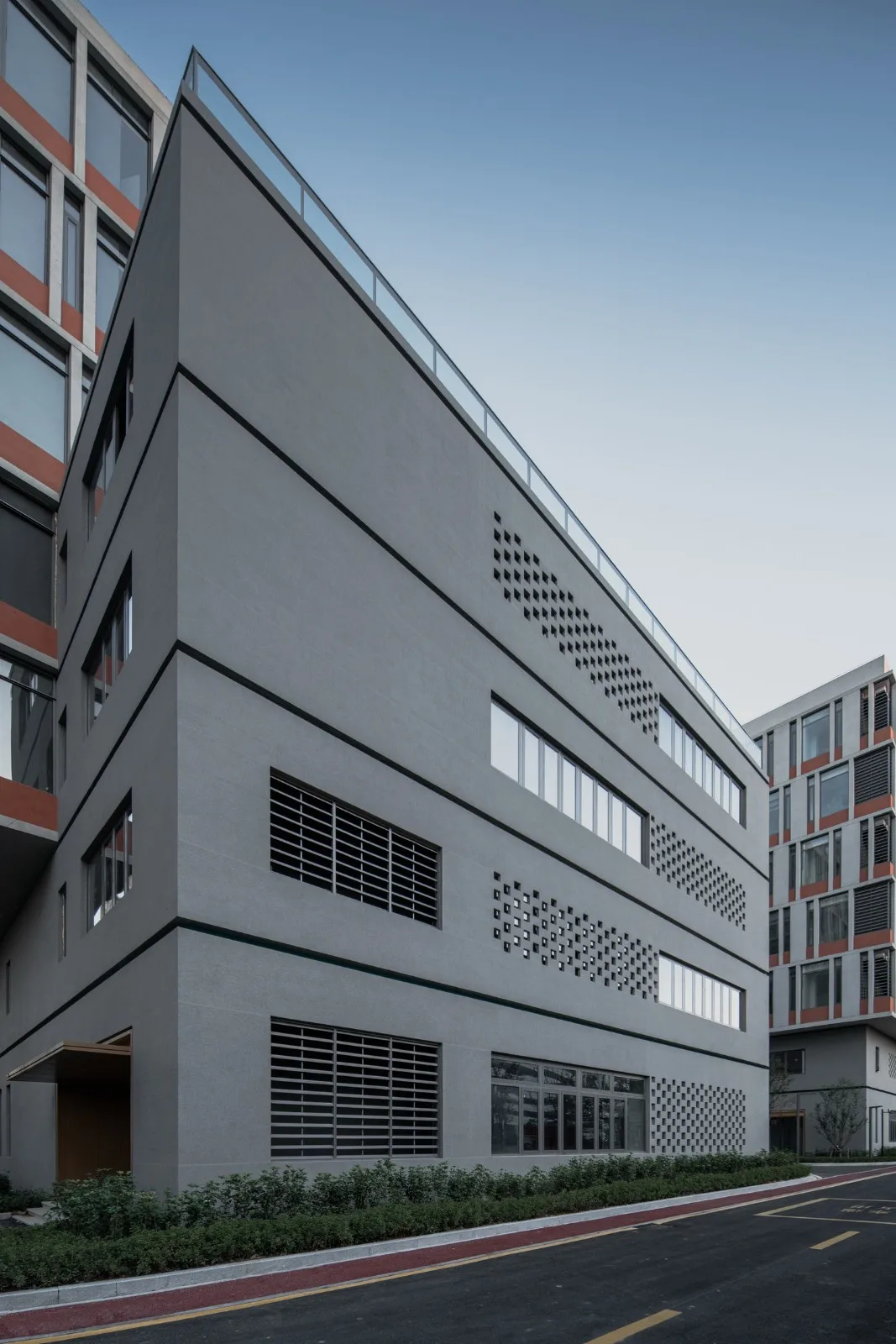
To maintain uniformity along the park’s street facade, the upper volume includes homogeneous vertically staggered windows, complemented by horizontal strip windows on the lower level. Prefabricated concrete blocks form decorative flower grids with staggered jumps, achieving unity through contrast. A 200 × 200 mm groove between volumes, coated in dark green paint, softens the concrete texture and adds vibrancy.
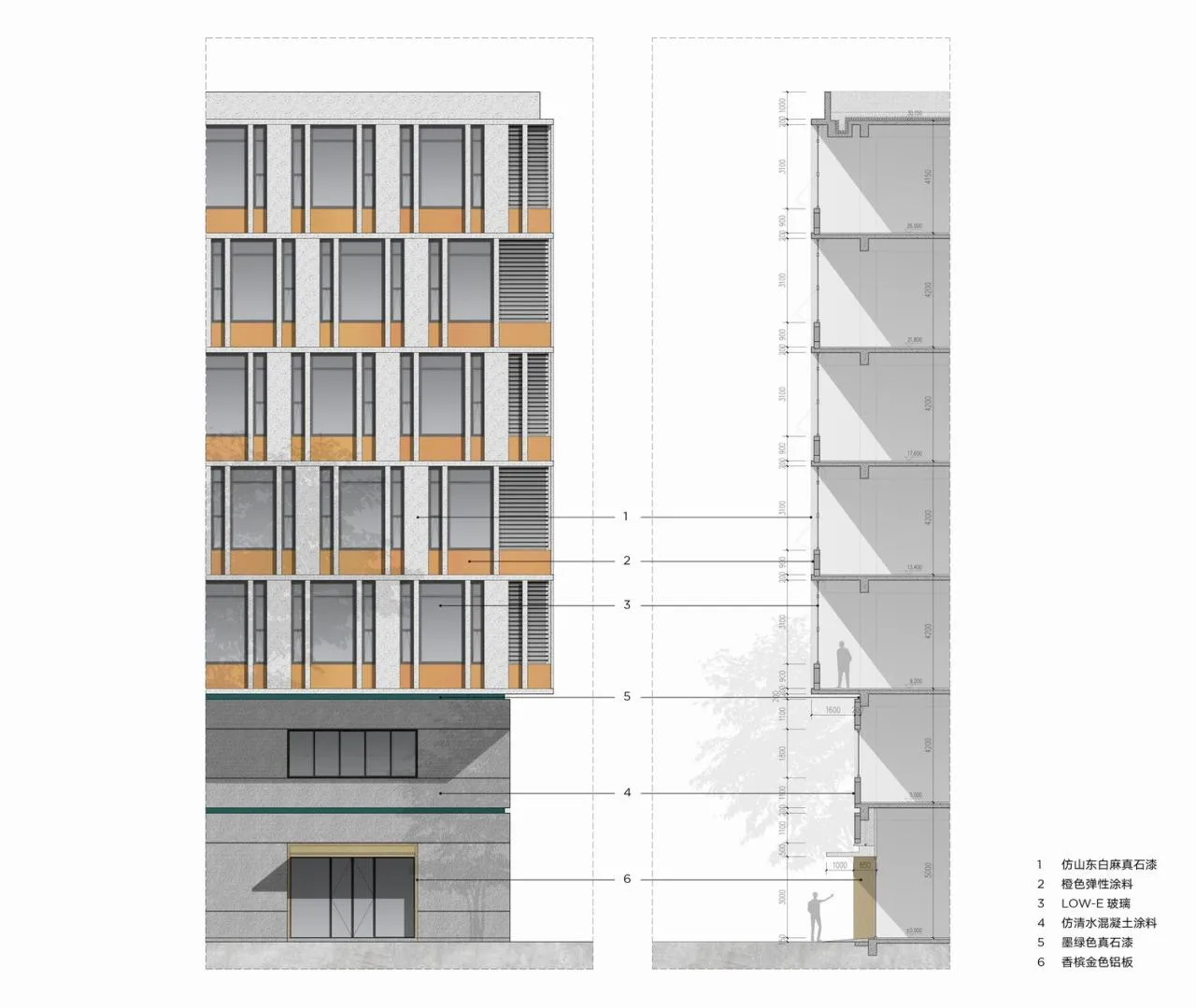
△ Class standalone wall facade
04. Conclusion
Recently, the China Association for Urban Science and Technology announced the evaluation results for the 15th batch of 2022 “Green Building Label” projects. The China Energy Conservation (Fuyang) Environmental Protection Industrial Park project earned the sole one-star green building label in the industrial building category.
Industrial upgrading necessitates iteration in spatial patterns. Amid the comprehensive implementation of “industrial upgrading,” Line+ leverages its strengths in product research and development to focus on strategic emerging industries such as energy conservation, environmental protection, intelligent manufacturing, and electronic information technology. Breaking away from traditional factory space models, we developed diverse high-rise, standalone, and quasi-standalone space types and combinations. This approach creates high-quality industrial parks, improves land use efficiency and development intensity, and empowers industrial park transformation.
Project Drawings
Project Information
Project Name: China Energy Conservation (Fuyang) Environmental Protection Industrial Park
Design Firm: Line+ Architectural Firm gad
Lead Architect/Project Creator: Meng Fanhao
Project Architect: Li Xinguang
Design Team: Yuan Dong, Hao Jun, Tu Dan, Zhang Tao, Xing Shu
Owner: China Energy Conservation (Hangzhou) Environmental Protection Industry Co., Ltd
Construction Drawing Partner: Hangzhou Urban Construction Design and Research Institute Co., Ltd
Project Location: Hangzhou, Zhejiang
Building Area: 163,168.18 square meters
Floor Area Ratio: 2.1
Design Period: July 2020 – March 2021
Construction Period: April 2021 – July 2023
Structure: Framework Structure
Materials: Real stone paint, imitation concrete coating, soft porcelain, aluminum panels, glass
Photography: Chen Xi Studio, Line+
















Must log in before commenting!
Sign Up