
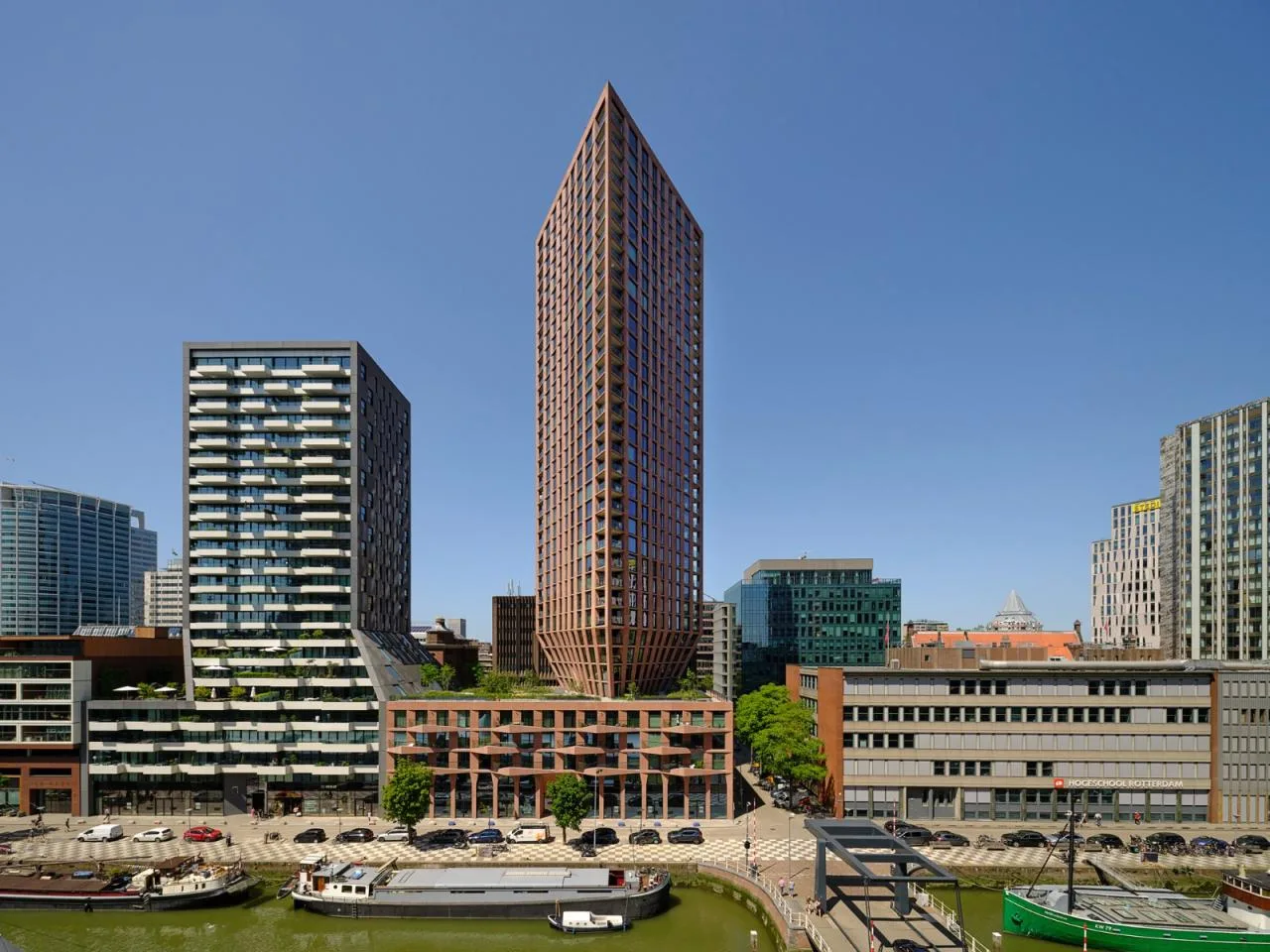
Muse Building and CasaNova
Following the economic crisis, Barcode Architects took the initiative in 2013 to develop a tower on the Wijnhaven 69 plot, now home to Muse. During preliminary planning for this plot, they successfully persuaded the developer to also acquire the adjacent Wijnhaven 65 plot. As a result, the designs of these two residential buildings were created to complement each other.
CasaNova and Muse share numerous communal spaces, including a rooftop garden, a shared kitchen, hotel rooms for guests, co-working areas, meeting rooms, fitness facilities, and parcel service rooms.
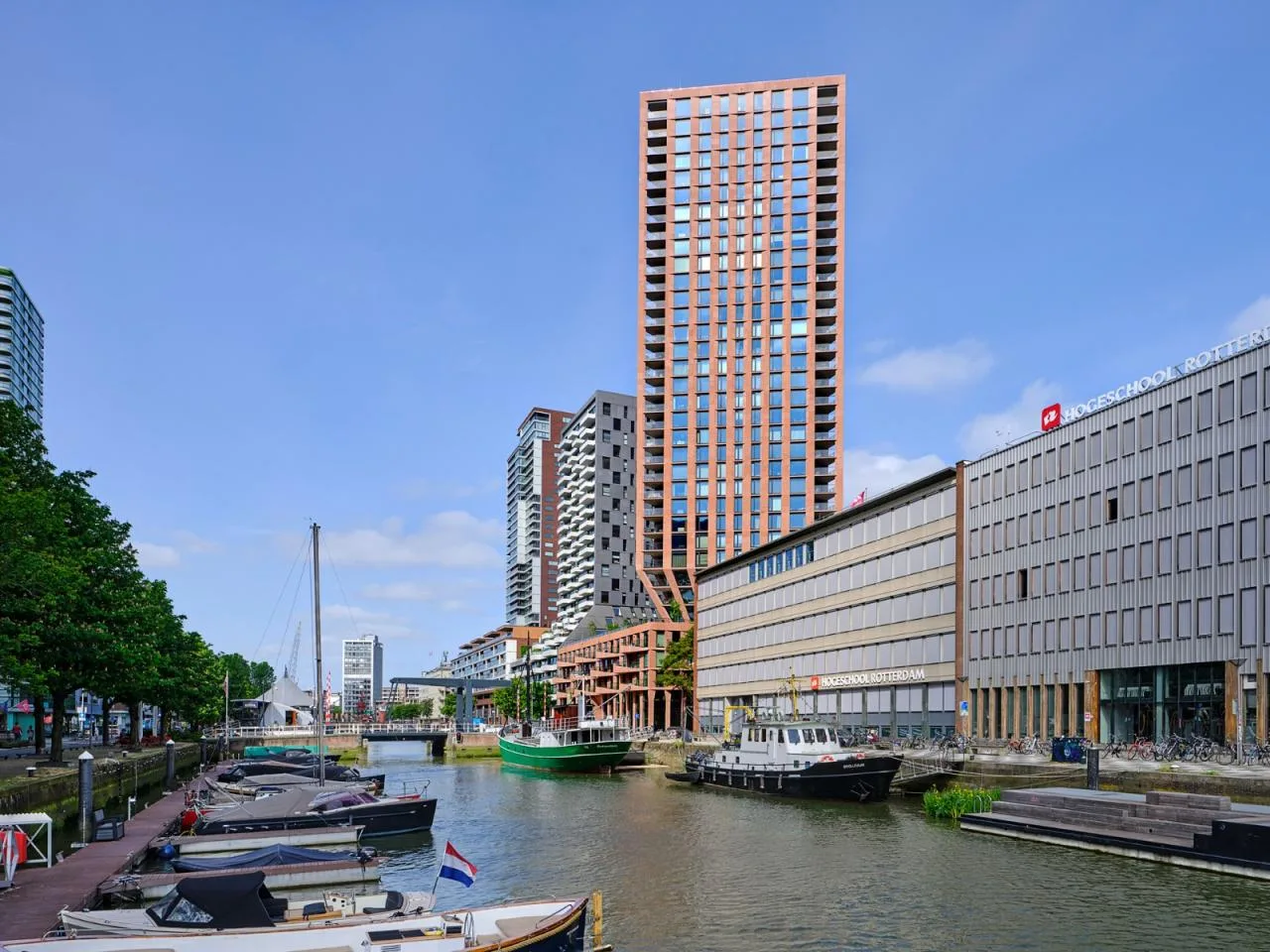
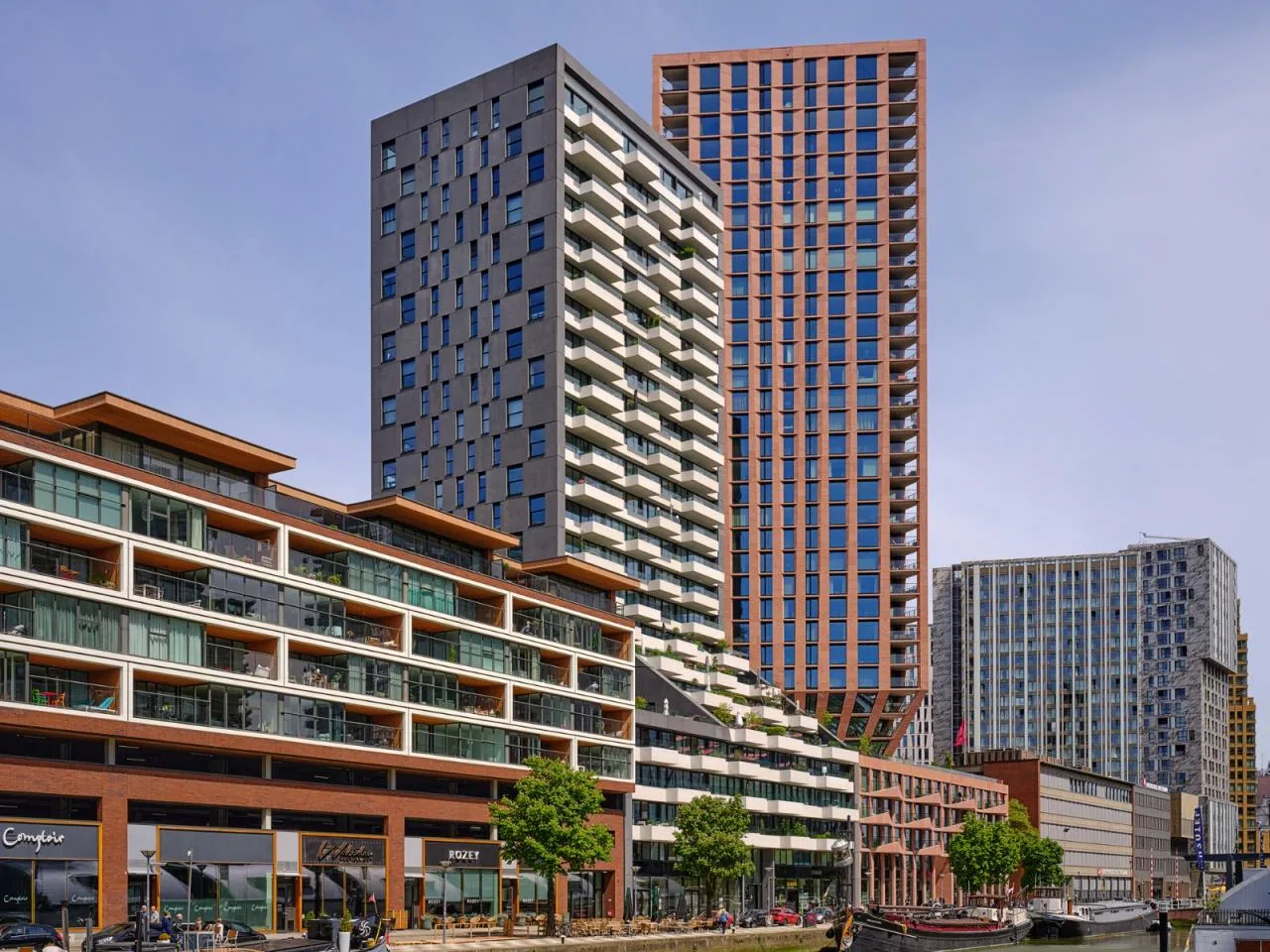
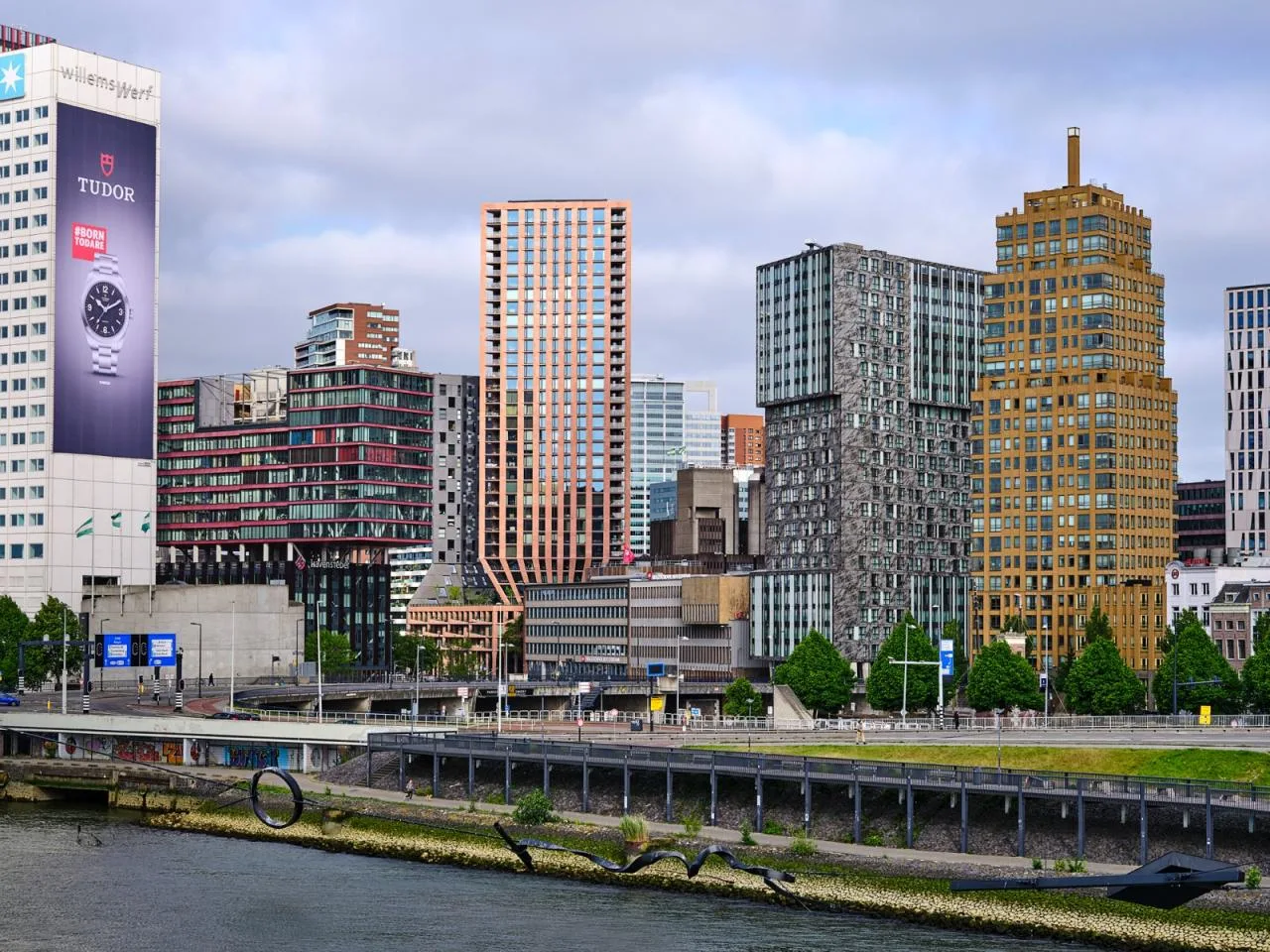
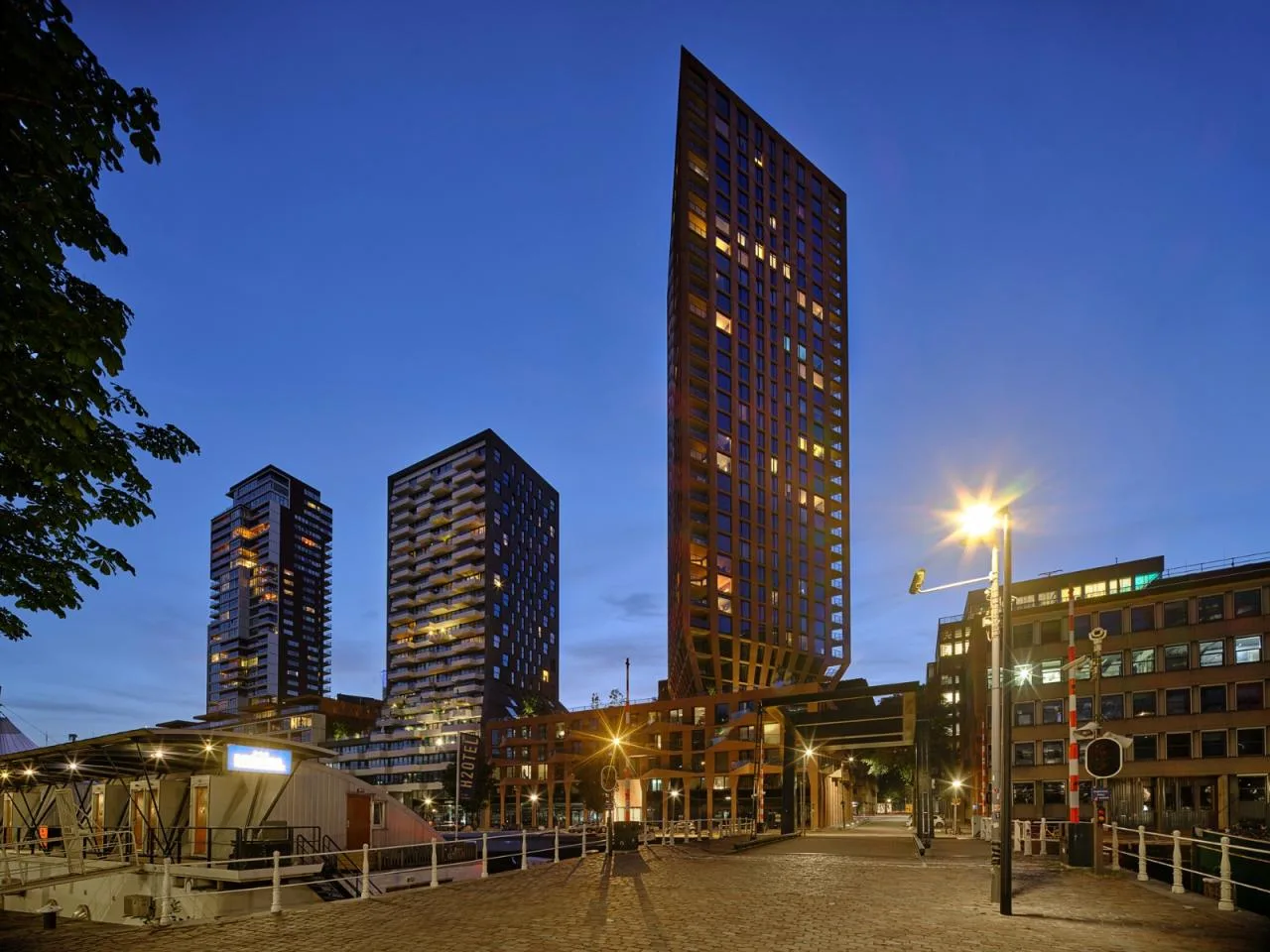
CasaNova, connected directly to the city center, forms part of the Wijnhaven high-rise complex and stands out as a symbol of Rotterdam’s new generation of towers. Its distinctive triangular silhouette is both bold and recognizable, bringing fresh energy to the Wijnhaven area as it transforms from a quiet office district into a lively urban hub.
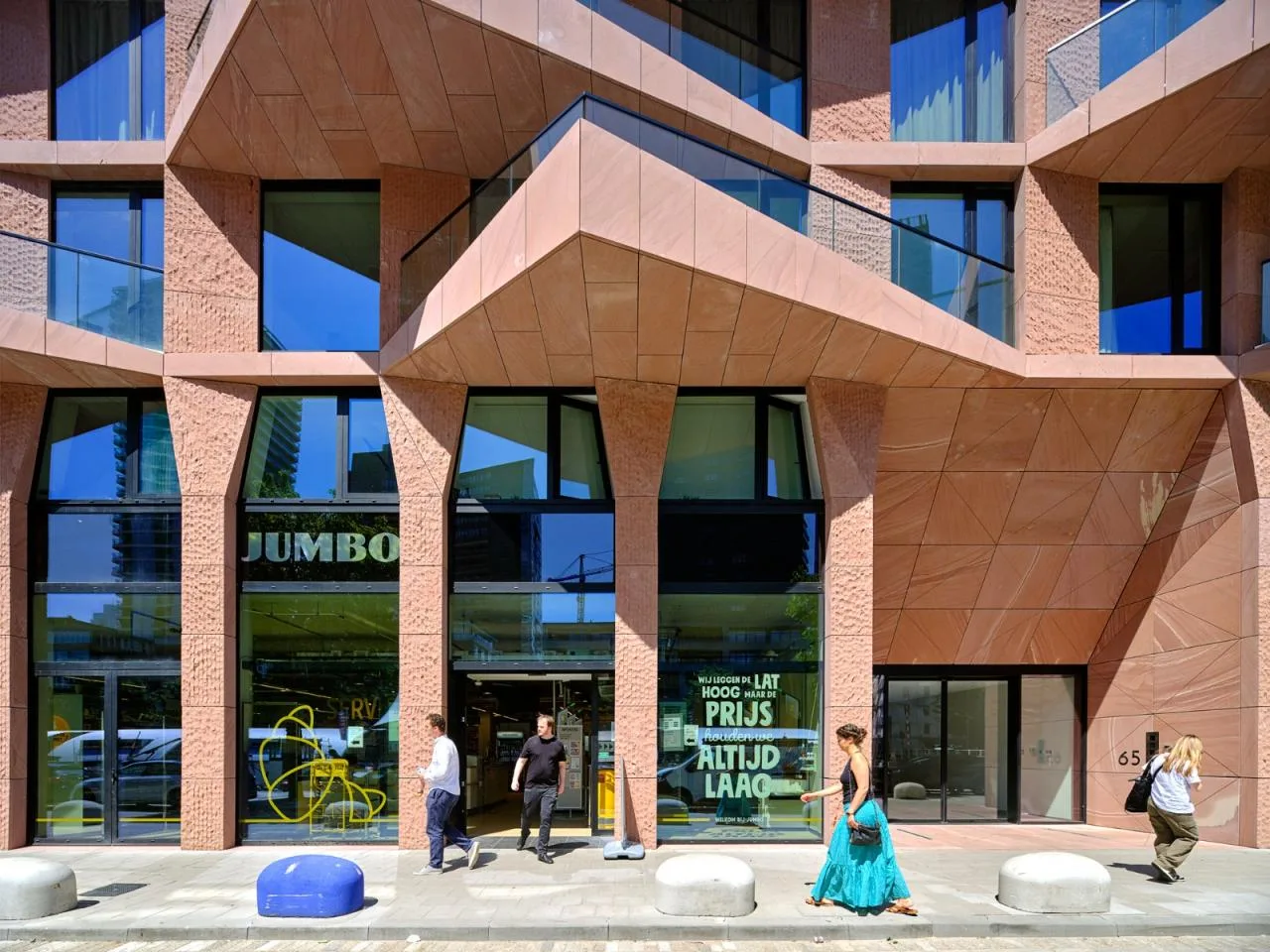
By activating a corner of Wijnhaven, CasaNova establishes a new link between Oude Haven and Markthal, extending toward Museumpark via Leuvehaven and Witte de Withstraat. The building’s entrance hall spans the entire block, stretching from Wijnhaven to Wijnstraat. This unique ‘foyer’ creates a dynamic intersection for both streets, offering residents full access from either side of the city.
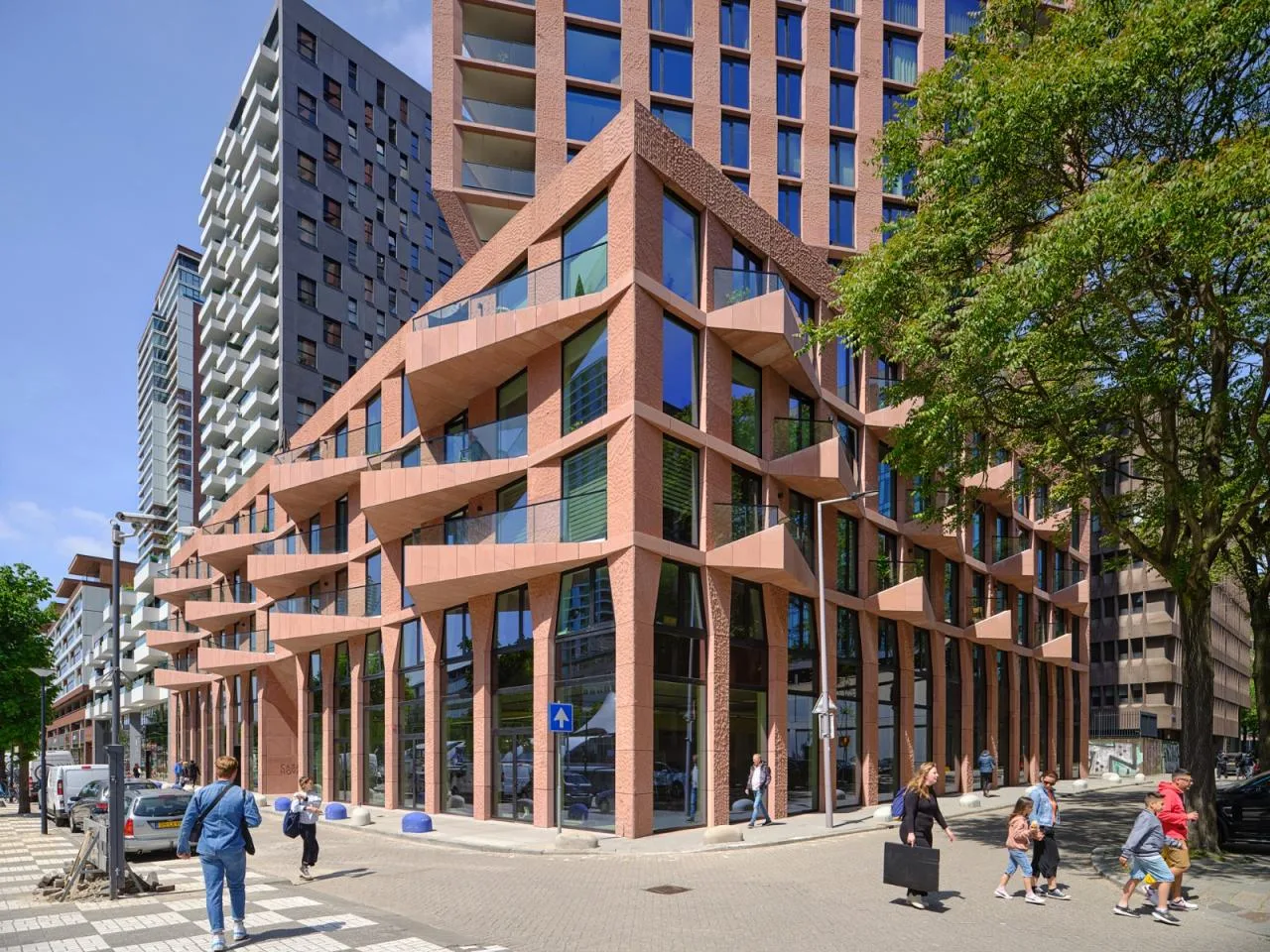
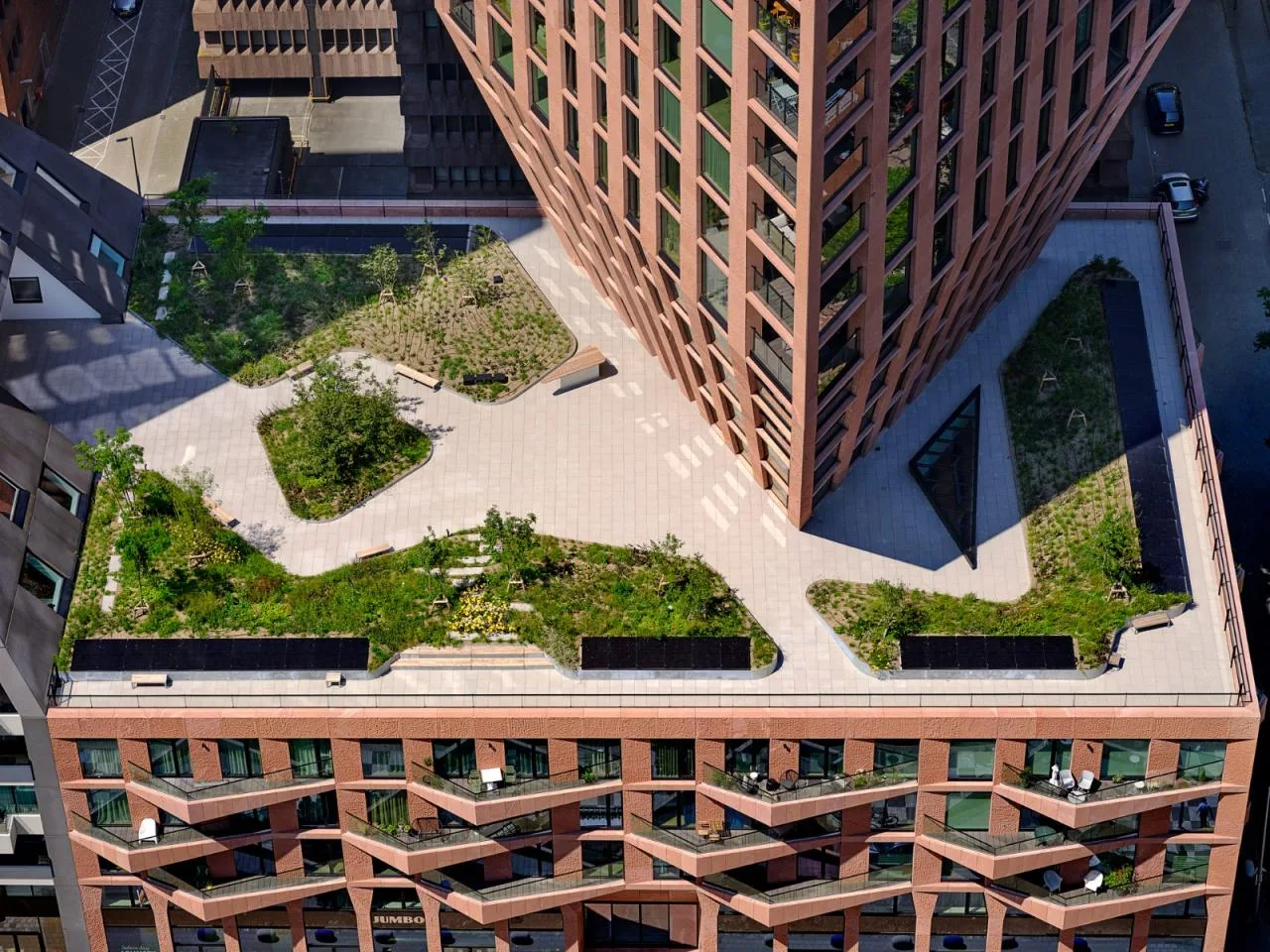
The sculptural form of CasaNova is a creative response to KCAP’s urban planning guidelines, which permit 22 cubic meters of building volume per square meter of land. The design reduces volume at the base and expands it toward the top, creating a balanced, sculpture-like appearance.
This slender form maximizes views and sunlight for surrounding buildings and allows for a 1,600 square meter rooftop garden shared by residents of both CasaNova and Muse. Located on the fifth floor rather than the tower’s roof, the garden maintains a connection to the ground level.
The building’s unique shape offers residents a spectacular 300-degree panoramic view of the city, delivering a one-of-a-kind living experience. Each of the triangle’s three corners includes a spacious 15 square meter balcony, serving as an outdoor living space bathed in sunlight throughout the day. The triangle’s apex faces south to optimize sun exposure.
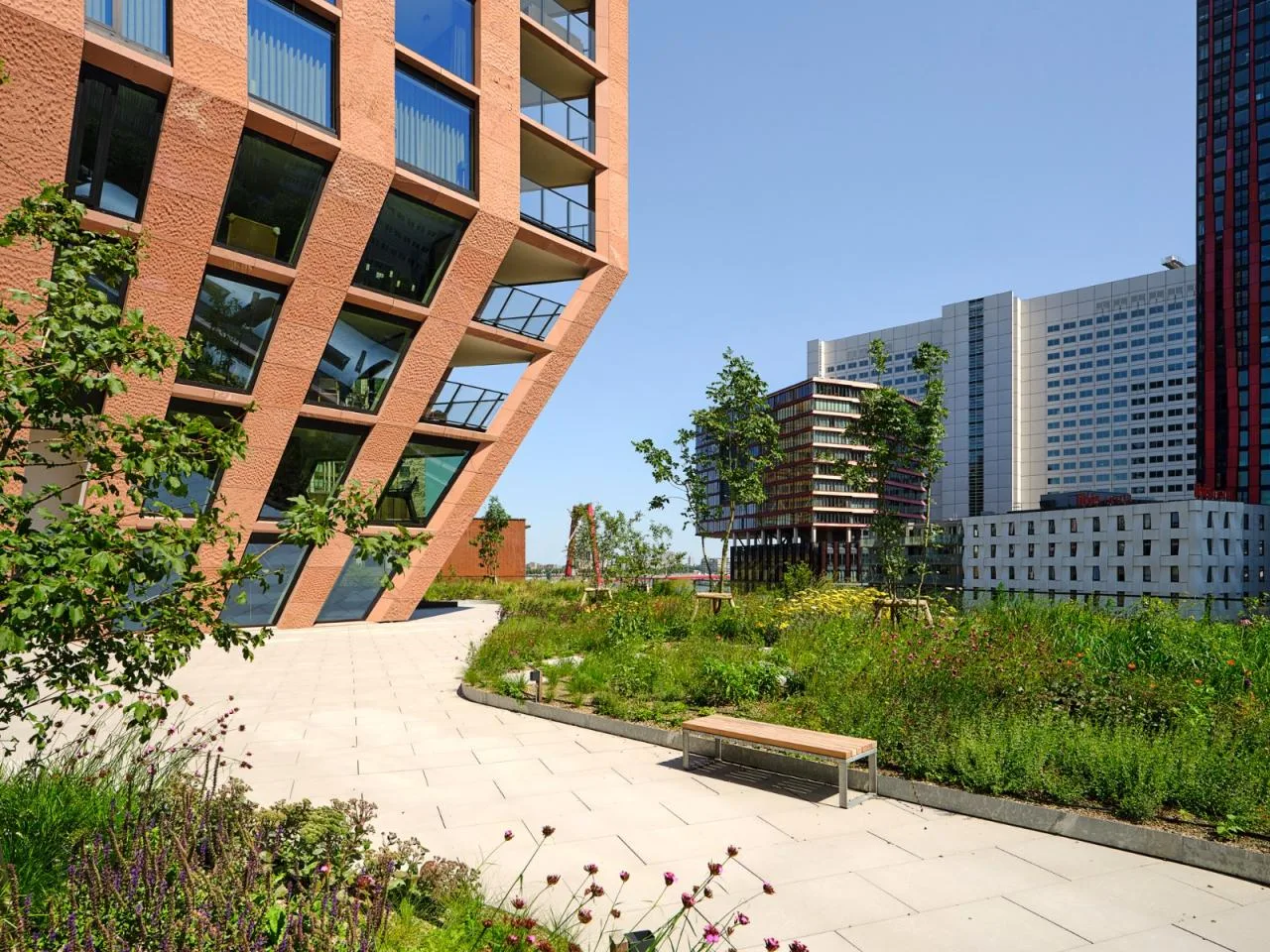
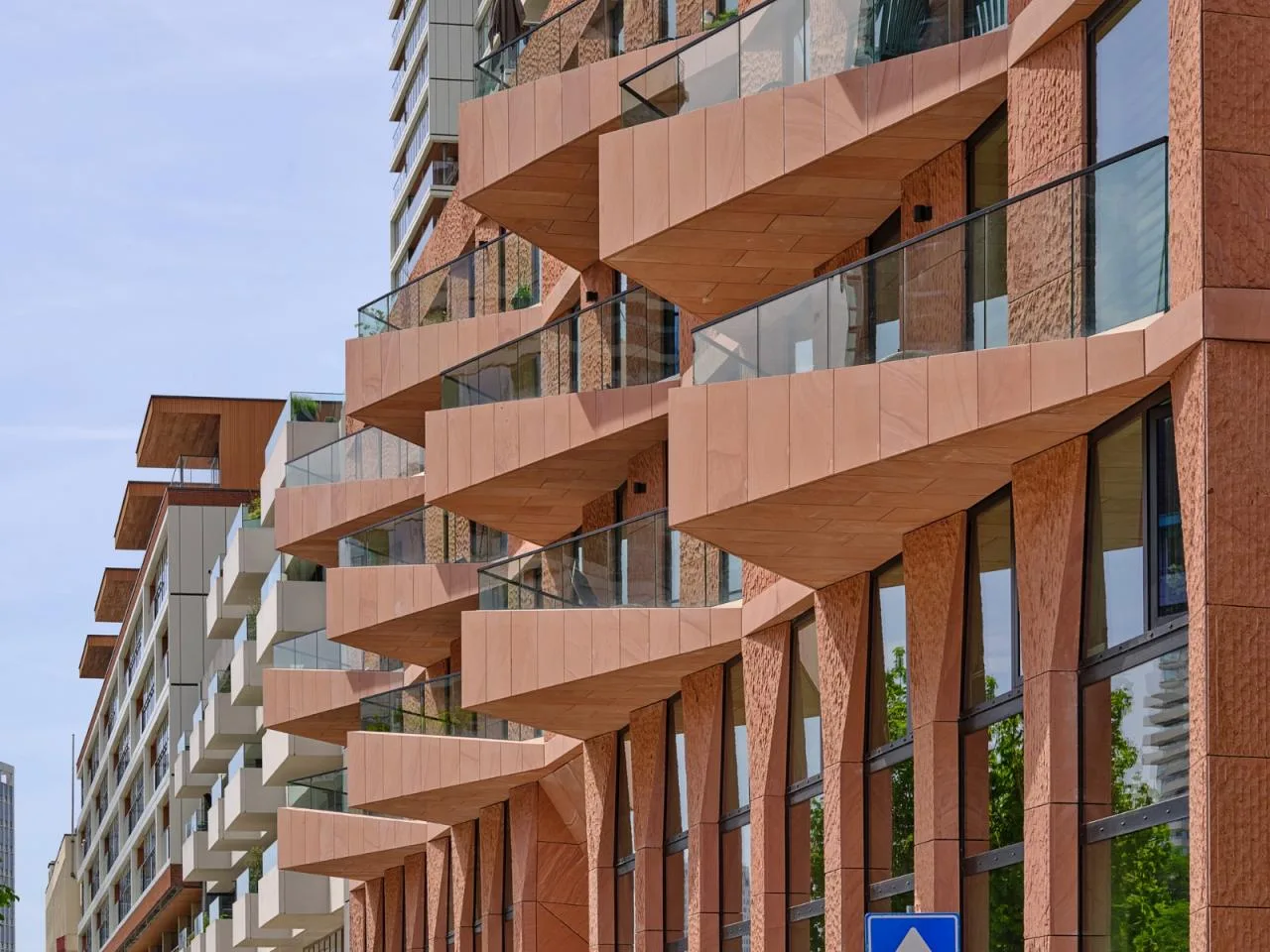
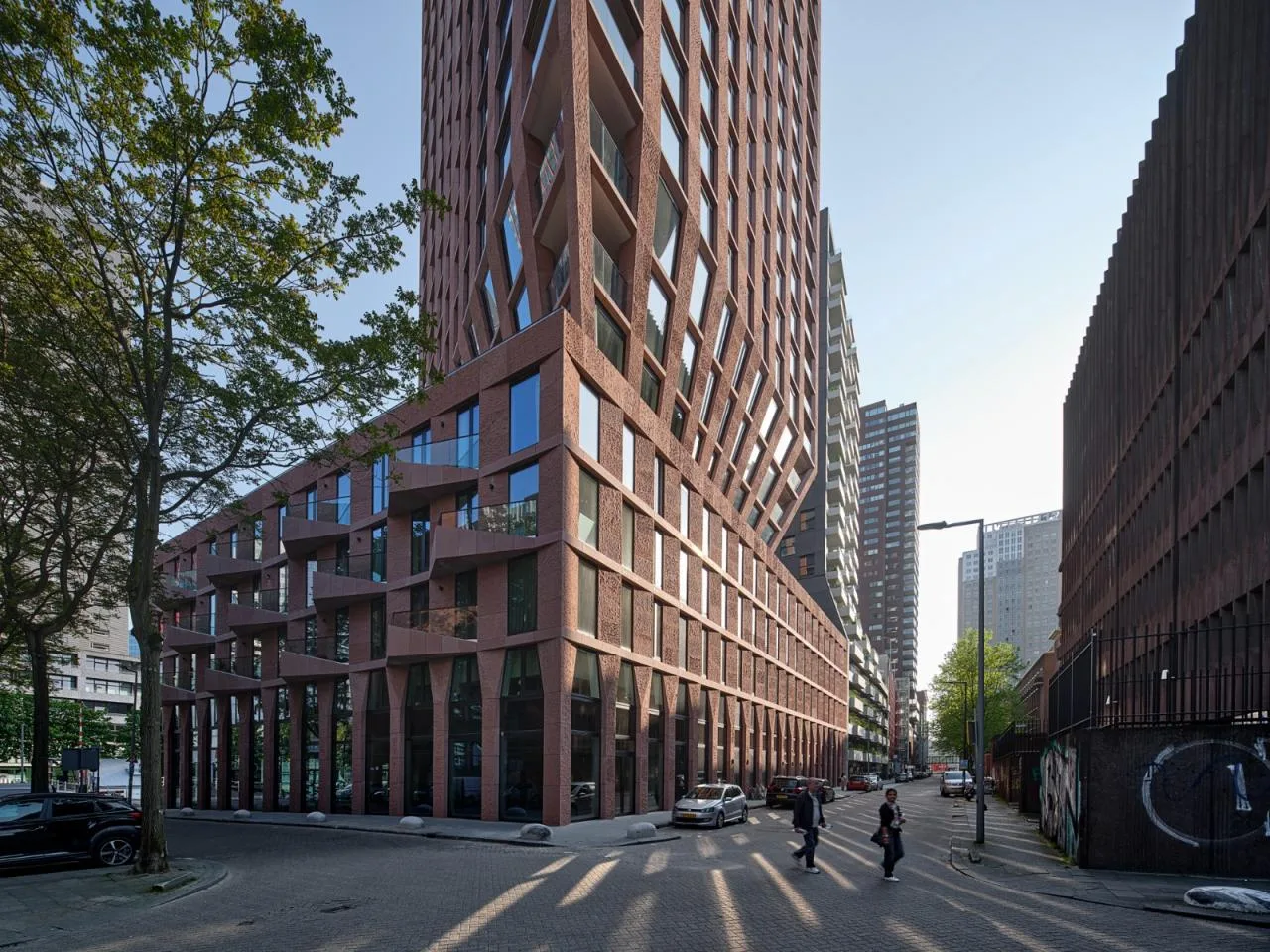
The concept of carving towers is also reflected in the exterior facade design. Hand-cut reddish-brown natural stone slabs give the tower an artistic warmth. As light changes throughout the day, the strong relief on the stone continuously transforms the building’s appearance.
At the tower’s top, the slate becomes wider and smoother, polished into a flat surface, marking a subtle shift in the exterior design.
The challenges of isolation and lack of interaction in skyscraper living have sparked widespread discussion about who inhabits these buildings and how community can be fostered. To address this, the design emphasizes shared public and meeting spaces beyond the atrium or elevator lobbies.
Both towers share a common base intended to provide a comfortable urban living experience. Together, 200 households enjoy the expansive 1,600 square meter rooftop terrace, which offers a collective garden, kitchen, hotel rooms for visiting guests, co-working spaces, meeting rooms, fitness areas, and parcel service facilities.
Chance Encounter
A strong sense of community, security, and social cohesion within the towers arises from casual conversations and informal interactions. A key design feature is a pathway connecting the parking lot to the residential area. For many residents, the parking lot serves as their daily entry point.
Walking through CasaNova from the parking lot, residents pass through an inviting atrium offering views of the rooftop terrace and opportunities to meet neighbors before accessing the elevators.
CasaNova and Muse together represent a model of the internet city—an urban environment where architecture and community are intricately connected in three dimensions rather than just two.
Project Drawings
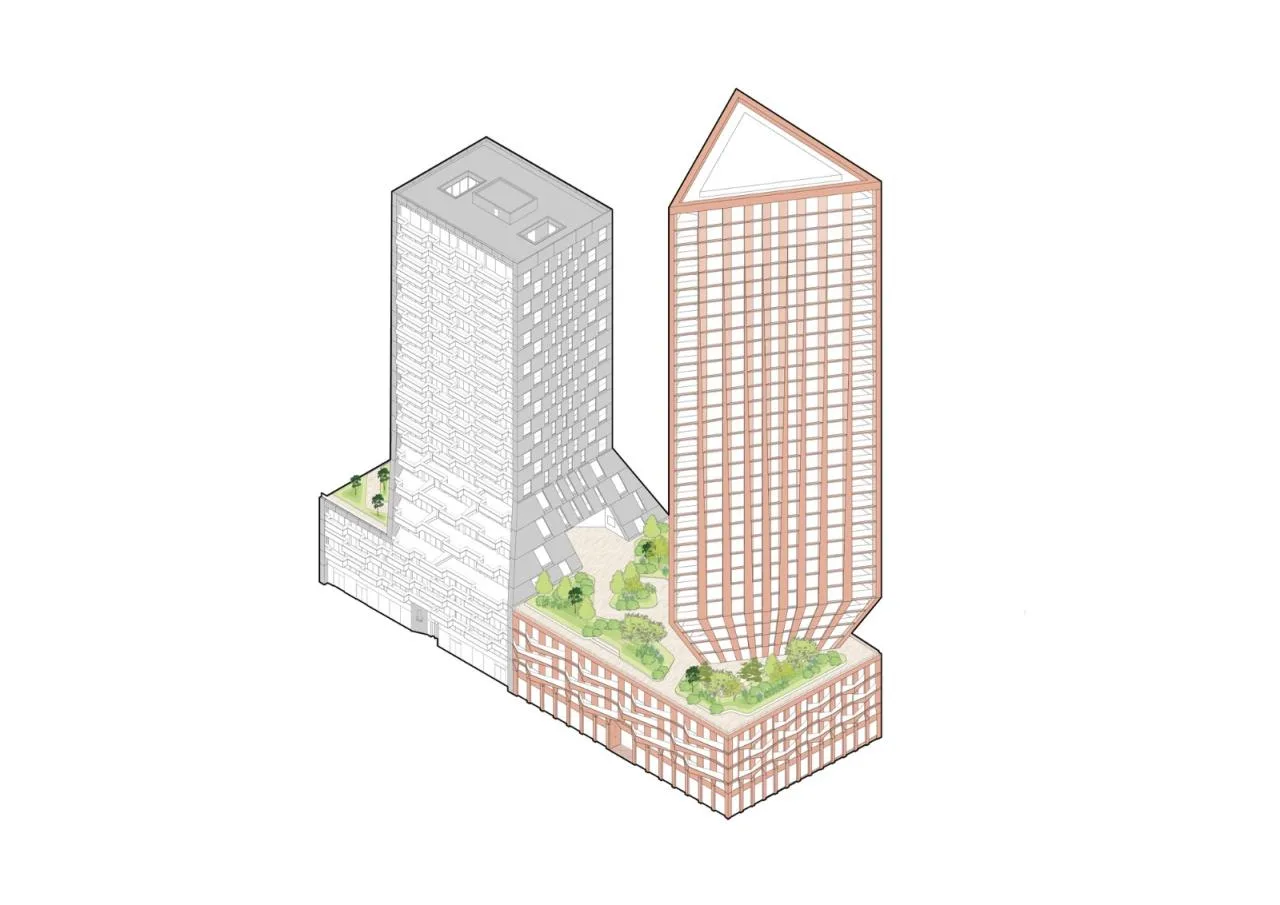
△ Axonometric Diagram
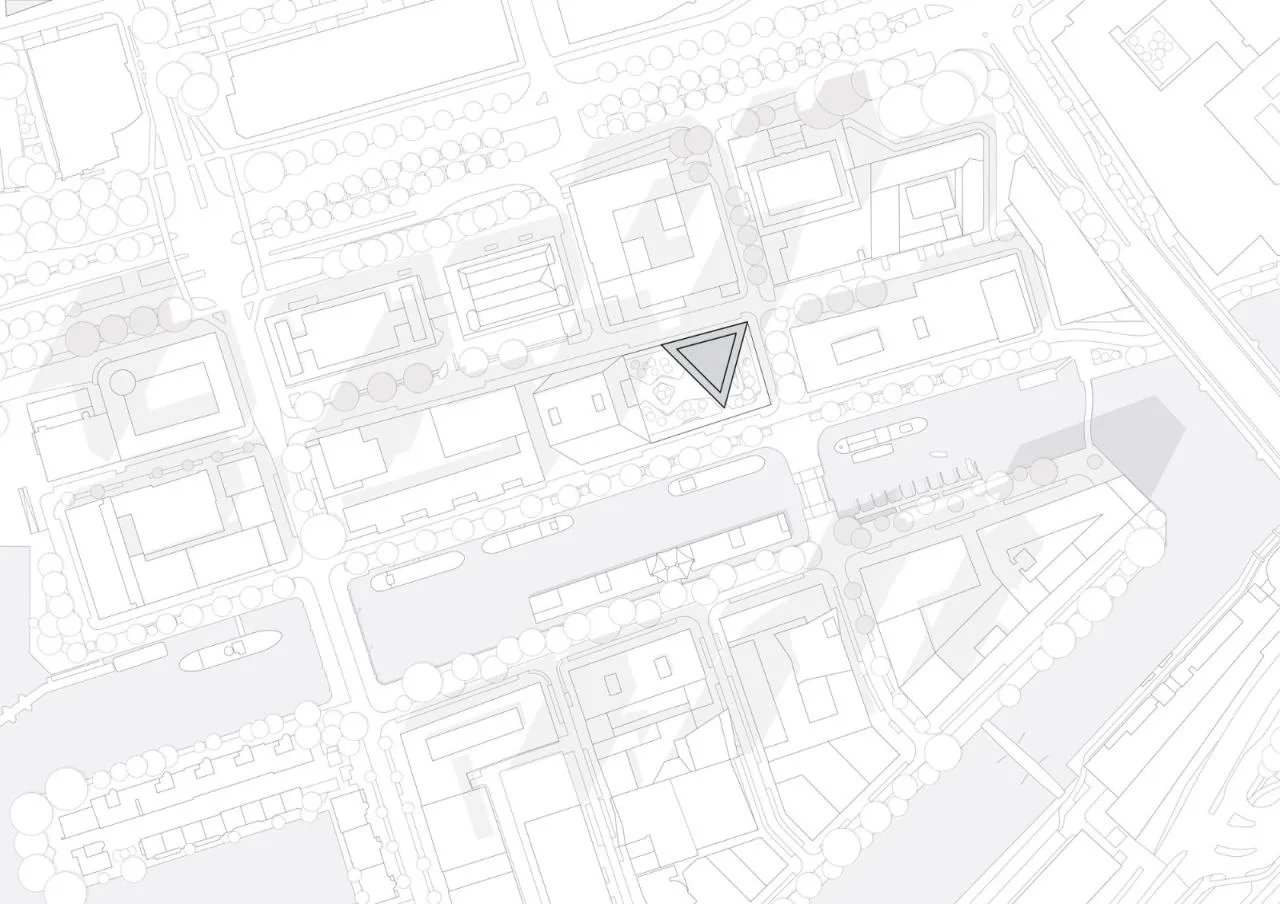
△ Base Schematic Diagram
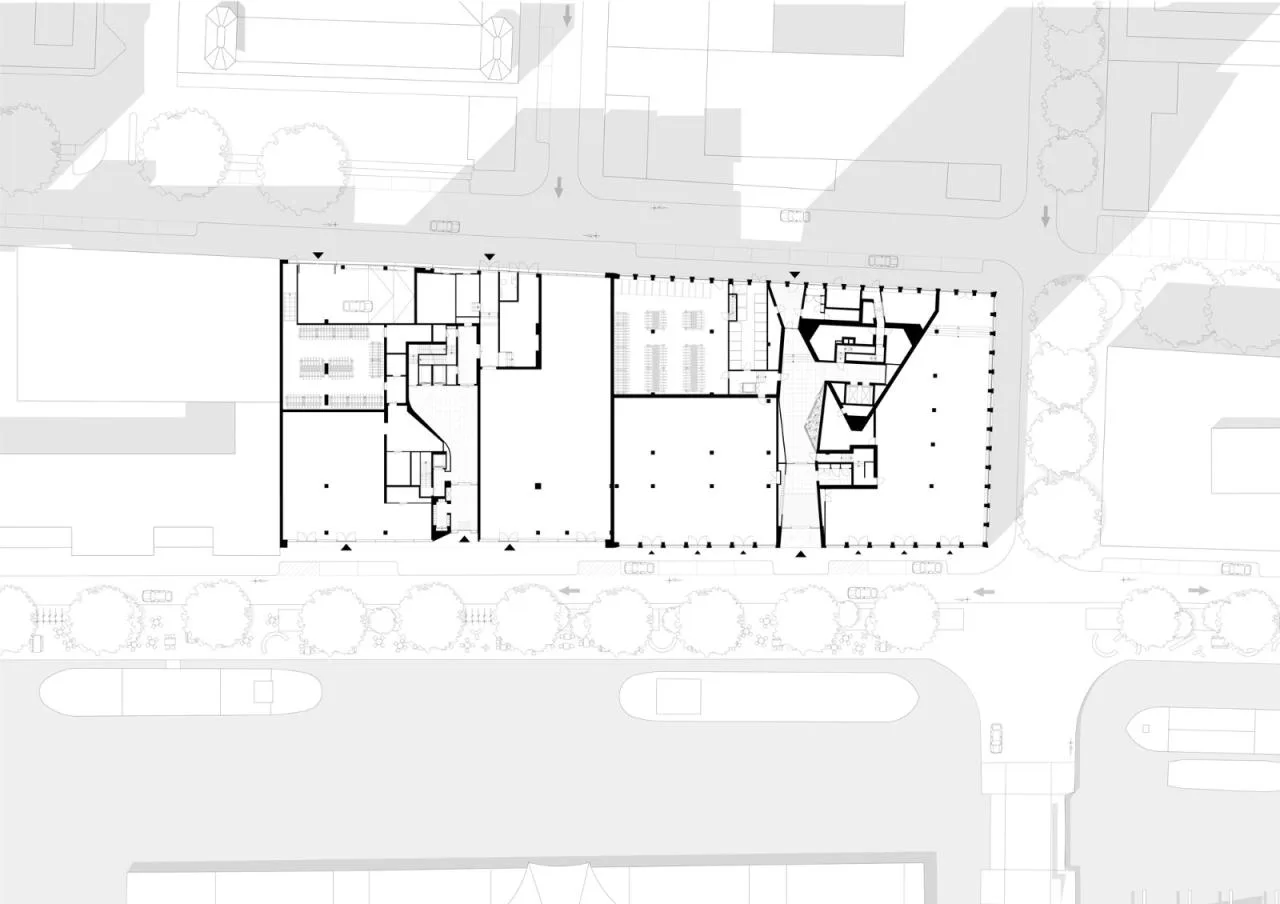
△ First Floor Plan
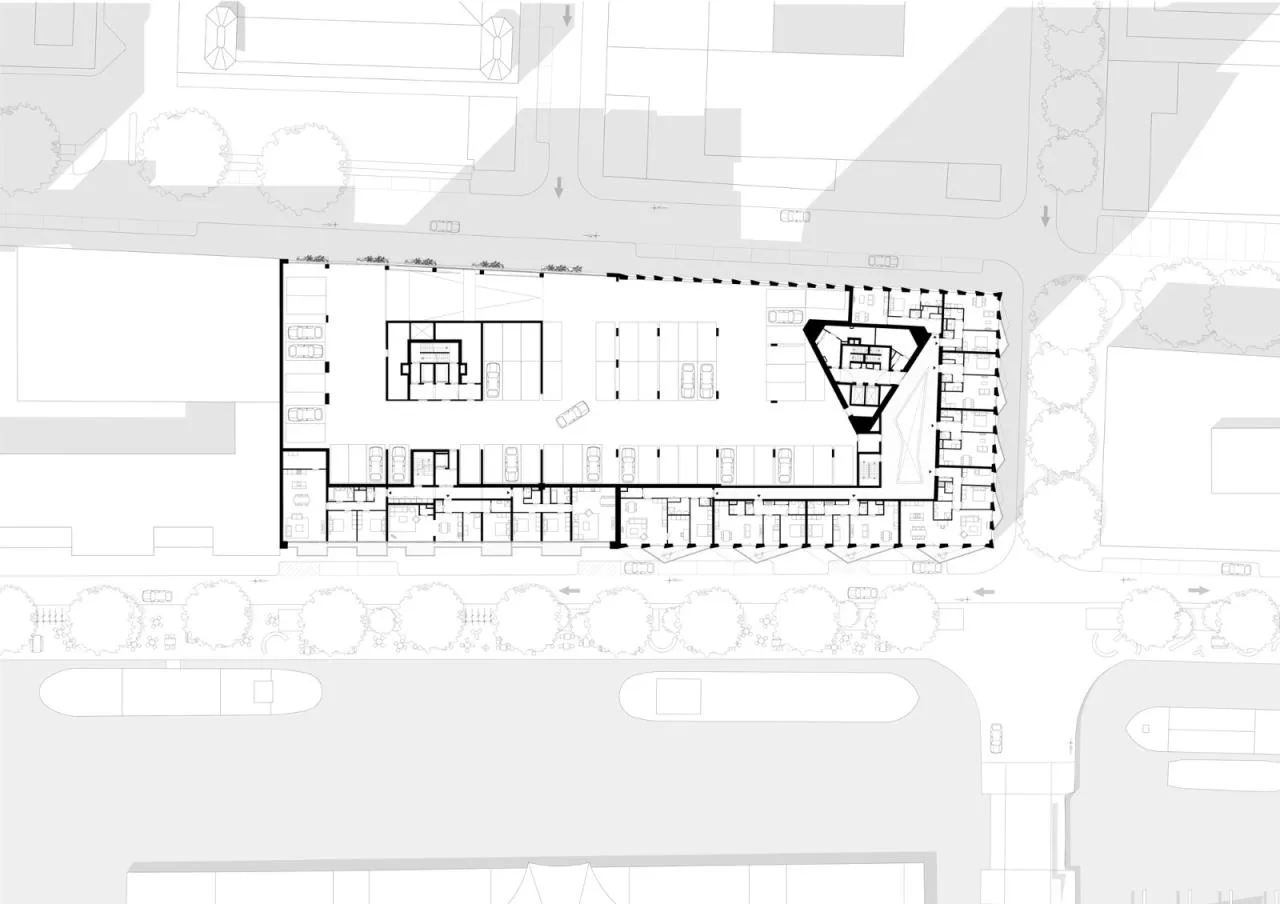
△ Second Floor Plan
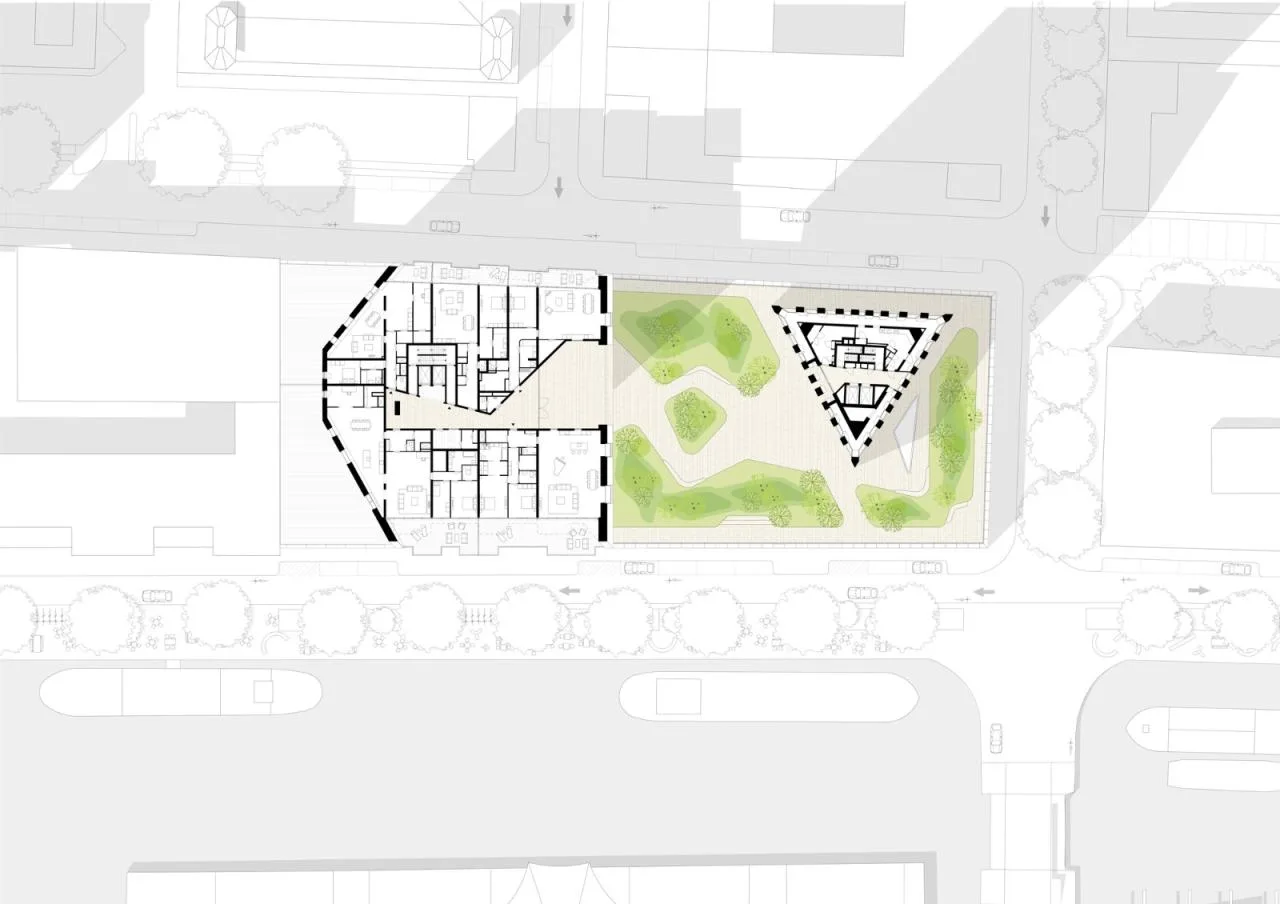
△ Sixth Floor Plan
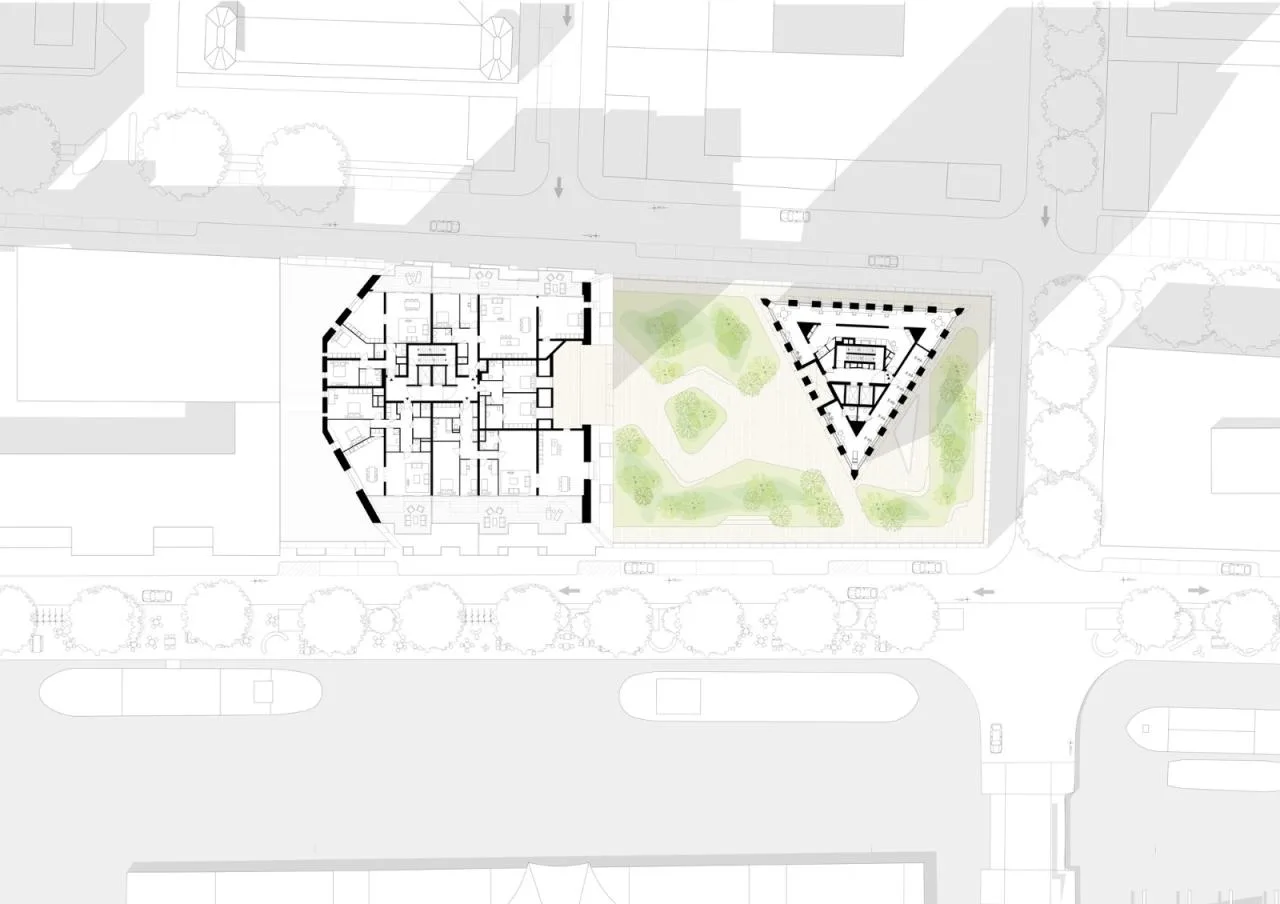
△ Seventh Floor Plan
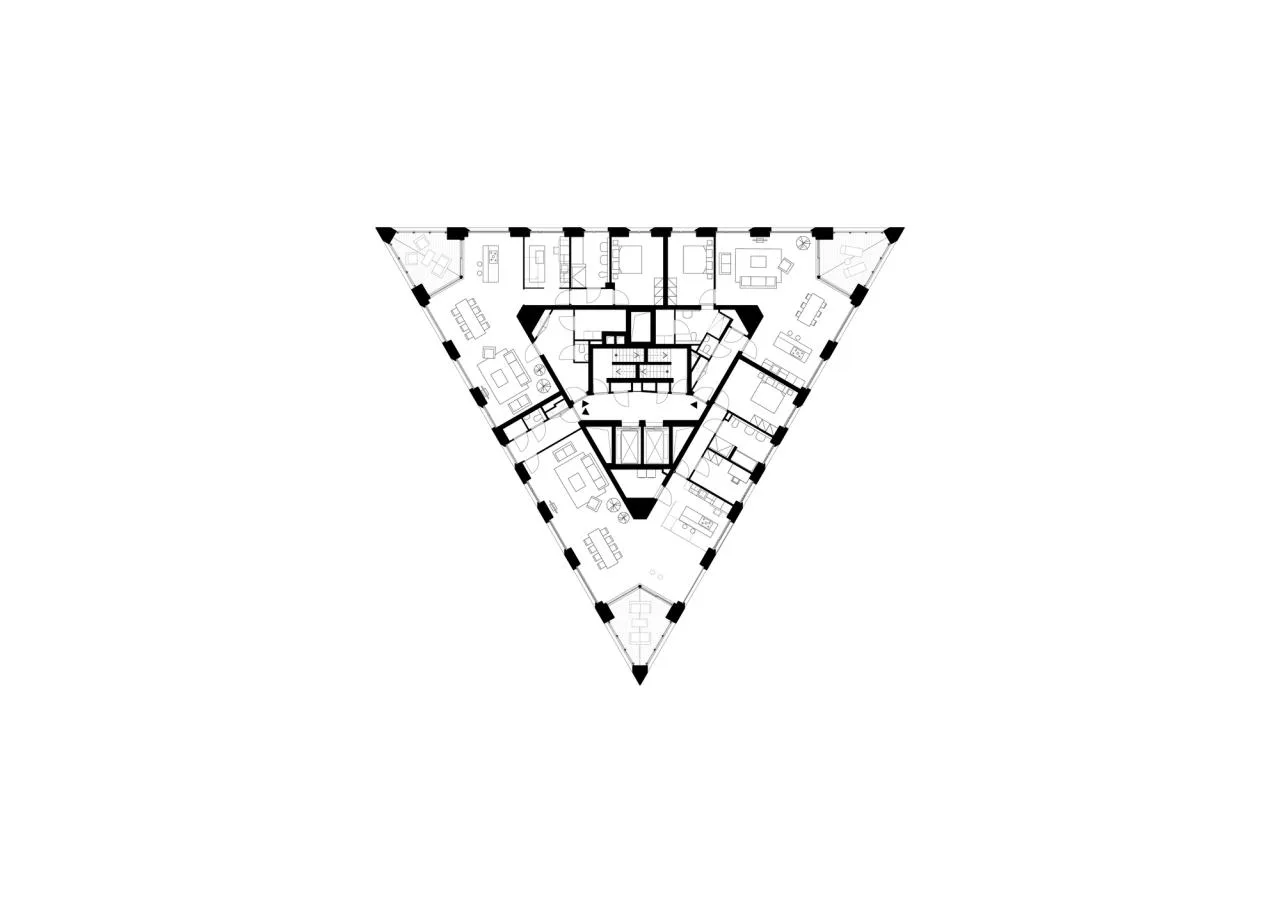
△ Fifteenth Floor Plan
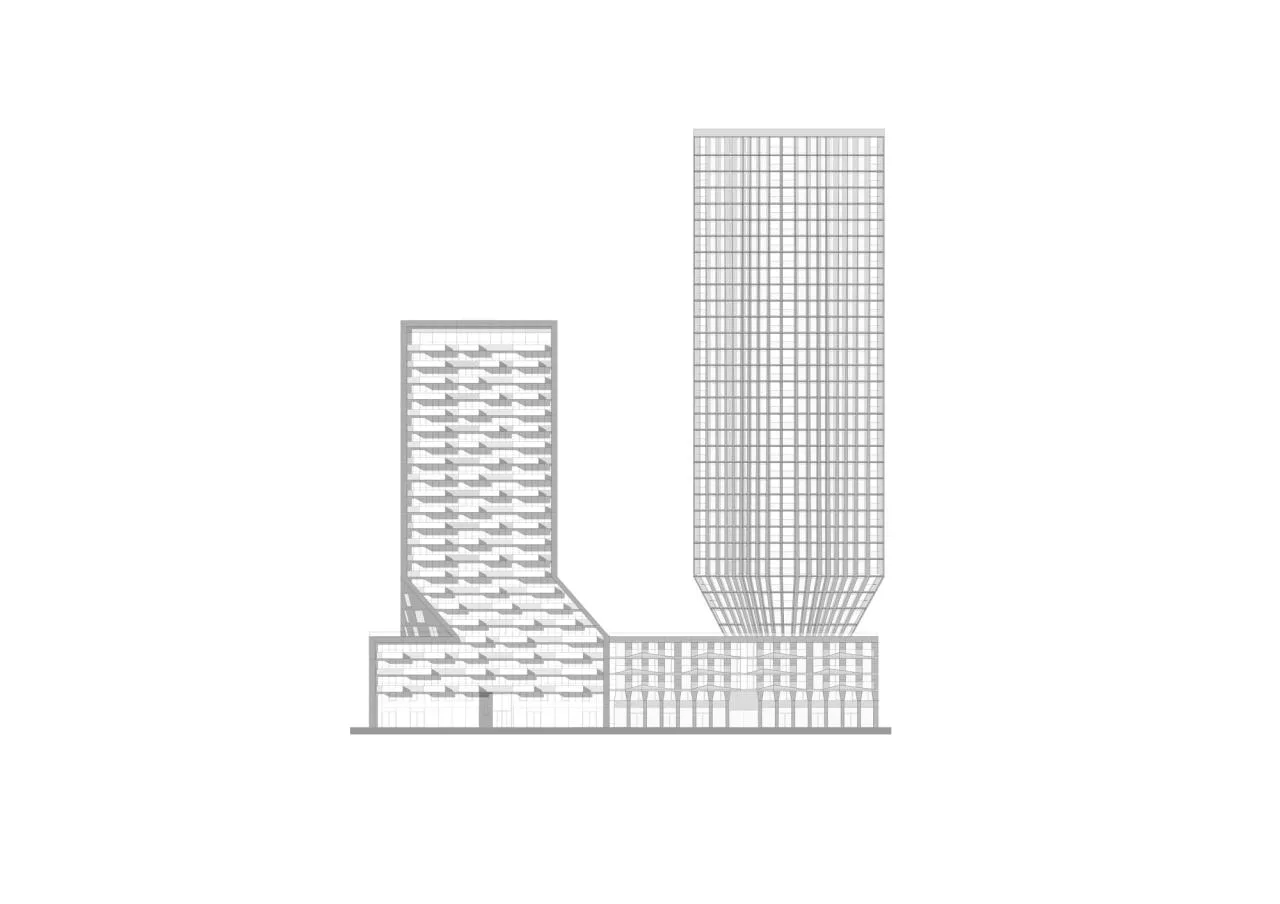
△ Elevation Drawing
Project Information
Architect: Barcode Architects
Area: 22,000 m²
Project Year: 2023
Photographer: Hans Wilschut
Lead Architects: Dirk Peters, Caro van de Venne
Designers: Barcode Architects, Dirk Peters, and Caro van de Venne
Functions: 116 apartments, commercial spaces, collective rooftop garden, shared parking facilities, co-working spaces, hotel rooms for residents’ guests, fitness room
Owners: VOF Wijnhaven 65 & Wilma Wonen
Project Start Year: 2017
Cost Management: VGG
Contractor: SBB Development and Construction
Structural Engineer: Pieters Bouwtechniek
Architectural Physics: Abt
Location: Rotterdam, Netherlands












Must log in before commenting!
Sign Up