
This project is situated in the hometown of the Book Saint in Shaoxing City. It encompasses the renovation and upgrade of the original Cai Yuanpei Square, the refurbishment of the Zimin Cinema, and the construction of the Zimin Library.
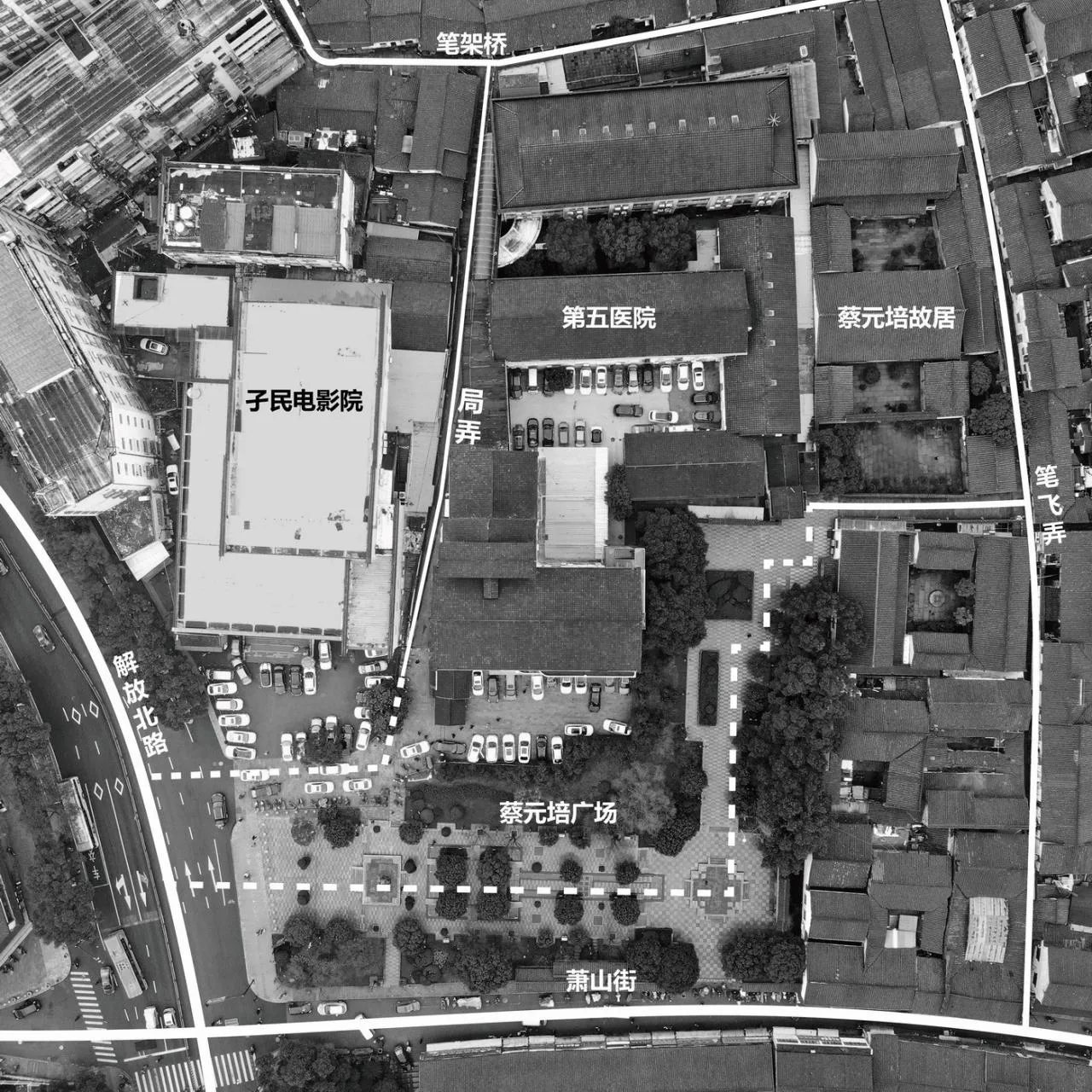
Analysis of surrounding cultural heritage nodes prior to the project’s commencement in 2018.
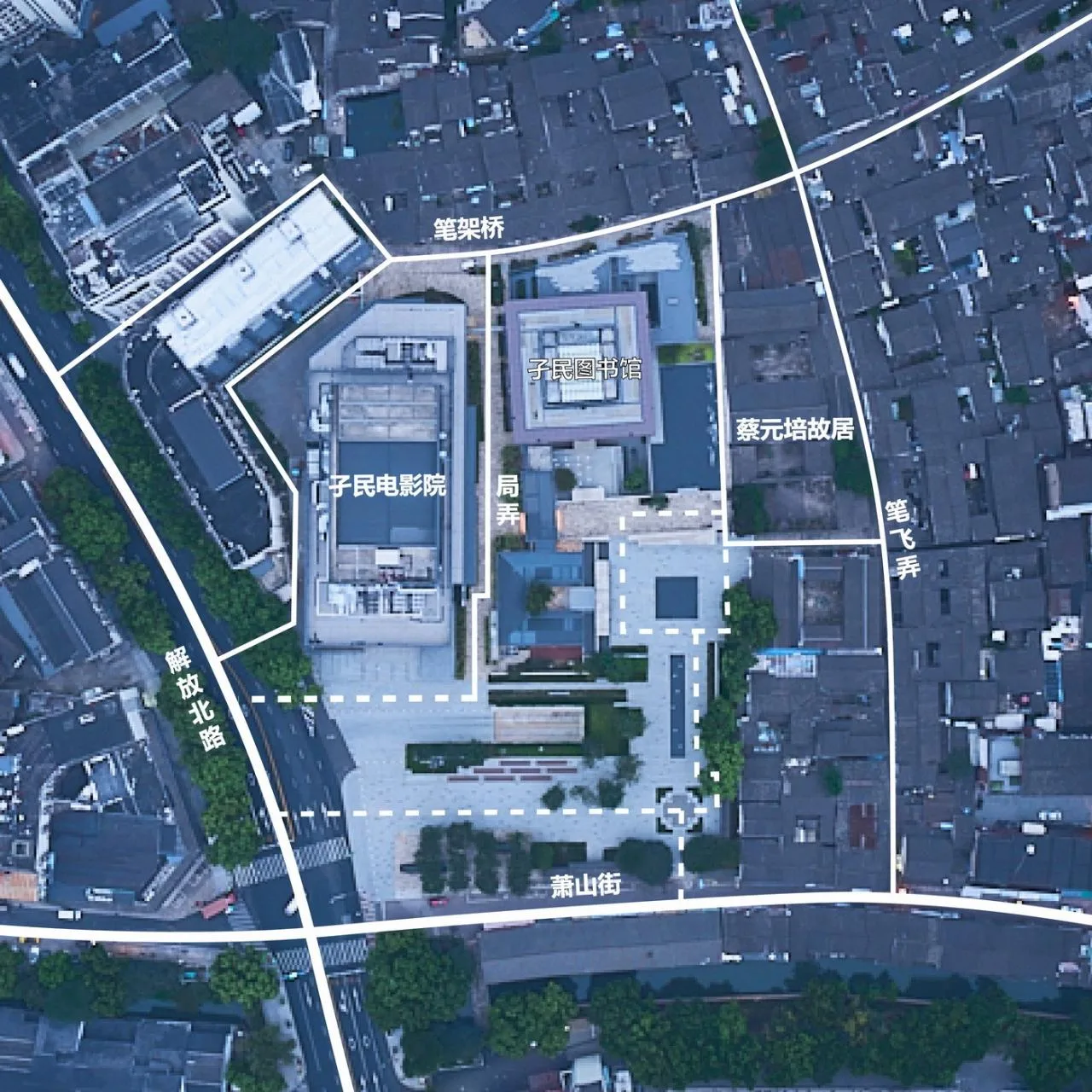
Analysis of surrounding roads and building nodes after the project’s completion in 2023.
The hometown of the Book Saint exemplifies the cultural context and style characteristic of an ancient city. Over time, it has developed a rich urban texture and architectural form, marked by both harmonious connections and fragmented elements. This project thoughtfully addresses key sites within the construction area—including the Juemin Cinema, Ju Nong, Shaoxing Fifth Hospital, and Cai Yuanpei Square—as well as adjacent landmarks like Cai Yuanpei’s Former Residence and Liberation Road. These locations form a chain of tangible present and past that, while gradually intertwined, continue to exist objectively.
Through the renewal and renovation of vital urban nodes, the goal is to integrate historical figures and events spread across different spaces with architectural elements from various eras. By doing so, the project aims to harmonize these with the new library’s functions, creating a space that serves the community. Additionally, in collaboration with the nationally protected cultural heritage site of Cai Yuanpei’s Former Residence, this initiative seeks to establish multiple symbiotic and accessible public cultural venues within the ancient city.
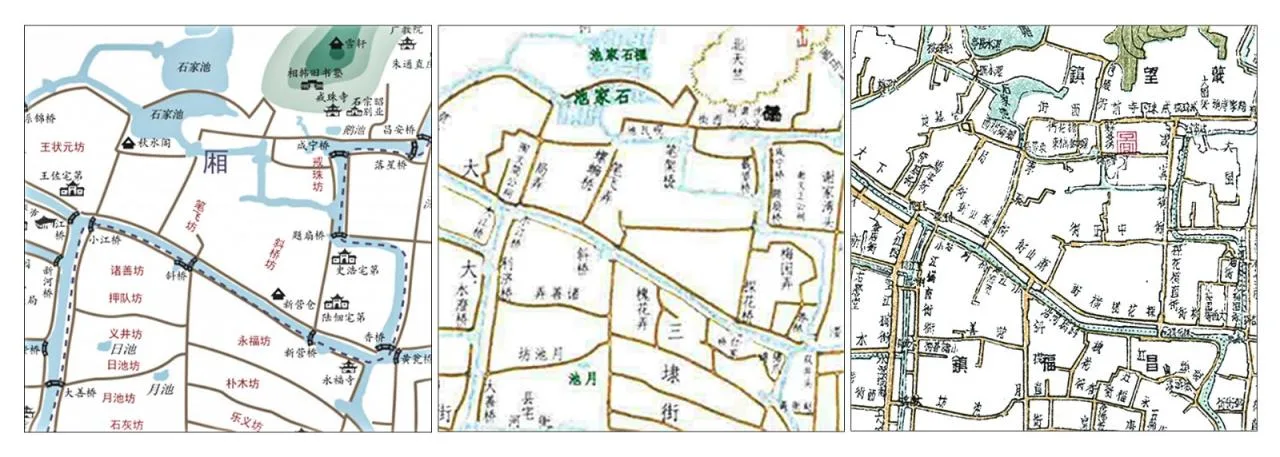
△ Historical maps of Shaoxing: from left to right—hometown of the Book Saint during the Southern Song Dynasty, the Guangxu period, and in 1939 during the Republic of China era.
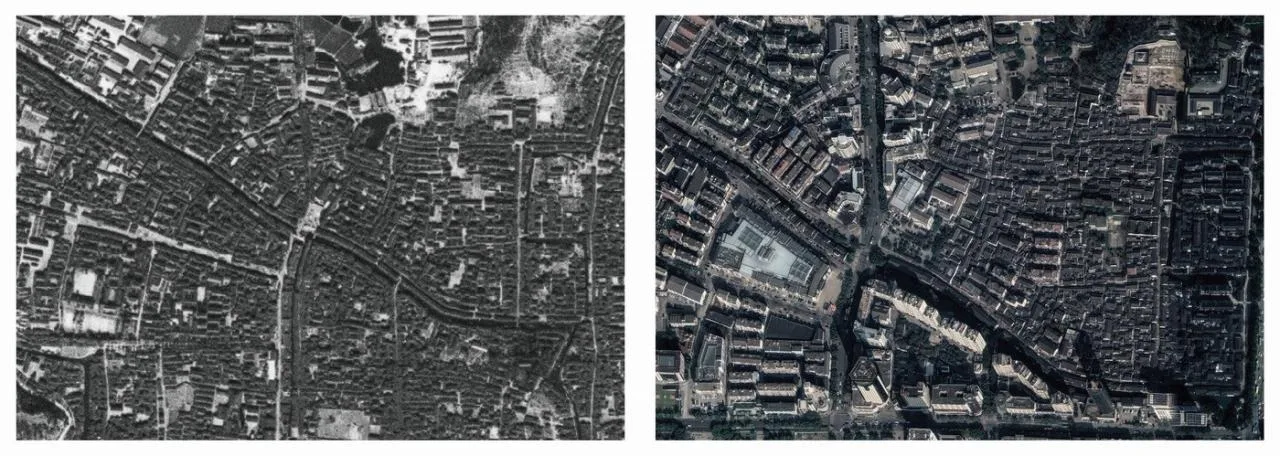
△ Satellite imagery of the hometown of the Book Saint: 1968 and 2018, from left to right.
The project designs a new urban public cultural venue by renovating Cai Yuanpei Square, Yemin Cinema, and replacing the demolished Fifth Hospital with new construction. Its purpose is to promote the ideological spirit of Cai Yuanpei, preserve and enhance the historical block’s urban context and style, and fulfill the original vision that buildings should not only serve “pure aesthetic education to cultivate people’s emotions” but also possess contemporary vitality, integrating and accommodating their surroundings and diverse social functions.
This initiative embodies the architect’s commitment to creating a meaningful sense of place, merging modern expression with historical continuity and coexistence. These guiding principles shape the project’s regeneration goals.
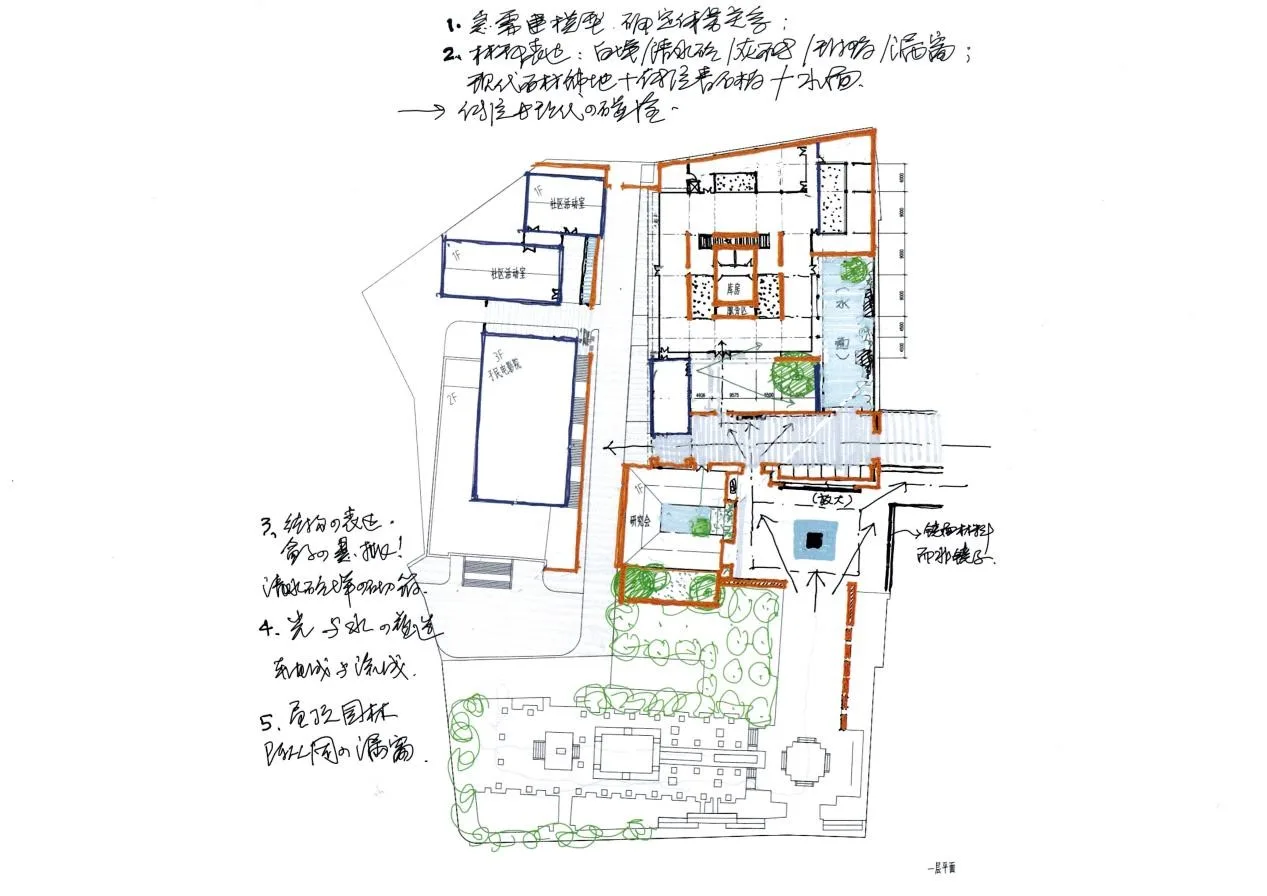
Design sketch from July 2019 © UAD ACRC
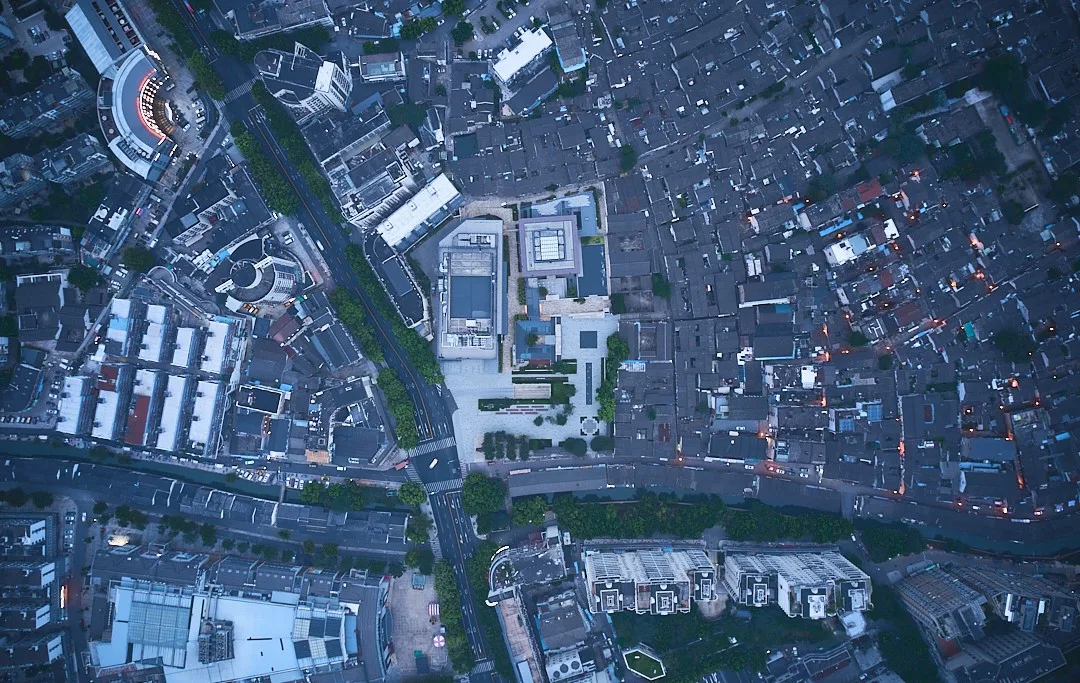
Aerial view of the project post-construction in 2023 © Zhao Qiang
The design preserves the commemorative and civic gathering functions of the original Cai Yuanpei Square, maintaining its characteristic “L”-shaped layout and the wooden corridor on the square’s southern side. To enhance the square’s openness, the bronze statue of Mr. Cai Yuanpei was repositioned and integrated within the renovation, preserving familiar scenes of citizens conversing and resting within the square and under the corridor.
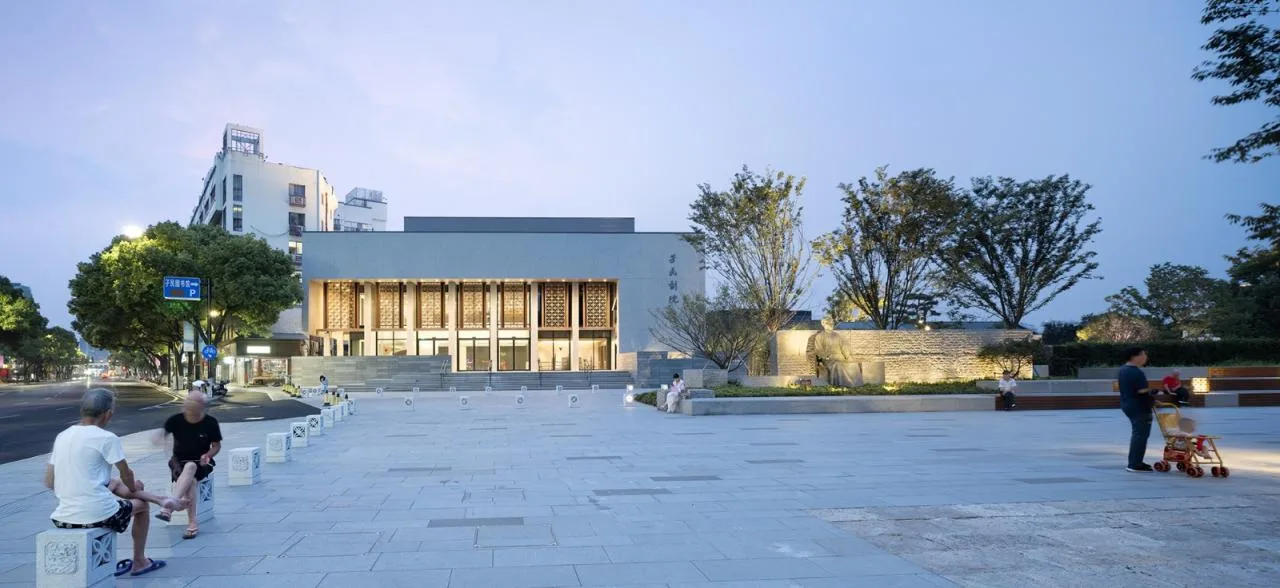
△ Entrance to Cai Yuanpei Square after renovation © Zhao Qiang
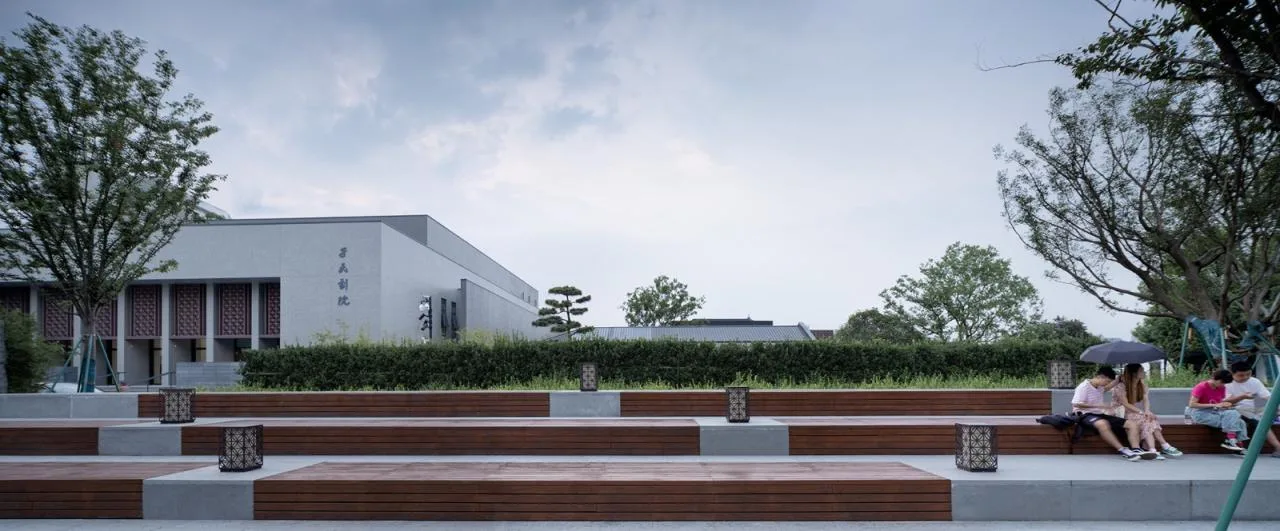
△ Steps at Cai Yuanpei Square designed for community activities after renovation © Zhao Qiang
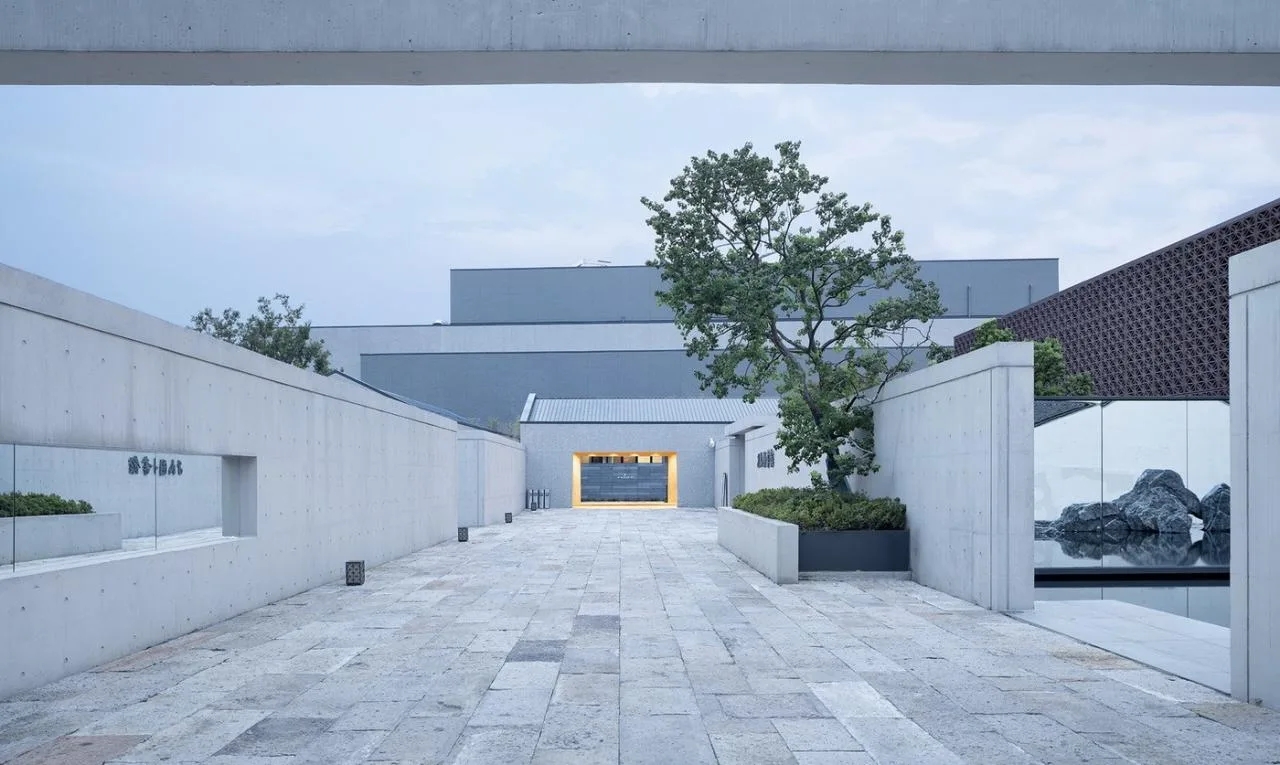
The project’s core involved demolishing the previously discordant Fifth Hospital to build a new public library. The design preserved a historic lane connecting the northern lane to the southern square, ensuring continuity of the ancient urban fabric. It also establishes a lateral connection between the library’s southern side and Cai Yuanpei’s former residence, precisely situating the Zhimin Library while positioning it adjacent to the former residence on the east and the Zhimin Cinema on the west.
These pathways are intentionally paved with old stone slabs, symbolizing the extension of the ancient city’s texture and authenticity of the hometown’s fabric.
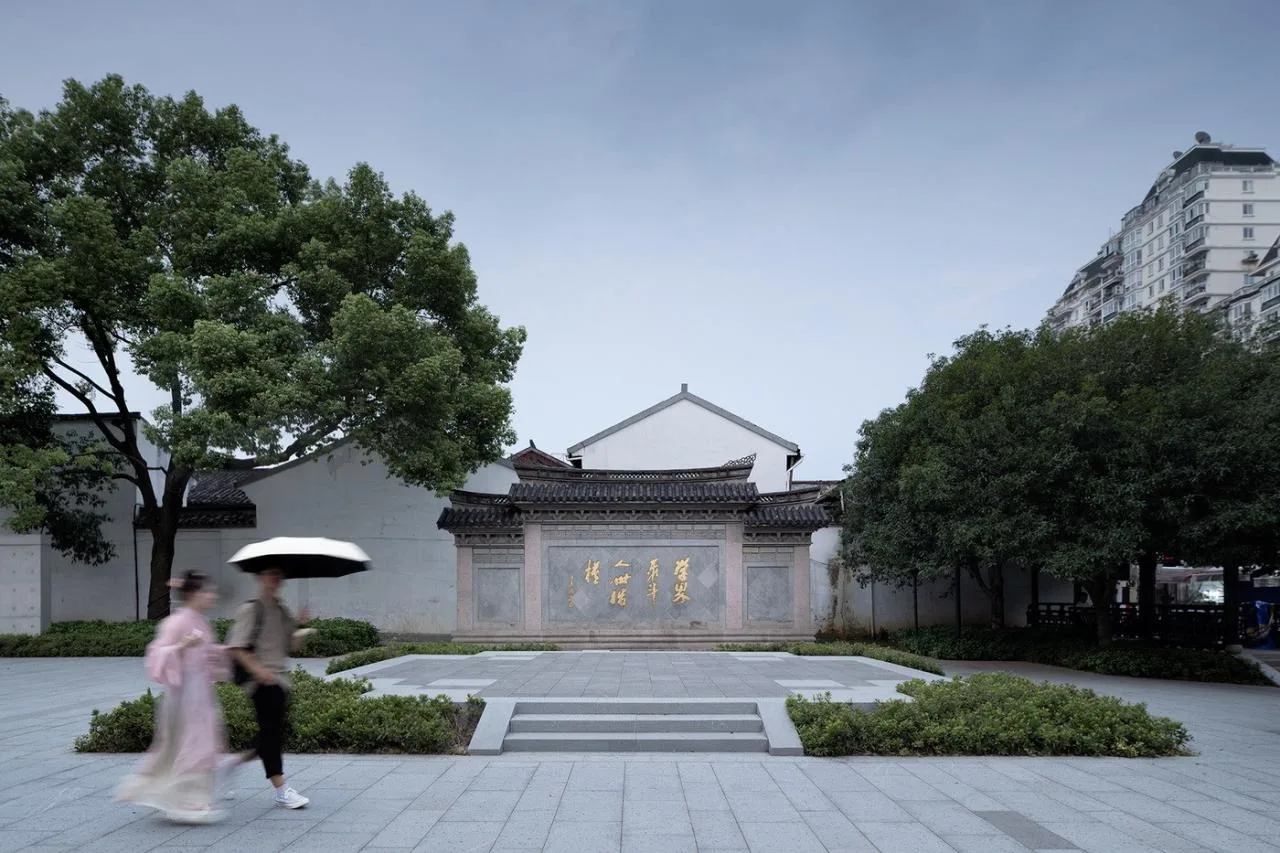
△ Preserved wall honoring “academic giants and role models worldwide” © Zhao Qiang
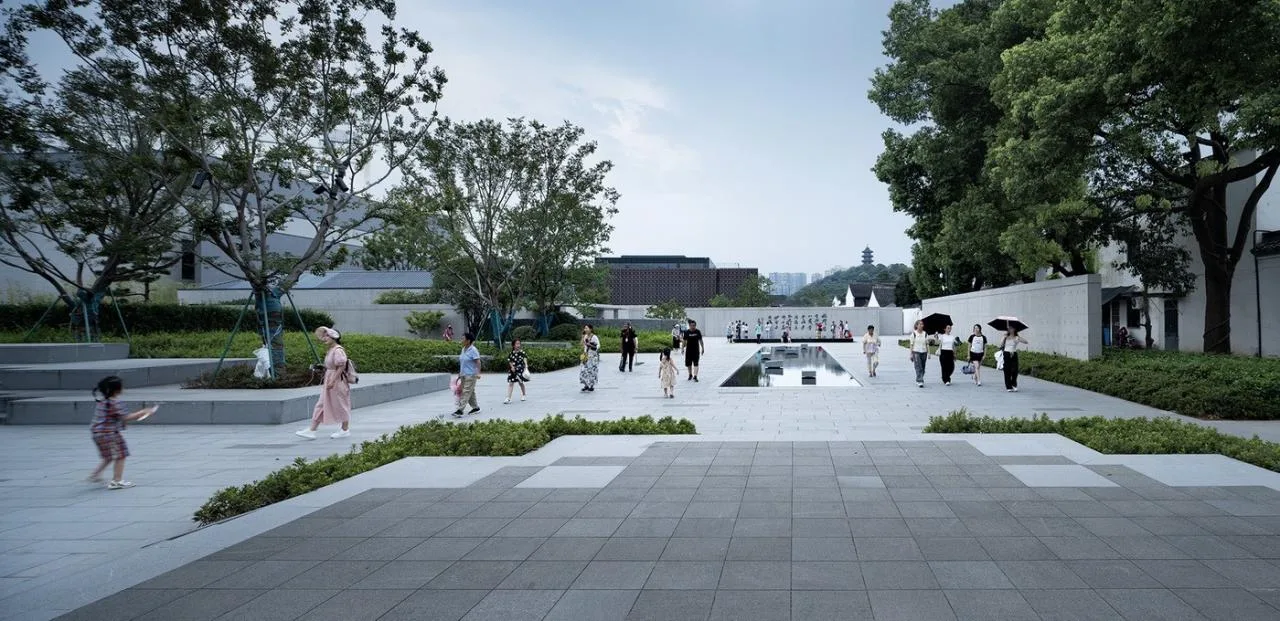
△ The first north-south axis © Zhao Qiang
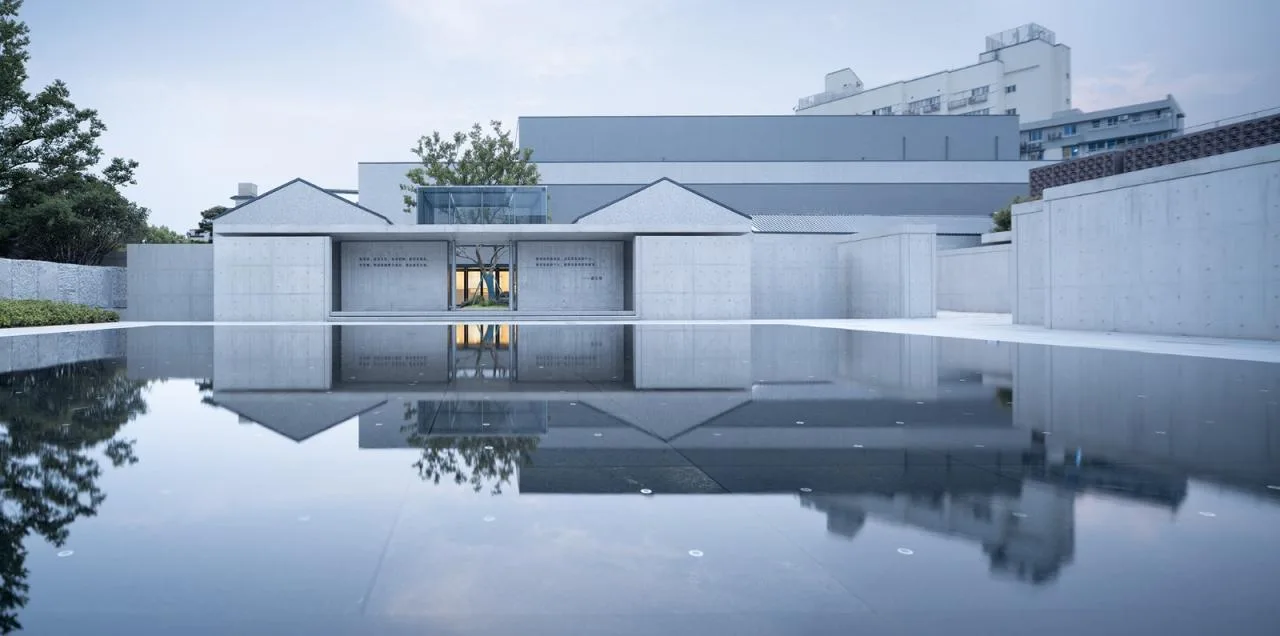
△ Main entrance of the tourist center © Zhao Qiang
The renovated Jimin Cinema has been renamed the “Jimin Theater,” reflecting the historical construction of the “Xinmin Theater” in the early 1950s. The renovation preserved the original architectural space and structural framework, upgraded the interior functions, and refreshed the exterior facade. This allows the theater to continue hosting performances and screenings, preserving both its history and the nostalgic memories of the local community.
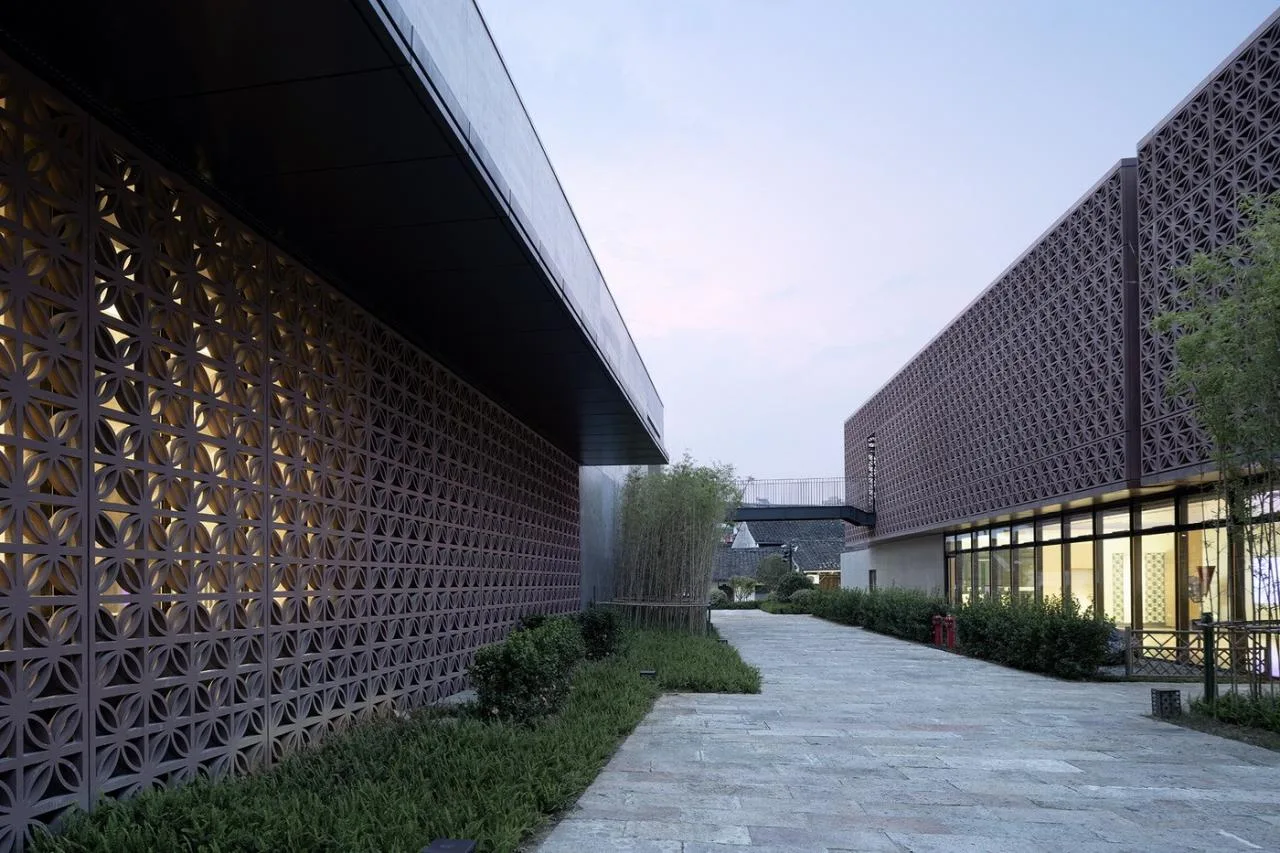
Preserved lanes © Zhao Qiang
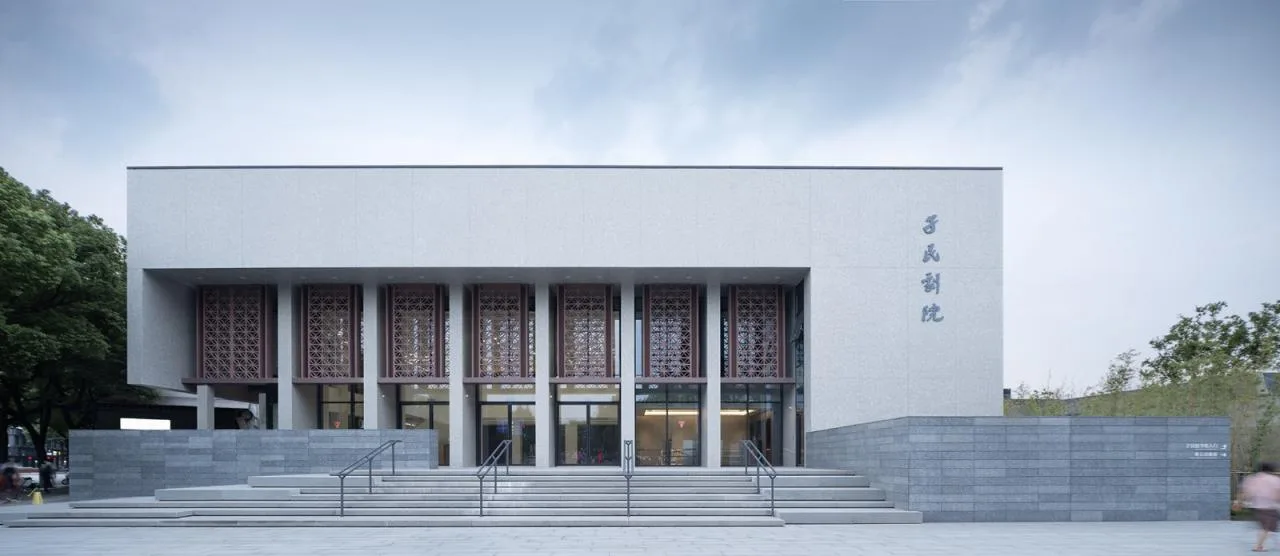
△ Renovated Yimin Theater © Zhao Qiang
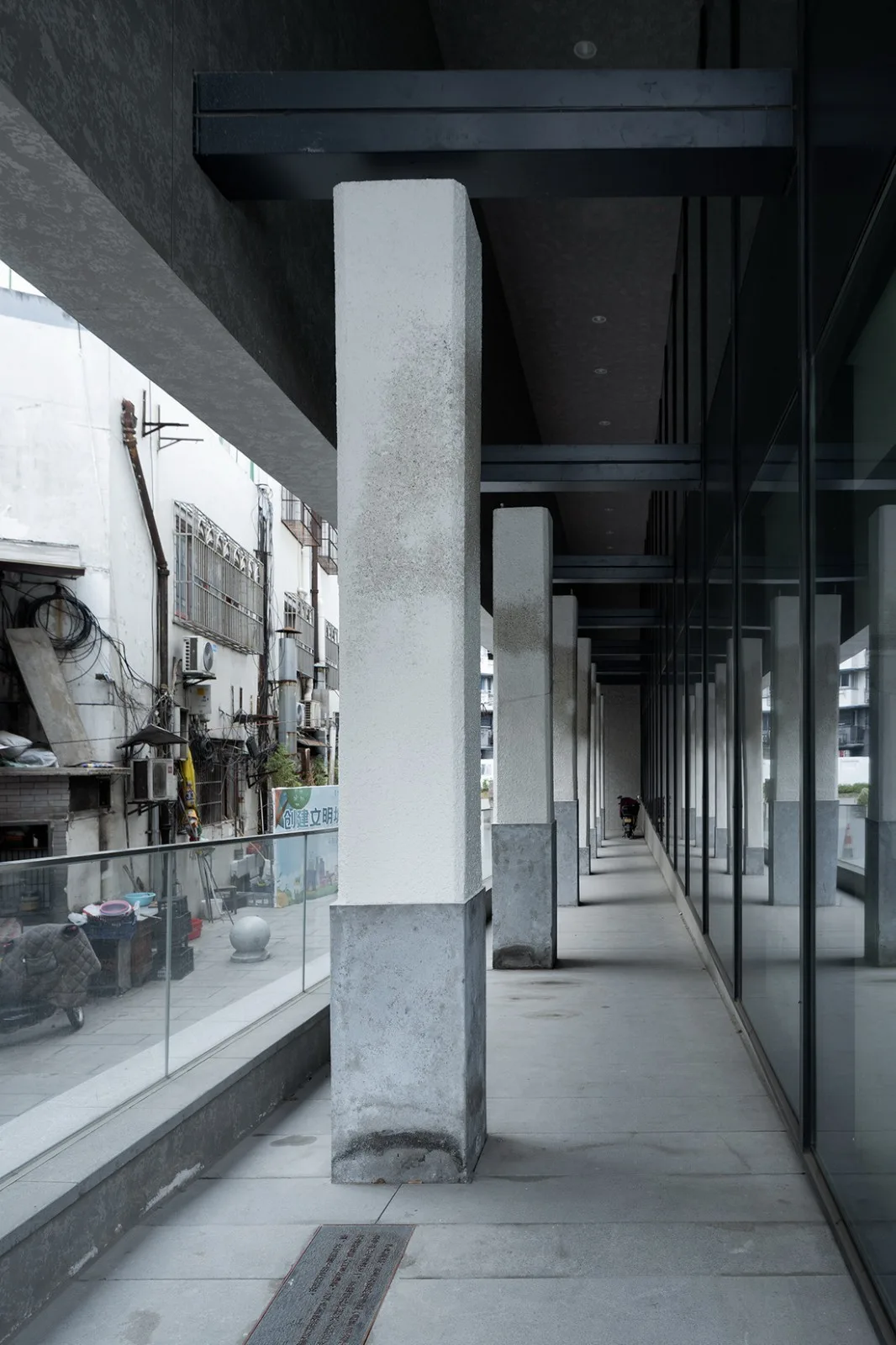
△ Preserved colonnade space of the Jiemin Theater © Zhao Qiang
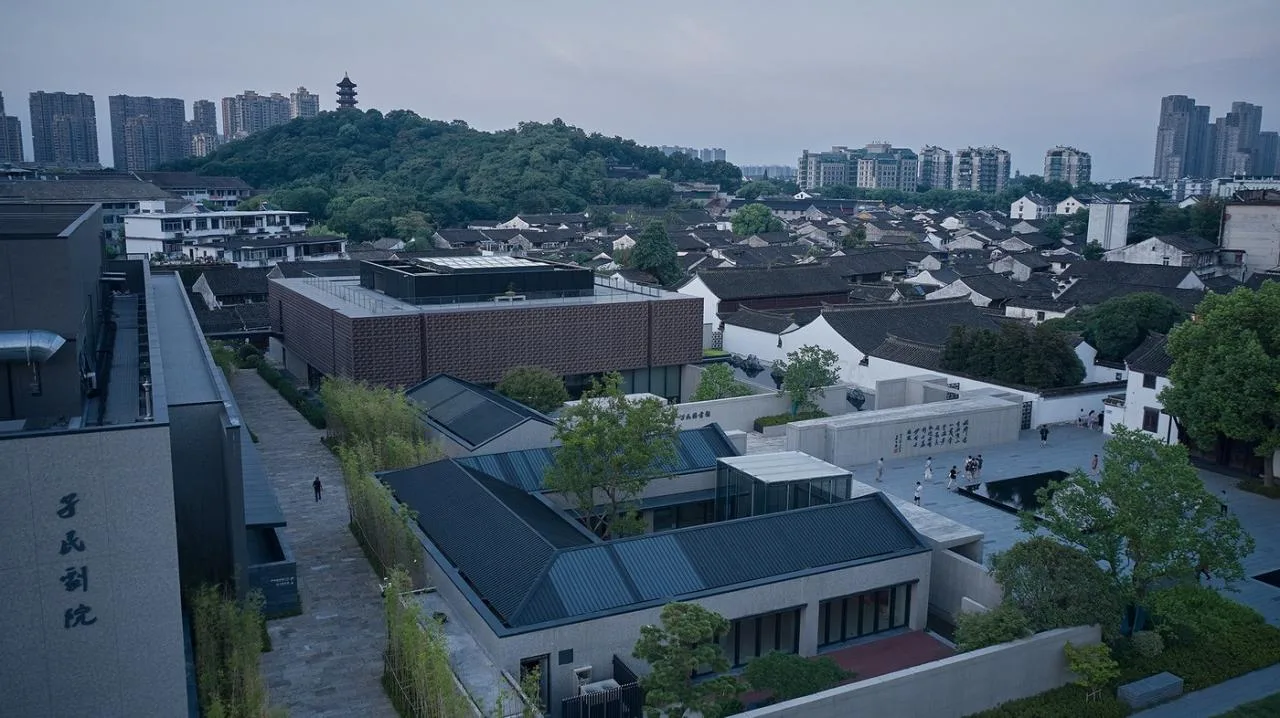
△ Library for the Elderly and Cai Yuanpei’s Former Residence © Zhao Qiang
The newly constructed Zhimin Library, restricted by height limitations, features an underground exhibition showcasing Cai Yuanpei’s life story. Above ground, it includes two library levels and a centrally elevated Yuanpei Lecture Hall, along with a rooftop platform designed for sightseeing and leisure. From this vantage point, visitors can view the statues of the Book Saint and the Da Shan Tower in the distant city square.
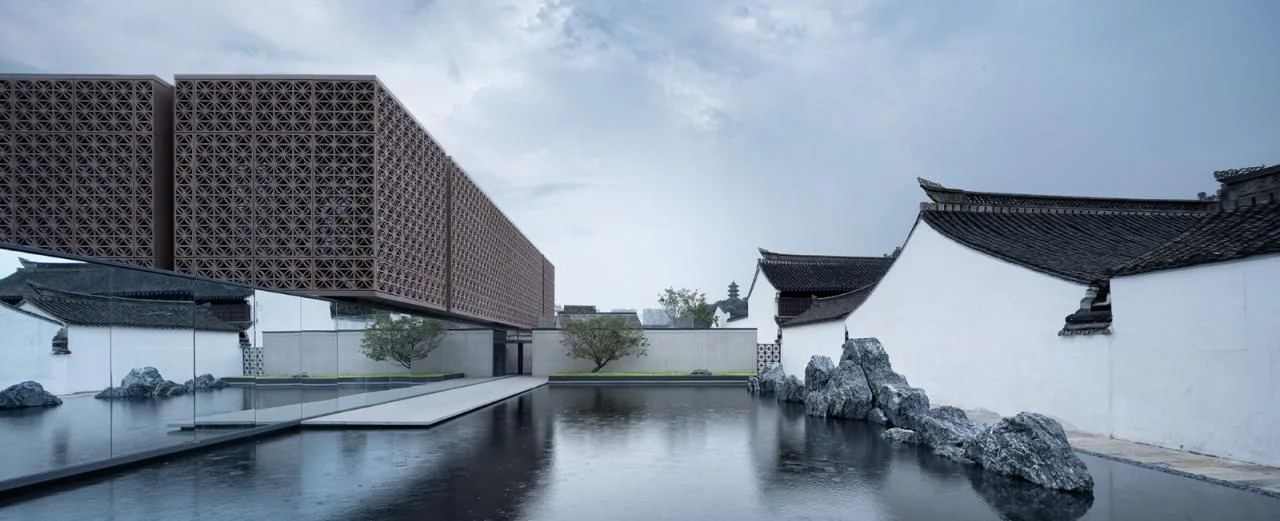
△ Water feature on the west side of the Zhimin Library © Zhao Qiang
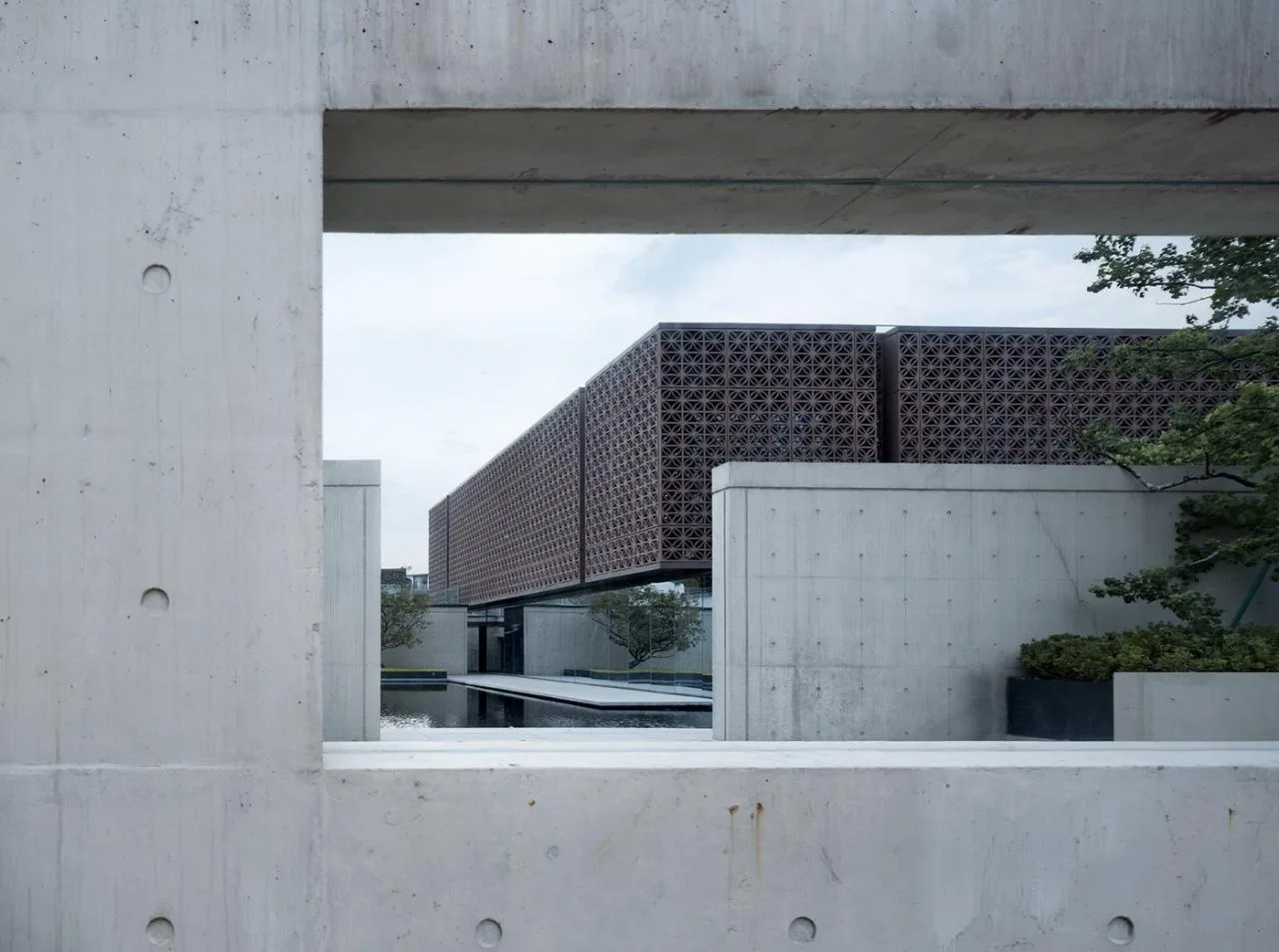
The library’s west side is separated from the Zhimin Theater by a lane, while the east side faces Cai Yuanpei’s former residence across a water courtyard. This water courtyard, Shuiyuan, is flanked on one side by the traditional Ming and Qing dynasty mountain wall outline of the former residence, reflecting the hometown’s classical charm. On the other side stands a modern library structure clad in dark red UHPC panels, inspired by the leaky window patterns of the hometown, echoing traditional wood-red tones.
The interplay between the old and the new, past and present, is vividly expressed through the first floor’s exterior wall, featuring highly reflective one-way mirror glass that enhances this dialogue.
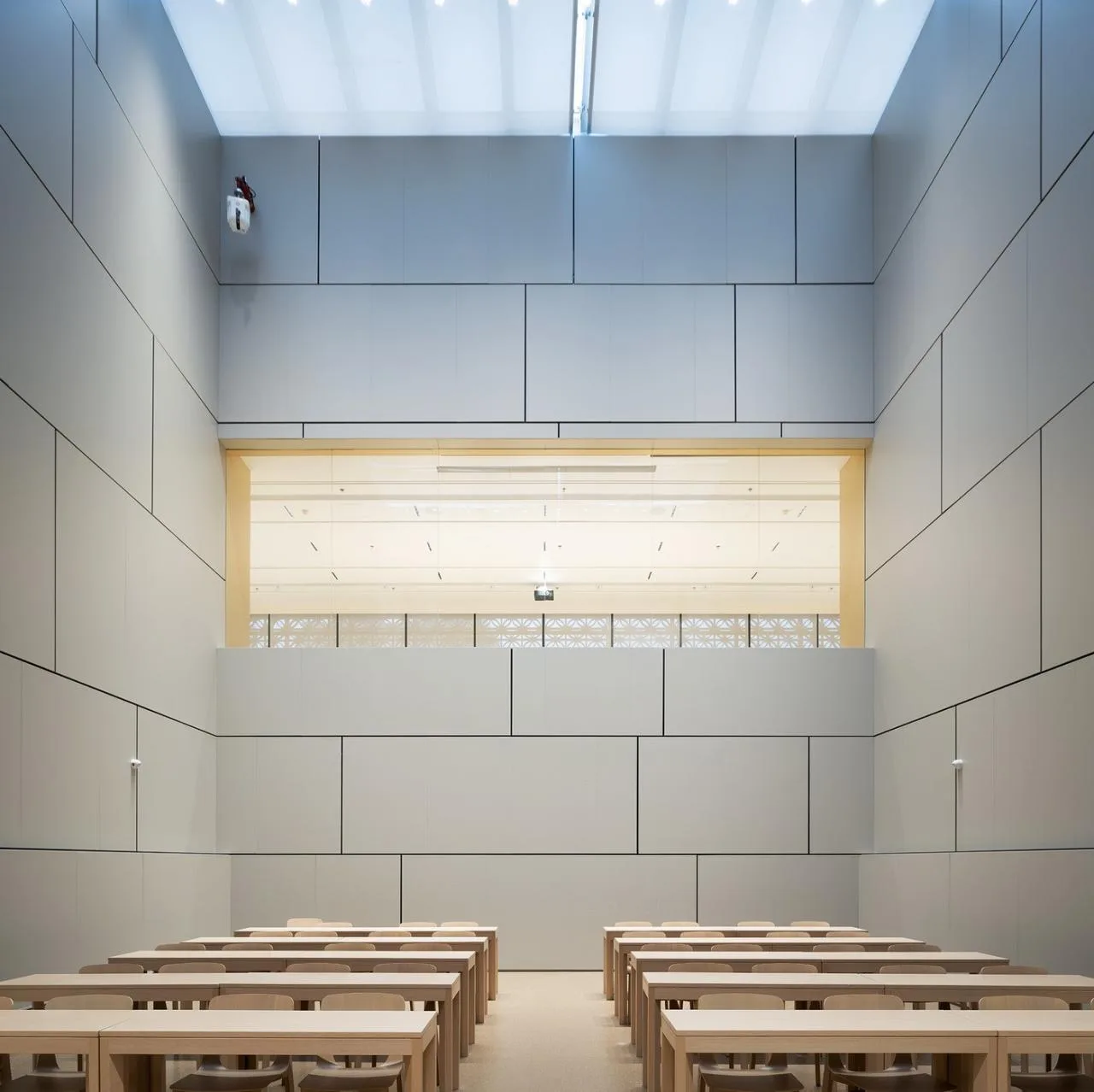
△ Indoor atrium of the Zhimin Library © Zhao Qiang
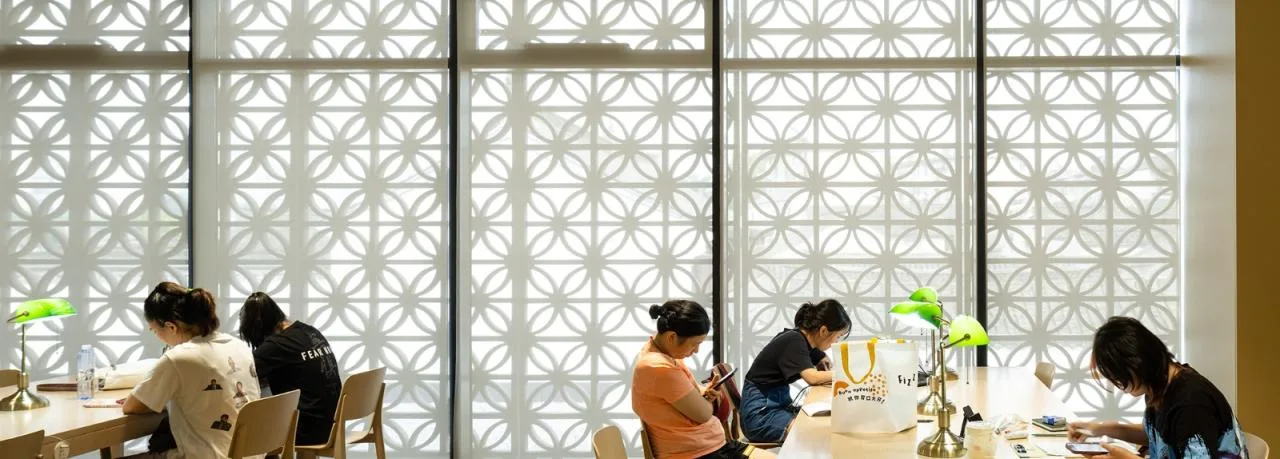
△ Reading area inside the Zhimin Library © Zhao Qiang
On the Shuiyuan’s southern edge, a viewing opening offers distant views of the Millennium Bamboo Hill and Wenbi Tower. A platform at this opening features the modern library box with its dark red leaky window on the left and the traditional mountain wall outline of the former residence on the right. The nearby shallow water surface beautifully reflects the surroundings.
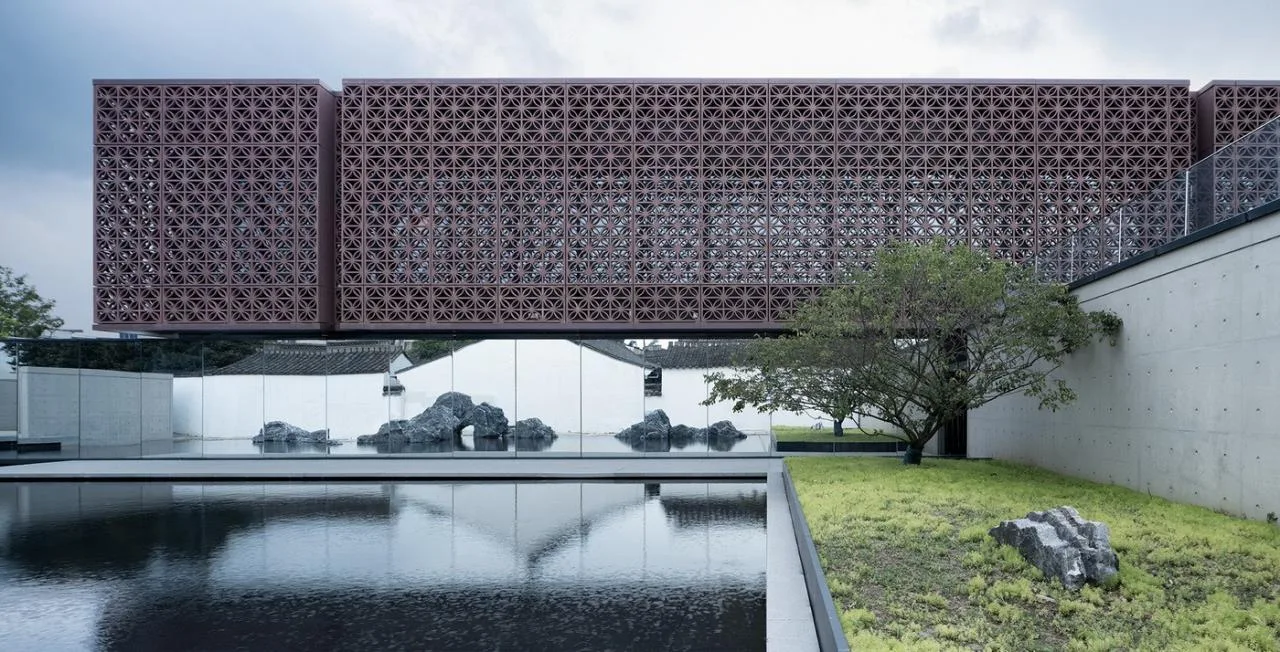
The east facade of Zhimin Library facing Cai Yuanpei’s former residence © Zhao Qiang
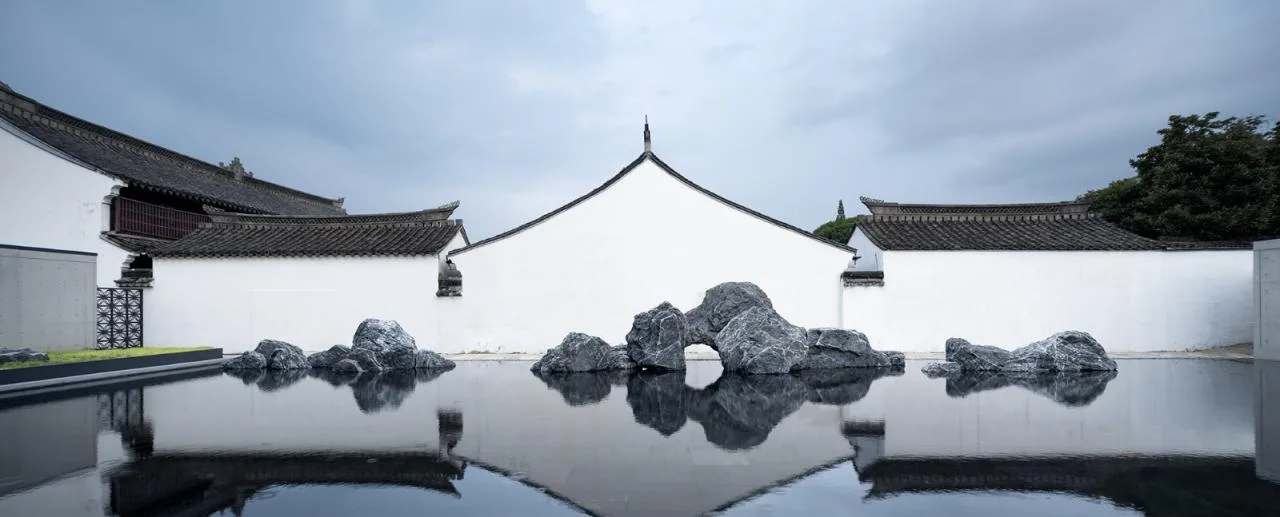
△ West facade of Cai Yuanpei’s former residence © Zhao Qiang
A single wall, a tree, a stone, a mirror—details that blend tradition with modernity, touching the heart and soul. Sometimes what can be expressed doesn’t need words, and what cannot be expressed remains beyond speech—a Zen-like essence that remains indelible.
△ Office space © Zhao Qiang
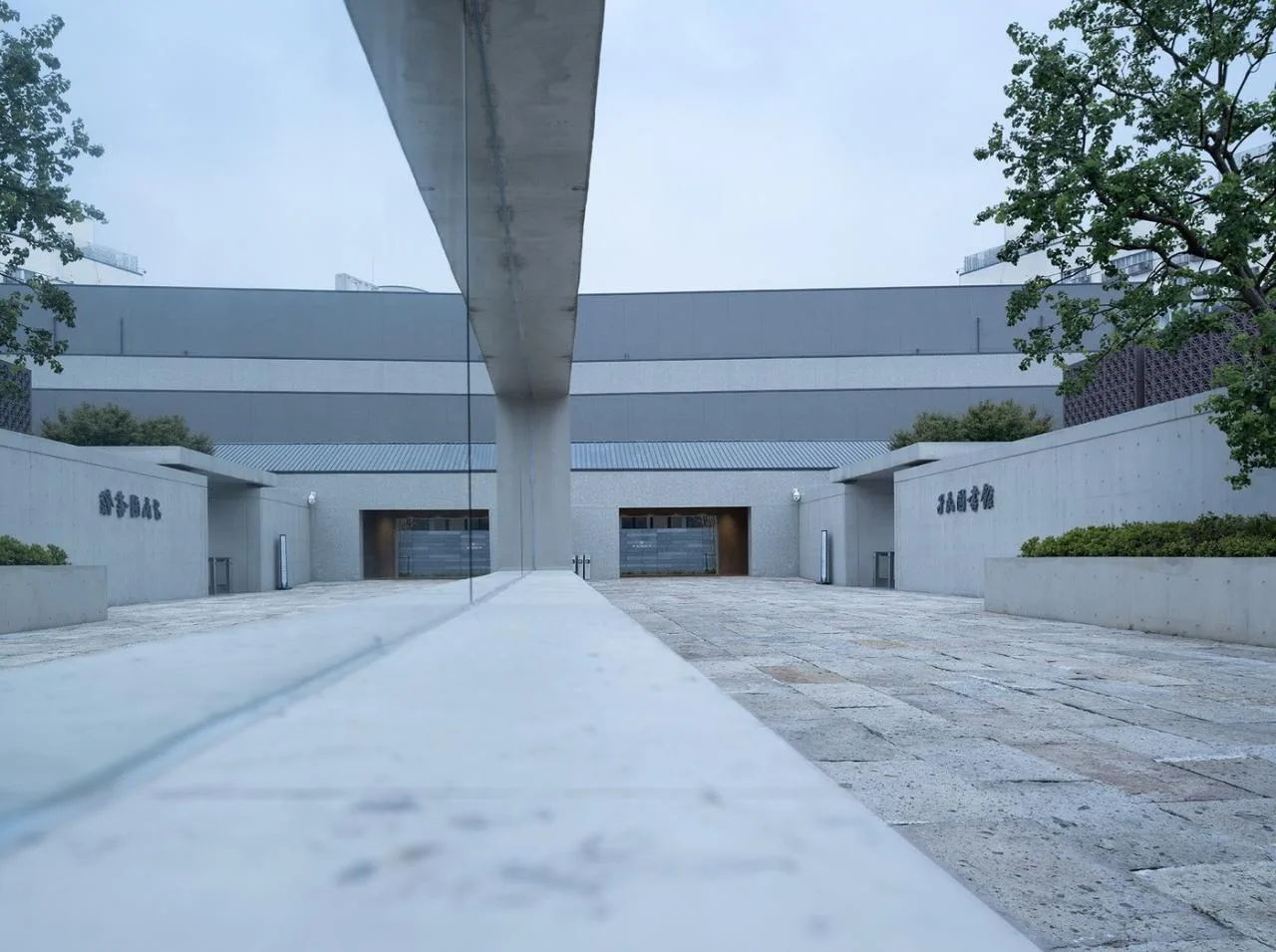
△ A reflective corner © Zhao Qiang
△ Mirror Library for the Elderly © Zhao Qiang
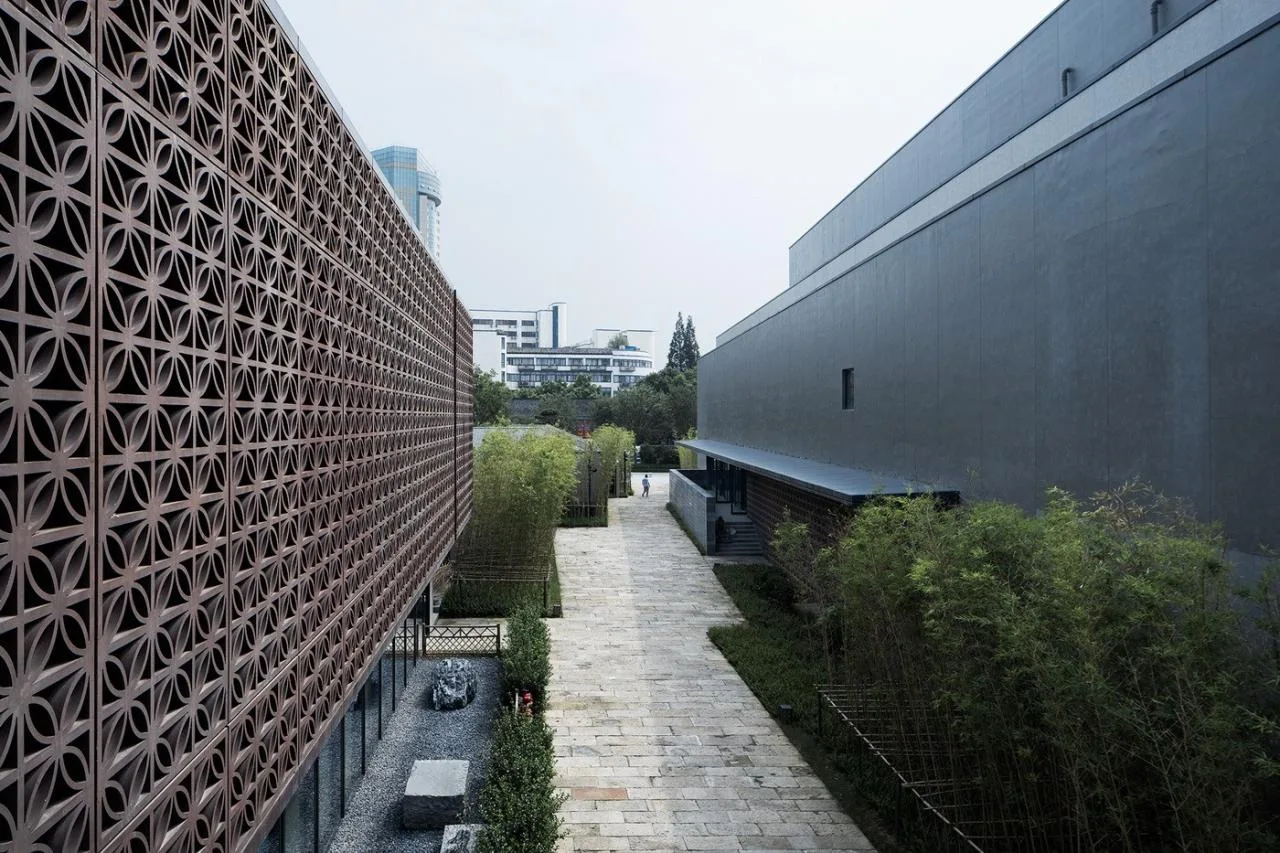
△ Jiemin Library adjacent to Jiemin Theater © Zhao Qiang
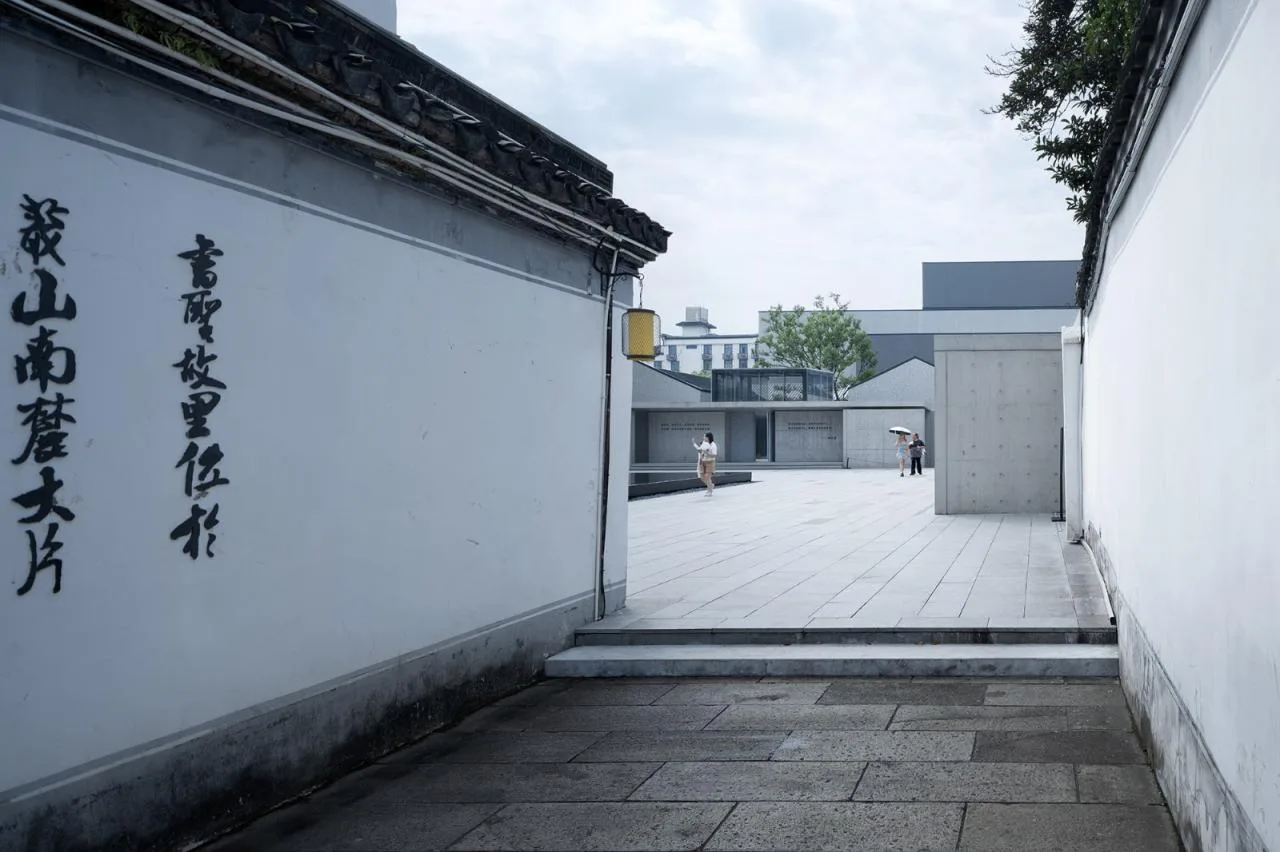
△ Pen Flying Mouth © Zhao Qiang
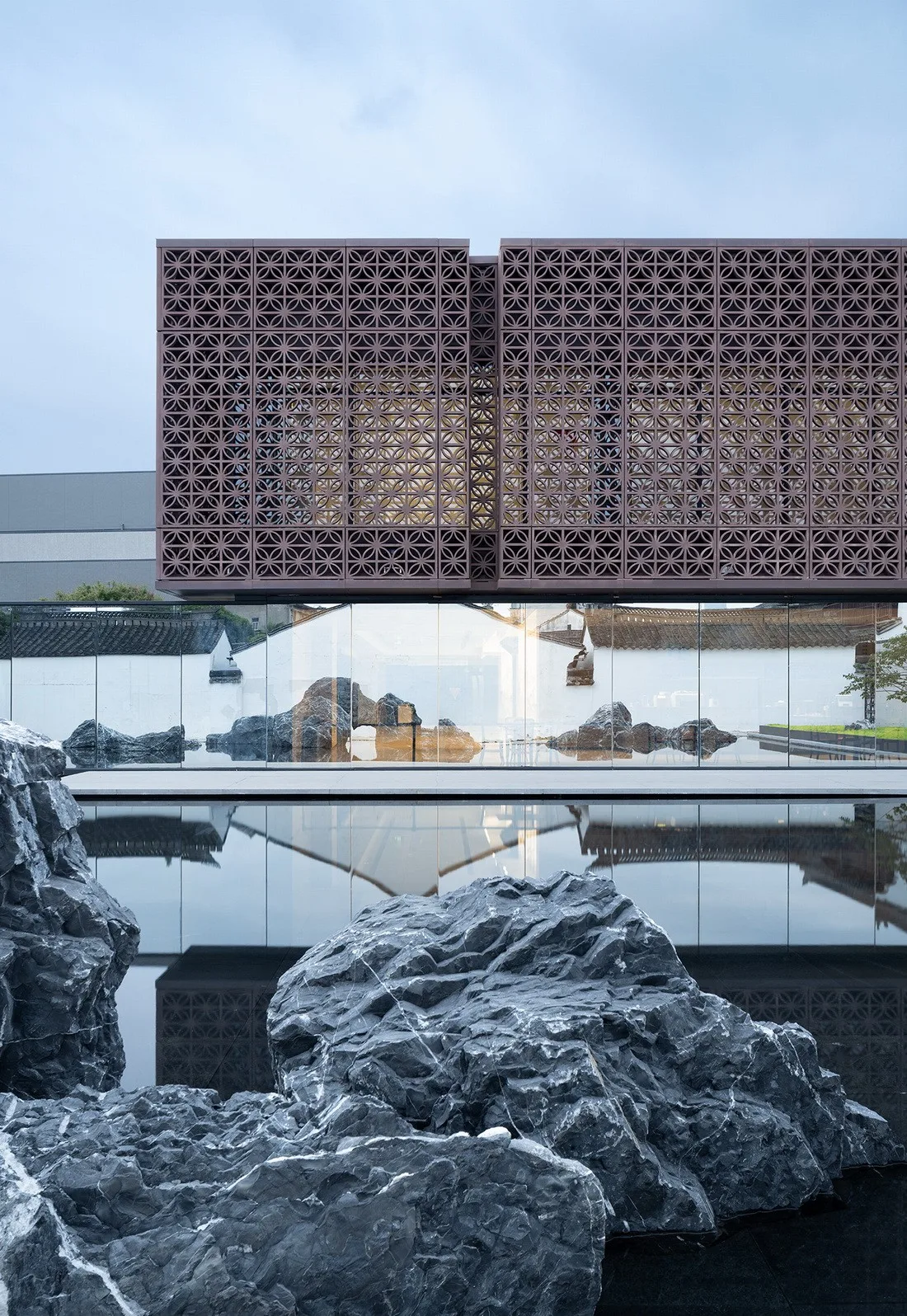
△ Corner of the west facade of Zhimin Library © Zhao Qiang
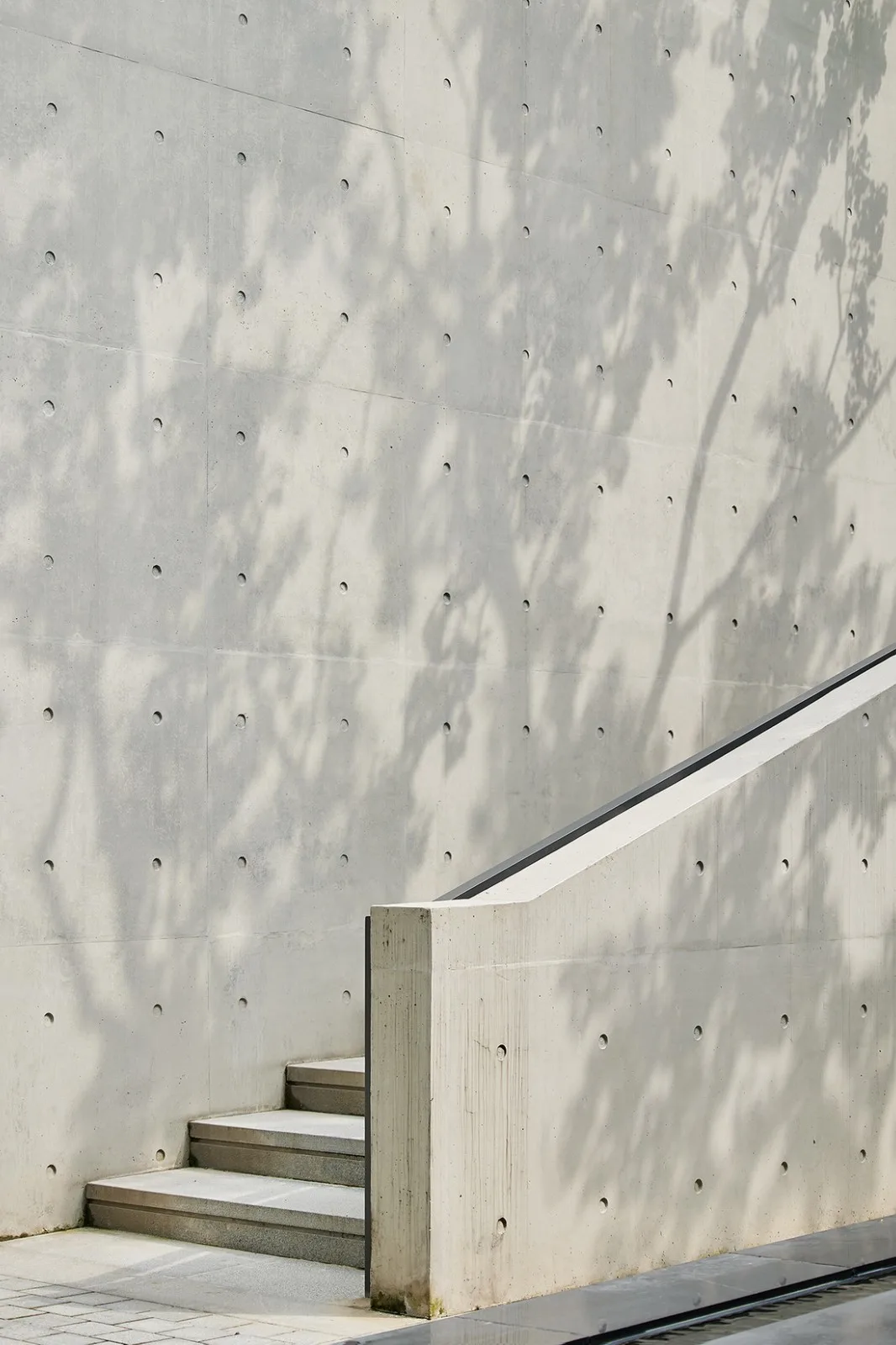
△ Clear concrete staircase leading to the underground exhibition hall © Zhao Qiang
This project’s design philosophy embraces the concept of “interpreting tradition and reconstructing the present,” preserving an authentic past while establishing a meaningful and integrated contemporary environment.
Project Drawings
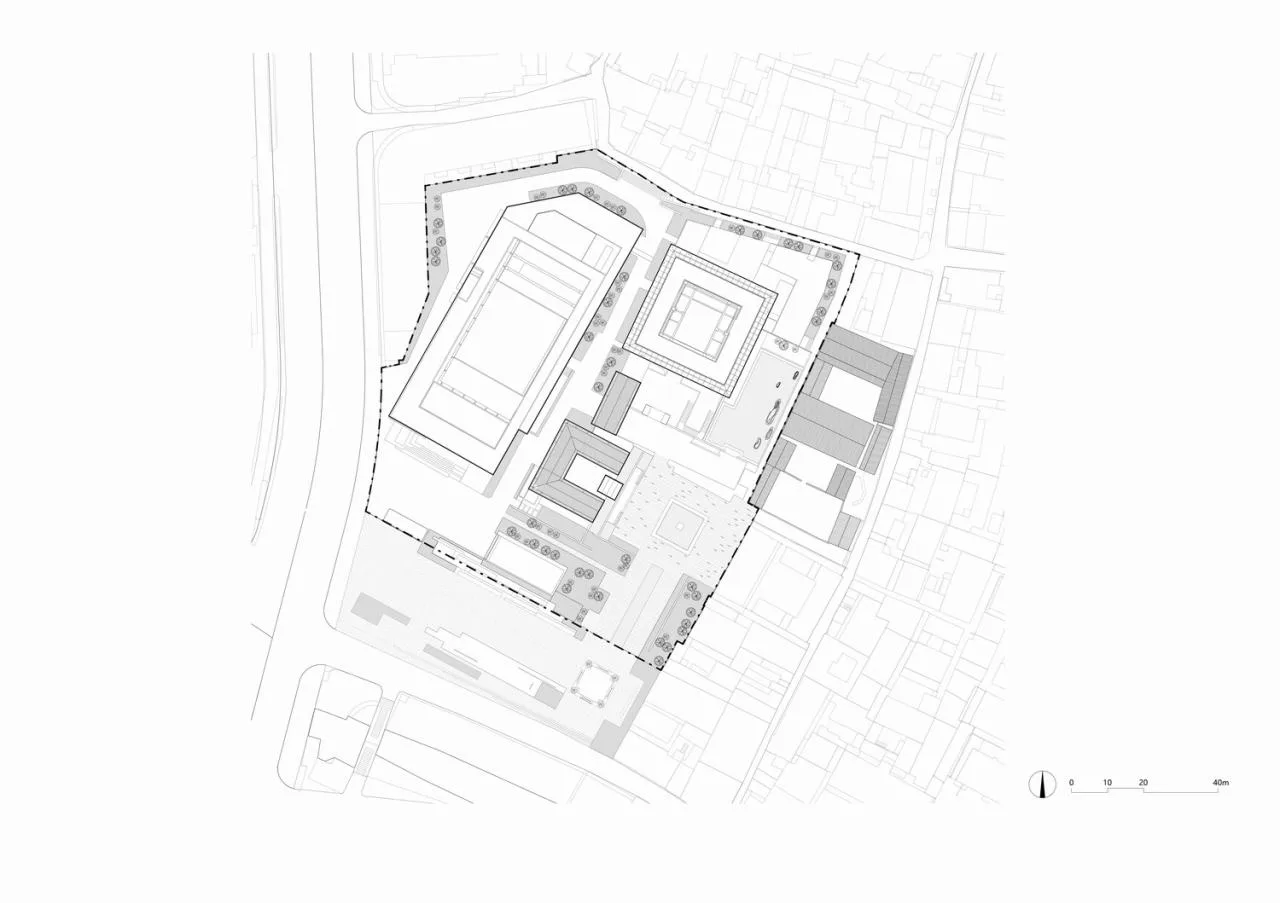
△ General layout plan
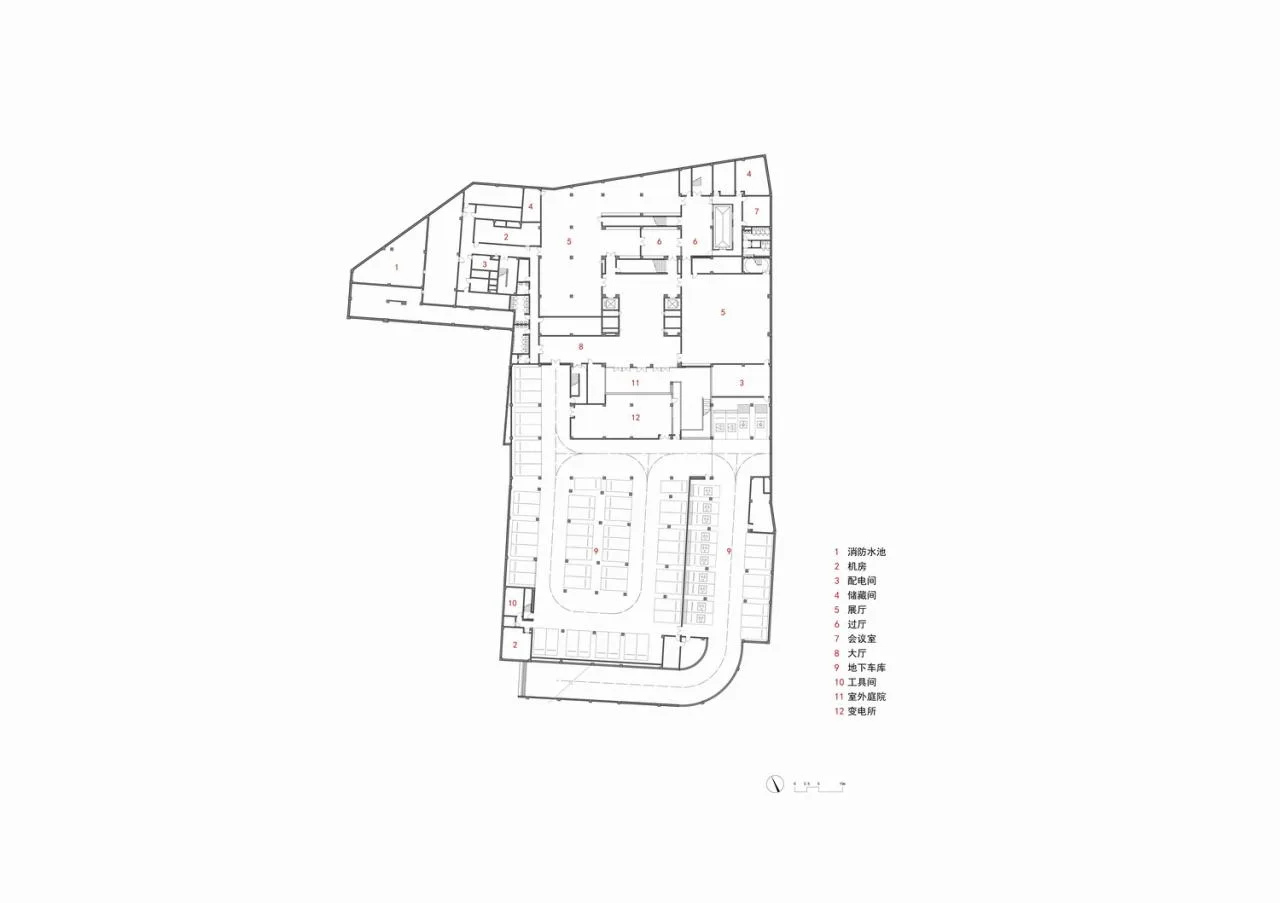
△ Basement floor plan of Zhimin Library
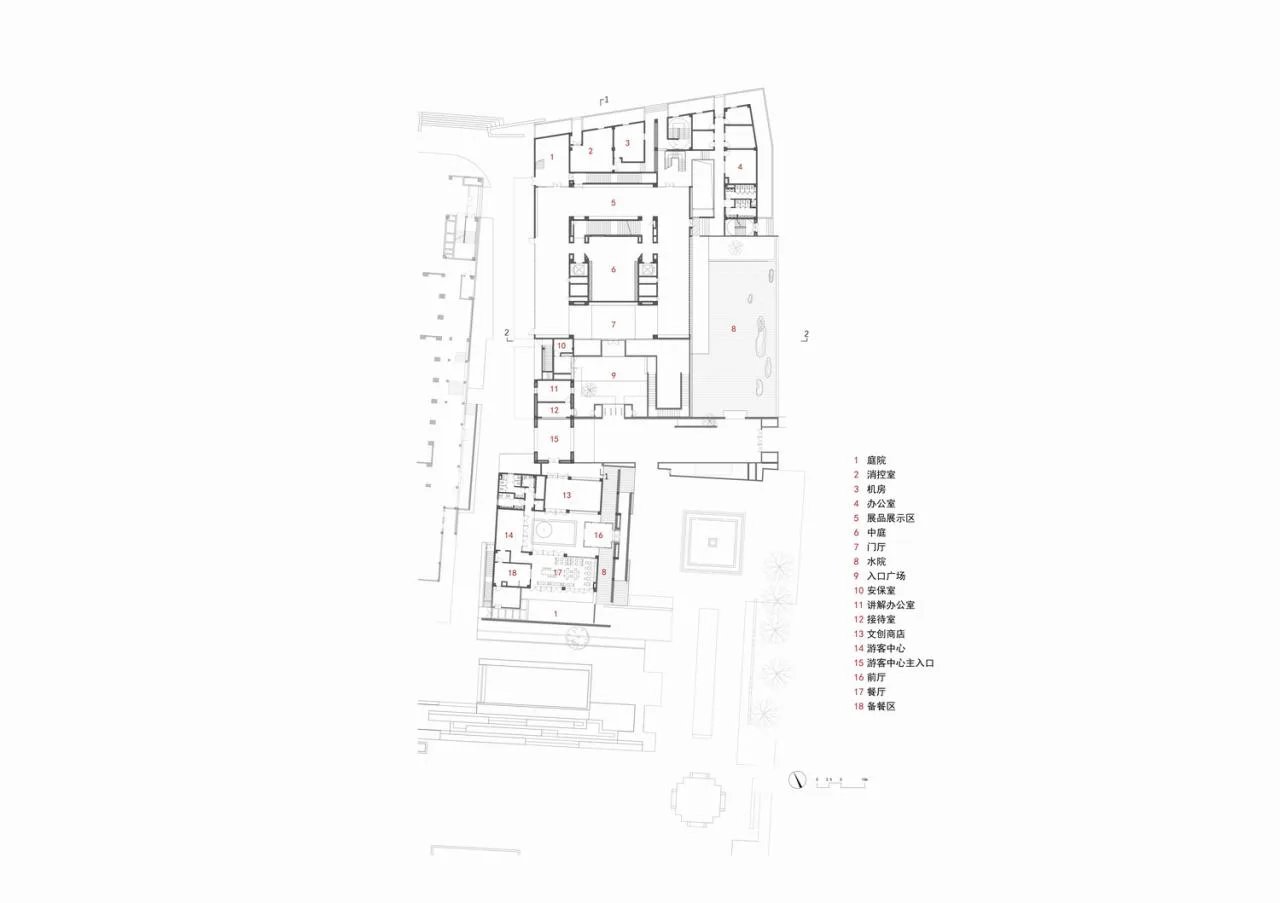
△ First floor plan of Zhimin Library
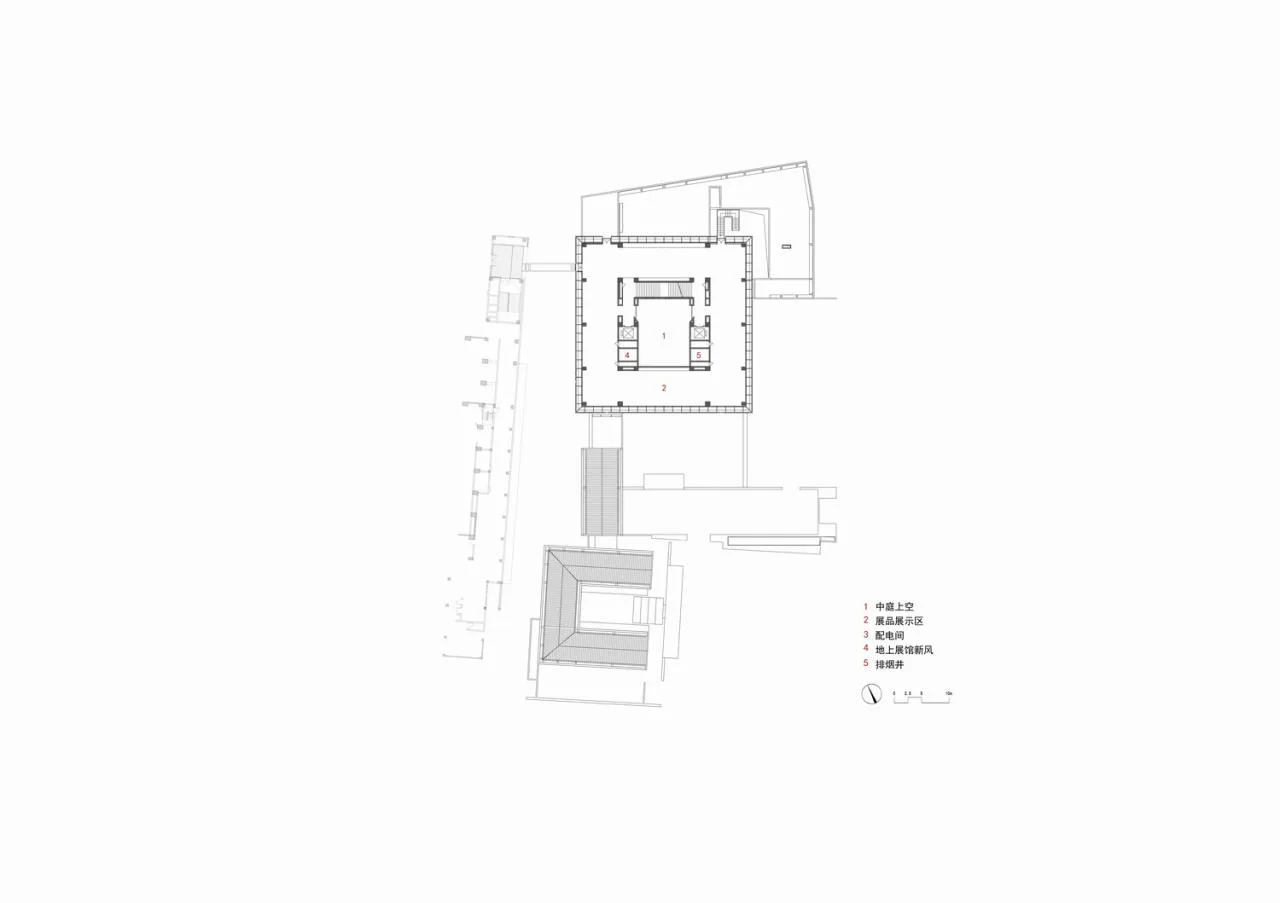
△ Second floor plan of Zhimin Library
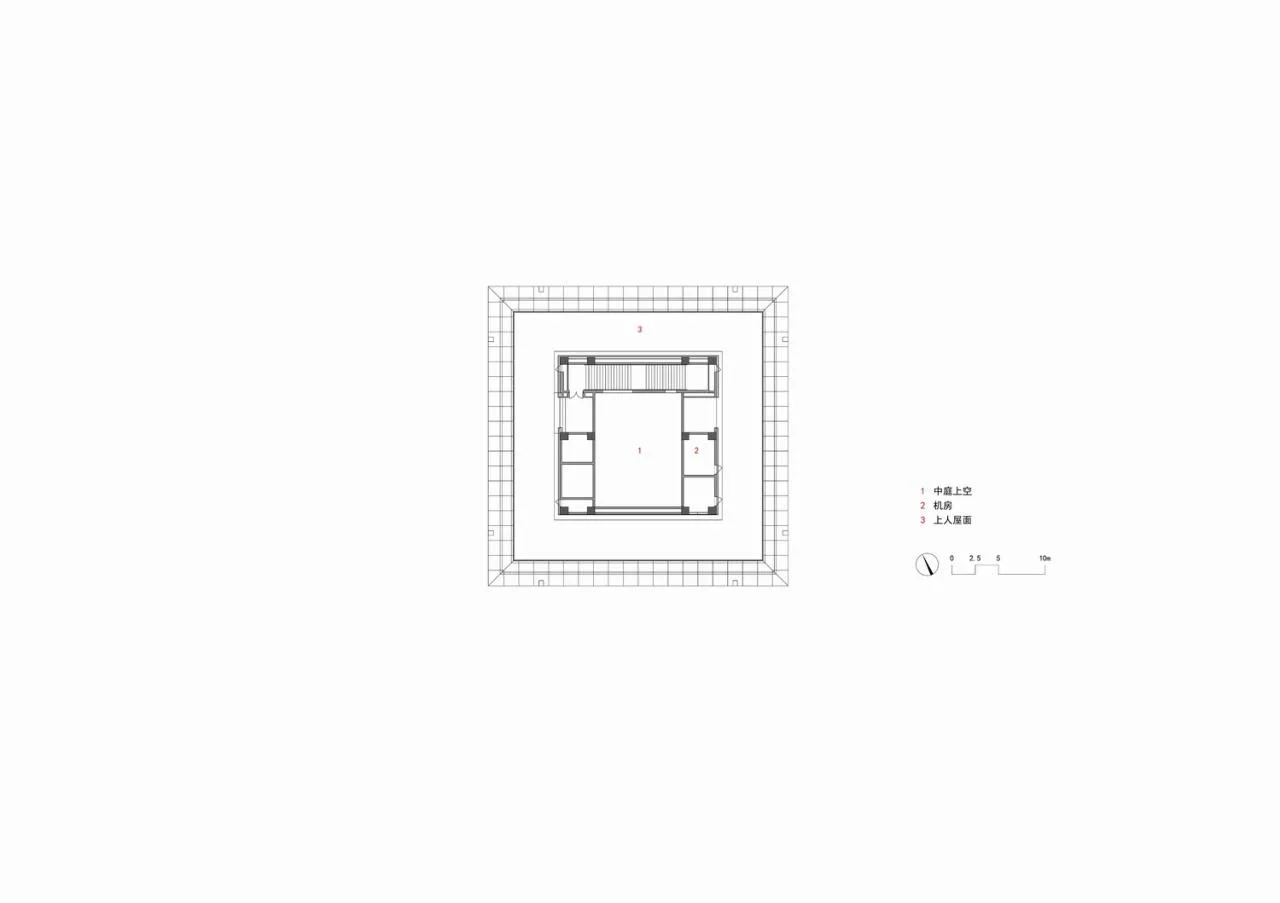
△ Top floor plan of Zhimin Library
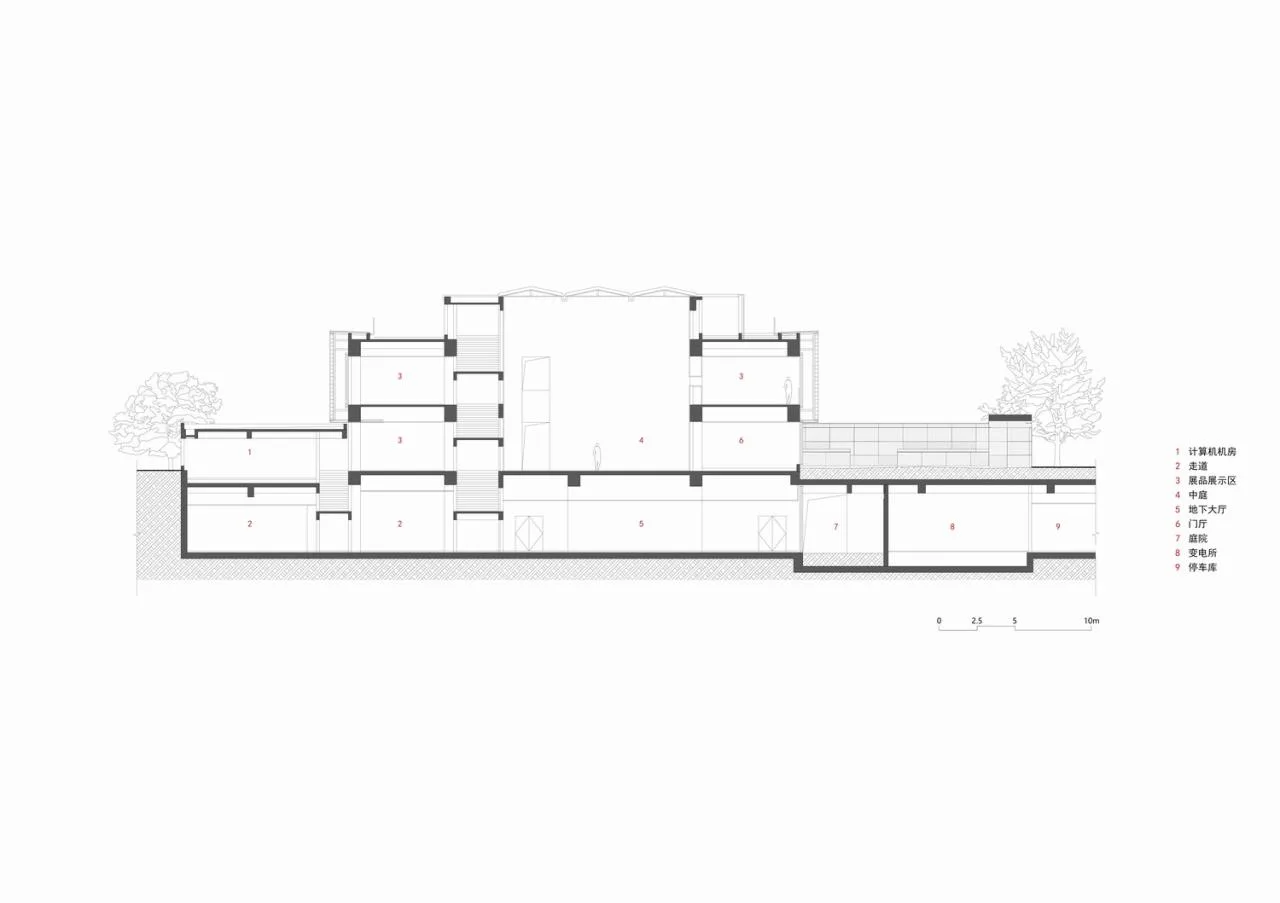
△ Section 1-1 of Jiemin Library
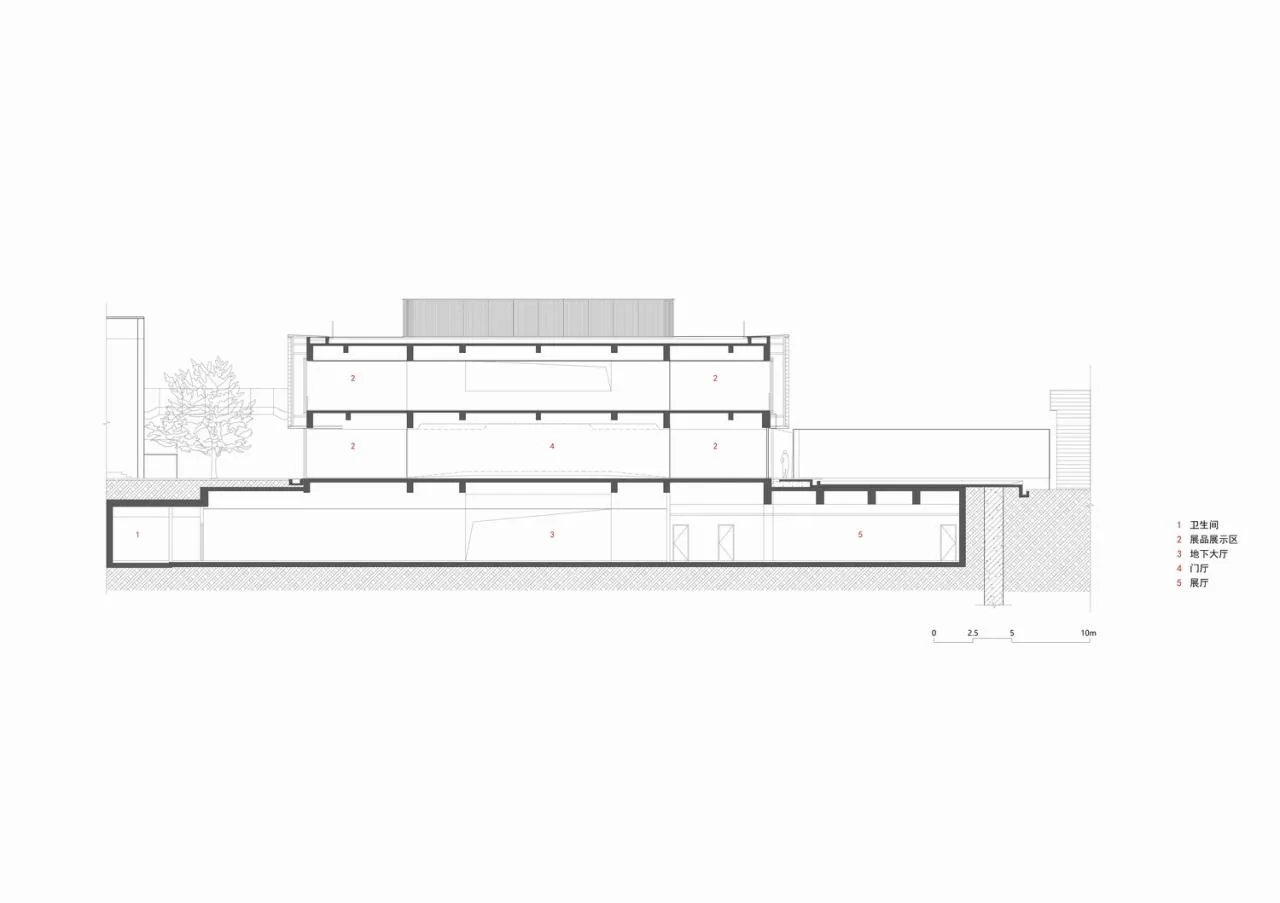
△ Section 2-2 of Jiemin Library
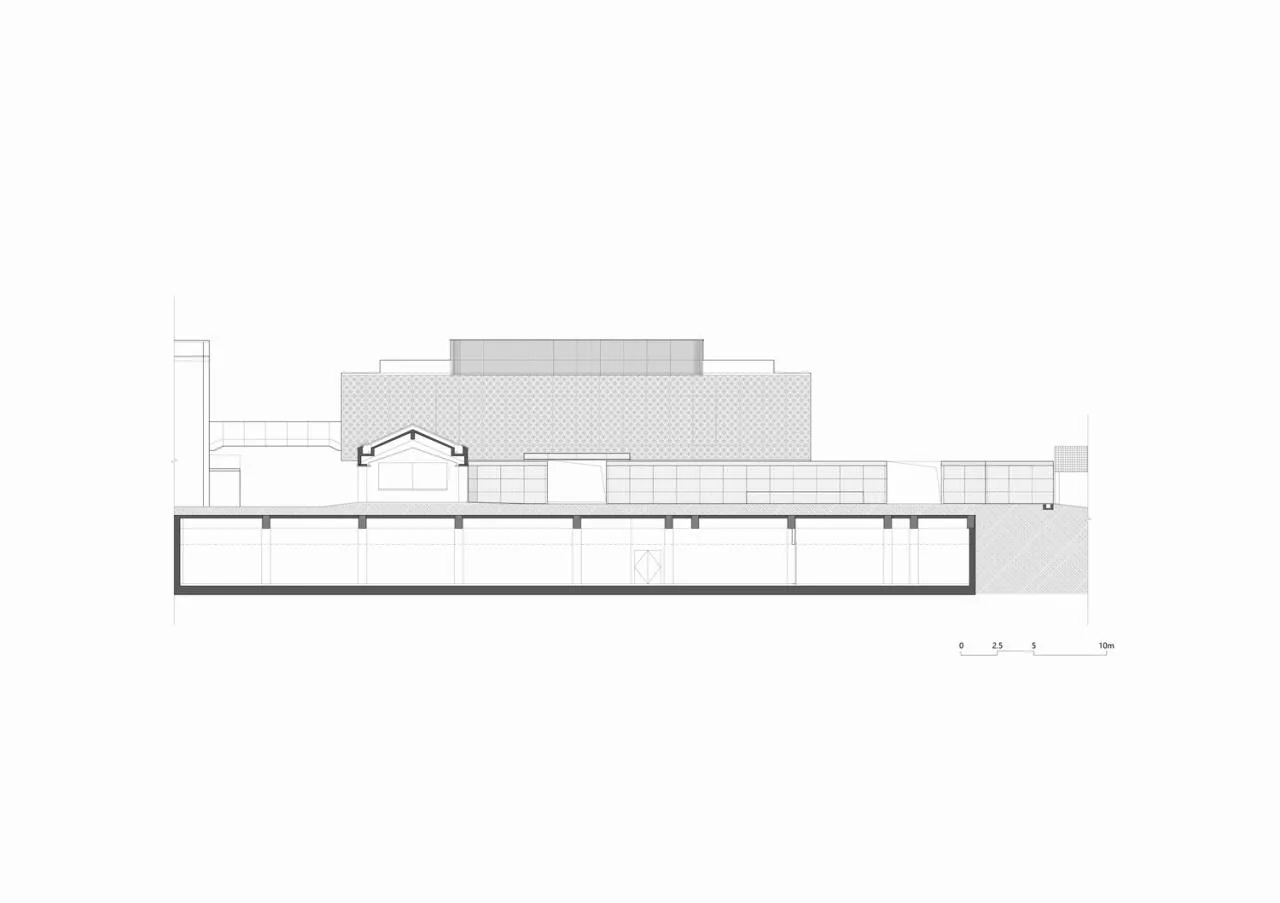
△ South elevation of Zhimin Library
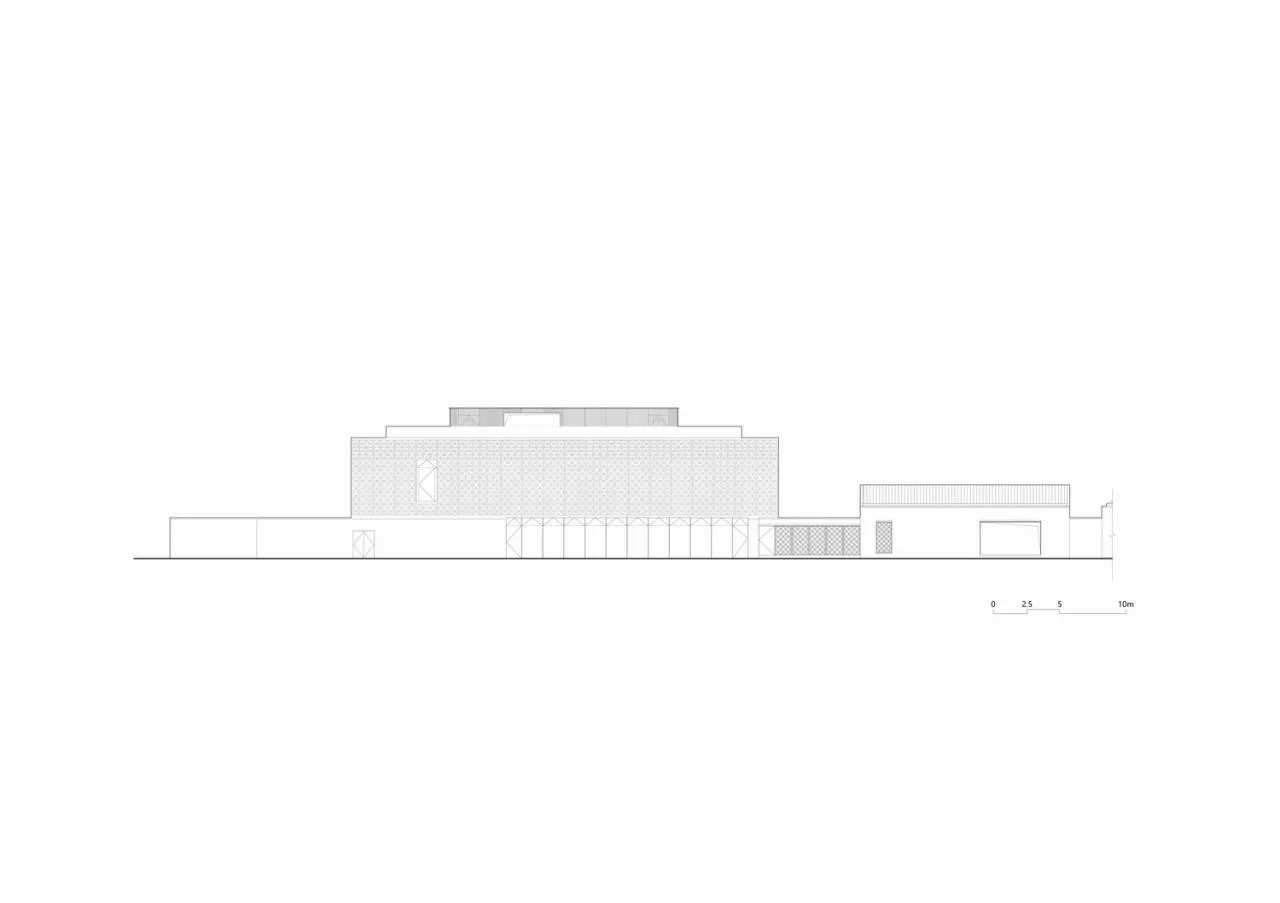
△ West elevation of Zhimin Library
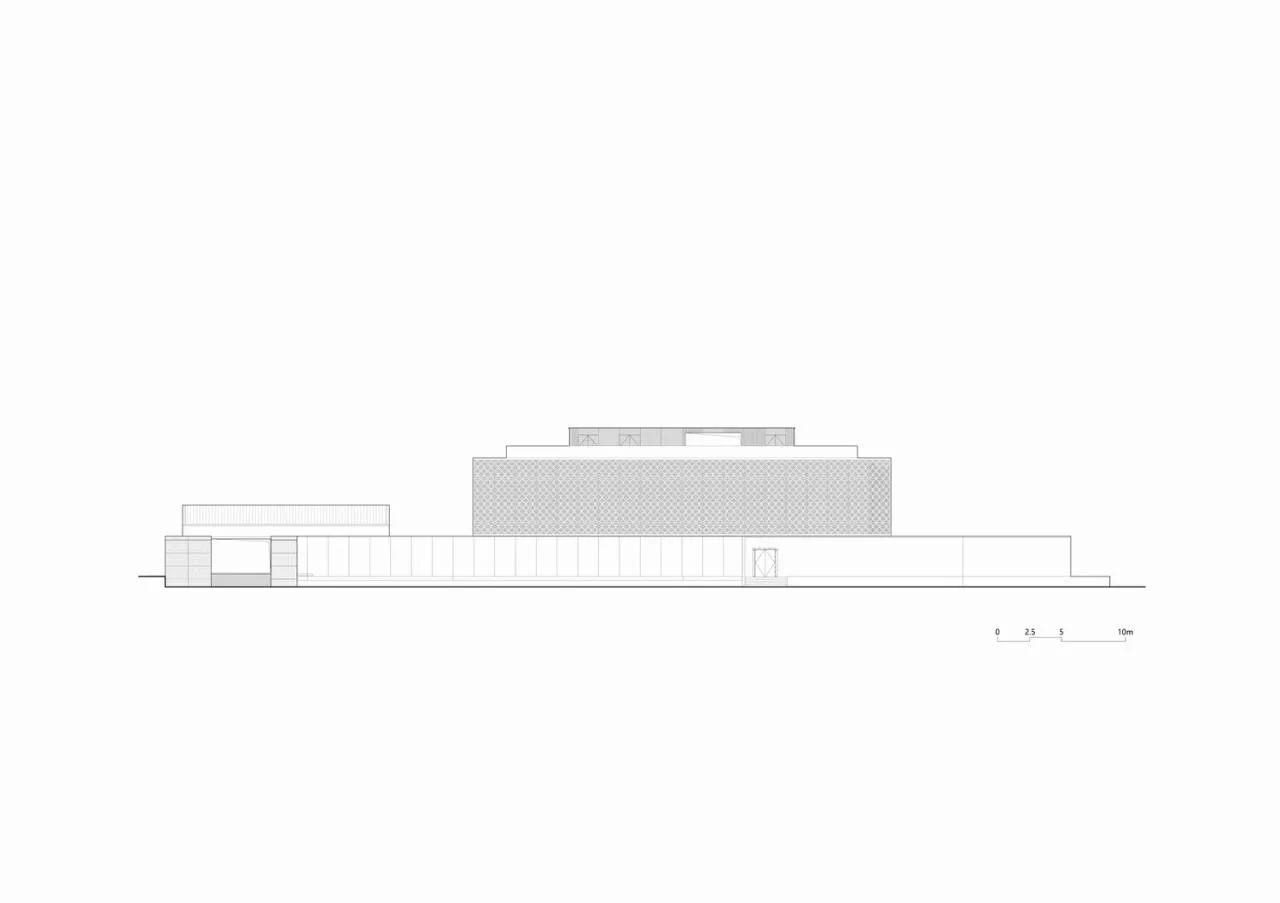
△ East elevation of Zhimin Library
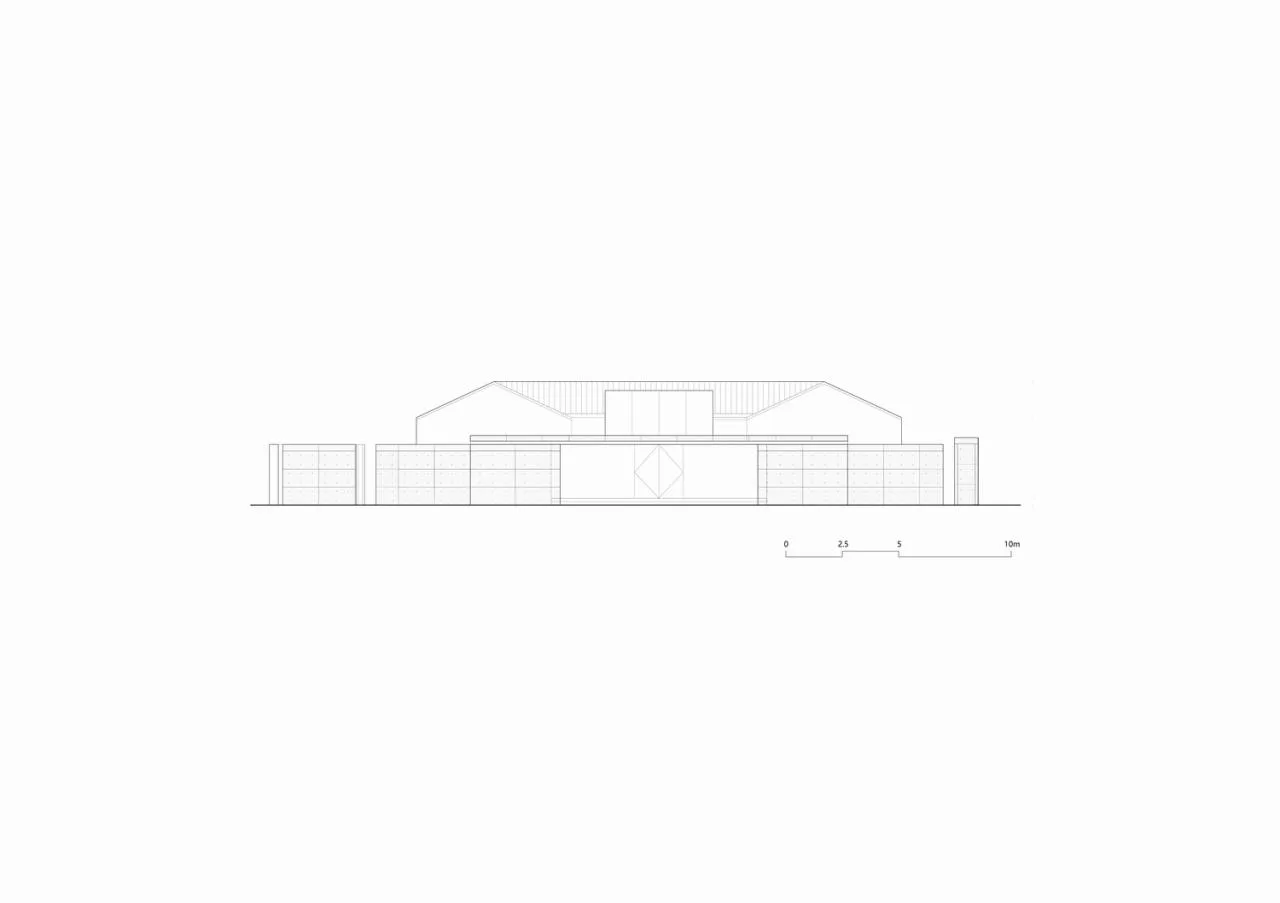
East elevation of tourist center
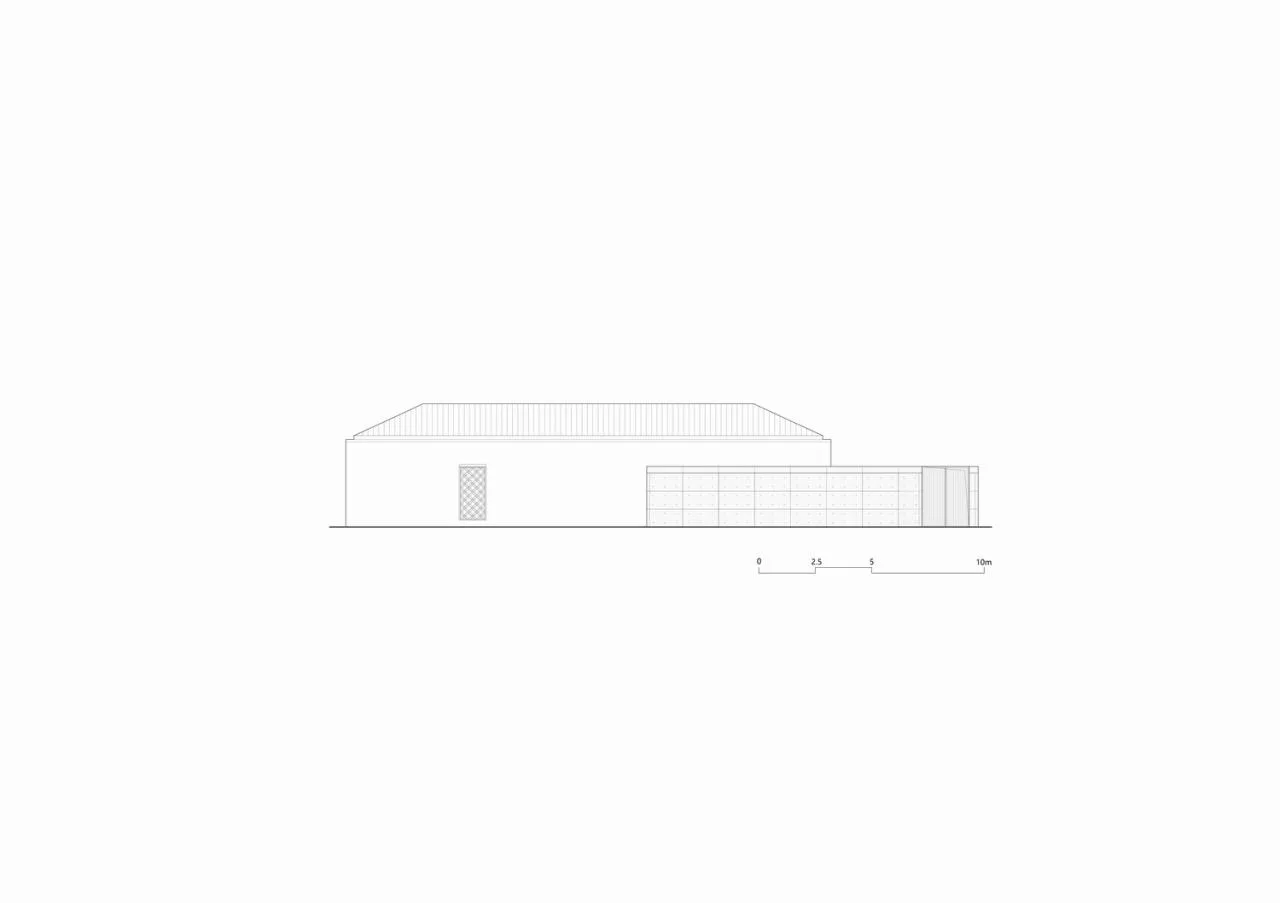
△ West elevation of tourist center
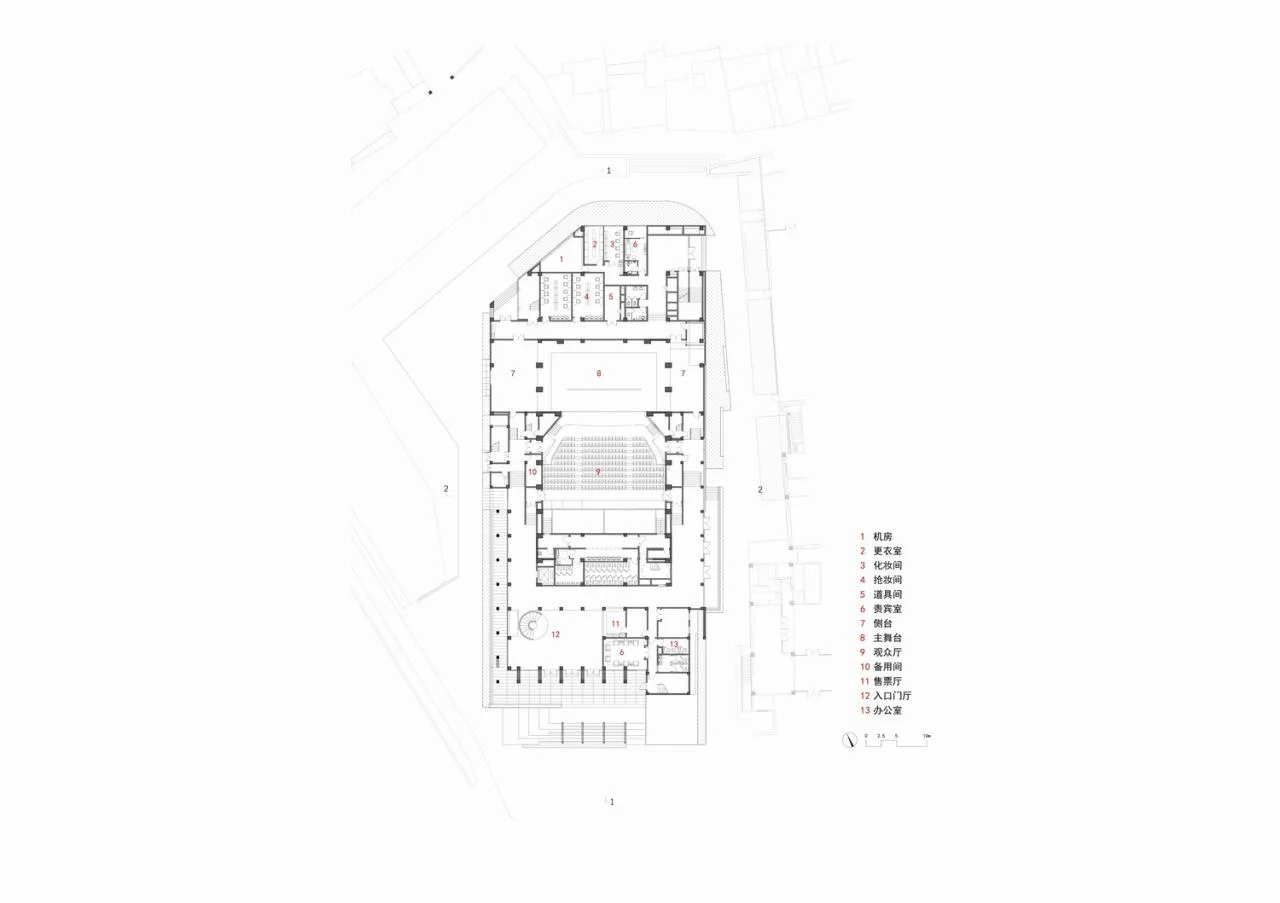
△ First floor plan of Jiemin Theater
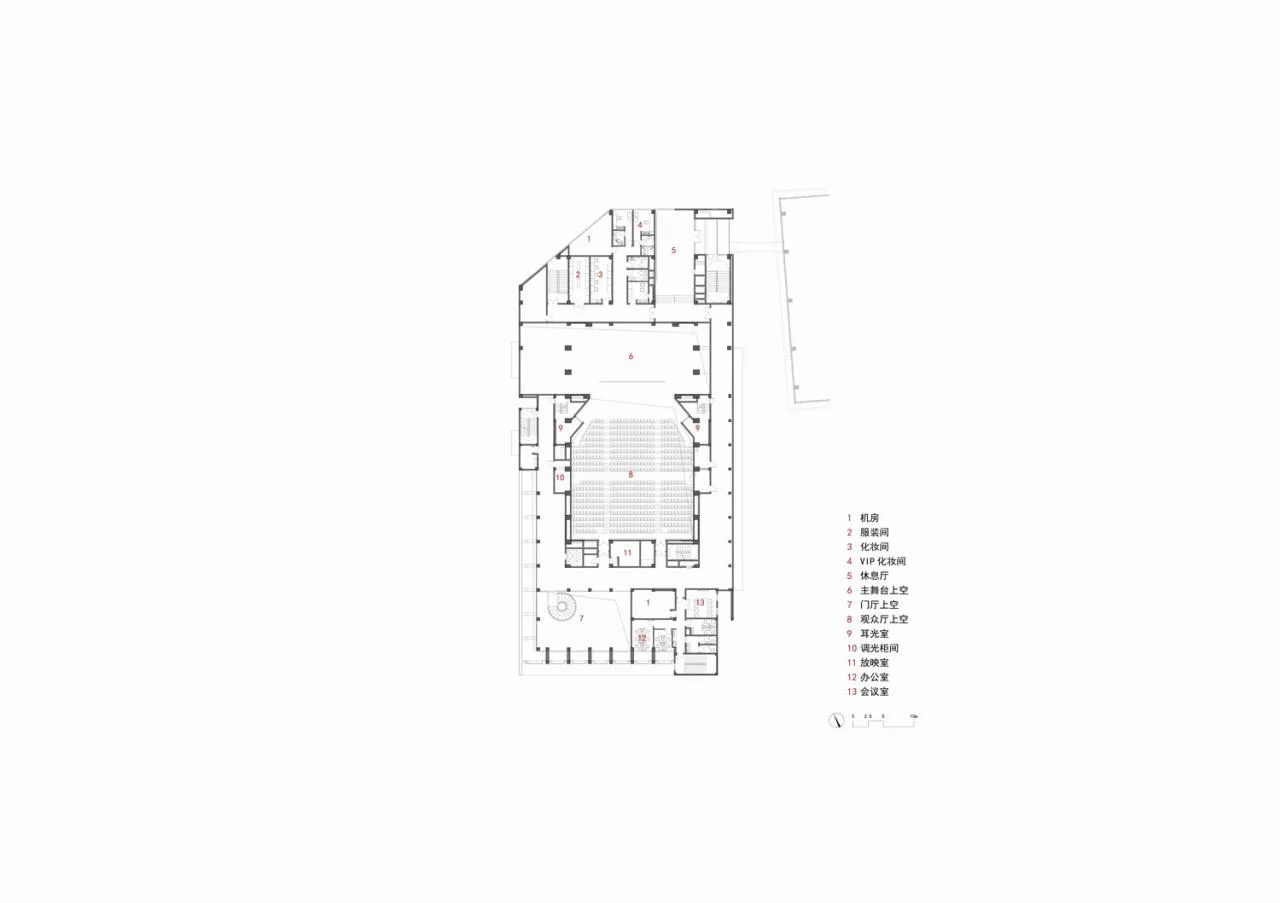
△ Second floor plan of Jiemin Theater
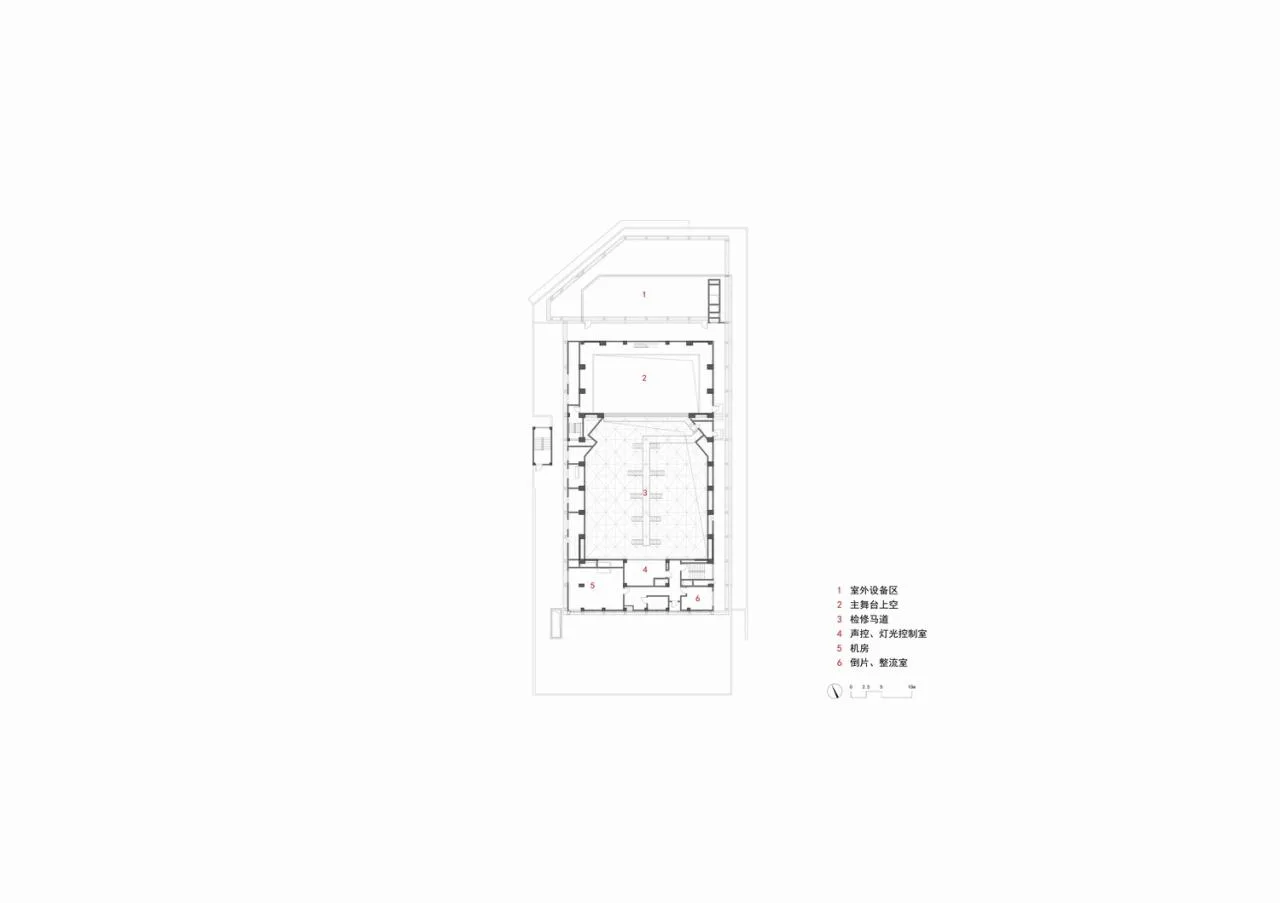
△ Equipment layer plan of Jiemin Theater
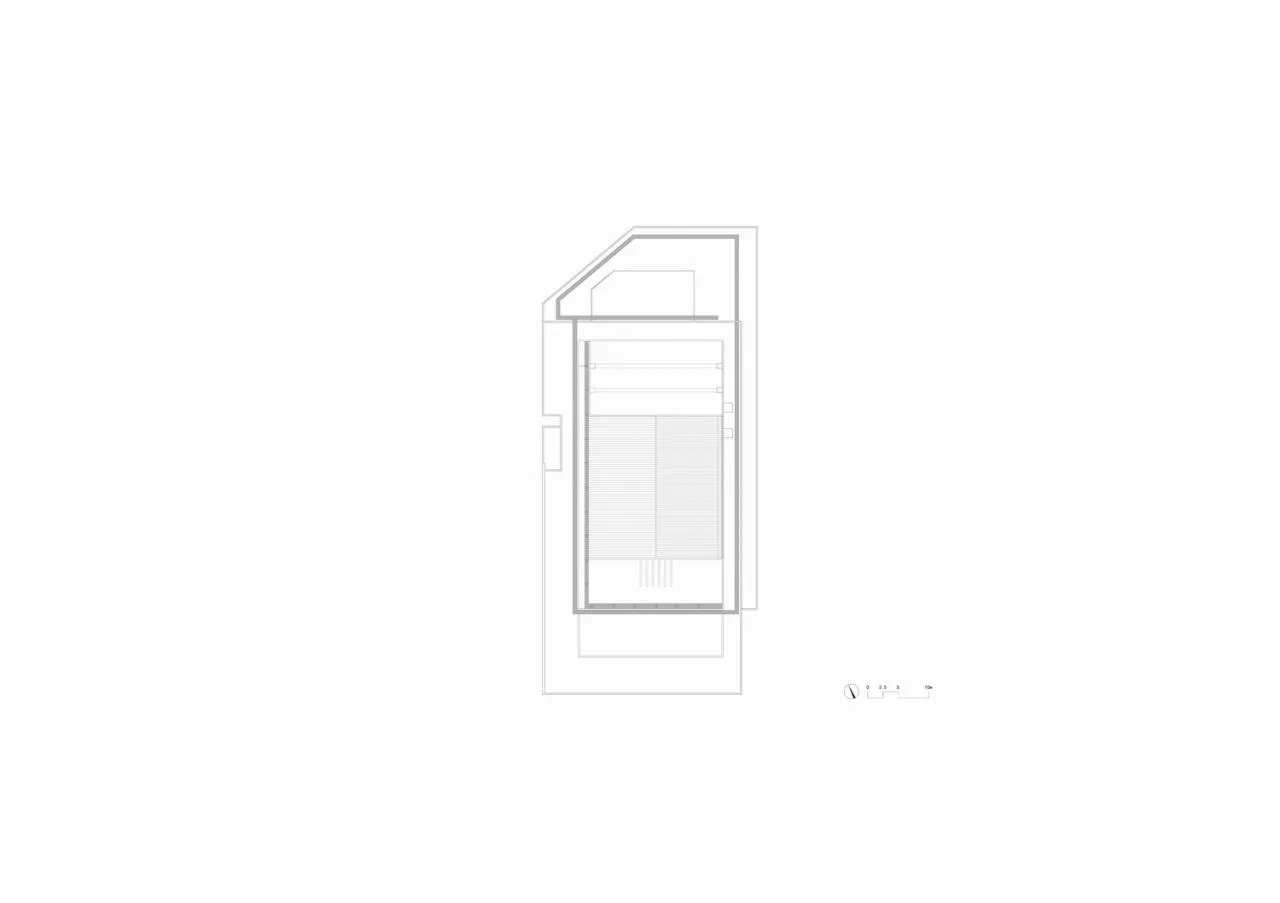
△ Roof plan of Jiemin Theater
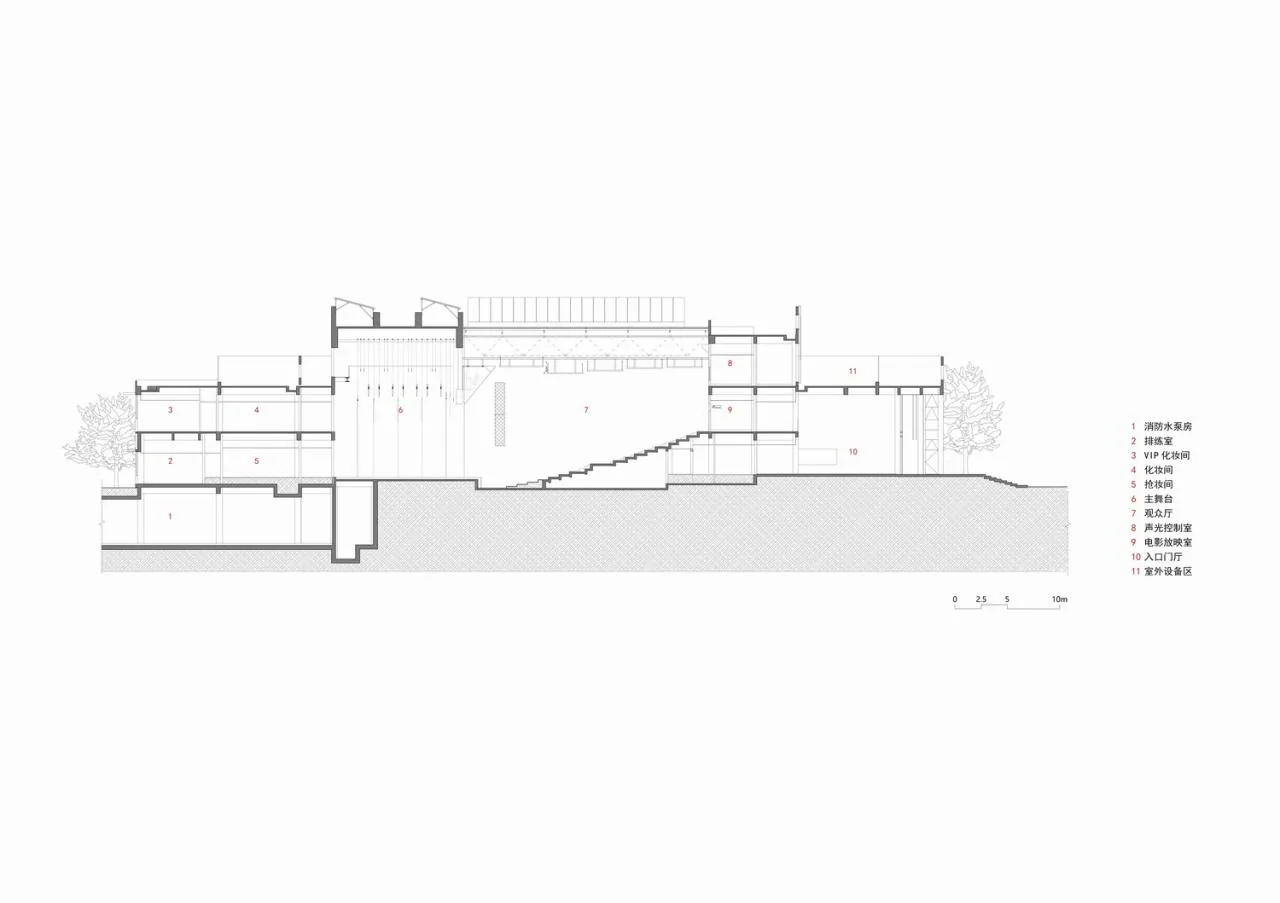
Section 1-1 of Jiemin Theater
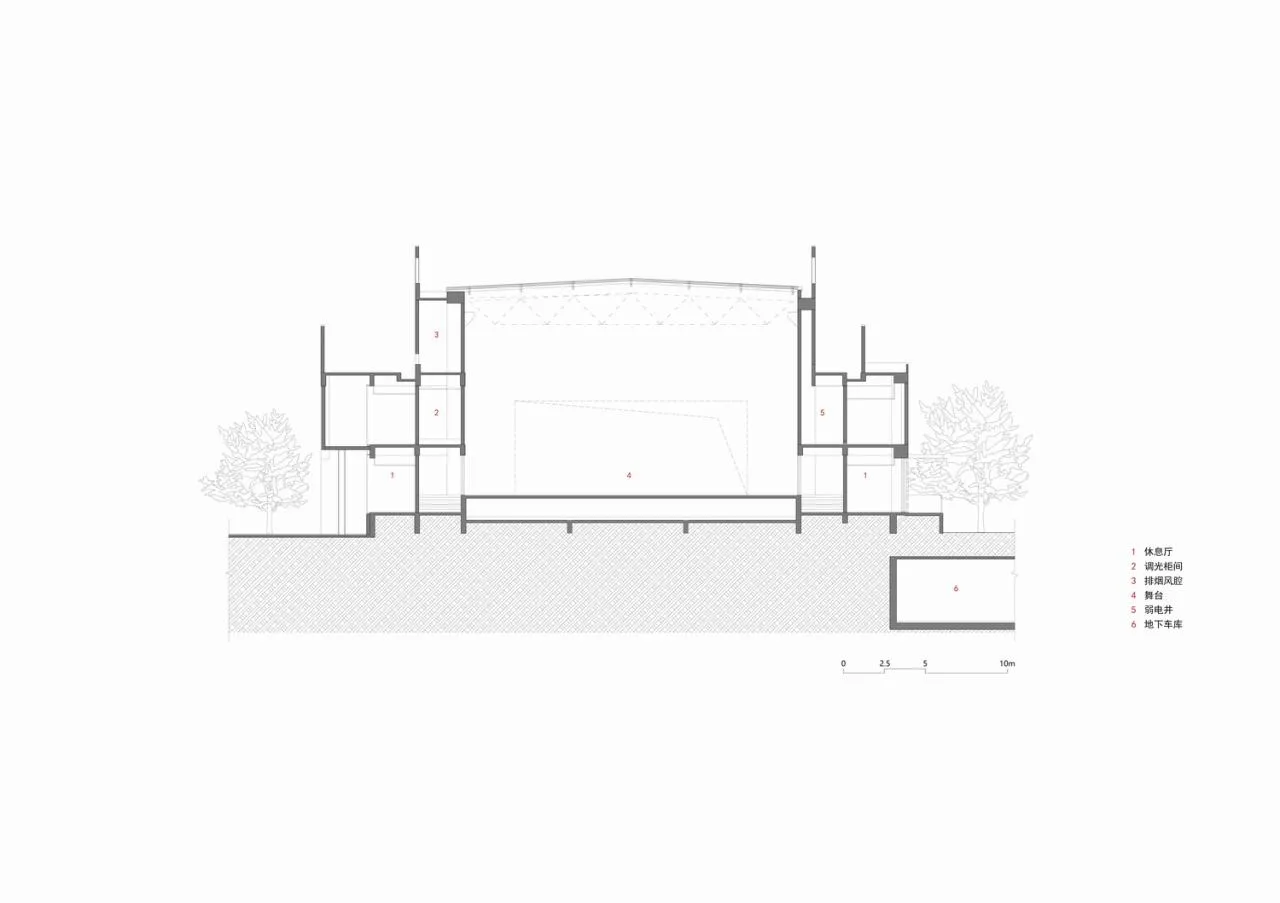
△ Section 2-2 of Jiemin Theater
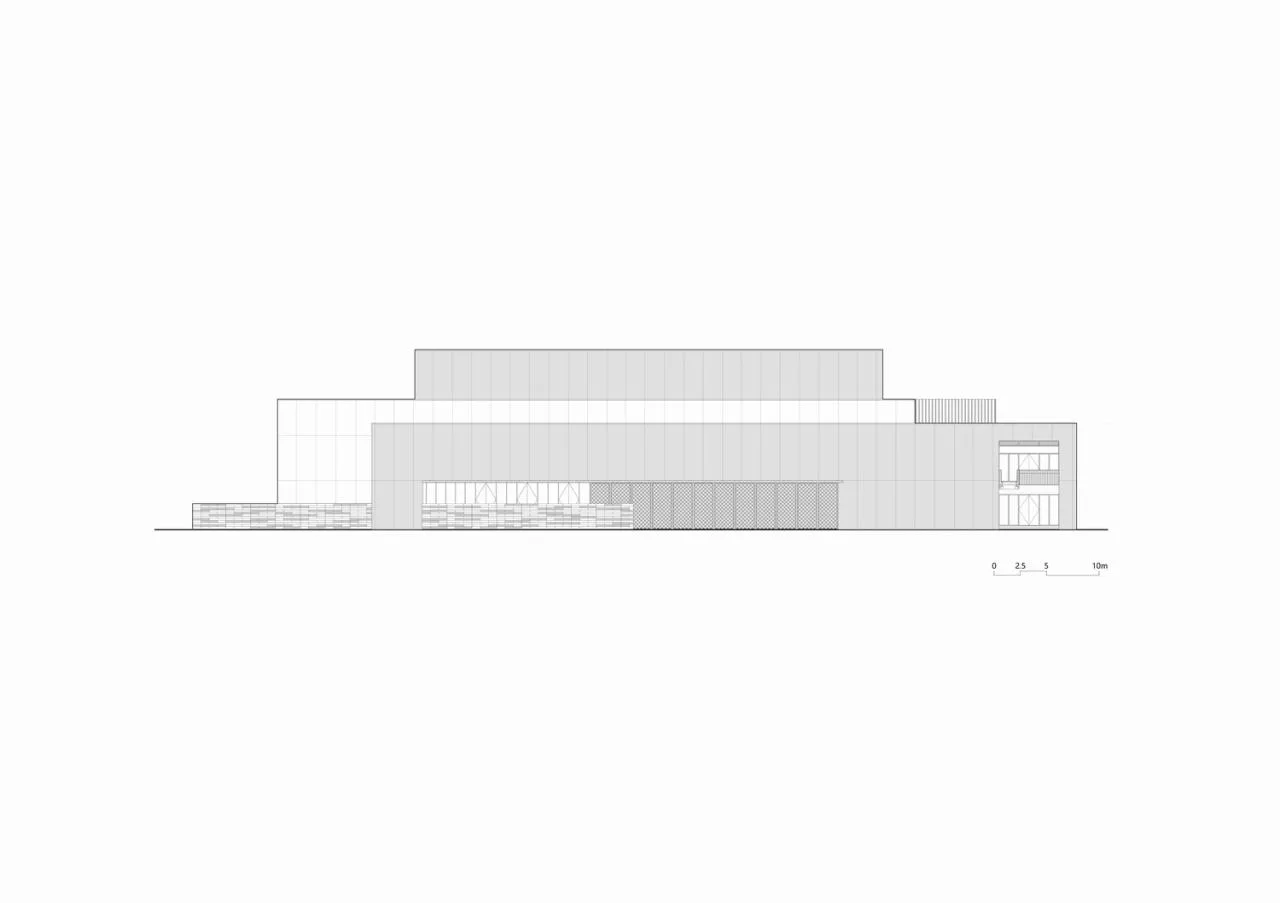
△ East elevation of Jiemin Theater
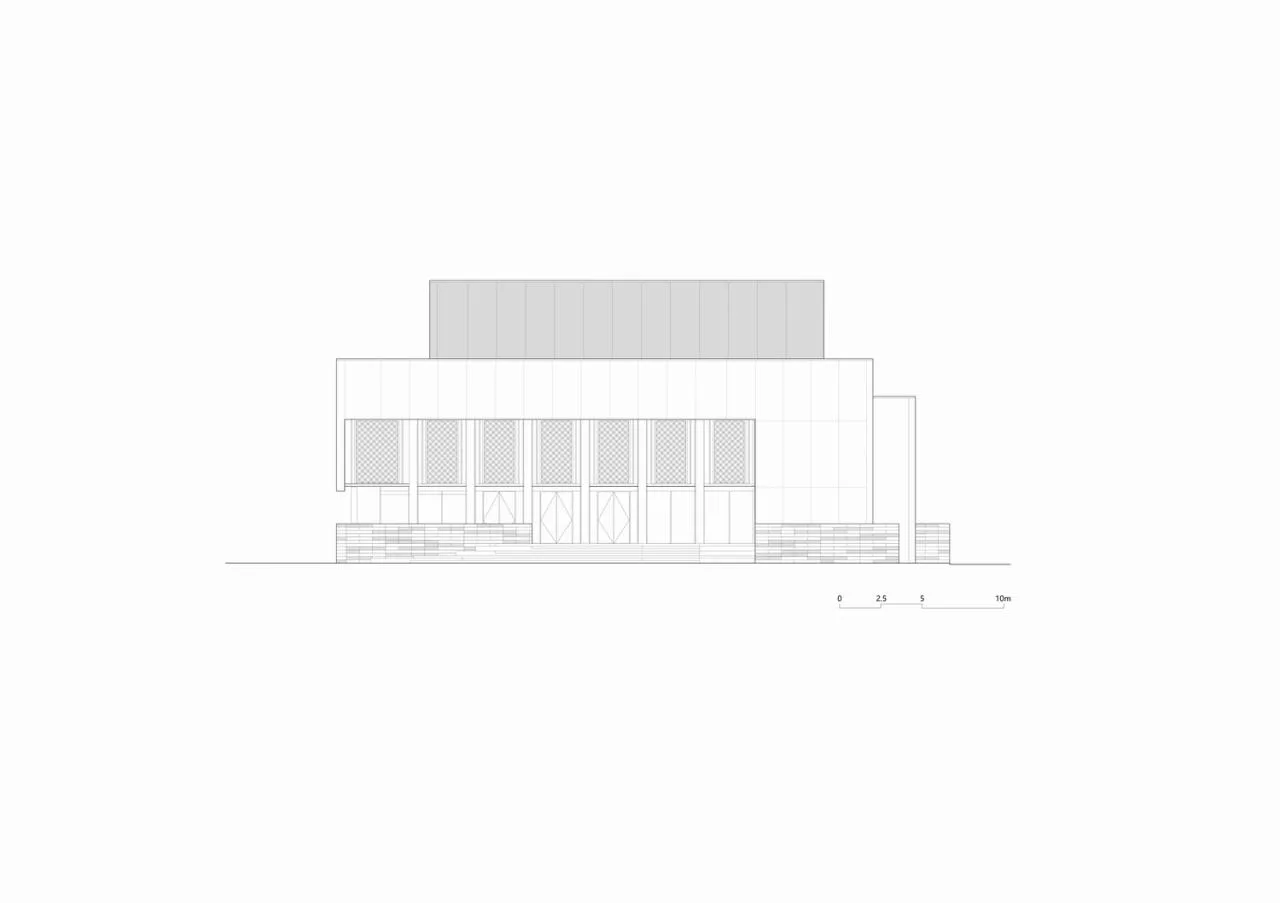
△ South elevation of Jiemin Theater
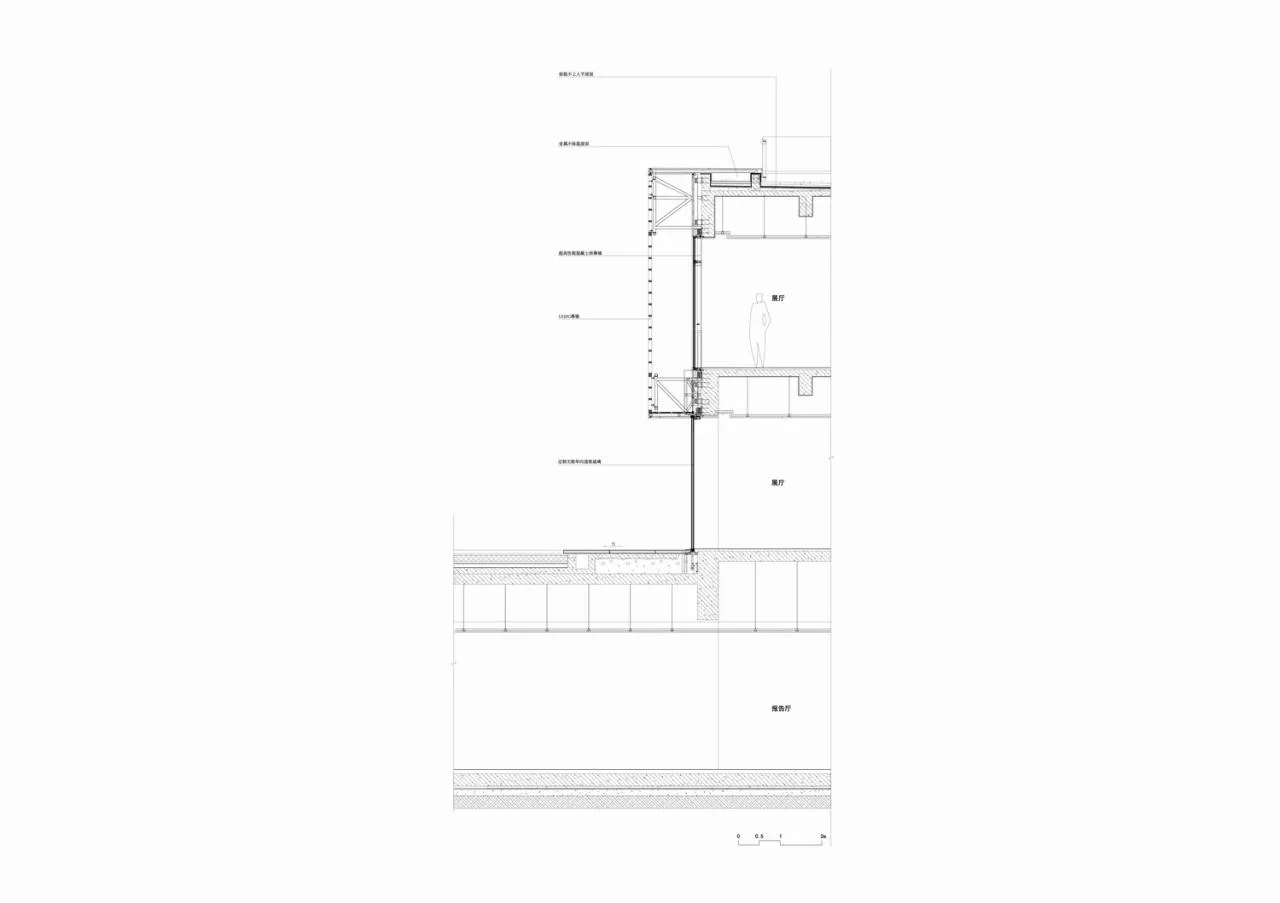
△ Detailed wall drawing of Zhimin Library
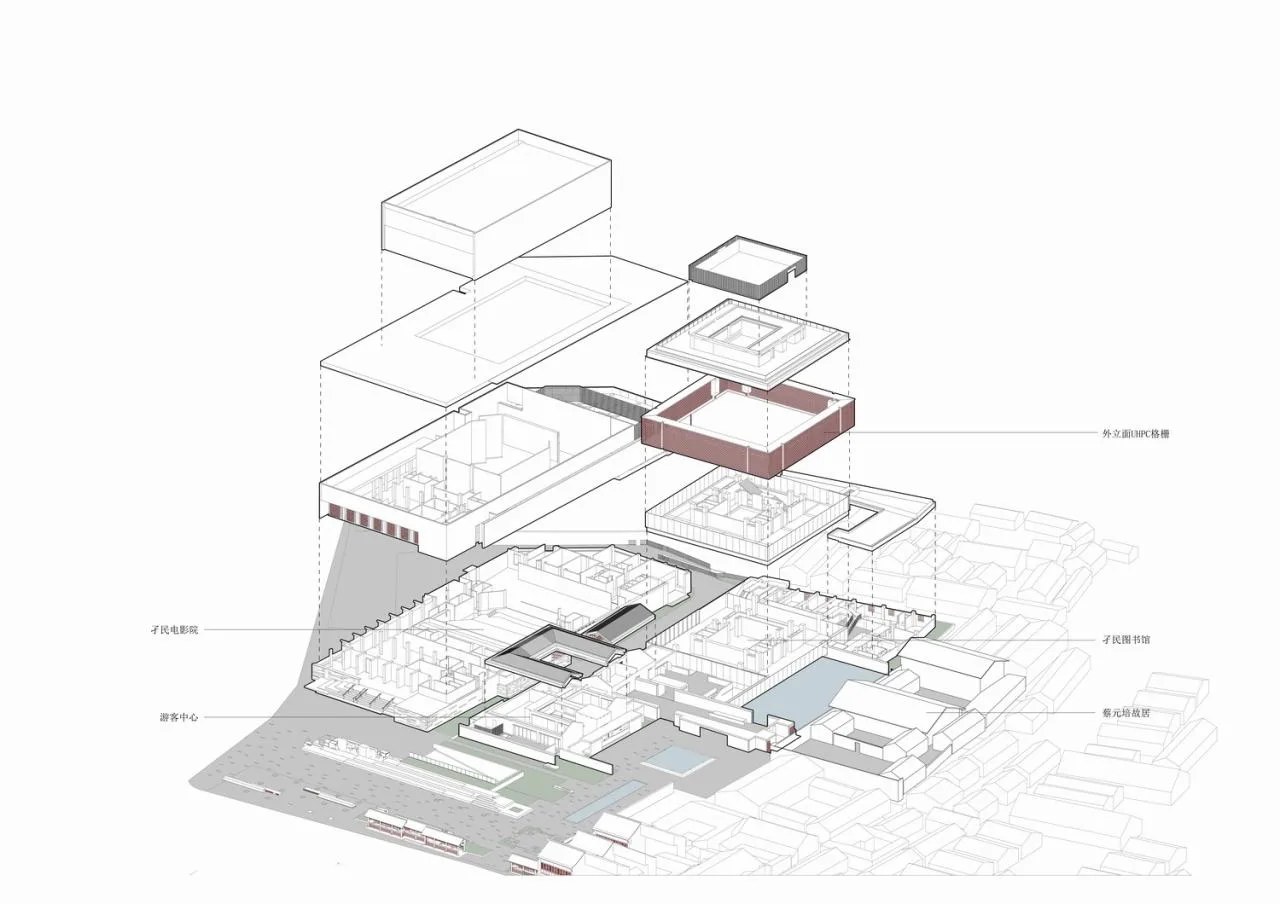
△ Overall exploded diagram of the project
Project Information
Project Name: Cai Yuanpei Square and the Library for the Elderly
Project Type: Cultural Architecture, Renovation, Urban Renewal
Architectural Firm: Zhejiang University Architectural Design and Research Institute
Company Location: Hangzhou, Zhejiang
Project Address: Jiefang North Road, Yuecheng District, Shaoxing City, Zhejiang Province
Status: Completed
Design Period: April 2019 – October 2019
Construction Period: December 2019 – March 2023
Land Area: 12,107.0 square meters
Building Area: 14,089.26 square meters
Photographer: Zhao Qiang
Project Team:
Lead Architect: Hu Huifeng
Architecture: Zhang Chenfan, Zhu Jinyun, Wang Yuxuan
Structure: Zheng Xiaoqing, Wu Xiawen, Lv Junfeng, Chen Xu, Zhang Jie, Ding Ziwen
Water Supply and Drainage: Yi Jiasong, Cai Ang
HVAC: Pan Dahong, Li Yongmei
Electrical: Zhang Wei, Qian Kun
Intelligence Systems: Li Xiangqun, Yang Guozhong, Yuan Xiaonan
Lighting: Wang Xiaodong, Zhao Yanqiu, Xing Jiayi, Fu Dongming, Feng Baile, Wu Xuhui
Decoration: Fang Yin, Kong Xiang, Ma Juan
Curtain Wall: Shi Jiqiang, Wang Jianzhong, Xuan Zhao Kang, Su Zeqi
Landscape: Wu Weiling, Wang Jietao, Zhang Chi, Wu Enemy, Yao Haiyan, Zhang Yuchen, Xu Fei, Gu Jingxian
Geotechnical: Chen Yun, Yang Qinfeng, Han Jiaming
Stage Design: Chi Wangang, Chen Yong, Chi Jiabei
Economics: Chu Qianbo, Zhang Ying, Sun Wentong, Zhang Guodan
BIM Design: Ren Weishuyu
EPC: Fang Chaojun, Zhou Huiyang, Wu Jianquan, Bei Sijia
Exhibition Design: Shanghai Art Design Co., Ltd
Principal: Shaoxing Cultural Tourism Group Co., Ltd
Construction Contractor: Zhejiang Qinye Construction Group Co., Ltd














Must log in before commenting!
Sign Up