
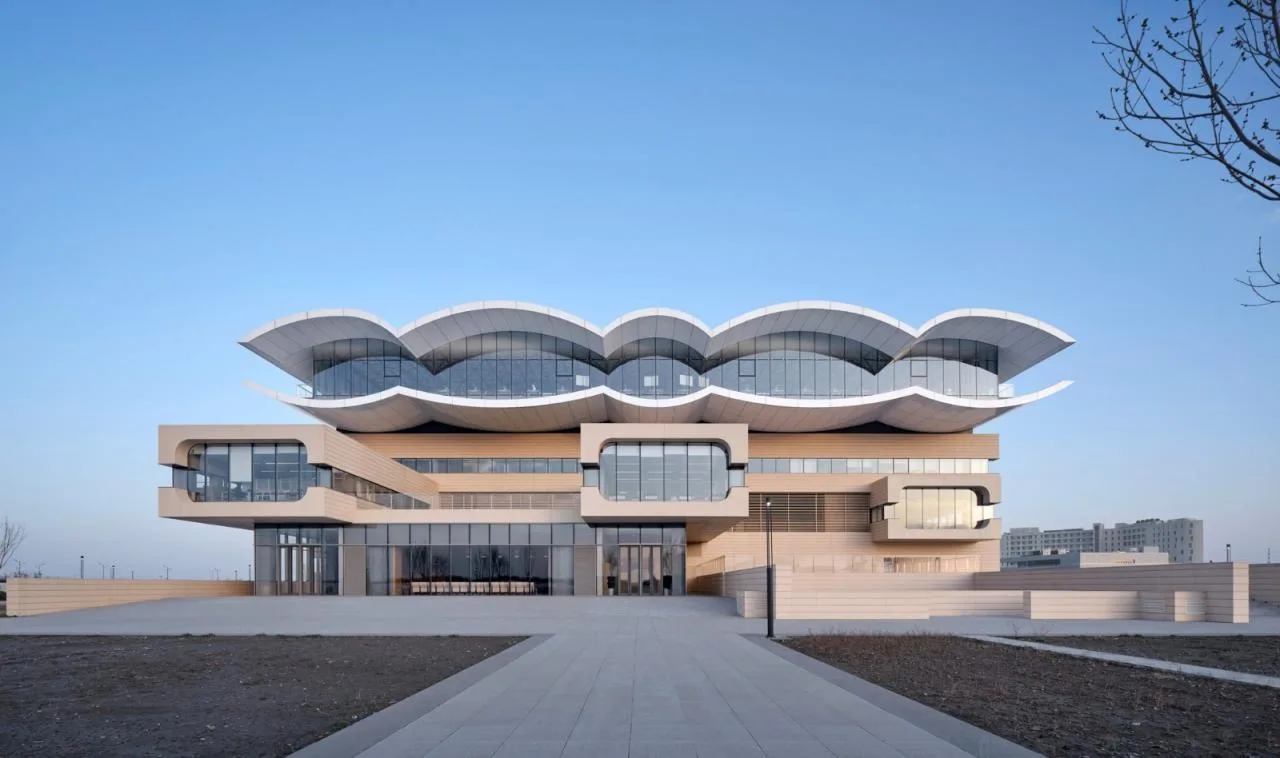
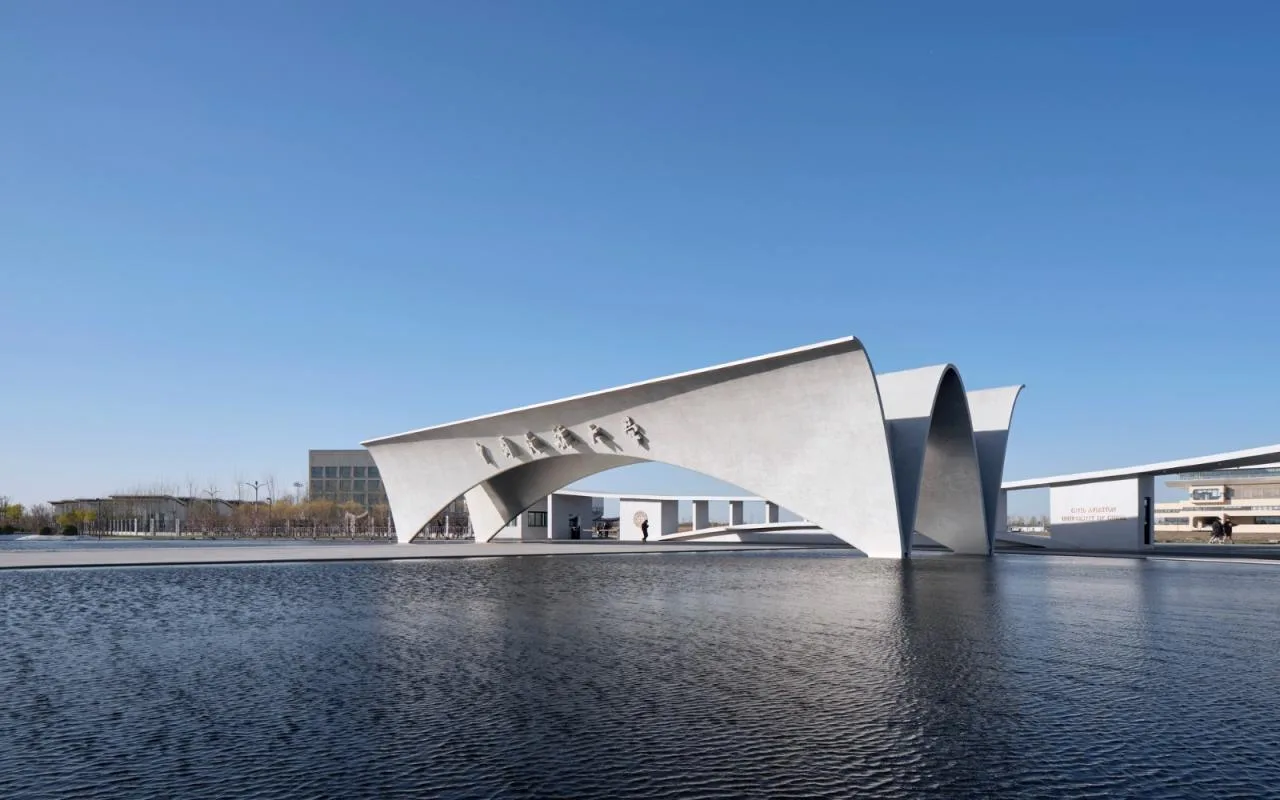
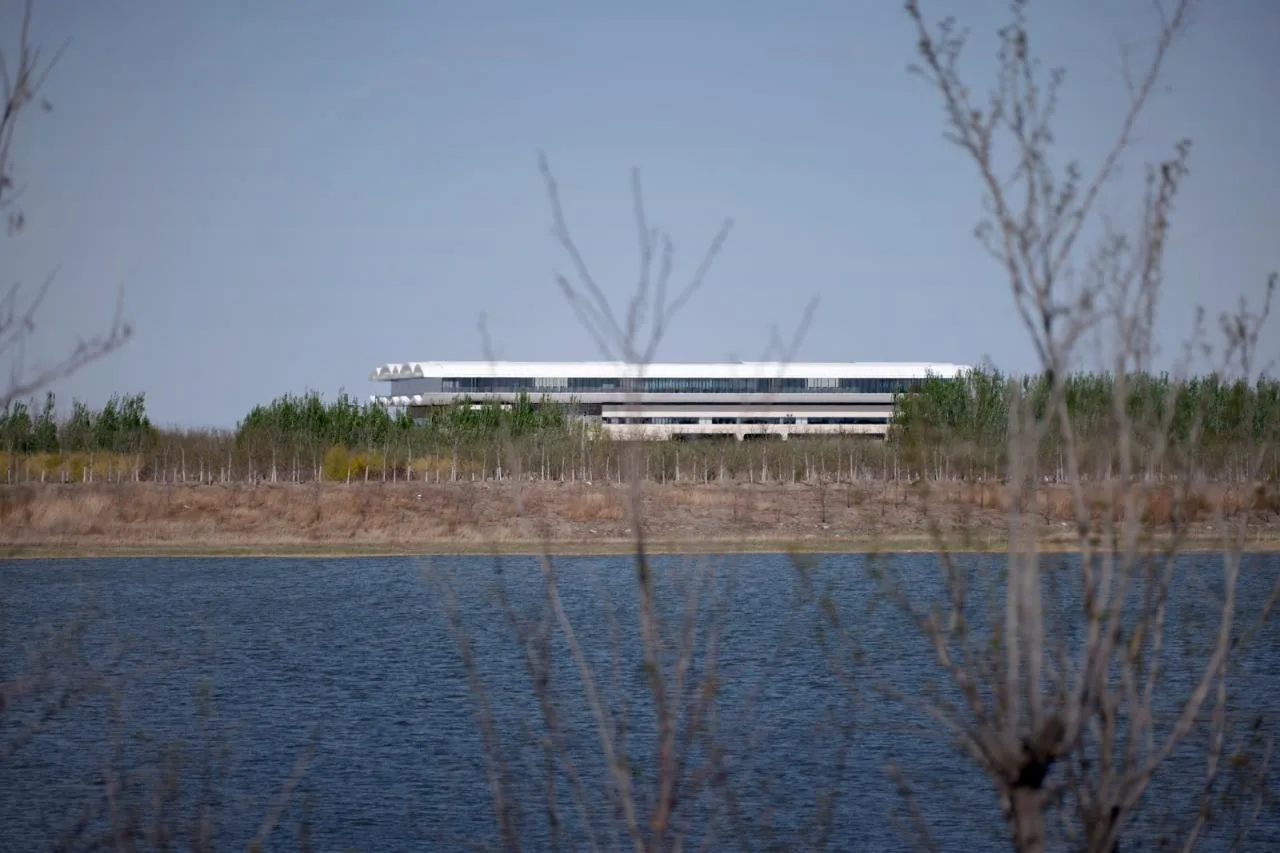
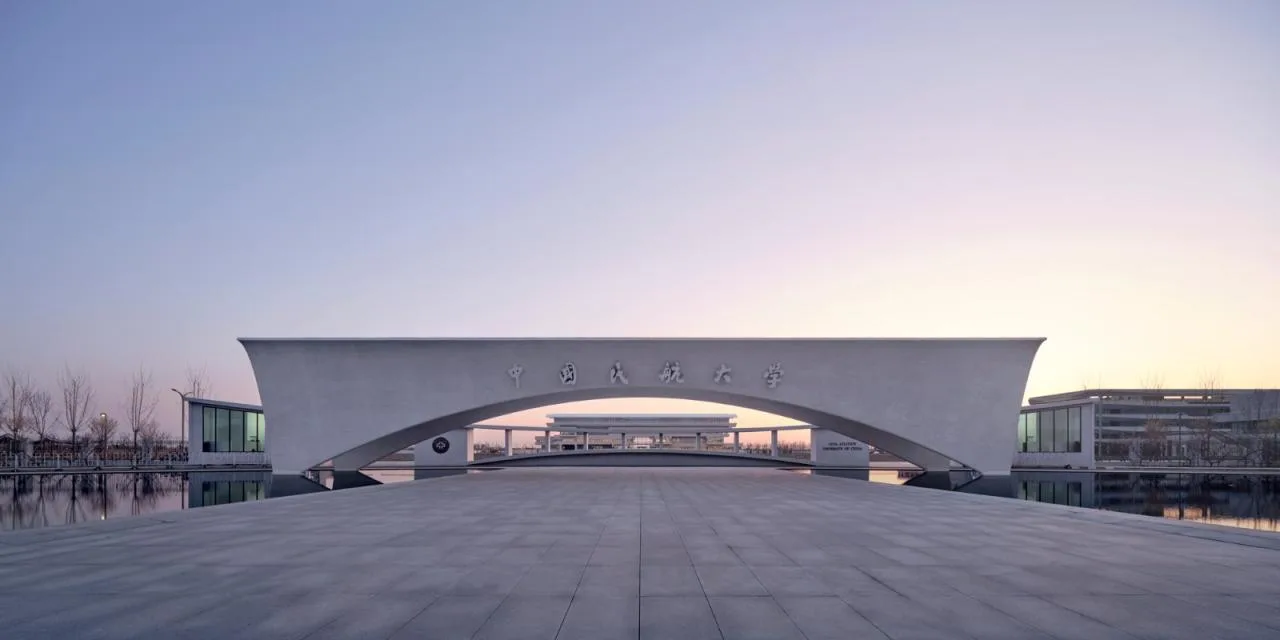
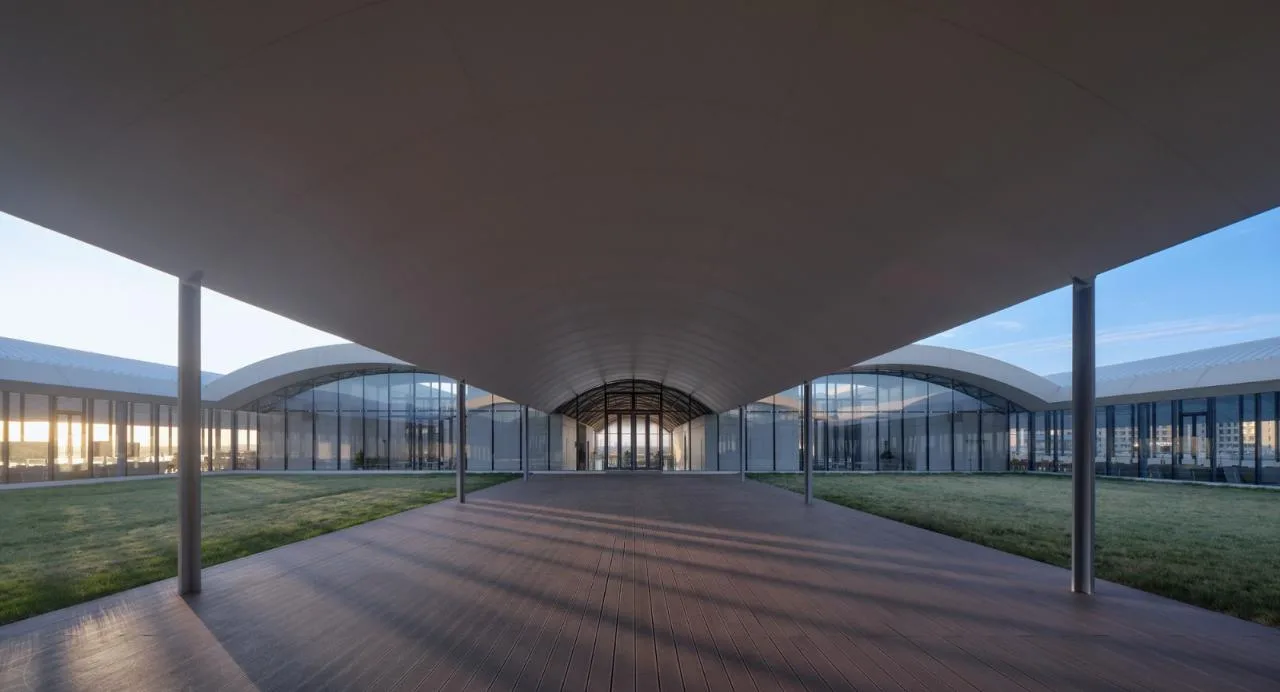
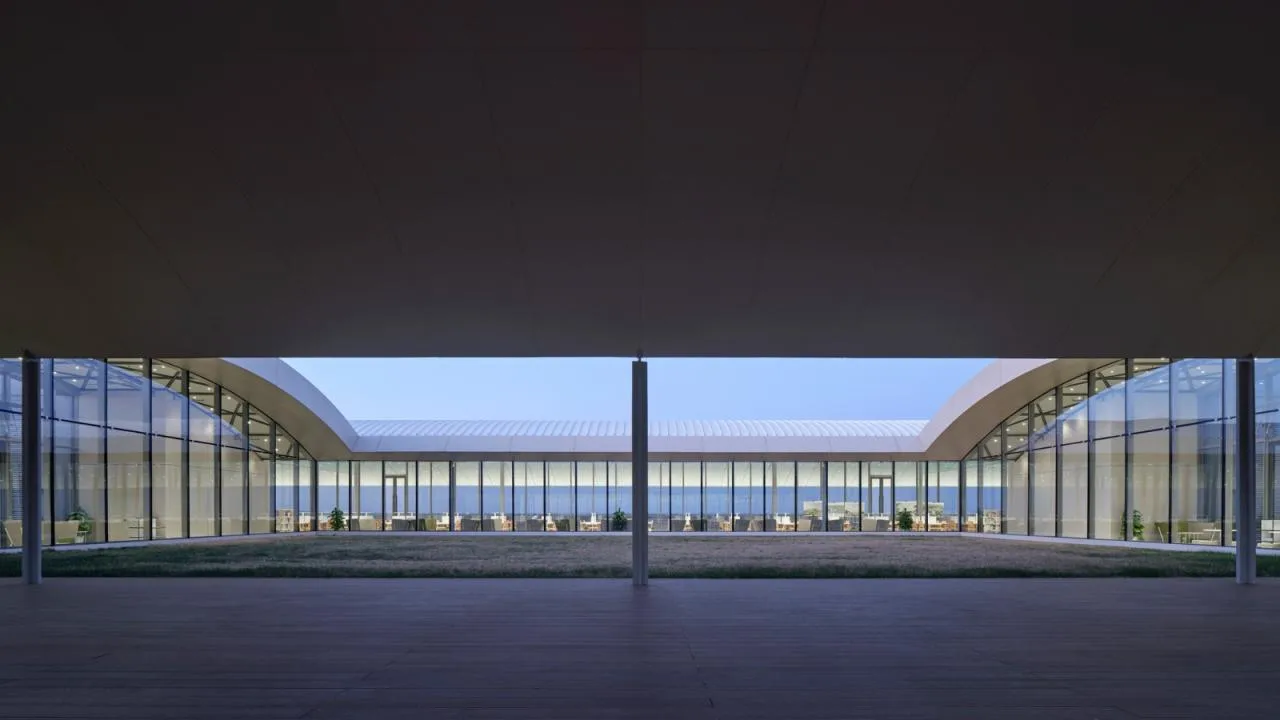
The Civil Aviation University of China Ninghe Campus Library, located in the Ninghe District of Tianjin, is the centerpiece of the first phase of the new campus development. Standing 23.7 meters tall, the library encompasses approximately 40,000 square meters of total construction area, including around 26,000 square meters above ground and 14,000 square meters underground. The campus’s south gate features a concrete thin shell structure, creating a clean and striking main entrance that appears lightweight and wing-like.
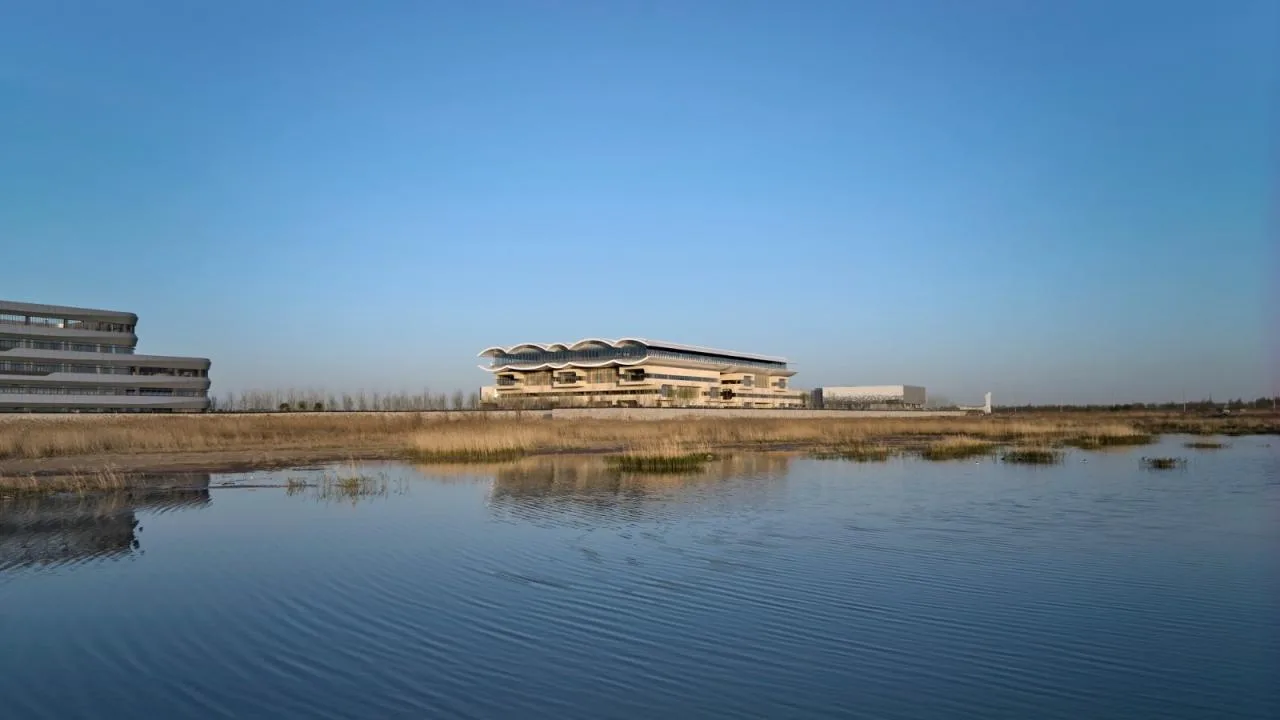
1. In response to the strong axial and ceremonial planning of the new campus, the library’s design does not emphasize its independence or importance through height or volume. Instead, the library is conceived as a spatial node that optimizes the campus layout and organizes the system. The vertical ceremonial axis is softened, while the horizontal functional belt is enriched, creating a multi-directional connection between teaching and living spaces.
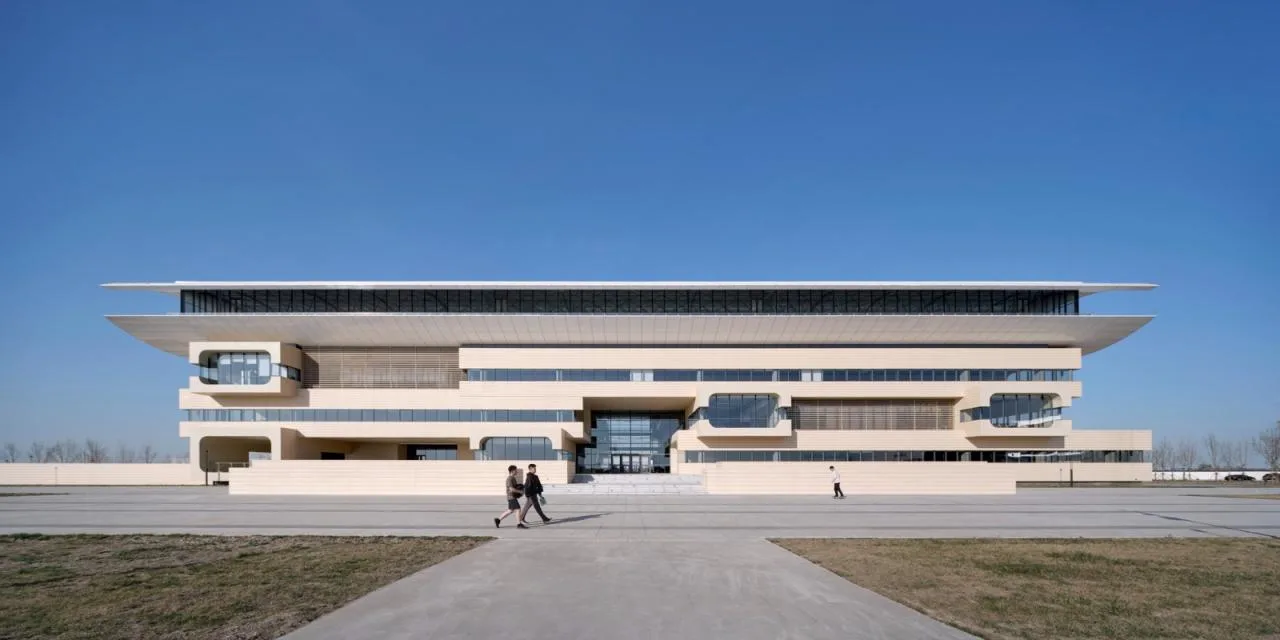
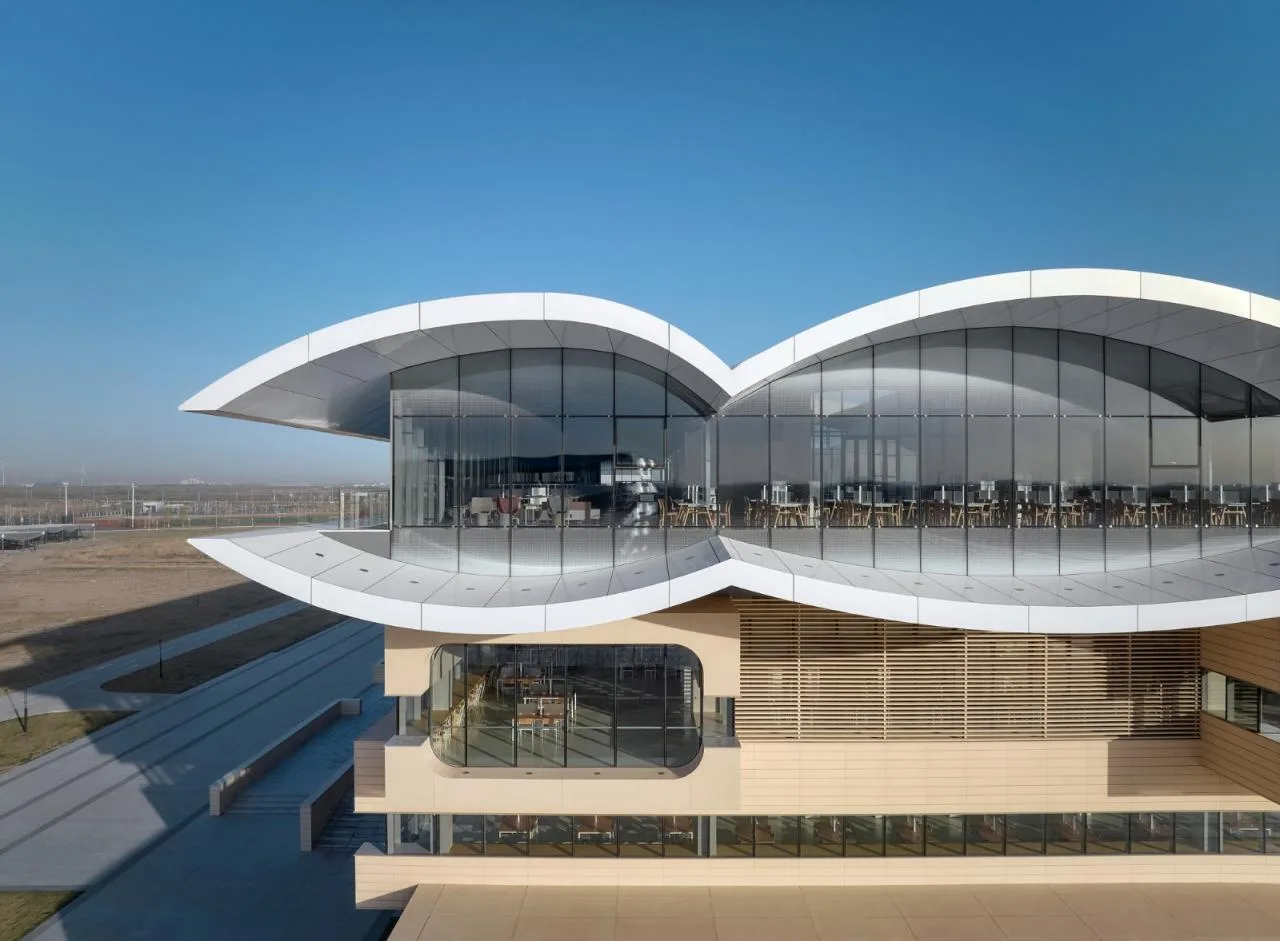
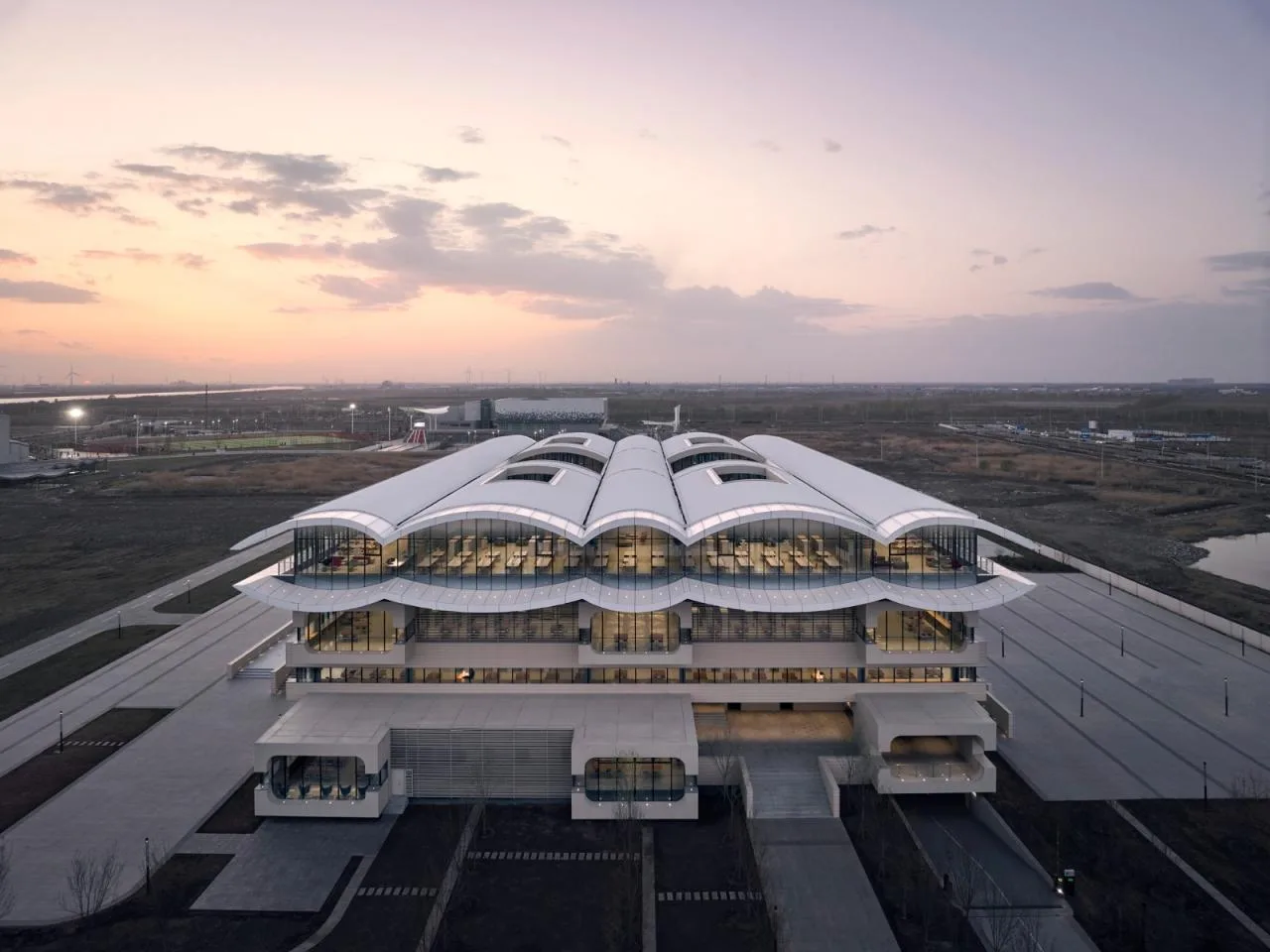
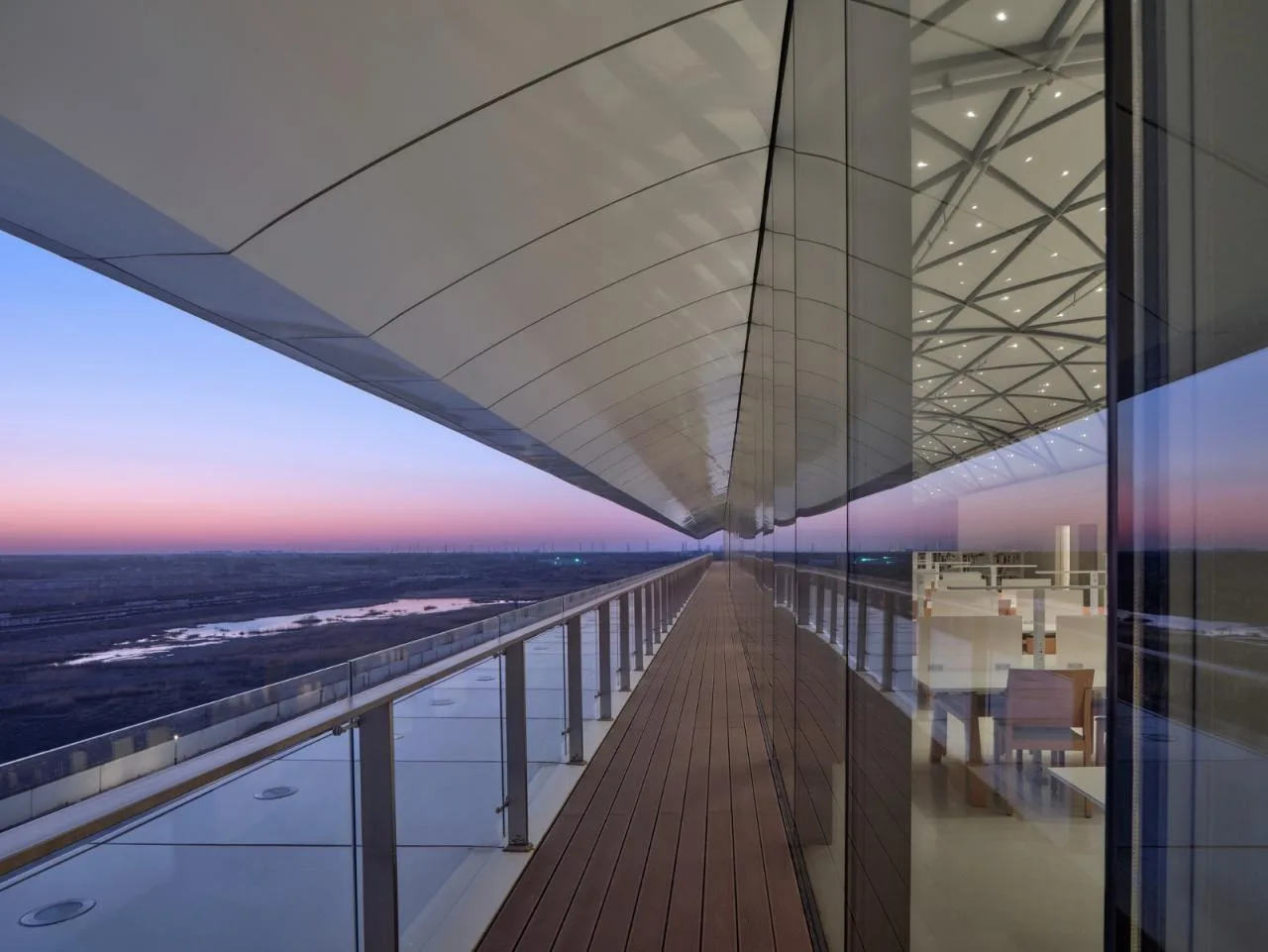
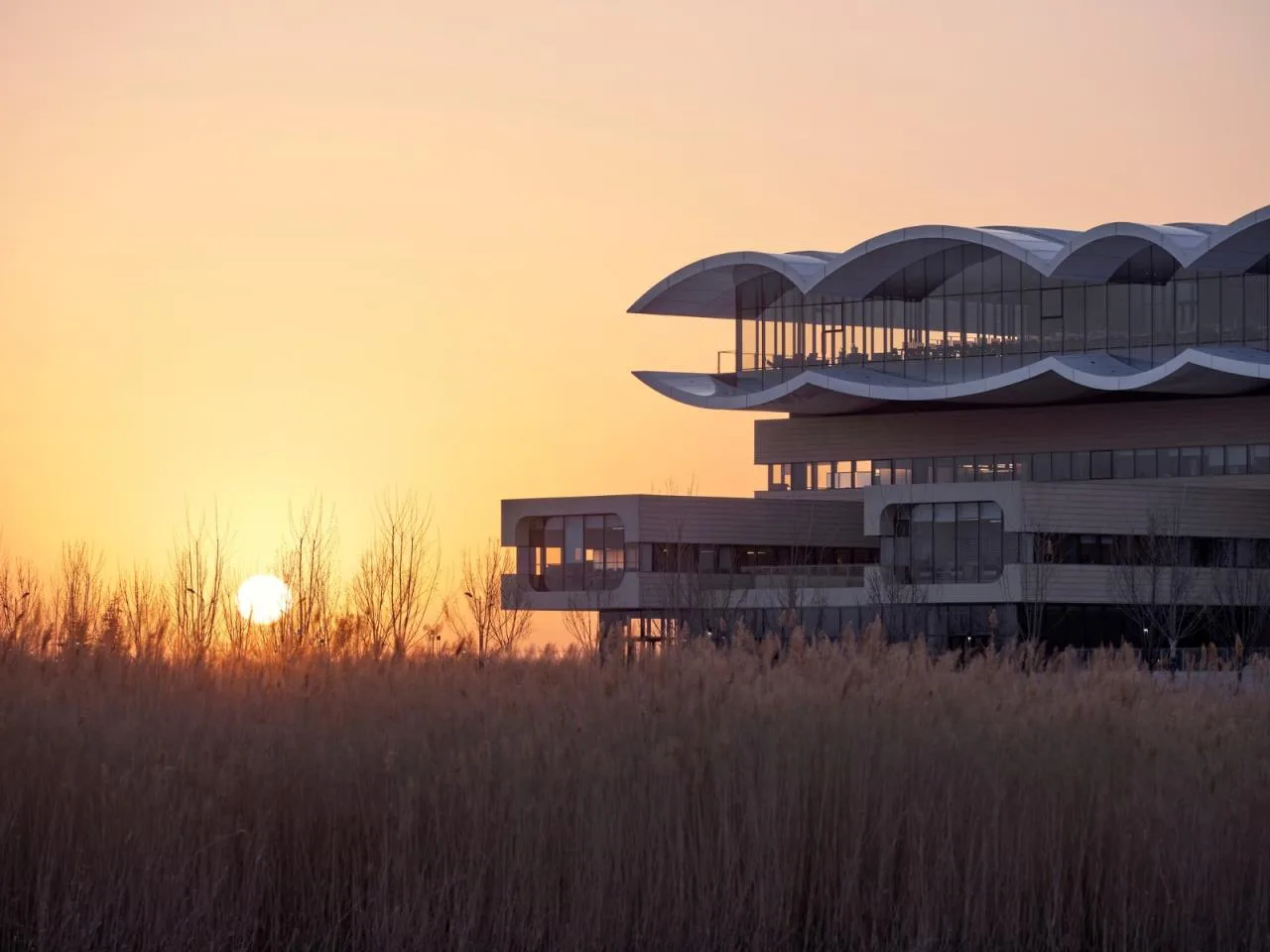
2. The library transforms from a closed, standalone building into an open, communicative space that integrates campus airflow, pedestrian movement, and landscape flow, aligning with the overall campus planning. It is naturally positioned at the campus center, where the longitudinal expansion axis intersects with a rich transverse axis. The building form evolves through five processes: drainage, lifting, floating, cloud stacking, and cloud plucking. The top floor is elevated, providing self-shading to protect lower levels from direct sunlight. Horizontal long windows reduce the window-to-wall ratio, enhancing thermal insulation and responding to the local climate.
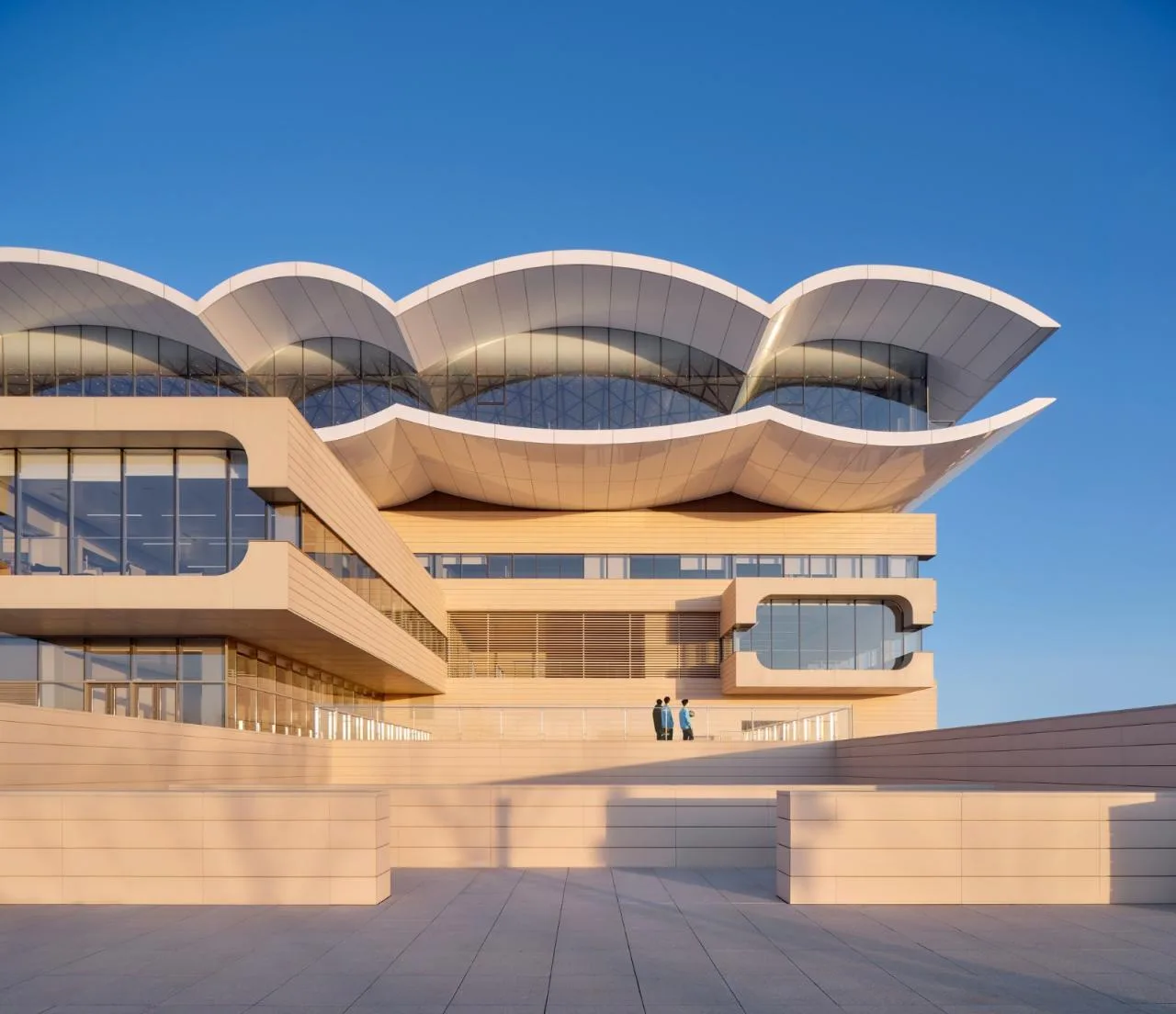
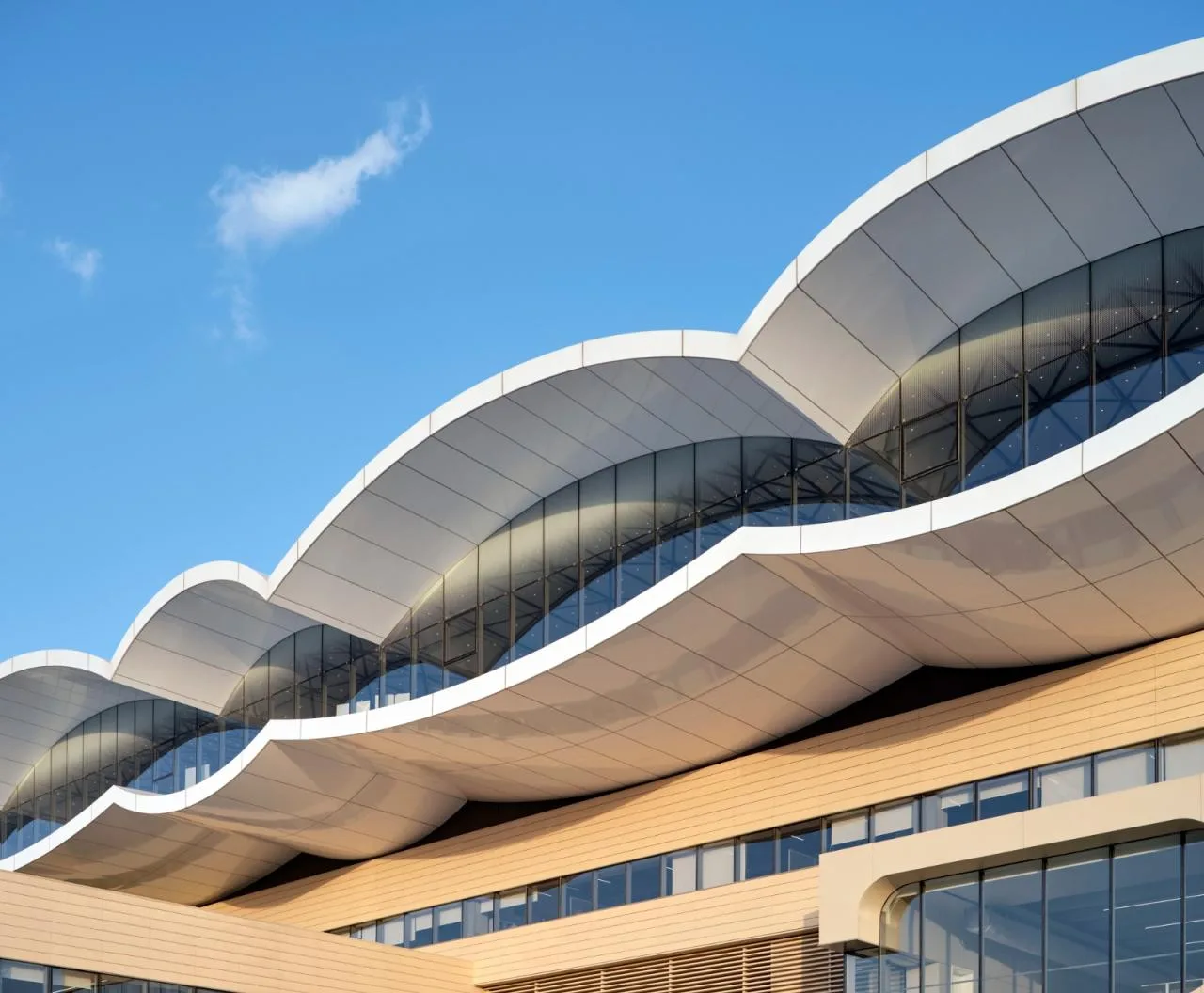
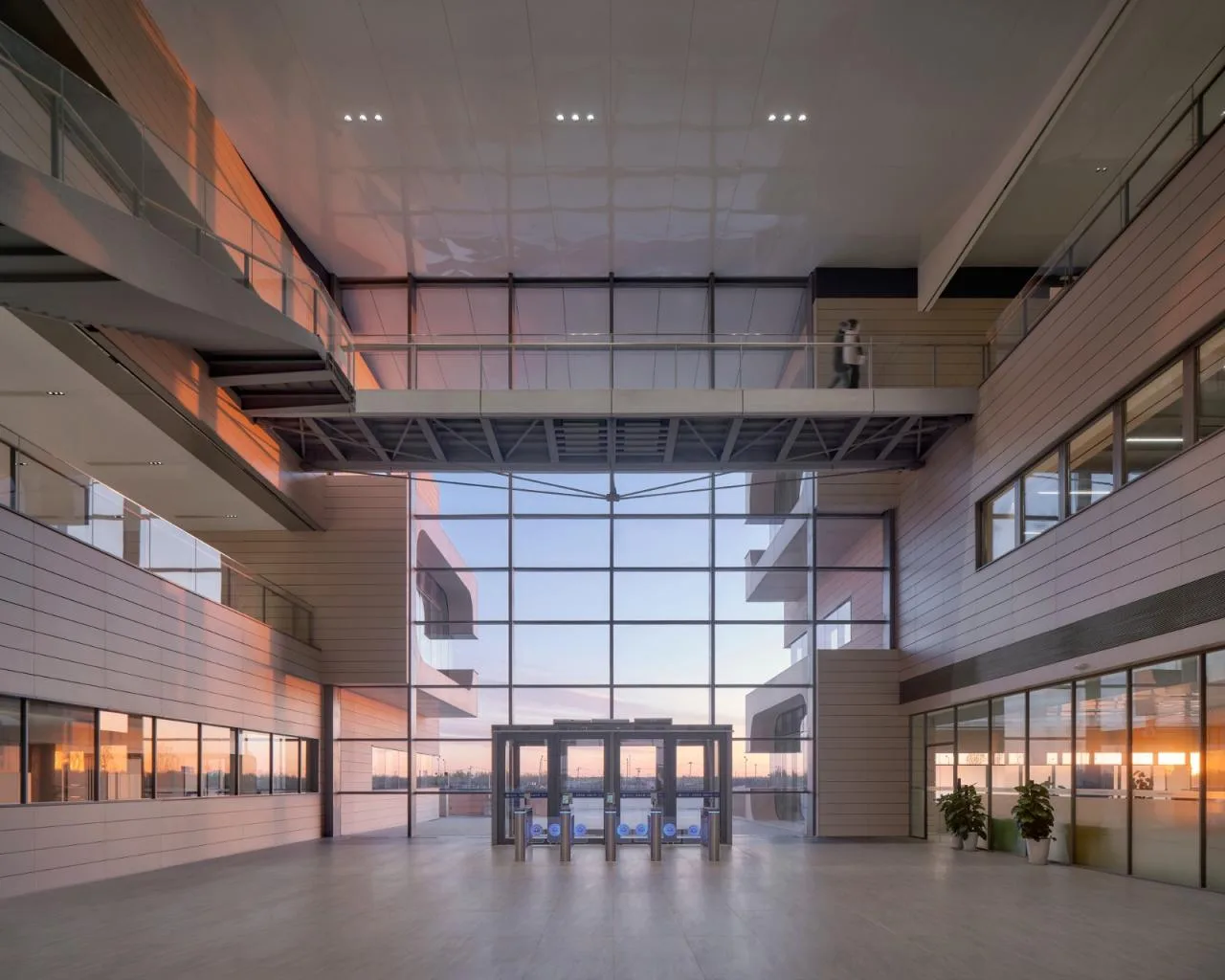
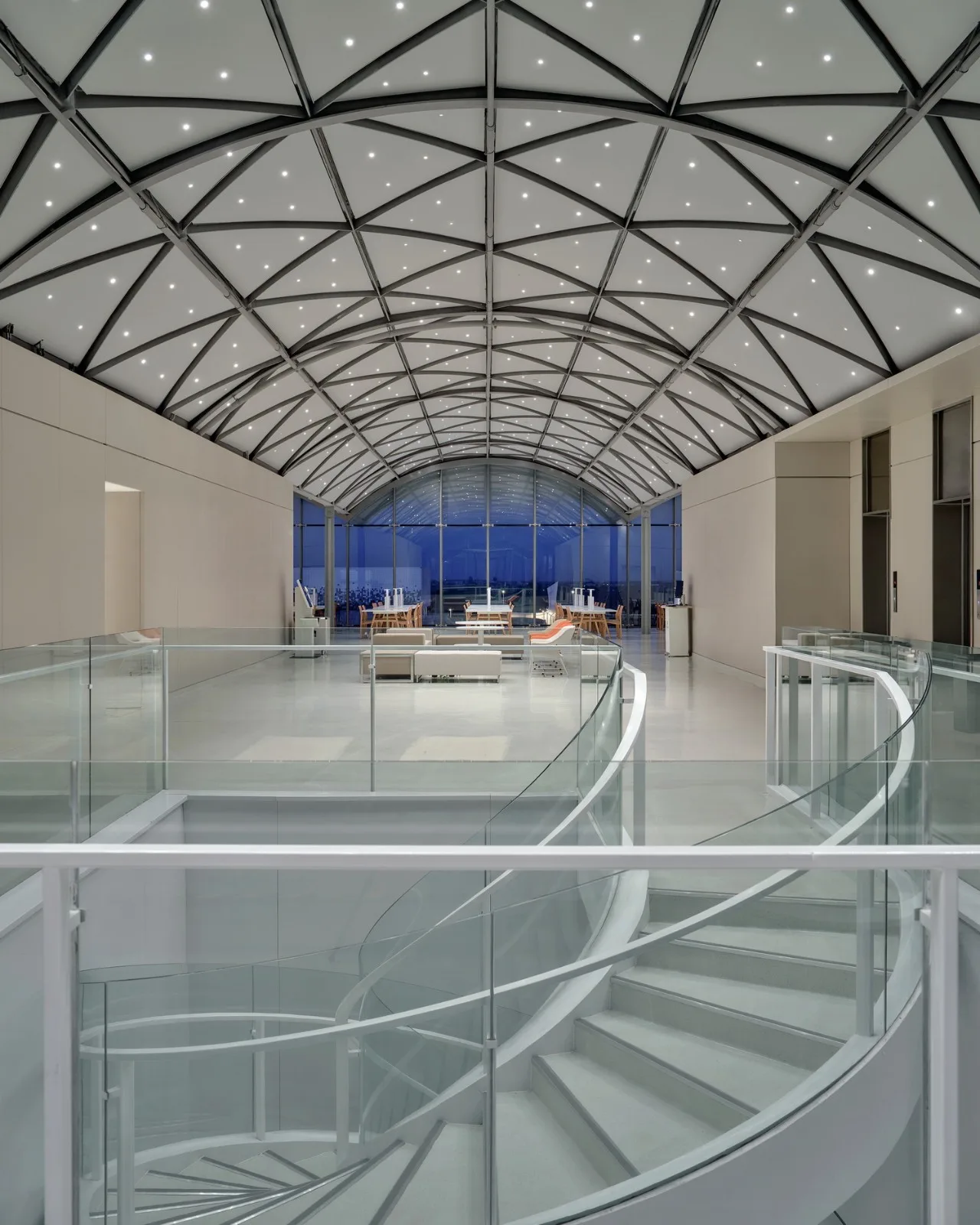
3. The library evolves from purely functional public facilities into symbolic cultural carriers. The building deconstructs the traditional binary function of “reading” into three main systems: the structural core, the strip-shaped cabin, and the cloud-based reading system. The structural core houses the dense library collection and vertical circulation, providing strong structural support. The strip-shaped cabin is layered to accommodate general reading spaces and offices.
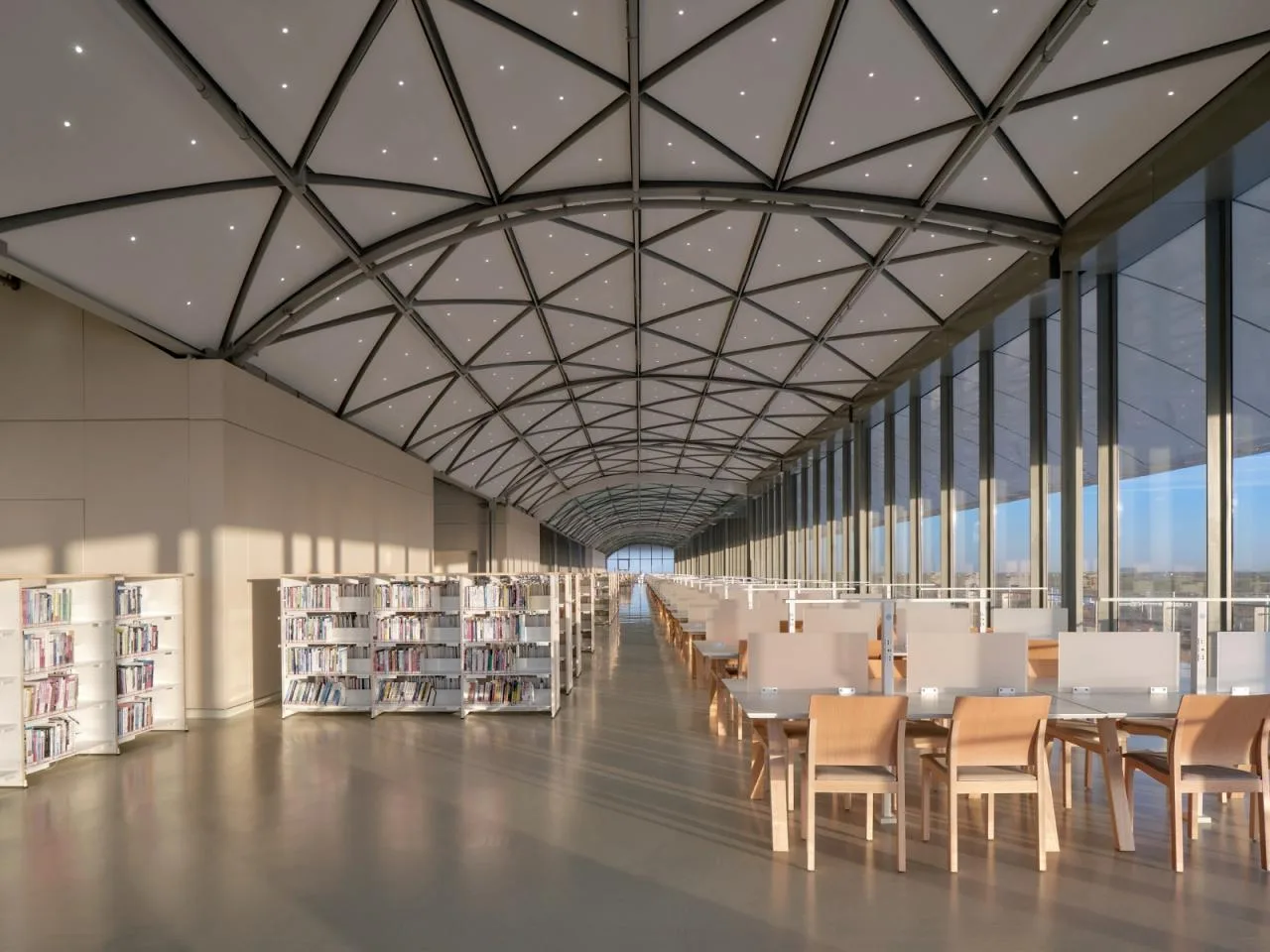
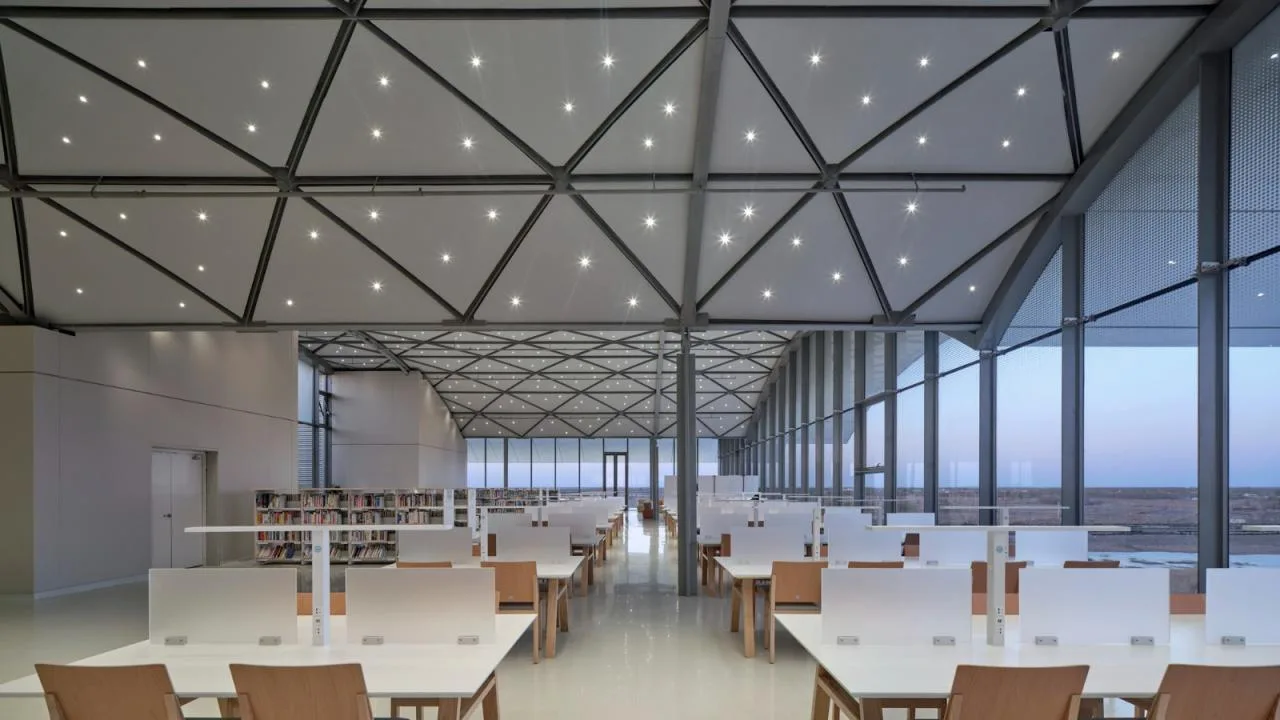
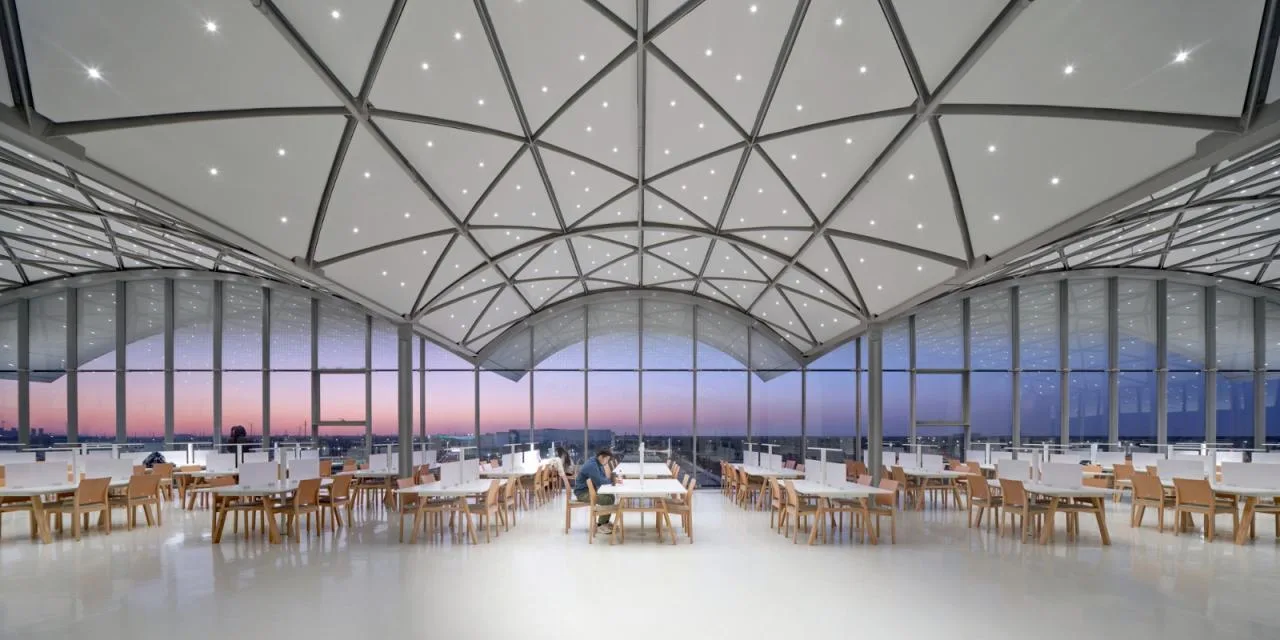
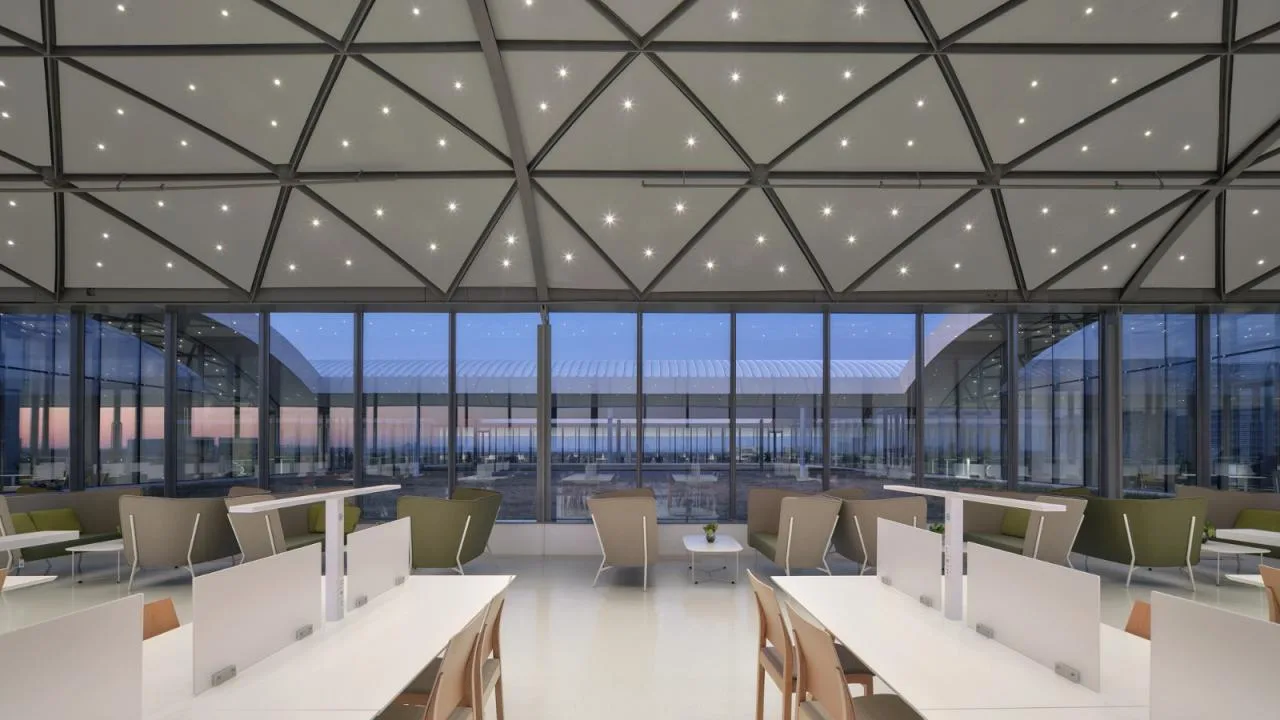
The cloud-based reading hall, located on the top floor, features a spacious, pillar-free open area. It is designed to foster a lively, interactive, and efficient environment, aligning with the overall architectural form and establishing a new landmark for the campus.
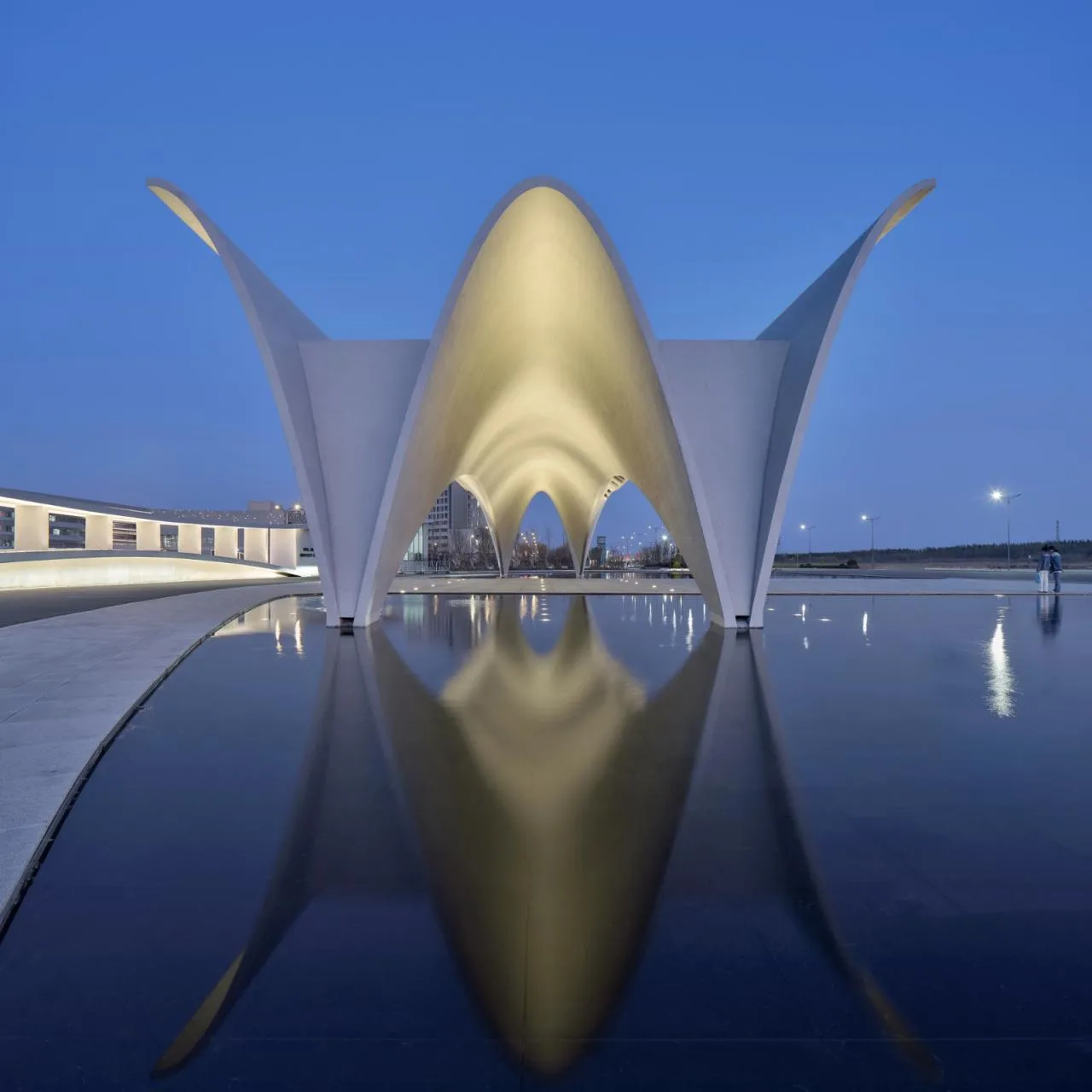
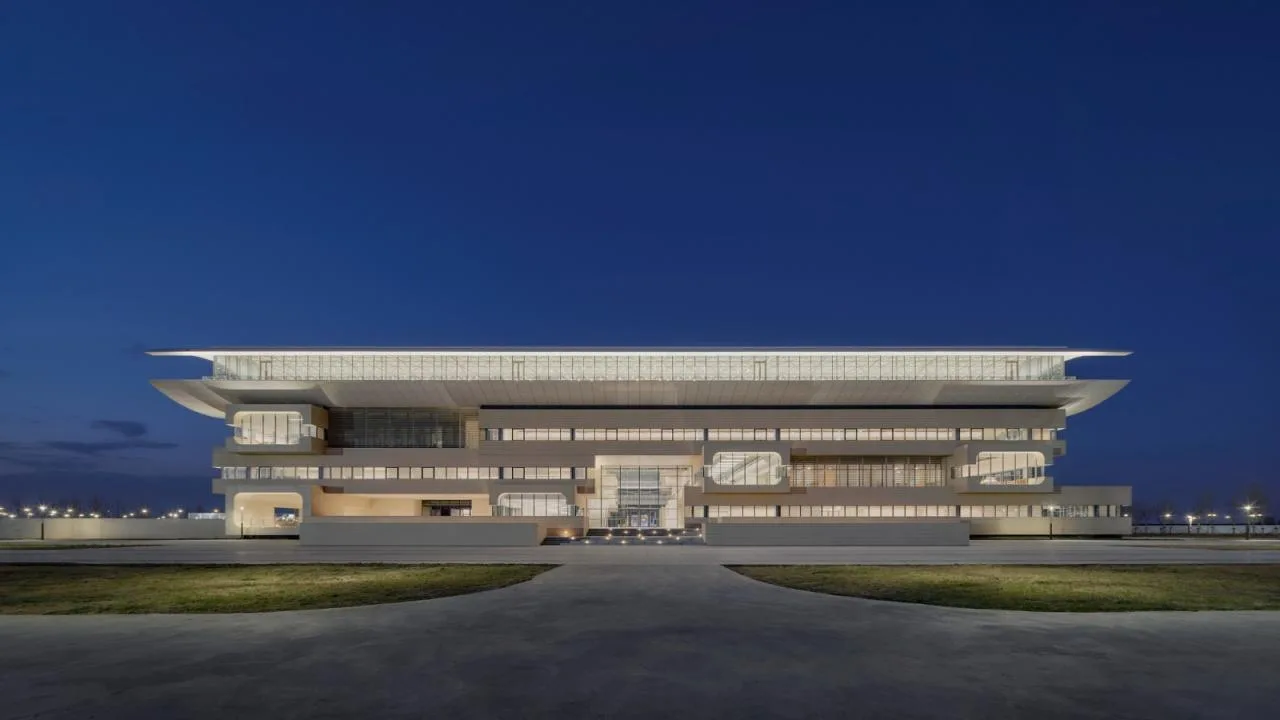
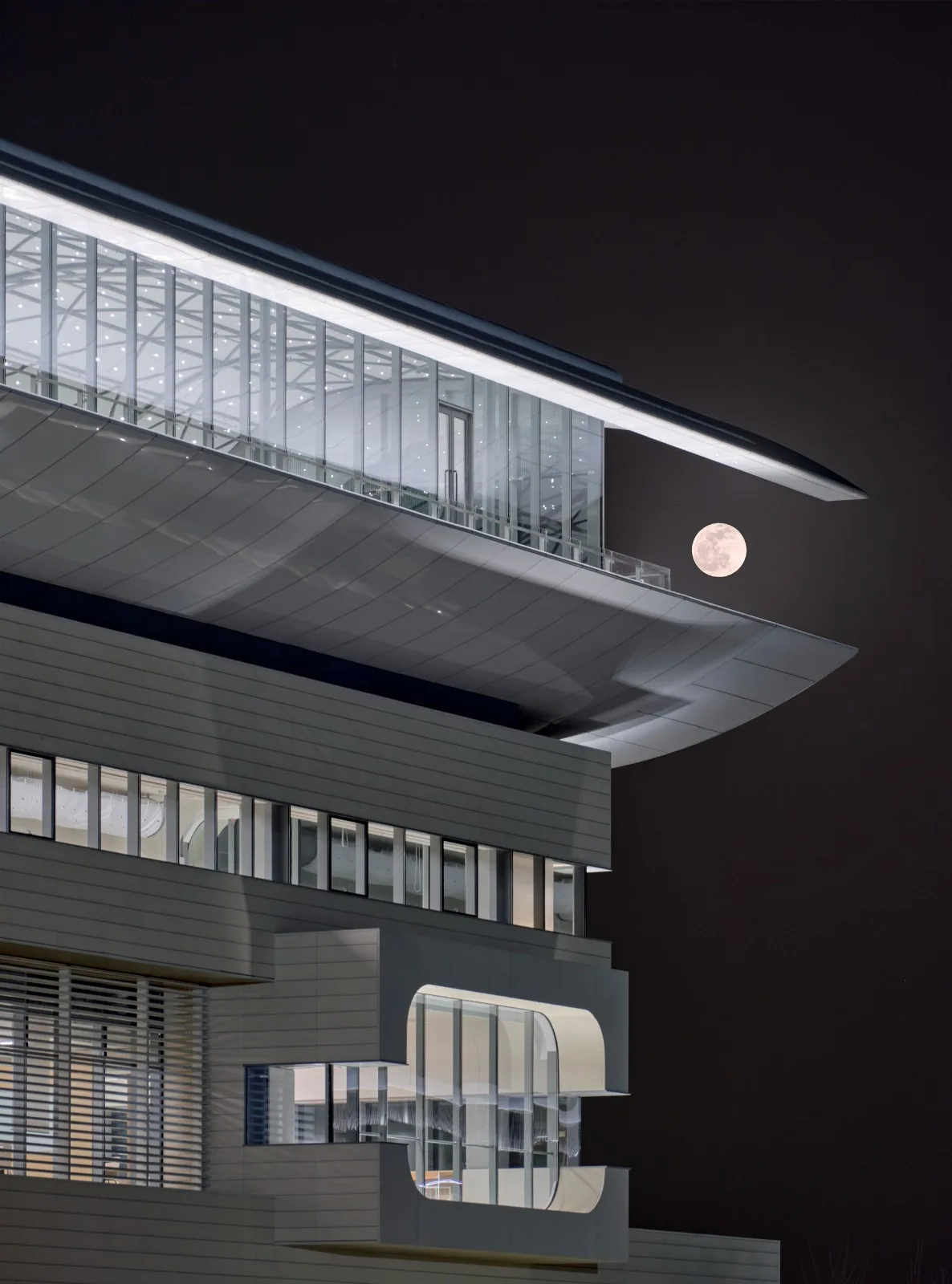
Project Drawings
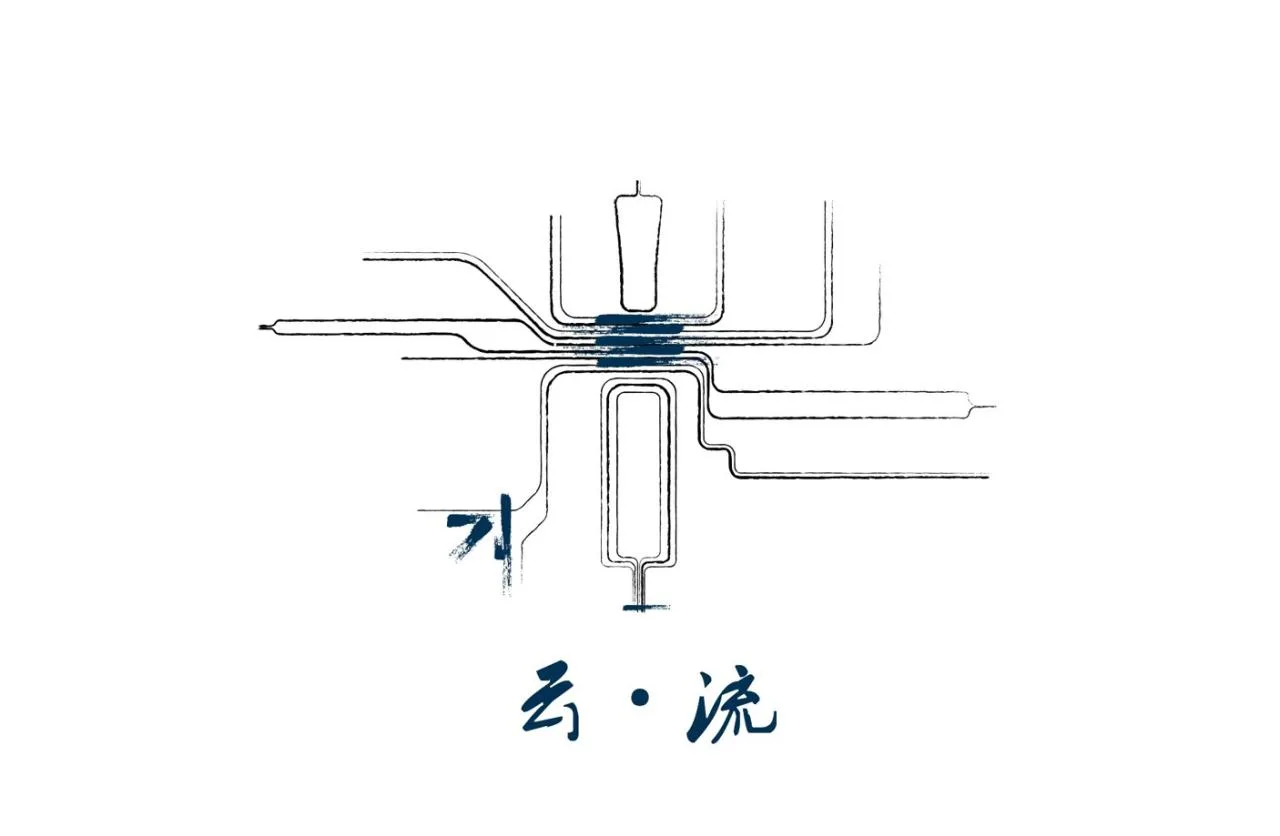
△ Sketch
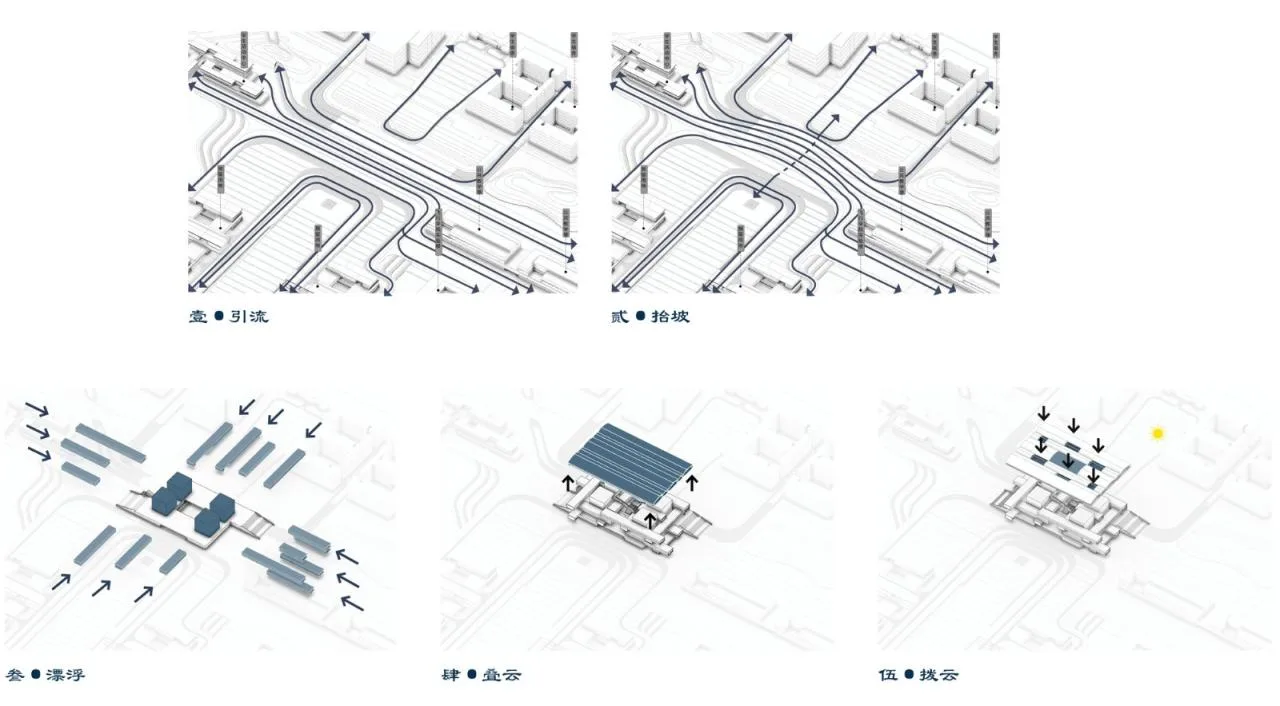
△ Analysis Chart
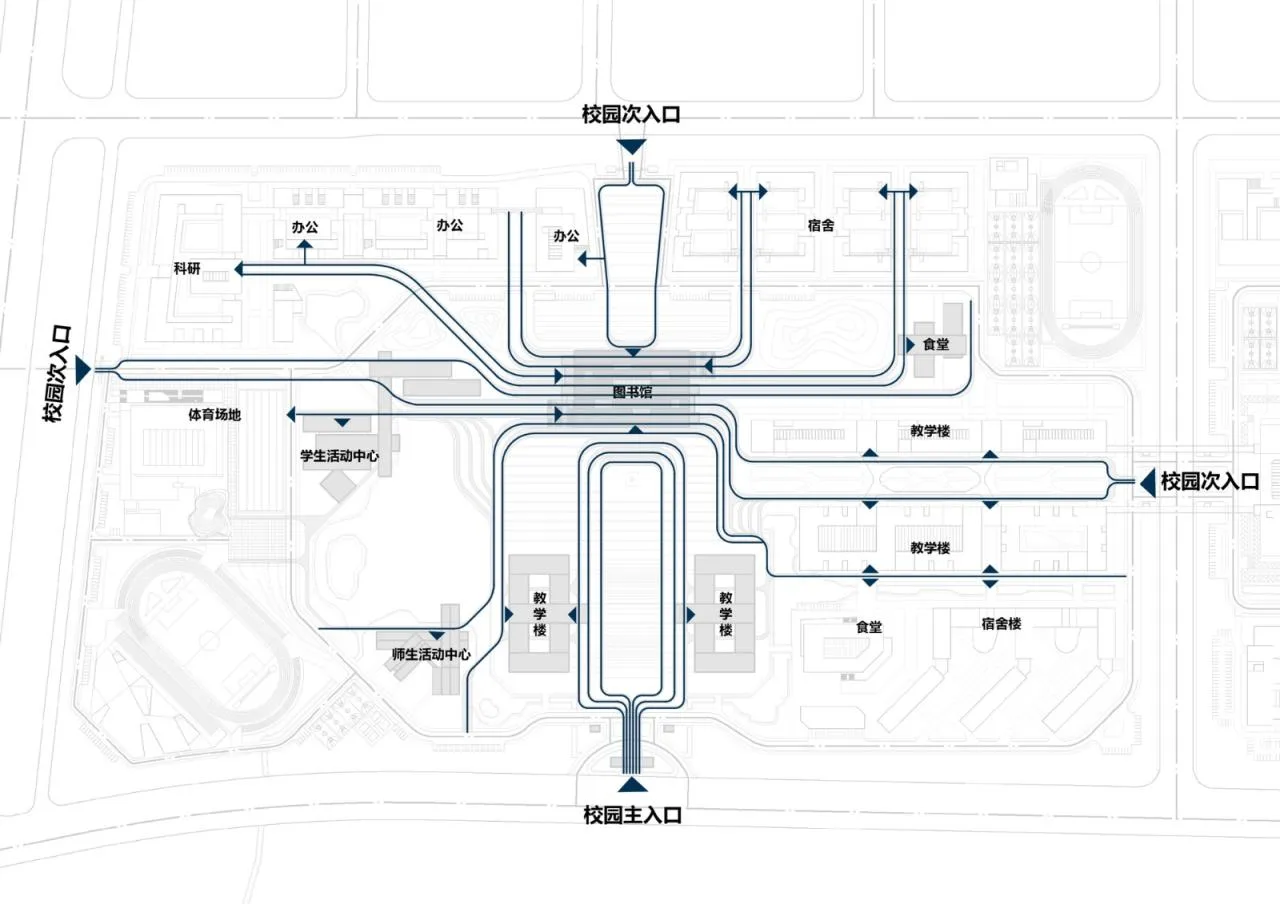
△ Streamline Diagram
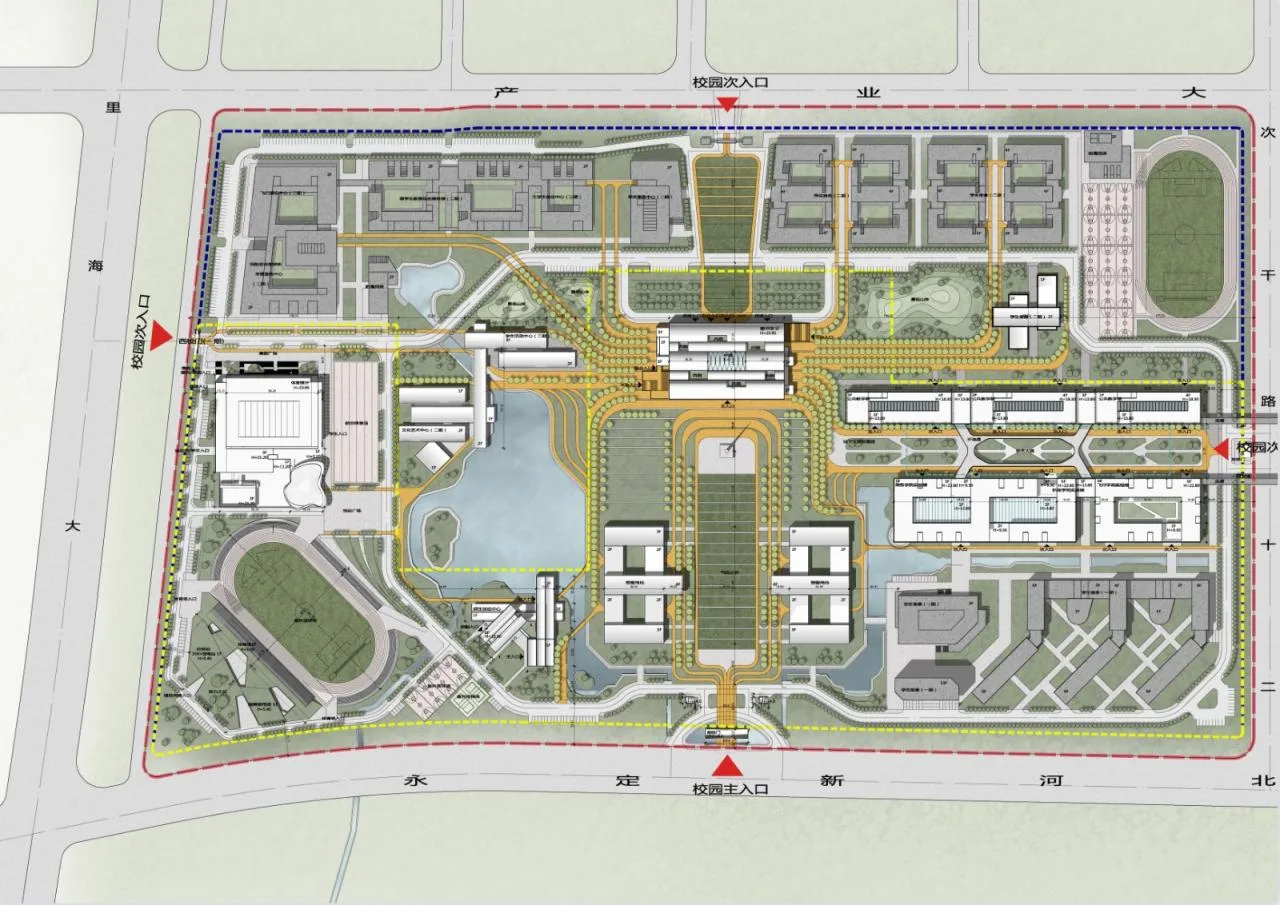
△ General Layout Plan
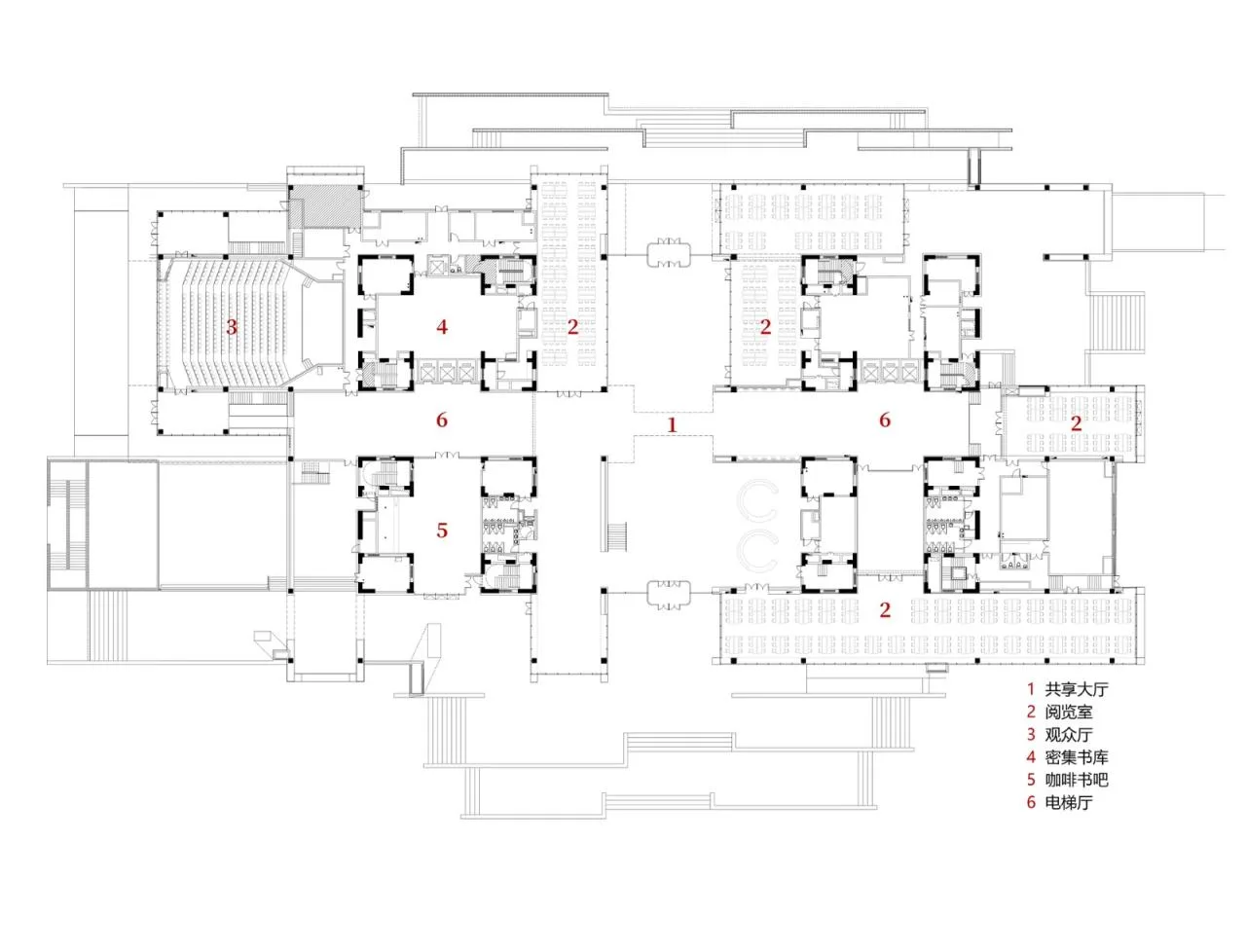
△ First Floor Plan
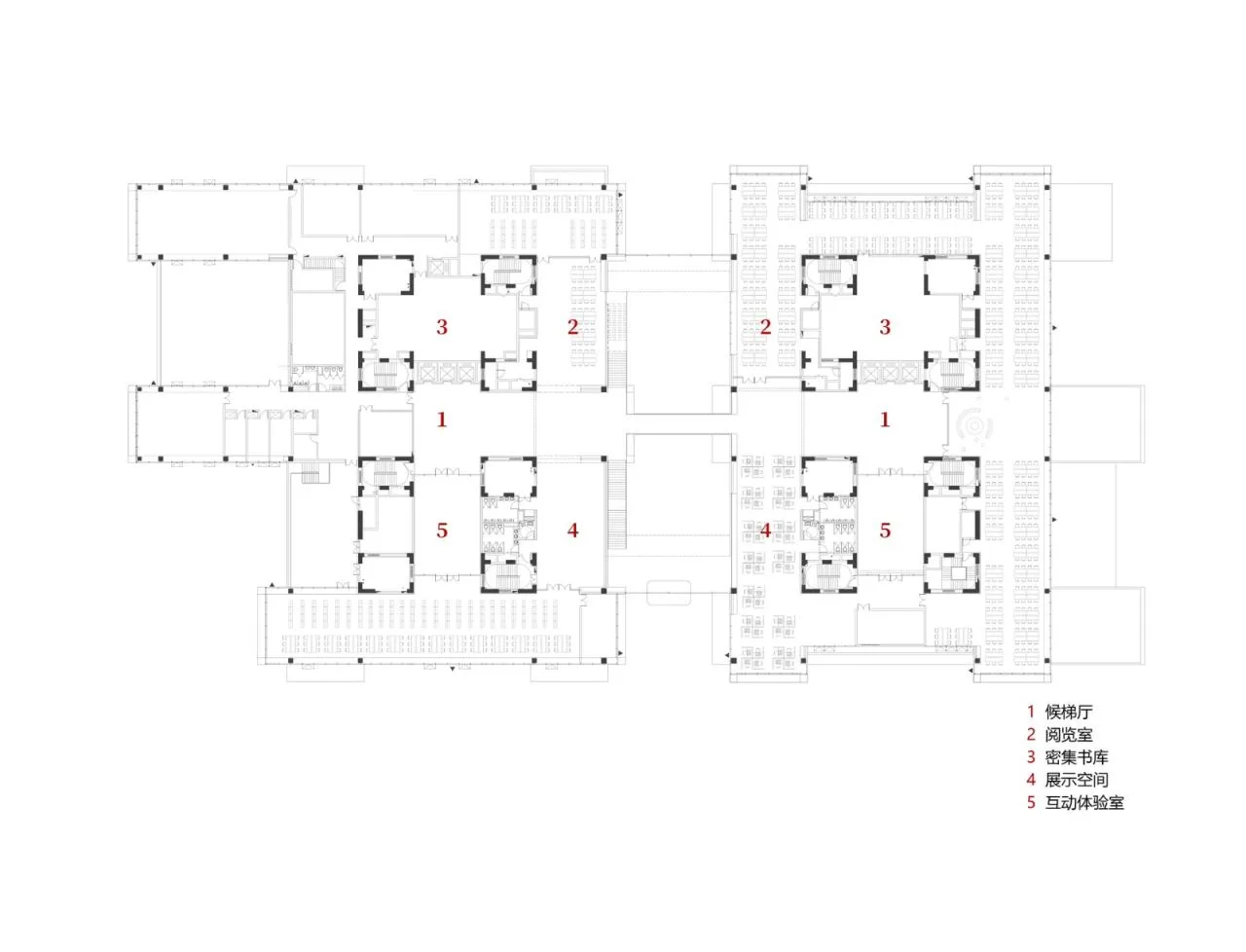
△ Second Floor Plan
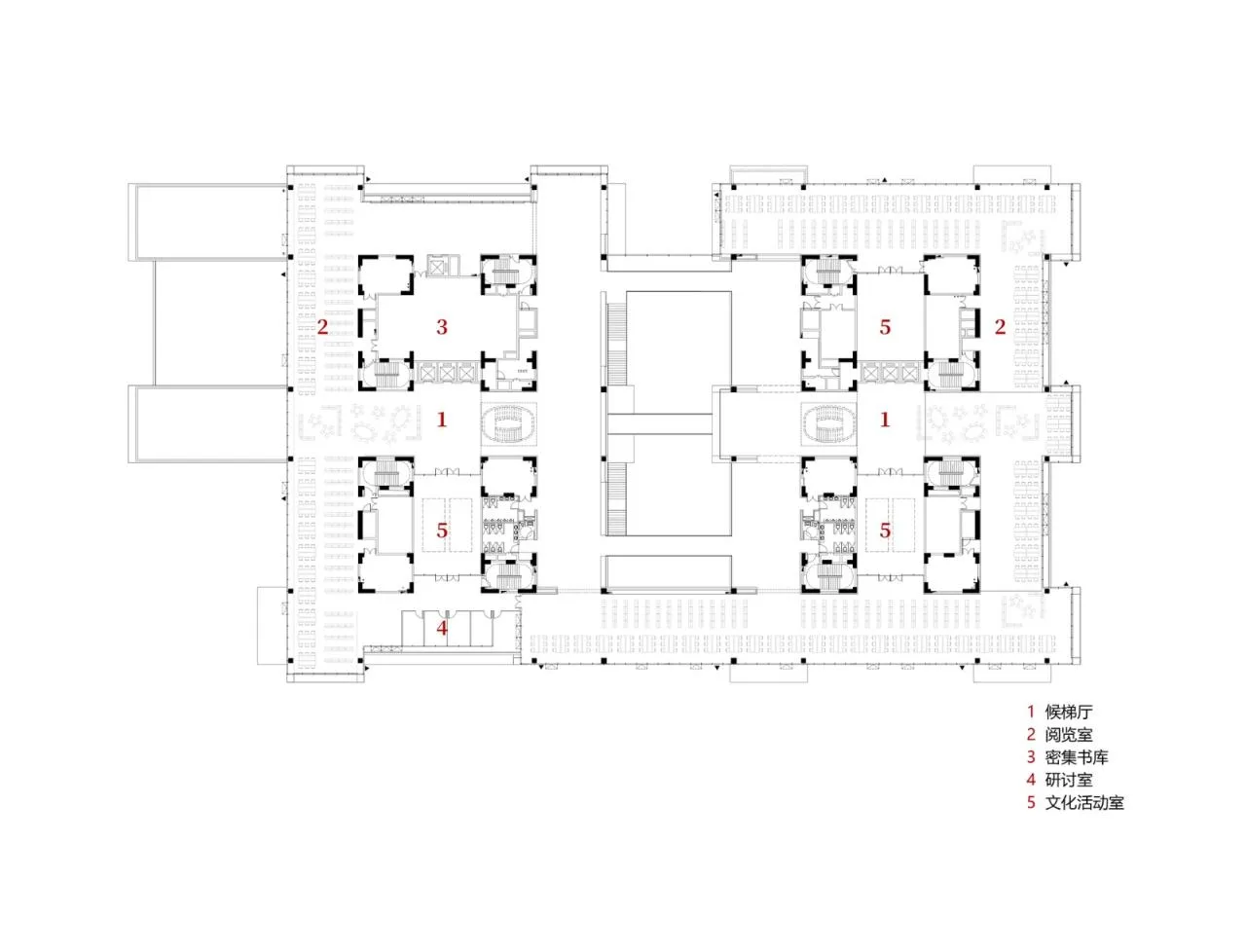
△ Third Floor Plan
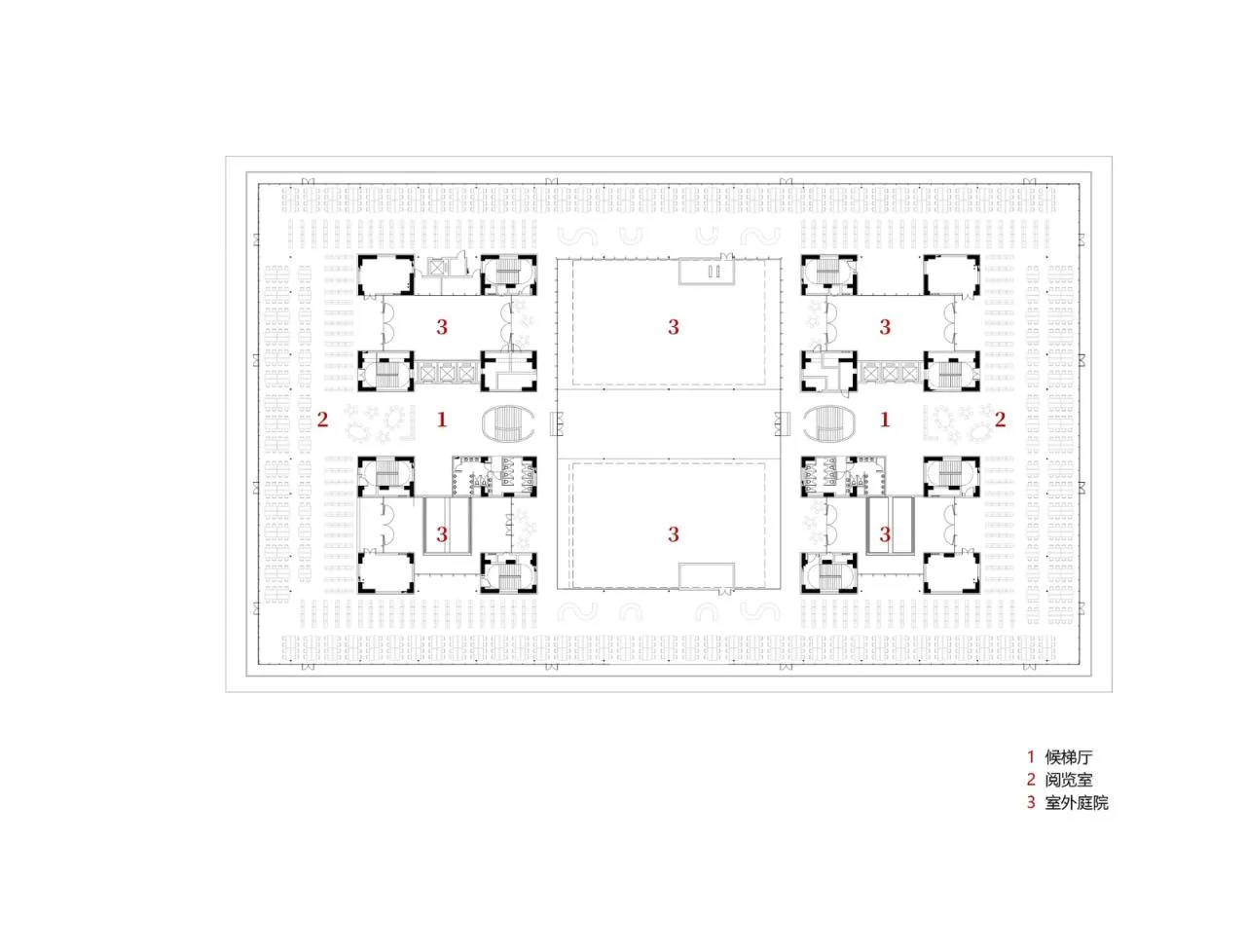
△ Fourth Floor Plan
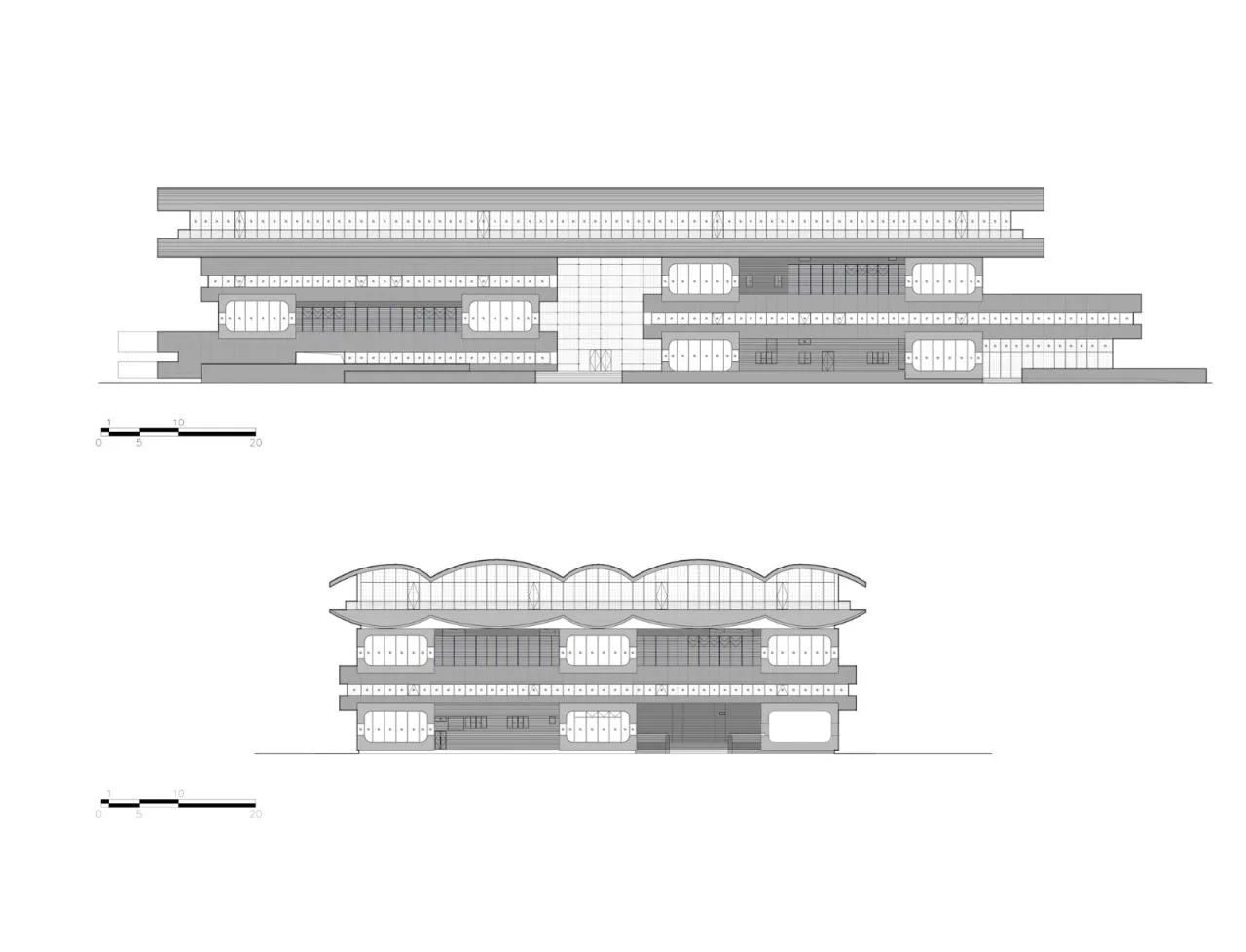
△ Elevation Drawing
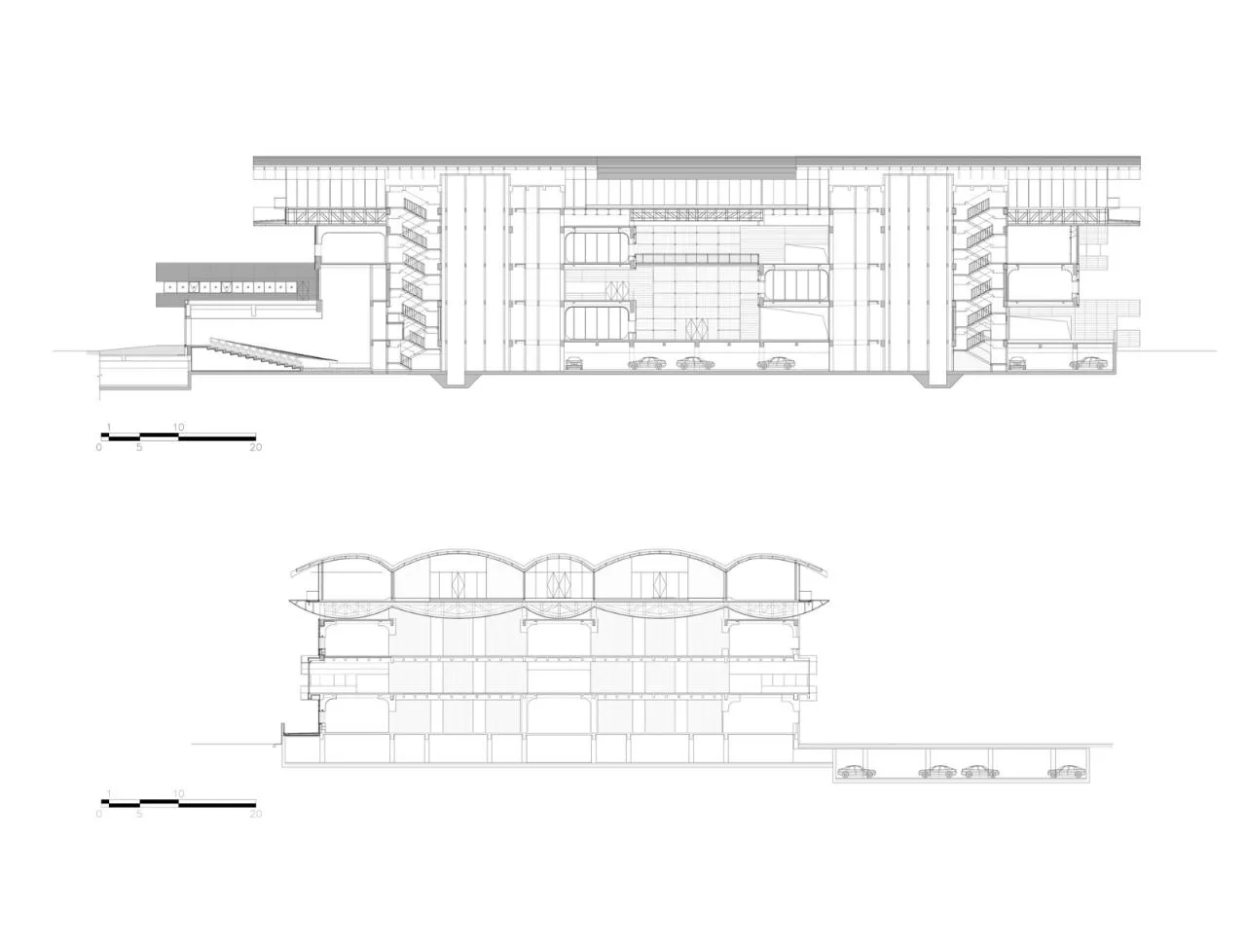
△ Section Diagram
Project Information
Architect: Tongji Original Design Studio
Area: 40,000 square meters
Year: 2023
Photographer: Octopus Seeks Architecture
Lead Architects: Zhang Ming, Zhang Zi, Chen Bo
Architectural Design Team: Mou Xiaotong, Yao Guanjie, Sun Jialong, Liu Langxin
Structural Design Team: Ding Jiemin, Wu Honglei, Zhang Zheng, Zheng Chaoyi, Lin Chen, Zhang Yueqiang, Liu Xingneng, Duan Xuanmeng
Equipment Design Team: Liu Jian, Jia Min, Lv Zonghu, Wang Haidong, Wu Hao, Zhao Zhenzhou, Chen Hanqiu, Su Man, Zhu Han, Wu Yiqiong, Ma Jingsi, Zhang Lulu, Zheng Wenbin, Sun Bingjie
Lighting Design Team: Yang Xiu, Xu Xiaqing, Ma Yue, Chen Xingru, Wen Hailan, Wang Xin, Bian Chen, Gu Xinghua
Technical and Economic Team: Li Liyi, Gu Jingjing, Xu Jing, Su Yujin
Green Building Team: Zheng Xiaowei, Li Xiaolu, Li Dongmei, Zhang Xian
Project Management: Zhejiang Jiangnan Engineering Management Co., Ltd
Construction Unit: Civil Aviation University of China
Construction Unit: China Construction Eighth Engineering Division Co., Ltd
Location: Ninghe














Must log in before commenting!
Sign Up