
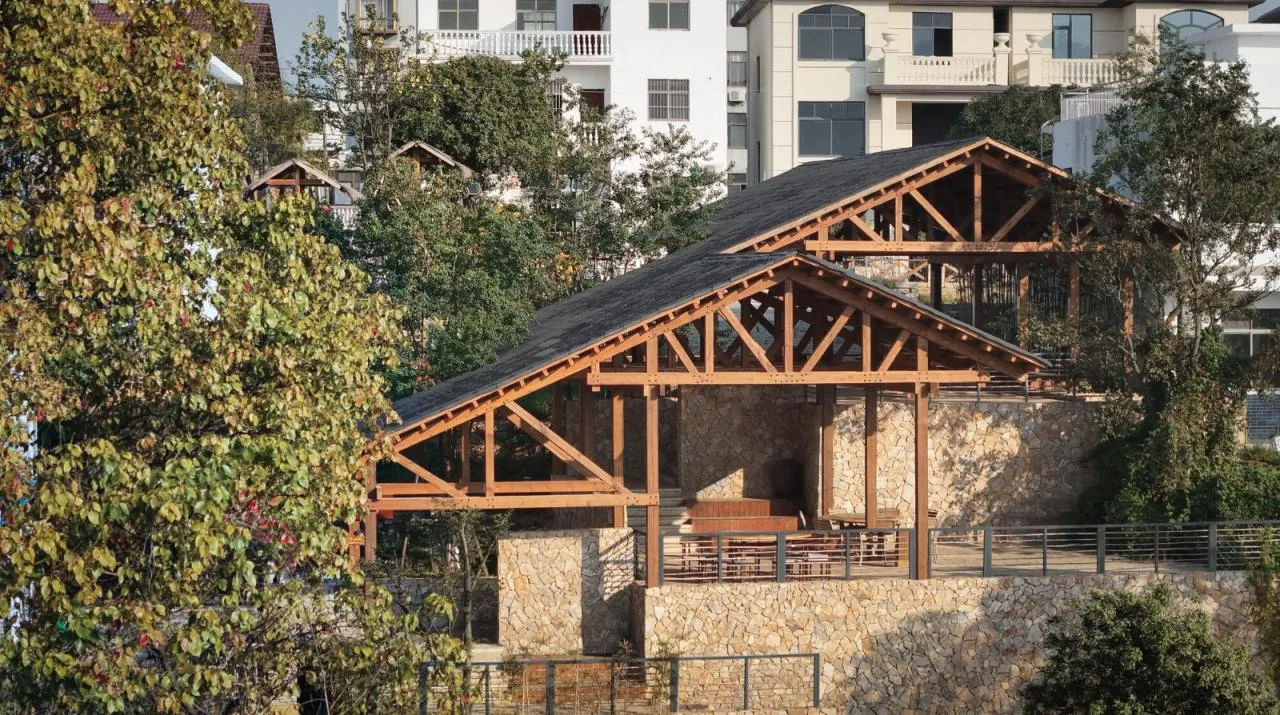
The vast red soil, the expansive Meiling Mountains, and the lively rural landscape have shaped the daily life and technological heritage of Dongyang. This building is deeply rooted in local tradition and harmoniously integrated with its environment. Its broad perspective and the poetic simplicity of everyday life resonate profoundly.
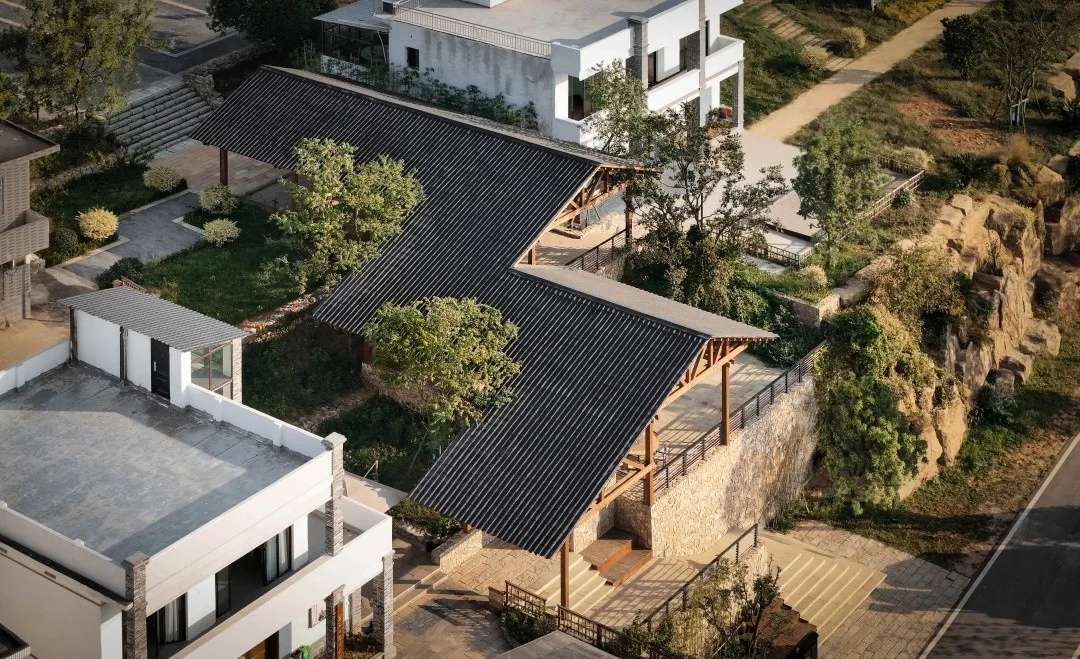
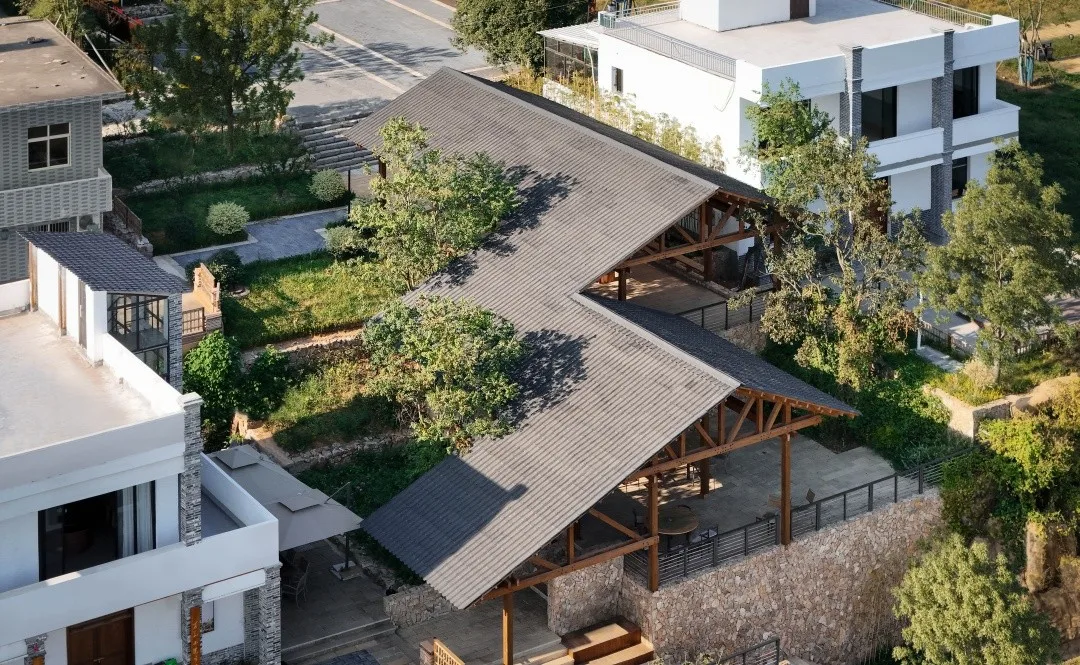
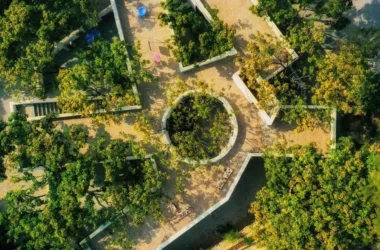
Situated on a small hill, the project faces Meiling Mountain and turns away from the surrounding village households. The site stretches approximately 30 meters in length with a 10-meter elevation difference. The design aims to create a descending pathway that also serves as a space for daily relaxation and activities.
Existing residential buildings around the plot obstruct sightlines parallel to the contour lines at various heights, simultaneously forming a visual corridor that frames distant views.
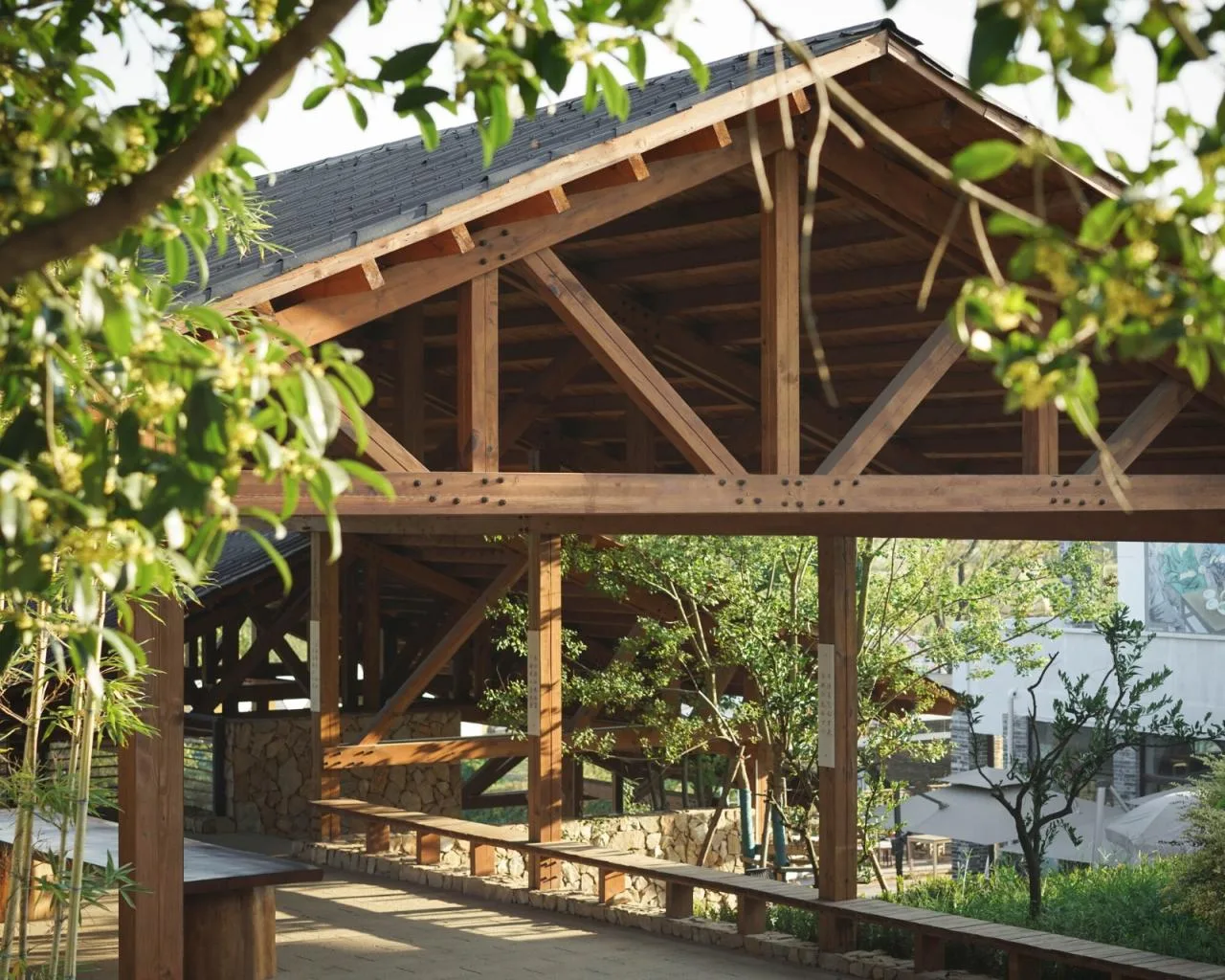
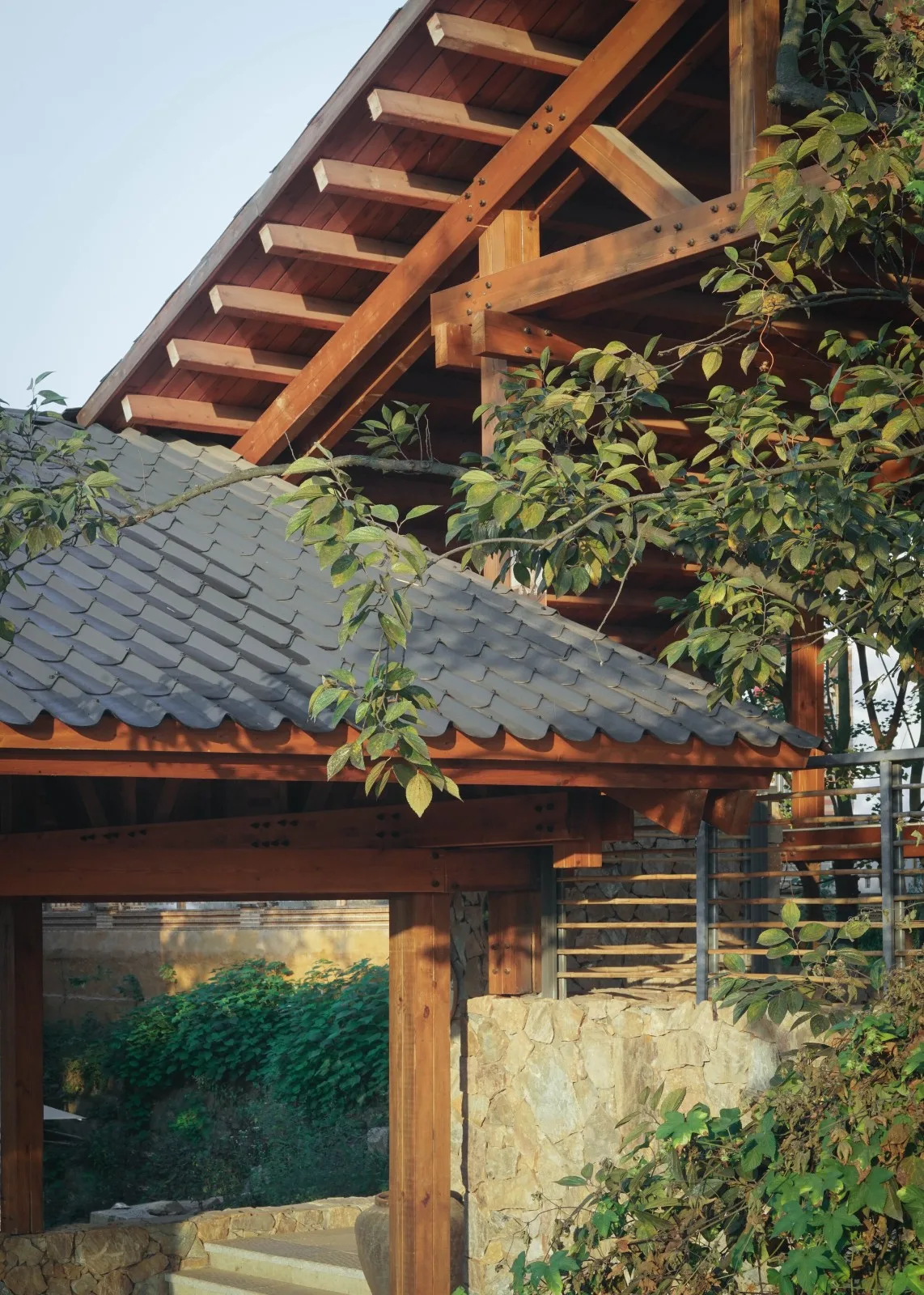
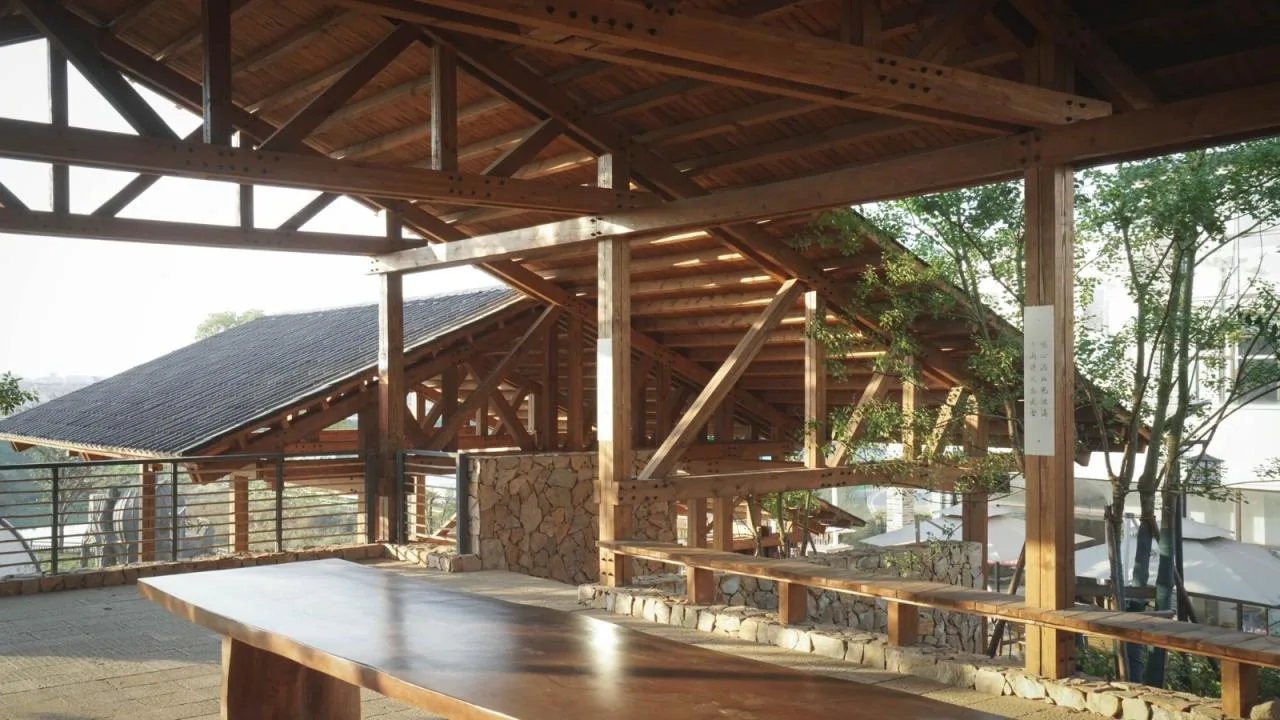
Given the constraints of simple functionality and budget, the design intentionally embraces simplicity. This approach encourages reflection on the essence of architecture, much like the village houses that have no formal design—spaces naturally crafted for living, resonating authentically with people.
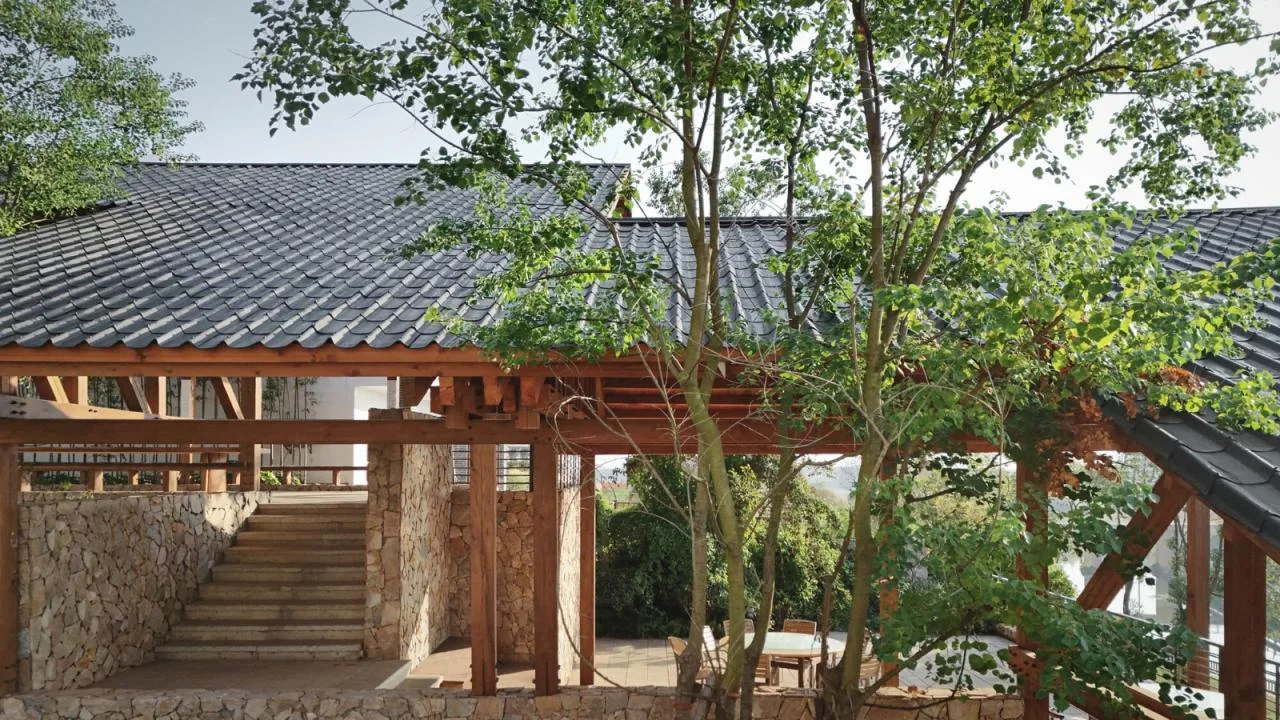
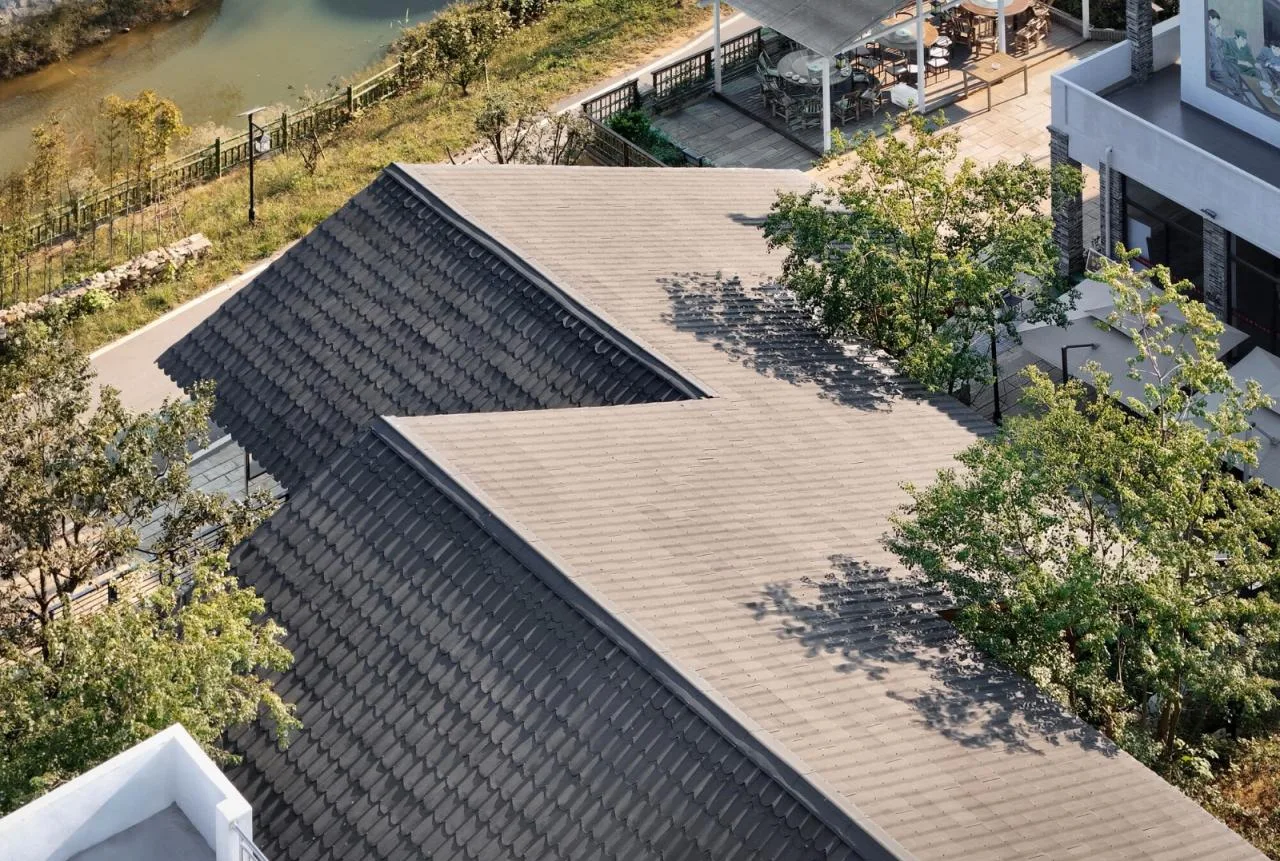
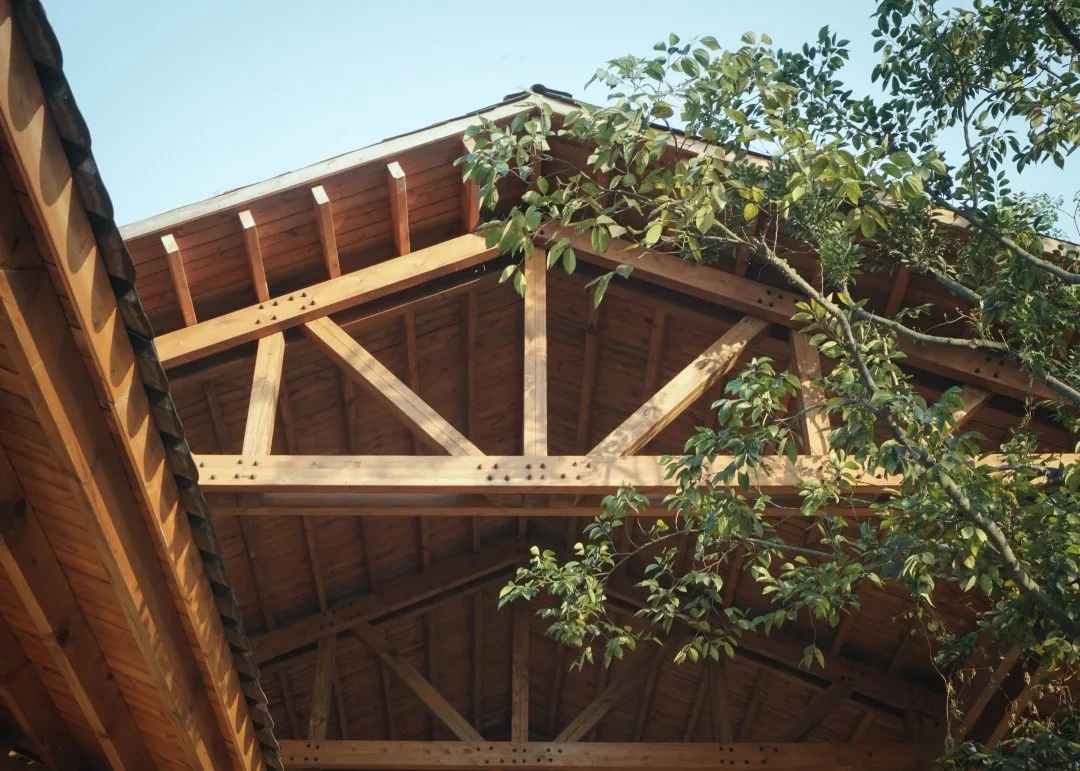
The design employs wooden triangular trusses to create a spatial sequence along the terraced site. This setup allows visitors to enjoy views and rest while descending the hill. The continuous flow connects upper and lower levels and links to other nearby functions at various elevation points.
Multiple triangular trusses are arranged parallel to the contour lines, effectively leveraging the structural form. This arrangement lowers sightlines on both sides, screening out surrounding houses, while the trusses themselves become a defining element of the building’s facade.
The triangular trusses transfer vertical loads to the lower walls through columns. The varying heights of the walls effectively guide movement along the path.
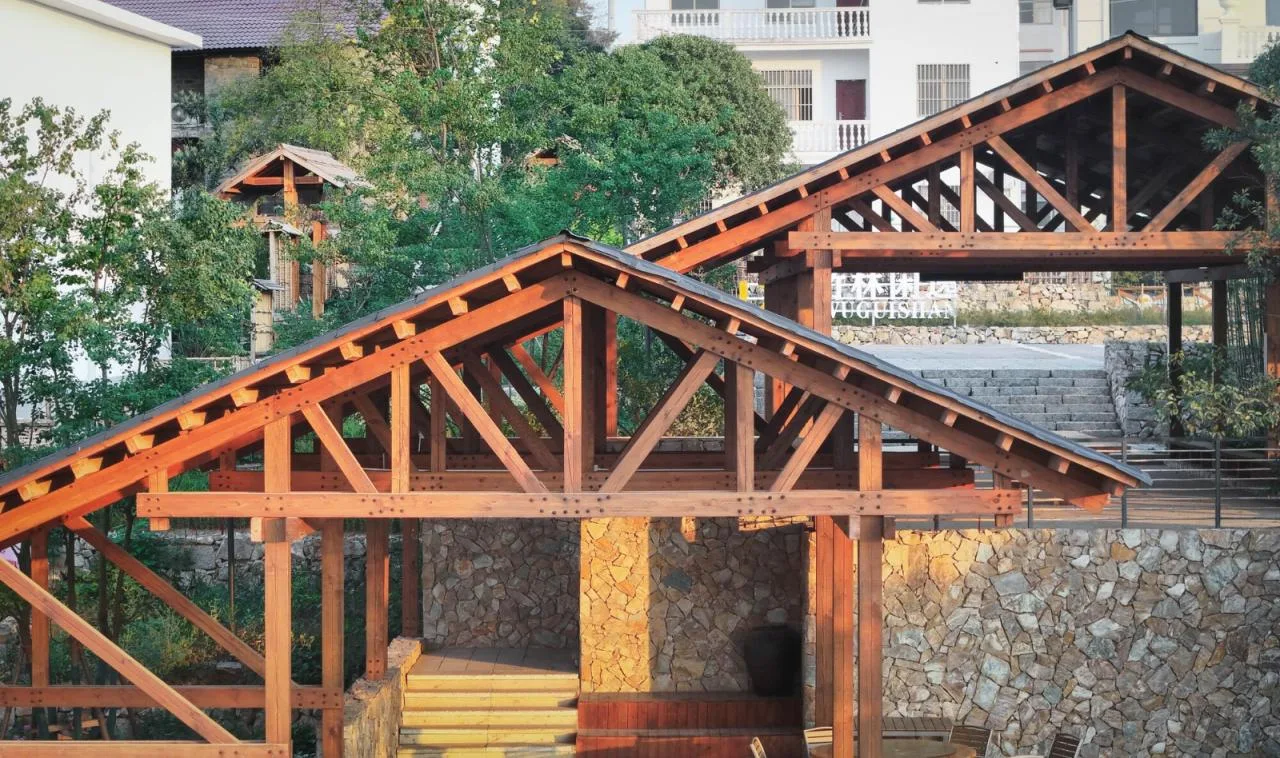
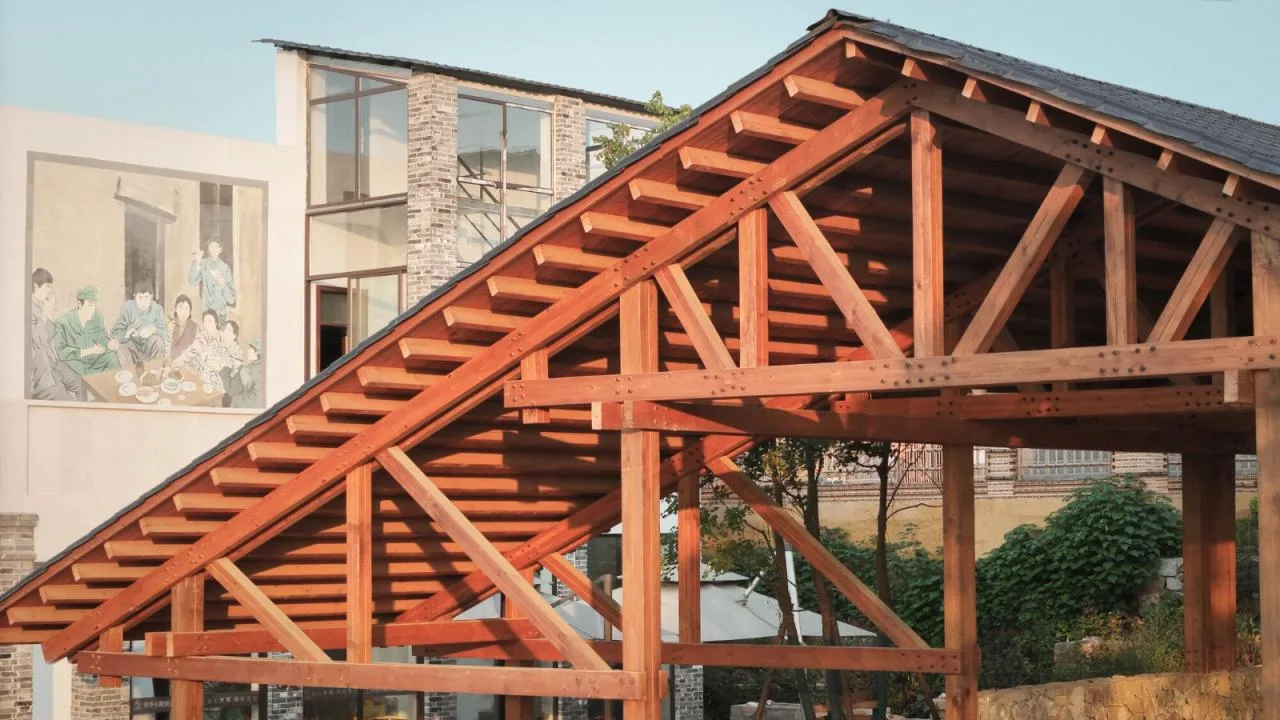
Before beginning the wooden structure design, we carefully studied the specifications to determine ideal component dimensions and basic joint methods. We then designed the connections between components.
Since most construction occurs on-site with less precision than factory settings, we avoided overly intricate joints to accommodate potential on-site errors.
Although the trusses involve many materials, the columns are the most complex. Each column varies in elevation and position, requiring unique connections to the trusses.
We extend special thanks to Professor Xu Zheng for assisting with structural calculations and repeatedly revising the retaining wall plans based on site conditions.
To minimize column thickness, the roof uses lightweight pressed asphalt tiles that provide structural strength and extend beyond the eaves for effective waterproofing.
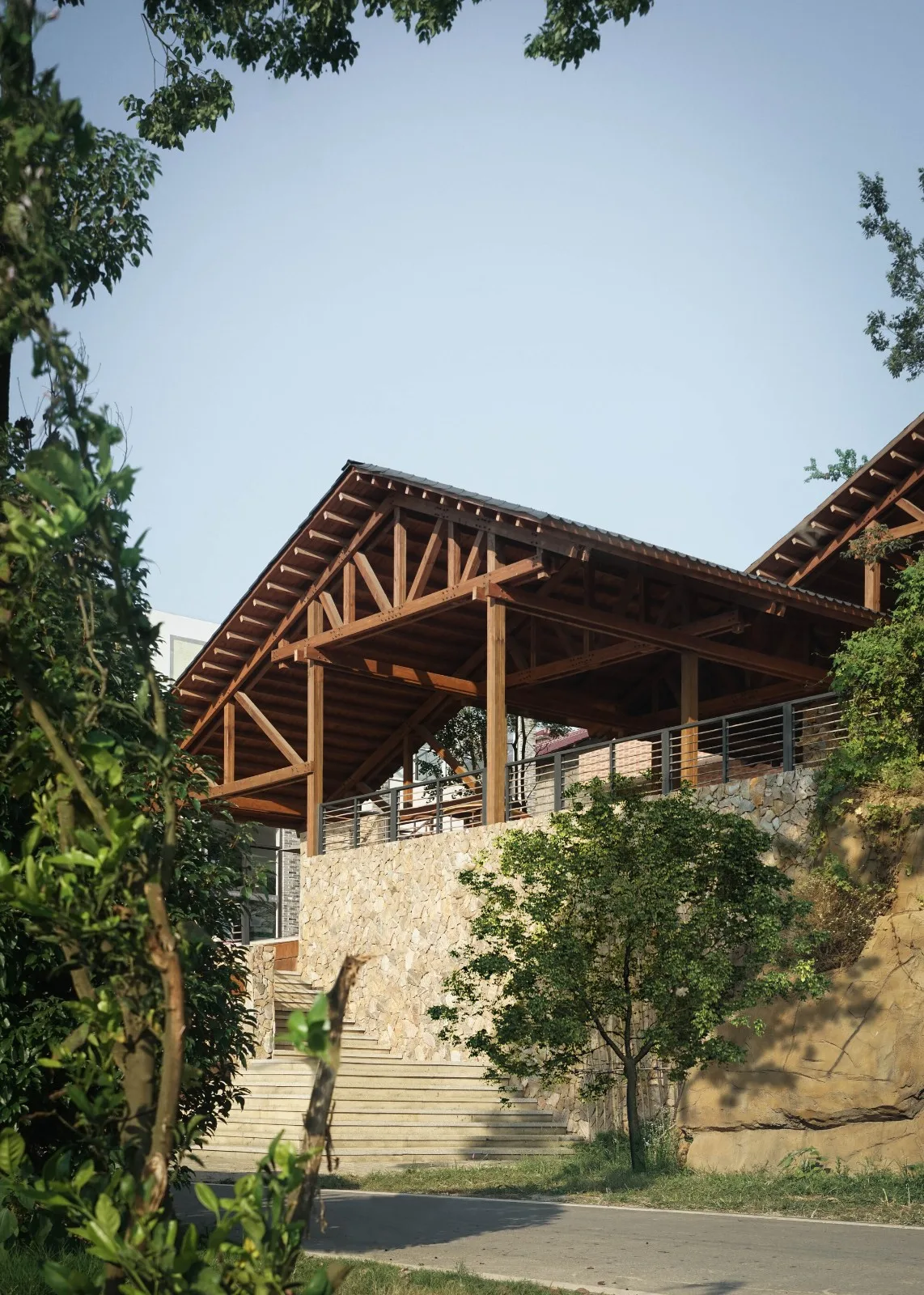
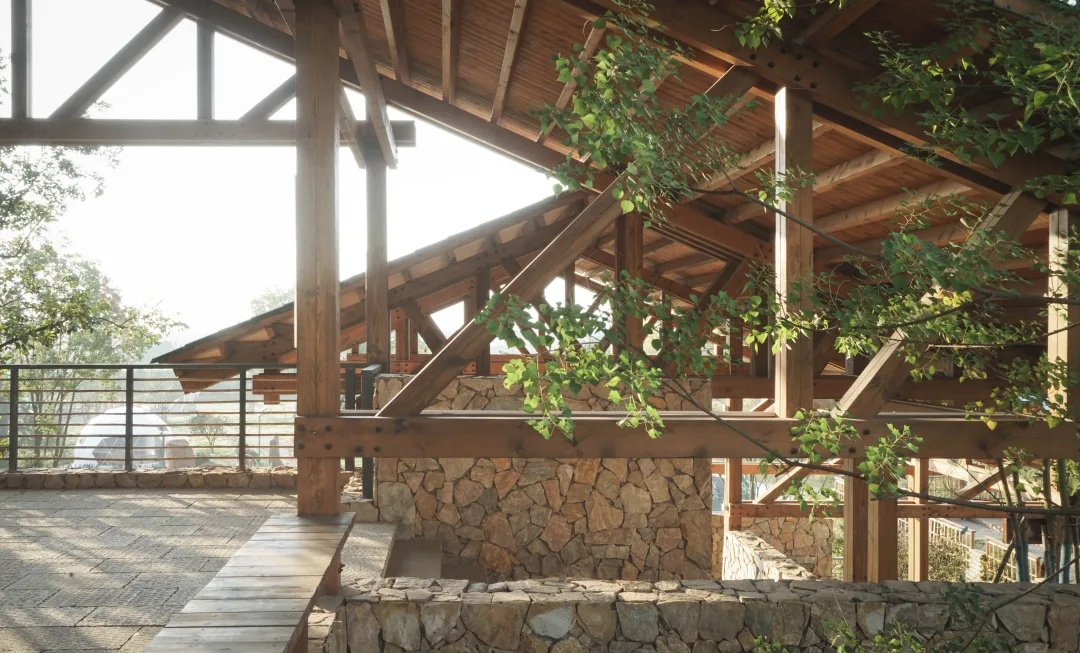
The project has now been completed for six months, and the surrounding vegetation has flourished. Villagers have built new homes nearby, and local farmhouses have embraced the space, setting up round tables on the resting platform.
Reflecting on the design and construction process, we recognize that rural projects like this face minimal market pressure and sometimes marginalization. Yet precisely because of this, we can focus more deeply on the essence of design and construction.
By avoiding overly ornamental architecture, many superficial desires are stripped away. Every morning, sunlight gently illuminates Meiling Mountain and the buildings below—quiet and moving.
Project Information
Architect: Starry Sky Architecture Studio
Area: 140 m²
Project Year: 2023
Photographer: Starry Studio
Manufacturer: Dovoro, The Tree
Principal Architect: Ji Xin
Architectural Design: Ji Xin, Ge Jiaqi, Chen Chao
Function: Exhibition hall, community center, landscape & urban design
Structural Design: Shanghai Goutuo Construction Technology Co., Ltd
Landscape Design: Shanghai Xixun Engineering Technology Group Co., Ltd
Location: Nanchang












Must log in before commenting!
Sign Up