
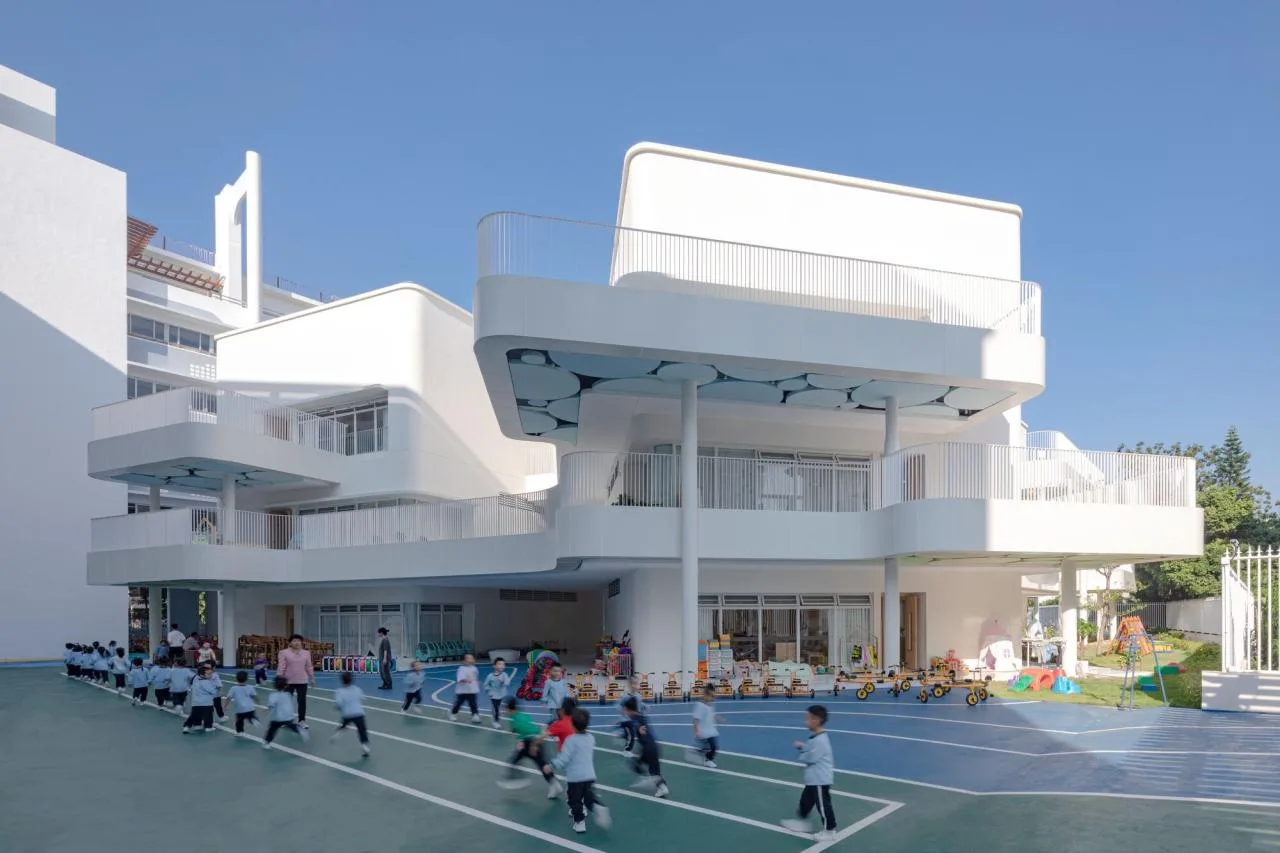
Shenzhen Second Kindergarten holds historical significance as it has evolved alongside the Shenzhen Special Economic Zone. Nestled in the heart of Tongxinling Community on the west bank of Litchi Park, the campus is a peaceful retreat away from the city’s hustle and bustle, shaded by lush greenery. The environment exudes a warm, artistic charm, featuring art galleries in the corridors and sculptures throughout the gardens. Every corner is thoughtfully curated by teachers and children alike, creating a museum-themed paradise for growth.
Throughout the design, architects remained committed to a child-centered philosophy. Despite limited land availability, they employed innovative strategies to craft a vibrant, playful environment. Highlights include a forest-like campus embraced by nature, an art garden bathed in dynamic light and shadow, and a green, low-carbon, healthy living space. From design to construction, the Municipal Public Works Bureau, kindergarten staff, and builders collaborated closely, respecting the original vision and completing this outstanding project within two and a half years.
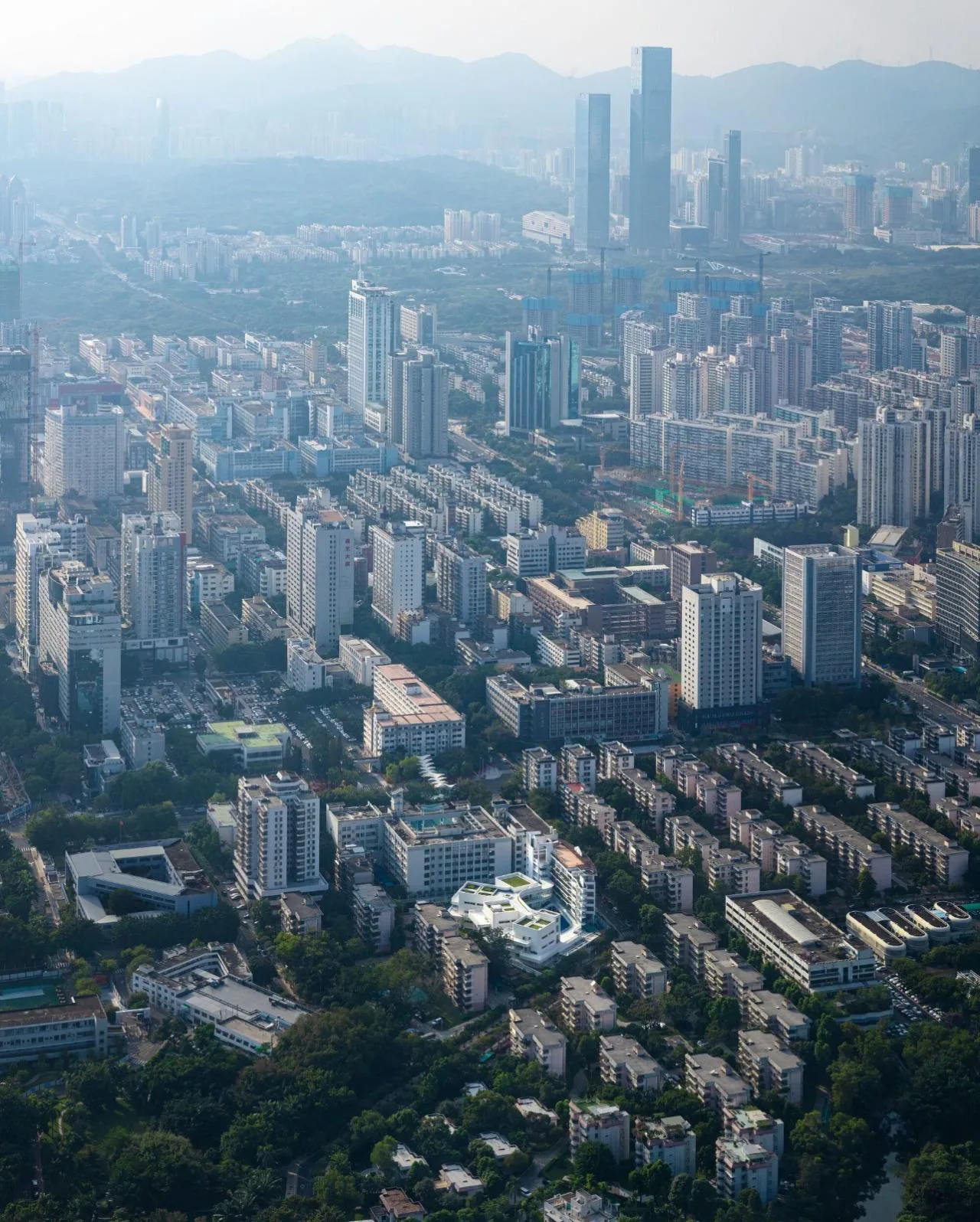
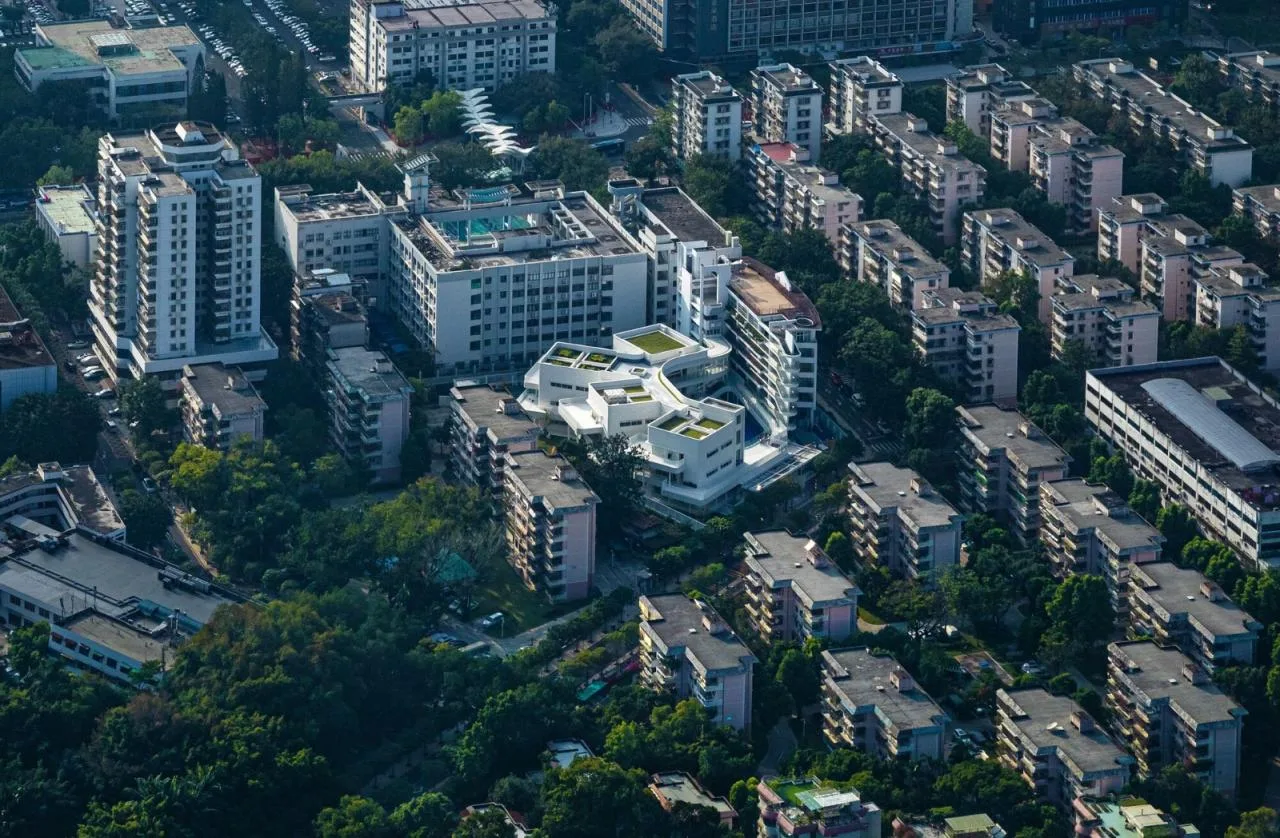
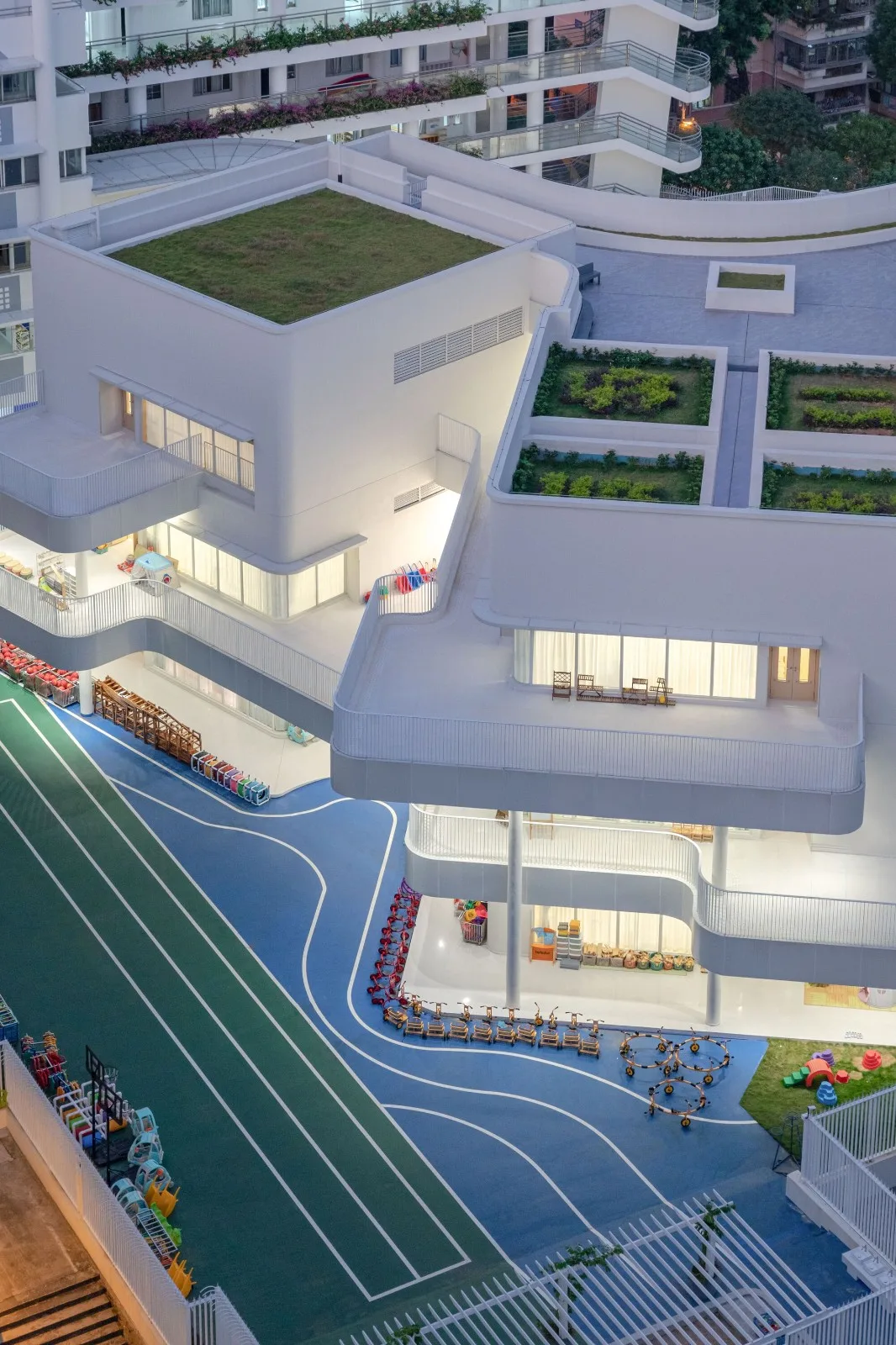
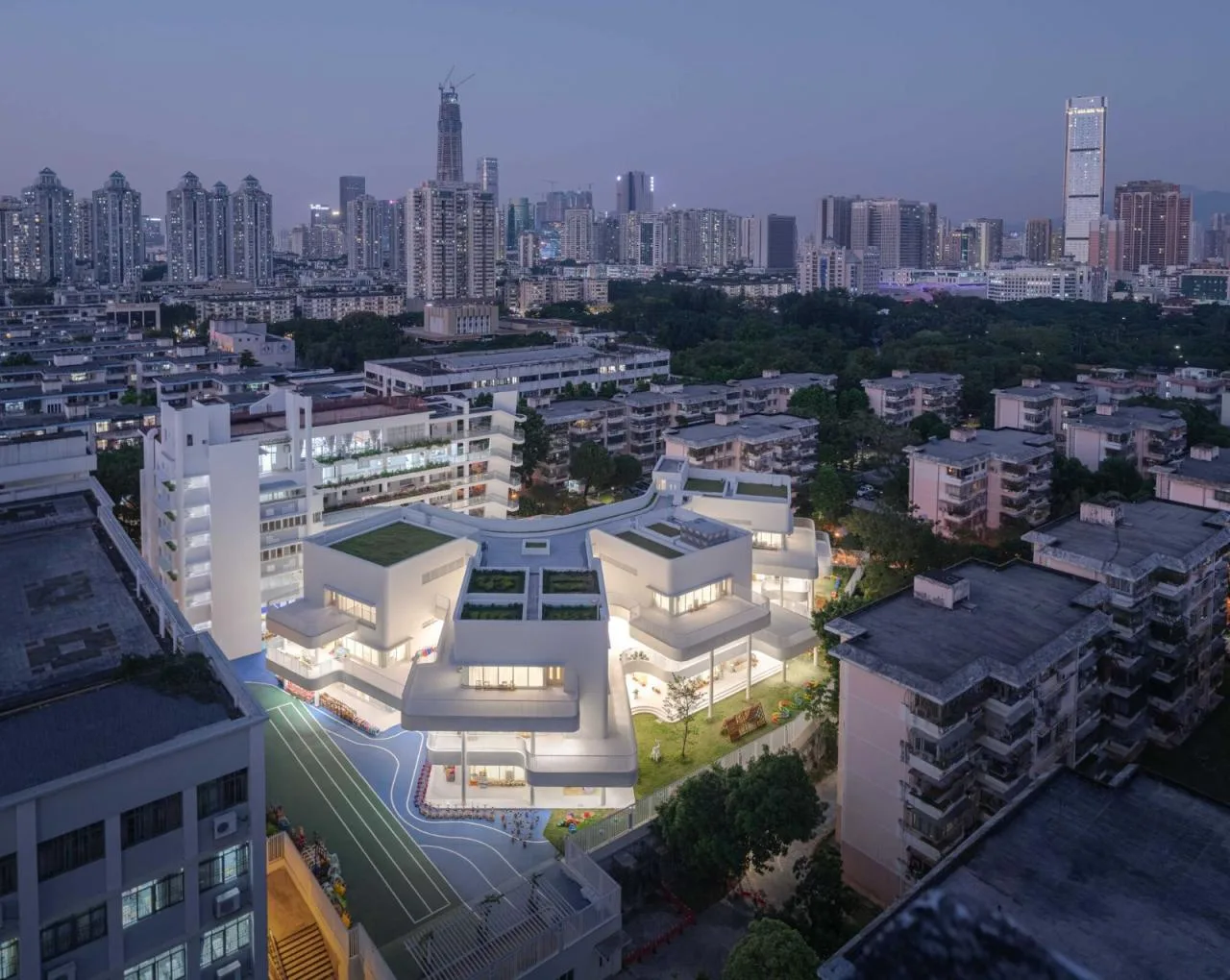
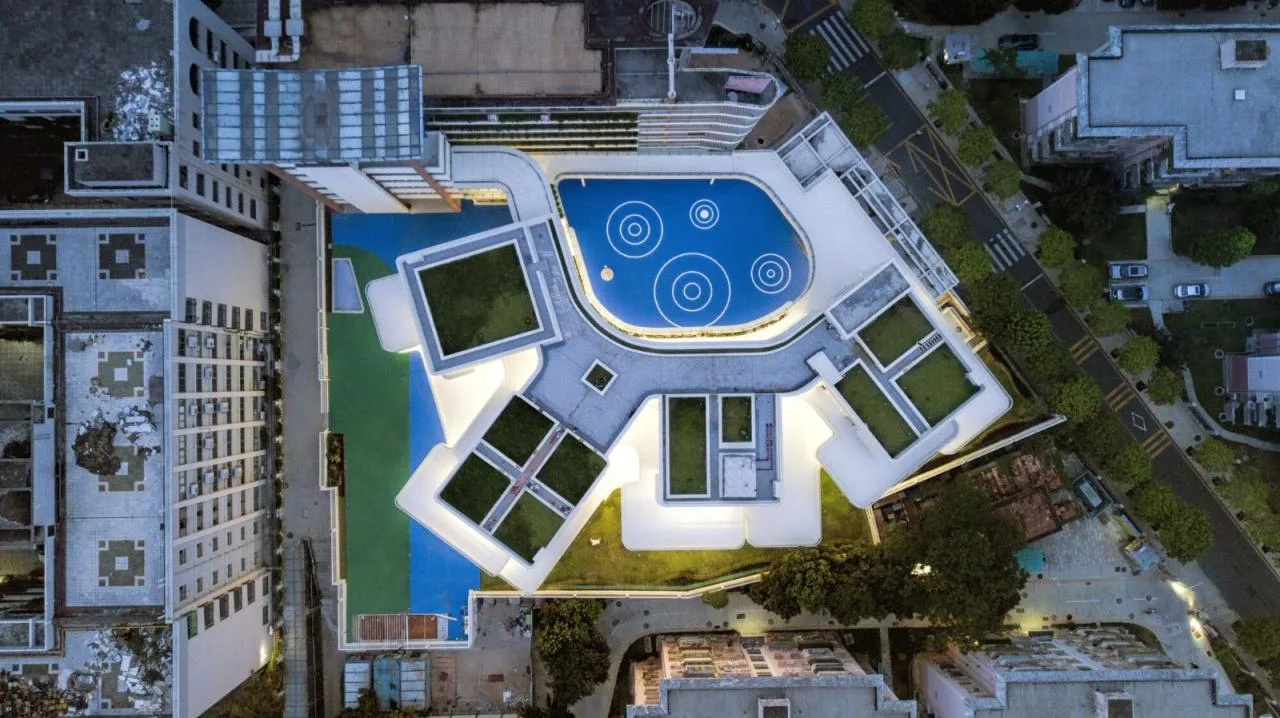
The vibrant Growth Park thoughtfully analyzes the surrounding landscape, aligning visual axes to both minimize the impact of nearby residential buildings and roads and maximize internal sightlines from the park outward. The architect embraced an organic, natural layout resembling a flower bud gradually blooming, with petals extending freely in all directions. This design creates an open, fluid space full of endless possibilities for the future.
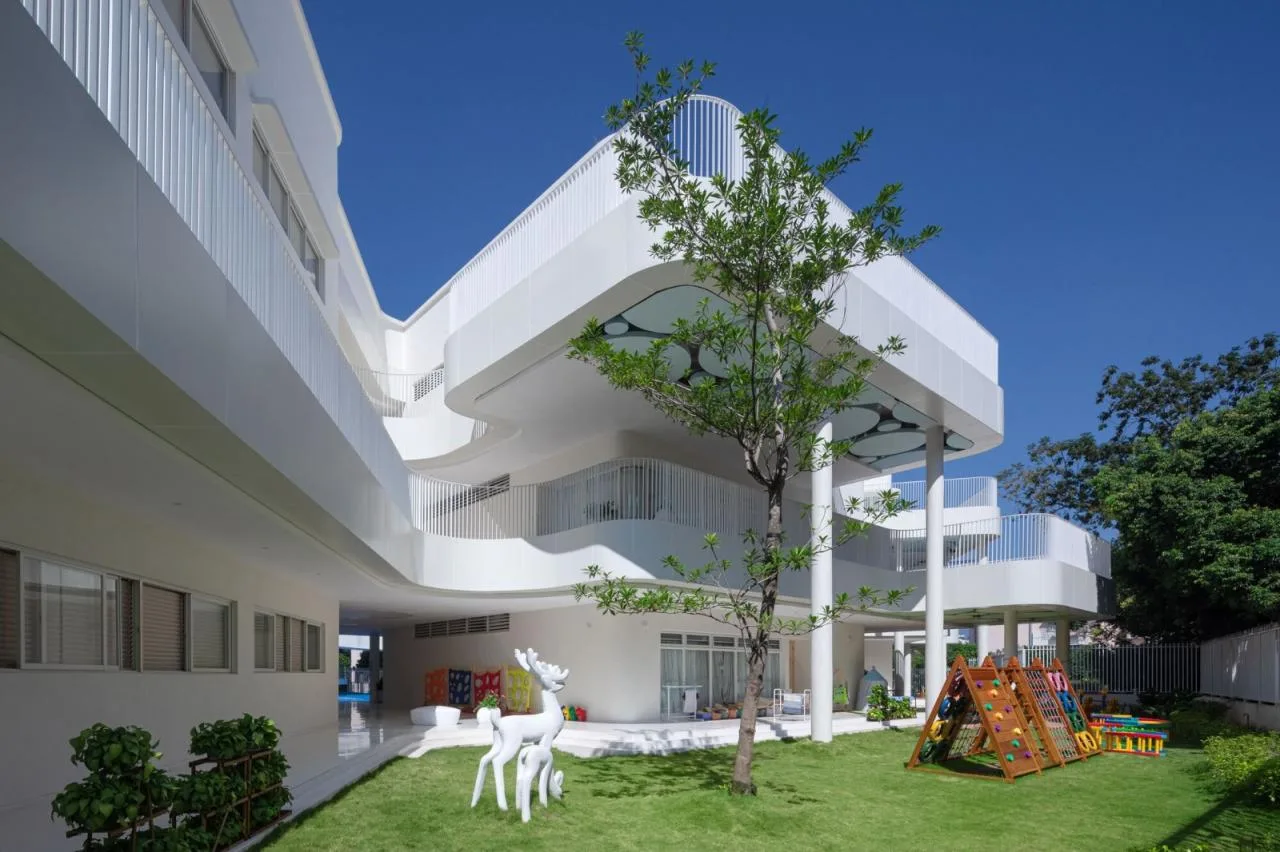
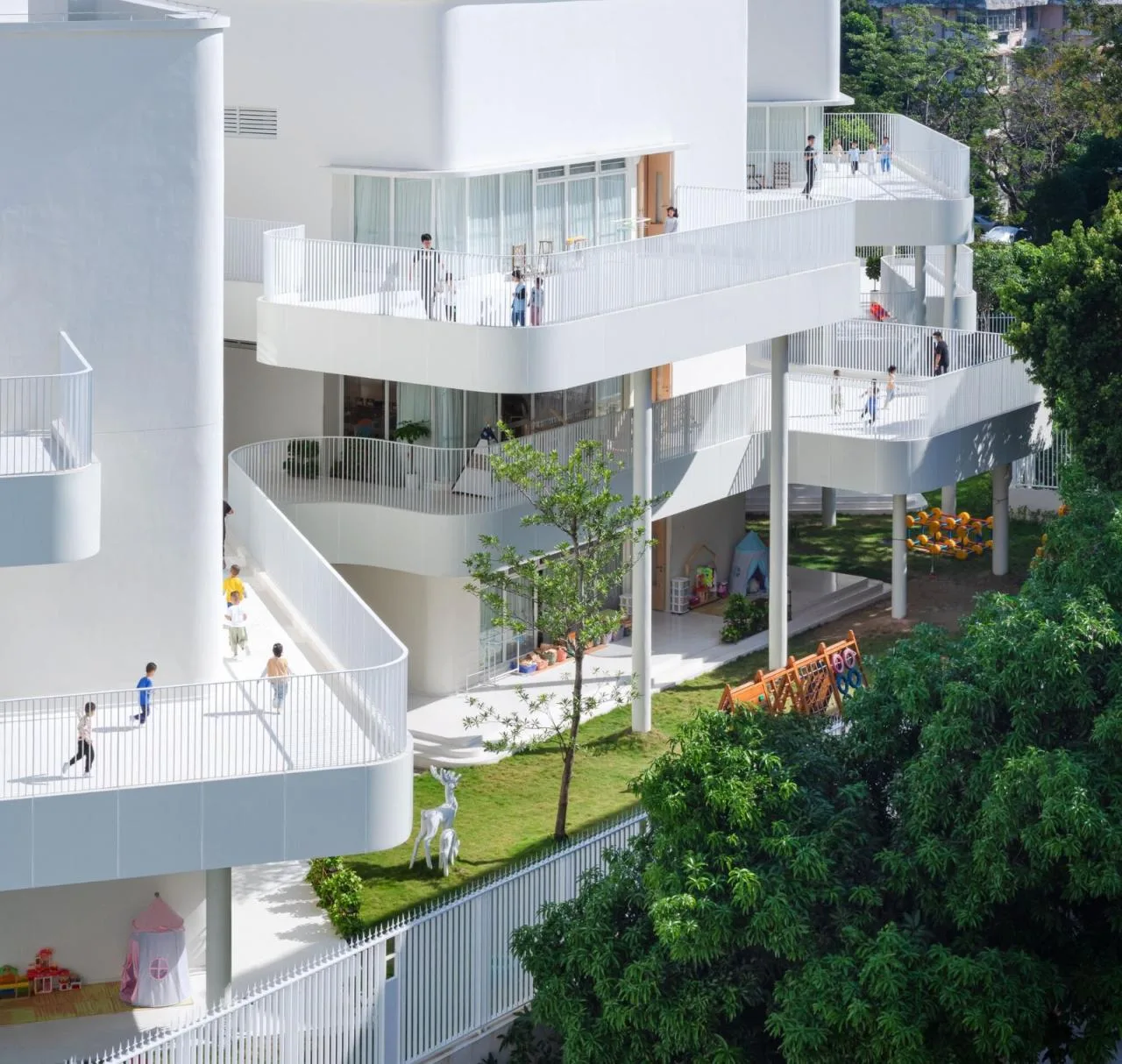
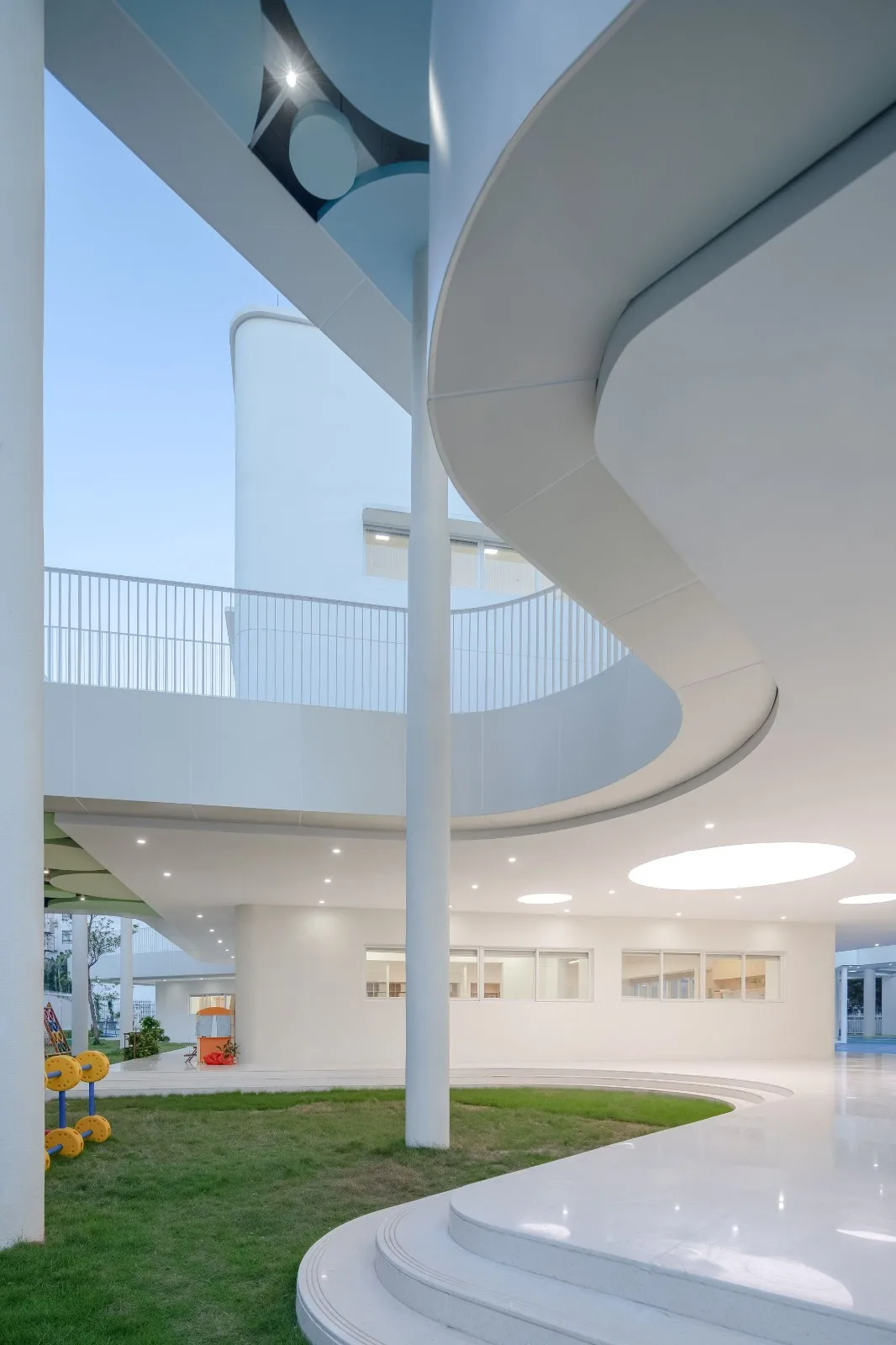
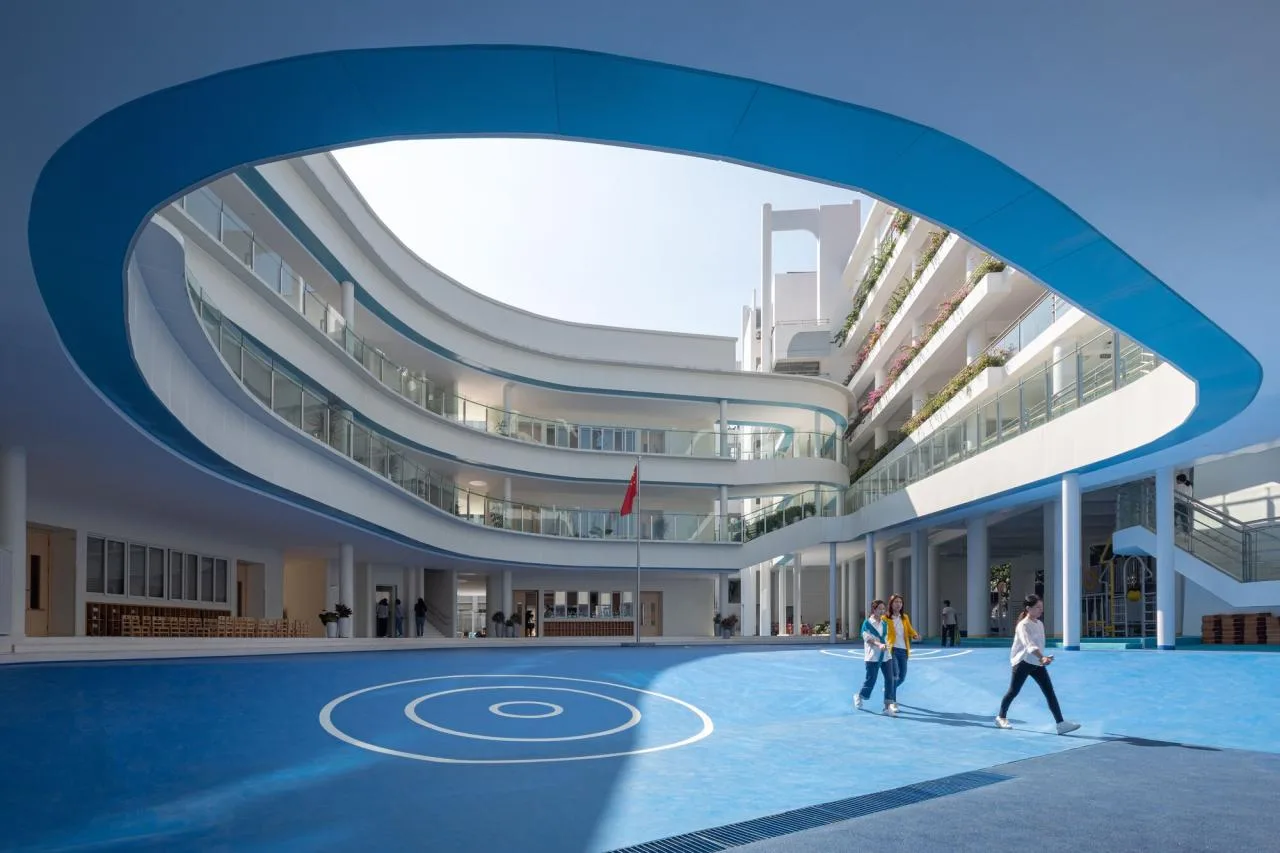
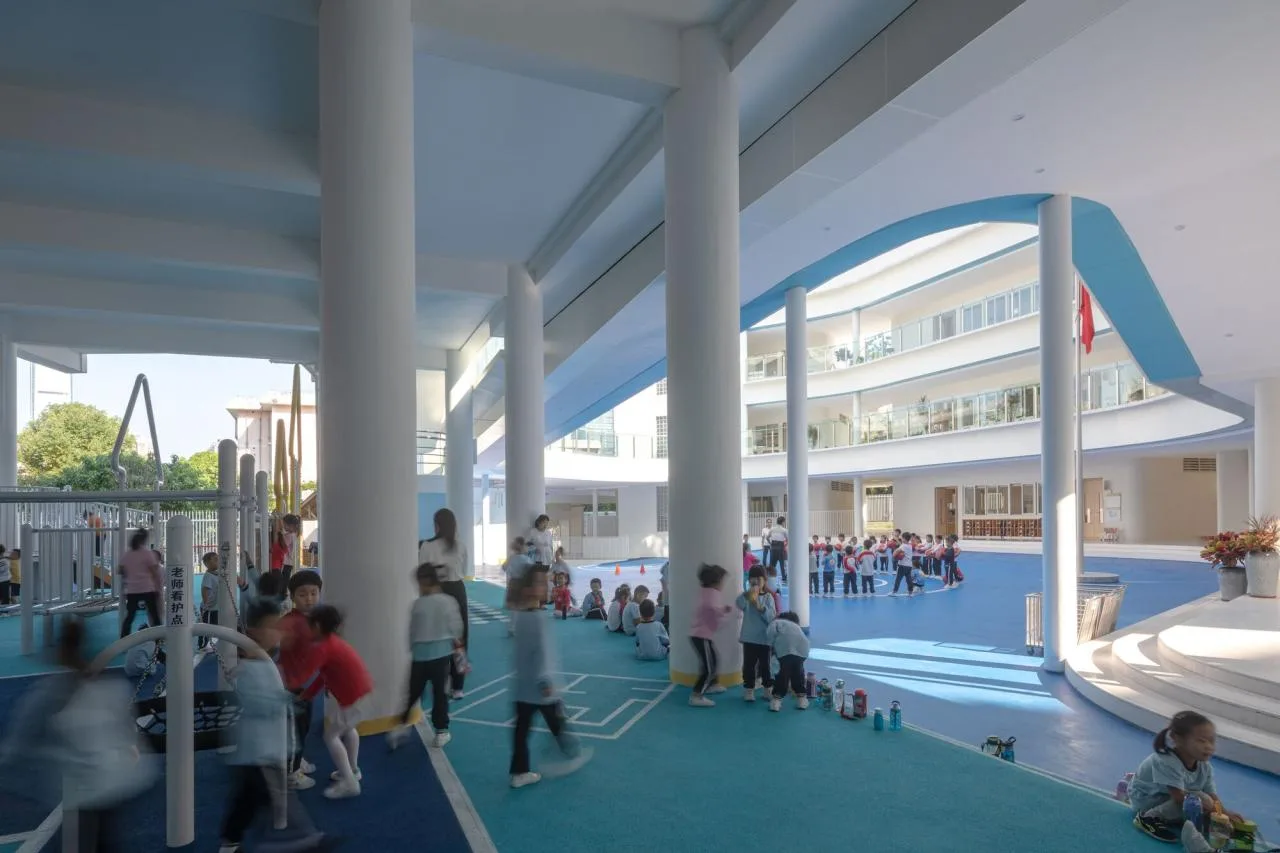
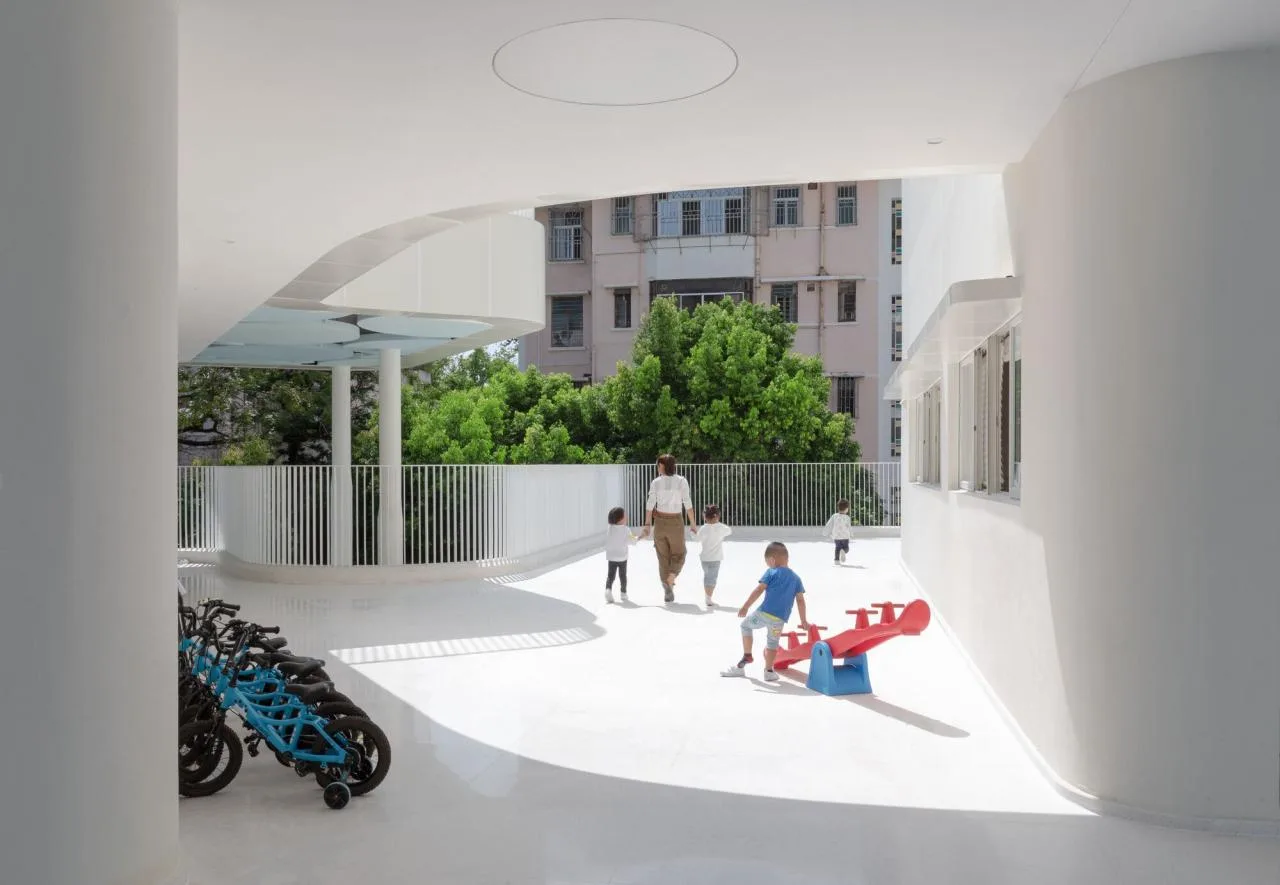
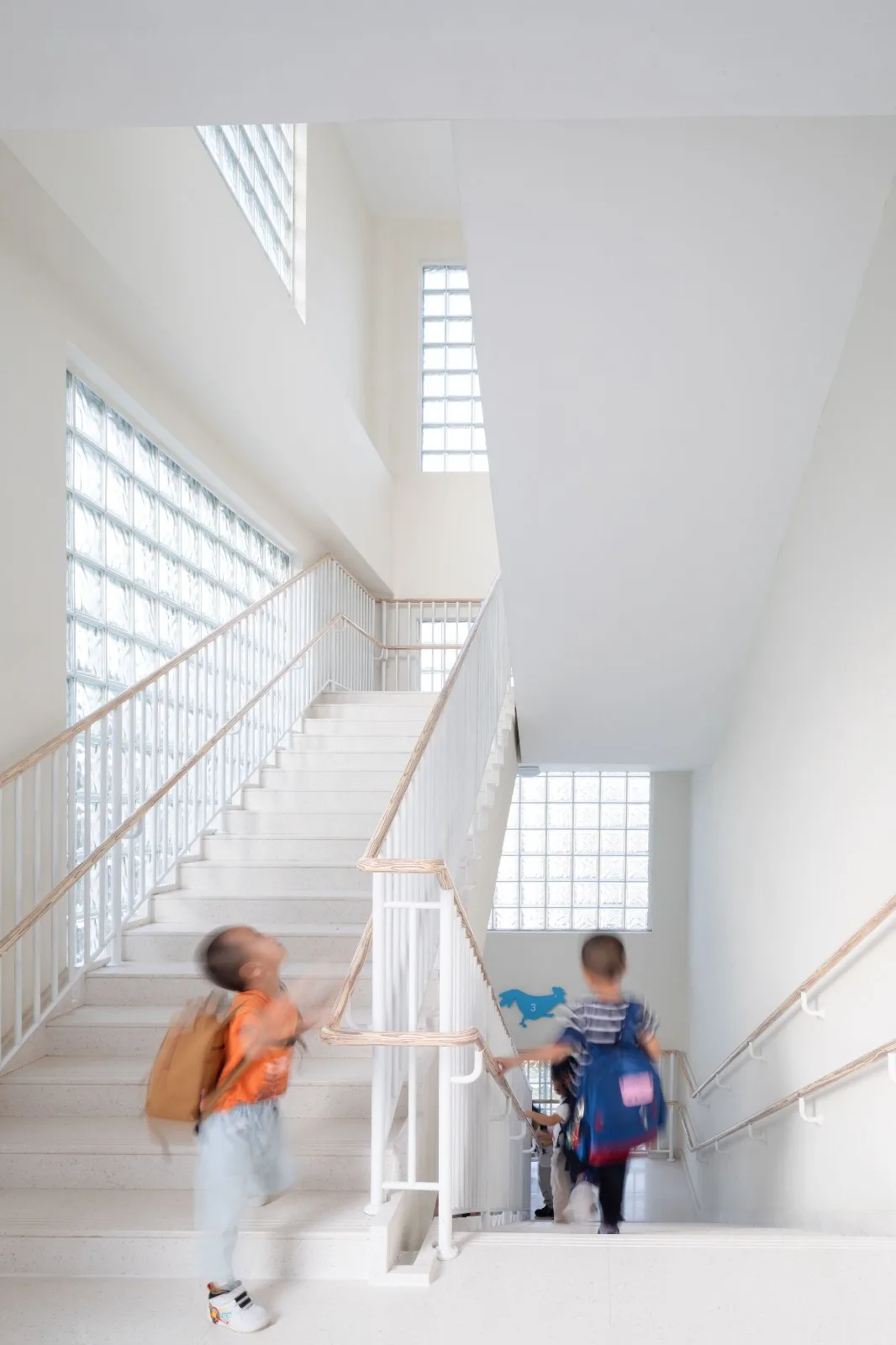
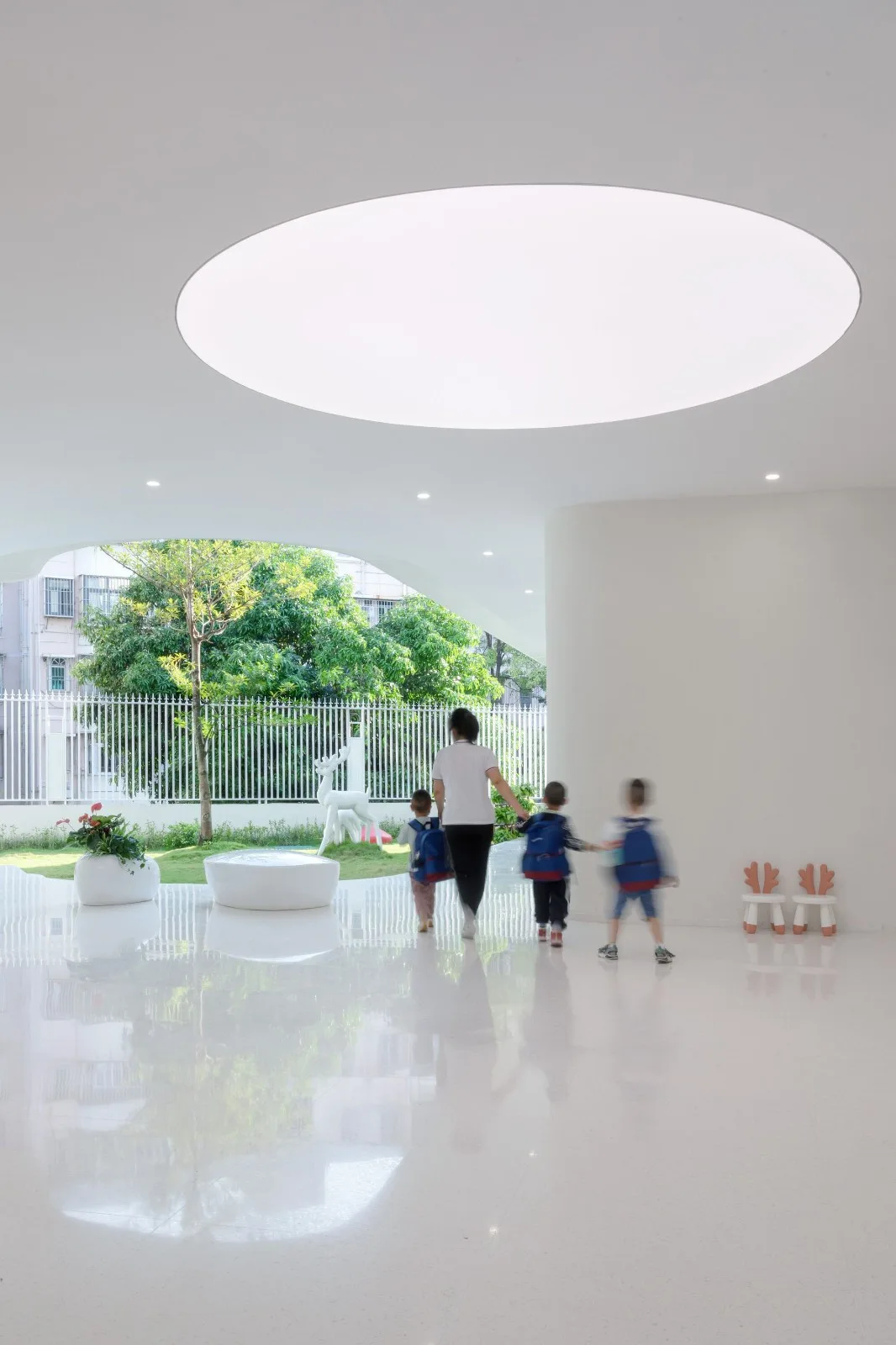
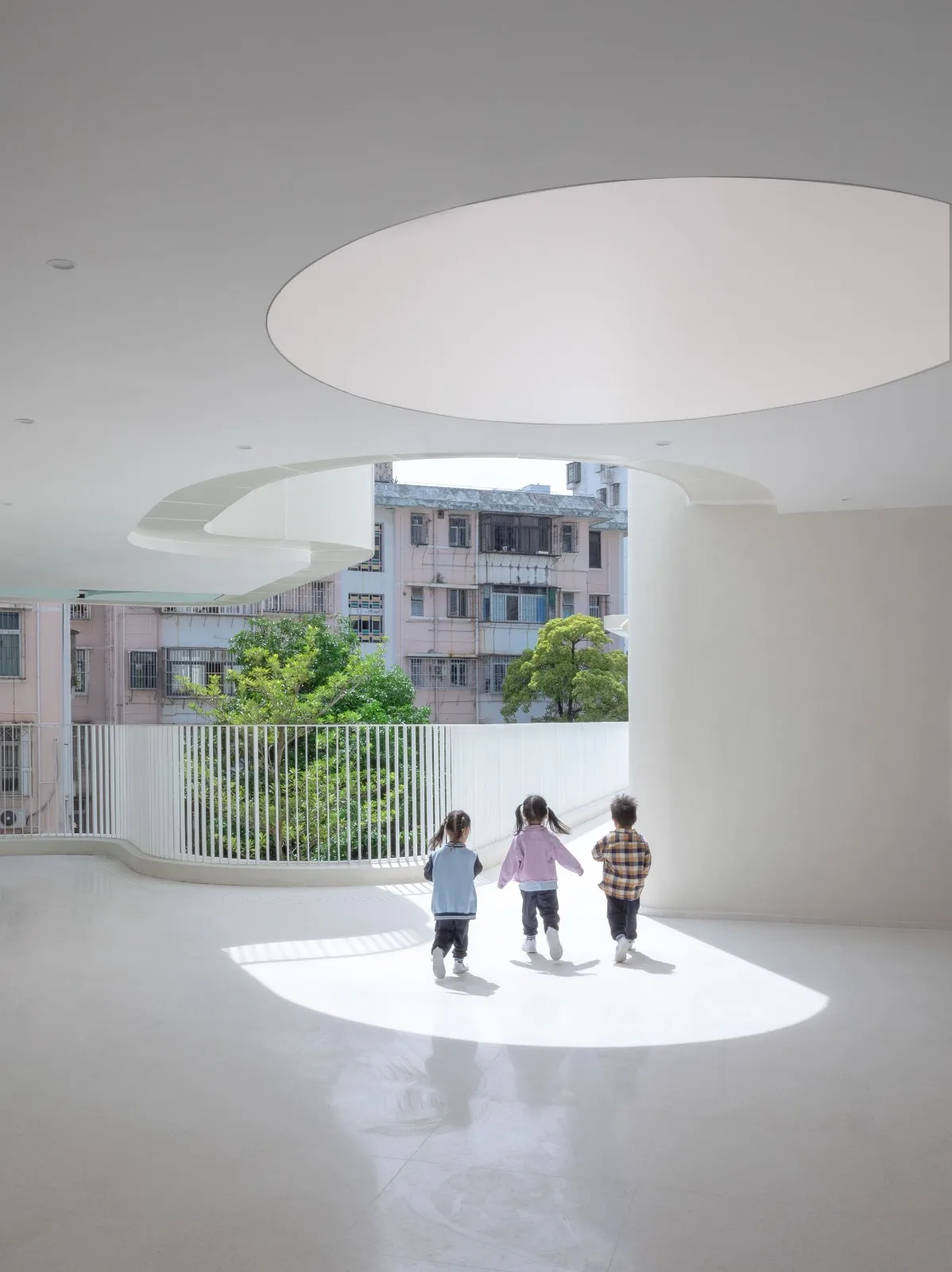
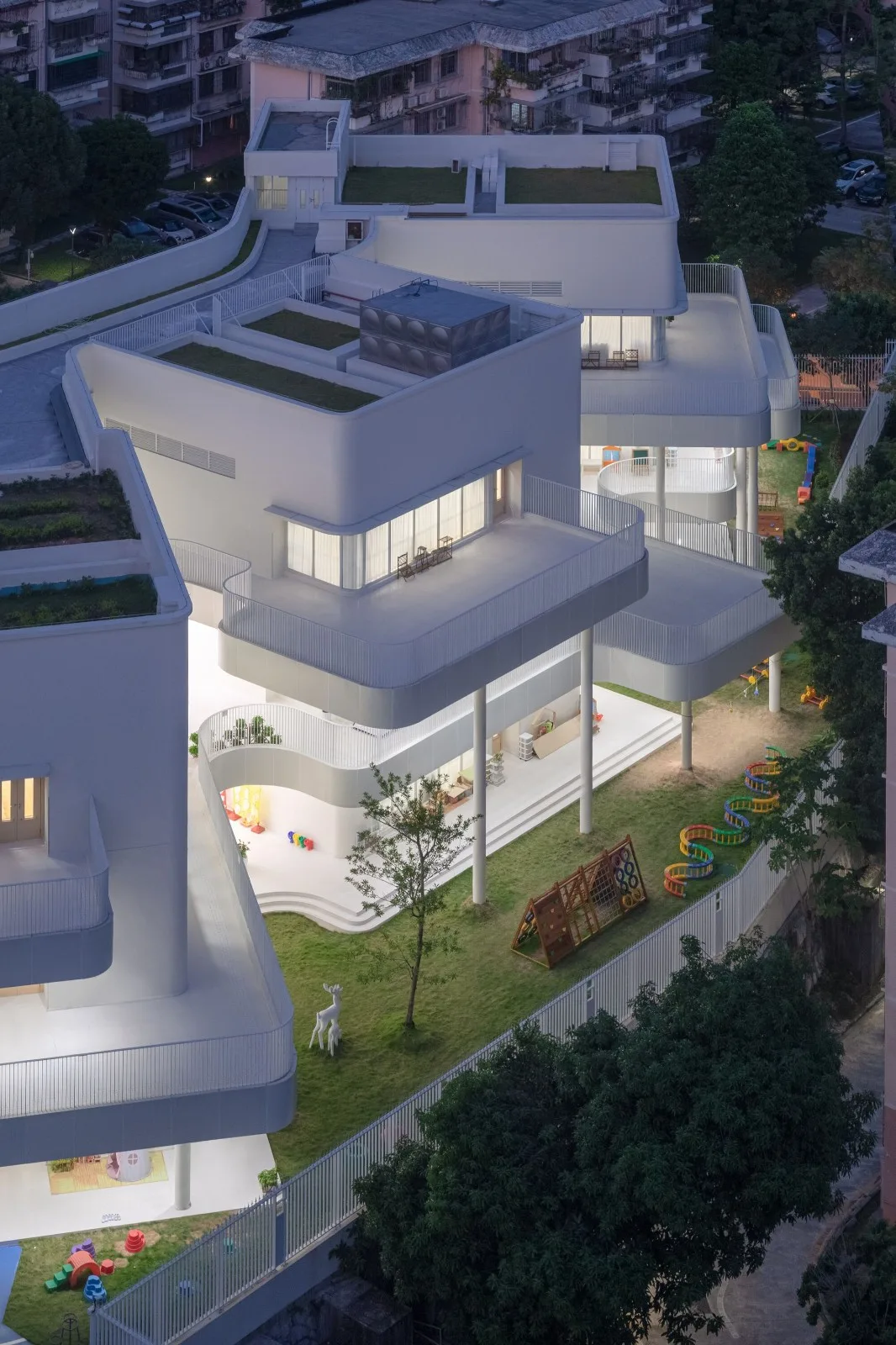
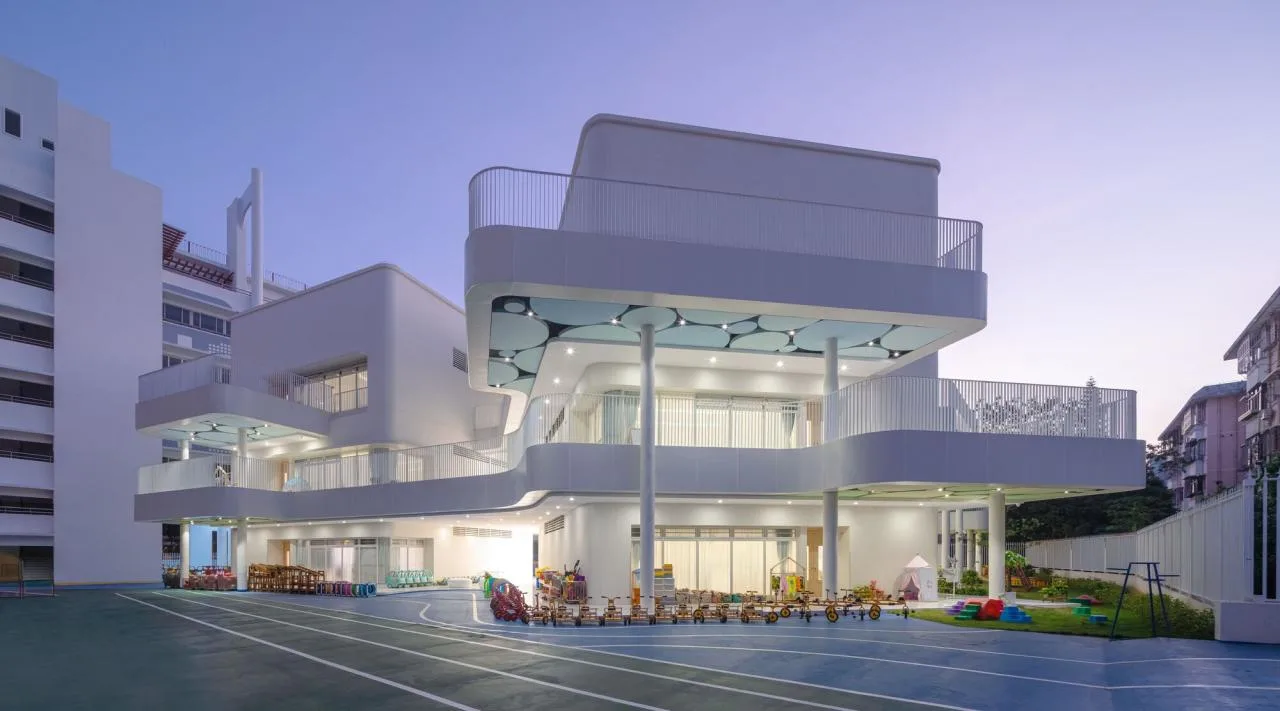
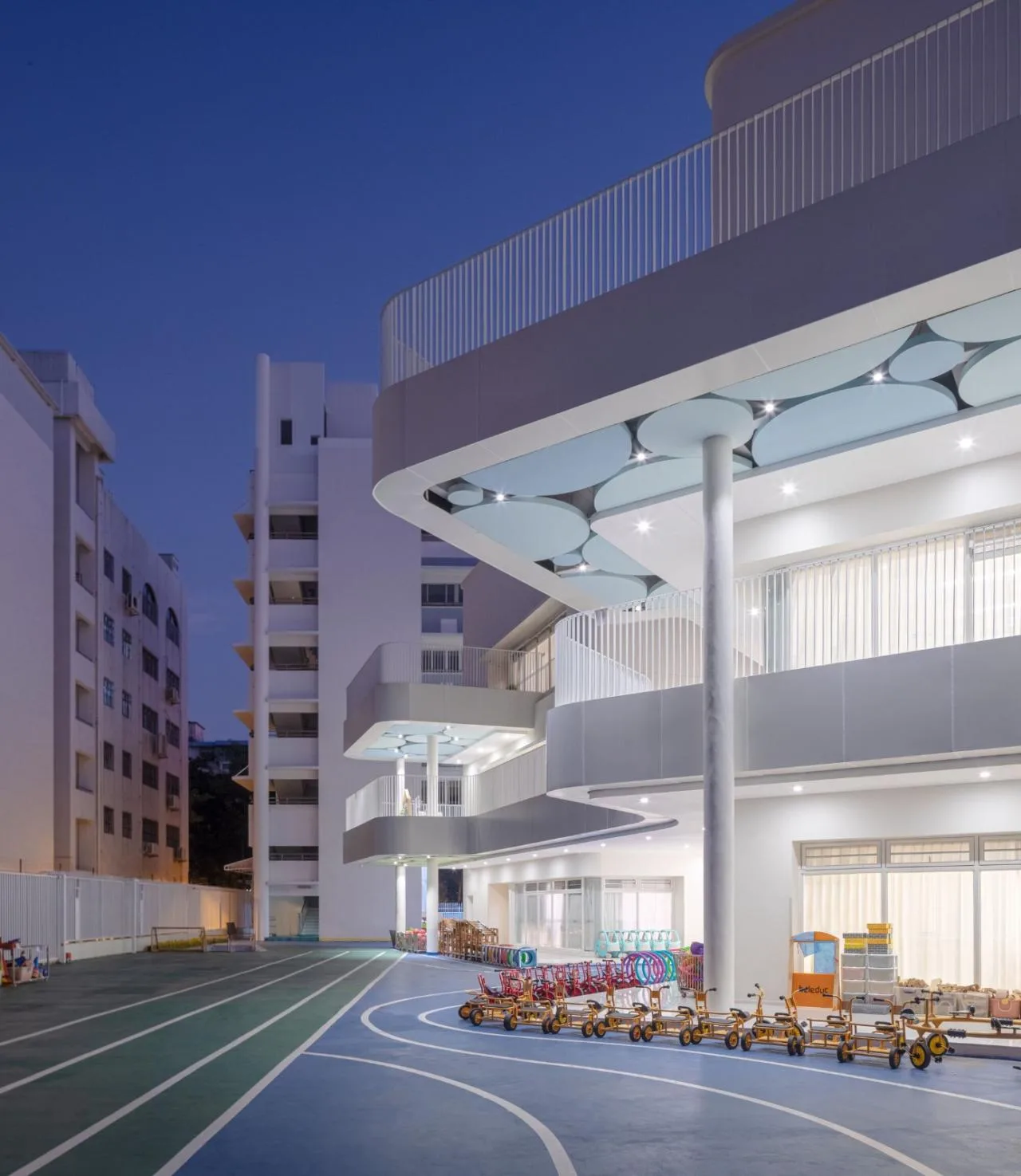
At the campus core, the new and old buildings enclose an oval courtyard designed to host large public events. The spatial connectivity system integrates the entire campus through three unique elements: a ground-level elliptical corridor offering sheltered walkways free from wind and rain; a second-floor aerial corridor linking new and old buildings; and aerial activity platforms surrounding each classroom. This interconnected network allows children to move freely throughout the campus, shielded from sun and rain from the moment they arrive.
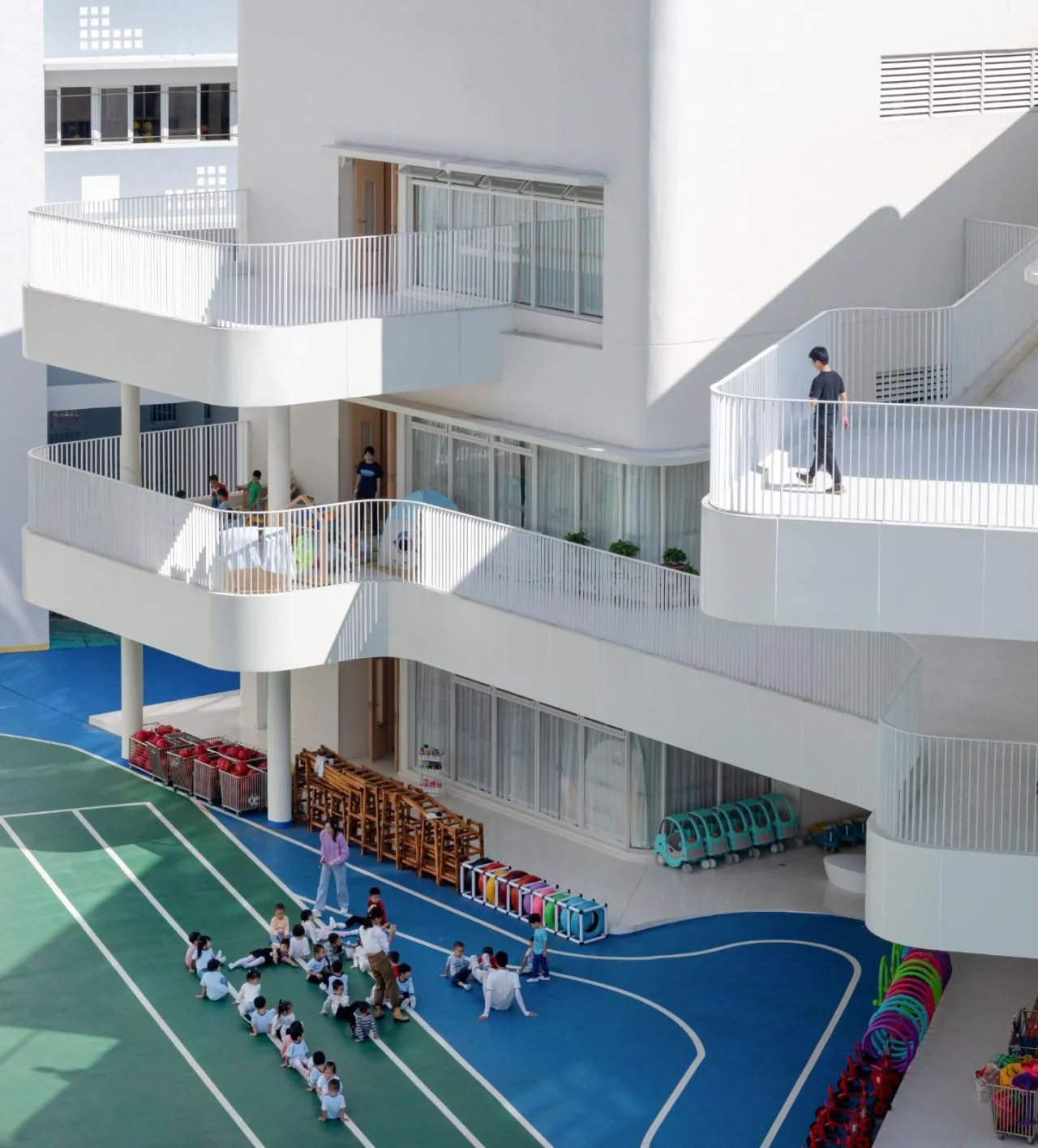
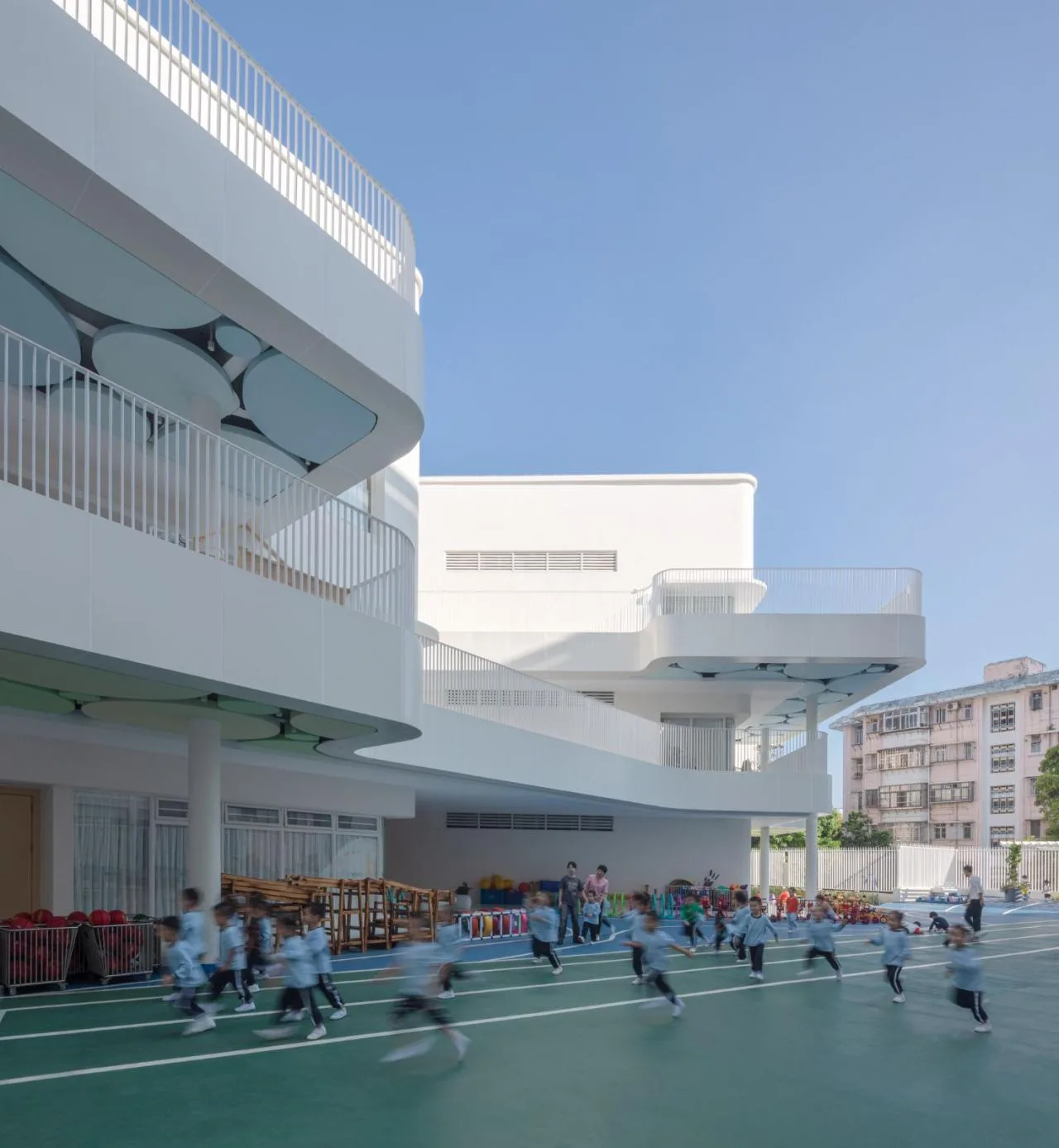
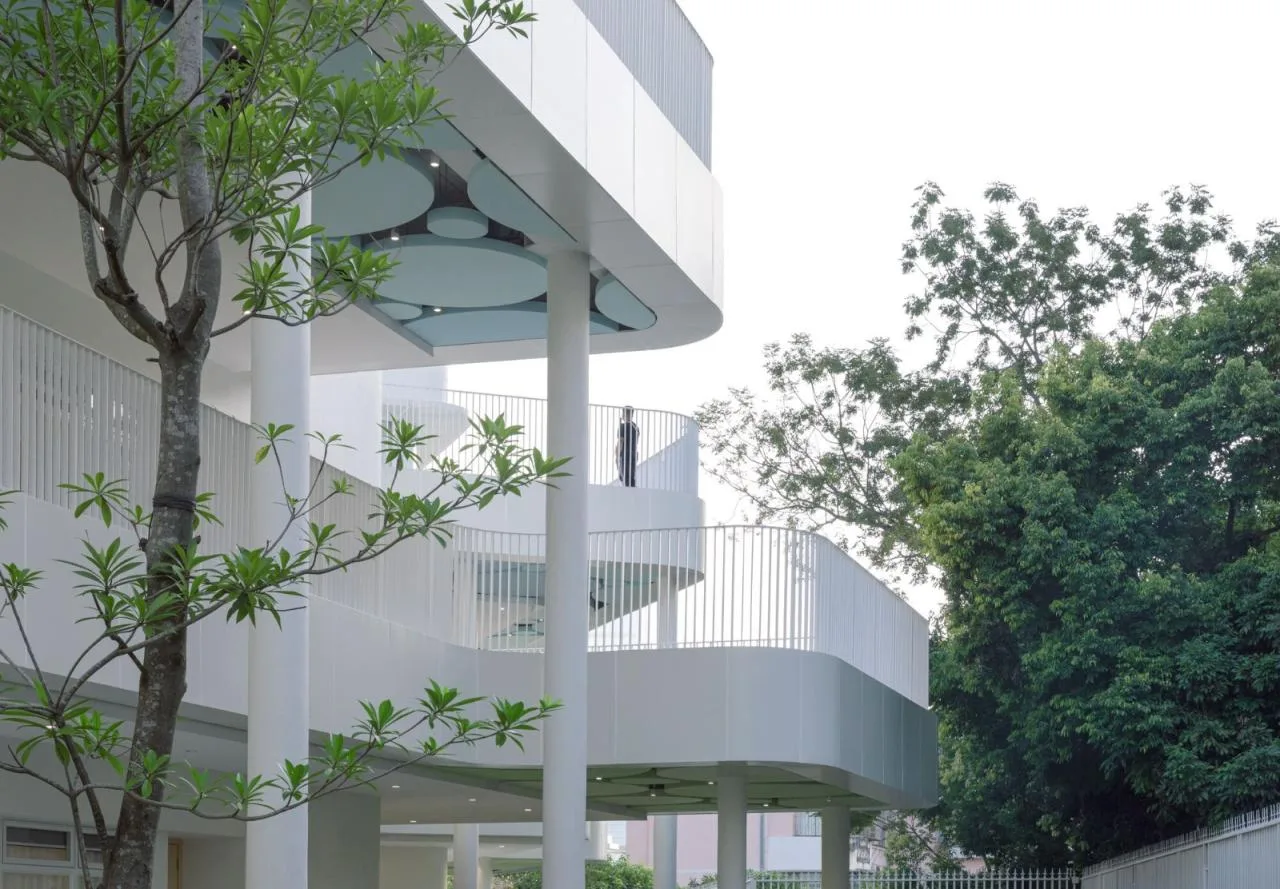
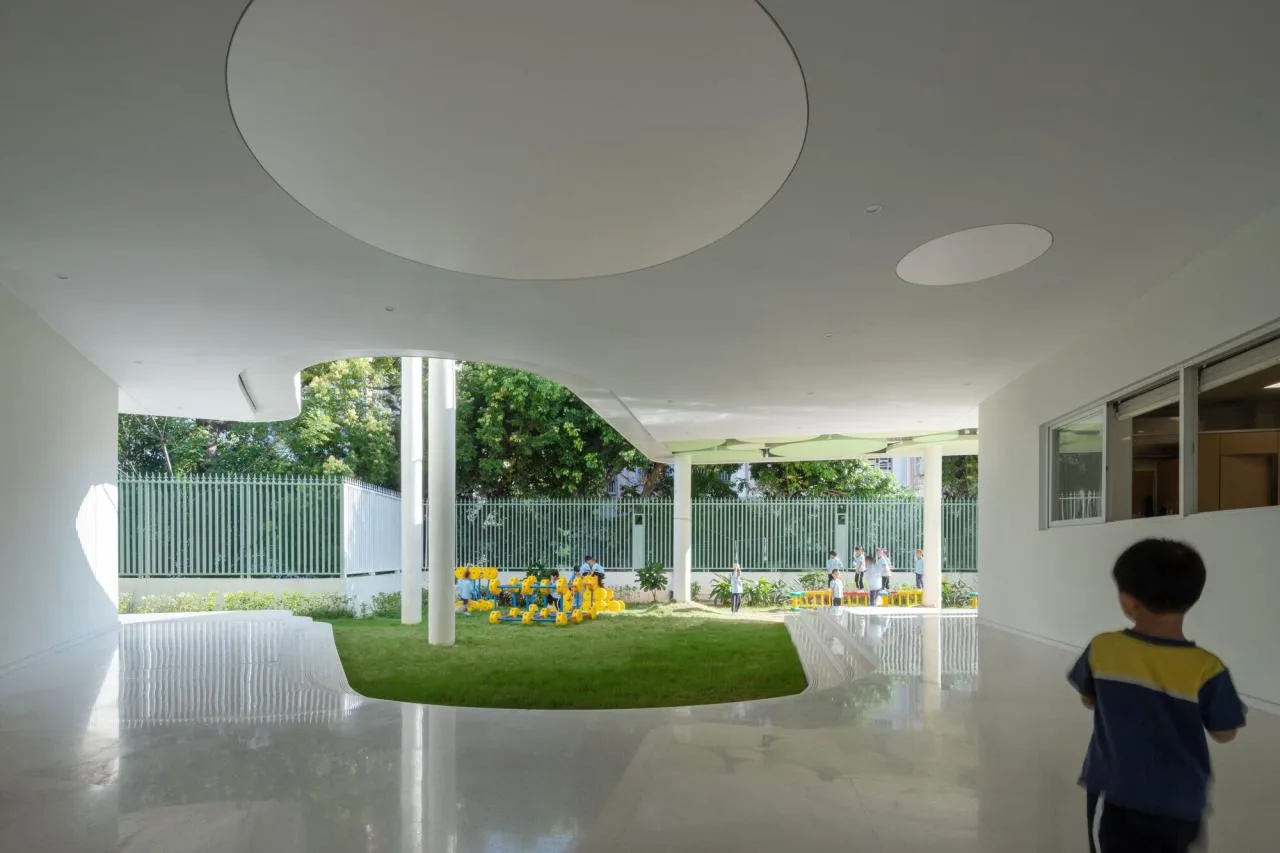
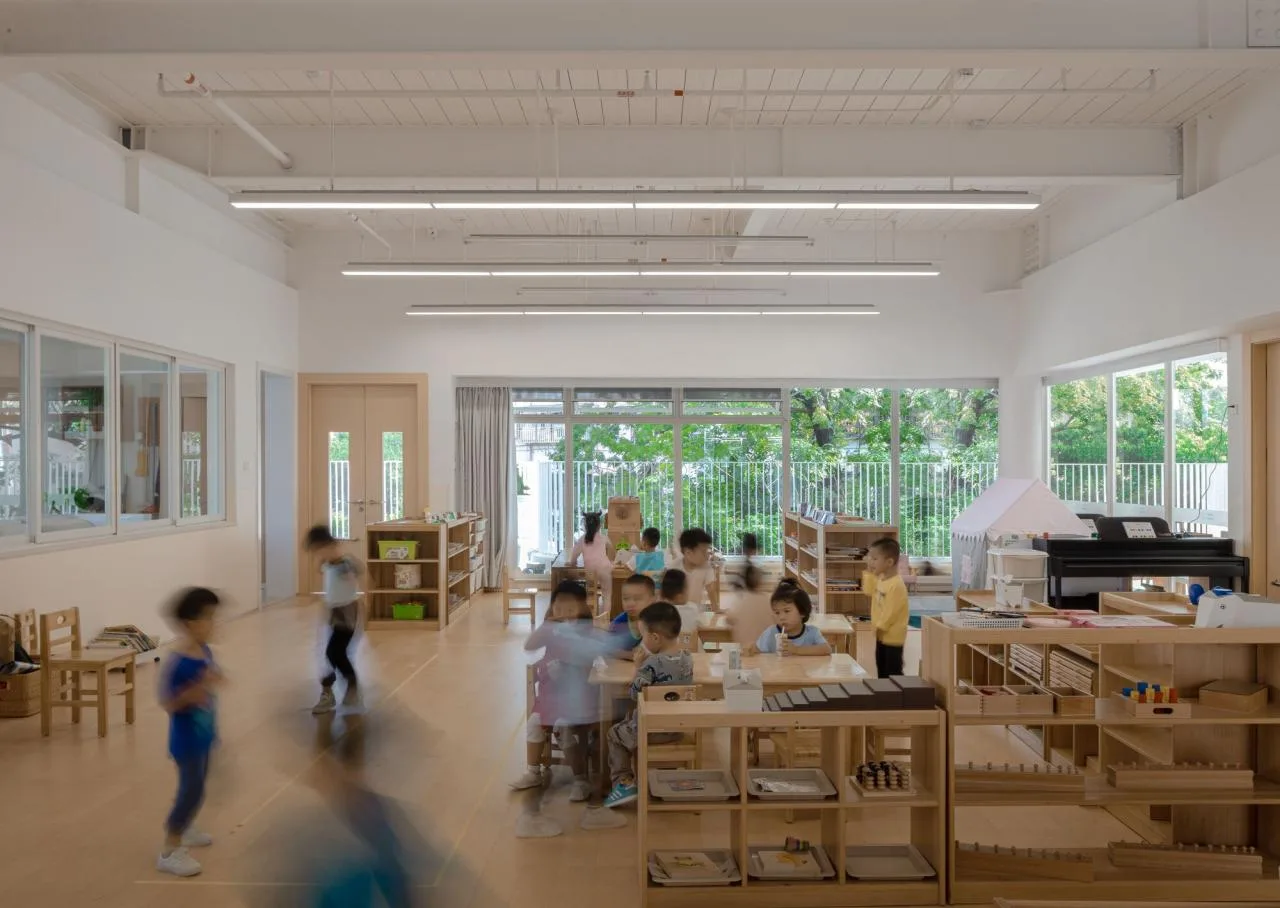
The forest-like campus is distinct from traditional walled boundaries. Instead, architects use the surrounding lush, rolling trees as a natural perimeter. Designed at children’s eye level, the spaces allow clear views of nature from multiple angles inside the buildings, creating a seamless, borderless connection with the outdoors. Each classroom is embraced by nature—with visible skies, sunlight, clouds, shadows, and birds. Stepping outside the classroom leads directly into nature. The first-floor shared backyard offers hands-on nature experiences like hide-and-seek, sand play, castle building, gardening, leaf collecting, and tent building. The building’s exterior features a warm white, textured paint with subtle convex and concave granules, emitting a soft glow even under intense sunlight, reminiscent of the refreshing texture of ice cream.
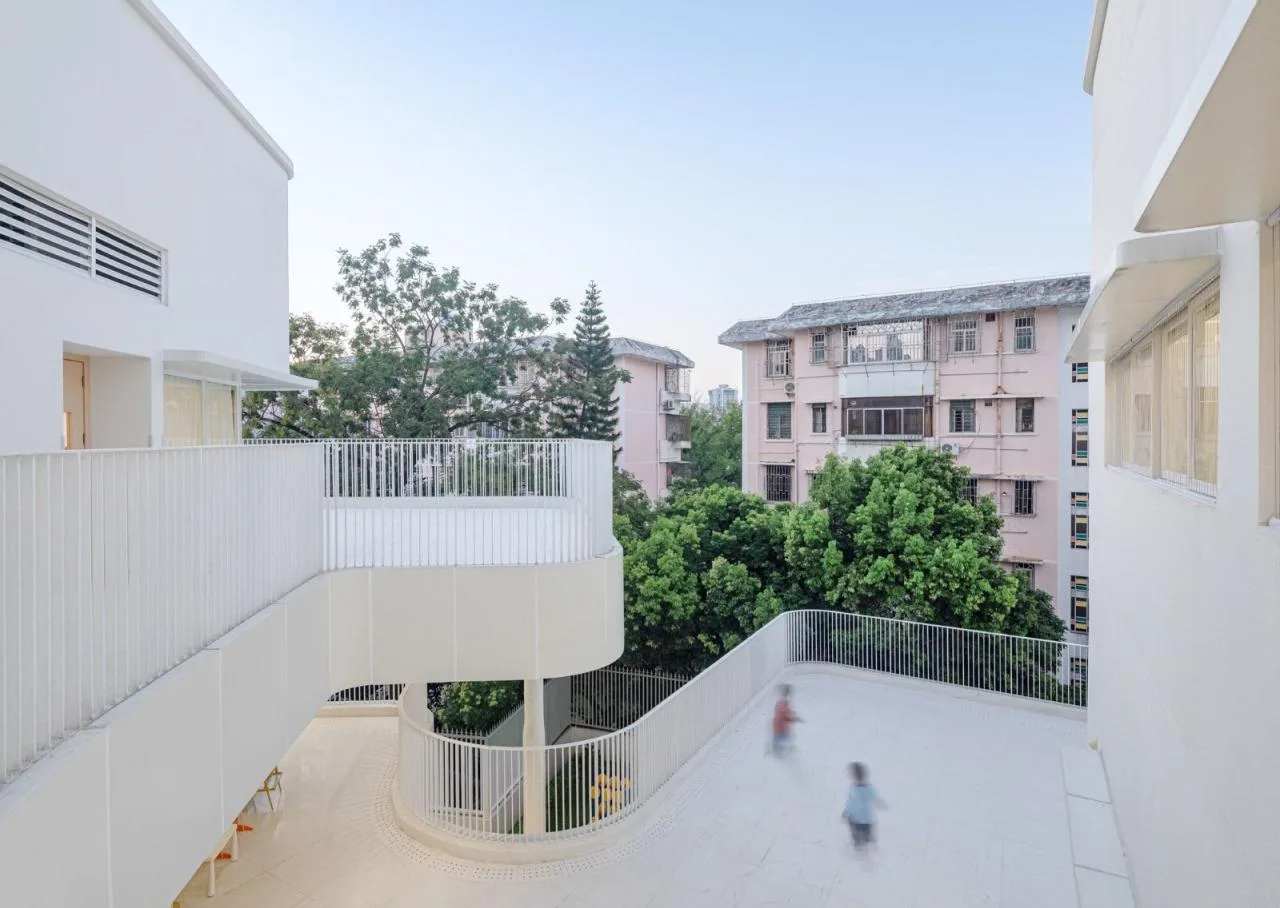
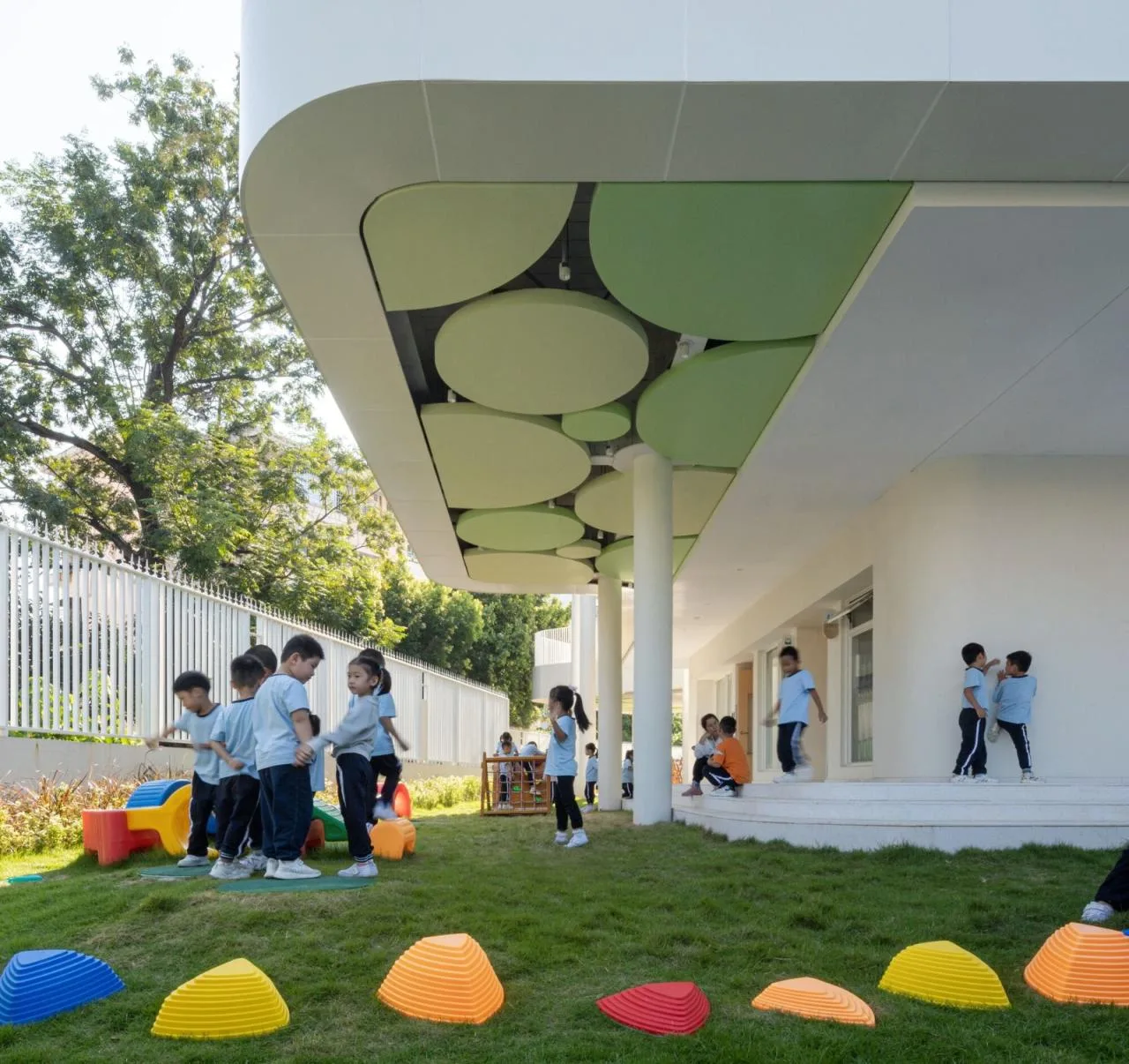
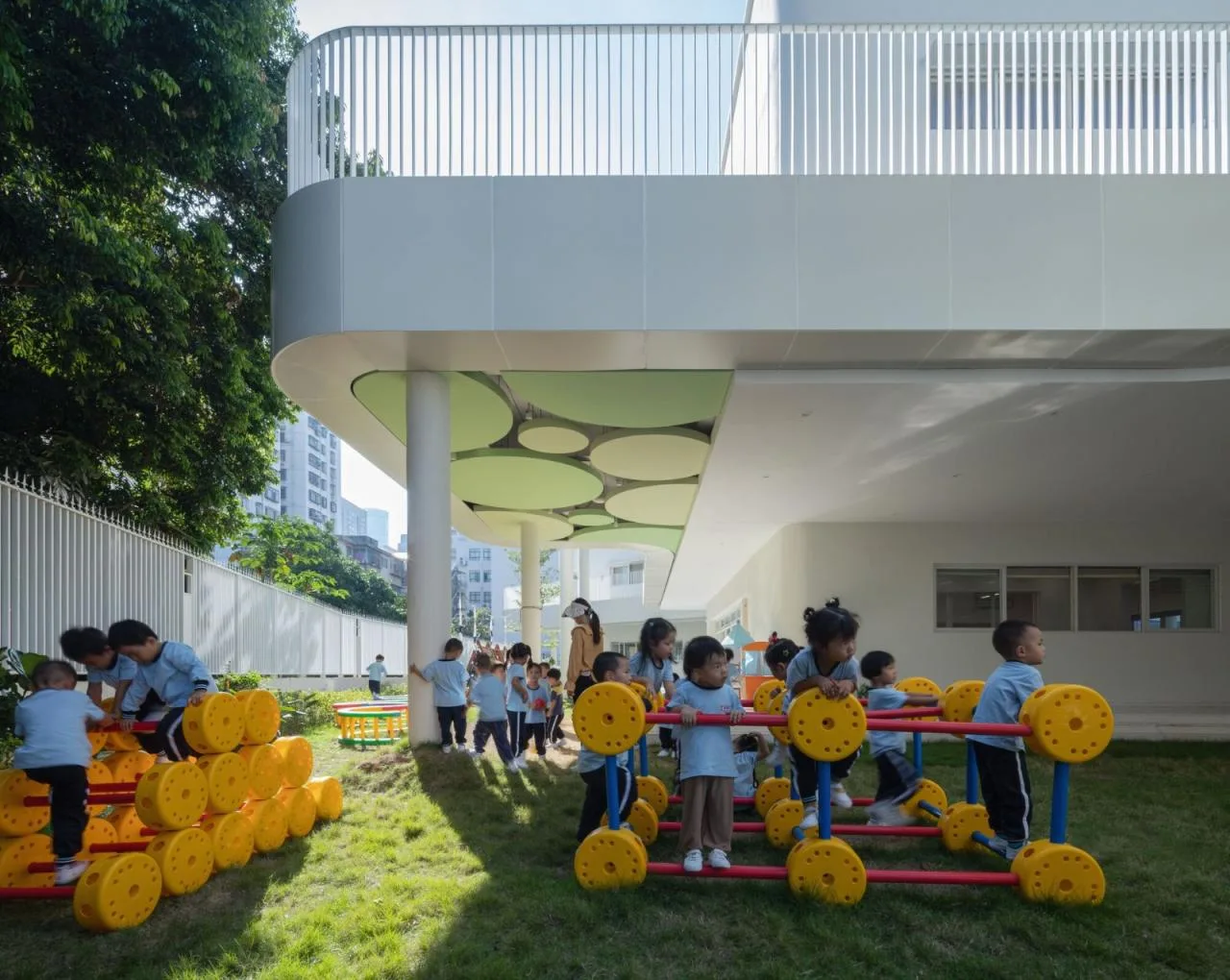
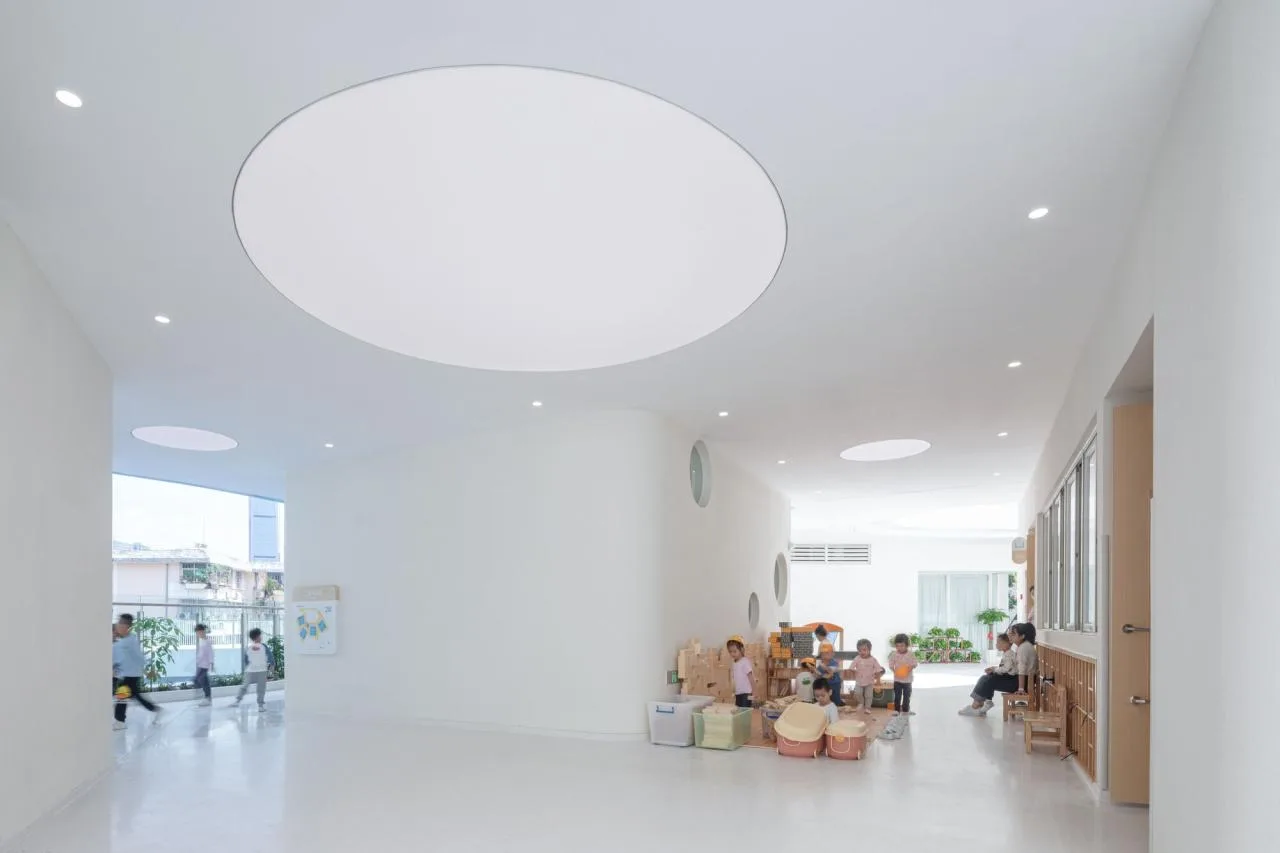
The art garden, alive with flowing light and shadow, serves as both a vibrant classroom and a museum-like space full of creative potential. It encourages children to explore with curiosity and fosters their courage to try new things. Rejecting traditional linear layouts, architects deliberately designed irregular, flowing spaces that transform with the weather: on sunny days, unpredictable plays of light and shadow emerge; on rainy days, illuminated boxes create a magical light maze. Many areas remain undefined, inviting children and teachers to personalize them. Blank walls and floors are envisioned as future canvases and themed exhibition spaces, where artistic memories of growth will be nurtured and preserved.
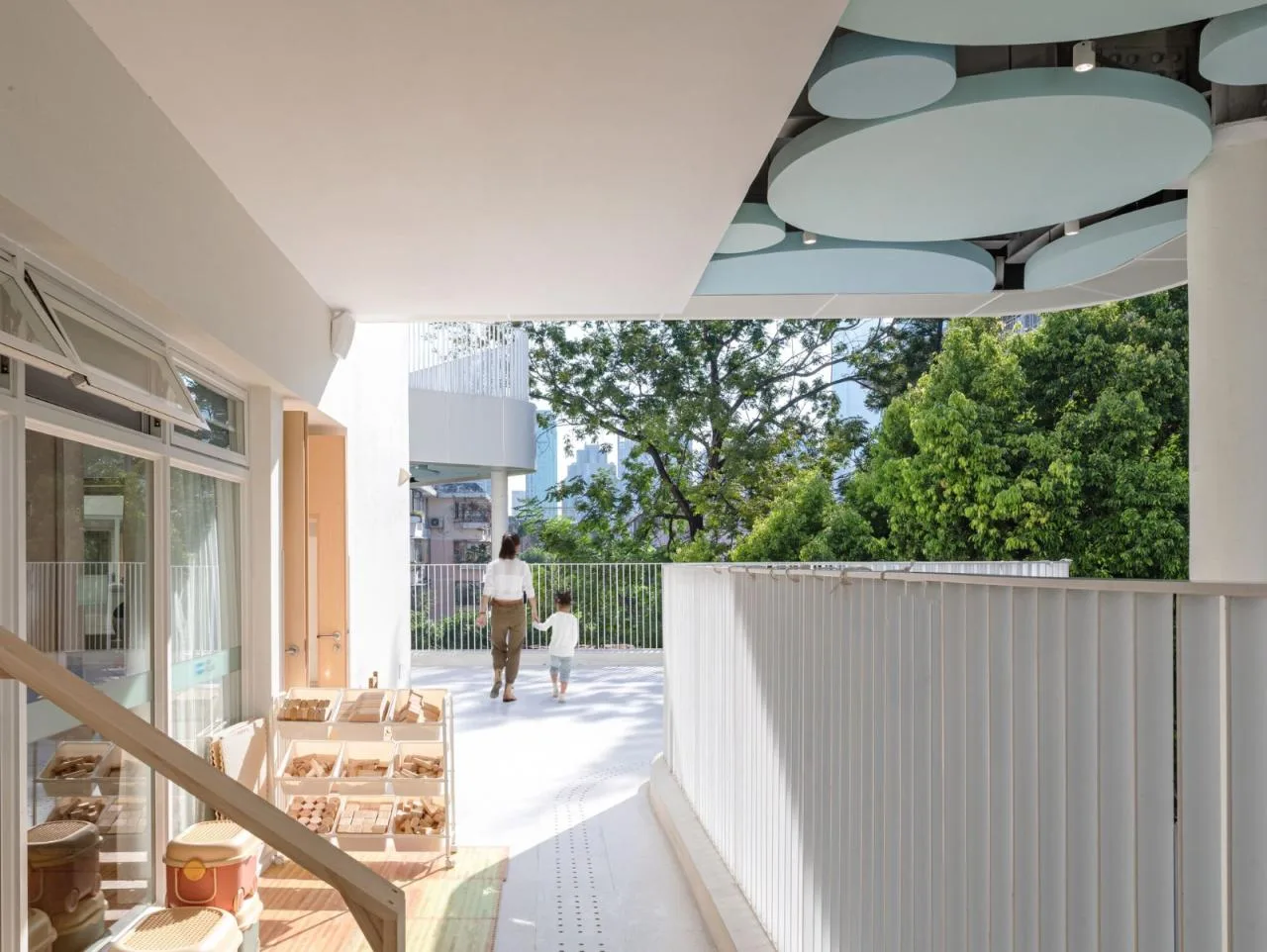
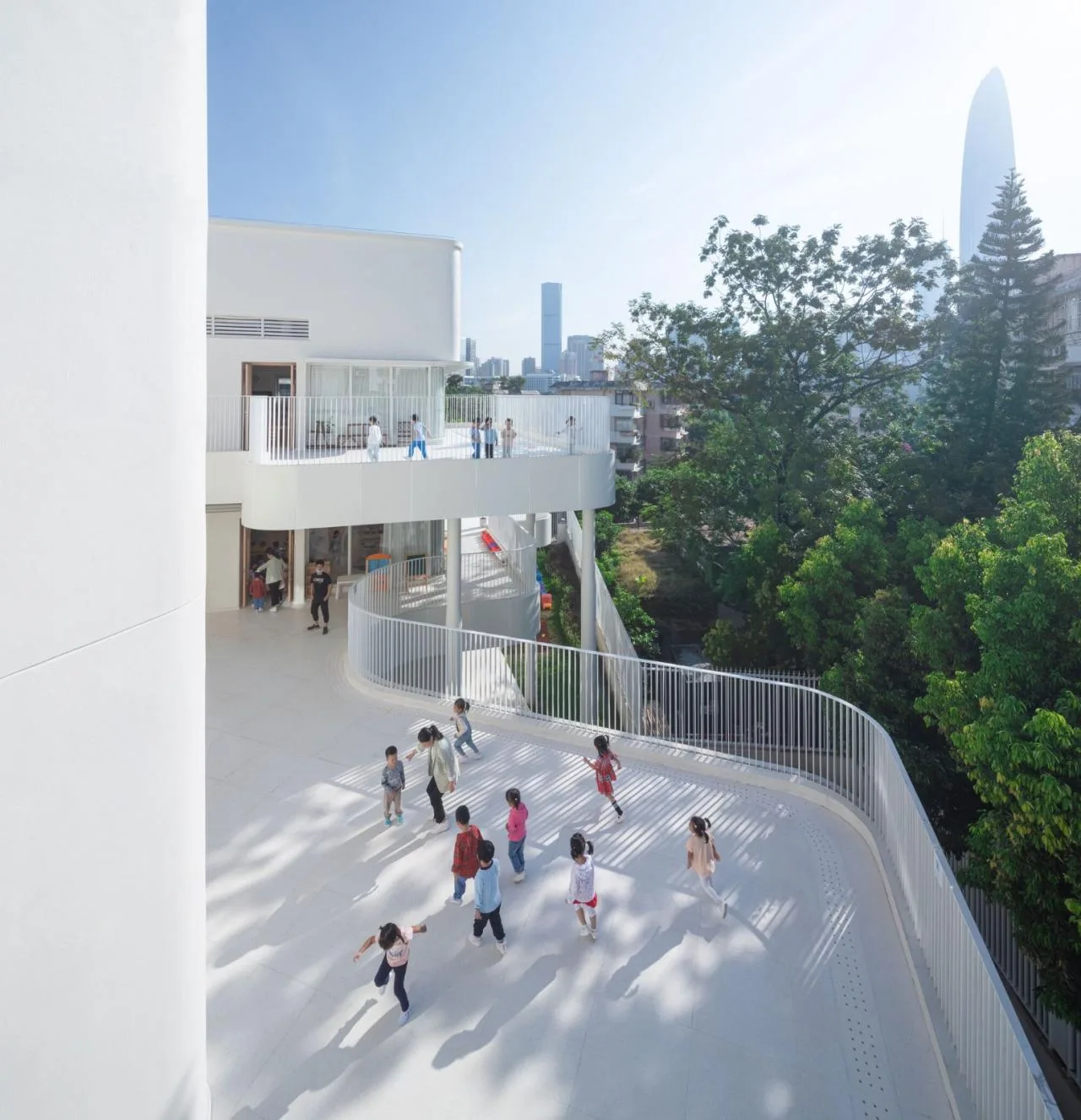
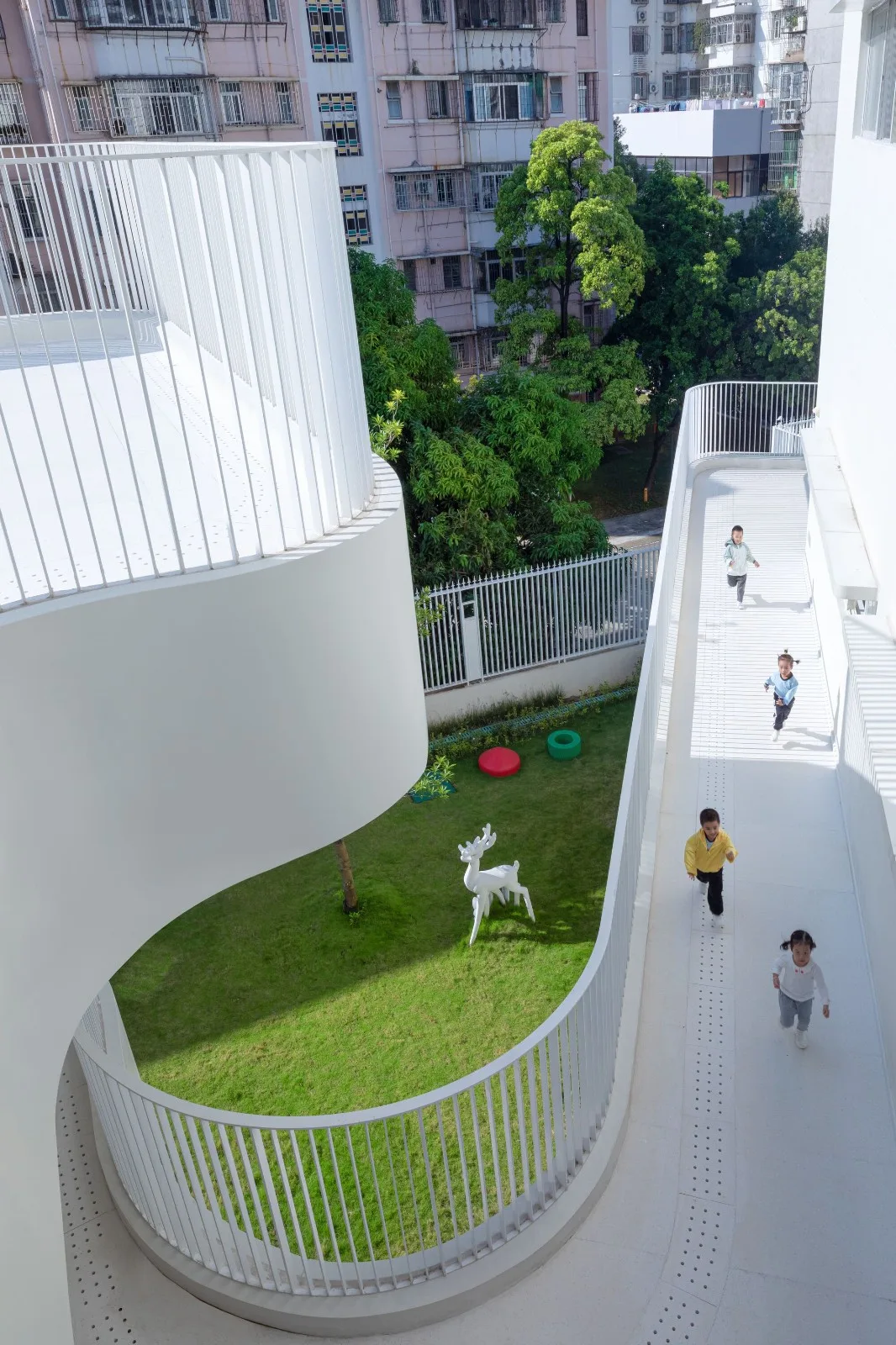
The entire building is designed as a green, low-carbon, and healthy home, guided by ecological forest principles. Features include ample natural light, smooth ventilation, and minimal carbon emissions. The design ensures the building remains cool and dry in summer and warm and humid in winter, regardless of changing weather or wind direction. Each classroom unit has carefully placed gaps between modules for natural sunlight to enter, while the orientation of these boxes is precisely calculated to provide shading to adjacent rooms. These spaces blend reality with virtual elements, promoting effective natural ventilation throughout the campus.
Project Drawings
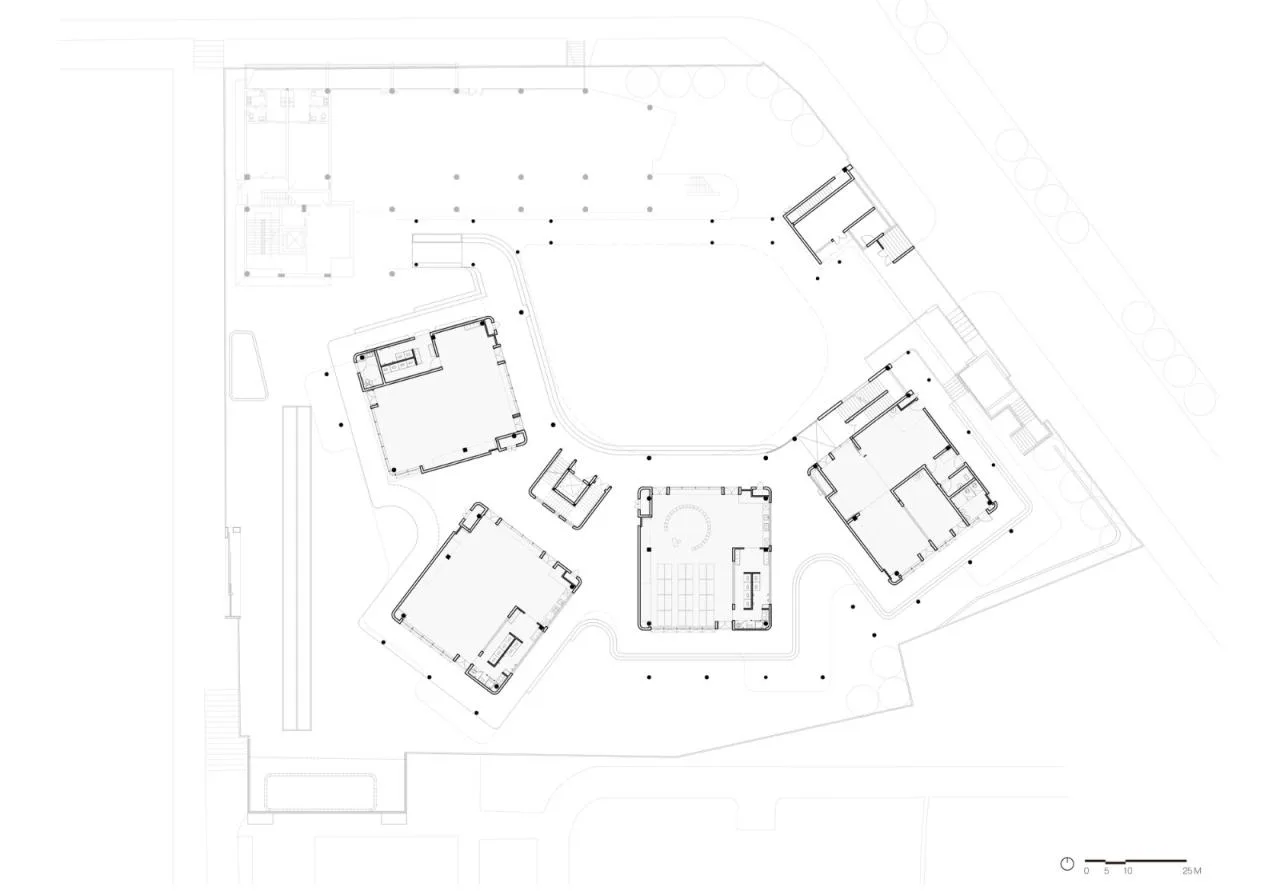
△ First Floor Plan
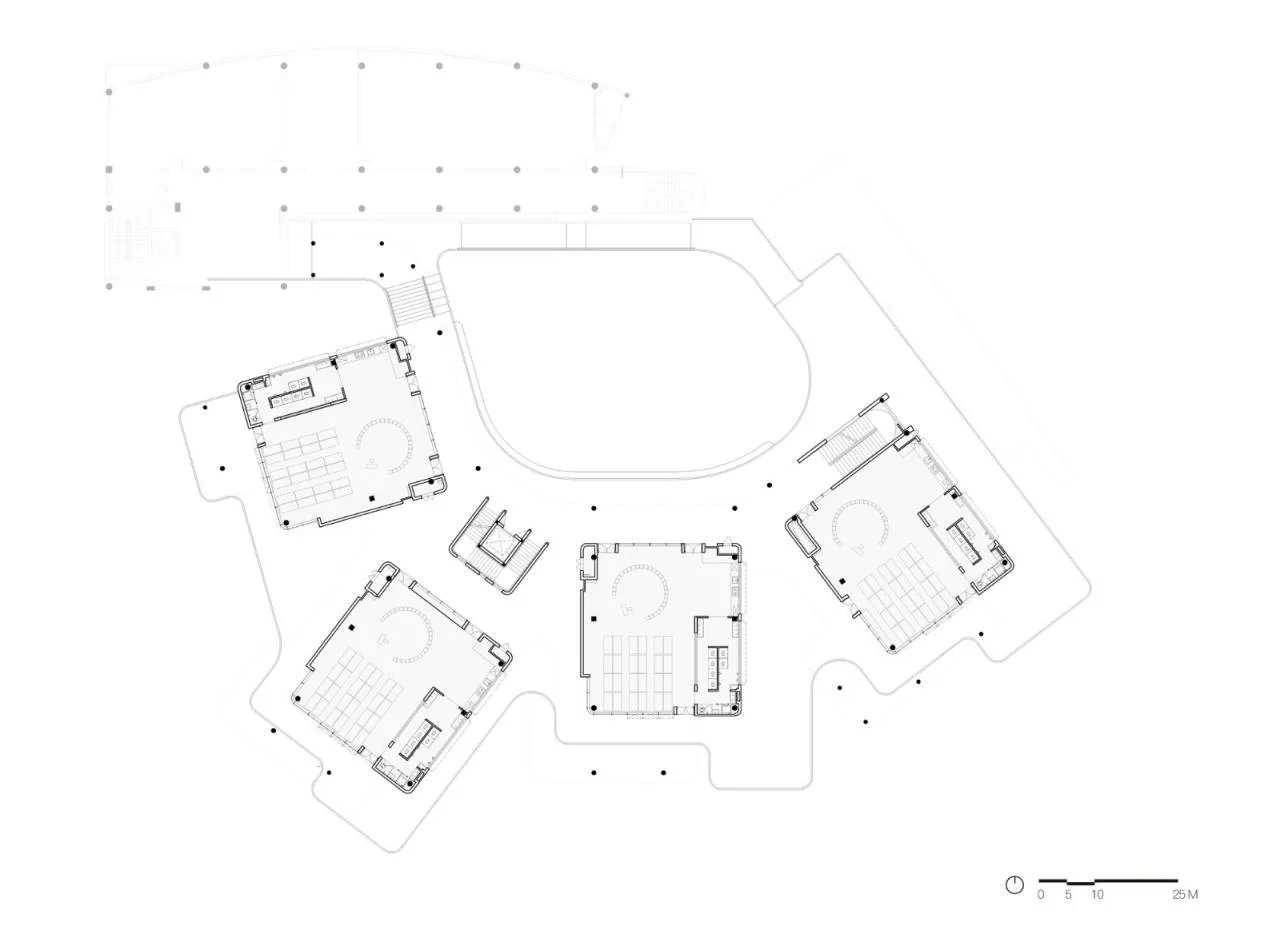
△ Second Floor Plan
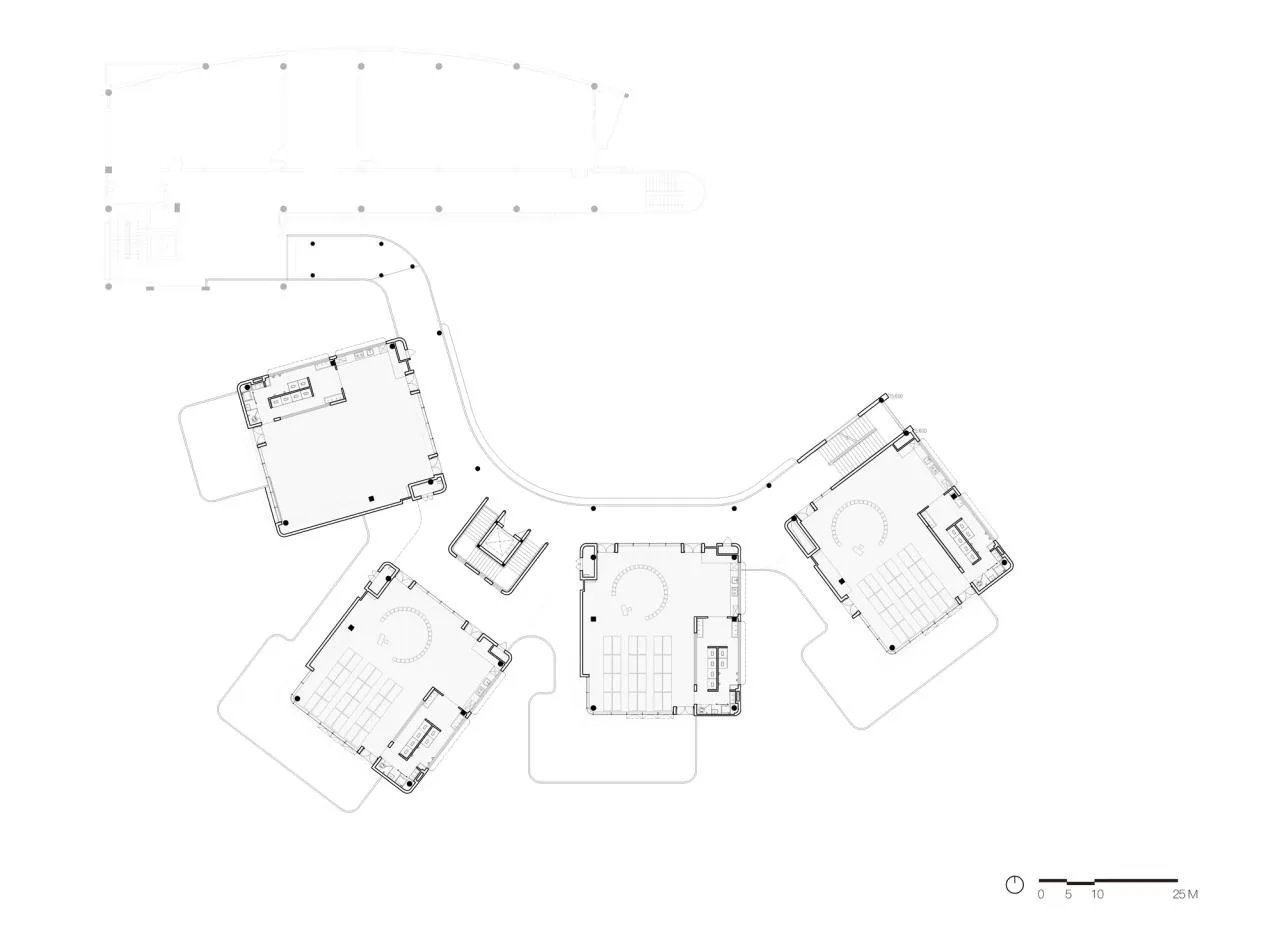
△ Third Floor Plan
Project Information
Architect: Xu Yunchao Architecture Studio
Area: 4515 m²
Project Year: 2021
Photographer: Schran Image
Lead Architect: Xu Yunchao
Design Team: Liu Hongrui, Qi Jiachuan, Chen Jianxuan, Gao Kan, Elvis Lin, Shi Yang, Zhang Shengjie, Qian Kun, Chen Lulu, Li Tianxiong
Construction: Shanghai Baoye
Client: Shenzhen Construction and Engineering Bureau, Shenzhen Second Kindergarten
Lighting Design: Grand View Lighting
Location: Shenzhen















Must log in before commenting!
Sign Up