
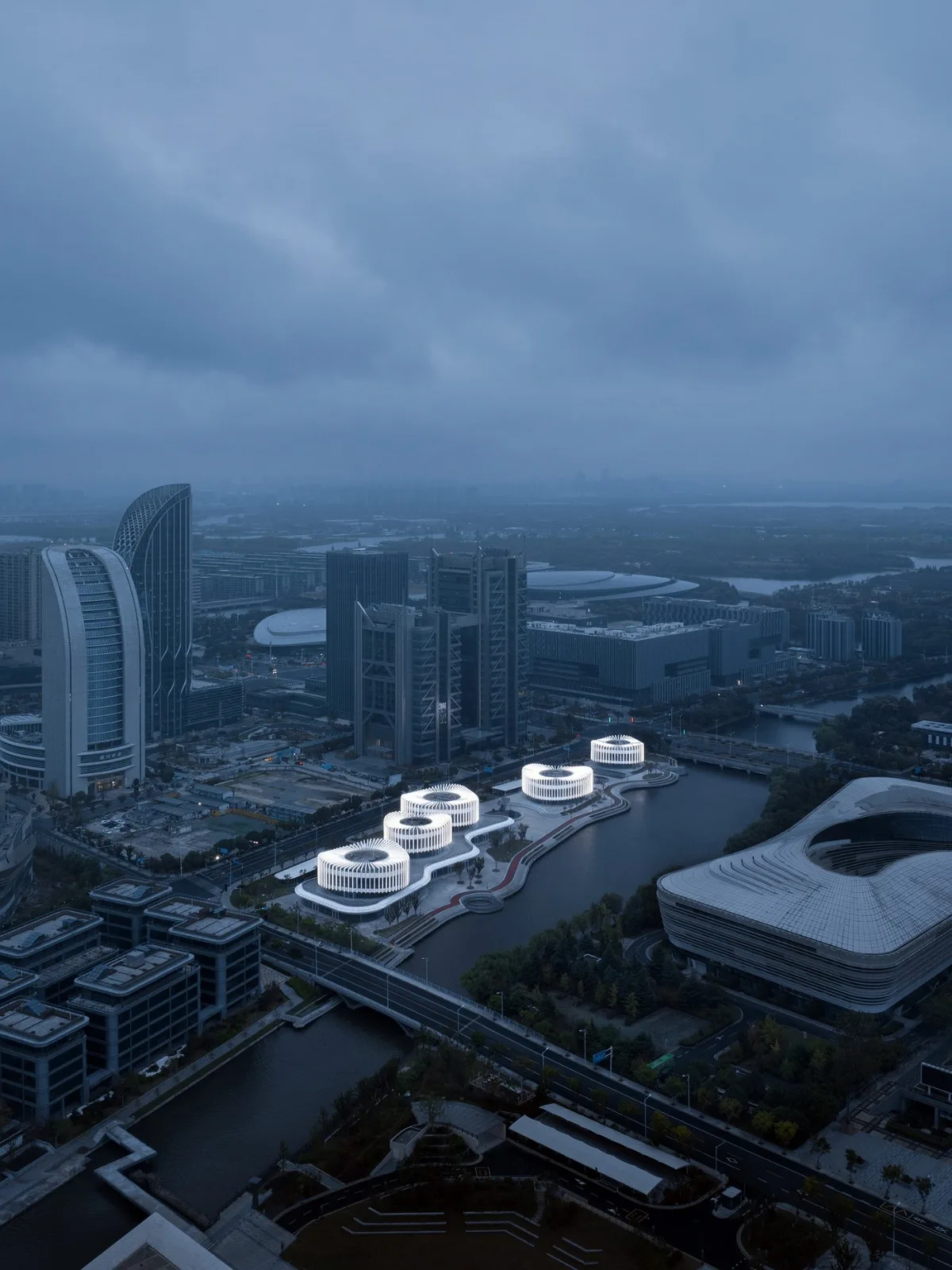
Jiuliudu Riverside Art District © Literal translation of architectural photography
The Jiuliudu Riverside Art District, co-hosted by UUA design partner Li Yongzheng and management partner Li Qizhi, was completed and delivered in September 2023 after five years of design and construction. Situated along the Jiuliudu River in Jinghu New District, Shaoxing, Zhejiang, the project embraces flowing architectural and landscape forms that harmonize with the winding textures characteristic of Jiangnan water towns, seamlessly integrating into the urban fabric with a gentle approach.
1.0 Project Background
Shaoxing Jinghu New District serves as the city’s administrative, economic, cultural, and sports hub. The area boasts a rich water network and an excellent ecological environment, surrounded by lush greenery. This project is strategically located in the core of Jinghu New District, adjacent to the financial office area, and directly faces the Shaoxing Administrative Center and Shaoxing Library across the river, making it a highly significant and sensitive site.
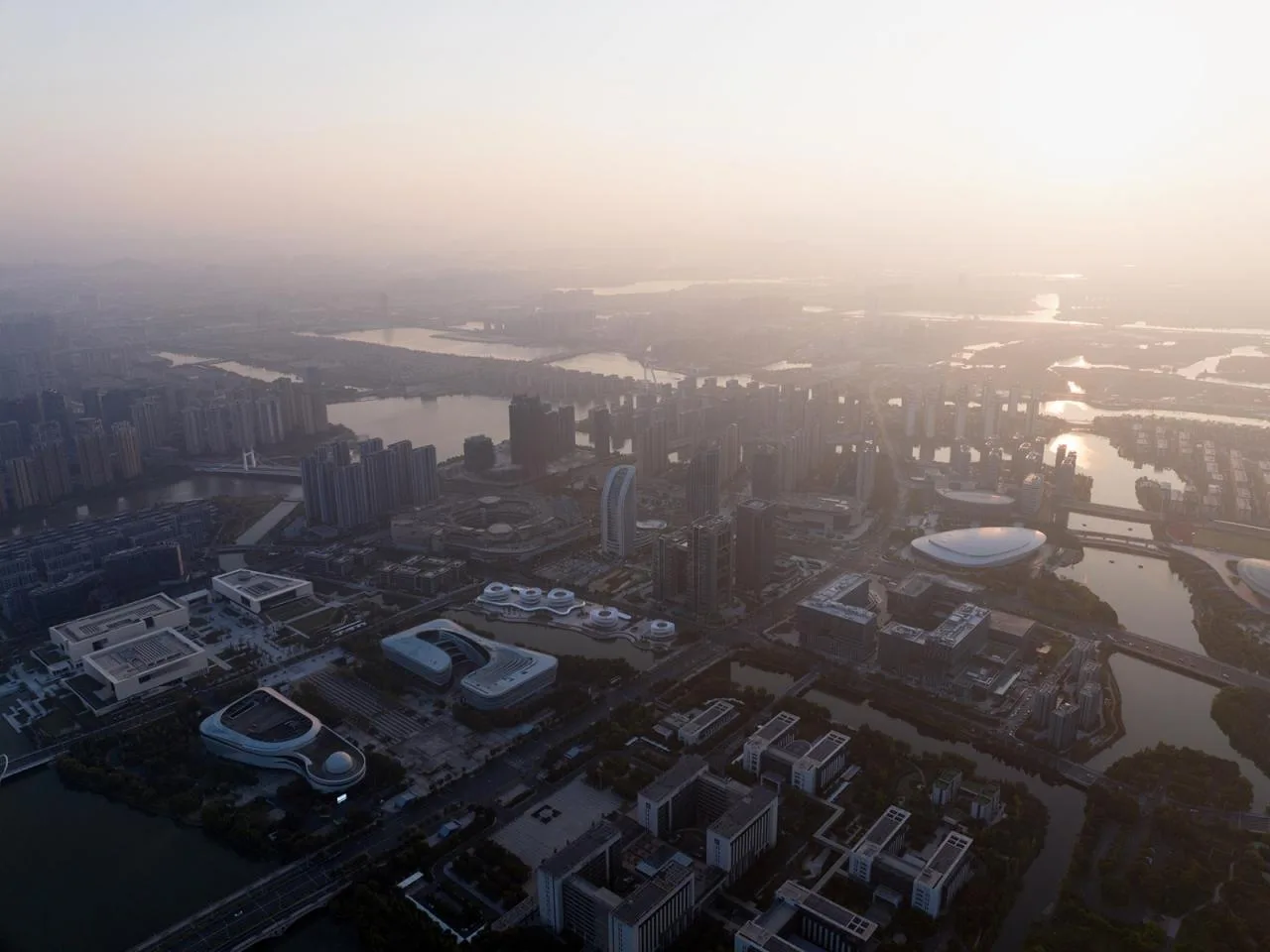
△ Aerial view highlighting the urban texture © Literal translation of architectural photography
The design emphasizes low building density and height, prioritizing landscape integration. Functionally, the development is positioned as a mid-to-high-end commercial support facility. The three above-ground floors accommodate service-oriented commerce, dining, and boutique hotels, while the underground floor includes parking and mezzanines to support logistics for the catering spaces above.
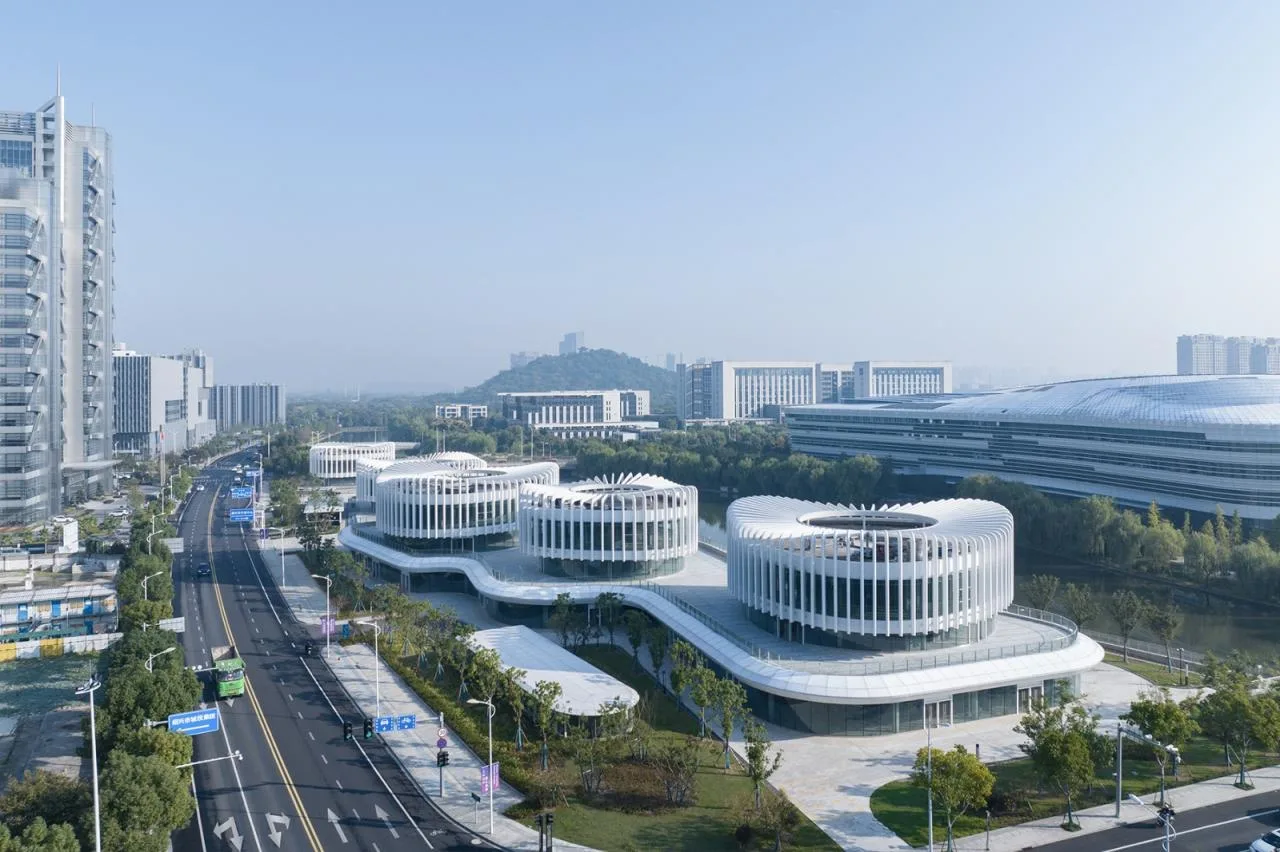
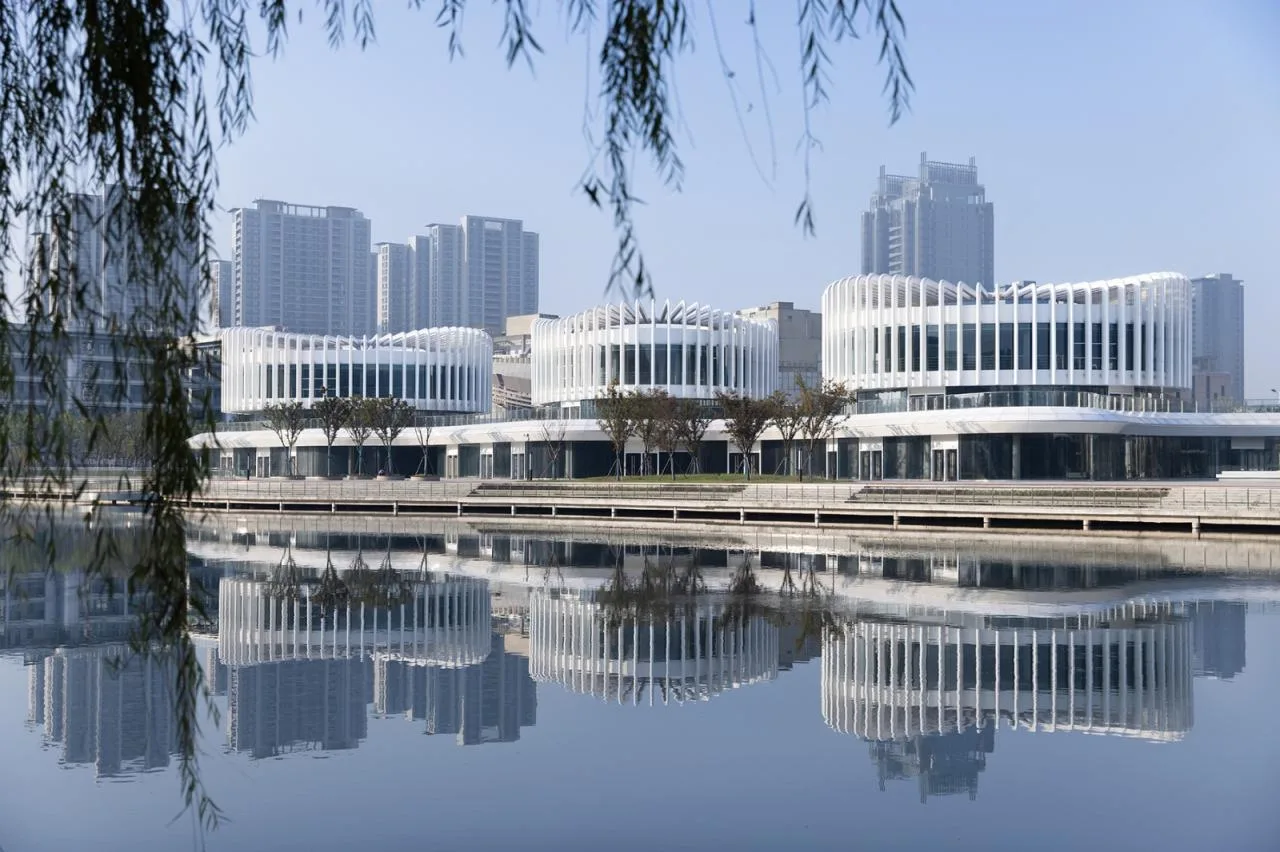
△ Low density, low height, integrated landscape design © Literal translation of architectural photography
2.0 Resonance: Geographic Features and Cultural Symbols
“As our second project in this area, this opportunity allows us to deeply explore urban integration — embedding design into the city fabric, connecting neighboring plots, and resonating with the community.” – Li Yongzheng
Jinghu New District’s landscape is defined by a winding water network and rugged terrain, typical of a Jiangnan water town. The site is flanked by a financial complex rising over 100 meters to the west and the nearly 30-meter-high Shaoxing City Library across the river to the east, together forming an “urban valley.”
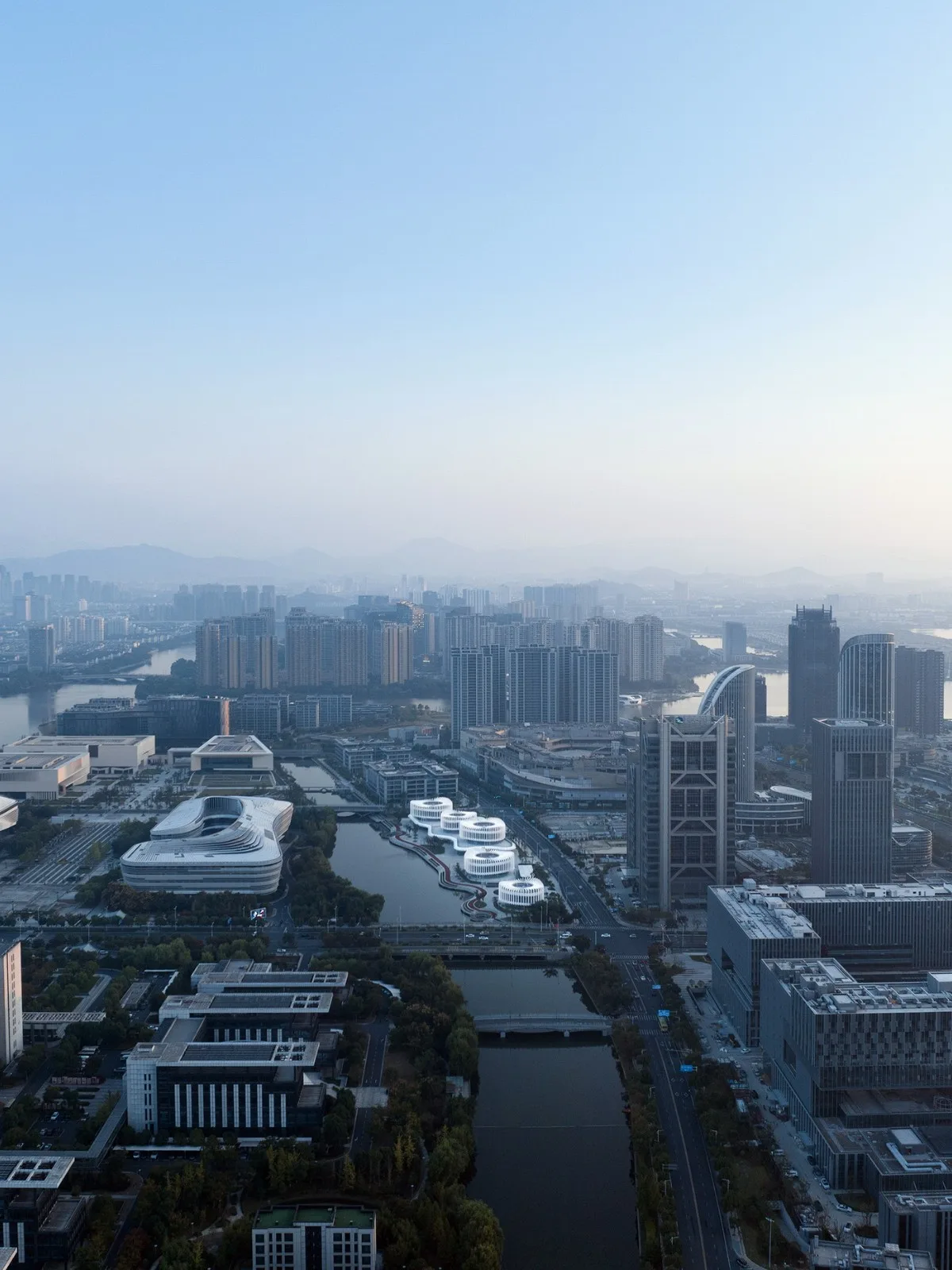
△ Urban River Valley © Literal translation of architectural photography
UUA employed a landscape-driven design strategy, creating fluid architectural podiums and site landscapes. Five “Orchid Pavilions,” inspired by the “three-petal orchid” shape, reference Shaoxing’s water town geography and cultural heritage of orchid cultivation through clear architectural language. The distinctive rooftop forms also offer scenic views over the neighboring high-rises.
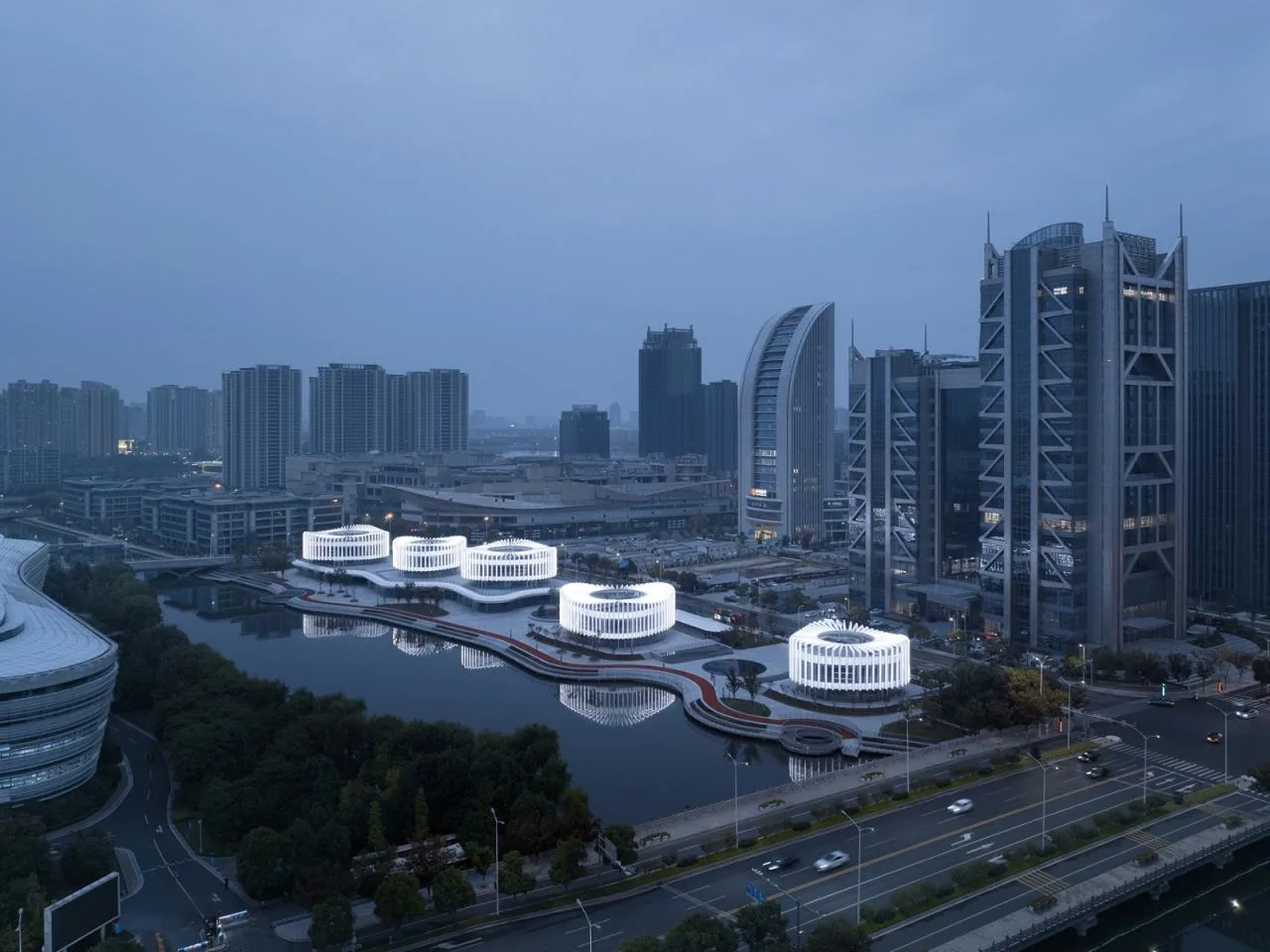
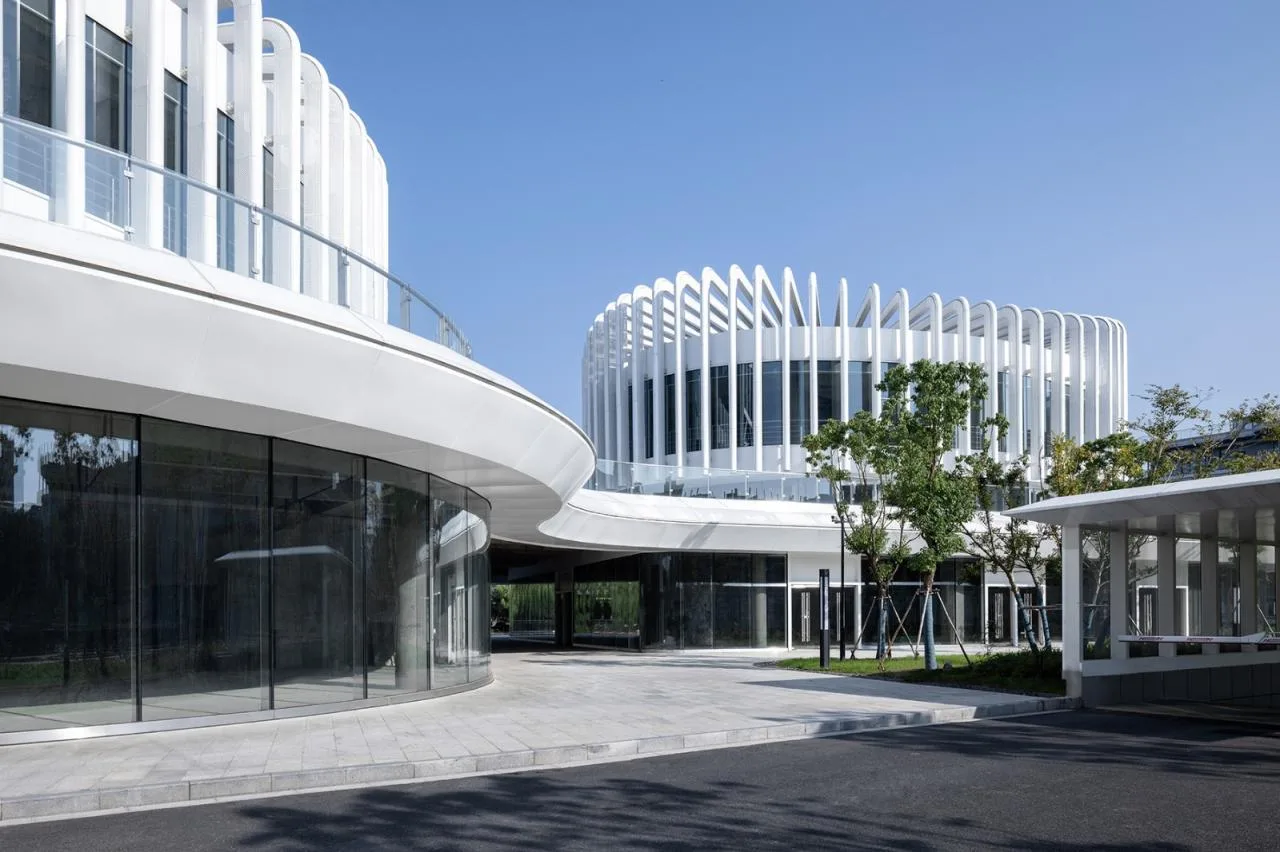
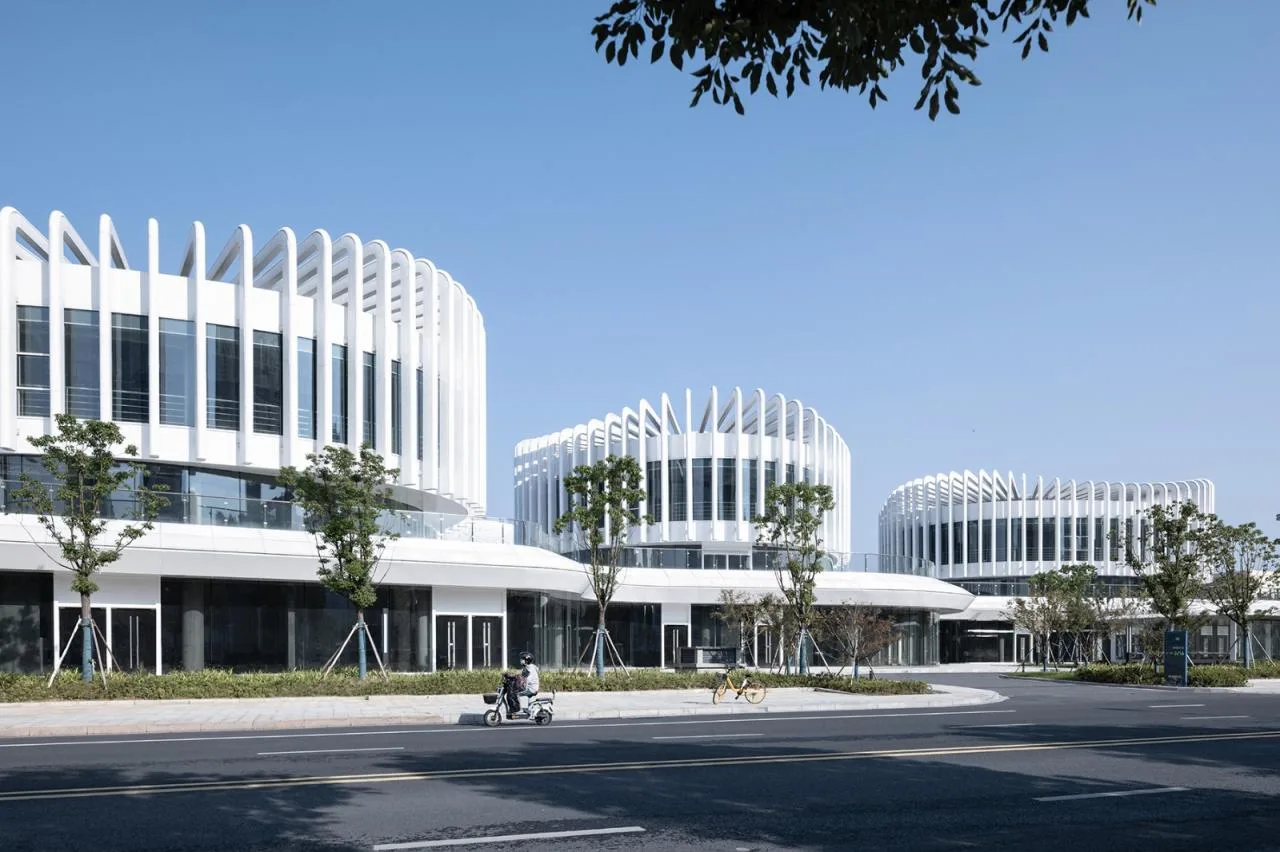
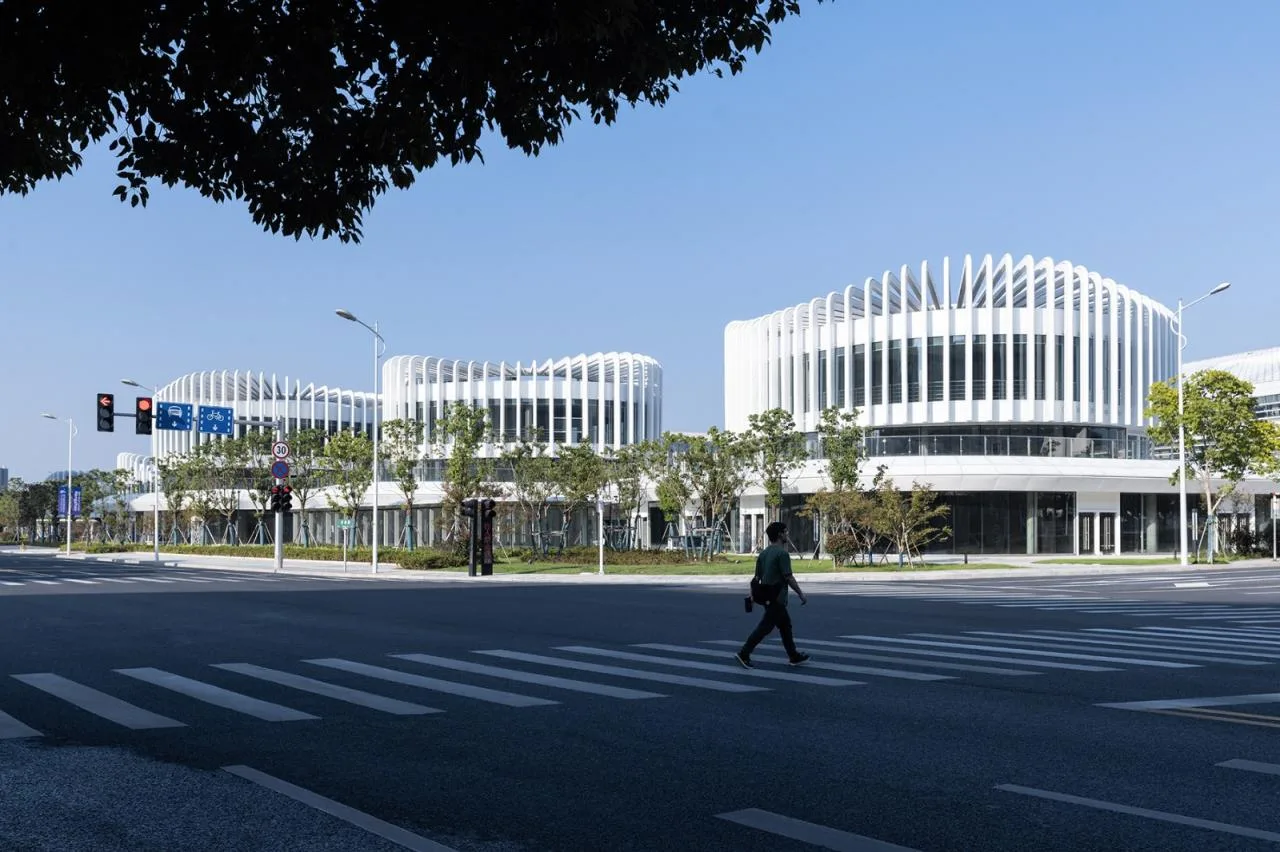
△ Dynamic architecture and landscape © Literal translation of architectural photography
3.0 Dialogue with Surrounding Buildings
The site is narrow, spanning approximately 280 meters north-south and 70 meters east-west, surrounded by buildings with diverse functions. The design addresses this complexity by serving as a transitional connector that effectively links adjacent land parcels.
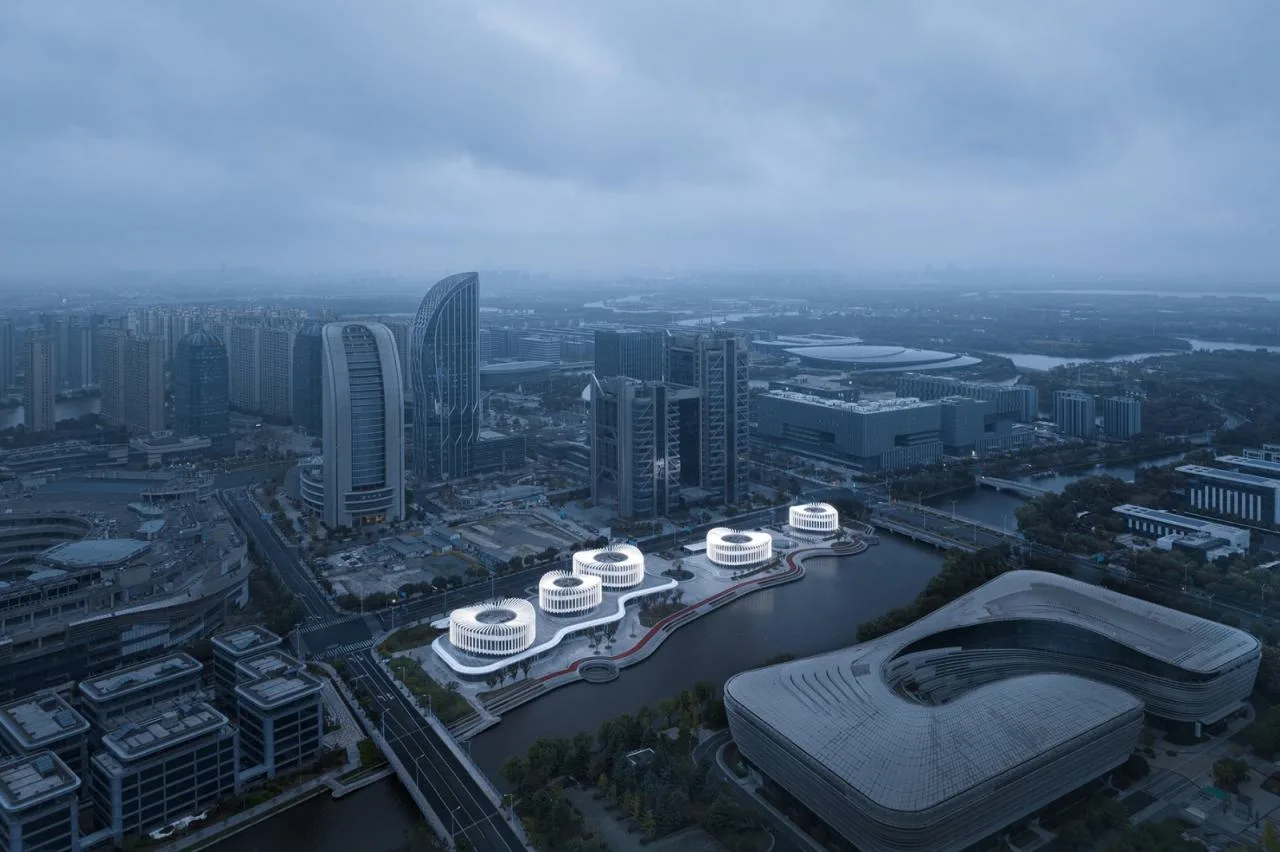
Various architectural communities surrounding the site © Literal translation of architectural photography
To the north, adjacent to the Shaoxing Administrative Center—a sensitive and important location—two “Orchid Pavilion” buildings are designed with low density and height to minimize visual impact. The south side, bordering Suning Plaza Shopping Center, features three “Orchid Pavilions” supported by continuous podiums to increase commercial density and accommodate foot traffic.
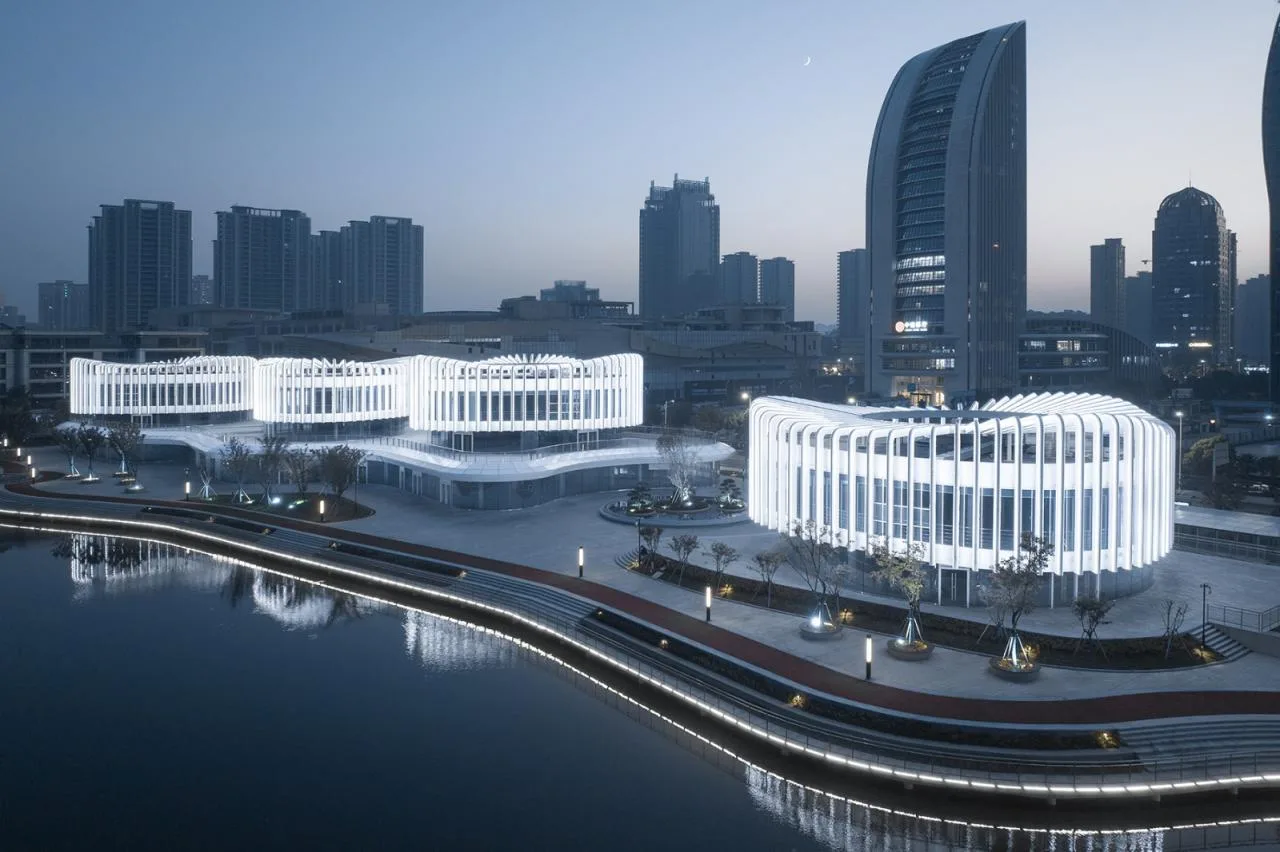
△ Architectural layout: sparse in the north, dense in the south © Literal translation of architectural photography
On the west side, the twin-engine building designed by UUA faces east toward the river. To harmonize spatial relationships, an axial plaza aligns with the main entrance of Shuangqing Building. Architectural forms flank both sides of this square, creating a classic architectural sequence. Additionally, the riverbank is concavely shaped along this axis to channel water into a bay.
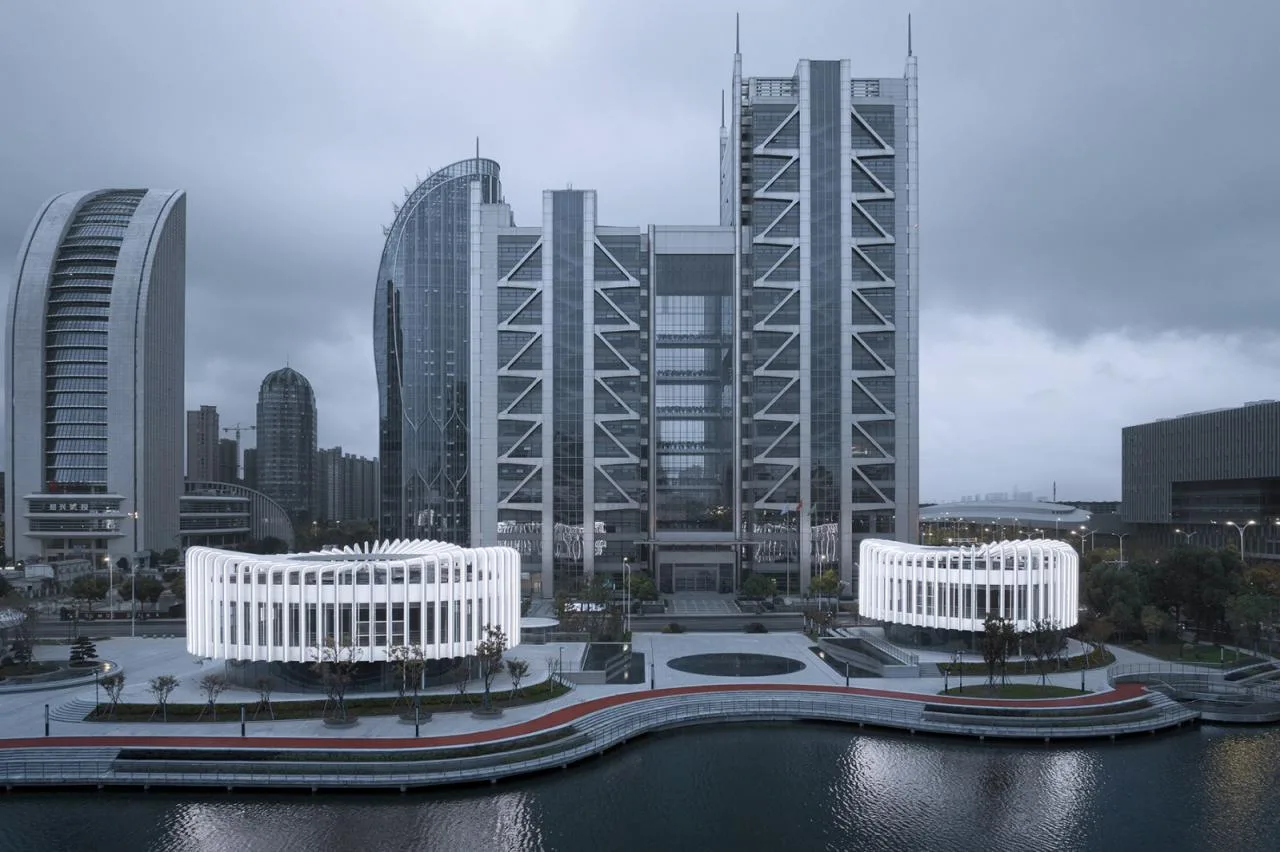
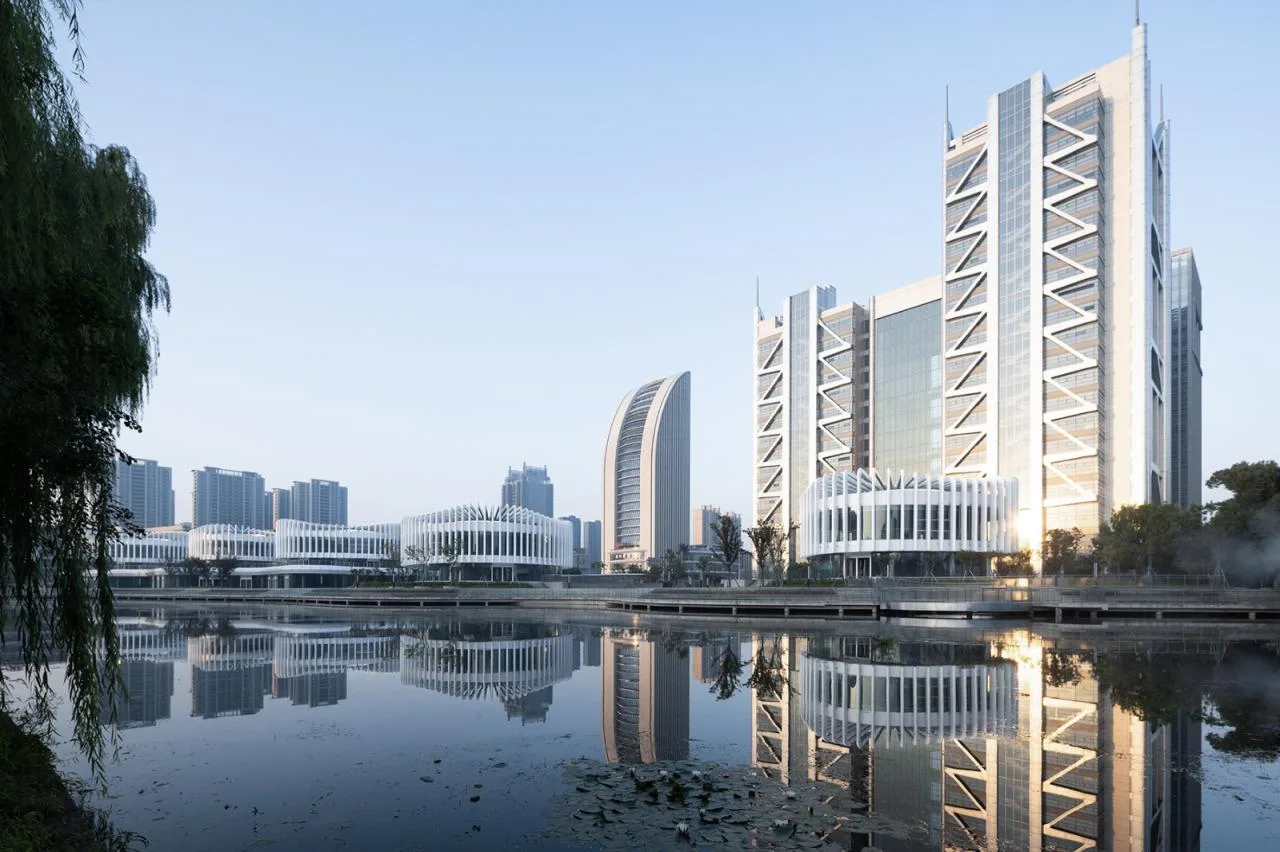
Dialogue with Shuangqing Building © Literal translation of architectural photography
Across the river to the east stands the Shaoxing City Library. The design mirrors its white color palette and smooth lines to establish a coherent architectural dialogue.
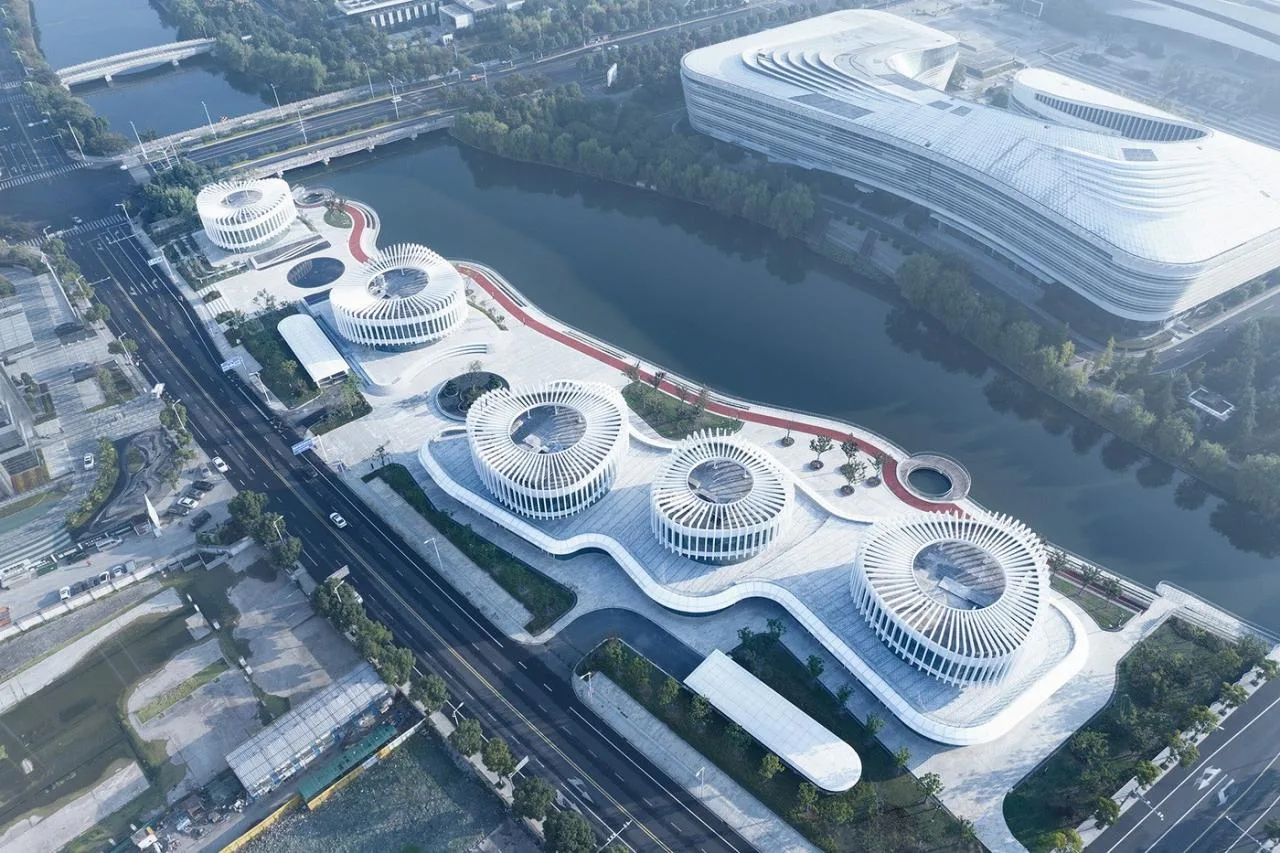
Dialogue with the library across the river © Literal translation of architectural photography
4.0 Creating Hydrophilic Spaces
The original riverbank was nearly straight and monotonous. To activate the riverside, UUA reconfigured the shoreline with dynamic concave and convex contours. Elevated platforms were introduced at protruding sections, preserving the original riverbank and avoiding costly river fill engineering.
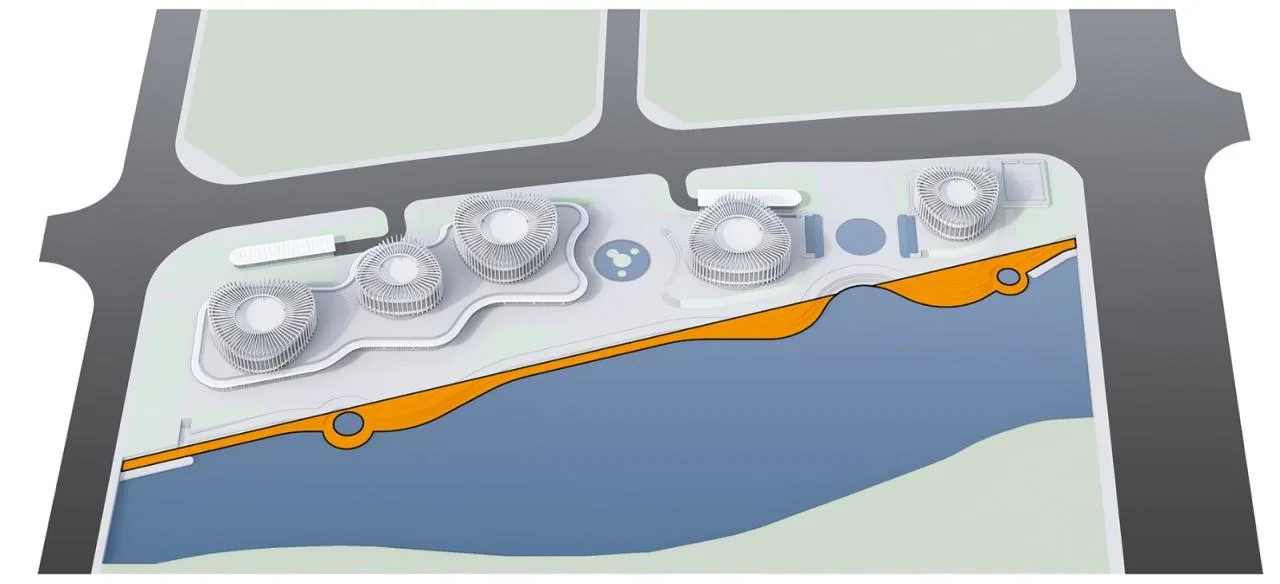
△ Shoreline adjustment (orange areas indicate new elevated platforms) © UUA
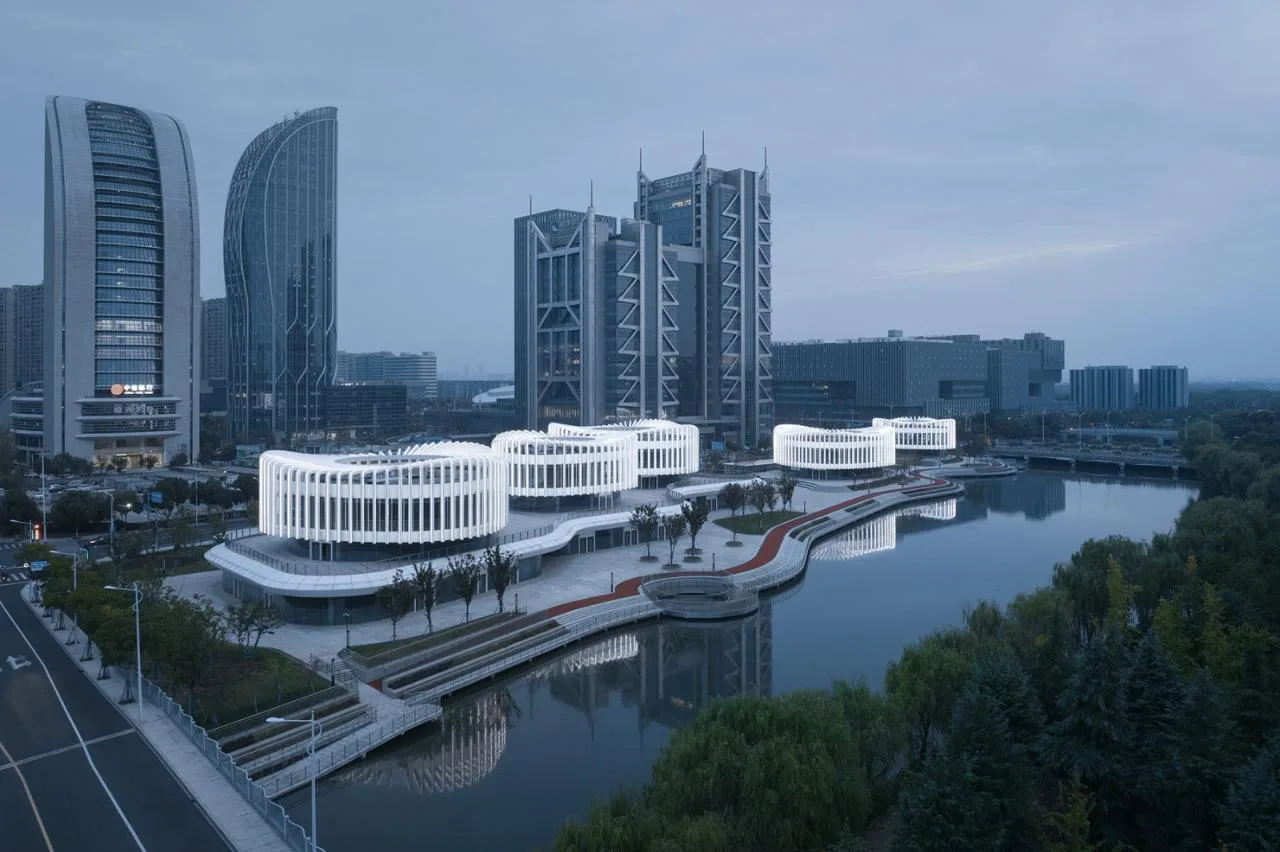
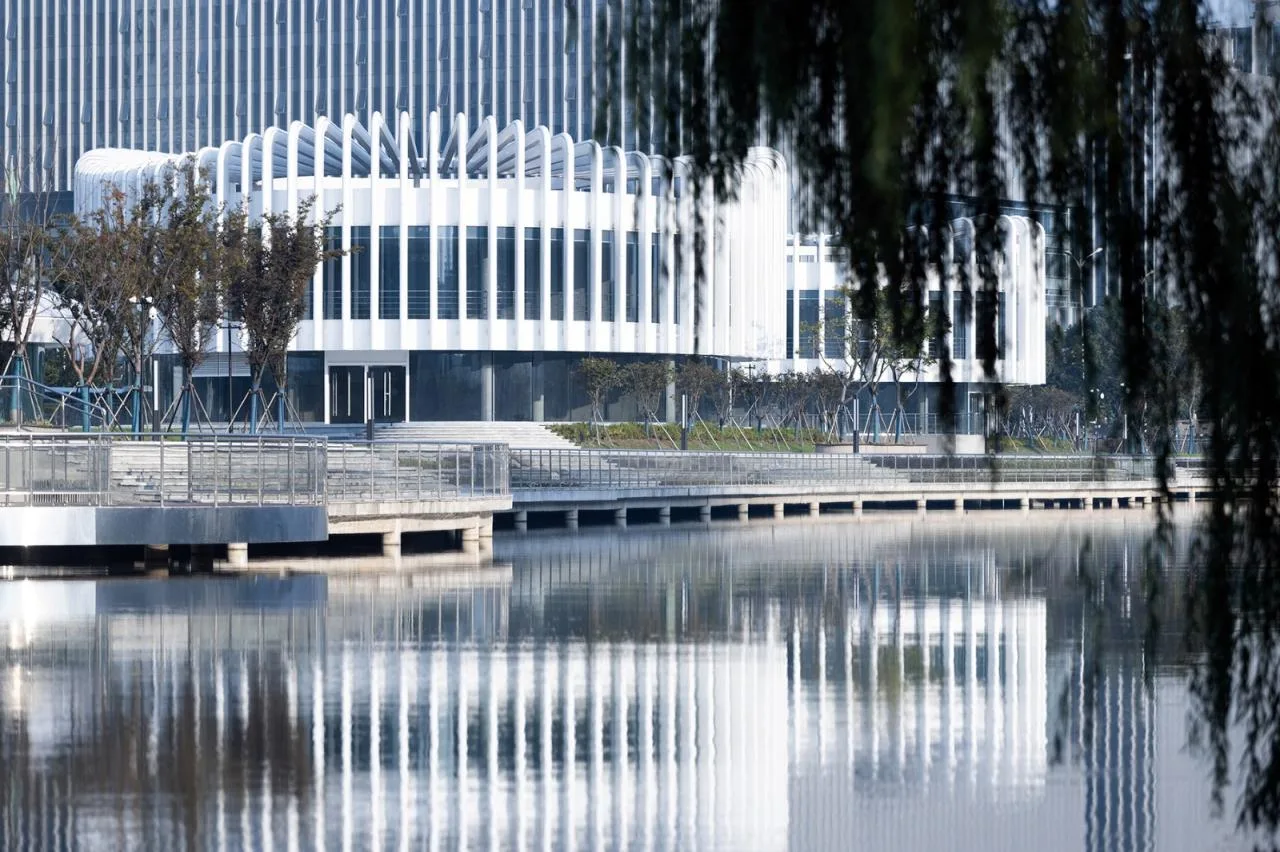
△ New shoreline and elevated waterfront platforms © Literal translation of architectural photography
A 3-meter-wide accessible riverside pathway runs along the river, supporting walking, jogging, and cycling. This slow lane connects seamlessly to neighboring plots via underpass walkways at the southern and northern ends, forming a continuous network.
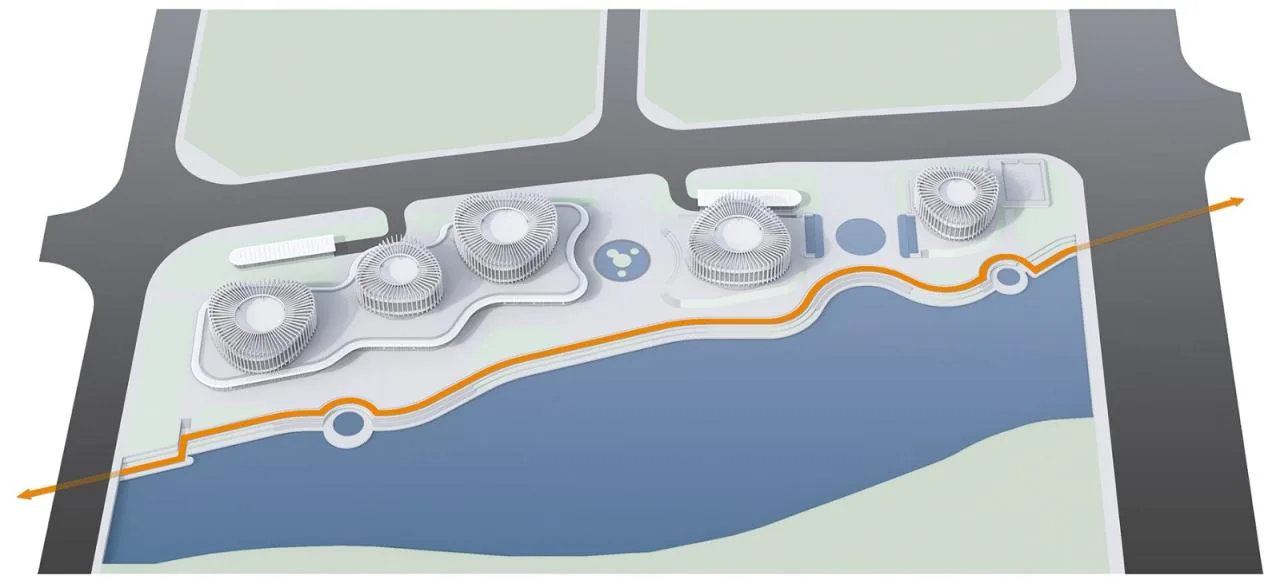
△ Riverside slow lane system © UUA
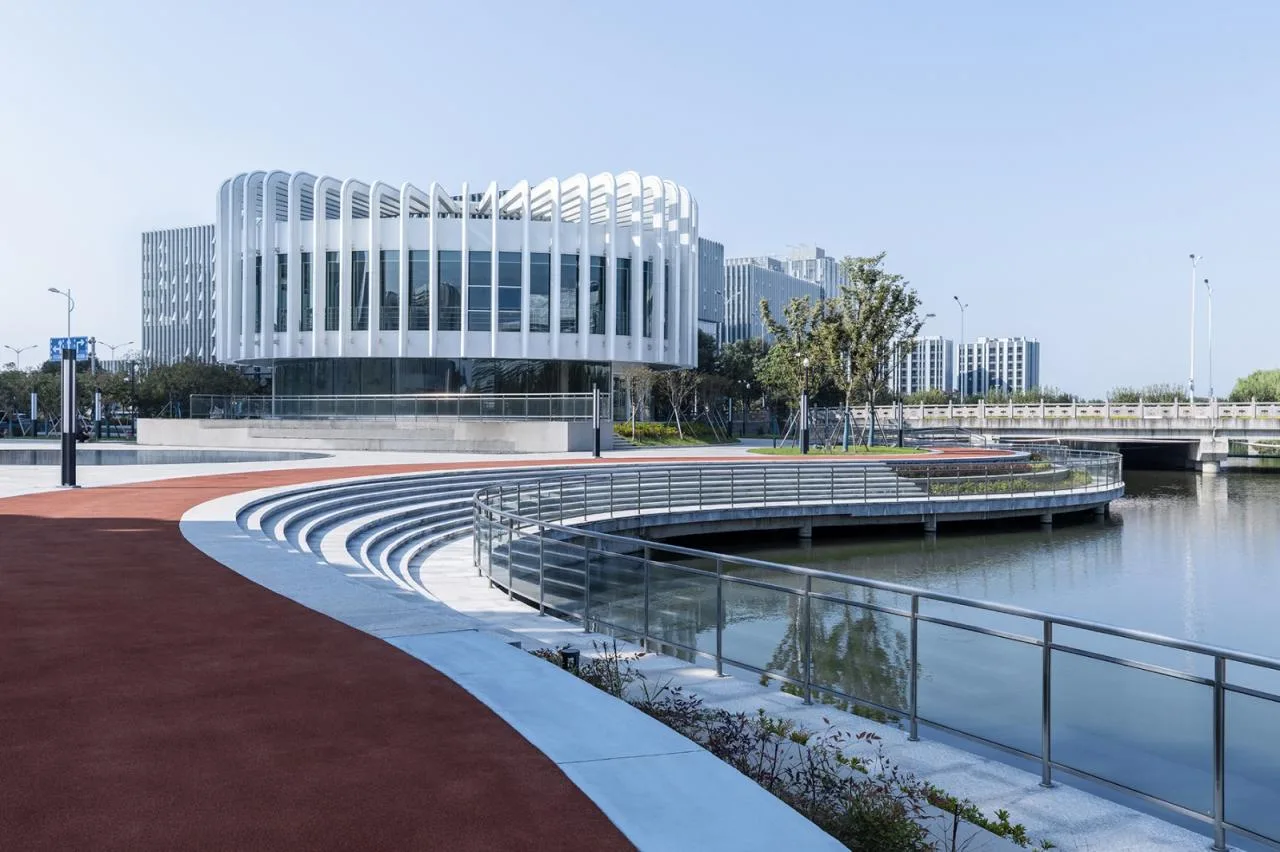
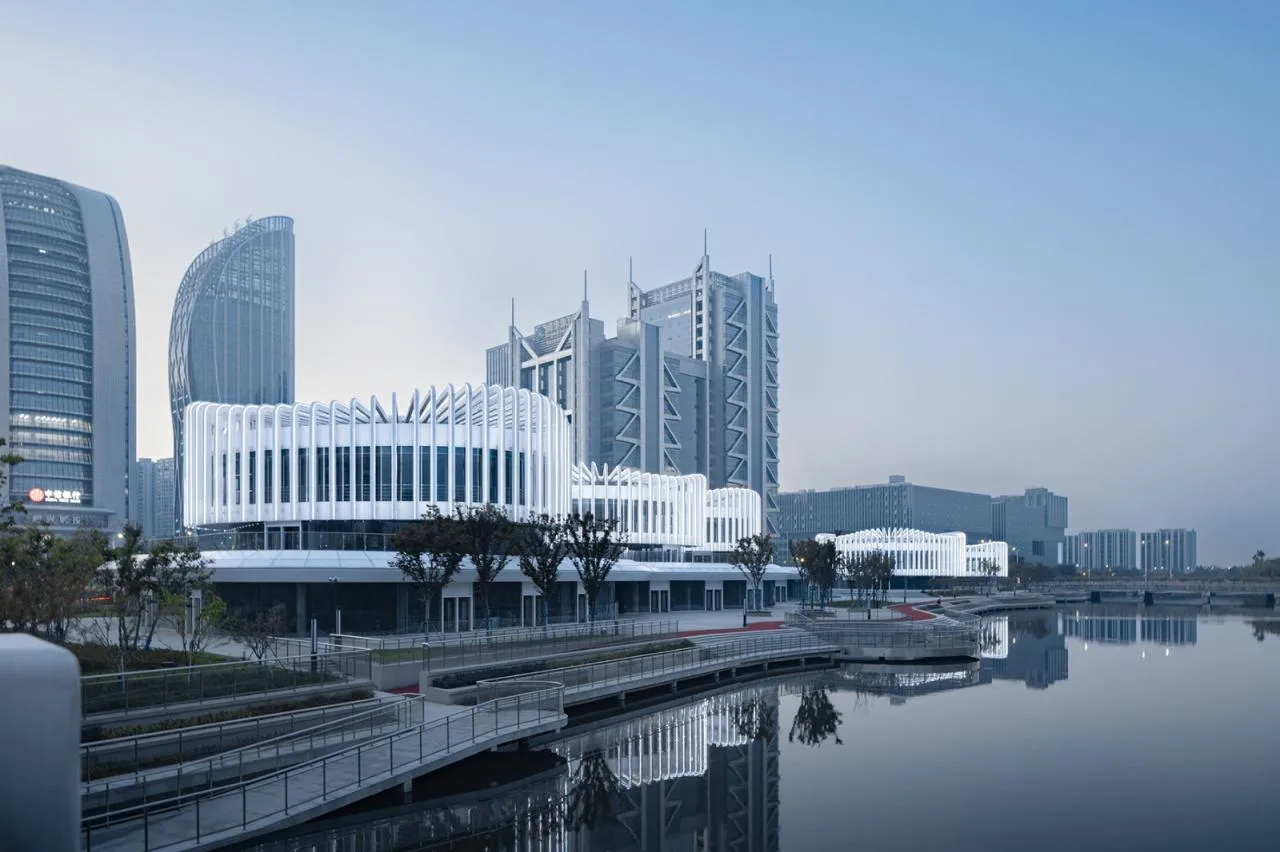
Riverside pathway and boardwalk beneath the bridge © Literal translation of architectural photography
UUA also created two plazas and a corridor between urban roads and the river, fostering a seamless interaction between the surrounding areas and waterfront landscapes, resulting in a more inclusive urban space by the water.
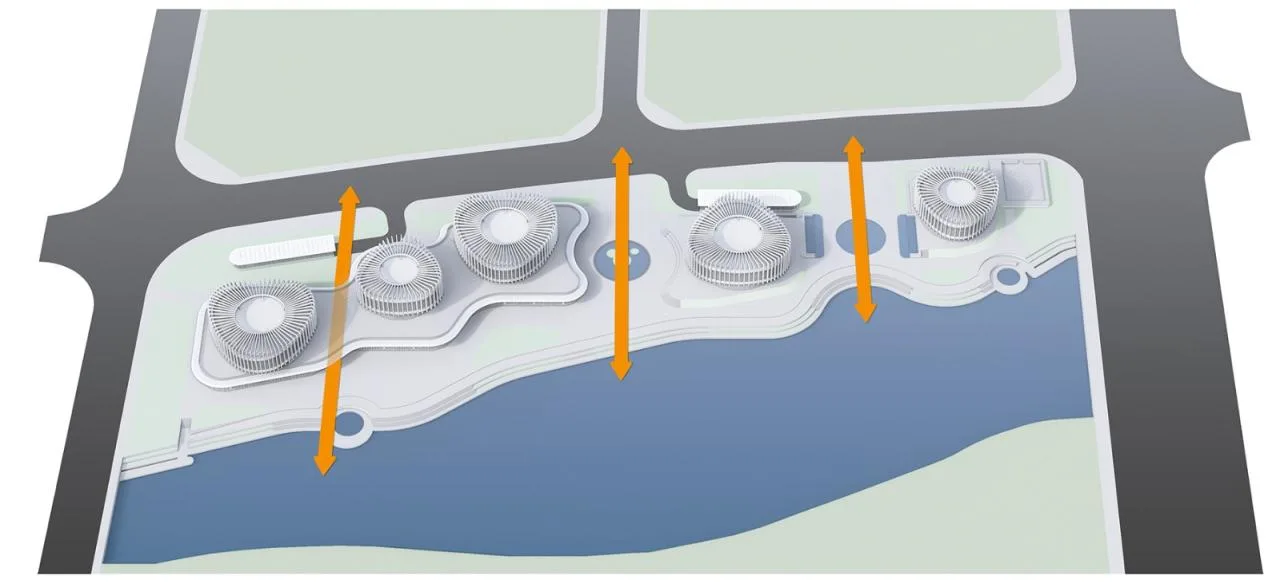
△ Hydrophilic corridor © UUA
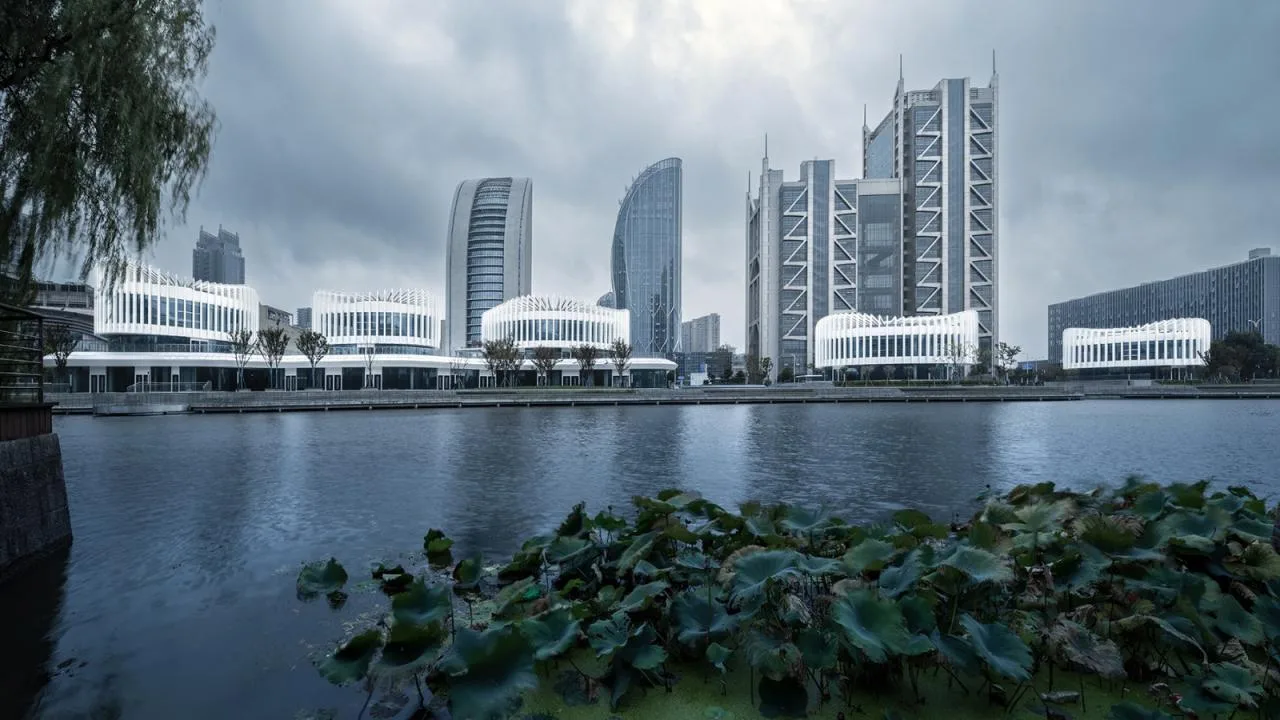
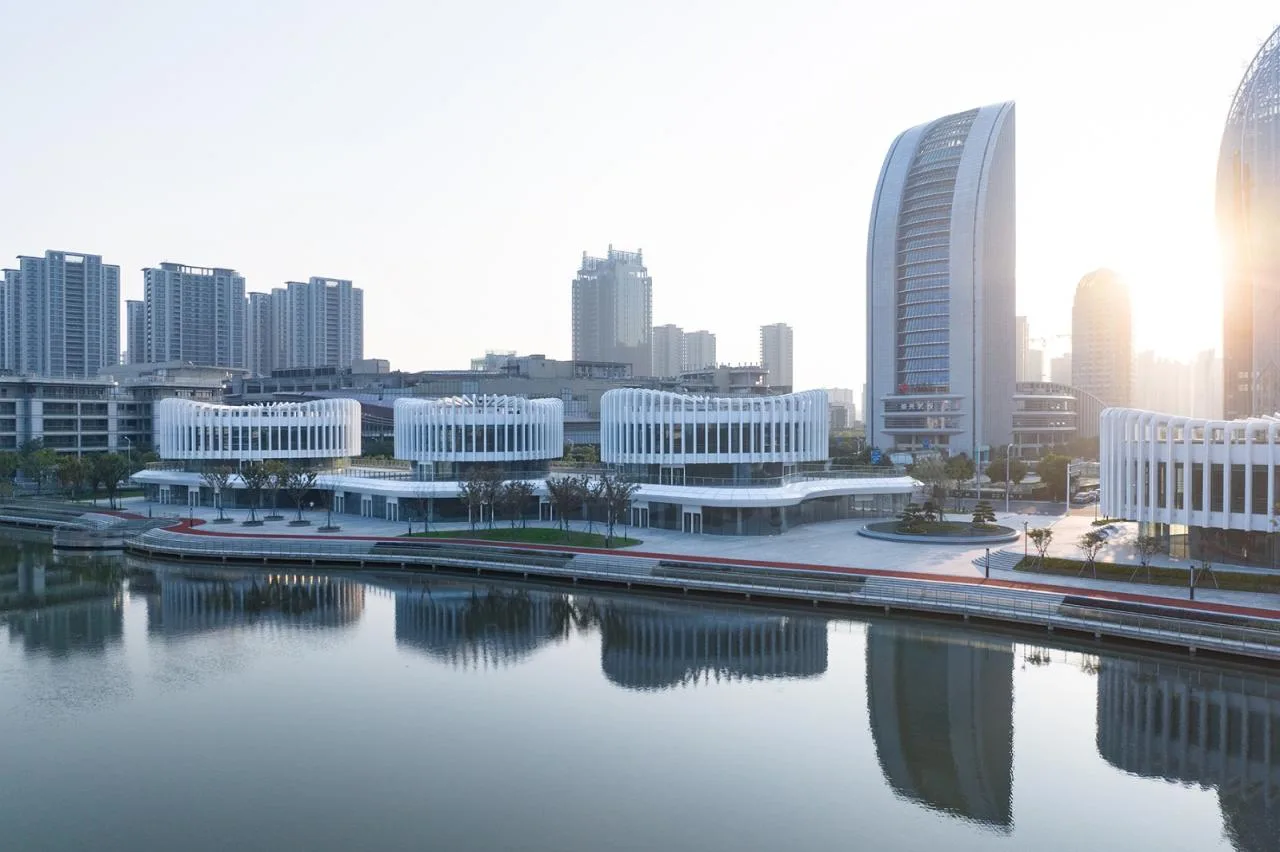
Integration between surrounding urban area and waterfront landscape © Literal translation of architectural photography
5.0 Geometric Control of Form
Geometric control serves as a technical response to architectural form challenges. The main difficulty was coordinating the regular underground garage grid with the freeform above-ground buildings. UUA addressed this by outlining the building forms with straight lines and tangent arcs derived from the basement axis network, creating a seemingly organic yet rational geometric structure.
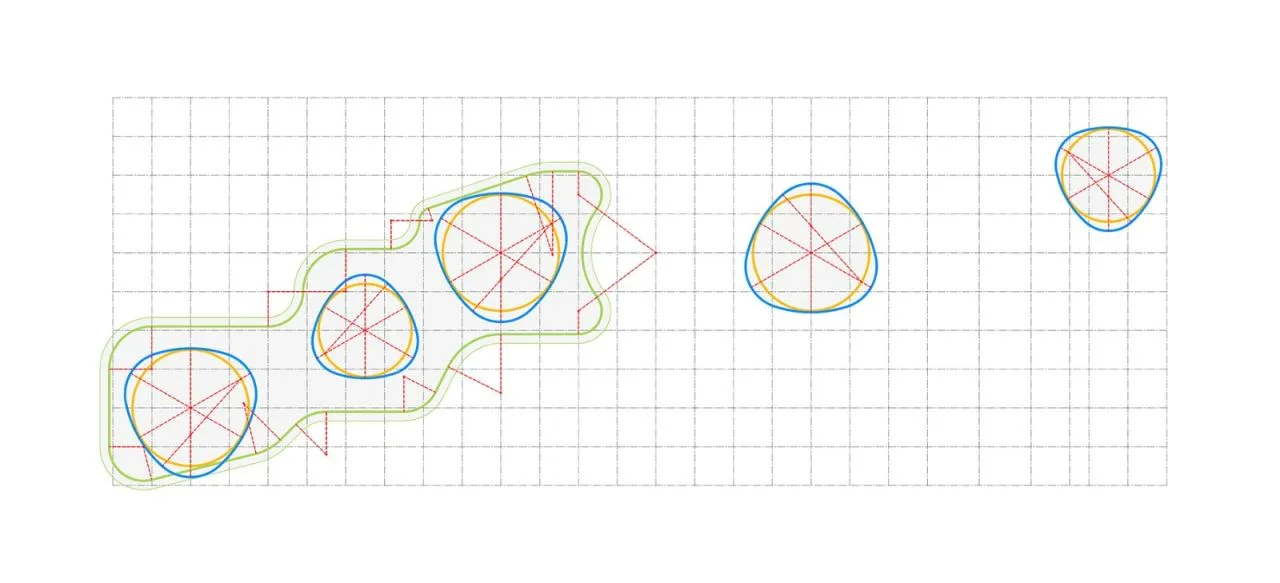
Geometric control of architectural form © UUA
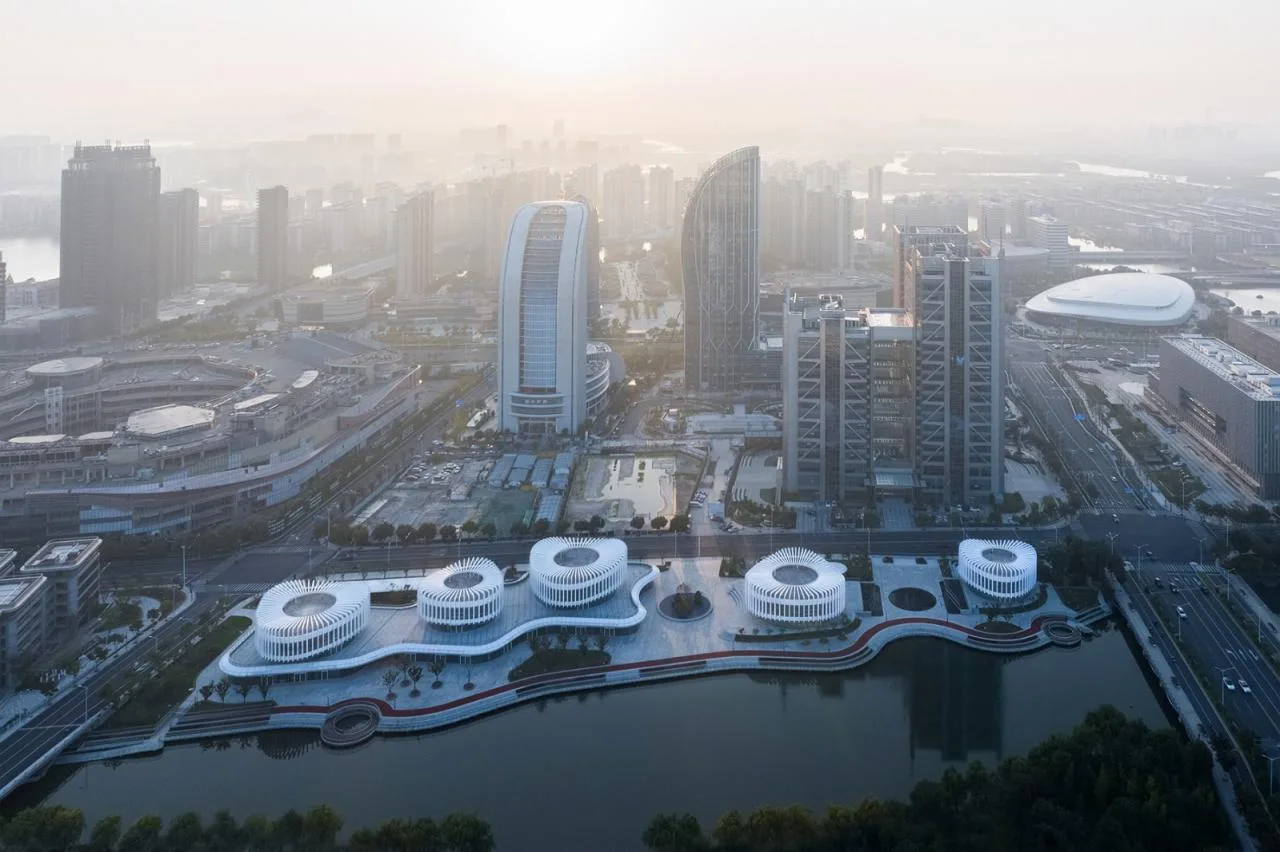
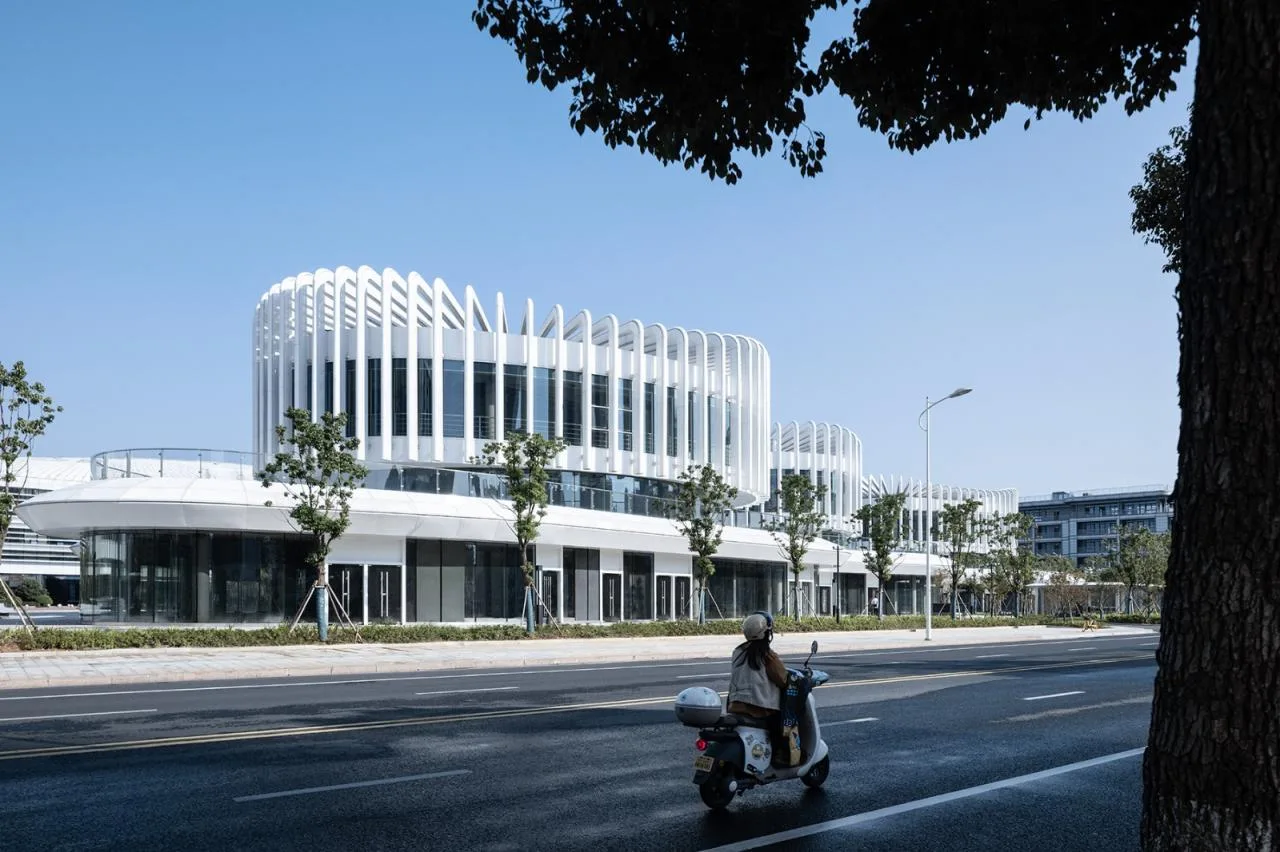
Freeform shapes under rational geometric control © Literal translation of architectural photography
The five “Orchid Pavilions” vary in size — three large and two small — creating dynamic architectural forms through mirroring, offsetting, and varied heights. Each pavilion follows strict floor, glass curtain wall, and exterior grille control lines, ensuring precision through geometric rigour.
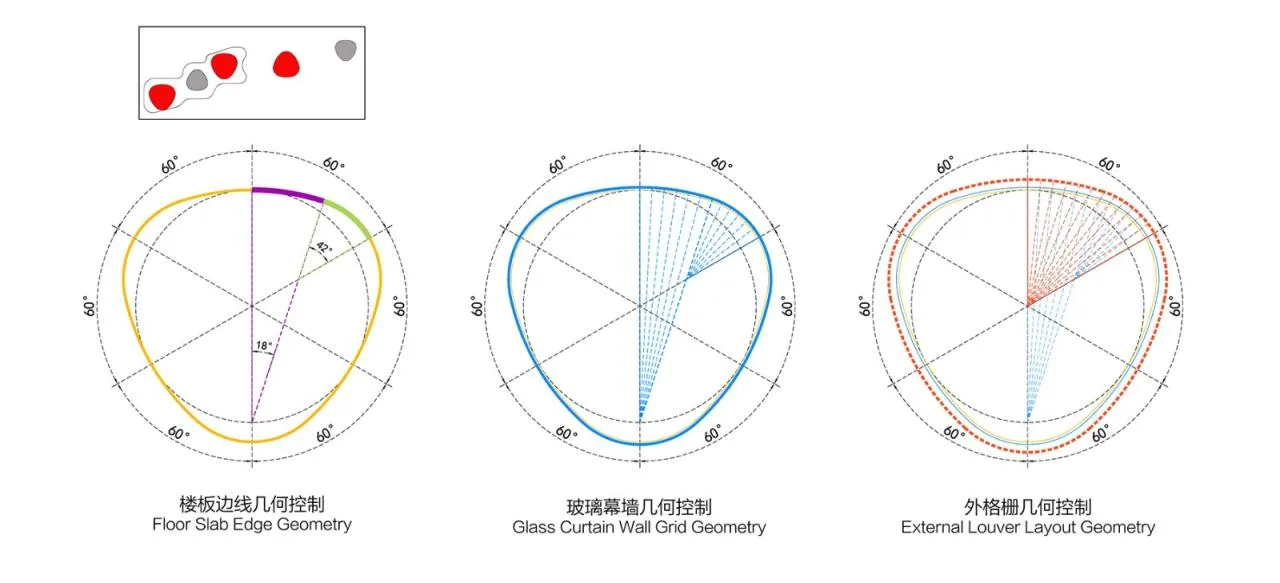
Geometric control of the Grand Orchid Pavilion’s floor plan © UUA
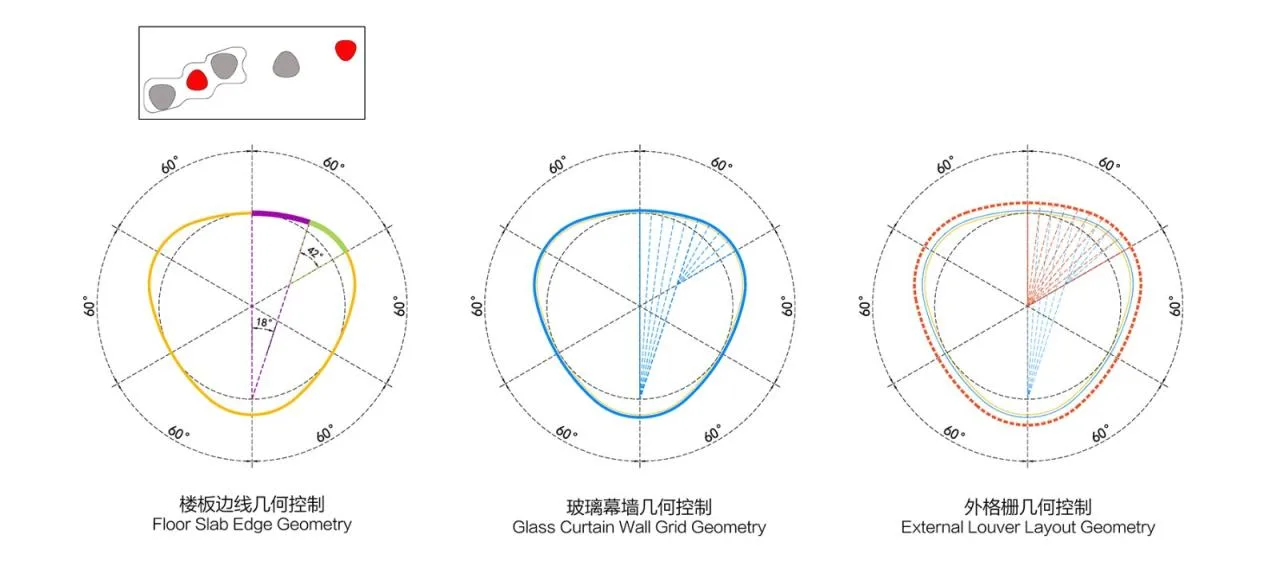
Geometric control of the Little Orchid Pavilion’s floor plan © UUA
The exterior grille of the “Orchid Pavilion” is designed with segments spanning 1/6th of a circumference (60 degrees), creating a continuous wave-like pattern. By repeating mirrored groups, the undulating form of the pavilion emerges.
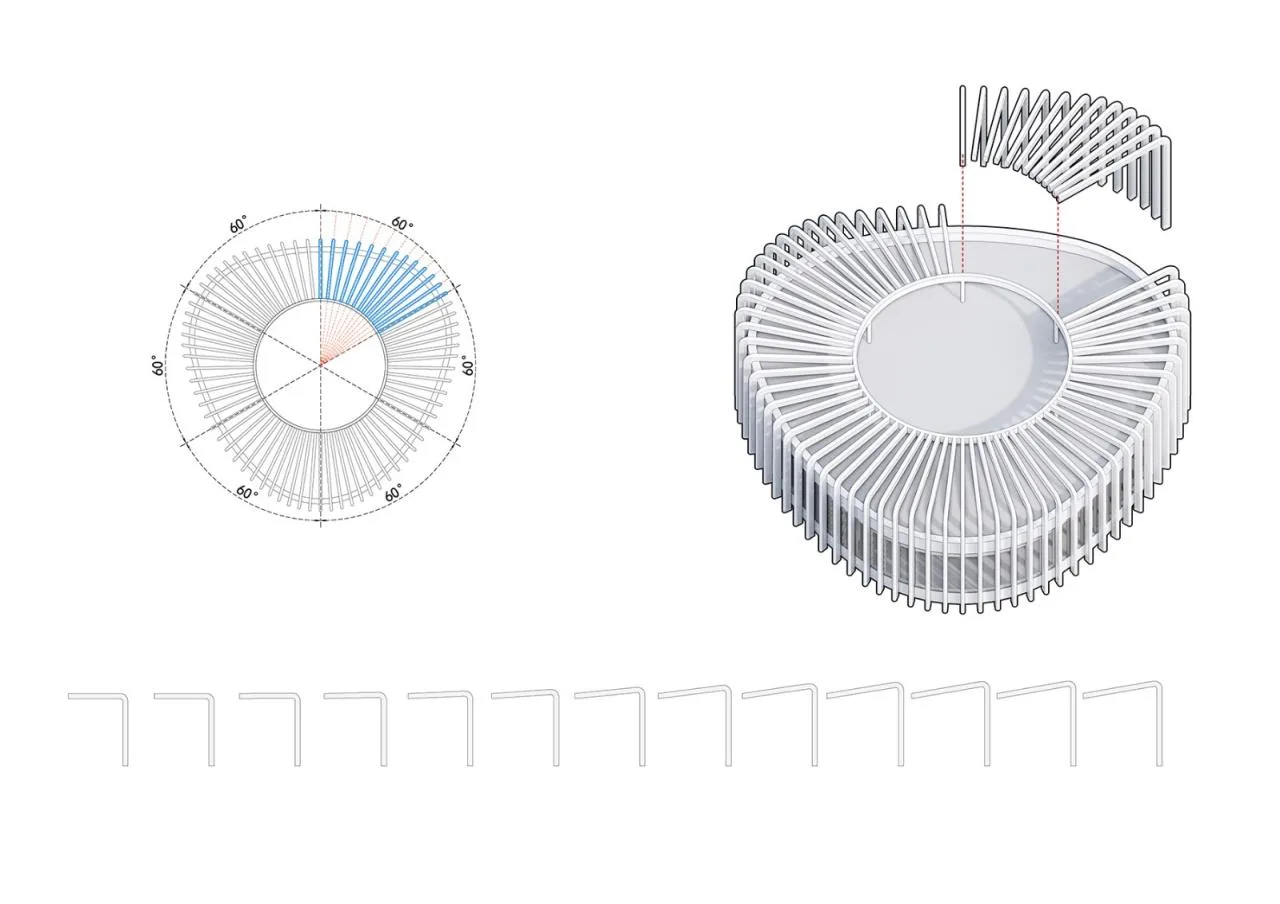
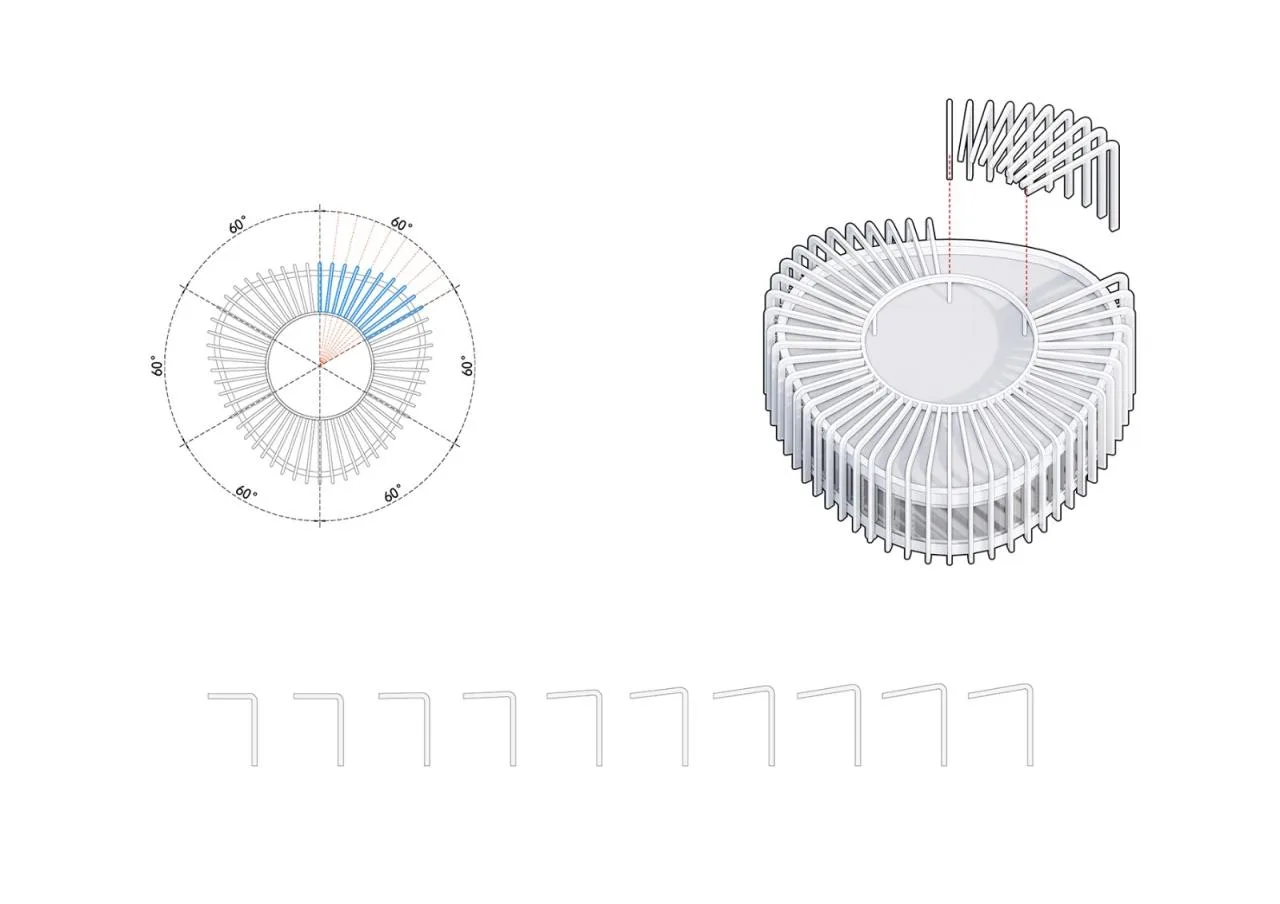
Geometric control of the Grand Orchid Pavilion’s exterior grille © UUA
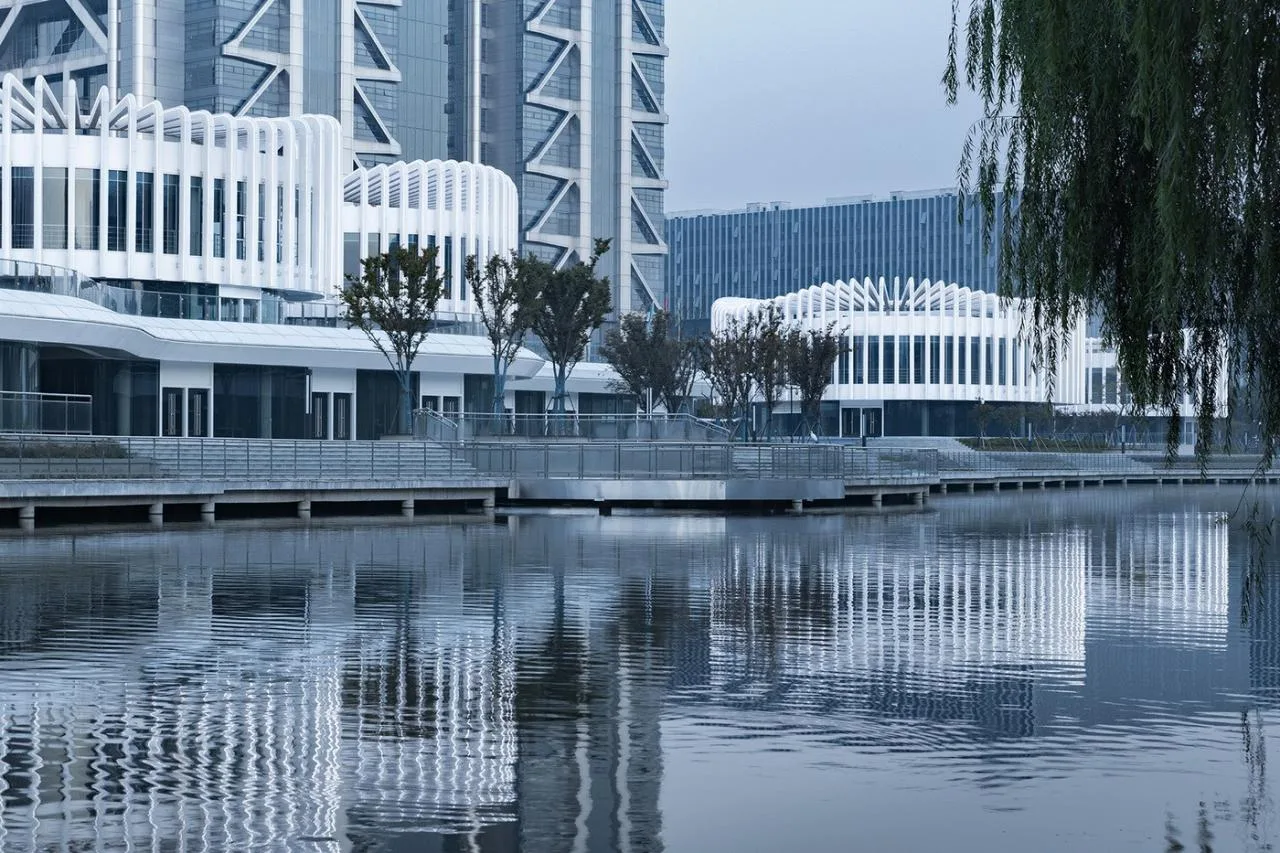
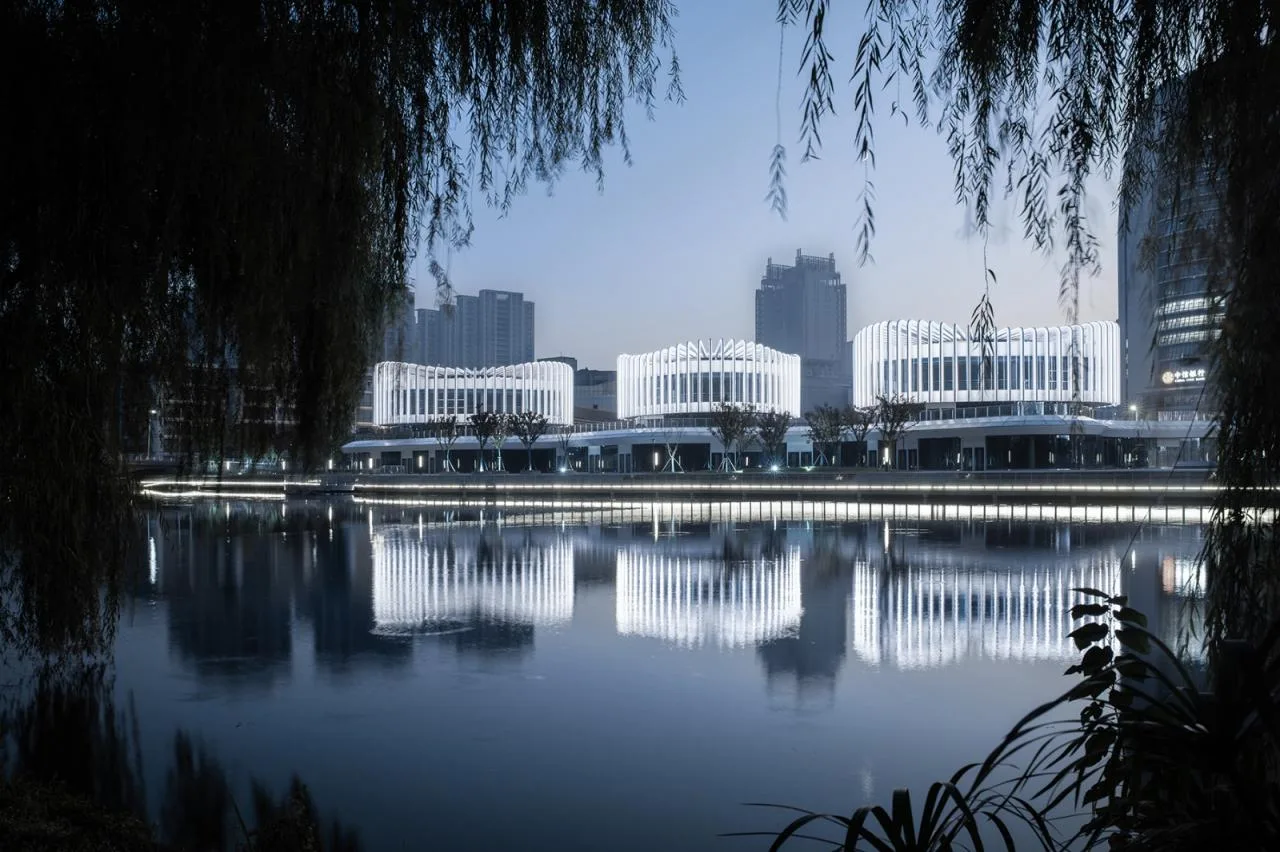
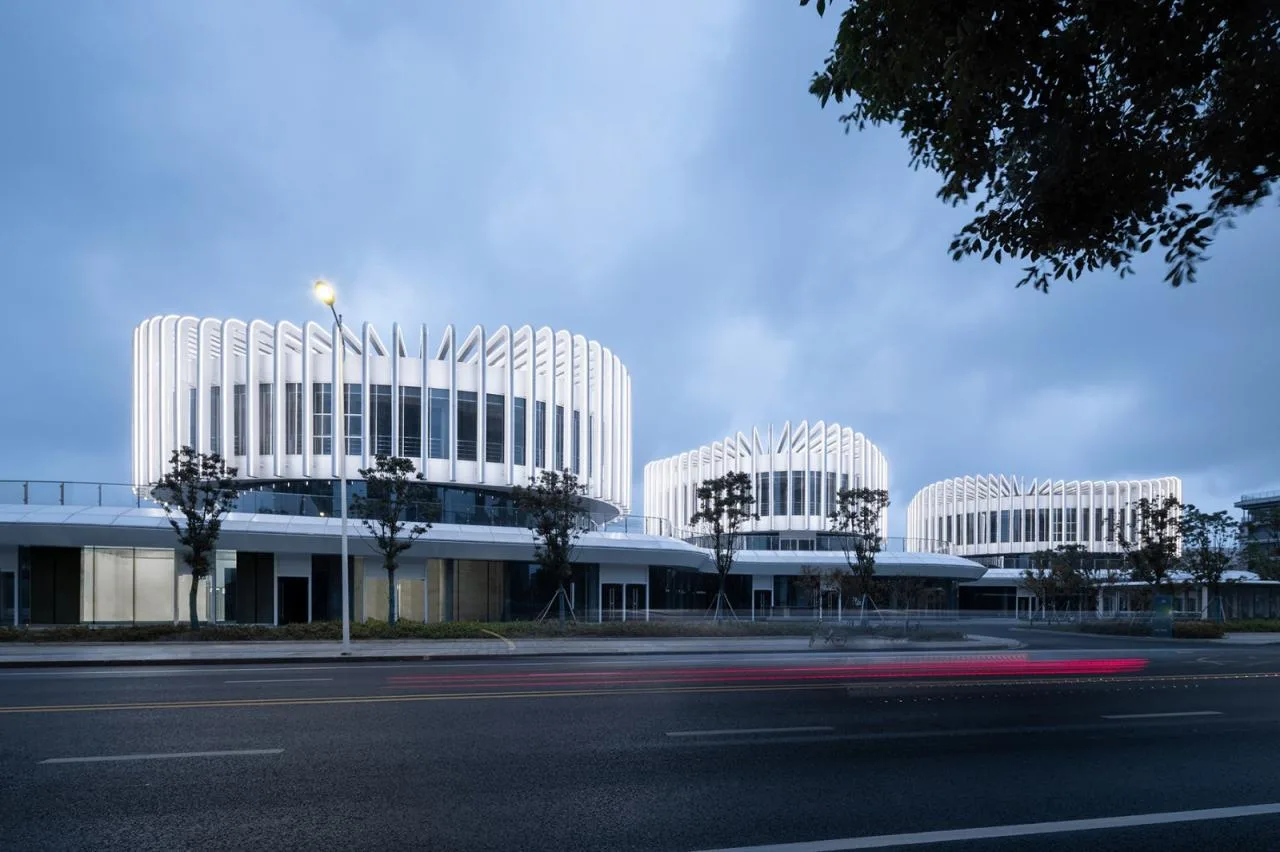
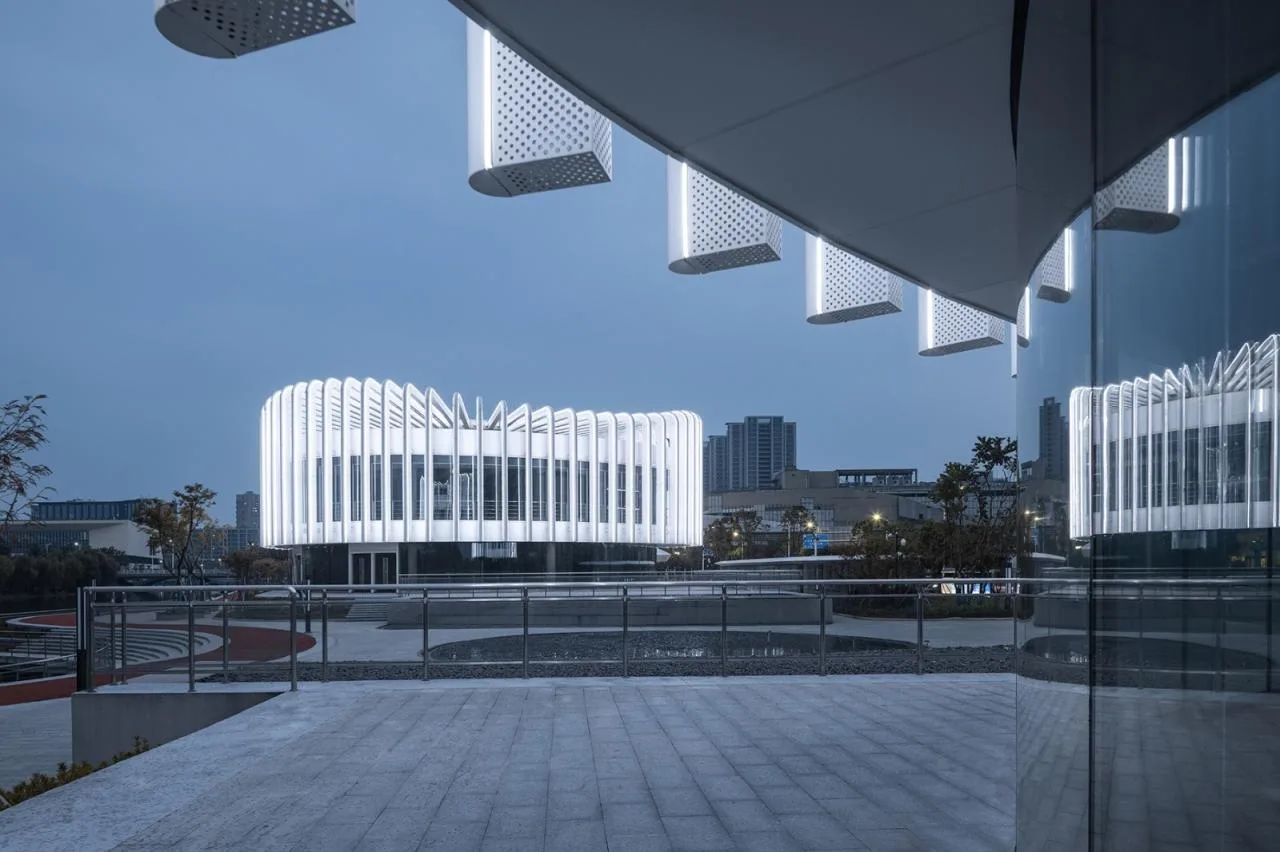
The undulating and staggered Orchid Pavilion © Literal translation of architectural photography
6.0 Curtain Wall Details
Building on the geometric control framework, UUA refined the curtain wall design to ensure a high level of completion and provide detailed guidance for construction teams and curtain wall manufacturers.
The curtain wall’s key structural element is the circular steel pipe forming the inner core of the exterior grille. This core is enveloped by semi-circular solid aluminum plates and rectangular perforated aluminum panels. The perforated panels feature a gradient pattern, producing a transition effect between solid and void that enhances the building’s visual richness. Additionally, the exterior grille provides shading and helps filter out surrounding glass reflections.
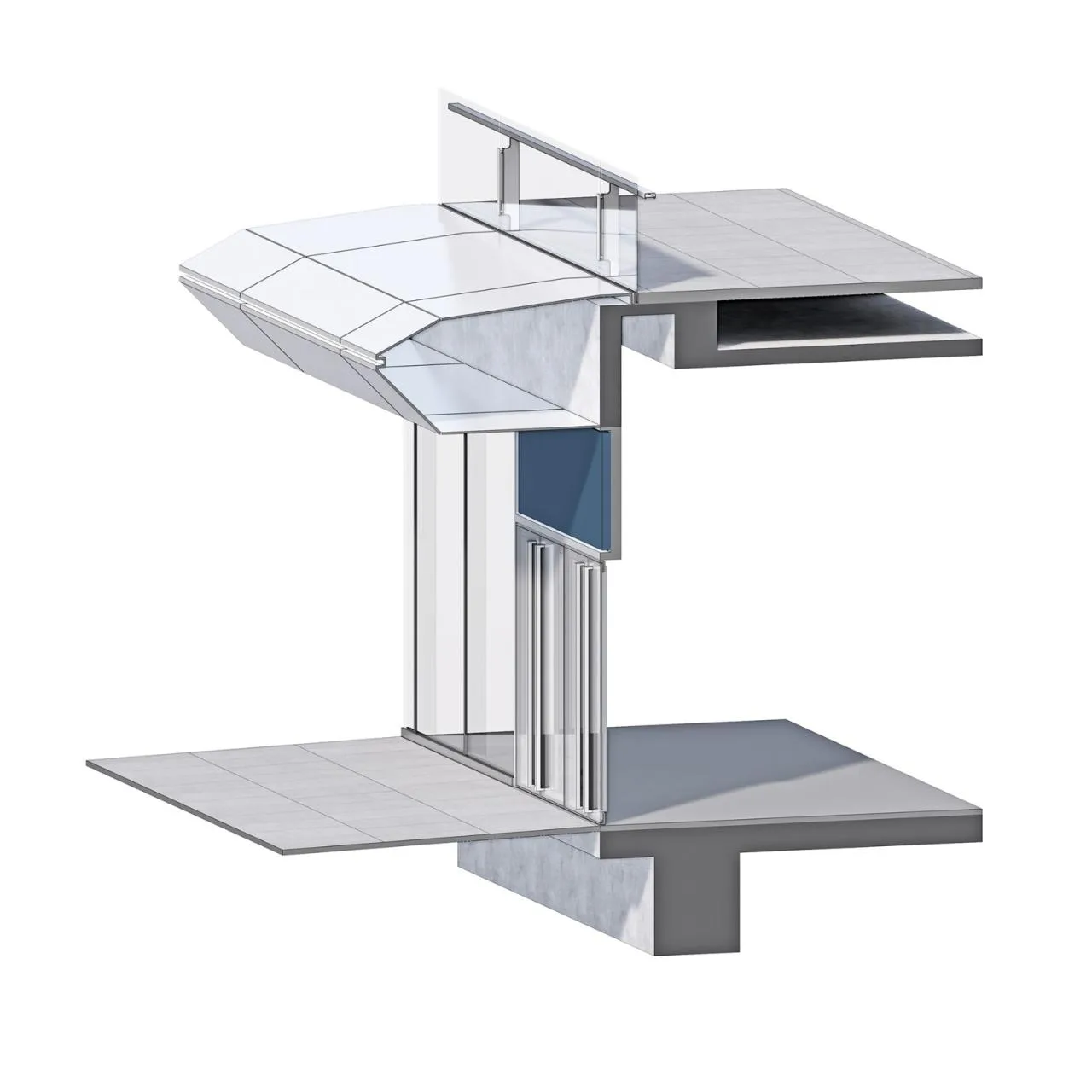
Skirt wall details © UUA
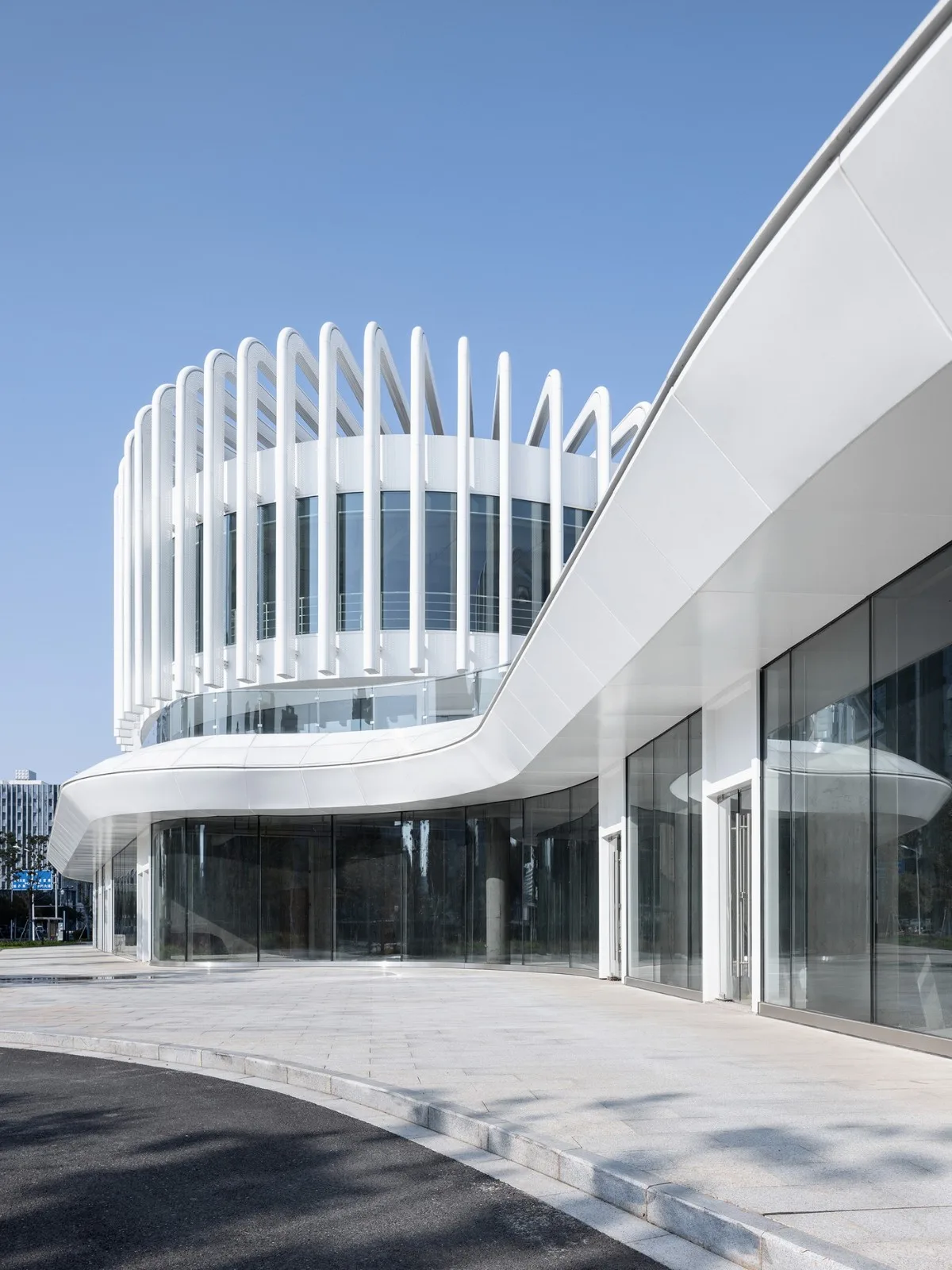
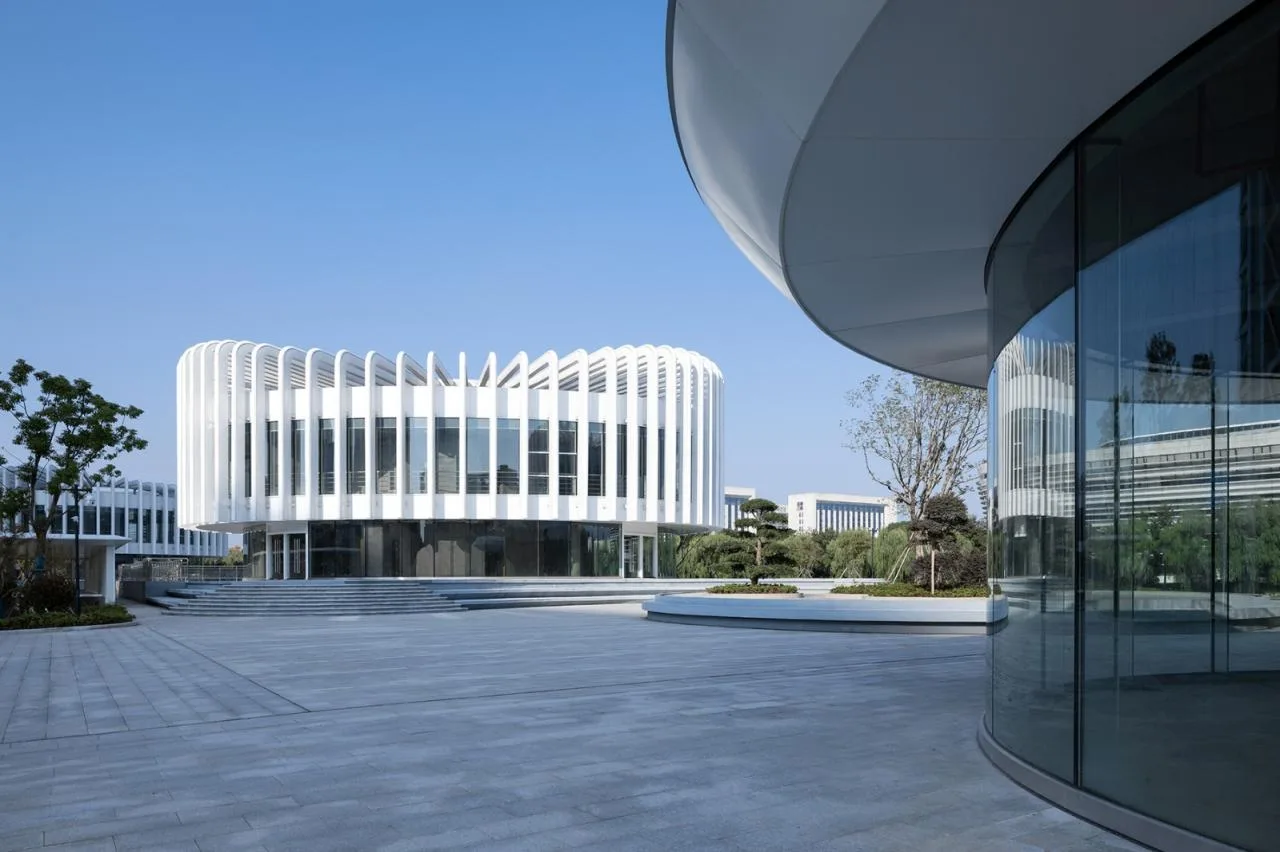
△ Close-up of skirt house details © Literal translation of architectural photography
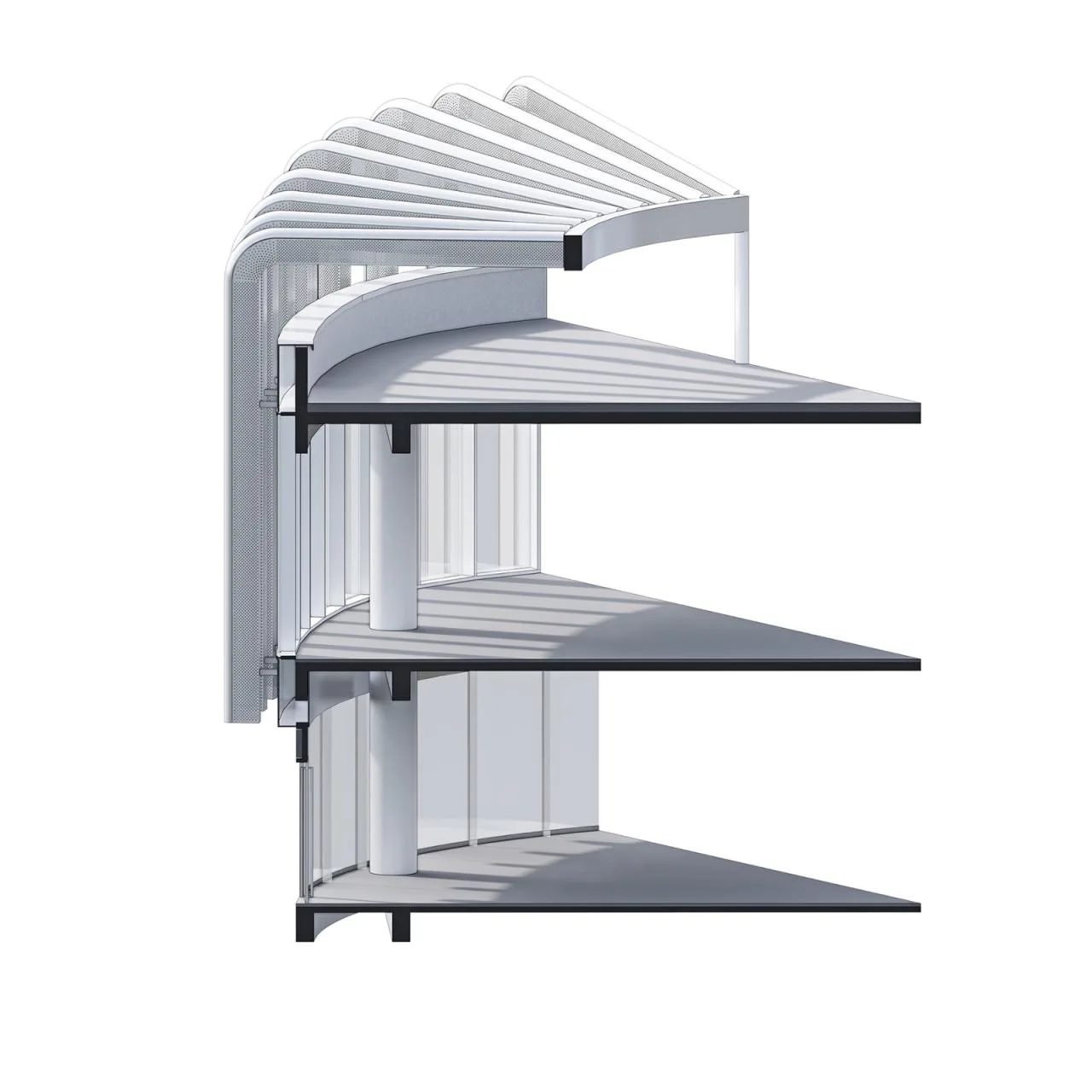
Orchid Pavilion wall details © UUA
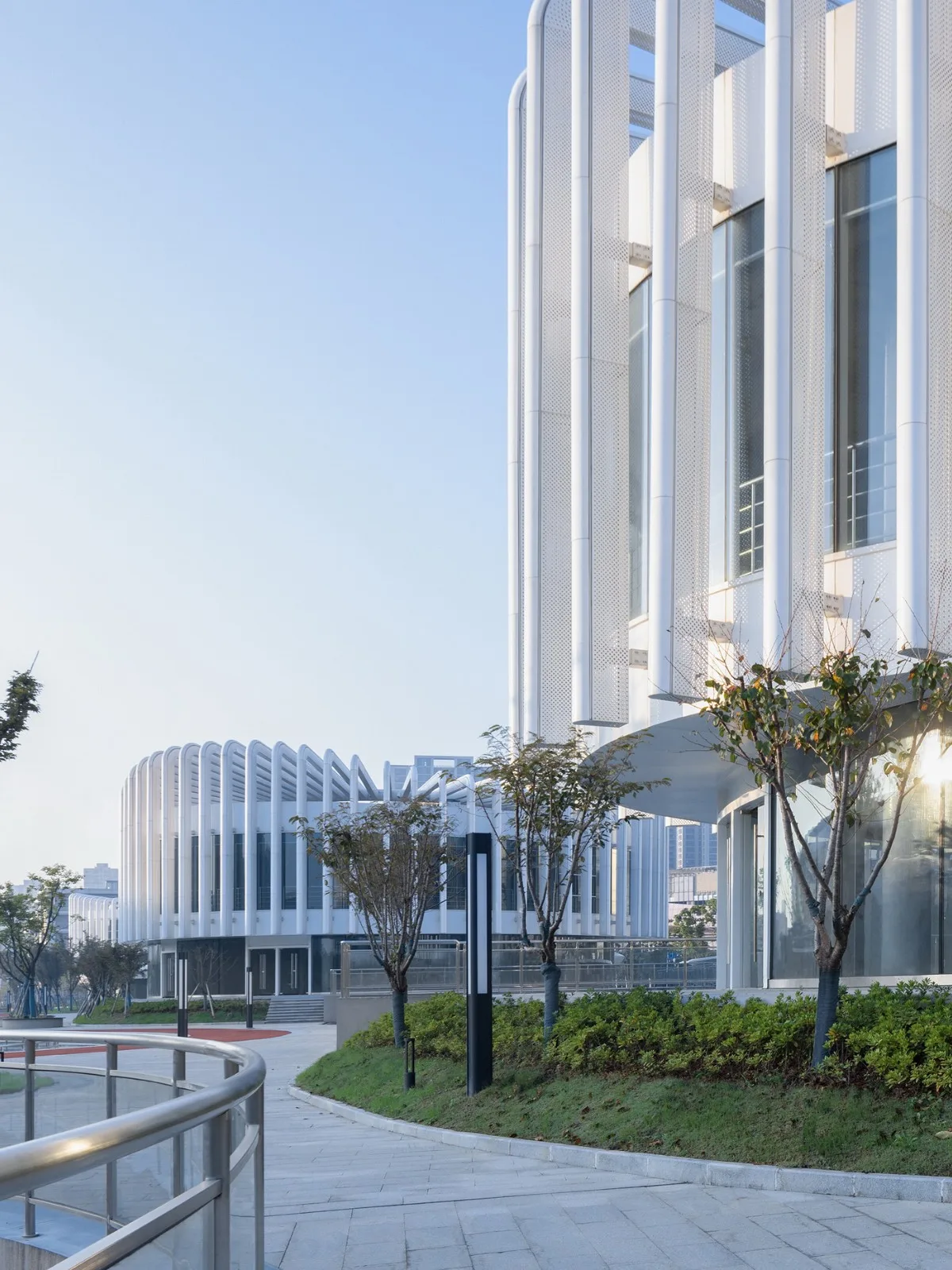
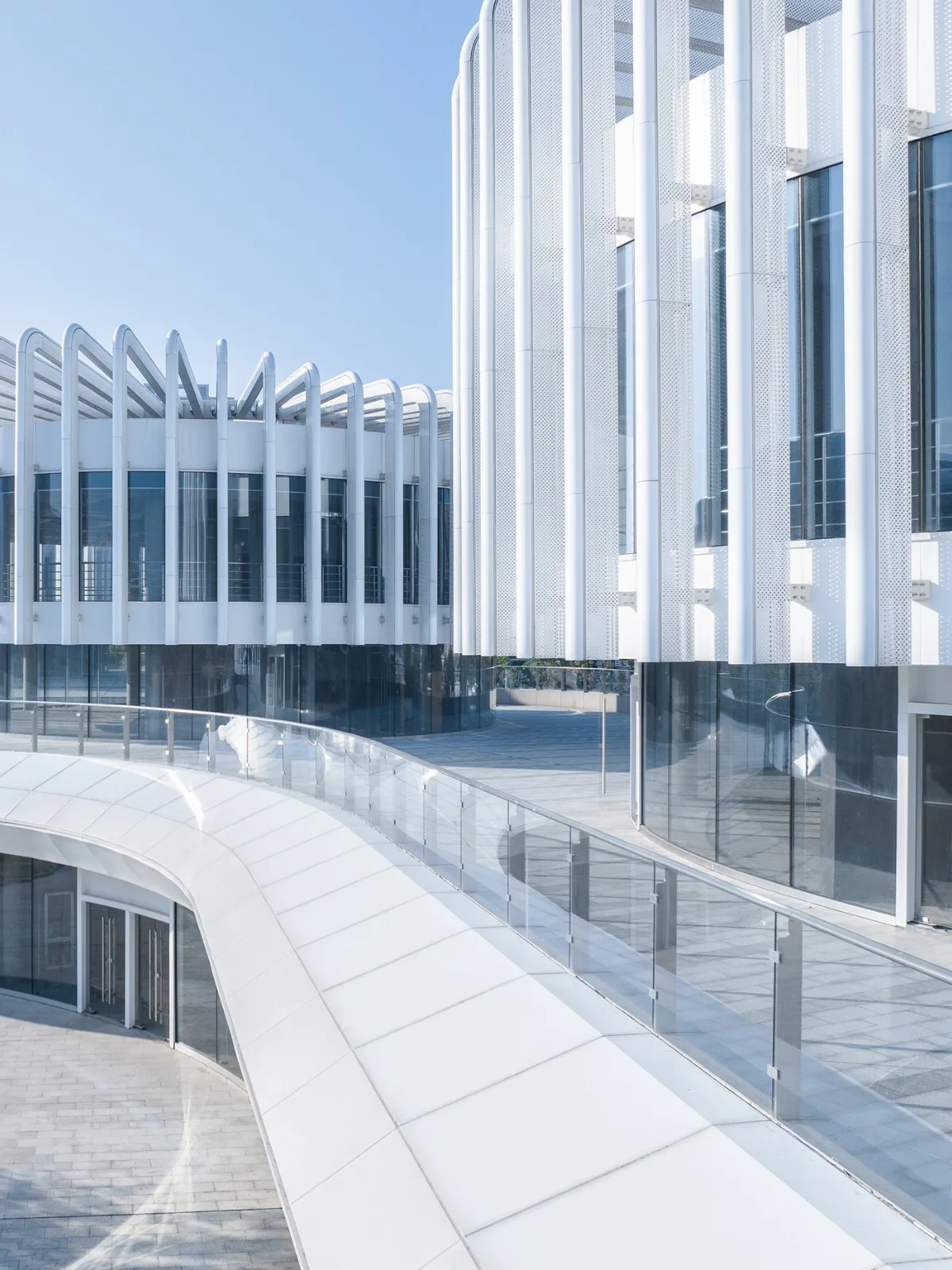
△ Close-up of Orchid Pavilion exterior © Literal translation of architectural photography
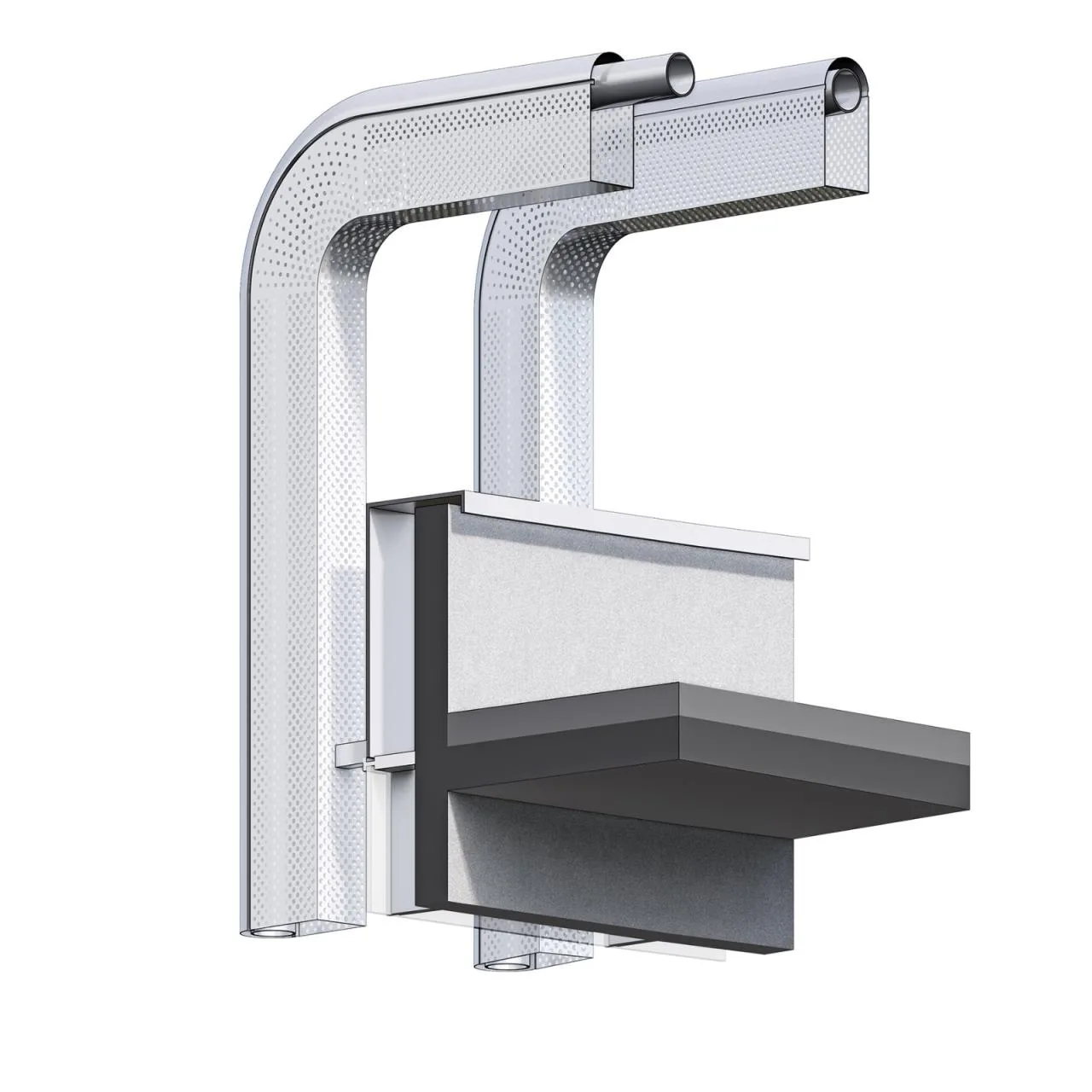
△ Detail of the exterior grille © UUA
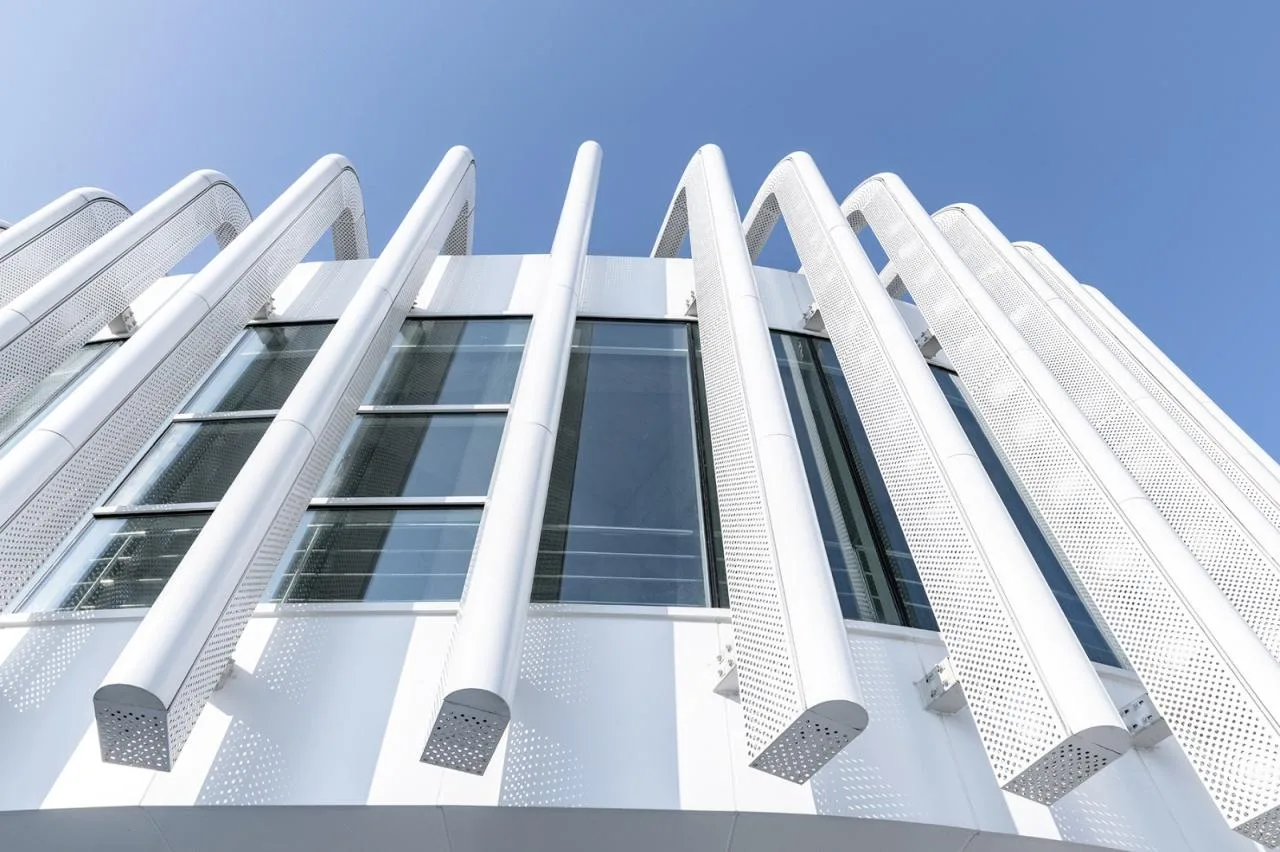
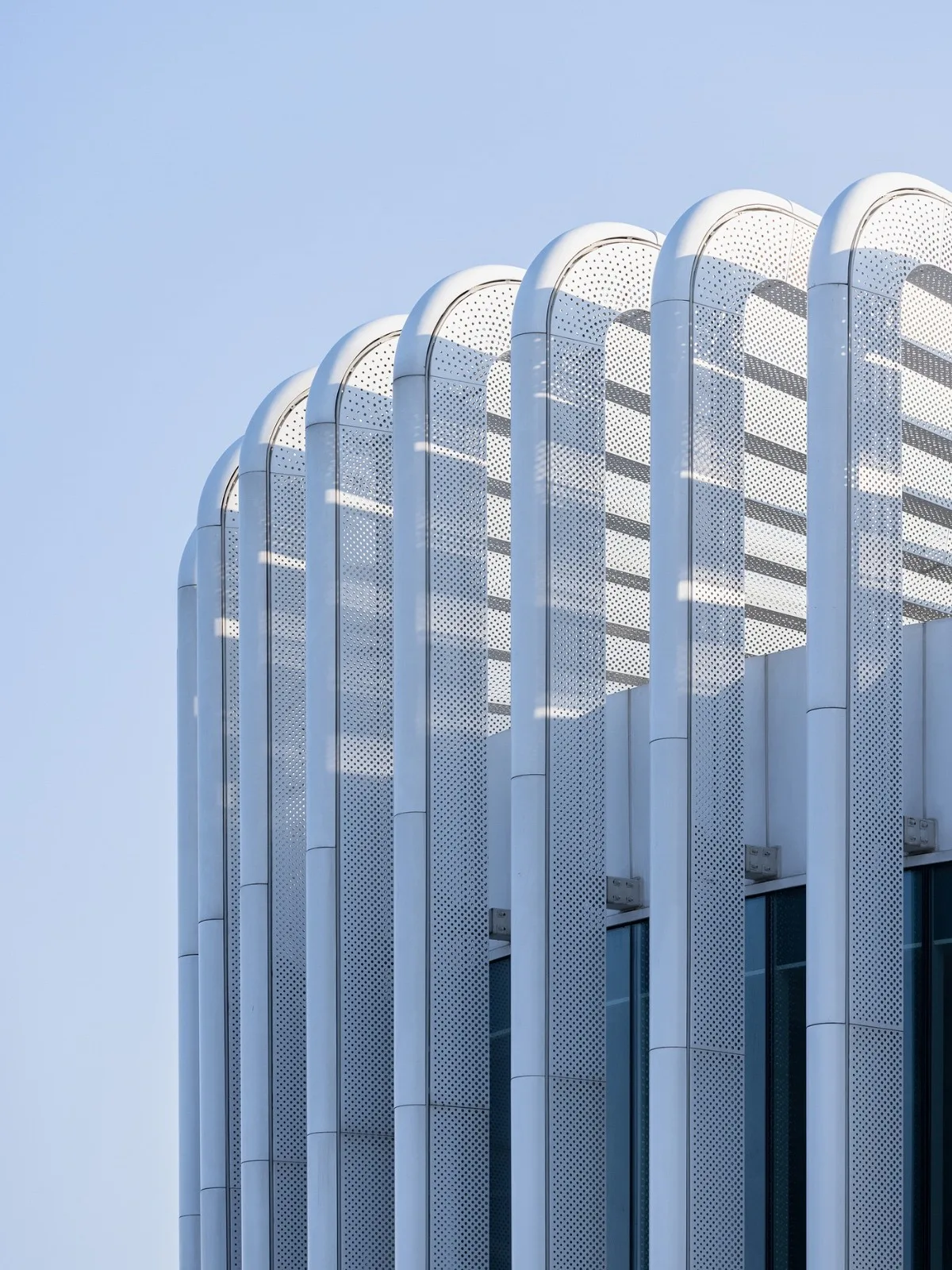
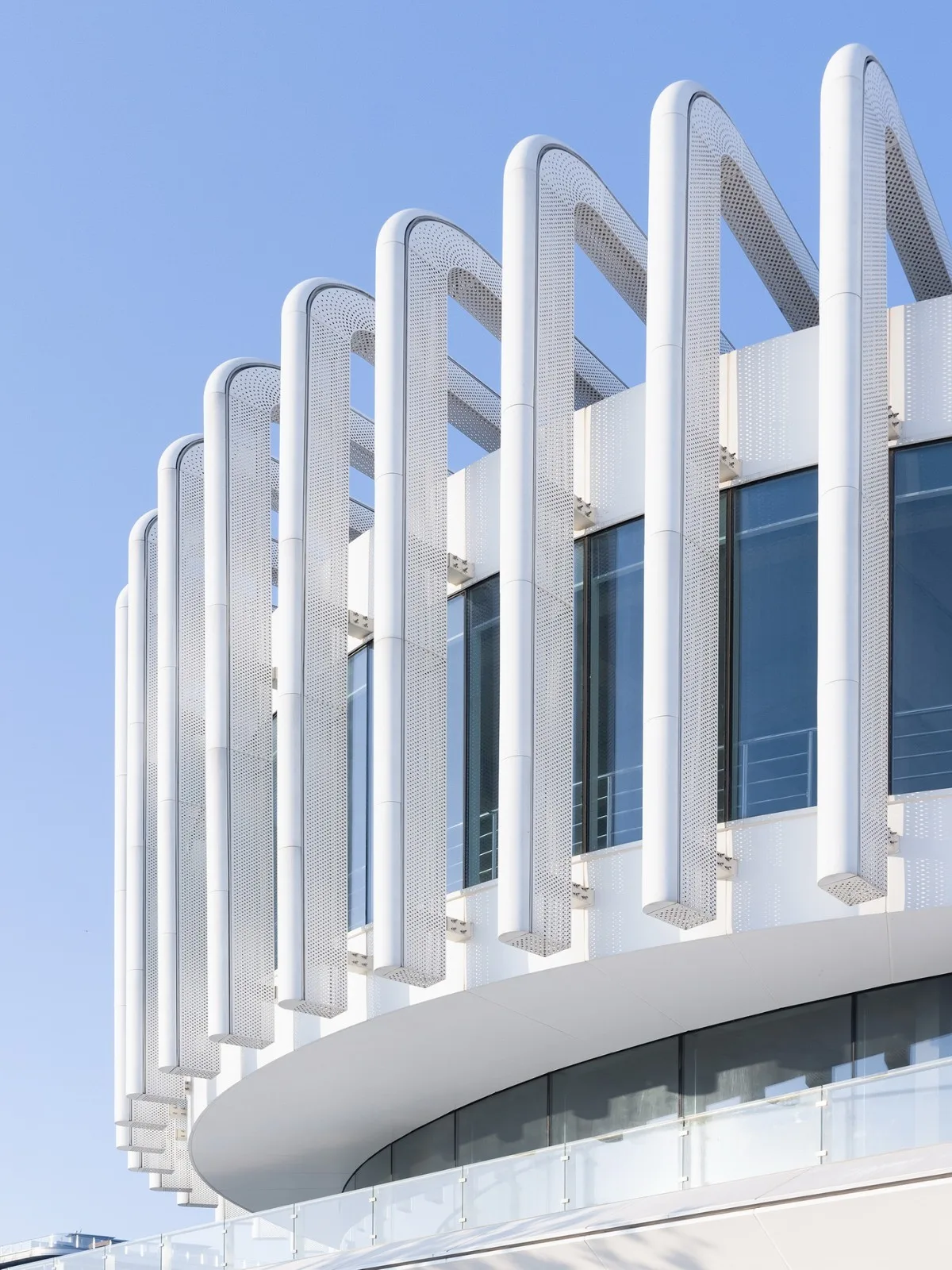
△ Close-up details of the exterior grille © Literal translation of architectural photography
7.0 Summary and Outlook
UUA approaches design through emotional resonance, imbuing buildings with a sense of “warmth.” Their integrated geometric methodology advances detailed and overall design refinement, achieving architectural precision. This blend of humanistic warmth and technological accuracy, combined with time and growing popularity, will establish the Jiuliudu Riverside Art District as a new urban landmark in Shaoxing.
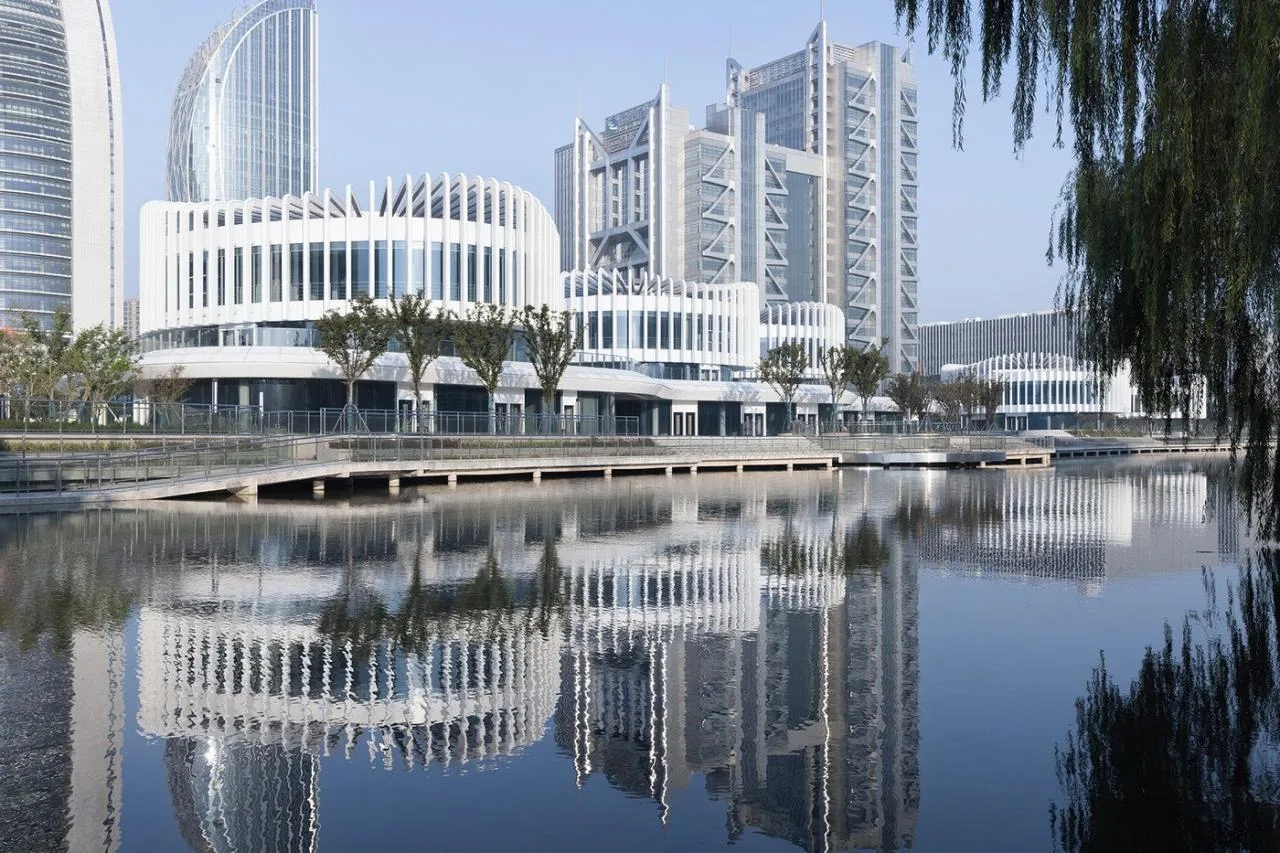
△ A new waterfront landmark © Literal translation of architectural photography
Project Drawings
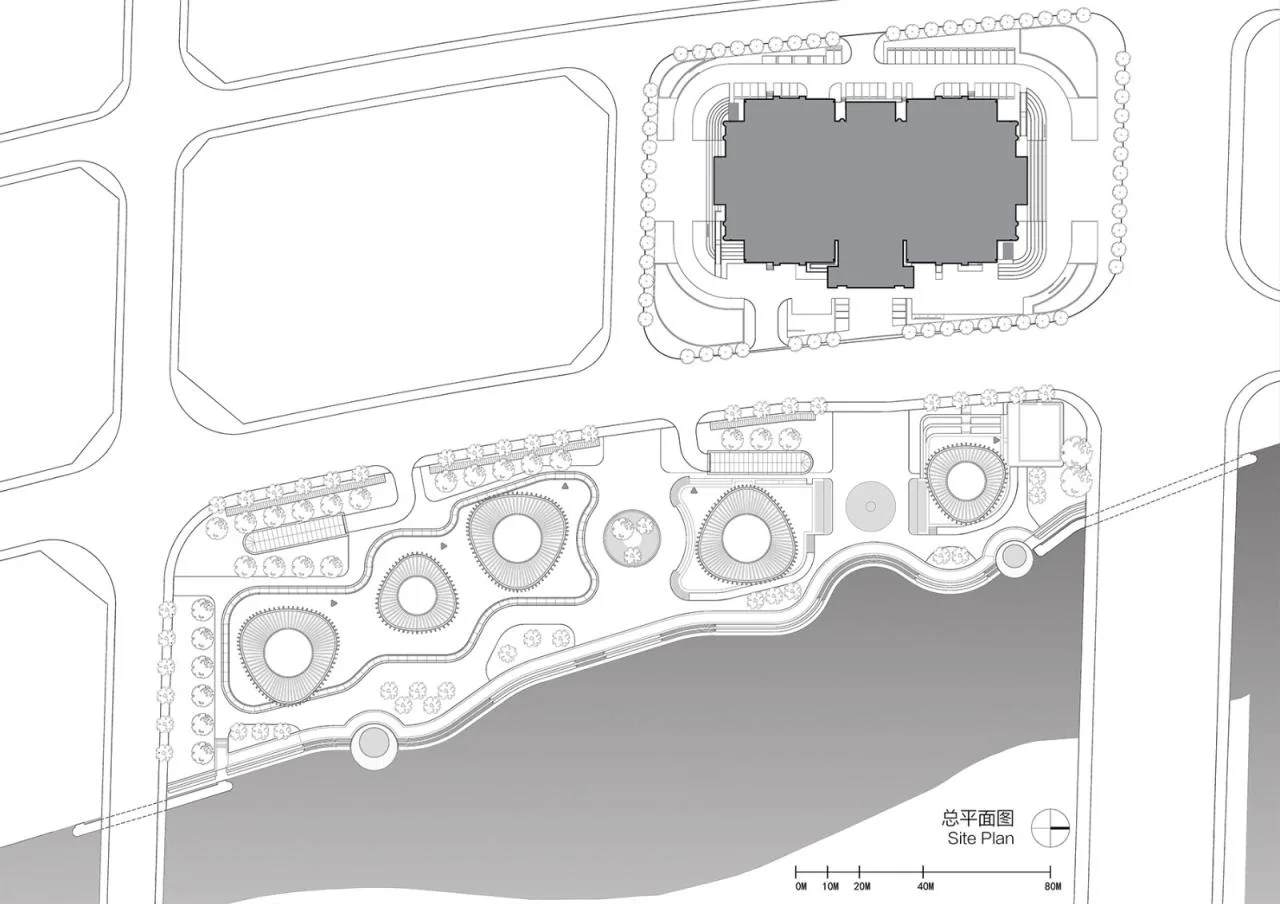
△ Waterfront landmark plan © Literal translation of architectural photography
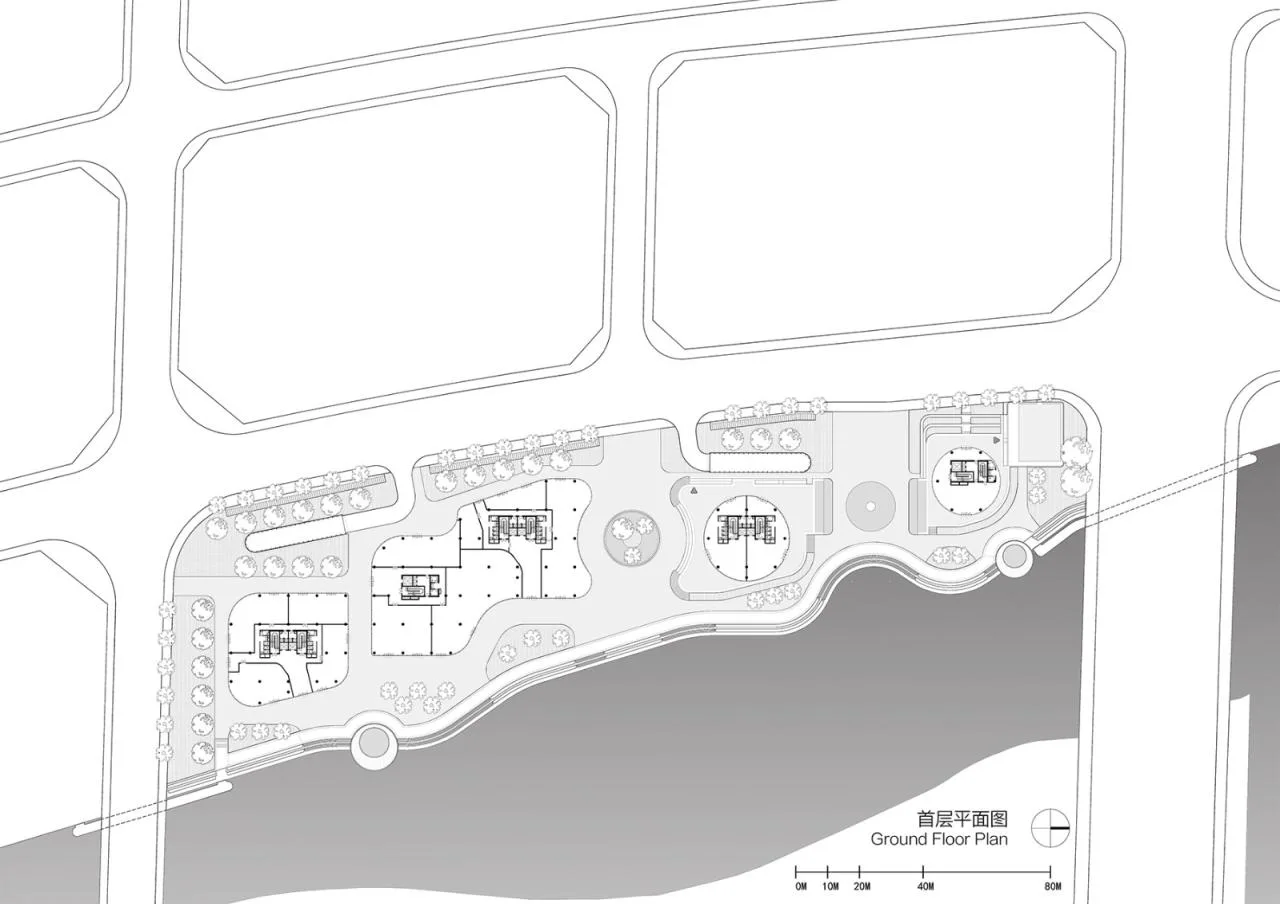
△ First floor plan © UUA
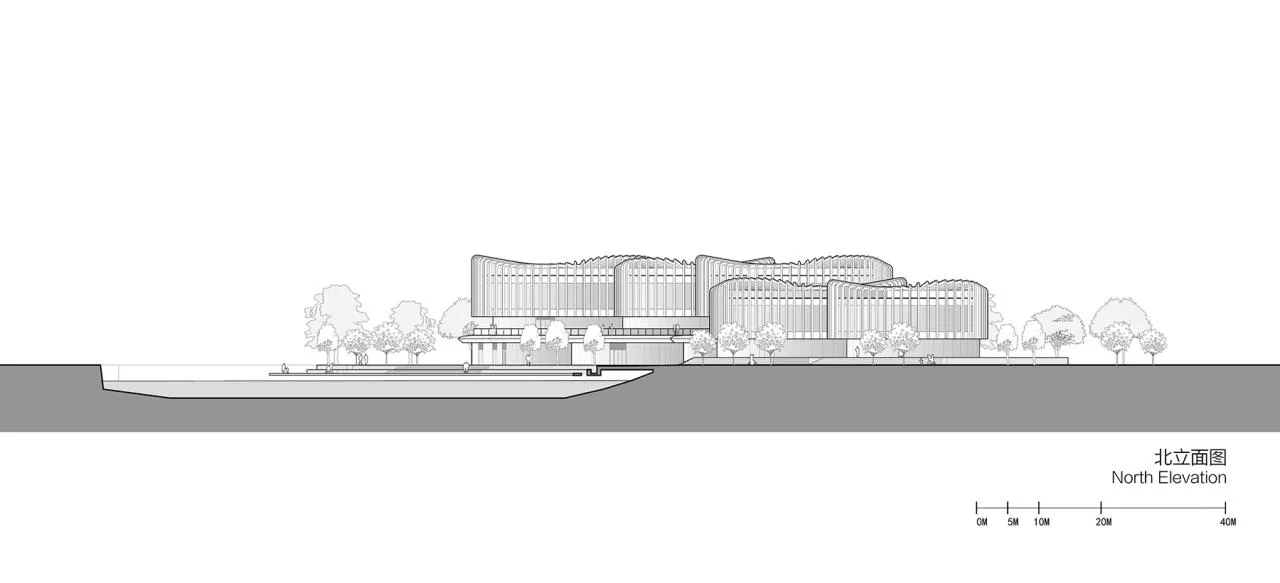
△ North elevation © UUA
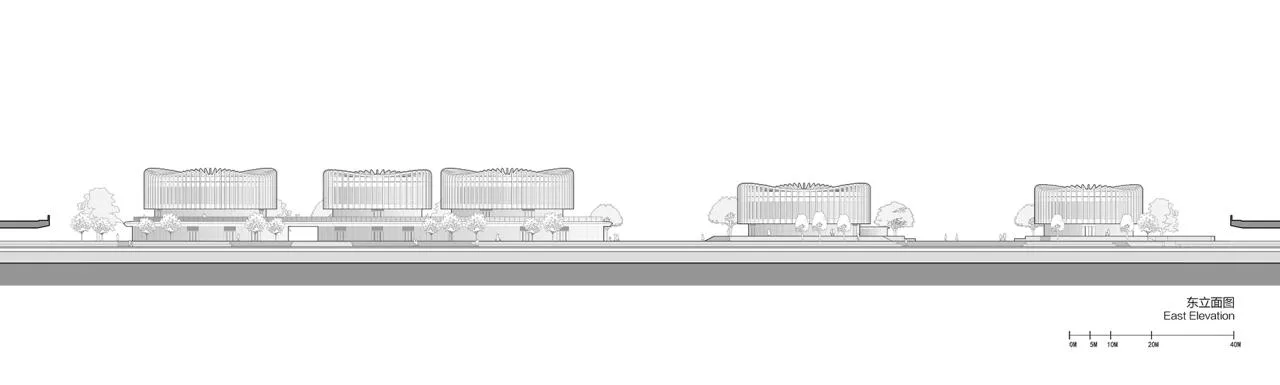
△ East elevation © UUA
9.0 Video
△ Project video cover image © Literal translation of architectural photography
Project Information
Project Name: Orchid Pavilion: Jiuliudu Riverside Art Block
Location: Shaoxing, Zhejiang, China
Duration: 07/2018 – 09/2023
Area: 26,370 square meters
Client: Jingze Real Estate
Architectural Design: UUA Architects
Lead Partners: Li Yongzheng, Li Qizhi, Tim Mason
Design Team: Deng Liang, He Wenbo, Lv Yanfeng, Ma Xinghua, Fang Hongbo, Xia Boyang
Collaborator: Shaoxing Zhonghe Architectural Design Institute
Photography and Video: Literal Translation of Architectural Photography















Must log in before commenting!
Sign Up