
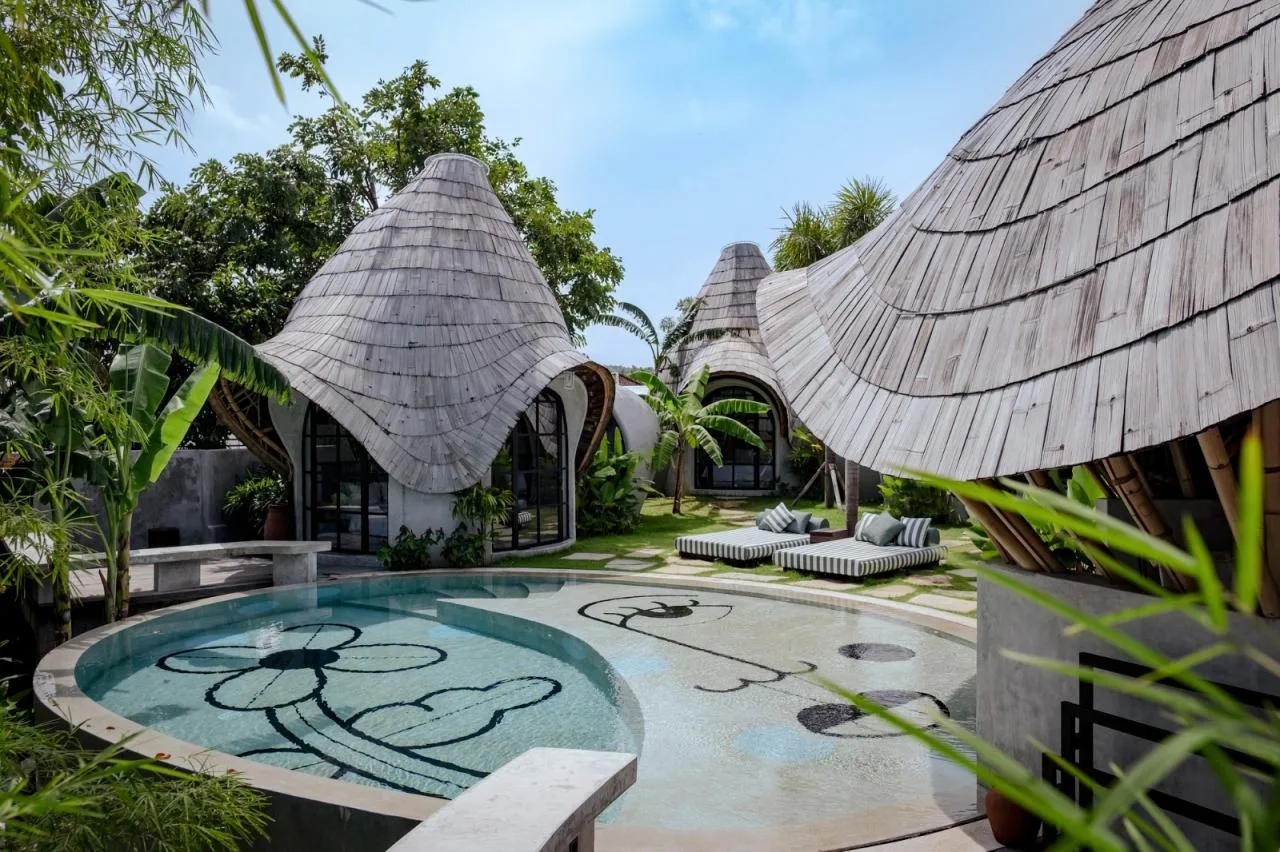
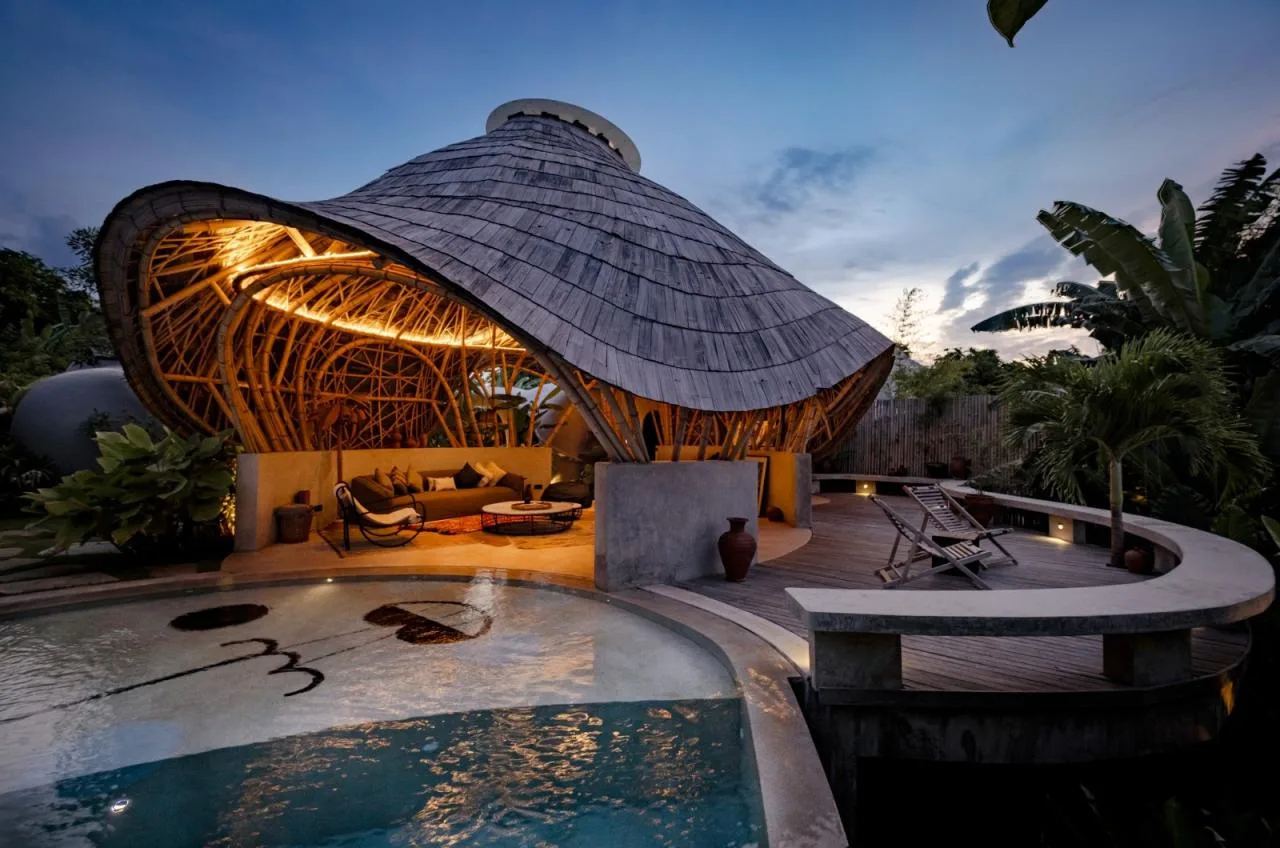
This project features two buildings and is part of the Bandido Bali complex. Our aim is to craft a unique design that offers a rich cultural, architectural, and communicative experience. Today, many of us live, work, and relax within square, uninspiring boxes that are disconnected from nature. The primary goal of this construction is to break free from these traditional confines and present an alternative lifestyle.
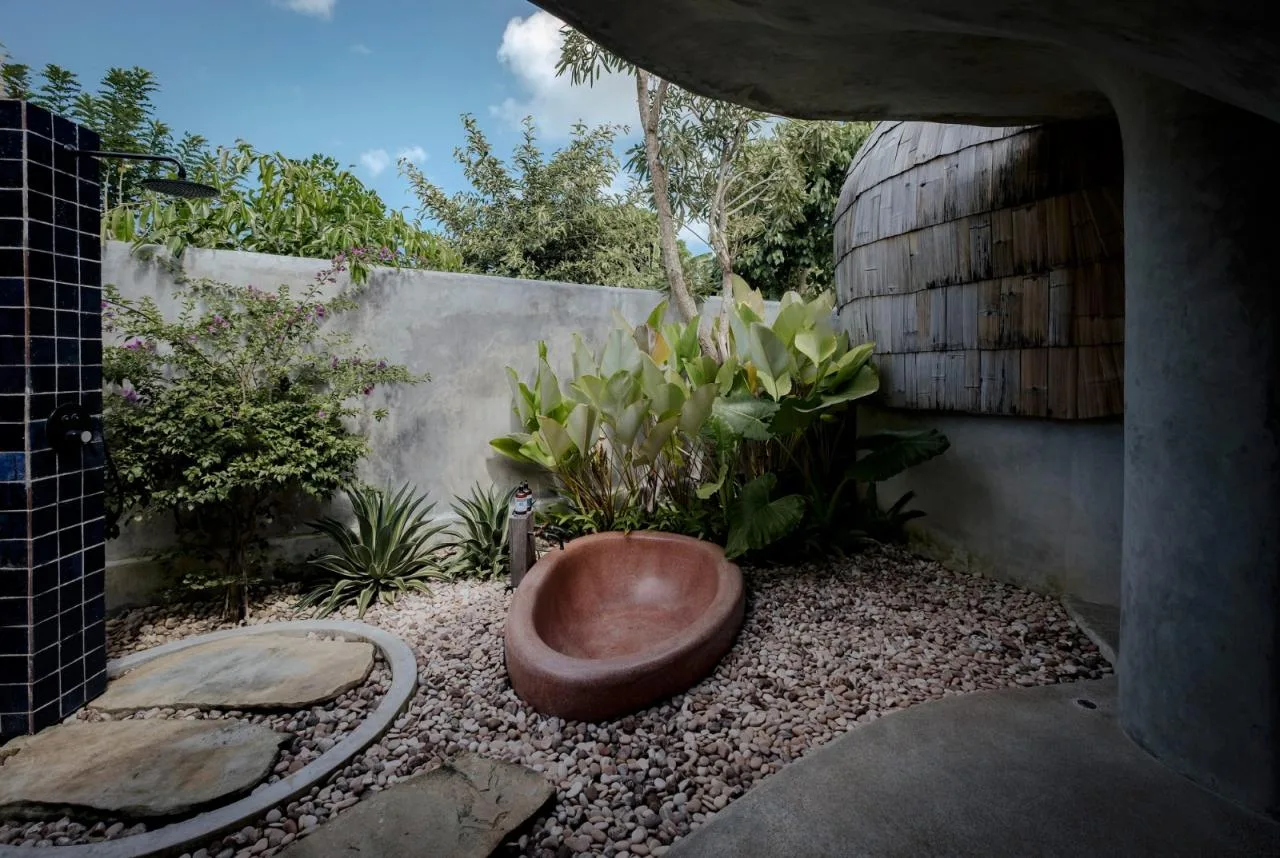
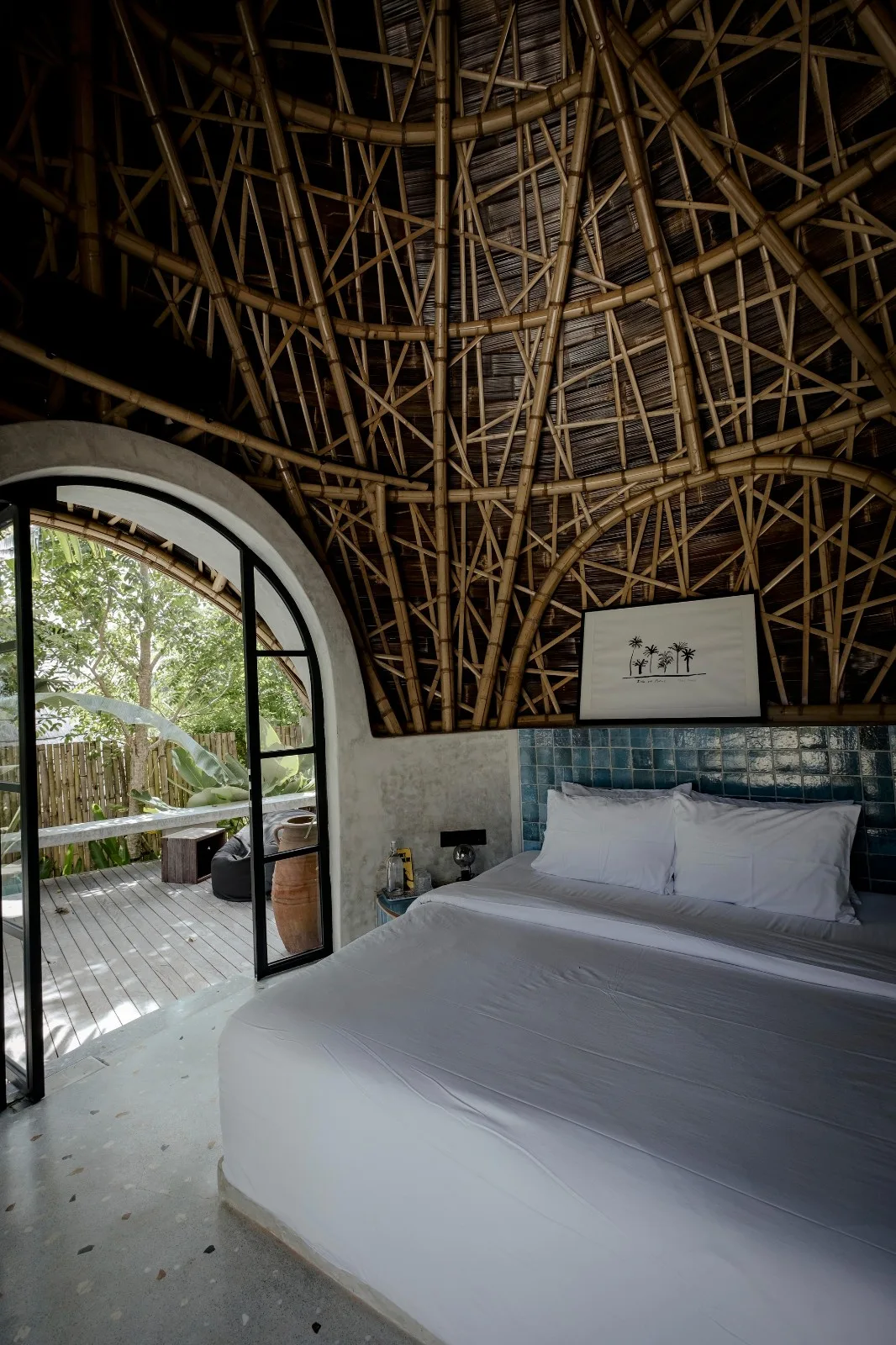
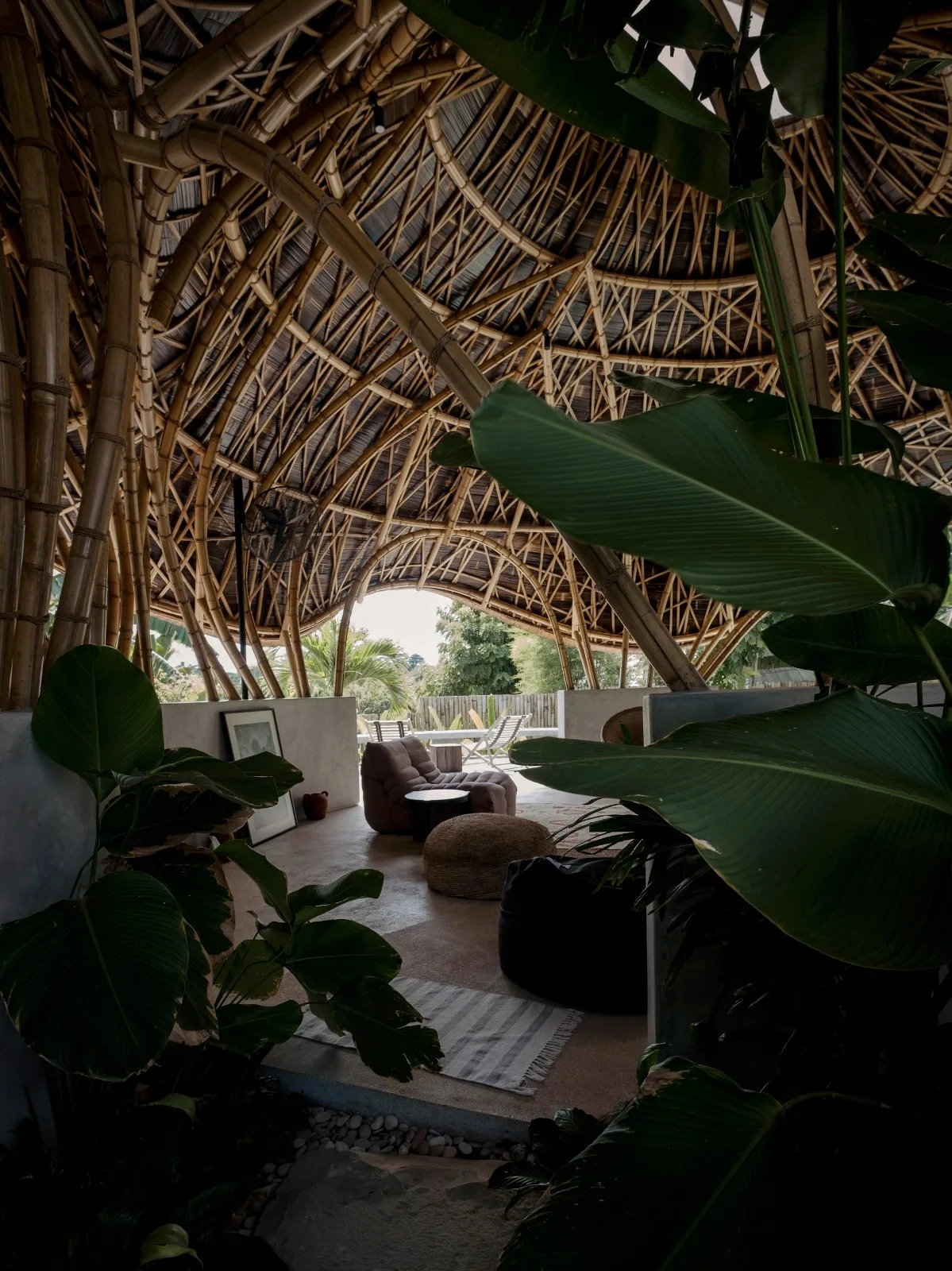
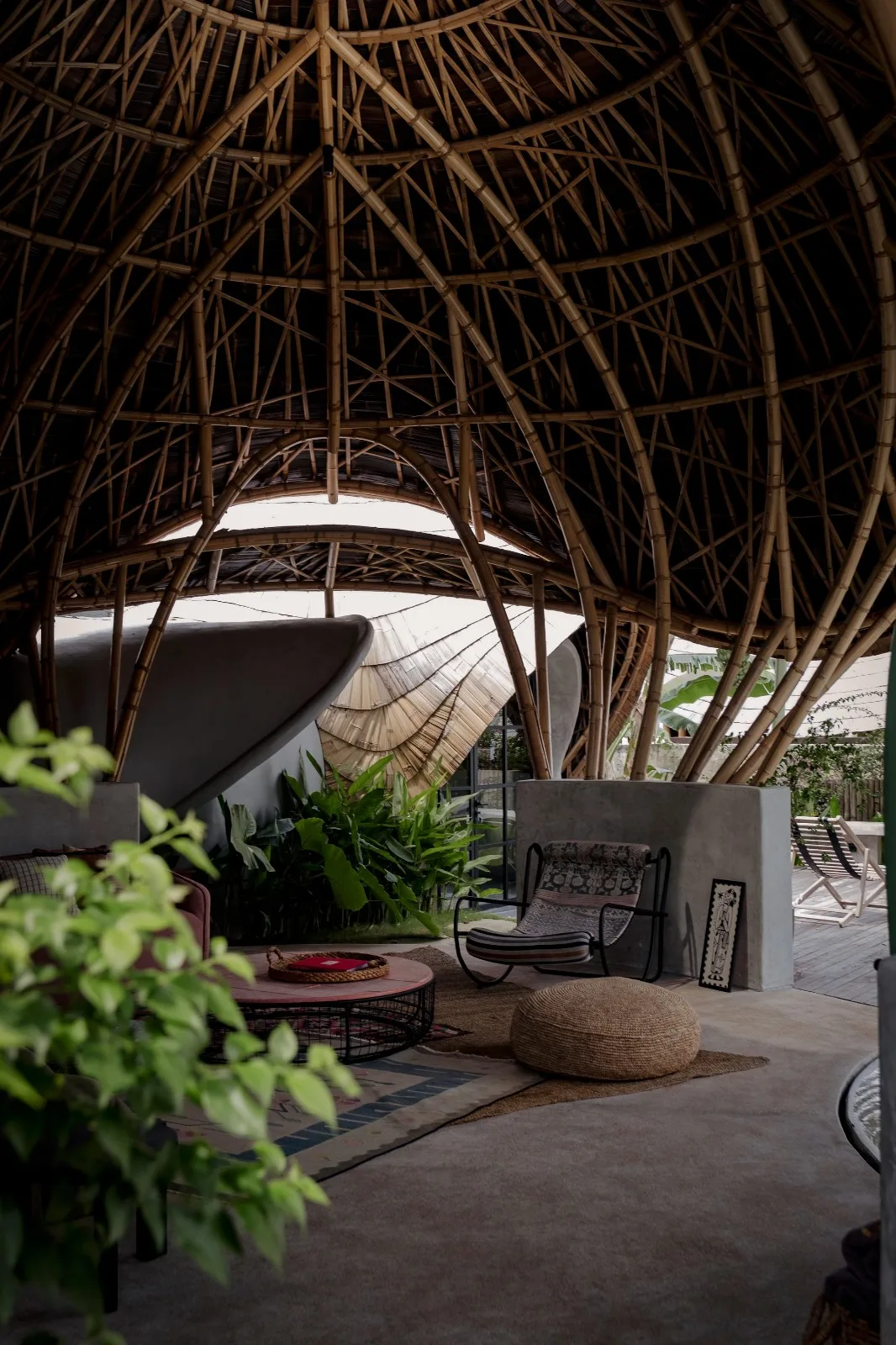
We want to challenge conventions and use architecture as a medium to inspire and awaken new ways of living. The design seeks to blur the lines between tradition and modernity, seamlessly blending indoor and outdoor spaces, integrating humans with nature, and harmonizing bamboo with cement. Ultimately, these homes have been transformed into sensory, emotional, and visual exhibition spaces inspired by the spirit of Bali.
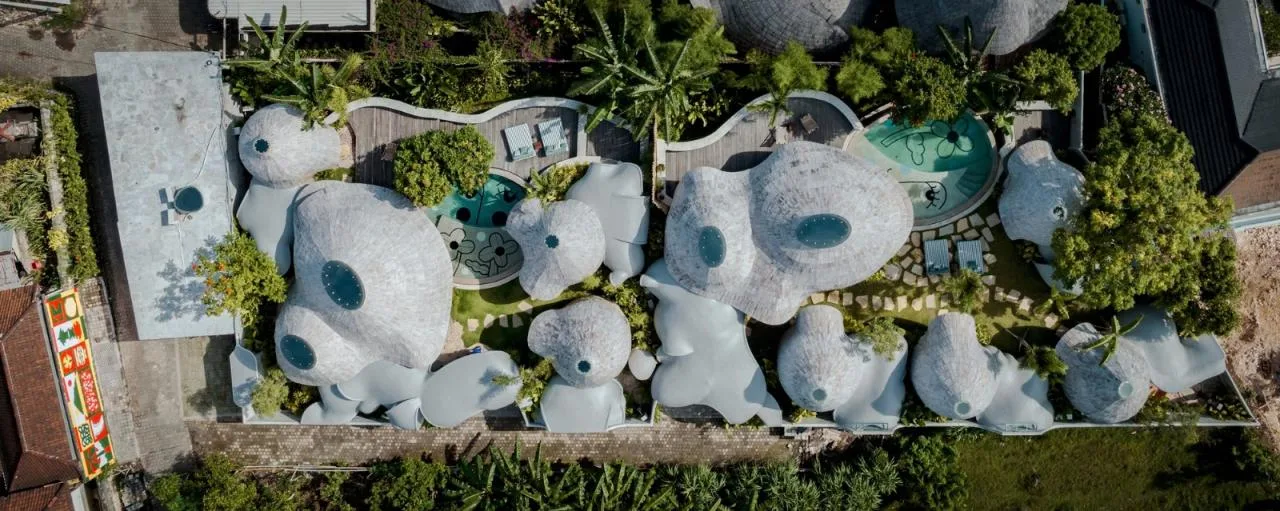
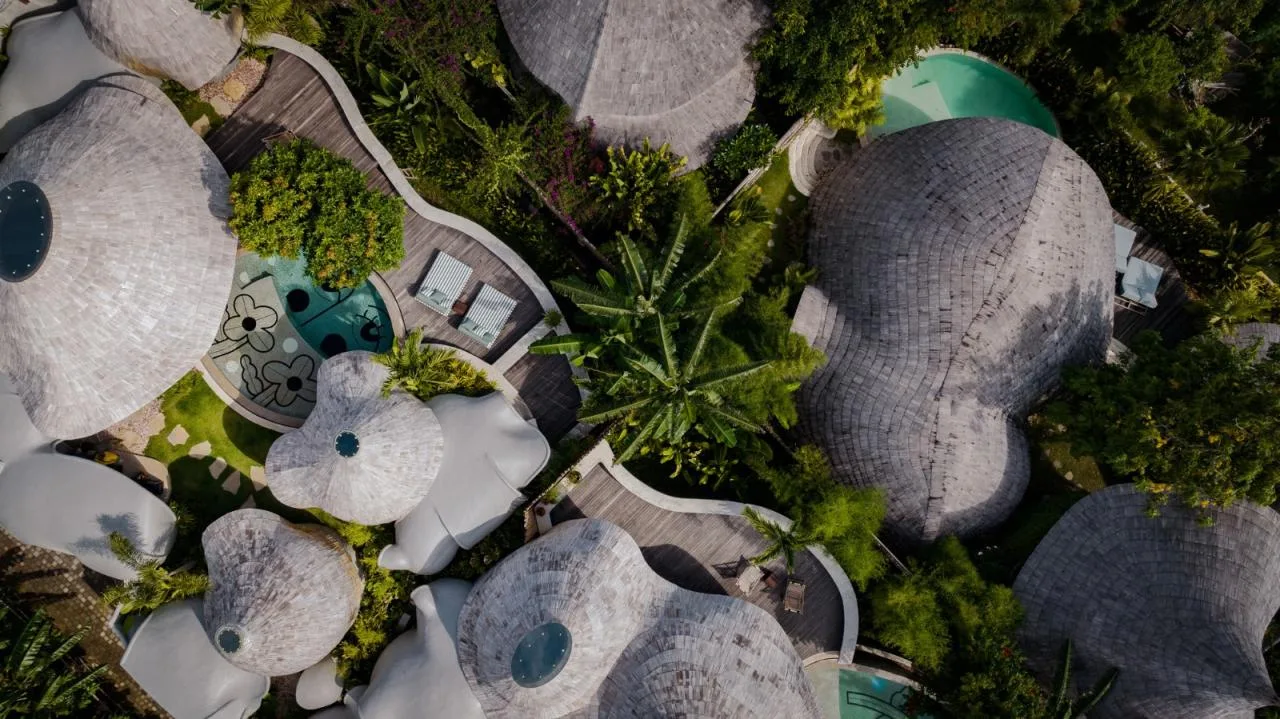
Location: Bali and its people have warmly embraced us from the outset. This welcoming spirit is central to the experience we aim to convey: even when far from home, the space offers a profound sense of belonging. The design is deeply rooted in the philosophy of Tri Hita Karana—Bali’s traditional way of life—utilizing organic geometric shapes, natural materials, fluid spatial arrangements, and direct interaction with nature as its foundation.
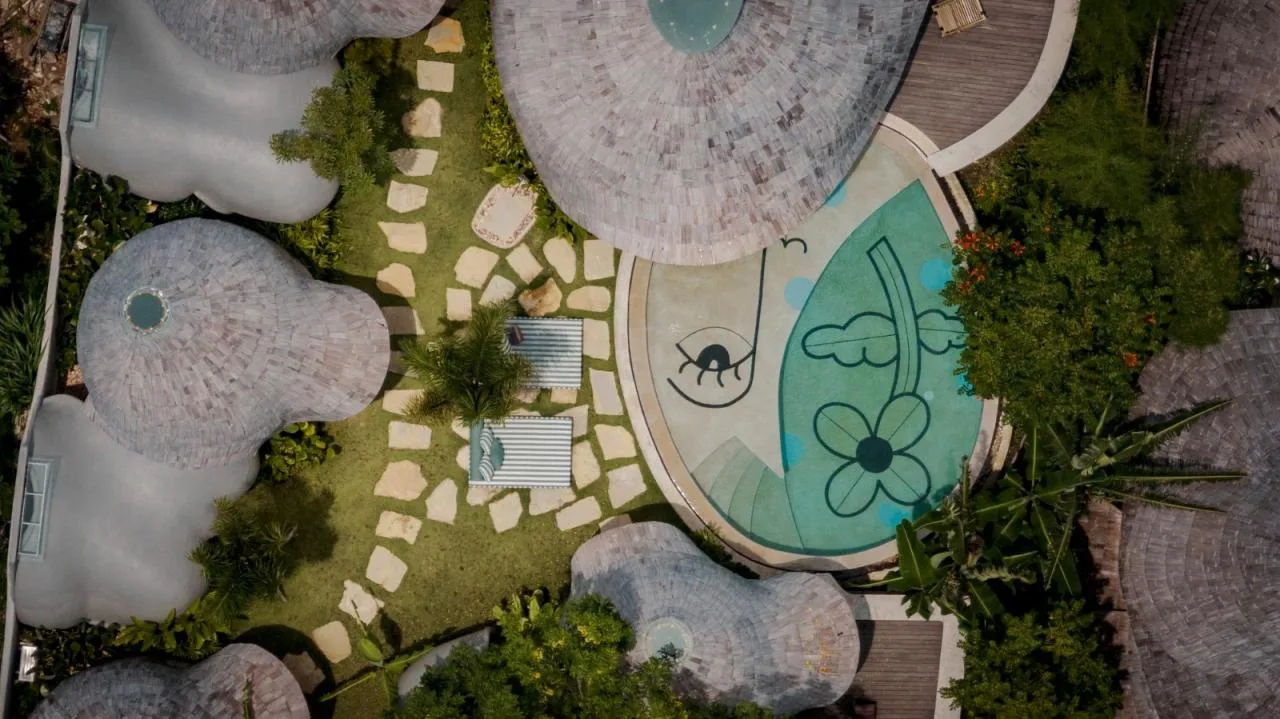
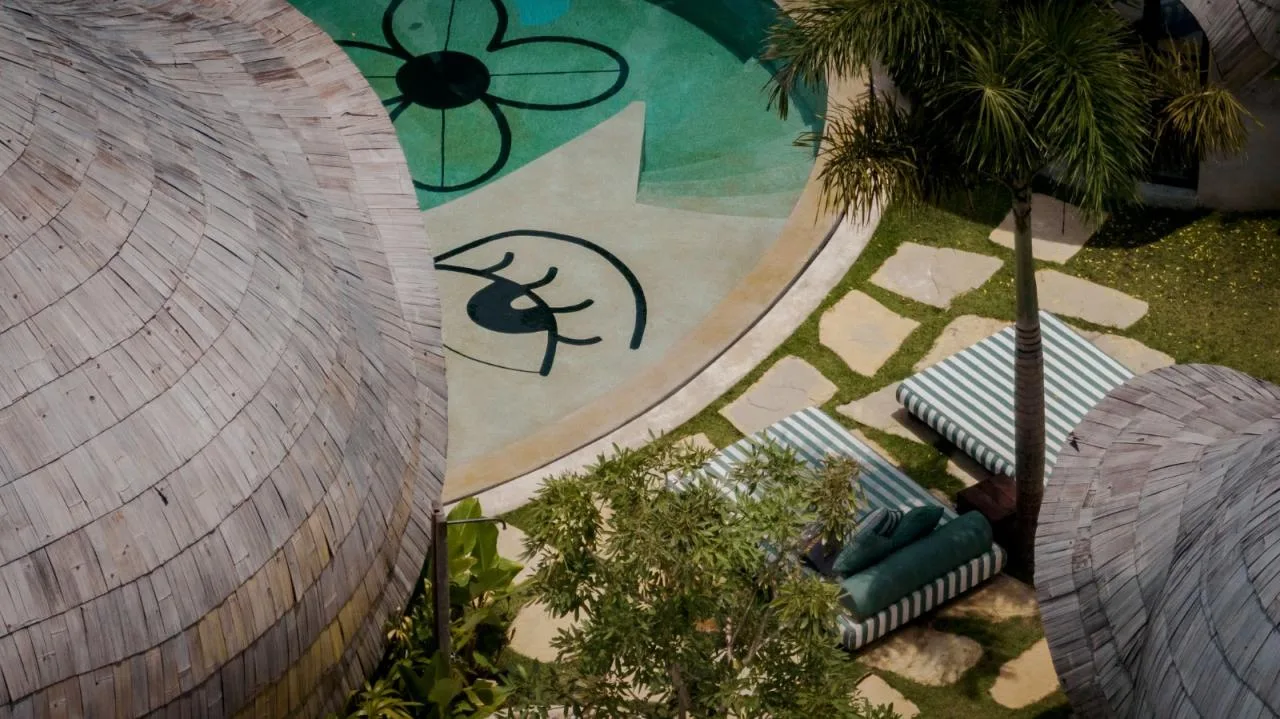
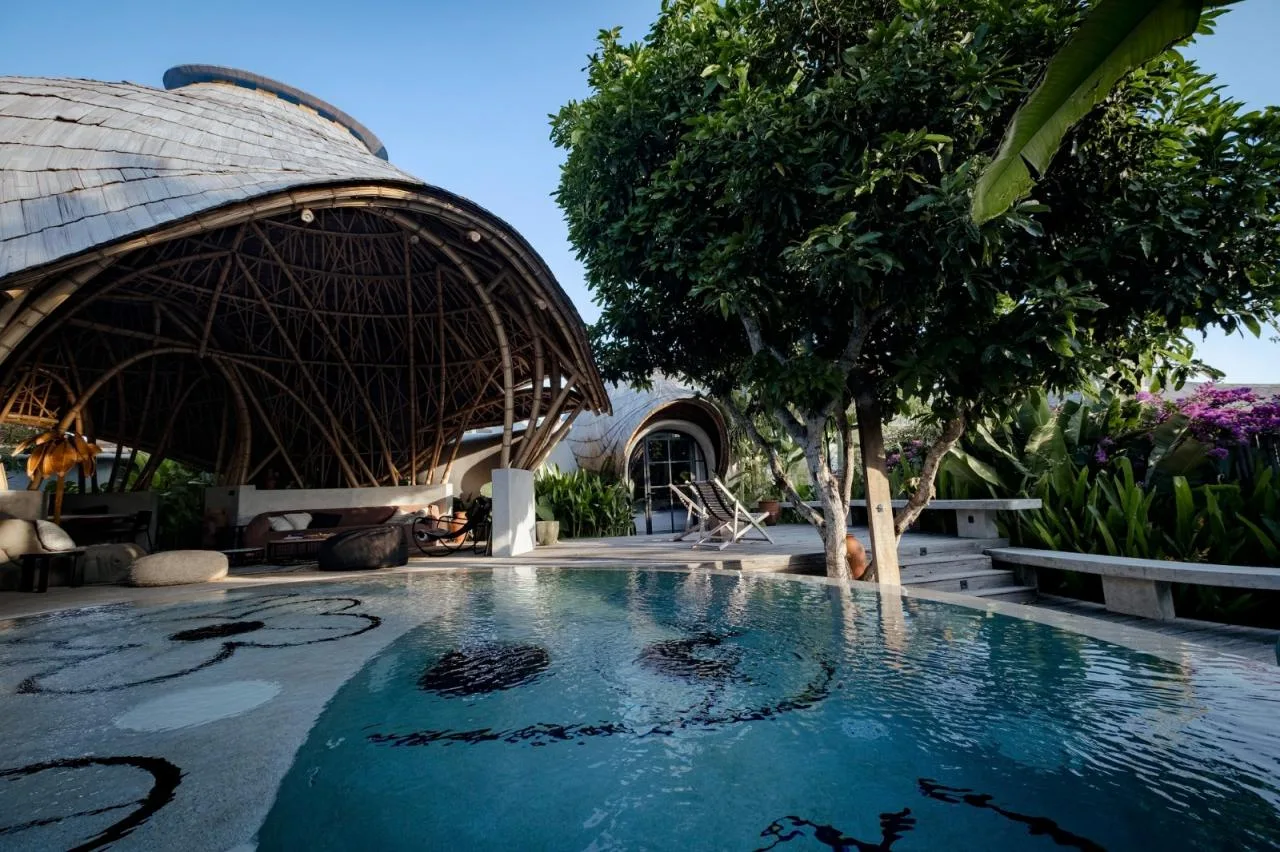
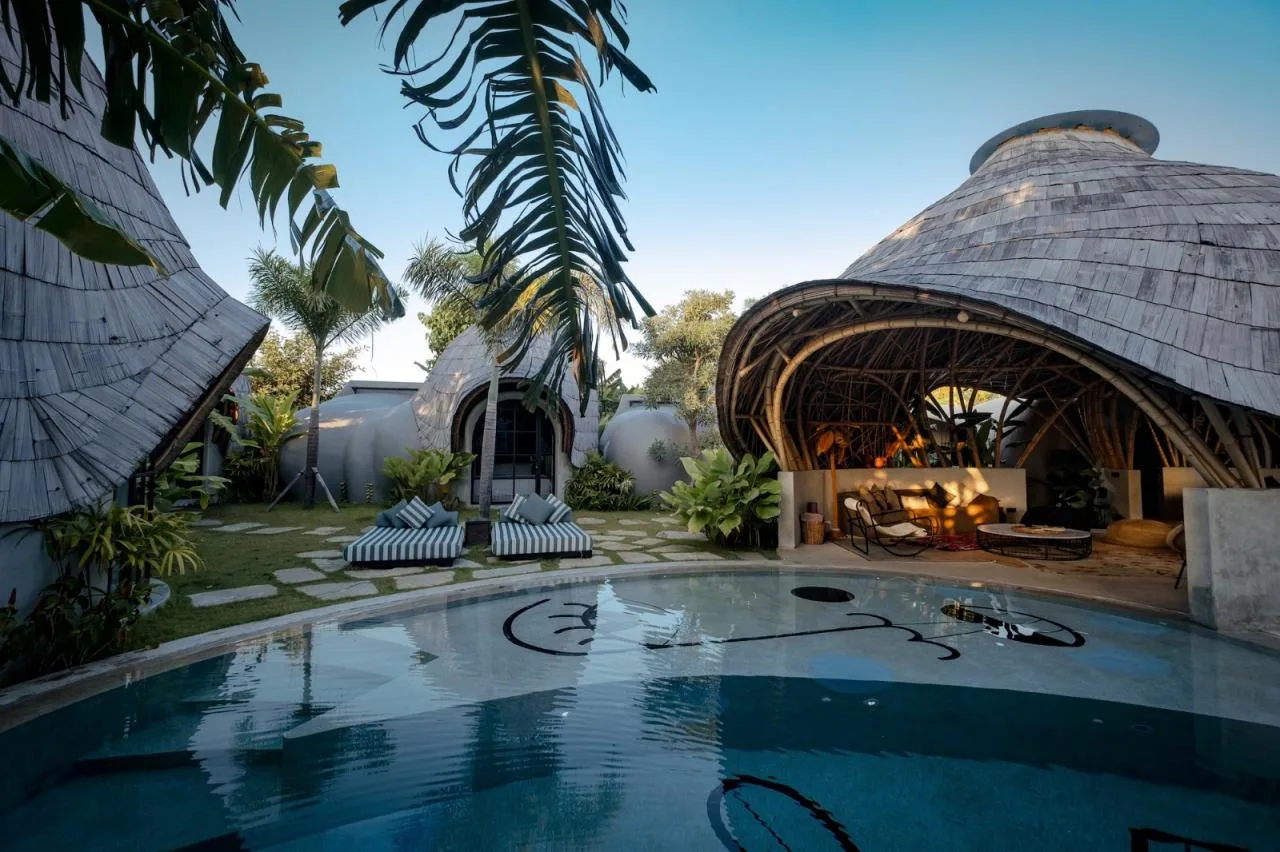
Situated on the Pekatu Peninsula in southern Bali, these homes draw inspiration from traditional Balinese residences. The layout features a more public central area for daytime activities, surrounded by private modules for nighttime use. Each space is designed with multiple entrances and pathways to encourage interaction, connections, and spatial layering, enriching how the home is experienced throughout the day.
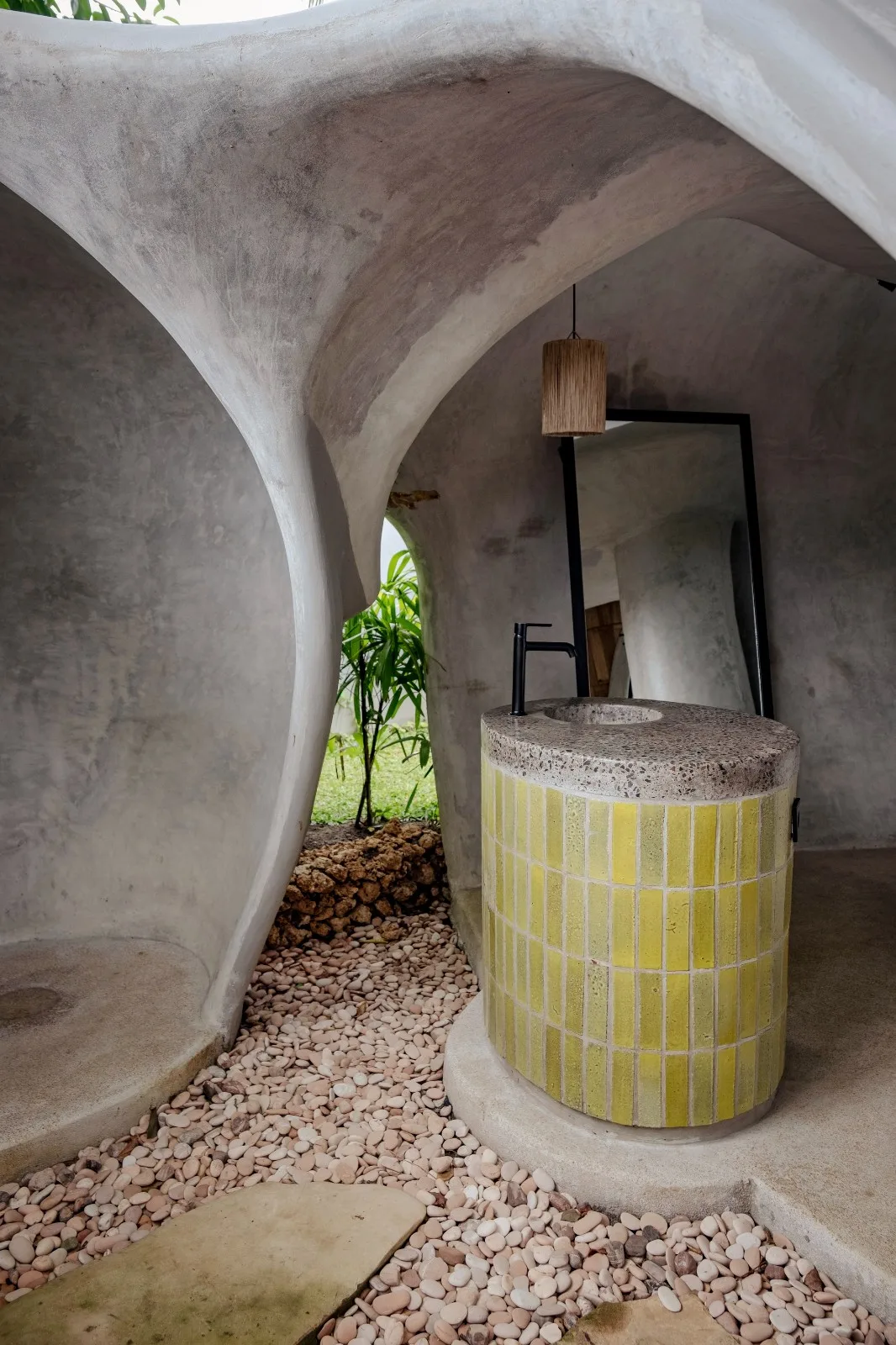
Landscape design is integral to the architecture and interior, blending naturally into every space. Over time, the landscaping gradually replaces structural boundaries, enhancing privacy and creating immersive environments.
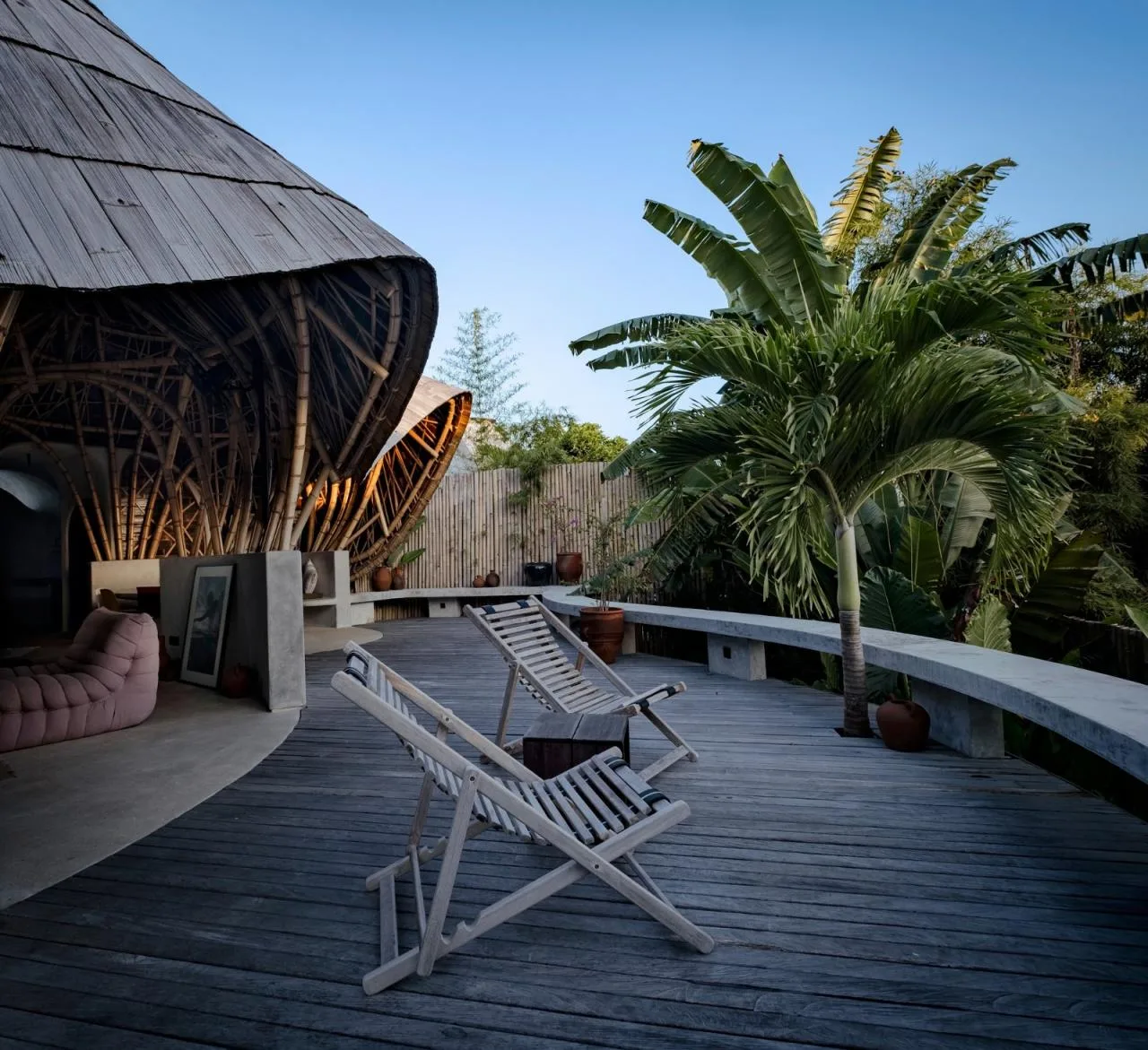
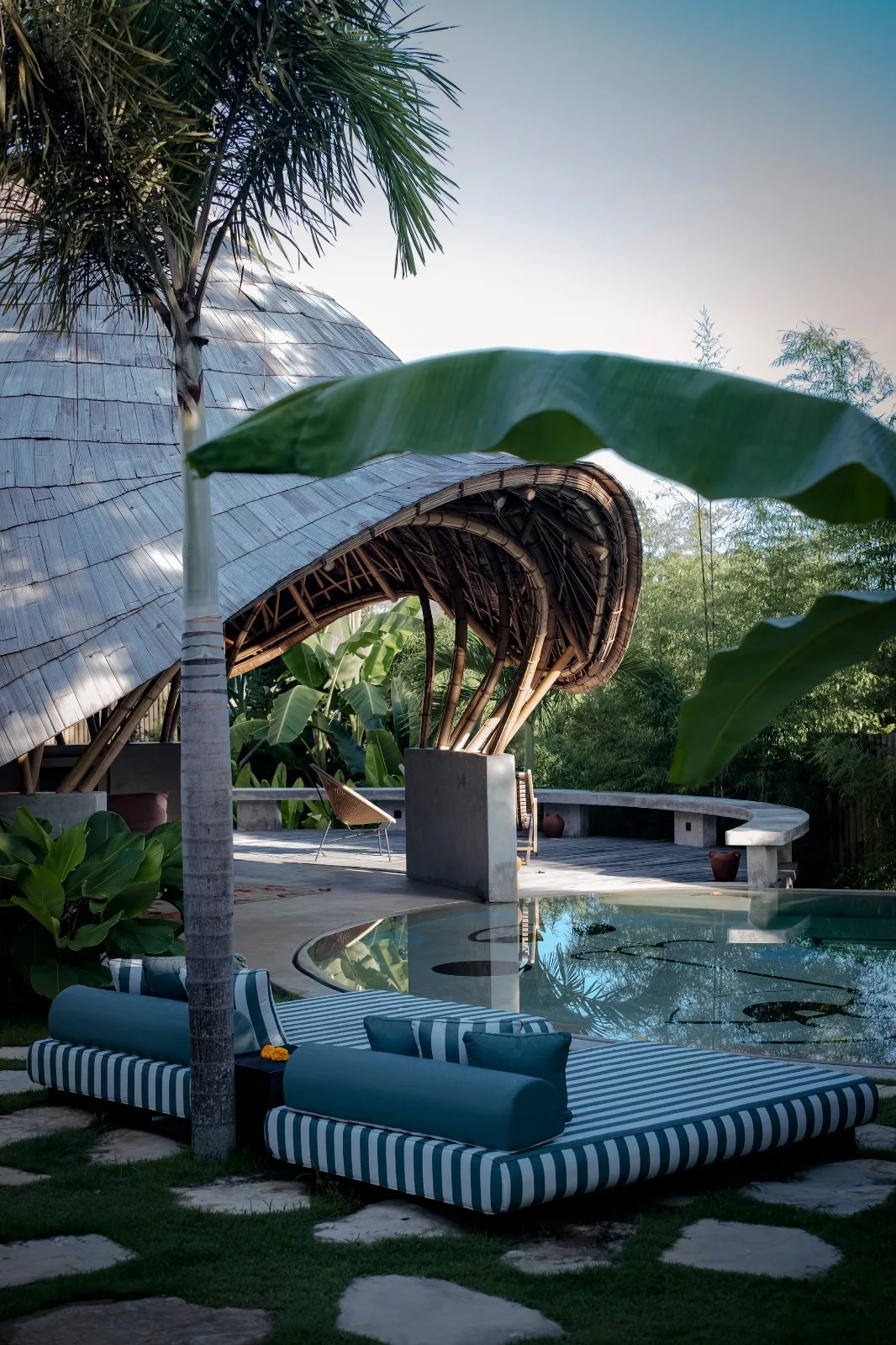
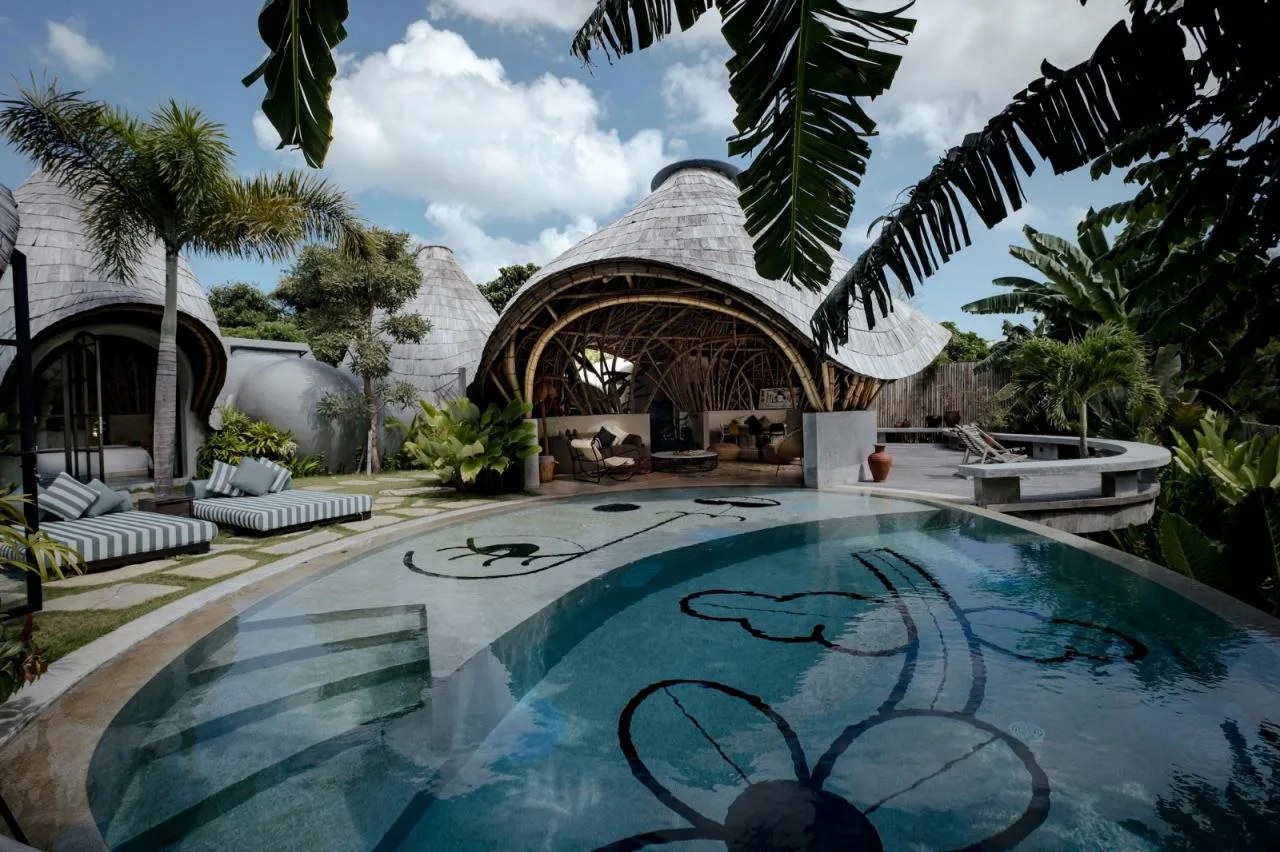
Design Approach: To create a more human-centered and natural environment, our design process relies heavily on physical models, sketches, and ongoing on-site discussions with local craftsmen, rather than depending solely on computer software. This hands-on approach fosters creativity, learning, and enjoyment throughout the project. Models and sketches prove to be the most effective tools for communication with local builders.
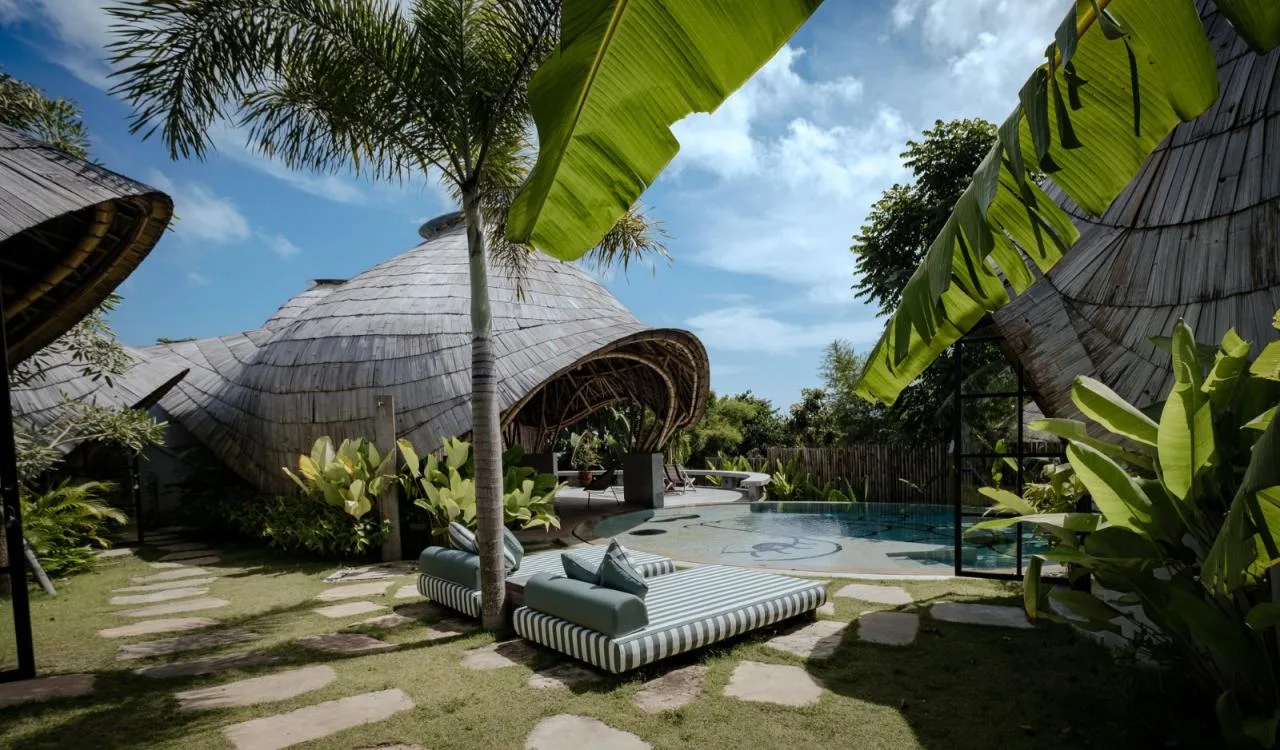
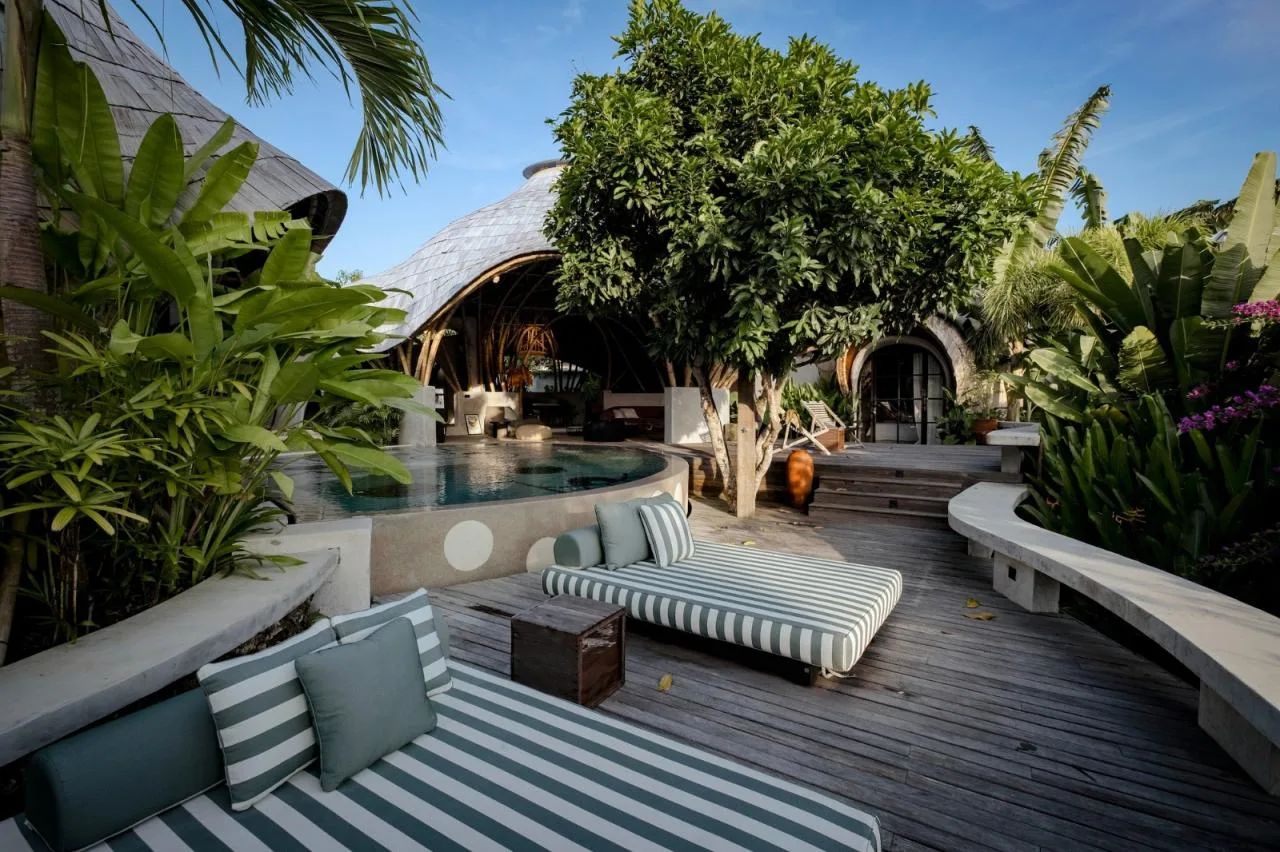
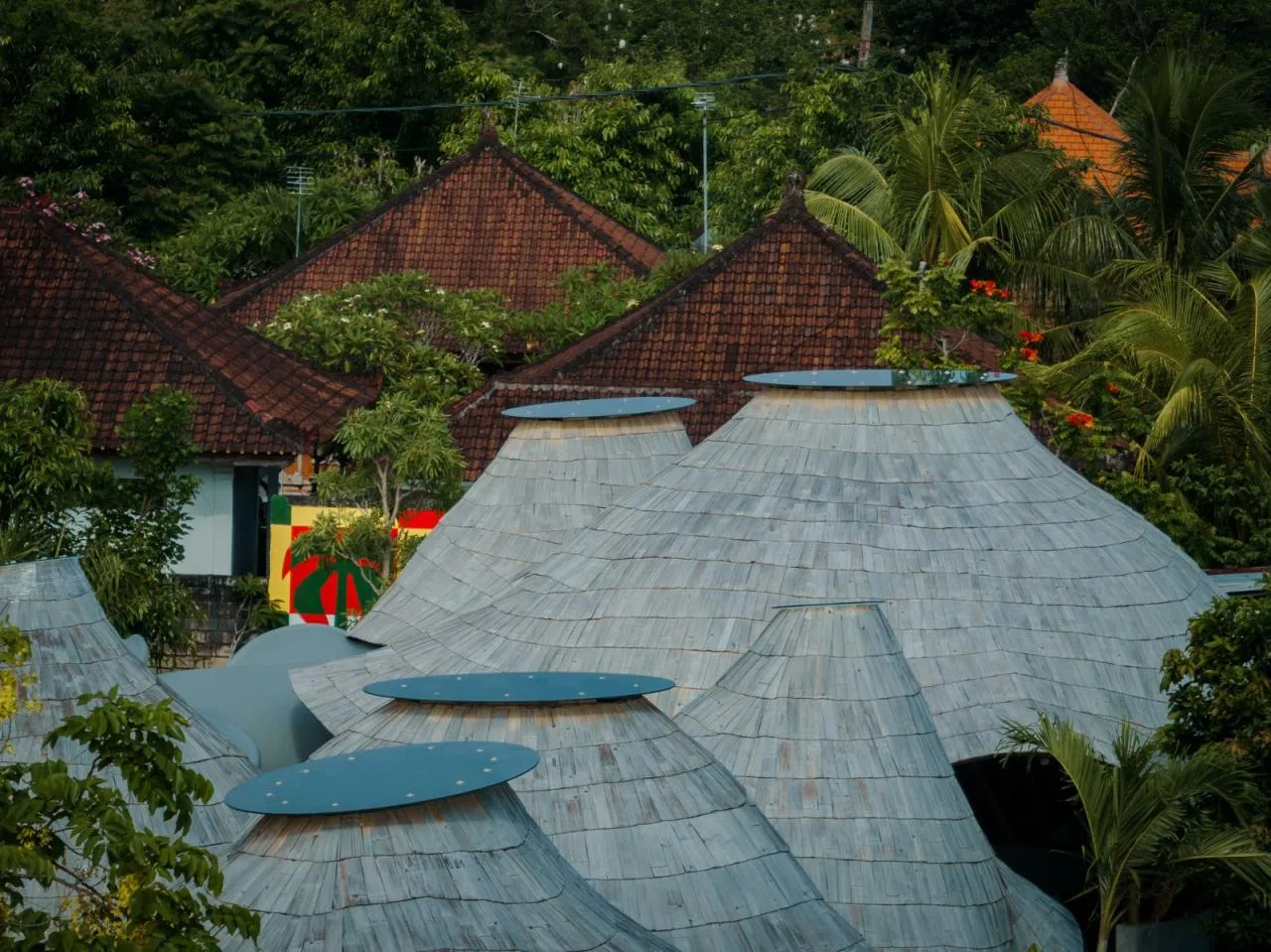
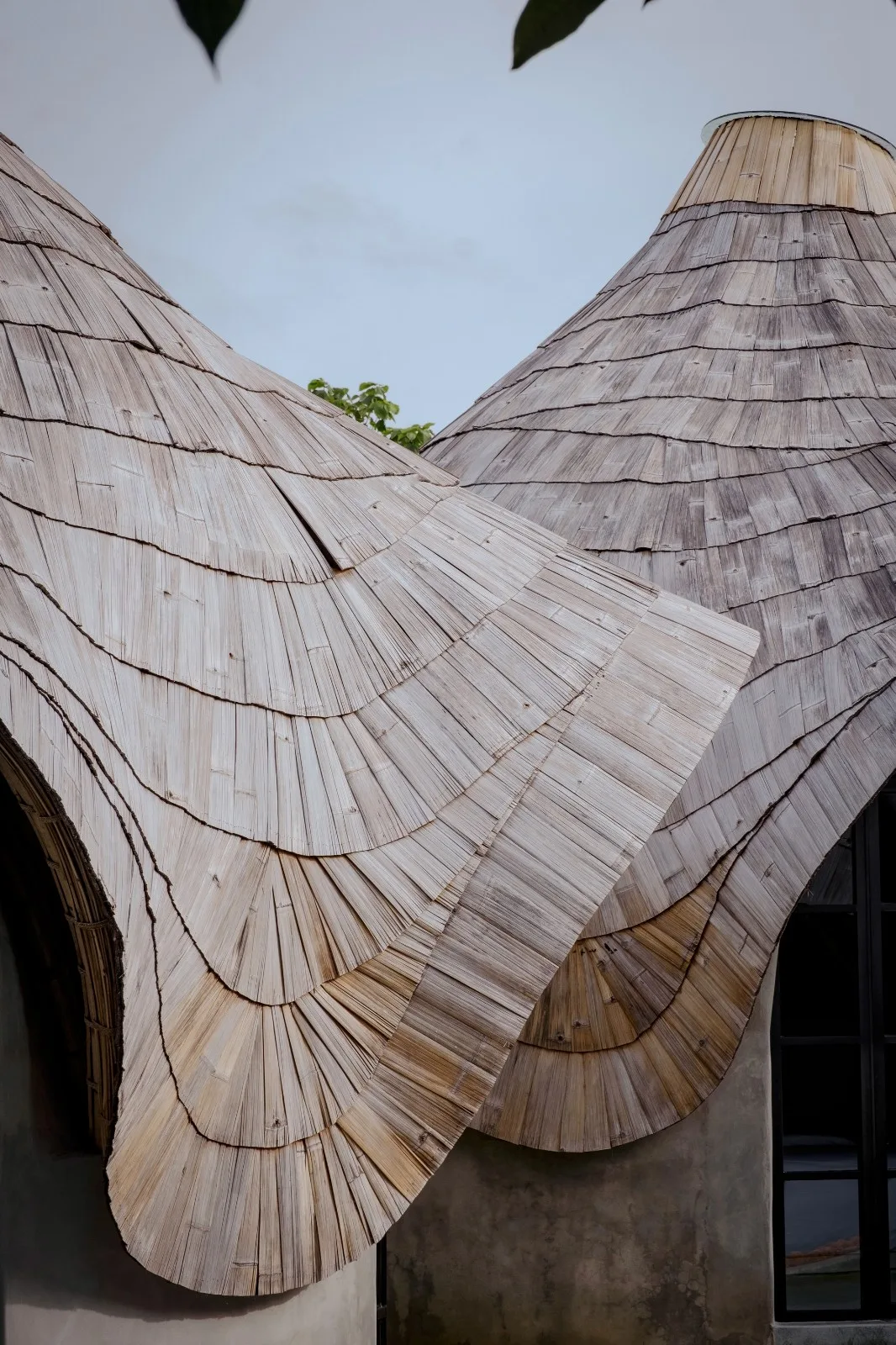
Inspired by Mediterranean traditions, we incorporated distinctive local elements into the design, harmonizing the residences with their geographical context. Attention was given to natural factors such as sunlight, wind, and rainfall, especially considering the southern Balinese climate. The orientation, openings, and eaves were carefully designed to enhance airflow, improving outdoor comfort without relying on air conditioning.
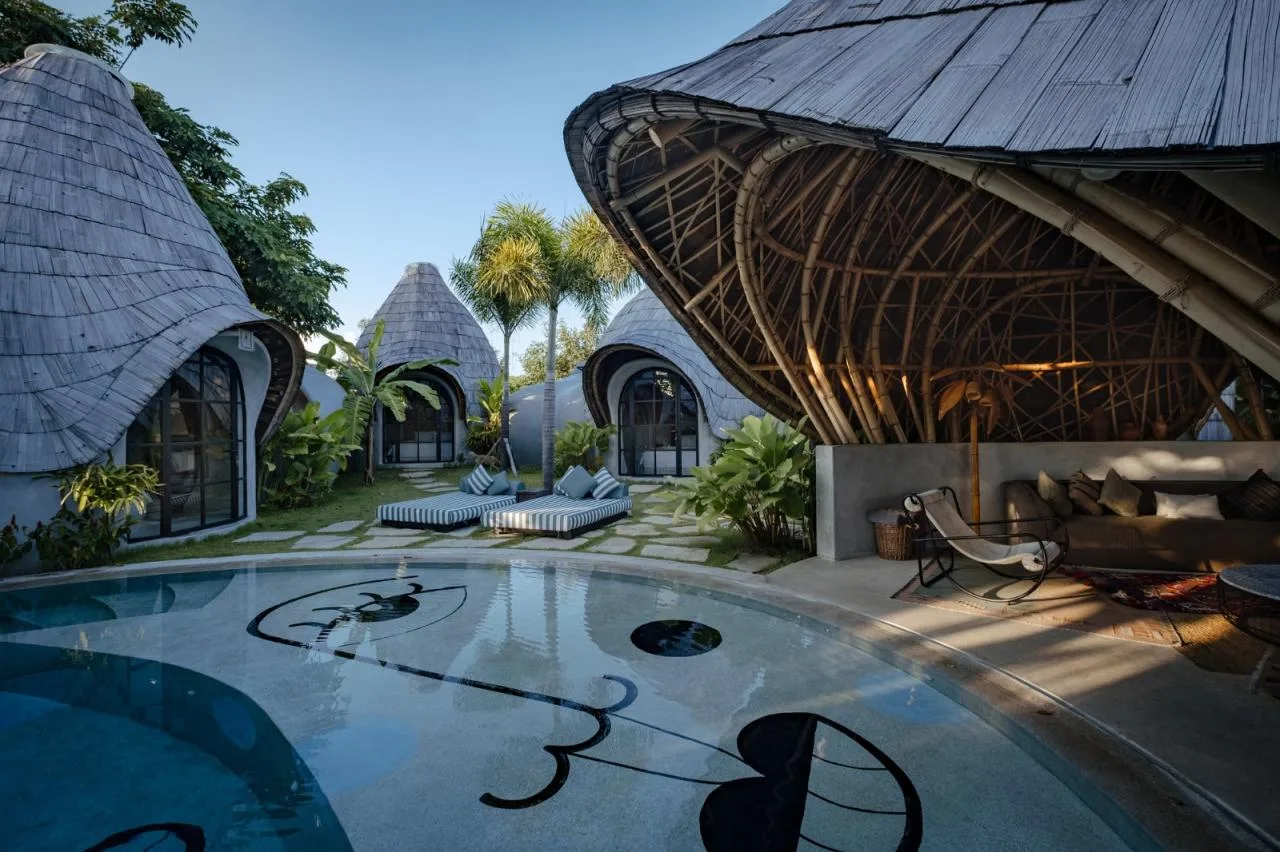
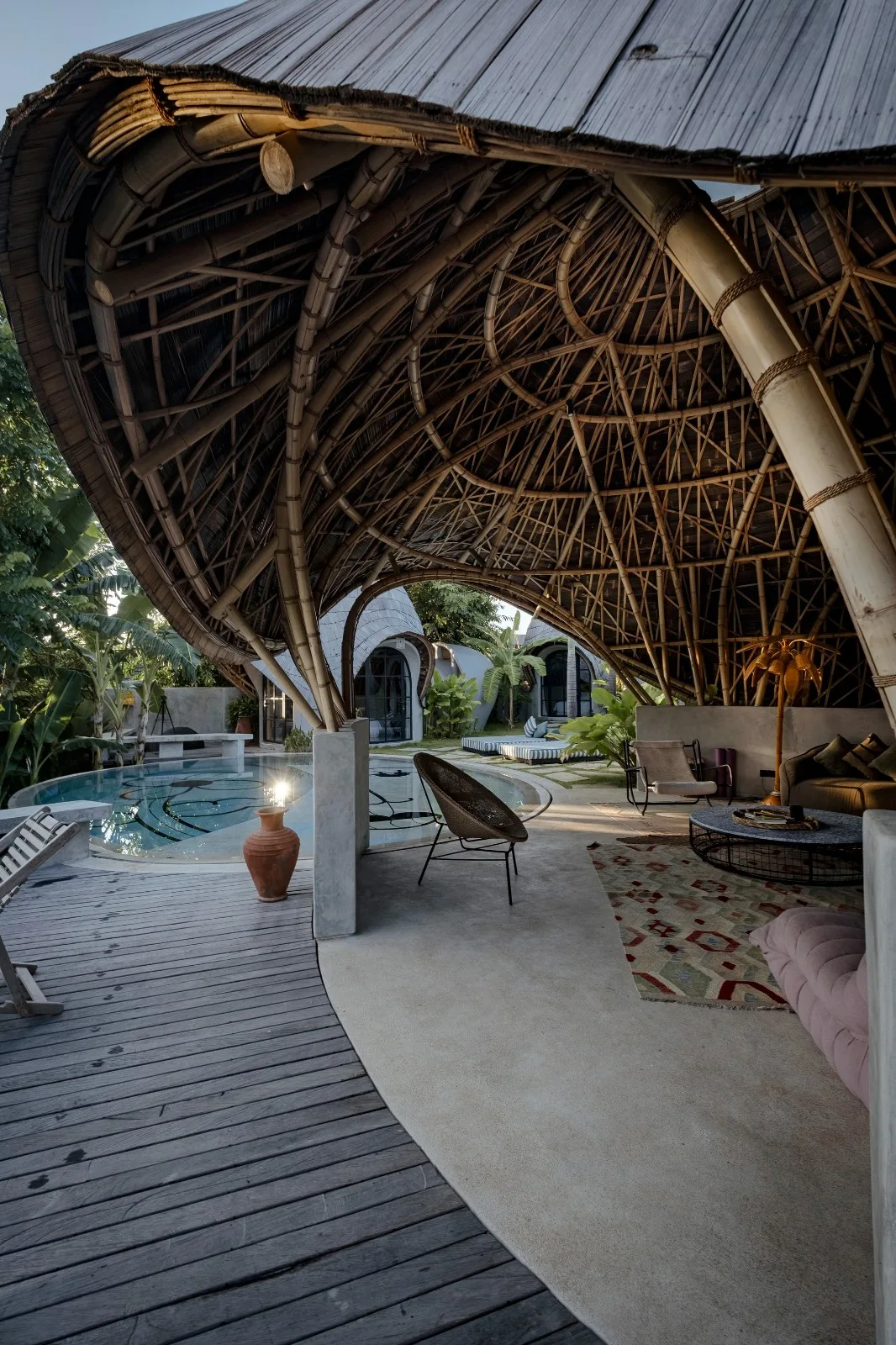
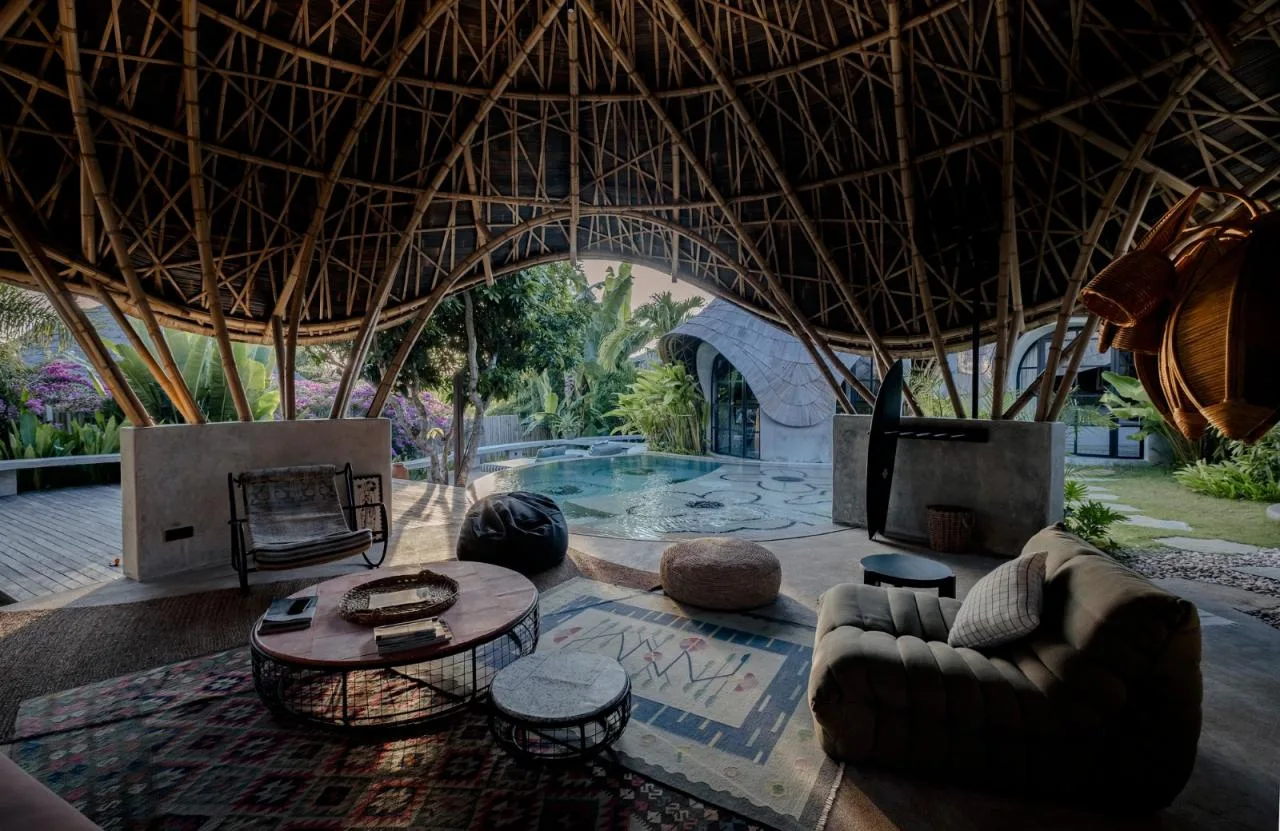
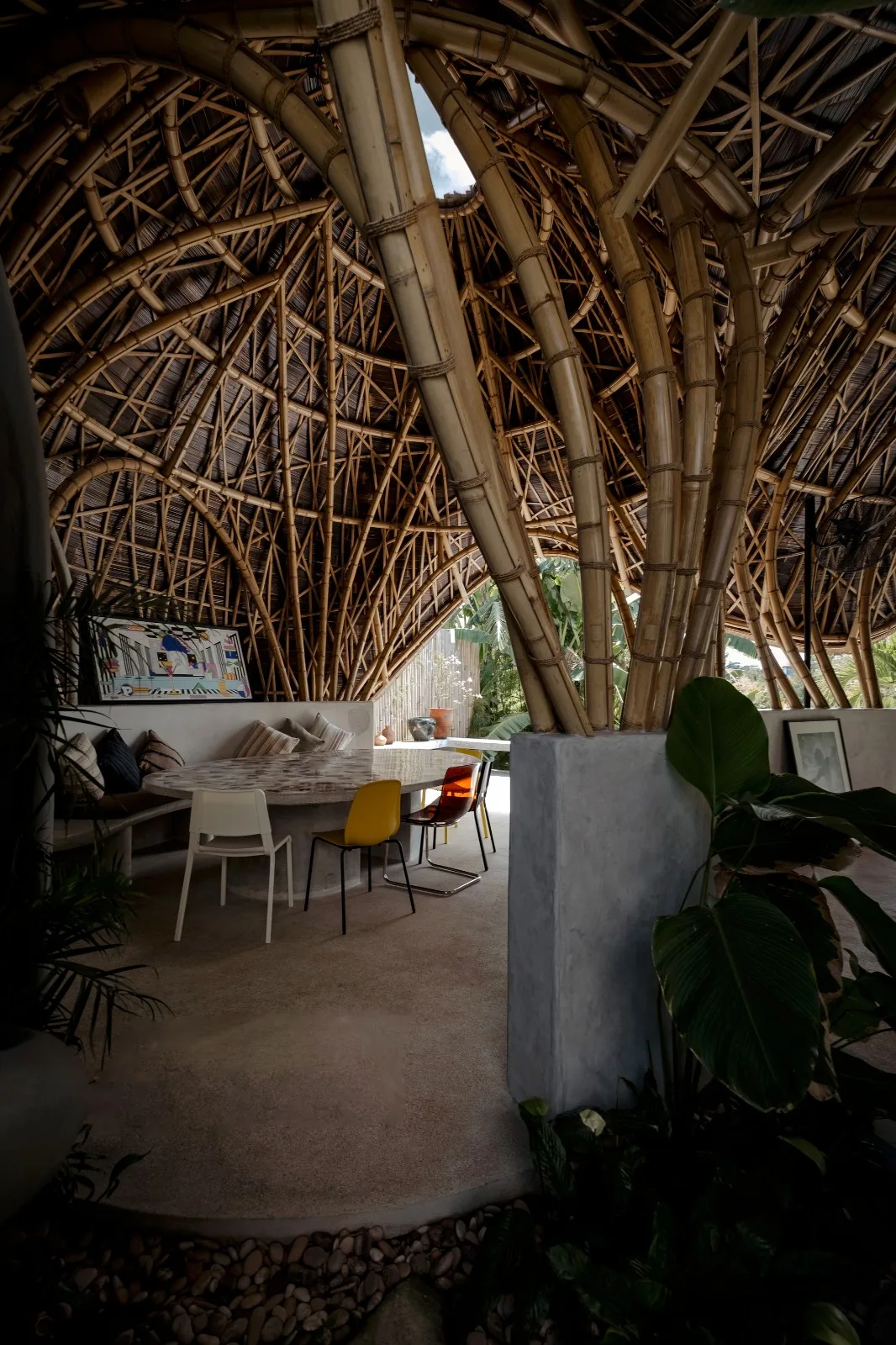
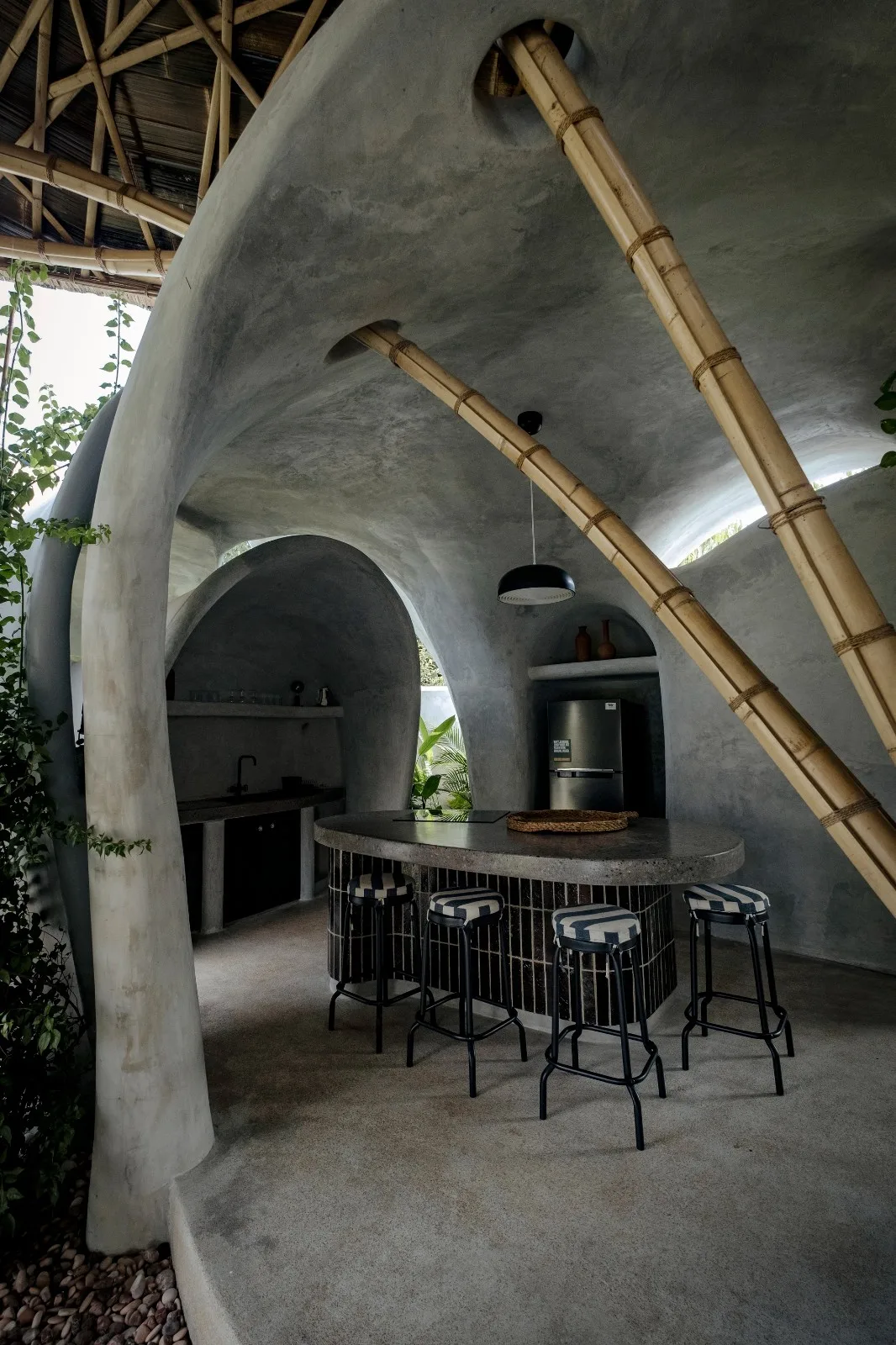
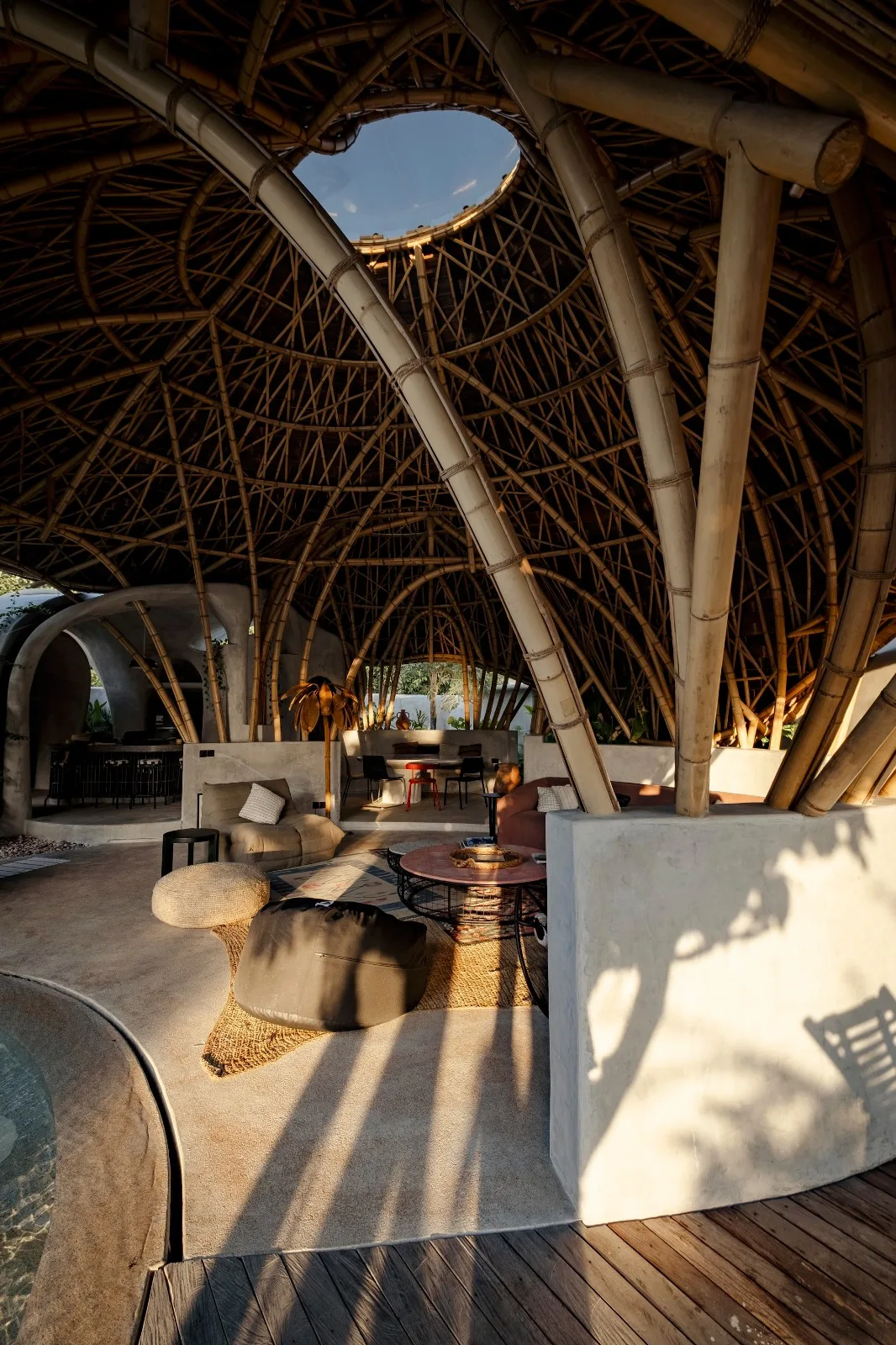
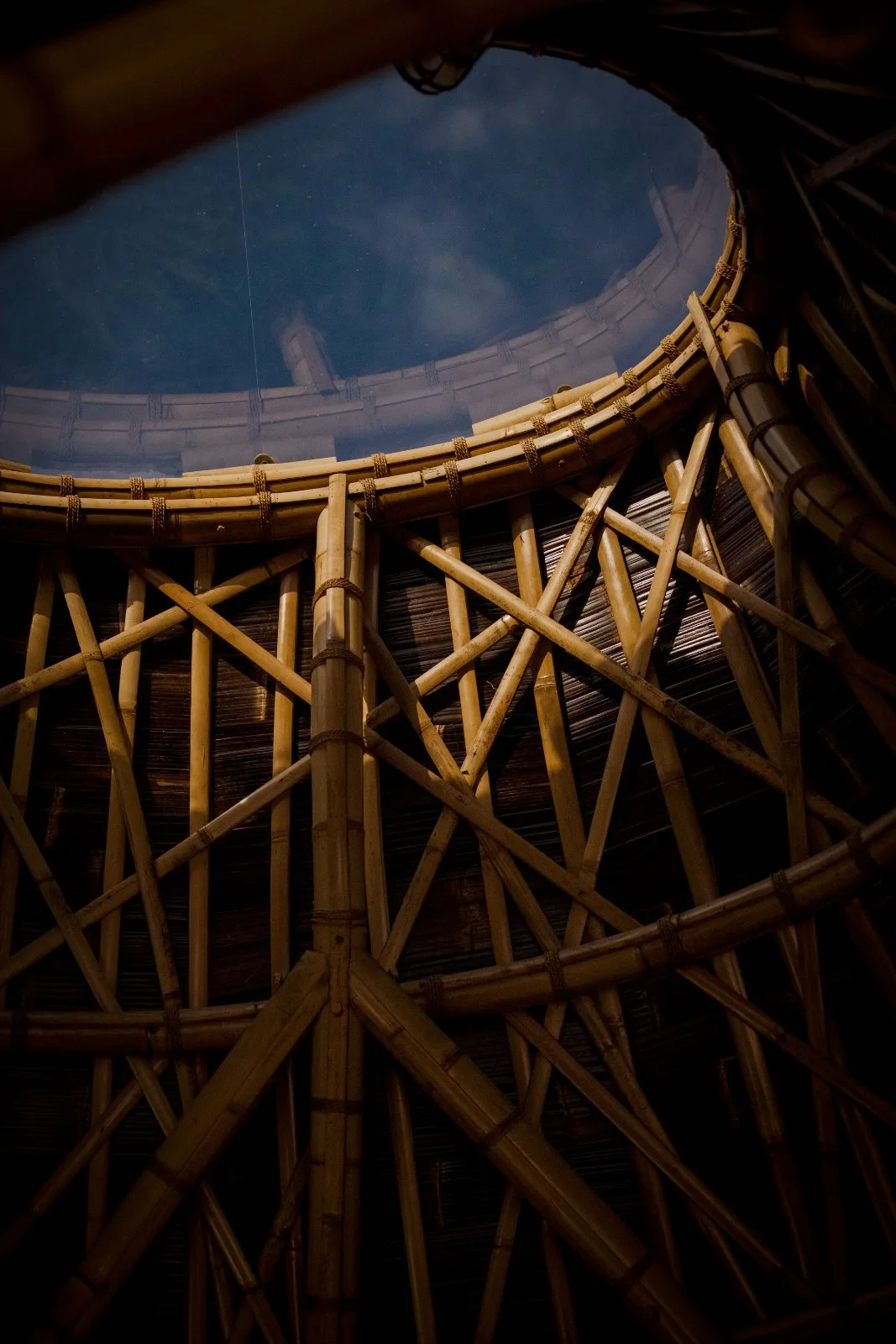
The skylight positioned above the main space invites natural light in and facilitates the circulation of hot air. It also frames the breathtaking views of Bali’s sky, clouds, stars, and moon, preserving the connection with nature.
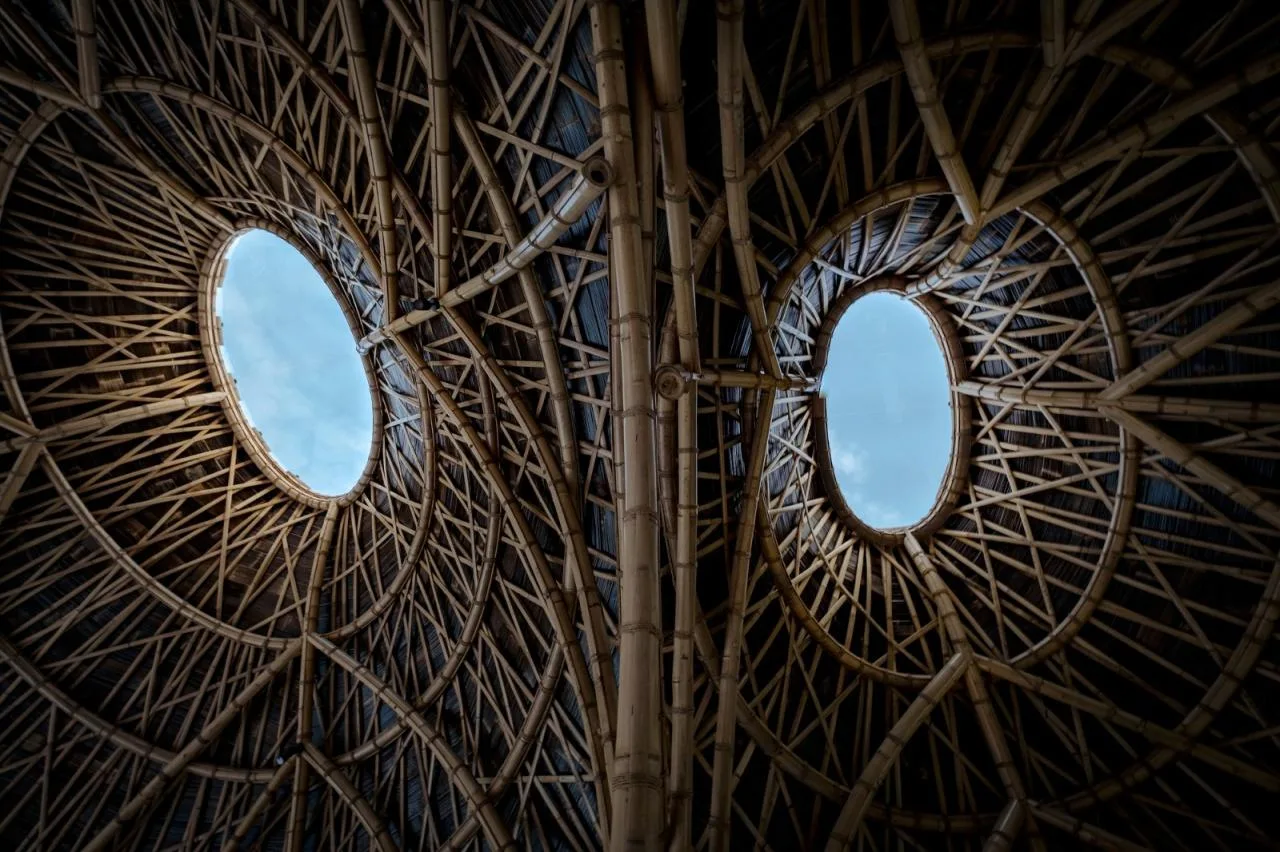
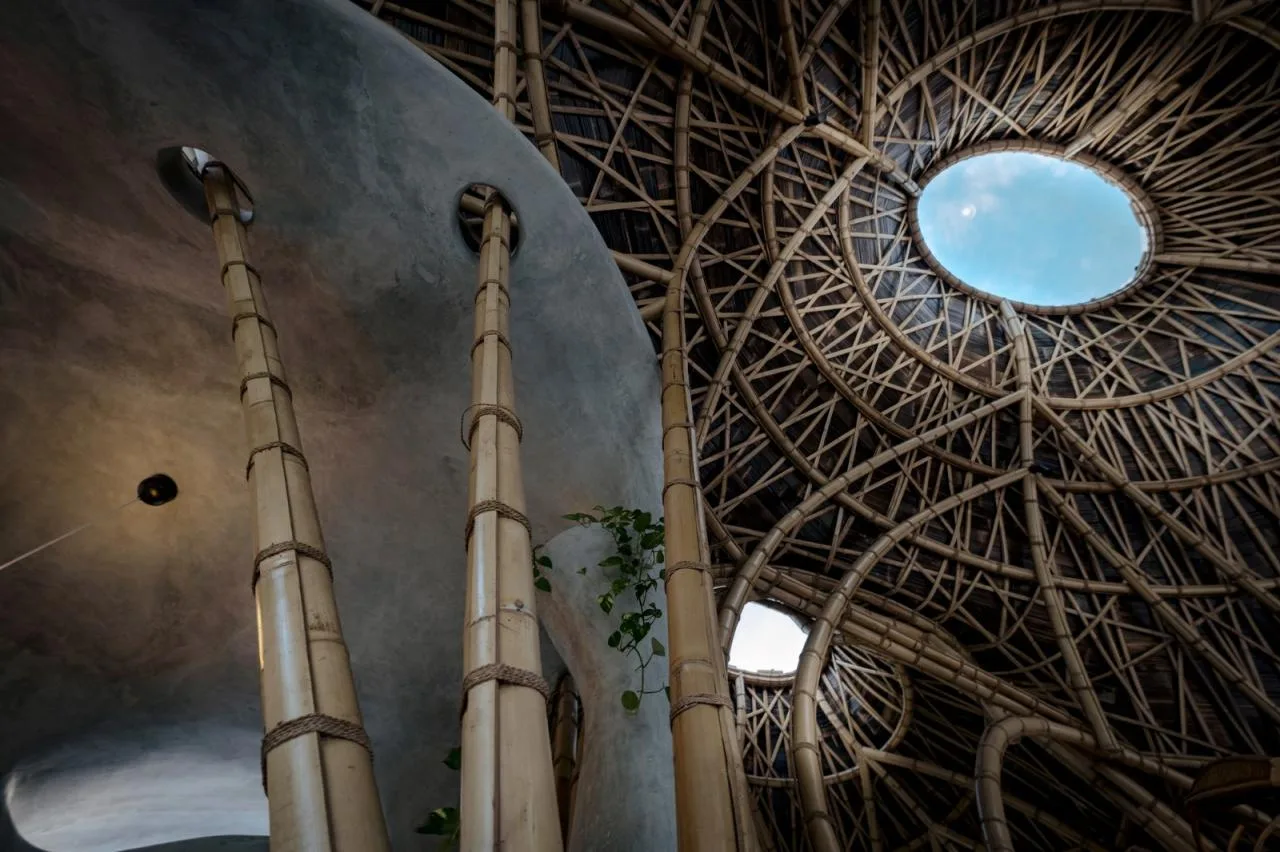
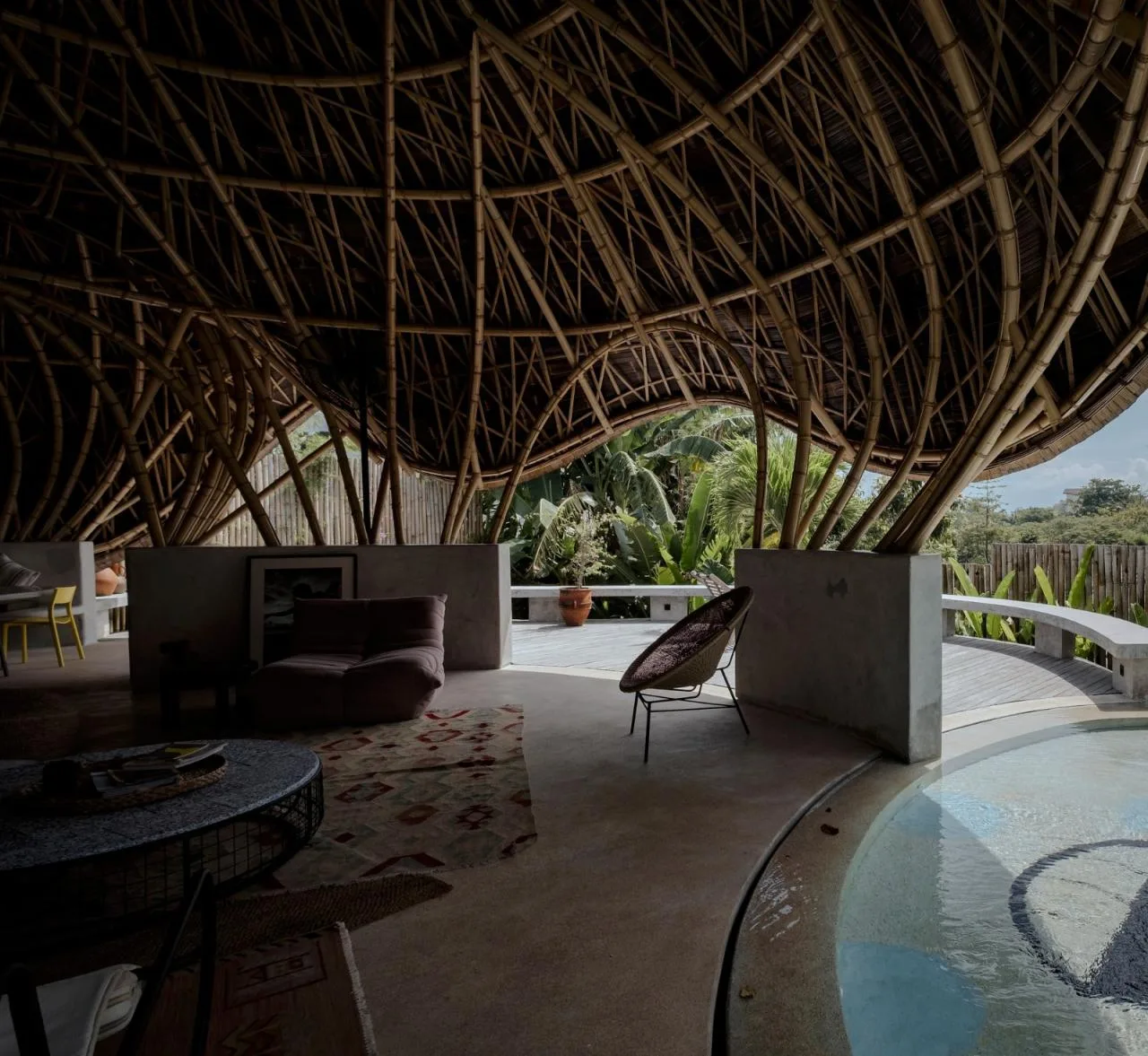
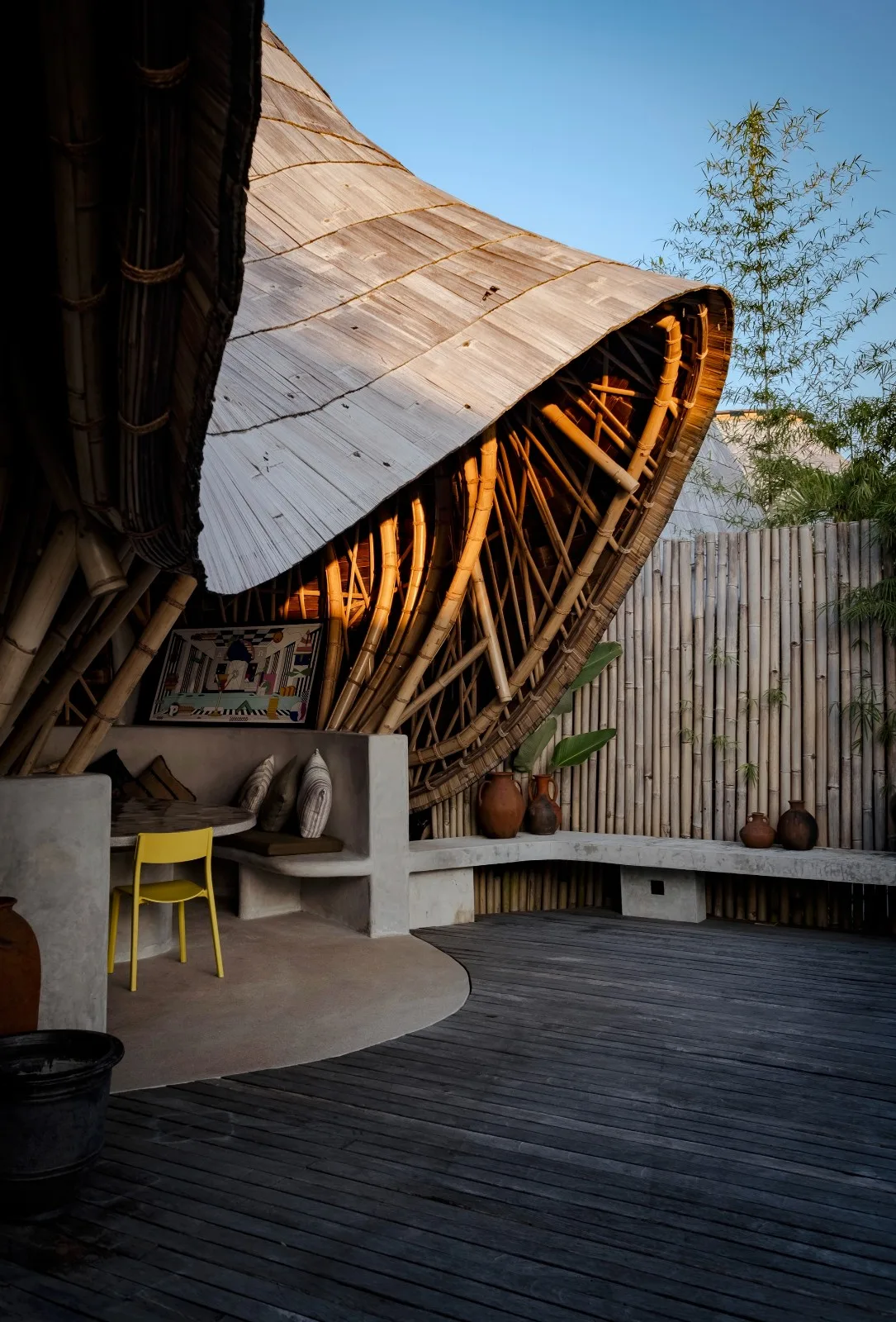
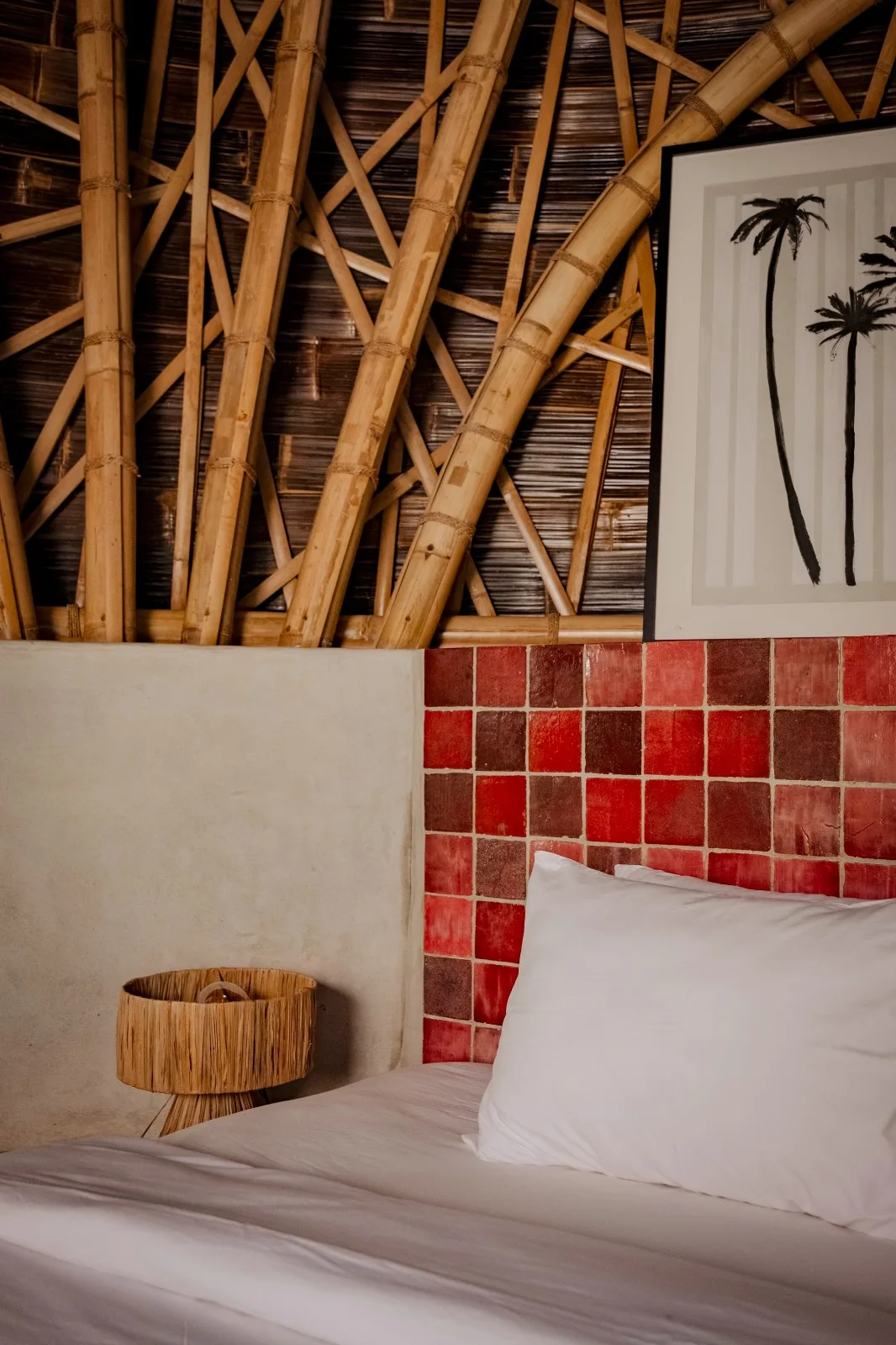
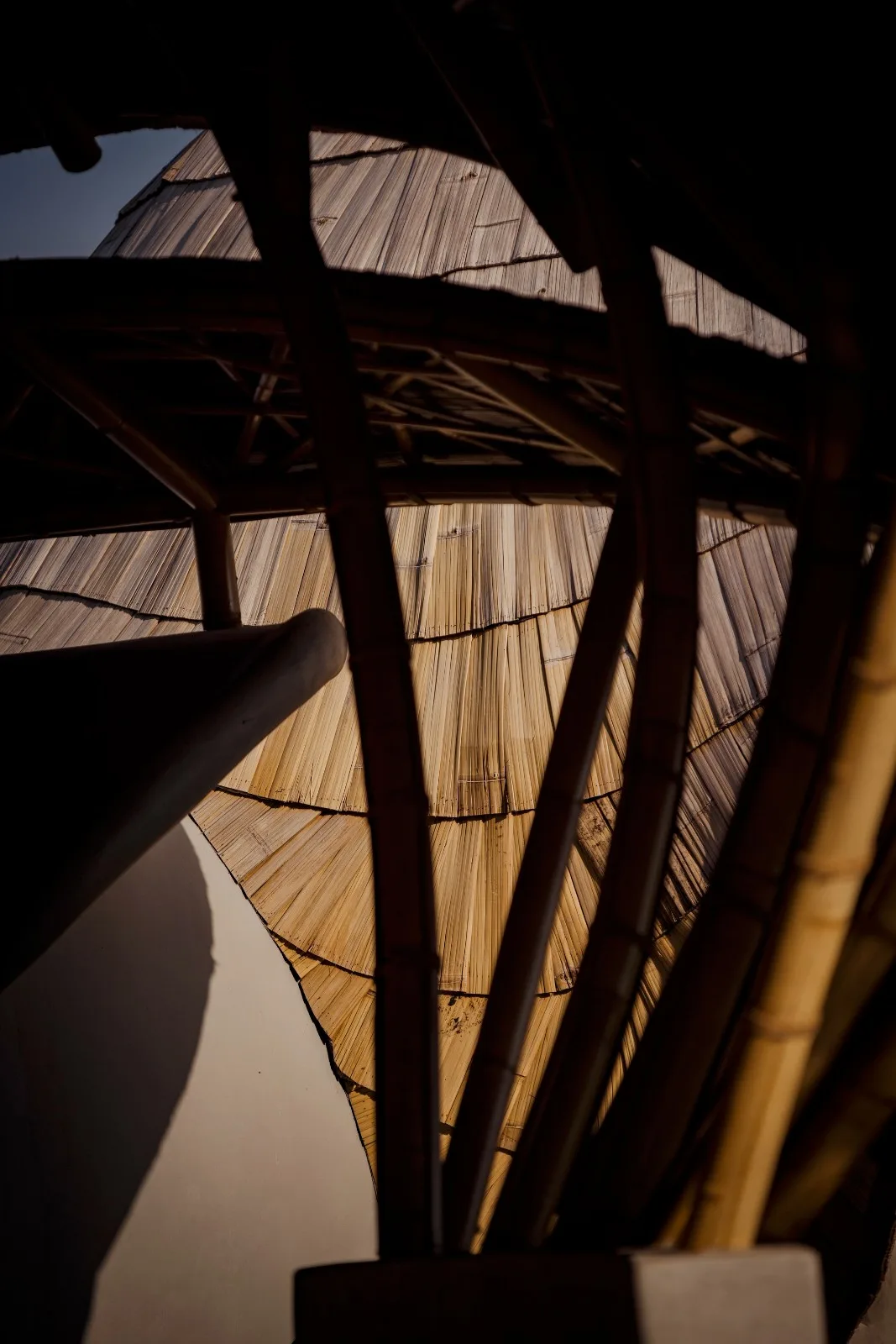
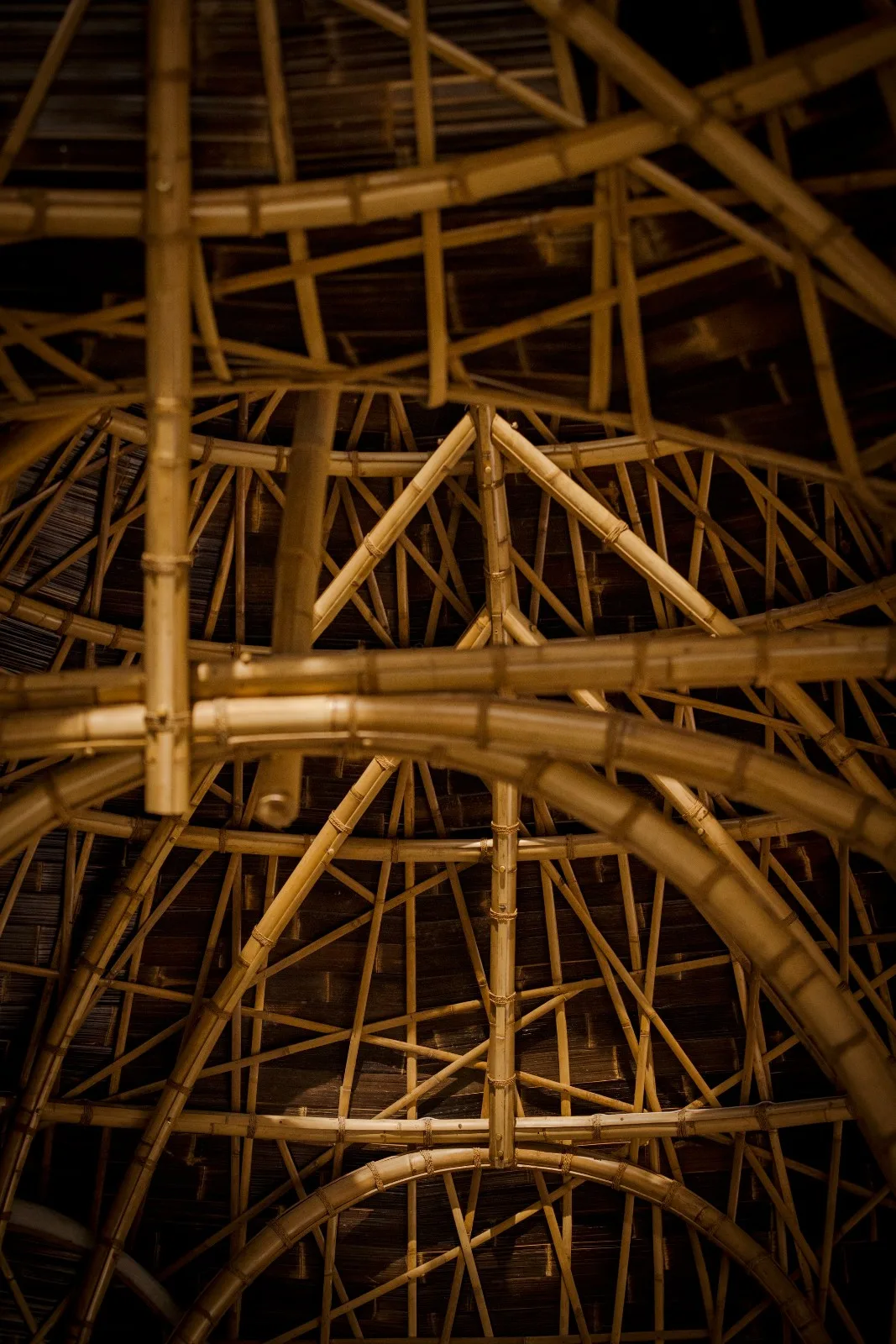
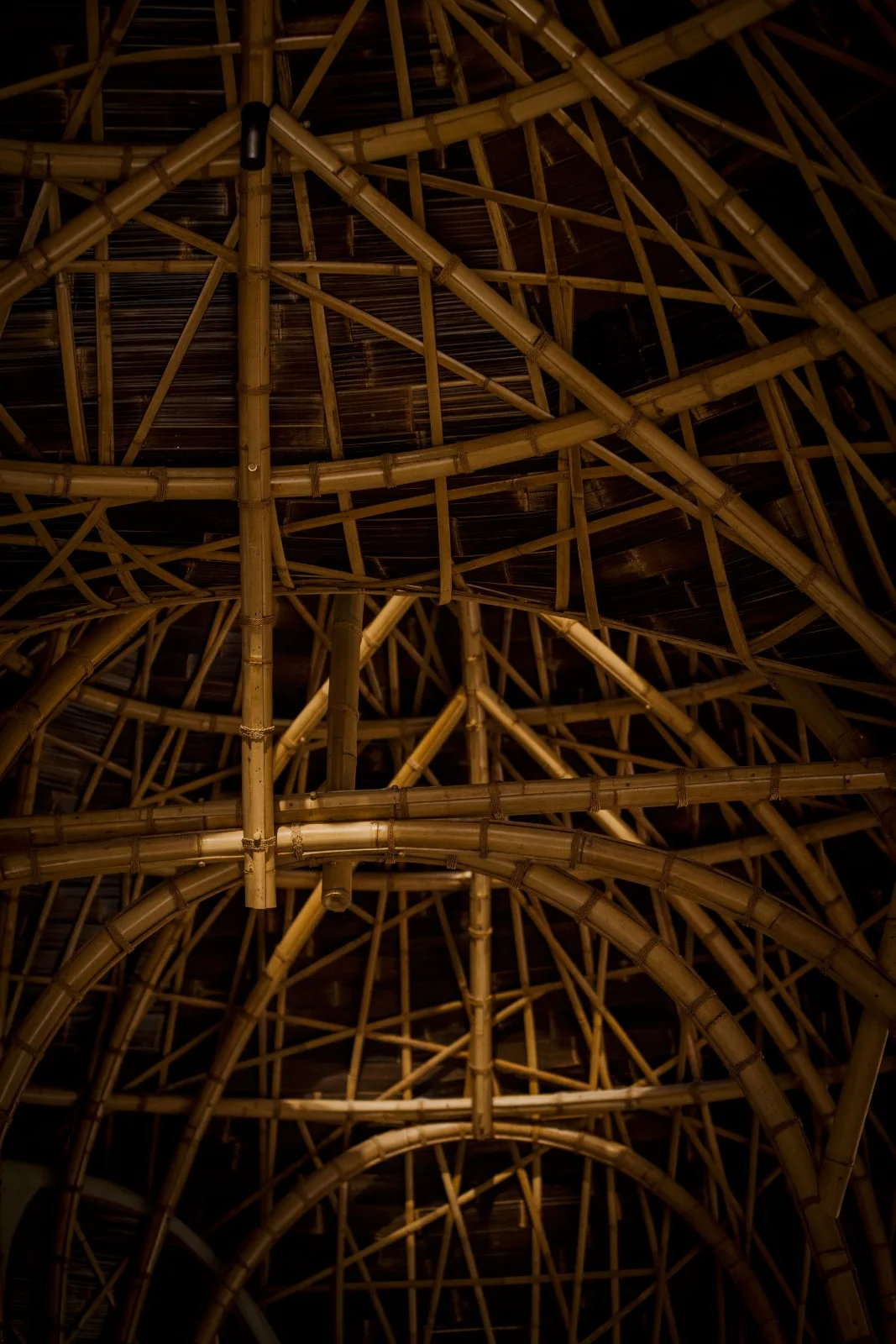
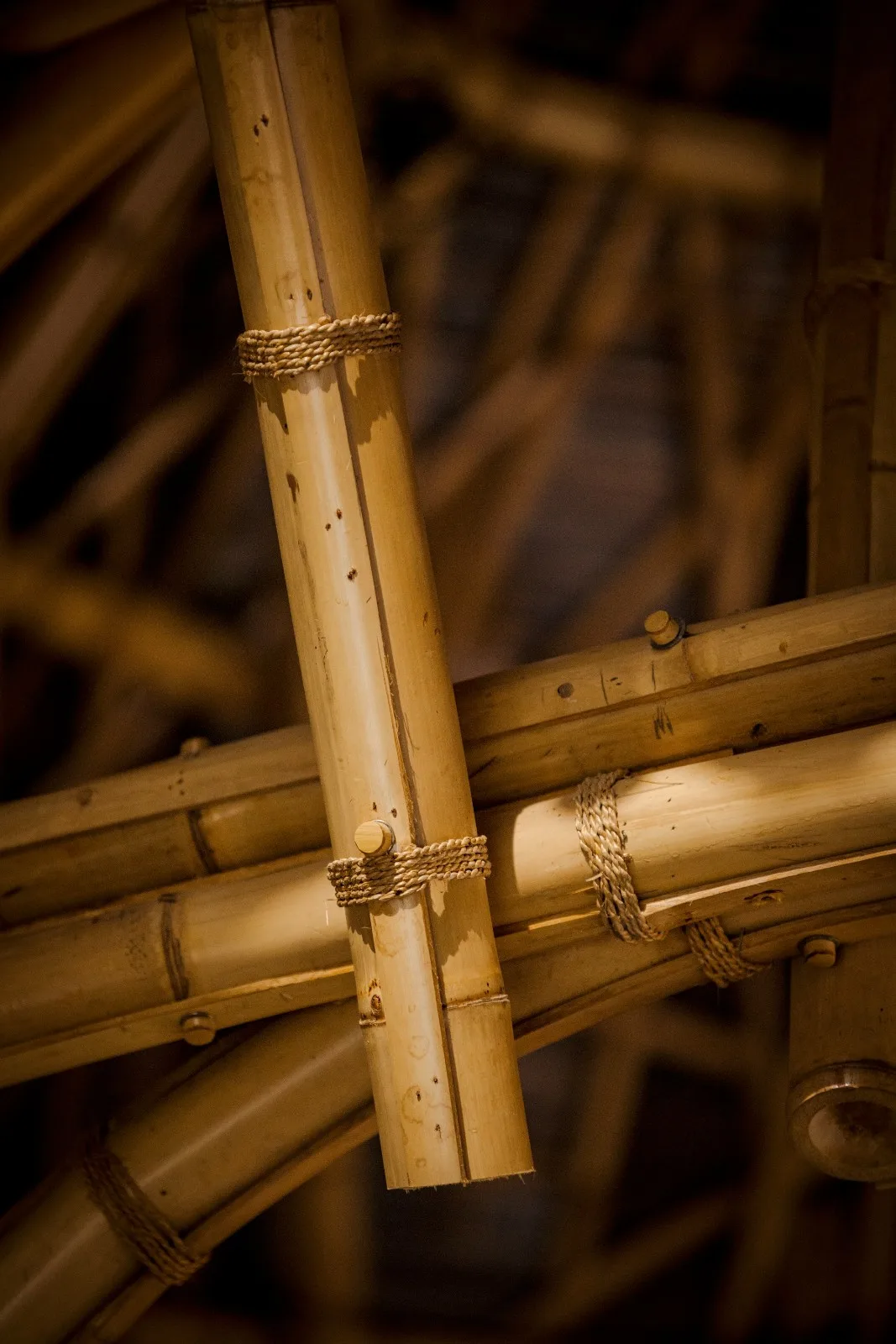
Structure: By redefining the traditional roles of bamboo and cement, we have enabled these contrasting materials to coexist harmoniously. Bamboo symbolizes sustainability, tradition, craftsmanship, and the spirit of Bali.
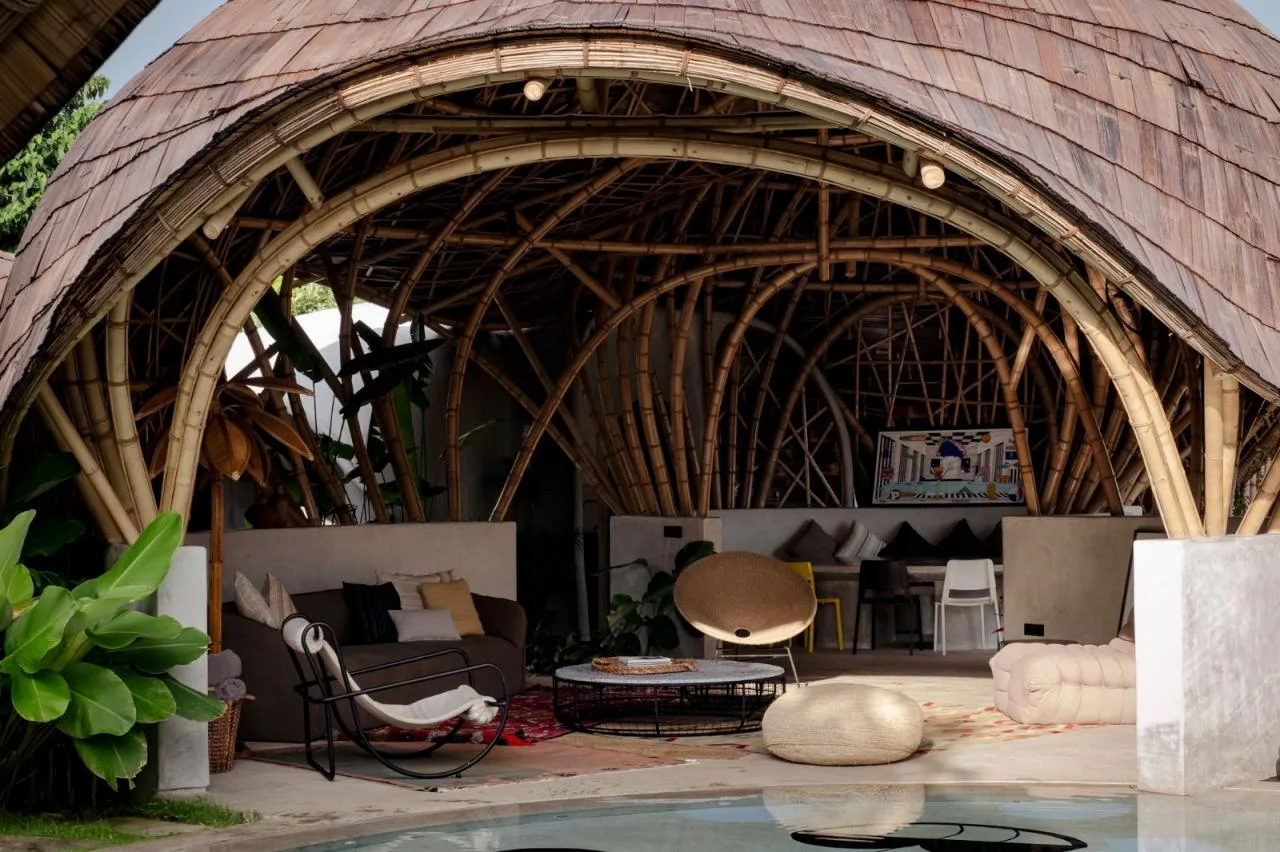
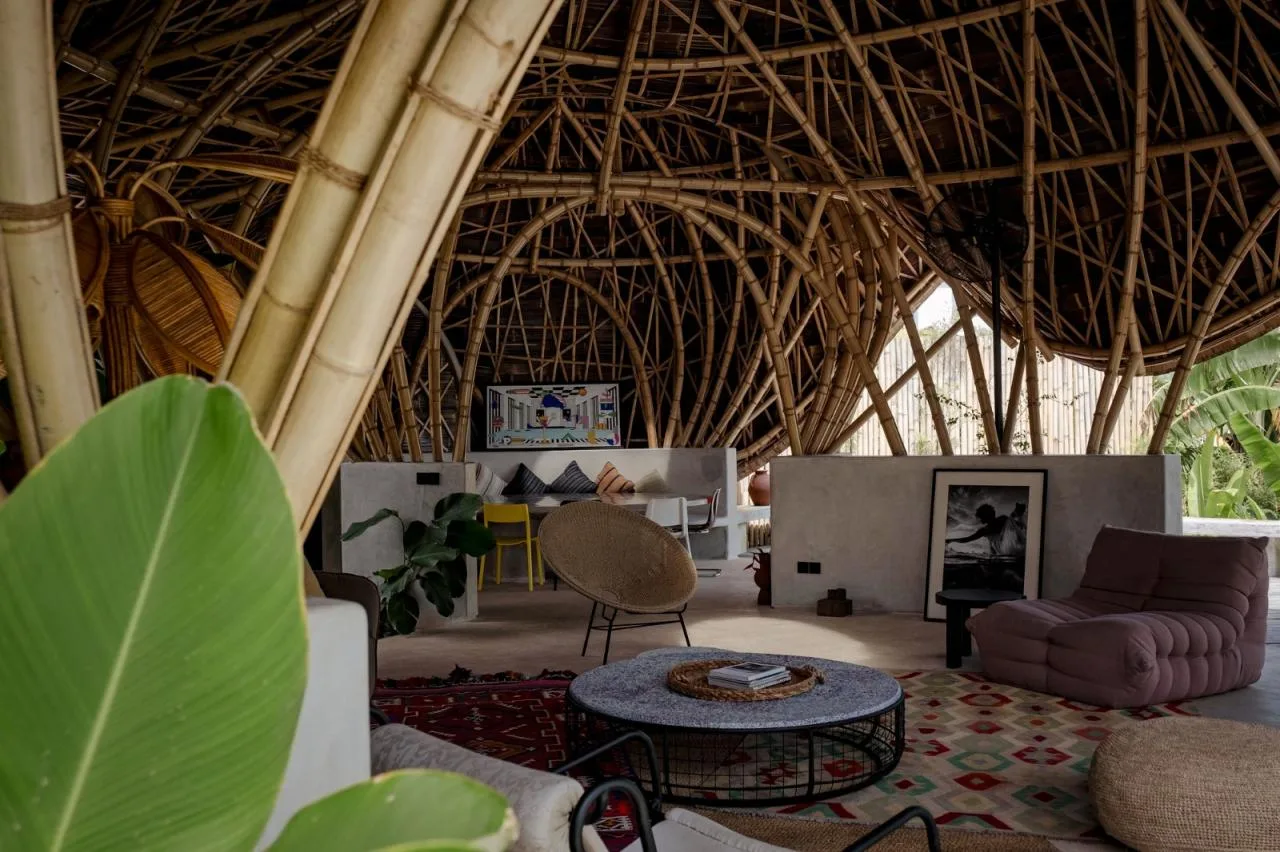
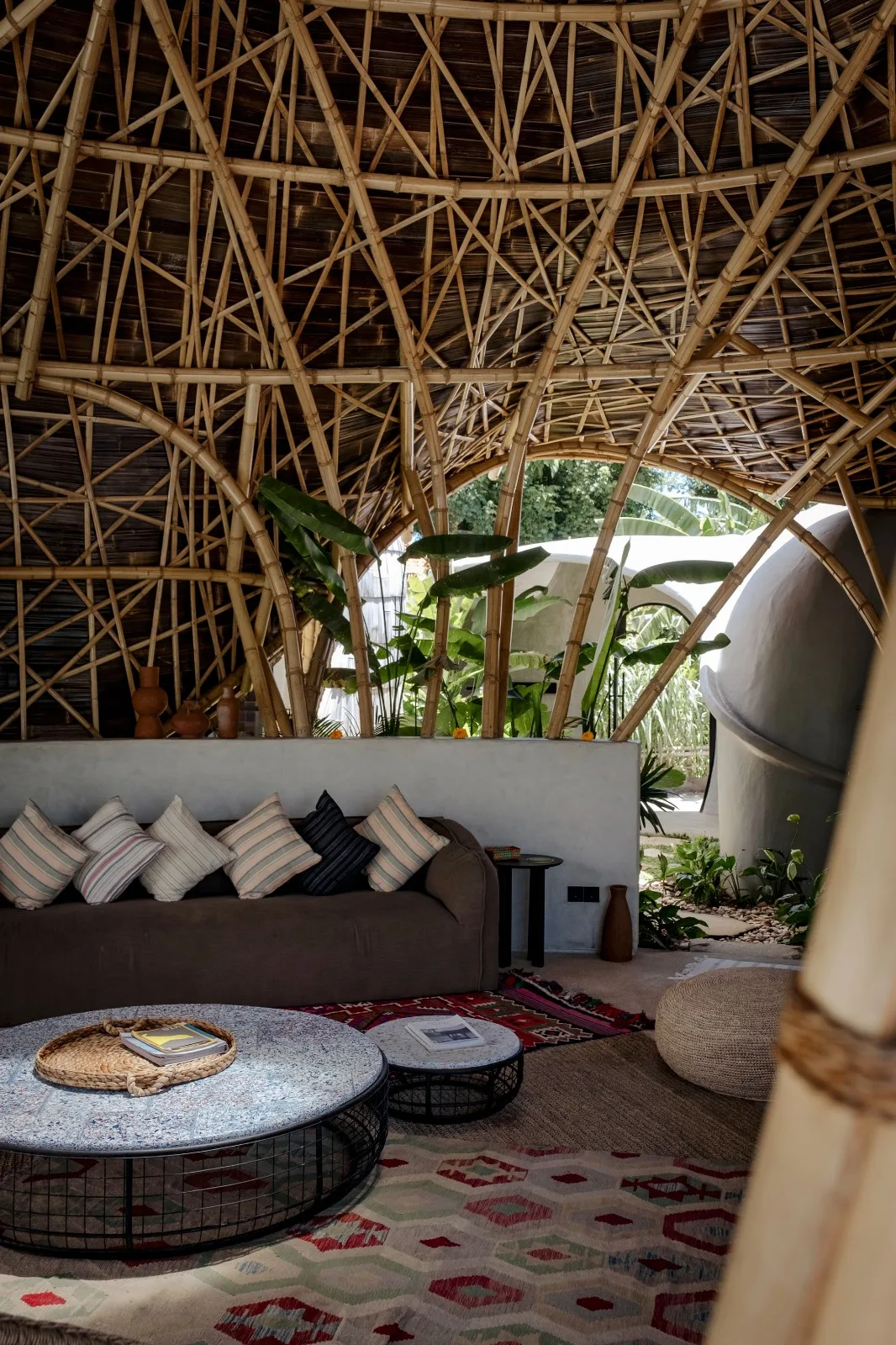
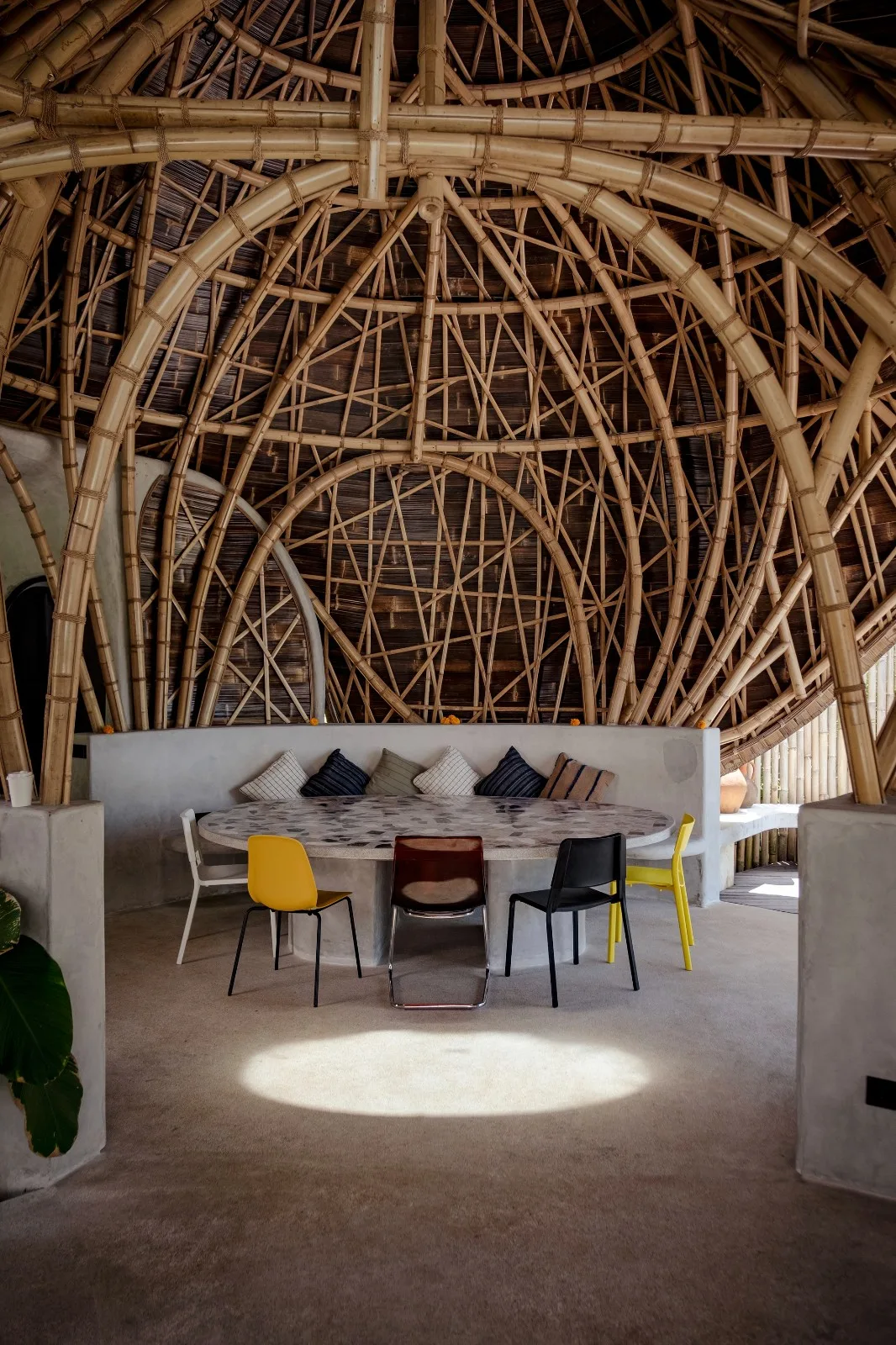
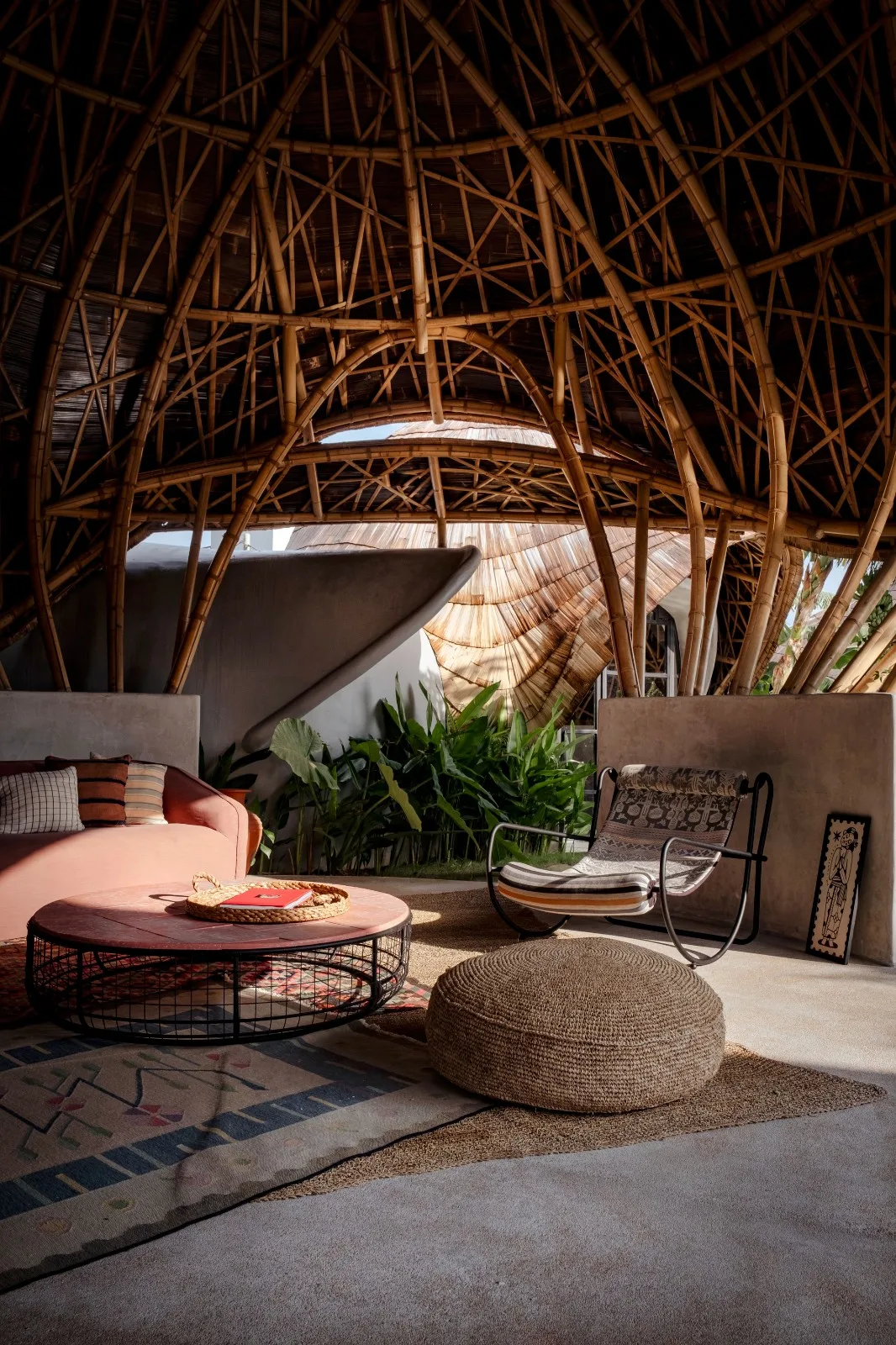
We designed a highly geometric ring-shaped framework composed of four main columns, 24 pillars, and five upper rings, with diameters decreasing as height increases. Based on this structure, all main spaces are created by adjusting floor plan dimensions and heights. The roof is characterized by a dynamic network of flat split components and black bamboo (pelupuh), adaptable to each space’s requirements, forming openings and eaves as needed.
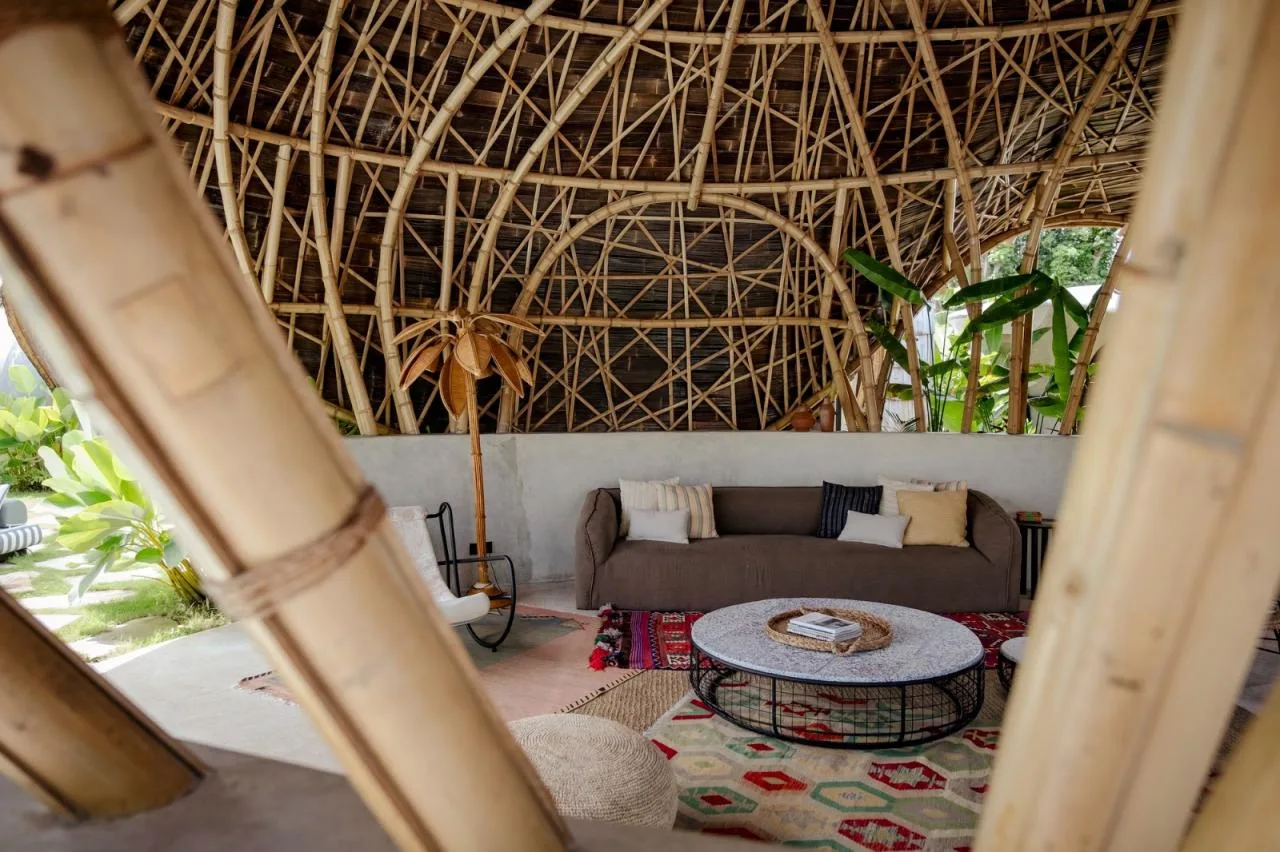
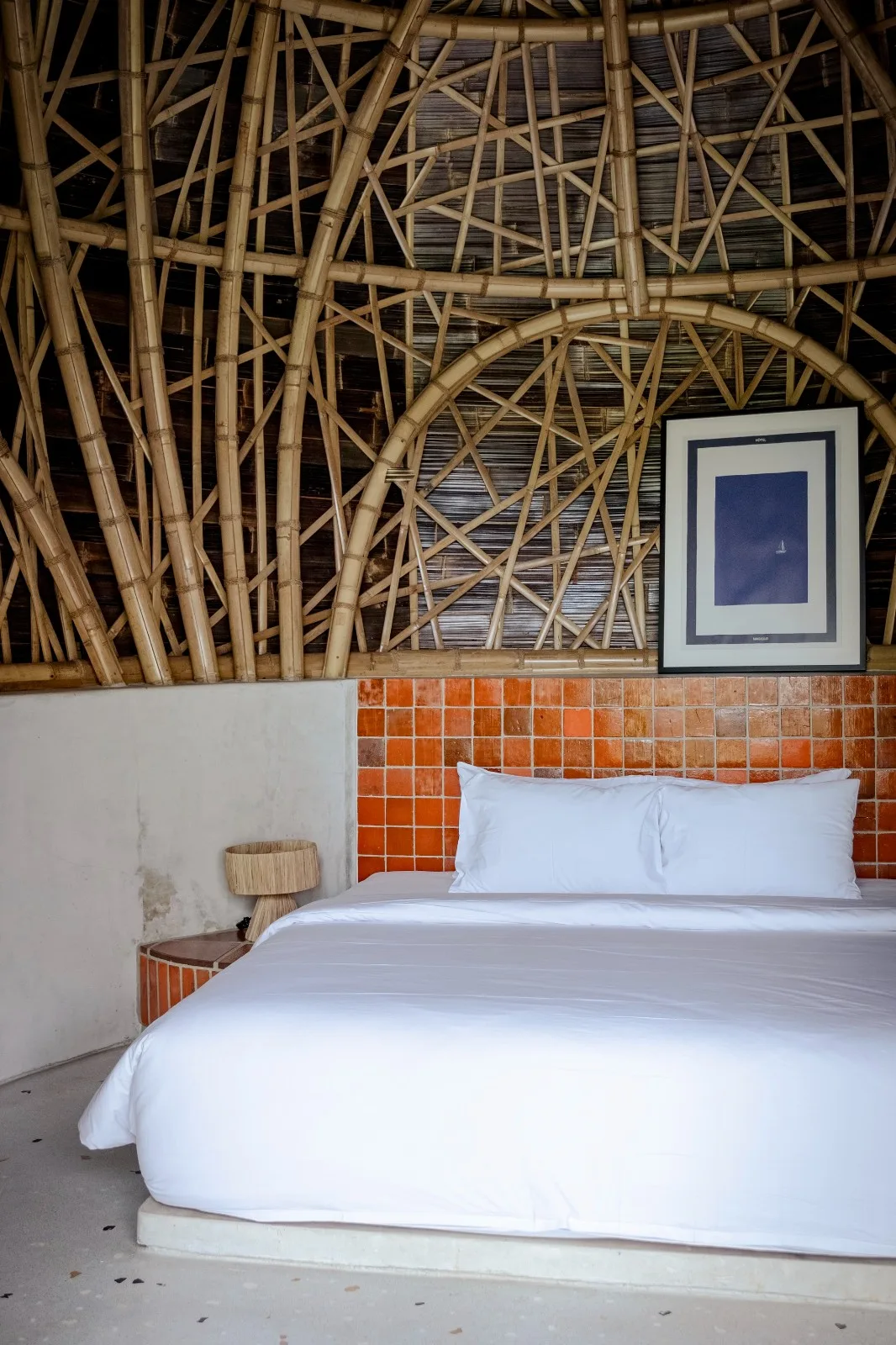
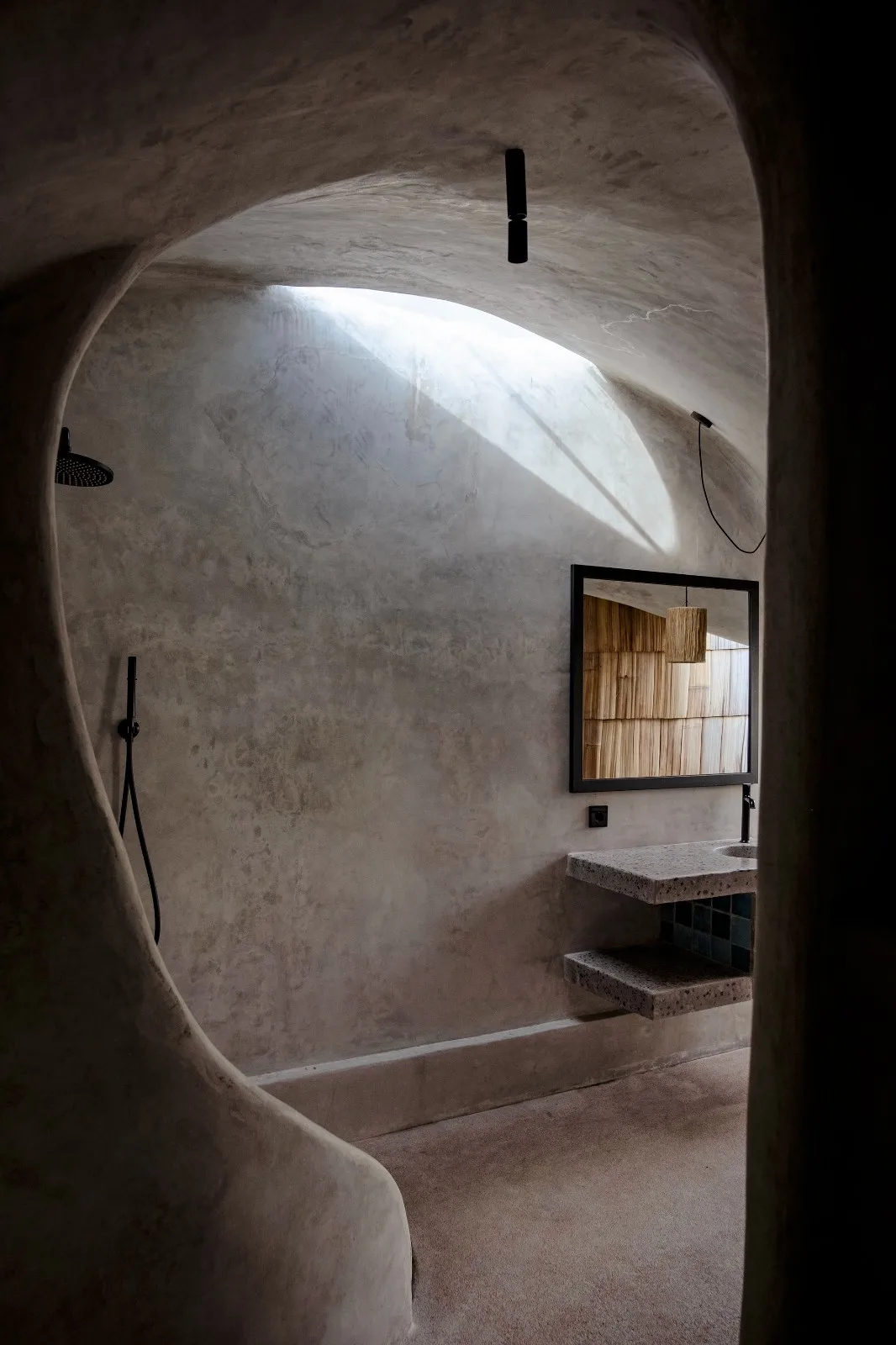
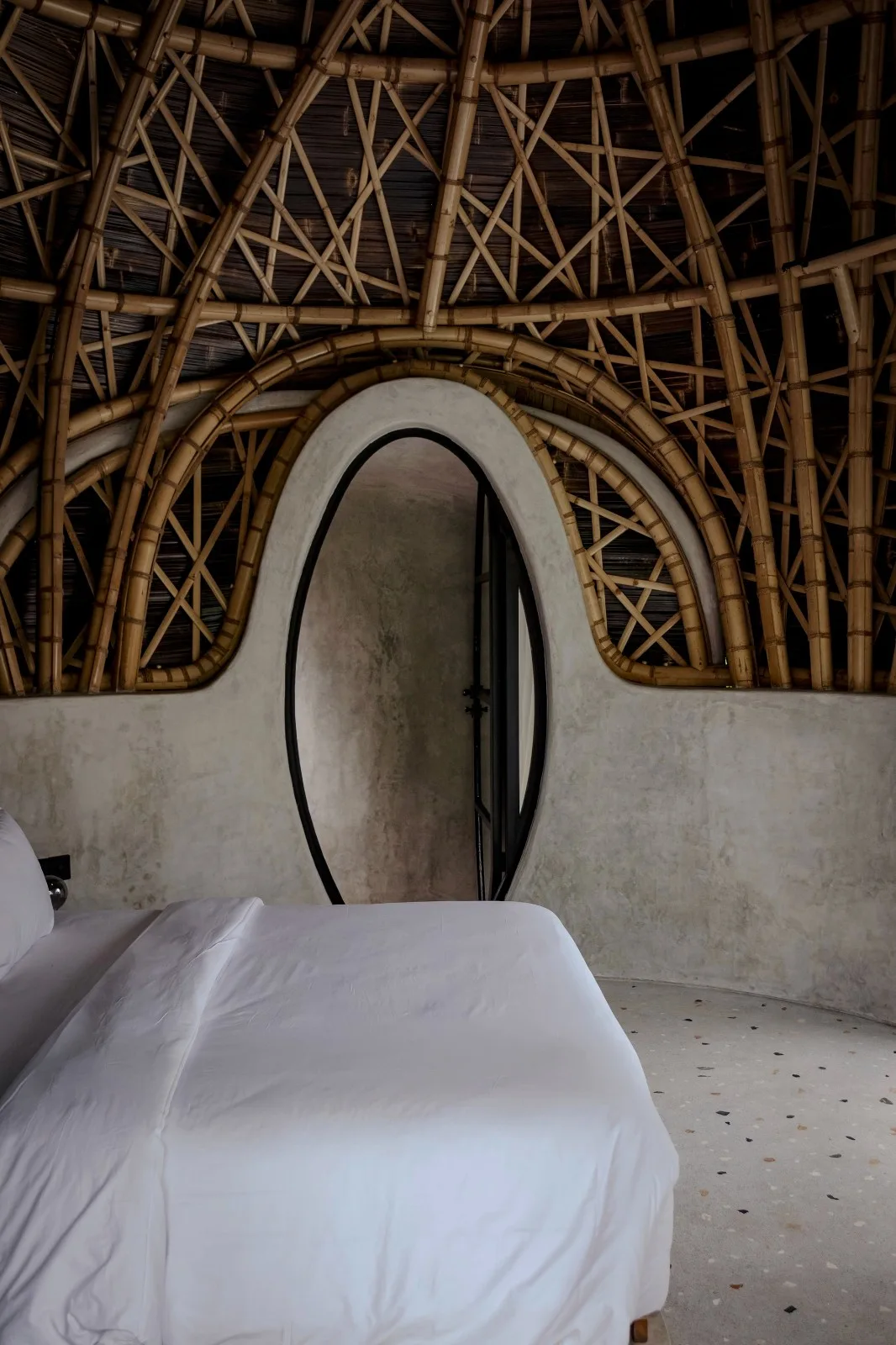
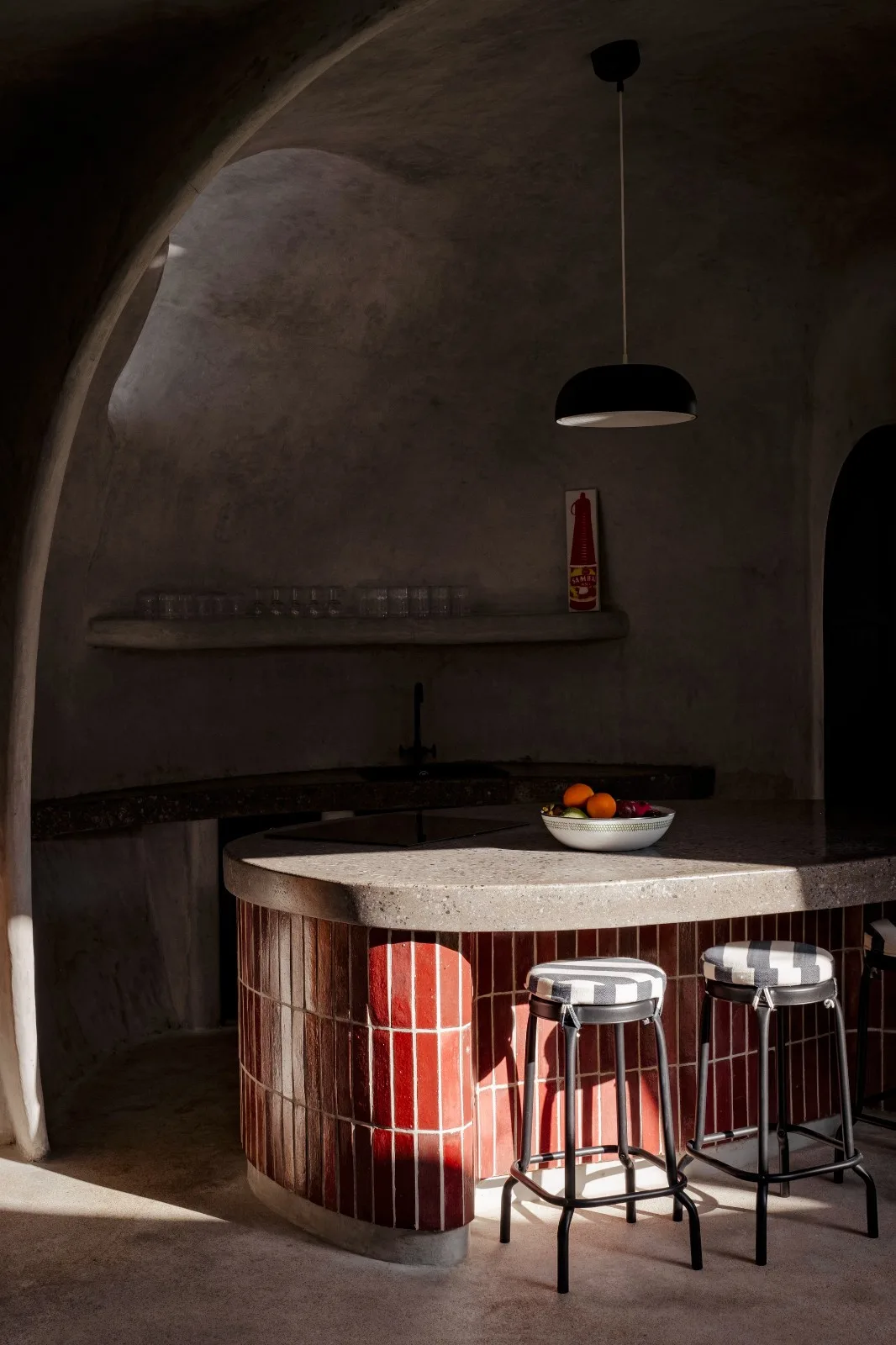
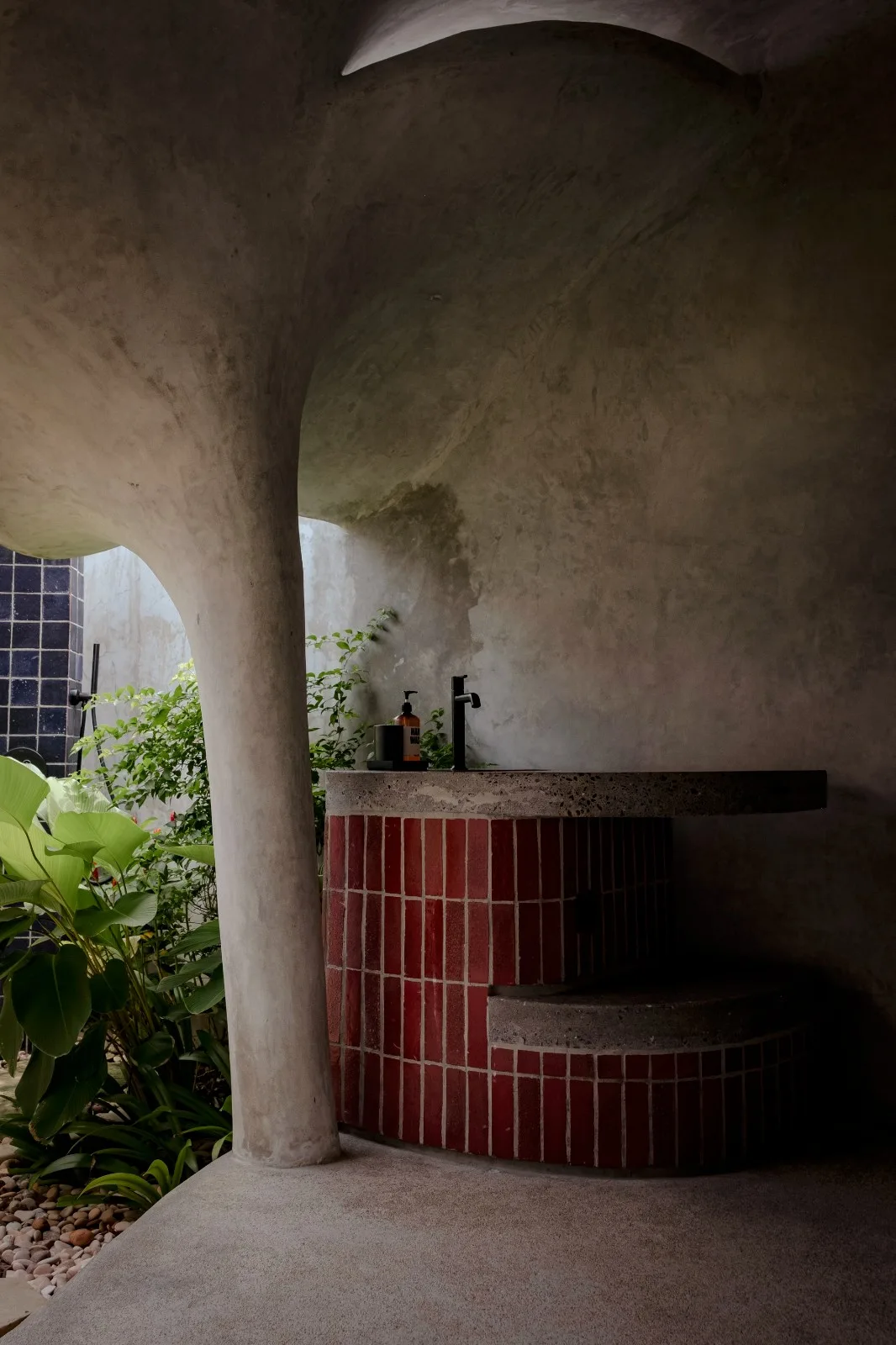
In damp areas, cement—which often symbolizes rigidity and industrialization—is transformed into organic, lightweight, and fluid forms through the use of “iron cement.” This approach allows for controlled natural lighting, airflow, and privacy.
Interior Design: Breaking conventions and blending diverse materials is at the heart of our interior approach. Furniture incorporates recycled plastic collected from Bali’s rivers, while marble factory waste is repurposed for tabletops. Sofas are crafted using 100% recycled PET bottle fabric, and Gae Aulenti chairs are reimagined with Pahikung Sarong, a traditional handmade fabric from Sumba.
We also incorporate hand-glazed clay pieces from local ceramic artists and water features created by local artisans, demonstrating a seamless integration of materials and artistic elements throughout the space. In essence, architecture here is seen as an ongoing process of boundless creativity and experimentation.
Project Drawings
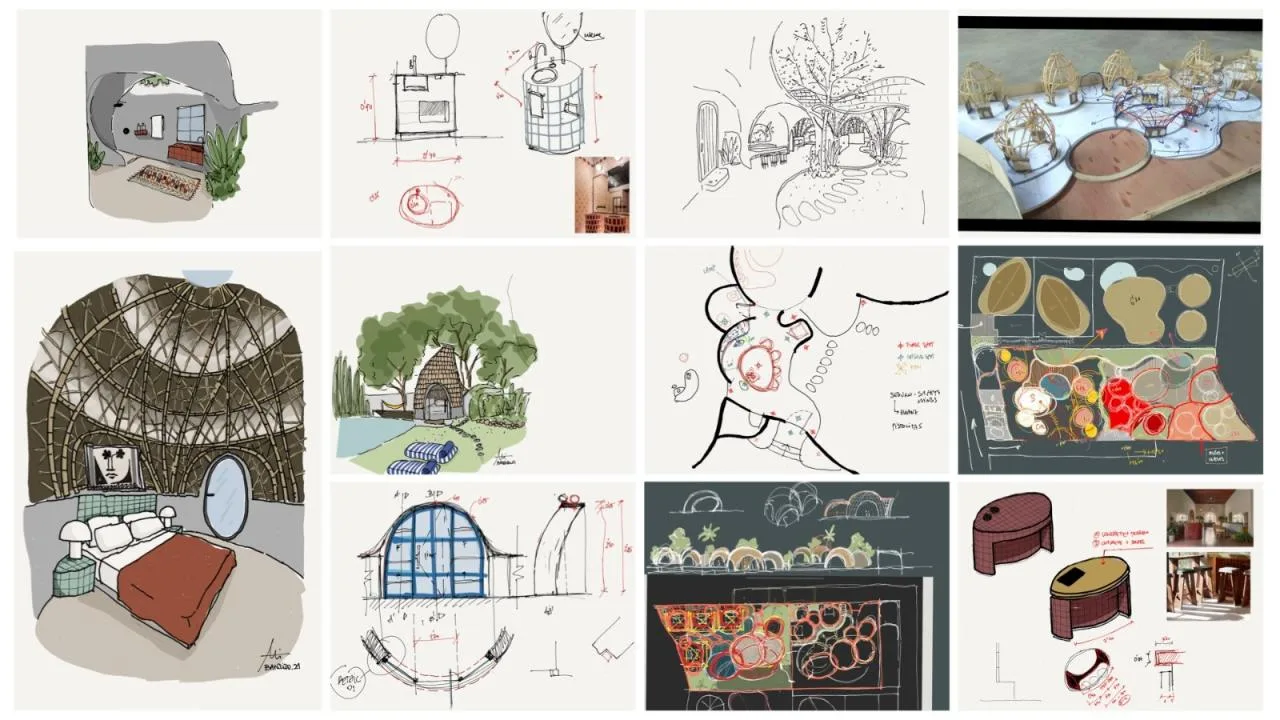
△ Hand-drawn drawing
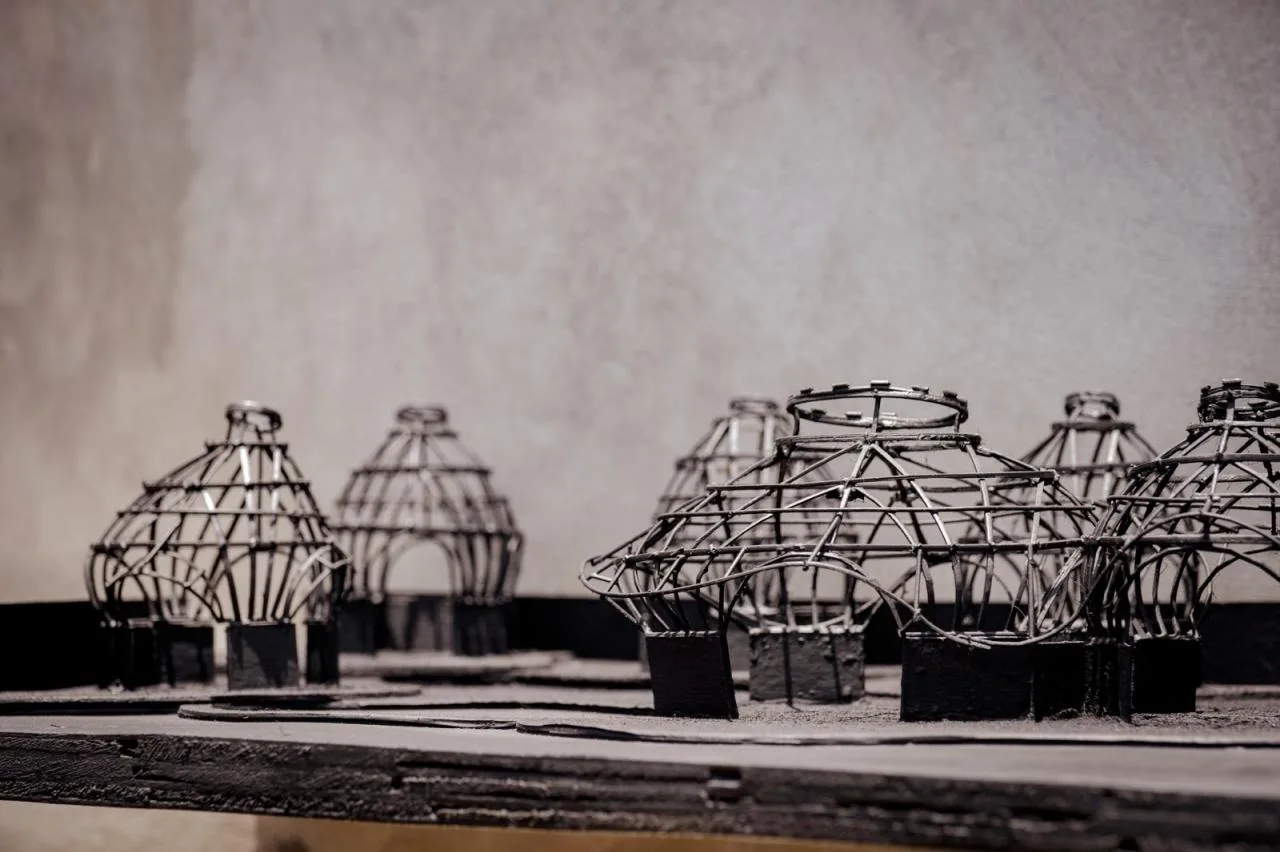
△ Model diagram
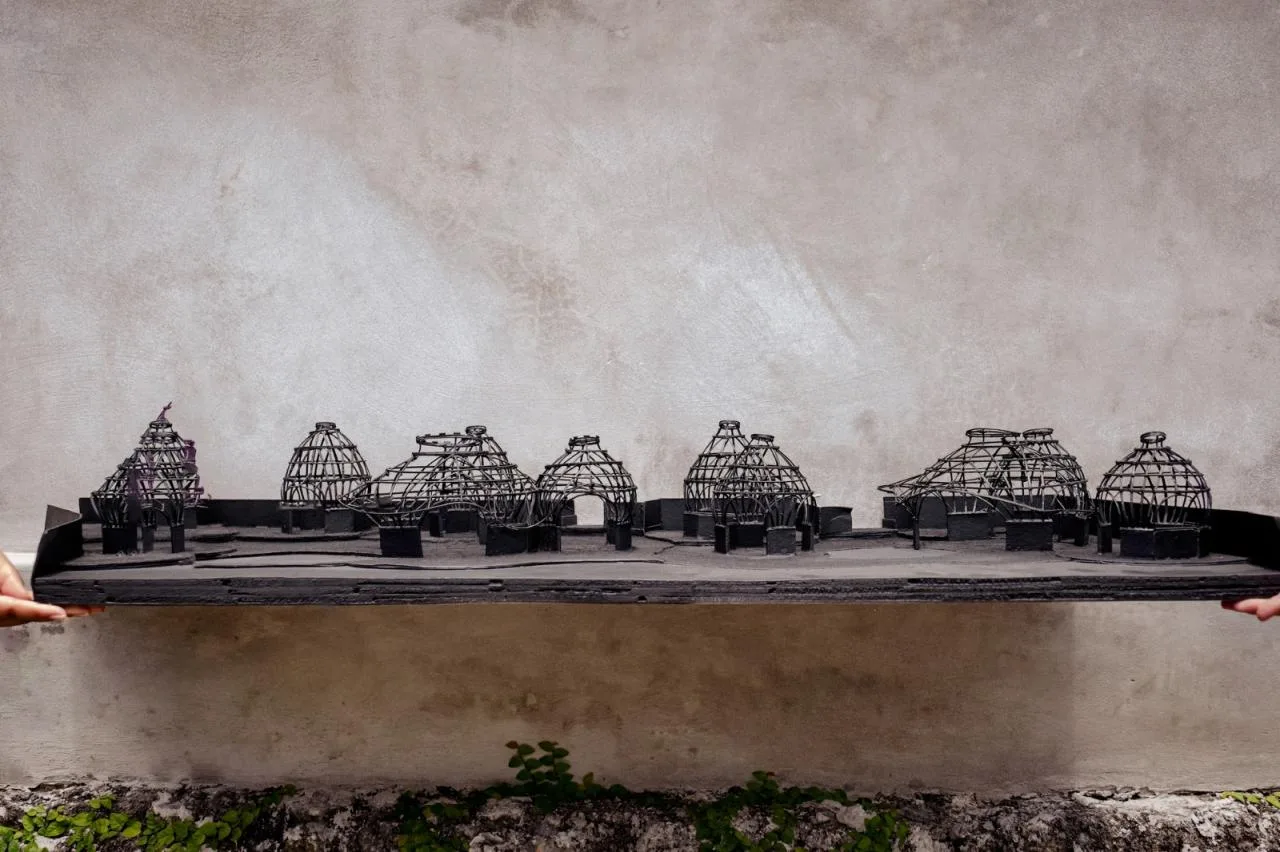
△ Model diagram
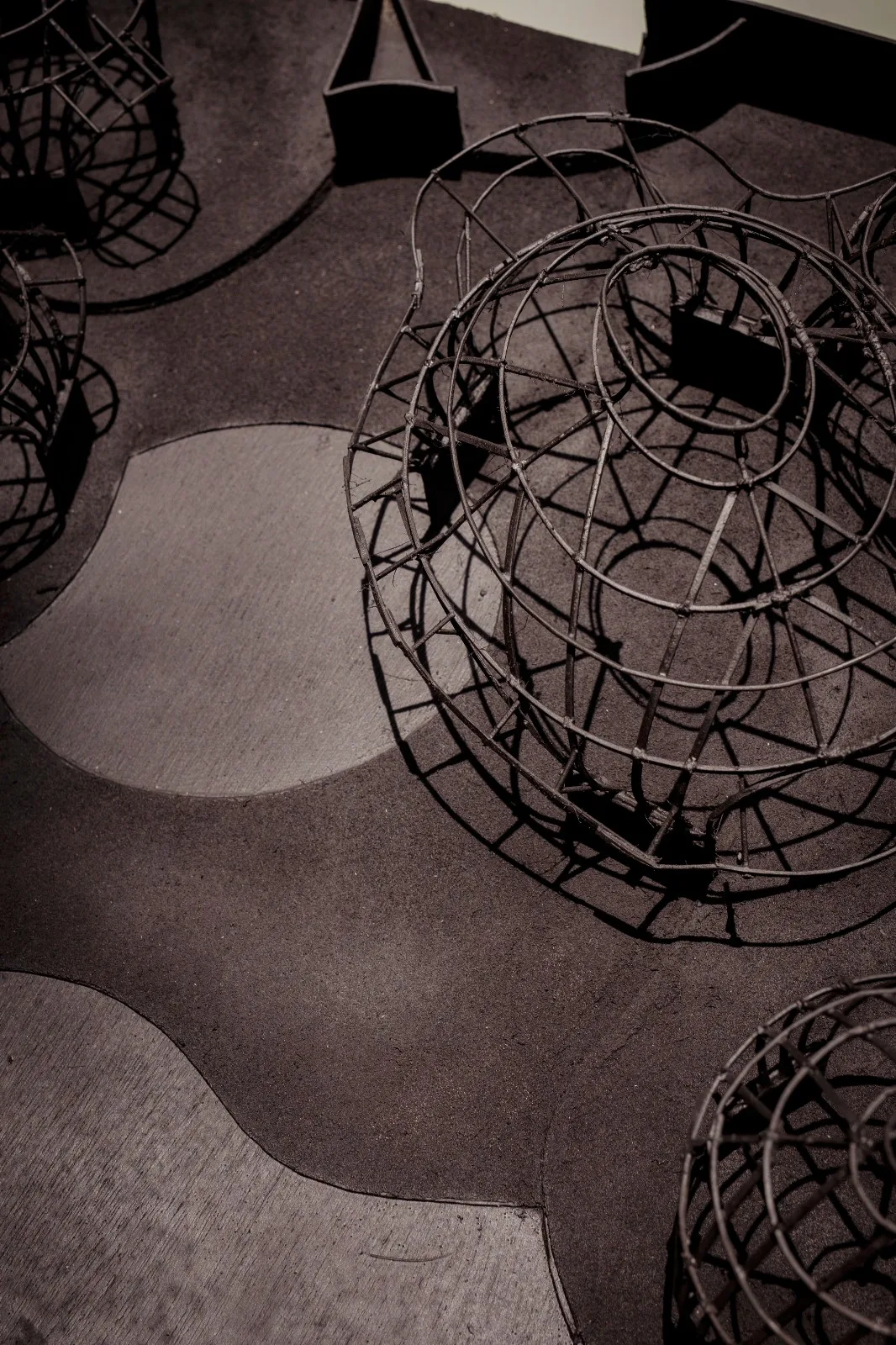
△ Model diagram
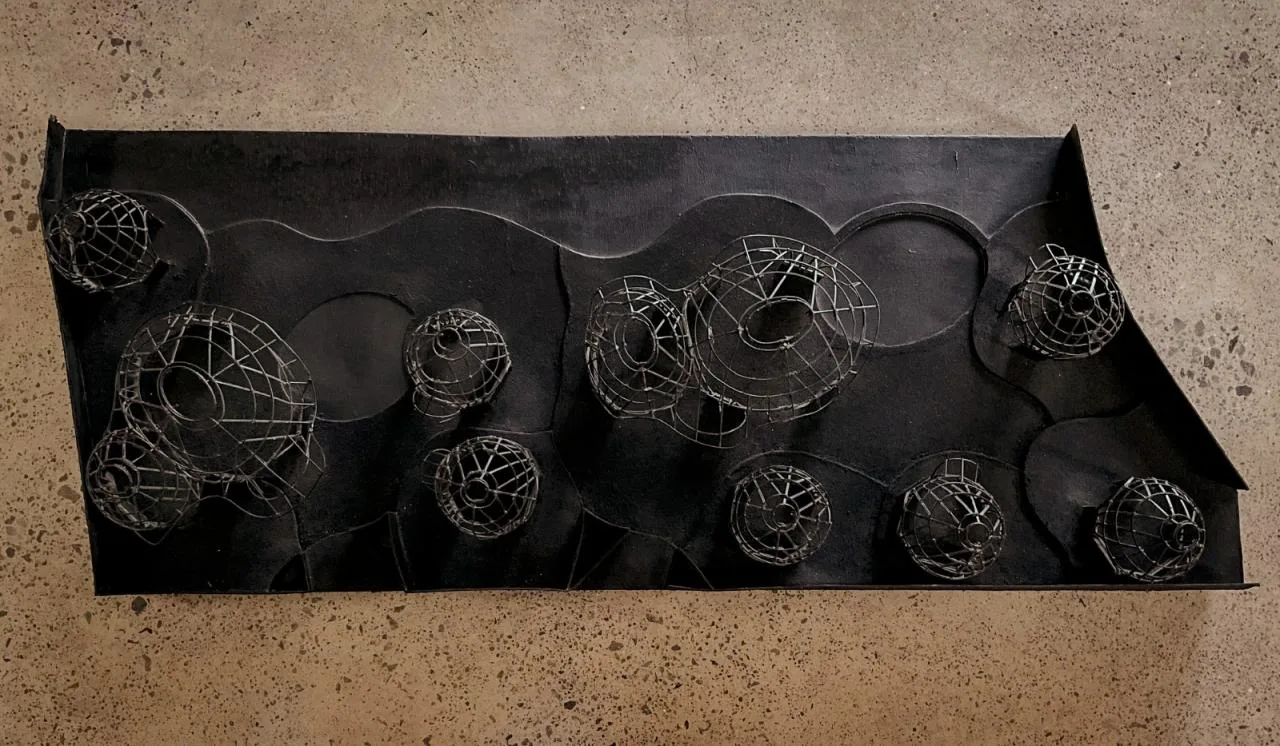
△ Model diagram △ Model diagram
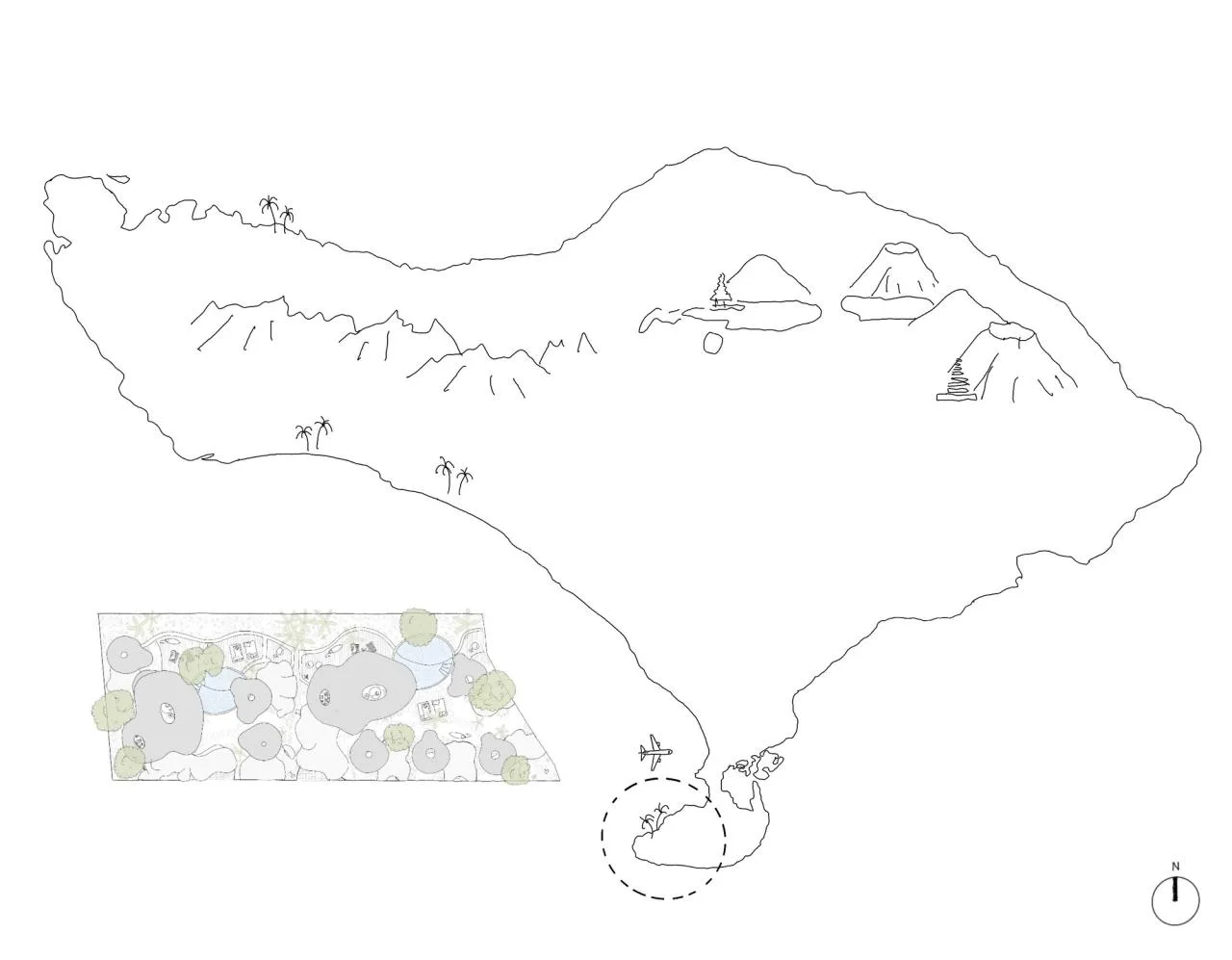
△ Base schematic diagram
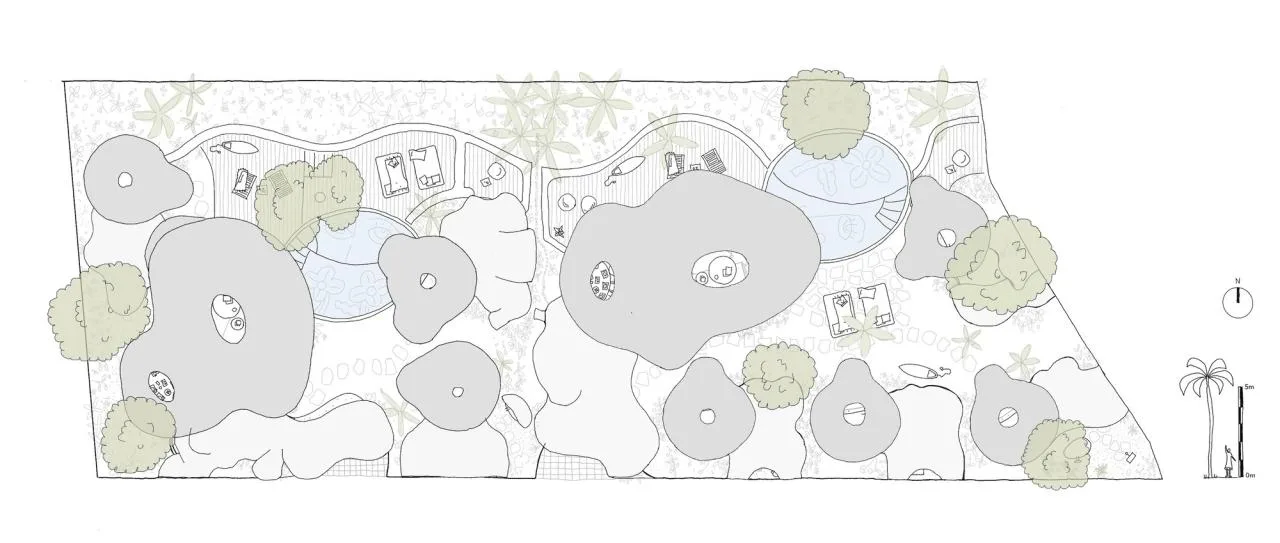
△ Hand-drawn top view
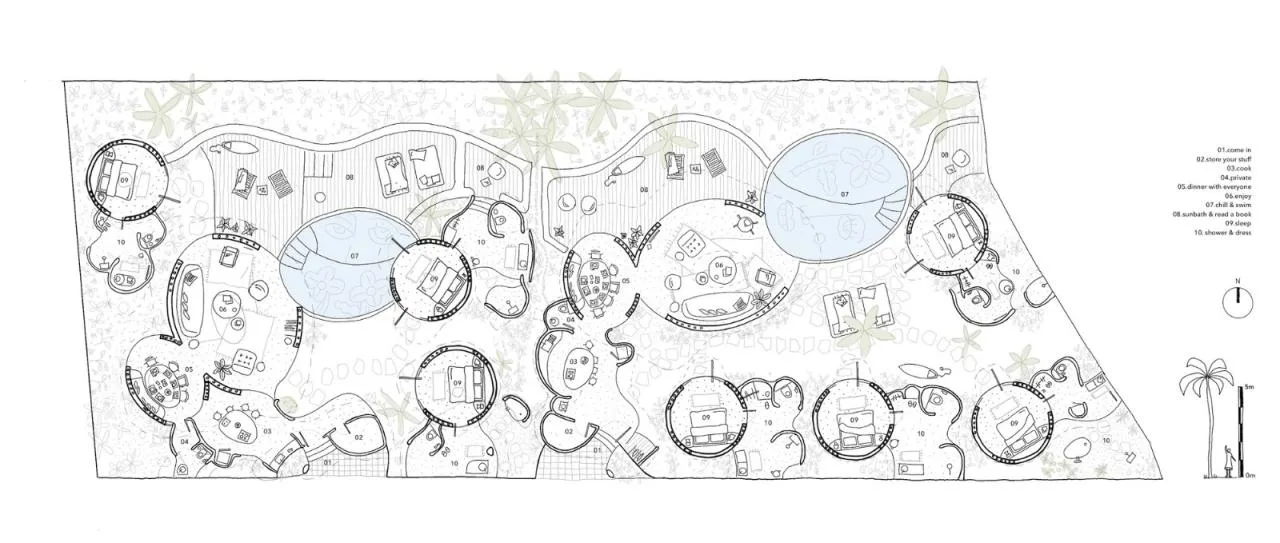
△ General layout plan
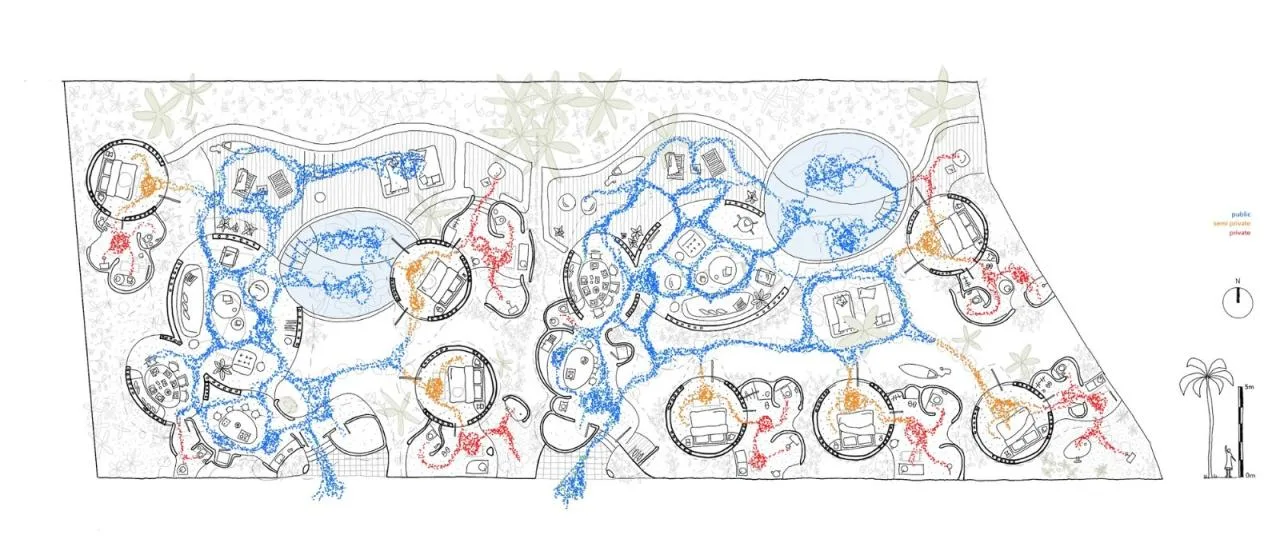
△ Analysis chart
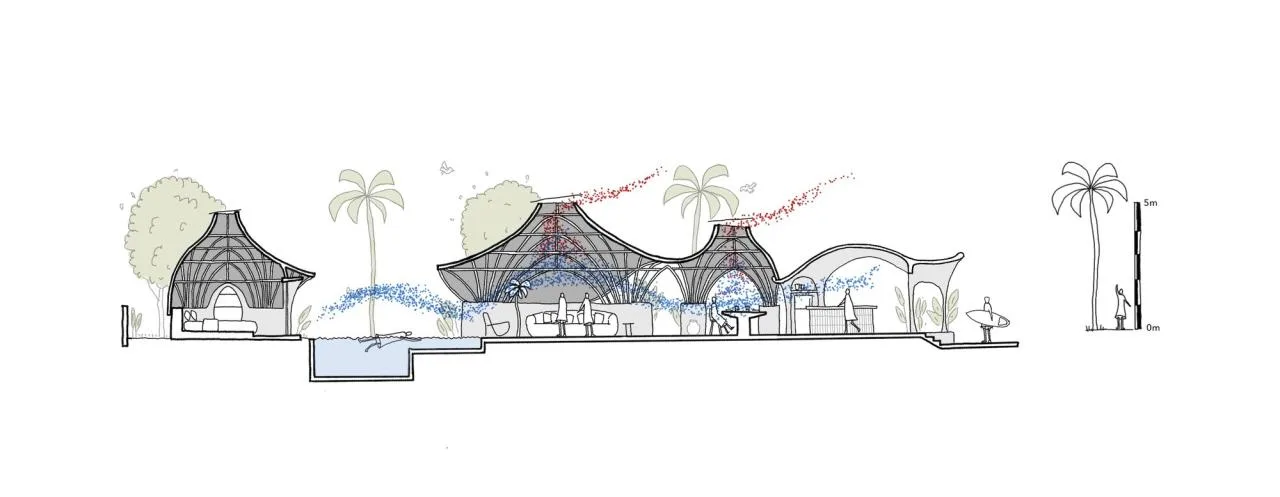
△ Section diagram
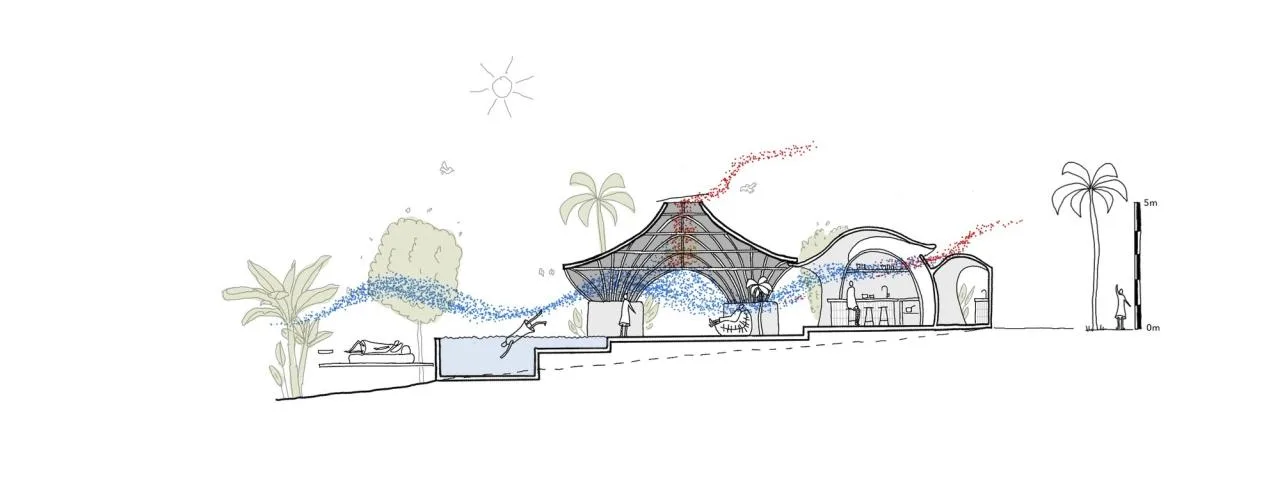
△ Section diagram
Project Details
Architect: Javi Diaz
Area: 620 m²
Project Year: 2022
Photographers: Ruben Beeris, Dani Monetti, Javi Diaz
Manufacturers: MGN Lighting, Paloma, Poppou Design, Robries, Serayu Pottery, Texstyle
Architectural & Interior Design: Javi Diaz
Project Management: Marco Monetti
Structural Engineers: Asali Bali, Olivier Betting
Landscape Architects: Micho Garden, Dani Nurul
Location: Kecamatan Kuta Selatan, Indonesia













Must log in before commenting!
Sign Up