
The rapid advancement of educational reform and innovation has significantly raised the standards for campus facilities and space utilization. Both older campuses and newly constructed ones face challenges in meeting these evolving requirements. In Shenzhen, where school projects confront unique site constraints alongside shortages of school places and land, design strategies emphasizing density, efficiency, flexibility, and open sharing have become crucial for campus renovation and expansion.
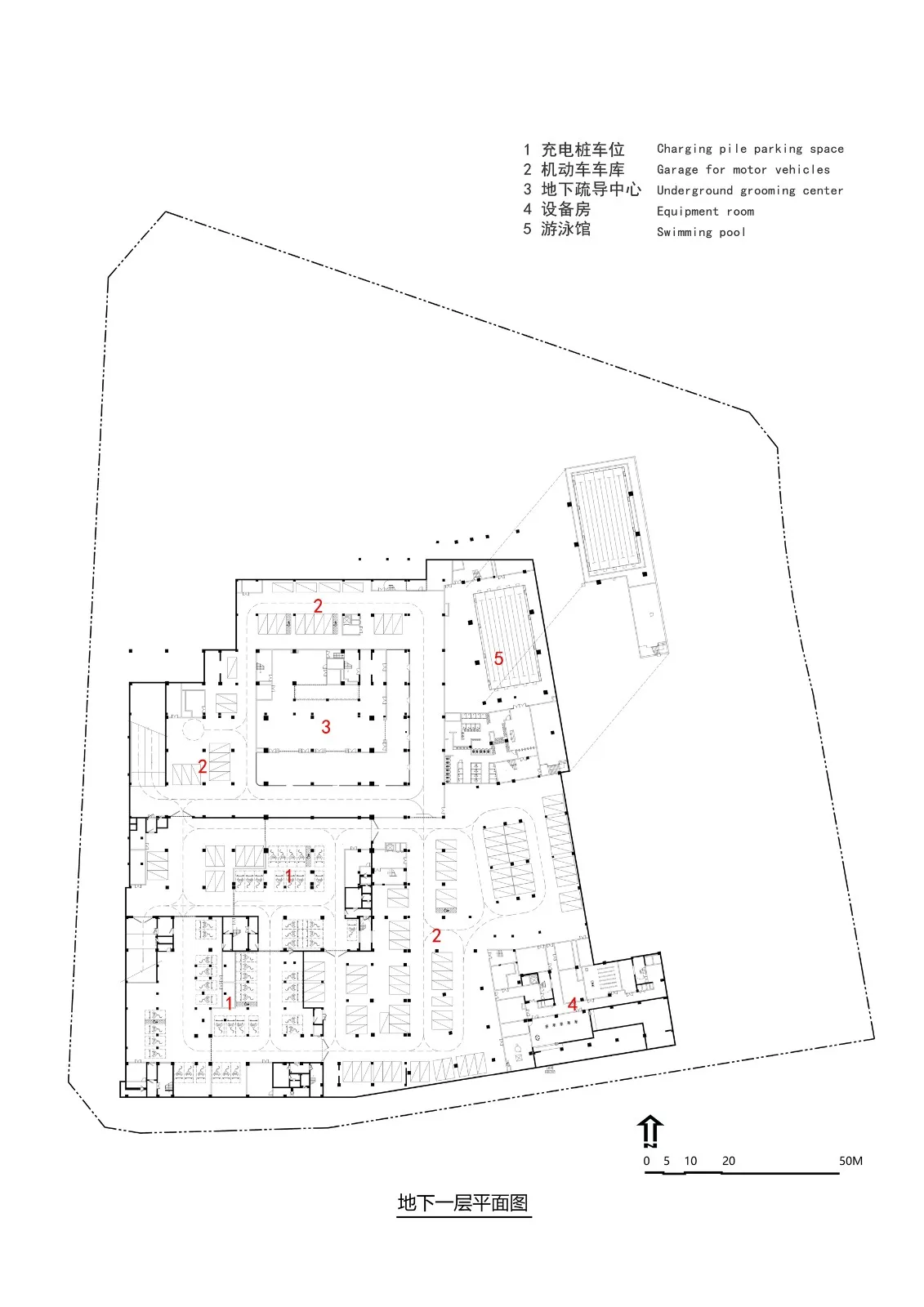
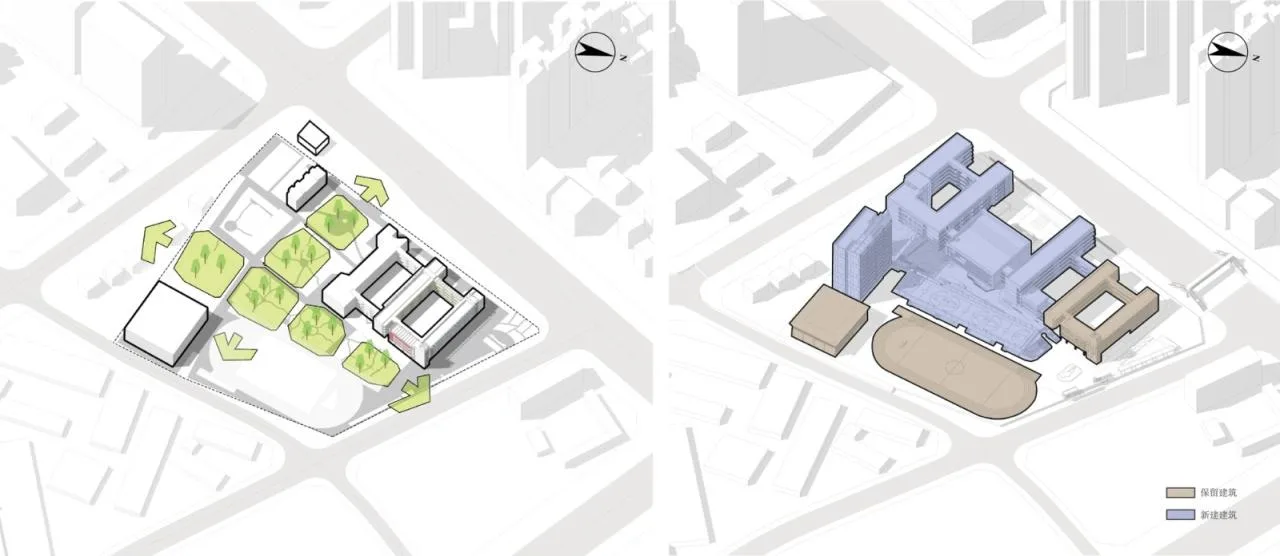
Project Overview: Situated at the southeast corner of Bisha North Road and Tongyu Road intersection in Pingshan District, Shenzhen, this expansion project transforms Tangkeng Primary School. It retains the original teaching building, gymnasium, and track and field, while demolishing one experimental building and one dormitory. The school expands from a 29-class primary school to a 60-class nine-year integrated school. The campus covers 37,710.4 square meters with approximately 20,000 square meters of expandable land. The total built-up area amounts to 71,223.89 square meters, with the expansion adding 62,000 square meters, including teaching buildings for primary and secondary schools, comprehensive facilities, multi-level activity platforms, underground parking, and nap dormitories.
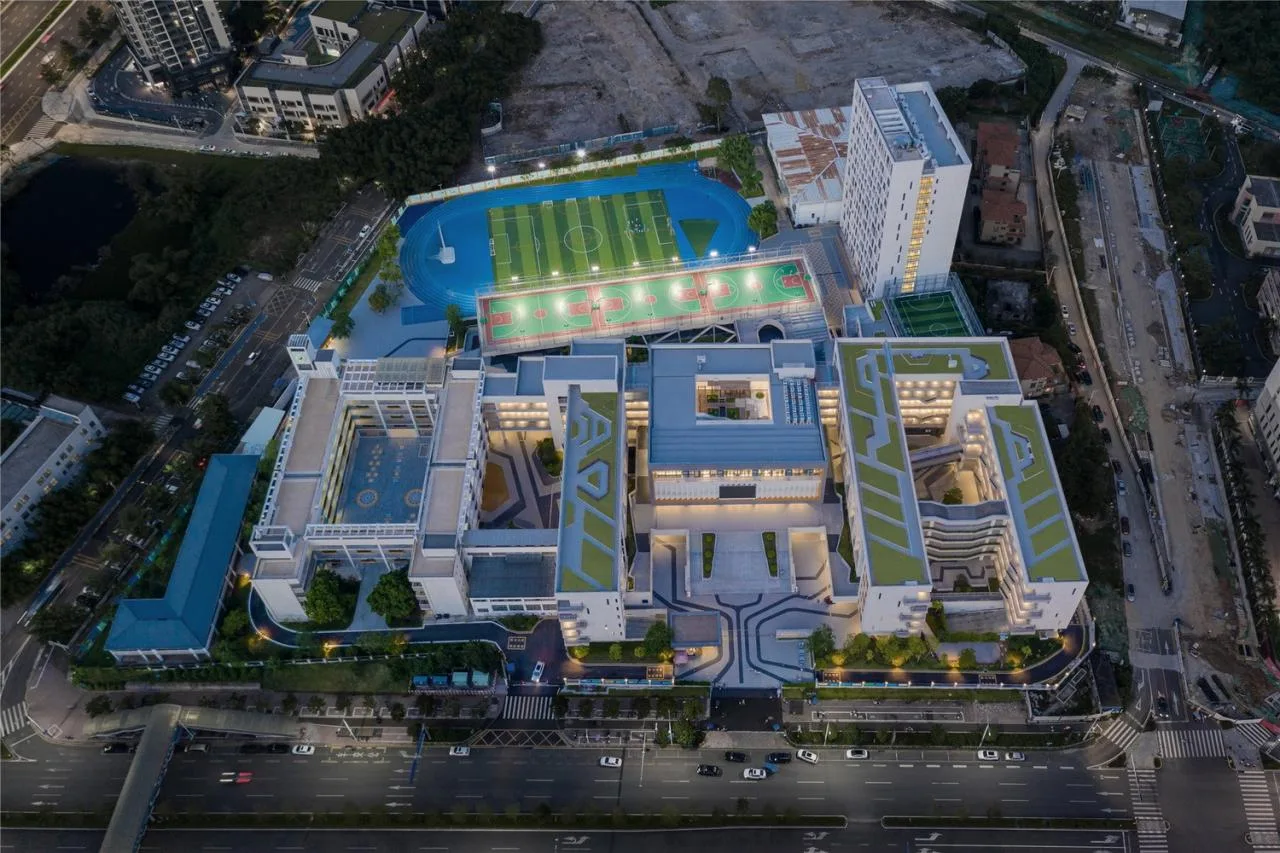
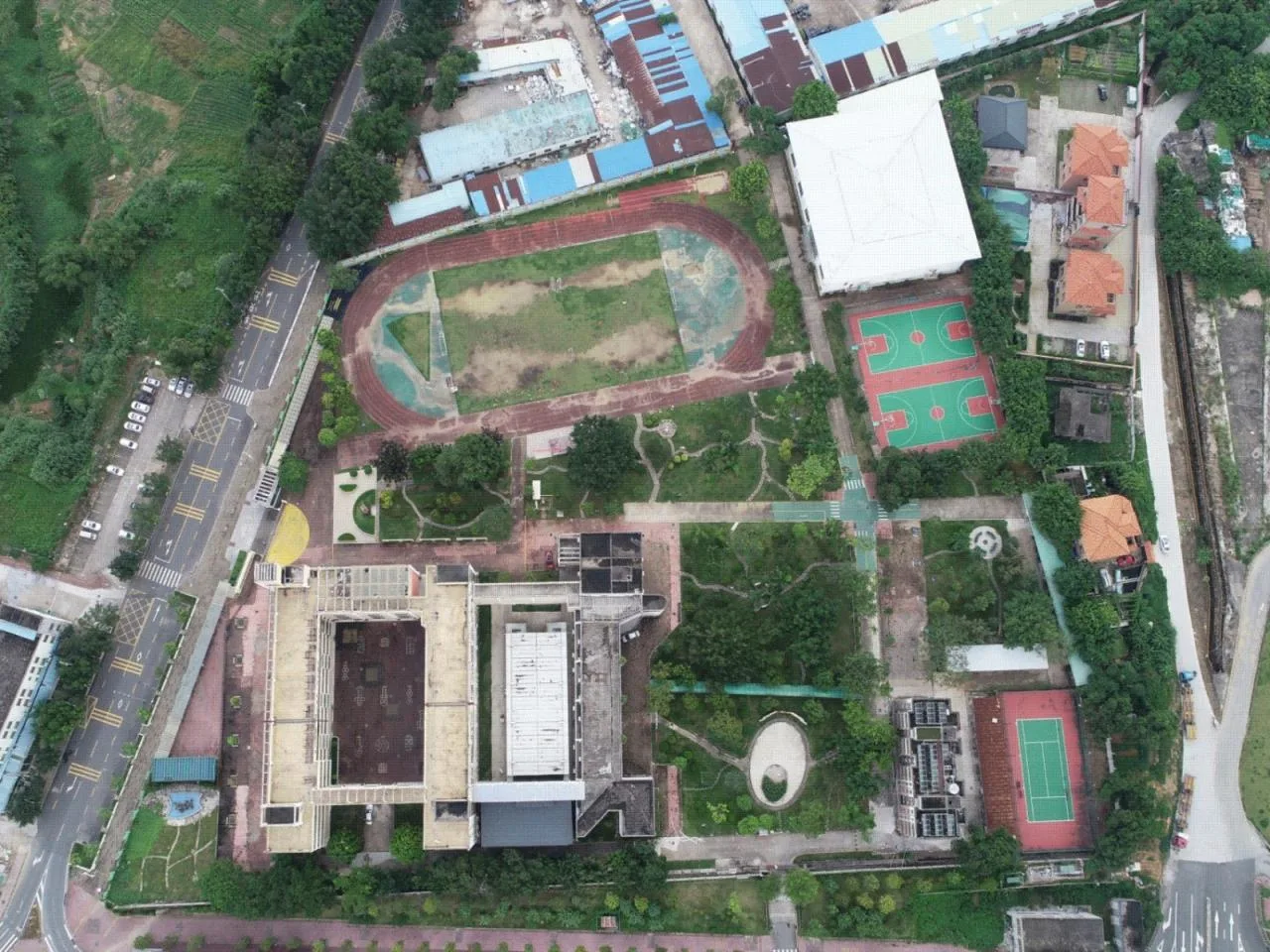
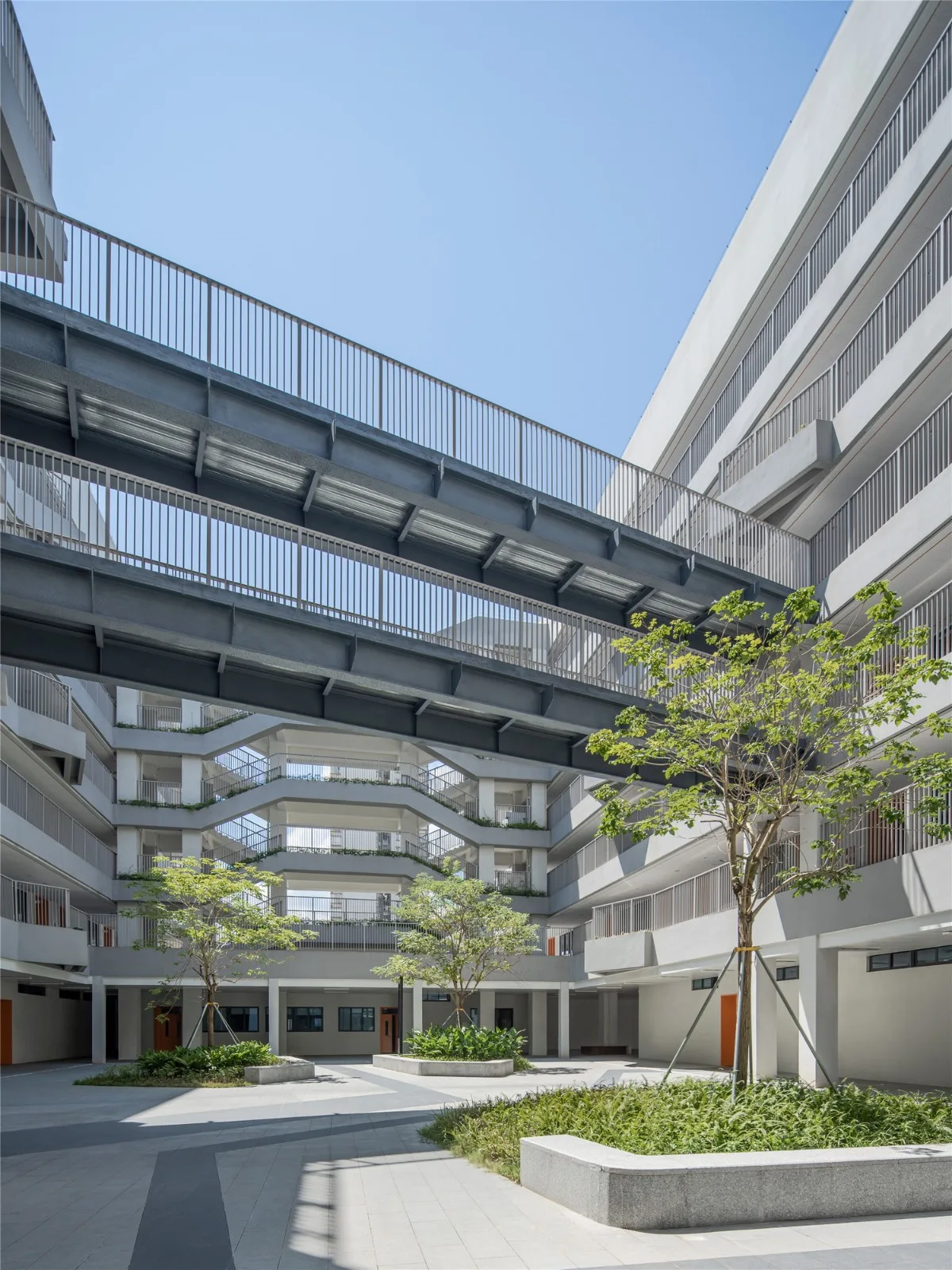
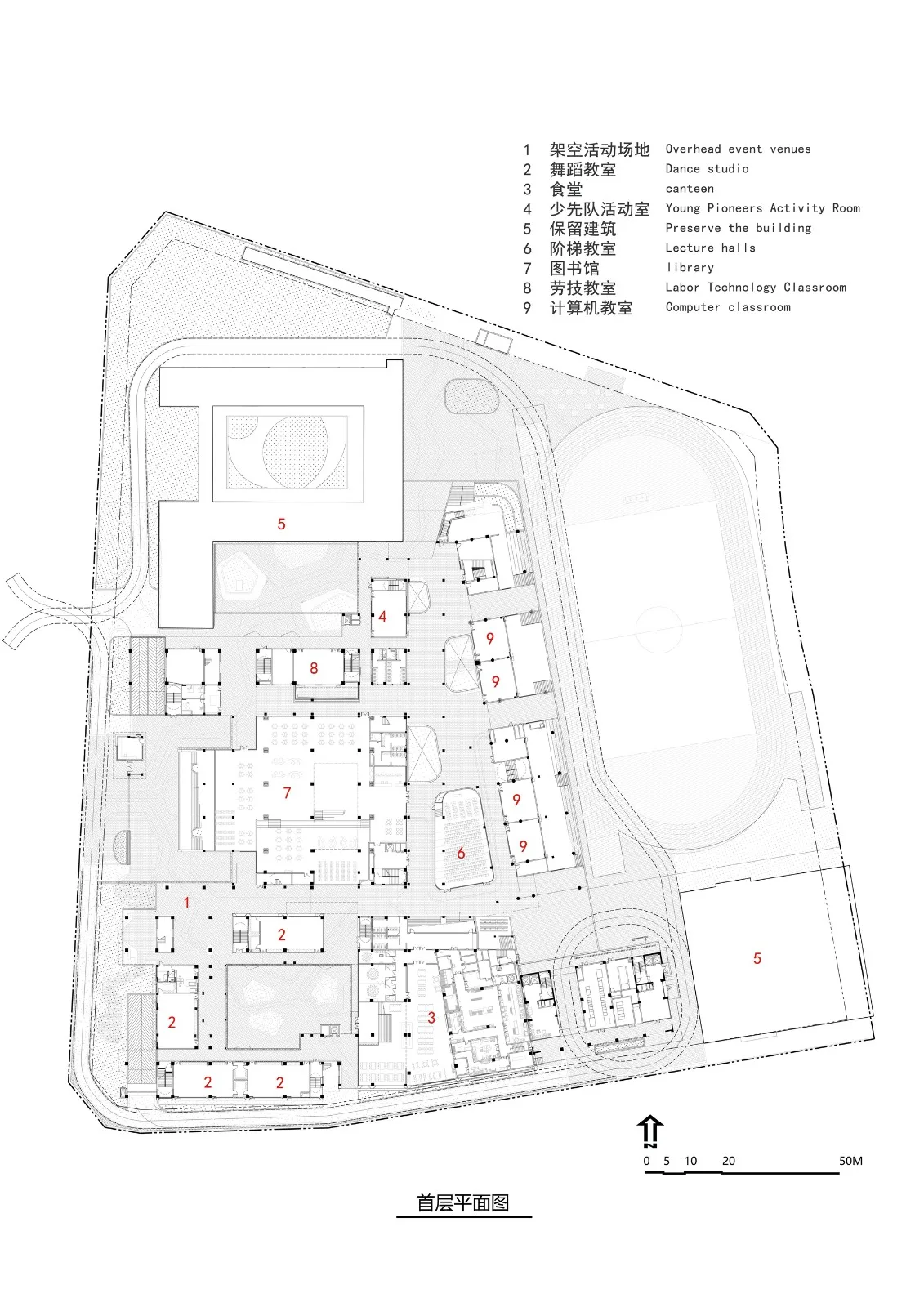
Cross-Sharing Axis: Building upon the original campus network, dilapidated and unsafe structures were demolished. The remaining buildings were arranged diagonally within the site boundary, preserving the existing playground location. This created irregular expandable land with a floor area ratio up to 3.0. The original campus planned entrances on the north and west roads, forming a clear cross-shaped network. The new expansion continues this pattern, maintaining the courtyard layout of the main teaching building. Architecturally, this forms a cross-shaped shared main axis, creating distinctive campus spaces with partially segmented zones and a three-dimensional functional mix for both primary and secondary schools.
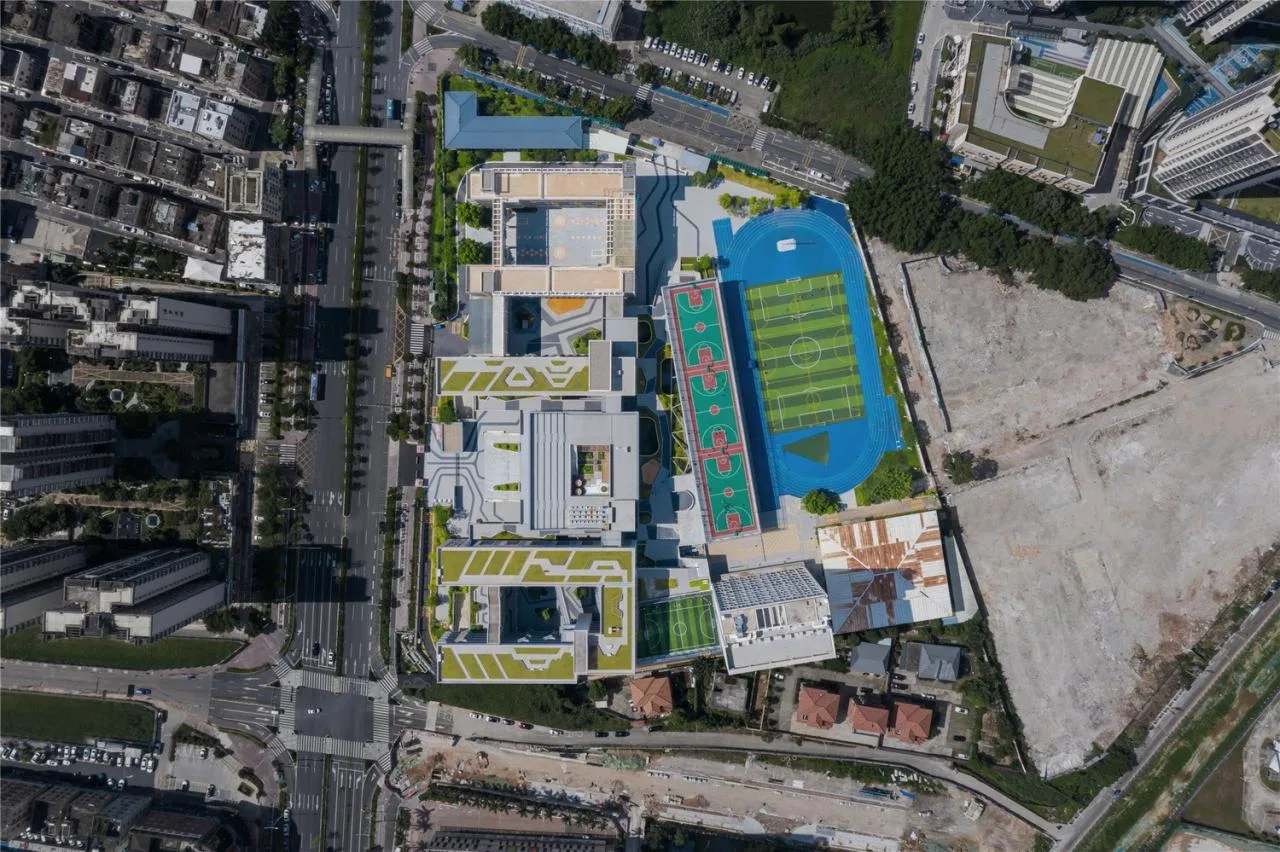
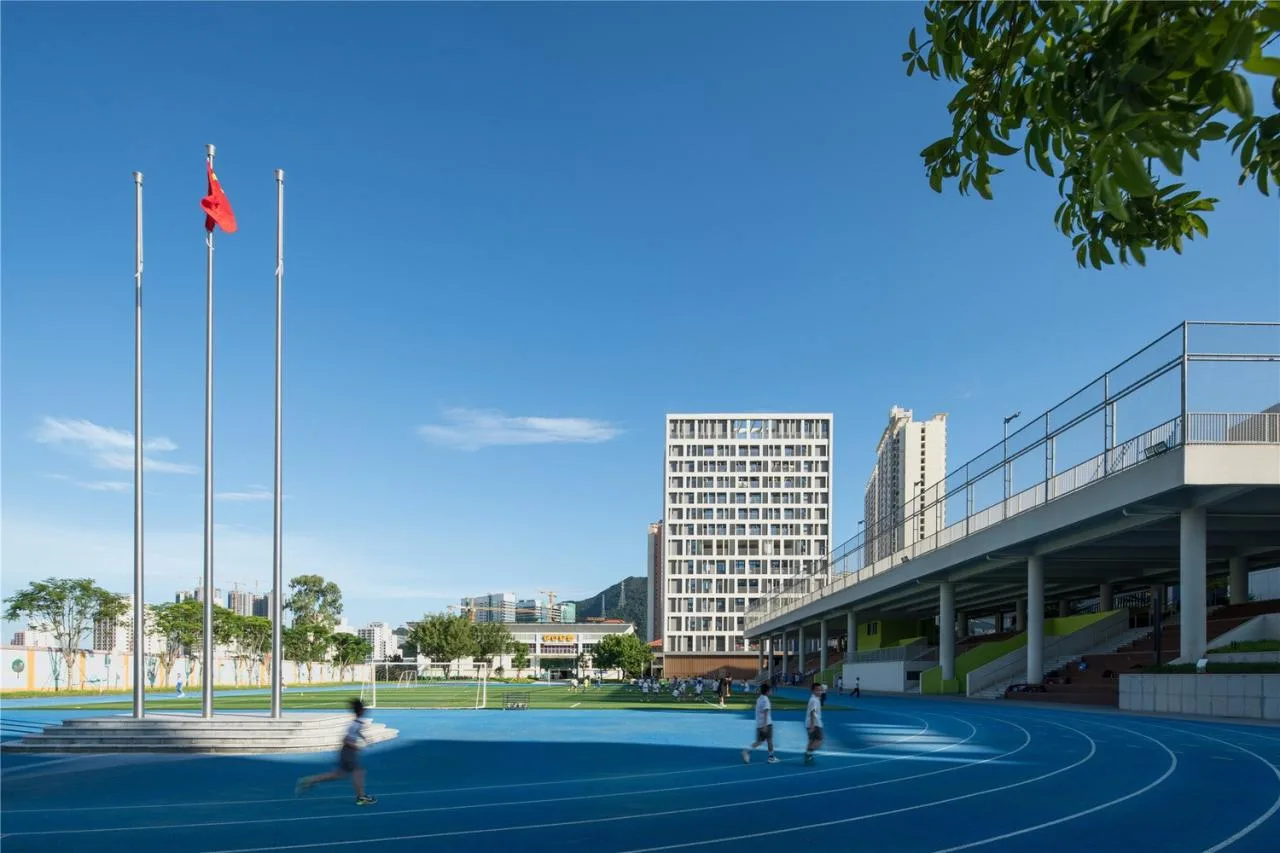
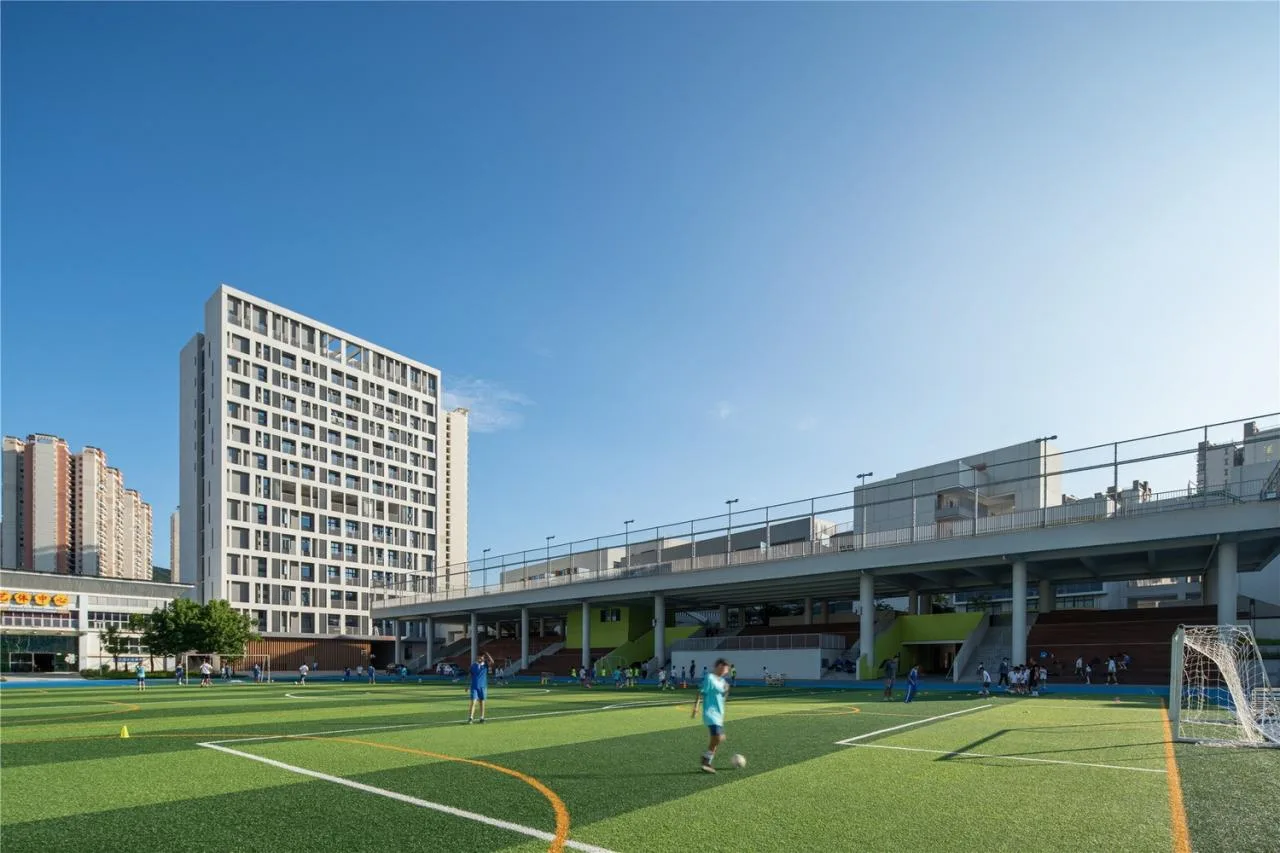
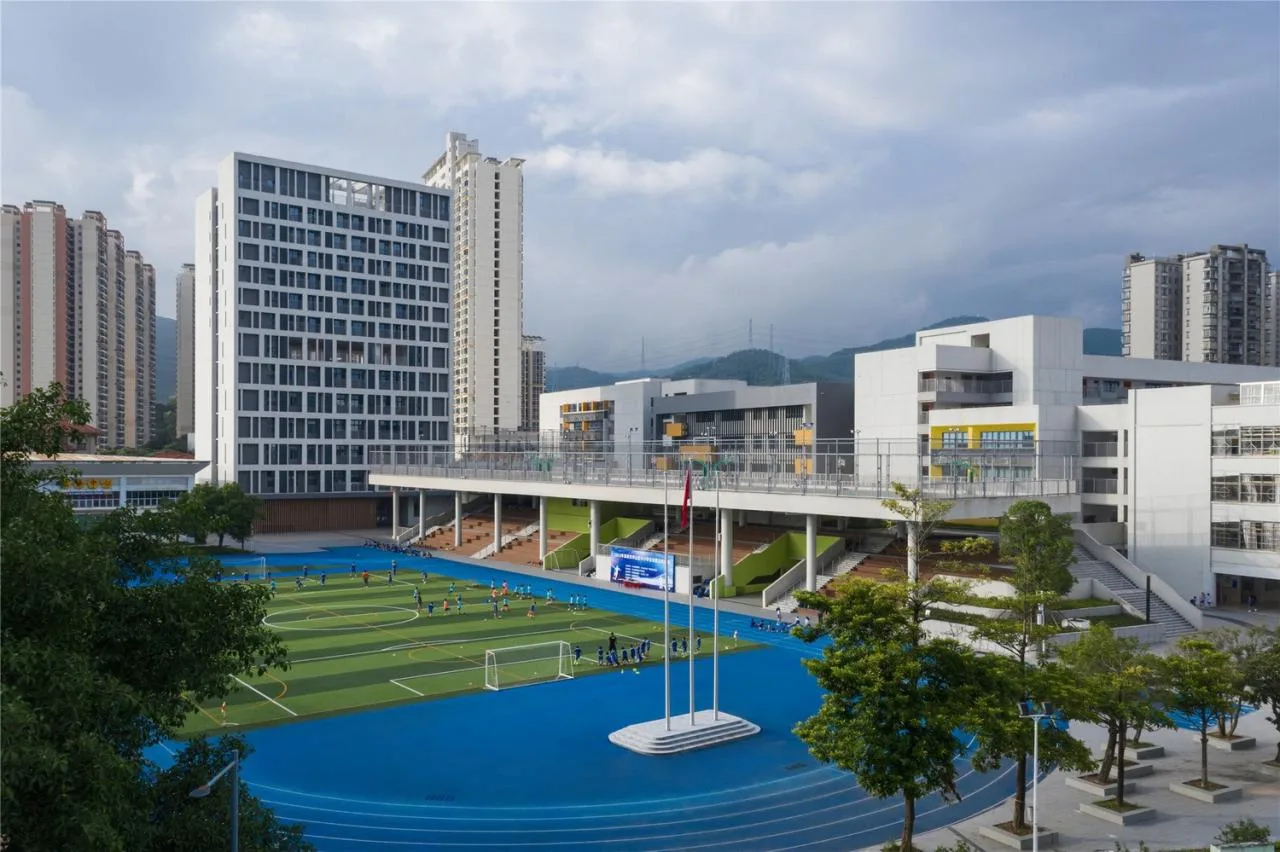
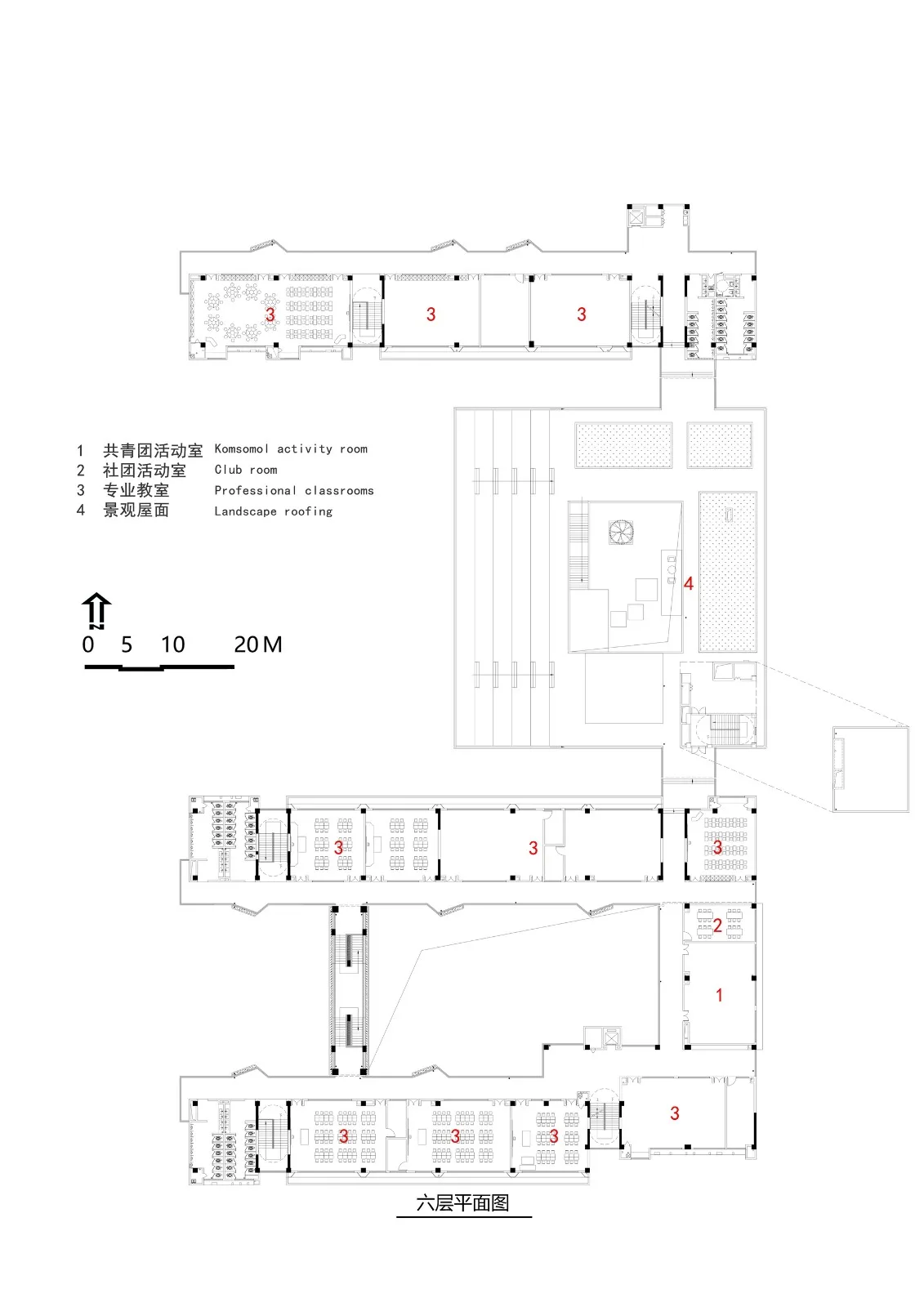
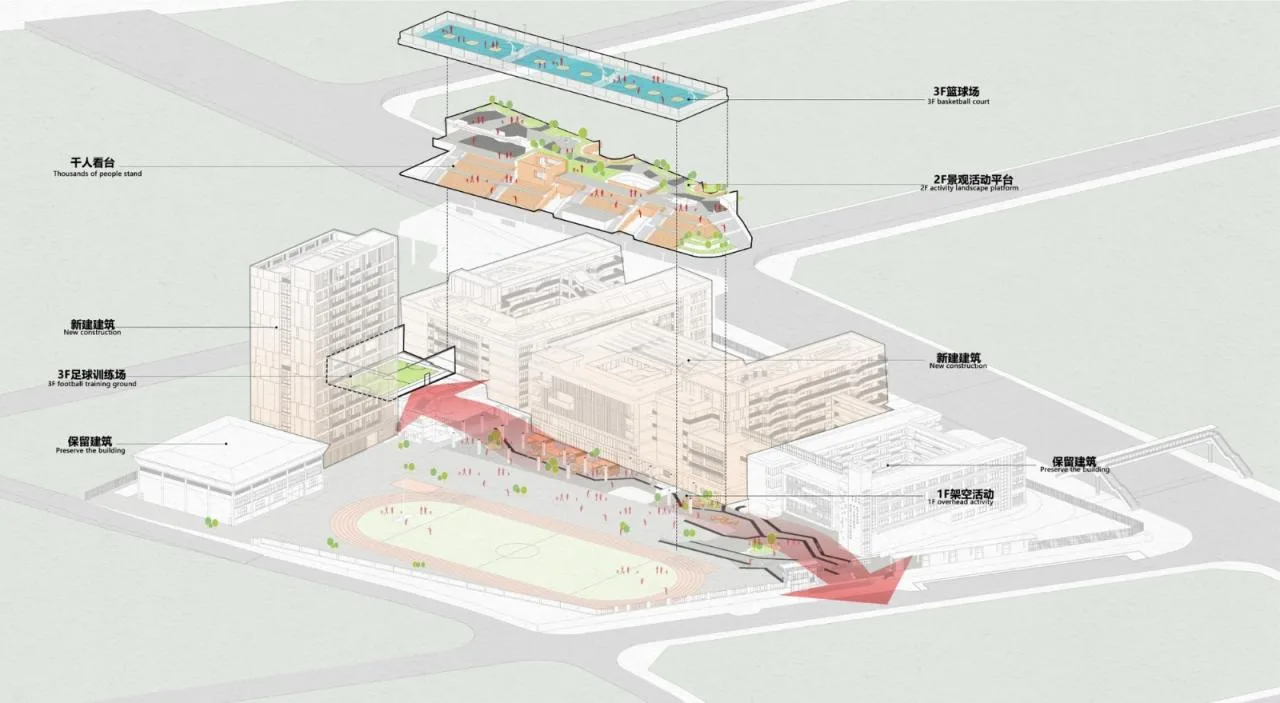
Vitality Long Street: The north-south axis, formed by the multidimensional sports landscape crossing the shared axis, begins at the campus’s original main entrance on the north side. This creates a vibrant sports corridor weaving through the campus, seamlessly connecting new and existing buildings. It facilitates functional interaction and public engagement between primary and junior high school zones, teaching areas, and sports facilities, serving as the core hub for informal learning activities.
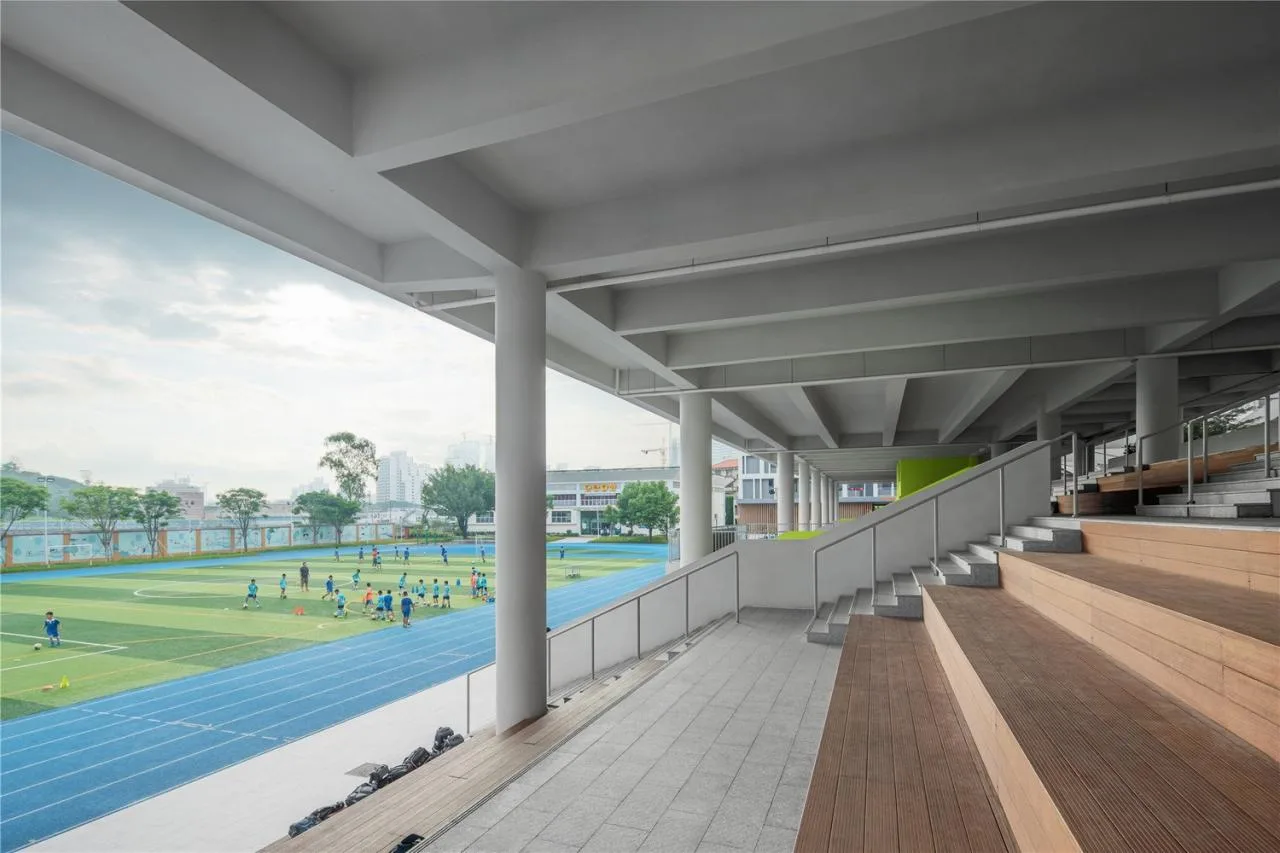
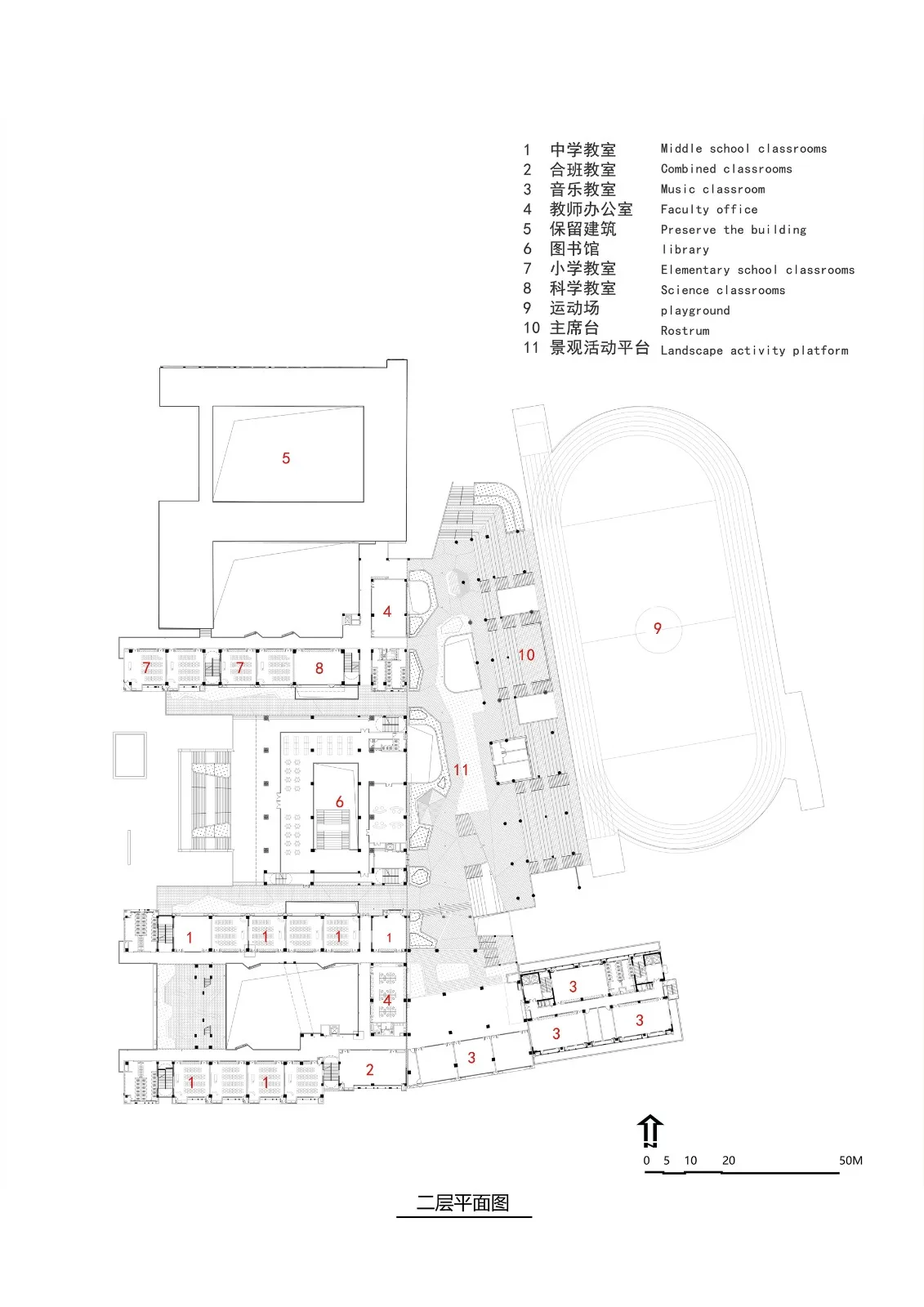
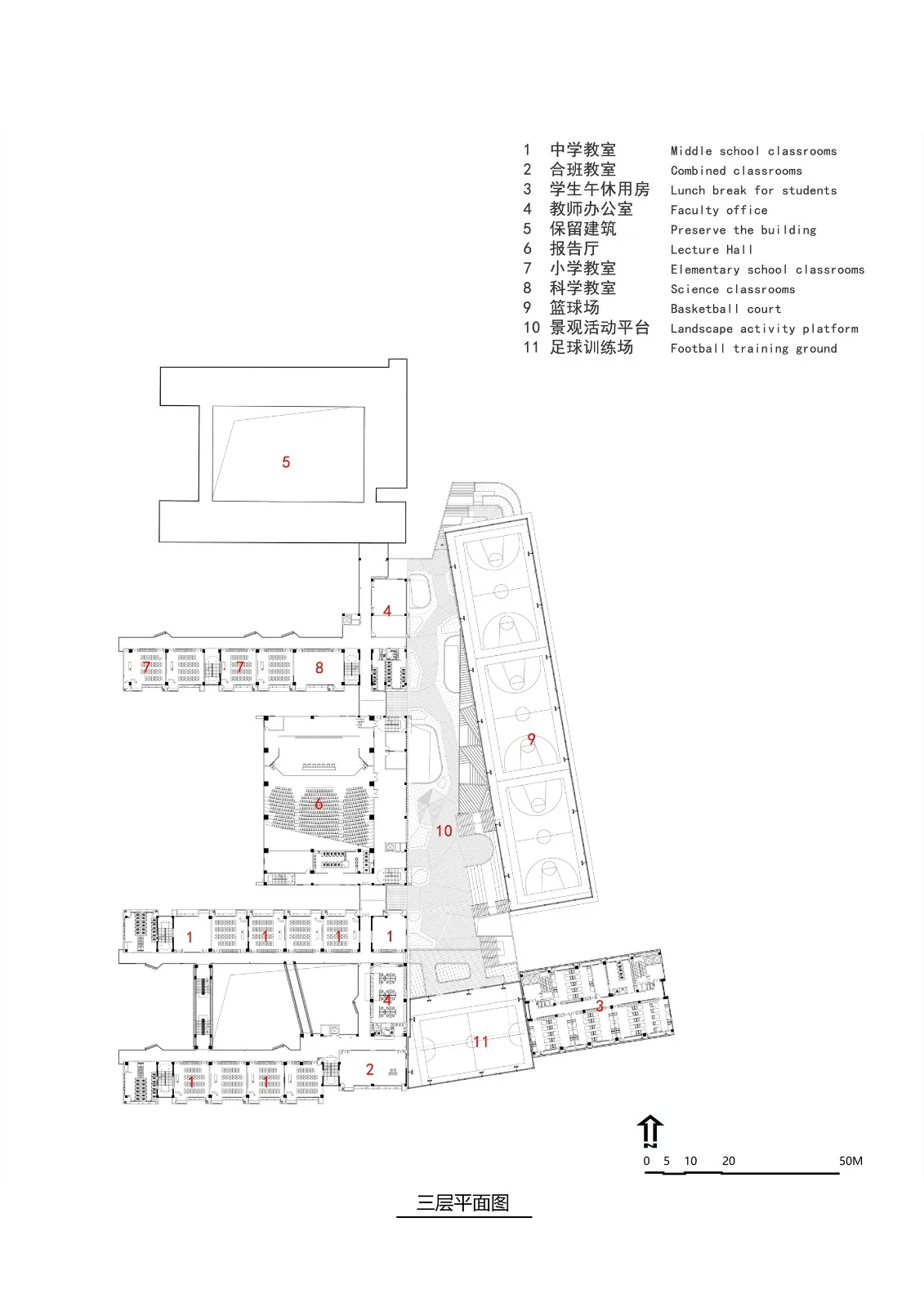
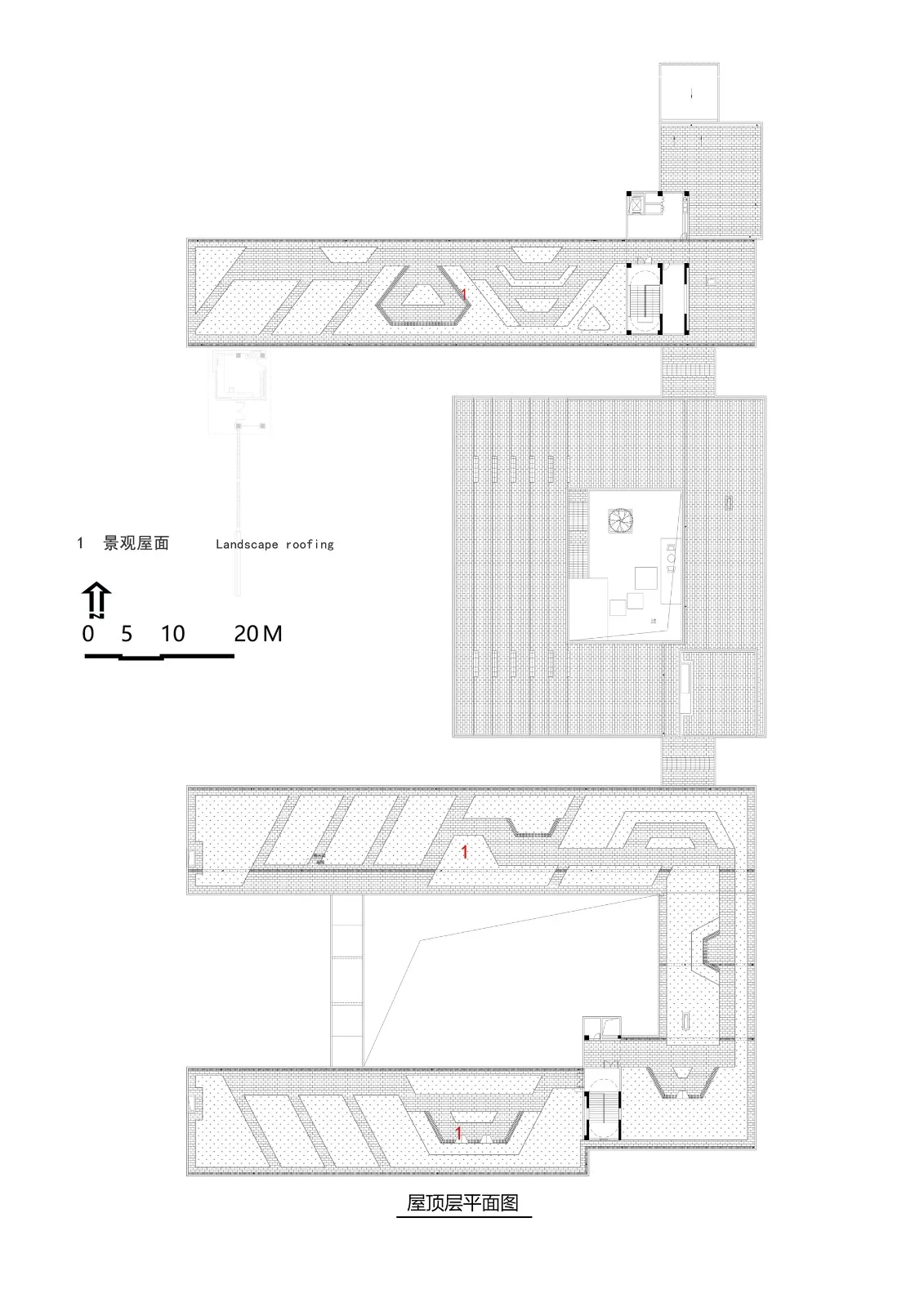
The Vitality Long Street features multiple levels: an elevated activity floor on the first level, an underground swimming pool, a landscaped platform on the second floor, a shared grandstand seating a thousand spectators facing the playground, a rooftop basketball court on the third floor, and a football training field. This vertical utilization of limited land offers diverse activity spaces, establishing a dynamic, multidimensional sports landscape within the campus.
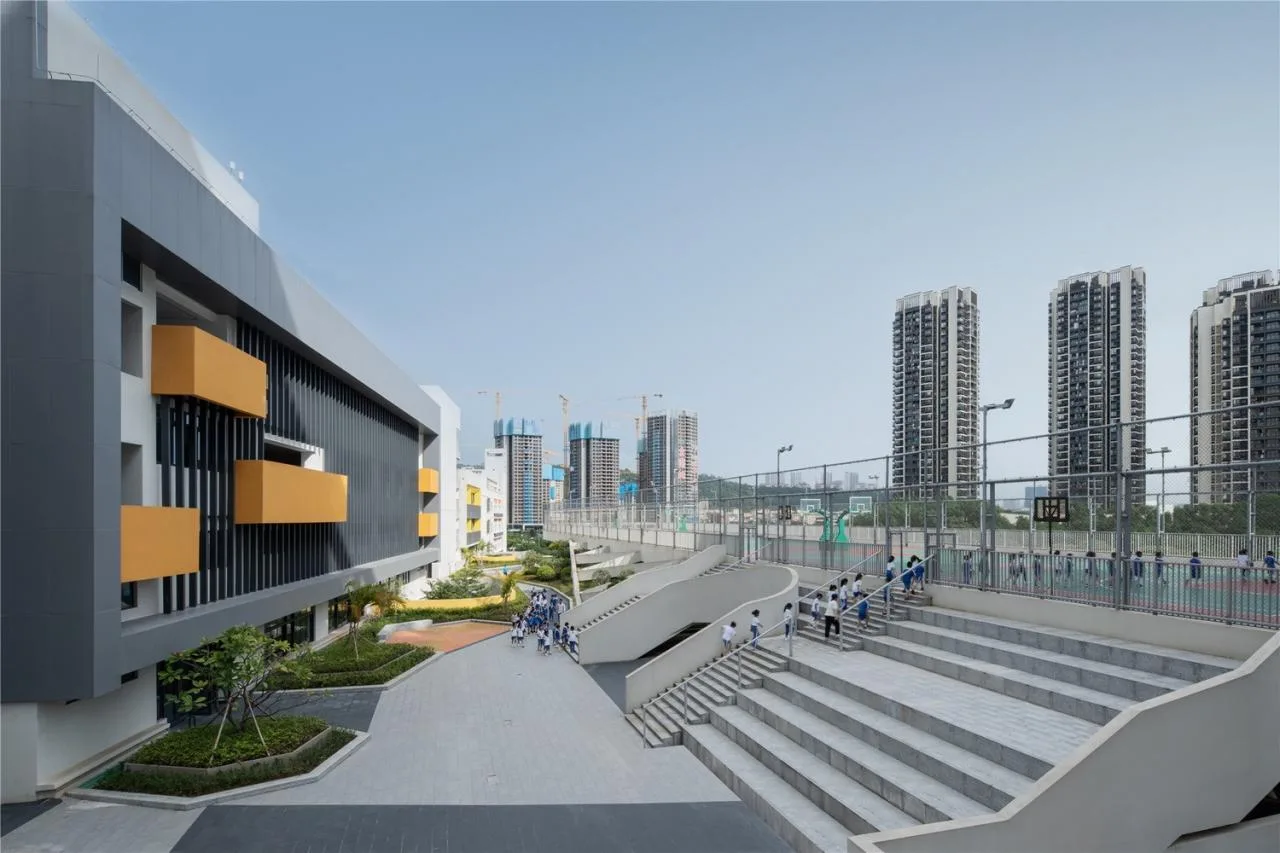
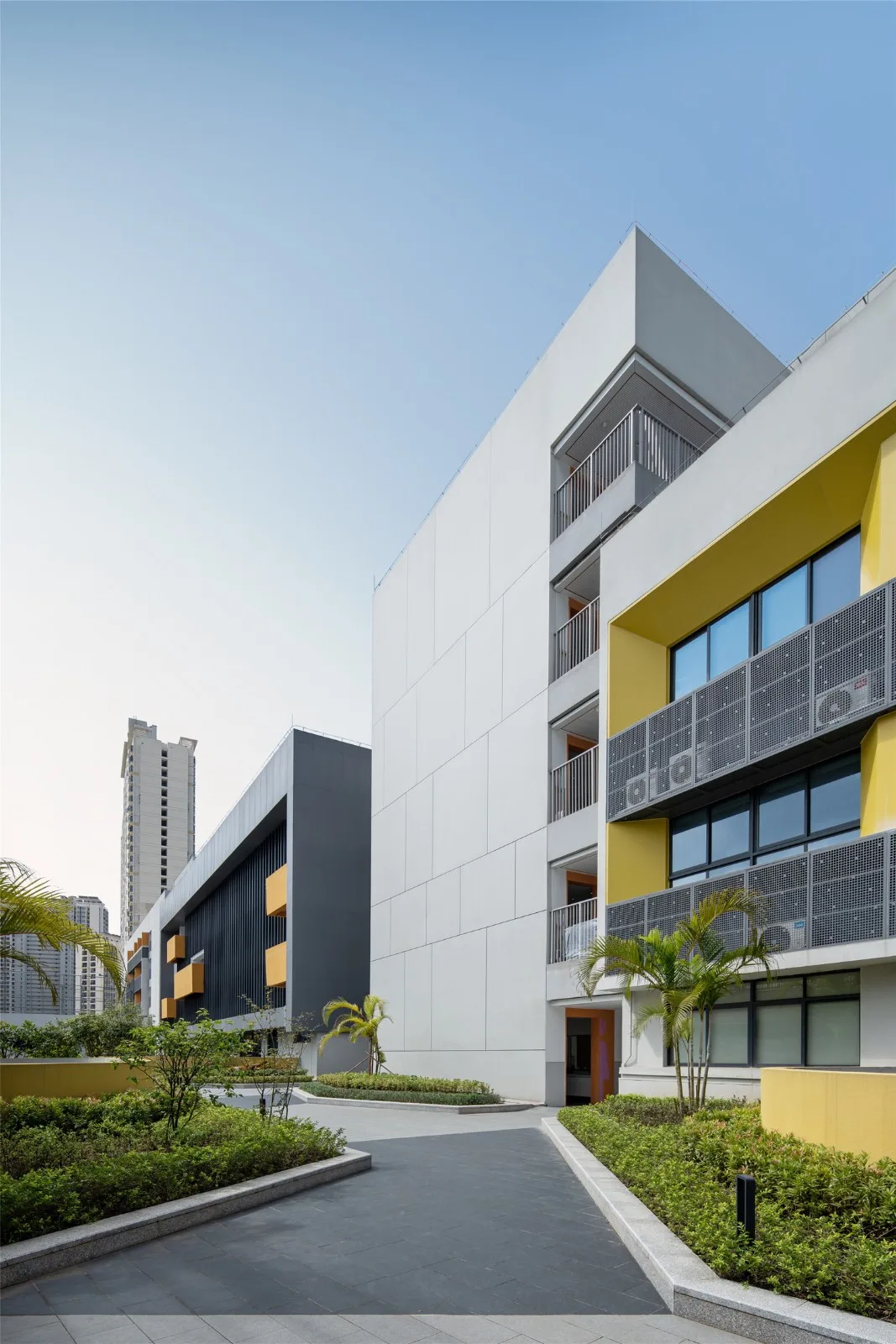
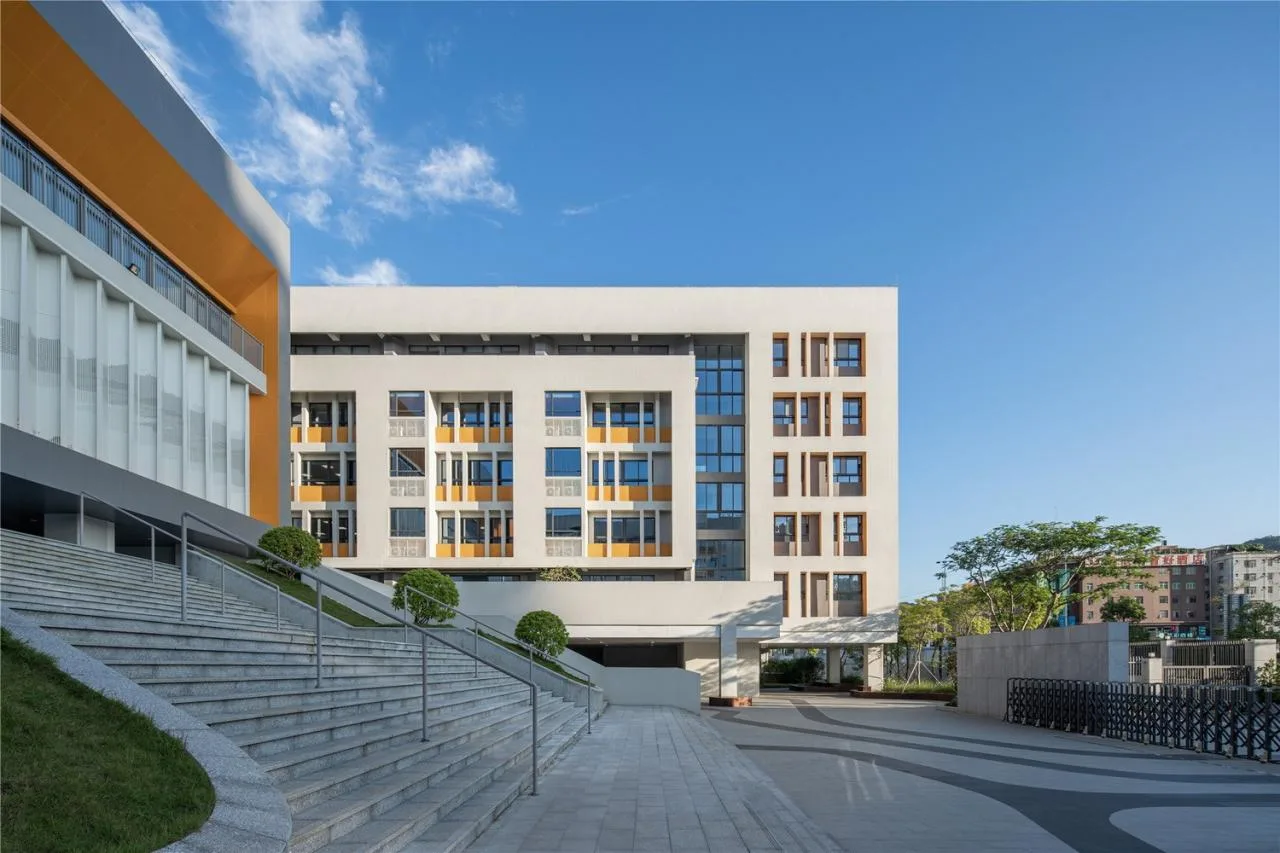
Interaction Center: The vertical grandstand accommodates 1,000 spectators, linking the vibrant street with both old and new buildings as well as sports areas. This serves as a central hub and spatial landmark for student activities and interactions on campus. To suit Shenzhen’s climate, the stands are equipped with wind and sun protection roofs, three additional basketball courts, and all-weather activity and rest zones adjacent to the playground and teaching areas.
This facility also supports school sports events post-expansion. Its multi-level design connects activity areas on the first, second, and third floors, facilitating quick evacuation during morning exercises and serving as a transit hub for various campus zones.
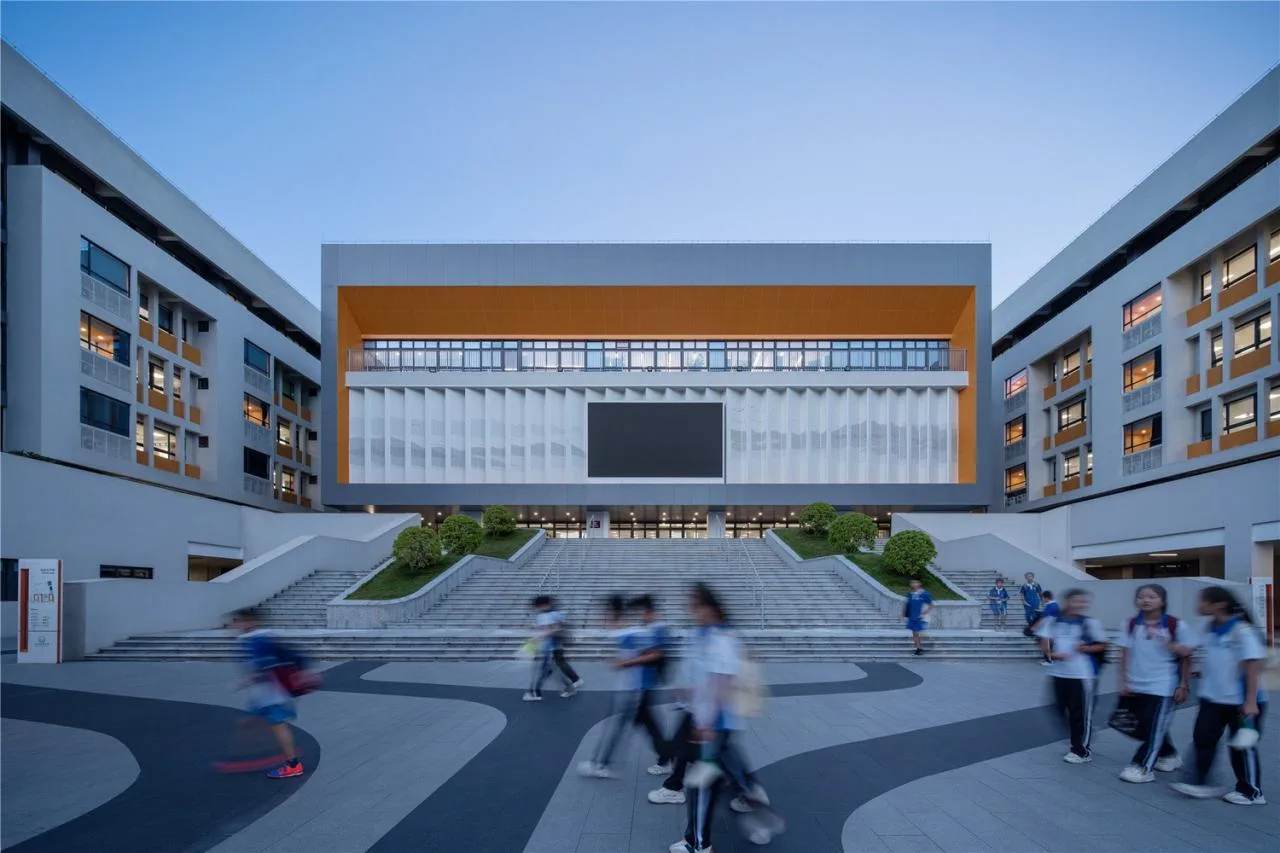
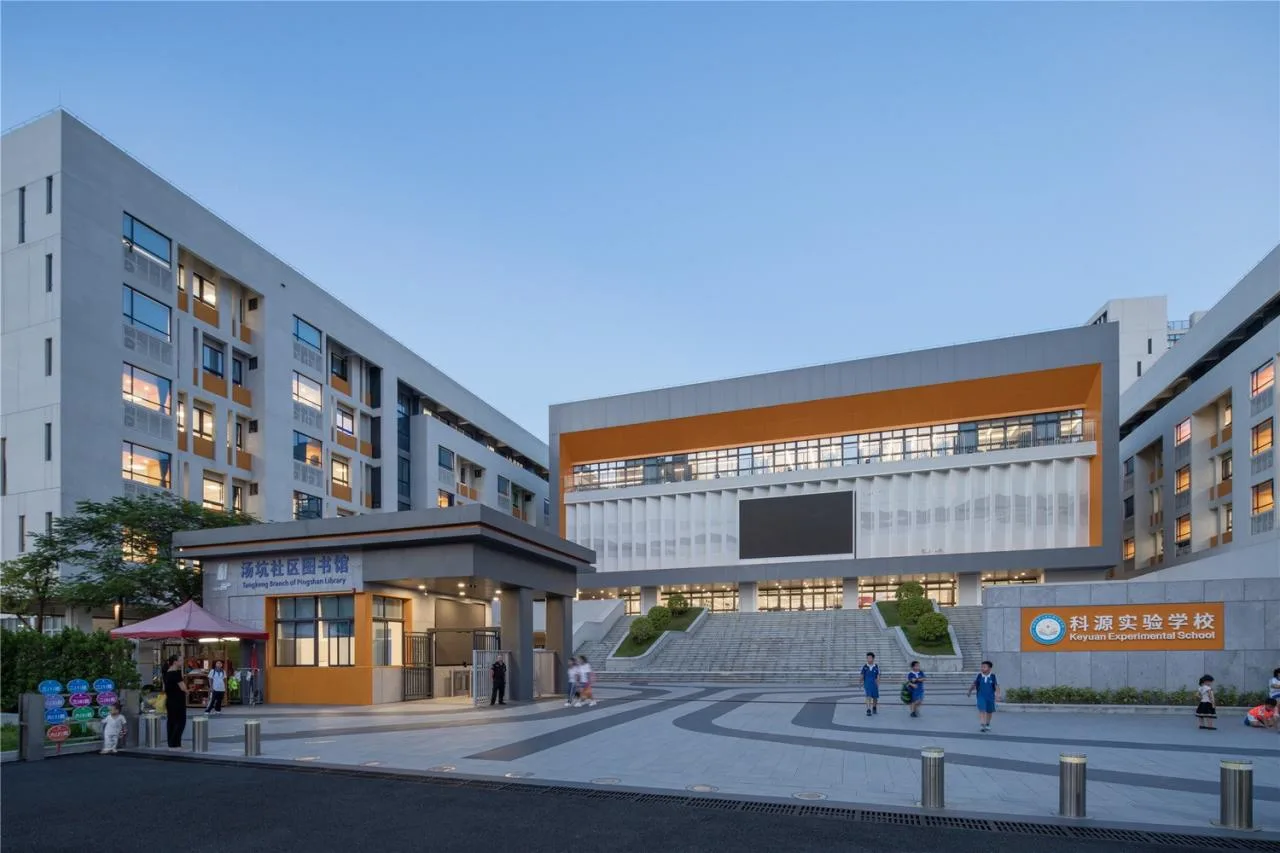
Ceremonial Corridor: The Community Shared Culture Axis introduces a new main entrance along the west road. Through the entrance plaza and anchored by the book complex building, a ceremonial corridor emerges, reflecting the campus culture. This east-west axis of the Cross-Sharing Network combines public community spaces, fostering interaction and resource integration between the campus and surrounding community, establishing a shared cultural corridor facing outward.
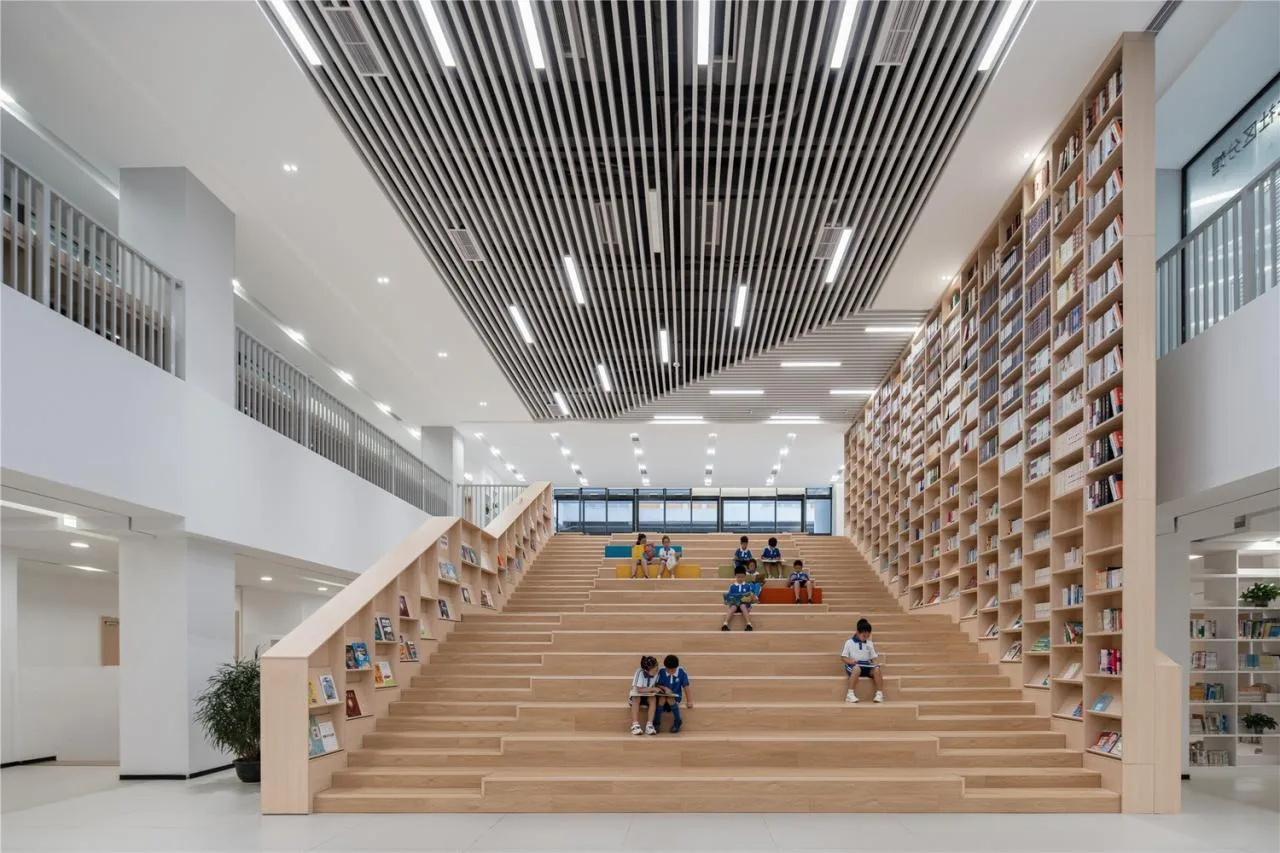
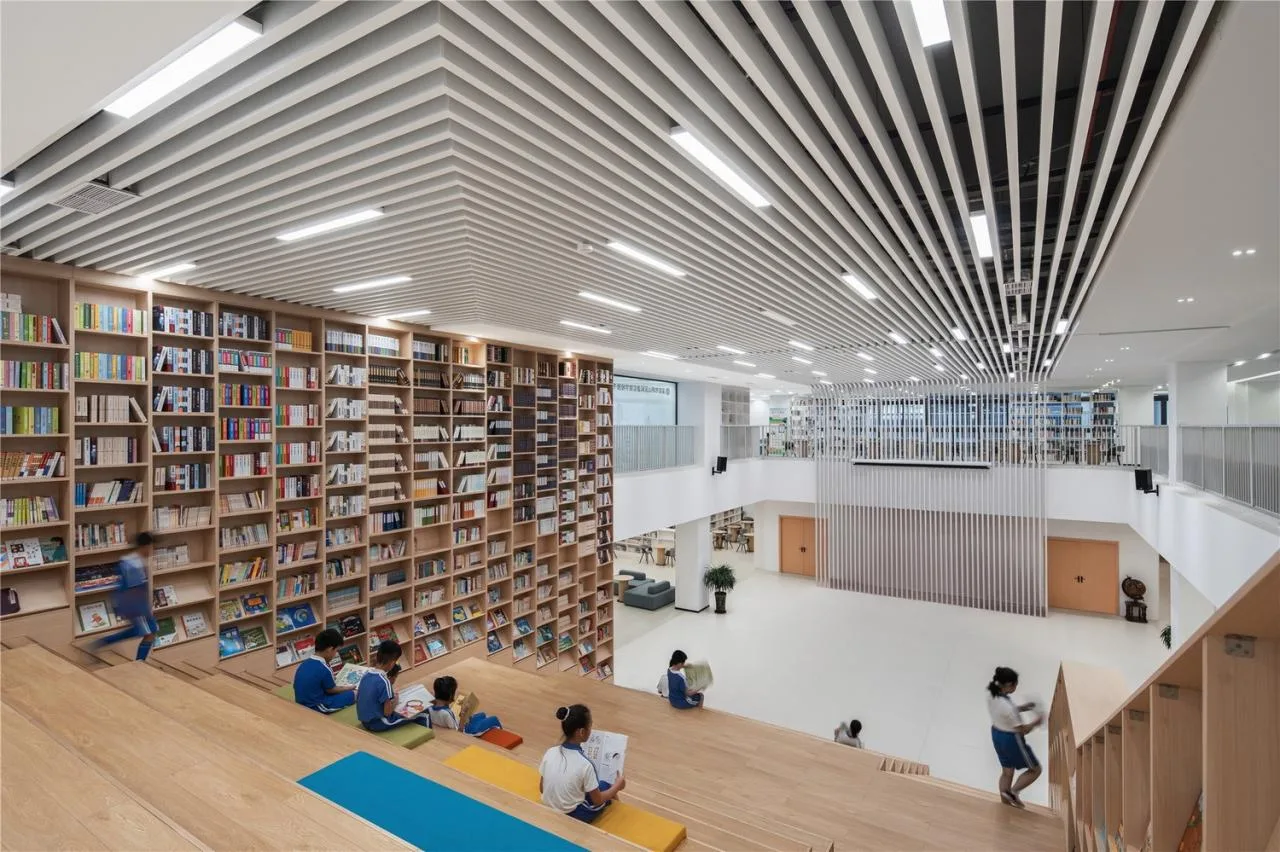
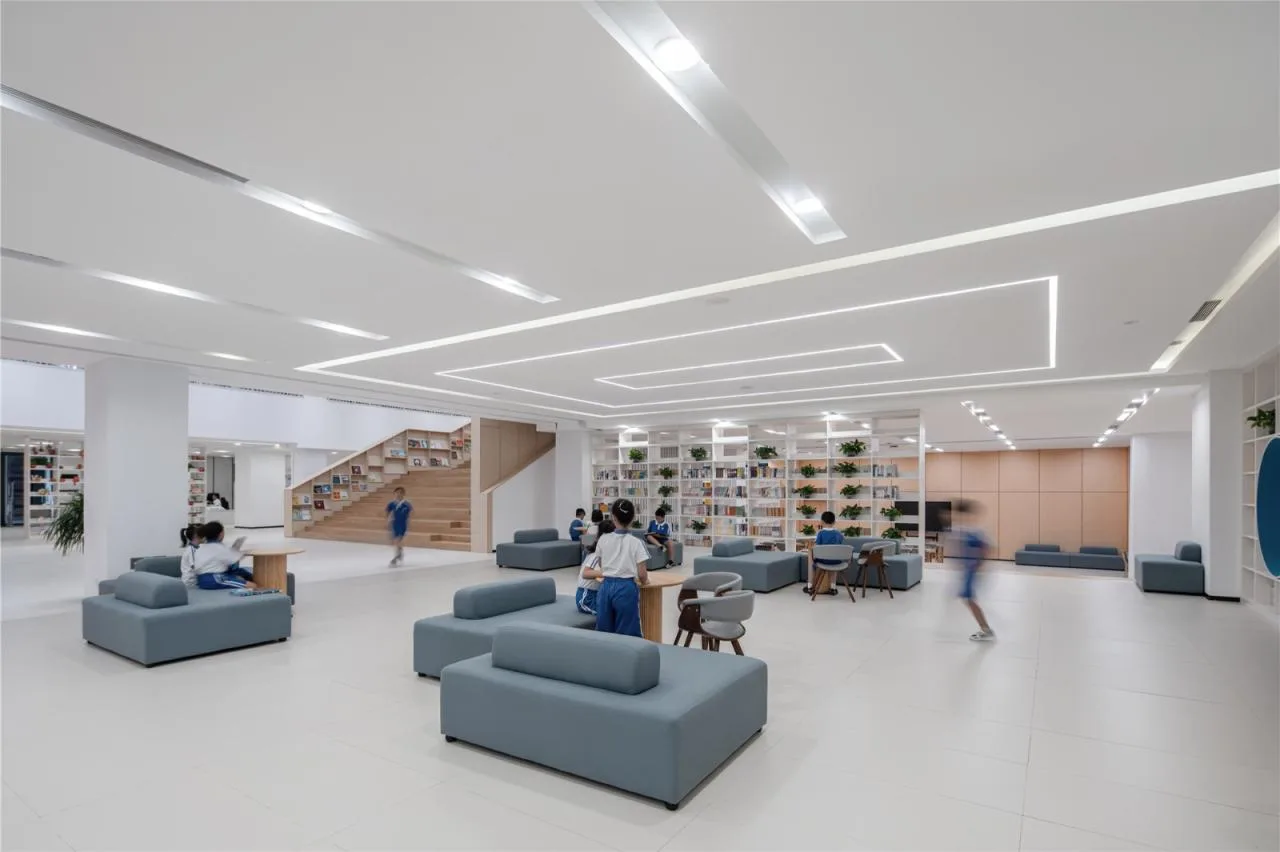
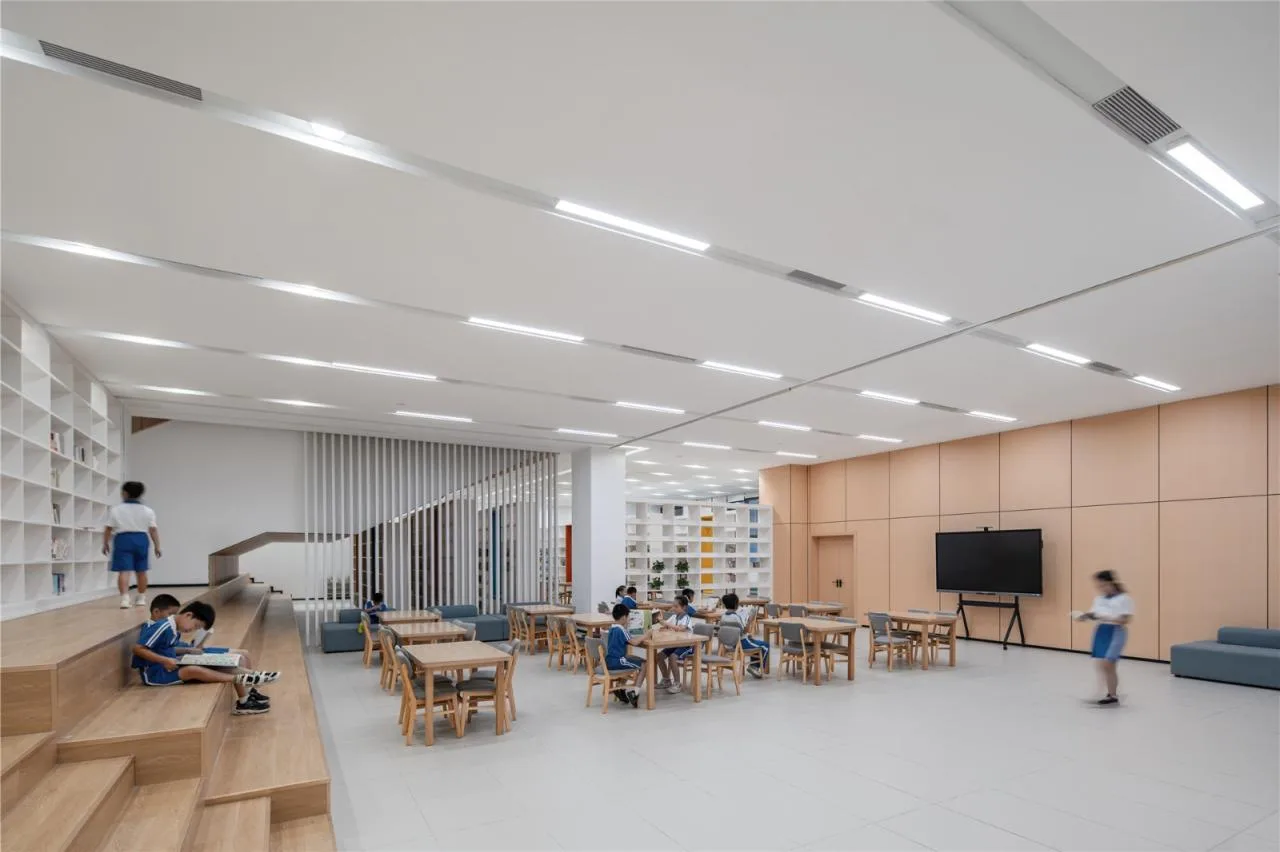
Recognizing that school libraries often suffer from low usage and limited collections, the school partnered with Pingshan Library to create the Tangkeng Community Shared Library, open to the public during holidays. Located on the first and second floors of the comprehensive building, the library includes separate reading areas for students, teachers, and adult visitors. It offers diverse reading spaces as well as facilities for community learning activities such as public reading classes and group discussions.
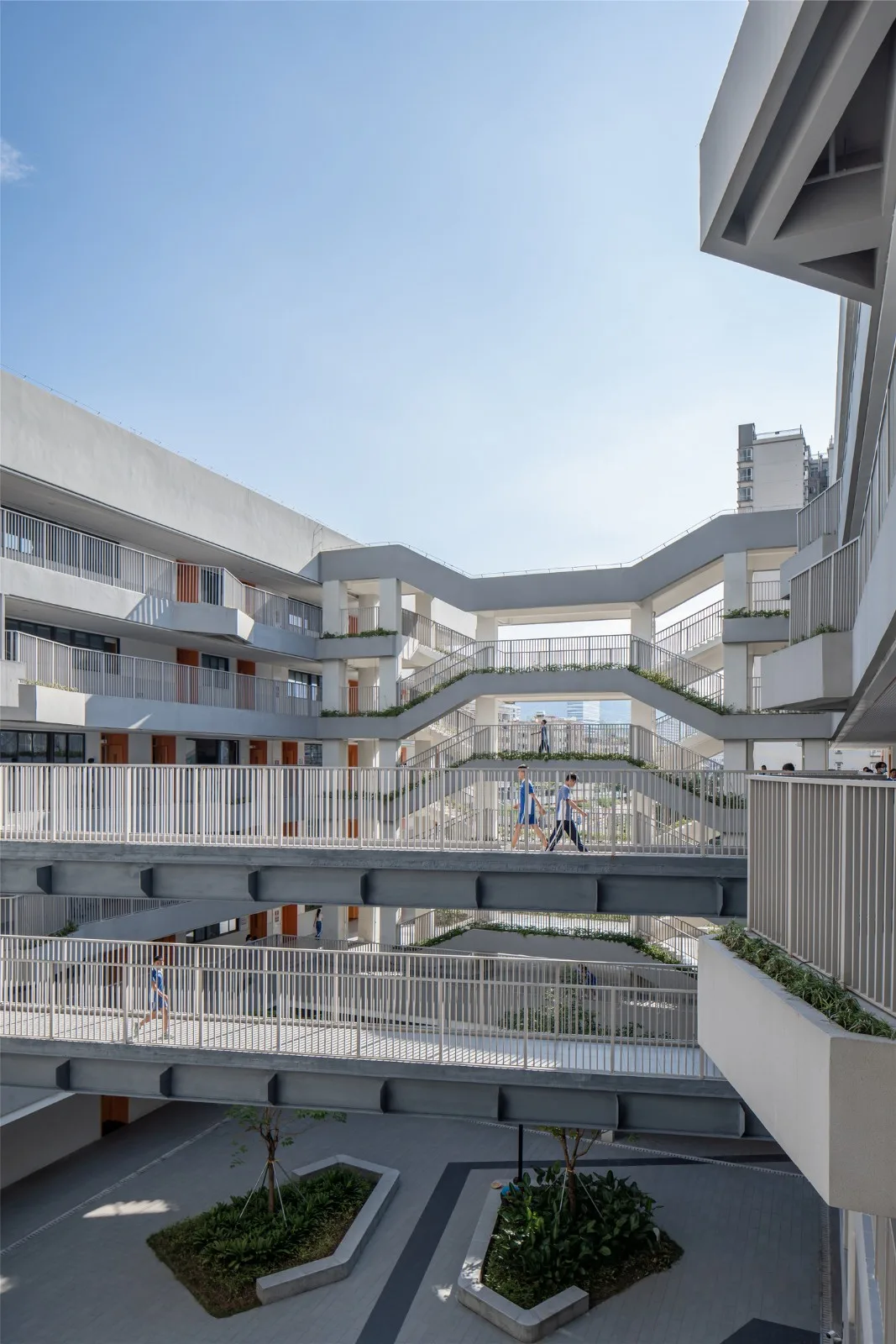
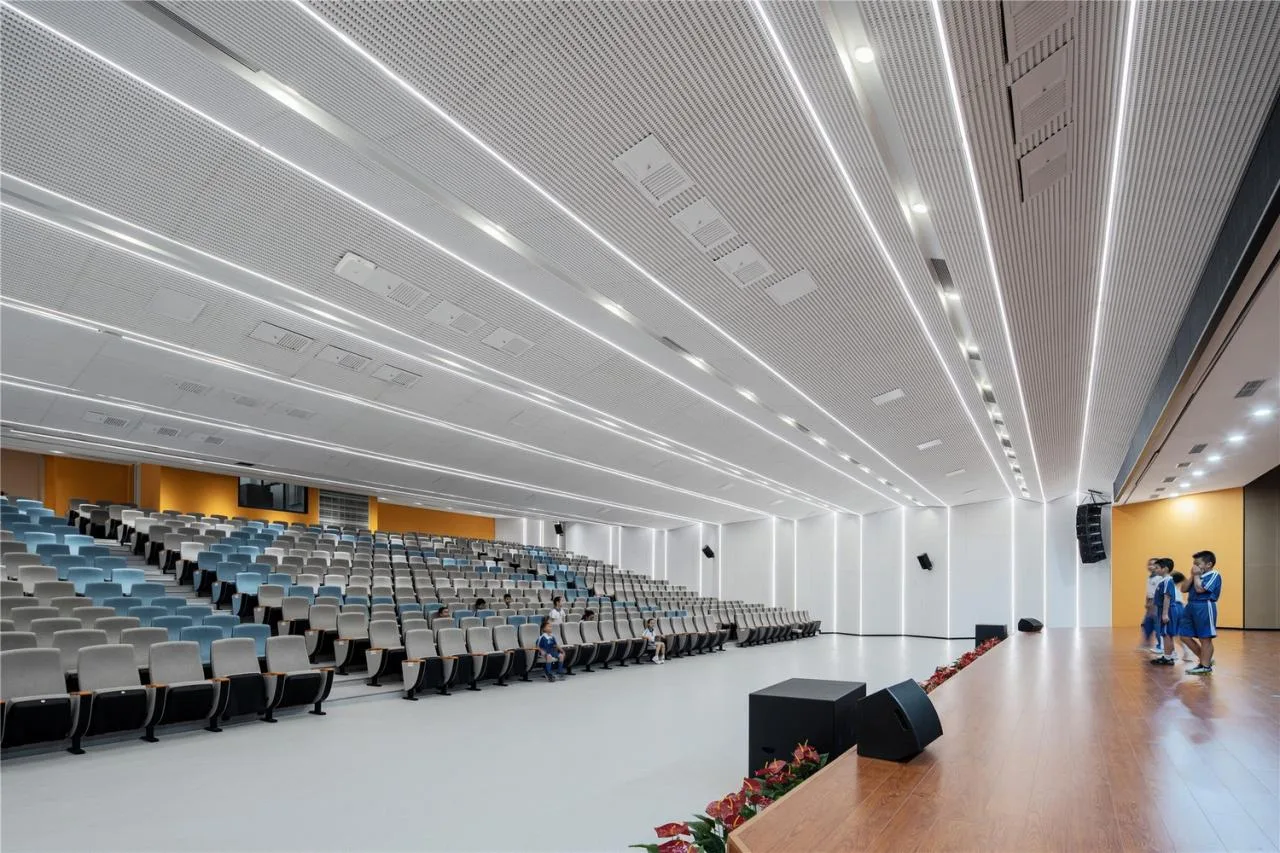
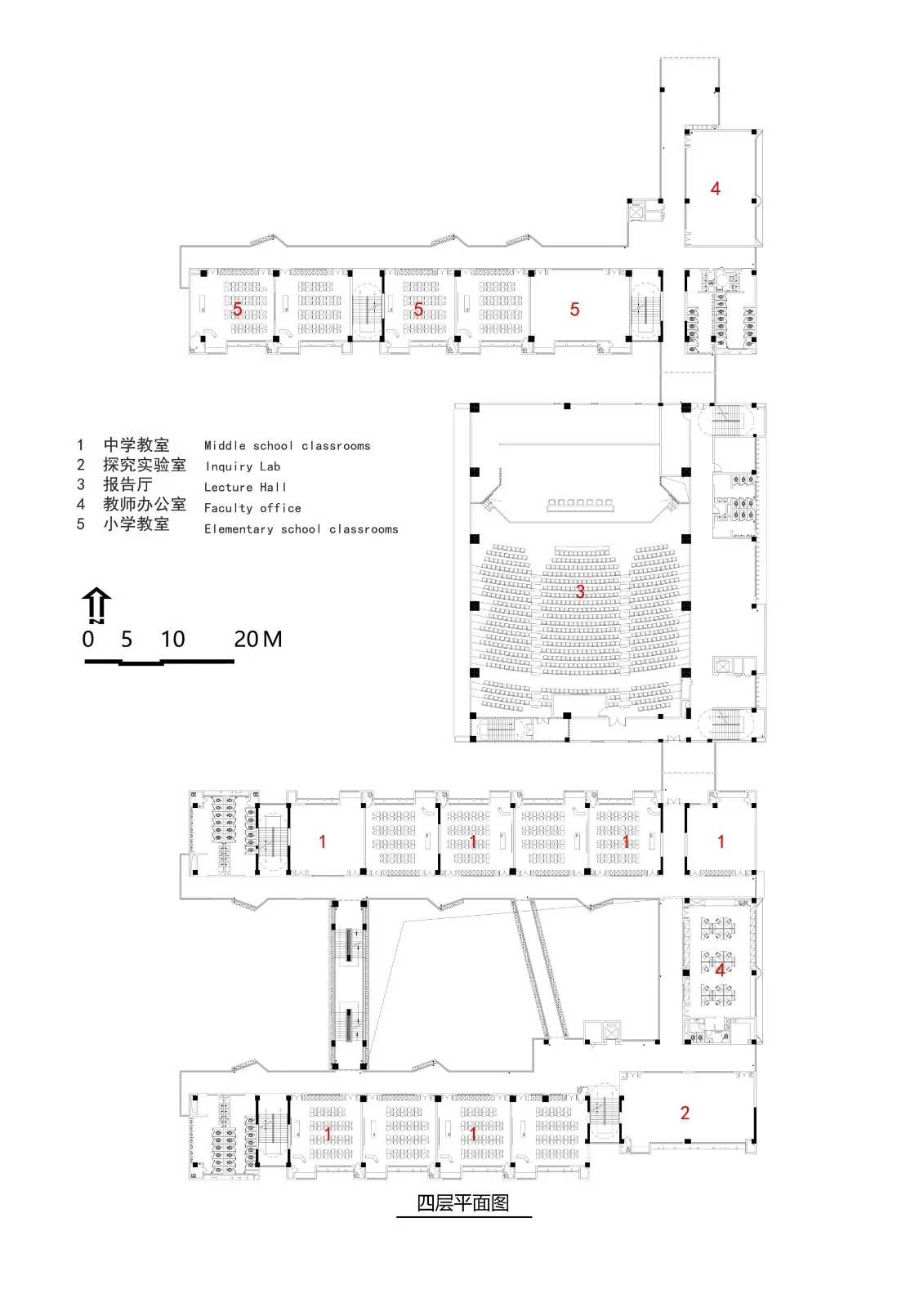
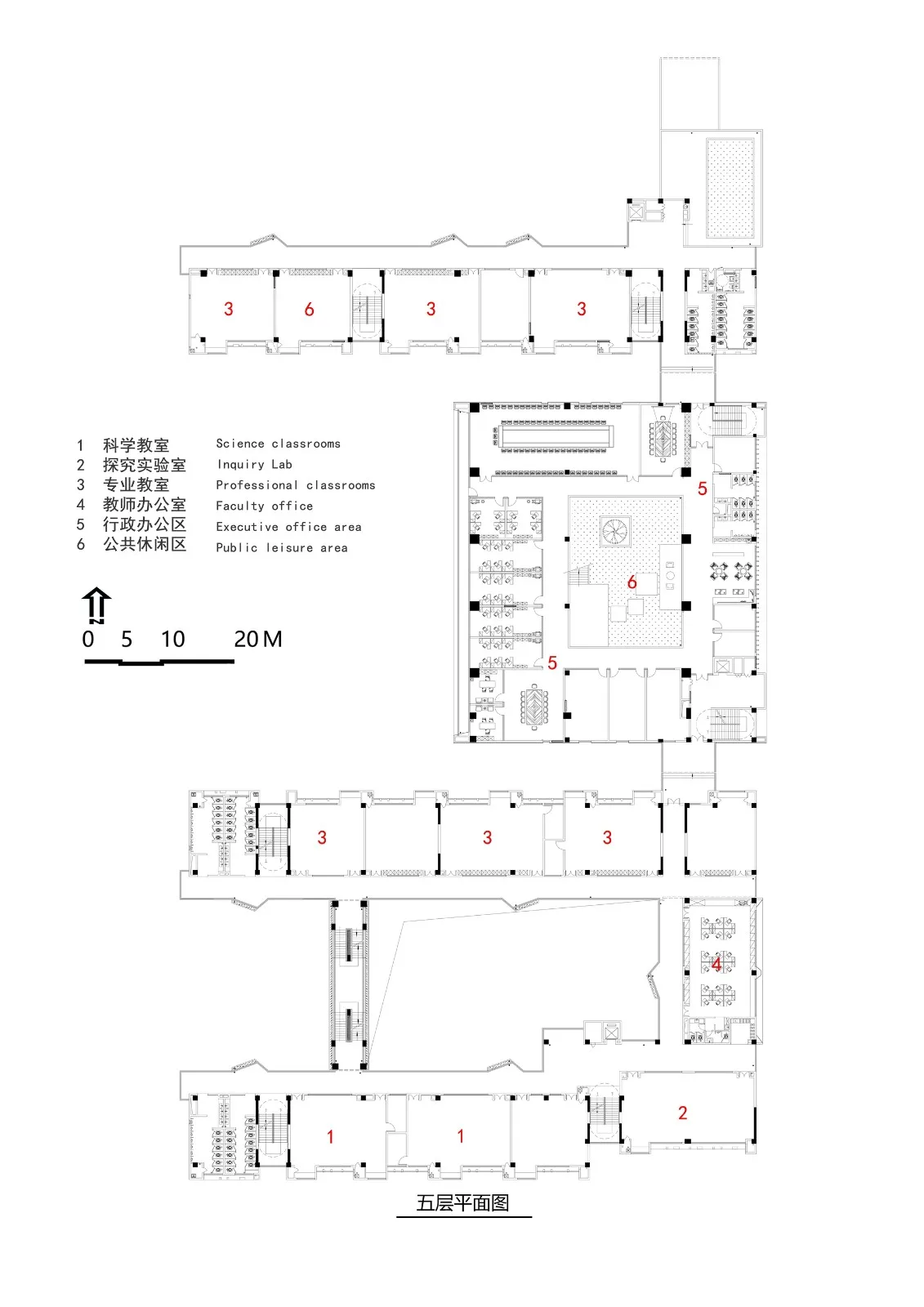
The library’s atrium provides an open, flexible environment for learning and communication, doubling as a reception venue for community lectures, forums, and events. The multifunctional hall, situated on the third floor, accommodates around 750 guests, serving as a major gathering space for the school. Additionally, tiered classrooms on the first level of the elevated structure cater to small-scale teacher and grade-level meetings. The administrative offices, located on the top floor and arranged around a landscaped inner courtyard, provide teachers with a comfortable workspace.
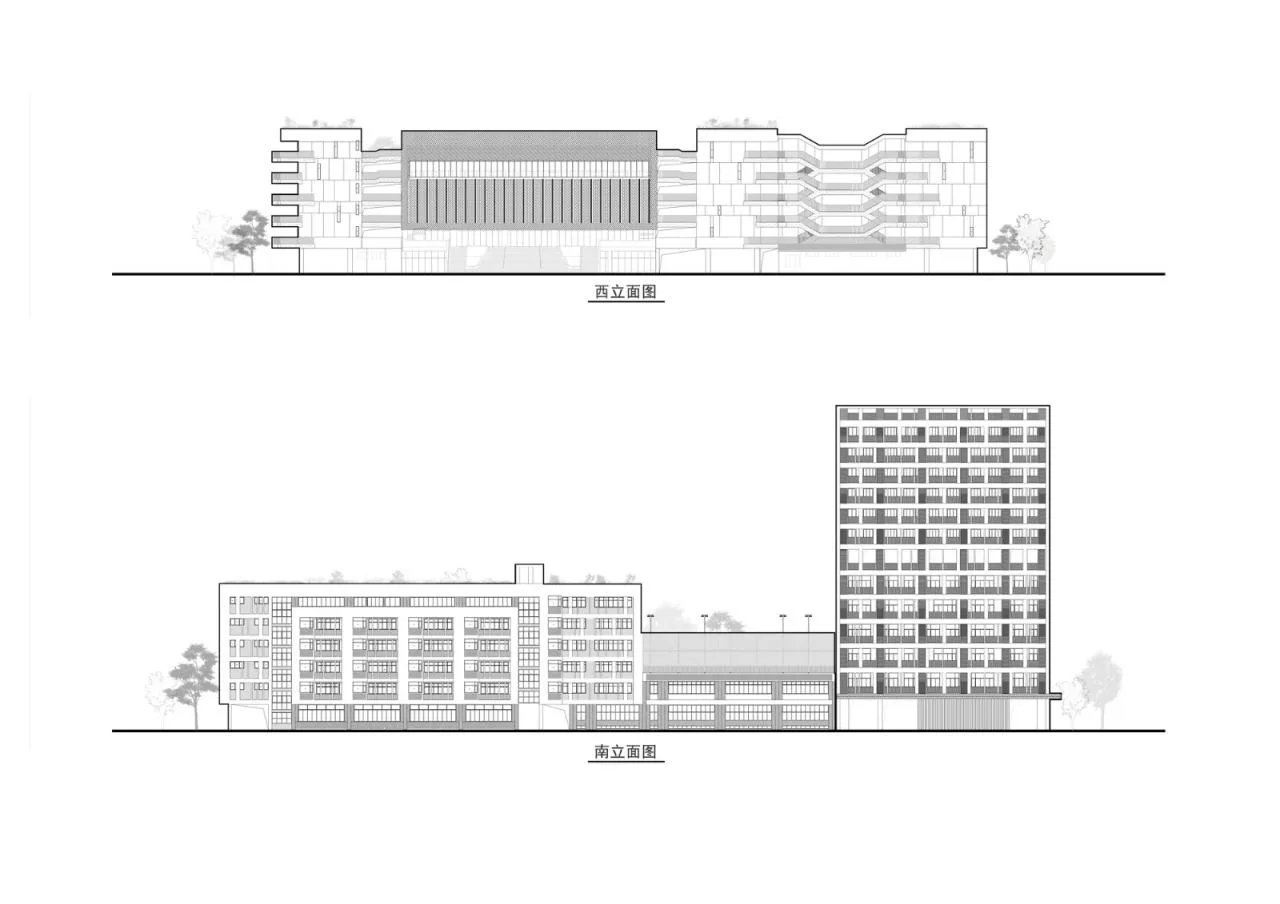
Facade Design: The west facade of the Folding Fan Landscape Comprehensive Building features folded perforated panels that extend along the entrance plaza. Varying hole sizes and densities create a folding fan motif facing the community, symbolizing the cultural identity and iconic character of the campus. The design carefully considers hole size and spacing based on the scale of the plaza and sightlines to ensure an aesthetically pleasing visual effect.
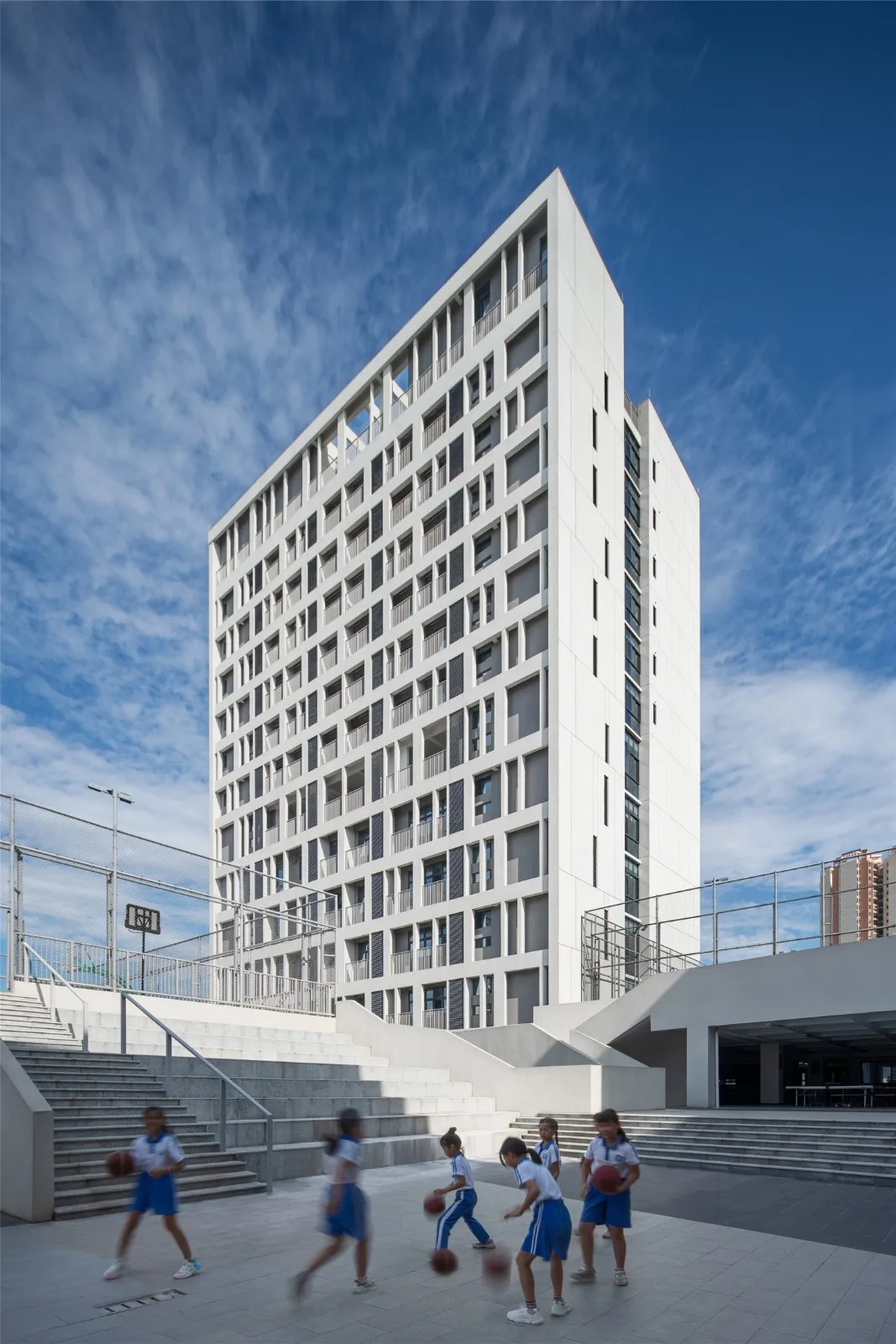
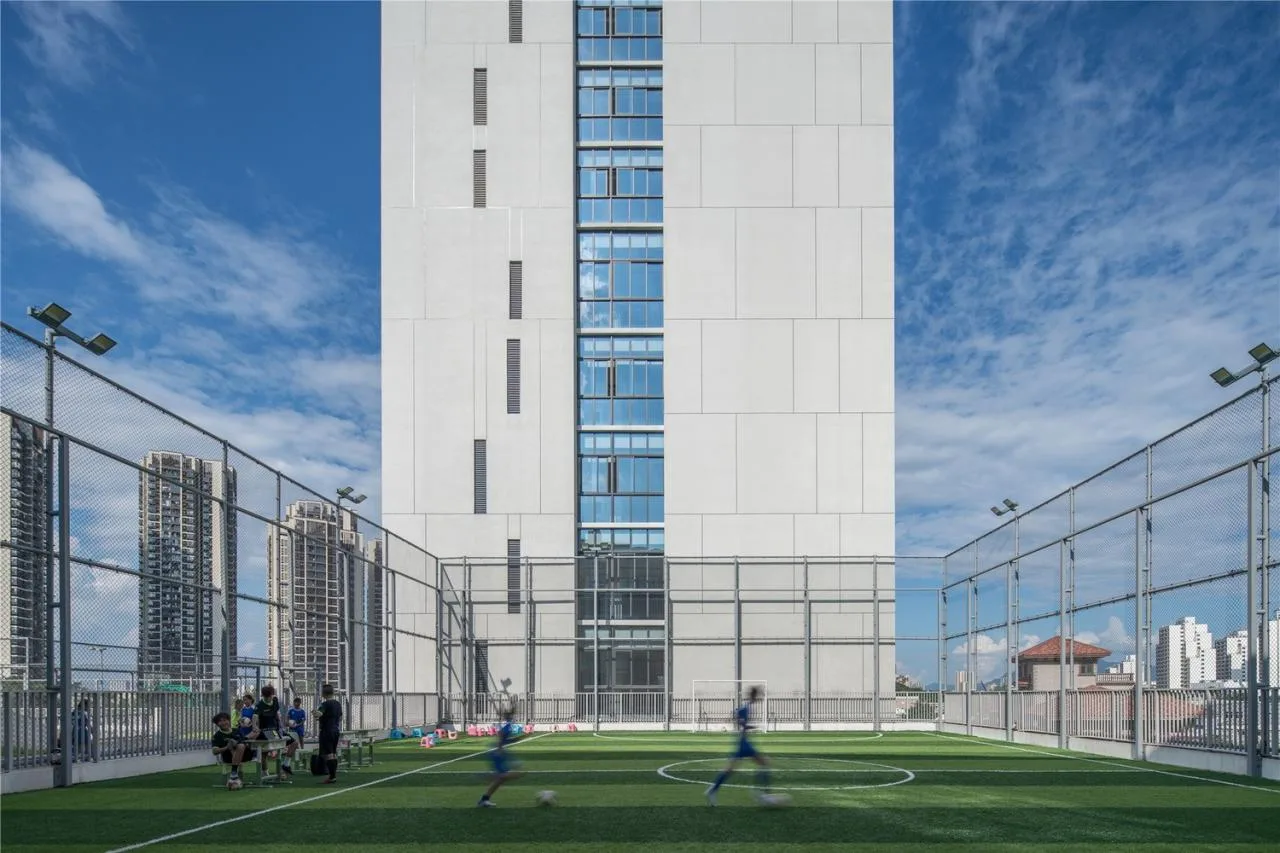
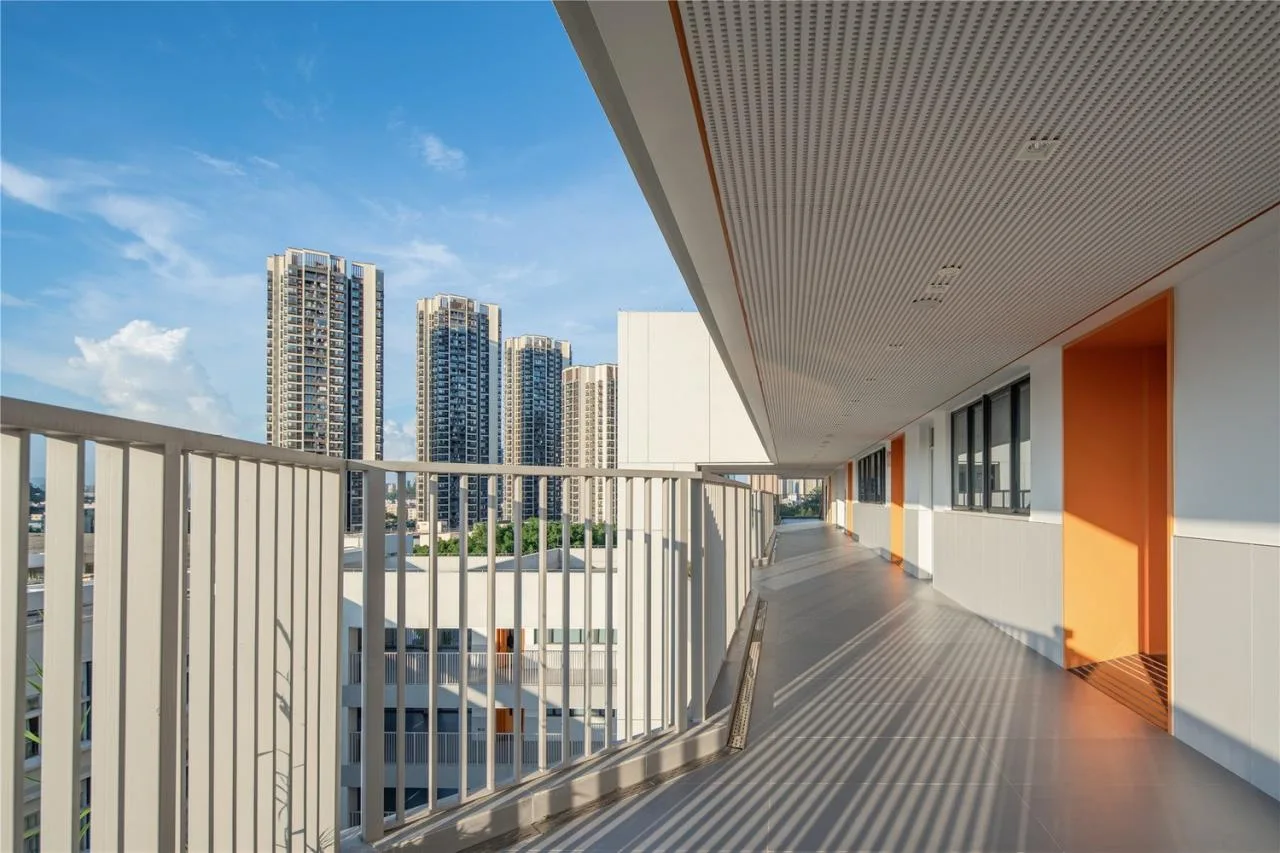
Conclusion: Respecting the original campus planning framework, this project reshapes and integrates the campus through a cross-shared axis, enhancing functionality, diversity, and engagement in the new campus environment. It explores the potential for open integration of campus public spaces with community resources, revitalizing the old campus with renewed vitality.
Project Drawings
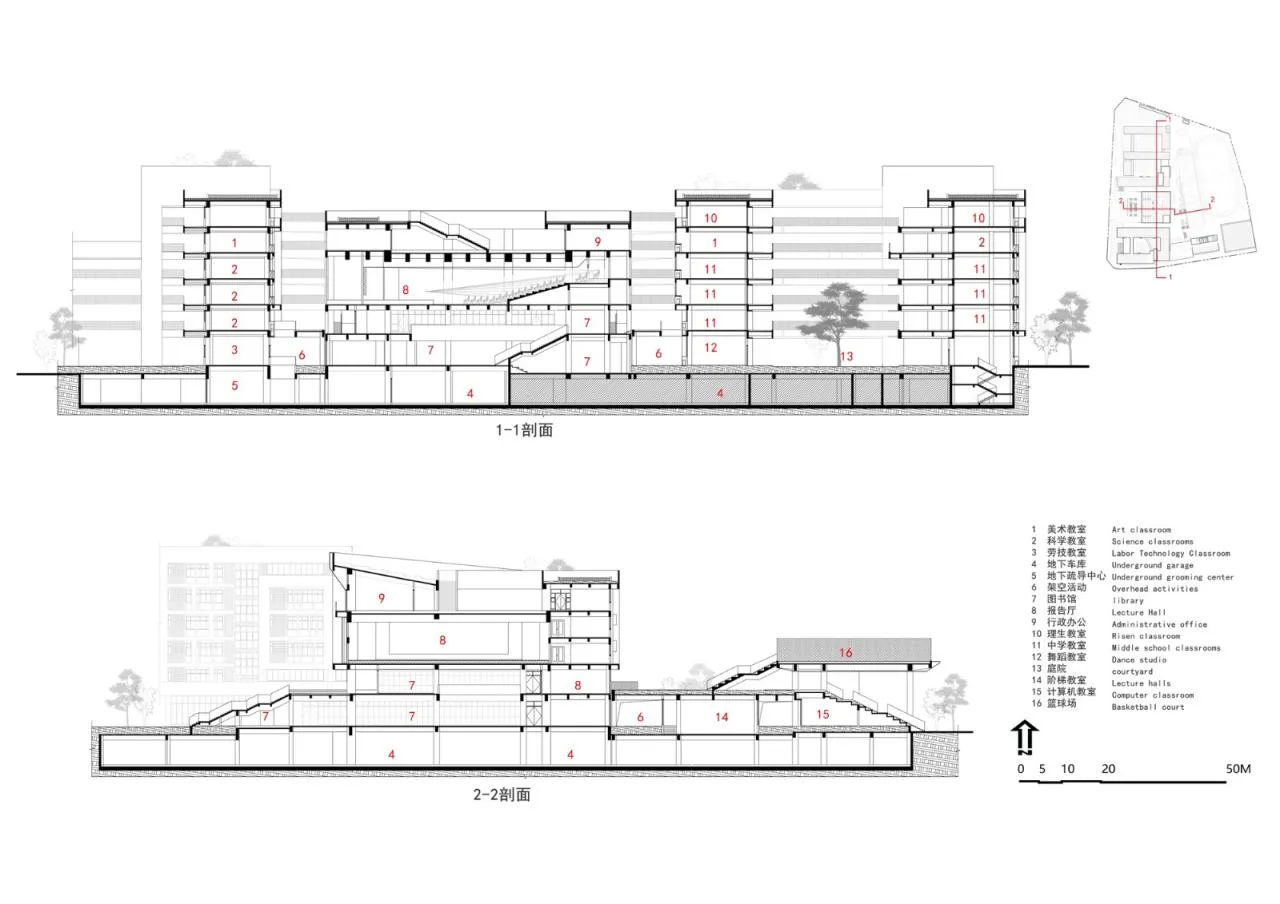
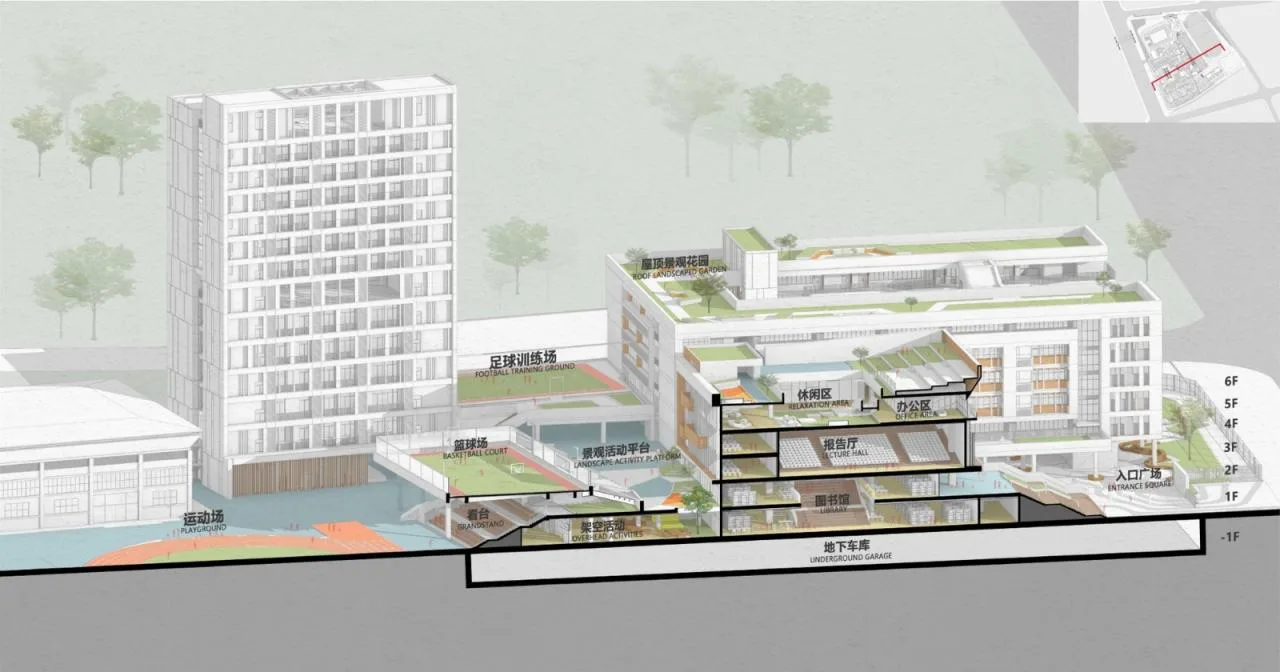
△ Sectional Perspective View
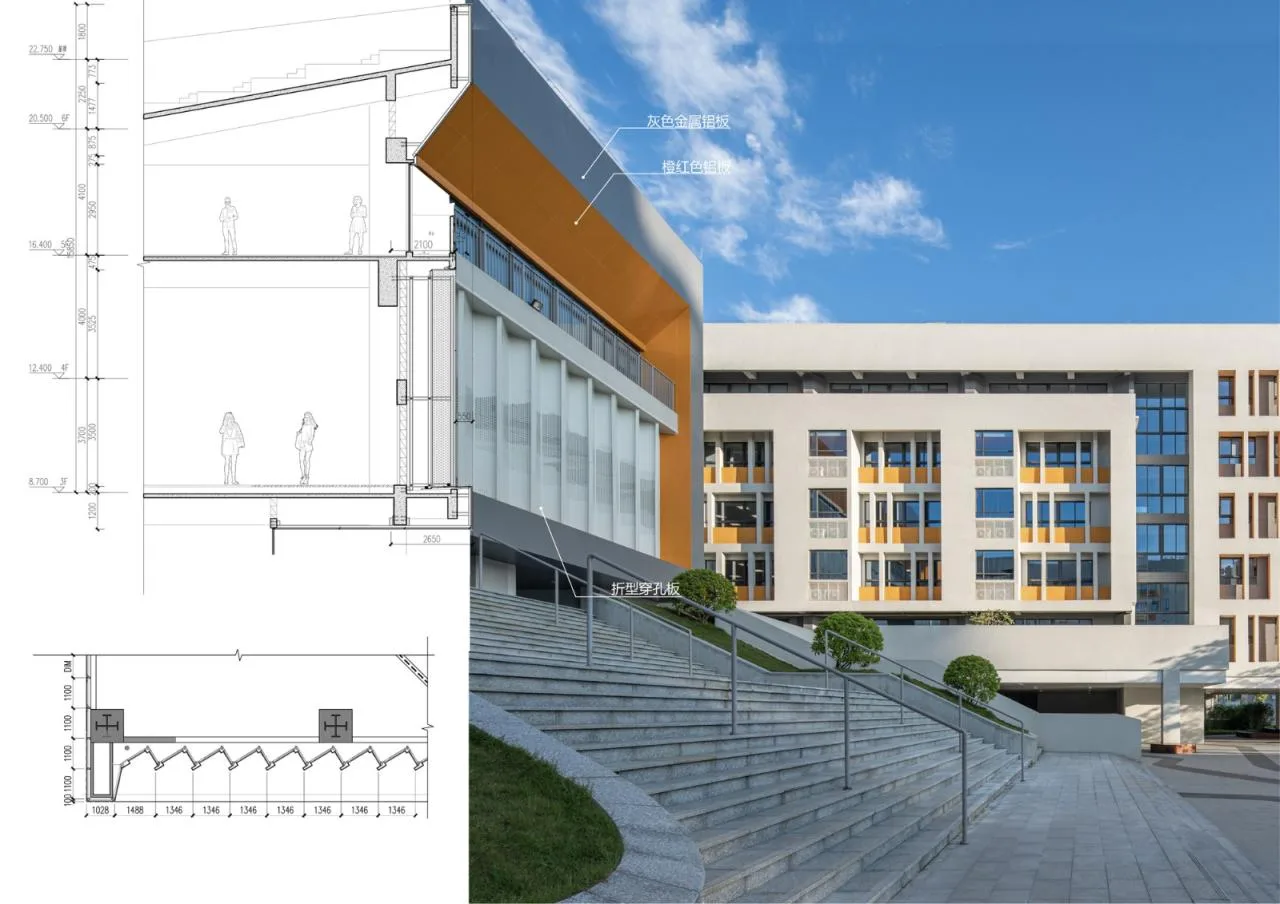
△ Detailed Structural Drawing
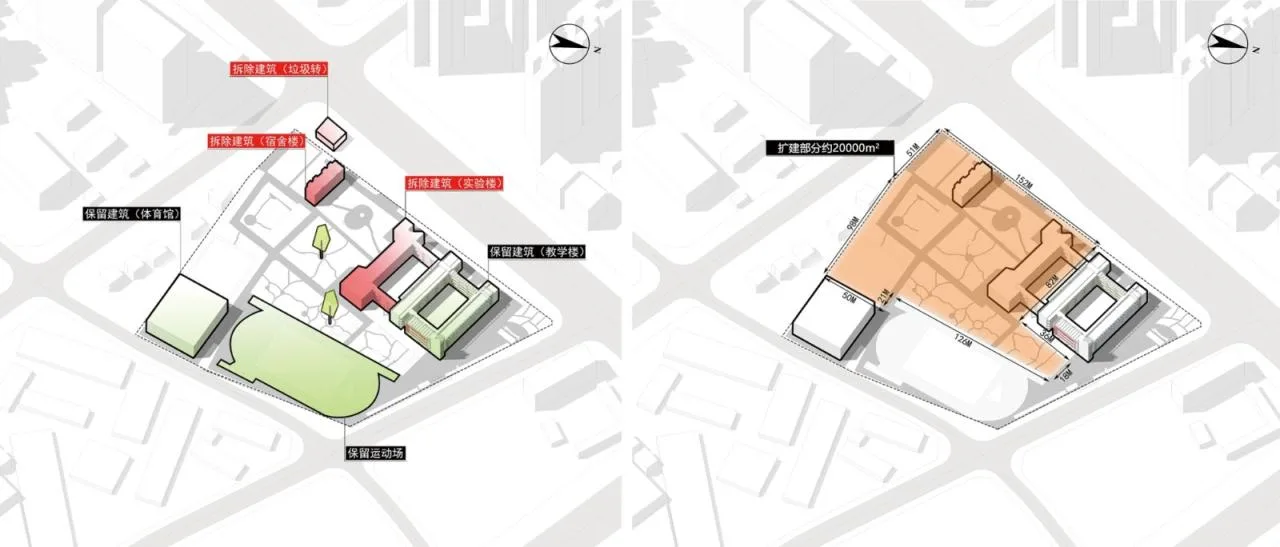
△ Analysis Chart
△ Analysis Chart
Project Information
Architect: Shendu Design
Area: 71,224 m²
Project Year: 2022
Photographer: Ark
Lead Architects: Chen Zhuo, Chen Muliang
Design Team: Wang Yu, Chen Muliang, Li Tao, Wang Chunpei, He Ling, Zhang Yawen, Pan Xunlong, Xu Wenhao, Lin Yan
Construction Drawing Manager: Chen Guodong
Construction Drawing Team: Zhao Yaqing, Chen Jing’er, Shen Yuzi, Liu Yu, Yang Yanchao, Wan Likun, Liu Wentao, Shang Shuangshuang, Du Jianwei, Jiang Qinfa
Client: Pingshan District Construction and Engineering Bureau, Shenzhen
Construction Agency: Shenzhen Tianjian Real Estate Group Co., Ltd
Location: Shenzhen















Must log in before commenting!
Sign Up