
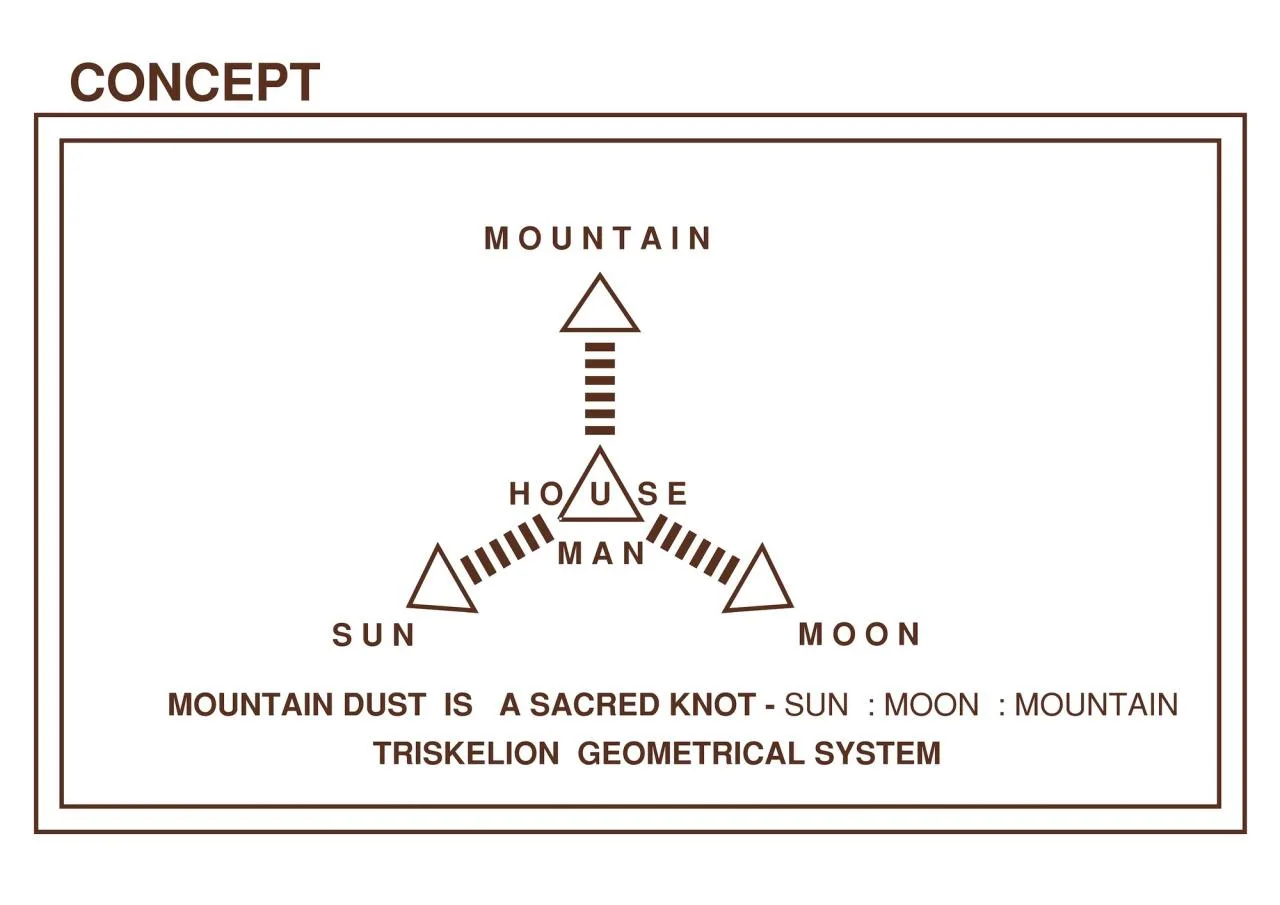
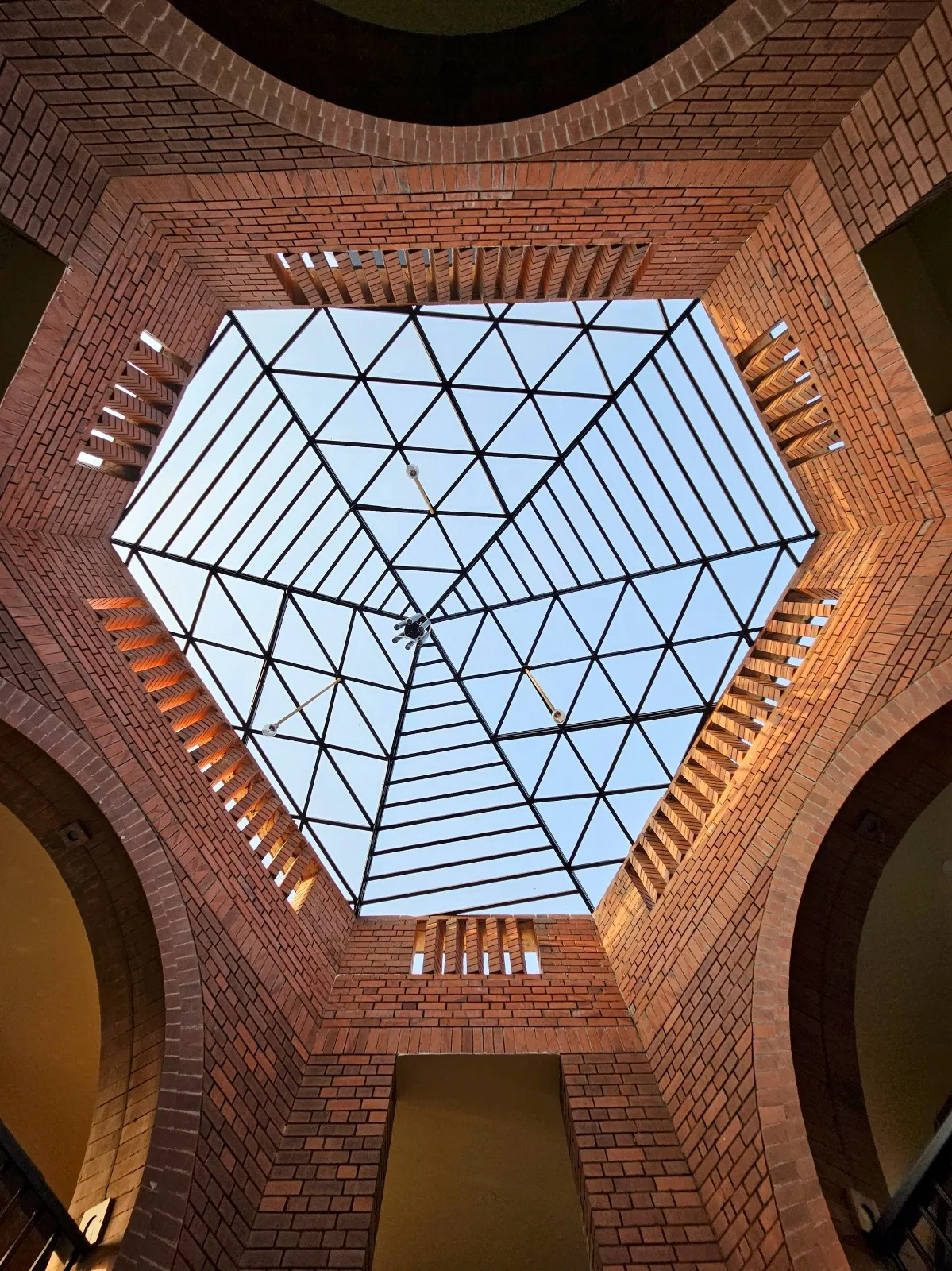
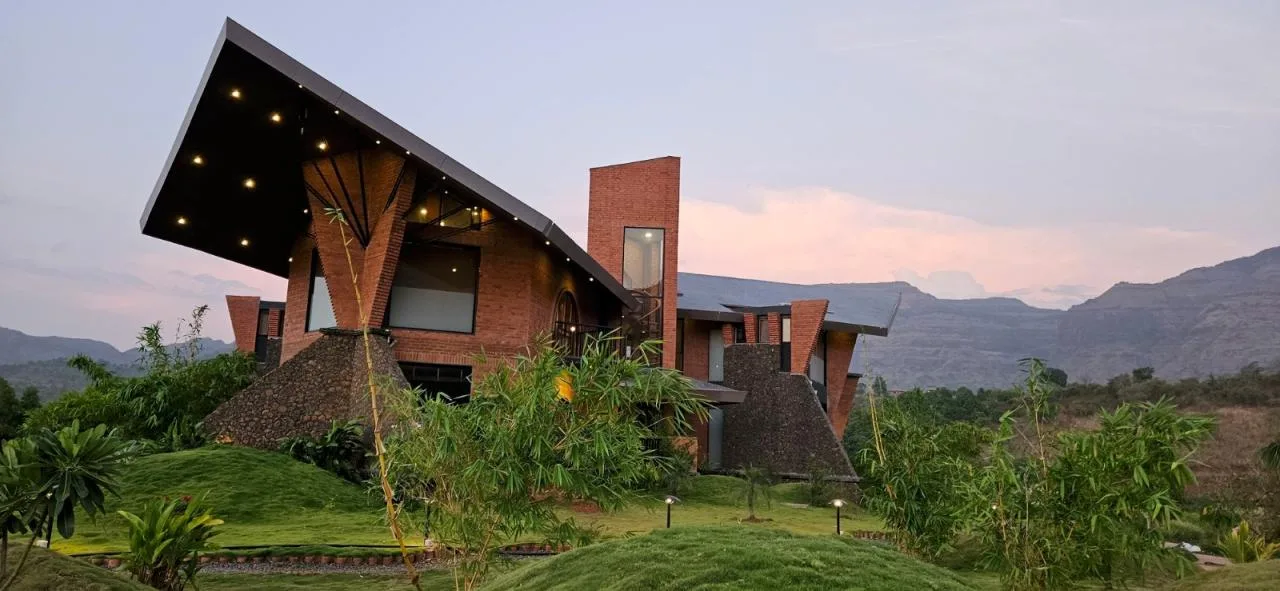
Our concept connects the house and its inhabitants to three powerful natural elements: towering mountains, the rising sun, and the moon. This connection forms a sacred symbol—the Triskelion geometric shape—that guides the house’s design. This unique geometry expands the living area, enabling a panoramic 360-degree view of the surrounding mountains.
Responding to the project’s requirements and carefully considering the site’s environment and climate, we adopted this distinctive three-legged geometric system. The house’s form emerges organically from within, constructed using minimal natural materials. Its appearance naturally reflects its setting, embodying a deep, specific relationship with both the landscape and the client’s vision.
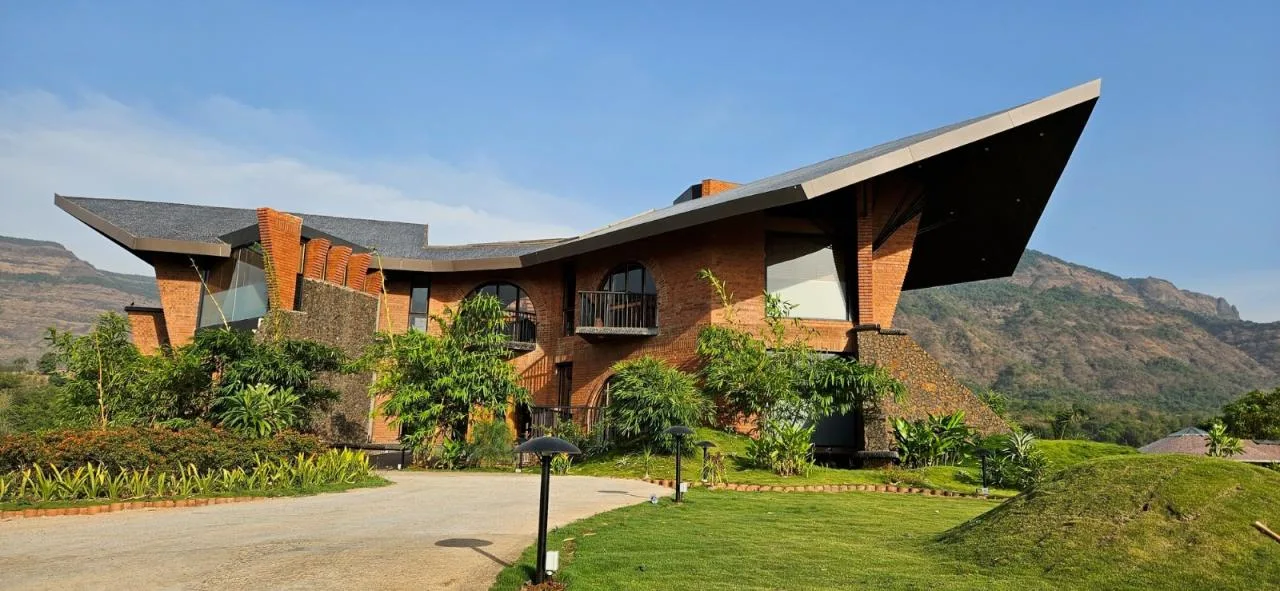
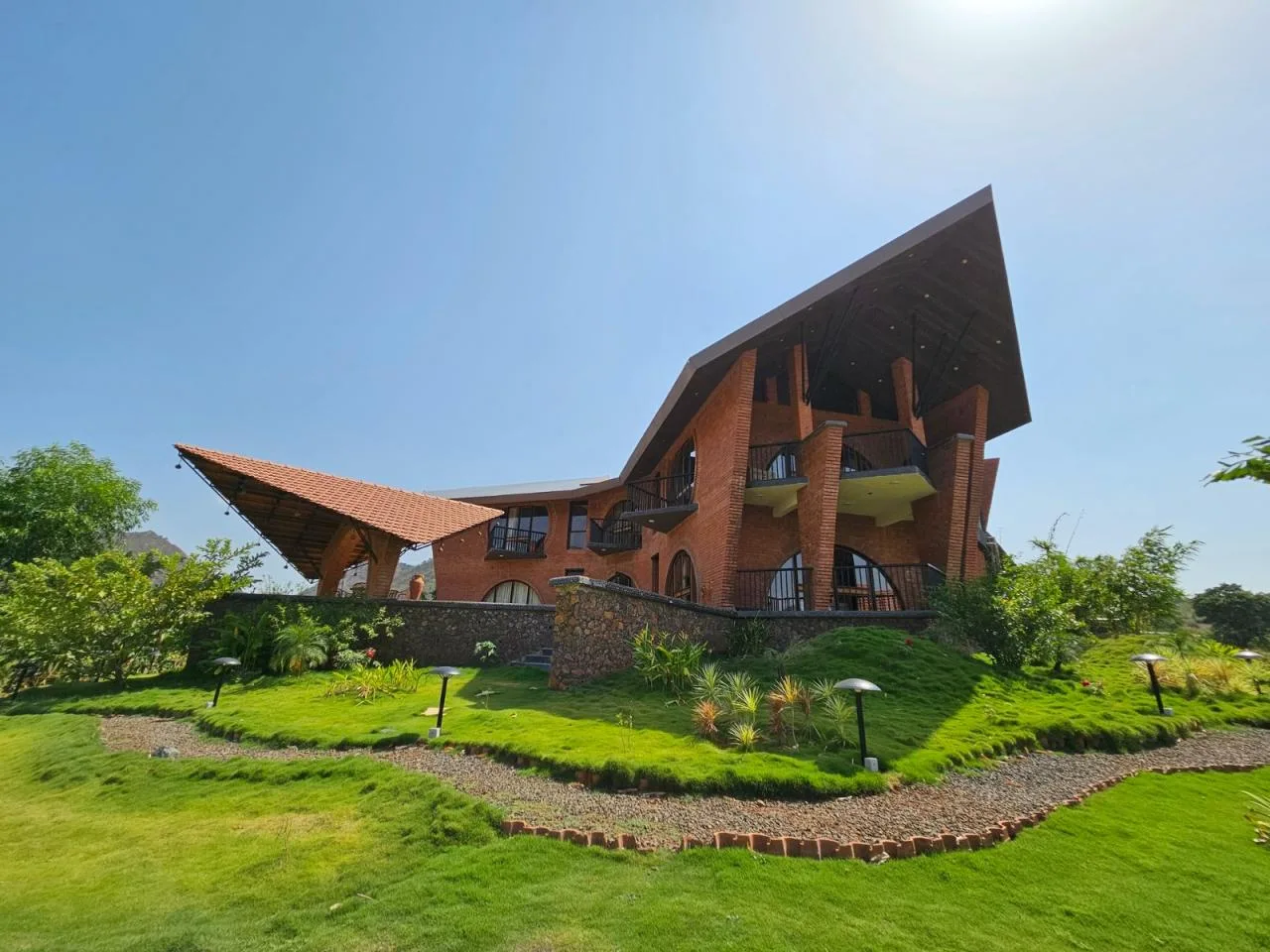
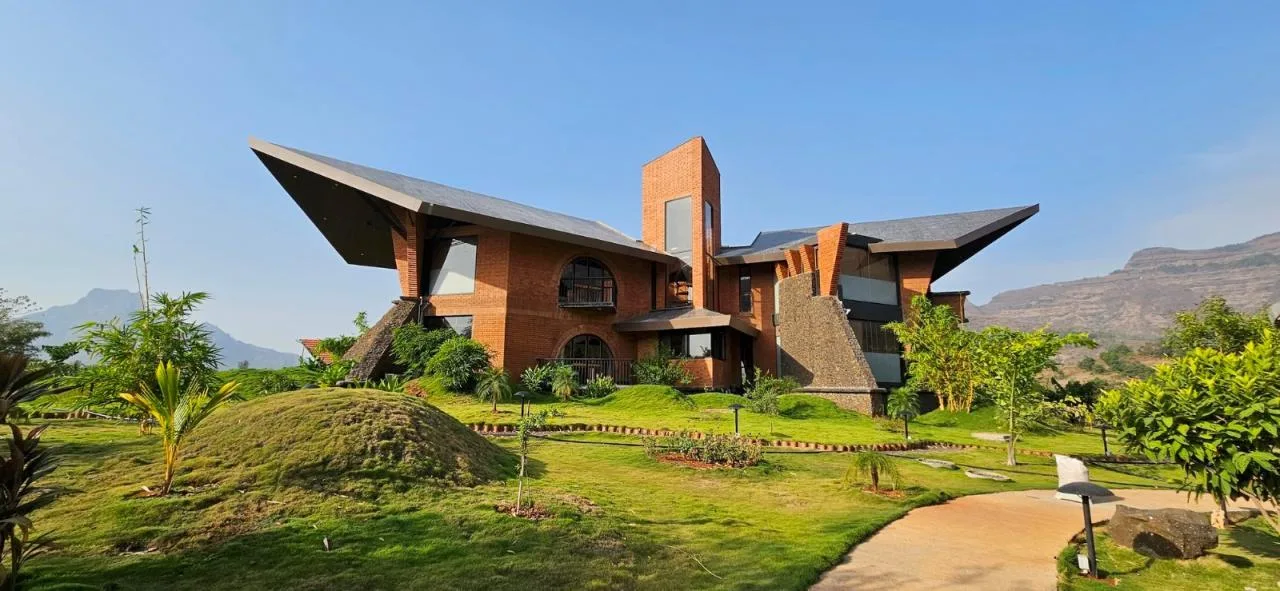
This residence serves as the country estate of Mr. Al Rayja and his family, who primarily live in Mumbai. Spanning 20 acres at the base of Mount Maseran, the estate features a 110-foot descent from the driveway’s highest point to the water’s edge. The farmhouse includes a six-bedroom main house surrounded by shared retro spaces, a camping area, swimming pool, service quarters, staff housing, a reservoir, expansive grasslands, a sacred valley, and a wilderness forest that stretches to the river.
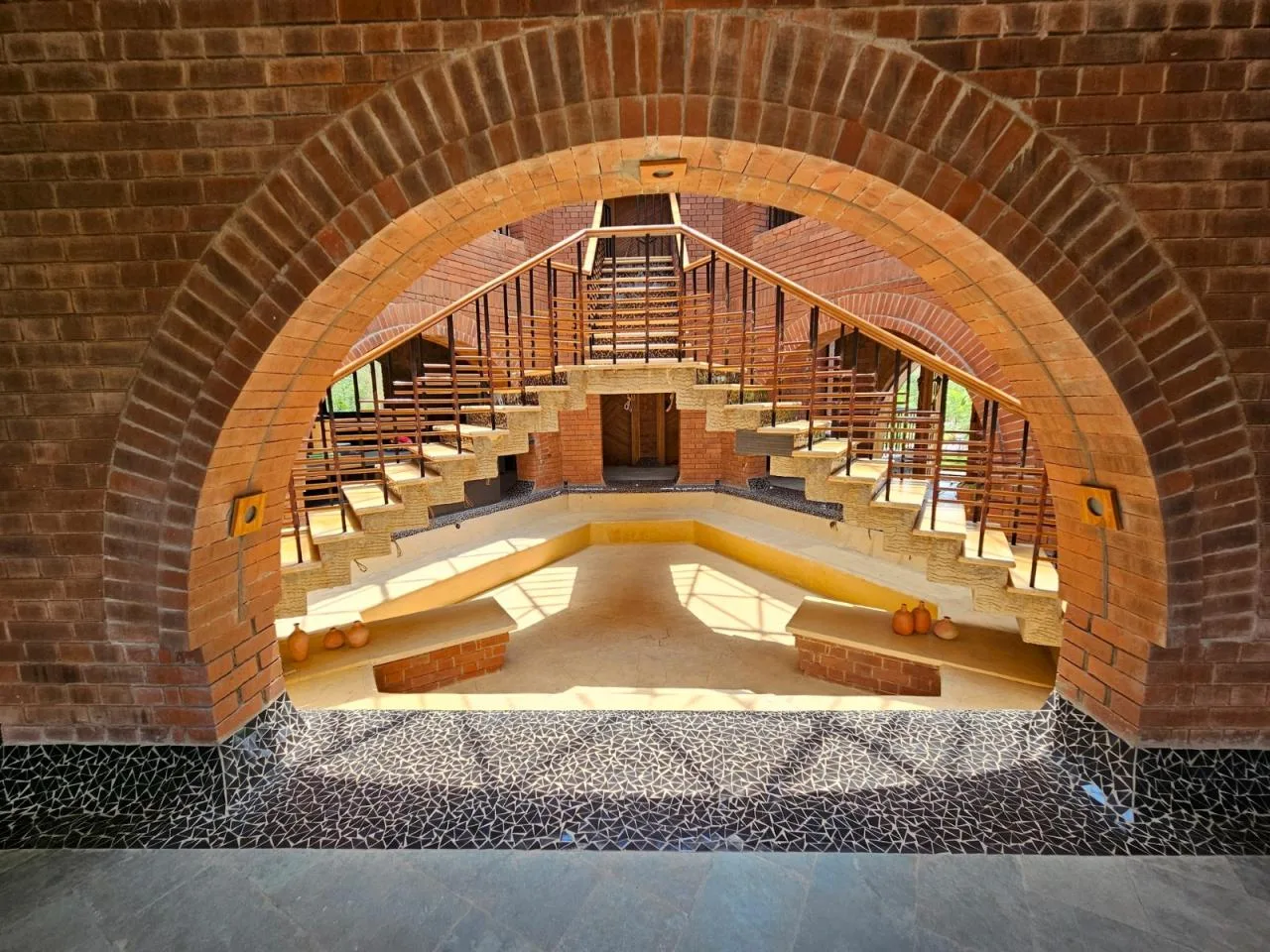
At the heart of the house is a bright triangular atrium, around which the entire structure revolves. From this center, three wings extend outward, each oriented towards nature, forming a sacred triple-helix geometry that maximizes stunning mountain views. This design balances an inward-focused core with outward spaces that seamlessly integrate with the natural surroundings.
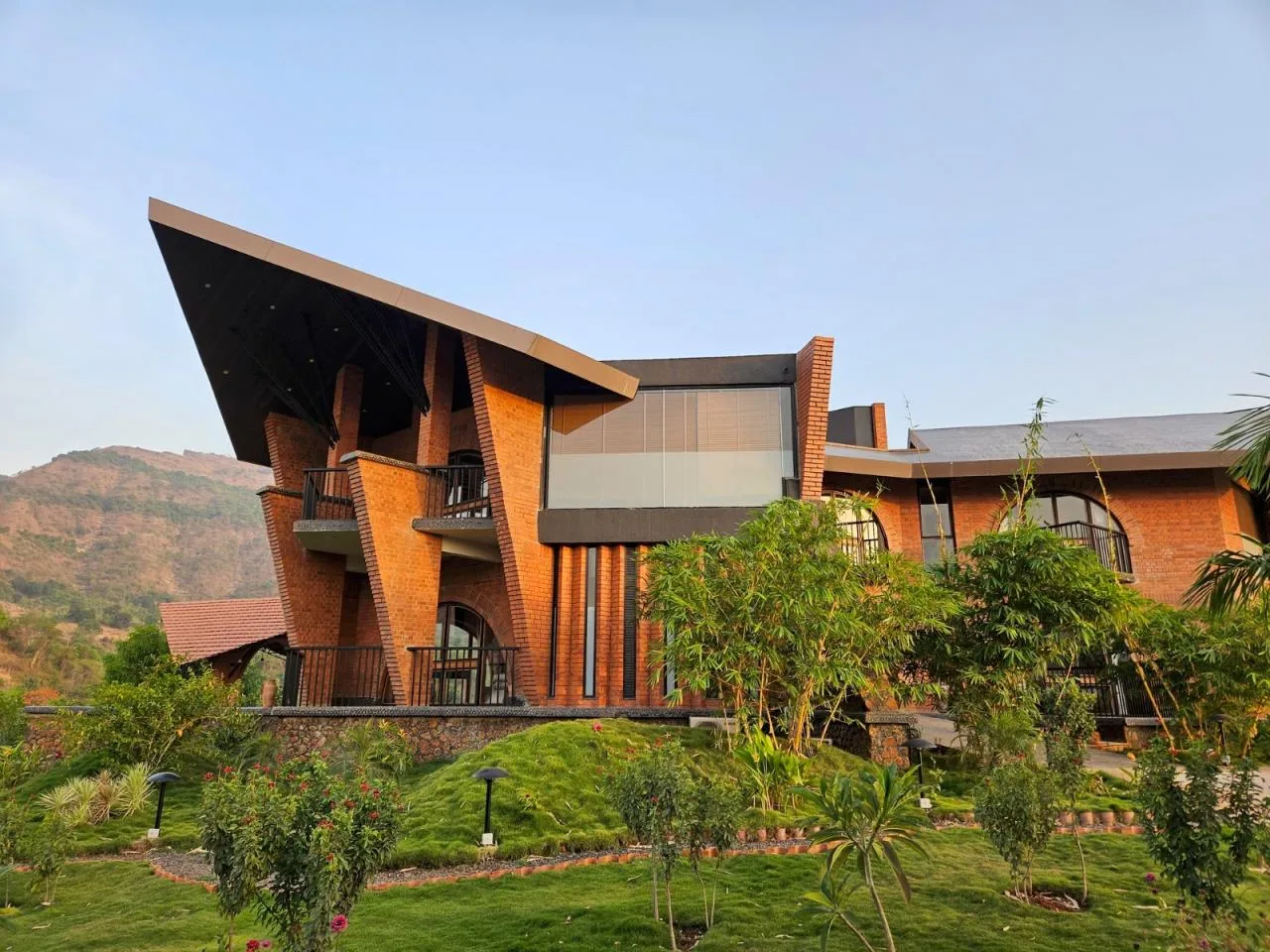
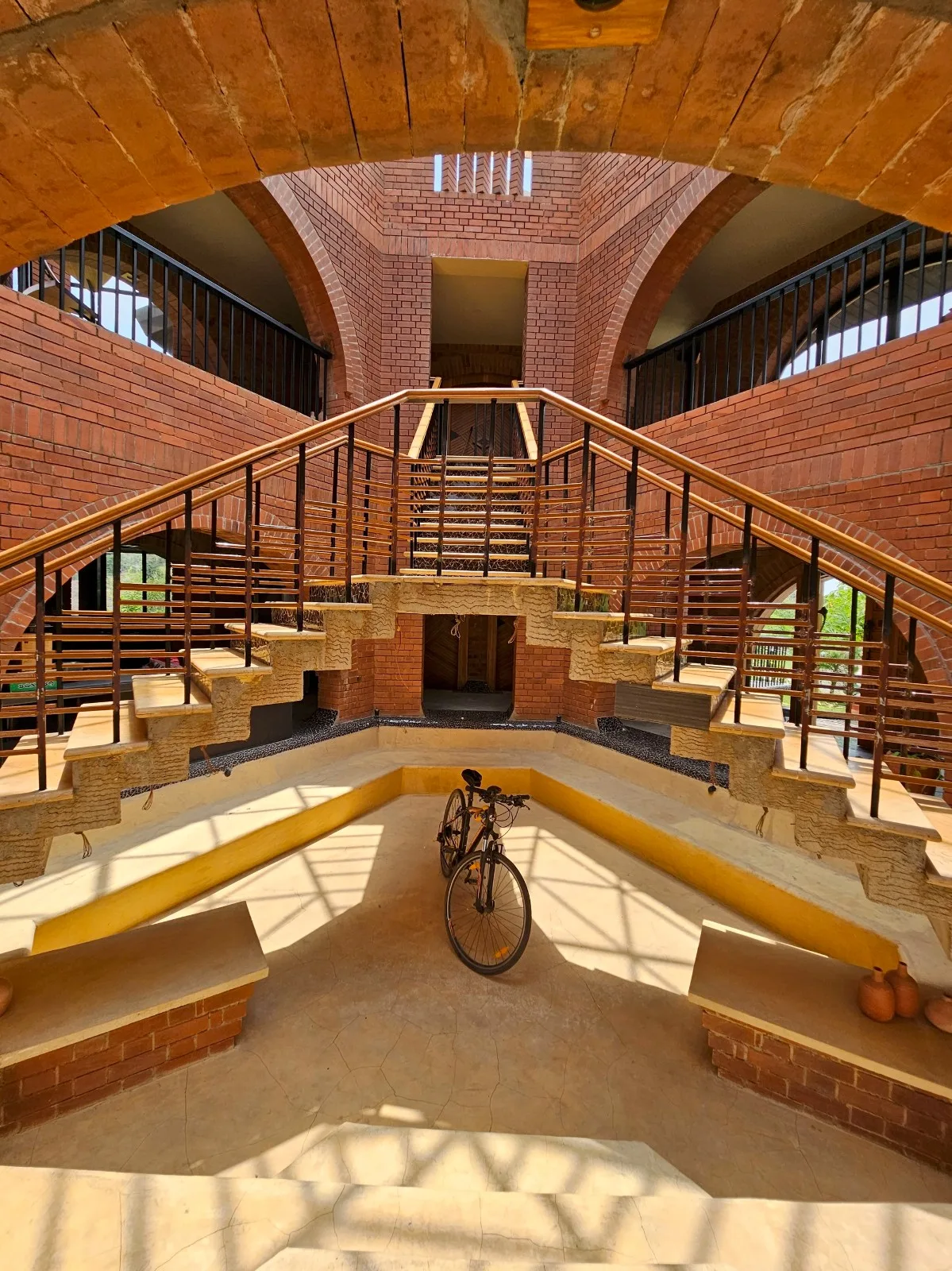
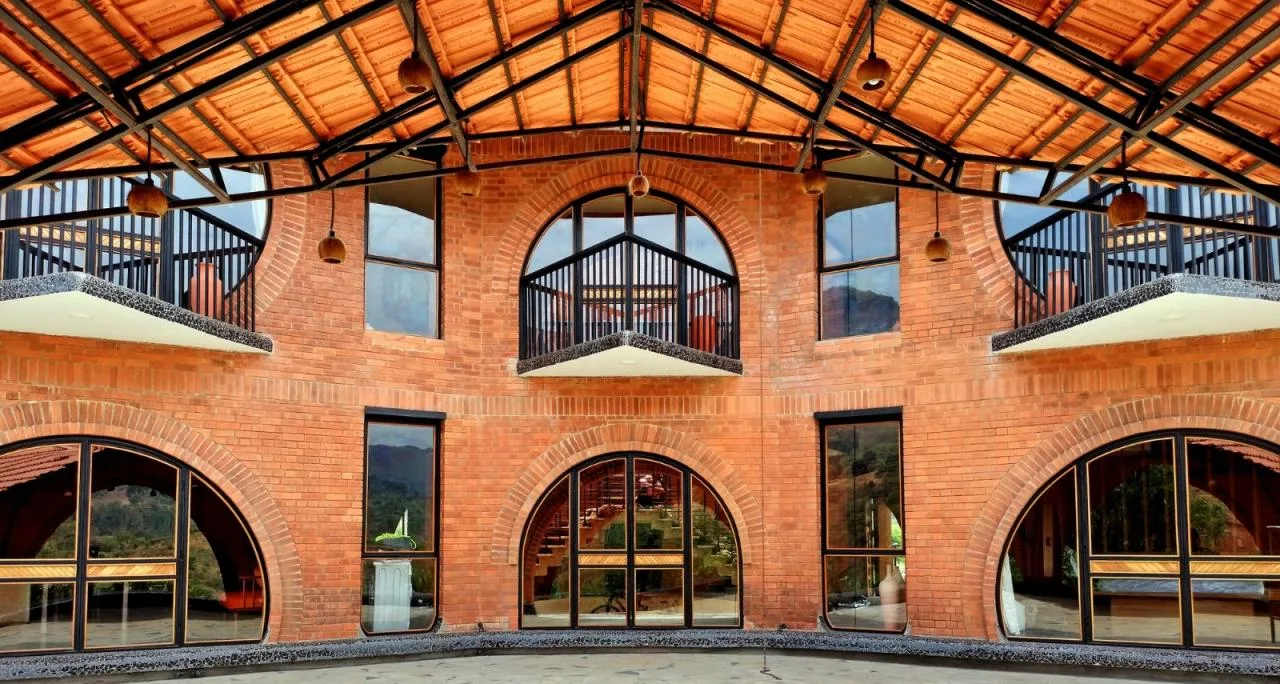
The six-bedroom country villa features three bedrooms, a pantry, and a living room on the first floor, with three additional bedrooms on the second floor. Each bedroom opens onto two triangular balconies, complemented by compact, angular bathrooms. A large terrace on the east side provides ample shade during the intense afternoon sun, thanks to its generous volume.
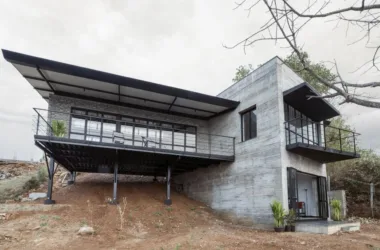
Adjacent to the terrace, a pavilion offers further shade, while panoramic views of the Marcelline Mountains and the rising sun and moon form a breathtaking backdrop. Below, the terrace connects to the swimming pool and camping area. The cantilevered sloping roofs on three sides shield the house from unpredictable weather.
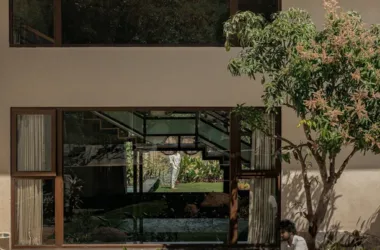
Expansive arched openings, crafted from M.S. hollow box tubes and transparent glass, flood the interiors with natural light while integrating indoor spaces with the surrounding landscape. This home offers an exceptional way to experience nature firsthand.
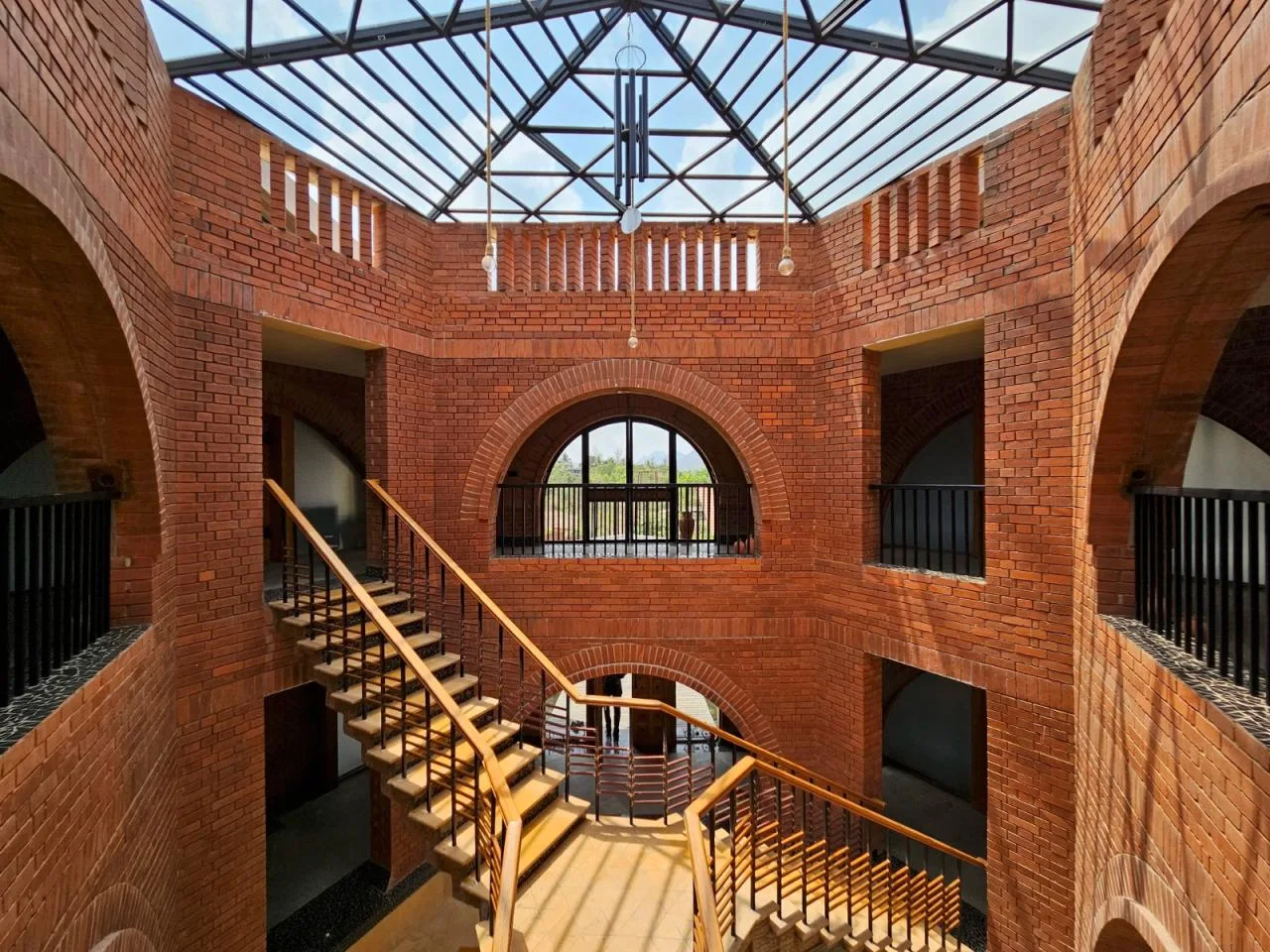
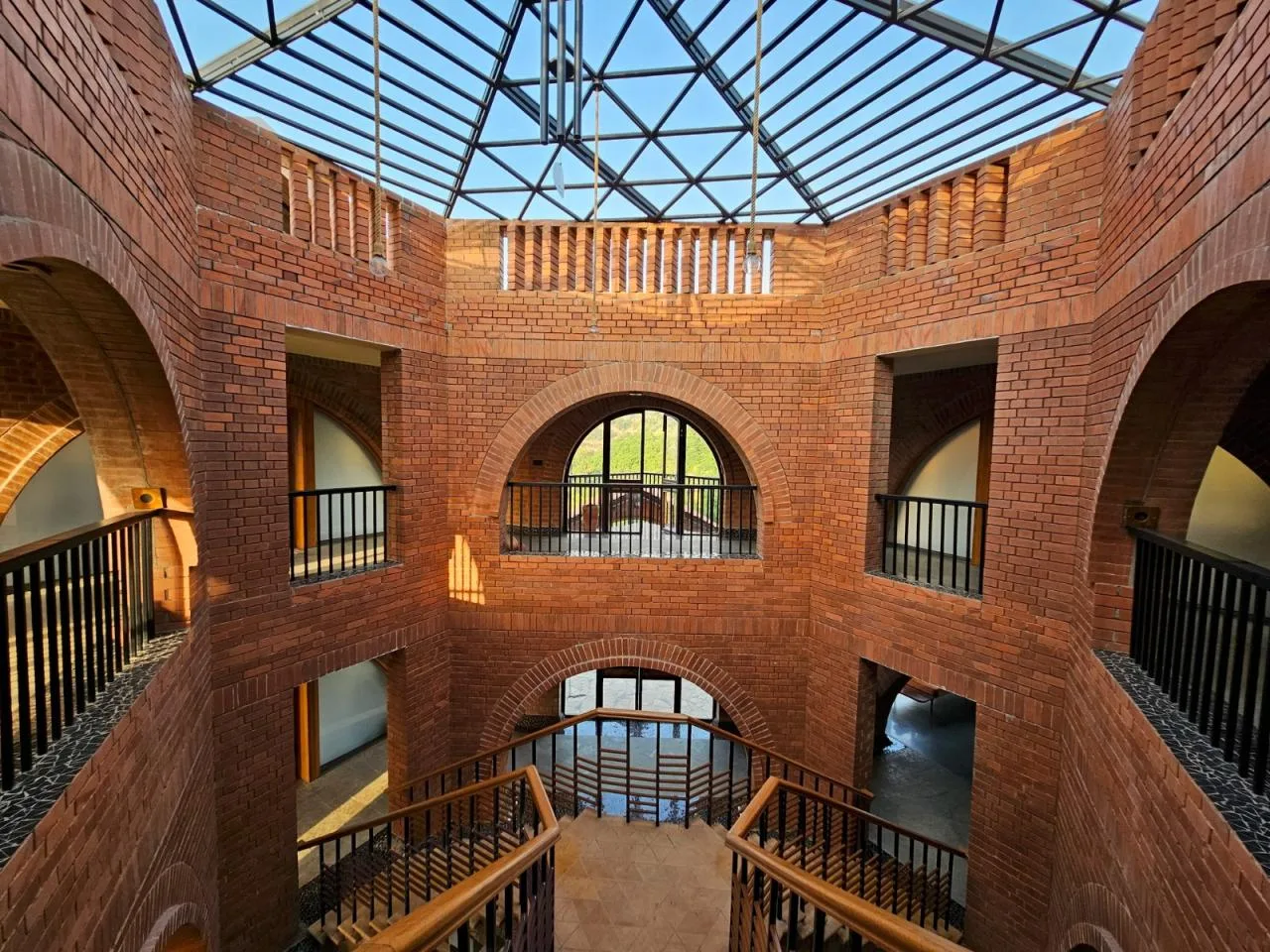
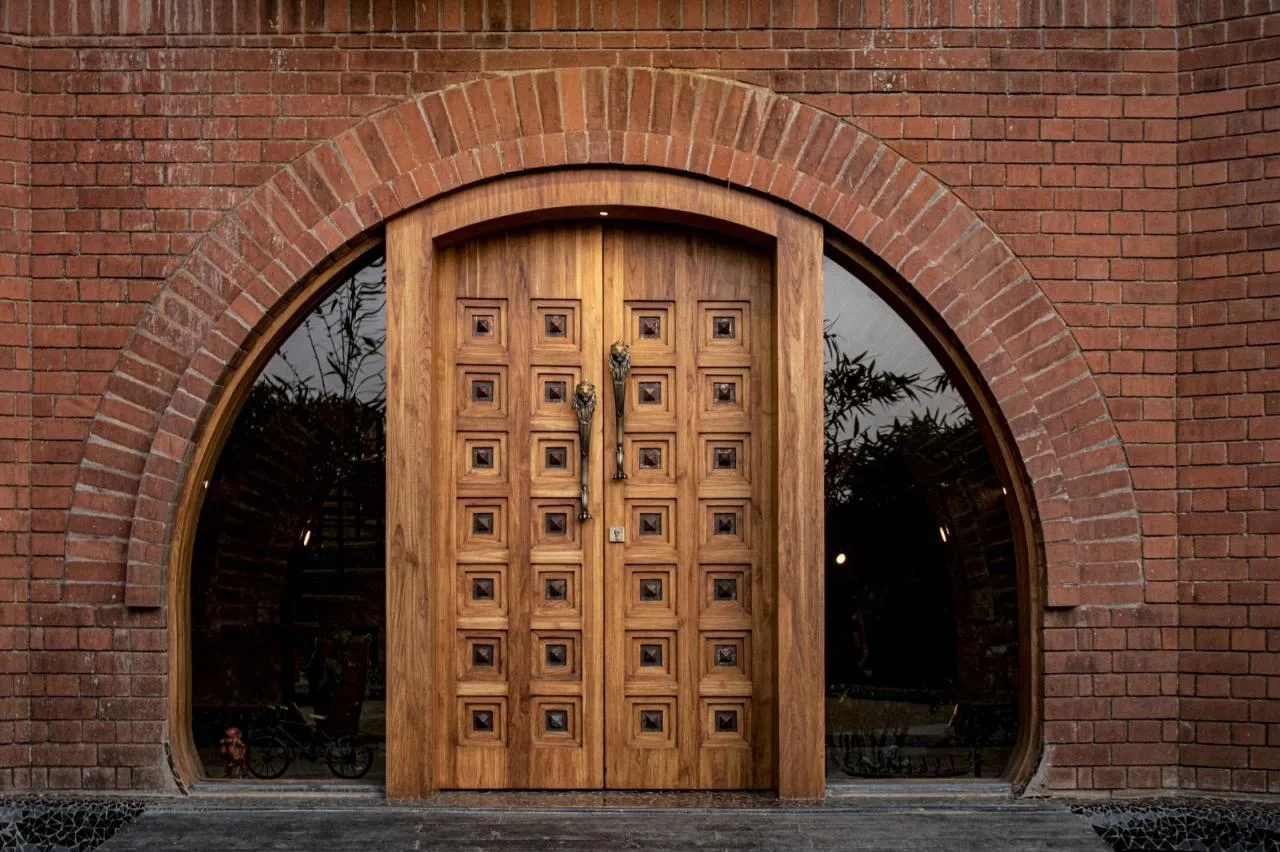
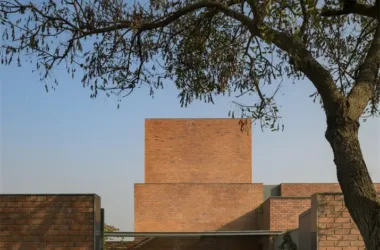
To achieve a simple, rustic aesthetic, we selected the most natural material tones. The color palette includes a black basalt base, earth-red brick walls, black porcelain mosaic roofing, Keta stone flooring, black porcelain mosaic walls, a yellow Jesar Mer stone central staircase, beige Shahabad stone terraces, black river sand granite, and black basalt rock walls in the bathrooms. Together, the reds, beiges, and blacks form a harmonious theme throughout the house.
To enhance the estate’s greenery, over 2,000 trees were planted during the three-year construction period. Priority was given to native plants due to their low maintenance requirements and medicinal qualities. The landscape around the “House of Mountain Dust” remains casual and untouched, preserving its natural feel.
To maintain privacy and control the house’s scale, strategically placed mounds mimic miniature mountain peaks inspired by the Massland Hills. The estate’s lanes and paths are arranged in circular geometric patterns, dividing the landscape into distinct zones.
Human existence and art follow rhythmic patterns, beginning and ending in continuous cycles. These patterns stem from core ideas and evolve as those ideas shift. Similarly, architectural geometry plays a crucial role in fostering harmony and tranquility.
The geometry of the “House of Mountain Dust” is based on square and triangular grids, creating a three-legged system that balances the circular geometry of the surrounding landscape.
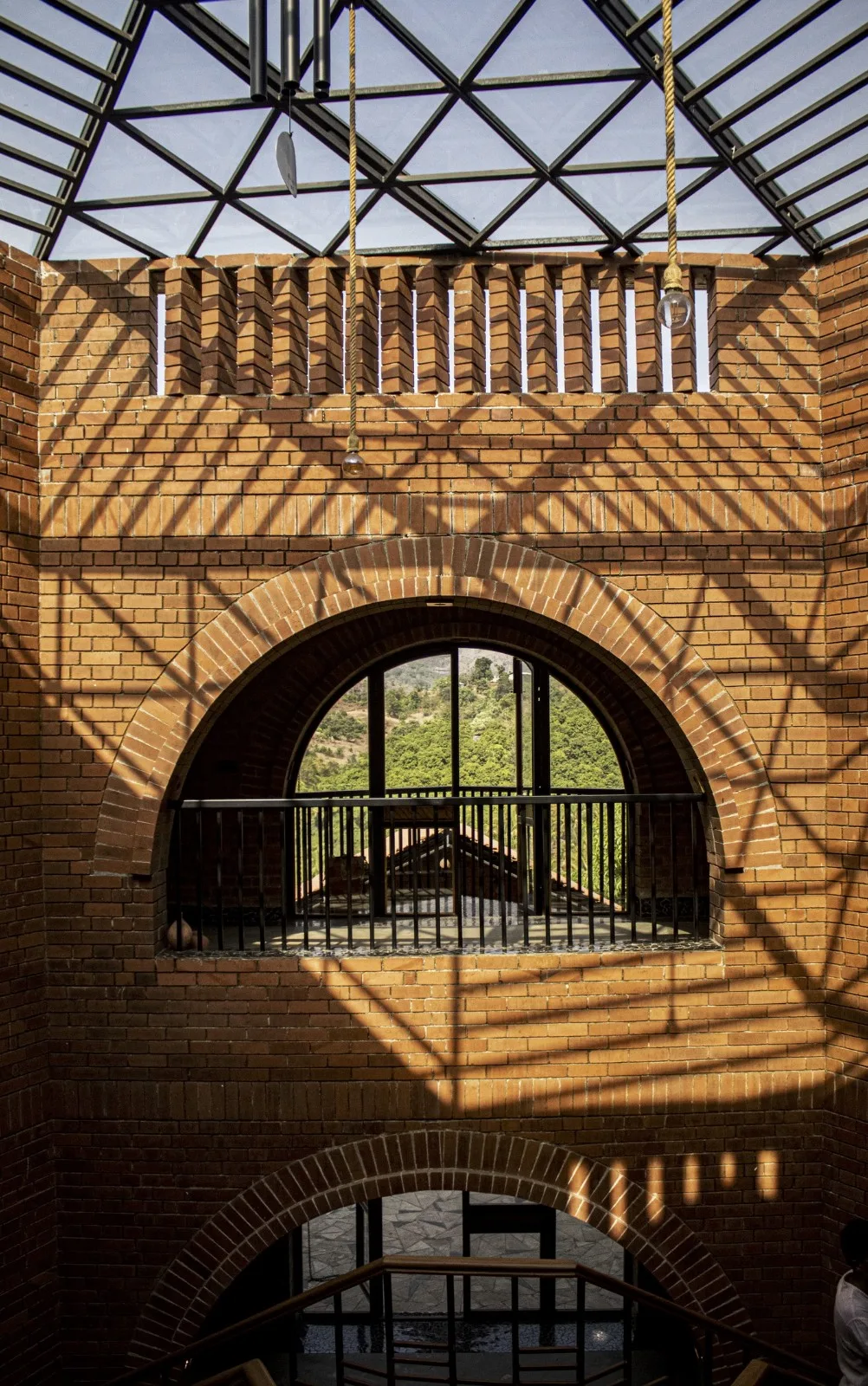
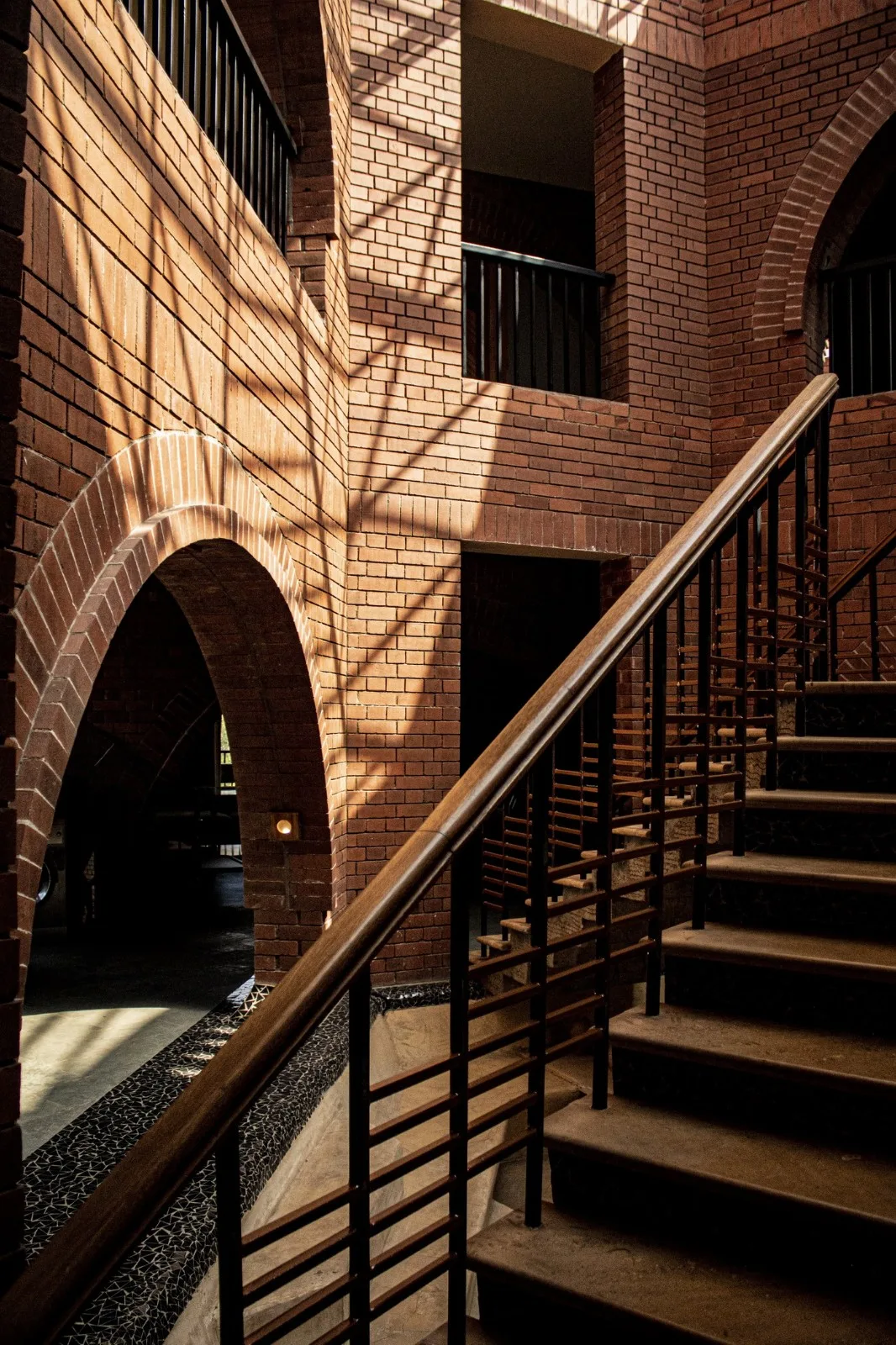
After creating concept maps and models, I chose not to produce formal construction drawings. Instead, the house was built naturally on site, with architects, local masons, and builders collaborating directly—without the involvement of structural or civil engineers. I believe that structures built strictly from drawings can feel static and leave little room for spontaneous evolution.
Once construction was complete, final drawings were prepared solely for archival purposes.
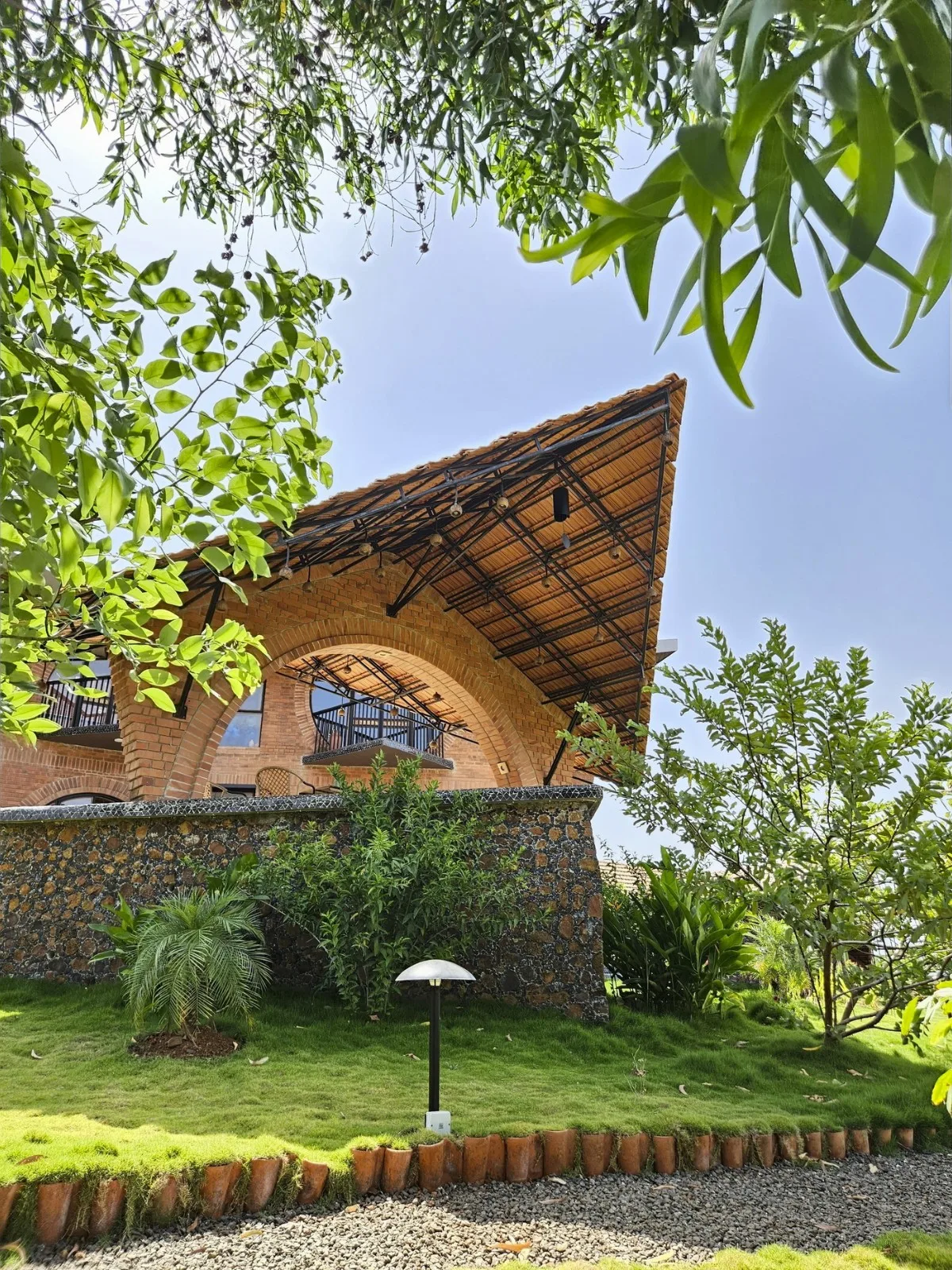
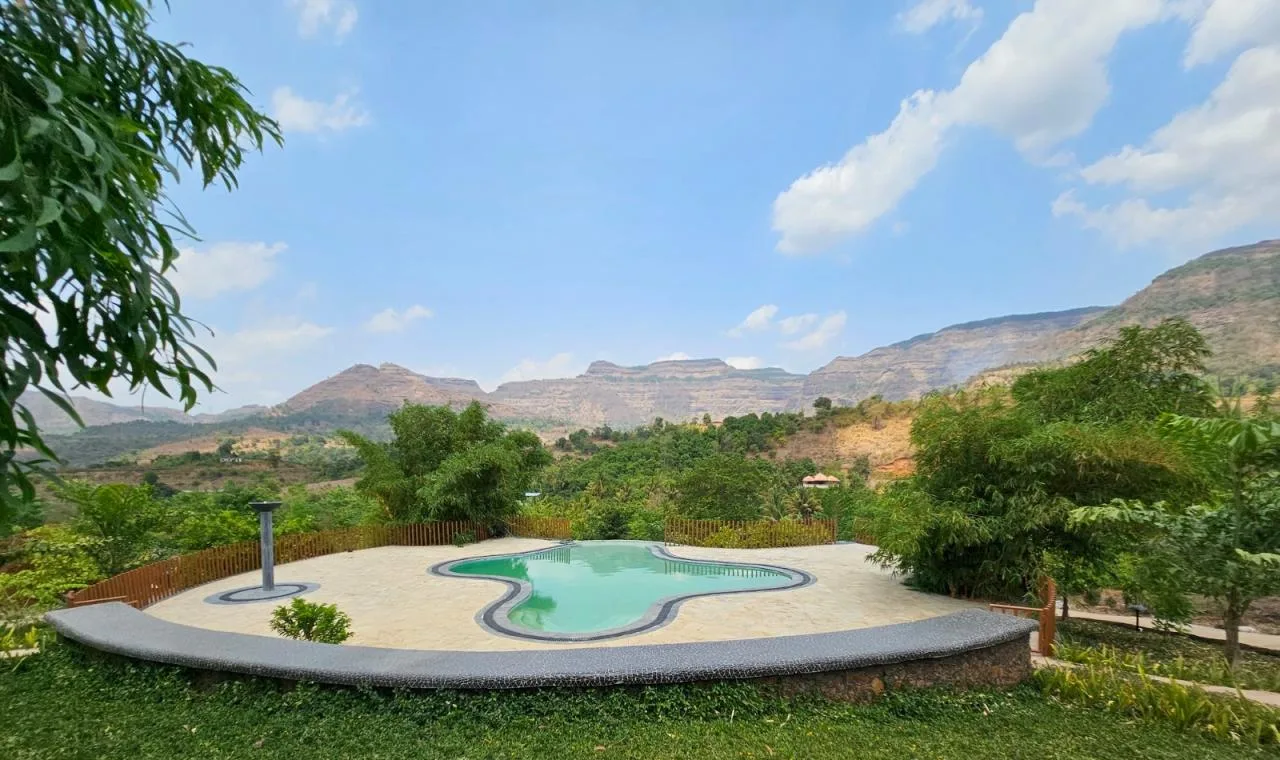
The philosophy behind objective organic architecture is deeply introspective, grounded in a holistic view. It explores the dynamic interaction between a structure and its environment. In this approach, ‘nature’ is the central theme—embracing the site’s terrain, climate, materials, intentions, and the people who inhabit it.
Organic architecture is an objective art form with the ultimate purpose of fostering human development. It possesses unique, human-like qualities and forms designed to serve specific functions. Just as human extroversion aligns with outward space, introversion synchronizes with inward space, creating a resonance between people and their surroundings.
Achieving this “resonance” state is vital. Like a language that evokes emotion, architecture’s geometric forms can inspire joy or discomfort. Beautiful, balanced structures resonate positively within us, while disproportionate or chaotic forms can cause unease.
For example, quietly observing a Buddha statue can bring inner calm, while viewing the Taj Mahal under a full moon invites deep contemplation. Objective organic architecture helps individuals feel centered, healthy, and whole.
Project Drawings
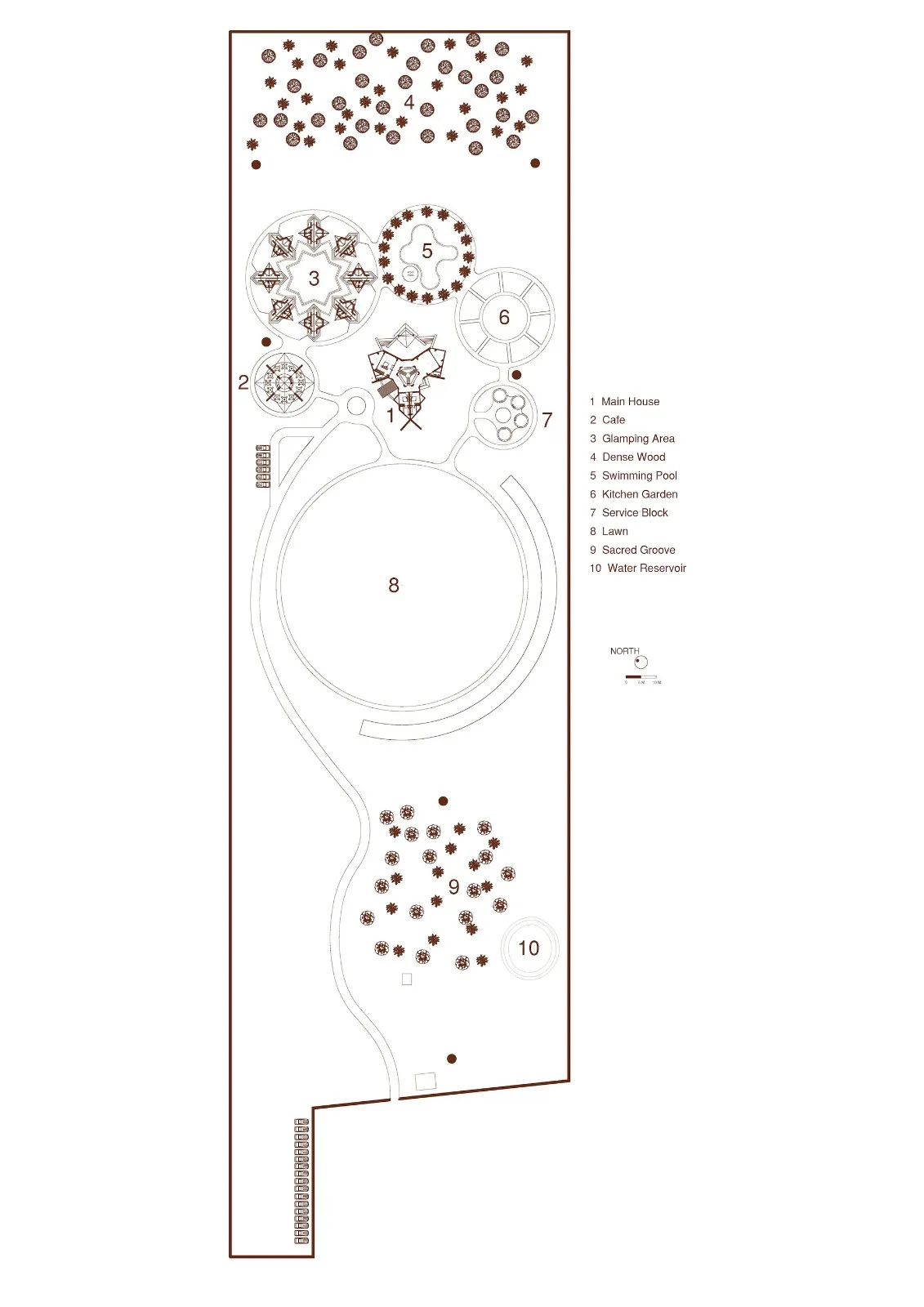
△ General Layout Plan
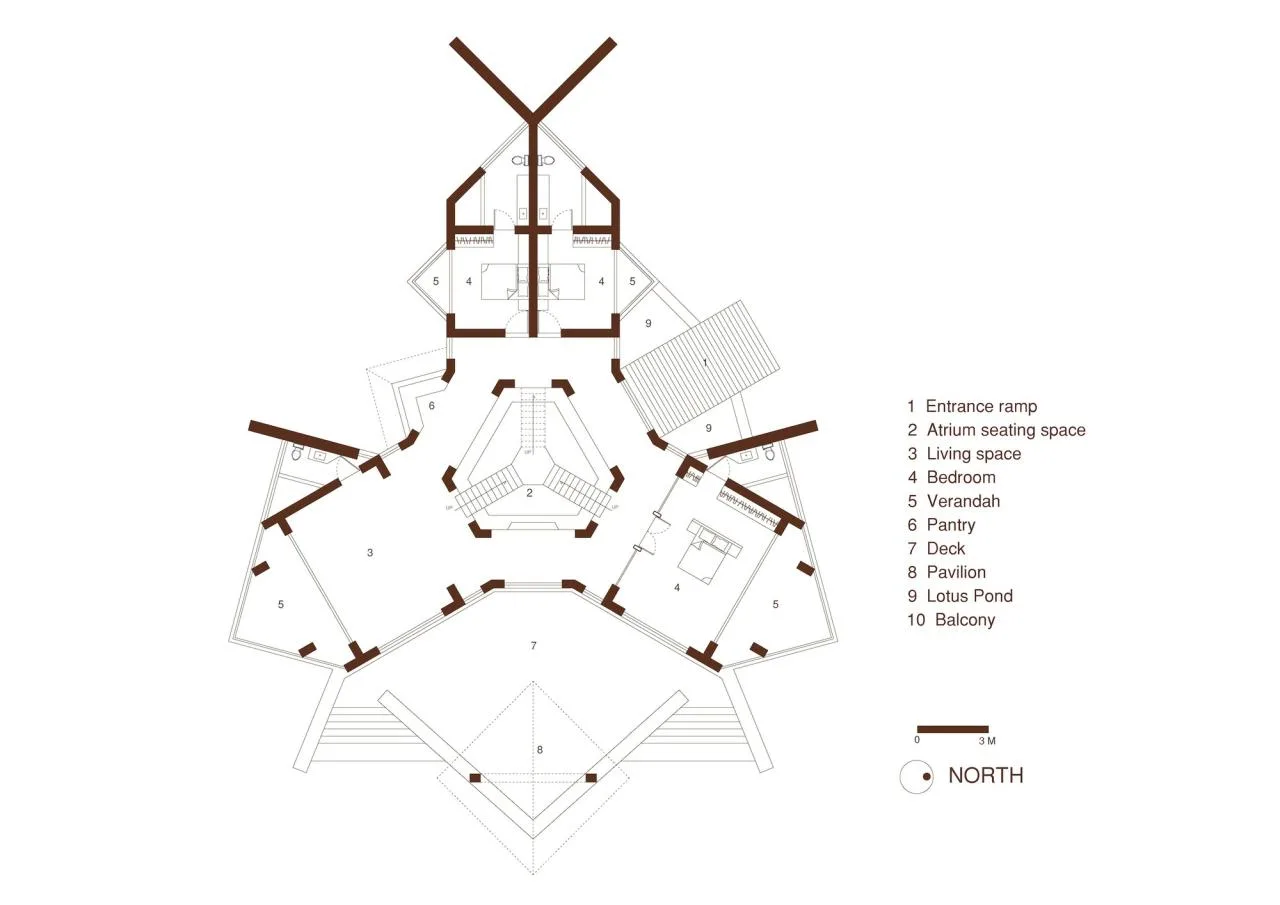
△ First Floor Plan
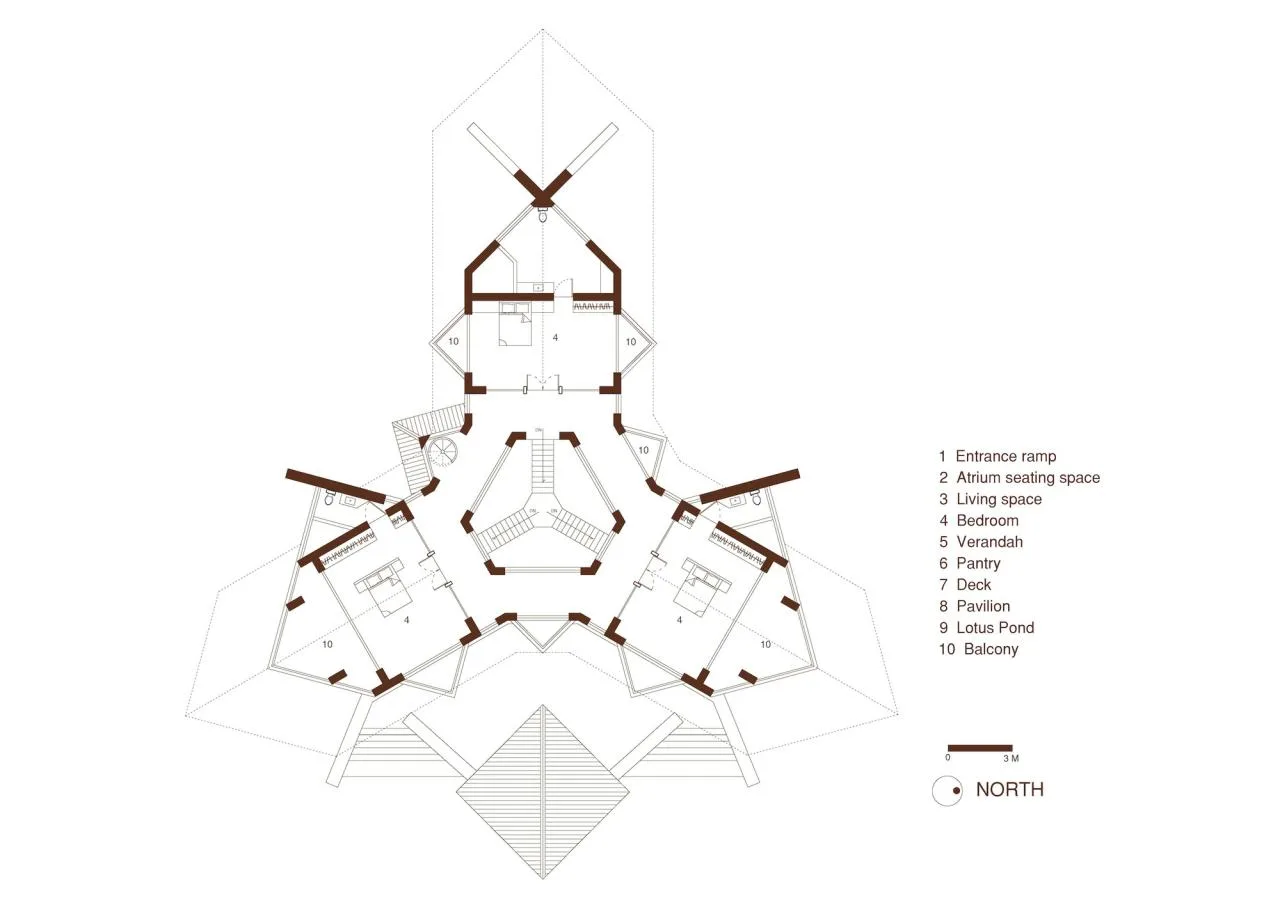
△ Second Floor Plan
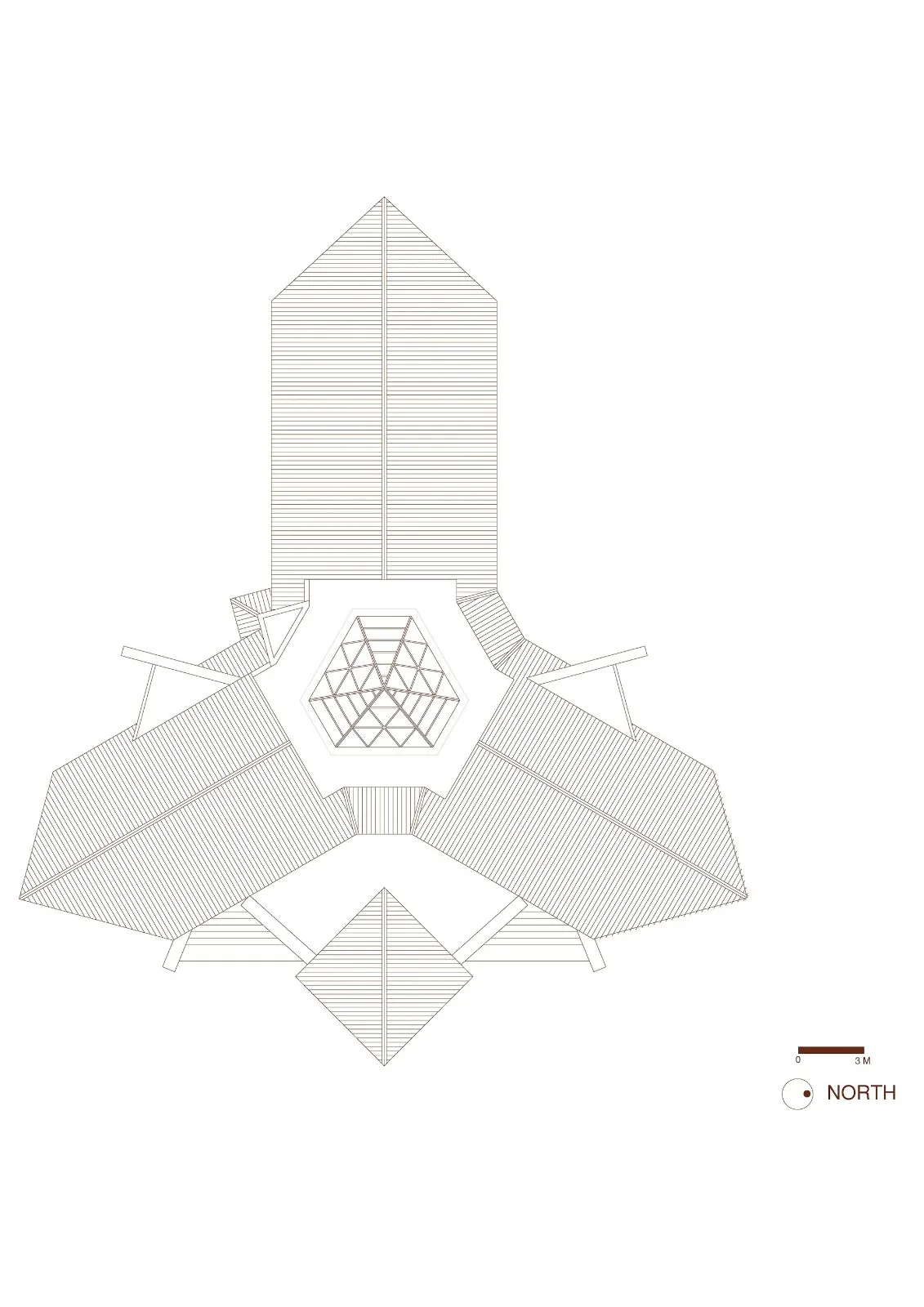
△ Roof Plan
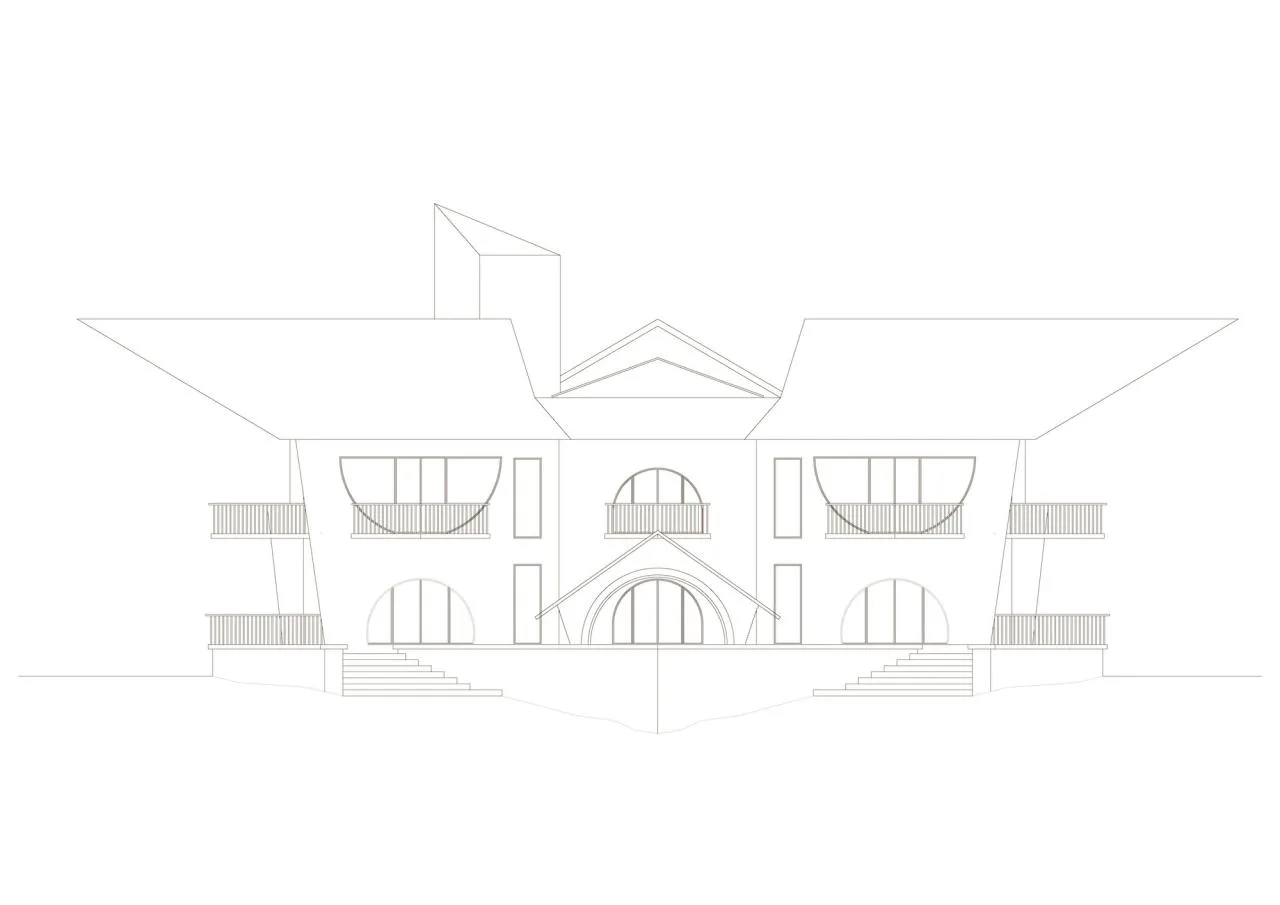
△ Elevation Drawing
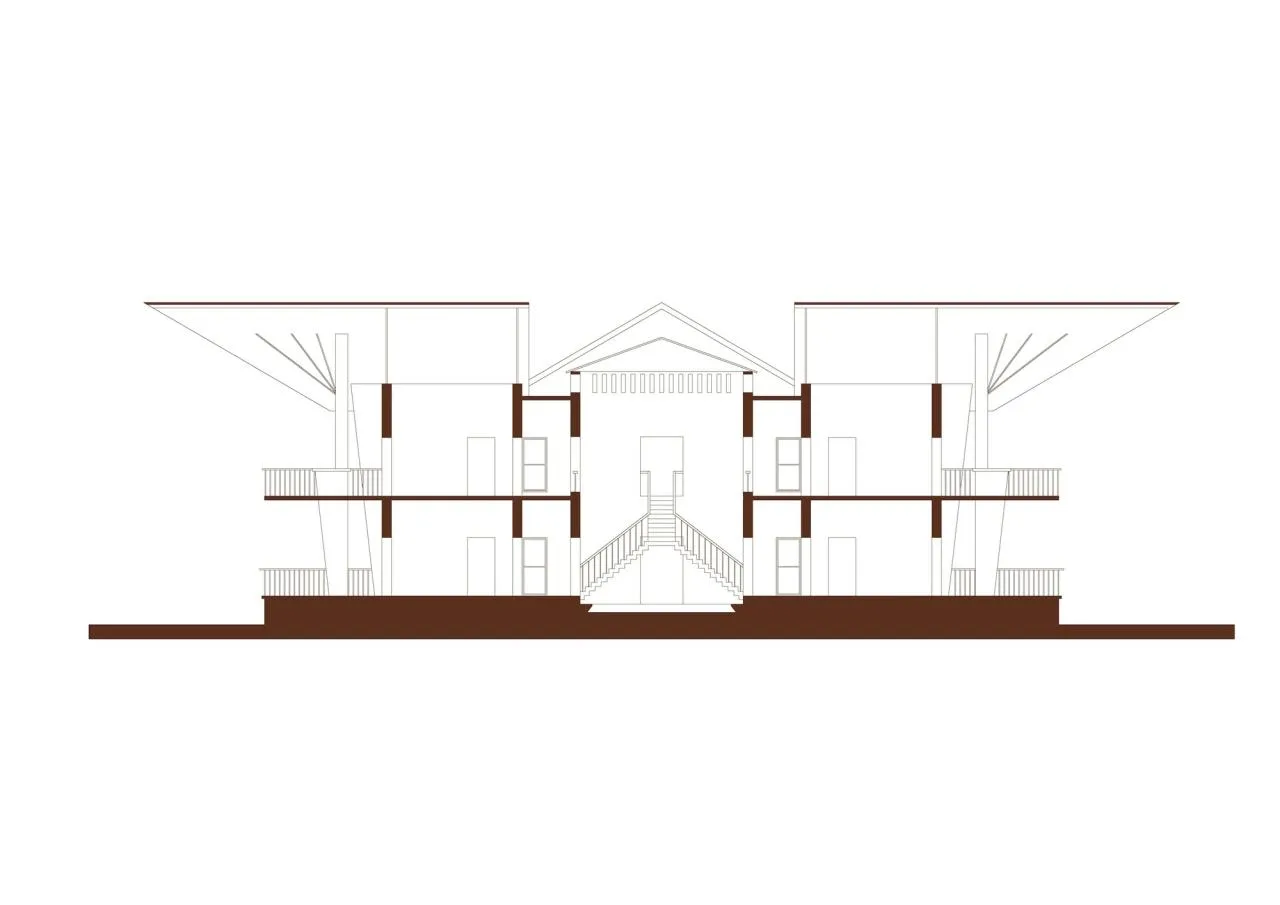
△ Section Diagram
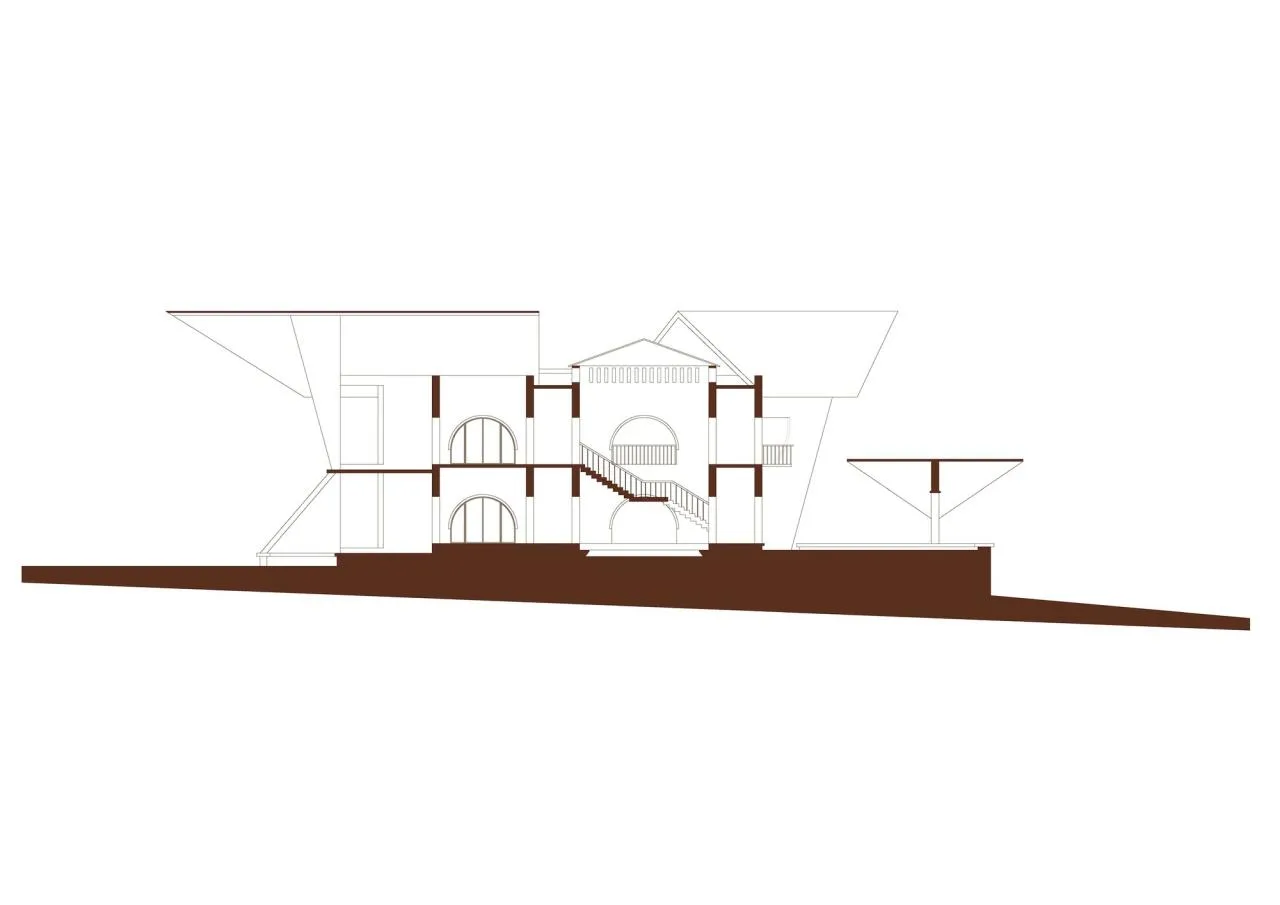
△ Section Diagram
Project Information
Architect: Mahesh Naik
Area: 7,295 ft²
Project Year: 2023
Photographers: Mahesh Naik, Omkar Jagdale, and Musaib
Architectural Design: Mahesh Naik
Location: Navi Mumbai, India












Must log in before commenting!
Sign Up