
In the distinctive residential community of Luhu Ecological City, we aim to explore the potential of vertical courtyard development by researching the prototypes and diversity of residential spaces. Our goal is to foster a closer connection between people and nature, reshaping a vibrant lifestyle that aligns with ecological principles.” – Meng Fanhao
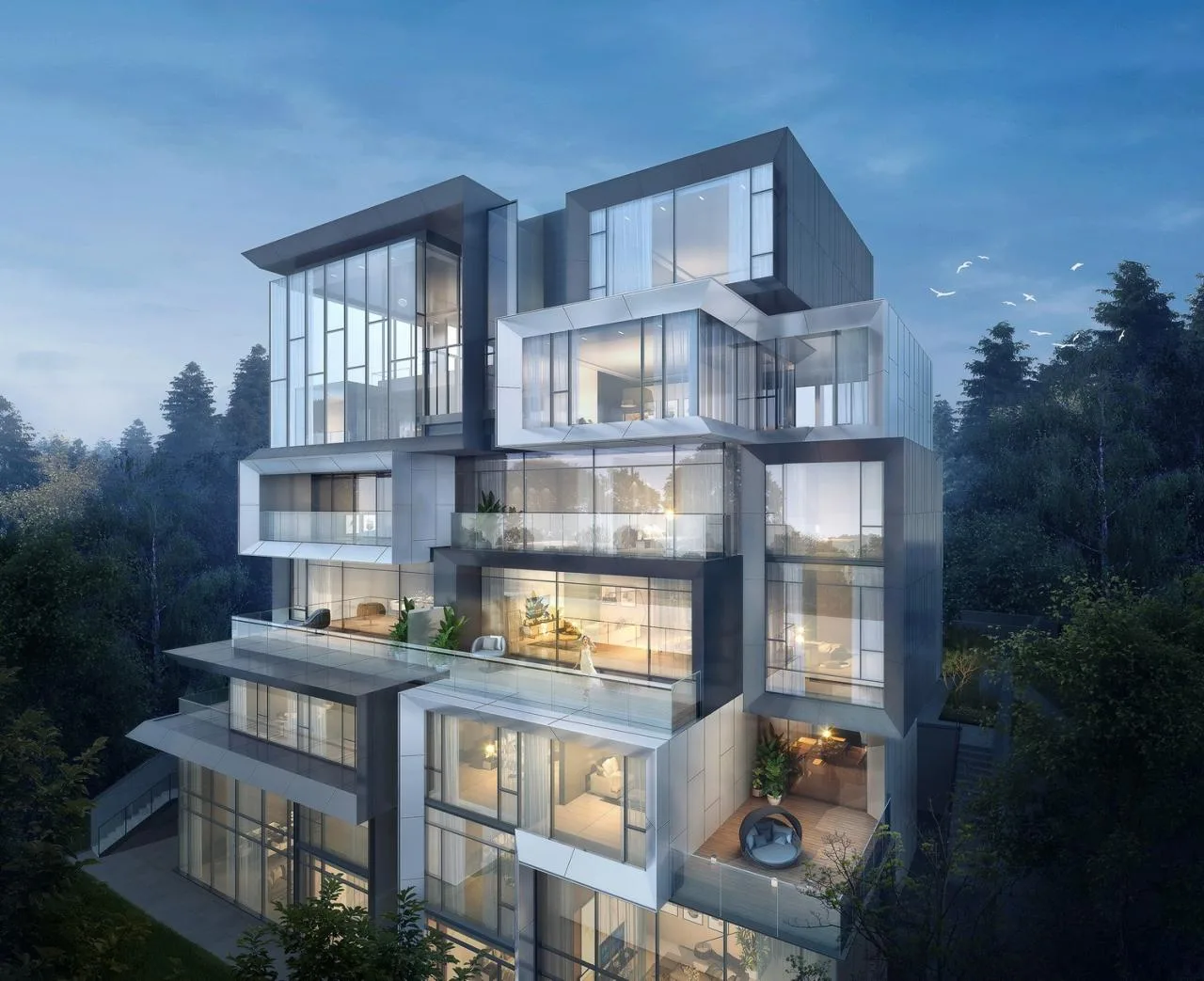
Chengdu Luhu Ecological City, recognized as one of China’s “Four Great Parks,” follows a mixed-use development model that seamlessly integrates urban design with ecological landscapes. Over the past decade, it has attracted upscale residences, industries, and diverse lifestyle amenities, evolving into a new city centered on “water ecology.” As the first local Chinese firm invited to design residential buildings in Luhu’s starting area, Meng Fanhao, co-founder and lead architect of Line+, was commissioned by Wanhua Group to develop the final residential parcel—Black Stone Island Sky Villa. The main portion of the project is now complete, with the curtain wall façade beginning to take shape in reality.
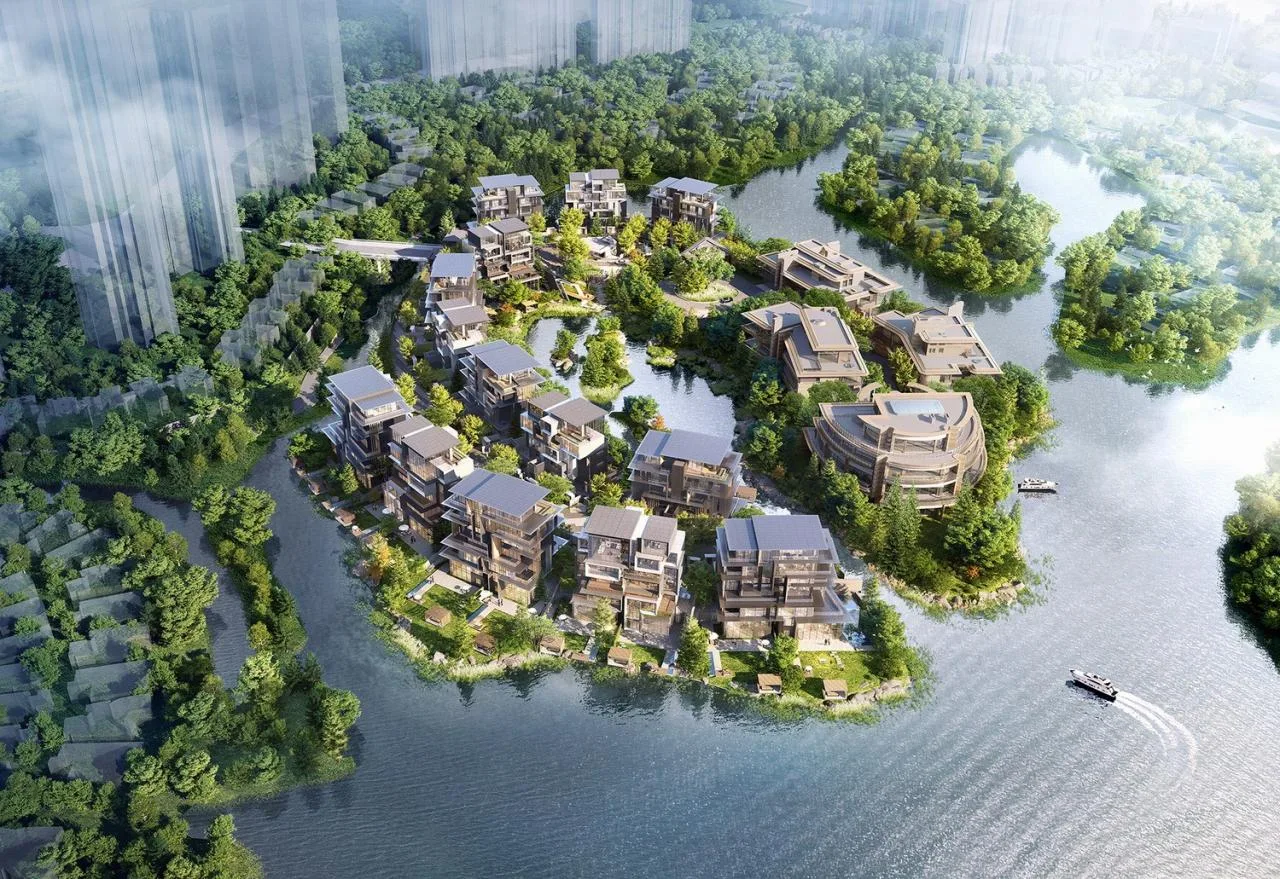
Wanhua’s commitment to exceptional quality of life and architectural uniqueness aligns perfectly with Line+’s pragmatic philosophy for urban living. The design and planning of Heishi Island occur within a high-density environment, featuring a floor area ratio of 1.5 and a height restriction of 24 meters. By innovating residential typologies, the project revives the spatial experience of a “detached villa,” fostering architectural character through dynamic forms that respond to the island’s ecology—achieving a dual enhancement of lifestyle quality and environmental harmony.
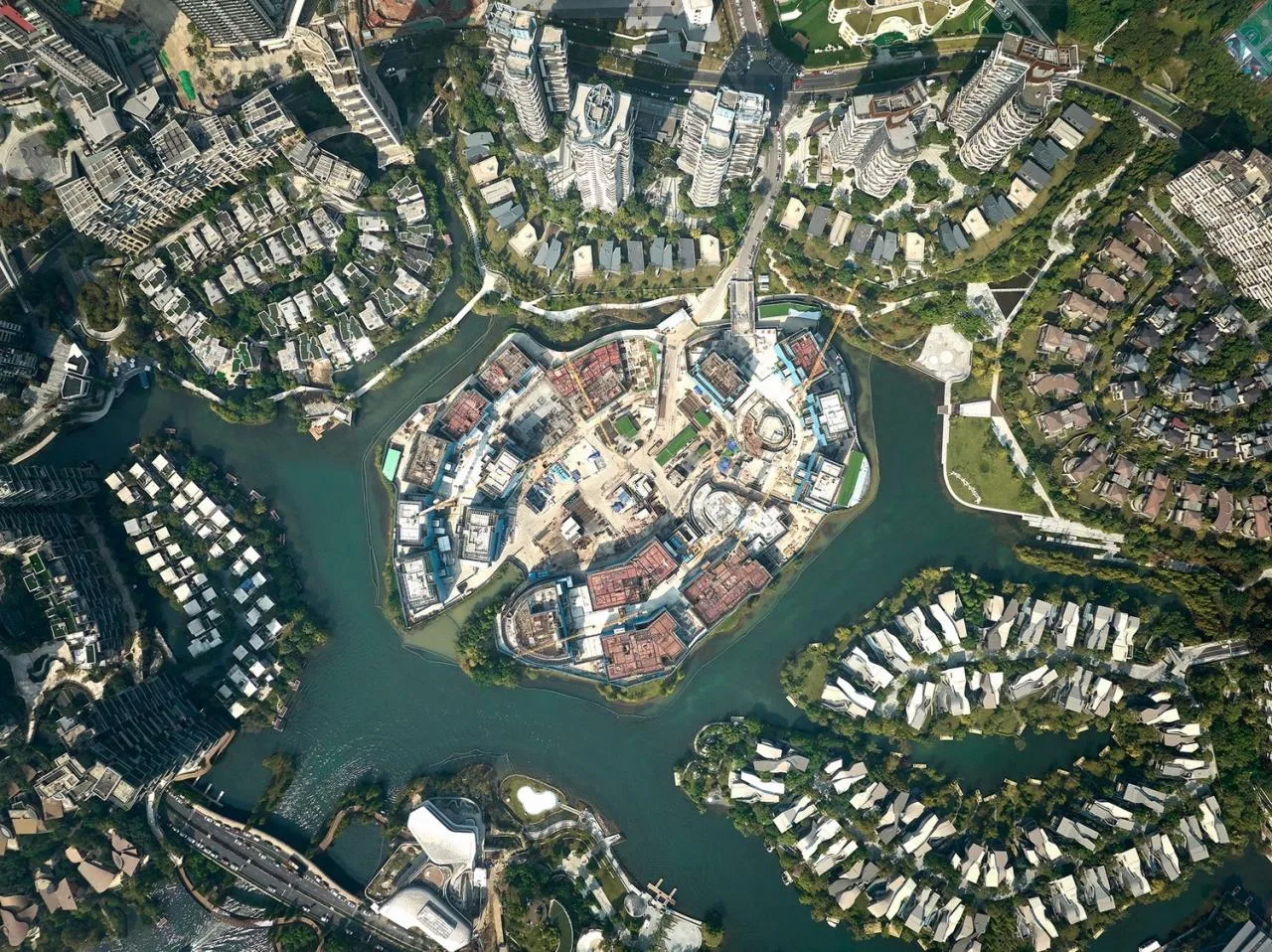
△ Aerial view of the construction site
Type Innovation: The “Vertical Five Connected Villa”
Experience the feel of a fully detached villa within a balanced value framework.
The innovation behind the “vertical five connected villa” stems from analyzing the industry-standard “stacked villa” layout: lower units typically have gardens, upper units feature terraces, while middle units often lack courtyards. Our approach explores vertical courtyard villa development on this limited land rich in ecological resources, creating more villa-style homes with private gardens, allowing more residents to share natural landscapes.
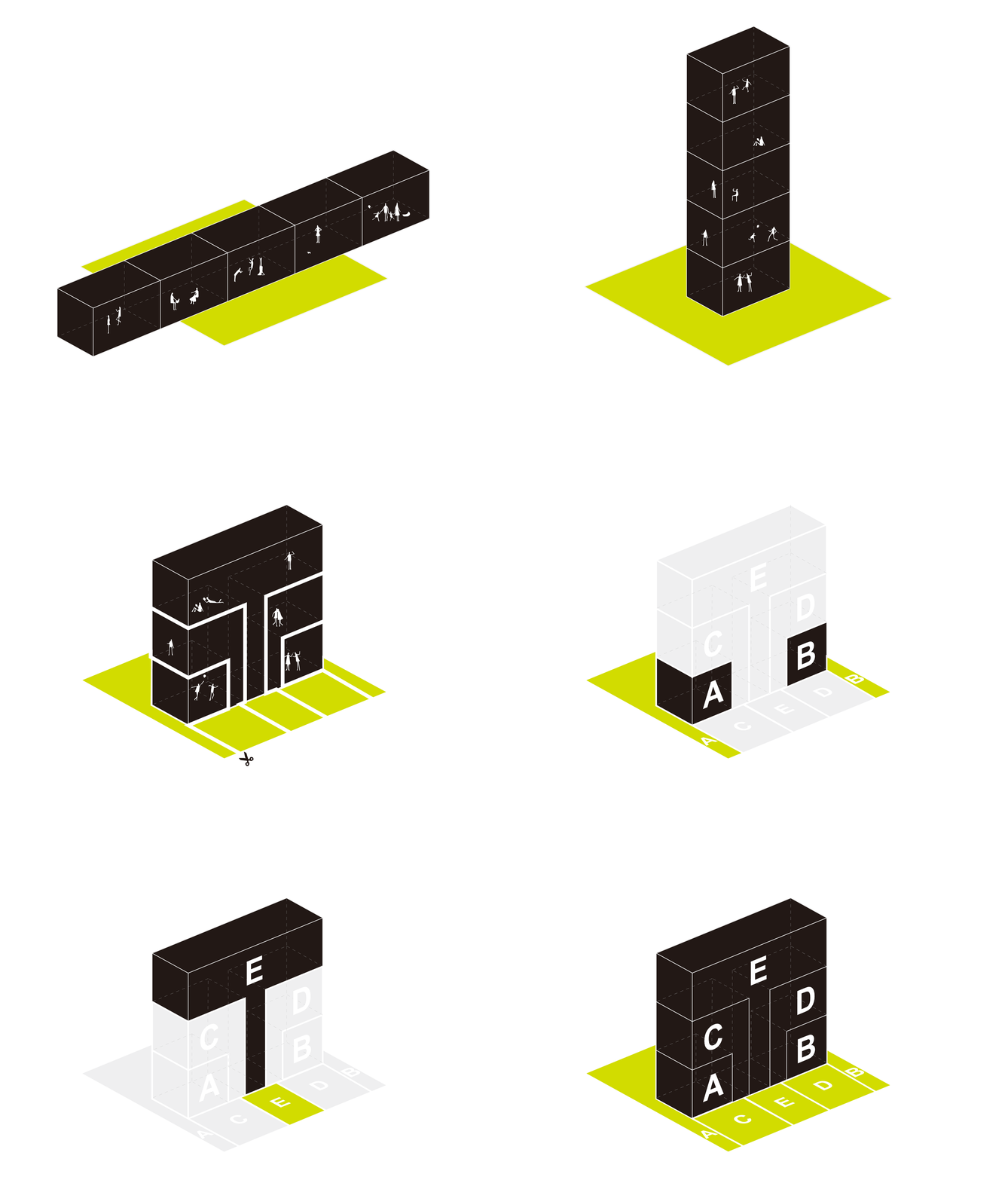
The principal design challenge was increasing the value of courtyard gardens on the middle and upper tiers while balancing value distribution and living experience. The design employs strategies such as decomposing building volumes and customizing facades to position courtyards within the central mass. Through thoughtful division and organization of units, ground-level courtyard resources are redistributed so that the middle and upper units connect with the northern courtyard. This ensures every residence benefits from its own first-floor garden courtyard and reception hall, creating a villa experience that blends indoor and outdoor living with garden space.
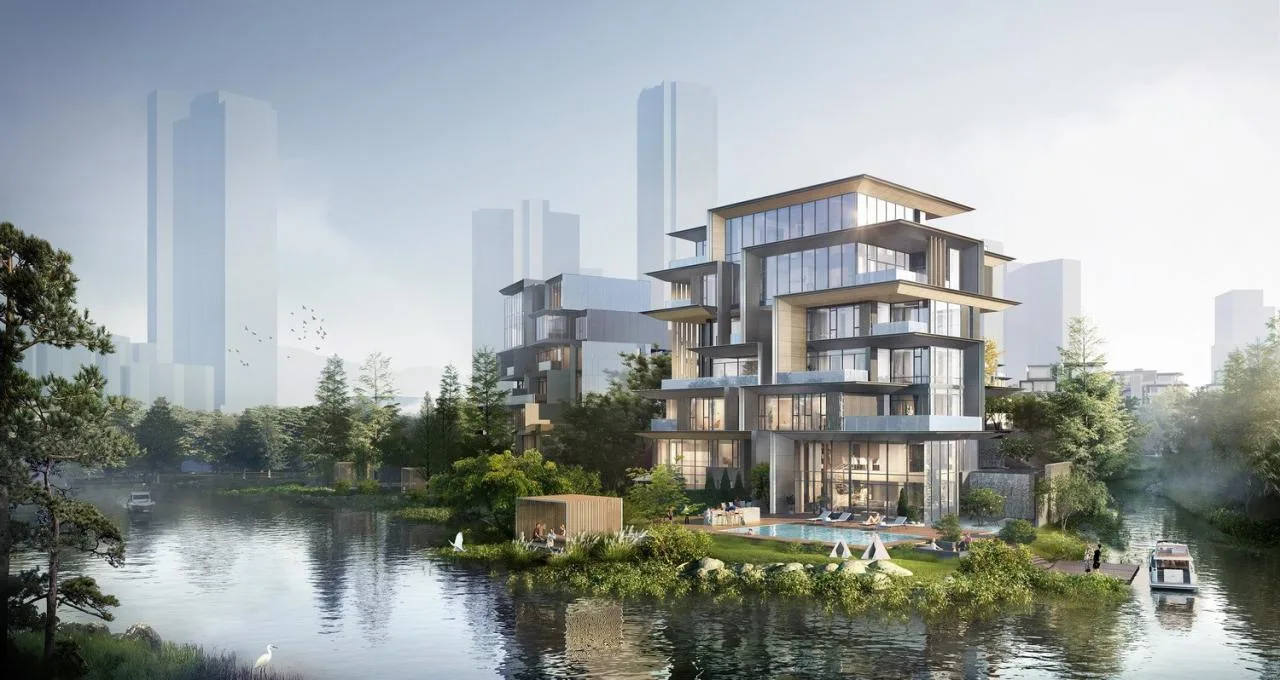
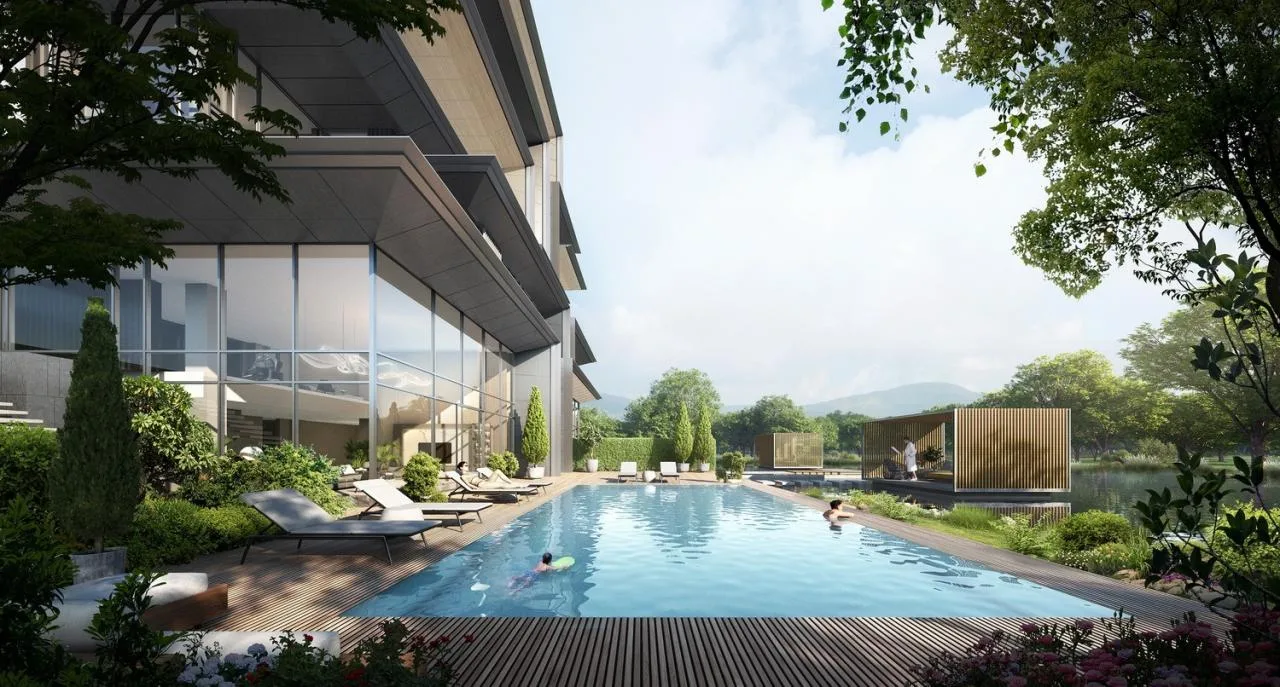
△ Stacked Garden Courtyard
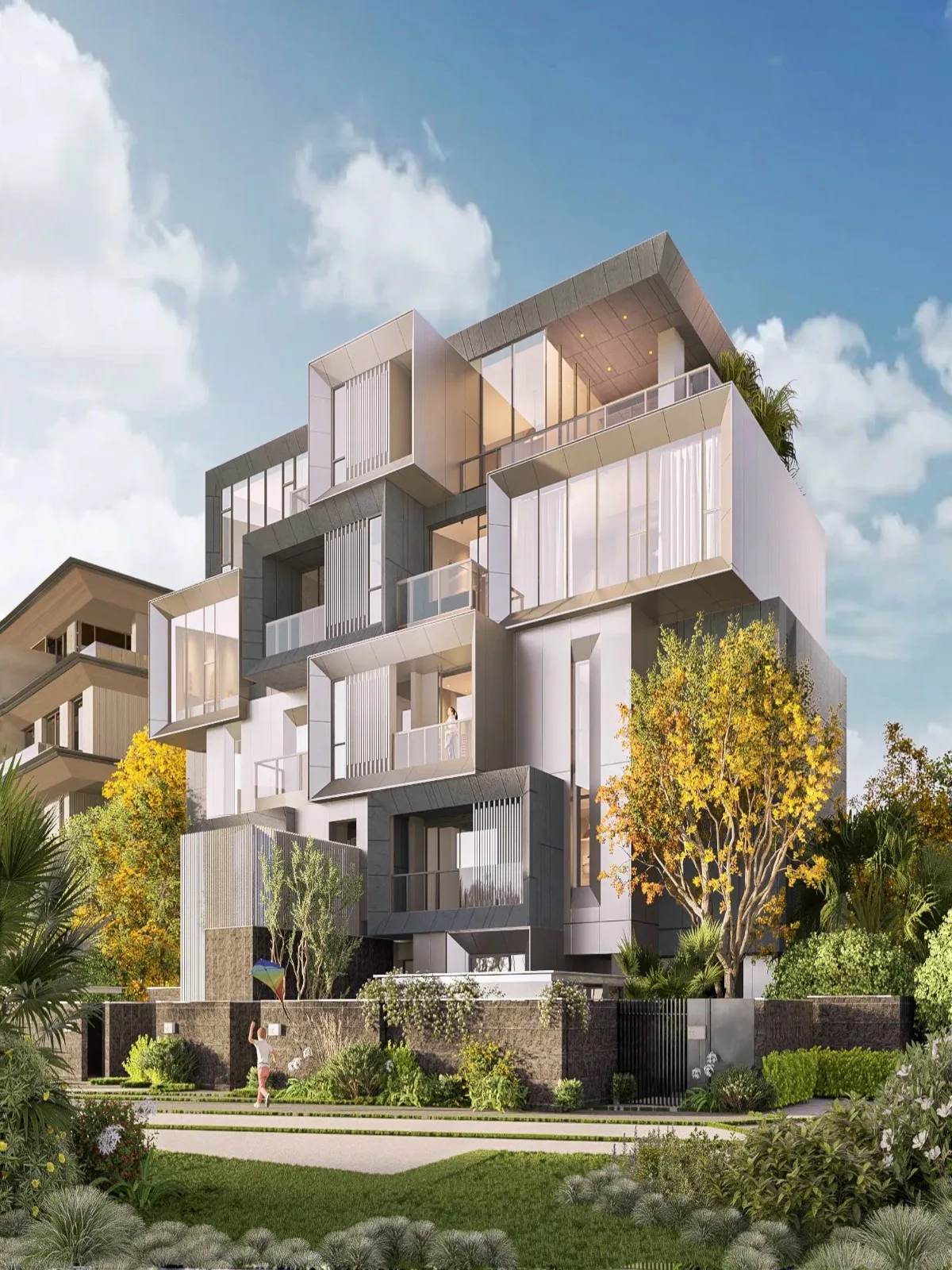
Two main strategies guided the design: first, dissolving building volume to integrate the architecture with the ecological landscape and respect the island’s environment; second, innovating forms to transform buildings into living landscapes that enrich the island’s surroundings. Corresponding to the decomposition of residential units, Line+ proposed two façade language strategies: the “surface body” and the “line surface,” reflecting the relationship between form and façade.
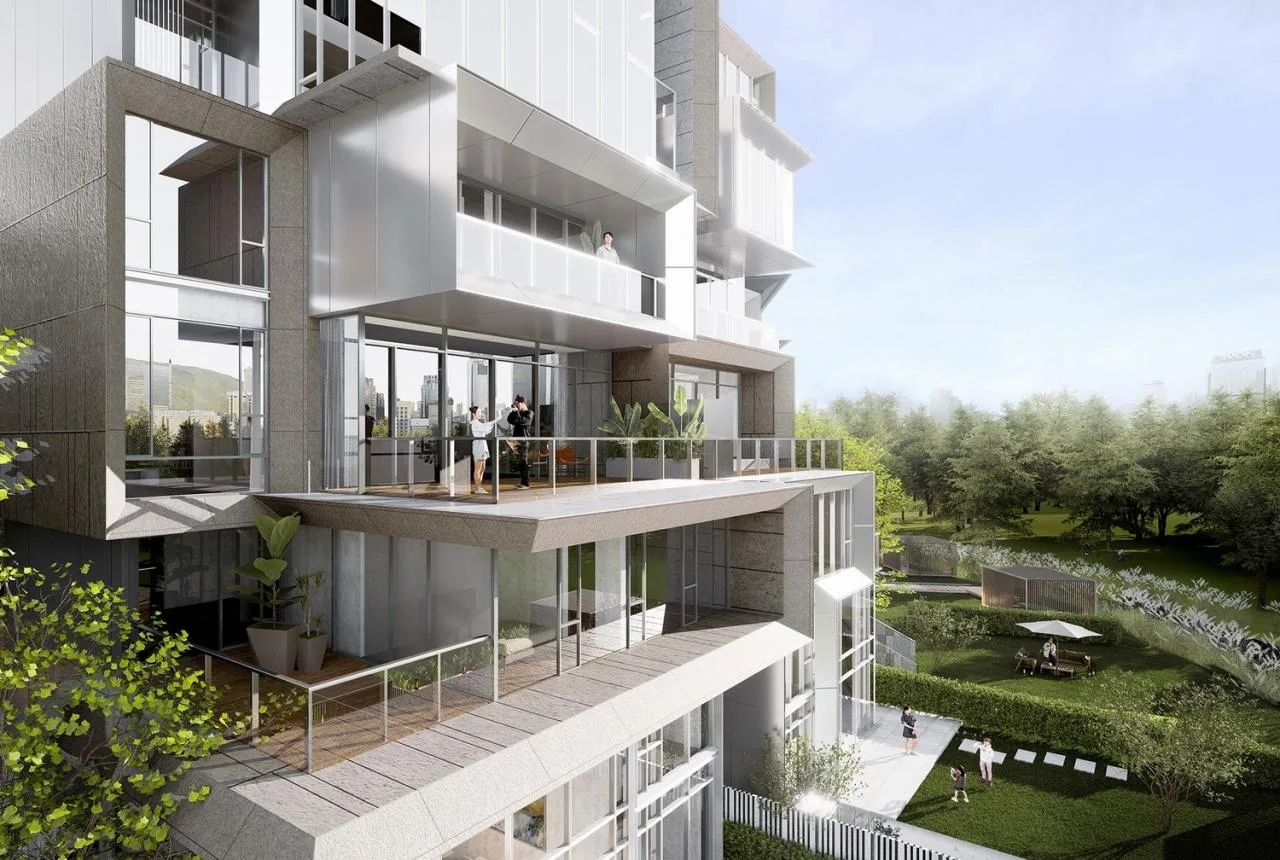
△ Plane body combination
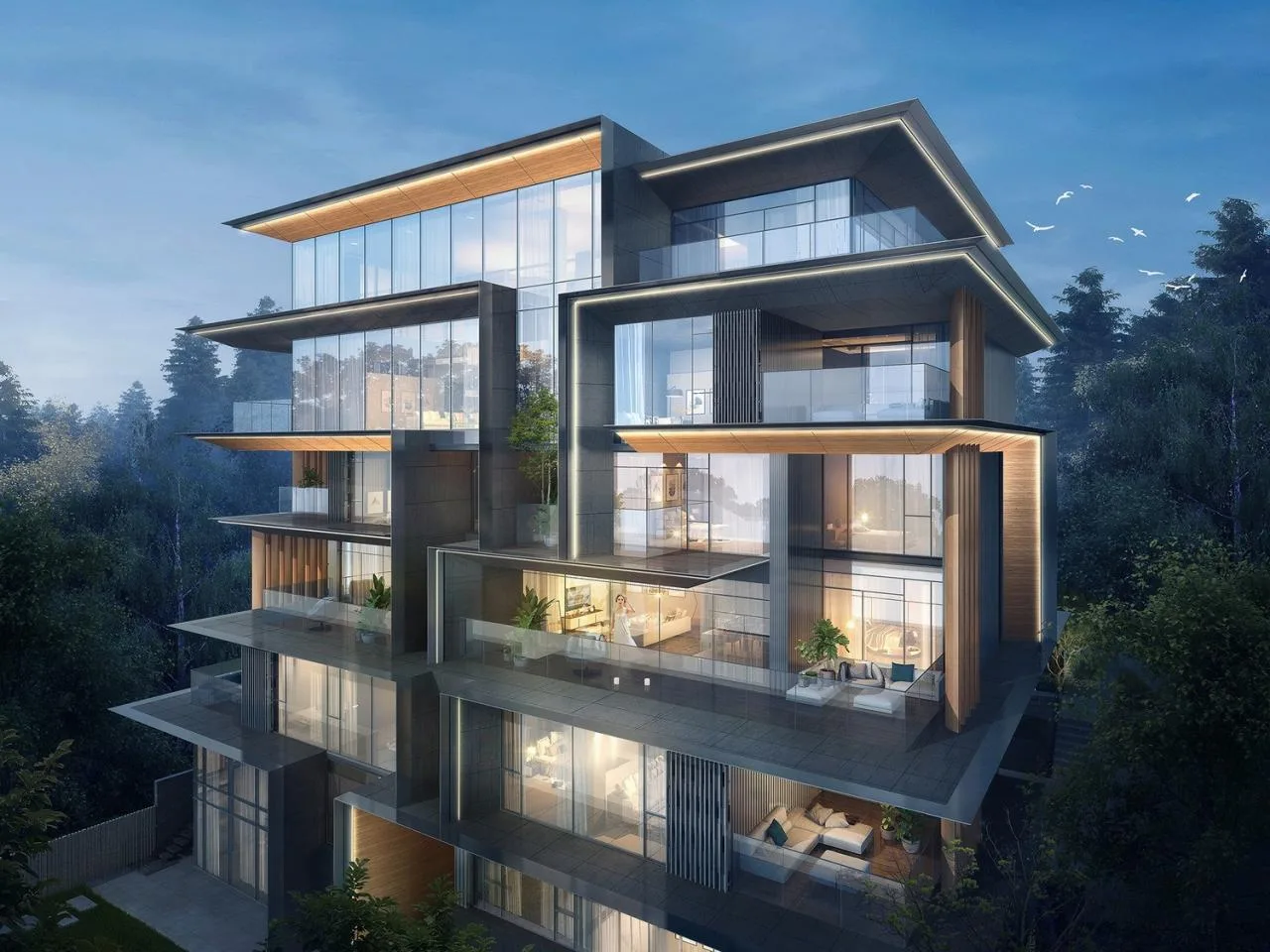
△ Line surface combination
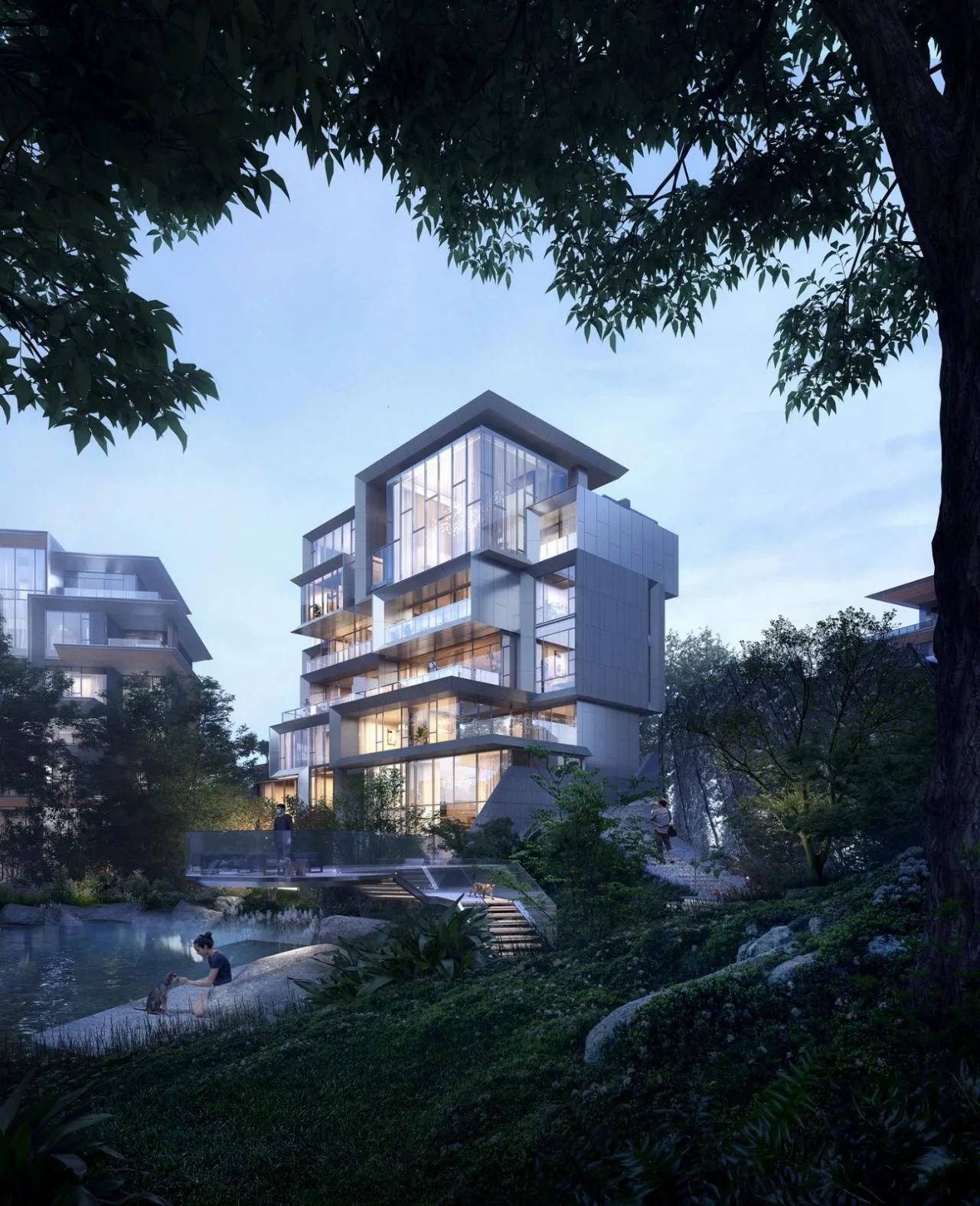
The “surface body” design draws inspiration from building blocks—small elements stacked, interlocked, and displaced to create lively, dynamic facades that express each household’s personality. This assembly results in a three-dimensional, richly textured architectural form.
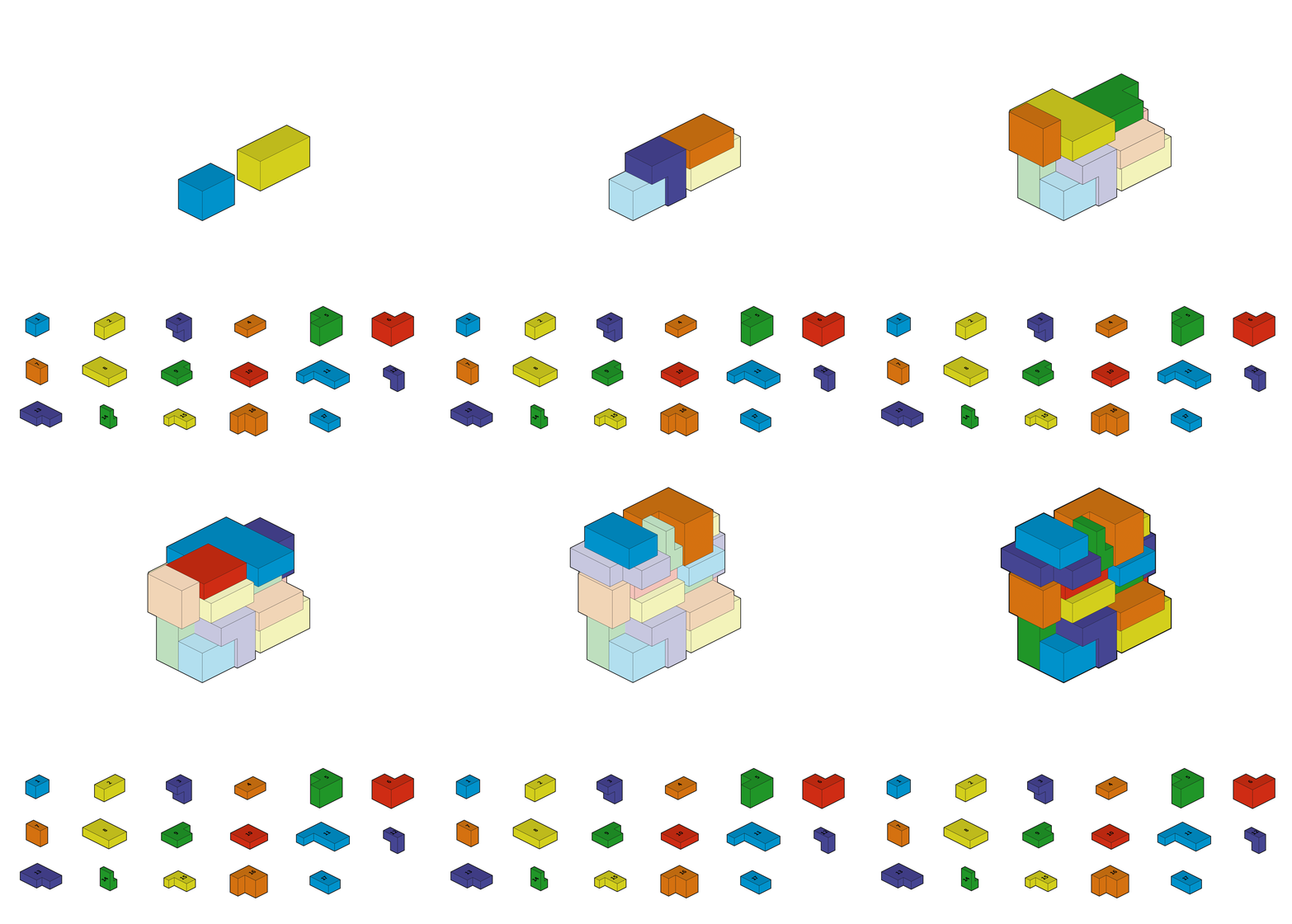
Generation process of surface body composite shapes
△ Plane body combination
The “line surface” strategy wraps each unit with an inverted L-shaped three-dimensional folding plate, which also serves as an extended activity platform. These folding plates vary in height and length and are staggered to emphasize sharp, smooth horizontal lines on the façade, symbolizing the “wings of a peaceful home.” Vertical decorative lines of varying density add warmth and approachability to the architectural expression.
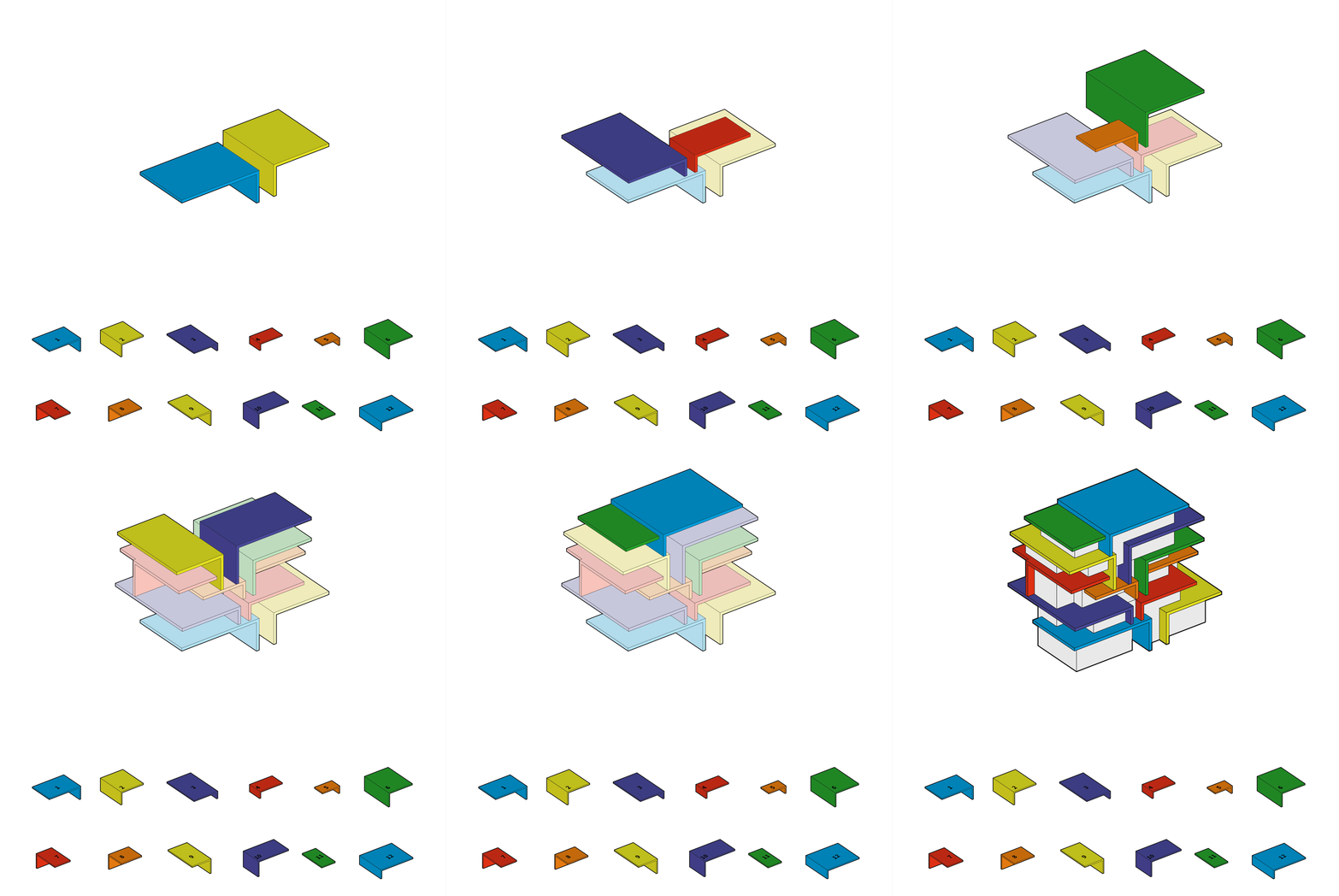
△ Line surface combination form generation
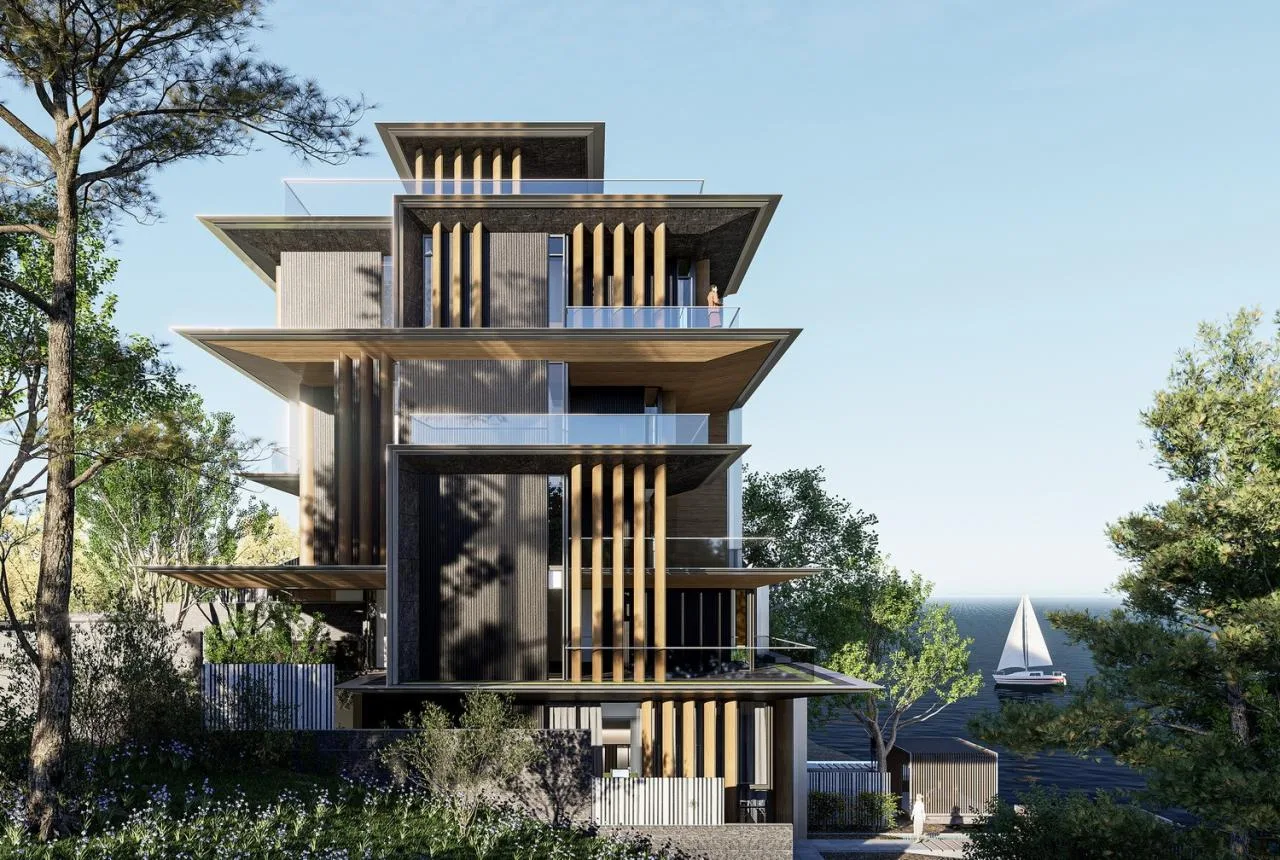
△ Line surface combination
This non-standard form creates an aerial courtyard for the middle stacked units. The design team collaborated closely with owners to optimize the layout, placing all entrance points for the middle and upper units on the north side, while the lower units access from the side. This arrangement provides a unique living experience featuring single households with dedicated elevators.
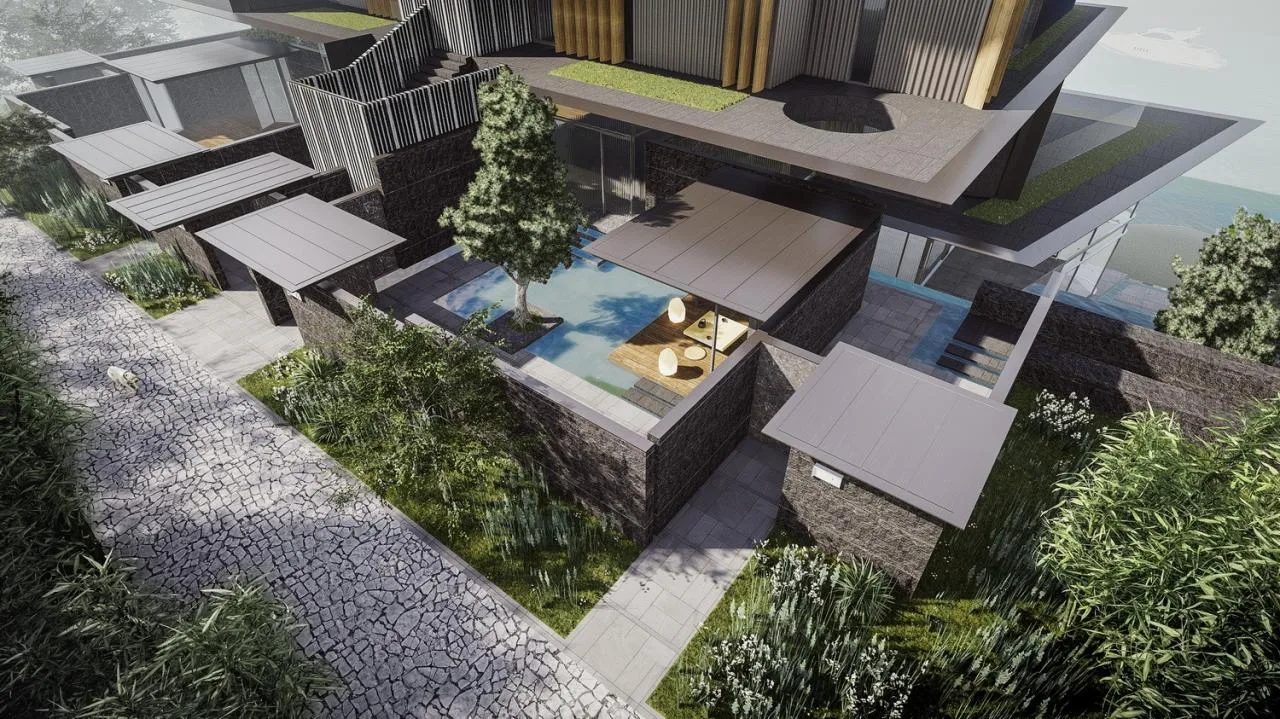
△ Stacked entrance courtyard
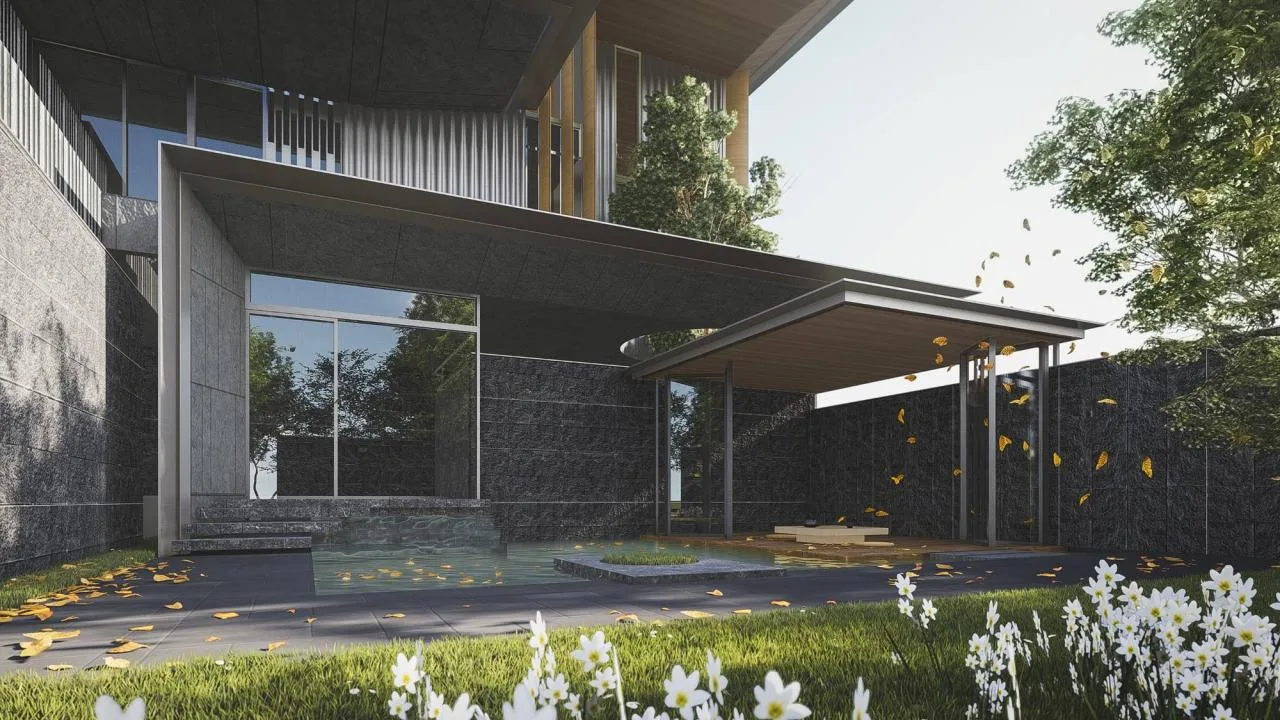
△ Middle stacked entrance courtyard
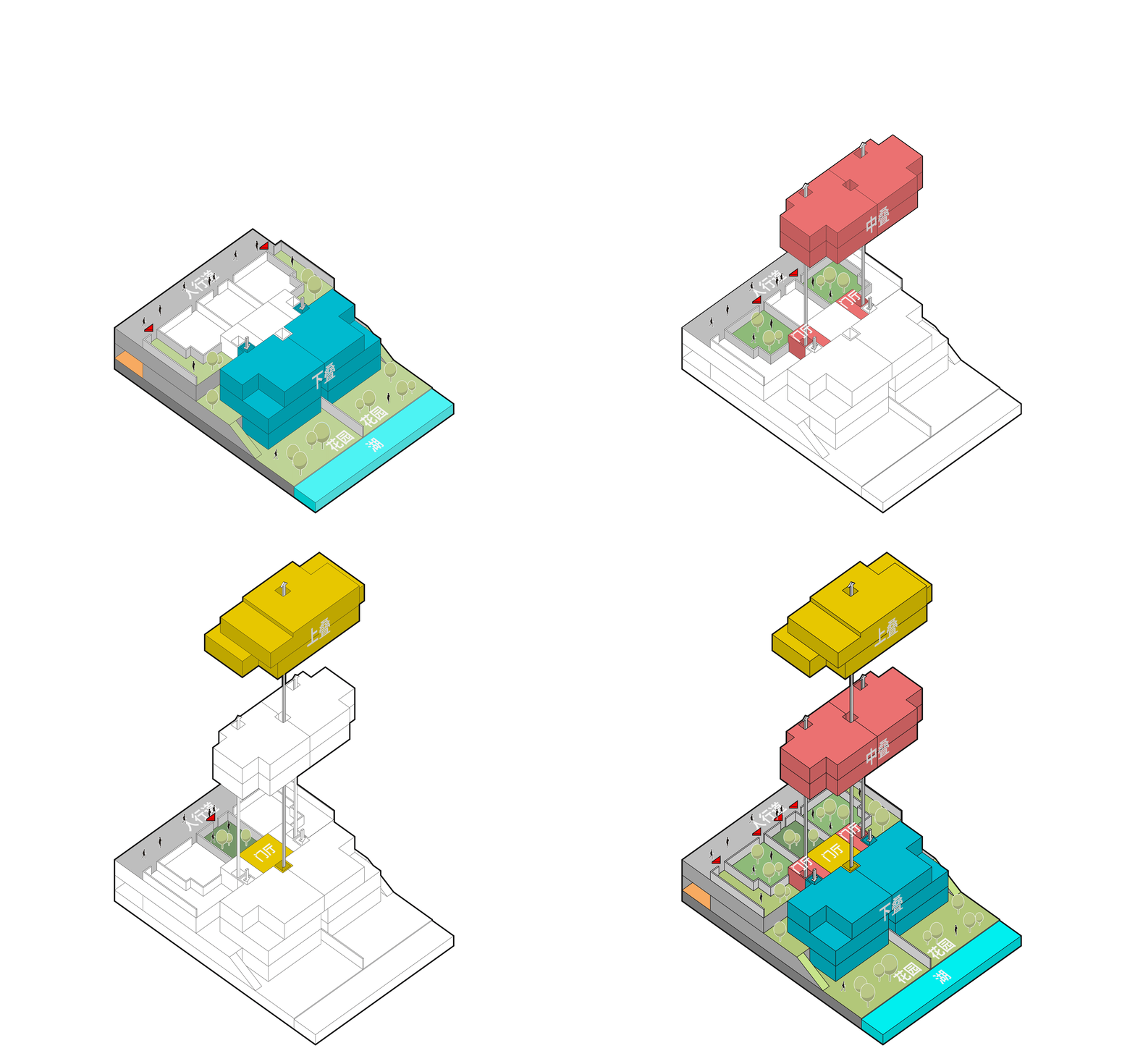
△ Combination of upper, middle, and lower stacked units
The lower unit includes front and rear courtyards, while the middle level features a sunken open-air courtyard, forming a three-tier courtyard system. The 6.5-meter-high living room offers transparent, unobstructed views of the lake and activity spaces.
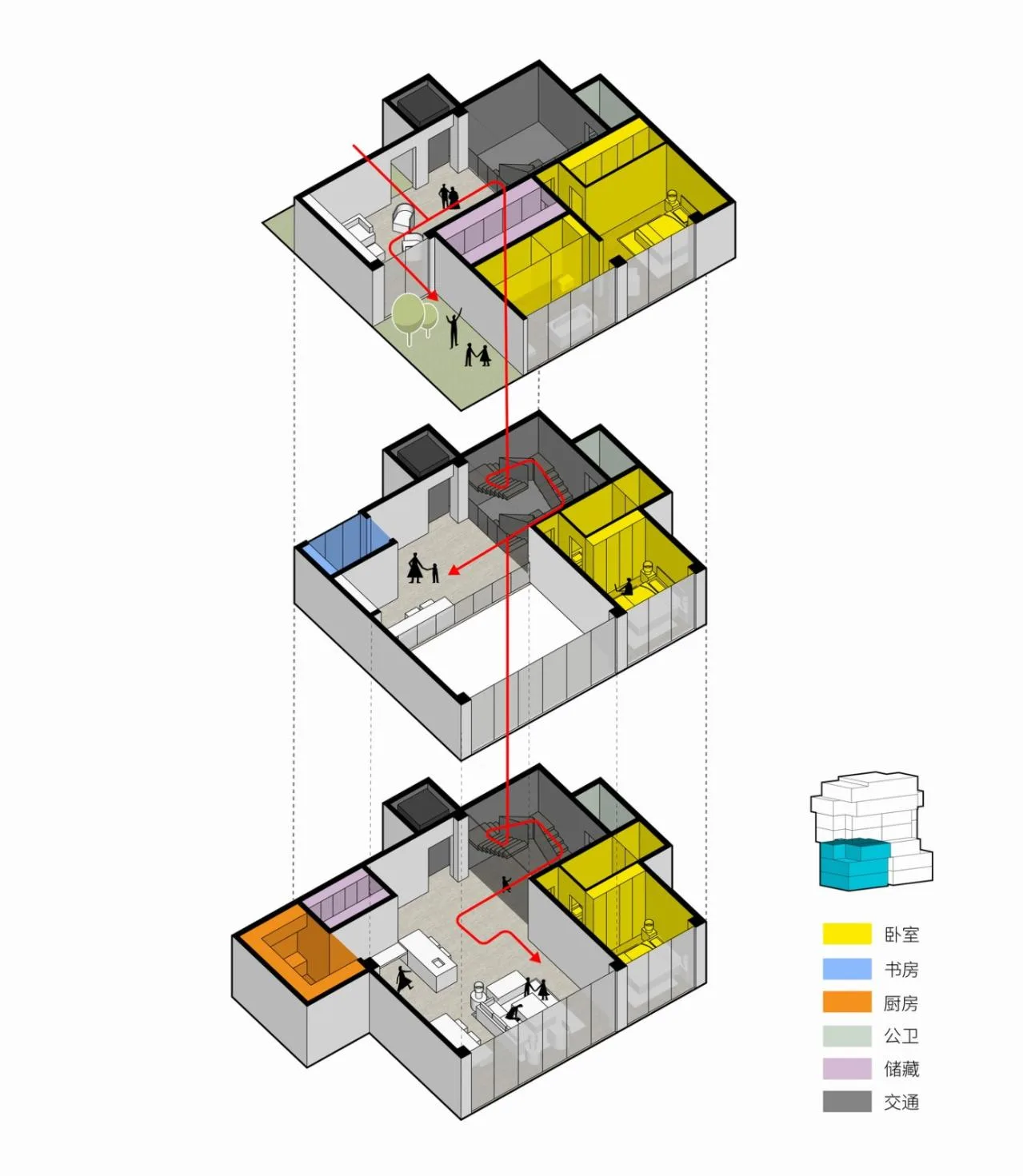
△ Lower stacked unit layout
The middle stacked unit features a spacious 9.2-meter-wide living room that fully integrates indoor spaces with lake views.
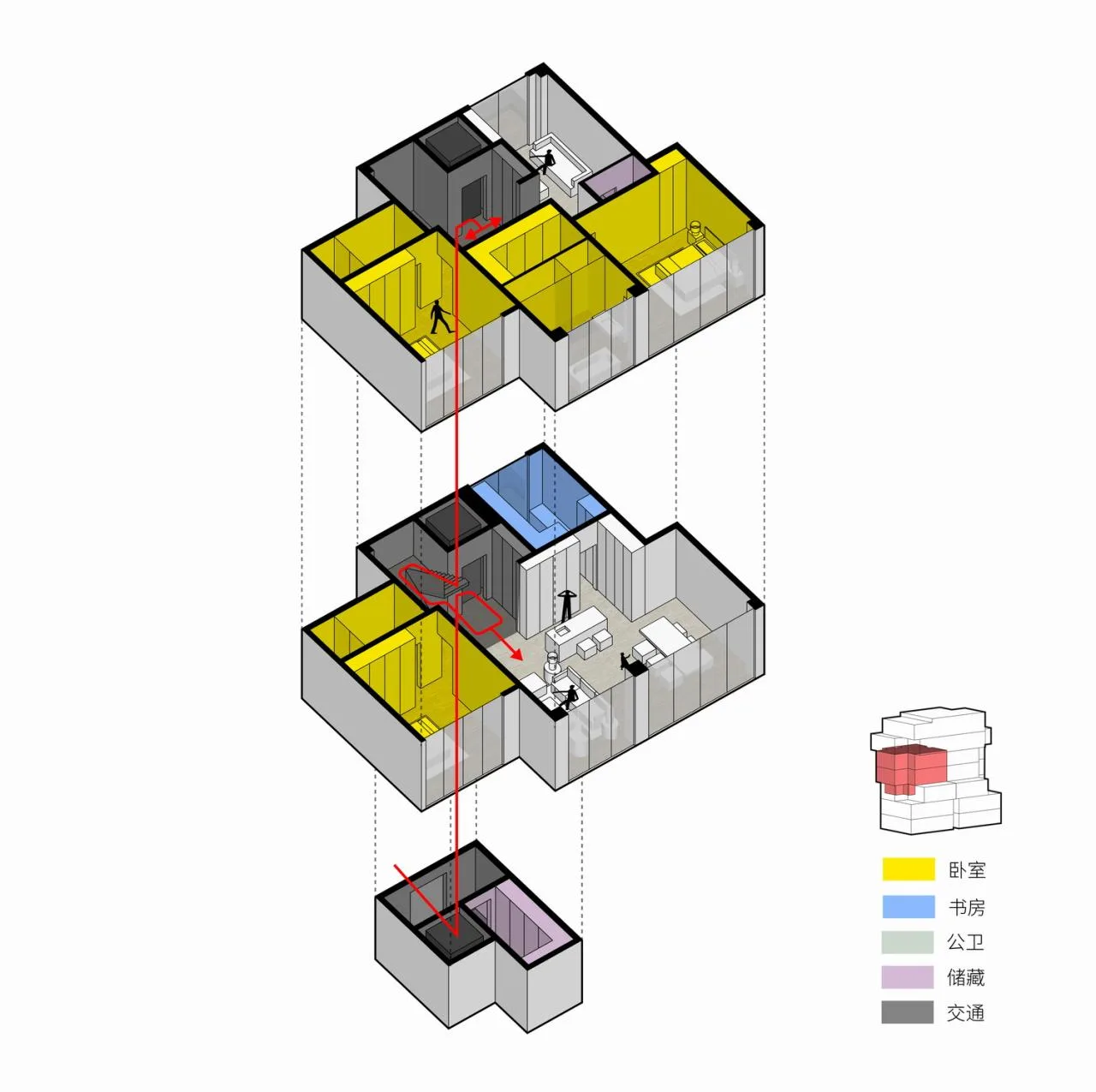
△ Middle stacked unit layout
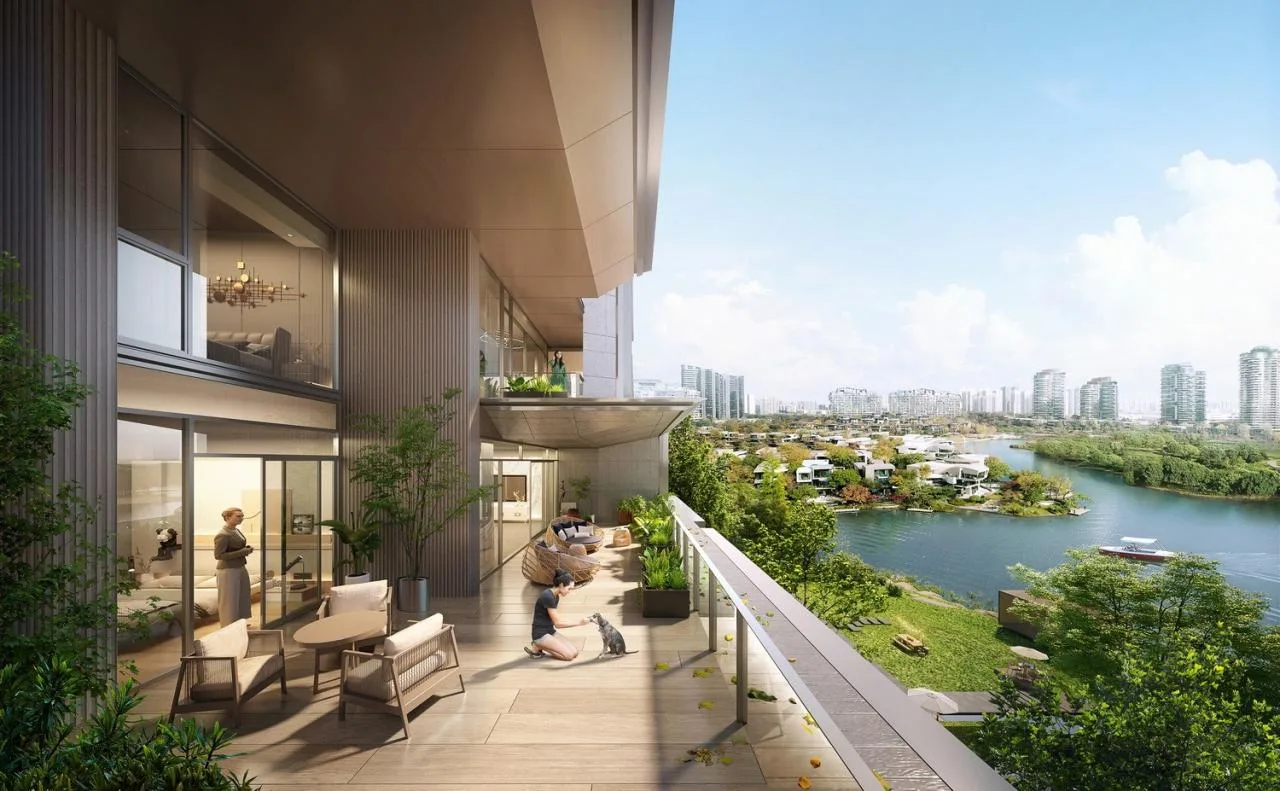
△ Middle stacked aerial courtyard
The upper stacked unit offers a high-ceiling living room and rooftop viewing courtyard.
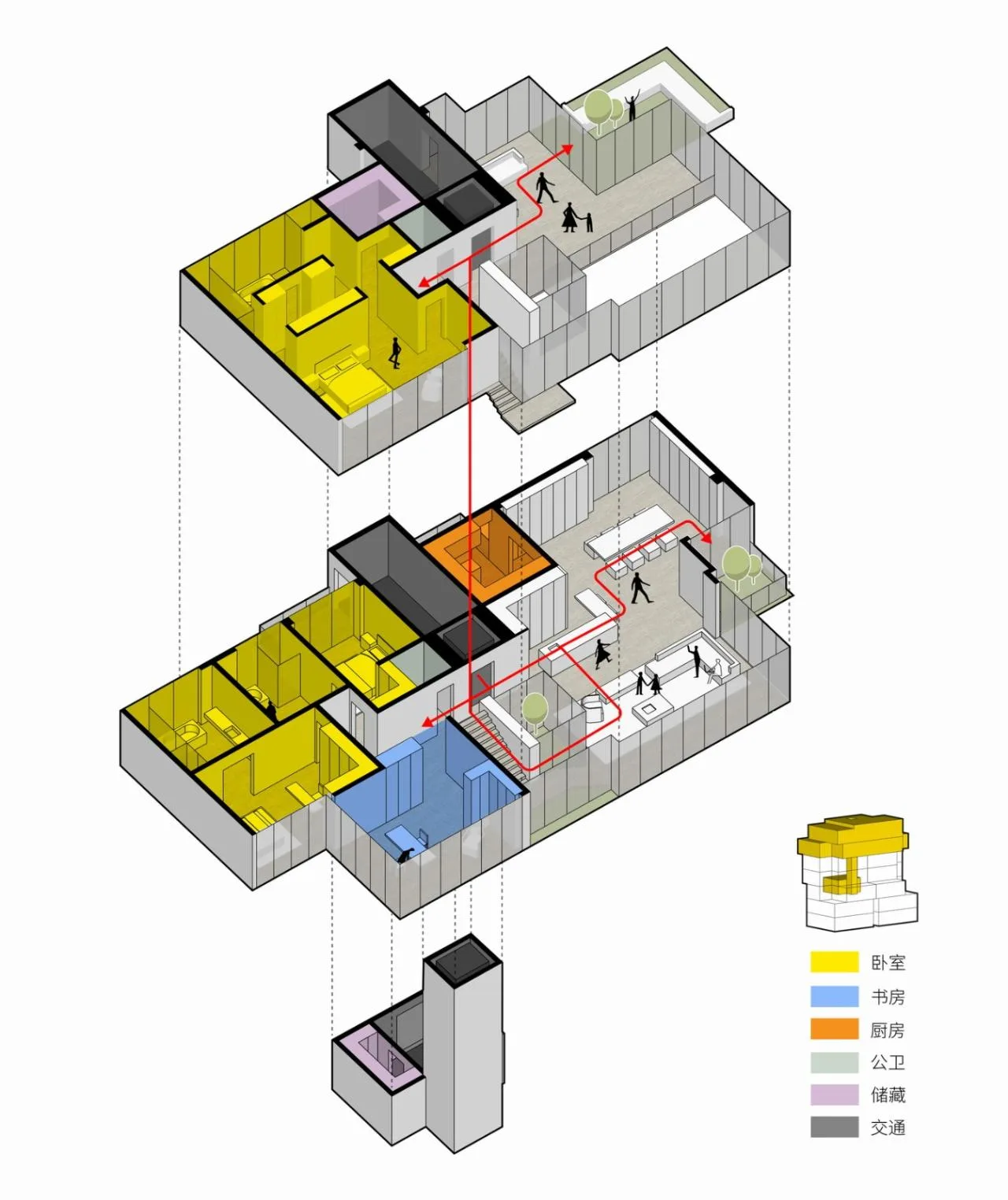
△ Upper stacked unit layout
Material selection, joint detailing, and precision craftsmanship are critical to realizing the design vision. The team meticulously refines the design and construction through detailed Revit node research, on-site mock-ups, and ongoing adjustments to ensure the highest quality and project completion standards.
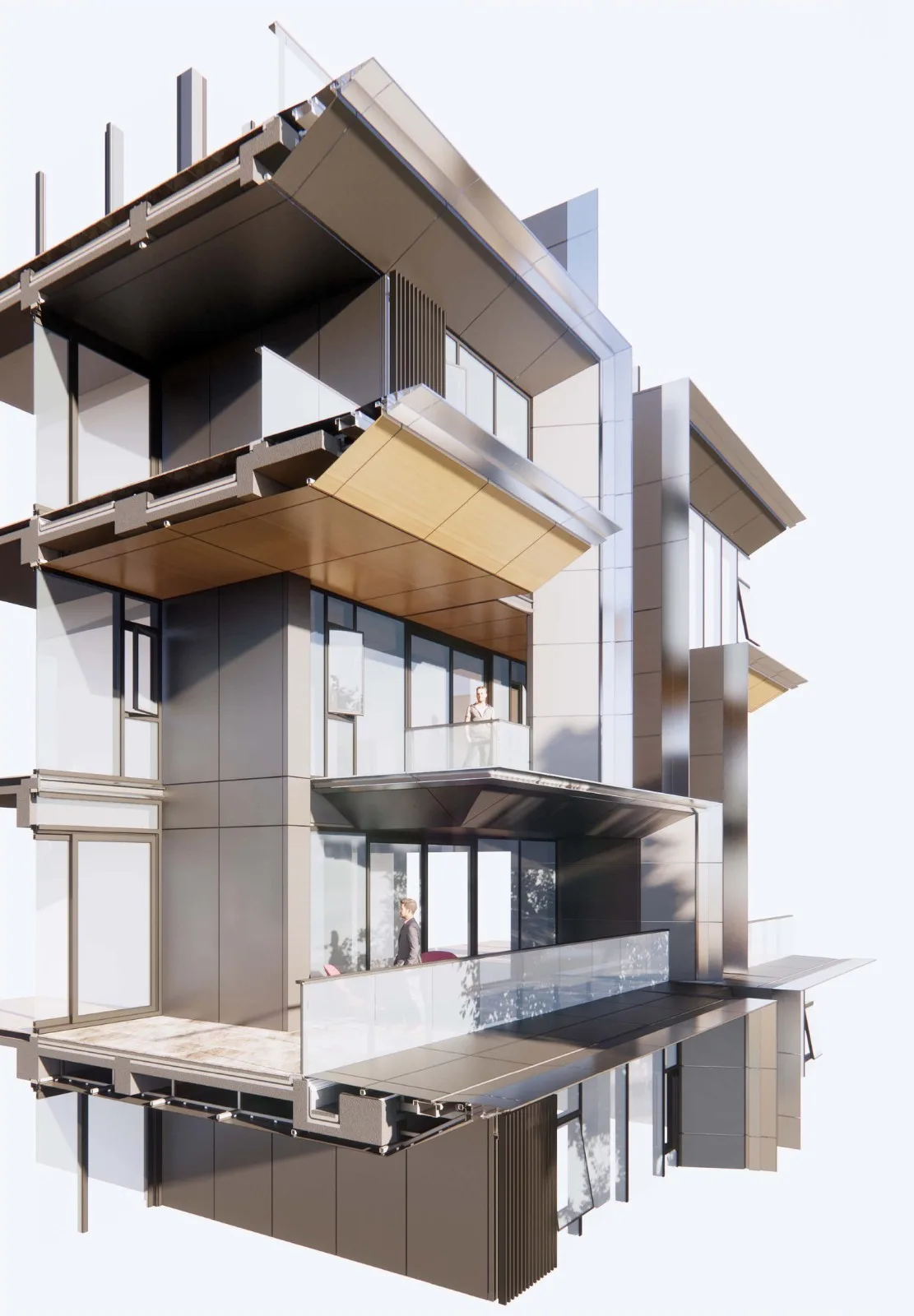
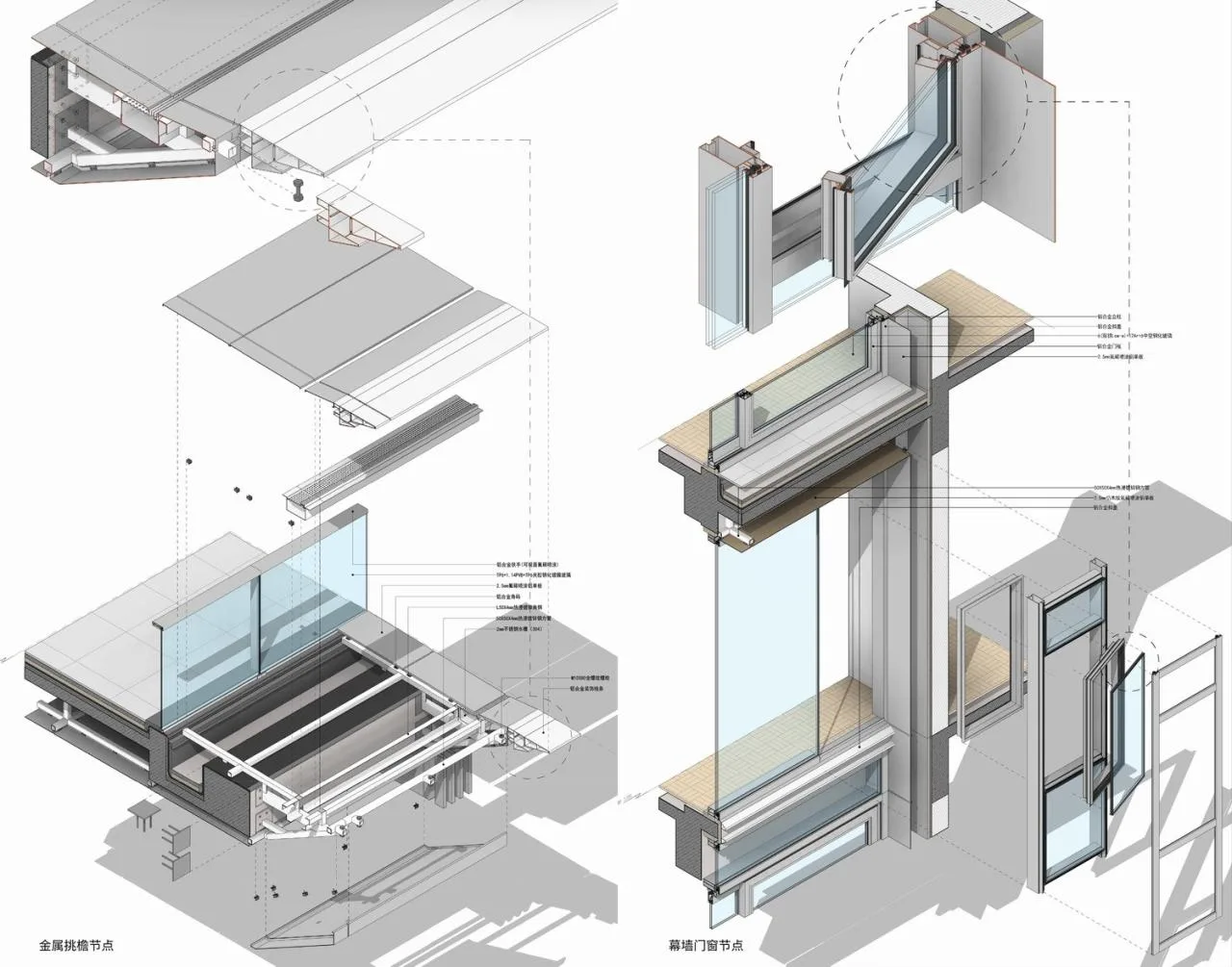
△ Revit research nodes
Guided by Wanhua Group’s long-term development strategy, Line+ collaborates closely with owners, thoroughly reviewing details and embodying the spirit of craftsmanship throughout design, construction, and post-project services.
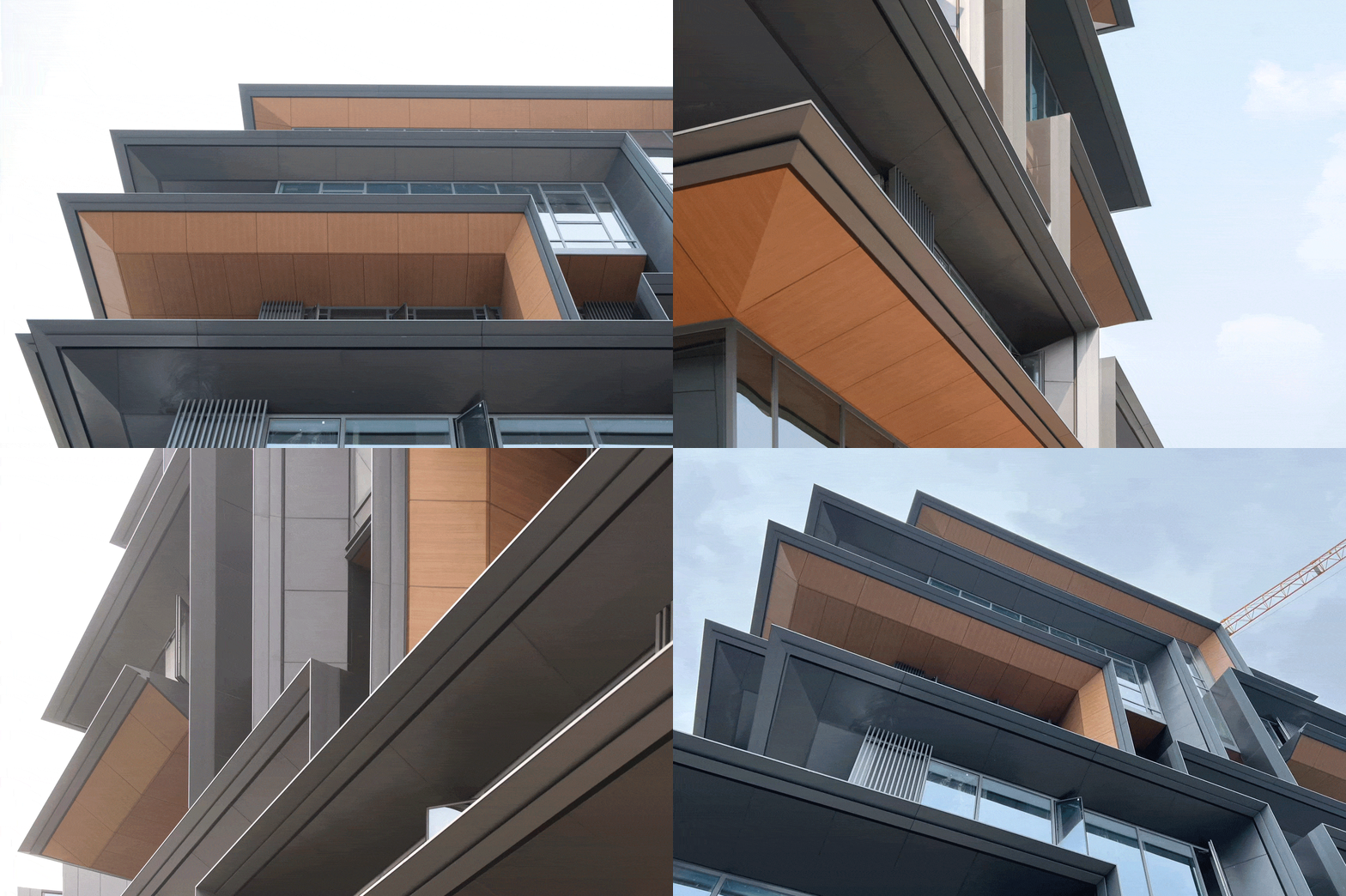
△ Construction details
Hydrophilic Community in an Ecological Park
Living by the water, in harmony with nature.
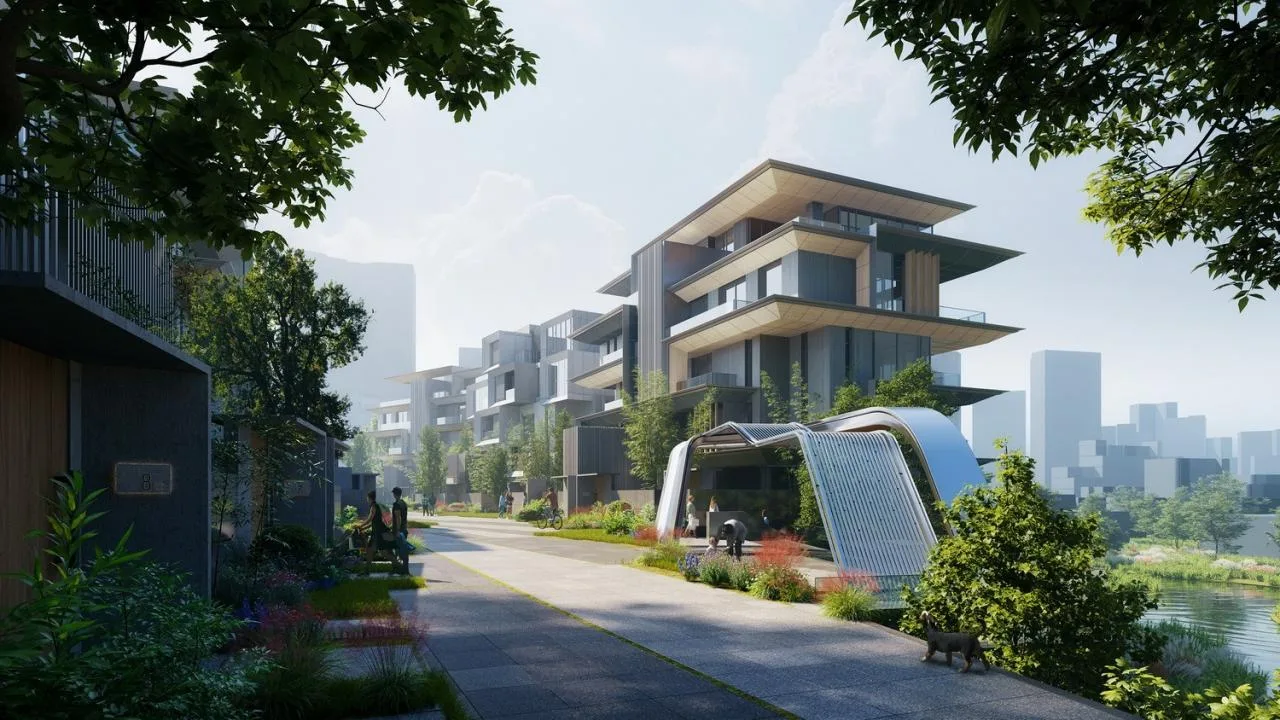
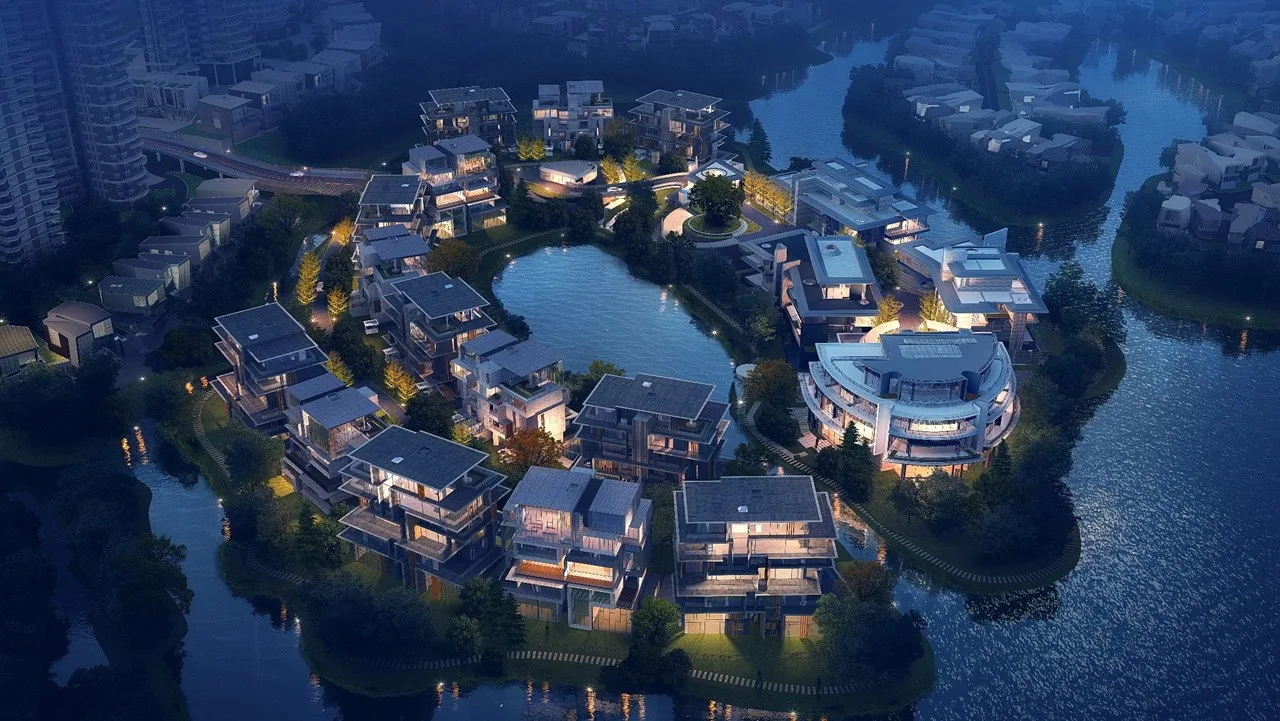
Leveraging the rich ecological assets of Luhu Ecological City, Heishi Island is designed with a “park first” concept, integrating community reconstruction as a cohesive whole. Covering approximately 49.43 acres, the project ensures private space and growth opportunities for each household while fully respecting the island’s ecology. A holistic and systematic approach shapes the relationships between architecture, site, and landscape, fostering an interactive, integrated connection between life and nature—creating a vibrant urban waterfront community.
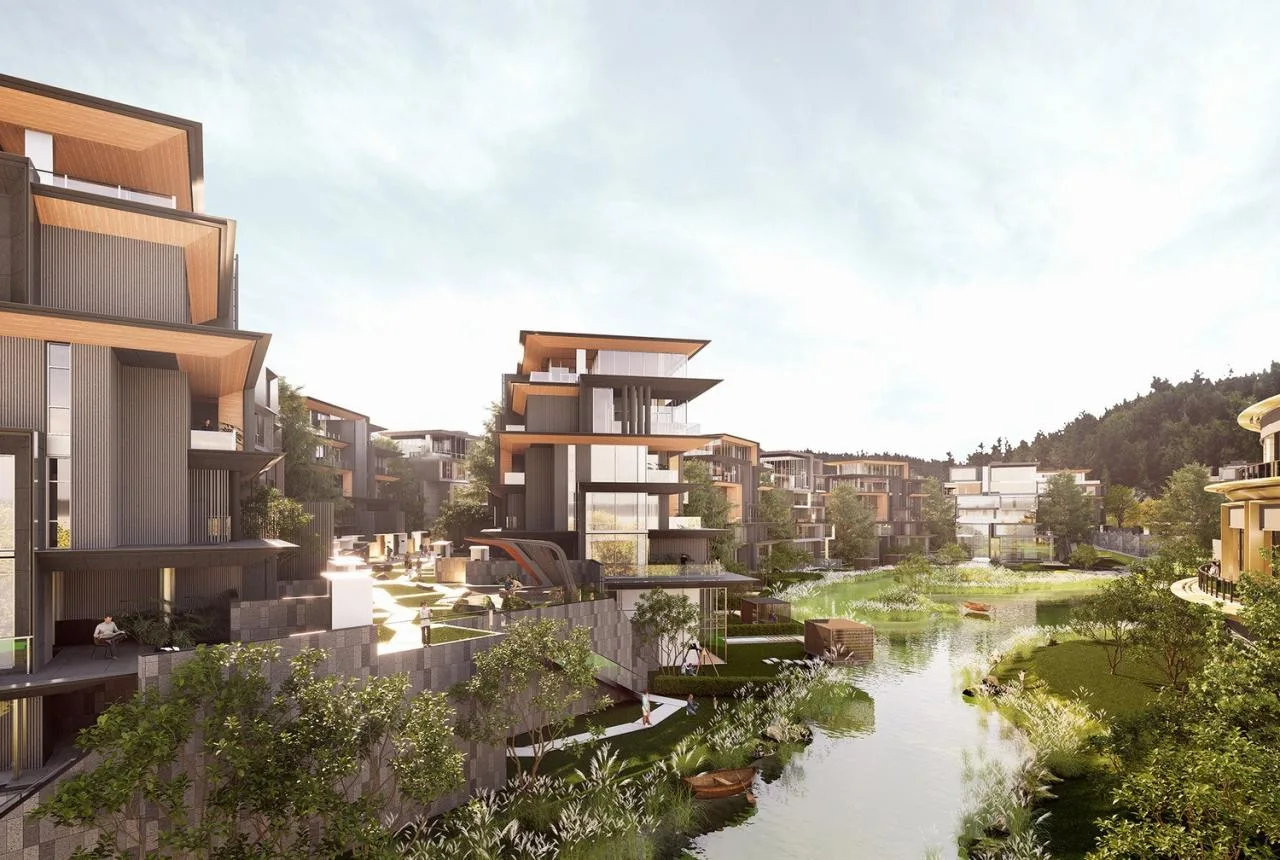
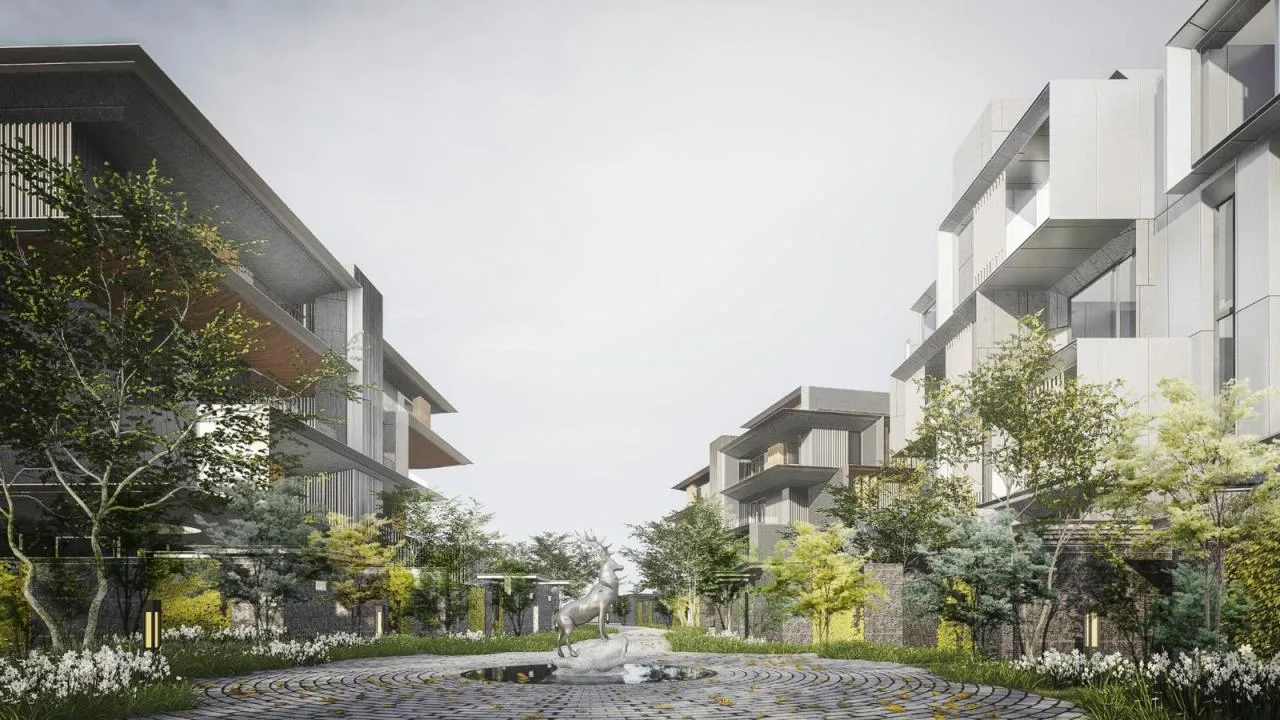
Based on two fundamental physical units and considering terrain, water proximity, orientation, and height, Line+ strives to create a “water-friendly community within an ecological park.” The layout follows a U-shaped site plan, with staggered and alternating units to allow spatial breathing. The alternating block-shaped and folded-panel façades effectively prevent view overlap between adjacent buildings, ensuring privacy and a sense of enclosure.
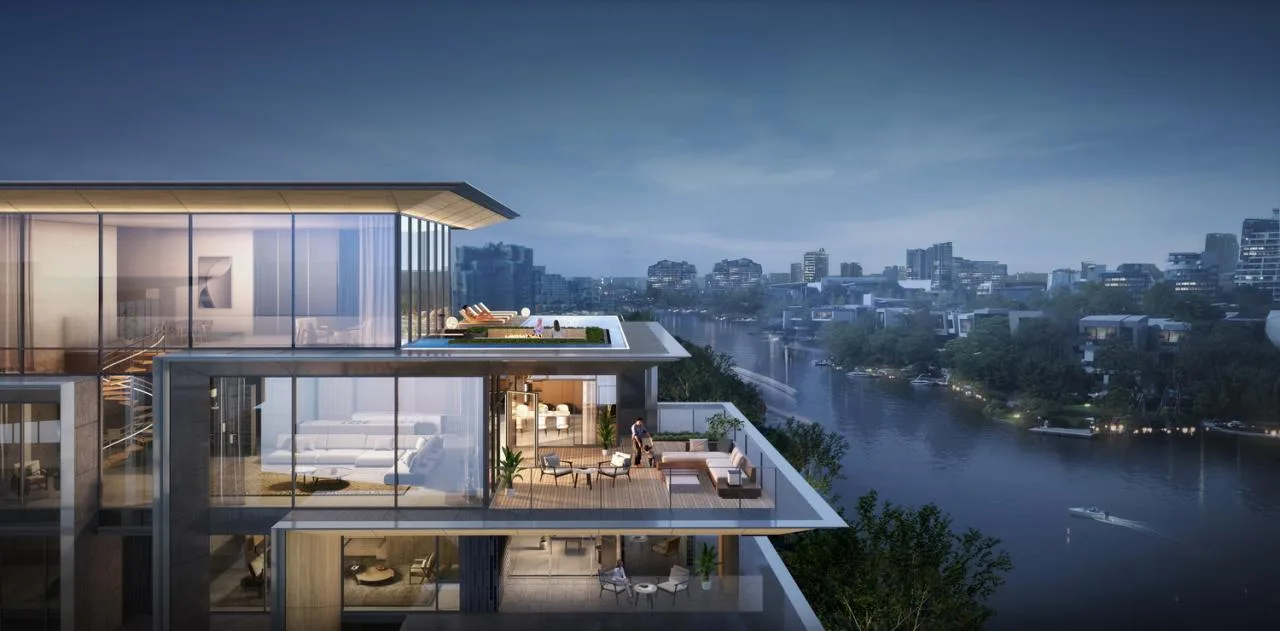
The central waterfront emphasizes openness and shared access, preserving about 7 meters of public waterfront space. This creates a multi-level ecological environment combining lakefront greenways, courtyards, and residential units. An entrance channel in the island’s center connects to the city, separating pedestrian and vehicle traffic. The ground-level slow-moving pathways enable residents to enjoy a park-like strolling experience.
Conclusion
Line+ is dedicated to advancing residential design innovation by researching residential typologies and forms, contributing to the evolution of urban living.
Looking ahead, we envision Black Stone Island as a model of contemporary community living, offering every resident a richer, more fulfilling lifestyle through its vibrant atmosphere and harmonious integration with nature.
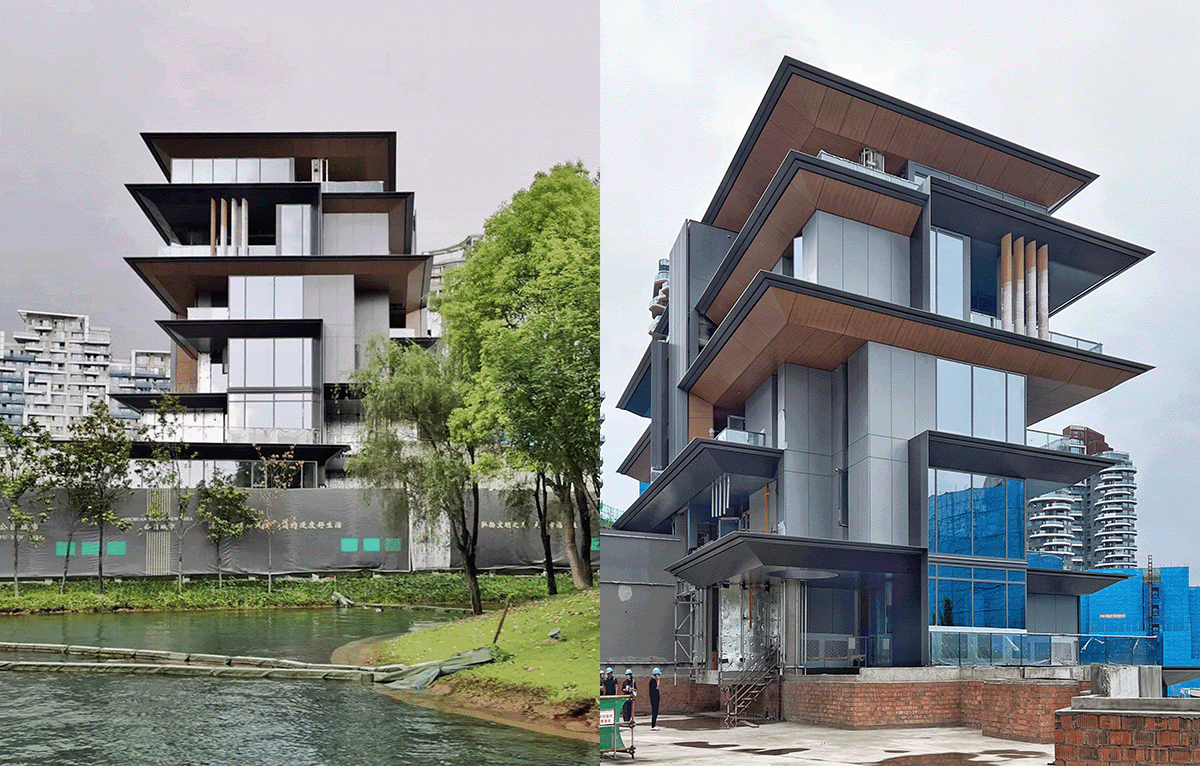
△ Real scene of line surface combination construction site
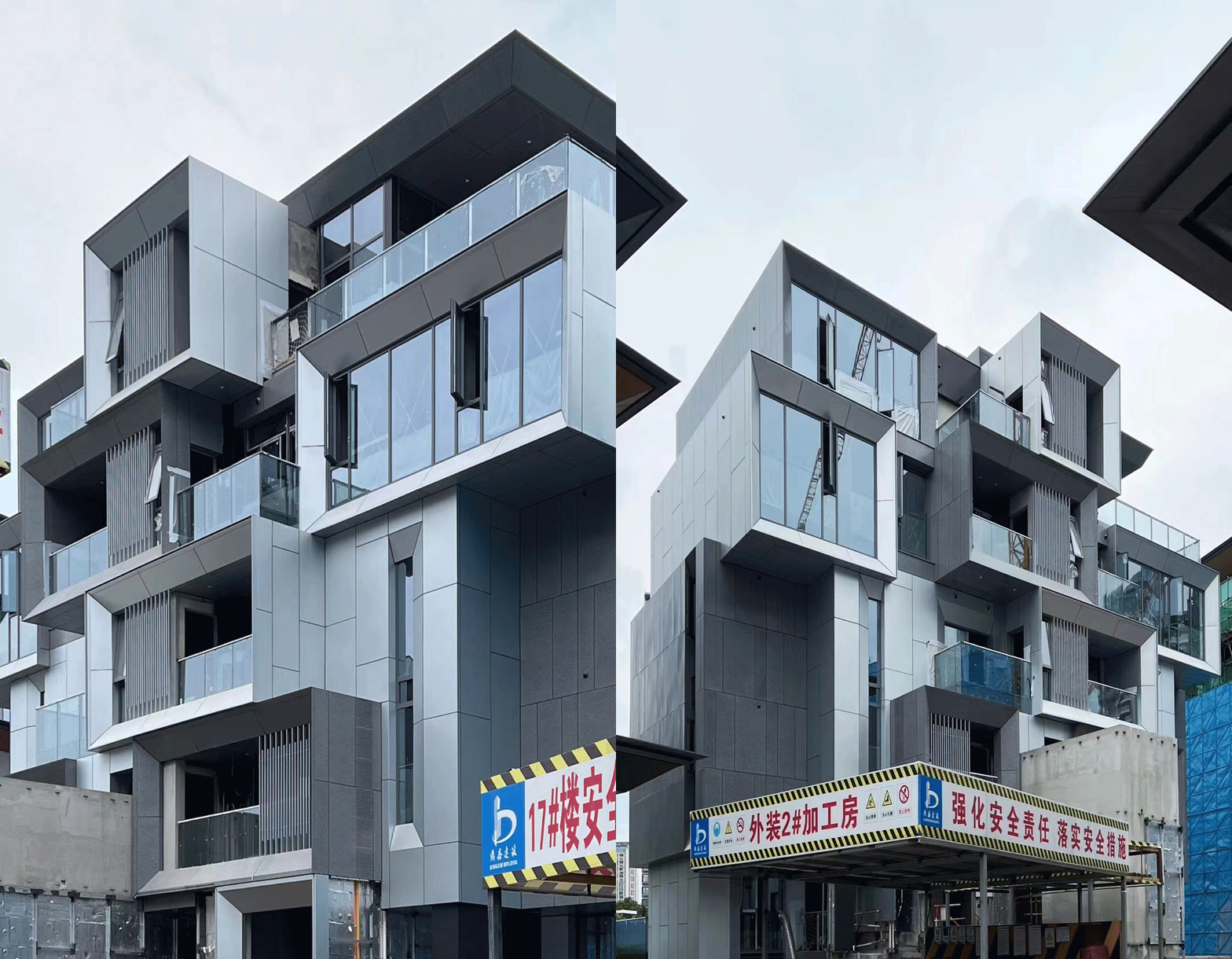
△ Realistic scene of surface body combination construction site
Project Information
Project Name: Heishi Island, Luhu, Chengdu
Design Firm: Line+ Architectural Firm
Lead Architect / Project Creator: Meng Fanhao
Design Team: Zhu Min, Wang Yubin, Li Sanjian, Wan Yuncheng
Owner: Chengdu Wanhua New City Development Co., Ltd
Collaborative Design: Chengdu Wanhua Design Management
Owner’s Team: Jiao Jie, Zhang Yi, Liu Zhijun, Liu Rui, Sun Wei, Yang Wanyuan
Location: Luhu Ecological City, Chengdu, Sichuan
Building Area: 35,000 square meters
Structure: Framework structure
Materials: Conventional aluminum panels, imitation stone aluminum panels, stone, insulated glass, and others















Must log in before commenting!
Sign Up