
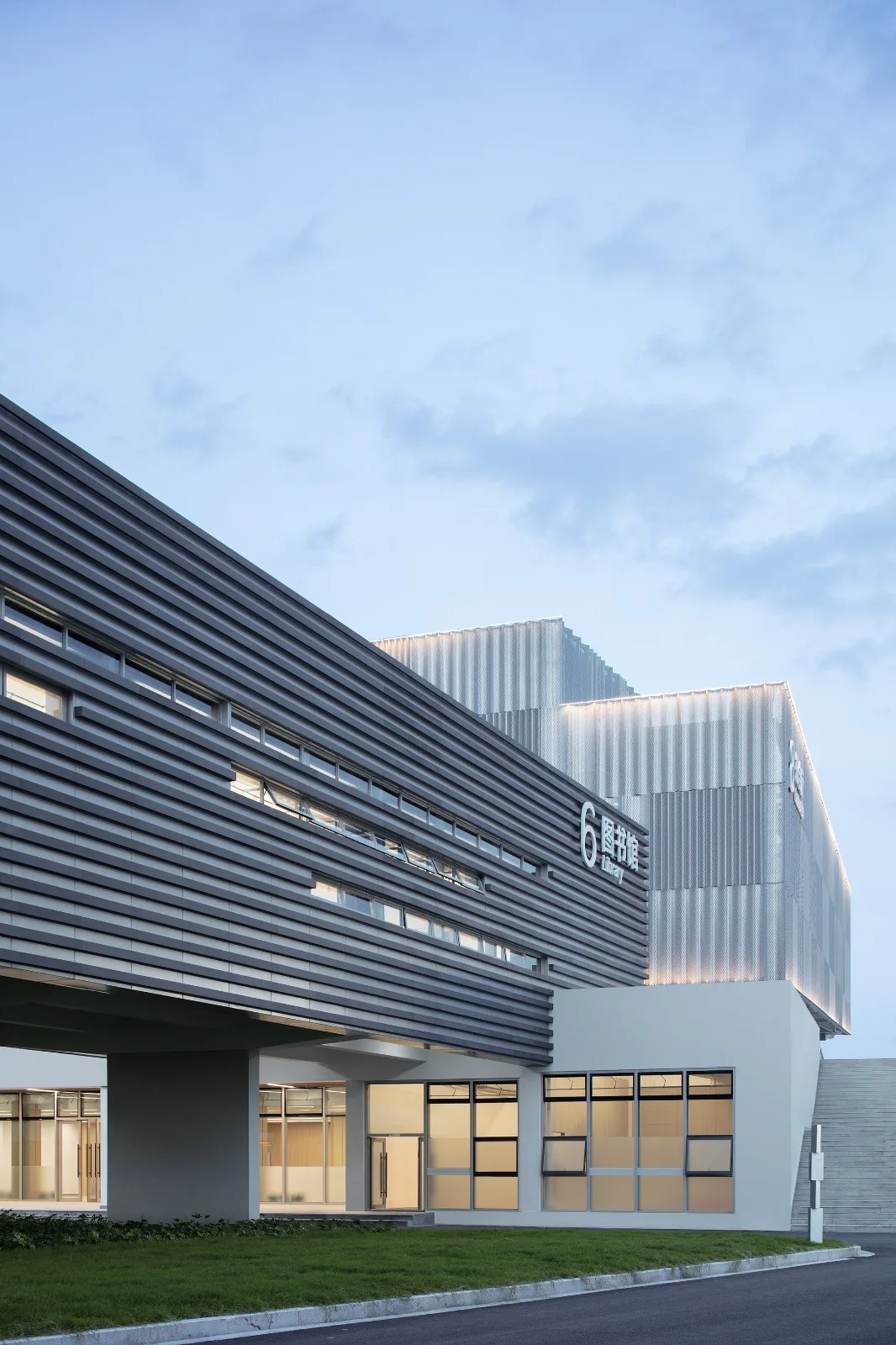
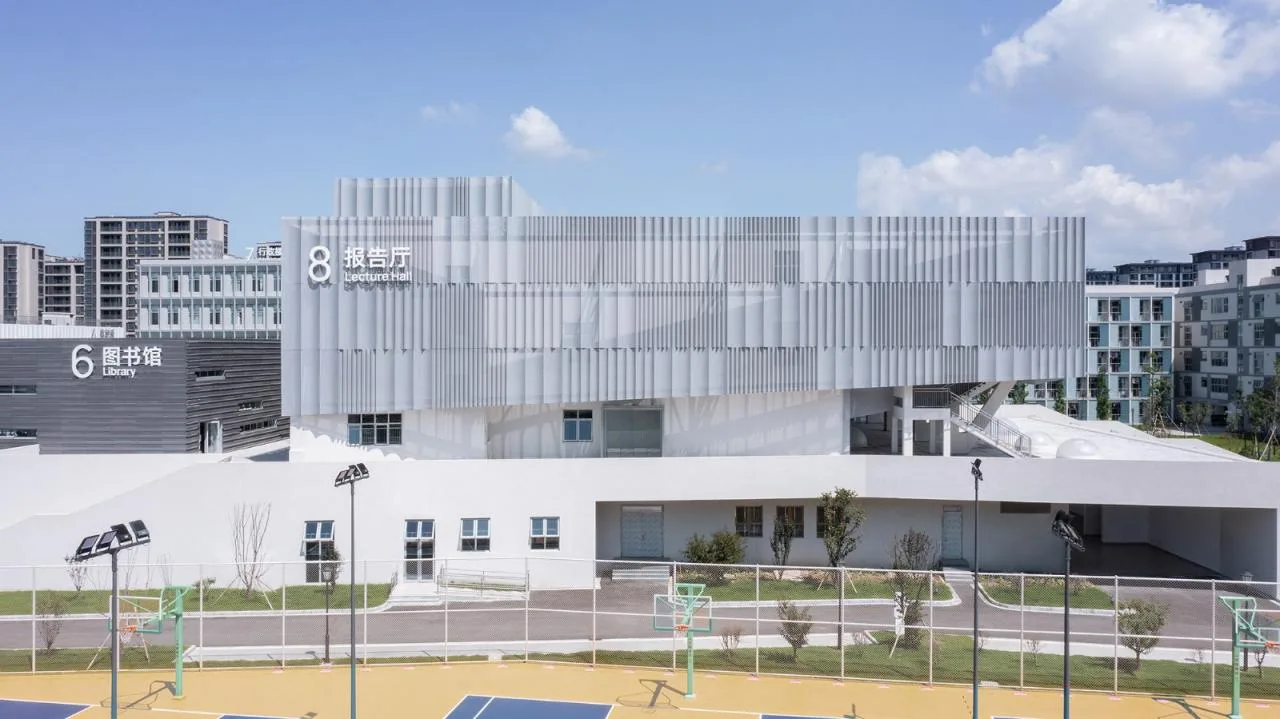
▲ Connected Lecture Hall and Library (Photo: Summer Solstice)
▲ Project Video (Photography: Black Pixel)
Background: Teenagers and the Urban Experience
When designing a vocational high school aimed at preparing teenagers for the future, ARCHIS architectural design firm sought to create an immersive campus where students can explore life’s many possibilities firsthand.
For the Gulin Vocational High School campus in Ningbo, the ARCHIS team introduced the concept of the city into the campus layout, approaching the design with an urban mindset. As students enter the campus as spectators, they encounter unpredictable stories and scenes, encouraging self-driven exploration. The narrative is intentionally open-ended, with no fixed beginning or conclusion. ARCHIS emphasizes that a campus should be more than just a building or collection of buildings—it should embody a complex sense of “urbanity.”
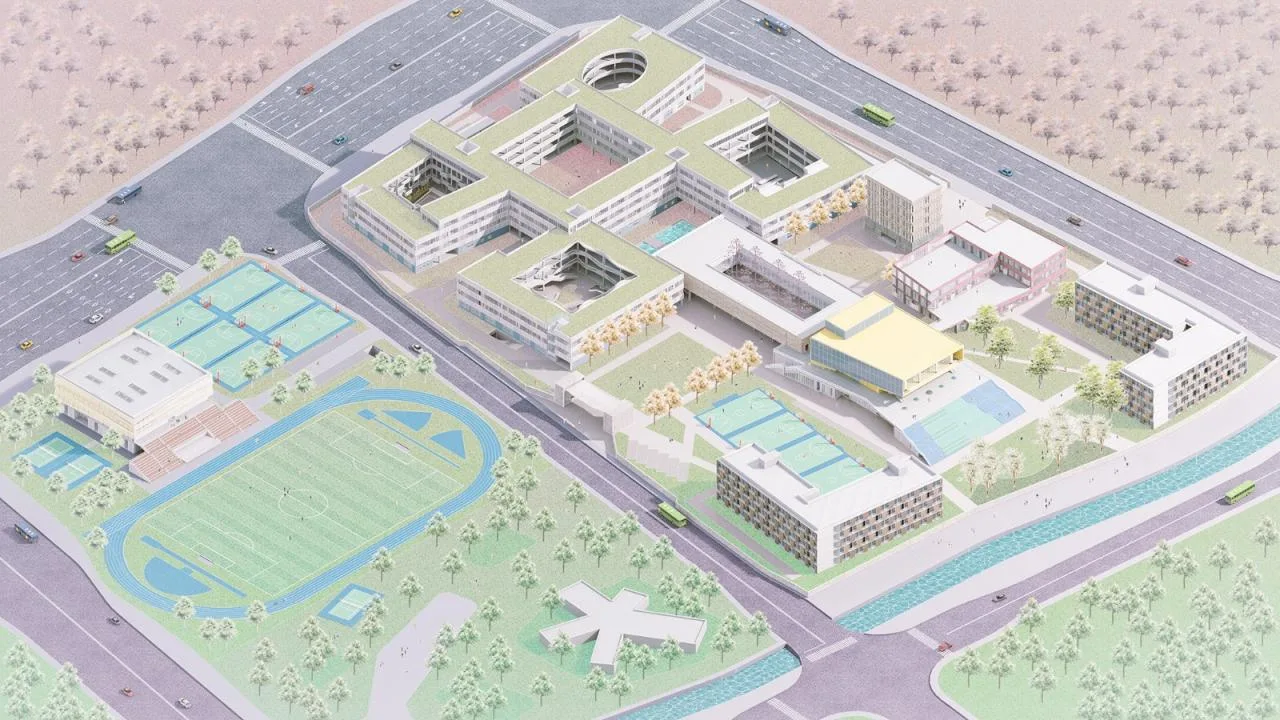
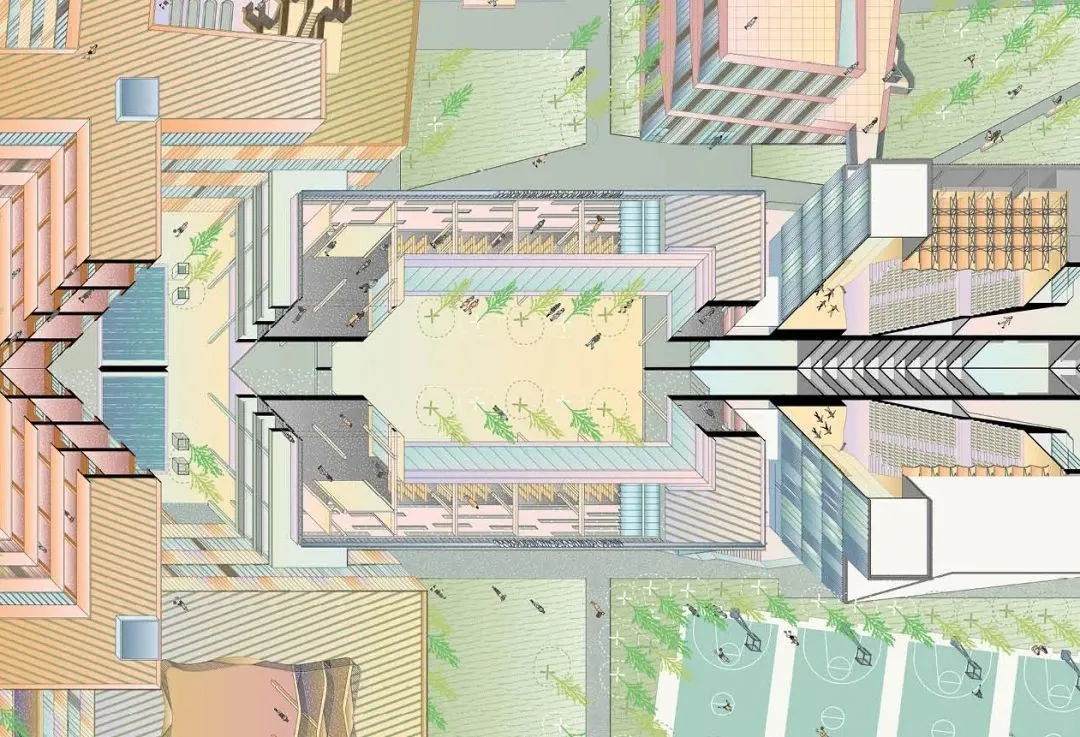
Campus Design as a “Worldview”
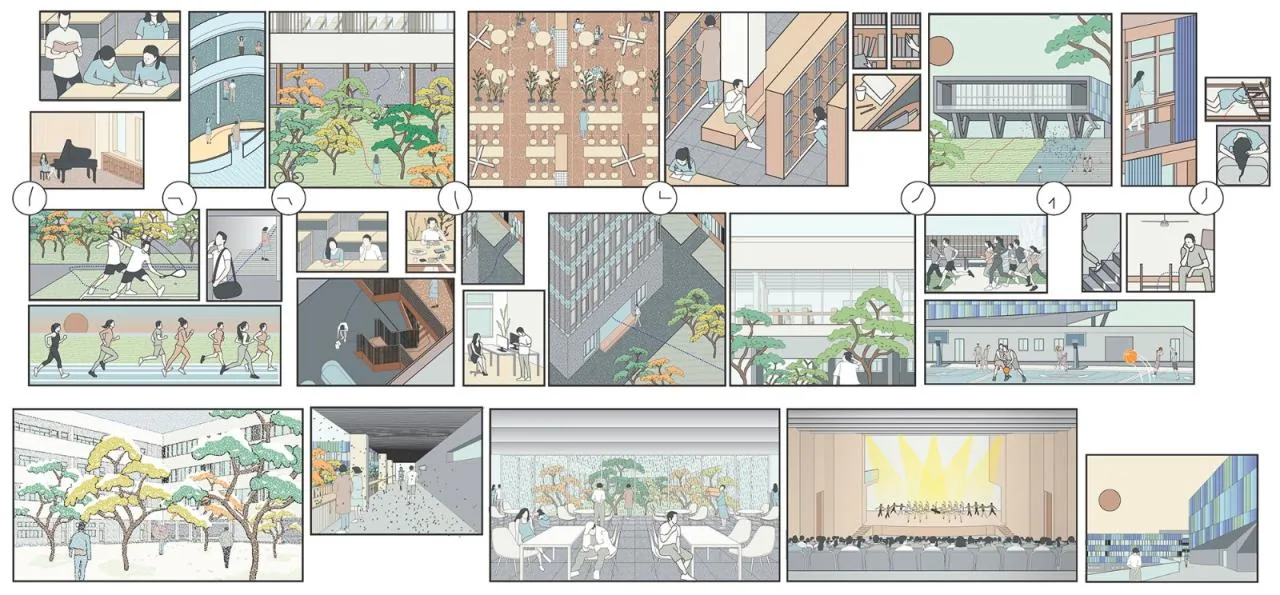
The campus narratives unfold through students’ own explorations, featuring an open-ended storyline without a defined start or finish, as reflected in the architectural design.
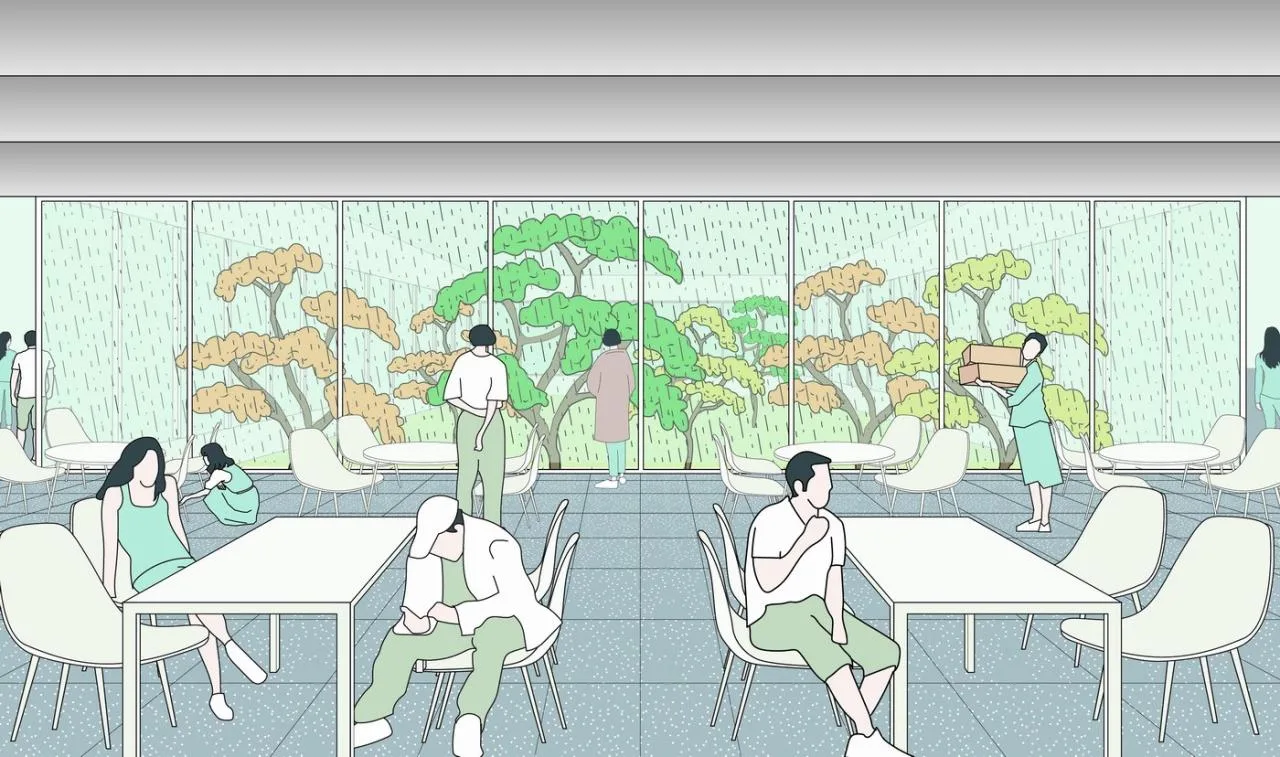
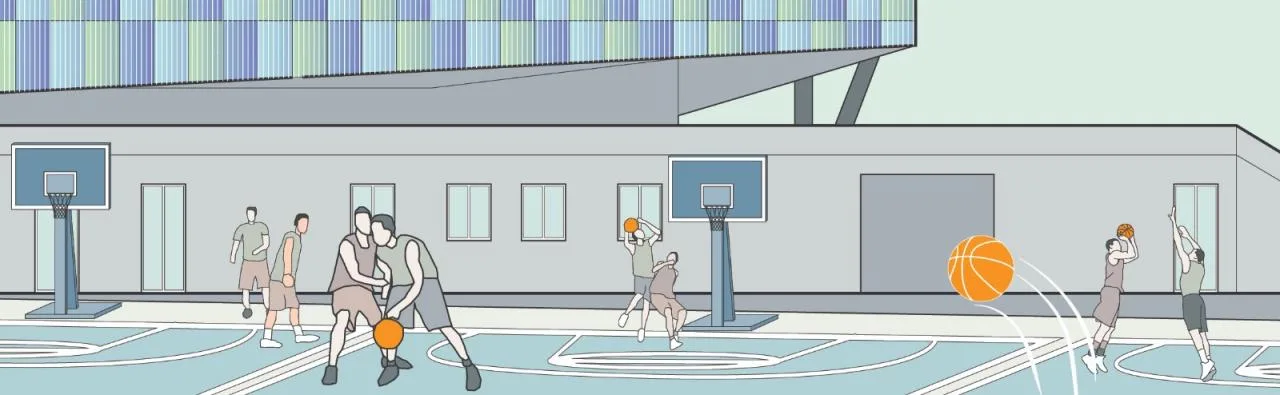
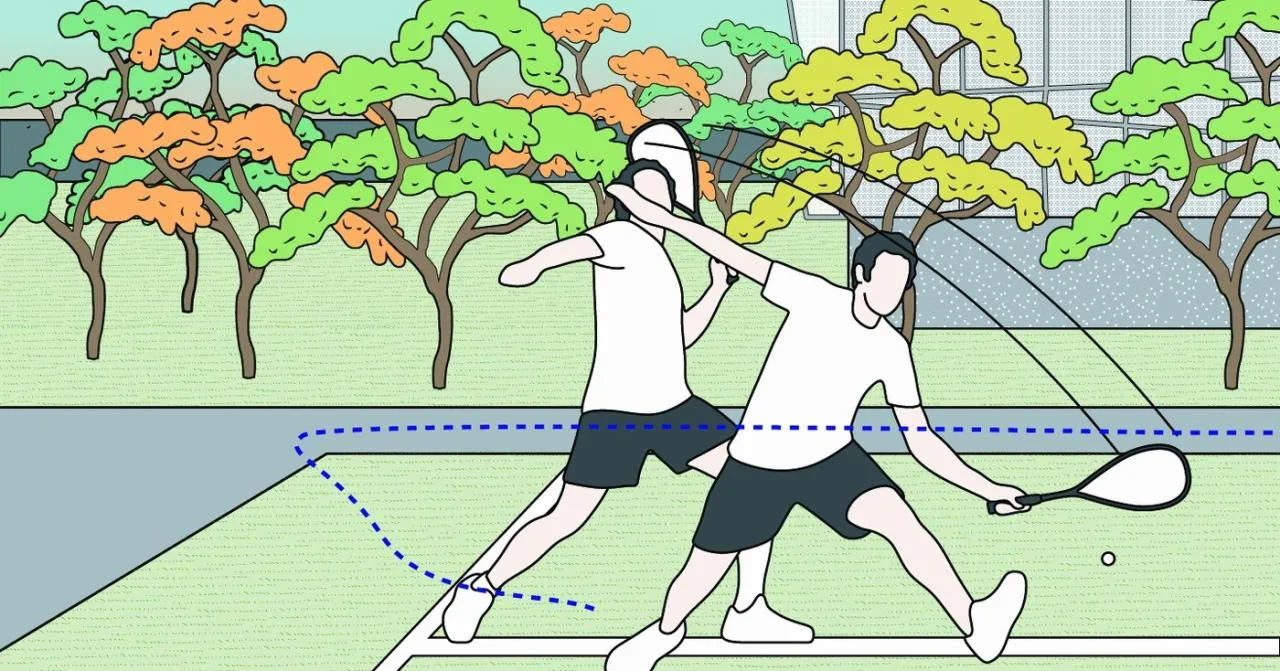
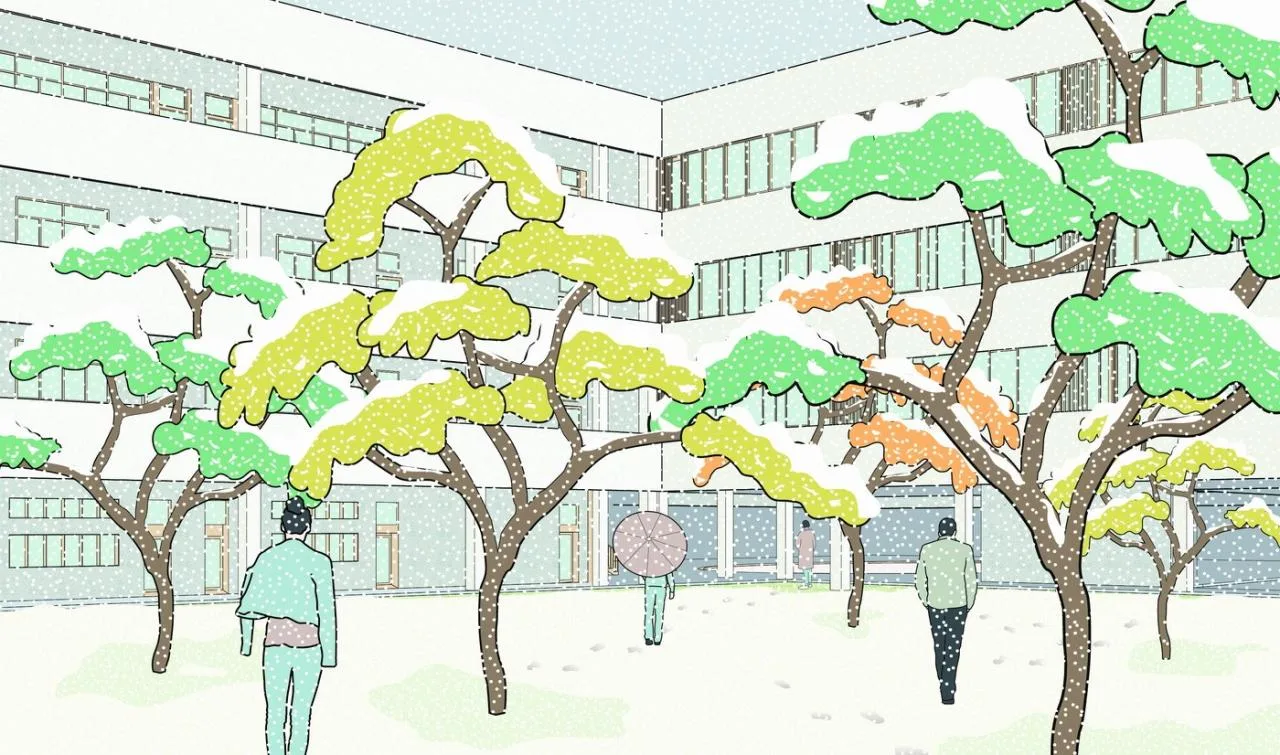
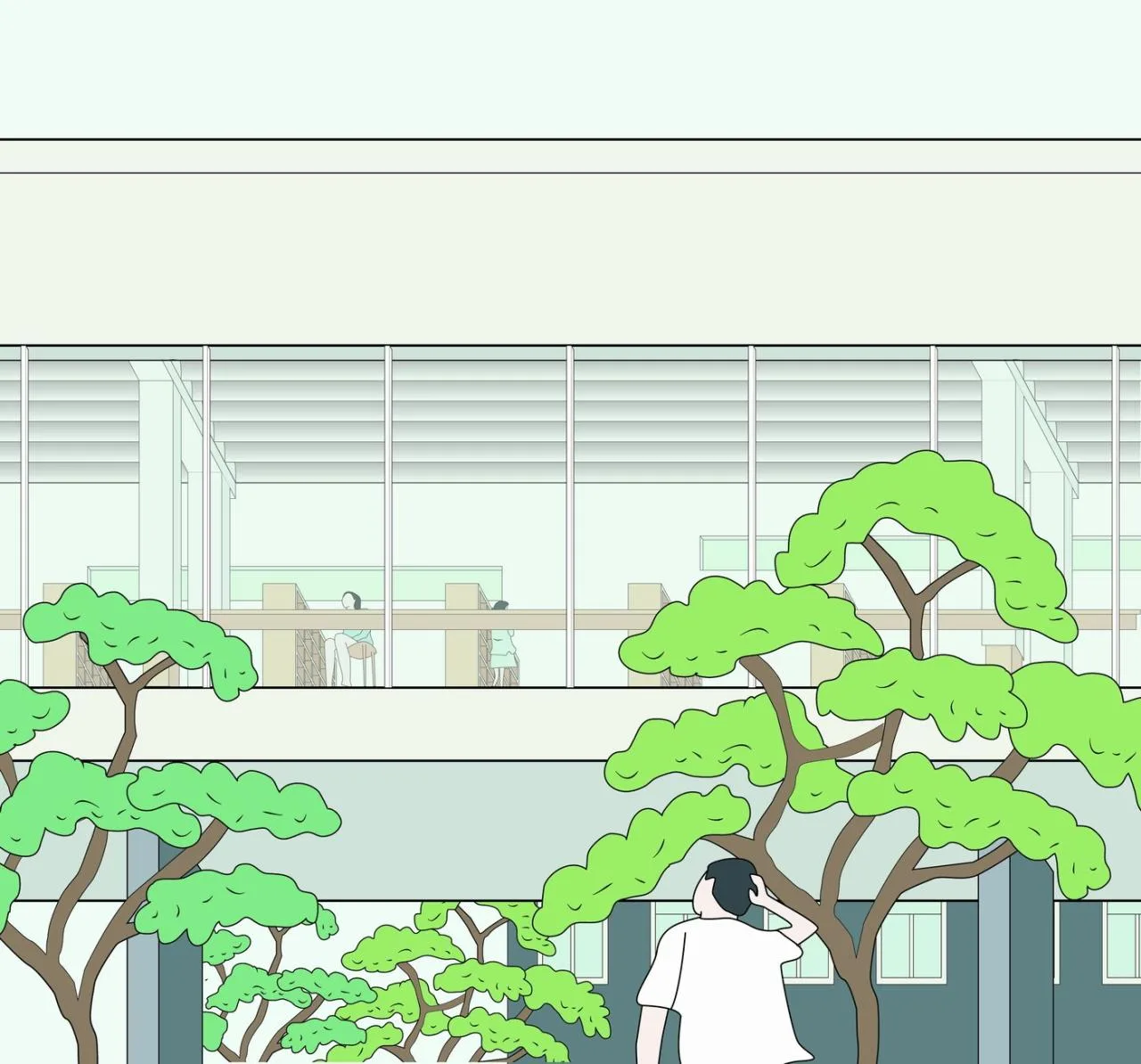
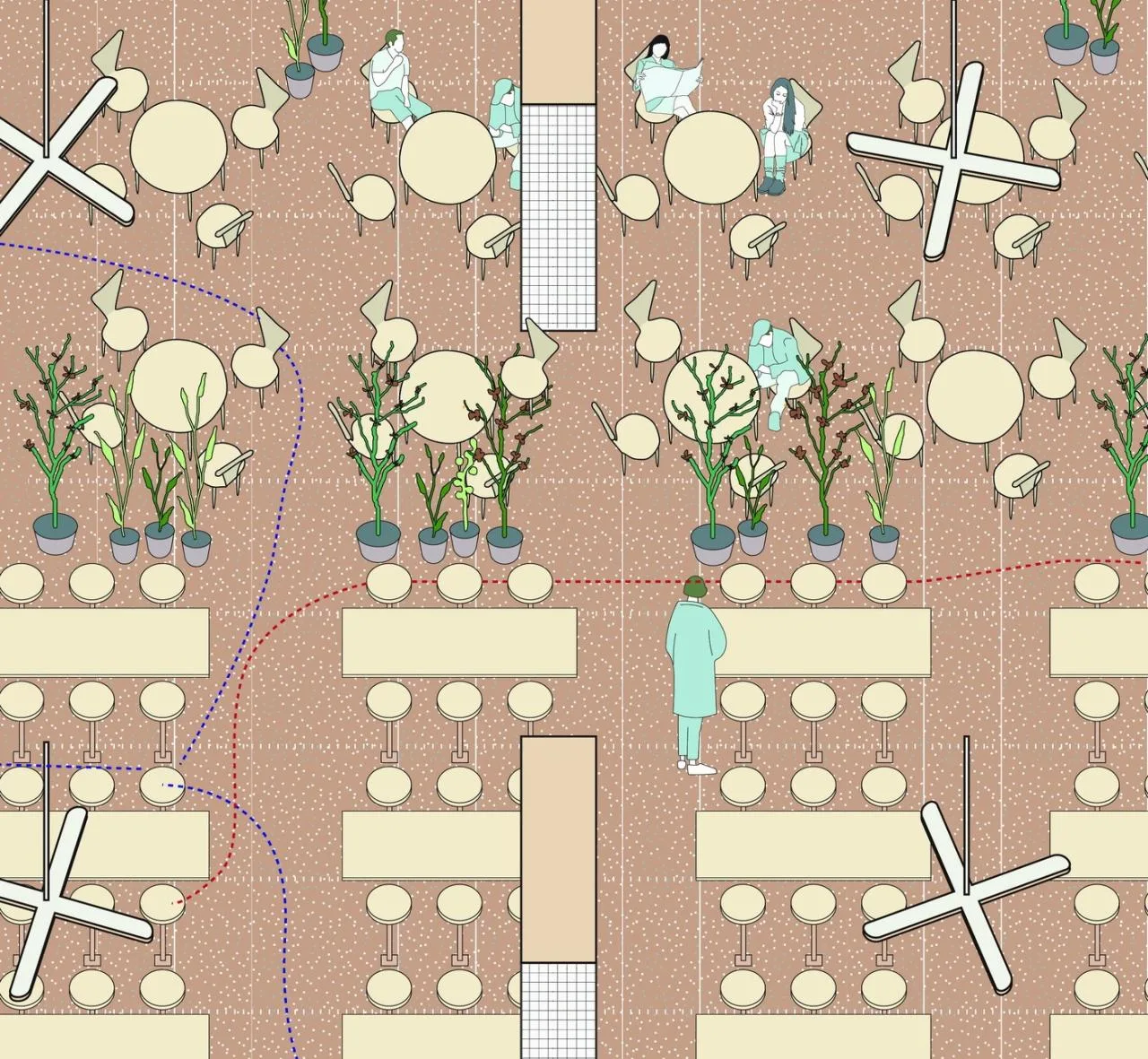
▲ Architectural Drawings
Project Overview
Founded in 1956, Ningbo Gulin Vocational High School is a provincial-level key public boarding school located in Haishu District, Ningbo City. The campus covers approximately 96,851 square meters and serves 3,000 students across 75 classes.
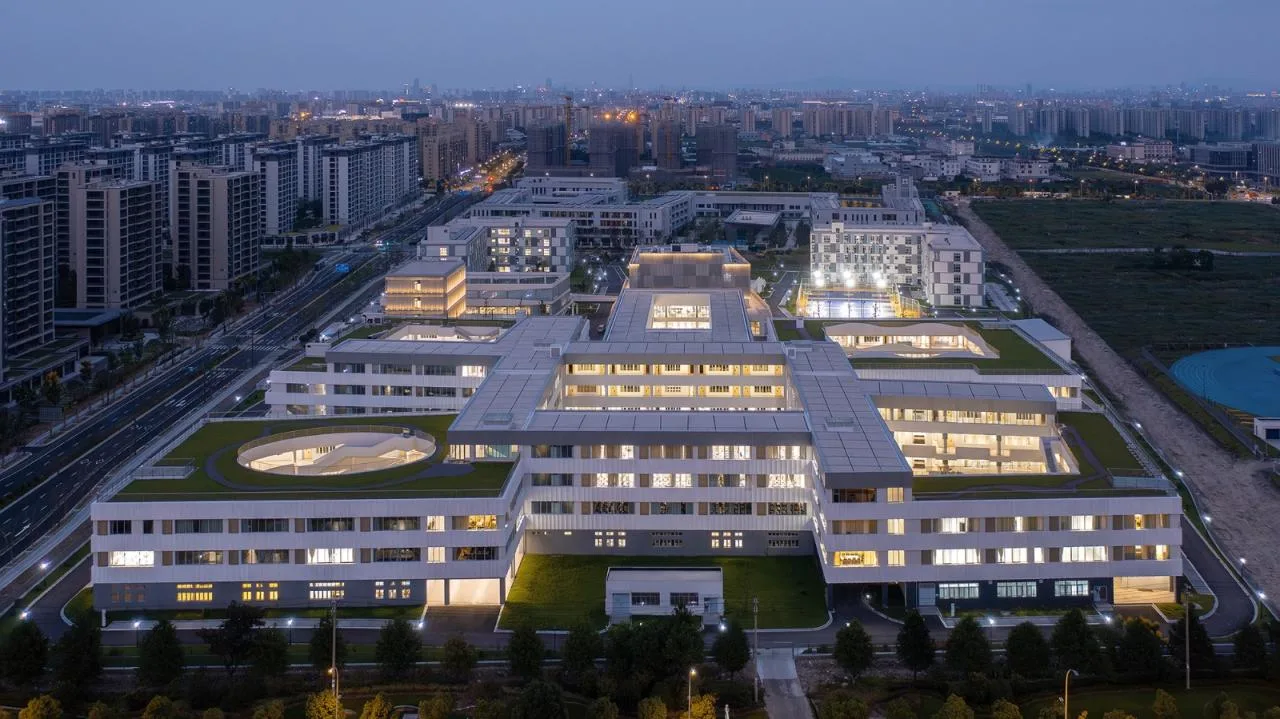
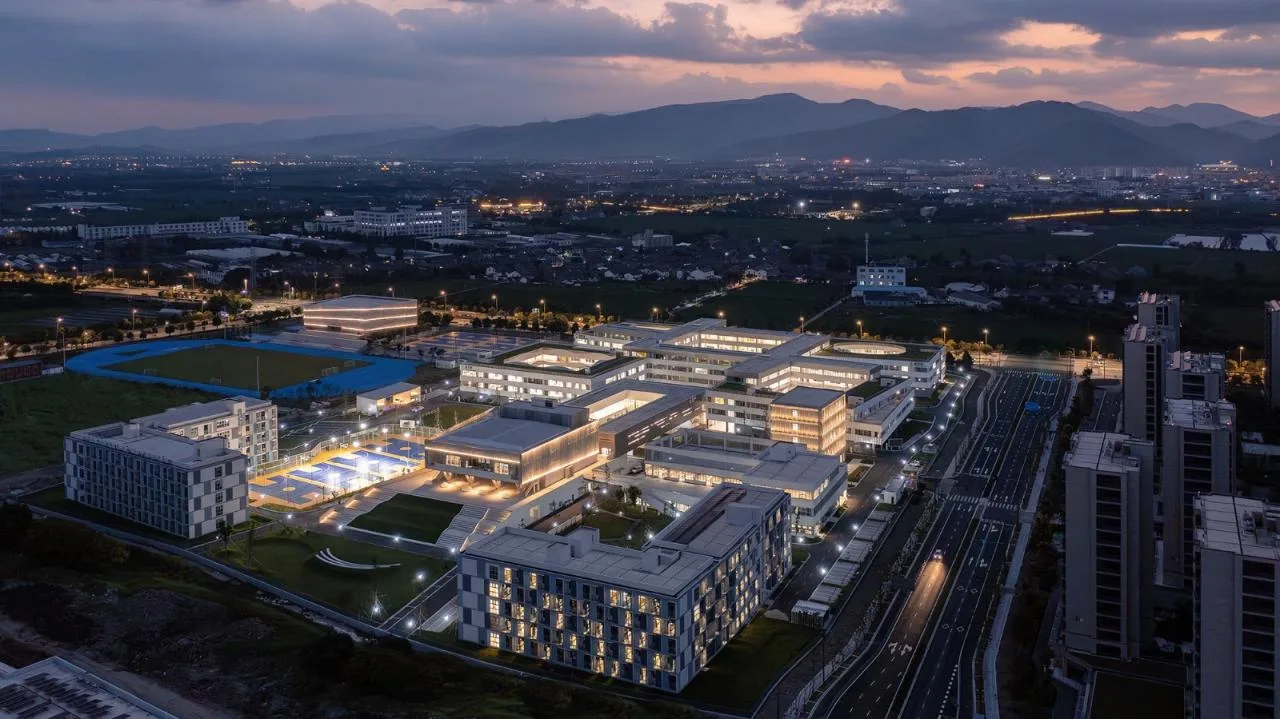
▲ Aerial Night View (Photography: Summer Solstice)
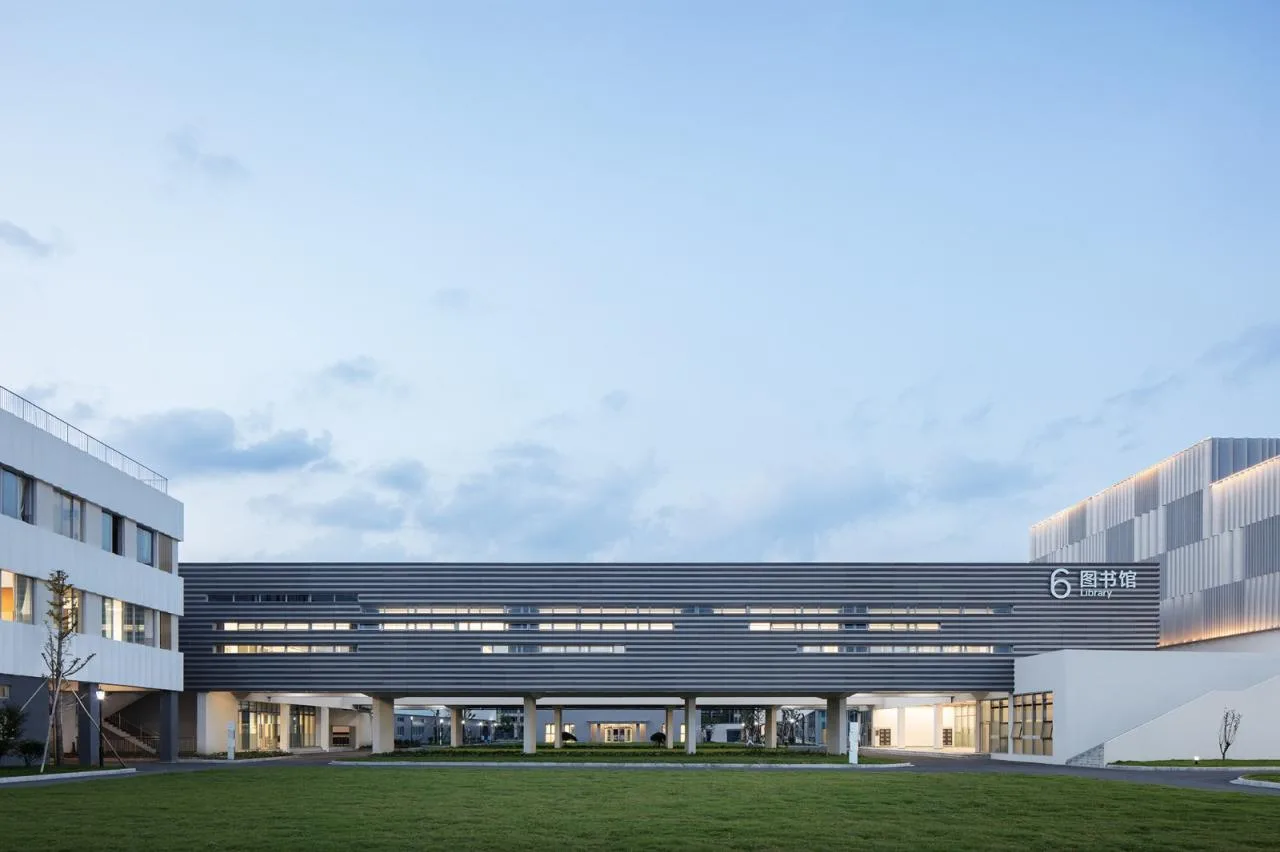
▲ Library (Photography: Summer Solstice)
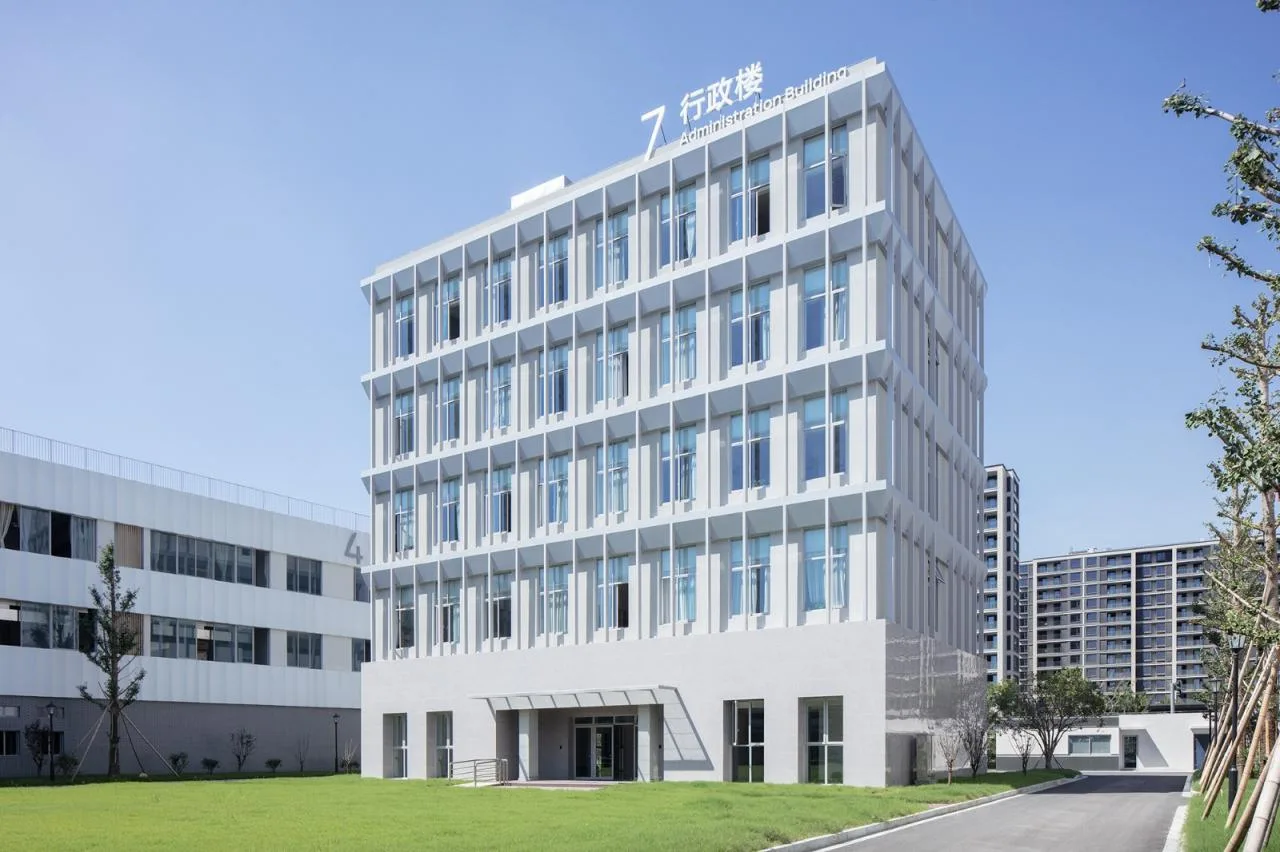
▲ Administrative Building (Photography: Summer Solstice)
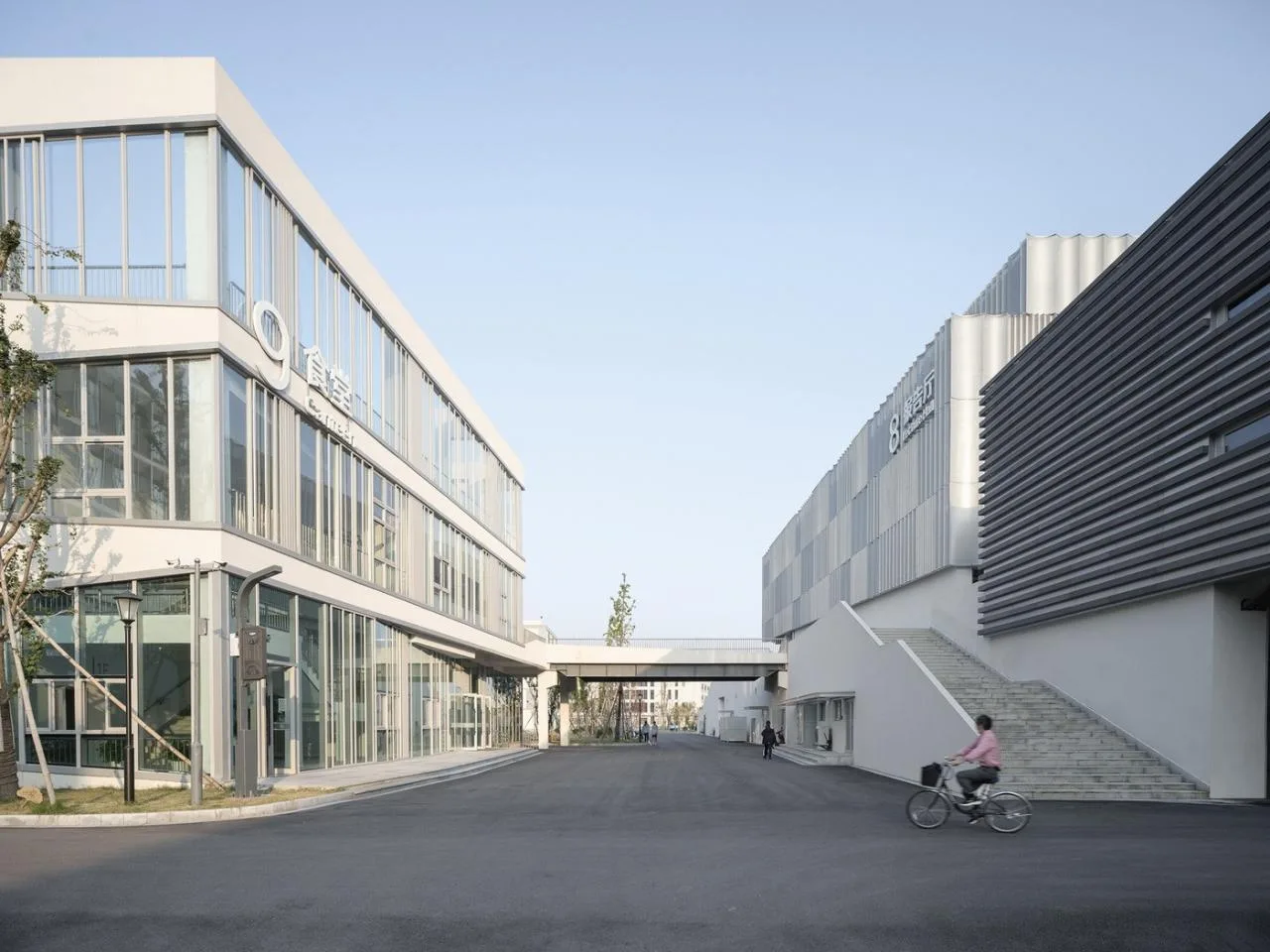
▲ Continuous Circulation System (Photo: Zhu Runzi)
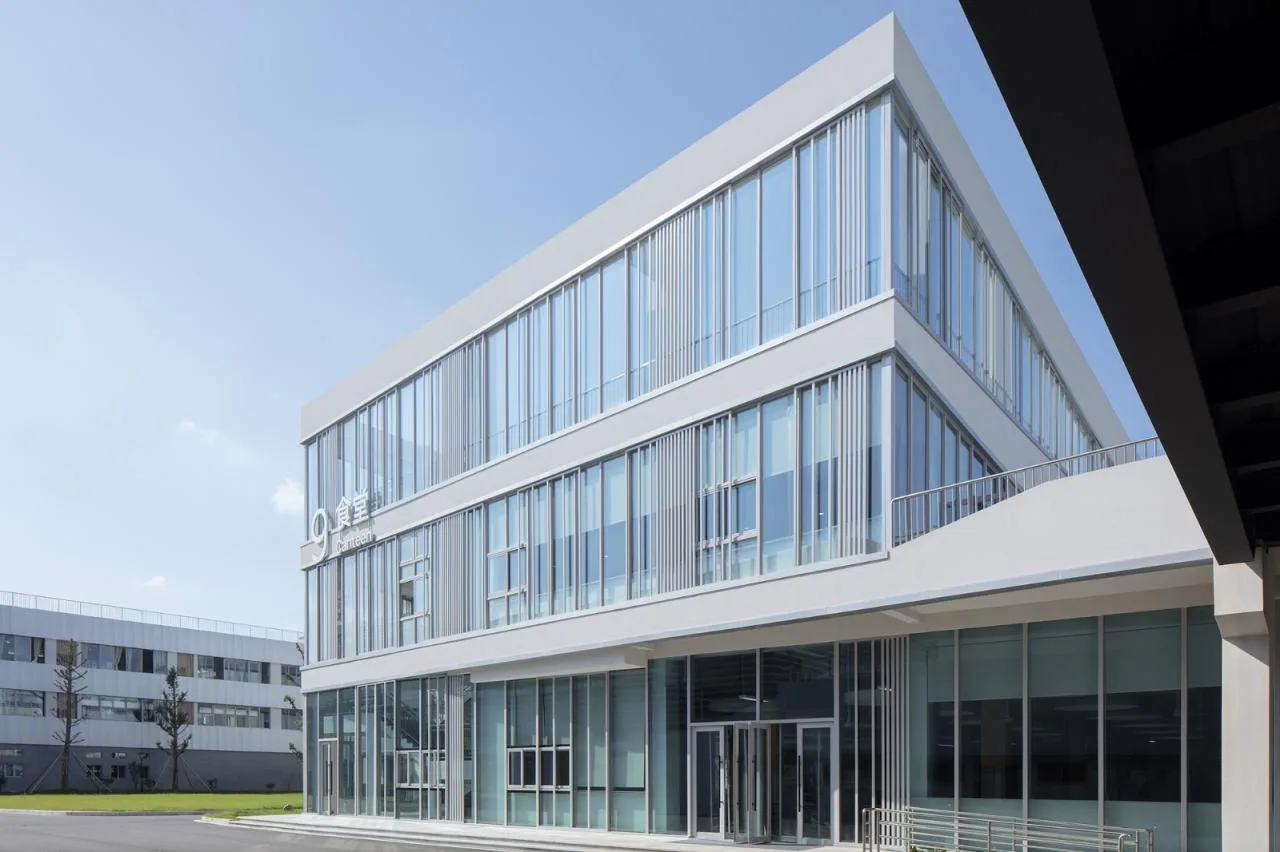
▲ Cafeteria (Photography: Summer Solstice)
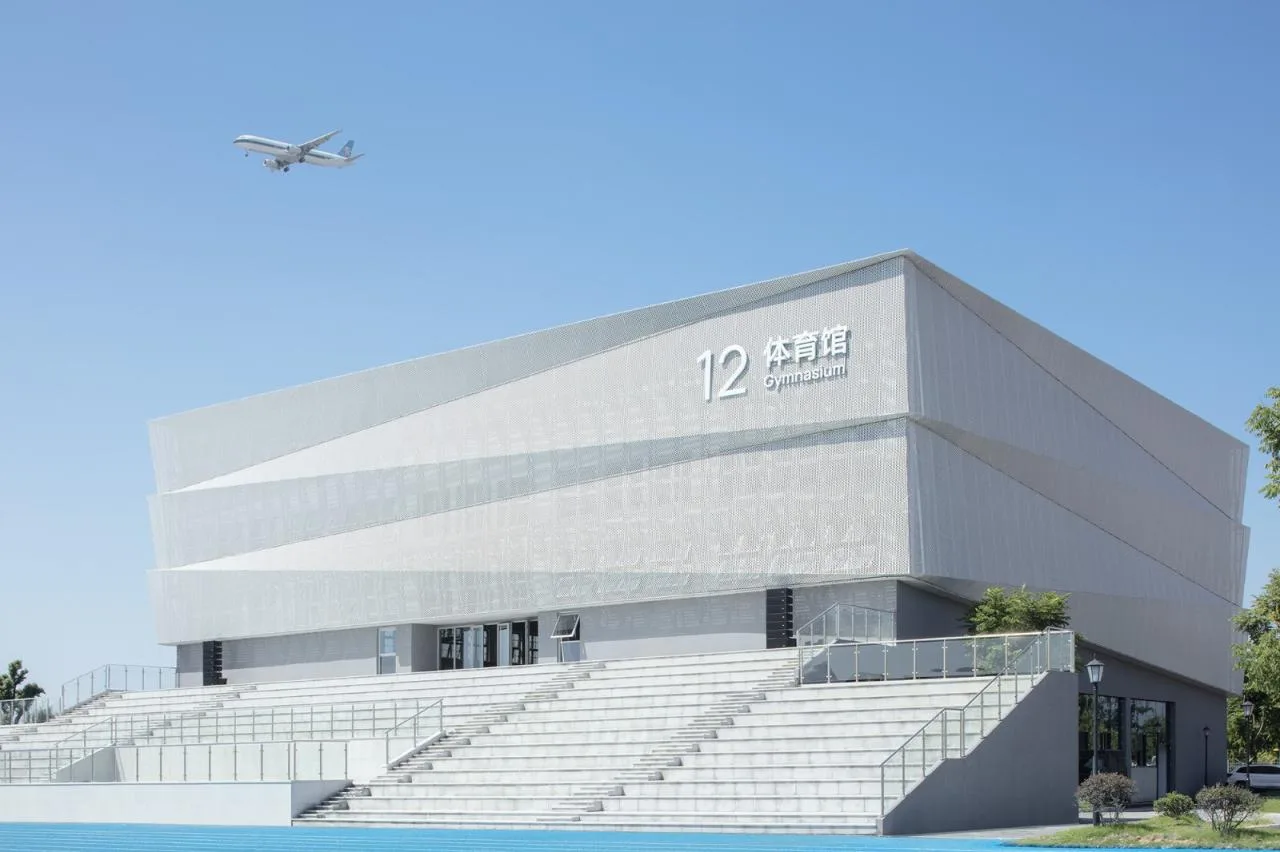
▲ Sports Center (Photography: Summer Solstice)
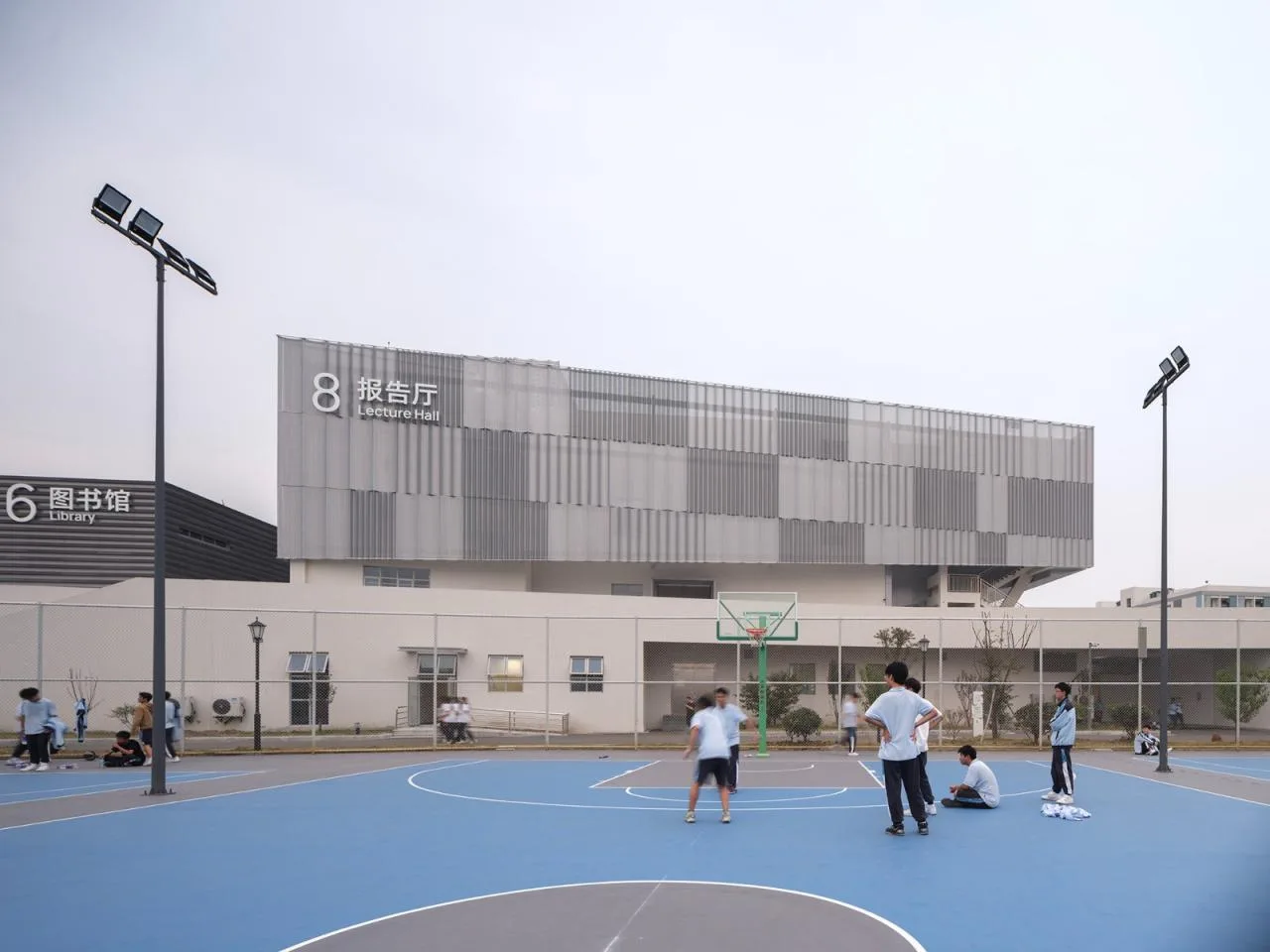
▲ Stadium (Photo: Zhu Runzi)
#01 Challenges and Opportunities
Designing a future-focused vocational high school presents unique challenges and opportunities. Unlike regular high schools, vocational schools require diverse educational models that balance close collaboration and relative independence across various majors and functions. This necessitates rethinking the school’s circulation spaces to ease both horizontal and vertical traffic flow, fostering autonomy among departments while encouraging interdisciplinary openness. Additionally, the design accommodates future shifts in teaching methods by incorporating flexibility into the school’s four-dimensional framework.
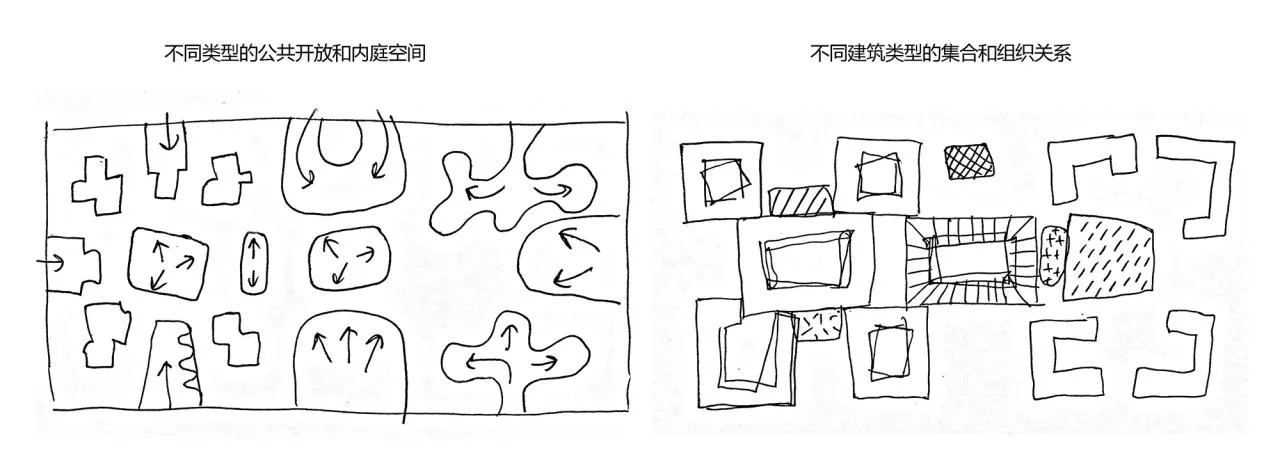
▲ Architectural Drawing
#02 “Thousand Layer Cake” — Reorganizing and Overlapping Carpet Architecture
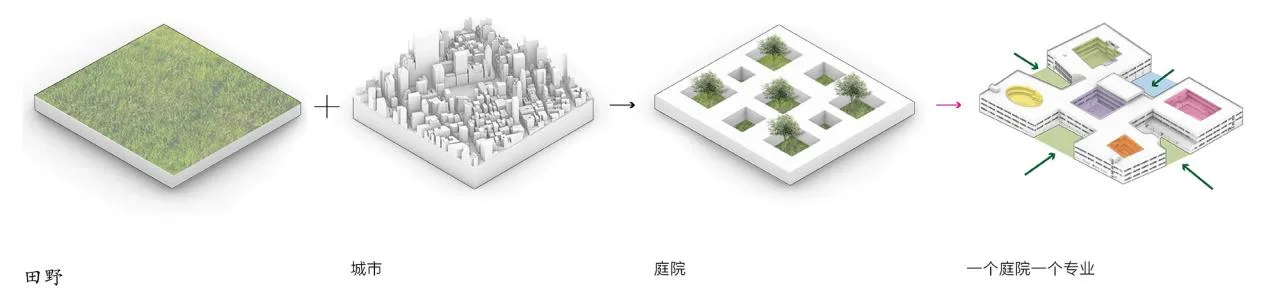
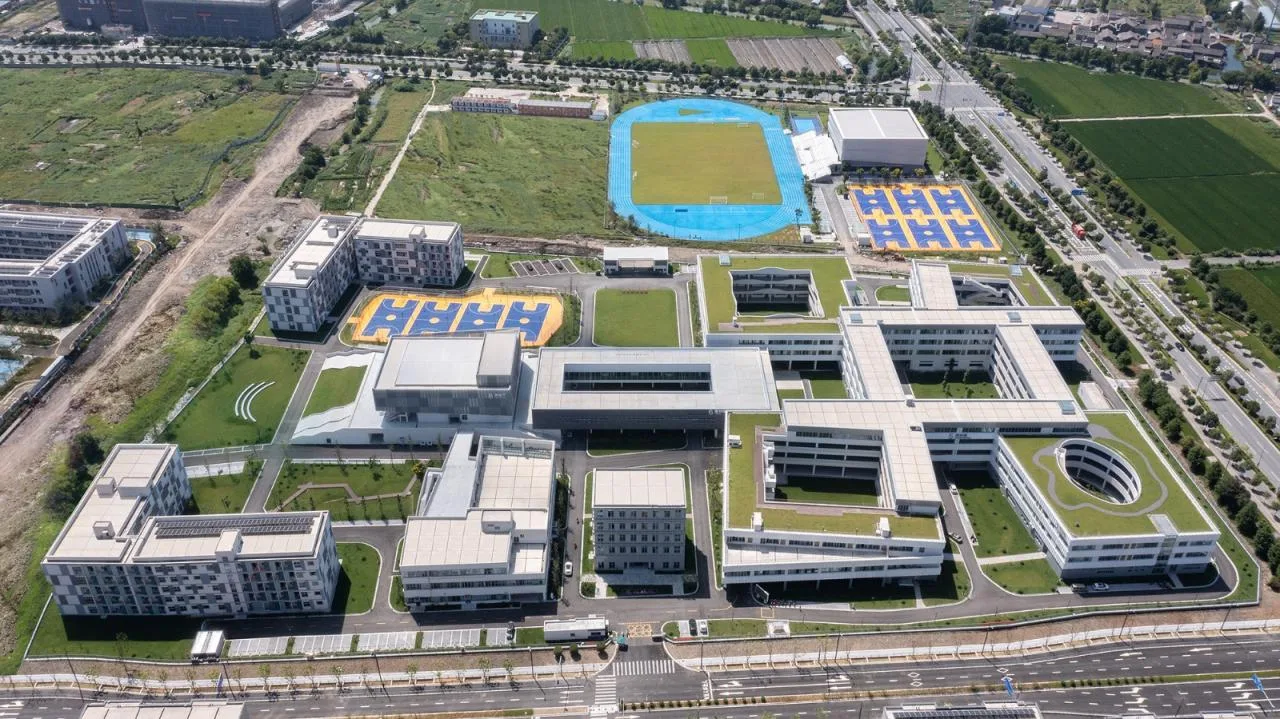
Traditional campus layouts often use isolated teaching units surrounding open spaces. While cost-effective, this approach limits student interaction and results in monotonous spatial forms. For this project, all teaching units are arranged using a carpet-style structure that breaks down and recombines spaces to meet the complex functional demands of vocational education.
This composite organization, combined with connected circulation, allows teachers and students to move quickly and enjoy engaging walking experiences.
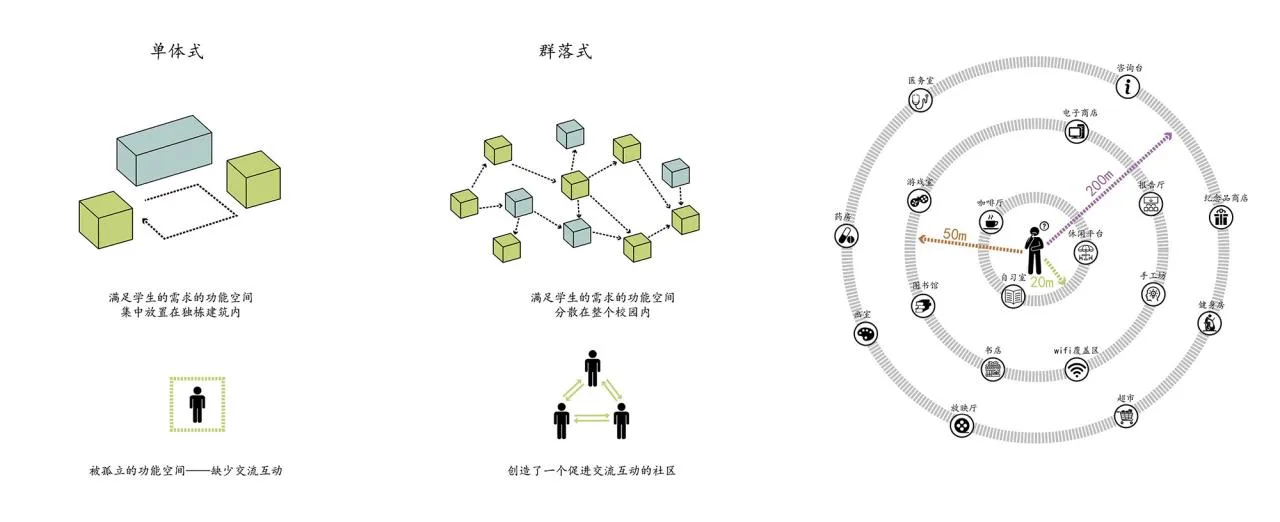
▲ Architectural Drawing
On the ground floor, training classrooms with low lighting requirements are arranged in an open grid to accommodate diverse activities and allow flexible future use. The second and third floors house modular classrooms organized around inner courtyards, enhancing natural light and views. Informal teaching spaces between formal classrooms and training rooms create flexible connections, fostering communication across different majors and spaces.
▲ Architectural Drawing
▲ Aerial Perspective (Photography: Summer Solstice)
#03 “Upgrading Clearance LOOPS” — Courtyard Topology Beyond Orthogonality
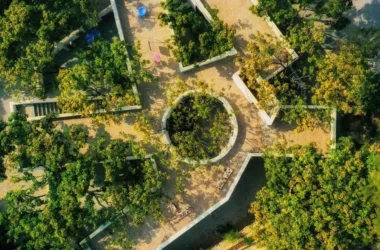
To meet the complex functional needs of industry-academia integration and comply with school design standards, the design challenges the traditional orthogonal relationship between building and site. This allows better integration with the landscape, increases informal teaching spaces, and improves overall daylight quality.
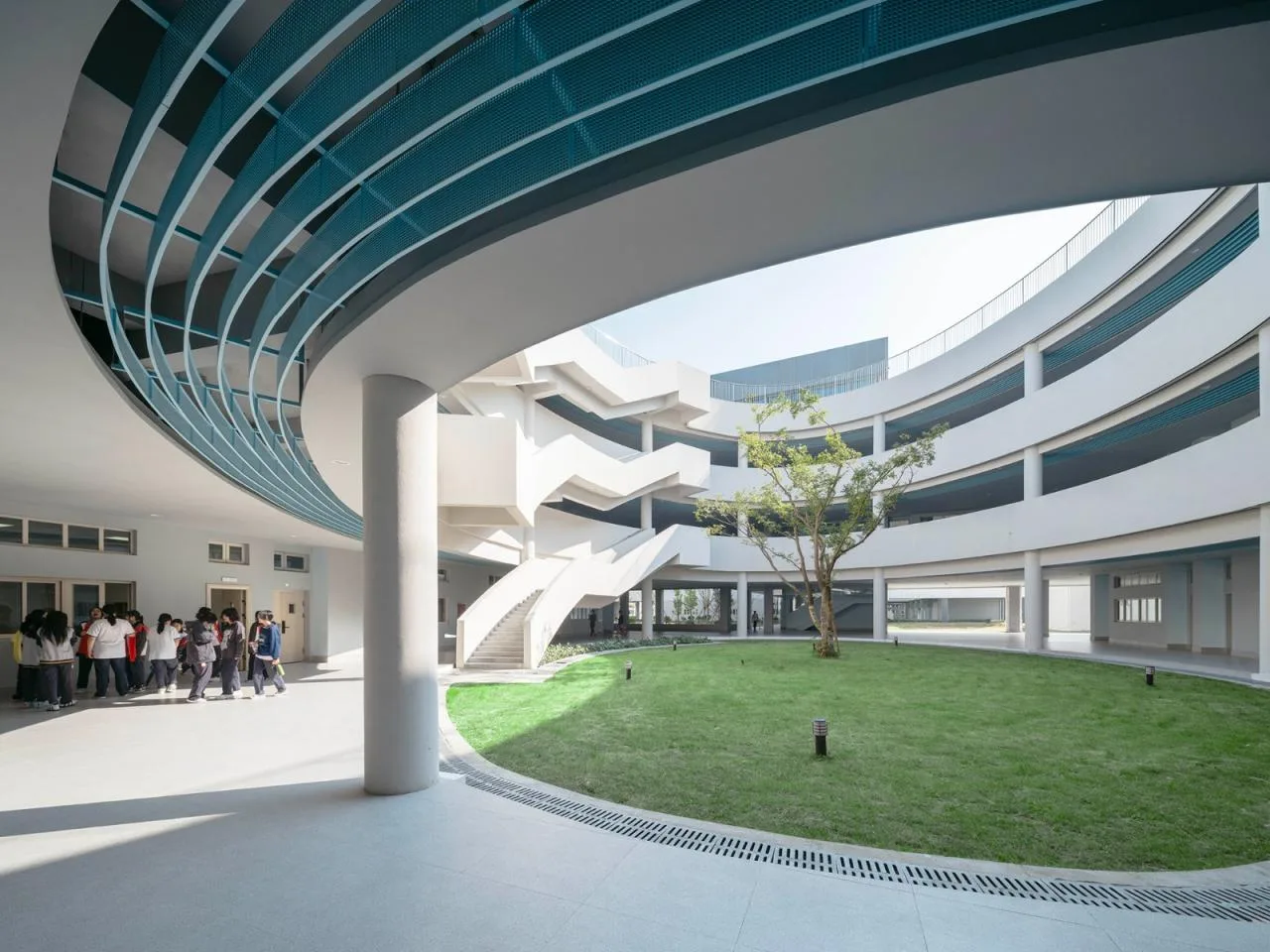
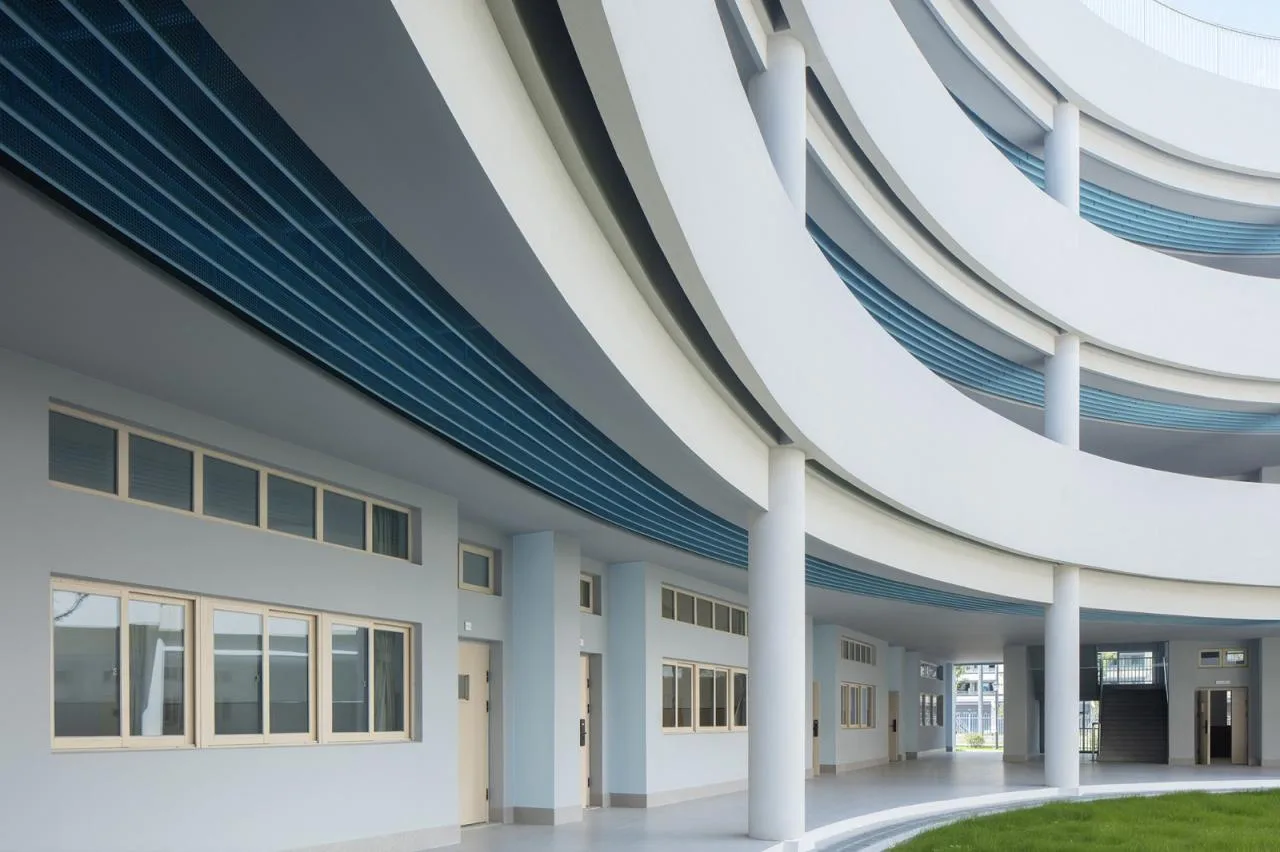
Various specialized teaching areas—including Arts and Crafts, Culinary, Landscape Architecture, Early Childhood Education, General Teaching, and the Library—are distinguished by unique flooring, color schemes, materials, vertical design elements, and spatial layouts. These features serve as visual cues, enhancing spatial experiences and helping students navigate the campus freely.
▲ Industrial and Art Professional Courtyard (Photography: Zhu Runzi)
▲ Industrial and Art Professional Courtyard (Photography: Summer Solstice)
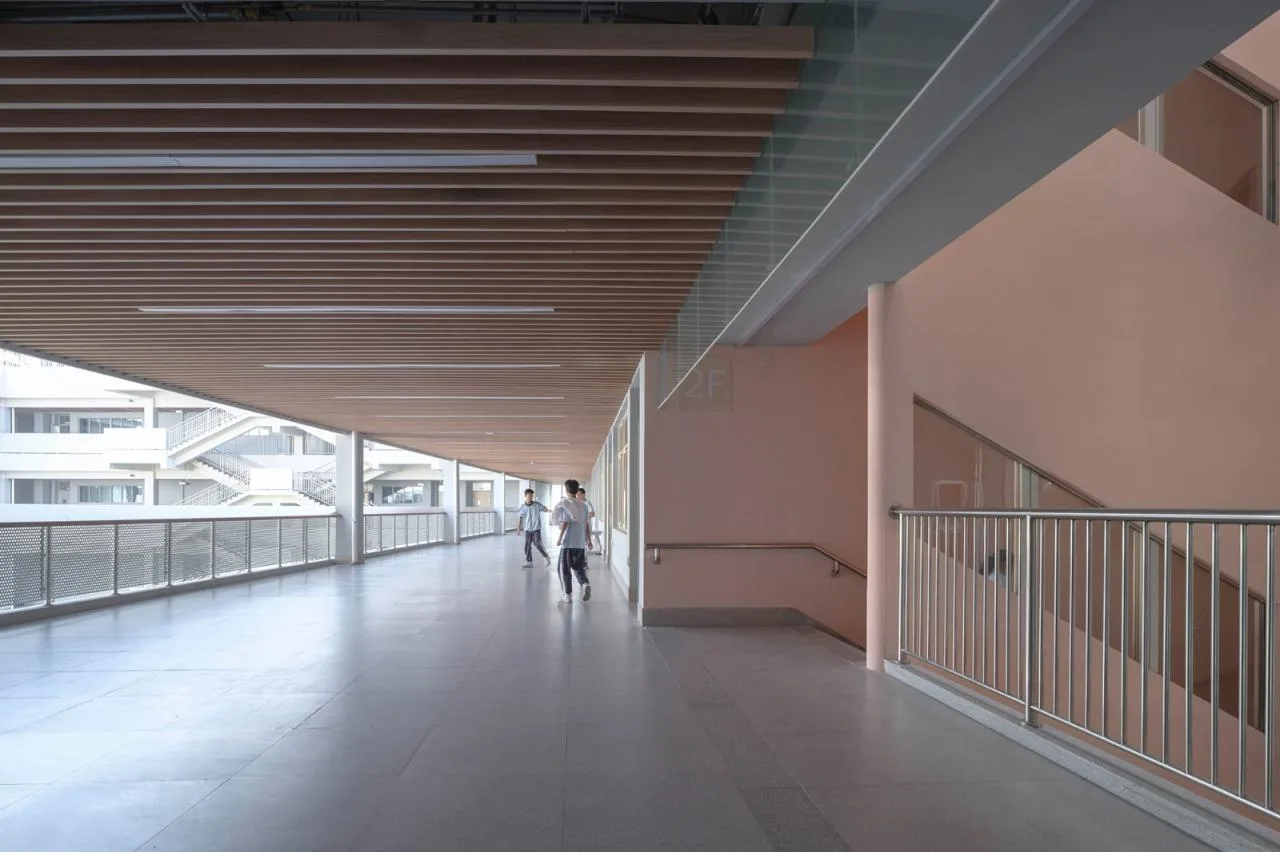
▲ Culinary Professional Interior Corridor (Photo: Zhu Runzi)
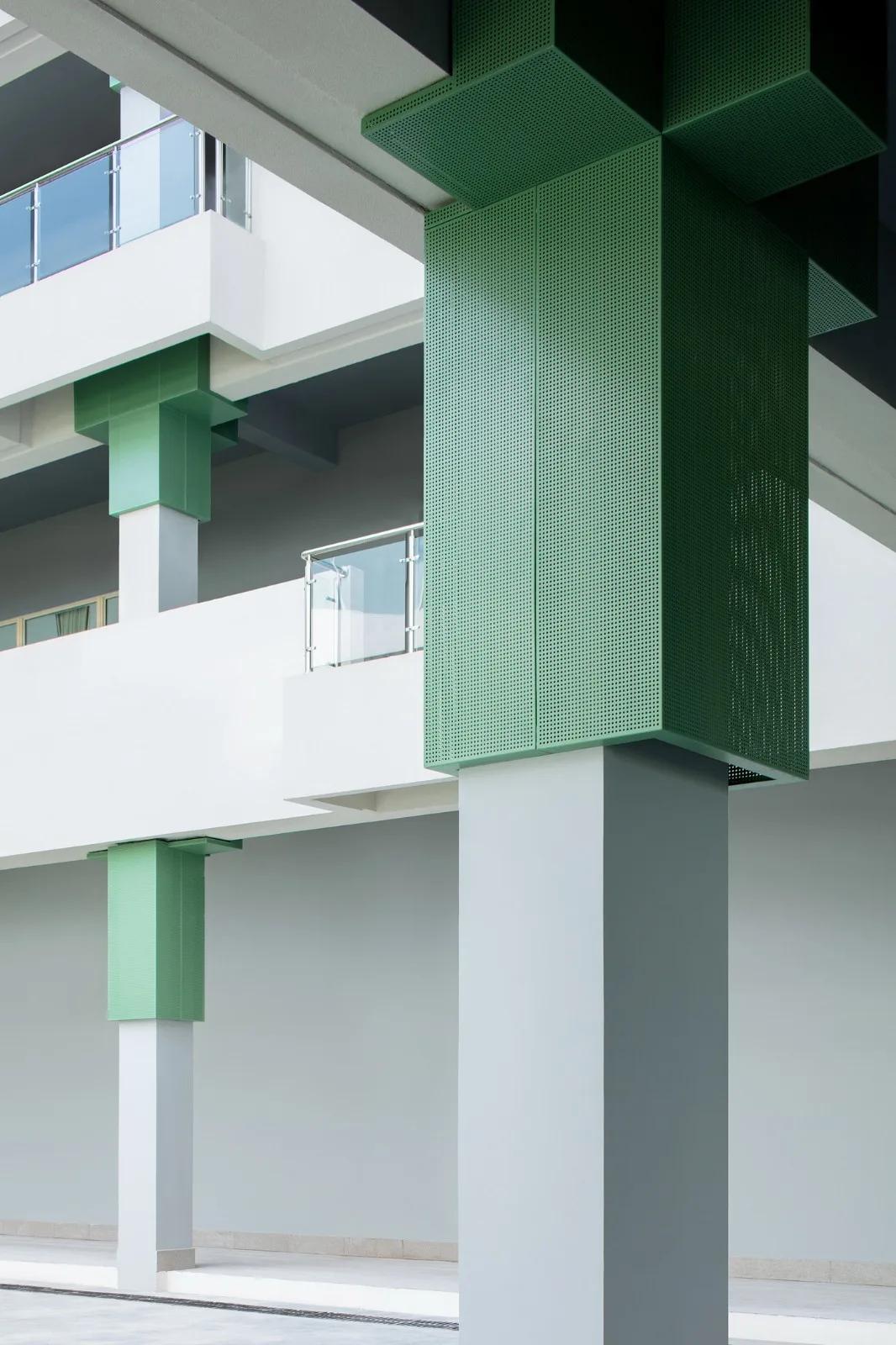
▲ Garden Landscape Professional Courtyard (Photography: Summer Solstice)
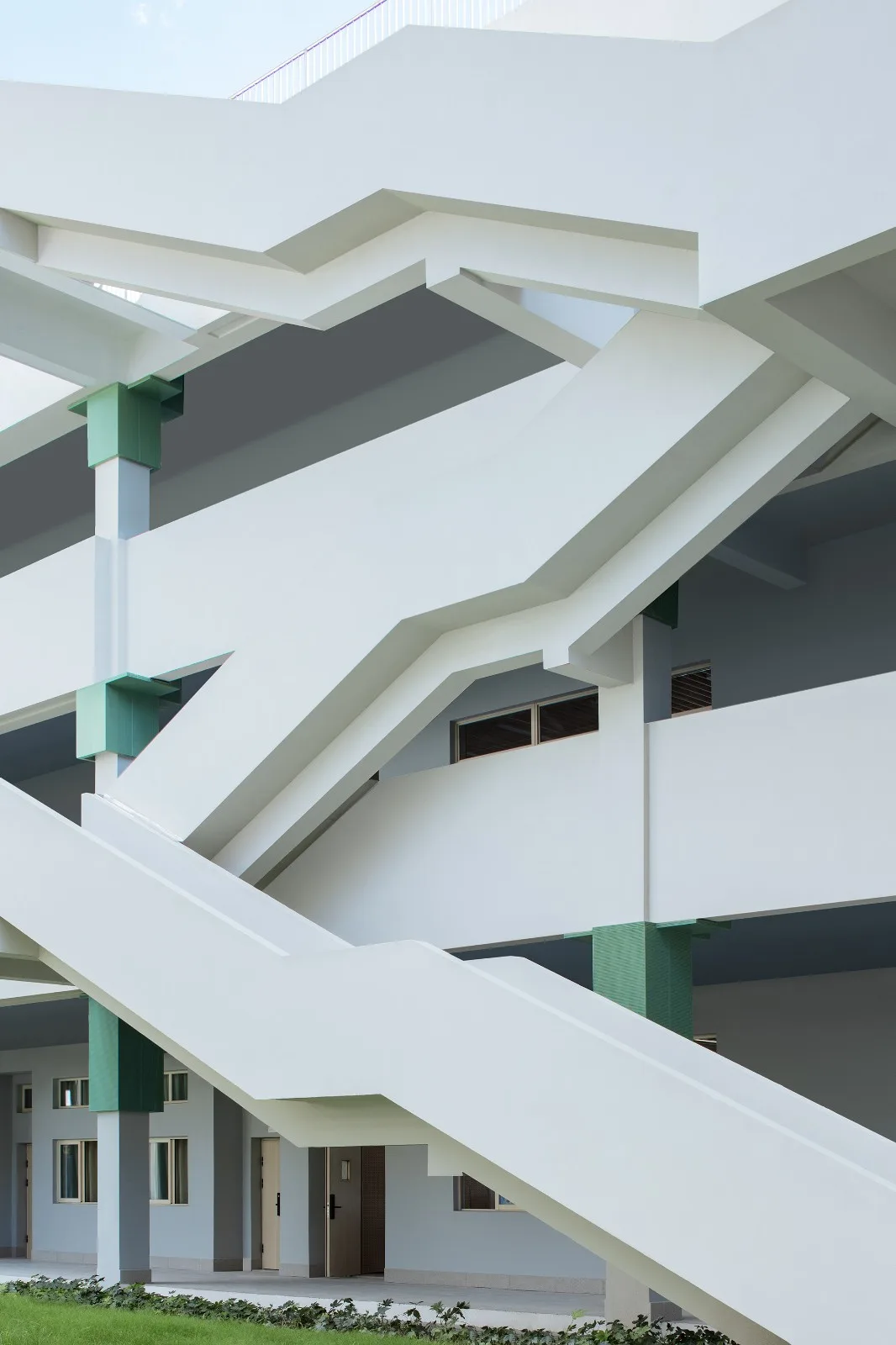
▲ Reverse Perspective Staircase (Photography: Summer Solstice)
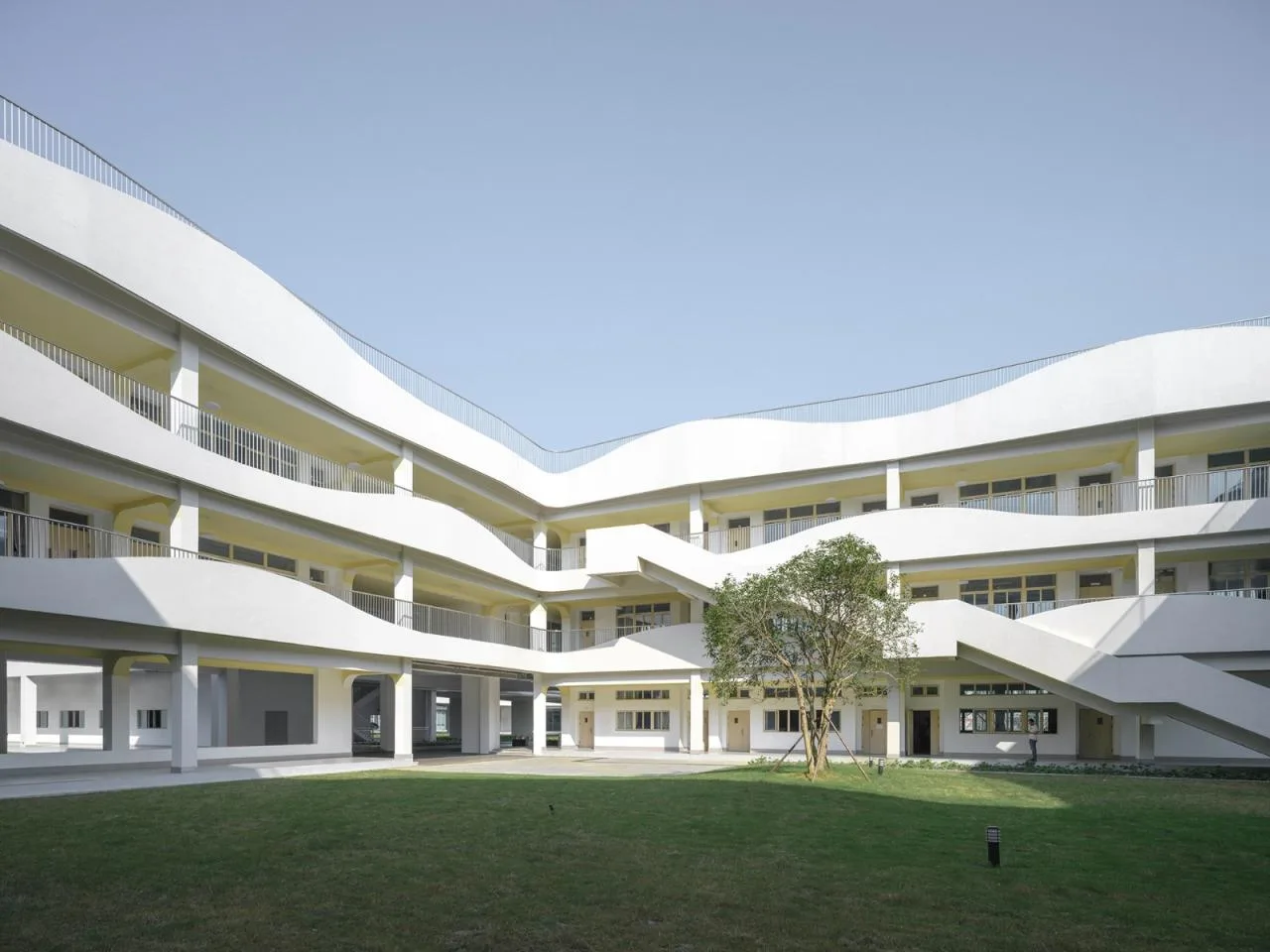
▲ Preschool Education Professional Courtyard (Photography: Zhu Runzi)
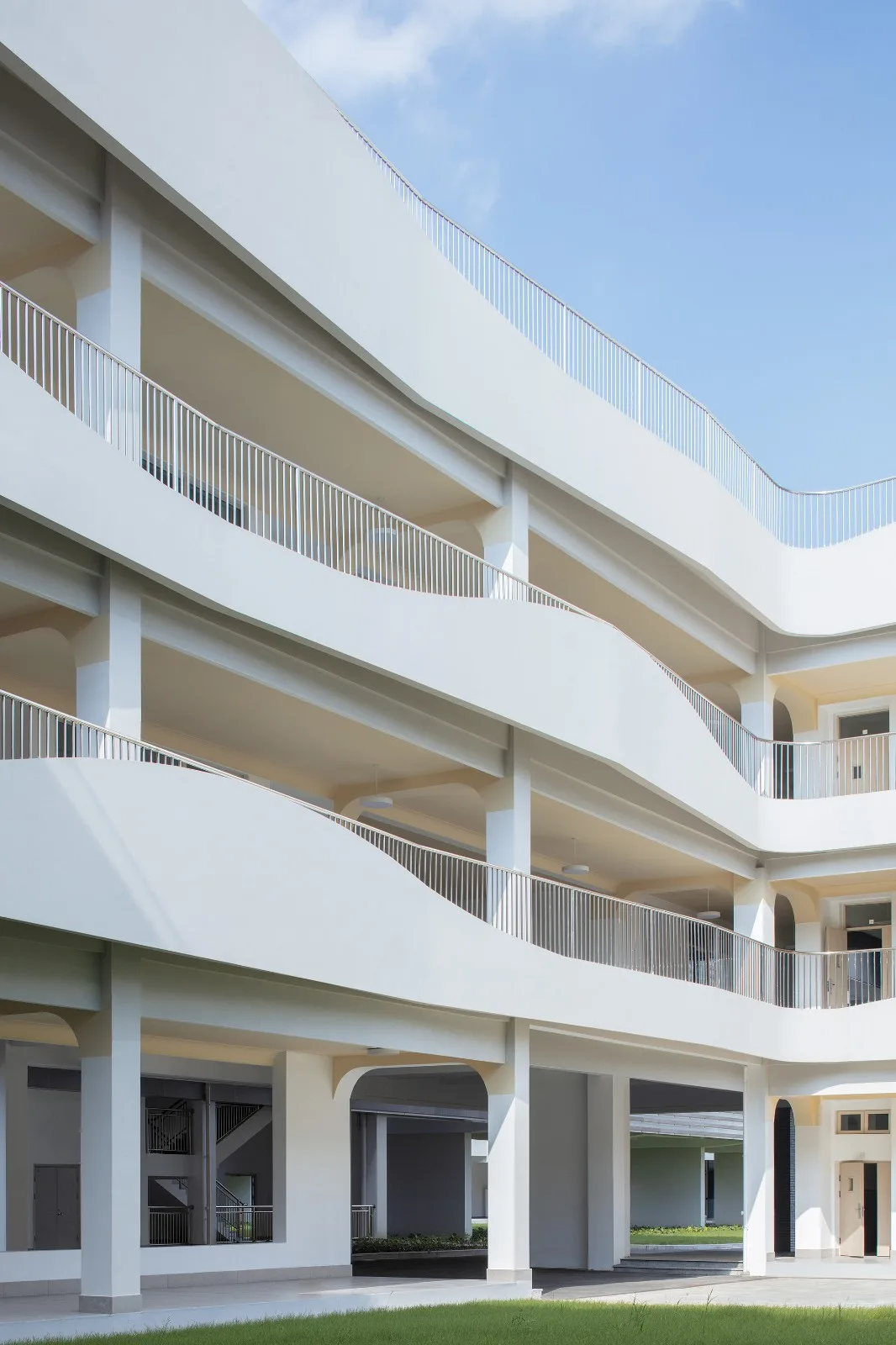
▲ Preschool Education Professional Courtyard (Photography: Summer Solstice)
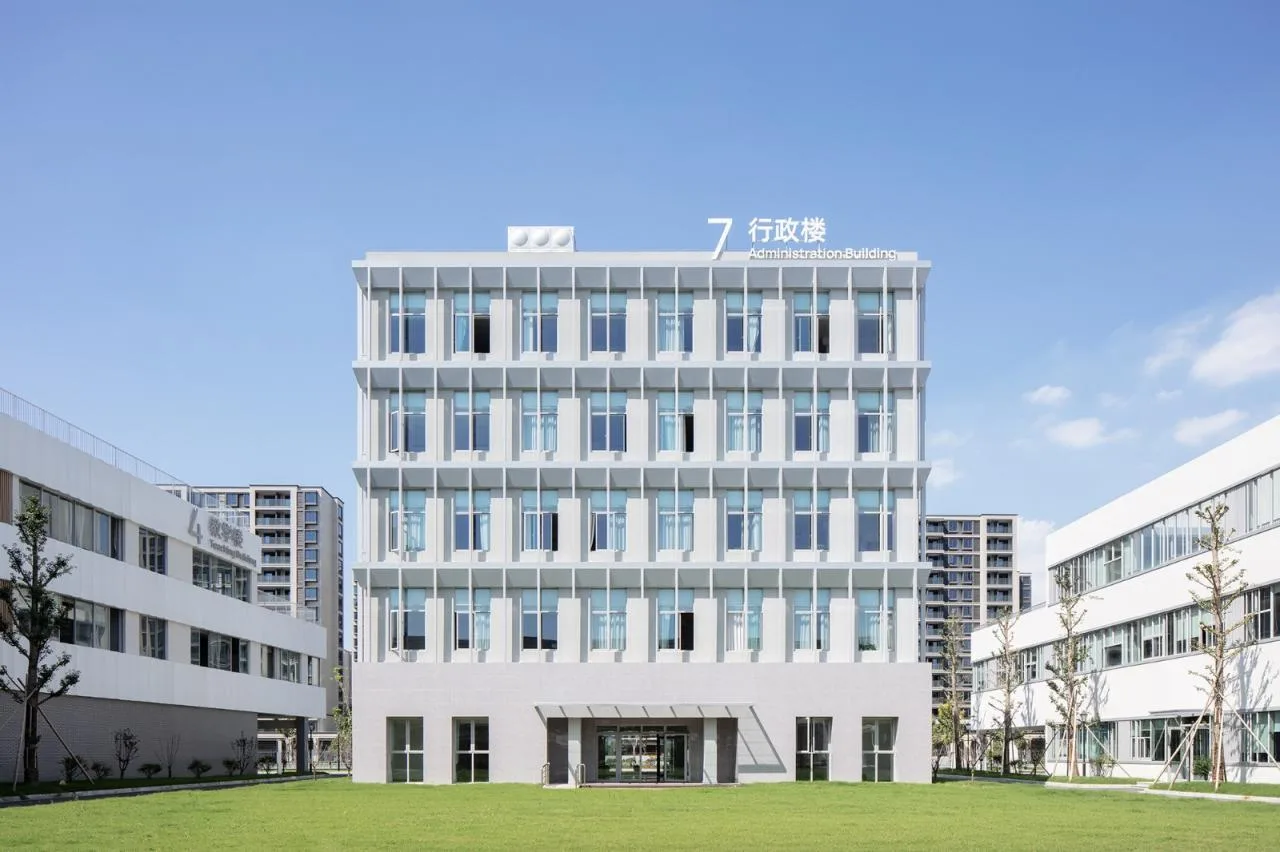
▲ Administrative Building (Photography: Summer Solstice)
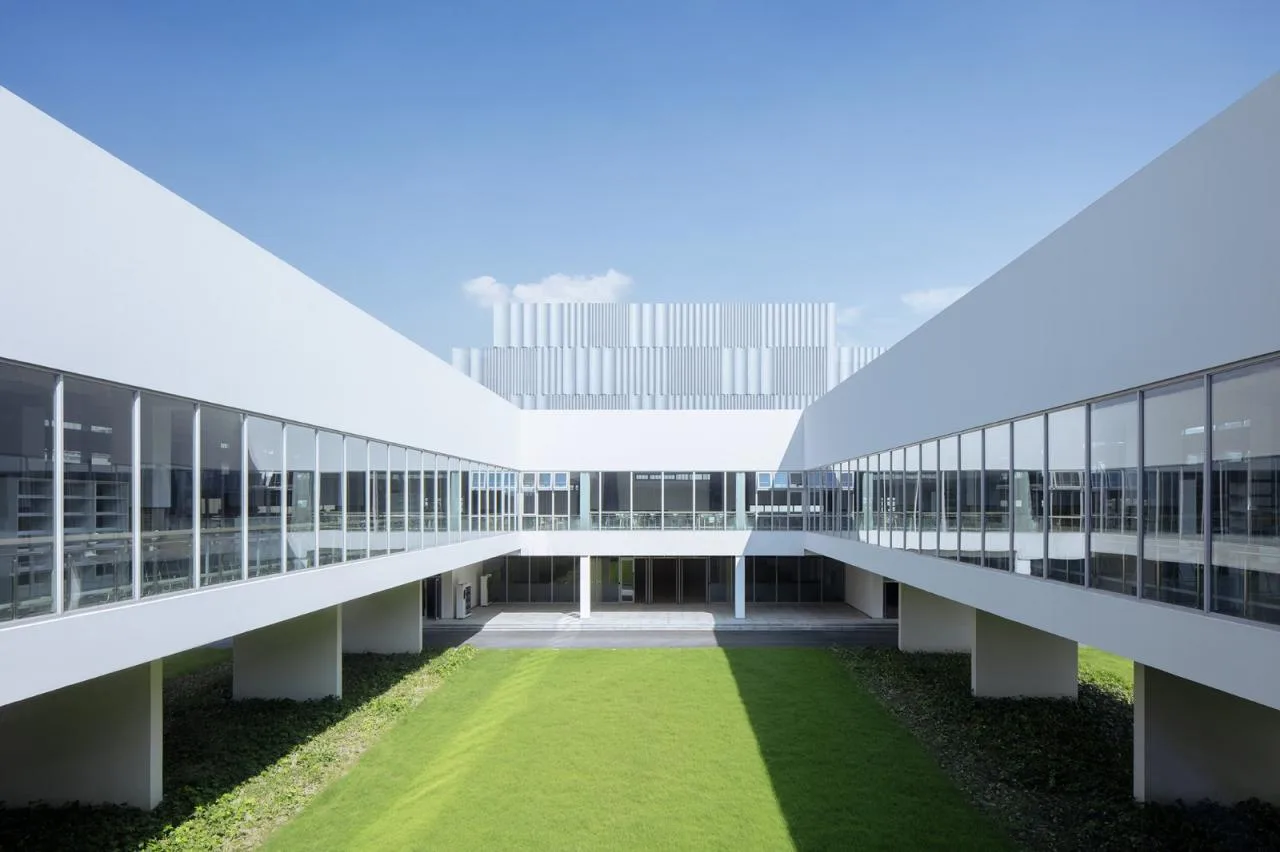
▲ LOOP Library Courtyard (Photography: Summer Solstice)
Beyond the unique character and function of each courtyard, the non-orthogonal layout creates a multi-linear circulation system and thematic teaching spaces, enabling the school to host various events and activities across multiple spaces and settings.
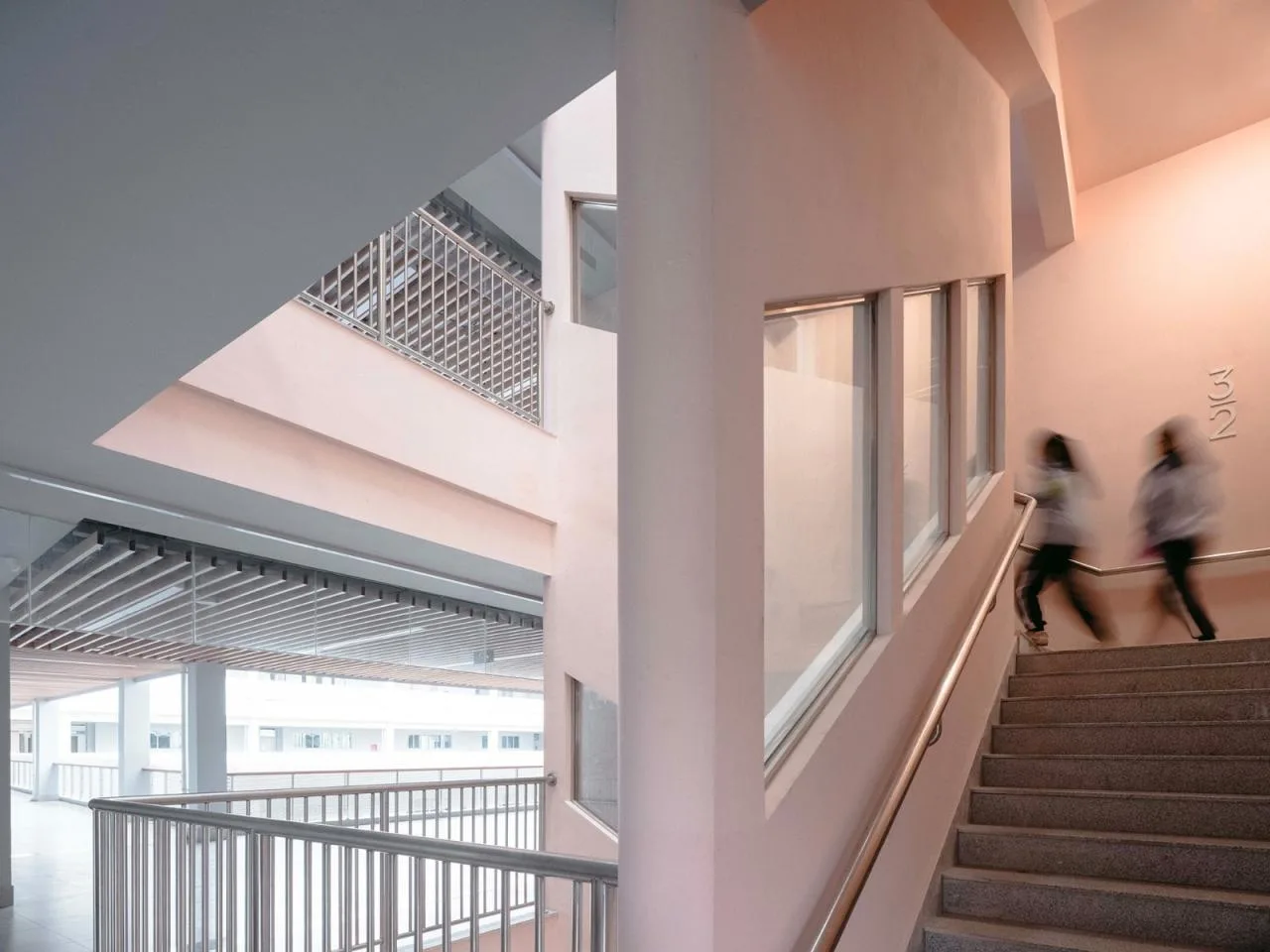
▲ Cooking Professional Staircase (Photo: Zhu Runzi)
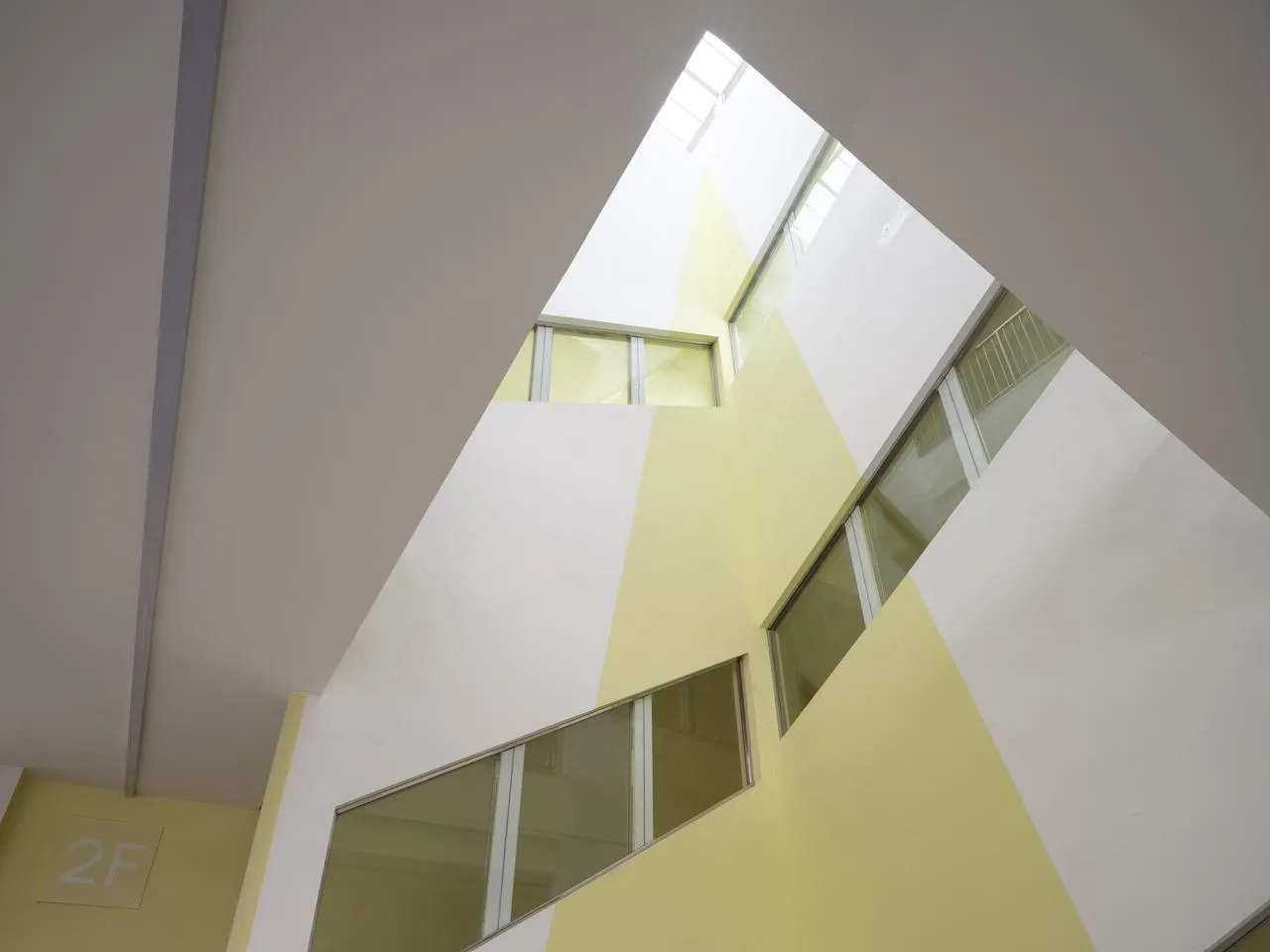
▲ Staircase for Early Childhood Education Major (Photo: Zhu Runzi)
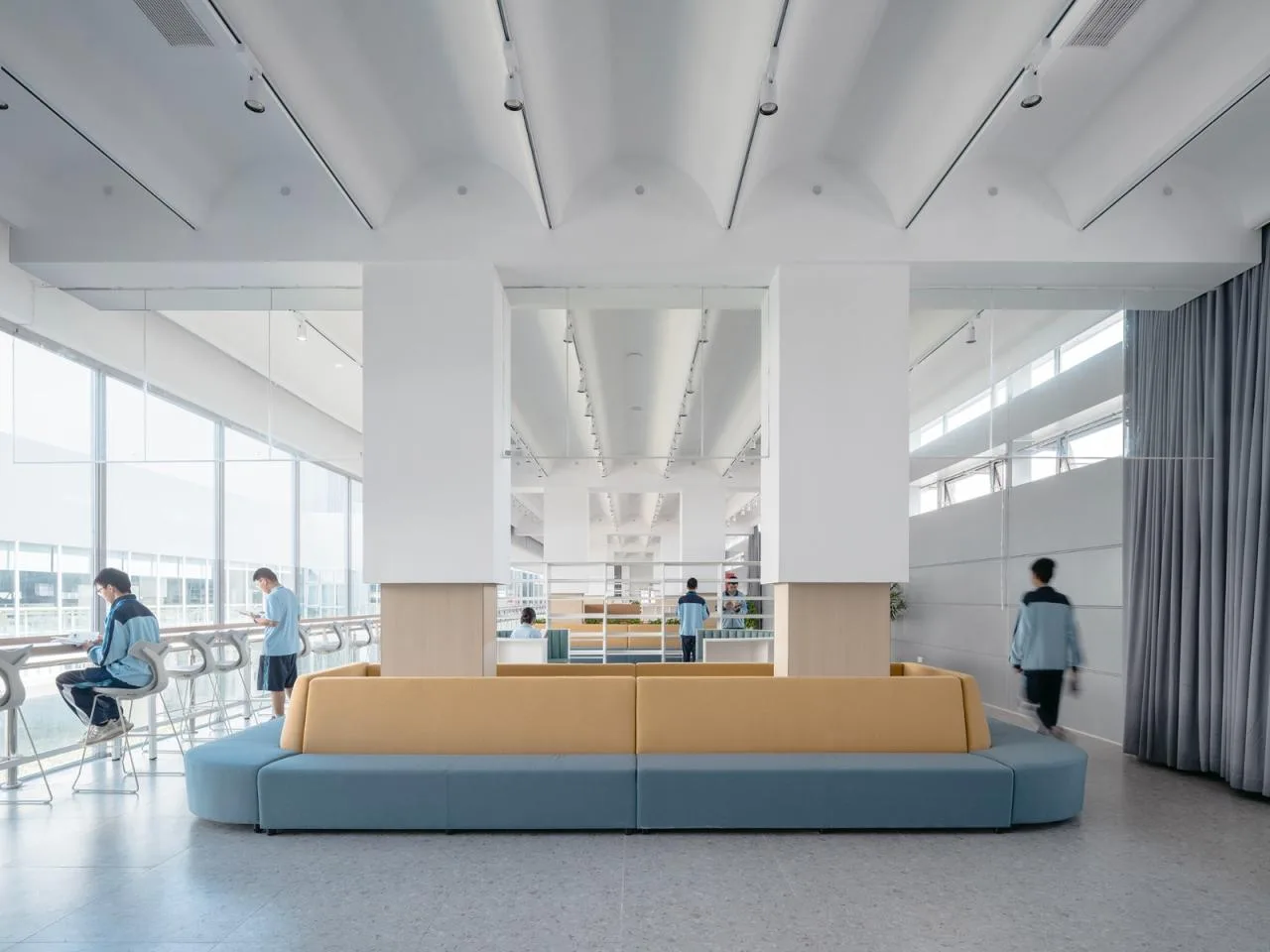
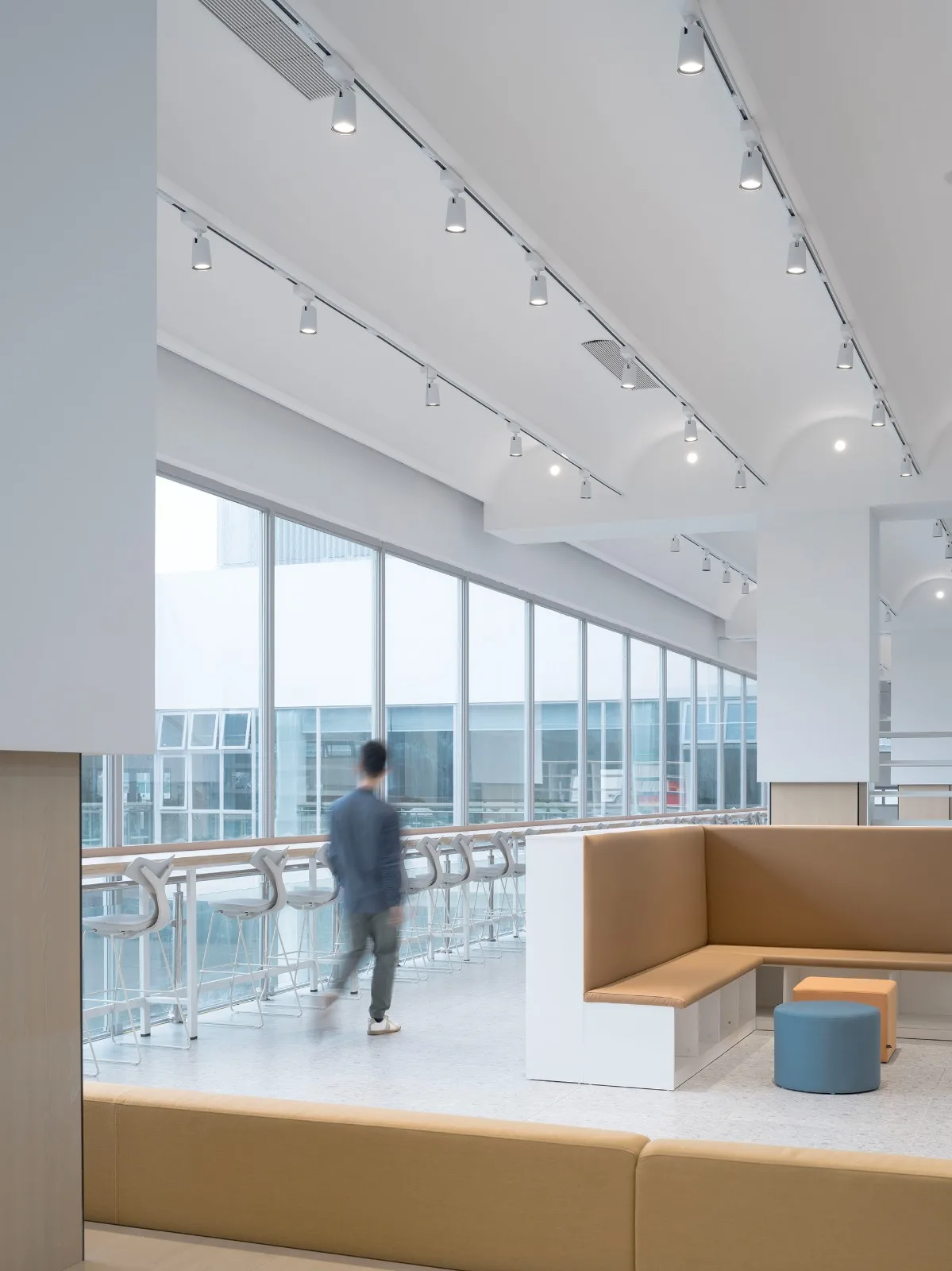
▲ Library Room (Photo: Zhu Runzi)
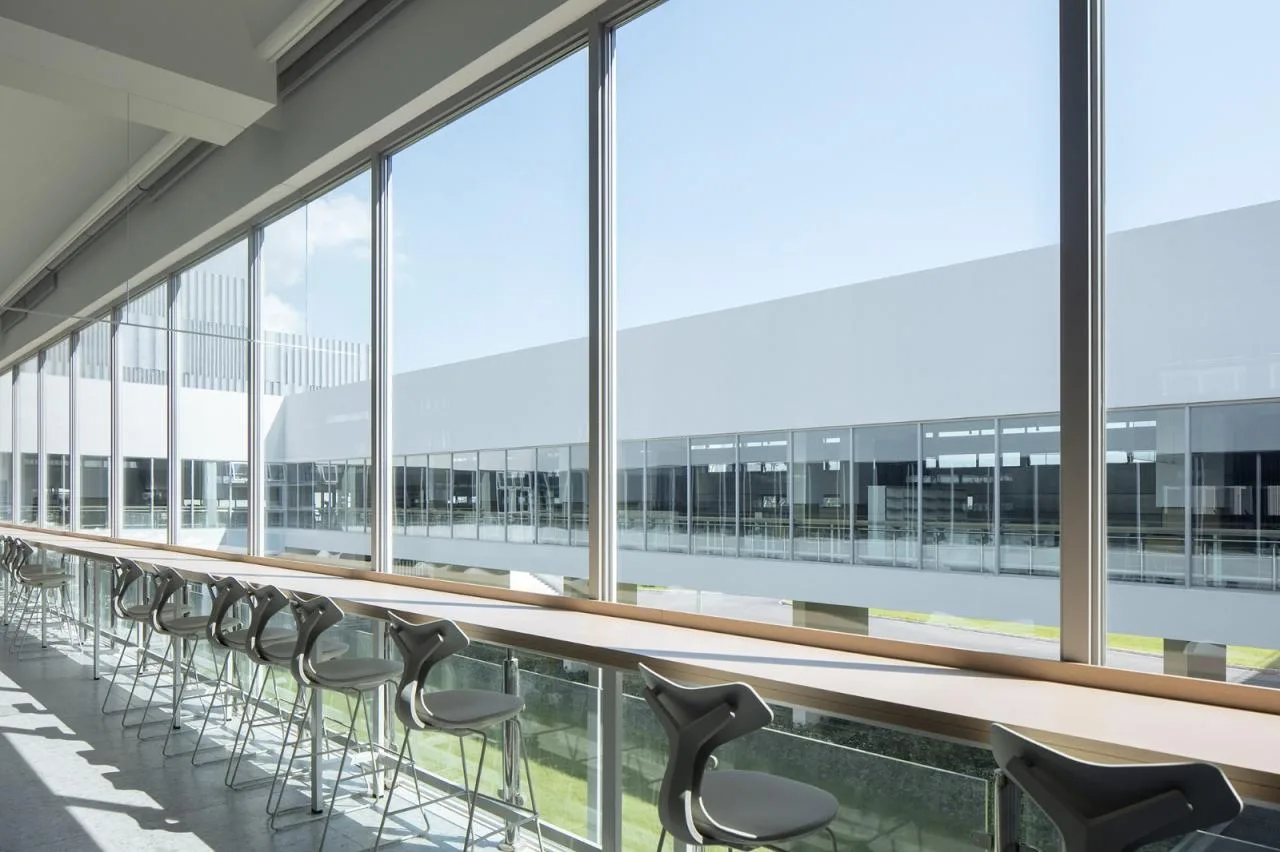
Indoor LOOP Library (Photography: Summer Solstice)
#04 “Roaming Map” — Shared Circulation System
The school’s second floor connects key spaces—from the scenic staircase to the auditorium, library, teaching buildings, and courtyards—via a shared circulation system. This three-dimensional network links public, indoor, and outdoor spaces, offering convenient, weather-protected routes for students and staff. Semi-open corridors and landscaped courtyards provide opportunities to experience seasonal and weather changes during leisure time.
▲ Open Theater Stage: Public Platform and Viewing Area (Photography: Summer Solstice)
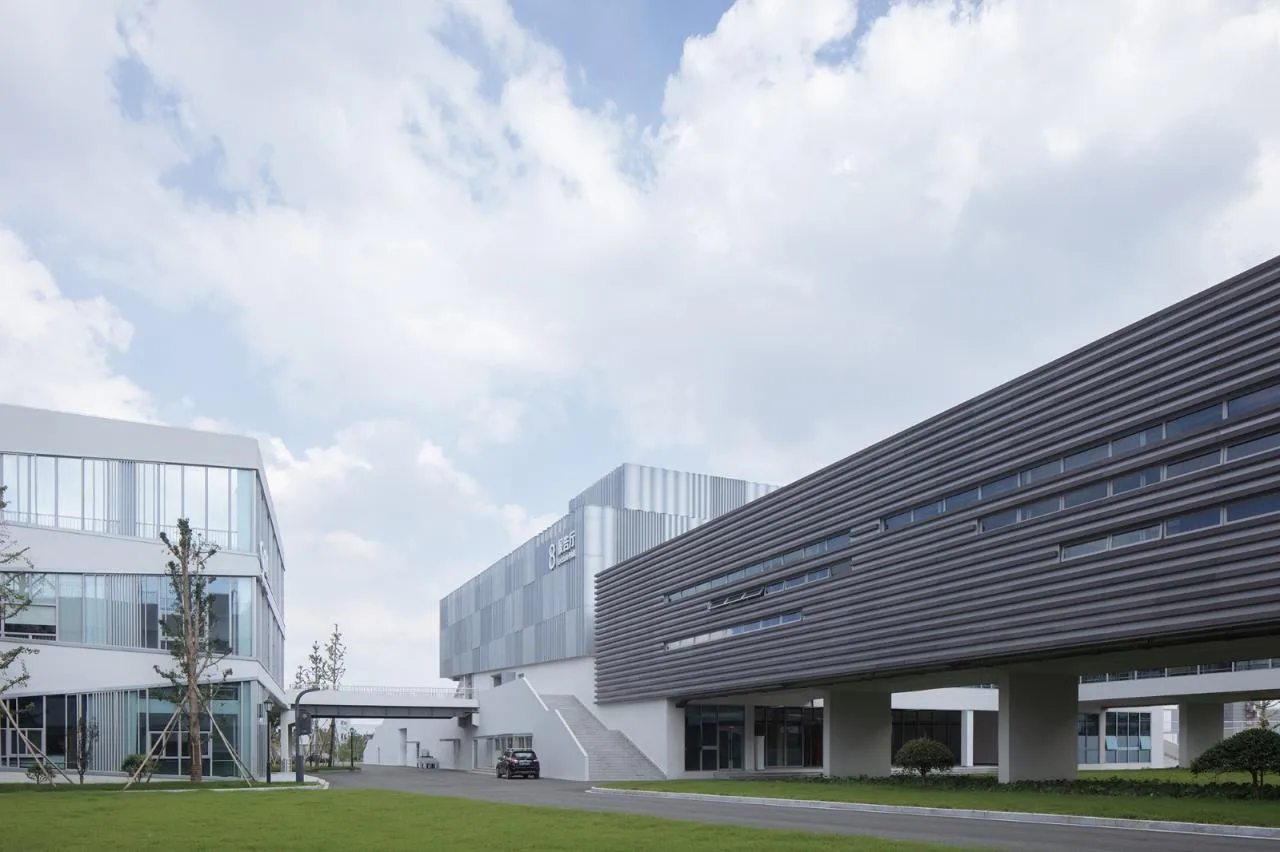
▲ Aerial Bridge (Photography: Summer Solstice)
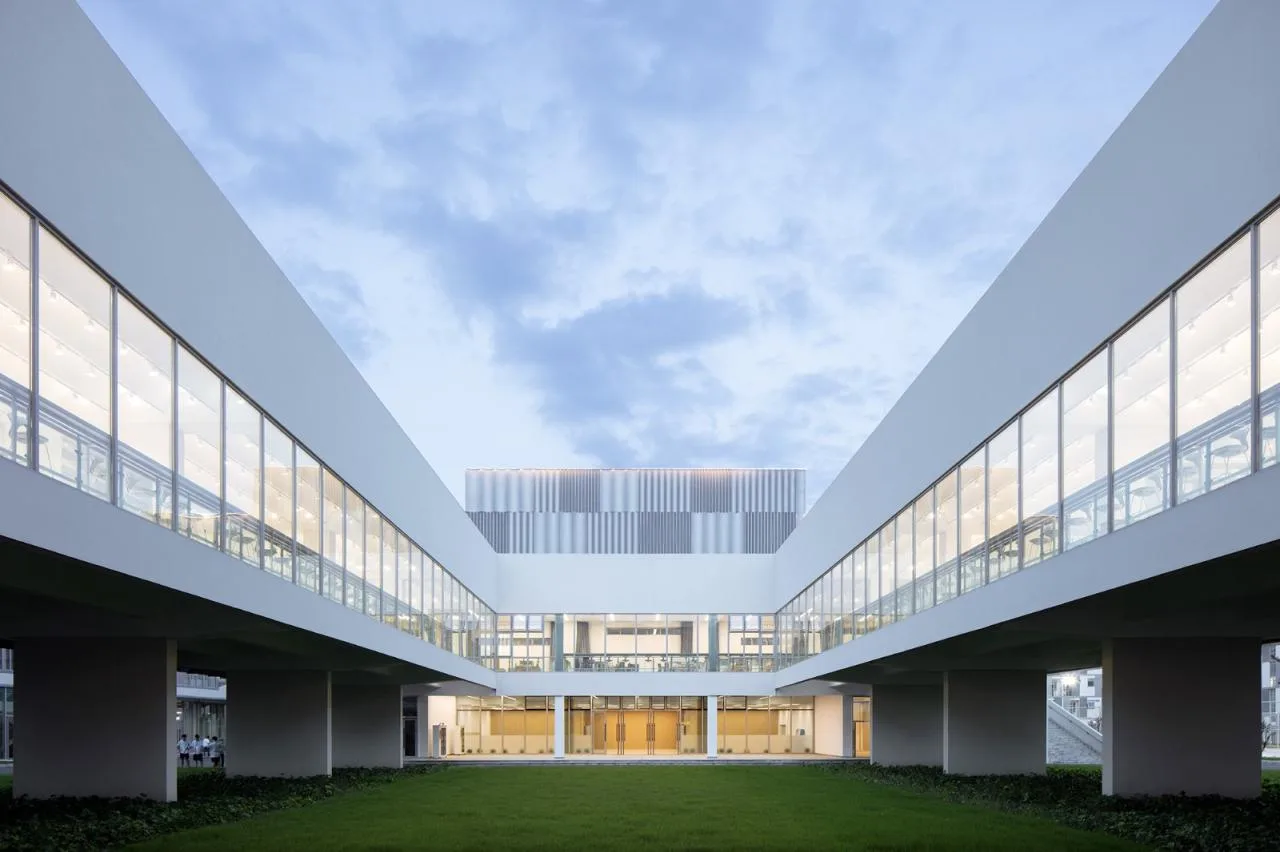
▲ Circular LOOP Library (Photography: Summer Solstice)
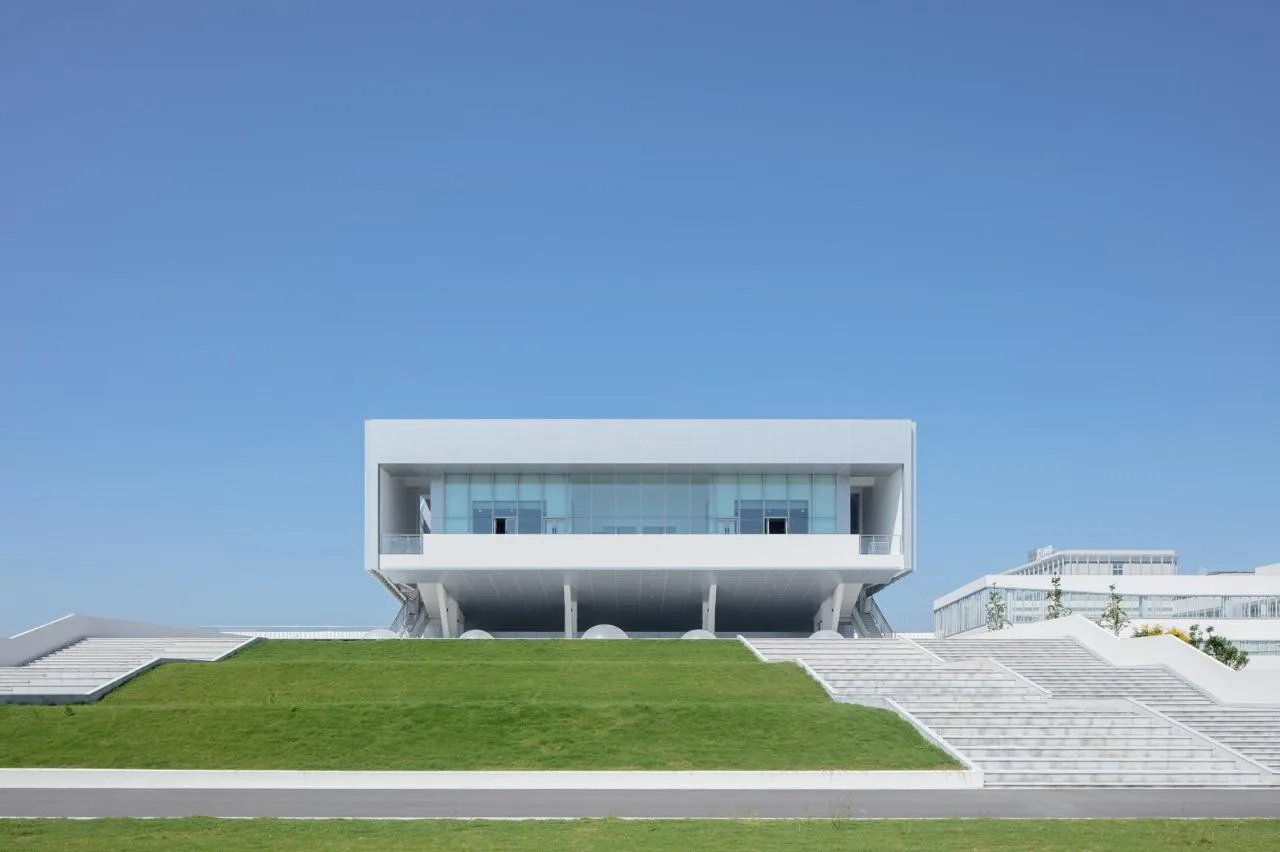
▲ Continuous Groundscape: From Landscape Staircase to Platform and 24-Hour Outdoor Viewing Staircase (Photography: Summer Solstice)
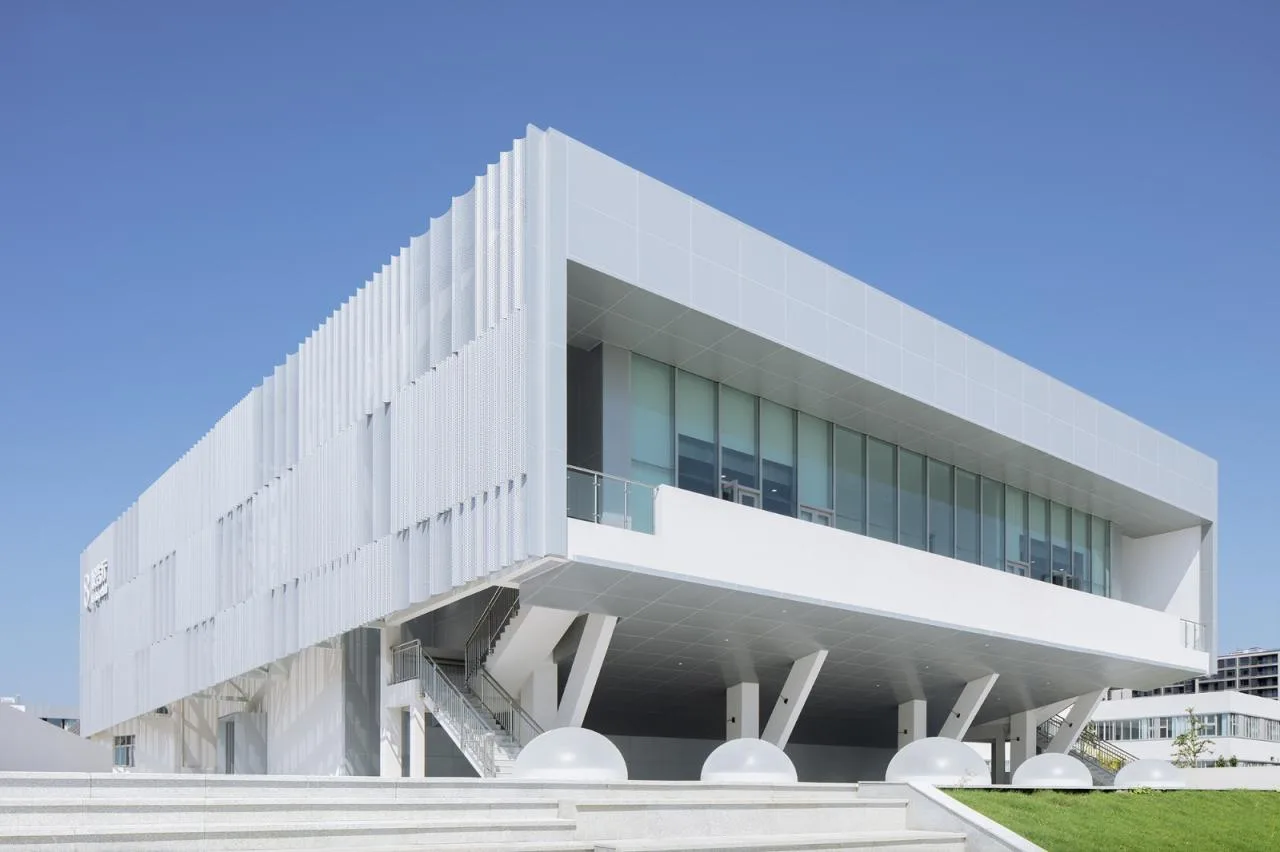
▲ Lecture Hall and “Bubble Ball” Skylight (Photography: Summer Solstice)
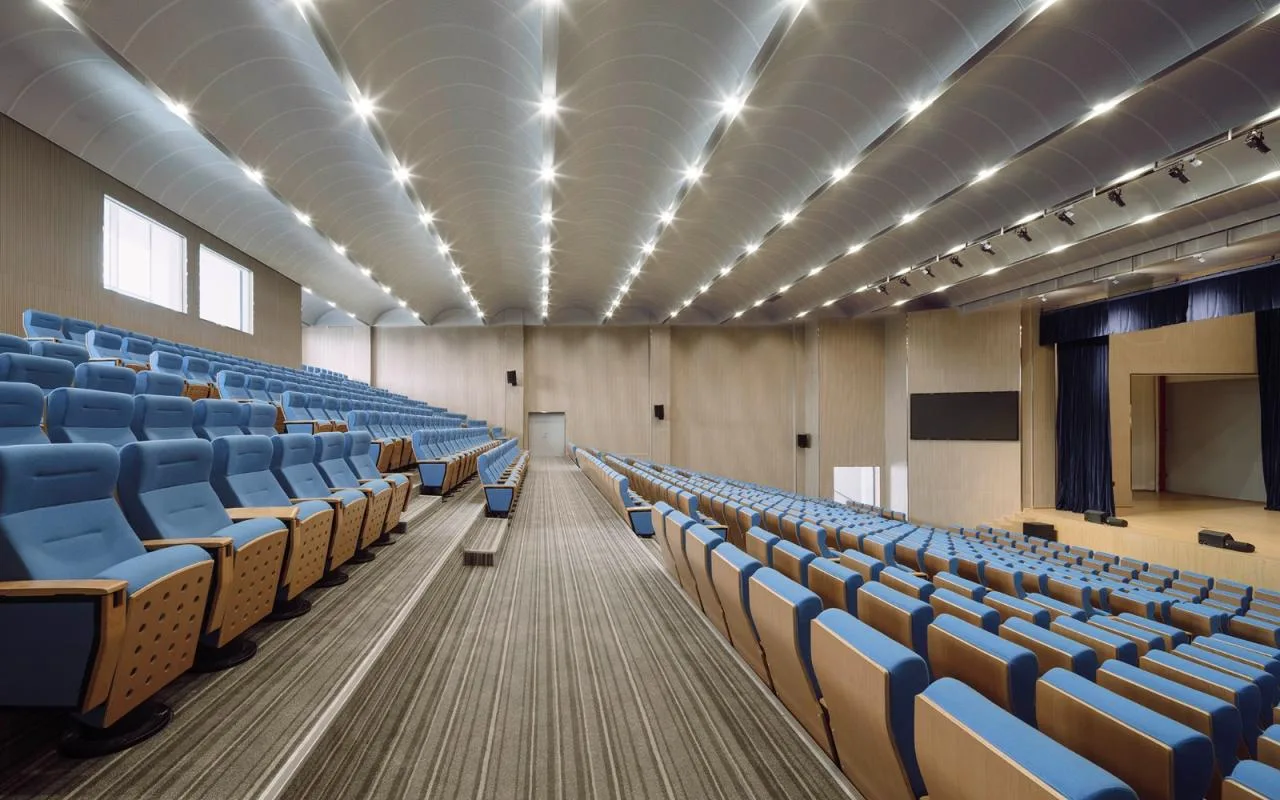
▲ Inside the Lecture Hall (Photo: Zhu Runzi)
#05 “Skin Setting” — Facade Design: Order and Variation
The unified carpet-style architecture is reflected in the building facades, where spatial correlations and distinctions are emphasized. The lecture hall’s wave-patterned perforated panels and the teaching building’s GRC panels share a common style but feature three distinct curvature units. These are combined in a controlled yet seemingly random manner to form the exterior facade.
This horizontal continuity of materials symbolizes the internal functional space, while varying angles of light reflection create rhythmic patterns of light and shadow, enriching the experience of informal learning areas.
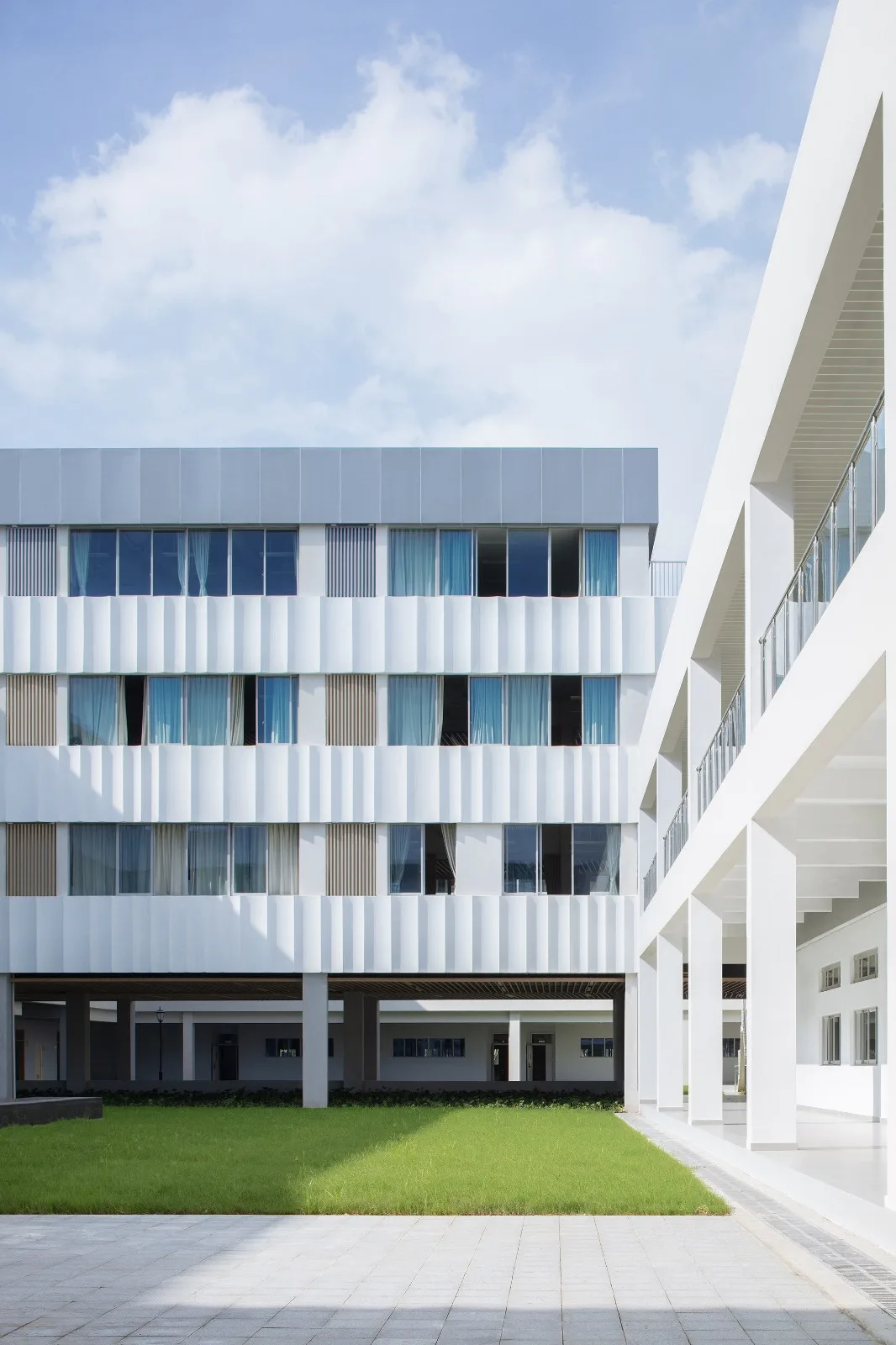
▲ Teaching Building Facade with Three Curvature GRC Units Creating Rhythmic Light and Shadow (Photography: Summer Solstice)
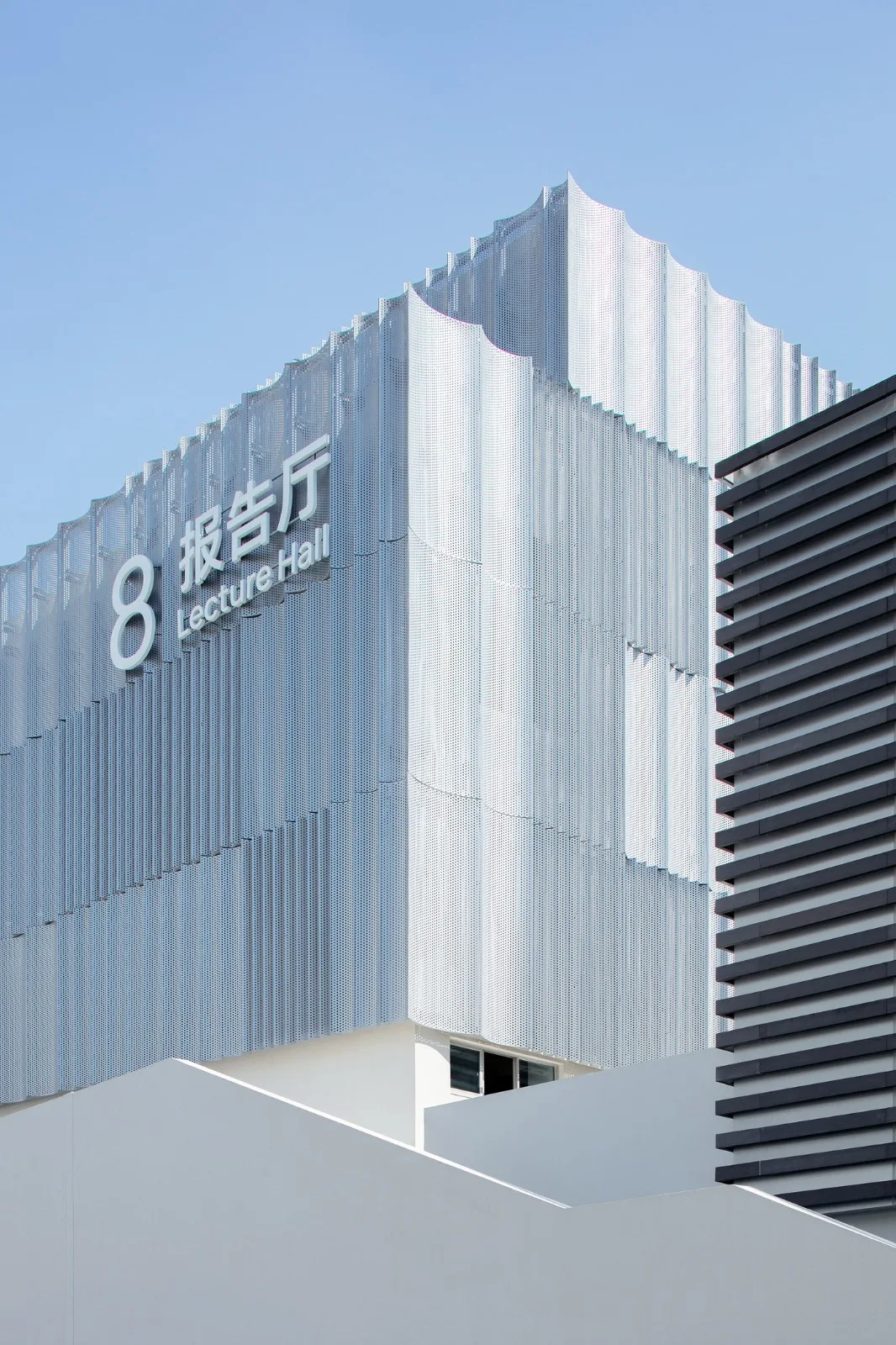

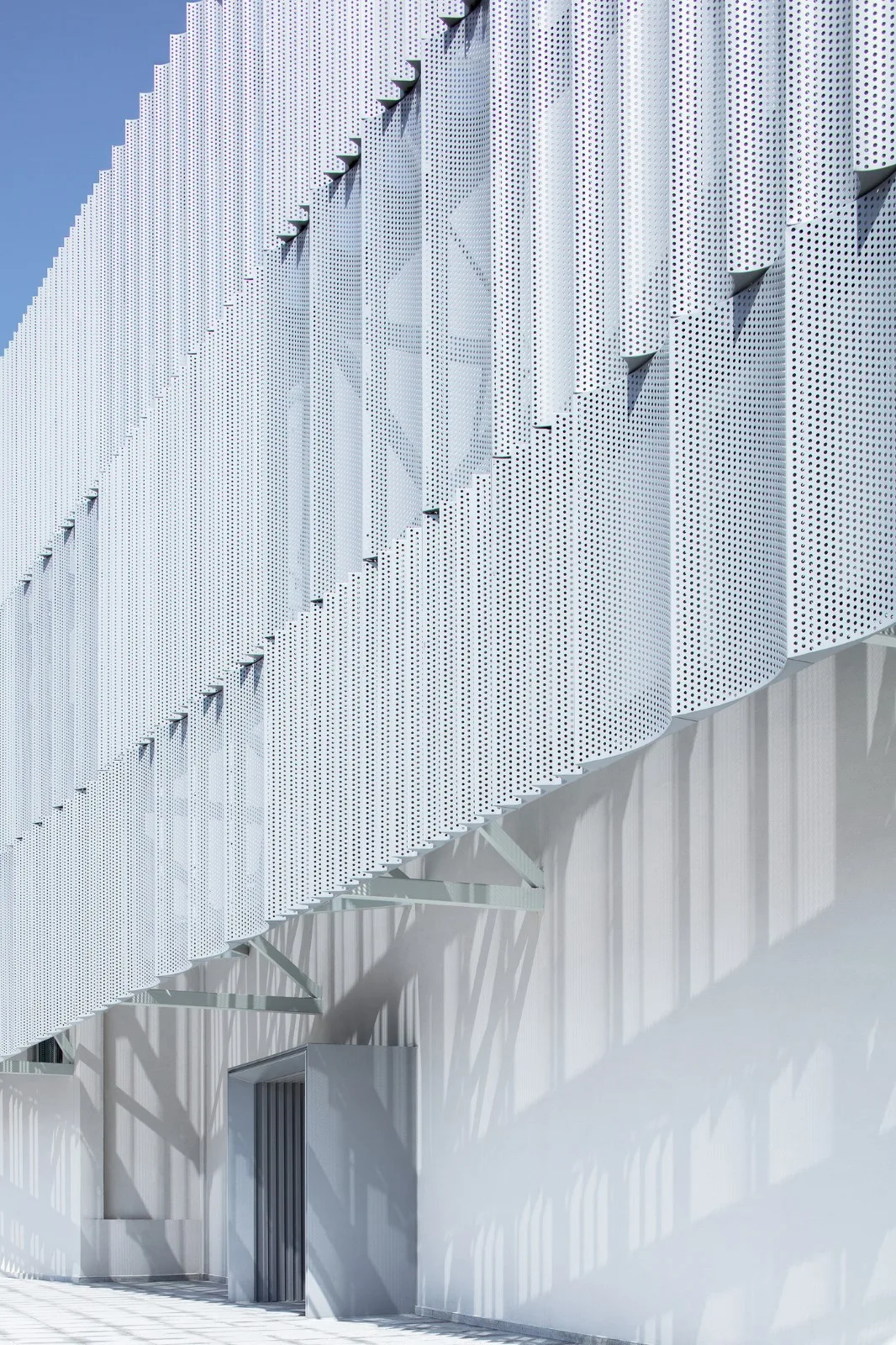
Wave-patterned perforated aluminum panels on the lecture hall facade (Photo: Summer Solstice)
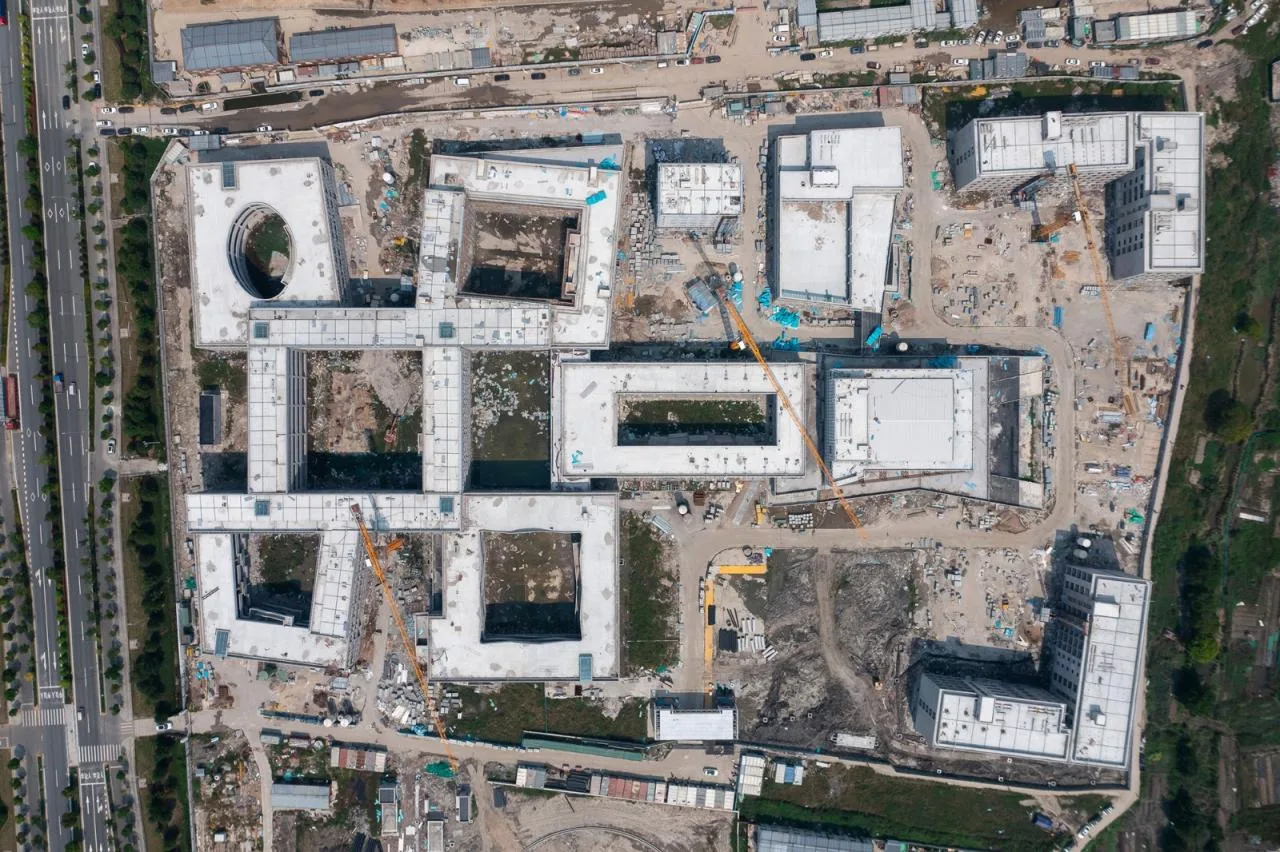
▲ Aerial View of the Construction Site: Continuous Courtyards and Main Buildings (Photo: Zhu Runzi)
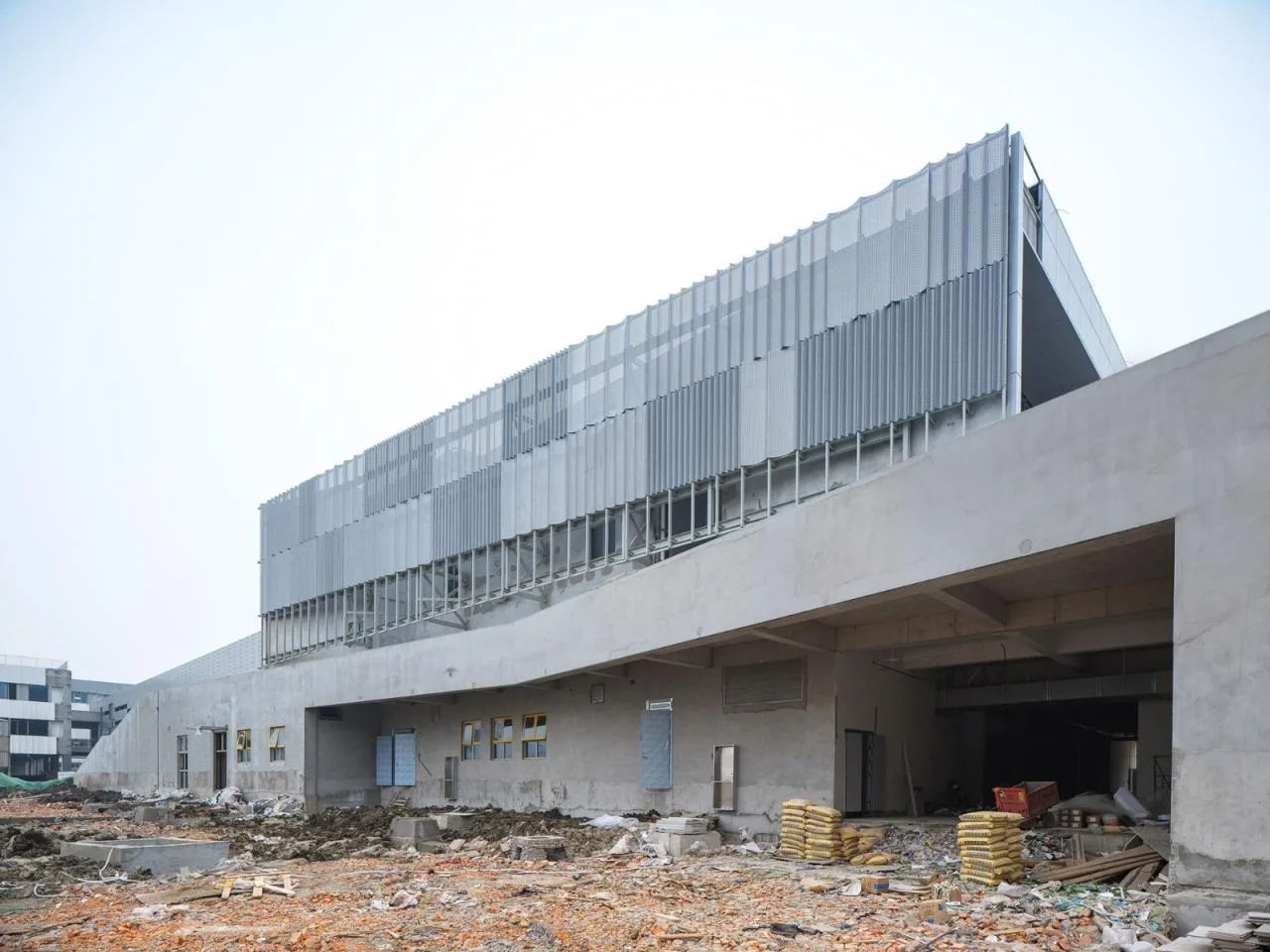
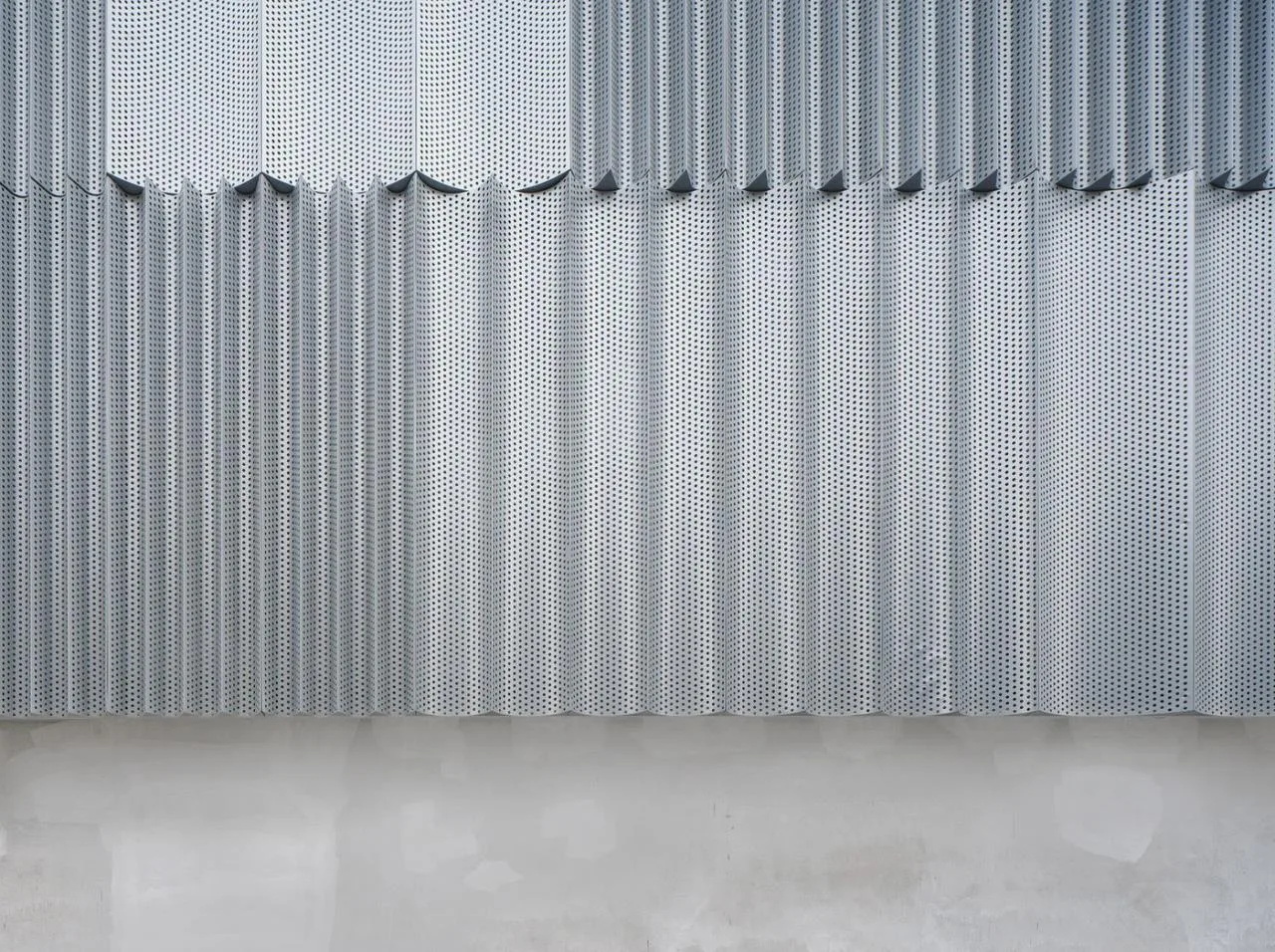
▲ Report Hall and Curtain Wall Construction (Photo: Zhu Runzi)
Project Drawings
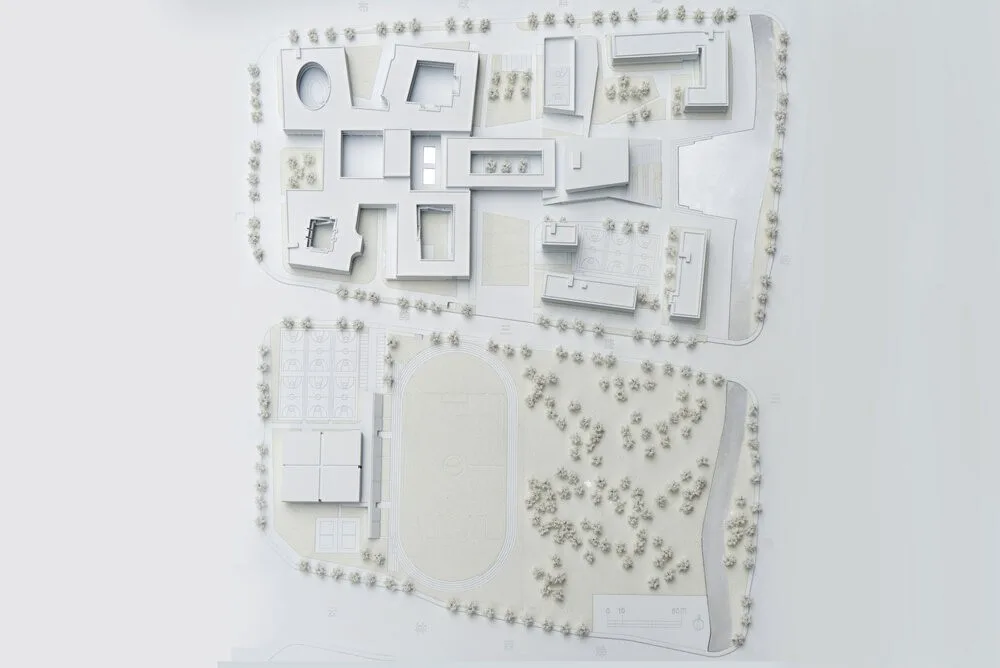
▲ Model Photo (Photo: Sun Shining)
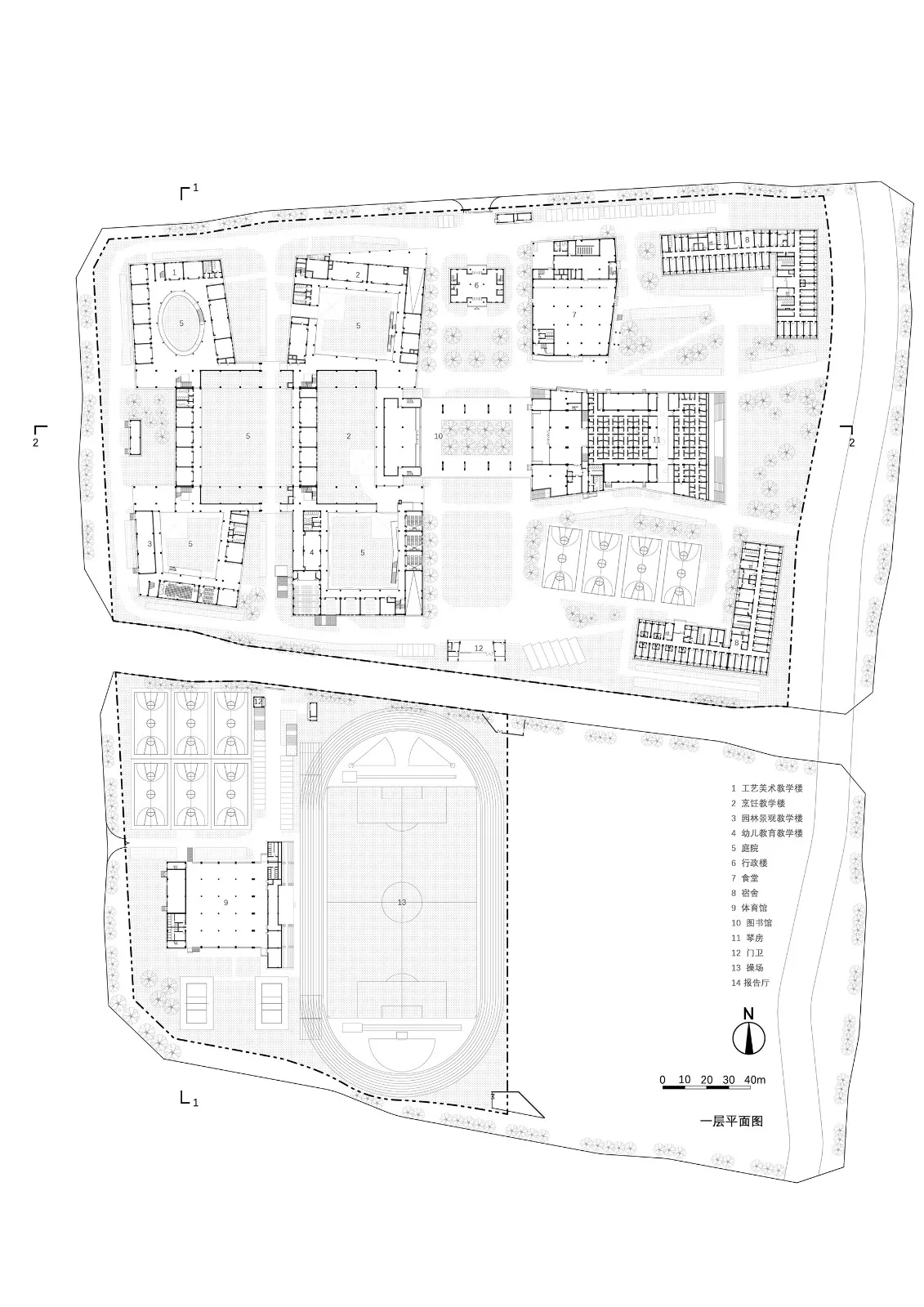
▲ First Floor Plan (Drawing: Such as Building)
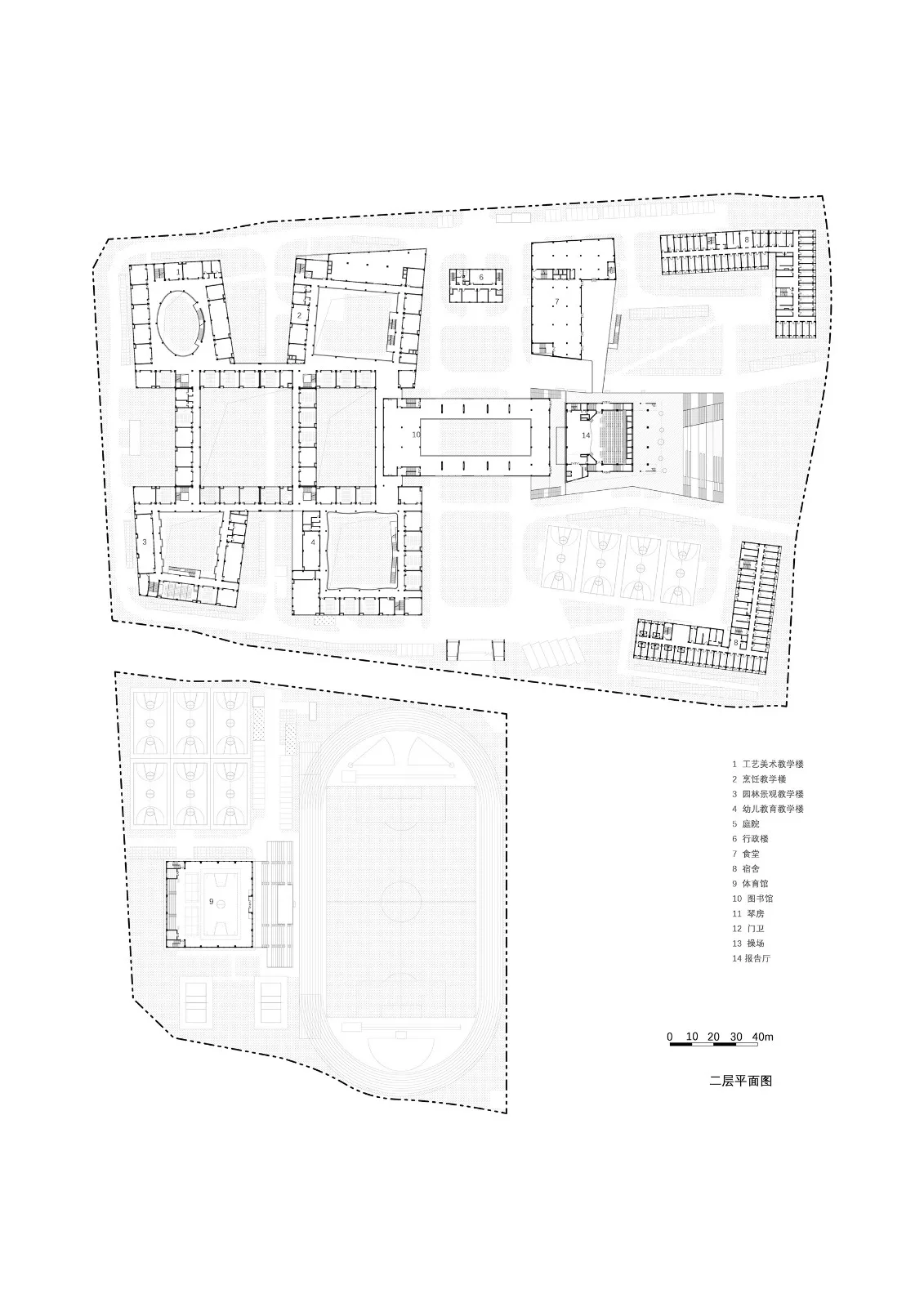
▲ Second Floor Plan (Drawing: Such as Building)
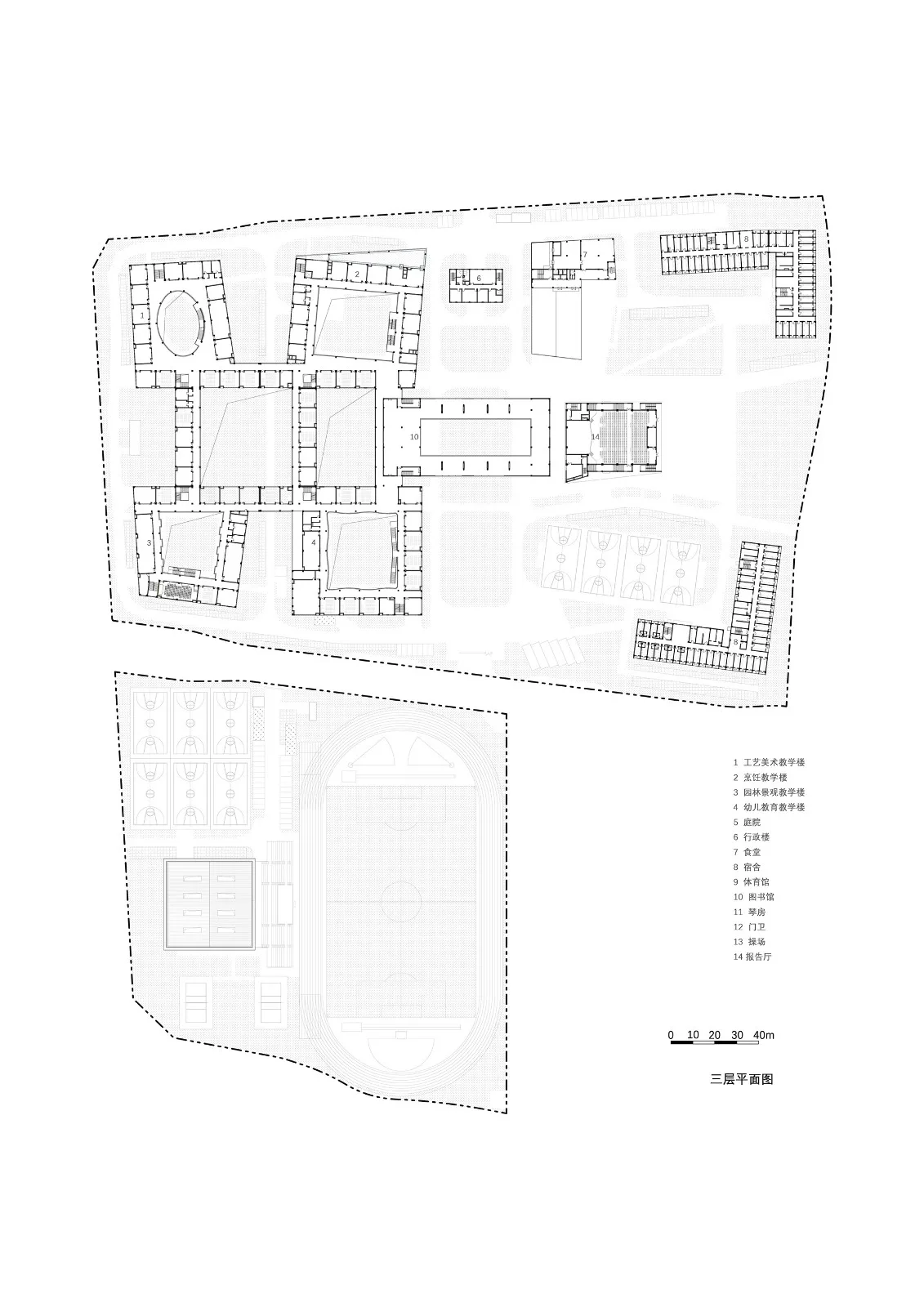
▲ Third Floor Plan (Drawing: Such as Building)
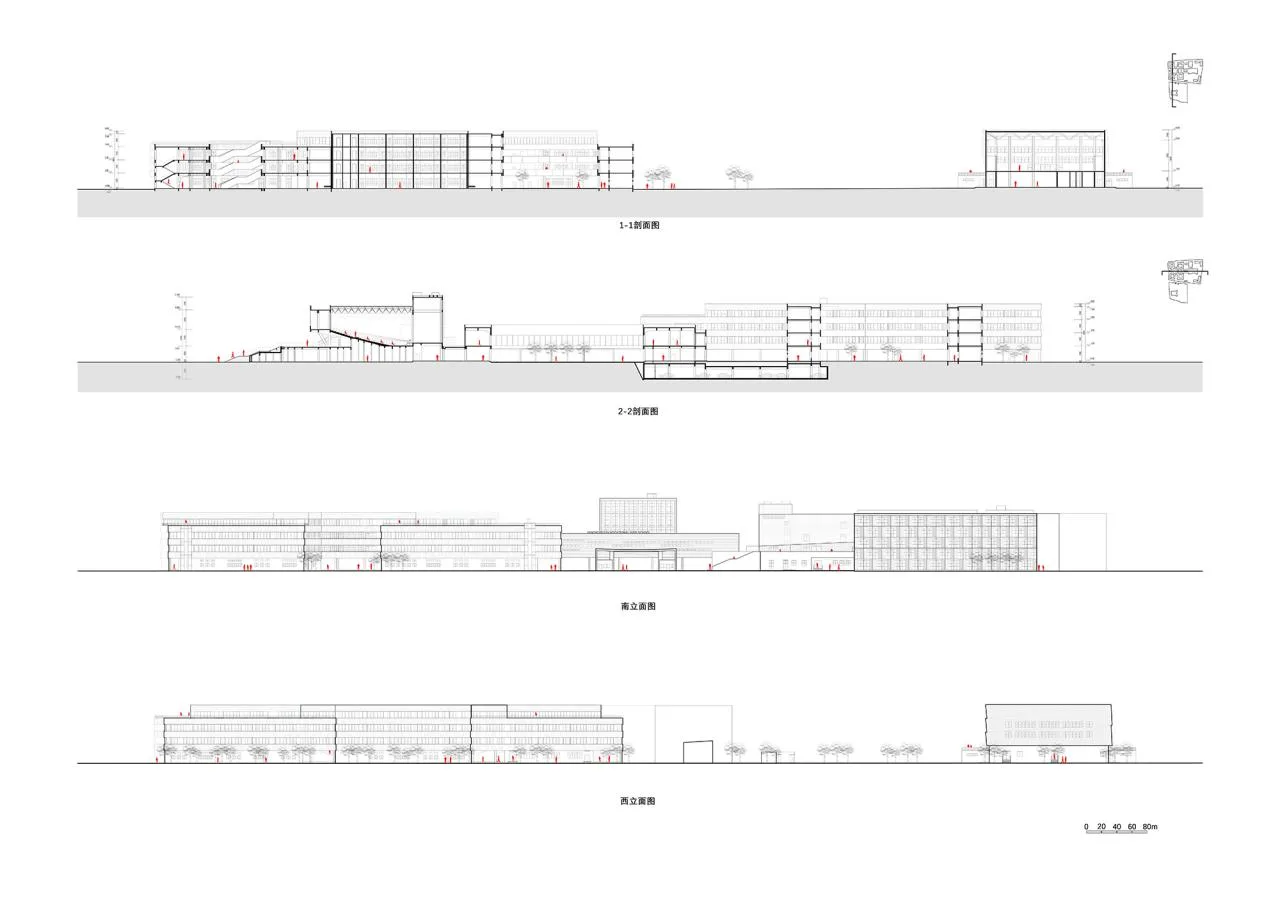
▲ Sectional and Facade Views (Drawing: Such as Building)
Project Details
- Project Name: Gulin Vocational High School, Ningbo City
- Location: Ningbo, China
- Status: Completed
- Timeline: 2020–2023
- Building Area: 80,000 square meters
- Land Area: 96,851 square meters
- Client: Gulin Vocational High School of Ningbo City, Ningbo Education Bureau
- Functions: Library, Teaching and Training Building, Comprehensive Administration Building, Lecture Hall, Cafeteria, Student Dormitory, Covered Playground, Track and Field, Sports Field, School Gate, Auxiliary Buildings, etc.
Project Team
Architectural Design: ARCHIS Architectural Design Firm
Lead Architect: Sun Shining
Main Creative Team: Sun Shining, Pang Zirui, Yotam Ben-Hur, Peng Yuzhou, Wu Yiqing
Design Team: Lu Xun, Li Yalun, Ren Guangwei, Fan Liding, Shi Jiahao, Xiao Xinyao
Collaborators
Xinjie Design Institute: Zhang Hao, Chen Liangjun, Luo Min, Pan Yifei, Luo Xin, Zhu Tianqian, Liang Huili, Li Linghang, Zhu Yuanwang
Courtyard Corridor & Interior Design: Mushroom Cloud Design Studio: Xu Xunjun, Gan Ruobei, Zhang Zhibin, You You, Xue Meng, Yang Yuqing
Dormitory and Indoor Sports Center: Shen Kang X Studio (Shen Kangyi, Xiong Zhuozhi, Zeng Xijin)
Indoor Construction Drawings: Chen Wei, He Liyuan
Landscape Design: Liu Feng, Cao Sheng
Curtain Wall Consultant: Jiang Chuanxing, Wang Jun
Lighting Consultant: Pang Lei
Logo Design: Zhang Shuo Design Culture Communication (Shenzhen) Co., Ltd.
Materials Used: Wood grain carbon magnesium board, corrugated aluminum panels, wood grain perforated aluminum grilles, sound-absorbing coatings, Macallan marble, plastic flooring
Photography: Summer Solstice, Zhu Runzi
Video: Black Pixel
LED Display: Zhouming Technology
Monitoring: Dahua Technology












Must log in before commenting!
Sign Up