
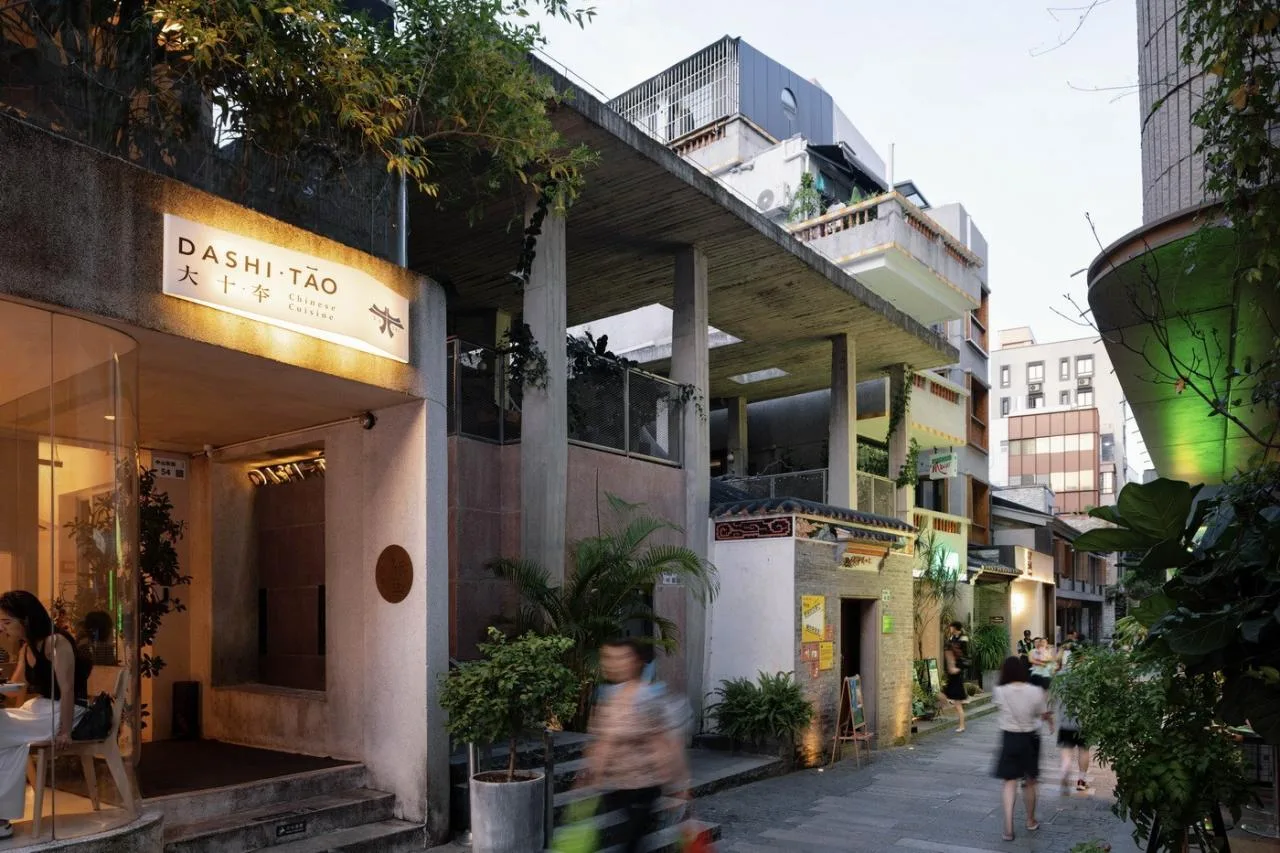
△ Street View © Chen Hao
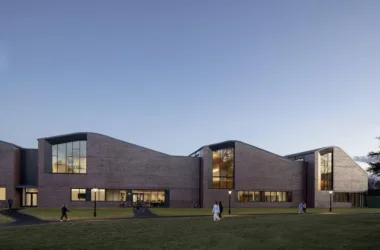
‘Village within Village’ marks the first urban renewal project completed by TAO in the ancient city of Nantou, Shenzhen. Originally a cluster of multiple buildings and property plots, the area was partially preserved and partially demolished to create a new community. This concept of a ‘village within a village’ serves as both a building and a miniature urban village. An open concrete structure weaves together the old and new elements, forming a vibrant stage for the ever-evolving life within.
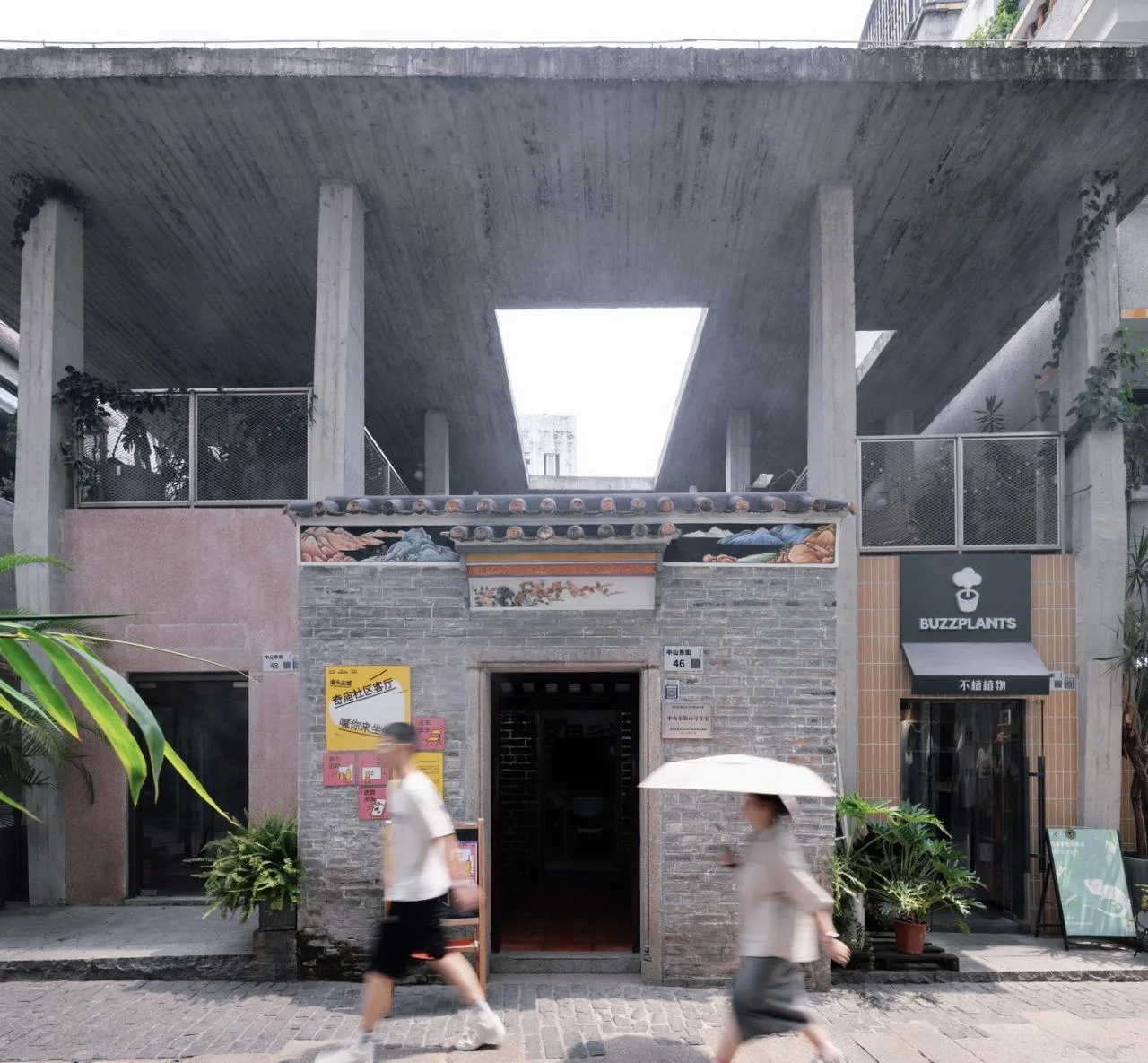
△ Street-facing facade © Chen Hao
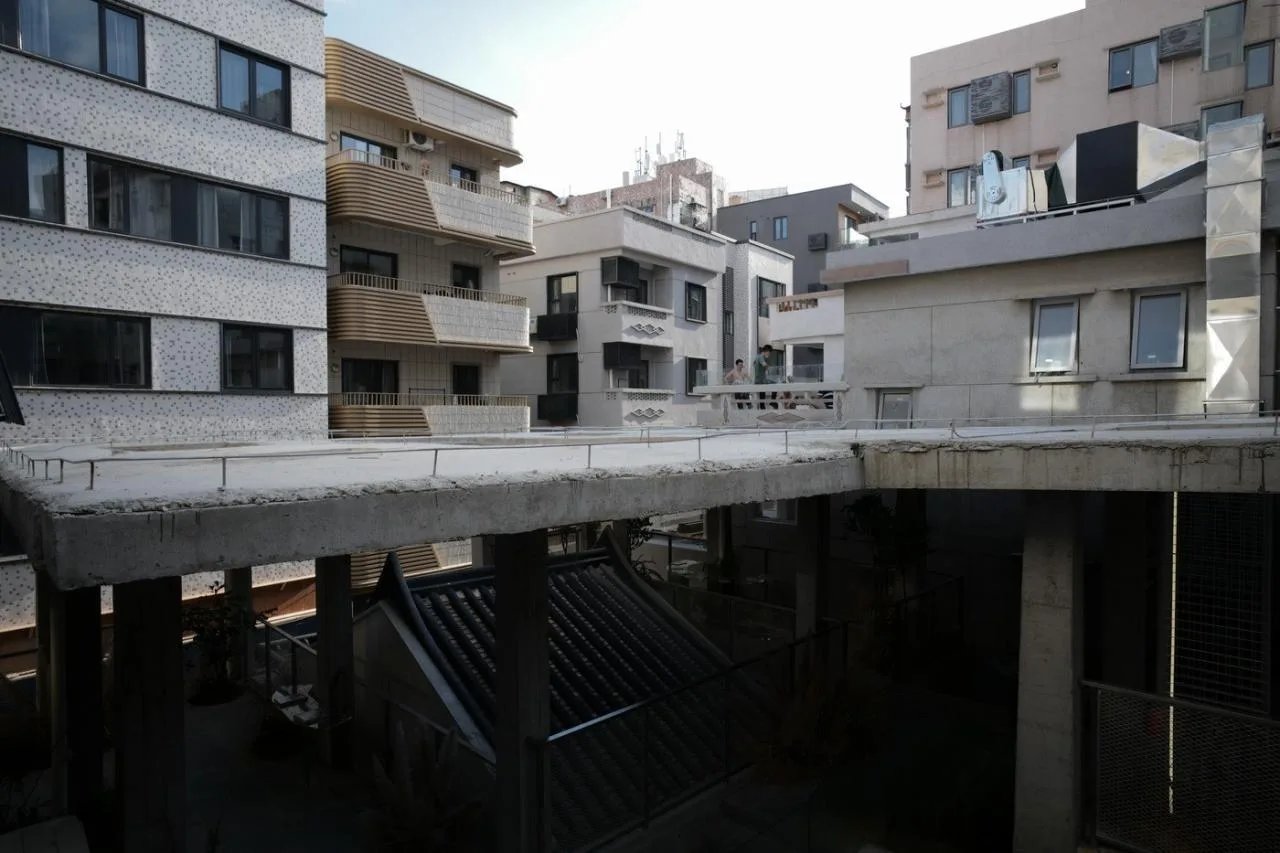
View from above © Huali
The ‘Village within Village’ is a compact block of six closely-grouped buildings in the central section of Nantou Ancient City East Street. Originally characterized by a high-density, enclosed courtyard layout, the area was difficult for the public to access. At its heart lies a cultural heritage building dating back to the Qing Dynasty, carefully restored by ancient architecture experts to preserve its structure, roof, and architectural features.
Over the years, temporary additions have organically reflected the continuous evolution and unique vitality of urban villages. However, independent, spontaneous construction also resulted in closed courtyards and obstructed traffic and sightlines. Interior renovations vary by building, posing challenges on how new external interventions can harmonize with existing structures, how urban development advances while respecting historical memory, and how to build new systems that remain inclusive. These issues are central to this project.
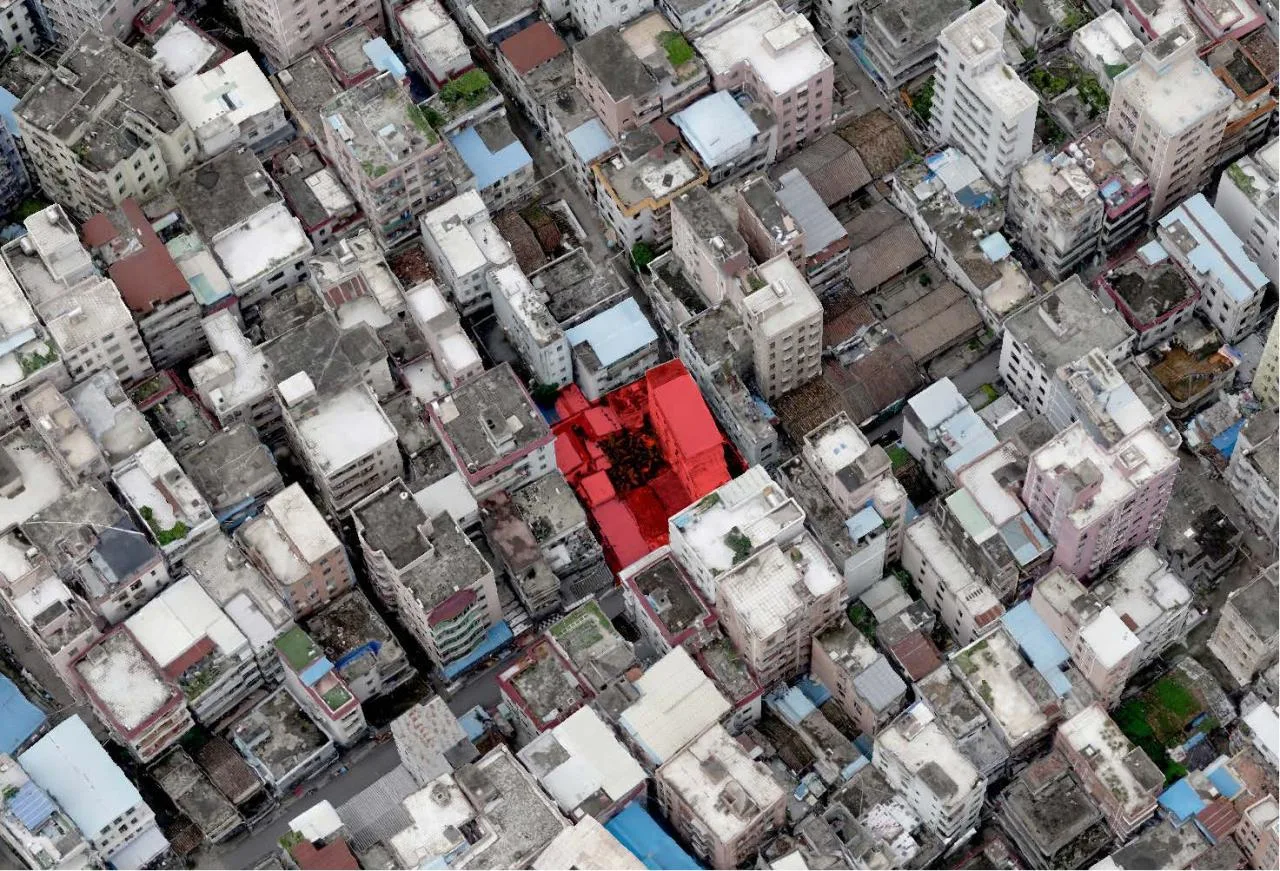
△ Aerial view of the site © Architectural Firm (TAO)
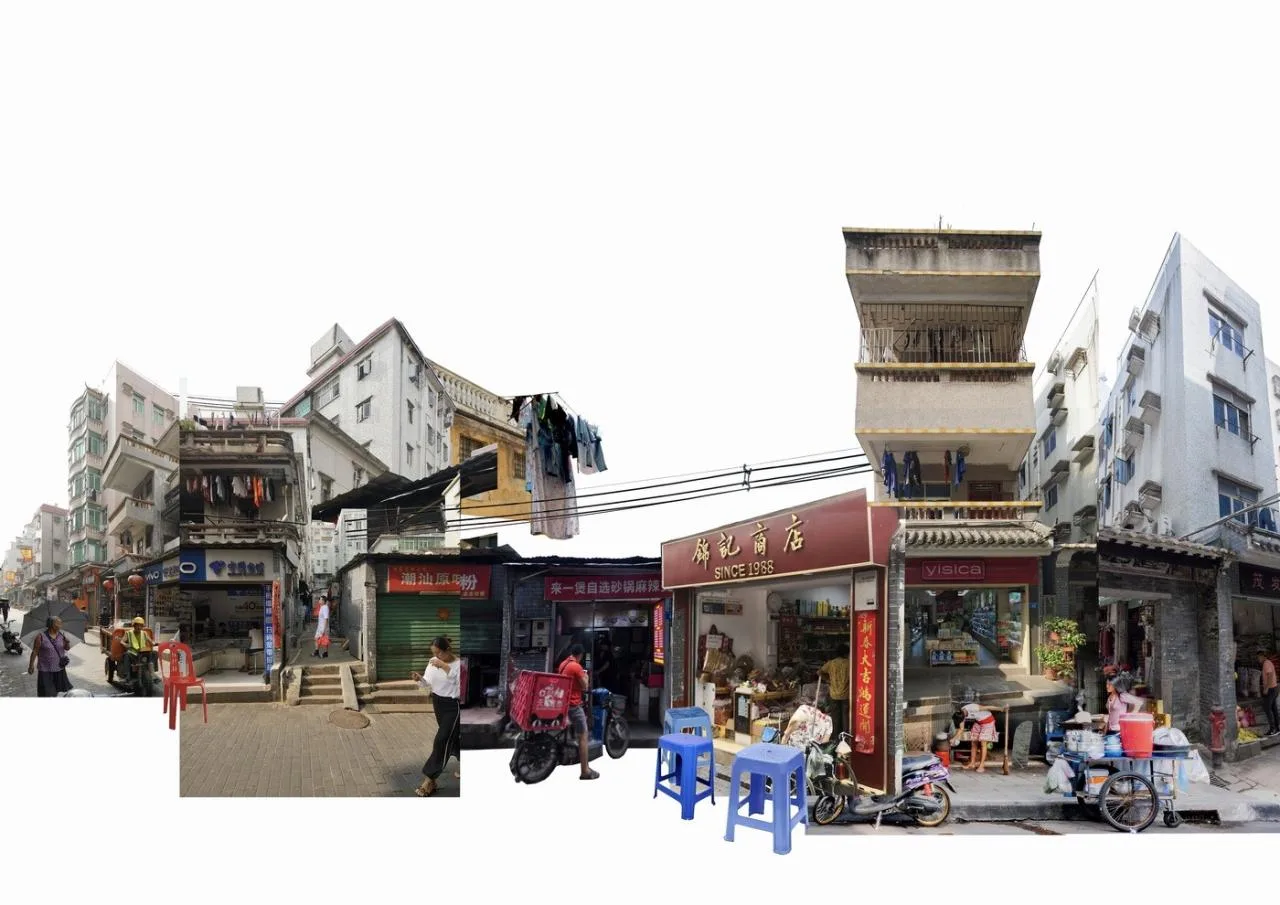
△ Collage showing the site’s original appearance © Architectural Firm (TAO)
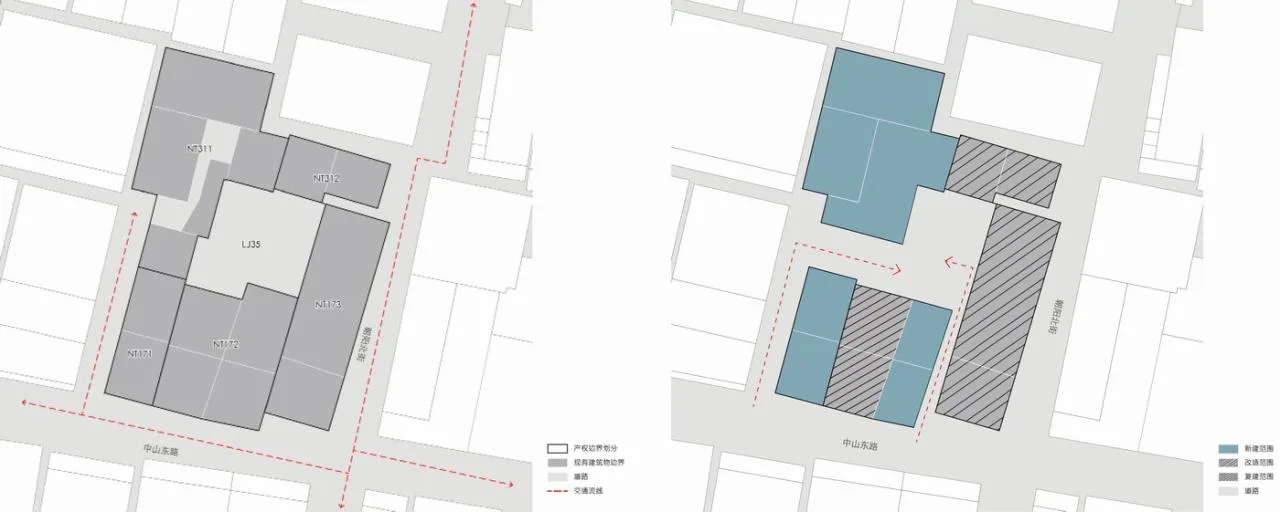
△ Site analysis diagram © Architectural Firm (TAO)
From a macro perspective, urban villages like this exhibit a dynamic, rapidly evolving state compared to the broader city. Without strict regulations, the scale, density, and use of streets and buildings change quickly over time, growing like a living organism. This environment fosters a unique blend of eras and a symbiotic coexistence of different spatial qualities.
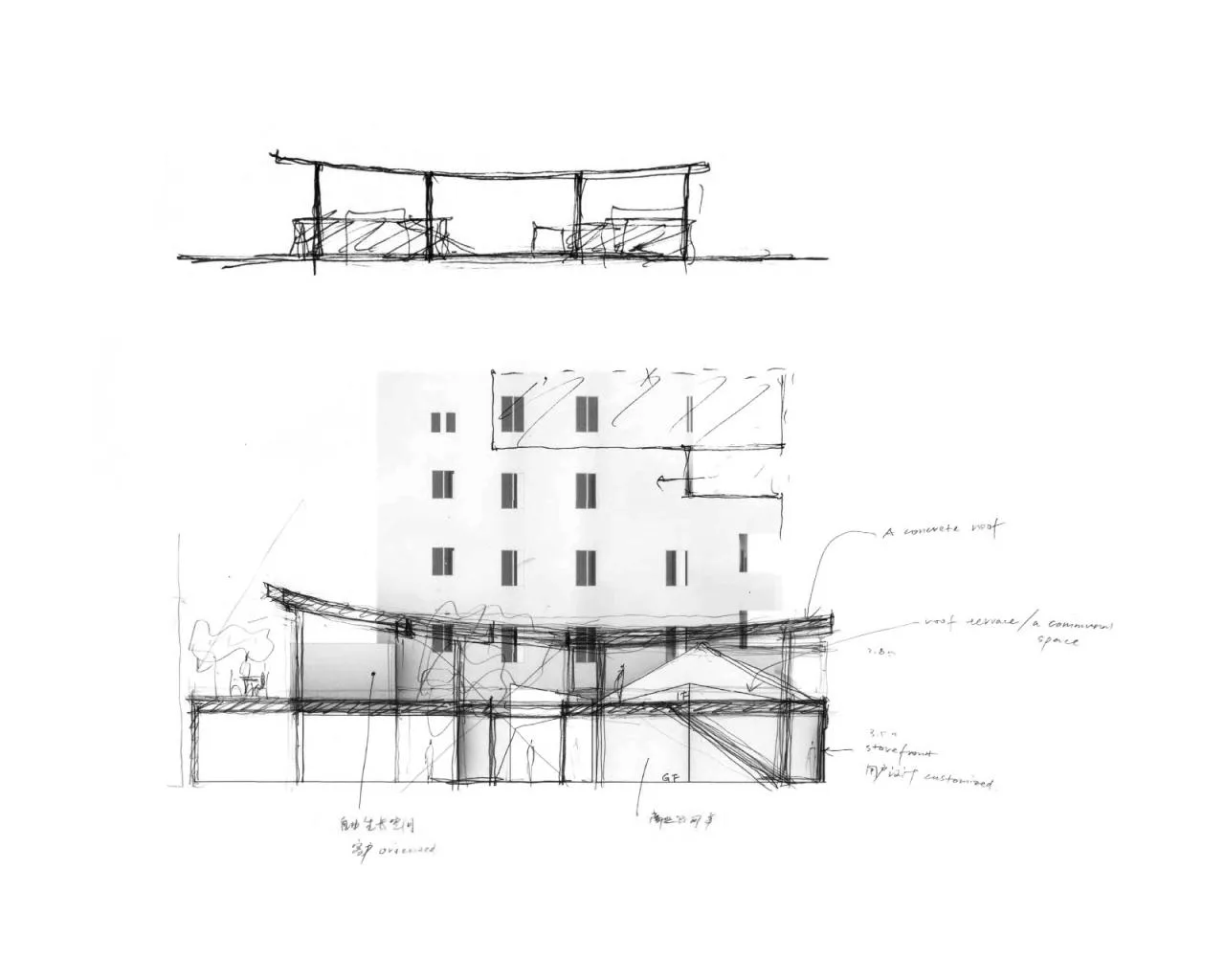
Concept sketch © Huali
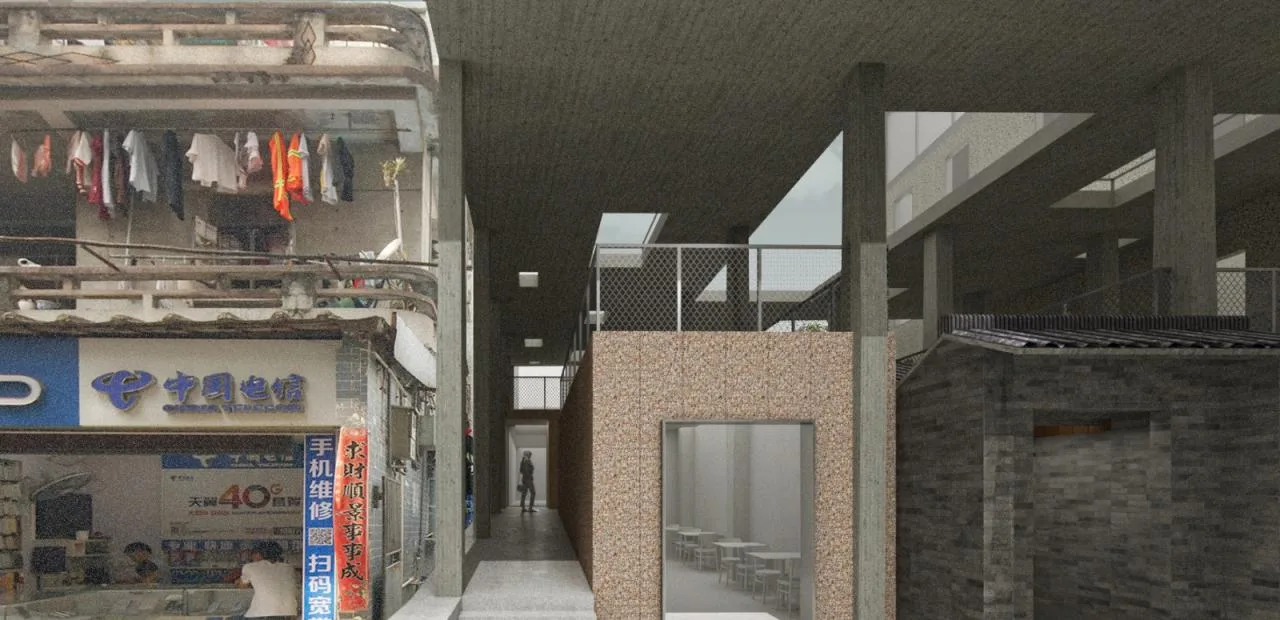
△ Concept collage © Architectural Firm (TAO)
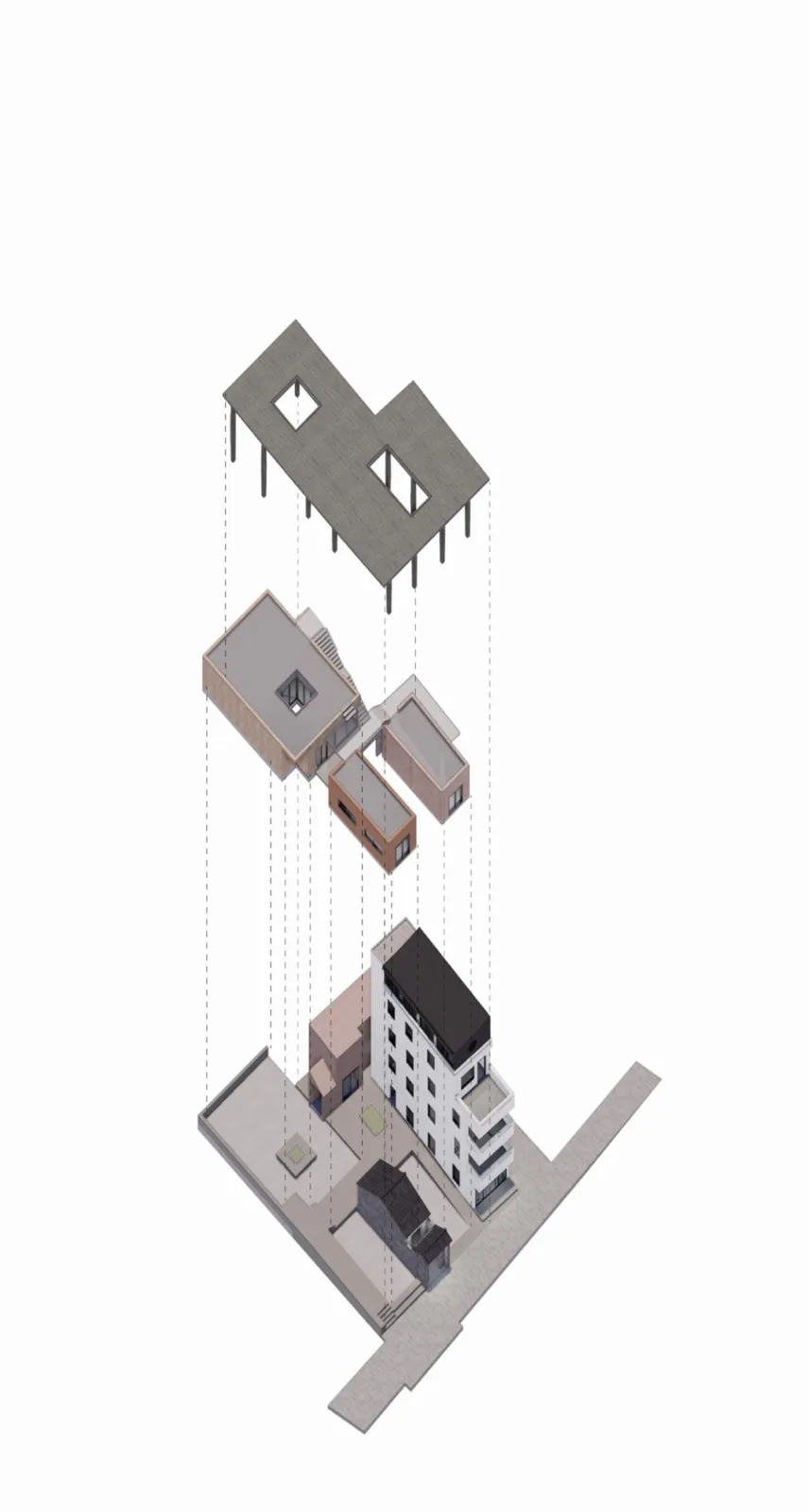
△ Exploded axonometric diagram for structural analysis © Architectural Firm (TAO)
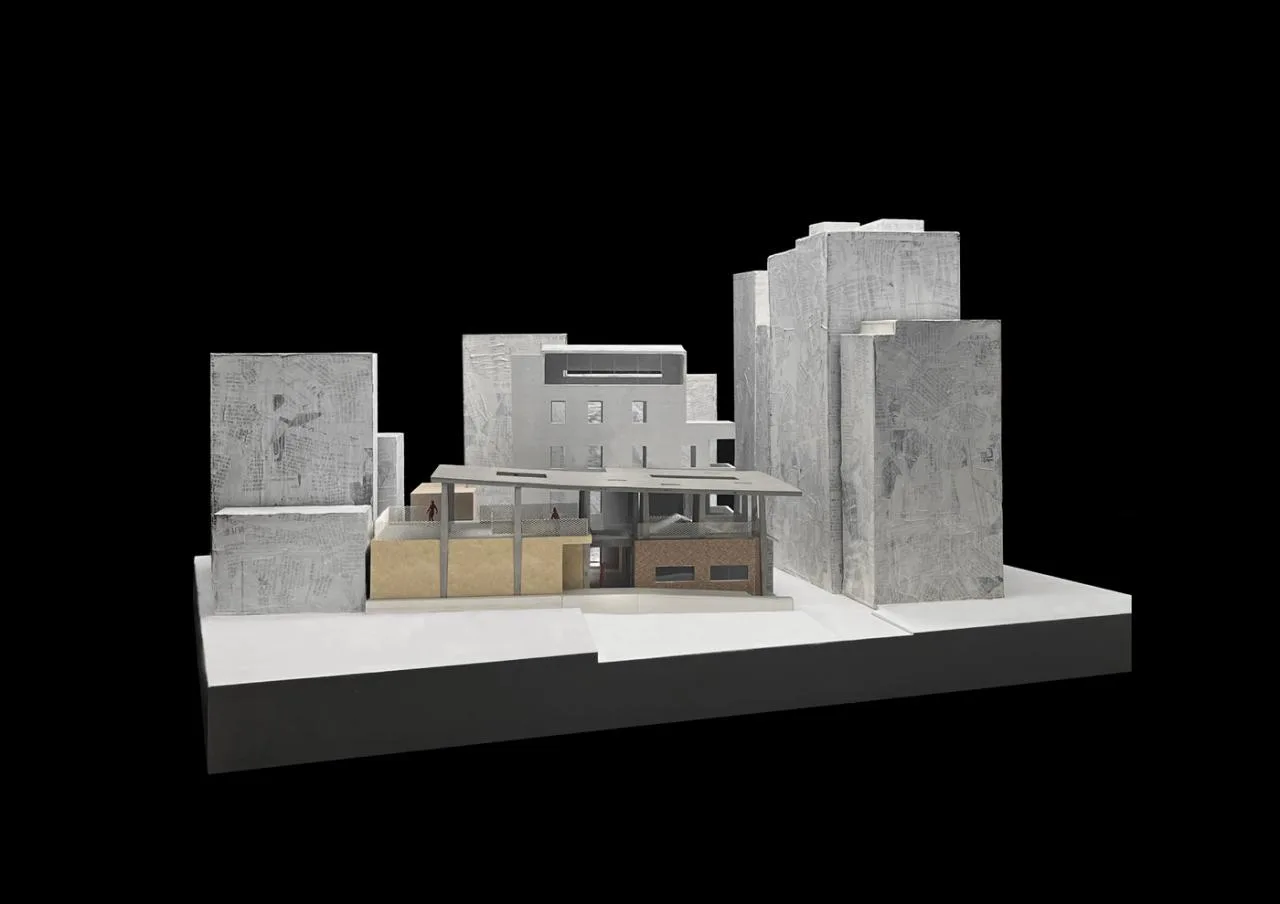
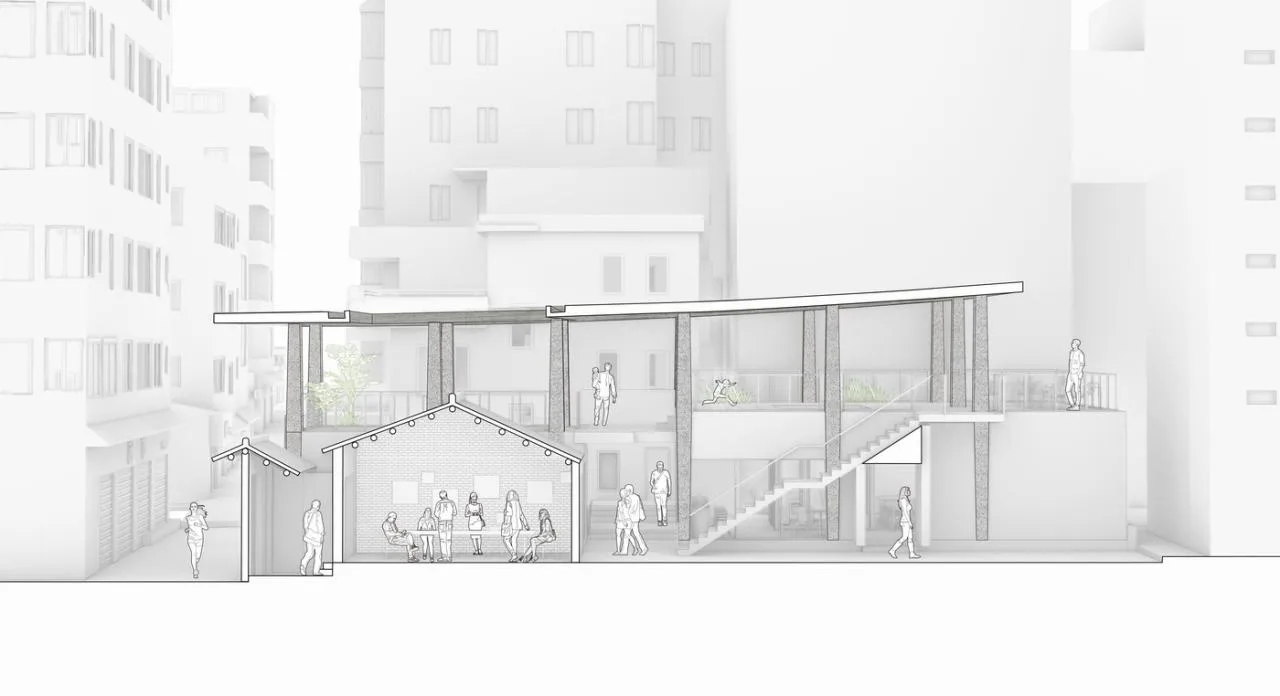
The renovation introduces a continuous concrete roof system that bridges old and new architectural languages within the mosaic-like urban fabric. This roof establishes a new order distinct from the existing urban village imagery while respecting its context.
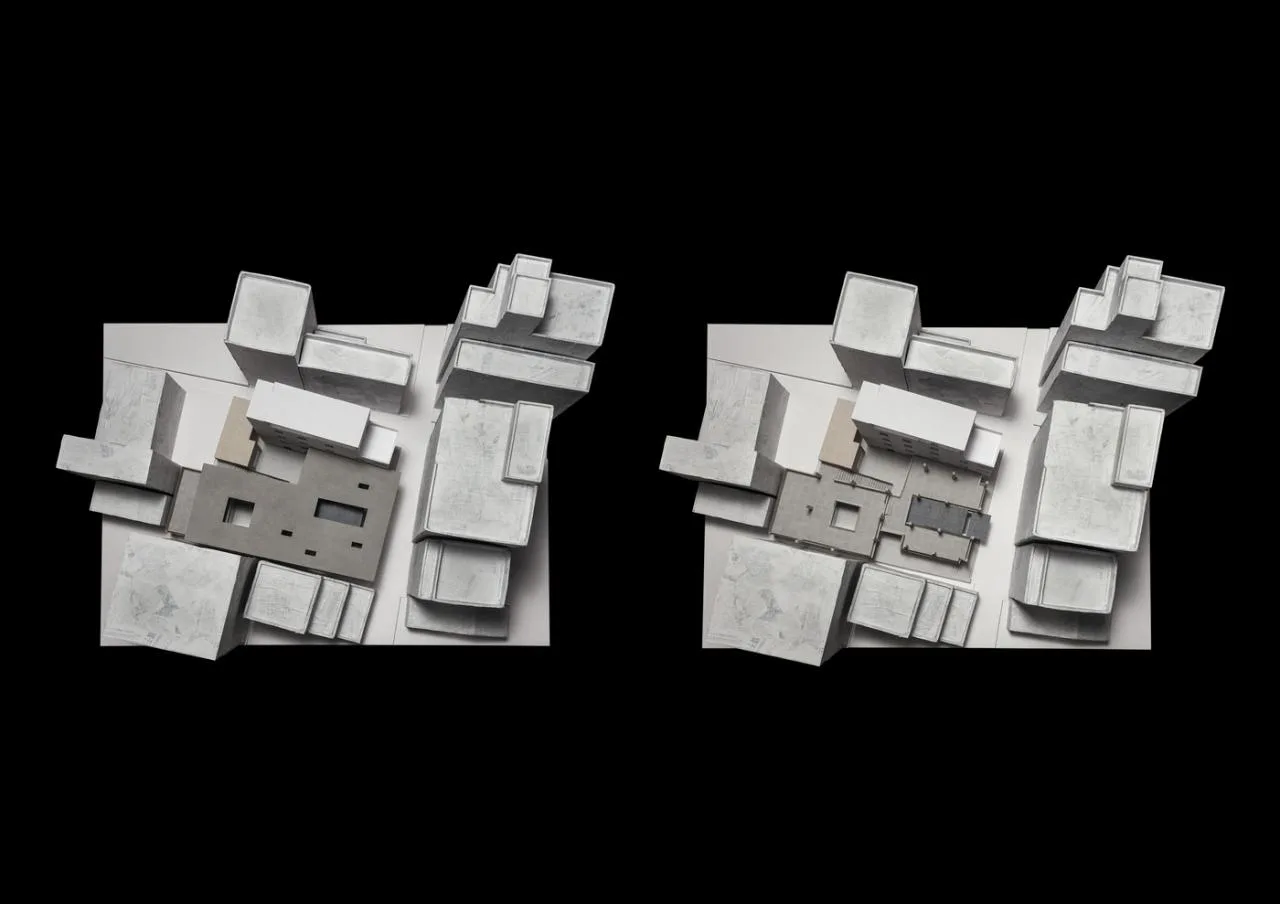
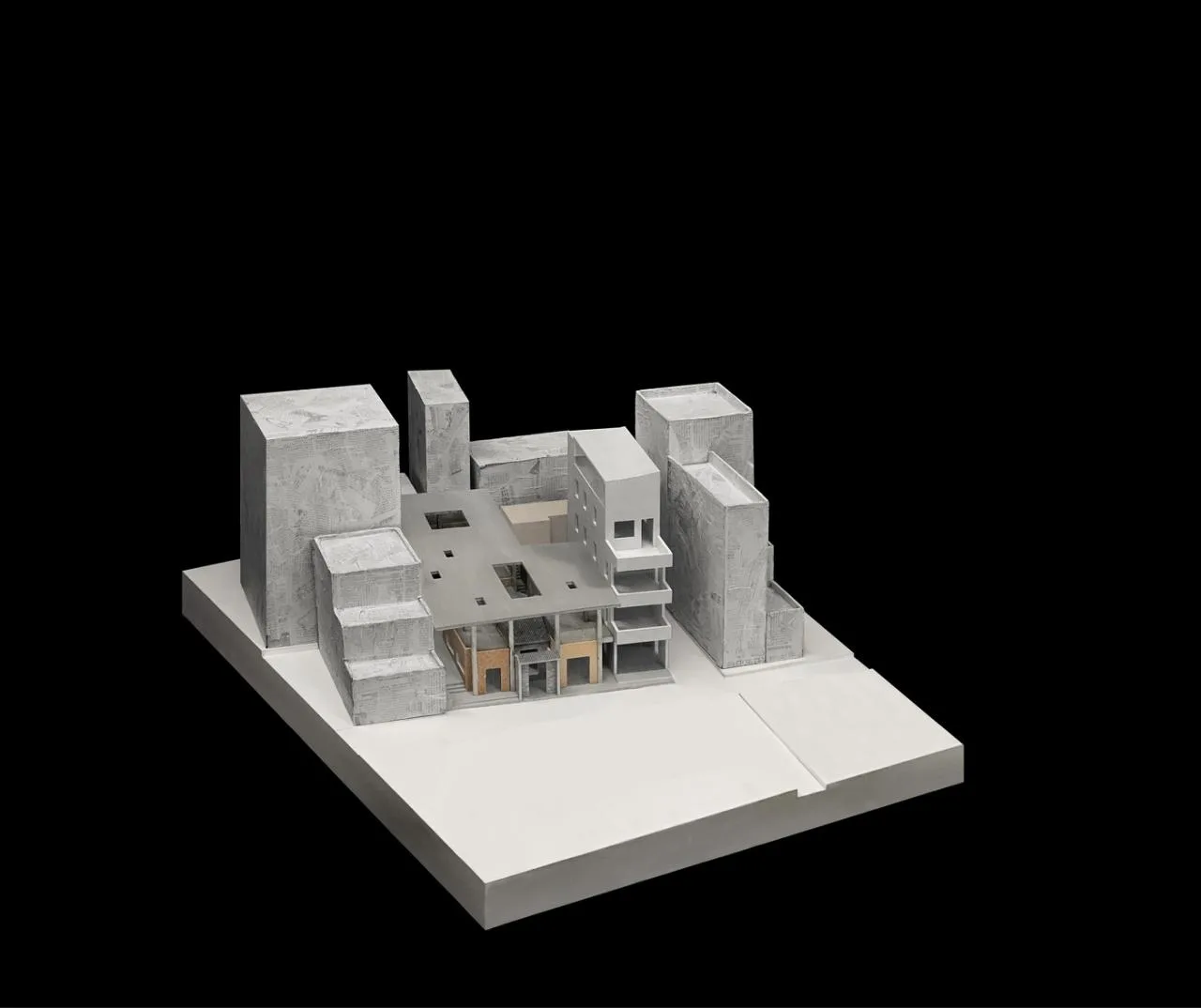
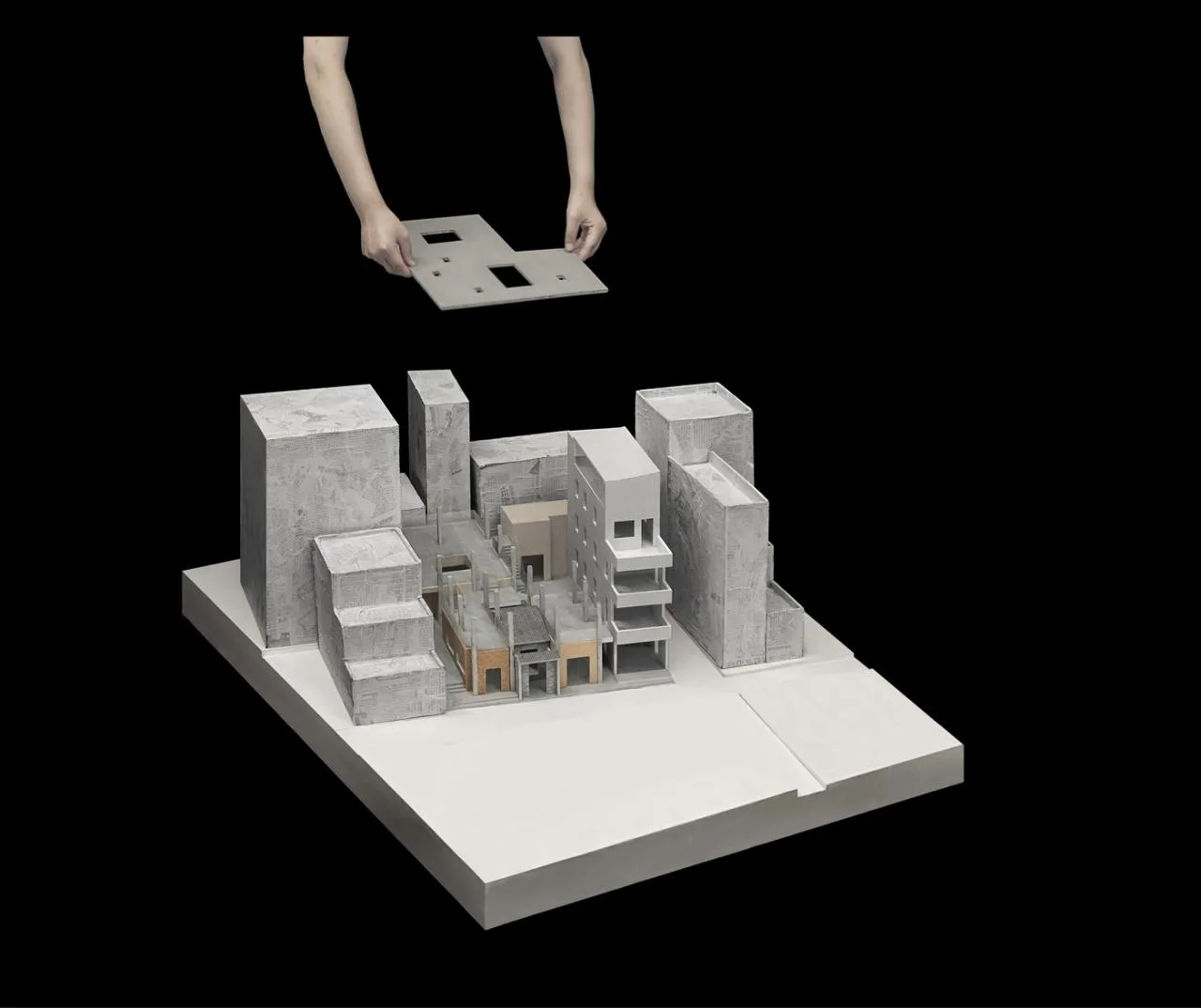
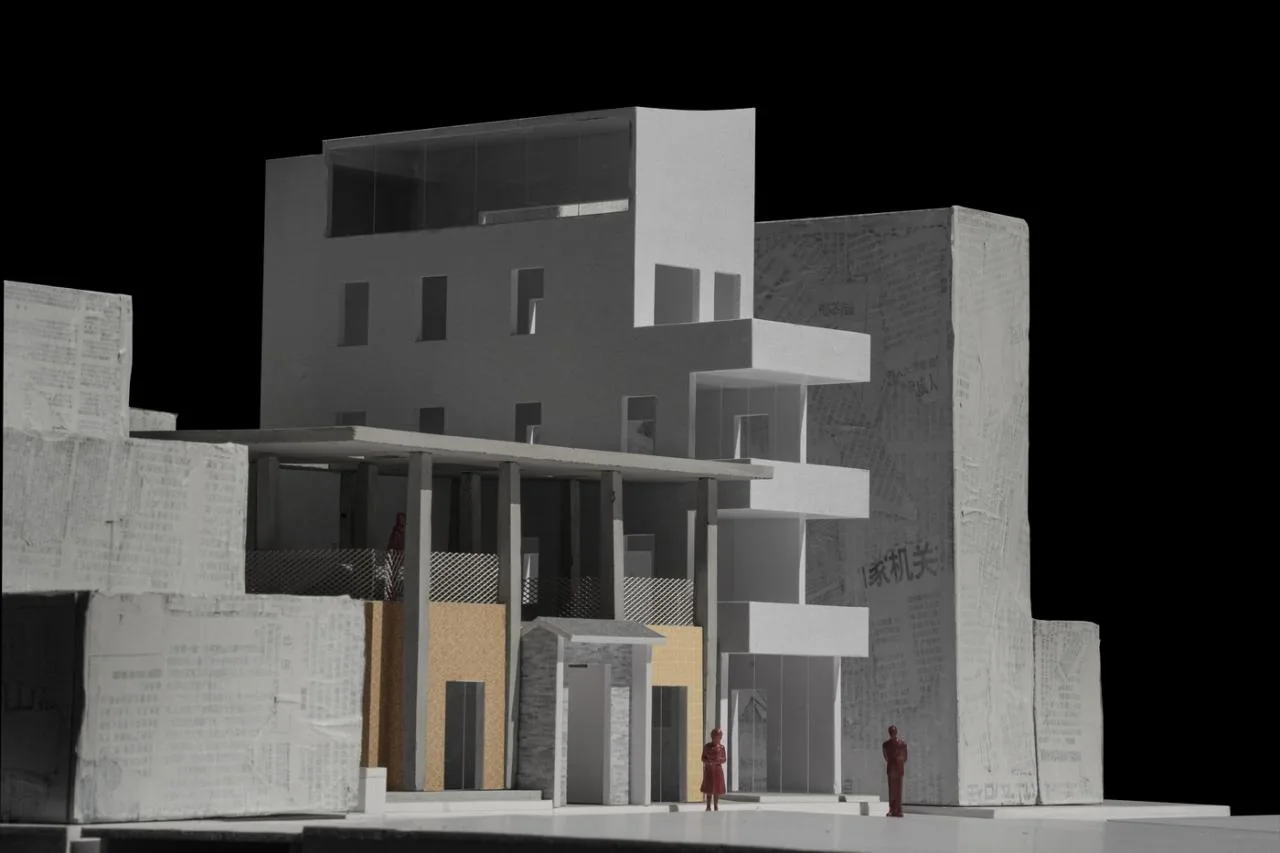
△ 1:50 Handmade model © Architectural Firm (TAO)
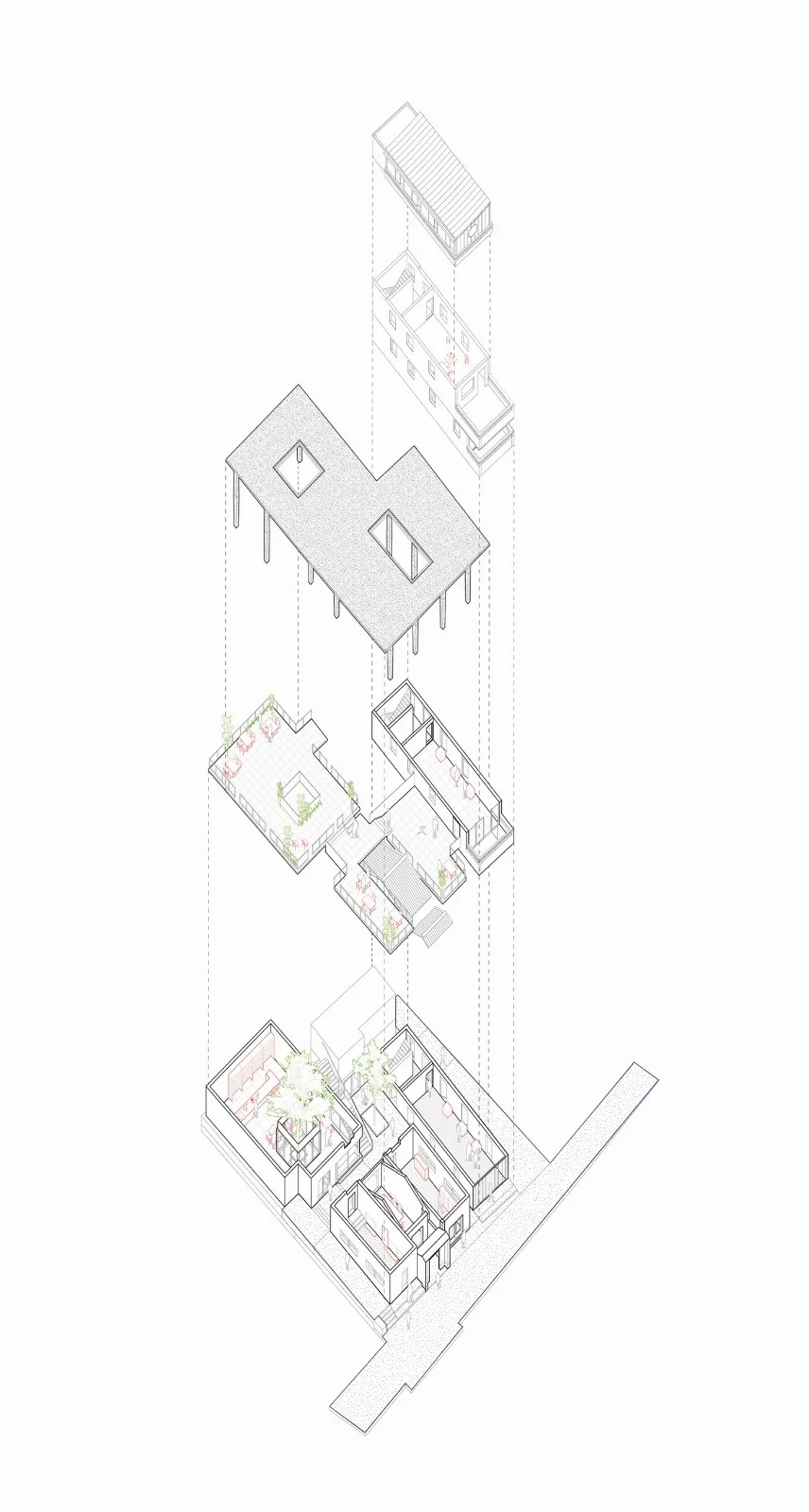
△ Exploded axonometric diagram for structural study © Architectural Firm (TAO)
Under this roof, new commercial spaces are interwoven, allowing diverse architectural fragments to adapt and grow within the flexible column grid system. This layout supports various living scenarios and spatial experiences within the urban village.
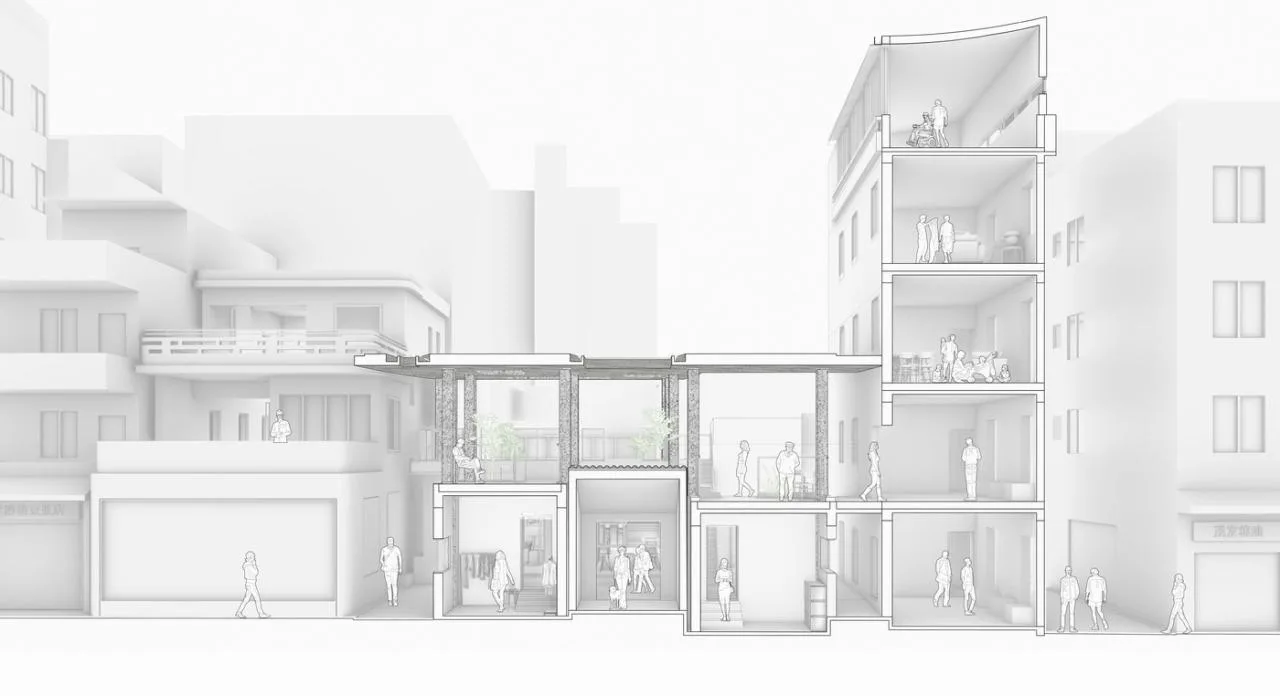
△ Sectional perspective © Architectural Firm (TAO)
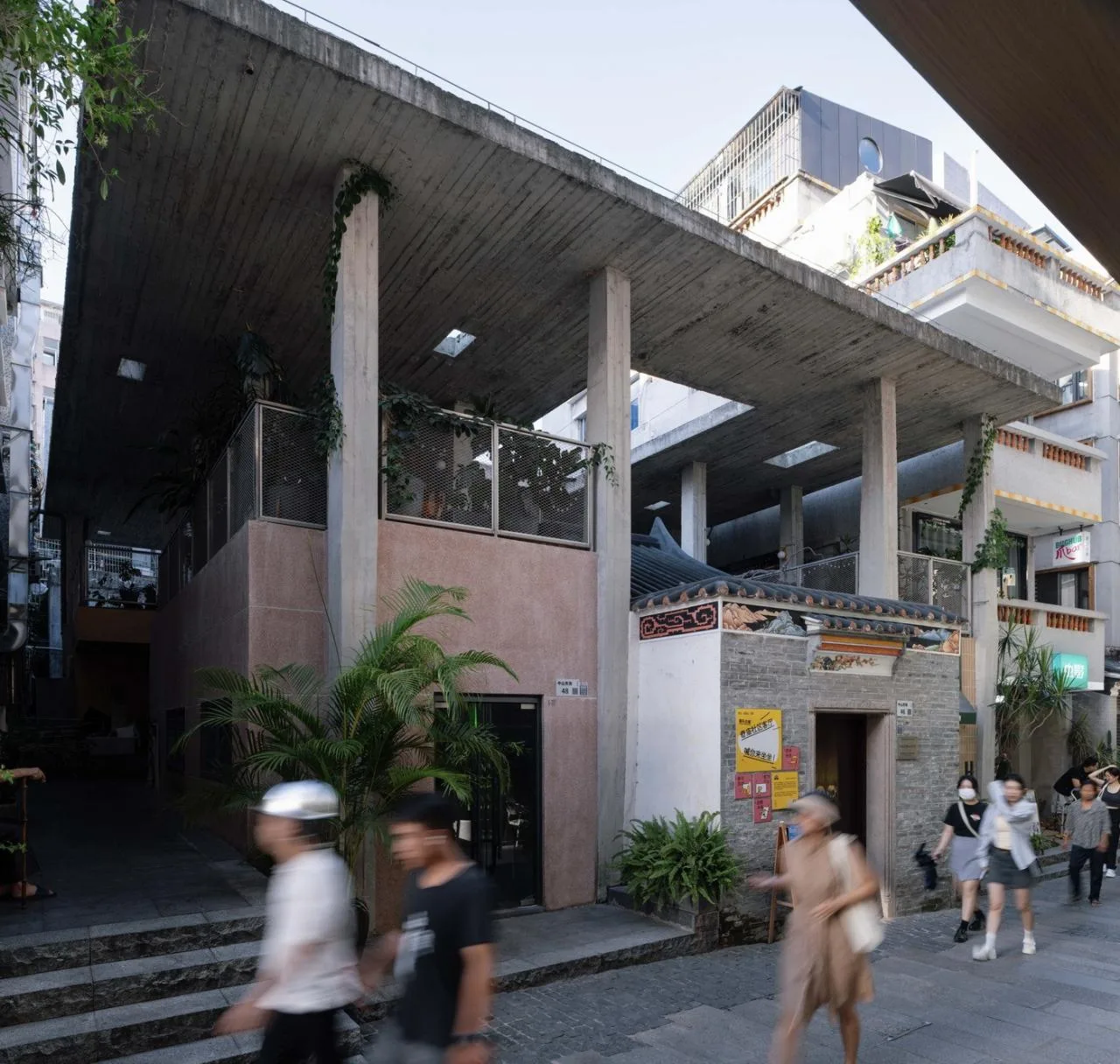
△ Street-facing facade © Chen Hao
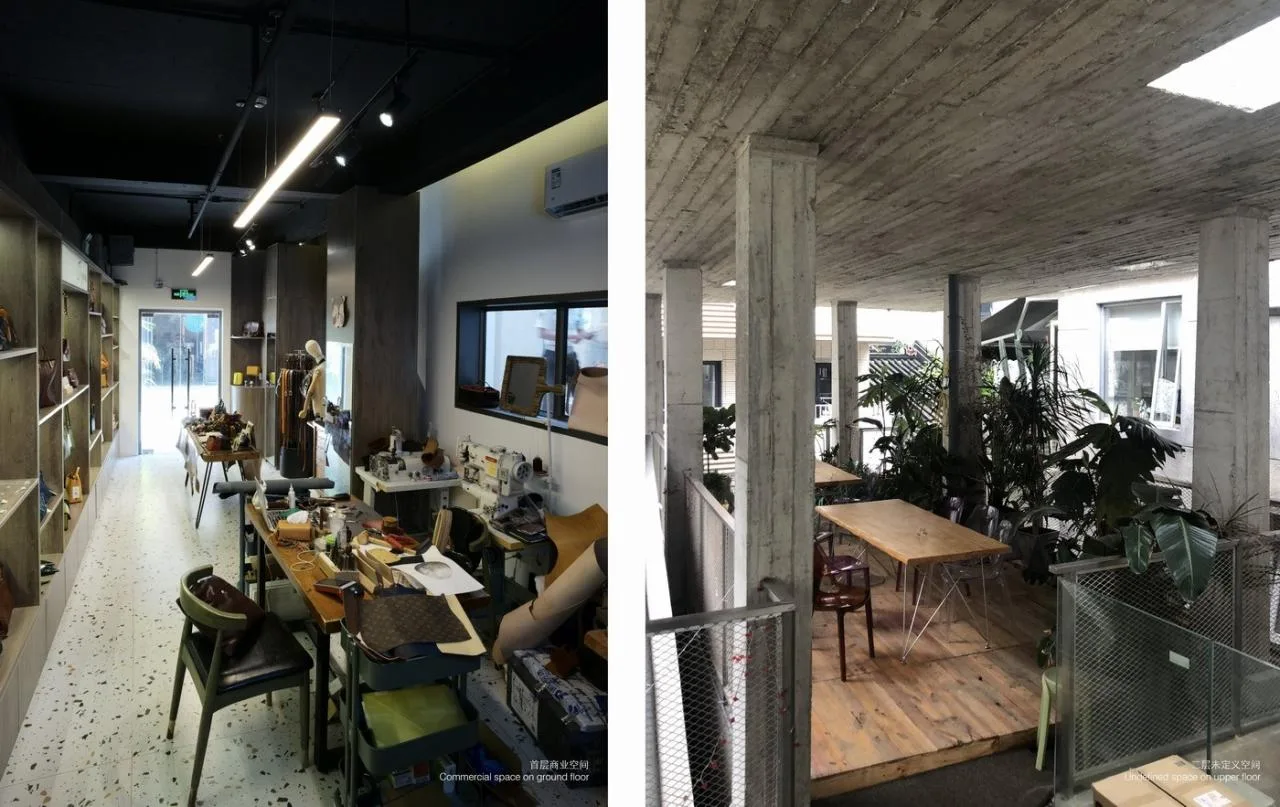
△ Defined and undefined spaces © Huali
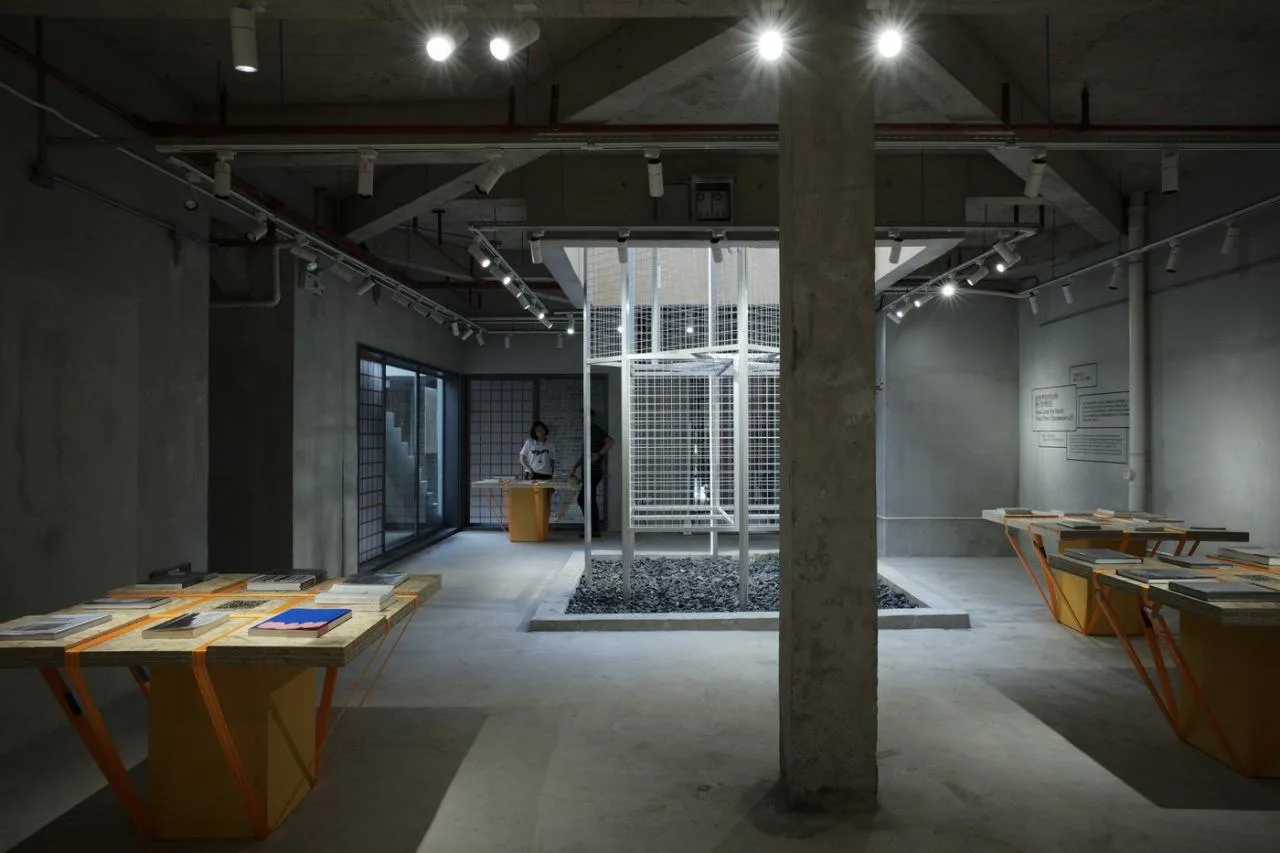
△ Exhibition space on the first floor © Huali
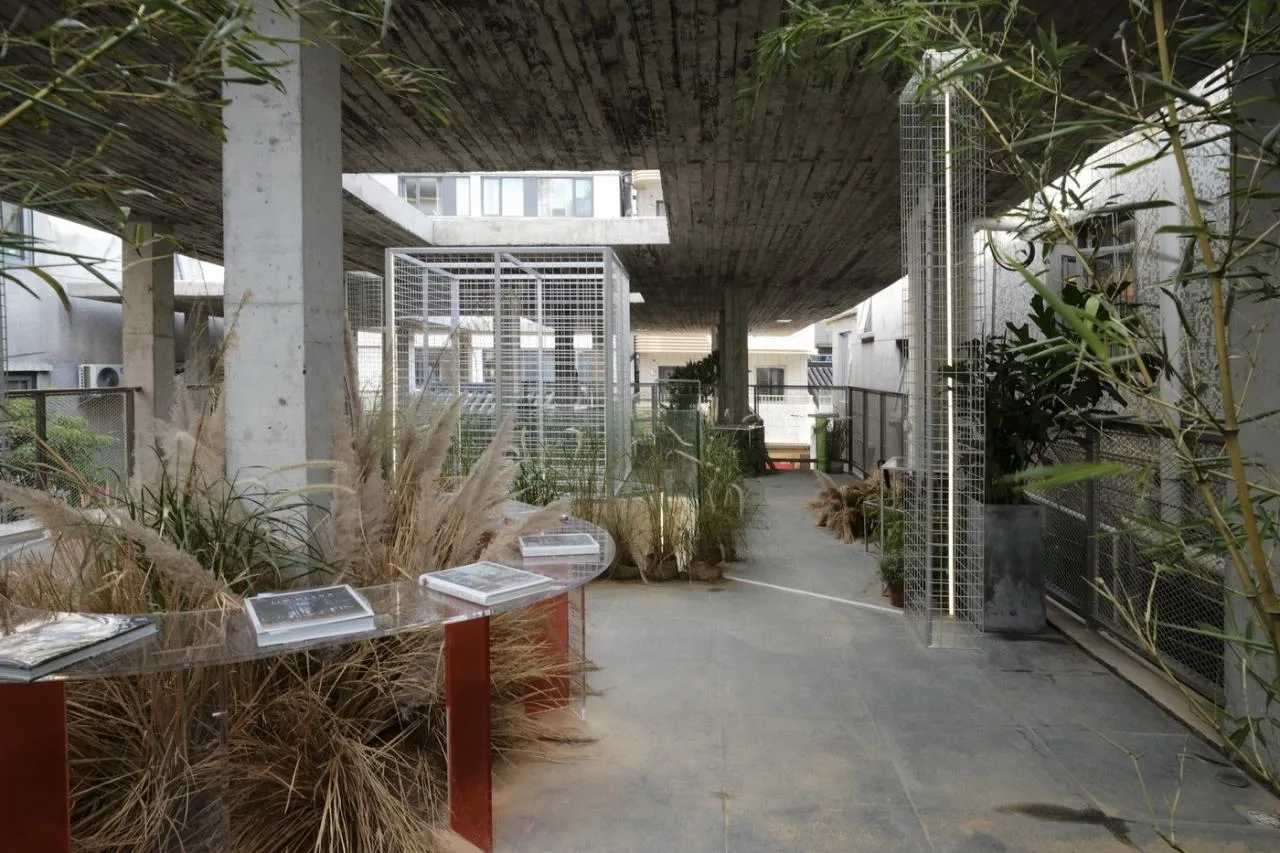
△ Community exhibition © Huali
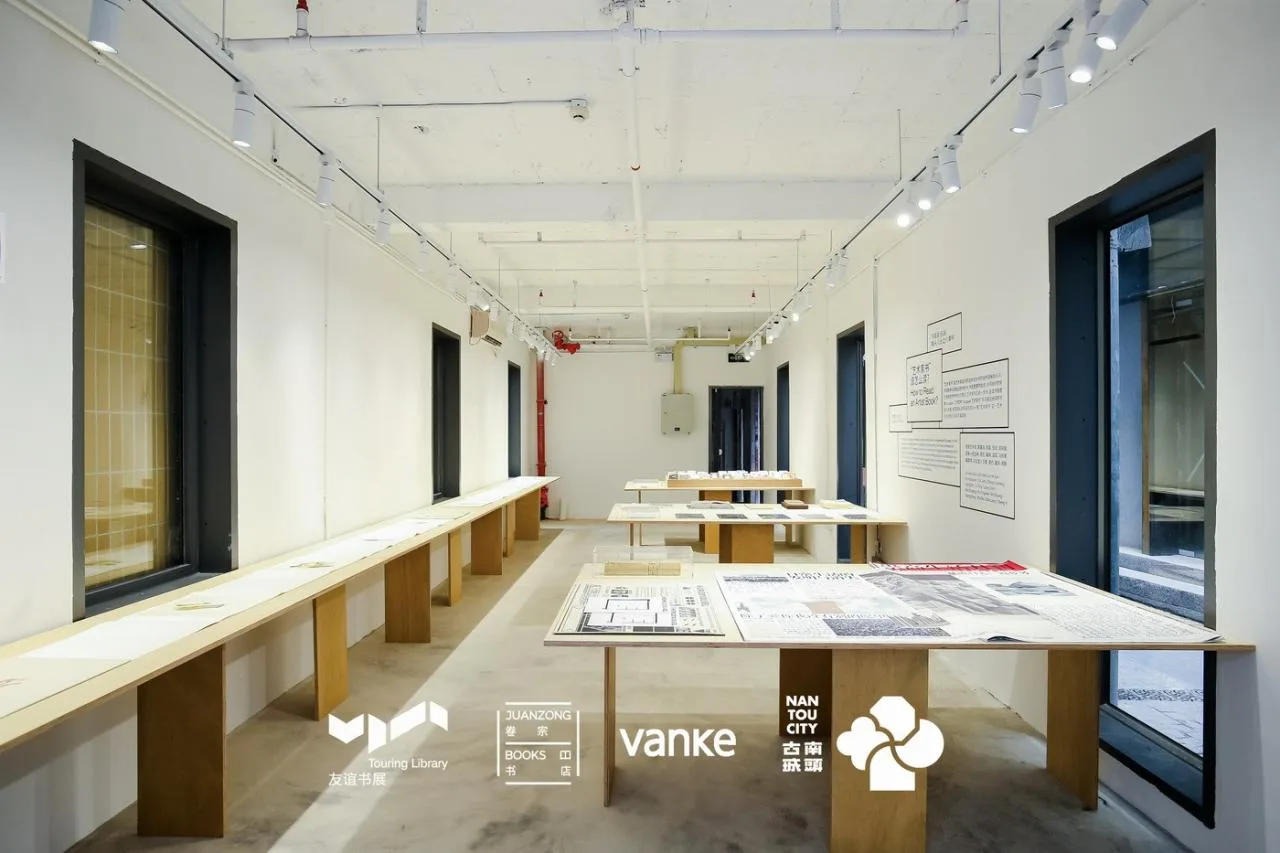
△ First floor exhibition space (image source: file)
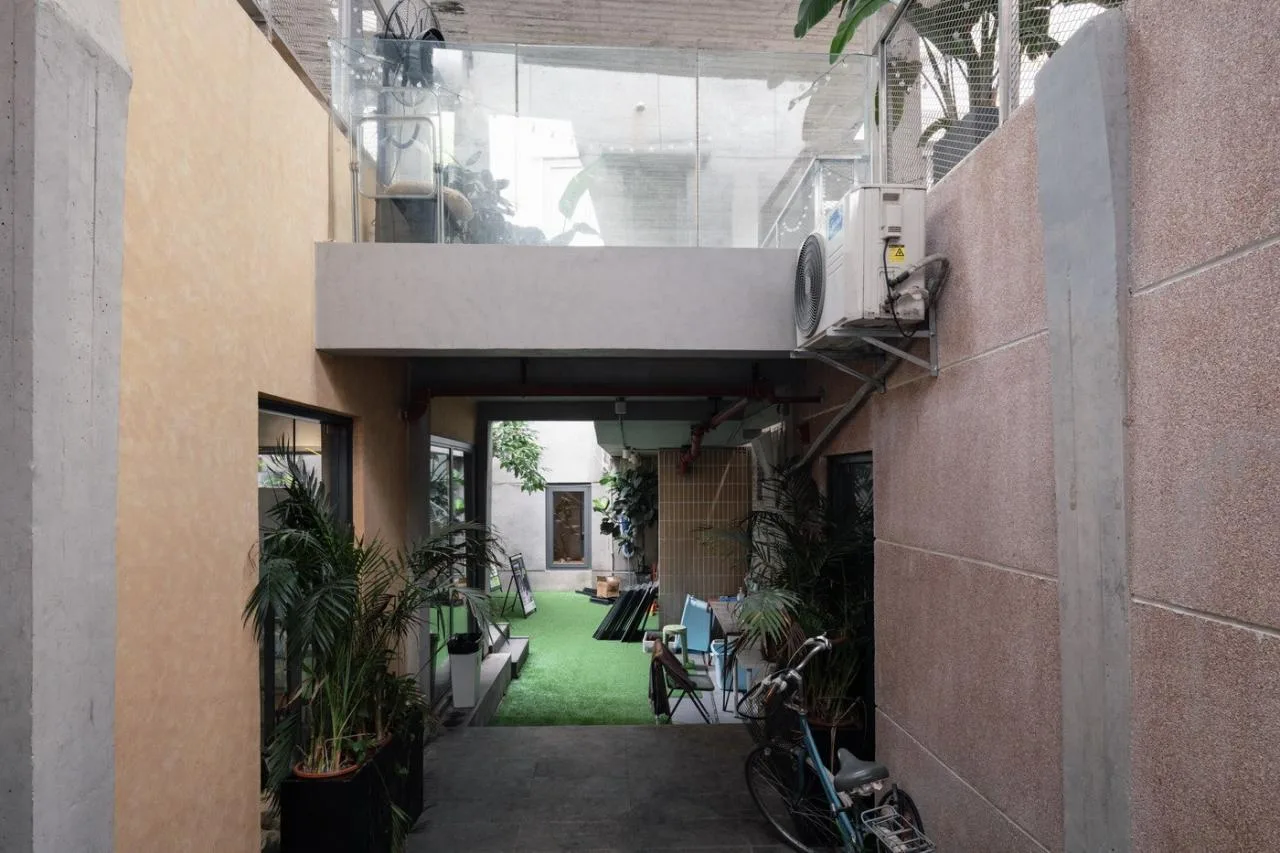
The site layout carefully preserves the original land parcels owned by different property holders. Within this limited space, a network of alleyways has been created. Passing through narrow paths, visitors are greeted by an open, transparent central courtyard — an unexpected gem. This design maintains the urban village’s traditional street and alley textures while providing vertical growth opportunities for merchants.
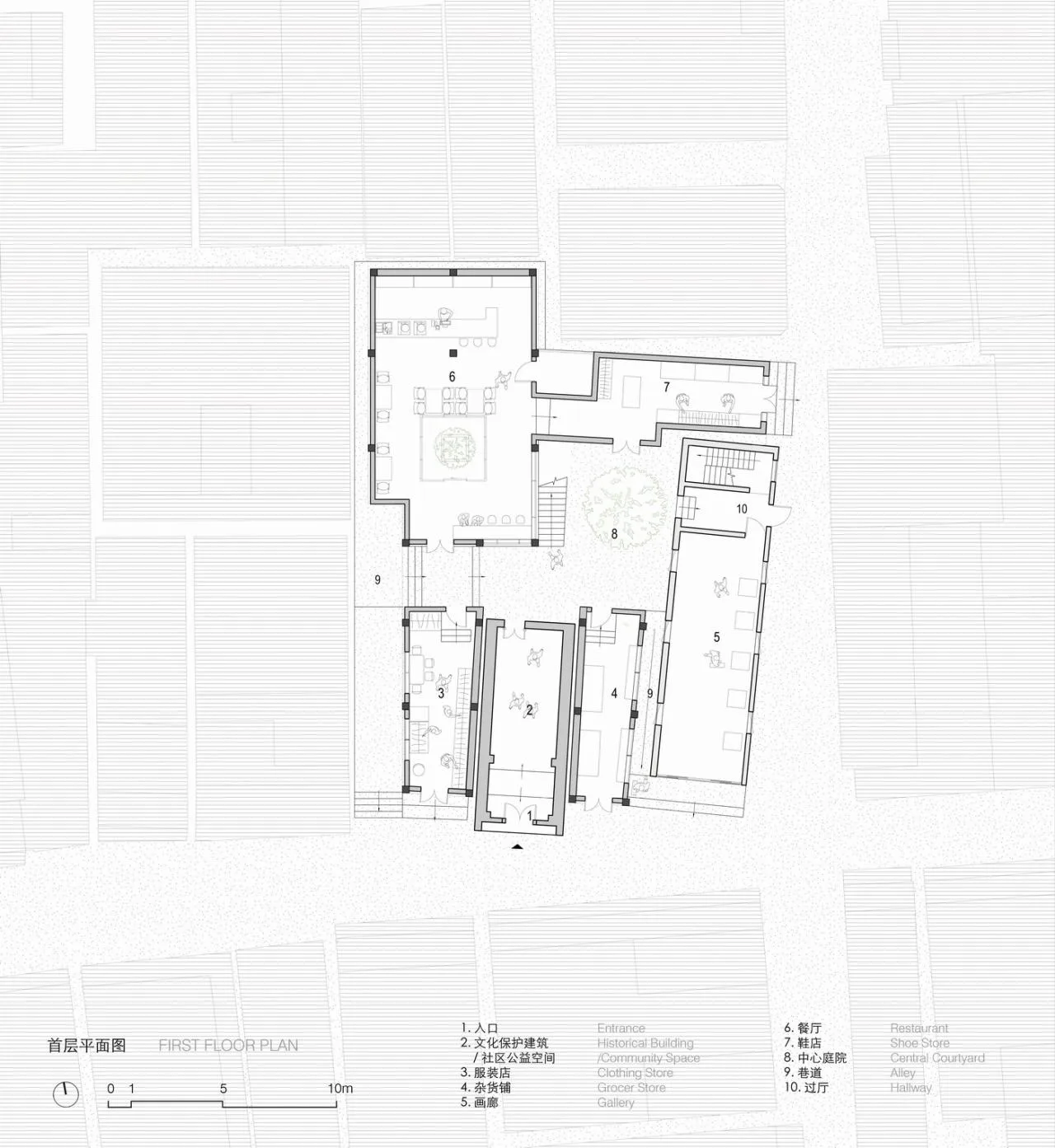
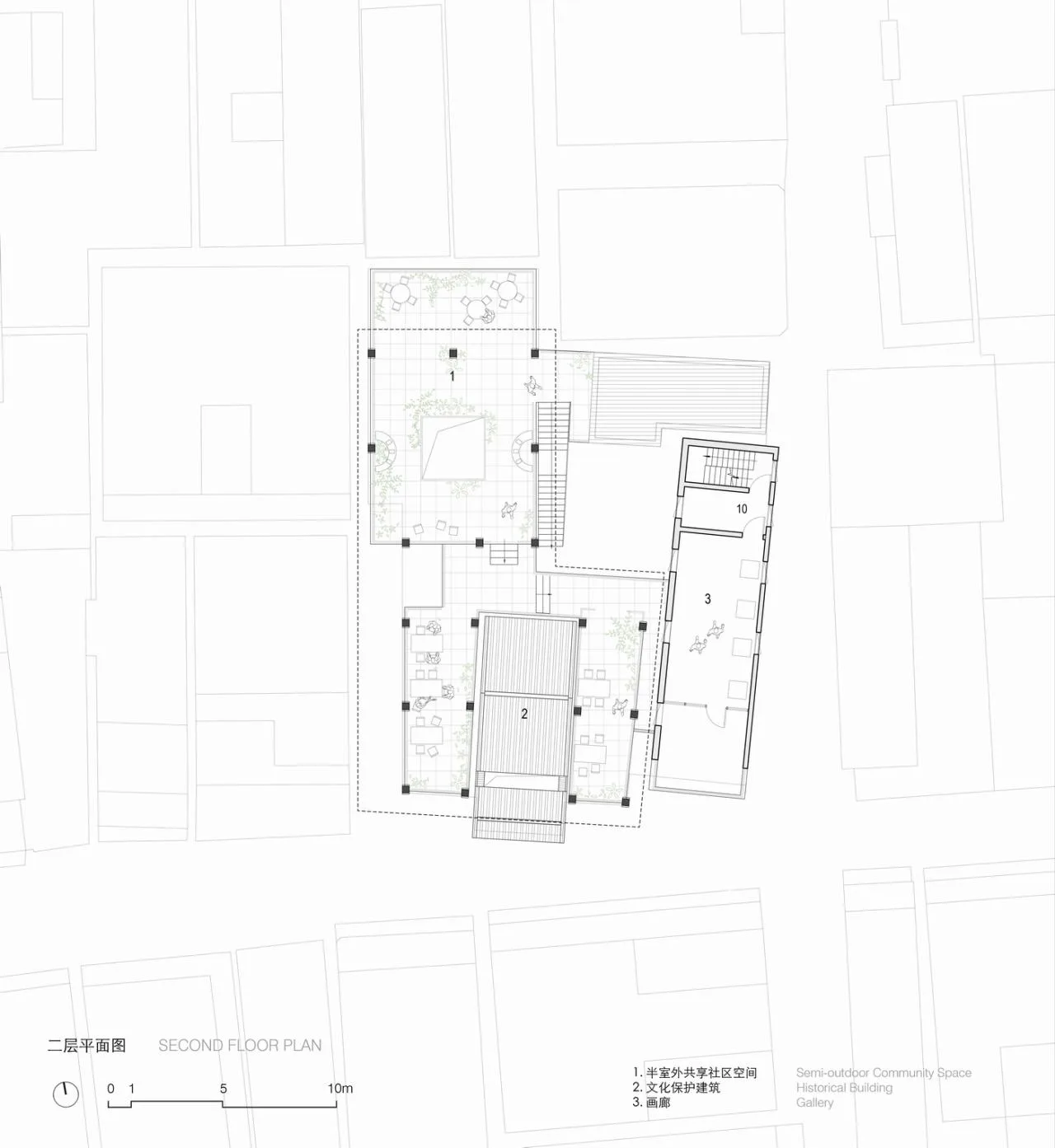
△ Plan view © Architectural Firm (TAO)
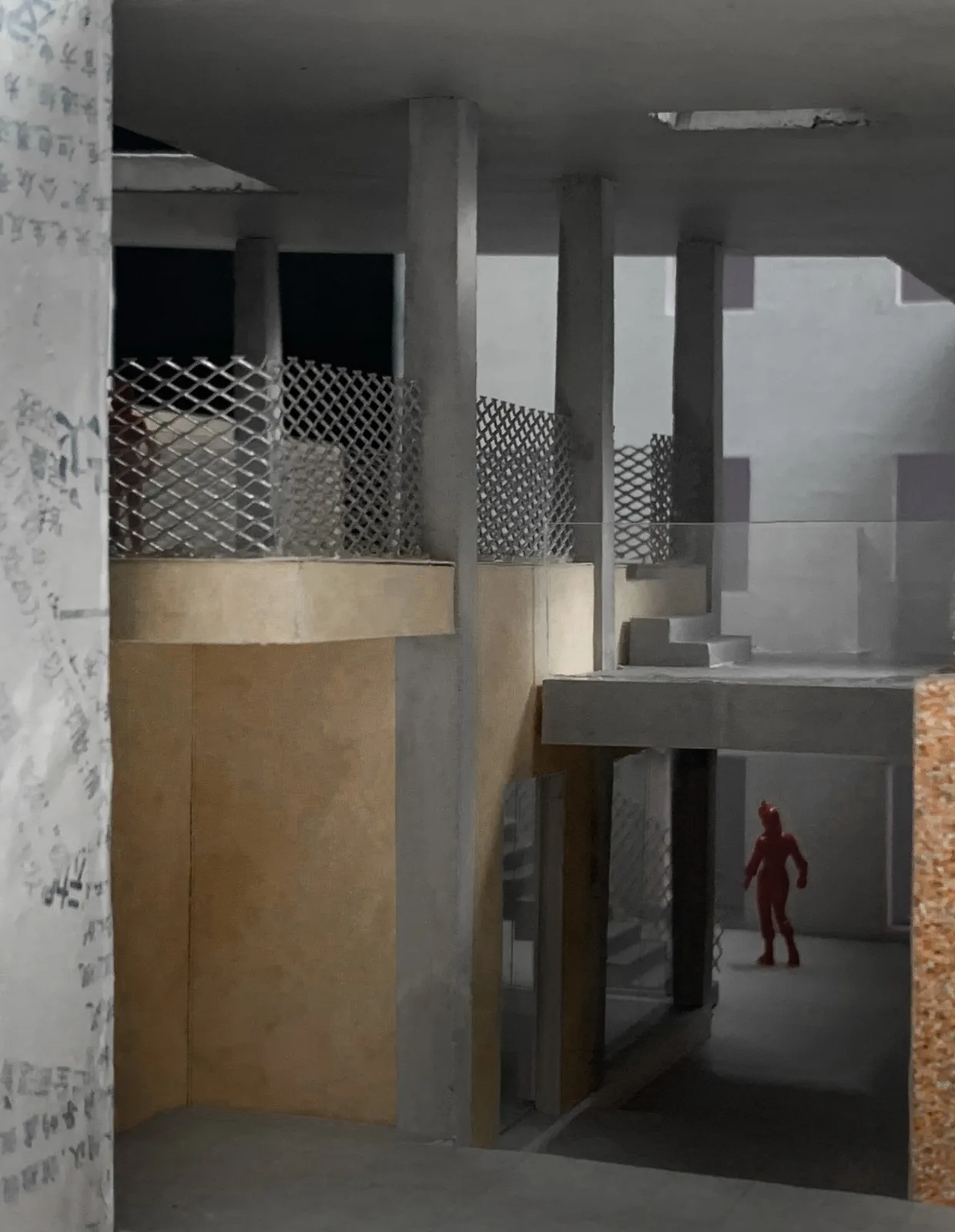
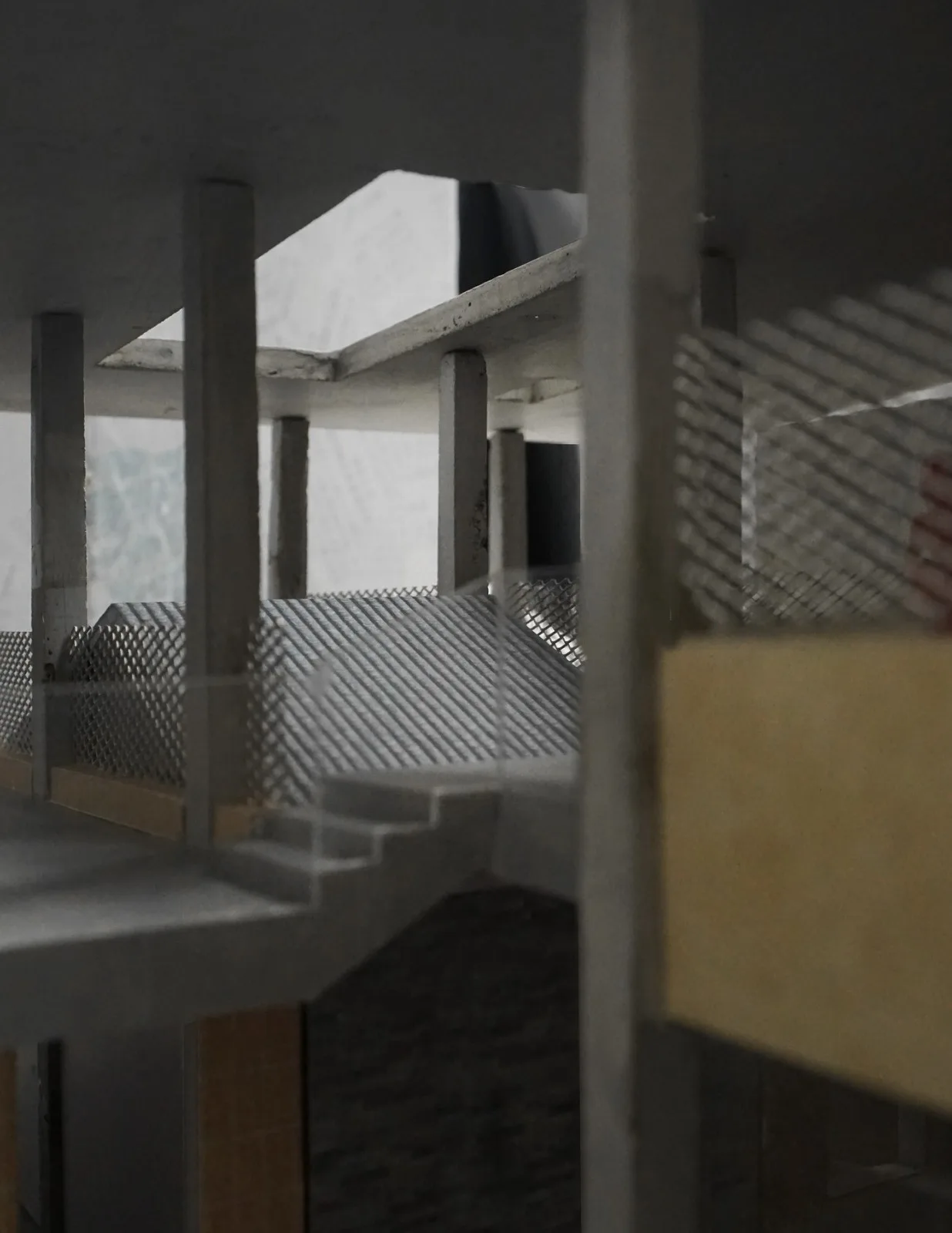
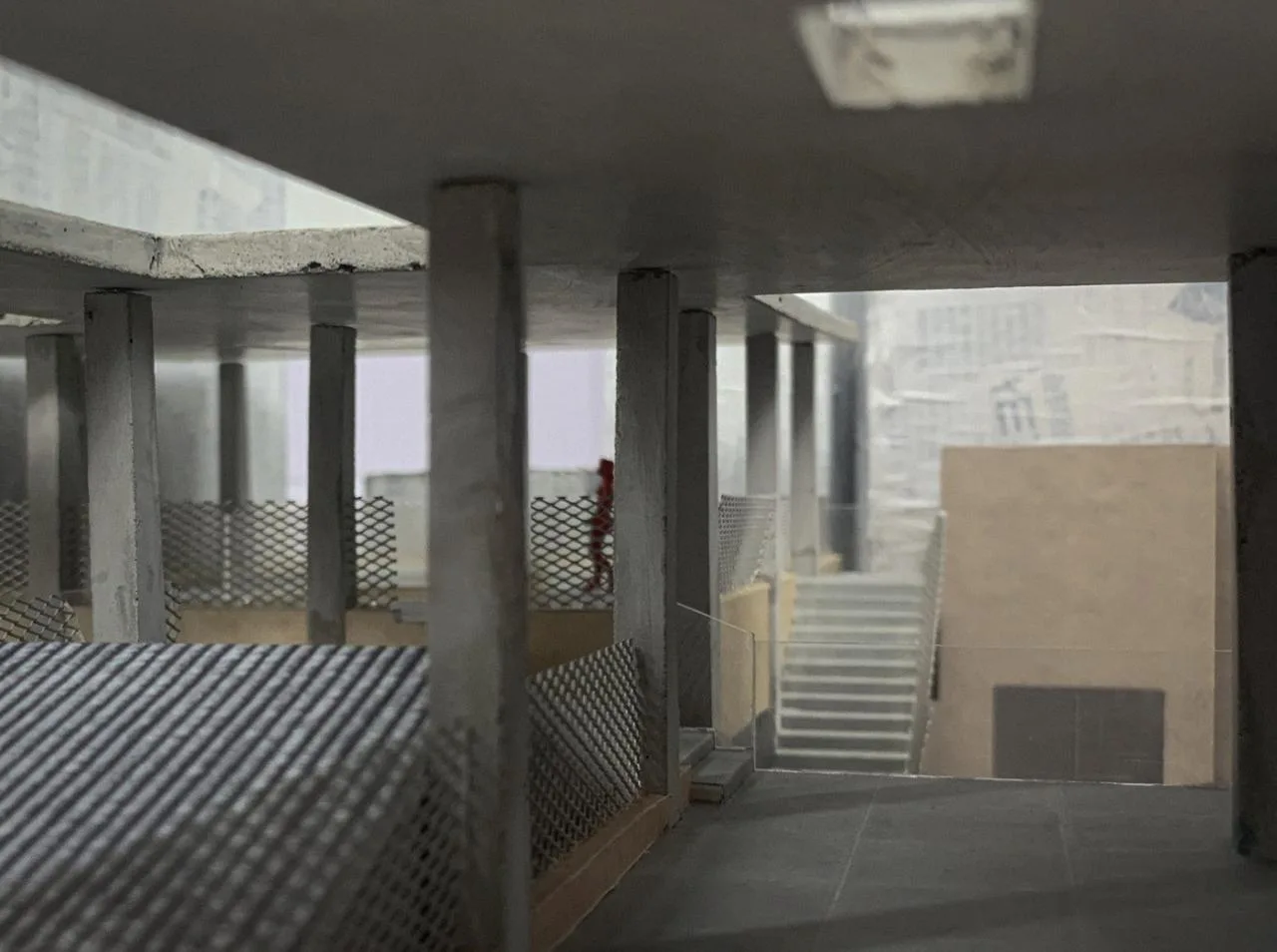
△ 1:50 Handmade model © Architectural Firm (TAO)
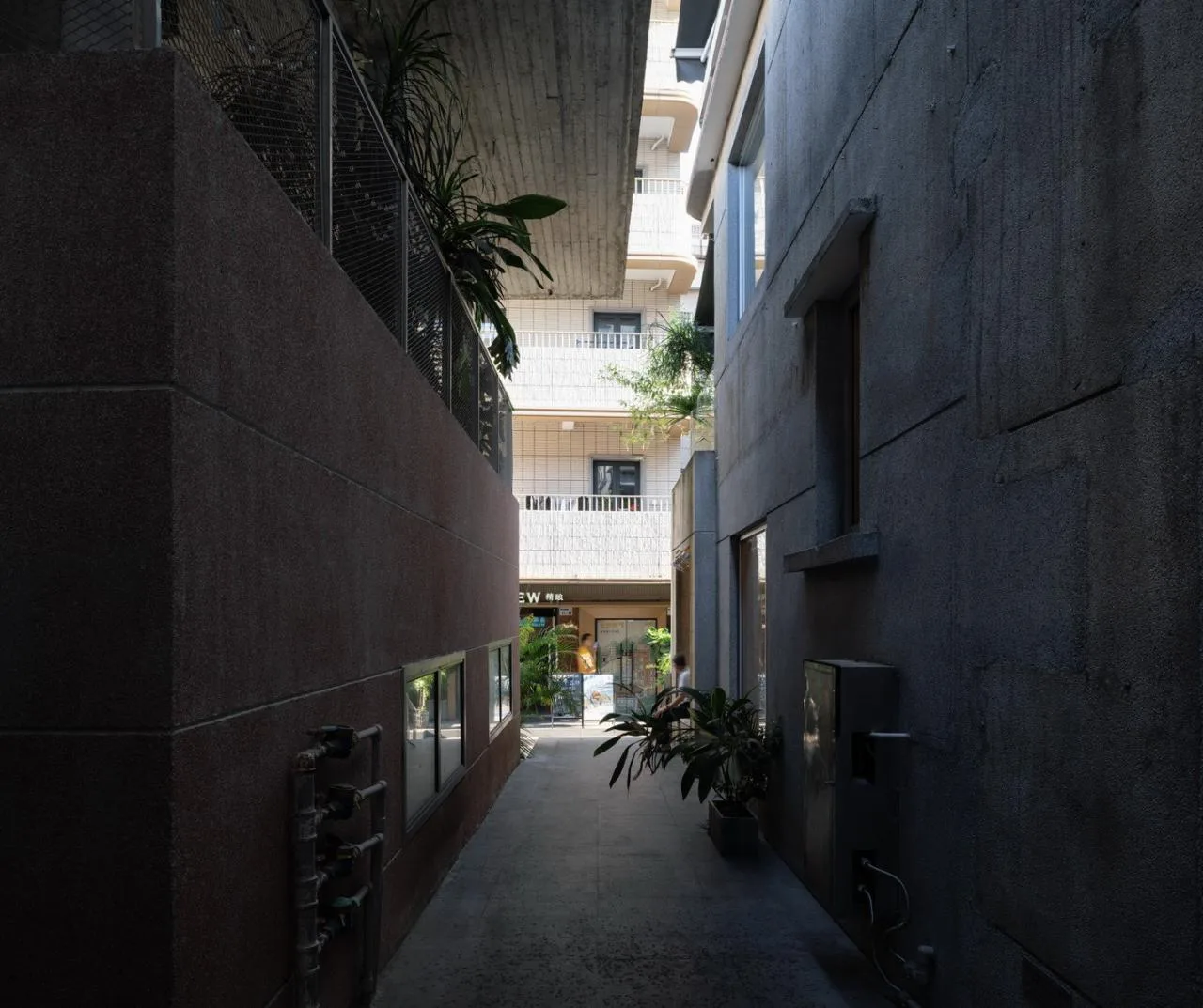
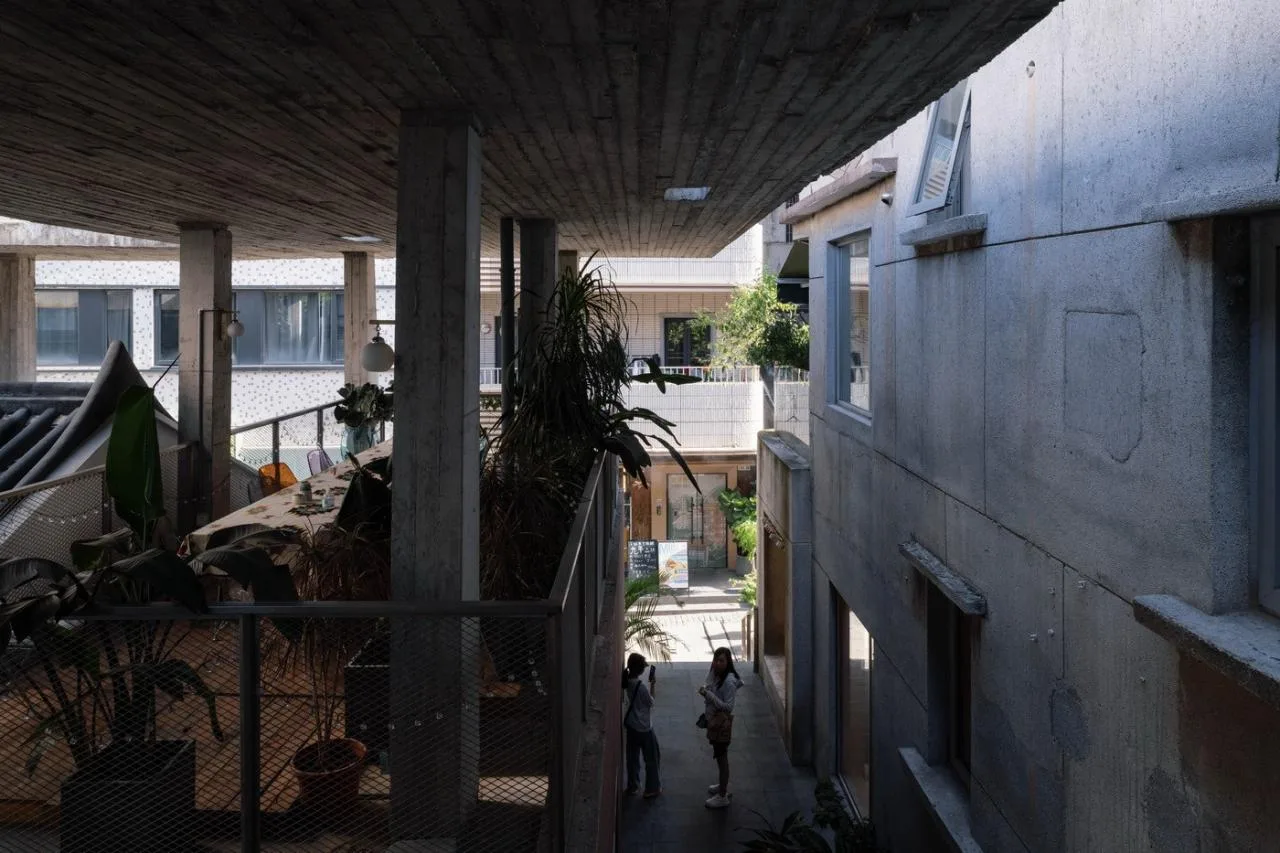
△ Lane space © Chen Hao
The historic building at the cluster’s center serves as the public living room for the ‘Qimiao’ community in Nantou Ancient City. It hosts various community activities, fostering neighborhood connections and ongoing communication.
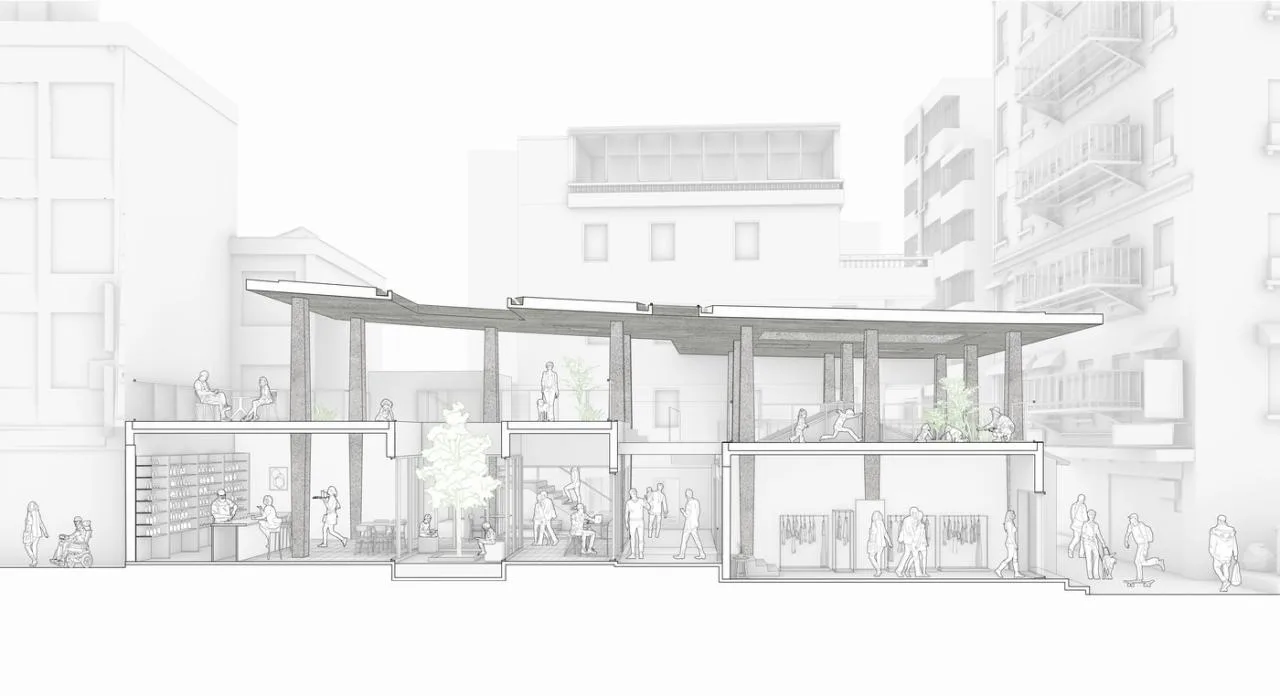
△ Sectional perspective © Architectural Firm (TAO)
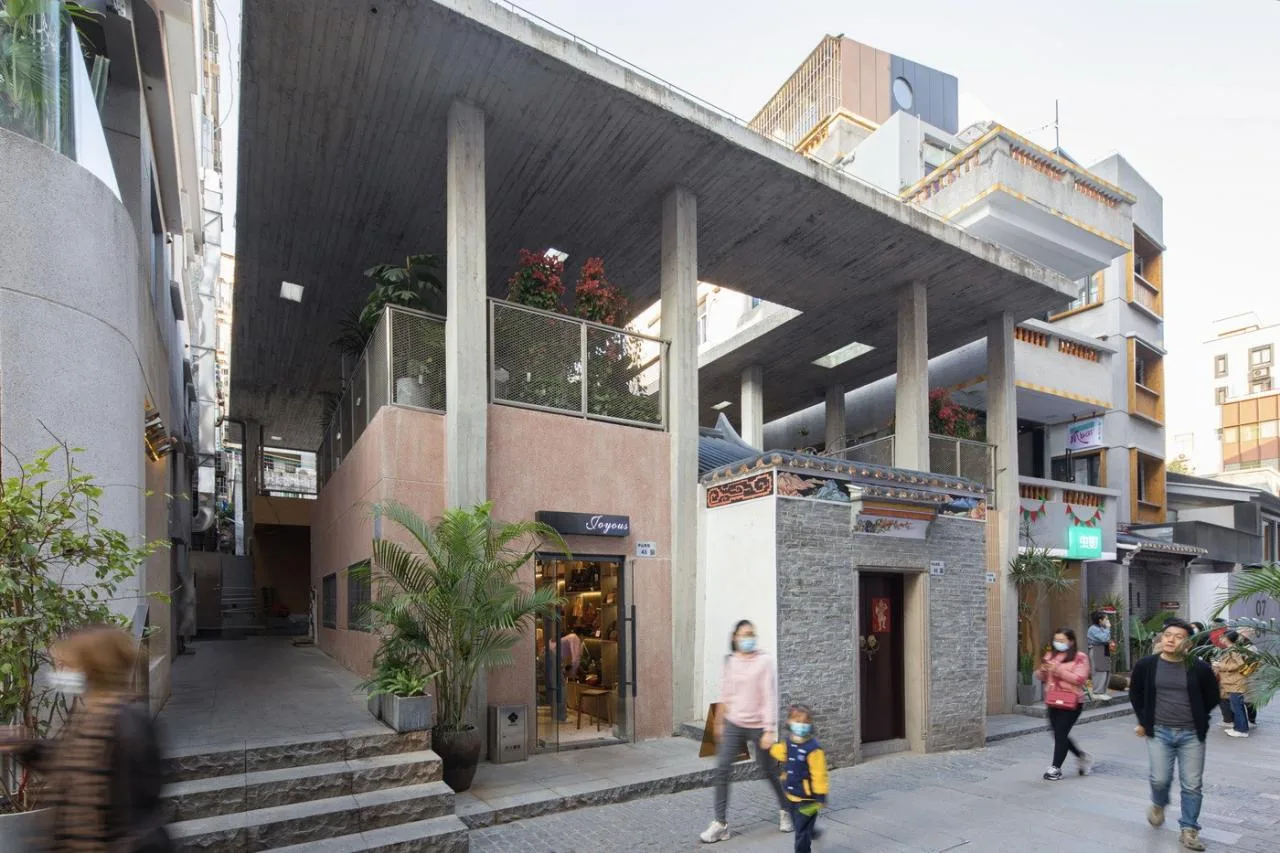
△ Street-facing facade © Rico
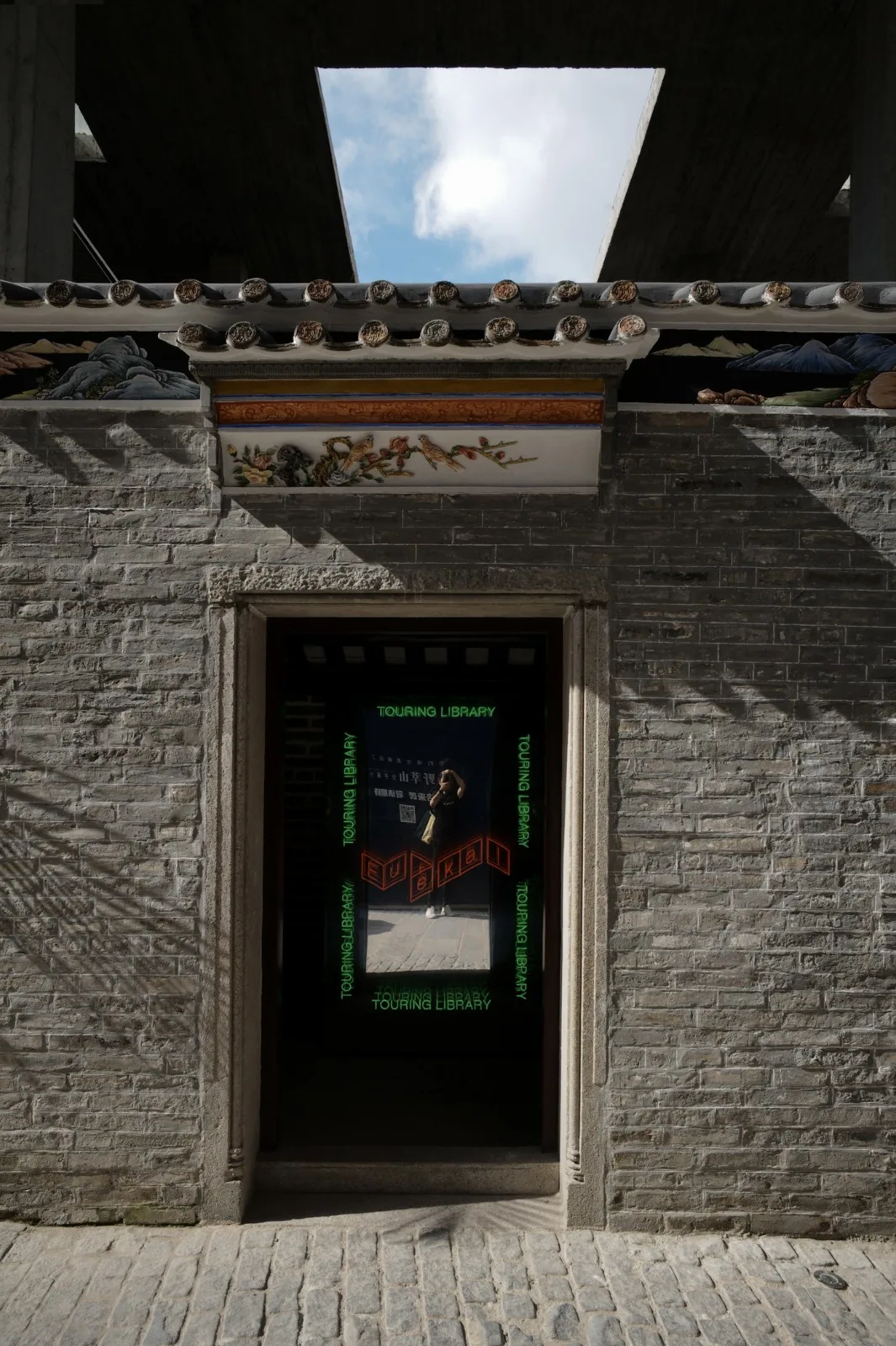
△ Entrance to Qimiao Community Activity Space © Huali
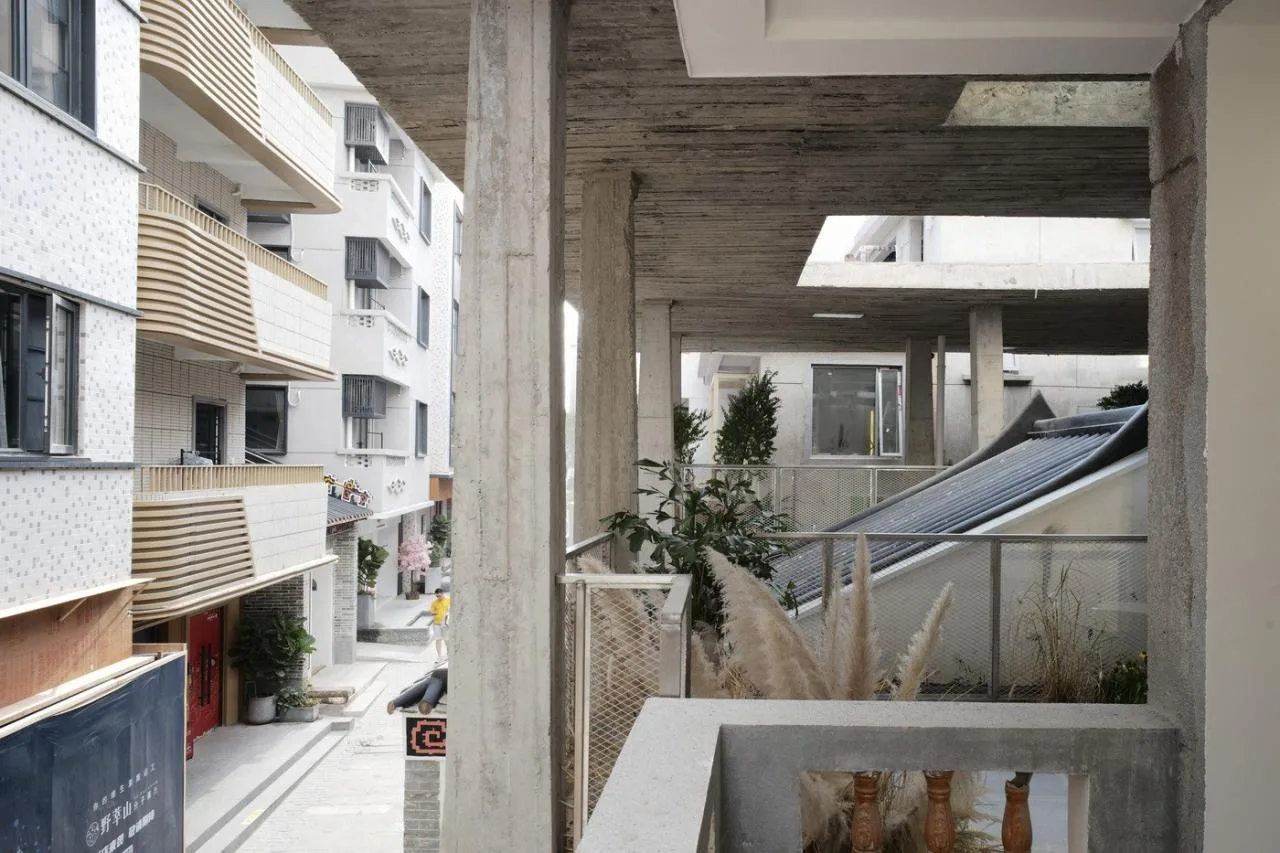
View toward the preserved ancient buildings from the second floor © Huali
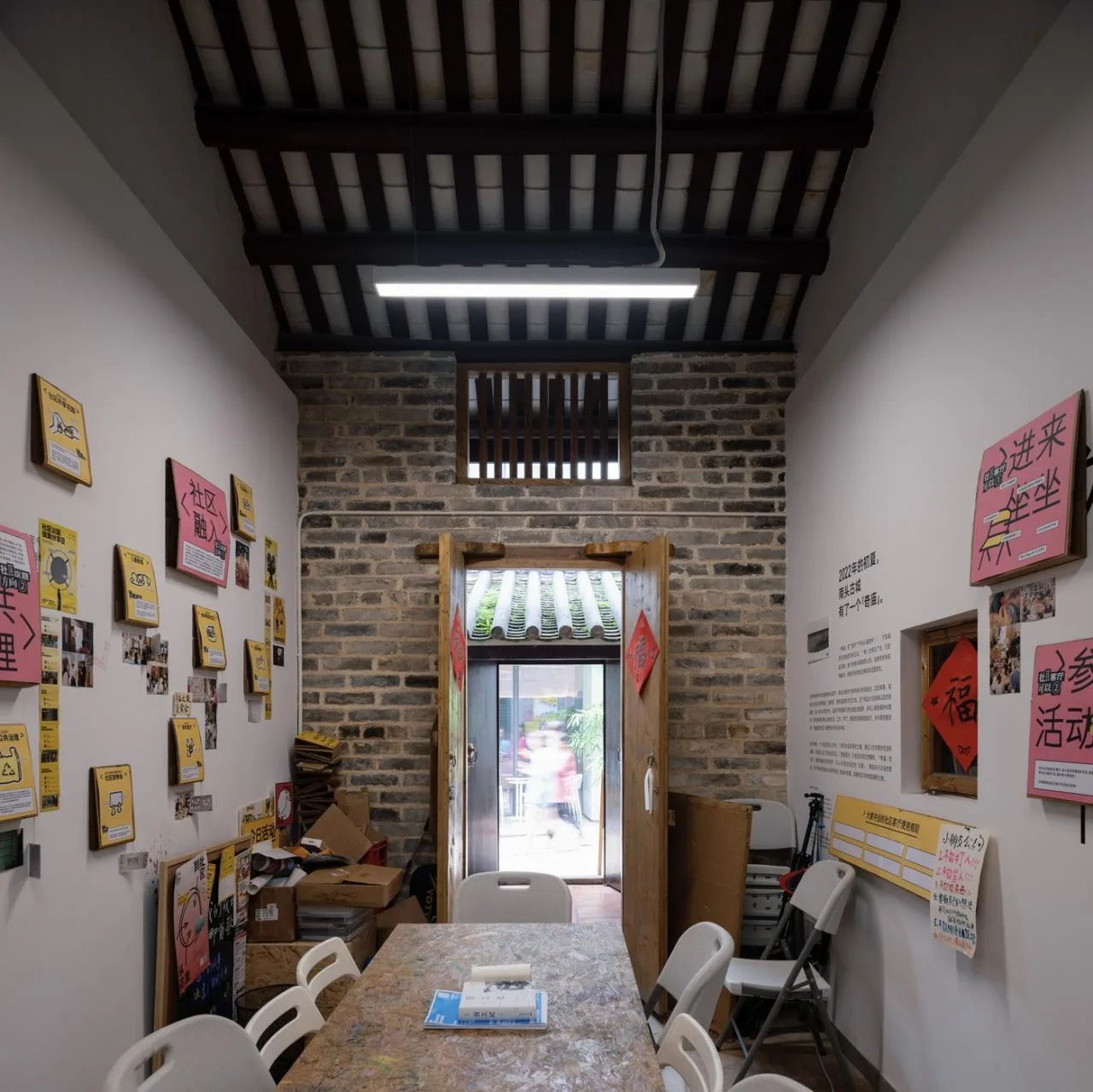
△ Qimiao Community Activity Space © Chen Hao
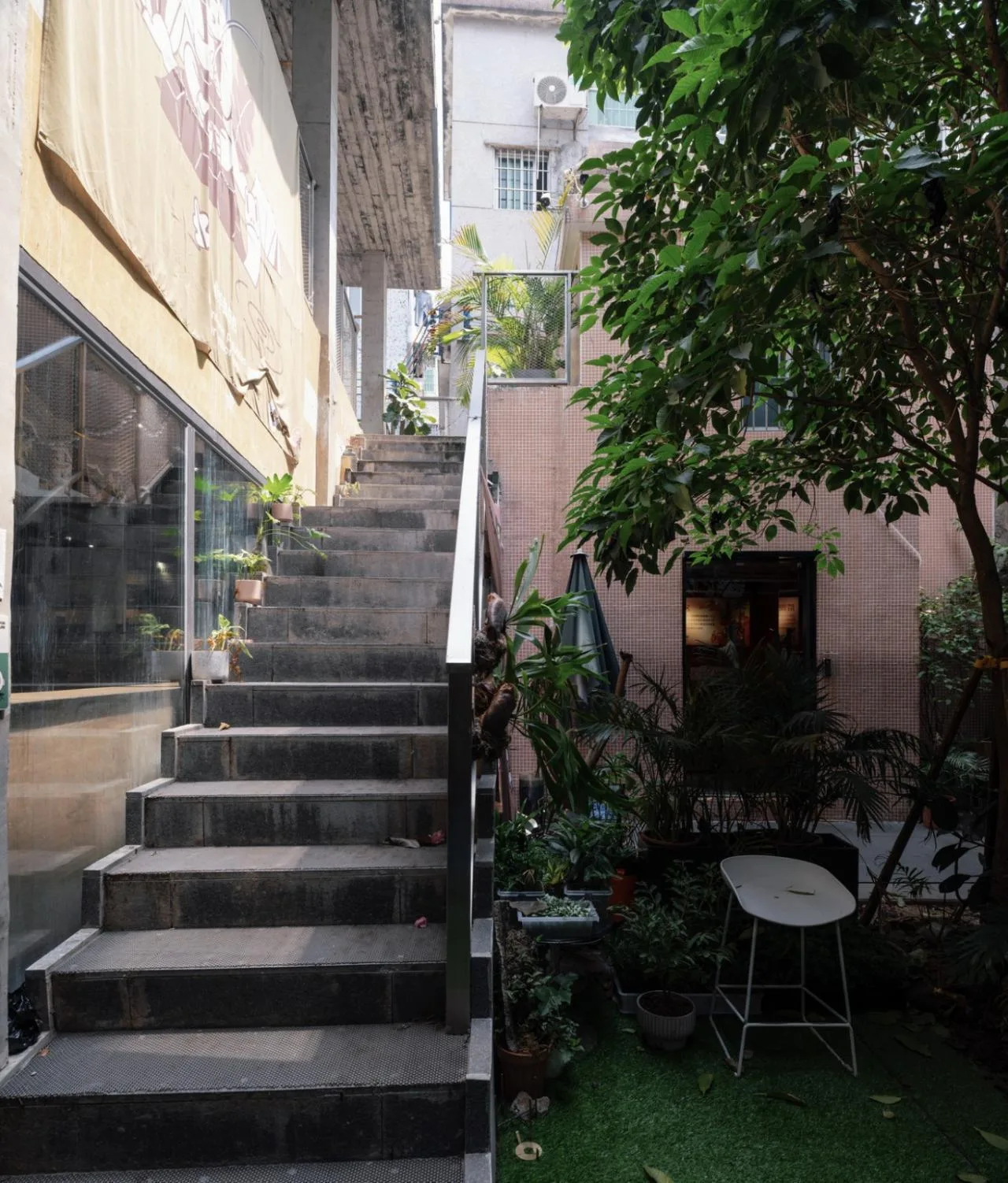
A narrow, elongated staircase from the central courtyard leads to an open public platform on the second and a half floors. Unlike the more private, domain-specific commercial spaces on the ground floor, this open upper platform emphasizes multifunctionality and public use, accommodating exhibitions, community events, gatherings, and leisure activities.
△ 1:50 Handmade model © Architectural Firm (TAO)
△ Sectional perspective © Architectural Firm (TAO)
△ Lane space © Chen Hao
△ Staircase leading to the second floor © Chen Hao
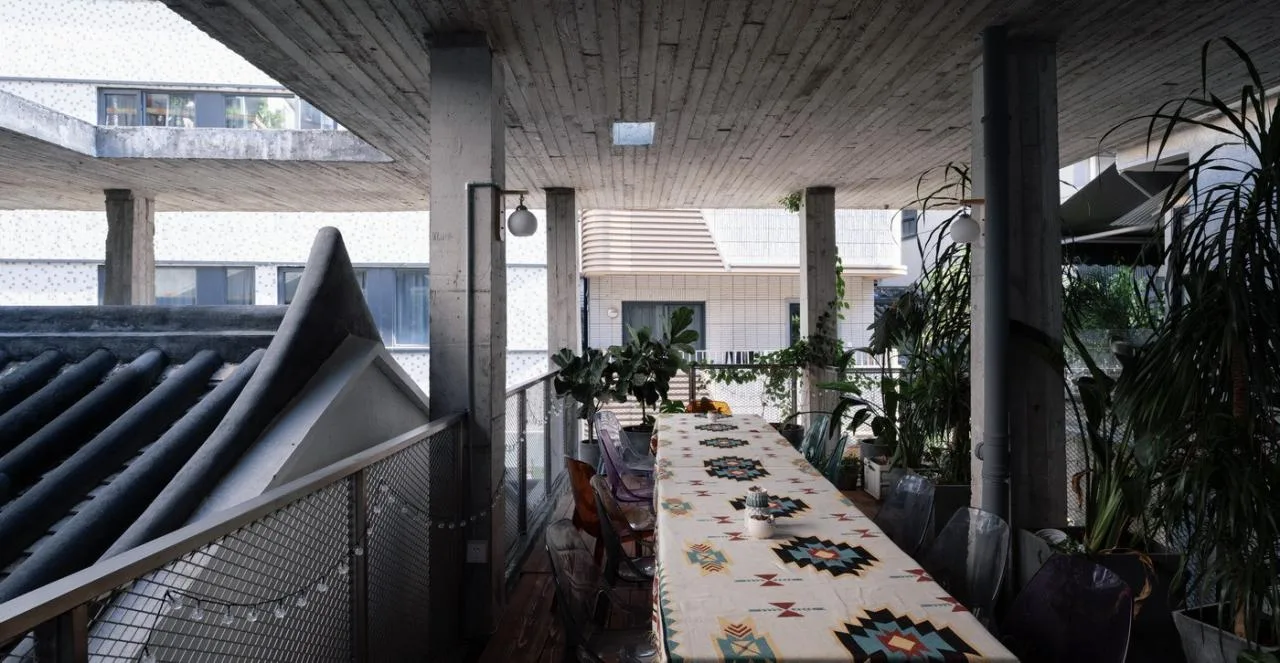
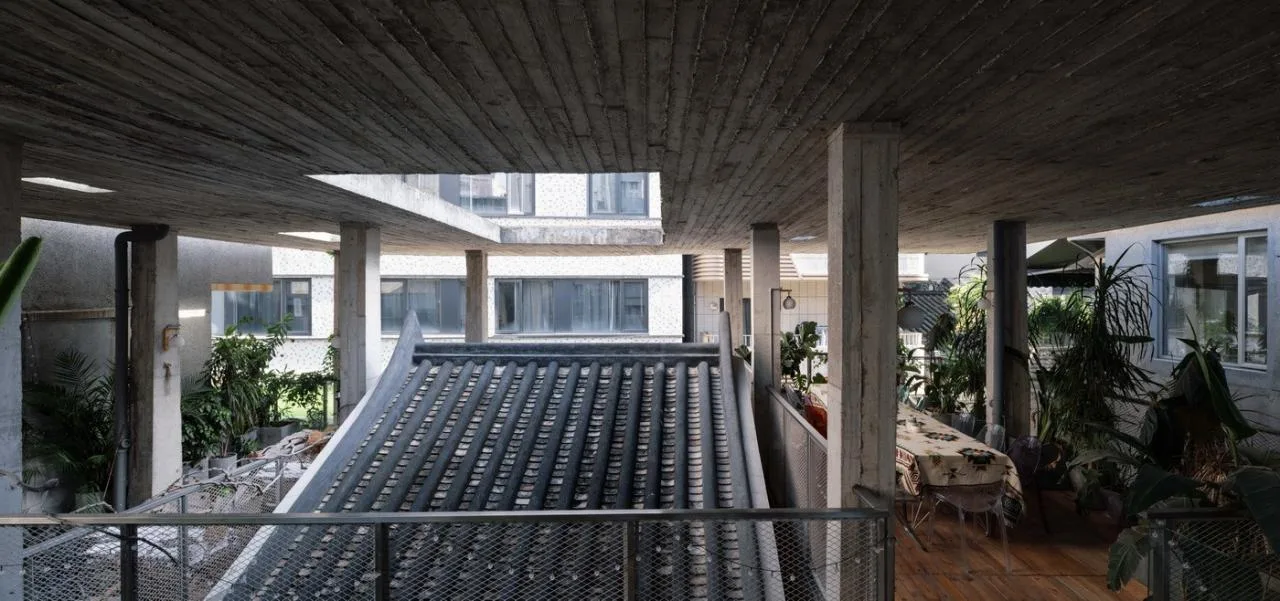
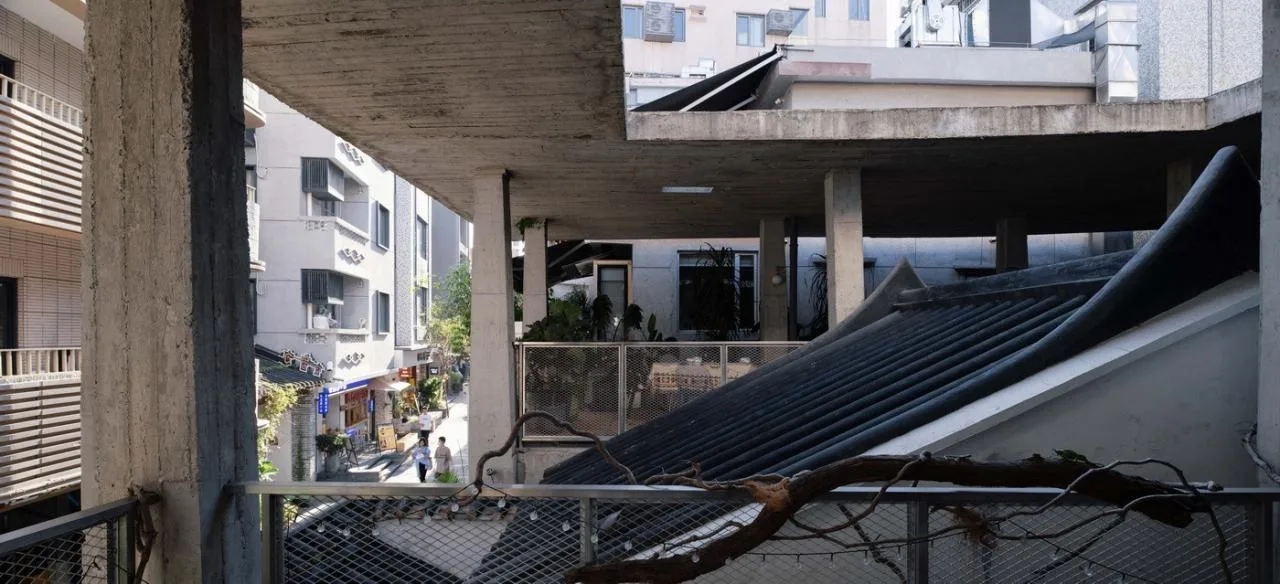
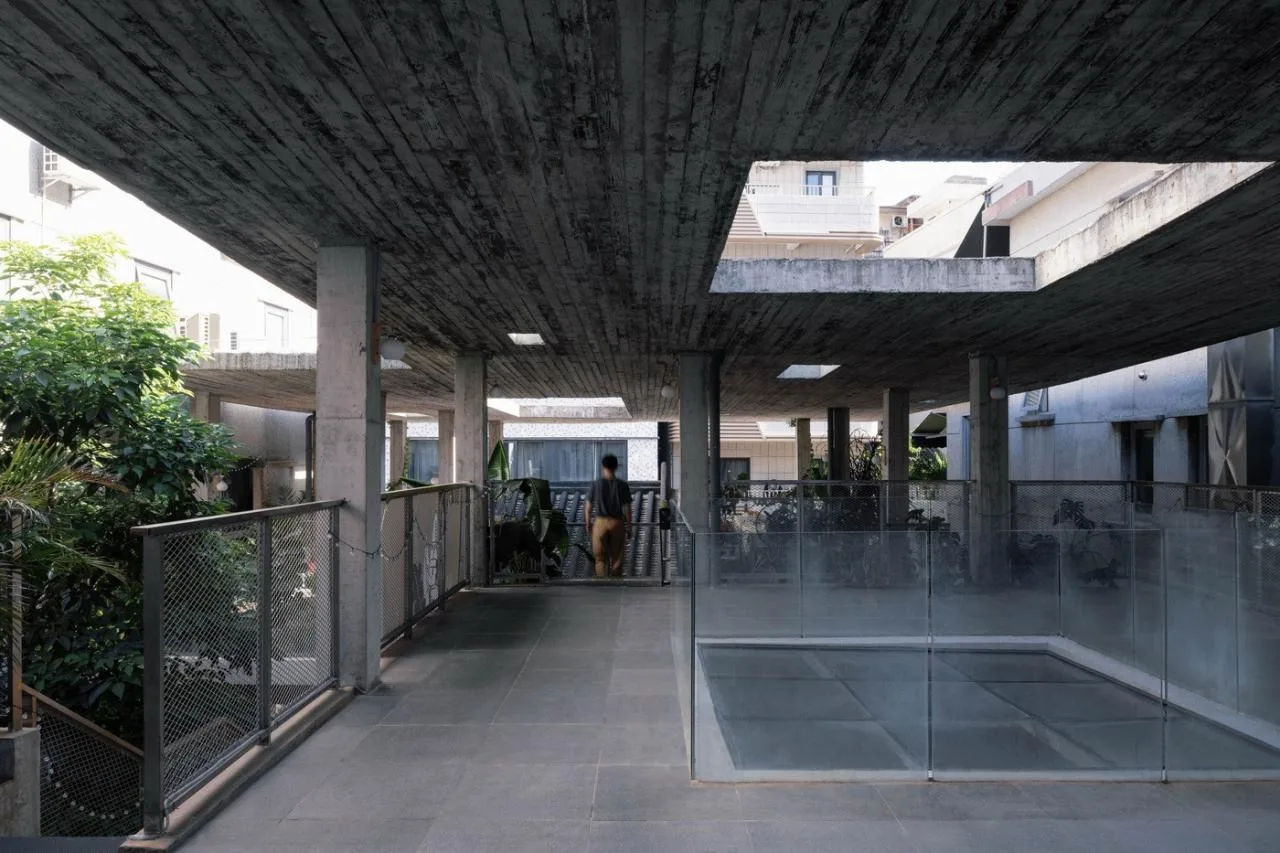
△ Shared community space on the second floor © Chen Hao
To achieve the large-span roofing, the building employs a cast-in-place concrete structure with wooden formwork. Exposed concrete columns serve as vertical supports. Natural light filters through roof openings, casting textured patterns of wood grain onto the concrete surfaces. This raw and dynamic aesthetic forms a meaningful dialogue with the surrounding historic buildings.
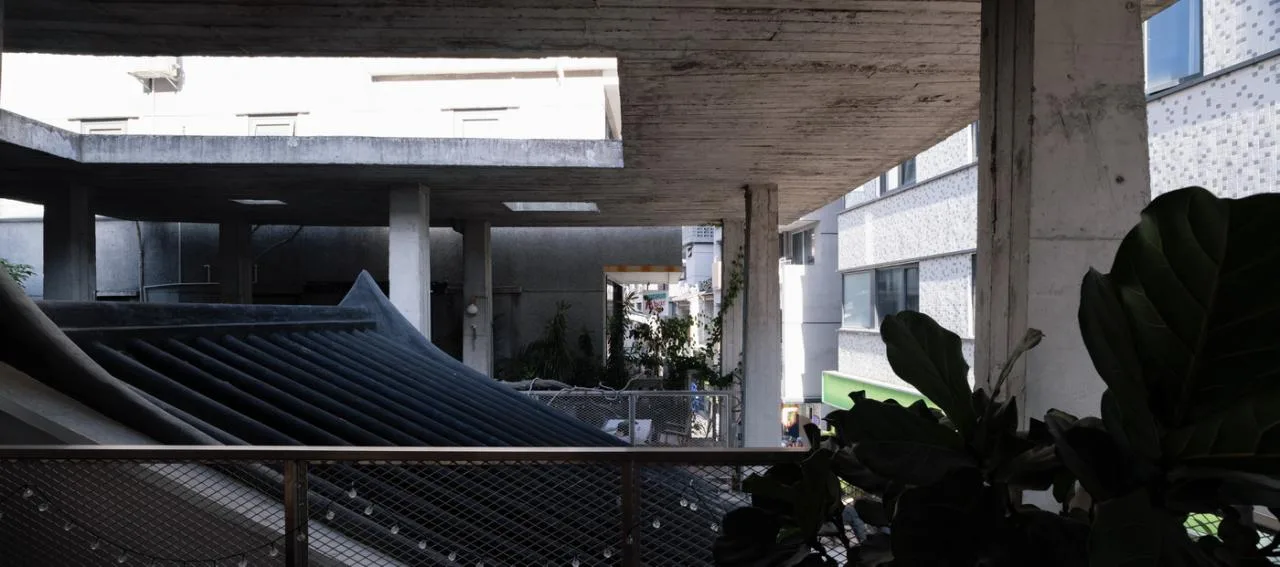
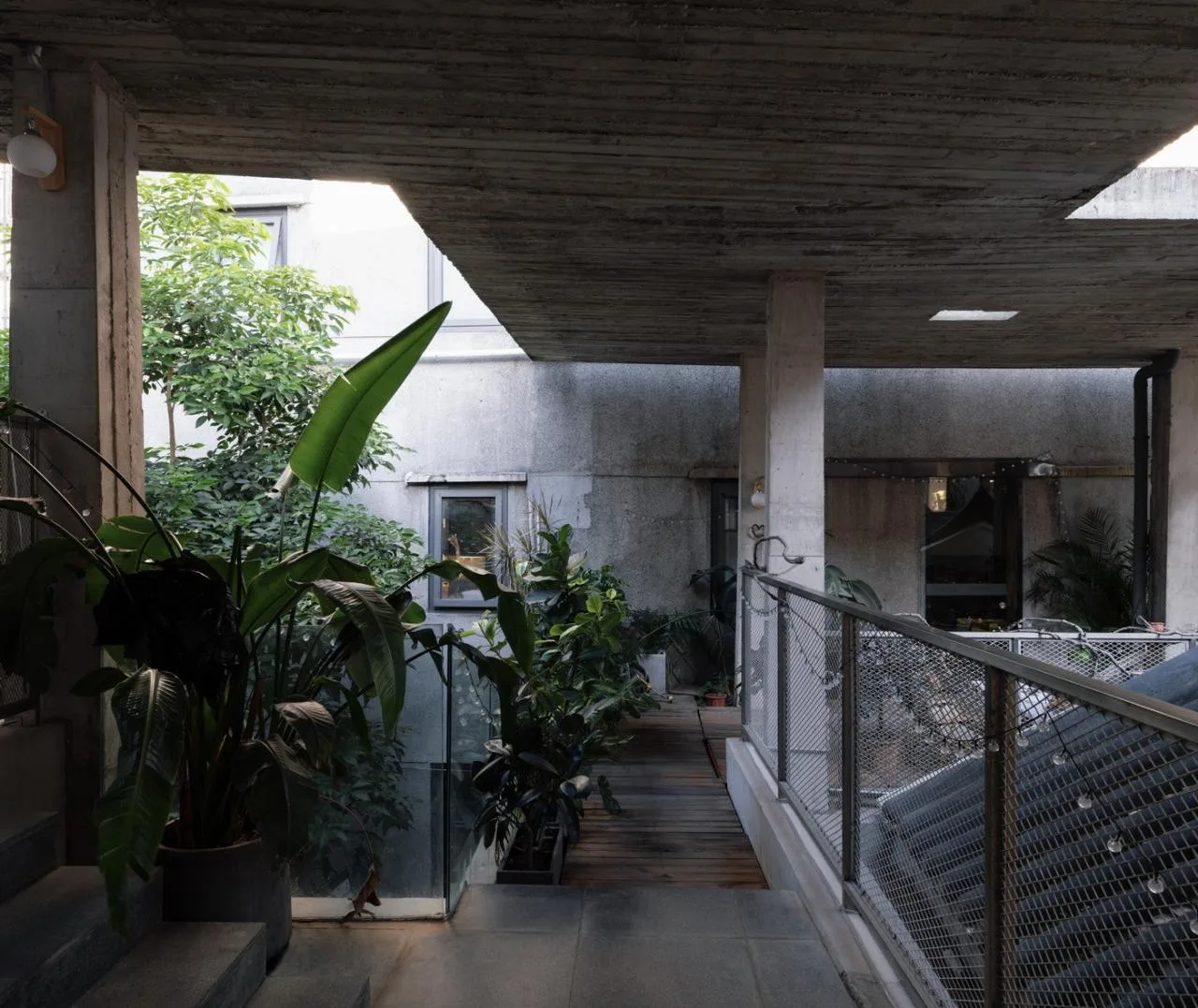
△ Shared community space on the second floor © Chen Hao
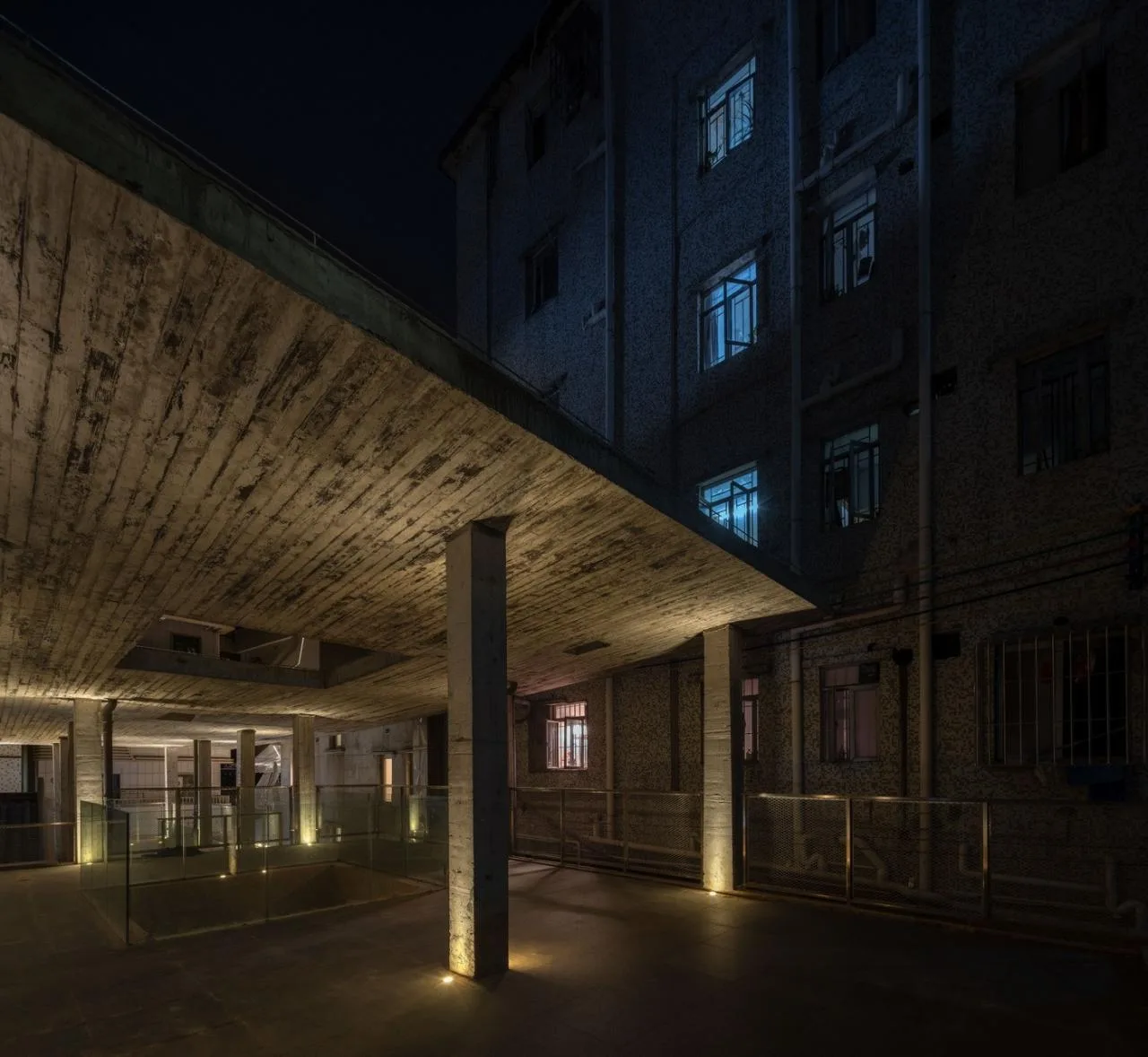
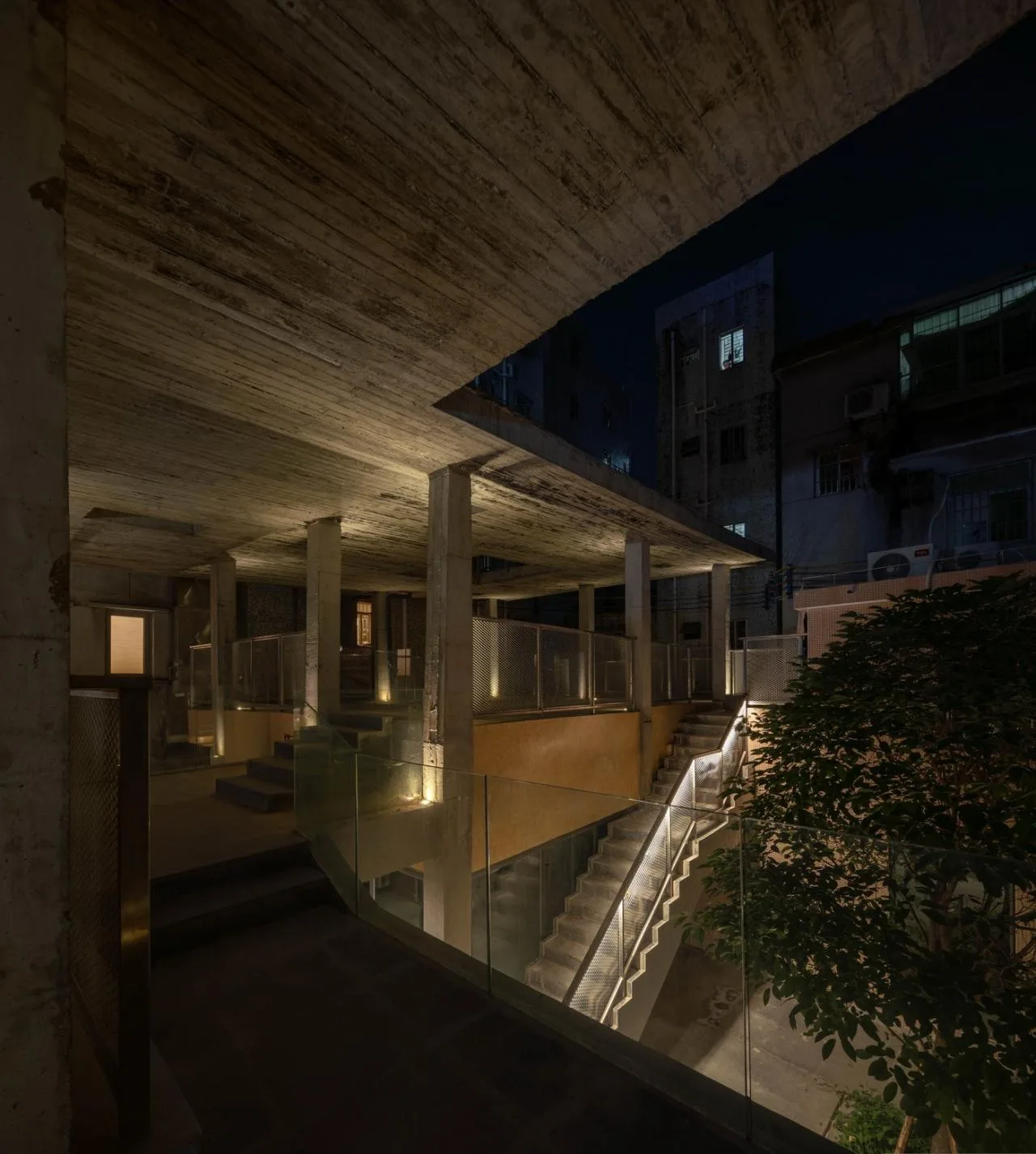
△ Night view © Zhang Chao Architectural Photography Studio
This project embodies a natural symbiosis of history and modernity, commemoration and everyday life, private rights and shared spaces, as well as defined and undefined boundaries. This unique, dynamic state grants the village its chaotic aesthetic and vitality, preserving the diversity and immediacy of the urban village while integrating with the surrounding organic growth and changes, showcasing its charm as a complex urban space.
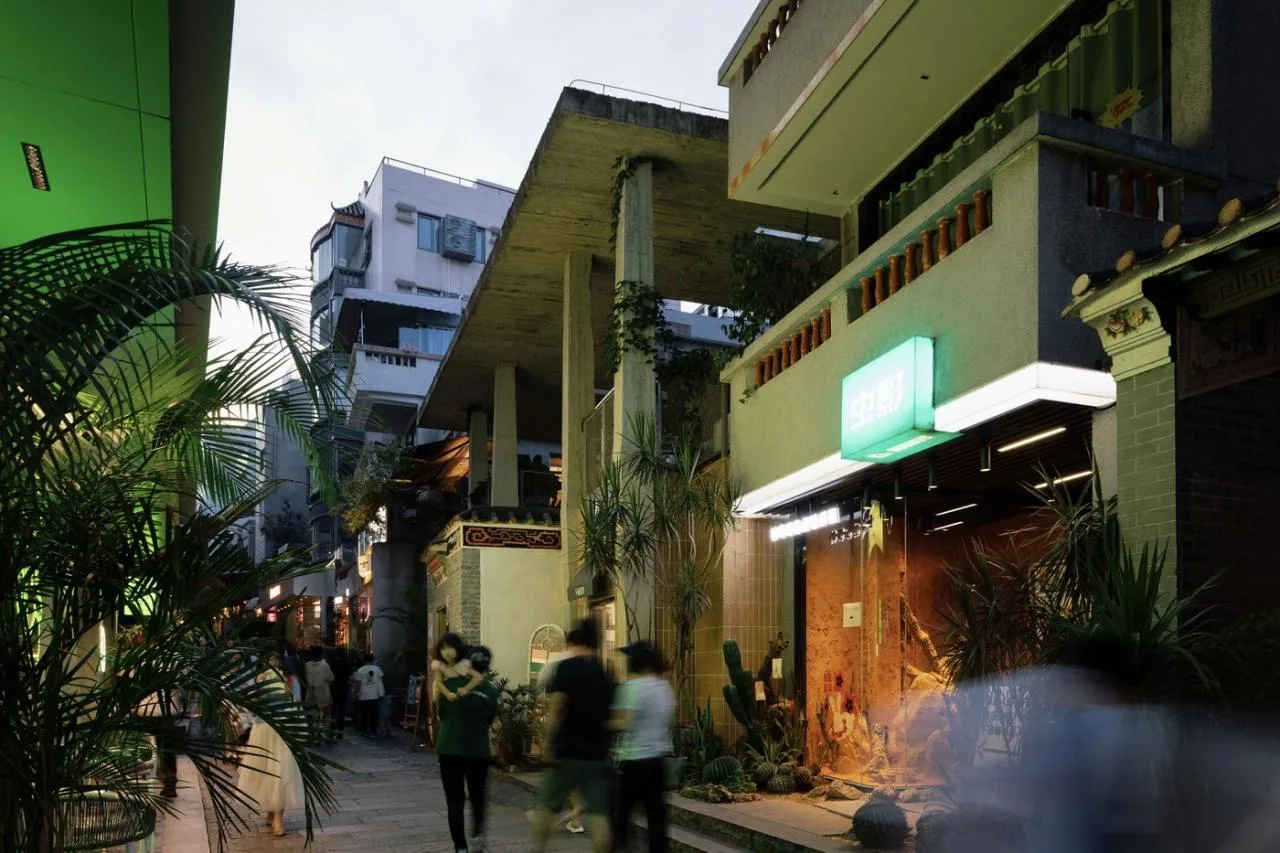
△ Street View © Chen Hao
Project Drawings
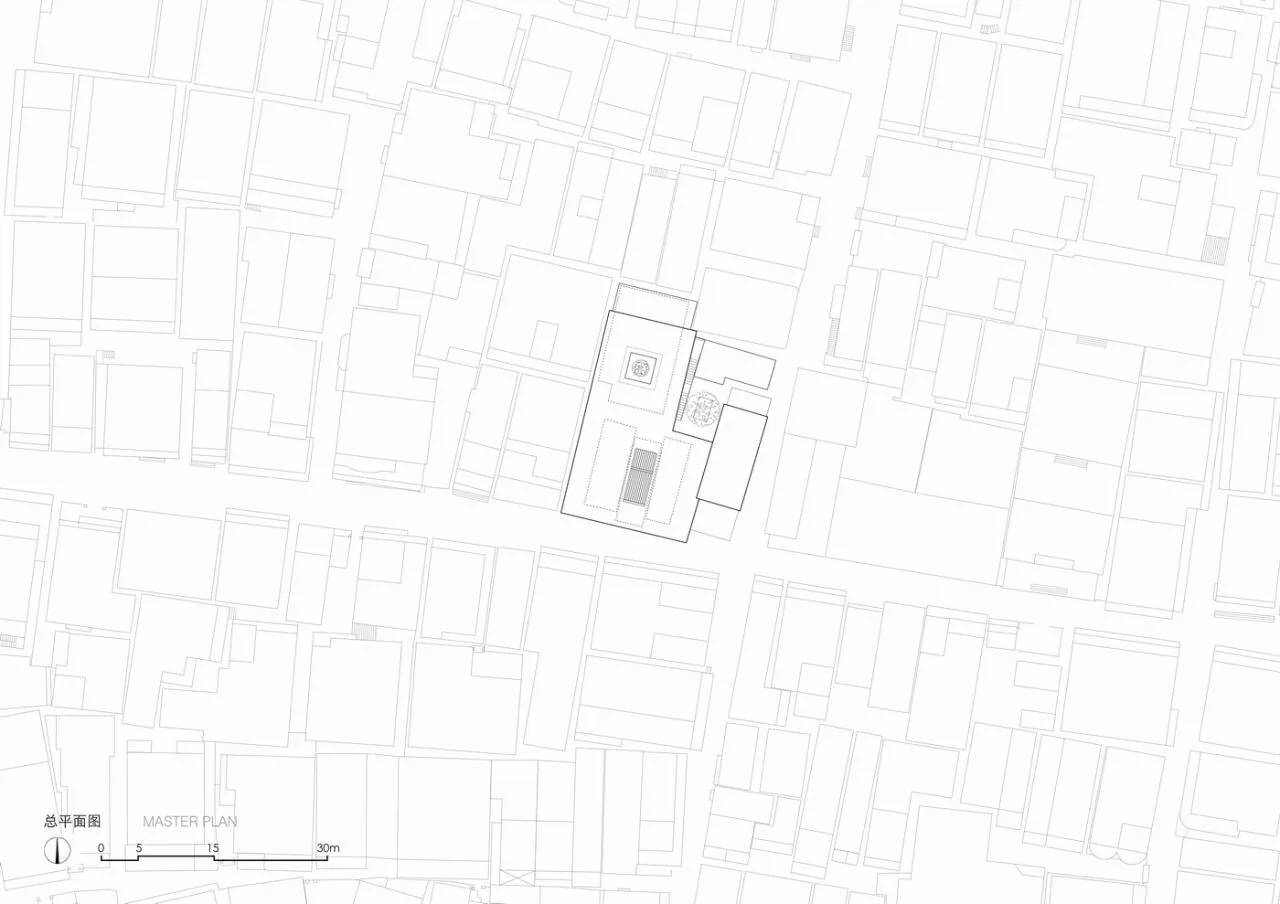
△ General layout plan © Architectural Firm (TAO)
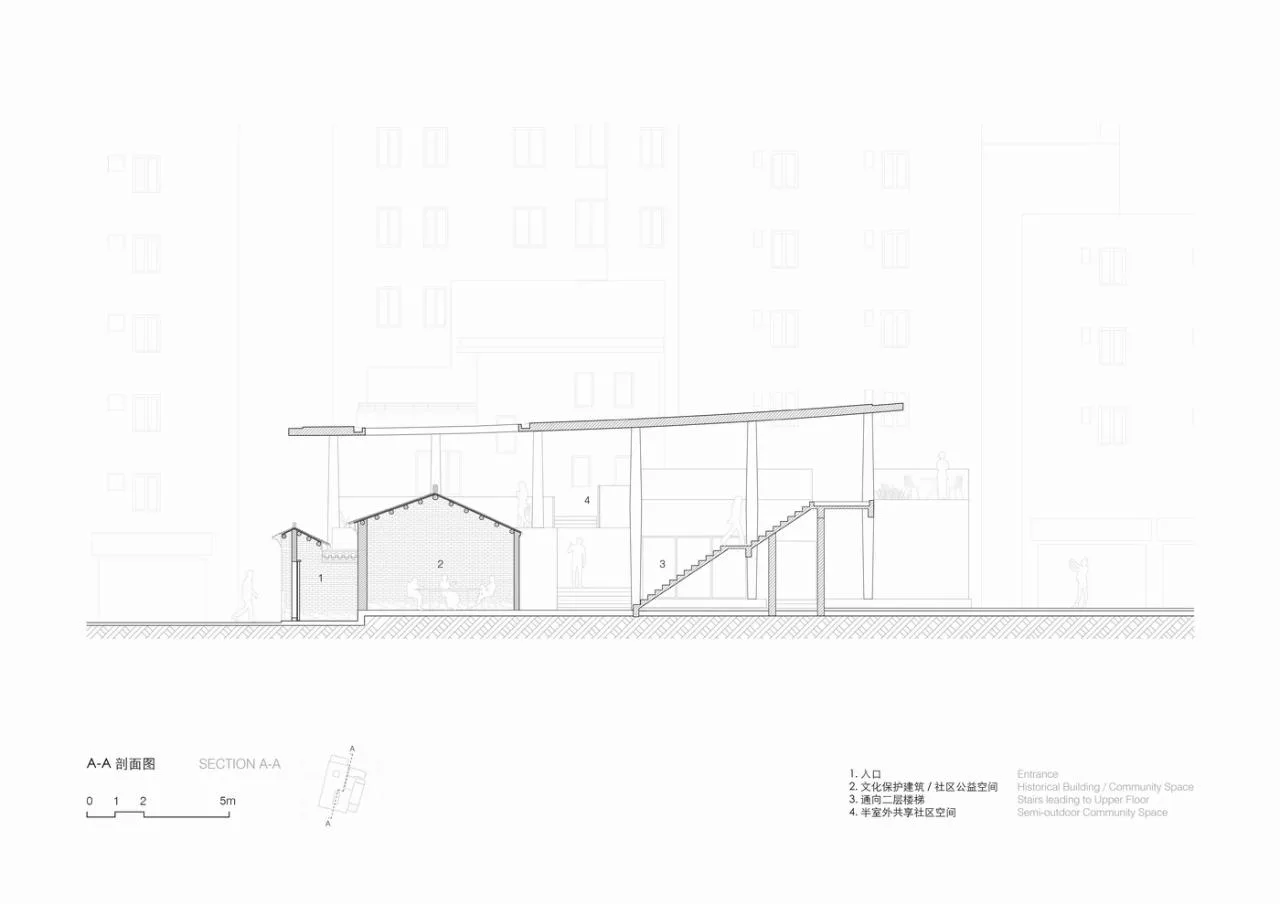
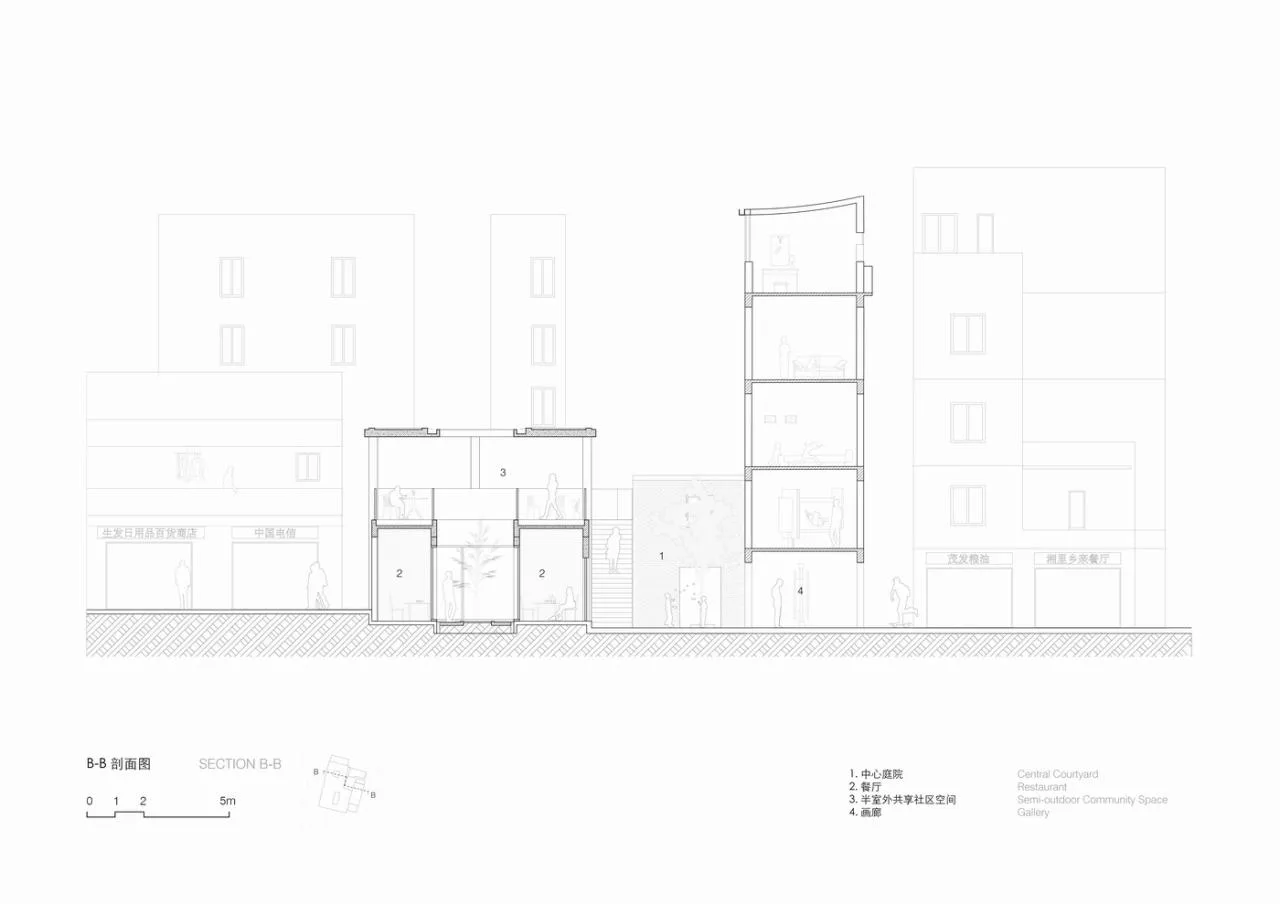
△ Section diagrams © Architectural Firm (TAO)
Project Information
Project Name: Village in Village
Owner: Nanshan District Construction and Engineering Bureau, Shenzhen
Construction Agency: Shenzhen Vanke Development Co., Ltd
Planning and Design Management of Nantou Ancient City: Vanke Urban Research Institute, Wanlu Design
Project Location: Nantou Ancient City, Shenzhen, Guangdong
Project Function: Commercial and Shared Community Space
Design Unit: TAO Architectural Firm
Lead Architect: Hua Li
Design Team: Huali, Wang Yue, Li Wenjie, Ma Qianran, Xie Yicheng
Structural and Mechanical/Electrical Design: Shenzhen Bowan Architectural Design Firm
Building Area: 680 square meters
Structural System: Reinforced concrete
Design Period: 2021
Construction Period: 2021–2022
Photography: Chen Hao, Hua Li, Zhang Chao Architectural Photography Studio, Rico















Must log in before commenting!
Sign Up