
“The integration of architecture with climate, ecology, the natural environment, and public activities is the core design principle. Landscape treatment enhances the harmony and coexistence of man-made and natural elements, experiences, and construction. This approach brings a natural quality to the modern post station, allowing it to emerge organically from the earth and offering shelter to all who pass by.” – Meng Fanhao
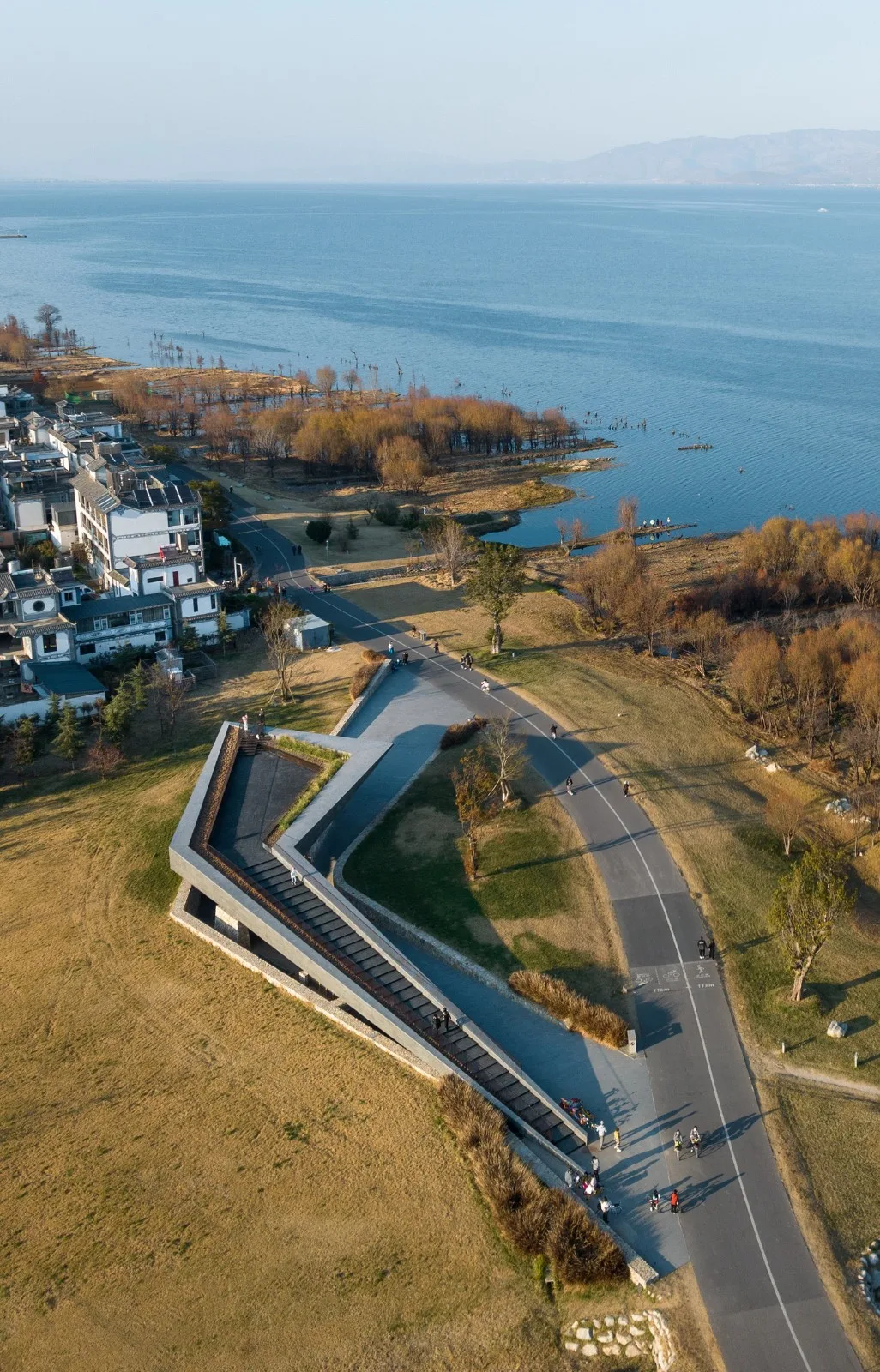
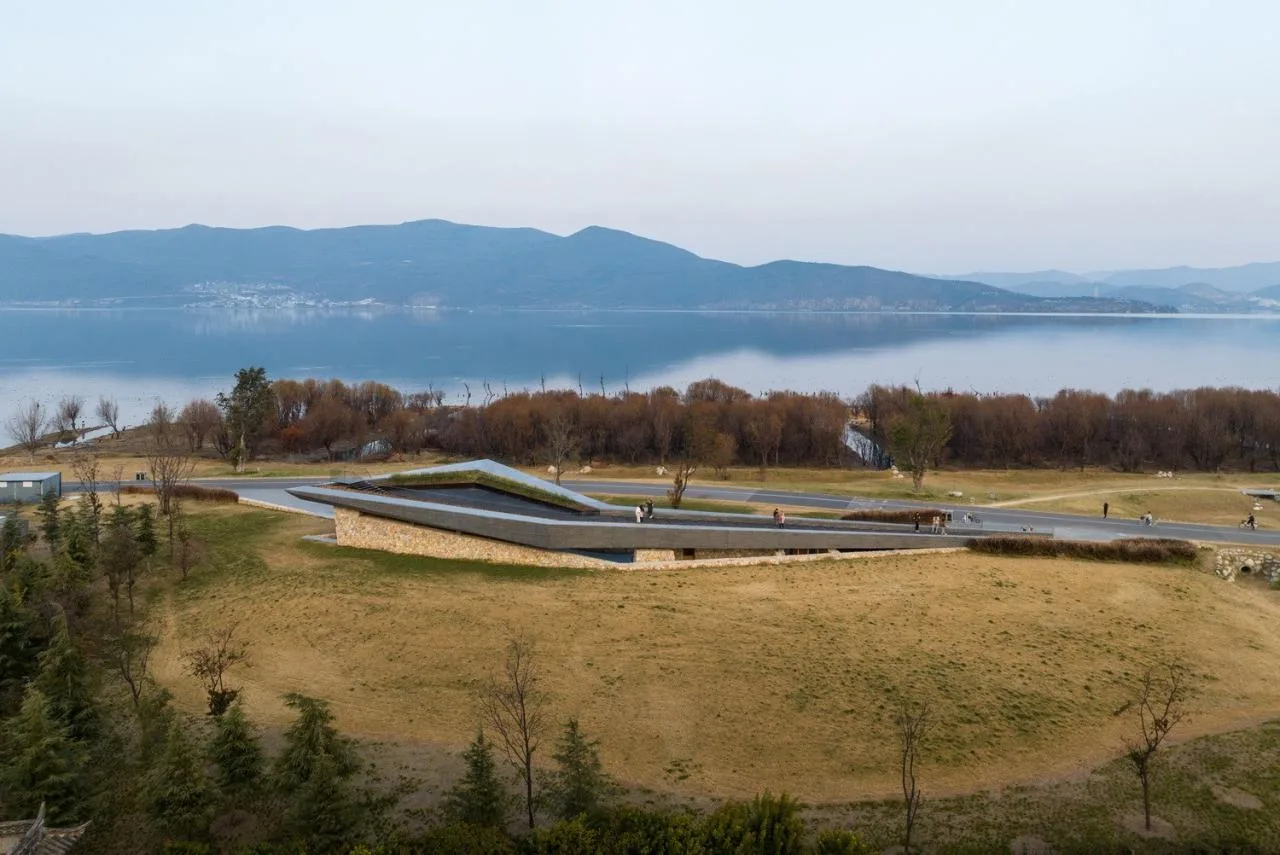
△ More than just a functional service station, it also serves as an observation deck overlooking Erhai Lake.
The Dali Erhai Lake Ecological Corridor project aims to establish a healthy water-land buffer zone and ecological barrier, expanding the interactive space between residents, tourists, and Erhai Lake. Multiple service stations are planned along the 129-kilometer lakeside corridor. Meng Fanhao, co-founder and lead architect of Line+, was invited to contribute to the design, creating distinct and sustainable public ecological spaces around Erhai Lake.
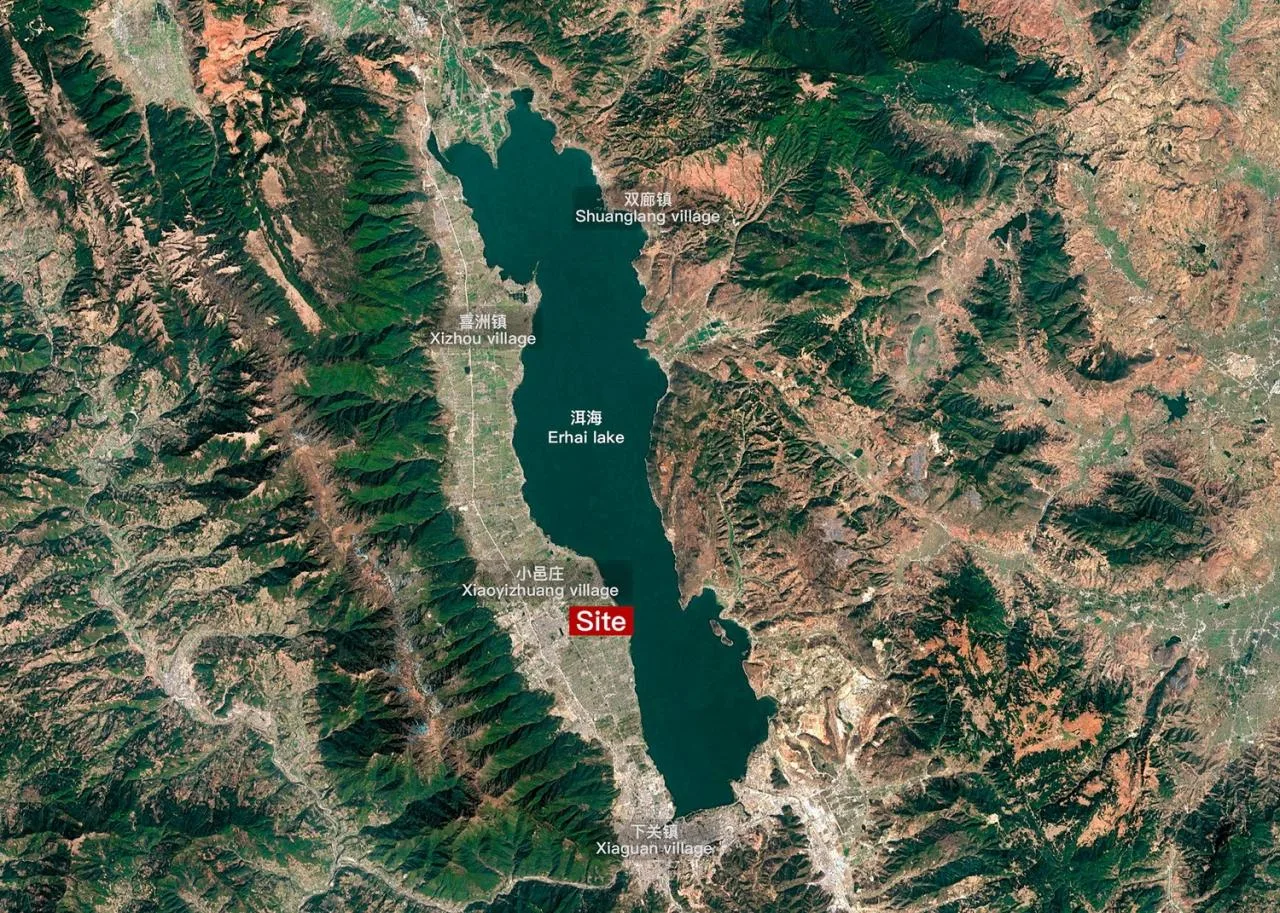
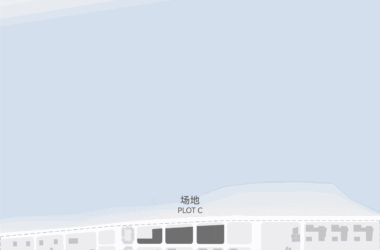
△ Location Map
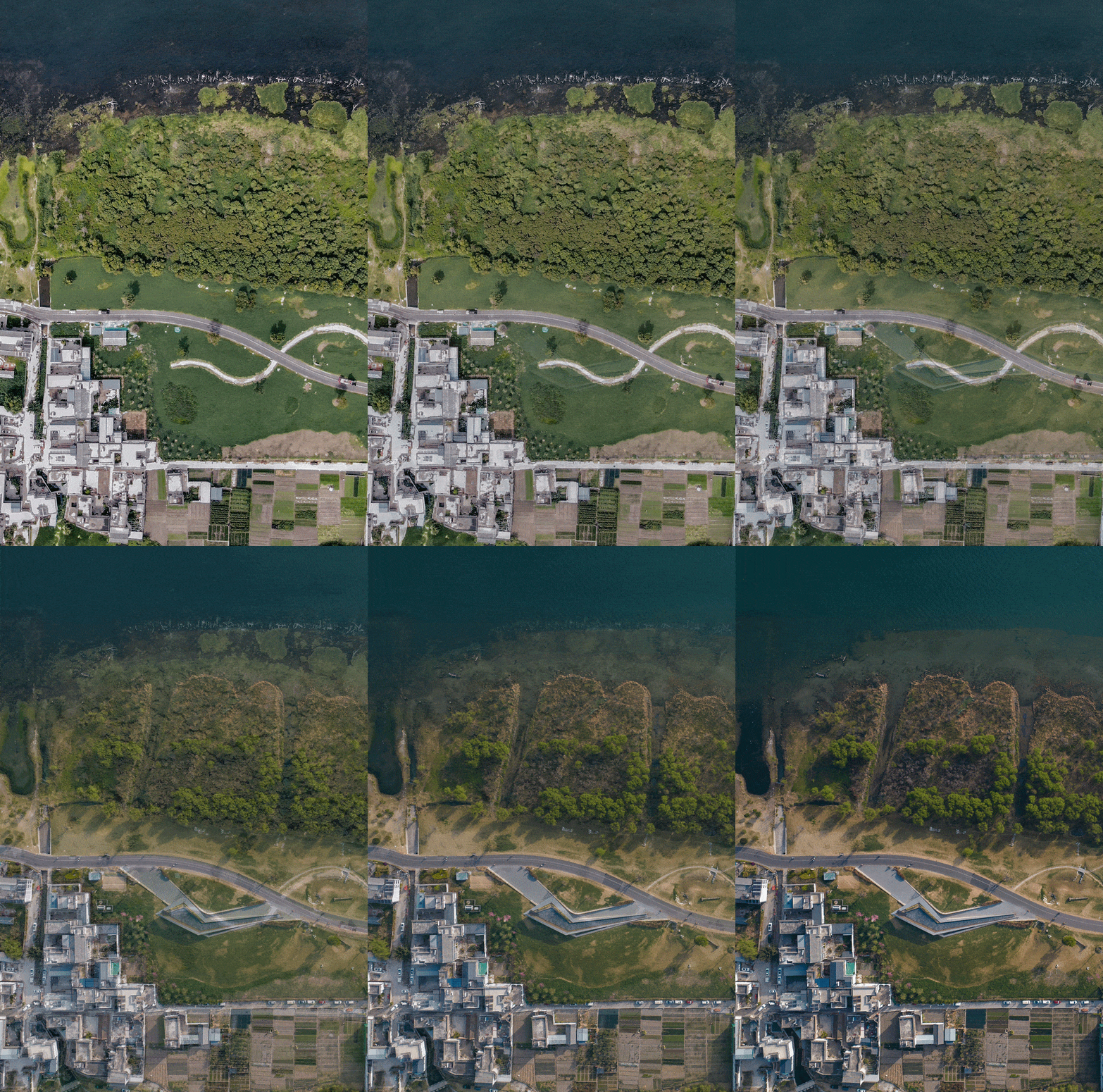
The building is seamlessly integrated with its environment, forming a “micro terrain.”
Situated against the backdrop of the Cangshan mountains, Erhai Lake, and traditional villages, the design seeks to minimize intervention through landscape architecture. It explores the relationship between architecture and the land by “anchoring and suspension,” fostering a dialogue with the surroundings. Emphasizing “low technology and low carbon,” it innovates user experiences, while promoting “openness and inclusiveness” to create a vibrant platform for daily public activities.
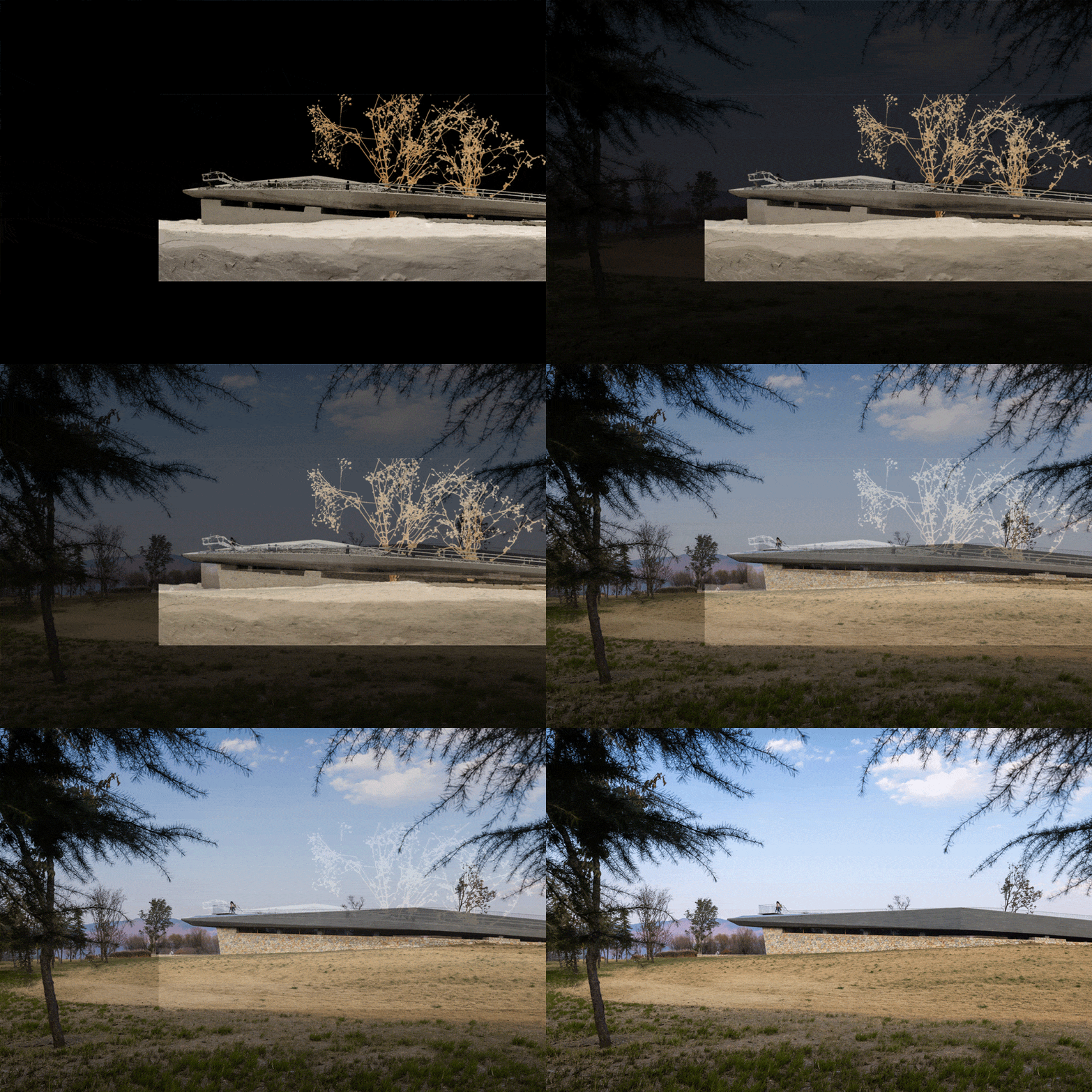
From Conceptual Model to Real-Life Construction
01 Anchoring and Suspension
A New Terrain That Follows Natural Trends
The tradition of relay stations in western Yunnan has a rich history. Dali historically served as a key hub on the ancient Tea Horse Road. These ancient routes wind through mountainous terrain, naturally creating sheltered spots. Post stations typically occupy central positions within traditional settlements along these paths and resemble traditional dwellings, many of which have survived to this day.
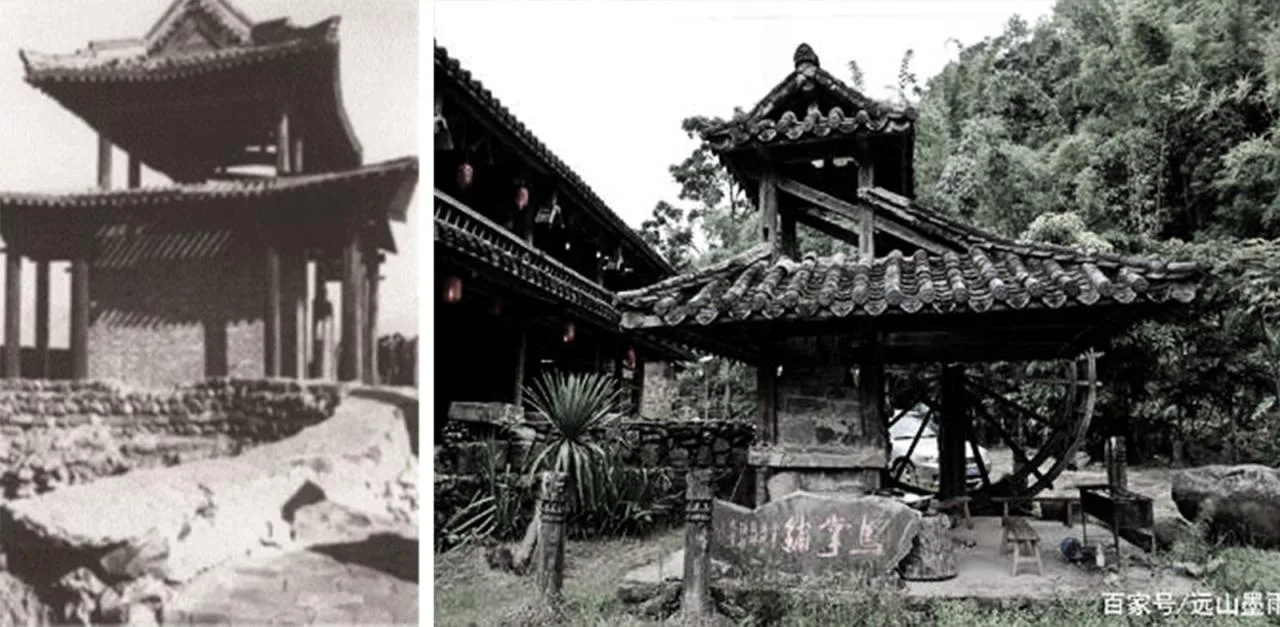
△ Ancient Station Map (Source: Internet)
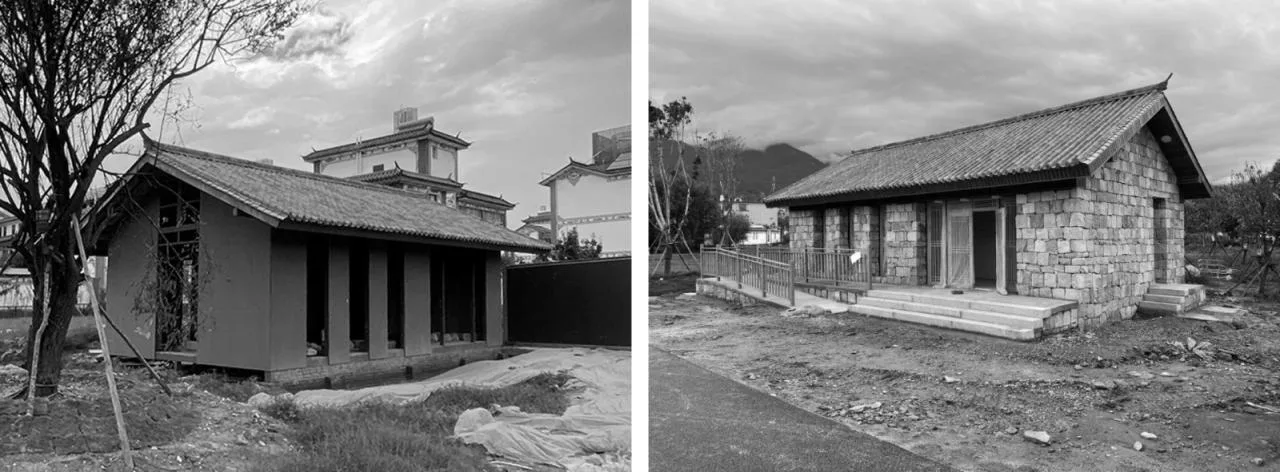
Current condition of newly built post stations along Erhai Lake
The project site lies southwest along the Erhai Lake Scenic Corridor near Xiaoyizhuang, featuring flat terrain. To the east, it borders a circular bicycle lane, just steps from ecological wetlands and Erhai Lake. To the west, it is adjacent to farmland and villages, with distant views of the Cangshan mountains. During our site visit, we decided to abandon the idea of an isolated building form and instead sought a closer connection to the land and environment.
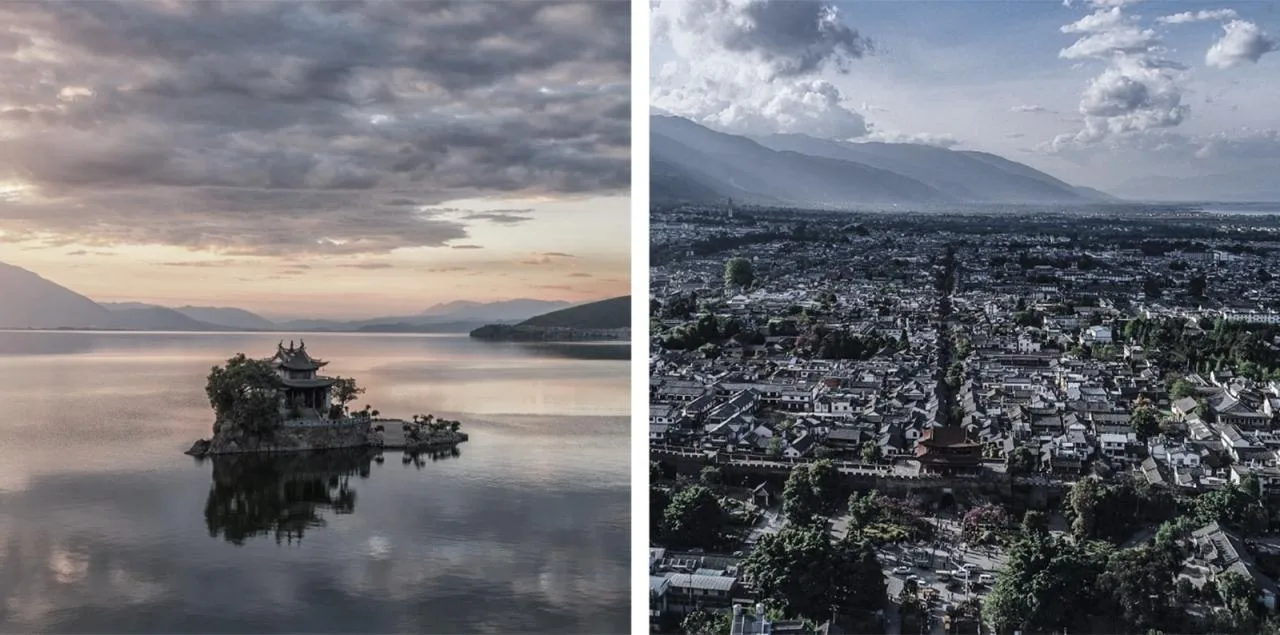
Site surroundings: Erhai Lake (left) and the ancient city (right)
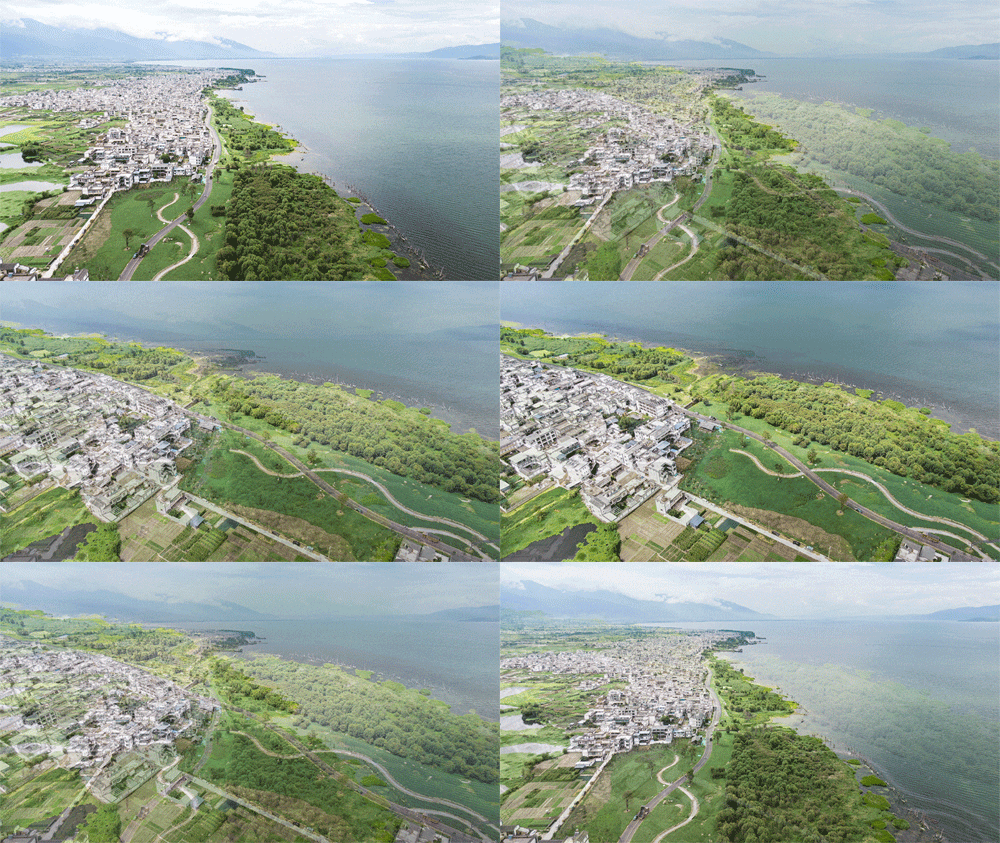
△ Original Site Condition
Guided by the need to avoid trees and connect roads, with Cangshan as a backdrop and Erhai Lake in front, the building extends from south to north, gradually sloping upwards. It seems to emerge from a “crack” in the earth, creating a raised platform for distant viewing and a temporary shelter within the gently rolling landscape. This design rekindles the ancient human relationship with nature.
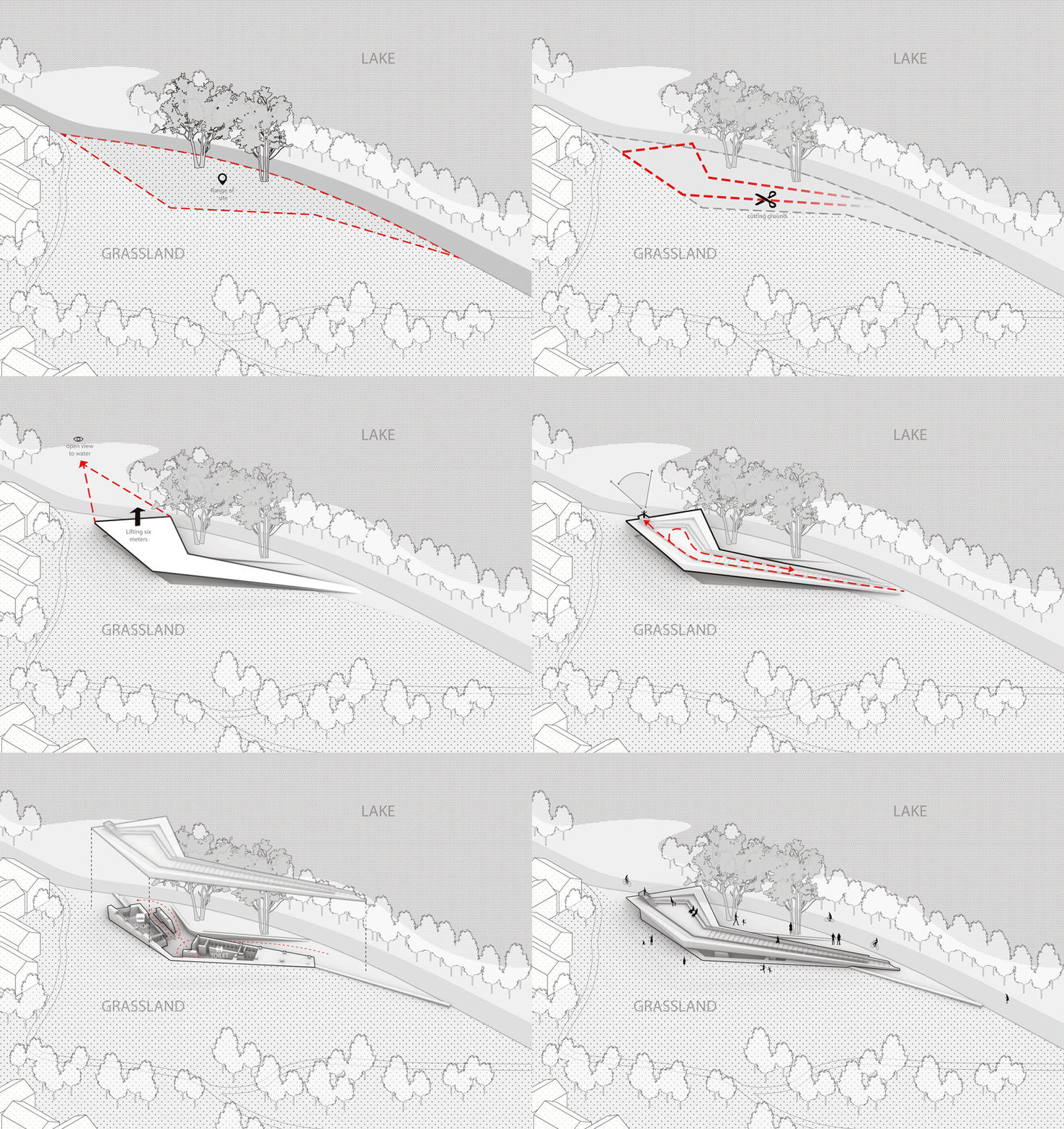
△ Generation Diagram
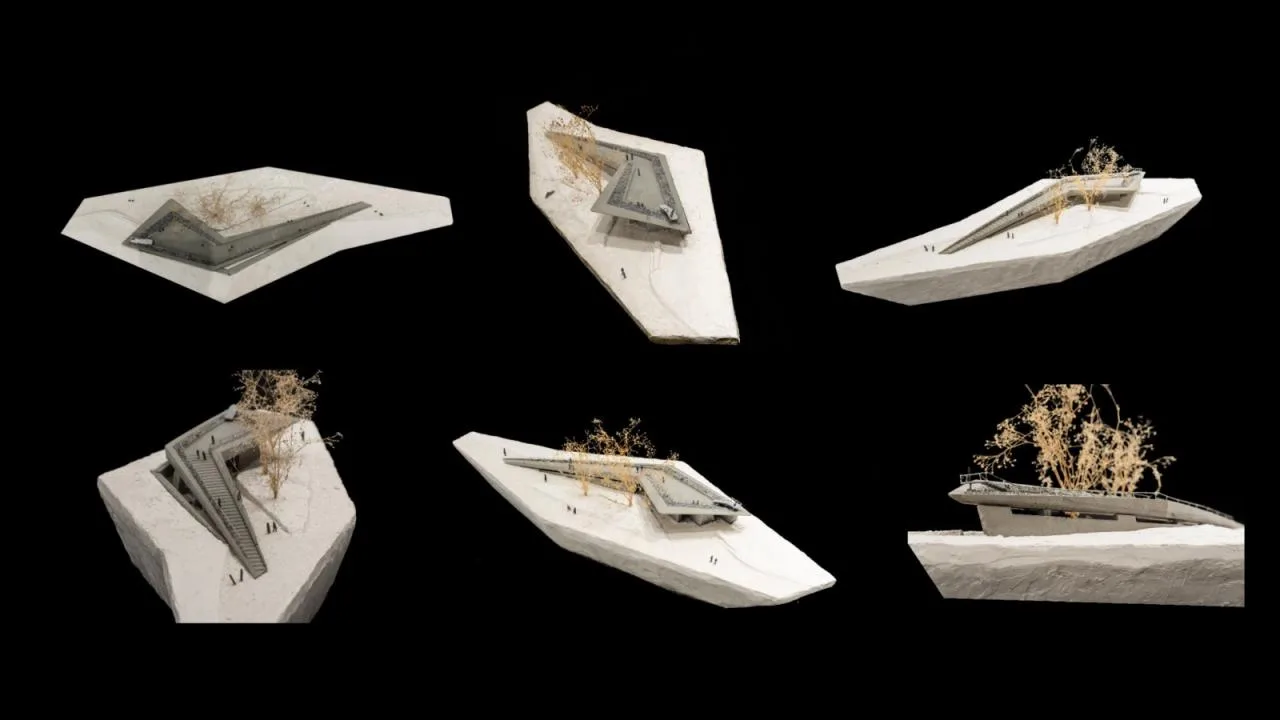
△ Conceptual Model
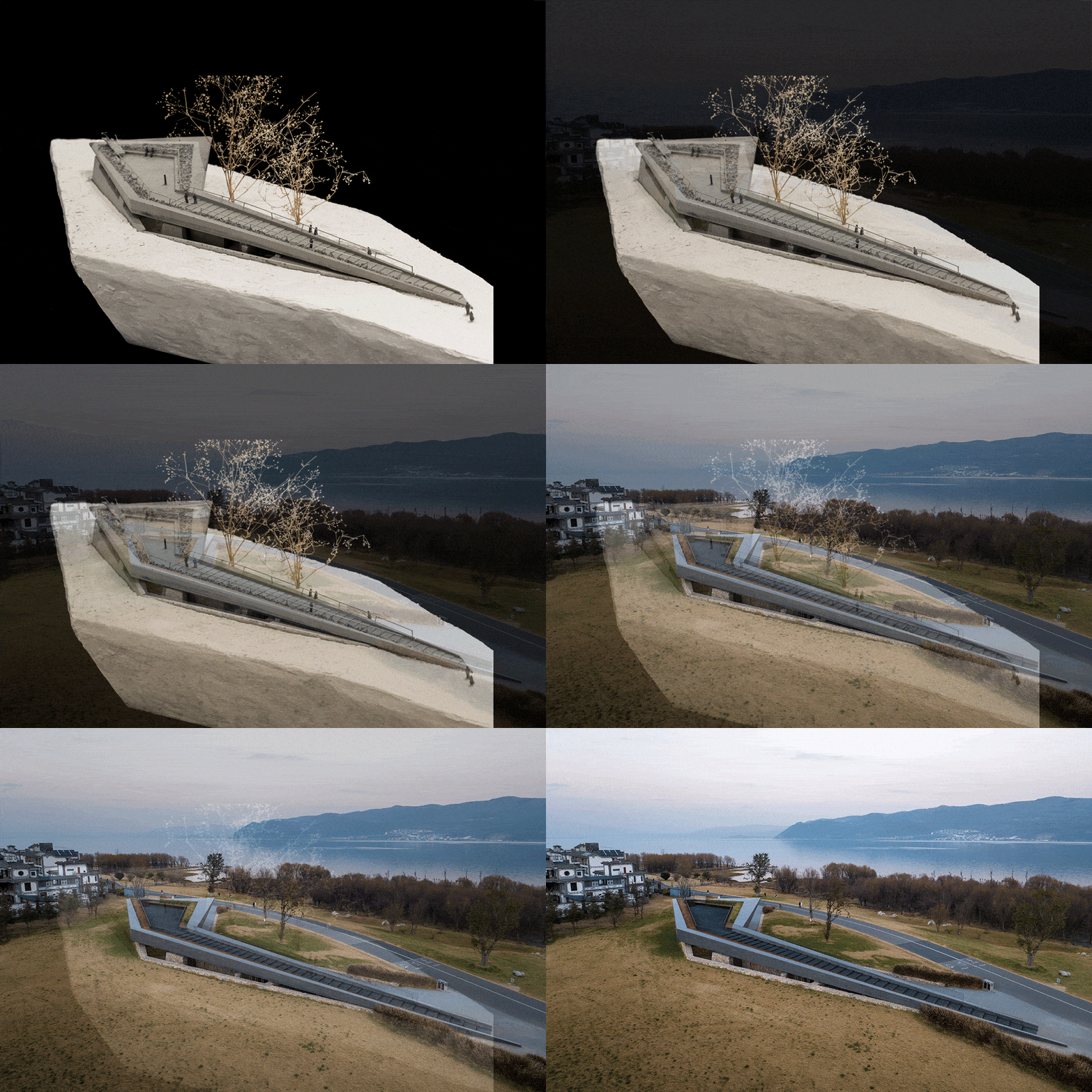
From Conceptual Model to Real-Life Construction
Climate considerations play a vital role in the design. Given the area’s abundant wind and sunlight, we minimized enclosed spaces beneath the folded roof, except for essential functional areas like bathrooms and small shops. The rubble wall base is separated from the concrete folded plate, allowing for effective air circulation and the introduction of landscape views. This design enables seamless interaction between interior and exterior environments, creating a space that breathes freely.
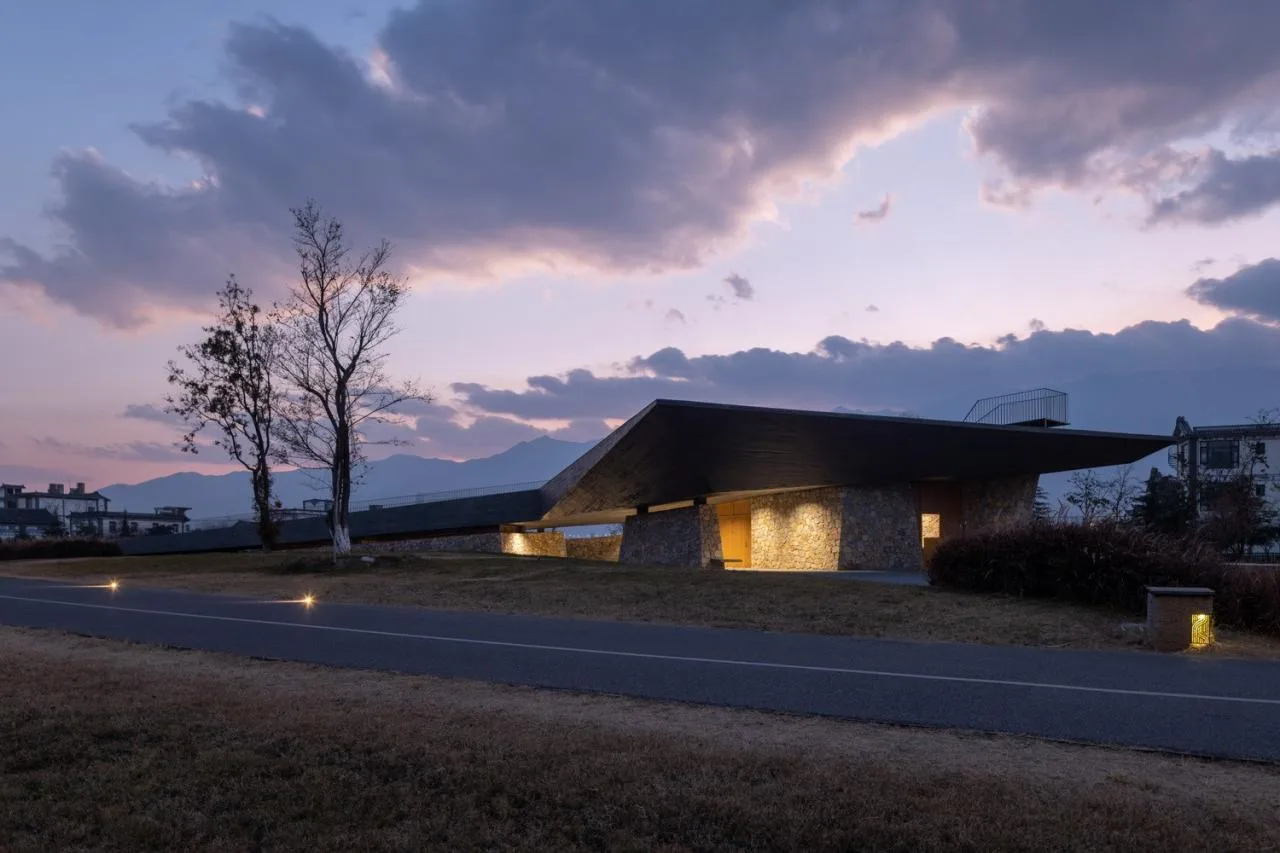
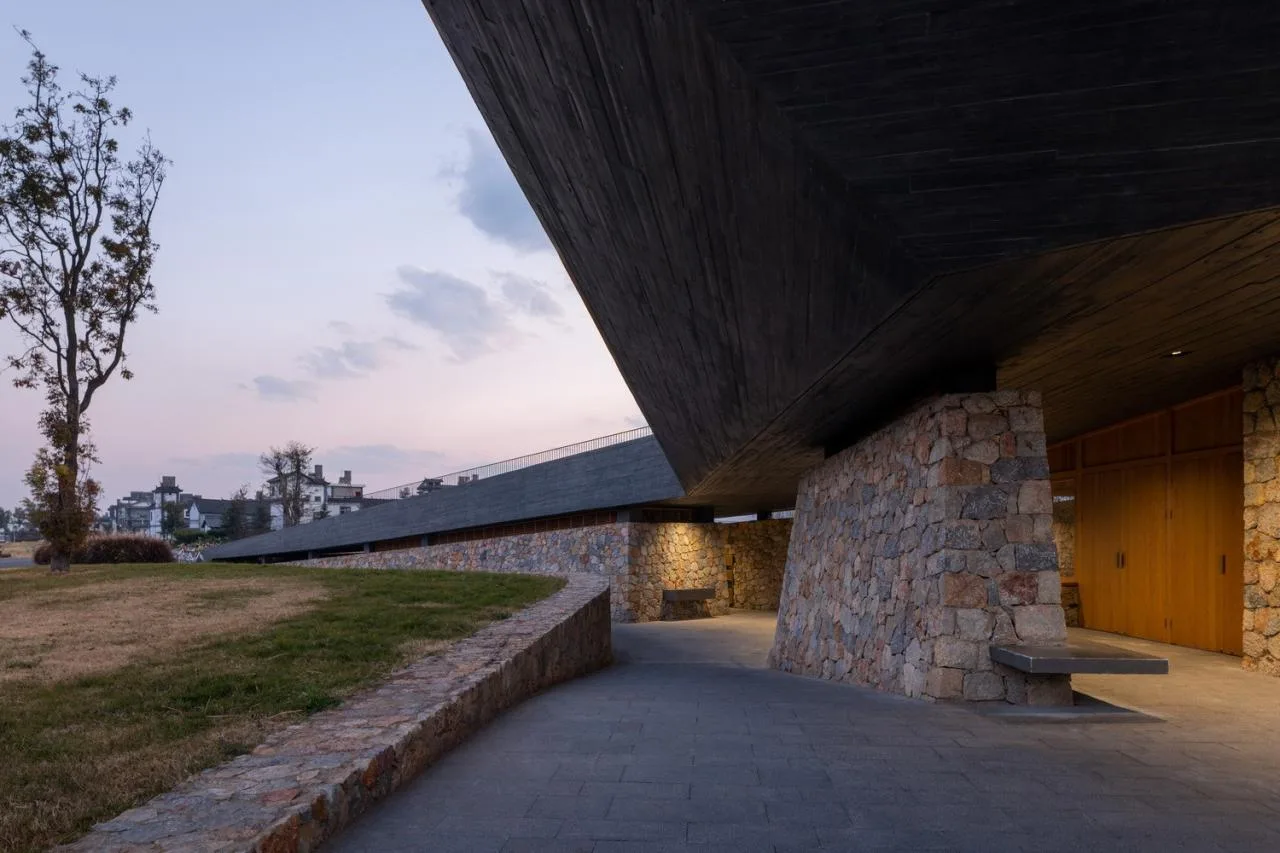
The Dialogue Between the Large Roof and the Stone Wall
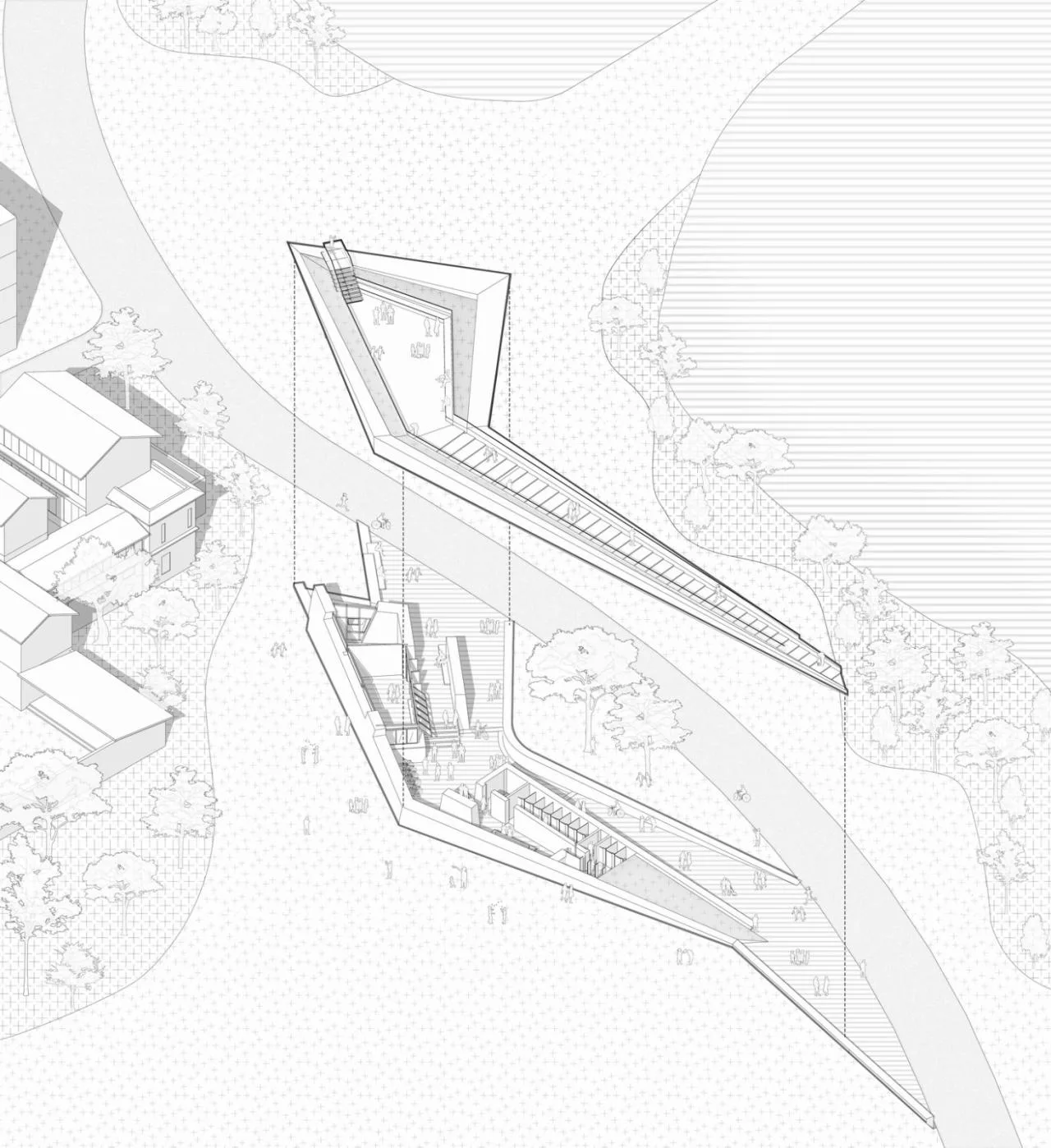
△ Exploded View Diagram
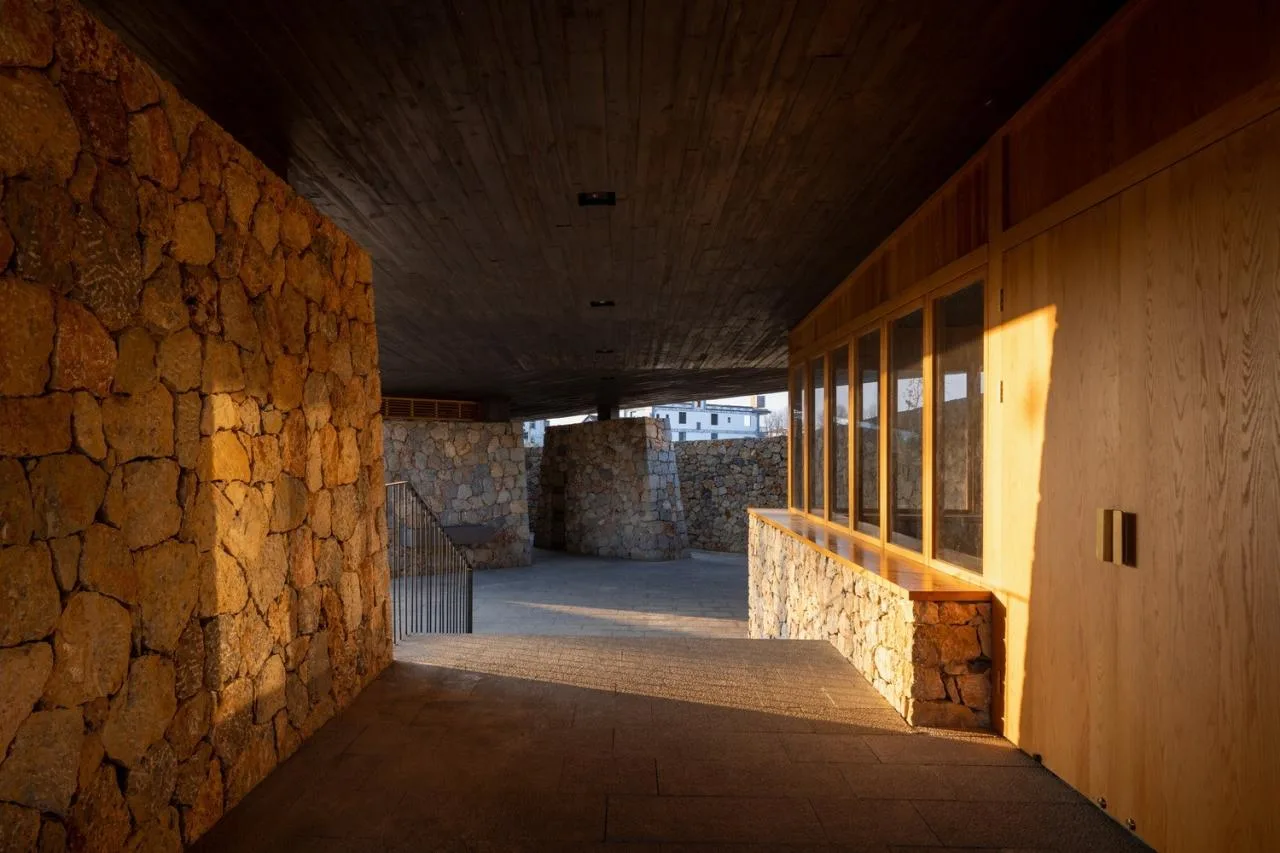
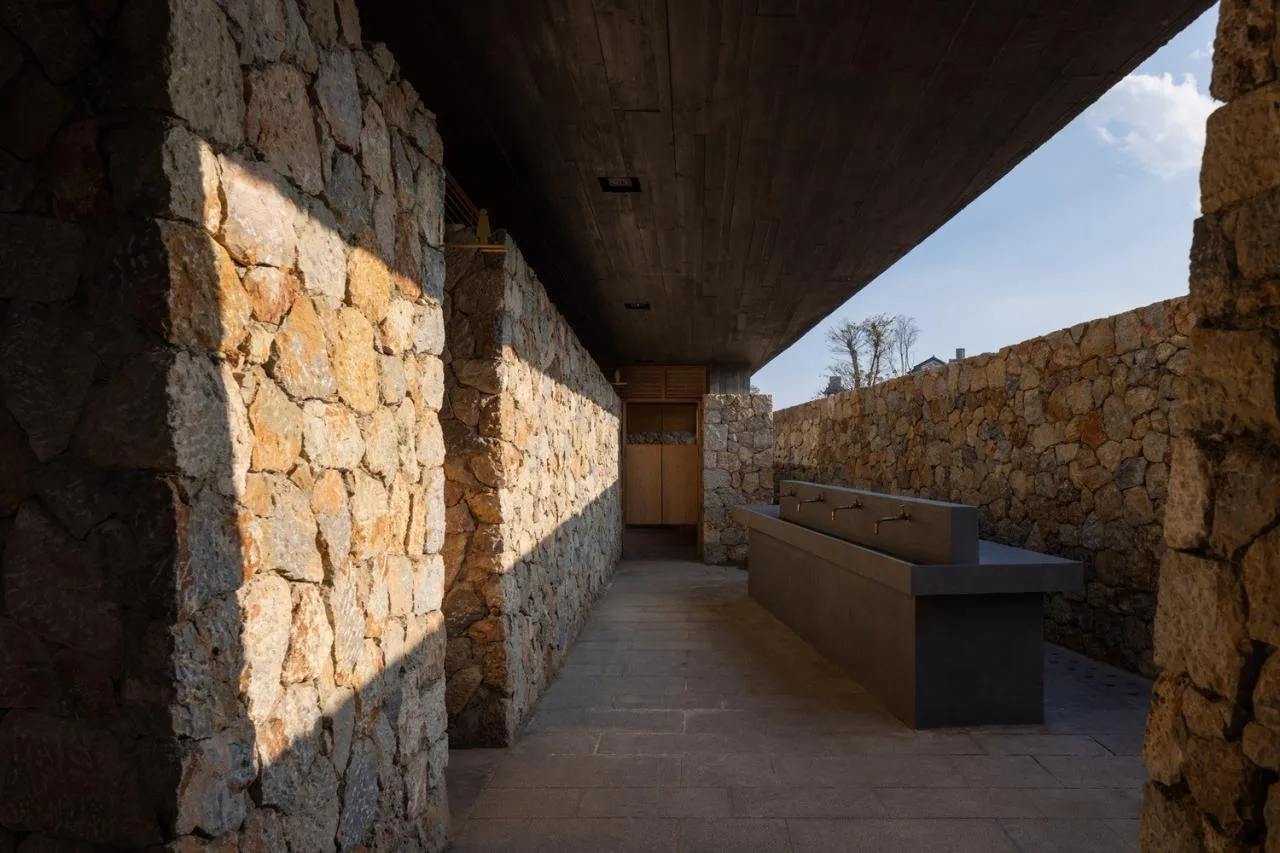
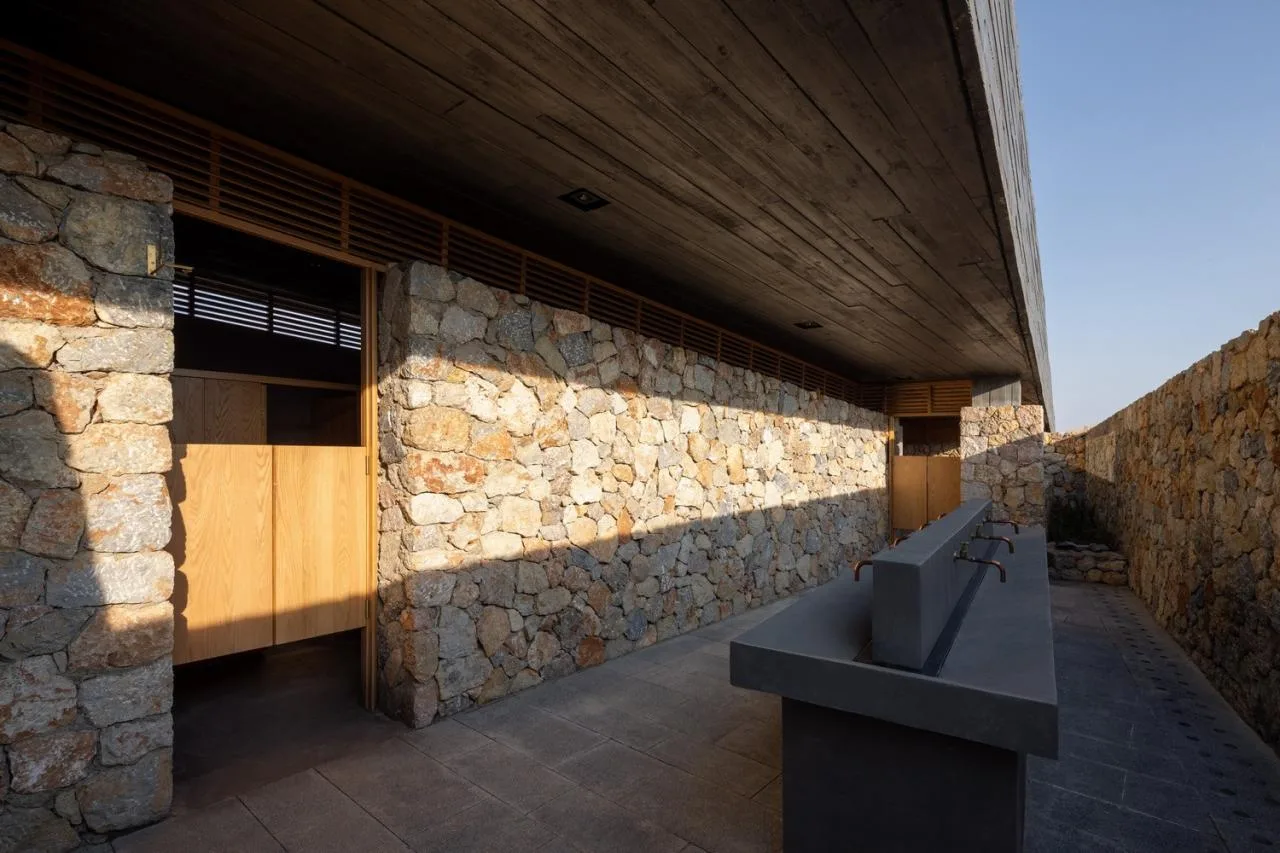
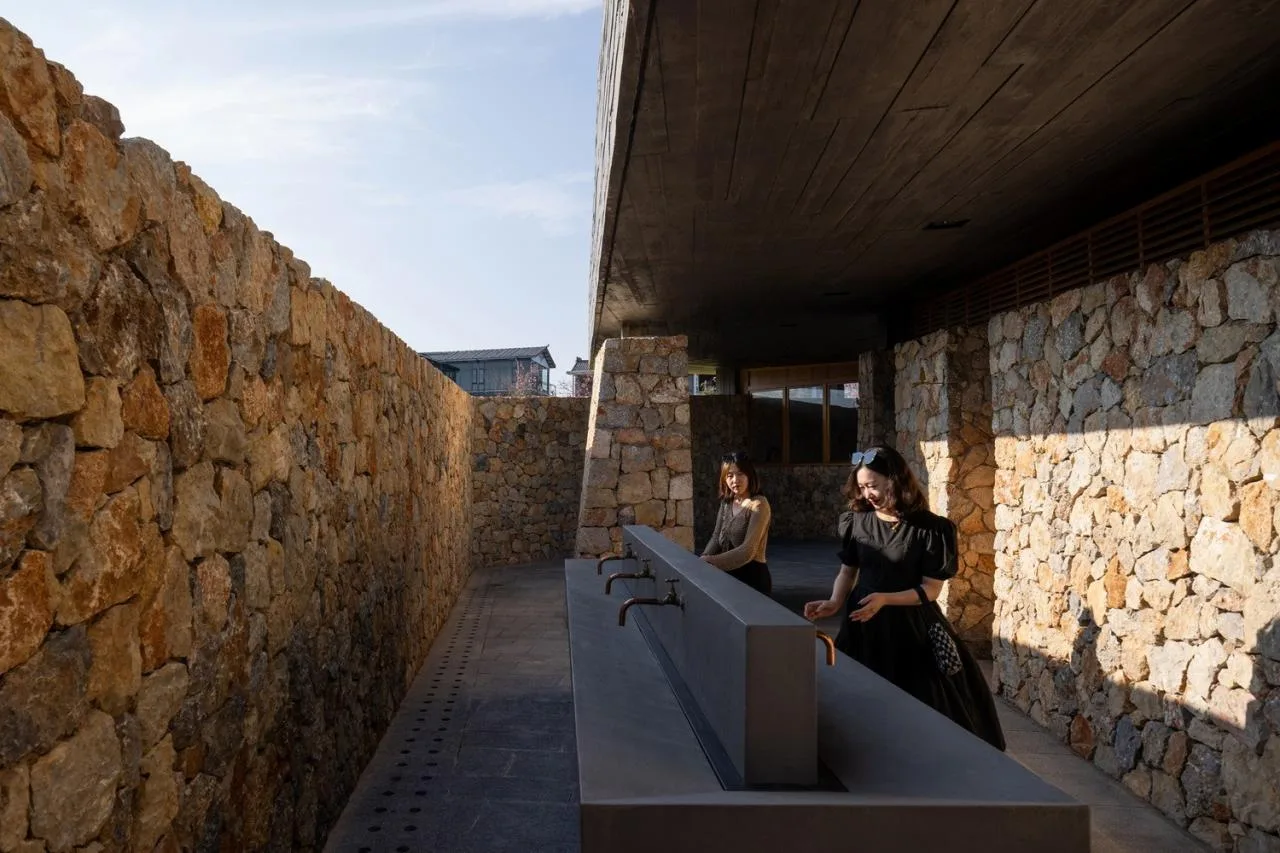
△ Concealed public service facilities
Reflecting the organic language of nature, the space encourages openness and freedom in behavior and function. It goes beyond simply meeting diverse user needs and rhythms; the flow of cyclists and pedestrians, the shifting spatial tensions inside and outside, and the varying scales of the climbing roofs together create a dynamic sensory experience that ebbs and flows with the “terrain,” alternating between quiet refuge and open engagement.
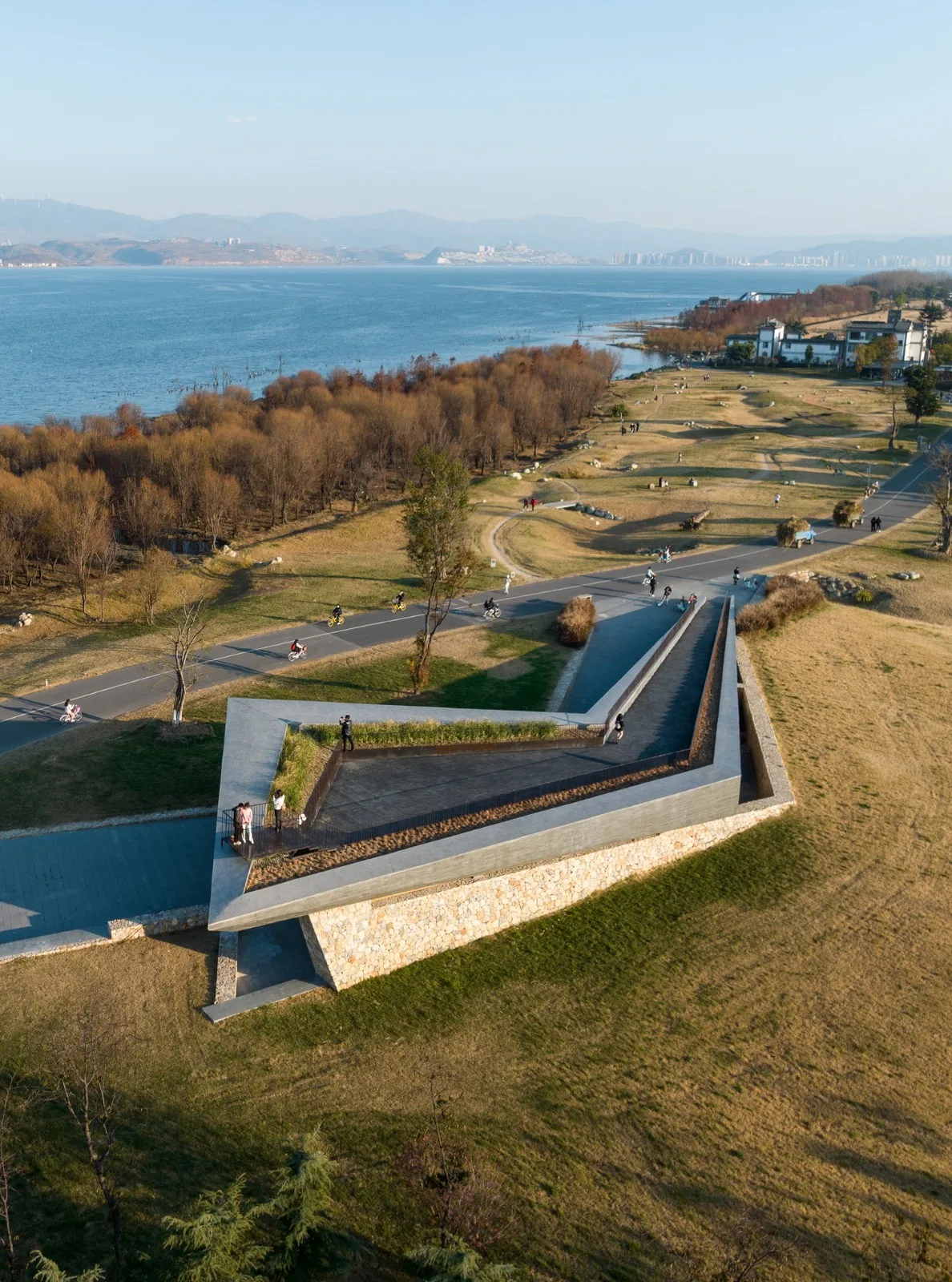
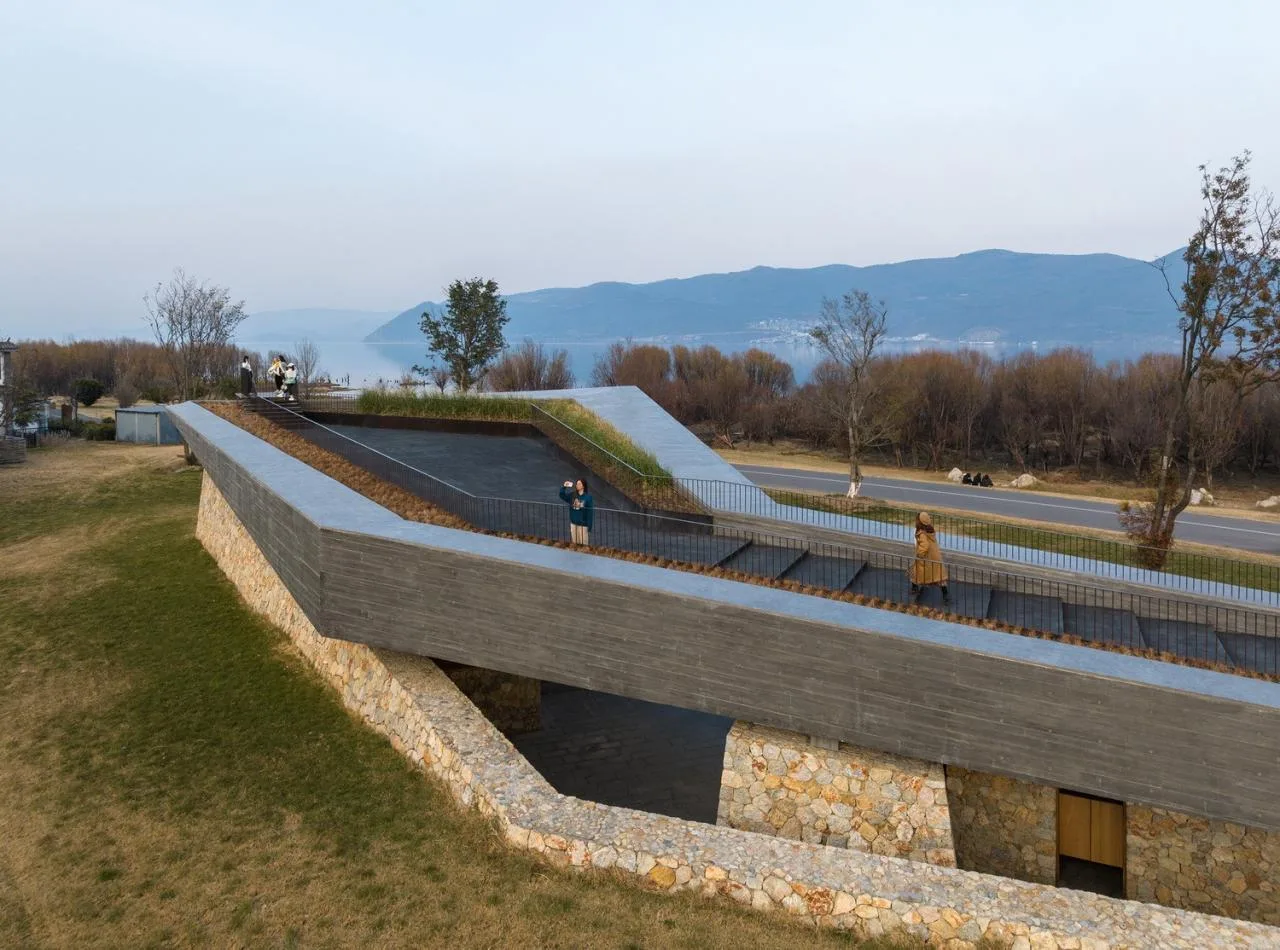
The roof platform is a favorite spot for both tourists and locals.
02 Low-Tech and Low-Carbon
Local Construction Strategies
Our material strategy draws from the regional landscape, emphasizing three primary materials: rubble, concrete, and wood, expressed in a contemporary style. To achieve low-carbon sustainability during construction, we employed traditional manual rubble masonry, reduced cement usage in concrete with wooden formwork, increased mineral aggregates and natural dyes, and recycled steel materials from the construction site.
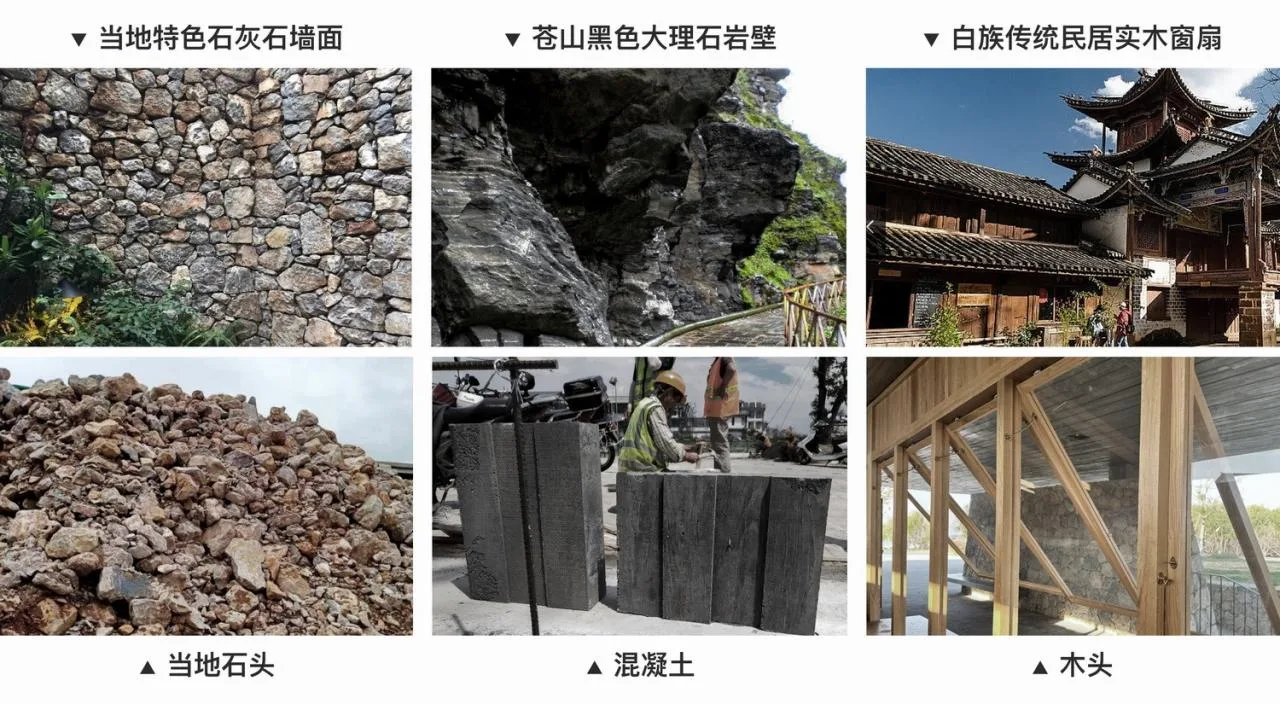
△ Material Strategy
These durable, low-maintenance materials give public buildings a sustainable life cycle and deepen the connection between the place and the present, anchoring cultural identity through contemporary architectural expression.
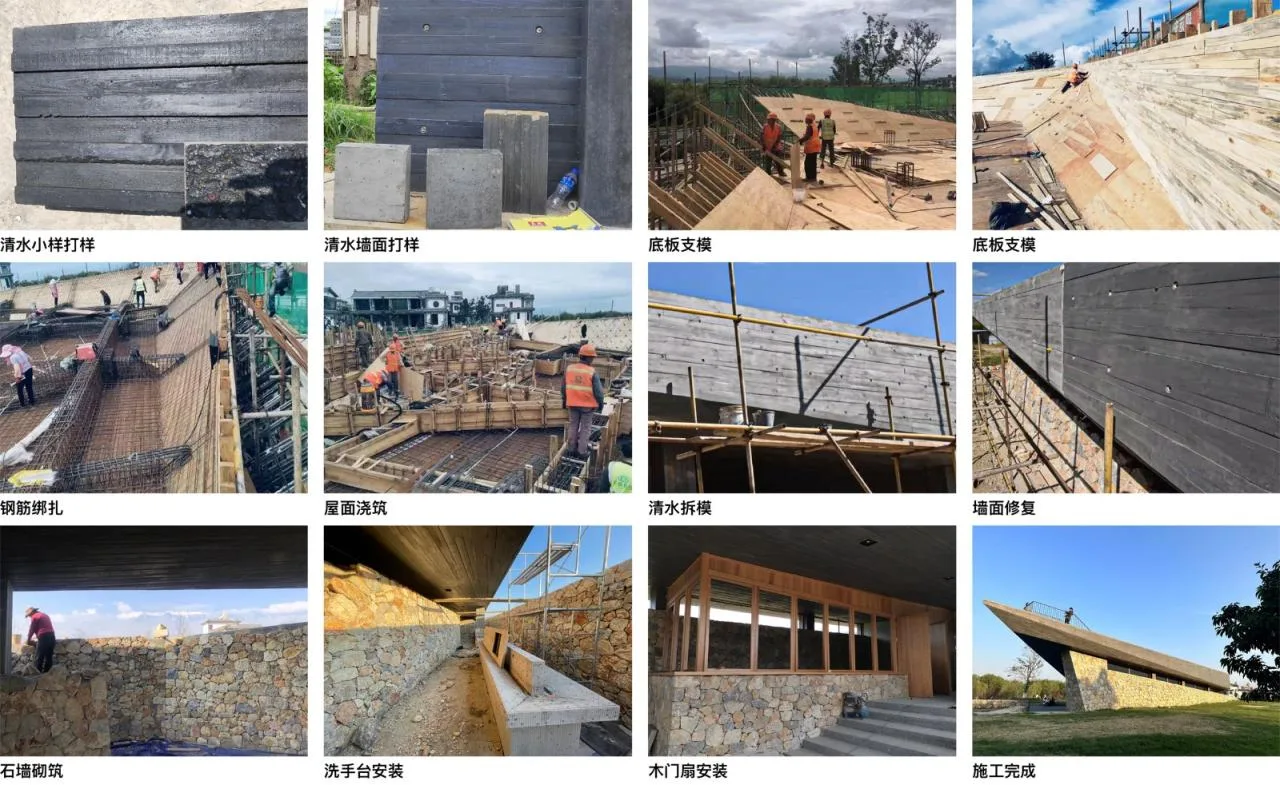
△ Construction Process
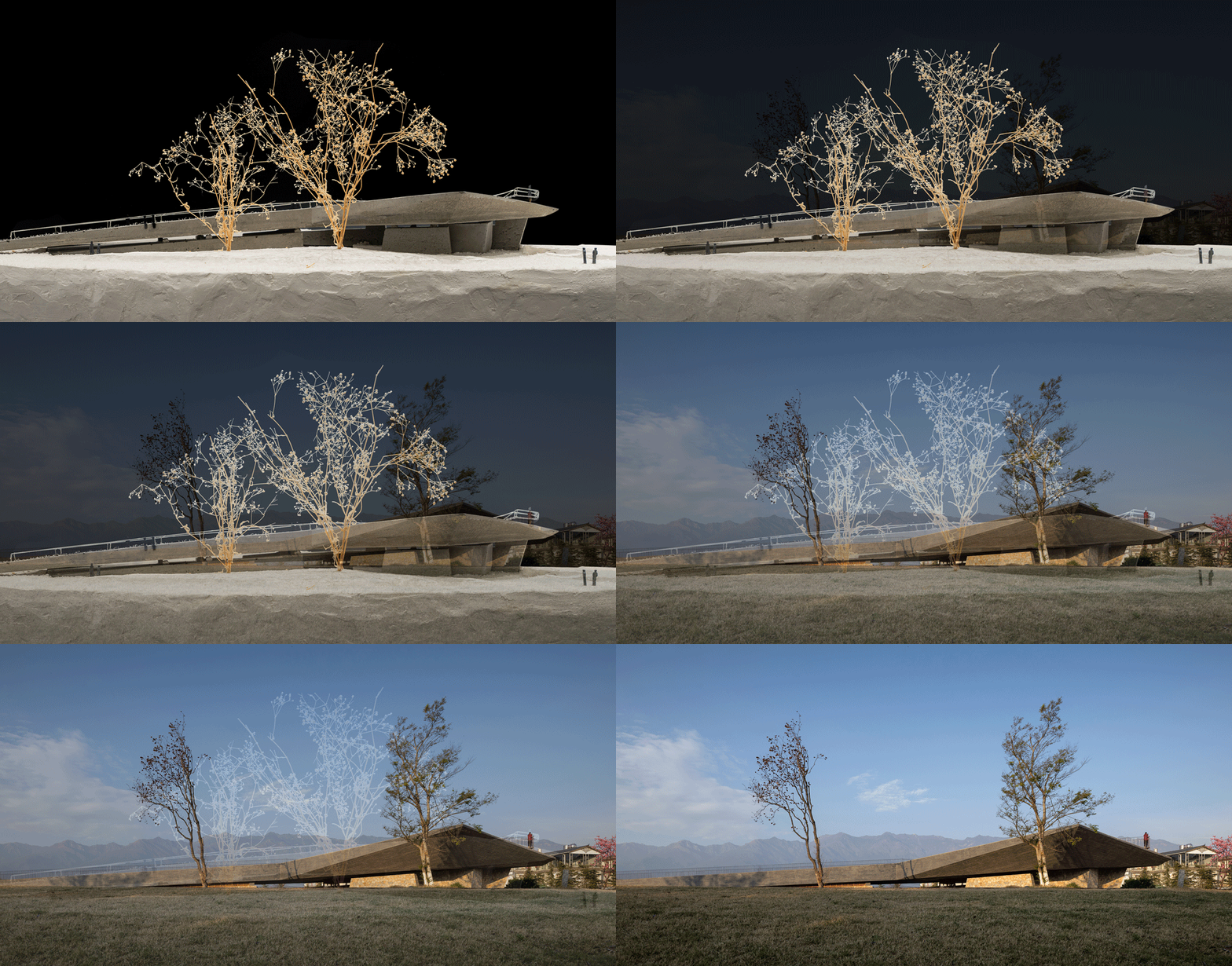
From Conceptual Model to Real-Life Construction
Folding Plate Roof
After structural calculations using parametric modeling, the folded panel roof achieves a large-span cantilever. Through experimental tests and on-site sampling, the color and texture of the plain concrete were precisely controlled to create a natural yet decorative finish with stable physical properties.
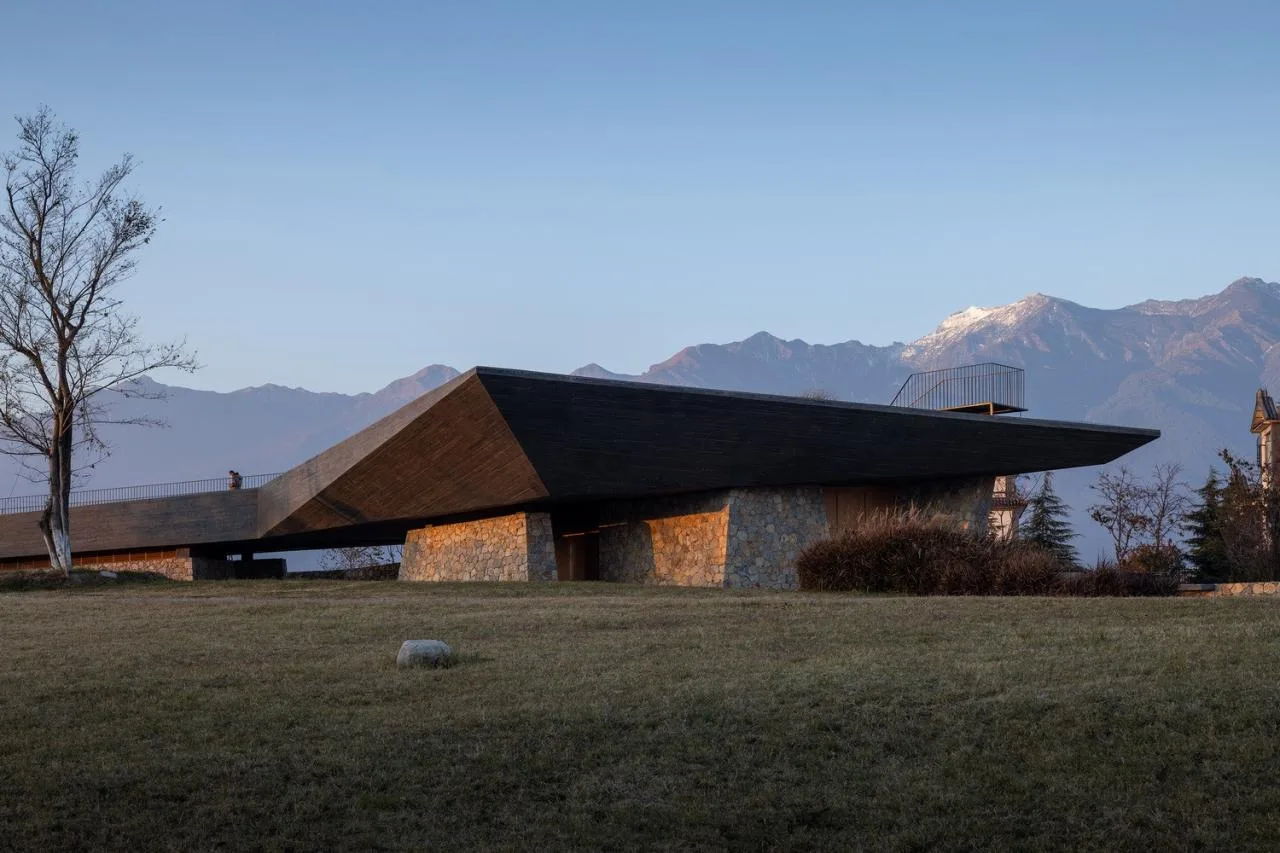
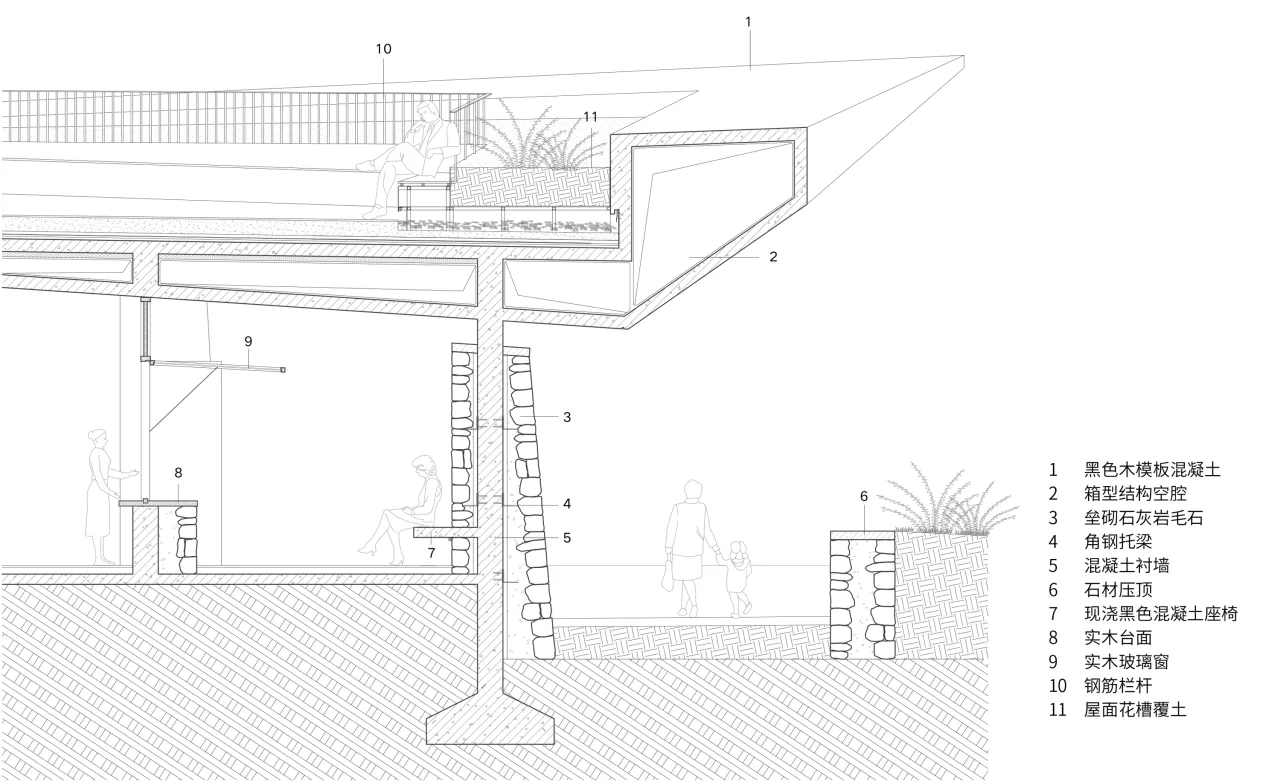
△ Anchored rubble base with suspended folded plate roof technology
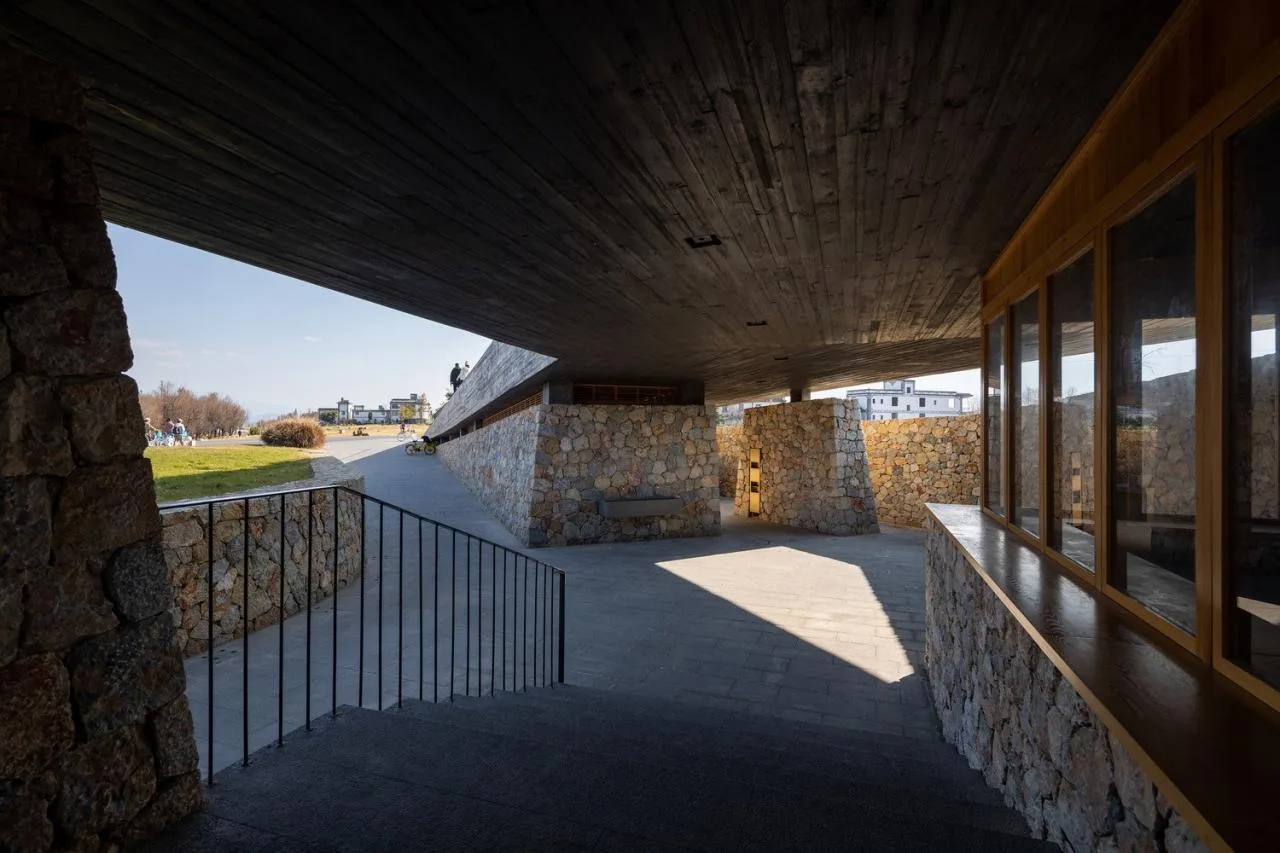
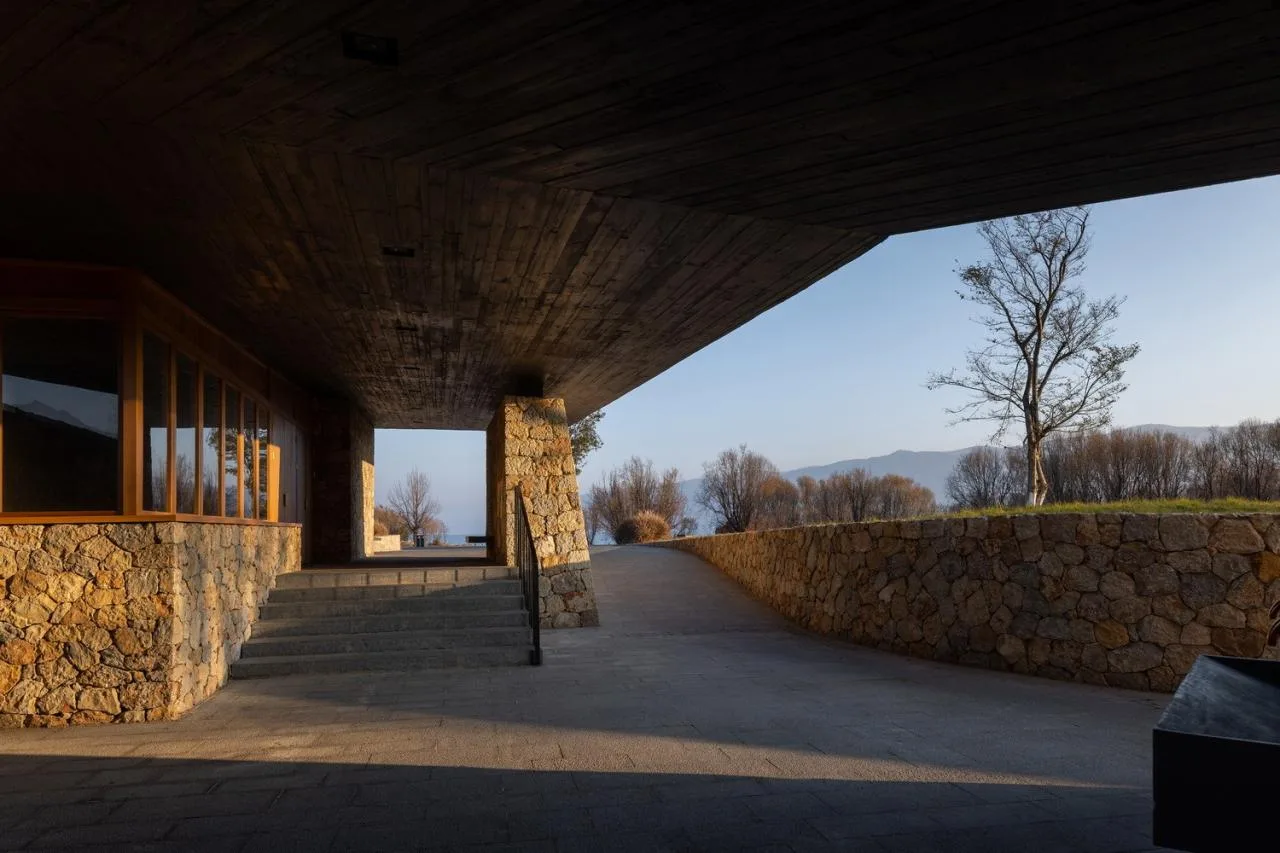
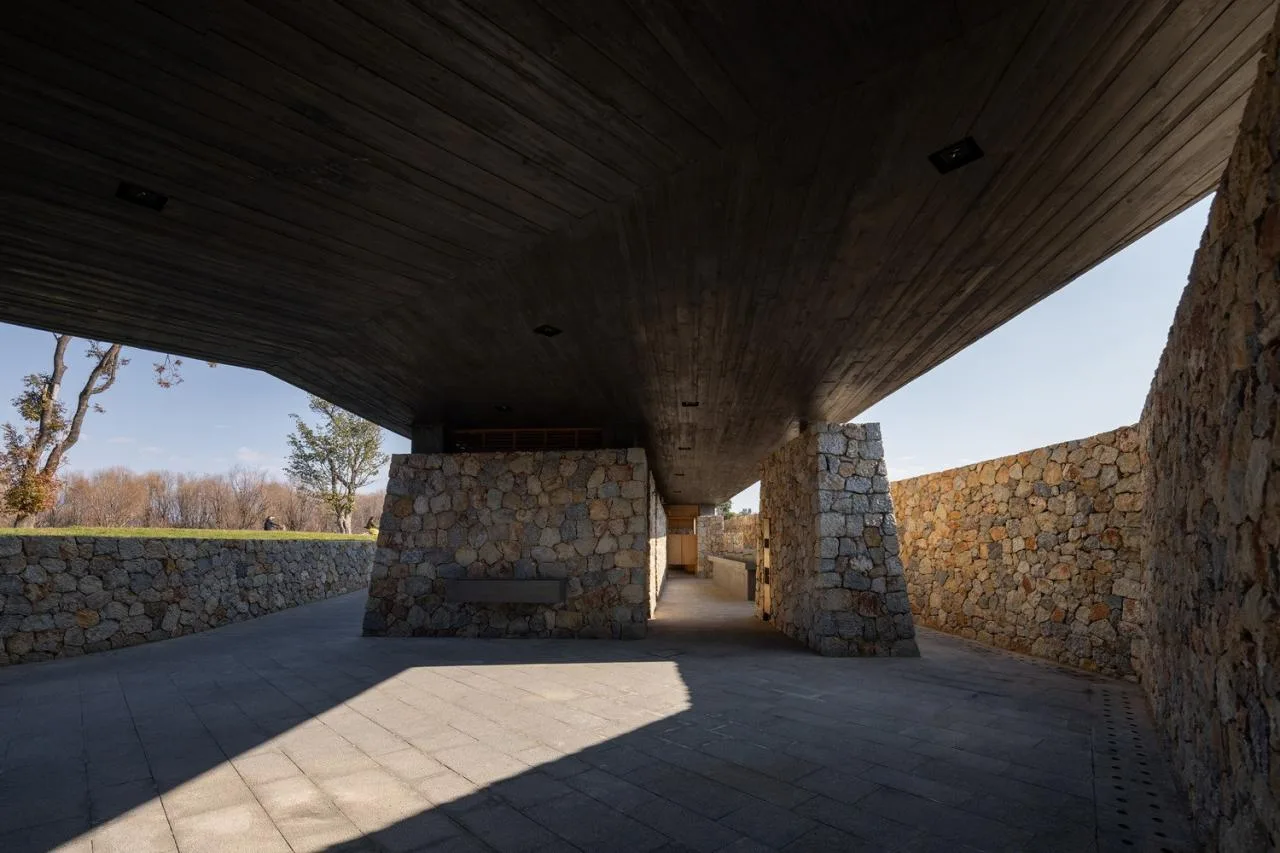
Anchored rubble base with suspended folded plate roof
The primary material for texture expression is pine solid wood formwork, chosen for its natural look and tactile quality. Compared to the initially selected less distinctive and less eco-friendly washed concrete surface, wooden formwork offers better operability and controlled visual effects. Tests on groove depth and board size were conducted to align with the overall design.
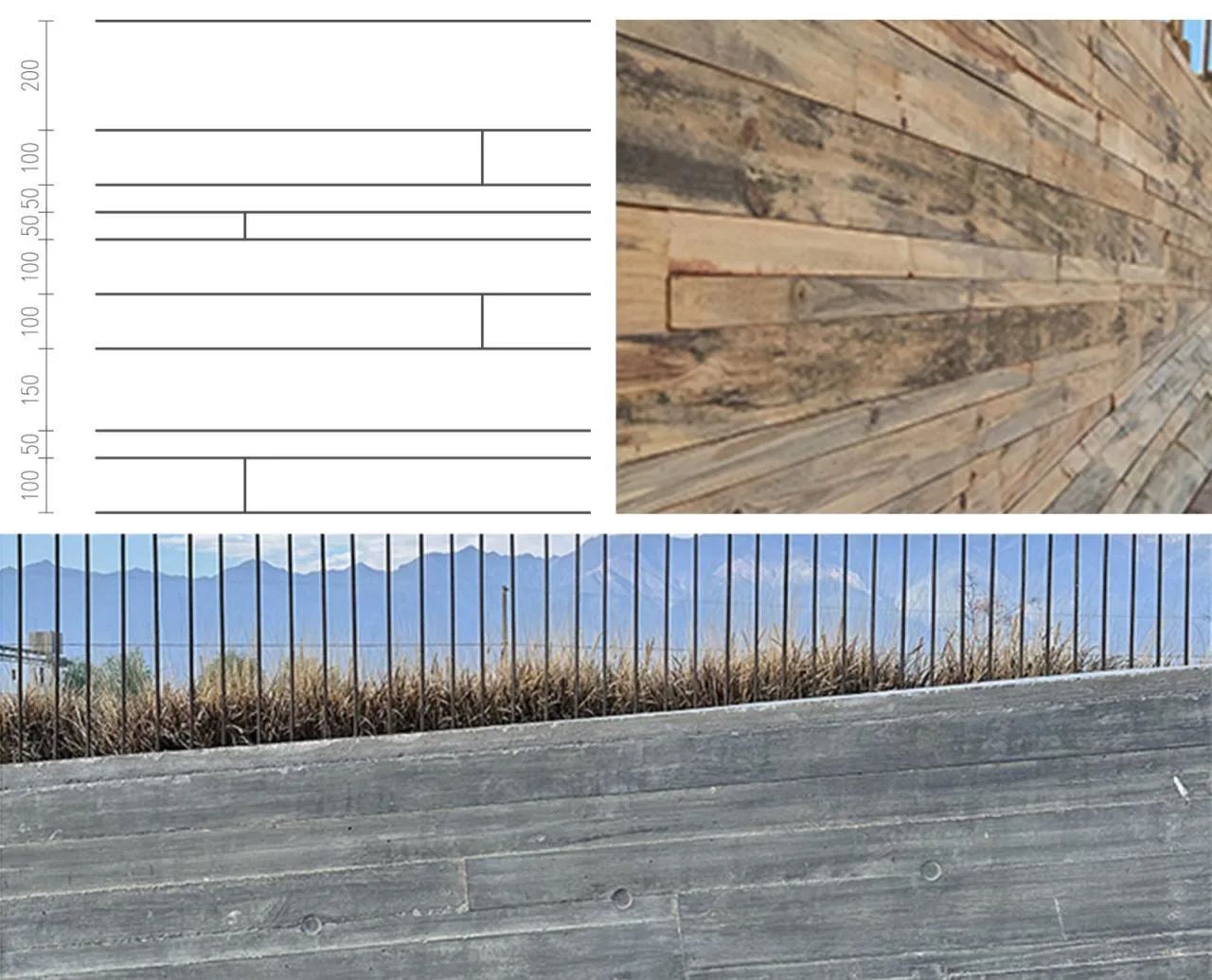
Research on Wooden Formwork Width
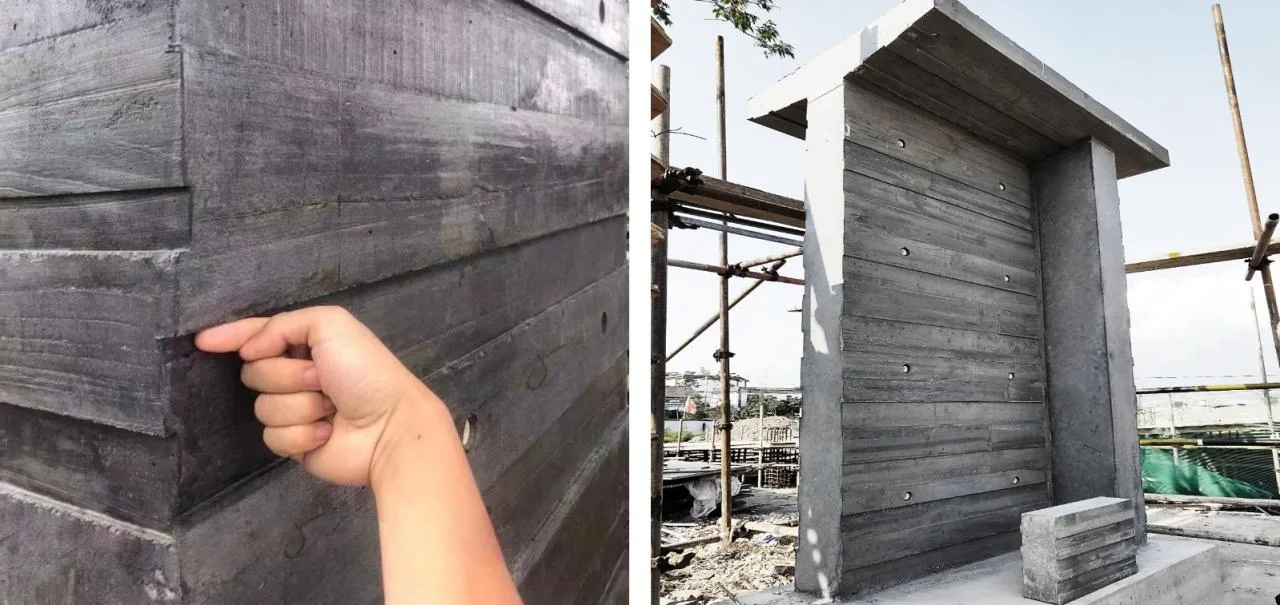
Wood Template Texture Study
During construction, considering the “suspension” effect of the large-span overhang and load requirements, the roof structure was cast in two stages: a primary pour for the box structure and a secondary pour for the roof slab after flipping the beam. This ensured adequate load-bearing capacity and waterproofing at the roof edges.
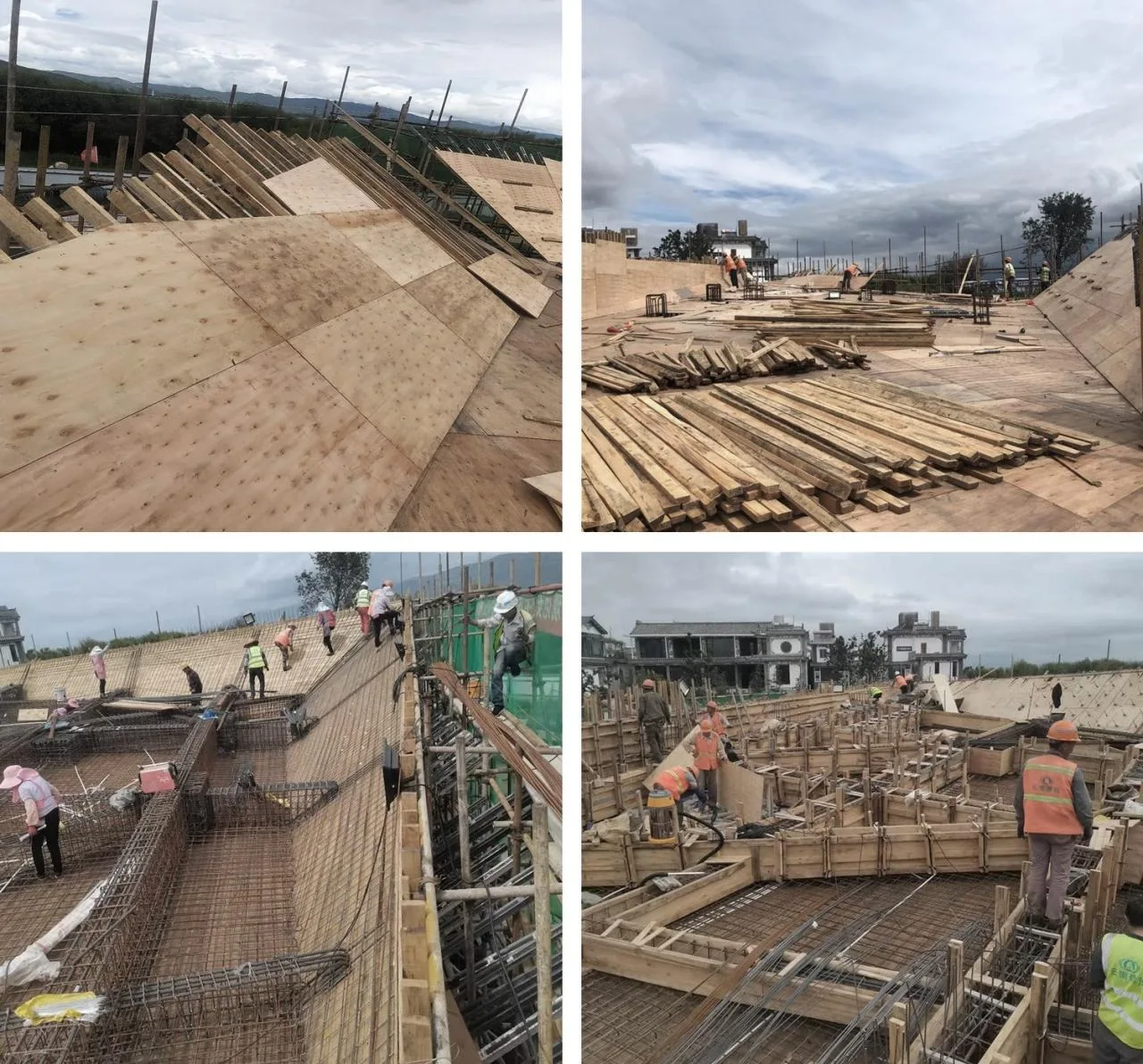
△ Bottom Plate Formwork and Rebar Binding
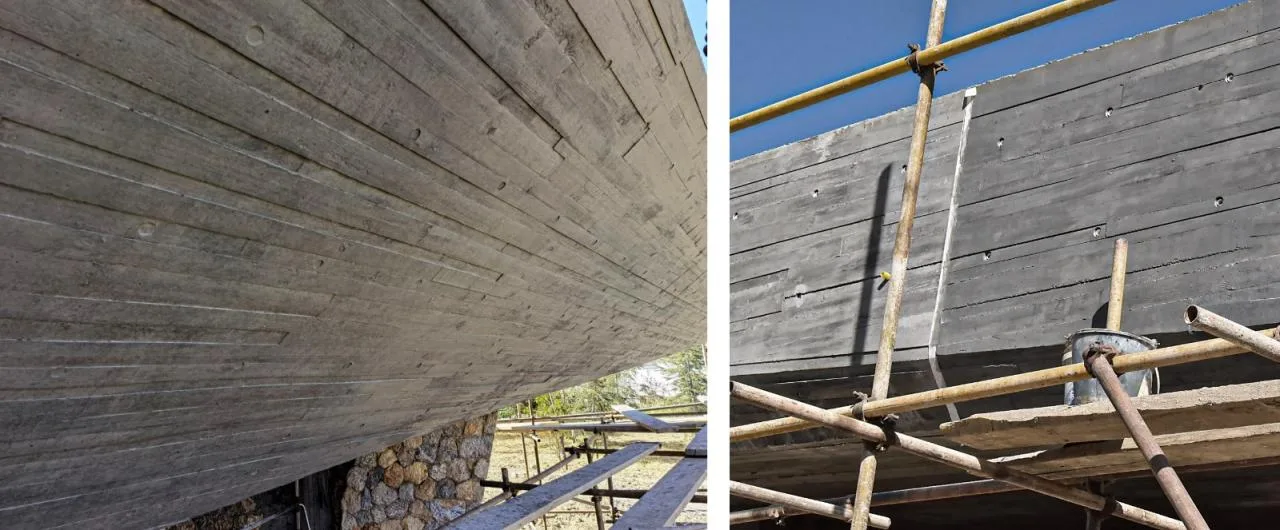
To achieve the black concrete finish, two key methods were used: natural mineral dyes were added during pouring for the base dark color and strength; after demolding and curing, a semi-transparent protective color paste was applied to enhance the texture and deepen the color.
Rubble Wall Base
The base is constructed from locally sourced Dali limestone with particle sizes ranging from 150 to 450 mm, appropriate for the building scale. To prevent gaps, galvanized angle steel is anchored horizontally into concrete or walls and welded to threaded steel bars embedded within the stone masonry.
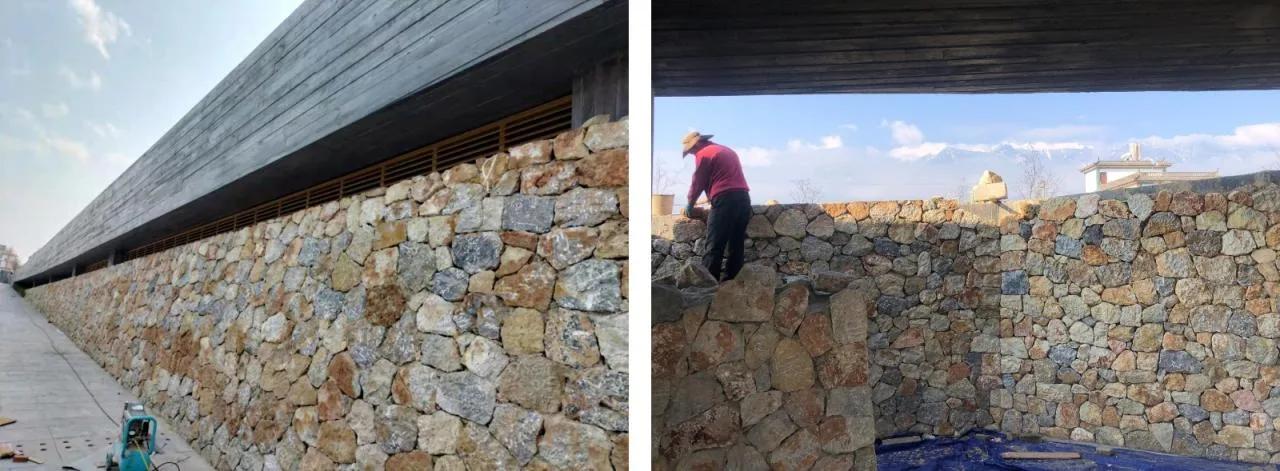
△ Rubble Masonry
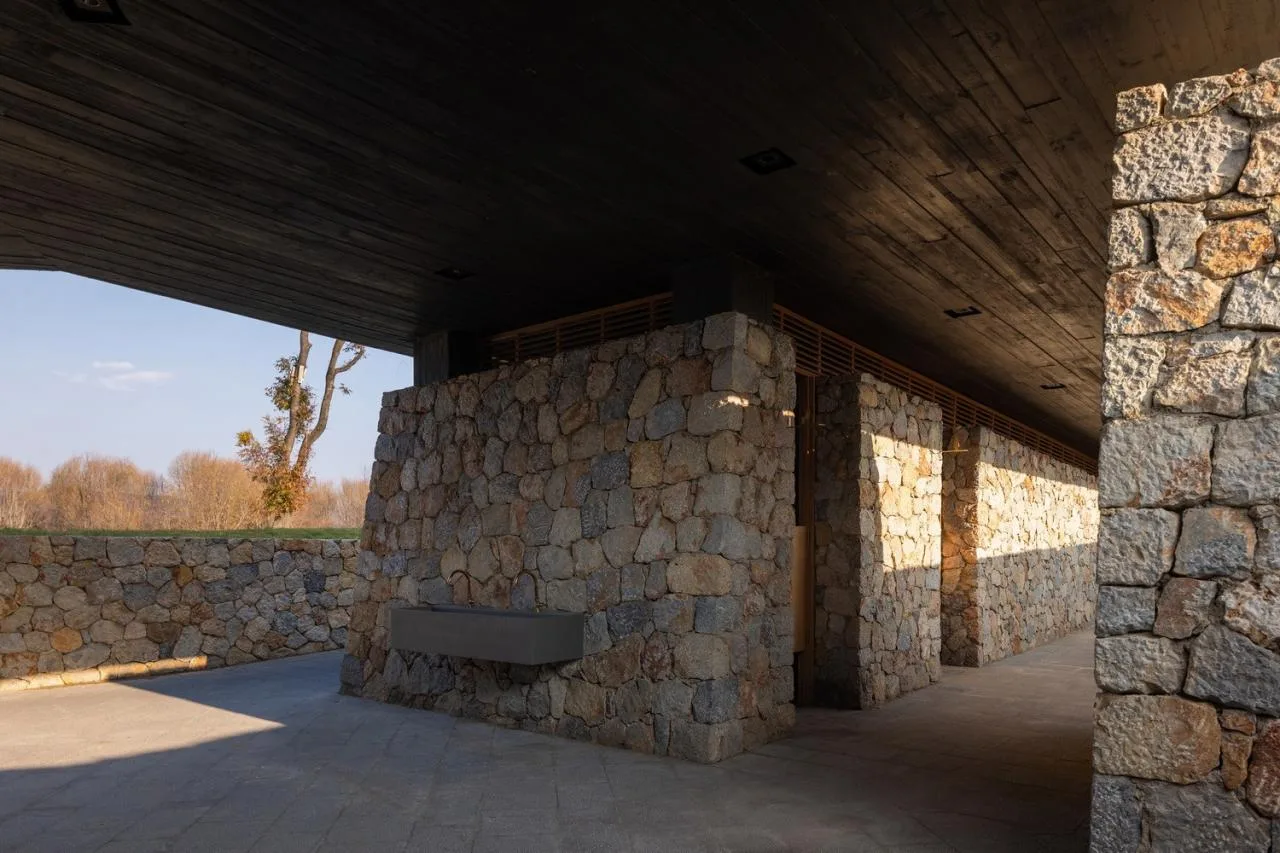
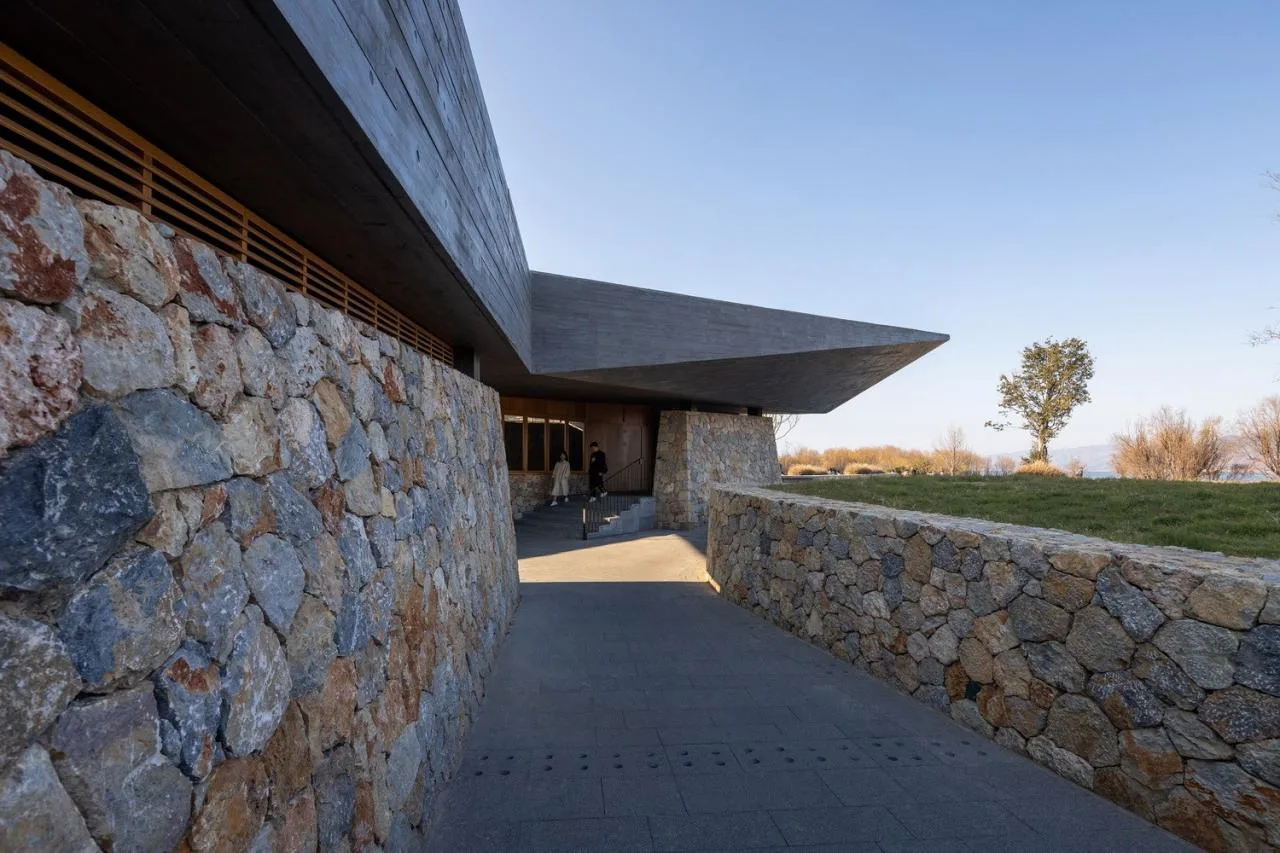
The roof drainage system avoids conventional vertical rainwater pipes. Instead, joints in the UHPC roof panels channel rainwater beneath the finished surface. Generous drainage cavities beneath garden supports collect water, which is then directed into nearby culverts via sloping.
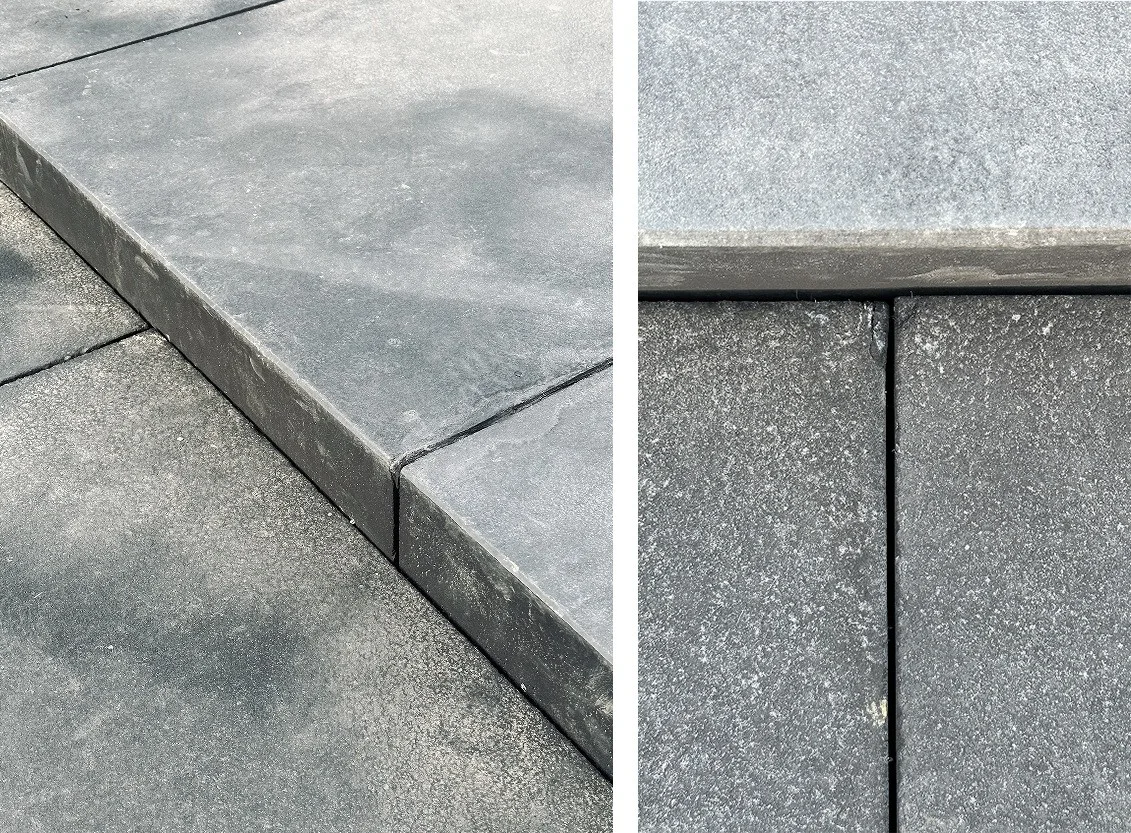
△ UHPC Panels Used for Roof Seams
Solid Wood Door and Window System
Doors and windows were designed with practicality and the local climate in mind. Bathroom doors feature solid wood denim panels, while high windows have wooden blinds to balance natural ventilation and privacy. Oak was chosen for its high durability, corrosion resistance, and hardness.
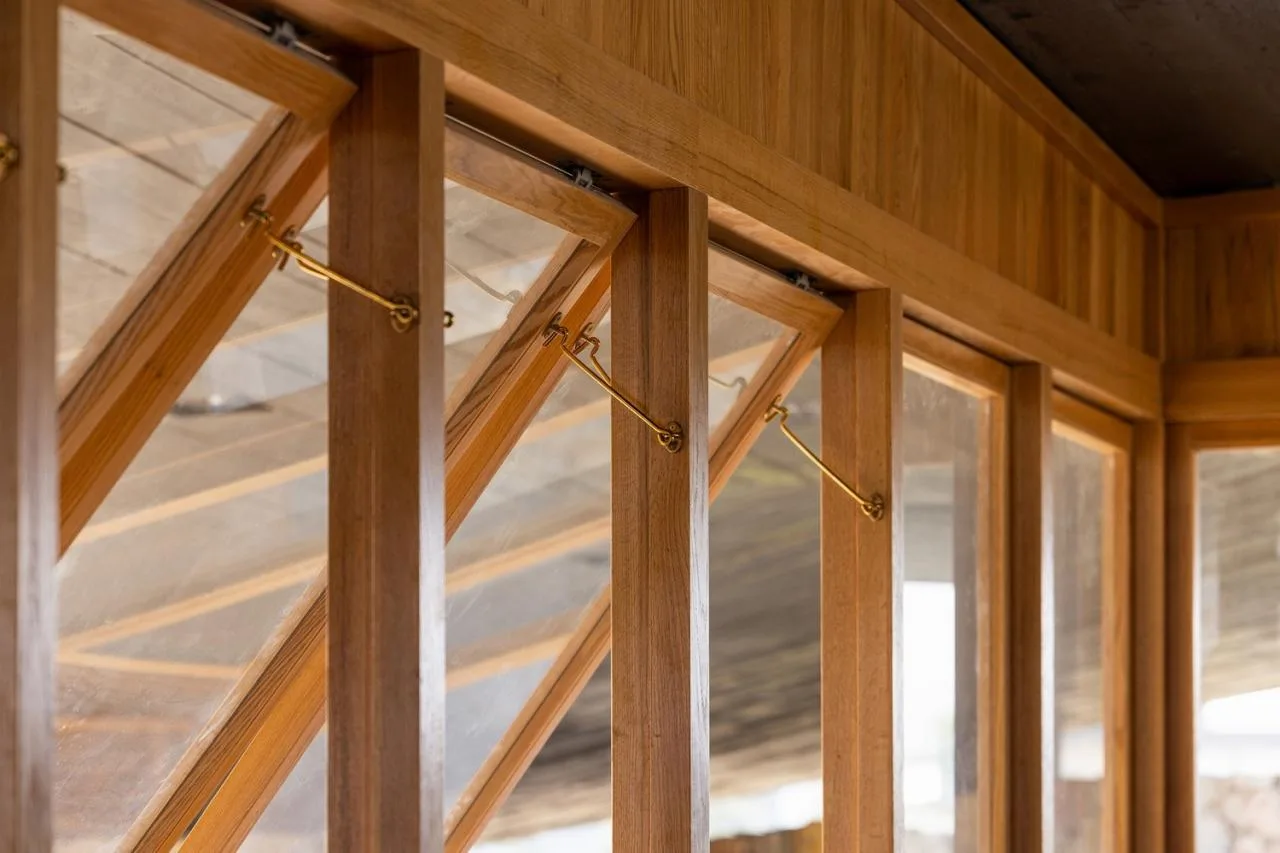
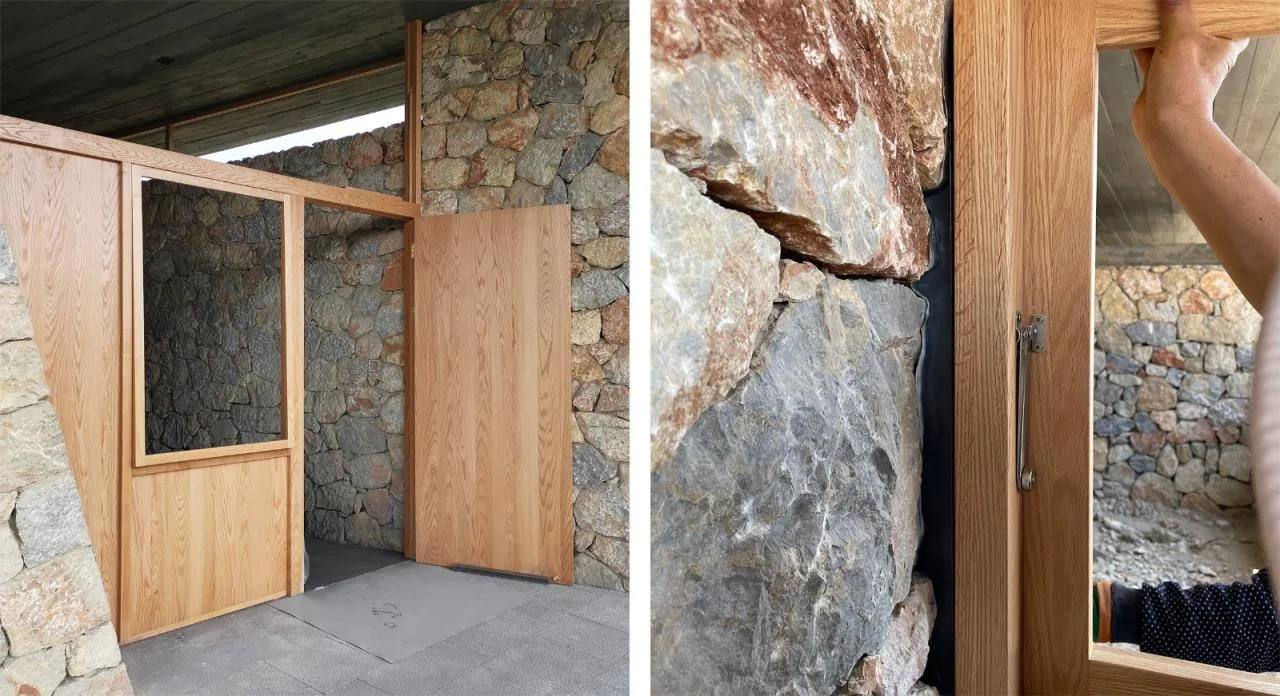
△ Solid Wood Door and Window System
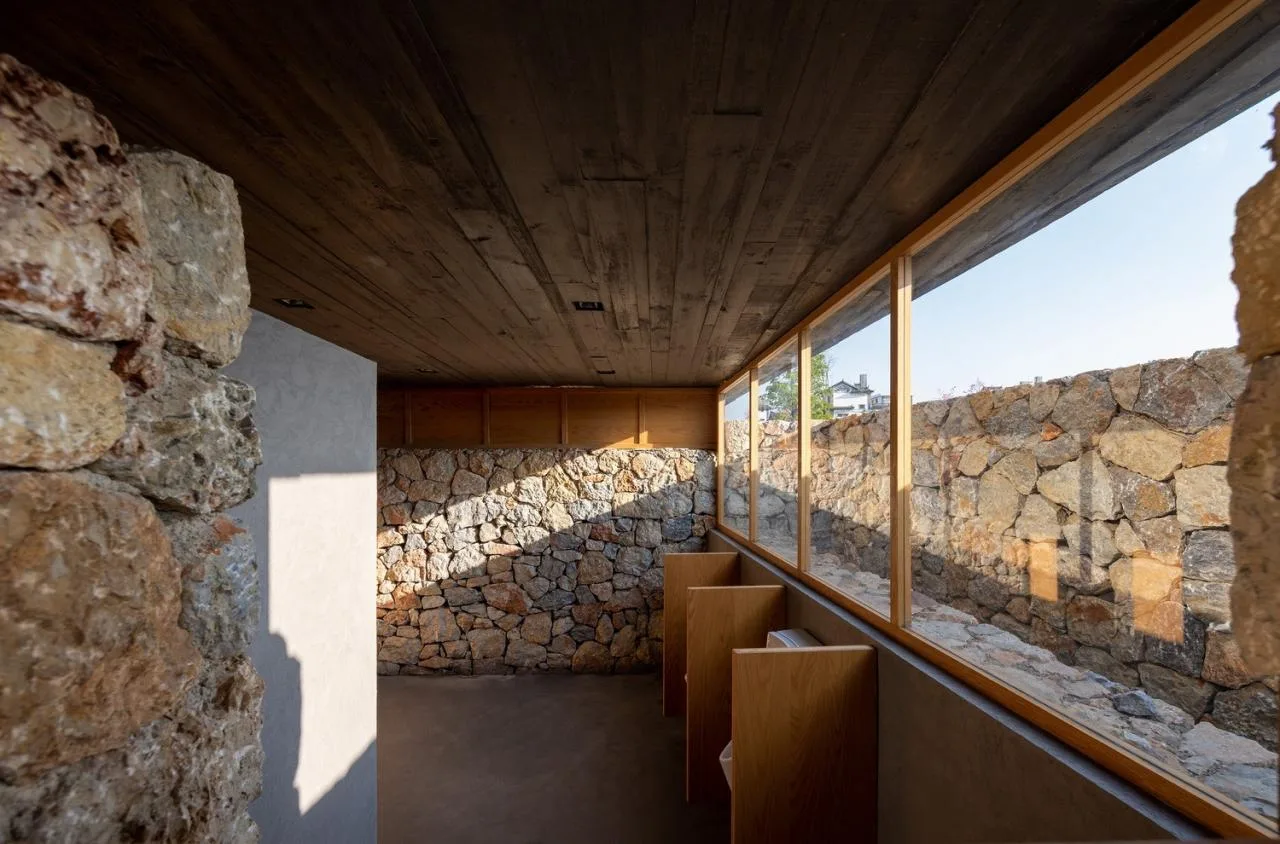
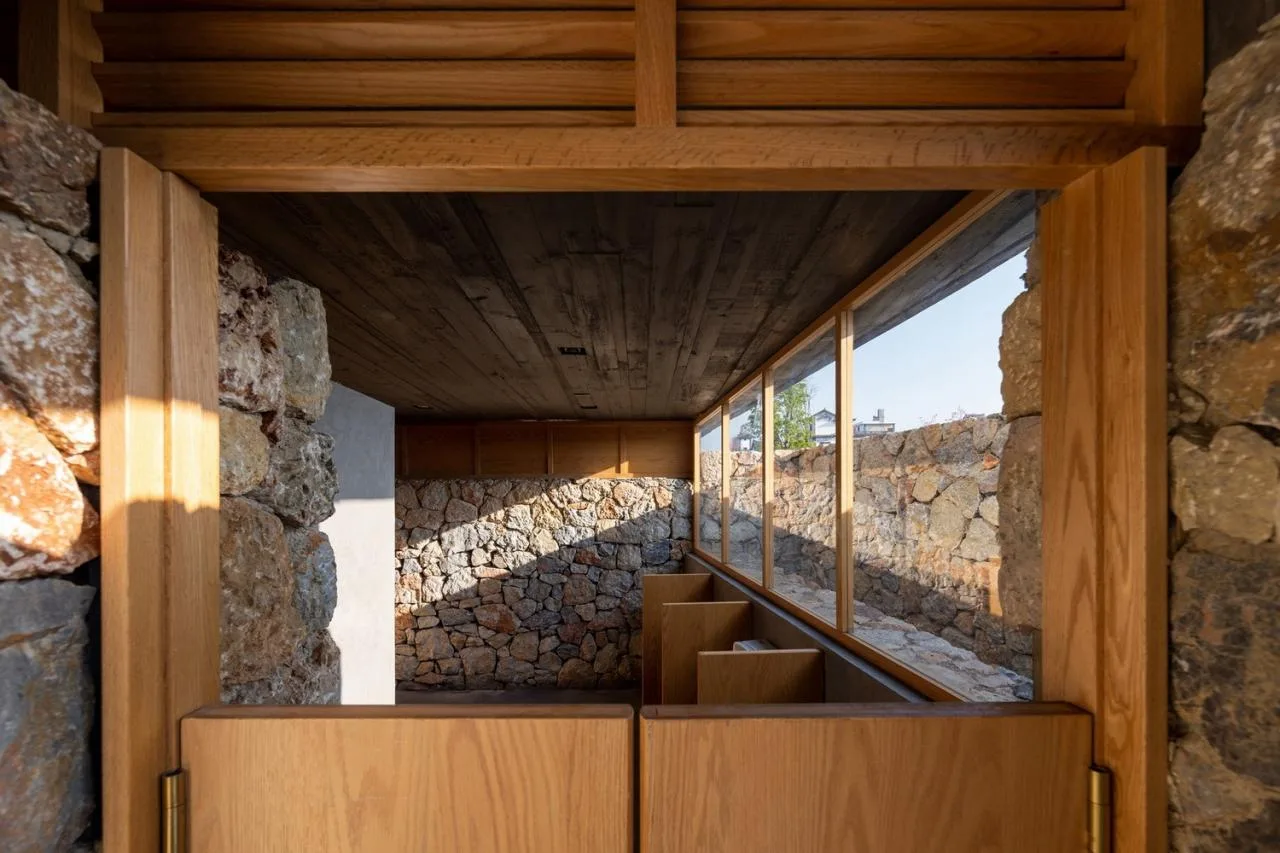
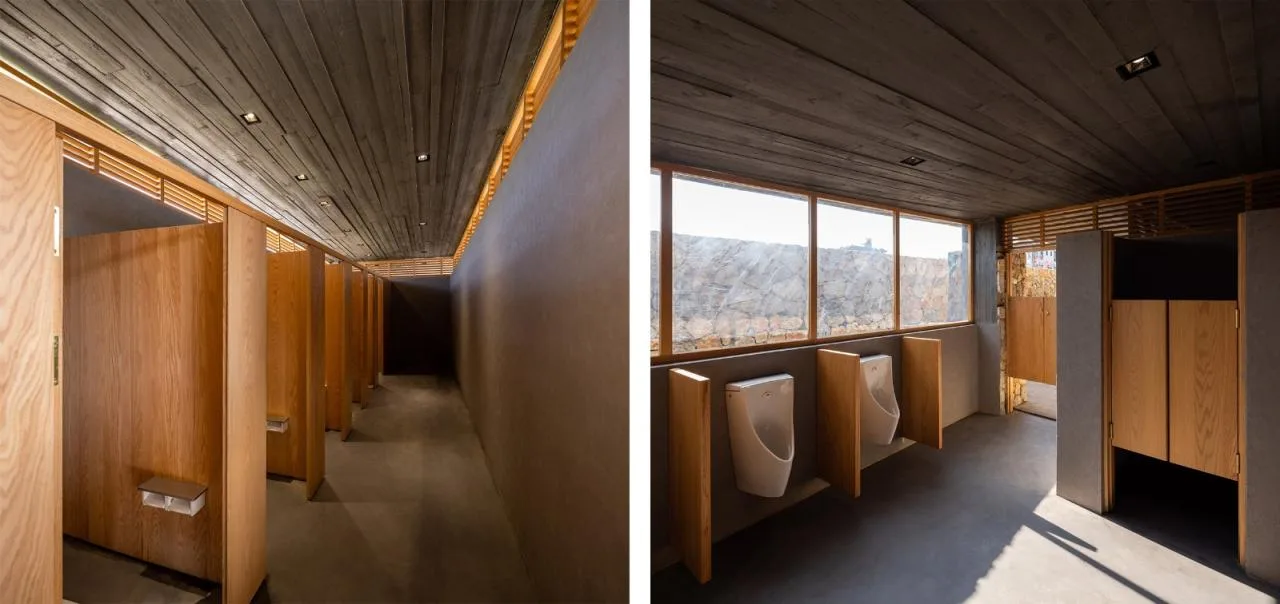
Oak solid wood was selected for its excellent resistance to corrosion, durability, and hardness.
Flat push-open doors and fully openable wooden doors in the convenience store enhance the interaction between interior and exterior spaces.
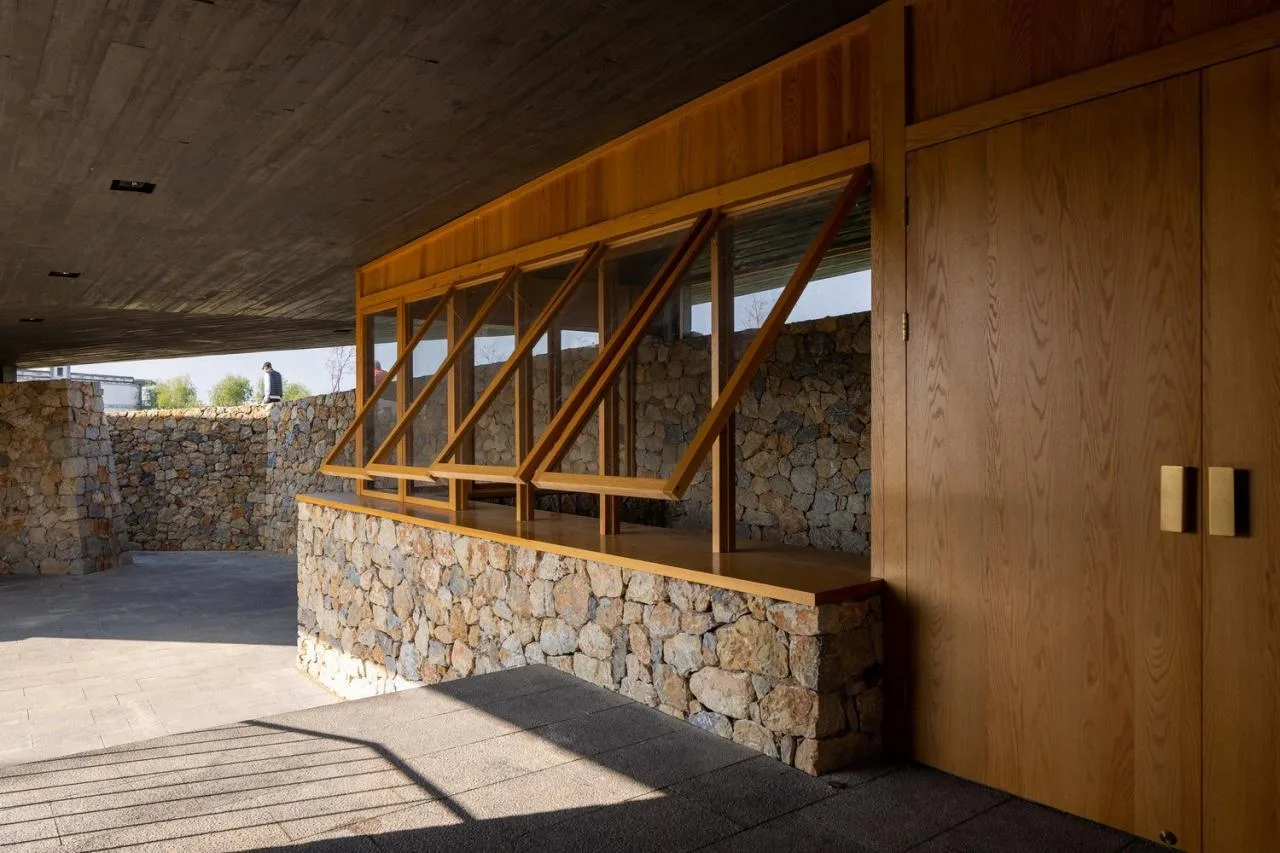
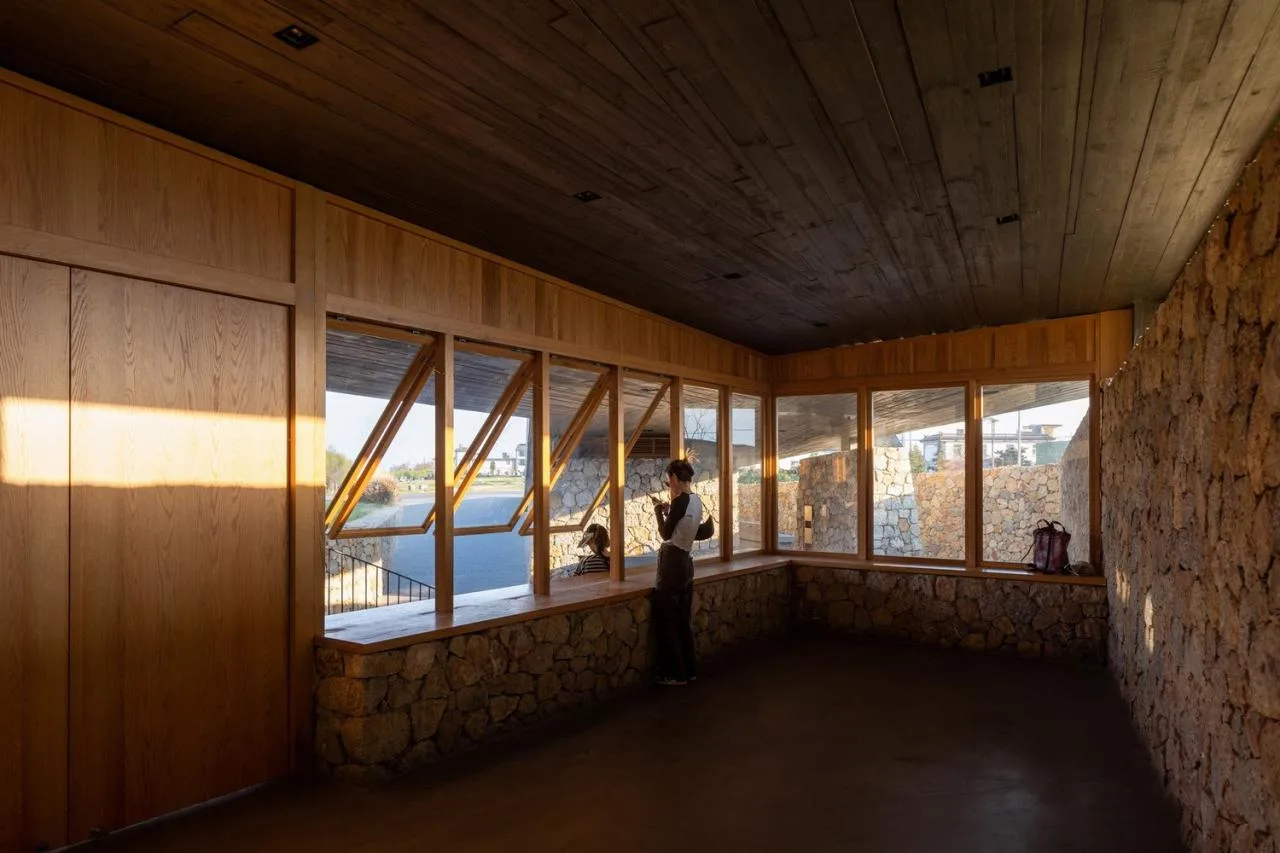
Flat push-open door design enhances spatial interaction.
Metal Components and Enclosures
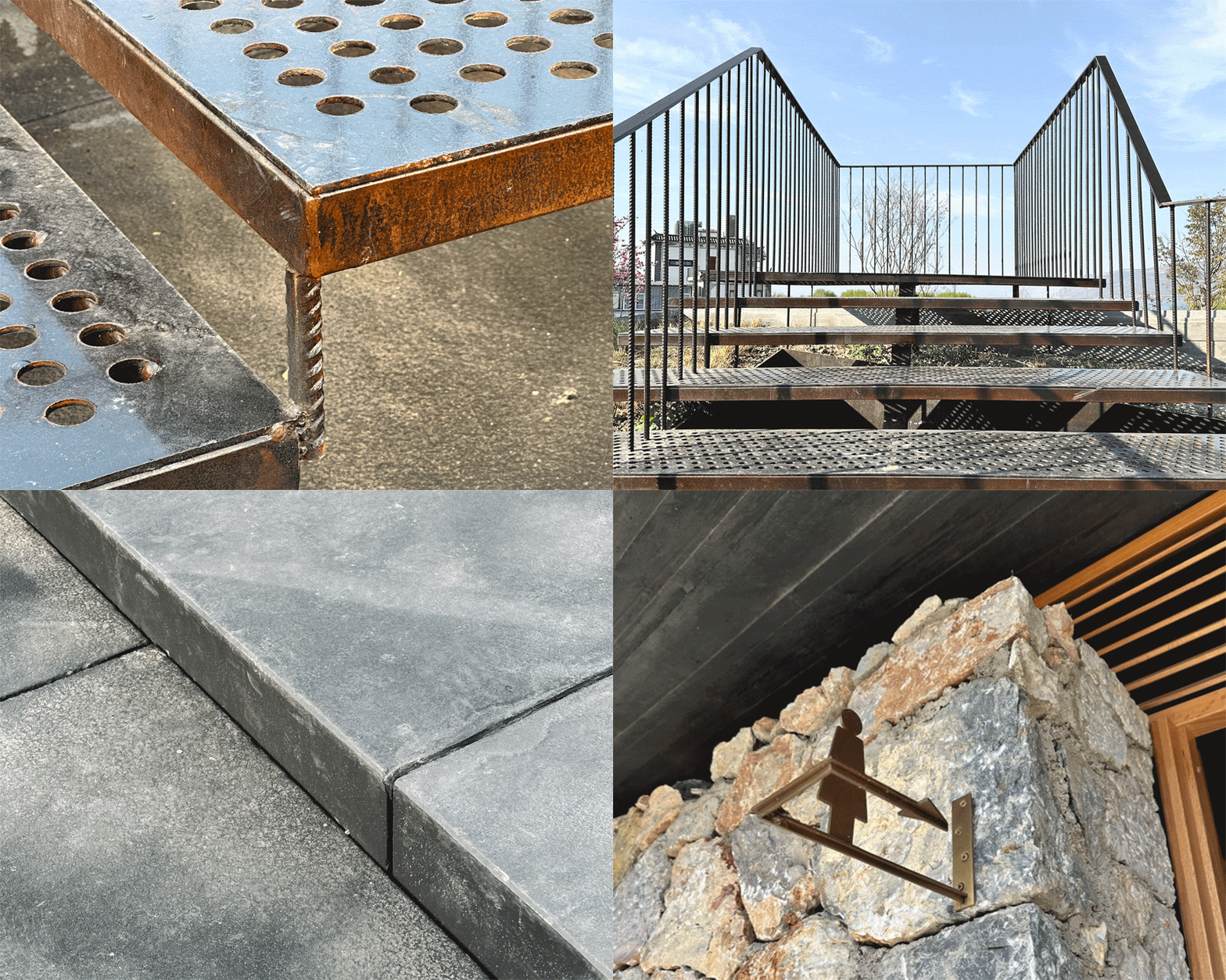
After the main structure was completed, a significant amount of industrial waste materials such as steel bars and plates remained on-site. Following sustainable principles, these materials were recycled and repurposed through secondary processing as railings, stair treads, flower troughs, and other components. This practice integrates the building’s lifecycle with environmental responsibility.
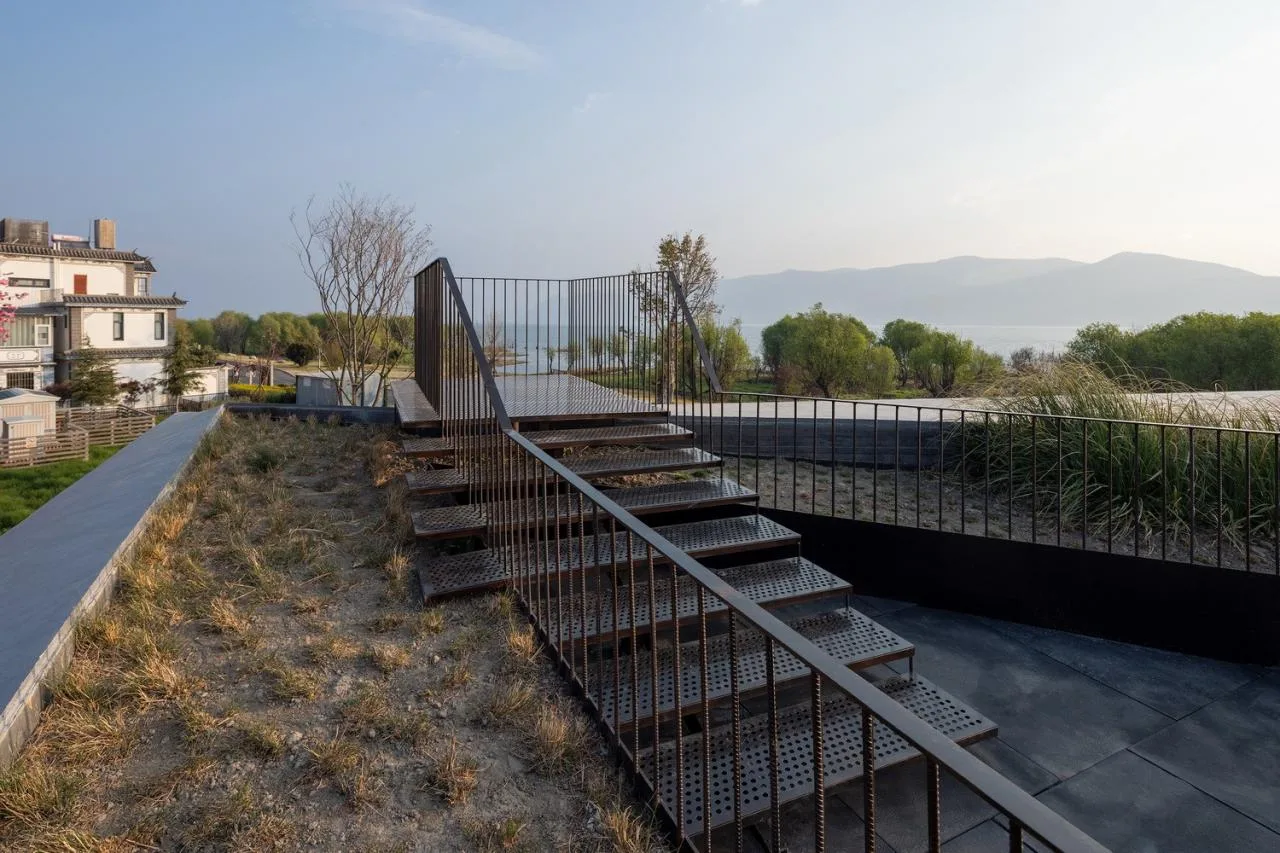
Steel bars and plates reused after secondary processing
03 Openness and Inclusiveness
Embracing Daily Public Life
Post-pandemic, Dali has become a popular destination for digital nomads and travelers. The post station serves not only as a resting spot and observation deck but also as an urban public platform. Designed with openness and inclusivity, its subtle yet direct presence invites everyone. Overlooking the Cangshan Mountains and Erhai Lake, the station forms a gentle, organic link between people and nature.
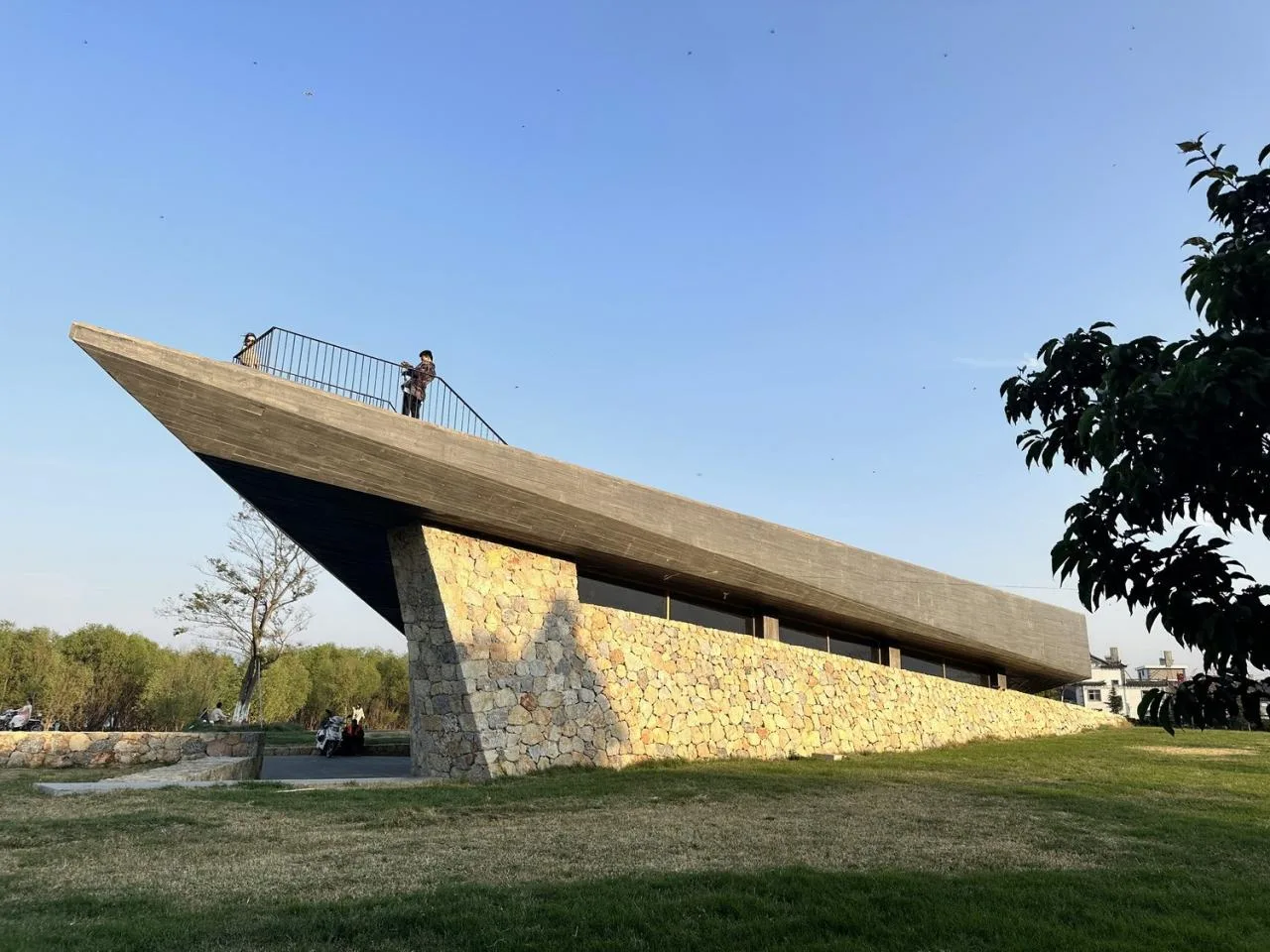
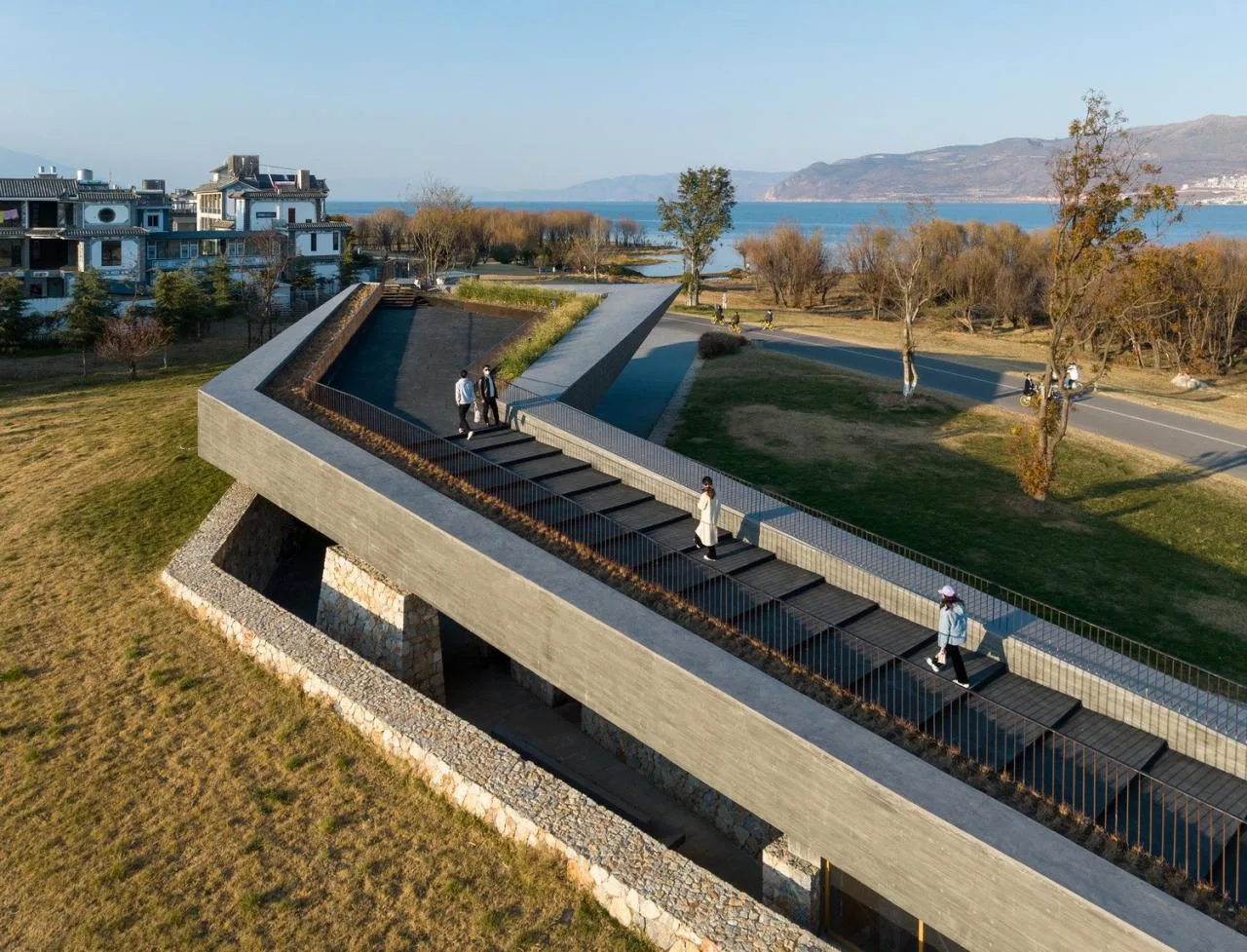
Visitors are invited to look out, stroll, and sit quietly, engaging their senses. They can admire snow-capped peaks, converse with Erhai Lake, choose tranquility or liveliness, and rediscover the poetic essence of everyday life. Through diverse activity spaces, this post station gradually becomes a living, evolving landscape that blends seamlessly into its natural surroundings.
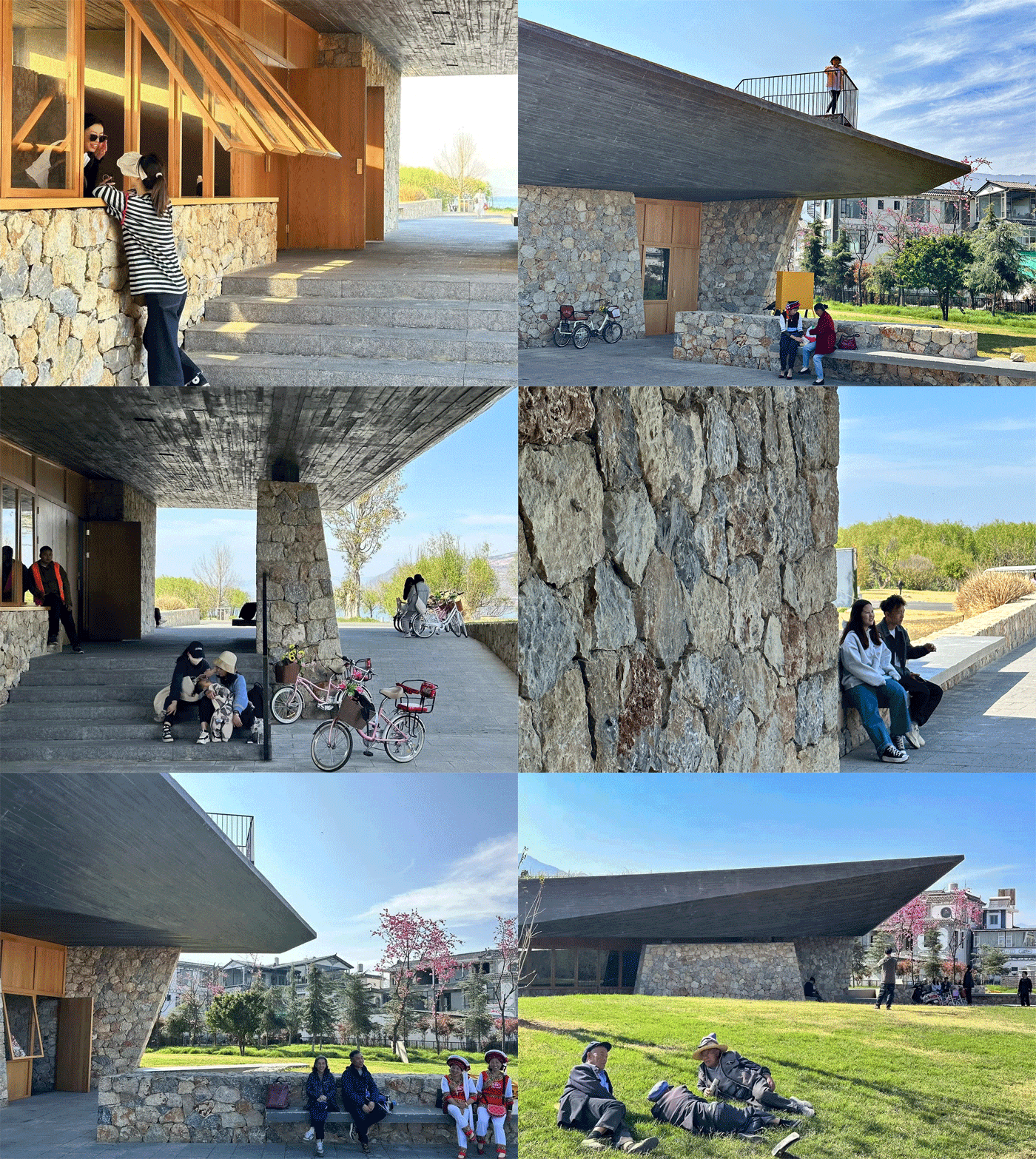
Public spaces thrive on openness.
04 Conclusion
The Dali Erhai Xiaoyizhuang Ecological Station represents Line+’s continued commitment to deeply engaging with the Yunnan region, following their work on the Yunnan Dongfeng Yun Art Center. Beyond local factors like climate, geography, and users, the project emphasizes broader architectural perspectives. Through contemporary spatial narratives, it reinterprets local memories and experiences, responding intelligently to both place and nature. This approach integrates new architecture harmoniously within its environment, fostering coexistence.
Project Drawings
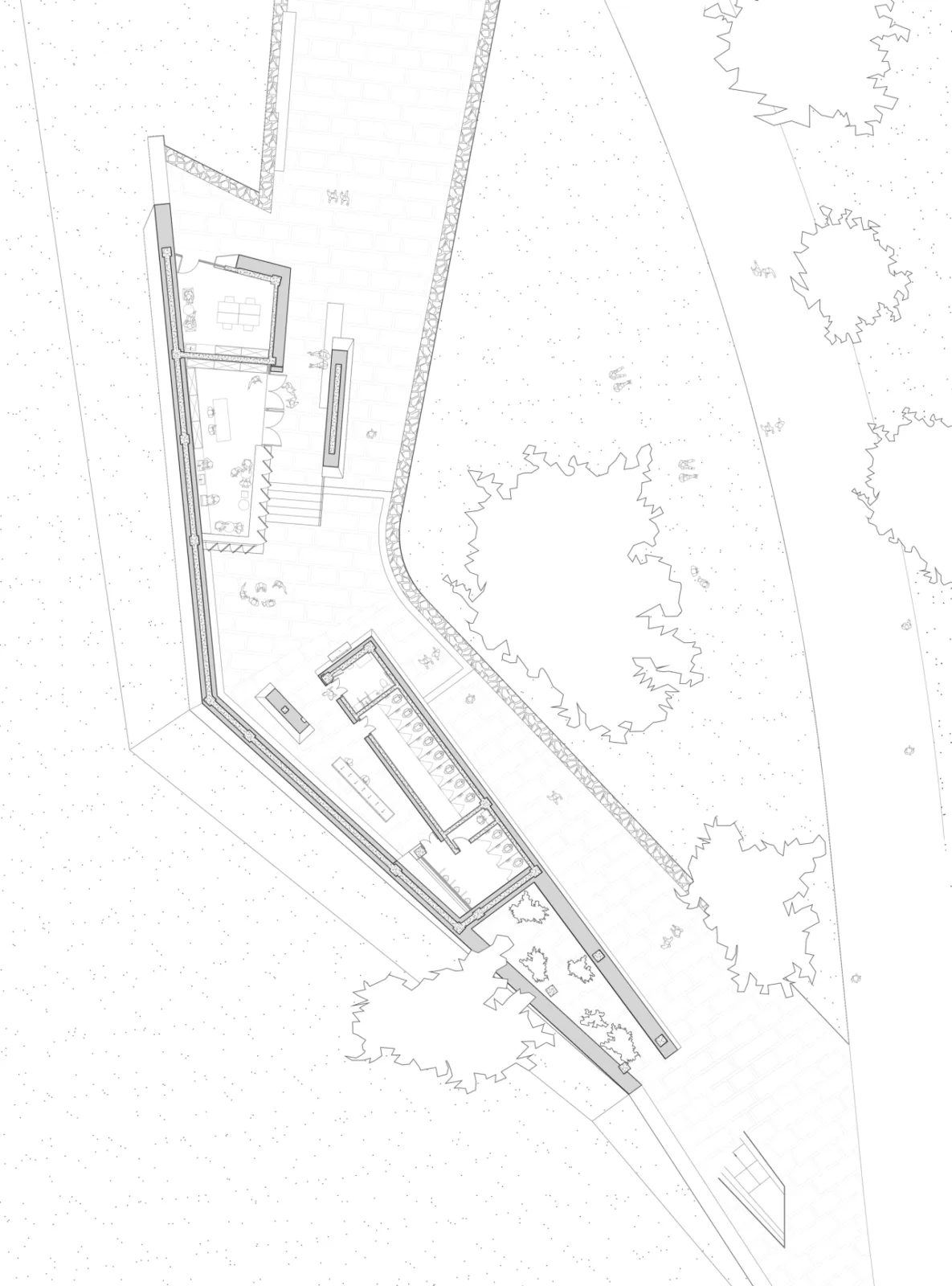
△ First Floor Plan
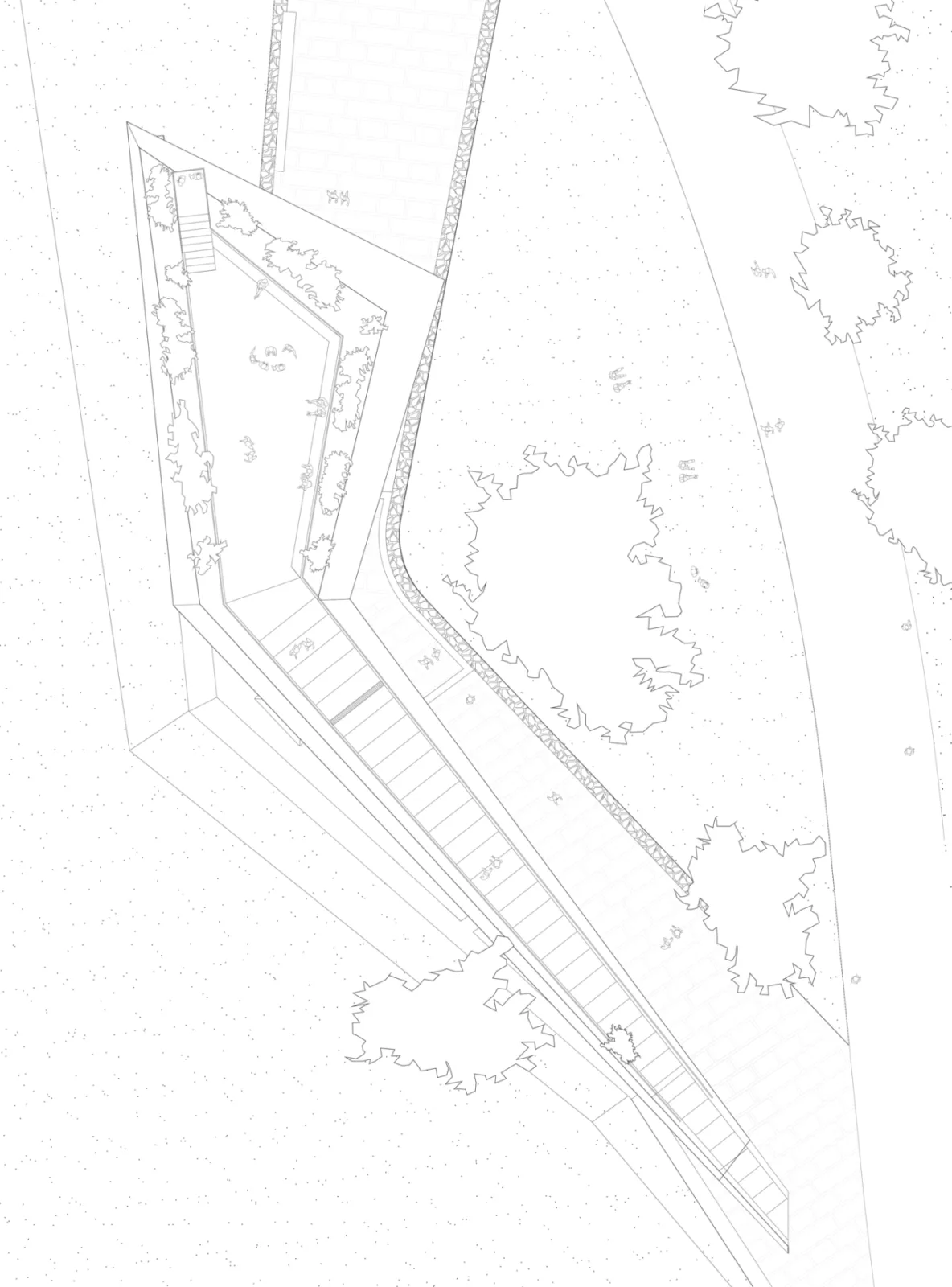
△ Roof Floor Plan
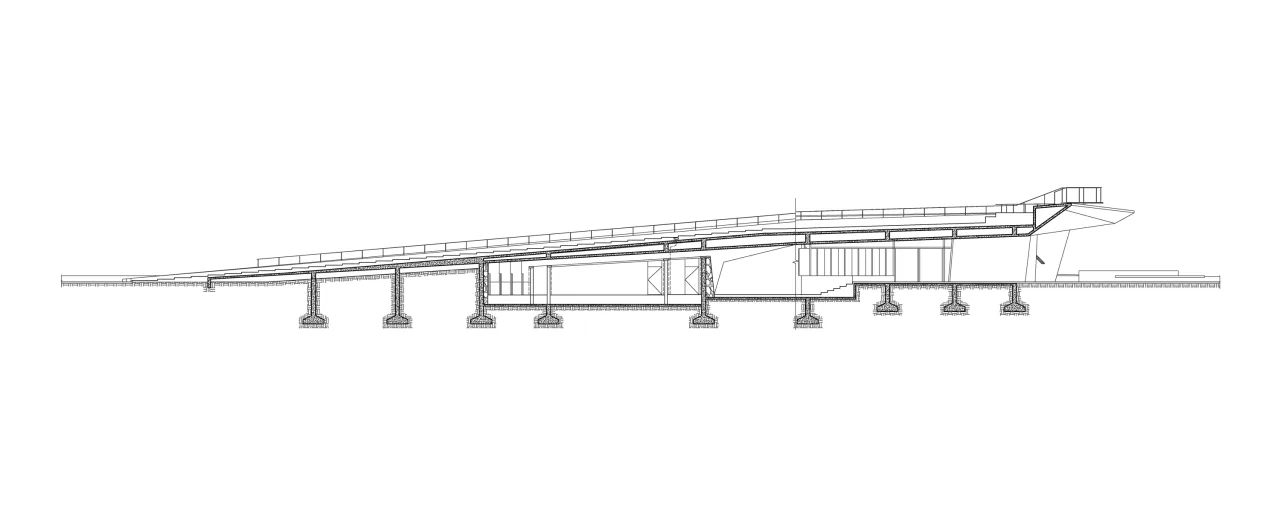
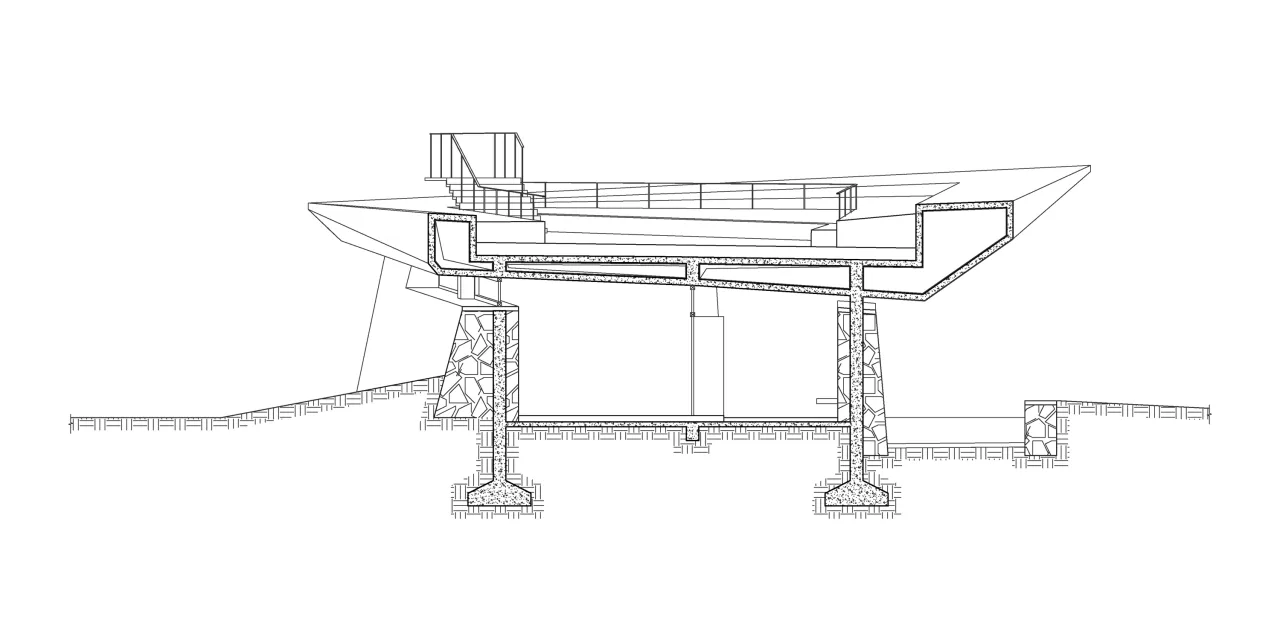
△ Section Diagram
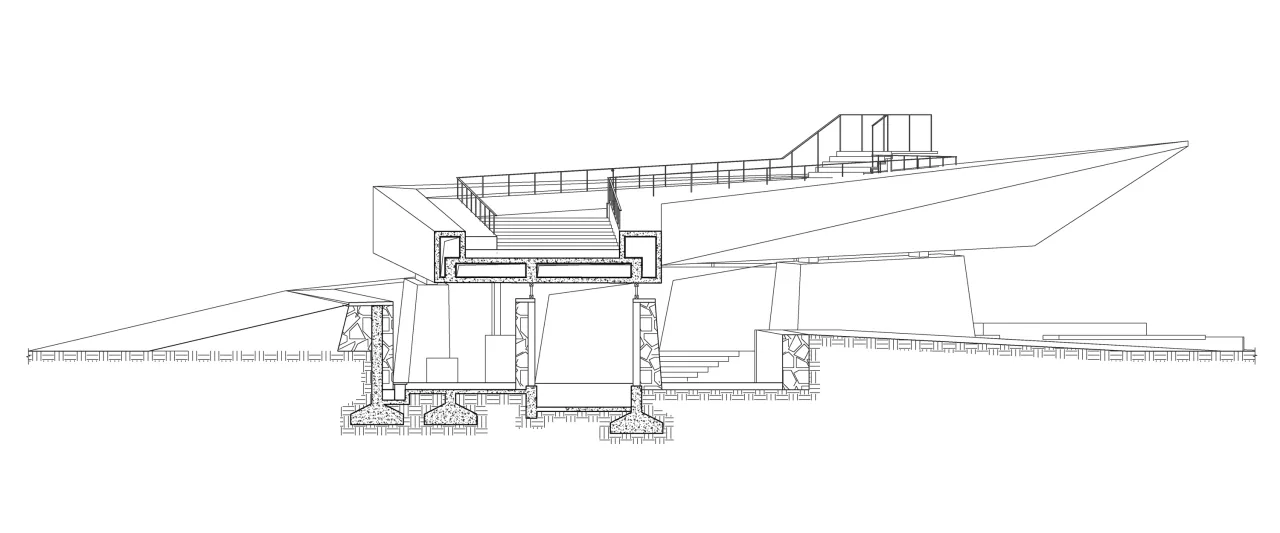
△ Section Diagram
Project Information
Project Name: Dali Erhai Xiaoyizhuang Ecological Station
Design Team: Line+Architectural Firm (Architecture, Interior, Landscape, and Signage)
Lead Architect / Project Creator: Meng Fanhao
Project Architects: Xu Hao, He Yaliang
Design Team Members: Xu Yifan, Zhang Jinyue (intern), Fang Sitao (intern), Lin Weijun (intern), Yu Qizheng (intern) (Architecture); Qiao Ziyang (intern); Zhu Jun, He Yukuan, Deng Hao (Interior); Li Shangyang, Jin Jianbo, Zhang Wenjie (Landscape)
Owner: Dali Cang’er Investment Co., Ltd
Structural Design: Shanghai Xieyimin Structural Design Firm Co., Ltd
Structural Design Team: Wang Jin, Yuan Shenglin, Hu Jiayi, Jiang Yanning, Liu Bo
Mechanical and Electrical Design: Shanghai Sanjiang Mechanical and Electrical Technology Co., Ltd
Mechanical and Electrical Design Team: Liu Wei, Chen Yanping, Jiang Shaohua, Pan Xilin
Construction Drawing Cooperation: Dali Bai Autonomous Prefecture Urban and Rural Planning and Design Research Institute
Construction Unit: Yunnan Construction Investment Holding Group Co., Ltd
Concrete Construction: Manouer Plain Concrete
Interior Construction: Suzhou Jintanglang Building Decoration Co., Ltd
Project Location: Dali, Yunnan
Building Area: 150 square meters
Design Period: July 2020 – July 2021
Construction Period: July 2021 – October 2022
Materials: Black plain concrete, oak, limestone, steel plate, steel reinforcement, UHPC board
Structure: Concrete structure
Photography: Wang Ce












Must log in before commenting!
Sign Up