
Renewing industrial heritage not only honors the past but also serves the present. Looking ahead, we aim to breathe new life into underutilized urban land by blending historical memory with contemporary spirit through a process we call “gold restoration.” — Zhu Peidong
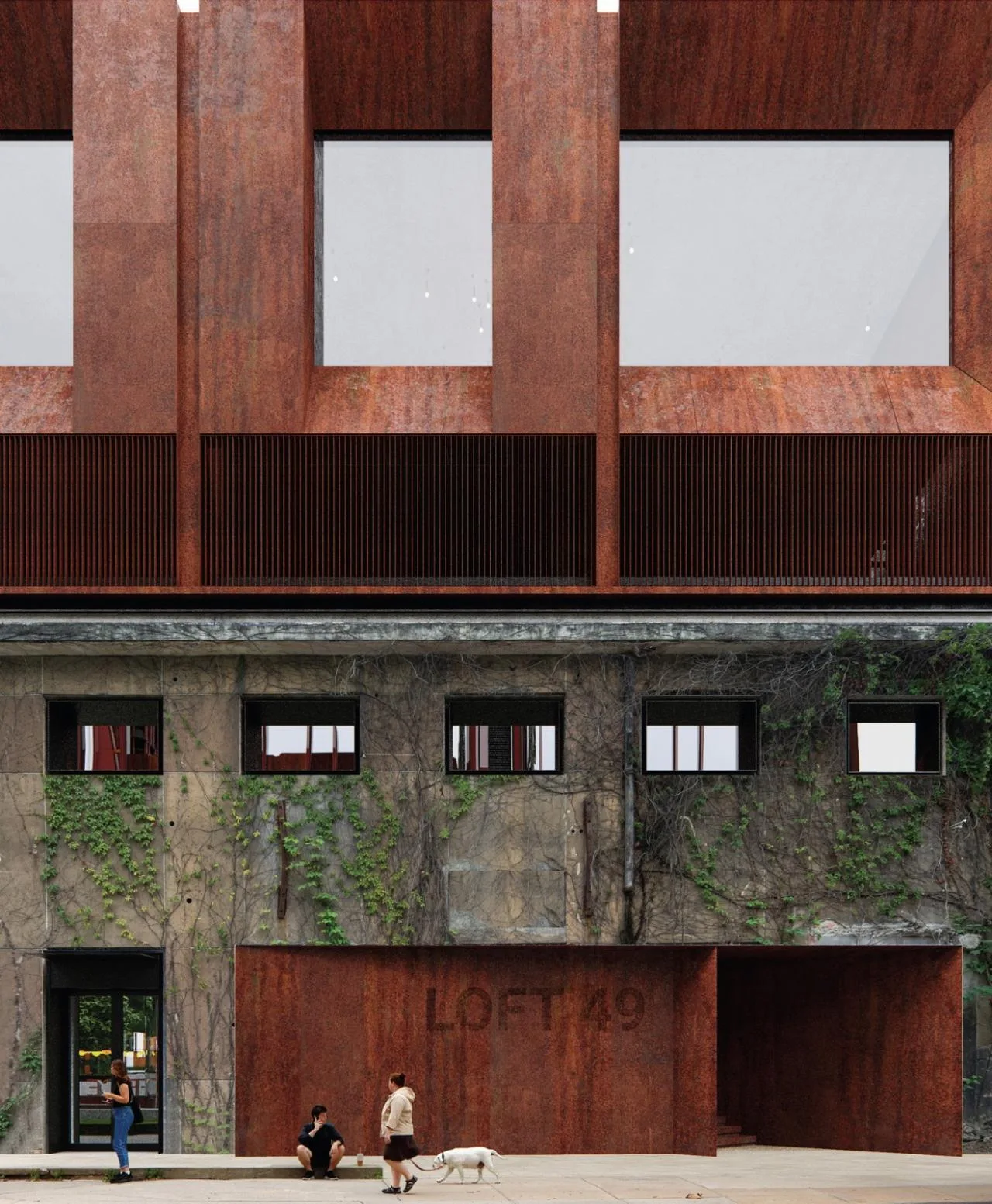
△ Rendering by Mir
Located on the banks of the Grand Canal in Hangzhou, LOFT49 traces its origins back to the Hangzhou Chemical Fiber Factory, established in 1958. By the 1980s, it evolved into the Blue Peacock Nylon Branch. In 2003, as urban development shifted focus from industry to the tertiary sector, many idle industrial plants attracted spontaneous gatherings of artists. This led to the birth of LOFT49, recognized as Hangzhou’s first iconic cultural and creative park and the pioneering hub for Zhejiang Province’s new cultural and creative industries. The park operated until 2019, when it closed for redevelopment and upgrade.
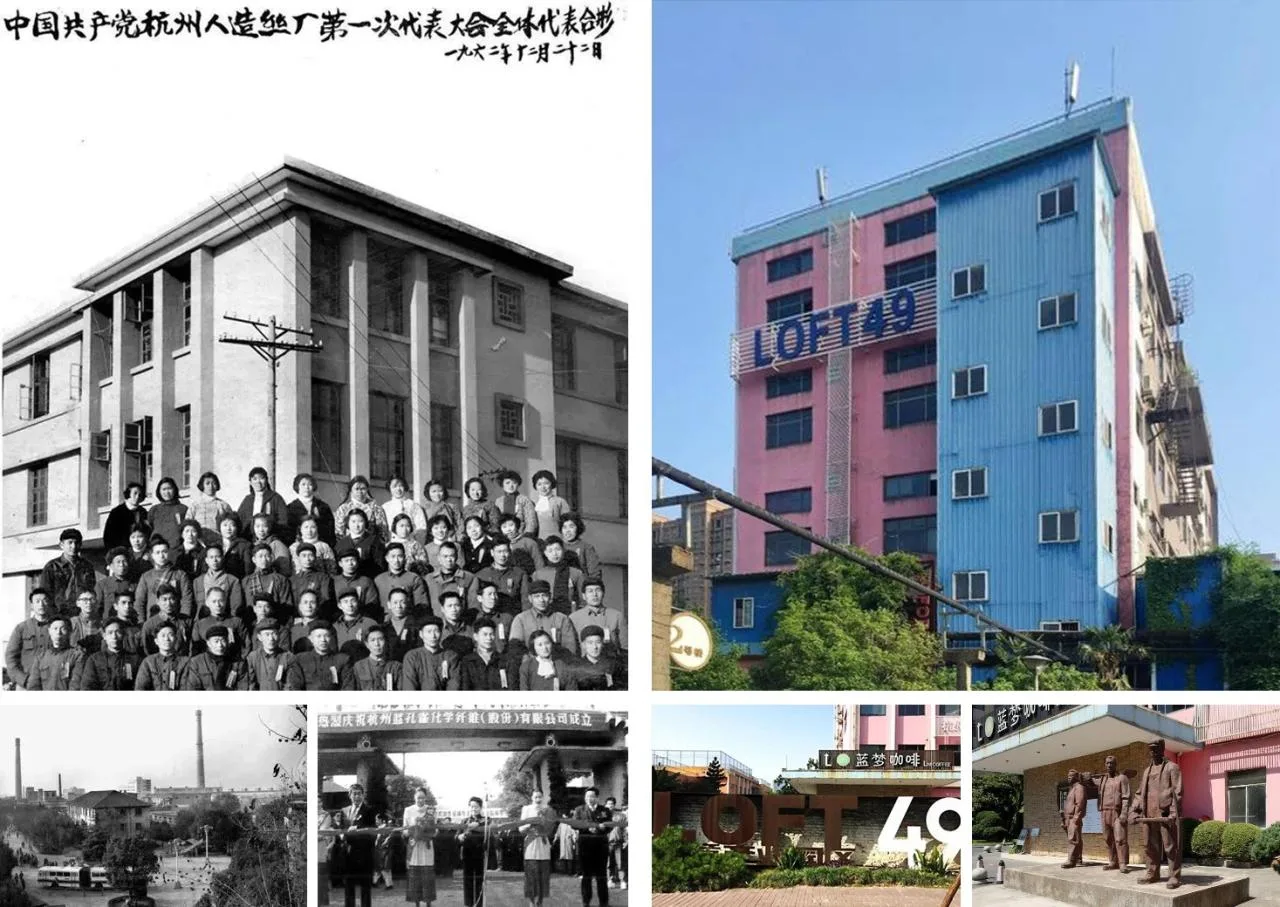
△ Realistic view of Hangzhou Chemical Fiber Factory and LOFT49 Creative Park
Dr. Zhu Peidong, co-founder and lead architect of Line+Architecture, led a team that won the design rights for the master planning, overall scheme, and integrated renewal of industrial heritage buildings in LOFT49 Park Phase II. Collaborating with Zhongwai Jianhua Cheng, the general design contractor, they are creating a demonstration industrial renewal park along the Grand Canal. Construction is currently underway and is scheduled for completion and public opening by 2025.
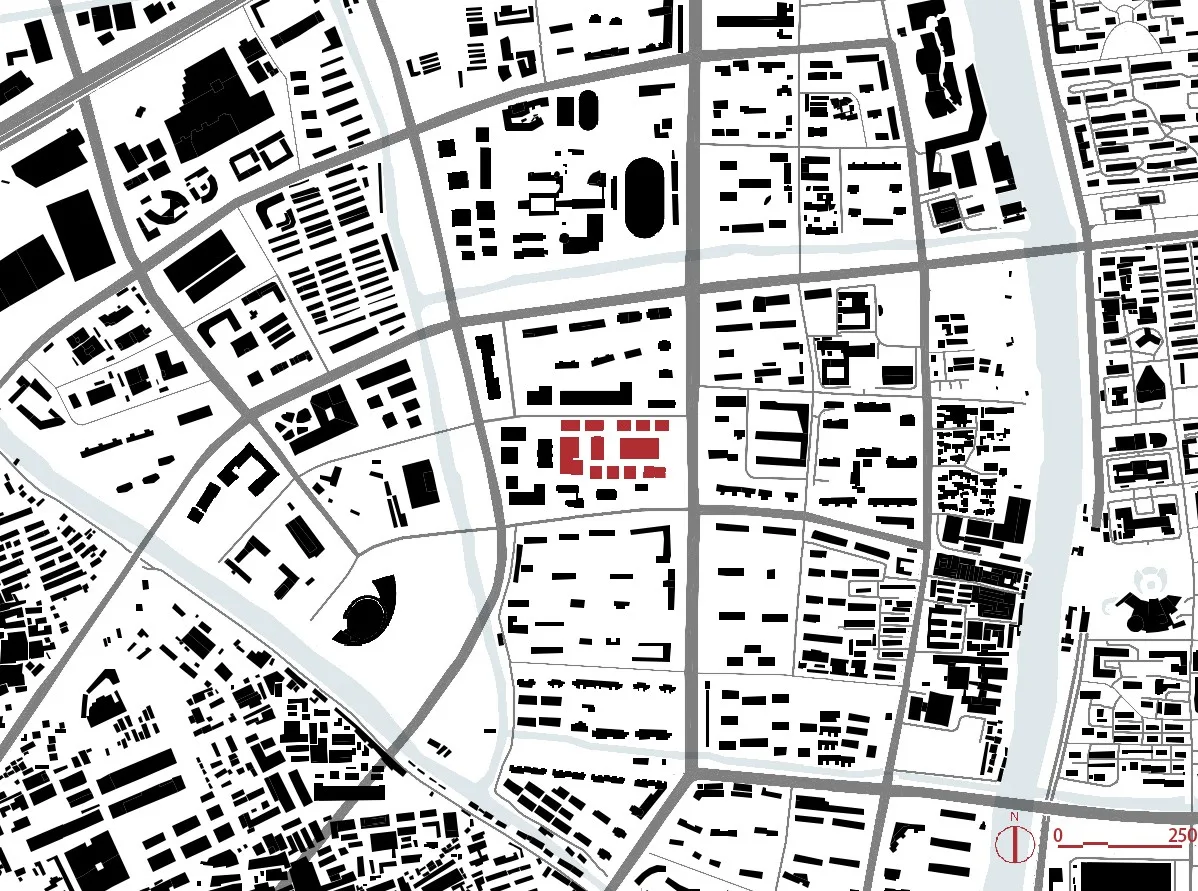
△ Location map
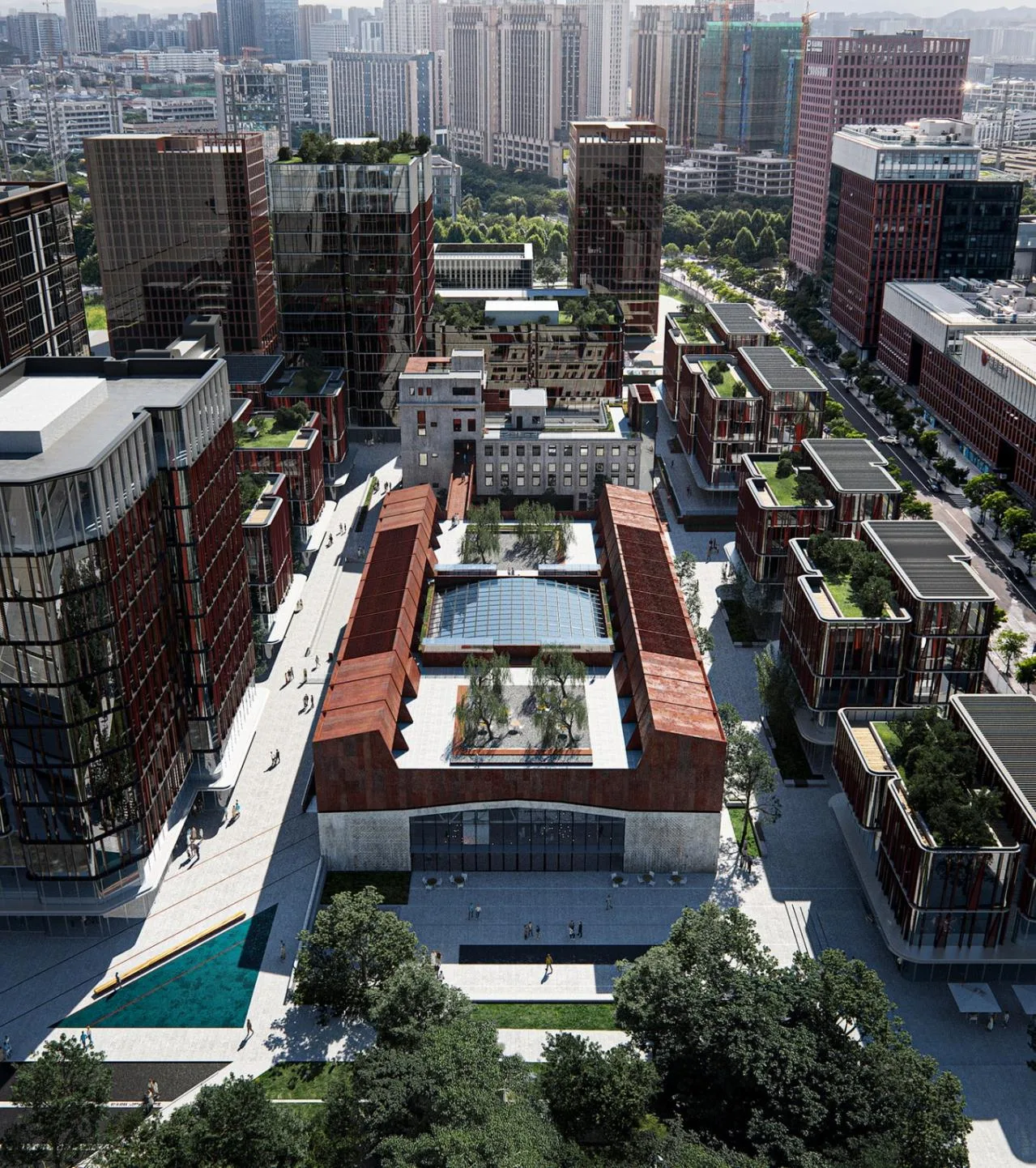
△ Image by Mir
Over the past four decades, LOFT49 has transformed comprehensively from an industrial park and heritage site to a creative industry hub. Today, it faces two major challenges: how to protect, update, and repurpose industrial heritage within the urban core, and how to efficiently increase spatial capacity to accommodate evolving industries.
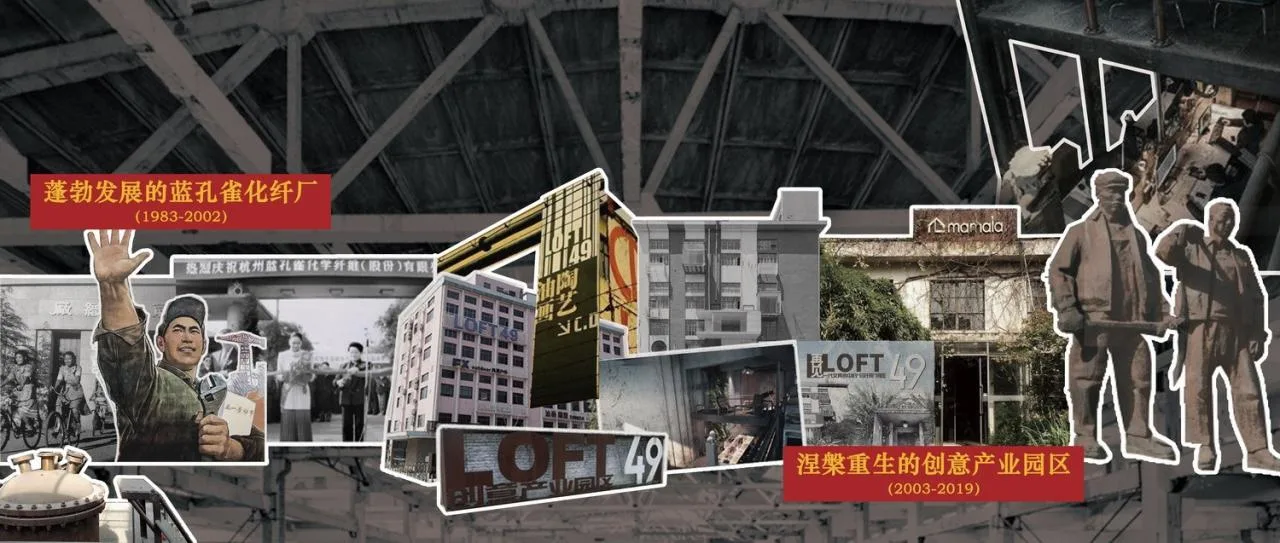
The Dual Heritage of Industry and Culture
Confronted with the demands for brownfield redevelopment and urban planning enhancement, Line+ introduced the concept of “gold restoration,” inspired by cultural relic restoration techniques. This approach treats the city’s history and imperfections as organic components to preserve, aiming to achieve both historical protection and revitalization by integrating and attributing value to diverse systems.
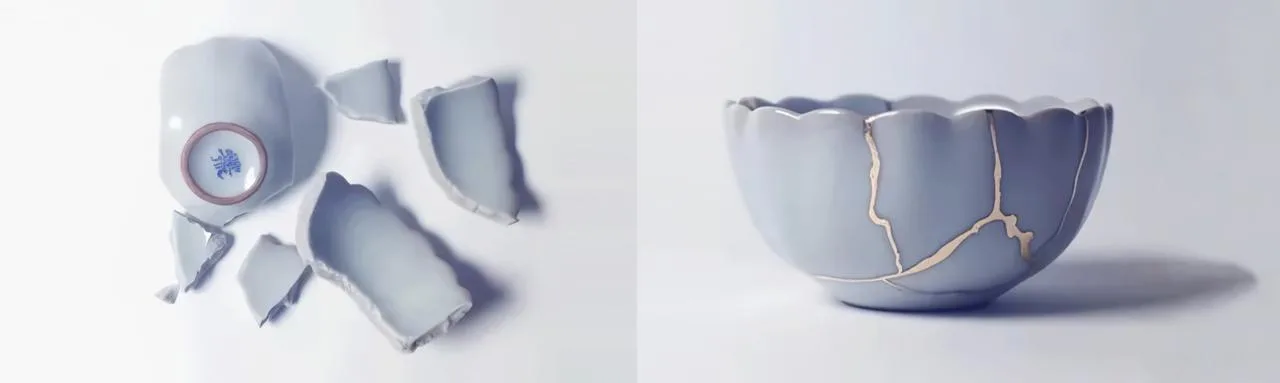
△ “Gold restoration” concept illustration
The master plan, themed “urban revitalization, vibrant neighborhoods,” draws on urban memory to inspire the renewal of public spaces and transform inefficient central city land. It focuses on expanding building capacity, upgrading commercial functions, evolving industrial forms, enhancing public spaces, and creating a dynamic block model designed to support diverse future scenarios.
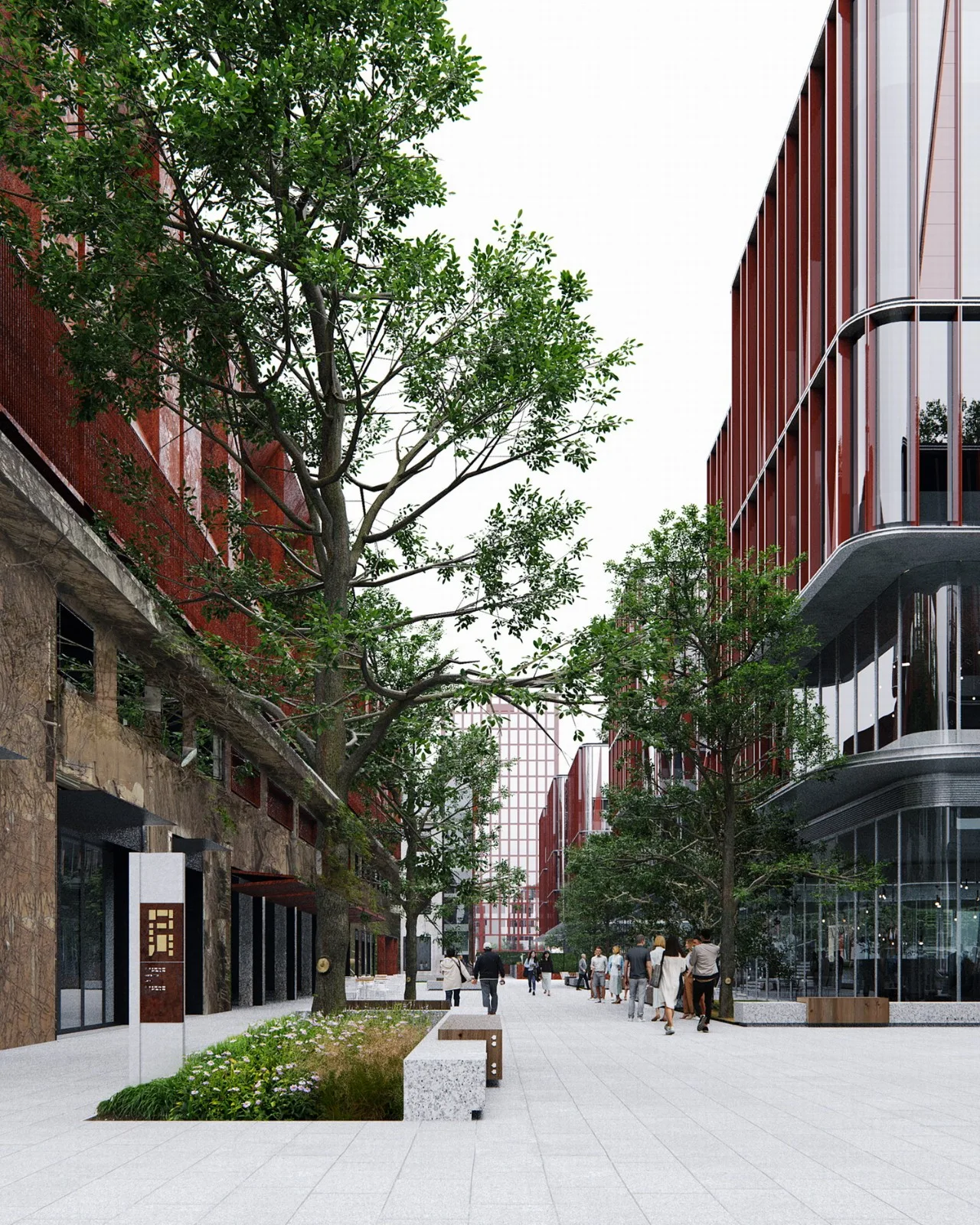
△ Rendering by Mir
01 City “Gold Restoration”: From Closed Parks to Vibrant Blocks
At the end of 2018, LOFT49 began preparatory work for updates, demolitions, and upgrades. Based on assessments by landscape and heritage experts, the most complete industrial-era features and well-preserved buildings—Building 6 and Building 10—were fully preserved. Surrounding areas, heavily damaged, saw the removal of auxiliary buildings with weak characteristics to free up space for future development. Phase one of renovations commenced on the northern part of the site, completed and in use by 2021. Phase two includes protecting and renovating the core park structures and two industrial heritage buildings, alongside constructing new buildings that increase capacity by nearly 90,000 square meters.
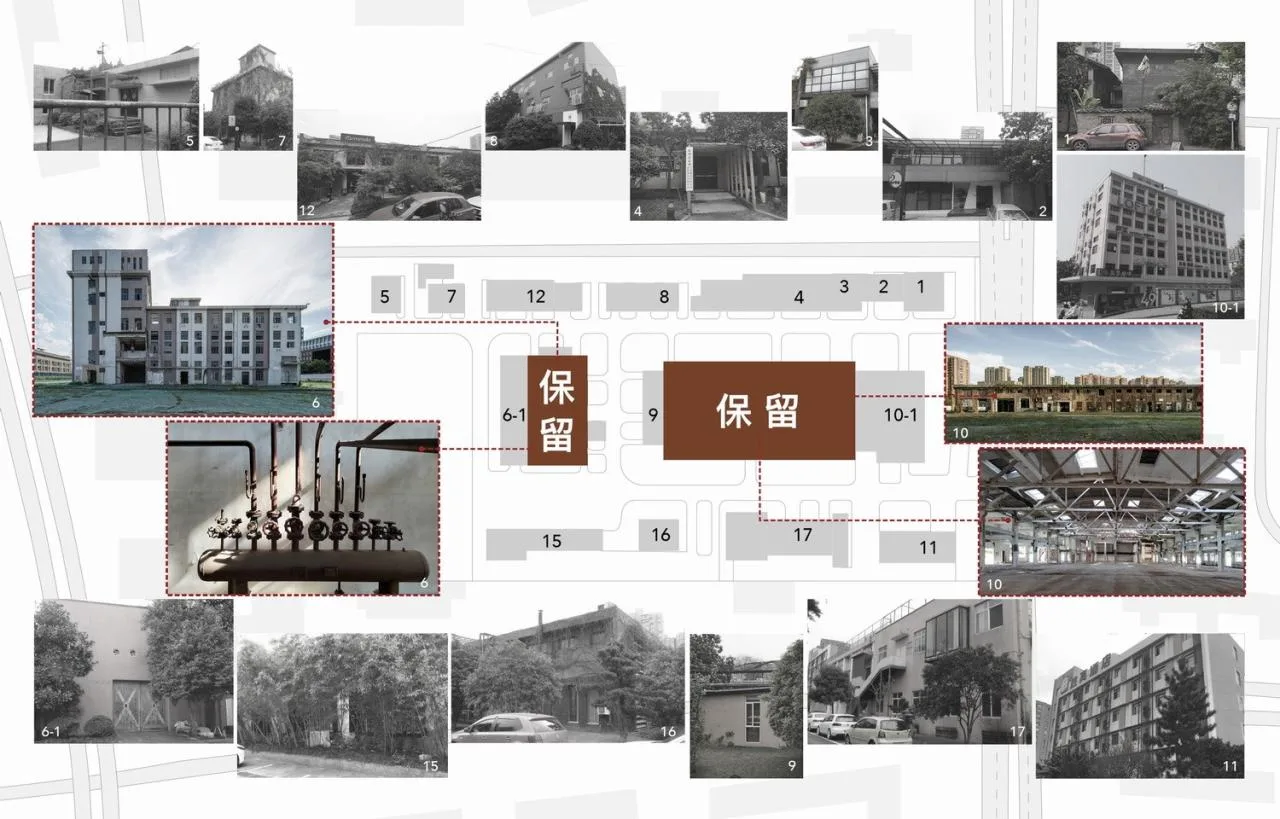
Derived demolition and preservation plan based on industrial heritage evaluation
During early design stages, the team studied the site’s cultural heritage, spatial materials, and neighborhood style to emphasize LOFT49’s unique industrial context and cultural creativity as essential to urban development. The plan retains the factory area’s original fabric, centering heritage buildings as the axis to highlight their importance, while increasing building capacity only around the perimeter. The design maintains friendly urban interfaces by opening boundaries, enhancing accessibility, controlling the scale of new construction, and fostering an inviting environment.
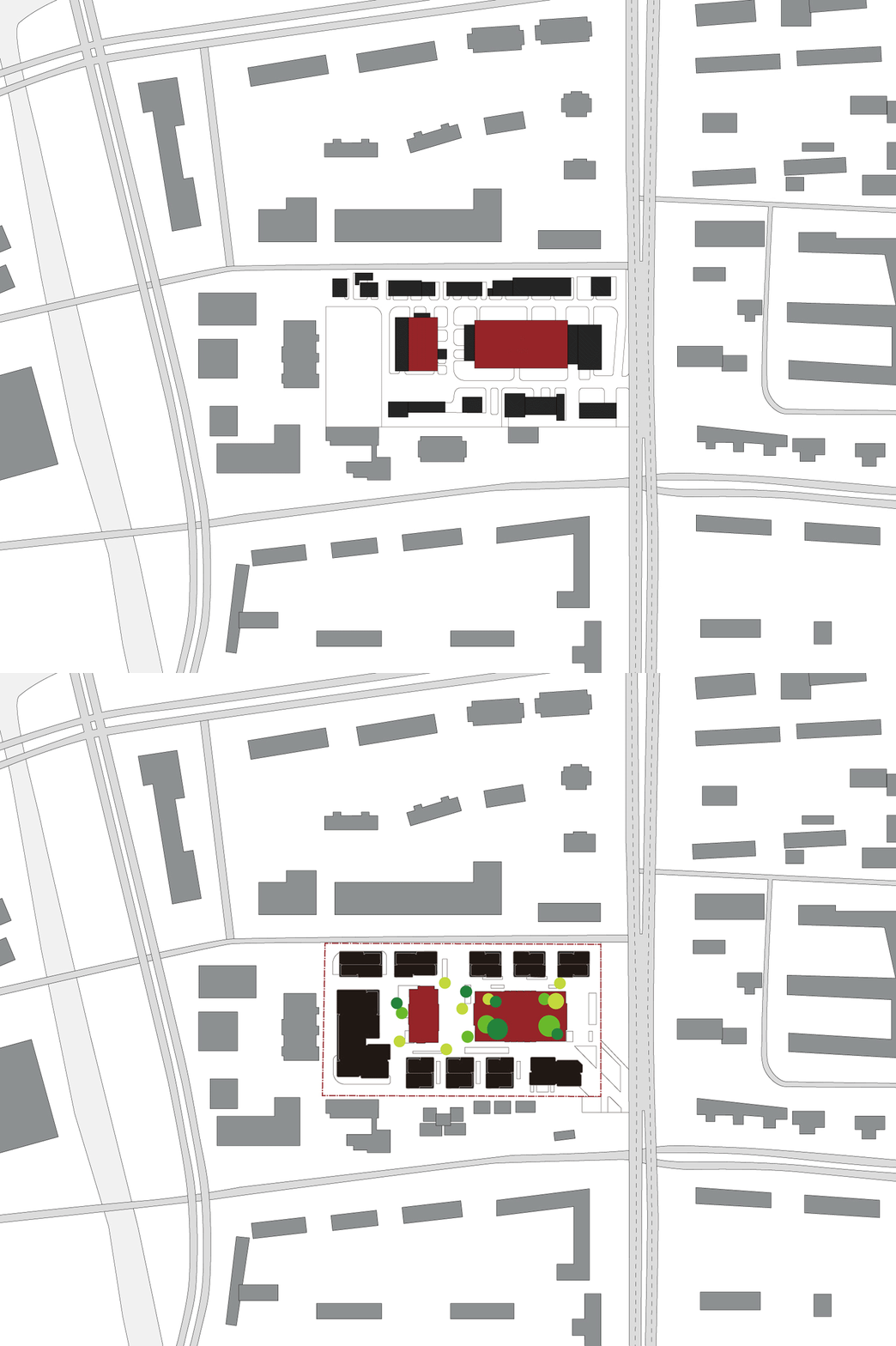
△ Location plan before and after renovation comparison
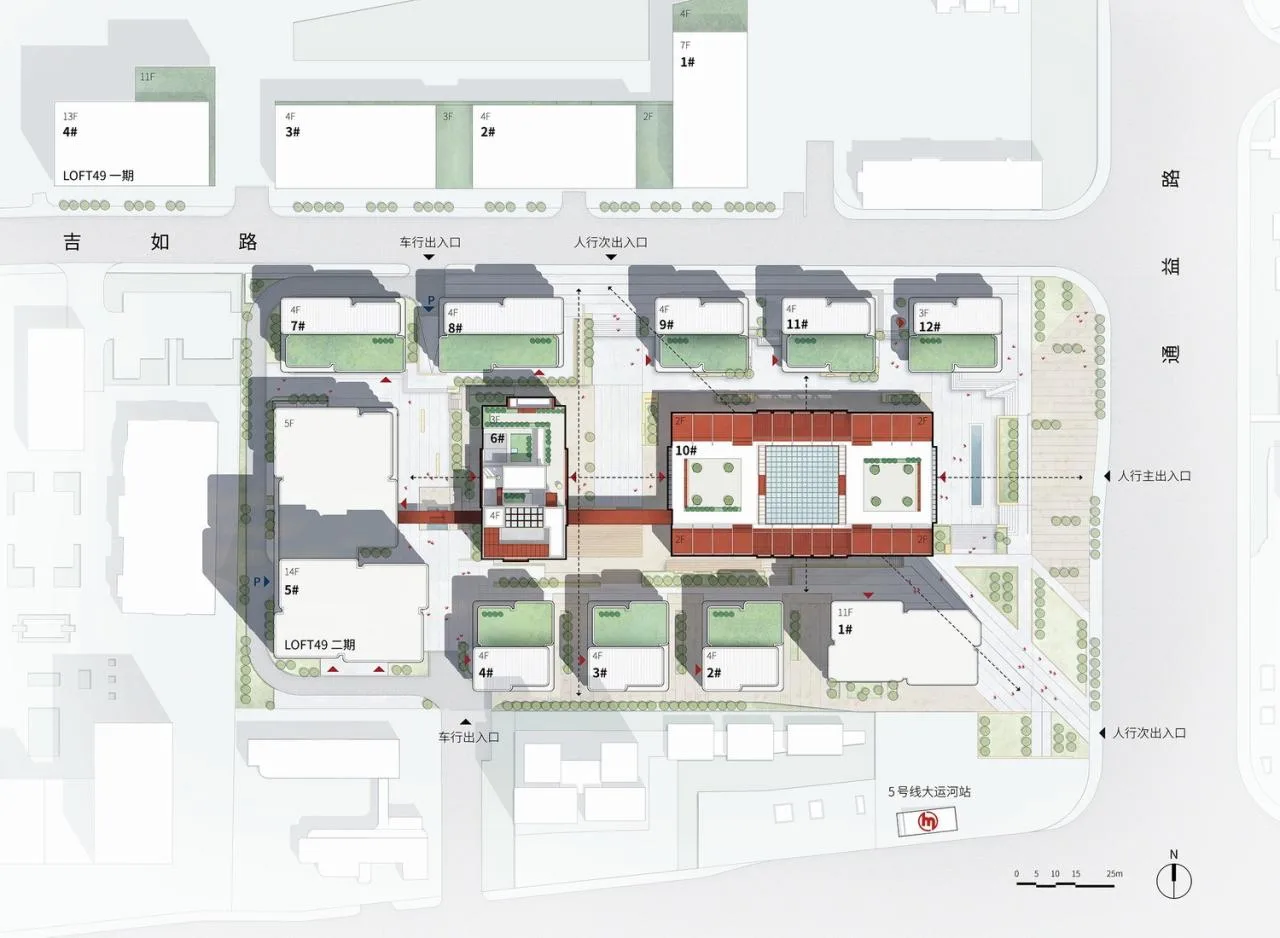
△ General layout plan
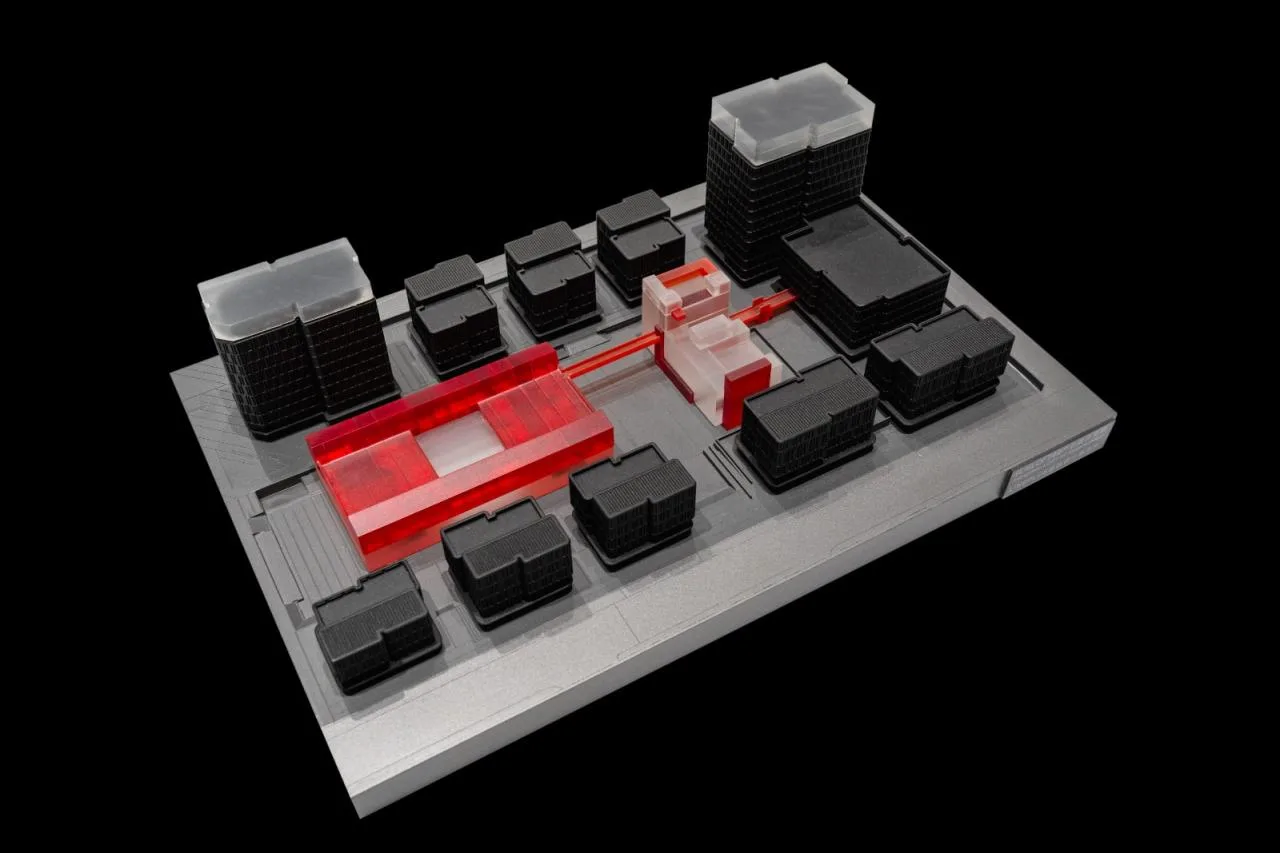
△ Conceptual planning model
The design seeks to transform the enclosed factory area into an open urban public platform guided by public activities and enhanced block openness. By blending office, leisure, ecological living, art, and culture, the project aims to catalyze urban activation. Due to plot ratio and height limits, only two high-rise buildings are positioned in the southern corner, complementing the phase one office building. The other three sides feature staggered mid-rise buildings.
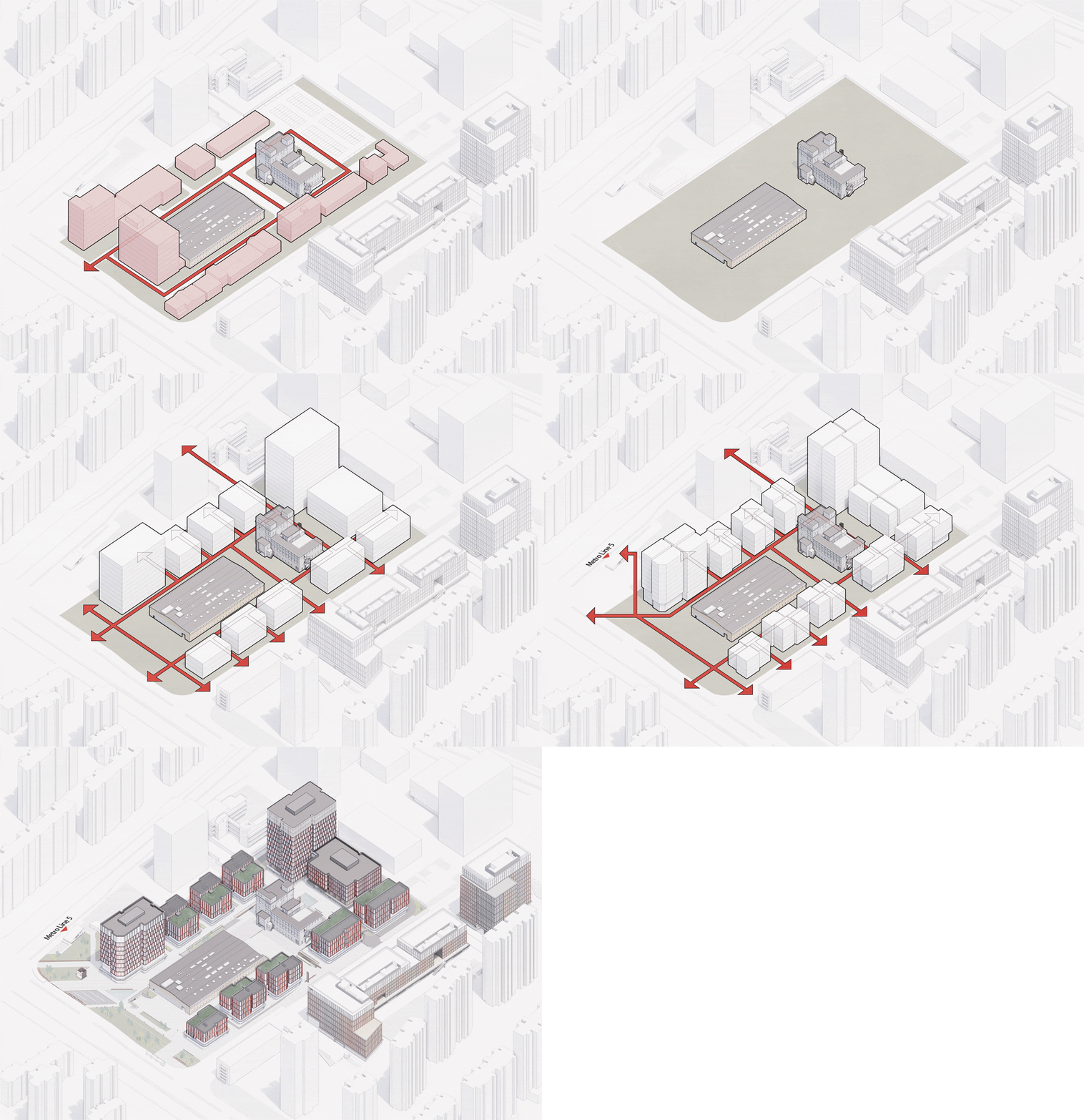
New building form development analysis
△ Image by Mir
The fractal windmill-shaped building design creates flexible rental units to meet diverse market needs, from startups to established companies. This approach also reduces building mass, producing a more comfortable block scale.
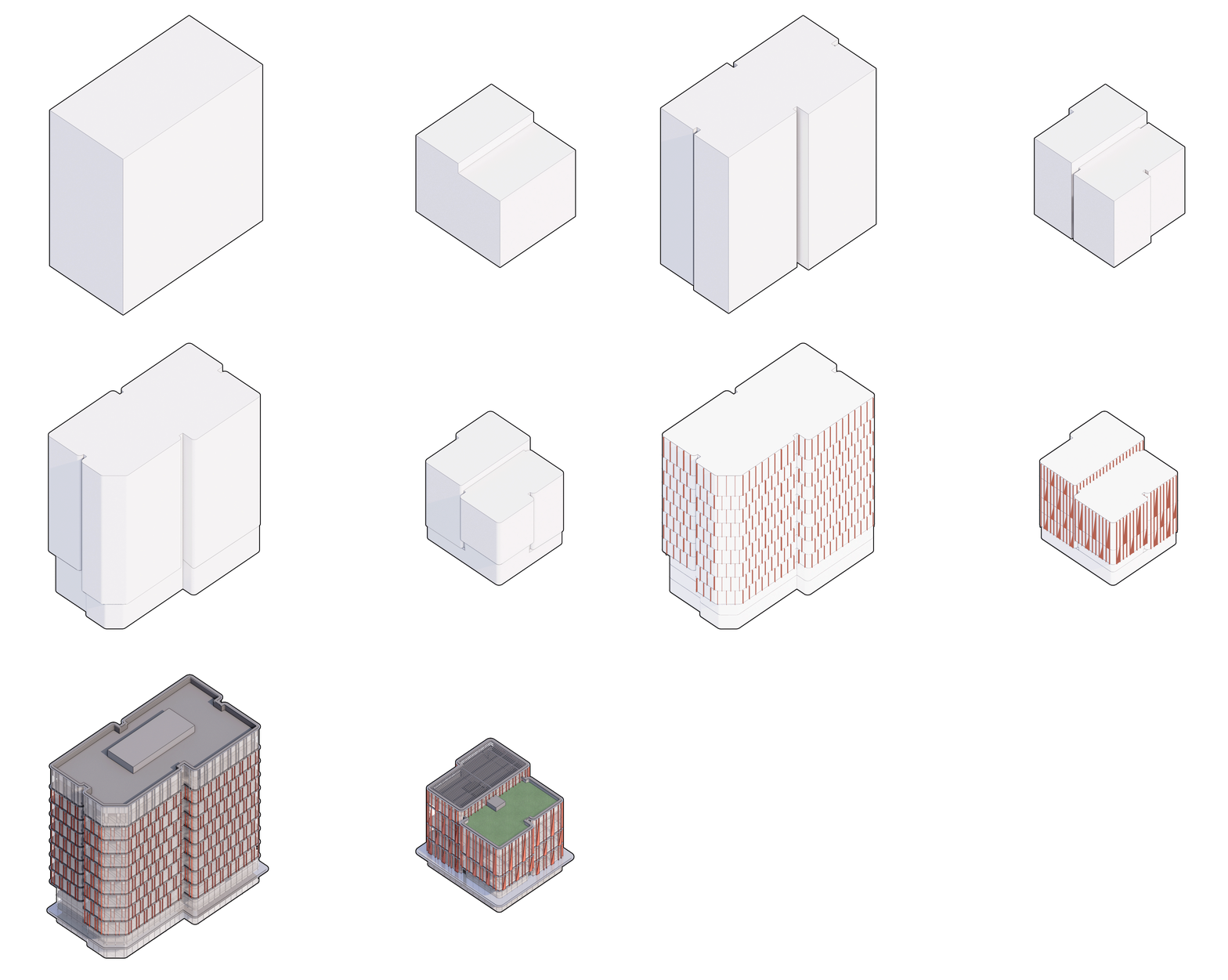
Facade design analysis for office buildings
The new office buildings feature deep red glazed ceramic panels and ceramic sticks as main facade materials, creating distinctive architectural expressions aligned with the block’s overall color scheme.
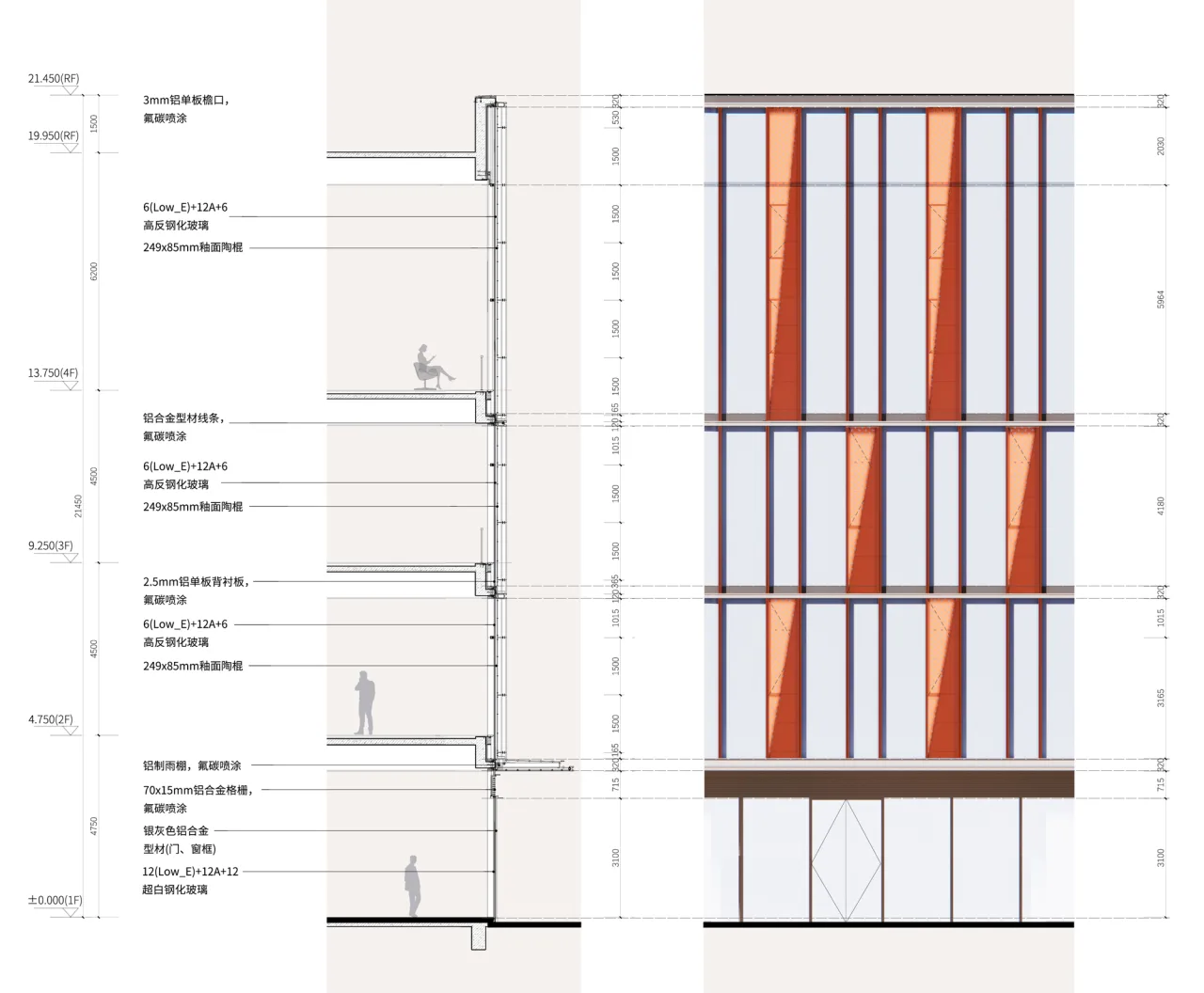
△ Office building wall sample
02 Heritage Regeneration: From Static Space to Dynamic Platform
Building 10, constructed in 1987, was the main production site of the original factory and features a typical steel truss, large-span structure. It houses advanced industrial process equipment. Building 6, built in 1990, was the acrylic sock production workshop and retains several production facilities. During the cultural and creative park phase, artists adapted both buildings by painting walls and partially enlarging windows. The current renovation aims to maintain authenticity while enhancing building performance and functionality with minimal intervention.
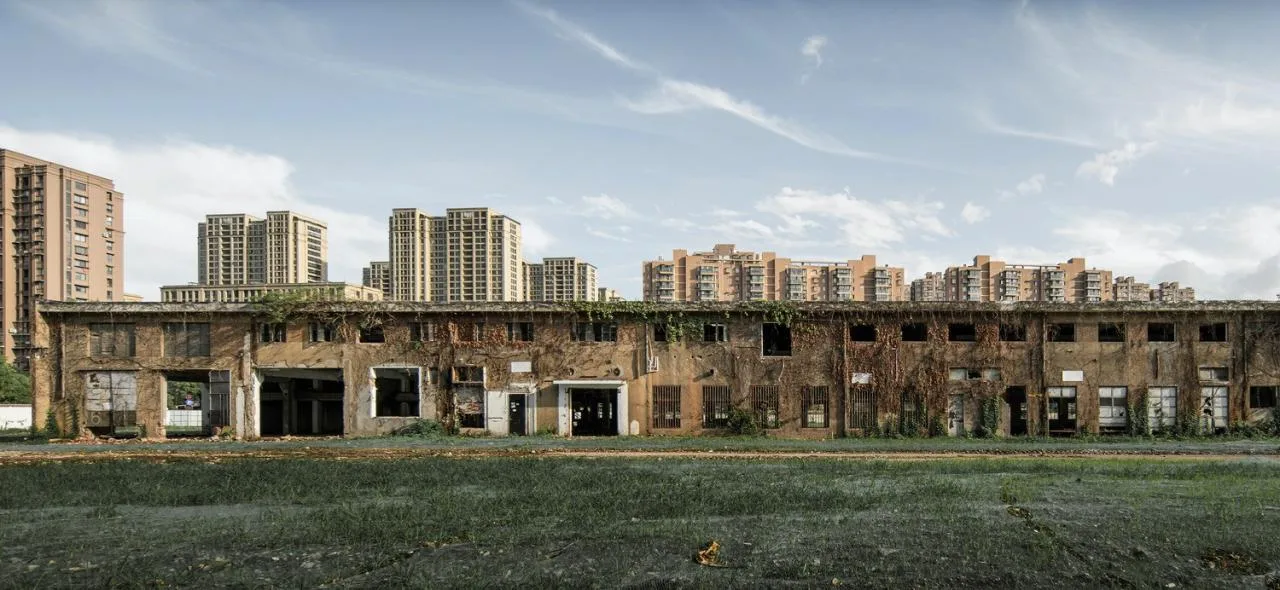
Building 10 before renovation
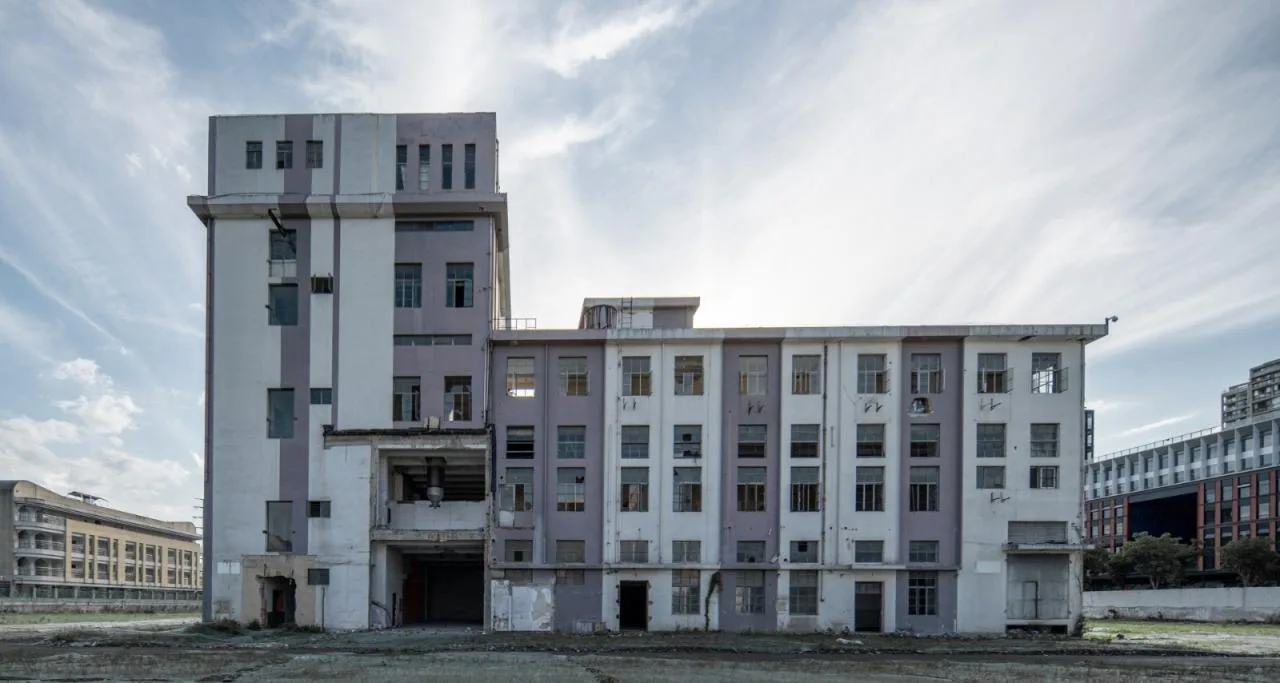
Building 6 before renovation
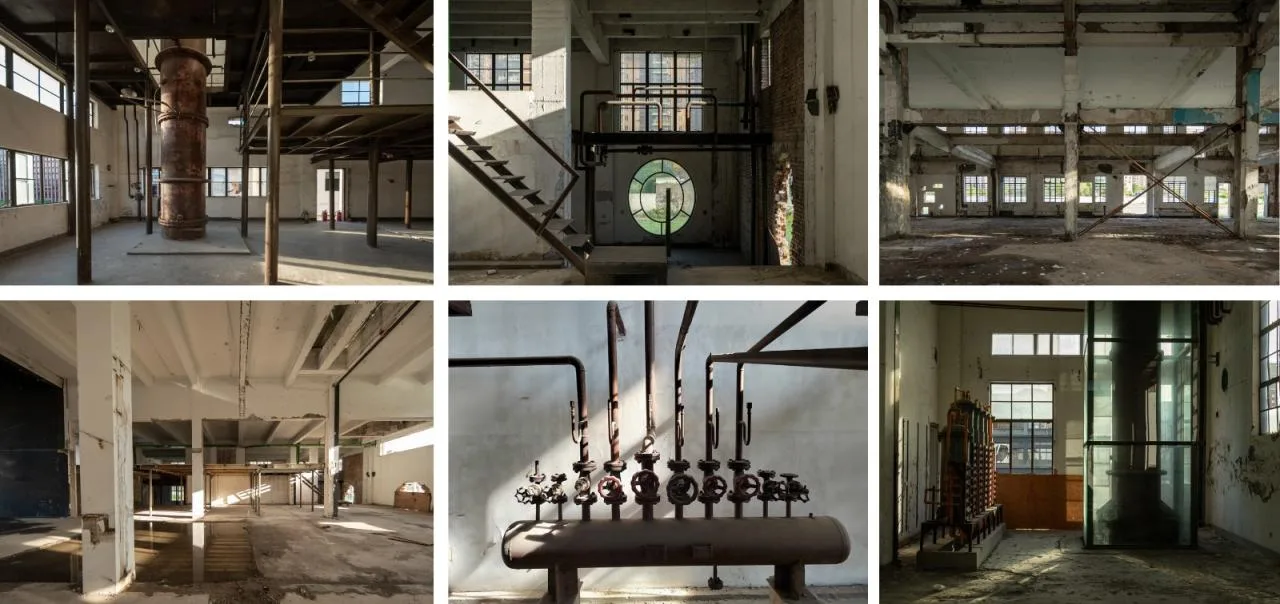
The buildings retain a significant amount of original production equipment
The architects employed an integrated “golden restoration” strategy to unify the form, function, and experience of the two renewed buildings. By cataloging overlapping relics and existing equipment from two eras, they transformed the original production flow into a spatial narrative, laying the foundation for an industrial storytelling experience.
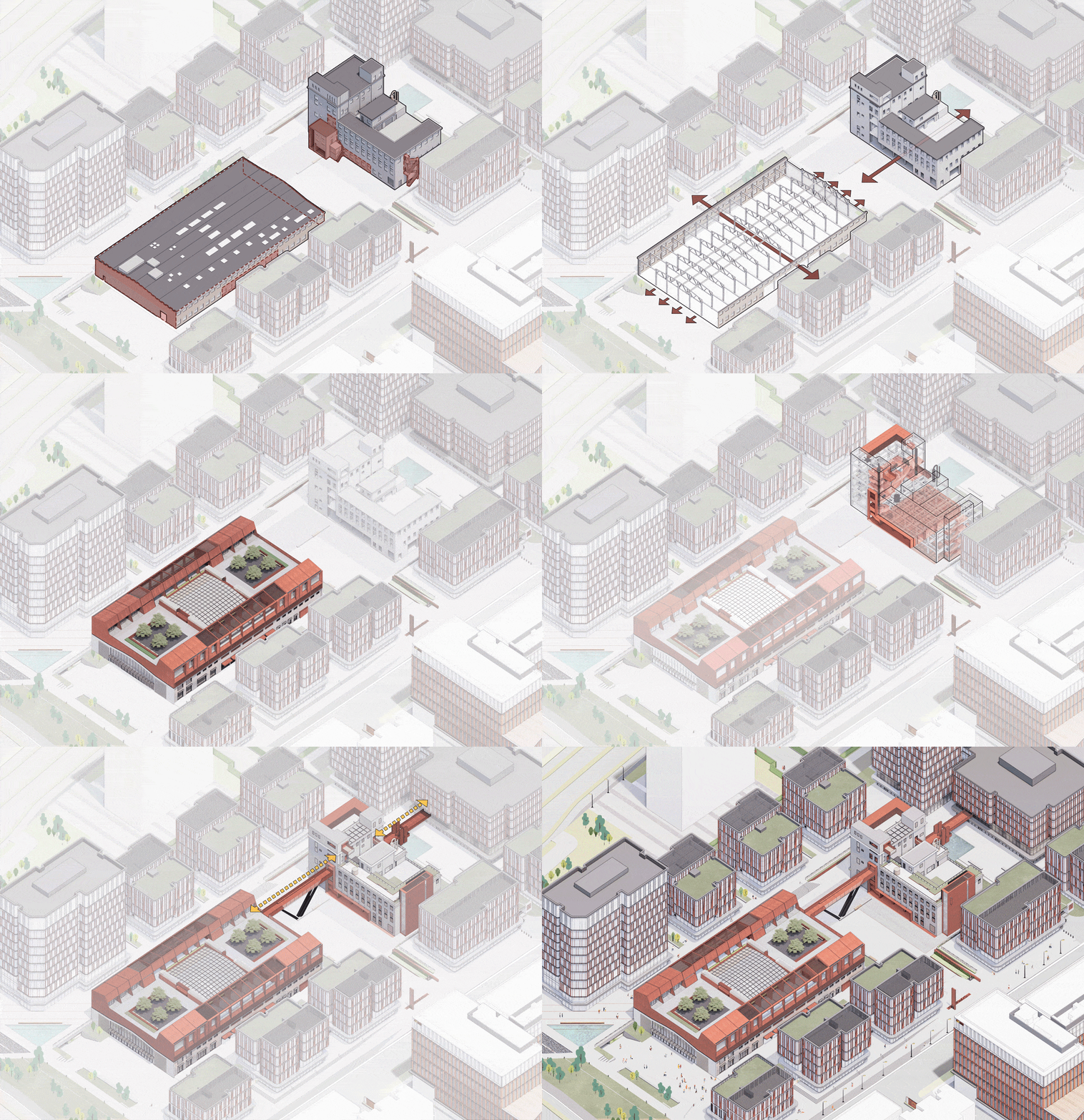
Form generation analysis for Building 6 and Building 10 renovation
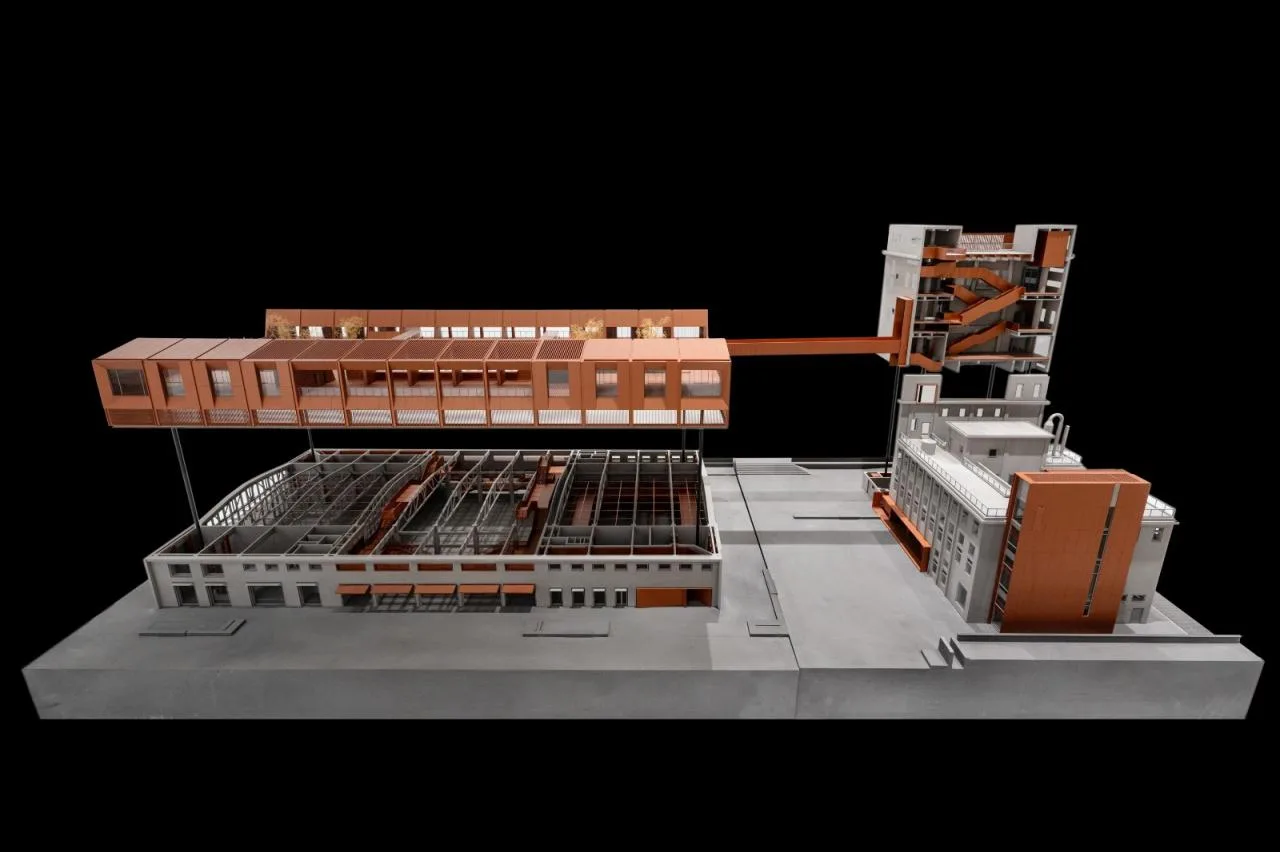
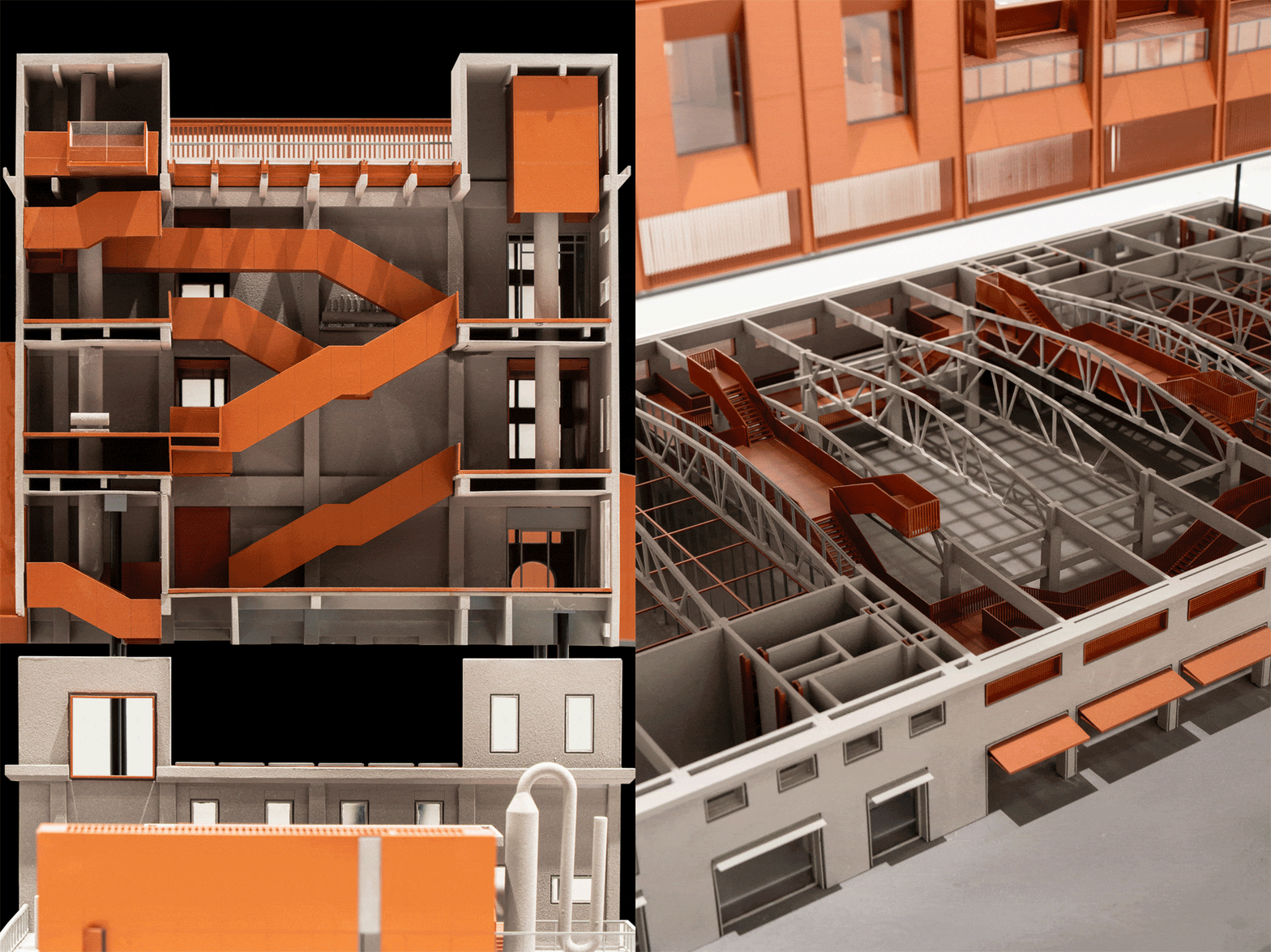
△ Model photo
The active opening of both buildings’ first floors enhances integration with park circulation, transforming previously cramped spaces into open, accessible areas. The 11.85-meter high-rise structure connects via boardwalks and bridges to form a cohesive exhibition narrative centered on industrial production. Internal functions respect original spatial layouts to maintain continuity while adapting to new uses. This approach strengthens connections between buildings and the surrounding park, supporting block openness.
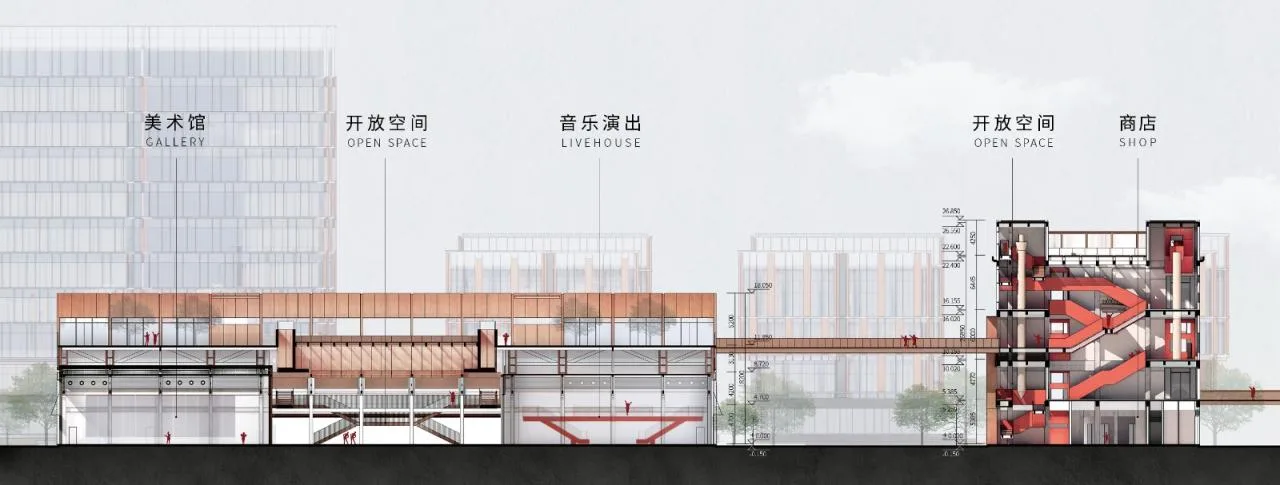
△ Profile of spatial relationships
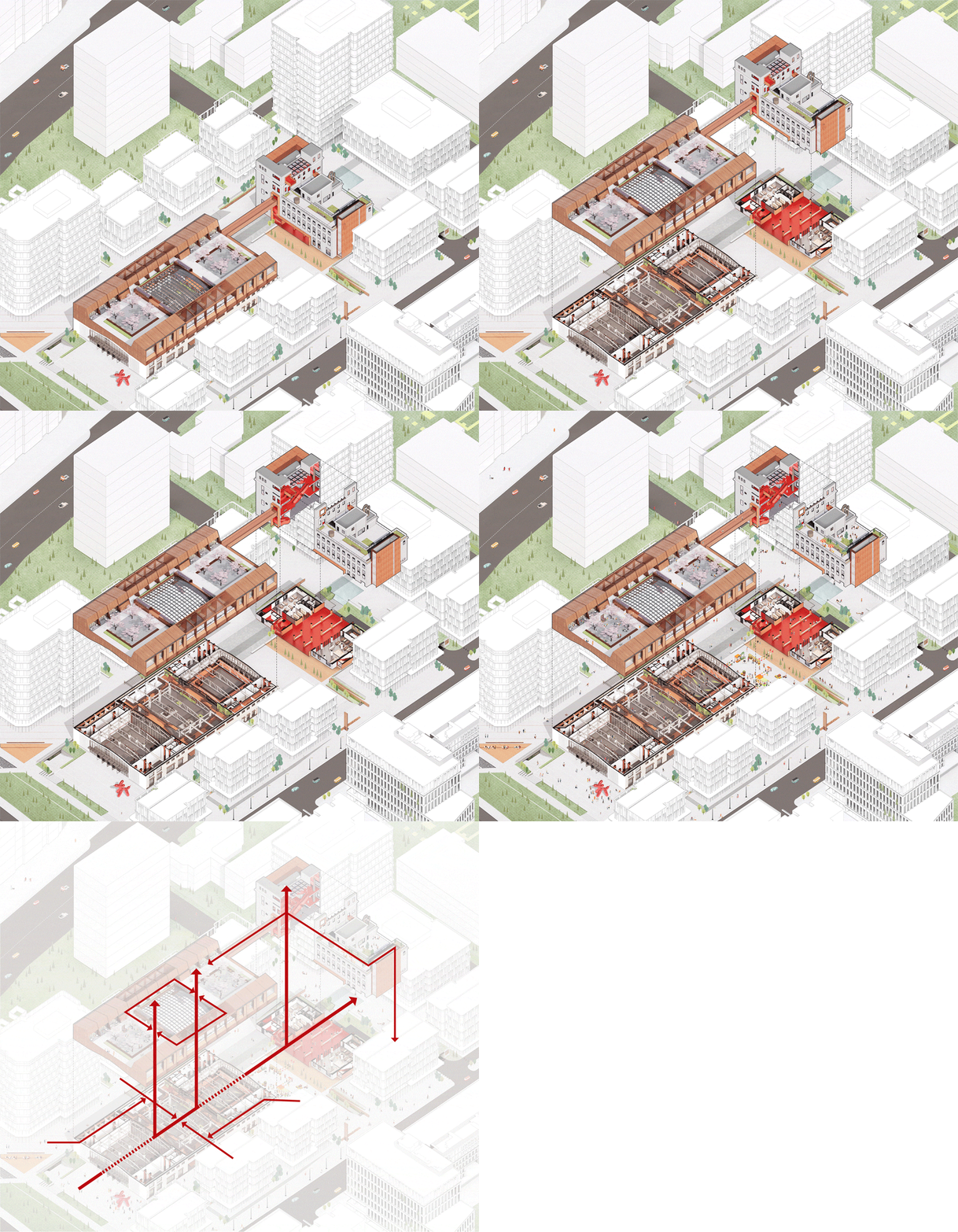
△ Axial exploded diagram
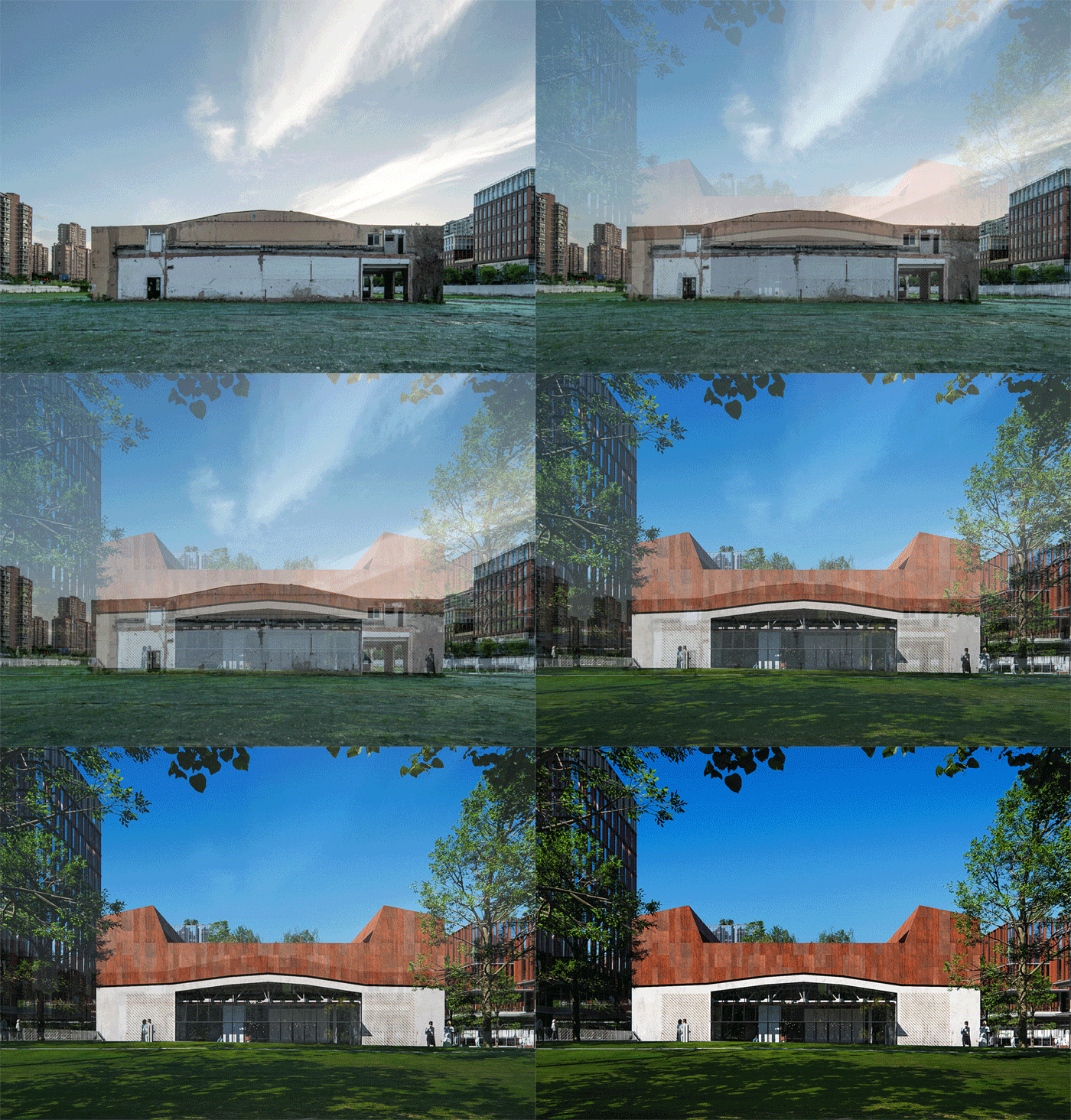
The north and south facades of Building 10 retain the industrial plant character by preserving window proportions, wall materials, and cultural park-era renovations. The central entrance is expanded into a public atrium, while the east and west facades are partially opened to expose internal truss structures and equipment. Structural reinforcements are applied to the original trusses and side walls.
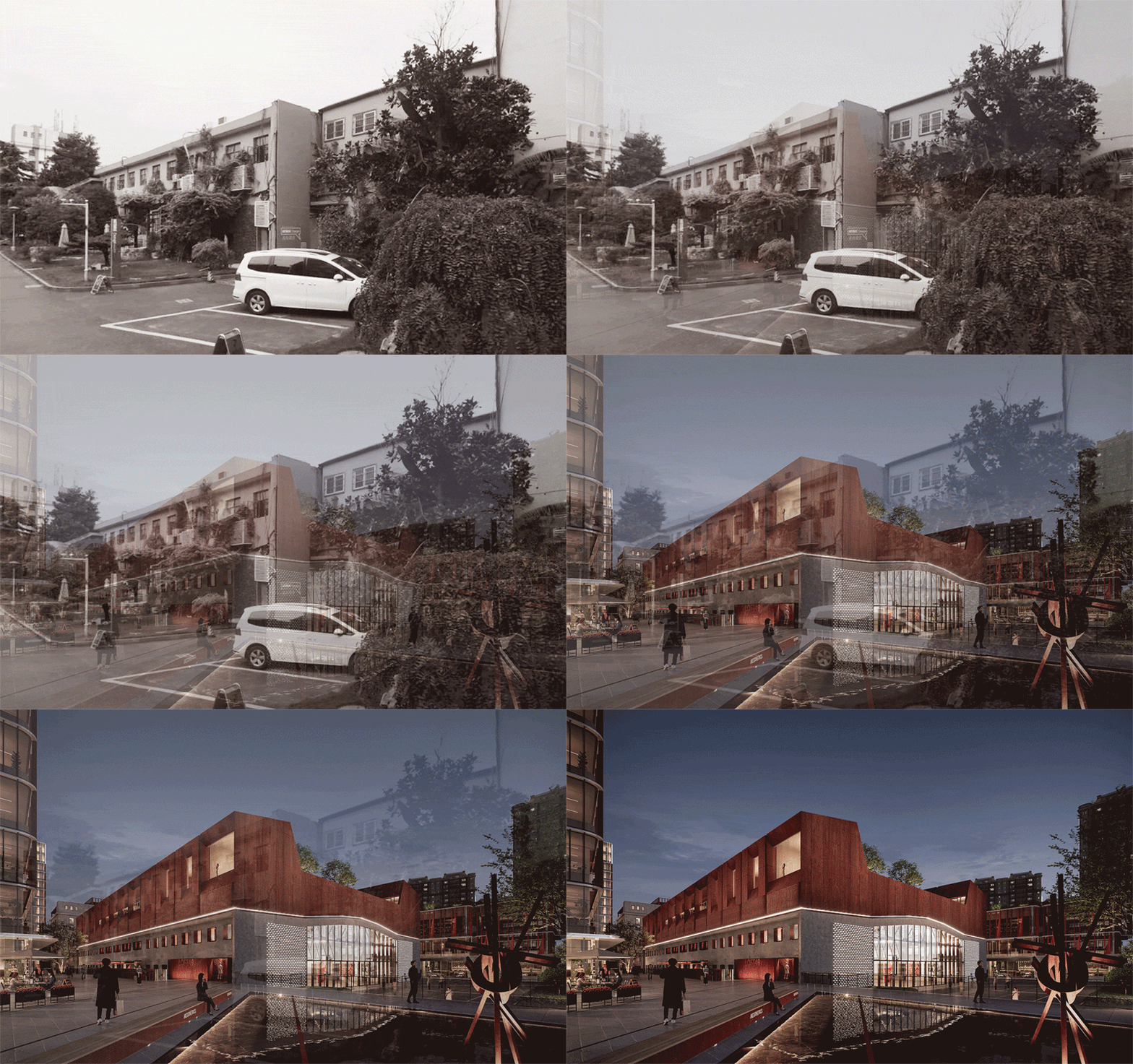
Comparison of Building 10’s exterior facade before and after renovation
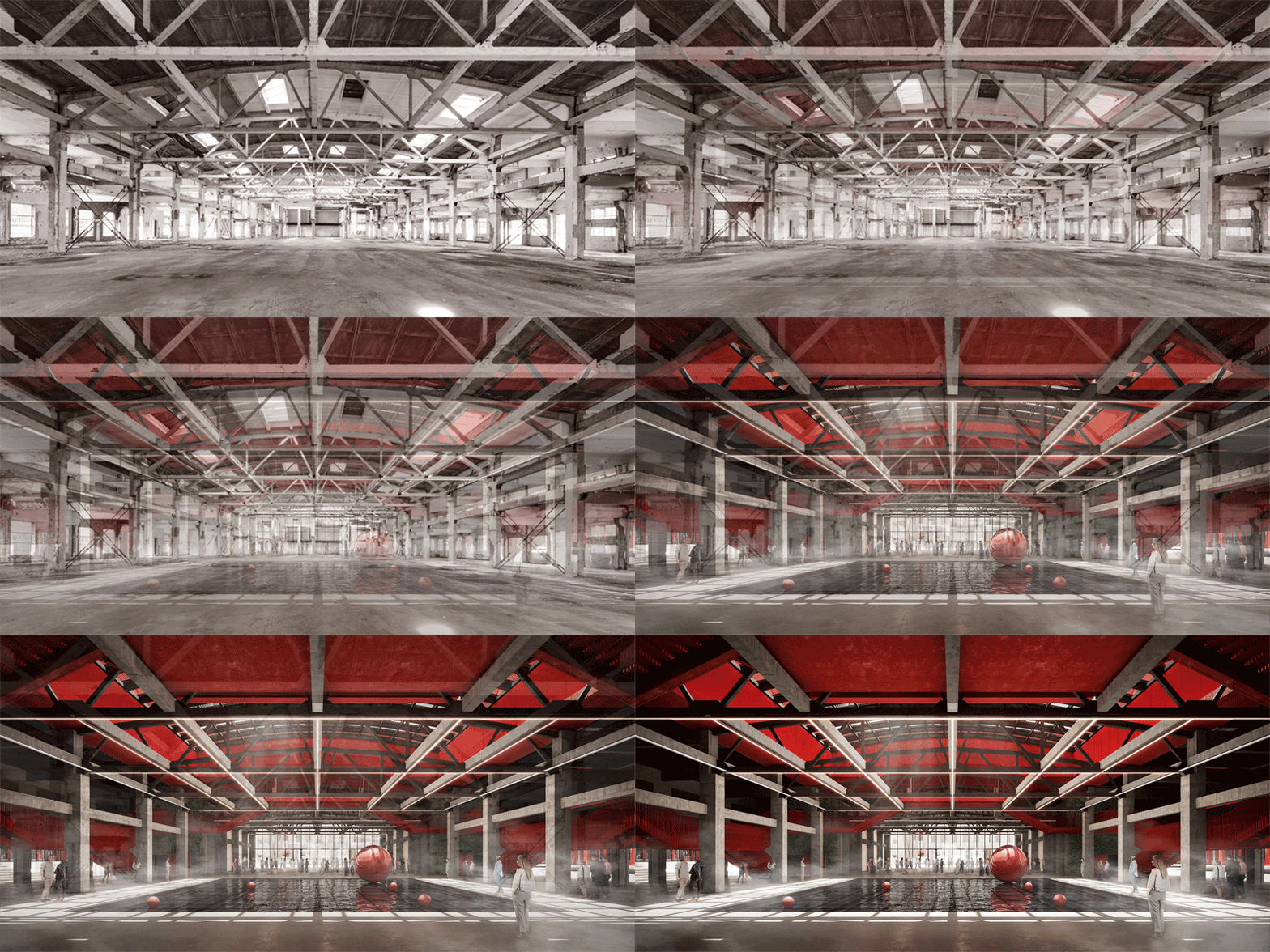
Comparison of Building 10’s interior space before and after renovation
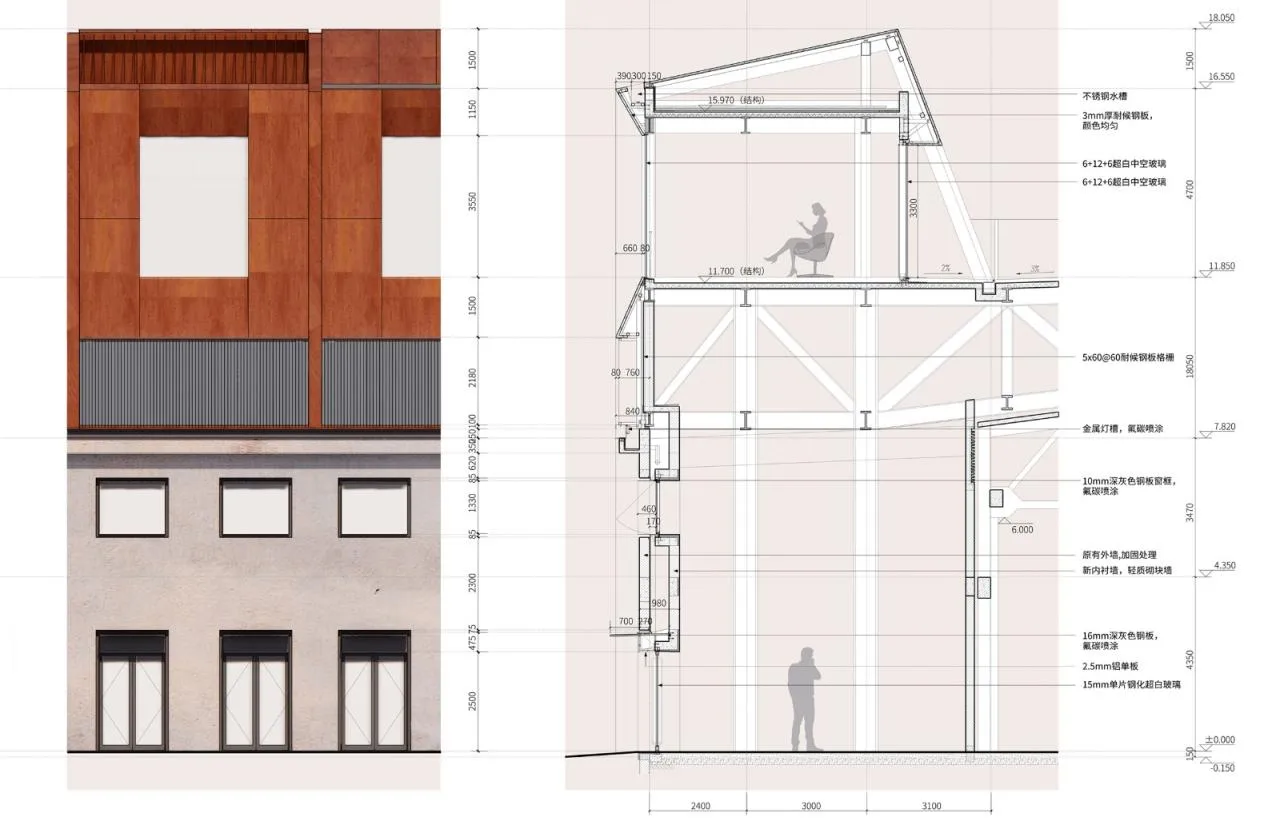
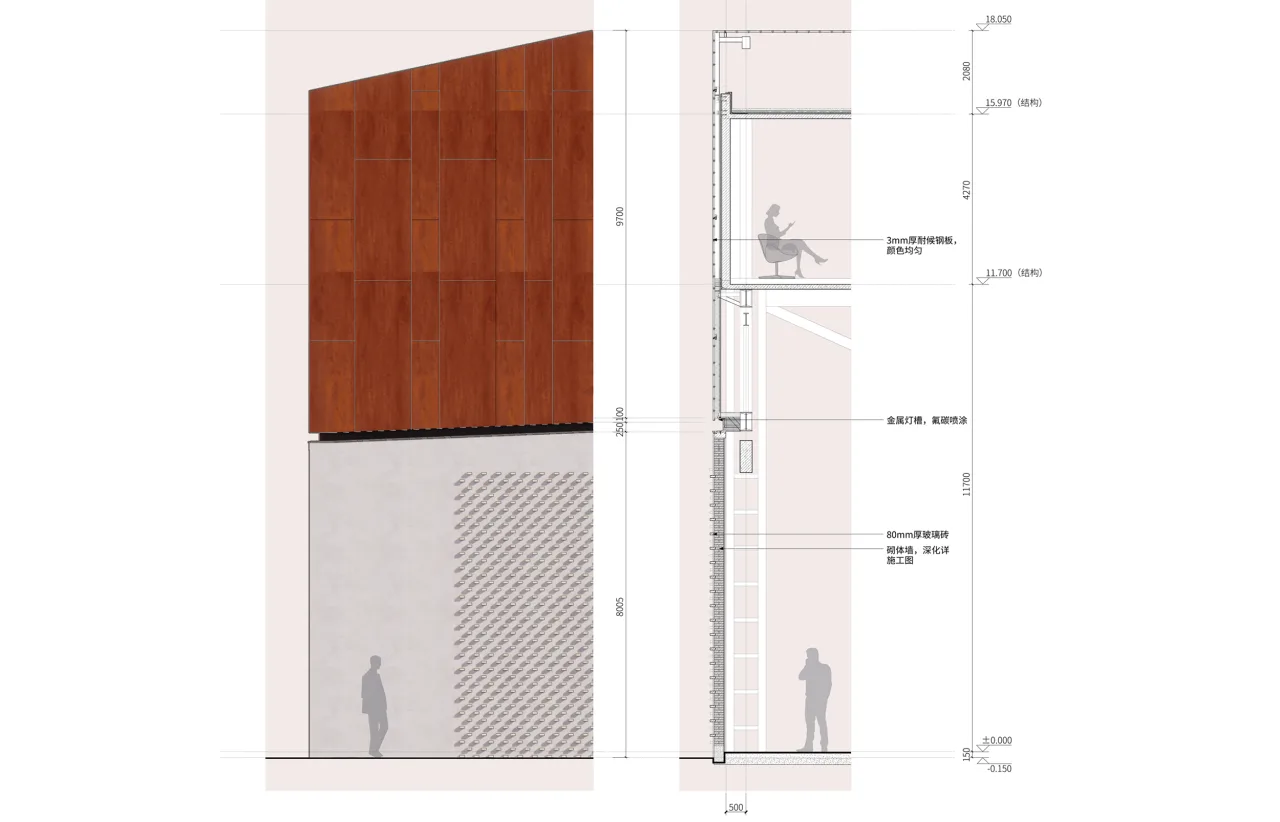
△ Wall sample of Building 10
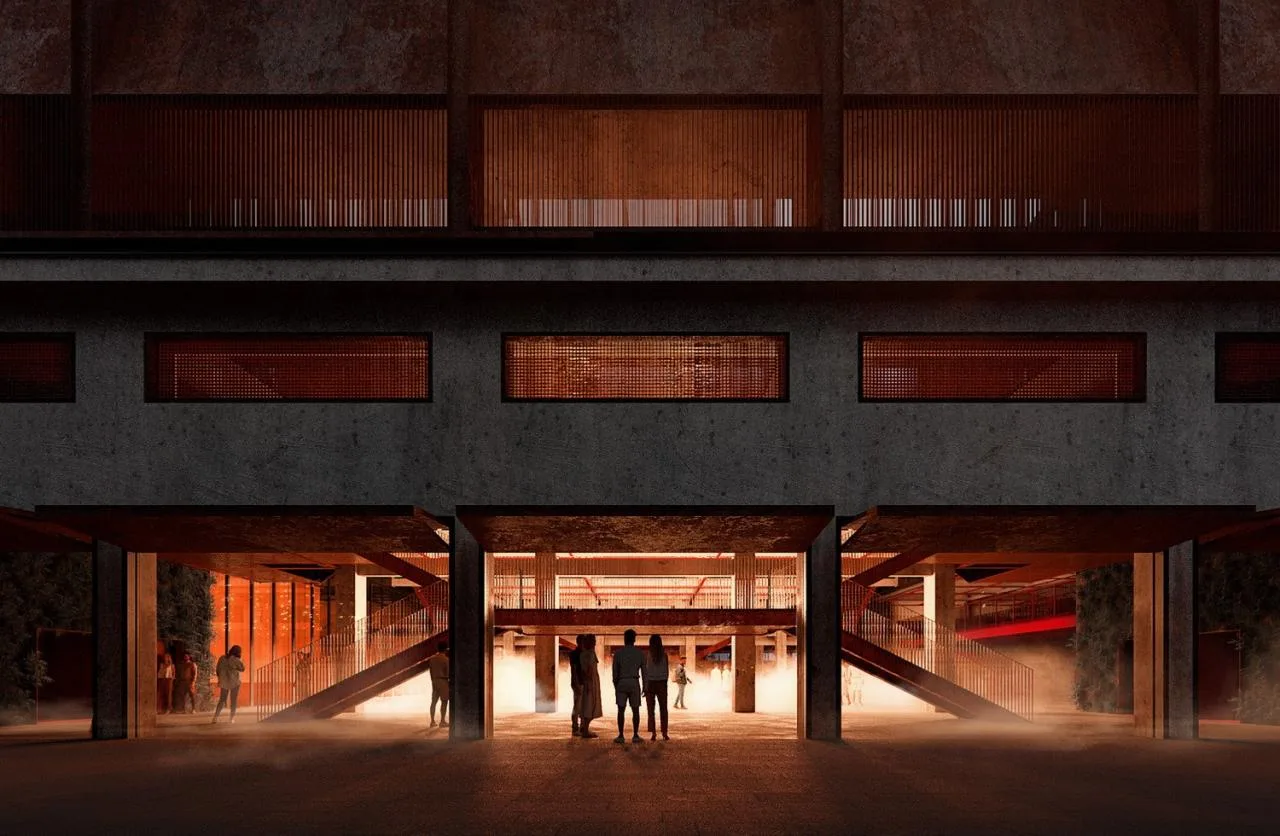
△ Image by Mir
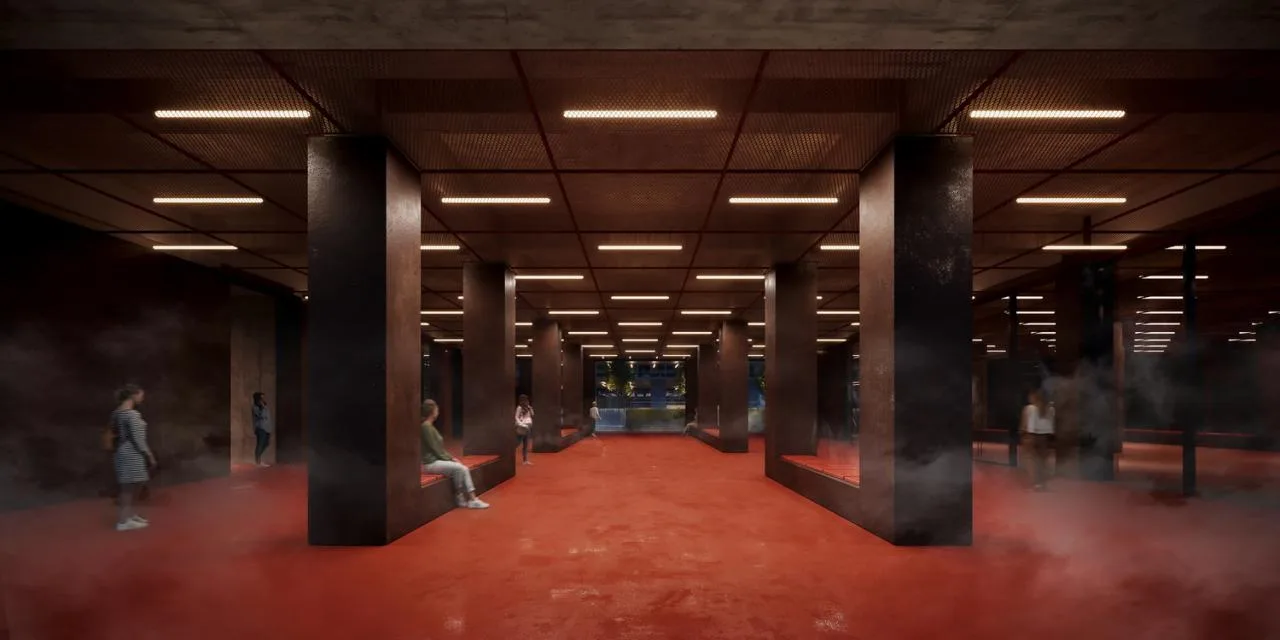
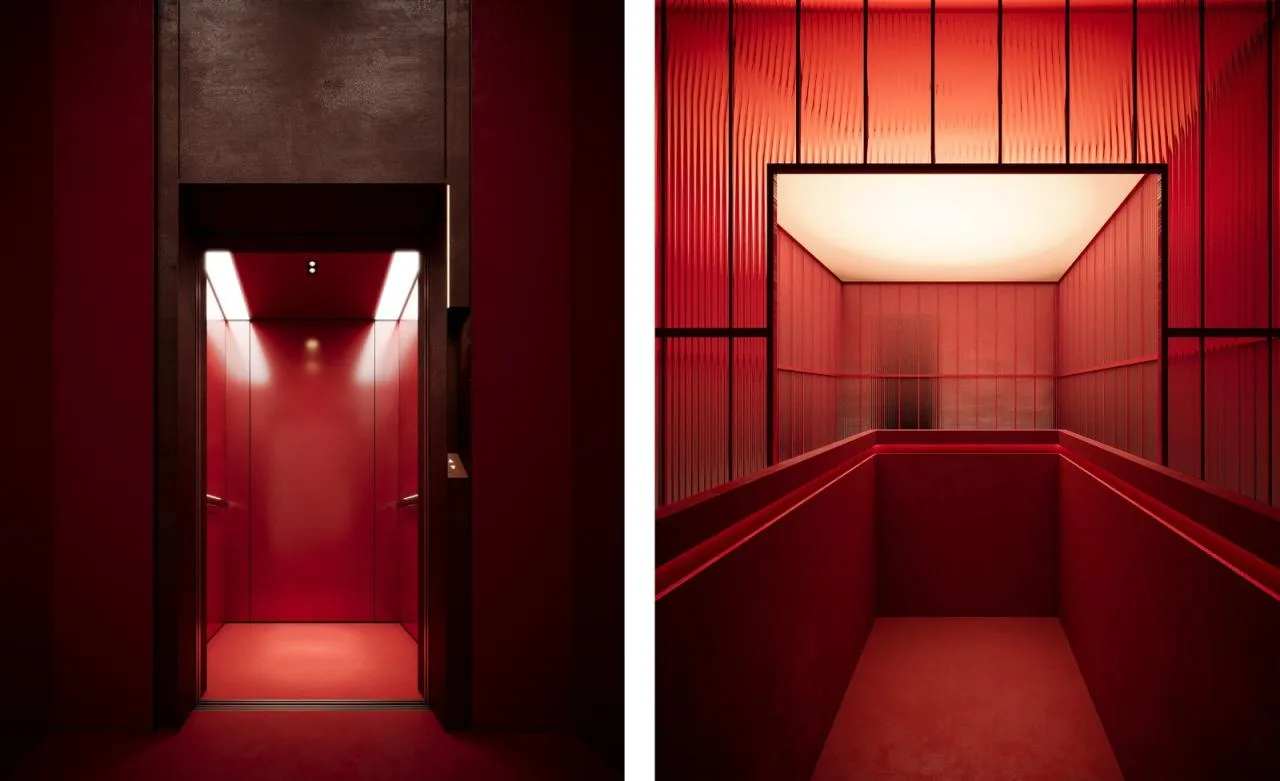
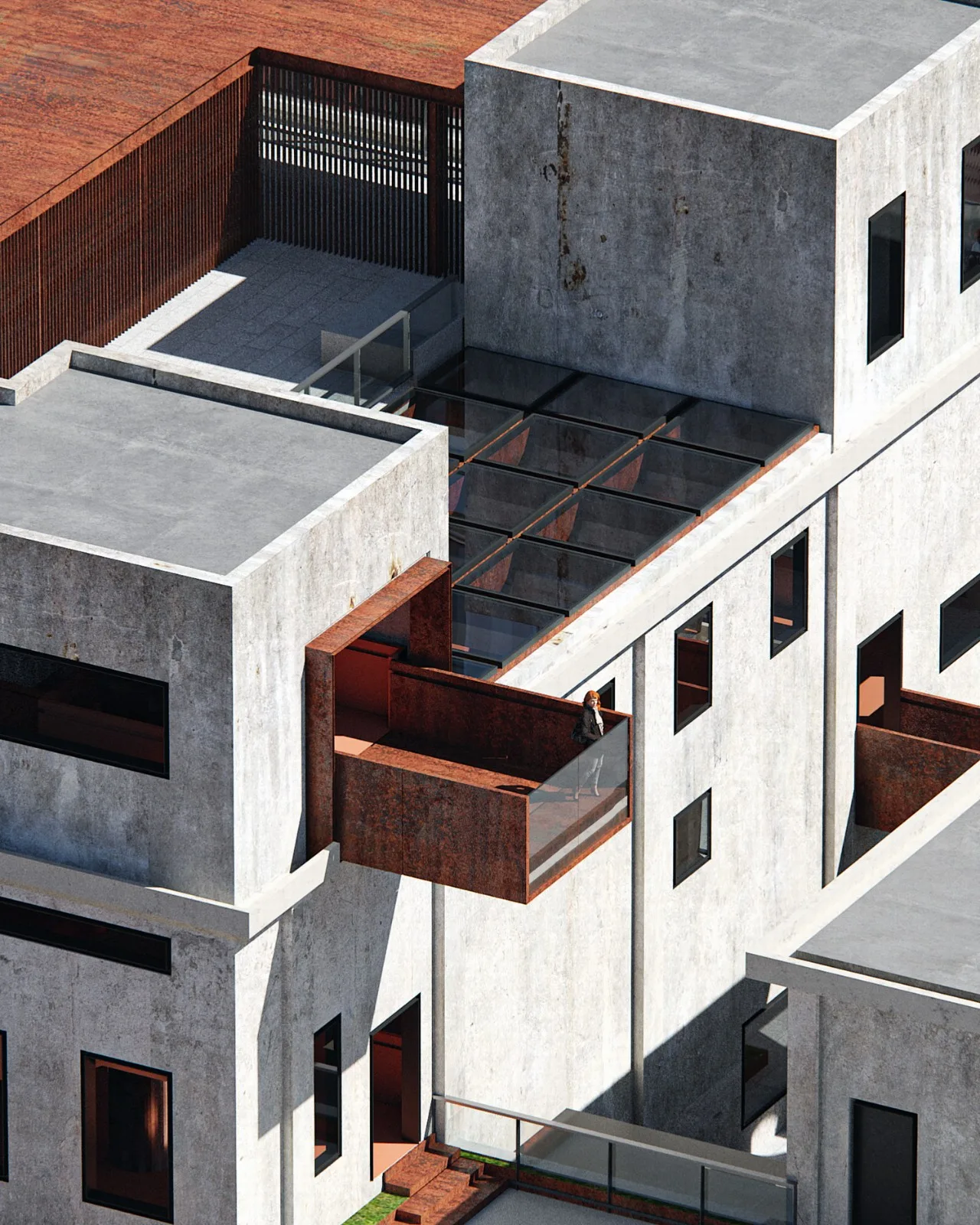
The original factory roof was in poor condition. A new weather-resistant panel roofing system has been installed, suspended from the original structure and supported by 16 lattice columns. This vertical addition also introduces a rare rooftop garden and public space in the city center.
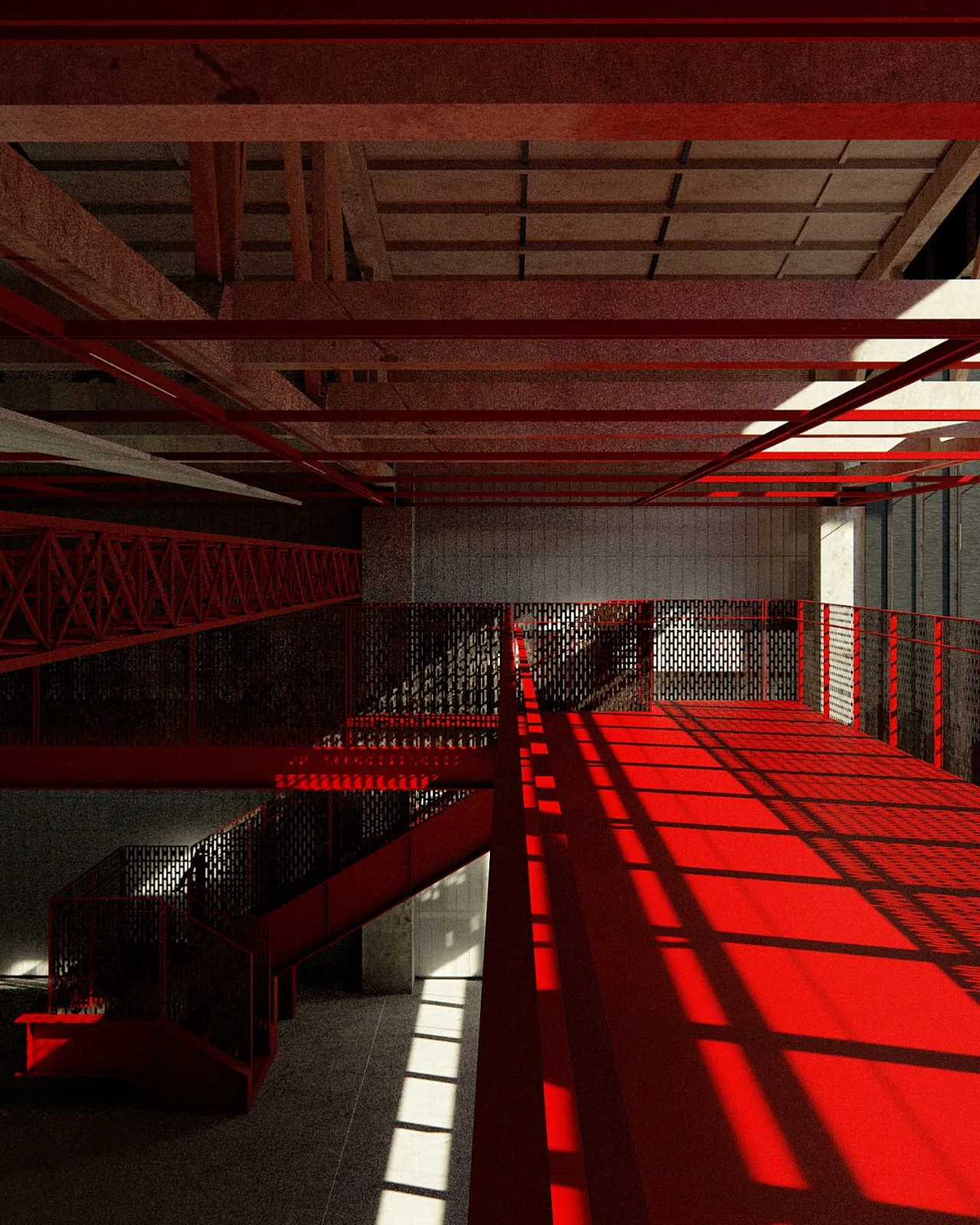
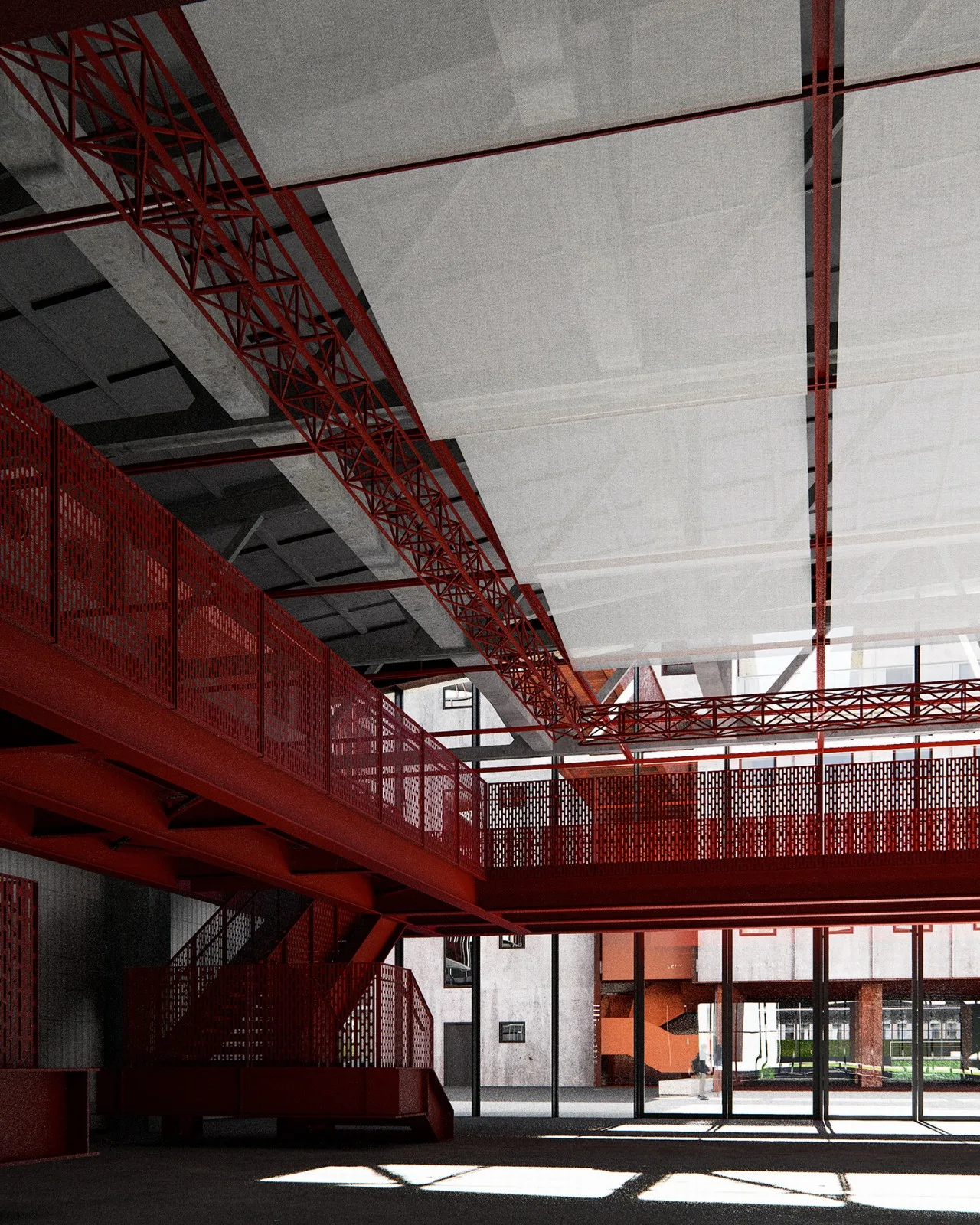
△ Image by Mir
The spatial layout of Building 10 preserves the large-span center and surrounding smaller units, with the building mass divided horizontally into three zones that can expand or contract. This flexibility suits exhibitions, performances, and other activities, facilitated by foldable doors that open and close according to spatial needs. The central courtyard connects north and south, featuring a three-dimensional transport core linking roof and floors.
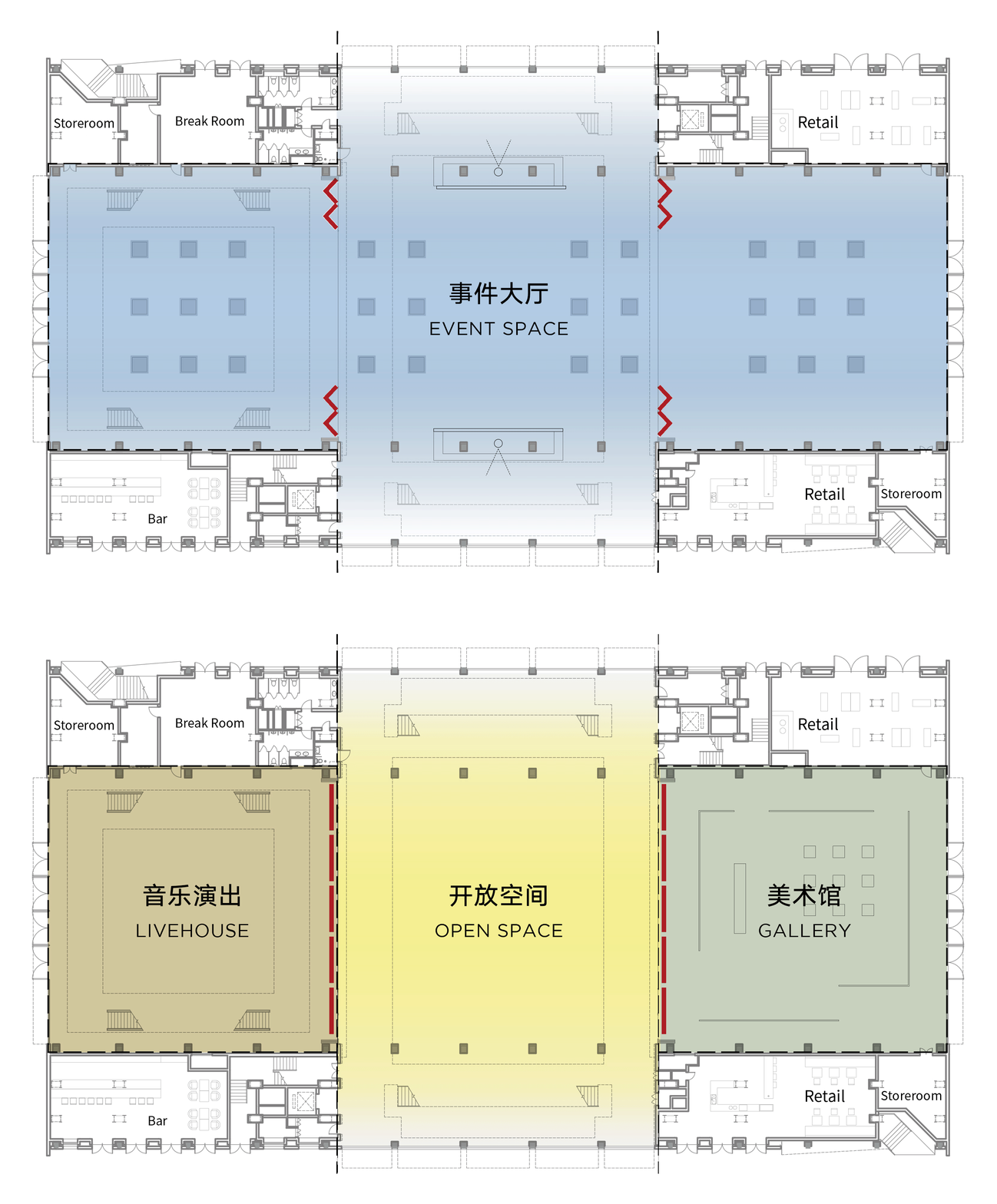
△ Flexible space separation using folding doors
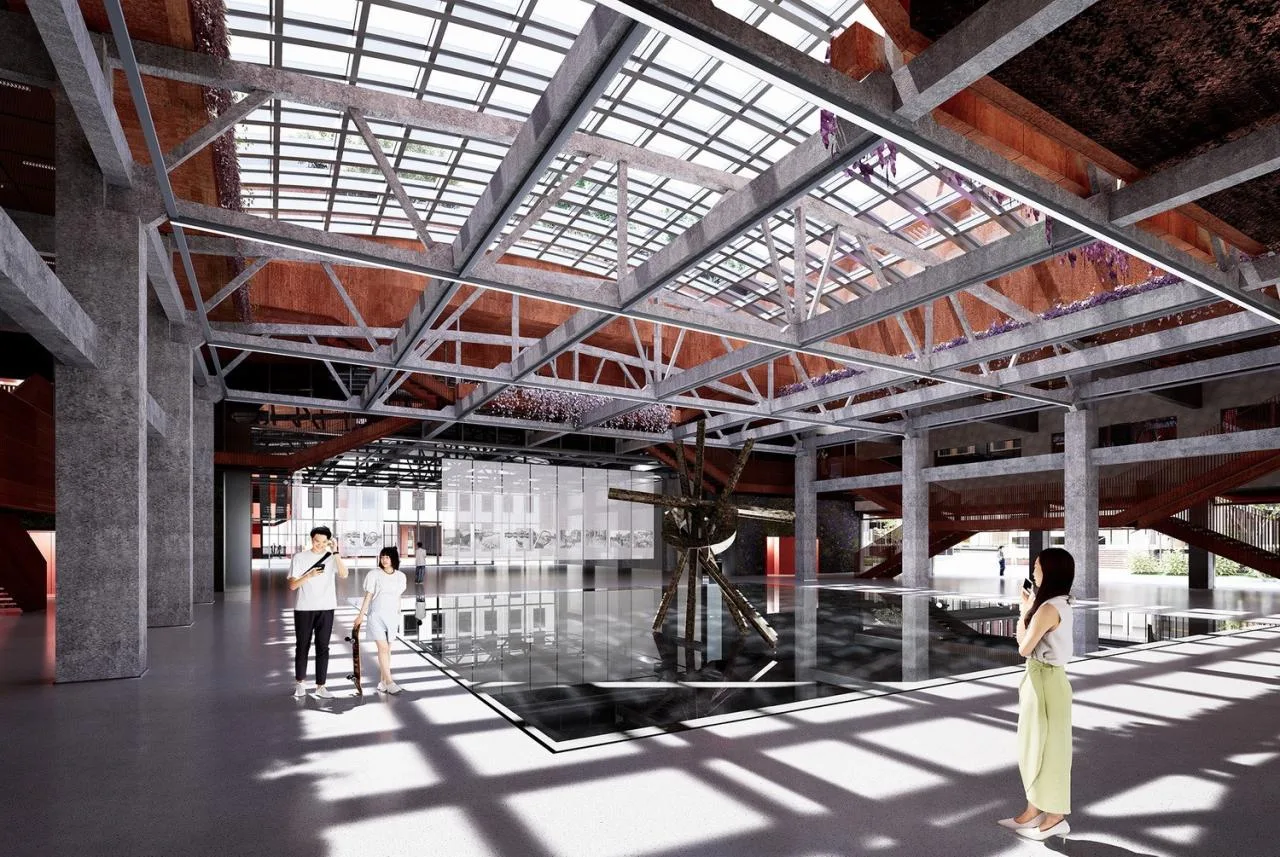
The courtyard connecting the north and south sections
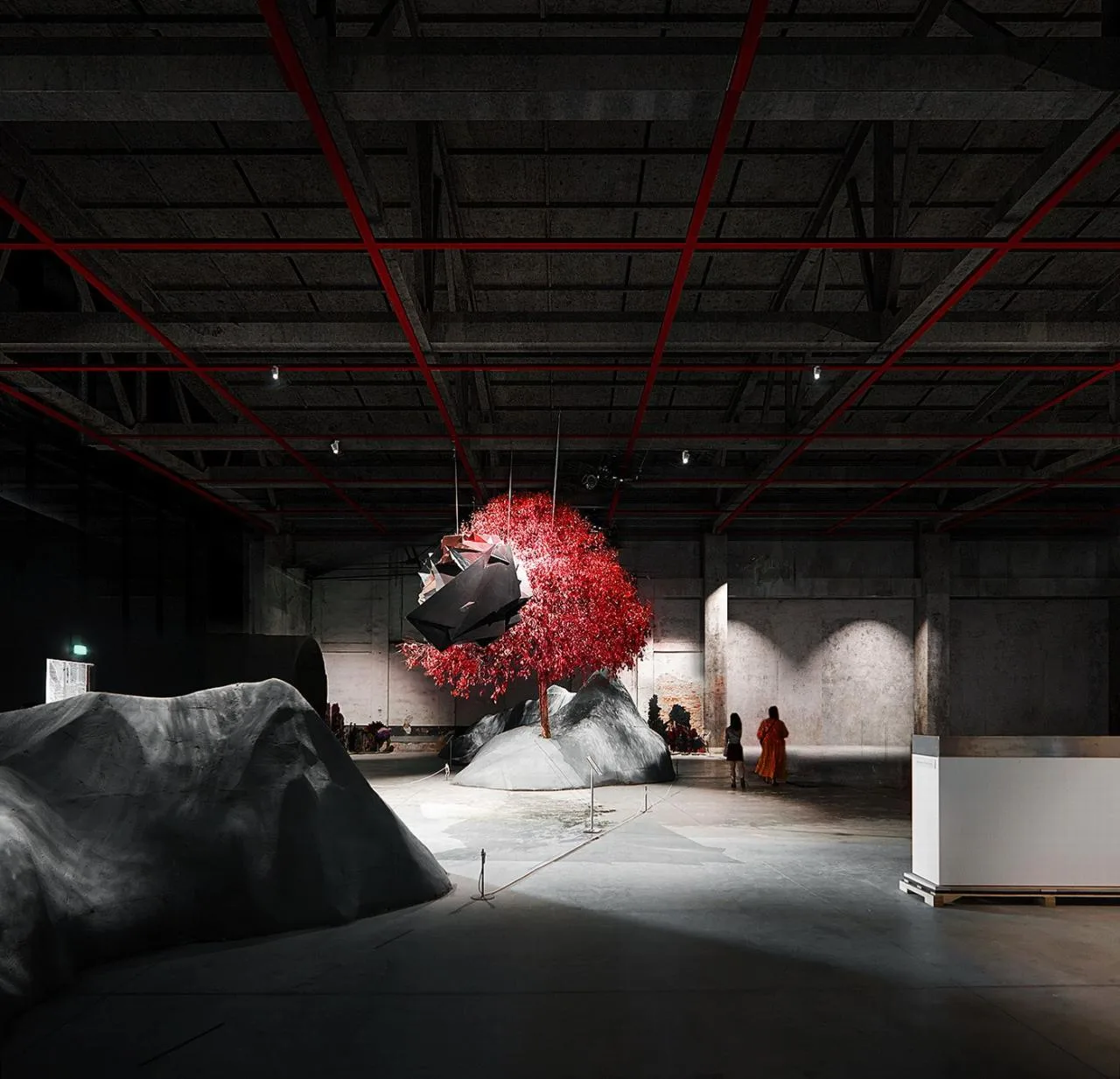
△ Image by Mir
Building 6 preserves its high and low-span architectural form, window openings, and industrial pipelines on the facade. The varied roof heights create movable platforms, while modern elements like window frames introduce dynamic framing experiences.
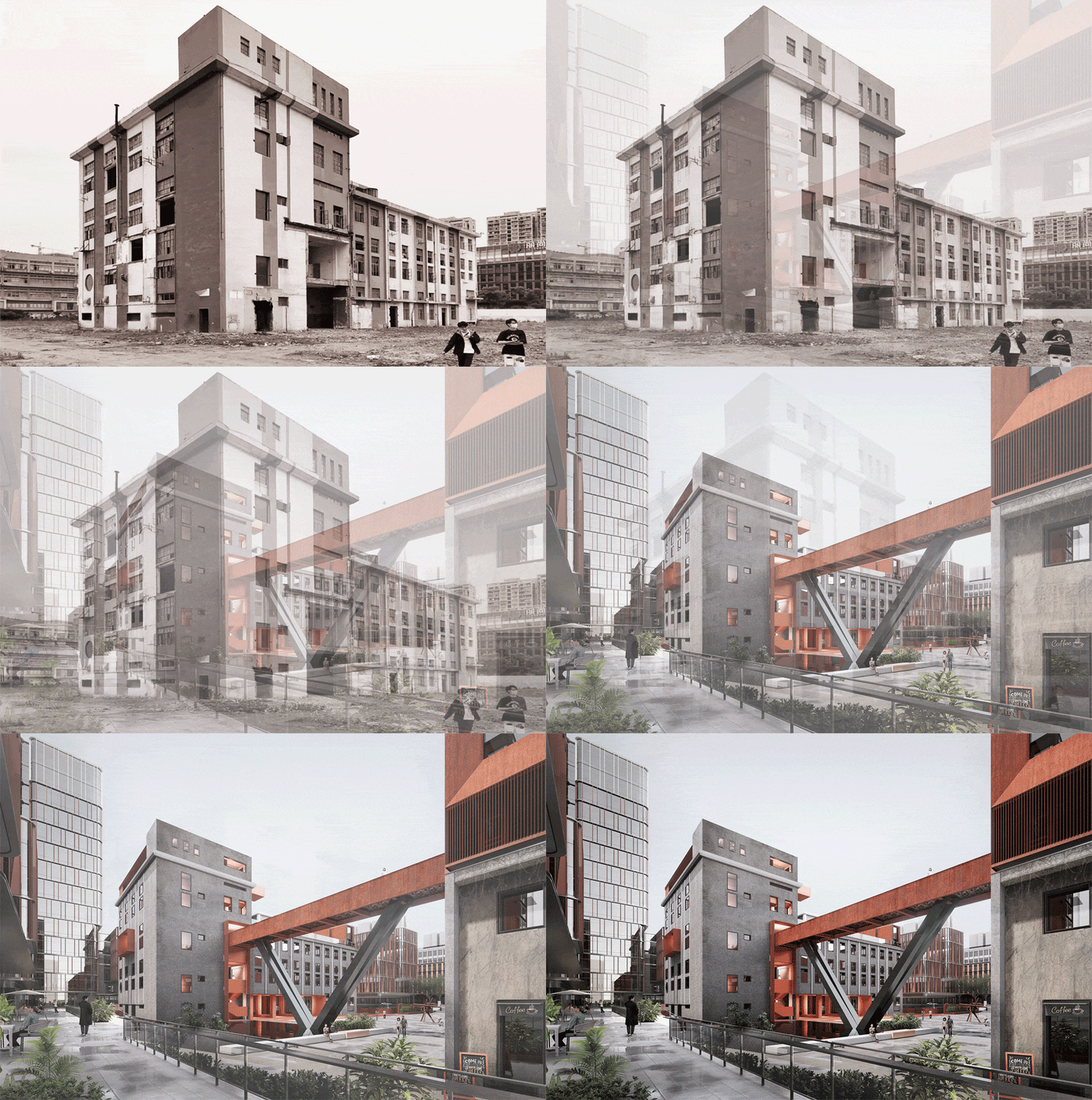
Building 6 facade comparison before and after renovation
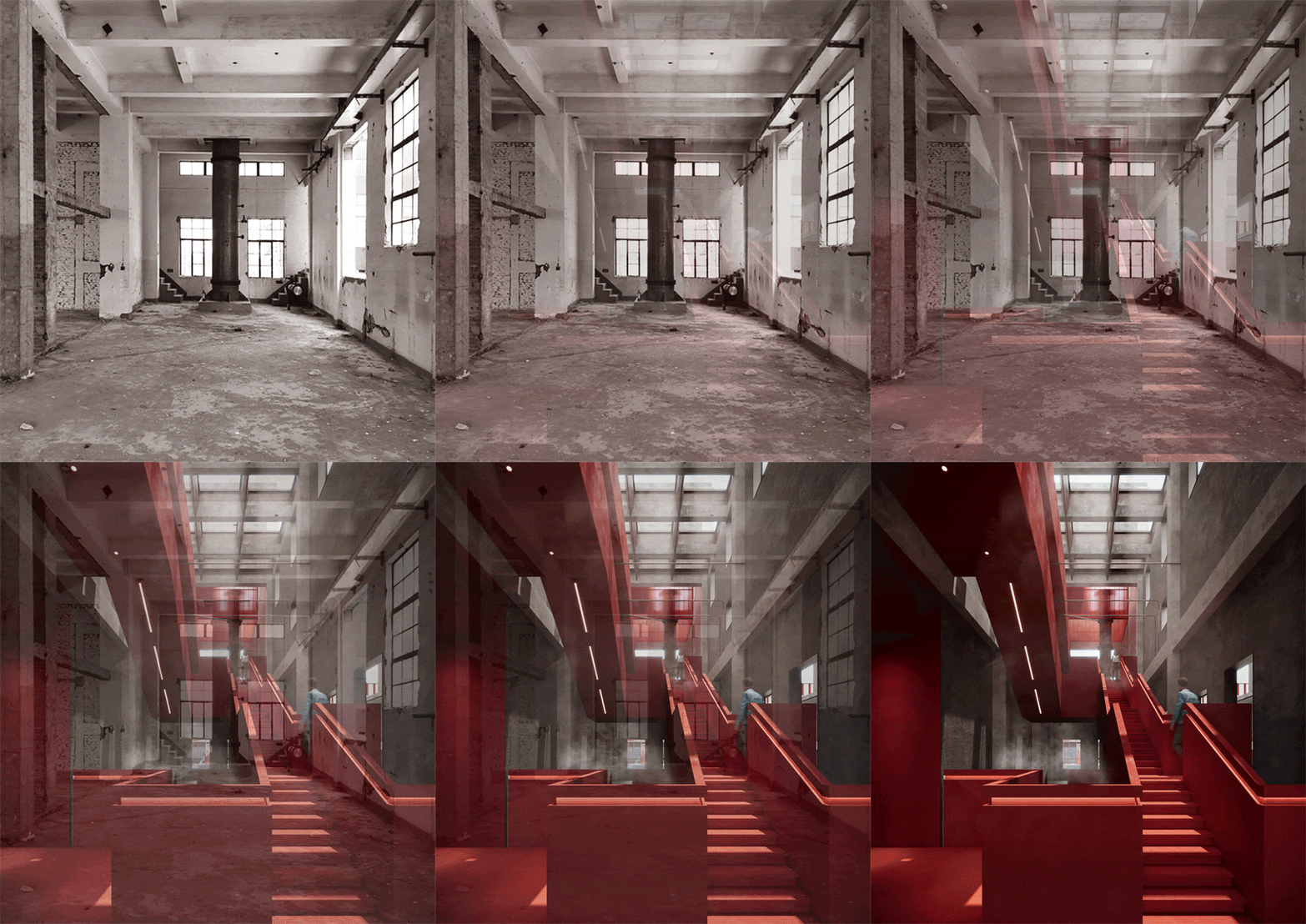
Building 6 interior comparison before and after renovation
△ Image by Mir
The interior space highlights the extensive production equipment retained in the workshop. Some walls have been opened, with weather-resistant steel plates and microcement finishes applied. The interaction between old and new elements creates a unique experience akin to a full-time industrial museum.
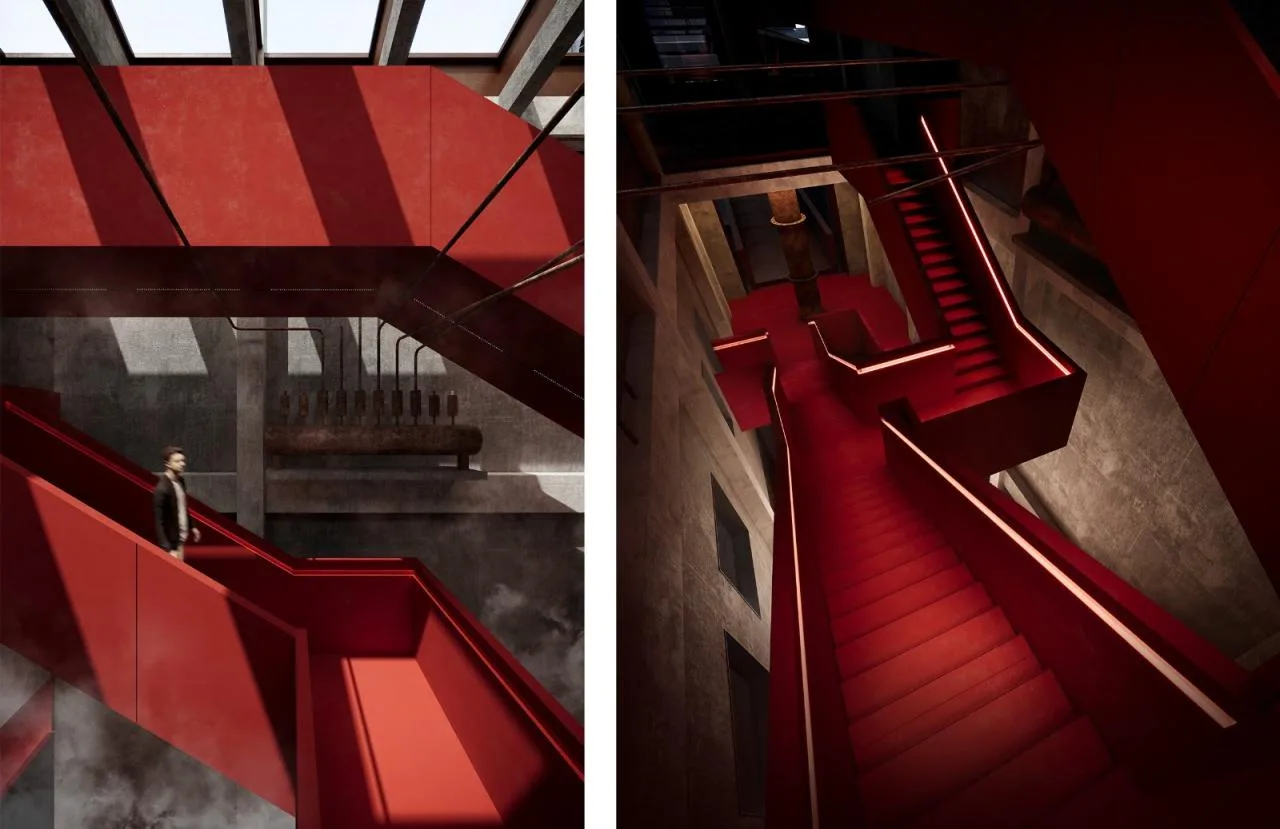
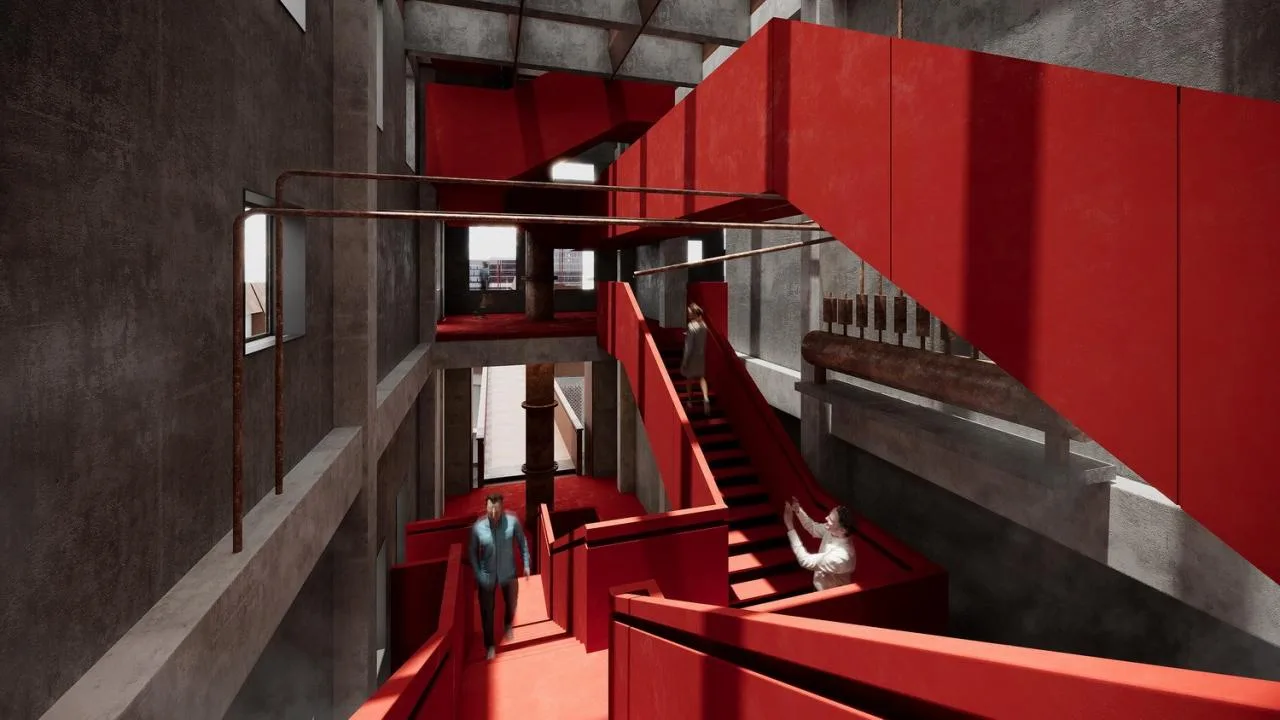
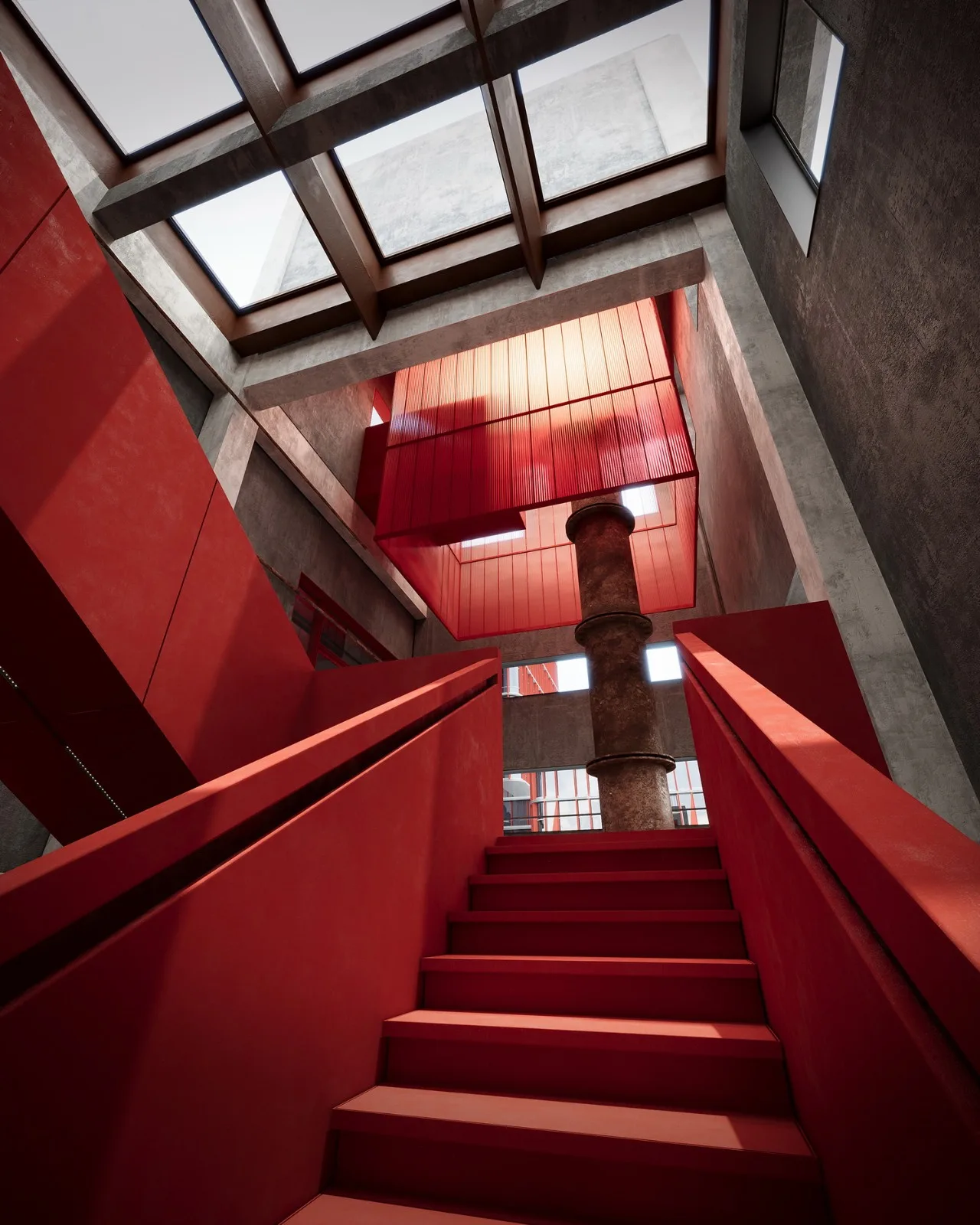
03 Business Format Evolution: From Single-Dimension to Multi-Dimensional Complexity
As new industries and lifestyle scenarios evolve, space demands continuously shift towards flexibility, adaptability, high elasticity, accessibility, and permanence. The cultural and creative park model, based on a singular structure and limited audience, no longer suits LOFT49’s development. However, LOFT49’s dual heritage as an industrial site and cultural creative hub has fueled its endogenous growth in industrial heritage renewal. Its primary urban value lies in pioneering the transformation from “manufacturing” to “creation.”
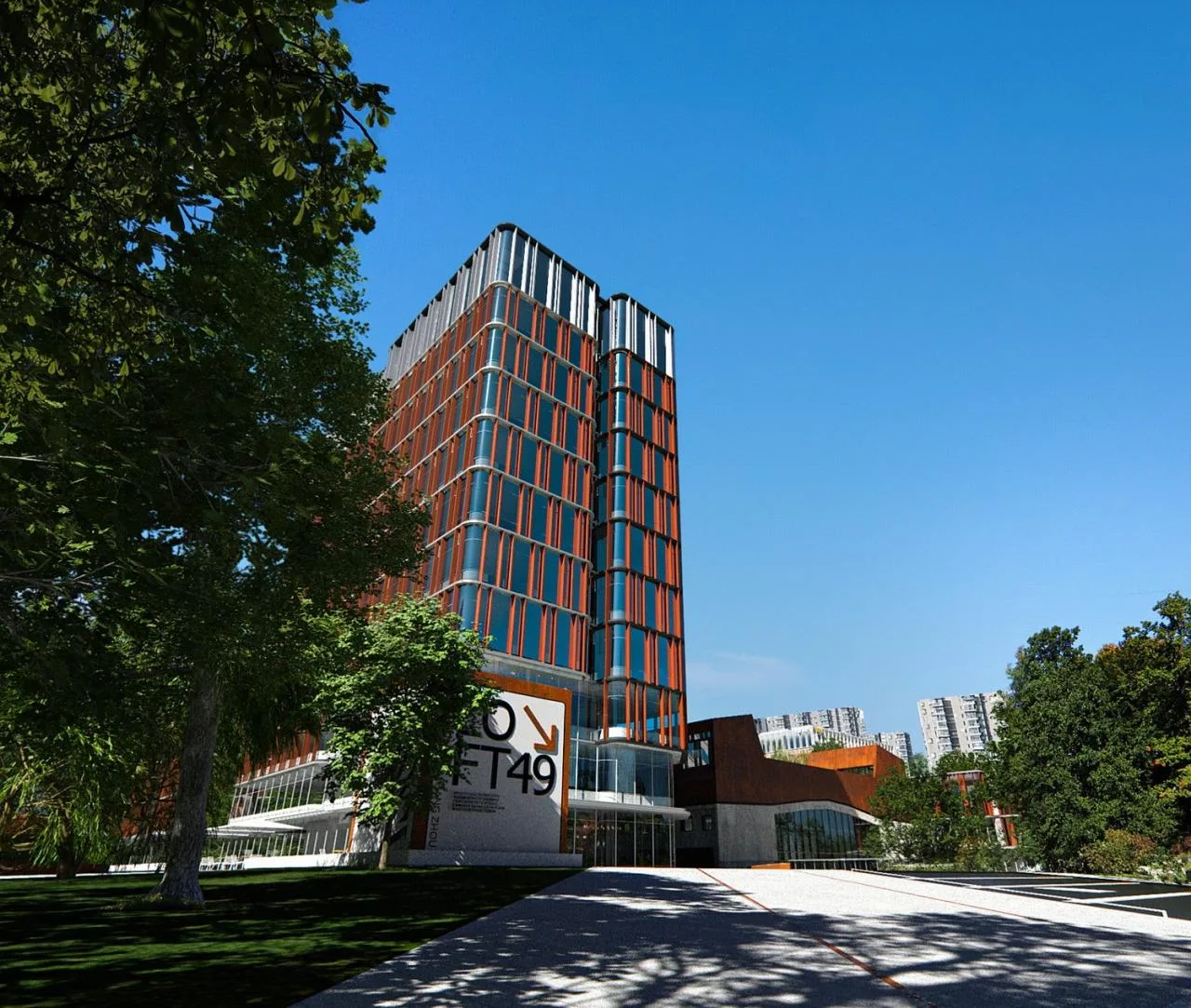
△ Image by Mir
Responding to this shift, the design incorporates adaptive graphic planning and diversified business formats, aligned with operators’ needs and urban population usage patterns. This approach offers greater flexibility, versatility, and scalability in physical space to accommodate various business types and sizes. The park’s functions expand beyond traditional office spaces to include cultural and entertainment venues such as live houses, art museums, restaurants, and bars, enriching the surrounding residential and commercial environment with a blend of life, work, and entertainment (L-W-P).
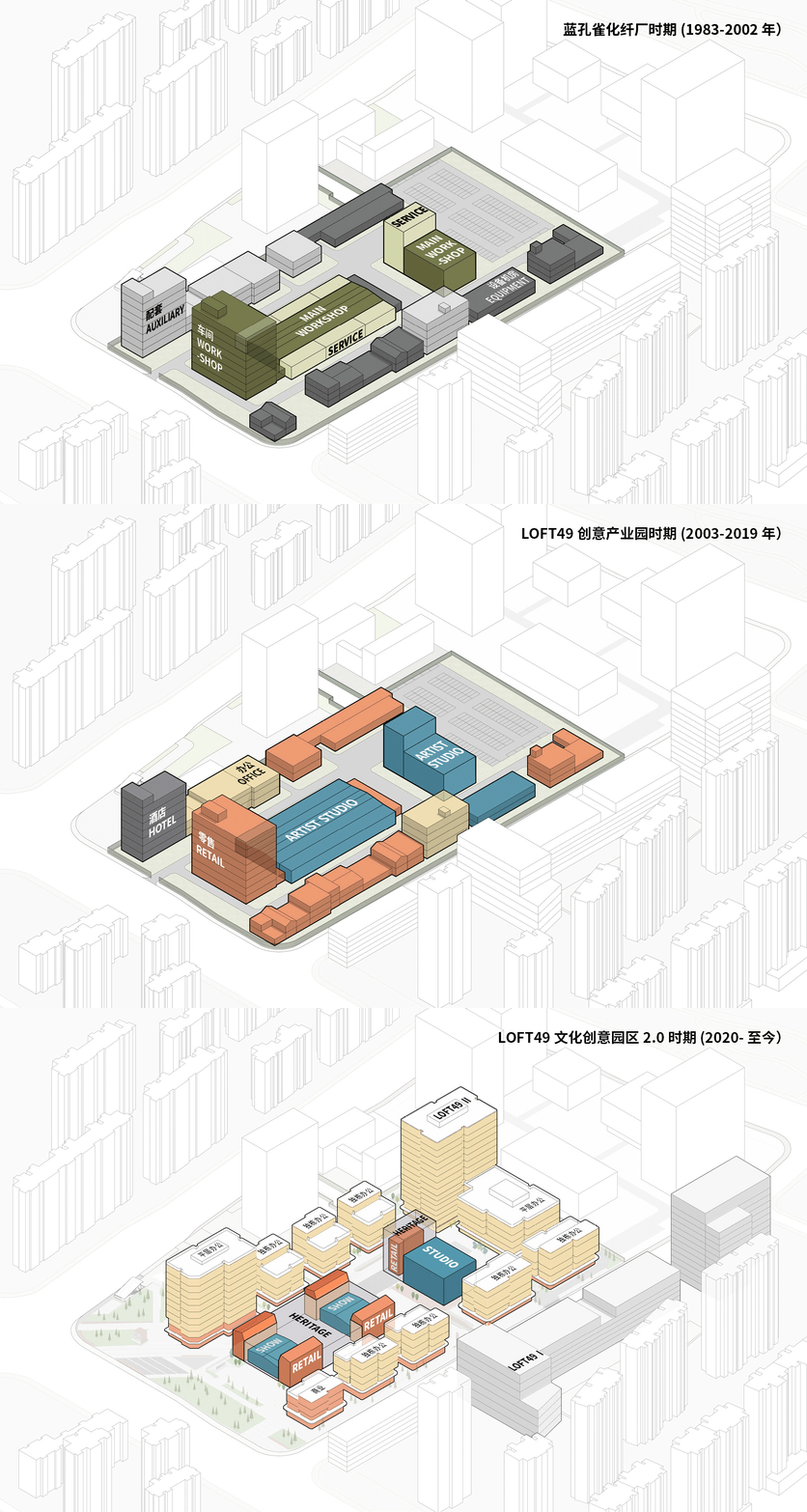
△ Function transformation diagram
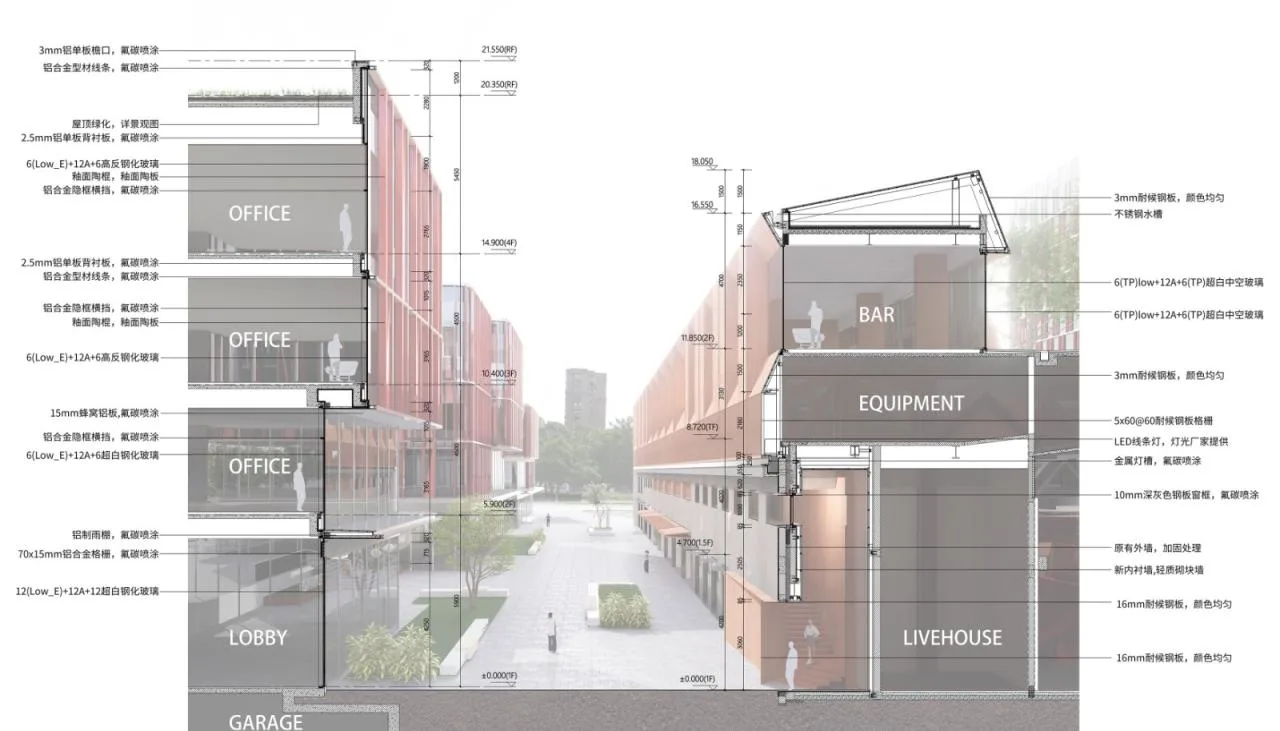
△ Section – Structural details
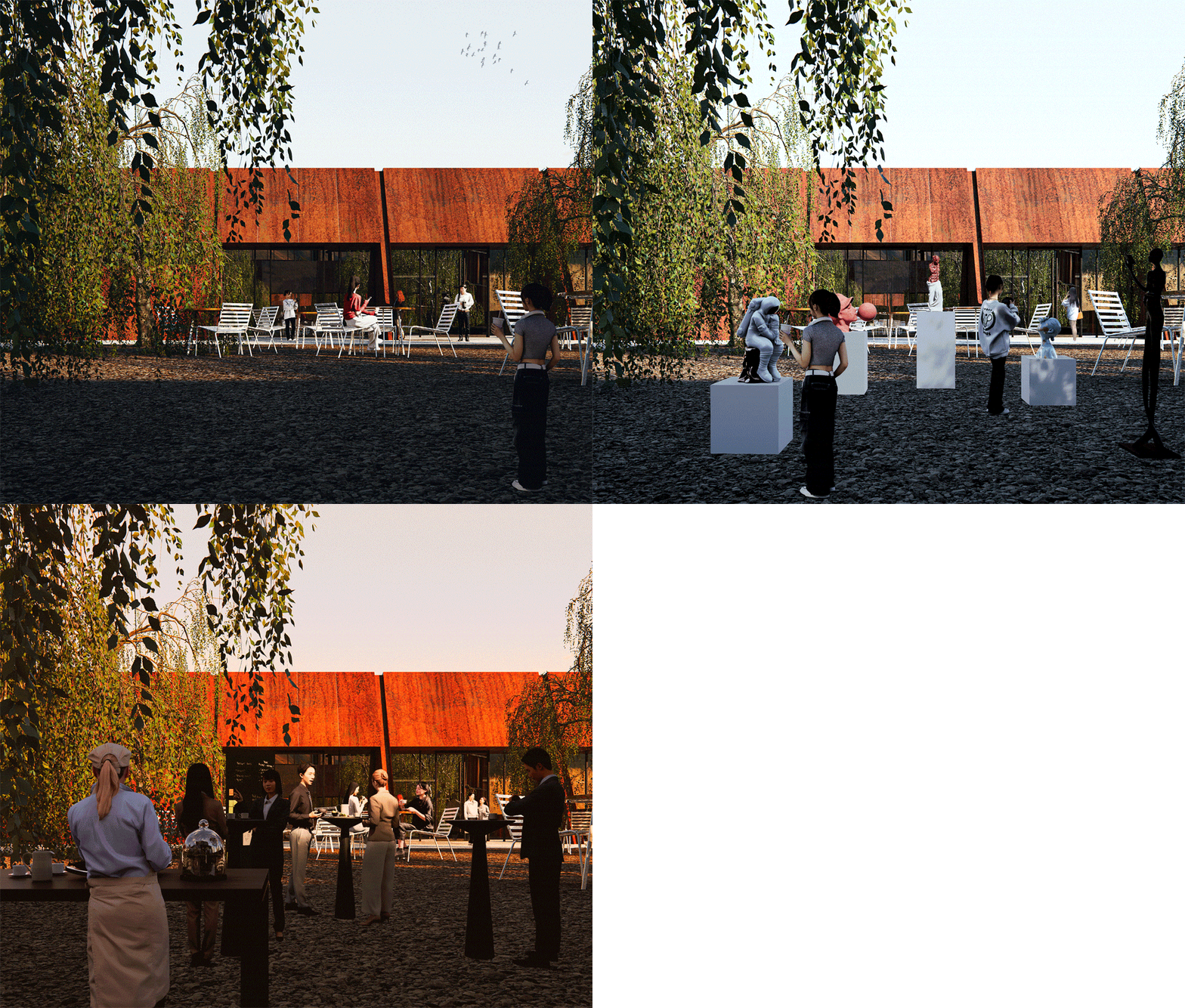
△ Rendering by Mir
In the future, LOFT49 will serve not only as a full-time industrial museum but also as a vibrant gathering place for urban events such as exhibitions, performances, shows, and markets. This environment will offer staff and visitors diverse cultural and entertainment experiences in one location. Additionally, LOFT49’s open and free atmosphere will encourage artists to return and create, attract various industries to converge organically, and establish an industrial landmark featuring a lively mixed-use neighborhood—ushering in a new era of “co-creation.”
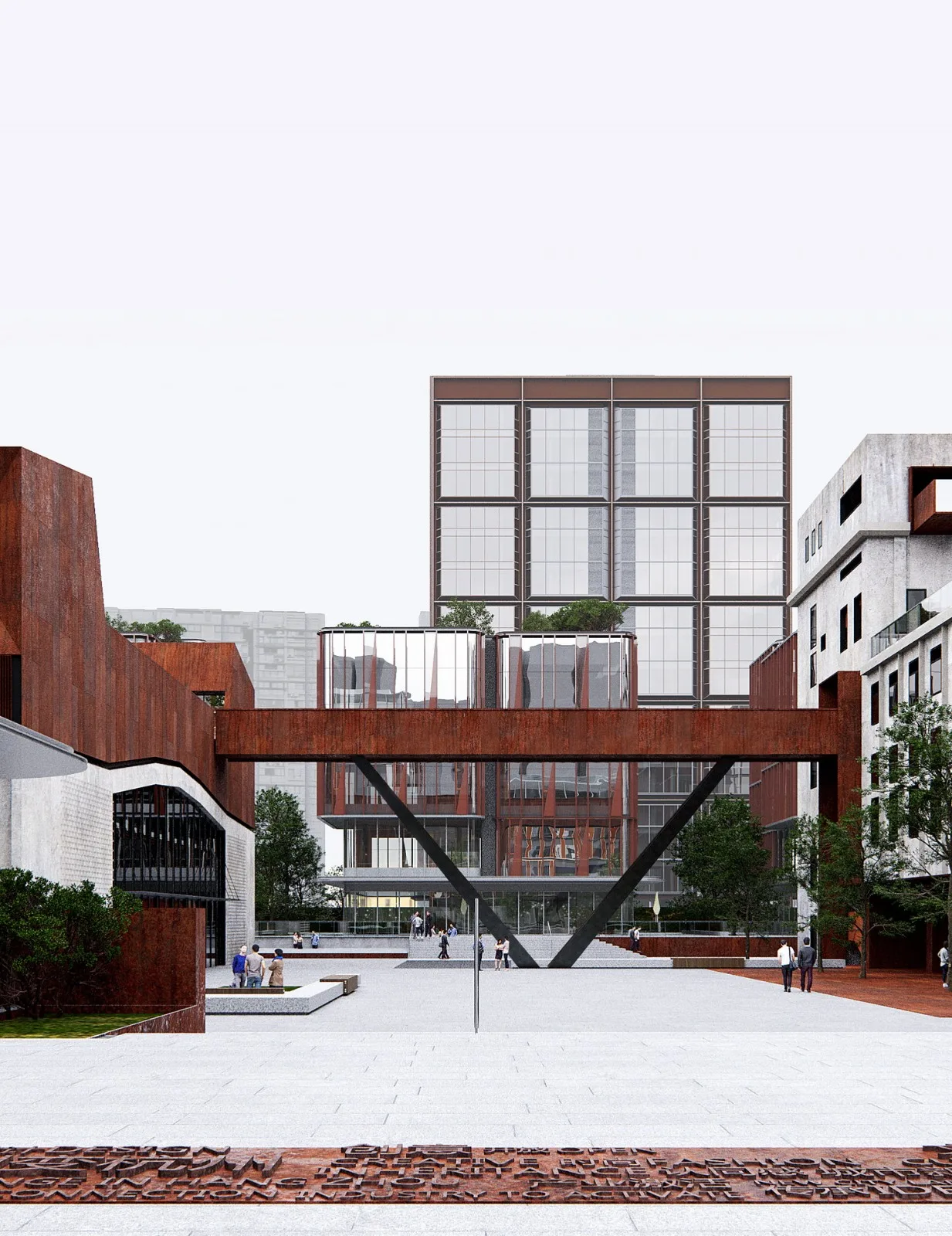
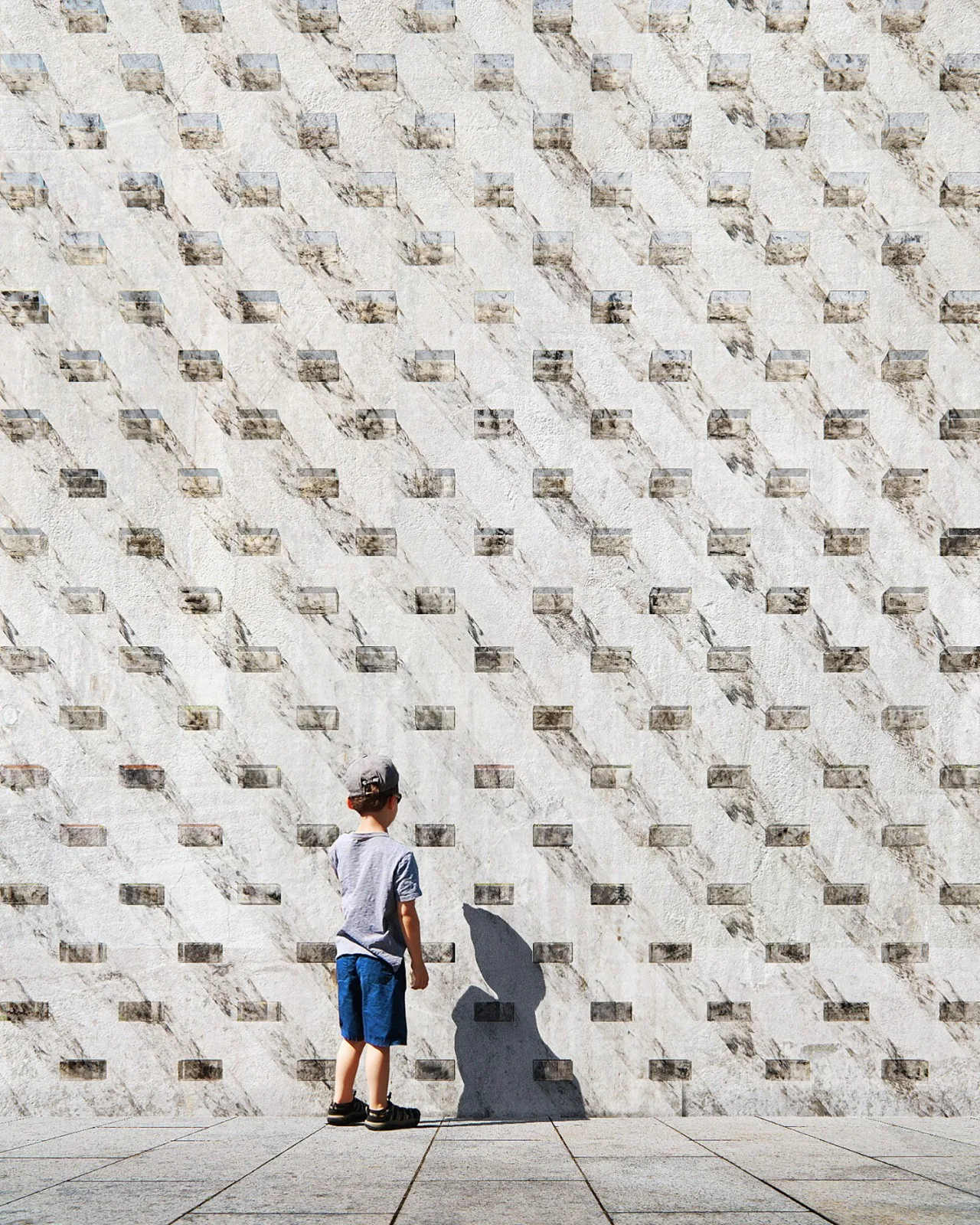
△ Image by Mir
04 Conclusion
LOFT49 stands as one of the most significant industrial heritage renewal projects in downtown Hangzhou, drawing wide attention and high expectations. From early heritage assessments, operational planning, and demonstrations to urban design iterations and final approval of renewal plans, the project underwent years of thorough review and expert consultation. As the inaugural project of Line+’s “Urban Revitalization” initiative, it seeks to preserve urban memory by revitalizing industrial spaces. Architecture here is both a tool and catalyst for activating the city’s complex organic ecosystem, ultimately breathing new life into the urban fabric.
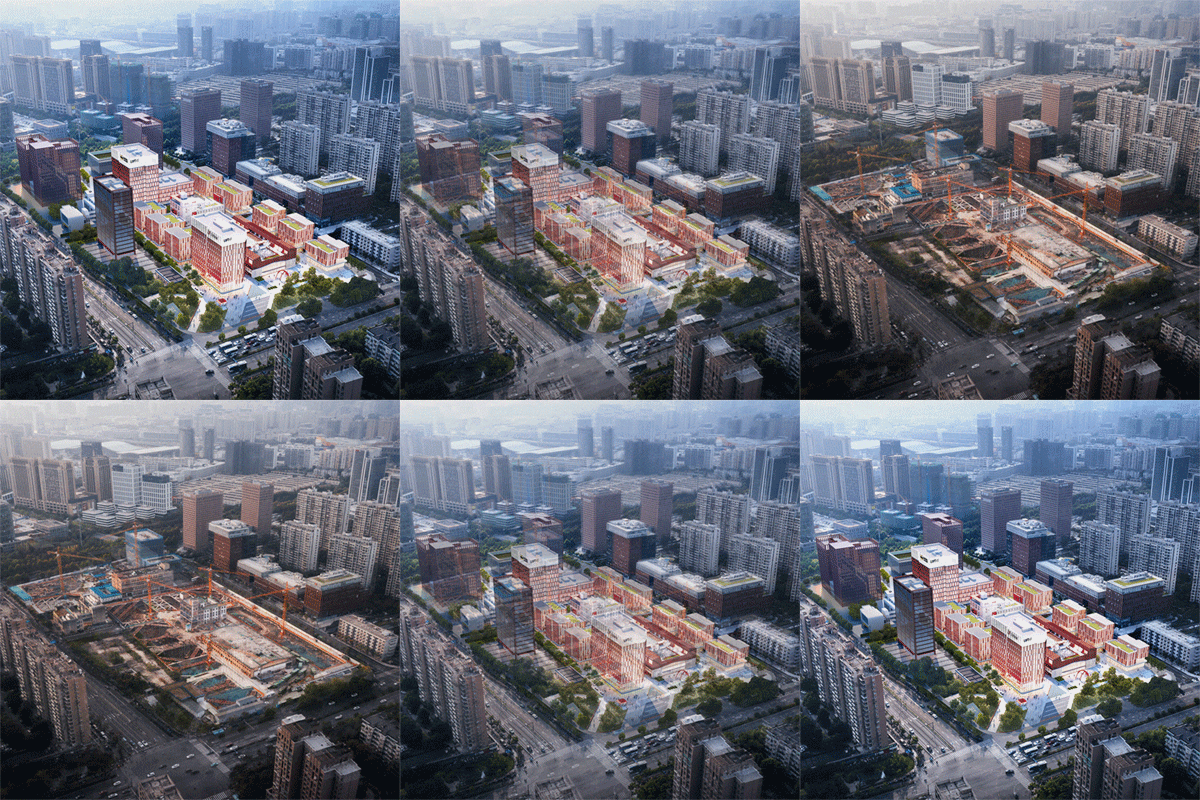
The project is currently under construction and expected to open to the public by 2025.
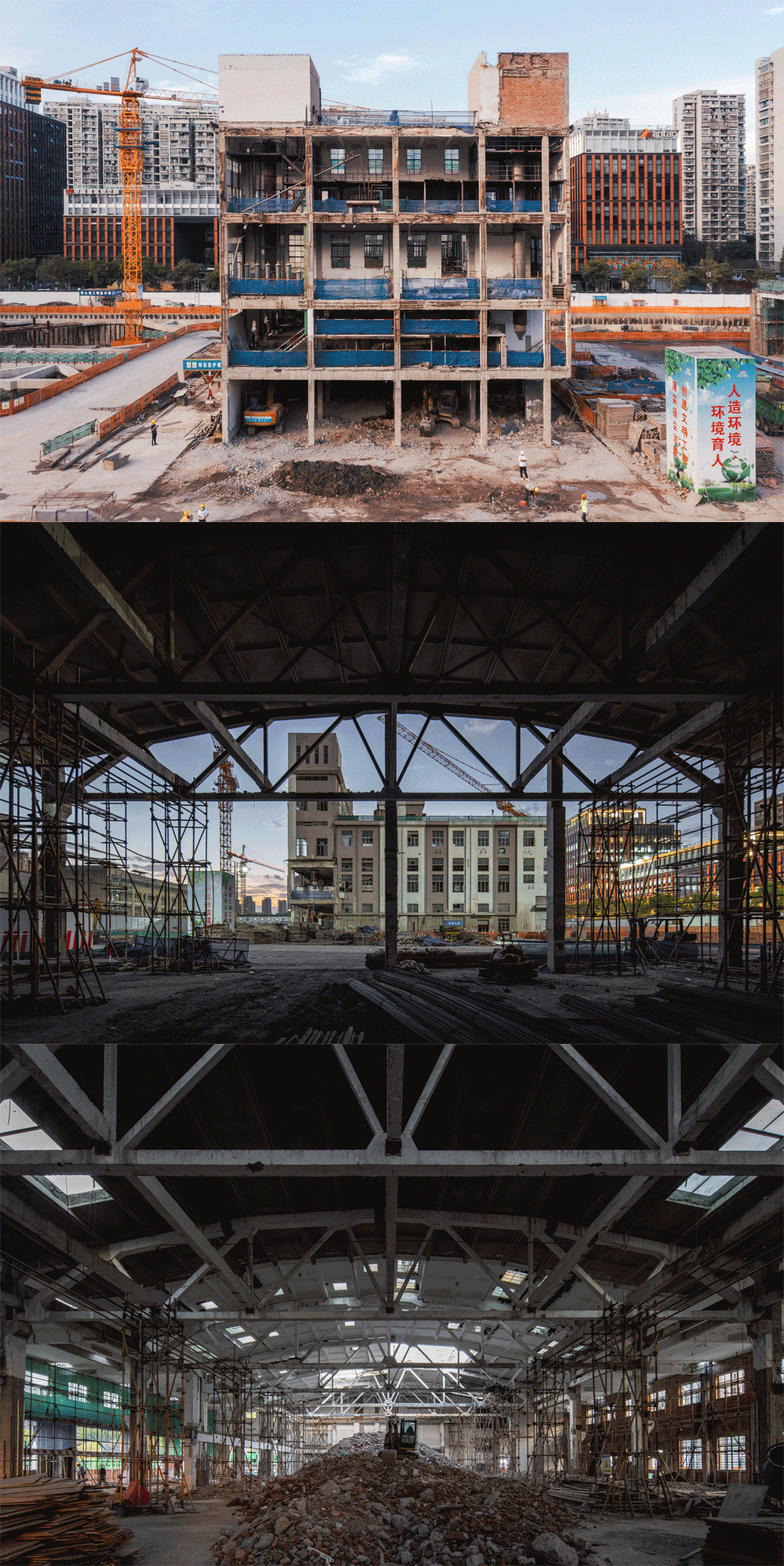
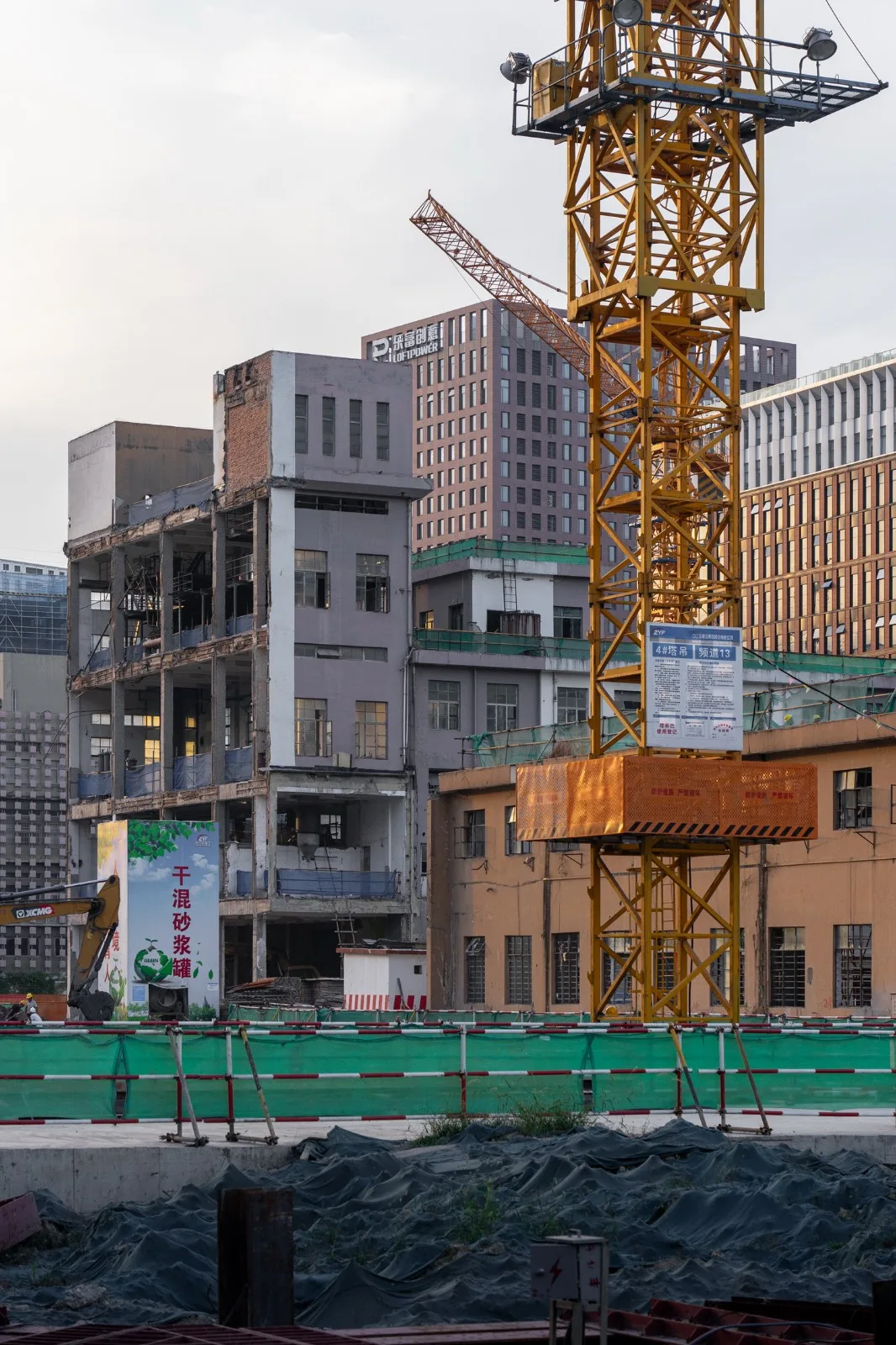
△ Construction site
Project Drawings
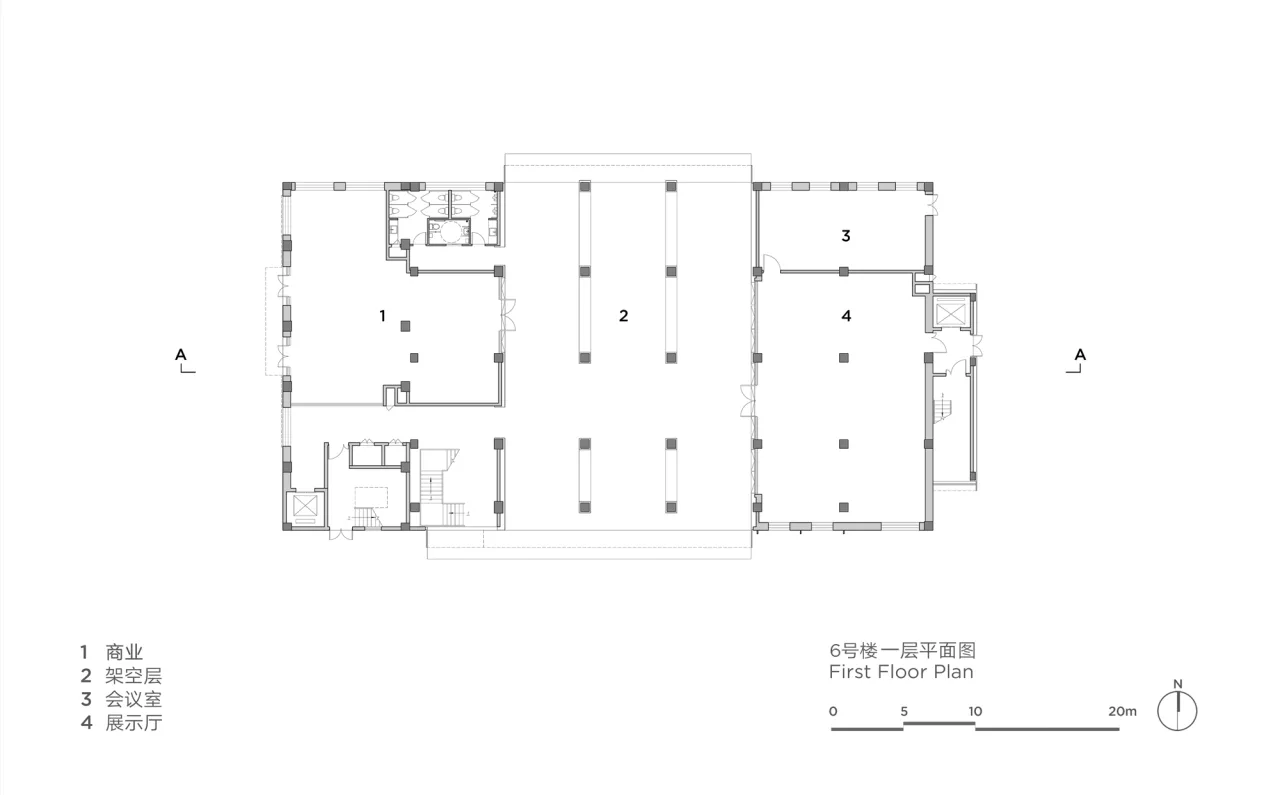
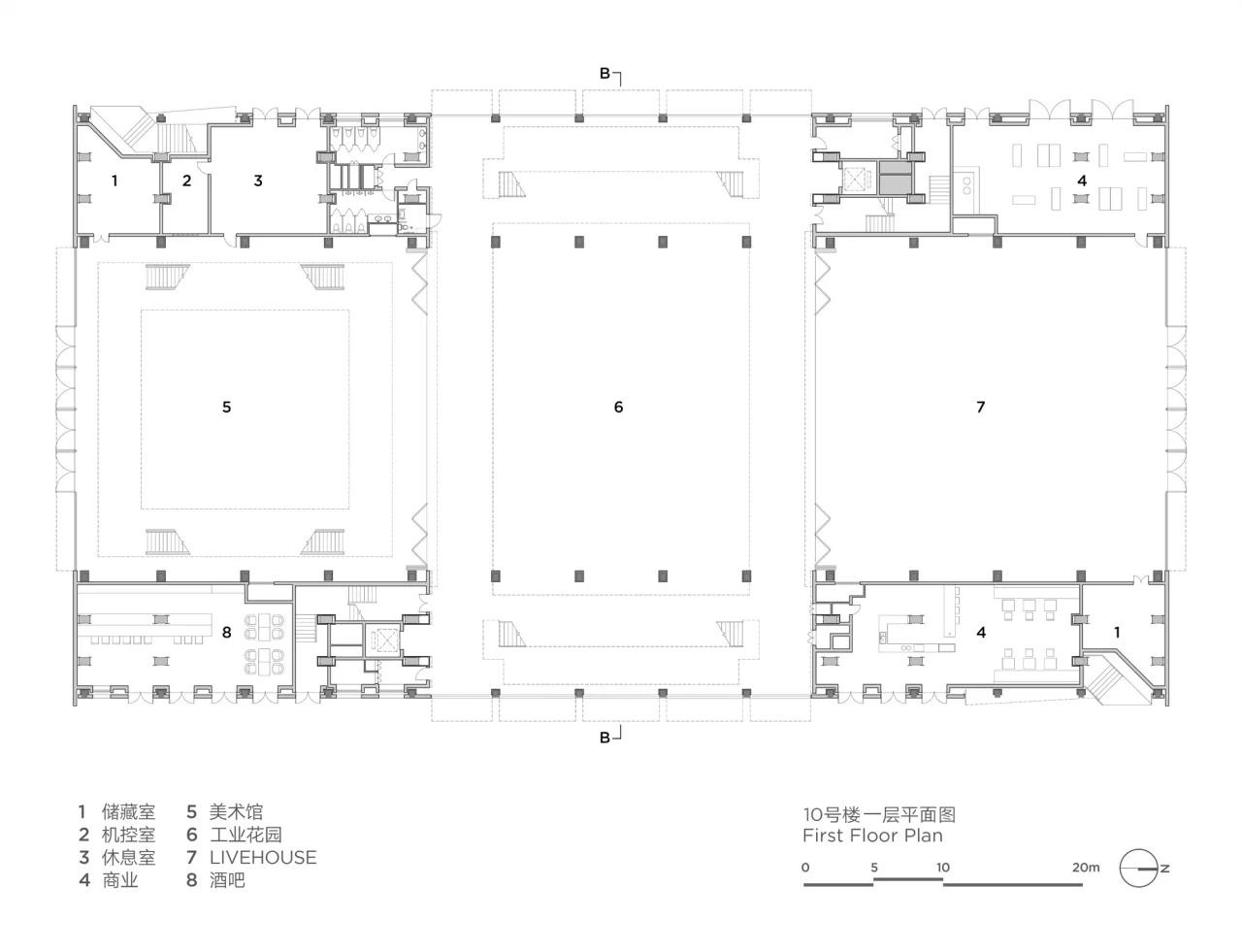
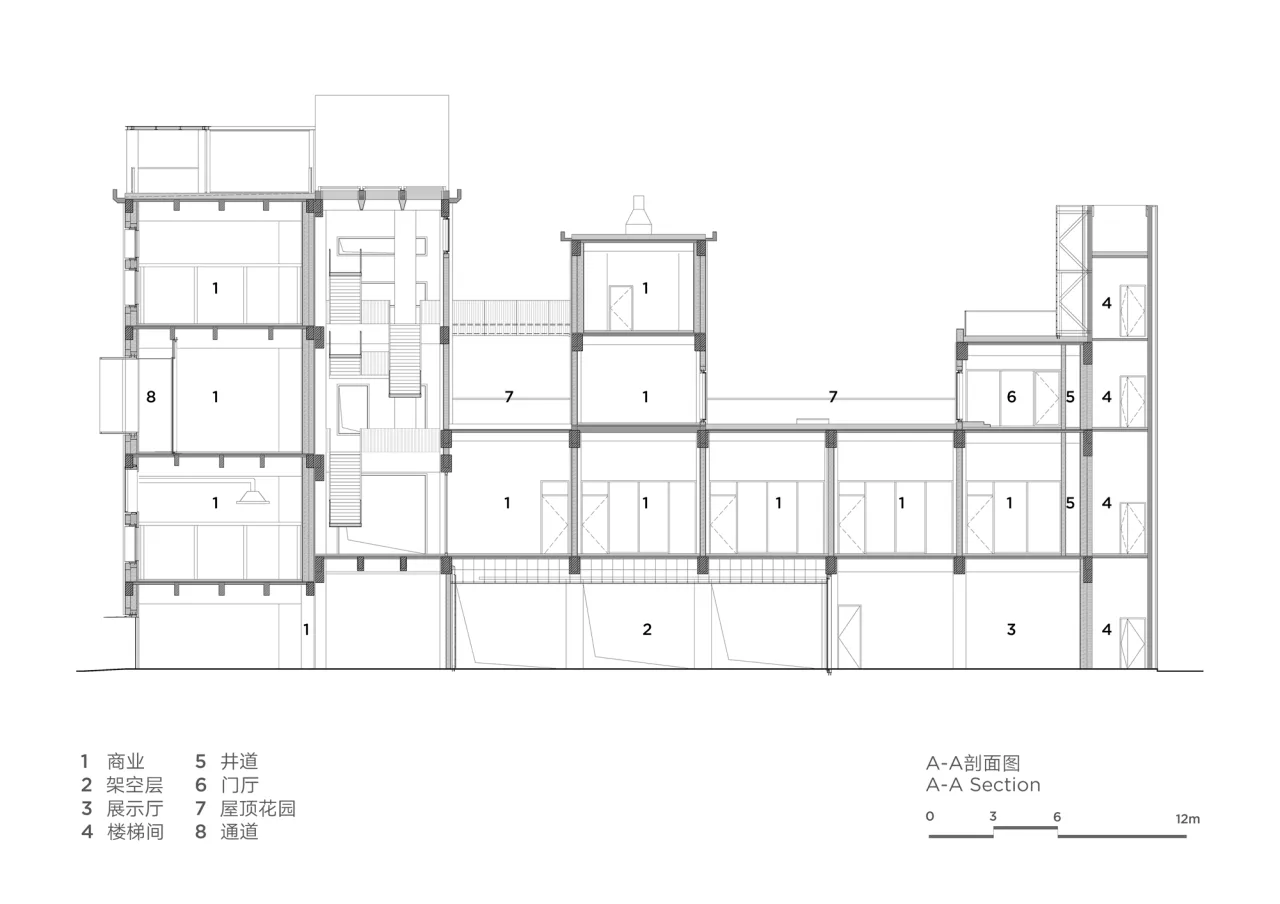
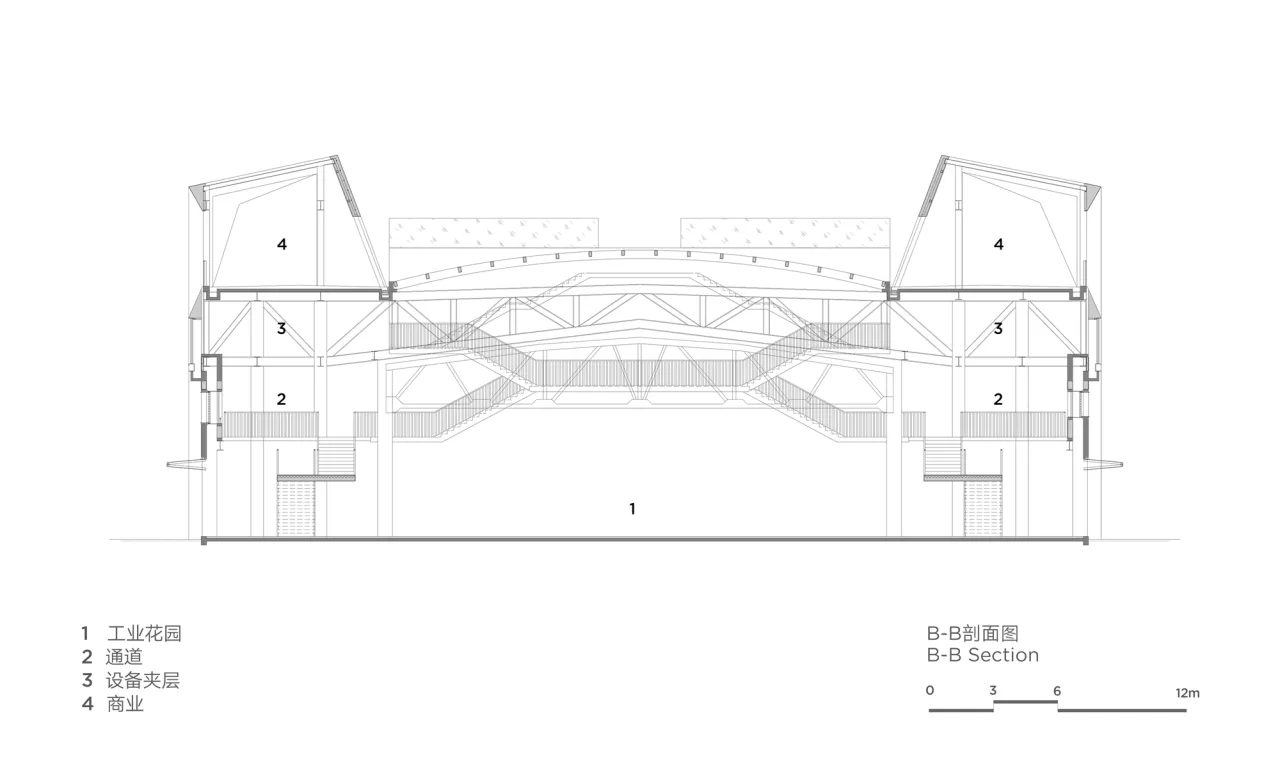
Project Information
Project Name: Hangzhou LOFT49 Industrial Heritage Renewal
Design Unit: Line+ Architectural Firm
Lead Architect / Project Creator: Zhu Peidong
Design Team: Bao Wangtao, Gaoke, Li Zhenyu, Liang Shiqiu, Shi Xinyi, Wang Jiaqi, Yang Xiaoyu, Zhou Wenyu (Architecture); Jin Yuting, Fan Xiaoxiao, He Zhiyi (Interior)
Owner: Hangzhou Blue Peacock Culture and Creativity Co., Ltd.
Collaborative Design Institute: Zhongwai Jianhuacheng Engineering Technology Group Co., Ltd., Zhejiang Branch
Landscape Design: Zhejiang Andao Design Co., Ltd.
Mechanical and Electrical Consultant: Hangzhou Yizi Construction Engineering Technology Co., Ltd.
Project Location: Hangzhou, Zhejiang
Building Area: 95,901.45 square meters
Design Timeline: May 2022 to December 2022
Construction Period: December 2022 to present
Structure: Steel structure, reinforced concrete structure
Materials: Glazed ceramic panels, weather-resistant steel plates, aluminum/metal panels, glass
* Images shown represent design stage renderings; final construction outcomes may vary.















Must log in before commenting!
Sign Up