
y. AD Studio | Shanghai Yan Yang Architectural Design Studio was invited by the client to participate in the design competition for the community library at Building 12, located on the west side of Pinggu New City in Baigezhuang Village, Daxingzhuang Town, Pinggu District, Beijing. Alongside five other prominent domestic design firms, the studio ultimately won the competition and secured the design rights for this project.
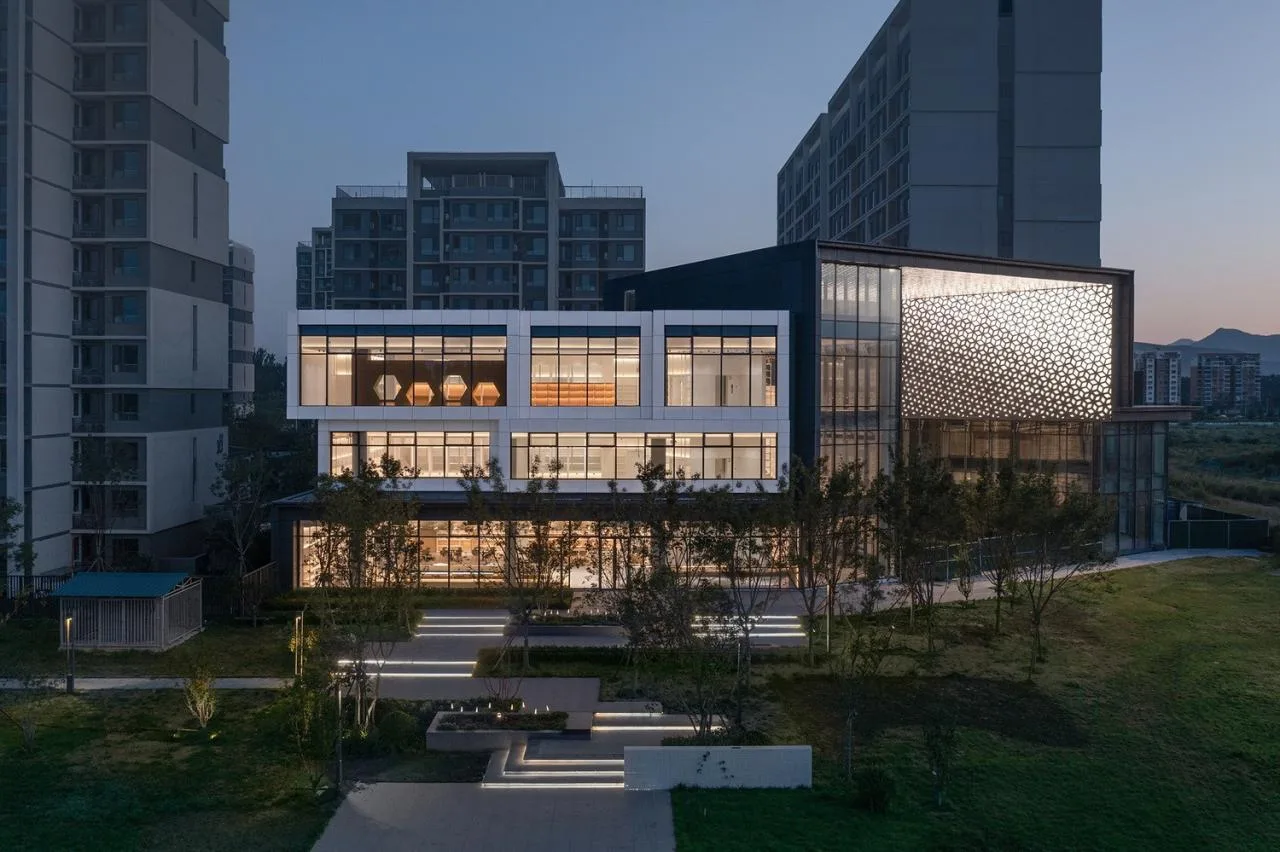
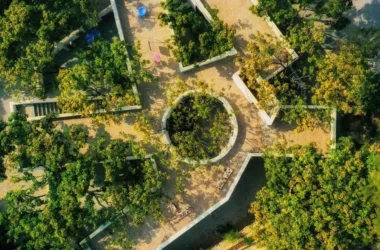
▲ Bird’s-eye view of the library © Architecture Photography
The library is situated in the southeast corner of the site, adjacent to the entrance of the collective land rental housing community’s living service area, with a 50-meter-wide landscaped green space to the south. Located on the outskirts of Beijing, this residential area has limited and basic living facilities within walking distance. The project focuses on shaping internal commercial and public support spaces that provide essential living services and convenience for the community. The library serves as a crucial supporting facility in the overall planning of the collective land rental housing project.
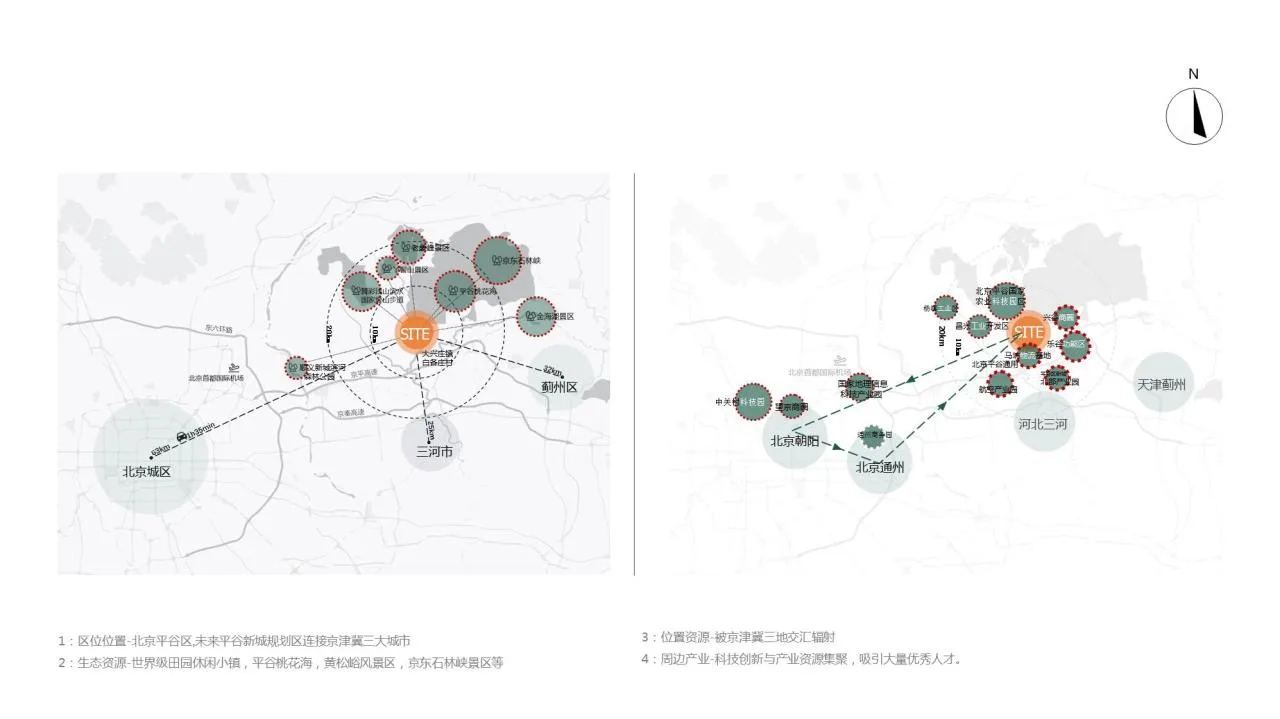
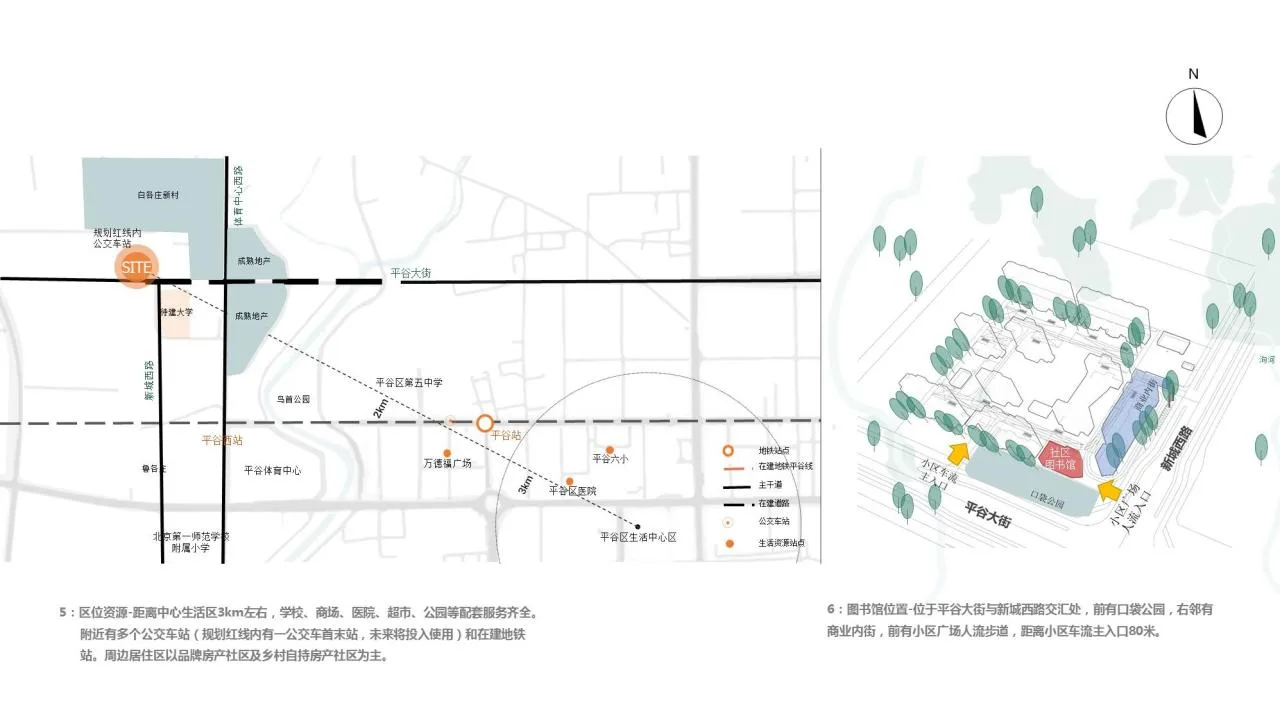
▲ Project location © y.ad studio
Do we still need a ‘library’?
In today’s digital age, electronic reading offers many advantages over traditional library experiences, such as cost-effectiveness, rapid dissemination, convenient access, diverse functionality, portability, customizable reading environments, and adjustable font sizes and layouts. At the outset of the design process, we questioned whether a traditional, specialized library space remains necessary in this era.
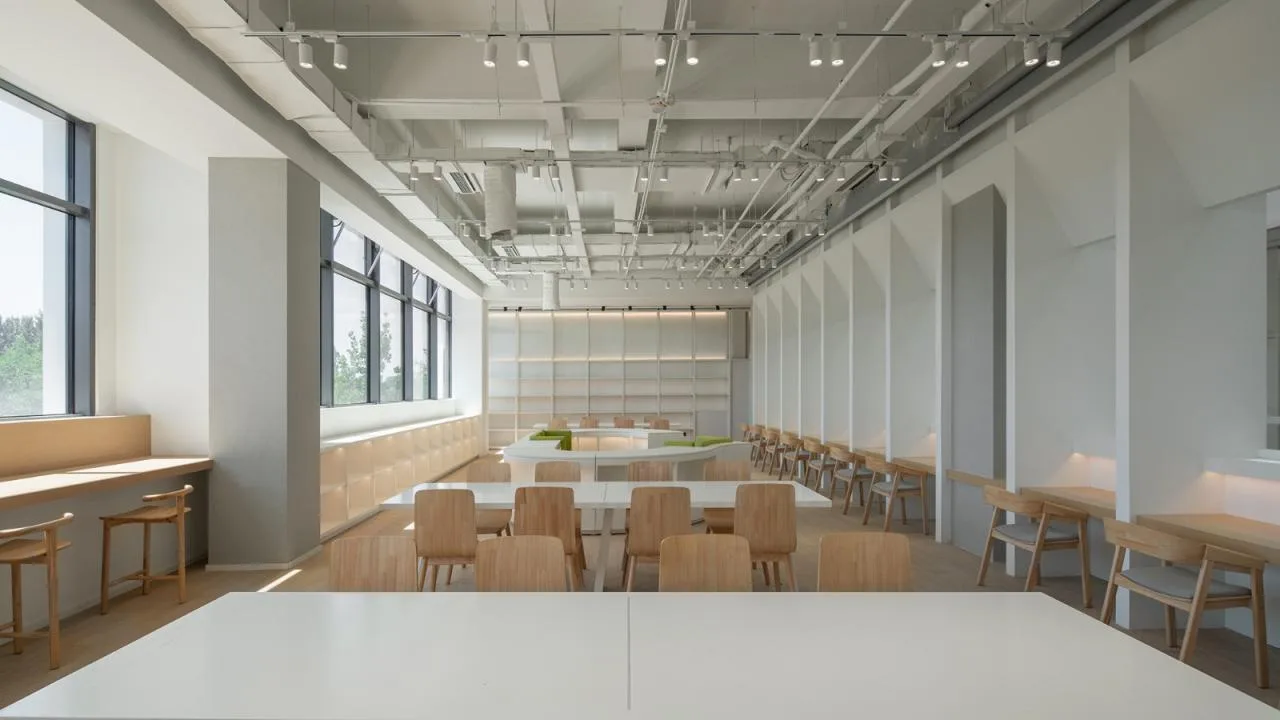
▲ 2nd Floor Reading and Self-study Area © Architecture Photography
What kind of library does our community truly need?
Prompted by this question, we conducted thorough research, analysis, and reflection on the project.
First, we analyzed the regional property structure and population demographics. The surrounding residential areas primarily consist of branded real estate communities and rural self-owned properties. The main demographic is young adults aged 25 to 35, typically couples or families with children, with a certain level of education and spending power. Most are engaged in mid- to high-end service industries and seek a quality lifestyle.
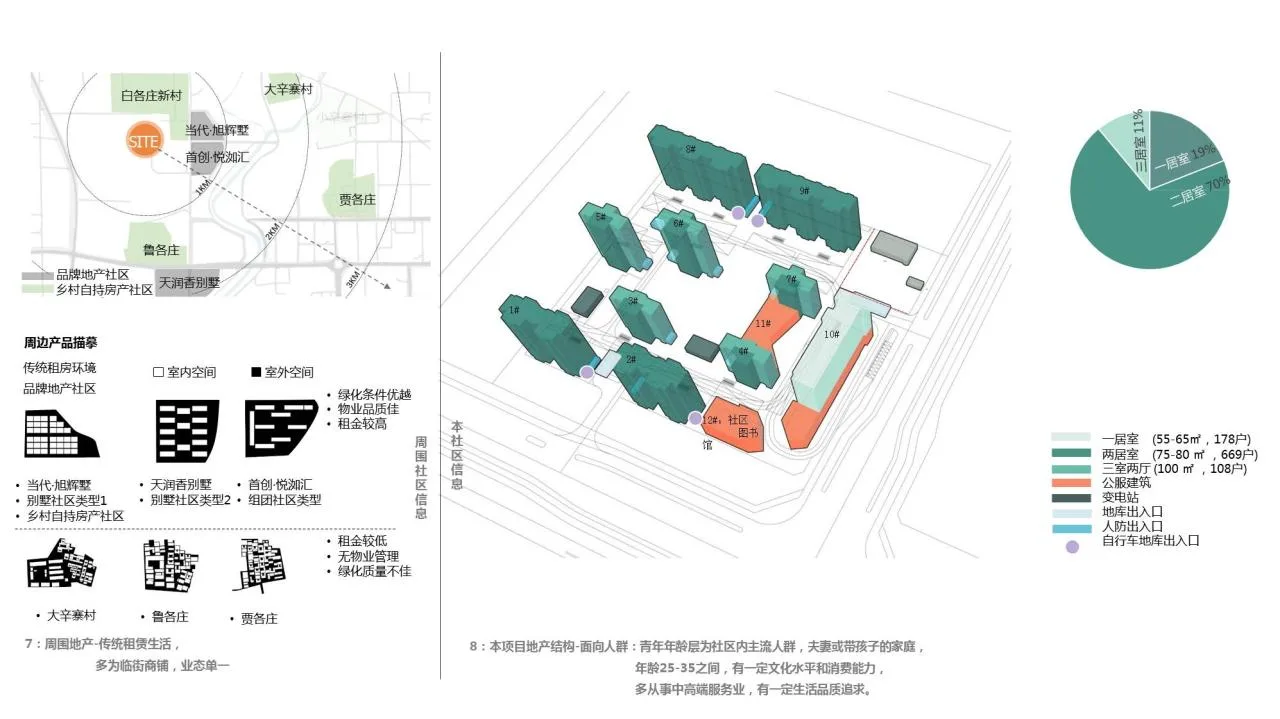
▲ Demographic analysis chart © y.ad studio
Next, by examining numerous community and urban libraries both domestically and internationally, we found that successful modern libraries extend beyond traditional reading functions to embrace diverse uses and social significance.
Community libraries can foster cultural and educational atmospheres, attract visitors from outside the neighborhood, and provide valuable community services.
Unlike cold electronic screens, libraries offer spiritual satisfaction through reading and serve as multifunctional spaces that encourage social interaction, leisure, and relaxation. They become gathering places for families, friends, and colleagues to exchange ideas—a new kind of social energy field—while also providing quiet areas for contemplation and solitude.
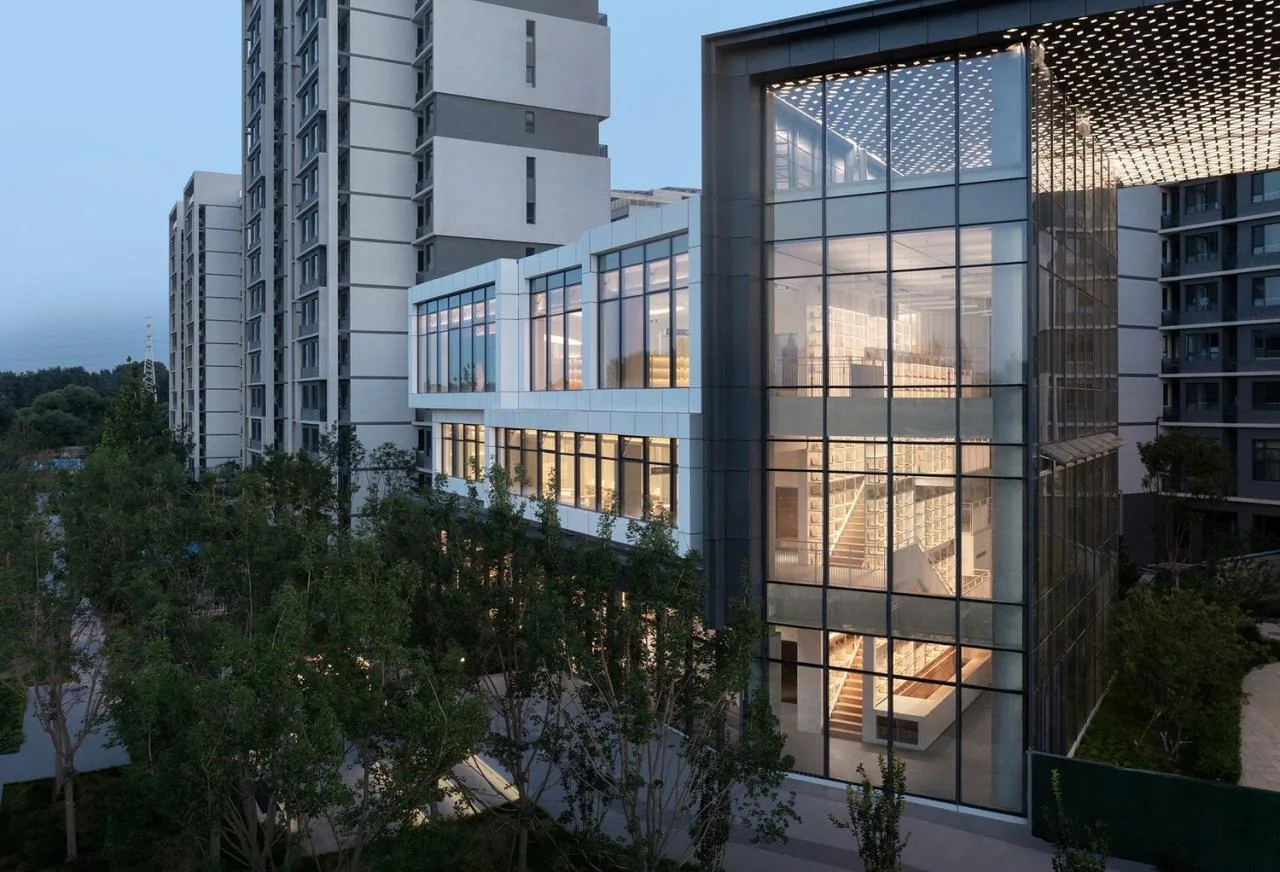
▲ Library facade at dusk © Architecture Photography
Community Vision
We envision the completed library achieving three key goals.
<
First, it should provide enhanced living services to community residents, encouraging their active participation and becoming a cultural symbol of the neighborhood.
Second, it should attract and engage the surrounding population, becoming a popular gathering spot that positively influences the local community’s cultural literacy.
Third, given its city location, it should serve as a destination in Pinggu District that draws visitors and residents alike, bringing together people who share similar values and reshaping their social and lifestyle habits.
Ultimately, it should remain rooted in the community, honoring its original purpose and becoming a beloved local space.
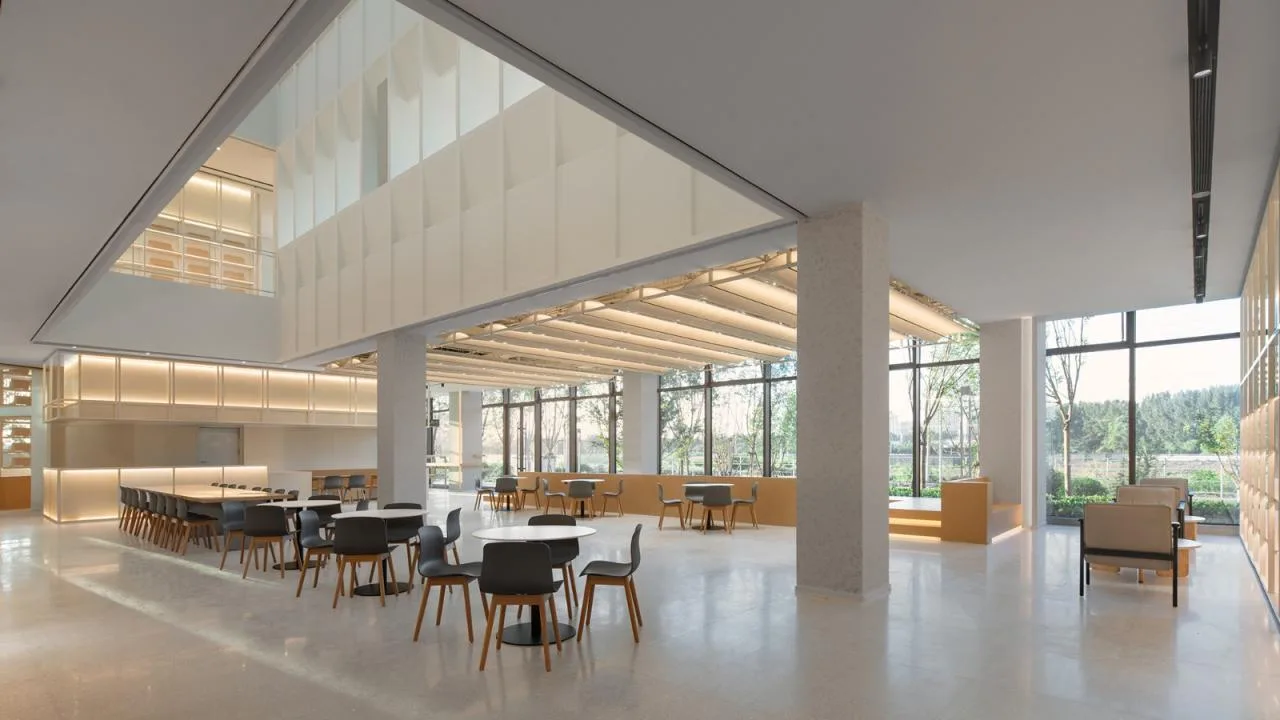
▲ 1st Floor “Community Living Room” – Communication, Activity, Reading, and Leisure Area © Architecture Photography
Functional Reorganization
The library is a three-story above-ground building with a total floor area of 1,286.25 square meters: 524.01 sqm on the first floor, 400.85 sqm on the second, and 361.39 sqm on the third. We organized the spatial and emotional functions as follows.
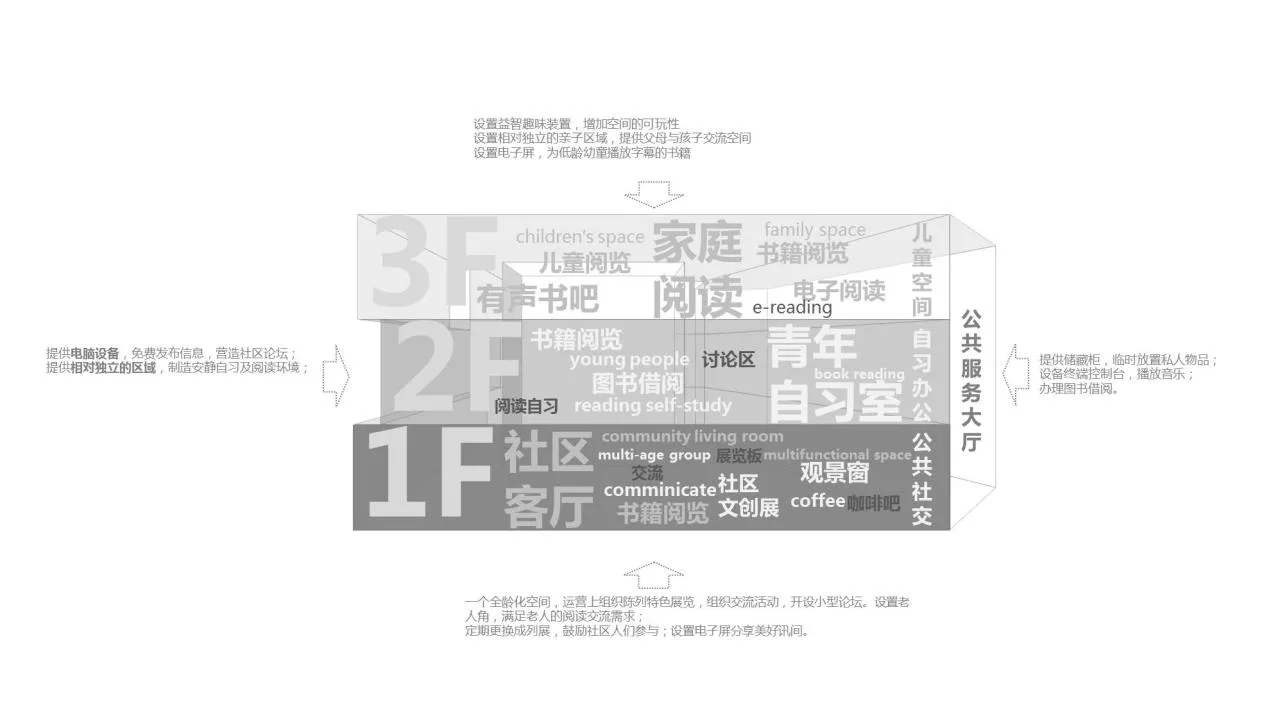
▲ Functional analysis diagram © y.ad studio
Public leisure areas include the community living room, light food coffee bar, temporary exhibition spaces, and movie screening rooms. Reading areas consist of study rooms, maker and discussion spaces, public reading zones, and electronic reading areas. Children’s education spaces encompass children’s reading rooms, family libraries, and screening halls.
We also reserved space for future emotional design, encouraging residents to participate in community cultural exhibitions and interactive events.
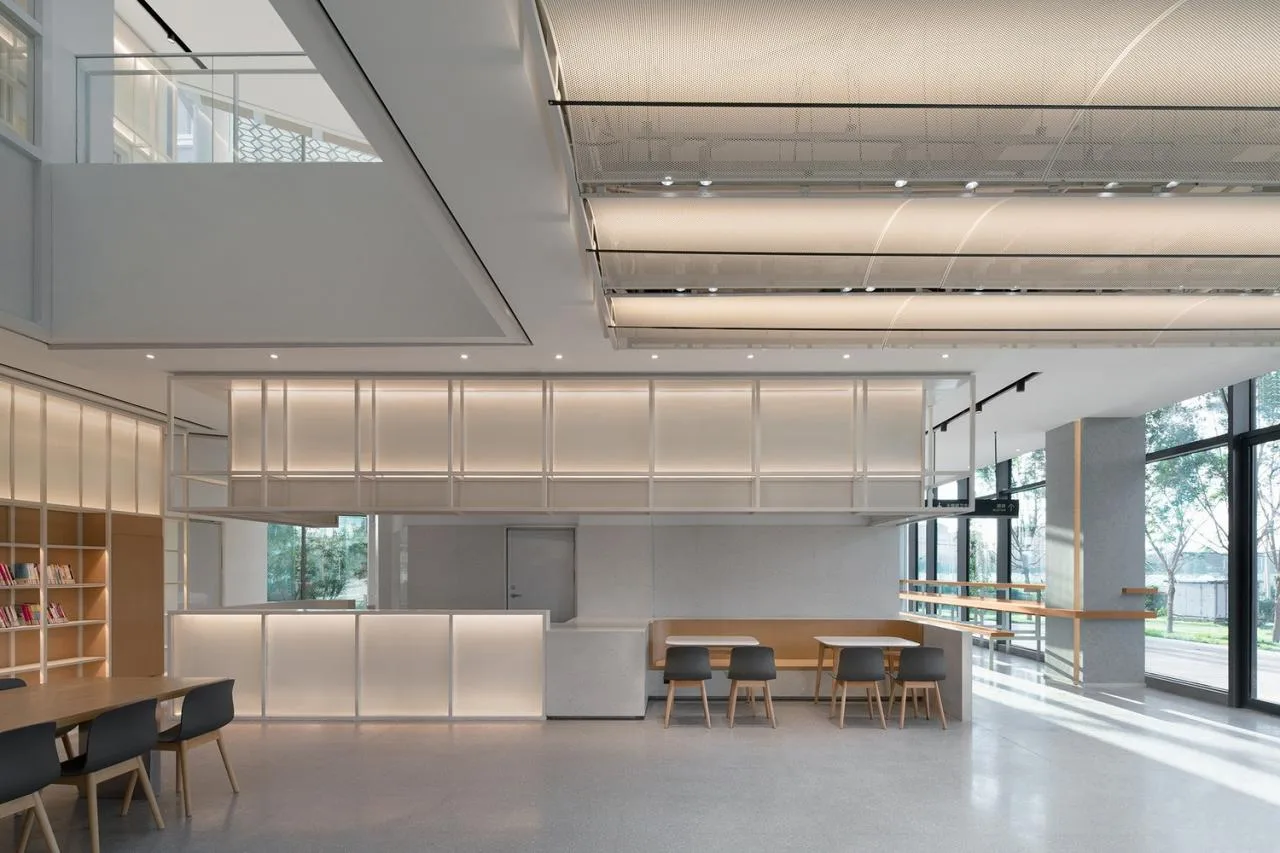
▲ 1st Floor “Community Living Room” Coffee and Water Bar Area © Architecture Photography
The first floor is designated as the ‘community living room,’ designed to foster public socialization. It integrates exhibitions, coffee service, events, and communication—not just reading.
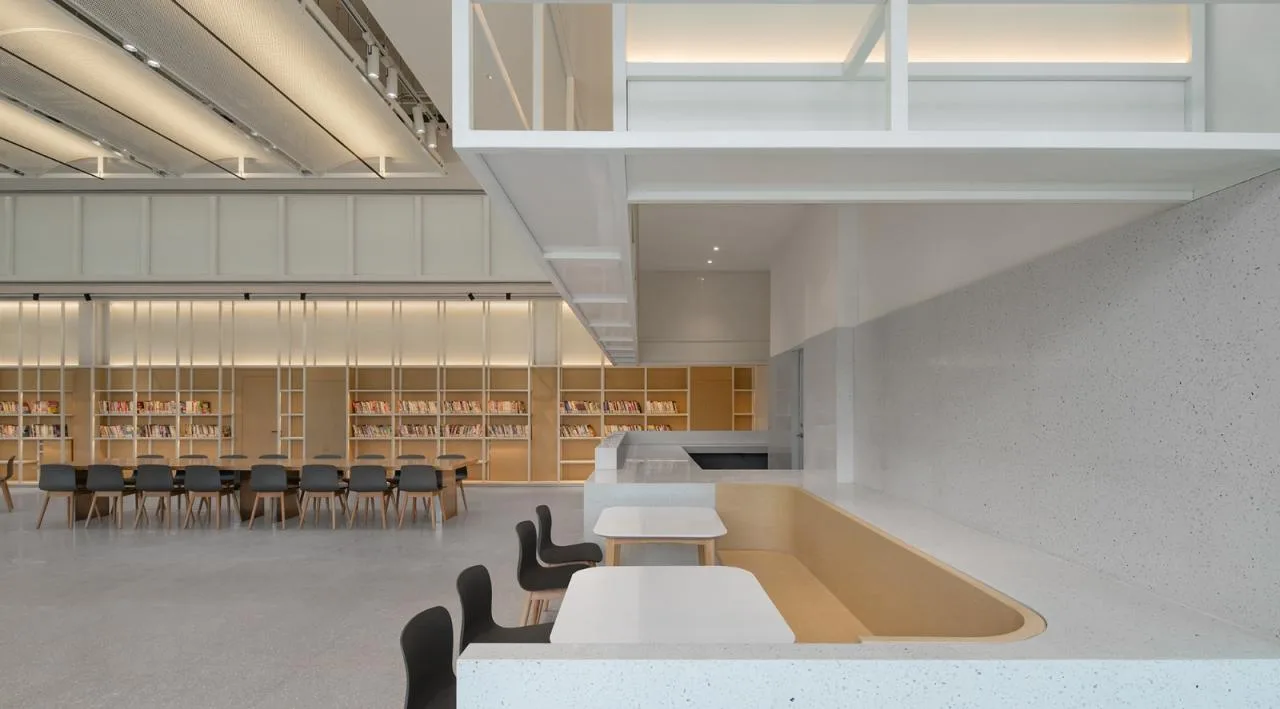
▲ 1st Floor “Community Living Room” Coffee and Water Bar Area © Architecture Photography
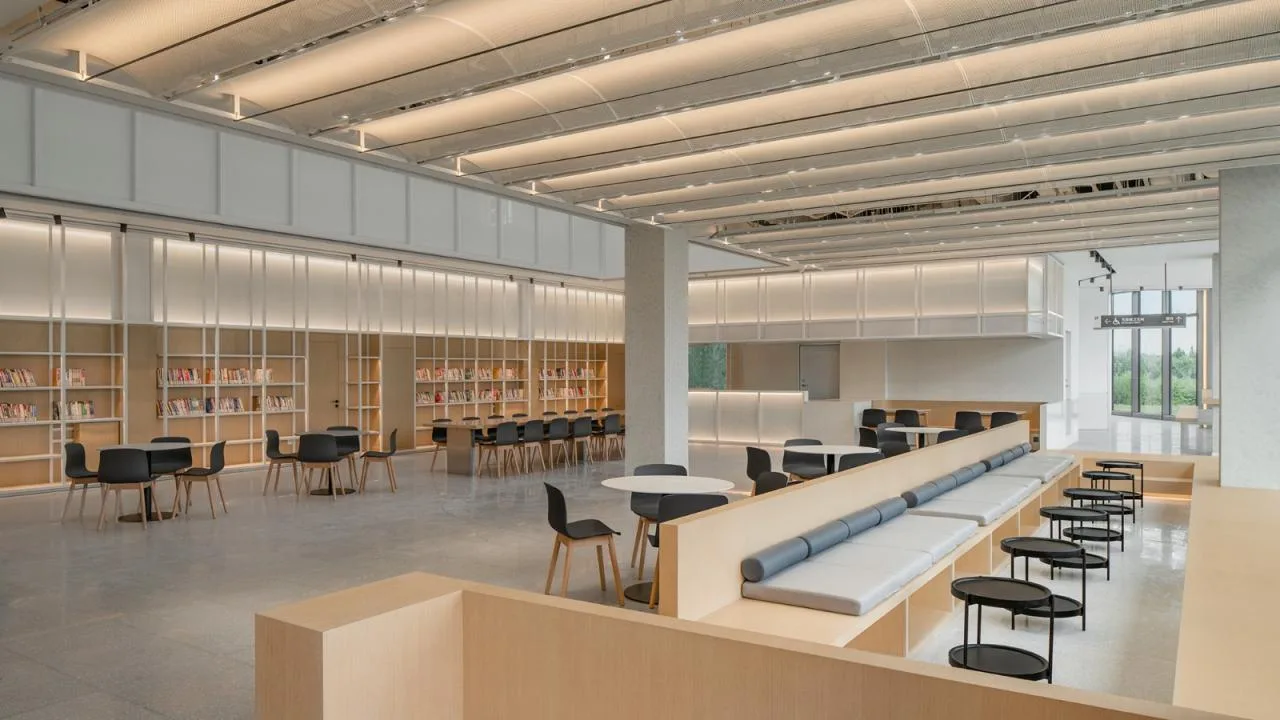
▲ 1st Floor “Community Living Room” – Communication, Activity, Reading, and Leisure Area © Architecture Photography
The second floor is dedicated to reading, self-study, and office functions, providing a space for young people to read, study, communicate, and collaborate.
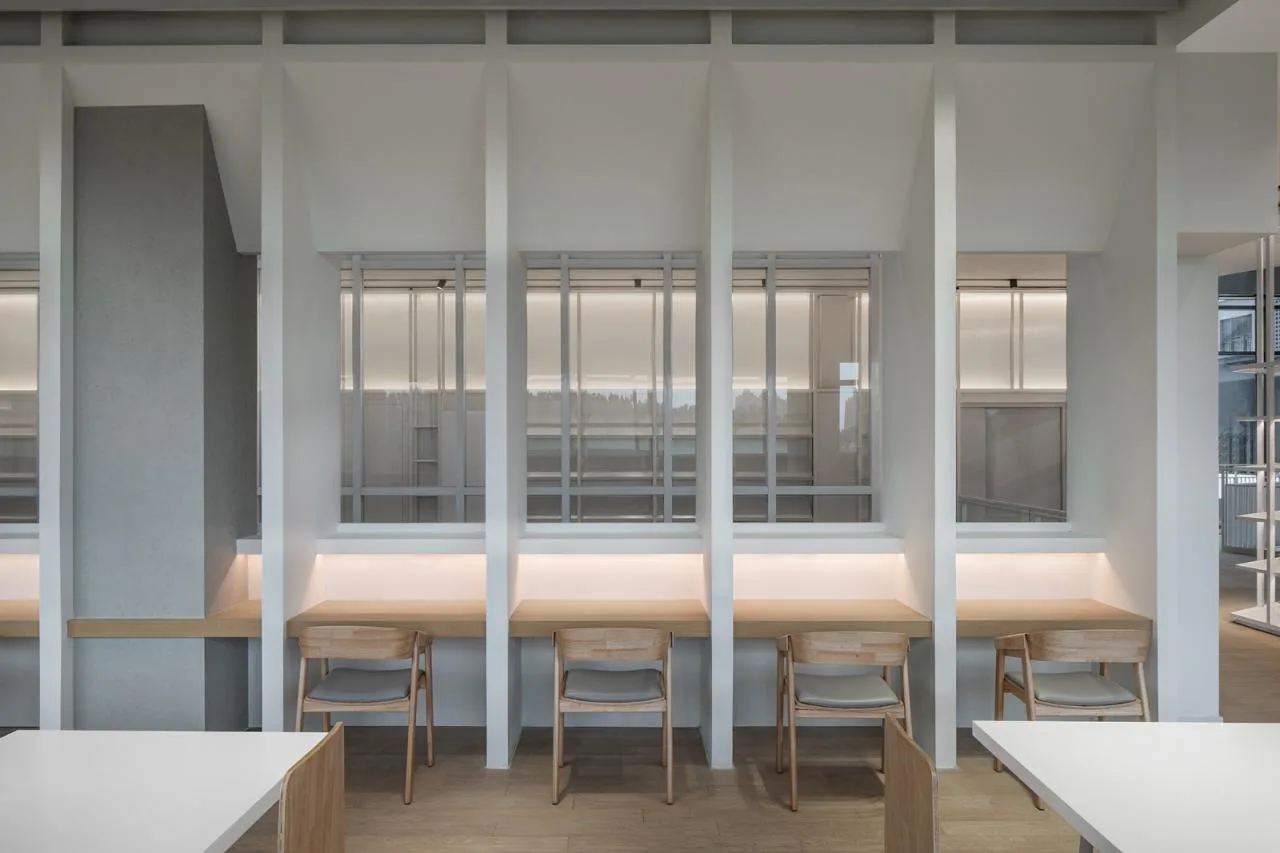
▲ 2nd Floor Reading and Self-study Area © Architecture Photography
The third floor focuses on family and parent-child activities, offering spaces for children to read, play, and engage in parent-child programs.
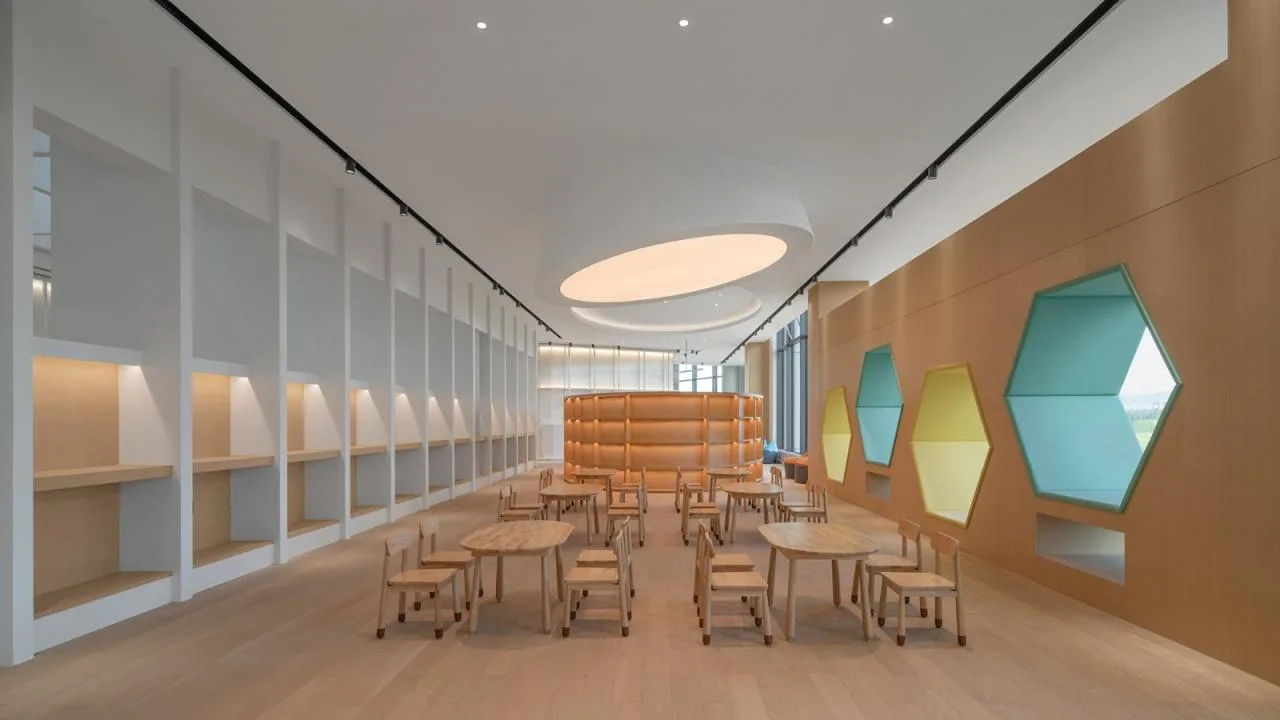
▲ 3rd Floor Children’s Handicraft and Reading Area © Architecture Photography
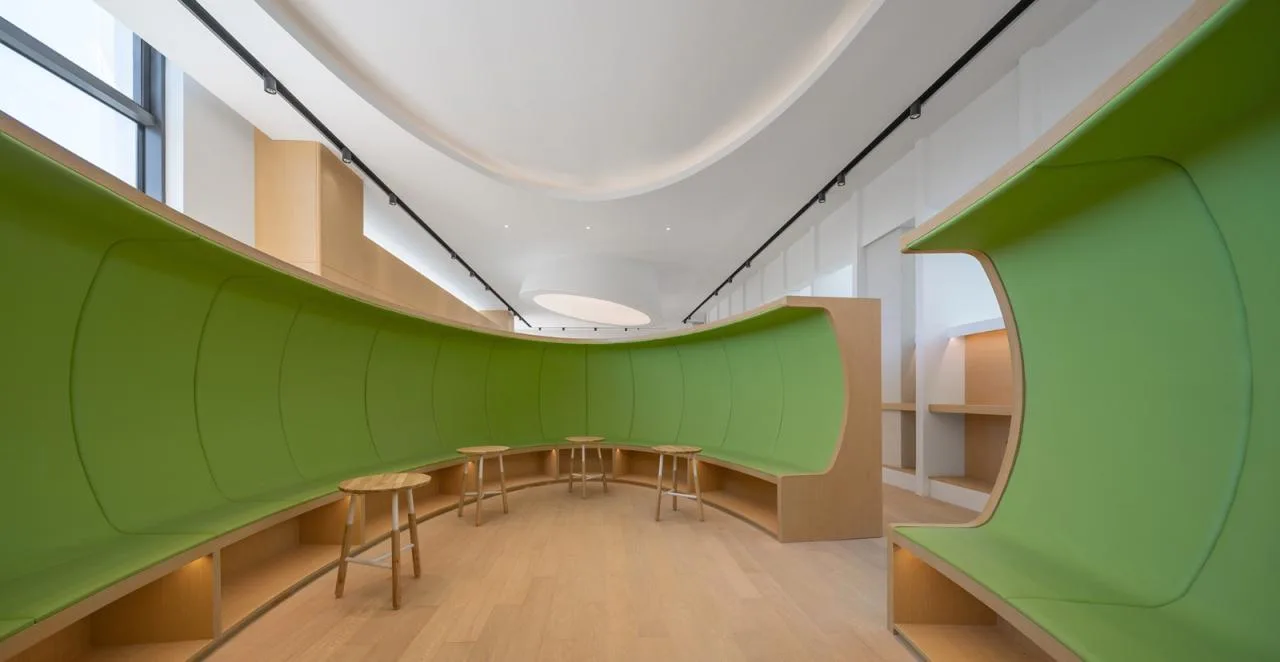
▲ 3rd Floor Family Reading Area © Architecture Photography
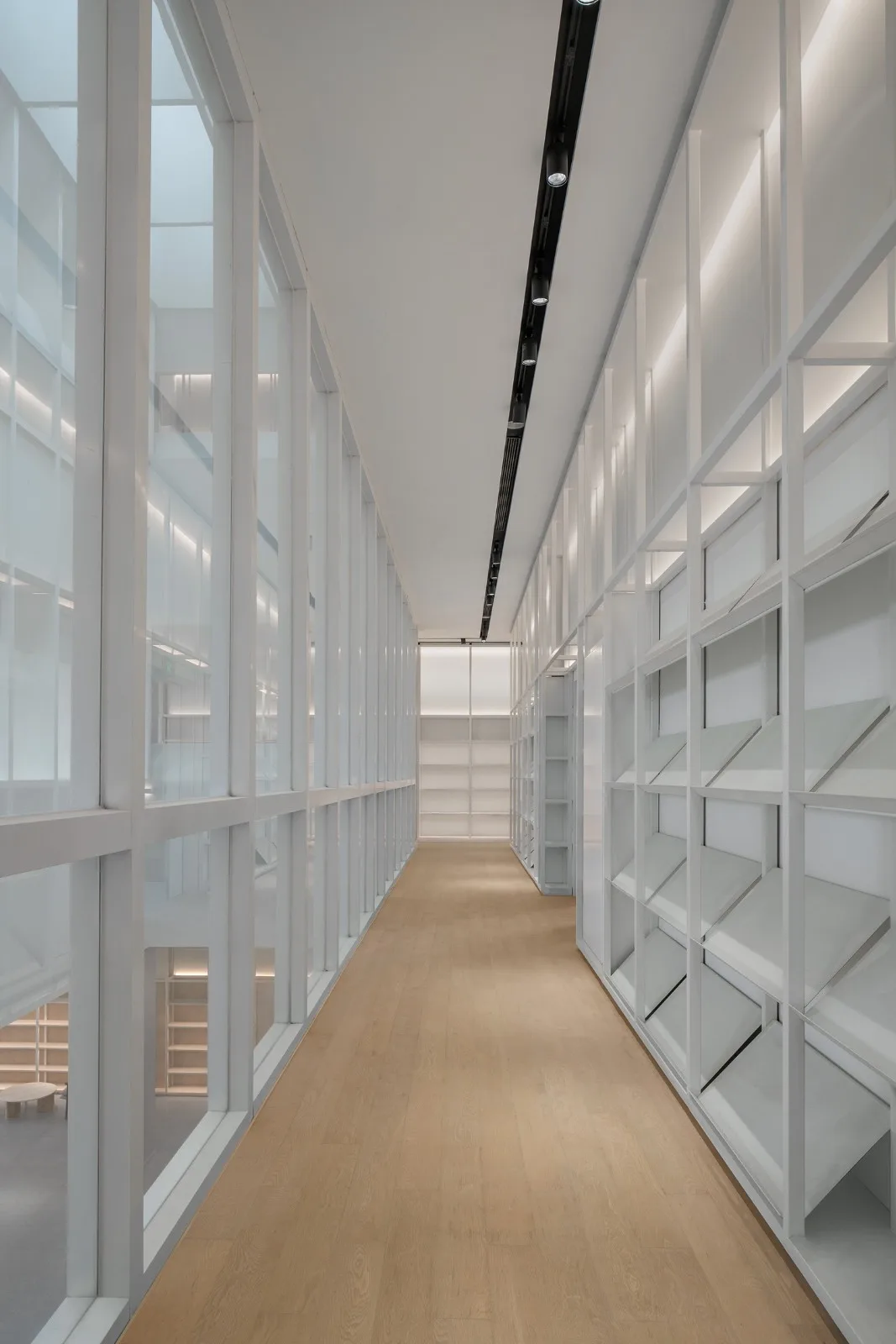
▲ 3rd Floor Corridor Space © Architecture Photography
Spatial Theme
Architecture gains its soul through light and shadow. For those returning home late at night, the presence of light offers comfort and solace.
Analyzing the building’s spatial qualities, we designed a vertical glass curtain wall entrance hall facing the square, featuring transparency inside and out, and soaring 14.9 meters over three floors to create a striking visual focal point.
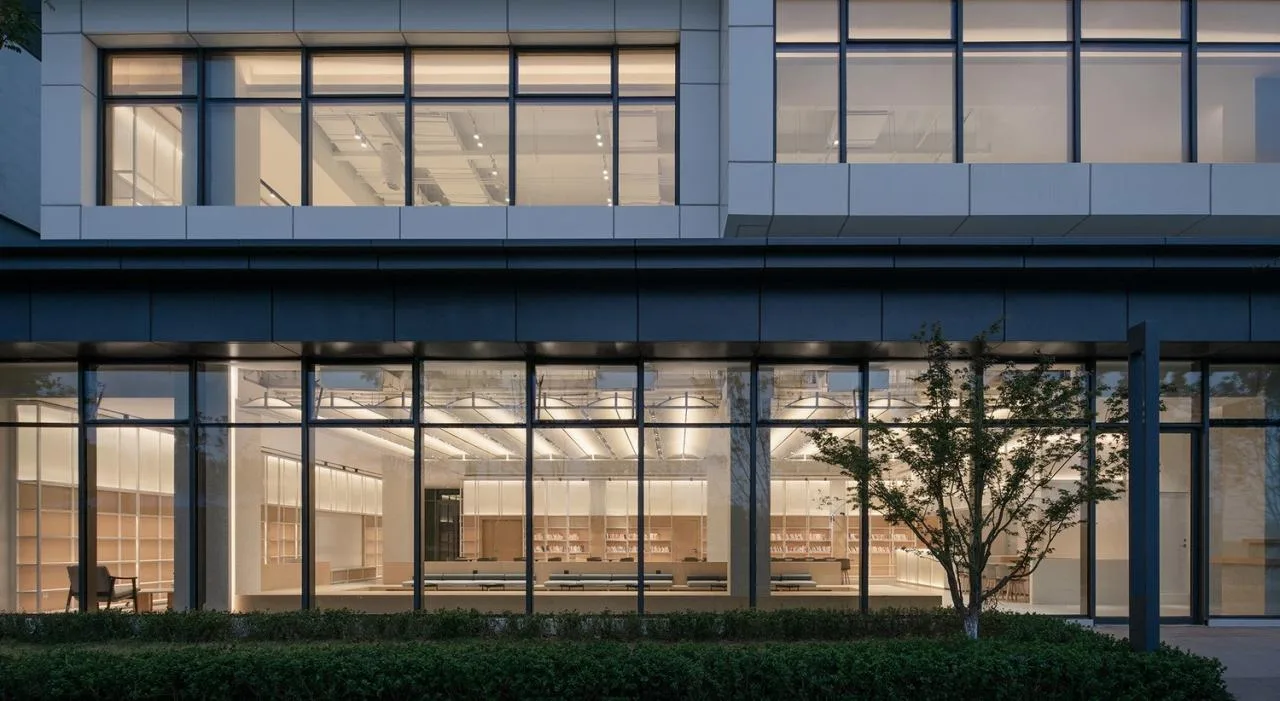
▲ Blurred boundaries between indoor and outdoor spaces © Architecture Photography
The glass curtain wall on the south side faces the 50-meter landscape belt and square, blurring the line between indoors and outdoors, extending the outdoor scenery into the interior, and providing seating and leisure areas that encourage communication. A long skylight above the atrium, spanning three levels, fills the space with bright, transparent light. Design techniques guide the interplay of light and shadow, crafting a unique spatial atmosphere.
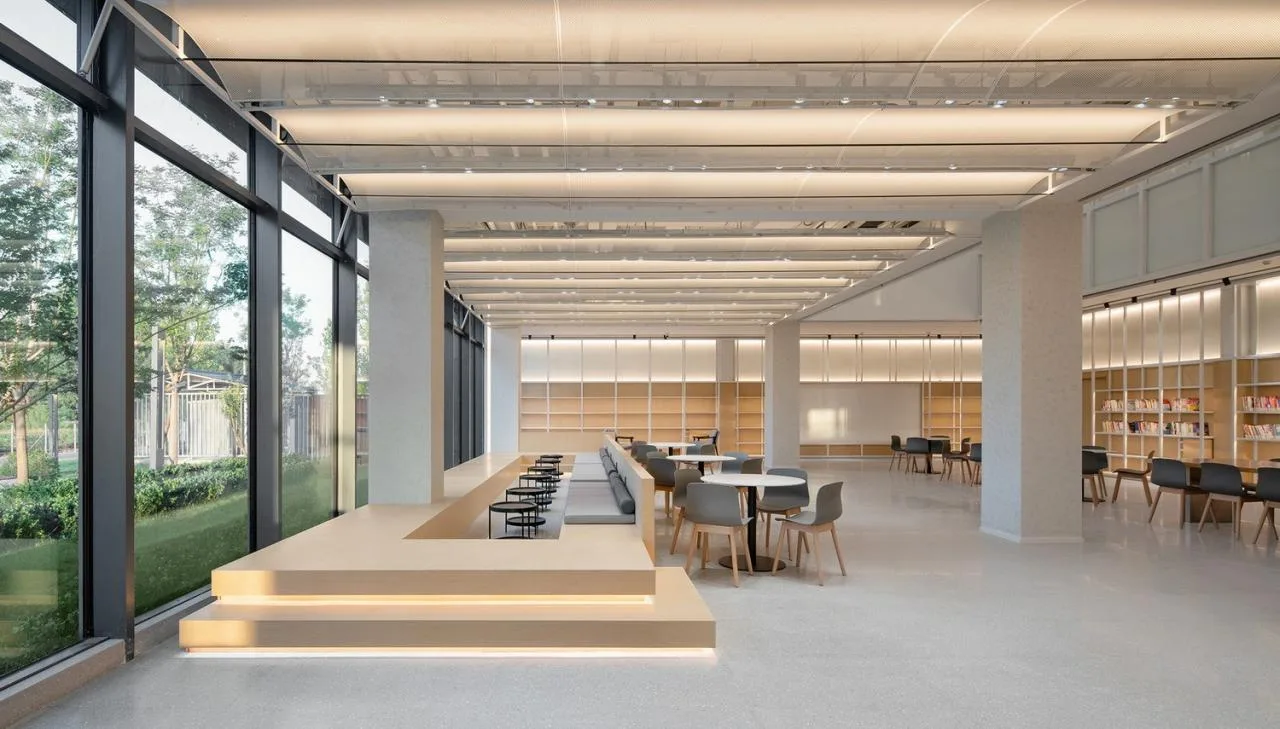
▲ Extending the outdoor landscape into the interior © Architecture Photography
Based on these spatial features, we developed two key spatial themes: “Container of Light” and “Light Wall Staircase.”
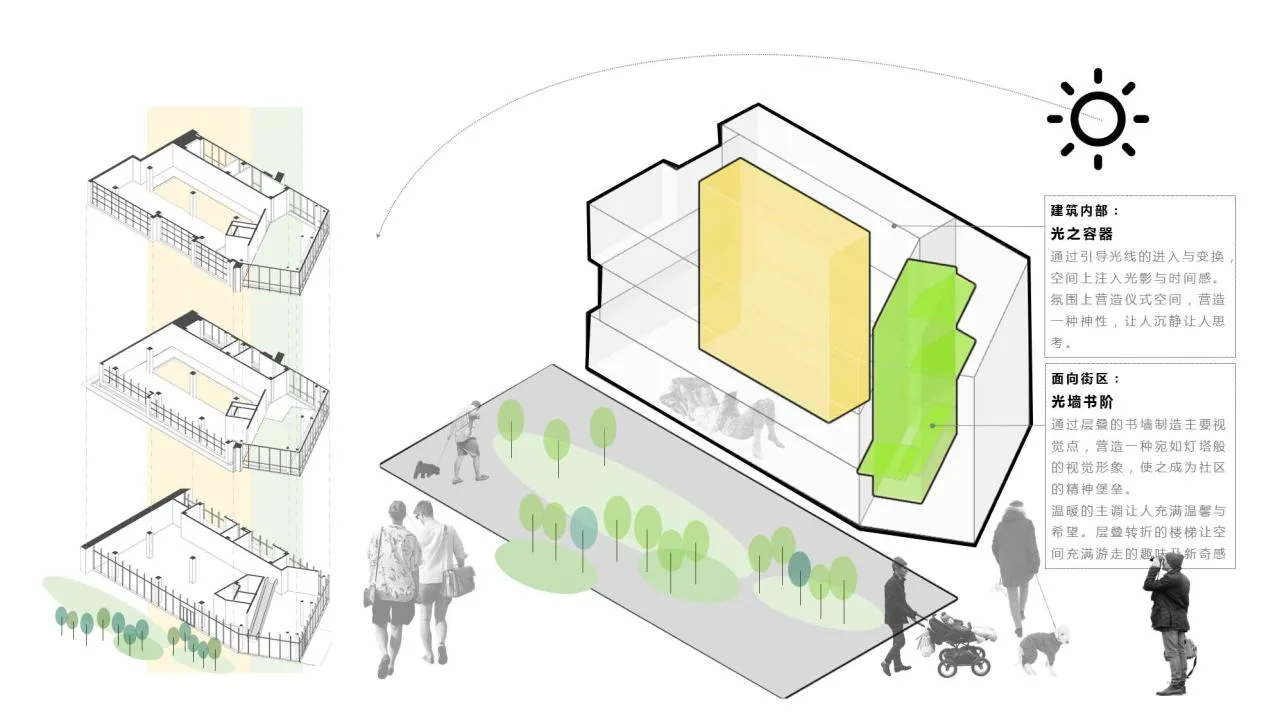
▲ Analysis diagram © y.ad studio
Light Wall Book Steps
Using the front hall and transparent glass curtain wall, we created a layered book wall that guides visitors’ attention and visually resembles a lighthouse—serving as a spiritual beacon for the community.
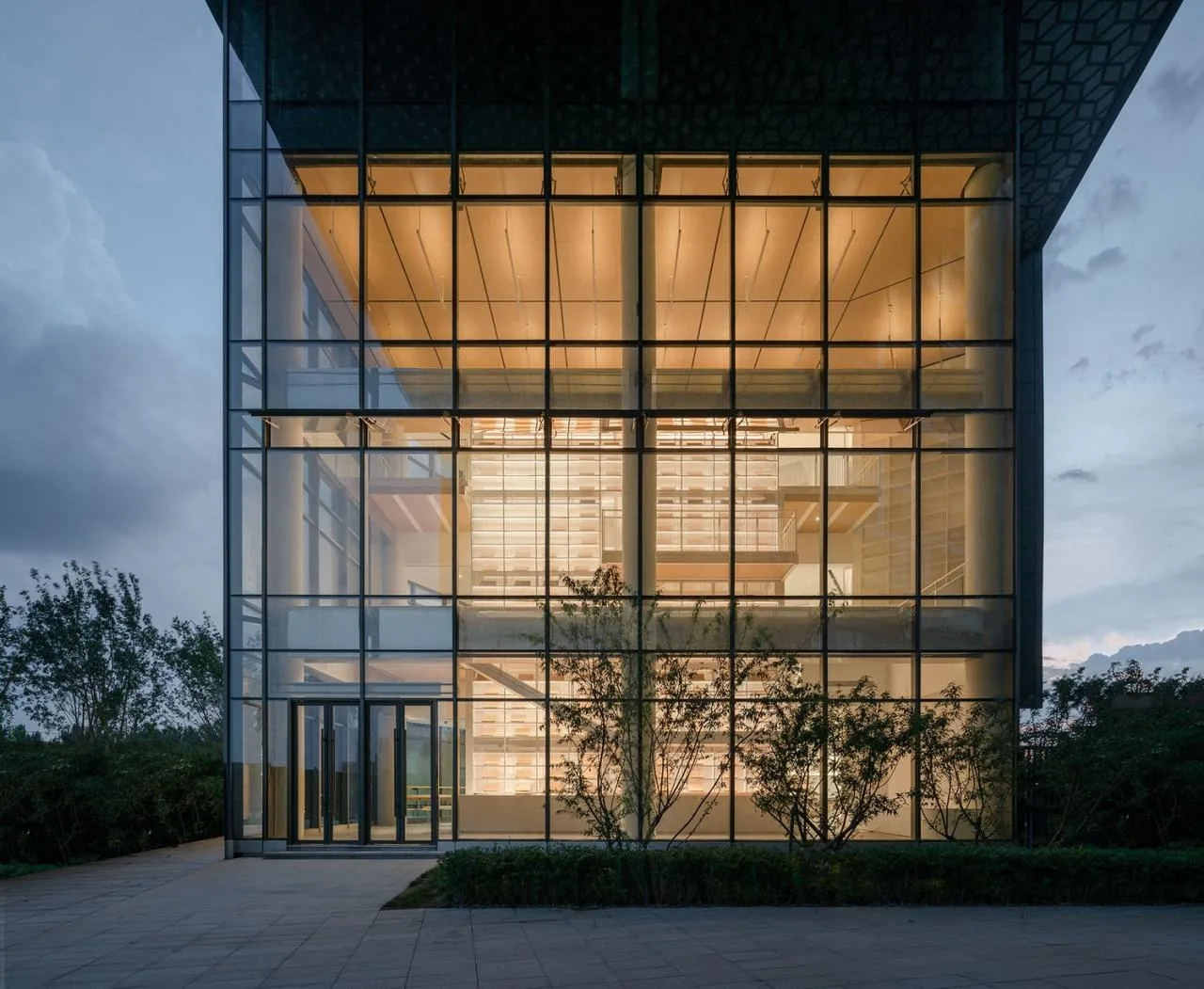
▲ Main entrance of the library © Architecture Photography
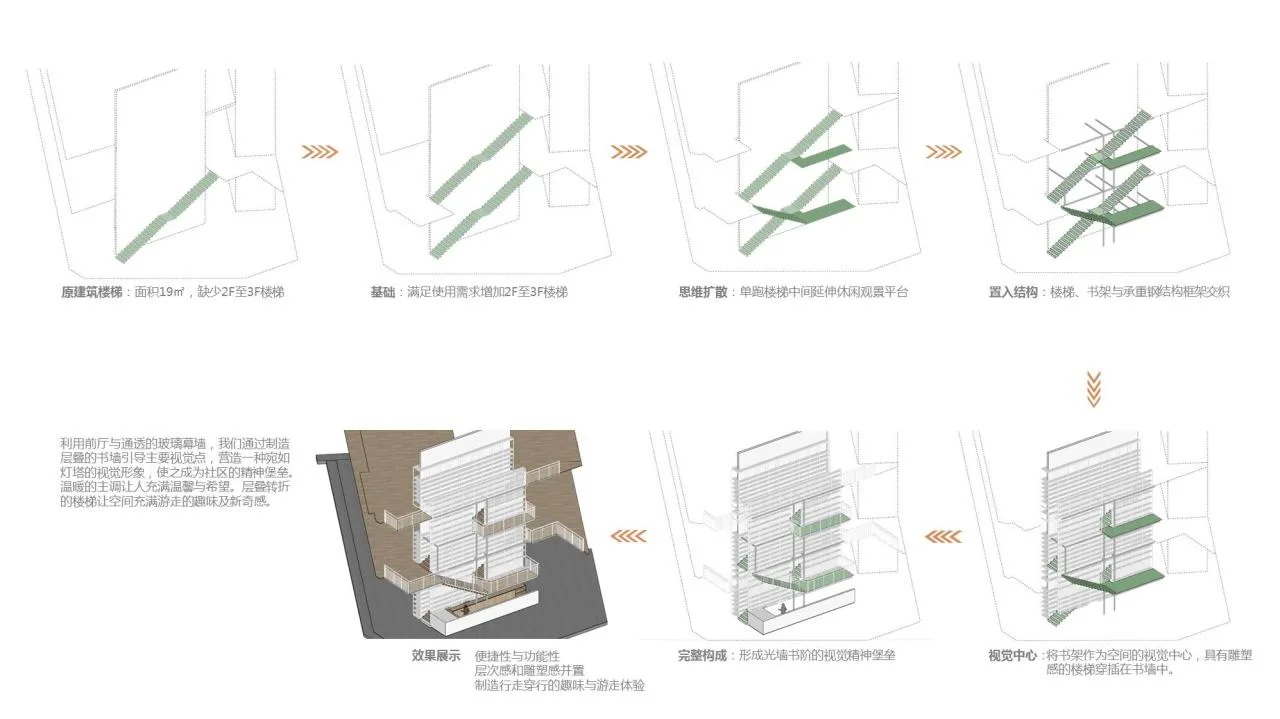
▲ Analysis diagram © y.ad studio
The warm tones evoke feelings of comfort and hope, while the layered, winding staircase adds a sense of playfulness and novelty to the space.
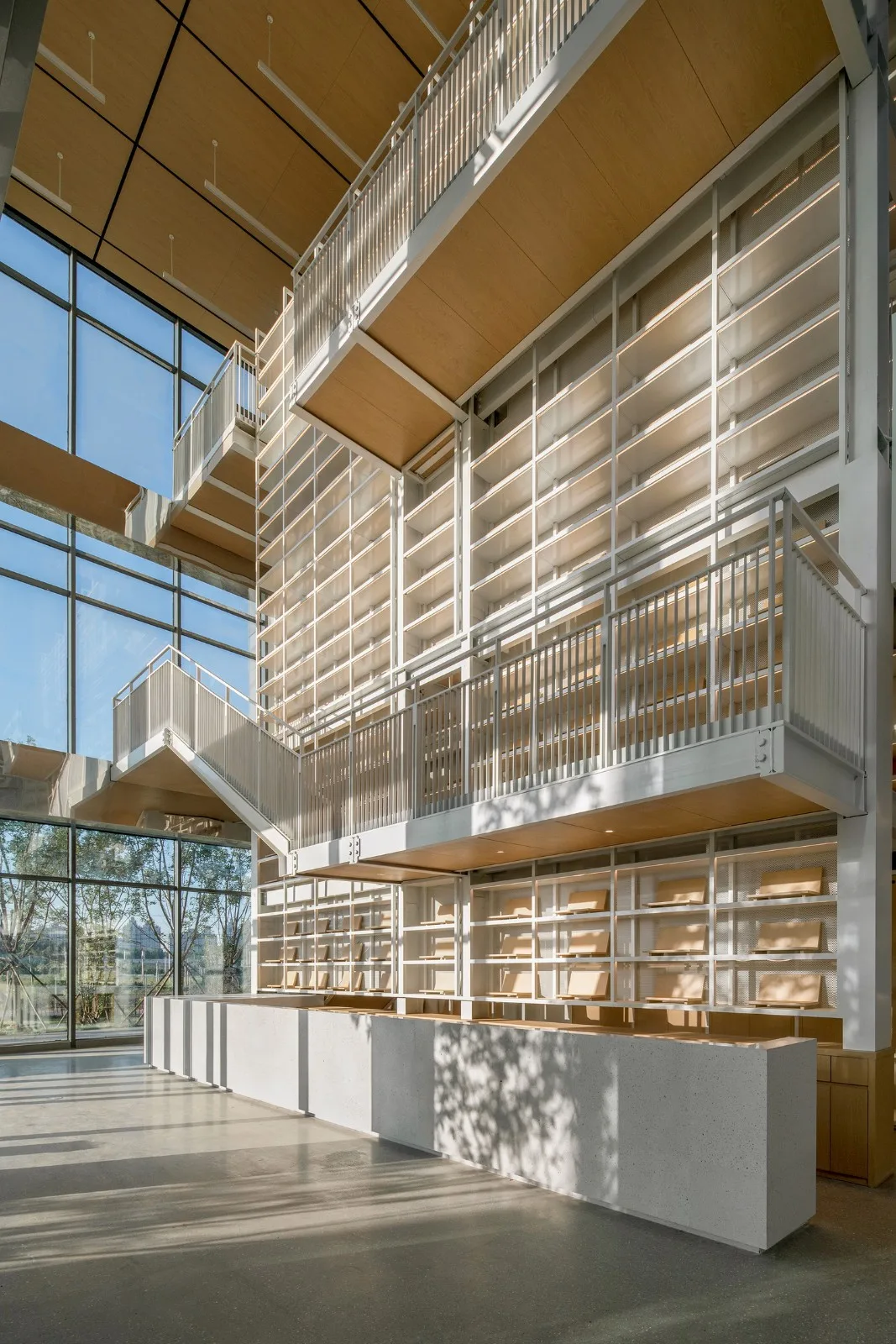
▲ Front desk book wall on 1st floor © Architecture Photography
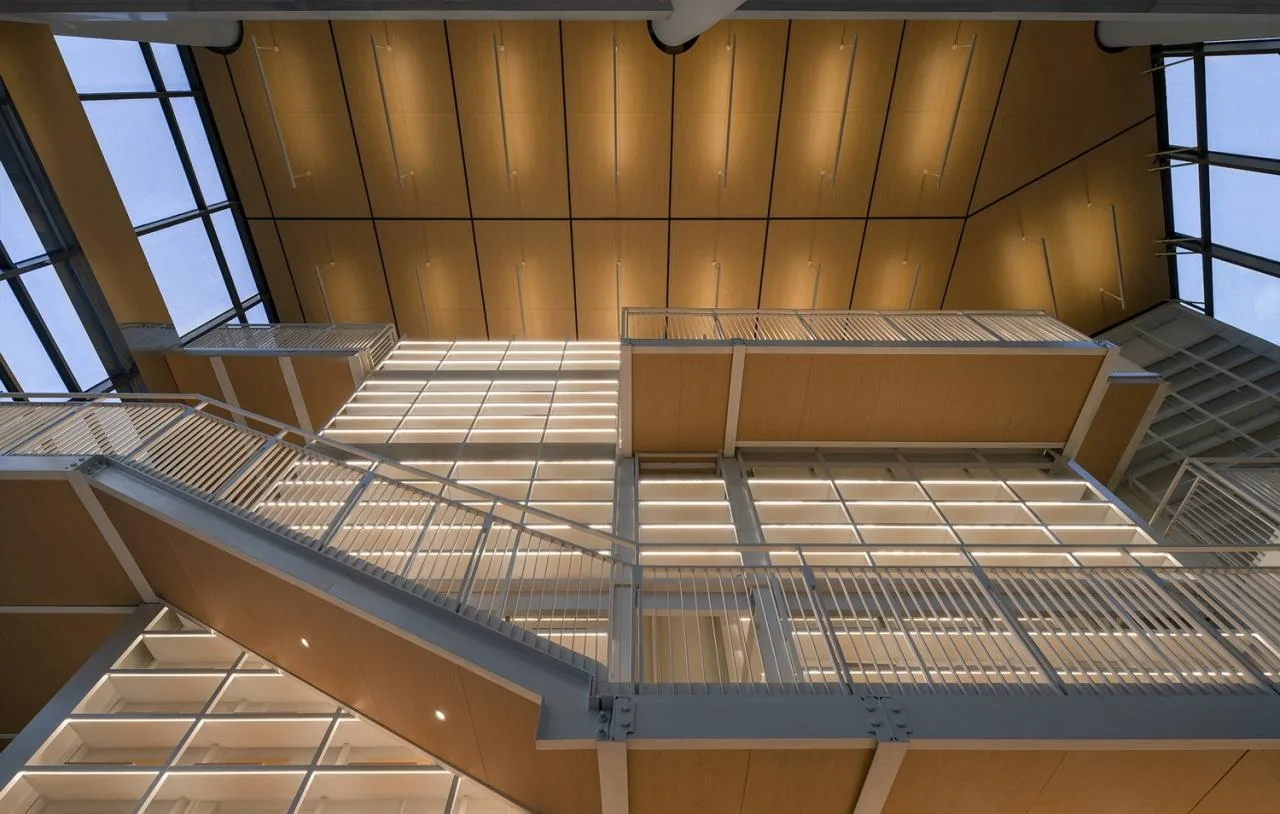
▲ Looking up at the light wall book steps © Architecture Photography
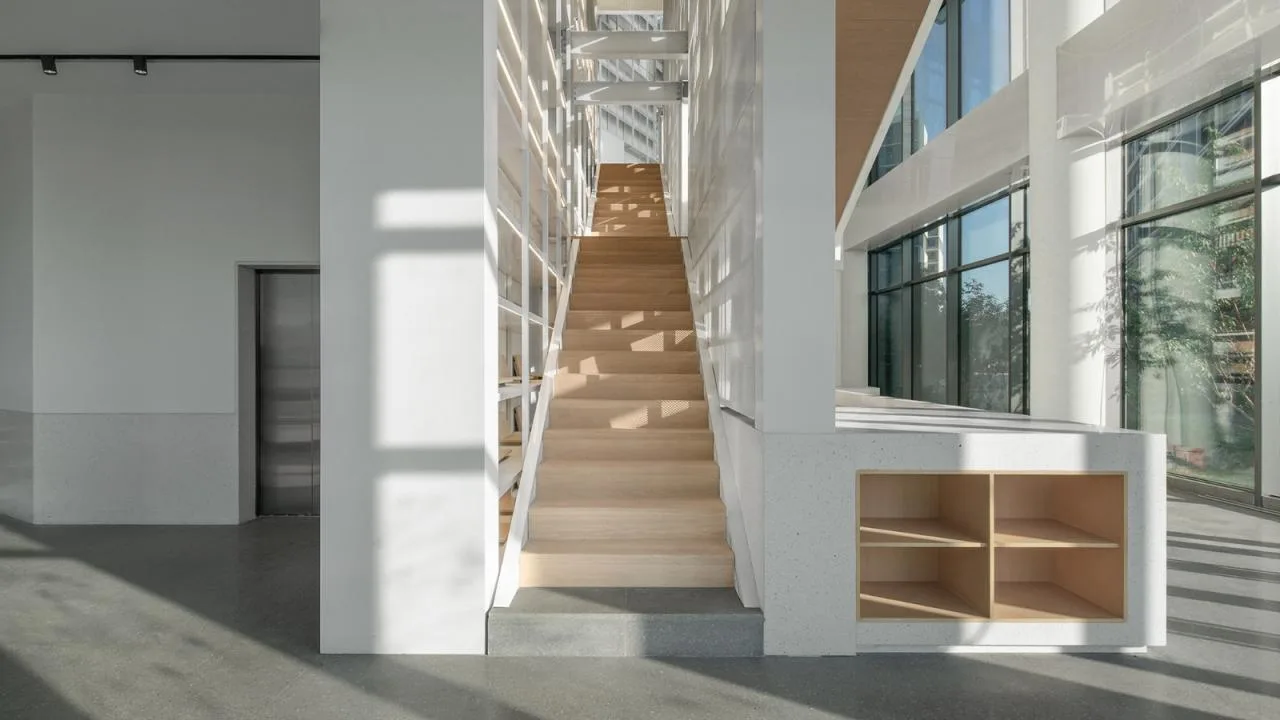
▲ Book levels © Architecture Photography
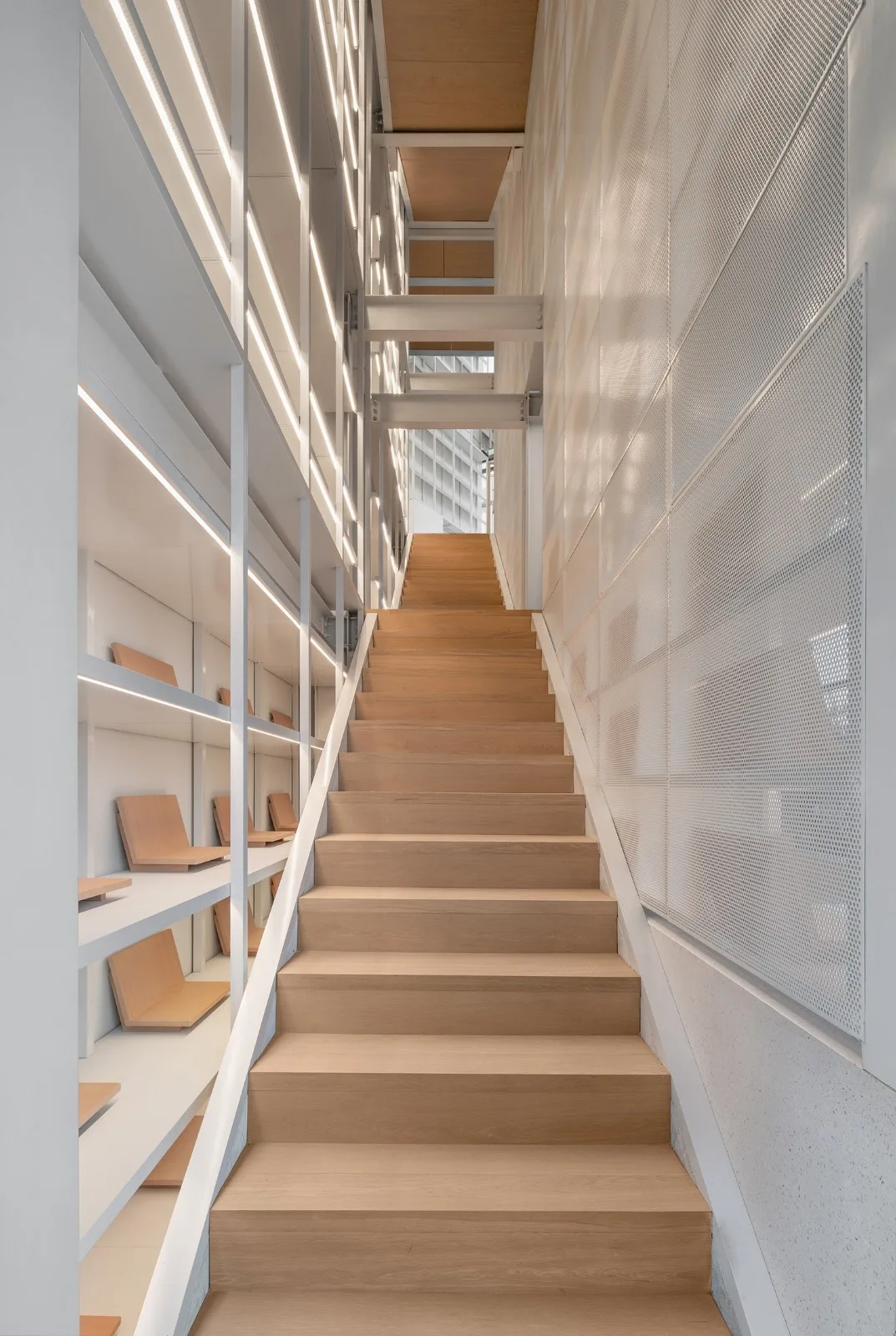
▲ Inside the book rank © Architecture Photography
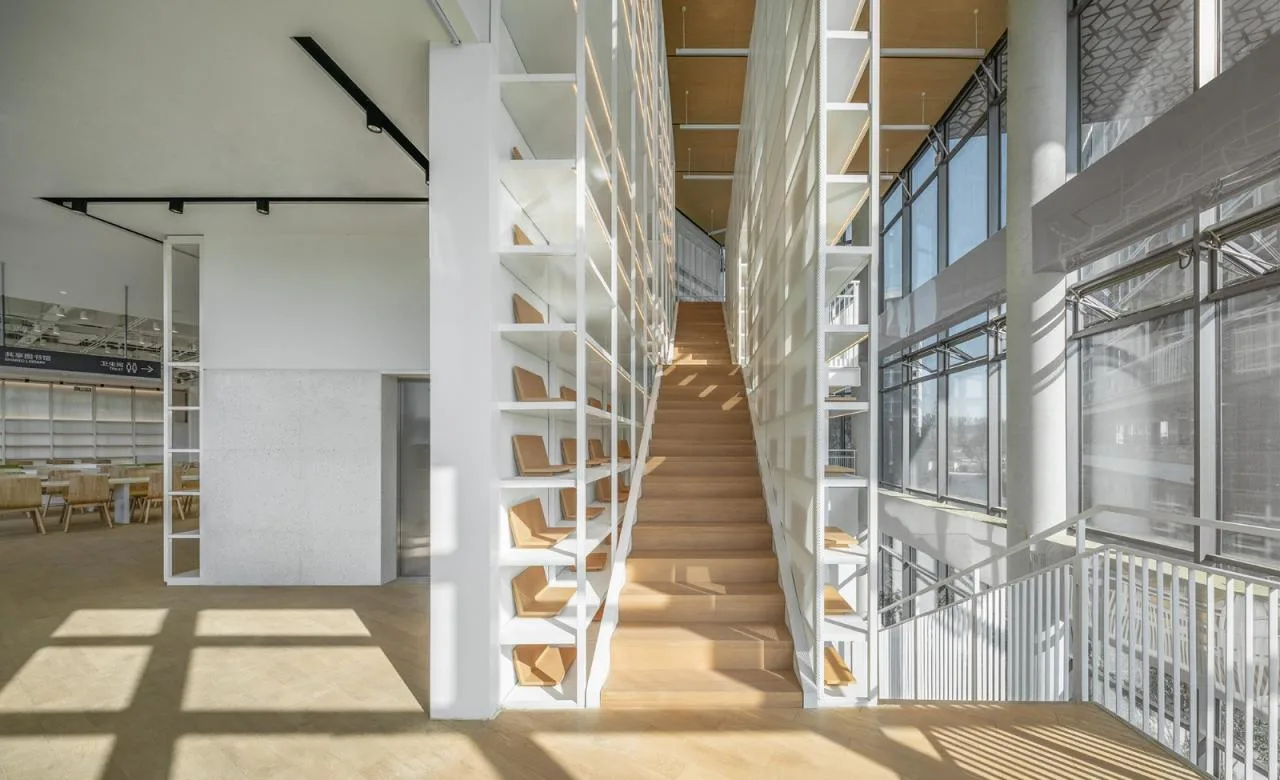
▲ 2nd Floor Book Rank Perspective © Architecture Photography
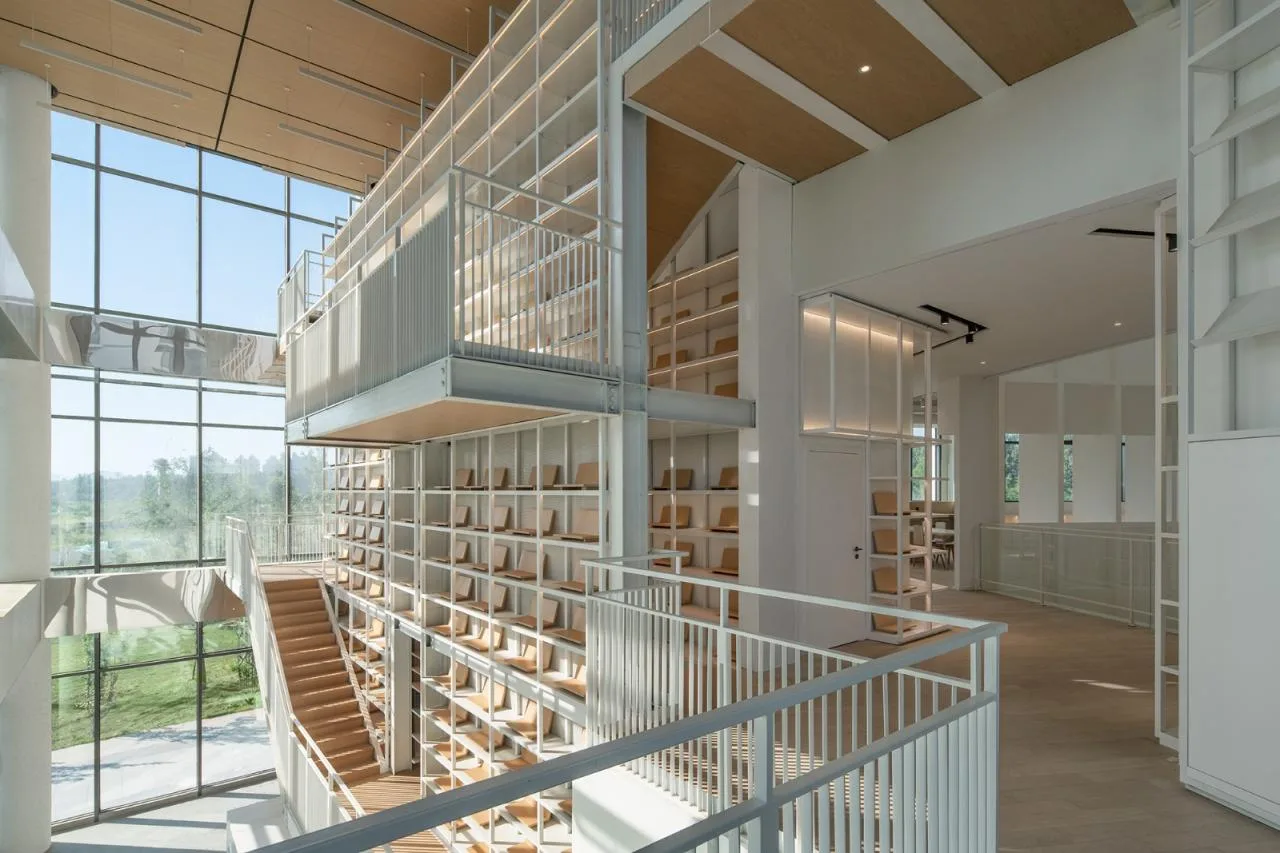
▲ 3rd Floor View Toward the Light Wall Book Steps © Architecture Photography
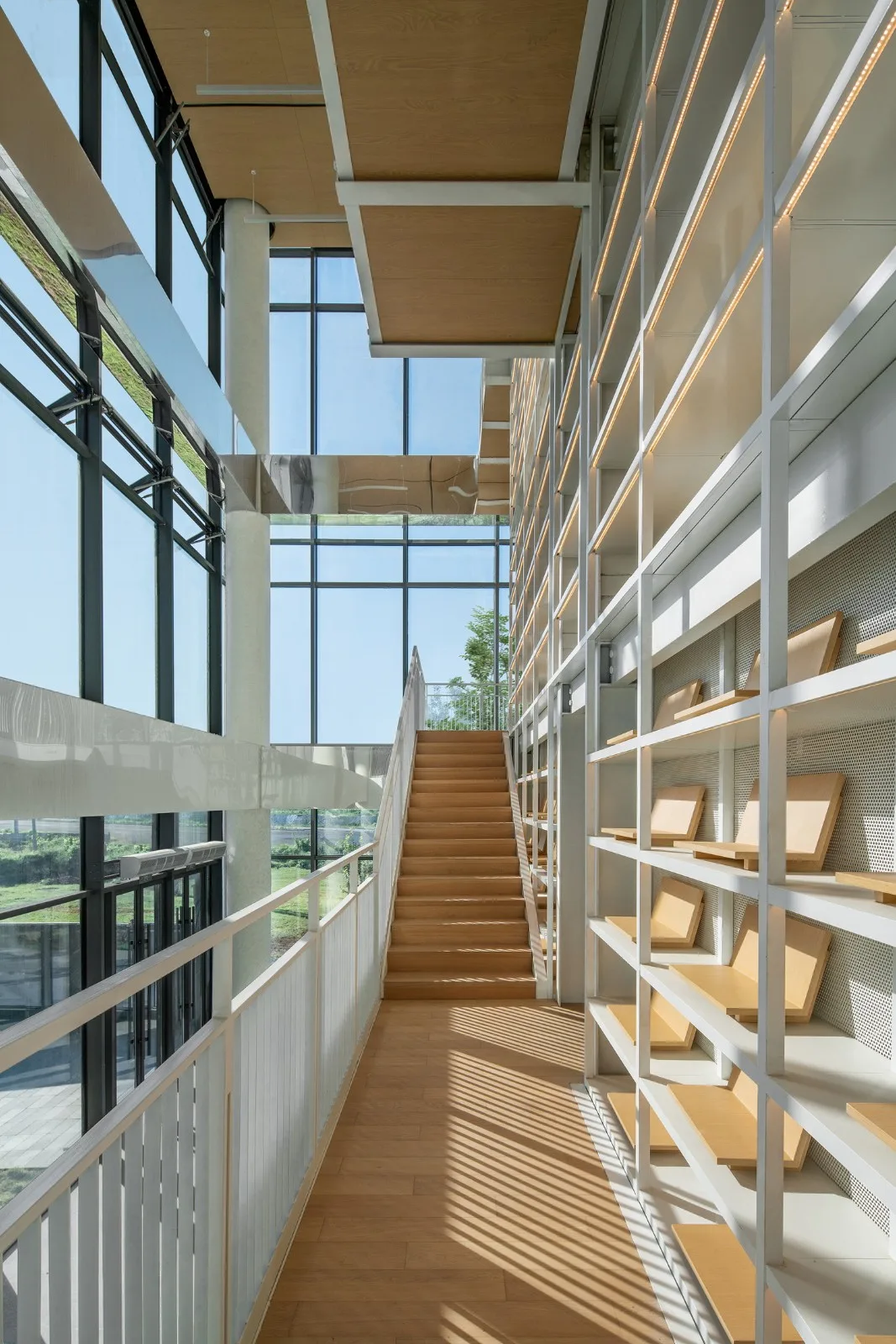
▲ Viewing platform of Light Wall Book Steps © Architecture Photography
Container of Light
Utilizing the tall atrium lighting space, we guide natural light to create dynamic spatial expressions and evoke emotional responses.
Our goal is to foster a sense of ceremony and calm, creating an atmosphere conducive to contemplation. The space is designed to be emotional, artistic, and engaging, allowing visitors to perceive the passing of time through the interplay of light and shadow.
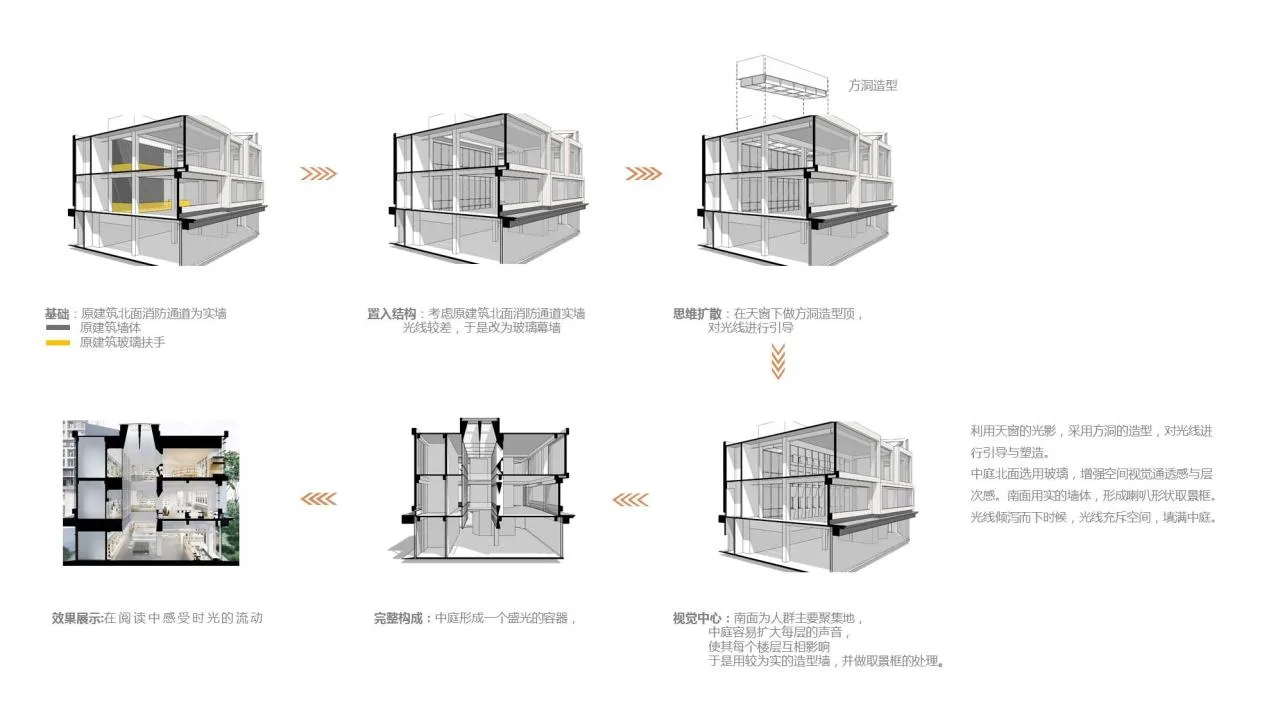
▲ Analysis diagram © y.ad studio
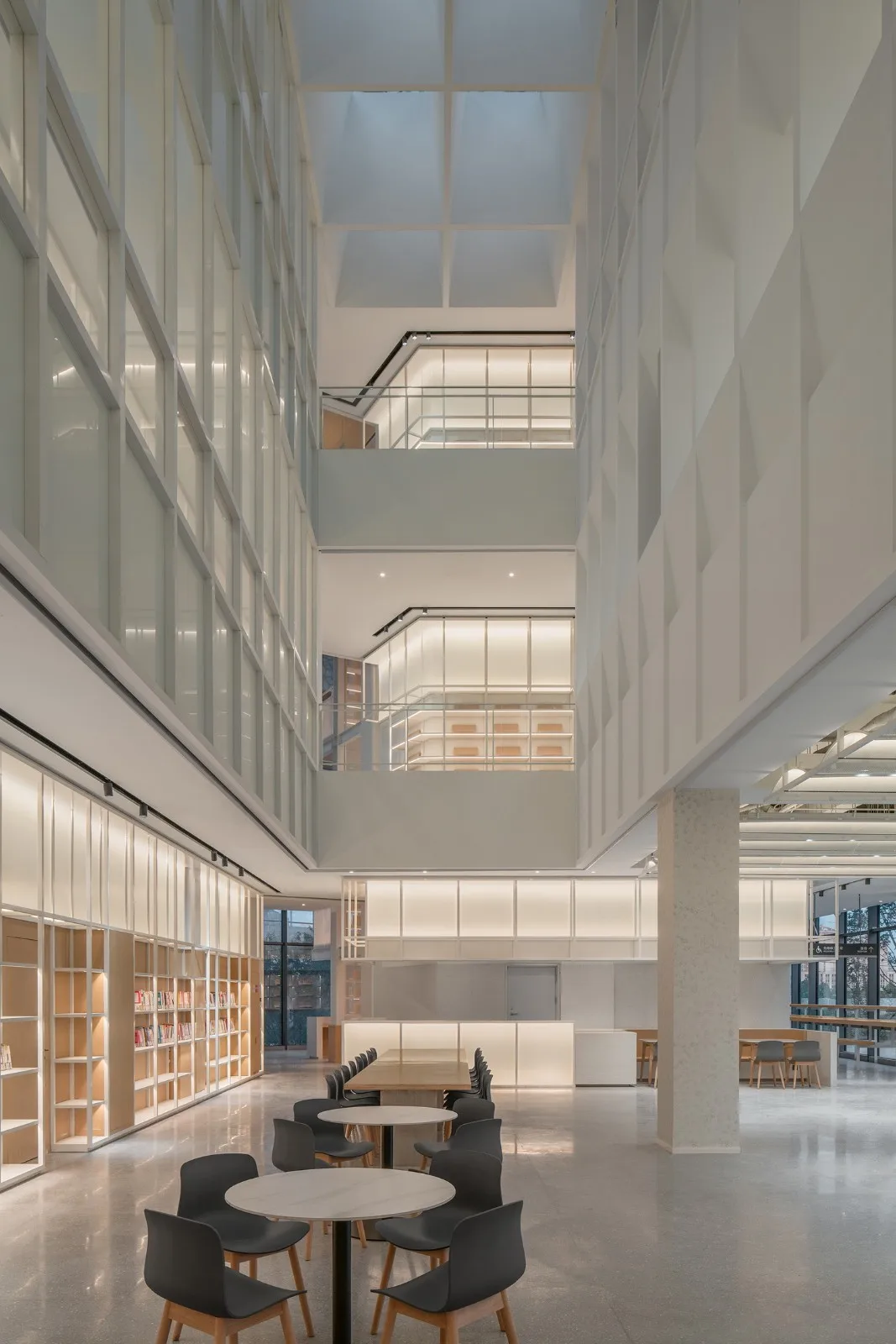
▲ Courtyard space on 1st Floor © Architecture Photography
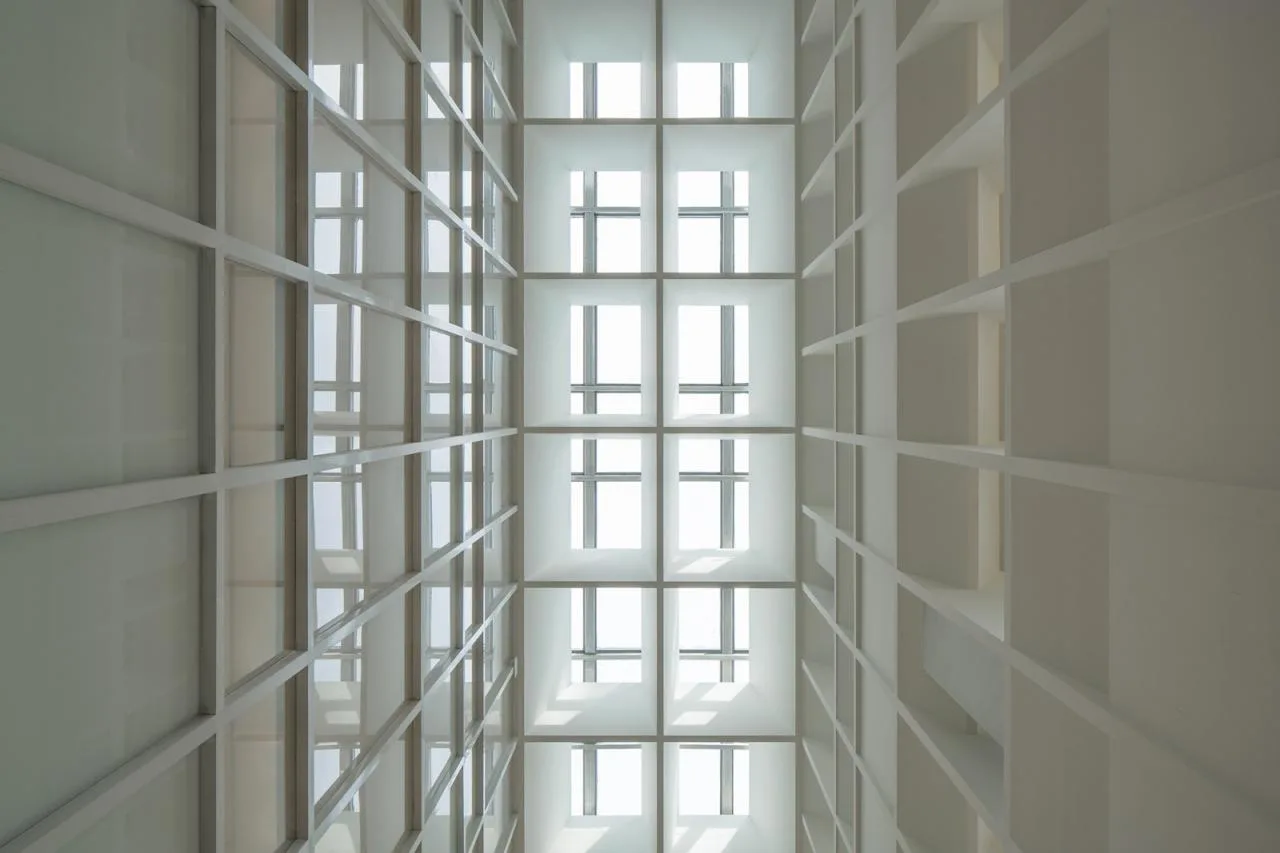
▲ Looking up from the inner courtyard © Architecture Photography
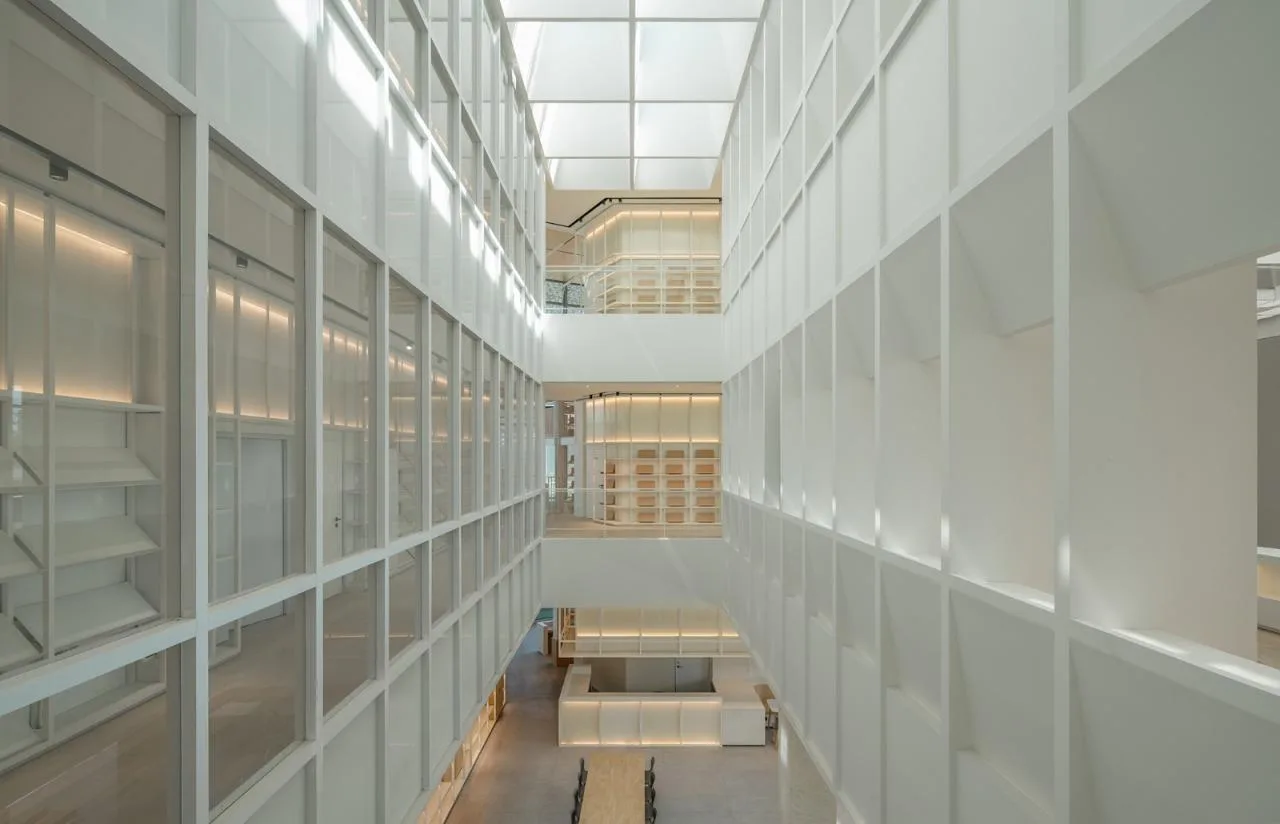
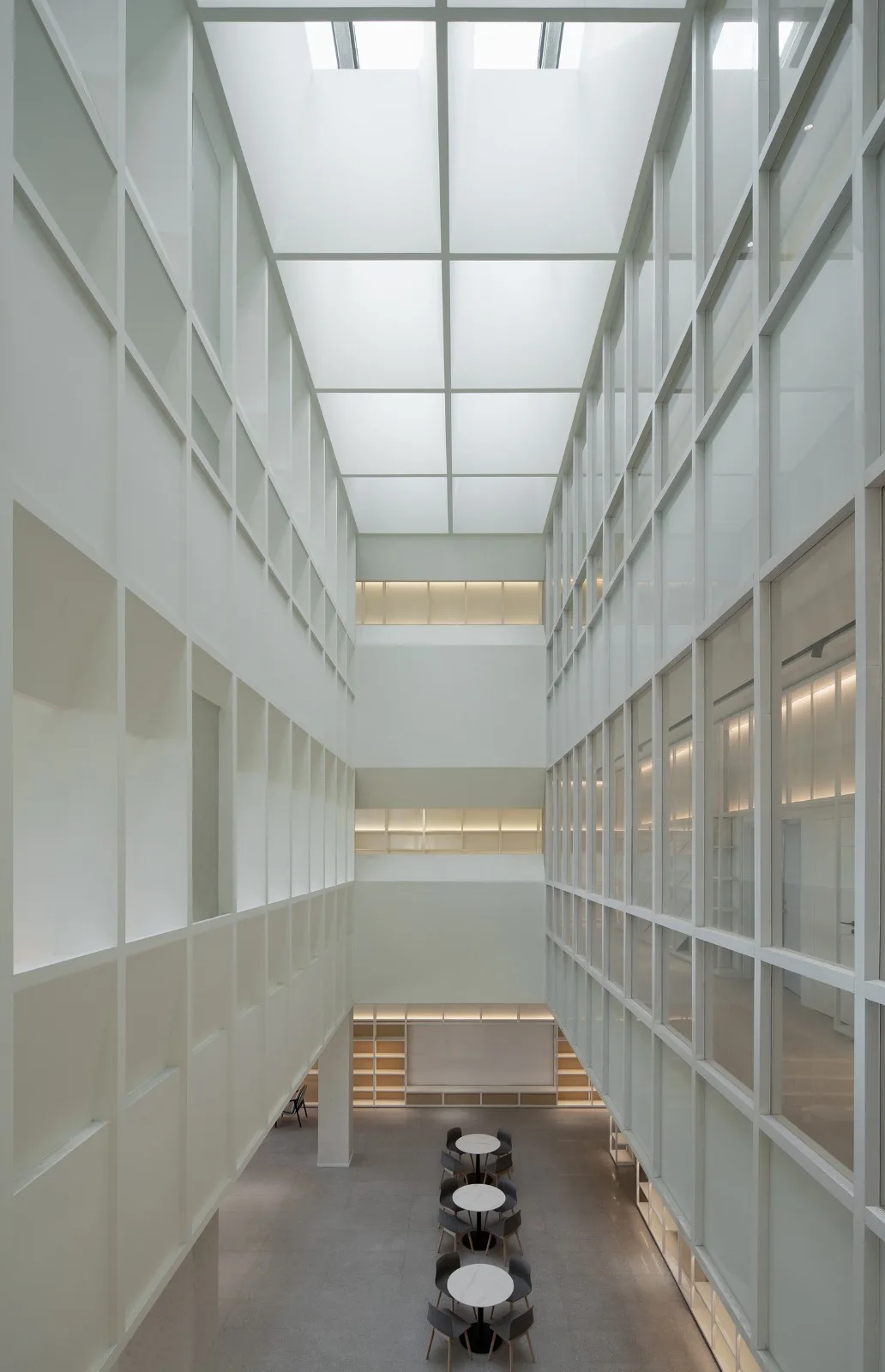
▲ Inner courtyard space on 2nd Floor © Architecture Photography
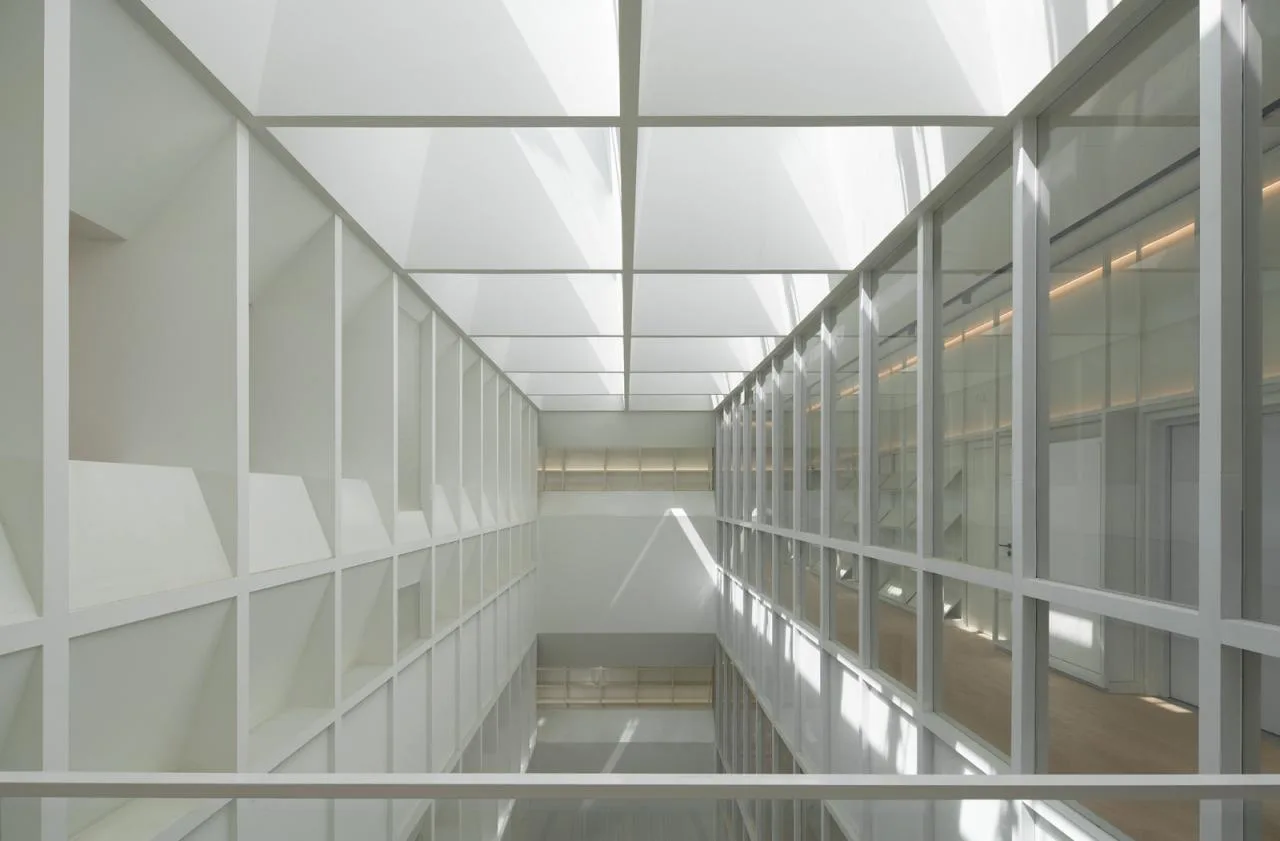
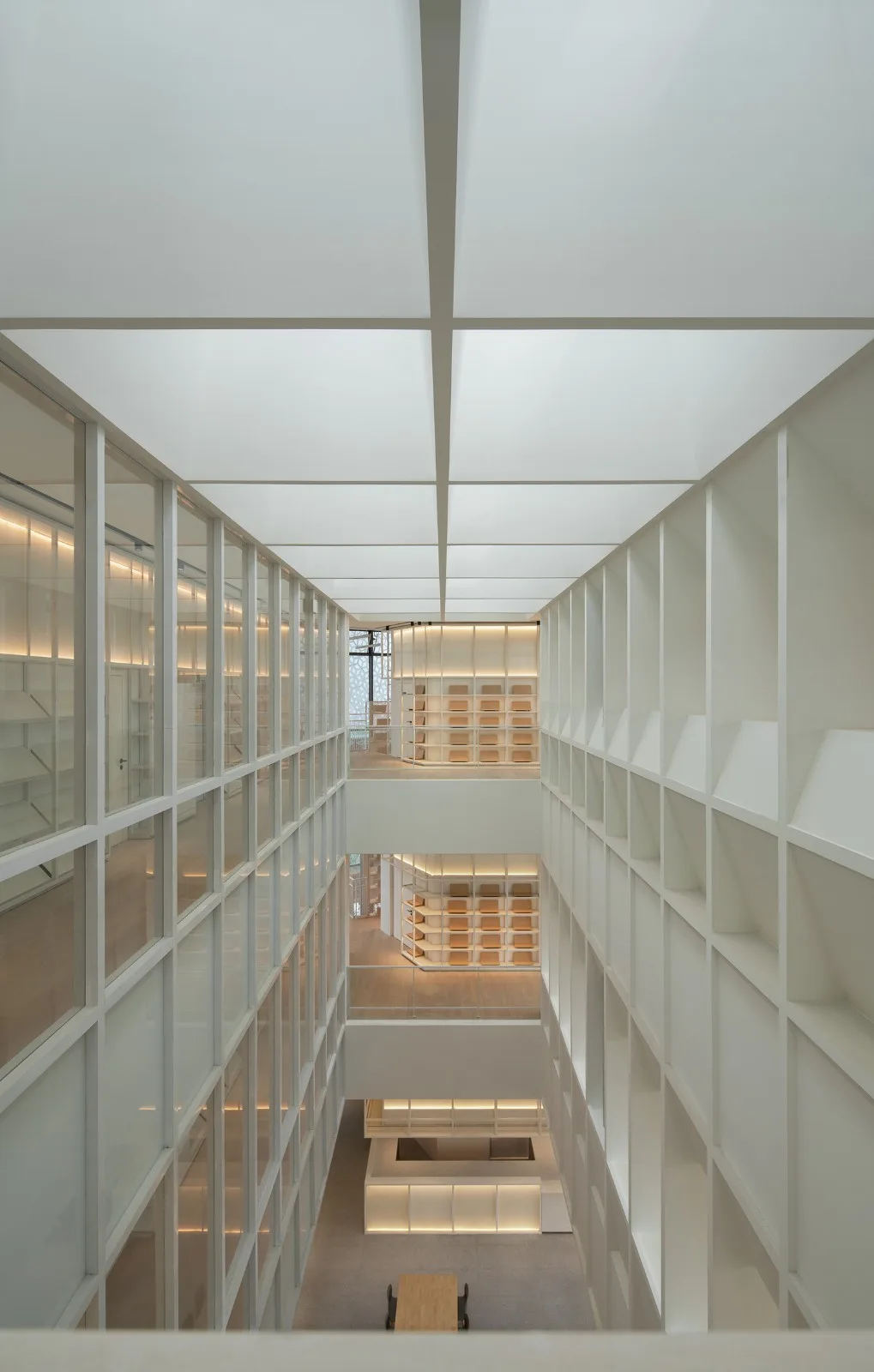
▲ Inner courtyard space on 3rd Floor © Architecture Photography
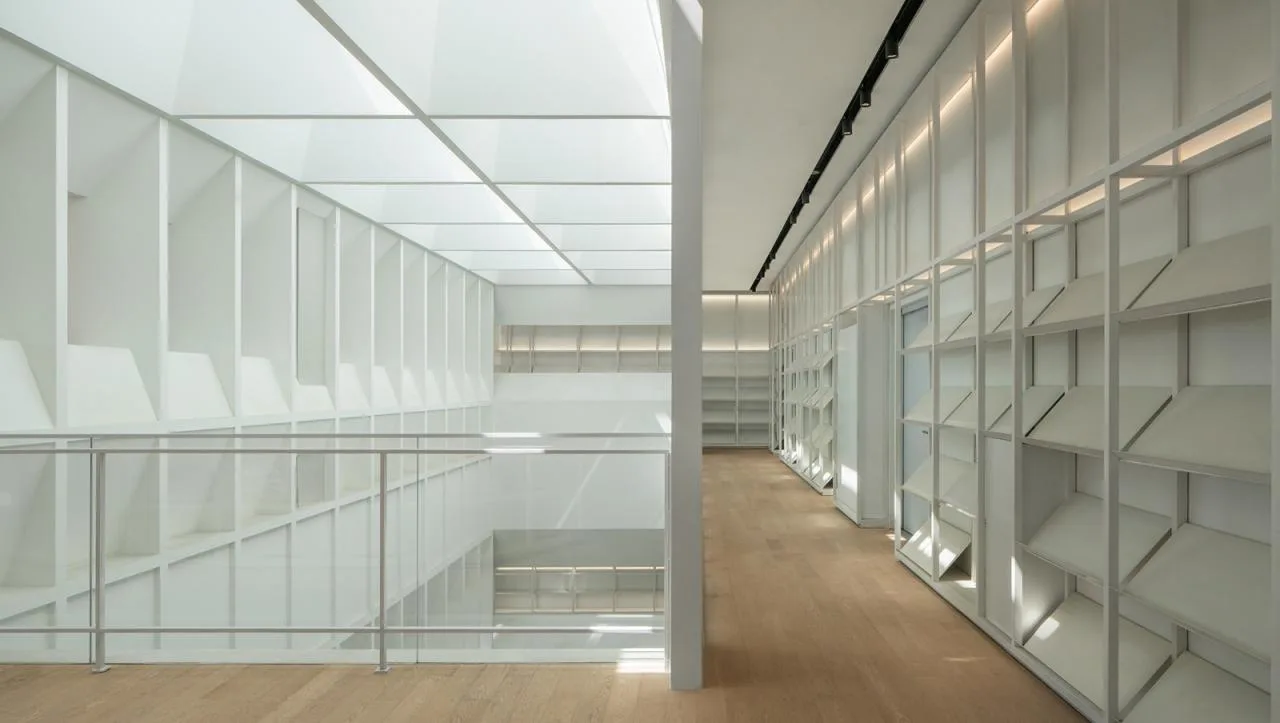
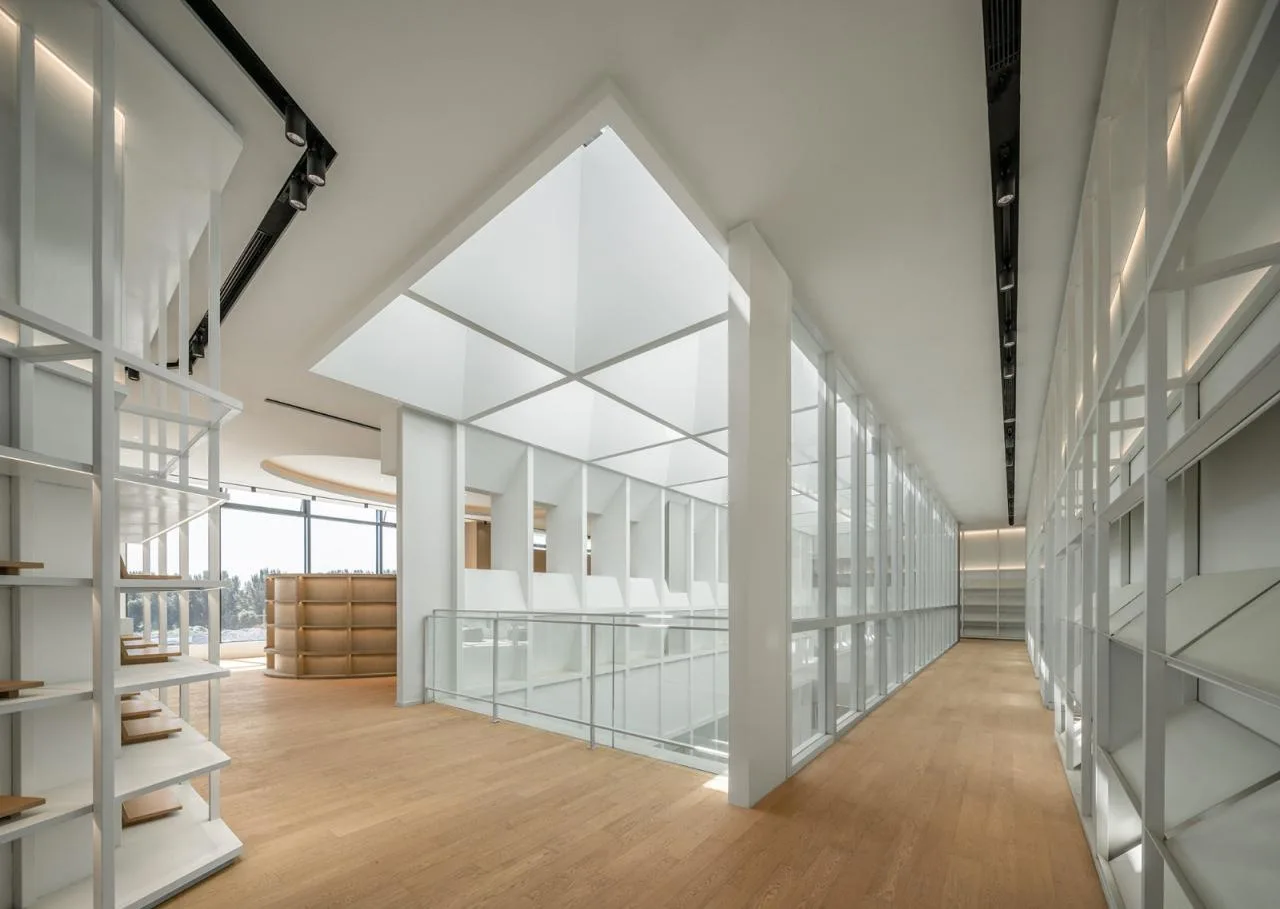
▲ Atrium and corridor space on 3rd Floor © Architecture Photography
Project Drawings
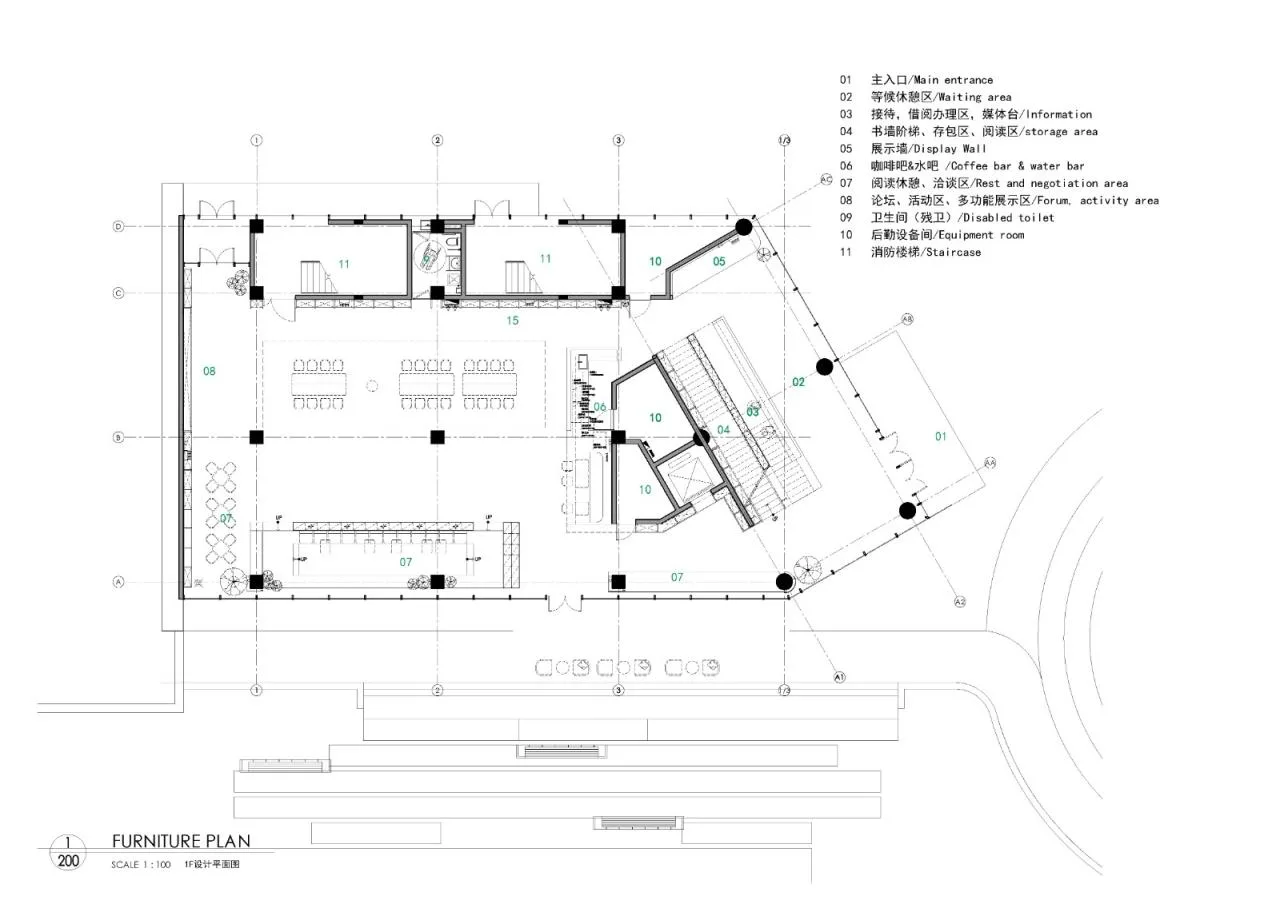
▲ First Floor Plan © y.ad studio
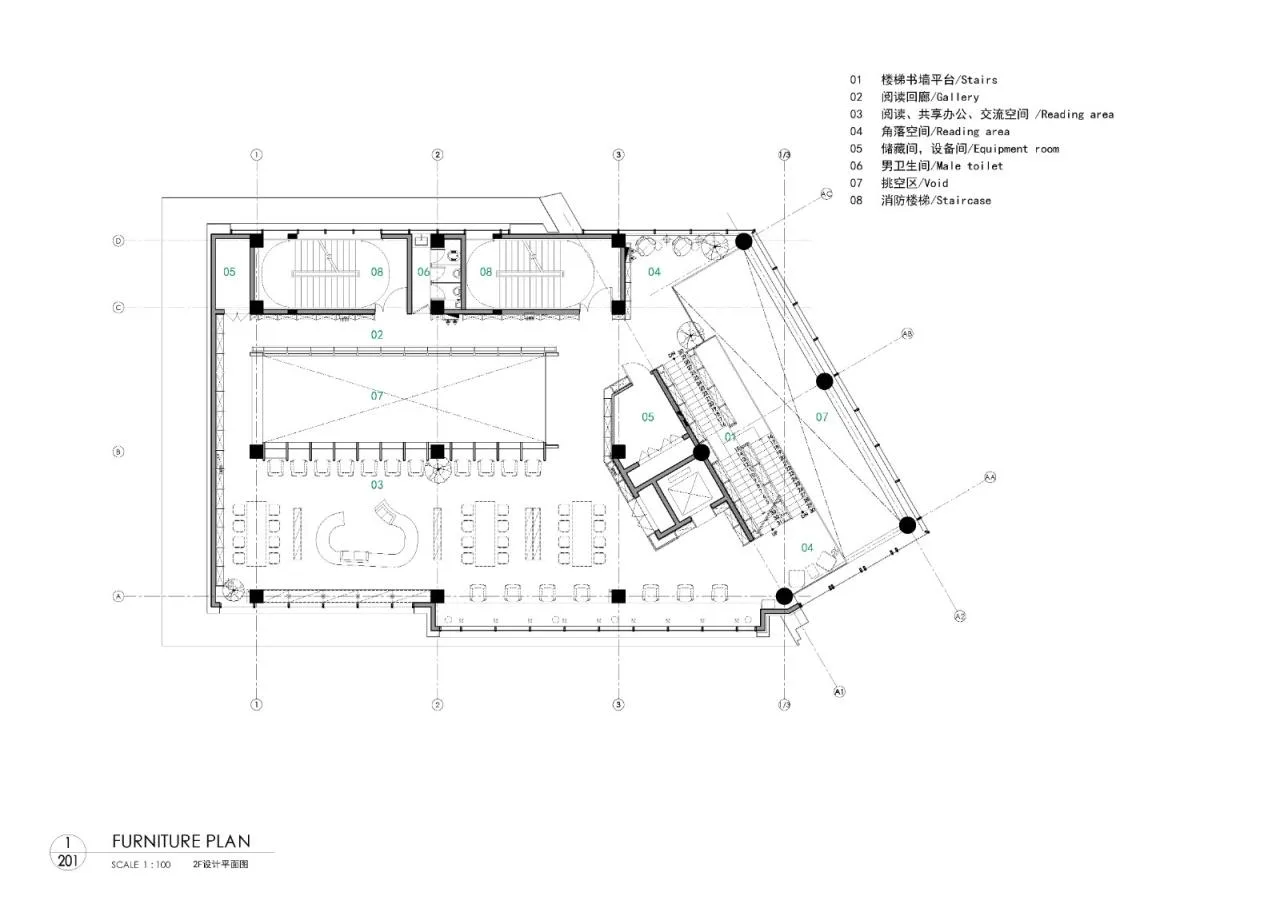
▲ Second Floor Plan © y.ad studio
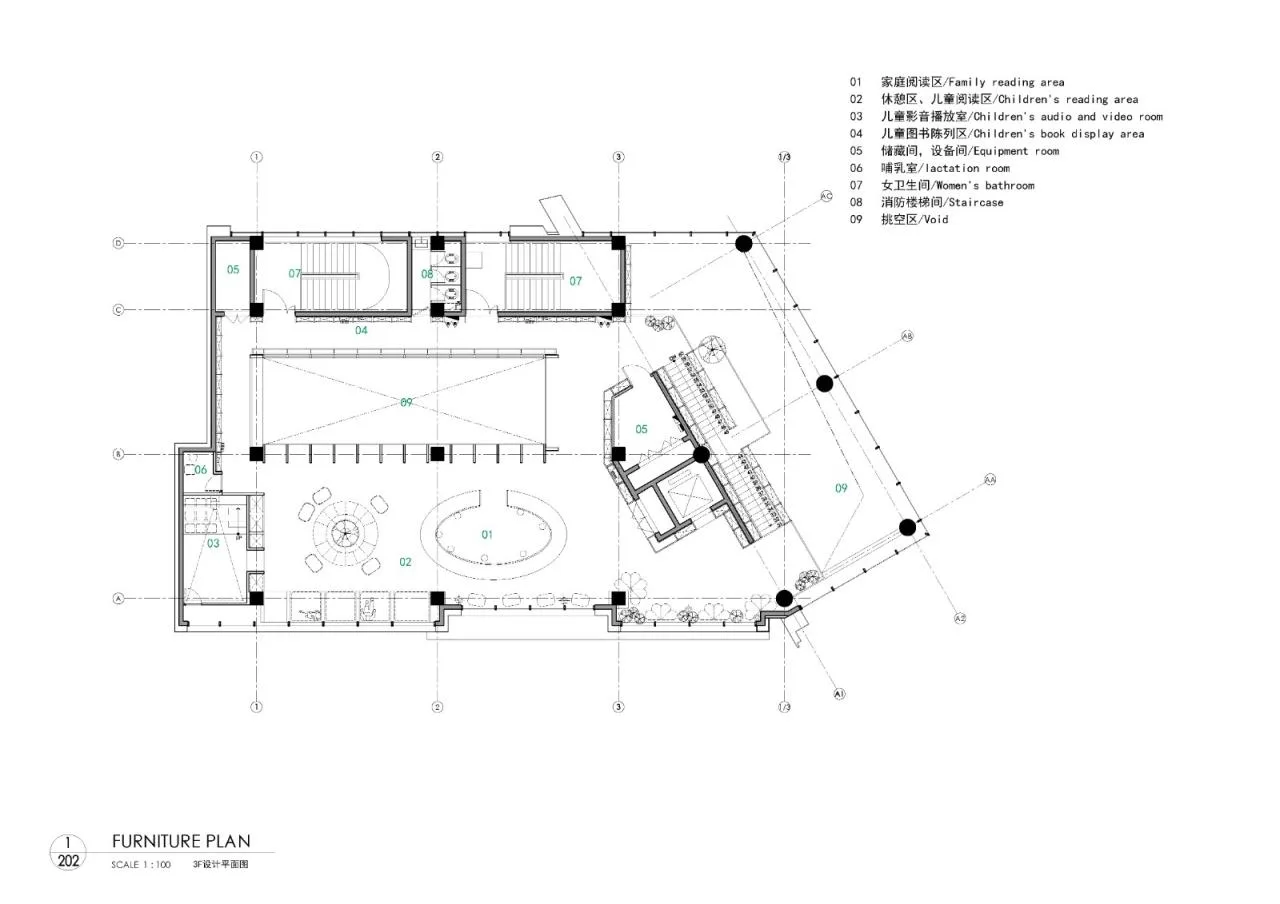
▲ Third Floor Plan © y.ad studio
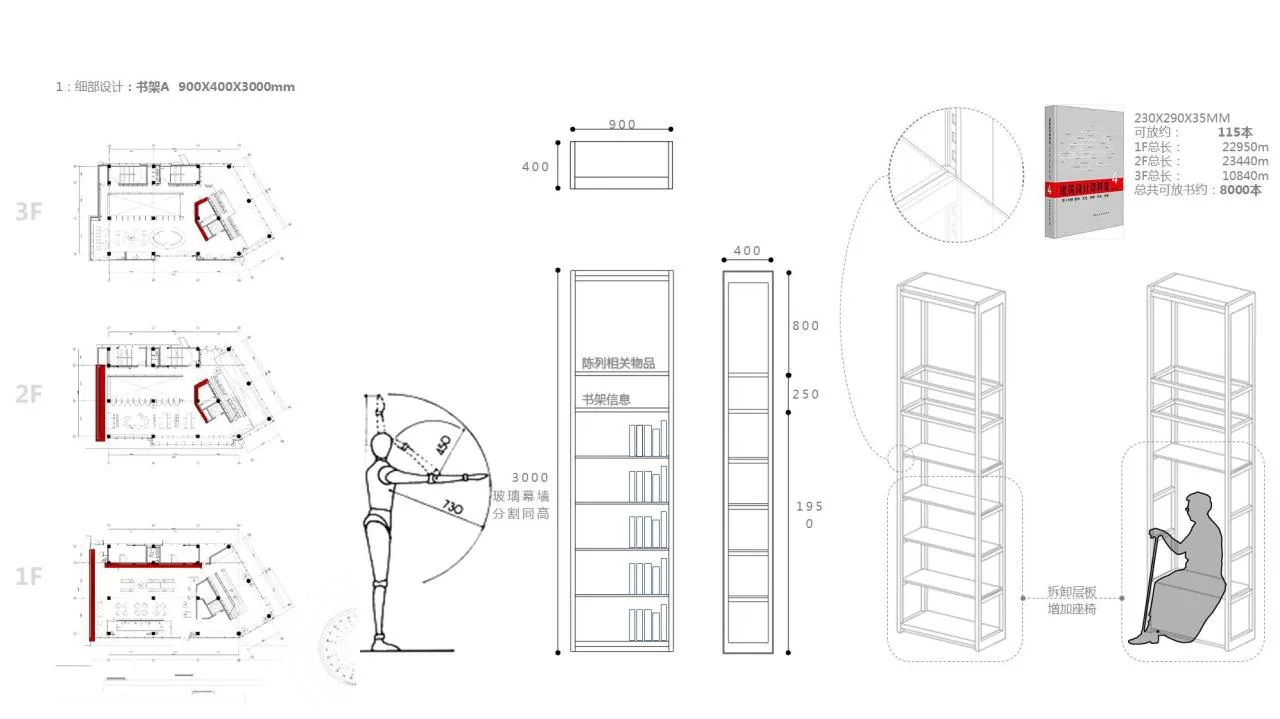
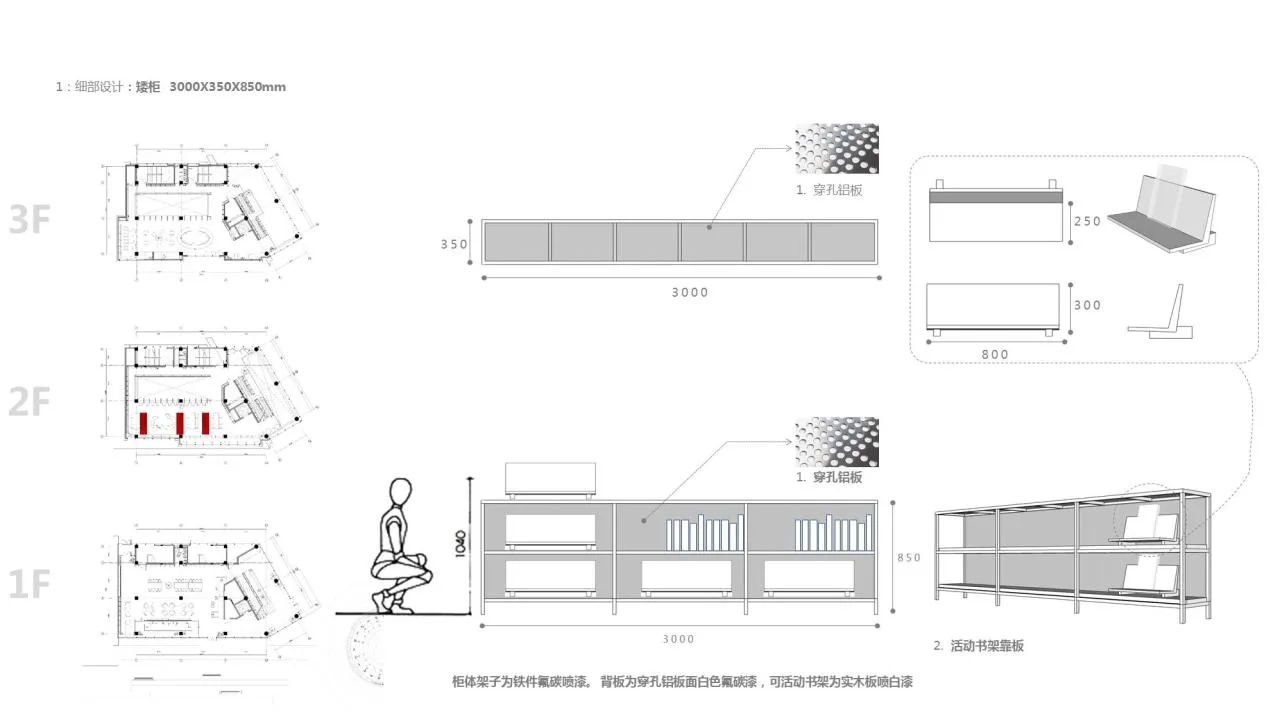
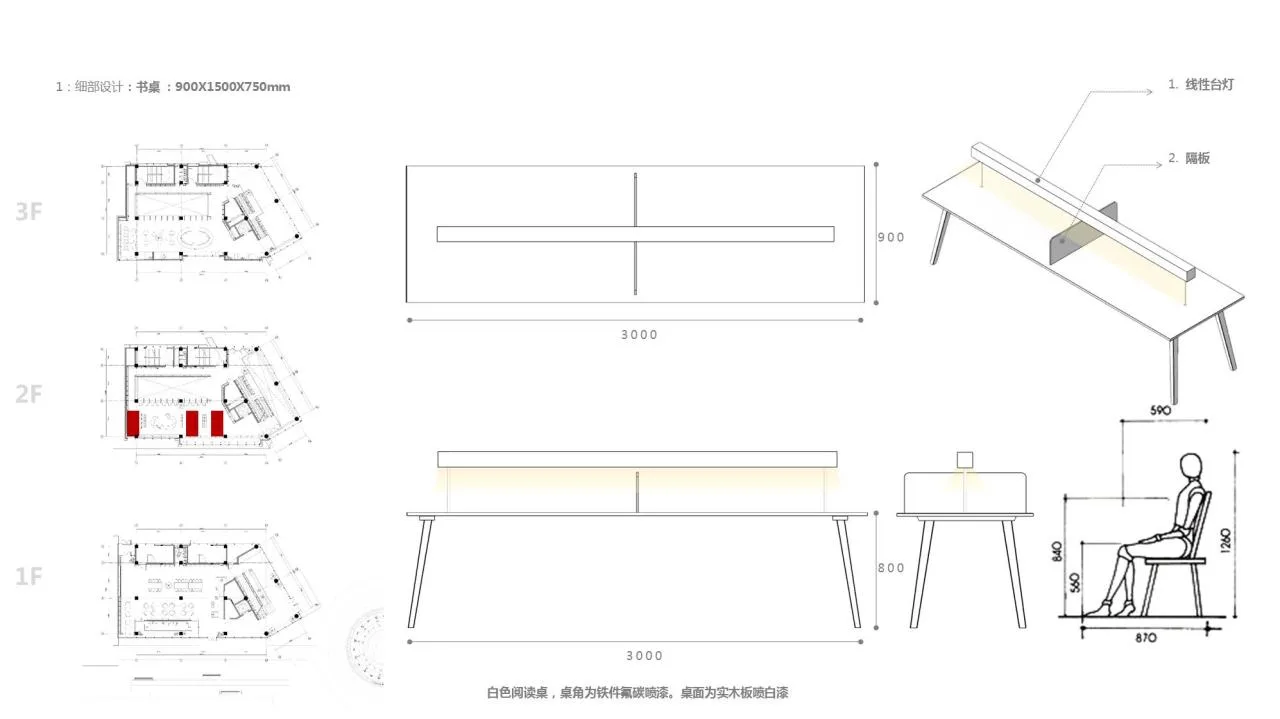
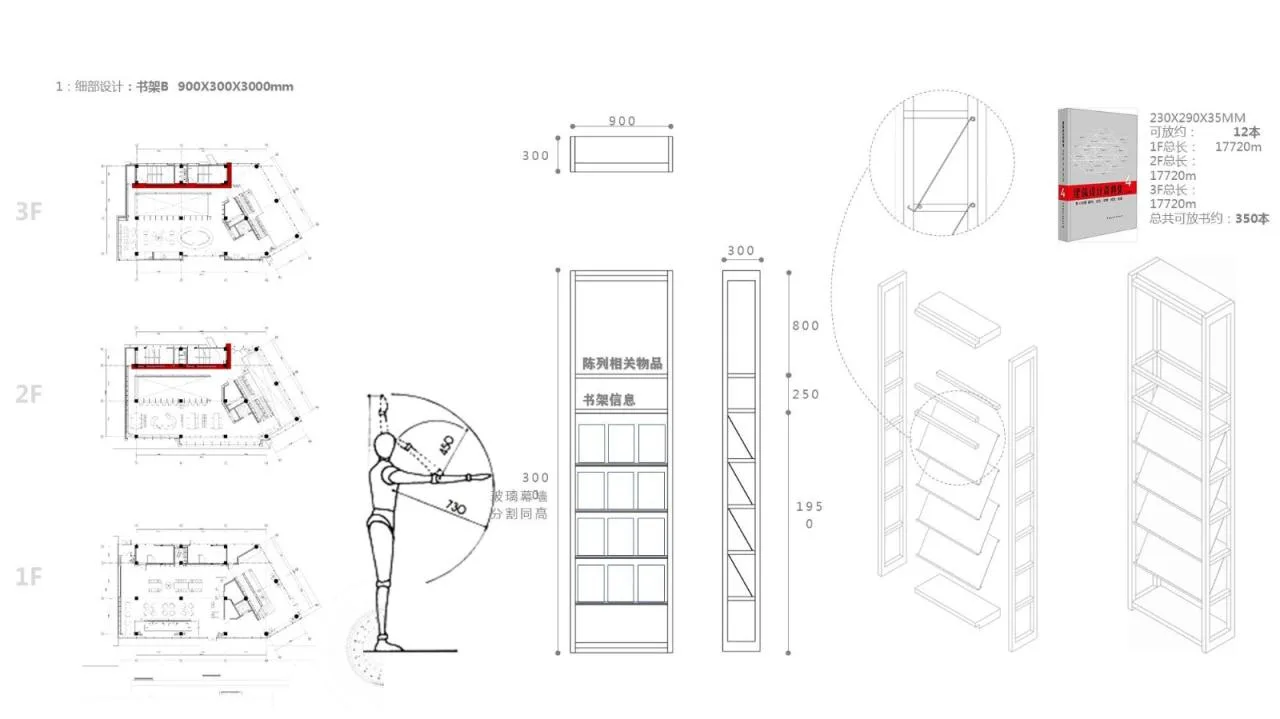
▲ Furniture details © y.ad studio
Project Information
Project Name: Shouchuang Heyuan Pinggu New City Rental Housing Community Library
Location: Beijing
Building Area: 1,286.25 square meters
Design Firm: y.ad studio | Shanghai Yan Yang Architectural Design Studio
Project Architects: Yan Yang, Wu Kejia
Structural Designer: Huo Zhenzhong
Collaborating Design Institute: Hangzhou Zhongya Architectural Design Co., Ltd
Construction Companies: Suzhou Jintanglang Building Decoration Co., Ltd and Beijing Blue Ocean Chuangying Urban Construction and Development Co., Ltd
Project Design Management (Client Side): Zhong Tingting, Zhang Hanfei
Main Materials: terrazzo slate, wood veneer, aluminum panels, paint
Design Period: December 2020 – June 2021
Construction Period: September 2021 – June 2023
Photography Credit: Ziran Architecture Photography














Must log in before commenting!
Sign Up