
Siming Mountain is situated in Siming Mountain Town, Yuyao City, Ningbo, Zhejiang Province. It boasts the grandeur of Longhu Mountain and the captivating, unique stones of Tu’er Ridge, earning it the reputation of a natural “oxygen bar.” At the summit stands the Sugino Tea House, a renovation project built on the site of the original tea mountain pavilion.
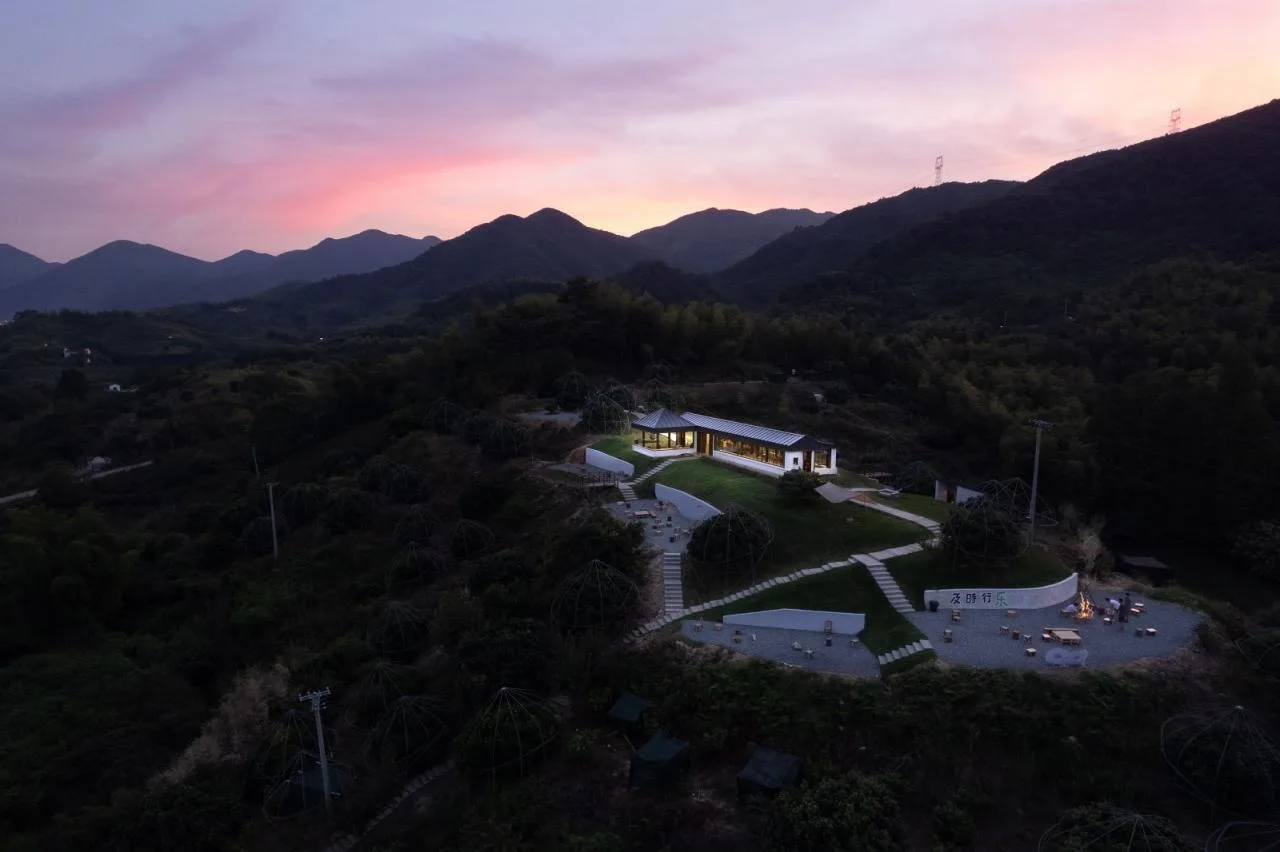
Aerial view, Bird’s-eye view © Xu Yingda
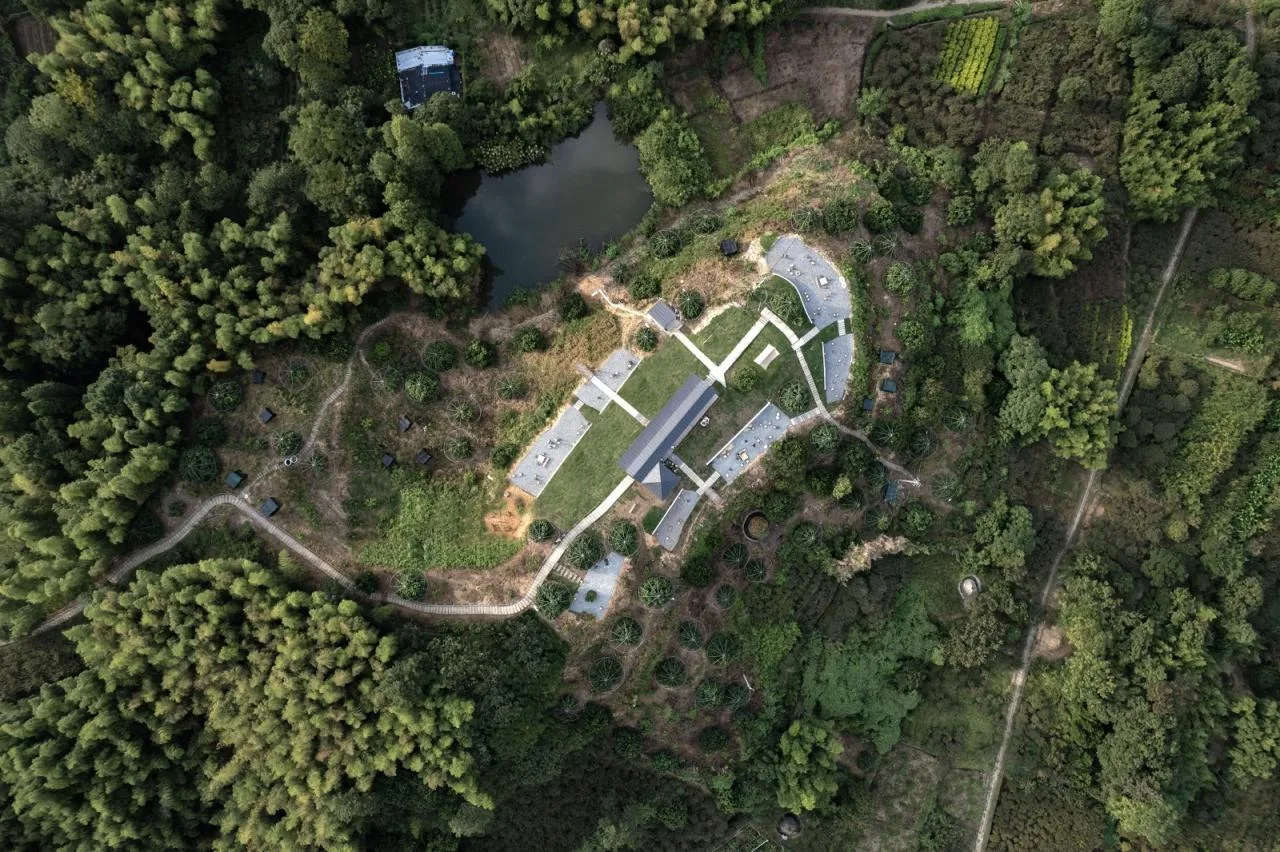
△ General layout plan, Master plan © Xu Yingda
Site Experience
My first visit to the site was on a rainy day in April. Walking from the mountain’s base to its summit, I was reminded of Tao Yuanming’s depiction in “Peach Blossom Spring”: “At first, the path is narrow and hard to find, but after walking a few dozen steps, one suddenly finds enlightenment.”
The existing structure comprises a wooden-framed corridor and a pavilion, built at different times. The site faces Siming Lake and is surrounded by bamboo forests, creating a strong sense of enclosure on the east and north sides. With such abundant natural resources, both the design team and the owner agreed that the project should foster a lasting connection with nature and awaken visitors’ awareness of the environment. Accordingly, the design focuses on two key principles inspired by the site’s spatial qualities: subtle intervention and enhancing views.
The Essence of the Mountain
The mountain serves as a natural kitchen, where logs and tools are used for cooking instead of gas or fuel. The reliance on firewood and slow cooking conveys a message of patience: waiting for breath, for fruits and vegetables to ripen, for water, and for sunlight. When the time is right, nature reveals its abundance.
The theme of mountain ranges reflects a uniquely Chinese cultural pursuit of seclusion. While Western hermit culture represents a return to the original state, Chinese seclusion is a higher-level cultural aspiration—physically distant from the bustle but spiritually engaged. This idea, akin to Wang Yangming’s concept of “investigating things to gain knowledge,” highlights the inseparable link between intention and action. Our goal was to minimize dependence on physical space beyond the tea room’s basic functions, creating undefined spaces that integrate with nature and invite contemplation. Respecting and harmonizing with the environment became the cornerstone of our design, making the mountain tea house a place for discovery and reflection—its original purpose.
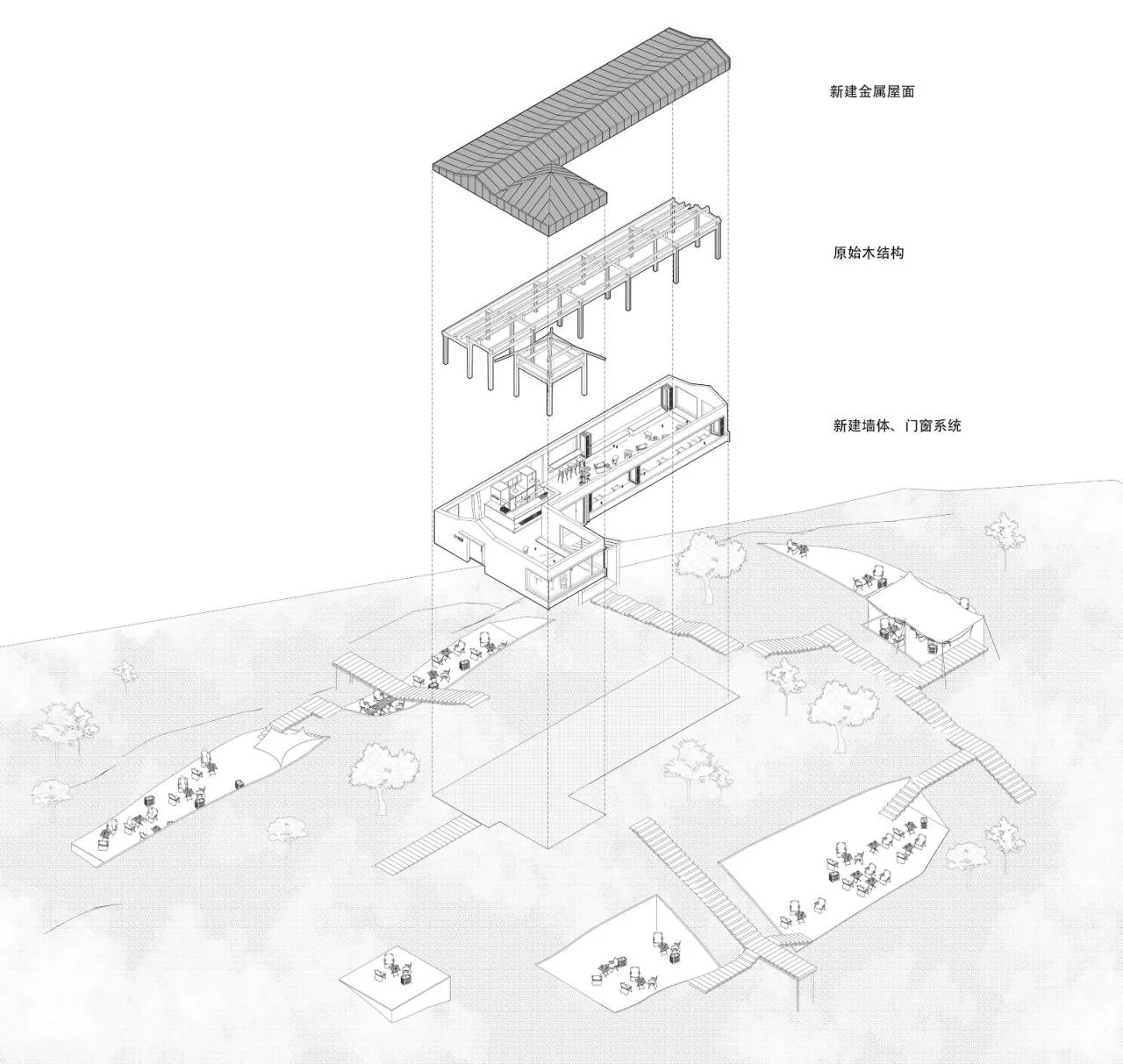
△ Exploded diagram © Pingjie Design
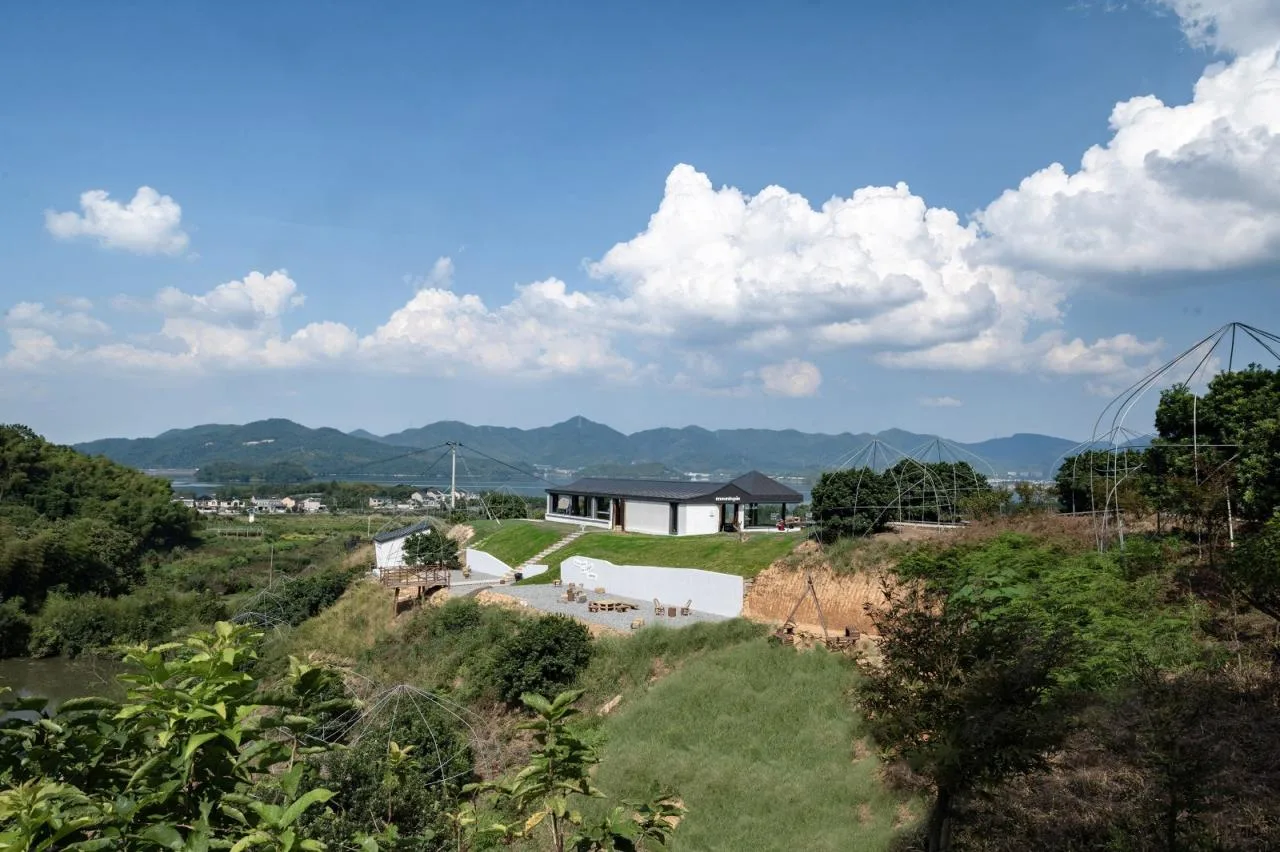
View from the mountaintop © Xu Yingda
Architectural Interpretation
A standout feature of the tea house is a long folding window stretching across an entire wall, framing the view of Siming Lake like a panoramic viewfinder. On pleasant days, the window opens fully, allowing guests to enjoy stunning vistas and gentle breezes throughout their visit.
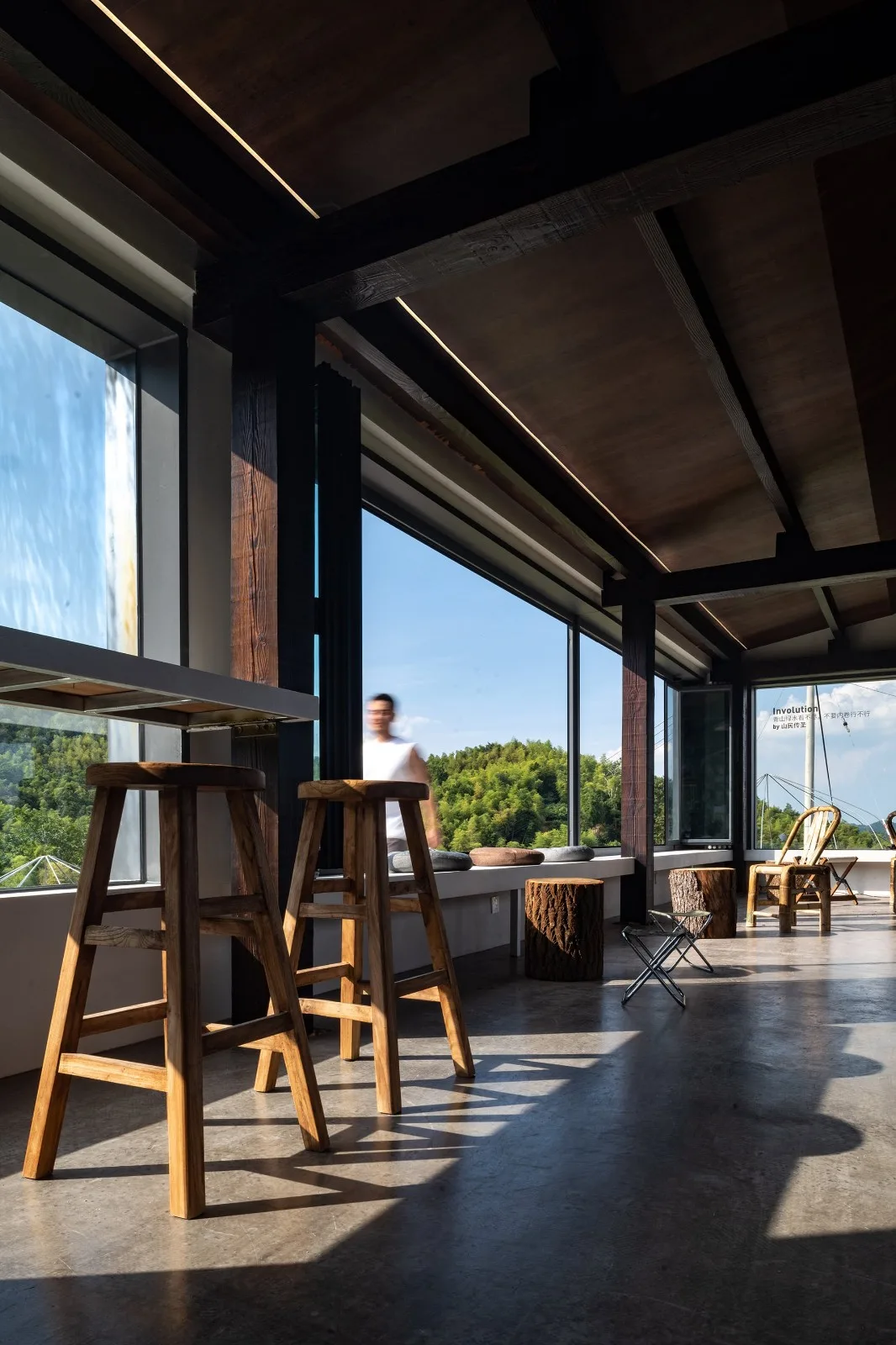
Looking toward the inner mountain © Xu Yingda
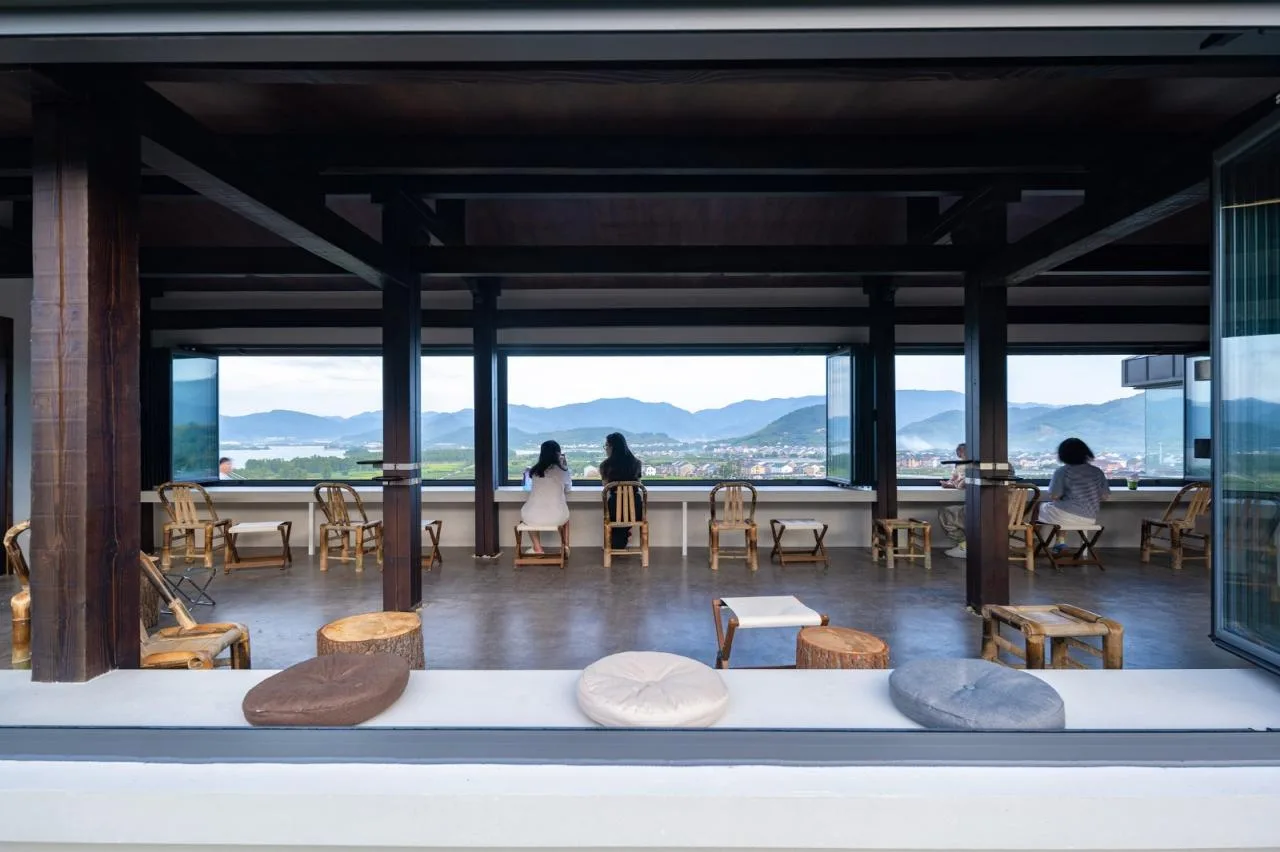
View facing Chaowai Lake © Xu Yingda
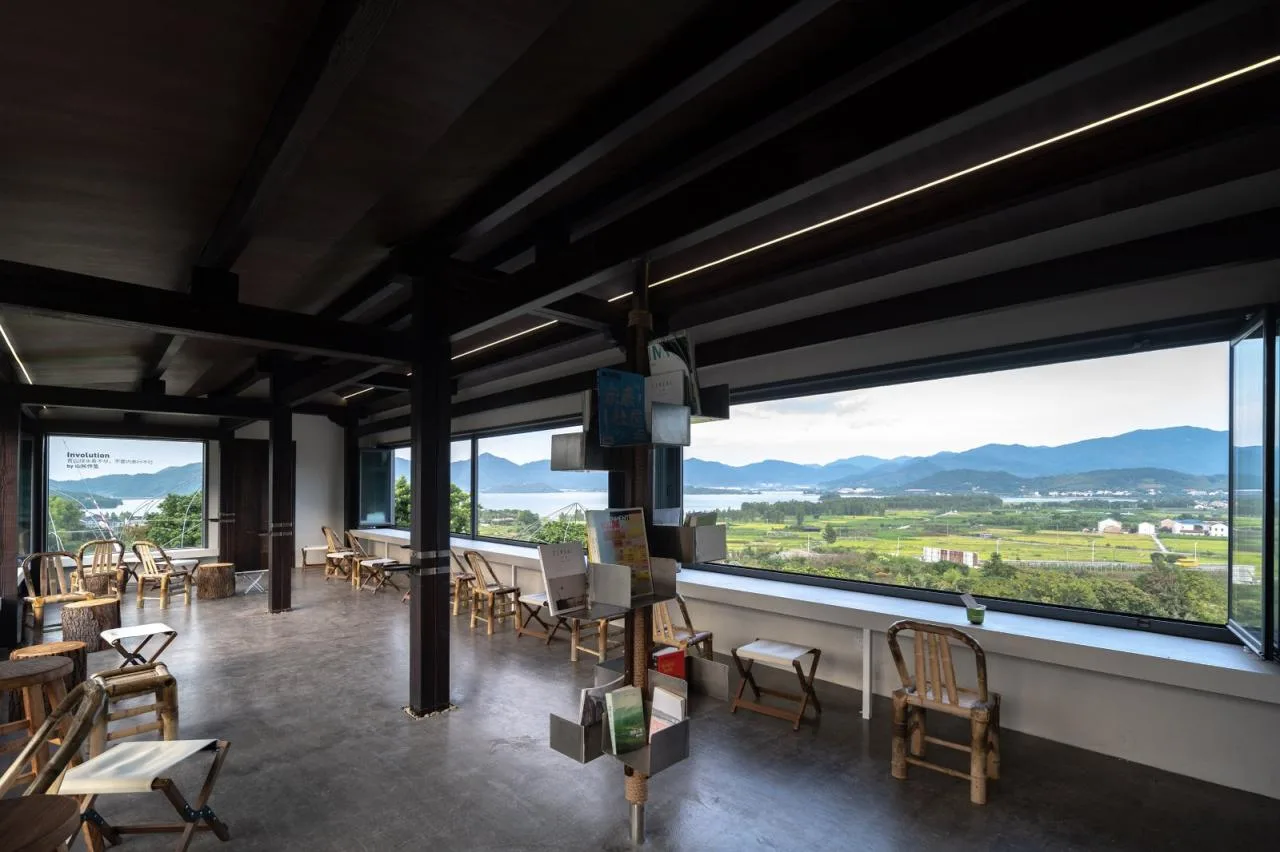
△ Metal storage rack © Xu Yingda
The architectural experience arises from the interplay of space, light and shadow, materials, and sensory impressions. The blending of materials influences color, texture, and tactile sensation. During construction, the freshly poured cement floor initially felt out of place due to its thickness and roughness. However, after finishing the walls with micro cement and stainless steel, the floor’s textured finish harmonized naturally, revealing layered materiality.
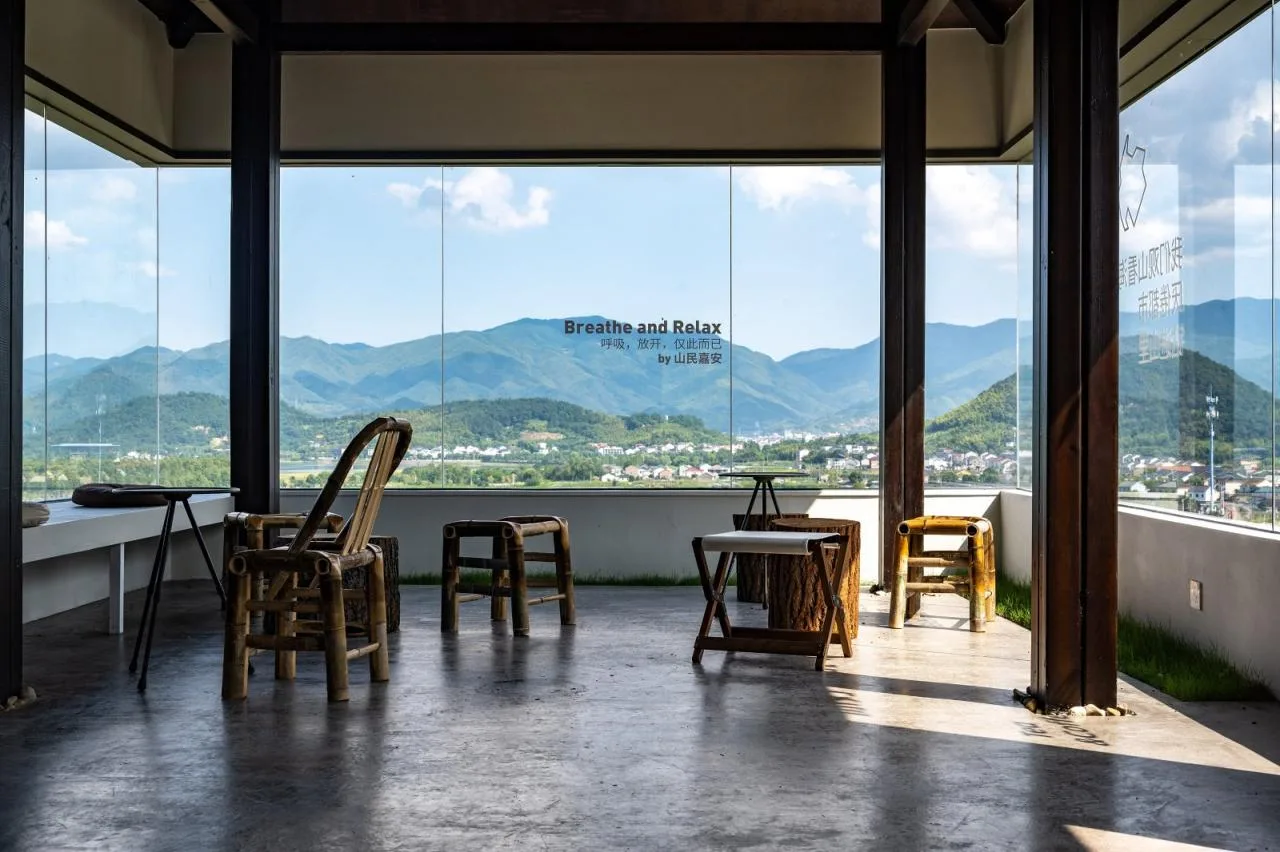
△ Entrance view © Xu Yingda
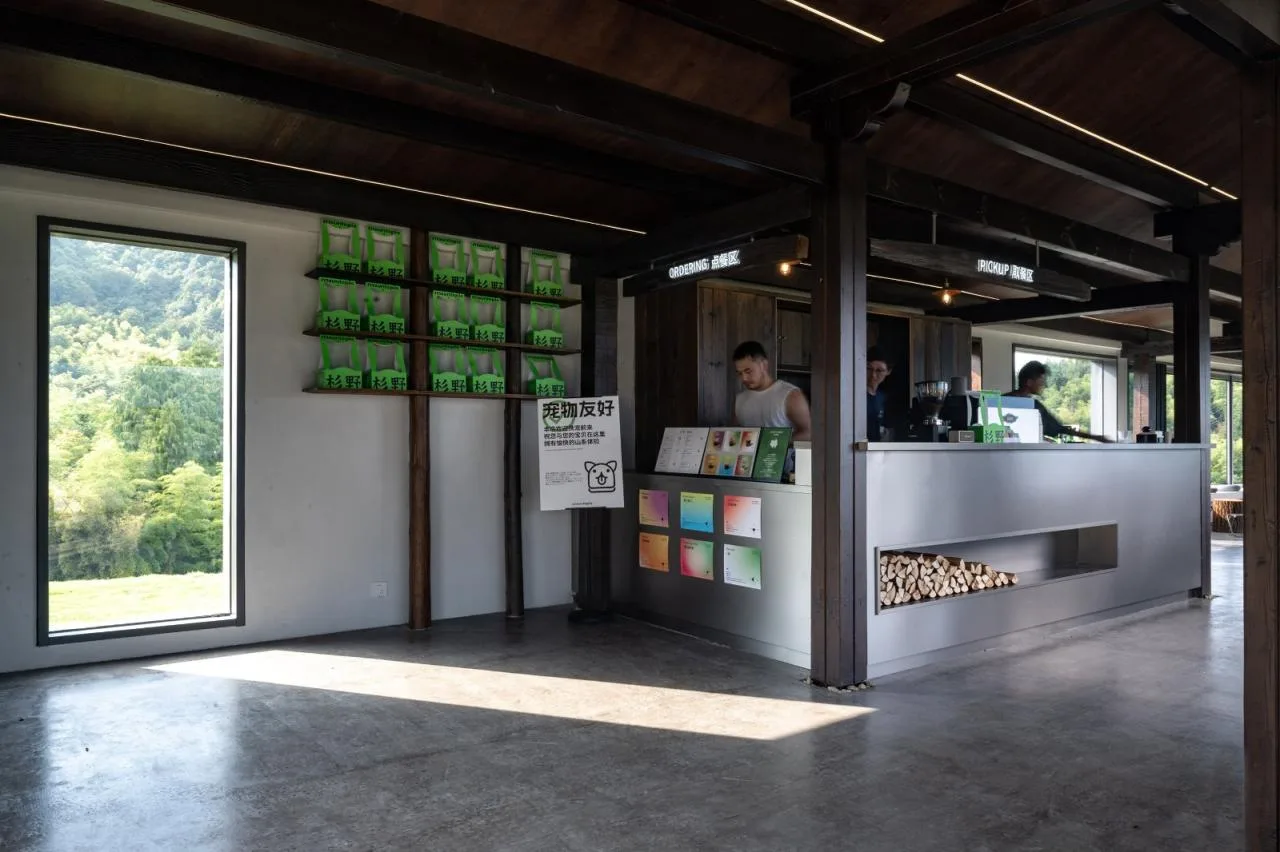
Contrasting materials of metal, wood, and cement © Xu Yingda
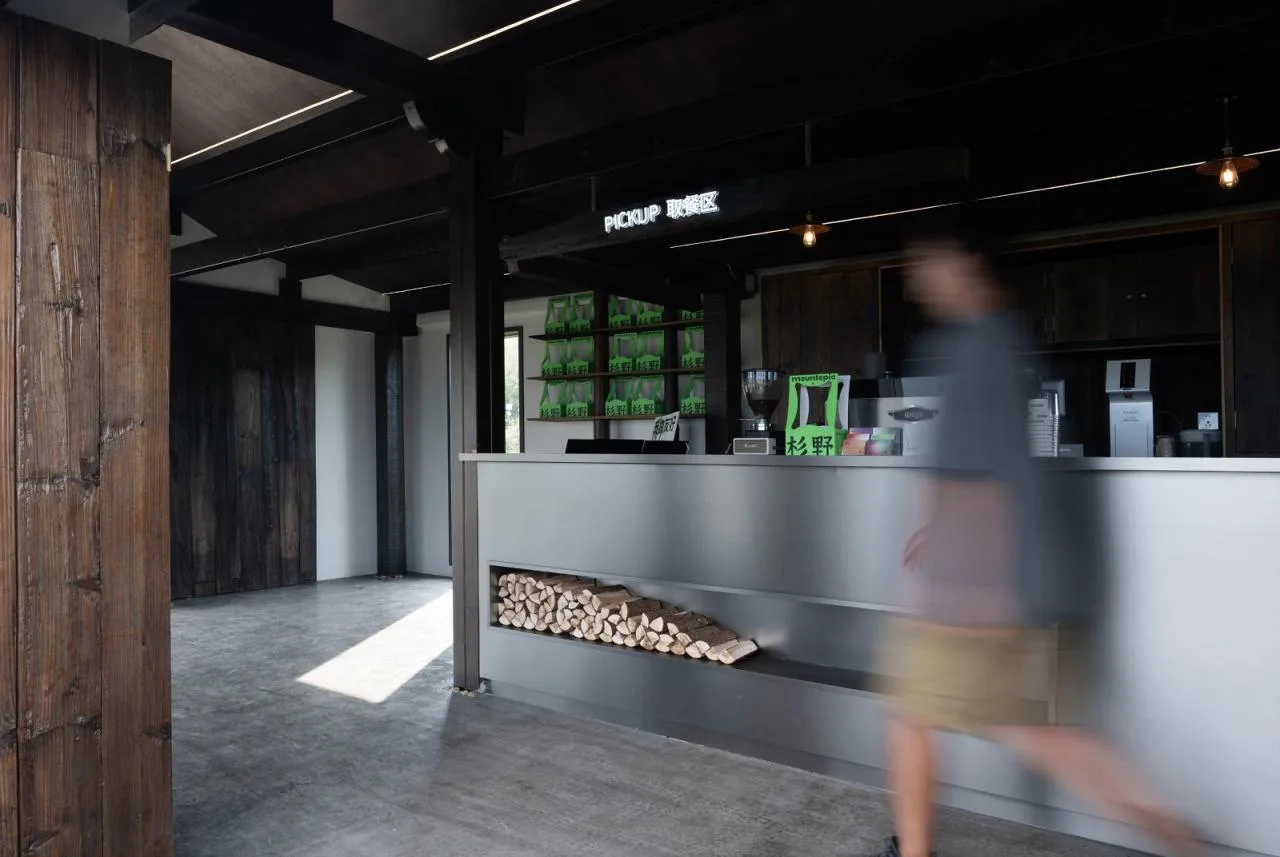
Metal, wood, and cement materials in dialogue © Xu Yingda
In line with ecological protection and restoration, all furniture, doors, and shelves—both indoors and outdoors—are handcrafted on-site from local bamboo and wood. When sunlight illuminates these weathered materials, their natural textures and rich colors come alive. The design strikes a delicate balance between refinement and rawness; overly detailed finishes can feel uncomfortable, while rough surfaces might seem crude. Achieving this balance is essential, and the architect’s personal sensibility plays a key role, influencing the building’s overall atmosphere.
△ Exterior swing detail © Xu Yingda
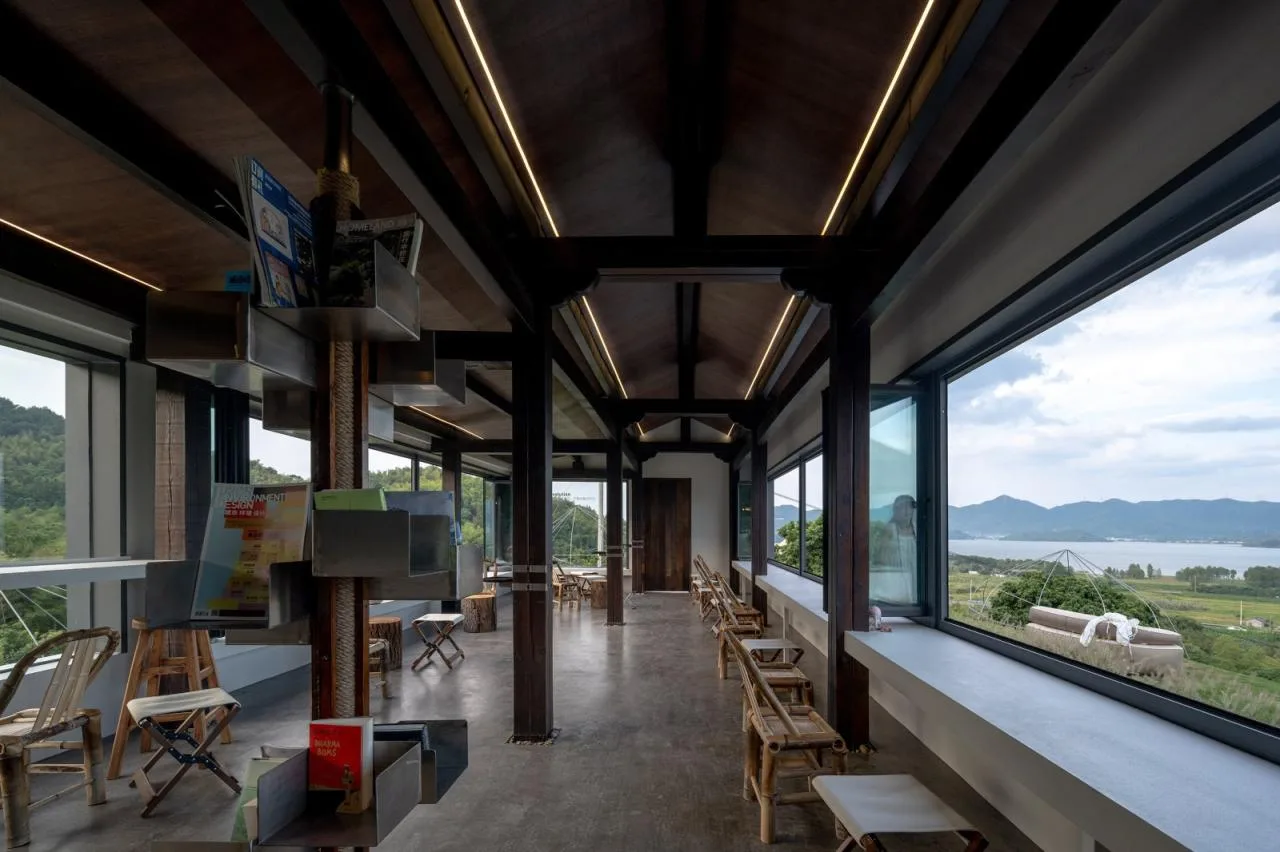
Bamboo and wood furniture © Xu Yingda
The original irregular rectangular foundation was preserved, integrating outdoor lawns into the interior space.
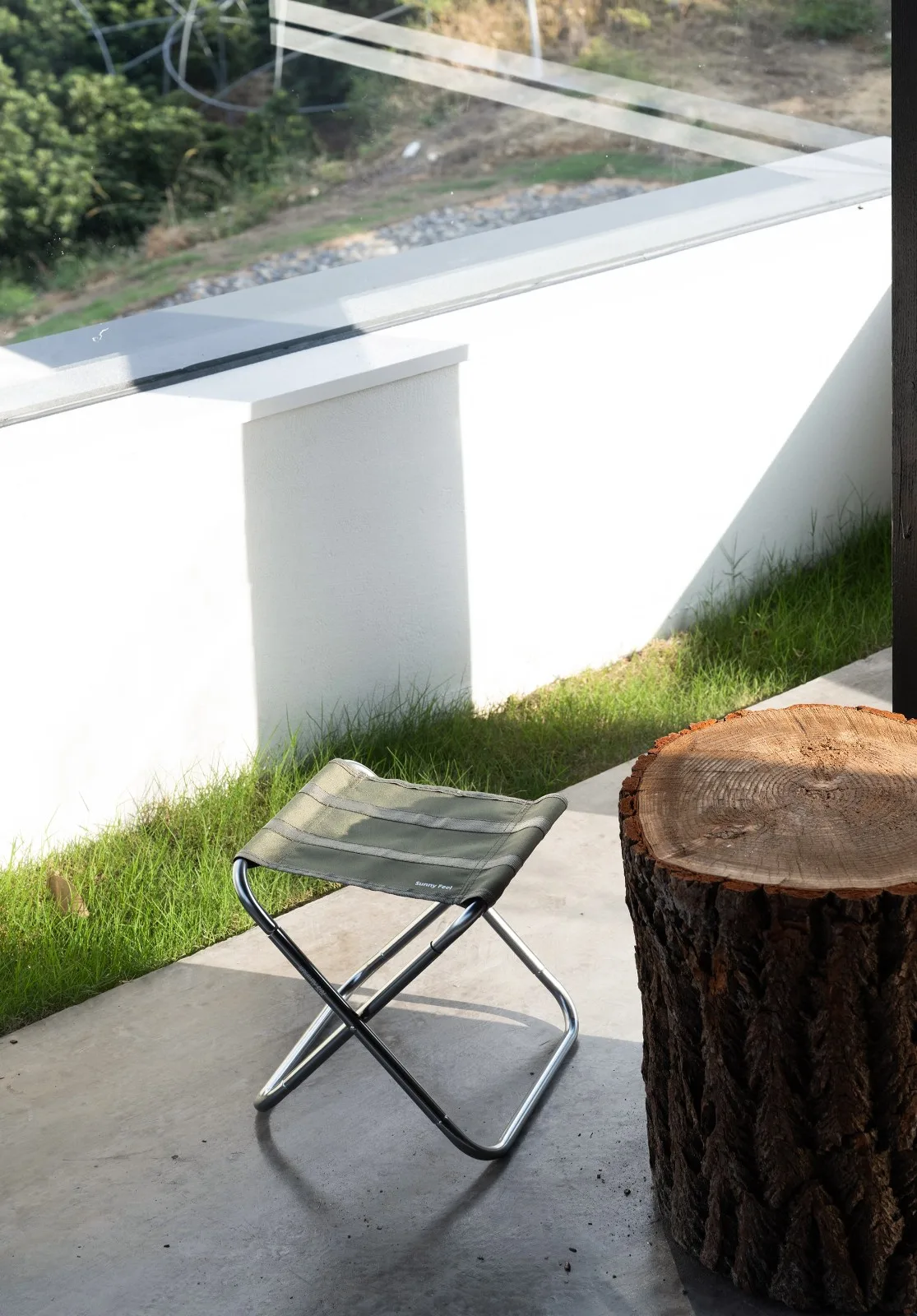
△ Preserved original landscape © Xu Yingda
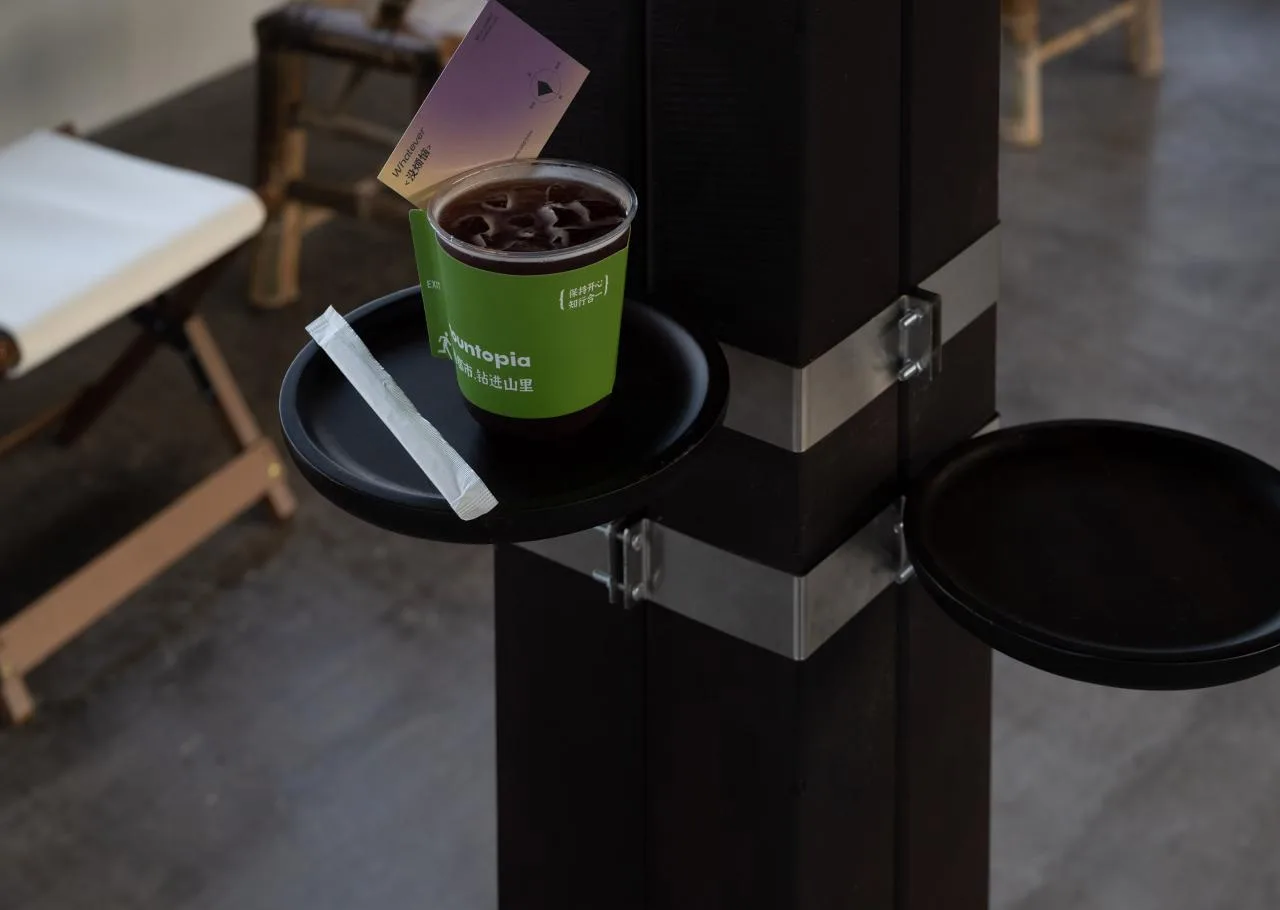
Cup holder detail © Xu Yingda
We designed seating at varied heights, allowing visitors’ posture and sightlines to change with each seat. This creates a continuous discovery of new perspectives through the windows, adding an element of playful surprise.
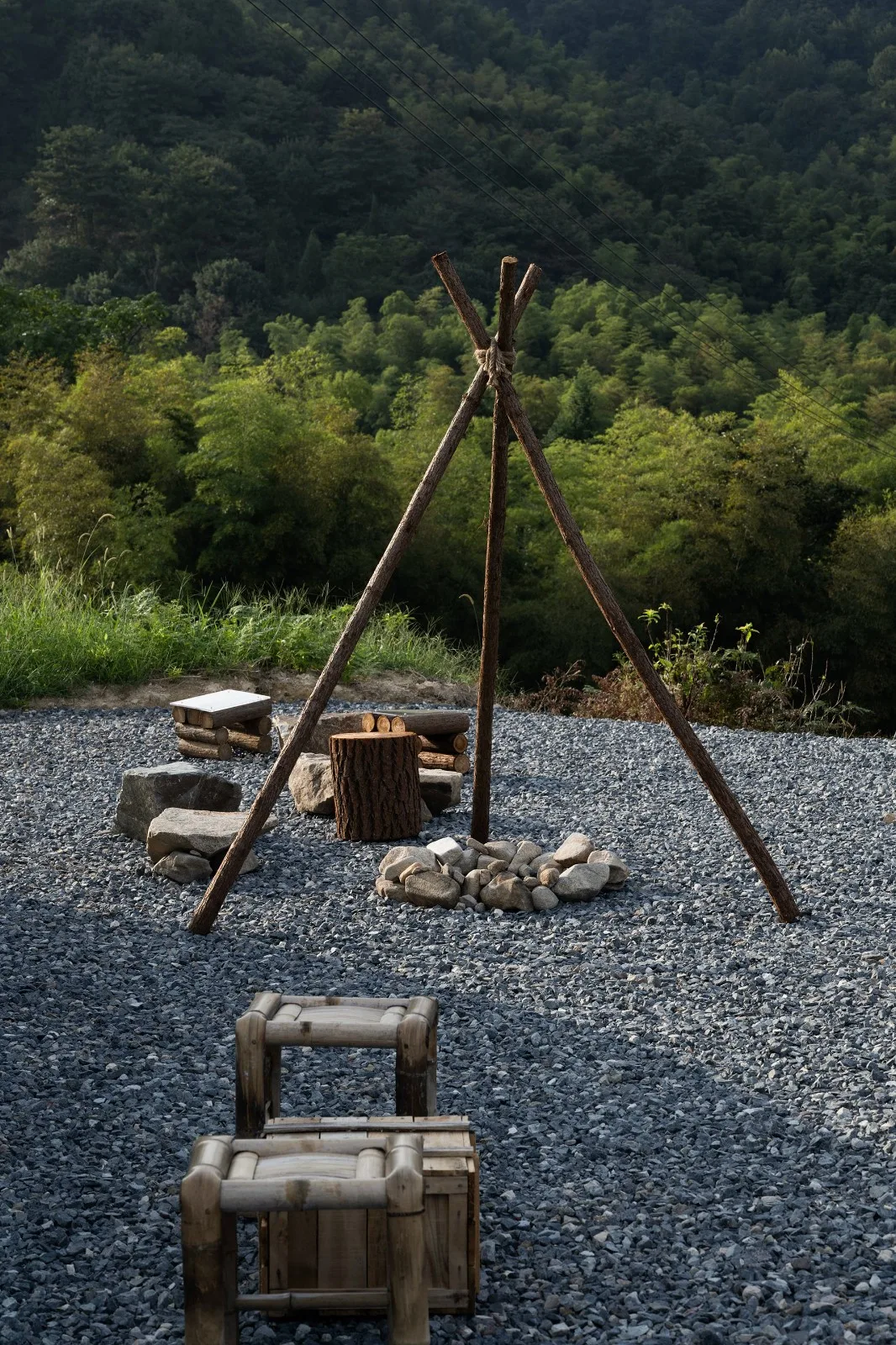
Following the natural terrain of Yangmei Garden, several outdoor business areas were integrated into the landscape using retaining walls, gray sand and gravel groundcover, and tables and chairs crafted from logs. This approach softened the intrusion of human-made elements, harmonizing the space with its surroundings.
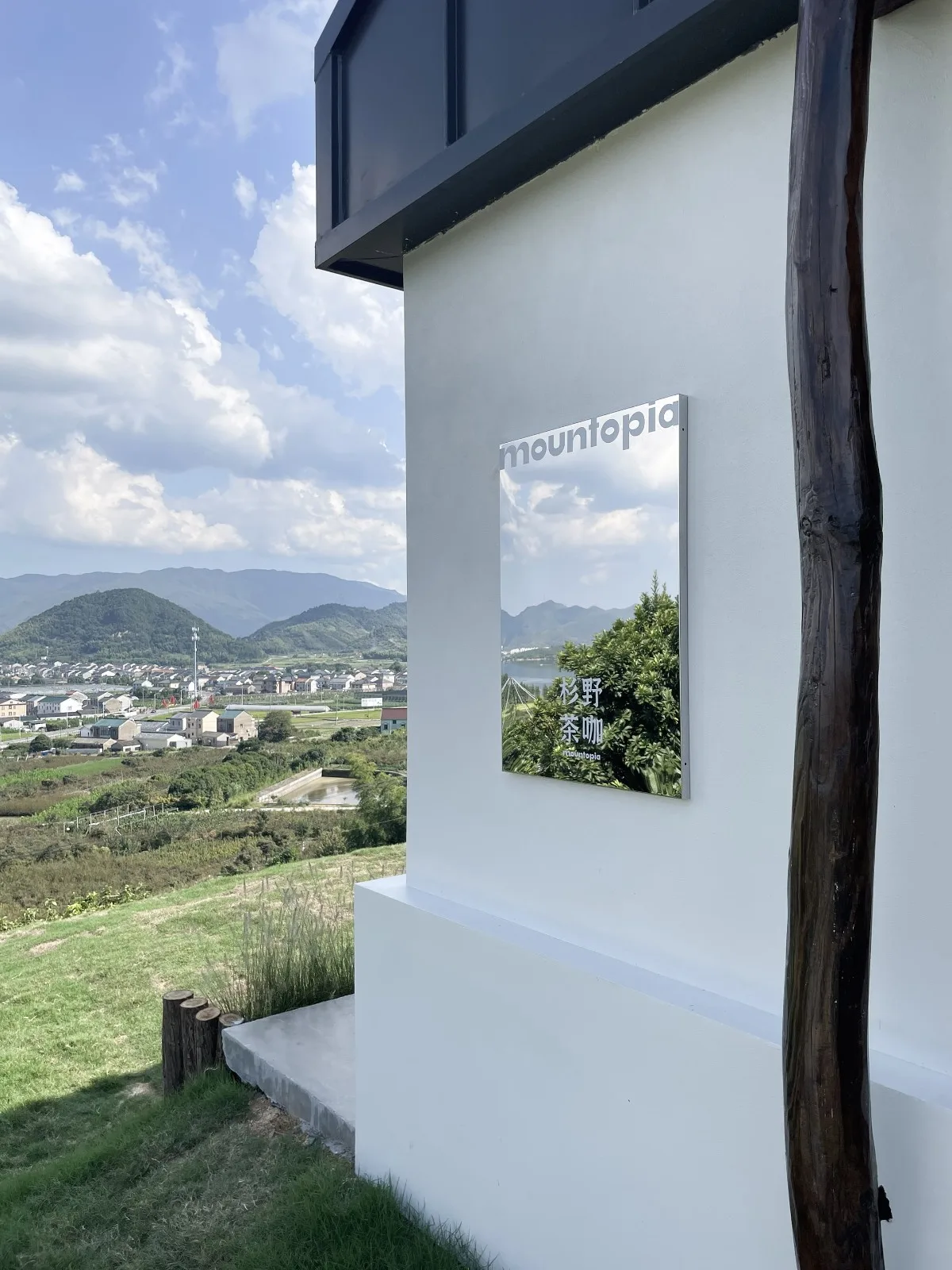
△ Exterior detail © Yang Nan
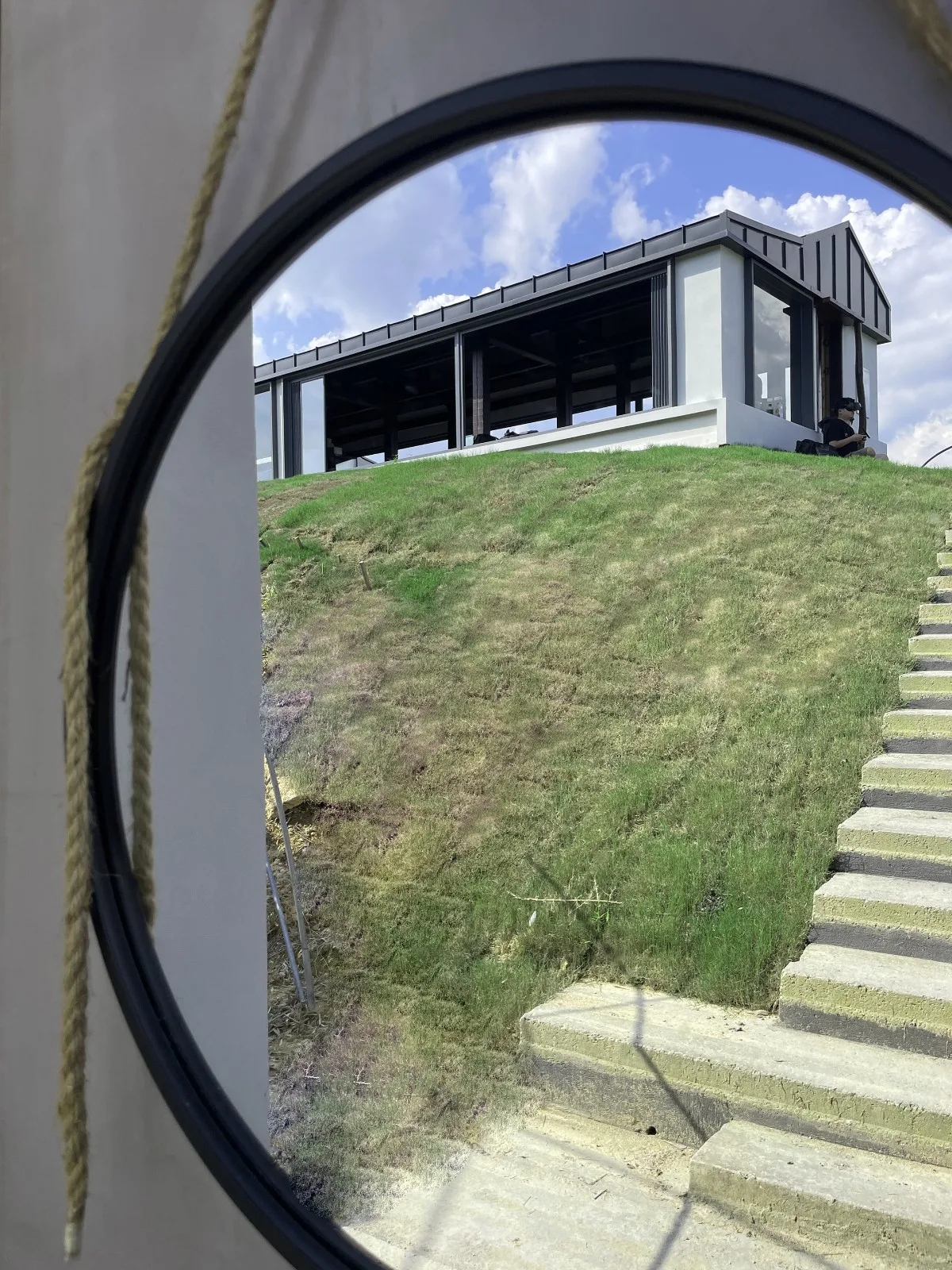
△ Exterior detail © Yang Nan
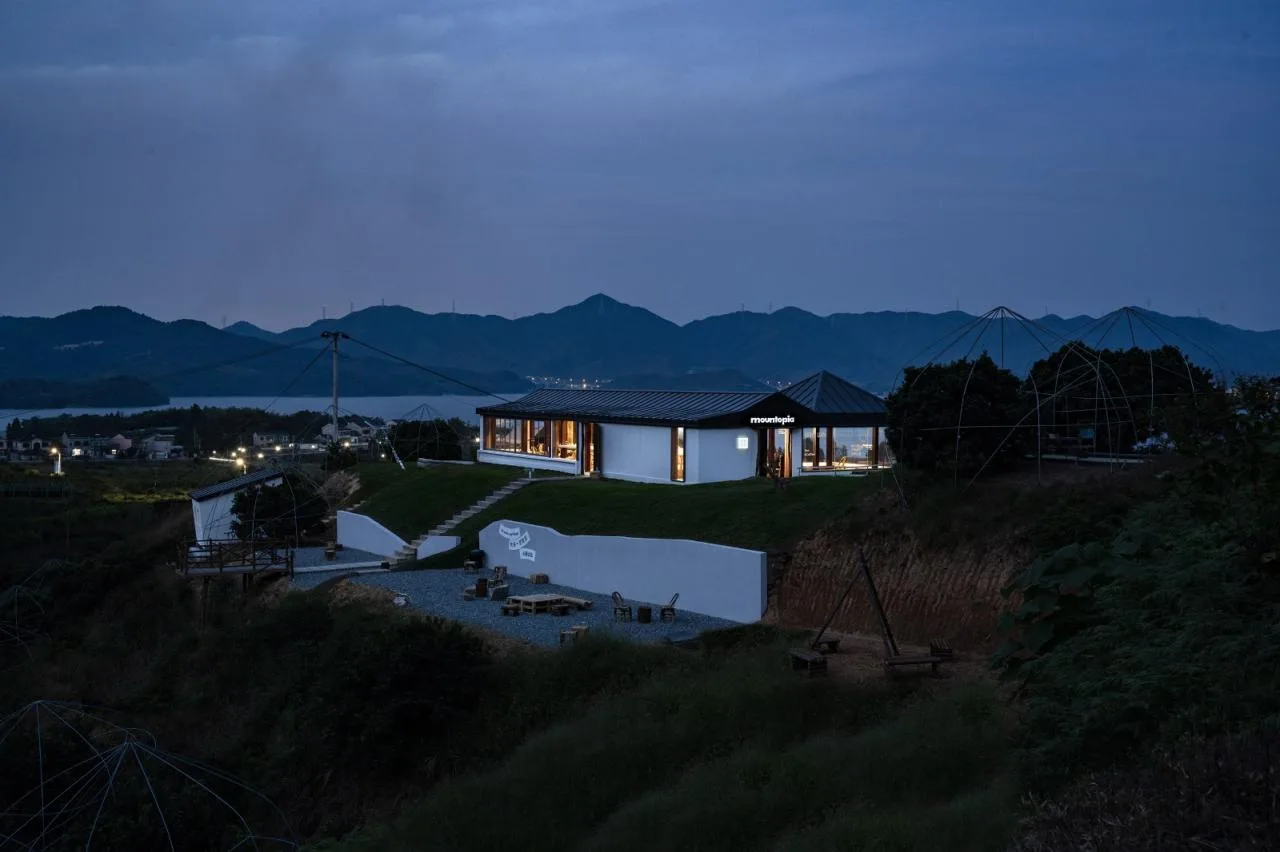
Night view from the mountaintop © Xu Yingda
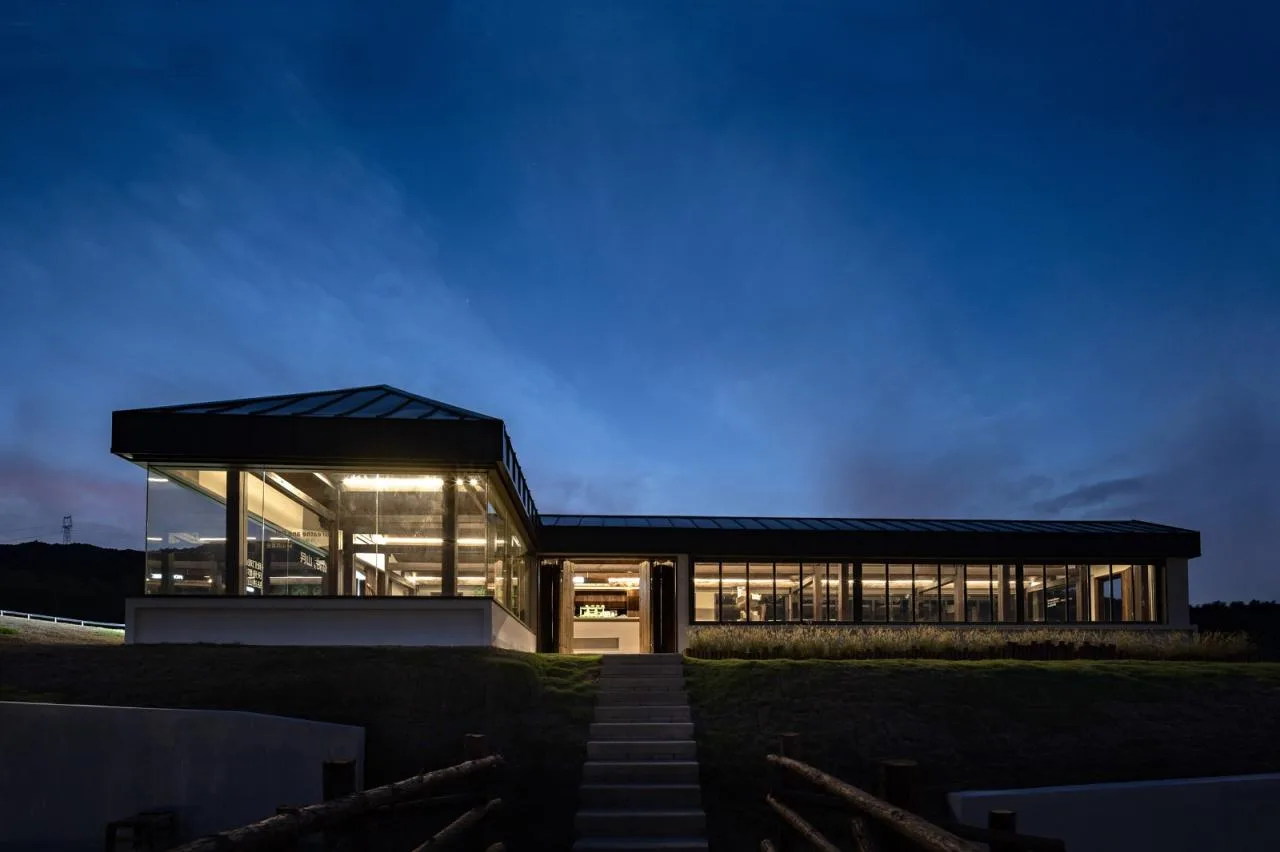
View from the east side looking indoors © Xu Yingda
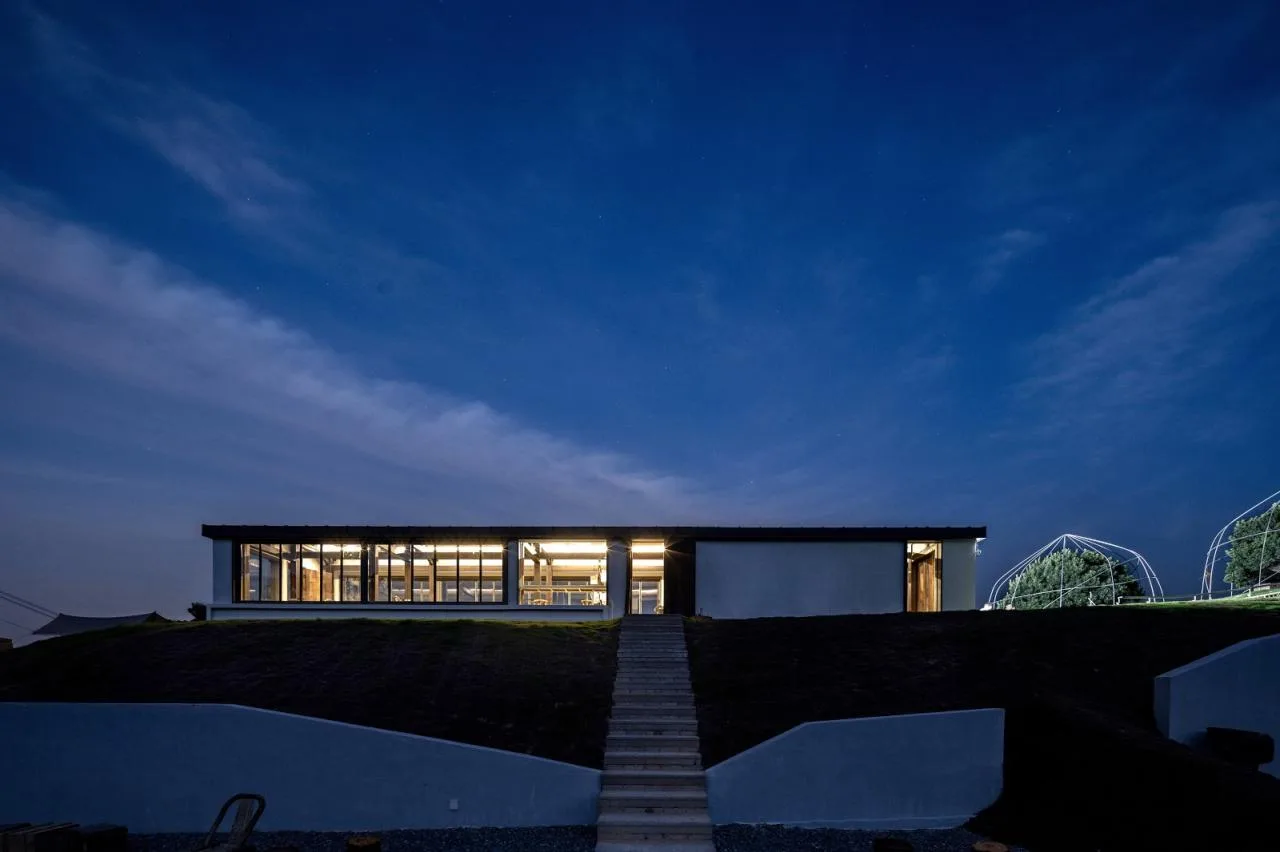
View from the west side looking indoors © Xu Yingda
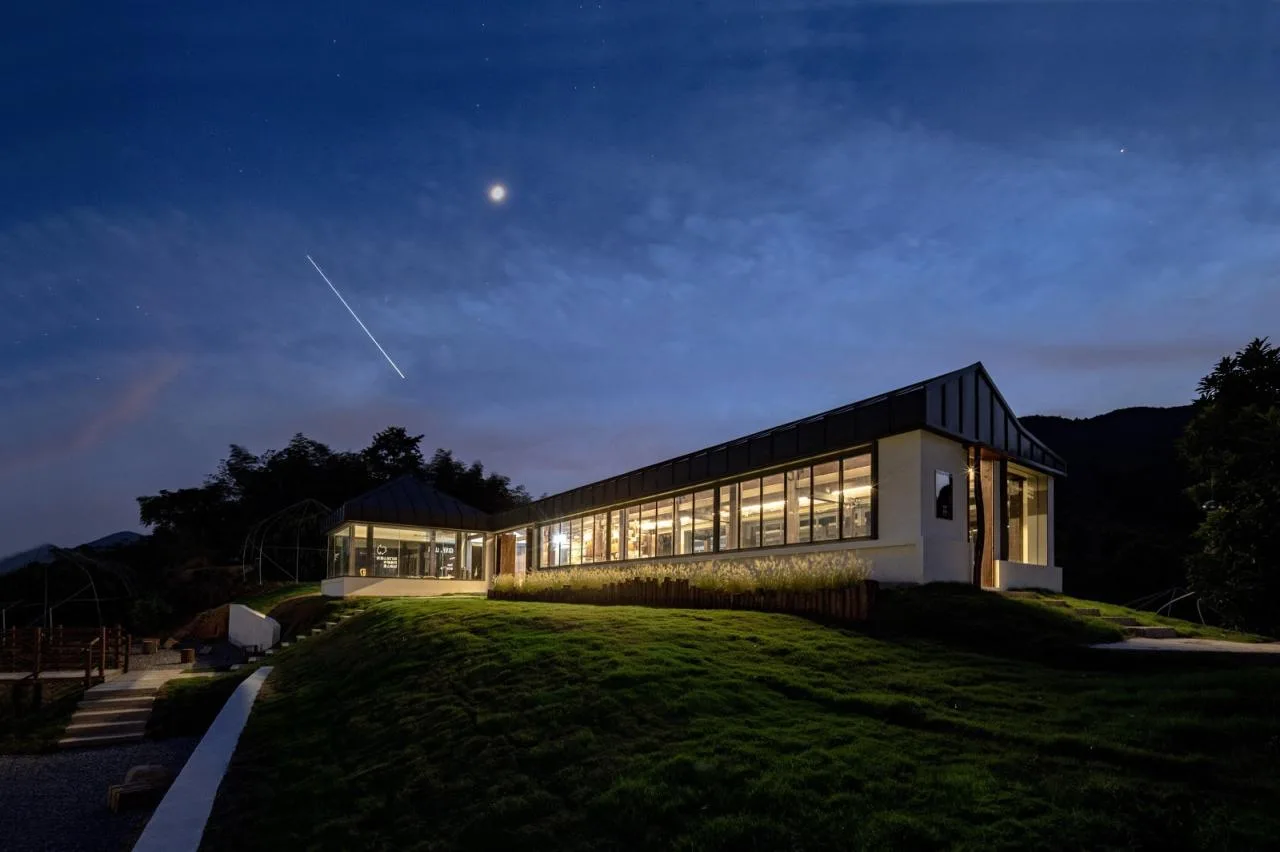
View from the east lawn looking indoors © Xu Yingda
Interaction with the surrounding environment is vital in any architectural project. Every environment has a unique atmosphere that shapes a building’s character. Ignoring the surroundings results in structures that only fulfill functional needs but lack diversity and vitality. Designing within a rich, varied context—incorporating streets, trees, villages, bamboo groves, and mountains—breathes life into architecture, creating dynamic and expressive spaces. As the saying goes, “Those on the bridge watch the scenery, while those watching the scenery watch you.” This interconnectedness fills life with poetry.
Standing at the mountain’s base overlooking the tea house, the building itself becomes part of the landscape. Inside, visitors can fully appreciate the beauty of Siming Mountain and Siming Lake. Though physically separated, observation and being observed forge a subtle connection that enriches the spatial experience with layers of emotion and intrigue.
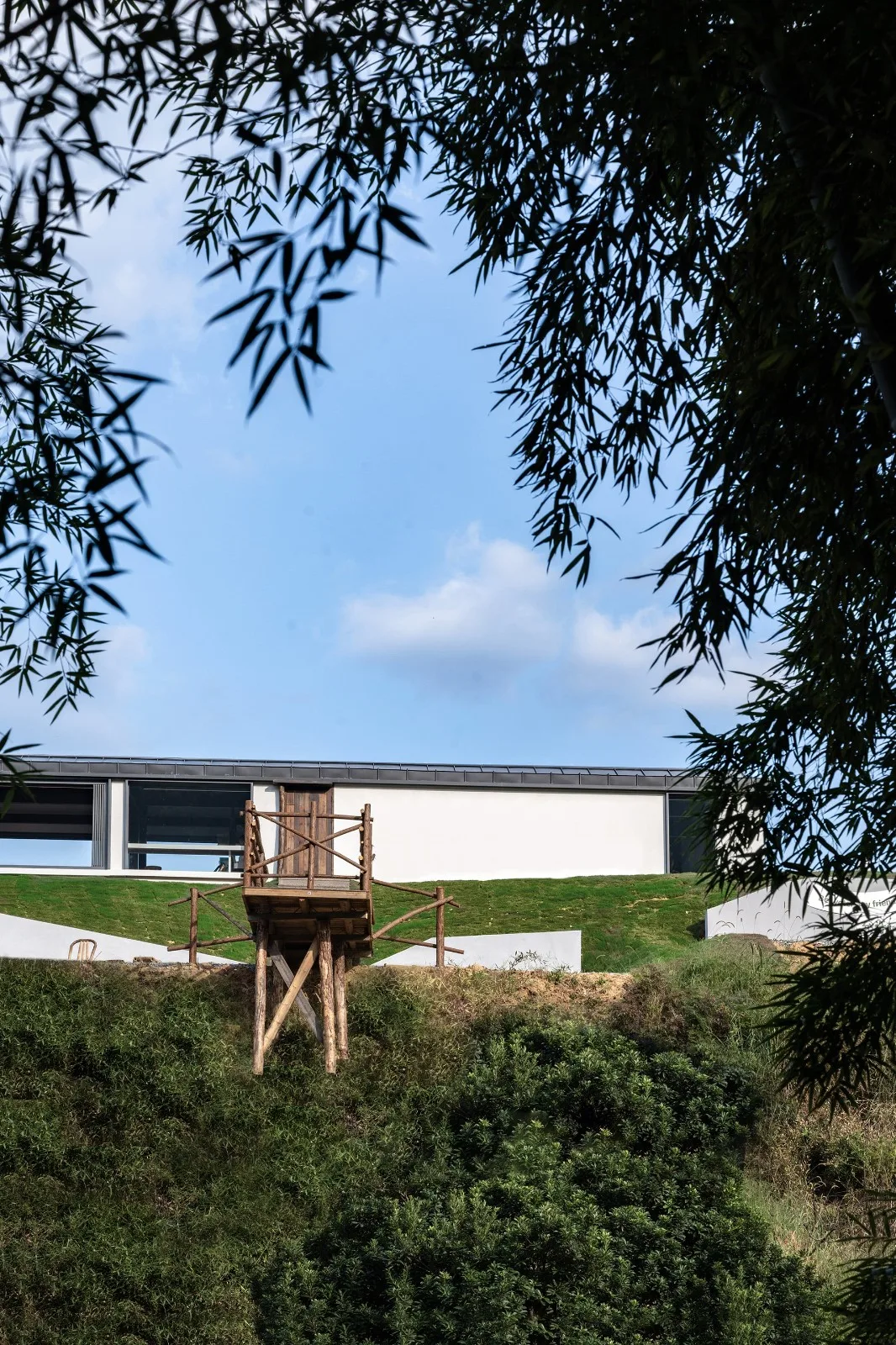
View of the building from the inner mountain © Xu Yingda
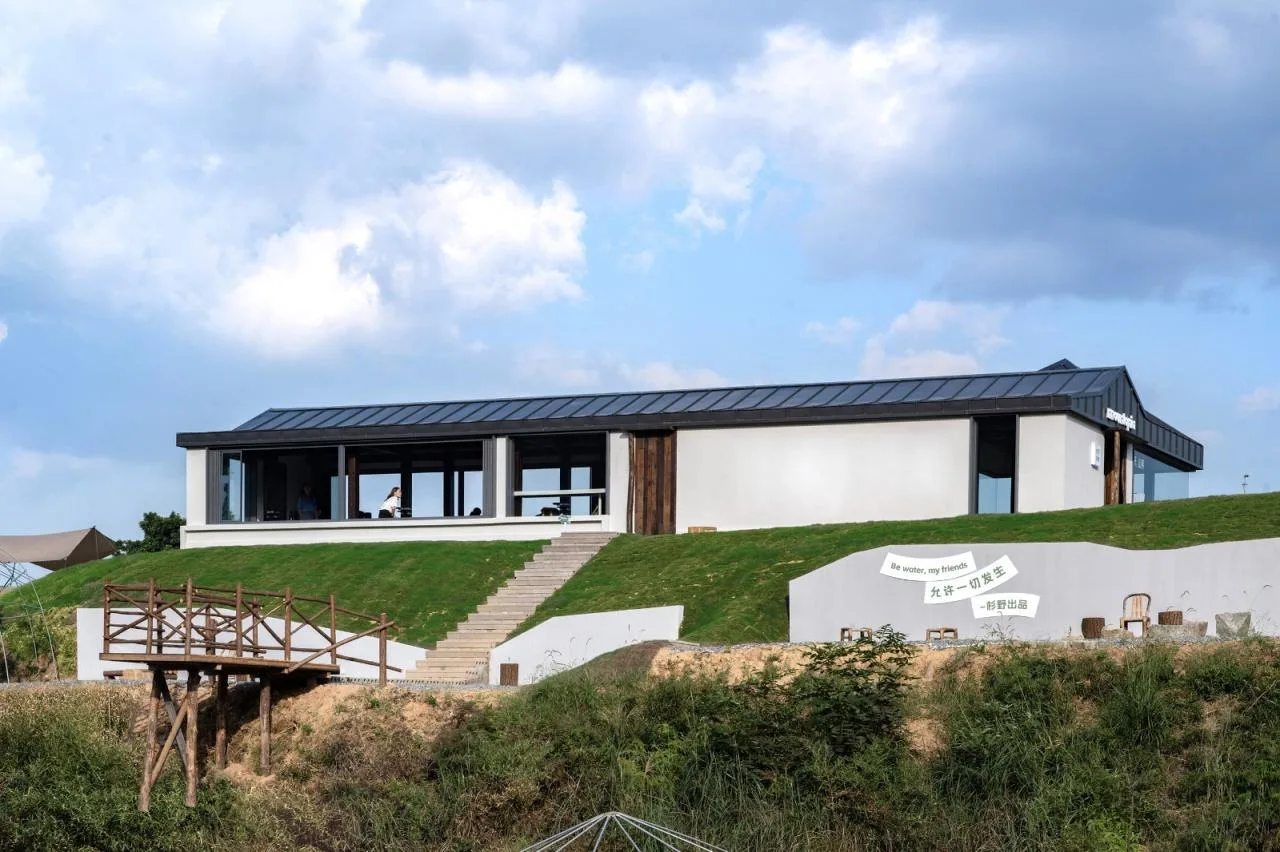
View of the building from the inner mountain © Xu Yingda
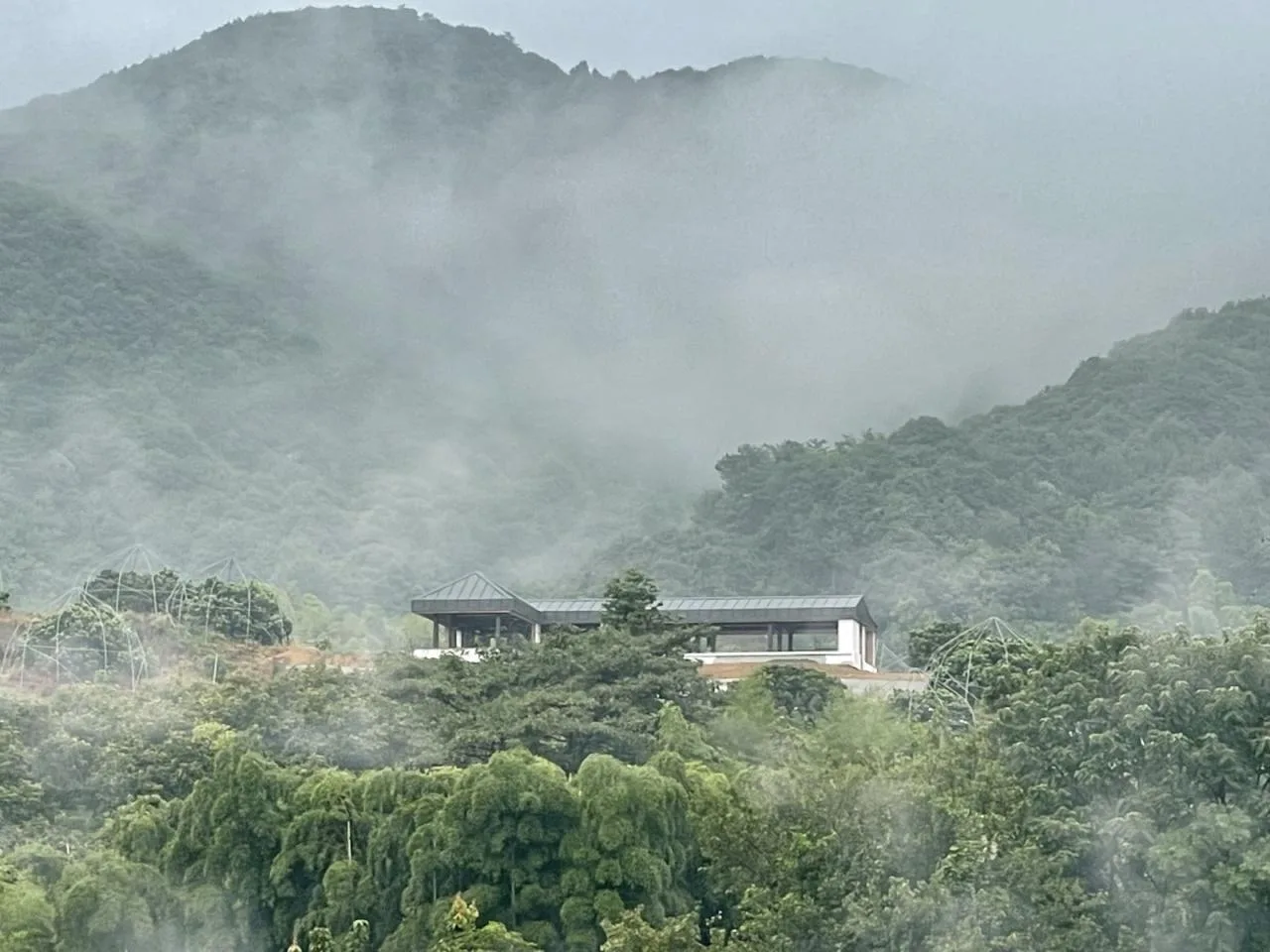
View of the building from the base of the mountain © Li cultivation
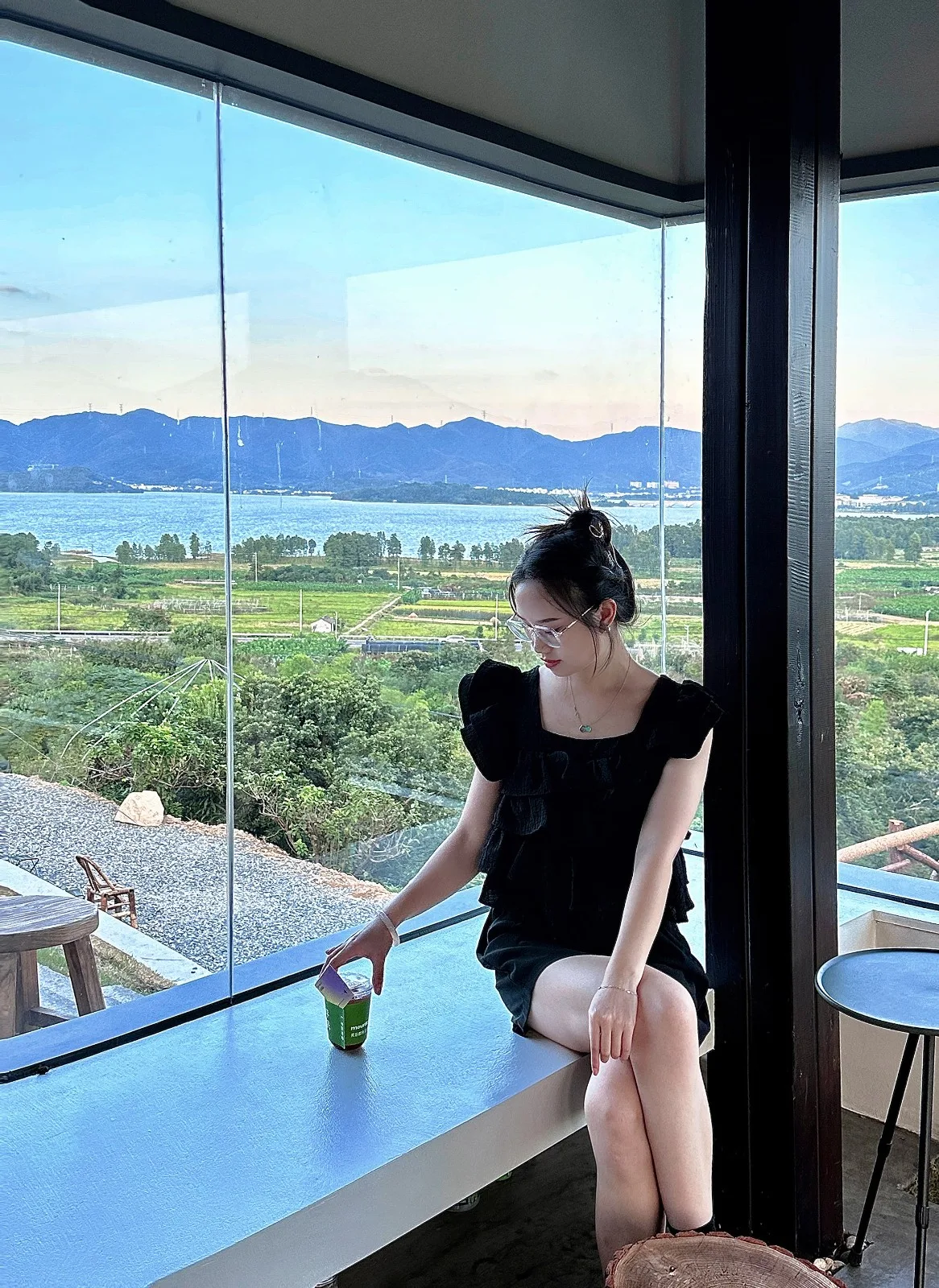
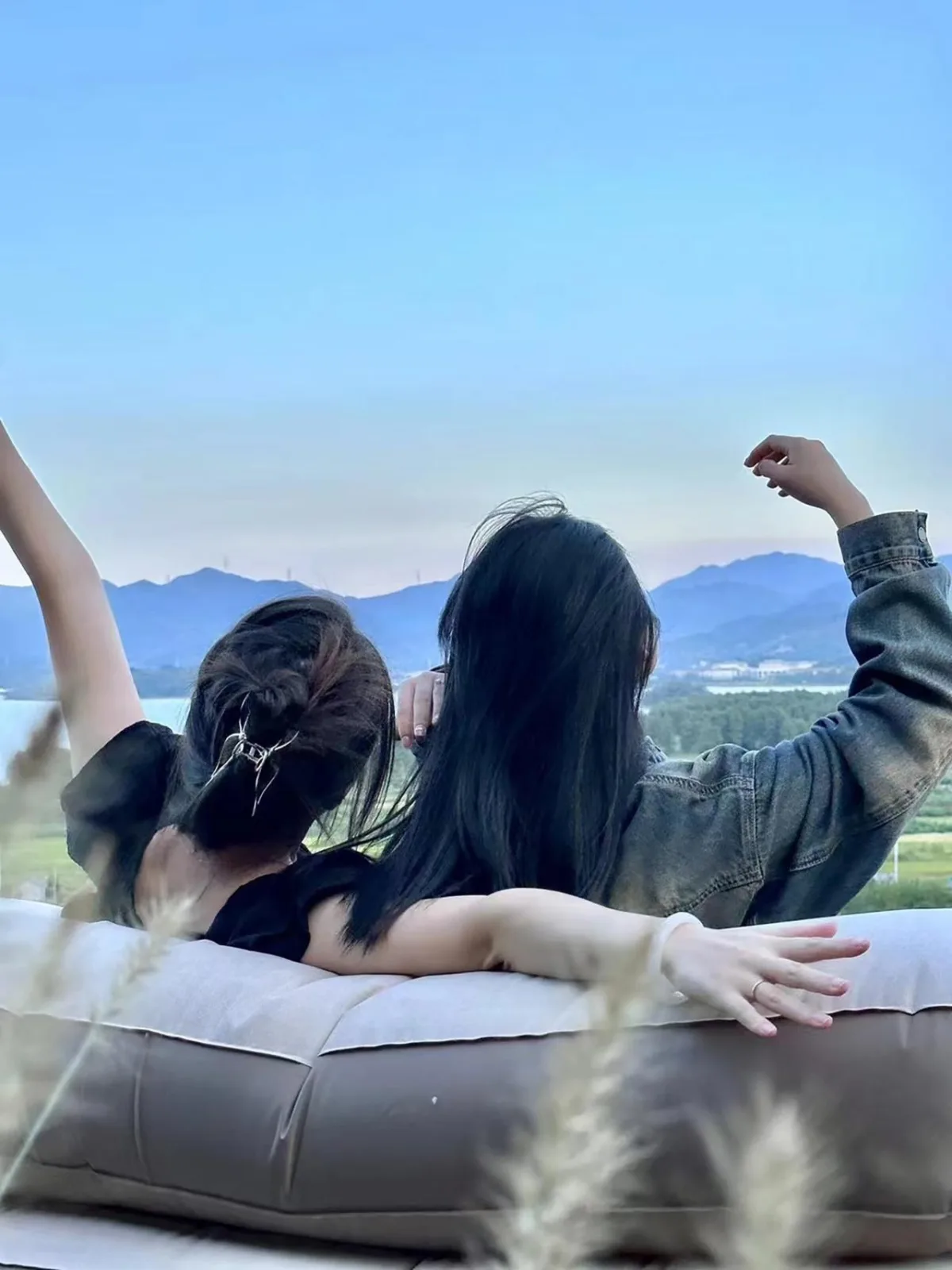
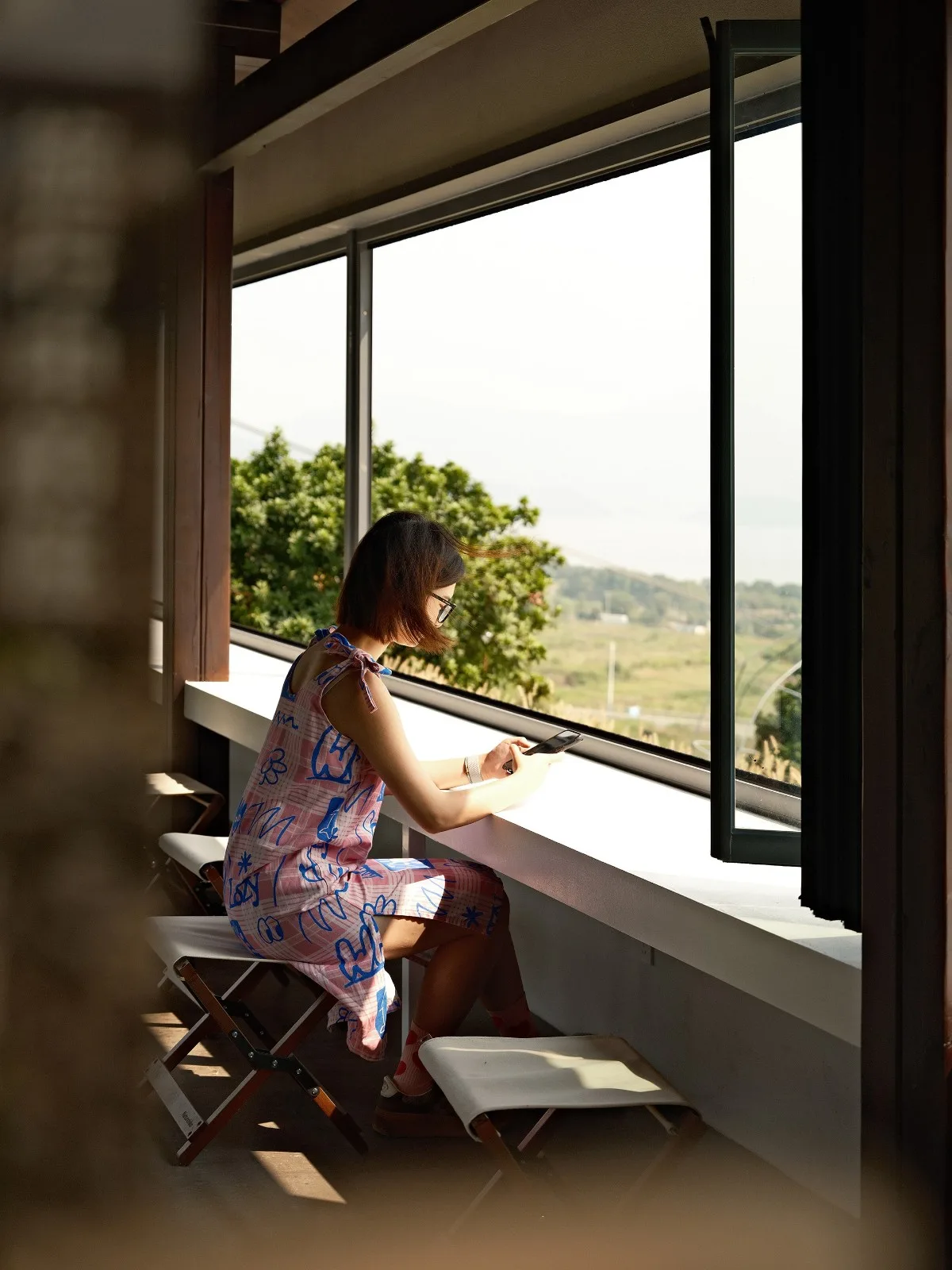
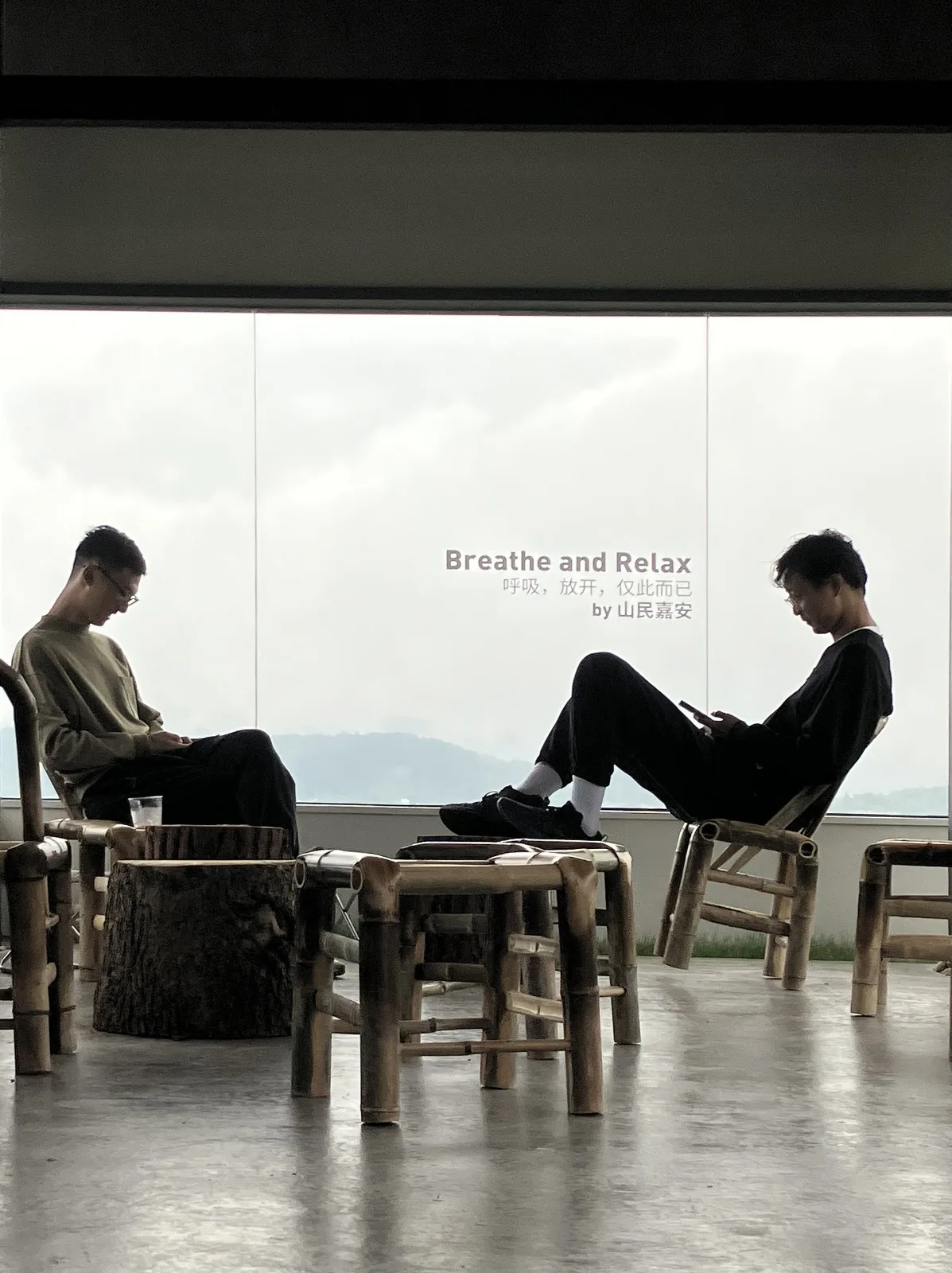
△ Different framing, Diverse interior views © Li cultivation
Project Drawings
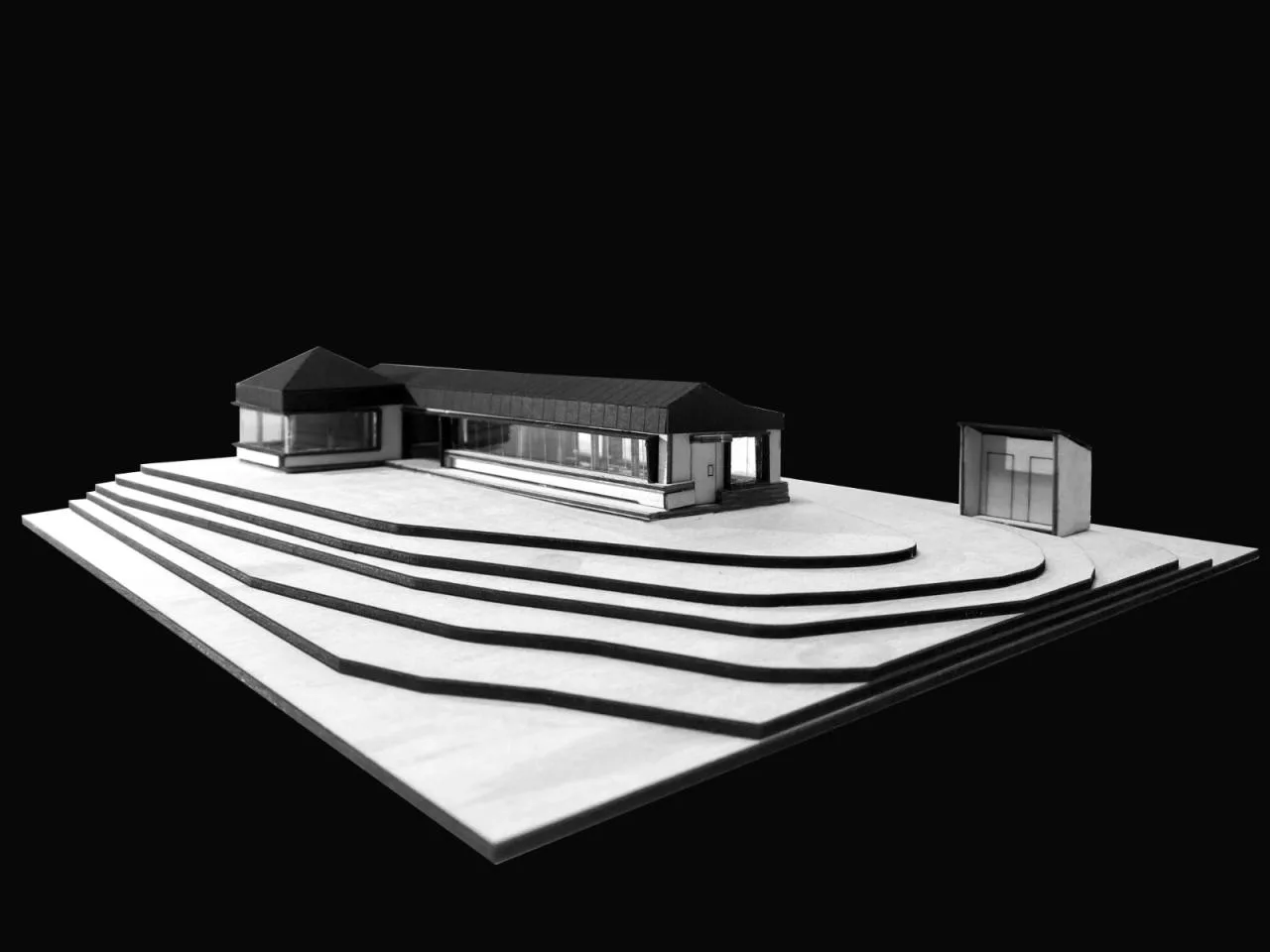
Handmade models © Pingjie Design
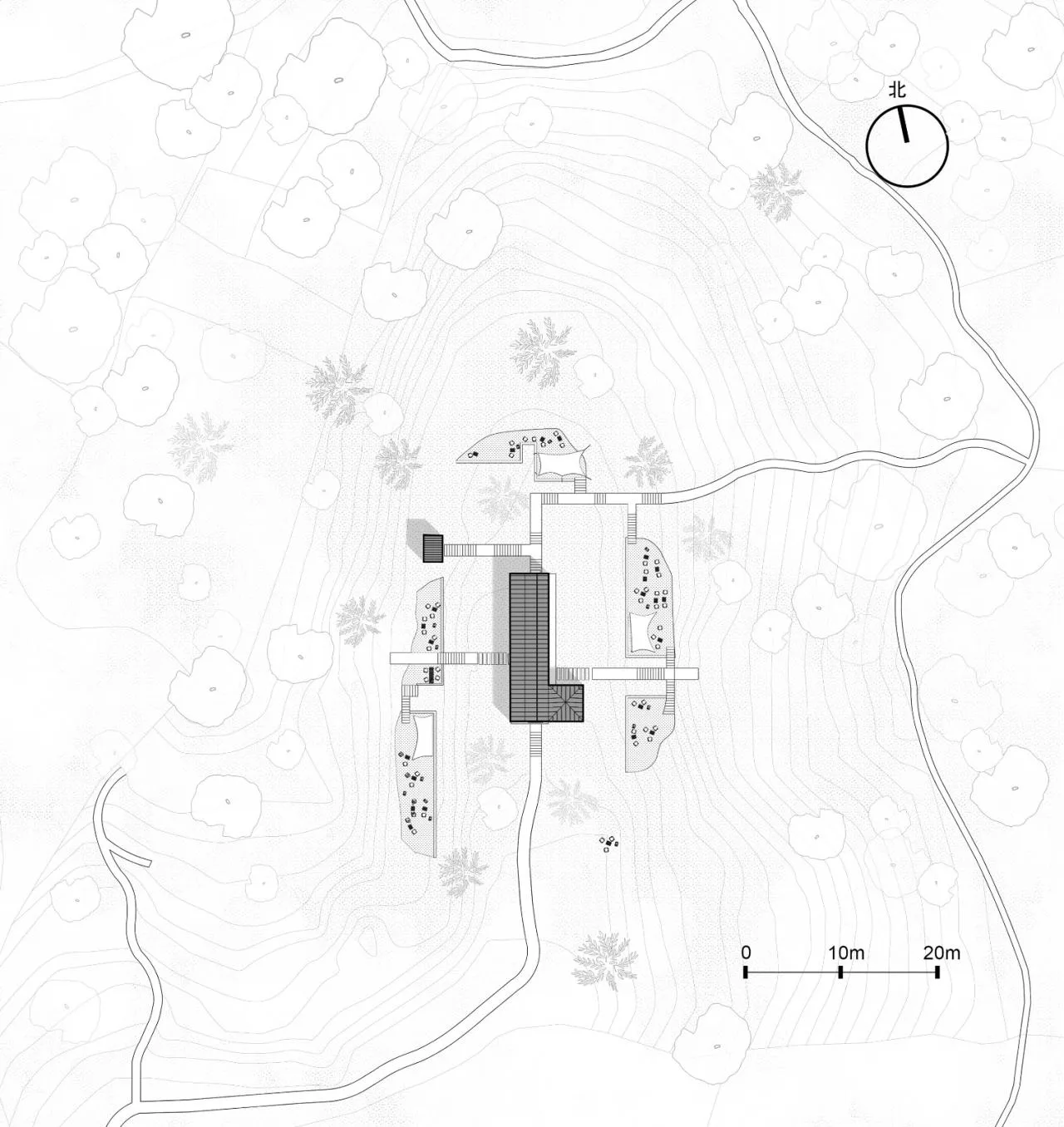
△ General layout plan © Pingjie Design
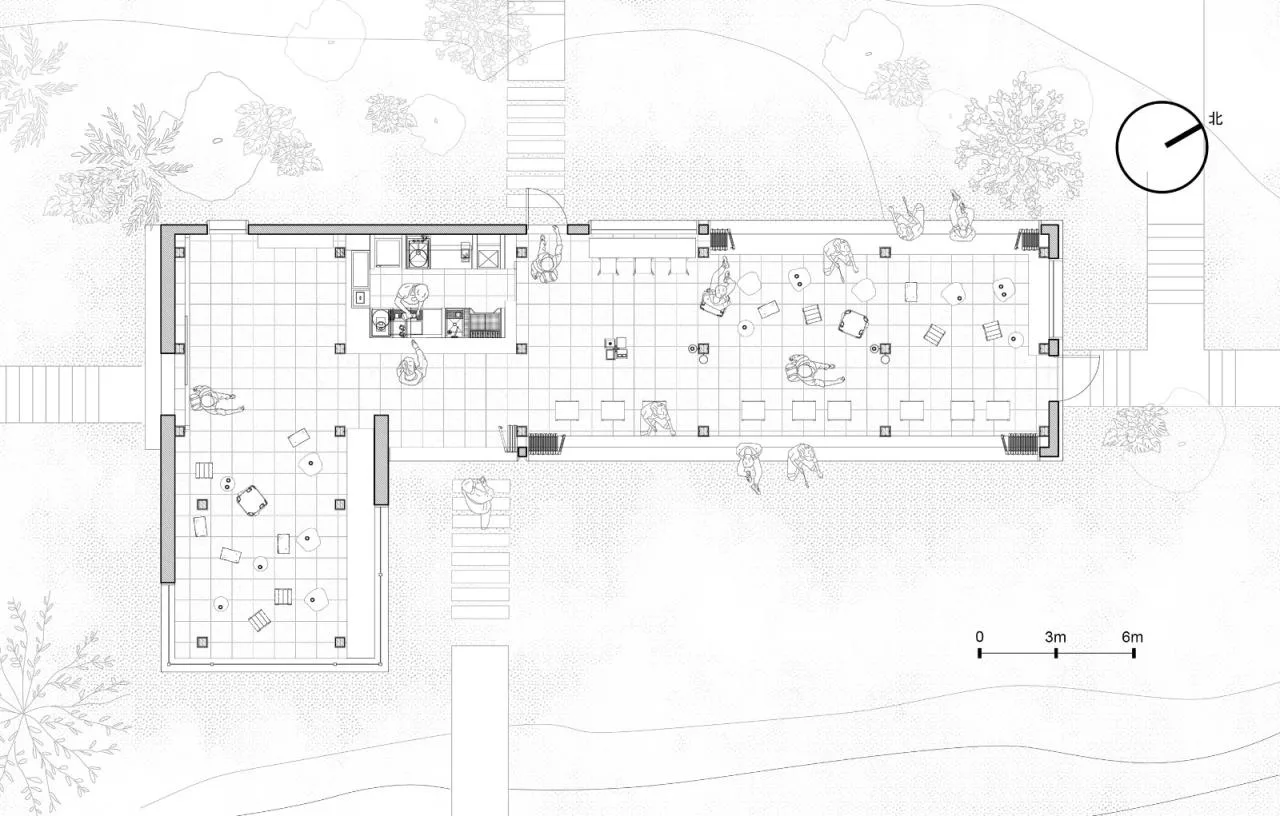
△ First floor plan © Pingjie Design
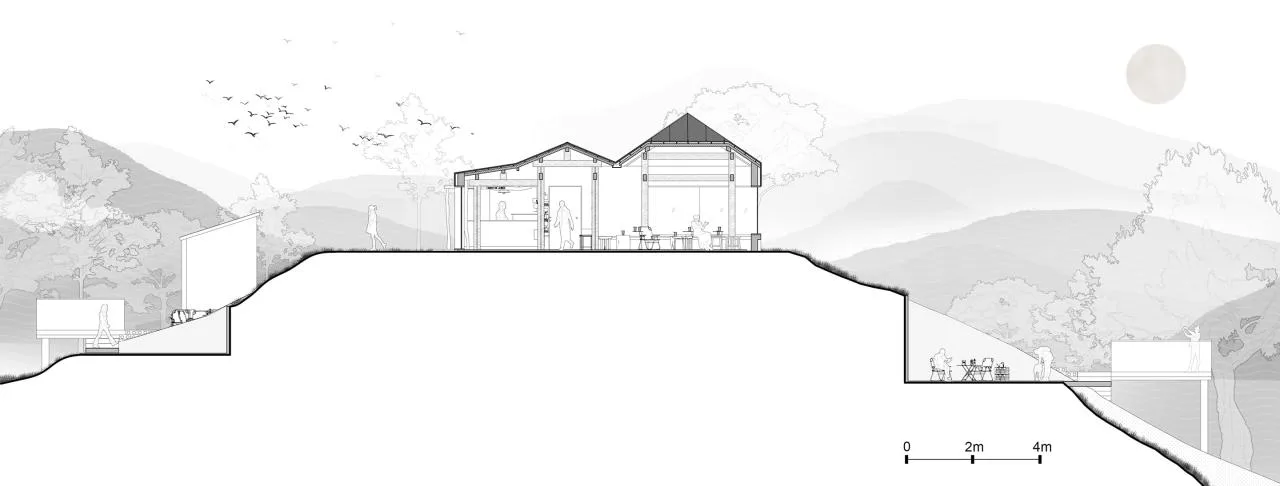
△ Sectional view © Pingjie Design














Must log in before commenting!
Sign Up