
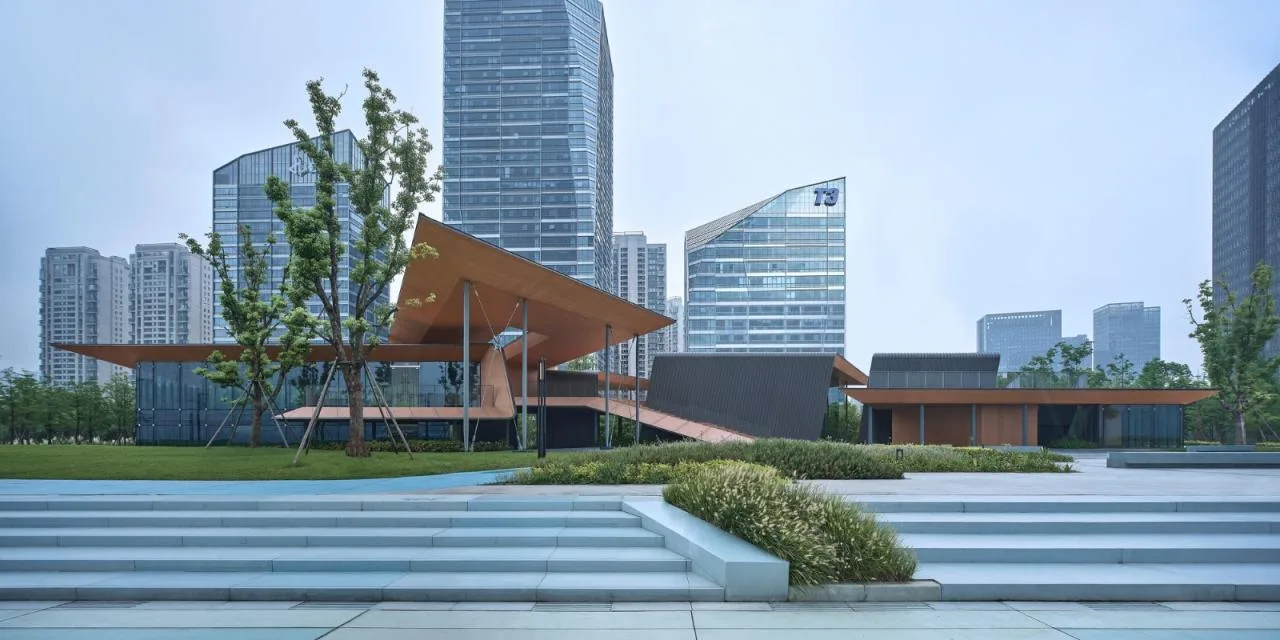
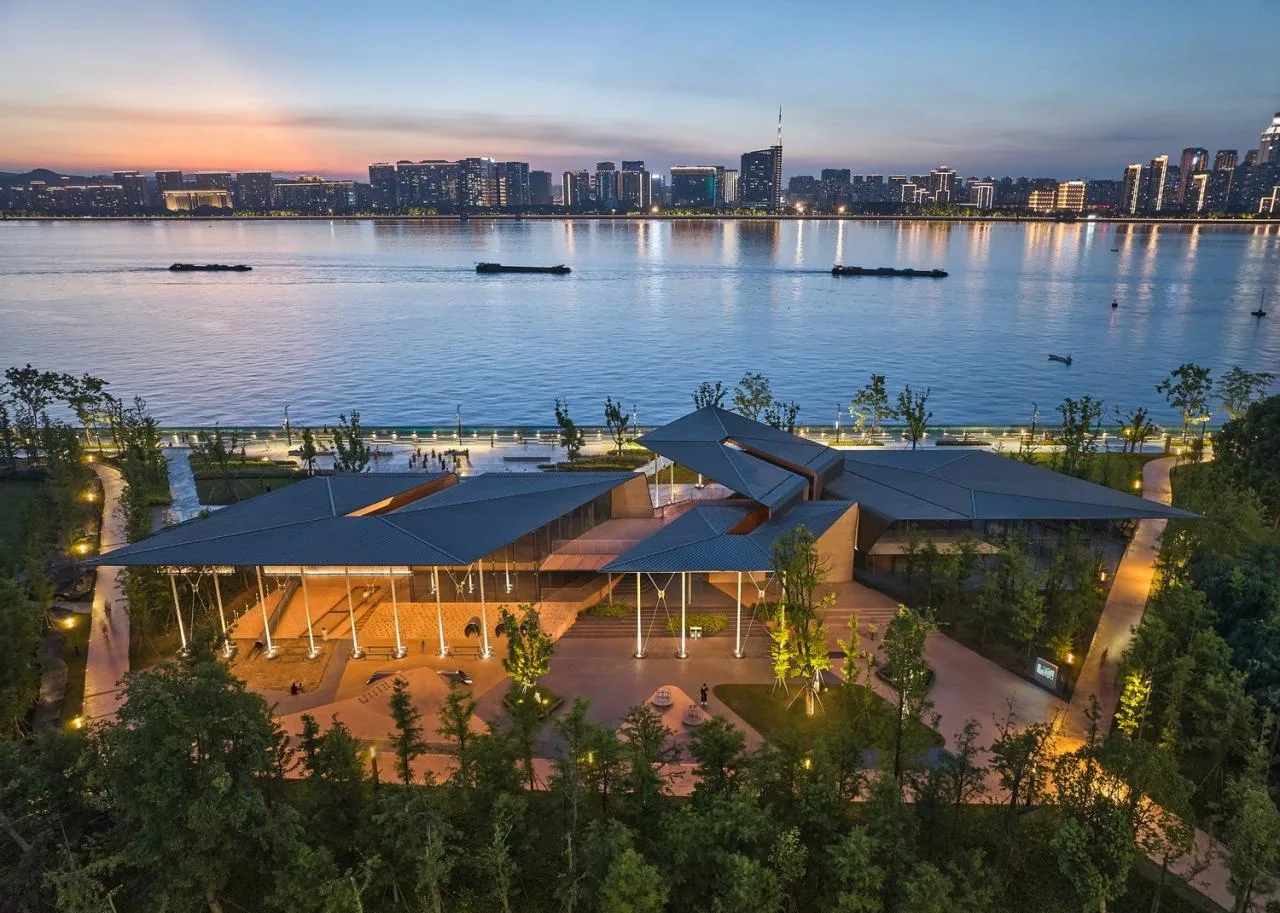
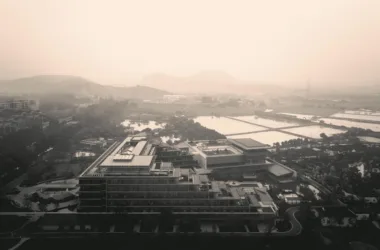
Fengyuan Inn is situated on the south bank of the Qiantang River in Hangzhou’s Binjiang District. Located southwest of the Qianjiang Third Bridge, at the intersection of Wentao Road and Jiangling Road, it borders the Left Bank · Wanguo Garden to the east. This three-dimensional children’s playground seamlessly integrates elevation, function, and site elements. It forms part of a 12-kilometer waterfront public space renovation and upgrade project led by Tongji University Architectural Design and Research Institute (Group) Co., Ltd. in collaboration with Original Design Studio in Binjiang District, Hangzhou.
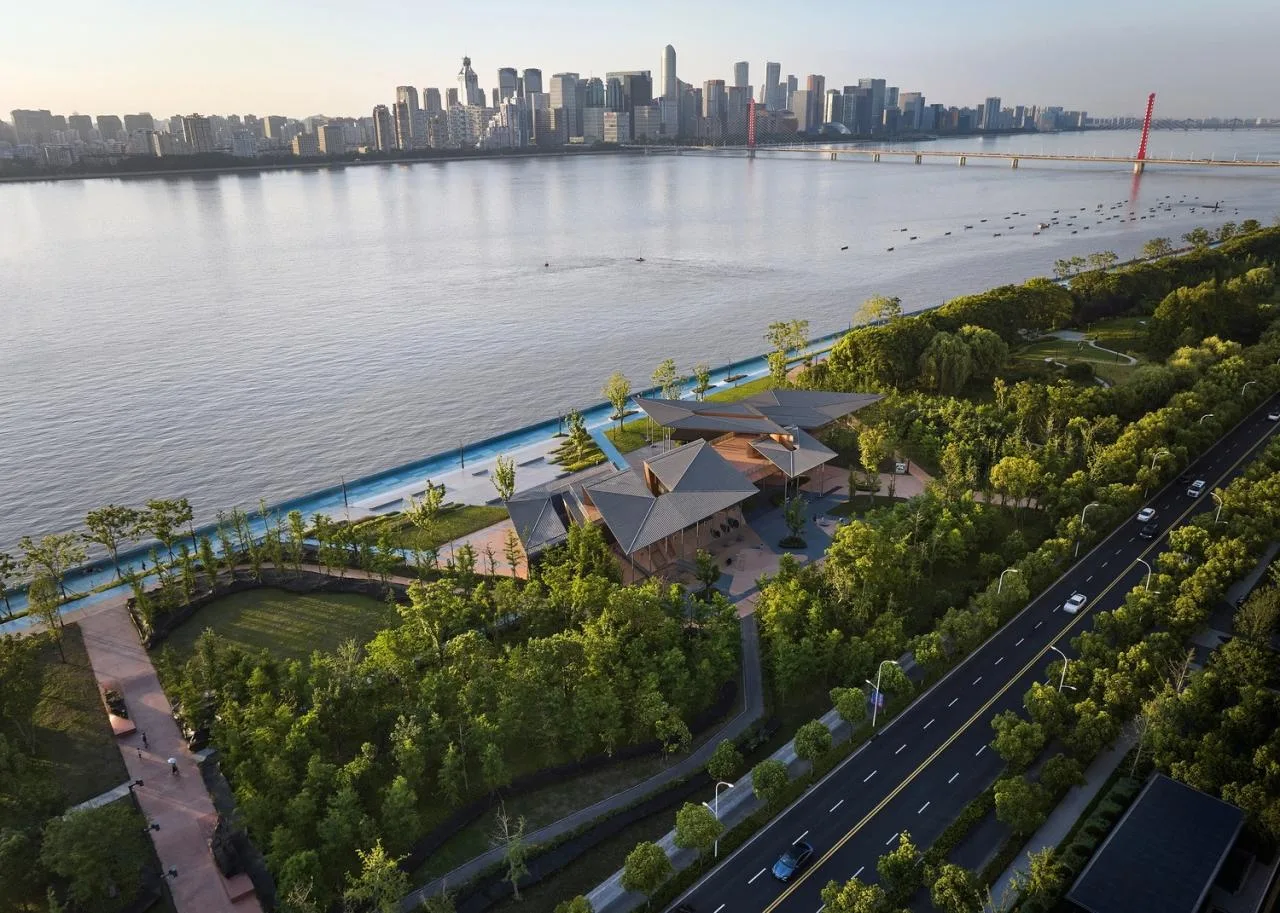
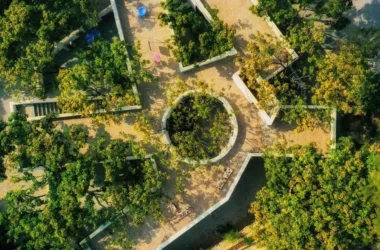
To address the issues of the original cycling and running paths between Qianjianglong Square and the Olympic Sports Expo Center—namely their flatness, monotony, poor connection between inland and riverside areas, and lack of service facilities—we adopted a targeted approach. We renovated the original post stations and refreshed the surrounding public spaces. The “Fengyuan Post Station” stands out as a distinctive feature. To find an ideal intervention site within the dense ginkgo forest, we selected the original children’s activity area, combining the children’s play function with the new post station and landscape, reconnecting the community with the public space.
Clever Form Borrowing
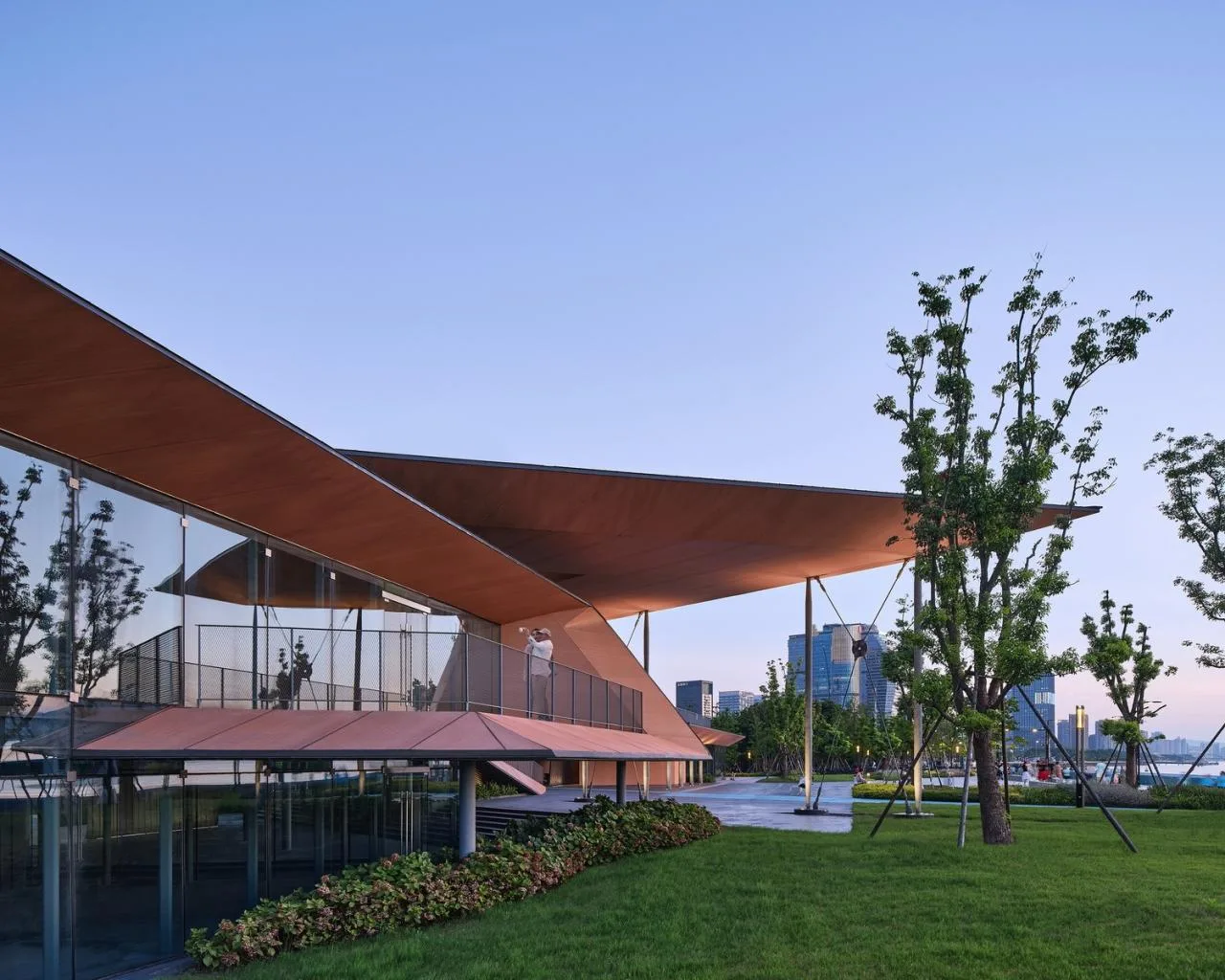
The design begins with a simple prototype that creates rich spatial relationships. On one hand, it draws inspiration from children’s origami, nesting five C-shaped “paper” units to form the basic layout. On the other, the folded eaves resemble a light kite spreading its wings, hovering gracefully over the Qiantang River.
These five C-shaped structures are oriented differently. Three face the river, serving as energy supply stations for the Binjiang Bookstore and pedestrians, offering tranquil, flowing river views. The two sections facing the city, combined with a nearly 2-meter height difference introduced by the Anlan project’s elevation requirements, accommodate indoor parent-child cafés and outdoor play areas featuring climbing structures, slides, and sand pits. The concept of “paper kites and bamboo horses accompanying children’s play” is embodied here, with the large eaves providing shaded rest areas for caregivers.
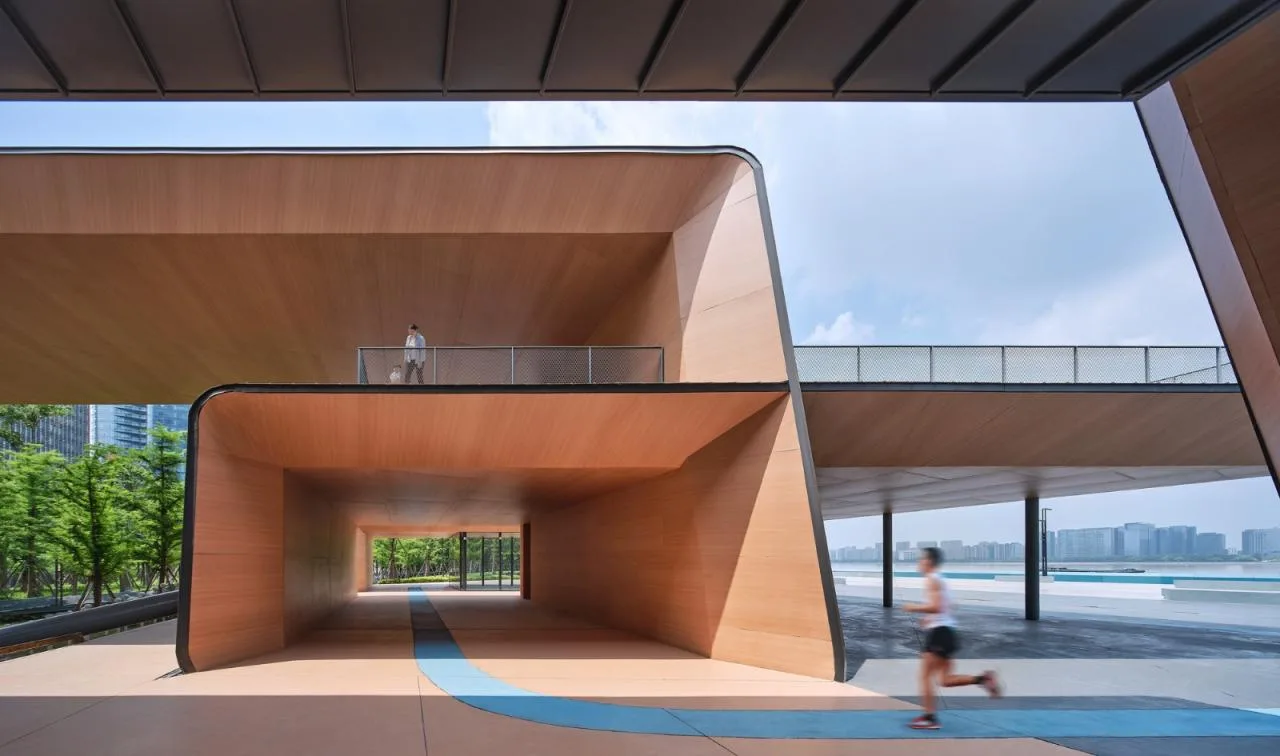
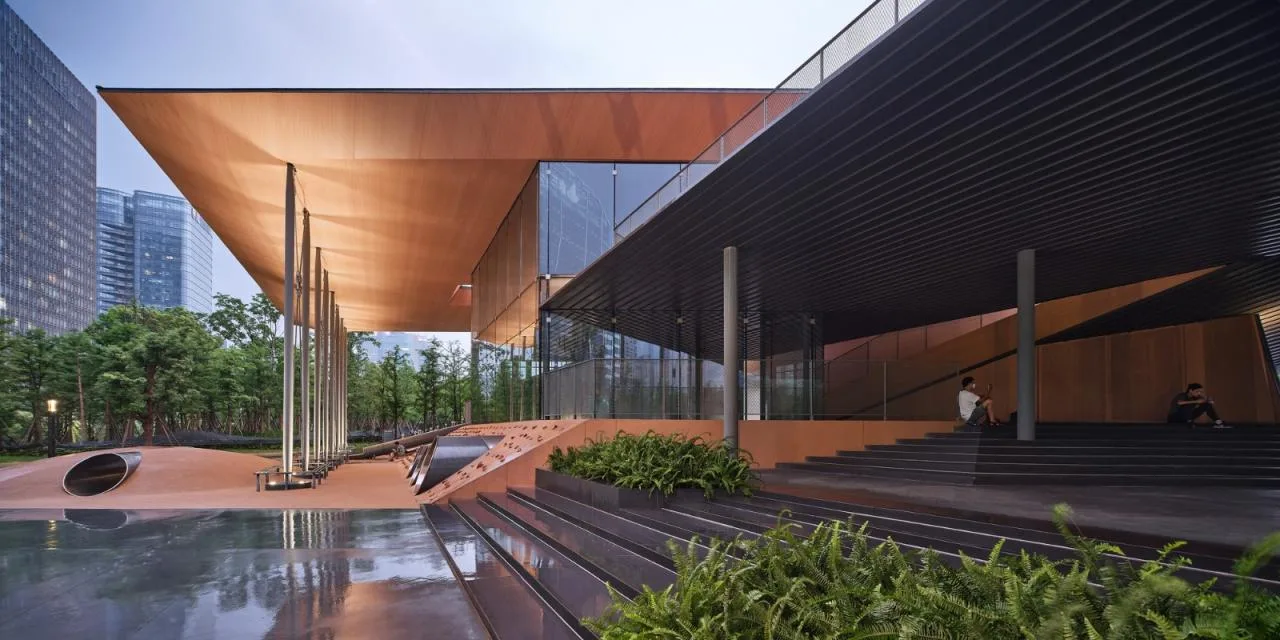
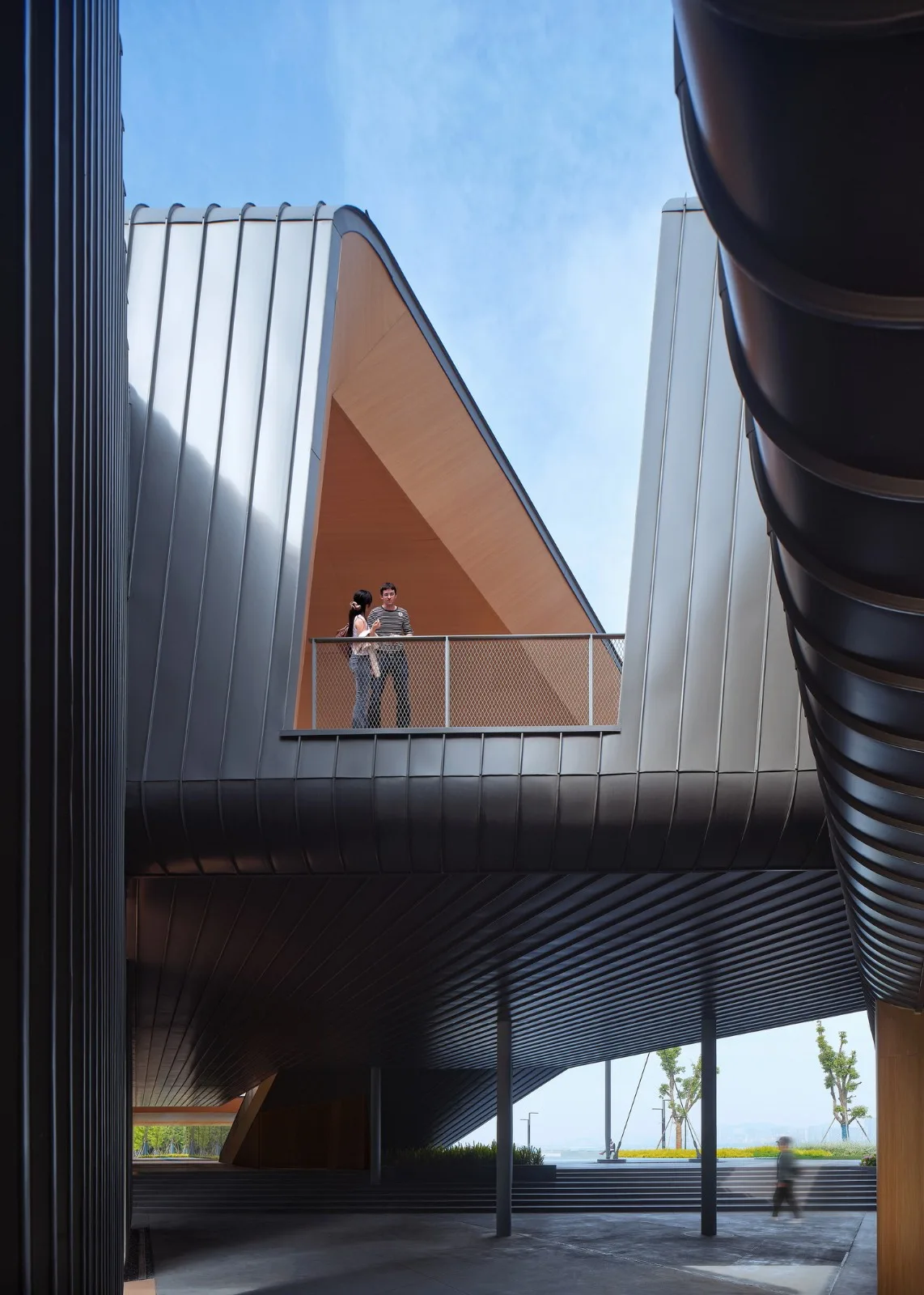
To fully express our folding form concept while honoring tradition, each “paper piece” features an interior of imitation wood aluminum panels and an exterior roof clad in dark gray vertical lock-edge titanium zinc plates. These materials extend seamlessly from the roof to the walls and floors. The ground surfaces are finished with colored concrete matching the structure’s palette, defining the space and enhancing spatial perception. The expansive eaves evoke upturned paper kites, creating a sense of lift and lightness.
Gaps are left between each paper piece, resembling interlocking children’s blocks. These spaces allow the units to nest, forming ladders for climbing, pathways for crossing, or unexpected views and moments of reflection.
Lightweight and Elegant Construction
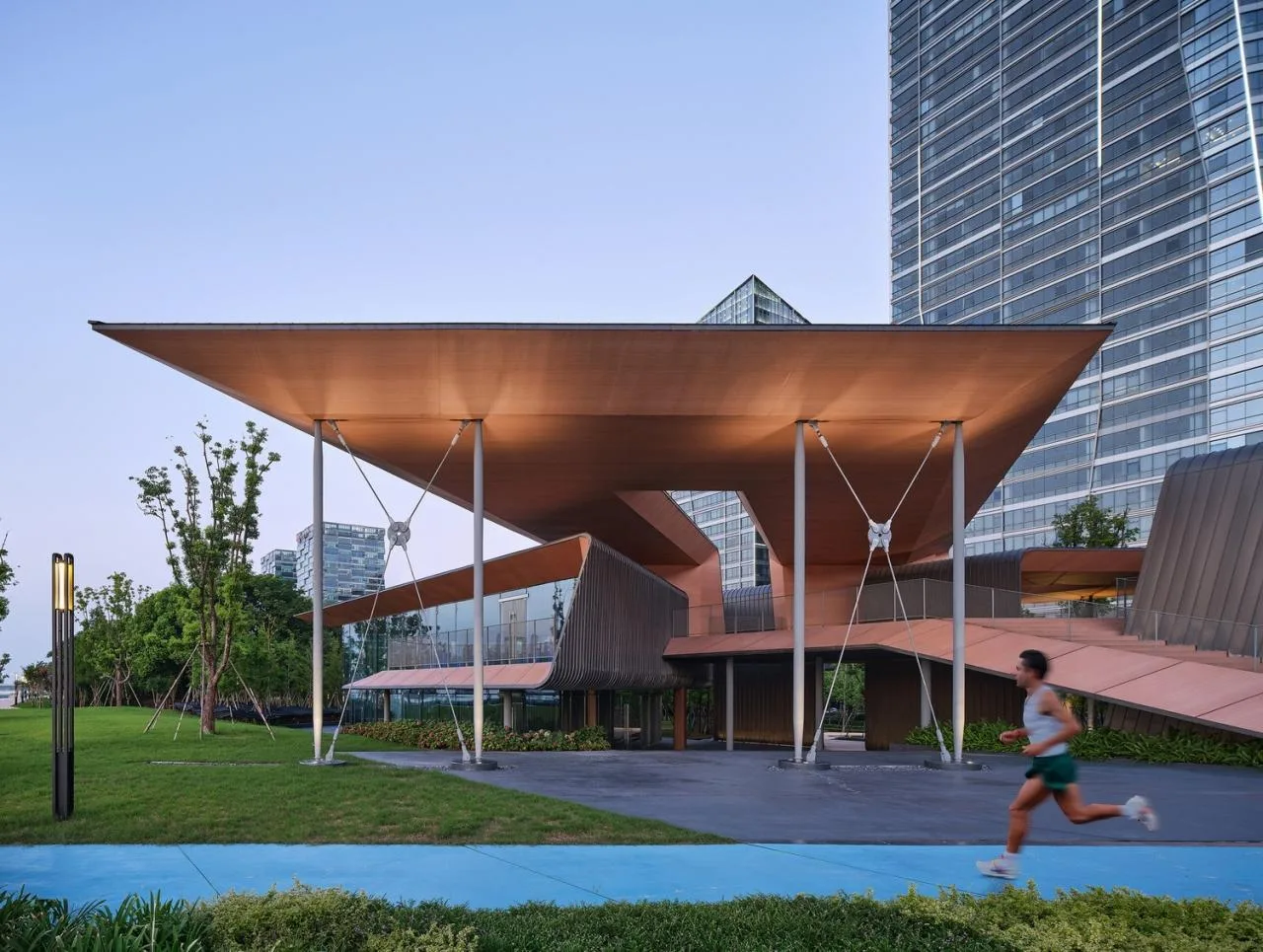
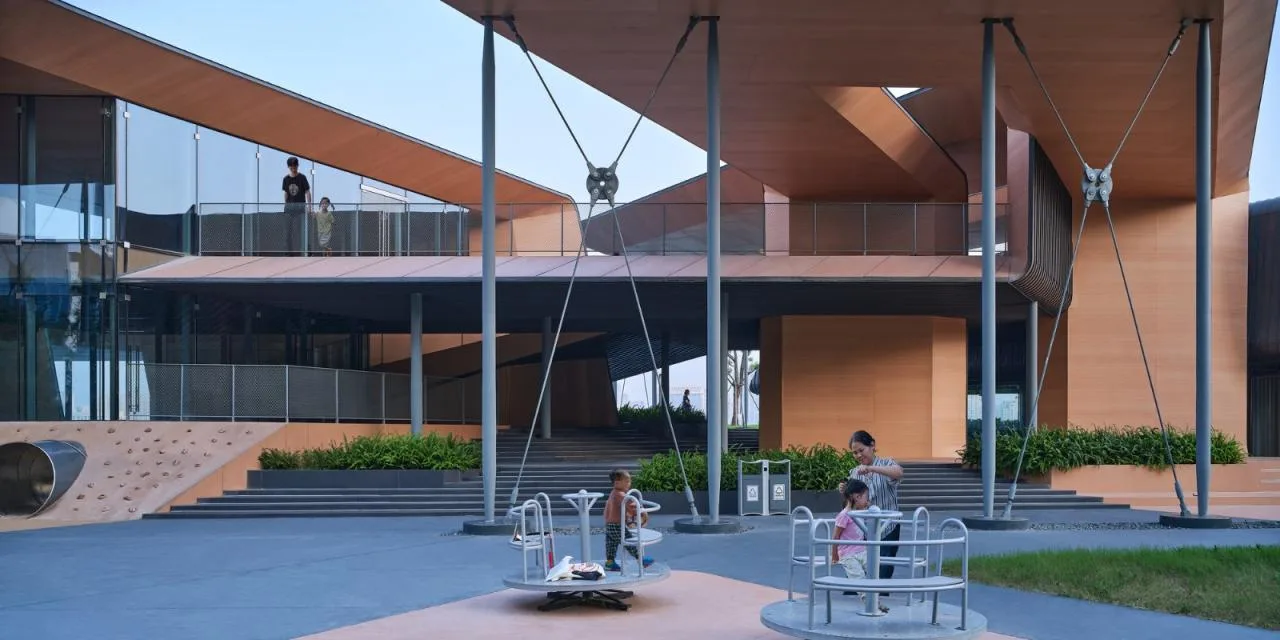
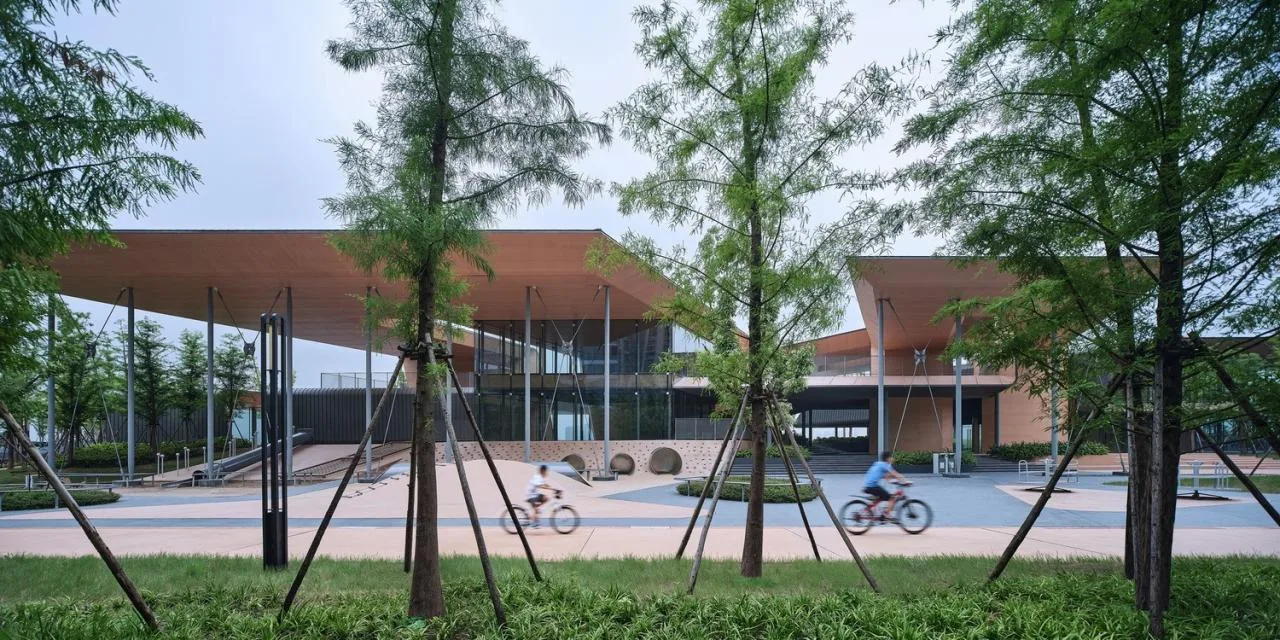
To achieve a lightweight appearance, we implemented a design strategy combining a dense column arrangement with the separation of gravity and lateral force systems. This approach limits the size of exposed structural columns to within 200mm. For the indoor frame columns, we balanced structural roof requirements with a desire for lightweight, transparent façades by using slender columns spaced every 1500mm, matching the prefabricated façade component module. Steel columns with minimal cross-sections (100mm x 160mm) serve as vertical structural supports and the curtain wall’s framework, embodying an integrated structure and façade design concept.
The roof is supported by cylindrical columns combining ball joint nodes with shuttle-shaped columns, allowing multi-directional rotation to create spatial hinges. Anti-pull bolts connect the shuttle-shaped columns to the joint heads, preventing detachment and dissipating bending moments so that columns bear only axial loads. To ensure lateral stability, cross bracing cables are installed intermittently between columns, contributing to a clean, orderly architectural expression. This system allows the shuttle-shaped columns to have a reduced diameter of 194mm while maintaining structural stability and vertical component integrity.
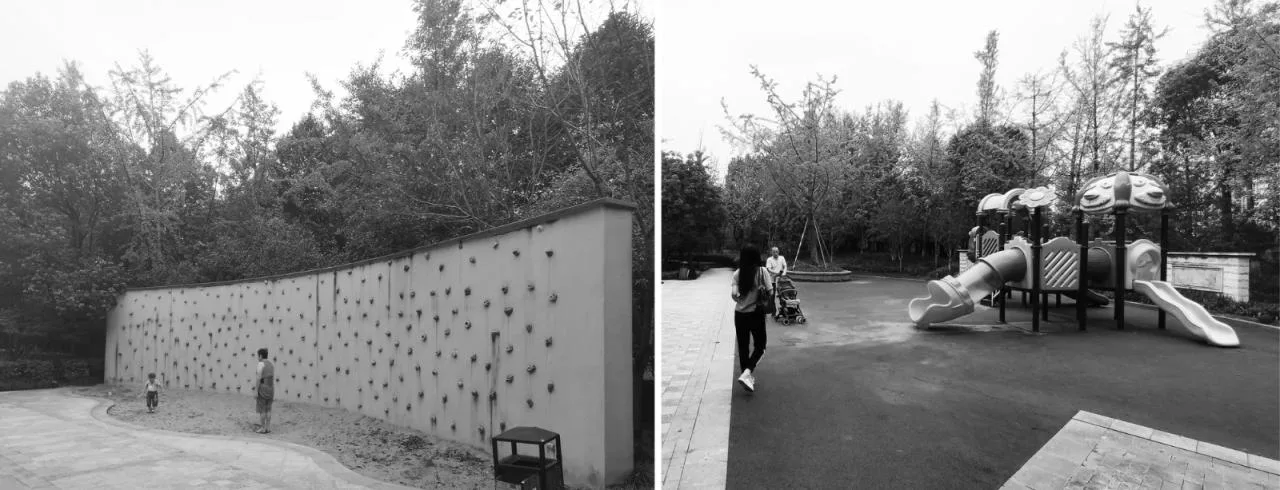
△ Original base photo
Project Drawings
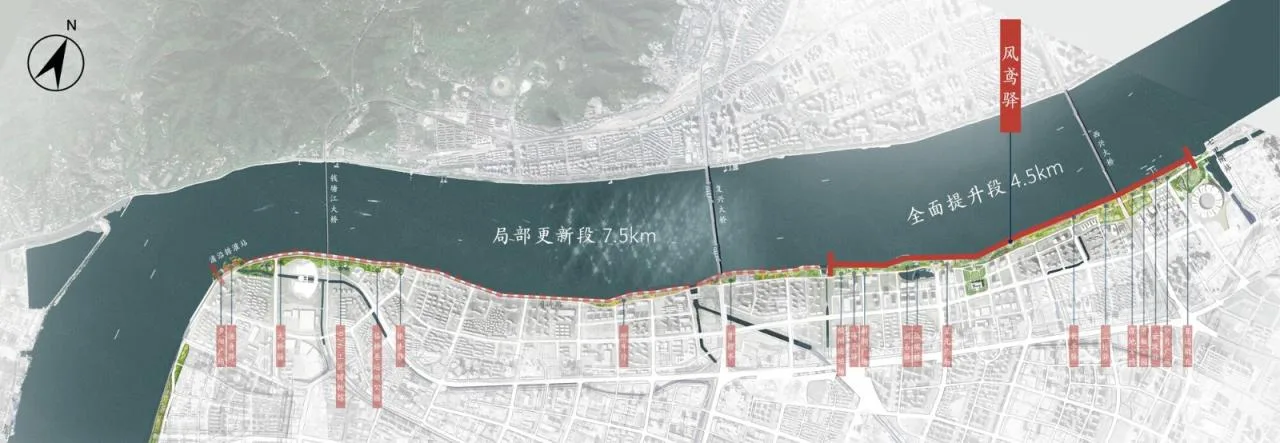
△ Location diagram
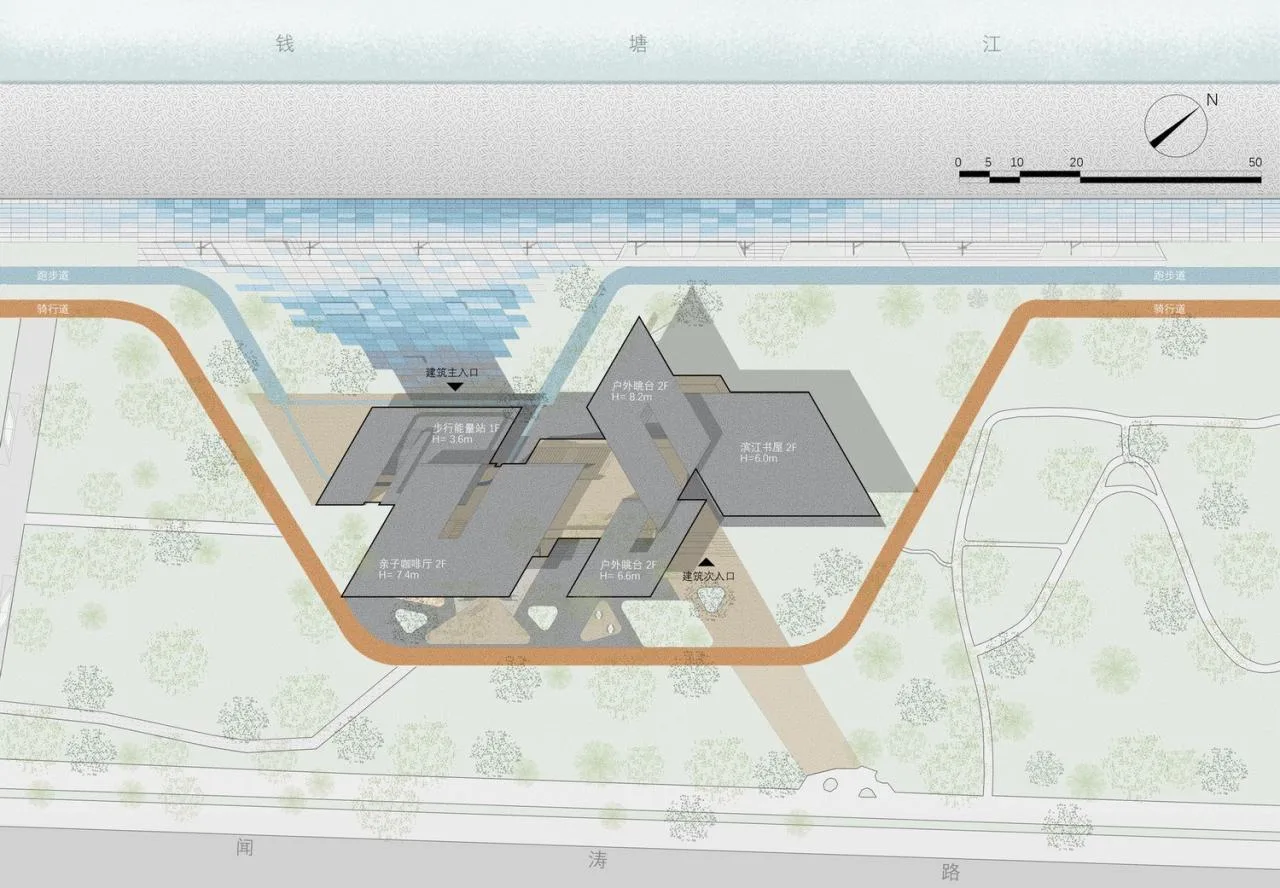
△ General layout plan
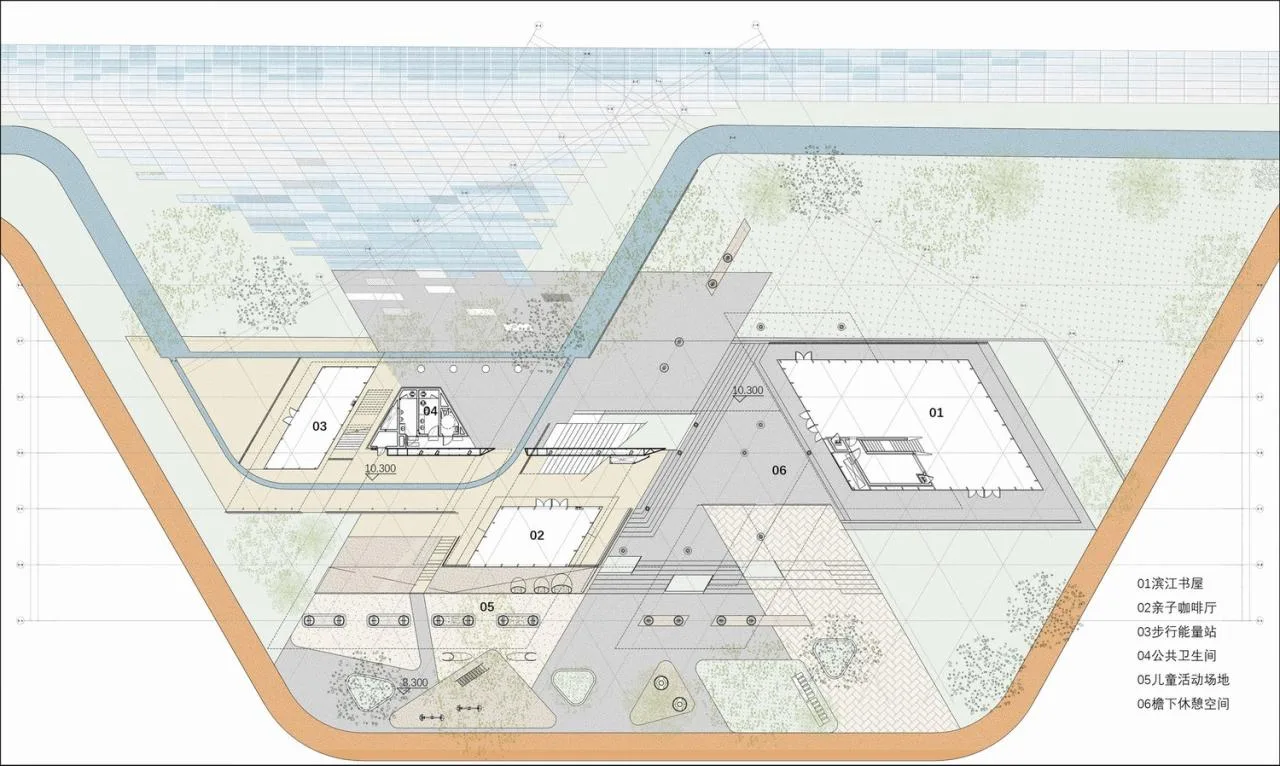
△ Plan view
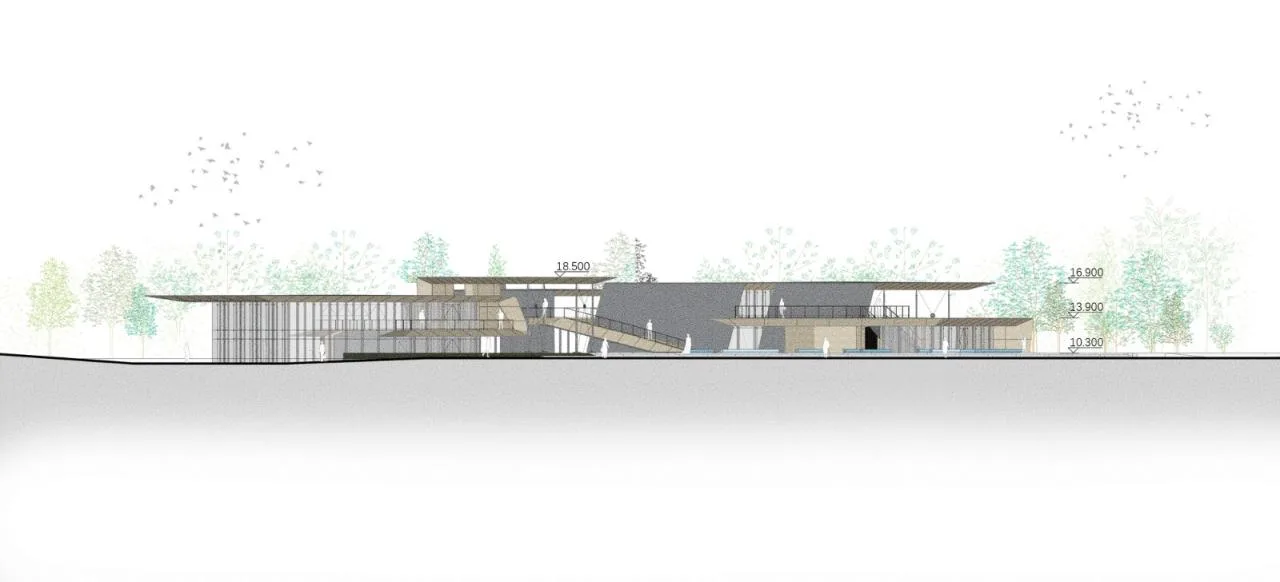
△ Elevation drawing
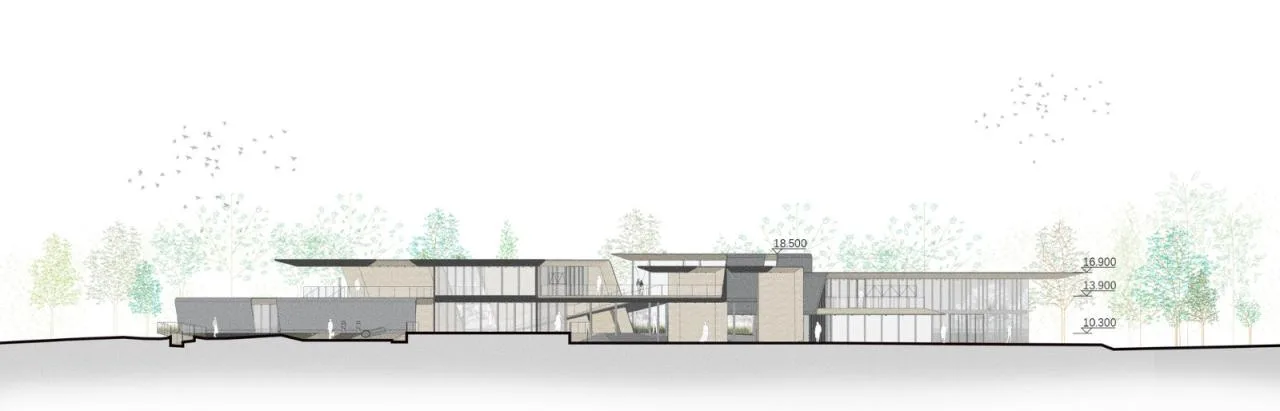
△ Elevation drawing
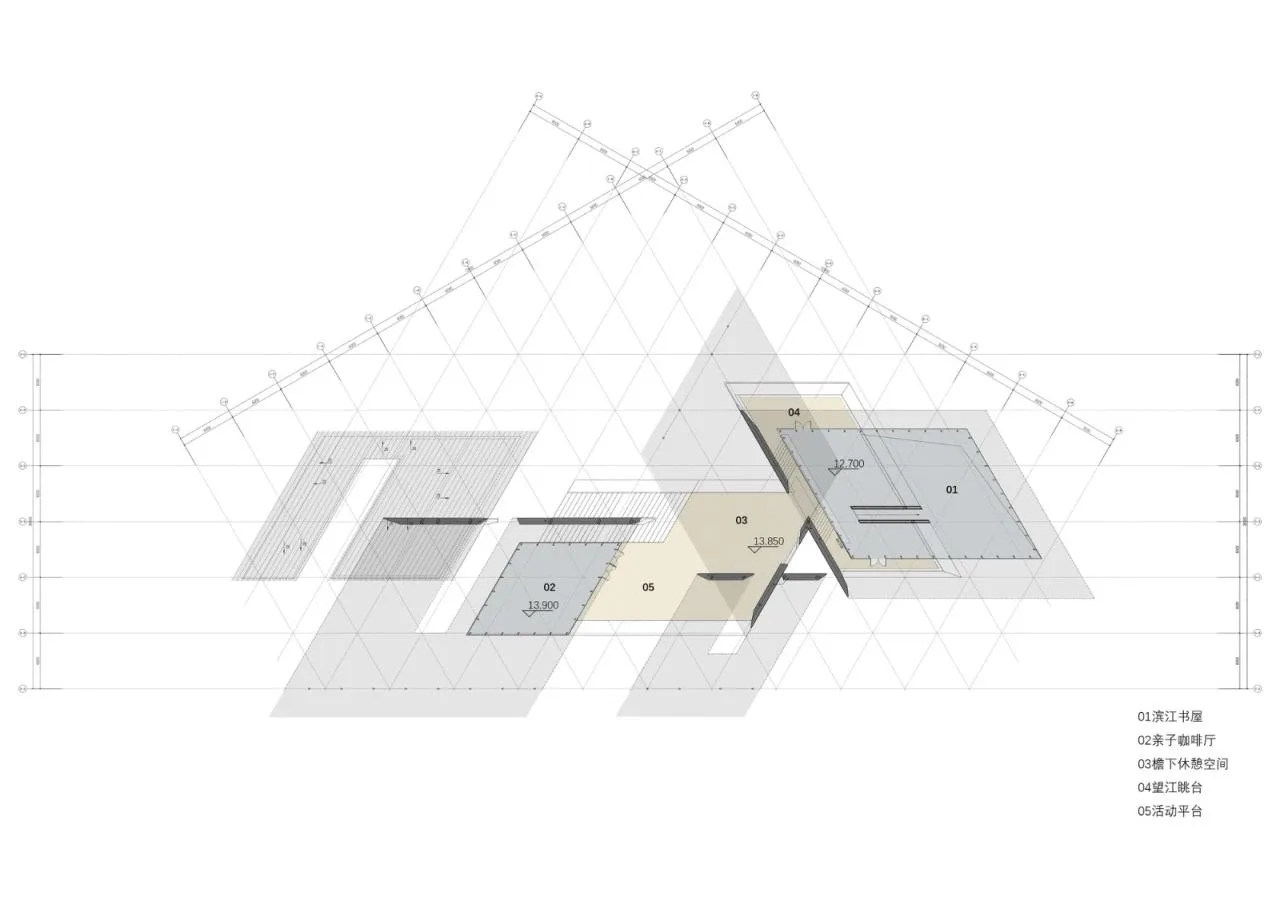
△ Analysis chart
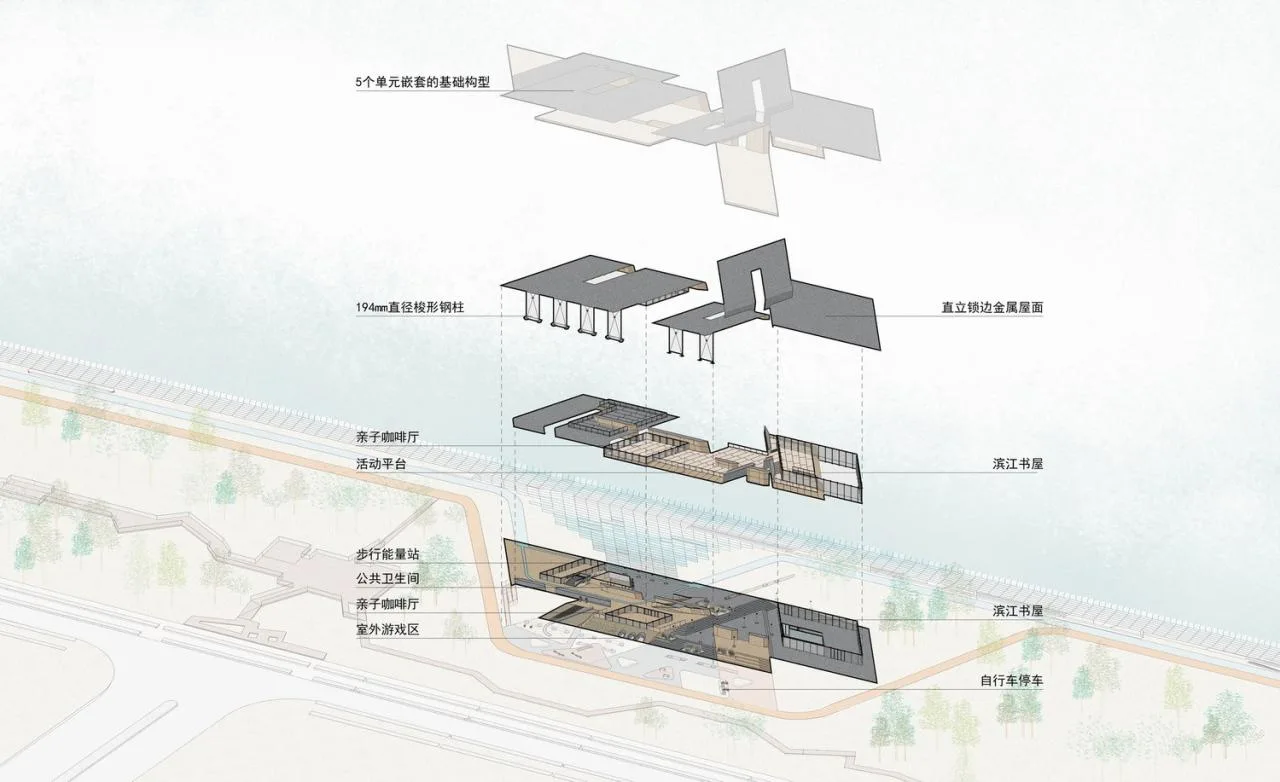
△ Exploded diagram
Project Information
Architect: Tongji Original Design Studio
Area: 1513 m²
Project Year: 2023
Photographer: Zhang Yong, Tongji Original Design Studio
Lead Architects: Zhang Ming, Zhang Zi, Chen Bo
BIM Design Team: Zhang Dongsheng, Wang Lingyu, Xuan Yi
Structural Design Team: Wu Honglei, Zheng Chaoyi, Duan Xuanmeng, Lin Chen
Equipment Design Team: Liu Jian, Jia Min, Zhang Sien, Lv Zonghu, Wang Haidong, Zhang Yujie, Li Yujie, Cai Ting
Landscape Design Team: Li Xiubing, Zhong Yong, Luo Jian, Su Jinghua, Liu Yuke
Lighting Design Team: Yang Xiu, Bian Chen, Du Yiting, Ge Xueting
Technical and Economic Team: Pang Xiaolin, Zhou Lingjun, Zang Junlong, Chen Xinyun, Tong Zhou, Ge Yuwei, Zhang Chunxia, Cao Yexin
Green Building Team: Ren Guohui, Xue Fanghui, Zheng Xiaowei, Meng Fanlin
Client: Hangzhou Binjiang Environmental Development Co., Ltd
Construction Team: Hangzhou Xiaohong Construction Environment Group Co., Ltd
Supervision Team: Hangzhou Tianheng Investment Construction Management Co., Ltd
Collaborator: Zhejiang Institute of Technology Architectural Design and Research Co., Ltd
Location: Hangzhou












Must log in before commenting!
Sign Up