
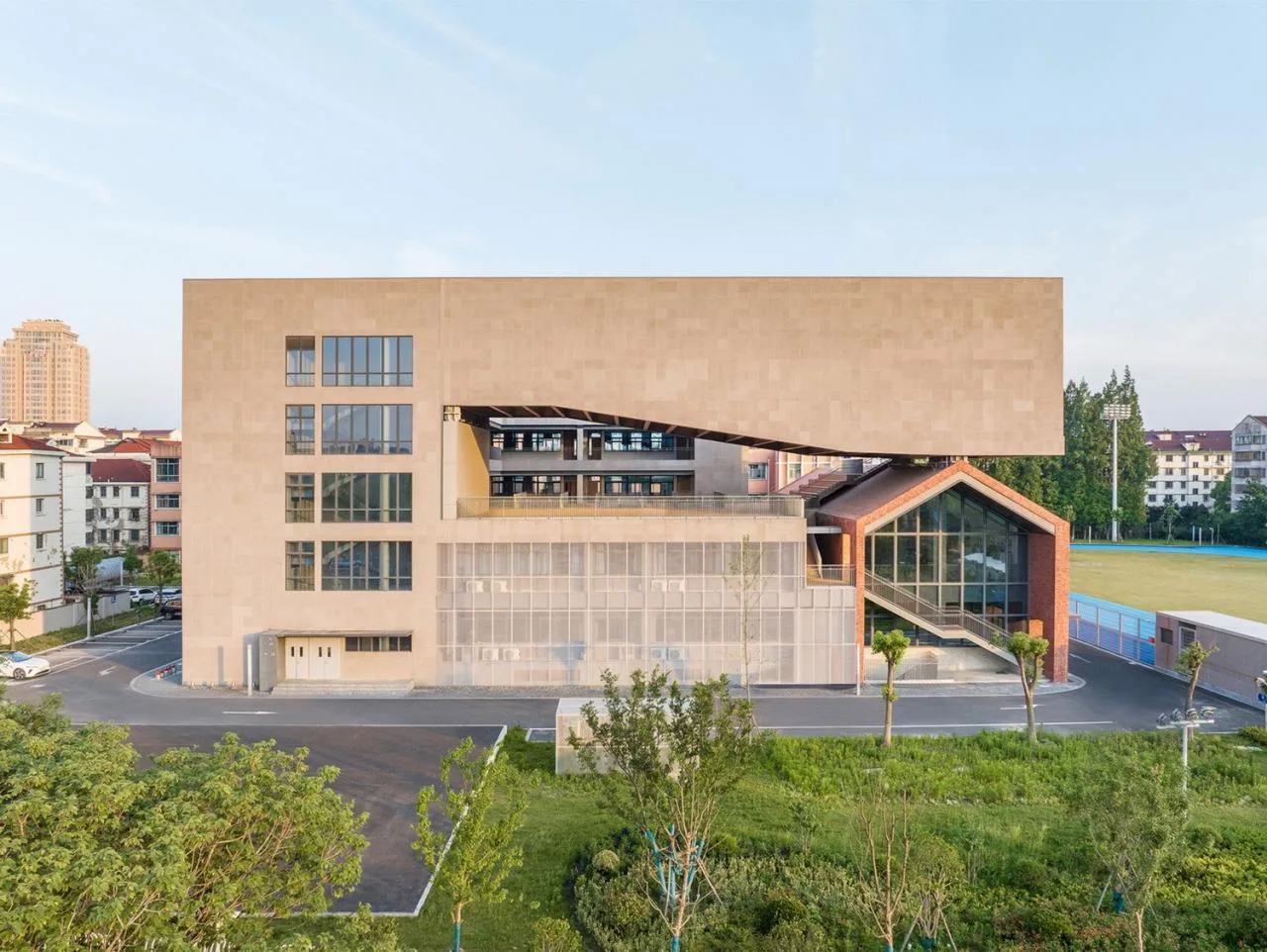
The Nanqiao Academy, renovated and designed by Nansha Original Architectural Design Studio, represents a significant urban renewal initiative in Shanghai’s Fengxian District. This project encompasses a campus complex totaling 8,700 square meters, an on-campus sports field, and a riverside landscape. The main building was completed and became operational in 2021, followed by the sports field and riverside landscape in 2022.
Located in the town of Nanqiao, Fengxian, the area has a rich history dating back to the late Tang Dynasty when it emerged as a market town. The canal running through the town was excavated during the Southern Song Dynasty, and the historic architecture reflects nearly a millennium of transformation. From Song Dynasty streets and Ming Dynasty bridges to Qing Dynasty sauce gardens, early 20th-century garden residences, and the former Anti-Japanese War Command Headquarters (once a Catholic priest’s building), Nanqiao preserves unique historical memories across eras.
With the town’s expansion and modernization, many historical landmarks have gradually disappeared amid new streets and residential developments. Urban renewal here goes beyond merely removing historical elements; it restructures and reorganizes the relationship between streets, canals, buildings, and public facilities, while infusing new functions and vitality into the community.
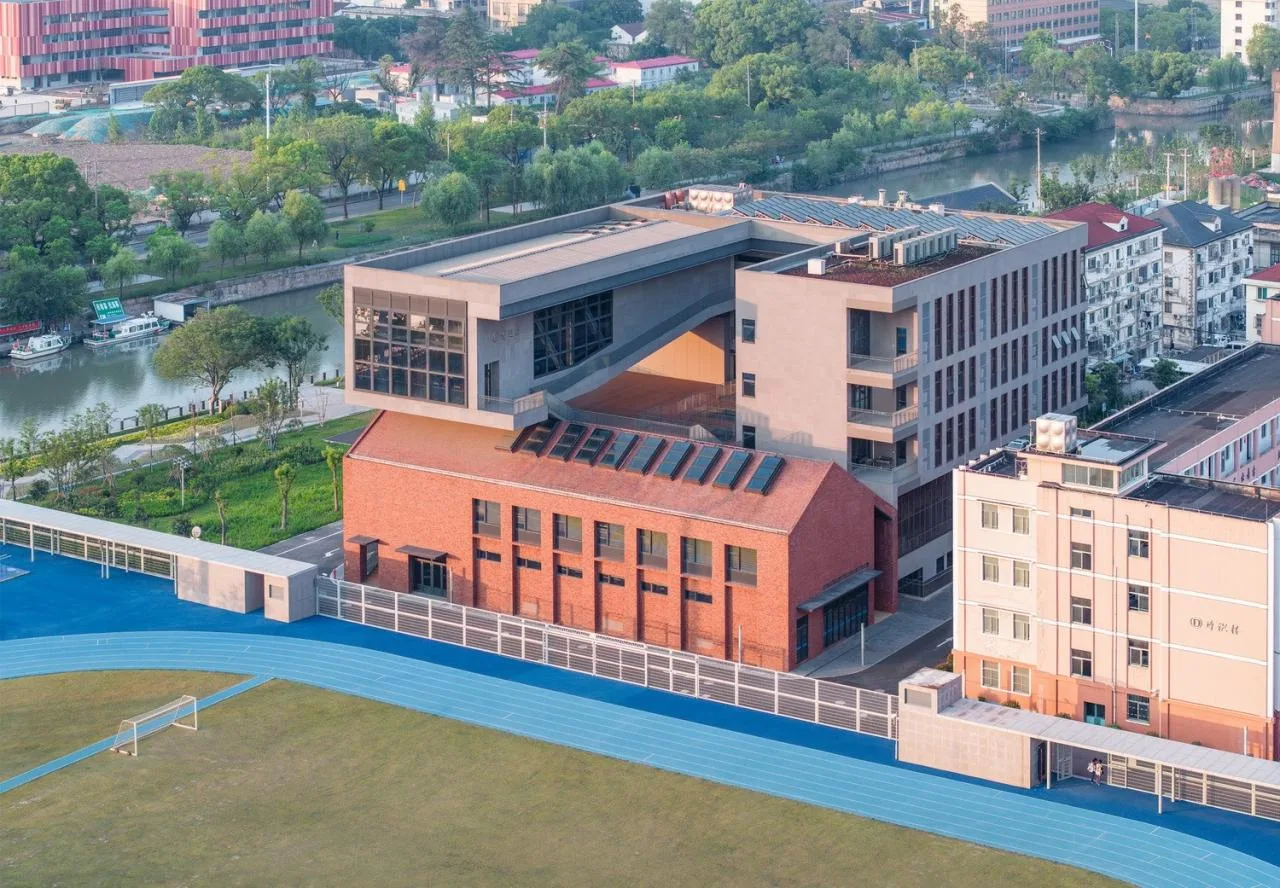
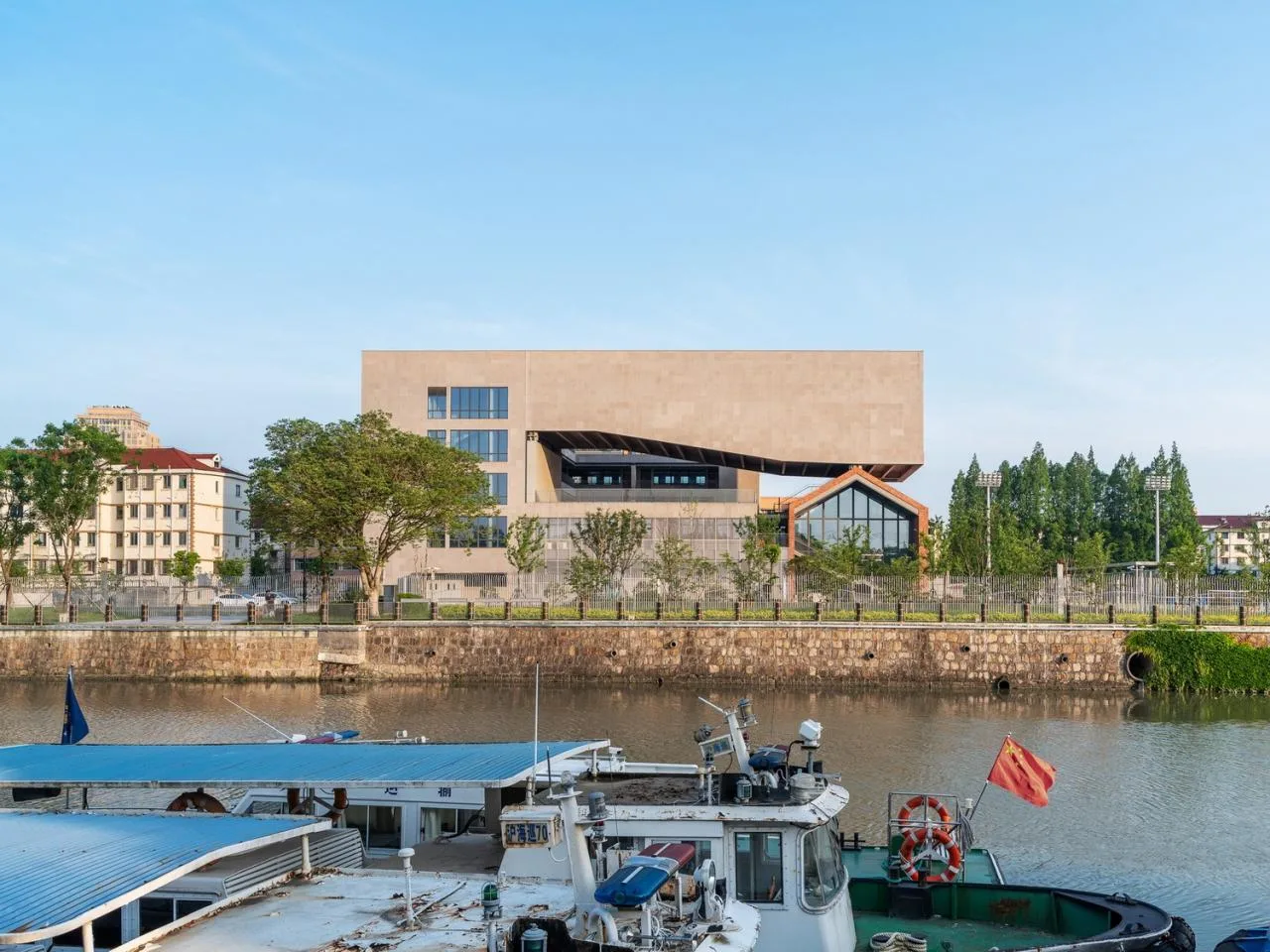
The renovated Nanqiao Academy Comprehensive Building integrates school district and community functions through a “building blocks” stacking technique. Prototype spaces such as libraries, lecture halls, theaters, cafeterias, laboratories, art rooms, and music classrooms—previously scattered across the site—are now pieced together into a cohesive “space cube,” creating a series of innovative and engaging environments.
This distinctive spatial arrangement inspires students’ creativity and curiosity. The interwoven spaces reflect shadows of various historical periods, blending indoor and outdoor elements of Nanqiao Town. The design embraces both diversity and modernity while honoring the town’s rich heritage.
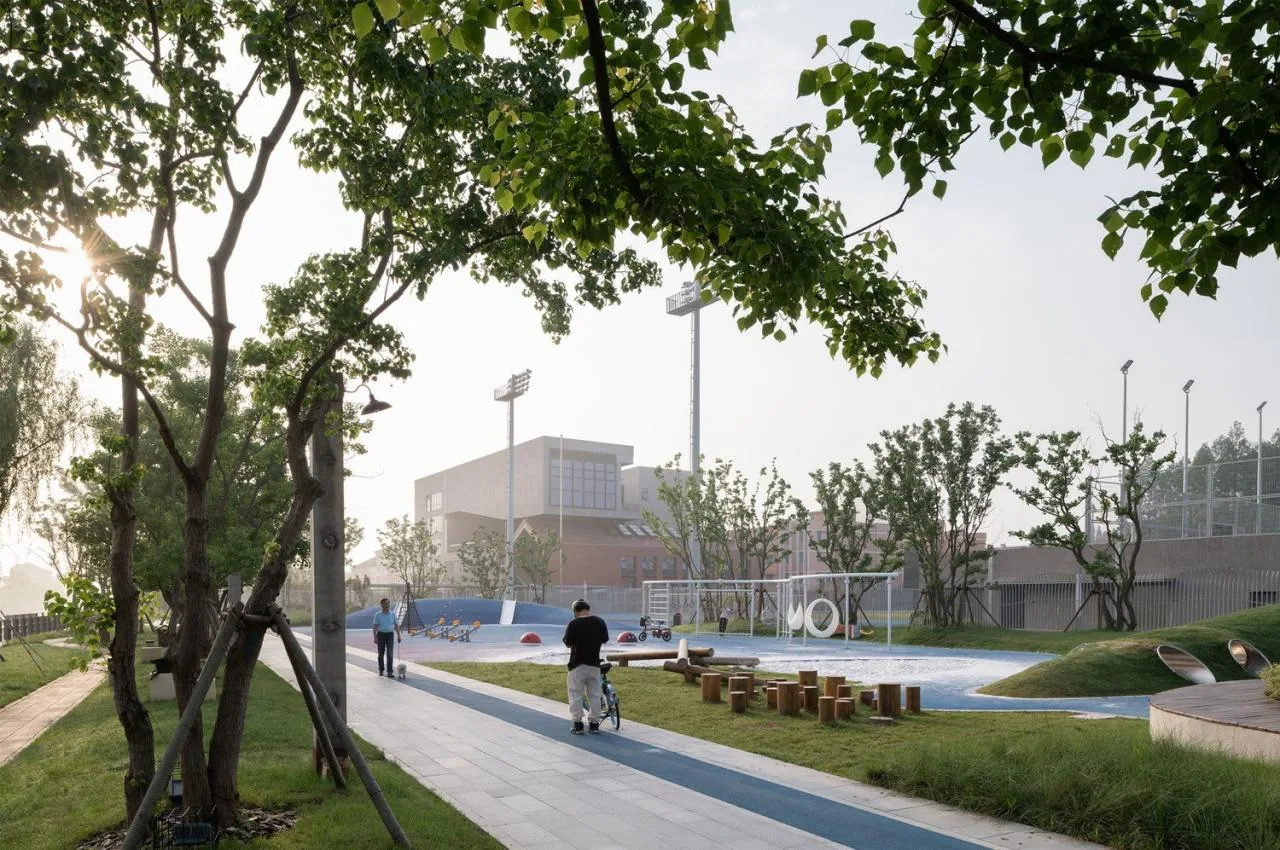
Founded in 1978, Nanqiao Academy has relocated twice. Over a century ago, the site was once home to a church school. The original campus had its facilities dispersed independently. Now, with the addition of the canal waterfront landscape, the design concentrates all essential functions within a limited footprint, optimizing school operations and traffic flow while freeing up public space and ensuring the riverside area is accessible to the community.
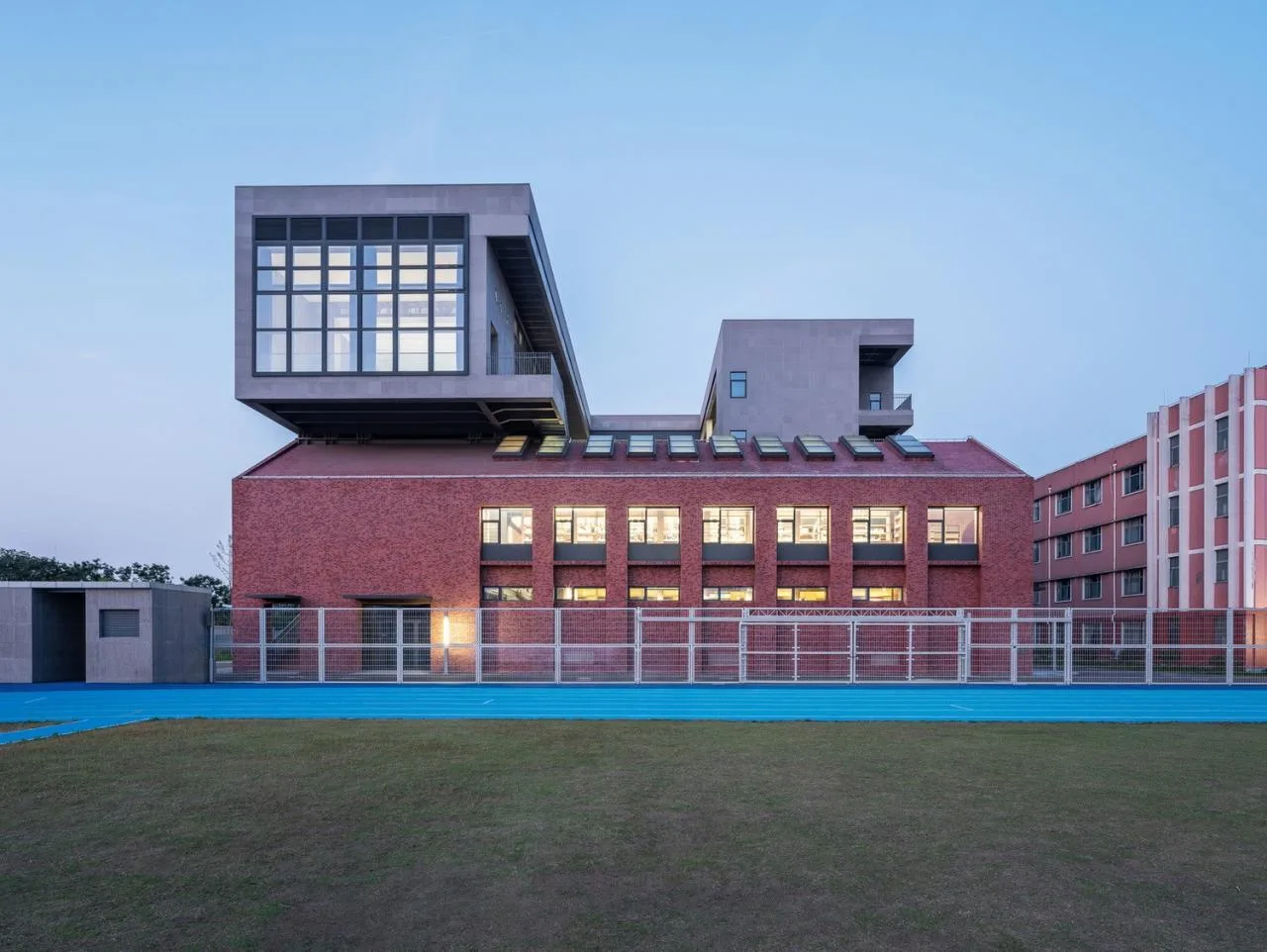
Integrating diverse spaces within a compact footprint was a challenging high-density experiment. To avoid bulky, isolated structures, Nansha Original used a stacked prototype approach. They outlined a five-story above-ground and one underground floor building volume based on the existing experimental building and library footprints.
Art teaching areas, lecture halls, small theaters, and dining facilities were sequentially stacked, then broken into smaller segments. By leveraging the open canal landscape and employing varied, non-repetitive spatial designs, the architects minimized the perceived mass and density. This approach also reorganized visual connections between functional spaces and the canal, fostering openness.
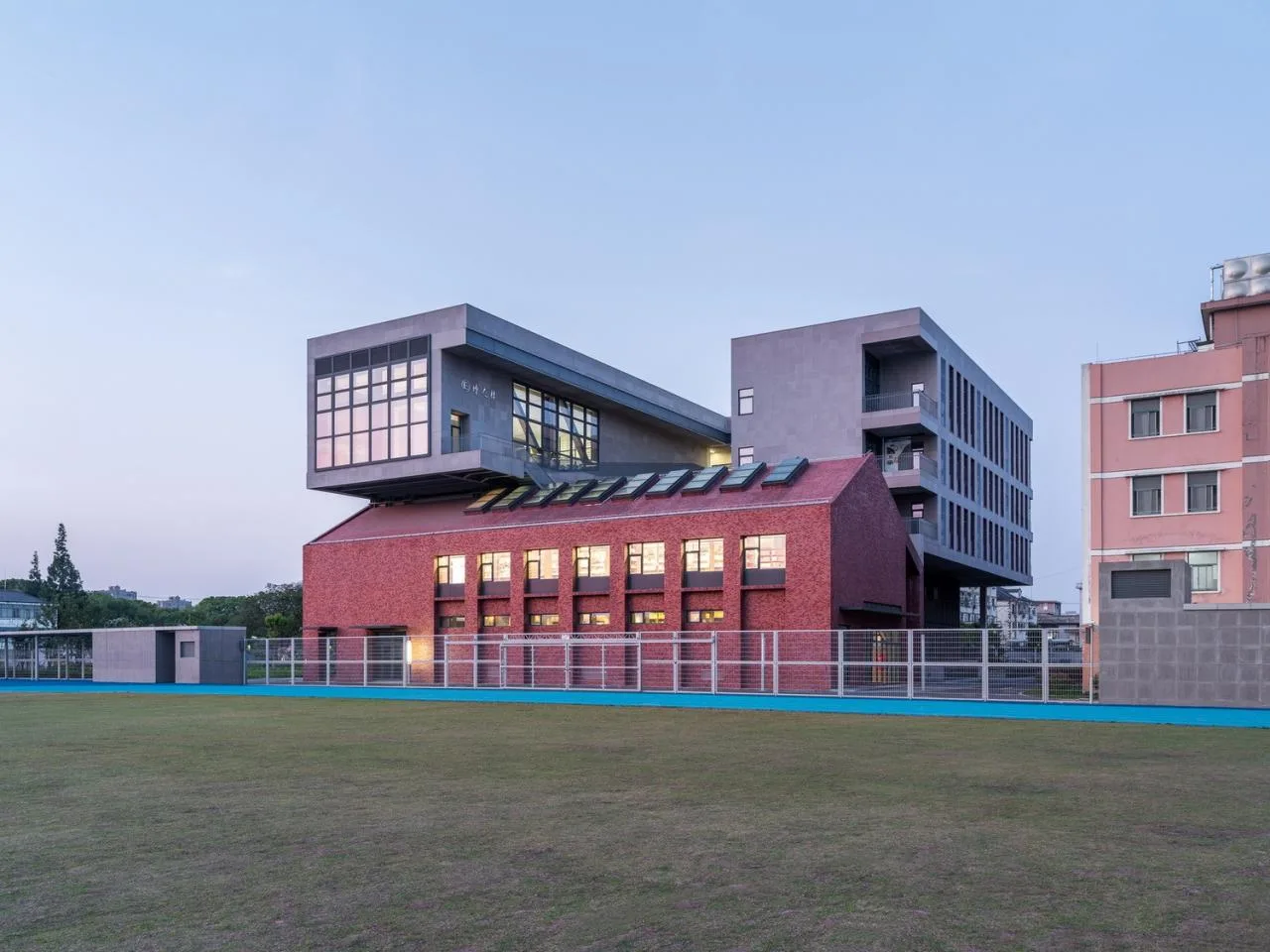
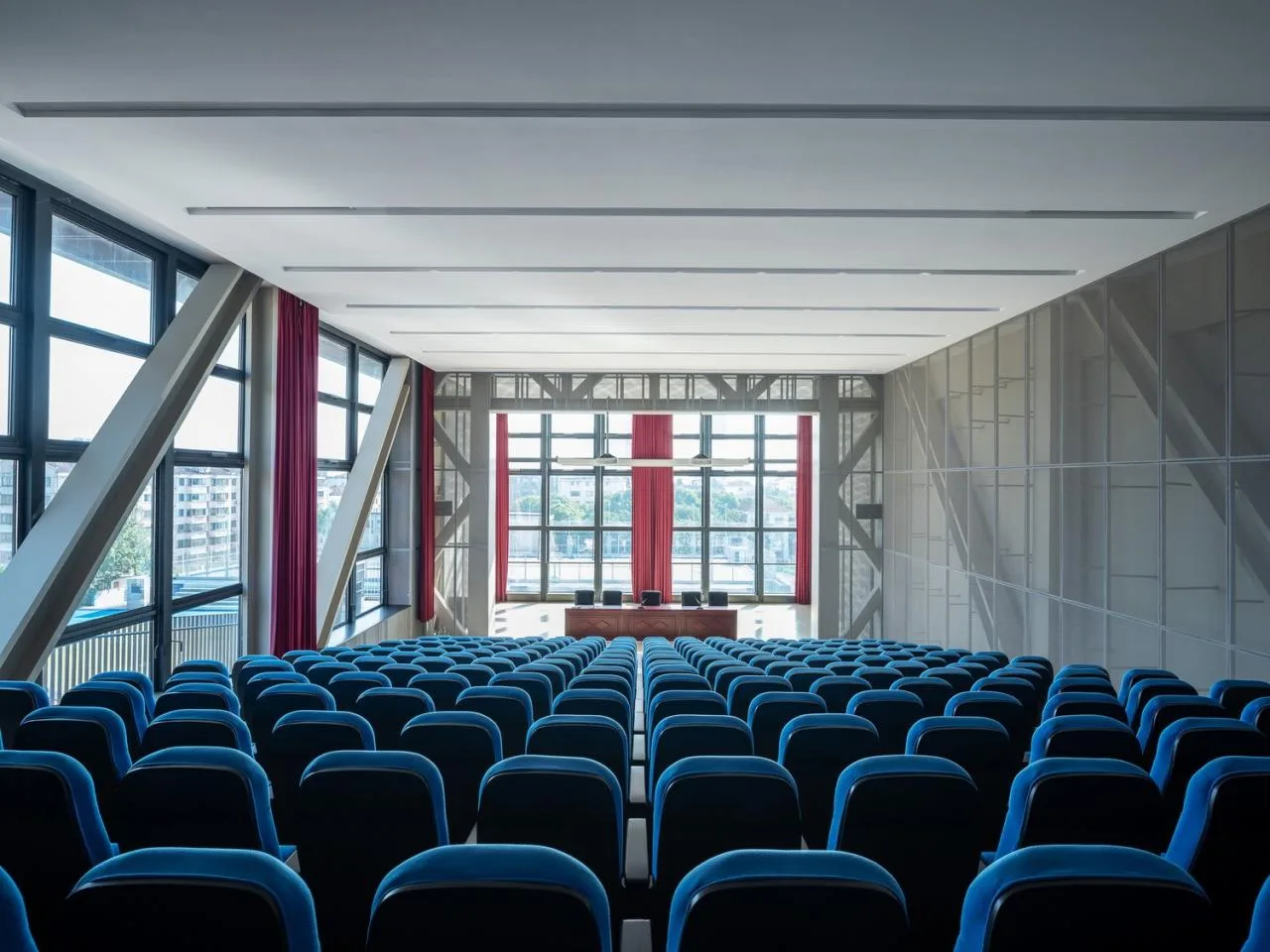
The core design concept emphasizes harmonious coexistence between individuality and the whole, independence and interdependence. A large steel-structured staircase classroom gracefully rests atop the library’s spire, with a glass façade facing the playground. Connecting the library roof and staircase classroom was the project’s greatest technical challenge.
To maximize internal space openness, a bridge construction technique was employed, lifting the staircase classroom at the rear with the library’s spire supporting it. The structure resembles a dancer on tiptoe, leaning forward to overlook students below.
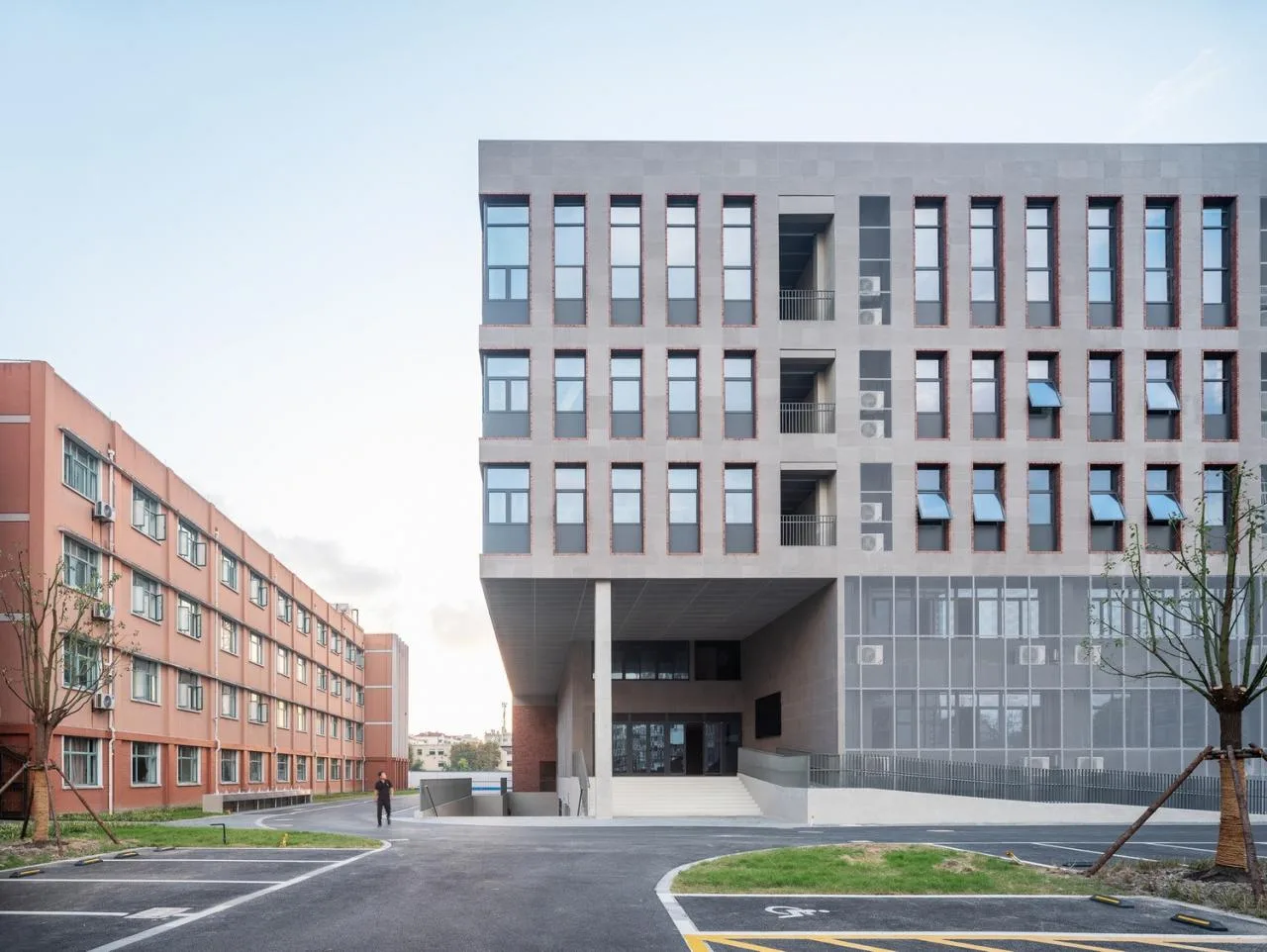
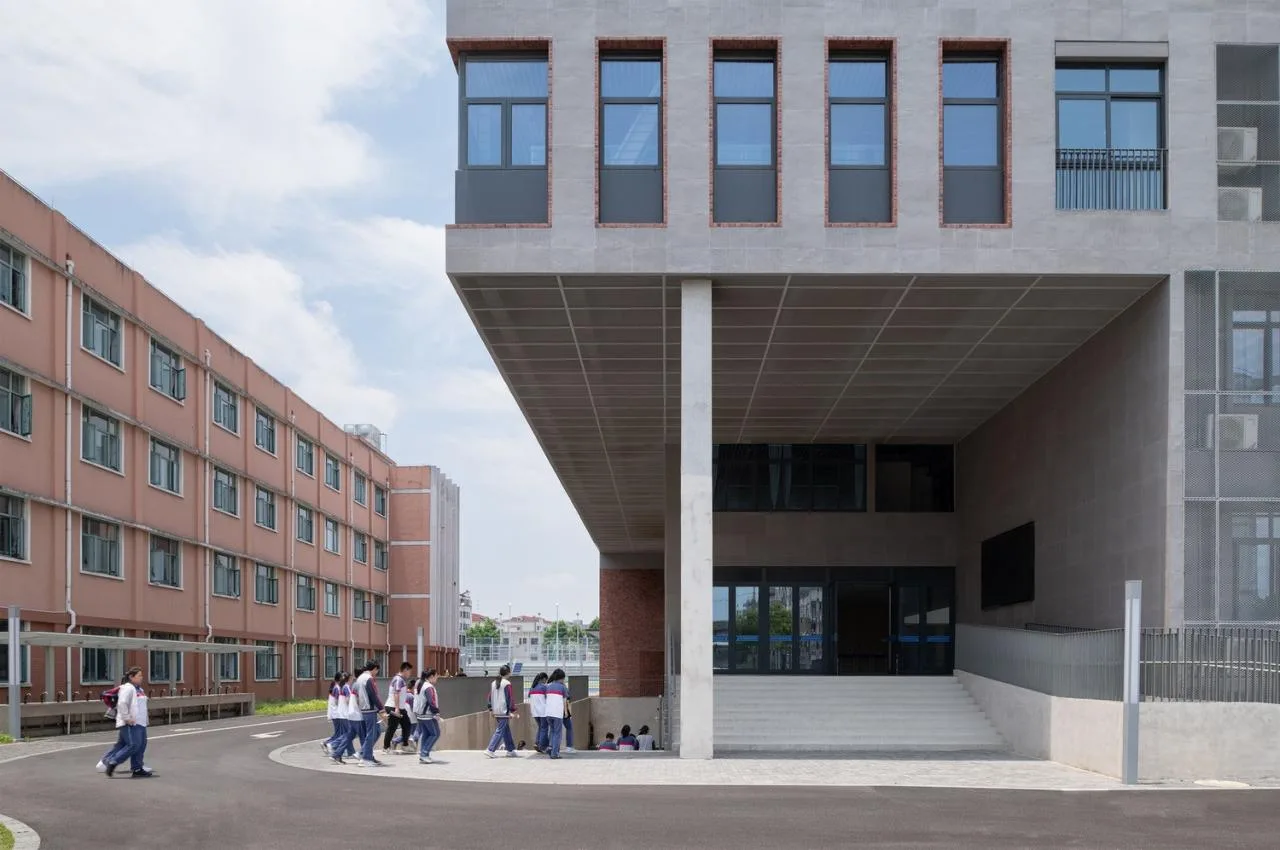
Public outdoor space, traditionally on the ground floor, has been relocated to the third-floor roof of the art teaching building. This expansive rooftop terrace offers panoramic views and a rich, layered experience for students during breaks.
Below the staircase classroom, a semi-outdoor sheltered playground opens toward the canal, creating scenic vistas. The library roof slopes inward like a stepped staircase, providing diverse outdoor spaces for social interaction. Elevated flooring conceals drainage and equipment, ensuring the rooftop remains open and accessible.
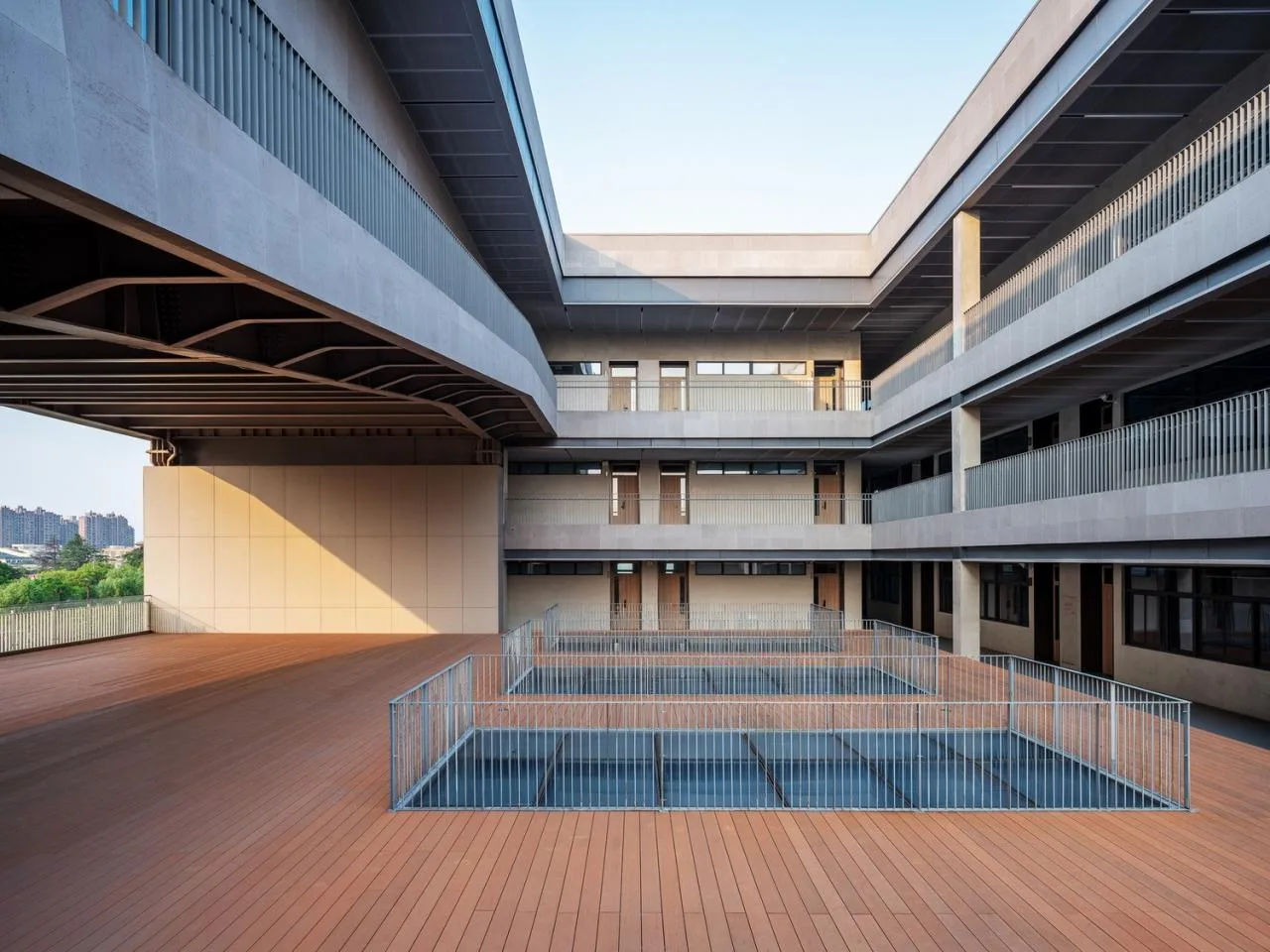
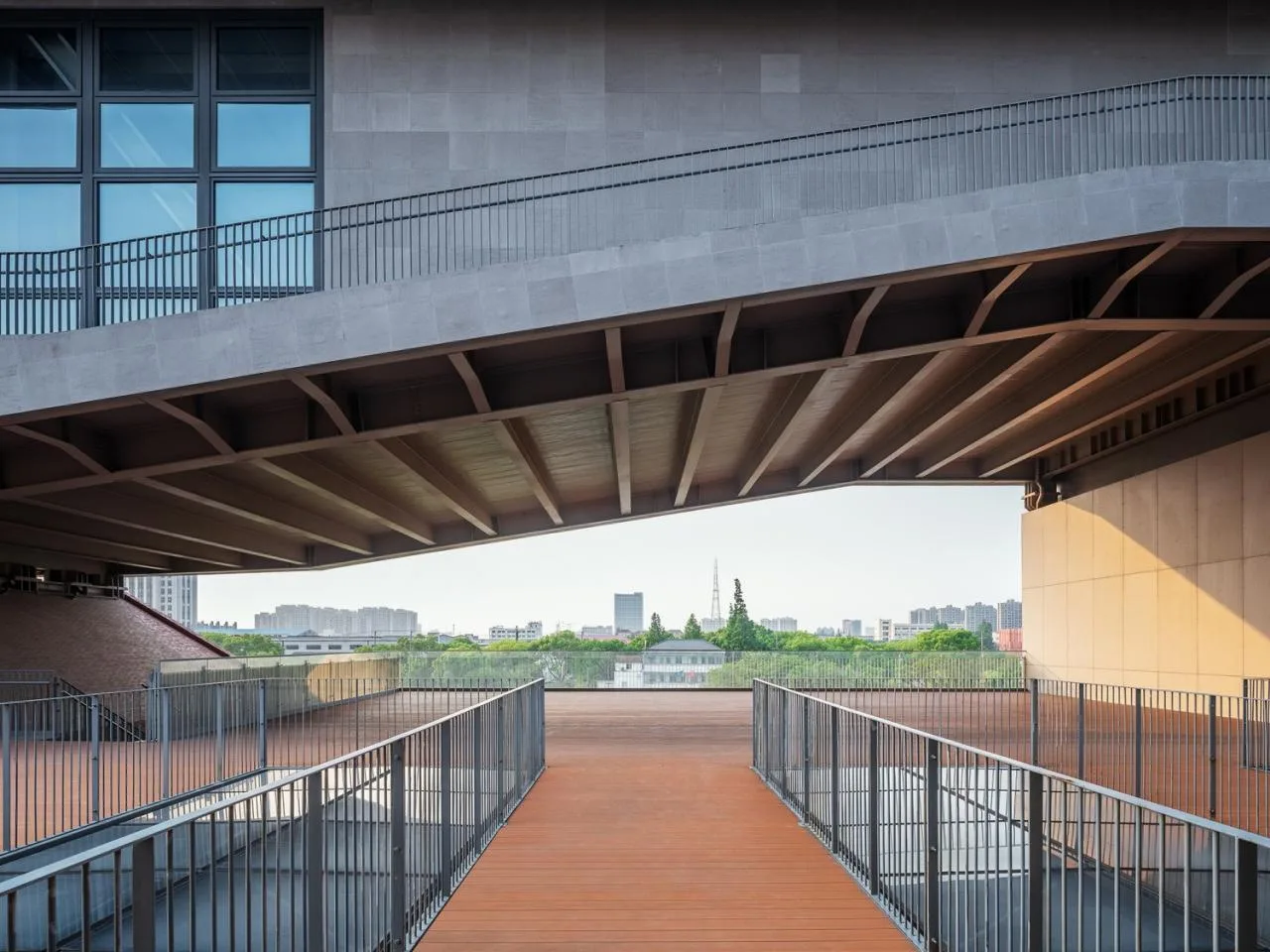
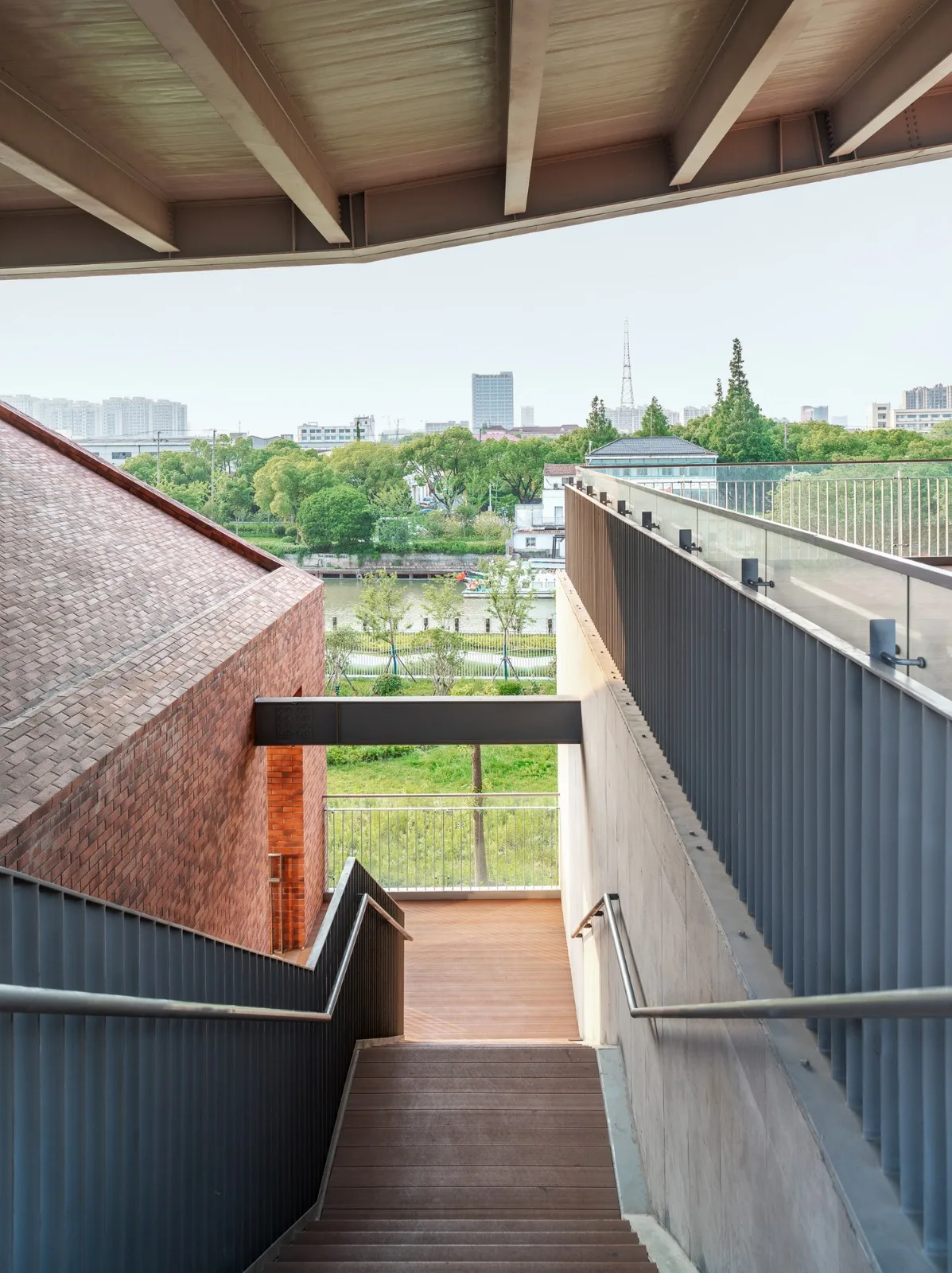
The site is bordered by the canal riverside belt to the north, the school playground to the west, and scenic views to the northwest. The comprehensive building is designed with openness toward both directions, featuring window sashes that seamlessly integrate indoor and outdoor spaces.
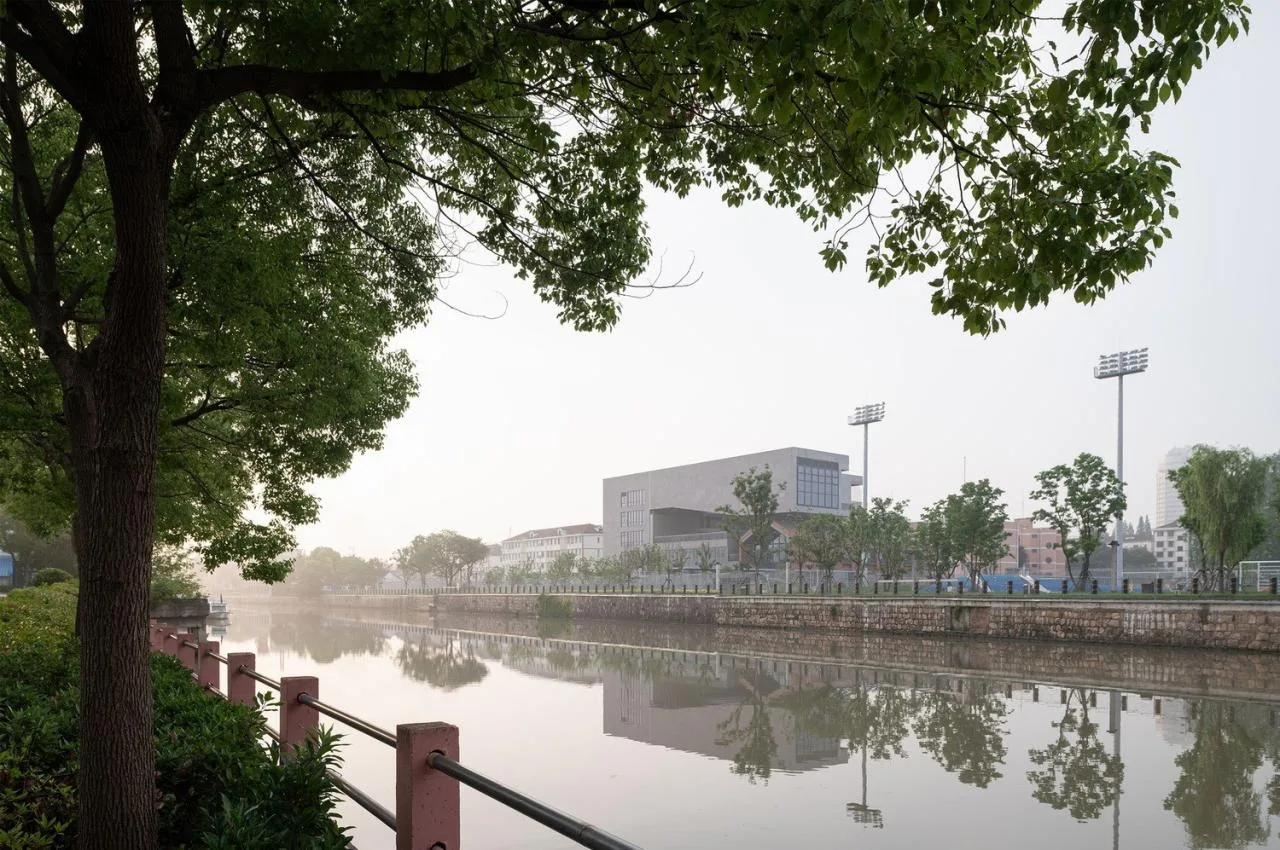
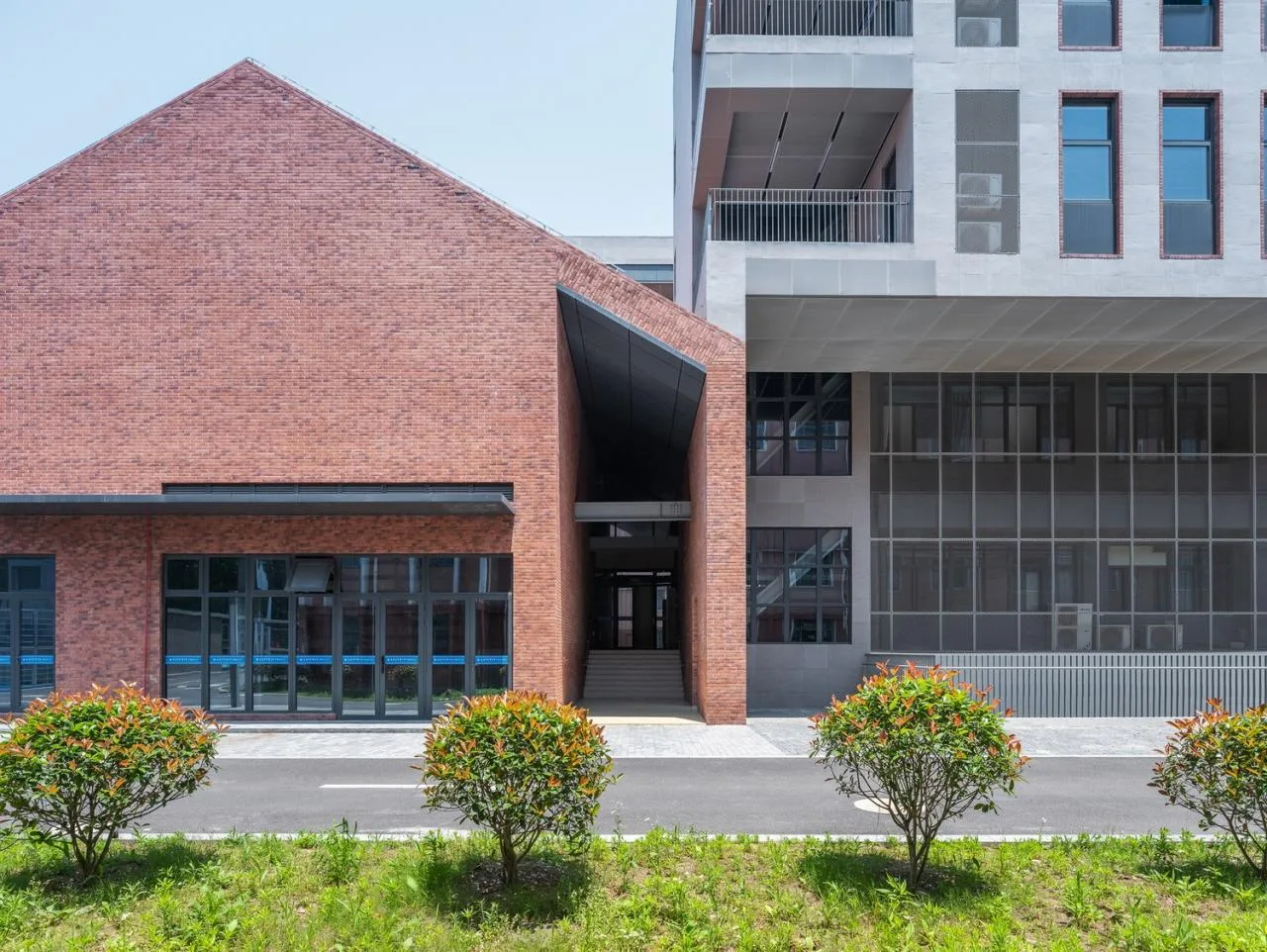
The collage prototype concept extends to the choice of curtain wall and interior materials. After studying the historical architectural styles nearby, the designers selected two main materials: red brick and soft porcelain with a concrete texture.
The primary concrete subtly complements the existing environment. The library, positioned centrally, features a red brick façade and sloped roof, echoing the school’s historical style and blending harmoniously with the surrounding textures. The irregular verticality of the western façade combined with window placements creates a rhythmic effect.
The red brick extends from the exterior window frames into the interior library space, enhanced by natural light, achieving a seamless integration between inside and outside.
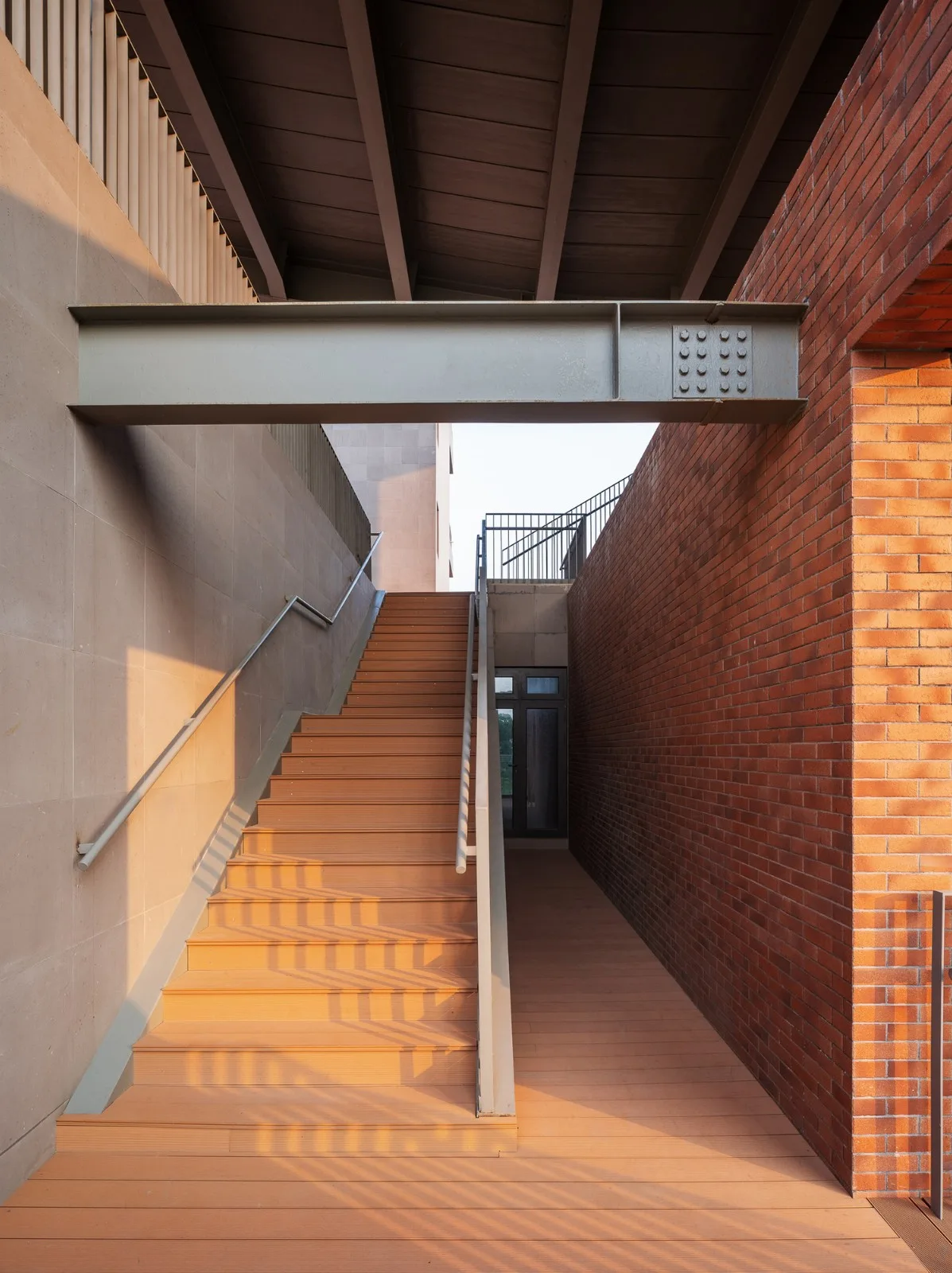
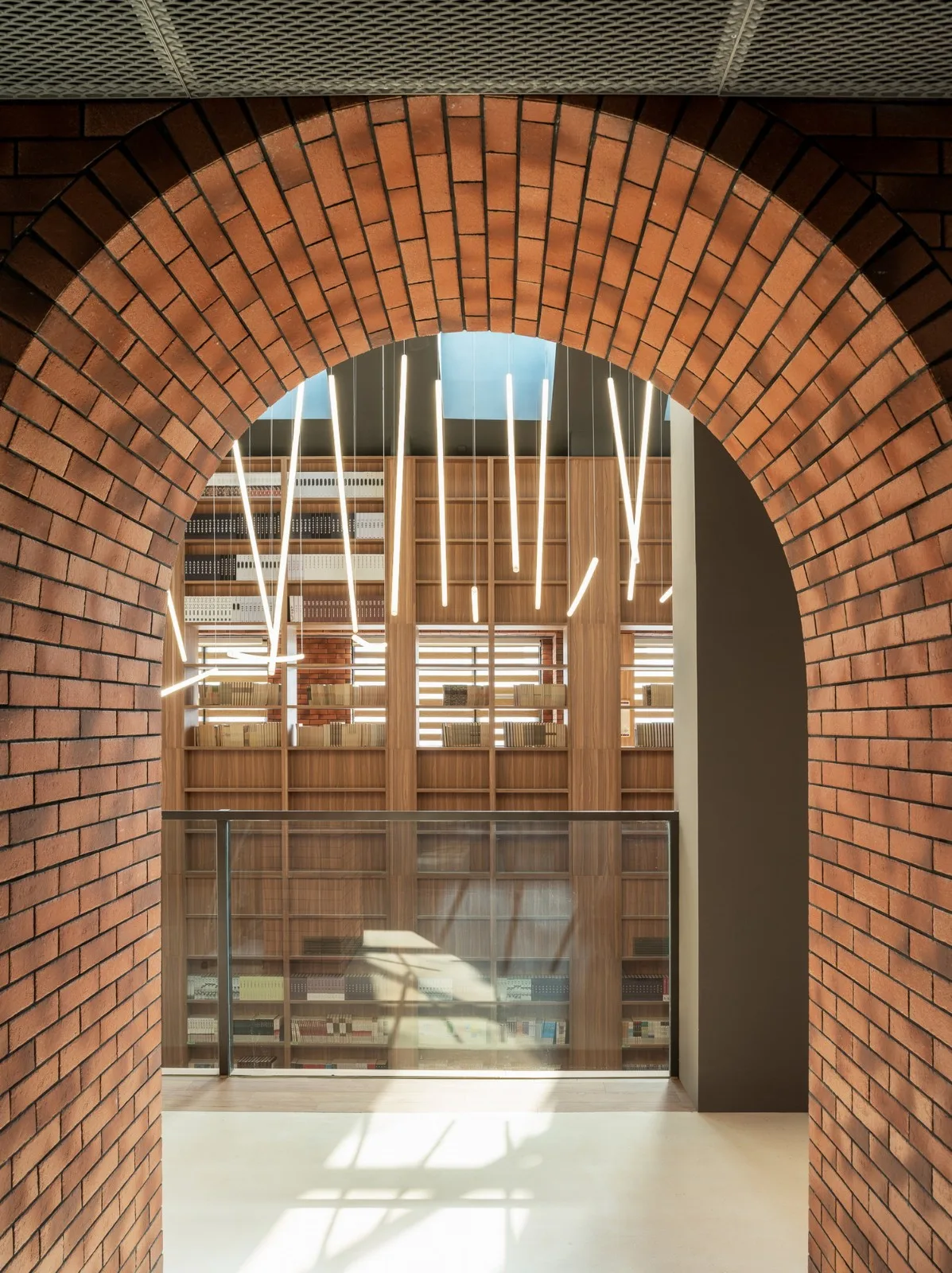
Interior design was also undertaken by Nansha Original. Different spaces were assigned materials with distinct “emotions”—including floral patterned bricks, wood veneers, and plain concrete walls—creating a collage that gives each area its own character. This approach allows users to experience varying moods throughout the day, enriching their personal connection to the space.
A striking lighting installation in the library atrium uses light strips arranged into a rotating three-sided triangle, forming a dynamic 3D shape that accentuates the atrium’s height and depth while serving as a visual centerpiece.
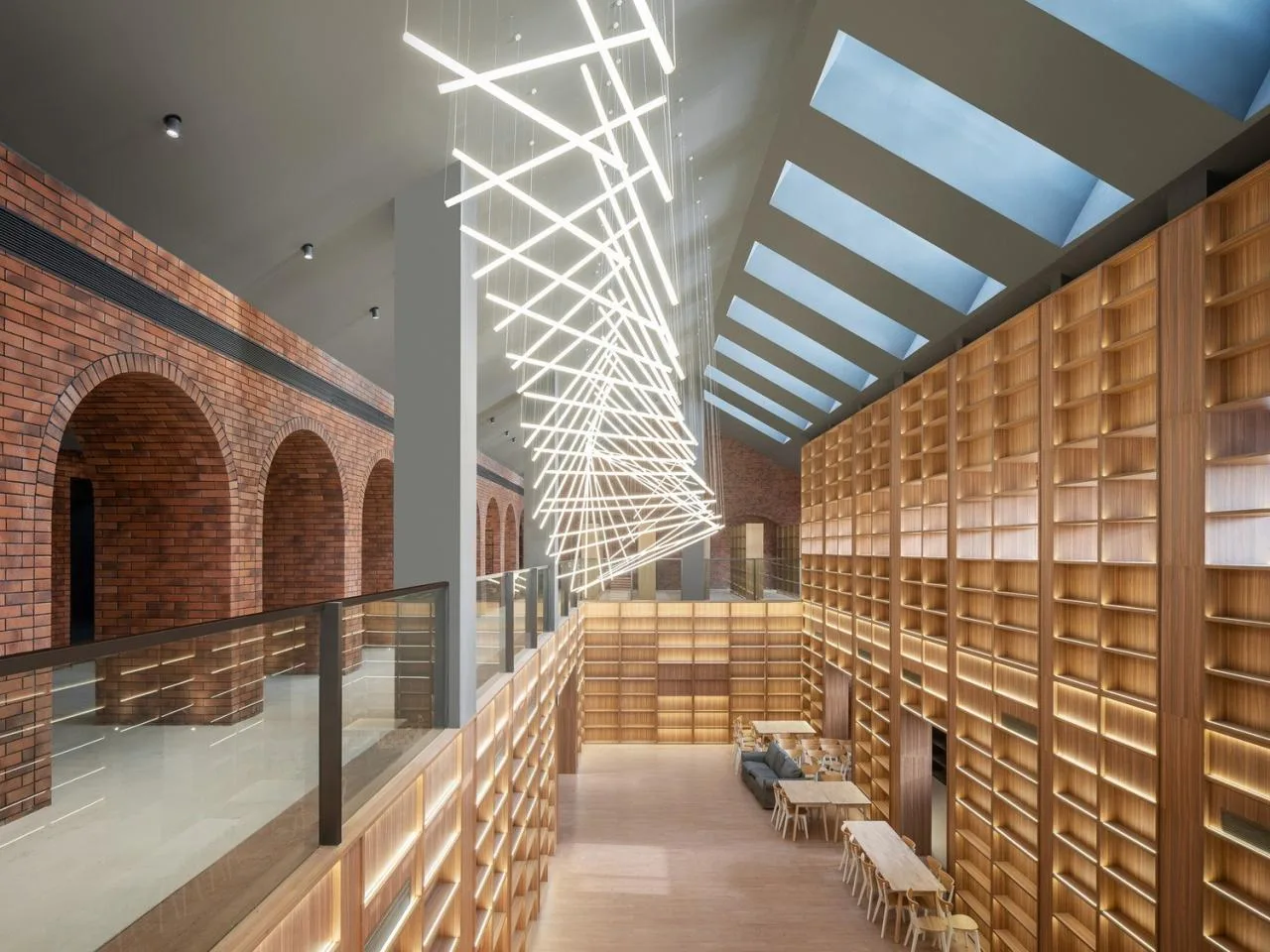
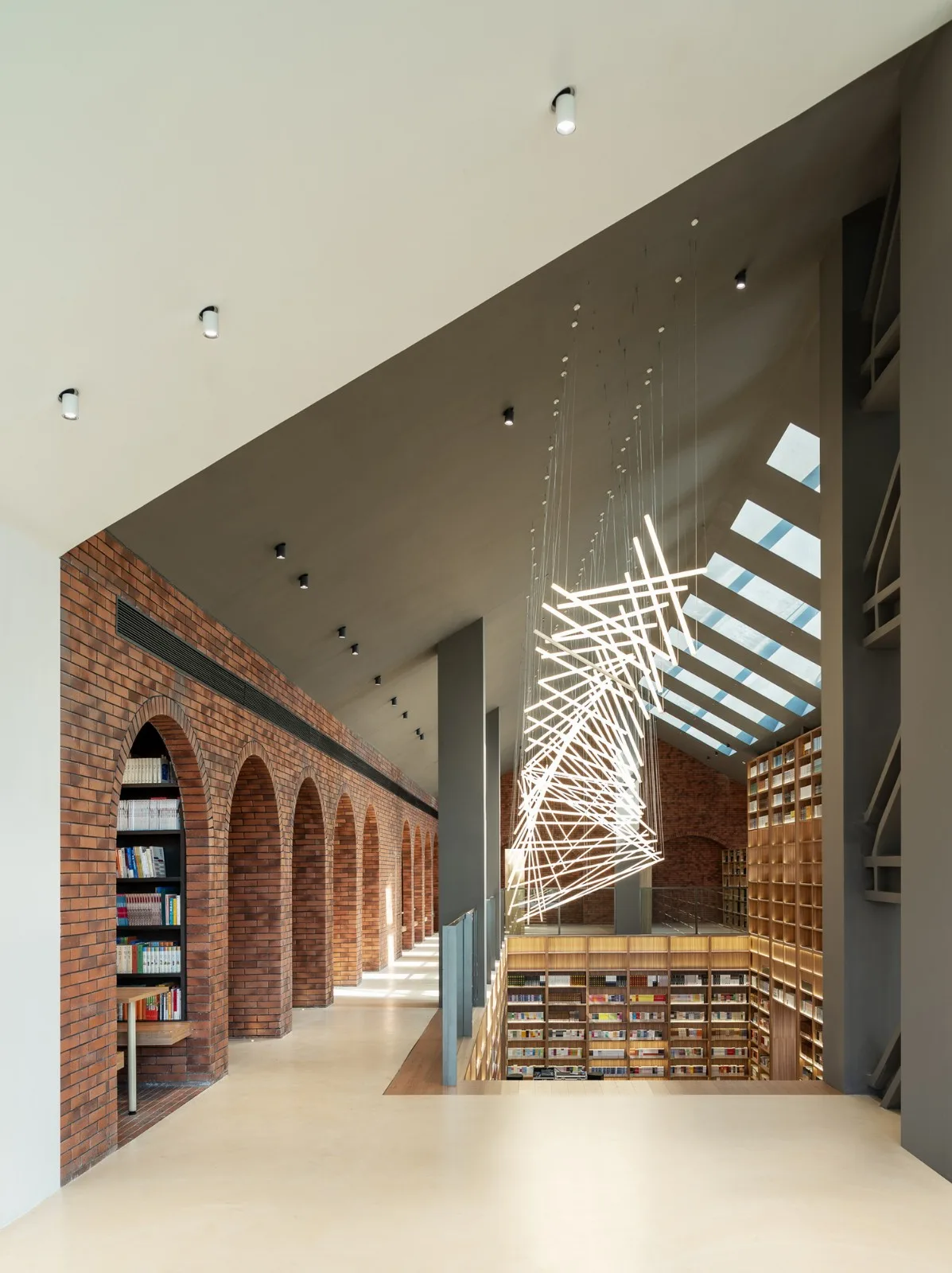
The atrium serves as a key spatial node, connecting the building’s multiple functions. Interior materials echo the exterior design, and the floors feature patterned tiles inspired by the Republic of China period, optimized in scale and color. Under the atrium’s soft skylight, visitors are transported through time.
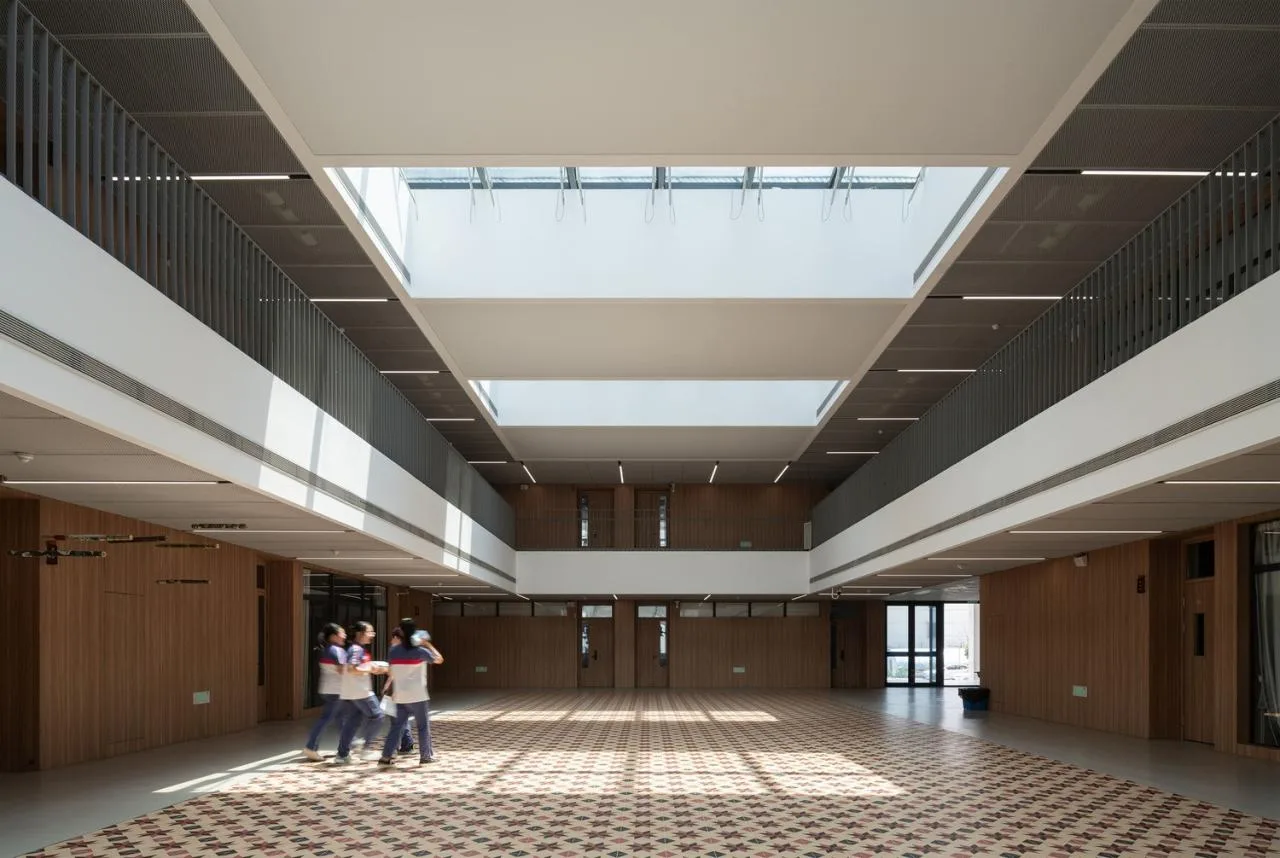
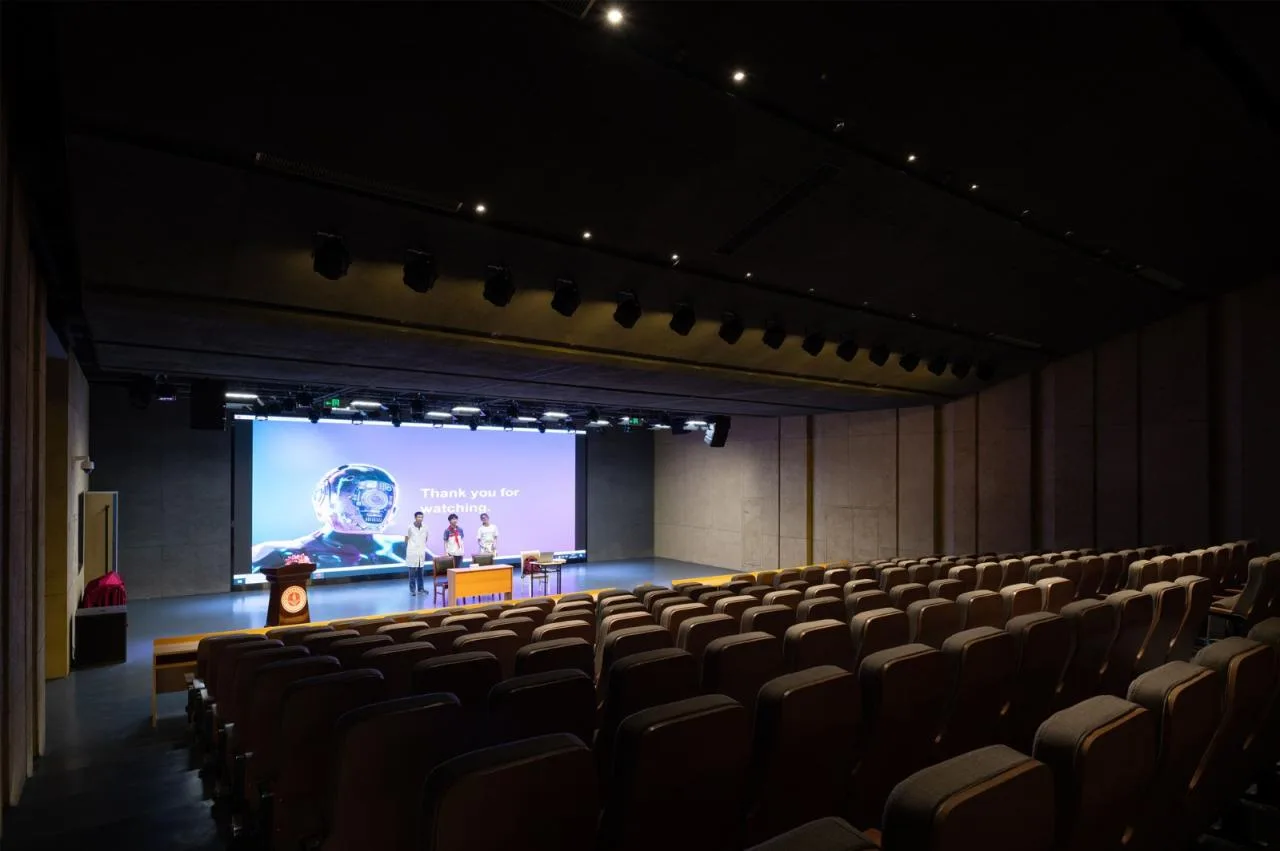
The theater, located in the basement, features two direct external entrances that eliminate typical underground space drawbacks, improving safety and evacuation efficiency. The cafeteria, connected to the theater’s east entrance via an open underground passage, enjoys abundant natural light. Its bright, open interior is decorated simply, with touches of yellow adding warmth and personality.
Nanqiao Academy’s renovation embodies a balance of history and modernity, weight and lightness, local roots and openness. The design breaks down the building into smaller parts and elevates heavy volumes, integrating organically with the historic cultural community. This pioneering approach fosters openness and diversity within the campus architecture.
Moreover, the design promotes shared community use while maintaining safety and independence. Future plans include shared use of the underground parking, gymnasium, and sports field with the community, linking the academy’s upgrade closely to the broader urban renewal of “Nanqiao Source.”
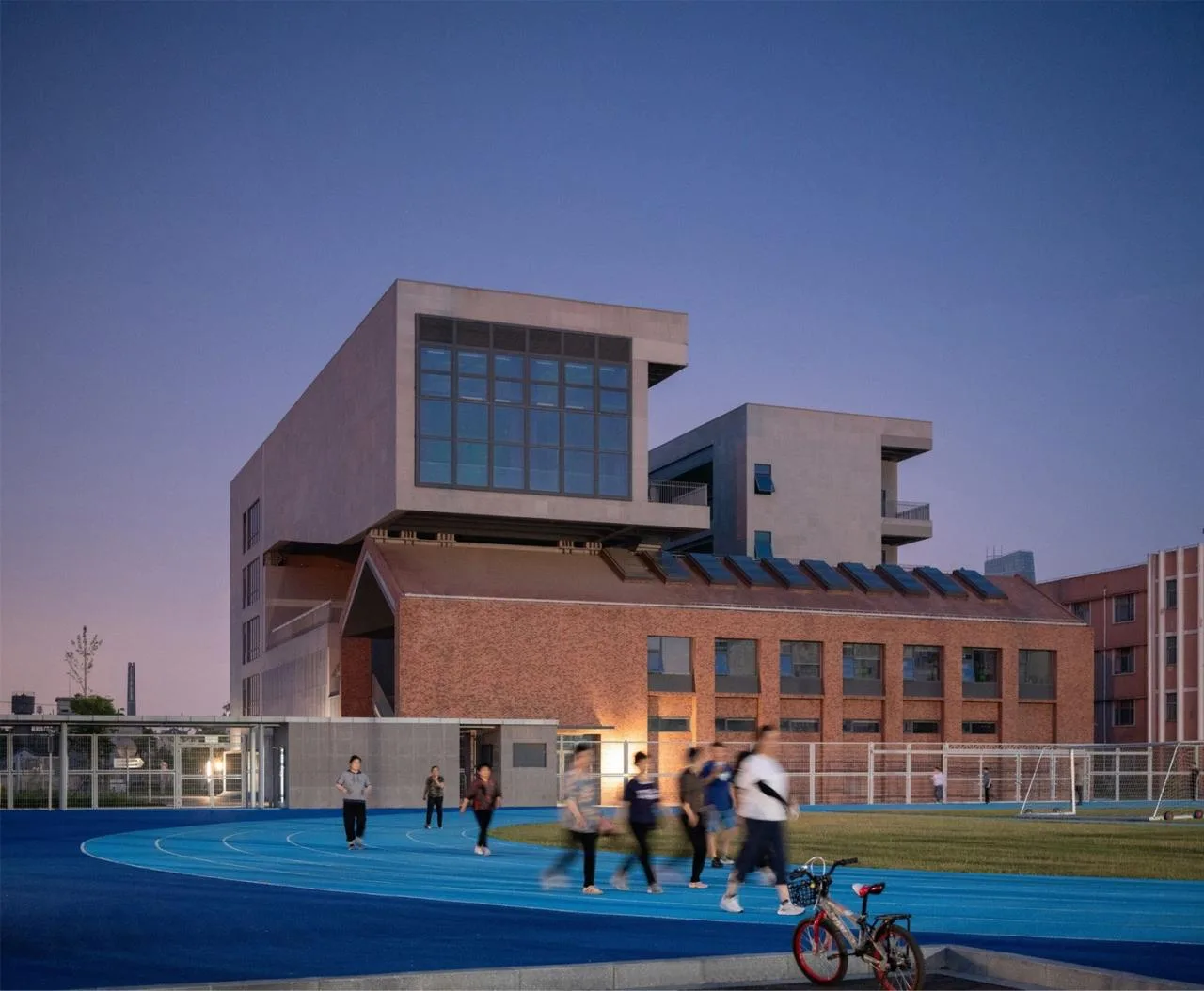
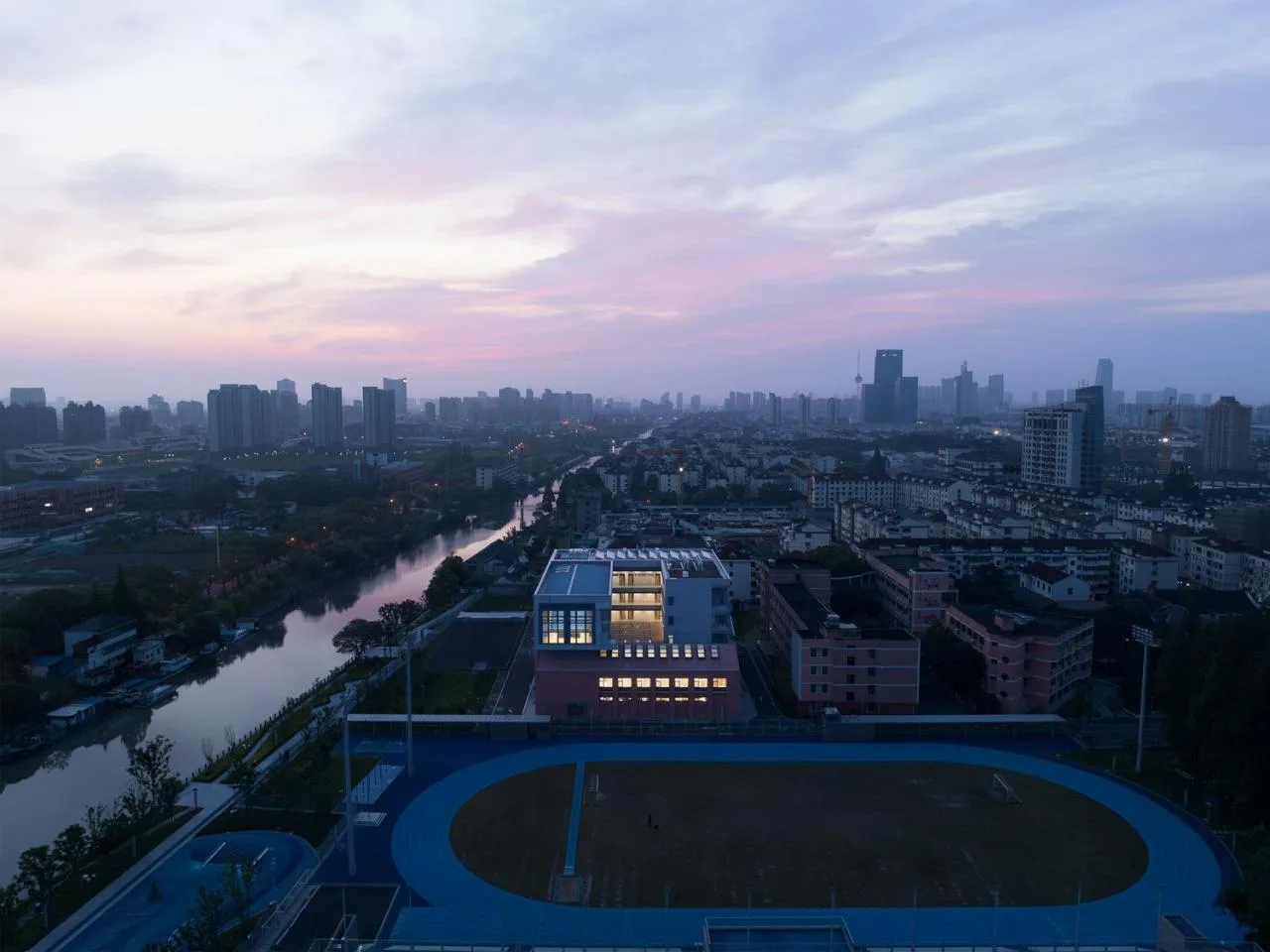
Project Drawings
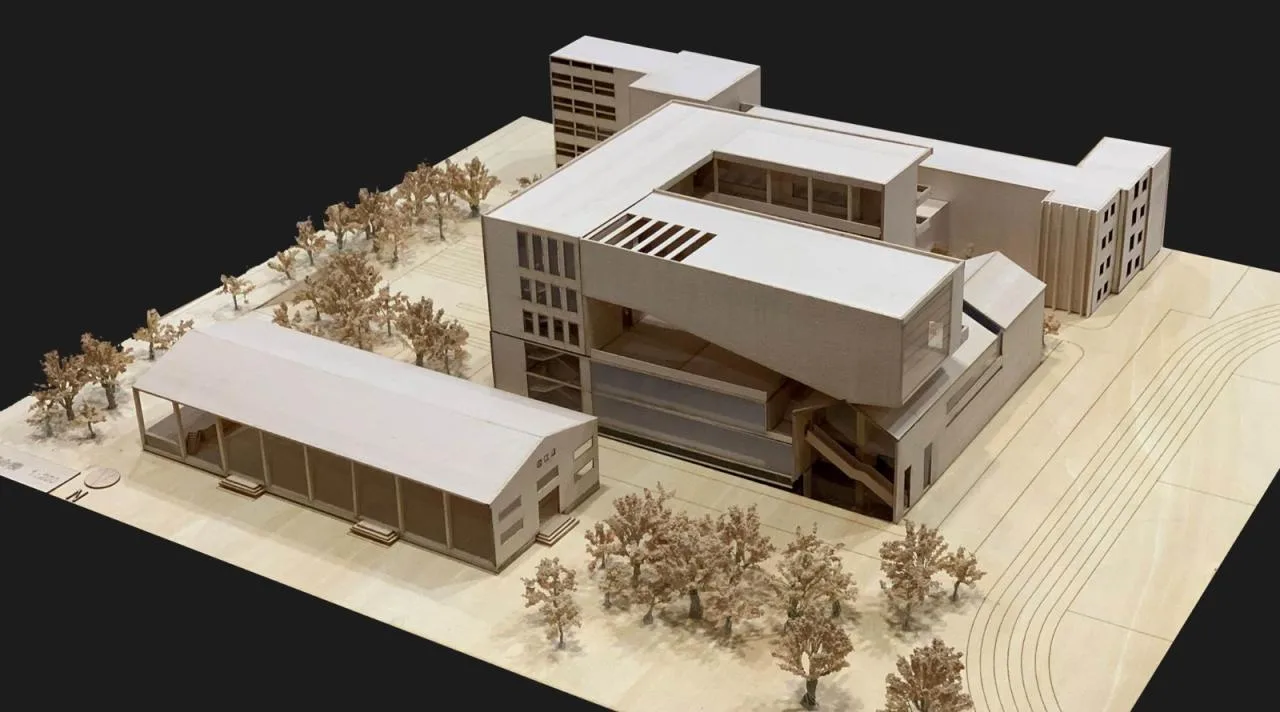
△ Model Diagram
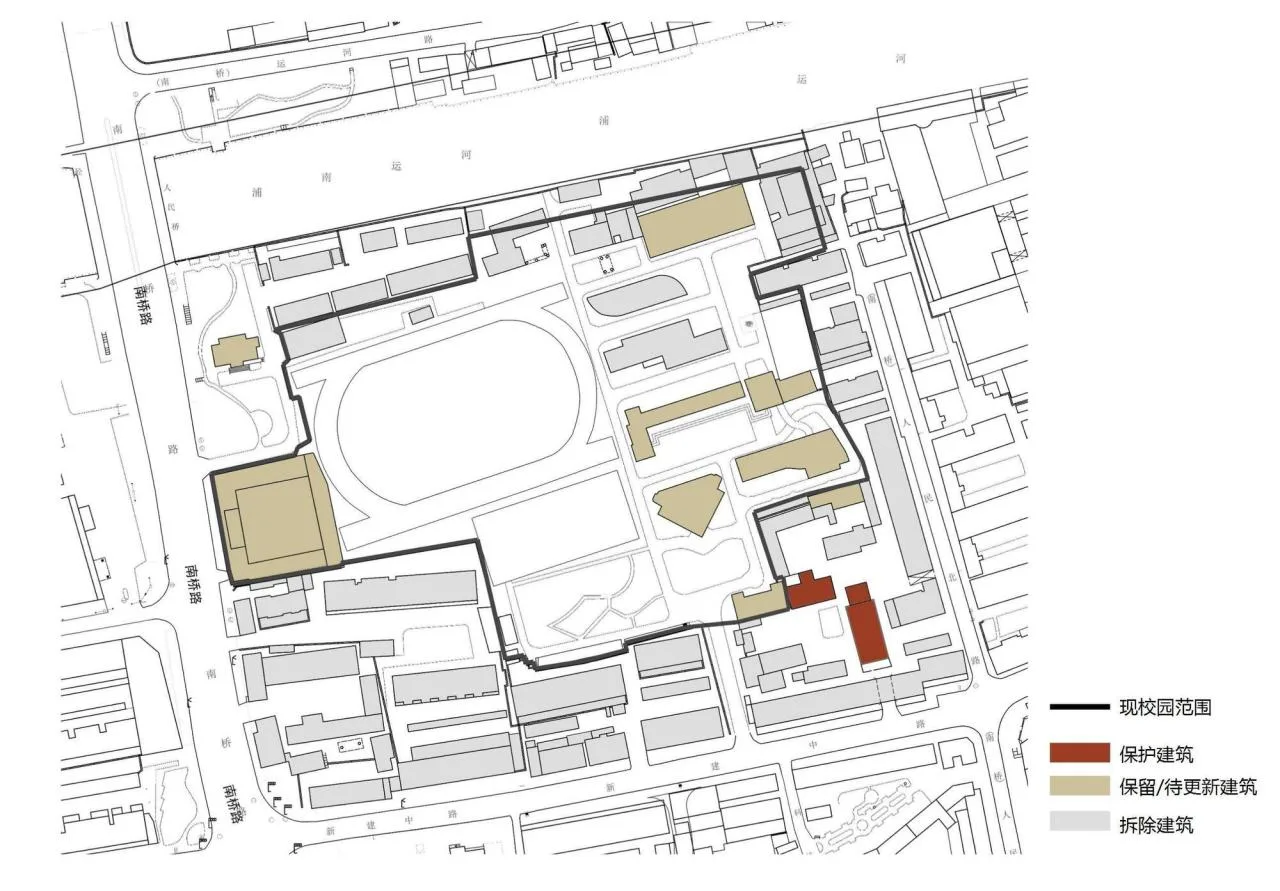
△ Current Site Conditions
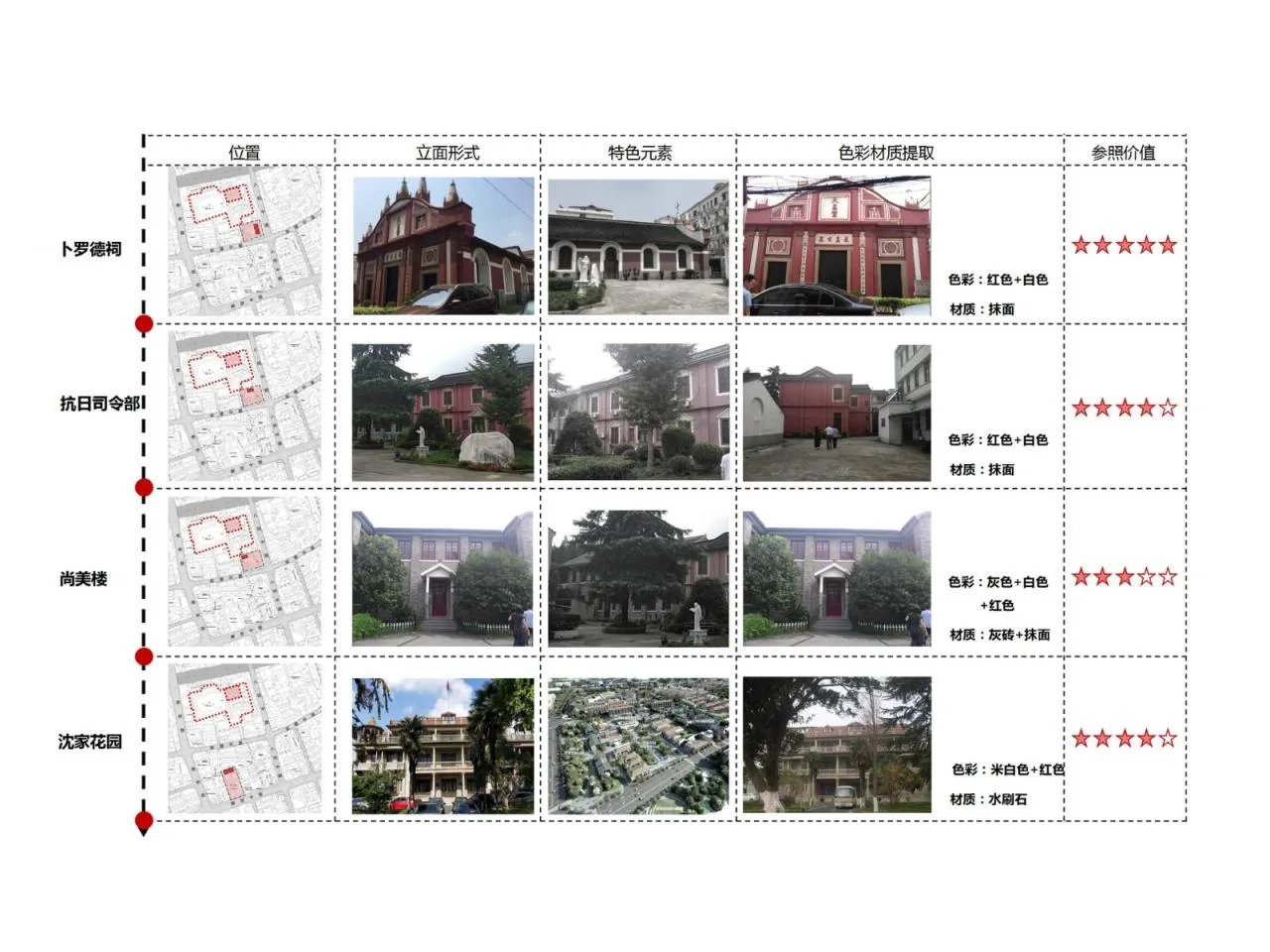
Analysis of Surrounding Historic Architectural Styles
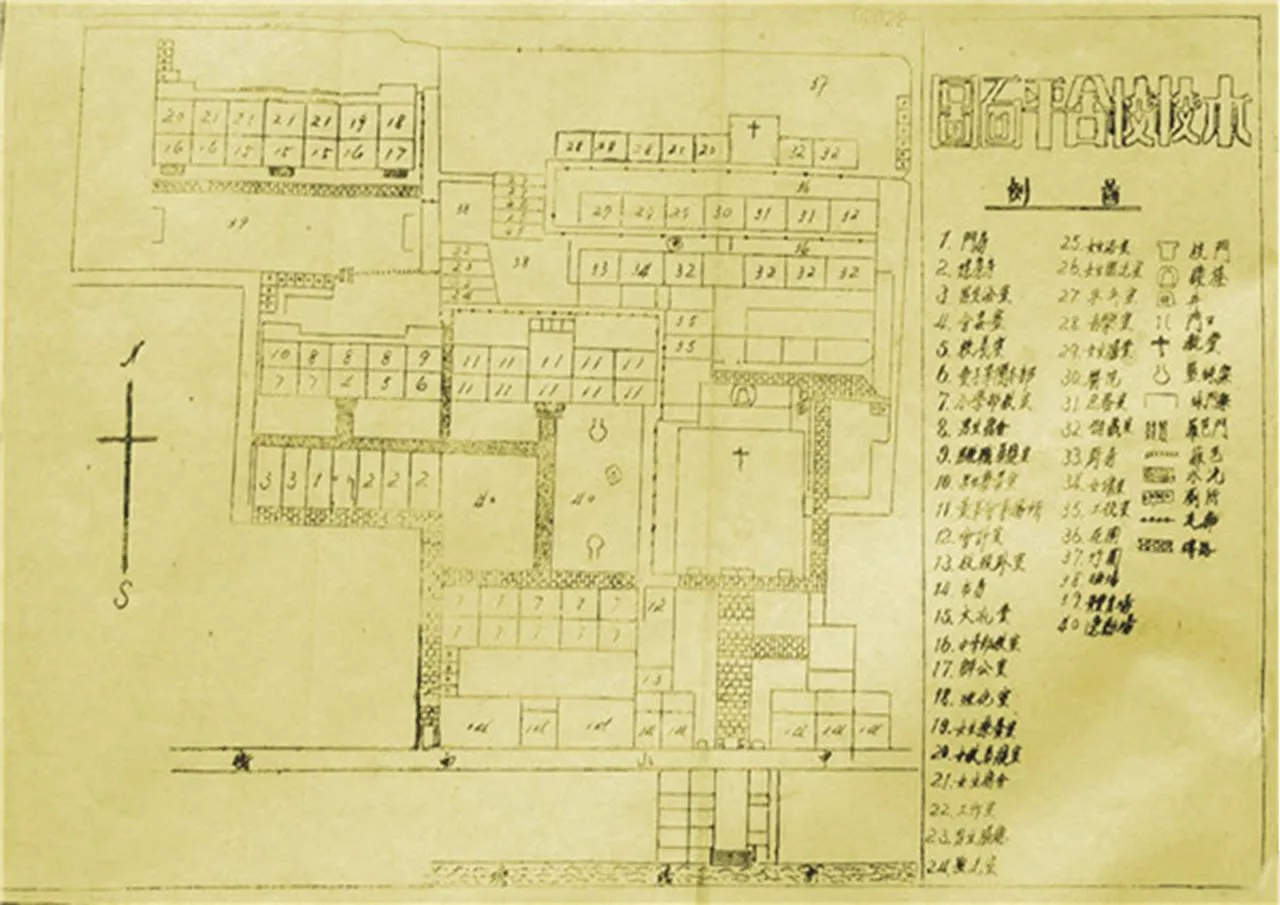
Map of the Middle School from 100 Years Ago
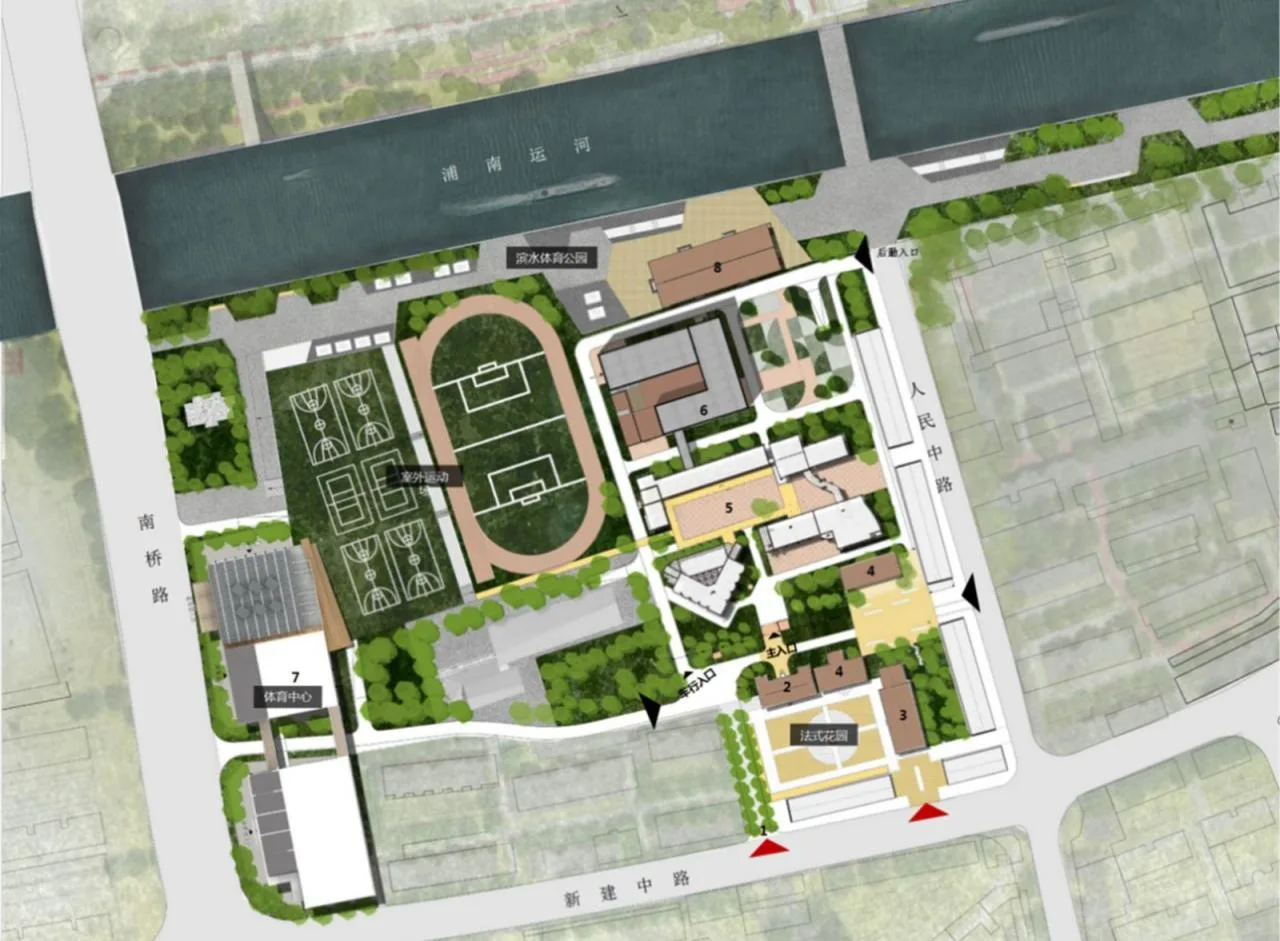
△ Renovation Plan
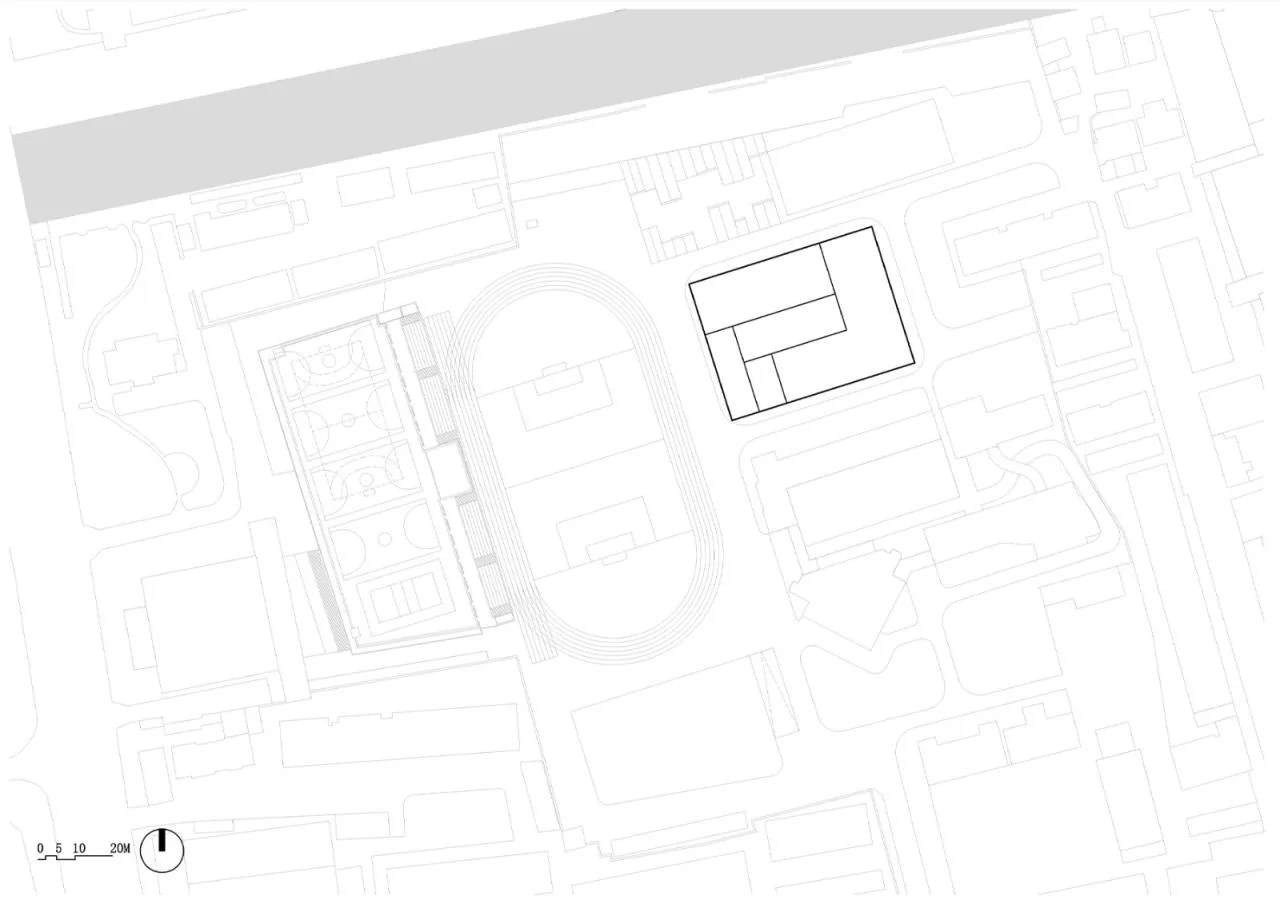
△ General Layout Plan
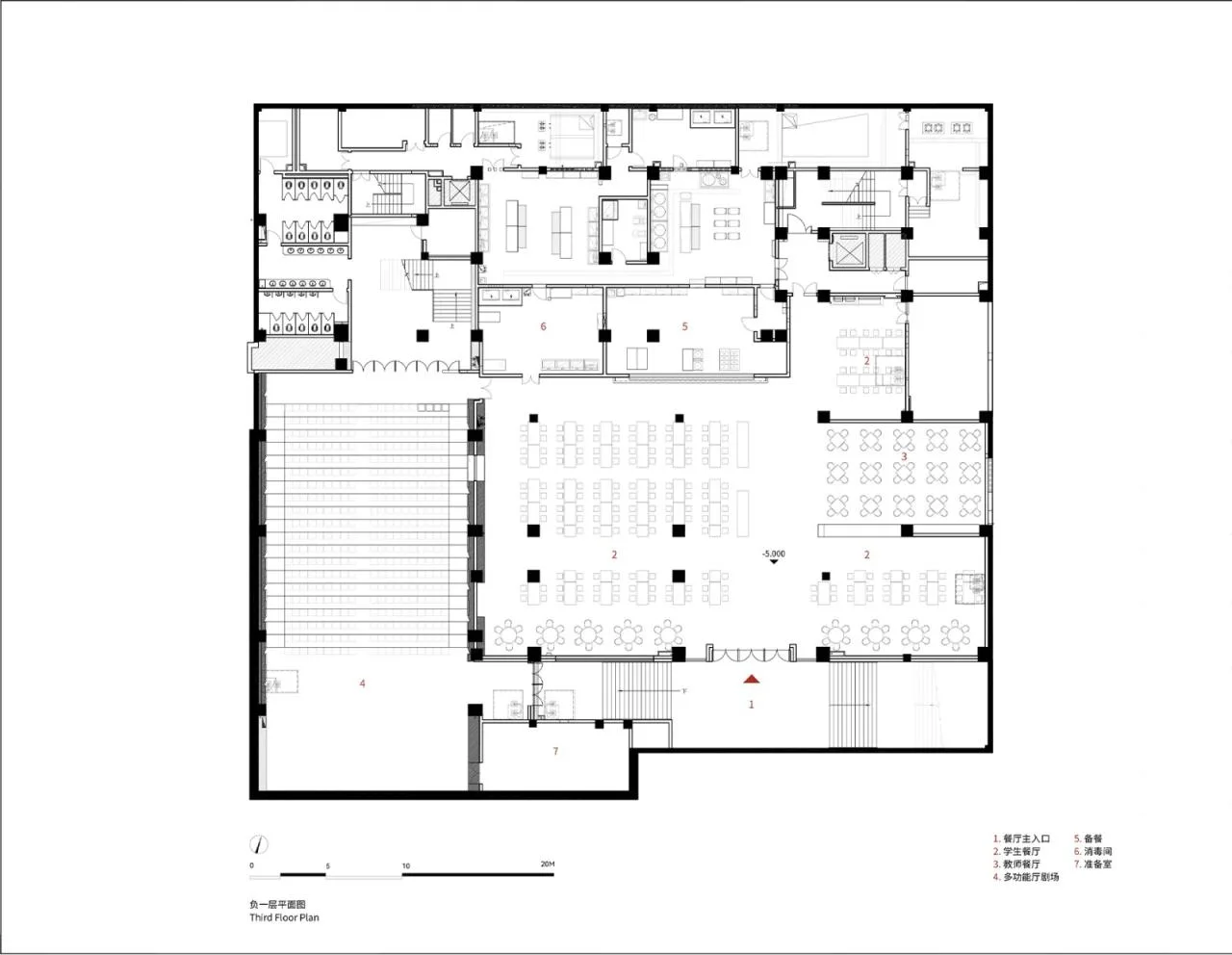
△ Basement Floor Plan
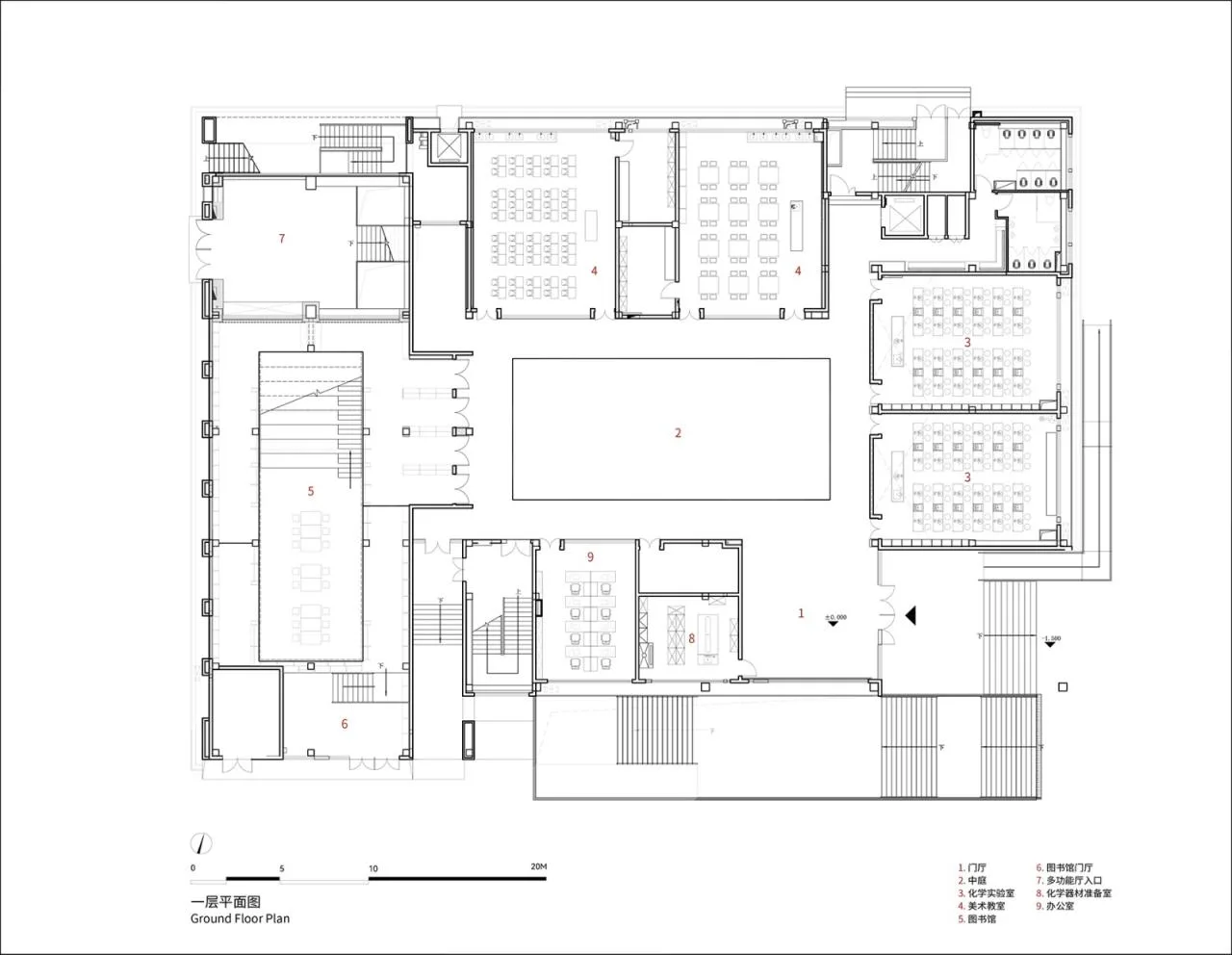
△ First Floor Plan
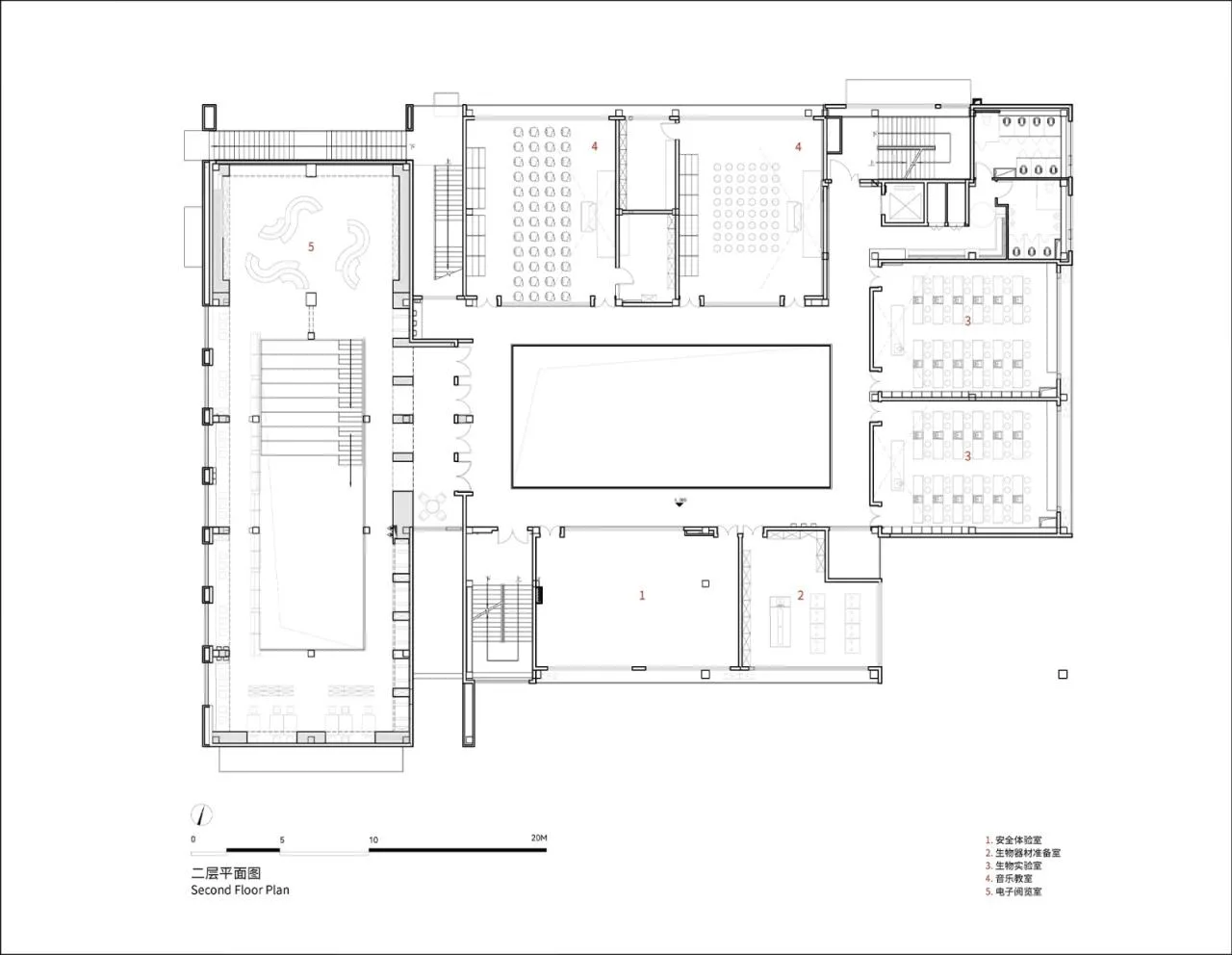
△ Second Floor Plan
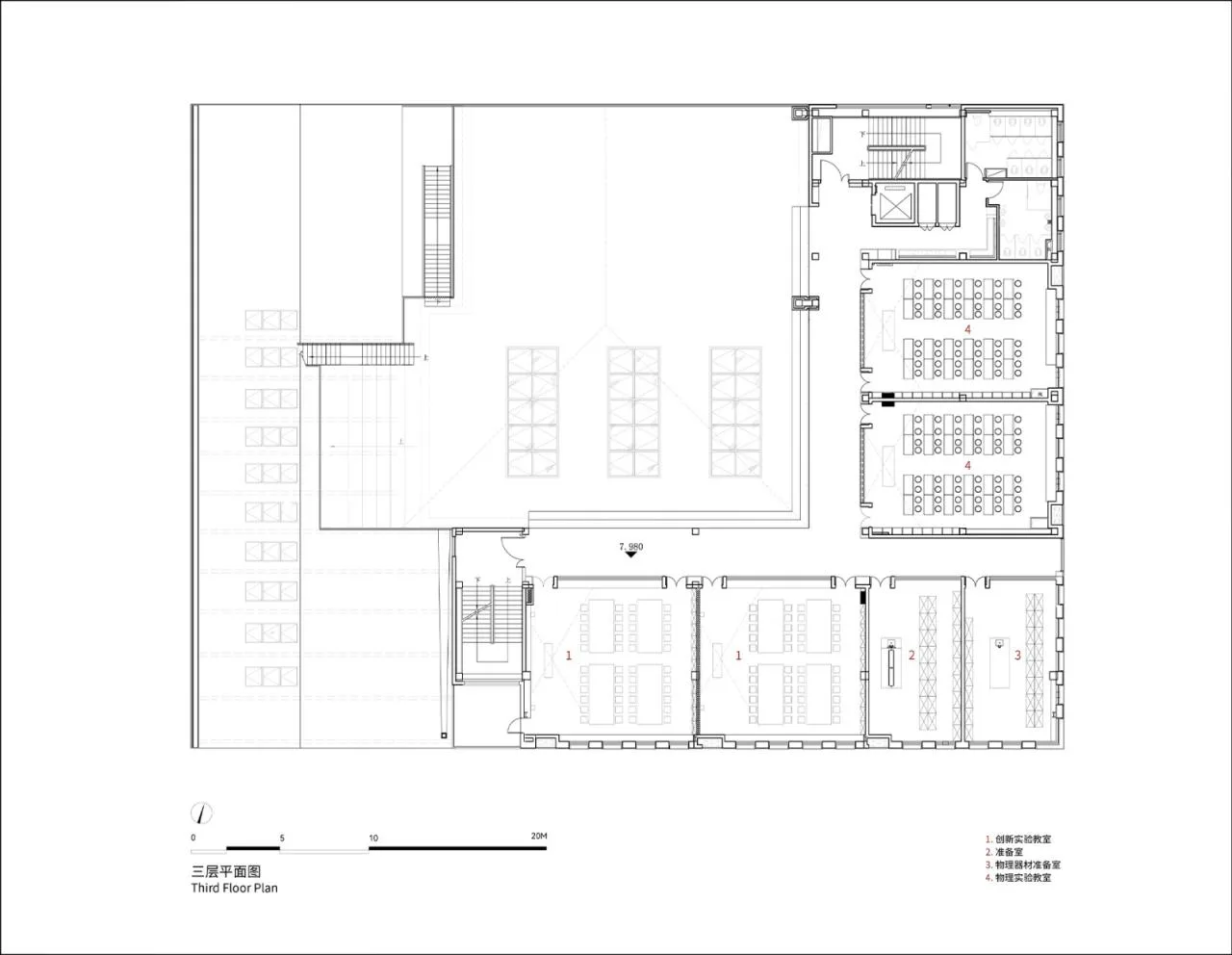
△ Third Floor Plan
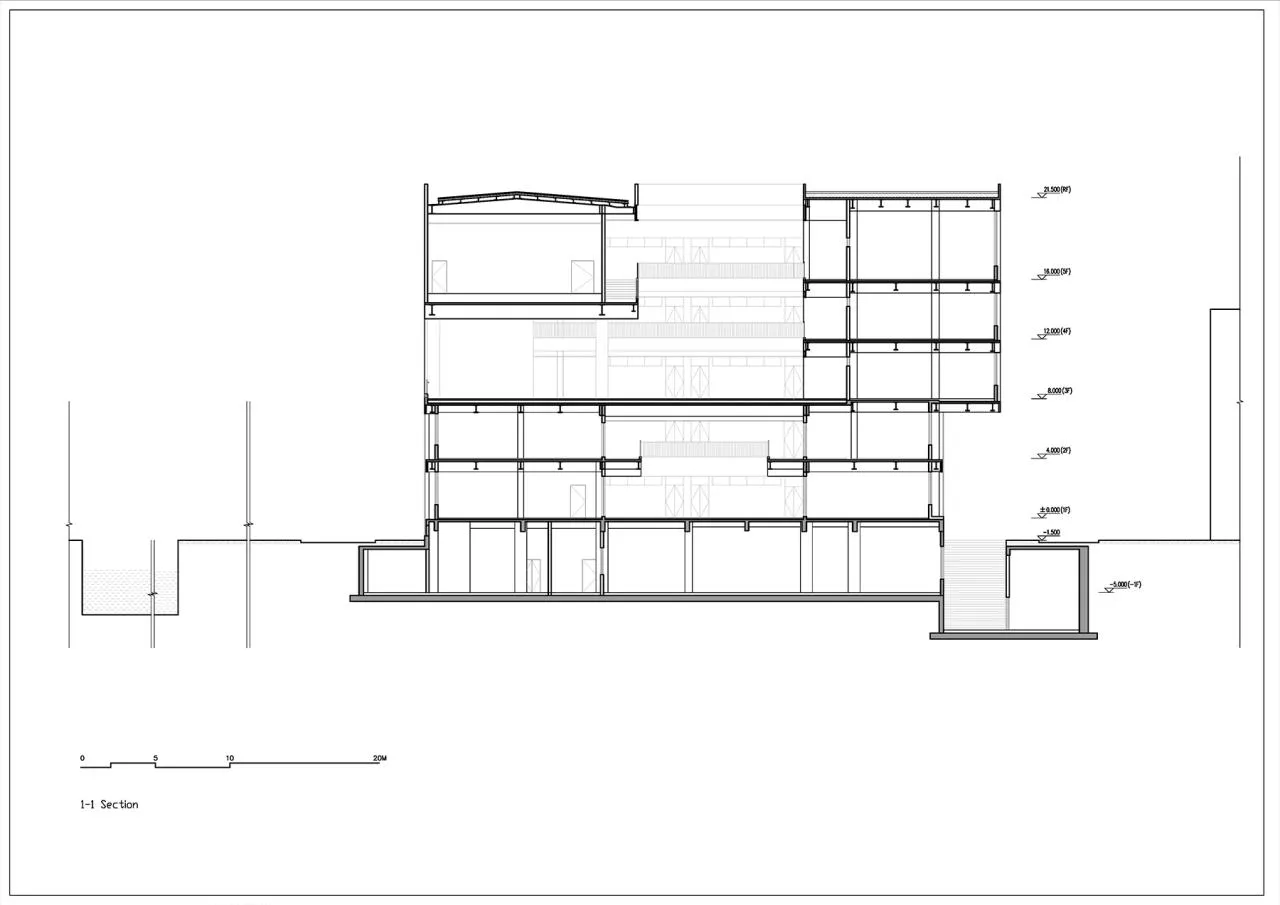
△ Section Diagram
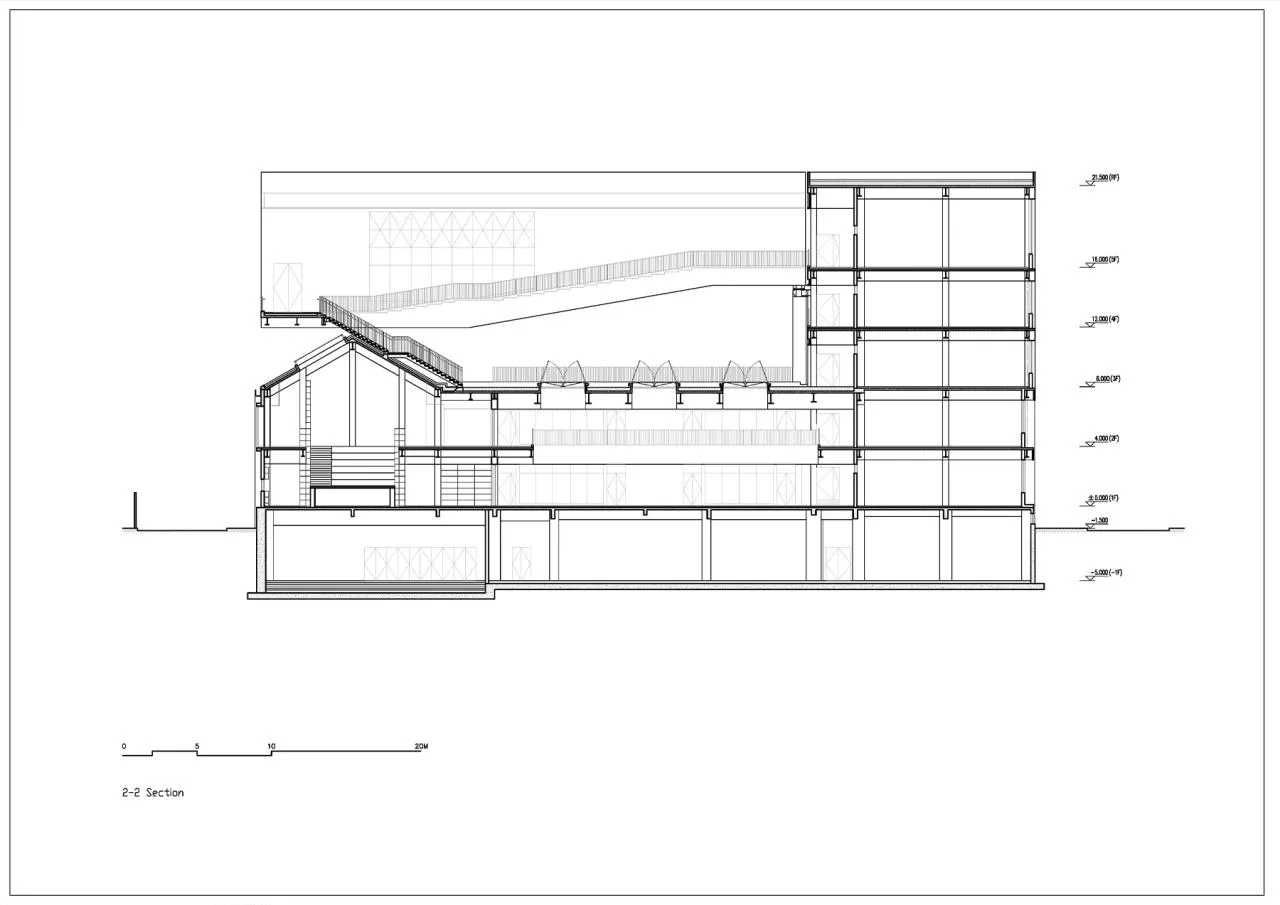
△ Section Diagram
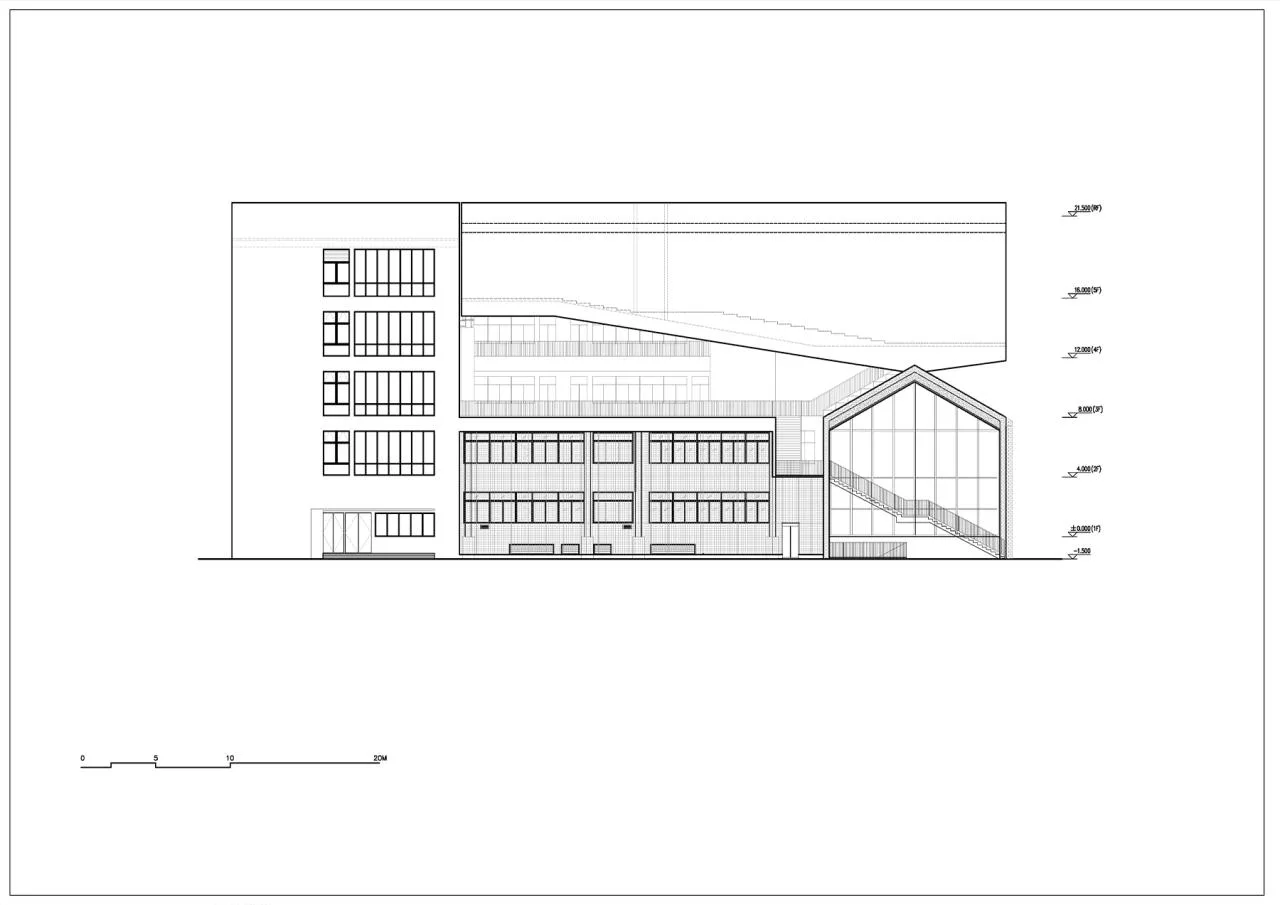
△ Elevation Drawing
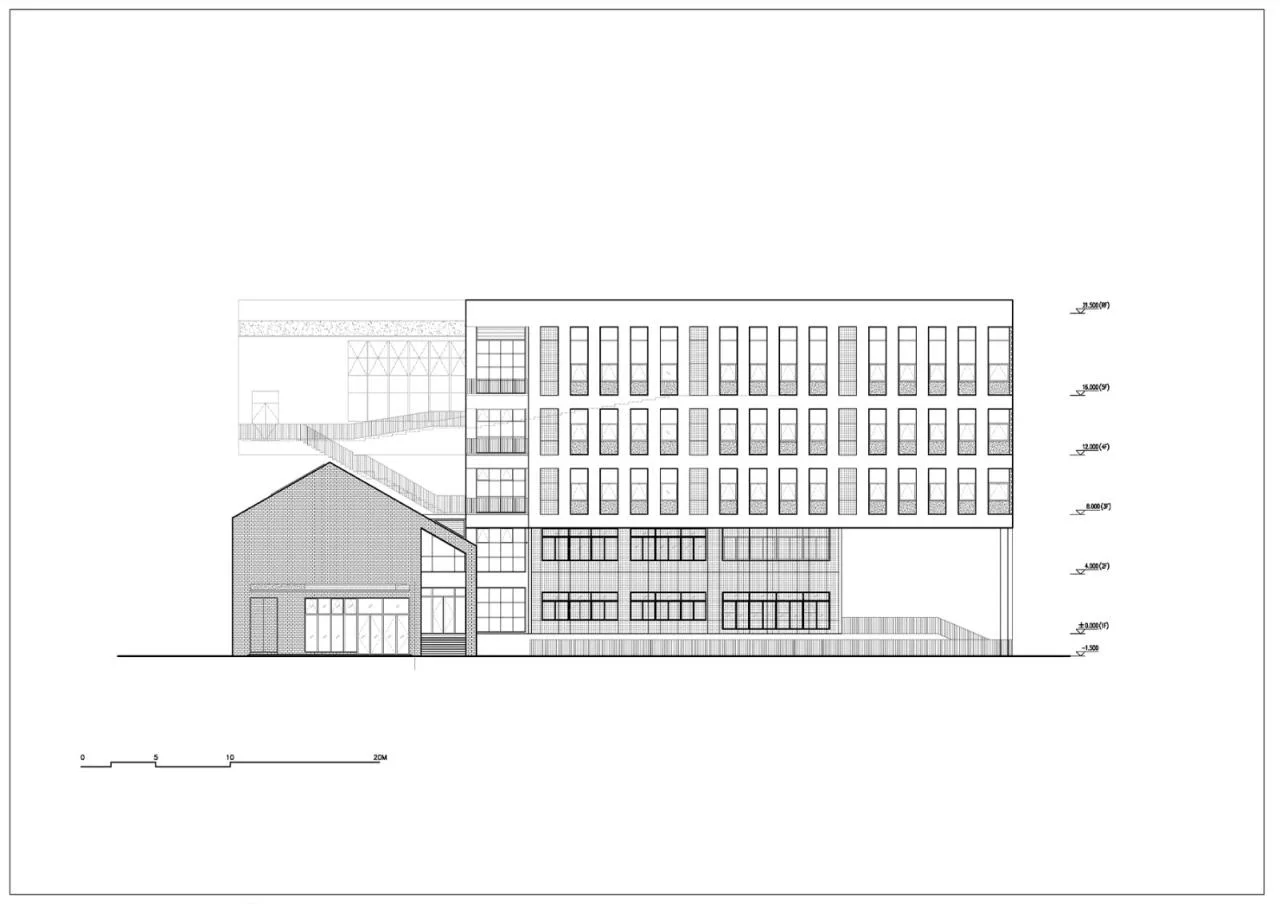
△ Elevation Drawing
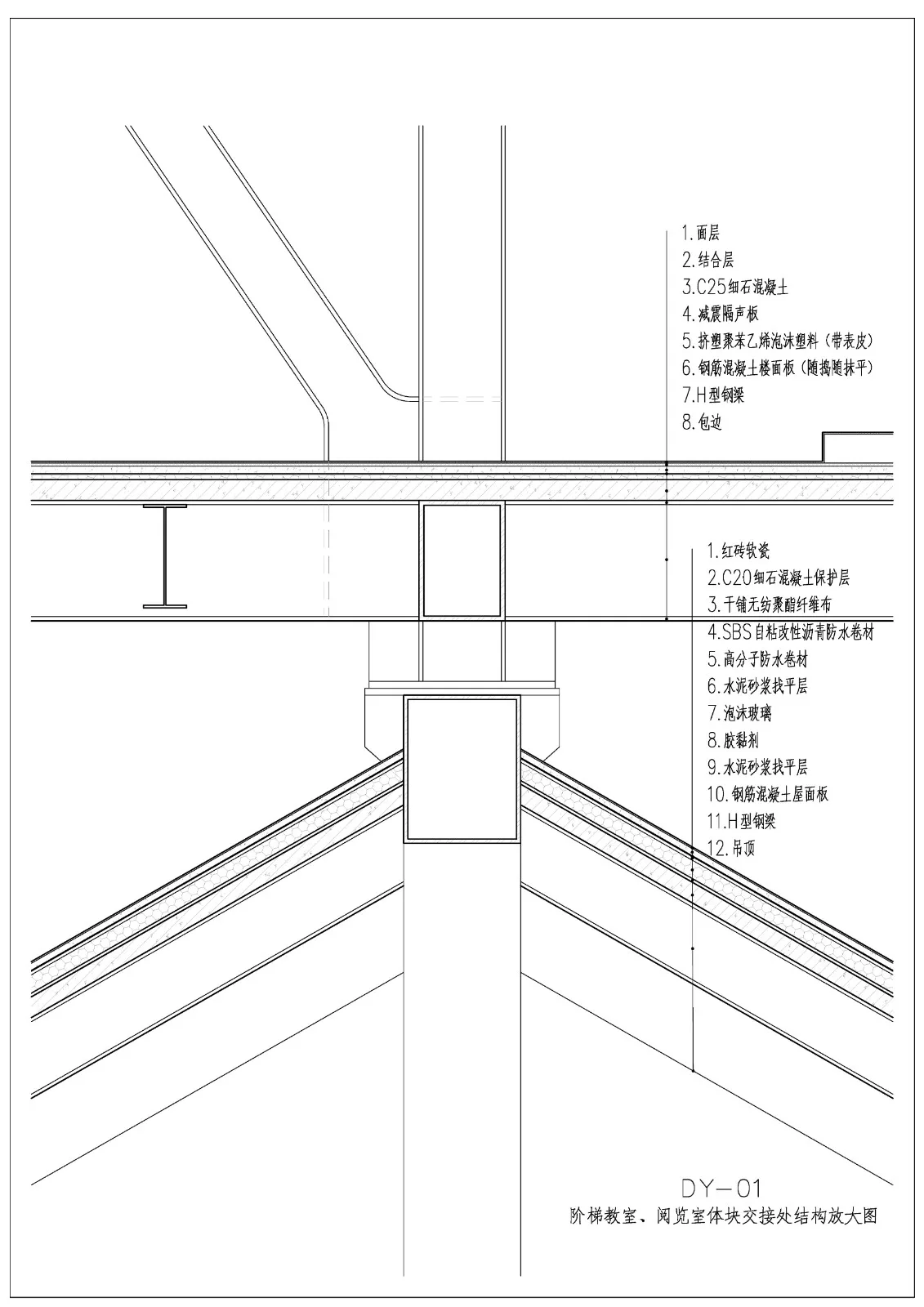
△ Detailed Drawing
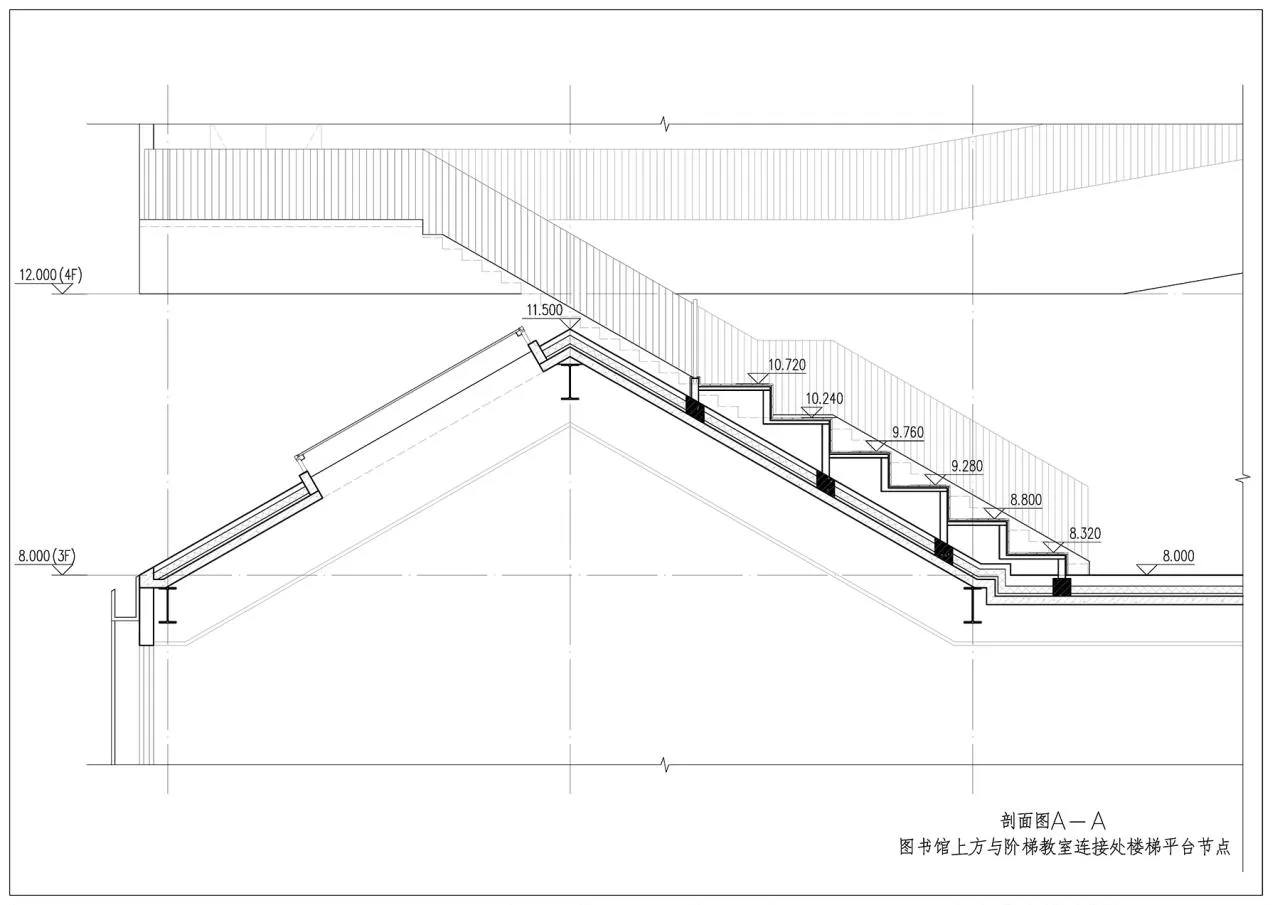
△ Detailed Drawing
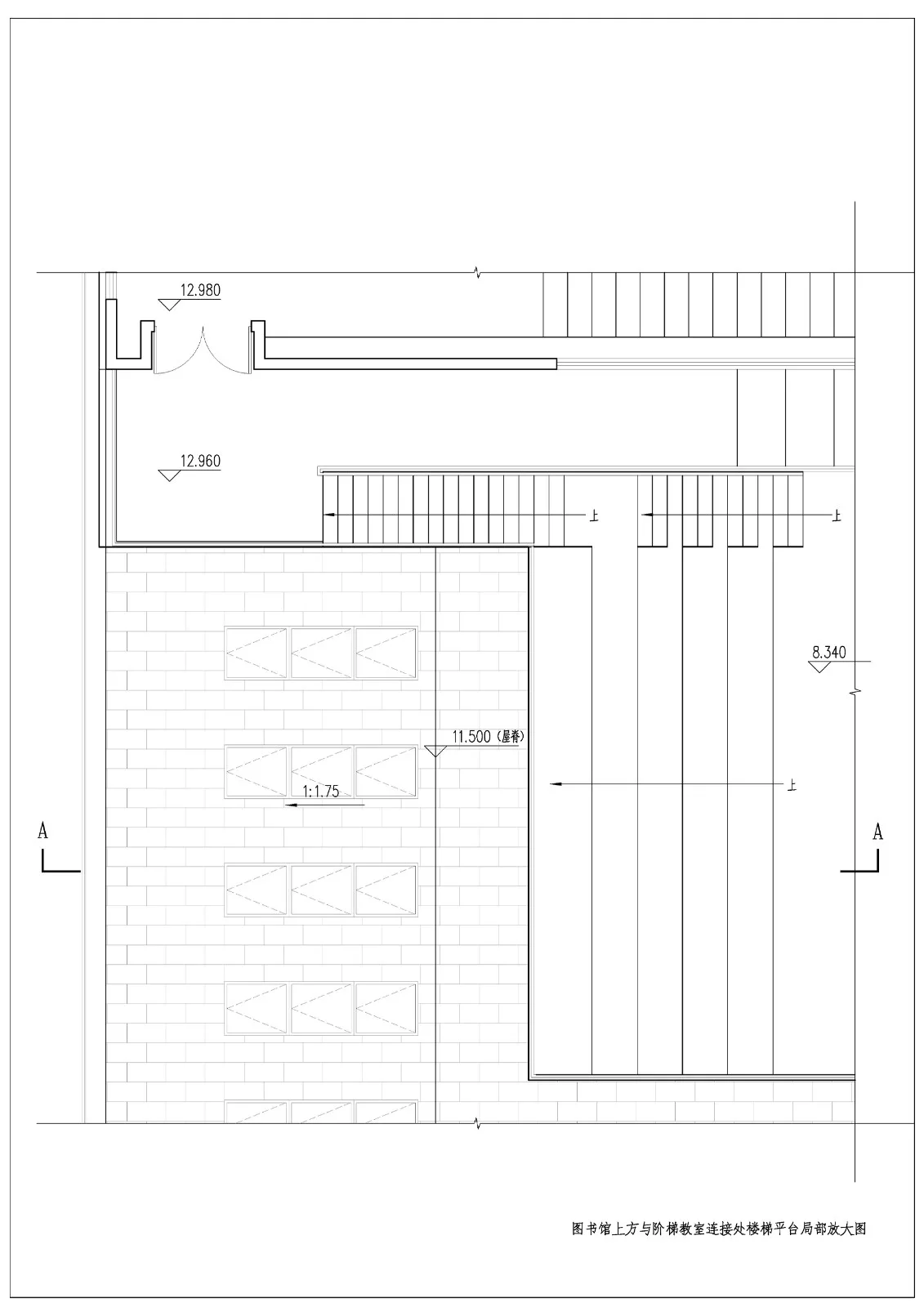
△ Detailed Drawing
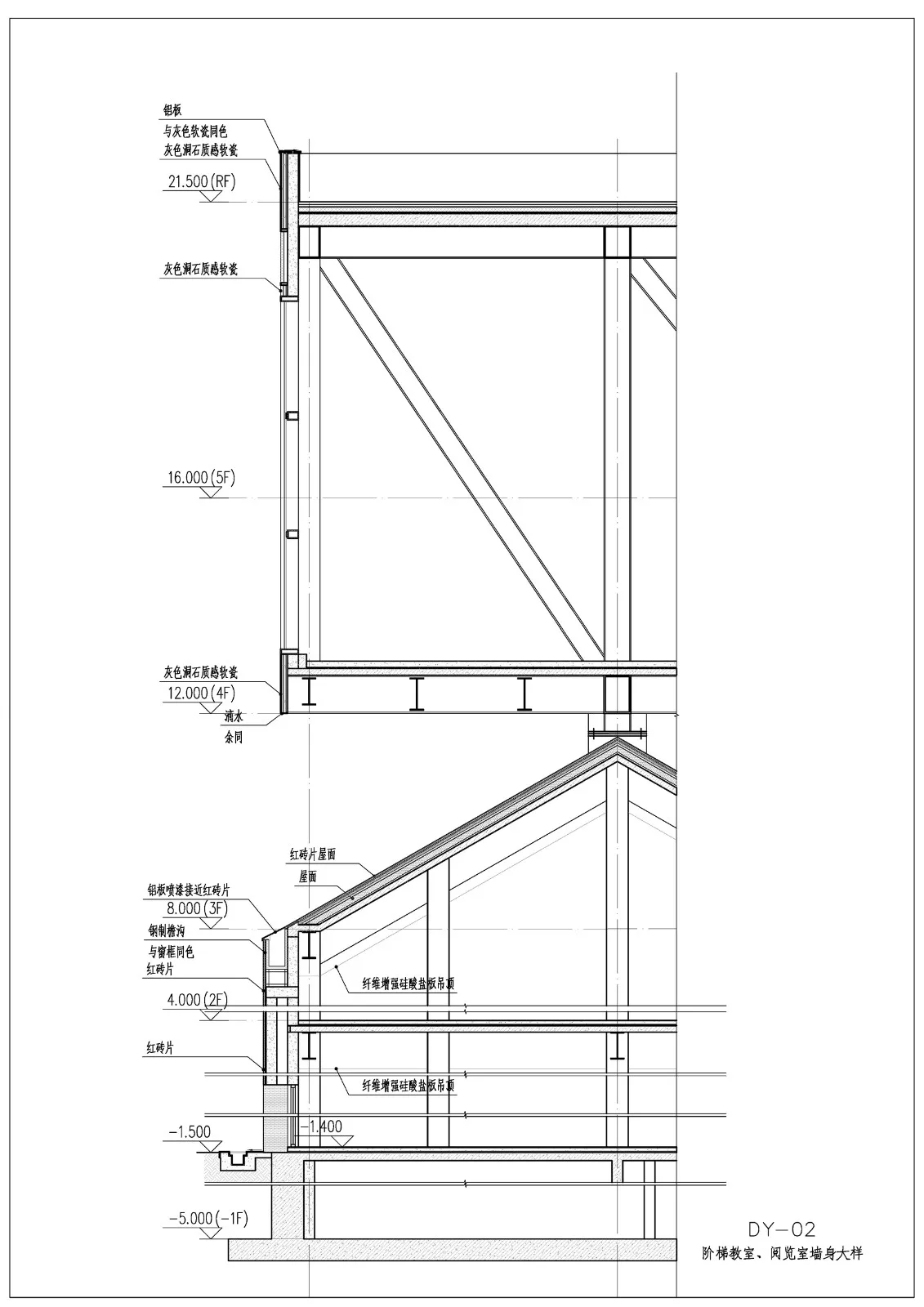
△ Detailed Drawing
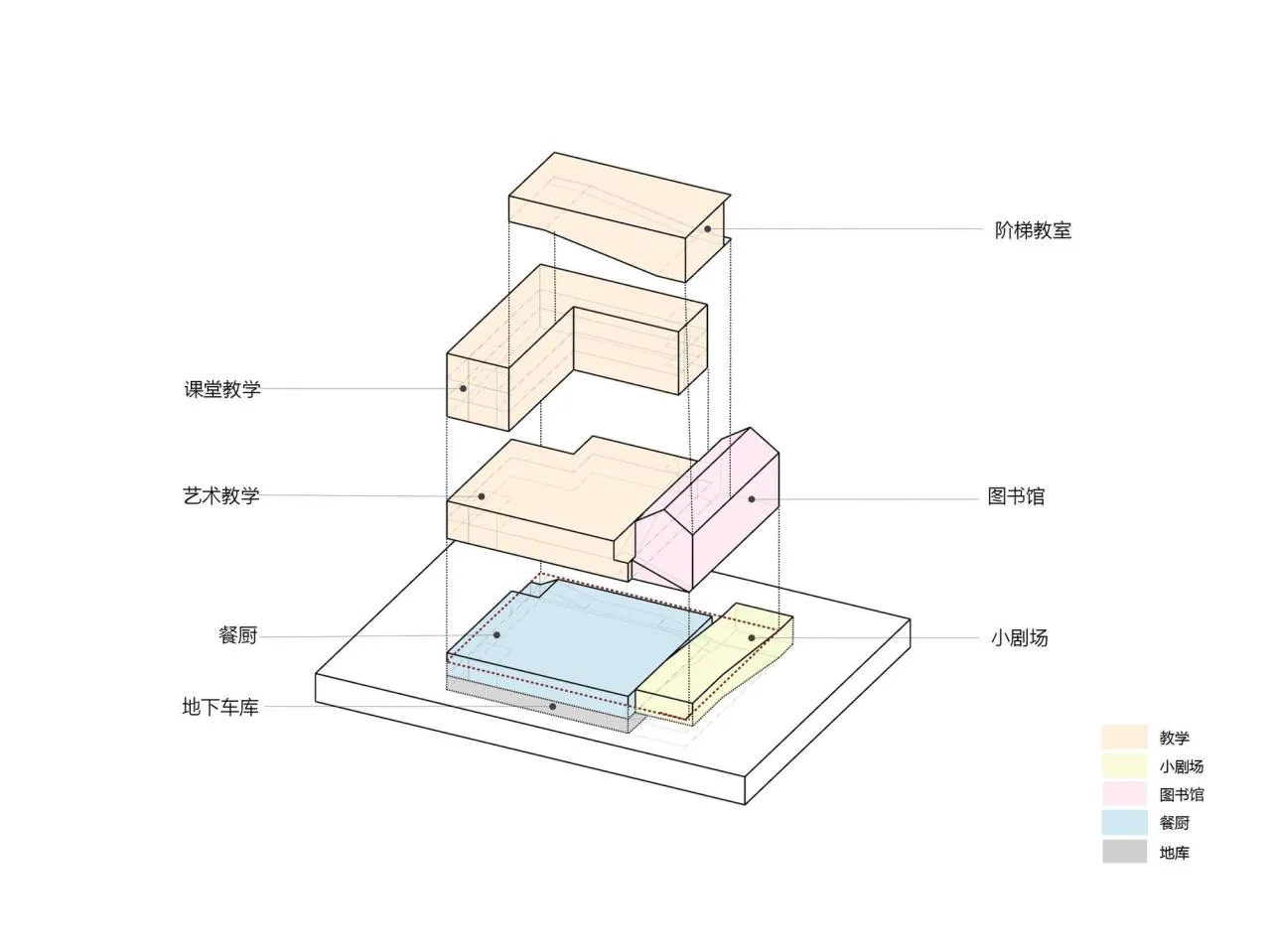
△ Functional Zoning Diagram
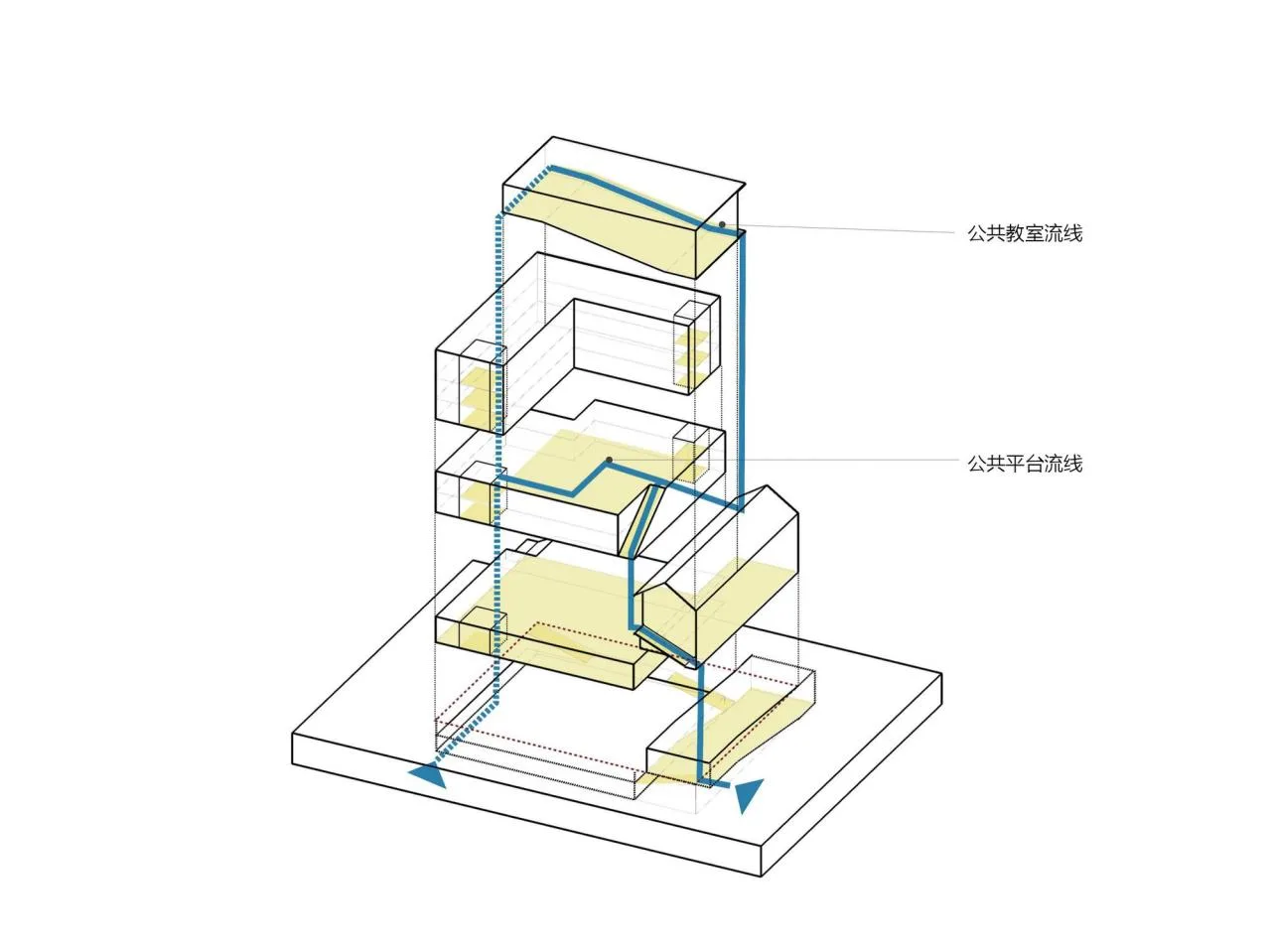
△ Circulation Diagram
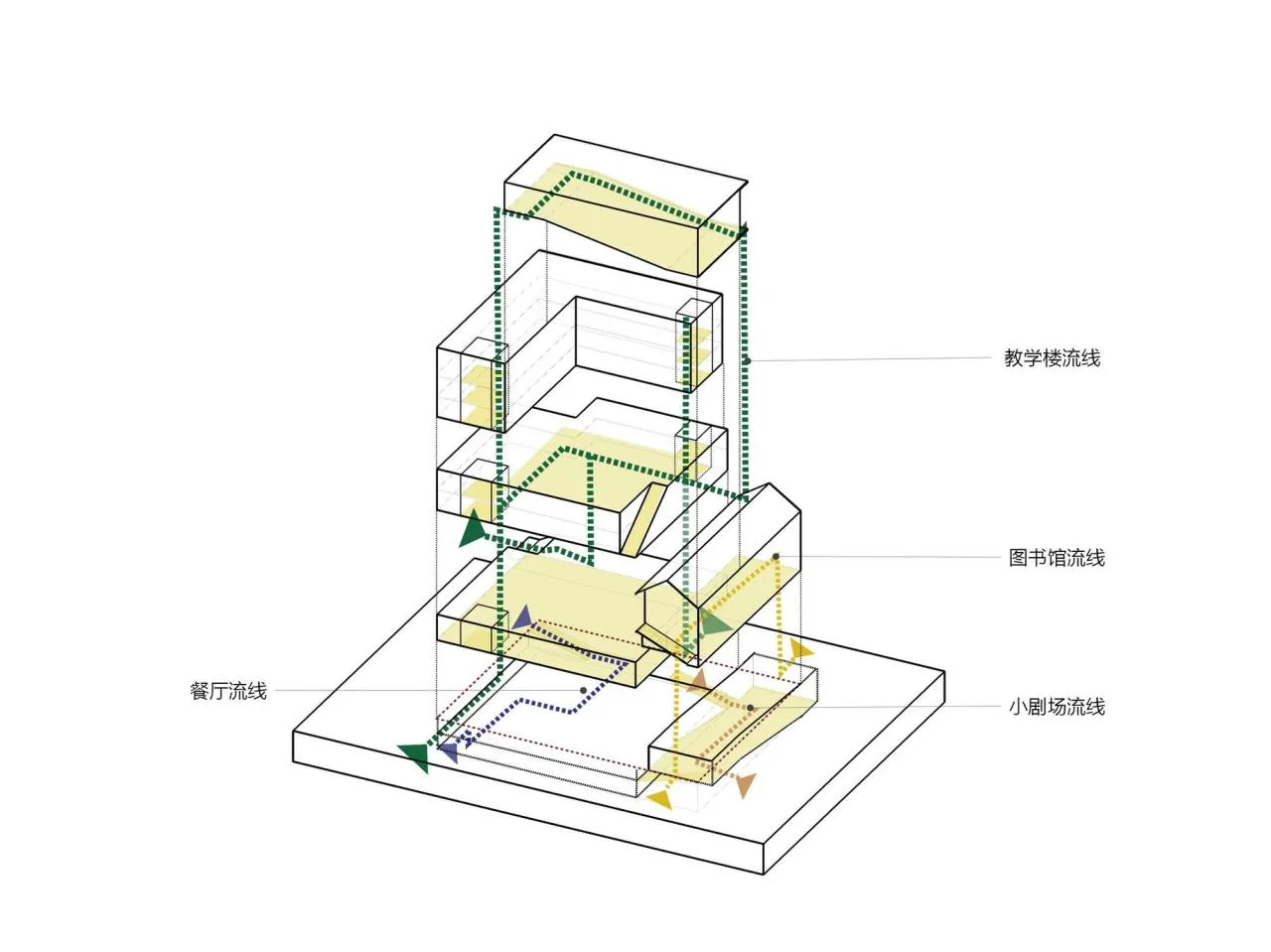
△ Circulation Diagram
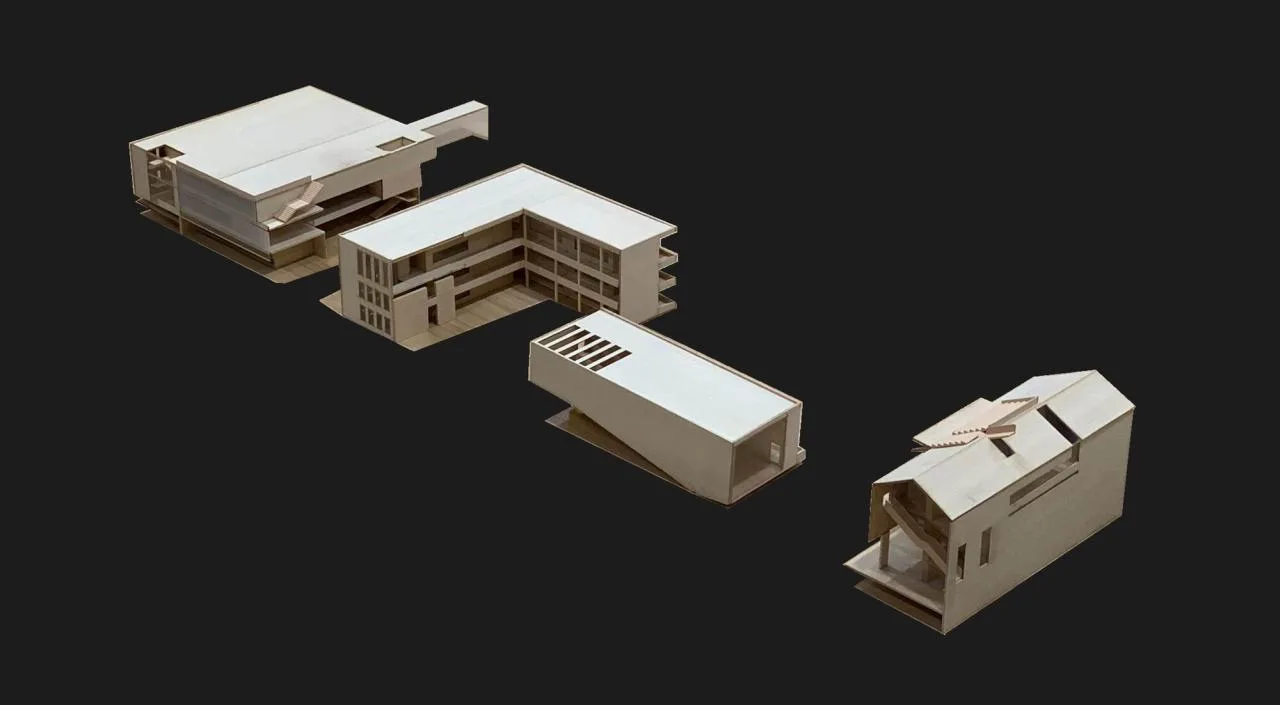
△ Model Diagram
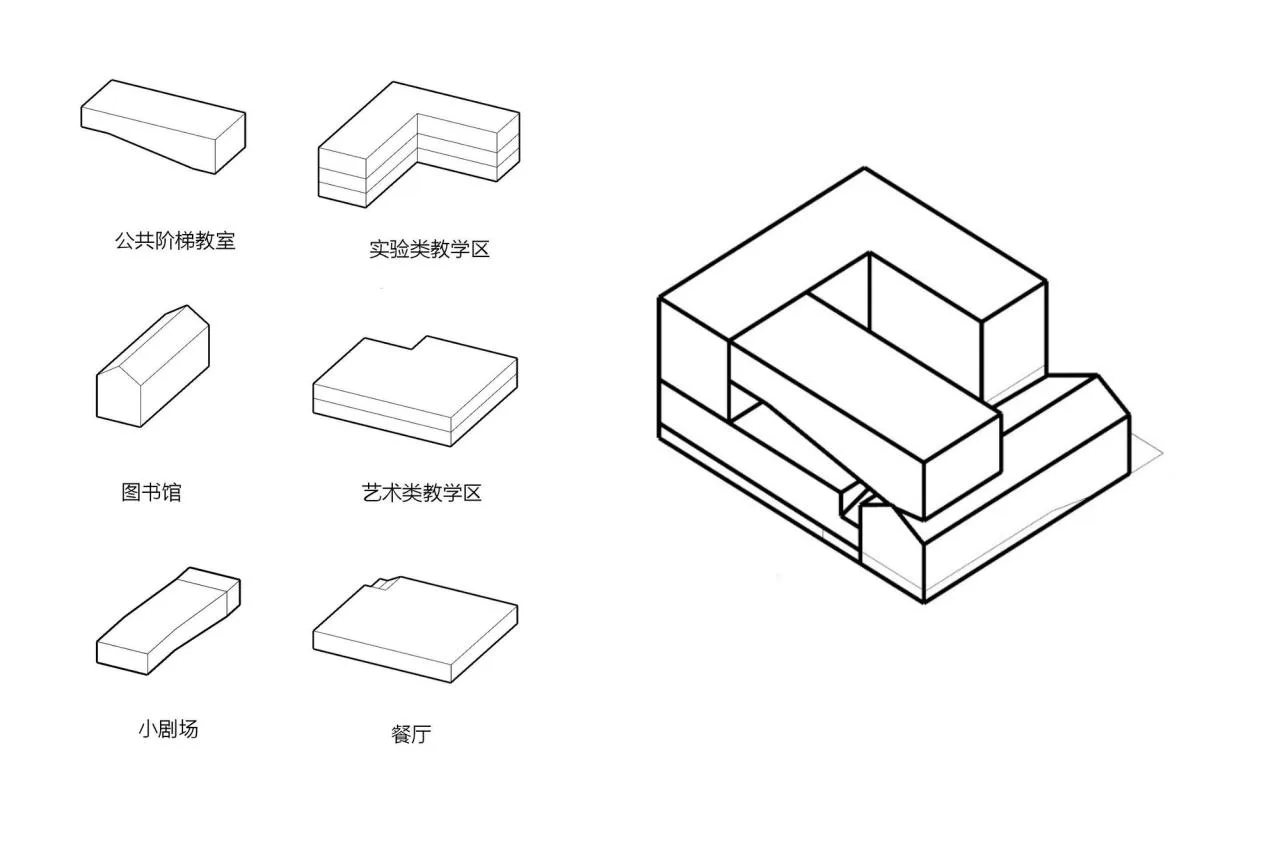
△ Block Generation Diagram
Project Information
Architect: Nansha Original Architectural Design Studio
Area: 8,700 m²
Project Year: 2021
Photographers: Tian Fangfang, Hu Kangyu
Lead Architect: Liu Heng
Design Team: Liu Heng, Huang Jiebin, Xie Yanxu, Han Yun, Zhang Jiyuan, Xu Jingyue, Lin Xiaohong
Construction Team: Liu Heng, Huang Jiebin, Ruan Yiling
Interns: Lin Yuhang, Chen Lirong, Jiao Yuanyuan, Zhou Yucheng, Wu Min’an, Tian Haoyuan
Riverside Landscape: Liu Heng, Huang Jiebin, Wang Henggang
Construction: Shanghai Fengxian Construction Development (Group) Co., Ltd
Construction Drawings: Architecture by Shanghai Humin Architectural Design Institute Co., Ltd; Interior by Shenzhen Longgang District Design Studio; Landscape by Shanghai Construction Engineering Design and Research Institute Co., Ltd
Structural Consultant: Shanghai Hezuo Institute of Structural Architecture
Lighting Consultant: Shenzhen Guangpu Technology Co., Ltd
Location: Shanghai














Must log in before commenting!
Sign Up