
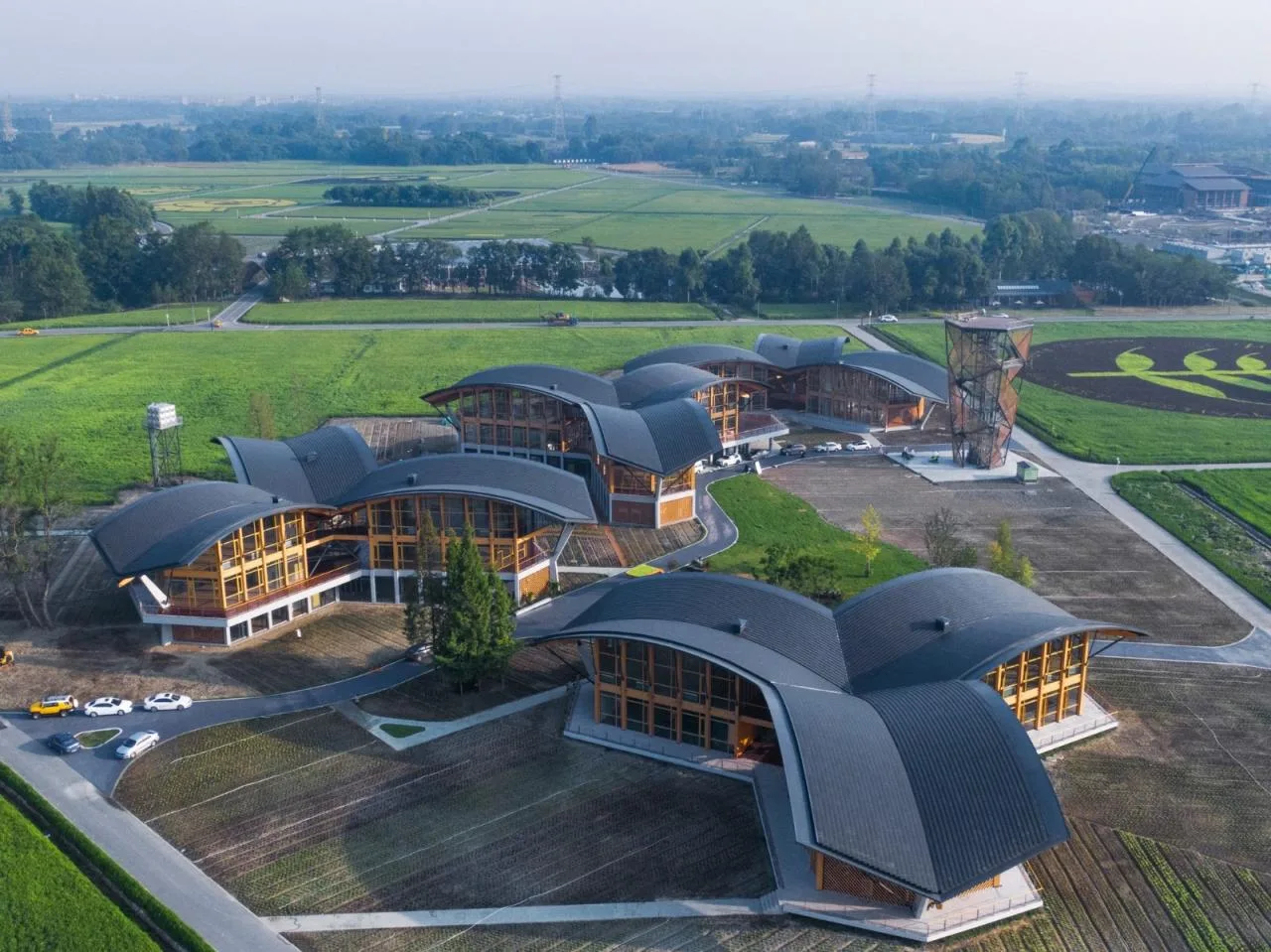
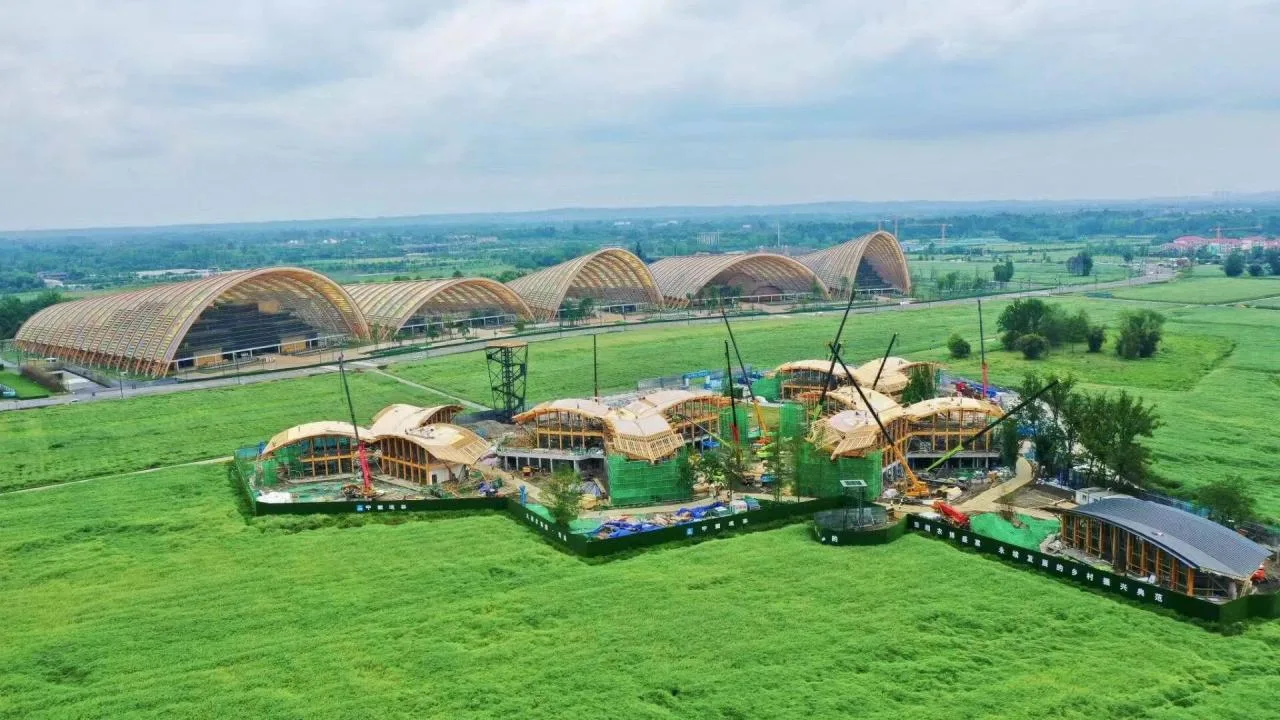
Tianfu Agricultural Expo Park is located in Xingyi Town, Xinjin, Sichuan Province. At its heart lies the Qingmiao project, positioned on the Agricultural Expo Exhibition Island. The project features five staggered wooden buildings nestled within the scenic Datian landscape. Covering a total area of 10,500 square meters, these buildings range from one to three stories and accommodate various industrial functions, including agricultural technology, breeding research, and cultural and creative exhibitions.
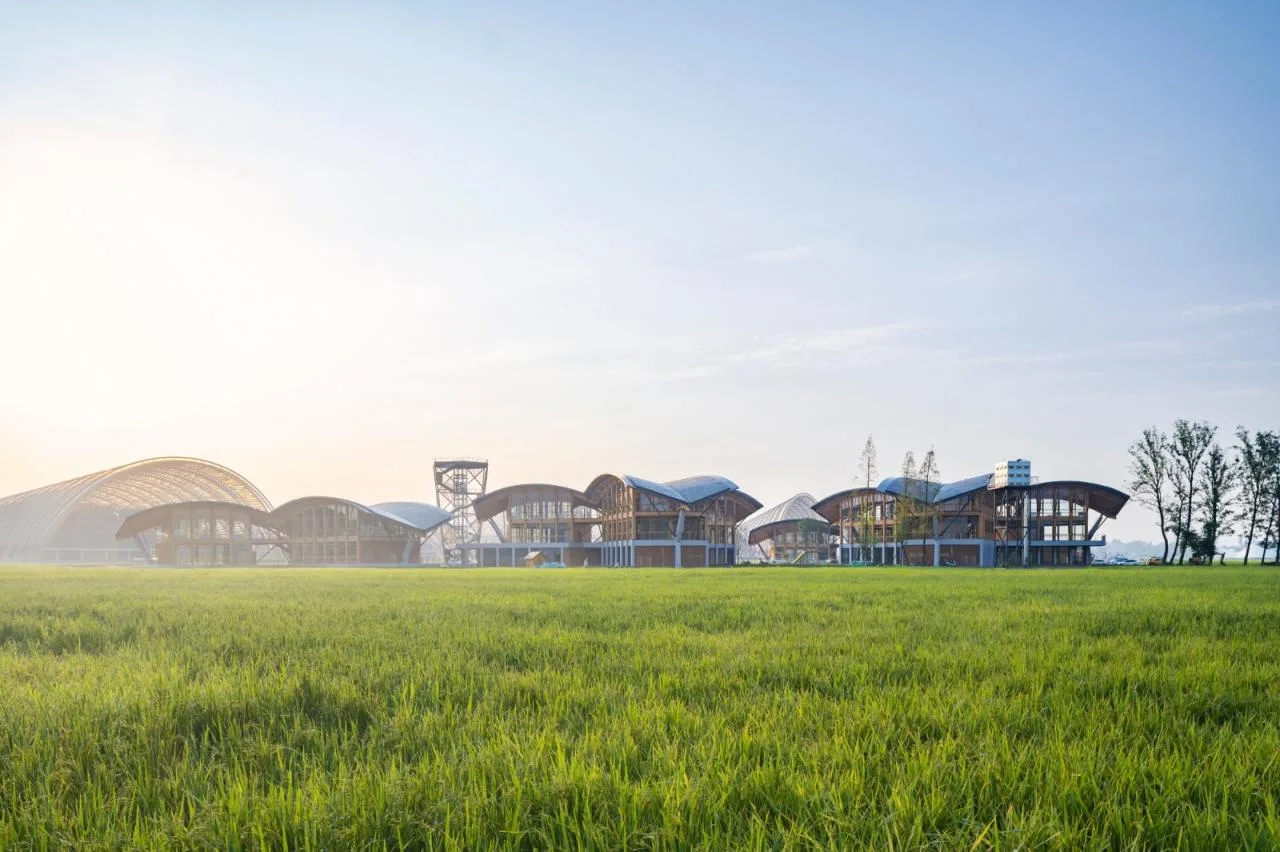
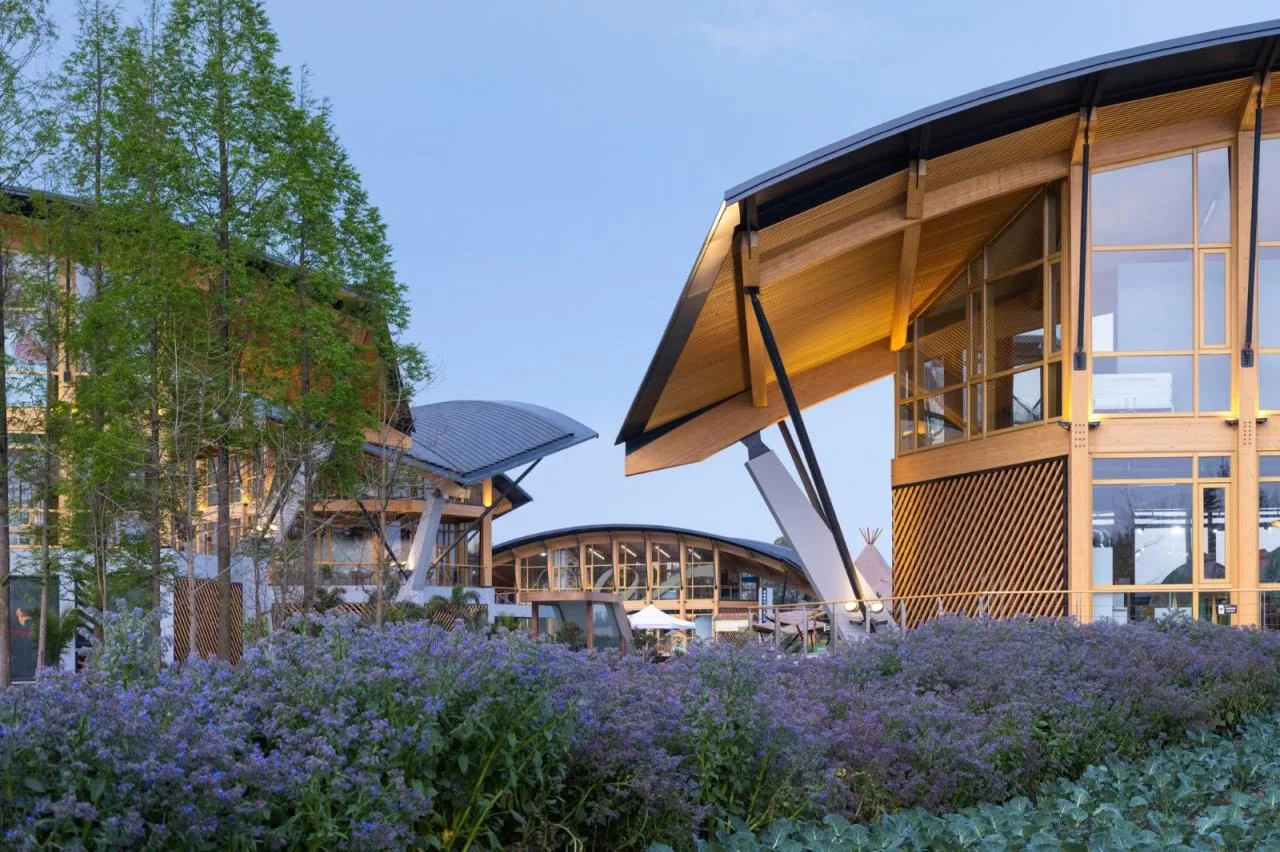
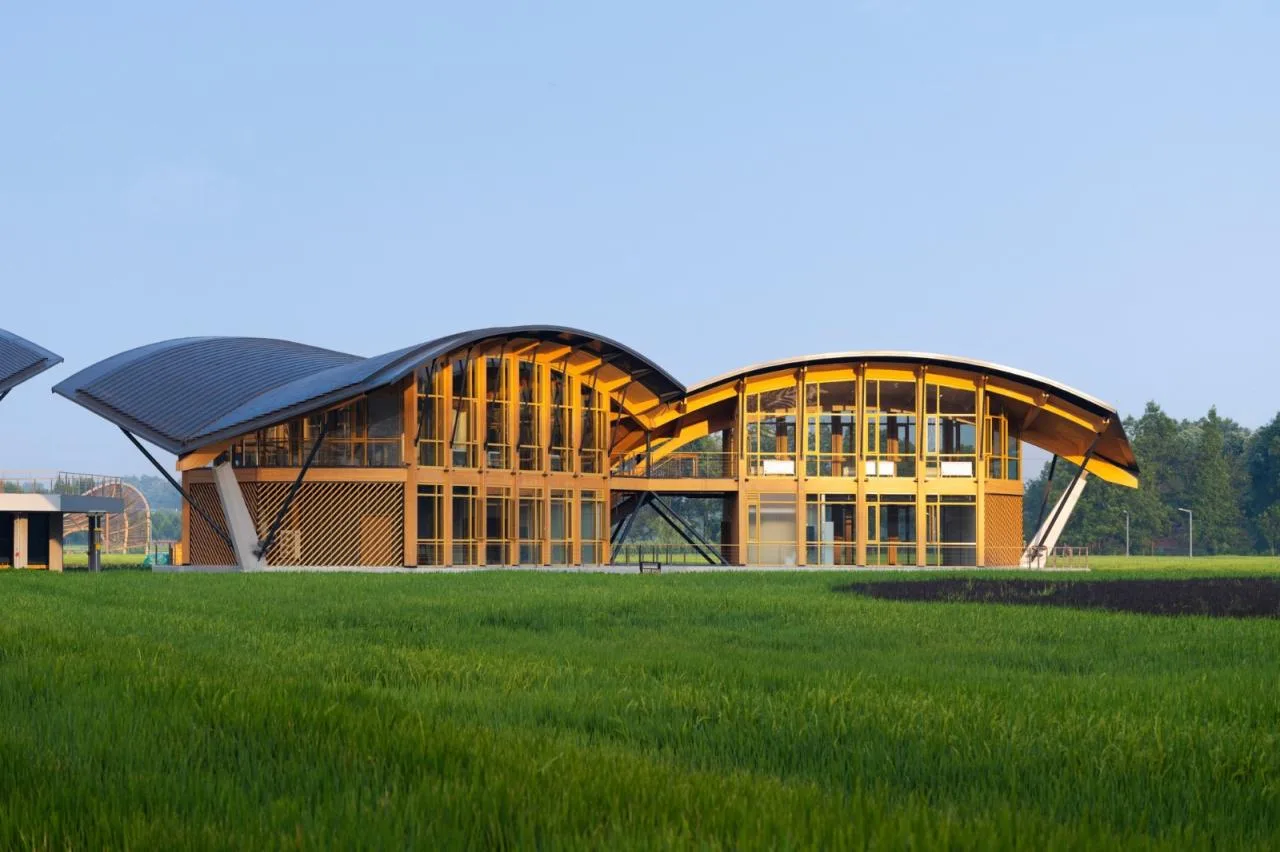
The site is flat and open, surrounded by continuous rice fields, sparse rural paths, and tall trees, forming a characteristic rural landscape of western Sichuan. Originally, the land was a scattered homestead with irregular plot boundaries, located in the center of Datian. The design responds to this context by using modular units that break down the complex into smaller parts, adapting to the irregular site boundary. This architectural complex recreates the traditional “Linpan” human settlement pattern typical in western Sichuan. Aside from the transportation routes linking the interior and exterior, the ground is restored to cultivated fields, with crops growing beyond the scattered water channels. The buildings emerge directly from the fields, evoking a pastoral scene.
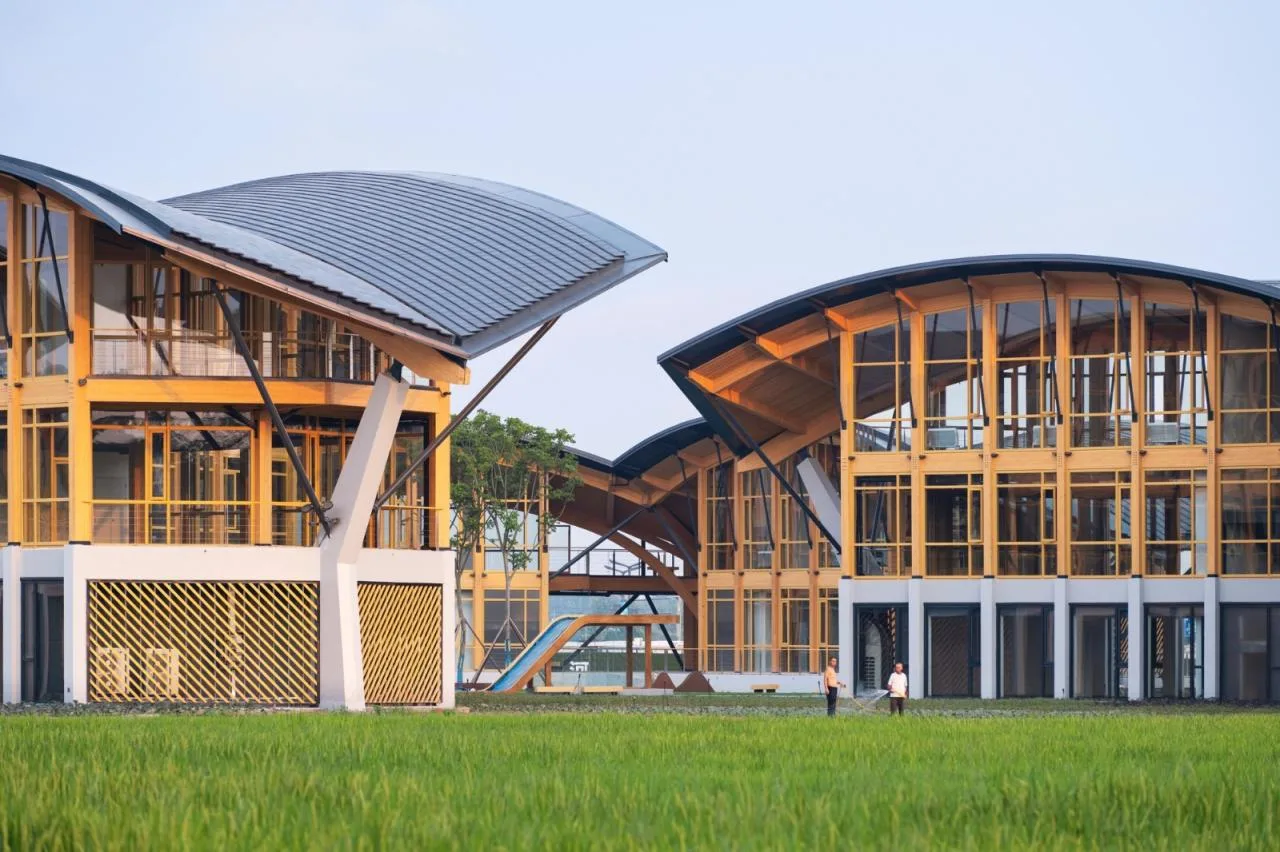
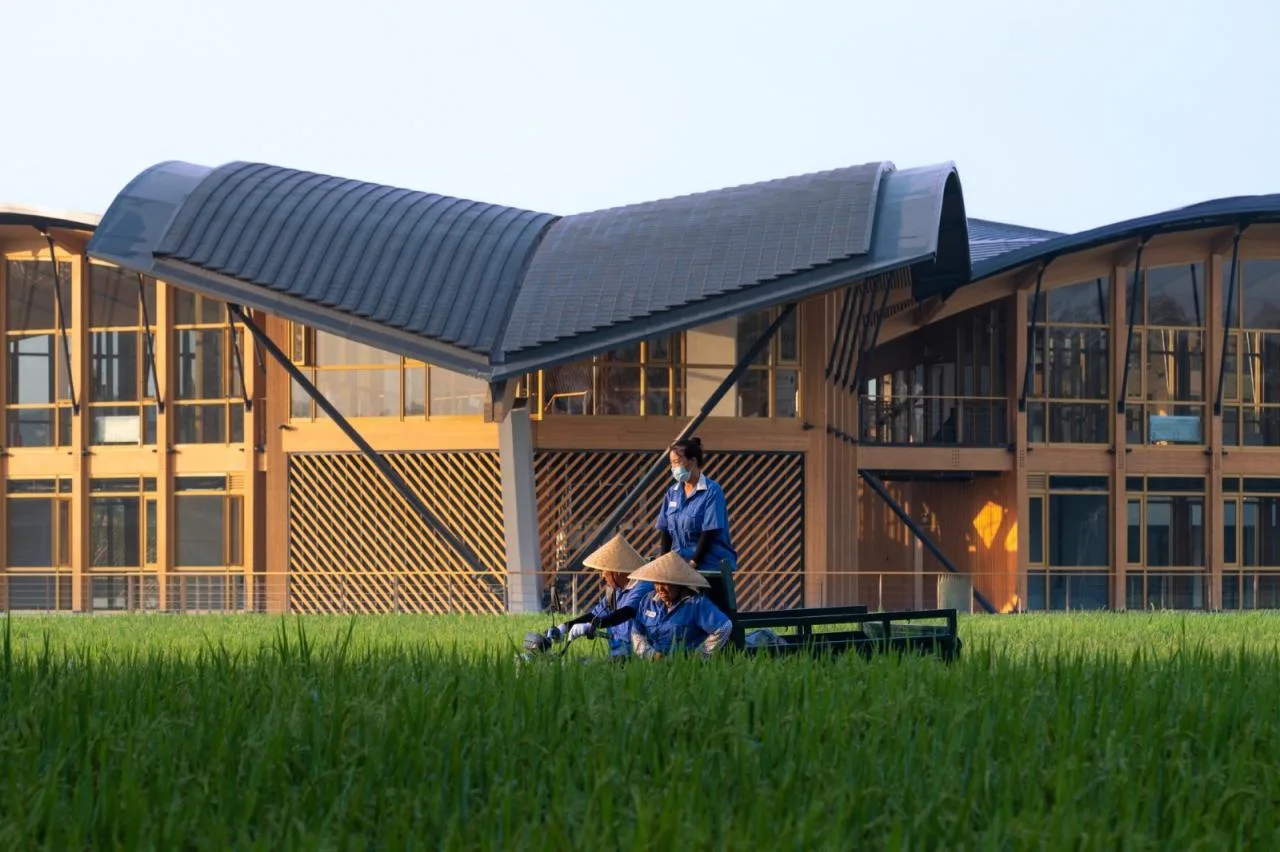
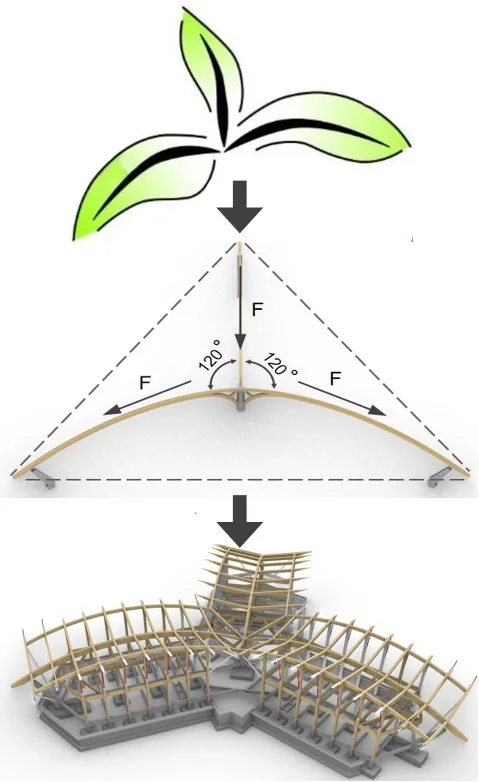
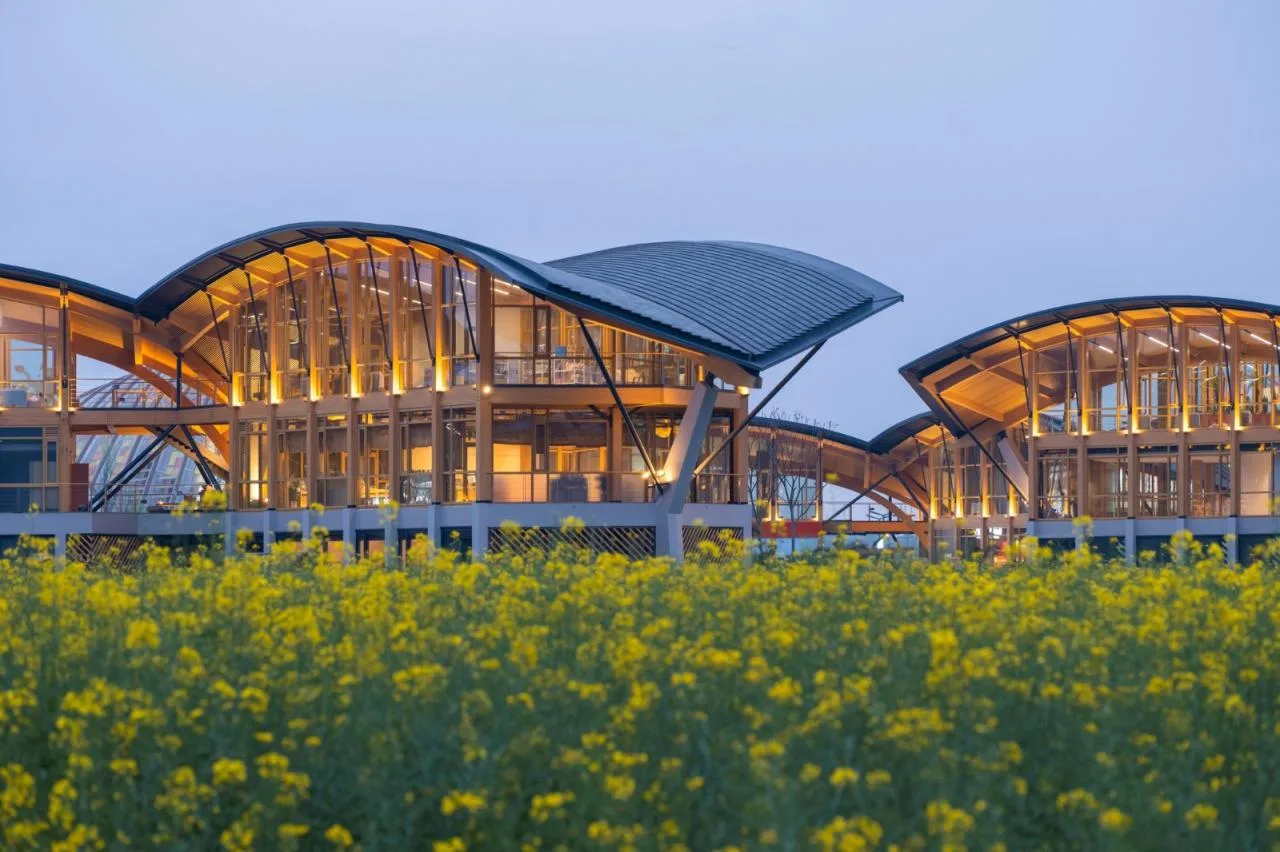
The four primary buildings embody a three-dimensional interpretation of the “green seedling” concept. They are arranged along the site’s boundary turning points, each rotated at different angles to create subtle spatial relationships. Each unit is composed of three independent branches that converge at the center to form a two-story open hall. This hall serves as a semi-outdoor activity space, sheltered by wide eaves, perfectly suited for the warm and rainy climate of western Sichuan.
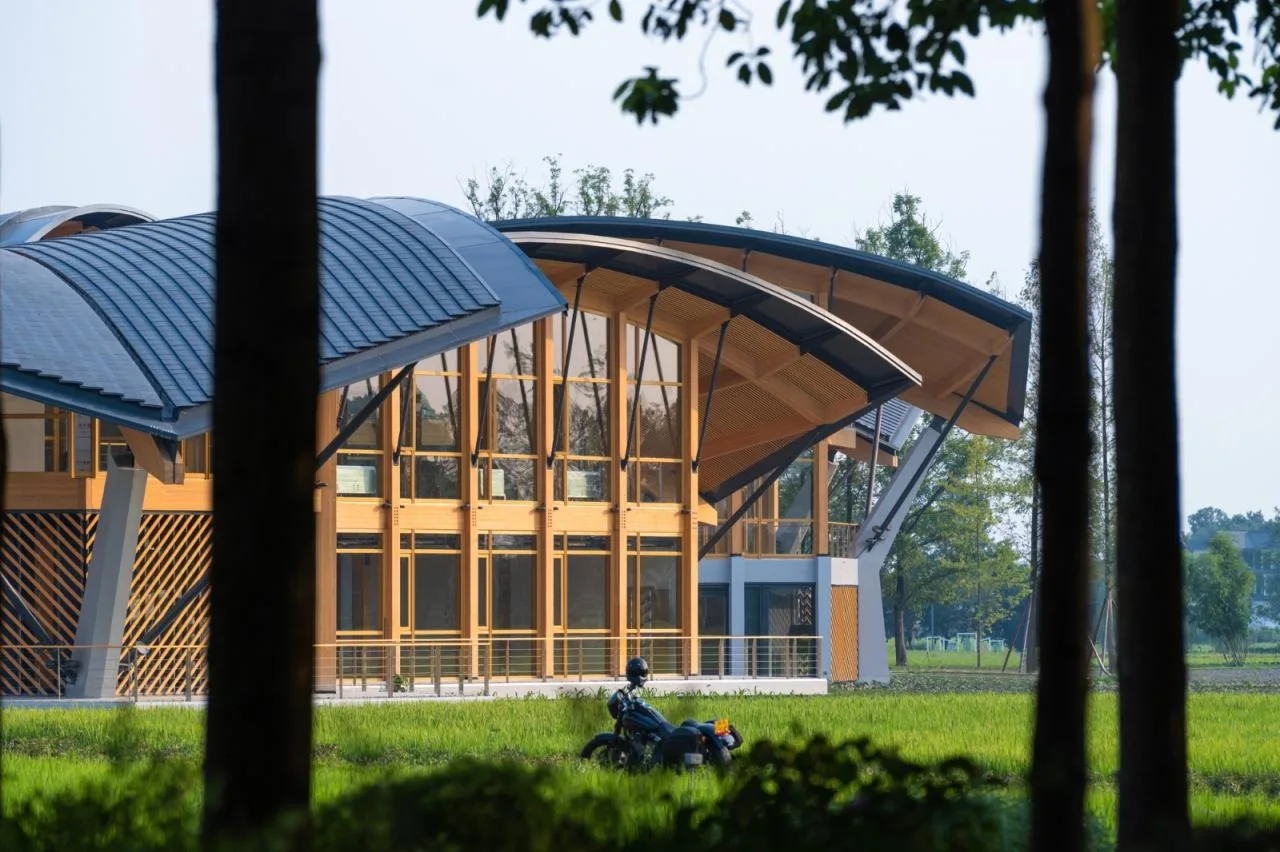
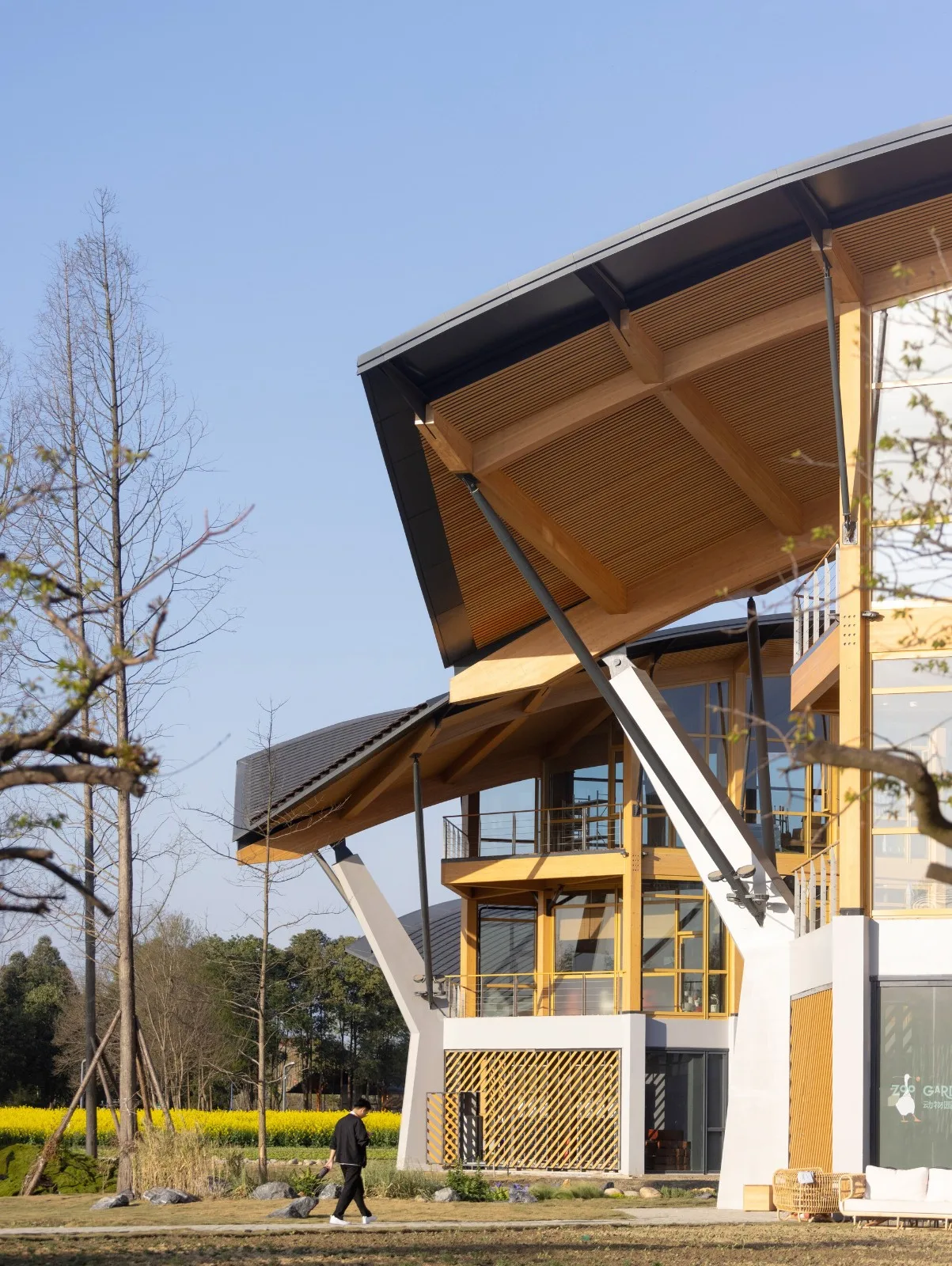
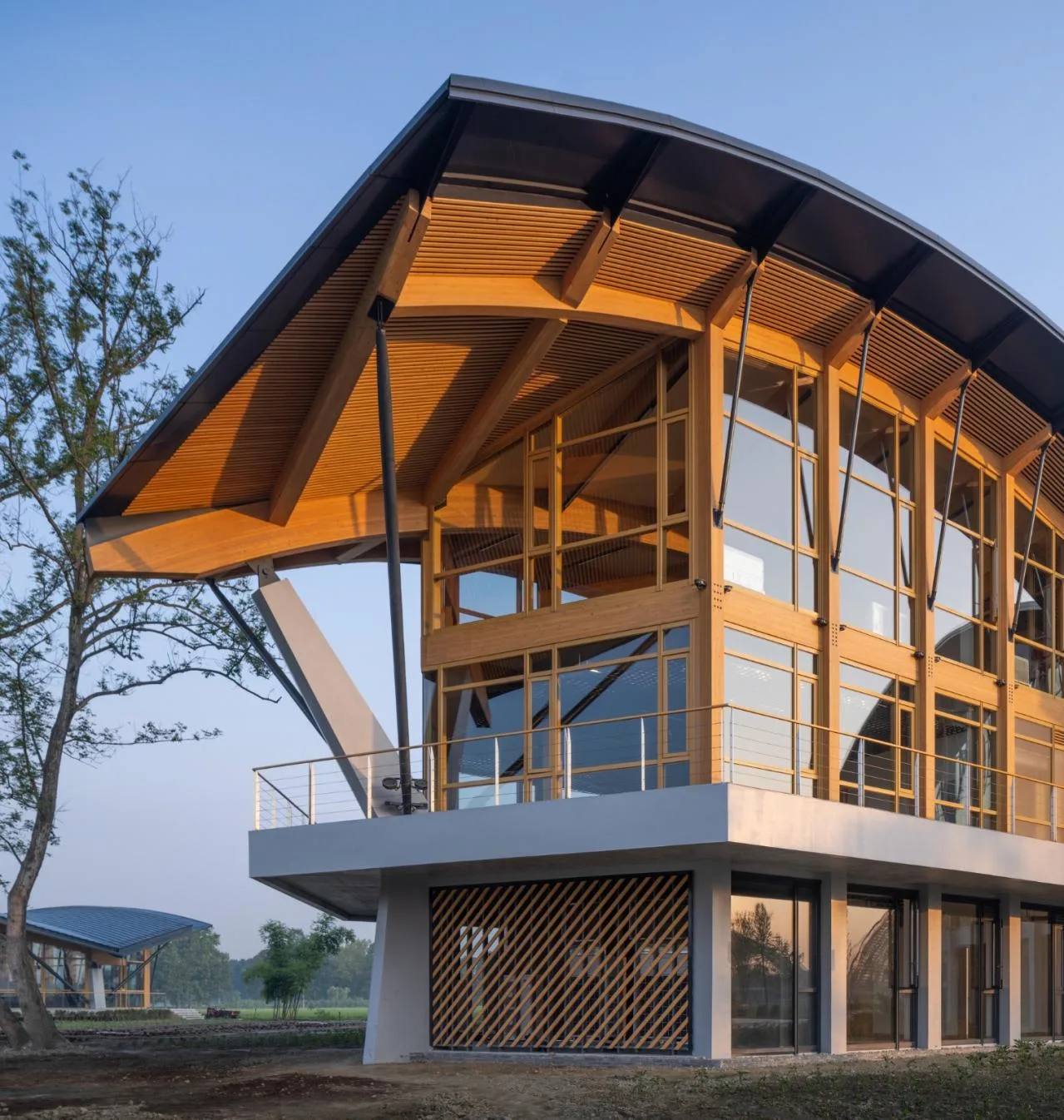
The buildings employ simple, natural materials inspired by traditional Western Sichuan rural houses, which typically feature wooden beams, small blue tiles, and painted brick walls. The design references these elements through the use of dark gray ceramic tiles, warm-toned laminated wood, and gray-painted walls. Although all materials are industrially produced, they maintain the essence of traditional handcrafted rural materials, creating a dialogue across time.
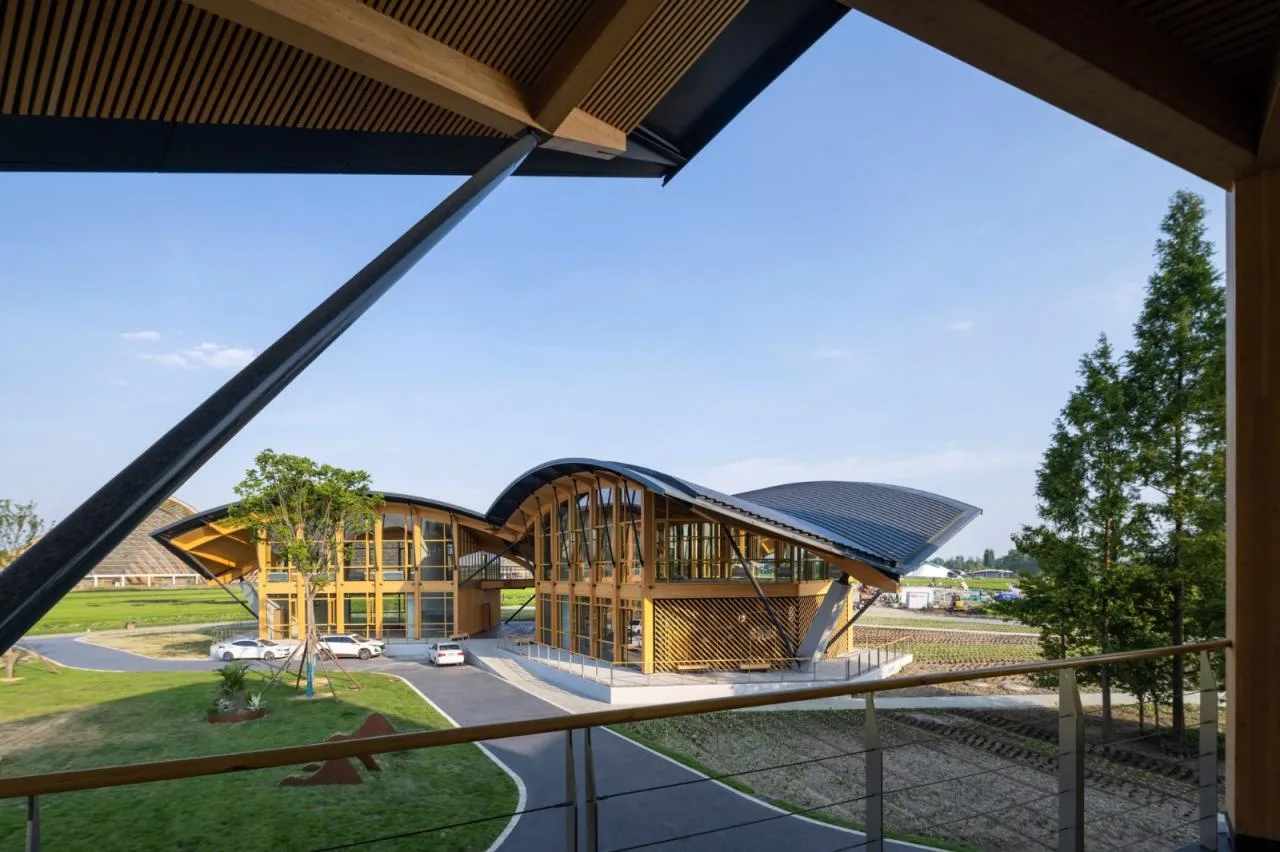
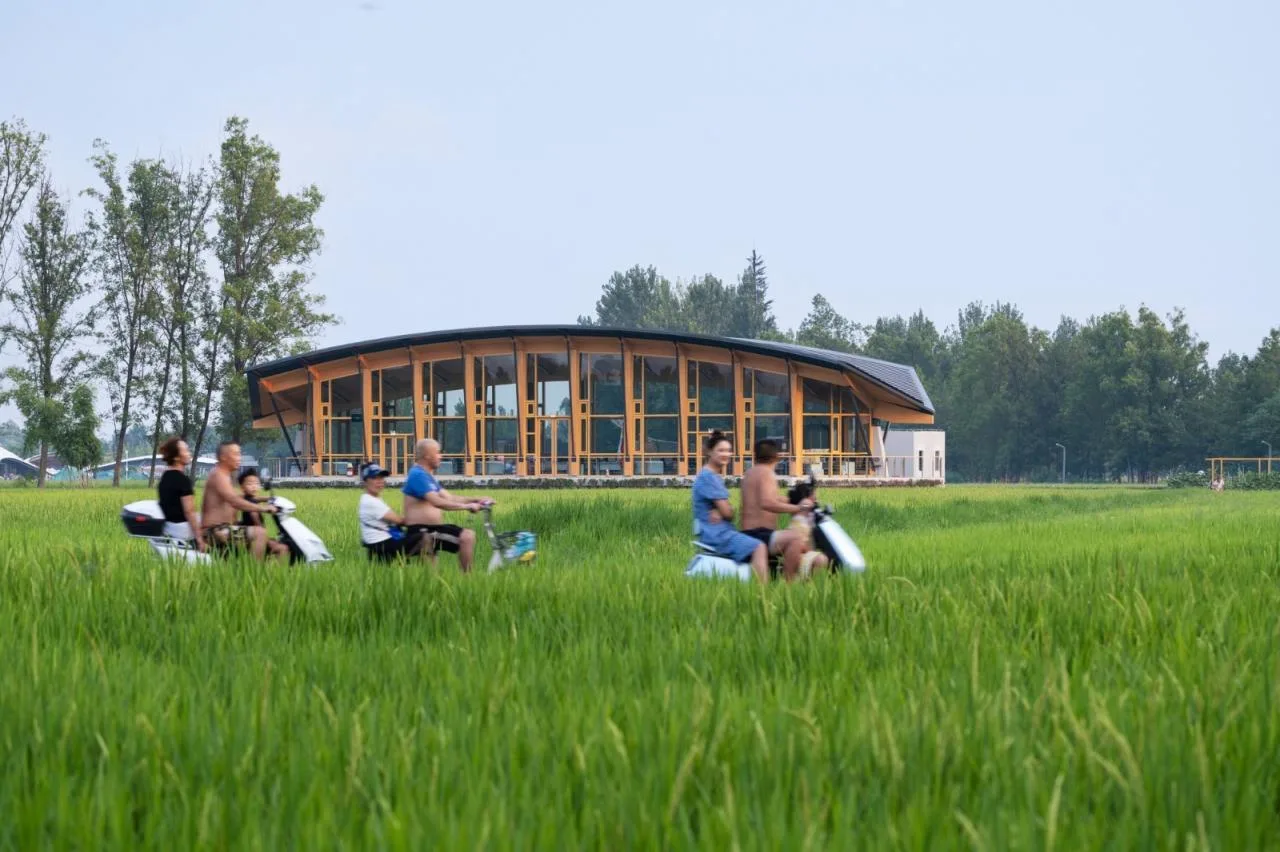
The name “Qingmiao” is derived from the architecture’s biomimetic design. From the building’s geometric center, a series of arched wooden roofs extend in three directions at 120-degree angles, forming a “clover” shape. This plant-inspired form reflects how organisms adapt to natural forces such as sunlight, rain, and wind, while also offering remarkable structural elegance. To the east lies the Agricultural Expo Park’s main exhibition hall, designed by Academician Cui Kai, characterized by five massive arched roofs forming an iconic landmark. Qingmiao echoes this with its laminated wood arch structures, creating a flowing skyline that harmonizes with the broad horizon.
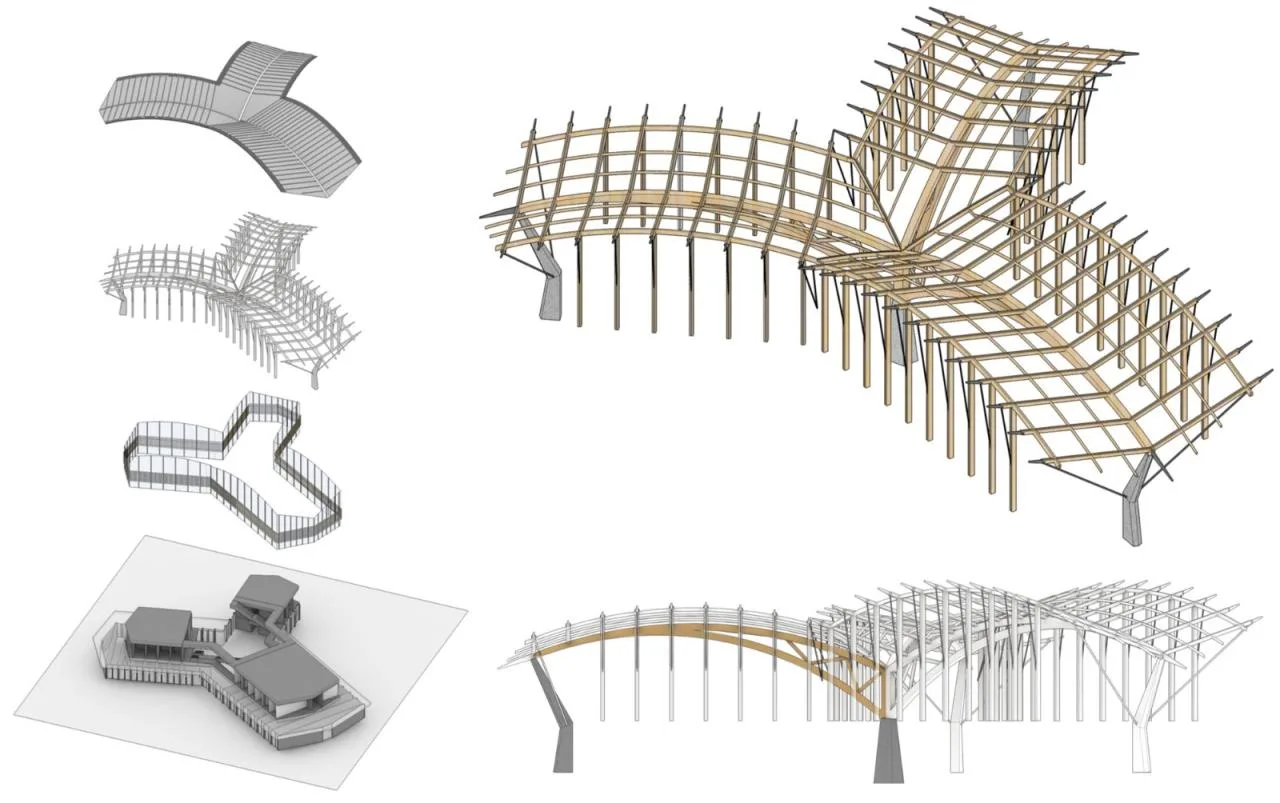
The site is prone to humidity and potential waterlogging during heavy rain seasons. To protect the wooden structures from moisture, buildings 1, 4, and 5 are elevated on concrete foundation slabs about one meter high. Building 3 features a fully concrete ground floor housing equipment rooms, kitchens, and laboratories to meet fire safety, moisture protection, and vibration isolation requirements. The upper two to three floors use laminated wood structures supported by the concrete frame below, creating a mixed structural system that clearly expresses the design concept both visually and technically.
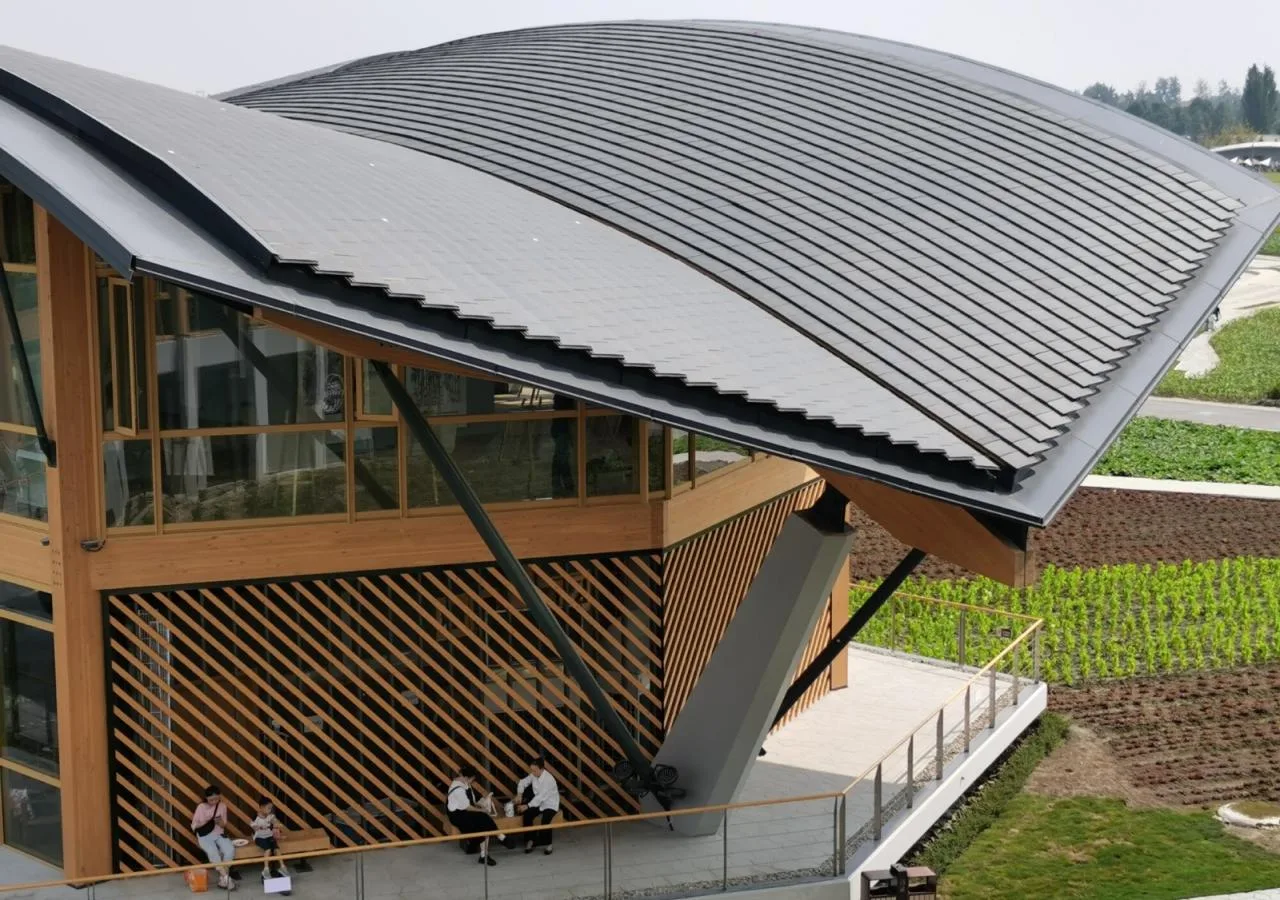
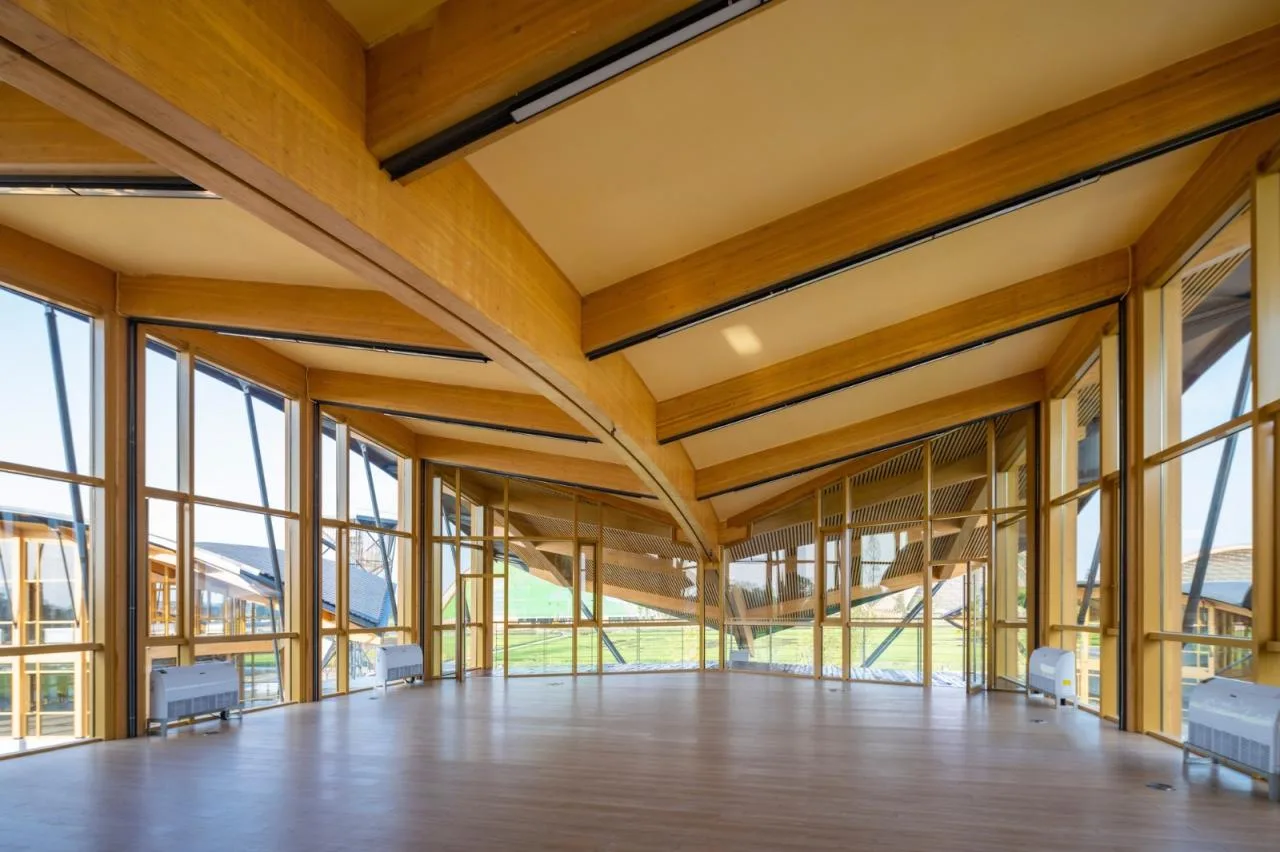
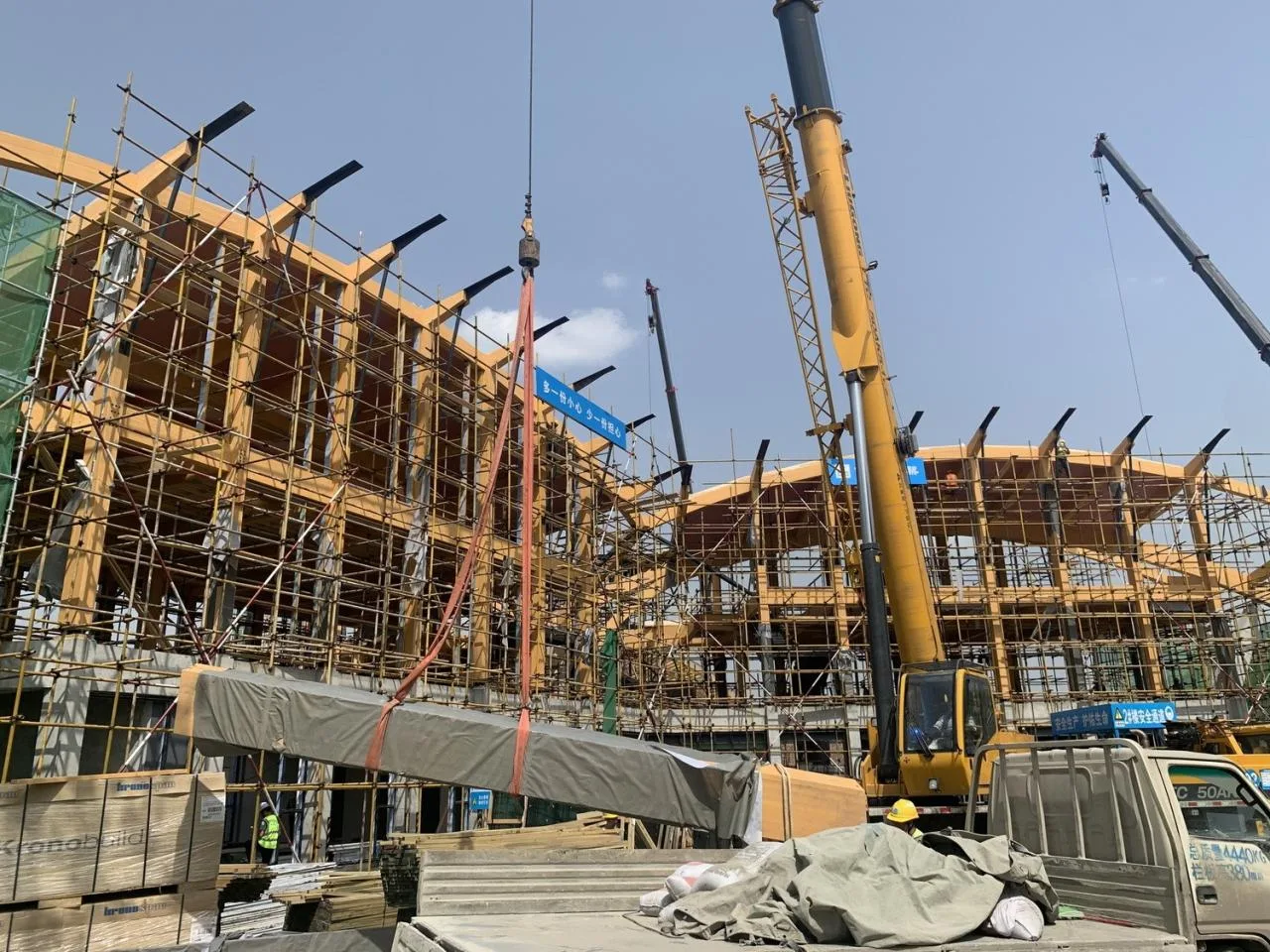
To ensure functional flexibility, all building units feature large open spaces. The roof structure consists of glued laminated wood main arches spanning 33 meters, creating column-free expansive areas on the top floors. The longitudinal main arches and transverse secondary beams follow the curved surface, resembling natural veins. Each secondary beam extends beyond the roof edge to support the eaves. To achieve a slender eave profile, steel plate ribs are inserted into the beam ends and covered with aluminum plates. This technique not only facilitates edge trimming for the small blue tiles but also enriches the visual layering.
Internally, the design emphasizes natural elements by exposing wooden beams and columns, avoiding additional decorative finishes and achieving a seamless integration of structure and interior. Sunlight filters through the eaves, bathing the space in the warm hues characteristic of laminated wood, fostering a cozy and inviting atmosphere.
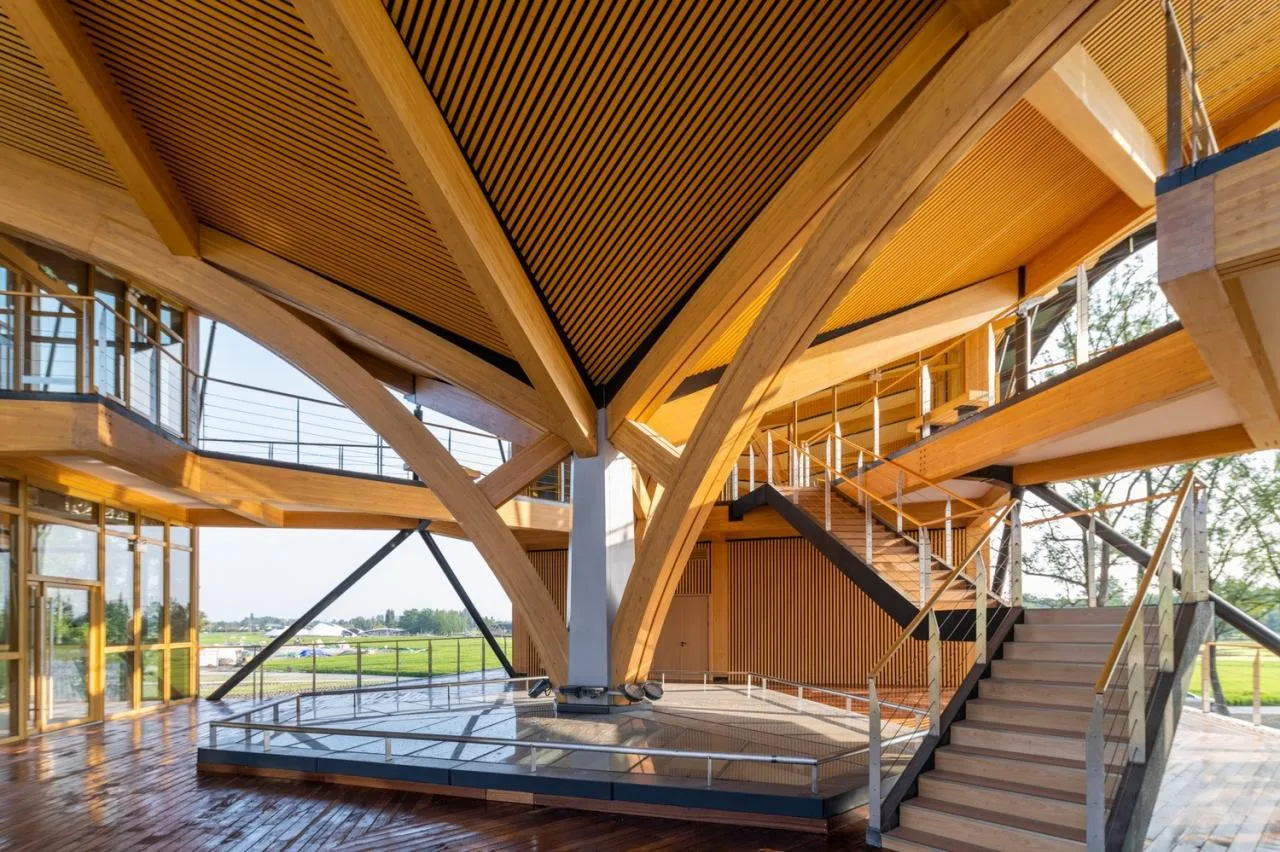
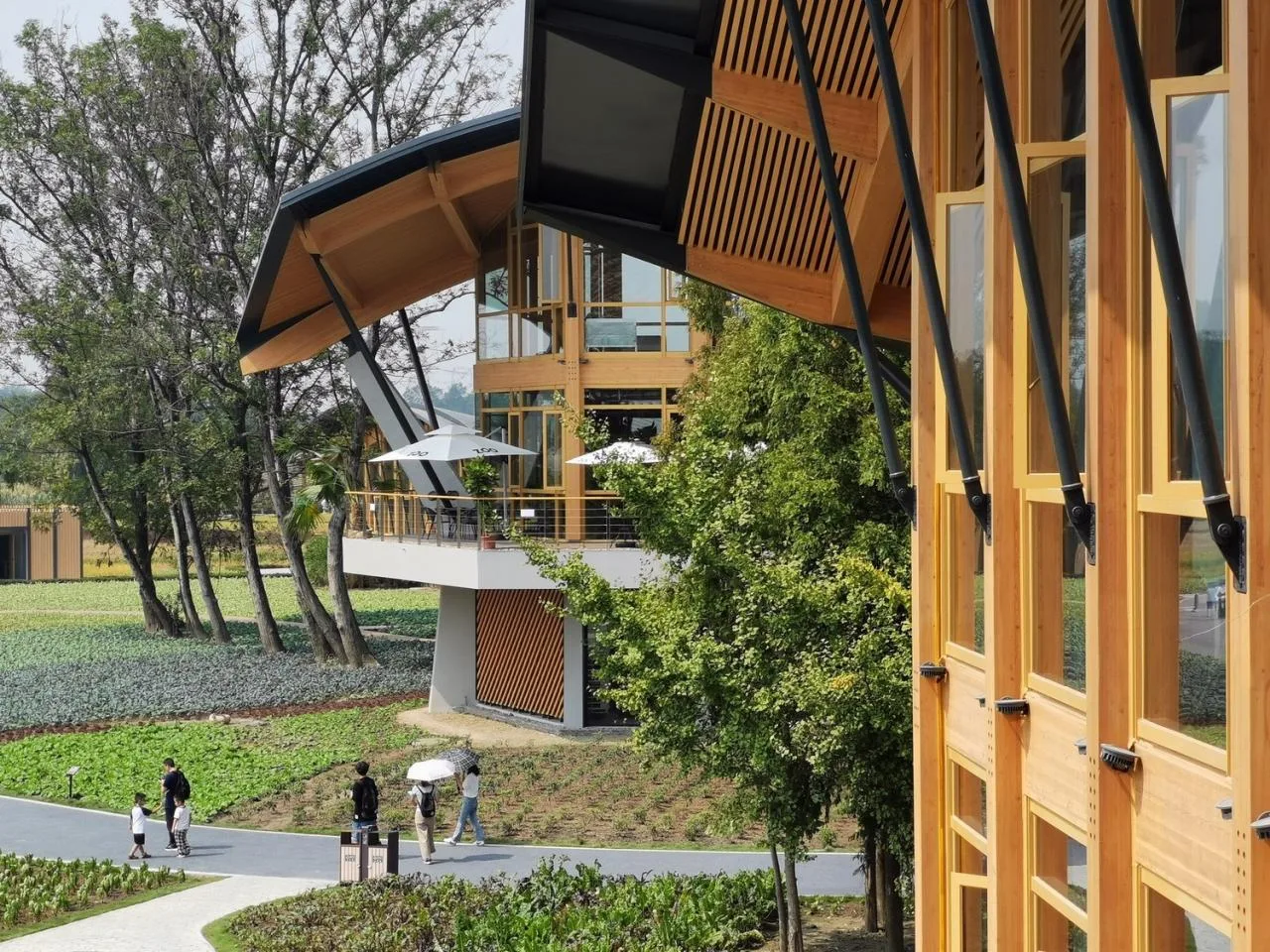
At each unit’s end, the laminated wood main arches rest on diagonal concrete columns, while slender diagonal steel columns support the overhanging eaves of the wooden structures. This lightweight form resembles bird wings opening to shelter the balconies below. The materials—wood, concrete, and steel—each serve distinct structural roles, clearly expressing their force transmission and creating a transparent construction aesthetic.
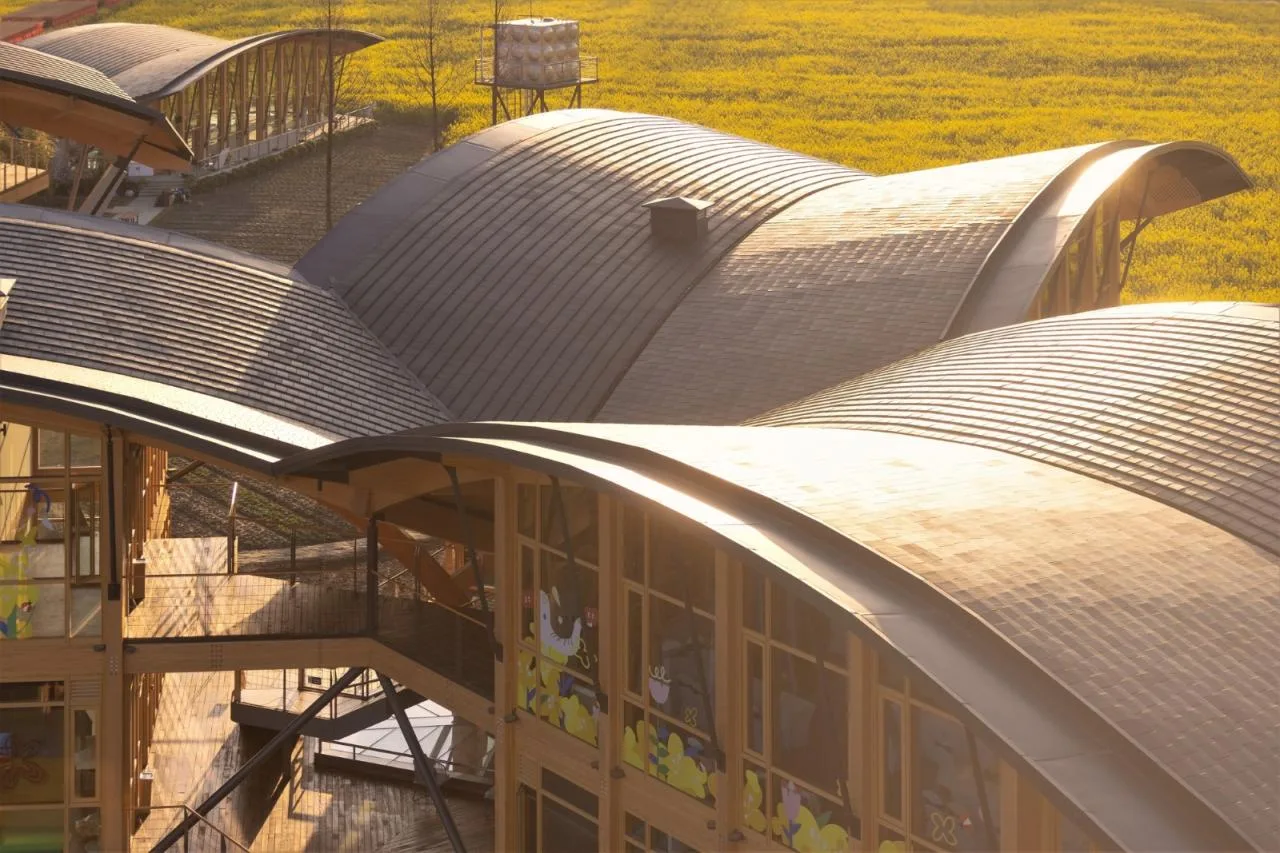
Building on the roof’s unique shape, the design includes a specialized rainwater drainage system. Ceramic tiles cover a flexible waterproof membrane on the roof, utilizing the curved slope. The V-shaped roof collects rainwater in an arched channel along the inner ridge, then directs it outward through two paths: an outer water outlet and an inner collection hopper above the central open hall. Water is funneled into an underground reservoir via a concealed downspout embedded in a hexagonal concrete column. This harvested rainwater is reused for irrigation and road cleaning, maximizing resource efficiency.
Project Drawings
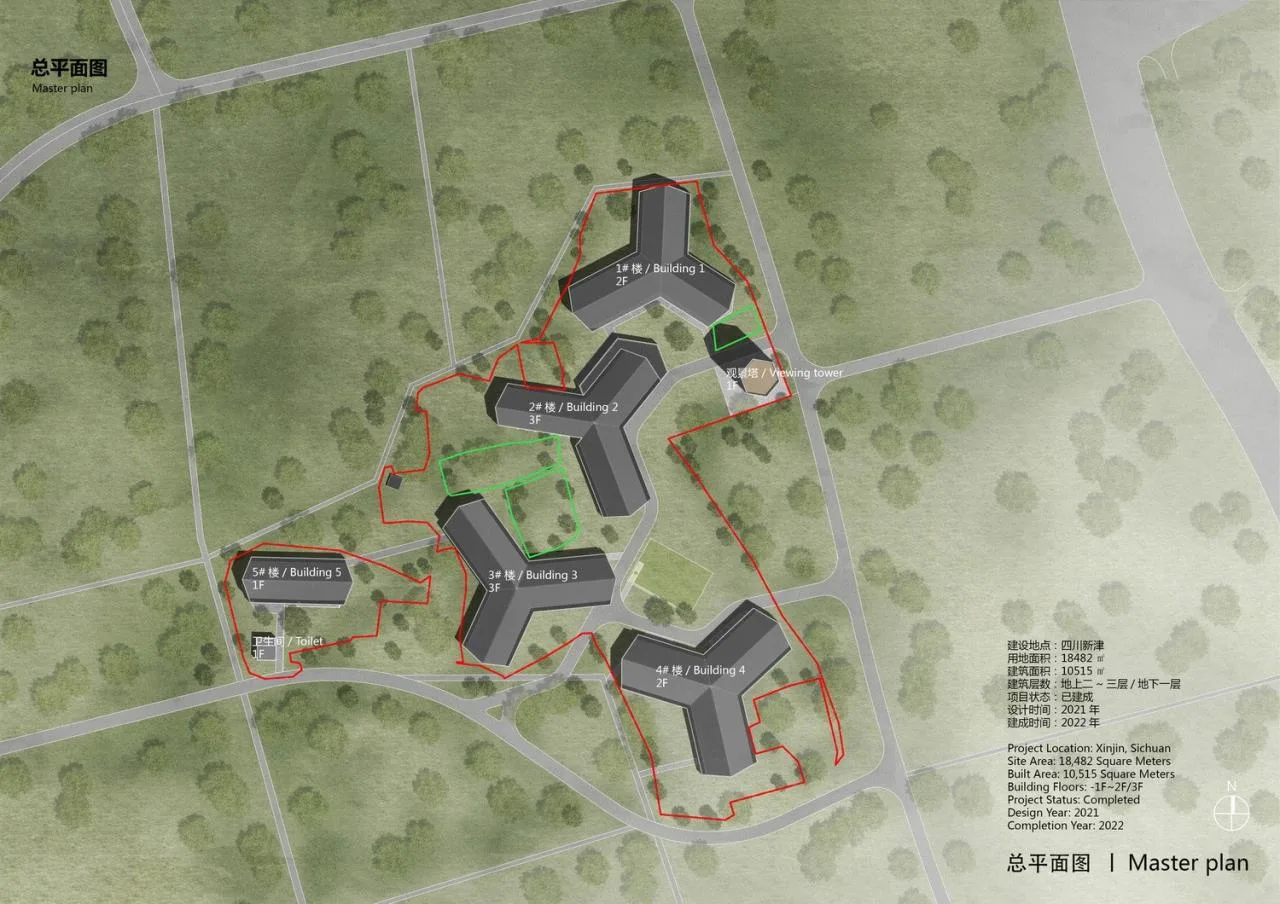
△ General Layout Plan
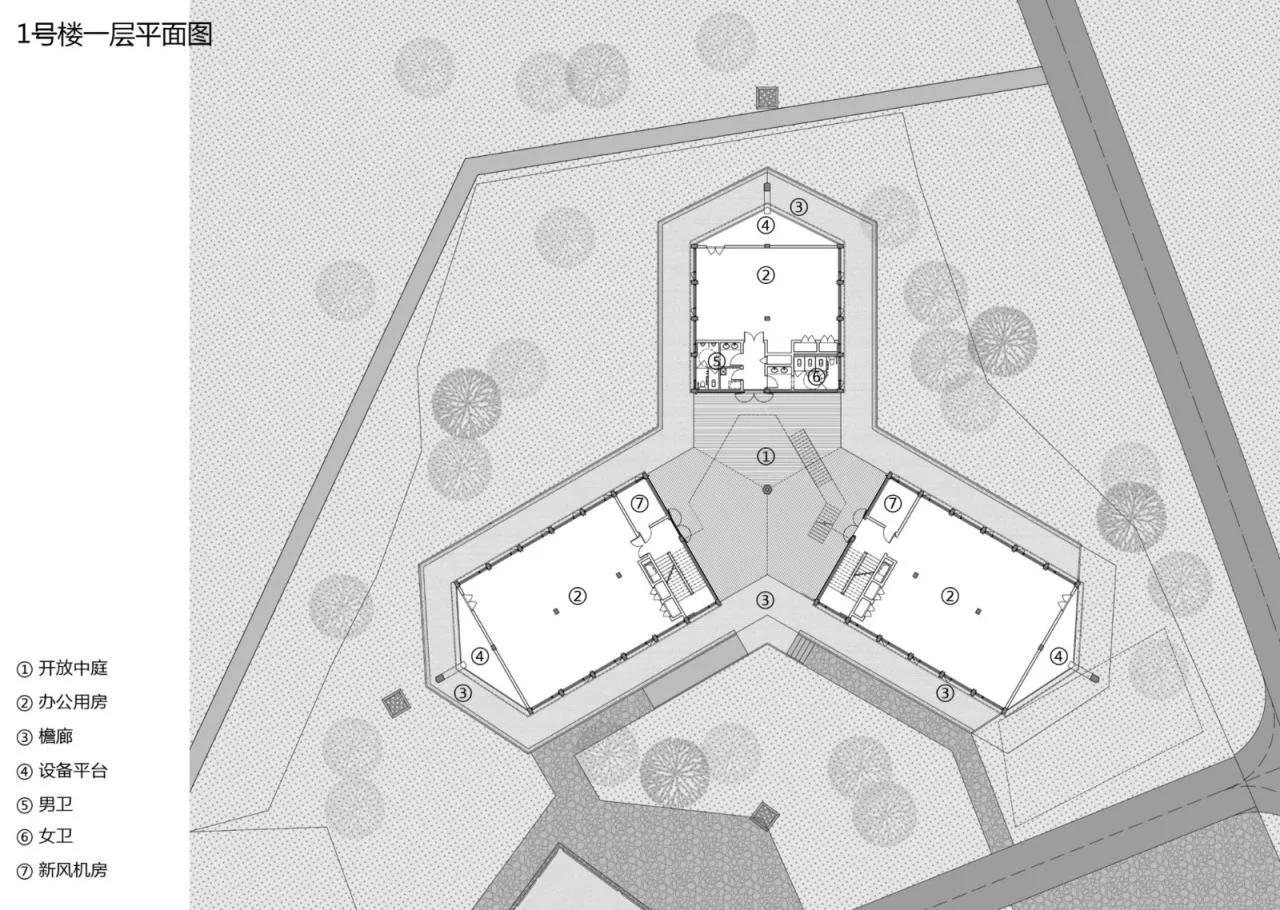
△ First Floor Plan of Building 1
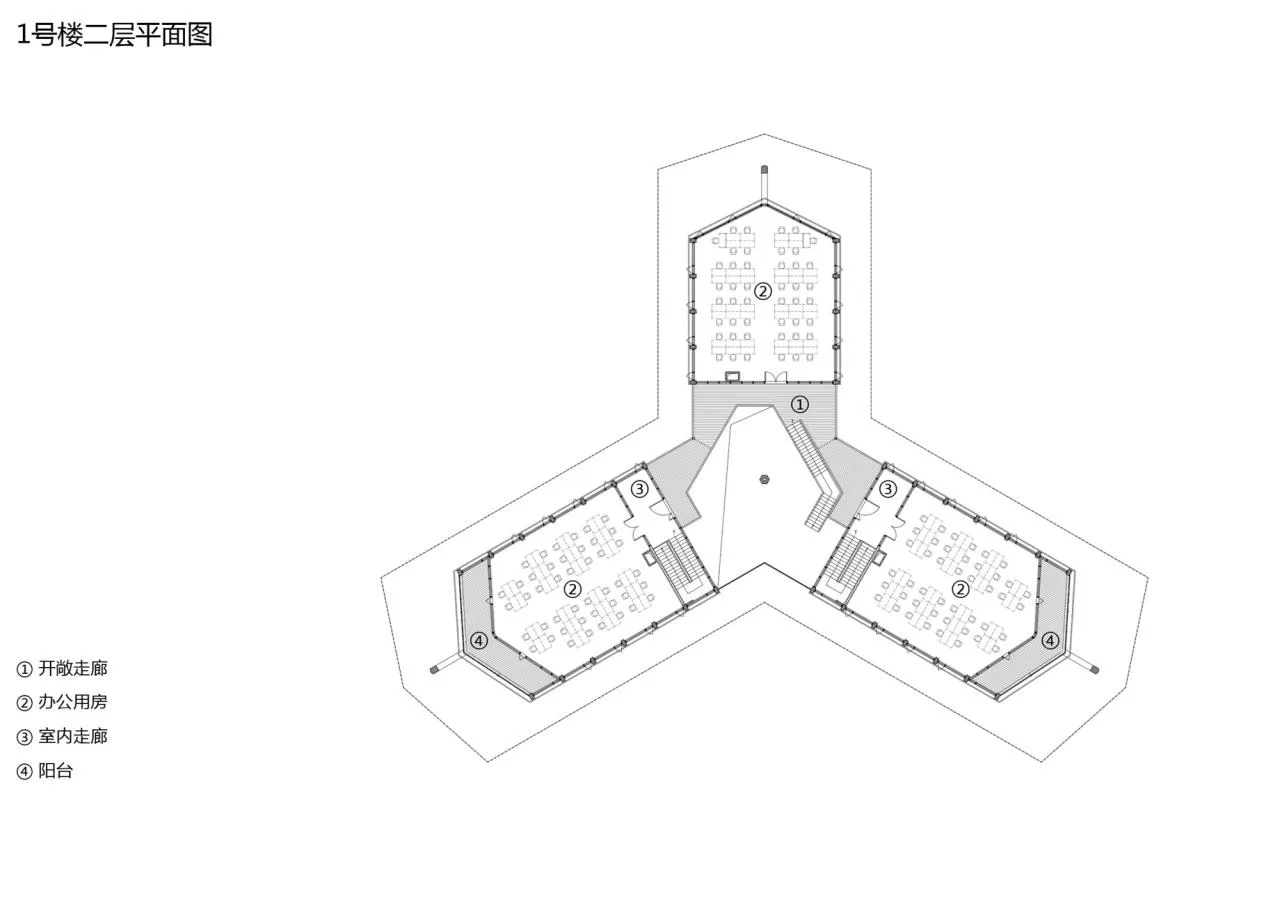
△ Second Floor Plan of Building 1
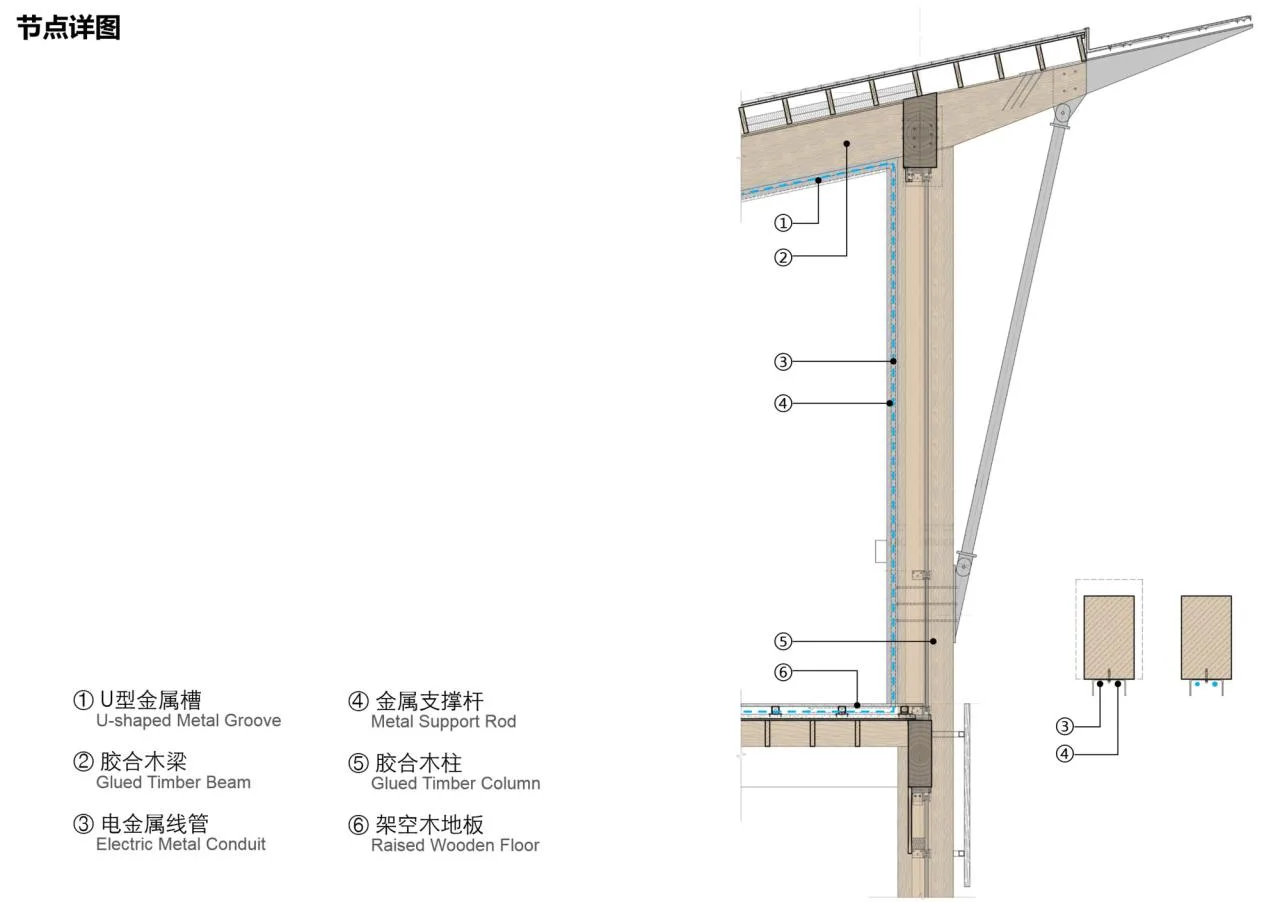
△ Node Details
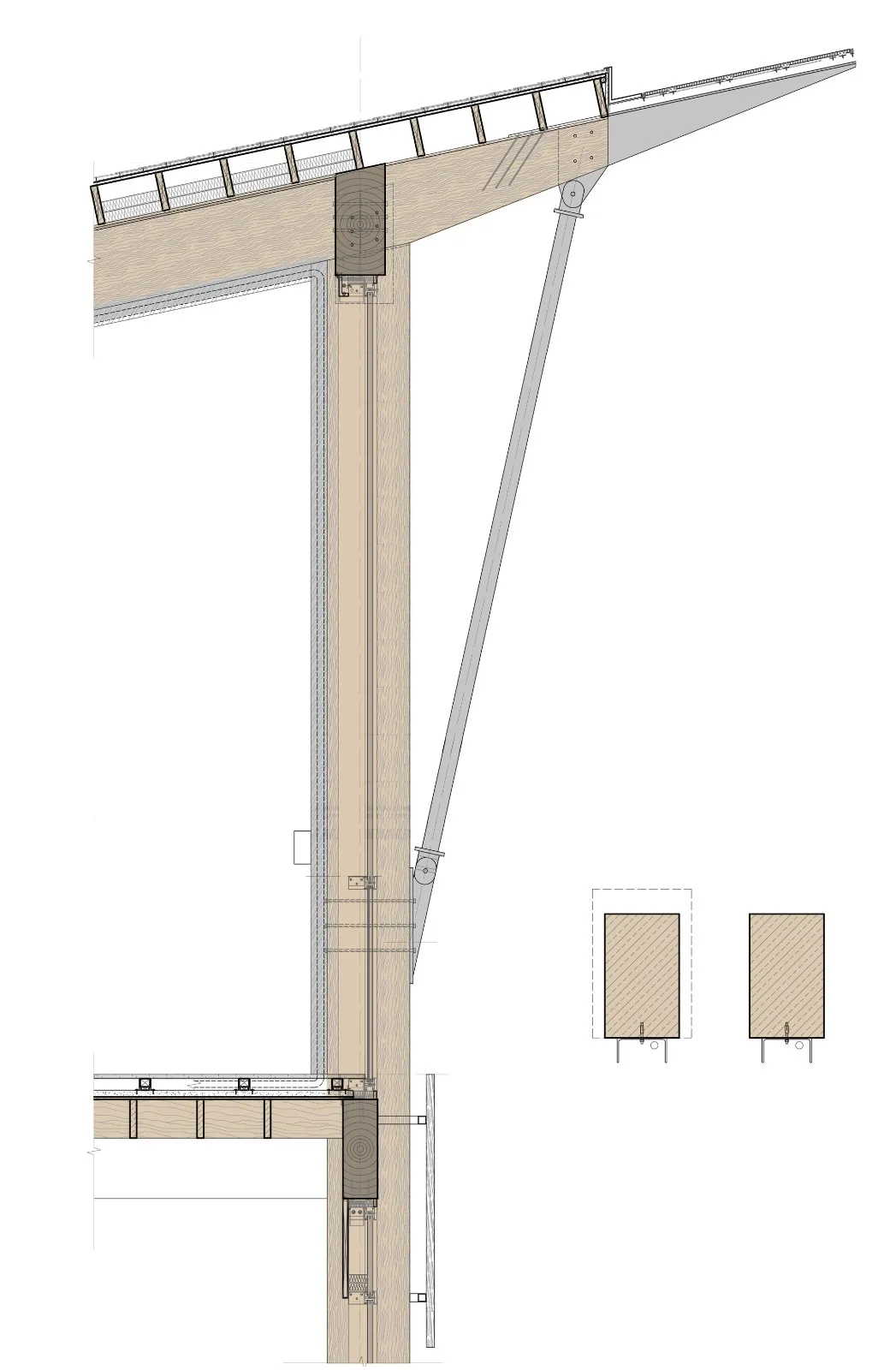
△ Node Details
Project Information
Cinematographers: Existence Architecture – Architectural Photography, Liu Yi, Zhuang Xiaojun
Manufacturers: Shanghai Sikafu Construction Technology Co., Ltd., Foshan Rongguan Building Materials Co., Ltd.
Lead Architect: Liu Yi
Structural Consultant: Longwei Kingdom
Project Architects: She Nian, Zheng Xin
Design Team: Liu Yifeng, Chen Yuan, Shi Bowen, Li Qiuji, Jiang Haibo, Du Gao, Hu Qian, Ding Xindong, Zhang Xiaogang, Cai Honglin, Ou Jiajia, Yang Xuebing, Wei Changchen, Wang Hailin, Lu Wenfan, Wei Linbo, Huang Qing, Ding Ning, Qin Ling, Chen Jun, Nan Yanli, Zhang Longqian, Hou Peng, Zhang Guoqing
Owner: Sichuan Tianfu Agricultural Expo Park Investment Co., Ltd.
Location: Chengdu, China














Must log in before commenting!
Sign Up