
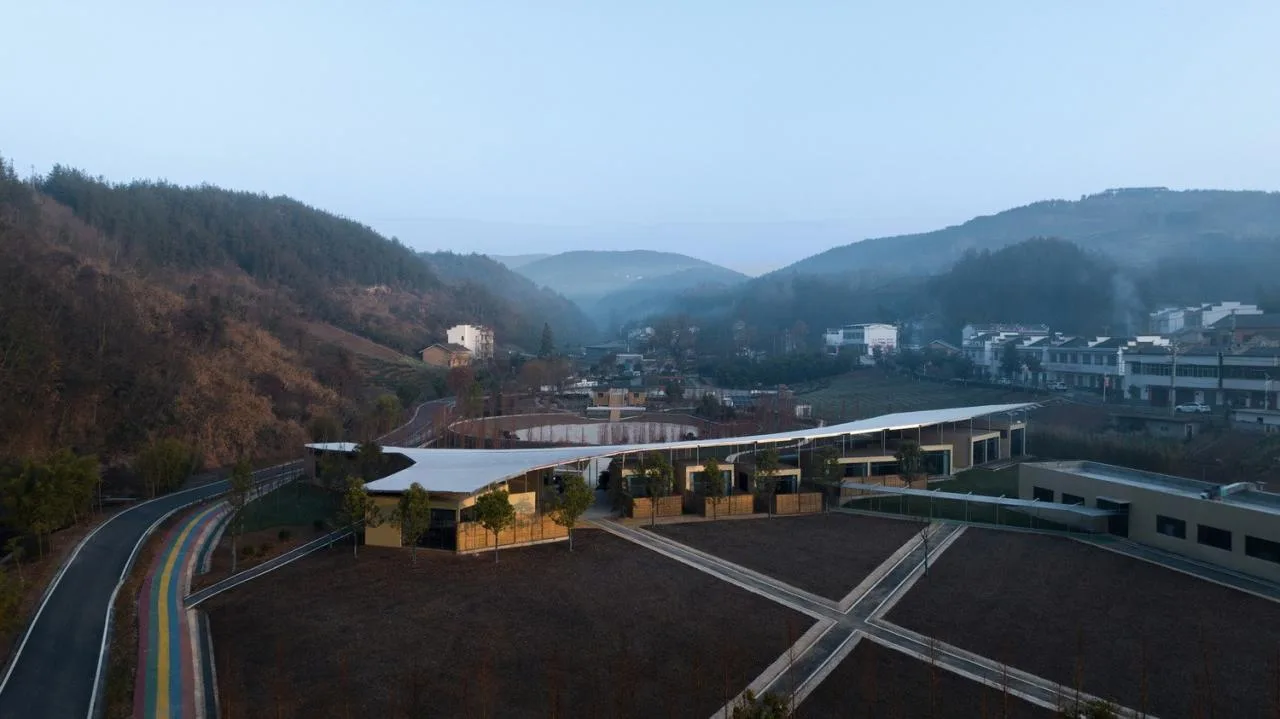
The Wufu Mountain and Water Dragon Family Banquet Restaurant is situated in Longjing Village, Baofeng Town, Zhushan County, Hubei Province. Serving as the final node of the Wufu Longjing Smart Agricultural Innovation Park, the owner envisioned a distinctive dining space where visitors, scholars, and villagers can enjoy exquisite meals. The project is adjacent to the spiritual heart of Longjing Village—Gushu Longjing Square. The owner intended for the new building and venue to visually and dynamically connect with this square.
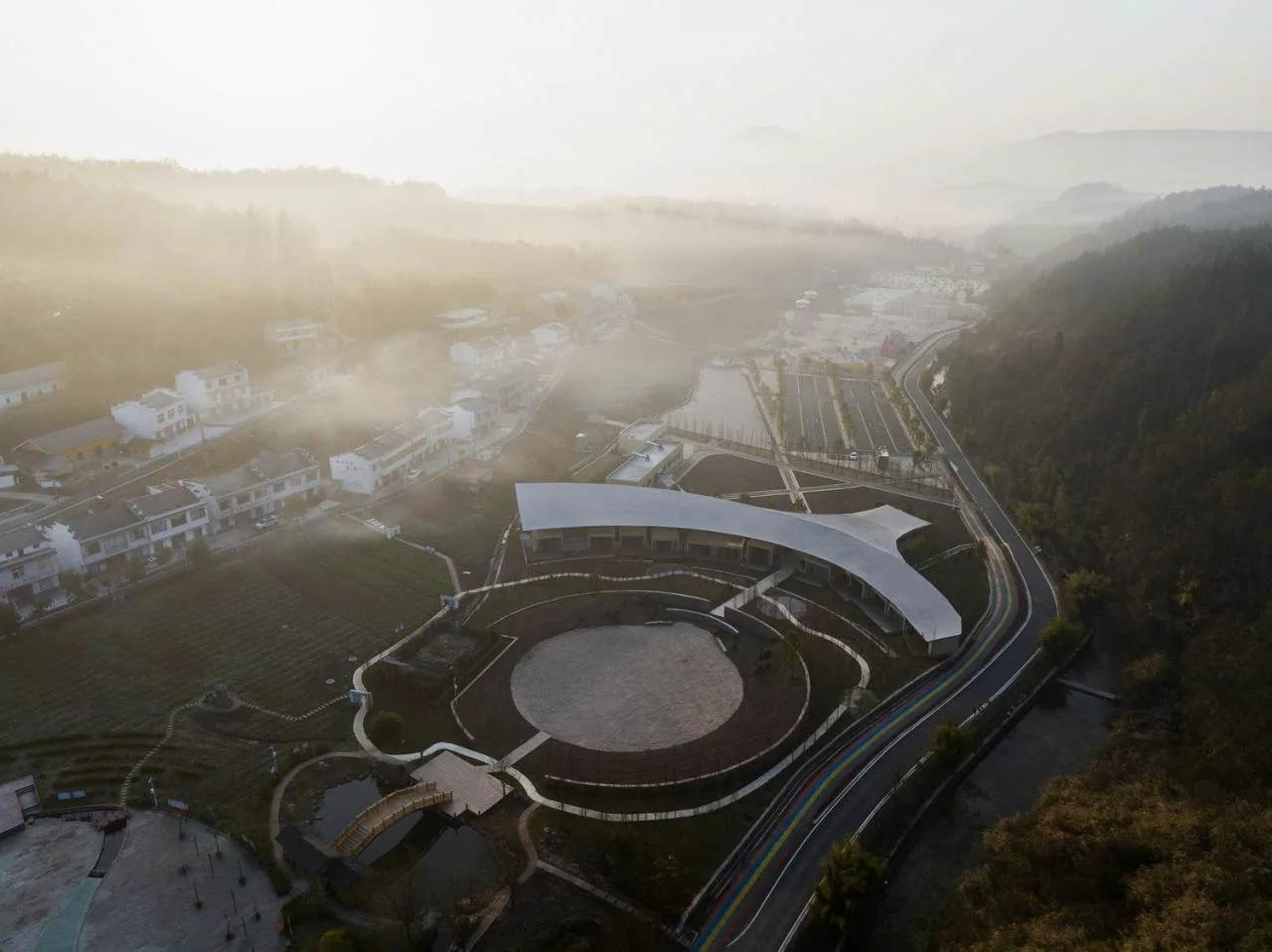
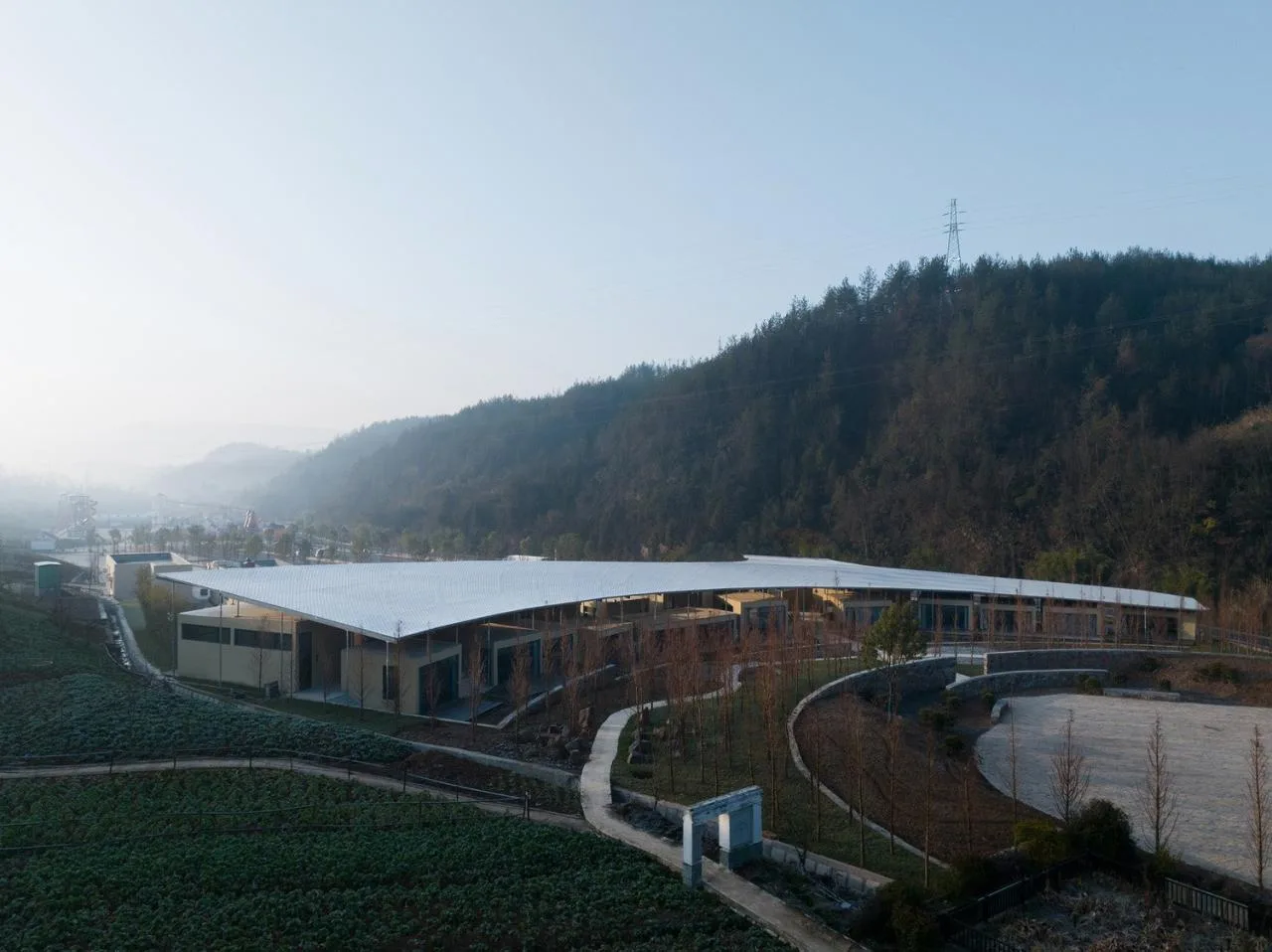
Longjing Village is renowned for its ancient trees, Longjing tea, and Longquan water, boasting a rich tea culture. Following a rural revitalization effort, the community now presents a unified aesthetic of white walls and gray tiles. Longjing Square has been rejuvenated, becoming the village’s sole gathering place. The design brief called for a dining venue that can host 24 tables simultaneously and offer private spaces of varying sizes to accommodate both impromptu and pre-booked events, including parties and wedding banquets.
The site is narrow and borders Longjing Square, lacking a strict orientation. The village’s organic growth diminishes formal order in new building layouts, with ancient Longjing trees serving as subtle guiding landmarks.
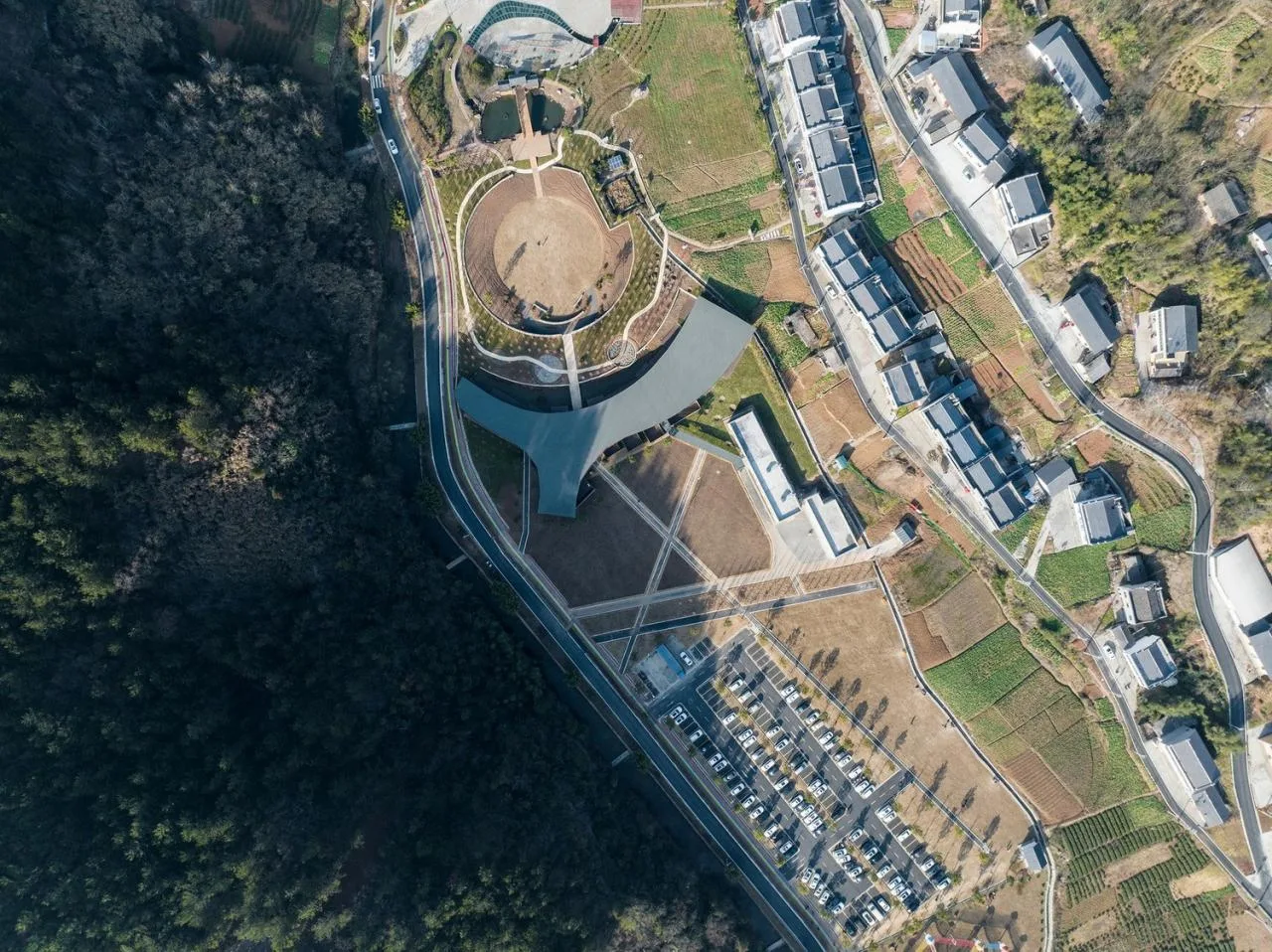
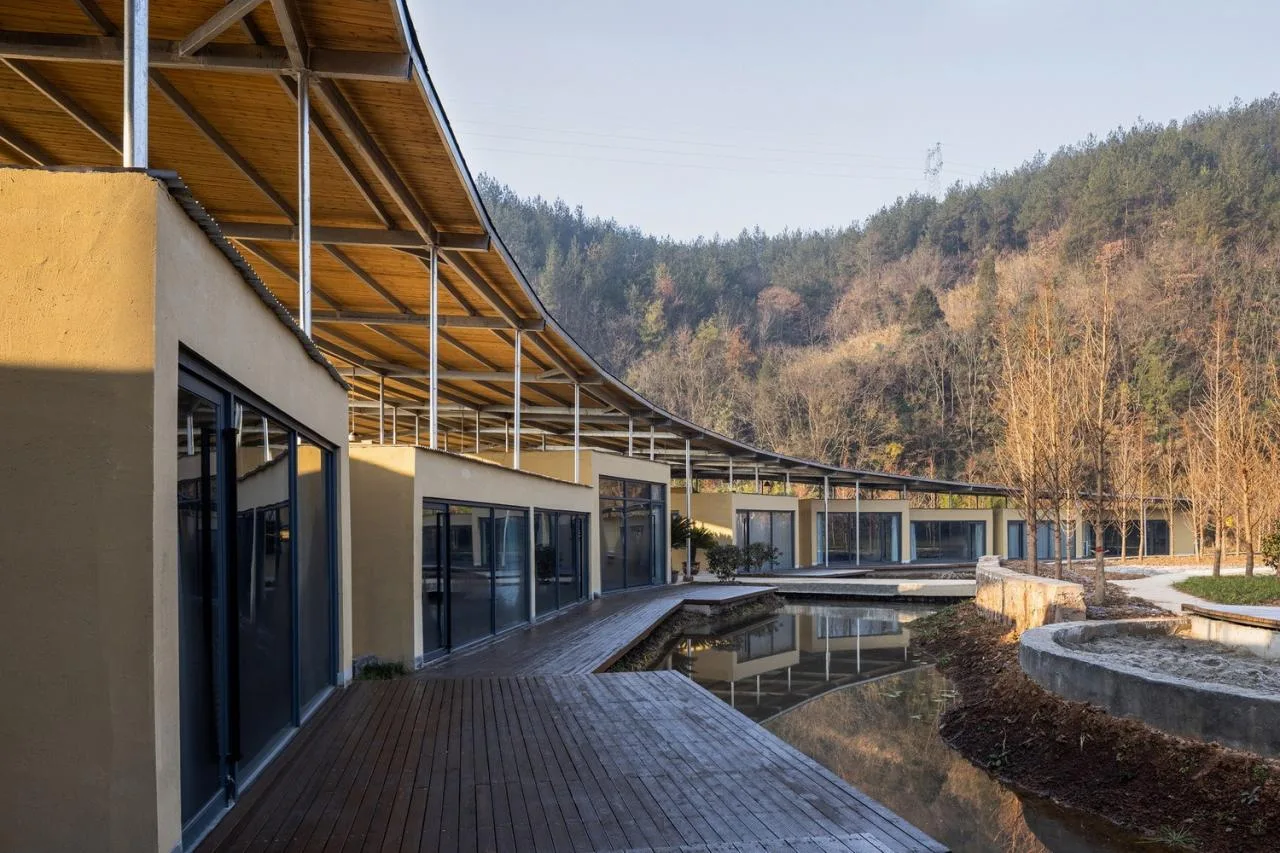
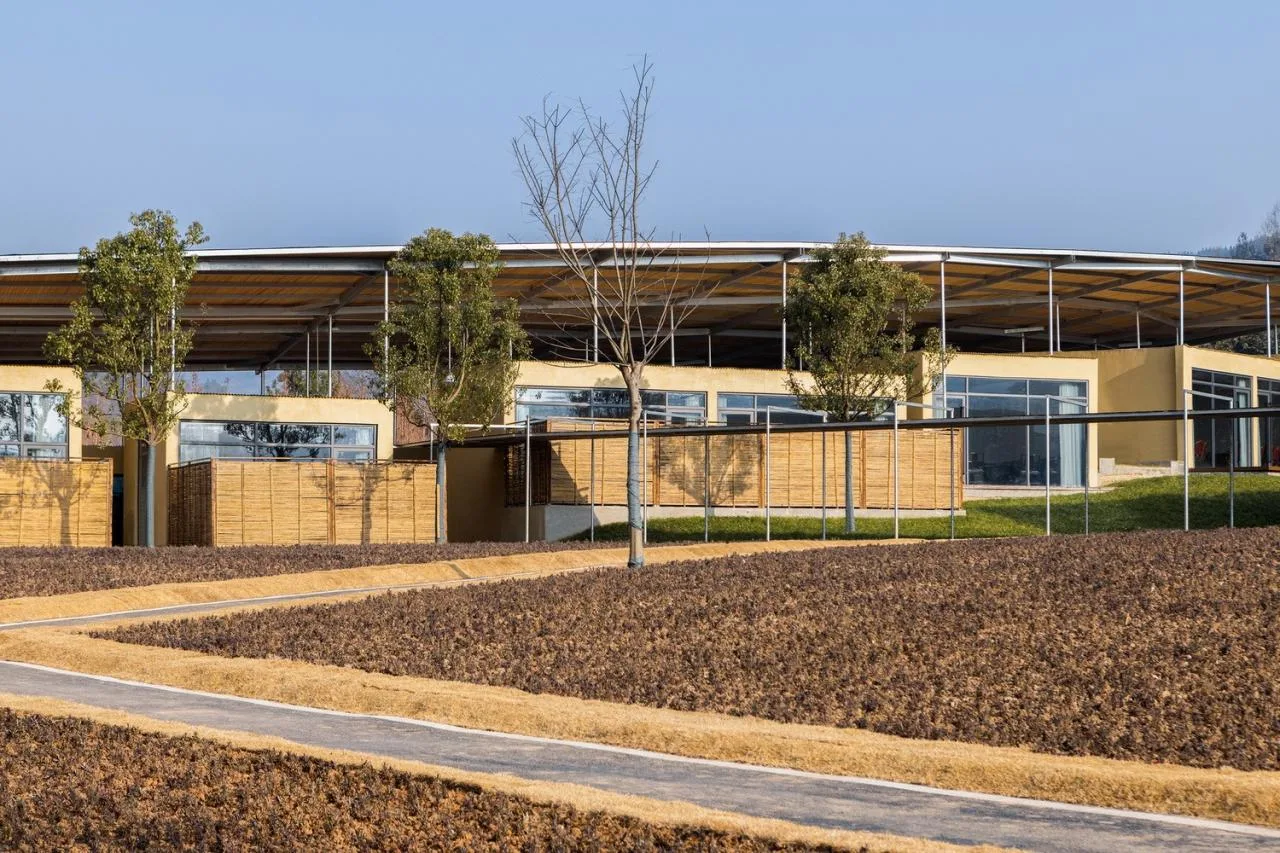
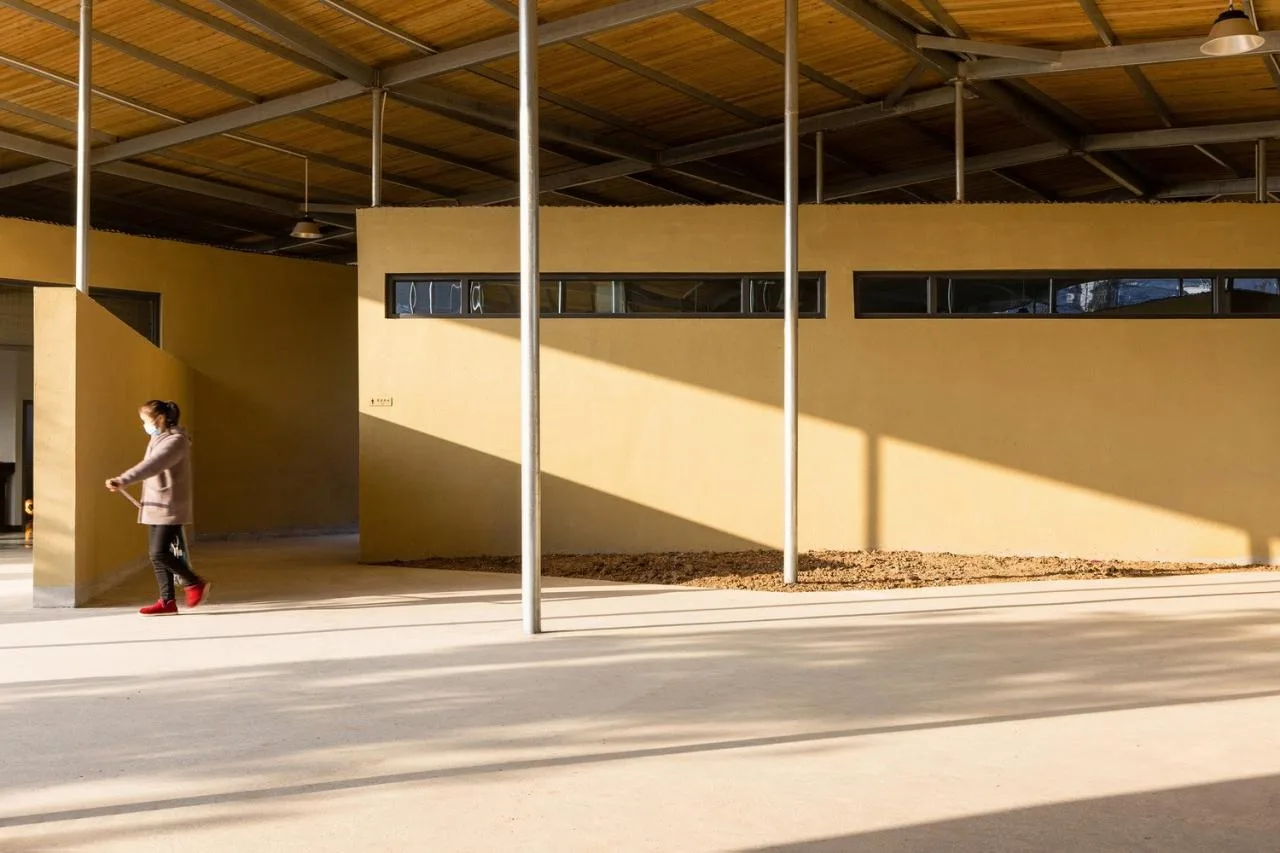
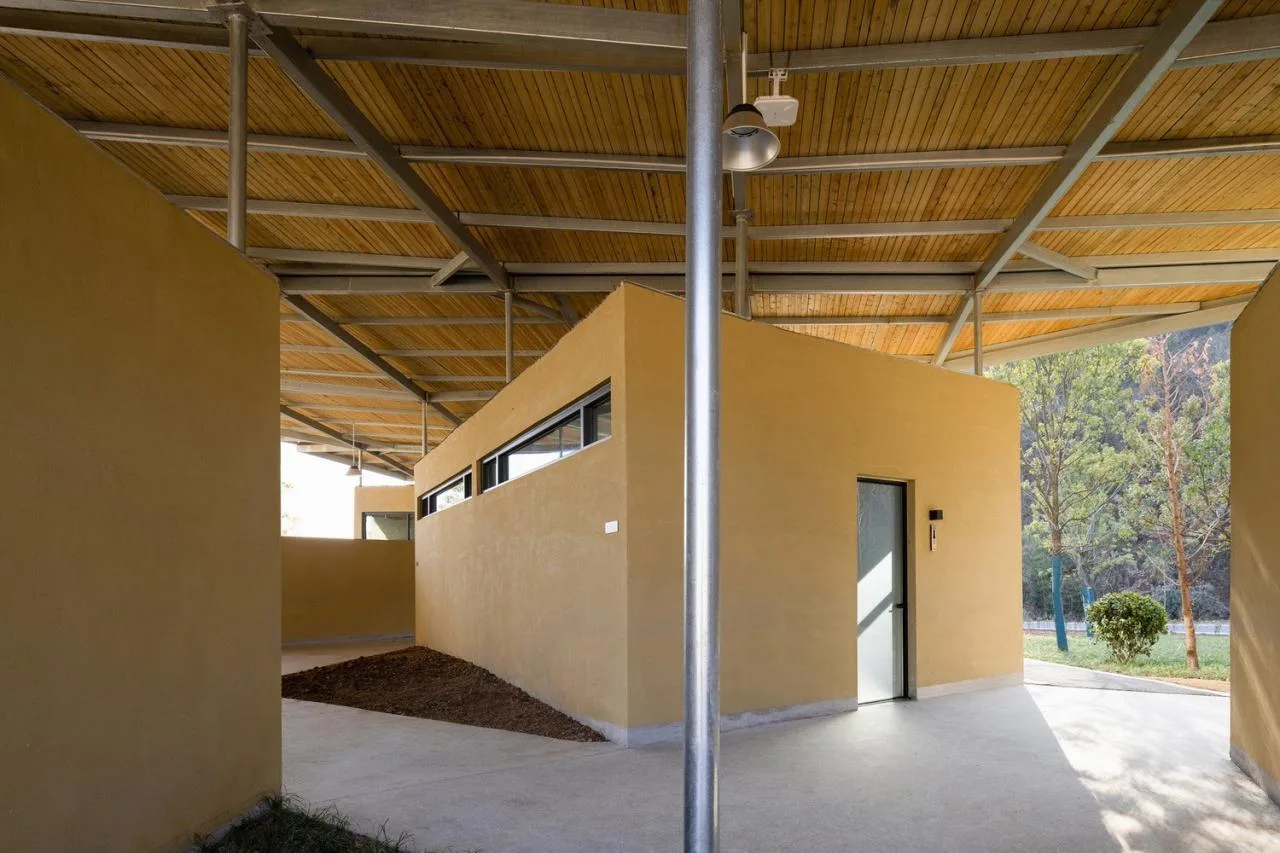
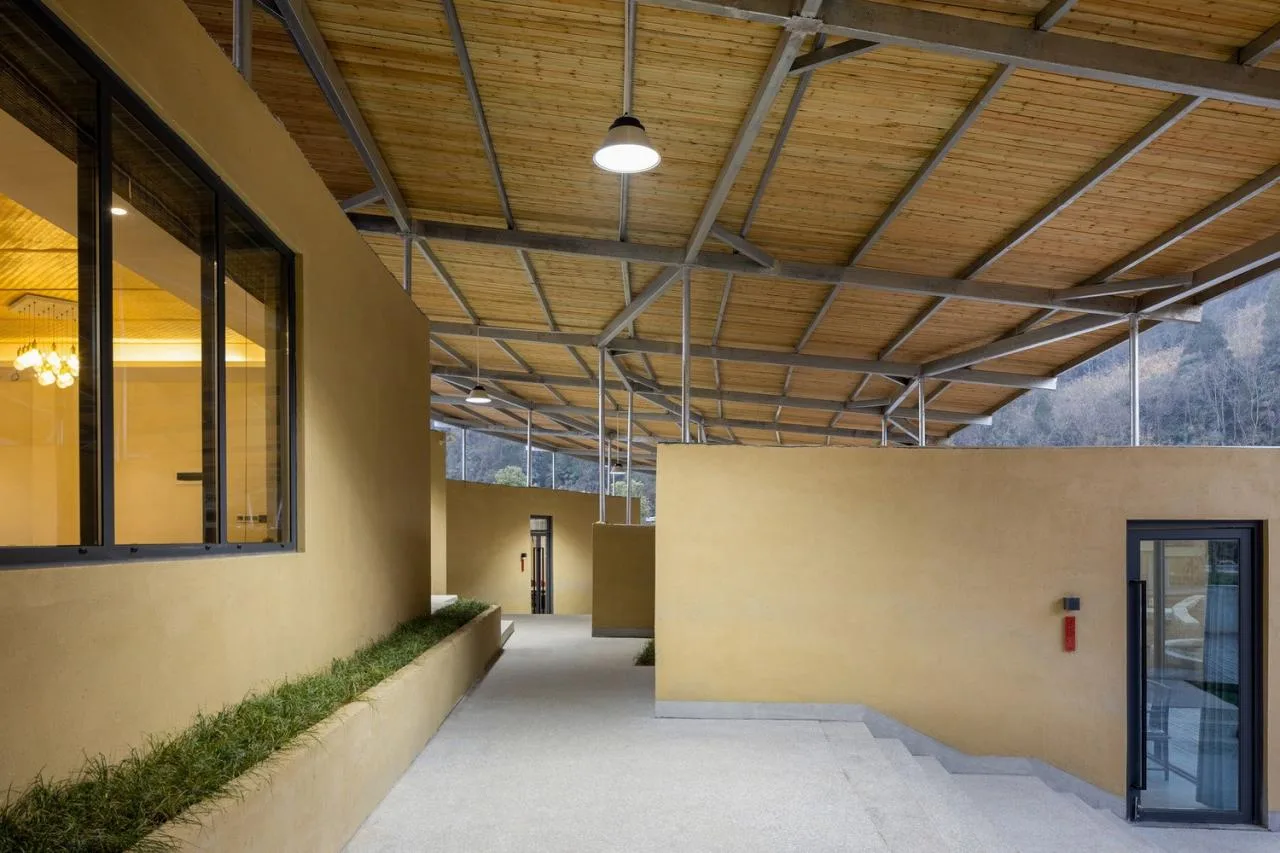
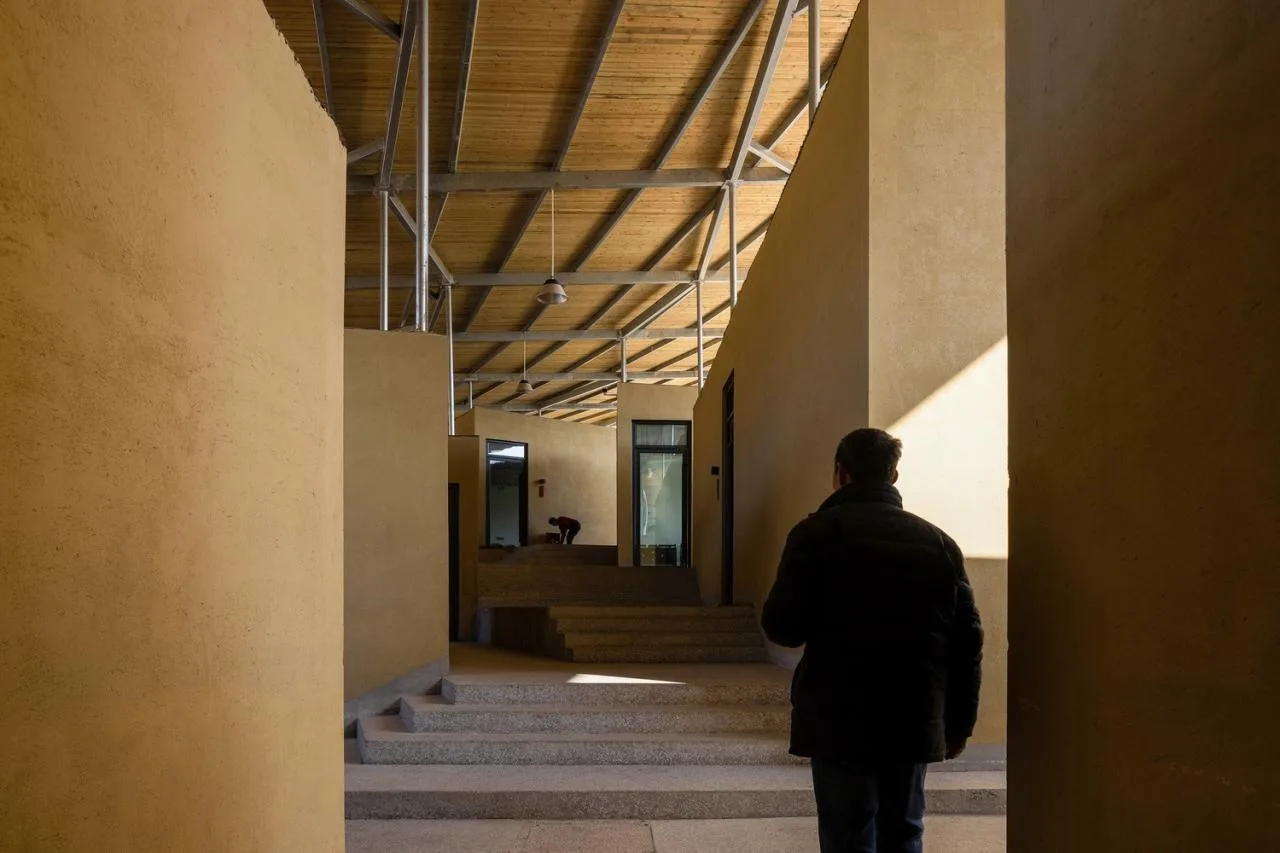
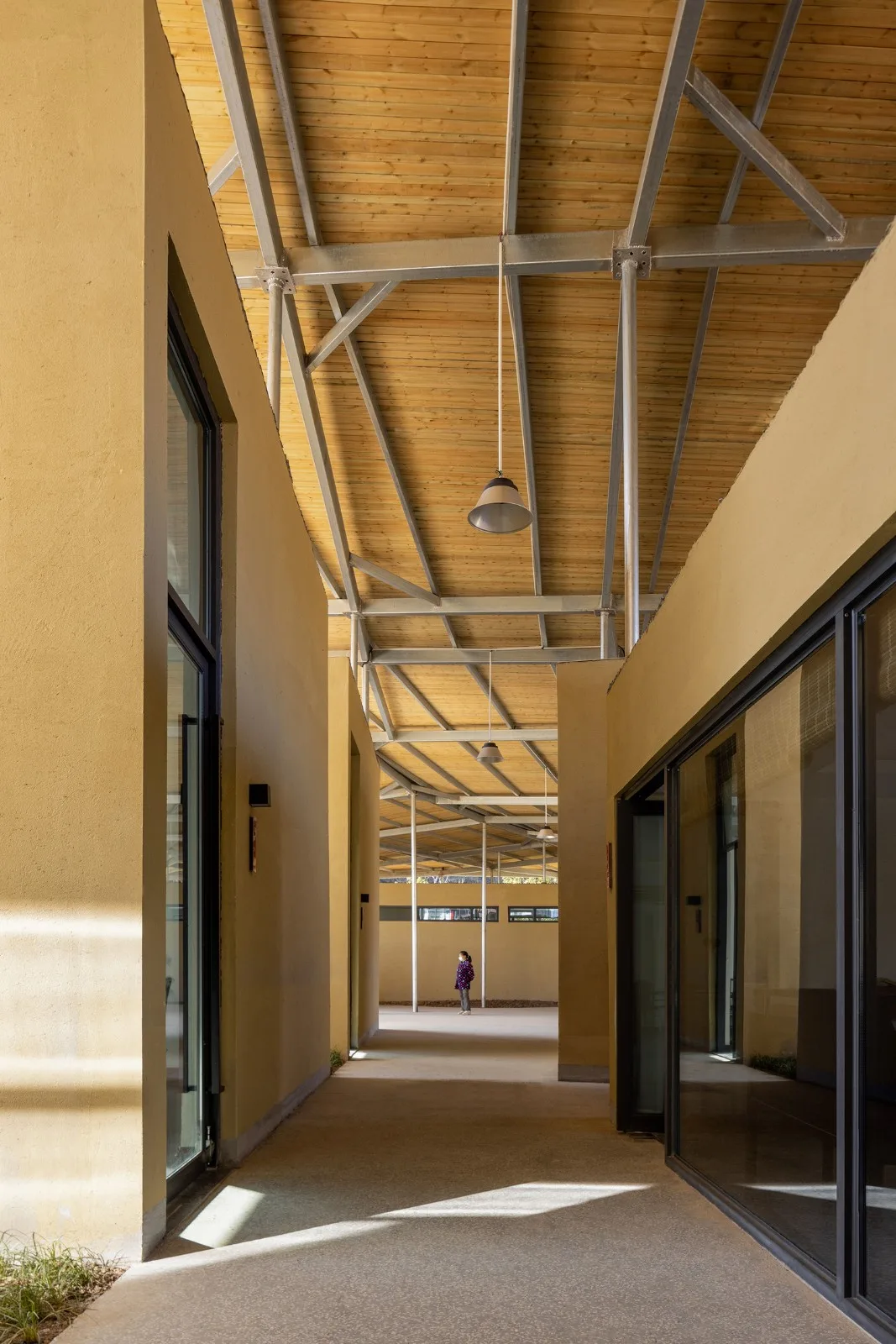
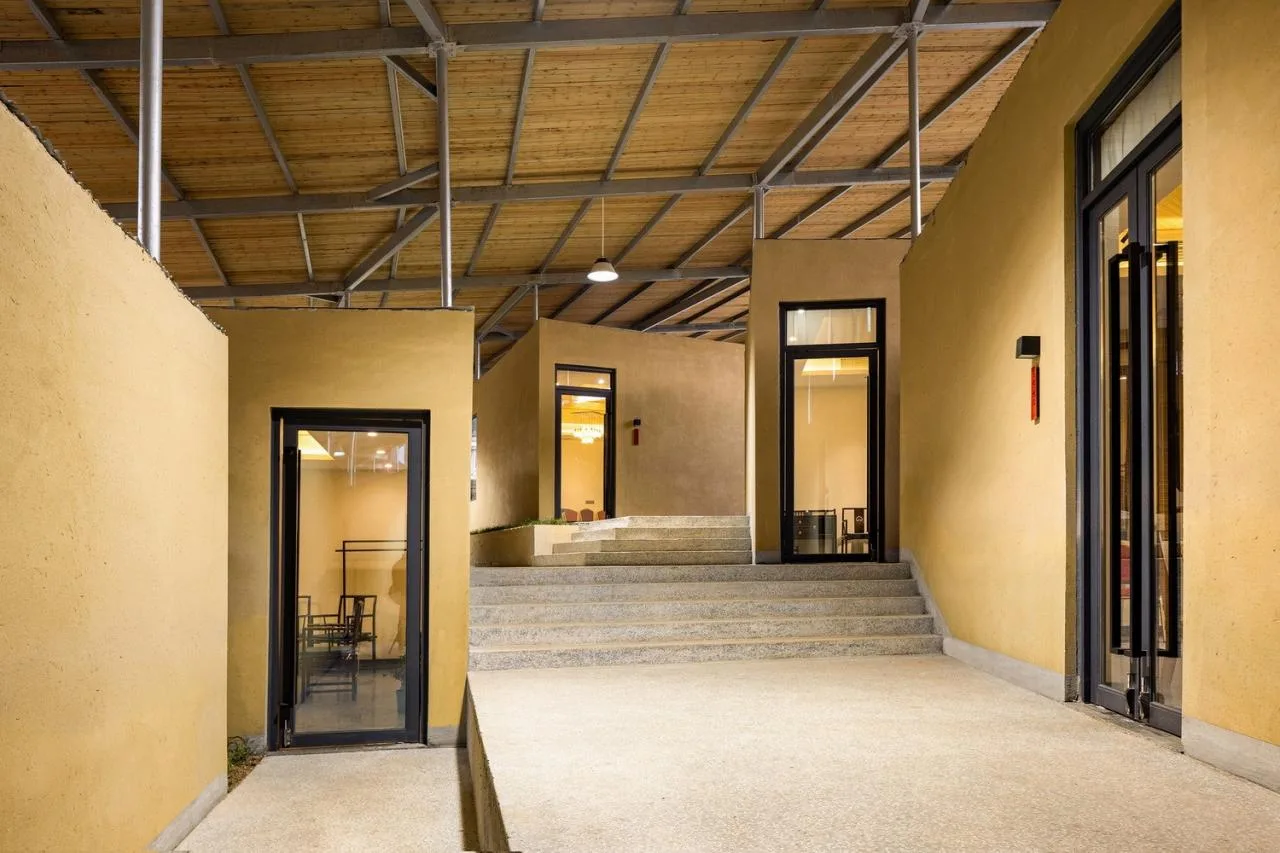
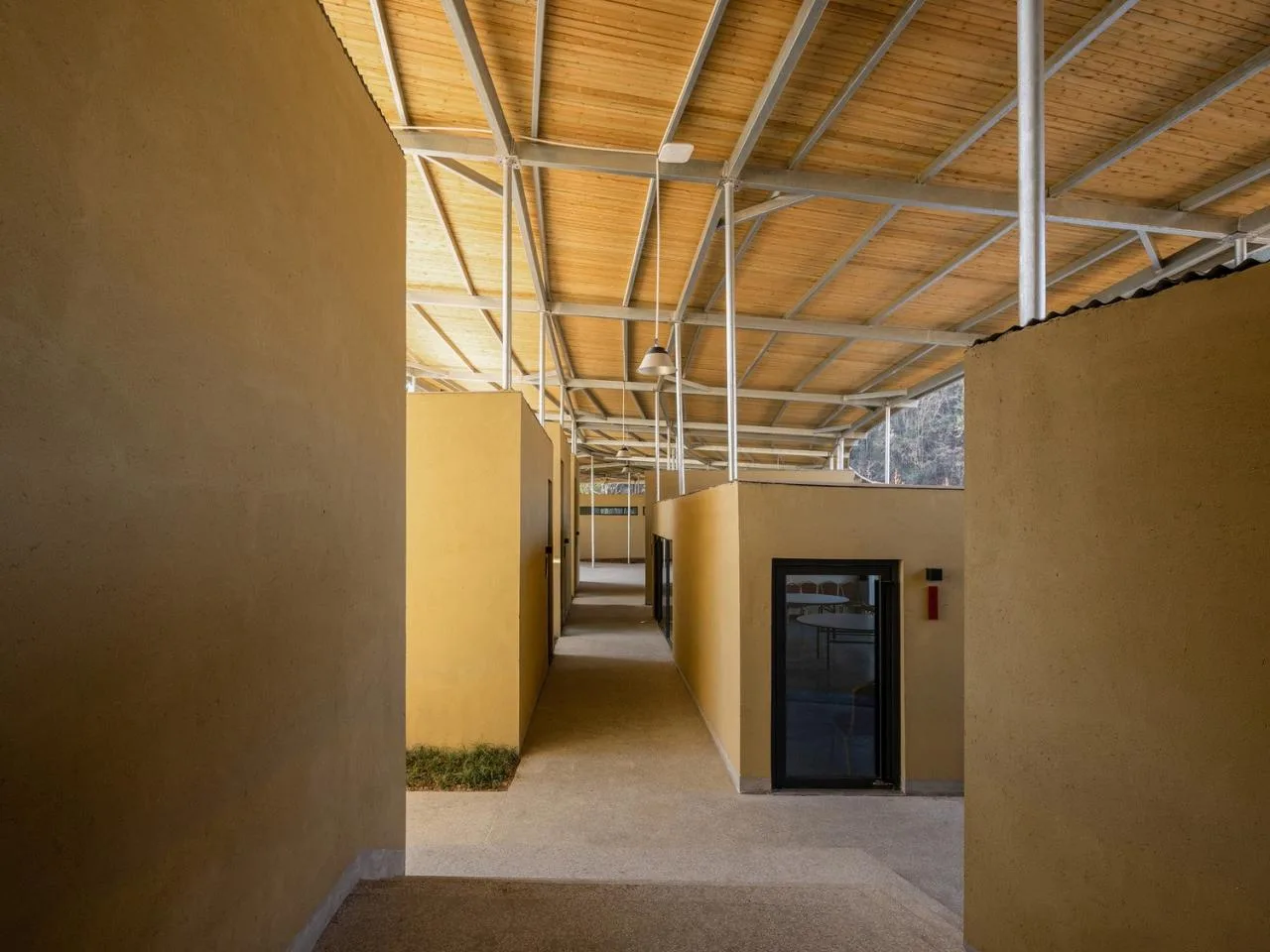
The design breaks down the scattered volumes into 20 relatively independent units based on functional needs, including dining areas, restrooms, and reception rooms. Each dining space varies in size, accommodating one to four tables. These units are arranged linearly, transitioning from single rows to double rows, from isolated to connected spaces, forming rich, tunnel-like corridors.
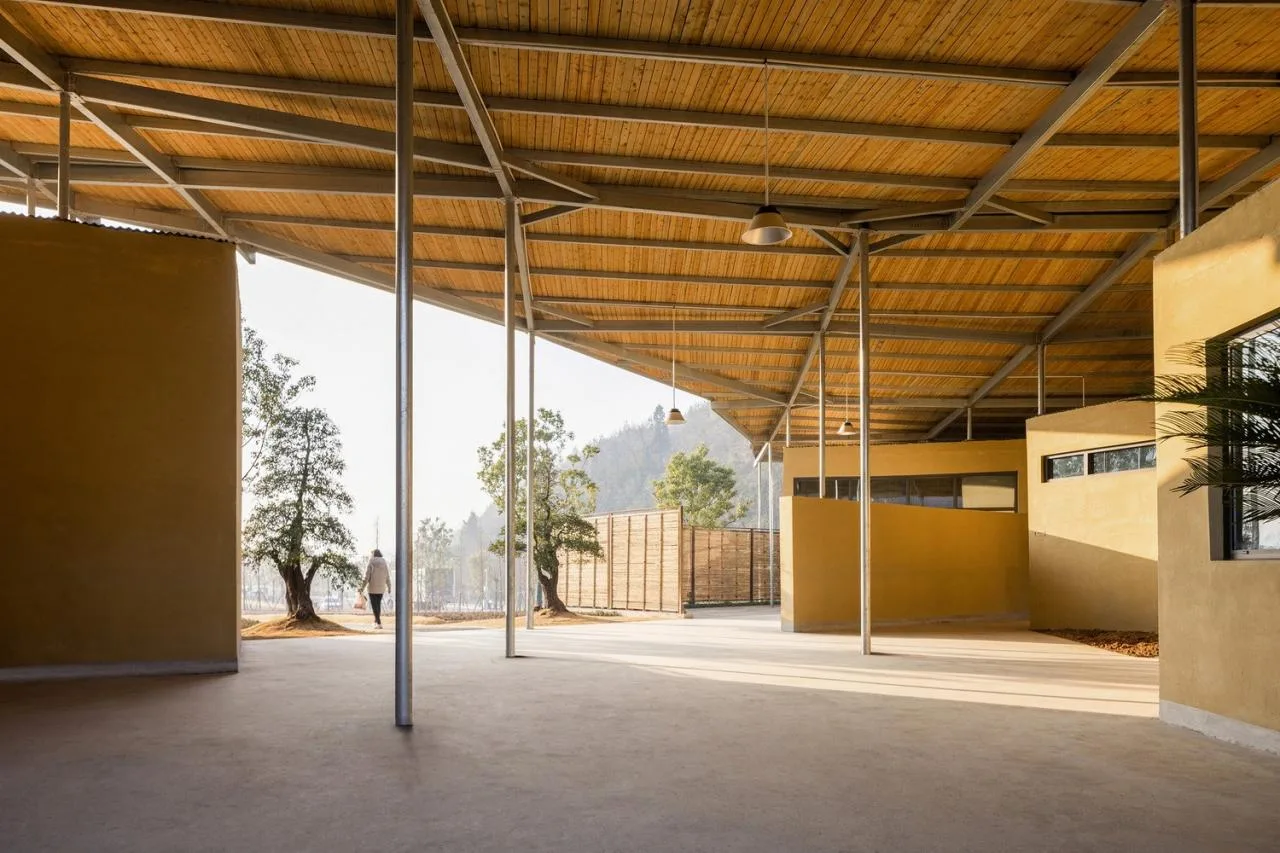
The northern units gradually adjust orientation to create a building facade centered around the ancient tree, a symbolic focal point. Each unit opens towards the landscape, balancing privacy with panoramic rural views. The reception unit is positioned near the entrance, establishing a new orientation and breaking the building’s otherwise singular geometric form, resulting in a visually engaging entrance.
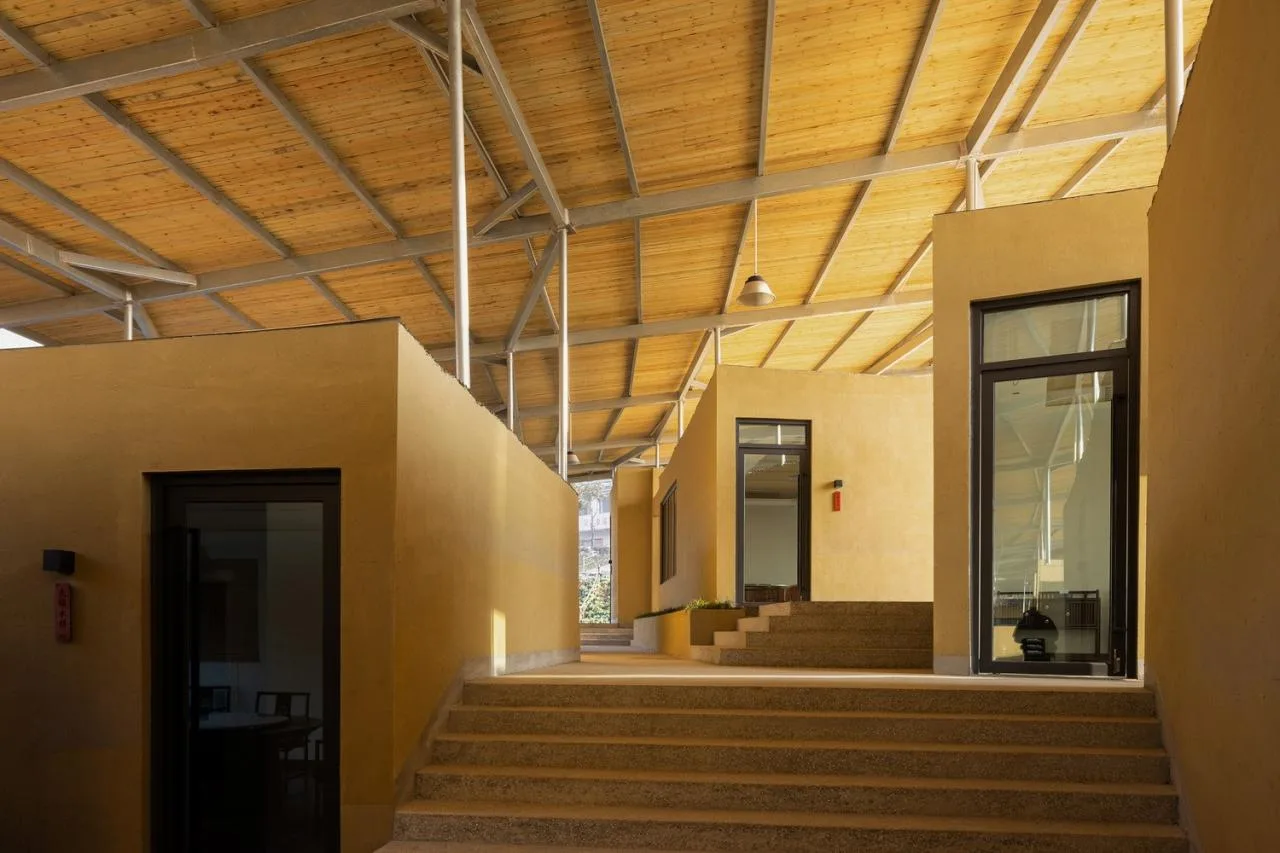
The building features an open plan with no strict entry control, enhancing accessibility as visitors can enter from multiple directions, reminiscent of arriving at a village. The varying sizes of the boxes respond to the terrain, with internal ceiling heights adjusted accordingly to provide diverse spatial experiences within similar volumes.
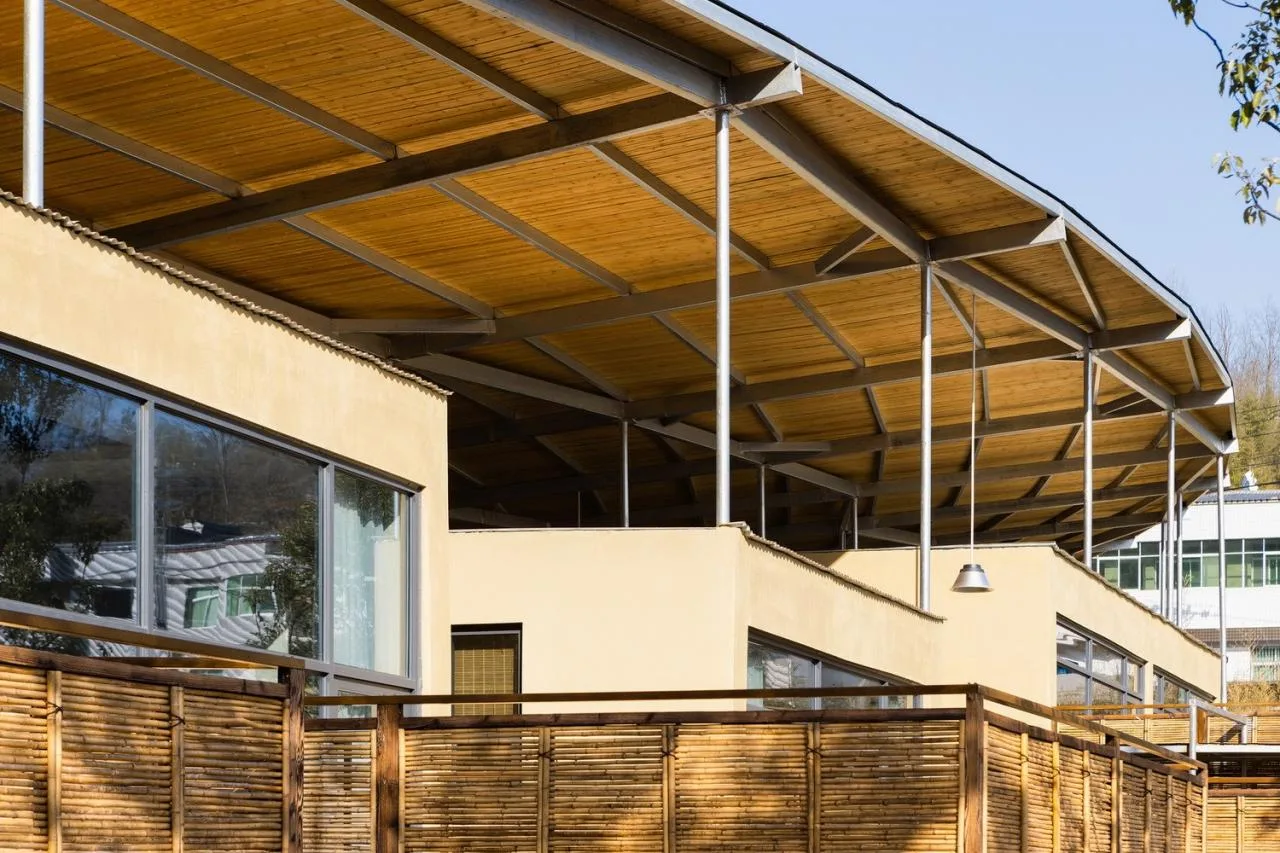
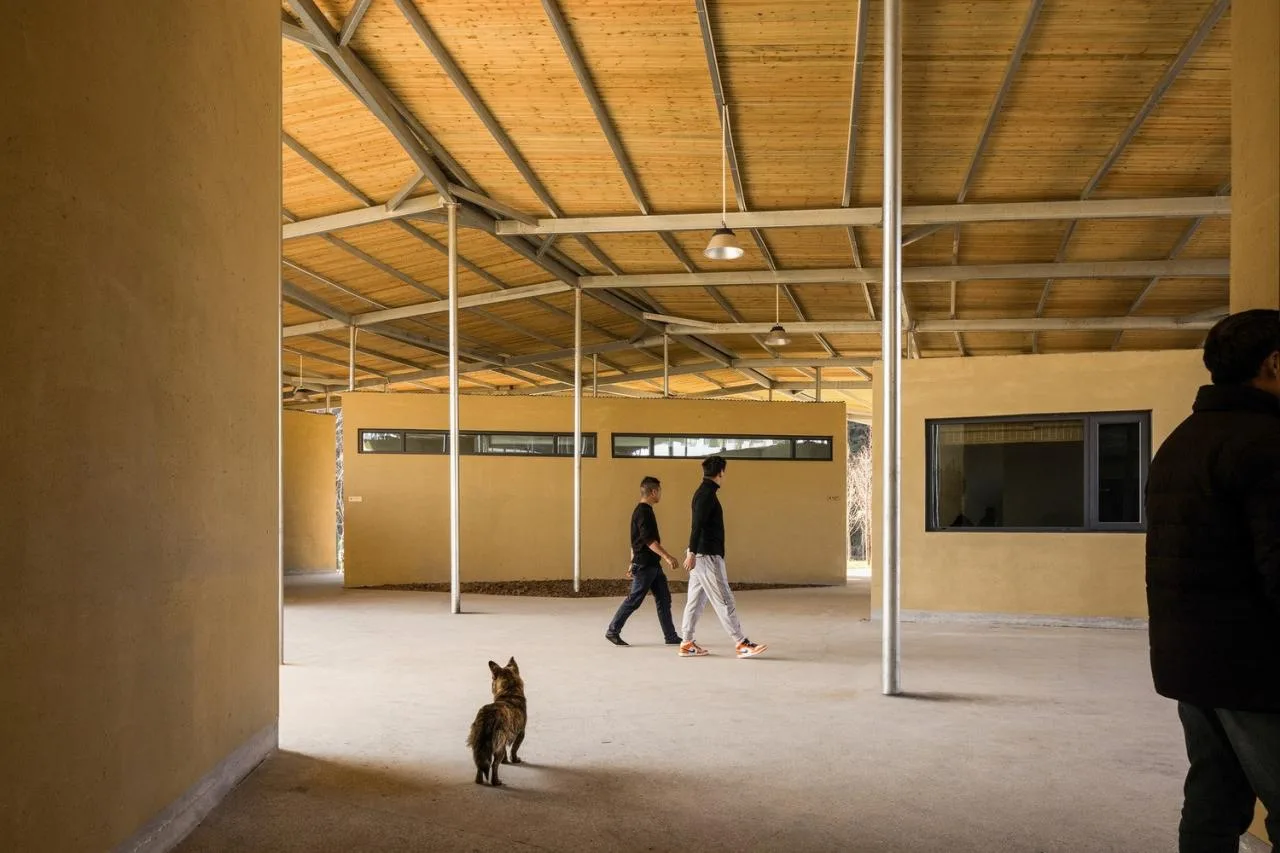
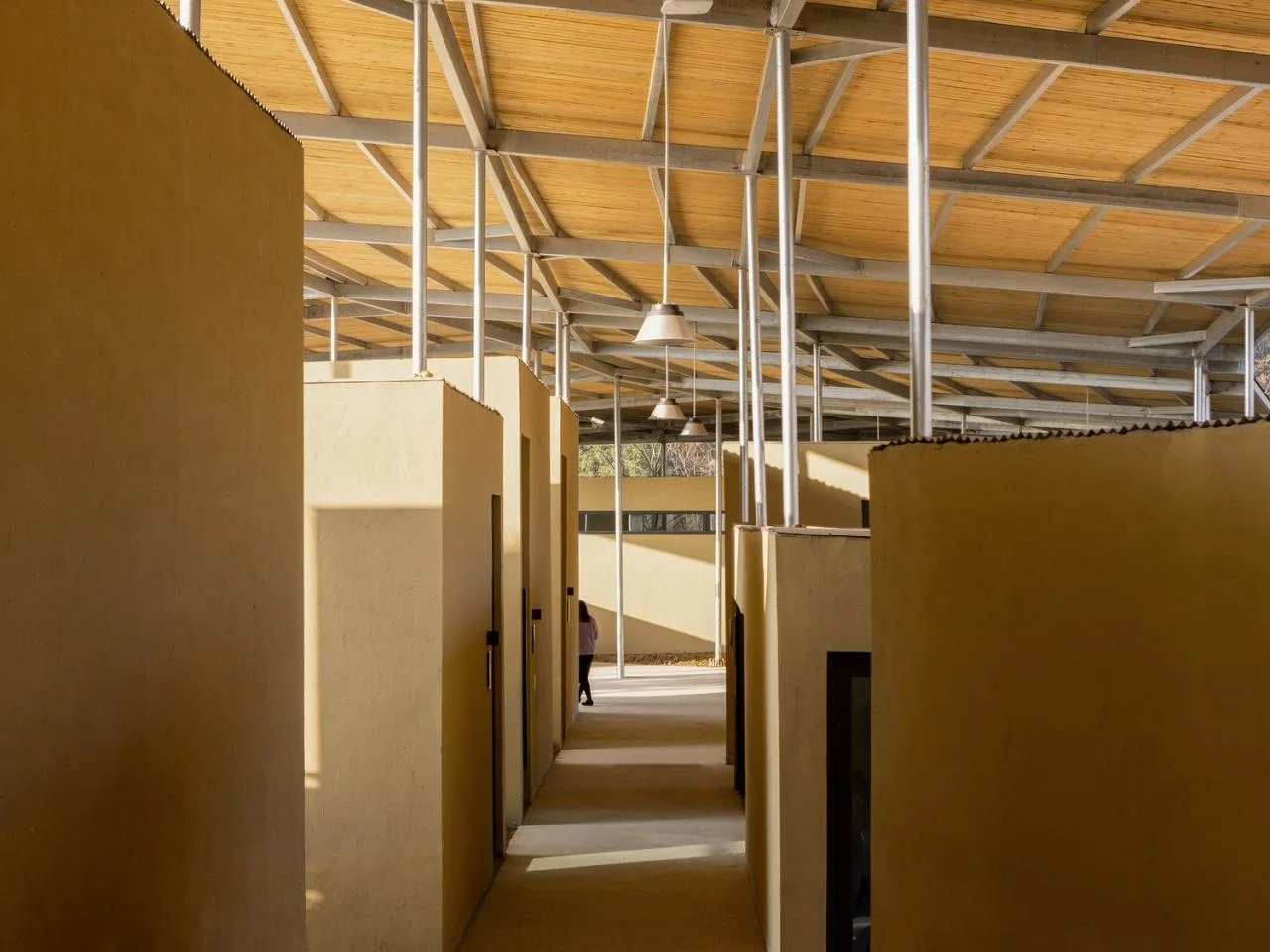
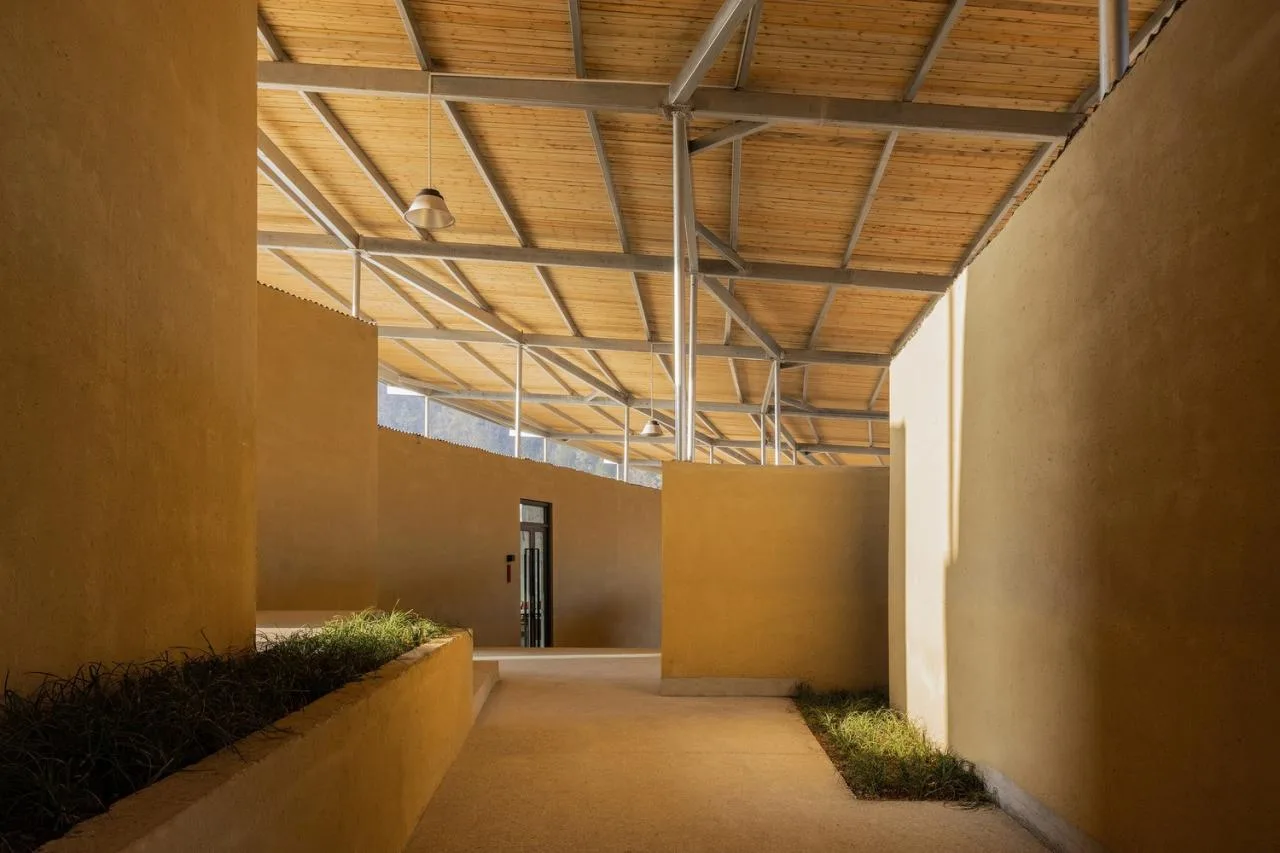
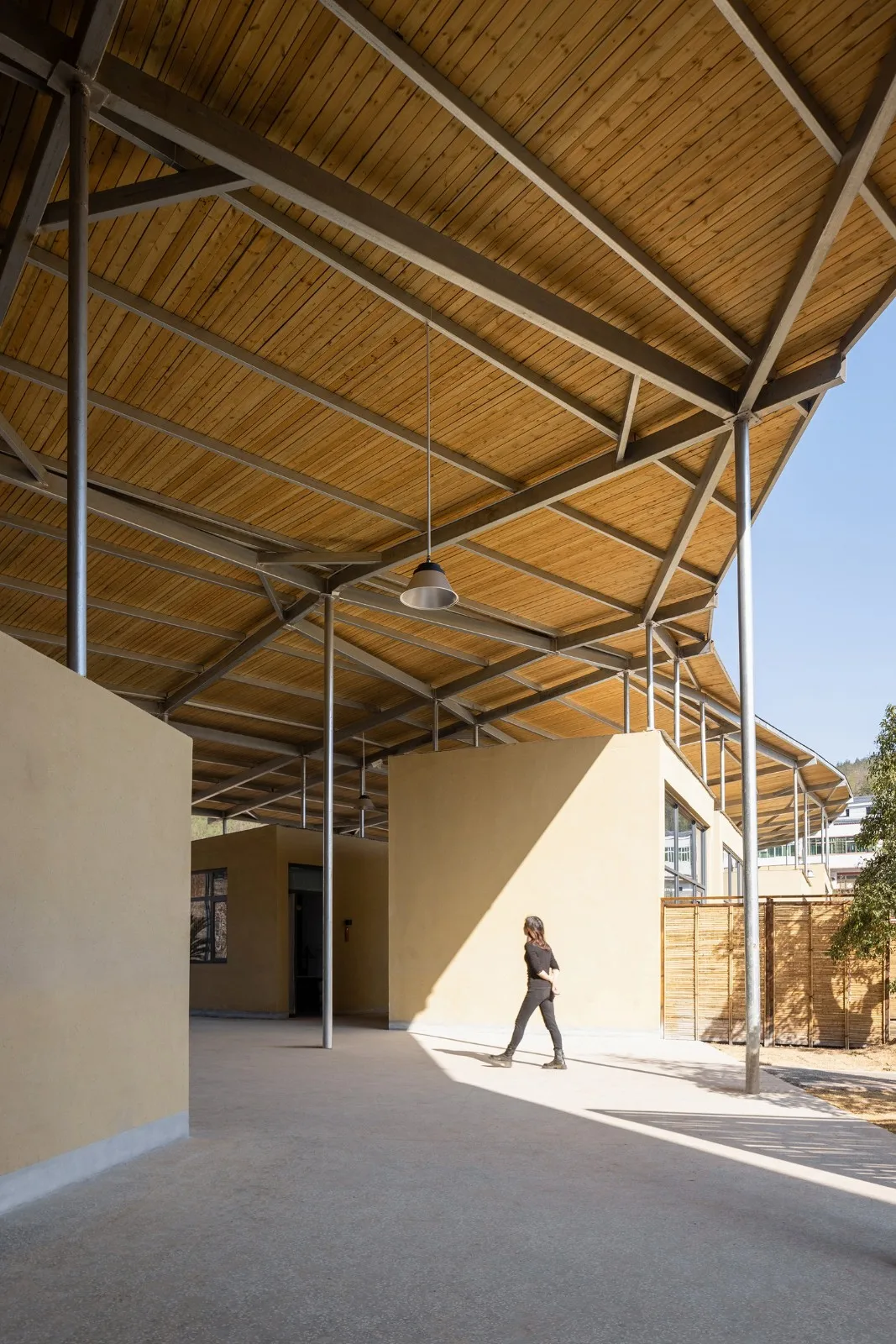
All the individual units are unified under a lightweight, continuous undulating roof that adapts to the shapes of the boxes and the terrain, providing shade and shelter. The open spaces around the units offer areas for pause, rest, and social interaction.
The central area features a high ceiling, imparting a ceremonial atmosphere at the entrance and exit. Meanwhile, the recessed outer corridor on the west side narrows sightlines, creating a scale reminiscent of traditional residential eaves. The roof and main units are structurally independent; a gap between the small roofs and the larger roof allows airflow and visibility.
Oil felt tiles were selected as the roofing material for their lightweight nature, ease of construction, cost-effectiveness, and flexibility in shaping.
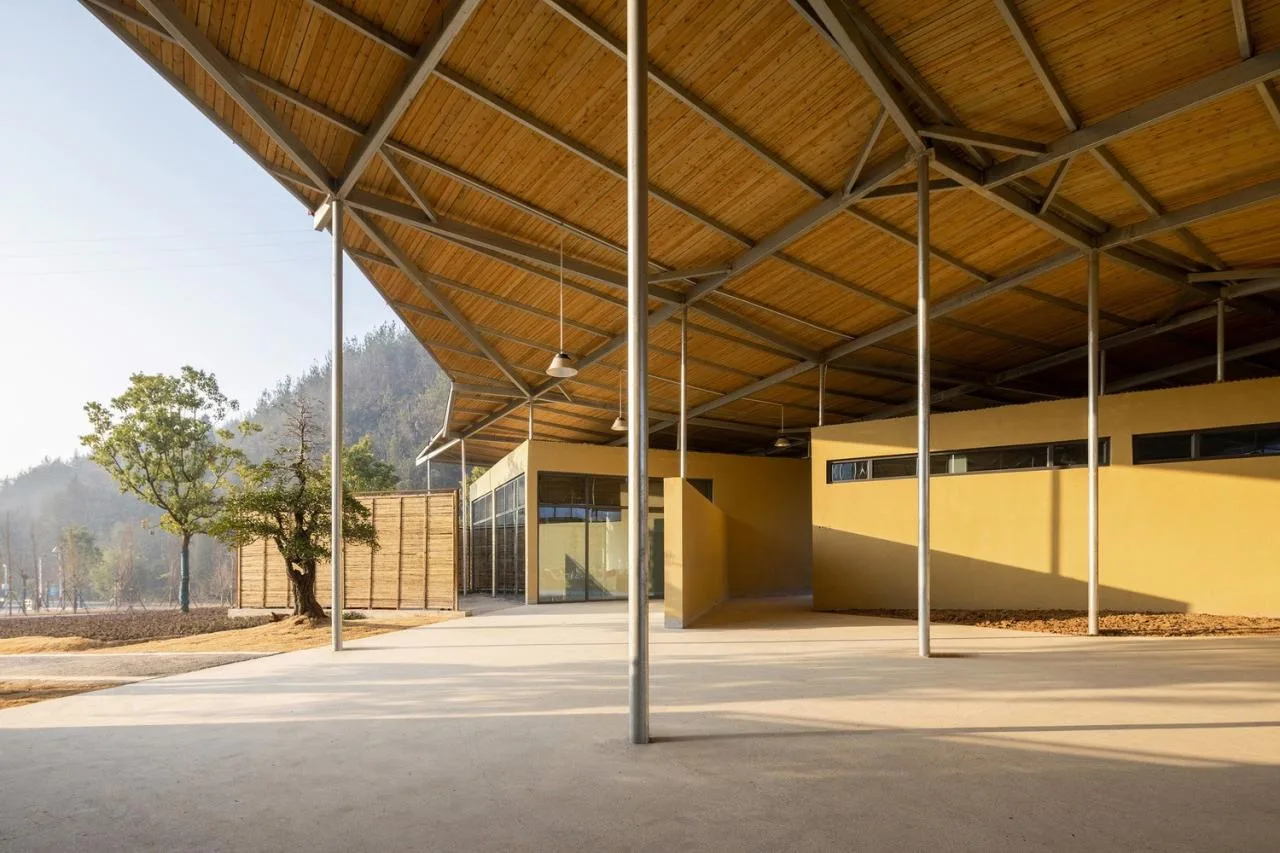
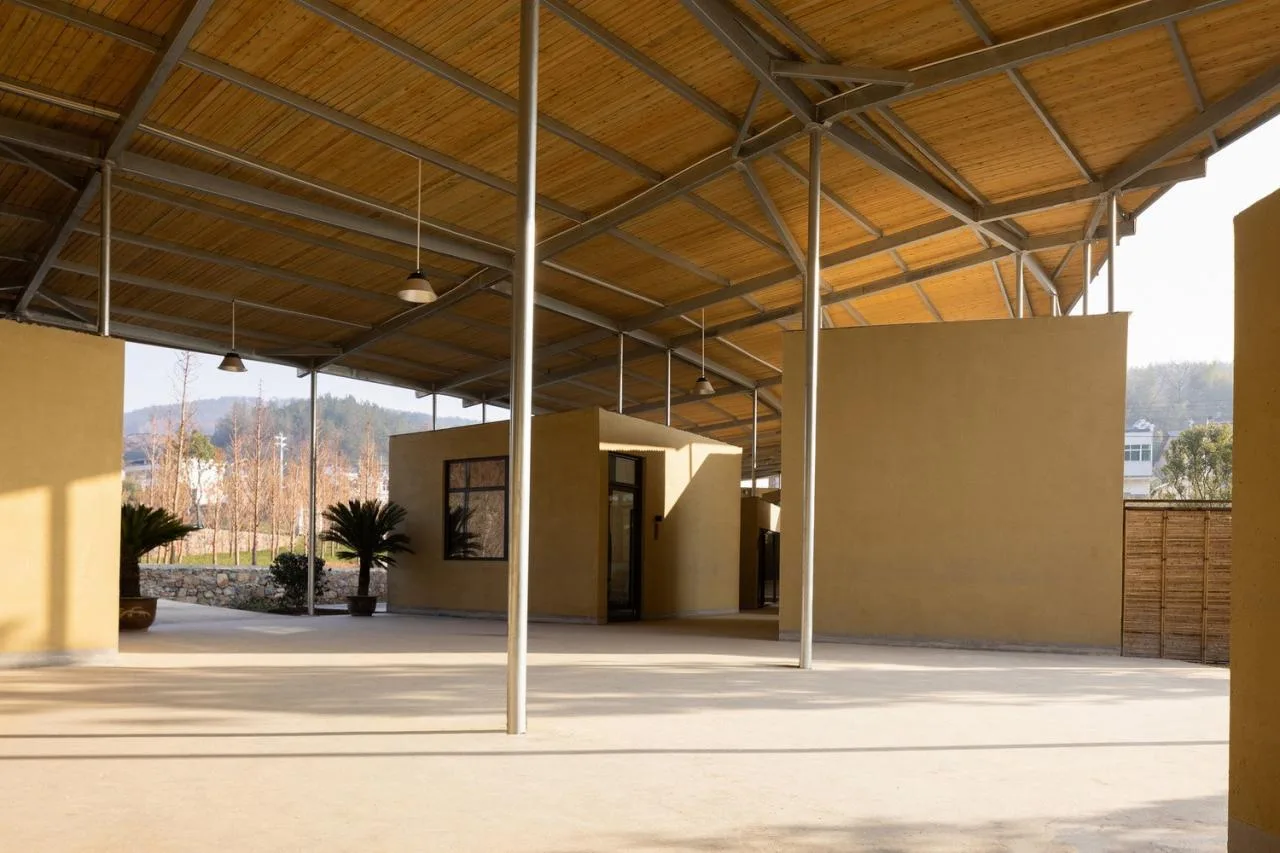
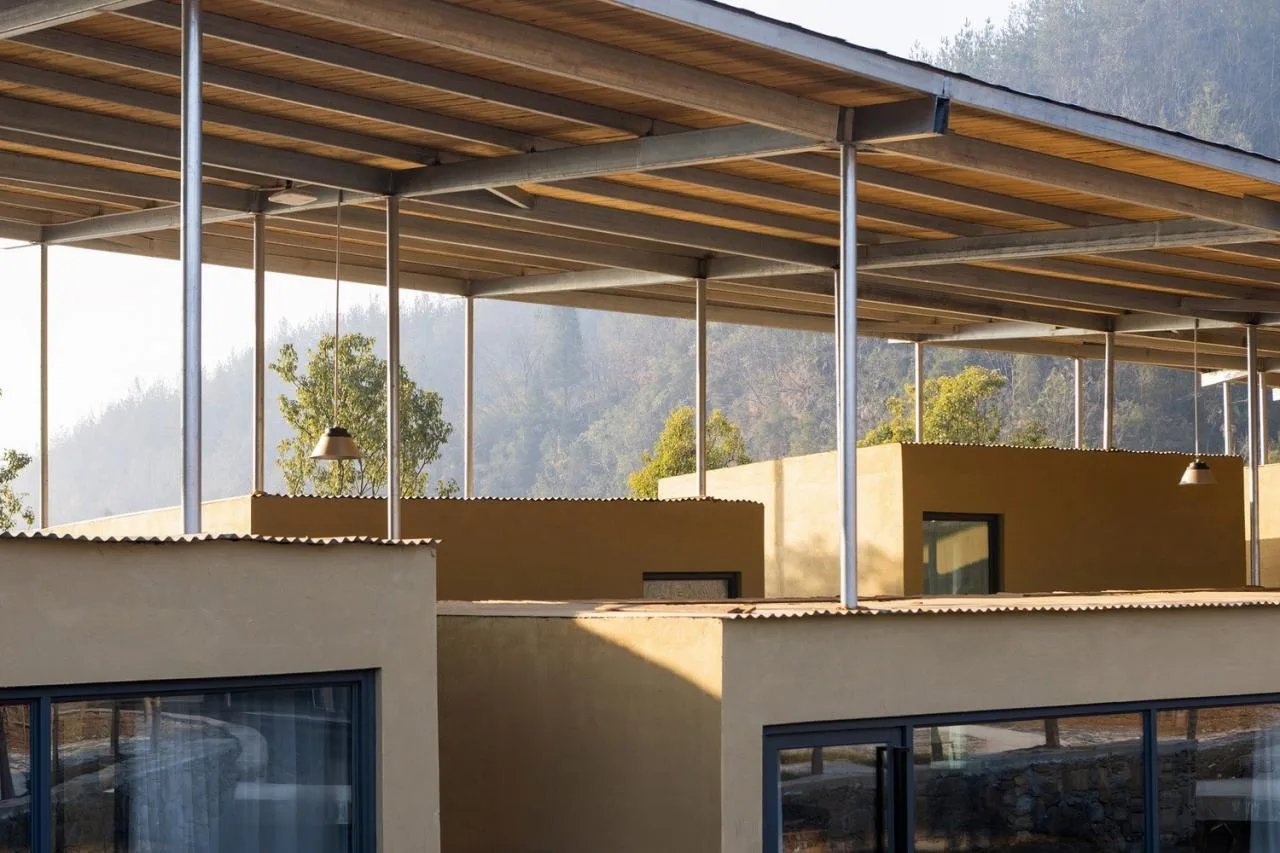
The building’s structure combines two systems: the regular, geometric “boxes” utilize a frame structure that is easy for local workers to understand and ensures a degree of precision. The large roof is supported by steel structures constructed industrially.
To minimize column cross-sections, slender steel columns (9cm diameter) are placed on the beams, while slightly larger columns (10cm diameter) are positioned at the ground level. This results in a visually light support system. Main horizontal supports consist of 180x90x4.5×4.5 steel beams, overlapped according to roof height.
A semi-rigid, semi-hinged connection method restricts beam rotation at supports while transmitting bending moments and shear forces. Exposed steel columns, beams, and purlins are harmoniously integrated into the structural order, complemented by wooden baseboards.
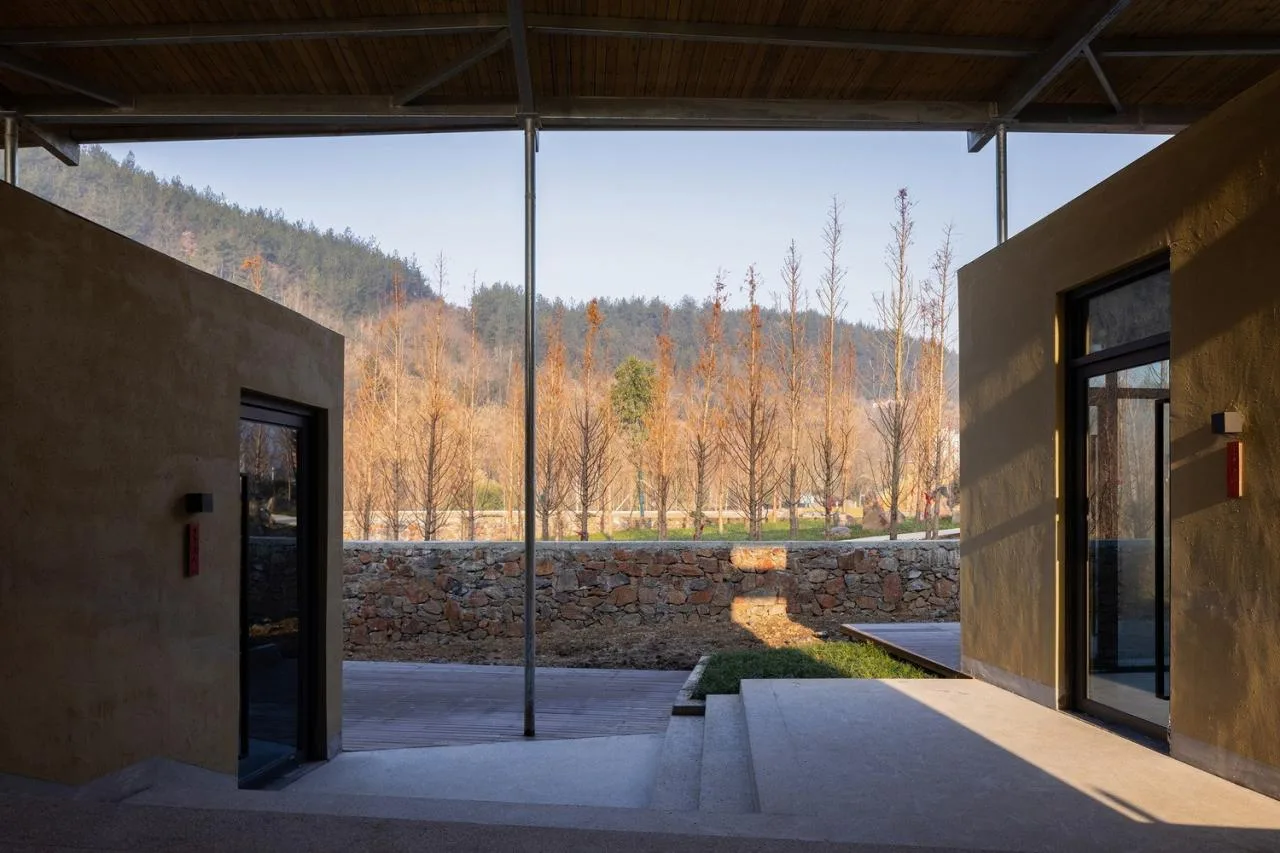
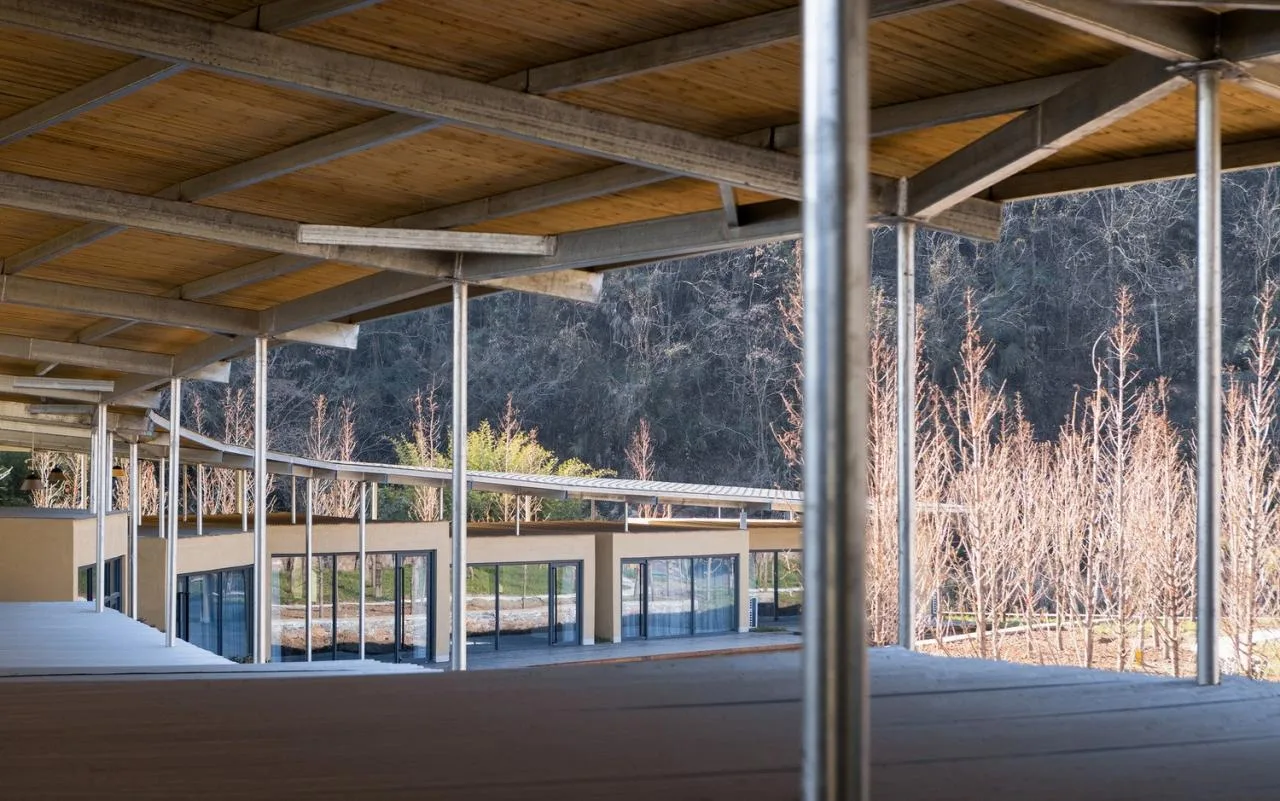
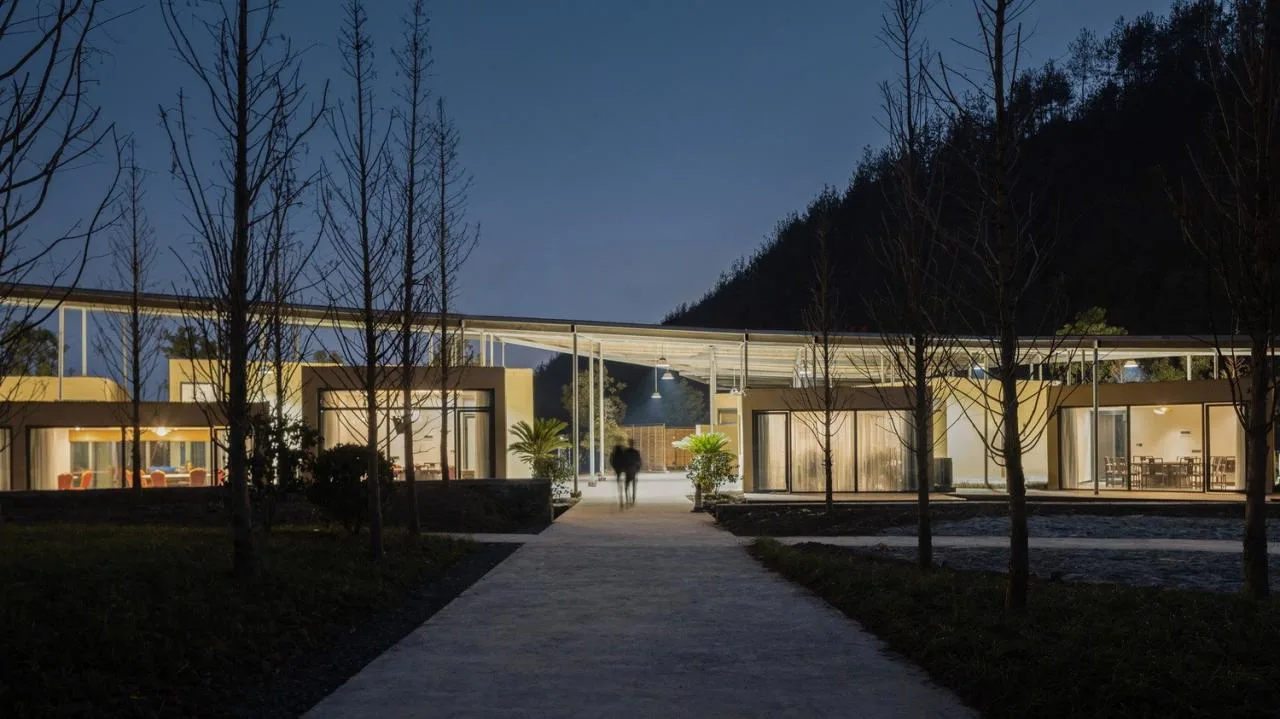
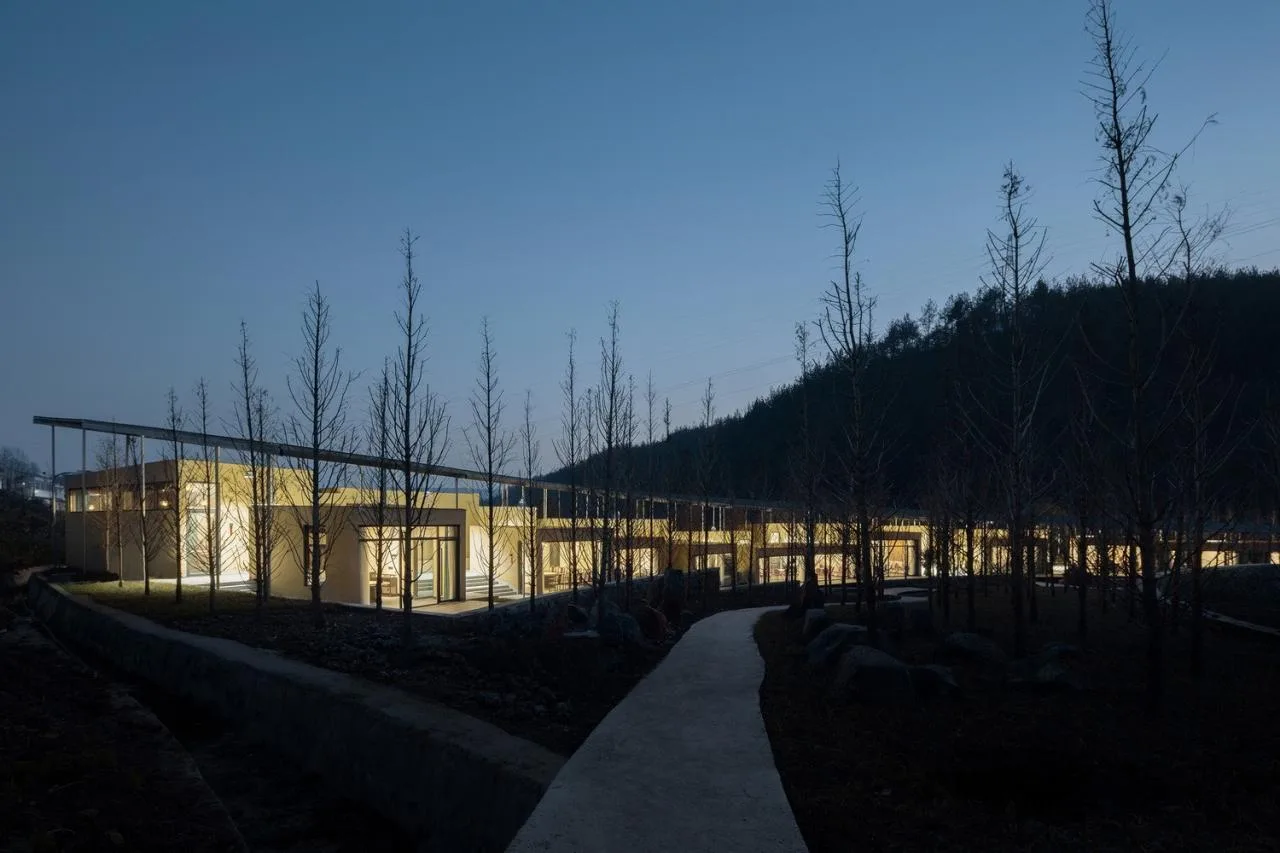
Observing self-built rural houses reveals that free-form roof construction has become a defining feature of rural architecture in the past 20 years. This spontaneous, semi-industrial building method has reshaped rural rooftops in the 21st century, reflecting urbanization’s impact and the industrialization of rural construction.
Steel structure companies and lightweight metal roofing manufacturers have emerged as key players in town and village construction. This semi-industrialized approach helps address the realities of township construction by simplifying complex node details and managing the internal and external relationships of buildings within a tight budget.
Project Drawings
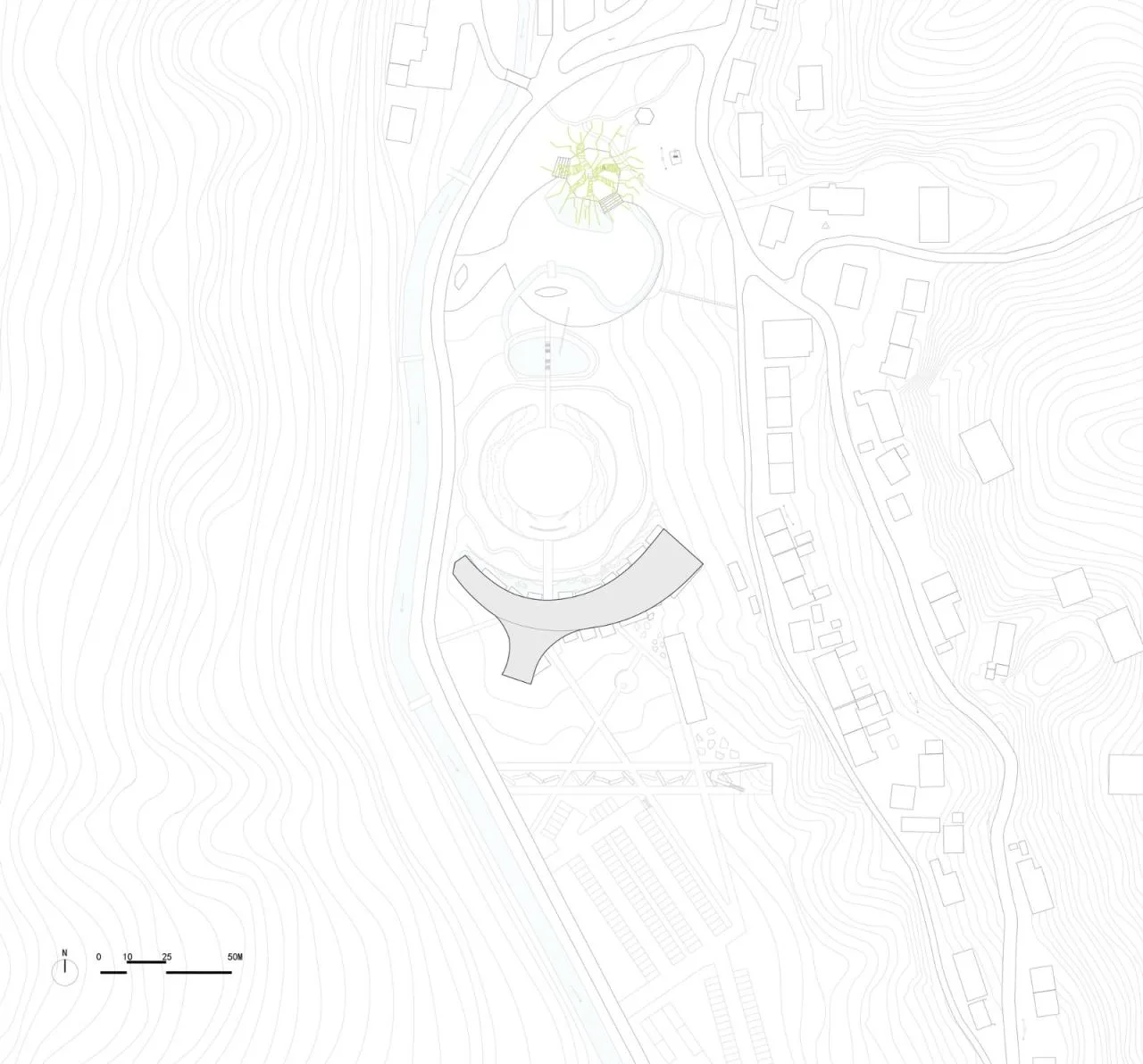
△ General Layout Plan
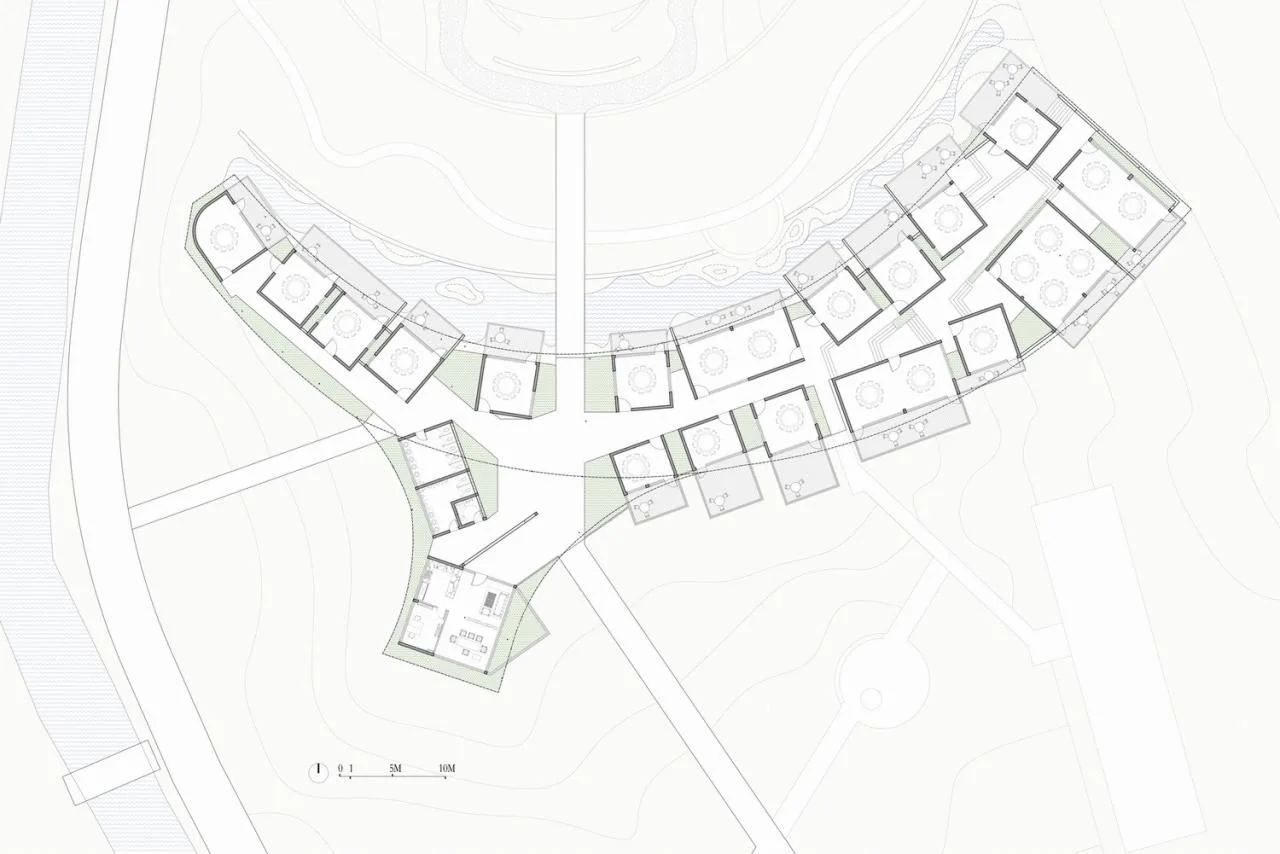
△ Floor Plan
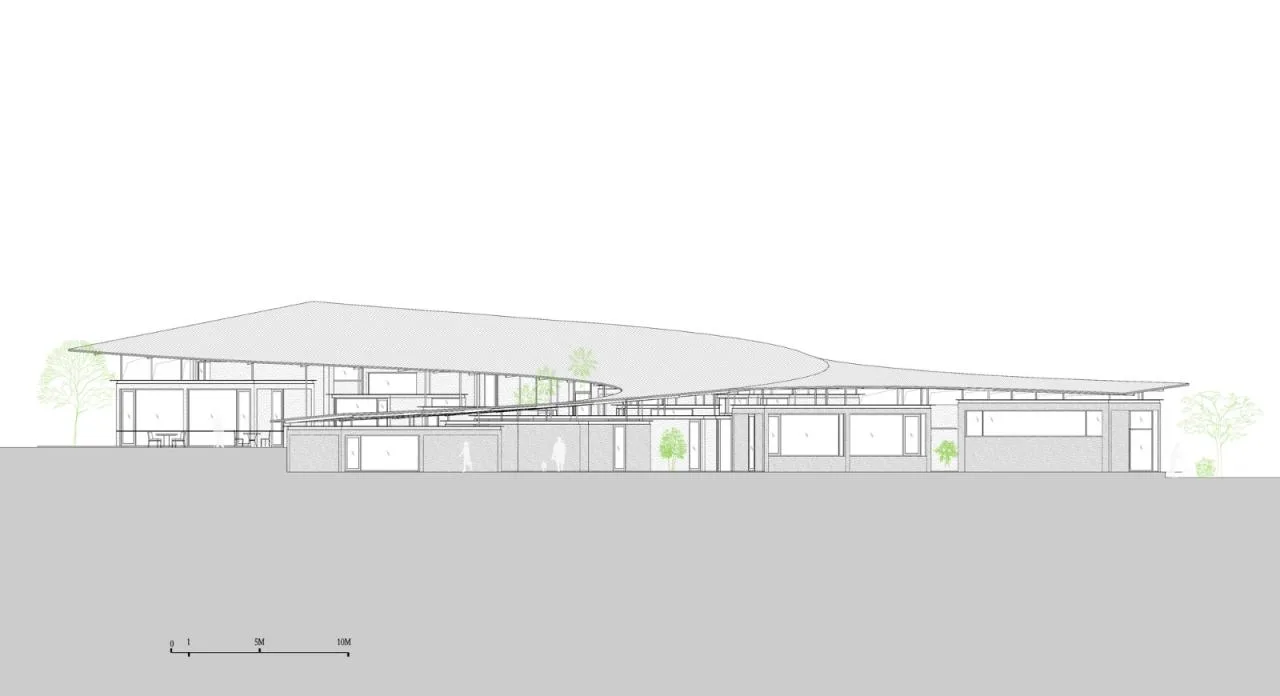
△ Section Diagram
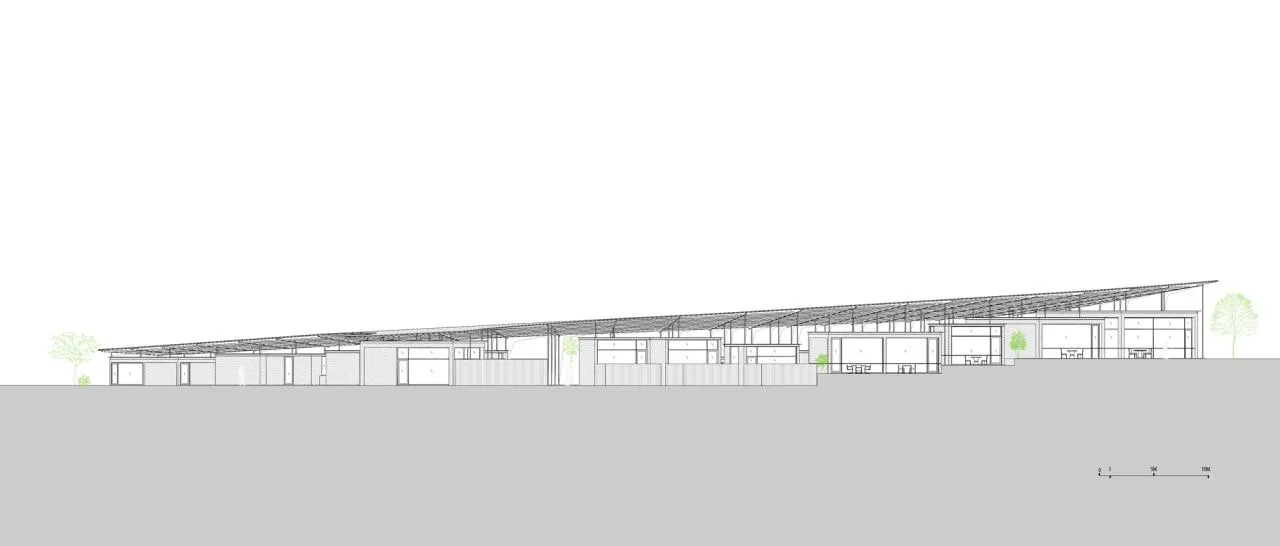
△ Section Diagram
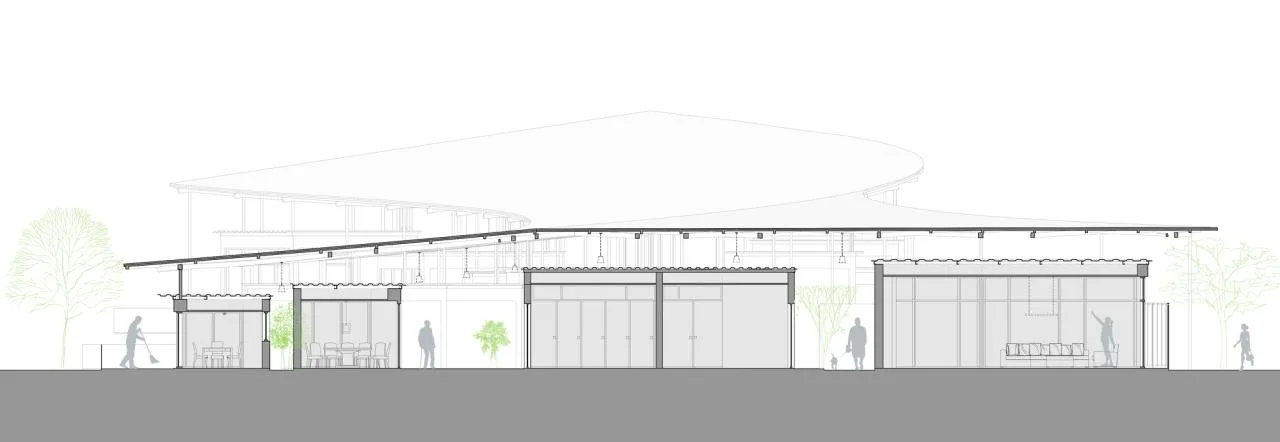
△ Section Diagram
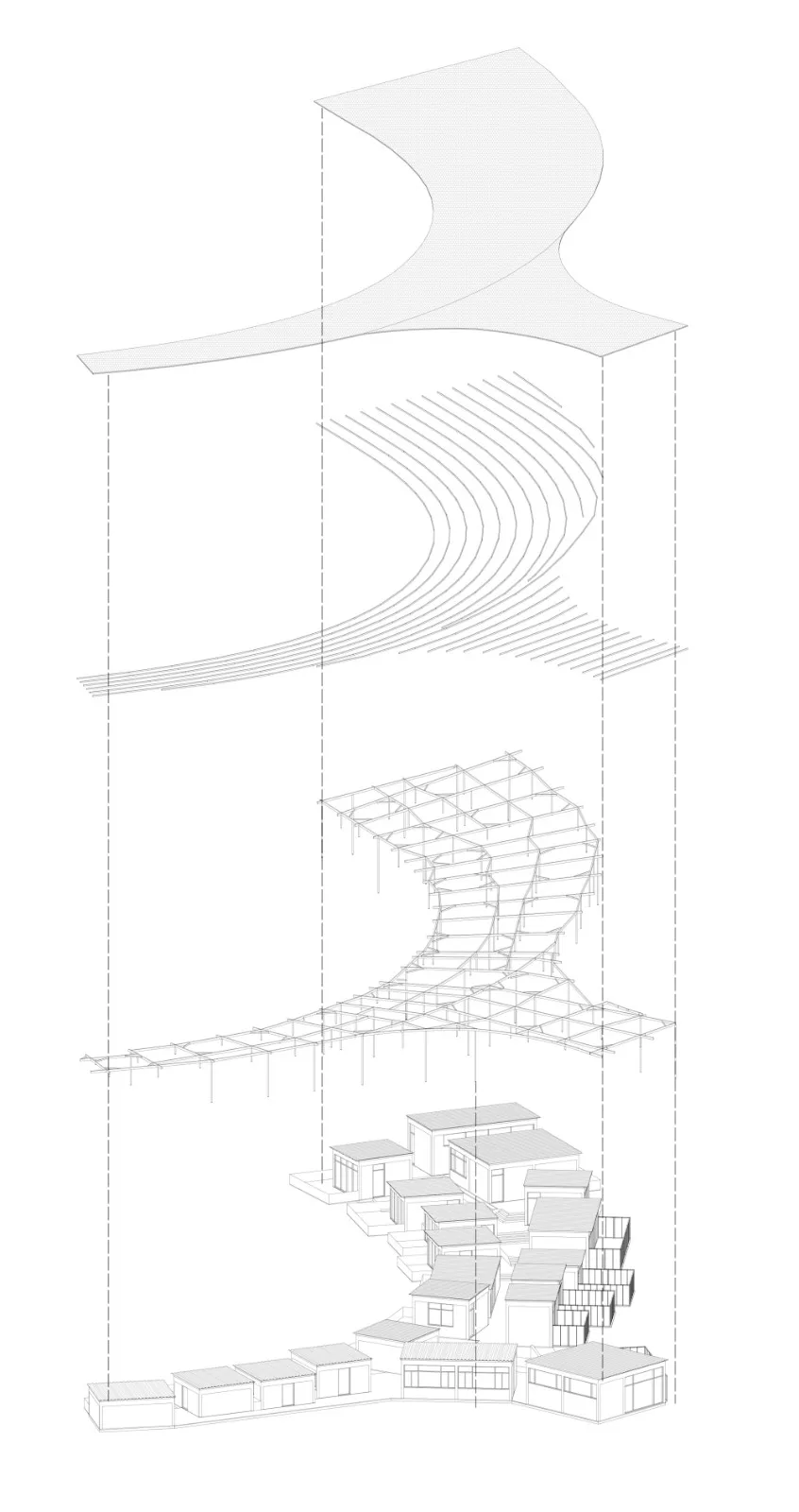
△ Exploded Diagram
Project Information
Architect: Lowercase Architecture Firm
Area: 1,150 square meters
Year: 2022
Photography: Literal Translation of Architectural Photography
Lead Architects: Li Wei, Yuan Yuan
Design Team: Yuan Shuai, Jiang Peng, Ye Zhi, Lei Ling, Zeng Wenjuan, Ma Wei, Lei Xiaozheng, Xiao Xudong
Structural Engineer: Wu Haisheng
Landscape Design: Lowercase Architecture Firm
Construction: Hubei Kesheng Construction Group Co., Ltd.
Client: Nanshan Wufutang (Zhushan) Agricultural Technology Development Co., Ltd.
Location: Zhushan County, Hubei Province















Must log in before commenting!
Sign Up